SB 1177: Firearms: transfers.
- Session Year: 2017-2018
- House: Senate
- Latest Version Date: 2018-09-05
Existing law, subject to exceptions, prohibits a person from making more than one application to purchase a handgun within any 30-day period. A violation of that prohibition is a crime. Existing law prohibits a firearms dealer from delivering a handgun to a person whenever the dealer is notified by the Department of Justice that within the preceding 30-day period the purchaser has made another application to purchase a handgun that does not fall within an exception to the 30-day prohibition. A violation of that delivery prohibition by the dealer is a crime.
This bill would make the 30-day prohibition and the dealer delivery prohibition described above applicable to all types of firearms. The bill would also except from that prohibition the purchase of a firearm, other than a handgun, by a person who possesses a valid, unexpired hunting license issued by the state, and the acquisition of a firearm, other than a handgun, at specified charity fundraising events.
By expanding the scope of existing crimes, this bill would impose a state-mandated local program.
The California Constitution requires the state to reimburse local agencies and school districts for certain costs mandated by the state. Statutory provisions establish procedures for making that reimbursement.
This bill would provide that no reimbursement is required by this act for a specified reason.
(1)Existing law authorizes the governing board of any school district not paying the annual or monthly salaries of persons employed by the school district in 12 equal monthly payments to withhold, upon election by the individual employee, a designated amount from each payment made to that employee.This bill, notwithstanding the existing law referenced above, commencing with the 201920 school year, would authorize certain classified employees of local educational agencies who do not receive their annual or monthly salary in 12 equal monthly payments to participate in the Classified School Employees Summer Furlough Fund. The bill would authorize a participating employee to elect to have up to 10% of his or her paycheck withheld during a school year. The bill would require local educational agencies to deposit the amounts withheld from the paychecks of a participating classified employee in accordance with that employees choices in an account within its general fund, to be known as the Classified School Employees Summer Furlough Fund.The bill would require the State Department of Education to apportion moneys to each local educational agency with a classified employee who has opted to participate in the fund. The bill would prohibit this apportionment from exceeding $1 for each $1 that has been deposited in the local educational agencys Classified School Employees Summer Furlough Fund.The bill would require the local educational agency to pay the participating classified employee from the Classified School Employees Summer Furlough Fund the amounts withheld in accordance with the employees choices, plus the amount apportioned by the department that is attributable to the amount withheld from that employees paychecks during the school year, as specified. The bill would become operative only upon an appropriation in the annual Budget Act or other statute for its purposes. The bill would repeal these provisions on September 1, 2025.To the extent this bill, once it becomes operative, would impose new duties on local educational agencies, it would constitute a state-mandated local program.(2)The California Constitution requires the state to reimburse local agencies and school districts for certain costs mandated by the state. Statutory provisions establish procedures for making that reimbursement.This bill would provide that, if the Commission on State Mandates determines that the bill contains costs mandated by the state, reimbursement for those costs shall be made pursuant to the statutory provisions noted above.(1)Existing law authorizes the governing board of any school district not paying the annual or monthly salaries of persons employed by the school district in 12 equal monthly payments to withhold, upon election by the individual employee, a designated amount from each payment made to that employee.
This bill, notwithstanding the existing law referenced above, commencing with the 201920 school year, would authorize certain classified employees of local educational agencies that do not pay the annual or monthly salaries of their classified employees who do not receive their annual or monthly salary in 12 equal monthly payments to participate in the Classified School Employees Summer Furlough Fund. The bill would authorize a participating employee to elect to have up to 10% of his or her paycheck withheld during a school year. The bill would require local educational agencies to deposit the amounts withheld from the paychecks of a participating classified employee in accordance with that employees choices in an account within its general fund, to be known as the Classified School Employees Summer Furlough Fund.
The bill would require the State Department of Education to apportion moneys to each local educational agency with a classified employee who has opted to participate in the fund. The bill would specify that the apportionment would be in the amount of $2 for each $1, up to the equivalent of the amount paid to the classified employee during 80 hours of employment, or 10 days of employment, whichever is greater, during the school year, that has been deposited in the local educational agencys Classified School Employees Summer Furlough Fund. The bill would prohibit this apportionment from exceeding $1 for each $1 that has been deposited in the local educational agencys Classified School Employees Summer Furlough Fund.
The bill would require the local educational agency to pay the participating classified employee from the Classified School Employees Summer Furlough Fund the amounts withheld in accordance with the employees choices, plus the amount apportioned by the department that is attributable to the amount withheld from that employees paychecks during the school year, as specified. The bill would become operative only upon an appropriation in the annual Budget Act or other statute for its purposes. The bill would repeal these provisions on September 1, 2025.
Because this billTo the extent this bill, once it becomes operative, would impose new duties on local educational agencies, it would constitute a state-mandated local program.
(2)The California Constitution requires the state to reimburse local agencies and school districts for certain costs mandated by the state. Statutory provisions establish procedures for making that reimbursement.
This bill would provide that, if the Commission on State Mandates determines that the bill contains costs mandated by the state, reimbursement for those costs shall be made pursuant to the statutory provisions noted above.
(1)Existing law authorizes the governing board of any school district not paying the annual or monthly salaries of persons employed by the school district in 12 equal monthly payments to withhold, upon election by the individual employee, a designated amount from each payment made to that employee.
This bill, notwithstanding the existing law referenced above, commencing with the 201920 school year, would authorize certain classified employees of local educational agencies that do not pay the annual or monthly salaries of their classified employees in 12 equal monthly payments to participate in the Classified School Employees Summer Furlough Fund. The bill would require local educational agencies to deposit the amounts withheld from the paychecks of a participating classified employee in accordance with that employees choices in an account within its general fund, to be known as the Classified School Employees Summer Furlough Fund.
The bill would require the State Department of Education to apportion moneys to each local educational agency with a classified employee who has opted to participate in the fund. The bill would specify that the apportionment would be in the amount of $2 for each $1, up to the equivalent of the amount paid to the classified employee during 80 hours of employment, or 10 days of employment, whichever is greater, during the school year, that has been deposited in the local educational agencys Classified School Employees Summer Furlough Fund.
The bill would require the local educational agency to pay the participating classified employee from the Classified School Employees Summer Furlough Fund the amounts withheld in accordance with the employees choices, plus the amount apportioned by the department that is attributable to the amount withheld from that employees paychecks during the school year, as specified. The bill would repeal these provisions on September 1, 2025.
Because this bill would impose new duties on local educational agencies, it would constitute a state-mandated local program.
(2)The California Constitution requires the state to reimburse local agencies and school districts for certain costs mandated by the state. Statutory provisions establish procedures for making that reimbursement.
This bill would provide that, if the Commission on State Mandates determines that the bill contains costs mandated by the state, reimbursement for those costs shall be made pursuant to the statutory provisions noted above.
Existing law requires the governing board of a school district to fix and order paid the compensation of persons who are a part of the classified service, unless otherwise prescribed by law. Existing law requires orders for the payment of wages and payroll orders and warrants for the payment of wages of employees who are a part of the classified service in any public school system to be drawn at least once during each calendar month for specified school districts.This bill would make nonsubstantive changes to the latter provision.Existing law requires the governing board of a school district to fix and order paid the compensation of persons who are a part of the classified service, unless otherwise prescribed by law. Existing law requires orders for the payment of wages and payroll orders and warrants for the payment of wages of employees who are a part of the classified service in any public school system to be drawn at least once during each calendar month for specified school districts.
This bill would make nonsubstantive changes to the latter provision.
A licensee shall conspicuously post within the licensed premises the following warnings in block letters not less than one inch in height:
(a)FIREARMS MUST BE HANDLED RESPONSIBLY AND SECURELY STORED TO PREVENT ACCESS BY CHILDREN AND OTHER UNAUTHORIZED USERS. CALIFORNIA HAS STRICT LAWS PERTAINING TO FIREARMS, AND YOU MAY BE FINED OR IMPRISONED IF YOU FAIL TO COMPLY WITH THEM. VISIT THE WEB SITE OF THE CALIFORNIA ATTORNEY GENERAL AT HTTPS://OAG.CA.GOV/FIREARMS FOR INFORMATION ON FIREARM LAWS APPLICABLE TO YOU AND HOW YOU CAN COMPLY.
(b)IF YOU KEEP A LOADED FIREARM WITHIN ANY PREMISES UNDER YOUR CUSTODY OR CONTROL, AND A PERSON UNDER 18 YEARS OF AGE OBTAINS IT AND USES IT, RESULTING IN INJURY OR DEATH, OR CARRIES IT TO A PUBLIC PLACE, YOU MAY BE GUILTY OF A MISDEMEANOR OR A FELONY UNLESS YOU STORED THE FIREARM IN A LOCKED CONTAINER OR LOCKED THE FIREARM WITH A LOCKING DEVICE, TO KEEP IT FROM TEMPORARILY FUNCTIONING.
(c)CHILDREN MAY BE UNABLE TO DISTINGUISH FIREARMS FROM TOYS AND MAY OPERATE FIREARMS, CAUSING SEVERE INJURIES OR DEATH. IF YOU KEEP A PISTOL, REVOLVER, OR OTHER FIREARM CAPABLE OF BEING CONCEALED UPON THE PERSON, WITHIN ANY PREMISES UNDER YOUR CUSTODY OR CONTROL, AND A PERSON UNDER 18 YEARS OF AGE GAINS ACCESS TO THE FIREARM, AND CARRIES IT OFF-PREMISES, YOU MAY BE GUILTY OF A MISDEMEANOR, UNLESS YOU STORED THE FIREARM IN A LOCKED CONTAINER, OR LOCKED THE FIREARM WITH A LOCKING DEVICE, TO KEEP IT FROM TEMPORARILY FUNCTIONING.
(d)YOU MAY BE GUILTY OF A MISDEMEANOR, INCLUDING A SIGNIFICANT FINE OR IMPRISONMENT, IF YOU KEEP A FIREARM WHERE A MINOR IS LIKELY TO ACCESS IT OR IF A MINOR OBTAINS AND IMPROPERLY USES IT, OR CARRIES IT OFF OF THE PREMISES TO A SCHOOL OR SCHOOL-SPONSORED EVENT, UNLESS YOU STORED THE FIREARM IN A LOCKED CONTAINER OR LOCKED THE FIREARM WITH A LOCKING DEVICE.
(e)IF YOU NEGLIGENTLY STORE OR LEAVE A LOADED FIREARM WITHIN ANY PREMISES UNDER YOUR CUSTODY OR CONTROL, WHERE A PERSON UNDER 18 YEARS OF AGE IS LIKELY TO ACCESS IT, YOU MAY BE GUILTY OF A MISDEMEANOR, INCLUDING A SIGNIFICANT FINE, UNLESS YOU STORED THE FIREARM IN A LOCKED CONTAINER, OR LOCKED THE FIREARM WITH A LOCKING DEVICE.
(f)DISCHARGING FIREARMS IN POORLY VENTILATED AREAS, CLEANING FIREARMS, OR HANDLING AMMUNITION MAY RESULT IN EXPOSURE TO LEAD, A SUBSTANCE KNOWN TO CAUSE BIRTH DEFECTS, REPRODUCTIVE HARM, AND OTHER SERIOUS PHYSICAL INJURY. HAVE ADEQUATE VENTILATION AT ALL TIMES. WASH HANDS THOROUGHLY AFTER EXPOSURE.
(g)FEDERAL REGULATIONS PROVIDE THAT IF YOU DO NOT TAKE PHYSICAL POSSESSION OF THE FIREARM THAT YOU ARE ACQUIRING OWNERSHIP OF WITHIN 30 DAYS AFTER YOU COMPLETE THE INITIAL BACKGROUND CHECK PAPERWORK, THEN YOU HAVE TO GO THROUGH THE BACKGROUND CHECK PROCESS A SECOND TIME IN ORDER TO TAKE PHYSICAL POSSESSION OF THAT FIREARM.
(h)NO PERSON SHALL MAKE AN APPLICATION TO PURCHASE MORE THAN ONE FIREARM WITHIN ANY 30-DAY PERIOD AND NO DELIVERY SHALL BE MADE TO ANY PERSON WHO HAS MADE AN APPLICATION TO PURCHASE MORE THAN ONE FIREARM WITHIN ANY 30-DAY PERIOD.
(i)IF A FIREARM YOU OWN OR POSSESS IS LOST OR STOLEN, YOU MUST REPORT THE LOSS OR THEFT TO A LOCAL LAW ENFORCEMENT AGENCY WHERE THE LOSS OR THEFT OCCURRED WITHIN FIVE DAYS OF THE TIME YOU KNEW OR REASONABLY SHOULD HAVE KNOWN THAT THE FIREARM HAD BEEN LOST OR STOLEN.
SEC. 2.Section 27535 of the Penal Code is amended to read:27535.(a)A person shall not make an application to purchase more than one firearm within any 30-day period.
(b)Subdivision (a) does not apply to any of the following:
(1)Any law enforcement agency.
(2)Any agency duly authorized to perform law enforcement duties.
(3)Any state or local correctional facility.
(4)Any private security company licensed to do business in California.
(5)Any person who is properly identified as a full-time paid peace officer, as defined in Chapter 4.5 (commencing with Section 830) of Title 3 of Part 2, and who is authorized to, and does carry a firearm during the course and scope of employment as a peace officer.
(6)Any motion picture, television, or video production company or entertainment or theatrical company whose production by its nature involves the use of a firearm.
(7)Any person who may, pursuant to Article 2 (commencing with Section 27600), Article 3 (commencing with Section 27650), or Article 4 (commencing with Section 27700), claim an exemption from the waiting period set forth in Section 27540.
(8)Any transaction conducted through a licensed firearms dealer pursuant to Chapter 5 (commencing with Section 28050).
(9)Any person who is licensed as a collector pursuant to Chapter 44 (commencing with Section 921) of Title 18 of the United States Code and the regulations issued pursuant thereto, and has a current certificate of eligibility issued by the Department of Justice pursuant to Article 1 (commencing with Section 26700) of Chapter 2.
(10)The exchange of a firearm where the dealer purchased that firearm from the person seeking the exchange within the 30-day period immediately preceding the date of exchange or replacement.
(11)The replacement of a firearm when the persons firearm was lost or stolen, and the person reported that firearm lost or stolen prior to the completion of the application to purchase to any local law enforcement agency of the city, county, or city and county in which the person resides.
(12)The return of any firearm to its owner.
(13)A community college that is certified by the Commission on Peace Officer Standards and Training to present the law enforcement academy basic course or other commission-certified law enforcement training.
(14)The purchase of a firearm, other than a handgun, by a person who possesses a valid, unexpired hunting license issued by the Department of Fish and Wildlife.
(15)The acquisition of a firearm, other than a handgun, at an auction or similar event conducted by a nonprofit public benefit or mutual benefit corporation to fund the activities of that corporation or local chapters of that corporation.
(c)For the purposes of paragraphs (14) and (15) of subdivision (b), the frame or receiver of a firearm is a handgun unless the frame or receiver listed in the application to purchase and delivered to the recipient is equipped with, is attached to, or is concurrently accompanied by, a barrel of 16 inches or greater in length.
SEC. 3.Section 27540 of the Penal Code is amended to read:27540.A dealer, whether or not acting pursuant to Chapter 5 (commencing with Section 28050), shall not deliver a firearm to a person, as follows:
(a)Within 10 days of the application to purchase, or, after notice by the department pursuant to Section 28220, within 10 days of the submission to the department of any correction to the application, or within 10 days of the submission to the department of any fee required pursuant to Section 28225, whichever is later.
(b)Unless unloaded and securely wrapped or unloaded and in a locked container.
(c)Unless the purchaser, transferee, or person being loaned the firearm presents clear evidence of the persons identity and age to the dealer.
(d)Whenever the dealer is notified by the Department of Justice that the person is prohibited by state or federal law from possessing, receiving, owning, or purchasing a firearm.
(e)A firearm, including a handgun, shall not be delivered unless the purchaser, transferee, or person being loaned the firearm presents a firearm safety certificate to the dealer, except that in the case of a handgun, an unexpired handgun safety certificate may be presented.
(f)A firearm shall not be delivered whenever the dealer is notified by the Department of Justice that within the preceding 30-day period the purchaser has made another application to purchase a firearm and that the previous application to purchase did not involve any of the entities or circumstances specified in subdivision (b) of Section 27535.
SEC. 4.Section 27590 of the Penal Code is amended to read:27590.(a)Except as provided in subdivision (b), (c), or (e), a violation of this article is a misdemeanor.
(b)If any of the following circumstances apply, a violation of this article is punishable by imprisonment pursuant to subdivision (h) of Section 1170 for two, three, or four years:
(1)If the violation is of subdivision (a) of Section 27500.
(2)If the defendant has a prior conviction of violating the provisions, other than Section 27535, Section 27560 involving a firearm that is not a handgun, or Section 27565 involving a firearm that is not a handgun, of this article or former Section 12100 of this code, as Section 12100 read at any time from when it was enacted by Section 3 of Chapter 1386 of the Statutes of 1988 to when it was repealed by Section 18 of Chapter 23 of the Statutes of 1994, or Section 8101 of the Welfare and Institutions Code.
(3)If the defendant has a prior conviction of violating any offense specified in Section 29905 or of a violation of Section 32625 or 33410, or of former Section 12560, as that section read at any time from when it was enacted by Section 4 of Chapter 931 of the Statutes of 1965 to when it was repealed by Section 14 of Chapter 9 of the Statutes of 1990, or of any provision listed in Section 16590.
(4)If the defendant is in a prohibited class described in Chapter 2 (commencing with Section 29800) or Chapter 3 (commencing with Section 29900) of Division 9 of this title, or Section 8100 or 8103 of the Welfare and Institutions Code.
(5)A violation of this article by a person who actively participates in a criminal street gang as defined in Section 186.22.
(6)A violation of Section 27510 involving the delivery of any firearm to a person who the dealer knows, or should know, is a minor.
(c)If any of the following circumstances apply, a violation of this article shall be punished by imprisonment in a county jail not exceeding one year or pursuant to subdivision (h) of Section 1170, or by a fine not to exceed one thousand dollars ($1,000), or by both that fine and imprisonment:
(1)A violation of Section 27515, 27520, or subdivision (b) of Section 27500.
(2)A violation of Section 27505 involving the sale, loan, or transfer of a handgun to a minor.
(3)A violation of Section 27510 involving the delivery of a handgun.
(4)A violation of subdivision (a), (c), (d), (e), or (f) of Section 27540 involving a handgun.
(5)A violation of Section 27545 involving a handgun.
(6)A violation of Section 27550.
(7)A violation of Section 27585 involving a handgun.
(d)If both of the following circumstances apply, an additional term of imprisonment pursuant to subdivision (h) of Section 1170 for one, two, or three years shall be imposed in addition and consecutive to the sentence prescribed:
(1)A violation of Section 27510 or subdivision (b) of Section 27500.
(2)The firearm transferred in violation of Section 27510 or subdivision (b) of Section 27500 is used in the subsequent commission of a felony for which a conviction is obtained and the prescribed sentence is imposed.
(e)(1)A first violation of Section 27535 is an infraction punishable by a fine of fifty dollars ($50).
(2)A second violation of Section 27535 is an infraction punishable by a fine of one hundred dollars ($100).
(3)A third or subsequent violation of Section 27535 is a misdemeanor.
(4)For purposes of this subdivision, each application to purchase a firearm in violation of Section 27535 is a separate offense.
SEC. 5.No reimbursement is required by this act pursuant to Section 6 of Article XIIIB of the California Constitution because the only costs that may be incurred by a local agency or school district will be incurred because this act creates a new crime or infraction, eliminates a crime or infraction, or changes the penalty for a crime or infraction, within the meaning of Section 17556 of the Government Code, or changes the definition of a crime within the meaning of Section 6 of Article XIIIB of the California Constitution.
(a)A licensee shall post conspicuously post within the licensed premises the following warnings in block letters not less than one inch in height:
(1)(a)FIREARMS MUST BE HANDLED RESPONSIBLY AND SECURELY STORED TO PREVENT ACCESS BY CHILDREN AND OTHER UNAUTHORIZED USERS. CALIFORNIA HAS STRICT LAWS PERTAINING TO FIREARMS, AND YOU MAY BE FINED OR IMPRISONED IF YOU FAIL TO COMPLY WITH THEM. VISIT THE WEB SITE OF THE CALIFORNIA ATTORNEY GENERAL AT HTTPS://OAG.CA.GOV/FIREARMS FOR INFORMATION ON FIREARM LAWS APPLICABLE TO YOU AND HOW YOU CAN COMPLY.
(2)(b)IF YOU KEEP A LOADED FIREARM WITHIN ANY PREMISES UNDER YOUR CUSTODY OR CONTROL, AND A PERSON UNDER 18 YEARS OF AGE OBTAINS IT AND USES IT, RESULTING IN INJURY OR DEATH, OR CARRIES IT TO A PUBLIC PLACE, YOU MAY BE GUILTY OF A MISDEMEANOR OR A FELONY UNLESS YOU STORED THE FIREARM IN A LOCKED CONTAINER OR LOCKED THE FIREARM WITH A LOCKING DEVICE, TO KEEP IT FROM TEMPORARILY FUNCTIONING.
(3)(c)CHILDREN MAY BE UNABLE TO DISTINGUISH FIREARMS FROM TOYS AND MAY OPERATE FIREARMS, CAUSING SEVERE INJURIES OR DEATH. IF YOU KEEP A PISTOL, REVOLVER, OR OTHER FIREARM CAPABLE OF BEING CONCEALED UPON THE PERSON, WITHIN ANY PREMISES UNDER YOUR CUSTODY OR CONTROL, AND A PERSON UNDER 18 YEARS OF AGE GAINS ACCESS TO THE FIREARM, AND CARRIES IT OFF-PREMISES, YOU MAY BE GUILTY OF A MISDEMEANOR, UNLESS YOU STORED THE FIREARM IN A LOCKED CONTAINER, OR LOCKED THE FIREARM WITH A LOCKING DEVICE, TO KEEP IT FROM TEMPORARILY FUNCTIONING.
(4)(d)YOU MAY BE GUILTY OF A MISDEMEANOR, INCLUDING A SIGNIFICANT FINE OR IMPRISONMENT, IF YOU KEEP A FIREARM WHERE A MINOR IS LIKELY TO ACCESS IT OR IF A MINOR OBTAINS AND IMPROPERLY USES IT, OR CARRIES IT OFF OF THE PREMISES TO A SCHOOL OR SCHOOL-SPONSORED EVENT, UNLESS YOU STORED THE FIREARM IN A LOCKED CONTAINER OR LOCKED THE FIREARM WITH A LOCKING DEVICE.
(5)(e)IF YOU NEGLIGENTLY STORE OR LEAVE A LOADED FIREARM WITHIN ANY PREMISES UNDER YOUR CUSTODY OR CONTROL, WHERE A PERSON UNDER 18 YEARS OF AGE IS LIKELY TO ACCESS IT, YOU MAY BE GUILTY OF A MISDEMEANOR, INCLUDING A SIGNIFICANT FINE, UNLESS YOU STORED THE FIREARM IN A LOCKED CONTAINER, OR LOCKED THE FIREARM WITH A LOCKING DEVICE.
(6)(f)DISCHARGING FIREARMS IN POORLY VENTILATED AREAS, CLEANING FIREARMS, OR HANDLING AMMUNITION MAY RESULT IN EXPOSURE TO LEAD, A SUBSTANCE KNOWN TO CAUSE BIRTH DEFECTS, REPRODUCTIVE HARM, AND OTHER SERIOUS PHYSICAL INJURY. HAVE ADEQUATE VENTILATION AT ALL TIMES. WASH HANDS THOROUGHLY AFTER EXPOSURE.
(7)(g)FEDERAL REGULATIONS PROVIDE THAT IF YOU DO NOT TAKE PHYSICAL POSSESSION OF THE FIREARM THAT YOU ARE ACQUIRING OWNERSHIP OF WITHIN 30 DAYS AFTER YOU COMPLETE THE INITIAL BACKGROUND CHECK PAPERWORK, THEN YOU HAVE TO GO THROUGH THE BACKGROUND CHECK PROCESS A SECOND TIME IN ORDER TO TAKE PHYSICAL POSSESSION OF THAT FIREARM.
(8)(h)NO PERSON SHALL MAKE AN APPLICATION TO PURCHASE MORE THAN ONE PISTOL, REVOLVER, OR OTHER FIREARM CAPABLE OF BEING CONCEALED UPON THE PERSON FIREARM WITHIN ANY 30-DAY PERIOD AND NO DELIVERY SHALL BE MADE TO ANY PERSON WHO HAS MADE AN APPLICATION TO PURCHASE MORE THAN ONE PISTOL, REVOLVER, OR OTHER FIREARM CAPABLE OF BEING CONCEALED UPON THE PERSON FIREARM WITHIN ANY 30-DAY PERIOD.
(9)(i)IF A FIREARM YOU OWN OR POSSESS IS LOST OR STOLEN, YOU MUST REPORT THE LOSS OR THEFT TO A LOCAL LAW ENFORCEMENT AGENCY WHERE THE LOSS OR THEFT OCCURRED WITHIN FIVE DAYS OF THE TIME YOU KNEW OR REASONABLY SHOULD HAVE KNOWN THAT THE FIREARM HAD BEEN LOST OR STOLEN.
(b)This section shall become operative on January 1, 2019.SEC. 2.Section 27535 of the Penal Code is amended to read:27535.(a)No A person shall not make an application to purchase more than one handgun firearm within any 30-day period.
(b)Subdivision (a) shall does not apply to any of the following:
(1)Any law enforcement agency.
(2)Any agency duly authorized to perform law enforcement duties.
(3)Any state or local correctional facility.
(4)Any private security company licensed to do business in California.
(5)Any person who is properly identified as a full-time paid peace officer, as defined in Chapter 4.5 (commencing with Section 830) of Title 3 of Part 2, and who is authorized to, and does carry a firearm during the course and scope of employment as a peace officer.
(6)Any motion picture, television, or video production company or entertainment or theatrical company whose production by its nature involves the use of a firearm.
(7)Any person who may, pursuant to Article 2 (commencing with Section 27600), Article 3 (commencing with Section 27650), or Article 4 (commencing with Section 27700), claim an exemption from the waiting period set forth in Section 27540.
(8)Any transaction conducted through a licensed firearms dealer pursuant to Chapter 5 (commencing with Section 28050).
(9)Any person who is licensed as a collector pursuant to Chapter 44 (commencing with Section 921) of Title 18 of the United States Code and the regulations issued pursuant thereto, and has a current certificate of eligibility issued by the Department of Justice pursuant to Article 1 (commencing with Section 26700) of Chapter 2.
(10)The exchange of a handgun firearm where the dealer purchased that firearm from the person seeking the exchange within the 30-day period immediately preceding the date of exchange or replacement.
(11)The replacement of a handgun firearm when the persons handgun firearm was lost or stolen, and the person reported that firearm lost or stolen prior to the completion of the application to purchase to any local law enforcement agency of the city, county, or city and county in which the person resides.
(12)The return of any handgun firearm to its owner.
(13)A community college that is certified by the Commission on Peace Officer Standards and Training to present the law enforcement academy basic course or other commission-certified law enforcement training.
(14)The purchase of a firearm, other than a handgun, by a person who possesses a valid, unexpired hunting license issued by the Department of Fish and Wildlife.
(15)The acquisition of a firearm, other than a handgun, at an auction or similar event conducted by a nonprofit public benefit or mutual benefit corporation to fund the activities of that corporation or local chapters of that corporation.
(c)For the purposes of paragraphs (14) and (15) of subdivision (b), the frame or receiver of a firearm is a handgun unless the frame or receiver listed in the application to purchase and delivered to the recipient is equipped with, is attached to, or is concurrently accompanied by, a barrel of 16 inches or greater in length.
SEC. 3.Section 27540 of the Penal Code is amended to read:27540.A dealer, whether or not acting pursuant to Chapter 5 (commencing with Section 28050), shall not deliver a firearm to a person, as follows:
(a)Within 10 days of the application to purchase, or, after notice by the department pursuant to Section 28220, within 10 days of the submission to the department of any correction to the application, or within 10 days of the submission to the department of any fee required pursuant to Section 28225, whichever is later.
(b)Unless unloaded and securely wrapped or unloaded and in a locked container.
(c)Unless the purchaser, transferee, or person being loaned the firearm presents clear evidence of the persons identity and age to the dealer.
(d)Whenever the dealer is notified by the Department of Justice that the person is prohibited by state or federal law from possessing, receiving, owning, or purchasing a firearm.
(e)A handgun shall not be delivered unless the purchaser, transferee, or person being loaned the handgun presents a handgun safety certificate. Commencing January 1, 2015, any firearm, including a handgun, shall not be delivered unless the purchaser, transferee, or person being loaned the firearm presents a firearm safety certificate to the dealer, except that in the case of a handgun, an unexpired handgun safety certificate may be presented.
(f)A handgun firearm shall not be delivered whenever the dealer is notified by the Department of Justice that within the preceding 30-day period the purchaser has made another application to purchase a handgun firearm and that the previous application to purchase involved none did not involve any of the entities or circumstances specified in subdivision (b) of Section 27535.
SEC. 4.Section 27590 of the Penal Code is amended to read:27590.(a)Except as provided in subdivision (b), (c), or (e), a violation of this article is a misdemeanor.
(b)If any of the following circumstances apply, a violation of this article is punishable by imprisonment pursuant to subdivision (h) of Section 1170 for two, three, or four years. years:
(1)If the violation is of subdivision (a) of Section 27500.
(2)If the defendant has a prior conviction of violating the provisions, other than Section 27535, Section 27560 involving a firearm that is not a handgun, or Section 27565 involving a firearm that is not a handgun, of this article or former Section 12100 of this code, as Section 12100 read at any time from when it was enacted by Section 3 of Chapter 1386 of the Statutes of 1988 to when it was repealed by Section 18 of Chapter 23 of the Statutes of 1994, or Section 8101 of the Welfare and Institutions Code.
(3)If the defendant has a prior conviction of violating any offense specified in Section 29905 or of a violation of Section 32625 or 33410, or of former Section 12560, as that section read at any time from when it was enacted by Section 4 of Chapter 931 of the Statutes of 1965 to when it was repealed by Section 14 of Chapter 9 of the Statutes of 1990, or of any provision listed in Section 16590.
(4)If the defendant is in a prohibited class described in Chapter 2 (commencing with Section 29800) or Chapter 3 (commencing with Section 29900) of Division 9 of this title, or Section 8100 or 8103 of the Welfare and Institutions Code.
(5)A violation of this article by a person who actively participates in a criminal street gang as defined in Section 186.22.
(6)A violation of Section 27510 involving the delivery of any firearm to a person who the dealer knows, or should know, is a minor.
(c)If any of the following circumstances apply, a violation of this article shall be punished by imprisonment in a county jail not exceeding one year or pursuant to subdivision (h) of Section 1170, or by a fine not to exceed one thousand dollars ($1,000), or by both that fine and imprisonment. imprisonment:
(1)A violation of Section 27515, 27520, or subdivision (b) of Section 27500.
(2)A violation of Section 27505 involving the sale, loan, or transfer of a handgun to a minor.
(3)A violation of Section 27510 involving the delivery of a handgun.
(4)A violation of subdivision (a), (c), (d), (e), or (f) of Section 27540 involving a handgun.
(5)A violation of Section 27545 involving a handgun.
(6)A violation of Section 27550.
(7)A violation of Section 27585 involving a handgun.
(d)If both of the following circumstances apply, an additional term of imprisonment pursuant to subdivision (h) of Section 1170 for one, two, or three years shall be imposed in addition and consecutive to the sentence prescribed. prescribed:
(1)A violation of Section 27510 or subdivision (b) of Section 27500.
(2)The firearm transferred in violation of Section 27510 or subdivision (b) of Section 27500 is used in the subsequent commission of a felony for which a conviction is obtained and the prescribed sentence is imposed.
(e)(1)A first violation of Section 27535 is an infraction punishable by a fine of fifty dollars ($50).
(2)A second violation of Section 27535 is an infraction punishable by a fine of one hundred dollars ($100).
(3)A third or subsequent violation of Section 27535 is a misdemeanor.
(4)For purposes of this subdivision subdivision, each application to purchase a handgun firearm in violation of Section 27535 shall be deemed is a separate offense.
SEC. 5.No reimbursement is required by this act pursuant to Section 6 of Article XIIIB of the California Constitution because the only costs that may be incurred by a local agency or school district will be incurred because this act creates a new crime or infraction, eliminates a crime or infraction, or changes the penalty for a crime or infraction, within the meaning of Section 17556 of the Government Code, or changes the definition of a crime within the meaning of Section 6 of Article XIIIB of the California Constitution.
SECTION 1.Section 45165.5 is added to the Education Code, to read:45165.5.(a)Commencing January 1, 2019, a local educational agency shall establish a summer bridge program that meets all of the eligibility requirements set forth in this section. A program established pursuant to this section shall commence no later than the 201920 school year. The summer bridge program shall be available to all classified employees in the state who are interested in participating.(b)(1)Notwithstanding Section 45165, commencing with the 201920 school year, a classified employee of a local educational agency who does not receive his or her annual or monthly salary in 12 equal monthly payments may opt to participate in the Classified School Employees Summer Furlough Fund. The employee may participate in the fund by informing the local educational agency, in writing, no more than 30 calendar days after the beginning of the fall term of the school year or 30 calendar days after the employee begins employment with the local educational agency, whichever is later, on a form developed and approved by the department, that he or she wishes to participate in the fund, and specifying the amounts that will be withheld from his or her paychecks during that school year and whether he or she chooses to have the amounts withheld paid out during the summer recess period in one or two payments. A participating employee may elect to have up to 10 percent of his or her paycheck withheld during a school year.(2)A classified employee shall not be eligible to participate in the Classified School Employees Summer Furlough Fund if the employees regular annual pay received directly from the local educational agency is more than two and one-half times the full-time pay during the school year of an employee paid at the state minimum wage at the time of enrollment.(c)The local educational agency shall deposit the amounts withheld in accordance with the choices made by participating classified employees pursuant to subdivision (b) in an account within its general fund, to be known as the Classified School Employees Summer Furlough Fund.(d)The department shall apportion moneys to each local educational agency with a classified employee who has opted to participate in the fund. This apportionment shall not exceed one dollar ($1) for each one dollar ($1) that has been deposited in the local educational agencys Classified School Employees Summer Furlough Fund pursuant to subdivision (c).(e)The local educational agency shall pay to the participating classified employee from the Classified School Employees Summer Furlough Fund the amounts withheld in accordance with the employees choices, plus the amount apportioned by the department that is attributable to the amount withheld from that employees paychecks during the school year. This amount shall be paid to the participating classified employee during the summer recess period, in either one or two payments, in accordance with the employees option under subdivision (b). The Legislature finds and declares that payments made pursuant to this section are deferred compensation for the services rendered by the classified employee during the school year.(f)Nothing in this section shall be construed to authorize a certificated employee or confidential employee of a local educational agency to participate in the Classified School Employees Summer Furlough Fund.(g)For purposes of this section, local educational agency means a school district, county office of education, or charter school.(h)This section shall become operative only upon an appropriation of funds in the annual Budget Act or other statute for purposes of this section.(i)This section shall remain in effect only until September 1, 2025, and as of that date is repealed, unless a later enacted statute that is enacted before September 1, 2025, deletes or extends that date.SEC. 2.If the Commission on State Mandates determines that this act contains costs mandated by the state, reimbursement to local agencies and school districts for those costs shall be made pursuant to Part 7 (commencing with Section 17500) of Division 4 of Title 2 of the Government Code.(a)Commencing January 1, 2019, a local educational agency shall establish a summer bridge program that meets all of the eligibility requirements set forth in this section. A program established pursuant to this section shall commence no later than the 201920 school year. The summer bridge program shall be available to all classified employees in the state who are interested in participating.
(b)(1)Notwithstanding Section 45165, commencing with the 201920 school year, a classified employee of a local educational agency that does not pay the annual or monthly salaries of its classified employees who does not receive his or her annual or monthly salary in 12 equal monthly payments may opt to participate in the Classified School Employees Summer Furlough Fund. The employee may participate in the fund by informing the local educational agency, in writing, no more than 30 calendar days after the beginning of the fall term of the school year or 30 calendar days after the employee begins employment with the local educational agency, whichever is later, on a form developed and approved by the department, that he or she wishes to participate in the fund, and specifying the amounts that will be withheld from his or her paychecks during that school year and whether he or she chooses to have the amounts withheld paid out during the summer recess period in one or two payments. A participating employee may elect to have up to 10 percent of his or her paycheck withheld during a school year.
(2)(A)A classified employee shall not be eligible to participate in the Classified School Employees Summer Furlough Fund if the employees regular annual pay received directly from the local educational agency is more than two and one-half times the full-time pay during the school year of an employee paid at the state minimum wage at the time of enrollment.
(B)A classified employee shall not be eligible to participate in the Classified School Employees Summer Furlough Fund if the employees adjusted gross income is double the income threshold identified in subparagraph (A) or greater, adjusted for inflation, if filing taxes jointly as married or as a registered domestic partner.(c)The local educational agency shall deposit the amounts withheld in accordance with the choices made by participating classified employees pursuant to subdivision (b) in an account within its general fund, to be known as the Classified School Employees Summer Furlough Fund.
(d)(1)The department shall apportion moneys to each local educational agency with a classified employee who has opted to participate in the fund. This apportionment shall be in the amount of two dollars ($2) for each one dollar ($1), up to the equivalent of the amount paid to the classified employee during 80 hours of employment, or 10 days of employment, whichever is greater, during the school year, that has been deposited in the local educational agencys Classified School Employees Summer Furlough Fund. not exceed one dollar ($1) for each one dollar ($1) that has been deposited in the local educational agencys Classified School Employees Summer Furlough Fund pursuant to subdivision (c).
(2)A participating classified employee may withhold an amount in excess of the amount paid to the classified employee during 80 hours or 10 days of employment, but the classified employee shall not receive matching funds from the local educational agency or the department for the excess amount.(e)The local educational agency shall pay to the participating classified employee from the Classified School Employees Summer Furlough Fund the amounts withheld in accordance with the employees choices, plus the amount apportioned by the department that is attributable to the amount withheld from that employees paychecks during the school year. This amount shall be paid to the participating classified employee during the summer recess period, in either one or two payments, in accordance with the employees option under subdivision (b). The Legislature finds and declares that payments made pursuant to this section are deferred compensation for the services rendered by the classified employee during the school year.
(f)Nothing in this section shall be construed to authorize a certificated employee or confidential employee of a local educational agency to participate in the Classified School Employees Summer Furlough Fund.
(g)For purposes of this section, local educational agency means a school district, county office of education, or charter school.
(h)This section shall become operative only upon an appropriation of funds in the annual Budget Act or other statute for purposes of this section.
(h)(i)This section shall remain in effect only until September 1, 2025, and as of that date is repealed, unless a later enacted statute that is enacted before September 1, 2025, deletes or extends that date.
SEC. 2.If the Commission on State Mandates determines that this act contains costs mandated by the state, reimbursement to local agencies and school districts for those costs shall be made pursuant to Part 7 (commencing with Section 17500) of Division 4 of Title 2 of the Government Code.
(a)Commencing January 1, 2019, a local educational agency shall establish a summer bridge program that meets all of the eligibility requirements set forth in this section. A program established pursuant to this section shall commence no later than the 201920 school year. The summer bridge program shall be available to all classified employees in the state who are interested in participating.
(b)(1)Notwithstanding Section 45165, commencing with the 201920 school year, a classified employee of a local educational agency that does not pay the annual or monthly salaries of its classified employees in 12 equal monthly payments may opt to participate in the Classified School Employees Summer Furlough Fund. The employee may participate in the fund by informing the local educational agency, in writing, no more than 30 calendar days after the beginning of the fall term of the school year or 30 calendar days after the employee begins employment with the local educational agency, whichever is later, on a form developed and approved by the department, that he or she wishes to participate in the fund, and specifying the amounts that will be withheld from his or her paychecks during that school year and whether he or she chooses to have the amounts withheld paid out during the summer recess period in one or two payments.
(2)(A)A classified employee shall not be eligible to participate in the Classified School Employees Summer Furlough Fund if the employees regular annual pay received directly from the local educational agency is more than two and one-half times the full-time pay during the school year of an employee paid at the state minimum wage at the time of enrollment.
(B)A classified employee shall not be eligible to participate in the Classified School Employees Summer Furlough Fund if the employees adjusted gross income is double the income threshold identified in subparagraph (A) or greater, adjusted for inflation, if filing taxes jointly as married or as a registered domestic partner.
(c)The local educational agency shall deposit the amounts withheld in accordance with the choices made by participating classified employees pursuant to subdivision (b) in an account within its general fund, to be known as the Classified School Employees Summer Furlough Fund.
(d)(1)The department shall apportion moneys to each local educational agency with a classified employee who has opted to participate in the fund. This apportionment shall be in the amount of two dollars ($2) for each one dollar ($1), up to the equivalent of the amount paid to the classified employee during 80 hours of employment, or 10 days of employment, whichever is greater, during the school year, that has been deposited in the local educational agencys Classified School Employees Summer Furlough Fund.
(2)A participating classified employee may withhold an amount in excess of the amount paid to the classified employee during 80 hours or 10 days of employment, but the classified employee shall not receive matching funds from the local educational agency or the department for the excess amount.
(e)The local educational agency shall pay to the participating classified employee from the Classified School Employees Summer Furlough Fund the amounts withheld in accordance with the employees choices, plus the amount apportioned by the department that is attributable to the amount withheld from that employees paychecks during the school year. This amount shall be paid to the participating classified employee during the summer recess period, in either one or two payments, in accordance with the employees option under subdivision (b). The Legislature finds and declares that payments made pursuant to this section are deferred compensation for the services rendered by the classified employee during the school year.
(f)Nothing in this section shall be construed to authorize a certificated employee or confidential employee of a local educational agency to participate in the Classified School Employees Summer Furlough Fund.
(g)For purposes of this section, local educational agency means a school district, county office of education, or charter school.
(h)This section shall remain in effect only until September 1, 2025, and as of that date is repealed, unless a later enacted statute that is enacted before September 1, 2025, deletes or extends that date.
SEC. 2.If the Commission on State Mandates determines that this act contains costs mandated by the state, reimbursement to local agencies and school districts for those costs shall be made pursuant to Part 7 (commencing with Section 17500) of Division 4 of Title 2 of the Government Code.
SECTION 1.Section 45166 of the Education Code is amended to read:45166.(a)Orders for the payment of wages and payroll orders and warrants for the payment of wages of employees who are a part of the classified service in any public school system shall be drawn at least once during each calendar month for those school districts not using the provisions of Sections 42644, 42645, or 42646. The payment shall be made on the last working day of the month in which the employee was in paid status.(b)This section shall not prohibit a school district from making a payment of earned salary before the last working day of the pay period or of the month.(c)This section shall apply to school districts that have adopted the merit system in the same manner and effect as if it were a part of Article 6 (commencing with Section 45240).(a)Orders for the payment of wages and payroll orders and warrants for the payment of wages of employees who are a part of the classified service in any public school system shall be drawn at least once during each calendar month, month for those school districts not using the provisions of Sections 42644, 42645, or 42646 of this code. Such 42646. The payment shall be made on the last working day of the month in which the employee was in paid status.
This(b)This section shall not prohibit a school district from making a payment of earned salary prior to before the last working day of the pay period or of the month.
This(c)This section shall apply to school districts that have adopted the merit system in the same manner and effect as if it were a part of Article 6 (commencing with Section 45240) of this chapter. 45240).
|
Date
|
Status
|
|---|---|
| Sep 28, 2018 | In Senate. Consideration of Governor's veto pending. |
| Sep 28, 2018 | Vetoed by the Governor. |
| Sep 10, 2018 | Enrolled and presented to the Governor at 4 p.m. |
| Aug 30, 2018 | Assembly amendments concurred in. (Ayes 25. Noes 12.) Ordered to engrossing and enrolling. |
| Aug 29, 2018 | From committee: That the Assembly amendments be concurred in. (Ayes 5. Noes 2.) |
| Aug 28, 2018 | From committee: Be re-referred to Com. on PUB. S. pursuant to Senate Rule 29.10(d). (Ayes 5. Noes 0.) Re-referred to Com. on PUB. S. |
| Aug 28, 2018 | Re-referred to Com. on RLS. pursuant to Senate Rule 29.10(d). |
| Aug 28, 2018 | In Senate. Concurrence in Assembly amendments pending. |
| Aug 27, 2018 | Read third time. Passed. Ordered to the Senate. |
| Aug 20, 2018 | Read second time. Ordered to third reading. |
| Aug 16, 2018 | From committee: Do pass. (Ayes 12. Noes 5.) (August 16). |
| Aug 8, 2018 | August 8 set for first hearing. Placed on suspense file. |
| Jun 26, 2018 | From committee: Do pass and re-refer to Com. on APPR. (Ayes 5. Noes 2.) (June 26). Re-referred to Com. on APPR. |
| Jun 18, 2018 | From committee: Be re-referred to Com. on PUB. S. (Ayes 7. Noes 0.) (June 18). Re-referred to Com. on PUB. S. |
| Jun 14, 2018 | Re-referred to Com. on RLS. pursuant to Assembly Rule 96. |
| Jun 14, 2018 | June 20 hearing postponed by committee. |
| Jun 7, 2018 | Referred to Com. on P.E., R., & S.S. |
| May 31, 2018 | In Assembly. Read first time. Held at Desk. |
| May 30, 2018 | Read third time. Passed. (Ayes 22. Noes 8.) Ordered to the Assembly. |
| May 29, 2018 | Read second time. Ordered to third reading. |
| May 25, 2018 | From committee: Do pass as amended. (Ayes 5. Noes 2.) (May 25). |
| May 18, 2018 | Set for hearing May 25. |
| May 7, 2018 | May 7 hearing: Placed on APPR. suspense file. |
| Apr 27, 2018 | Set for hearing May 7. |
| Apr 25, 2018 | From committee: Do pass and re-refer to Com. on APPR. (Ayes 4. Noes 1.) (April 25). Re-referred to Com. on APPR. |
| Apr 13, 2018 | Set for hearing April 25. |
| Apr 11, 2018 | From committee: Do pass and re-refer to Com. on L. & I.R. (Ayes 4. Noes 2.) (April 11). Re-referred to Com. on L. & I.R. |
| Apr 6, 2018 | Set for hearing April 11. |
| Apr 4, 2018 | Re-referred to Coms. on ED. and L. & I.R. |
| Mar 19, 2018 | From committee with author's amendments. Read second time and amended. Re-referred to Com. on RLS. |
| Feb 22, 2018 | Referred to Com. on RLS. |
| Feb 15, 2018 | From printer. May be acted upon on or after March 17. |
| Feb 14, 2018 | Introduced. Read first time. To Com. on RLS. for assignment. To print. |
|
Date
|
Description
|
Location
|
Votes
|
|
|---|---|---|---|---|
| Aug 30, 2018 | Unfinished Business SB1177 Portantino Concurrence | Senate Floor |
Passed |
|
| Aug 29, 2018 | That the Assembly amendments be concurred in | Senate Standing Committee on Public Safety |
Passed |
|
| Aug 27, 2018 | SB 1177 Portantino Senate Third Reading By SANTIAGO | Assembly Floor |
Passed |
|
| Aug 16, 2018 | Do pass. | Assembly Standing Committee on Appropriations |
Passed |
|
| Jun 26, 2018 | Do pass and be re-referred to the Committee on [Appropriations] | Assembly Standing Committee on Public Safety |
Passed |
|
| Jun 18, 2018 | Be re-referred to the Committee on [Public Safety] | Assembly Standing Committee on Rules |
Passed |
|
| May 30, 2018 | Senate 3rd Reading SB1177 Portantino | Senate Floor |
Passed |
|
| May 25, 2018 | Do pass as amended | Senate Standing Committee on Appropriations |
Passed |
|
| May 7, 2018 | Placed on suspense file | Senate Standing Committee on Appropriations |
Passed |
|
| Apr 25, 2018 | Do pass, but first be re-referred to the Committee on [Appropriations] | Senate Standing Committee on Labor and Industrial Relations |
Passed |
|
| Apr 11, 2018 | Do pass, but first be re-referred to the Committee on [Labor and Industrial Relations] | Senate Standing Committee on Education |
Passed |
This list shows positions taken on this bill by organizations on the date displayed, which is linked to the original source.
Positions by individuals are not included.
|
Organization
|
Position
|
Date
|
|---|---|---|
| All Saints Church | ** Support | Oct 9, 2018 |
| American Academy of Pediatrics | ** Support | Jun 25, 2018 |
| Association Of California School Administrators | ** Against | May 28, 2018 |
| Bay Area Student Activists | ** Support | Jun 25, 2018 |
| Brady Campaign to Prevent Gun Violence | * Support | Jun 26, 2018 |
| California Association Of School Business Officials | ** Against | May 28, 2018 |
| California Chapters of The Brady Campaign to Prevent Gun Violence | * Support | Jun 26, 2018 |
| California Federation Of Teachers | * Support | Apr 11, 2018 |
| California Labor Federation | ** Support | May 28, 2018 |
| California Rifle and Pistol Association | * Against | Aug 29, 2018 |
| California School Boards Association | * Support | Apr 25, 2018 |
| California Sportsman's Lobby | ** Against | Oct 9, 2018 |
| City of Santa Monica | ** Support | Jun 25, 2018 |
| Coalition Against Gun Violence | ** Support | Oct 9, 2018 |
| Courage Campaign | ** Support | Oct 9, 2018 |
| Firearms Policy Coalition | * Against | Aug 29, 2018 |
| Friends Committee on Legislation in California | * Support | Jun 26, 2018 |
| Gun Owners of California | * Against | Aug 29, 2018 |
| Kern County Superintendent Of Schools | ** Against | May 28, 2018 |
| Law Center to Prevent Gun Violence | ** Support | Oct 9, 2018 |
| Los Angeles Unified School District | ** Support | Apr 23, 2018 |
| National Rifle Association | * Against | Aug 29, 2018 |
| National Shooting Sports Foundation | ** Against | Oct 9, 2018 |
| Orange County Department Of Education | ** Against | May 28, 2018 |
| Outdoor Sportsman's Coalition | * Against | Jun 26, 2018 |
| Outdoor Sportsmen'S Coalition Of California | ** Against | Oct 9, 2018 |
| Physicians for Social Responsibility | ** Support | Oct 9, 2018 |
| Riverside County Superintendent of Schools | ** Against | May 28, 2018 |
| Riverside Superintendent of Schools | * Against | Apr 11, 2018 |
| Safari Club International | ** Against | Oct 9, 2018 |
| Safari Club International Foundation | ** Against | Oct 9, 2018 |
| School Employers Association Of California | ** Against | Apr 23, 2018 |
| Service Employees International Union | ** Support | May 28, 2018 |
| Small School Districts Association | ** Against | Apr 23, 2018 |
| Sports Club International | * Against | Jun 26, 2018 |
| Women Against Gun Violence | ** Support | Oct 9, 2018 |
Office of Senate Floor Analyses (916) 651-1520 Fax: (916) 327-4478 | SB 1177 |
VETO
Bill No: SB 1177
Amended: 6/14/18
PRIOR SENATE VOTES NOT RELEVANT
SENATE PUBLIC SAFETY COMMITTEE: 5-2, 8/29/18 (Pursuant to Senate Rule 29.10)
+
AYES: Skinner, Bradford, Jackson, Mitchell, Wiener
NOES: Anderson, Stone
SENATE FLOOR: 25-12, 8/30/18
AYES: Allen, Atkins, Beall, Bradford, De León, Delgado, Dodd, Galgiani, Glazer, Hernandez, Hertzberg, Hill, Hueso, Jackson, Lara, Leyva, McGuire, Mitchell, Monning, Pan, Portantino, Skinner, Stern, Wieckowski, Wiener
NOES: Anderson, Bates, Cannella, Chang, Fuller, Gaines, Moorlach, Morrell, Nielsen, Stone, Vidak, Wilk
NO VOTE RECORDED: Berryhill, Nguyen, Roth
ASSEMBLY FLOOR: 47-30, 8/27/18 - See last page for vote
DIGEST:
This bill prohibits any person from making an application to purchase more than one long- gun within any 30-day period.
Existing law:
- Prohibits any person from making an application to purchase more than one handgun within any 30-day period.
- Exempts from the above 30-day prohibition any of the following:
- Any law enforcement agency;
- Any agency duly authorized to perform law enforcement duties;
- Any state or local correctional facility;
- Any private security company licensed to do business in California;
- Any person who is a peace officer, as specified, and is authorized to carry a firearm in the course and scope of employment;
- Any motion picture, television, video production company or entertainment or theatrical company whose production by its nature involves a firearm;
- Any authorized representative of a law enforcement agency, or a federally licensed firearms importer or manufacturer;
- Any private party transaction conducted through a licensed firearms dealer;
- Any person who is a licensed collector and has a current certificate of eligibility issued by the Department of Justice (DOJ);
- The exchange, replacement, or return of a handgun to a licensed dealer within the 30-day period; and,
- A community college that is certified by the Commission on Peace Officer Standards and Training (POST) to present law enforcement academy basic course or other commission- certified training.
- Prohibits a handgun from being delivered when a licensed firearms dealer is notified by the DOJ that within the preceding 30-day period the purchaser has made another application to purchase a handgun and the purchase was not exempted, as specified.
- Provides that the penalties for making more than one application to purchase a handgun within any 30-day period is as follows:
- A first violation is an infraction punishable by a fine of fifty dollars ($50);
- A second violation is an infraction punishable by a fine of one hundred ($100); and,
- A third violation is a misdemeanor.
This bill:
- Prohibits a person from making an application to purchase more than one firearm within any 30-day period.
- Provides that a firearm shall not be delivered whenever a licensed firearms dealer is notified by the Department of Justice (DOJ) that within the preceding 30-day period the purchaser has made another application to purchase a handgun.
- Allows the sale or delivery of more than one firearm, other than a handgun, in any 30-day period to any person who possesses a valid, unexpired hunting license issued by the Department of Fish and Wildlife.
- Allows the acquisition of more than one firearm, other than a handgun, in any 30-day period, at an auction or similar event conducted by a nonprofit public benefit or mutual benefit corporation to fund the activities of that corporation or local chapters of that corporation.
- States that for the purposes of the above exceptions a frame or receiver of a firearm is a handgun unless the frame or receiver listed in the application to purchase and delivered to the recipient is accompanied by a barrel of 16 inches or greater in length.
Background
According to the Senate Public Safety Analysis of Assembly Bill 202 (Knox, Chapter 128, Statutes of 1999), which created the one-handgun-a-month law in California:
The State of Virginia enacted a “one-handgun-a-month” law in 1993 (before the Federal Brady Bill, which required at least a five day waiting period plus a background check for states without such requirements). That state had weak restrictions on handgun sales and it has been stated that gun traffickers from New York City routinely traveled to Virginia to purchase quantities of weapons to take back for illegal sale in other states. Purchases of more than one handgun per 30-day period in Virginia is allowed upon completion of an "enhanced" background check when the purchase is for lawful business or personal use, for purposes of collectors, bulk sales and purchases from estates, to replace a lost or stolen weapon, and similar situations.
Supporters of limits on purchases of handguns assume that the Virginia limits and the limits in this bill would only affect a very small proportion of legitimate handgun purchasers. A family of two adults could still purchase 24 handguns a year under the provisions of both this bill and the Virginia law.
Virginia repealed this law in 2012. But, according to the Law Center to Prevent Gun Violence:
Virginia’s one-gun-a-month law – which was in effect from 1993 to 2012 and prohibited the purchase of more than one handgun per person in any 30-day period – significantly reduced the number of crime guns traced to Virginia dealers. Virginia initially adopted its law after the state became recognized as a primary source of crime guns recovered in states in the northeastern U.S. After the law’s adoption, the odds of tracing a gun originally acquired in the Southeast to a Virginia gun dealer (as opposed to a dealer in a different southeastern state) dropped by:
- 71% for guns recovered in New York;
- 72% for guns recovered in Massachusetts; and
- 66% for guns recovered in New Jersey, New York, Connecticut, Rhode Island and Massachusetts combined.
(http://smartgunlaws.org/multiple-purchases-sales-of-firearms-policy-summary/ [footnotes omitted].)
Other states that have limits on the number of firearms that can be sold in one month include:
California: California law prohibits any person from purchasing more than one handgun within any 30-day period. In addition, a licensed firearms dealer may not deliver a handgun to any person following notification from the California Department of Justice that the purchaser has applied to acquire a handgun within the preceding 30-day period. Finally, firearms dealers must conspicuously post in their licensed premises a warning, in block letters at least one inch in height, notifying purchasers of these restrictions.
District of Columbia: A person may not register more than one handgun in the District during any 30-day period. Since every handgun must be registered, this amounts to a purchase and sale limitation of one handgun per 30-day period. . .
Maryland: Maryland prohibits any person from purchasing more than one handgun or assault weapon within a 30-day period. Under limited circumstances, a person may be approved by the Secretary of the Maryland State Police to purchase multiple handguns or assault weapons in a 30-day period. Maryland also penalizes any dealer or other seller who knowingly participates in an illegal purchase of a handgun or assault weapon. . .
New Jersey: New Jersey prohibits licensed firearms dealers from knowingly delivering more than one handgun to any person within any 30-day period. With limited exceptions, no person may purchase more than one handgun within any 30-day period. New Jersey requires a handgun purchaser to obtain a separate permit for each handgun purchased, and present the permit to the seller. The seller must keep a copy of each permit presented.
(http://smartgunlaws.org/multiple-purchases-sales-of-firearms-policy-summary/[footnotes omitted].)
Senate Bill 1674 (Santiago), of 2015: Veto Message: The Governor stated in his veto message of Senate Bill 1674, which would have prohibited any person from making an application to purchase more than one firearm within any 30-day period:
This bill generally prohibits the purchase of more than one firearm within any 30-day period. It should be noted that California already bans the purchase of more than one handgun per month.
While well-intentioned, I believe this bill would have the effect of burdening lawful citizens who wish to sell certain firearms that they no longer need.
Given California's stringent laws restricting gun ownership, I do not believe this additional restriction is needed.
FISCAL EFFECT: Appropriation: No Fiscal Com.: Yes Local: Yes
According to the Assembly Appropriations Committee:
- General Fund costs of $50,000 in 2018-19, $291,000 in 2019-20, and $189,000 in 2020-21 and ongoing for the Department of Justice to update and maintain information technology systems and crime statistics.
- Annual loss of revenue of $1.7 million to the Dealer Record of Sale Fund, $ 440,000 to the Firearms Safety and Enforcement Special Fund, and $88,000 to the Firearms Safety Account from fewer firearm purchases.
All Saints Church
California Chapters of the Brady Campaign to prevent Gun Violence
Coalition Against Gun Violence
Courage Campaign
Law Center to Prevent Gun Violence
Physicians for Social Responsibility
Women Against Gun Violence
OPPOSITION: (Verified 10/2/18)
California Sportsman’s Lobby
National Shooting Sports Foundation
Outdoor Sportsmen’s Coalition of California
Safari Club International
Safari Club International Foundation
ARGUMENTS IN SUPPORT: According to the California Chapter of the Brady Campaign to Prevent Gun Violence:
"SB 1177 will limit purchases of long guns from licensed firearms in California to no more than one gun per person per 30-day period, with appropriate exemptions. This is current law for handguns and is a recognized strategy for curbing the illegal flow of guns by taking the profit out of the selling guns from bulk purchases on the black market. It stands to reason that a person buying large quantities of guns at one time may be acting as a straw purchasers or gun trafficker. Moreover, many these bulk purchases are for lower receivers, which can be built up into military-style weapons and sold for a big profit. Firearms acquired in bulk are frequently used in crime. A University of Pennsylvania report found that a quarter of all guns used in crime were purchased as part of a multiple-gun sale and that guns purchased in bulk were up to 64% more likely to be used for illegal purposes than guns purchased individually. Limiting multiple-gun sales within a short period of time for all firearms, including long guns, is clearly in the interest of public safety.''
ARGUMENTS IN OPPOSITION: According to the Outdoor Sportsmen's Coalition:
"While the purchase limit exemption in the bill is appreciated for licensed hunters, and persons acquiring firearms at nonprofit fundraising events, it does not offset the needles limitation on other lawful individuals.
"Firearms ownership by individuals is a constitutionally protected right of all adults.
"Denying firearms ownership or limiting all adults to a maximum of one rifle or shotgun purchase per month, will not solve crime and mental health problems."
GOVERNOR'S VETO MESSAGE:
I am returning Senate Bill 1177 without my signature.
This bill prohibits any person from purchasing more than one long-gun per month.
I vetoed a substantially similar bill in 2016, and my views have not changed.
ASSEMBLY FLOOR: 47-30, 8/27/18
AYES: Aguiar-Curry, Baker, Berman, Bloom, Bonta, Burke, Calderon, Carrillo, Chau, Chiu, Chu, Daly, Eggman, Friedman, Gabriel, Cristina Garcia, Eduardo Garcia, Gipson, Gloria, Gonzalez Fletcher, Grayson, Holden, Jones-Sawyer, Kalra, Kamlager-Dove, Levine, Limón, Low, Maienschein, McCarty, Medina, Mullin, Muratsuchi, Nazarian, O'Donnell, Quirk, Quirk-Silva, Reyes, Rivas, Rubio, Santiago, Mark Stone, Thurmond, Ting, Weber, Wood, Rendon
NOES: Acosta, Travis Allen, Bigelow, Brough, Caballero, Cervantes, Chávez, Chen, Choi, Cooley, Cunningham, Dahle, Flora, Fong, Frazier, Gallagher, Gray, Harper, Irwin, Kiley, Lackey, Mathis, Mayes, Melendez, Obernolte, Patterson, Salas, Steinorth, Voepel, Waldron
NO VOTE RECORDED: Arambula, Cooper, Rodriguez
Prepared by: Gabe Caswell / PUB. S. /
10/9/18 10:57:27
**** END ****
Office of Senate Floor Analyses (916) 651-1520 Fax: (916) 327-4478 | SB |
UNFINISHED BUSINESS
Bill No: SB 1177
:
PRIOR VOTES NOT RELEVANT
SENATE PUBLIC SAFETY COMMITTEE: 5-2, 8/29/18 (Pursuant to Senate Rule 29.10)
AYES: Skinner, Bradford, Jackson, Mitchell, Wiener
NOES: Anderson, Stone
ASSEMBLY FLOOR: 47-30, 8/27/18 - See last page for vote
DIGEST:
This bill prohibits any person from making an application to purchase more than one long- gun within any 30-day period.
Assembly Amendments
delete the prior version of this bill and amended the existing language into the bill.
Existing law:
- Prohibits any person from making an application to purchase more than one handgun within any 30-day period.
- Exempts from the above 30-day prohibition any of the following:
- Any law enforcement agency;
- Any agency duly authorized to perform law enforcement duties;
- Any state or local correctional facility;
- Any private security company licensed to do business in California;
- Any person who is a peace officer, as specified, and is authorized to carry a firearm in the course and scope of employment;
- Any motion picture, television, video production company or entertainment or theatrical company whose production by its nature involves a firearm;
- Any authorized representative of a law enforcement agency, or a federally licensed firearms importer or manufacturer;
- Any private party transaction conducted through a licensed firearms dealer;
- Any person who is a licensed collector and has a current certificate of eligibility issued by the Department of Justice (DOJ);
- The exchange, replacement, or return of a handgun to a licensed dealer within the 30-day period; and,
- A community college that is certified by the Commission on Peace Officer Standards and Training (POST) to present law enforcement academy basic course or other commission- certified training.
- Prohibits a handgun from being delivered when a licensed firearms dealer is notified by the DOJ that within the preceding 30-day period the purchaser has made another application to purchase a handgun and the purchase was not exempted, as specified.
- Provides that the penalties for making more than one application to purchase a handgun within any 30-day period is as follows:
- A first violation is an infraction punishable by a fine of fifty dollars ($50);
- A second violation is an infraction punishable by a fine of one hundred ($100); and,
- A third violation is a misdemeanor.
This bill:
- Prohibits a person from making an application to purchase more than one firearm within any 30-day period.
- Provides that a firearm shall not be delivered whenever a licensed firearms dealer is notified by the Department of Justice (DOJ) that within the preceding 30-day period the purchaser has made another application to purchase a handgun.
- Allows the sale or delivery of more than one firearm, other than a handgun, in any 30-day period to any person who possesses a valid, unexpired hunting license issued by the Department of Fish and Wildlife.
- Allows the acquisition of more than one firearm, other than a handgun, in any 30-day period, at an auction or similar event conducted by a nonprofit public benefit or mutual benefit corporation to fund the activities of that corporation or local chapters of that corporation.
- States that for the purposes of the above exceptions a frame or receiver of a firearm is a handgun unless the frame or receiver listed in the application to purchase and delivered to the recipient is accompanied by a barrel of 16 inches or greater in length.
Background
According to the Senate Public Safety Analysis of Assembly Bill 202 (Knox, of 1999), which created the one-handgun-a-month law in California:
The State of Virginia enacted a “one-handgun-a-month” law in 1993 (before the Federal Brady Bill, which required at least a five day waiting period plus a background check for states without such requirements). That state had weak restrictions on handgun sales and it has been stated that gun traffickers from New York City routinely traveled to Virginia to purchase quantities of weapons to take back for illegal sale in other states. Purchases of more than one handgun per 30-day period in Virginia is allowed upon completion of an "enhanced" background check when the purchase is for lawful business or personal use, for purposes of collectors, bulk sales and purchases from estates, to replace a lost or stolen weapon, and similar situations.
Supporters of limits on purchases of handguns assume that the Virginia limits and the limits in this bill would only affect a very small proportion of legitimate handgun purchasers. A family of two adults could still purchase 24 handguns a year under the provisions of both this bill and the Virginia law.
Virginia repealed this law in 2012. But, according to the Law Center to Prevent Gun Violence:
Virginia’s one-gun-a-month law – which was in effect from 1993 to 2012 and prohibited the purchase of more than one handgun per person in any 30-day period – significantly reduced the number of crime guns traced to Virginia dealers. Virginia initially adopted its law after the state became recognized as a primary source of crime guns recovered in states in the northeastern U.S. After the law’s adoption, the odds of tracing a gun originally acquired in the Southeast to a Virginia gun dealer (as opposed to a dealer in a different southeastern state) dropped by:
- 71% for guns recovered in New York;
- 72% for guns recovered in Massachusetts; and
- 66% for guns recovered in New Jersey, New York, Connecticut, Rhode Island and Massachusetts combined.
(http://smartgunlaws.org/multiple-purchases-sales-of-firearms-policy-summary/ [footnotes omitted].)
Other states that have limits on the number of firearms that can be sold in one month include:
California: California law prohibits any person from purchasing more than one handgun within any 30-day period. In addition, a licensed firearms dealer may not deliver a handgun to any person following notification from the California Department of Justice that the purchaser has applied to acquire a handgun within the preceding 30-day period. Finally, firearms dealers must conspicuously post in their licensed premises a warning, in block letters at least one inch in height, notifying purchasers of these restrictions.
District of Columbia: A person may not register more than one handgun in the District during any 30-day period. Since every handgun must be registered, this amounts to a purchase and sale limitation of one handgun per 30-day period. . .
Maryland: Maryland prohibits any person from purchasing more than one handgun or assault weapon within a 30-day period. Under limited circumstances, a person may be approved by the Secretary of the Maryland State Police to purchase multiple handguns or assault weapons in a 30-day period. Maryland also penalizes any dealer or other seller who knowingly participates in an illegal purchase of a handgun or assault weapon. . .
New Jersey: New Jersey prohibits licensed firearms dealers from knowingly delivering more than one handgun to any person within any 30-day period. With limited exceptions, no person may purchase more than one handgun within any 30-day period. New Jersey requires a handgun purchaser to obtain a separate permit for each handgun purchased, and present the permit to the seller. The seller must keep a copy of each permit presented.
(http://smartgunlaws.org/multiple-purchases-sales-of-firearms-policy-summary/[footnotes omitted].)
Senate Bill 1674 (Santiago), of 2015: Veto Message: The Governor stated in his veto message of Senate Bill 1674, which would have prohibited any person from making an application to purchase more than one firearm within any 30-day period:
This bill generally prohibits the purchase of more than one firearm within any 30-day period. It should be noted that California already bans the purchase of more than one handgun per month.
While well-intentioned, I believe this bill would have the effect of burdening lawful citizens who wish to sell certain firearms that they no longer need.
Given California's stringent laws restricting gun ownership, I do not believe this additional restriction is needed.
FISCAL EFFECT: Appropriation: Fiscal Com.: Local:
According to the Assembly Appropriations Committee:
- General Fund costs of $50,000 in 2018-19, $291,000 in 2019-20, and $189,000 in 2020-21 and ongoing for the Department of Justice to update and maintain information technology systems and crime statistics.
- Annual loss of revenue of $1.7 million to the Dealer Record of Sale Fund, $ 440,000 to the Firearms Safety and Enforcement Special Fund, and $88,000 to the Firearms Safety Account from fewer firearm purchases.
All Saints Church
California Chapters of the Brady Campaign to prevent Gun Violence
Coalition Against Gun Violence
Courage Campaign
Law Center to Prevent Gun Violence
Physicians for Social Responsibility
Women Against Gun Violence
OPPOSITION: (Verified 8/27/18)
California Sportsman’s Lobby
National Shooting Sports Foundation
Outdoor Sportsmen’s Coalition of California
Safari Club International
Safari Club International Foundation
ARGUMENTS IN SUPPORT: According to the California Chapter of the Brady Campaign to Prevent Gun Violence:
"SB 1177 will limit purchases of long guns from licensed firearms in California to no more than one gun per person per 30-day period, with appropriate exemptions. This is current law for handguns and is a recognized strategy for curbing the illegal flow of guns by taking the profit out of the selling guns from bulk purchases on the black market. It stands to reason that a person buying large quantities of guns at one time may be acting as a straw purchasers or gun trafficker. Moreover, many these bulk purchases are for lower receivers, which can be built up into military-style weapons and sold for a big profit. Firearms acquired in bulk are frequently used in crime. A University of Pennsylvania report found that a quarter of all guns used in crime were purchased as part of a multiple-gun sale and that guns purchased in bulk were up to 64% more likely to be used for illegal purposes than guns purchased individually. Limiting multiple-gun sales within a short period of time for all firearms, including long guns, is clearly in the interest of public safety.''
ARGUMENTS IN OPPOSITION: According to the Outdoor Sportsmen's Coalition:
"While the purchase limit exemption in the bill is appreciated for licensed hunters, and persons acquiring firearms at nonprofit fundraising events, it does not offset the needles limitation on other lawful individuals.
"Firearms ownership by individuals is a constitutionally protected right of all adults.
"Denying firearms ownership or limiting all adults to a maximum of one rifle or shotgun purchase per month, will not solve crime and mental health problems."
ASSEMBLY FLOOR: 47-30, 8/27/18
AYES: Aguiar-Curry, Baker, Berman, Bloom, Bonta, Burke, Calderon, Carrillo, Chau, Chiu, Chu, Daly, Eggman, Friedman, Gabriel, Cristina Garcia, Eduardo Garcia, Gipson, Gloria, Gonzalez Fletcher, Grayson, Holden, Jones-Sawyer, Kalra, Kamlager-Dove, Levine, Limón, Low, Maienschein, McCarty, Medina, Mullin, Muratsuchi, Nazarian, O'Donnell, Quirk, Quirk-Silva, Reyes, Rivas, Rubio, Santiago, Mark Stone, Thurmond, Ting, Weber, Wood, Rendon
NOES: Acosta, Travis Allen, Bigelow, Brough, Caballero, Cervantes, Chávez, Chen, Choi, Cooley, Cunningham, Dahle, Flora, Fong, Frazier, Gallagher, Gray, Harper, Irwin, Kiley, Lackey, Mathis, Mayes, Melendez, Obernolte, Patterson, Salas, Steinorth, Voepel, Waldron
NO VOTE RECORDED: Arambula, Cooper, Rodriguez
8/29/18 23:34:57
**** END ****
SENATE THIRD READING
STR Bill Id:SB 1177
Author:(Portantino)
As Amended Ver:June 14, 2018
Majority vote
SENATE VOTE: 25-10
Committee | Votes | Ayes | Noes |
Rules | 7-0 | Cooley, Cunningham, Cervantes, Grayson, Mayes, Salas, Waldron | |
Public Safety | 5-2 | Jones-Sawyer, Carrillo, Kamlager-Dove, Quirk, Santiago | Lackey, Kiley |
Appropriations | 12-5 | Gonzalez Fletcher, Bloom, Bonta, Calderon, Carrillo, Chau, Eggman, Friedman, Eduardo Garcia, Nazarian, Quirk, Reyes | Bigelow, Brough, Fong, Gallagher, Obernolte |
SUMMARY: Prohibits any person from making an application to purchase more than one long- gun within any 30-day period. Specifically, this bill:
- Prohibits a person from making an application to purchase more than one firearm within any 30-day period.
- Provides that a firearm shall not be delivered whenever a licensed firearms dealer is notified by the Department of Justice (DOJ) that within the preceding 30-day period the purchaser has made another application to purchase a handgun.
- Allows the sale or delivery of more than one firearm, other than a handgun, in any 30-day period to any person who possesses a valid, unexpired hunting license issued by the Department of Fish and Wildlife.
- Allows the acquisition of more than one firearm, other than a handgun, in any 30-day period, at an auction or similar event conducted by a nonprofit public benefit or mutual benefit corporation to fund the activities of that corporation or local chapters of that corporation.
- States that for the purposes of the above exceptions a frame or receiver of a firearm is a handgun unless the frame or receiver listed in the application to purchase and delivered to the recipient is accompanied by a barrel of 16 inches or greater in length.
EXISTING LAW:
- Prohibits any person from making an application to purchase more than one handgun within any 30-day period.
- Exempts from the above 30-day prohibition any of the following:
- Any law enforcement agency;
- Any agency duly authorized to perform law enforcement duties;
- Any state or local correctional facility;
- Any private security company licensed to do business in California;
- Any person who is a peace officer, as specified, and is authorized to carry a firearm in the course and scope of employment;
- Any motion picture, television, video production company or entertainment or theatrical company whose production by its nature involves a firearm;
- Any authorized representative of a law enforcement agency, or a federally licensed firearms importer or manufacturer;
- Any private party transaction conducted through a licensed firearms dealer;
- Any person who is a licensed collector and has a current certificate of eligibility issued by the Department of Justice (DOJ);
- The exchange, replacement, or return of a handgun to a licensed dealer within the 30-day period; and,
- A community college that is certified by the Commission on Peace Officer Standards and Training (POST) to present law enforcement academy basic course or other commission- certified training.
- Prohibits a handgun from being delivered when a licensed firearms dealer is notified by the DOJ that within the preceding 30-day period the purchaser has made another application to purchase a handgun and the purchase was not exempted, as specified.
- Provides that the penalties for making more than one application to purchase a handgun within any 30-day period is as follows:
- A first violation is an infraction punishable by a fine of fifty dollars ($50);
- A second violation is an infraction punishable by a fine of one hundred ($100); and,
- A third violation is a misdemeanor.
FISCAL EFFECT: According to the Assembly Appropriations Committee:
- General Fund costs of $50,000 in 2018-19, $291,000 in 2019-20, and $189,000 in 2020-21 and ongoing for the Department of Justice to update and maintain information technology systems and crime statistics.
- Annual loss of revenue of $1.7 million to the Dealer Record of Sale Fund, $ 440,000 to the Firearms Safety and Enforcement Special Fund, and $88,000 to the Firearms Safety Account from fewer firearm purchases.
COMMENTS: According to the author, "In California, existing law prohibits applying to purchase more than one handgun within a 30-day period and prohibits a firearms dealer from delivering a handgun to a person who has submitted more than one purchase application within a 30-day period. Unfortunately, when this became law it failed to include long guns. This is a simple fix to existing law that creates a safer process for the purchasing and delivering of all types of firearms in California."
Please see the policy committee analysis for a full discussion of this bill.
Analysis Prepared by: Gregory Pagan / PUB. S. / (916) 319-3744 FN: 0004084
Date of Hearing: August 8, 2018
ASSEMBLY COMMITTEE ON APPROPRIATIONS
Lorena Gonzalez Fletcher, Chair
SBPCA Bill Id:SB 1177
Author:(Portantino) – As Amended Ver:June 14, 2018
Policy Committee: | Rules | Vote: | 7 - 0 |
Public Safety | 5 - 2 | ||
|
|
Urgency: No State Mandated Local Program: Yes Reimbursable: No
SUMMARY:
This bill extends to all firearms an existing law prohibiting any person from making an application to purchase more than one handgun within any 30-day period. This bill specifies certain exceptions to this prohibition and makes conforming changes.
FISCAL EFFECT:
- GF costs of $50,000 in 2018-19, $291,000 in 2019-20, and $189,000 in 2020-21 and ongoing for the Department of Justice to update and maintain information technology systems and crime statistics.
- Annual loss of revenue of $1.7 million to the Dealer Record of Sale Fund, $ 440,000 to the Firearms Safety and Enforcement Special Fund, and $88,000 to the Firearms Safety Account from fewer firearm purchases.
COMMENTS:
- Background and purpose. Under current law, Californians are limited to purchasing no more than one handgun within a 30-day period, known as the “one-hand-gun-a-month law.” However, this restriction does not apply to long-guns. This bill extends the limitation of one-gun-a-month to all firearms. According to the author:
In California, existing law prohibits applying to purchase more than one handgun within a 30-day period and prohibits a firearms dealer from delivering a handgun to a person who has submitted more than one purchase application within a 30-day period. Unfortunately, when this became law it failed to include long guns.
- Related legislation. AB 1100 (Portantino), of the current legislative session, raises the minimum age to purchase a long-gun from 18 to 21. AB 1100 is set to be heard in this committee on August 8, 2018.
- Prior legislation. AB 1674 (Santiago), of the 2015-2016 Legislative Session, was similar to this bill in that it would have prohibited the sale, transfer, or purchase of more than one long-gun in any 30-day period. AB 1674 was vetoed by the governor.
Analysis Prepared by: Jessica Peters / APPR. / (916) 319-2081
Date of Hearing: June 26, 2018
Chief Counsel: Gregory Pagan
ASSEMBLY COMMITTEE ON PUBLIC SAFETY
Reginald Byron Jones-Sawyer, Sr., Chair
SBPCA Bill Id:SB 1177
Author:(Portantino) – As Amended Ver:June 14, 2018
SUMMARY: Prohibits any person from making an application to purchase more than one long- gun within any 30-day period. Specifically, this bill:
- Prohibits a person from making an application to purchase more than one firearm within any 30-day period.
- Provides that a firearm shall not be delivered whenever a licensed firearms dealer is notified by the Department of Justice (DOJ) that within the preceding 30-day period the purchaser has made another application to purchase a handgun.
- Allows the sale or delivery of more than one firearm, other than a handgun, in any 30-day period to any person who possesses a valid, unexpired hunting license issued by the Department of Fish and Wildlife.
- Allows the acquisition of more than one firearm, other than a handgun, in any 30-day period, at an auction or similar event conducted by a nonprofit public benefit or mutual benefit corporation to fund the activities of that corporation or local chapters of that corporation.
- States that for the purposes of the above exceptions a frame or receiver of a firearm is a handgun unless the frame or receiver listed in the application to purchase and delivered to the recipient is accompanied by a barrel of 16 inches or greater in length.
EXISTING LAW:
- Prohibits any person from making an application to purchase more than one handgun within any 30-day period. (Pen. Code, § 27535, subd. (a).)
- Exempts from the above 30-day prohibition any of the following:
- Any law enforcement agency;
- Any agency duly authorized to perform law enforcement duties;
- Any state or local correctional facility;
- Any private security company licensed to do business in California;
- Any person who is a peace officer, as specified, and is authorized to carry a firearm in the course and scope of employment;
- Any motion picture, television, video production company or entertainment or theatrical company whose production by its nature involves a firearm;
- Any authorized representative of a law enforcement agency, or a federally licensed firearms importer or manufacturer;
- Any private party transaction conducted through a licensed firearms dealer;
- Any person who is a licensed collector and has a current certificate of eligibility issued by the Department of Justice (DOJ);
- The exchange, replacement, or return of a handgun to a licensed dealer within the 30-day period; and,
- A community college that is certified by the Commission on Peace Officer Standards and Training (POST) to present law enforcement academy basic course or other commission- certified training. (Pen. Code, § 27535, subd. (b).)
- Any law enforcement agency;
- Prohibits a handgun from being delivered when a licensed firearms dealer is notified by the DOJ that within the preceding 30-day period the purchaser has made another application to purchase a handgun and the purchase was not exempted, as specified. (Pen. Code, § 27540, subd. (f).
- Provides that the penalties for making more than one application to purchase a handgun within any 30-day period is as follows:
- A first violation is an infraction punishable by a fine of fifty dollars ($50);
- A second violation is an infraction punishable by a fine of one hundred ($100); and,
- A third violation is a misdemeanor. (Pen. Code, § 27590, subd. (e)(1)-(3).)
- A first violation is an infraction punishable by a fine of fifty dollars ($50);
FISCAL EFFECT: Unknown
COMMENTS:
- Author's Statement: According to the author, "In California, existing law prohibits applying to purchase more than one handgun within a 30-day period and prohibits a firearms dealer from delivering a handgun to a person who has submitted more than one purchase application within a 30-day period. Unfortunately, when this became law it failed to include long guns. This is a simple fix to existing law that creates a safer process for the purchasing and delivering of all types of firearms in California.”
- History of One-Handgun-a-Month Law:
According to the Senate Public Safety Analysis of Assembly Bill 202 (Knox) – 1999, which created the one-handgun-a-month law in California:
The State of Virginia enacted a “one-handgun-a-month” law in 1993 (before the Federal Brady Bill, which required at least a five day waiting period plus a background check for states without such requirements). That state had weak restrictions on handgun sales and it has been stated that gun traffickers from New York City routinely traveled to Virginia to purchase quantities of weapons to take back for illegal sale in other states. Purchases of more than one handgun per 30-day period in Virginia is allowed upon completion of an "enhanced" background check when the purchase is for lawful business or personal use, for purposes of collectors, bulk sales and purchases from estates, to replace a lost or stolen weapon, and similar situations.
Supporters of limits on purchases of handguns assume that the Virginia limits and the limits in this bill would only affect a very small proportion of legitimate handgun purchasers. A family of two adults could still purchase 24 handguns a year under the provisions of both this bill and the Virginia law.
Virginia repealed this law in 2012. But, according to the Law Center to Prevent Gun Violence:
Virginia’s one-gun-a-month law – which was in effect from 1993 to 2012 and prohibited the purchase of more than one handgun per person in any 30-day period – significantly reduced the number of crime guns traced to Virginia dealers. Virginia initially adopted its law after the state became recognized as a primary source of crime guns recovered in states in the northeastern U.S. After the law’s adoption, the odds of tracing a gun originally acquired in the Southeast to a Virginia gun dealer (as opposed to a dealer in a different southeastern state) dropped by:
- 71% for guns recovered in New York;
- 72% for guns recovered in Massachusetts; and
- 66% for guns recovered in New Jersey, New York, Connecticut, Rhode Island and Massachusetts combined.
(http://smartgunlaws.org/multiple-purchases-sales-of-firearms-policy-summary/ [footnotes omitted].)
Other states that have limits on the number of firearms that can be sold in one month include:
District of Columbia: A person may not register more than one handgun in the District during any 30-day period. Since every handgun must be registered, this amounts to a purchase and sale limitation of one handgun per 30-day period. . .
Maryland: Maryland prohibits any person from purchasing more than one handgun or assault weapon within a 30-day period. Under limited circumstances, a person may be approved by the Secretary of the Maryland State Police to purchase multiple handguns or assault weapons in a 30-day period. Maryland also penalizes any dealer or other seller who knowingly participates in an illegal purchase of a handgun or assault weapon.
New Jersey: New Jersey prohibits licensed firearms dealers from knowingly delivering more than one handgun to any person within any 30-day period. With limited exceptions, no person may purchase more than one handgun within any 30-day period. New Jersey requires a handgun purchaser to obtain a separate permit for each handgun purchased, and present the permit to the seller. The seller must keep a copy of each permit presented.
(http://smartgunlaws.org/multiple-purchases-sales-of-firearms-policy-summary/[footnotes omitted].)
- Governor' Veto: AB 1674 (Santiago) of the 2015 Legislative Session was similar to this bill in that it prohibited the sale, transfer, or purchase of more than one long-gun in any 30 day period. AB 1674 was vetoed by the Governor. In the Governor's veto message, the Governor stated, "This bill generally prohibits the purchase of more than one firearm in any 30-day period. It should be noted that California already bans the purchase of more than one handgun a month.
"While well-intentioned, I believe this bill would have the effect of burdening lawful citizens who wish to sell certain firearms that they no longer need.
"Given California's stringent laws restricting gun ownership, I do not believe this additional restriction is needed. - Argument in Support: According to the California Chapter of the Brady Campaign to Prevent Gun Violence," SB 1177 will limit purchases of long guns from licensed firearms in California to no more than one gun per person per 30-day period, with appropriate exemptions. This is current law for handguns and is a recognized strategy for curbing the illegal flow of guns by taking the profit out of the selling guns from bulk purchases on the black market. It stands to reason that a person buying large quantities of guns at one time may be acting as a straw purchasers or gun trafficker. Moreover, many these bulk purchases are for lower receivers, which can be built up into military-style weapons and sold for a big profit. Firearms acquired in bulk are frequently used in crime. A University of Pennsylvania report found that a quarter of all guns used in crime were purchased as part of a multiple-gun sale and that guns purchased in bulk were up to 64% more likely to be used for illegal purposes than guns purchased individually. Limiting multiple-gun sales within a short period of time for all firearms, including long guns, is clearly in the interest of public safety.''
- Argument in Opposition: According to the Outdoor Sportsmen's Coalition, "While the purchase limit exemption in the bill is appreciated for licensed hunters, and persons acquiring firearms at nonprofit fundraising events, it does not offset the needles limitation on other lawful individuals.
"Firearms ownership by individuals is a constitutionally protected right of all adults.
"Denying firearms ownership or limiting all adults to a maximum of one rifle or shotgun purchase per month, will not solve crime and mental health problems."
- Prior Legislation:
- SB 497 (Portantino), Chapter 809, Statutes of 2017, prohibited the sale, transfer, or purchase of more than one long-gun in any 30-day period, but this prohibition was deleted from the bill, by the author, prior to final passage.
- AB 1674 (Santiago), of the 2015-2016 Legislative Session ,was similar to this bill in that it would have prohibited the sale, transfer, or purchase of more than one long-gun in any 30-day period. AB 1674 was vetoed by the Governor.
- AB 202 (Knox), Chapter 128, Statutes of 1999, prohibited any person from applying for more than one concealable firearm within a 30-day period, and prohibits the delivery to any person who has made an application to purchase more than one concealable firearm within 30 days.
- SB 497 (Portantino), Chapter 809, Statutes of 2017, prohibited the sale, transfer, or purchase of more than one long-gun in any 30-day period, but this prohibition was deleted from the bill, by the author, prior to final passage.
REGISTERED SUPPORT / OPPOSITION:
Support
American Academy of Pediatrics
Bay Area Student Activists
California Chapters of the Brady Campaign to prevent Gun Violence
City of Santa Monica
Giffords Law Center to Prevent Gun Violence
Opposition
California Sportsman's Lobby
Firearms Policy Coalition
Gun Owners of California
National Shooting Sports Foundation
Outdoor Sportsmen's Coalition of California
Safari Club International
Analysis Prepared by: Gregory Pagan / PUB. S. / (916) 319-3744
Office of Senate Floor Analyses (916) 651-1520 Fax: (916) 327-4478 | SB |
THIRD READING
Bill No: SB 1177
Amended: 5/25/18
SENATE EDUCATION COMMITTEE: 4-2, 4/11/18
AYES: Allen, Galgiani, Leyva, Pan
NOES: Wilk, Vidak
SENATE LABOR & IND. REL. COMMITTEE: 4-1, 4/25/18
AYES: Pan, Jackson, Mitchell, Wieckowski
NOES: Stone
SENATE APPROPRIATIONS COMMITTEE: 5-2, 5/25/18
AYES: Lara, Beall, Bradford, Hill, Wiener
NOES: Bates, Nielsen
SOURCE: Service Employees International Untion
DIGEST:
This bill creates a program to allow classified school employees to contribute earnings voluntarily, matched by the state on a one-to-one basis, to provide income during months in which these employees do not currently receive a salary.
Existing law:
- Defines “classification” within a school district as having a designated title, a regular minimum number of assigned hours per day, days per week, and months per year, a specific statement of the duties required to be performed by the employees in each such position, and the regular monthly salary ranges for each such position, as well as associated benefits.
- Allows school districts to employ and classify non-academic employees who do not require certification, and requires those employees be placed in the “classified service”.
- Provides for payment of compensation to employees of a school district who are employed for less than 12 months per year.
- Authorizes the governing board of a school district, upon request by an employee, to withhold and disburse later, a designated amount from the employee’s salary when the school district is not paying that employee the annual or monthly salaries in 12 equal monthly payments.
- Specifies payment schedules and amounts to be paid to an employee of a school district who is employed for less than a year, and the period in which they are to be compensated.
This bill:
- Requires a local educational agency (LEA) to establish a summer bridge program, commencing no later than the 2019–20 school year and available to all classified employees.
- Specifies that an LEA that does not pay the salaries of its classified employees in 12 monthly payments may opt to participate in the Classified School Employees Summer Furlough Fund. The employee may participate in the fund by informing the LEA, in writing, no more than 30 calendar days after the beginning of the fall term of the school year or 30 calendar days after the employee begins employment with the LEA, whichever is later.
- Specifies that a participating employee may elect to have up to ten percent of his or her paycheck withheld during a school year.
- Requires LEAs to deposit amounts withheld in accordance with the choices made by participating classified employees in an account within its general fund, to be known as the Classified School Employees Summer Furlough Fund.
- Requires the California Department of Education (CDE) to apportion funds to each participating LEA in the amount of one dollar for each one dollar that has been deposited in the LEA’s Classified School Employees Summer Furlough Fund.
- Requires LEAs to pay their participating classified employees from the Classified School Employees Summer Furlough Fund the amounts withheld in accordance with the employee’s choices, plus the amount apportioned by CDE that is attributable to the amount withheld from that employee’s paychecks during the school year. This amount shall be paid to the participating classified employee during the summer recess period, in either one or two payments, in accordance with the employee’s preference.
- Repeals the sections summarized above on September 1, 2025, unless a later enacted statute deletes or extends that date.
Comments
- Need for the bill. According to the author, “Classified employees receive on average a median salary of $21,000, which is more than three times lower than the median salary for administrators, certificated, and faculty. Additionally, they serve multiple positions in the school districts, which results in reclassification causing delay in seniority and benefits. Unlike their peers, many classified cannot participate in the program that pays out over twelve months because their wages are insufficient.
Without income, access to unemployment benefits, and a lack of temporary employment classified school employees find themselves in a very difficult position during the summer months. Many classified workers resort to relying on food banks, maxing out credit cards, or collecting cans on the side of the road. This bill allows employees to participate in a fund that prevents them from homelessness, hunger, and extreme poverty during the summer months.”
“Classified school employees serve California’s public schools with immense dedication, and they sacrifice a great deal to help our students. This program will not eradicate the unfair exclusion of these workers from accessing unemployment benefits, but it will create a temporary, cost-effective solution that allows for classified workers to support their families during recess periods.”
- Similar bill vetoed last year. This bill is similar to a measure from last year, AB 621 (Bocanegra), that was vetoed by the Governor, whose message read:
“I am returning Assembly Bill 621 without my signature. This bill creates a fund to allow specific classified school employees to contribute earnings voluntarily that are matched by the state on a two-to-one basis, for the purposes of providing income during times when these employees are not receiving a salary. Employee compensation is a matter subject to local collective bargaining. This bill reduces the flexibility of local educational agencies and bargaining units to agree on employee compensation in a manner that reflects local needs, resources and priorities.”
Unlike AB 621, this bill would only be operative for five years. Beyond the program’s duration, the concerns previously expressed by the Governor related to local discretion have not been addressed.
FISCAL EFFECT: Appropriation: Fiscal Com.: Local:
According to the Senate Appropriations Committee:
- This bill would result in significant cost pressure to match, at a one-to-one rate, the eligible amount that qualified classified employees withhold from their paychecks. The magnitude of the cost is unknown and subject to considerable uncertainty, but would likely range from the tens of millions of dollars to up to $100 million annually if each classified employee met the eligibility requirements and saved the maximum amount that could be matched (Proposition 98 General Fund).
- By requiring school districts to administer payroll withholdings and check employees’ ongoing eligibility, this bill could create a reimbursable state mandate. To the extent the Commission on State Mandates determines that the provisions of this bill create a new program or impose a higher level of service, local districts could claim reimbursement of those costs. The precise amount is unknown, but at a minimum it would be in the high hundreds of thousands of dollars annually across all school districts (Proposition 98 General Fund).
- School district pension costs may also increase to the extent that the state matching funds provided are deemed to be employee compensation (for pension purposes). A precise amount is unknown, as it would depend on how much state matching funds are provided, and could also be eligible for reimbursement by the state.
- CDE indicates that it would incur annual costs of $87,000 (General Fund) to implement its provisions of the bill.
Service Employees International Union (source)
California Labor Federation
Courage Campaign
OPPOSITION: (Verified 5/25/18)
Association of California School Administrators
California Association of School Business Officials
Kern County Superintendent of Schools
Orange County Department of Education
Riverside County Superintendent of Schools
ARGUMENTS IN SUPPORT: According to the bill’s sponsor, “Classified employees receive on average a starting salary that is 3x lower than starting administrators, certificated, and faculty. Additionally, they serve multiple positions in the school districts, which results in reclassification causing delay in seniority and benefits. Unlike their peers, many classified cannot participate in the program that pays out over twelve months because their wages are insufficient.
Without income, access to unemployment benefits, and a lack of temporary
Employment, classified school employees find themselves in a very difficult position during the summer months. Many classified workers resort to relying on food banks, maxing out credit cards, or collecting cans on the side of the road. SB 1177 would address this by allowing employees to participate in a fund that prevents them from homelessness, hunger, and extreme poverty during the summer months.”
ARGUMENTS IN OPPOSITION: Those opposed to this bill argue that the costs resulting from the bill–whether direct or indirect–would add pressure on school district budgets and almost inevitably take funding away from educational and support programs serving students. As with past legislation that has sought to alleviate a stressful financial period faced by classified school employees during the summer months, there is sympathy to the goals of this bill. However, opponents argue that they must also take into account the impact that this
additional fiscal burden will have on the ability to fully fund classroom instruction, educational programs and support programs.
5/28/18 9:49:10
**** END ****
SENATE COMMITTEE ON
Senator Ricardo Lara, Chair
2017 - 2018 Regular Session
SB 1177 (Portantino) - Classified employees: Classified School Employees Summer Furlough Fund
Version: | Policy Vote: |
Urgency: | Mandate: |
Hearing Date: | Consultant: |
Bill Summary:
This bill would create a program allowing classified school employees to contribute earnings voluntarily that are matched by the state on a two-to-one basis, for purposes of providing income during times when these employees are not receiving a salary.
*********** ANALYSIS ADDENDUM – SUSPENSE FILE ***********
The following information is revised to reflect amendments
adopted by the committee on May 25, 2018
Fiscal Impact:
- This bill would result in significant cost pressure to match, at a one-to-one rate, the eligible amount that qualified classified employees withhold from their paychecks. The magnitude of the cost is unknown and subject to considerable uncertainty, but would likely range from the tens of millions of dollars to up to $100 million annually if each classified employee met the eligibility requirements and saved the maximum amount that could be matched (Proposition 98 General Fund).
- By requiring school districts to administer payroll withholdings and check employees’ ongoing eligibility, this bill could create a reimbursable state mandate. To the extent the Commission on State Mandates determines that the provisions of this bill create a new program or impose a higher level of service, local districts could claim reimbursement of those costs. The precise amount is unknown, but at a minimum it would be in the high hundreds of thousands of dollars annually across all school districts (Proposition 98 General Fund).
- School district pension costs may also increase to the extent that the state matching funds provided are deemed to be employee compensation (for pension purposes). A precise amount is unknown, as it would depend on how much state matching funds are provided, and could also be eligible for reimbursement by the state.
- The California Department of Education (CDE) indicates that it would incur annual costs of $87,000 (General Fund) to implement its provisions of the bill.
Committee Amendments:
Reduce the state match to one-to-one, cap employee contributions at 10 percent, and make the program contingent upon an appropriation.
-- END --
SENATE COMMITTEE ON APPROPRIATIONS
Senator Ricardo Lara, Chair
2017 - 2018 Regular Session
SB 1177 (Portantino) - Classified employees: Classified School Employees Summer Furlough Fund
Version: March 19, 2018 | Policy Vote: ED. 4 - 2, L. & I.R. 4 - 1 |
Urgency: No | Mandate: Yes |
Hearing Date: May 7, 2018 | Consultant: Lenin Del Castillo |
This bill meets the criteria for referral to the Suspense File.
Bill Summary:
This bill would create a program allowing classified school employees to contribute earnings voluntarily that are matched by the state on a two-to-one basis, for purposes of providing income during times when these employees are not receiving a salary.
Fiscal Impact:
- This bill would result in significant costs to match, at a two-to-one rate, the eligible amount that qualified classified employees withhold from their paychecks. The magnitude of the cost is unknown and subject to considerable uncertainty, but would likely range from the tens of millions of dollars to up to $200 million annually if each classified employee met the eligibility requirements and saved the maximum amount that could be matched (Proposition 98 General Fund).
- By requiring school districts to administer payroll withholdings and check employees’ ongoing eligibility, this bill could create a reimbursable state mandate. To the extent the Commission on State Mandates determines that the provisions of this bill create a new program or impose a higher level of service, local districts could claim reimbursement of those costs. The precise amount is unknown, but at a minimum it would be in the high hundreds of thousands of dollars annually across all school districts (Proposition 98 General Fund).
- School district pension costs may also increase to the extent that the state matching funds provided are deemed to be employee compensation (for pension purposes). A precise amount is unknown, as it would depend on how much state matching funds are provided, and could also be eligible for reimbursement by the state.
- The California Department of Education (CDE) indicates that it would incur annual costs of $87,000 (General Fund) to implement its provisions of the bill.
Background:
A classified employee is an employee of a school district who is in a position not requiring certification. Those who comprise classified staff are often divided into three subgroups. The "paraprofessional" subgroup consists of teaching assistants, teacher's aides, pupil services aides, and library aides. The "office/clerical" staff refer to employees who perform clerical or administrative support duties, such as a school secretary. The "other" subgroup consists of the remaining non-certificated staff, such as custodians, bus drivers, and cafeteria workers.
Current law allows a school district to withhold a designated amount from employee paychecks when the district does not pay annual or monthly salaries in 12 equal payments for future use in summer months; however, some of these individuals are low-wage earners and still face significant financial insecurity during these summer months.
Proposed Law:
This bill:
- Requires a local educational agency (LEA) to establish a summer bridge program, commencing no later than the 2019–20 school year and available to all classified employees.
- Specifies that an LEA that does not pay the salaries of its classified employees in 12 monthly payments may opt to participate in the Classified School Employees Summer Furlough Fund. The employee may participate in the fund by informing the LEA, in writing, no more than 30 calendar days after the beginning of the fall term of the school year or 30 calendar days after the employee begins employment with the LEA, whichever is later.
- Prohibits classified employees earning more than two and one-half times the full-time pay during the school year of an employee paid at the state minimum wage from participating in the fund.
- Requires LEAs to deposit amounts withheld in accordance with the choices made by participating classified employees in an account within its general fund, to be known as the Classified School Employees Summer Furlough Fund.
- Requires the CDE to apportion funds to each participating LEA in the amount of two dollars for each one dollar, up to the equivalent of the amount paid to the classified employee during 80 hours of employment, or 10 days of employment, whichever is greater, during the school year, that has been deposited in the LEA’s Classified School Employees Summer Furlough Fund.
- Allows a participating classified employee to withhold an amount in excess of the amount paid to the classified employee during 80 hours or 10 days of employment, but the classified employee shall not receive matching funds from the LEA or CDE for the excess amount.
- Requires LEAs to pay their participating classified employees from the Classified School Employees Summer Furlough Fund the amounts withheld in accordance with the employee’s choices, plus the amount apportioned by CDE that is attributable to the amount withheld from that employee’s paychecks during the school year. This amount shall be paid to the participating classified employee during the summer recess period, in either one or two payments, in accordance with the employee’s preference.
- Repeals the sections on September 1, 2025, unless a later enacted statute deletes or extends that date.
Related Legislation:
AB 621 (Bocanegra, 2017), similar to this measure, would have created a fund to allow classified school employees to contribute earnings voluntarily that are matched by the state on a two-to-one basis. This bill was vetoed by the Governor, whose message read:
“I am returning Assembly Bill 621 without my signature. This bill creates a fund to allow specific classified school employees to contribute earnings voluntarily that are matched by the state on a two-to-one basis, for the purposes of providing income during times when these employees are not receiving a salary. Employee compensation is a matter subject to local collective bargaining. This bill reduces the flexibility of local educational agencies and bargaining units to agree on employee compensation in a manner that reflects local needs, resources and priorities.”
Staff Comments:
The bill would incentivize qualifying classified employees to withhold a portion of their salary to receive a two-to-one match to supplement their income during the summer months. The primary cost drivers of the bill would be (1) the percentage of qualifying employees that elect to participate, and (2) the amount they choose to withhold for matching purposes. Both of these variables are unknown, and in tandem they would significantly impact the amount of state matching funds that would be required. On the one hand, some of the impacted employees earn relatively low incomes; consequently, they would not be in a position to divert a significant portion of their monthly income for matching purposes. On the other hand, to the extent that these employees either have a spouse or live in a household whose other members have a sufficiently high income, they might be in a position to have a significantly larger portion of their income withheld, up to the maximum caps specified in the bill.
Of the 250,000 eligible classified employees statewide, assuming 25 percent participated and each withheld $10 per month over a 10-month period (or $100 per year), matching costs would be $12.5 million per year. Alternatively, if the participation rate was 40 percent and each employee withheld $100 per month over a 10-month period (or $1,000 per year), matching costs would be $200 million per year.
-- END --
SENATE COMMITTEE ON LABOR AND INDUSTRIAL RELATIONS
Senator Richard Pan, Chair
2017 - 2018 Regular
Bill No: SB 1177 Hearing Date: April 25, 2018
Author: | Portantino | ||
Version: | March 19, 2018 | ||
Urgency: | No | Fiscal: | Yes |
Consultant: | Gideon Baum | ||
Subject: Classified employees: Classified School Employees Summer Furlough Fund.
KEY ISSUE
Should the Legislature create a fund to allow classified school employees to contribute earnings voluntarily that are matched by the state on a two-to-one ratio, for the purposes of providing income during times when these employees are not receiving a salary?
ANALYSIS
Existing law:
- Defines “classification” within a school district as having a designated title, a regular minimum number of assigned hours per day, days per week, and months per year, a specific statement of the duties required to be performed by the employees in each such position, and the regular monthly salary ranges for each such position, as well as associated benefits. (Education Code §45100-§45101)
- Allows school districts to employ and classify non-academic employees who do not require certification, and requires those employees be placed in the “classified service”. (Education Code §45103)
- Provides for payment of compensation to employees of a school district who are employed for less than 12 months per year. (Education Code §45160 and §45165)
- Authorizes the governing board of a school district, upon request by an employee, to withhold and disburse later, a designated amount from the employee’s salary when the school district is not paying that employee the annual or monthly salaries in 12 equal monthly payments. (Education Code §45165)
- Specifies payment schedules and amounts to be paid to an employee of a school district who is employed for less than a year, and the period in which they are to be compensated. (Education Code §45165)
This bill:
- Requires, starting January 1, 2019, that all local education agencies establish a summer bridge program that meets all of the eligibility requirements set forth below. A summer bridge program must begin no later than the 2019–20 school year and be available to all classified employees who are interested in participating.
- Defines “local education agency” as a school district, county office of education, or charter school.
- Permits classified employees of a local education agency who are not employed for 12 months annually to specify amounts that may be withheld from his or her paychecks during the school year and placed in the Fund, and to choose whether to have these amounts, along with certain matching funds from the State, paid to them during the summer recess in one or two payments.
- Directs the California Department of Education (CDE) to apportion and deposit in the Fund, matching amounts to each local education agency that has a classified employee participating in the Fund. This apportionment must be $2 for each $1 contributed by the employee. This can total no more than the equivalent of the amount paid to the classified employee during 80 hours of employment, or 10 days of employment, whichever is greater.
- Requires that participants inform the local education agency in writing of their choices regarding Fund contributions no more than 30 calendar days after the beginning of the fall term of the school year, or 30 calendar days after the employee begins employment, whichever is later, on a form developed and approved by the CDE.
- Prohibits a classified employee from participating in the Fund if the employee's regular annual pay received directly from the local education agency is more than three times the full-time pay during the school year of an employee paid at the state minimum wage at the time of enrollment.
- Prohibits a classified employee from participating in the Fund if the employee's adjusted gross income is $140,000 or more annually, if filing taxes jointly as married or as a registered domestic partner.
- Specifies that a participating classified employee may withhold an amount in excess of the amounts described above, but will not receive matching contributions from the local education agency or the CDE for the excess withholding.
- Prohibits a local education agency’s certificated or confidential employees from participating in the Fund. Confidential employees are those who develop management positions with respect to employer-employee relations or have duties that normally require access to confidential information that is used to contribute significantly to the development of management positions.
- Provides for reimbursement from the state, to local agencies and school districts for costs if the Commission on State Mandates determines that there are costs mandated by the state.
- Sunsets the provisions discussed above on September 1, 2025, unless a later statute deletes or extends that date.
COMMENTS
1. Who are Classified Employees?
A classified employee is an employee of a school district who is in a position not requiring certification. Those who compromise classified staff are often divided into three subgroups. The "paraprofessional" subgroup consists of teaching assistants, teacher's aides, pupil services aides, and library aides. The "office/clerical" staff are the employees who perform clerical or administrative support duties, such as a school secretary. The "other" subgroup consists of the remaining non-certificated staff, such as custodians, bus drivers, and cafeteria workers.
2. Need for the bill?
The author states the following:
“The Summer Bridge Fund would establish a five year pilot program to create a partially self-funded account that would allow classified employees to contribute a small portion of their paycheck, which will be matched 2:1 by the state, with a 10-day cap. The account would be run on a voluntary basis and would allow members to cash in their banked hours during periods of school recess. This proposal would look to use one-time funding to create a five year pilot program.
Classified school employees are the only school employees that are not prohibited at the federal level from collecting unemployment insurance, however the state’s unemployment insurance has been insolvent for a number of years, rendering proposals for access nonviable. Alternatives such as summer school or year round services, although preferable come at a much greater cost. We believe that the creation of this pilot program would provide a much needed safety net while giving school districts and the state time to address larger issues.
Classified school employees serve California’s public schools with immense dedication, and they sacrifice a great deal to help our students. This program will not eradicate the unfair exclusion of these workers from accessing unemployment benefits, but it will create a temporary, cost-effective solution that allows for classified workers to support their families during recess periods.”
3. Double Referral:
This bill was passed out of the Senate Education Committee on April 11, 2018.
4. Proponent Arguments:
The Service Employees International Union (SEIU), the sponsor of this bill, argues the following in support:
“Classified school employees do the essential work that keeps our schools running. Our members provide vital educational support, school safety services, maintenance and operations, technical, administrative, language support and cafeteria services. Despite their role as the school’s backbone, they are often in the background and do not receive their fair compensation.
Classified school employees median salary is $11 - $16 an hour. These wages often mean workers are living paycheck to paycheck. One third of classified employees are the sole income provider for their family and three fourths of classified employees live in rent overburdened areas, where more than 30% of their income goes to rent.
Classified employees receive on average a starting salary that is 3x lower than starting administrators, certificated, and faculty. Additionally, they serve multiple positions in the school districts, which results in reclassification causing delay in seniority and benefits. Unlike their peers, many classified cannot participate in the program that pays out over twelve months because their wages are insufficient.
Without income, access to unemployment benefits, and a lack of temporary employment classified school employees find themselves in a very difficult position during the summer months. Many classified workers resort to relying on food banks, maxing out credit cards, or collecting cans on the side of the road. SB 1177 would address this by allowing employees to participate in a fund that prevents them from homelessness, hunger, and extreme poverty during the summer months.
This has been an ongoing issue for our membership and the need to address it has grown increasingly urgent with soaring rent and other costs of living outpacing wages. We believe that a five year project is a reasonable approach to addressing this issue, while best evaluating the effectiveness of the program.
For the reasons stated above, we strongly urge your aye vote.”
5. Opponent Arguments:
A coalition of school employers, including school boards and school administrators, oppose SB 1177, arguing as follows:
“On behalf of the local education agencies and statewide education organizations represented on this letter, we are writing to express our opposition to Senate Bill 1177 (Portantino). The bill would establish the Classified Employees Summer Furlough Fund (Fund) for the purpose of providing an income to classified school employees during the summer months when school is not in session. If a classified school employee elects to participate in the Program, the employing local education agency would be required to establish the specified Fund and deposit the classified employees’ withholdings into the Fund, as well as matching funds ($2 for every $1 held in the district’s fund) provided by the Department of Education.
Our opposition to the bill is based on a number of fiscal and programmatic concerns:
- Local education agencies do not currently have systems in place to deduct, track and retain employee contributions to the Fund.
- Payroll systems in school districts are not typically equipped to issue payments based on post-tax deductions, or amounts that were not deducted (the State match). The Department of Finance analysis of a nearly identical bill introduced in 2017 (AB 621, Bocanegra) estimated the cost to administer payroll withholdings, manage the Fund, and process additional pay warrants at $2 million to $50 million Proposition 98 General Fund.
- Local education agencies would have the added administrative burden of tracking various changes to an employee’s status during the course of a school year. For example, it is not clear how LEAs would treat an individual who leaves employment before summer, which presumably would require a payout. Another complication could arise if an employee elected to participate in the program while earning less than three times the minimum wage, but was promoted mid-year to a position earning more than that amount. A similar complication would arise for an employee who moved mid-year from a 10-month position to a 12-month position.
- There is no way for a school district to determine what an employee’s adjusted gross income is or will be. We are not aware of any districts that request copies of employee tax returns, and are unsure whether school districts could legally make such a request. Beyond the issue of legality, there is a functional problem. The Fund is based on a fiscal year model, whereas adjusted gross income (for tax filing) is based on tax/calendar year. The bill is unclear as to which tax year should be used (i.e., the tax year ending prior to the fiscal year an employee would start contributing, or the tax year ending after they already have).
Even though the bill includes a 7-year sunset provision, SB 1177 would result in significant Proposition 98 General Fund costs. Those costs – whether direct or indirect – would add pressure on school district budgets and almost inevitably take funding away from educational and support programs serving students. As with past legislation that has sought to alleviate a stressful financial period faced by classified school employees during the summer months, we are sympathetic to the goals of this bill. However, we must take into account the impact that this additional fiscal burden will have on our ability to fully fund classroom instruction, educational programs and support programs. Our primary goal is to educate students and provide them with the necessary support and services so that they may succeed academically.
For these reasons, we must respectfully oppose SB 1177.”
6. Prior Legislation:
AB 621 (Bocanegra), was very similar to SB 1177. AB 621 was vetoed by Governor Brown, who stated the following in his veto message:
“This bill creates a fund to allow specific classified school employees to contribute earnings voluntarily that are matched by the state on a two-to-one basis, for the purposes of providing income during times when these employees are not receiving a salary.
Employee compensation is a matter subject to local collective bargaining. This bill reduces the flexibility of local educational agencies and bargaining units to agree on employee compensation in a manner that reflects local needs, resources and priorities.
For these reasons, I cannot sign this bill.”
SUPPORT
Service Employees International Union (Sponsor)
American Federation of State, County and Municipal Employees, AFL-CIO
California Labor Federation, AFL-CIO
Los Angeles Unified School District
OPPOSITION
Association of California School Administrators
California Association of School Business Officials
California School Boards Association
Kern County Superintendent of Schools
Office of the Riverside County Superintendent of Schools
Orange County Department of Education
School Employers Association of California
Small School Districts Association
-- END --
SENATE COMMITTEE ON EDUCATION
Senator Benjamin Allen, Chair
2017 - 2018 Regular
Bill No: Hearing Date: April 11, 2018
Author: | Portantino | ||
Version: |
| ||
Urgency: | Fiscal: | ||
Consultant: | |||
Subject:
SUMMARY
This bill would create a six-year program to allow classified school employees to contribute earnings voluntarily, matched by the state on a two-to-one basis, to provide income during months in which these employees do not currently receive a salary.
BACKGROUND
Existing law:
- Defines “classification” within a school district as having a designated title, a regular minimum number of assigned hours per day, days per week, and months per year, a specific statement of the duties required to be performed by the employees in each such position, and the regular monthly salary ranges for each such position, as well as associated benefits.
- Allows school districts to employ and classify non-academic employees who do not require certification, and requires those employees be placed in the “classified service”.
- Provides for payment of compensation to employees of a school district who are employed for less than 12 months per year.
- Authorizes the governing board of a school district, upon request by an employee, to withhold and disburse later, a designated amount from the employee’s salary when the school district is not paying that employee the annual or monthly salaries in 12 equal monthly payments.
- Specifies payment schedules and amounts to be paid to an employee of a school district who is employed for less than a year, and the period in which they are to be compensated.
ANALYSIS
This bill would create a six-year program to allow classified school employees to contribute earnings voluntarily, matched by the state on a two-to-one basis, to provide income during months in which these employees do not currently receive a salary.
Specifically, this bill:
- Requires a local educational agency (LEA) to establish a summer bridge program, commencing no later than the 2019–20 school year and available to all classified employees.
- Specifies that an LEA that does not pay the salaries of its classified employees in 12 monthly payments may opt to participate in the Classified School Employees Summer Furlough Fund. The employee may participate in the fund by informing the LEA, in writing, no more than 30 calendar days after the beginning of the fall term of the school year or 30 calendar days after the employee begins employment with the LEA, whichever is later.
- Prohibits classified employees earning more than two and one-half times the full-time pay during the school year of an employee paid at the state minimum wage from participating in the fund.
- Requires LEAs to deposit amounts withheld in accordance with the choices made by participating classified employees in an account within its general fund, to be known as the Classified School Employees Summer Furlough Fund.
- Requires the California Department of Education (CDE) to apportion funds to each participating LEA in the amount of two dollars for each one dollar, up to the equivalent of the amount paid to the classified employee during 80 hours of employment, or 10 days of employment, whichever is greater, during the school year, that has been deposited in the LEA’s Classified School Employees Summer Furlough Fund.
- Allows a participating classified employee to withhold an amount in excess of the amount paid to the classified employee during 80 hours or 10 days of employment, but the classified employee shall not receive matching funds from the LEA or CDE for the excess amount.
- Requires LEAs to pay their participating classified employees from the Classified School Employees Summer Furlough Fund the amounts withheld in accordance with the employee’s choices, plus the amount apportioned by CDE that is attributable to the amount withheld from that employee’s paychecks during the school year. This amount shall be paid to the participating classified employee during the summer recess period, in either one or two payments, in accordance with the employee’s preference.
- Repeals the sections summarized above on September 1, 2025, unless a later enacted statute deletes or extends that date.
STAFF COMMENTS
- Need for the bill. According to the author, “Classified employees receive on average a median salary of $21,000, which is more than three times lower than the median salary for administrators, certificated, and faculty. Additionally, they serve multiple positions in the school districts, which results in reclassification causing delay in seniority and benefits. Unlike their peers, many classified cannot participate in the program that pays out over twelve months because their wages are insufficient.
Without income, access to unemployment benefits, and a lack of temporary employment classified school employees find themselves in a very difficult position during the summer months. Many classified workers resort to relying on food banks, maxing out credit cards, or collecting cans on the side of the road. This bill allows employees to participate in a fund that prevents them from homelessness, hunger, and extreme poverty during the summer months.”
“Classified school employees serve California’s public schools with immense dedication, and they sacrifice a great deal to help our students. This program will not eradicate the unfair exclusion of these workers from accessing unemployment benefits, but it will create a temporary, cost-effective solution that allows for classified workers to support their families during recess periods.”
- Similar bill vetoed last year. This bill is similar to a measure from last year, AB 621 (Bocanegra), that was vetoed by the Governor, whose message read:
“I am returning Assembly Bill 621 without my signature. This bill creates a fund to allow specific classified school employees to contribute earnings voluntarily that are matched by the state on a two-to-one basis, for the purposes of providing income during times when these employees are not receiving a salary. Employee compensation is a matter subject to local collective bargaining. This bill reduces the flexibility of local educational agencies and bargaining units to agree on employee compensation in a manner that reflects local needs, resources and priorities.”
Unlike AB 621, this bill would only be operative for five years. Beyond the program’s duration, the concerns previously expressed by the Governor related to local discretion have not been addressed.
- What would be the cost exposure to the state? According to the Senate Appropriations Committee analysis of AB 621, this bill would create costs that would “…likely range from the tens of millions of dollars to up to $200 million annually. Matching funds would likely come from the General Fund.” As noted above, relative to AB 621, the duration of the program under this bill has been limited to five years.
- Arguments in support. According to the bill’s sponsor, “Classified employees receive on average a starting salary that is 3x lower than starting administrators, certificated, and faculty. Additionally, they serve multiple positions in the school districts, which results in reclassification causing delay in seniority and benefits. Unlike their peers, many classified cannot participate in the program that pays out over twelve months because their wages are insufficient.
Without income, access to unemployment benefits, and a lack of temporary
Employment, classified school employees find themselves in a very difficult position during the summer months. Many classified workers resort to relying on food banks, maxing out credit cards, or collecting cans on the side of the road. SB 1177 would address this by allowing employees to participate in a fund that prevents them from homelessness, hunger, and extreme poverty during the summer months.”
- Arguments in opposition. Those opposed to this bill argue that the costs resulting from the bill–whether direct or indirect–would add pressure on school district budgets and almost inevitably take funding away from educational and support programs serving students. As with past legislation that has sought to alleviate a stressful financial period faced by classified school employees during the summer months, there is sympathy to the goals of this bill. However, opponents argue that they must also take into account the impact that this additional fiscal burden will have on the ability to fully fund classroom instruction, educational programs and support programs.
SUPPORT
Service Employees International Union (sponsor)
California Labor Federation
Courage Campaign
OPPOSITION
Association of California School Administrators
California Association of School Business Officials
Kern County Superintendent of Schools
Orange County Department of Education
Riverside County Superintendent of Schools
-- END --
Discussed in Hearing
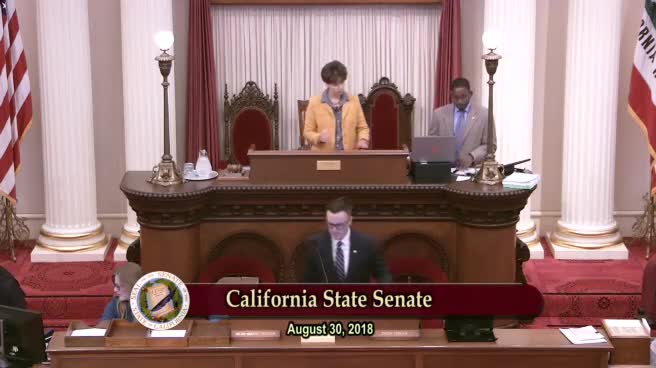 2MIN
Senate Floor
 13MIN
Senate Standing Committee on Public Safety
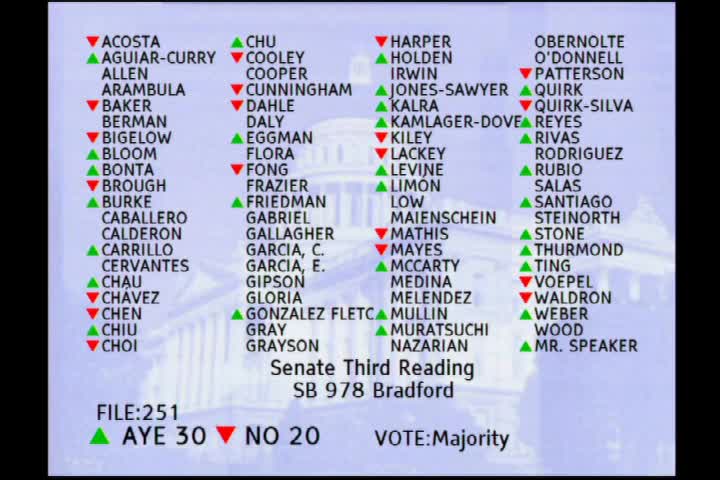 4MIN
Assembly Floor
 1H
Assembly Standing Committee on Appropriations
 10MIN
Assembly Standing Committee on Public Safety
 3MIN
Senate Floor
 7MIN
Senate Standing Committee on Labor and Industrial Relations
 12MIN
Senate Standing Committee on Education
Bill Author

Bill Co-Author(s):