SB 1201: Contracts: consumer protection: residential mortgage lending.
- Session Year: 2017-2018
- House: Senate
- Latest Version Date: 2018-09-11
Existing law requires a supervised financial organization that negotiates primarily in Spanish, Chinese, Tagalog, Vietnamese, or Korean, whether orally or in writing, in the course of entering into a contract or agreement for a loan or extension of credit secured by residential real property, to deliver to the other party to that contract or agreement before execution of the contract or agreement, a specific form, created by the Department of Business Oversight, in each of these languages for use by a supervised financial organization to summarize the terms of a mortgage loan. Existing law authorizes the department, in creating the form, to use a specific federal disclosure form from the United States Department of Housing and Urban Development as guidance.
This bill would also require a supervised financial organization that negotiates the modification of any of the terms of a loan or extension of credit secured by residential real property primarily in one of the above languages and that offers a borrower a final loan modification in writing, to deliver to that borrower, at the time the final loan modification offer is made, a specified form summarizing the modified loan terms in the same language as the negotiation.
The bill would additionally require delivery of an applicable form or forms for transactions subject to certain federal regulations, and in this regard would authorize the Department of Business Oversight, in making available each of its forms in each of the languages set forth above, to use as guidance 2 additional forms from the Consumer Financial Protection Bureau and 3 additional forms from the Federal National Mortgage Association. The bill would specify that these provisions become operative 90 days following the issuance of the forms by the Department of Business Oversight, but in no instance before January 1, 2019.
Under existing law, the California Residential Mortgage Lending Act, if a licensee that is required to make an audit fails to do so, the Commissioner of Business Oversight is authorized to have the audit made by an independent certified public accountant at the licensees expense. Existing law authorizes the commissioner to summarily revoke the license of a licensee who fails to file a certified financial statement prepared by an independent certified public accountant, as specified.
This bill would specify that, if, after a revocation order is made, a request for hearing is filed in writing and a hearing is not held within a specified period of time, the order would be deemed rescinded as of its effective date. The bill would prohibit a licensee, during the revocation period, from conducting business, except as specified. The bill would provide that the revocation of a license does not affect the powers of the commissioner pursuant to the act.
Existing law requires a supervised financial organization that negotiates primarily in Spanish, Chinese, Tagalog, Vietnamese, or Korean, whether orally or in writing, in the course of entering into a contract or agreement for a loan or extension of credit secured by residential real property, to deliver to the other party to that contract or agreement before execution of the contract or agreement, a specific form, created by the Department of Business Oversight, in each of these languages for use by a supervised financial organization to summarize the terms of a mortgage loan. Existing law authorizes the department, in creating the form, to use a specific federal disclosure form from the United States Department of Housing and Urban Development as guidance.
This bill would also require a supervised financial organization that negotiates the modification of any of the terms of a loan or extension of credit secured by residential real property primarily in one of the above languages and that offers a borrower a final loan modification in writing, to deliver to that borrower, at the time the final loan modification offer is made, a specified form summarizing the modified loan terms in the same language as the negotiation.
The bill would additionally require delivery of an applicable form or forms for transactions subject to certain federal regulations, and in this regard would authorize the Department of Business Oversight, in making available each of its forms in each of the languages set forth above, to use as guidance 2 additional forms from the Consumer Financial Protection Bureau and 3 additional forms from the Federal National Mortgage Association. The bill would specify that these provisions become operative 90 days following the issuance of the forms by the Department of Business Oversight, but in no instance before January 1, 2019.
Under existing law, the California Residential Mortgage Lending Act, if a licensee that is required to make an audit fails to do so, the Commissioner of Business Oversight is authorized to have the audit made by an independent certified public accountant at the licensees expense. Existing law authorizes the commissioner to summarily revoke the license of a licensee who fails to file a certified financial statement prepared by an independent certified public accountant, as specified.
This bill would specify that, if, after a revocation order is made, a request for hearing is filed in writing and a hearing is not held within a specified period of time, the order would be deemed rescinded as of its effective date. The bill would prohibit a licensee, during the revocation period, from conducting business, except as specified. The bill would provide that the revocation of a license does not affect the powers of the commissioner pursuant to the act.
Existing law requires a supervised financial organization that negotiates primarily in Spanish, Chinese, Tagalog, Vietnamese, or Korean, whether orally or in writing, in the course of entering into a contract or agreement for a loan or extension of credit secured by residential real property, to deliver to the other party to that contract or agreement before execution of the contract or agreement, a specific form, created by the Department of Business Oversight, in each of these languages for use by a supervised financial organization to summarize the terms of a mortgage loan. Existing law authorizes the department, in creating the form, to use a specific federal disclosure form from the United States Department of Housing and Urban Development as guidance.
This bill would also require a supervised financial organization that negotiates the modification of any of the terms of a loan or extension of credit secured by residential real property primarily in one of the above languages and that offers a borrower a final loan modification in writing, to deliver to that borrower a written disclosure borrower, at the time the final loan modification offer is made, a specified form summarizing the modified loan terms in the same language as the negotiation.
The bill would additionally require delivery of an applicable form or forms for transactions subject to certain federal regulations, and in this regard would authorize the Department of Business Oversight, in making available each of its forms in each of the languages set forth above, to use as guidance 2 additional forms from the Consumer Finance Protection Bureau. Bureau and 3 additional forms from the Federal National Mortgage Association. The bill would specify that these provisions become operative 90 days following the issuance of the forms by the Department of Business Oversight, but in no instance before January 1, 2019.
Under existing law, the California Residential Mortgage Lending Act, if a licensee that is required to make an audit fails to do so, the Commissioner of Business Oversight is authorized to have the audit made by an independent certified public accountant at the licensees expense. Existing law authorizes the commissioner to summarily revoke the license of a licensee who fails to file a certified financial statement prepared by an independent certified public accountant, as specified.
This bill would specify that, if, after a revocation order is made, a request for hearing is filed in writing and a hearing is not held within a specified period of time, the order would be deemed rescinded as of its effective date. The bill would prohibit a licensee, during the revocation period, from conducting business, except as specified. The bill would provide that the revocation of a license does not affect the powers of the commissioner pursuant to the act.
Existing law requires a supervised financial organization that negotiates primarily in Spanish, Chinese, Tagalog, Vietnamese, or Korean, whether orally or in writing, in the course of entering into a contract or agreement for a loan or extension of credit secured by residential real property, to deliver to the other party to that contract or agreement before execution of the contract or agreement, a specific form, created by the Department of Business Oversight, in each of these languages for use by a supervised financial organization to summarize the terms of a mortgage loan. Existing law authorizes the department, in creating the form, to use a specific federal disclosure form from the United States Department of Housing and Urban Development as guidance.
This bill would also require a supervised financial organization that negotiates the modification of any of the terms of a loan or extension of credit secured by residential real property primarily in one of the above languages and that offers a borrower a final loan modification in writing, to deliver to the that borrower a written disclosure of summarizing the modified loan terms in the same language as the negotiation, at the time of the loan modification, in accordance with certain timeframes. negotiation.
The bill would instead additionally require delivery of an applicable form or forms for transactions subject to certain federal regulations, and in this regard would authorize the Department of Business Oversight, in creating making available each of its forms in each of the languages set forth above, to use as guidance 2 additional forms from the Consumer Finance Protection Bureau.
Under existing law, the California Residential Mortgage Lending Act, if a licensee that is required to make an audit fails to cause an audit to be made, do so, the Commissioner of Business Oversight is authorized to cause the audit to be to have the audit made by an independent certified public accountant at the licensees expense. Existing law authorizes the commissioner to summarily revoke the license of a licensee who fails to file a certified financial statement prepared by an independent certified public accountant, as specified.
This bill, bill would specify that, if, after a revocation order is made, a request for hearing is filed in writing and a hearing is not held within a specified period of time, would deem the order would be deemed rescinded as of its effective date. During the revocation period, the bill The bill would prohibit a licensee licensee, during the revocation period, from conducting business, except as specified. The bill would provide that the revocation of a license does not affect the powers of the commissioner pursuant to the act.
Existing law requires a supervised financial organization that negotiates primarily in Spanish, Chinese, Tagalog, Vietnamese, or Korean, whether orally or in writing, in the course of entering into a contract or agreement for a loan or extension of credit secured by residential real property, to deliver to the other party to that contract or agreement before execution of the contract or agreement, a specific form, created by the Department of Business Oversight, in each of these languages for use by a supervised financial organization to summarize the terms of a mortgage loan. Existing law authorizes the department, in creating the form, to use a specific federal disclosure form from the United States Department of Housing and Urban Development as guidance.
This bill would also require a supervised financial organization that negotiates the modification of any of the terms of a loan secured by residential real property primarily in one of the above languages to deliver to the borrower a written disclosure of the modified loan terms in the same language as the negotiation, at the time of the loan modification, in accordance with certain timeframes.
The bill would instead require delivery of an applicable form and in this regard would authorize the Department of Business Oversight, in creating its forms in each of the languages set forth above, to use as guidance 2 additional forms from the Consumer Finance Protection Bureau.
Under existing law, the California Residential Mortgage Lending Act, if a licensee required to make an audit fails to cause an audit to be made, the Commissioner of Business Oversight is authorized to cause the audit to be made by an independent certified public accountant at the licensees expense. Existing law authorizes the commissioner to summarily revoke the license of a licensee who fails to file a certified financial statement prepared by an independent certified public accountant, as specified.
This bill, if, after a revocation order is made, a request for hearing is filed in writing and a hearing is not held within a specified period of time, would deem the order rescinded as of its effective date. During the revocation period, the bill would prohibit a licensee from conducting business, except as specified. The bill would provide that the revocation of a license does not affect the powers of the commissioner pursuant to the act.
(a)(1)A supervised financial organization that negotiates primarily in Spanish, Chinese, Tagalog, Vietnamese, or Korean, whether orally or in writing, in the course of entering into a contract or agreement for a loan or extension of credit secured by residential real property, shall deliver to the other party to that contract or agreement prior to the execution of the contract or agreement the applicable form or forms described in subdivision (i) for that language.
(2)A supervised financial organization that negotiates the modification of any of the terms of a loan or extension of credit secured by residential real property primarily in Spanish, Chinese, Tagalog, Vietnamese, or Korean, and that offers a borrower a final loan modification in writing, shall deliver to that borrower, at the time the final loan modification offer is made, one of the forms described in paragraph (4) of subdivision (i) summarizing the modified terms of the loan in the same language as the negotiation.
(b)For purposes of this section:
(1)Contract or agreement has the same meaning as defined in subdivision (g) of Section 1632.
(2)Supervised financial organization means a bank, savings association, as defined in Section 5102 of the Financial Code, credit union, or holding company, affiliate, or subsidiary thereof, or any person subject to Division 7 (commencing with Section 18000), Division 9 (commencing with Section 22000), or Division 20 (commencing with Section 50000) of the Financial Code.
(c)(1)With respect to a contract or agreement for a loan or extension of credit secured by residential real property as described in subdivision (a), a supervised financial organization that complies with this section shall be deemed in compliance with Section 1632.
(2)Except with respect to a loan or extension of credit described in paragraph (2) of subdivision (a), a supervised financial organization that complies with Section 1632, with respect to a contract or agreement for a loan or extension of credit secured by residential real property as described in subdivision (a), shall be deemed in compliance with this section.
(d)(1)Except as provided in paragraphs (2) and (3), the supervised financial organization shall provide the Good Faith Estimate disclosure form described in paragraph (1) of subdivision (i) to the borrower no later than three business days after receipt of the written application, and if any of the loan terms summarized materially change after provision of the translated form but prior to consummation of the loan, the supervised financial organization shall provide an updated version of the translated form prior to consummation of the loan.
(2)For a transaction subject to subsection (e) of Section 1026.19 of Title 12 of the Code of Federal Regulations, the supervised financial organization shall provide the Loan Estimate form described in paragraph (2) of subdivision (i) translated in the applicable language no later than three business days after receipt of the written application. If any of the summarized loan terms materially change after provision of the Loan Estimate form but prior to consummation of the loan, the supervised financial organization shall provide an updated version of the translated form prior to consummation of the loan.
(3)For a transaction subject to subsection (f) of Section 1026.19 of Title 12 of the Code of Federal Regulations, the supervised financial organization shall provide the Closing Disclosure form described in paragraph (3) of subdivision (i) translated in the applicable language at least three business days prior to consummation of the loan.
(e)(1)This section does not apply to a supervised financial organization that negotiates primarily in a language other than English, as described by subdivision (a), if the party with whom the supervised financial organization is negotiating, negotiates the terms of the contract through his or her own interpreter.
(2)For purposes of this subdivision, his or her own interpreter means a person, not a minor, who is able to speak fluently and read with full understanding both the English language and one of the languages specified in subdivision (a) that is the language in which the contract was negotiated, who is not employed by, and whose services are not made available through, the person engaged in the trade or business.
(f)Notwithstanding subdivision (a), a translated form may retain any of the following elements of the executed English language contract or agreement without translation:
(1)Names and titles of individuals and other persons.
(2)Addresses, brand names, trade names, trademarks, or registered service marks.
(3)Full or abbreviated designations of the make and model of goods or services.
(4)Alphanumeric codes.
(5)Individual words or expressions having no generally accepted non-English translation.
(g)The terms of the contract or agreement that is executed in the English language shall determine the rights and obligations of the parties. However, the translation of the forms described in subdivision (i) and required by subdivision (a) shall be admissible in evidence only to show that no contract or agreement was entered into because of a substantial difference in the material terms and conditions of the contract or agreement and the prior translated forms provided to the borrower.
(h)(1)A licensing agency may, by order, after appropriate notice and opportunity for hearing, levy administrative penalties against a supervised financial organization that violates any provision of this section, and the supervised financial organization may be liable for administrative penalties, up to the amounts of two thousand five hundred dollars ($2,500) for the first violation, five thousand dollars ($5,000) for the second violation, and ten thousand dollars ($10,000) for each subsequent violation. Except for licensing agencies exempt from the provisions of the Administrative Procedure Act, any hearing shall be held in accordance with the Administrative Procedure Act (Chapter 5 (commencing with Section 11500) of Part 1 of Division 3 of Title 2 of the Government Code), and the licensing agency shall have all the powers granted under that act.
(2)A licensing agency may exercise any and all authority and powers available to it under any other provisions of law to administer and enforce this section, including, but not limited to, investigating and examining the licensed persons books and records, and charging and collecting the reasonable costs for these activities. The licensing agency shall not charge a licensed person twice for the same service. Any civil, criminal, and administrative authority and remedies available to the licensing agency pursuant to its licensing law may be sought and employed in any combination deemed advisable by the licensing agency to enforce the provisions of this section.
(3)Any supervised financial organization that violates any provision of this section shall be deemed to have violated its licensing law.
(4)Nothing in this section shall be construed to impair or impede the Attorney General from bringing an action to enforce this division.
(i)The Department of Business Oversight shall make available each of the following forms based on existing forms in each of the languages set forth in subdivision (a) for use by a supervised financial organization to summarize the terms of a mortgage loan pursuant to subdivision (a). In making available the forms, the Department of Business Oversight may use as guidance the following existing forms:
(1)The Good Faith Estimate disclosure form from the United States Department of Housing and Urban Development.
(2)The Loan Estimate form from the Consumer Finance Protection Bureau.
(3)The Closing Disclosure form from the Consumer Finance Protection Bureau.
(4)The Agreement for Modification, Re-Amortization, or Extension of a Mortgage (Form 181), the Loan Modification Agreement (Providing for Fixed Interest Rate) (Form 3179), and the Loan Modification Agreement (Providing for Adjustable Interest Rate) (Form 3161) from the Federal National Mortgage Association.
(j)This section shall not apply to federally chartered banks, credit unions, savings banks, or thrifts.
(k)Except as otherwise provided in subdivision (h), this section shall not be construed to create or enhance any claim, right of action, or civil liability that did not previously exist under state law, or limit any claim, right of action, or civil liability that otherwise exists under state law.
(l)An action against a supervised financial organization for a violation of this section may only be brought by a licensing agency or by the Attorney General.
SEC. 2.Section 50200 of the Financial Code is amended to read:50200.(a)At the end of the licensees fiscal year, but in no case more than 12 months after the last audit conducted pursuant to this section, each licensed residential mortgage lender or servicer shall cause its books and accounts to be audited by an independent certified public accountant. Beginning with all audits of business conducted after December 31, 1995, the audit shall be sufficiently comprehensive in scope to permit the expression of an opinion on the financial statements prepared in accordance with generally accepted accounting principles and shall be performed in accordance with generally accepted auditing standards. The audit shall include a reconciliation of the licensees trust accounts as of the audit date.
(b)Expression of an opinion includes (1) an unqualified opinion, (2) a qualified opinion, (3) a disclaimer of opinion, or (4) an adverse opinion. If a financial statement, report, certificate, or opinion of the independent certified public accountant is in any way qualified, the commissioner may require the licensee to take any action that the commissioner deems appropriate to address the qualification. The commissioner may reject any financial statement, report, certificate, or opinion by notifying the licensee or other person required to make the filing of the rejection and the reason therefor. Within 30 days after the receipt of the notice, the licensee or other person shall correct the deficiencies. Failure to correct the deficiencies is a violation of this division. The commissioner shall retain a copy of all financial statements, reports, certificates, or opinions so rejected.
(c)If a qualified or adverse opinion is expressed or if an opinion is disclaimed, the reasons therefor must be fully explained.
(d)The audit report shall be filed with the commissioner within 105 days of the end of the licensees fiscal year. The report filed with the commissioner shall be certified by the certified public accountant conducting the audit. The commissioner may promulgate rules regarding late audit reports.
(e)If a licensee required to make an audit fails to cause an audit to be made, the commissioner may cause the audit to be made by an independent certified public accountant at the licensees expense. The commissioner shall select the independent certified public accountant by advertising for bids or by other fair and impartial means that the commissioner establishes by rule. The commissioner may summarily revoke the license of a licensee who fails to file a certified financial statement prepared by an independent certified public accountant as required by this division or at the request of the commissioner. If, after a revocation order is made, the request for hearing is filed in writing within 30 days from the date of service of the order and a hearing is not held within 90 days of the filing, the order is deemed rescinded as of its effective date. During a period when its license is revoked, a licensee shall not conduct business pursuant to this division except as may be permitted by further order of the commissioner. However, the revocation, suspension, or surrender of a license shall not affect the powers of the commissioner as provided in this division.
(f)Audits conducted in accordance with the uniform single audit procedures of the United States Department of Housing and Urban Development may be submitted in fulfillment of the requirements of this section.
SEC. 3.The amendments made by Section 1 of this act to Section 1632.5 of the Civil Code shall become operative 90 days following the issuance of forms by the Department of Business Oversight pursuant to subdivision (i) of that section, but in no instance before January 1, 2019.
(a)(1)A supervised financial organization that negotiates primarily in Spanish, Chinese, Tagalog, Vietnamese, or Korean, whether orally or in writing, in the course of entering into a contract or agreement for a loan or extension of credit secured by residential real property, shall deliver to the other party to that contract or agreement prior to the execution of the contract or agreement the applicable form or forms described in subdivision (i) for that language.
(2)A supervised financial organization that negotiates the modification of any of the terms of a loan or extension of credit secured by residential real property primarily in Spanish, Chinese, Tagalog, Vietnamese, or Korean, and that offers a borrower a final loan modification in writing, shall deliver to that borrower, at the time the final loan modification offer is made, one of the forms described in paragraph (4) of subdivision (i) summarizing the modified terms of the loan in the same language as the negotiation.
(b)For purposes of this section:
(1)Contract or agreement has the same meaning as defined in subdivision (g) of Section 1632.
(2)Supervised financial organization means a bank, savings association, as defined in Section 5102 of the Financial Code, credit union, or holding company, affiliate, or subsidiary thereof, or any person subject to Division 7 (commencing with Section 18000), Division 9 (commencing with Section 22000), or Division 20 (commencing with Section 50000) of the Financial Code.
(c)(1)With respect to a contract or agreement for a loan or extension of credit secured by residential real property as described in subdivision (a), a supervised financial organization that complies with this section shall be deemed in compliance with Section 1632.
(2)Except with respect to a loan or extension of credit described in paragraph (2) of subdivision (a), a supervised financial organization that complies with Section 1632, with respect to a contract or agreement for a loan or extension of credit secured by residential real property as described in subdivision (a), shall be deemed in compliance with this section.
(d)(1)Except as provided in paragraphs (2) and (3), the supervised financial organization shall provide the Good Faith Estimate disclosure form described in paragraph (1) of subdivision (i) to the borrower no later than three business days after receipt of the written application, and if any of the loan terms summarized materially change after provision of the translated form but prior to consummation of the loan, the supervised financial organization shall provide an updated version of the translated form prior to consummation of the loan.
(2)For a transaction subject to subsection (e) of Section 1026.19 of Title 12 of the Code of Federal Regulations, the supervised financial organization shall provide the Loan Estimate form described in paragraph (2) of subdivision (i) translated in the applicable language no later than three business days after receipt of the written application. If any of the summarized loan terms materially change after provision of the Loan Estimate form but prior to consummation of the loan, the supervised financial organization shall provide an updated version of the translated form prior to consummation of the loan.
(3)For a transaction subject to subsection (f) of Section 1026.19 of Title 12 of the Code of Federal Regulations, the supervised financial organization shall provide the Closing Disclosure form described in paragraph (3) of subdivision (i) translated in the applicable language at least three business days prior to consummation of the loan.
(e)(1)This section does not apply to a supervised financial organization that negotiates primarily in a language other than English, as described by subdivision (a), if the party with whom the supervised financial organization is negotiating, negotiates the terms of the contract through his or her own interpreter.
(2)For purposes of this subdivision, his or her own interpreter means a person, not a minor, who is able to speak fluently and read with full understanding both the English language and one of the languages specified in subdivision (a) that is the language in which the contract was negotiated, who is not employed by, and whose services are not made available through, the person engaged in the trade or business.
(f)Notwithstanding subdivision (a), a translated form may retain any of the following elements of the executed English language contract or agreement without translation:
(1)Names and titles of individuals and other persons.
(2)Addresses, brand names, trade names, trademarks, or registered service marks.
(3)Full or abbreviated designations of the make and model of goods or services.
(4)Alphanumeric codes.
(5)Individual words or expressions having no generally accepted non-English translation.
(g)The terms of the contract or agreement that is executed in the English language shall determine the rights and obligations of the parties. However, the translation of the forms described in subdivision (i) and required by subdivision (a) shall be admissible in evidence only to show that no contract or agreement was entered into because of a substantial difference in the material terms and conditions of the contract or agreement and the prior translated forms provided to the borrower.
(h)(1)A licensing agency may, by order, after appropriate notice and opportunity for hearing, levy administrative penalties against a supervised financial organization that violates any provision of this section, and the supervised financial organization may be liable for administrative penalties, up to the amounts of two thousand five hundred dollars ($2,500) for the first violation, five thousand dollars ($5,000) for the second violation, and ten thousand dollars ($10,000) for each subsequent violation. Except for licensing agencies exempt from the provisions of the Administrative Procedure Act, any hearing shall be held in accordance with the Administrative Procedure Act (Chapter 5 (commencing with Section 11500) of Part 1 of Division 3 of Title 2 of the Government Code), and the licensing agency shall have all the powers granted under that act.
(2)A licensing agency may exercise any and all authority and powers available to it under any other provisions of law to administer and enforce this section, including, but not limited to, investigating and examining the licensed persons books and records, and charging and collecting the reasonable costs for these activities. The licensing agency shall not charge a licensed person twice for the same service. Any civil, criminal, and administrative authority and remedies available to the licensing agency pursuant to its licensing law may be sought and employed in any combination deemed advisable by the licensing agency to enforce the provisions of this section.
(3)Any supervised financial organization that violates any provision of this section shall be deemed to have violated its licensing law.
(4)Nothing in this section shall be construed to impair or impede the Attorney General from bringing an action to enforce this division.
(i)The Department of Business Oversight shall make available each of the following forms based on existing forms in each of the languages set forth in subdivision (a) for use by a supervised financial organization to summarize the terms of a mortgage loan pursuant to subdivision (a). In making available the forms, the Department of Business Oversight may use as guidance the following existing forms:
(1)The Good Faith Estimate disclosure form from the United States Department of Housing and Urban Development.
(2)The Loan Estimate form from the Consumer Finance Protection Bureau.
(3)The Closing Disclosure form from the Consumer Finance Protection Bureau.
(4)The Agreement for Modification, Re-Amortization, or Extension of a Mortgage (Form 181), the Loan Modification Agreement (Providing for Fixed Interest Rate) (Form 3179), and the Loan Modification Agreement (Providing for Adjustable Interest Rate) (Form 3161) from the Federal National Mortgage Association.
(j)This section shall not apply to federally chartered banks, credit unions, savings banks, or thrifts.
(k)Except as otherwise provided in subdivision (h), this section shall not be construed to create or enhance any claim, right of action, or civil liability that did not previously exist under state law, or limit any claim, right of action, or civil liability that otherwise exists under state law.
(l)An action against a supervised financial organization for a violation of this section may only be brought by a licensing agency or by the Attorney General.
SEC. 2.Section 50200 of the Financial Code is amended to read:50200.(a)At the end of the licensees fiscal year, but in no case more than 12 months after the last audit conducted pursuant to this section, each licensed residential mortgage lender or servicer shall cause its books and accounts to be audited by an independent certified public accountant. Beginning with all audits of business conducted after December 31, 1995, the audit shall be sufficiently comprehensive in scope to permit the expression of an opinion on the financial statements prepared in accordance with generally accepted accounting principles and shall be performed in accordance with generally accepted auditing standards. The audit shall include a reconciliation of the licensees trust accounts as of the audit date.
(b)Expression of an opinion includes (1) an unqualified opinion, (2) a qualified opinion, (3) a disclaimer of opinion, or (4) an adverse opinion. If a financial statement, report, certificate, or opinion of the independent certified public accountant is in any way qualified, the commissioner may require the licensee to take any action that the commissioner deems appropriate to address the qualification. The commissioner may reject any financial statement, report, certificate, or opinion by notifying the licensee or other person required to make the filing of the rejection and the reason therefor. Within 30 days after the receipt of the notice, the licensee or other person shall correct the deficiencies. Failure to correct the deficiencies is a violation of this division. The commissioner shall retain a copy of all financial statements, reports, certificates, or opinions so rejected.
(c)If a qualified or adverse opinion is expressed or if an opinion is disclaimed, the reasons therefor must be fully explained.
(d)The audit report shall be filed with the commissioner within 105 days of the end of the licensees fiscal year. The report filed with the commissioner shall be certified by the certified public accountant conducting the audit. The commissioner may promulgate rules regarding late audit reports.
(e)If a licensee required to make an audit fails to cause an audit to be made, the commissioner may cause the audit to be made by an independent certified public accountant at the licensees expense. The commissioner shall select the independent certified public accountant by advertising for bids or by other fair and impartial means that the commissioner establishes by rule. The commissioner may summarily revoke the license of a licensee who fails to file a certified financial statement prepared by an independent certified public accountant as required by this division or at the request of the commissioner. If, after a revocation order is made, the request for hearing is filed in writing within 30 days from the date of service of the order and a hearing is not held within 90 days of the filing, the order is deemed rescinded as of its effective date. During a period when its license is revoked, a licensee shall not conduct business pursuant to this division except as may be permitted by further order of the commissioner. However, the revocation, suspension, or surrender of a license shall not affect the powers of the commissioner as provided in this division.
(f)Audits conducted in accordance with the uniform single audit procedures of the United States Department of Housing and Urban Development may be submitted in fulfillment of the requirements of this section.
SEC. 3.The amendments made by Section 1 of this act to Section 1632.5 of the Civil Code shall become operative 90 days following the issuance of forms by the Department of Business Oversight pursuant to subdivision (i) of that section, but in no instance before January 1, 2019.
(a)(1)A supervised financial organization that negotiates primarily in Spanish, Chinese, Tagalog, Vietnamese, or Korean, whether orally or in writing, in the course of entering into a contract or agreement for a loan or extension of credit secured by residential real property, shall deliver to the other party to that contract or agreement prior to the execution of the contract or agreement the applicable form or forms described in subdivision (i) for that language.
(2)A supervised financial organization that negotiates the modification of any of the terms of a loan or extension of credit secured by residential real property primarily in Spanish, Chinese, Tagalog, Vietnamese, or Korean, and that offers a borrower a final loan modification in writing, shall deliver to that borrower a written disclosure borrower, at the time the final loan modification offer is made, one of the forms described in paragraph (4) of subdivision (i) summarizing the modified terms of the loan in the same language as the negotiation.
(b)For purposes of this section:
(1)Contract or agreement has the same meaning as defined in subdivision (g) of Section 1632.
(2)Supervised financial organization means a bank, savings association, as defined in Section 5102 of the Financial Code, credit union, or holding company, affiliate, or subsidiary thereof, or any person subject to Division 7 (commencing with Section 18000), Division 9 (commencing with Section 22000), or Division 20 (commencing with Section 50000) of the Financial Code.
(c)(1)With respect to a contract or agreement for a loan or extension of credit secured by residential real property as described in subdivision (a), a supervised financial organization that complies with this section shall be deemed in compliance with Section 1632.
(2)Except with respect to a loan or extension of credit described in paragraph (2) of subdivision (a), a supervised financial organization that complies with Section 1632, with respect to a contract or agreement for a loan or extension of credit secured by residential real property as described in subdivision (a), shall be deemed in compliance with this section.
(d)(1)Except as provided in paragraphs (2) and (3), the supervised financial organization shall provide the Good Faith Estimate disclosure form described in paragraph (1) of subdivision (i) to the borrower no later than three business days after receipt of the written application, and if any of the loan terms summarized materially change after provision of the translated form but prior to consummation of the loan, the supervised financial organization shall provide an updated version of the translated form prior to consummation of the loan.
(2)For a transaction subject to subsection (e) of Section 1026.19 of Title 12 of the Code of Federal Regulations, the supervised financial organization shall provide the Loan Estimate form described in paragraph (2) of subdivision (i) translated in the applicable language no later than three business days after receipt of the written application. If any of the summarized loan terms materially change after provision of the Loan Estimate form but prior to consummation of the loan, the supervised financial organization shall provide an updated version of the translated form prior to consummation of the loan.
(3)For a transaction subject to subsection (f) of Section 1026.19 of Title 12 of the Code of Federal Regulations, the supervised financial organization shall provide the Closing Disclosure form described in paragraph (3) of subdivision (i) translated in the applicable language at least three business days prior to consummation of the loan.
(e)(1)This section does not apply to a supervised financial organization that negotiates primarily in a language other than English, as described by subdivision (a), if the party with whom the supervised financial organization is negotiating, negotiates the terms of the contract through his or her own interpreter.
(2)For purposes of this subdivision, his or her own interpreter means a person, not a minor, who is able to speak fluently and read with full understanding both the English language and one of the languages specified in subdivision (a) that is the language in which the contract was negotiated, who is not employed by, and whose services are not made available through, the person engaged in the trade or business.
(f)Notwithstanding subdivision (a), a translated form may retain any of the following elements of the executed English language contract or agreement without translation:
(1)Names and titles of individuals and other persons.
(2)Addresses, brand names, trade names, trademarks, or registered service marks.
(3)Full or abbreviated designations of the make and model of goods or services.
(4)Alphanumeric codes.
(5)Individual words or expressions having no generally accepted non-English translation.
(g)The terms of the contract or agreement that is executed in the English language shall determine the rights and obligations of the parties. However, the translation of the forms described in subdivision (i) and required by subdivision (a) shall be admissible in evidence only to show that no contract or agreement was entered into because of a substantial difference in the material terms and conditions of the contract or agreement and the prior translated forms provided to the borrower.
(h)(1)A licensing agency may, by order, after appropriate notice and opportunity for hearing, levy administrative penalties against a supervised financial organization that violates any provision of this section, and the supervised financial organization may be liable for administrative penalties, up to the amounts of two thousand five hundred dollars ($2,500) for the first violation, five thousand dollars ($5,000) for the second violation, and ten thousand dollars ($10,000) for each subsequent violation. Except for licensing agencies exempt from the provisions of the Administrative Procedure Act, any hearing shall be held in accordance with the Administrative Procedure Act (Chapter 5 (commencing with Section 11500) of Part 1 of Division 3 of Title 2 of the Government Code), and the licensing agency shall have all the powers granted under that act.
(2)A licensing agency may exercise any and all authority and powers available to it under any other provisions of law to administer and enforce this section, including, but not limited to, investigating and examining the licensed persons books and records, and charging and collecting the reasonable costs for these activities. The licensing agency shall not charge a licensed person twice for the same service. Any civil, criminal, and administrative authority and remedies available to the licensing agency pursuant to its licensing law may be sought and employed in any combination deemed advisable by the licensing agency to enforce the provisions of this section.
(3)Any supervised financial organization that violates any provision of this section shall be deemed to have violated its licensing law.
(4)Nothing in this section shall be construed to impair or impede the Attorney General from bringing an action to enforce this division.
(i)The Department of Business Oversight shall make available each of the following forms based on existing forms in each of the languages set forth in subdivision (a) for use by a supervised financial organization to summarize the terms of a mortgage loan pursuant to subdivision (a). In making available the forms, the Department of Business Oversight may use as guidance the following existing forms:
(1)The Good Faith Estimate disclosure form from the United States Department of Housing and Urban Development.
(2)The Loan Estimate form from the Consumer Finance Protection Bureau.
(3)The Closing Disclosure form from the Consumer Finance Protection Bureau.
(4)The Agreement for Modification, Re-Amortization, or Extension of a Mortgage (Form 181), the Loan Modification Agreement (Providing for Fixed Interest Rate) (Form 3179), and the Loan Modification Agreement (Providing for Adjustable Interest Rate) (Form 3161) from the Federal National Mortgage Association.
(j)This section shall not apply to federally chartered banks, credit unions, savings banks, or thrifts.
(k)Except as otherwise provided in subdivision (h), this section shall not be construed to create or enhance any claim, right of action, or civil liability that did not previously exist under state law, or limit any claim, right of action, or civil liability that otherwise exists under state law.
(l)An action against a supervised financial organization for a violation of this section may only be brought by a licensing agency or by the Attorney General.
SEC. 2.Section 50200 of the Financial Code is amended to read:50200.(a)At the end of the licensees fiscal year, but in no case more than 12 months after the last audit conducted pursuant to this section, each licensed residential mortgage lender or servicer shall cause its books and accounts to be audited by an independent certified public accountant. Beginning with all audits of business conducted after December 31, 1995, the audit shall be sufficiently comprehensive in scope to permit the expression of an opinion on the financial statements prepared in accordance with generally accepted accounting principles and shall be performed in accordance with generally accepted auditing standards. The audit shall include a reconciliation of the licensees trust accounts as of the audit date.
(b)Expression of an opinion includes (1) an unqualified opinion, (2) a qualified opinion, (3) a disclaimer of opinion, or (4) an adverse opinion. If a financial statement, report, certificate, or opinion of the independent certified public accountant is in any way qualified, the commissioner may require the licensee to take any action that the commissioner deems appropriate to address the qualification. The commissioner may reject any financial statement, report, certificate, or opinion by notifying the licensee or other person required to make the filing of the rejection and the reason therefor. Within 30 days after the receipt of the notice, the licensee or other person shall correct the deficiencies. Failure to correct the deficiencies is a violation of this division. The commissioner shall retain a copy of all financial statements, reports, certificates, or opinions so rejected.
(c)If a qualified or adverse opinion is expressed or if an opinion is disclaimed, the reasons therefor must be fully explained.
(d)The audit report shall be filed with the commissioner within 105 days of the end of the licensees fiscal year. The report filed with the commissioner shall be certified by the certified public accountant conducting the audit. The commissioner may promulgate rules regarding late audit reports.
(e)If a licensee required to make an audit fails to cause an audit to be made, the commissioner may cause the audit to be made by an independent certified public accountant at the licensees expense. The commissioner shall select the independent certified public accountant by advertising for bids or by other fair and impartial means that the commissioner establishes by rule. The commissioner may summarily revoke the license of a licensee who fails to file a certified financial statement prepared by an independent certified public accountant as required by this division or at the request of the commissioner. If, after a revocation order is made, the request for hearing is filed in writing within 30 days from the date of service of the order and a hearing is not held within 90 days of the filing, the order is deemed rescinded as of its effective date. During a period when its license is revoked, a licensee shall not conduct business pursuant to this division except as may be permitted by further order of the commissioner. However, the revocation, suspension, or surrender of a license shall not affect the powers of the commissioner as provided in this division.
(f)Audits conducted in accordance with the uniform single audit procedures of the United States Department of Housing and Urban Development may be submitted in fulfillment of the requirements of this section.
SEC. 3.The amendments made by Section 1 of this act to Section 1632.5 of the Civil Code shall become operative 90 days following the issuance of forms by the Department of Business Oversight pursuant to subdivision (i) of that section, but in no instance before January 1, 2019.
(a)(1)A supervised financial organization that negotiates primarily in Spanish, Chinese, Tagalog, Vietnamese, or Korean, whether orally or in writing, in the course of entering into a contract or agreement for a loan or extension of credit secured by residential real property, shall deliver to the other party to that contract or agreement prior to the execution of the contract or agreement the applicable form or forms described in subdivision (i) for that language.
(2)A supervised financial organization that negotiates the modification of any of the terms of a loan or extension of credit secured by residential real property primarily in Spanish, Chinese, Tagalog, Vietnamese, or Korean, and that offers a borrower a final loan modification in writing, shall deliver to the that borrower a written disclosure of summarizing the modified terms of the loan in the same language as the negotiation, at the time of the loan modification. negotiation.
(b)For purposes of this section:
(1)Contract or agreement shall have has the same meaning as defined in subdivision (g) of Section 1632.
(2)Supervised financial organization means a bank, savings association, as defined in Section 5102 of the Financial Code, credit union, or holding company, affiliate, or subsidiary thereof, or any person subject to Division 7 (commencing with Section 18000), Division 9 (commencing with Section 22000), or Division 20 (commencing with Section 50000) of the Financial Code.
(c)(1)With respect to a contract or agreement for a loan or extension of credit secured by residential real property as described in subdivision (a), a supervised financial organization that complies with this section shall be deemed in compliance with Section 1632.
(2)Except as provided in paragraph (3), with respect to a loan or extension of credit described in paragraph (2) of subdivision (a), a supervised financial organization that complies with Section 1632, with respect to a contract or agreement for a loan or extension of credit secured by residential real property as described in subdivision (a), shall be deemed in compliance with this section.
(3)A supervised financial organization subject to the disclosure requirements in Subpart E of Part 1026 of Chapter X of Title 12 (commencing with Section 1026.31) of the Code of Federal Regulations shall comply with this section.(d)(1)Except as provided in paragraph (2), paragraphs (2) and (3), the supervised financial organization shall provide the Good Faith Estimate disclosure form described in paragraph (1) of subdivision (i) to the borrower no later than three business days after receipt of the written application, and if any of the loan terms summarized materially change after provision of the translated form but prior to consummation of the loan, the supervised financial organization shall provide an updated version of the translated form prior to consummation of the loan.
(2)For a transaction subject to subsection (e) of Section 1026.19 of Title 12 of the Code of Federal Regulations, the supervised financial organization shall provide the Loan Estimate form described in paragraph (2) of subdivision (i) translated in the applicable language no later than three business days after receipt of the written application.
(3)Except as provided in paragraph (4), if If any of the summarized loan terms summarized materially change after provision of the translated form described in paragraph (2) Loan Estimate form but prior to consummation of the loan, the supervised financial organization shall provide an updated version of the translated form prior to consummation of the loan.
(4)(3)For a transaction subject to subsection (f) of Section 1026.19 of Title 12 of the Code of Federal Regulations, the supervised financial organization shall provide the Closing Disclosure form described in paragraph (3) of subdivision (i) translated in the applicable language at least three business days prior to consummation of the loan.
(e)(1)This section does not apply to a supervised financial organization that negotiates primarily in a language other than English, as described by subdivision (a), if the party with whom the supervised financial organization is negotiating, negotiates the terms of the contract through his or her own interpreter.
(2)For purposes of this subdivision, his or her own interpreter means a person, not a minor, who is able to speak fluently and read with full understanding both the English language and one of the languages specified in subdivision (a) that is the language in which the contract was negotiated, who is not employed by, and whose services are not made available through, the person engaged in the trade or business.
(f)Notwithstanding subdivision (a), a translated form may retain any of the following elements of the executed English language contract or agreement without translation:
(1)Names and titles of individuals and other persons.
(2)Addresses, brand names, trade names, trademarks, or registered service marks.
(3)Full or abbreviated designations of the make and model of goods or services.
(4)Alphanumeric codes.
(5)Individual words or expressions having no generally accepted non-English translation.
(g)The terms of the contract or agreement which that is executed in the English language shall determine the rights and obligations of the parties. However, the translation of the forms described in subdivision (i) and required by subdivision (a) shall be admissible in evidence only to show that no contract or agreement was entered into because of a substantial difference in the material terms and conditions of the contract or agreement and the prior translated forms provided to the borrower.
(h)(1)A licensing agency may, by order, after appropriate notice and opportunity for hearing, levy administrative penalties against a supervised financial organization that violates any provision of this section, and the supervised financial organization may be liable for administrative penalties, up to the amounts of two thousand five hundred dollars ($2,500) for the first violation, five thousand dollars ($5,000) for the second violation, and ten thousand dollars ($10,000) for each subsequent violation. Except for licensing agencies exempt from the provisions of the Administrative Procedure Act, any hearing shall be held in accordance with the Administrative Procedure Act (Chapter 5 (commencing with Section 11500) of Part 1 of Division 3 of Title 2 of the Government Code), and the licensing agency shall have all the powers granted under that act.
(2)A licensing agency may exercise any and all authority and powers available to it under any other provisions of law to administer and enforce this section, including, but not limited to, investigating and examining the licensed persons books and records, and charging and collecting the reasonable costs for these activities. The licensing agency shall not charge a licensed person twice for the same service. Any civil, criminal, and administrative authority and remedies available to the licensing agency pursuant to its licensing law may be sought and employed in any combination deemed advisable by the licensing agency to enforce the provisions of this section.
(3)Any supervised financial organization that violates any provision of this section shall be deemed to have violated its licensing law.
(4)Nothing in this section shall be construed to impair or impede the Attorney General from bringing an action to enforce this division.
(i)The Department of Business Oversight shall create and make available each of the following forms based on existing forms in each of the languages set forth in subdivision (a) for use by a supervised financial organization to summarize the terms of a mortgage loan pursuant to subdivision (a). In creating making available the forms forms, the Department of Business Oversight may use as guidance the following existing forms:
(1)The Good Faith Estimate disclosure form from the United States Department of Housing and Urban Development.
(2)The Loan Estimate form from the Consumer Finance Protection Bureau.
(3)The Closing Disclosure form from the Consumer Finance Protection Bureau.
(j)This section shall not apply to federally chartered banks, credit unions, savings banks, or thrifts.
(k)Except as otherwise provided in subdivision (h), this section shall not be construed to create or enhance any claim, right of action, or civil liability that did not previously exist under state law, or limit any claim, right of action, or civil liability that otherwise exists under state law.
(l)An action against a supervised financial organization for a violation of this section may only be brought by a licensing agency or by the Attorney General.
SEC. 2.Section 50200 of the Financial Code is amended to read:50200.(a)At the end of the licensees fiscal year, but in no case more than 12 months after the last audit conducted pursuant to this section, each licensed residential mortgage lender or servicer shall cause its books and accounts to be audited by an independent certified public accountant. Beginning with all audits of business conducted after December 31, 1995, the audit shall be sufficiently comprehensive in scope to permit the expression of an opinion on the financial statements prepared in accordance with generally accepted accounting principles and shall be performed in accordance with generally accepted auditing standards. The audit shall include a reconciliation of the licensees trust accounts as of the audit date.
(b)Expression of an opinion includes (1) an unqualified opinion, (2) a qualified opinion, (3) a disclaimer of opinion, or (4) an adverse opinion. If a financial statement, report, certificate, or opinion of the independent certified public accountant is in any way qualified, the commissioner may require the licensee to take any action that the commissioner deems appropriate to address the qualification. The commissioner may reject any financial statement, report, certificate, or opinion by notifying the licensee or other person required to make the filing of the rejection and the reason therefor. Within 30 days after the receipt of the notice, the licensee or other person shall correct the deficiencies. Failure to correct the deficiencies is a violation of this division. The commissioner shall retain a copy of all financial statements, reports, certificates, or opinions so rejected.
(c)If a qualified or adverse opinion is expressed or if an opinion is disclaimed, the reasons therefor must be fully explained.
(d)The audit report shall be filed with the commissioner within 105 days of the end of the licensees fiscal year. The report filed with the commissioner shall be certified by the certified public accountant conducting the audit. The commissioner may promulgate rules regarding late audit reports.
(e)If a licensee required to make an audit fails to cause an audit to be made, the commissioner may cause the audit to be made by an independent certified public accountant at the licensees expense. The commissioner shall select the independent certified public accountant by advertising for bids or by other fair and impartial means that the commissioner establishes by rule. The commissioner may summarily revoke the license of a licensee who fails to file a certified financial statement prepared by an independent certified public accountant as required by this division or at the request of the commissioner. If, after a revocation order is made, the request for hearing is filed in writing within 30 days from the date of service of the order and a hearing is not held within 90 days of the filing, the order is deemed rescinded as of its effective date. During a period when its license is revoked, a licensee shall not conduct business pursuant to this division except as may be permitted by further order of the commissioner. However, the revocation, suspension, or surrender of a license shall not affect the powers of the commissioner as provided in this division.
(f)Audits conducted in accordance with the uniform single audit procedures of the United States Department of Housing and Urban Development may be submitted in fulfillment of the requirements of this section.
(a)(1)A supervised financial organization that negotiates primarily in Spanish, Chinese, Tagalog, Vietnamese, or Korean, whether orally or in writing, in the course of entering into a contract or agreement for a loan or extension of credit secured by residential real property, shall deliver to the other party to that contract or agreement prior to the execution of the contract or agreement the applicable form described in subdivision (i) for that language.
(2)A supervised financial organization that negotiates the modification of any of the terms of a loan secured by residential real property primarily in Spanish, Chinese, Tagalog, Vietnamese, or Korean, shall deliver to the borrower a written disclosure of the modified terms of the loan in the same language as the negotiation, at the time of the loan modification.
(b)For purposes of this section:
(1)Contract or agreement shall have the same meaning as defined in subdivision (g) of Section 1632.
(2)Supervised financial organization means a bank, savings association, as defined in Section 5102 of the Financial Code, credit union, or holding company, affiliate, or subsidiary thereof, or any person subject to Division 7 (commencing with Section 18000), Division 9 (commencing with Section 22000), or Division 20 (commencing with Section 50000) of the Financial Code.
(c)(1)With respect to a contract or agreement for a loan or extension of credit secured by residential real property as described in subdivision (a), a supervised financial organization that complies with this section shall be deemed in compliance with Section 1632.
(2)A Except as provided in paragraph (3), a supervised financial organization that complies with Section 1632, with respect to a contract or agreement for a loan or extension of credit secured by residential real property as described in subdivision (a), shall be deemed in compliance with this section.
(3)A supervised financial organization subject to the disclosure requirements in Subpart E of Part 1026 of Chapter X of Title 12 (commencing with Section 1026.31) of the Code of Federal Regulations shall comply with this section.
(d)The (1)Except as provided in paragraph (2), the supervised financial organization shall provide the Good Faith Estimate disclosure form described in paragraph (1) of subdivision (i) to the borrower no later than three business days after receipt of the written application, and if any of the loan terms summarized materially change after provision of the translated form but prior to consummation of the loan, the supervised financial organization shall provide an updated version of the translated form prior to consummation of the loan.
(2)For a transaction subject to subsection (e) of Section 1026.19 of Title 12 of the Code of Federal Regulations, the supervised financial organization shall provide the Loan Estimate form described in paragraph (2) of subdivision (i) translated in the applicable language no later than three business days after receipt of the written application.
(3)Except as provided in paragraph (4), if any of the loan terms summarized materially change after provision of the translated form described in paragraph (2) but prior to consummation of the loan, the supervised financial organization shall provide an updated version of the translated form prior to consummation of the loan.
(4)For a transaction subject to subsection (f) of Section 1026.19 of Title 12 of the Code of Federal Regulations, the supervised financial organization shall provide the Closing Disclosure form described in paragraph (3) of subdivision (i) translated in the applicable language at least three business days prior to consummation of the loan.
(e)(1)This section does not apply to a supervised financial organization that negotiates primarily in a language other than English, as described by subdivision (a), if the party with whom the supervised financial organization is negotiating, negotiates the terms of the contract through his or her own interpreter.
(2)For purposes of this subdivision, his or her own interpreter means a person, not a minor, able to speak fluently and read with full understanding both the English language and one of the languages specified in subdivision (a) that is the language in which the contract was negotiated, who is not employed by, and whose services are not made available through, the person engaged in the trade or business.
(f)Notwithstanding subdivision (a), a translated form may retain any of the following elements of the executed English language contract or agreement without translation:
(1)Names and titles of individuals and other persons.
(2)Addresses, brand names, trade names, trademarks, or registered service marks.
(3)Full or abbreviated designations of the make and model of goods or services.
(4)Alphanumeric codes.
(5)Individual words or expressions having no generally accepted non-English translation.
(g)The terms of the contract or agreement which is executed in the English language shall determine the rights and obligations of the parties. However, the translation of the form forms described in subdivision (i) and required by subdivision (a) shall be admissible in evidence only to show that no contract or agreement was entered into because of a substantial difference in the material terms and conditions of the contract or agreement and the prior translated form forms provided to the borrower.
(h)(1)A licensing agency may, by order, after appropriate notice and opportunity for hearing, levy administrative penalties against a supervised financial organization that violates any provision of this section, and the supervised financial organization may be liable for administrative penalties, up to the amounts of two thousand five hundred dollars ($2,500) for the first violation, five thousand dollars ($5,000) for the second violation, and ten thousand dollars ($10,000) for each subsequent violation. Except for licensing agencies exempt from the provisions of the Administrative Procedure Act, any hearing shall be held in accordance with the Administrative Procedure Act (Chapter 5 (commencing with Section 11500) of Part 1 of Division 3 of Title 2 of the Government Code), and the licensing agency shall have all the powers granted under that act.
(2)A licensing agency may exercise any and all authority and powers available to it under any other provisions of law to administer and enforce this section, including, but not limited to, investigating and examining the licensed persons books and records, and charging and collecting the reasonable costs for these activities. The licensing agency shall not charge a licensed person twice for the same service. Any civil, criminal, and administrative authority and remedies available to the licensing agency pursuant to its licensing law may be sought and employed in any combination deemed advisable by the licensing agency to enforce the provisions of this section.
(3)Any supervised financial organization that violates any provision of this section shall be deemed to have violated its licensing law.
(4)Nothing in this section shall be construed to impair or impede the Attorney General from bringing an action to enforce this division.
(i)The Department of Business Oversight shall create a form to be made and make available each of the following forms in each of the languages set forth in subdivision (a) for use by a supervised financial organization to summarize the terms of a mortgage loan pursuant to subdivision (a). In creating the form, forms the Department of Business Oversight may use as guidance the United States Department of Housing and Urban Developments Good Faith Estimate disclosure form. following forms:
(1)The Good Faith Estimate disclosure form from the United States Department of Housing and Urban Development.
(2)The Loan Estimate form from the Consumer Finance Protection Bureau.
(3)The Closing Disclosure form from the Consumer Finance Protection Bureau.
(j)This section shall not apply to federally chartered banks, credit unions, savings banks, or thrifts.
(k)Except as otherwise provided in subdivision (h), this section shall not be construed to create or enhance any claim, right of action, or civil liability that did not previously exist under state law, or limit any claim, right of action, or civil liability that otherwise exists under state law.
(l)An action against a supervised financial organization for a violation of this section may only be brought by a licensing agency or by the Attorney General.
(m)This section shall become operative beginning on July 1, 2010, or 90 days following the issuance of a form by the Department of Business Oversight pursuant to subdivision (i), whichever occurs later.SEC. 2.Section 50200 of the Financial Code is amended to read:50200.(a)At the end of the licensees fiscal year, but in no case more than 12 months after the last audit conducted pursuant to this section, each licensed residential mortgage lender or servicer shall cause its books and accounts to be audited by an independent certified public accountant. Beginning with all audits of business conducted after December 31, 1995, the audit shall be sufficiently comprehensive in scope to permit the expression of an opinion on the financial statements prepared in accordance with generally accepted accounting principles and shall be performed in accordance with generally accepted auditing standards. The audit shall include a reconciliation of the licensees trust accounts as of the audit date.
(b)Expression of an opinion includes (1) an unqualified opinion, (2) a qualified opinion, (3) a disclaimer of opinion, or (4) an adverse opinion. If a financial statement, report, certificate, or opinion of the independent certified public accountant is in any way qualified, the commissioner may require the licensee to take any action that the commissioner deems appropriate to address the qualification. The commissioner may reject any financial statement, report, certificate, or opinion by notifying the licensee or other person required to make the filing of the rejection and the reason therefor. Within 30 days after the receipt of the notice, the licensee or other person shall correct the deficiencies. Failure to correct the deficiencies is a violation of this division. The commissioner shall retain a copy of all financial statements, reports, certificates, or opinions so rejected.
(c)If a qualified or adverse opinion is expressed or if an opinion is disclaimed, the reasons therefor must be fully explained.
(d)The audit report shall be filed with the commissioner within 105 days of the end of the licensees fiscal year. The report filed with the commissioner shall be certified by the certified public accountant conducting the audit. The commissioner may promulgate rules regarding late audit reports.
(e)If a licensee required to make an audit fails to cause an audit to be made, the commissioner may cause the audit to be made by an independent certified public accountant at the licensees expense. The commissioner shall select the independent certified public accountant by advertising for bids or by other fair and impartial means that the commissioner establishes by rule. The commissioner may summarily revoke the license of a licensee who fails to file a certified financial statement prepared by an independent certified public accountant as required by this division or at the request of the commissioner. If, after a revocation order is made, the request for hearing is filed in writing within 30 days from the date of service of the order and a hearing is not held within 90 days of the filing, the order is deemed rescinded as of its effective date. During a period when its license is revoked, a licensee shall not conduct business pursuant to this division except as may be permitted by further order of the commissioner. However, the revocation, suspension, or surrender of a license shall not affect the powers of the commissioner as provided in this division.
(f)Audits conducted in accordance with the uniform single audit procedures of the United States Department of Housing and Urban Development may be submitted in fulfillment of the requirements of this section.
|
Date
|
Status
|
|---|---|
| Sep 11, 2018 | Chaptered by Secretary of State. Chapter 356, Statutes of 2018. |
| Sep 11, 2018 | Approved by the Governor. |
| Aug 22, 2018 | Enrolled and presented to the Governor at 3:30 p.m. |
| Aug 16, 2018 | In Senate. Ordered to engrossing and enrolling. |
| Aug 16, 2018 | Read third time. Passed. Ordered to the Senate. |
| Aug 9, 2018 | Read second time. Ordered to consent calendar. |
| Aug 8, 2018 | From committee: Do pass. Ordered to consent calendar. (Ayes 17. Noes 0.) (August 8). |
| Jun 27, 2018 | From committee: Do pass and re-refer to Com. on APPR. (Ayes 10. Noes 0.) (June 26). Re-referred to Com. on APPR. |
| Jun 19, 2018 | From committee: Do pass and re-refer to Com. on P. & C.P. with recommendation: To consent calendar. (Ayes 11. Noes 0.) (June 18). Re-referred to Com. on P. & C.P. |
| May 31, 2018 | Referred to Coms. on B. & F. and P. & C.P. |
| May 21, 2018 | In Assembly. Read first time. Held at Desk. |
| May 21, 2018 | Read third time. Passed. (Ayes 39. Noes 0.) Ordered to the Assembly. |
| May 15, 2018 | Read second time. Ordered to third reading. |
| May 14, 2018 | From committee: Be ordered to second reading pursuant to Senate Rule 28.8. |
| May 4, 2018 | Set for hearing May 14. |
| Apr 30, 2018 | Read second time and amended. Re-referred to Com. on APPR. |
| Apr 26, 2018 | From committee: Do pass as amended and re-refer to Com. on APPR. (Ayes 7. Noes 0.) (April 24). |
| Apr 20, 2018 | Set for hearing April 24. |
| Apr 19, 2018 | From committee: Do pass and re-refer to Com. on JUD. (Ayes 7. Noes 0.) (April 18). Re-referred to Com. on JUD. |
| Apr 9, 2018 | From committee with author's amendments. Read second time and amended. Re-referred to Com. on B. & F.I. |
| Mar 23, 2018 | Set for hearing April 18. |
| Mar 22, 2018 | April 4 set for first hearing canceled at the request of author. |
| Mar 16, 2018 | Set for hearing April 4. |
| Mar 15, 2018 | Re-referred to Coms. on B. & F.I. and JUD. |
| Mar 15, 2018 | Withdrawn from committee. |
| Mar 1, 2018 | Referred to Coms. on I., B. & F.I. and JUD. |
| Feb 16, 2018 | From printer. May be acted upon on or after March 18. |
| Feb 15, 2018 | Introduced. Read first time. To Com. on RLS. for assignment. To print. |
|
Date
|
Description
|
Location
|
Votes
|
|
|---|---|---|---|---|
| Aug 16, 2018 | SB 1201 Jackson Consent Calendar Second Day Regular Session | Assembly Floor |
Passed |
|
| Aug 8, 2018 | Do pass. To Consent Calendar. | Assembly Standing Committee on Appropriations |
Passed |
|
| Jun 26, 2018 | Do pass and be re-referred to the Committee on [Appropriations] | Assembly Standing Committee on Privacy and Consumer Protection |
Passed |
|
| Jun 18, 2018 | Do pass and be re-referred to the Committee on [Appropriations] | Assembly Standing Committee on Banking and Finance |
Passed |
|
| Jun 18, 2018 | Do pass and be re-referred to the Committee on [Privacy and Consumer Protection] with recommendation: To Consent Calendar | Assembly Standing Committee on Banking and Finance |
Passed |
|
| May 21, 2018 | Senate 3rd Reading SB1201 Jackson | Senate Floor |
Passed |
|
| Apr 24, 2018 | Do pass as amended, but first amend, and re-refer to the Committee on [Appropriations] | Senate Standing Committee on Judiciary |
Passed |
|
| Apr 18, 2018 | Do pass, but first be re-referred to the Committee on [Judiciary] | Senate Standing Committee on Banking and Financial Institutions |
Passed |
This list shows positions taken on this bill by organizations on the date displayed, which is linked to the original source.
Positions by individuals are not included.
|
Organization
|
Position
|
Date
|
|---|---|---|
| California Asset Building Coalition | ** Support | Jun 22, 2018 |
| California Bankers Association | * Indeterminate | Apr 18, 2018 |
| California Chamber Of Commerce | * Indeterminate | Apr 18, 2018 |
| California Community Banking Network | * Indeterminate | Apr 18, 2018 |
| California Credit Union League | * Indeterminate | Apr 18, 2018 |
| california low income consumer coalition | * Support | Apr 24, 2018 |
| California Mortgage Bankers Association | * Indeterminate | Apr 18, 2018 |
| California Reinvestment Coalition | ** Support | Jun 15, 2018 |
| Center for Responsible Lending | ** Support | Jun 22, 2018 |
| CHIRLA | * Support | Apr 24, 2018 |
| Consumers For Auto Reliability And Safety | ** Support | Jun 22, 2018 |
| Consumers Union | ** Support | Jun 22, 2018 |
| Department Of Business Oversight | ** Support | Jun 22, 2018 |
| Housing and Economic Rights Advocates | ** Support | Jun 15, 2018 |
| Jubilee East Bay | ** Support | Jun 22, 2018 |
| Mission Economic Development Agency | ** Support | Jun 22, 2018 |
| New Economics for Women | ** Support | Jun 22, 2018 |
| San Francisco Office of Financial Empowerment | ** Support | Jun 22, 2018 |
Date of Hearing: August 8, 2018
ASSEMBLY COMMITTEE ON APPROPRIATIONS
Lorena Gonzalez Fletcher, Chair
SBPCA Bill Id:SB 1201
Author:(Jackson) – As Amended Ver:April 30, 2018
Policy Committee: | Banking and Finance | Vote: | 11 - 0 |
Privacy and Consumer Protection | 10 - 0 | ||
|
|
Urgency: No State Mandated Local Program: No Reimbursable: No
SUMMARY:
This bill requires financial institutions to provide specified mortgage loan modification documents in the same language as the negotiation if the terms of negotiation are conducted in Spanish, Chinese, Tagalog, Vietnamese, or Korean. This bill also requires the Department of Business Oversight (DBO), under the California Residential Mortgage Lending Act (CRMLA), to hold an administrative hearing within 90 days of a request from a licensee whose license has been revoked for failure to file a certified financial statement.
FISCAL EFFECT:
Minor and absorbable costs to DBO.
COMMENTS:
- Translation services. Existing law requires state-chartered banks, credit unions, California Financing Law licensees, and CRMLA licensees to deliver a translated disclosure document summarizing the terms of a contract or agreement for a loan or extension of credit secured by a residential property. However, these translation requirements apply only to when a mortgage is originated. According to the author, SB 1201 will expand these consumer protections to include when mortgage loans are modified.
- CRMLA licensees and administrative hearings. Existing law allows DBO to revoke the license of a licensee that fails to file audited financial statements. Although a licensee is able to request a license review hearing once its financial statements are prepared, there is no specified maximum time for DBO to hold the review hearing. According to the author, SB 1201 will add due process protections related to these hearings by requiring DBO to hold a review hearing within 90 days of a request from a licensee.
Analysis Prepared by: Luke Reidenbach / APPR. / (916) 319-2081
Date of Hearing: June 26, 2018
ASSEMBLY COMMITTEE ON PRIVACY AND CONSUMER PROTECTION
Ed Chau, Chair
SBPCA Bill Id:SB 1201
Author:(Jackson) – As Amended Ver:April 30, 2018
SENATE VOTE: 39-0
SUBJECT: Contracts: consumer protection: residential mortgage lending
SUMMARY: This bill would require supervised financial organizations to provide translated disclosures of specified mortgage documents to borrowers with whom they negotiate those documents in a foreign language, and would clarify the circumstances under which the Commissioner of Business Oversight may revoke the license of a California Residential Mortgage Lending Act (CRMLA) licensee that fails to file a certified financial statement as required under the CRMLA. Specifically, this bill would:
- Require a supervised financial organization that offers a borrower a final loan modification in writing, after negotiating the terms of that modification in Spanish, Chinese, Tagalog, Vietnamese, or Korean, to provide the borrower with specified federal truth-in-lending forms, as translated by the Department of Business Oversight (DBO), summarizing the modified terms of the loan in the same language as the negotiation.
- Revise existing law to require a supervised financial organization that negotiates the terms of a loan or extension of credit secured by residential real property in Spanish, Chinese, Tagalog, Vietnamese, or Korean to provide the borrower with a translated copy of either the Good Faith Estimate disclosure form from the U.S. Department of Housing and Urban Development, or with translated copies of both the Loan Estimate and Closing Disclosure forms developed by the federal Consumer Financial Protection Bureau.
- Require the DBO to make available translated disclosure forms for use by supervised financial organizations for compliance with the terms of this bill.
- Delay the operative date of the bill until 90 days after the issuance of the translated forms by the DBO, but in any event not before January 1, 2019.
- Provide that if, after a revocation order is made under existing law by the Commissioner, the request for hearing is filed in writing within 30 days from the date of service of the order and a hearing is not held within 90 days of the filing, the order is deemed rescinded as of its effective date. Would rovide that during a period when its license is revoked, a licensee shall not conduct business pursuant to this division except as may be permitted by further order of the commissioner, as specified.
EXISTING LAW:
- Provides that any person engaged in a trade or business who negotiates primarily in Spanish, Chinese, Tagalog, Vietnamese, or Korean, orally or in writing, in the course of entering into specified consumer contracts, including mortgages and extensions of credit, shall deliver to the consumer, prior to execution, a translation of the contract or agreement in the language in which the contract or agreement was negotiated, with every term and condition in that contract or agreement included. (Civ. Code Sec. 1632(b).)
- Provides that, in the case of mortgages, the delivery of a translation of the “Good Faith Estimate” form required by federal truth-in-lending laws is sufficient to comply with contract translation requirements. (Civ. Code Sec. 1632(c).)
- Provides that, in the case of extensions of credit, the provision of a translation of specified truth-in-lending forms is sufficient to comply with contract translation requirements. (Civ. Code Sec. 1632(e).)
- Permits an aggrieved consumer to rescind any contract or agreement negotiated primarily in Spanish, Chinese, Tagalog, Vietnamese, or Korean, if no translation of the contract or agreement is provided prior to execution. (Civ. Code Sec. 1632(k).)
- Requires a supervised financial organization that negotiates primarily in Spanish, Chinese, Tagalog, Vietnamese, or Korean, whether orally or in writing, in the course of entering into a contract or agreement for a loan or extension of credit secured by residential real property, to deliver to the consumer a copy of the federally required “Good Faith Estimate” form as translated into the relevant language by the DBO. (Civ. Code Sec. 1632.5(a).)
- Specifies that the timely provision of the DBO translation of the “Good Faith Estimate” is sufficient for compliance with language access laws. (Civ. Code Sec. 1632.5(c) and (d).)
- Provides that a licensing agency may, subject to due process protections, levy administrative penalties against a supervised financial organization that violates the language access laws relating to mortgage and home loans, and the supervised financial organization may be liable for administrative penalties that start at $2,500 for the first violation and increase upon subsequent violations. (Civ. Code Sec. 1632.5(h).)
- Directs the DBO to create a form based upon the federally mandated “Good Faith Estimate” disclosure form, to be made available in Spanish, Chinese, Tagalog, Vietnamese, or Korean for use by supervised financial organizations to summarize the terms of a mortgage loan.
- Provides that at the end of the licensee’s fiscal year, but in no case more than 12 months after the last audit, each licensed residential mortgage lender or servicer shall cause its books and accounts to be audited by an independent certified public accountant, as specified. (Fin. Code Sec. 50200(a).)
- Requires licensees to file the audit report with the DBO commissioner within 105 days of the end of the licensee’s fiscal year. (Fin. Code Sec. 50200(d).)
- Provides that the DBO commissioner may summarily revoke the license of a licensee who fails to file a certified financial statement prepared by an independent certified public accountant as required by this division or at the request of the commissioner. (Fin. Code Sec. 50200(e).)
FISCAL EFFECT: The Senate Appropriations Committee found, pursuant to Senate Rule 28.8, that any additional state costs are not significant, and do not and will not require the appropriation of additional state funds, and that the bill will cause no significant reduction in revenues.
COMMENTS:
- Purpose of the bill: This bill seeks to protect consumers by requiring that loan modification documents be presented to the consumer in the language in which the contract was negotiated, as specified, and further would set timeframes in which licensees may challenge specified decisions of the DBO. This bill is author-sponsored.
- Translation requirements for mortgage documents: In a recent paper, several researchers argue that California’s response to the foreclosure crisis during the Great Recession was more effective at reducing foreclosures and stabilizing housing prices than the federal government’s approach. (Gabriel, Iacoviello, and Lutz, A Crisis of Missed Opportunities? Foreclosure Costs and Mortgage Modification During the Great Recession (Feb. 27, 2017) found at <https://www.anderson.ucla.edu/Documents/areas/ctr/ziman/S-Gabriel-A-Crisis-of-Missed-Opportunities.pdf> [as of June 5, 2018].) The researchers also claim that California’s approach yielded a larger positive economic impact than the Obama Administration’s main foreclosure preventing program—known as the Home Affordable Modification Program. Moreover, the effects of California’s response appear to have been long lasting, creating $300 billion in housing wealth and reducing foreclosures by 16 percent, thereby preventing 380,000 homeowners from losing their homes.
In an effort to ensure that California’s laws continue to protect consumers, this bill would: (1) require that borrowers who negotiate a loan modification in a foreign language, as specified, receive information about the terms of that loan modification in the language in which they negotiated; and (2) update statutory provisions that were originally added in 2009, to reflect the forms and disclosures that are now used in California.
One of the important consumer protections California provides to its residents, and was arguably instrumental in this State’s successful response to the Great Recession, is that persons who negotiate specified consumer contracts (including mortgages and extensions of credit) primarily in Spanish, Chinese, Tagalog, Vietnamese, or Korean, are entitled to a translation of the contract in the language in which the contract was negotiated, with every term and condition in that contract or agreement included. (See Civ. Code Sec. 1632(b).) This bill would apply that same translation requirement to mortgage modification agreements. Although mortgage and loan modifications can be undertaken for a variety of reasons, homeowners often seek them while undergoing financial difficulties that put them at a higher risk for default and foreclosure. While the foreclosure rate has subsided significantly since its height, the dynamics surrounding foreclosure and loan modification make it especially important for consumers to fully comprehend what they are agreeing to.
In addition, this bill would update existing law to reflect the existence of the new forms, and to ensure that borrowers who negotiate their real estate loans in a foreign language receive the proper disclosures. Specifically, the Good Faith Estimate that was previously required to be provided to borrowers in connection with nearly all mortgages is now only required in connection with reverse mortgages, home equity lines of credit, and loans secured by mobile homes. Instead, a new set of forms (the Loan Estimate and Closing Disclosure) is required in connection with most mortgages. Accordingly, this bill would reflect these new forms in code. A coalition of organizations including Consumers Union, the Center for Responsible Lending, and New Economics for Women write in support:
The Legislature has previously recognized the importance of ensuring that Californians whose primary language is not English are nonetheless protected in the marketplace. Existing law already requires basic translation services if a mortgage negotiation is conducted in certain languages other than English that are commonly spoken in our state. Lenders must provide certain disclosures approved by the DBO. However, the law does not make clear what is required if a mortgage is later modified.
SB 1201 would require mortgage lenders to provide information reflecting the details of a modified mortgage loan agreement in the primary language used during negotiations if that language is Spanish, Chinese, Tagalog, Vietnamese or Korean. It would also authorize DBO to use model forms that summarize the loan modification information in those other languages. This commonsense protection ensures that homeowners have key information about the current terms of their mortgage agreements in a language that is easier for them to read and understand.
- California Residential Mortgage Lending Act (CRMLA) requirements: Under existing law, the DBO may revoke the license of a CRMLA licensee, if that licensee fails to file a required financial audit. However, existing law is silent regarding the length of time in which that licensee has to challenge such an order and regarding the maximum length of time a licensee must wait before receiving a requested hearing.
This bill would give licensees 30 days in which to request an administrative hearing, and provide that if such a hearing is not held within 90 days of the filing, the revocation order is rescinded. Providing prompt due process is important as DBO-issued revocation orders are effective immediately upon issuance and licensees are unable to conduct business legally while a revocation order is in effect. By providing clear timelines in which a licensee and the DBO must act, this bill should improve due process for licensees. - Related legislation: SB 818 (Beall, 2018) would reinstate the original Homeowners Bill of Rights (HBOR), elements of which lapsed by sunset on January 1, 2018. HBOR mandates a series of procedural safeguards in the owner-occupied residential foreclosure process, including a requirement that loan servicers halt the eviction process while an application for a loan modification or other foreclosure alternative is under negotiation.
- Prior legislation: AB 1160 (Fong, Ch. 274, Stats. 2009) required basic document translation services if negotiations concerning a mortgage loan or extension of credit with a supervised financial institution are primarily negotiated in Spanish, Chinese, Tagalog, Vietnamese, or Korean.
AB 512 (Lieber, 2007) would have addressed the concern that non-English speakers seeking a mortgage loan did not have accessible document loan translation services. AB 512 would have required supervised financial organizations to provide an approved disclosure form or a translated copy of the contract or agreement to the borrower if the terms of a contact or agreement were negotiated in Spanish, Chinese, Tagalog, Vietnamese, or Korean. AB 512 died in the Senate Committee on Banking, Finance, and Insurance.
AB 309 (Chu, Ch. 330, Stats. 2003) expanded the requirement for contract translation to include Chinese, Tagalog, Vietnamese, and Korean in addition to Spanish.
- Double-referral: This bill was double-referred to the Assembly Banking and Finance Committee, where it was heard on June 18, 2018, and passed on a 11-0 vote.
REGISTERED SUPPORT / OPPOSITION:
Support
California Asset Building Coalition
Center for Responsible Lending
Consumers for Auto Reliability and Safety
Consumers Union
Department of Business Oversight
Jubilee East Bay
Mission Economic Development Agency
New Economics for Women
San Francisco Office of Financial Empowerment
Opposition
None on file
Analysis Prepared by: Nichole Rapier / P. & C.P. / (916) 319-2200
Date of Hearing: June 18, 2018
ASSEMBLY COMMITTEE ON BANKING AND FINANCE
Monique Limón, Chair
SBPCA Bill Id:SB 1201
Author:(Jackson) – As Amended Ver:April 30, 2018
SENATE VOTE: 39-0
SUBJECT: Contracts: consumer protection: residential mortgage lending
SUMMARY: Requires financial institutions to provide mortgage loan modification documents in one of five languages if the terms of that negotiation are conducted in Spanish, Chinese, Tagalog, Vietnamese, or Korean.
Specifically, this bill:
- Requires a supervised financial organization that offers a borrower a final loan modification in writing, after negotiating the terms of that modification in Spanish, Chinese, Tagalog, Vietnamese, or Korean, to provide the borrower with a written disclosure summarizing the modified terms of the loan in the same language as the negotiation.
- Requires a supervised financial organization that negotiates the terms of a loan or extension of credit secured by residential real property in Spanish, Chinese, Tagalog, Vietnamese, or Korean, to provide the borrower with a translated copy of either the Good Faith Estimate disclosure form or with translated copies of both the Loan Estimate and Closing Disclosure forms developed by the federal Consumer Financial Protection Bureau. Clarifies which supervised financial organizations are subject to which disclosure requirements by reference to specified provisions of federal law.
- Requires the Department of Business Oversight (DBO) to develop translated disclosure forms for use by supervised financial organizations in complying with the requirements in Numbers 1 and 2 above.
- Sets an operative date for the requirements in Numbers 1 and 2 above of 90 days after the issuance of forms by DBO, but in not instance before January 1, 2019.
- Provides, under the California Residential Mortgage Lending Act (CRMLA), that if DBO issues an order revoking the license of a licensee for failure to file a certified financial statement, and if the licensee served with that revocation order files a written request for an administrative hearing within 30 days from the date the order is served, a hearing on the order must be held within 90 days of the filing. If a hearing is not held within 90 days of the filing, the order is deemed rescinded, as specified.
EXISTING LAW:
- Requires a supervised financial organization that negotiates primarily in Spanish, Chinese, Tagalog, Vietnamese, or Korean, whether orally or in writing, in the course of entering into a contract or agreement for a loan or extension of credit secured by residential real property, to deliver a translated disclosure document summarizing the terms of that contract or agreement to the other party to that contract or agreement.
- Defines a supervised financial organization as a state-chartered bank, state-chartered credit union, California Financing Law licensee, or California Residential Mortgage Lending Act licensee. Expressly exempts federally chartered depository institutions from the statute’s definition.
- Requires the Department of Business Oversight (DBO) to make translated copies of the Good Faith Estimate disclosure form available for use by supervised financial organizations to comply with the requirement described in Number 1 above.
- Provides that a violation of the translation requirements summarized above by a supervised financial organization may result in the imposition of an administrative penalty of up to $2,500 for a first violation, up to $5,000 for a second violation, and up to $10,000 for each subsequent violation.
- Provides that if a CRMLA licensee required to obtain a financial audit fails to do so, the commissioner may cause the audit to be made by an independent certified public accountant at the licensee’s expense and may summarily revoke the license of the licensee.
FISCAL EFFECT: Unknown
COMMENTS:
According to the author, this bill has two primary purposes:
- Expands consumer protections provided by existing law to require the same document translation services for mortgage loan modifications as exist when a mortgage is originated.
- Adds due process protections for supervised financial organizations related to license review hearings conducted by DBO.
The author states:
Mortgage loan and extension of credit agreements are arguably among the most daunting financial transactions that a person will make in their lifetime. This is due to their complex terminology, prepayment penalties and interest rate adjustments, words that I am sure that prior to beginning one of these transactions are words that many folks would not have been familiar with. For borrowers whose first language is not English, we can only imagine how much greater the language barrier poses to them getting a clear understanding of what they are agreeing to.
This bill requires that supervised financial organizations, as specified, provide loan modification documents in Spanish, Chinese, Tagalog, Vietnamese, or Korean if the contract negotiations were conducted in one of those languages. The Department of Business Oversight is required to make available forms that can be used by the financial organizations to comply with this requirement. DBO may use specified forms from the Federal National Mortgage Association (aka Fannie Mae) as guidance when developing the translated documents.
In addition to the requirement to translate loan modification documents, this bill updates provisions of existing law related to mortgage disclosure forms. The Consumer Financial Protection Bureau requires lenders to provide a specified Loan Estimate form and a specified Closing Disclosure form that did not exist when California enacted the laws currently in statute. This bill updates existing law to reflect these new federal requirements.
This bill also strengthens the due process rights of CRMLA licensees related to administrative hearings. Under existing law, DBO may revoke the license of a licensee that fails to file audited financial statements. Although licensees are able to request a license review hearing once its financial statements are prepared, existing law does not provide a specified maximum time for DBO to hold the review hearing. This bill requires that DBO hold a review hearing within 90 days of a request from a licensee, as specified, or the license is automatically reinstated.
REGISTERED SUPPORT / OPPOSITION:
Support
California Asset Building Coalition
California Reinvestment Coalition
Center for Responsible Lending
Consumers for Auto Reliability and Safety
Consumers Union
Department of Business Oversight
Housing and Economic Rights Advocates
Jubilee East Bay
Mission Economic Development Agency
New Economics for Women
San Francisco Office of Financial Empowerment
Opposition
None received
Analysis Prepared by: Michael Burdick / B. & F. / (916) 319-3081
Office of Senate Floor Analyses (916) 651-1520 Fax: (916) 327-4478 | SB |
THIRD READING
Bill No: SB 1201
:
SENATE BANKING & F.I. COMMITTEE: 7-0, 4/18/18
AYES: Bradford, Vidak, Gaines, Galgiani, Hueso, Lara, Portantino
SENATE JUDICIARY COMMITTEE: 7-0, 4/24/18
AYES: Jackson, Moorlach, Anderson, Hertzberg, Monning, Stern, Wieckowski
SENATE APPROPRIATIONS COMMITTEE: Senate Rule 28.8
DIGEST:
This bill requires supervised financial organizations to provide translated disclosures of specified mortgage documents to borrowers with whom they negotiate those documents in a foreign language and clarifies the circumstances under which the Commissioner of Business Oversight (commissioner) may revoke the license of a California Residential Mortgage Lending Act (CRMLA) licensee that fails to file a certified financial statement as required under the CRMLA.
Existing law:
- Requires a supervised financial organization that negotiates primarily in Spanish, Chinese, Tagalog, Vietnamese, or Korean, whether orally or in writing, in the course of entering into a contract or agreement for a loan or extension of credit secured by residential real property, to deliver a translated disclosure document summarizing the terms of that contract or agreement to the other party to that contract or agreement.
- Defines a supervised financial organization as a state-chartered bank, state-chartered credit union, California Financing Law licensee, or CRMLA licensee. Expressly exempts federally chartered depository institutions from the bill’s definition.
- Requires the Department of Business Oversight (DBO) to make translated copies of the Good Faith Estimate disclosure form available for use by supervised financial organizations to comply with the requirement described in 1), above.
- Provides that a violation of the translation requirements summarized above by a supervised financial organization may result in the imposition of an administrative penalty of up to $2,500 for a first violation, up to $5,000 for a second violation, and up to $10,000 for each subsequent violation.
- Provides that if a CRMLA licensee required to obtain a financial audit fails to do so, the commissioner may cause the audit to be made by an independent certified public accountant at the licensee’s expense and may summarily revoke the license of the licensee.
This bill:
- Requires a supervised financial organization that offers a borrower a final loan modification in writing, after negotiating the terms of that modification in Spanish, Chinese, Tagalog, Vietnamese, or Korean, to provide the borrower with a written disclosure summarizing the modified terms of the loan in the same language as the negotiation.
- Updates existing law by requiring a supervised financial organization that negotiates the terms of a loan or extension of credit secured by residential real property in Spanish, Chinese, Tagalog, Vietnamese, or Korean to provide the borrower with a translated copy of either the Good Faith Estimate disclosure form or with translated copies of both the Loan Estimate and Closing Disclosure forms developed by the federal Consumer Financial Protection Bureau. Clarifies which supervised financial organizations are subject to which disclosure requirements by reference to specified provisions of federal law.
- Requires DBO to develop translated disclosure forms for use by supervised financial organizations in complying with both of the aforementioned requirements.
- Provides that the provisions described in 1) through 3), above, are operative 90 days following the issuance of forms by DBO, but in no instance before January 1, 2019.
- Provides, under the CRMLA, that if DBO issues an order revoking the license of a licensee for failure to file a certified financial statement, and if the licensee served with that revocation order files a written request for an administrative hearing within 30 days from the date the order is served, a hearing on the order must be held within 90 days of the filing. If a hearing is not held within 90 days of the filing, the order is deemed rescinded, as specified.
Background
This bill contains two sets of provisions that originated with DBO.
Translation requirements. The provisions of existing law that this bill amends were added in 2009. Since that time, mortgage disclosure forms have evolved. The Good Faith Estimate that was previously required to be provided to borrowers in connection with nearly all mortgages is now only required in connection with reverse mortgages, home equity lines of credit, and loans secured by mobile homes. Instead, a new set of forms (the Loan Estimate and Closing Disclosure) are required in connection with most mortgages. This bill updates existing law to reflect the existence of the new forms, and to ensure that borrowers who negotiate their real estate secured loans in a foreign language receive the proper disclosures.
This bill also adds a new requirement, intended to help ensure that borrowers who successfully negotiate a loan modification, receive information about the terms of that loan modification in the language in which they negotiated it.
CRMLA requirements. Under existing law, DBO may revoke the license of a CRMLA licensee, if that licensee fails to file a required financial audit. However, existing law is silent regarding the length of time in which that licensee has to challenge such an order and regarding the maximum length of time a licensee that requests an administrative hearing must wait to receive one. Providing prompt due process is important, because revocation orders are effective immediately upon issuance, and licensees are unable to conduct business legally during the period of time during which a revocation order is in effect.
This bill adds a provision giving licensees 30 days in which to request an administrative hearing, and provides that if such a hearing is not held within 90 days, the revocation order is rescinded. For example, if DBO issues a revocation order on March 1st, the licensee requests a hearing on March 14th, and a hearing is not held by May 30th (90 days following issuance of the order), the order is deemed rescinded as of March 1st.
Related/Prior Legislation
AB 1150 (Fong, Chapter 274, Statutes of 2009), effective July 1, 2010, added the translation requirements that this bill updates.
FISCAL EFFECT: Appropriation: Fiscal Com.: Local:
California Asset Building Coalition
Center for Responsible Lending
Consumers for Auto Reliability and Safety
Consumers Union
Department of Business Oversight
Jubilee East Bay
Mission Economic Development Agency
New Economics for Women
San Francisco Office of Financial Empowerment
None received
ARGUMENTS IN SUPPORT: DBO and a coalition of consumer groups support the bill, because it will ensure that homeowners who are more comfortable negotiating in a language other than English will have key information about the terms of their mortgages and loan modification agreements. DBO also supports the bill, because it “corrects an oversight in the CRMLA by providing licensees with the right to challenge a license revocation.”
5/16/18 10:33:22
Senator Hannah-Beth Jackson, Chair
2017-2018 Regular Session
Bill No: SB 1201 (Author:Jackson)
Version: April 9, 2018
Hearing Date: April 24, 2018
Fiscal: Yes
Urgency: No
Consultant: TSG
SUBJECT
Contracts: consumer protection: residential mortgage lending
DESCRIPTION
Existing law requires financial organizations that negotiate a loan secured by real property in Spanish, Chinese, Tagalog, Vietnamese, or Korean, to provide documentation of the terms of the loan in that language prior to executing the loan agreement. This bill would extend the same rule to negotiations over subsequent modification of such loans while allowing several translated forms associated with federal truth-in-lending laws to be used for purposes of compliance. Separately, existing law allows for revocation of a supervised financial institution’s operating license if it fails to file certain paperwork. The institution may request a hearing on the matter, but existing law does not provide any deadline for how quickly that hearing must take place. This bill would set that deadline at 90 days.
[Committee staff note: This analysis reflects amendments that were accepted in the Senate Committee on Banking and Financial Institutions but that will be formally taken and processed in this Committee.]
BACKGROUND
This bill addresses two issues having to do with oversight of the residential mortgage and lending industry.
First, as is well known and well documented, California is an extraordinarily diverse state. A large fraction of our state’s population was born in places where English is not the primary language spoken. The Legislature has found that:
approximately 15.2 million Californians speak a language other than English at home, based on data from combined years 2009 through 2011. This compares to approximately 19.6 million people who speak only English at home. Among the Californians who speak a language other than English at home, approximately 8.4 million speak English very well, and another 3 million speak English well. The remaining 3.8 million Californians surveyed do not speak English well or do not speak English at all. Among this group, the five languages other than English that are most widely spoken at home are Spanish, Chinese, Tagalog, Vietnamese, and Korean. These five languages are spoken at home by approximately 3.5 million of the 3.8 million Californians with limited or no English proficiency, who speak a language other than English at home. (Civ. Code Sec. 1632(a)(3).)
When English is not an option, many California consumers and businesses primarily communicate with one another in another language. Nonetheless, the documents underlying those transactions – things like applications, offers, and contracts -- are still often written entirely in English. Where all parties are dealing honestly with one another, this can cause confusion. In the hands of unscrupulous actors, it can facilitate abuse.
In response to this situation, California has enacted a number of consumer protection laws, which require businesses to provide translations of key consumer documents. Most notably, Civil Code Section 1632 obligates businesses to provide a consumer with a translated copy of a final contract when the negotiations over that contract primarily took place in a major language other than English.
These consumer language access rules are particularly stringent around residential real estate, since purchasing a residence is often the single largest financial transaction that people undertake in their lifetime. Under existing law, when a homebuyer conducts negotiations over an initial mortgage loan or extension of credit with a supervised financial institution in Spanish, Chinese, Tagalog, Vietnamese, or Korean, the financial institution is obligated to provide, at minimum, a translated version of the content of the federally mandated Good Faith Estimate Disclosure form. (Civ. Code Sec. 1632.5.) To make this easy on the financial institutions and to ensure that the translation is accurate, California’s Department of Business Oversight is required to provide them with a translated form based on the Good Faith Estimate Disclosure form. (Civ. Code Sec. 1632.5(i).) Financial institutions can then complete the form in the appropriate language and give it to their customers.
Under existing law, however, these rules apply only to the initial mortgage loan or extension of credit. If the consumer or lender enters into subsequent negotiations to modify the terms of the mortgage or loan payment, existing law does not require the financial institution to provide the details of the modification in the language in which it is negotiated. This bill would address this gap in the law, and ensure that consumers who primarily speak a language other than English are protected just as much during mortgage or loan modification negotiations as they are when they initially take out the mortgage or loan. To facilitate compliance, this bill would allow lenders to use federal truth-in-lending forms, as translated by the Department of Business Oversight, to meet the requirement.
Second and separately, the Commissioner of Business Oversight has the authority under existing law to revoke the license of a supervised financial organization if it fails to file certain required financial statements prepared by an independent certified public accountant. (Fin. Code Sec. 50200.) If the Commissioner orders such a revocation, the supervised financial institution can request a hearing on the matter, but in the meantime, it is prohibited from operating. Under existing law, this could go on indefinitely, as no deadline is given for conducting the hearing. This bill would set a 90 day deadline for the hearing to take place and specify that if the hearing does not take place by that time, then the financial institution license revocation is suspended and the financial institution may resume operating.
This bill passed out of the Senate Committee on Banking and Financial Institutions by a vote of 7-0.
CHANGES TO EXISTING LAW
1. Existing law provides that any person engaged in a trade or business who negotiates primarily in Spanish, Chinese, Tagalog, Vietnamese, or Korean, orally or in writing, in the course of entering into specified consumer contracts, including mortgages and extensions of credit, shall deliver to the consumer, prior to execution, a translation of the contract or agreement in the language in which the contract or agreement was negotiated, with every term and condition in that contract or agreement included. (Civ. Code Sec. 1632(b).)
Existing law provides that, in the case of mortgages, the delivery of a translation of the “Good Faith Estimate” form required by federal truth-in-lending laws is sufficient to comply with contract translation requirements. (Civ. Code Sec. 1632(c).)
Existing law provides that, in the case of extensions of credit, the provision of a translation of specified truth-in-lending forms is sufficient to comply with contract translation requirements. (Civ. Code Sec. 1632(e).)
Existing law permits an aggrieved consumer to rescind any contract or agreement negotiated primarily in Spanish, Chinese, Tagalog, Vietnamese, or Korean, if no translation of the contract or agreement is provided prior to execution. (Civ. Code Sec. 1632(k).)
Existing law defines a “supervised financial organization” for purpose of language access laws, as a bank, savings association, credit union, or holding company, affiliate, or subsidiary thereof, or any person in the business of providing loans or mortgages. (Civ. Code Sec. 1632(b)(2).)
Existing law requires a supervised financial organization that negotiates primarily in Spanish, Chinese, Tagalog, Vietnamese, or Korean, whether orally or in writing, in the course of entering into a contract or agreement for a loan or extension of credit secured by residential real property, to deliver to the consumer a copy of the federally required “Good Faith Estimate” form as translated into the relevant language by the California Department of Business Oversight (DBO). (Civ. Code Sec. 1632.5(a).)
Existing law specifies that the timely provision of the DBO translation of the “Good Faith Estimate” is sufficient for compliance with language access laws. (Civ. Code Sec. 1632.5(c) and (d).)
Existing law provides that a licensing agency may, subject to due process protections, levy administrative penalties against a supervised financial organization that violates the language access laws relating to mortgage and home loans, and the supervised financial organization may be liable for administrative penalties that start at $2,500 for the first violation and increase upon subsequent violations. (Civ. Code Sec. 1632.5(h).)
Existing law directs the Department of Business Oversight to create a form based upon the federally mandated “Good Faith Estimate” disclosure form, to be made available in Spanish, Chinese, Tagalog, Vietnamese, or Korean for use by supervised financial organizations to summarize the terms of a mortgage loan.
Existing law exempts federally chartered banks, credit unions, savings banks, or thrifts from these language access requirements. (Civ. Code Sec. 1632.5(j).)
Existing law authorizes only licensing agencies and the Attorney General to enforce these language access laws against a supervised financial organization. (Civ. Code Sec. 1632.5(l).)
This bill would require a supervised financial organization that offers a borrower a final loan modification in writing, after negotiating the terms of that modification in Spanish, Chinese, Tagalog, Vietnamese, or Korean, to provide the borrower with specified federal truth-in-lending forms, as translated by the Department of Business Oversight (DBO), summarizing the modified terms of the loan in the same language as the negotiation.
This bill would update existing law by requiring a supervised financial organization that negotiates the terms of a loan or extension of credit secured by residential real property in Spanish, Chinese, Tagalog, Vietnamese, or Korean to provide the borrower with a translated copy of either the Good Faith Estimate disclosure form or with translated copies of both the Loan Estimate and Closing Disclosure forms developed by the federal Consumer Financial Protection Bureau.
This bill would instruct DBO to develop translated disclosure forms for use by supervised financial organizations for compliance with the terms of this bill.
This bill would give supervised financial institutions 90 days from the issuance of the translated forms by the DBO to begin complying with the terms of the bill.
2. Existing law provides that at the end of the licensee’s fiscal year, but in no case more than 12 months after the last audit, each licensed residential mortgage lender or servicer shall cause its books and accounts to be audited by an independent certified public accountant. Beginning with all audits of business conducted after December 31, 1995, the audit shall be sufficiently comprehensive in scope to permit the expression of an opinion on the financial statements prepared in accordance with generally accepted accounting principles and shall be performed in accordance with generally accepted auditing standards. The audit shall include a reconciliation of the licensee’s trust accounts as of the audit date. (Fin. Code Sec. 50200(a).)
Existing law requires licensees to file the audit report with the DBO commissioner within 105 days of the end of the licensee’s fiscal year. (Fin. Code Sec. 50200(d.)
Existing law provides that the DBO commissioner may summarily revoke the license of a licensee who fails to file a certified financial statement prepared by an independent certified public accountant as required by this division or at the request of the commissioner. (Fin. Code Sec. 50200(e).)
This bill would provide that if, after a revocation order is made, the request for hearing is filed in writing within 30 days from the date of service of the order and a hearing is not held within 90 days of the filing, the order is deemed rescinded as of its effective date. During a period when its license is revoked, a licensee shall not conduct business pursuant to this division except as may be permitted by further order of the commissioner. However, the revocation, suspension, or surrender of a license shall not affect the powers of the commissioner as provided in this division.
COMMENT
1. Stated need for the bill
According to the author:
Mortgage loans and extensions of credit are among the most complex financial transactions that a person will make during their lifetime, due to the difficulty of understanding key loan terms including prepayment penalties and interest rate adjustments. For people whose first language is not English, the language barrier poses another significant obstacle to understanding these complex agreements.
Currently, California law provides strong language access requirements for homeowners negotiating the terms of an initial mortgage or extension of credit, but says nothing about what happens during subsequent loan modifications.
While translated documents are provided when a mortgage loan or extension of credit is originally negotiated, existing law does not require translated documents to be provided when the parties modify their agreements, even though negotiations to modify the agreement occurred in one of those five languages.
Further, under existing law, the Commissioner of Business Oversight has the authority to revoke the license of a supervised financial organization that fails to file certain required financial statements prepared by an independent certified public accountant. After the Commissioner issues a revocation order, a supervised financial organization has the ability to request a hearing with the Department of Business Oversight to review its financial statements and regain its license, but during this period that organization is prohibited from operating. Under current practice, once a hearing notice is set there is no explicit timeline for the license review hearing to take place, which can be extremely detrimental to financial organizations temporarily suspended from operating.
2. Loan modification has proven fertile ground for fraud and abuse
Although mortgage and loan modification can be undertaken for a variety of reasons, homeowners are sometimes driven to seek them by difficult financial times that put them at high risk of default and foreclosure. That puts pressure on homeowners to act quickly, rendering them especially vulnerable to unscrupulous actors.
This was an infamous dynamic at the height of the recent foreclosure crisis. In announcing a 2009 crackdown against abuses, then Attorney General Edmund G. Brown, Jr. stated that: “[t]he loan modification industry is teeming with confidence men and charlatans, who rip off desperate homeowners facing foreclosure. Despite firm promises and money-back guarantees, these scam artists pocketed thousands of dollars from each victim and didn’t provide an ounce of relief.”[1]
The foreclosure crisis has subsided dramatically since its height. In the intervening years, California has enacted better procedural protections, in the form of the Homeowners Bill of Rights, for homeowners at risk of foreclosure. Nonetheless, the dynamics surrounding foreclosure and loan modification continue to make it a time when it is especially important for consumers to fully comprehend what they are agreeing to.
3. Lack of strong remedies or enforcement mechanisms
California’s consumer language access protections are broad. In the context of most consumer contracts, the only remedy specified within the statute is rescission, but additional remedies and enforcement mechanisms are available to aggrieved consumers through the Unfair Business Practices Act. (Bus. & Prof. Code Sec. 17200 et seq.)
As to home mortgages and extensions of credit for the purchase of residential real property, however, the remedies and enforcement mechanisms may be more limited. The only remedy available to an aggrieved consumer in those contexts is rescission. (Civ. Code Sec. 1632(k). While rescission offers relief to the aggrieved consumer, it does little to discourage businesses from continuing to violate the law with subsequent consumers. On the enforcement side, the language of Civil Code Section 1632.5 appears to prohibit anyone other than a licensing agency or the Attorney General from bringing an action against supervised financial institutions for violations (Civ. Code Sec. 1632.5(l)), thus calling into question the possibility of private enforcement through individual claims or class actions. While licensing agencies or the Attorney General may occasionally have the resources to go after a particularly egregious or widespread violation of this statute, if aggrieved parties cannot bring private enforcement actions under the Unfair Practices Act, then the vast majority of violations may go unaddressed.
This bill would not alter the remedies or enforcements mechanisms available under existing law. Its practical impact may be somewhat blunted as a result.
4. Senate Committee on Banking and Financial Institutions amendments
This bill was previously heard in the Senate Committee on Banking and Financial Institutions. The amendments agreed upon during that hearing are set forth in that committee’s analysis of the bill. For ease of processing, however, those amendments will be processed by this Committee.
Support: California Asset Building Coalition; Center for Responsible Lending; Consumers for Auto Reliability and Safety; Consumers Union; Department of Business Oversight; Jubilee East Bay; Mission Economic Development Agency; New Economics for Women; San Francisco Office of Financial Empowerment
Opposition: California Bankers Association; California Chamber of Commerce; California Community Banking Network; California Credit Union League; California Mortgage Bankers Association
HISTORY
Source: Author
Related Pending Legislation: SB 818 (Beall, 2018) would reinstate the original Homeowners Bill of Rights (HBOR), elements of which lapsed by sunset on January 1, 2018. HBOR mandates a series of procedural safeguards in the owner-occupied residential foreclosure process, including a requirement that loan servicers halt the eviction process while an application for a loan modification or other foreclosure alternative is under negotiation. SB 818 is pending consideration before the Senate Committee on Judiciary.
Prior Legislation:
AB 1160 (Fong, Ch. 274, Stats. 2009) required basic document translation services if negotiations concerning a mortgage loan or extension of credit with a supervised financial institution are primarily negotiated in Spanish, Chinese, Tagalog, Vietnamese, or Korean.
AB 512 (Lieber, 2007) would have addressed the concern that non-English speakers seeking a mortgage loan did not have accessible document loan translation services. AB 512 would have required supervised financial organizations to provide an approved disclosure form or a translated copy of the contract or agreement to the borrower if the terms of a contact or agreement were negotiated in Spanish, Chinese, Tagalog, Vietnamese, or Korean. AB 512 died in the Senate Committee on Banking, Finance, and Insurance.
AB 309 (Chu, Ch. 330, Stats. 2003) expanded the requirement for contract translation to include Chinese, Tagalog, Vietnamese, and Korean in addition to Spanish.
Prior Vote: Senate Banking and Financial Institutions Committee (Ayes 7, Noes 0)
**************
Brown Sues 21 Individuals and 14 Companies Who Ripped Off Homeowners Desperate for Mortgage Relief (July 15, 2009) California Department of Justice <https://oag.ca.gov/news/press-releases/brown-sues-21-individuals-and-14-companies-who-ripped-homeowners-desperate> (as of Apr. 14, 2018). ↑
SENATE COMMITTEE ON
BANKING AND FINANCIAL INSTITUTIONS
Senator Steven Bradford, Chair
2017 - 2018 Regular
Bill No: 1201 Hearing Date: April 18, 2018
Author: | Jackson | ||
Version: | April 9, 2018 Amended | ||
Urgency: | No | Fiscal: | Yes |
Consultant: | Eileen Newhall | ||
Subject: Contracts: consumer protection: residential mortgage lending
SUMMARY
This bill requires supervised financial organizations to provide translated disclosures of specified mortgage documents to borrowers with whom they negotiate those documents in a foreign language and clarifies the circumstances under which the Commissioner of Business Oversight (commissioner) may revoke the license of a California Residential Mortgage Lending Act (CRMLA) licensee that fails to file a certified financial statement as required under the CRMLA.
EXISTING LAW
- Requires a supervised financial organization that negotiates primarily in Spanish, Chinese, Tagalog, Vietnamese, or Korean, whether orally or in writing, in the course of entering into a contract or agreement for a loan or extension of credit secured by residential real property, to deliver a translated disclosure document summarizing the terms of that contract or agreement to the other party to that contract or agreement.
- Defines a supervised financial organization as a state-chartered bank, state-chartered credit union, California Financing Law licensee, or California Residential Mortgage Lending Act licensee. Expressly exempts federally chartered depository institutions from the bill’s definition.
- Requires the Department of Business Oversight (DBO) to make translated copies of the Good Faith Estimate disclosure form available for use by supervised financial organizations to comply with the requirement described in Number 1 above.
- Provides that a violation of the translation requirements summarized above by a supervised financial organization may result in the imposition of an administrative penalty of up to $2,500 for a first violation, up to $5,000 for a second violation, and up to $10,000 for each subsequent violation.
- Provides that if a CRMLA licensee required to obtain a financial audit fails to do so, the commissioner may cause the audit to be made by an independent certified public accountant at the licensee’s expense and may summarily revoke the license of the licensee.
THIS BILL
- Requires a supervised financial organization that offers a borrower a final loan modification in writing, after negotiating the terms of that modification in Spanish, Chinese, Tagalog, Vietnamese, or Korean, to provide the borrower with a written disclosure summarizing the modified terms of the loan in the same language as the negotiation.
- Updates existing law by requiring a supervised financial organization that negotiates the terms of a loan or extension of credit secured by residential real property in Spanish, Chinese, Tagalog, Vietnamese, or Korean to provide the borrower with a translated copy of either the Good Faith Estimate disclosure form or with translated copies of both the Loan Estimate and Closing Disclosure forms developed by the federal Consumer Financial Protection Bureau. Clarifies which supervised financial organizations are subject to which disclosure requirements by reference to specified provisions of federal law.
- Requires DBO to develop translated disclosure forms for use by supervised financial organizations in complying with the requirement in Number 2, above.
- Provides, under the CRMLA, that if DBO issues an order revoking the license of a licensee for failure to file a certified financial statement, and if the licensee served with that revocation order files a written request for an administrative hearing within 30 days from the date the order is served, a hearing on the order must be held within 90 days of the filing. If a hearing is not held within 90 days of the filing, the order is deemed rescinded, as specified.
COMMENTS
- Purpose: This bill contains two sets of provisions that originated with DBO. The bill’s translation provisions are intended to update existing law to reflect new mortgage disclosure forms developed since enactment of the bill that first established these translation requirements. DBO is also seeking to require borrowers to be provided with translated disclosures when their mortgage loans are modified. This bill’s CRMLA provision is intended to address a lack of clarity surrounding the due process rights of CRMLA licensees that are issued license revocation orders following failure to file required financial audits.
- Background and Discussion:
Translation requirements: The provisions of existing law that this bill would amend were added in 2009. Since that time, mortgage disclosure forms have evolved. The Good Faith Estimate that was previously required to be provided to borrowers in connection with nearly all mortgages is now only required in connection with reverse mortgages, home equity lines of credit, and loans secured by mobile homes. Instead, a new set of forms (the Loan Estimate and Closing Disclosure) are required in connection with most mortgages. This bill updates existing law to reflect the existence of the new forms, and to ensure that borrowers who negotiate their real estate secured loans in a foreign language receive the proper disclosures.
This bill also adds a new requirement, intended to help ensure that borrowers who successfully negotiate a loan modification, receive information about the terms of that loan modification in the language in which they negotiated it.
CRMLA requirements: Under existing law, DBO may revoke the license of a CRMLA licensee, if that licensee fails to file a required financial audit. However, existing law is silent regarding the length of time in which that licensee has to challenge such an order and regarding the maximum length of time a licensee that requests an administrative hearing must wait to receive one. Providing prompt due process is important, because revocation orders are effective immediately upon issuance, and licensees are unable to conduct business legally during the period of time during which a revocation order is in effect.
This bill adds a provision giving licensees 30 days in which to request an administrative hearing, and provides that if such a hearing is not held within 90 days, the revocation order is rescinded. For example, if DBO issues a revocation order on March 1st, the licensee requests a hearing on March 14th, and a hearing is not held by May 30th (90 days following issuance of the order), the order is deemed rescinded as of March 1st. - Support: DBO and a coalition of consumer groups support the bill, because it will ensure that homeowners who are more comfortable negotiating in a language other than English will have key information about the terms of their mortgages and loan modification agreements. DBO also supports the bill, because it “corrects an oversight in the CRMLA by providing licensees with the right to challenge a license revocation.”
- Opposition: The California Bankers Association, California Chamber of Commerce, California Community Banking Network, California Credit Union League, and California Mortgage Bankers Association submitted a coalition letter of opposition requesting two substantive amendments. The coalition observes that, unlike similar, prior legislation, SB 1201 does not require the state to make available translated model forms for use by supervised financial organizations to summarize the terms of mortgage loan modifications. Instead, it requires each individual supervised financial organization to develop translations of their modification documents. “This is not beneficial to any of the stakeholders, consumers included. It would also put lenders at greater risk of the proprietary translations being challenged because the forms would not be provided by the state regulator. Less certainty for supervised financial organizations will be counterproductive and will disincentivize negotiations of a modification in a language other than English as a means to avoid legal challenges and potential liability.”
The coalition also asks that SB 1201 be amended to add a delayed operative date provision similar to the one included in prior legislation of this type. The delayed operative date is intended to ensure that supervised financial organizations have the time necessary to prepare for compliance, and that the bill’s requirements will not apply until the required forms are available for use. The coalition is requesting an operative date of April 1, 2019, or 90 days following the issuance of forms by DBO, whichever occurs later.
- Opposition: The California Bankers Association, California Chamber of Commerce, California Community Banking Network, California Credit Union League, and California Mortgage Bankers Association submitted a coalition letter of opposition requesting two substantive amendments. The coalition observes that, unlike similar, prior legislation, SB 1201 does not require the state to make available translated model forms for use by supervised financial organizations to summarize the terms of mortgage loan modifications. Instead, it requires each individual supervised financial organization to develop translations of their modification documents. “This is not beneficial to any of the stakeholders, consumers included. It would also put lenders at greater risk of the proprietary translations being challenged because the forms would not be provided by the state regulator. Less certainty for supervised financial organizations will be counterproductive and will disincentivize negotiations of a modification in a language other than English as a means to avoid legal challenges and potential liability.”
- Amendments: The following two amendments are suggested to address concerns raised by the opposition:
- Require that DBO develop a disclosure form for use by supervised financial organizations to comply with the loan modification provisions of the bill:
Modify 1632.5(a)(2), as follows: A supervised financial organization that negotiates the modification of any of the terms of a loan or extension of credit, secured by residential real property, primarily in Spanish, Chinese, Tagalog, Vietnamese, or Korean, and that offers a borrower a final loan modification in writing, shall deliver to that borrower,a written disclosureat the time the final loan modification offer is made, one of the forms described in paragraph (4) of subdivision (i) summarizing the modified terms of the loan in the same language as the negotiation.
Add a new paragraph (4) to subdivision (i), as follows: (4) The Agreement for Modification, Re-Amortization, or Extension of a Mortgage (Form 181), the Loan Modification Agreement for providing for fixed interest rate (Form 3179), and the Loan Modification Agreement form providing for adjustable interest rate (Form 3161) from the Federal National Mortgage Association. - Provide supervised financial organizations with a 90-day transition period following the issuance of forms by DBO, before being required to comply with the new rules. If DBO issues the new disclosure forms on or before September 1, 2018, the language below would allow SB 1201 to go into effect on January 1, 2019.
Add an uncodified code section: The amendments made by this Act to Civil Code Section 1632.5 shall become operative 90 days following the issuance of forms by the Department of Business Oversight pursuant to subdivision (i) of that section, but in no instance before January 1, 2019.
- Require that DBO develop a disclosure form for use by supervised financial organizations to comply with the loan modification provisions of the bill:
- Prior and Related Legislation:
- AB 1150 (Fong), Chapter 274, Statutes of 2009 (effective July 1, 2010) added the translation requirements that this bill would update.
- AB 1150 (Fong), Chapter 274, Statutes of 2009 (effective July 1, 2010) added the translation requirements that this bill would update.
LIST OF REGISTERED SUPPORT/OPPOSITION
Support
California Asset Building Coalition
Center for Responsible Lending
Consumers for Auto Reliability and Safety
Consumers Union
Department of Business Oversight
Jubilee East Bay
Mission Economic Development Agency
New Economics for Women
San Francisco Office of Financial Empowerment
Opposition
California Bankers Association
California Chamber of Commerce
California Community Banking Network
California Credit Union League
California Mortgage Bankers Association
-- END --
Discussed in Hearing
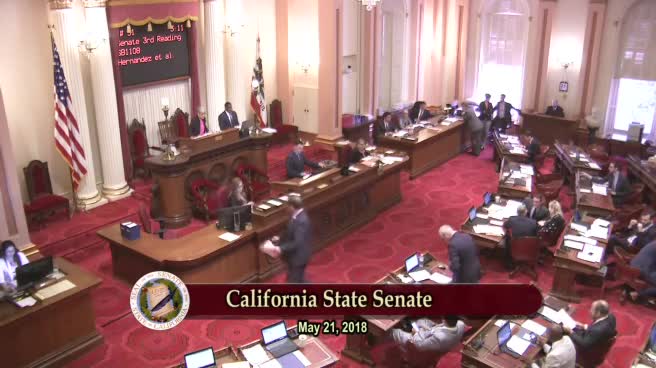 1MIN
Senate Floor
 5MIN
Senate Standing Committee on Judiciary
 15MIN
Senate Standing Committee on Banking and Financial Institutions
Bill Author

Bill Co-Author(s):