SB 1249: Animal testing: cosmetics.
- Session Year: 2017-2018
- House: Senate
- Latest Version Date: 2018-09-28
Existing law prohibits manufacturers and contract testing facilities from using traditional animal testing methods within this state when an appropriate alternative test method has been scientifically validated and recommended by the Interagency Coordinating Committee on the Validation of Alternative Methods (ICCVAM) or other specified agencies.
This bill would make it unlawful for a manufacturer to import for profit, sell, or offer for sale in this state, any cosmetic, as defined, if the cosmetic was developed or manufactured using an animal test that was conducted or contracted by the manufacturer, or any supplier of the manufacturer, on or after January 1, 2020, except as specified. The bill would specify that a violation of its provisions is punishable by an initial fine of $5,000 and an additional fine of $1,000 for each day the violation continues, and may be enforced by the district attorney or city attorney in the county or city in which the violation occurred, as specified. The bill would not apply to a cosmetic in its final form or to an ingredient, if the cosmetic or ingredient was sold in California or tested on animals before January 1, 2020, as specified. The bill would authorize cosmetic inventory in violation of the bills provisions to be sold for a period of 180 days. The bill would prohibit a county or political subdivision of the state from establishing or continuing any prohibition on or relating to animal tests that is not identical to the prohibitions in the bill and that does not include the exemptions contained in the bill.
Existing law prohibits manufacturers and contract testing facilities from using traditional animal testing methods within this state when an appropriate alternative test method has been scientifically validated and recommended by the Interagency Coordinating Committee on the Validation of Alternative Methods (ICCVAM) or other specified agencies.
This bill would make it unlawful for a manufacturer to knowingly import for profit, sell at retail, or offer for sale or promotional purposes at retail sell, or offer for sale in this state, any cosmetic, as defined, if the final product or any component thereof was tested on animals for any purpose if the cosmetic was developed or manufactured using an animal test that was conducted or contracted by the manufacturer, or any supplier of the manufacturer, on or after January 1, 2020, except as specified. The bill would specify that a violation of its provisions is punishable by an initial fine of $5,000 and an additional fine of $1,000 for each day the violation continues, and may be enforced by the district attorney or city attorney in the county or city in which the violation occurred, as specified. The bill would not apply to a cosmetic if the cosmetic, or any component of the cosmetic, was in its final form or to an ingredient, if the cosmetic or ingredient was sold in California or tested on animals before January 1, 2020, as specified. The bill would authorize cosmetic inventory in violation of the bills provisions to be sold for a period of 180 days. The bill would prohibit a county or political subdivision of the state from establishing or continuing any prohibition on or relating to animal tests that is not identical to the prohibitions in the bill and that does not include the exemptions contained in the bill.
Existing law prohibits manufacturers and contract testing facilities from using traditional animal testing methods within this state when an appropriate alternative test method has been scientifically validated and recommended by the Interagency Coordinating Committee on the Validation of Alternative Methods (ICCVAM) or other specified agencies.
This bill would make it unlawful for a manufacturer to knowingly import for profit, sell at retail, or offer for sale or promotional purposes at retail in this state, any cosmetic, as defined, if the final product or any component thereof was tested on animals for any purpose on or after January 1, 2020, except as specified. The bill would specify that a violation of its provisions is punishable by an initial fine of $5,000 and an additional fine of $1,000 for each day the violation continues, and may be enforced by the district attorney or city attorney in the county or city in which the violation occurred, as specified. The bill would not apply to a cosmetic if the cosmetic, or any component of the cosmetic, was tested on animals before January 1, 2020, as specified.
Existing law prohibits manufacturers and contract testing facilities from using traditional animal testing methods within this state when an appropriate alternative test method has been scientifically validated and recommended by the Interagency Coordinating Committee on the Validation of Alternative Methods (ICCVAM) or other specified agencies.
This bill would make it unlawful for a manufacturer to knowingly import for profit, sell at retail, or offer for sale or promotional purposes at retail in this state, any cosmetic, as defined, if the final product or any component thereof was tested on animals for any purpose after January 1, 2020, except as specified. The bill would specify that a violation of its provisions is punishable by an initial fine of $5,000 and an additional fine of $1,000 for each day the violation continues, and may be enforced by the district attorney or city attorney in the county or city in which the violation occurred, as specified. The bill would not apply to a cosmetic if the cosmetic, or any component of the cosmetic, was tested on animals before January 1, 2020, as specified.
Existing law prohibits manufacturers and contract testing facilities from using traditional animal testing methods within this state when an appropriate alternative test method has been scientifically validated and recommended by the Inter-Agency Interagency Coordinating Committee for on the Validation of Alternative Methods (ICCVAM) or other specified agencies.
This bill would make it unlawful for a manufacturer to knowingly import for profit, sell at retail, or offer for sale or promotional purposes at retail in this state, any cosmetic, as defined, if the final product or any component thereof was tested on animals for any purpose after January 1, 2020, except as specified. The bill would specify that a violation of its provisions is punishable by an initial fine of $5,000 and an additional fine of $1,000 for each day the violation continues. continues, and may be enforced by the district attorney or city attorney in the county or city in which the violation occurred, as specified. The bill would not apply to a cosmetic if the cosmetic, or any component of the cosmetic, was tested on animals before January 1, 2020, as specified.
Existing law prohibits manufacturers and contract testing facilities from using traditional animal testing methods within this state when an appropriate alternative test method has been scientifically validated and recommended by the Inter-Agency Coordinating Committee for the Validation of Alternative Methods (ICCVAM) or other specified agencies.
This bill would make it unlawful for any cosmetic a manufacturer to knowingly import for profit, sell at retail, or offer for sale or promotional purposes at retail in this state, any cosmetic, as defined, if the final product or any component thereof was developed or manufactured using animal testing tested on animals for any purpose after January 1, 2020. 2020, except as specified. The bill would specify that a violation of its provisions is punishable by a fine not to exceed $500 for the first violation and not to exceed $1,000 for each subsequent violation. an initial fine of $5,000 and an additional fine of $1,000 for each day the violation continues. The bill would not apply to a cosmetic if the cosmetic, or any component of the cosmetic, was tested on animals before January 1, 2020, as specified.
Existing law prohibits manufacturers and contract testing facilities from using traditional animal testing methods within this state when an appropriate alternative test method has been scientifically validated and recommended by the Inter-Agency Coordinating Committee for the Validation of Alternative Methods (ICCVAM) or other specified agencies.
This bill would make it unlawful for any cosmetic manufacturer to knowingly import for profit, sell at retail, or offer for sale at retail in this state, any cosmetic, as defined, if the final product or any component thereof was developed or manufactured using animal testing after January 1, 2020. The bill would specify that a violation of its provisions is punishable by a fine not to exceed $500 for the first violation and not to exceed $1,000 for each subsequent violation. The bill would not apply to a cosmetic if the cosmetic, or any component of the cosmetic, was tested on animals before January 1, 2020, as specified.
(a)Notwithstanding any other law, it is unlawful for a manufacturer to import for profit, sell, or offer for sale in this state, any cosmetic, if the cosmetic was developed or manufactured using an animal test that was conducted or contracted by the manufacturer, or any supplier of the manufacturer, on or after January 1, 2020.
(b)For purposes of this section, the following terms apply:
(1)Animal test means the internal or external application of a cosmetic, either in its final form or any ingredient thereof, to the skin, eyes, or other body part of a live, nonhuman vertebrate.
(2)Cosmetic means any article intended to be rubbed, poured, sprinkled, or sprayed on, introduced into, or otherwise applied to the human body or any part thereof for cleansing, beautifying, promoting attractiveness, or altering the appearance, including, but not limited to, personal hygiene products such as deodorant, shampoo, or conditioner.
(3)Ingredient means any component of a cosmetic as defined by Section 700.3 of Title 21 of the Code of Federal Regulations.
(4)Manufacturer means any person whose name appears on the label of a cosmetic product pursuant to the requirements of Section 701.12 of Title 21 of the Code of Federal Regulations.
(5)Supplier means any entity that supplies, directly or through a third party, any ingredient used in the formulation of a manufacturers cosmetic.
(c)The prohibitions in subdivision (a) do not apply to the following:
(1)An animal test of any cosmetic that is required by a federal or state regulatory authority if all of the following apply:
(A)The ingredient is in wide use and cannot be replaced by another ingredient capable of performing a similar function.
(B)A specific human health problem is substantiated and the need to conduct animal tests is justified and is supported by a detailed research protocol proposed as the basis for the evaluation.
(C)There is not a nonanimal alternative method accepted for the relevant endpoint by the relevant federal or state regulatory authority.
(2)An animal test that was conducted to comply with a requirement of a foreign regulatory authority, if no evidence derived from the test was relied upon to substantiate the safety of the cosmetic sold in California by the manufacturer.
(3)An animal test that was conducted on any product or ingredient subject to the requirements of Chapter V of the Federal Food, Drug, and Cosmetic Act (21 U.S.C. 351 et seq.).
(4)An animal test that was conducted for noncosmetic purposes in response to a requirement of a federal, state, or foreign regulatory authority, if no evidence derived from the test was relied upon to substantiate the safety of the cosmetic sold in California by the manufacturer. A manufacturer is not prohibited from reviewing, assessing, or retaining evidence from an animal test conducted pursuant to this paragraph.
(d)A violation of this section shall be punishable by a fine of five thousand dollars ($5,000) and an additional one thousand dollars ($1,000) for each day the violation continues.
(e)A violation of this section may be enforced by the district attorney of the county in which the violation occurred, or by the city attorney of the city in which the violation occurred. The civil fine shall be paid to the entity that is authorized to bring the action.
(f)A district attorney or city attorney may, upon a determination that there is a reasonable likelihood of a violation of this section, review the testing data upon which a cosmetic manufacturer has relied in the development or manufacturing of the relevant cosmetic product sold in the state. Information provided under this section shall be protected as a trade secret as defined in subdivision (d) of Section 3426.1. Consistent with the procedures described in Section 3426.5, a district attorney or city attorney shall enter a protective order with a manufacturer before receipt of information from a manufacturer pursuant to this section, and shall take other appropriate measures necessary to preserve the confidentiality of information provided pursuant to this section.
(g)This section shall not apply to either of the following:
(1)A cosmetic, if the cosmetic, in its final form, was sold in California or tested on animals prior to January 1, 2020, even if the cosmetic is manufactured after that date.
(2)An ingredient, if the ingredient was sold in California or tested on animals prior to January 1, 2020, even if the ingredient is manufactured after that date.
(h)Notwithstanding any other provision of this section, cosmetic inventory found to be in violation of this section may be sold for a period of 180 days.
(i)No county or political subdivision of the state may establish or continue any prohibition on or relating to animal tests, as defined in this section, that is not identical to the prohibitions set forth in this section and that does not include the exemptions contained in subdivision (c).
(j) This section shall become operative on January 1, 2020.
(a)Notwithstanding any other law, it is unlawful for a manufacturer to knowingly import for profit, sell at retail, sell, or offer for sale or promotional purposes at retail in this state, any cosmetic if the final product or any component thereof was tested on animals for any purpose cosmetic, if the cosmetic was developed or manufactured using an animal test that was conducted or contracted by the manufacturer, or any supplier of the manufacturer, on or after January 1, 2020.
(b)For purposes of this section, the following terms apply:
(1)Animal testing means the internal or external application of a cosmetic to the skin, eyes, or other body part of a live, nonhuman vertebrate.(2)Cosmetic means both of the following:(1)Animal test means the internal or external application of a cosmetic, either in its final form or any ingredient thereof, to the skin, eyes, or other body part of a live, nonhuman vertebrate.
(A)Any(2)Cosmetic means any article intended to be rubbed, poured, sprinkled, or sprayed on, introduced into, or otherwise applied to the human body or any part thereof for cleansing, beautifying, promoting attractiveness, or altering the appearance, including, but not limited to, personal hygiene products such as deodorant, shampoo, or conditioner.
(B)Any article intended for use as a component of an article described in subparagraph (A).(3)Drug means a substance intended for use in the diagnosis, cure, mitigation, treatment, or prevention of disease in humans.(3)Ingredient means any component of a cosmetic as defined by Section 700.3 of Title 21 of the Code of Federal Regulations.
(4)Manufacturer means any person whose name appears on the label of a cosmetic product pursuant to the requirements of Section 701.12 of Title 21 of the Code of Federal Regulations.
(5)Tested on animals means that a cosmetic or component of the cosmetic has been subject to animal testing.(c)Subdivision (a) does not apply to a cosmetic or component of the cosmetic under any of the following circumstances:(1)Animal testing of the cosmetic or component of the cosmetic is required by the federal Food and Drug Administration or the Department of Toxic Substances Control, and there is no alternative method to evaluate a substantiated and serious specific human health problem associated with the cosmetic or component of the cosmetic that cannot be replaced with another cosmetic or component capable of performing a similar function.(2)Animal testing of a cosmetic or component of the cosmetic is conducted to comply with a formal requirement of a foreign regulatory authority if the requirement was in place prior to January 1, 2020. This paragraph shall become inoperative on January 1, 2023.(3)Animal testing of a component of a cosmetic product is conducted for noncosmetic purposes in response to a formal requirement of a federal, state, or foreign regulatory authority for a noncosmetic use, the cosmetic product containing that component was for sale in California for at least one year prior to the date the noncosmetic animal testing began, and the noncosmetic animal testing was not conducted by either of the following:(A)A manufacturer that imports for profit, sells at retail, or offers for sale or promotional purposes at retail a cosmetic that includes the component in this state.(B)An entity, including, but not limited to, a partnership, corporation, or association, for the benefit of, at the direction of, contracted by, or in association with, a manufacturer described in subparagraph (A).(4)Animal testing of a component of a cosmetic product is or was conducted by or on behalf of a drug developer during the development of a federal Food and Drug Administration-approved drug and was required for the completion of a submitted new drug application in accordance with Section 314.50 of Title 21 of the Code of Federal Regulations.(5)Supplier means any entity that supplies, directly or through a third party, any ingredient used in the formulation of a manufacturers cosmetic.
(c)The prohibitions in subdivision (a) do not apply to the following:
(1)An animal test of any cosmetic that is required by a federal or state regulatory authority if all of the following apply:
(A)The ingredient is in wide use and cannot be replaced by another ingredient capable of performing a similar function.
(B)A specific human health problem is substantiated and the need to conduct animal tests is justified and is supported by a detailed research protocol proposed as the basis for the evaluation.
(C)There is not a nonanimal alternative method accepted for the relevant endpoint by the relevant federal or state regulatory authority.
(2)An animal test that was conducted to comply with a requirement of a foreign regulatory authority, if no evidence derived from the test was relied upon to substantiate the safety of the cosmetic sold in California by the manufacturer.
(3)An animal test that was conducted on any product or ingredient subject to the requirements of Chapter V of the Federal Food, Drug, and Cosmetic Act (21 U.S.C. 351 et seq.).
(4)An animal test that was conducted for noncosmetic purposes in response to a requirement of a federal, state, or foreign regulatory authority, if no evidence derived from the test was relied upon to substantiate the safety of the cosmetic sold in California by the manufacturer. A manufacturer is not prohibited from reviewing, assessing, or retaining evidence from an animal test conducted pursuant to this paragraph.
(d)A violation of this section shall be punishable by a fine of five thousand dollars ($5,000) and an additional one thousand dollars ($1,000) for each day the violation continues.
(e)A violation of this section may be enforced by the district attorney of the county in which the violation occurred, or by the city attorney of the city in which the violation occurred. The civil fine shall be paid to the entity that is authorized to bring the action.
(f)A district attorney or city attorney may, but is not required to, upon a determination that there is a reasonable likelihood of a violation of this section, review the testing data upon which a cosmetic manufacturer has relied in the development or manufacturing of any the relevant cosmetic products product sold in the state. Information provided under this section shall be protected as a trade secret as defined in subdivision (d) of Section 3426.1. Consistent with the procedures described in Section 3426.5, a district attorney or city attorney shall enter a protective order with a manufacturer before receipt of information from a manufacturer pursuant to this section, and shall take other appropriate measures necessary to preserve the confidentiality of information provided pursuant to this section.
(g)This section does shall not apply to a cosmetic if the cosmetic, or any component of the cosmetic, was tested on animals prior to January 1, 2020, even if the cosmetic is manufactured after that date. either of the following:
(1)A cosmetic, if the cosmetic, in its final form, was sold in California or tested on animals prior to January 1, 2020, even if the cosmetic is manufactured after that date.
(2)An ingredient, if the ingredient was sold in California or tested on animals prior to January 1, 2020, even if the ingredient is manufactured after that date.
(h)Notwithstanding any other provision of this section, cosmetic inventory found to be in violation of this section may be sold for a period of 180 days.
(i)No county or political subdivision of the state may establish or continue any prohibition on or relating to animal tests, as defined in this section, that is not identical to the prohibitions set forth in this section and that does not include the exemptions contained in subdivision (c).
(h)(j) This section shall become operative on January 1, 2020.
REVISIONS: HeadingLines 3 and 4.(a)Notwithstanding any other law, it is unlawful for a manufacturer to knowingly import for profit, sell at retail, or offer for sale or promotional purposes at retail in this state, any cosmetic if the final product or any component thereof was tested on animals for any purpose on or after January 1, 2020.
(b)For purposes of this section, the following terms apply:
(1)Animal testing means the internal or external application of a cosmetic to the skin, eyes, or other body part of a live, nonhuman vertebrate.
(2)Cosmetic means both of the following:
(A)Any article intended to be rubbed, poured, sprinkled, or sprayed on, introduced into, or otherwise applied to the human body or any part thereof for cleansing, beautifying, promoting attractiveness, or altering the appearance, including, but not limited to, personal hygiene products such as deodorant, shampoo, or conditioner.
(B)Any article intended for use as a component of an article described in subparagraph (A).
(3)Drug means a substance intended for use in the diagnosis, cure, mitigation, treatment, or prevention of disease in humans.
(3)(4)Manufacturer means any person whose name appears on the label of a cosmetic product pursuant to the requirements of Section 701.12 of Title 21 of the Code of Federal Regulations.
(4)(5)Tested on animals means that a cosmetic or component of the cosmetic has been subject to animal testing.
(c)Subdivision (a) does not apply to a cosmetic or component of the cosmetic under any of the following circumstances:
(1)Animal testing of the cosmetic or component of the cosmetic is required by the federal Food and Drug Administration or the Department of Toxic Substances Control, and there is no alternative method to evaluate a substantiated and serious specific human health problem associated with the cosmetic or component of the cosmetic that is in wide use and cannot be replaced with another cosmetic or component capable of performing a similar function.
(2)Animal testing of a cosmetic or component of the cosmetic is conducted to comply with a formal requirement of a foreign regulatory authority if the requirement was in place prior to January 1, 2020. This paragraph shall become inoperative on January 1, 2023.
(3)Animal testing of a component of a cosmetic product is conducted for noncosmetic purposes in response to a formal requirement of a federal, state, or foreign regulatory authority for a noncosmetic use, the cosmetic product containing that component was for sale in California for at least one year prior to the date the noncosmetic animal testing began, and the noncosmetic animal testing was not conducted by either of the following:
(A)A manufacturer that imports for profit, sells at retail, or offers for sale or promotional purposes at retail a cosmetic that includes the component in this state.
(B)An entity, including, but not limited to, a partnership, corporation, or association, for the benefit of, at the direction of, contracted by, or in association with, a manufacturer described in subparagraph (A).
(4)Animal testing of a component of a cosmetic product is or was conducted by or on behalf of a drug developer during the development of a federal Food and Drug Administration-approved drug and was required for the completion of a submitted new drug application in accordance with Section 314.50 of Title 21 of the Code of Federal Regulations.
(d)A violation of this section shall be punishable by a fine of five thousand dollars ($5,000) and an additional one thousand dollars ($1,000) for each day the violation continues.
(e)A violation of this section may be enforced by the district attorney of the county in which the violation occurred, or by the city attorney of the city in which the violation occurred. The civil fine shall be paid to the entity that is authorized to bring the action.
(f)A district attorney or city attorney may, but is not required to, review the testing data upon which a cosmetic manufacturer has relied in the development or manufacturing of any cosmetic products sold in the state.
(g)This section does not apply to a cosmetic if the cosmetic, or any component of the cosmetic, was tested on animals prior to January 1, 2020, even if the cosmetic is manufactured after that date.
(h)This section shall become operative on January 1, 2020.
(a)Notwithstanding any other law, it is unlawful for a manufacturer to knowingly import for profit, sell at retail, or offer for sale or promotional purposes at retail in this state, any cosmetic if the final product or any component thereof was tested on animals for any purpose after January 1, 2020.
(b)For purposes of this section, the following terms apply:
(1)Animal testing means the internal or external application of a cosmetic to the skin, eyes, or other body part of a live, nonhuman vertebrate.
(2)Cosmetic means both of the following:
(A)Any article intended to be rubbed, poured, sprinkled, or sprayed on, introduced into, or otherwise applied to the human body or any part thereof for cleansing, beautifying, promoting attractiveness, or altering the appearance, including, but not limited to, personal hygiene products such as deodorant, shampoo, or conditioner.
(B)Any article intended for use as a component of an article described in subparagraph (A).
(3)Manufacturer means any person whose name appears on the label of a cosmetic product pursuant to the requirements of Section 701.12 of Title 21 of the Code of Federal Regulations.
(4)Tested on animals means that a cosmetic or component of the cosmetic has been subject to animal testing.
(c)Subdivision (a) does not apply to a cosmetic or component of the cosmetic under either any of the following circumstances:
(1)Animal testing of the cosmetic or component of the cosmetic is required by the federal Food and Drug Administration or the Department of Toxic Substances Control, and there is no alternative method to evaluate a substantiated and serious specific human health problem associated with the cosmetic or component of the cosmetic that is in wide use and cannot be replaced with another cosmetic or component capable of performing a similar function.
(2)Animal testing of a cosmetic or component of the cosmetic is conducted to comply with a formal requirement of a foreign regulatory authority if the requirement was in place prior to January 1, 2020. This paragraph shall become inoperative on January 1, 2023.
(3)Animal testing of a component of a cosmetic product is conducted for noncosmetic purposes in response to a formal requirement of a federal, state, or foreign regulatory authority for a noncosmetic use, the cosmetic product containing that component was for sale in California for at least one year prior to the date the noncosmetic animal testing began, and the noncosmetic animal testing was not conducted by either of the following:
(A)A manufacturer that imports for profit, sells at retail, or offers for sale or promotional purposes at retail a cosmetic that includes the component in this state.
(B)An entity, including, but not limited to, a partnership, corporation, or association, for the benefit of, at the direction of, contracted by, or in association with, a manufacturer described in subparagraph (A).
(d)A violation of this section shall be punishable by a fine of five thousand dollars ($5,000) and an additional one thousand dollars ($1,000) for each day the violation continues.
(e)A violation of this section may be enforced by the district attorney of the county in which the violation occurred, or by the city attorney of the city in which the violation occurred. The civil fine shall be paid to the entity that is authorized to bring the action.
(f)A district attorney or city attorney may, but is not required to, review the testing data upon which a cosmetic manufacturer has relied in the development or manufacturing of any cosmetic products sold in the state.
(g)This section does not apply to a cosmetic if the cosmetic, or any component of the cosmetic, was tested on animals prior to January 1, 2020, even if the cosmetic is manufactured after that date.
(h)This section shall become operative on January 1, 2020.
(a)Notwithstanding any other law, it is unlawful for a manufacturer to knowingly import for profit, sell at retail, or offer for sale or promotional purposes at retail in this state, any cosmetic if the final product or any component thereof was tested on animals for any purpose after January 1, 2020.
(b)For purposes of this section, the following terms apply:
(1)Animal testing means the internal or external application of a cosmetic to the skin, eyes, or other body part of a live, nonhuman vertebrate.
(2)Cosmetic means both of the following:
(A)Any article intended to be rubbed, poured, sprinkled, or sprayed on, introduced into, or otherwise applied to the human body or any part thereof for cleansing, beautifying, promoting attractiveness, or altering the appearance, including, but not limited to, personal hygiene products such as deodorant, shampoo, or conditioner.
(B)Any article intended for use as a component of an article described in subparagraph (A).
(3)Manufacturer means any person whose name appears on the label of a cosmetic product pursuant to the requirements of Section 701.12 of Title 21 of the Code of Federal Regulations.
(4)Tested on animals means that a cosmetic or component of the cosmetic has been subject to animal testing.
(c)Subdivision (a) does not apply to a cosmetic or component of the cosmetic under any either of the following circumstances:
(1)Animal testing of the cosmetic or component of the cosmetic is required by the federal Food and Drug Administration or the Department of Toxic Substances Control. Control, and there is no alternative method to evaluate a substantiated and serious specific human health problem associated with the cosmetic or component of the cosmetic that is in wide use and cannot be replaced with another cosmetic or component capable of performing a similar function.
(2)There is no alternative method to evaluate a substantiated and serious specific human health problem associated with the cosmetic or component of the cosmetic that is in wide use and cannot be replaced with another cosmetic or component capable of performing a similar function.(3)(2)Animal testing of a cosmetic or component of the cosmetic is conducted to comply with a formal requirement of a foreign regulatory authority if the requirement was in place prior to January 1, 2020. This paragraph shall become inoperative on January 1, 2023.
(d)A violation of this section shall be punishable by a fine of five thousand dollars ($5,000) and an additional one thousand dollars ($1,000) for each day the violation continues.
(e)A person or entity that violates this section may be prosecuted violation of this section may be enforced by the district attorney of the county in which the violation occurred, or by the city attorney of the city in which the violation occurred. The civil fine shall be paid to the entity that is authorized to bring the action.
(f)A district attorney or city attorney may, but is not required to, review the testing data upon which a cosmetic manufacturer has relied in the development or manufacturing of any cosmetic products sold in the state.
(g)This section does not apply to a cosmetic if the cosmetic, or any component of the cosmetic, was tested on animals prior to January 1, 2020, even if the cosmetic is manufactured after that date.
(h)This section shall become operative on January 1, 2020.
(a)Notwithstanding any other law, it is unlawful for any cosmetic a manufacturer to knowingly import for profit, sell at retail, or offer for sale or promotional purposes at retail in this state, any cosmetic if the final product or any component thereof was developed or manufactured using animal testing tested on animals for any purpose after January 1, 2020.
(b)For purposes of this section, the following terms apply:
(1)Animal testing means the internal or external application of a cosmetic to the skin, eyes, or other body part of a live, nonhuman vertebrate.
(1)(2)Cosmetic means both of the following:
(A)Any article intended to be rubbed, poured, sprinkled, or sprayed on, introduced into, or otherwise applied to the human body or any part thereof for cleansing, beautifying, promoting attractiveness, or altering the appearance, including, but not limited to, personal hygiene products such as deodorant, shampoo, or conditioner.
(B)Any article intended for use as a component of an article described in subparagraph (A).
(2)Cosmetic manufacturer means any individual, partnership, corporation, association, or other legal relationship that produces cosmetics that are sold or offered for sale in this state.(3)Tested on animals or annual testing means the internal or external application or exposure of a cosmetic to the skin, eyes, or other body part of a live, nonhuman vertebrate for the purpose of evaluating the safety or efficacy of a cosmetic.(3)Manufacturer means any person whose name appears on the label of a cosmetic product pursuant to the requirements of Section 701.12 of Title 21 of the Code of Federal Regulations.
(4)Tested on animals means that a cosmetic or component of the cosmetic has been subject to animal testing.
(c)Subdivision (a) does not apply to a cosmetic or component of the cosmetic under any of the following circumstances:
(1)Animal testing of the cosmetic or component of the cosmetic is required by the federal Food and Drug Administration or the Department of Toxic Substances Control.
(2)There is no alternative method to evaluate a substantiated and serious specific human health problem associated with the cosmetic or component of the cosmetic that is in wide use and cannot be replaced with another cosmetic or component capable of performing a similar function.
(3)Animal testing of a cosmetic or component of the cosmetic is conducted to comply with a formal requirement of a foreign regulatory authority if the requirement was in place prior to January 1, 2020. This paragraph shall become inoperative on January 1, 2023.
(c)(d)A violation of this section shall be punishable by a fine not to exceed five hundred dollars ($500) for the first violation and not to exceed one thousand dollars ($1,000) for each subsequent violation. of five thousand dollars ($5,000) and an additional one thousand dollars ($1,000) for each day the violation continues.
(d)(e)A person or entity that violates this section may be prosecuted by the district attorney of the county in which the violation occurred, or by the city attorney of the city in which the violation occurred.
(e)(f)A district attorney or city attorney may, but is not required to, review the testing data upon which a cosmetic manufacturer has relied in the development or manufacturing of any cosmetic products sold in the state.
(f)(g)This section does not apply to a cosmetic if the cosmetic, or any compound component of the cosmetic, was tested on animals prior to January 1, 2020, even if the cosmetic is manufactured after that date.
(g)(h)This section shall become operative on January 1, 2020.
(a)Notwithstanding any other law, it is unlawful for any cosmetic manufacturer to knowingly import for profit, sell at retail, or offer for sale at retail in this state, any cosmetic if the final product or any component thereof was developed or manufactured using animal testing after January 1, 2020.
(b)For purposes of this section, the following terms apply:
(1)Cosmetic means both of the following:
(A)Any article intended to be rubbed, poured, sprinkled, or sprayed on, introduced into, or otherwise applied to the human body or any part thereof for cleansing, beautifying, promoting attractiveness, or altering the appearance, including, but not limited to, personal hygiene products such as deodorant, shampoo, or conditioner.
(B)Any article intended for use as a component of an article described in subparagraph (A).
(2)Cosmetic manufacturer means any individual, partnership, corporation, association, or other legal relationship that produces cosmetics that are sold or offered for sale in this state.
(3)Tested on animals or annual testing means the internal or external application or exposure of a cosmetic to the skin, eyes, or other body part of a live, nonhuman vertebrate for the purpose of evaluating the safety or efficacy of a cosmetic.
(c)A violation of this section shall be punishable by a fine not to exceed five hundred dollars ($500) for the first violation and not to exceed one thousand dollars ($1,000) for each subsequent violation.
(d)A person or entity that violates this section may be prosecuted by the district attorney of the county in which the violation occurred, or by the city attorney of the city in which the violation occurred.
(e)A district attorney or city attorney may, but is not required to, review the testing data upon which a cosmetic manufacturer has relied in the development or manufacturing of any cosmetic products sold in the state.
(f)This section does not apply to a cosmetic if the cosmetic, or any compound of the cosmetic, was tested on animals prior to January 1, 2020, even if the cosmetic is manufactured after that date.
(g)This section shall become operative on January 1, 2020.
|
Date
|
Status
|
|---|---|
| Sep 28, 2018 | Chaptered by Secretary of State. Chapter 899, Statutes of 2018. |
| Sep 28, 2018 | Approved by the Governor. |
| Sep 12, 2018 | Enrolled and presented to the Governor at 5 p.m. |
| Aug 31, 2018 | Assembly amendments concurred in. (Ayes 39. Noes 0.) Ordered to engrossing and enrolling. |
| Aug 31, 2018 | In Senate. Concurrence in Assembly amendments pending. |
| Aug 31, 2018 | Read third time. Passed. Ordered to the Senate. |
| Aug 30, 2018 | Read second time. Ordered to third reading. |
| Aug 29, 2018 | Assembly Rule 96 suspended. |
| Aug 28, 2018 | From committee with author's amendments. Read second time and amended. Re-referred to Com. on RLS. |
| Aug 27, 2018 | Re-referred to Com. on RLS. pursuant to Assembly Rule 97. |
| Aug 9, 2018 | Read second time. Ordered to third reading. |
| Aug 8, 2018 | From committee: Do pass. (Ayes 11. Noes 6.) (August 8). |
| Aug 6, 2018 | From committee with author's amendments. Read second time and amended. Re-referred to Com. on APPR. |
| Jul 2, 2018 | Read second time and amended. Re-referred to Com. on APPR. |
| Jun 28, 2018 | From committee: Do pass as amended and re-refer to Com. on APPR. (Ayes 9. Noes 0.) (June 26). |
| Jun 11, 2018 | Referred to Com. on JUD. |
| May 31, 2018 | In Assembly. Read first time. Held at Desk. |
| May 30, 2018 | Read third time. Passed. (Ayes 21. Noes 9.) Ordered to the Assembly. |
| May 25, 2018 | From committee: Do pass. (Ayes 5. Noes 2.) (May 25). |
| May 18, 2018 | Set for hearing May 25. |
| May 14, 2018 | May 14 hearing: Placed on APPR. suspense file. |
| May 4, 2018 | Set for hearing May 14. |
| Apr 30, 2018 | Read second time and amended. Re-referred to Com. on APPR. |
| Apr 26, 2018 | From committee: Do pass as amended and re-refer to Com. on APPR. (Ayes 5. Noes 1.) (April 24). |
| Apr 17, 2018 | Set for hearing April 24. |
| Apr 12, 2018 | Re-referred to Com. on JUD. |
| Apr 3, 2018 | From committee with author's amendments. Read second time and amended. Re-referred to Com. on RLS. |
| Mar 1, 2018 | Referred to Com. on RLS. |
| Feb 16, 2018 | From printer. May be acted upon on or after March 18. |
| Feb 15, 2018 | Introduced. Read first time. To Com. on RLS. for assignment. To print. |
|
Date
|
Description
|
Location
|
Votes
|
|
|---|---|---|---|---|
| Aug 31, 2018 | SB 1249 Galgiani Senate Third Reading By KALRA | Assembly Floor |
Passed |
|
| Aug 31, 2018 | Unfinished Business SB1249 Galgiani et al. Concurrence | Senate Floor |
Passed |
|
| Aug 8, 2018 | Do pass. | Assembly Standing Committee on Appropriations |
Passed |
|
| Jun 26, 2018 | Do pass as amended and be re-referred to the Committee on [Appropriations] | Assembly Standing Committee on Judiciary |
Passed |
|
| May 30, 2018 | Senate 3rd Reading SB1249 Galgiani | Senate Floor |
Passed |
|
| May 25, 2018 | Do pass | Senate Standing Committee on Appropriations |
Passed |
|
| May 14, 2018 | Placed on suspense file | Senate Standing Committee on Appropriations |
Passed |
|
| Apr 24, 2018 | Do pass as amended, but first amend, and re-refer to the Committee on [Appropriations] | Senate Standing Committee on Judiciary |
Passed |
This list shows positions taken on this bill by organizations on the date displayed, which is linked to the original source.
Positions by individuals are not included.
|
Organization
|
Position
|
Date
|
|---|---|---|
| A Voice for Choice Advocacy | * Support | Apr 24, 2018 |
| American Anti-Vivisection Society | ** Support | Aug 31, 2018 |
| American Chemistry Council | ** Against | Jun 24, 2018 |
| Animal Legal Defense Fund | ** Support | Aug 31, 2018 |
| Beauty Without Cruelty | ** Support | Aug 31, 2018 |
| Biocom | * Against | Aug 8, 2018 |
| Born Free USA | ** Support | Jun 24, 2018 |
| California Biomedical Research Association | ** Against | Jun 24, 2018 |
| California Chamber Of Commerce | ** Against | Aug 31, 2018 |
| California Grocers Association | ** Support | Aug 31, 2018 |
| California Life Sciences Association | * Against | Aug 8, 2018 |
| California Manufacturers And Technology Association | ** Support | Aug 31, 2018 |
| California Retailers Association | ** Support | Aug 31, 2018 |
| California Teamsters Public Affairs Council | ** Support | Aug 31, 2018 |
| Chemical Industry Council Of California | ** Against | Aug 31, 2018 |
| Chemistry Industry Council Of California | ** Against | Jun 24, 2018 |
| Coastal Classic Creations | ** Support | Aug 31, 2018 |
| Congress of California Seniors | ** Support | Aug 31, 2018 |
| Consumer Healthcare Products Association | ** Against | Jun 24, 2018 |
| County of San Mateo | * Support | Aug 8, 2018 |
| Creations | ** Support | Aug 31, 2018 |
| Cruelty Free International | * Support | Apr 24, 2018 |
| Cruelty-Free International | ** Support | Jun 24, 2018 |
| E.L.F. Cosmetics, Inc. | ** Support | Aug 31, 2018 |
| Educate. Advocate. | ** Support | Aug 31, 2018 |
| Empower Family California | ** Support | Aug 31, 2018 |
| Faith Action for Animals | * Support | Aug 8, 2018 |
| Fragrance Creators Association | ** Against | Jun 24, 2018 |
| Gaffer&Child | ** Support | Aug 31, 2018 |
| House Cleaning Products Association | ** Against | Aug 31, 2018 |
| Household & Commercial Products Association | ** Support | Aug 31, 2018 |
| Household Cleaning Products Association | ** Against | Jun 24, 2018 |
| Infra North America | ** Against | Aug 31, 2018 |
| Lush Cosmetics | * Support | Apr 24, 2018 |
| New England Anti-Vivisection Society | ** Support | Aug 31, 2018 |
| New Life Animal Sanctuary | * Support | Aug 8, 2018 |
| Over 4,000 Individuals | ** Support | Aug 31, 2018 |
| Over 6,500 Individuals | ** Support | Jun 24, 2018 |
| Over Four Thousand Individuals | ** Support | May 26, 2018 |
| Peace for Animals | * Support | Apr 24, 2018 |
| Personal Care Products Council | ** Support | Aug 31, 2018 |
| PETA | * Support | Aug 8, 2018 |
| Physicians Committee For Responsible Medicine | * Support | Aug 8, 2018 |
| Physicians Committee For Responsible Medicine | ** Support | Aug 31, 2018 |
| Purity Cosmetics | ** Support | Aug 31, 2018 |
| Roots The Beauty Underground | ** Support | Aug 31, 2018 |
| San Diego Humane Society | ** Support | Jun 24, 2018 |
| Social Compassion In Legislation | ** Support | Aug 31, 2018 |
| The Humane Society of the United States | ** Support | Aug 31, 2018 |
| United Food & Commercial Workers | ** Support | Aug 31, 2018 |
| World Animal News | * Support | Apr 24, 2018 |
Office of Senate Floor Analyses (916) 651-1520 Fax: (916) 327-4478 | SB |
UNFINISHED BUSINESS
Bill No: SB 1249
:
SENATE JUDICIARY COMMITTEE: 5-1, 4/24/18
AYES: Jackson, Hertzberg, Monning, Stern, Wieckowski
NOES: Anderson
NO VOTE RECORDED: Moorlach
SENATE APPROPRIATIONS COMMITTEE: 5-2, 5/25/18
AYES: Lara, Beall, Bradford, Hill, Wiener
NOES: Bates, Nielsen
SENATE FLOOR: 21-9, 5/30/18
AYES: Allen, Atkins, Beall, Bradford, De León, Galgiani, Hernandez, Hertzberg, Hueso, Jackson, Lara, Leyva, McGuire, Monning, Nguyen, Portantino, Skinner, Stern, Wieckowski, Wiener, Wilk
NOES: Anderson, Bates, Berryhill, Fuller, Gaines, Morrell, Nielsen, Stone, Vidak
NO VOTE RECORDED: Cannella, Dodd, Glazer, Hill, Mitchell, Moorlach, Newman, Pan, Roth
ASSEMBLY FLOOR: Not available
SOURCE: Physicians Committee for Responsible Medicine
Social Compassion in Legislation
DIGEST:
This bill makes it unlawful for a manufacturer of cosmetic products to import for profit, sell, or offer for sale in this state, any cosmetic, if the cosmetic was developed or manufactured using an animal test that was conducted or contracted by the manufacturer, or any supplier of the manufacturer, on or after January 1, 2020, as specified. This bill provides that violations are punishable by an initial $5,000 fine and an additional $1,000 for each day the violation continues.
Assembly Amendments
provide retailers with up to 180 days to remove products that were found to be in violation of the test ban; provide for state pre-emption of local government ordinances; and provide trade secret protections for safety testing data requested by prosecutors.
ANALYSIS: Existing law prohibits manufacturers and contract testing facilities from using traditional animal testing methods within this state when an appropriate alternative test method has been scientifically validated and recommended by the Inter-Agency Coordinating Committee for the Validation of Alternative Methods or other specified agencies. However, this does not prohibit the use of animal tests to comply with requirements of: state agencies; or federal agencies when the federal agency has approved an alternative nonanimal test, as specified above, and the federal agency staff concludes that the alternative nonanimal test does not assure the health or safety of consumers. (Civ. Code Sec. 1834.9.)
This bill:
- Provides that notwithstanding any other law, it is unlawful for a manufacturer to import for profit, sell, or offer for sale in this state, any cosmetic, if the cosmetic was developed or manufactured using an animal test that was conducted or contracted by the manufacturer, or any supplier of the manufacturer, on or after January 1, 2020.
- Defines, for purposes of this bill, the terms: animal test; cosmetic; ingredient; manufacturer; and supplier.
- Provides that the prohibitions above do not apply to the following:
- An animal test of any cosmetic that is required by a federal or state regulatory authority if: the ingredient is in wide use and cannot be replaced by another ingredient capable of performing a similar function; a specific human health problem is substantiated and the need to conduct animal tests is justified and is supported by a detailed research protocol proposed as the basis for the evaluation; and there is not a nonanimal alternative method accepted for the relevant endpoint by the relevant federal or state regulatory authority.
- An animal test that was conducted to comply with a requirement of a foreign regulatory authority, if no evidence derived from the test was relied upon to substantiate the safety of the cosmetic sold in California by the manufacturer.
- An animal test that was conducted on any product or ingredient subject to the requirements of Chapter V of the Federal Food, Drug, and Cosmetic Act (21 U.S.C. 351 et seq.).
- An animal test that was conducted for noncosmetic purposes in response to a requirement of a federal, state, or foreign regulatory authority, if no evidence derived from the test was relied upon to substantiate the safety of the cosmetic sold in California by the manufacturer.
- Provides that a violation of this section shall be punishable by a fine of $5,000 and an additional $1,000 for each day the violation continues. Provides that a violation of the provisions of this bill may be enforced by the district attorney of the county in which the violation occurred, or by the city attorney of the city in which the violation occurred. Provides that the civil fine shall be paid to the entity that is authorized to bring the action.
- Provides that a district attorney or city attorney may, upon a determination that there is a reasonable likelihood of a violation of provisions of this bill, review the testing data upon which a cosmetic manufacturer has relied in the development or manufacturing of the relevant cosmetic product sold in the state. Provides that information provided under the provisions of this bill shall be protected as a trade secret, as defined. Provides that consistent with specified procedures, a district attorney or city attorney shall enter a protective order with a manufacturer before receipt of information from a manufacturer pursuant to the provisions of this bill, and shall take other appropriate measures necessary to preserve the confidentiality of information provided pursuant to the provisions of this bill.
- Provides that the prohibitions of this bill shall not apply to either of the following:
- A cosmetic, if the cosmetic, in its final form, was sold in California or tested on animals prior to January 1, 2020, even if the cosmetic is manufactured after that date.
- An ingredient, if the ingredient was sold in California or tested on animals prior to January 1, 2020, even if the ingredient is manufactured after that date.
- Provides that notwithstanding any other provision of this bill, cosmetic inventory found to be in violation of this bill may be sold for a period of 180 days.
- Provides that no county or political subdivision of the state may establish or continue any prohibition on or relating to animal tests, as defined in this section, that is not identical to the prohibitions set forth in this bill and that does not include the exemptions, as specified.
- Provides that the provisions of this bill become operative on January 1, 2020.
Background
In 2000, California became the first state in the nation to make it unlawful to use animals for testing cosmetics. Specifically, SB 2082 (O’Connell, Chapter 476, Statutes of 2000) prohibited manufacturers and contract testing facilities from using traditional animal testing methods within this state when an appropriate alternative test method has been scientifically validated and recommended by the Inter-Agency Coordinating Committee for the Validation of Alternative Methods or other specified agencies. In 2014, the California Legislature passed the Cruelty Free Cosmetics Resolution, SJR 22 (Block, Resolution Chapter 73, Statutes of 2014), urging Congress to prohibit animal testing for cosmetics and to phase out marketing animal-tested cosmetics.
As detailed in SJR 22, animals have been used in tests to assess the safety of chemicals used in cosmetic products for over 50 years. However, modern alternatives to animal testing exist. In fact, the European Union now prohibits the importation and sale of cosmetics that have been tested on animals.
This author seeks to enact the toughest cruelty-free bill in the nation. Specifically, this bill makes it unlawful for a manufacturer of cosmetic products to import for profit, sell, or offer for sale in this state, any cosmetic, if the cosmetic was developed or manufactured using an animal test that was conducted or contracted by the manufacturer, or any supplier of the manufacturer, on or after January 1, 2020, as specified. This bill provides that violations are punishable by an initial $5,000 fine and an additional $1,000 for each day the violation continues.
Comments
According to the author:
For more than 50 years animals have been used in painful tests to assess the safety of chemicals used in cosmetics products. Thankfully, today, modern approaches that are cheaper, faster, and can better predict human reactions are widely available. Non-animal approaches use engineered three-dimensional human skin tissues or other types of cells and sophisticated computer models. These tests ensure the safety of cosmetics and their ingredients without animals.
More and more countries around the world are moving away from cruel animal testing. The European Union ended importation and sale of any new cosmetics that have been tested on animals in 2013. India and Israel have since followed suit, and more are on the way. Americans also want cosmetic products that are cruelty free. Unfortunately, inaction at the federal level now compels California to lead the way in ensuring a cruelty-free cosmetics market for Californians.
By prohibiting the sale or promotion of any cosmetic if the final product or any components thereof have been tested on animals after the date of enactment, SB 1249 will bring California’s humane standards in line with the world’s highest. Given that most manufacturers do not directly conduct tests on animals, recently accepted amendments now focus the legislation on manufacturers and their suppliers, including third parties who may test on behalf of manufacturers or their suppliers. Keeping animal testing out of the supply chain is the same standard that many “cruelty free” companies employ. Many of these companies accomplish this by requiring their suppliers to sign agreements ensuring that the source of their ingredients is not tested on animals.
Exceptions to liability. There are instances under which animal testing of the cosmetic or component is arguably reasonable. In recognition of this, this bill sets forth exceptions under which the manufacturer would not be liable for the animal tested cosmetic under this bill.
FISCAL EFFECT: Appropriation: Fiscal Com.: Local:
According to the Assembly Appropriations Committee, negligible direct state costs, if any.
Physicians Committee for Responsible Medicine (co-source)
Social Compassion in Legislation (co-source)
American Anti-Vivisection Society
Animal Legal Defense Fund
Beauty Without Cruelty
California Grocers Association
California Manufacturers and Technology Association
California Retailers Association
California Teamsters Public Affairs Council
Coastal Classic Creations
Congress of California Seniors
Creations
e.l.f. Cosmetics, Inc.
Educate. Advocate.
Empower Family California
Gaffer&Child
Household & Commercial Products Association
Katy Tang, District 4 Supervisor of the City and County of San Francisco
New England Anti-Vivisection Society
Personal Care Products Council
Purity Cosmetics
Roots The Beauty Underground
The Humane Society of the United States
United Food & Commercial Workers
Over 4,000 individuals
OPPOSITION: (Verified 8/31/18)
California Chamber of Commerce
Chemical Industry Council of California
House Cleaning Products Association
Infra North America
8/31/18 18:39:34
**** END ****
SENATE THIRD READING
STR Bill Id:SB 1249
Author:(Galgiani)
As Amended Ver:August 28, 2018
Majority vote
SENATE VOTE: 21-9
Committee | Votes | Ayes | Noes |
Judiciary | 9-0 | Mark Stone, Cunningham, Chau, Chiu, Holden, Kalra, Maienschein, Reyes, Gabriel | |
Appropriations | 11-6 | Gonzalez Fletcher, Bloom, Bonta, Calderon, Carrillo, Chau, Eggman, Friedman, Eduardo Garcia, Nazarian, Reyes | Bigelow, Brough, Fong, Gallagher, Obernolte, Quirk |
SUMMARY: Prohibits cosmetic manufacturers from selling or offering for sale any cosmetic product in this state that was developed or manufactured using an animal test conducted or contracted by the manufacturer, or any supplier of the manufacturer, on or after January 1, 2020, unless a specific exemption applies. Specifically, this bill:
- Provides that, notwithstanding any other law, it is unlawful for a manufacturer to import for profit, sell, or offer for sale in this state, any cosmetic if the cosmetic was developed or manufactured using an animal test that was conducted or contracted by the manufacturer, or any supplier of the manufacturer on or after January 1, 2020.
- Defines key terms, including:
- "Animal test" means the internal or external application of a cosmetic, either in its final form or any ingredient thereof, to the skin, eyes, or other body part of a live, nonhuman vertebrate.
- "Ingredient" means any component of a cosmetic as defined by Section 700.3 of Title 21 of the Code of Federal Regulations.
- "Supplier" means any entity that supplies, directly or through a third party, any ingredient used in the formulation of a manufacturer's cosmetic.
- Provides that the prohibition in 1), above, does not apply to the following circumstances:
- An animal test of the cosmetic that is required by a federal or state regulatory authority if all of the following apply:
- The ingredient is in wide use and cannot be replaced with another ingredient capable of performing a similar function.
- A specific human health problem is substantiated and the need to conduct animal tests is justified and is supported by a detailed research protocol proposed as the basis for the evaluation.
- There is not a nonanimal alternative method accepted for the relevant endpoint by the relevant federal or state regulatory authority.
- An animal test was conducted to comply with a requirement of a foreign regulatory authority if no evidence derived from the test was relied upon to substantiate the safety of the cosmetic sold in California by the manufacturer.
- An animal test that was conducted on any product or ingredient subject to the requirements of Chapter V of the Federal Food, Drug, and Cosmetic Act (21 United States Code Section (U.S.C.) 351 et seq.).
- An animal test that was conducted for noncosmetic purposes in response to a requirement of a federal, state, or foreign regulatory authority, if no evidence derived from the test was relied upon to substantiate the safety of the cosmetic sold in California by the manufacturer. Further provides that a manufacturer is not prohibited from reviewing, assessing, or retaining evidence from an animal test conducted pursuant to this provision.
- An animal test of the cosmetic that is required by a federal or state regulatory authority if all of the following apply:
- Establishes that these provisions do not apply to either of the following:
- A cosmetic, if the cosmetic, in its final form, was sold in California or tested on animals prior to January 1, 2020, even if the cosmetic is manufactured after that date.
- An ingredient, if the ingredient was sold in California or tested on animals prior to January 1, 2020, even if the ingredient is manufactured after that date.
- Authorizes violations of these provisions to be enforced by the district attorney of the county in which the violation occurred, or by the city attorney of the city in which the violation occurred.
- Authorizes a district attorney or city attorney, upon a determination that there is a reasonable likelihood of a violation of this act, to review the testing data upon which a cosmetic manufacturer has relied in the development or manufacturing of the relevant product sold in the state.
- Establishes that information provided under 6) shall be protected as a trade secret as defined in Civil Code Section 3426.1(d). Requires a district attorney or city attorney, consistent with the procedures described in Civil Code Section 3426.5, to enter a protective order with a manufacturer before receipt of such information from a manufacturer, and to take other appropriate measures necessary to preserve the confidentiality of information provided under this provision.
- Makes a violation of these provisions punishable by a fine of $5,000 and an additional $1,000 for each day the violation continues, with the fine paid to the entity authorized to bring the action.
- Provides that, notwithstanding any other provision of this act, cosmetic inventory found to be in violation of this bill may be sold for a period of 180 days.
- Prohibits any county or political subdivision of the state from establishing or continuing any prohibition on or relating to animal tests that is not identical to the prohibitions set forth by this bill, and that does not include the exemptions contained in this bill.
- Provides for a delayed operative date of January 1, 2020 for this act.
FISCAL EFFECT: According to the Assembly Appropriations Committee, negligible direct state costs, if any.
COMMENTS: In 2000, California became the first state in the country to make it unlawful for manufacturers and contract testing facilities to test cosmetic products on animals when appropriate alternative methods of testing exist. (SB 2082 (O'Connell), Ch.476, Stats. of 2000.) A national and international movement to further eliminate animal testing of cosmetic products has been growing in recent years, with the European Union (EU) recently adopting regulations to prohibit the importation and sale of cosmetics that have been tested on animals, with certain exemptions. It is still legal for cosmetic manufacturers to import, sell and market products in this state that have been tested on animals, however, as long as the testing was carried out elsewhere and the product subsequently imported into California for sale. The author's office and the sponsor of this bill, Social Compassion in Legislation (SCIL), perceive this as a serious problem and believe that the time is right to enact even stronger measures in California to prohibit this. Accordingly, this bill seeks to enact a strong rule against the sale in California of any cosmetic that was developed or manufactured using an animal test conducted or contracted by the manufacturer, or any supplier of the manufacturer, on or after January 1, 2020, unless a specific exemption applies.
The previous version of the bill was opposed by the Personal Care Products Council (PCPC), the California Manufacturers & Technology Association, and the California Retailers Association, among many others. These industry and products associations objected to the broad prohibitive rule in this bill, which they contend would force them to withdraw their products from the California marketplace and subject them to civil penalties under circumstances outside of their control. Opponents objected that they nevertheless stand to be punished by for animal testing conducted by other entities outside the industry, or required by government regulatory agencies in other states or countries as a condition of selling in a certain market. Significant Assembly amendments to the bill have reportedly removed the opposition of the Personal Care Products Council and other industry opponents, although a complete accounting of each individual group previously in opposition was not available at the time of this analysis.
Exemptions from rule prohibiting sale. The bill specifies four sets of conditions that would exempt a manufacturer from the underlying prohibition of the sale in California of cosmetics tested on animals, as detailed below.
Exemption 1: As required by a federal or state regulatory authority. The first exemption is allowed where animal testing is required by a federal or state regulatory authority, if all of the following apply: (1) The ingredient is in wide use and cannot be replaced with another ingredient capable of performing a similar function; (2) A specific human health problem is substantiated and the need to conduct animal tests is justified and is supported by a detailed research protocol proposed as the basis for the evaluation; (3) There is not a nonanimal alternative method accepted for the relevant endpoint by the relevant federal or state regulatory authority. According to the author, an exemption is appropriate for testing required by a federal or state regulatory body in those rare cases where no viable alternative tests are available to substantiate the safety of the product, and thus such products should not be prohibited from sale in California.
Exemption 2: As required by a foreign regulatory agency. The second exemption allows animal testing of a cosmetic that is conducted to comply with a formal requirement of a foreign regulatory authority, if no evidence derived from the test was relied upon to substantiate the safety of the cosmetic sold in California by the manufacturer. Previously, opponents argued that China and other countries still require testing of cosmetics, and that this exemption might force them to leave the California market because, after January 1, 2023, it would have effectively prohibited them from selling any cosmetic product in California that has undergone animal testing required by a foreign regulatory agency. Recent amendments seek to address the opposition's concerns by removing the three-year sunset date that would have eliminated this exemption after January 1, 2023, effectively making this exemption permanent.
Exemption 3: Noncosmetic testing required by a state, federal, or foreign regulatory agency. Recent amendments provide a limited exemption for animal testing conducted for a noncosmetic purpose in response to a requirement of a state, federal, or foreign regulatory agency, as long as no evidence derived from the test was relied upon to substantiate the safety of the cosmetic sold in California by the manufacturer. According to proponents, this exemption is intended to be a catch-all exemption for all testing that is not for cosmetic purposes—many examples of which were previously raised by opponents of the bill. If, for example, the California Department of Toxic Substances Control required animal testing for hazardous waste disposal, or the federal EPA required animal testing for environmental reasons, then these tests would be exempted by the bill as amended.
Exemption 4: Noncosmetic testing as required by federal law pertaining to drugs. Opponents expressed concern that this bill "would unfairly discriminate against and disadvantage broad-based, multi-product sector companies who may have pharmaceutical drugs, over the counter (OTC) drugs, cleaning products, and more, in addition to their cosmetics business, that are required to test for purposes in those sectors that have nothing to do with the cosmetic application." Examples of products that are perceived of as cosmetics but classified as drugs under Chapter V of the federal Food, Drug, and Cosmetic Act are fluoride toothpaste, sunscreen, hair growth products, dandruff shampoo, and other products that make a health claim. To address this concern, recent amendments provide an exemption for an animal test that was conducted on any product or ingredient subject to the requirements of Chapter V of the Federal Food, Drug, and Cosmetic Act (21 U.S.C. 351 et seq.)
Concerns about manufacturer liability arising from animal testing by others. Opponents previously expressed concern that the bill makes manufacturers liable for animal testing on products and components conducted by others, including academic researchers, members of other industries, and even competitors within the cosmetic industry. They previously stated: "To place the liability on a manufacturer to pull products from sale in California, the moment an ingredient is tested on an animal, regardless of the conclusion of the test or the manufacturers' knowledge of the testing, would be unworkable."
In response to these concerns, the author has amended the bill to more narrowly make manufacturers liable only for testing occurring within their supply chain. The author explains that animal testing is not generally being conducted by the manufacturers themselves, but rather by suppliers of ingredients or third parties, and it is not necessarily even done via contract or on behalf of manufacturers. According to the author, existing "cruelty-free" manufacturers already require their suppliers to sign agreements ensuring that the source of the supplied ingredients did not test them on animals. Thus, the author contends that the amendments to the bill reflect the industry-standard contractual practices used by "cruelty-free" companies and can be easily replicated by other cosmetic companies to comply with this bill if it is enacted into law.
Grandfathering clause. This bill contains a separate provision to "grandfather" in cosmetic products and ingredients that were sold in California or tested on animals prior to January 1, 2020, the effective date of this bill should it become law. Recent amendments clarify that this bill's prohibitions do not apply to an ingredient if the ingredient was sold in California or tested on animals prior to January 1, 2020, even if the ingredient is manufactured after that date. These amendments are intended to assure manufacturers that any product tested or sold in California before January 1, 2020 can still remain on store shelves after that date. In addition, amendments negotiated with the California Retailers Association now provide for a 180-day "sell-through period," which allows any cosmetic inventory found to be in violation of this bill to be sold for a period of 180 days, notwithstanding any other provision of this act.
Trade secret protections. Existing law authorizes a district attorney or city attorney to review the testing data upon which a cosmetic manufacturer has relied in the development or manufacturing of cosmetic products sold in California. Recent amendments to the bill establish that such data provided to the district attorney or city attorney shall be protected as a trade secret as defined in Civil Code Section 3426.1(d). As amended, the bill also requires the district attorney or city attorney, consistent with existing procedures described in Civil Code Section 3426.5, to enter a protective order with a manufacturer before receipt of such information from a manufacturer, and to take other appropriate measures necessary to preserve the confidentiality of the information provided to them for review.
Preemption clause. In order to ensure a single set of rules applies uniformly across the state, recent amendments prohibit any county or political subdivision of the state from establishing or continuing any prohibition on or relating to animal tests that is not identical to the prohibitions set forth by this bill, and that does not include the same exemptions set forth in this bill.
Analysis Prepared by: Anthony Lew / JUD. / (916) 319-2334 FN: 0005103 FN:
SENATE THIRD READING
STR Bill Id:SB 1249
Author:(Galgiani)
As Amended Ver:August 6, 2018
Majority vote
SENATE VOTE: 21-9
Committee | Votes | Ayes | Noes |
Judiciary | 9-0 | Mark Stone, Cunningham, Chau, Chiu, Holden, Kalra, Maienschein, Reyes, Gabriel |
|
Appropriations | 11-6 | Gonzalez Fletcher, Bloom, Bonta, Calderon, Carrillo, Chau, Eggman, Friedman, Eduardo Garcia, Nazarian, Reyes | Bigelow, Brough, Fong, Gallagher, Obernolte, Quirk |
SUMMARY: Prohibits cosmetic manufacturers from knowingly selling or offering at retail any cosmetic product in this state that, in whole or in part, was tested on animals after January 1, 2020, unless a specific exemption applies to the circumstances under which the animal testing was conducted. Specifically, this bill:
- Provides that, notwithstanding any other law, it is unlawful for a manufacturer to knowingly import for profit, sell at retail, or offer for sale or promotional purposes at retail in this state, any cosmetic if the final product or any component thereof was tested on animals for any purpose after January 1, 2020.
- Provides that the prohibition in 1), above, does not apply to a cosmetic or cosmetic component under any of the following circumstances:
- Animal testing of the cosmetic or component of the cosmetic is required by the federal Food and Drug Administration (FDA) or the Department of Toxic Substances Control (DTSC) and there is no alternative method to evaluate a substantiated and serious specific human health problem associated with the cosmetic or component of the cosmetic that cannot be replaced with another cosmetic or component capable of performing a similar function.
- Animal testing of a cosmetic or component of the cosmetic is conducted to comply with a formal requirement of a foreign regulatory authority if the requirement was in place prior to January 1, 2020, except this condition only applies until January 1, 2023.
- Animal testing of a component of a cosmetic product is conducted for noncosmetic purposes in response to a formal requirement of a federal, state, or foreign regulatory authority for a noncosmetic use, the cosmetic product containing that component was for sale in California for at least one year prior to the date the noncosmetic animal testing began, and the noncosmetic animal testing was not conducted by either of the following:
- A manufacturer that imports for profit, sells at retail, or offers for sale or promotional purposes at retail, a cosmetic that includes the component in this state.
- An entity including, but not limited to, a partnership, corporation, or association, for the benefit of, at the direction of, contracted by, or in association with, a manufacturer described in i), above.
- Animal testing of a component of a cosmetic product is or was conducted by or on behalf of a drug developer during the development of a federal FDA-approved drug and was required for the completion of a submitted new drug application in accordance with of Code of Federal Regulations Title 21, Section 314.50.
- Establishes that these provisions do not apply to a cosmetic if the cosmetic, or any component of the cosmetic, was tested on animals prior to January 1, 2020, even if the cosmetic is manufactured after that date.
- Authorizes violations of these provisions to be enforced by the district attorney of the county in which the violation occurred, or by the city attorney of the city in which the violation occurred.
- Makes a violation of these provisions punishable by a fine of $5,000 and an additional $1,000 for each day the violation continues, with the fine paid to the entity authorized to bring the action.
- Authorizes, but does not require, the district attorney or city attorney to review the testing data upon which a cosmetic manufacturer has relied in the development or manufacturing of any cosmetic products sold in the state.
- Provides for a delayed operative date of January 1, 2020 for this act.
FISCAL EFFECT: According to the Assembly Appropriations Committee, negligible direct state costs, if any.
COMMENTS: In 2000, California became the first state in the country to make it unlawful for manufacturers and contract testing facilities to test cosmetic products on animals when appropriate alternative methods of testing exist. (SB 2082 (O'Connell), Chapter 476, Statutes of 2000.) A national and international movement to further eliminate animal testing of cosmetic products has been growing in recent years, with the European Union (EU) recently adopting regulations to prohibit the importation and sale of cosmetics that have been tested on animals, with certain exemptions. It is still legal for cosmetic manufacturers to import, sell and market products in this state that have been tested on animals, however, as long as the testing was carried out elsewhere and the product subsequently imported into California for sale. The author's office and the sponsor of this bill, Social Compassion in Legislation (SCIL), perceive this as a problem that needs to be addressed, and believe that the time is right to enact even stronger measures in California to prohibit this. Accordingly, this bill seeks to enact a strong rule against the sale or marketing in California of cosmetics tested on animals for any cosmetic or noncosmetic purpose.
Specifically, this bill would make it unlawful for a manufacturer to knowingly import for profit, sell at retail, or offer for sale or promotional purposes at retail in this state, any cosmetic if the final product or any component thereof was tested on animals for any purpose after January 1, 2020. The bill specifies four sets of conditions that would exempt a manufacturer from this prohibition (discussed later in more detail), but by its own design, the rule is intentionally very broad in application. For example, the prohibition covers both cosmetic final products and individual components of final products that may be the subject of animal testing, presumably while in development. The rule covers testing for "any purpose," making no distinction between testing for cosmetic purposes and noncosmetic purposes, and similarly it makes no distinction based on who the testing entity is, or where the testing is performed. As long as the product or component is tested on animals—even if not by the manufacturer—the prohibition potentially bars the product from the California market unless one of the specified exemptions applies.
The bill is opposed by the Personal Care Products Council (PCPC), the California Manufacturers & Technology Association, and the California Retailers Association, among many others. These industry and products associations object to the broad prohibitive rule in this bill, which they contend would force them to withdraw their products from the California marketplace and subject them to civil penalties under circumstances outside of their control. Opponents state that the cosmetic industry has spent "hundreds of millions of dollars to develop scientifically valid alternative safety test methods" so they can eliminate the need to use animals in safety testing. Opponents object that they nevertheless stand to be punished by this bill for animal testing conducted by other entities outside the industry, or required by government regulatory agencies in other states or countries as a condition of selling in a certain market.
Summary of specified conditions under which manufacturers may be exempt from this bill.
Exemption 1: As required by the FDA or DTSC. The first exemption is allowed where animal testing is required by the federal Food and Drug Administration or the California Department of Toxic Substances Control, and there is no alternative method "to evaluate a substantiated and serious specific human health problem associated with the cosmetic or component of the cosmetic that is in wide use and cannot be replaced with another cosmetic or component capable of performing a similar function." This language recognizes the appropriateness of an exemption for testing required by a federal or state regulatory agency under current law, but also recognizes that modern alternative testing methods should be employed where possible; thus the exemption only applies if there are no viable alternative tests available.
Exemption 2: Conducted to comply with a foreign regulatory agency. The second exemption allows animal testing of the cosmetic or component that is conducted to comply with a formal requirement of a foreign regulatory authority, and where such foreign regulatory authority requirements were in place prior to January 1, 2020 (which is the delayed operative date of this bill, should it become law.). Importantly, the bill provides that this exemption operates only for three years, and then is repealed as of January 1, 2023. Opponents of the bill object to this exemption because after January 1, 2023, they contend, this bill will effectively prohibit them from selling any cosmetic product in California that has undergone animal testing required by a foreign regulatory agency.
Although it appears Chinese regulations do require animal testing for entry into their markets (See, e.g., "Here’s How China Is Moving Away From Animal Testing." Bloomberg News (Jan. 16, 2018), accessed at: https://www.bloomberg.com/news/articles/2018-01-16/ending-china-animal-tests-is-salve-for-big-beauty-quicktake-q-a), there is still some contention as to how strongly the government actually enforces them. Proponents of the bill report that some companies have apparently gained access for their products into the Chinese market without making the compromise of allowing their product to be tested on animals by the Chinese. For example, they cite a letter by the co-founder of John Paul Mitchell Systems, addressed to the Senate Judiciary Committee, that states: "Our company is committed to manufacturing products without harming any animals and we do not purchase ingredients from suppliers that test their products on animals. We have also been able to gain approval for a small, select group of products for sale in China without the use of animal testing."
The question of whether China's policy strictly requires animal testing is not dispositive of Exemption 2, because the exemption does not apply only to China. Opponents contend there are other countries besides China that still require testing of cosmetics, including Venezuela, Russia, Egypt, and Algeria, and this exemption will, after January 1, 2023, potentially force them to leave the California market because of testing requirement imposed by foreign governments. Proponents counter with several arguments. First, companies can choose not to sell their products in China, where animal testing may be required. Those who do so are apparently more motivated by the financial windfall of selling to Chinese consumers. Proponents cite a list of over 3,000 companies, compiled through PETA's Beauty Without Bunnies program, which are both cruelty-free and sufficiently profitable. Second, they contend there are other ways of getting one's products to Chinese consumers without submitting to government testing on animals; for example, selling direct to consumers over Chinese websites like Alibaba.com or through the Hong Kong market. Third, they promote the use of alternative tests that more accurately test for the safety of products, and contend that companies like Paul Mitchell Systems have been able to negotiate contracts with China to allow these tests rather than animal testing. Finally, proponents argue that California has been and should continue to be at the forefront of animal welfare legislation, and setting a strong policy for a cruelty-free marketplace in California should not require deferring to Chinese regulatory policy on animal testing. They contend that if a permanent exemption must be made to allow the sale in California of any cosmetic product that was tested on animals by Chinese regulators, then that exemption would create a giant loophole in the California law. It would essentially mean that no policy could be adopted in California that was stricter than whatever Chinese regulators decided upon in fashioning their own rule, thus forcing California to take a backseat to China in setting a consumer standard.
Three-year phase-in ("grandfathering" provisions) for products tested by foreign regulators. As described above, Exemption 2 operates for three years after the date this bill would become effective, and then is repealed of its own accord beginning January 1, 2023. According to the author, this means that any products tested in another country (including China) at any time until 2023 will be "grandfathered in" even after Exemption 2 ceases to be operative, providing sufficient time for cosmetic companies to prepare for compliance with the bill. Products that have been developed and on the market before that date will not suddenly have to be pulled off the shelves come January 1, 2023. Proponents contend that this phase-in provision will grandfather in thousands of current cosmetic ingredients, and will likely impact only a small universe of new ingredients and products after that date. They also suggest that, in light of the EU recently passing a resolution calling on their member states to get rid of the China exemption, and because of increased international pressure, China is beginning to move away from animal testing requirements, and may in fact not require animal testing by 2023. Even if that does not happen, there is enough flexibility for California law to be revised before 2023 to reflect international developments in this area. Opponents, however, note that there are still other countries besides China who show no signs of reversing their animal testing policies, and that the imminent repeal of Exemption 2 would still cause economic harm to companies seeking to be in both markets.
Finally, this bill also contains a separate provision to "grandfather" in cosmetic products and components that were tested on animals prior to January 1, 2020, the effective date of this bill should it become law. This is intended to assure manufacturers that current products and components tested before 2020 would not be subject to the bill and would not need to be pulled off shelves if the bill were to go into effect on January 1, 2020. As such, the strict new regulatory scheme advanced by this bill would not apply to products and components tested on animals before the effective date of the bill, even if the cosmetic is manufactured after that date.
Exemption 3: Limited exemption for animal testing for noncosmetic purposes. As recently amended, the bill provides a limited exemption for animal testing conducted for a noncosmetic purpose. Specifically, the exemption applies to animal testing of a component of a cosmetic product conducted for noncosmetic purposes if the following conditions are met: 1) the testing is in response to a formal requirement of a federal, state, or foreign regulatory authority; 2) the cosmetic product containing that component was for sale in California for at least one year prior to the date the testing began; and 3) the noncosmetic animal testing was not conducted by either of the following: a) a manufacturer that imports for profit, sells at retail, or offers for sale or promotional purposes at retail, a cosmetic that includes the component in this state, or b) an entity including, but not limited to, a partnership, corporation, or association, for the benefit of, at the direction of, contracted by, or in association with, a manufacturer described in subparagraph a), above. This exemption would remain operative after 2023, unlike Exemption 2 for foreign regulatory testing for any purpose, which would become inoperative after three years. As such, after 2023, only this narrow exemption would apply to animal testing by a foreign regulatory authority.
According to the author, these conditions are needed to ensure that all components that qualify for this exemption are truly being tested for noncosmetic purposes, and to avoid creating a loophole that would allow the exemption under facts that might suggest the testing is for a cosmetic purpose. For that reason, the testing may not be done by a manufacturer subject to the underlying prohibition for which this exemption is available, nor by any business entity contracting with or under the direction of a manufacturer who might be seeking to circumvent the rule. The requirement that the cosmetic product containing the component have been for sale at least one year prior to the noncosmetic testing is intended to ensure that the testing must not be for a cosmetic purpose, as evidenced by the fact that the component has presumably already been tested for a cosmetic purpose if it is part of a product that has been for sale for the past year.
Opponents contend that this exemption is too narrow, and that the requirement to have a product with a tested ingredient on the market for one year is unacceptable. They contend that because the noncosmetic exemption is too narrow, the overall effect of the bill would impact new cosmetic products coming to market and might amount to a ban on any new cosmetic products in the future (after 2020) if there is testing for any non-cosmetic purposes in 2020.
Exemption 4: Conducted during development of a FDA-approved drug. Opponents expressed concern that this bill "would unfairly discriminate against and disadvantage broad-based, multi-product sector companies who may have pharmaceutical drugs, over the counter (OTC) drugs, cleaning products, and more, in addition to their cosmetics business, that are required to test for purposes in those sectors that have nothing to do with the cosmetic application." To address this concern, recent Assembly amendments to the bill provide an exemption for animal testing of a component of a cosmetic product that is or was conducted by or on behalf of a drug developer during the development of a federal Food and Drug Administration-approved drug and was required for the completion of a submitted new drug application in accordance with of Code of Federal Regulations Title 21, Section 314.50.
Concerns about manufacturer liability arising from animal testing by others. Opponents remain concerned that the bill continues to make manufacturers liable for animal testing on products and components conducted by others, including academic researchers, members of other industries, and even competitors within the cosmetic industry. They point out that Exemption 3 only applies when the testing is in response to a requirement of a regulatory authority, thereby not reaching common types of testing for noncosmetic purposes. Opponents believe broader exemptions are needed in the bill – for example, to exempt all animal testing for a non-cosmetic purpose, regardless of who the testing agency is. They state: "To place the liability on a manufacturer to pull products from sale in California, the moment an ingredient is tested on an animal, regardless of the conclusion of the test or the manufacturers’ knowledge of the testing, would be unworkable."
Proponents of the bill counter this interpretation by noting that the bill does not place liability on a manufacturer "regardless of the manufacturers' knowledge of the testing," but in fact employs a "knowingly" standard in the very first sentence of the bill, prohibiting the sale or import of products tested on animals. Proponents also contend that the bill does not require the instantaneous removal of cosmetic products from the marketplace upon a triggering event or discovery. Rather, as described above, the bill grandfathers in the sale of existing products and components that were tested on animals prior to specified dates in the bill (January 1, 2023 for products tested on animals by a foreign regulator, and January 1, 2020, otherwise). This leaves enough time for companies to develop a business plan for complying with requirements of the bill, should it become law and go into effect on January 1, 2020, (the delayed operative date specified by the author).
Analysis Prepared by: Anthony Lew / JUD. / (916) 319-2334 FN: 0003862
Date of Hearing: August 8, 2018
ASSEMBLY COMMITTEE ON APPROPRIATIONS
Lorena Gonzalez Fletcher, Chair
SBPCA Bill Id:SB 1249
Author:(Galgiani) – As Amended Ver:July 2, 2018
Policy Committee: | Judiciary | Vote: | 9 - 0 |
|
| ||
|
|
Urgency: No State Mandated Local Program: No Reimbursable: No
SUMMARY:
This bill makes it unlawful for a manufacturer to knowingly import or sell any cosmetic if the final product or any component was tested on animals for any purpose on or after January 1, 2020. The bill makes several exemptions to the general prohibition. Among those exceptions is if animal testing were conducted to comply with a formal requirement of a foreign regulatory authority if the requirement was in place prior to January 1, 2020. This exemption expires on January 1, 2023. Finally, the bill makes violation of its provisions punishable by a fine of $5,000 and an additional $1,000 for each day the violation continues.
FISCAL EFFECT:
Negligible direct state costs, if any.
COMMENTS:
- Purpose. The author and sponsors intend this bill further the goal of a global “cruelty-free cosmetics market” and describe this bill as putting California law “on par with the world’s strongest standards.”
- The China Exception. This bill makes an exception for animal testing that was done to comply with a formal requirement of a foreign regulatory authority if the requirement was in place prior to January 1, 2020. It ends that exception as of January 1, 2023. This exception is meant to accommodate, temporarily, a requirement in China that cosmetics and many of their constituents be tested on animals, a requirement that followed harm caused by consumer products in the past. The proponents contend China’s policy will likely soon change and that the exemption’s sunset is meant to accommodate the time until that change occurs.
- Pretty Sneaky, Maybe. The bill prohibits the sale of cosmetics and their components tested on animals. Opponents contemplate industrial sabotage, in which a market rival purposely tests on animals a component of a competitor’s popular product, thereby making the product illegal to sell. Such a scenario may seem far-fetched, but it is not impossible.
Analysis Prepared by: Jay Dickenson / APPR. / (916) 319-2081
Date of Hearing: June 26, 2018
ASSEMBLY COMMITTEE ON JUDICIARY
Mark Stone, Chair
SBPCA Bill Id:SB 1249
Author:(Galgiani) – As Amended Ver:April 30, 2018
As Proposed to be Amended
SENATE VOTE: 21-9
SUBJECT: ANIMAL TESTING: COSMETICS
KEY ISSUE: should california adopt an extremely strong stance against animal testing of cosmetic products, and enact a set of rules that, by 2023, will largely prohibit the sale or marketing in california of cosmetic products that have been tested anywhere in the world on animals, except as specified?
SYNOPSIS
In 2000, California became the first state in the country to make it unlawful for manufacturers and contract testing facilities to test cosmetic products on animals when appropriate alternative methods of testing exist. (SB 2082 (O'Connell) Chap. 476, Stats. 2000.) A national and international movement to further eliminate animal testing of cosmetic products has been building in recent years, with the European Union recently adopting regulations to prohibit the importation and sale of cosmetics that have been tested on animals, with certain exemptions. It is still legal for cosmetic manufacturers to import, sell, and market products in this state that have been tested on animals, however, as long as the testing was carried out elsewhere and the product subsequently brought into California for sale. The author's office and the sponsor of this bill, Social Compassion in Legislation, perceive this as a problem that needs to be addressed, and believe that the time is right to enact even stronger measures in California to prohibit this.
Accordingly, this bill would make it unlawful for a manufacturer to knowingly import for profit, sell at retail, or offer for sale or promotional purposes at retail in this state, any cosmetic if the final product or any component thereof was tested on animals for any purpose after January 1, 2020. As proposed to be amended, the bill specifies three possible statutory exemptions that would relieve manufacturers from complying with the bill, but generally speaking, a manufacturer could be exempted if the animal testing was conducted to comply with a requirement from a federal, state, or foreign regulatory authority, and certain other conditions were met to justify a specific exemption. Consistent with the author's intent to maintain a strong policy against animal testing of cosmetics in California, the exemptions are narrow and intended to allow the sale of products that have been animal tested only in very limited circumstances. In fact, one of the three statutory exemptions -- for animal testing required to comply with a foreign regulator -- is granted only for three years after the effective date of this bill, and then is repealed of its own accord. The purpose of the bill, proponents note, is to gradually phase in a ban of cosmetic products tested on animals by foreign governments, like China, by the year 2023, but to allow manufacturers to continue to sell and market animal-tested products in the U.S. as long as the animal testing occurred in the foreign country before 2023.
The bill has received an intense groundswell of support from concerned citizens, animal welfare groups, and many companies in the cosmetic industry that are strongly committed to a vision of a truly "cruelty-free standard" for cosmetic products sold in California. The bill is also supported by a coalition of approximately 80 cosmetic companies who attest that they are proof that a company can be profitable but also committed to manufacturing products without any reliance on animal testing whatsoever. The bill is opposed by the Personal Care Products Council (PCPC), the California Manufacturers & Technology Association, and the California Retailers Association, among many others. These industry and product associations object to the broad prohibitive rule on selling animal–tested products in this bill, which they contend would force them to withdraw their products from the California marketplace and subject them to civil penalties under circumstances outside of their control. Opponents remain concerned that the bill, even as proposed to be amended, continues to make manufacturers liable for animal testing on products and components conducted by others, including academic researchers, members of other industries, and even competitors within the cosmetic industry. Finally, opponents believe broader exemptions are needed in the bill—for example, to exempt all animal testing for a non-cosmetic purpose, regardless of who the testing agency is. The opponents state they are open to further discussions with the author’s office, but remain committed to aligning this bill with the standards set by the European Union regulation, which they believe is stronger than current California law but also helps address many of their business concerns with this legislation.
SUMMARY: Prohibits cosmetic manufacturers from knowingly selling or offering at retail any cosmetic product in this state that, in whole or in part, was tested on animals after January 1, 2020, unless a specific exemption applies to the circumstances under which the animal testing was conducted. Specifically, this bill:
- Provides that, notwithstanding any other law, it is unlawful for a manufacturer to knowingly import for profit, sell at retail, or offer for sale or promotional purposes at retail in this state, any cosmetic if the final product or any component thereof was tested on animals for any purpose after January 1, 2020.
- Defines key terms as follows:
- “Animal testing” means the internal or external application of a cosmetic to the skin, eyes, or other body part of a live, nonhuman vertebrate.
- “Cosmetic” means both: (i) any article intended to be rubbed, poured, sprinkled, or sprayed on, introduced into, or otherwise applied to the human body or any part thereof for cleansing, beautifying, promoting attractiveness, or altering the appearance, including, but not limited to, personal hygiene products such as deodorant, shampoo, or conditioner; or: (ii) any article intended for use as a component of an article described in (i).
- “Manufacturer” means any person whose name appears on the label of a cosmetic product pursuant to the requirements of Section 701.12 of Title 21 of the Code of Federal Regulations.
- Provides that the prohibition in 1), above, does not apply to a cosmetic or cosmetic component under any of the following circumstances:
- Animal testing of the cosmetic or component of the cosmetic is required by the federal Food and Drug Administration (FDA) or the Department of Toxic Substances Control (DTSC) and there is no alternative method to evaluate a substantiated and serious specific human health problem associated with the cosmetic or component of the cosmetic that is in wide use and cannot be replaced with another cosmetic or component capable of performing a similar function.
- Animal testing of a cosmetic or component of the cosmetic is conducted to comply with a formal requirement of a foreign regulatory authority if the requirement was in place prior to January 1, 2020, except this condition only applies until January 1, 2023.
- Animal testing of a component of a cosmetic product is conducted for noncosmetic purposes in response to a formal requirement of a federal, state, or foreign regulatory authority for a noncosmetic use, the cosmetic product containing that component was for sale in California for at least one year prior to the date the noncosmetic animal testing began, and the noncosmetic animal testing was not conducted by either of the following:
- A manufacturer that imports for profit, sells at retail, or offers for sale or promotional purposes at retail, a cosmetic that includes the component in this state.
- An entity including, but not limited to, a partnership, corporation, or association, for the benefit of, at the direction of, contracted by, or in association with, a manufacturer described in i), above.
- Establishes that these provisions do not apply to a cosmetic if the cosmetic, or any component of the cosmetic, was tested on animals prior to January 1, 2020, even if the cosmetic is manufactured after that date.
- Authorizes violations of these provisions to be enforced by the district attorney of the county in which the violation occurred, or by the city attorney of the city in which the violation occurred.
- Makes a violation of these provisions punishable by a fine of $5,000 and an additional $1,000 for each day the violation continues, with the fine paid to the entity authorized to bring the action.
- Authorizes, but does not require, the district attorney or city attorney to review the testing data upon which a cosmetic manufacturer has relied in the development or manufacturing of any cosmetic products sold in the state.
- Provides for a delayed operative date of January 1, 2020 for this act.
EXISTING LAW:
- Prohibits manufacturers and contract testing facilities from using traditional animal testing methods within this state when an appropriate alternative test method has been scientifically validated and recommended by the Inter-Agency Coordinating Committee for the Validation of Alternative Methods (ICCVAM), or other specified agencies. (Civil Code Section 1834.9 (a). All references are to this code unless otherwise stated.)
- Defines “manufacturer” to mean any partnership, corporation, association, or other legal relationship that produces chemicals, ingredients, product formulations, or products in this state. (Section 1834.9 (f)(2).)
- Clarifies that nothing in 1) shall prohibit any of the following:
- The use of any alternative nonanimal test method for the testing of any product, product formulation, chemical, or ingredient that is not recommended by ICCVAM.
- The use of animal tests to comply with requirements of state agencies.
- The use of animal tests to comply with requirements of federal agencies when the federal agency has approved an alternative nonanimal test pursuant to 1) and the federal agency staff concludes that the alternative nonanimal test does not assure the health or safety of consumers. (Section 1834.9 (b) and (c).)
- Clarifies that the above provisions do not apply to any animal test performed for the purpose of medical research, defined as research related to the causes, diagnosis, treatment, control, or prevention of physical or mental diseases and impairments of humans and animals or related to the development of biomedical products, devices, or drugs as defined in Section 321(g)(1) of Title 21 of the United States Code. (Section 1834.9 (e) and (f)(5).)
FISCAL EFFECT: As currently in print this bill is keyed fiscal.
COMMENTS: In 2000, California became the first state in the country to make it unlawful for manufacturers and contract testing facilities to test cosmetic products on animals when appropriate alternative methods of testing exist. (SB 2082 (O'Connell) Chap. 476, Stats. 2000.) A national and international movement to further eliminate animal testing of cosmetic products has been growing in recent years, with the European Union (EU) recently adopting regulations to prohibit the importation and sale of cosmetics that have been tested on animals, with certain exemptions. It is still legal for cosmetic manufacturers to import, sell and market products in this state that have been tested on animals, however, as long as the testing was carried out elsewhere and the product subsequently imported into California for sale. The author's office and the sponsor of this bill, Social Compassion in Legislation, perceive this as a problem that needs to be addressed, and believe that the time is right to enact even stronger measures in California to prohibit this. According to the author:
For more than 50 years animals have been used in painful tests to assess the safety of chemicals used in cosmetics products. . . . More and more countries around the world are moving away from cruel animal testing. The European Union ended importation and sale of any new cosmetics that have been tested on animals in 2013. India and Israel have since followed suit, and more are on the way. Americans also want cosmetic products that are cruelty free. Multiple polls show that US consumers support ending animal testing for cosmetics, and a 2015 Nielsen poll found that “not tested on animals” was the most important consumer packaging claim for respondents across all age groups. Unfortunately, inaction at the federal level now compels California to lead the way in ensuring a cruelty-free cosmetics market for its citizens.
By prohibiting the sale or promotion of any cosmetic if the final product or any components thereof have been tested on animals after the date of enactment, SB 1249 will bring California humane standards in line with the world’s highest. . . . In fact, California has long been a leader in promoting modern alternatives to animal tests. In 2000, California became the first state to make it unlawful to use animals for testing cosmetics when an appropriate alternative method is available. In 2014, the California Legislature passed the Cruelty Free Cosmetics Resolution urging Congress to prohibit animal testing for cosmetics and to phase out marketing animal-tested cosmetics. SB 1249 is simply the next step in California’s path of leadership on animal testing issues.
Strong prohibition of products tested on animals. Consistent with the vigorous approach against animal tested-products embraced by the author and sponsor, this bill seeks to enact a strong rule against the sale or marketing in California of cosmetics tested on animals for any purpose, cosmetic or noncosmetic. The sponsor of the bill, Social Compassion in Legislation (SCIL), states that this bill "will set a new cruelty-free standard for cosmetics sold and marketed in California that is on par with the world's strongest standards."
Accordingly, this bill would make it unlawful for a manufacturer to knowingly import for profit, sell at retail, or offer for sale or promotional purposes at retail in this state, any cosmetic if the final product or any component thereof was tested on animals for any purpose after January 1, 2020. The bill specifies three sets of conditions that would exempt a manufacturer from this prohibition (discussed later in more detail), but by its own design, the rule is intentionally very broad in application. For example, the prohibition covers both cosmetic final products and individual components of final products that may be the subject of animal testing, presumably while in development. The rule covers testing for "any purpose," making no distinction between testing for cosmetic purposes and noncosmetic purposes, and similarly it makes no distinction based on who the testing entity is, or where the testing is performed. As long as the product or component is tested on animals—even if not by the manufacturer—the prohibition potentially bars the product from the California market unless one of the specified exemptions applies.
Even though lawmakers have already banned animal testing on cosmetics conducted in California and within the European Union, proponents of this bill contend stronger measures are still necessary to ensure a truly "cruelty-free" marketplace for cosmetics in California. They explain:
While we applaud states and countries limiting animal testing within their borders, companies can get around these bans by simply going to another jurisdiction, testing on animals, and then returning to the state where testing is banned and sell the animal tested products. This law will prevent companies from shopping for jurisdictions that allow animals testing by banning the sale of those products (and) ingredients that have been tested on animals, no matter where the testing took place.
The bill is opposed by the Personal Care Products Council (PCPC), the California Manufacturers & Technology Association, and the California Retailers Association, among many others. These industry and products associations object to the broad prohibitive rule in this bill, which they contend would force them to withdraw their products from the California marketplace and subject them to civil penalties under circumstances outside of their control. Opponents state that the cosmetic industry has spent "hundreds of millions of dollars to develop scientifically valid alternative safety test methods" so they can eliminate the need to use animals in safety testing. Opponents object that they nevertheless stand to be punished by this bill for animal testing conducted by other entities outside the industry, or required by government regulatory agencies in other states or countries as a condition of selling in a certain market. They write:
Companies now only consider animal testing when mandated by government bodies or, in rare cases, for safety evaluations of new ingredients when no viable alternative is available. Despite this progress, we are continually challenged by state and federal mandates requiring specific animal tests– such as those required by California’s Department of Toxic Substances Control – which are a condition for placing products on the market. As currently drafted . . . the amendments pose unnecessary economic burden on California companies seeking to market products globally, and would negatively impact California’s economy.
Summary of specified conditions under which manufacturers may be exempt from this bill. As currently in print, the bill specifies two sets of conditions which exempt manufacturers from the prohibition on the sale of cosmetic products that have undergone animal testing. Proposed author's amendments to the bill outline a third set of conditions that create an exemption.
Exemption 1: As required by the FDA or DTSC. The first exemption is allowed where animal testing is required by the federal Food and Drug Administration or the California Department of Toxic Substances Control, and there is no alternative method "to evaluate a substantiated and serious specific human health problem associated with the cosmetic or component of the cosmetic that is in wide use and cannot be replaced with another cosmetic or component capable of performing a similar function." This language recognizes the appropriateness of an exemption for testing required by a federal or state regulatory agency under current law, but also recognizes that modern alternative testing methods should be employed where possible; thus the exemption only applies if there are no viable alternative tests available.
Exemption 2: Conducted to comply with a foreign regulatory agency. The second exemption allows animal testing of the cosmetic or component that is conducted to comply with a formal requirement of a foreign regulatory authority, and where such foreign regulatory authority requirements were in place prior to January 1, 2020 (which is the delayed operative date of this bill, should it become law.) Importantly, the bill provides that this exemption operates only for three years, and then is repealed as of January 1, 2023. Opponents of the bill object to this exemption because after January 1, 2023, they contend, this bill will effectively prohibit them from selling any cosmetic product in California that has undergone animal testing required by a foreign regulatory agency.
When this bill was heard in the Senate Judiciary Committee (April 24, 2018), discussion of Exemption 2 centered around the role of China in necessitating such an exemption, and there appeared to be some factual uncertainty about whether mandatory animal testing is required by the Chinese government for entry into its markets. Subsequently, opponents of the bill have provided evidence to the satisfaction of Committee staff that Chinese regulations do call for animal testing of imported cosmetic products. This evidence includes translated citations to the regulations, as well as Western media articles citing the existence of such a policy in China. (See, e.g., "Here’s How China Is Moving Away From Animal Testing." Bloomberg News (Jan. 16, 2018), accessed at: https://www.bloomberg.com/news/articles/2018-01-16/ending-china-animal-tests-is-salve-for-big-beauty-quicktake-q-a.) Although it appears Chinese regulations do require animal testing for entry into their markets, there is still some contention as to how strongly the government actually enforces them. Proponents of the bill report that some companies have apparently gained access for their products into the Chinese market without making the compromise of allowing their product to be tested on animals by the Chinese. For example, they cite a letter by the co-founder of John Paul Mitchell Systems, addressed to the Senate Judiciary Committee, that states: "Our company is committed to manufacturing products without harming any animals and we do not purchase ingredients from suppliers that test their products on animals. We have also been able to gain approval for a small, select group of products for sale in China without the use of animal testing."
The question of whether China's policy strictly requires animal testing is not dispositive of Exemption 2, because the exemption does not apply only to China. Opponents contend there are other countries besides China that still require testing of cosmetics, including Venezuela, Russia, Egypt, and Algeria, and this exemption will, after January 1, 2023, potentially force them to leave the California market because of testing requirement imposed by foreign governments. Proponents counter with several arguments. First, companies can choose not to sell their products in China, where animal testing may be required. Those who do so are apparently more motivated by the financial windfall of selling to Chinese consumers. Proponents cite a list of over 3,000 companies, compiled through PETA's Beauty Without Bunnies program, which are both cruelty-free and sufficiently profitable. Second, they contend there are other ways of getting one's products to Chinese consumers without submitting to government testing on animals; for example, selling direct to consumers over Chinese websites like Alibaba.com or through the Hong Kong market. Third, they promote the use of alternative tests that more accurately test for the safety of products, and contend that companies like Paul Mitchell Systems have been able to negotiate contracts with China to allow these tests rather than animal testing. Finally, proponents argue that California has been and should continue to be at the forefront of animal welfare legislation, and setting a strong policy for a cruelty-free marketplace in California should not require deferring to Chinese regulatory policy on animal testing. They contend that if a permanent exemption must be made to allow the sale in California of any cosmetic product that was tested on animals by Chinese regulators, then that exemption would create a giant loophole in the California law. It would essentially mean that no policy could be adopted in California that was stricter than whatever Chinese regulators decided upon in fashioning their own rule, thus forcing California to take a backseat to China in setting a consumer standard.
Three-year phase-in ("grandfathering" provisions) for products tested by foreign regulators. As described above, Exemption 2 operates for three years after the date this bill would become effective, and then is repealed of its own accord beginning January 1, 2023. According to the author, this means that any products tested in another country (including China) at any time until 2023 will be "grandfathered in" even after Exemption 2 ceases to be operative, providing sufficient time for cosmetic companies to prepare for compliance with the bill. Products that have been developed and on the market before that date will not suddenly have to be pulled off the shelves come January 1, 2023. Proponents contend that this phase-in provision will grandfather in thousands of current cosmetic ingredients, and will likely impact only a small universe of new ingredients and products after that date. They also suggest that, in light of the EU recently passing a resolution calling on their member states to get rid of the China exemption, and because of increased international pressure, China is beginning to move away from animal testing requirements, and may in fact not require animal testing by 2023. Even if that does not happen, there is enough flexibility for California law to be revised before 2023 to reflect international developments in this area. Opponents, however, note that there are still other countries besides China who show no signs of reversing their animal testing policies, and that the imminent repeal of Exemption 2 would still cause economic harm to companies seeking to be in both markets.
Finally, the bill also contains a separate provision to "grandfather" in cosmetic products and components that were tested on animals prior to January 1, 2020, the effective date of this bill should it become law. This is intended to assure manufacturers that current products and components tested before 2020 would not be subject to the bill and would not need to be pulled off shelves if the bill were to go into effect on January 1, 2020. As such, the strict new regulatory scheme advanced by this bill would not apply to products and components tested on animals before the effective date of the bill, even if the cosmetic is manufactured after that date.
Exemption 3: Proposed amendment to create limited exemption for animal testing for noncosmetic purposes. As currently in print, the bill prohibits the sale of cosmetic products that have been tested on animals "for any purpose" unless a specified exemption applies. Neither Exemption 1 or 2 make any allowance for a chemical or product component that was tested on animals for a noncosmetic purpose, i.e., some other purpose unrelated to product safety or inclusion as a component of a cosmetic product. To address these concerns, the author proposes to amend the bill to create a third, limited exemption for animal testing conducted for a noncosmetic purpose.
As proposed to be amended, the exemption applies to animal testing of a component of a cosmetic product conducted for noncosmetic purposes if the following conditions are met: (1) the testing is in response to a formal requirement of a federal, state, or foreign regulatory authority; (2) the cosmetic product containing that component was for sale in California for at least one year prior to the date the testing began; and (3) the noncosmetic animal testing was not conducted by either of the following: (A) a manufacturer that imports for profit, sells at retail, or offers for sale or promotional purposes at retail, a cosmetic that includes the component in this state, or (B) an entity including, but not limited to, a partnership, corporation, or association, for the benefit of, at the direction of, contracted by, or in association with, a manufacturer described in subparagraph (A). This exemption would remain operative after 2023, unlike Exemption 2 for foreign regulatory testing for any purpose, which would become inoperative after three years. As such, after 2023, only this narrow exemption would apply to animal testing by a foreign regulatory authority.
According to the author, these conditions are needed to ensure that all components that qualify for this exemption are truly being tested for noncosmetic purposes, and to avoid creating a loophole that would allow the exemption under facts that might suggest the testing is for a cosmetic purpose. For that reason, the testing may not be done by a manufacturer subject to the underlying prohibition for which this exemption is available, nor by any business entity contracting with or under the direction of a manufacturer who might be seeking to circumvent the rule. The requirement that the cosmetic product containing the component have been for sale at least one year prior to the noncosmetic testing is intended to ensure that the testing must not be for a cosmetic purpose, as evidenced by the fact that the component has presumably already been tested for a cosmetic purpose if it is part of a product that has been for sale for the past year.
Opponents of the bill contend that the exemption proposed by these amendments is too limiting, and that the requirement to have a product with a tested ingredient on the market for one year is unacceptable. They contend that because the proposed noncosmetic exemption is too narrow, the overall effect of the bill, even as proposed to be amended, would impact new cosmetic products coming to market and might amount to a ban on any new cosmetic products in the future (after 2020) if there is testing for any non-cosmetic purposes in 2020. Opponents further contend that "Such an approach would unfairly discriminate against and disadvantage broad-based, multi-product sector companies who may have pharmaceutical drugs, over the counter (OTC) drugs, cleaning products, and more, in addition to their cosmetics business, that are required to test for purposes in those sectors that have nothing to do with the cosmetic application."
Concerns about manufacturer liability arising from animal testing by others. Opponents remain concerned that the bill, even as proposed to be amended, continues to make manufacturers liable for animal testing on products and components conducted by others, including academic researchers, members of other industries, and even competitors within the cosmetic industry. They point out that the proposed Exemption 3 only applies when the testing is in response to a requirement of a regulatory authority, thereby not reaching common types of testing for noncosmetic purposes. Opponents believe broader exemptions are needed in the bill—for example, to exempt all animal testing for a non-cosmetic purpose, regardless of who the testing agency is. About the bill's current exemptions, they write:
These exemptions would not cover testing by an accredited lab or university testing an ingredient for potential reproductive toxicity or carcinogenicity. It is common for independent studies to be conducted on individual chemicals, without any involvement of the manufacturer. For example, the state’s qualified experts under the Office of Environmental Health Hazard Assessment (OEHHA) rely on carcinogenicity, developmental and reproductive toxicity studies conducted on rodents when determining whether or not a substance should be added to the Proposition 65 list.
To place the liability on a manufacturer to pull products from sale in California, the moment an ingredient is tested on an animal, regardless of the conclusion of the test or the manufacturers’ knowledge of the testing, would be unworkable.
Proponents of the bill counter this interpretation by noting that the bill does not place liability on a manufacturer "regardless of the manufacturers' knowledge of the testing," but in fact employs a "knowingly" standard in the very first sentence of the bill, prohibiting the sale or import of products tested on animals. Proponents also contend that the bill does not require the instantaneous removal of cosmetic products from the marketplace upon a triggering event or discovery. Rather, as described above, the bill grandfathers in the sale of existing products and components that were tested on animals prior to specified dates in the bill (January 1, 2023 for products tested on animals by a foreign regulator, and January 1, 2020 otherwise.) This leaves enough time for companies to develop a business plan for complying with requirements of the bill, should it become law and go into effect on January 1, 2020 (the delayed operative date specified by the author.)
Civil enforcement provisions. Enforcement of these provisions is delegated to the district attorney or city attorney of the county or city in which the violation occurred. A violation of this bill is punishable by a fine of $5,000 and an additional $1,000 for each day the violation continues. Recent amendments to the bill clarify that the fine shall be paid to the entity that is authorized to bring the action. Finally, the bill specifies that the district attorney or city attorney may, but is not required to, review the testing data upon which a cosmetic manufacturer has relied in the development or manufacturing of any cosmetic products sold in the state.
Opponents note that although the bill proposes a statewide prohibition of animal-tested products, it delegates enforcement to local authorities at the county and city levels. They contend delegating this authority to the Attorney General will better ensure consistent statewide enforcement.
ARGUMENTS IN SUPPORT: This bill has generated an intense groundswell of support from concerned citizens, animal welfare groups, and many companies in the cosmetic industry that are strongly committed to a vision of a truly "cruelty-free standard" for cosmetic products sold in California—one where virtually every cosmetic product sold or marketed in the state can be said to have never been tested on animals, in any location, and to include components that likewise have never been tested on animals, for any purpose.
The Committee has received over 6,500 letters in support of the bill from individuals providing a California address, and has taken note of an online petition signed by more than 150,000 persons from around the world, voicing support for this bill. (See https://www.thepetitionsite.com/ takeaction/212/115/428/)
The bill is also supported by a coalition of approximately 80 cosmetic companies who attest that they are committed to manufacturing products without harming any animals and avoiding the purchase of ingredients from suppliers who engage in animal testing. These supporters stress that alternative testing methods are more humane, but equally as viable and effective as animal testing methods. They write:
Today modern tests for product safety that better predict human reactions are widely available and more than 30 countries around the world now require their use. These non-animal approaches include engineered three-dimensional human skin tissues or other types of cells and sophisticated computer models. These methods are often cheaper and faster than animal tests as well. These tests ensure the safety of cosmetics and their ingredients without animals, and many have been approved by the Organization for Economic Co-operation and Development as official Test Guidelines. In addition, companies can utilize the hundreds of thousands of ingredients for which safety data is already available.
We know that it is possible to invent, manufacture, and bring to market an entire range of products without any involvement in animal testing. . . . Modern non-animal tests for cosmetics safety are accurate, efficient, and affordable. We proudly support the California Cruelty-Free Cosmetics Act, SB 1249, prohibiting the sale of animal-tested cosmetics in the state.
ARGUMENTS IN OPPOSITION: In addition to their other arguments against the bill, opponents raise a number of economic and trade-based concerns, stating:
We are open to an ongoing dialogue with the Senator’s office and remain firmly committed to aligning this legislation with the provisions found in the European Union (EU) regulation. For example, the EU regulation accommodates the use of data from testing if mandated by other, noncosmetic-related regulations. SB 1249 does not. The EU regulation does not ban products that have been tested as a result of requirements for market entry into a non-EU country. SB 1249 would. Moreover, as currently drafted, the amendments could have wider trade implications as they would appear to prohibit imports into California from other countries where animal testing may have occurred. If so, the amendments potentially could be in violation of the U.S. obligations under the World Trade Organization (WTO), including the Agreement on Technical Barriers to Trade. More practically, these amendments would pose unnecessary economic burden on California companies seeking to market products globally, and would negatively impact California’s economy.
[Furthermore] the inclusion of products that are used “for promotional purposes” would capture samples and promotional products, which are treated differently under the Federal Food, Drug and Cosmetic Act and the Federal Fair Packaging and Labeling Act. The amendments would encompass over-the-counter (OTC) drugs that are regulated as drugs by the U.S. FDA and adhere to different testing requirements than cosmetic products.
REGISTERED SUPPORT / OPPOSITION:
Support
Social Compassion in Legislation
Physicians Committee for Responsible Medicine
New England Anti-Vivisection Society
American Anti-Vivisection Society
Humane Society of the United States (HSUS)
San Diego Humane Society
Born Free USA
Animal Legal Defense Fund (ALDF)
Educate.Advocate.
Empower Family California
Katy Tang, District 4 Supervisor of the City and County of San Francisco
Cruelty-Free International
Over 6,500 individuals
Over 80 cosmetic companies, including: Lush Cosmetics; Illumiere Prime LLC; Jack Black LLC; Legendary Apothecary; Madaen Natural Products; Mogi Mousse; Pixllady Cosmetics; Karemi Cosmetics; Lady Burd Exclusive Cosmetics; Logic Product Group; Lotus Light Enterprises; Maui Soap Company LLC; Maxux Nails; Men’s Natural Care Products; Mocha Whip; My.Haircare; Nomad Cosmetics; Oribel Organics; Osea Malibu; PNK Digger Cosmetics LLC; Aloette Cosmetics; Artonit Cosmetics; Ayr Skin Care; Bakel Beauty and Key Elements; Base Beauty Shop; Beauty without Cruelty; Bella Organics; Black Tie Cosmetics; C&Co. Handcrafted Skincare; Cannabliss Organic; Clarisea, Inc.; Coastal Classic Creations; Coloured Raine Cosmetics; Cosmedix, LLC; Da Lish Cosmetics Inc.; Dr. Sharp Natural Oral Care; 3rd Rock Sunblock, Inc.; Adesse Global Cosmetics LLC; Irie Star LLC; Caldera+Lab LLC; Hanalei; KVD Brand; SkinOms; TepOrganics LLC; Alchemy Holistics; Axiology Corp.; Evio Beauty Group; Invogue Limited; Lauren Brooke Cosmetiques; Schmidt’s Naturals; Suntegrity Skincare; Zuli Organic; Artic Fox Hair Color; Azlo Lashes LLC; Bua Organics LLC; Coexistence Soaps, LLC; Ellis Faas Cosmetics; Hurraw! Balm; Yaya Maria’s LLC; Total Beauty Network; Verdant California; Visage Pro USA LLC; Skin&Co Roma; Skinveda; Sky Organics; Puracy LLC; 100% Pure; Raen; Rue Sante; Shello; Sirrah Corp; Pristine Beauty; Pur Mineral LLC; e.l.f. Cosmetics Inc.; Elessential Botanicals; Frey Brothers Inc.; Gaffer & Child; Girly Goop LLC; Han Skin Care Cosmetics; Happy Spritz; Institut’ DERMed Body Clinical Skin Care; J Bloom Cosmetics LLC; The 7 Virtues Beauty, Inc.; Mechaly; Gabriel Cosmetics Inc.
Opposition
Personal Care Products Council
California Manufacturers & Technology Association
Fragrance Creators Association
California Chamber of Commerce
Chemistry Industry Council of California
California Life Sciences Association
California Retailers Association
Household Cleaning Products Association
Biocom
California Biomedical Research Association
Consumer Healthcare Products Association
American Chemistry Council
Analysis Prepared by: Anthony Lew / JUD. / (916) 319-2334
Office of Senate Floor Analyses (916) 651-1520 Fax: (916) 327-4478 | SB |
THIRD READING
Bill No: SB 1249
:
SENATE JUDICIARY COMMITTEE: 5-1, 4/24/18
AYES: Jackson, Hertzberg, Monning, Stern, Wieckowski
NOES: Anderson
NO VOTE RECORDED: Moorlach
SENATE APPROPRIATIONS COMMITTEE: 5-2, 5/25/18
AYES: Lara, Beall, Bradford, Hill, Wiener
NOES: Bates, Nielsen
SOURCE: Physicians Committee for Responsible Medicine
Social Compassion in Legislation
DIGEST:
This bill makes it unlawful for a manufacturer of cosmetic products to knowingly import for profit, sell at retail, or offer for sale or promotional purposes at retail in this state, any cosmetic if the final product or any component thereof was tested on animals for any purpose after January 1, 2020, as specified. This bill provides that violations are punishable by an initial $5,000 fine and an additional $1,000 for each day the violation continues, as specified. The provisions of the bill take effect on January 1, 2020.
ANALYSIS: Existing law prohibits manufacturers and contract testing facilities from using traditional animal testing methods within this state when an appropriate alternative test method has been scientifically validated and recommended by the Inter-Agency Coordinating Committee for the Validation of Alternative Methods or other specified agencies. However, this does not prohibit the use of animal tests to comply with requirements of: state agencies; or federal agencies when the federal agency has approved an alternative nonanimal test, as specified above, and the federal agency staff concludes that the alternative nonanimal test does not assure the health or safety of consumers. (Civ. Code Sec. 1834.9.)
This bill:
- Provides that notwithstanding any other law, it is unlawful for a manufacturer to knowingly import for profit, sell at retail, or offer for sale or promotional purposes at retail in this state, any cosmetic if the final product or any component thereof was tested on animals for any purpose after January 1, 2020.
- Specifies that the above prohibitions do not apply to a cosmetic or component of the cosmetic under any of the following circumstances:
- animal testing of the cosmetic or component of the cosmetic is required by the federal Food and Drug Administration or the Department of Toxic Substances Control, and there is no alternative method to evaluate a substantiated and serious specific human health problem associated with the cosmetic or component of the cosmetic that is in wide use and cannot be replaced with another cosmetic or component capable of performing a similar function; or
- only until January 1, 2023, animal testing of a cosmetic or component of the cosmetic is conducted to comply with a formal requirement of a foreign regulatory authority if the requirement was in place prior to January 1, 2020.
- Provides the following definitions:
- “animal testing” means the internal or external application of a cosmetic to the skin, eyes, or other body part of a live, nonhuman vertebrate.
- “cosmetic” means both of the following: any article intended to be rubbed, poured, sprinkled, or sprayed on, introduced into, or otherwise applied to the human body or any part thereof for cleansing, beautifying, promoting attractiveness, or altering the appearance, including, but not limited to, personal hygiene products such as deodorant, shampoo, or conditioner; or any article intended for use as a component of an article described above.
- “manufacturer” means any person whose name appears on the label of a cosmetic product pursuant to the requirements of Section 701.12 of Title 21 of the Code of Federal Regulations.
- “tested on animals” means that a cosmetic or component of the cosmetic has been subject to animal testing.
- Provides that a violation of its provisions shall be punishable by a $5,000 fine in addition to $1,000 for each day the violation continues.
- Provides that a violation of this section may be enforced by the district attorney of the county in which the violation occurred, or by the city attorney of the city in which the violation occurred.
- Provides that the civil fine shall be paid to the entity that is authorized to bring the action.
- Provides that a district attorney or city attorney may, but is not required to, review the testing data upon which a cosmetic manufacturer has relied in the development or manufacturing of any cosmetic products sold in the state.
- Specifies that the provisions of the bill do not apply to a cosmetic if the cosmetic, or any component of the cosmetic, was tested on animals prior to January 1, 2020, even if the cosmetic is manufactured after that date.
- Provides that it becomes operative on January 1, 2020.
Background
In 2000, California became the first state in the nation to make it unlawful to use animals for testing cosmetics. Specifically, SB 2082 (O’Connell, Chapter 476, Statutes of 2000) prohibited manufacturers and contract testing facilities from using traditional animal testing methods within this state when an appropriate alternative test method has been scientifically validated and recommended by the Inter-Agency Coordinating Committee for the Validation of Alternative Methods or other specified agencies. In 2014, the California Legislature passed the Cruelty Free Cosmetics Resolution, SJR 22 (Block, Resolution Chapter 73, Statutes of 2014), urging Congress to prohibit animal testing for cosmetics and to phase out marketing animal-tested cosmetics.
As detailed in SJR 22, animals have been used in tests to assess the safety of chemicals used in cosmetic products for over 50 years. However, modern alternatives to animal testing exist. In fact, the European Union now prohibits the importation and sale of cosmetics that have been tested on animals.
This author seeks to enact the toughest cruelty-free bill in the nation. Specifically, this bill would make it unlawful for a manufacturer of cosmetic products to knowingly import for profit, sell at retail, or offer for sale or promotional purposes at retail in this state, any cosmetic if the final product or any component thereof was tested on animals for any purpose after January 1, 2020, as specified. This bill would provide that violations are punishable by an initial $5,000 fine and an additional $1,000 for each day the violation continues.
Comments
Exceptions to liability. There are instances under which animal testing of the cosmetic or component is arguably reasonable. In recognition of this, the bill sets forth exceptions under which the manufacturer would not be liable for the animal tested cosmetic or component under the bill. The first is when animal testing of the cosmetic or component of the cosmetic is required by the federal Food and Drug Administration (FDA) or the Department of Toxic Substances Control (DTSC) and there is no alternative method to evaluate a substantiated and serious specific human health problem associated with the cosmetic or component of the cosmetic that is in wide use and cannot be replaced with another cosmetic or component capable of performing a similar function. This is arguably an appropriate exception since the testing was required by these governmental entities.
A second exception in the bill is when animal testing of a cosmetic or component of the cosmetic is conducted to comply with a formal requirement of a foreign regulatory authority if the requirement was in place prior to January 1, 2020. According to the proponents, this exception exists to help those manufacturers who sell products in China. This exception would sunset on January 1, 2023.
With regard to the example of DTSC’s mandated tests, the bill provides that the manufacturers would not be in violation of this law if the animal testing on the product or component was required by the DTSC or the FDA.
Staff has heard from opposition that China requires animal testing on cosmetic products and component parts if a cosmetic company seeks to sell cosmetic products in China. Staff has not been able to confirm that China requires animal testing on cosmetics. Staff has asked for a copy of the Chinese regulatory documents regarding the testing. Staff has not been furnished with a copy that staff can read. The copy provided to staff was in Chinese. If, in the future, the Legislature is able to confirm that China requires animal testing on cosmetics and if the Legislature is able to ascertain with certainty when these tests are required, the author may wish to consider amendments to the bill that are tailored to the actual regulations.
Additional consideration. As currently drafted, the bill would subject manufacturers to civil fines if a component in their cosmetic was tested on animals after January 1, 2020. There may be instances where ethical cosmetic manufacturers inadvertently use a component that was tested on animals. They may have no knowledge for a number of years and then gain the knowledge when they are fined. Even though the manufacturer had no knowledge and was led to believe the component was not tested on animals, the manufacturer would be subject to fines. One might argue that this is an unfair result. However, a manufacturer could contract with her or his supplier of components in such a way that the supplier would be responsible for any fines or fees that arise if the component turns out to have been tested on animals after January 1, 2020.
FISCAL EFFECT: Appropriation: Fiscal Com.: Local:
According to the Senate Committee on Appropriations:
Unknown, potentially-significant cost pressures to the court to adjudicate actions filed for importing, selling, or offering for sale a cosmetic product that was tested on animals, as specified. While the superior courts are not funded on a workload basis, an increase in workload could result in delayed court services and would put pressure on the General Fund to fund additional staff and resources. (General Fund*)
*Trial Court Trust Fund
Physicians Committee for Responsible Medicine (co-source)
Social Compassion in Legislation (co-source)
American Anti-Vivisection Society
Animal Legal Defense Fund
Beauty Without Cruelty
Coastal Classic Creations
Creations
e.l.f. Cosmetics, Inc.
Educate. Advocate.
Empower Family California
Gaffer&Child
The Humane Society of the United States
New England Anti-Vivisection Society
Purity Cosmetics
Roots The Beauty Underground
Supervisor Katy Tang, City and County of San Francisco, District 4
Over four thousand individuals
OPPOSITION: (Verified 5/25/18)
American Chemistry Council
California Chamber of Commerce
California Manufacturers and Technology Association
California Retailers Association
Chemical Industry Council of California
House Cleaning Products Association
Infra North America
Personal Care Products Council
ARGUMENTS IN SUPPORT: The author writes:
For more than 50 years animals have been used in painful tests to assess the safety of chemicals used in cosmetics products. Thankfully, today, modern approaches that are cheaper, faster, and can better predict human reactions are widely available. In fact, more than 30 countries around the world now require their use. Non-animal approaches use engineered three-dimensional human skin tissues or other types of cells and sophisticated computer models. These tests ensure the safety of cosmetics and their ingredients without animals. Many have been approved by the Organization for Economic Co-operation and Development as official Test Guidelines.
More and more countries around the world are moving away from cruel animal testing. The European Union ended importation and sale of any new cosmetics that have been tested on animals in 2013. India and Israel have since followed suit, and more are on the way. Americans also want cosmetic products that are cruelty free. Multiple polls show that US consumers support ending animal testing for cosmetics, and a 2015 Nielsen poll found that “not tested on animals” was the most important consumer packaging claim for respondents across all age groups. Unfortunately, inaction at the federal level now compels California to lead the way in ensuring a cruelty-free cosmetics market for all Californians.
By prohibiting the sale or promotion of any cosmetic if the final product or any components thereof have been tested on animals after the date of enactment, SB 1249 will bring California humane standards in line with the world’s highest. Still, the Act allows for two exceptions to the ban. The first exception is allowed where the animal testing was done as a requirement of the Federal Drug Administration or Department of Toxic Substances Control and there is no alternative method to evaluate a substantiated and serious specific human health problem associated with the cosmetic or component thereof that is in wide use and cannot be replaced with another cosmetic or component capable of performing a similar function. The second exception, which allows animal testing of the cosmetic or component thereof that is conducted to comply with a formal requirement of a foreign regulatory authority and where such foreign regulatory authority requirements were in place prior to January 1, 2020, shall sunset on January 1, 2023, leaving California as the world leader in manufacturing and marketing of cruelty-free cosmetics.
In fact, California has long been a leader in promoting modern alternatives to animal tests. In 2000, California became the first state to make it unlawful to use animals for testing cosmetics when an appropriate alternative method is available. In 2014, the California Legislature passed the Cruelty Free Cosmetics Resolution urging Congress to prohibit animal testing for cosmetics and to phase out marketing animal-tested cosmetics. SB 1249 is simply the next step in California’s path of leadership on animal testing issues.
In support of the bill, e.l.f. Cosmetics, Inc., explains:
In the United States, there is no law or regulatory framework requiring these products to be tested on animals to demonstrate product safety. While some countries, such as China, require animal testing for cosmetics and other products, many companies like ours pursue strategies for avoiding these animal testing requirements.
ARGUMENTS IN OPPOSITON: The American Chemistry Council, California Chamber of Commerce, California Manufacturers and Technology Association, California Retailers Association, Chemical Industry Council of California, House Cleaning Products Association, Infra North America, and Personal Care Products Council, in opposition to the bill, assert:
Companies now only consider animal testing when mandated by government bodies or, in rare cases, for safety evaluations of new ingredients when no viable alternative is available. Despite this progress, we are continually challenged by state and federal mandates requiring specific animal tests – such as those required by California’s Department of Toxic Substances Control - which are a condition for placing products on the market.
The American Chemistry Council, California Chamber of Commerce, California Manufacturers and Technology Association, California Retailers Association, Chemical Industry Council of California, House Cleaning Products Association, Infra North America, and Personal Care Products Council, in opposition to the bill, also assert:
As written, the bill would make a cosmetic manufacturer liable for animal testing done on any component or ingredient by anyone, anywhere, for any reason- except when required by the federal Food and Drug Administration or the Department of Toxic Substances Control, or when there is no alternative method to evaluate a serious human health problem. These exemptions would not cover testing by an accredited lab or university testing an ingredient for potential reproductive toxicity or carcinogenicity. It is common for independent studies to be conducted on individual chemicals, without any involvement of the manufacturer. For example, the state’ s qualified experts under the Office of Environmental Health Hazard Assessment (OEHHA) rely on carcinogenicity, developmental and reproductive toxicity studies conducted on rodents when determining whether or not a substance should be added to the Proposition 65 list. In addition, OEHHA uses animal studies when determining the No Significant Risk Levels or Maximum Allowable Dose Levels for listed chemicals, which helps responsible parties determine when a Prop. 65 warning must be provided.
To place liability on a manufacturer to pull products from sale in California, the moment an ingredient is tested on an animal, regardless of the conclusion of the test or the manufacturers’ knowledge of the testing, would be unworkable.
Prepared by: Margie Estrada / JUD. / (916) 651-4113
5/26/18 14:42:21
SENATE COMMITTEE ON APPROPRIATIONS
Senator Ricardo Lara, Chair
2017 - 2018 Regular Session
SB 1249 (Galgiani) - Animal testing: cosmetics
Version: April 30, 2018 | Policy Vote: JUD. 5 - 1 |
Urgency: No | Mandate: No |
Hearing Date: May 14, 2018 | Consultant: Shaun Naidu |
This bill meets the criteria for referral to the Suspense File.
Bill Summary:
SB 1249 would make it unlawful for a manufacturer of cosmetic products to knowingly import for profit, sell at retail, or offer for sale or promotional purposes at retail any cosmetic product, or a component thereof, that was tested on animals, as specified.
Fiscal Impact:
Unknown, potentially-significant cost pressures to the court to adjudicate actions filed for importing, selling, or offering for sale a cosmetic product that was tested on animals, as specified. While the superior courts are not funded on a workload basis, an increase in workload could result in delayed court services and would put pressure on the General Fund to fund additional staff and resources. (General Fund*)
*Trial Court Trust Fund
Background:
In 2000, California outlawed the use of animals for testing cosmetics. Specifically, the law prohibits manufacturers and contract testing facilities from using traditional animal testing methods within the state when an appropriate alternative test method has been scientifically validated and recommended by the Inter-Agency Coordinating Committee for the Validation of Alternative Methods or other specified agencies. This prohibition, however, does not apply to the use of animal tests to comply with requirements of state agencies or federal agencies when the federal agency has approved an alternative non-animal test and the federal agency staff concludes that the alternative non-animal test does not assure the health or safety of consumers.
In 2014, the Legislature passed the Cruelty Free Cosmetics Resolution, Senate Joint Resolution 22, that urged Congress to prohibit animal testing for cosmetics and to phase out marketing animal-tested cosmetics. As detailed in the resolution, animals have been used in tests to assess the safety of chemicals used in cosmetic products for over fifty years. Modern alternatives to animal testing exist. In fact, the European Union now prohibits the importation and sale of cosmetics that have been tested on animals.
Proposed Law:
This bill would:
- Prohibit a manufacturer from knowingly import for profit, sell at retail, or offer for sale or promotional purposes at retail in this state, any cosmetic, as defined, if the final product or any component thereof was tested on animals for any purpose after January 1, 2020, except as specified.
- Punish a violation of the prohibition by an initial civil fine of $5,000 and an additional civil fine of $1,000 for each day the violation continues.
- Provide that the fine is to be paid to the entity that is authorized to bring the action.
- Allow the prohibition to be enforced by the district attorney or city attorney in the county or city in which the violation occurred, as specified.
- Exclude from the prohibition a cosmetic if it, or any component of the cosmetic, was tested on animals before January 1, 2020, as specified.
- Exclude a cosmetic, or a component thereof, from the prohibition if either:
- Animal testing is required by the federal Food and Drug Administration or the Department of Toxic Substances Control and there is no alternative method to evaluate a substantiated and serious specific human health problem associated with the cosmetic or its component that is in wide use and cannot be replaced with another cosmetic or component capable of performing a similar function.
- Until January 1, 2023, animal testing of a cosmetic or component is conducted to comply with a formal requirement of a foreign regulatory authority if the requirement was in place prior to January 1, 2020.
Related Legislation:
SB 2082 (O’Connell, Ch. 476, Stats. 2000) prohibited manufacturers and contract testing facilities from using traditional animal testing methods when an appropriate alternative test method has been scientifically validated and recommended by the Inter-Agency Coordinating Committee for the Validation of Alternative Methods or other specified agencies.
SJR 22 (Block, Res. Ch. 73, Stats. 2014) urged Congress to prohibit animal testing for cosmetics and to phase out marketing animal-tested cosmetics.
Staff Comments:
The fiscal impact of this bill cannot be known with certainty, as it will be dependent on a number of factors, including the frequency of manufacturer noncompliance and the willingness of a district attorney or city attorney to pursue the civil fine against a manufacturer accused of violating the prohibition. Based on a study of court workload, it costs the court a little over $2,600, on average, in personnel and resources to adjudicate a limited civil case and a little over $11,600 in personnel and resources to adjudicate an unlimited civil case. Additionally, it costs about $7,010 to operate a courtroom for one day. This figure takes into consideration the time from when a petition or motion is received by the court, processing and calendaring by the clerks, any hearings presided over by a judicial officer, and the finalizing of the outcome by the clerk. It does not include the salaries of judges or the cost of sheriff-provided court security.
This bill would punish with a civil fine a manufacturer for knowingly importing into or selling in California cosmetics that have been tested on animals. The fine consists of two components, an initial fine of $5,000 and an additional fine of $1,000 for each day of a violation. How many days an alleged violation continues would determine if the matter would proceed as a limited or unlimited civil case. For example, if the manufacturer knowingly sold cosmetic products that used animal testing in California for less than twenty days, the damages sought of the initial fine and the continuing violation fine would place the matter within the limited civil case cap. If, however, the violation continued for one month or more, the case would proceed as an unlimited civil action, with its associated costs. If violations of this bill led to more than nineteen new limited civil cases, more than four unlimited civil cases, or a few complex case that took longer than seven days that otherwise would not have been brought, the cost pressures of this bill to the court would surpass the Suspense File threshold.
-- END --
Senator Hannah-Beth Jackson, Chair
2017-2018 Regular Session
Bill No: SB 1249 (Author:Galgiani)
Version: April 3, 2018
Hearing Date: April 24, 2018
Fiscal: Yes
Urgency: No
Consultant: MEC
SUBJECT
Animal testing: cosmetics
DESCRIPTION
This bill would make it unlawful for a manufacturer of cosmetic products to knowingly import for profit, sell at retail, or offer for sale or promotional purposes at retail in this state, any cosmetic if the final product or any component thereof was tested on animals for any purpose after January 1, 2020, as specified. This bill would provide that violations are punishable by an initial $5,000 fine and an additional $1,000 for each day the violation continues, as specified. The provisions of the bill would take effect on January 1, 2020.
BACKGROUND
In 2000, California became the first state in the nation to make it unlawful to use animals for testing cosmetics. Specifically, SB 2082 (O’Connell, Ch. 476, Stats. 2000) prohibits manufacturers and contract testing facilities from using traditional animal testing methods within this state when an appropriate alternative test method has been scientifically validated and recommended by the Inter-Agency Coordinating Committee for the Validation of Alternative Methods or other specified agencies. In 2014, the California Legislature passed the Cruelty Free Cosmetics Resolution, SJR 22 (Block, Res. Ch. 73, Stats. 2014), urging Congress to prohibit animal testing for cosmetics and to phase out marketing animal-tested cosmetics.
As detailed in SJR 22, animals have been used in tests to assess the safety of chemicals used in cosmetic products for over 50 years. However, modern alternatives to animal testing exist. In fact, the European Union now prohibits the importation and sale of cosmetics that have been tested on animals.
This author seeks to enact the toughest cruelty-free bill in the nation. Specifically, this bill would make it unlawful for a manufacturer of cosmetic products to knowingly import for profit, sell at retail, or offer for sale or promotional purposes at retail in this state, any cosmetic if the final product or any component thereof was tested on animals for any purpose after January 1, 2020, as specified. This bill would provide that violations are punishable by an initial $5,000 fine and an additional $1,000 for each day the violation continues.
CHANGES TO EXISTING LAW
Existing law prohibits manufacturers and contract testing facilities from using traditional animal testing methods within this state when an appropriate alternative test method has been scientifically validated and recommended by the Inter-Agency Coordinating Committee for the Validation of Alternative Methods or other specified agencies. However, this does not prohibit the use of animal tests to comply with requirements of: state agencies; or federal agencies when the federal agency has approved an alternative nonanimal test, as specified above, and the federal agency staff concludes that the alternative nonanimal test does not assure the health or safety of consumers. (Civ. Code Sec. 1834.9.)
This bill would provide that notwithstanding any other law, it is unlawful for a manufacturer to knowingly import for profit, sell at retail, or offer for sale or promotional purposes at retail in this state, any cosmetic if the final product or any component thereof was tested on animals for any purpose after January 1, 2020.
This bill would specify that the above prohibitions do not apply to a cosmetic or component of the cosmetic under any of the following circumstances:
- animal testing of the cosmetic or component of the cosmetic is required by the federal Food and Drug Administration or the Department of Toxic Substances Control;
- there is no alternative method to evaluate a substantiated and serious specific human health problem associated with the cosmetic or component of the cosmetic that is in wide use and cannot be replaced with another cosmetic or component capable of performing a similar function; or
- only until January 1, 2023, animal testing of a cosmetic or component of the cosmetic is conducted to comply with a formal requirement of a foreign regulatory authority if the requirement was in place prior to January 1, 2020.
This bill would provide the following definitions:
- “animal testing” means the internal or external application of a cosmetic to the skin, eyes, or other body part of a live, nonhuman vertebrate.
- “cosmetic” means both of the following: any article intended to be rubbed, poured, sprinkled, or sprayed on, introduced into, or otherwise applied to the human body or any part thereof for cleansing, beautifying, promoting attractiveness, or altering the appearance, including, but not limited to, personal hygiene products such as deodorant, shampoo, or conditioner; or any article intended for use as a component of an article described above.
- “manufacturer” means any person whose name appears on the label of a cosmetic product pursuant to the requirements of Section 701.12 of Title 21 of the Code of Federal Regulations.
- “tested on animals” means that a cosmetic or component of the cosmetic has been subject to animal testing.
This bill would provide that a violation of its provisions shall be punishable by a $5,000 fine in addition to $1,000 for each day the violation continues.
This bill would provide that a person or entity that violates this section may be prosecuted by: the district attorney of the county in which the violation occurred; or by the city attorney of the city in which the violation occurred.
This bill would provide that a district attorney or city attorney may, but is not required to, review the testing data upon which a cosmetic manufacturer has relied in the development or manufacturing of any cosmetic products sold in the state.
This bill would specify that the provisions of the bill do not apply to a cosmetic if the cosmetic, or any component of the cosmetic, was tested on animals prior to January 1, 2020, even if the cosmetic is manufactured after that date.
This bill provides that it becomes operative on January 1, 2020.
COMMENT
1. Stated need for the bill
According to the author:
For more than 50 years animals have been used in painful tests to assess the safety of chemicals used in cosmetics products. Thankfully, today, modern approaches that are cheaper, faster, and can better predict human reactions are widely available. In fact, more than 30 countries around the world now require their use. Non-animal approaches use engineered three-dimensional human skin tissues or other types of cells and sophisticated computer models. These tests ensure the safety of cosmetics and their ingredients without animals. Many have been approved by the Organization for Economic Co-operation and Development as official Test Guidelines.
More and more countries around the world are moving away from cruel animal testing. The European Union ended importation and sale of any new cosmetics that have been tested on animals in 2013. India and Israel have since followed suit, and more are on the way. Americans also want cosmetic products that are cruelty free. Multiple polls show that US consumers support ending animal testing for cosmetics, and a 2015 Nielsen poll found that “not tested on animals” was the most important consumer packaging claim for respondents across all age groups. Unfortunately, inaction at the federal level now compels California to lead the way in ensuring a cruelty-free cosmetics market for all Californians.
By prohibiting the sale or promotion of any cosmetic if the final product or any components thereof have been tested on animals after the date of enactment, SB 1249 will bring California humane standards in line with the world’s highest. Still, the Act allows for two exceptions to the ban. The first exception is allowed where the animal testing was done as a requirement of the Federal Drug Administration or Department of Toxic Substances Control and there is no alternative method to evaluate a substantiated and serious specific human health problem associated with the cosmetic or component thereof that is in wide use and cannot be replaced with another cosmetic or component thereof capable of performing a similar function. The second exception, which allows animal testing of the cosmetic or component thereof that is conducted to comply with a formal requirement of a foreign regulatory authority and where such foreign regulatory authority requirements were in place prior to January 1, 2020, shall sunset on January 1, 2023, leaving California as the world leader in manufacturing and marketing of cruelty-free cosmetics.
In fact, California has long been a leader in promoting modern alternatives to animal tests. In 2000, California became the first state to make it unlawful to use animals for testing cosmetics when an appropriate alternative method is available. In 2014, the California Legislature passed the Cruelty Free Cosmetics Resolution urging Congress to prohibit animal testing for cosmetics and to phase out marketing animal-tested cosmetics. SB 1249 is simply the next step in California’s path of leadership on animal testing issues.
In support, the sponsor of the bill, Social Compassion in Legislation writes:
[. . . ] The move away from animal tests, and increased use of human-relevant in vitro and other methods to assess the safety of cosmetics and cosmetic ingredients, will ensure consumers can be assured safer cosmetics with a clear conscience.
[. . . ]
Here at home, the federal government does not require animal testing for cosmetics. Because animal testing can happen anywhere, the most effective legislation bans the sale and marketing of animal-tested cosmetics, even if the actual testing wasn’t conducted in that region. We are proud to say that SB 1249 does exactly that by phasing in a regulatory regime that by 2023 will ban cosmetic products that were tested on animals anywhere in the world.
2. Clarifying amendments
a. Enforcement mechanism
This bill’s enforcement mechanism should be revised through clarifying amendments. While a provision of the bill makes it clear that a violation shall be punishable by a fine of $5,000 and an additional $1,000 for each day the violation continues, the provision regarding who can enforce the civil fine should be clarified. The provision uses the word “prosecuted,” when the civil statute should instead refer to “enforcement” rather than prosecution. Therefore, the Committee may wish to make the following clarifying amendment:
Amendment 1:
On page 3, in line 21-22, delete “A person or entity that violates this section may be prosecuted by” and insert: “A violation of this section may be enforced by”
Additionally this bill does not specify who should receive the civil fines. The Committee may wish to amend the bill to make clear that the civil fine is to be paid to the entity that is authorized to bring the action.
Amendment 2:
On page 3, line 24, after “occurred.” and insert: “The civil fine is to be paid to the entity that is authorized to bring the action.”
b. Exceptions to liability
There are instances under which animal testing of the cosmetic or component is arguably reasonable. In recognition of this, the bill sets forth three exceptions under which the manufacturer would not be liable for the animal tested cosmetic or component under the bill. The first is when animal testing of the cosmetic or component of the cosmetic is required by the federal Food and Drug Administration (FDA) or the Department of Toxic Substances Control (DTSC). This is arguably an appropriate exception since the testing was required by these governmental entities. The author intended for this provision to also require that there be “no alternative method to evaluate a substantiated and serious specific human health problem associated with the cosmetic or component of the cosmetic that is in wide use and cannot be replaced with another cosmetic or component capable of performing a similar function.” The language in the bill needs to be clarified through an amendment to effectuate the author’s intent. The author proposes the following amendment:
Amendment 3:
On page 3, line 3, strike out “Control.” and insert “Control, and there”
On page 3, line 4, strike out “(2) There”
On page 3, line 9, strike out “(3)” and insert: “(2)”
A second exception in the bill is when animal testing of a cosmetic or component of the cosmetic is conducted to comply with a formal requirement of a foreign regulatory authority if the requirement was in place prior to January 1, 2020. According to the proponents, this exception is exists to help those manufacturers who sell products in China. This exception would sunset on January 1, 2023.
In support of the bill, e.l.f. Cosmetics, Inc., explains:
In the United States, there is no law or regulatory framework requiring these products to be tested on animals to demonstrate product safety. While some countries, such as China, require animal testing for cosmetics and other products, many companies like ours pursue strategies for avoiding these animal testing requirements.
The American Chemistry Council, California Chamber of Commerce, California Manufacturers and Technology Association, California Retailers Association, Chemical Industry Council of California, House Cleaning Products Association, Infra North America, and Personal Care Products Council, in opposition to the bill, assert:
Companies now only consider animal testing when mandated by government bodies or, in rare cases, for safety evaluations of new ingredients when no viable alternative is available. Despite this progress, we are continually challenged by state and federal mandates requiring specific animal tests – such as those required by California’s Department of Toxic Substances Control - which are a condition for placing products on the market.
With regard to the example of DTSC’s mandated tests, the bill provides that the manufacturers would not be in violation of this law if the animal testing on the product or component was required by the DTSC or the FDA.
Staff has heard from opposition that China requires animal testing on cosmetic products and component parts if a cosmetic company seeks to sell cosmetic products in China. Staff has not been able to confirm that China requires animal testing on cosmetics. Staff has asked for a copy of the Chinese regulatory documents regarding the testing. Staff has not been furnished with a copy that staff can read. The copy provided to staff was in Chinese. If, in the future, the Legislature is able to confirm that China requires animal testing on cosmetics and if the Legislature is able to ascertain with certainty when these tests are required, the author may wish to consider amendments to the bill that are tailored to the actual regulations.
c. Additional consideration
The American Chemistry Council, California Chamber of Commerce, California Manufacturers and Technology Association, California Retailers Association, Chemical Industry Council of California, House Cleaning Products Association, Infra North America, and Personal Care Products Council, in opposition to the bill, assert:
As written, the bill would make a cosmetic manufacturer liable for animal testing done on any component or ingredient by anyone, anywhere, for any reason- except when required by the federal Food and Drug Administration or the Department of Toxic Substances Control, or when there is no alternative method to evaluate a serious human health problem. These exemptions would not cover testing by an accredited lab or university testing an ingredient for potential reproductive toxicity or carcinogenicity. It is common for independent studies to be conducted on individual chemicals, without any involvement of the manufacturer. For example, the state’ s qualified experts under the Office of Environmental Health Hazard Assessment (OEHHA) rely on carcinogenicity, developmental and reproductive toxicity studies conducted on rodents when determining whether or not a substance should be added to the Proposition 65 list. In addition, OEHHA uses animal studies when determining the No Significant Risk Levels or Maximum Allowable Dose Levels for listed chemicals, which helps responsible parties determine when a Prop. 65 warning must be provided.
To place liability on a manufacturer to pull products from sale in California, the moment an ingredient is tested on an animal, regardless of the conclusion of the test or the manufacturers’ knowledge of the testing, would be unworkable.
As currently drafted, the bill would subject manufacturers to civil fines if a component in their cosmetic was tested on animals after January 1, 2020. There may be instances where ethical cosmetic manufacturers inadvertently use a component that was tested on animals. They may have no knowledge for a number of years and then gain the knowledge when they are fined. Even though the manufacturer had no knowledge and was led to believe the component was not tested on animals, the manufacturer would be subject to fines. One might argue that this is an unfair result. However, a manufacturer could contract with her or his supplier of components in such a way that the supplier would be responsible for any fines or fees that arise if the component turns out to have been tested on animals after January 1, 2020. The author may wish to consider an amendment to address this issue.
Support: American Anti-Vivisection Society; Animal Legal Defense Fund; Beauty Without Cruelty; Coastal Classic Creations; Creations; e.l.f. Cosmetics, Inc.; Educate. Advocate.; Empower Family California; Gaffer&Child; The Humane Society of the United States; New England Anti-Vivisection Society; Purity Cosmetics; Roots The Beauty Underground; Katy Tang, District 4 Supervisor of the City and County of San Francisco; Over four thousand individuals
Opposition: American Chemistry Council; California Chamber of Commerce; California Manufacturers and Technology Association; California Retailers Association; Chemical Industry Council of California; House Cleaning Products Association; Infra North America; Personal Care Products Council
HISTORY
Source: Physicians Committee for Responsible Medicine; Social Compassion in Legislation
Related Pending Legislation: None Known
Prior Legislation:
SB 2082 (O’Connell, Ch. 476, Stats. 2000) See Background
SJR 22 (Block, Res. Ch. 73, Stats. 2014) See Background
**************
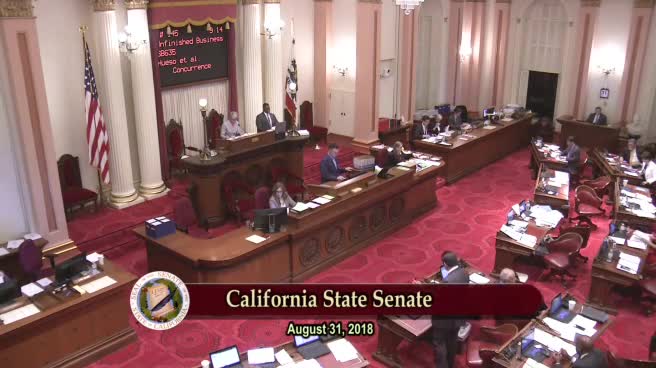
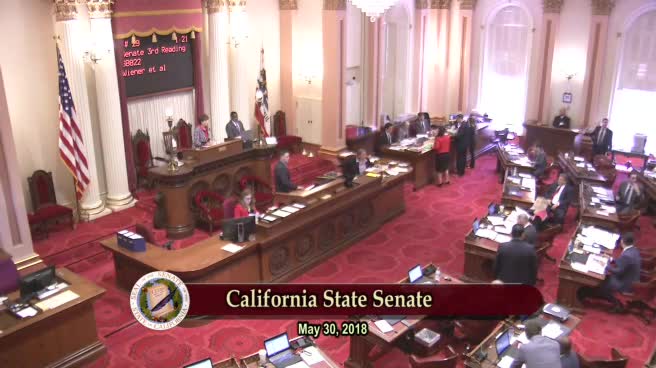
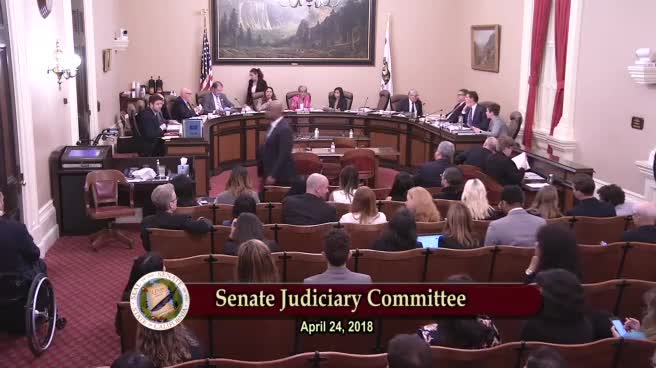
Bill Author

Bill Co-Author(s):