SB 1281: Juvenile records.
- Session Year: 2017-2018
- House: Senate
- Latest Version Date: 2018-09-26
Existing law generally subjects any person under 18 years of age who commits a crime to the jurisdiction of the juvenile court, which may adjudge that person to be a ward of the court. Under existing law, juvenile court proceedings to declare a minor a ward of the court are commenced by the filing of a petition by the probation officer, the district attorney after consultation with the probation officer, or the prosecuting attorney, as specified. Existing law requires the juvenile court to order the petition of a minor who is subject to the jurisdiction of the court dismissed if the minor satisfactorily completes a term of probation or an informal program of supervision, as specified, and requires the court to seal all records pertaining to that dismissed petition in the custody of the juvenile court and in the custody of law enforcement agencies, the probation department, or the Department of Justice. Existing law requires the court to send a copy of the order to each agency and official named in the order, direct the agency or official to seal its records, and specify a date by which the sealed records are to be destroyed. Existing law prohibits a minor who has committed certain serious, violent, drug-related, or firearm-related offenses, as enumerated, from owning, or having in his or her possession, custody, or control, any firearm until he or she turns 30 years of age.
This bill would prohibit the destruction of a sealed record of a ward who is subject to those firearm restrictions until the date upon which he or she turns 33 years of age.
Existing law authorizes certain persons or entities to access, inspect, or utilize a sealed record under those provisions for limited purposes.
This bill would further authorize a prosecuting attorney or the Department of Justice to access, inspect, or utilize those records for specified purposes relating to the enforcement of the firearm restrictions described above.
This bill would incorporate additional changes to Section 786 of the Welfare and Institutions Code proposed by AB 2952 to be operative only if this bill and AB 2952 are enacted and this bill is enacted last.
Existing law generally subjects any person under 18 years of age who commits a crime to the jurisdiction of the juvenile court, which may adjudge that person to be a ward of the court. Under existing law, juvenile court proceedings to declare a minor a ward of the court are commenced by the filing of a petition by the probation officer, the district attorney after consultation with the probation officer, or the prosecuting attorney, as specified. Existing law requires the juvenile court to order the petition of a minor who is subject to the jurisdiction of the court dismissed if the minor satisfactorily completes a term of probation or an informal program of supervision, as specified, and requires the court to seal all records pertaining to that dismissed petition in the custody of the juvenile court and in the custody of law enforcement agencies, the probation department, or the Department of Justice. Existing law requires the court to send a copy of the order to each agency and official named in the order, direct the agency or official to seal its records, and specify a date by which the sealed records are to be destroyed. Existing law prohibits a minor who has committed certain serious, violent, drug-related, or firearm-related offenses, as enumerated, from owning, or having in his or her possession, custody, or control, any firearm until he or she turns 30 years of age.
This bill would prohibit the destruction of a sealed record of a ward who is subject to those firearm restrictions until the date upon which he or she turns 33 years of age.
Existing law authorizes certain persons or entities to access, inspect, or utilize a sealed record under those provisions for limited purposes.
This bill would further authorize a prosecuting attorney or the Department of Justice to access, inspect, or utilize those records for specified purposes relating to the enforcement of the firearm restrictions described above.
(a)If a person who has been alleged or found to be a ward of the juvenile court satisfactorily completes (1) an informal program of supervision pursuant to Section 654.2, (2) probation under Section 725, or (3) a term of probation for any offense, the court shall order the petition dismissed. The court shall order sealed all records pertaining to the dismissed petition in the custody of the juvenile court, and in the custody of law enforcement agencies, the probation department, or the Department of Justice. The court shall send a copy of the order to each agency and official named in the order, direct the agency or official to seal its records, and specify a date by which the sealed records shall be destroyed. If a record contains a sustained petition rendering the person ineligible to own or possess a firearm until 30 years of age pursuant to Section 29820 of the Penal Code, then the date the sealed records shall be destroyed is the date upon which the person turns 33 years of age. Each agency and official named in the order shall seal the records in its custody as directed by the order, shall advise the court of its compliance, and, after advising the court, shall seal the copy of the courts order that was received. The court shall also provide notice to the person and the persons counsel that it has ordered the petition dismissed and the records sealed in the case. The notice shall include an advisement of the persons right to nondisclosure of the arrest and proceedings, as specified in subdivision (b).
(b)Upon the courts order of dismissal of the petition, the arrest and other proceedings in the case shall be deemed not to have occurred and the person who was the subject of the petition may reply accordingly to an inquiry by employers, educational institutions, or other persons or entities regarding the arrest and proceedings in the case.
(c)(1)For purposes of this section, satisfactory completion of an informal program of supervision or another term of probation described in subdivision (a) shall be deemed to have occurred if the person has no new findings of wardship or conviction for a felony offense or a misdemeanor involving moral turpitude during the period of supervision or probation and if he or she has not failed to substantially comply with the reasonable orders of supervision or probation that are within his or her capacity to perform. The period of supervision or probation shall not be extended solely for the purpose of deferring or delaying eligibility for dismissal of the petition and sealing of the records under this section.
(2)An unfulfilled order or condition of restitution, including a restitution fine that can be converted to a civil judgment under Section 730.6 or an unpaid restitution fee shall not be deemed to constitute unsatisfactory completion of supervision or probation under this section.
(d)A court shall not seal a record or dismiss a petition pursuant to this section if the petition was sustained based on the commission of an offense listed in subdivision (b) of Section 707 that was committed when the individual was 14 years of age or older unless the finding on that offense was dismissed or was reduced to a misdemeanor or to a lesser offense that is not listed in subdivision (b) of Section 707.
(e)If a person who has been alleged to be a ward of the juvenile court has his or her petition dismissed by the court, whether on the motion of the prosecution or on the courts own motion, or if the petition is not sustained by the court after an adjudication hearing, the court shall order sealed all records pertaining to the dismissed petition in the custody of the juvenile court, and in the custody of law enforcement agencies, the probation department, or the Department of Justice. The court shall send a copy of the order to each agency and official named in the order, direct the agency or official to seal its records, and specify a date by which the sealed records shall be destroyed. Each agency and official named in the order shall seal the records in its custody as directed by the order, shall advise the court of its compliance, and, after advising the court, shall seal the copy of the courts order that was received. The court shall also provide notice to the person and the persons counsel that it has ordered the petition dismissed and the records sealed in the case. The notice shall include an advisement of the persons right to nondisclosure of the arrest and proceedings, as specified in subdivision (b).
(f)(1)The court may, in making its order to seal the record and dismiss the instant petition pursuant to this section, include an order to seal a record relating to, or to dismiss, any prior petition or petitions that have been filed or sustained against the individual and that appear to the satisfaction of the court to meet the sealing and dismissal criteria otherwise described in this section.
(2)An individual who has a record that is eligible to be sealed under this section may ask the court to order the sealing of a record pertaining to the case that is in the custody of a public agency other than a law enforcement agency, the probation department, or the Department of Justice, and the court may grant the request and order that the public agency record be sealed if the court determines that sealing the additional record will promote the successful reentry and rehabilitation of the individual.
(g)(1)A record that has been ordered sealed by the court under this section may be accessed, inspected, or utilized only under any of the following circumstances:
(A)By the prosecuting attorney, the probation department, or the court for the limited purpose of determining whether the minor is eligible and suitable for deferred entry of judgment pursuant to Section 790 or is ineligible for a program of supervision as defined in Section 654.3.
(B)By the court for the limited purpose of verifying the prior jurisdictional status of a ward who is petitioning the court to resume its jurisdiction pursuant to subdivision (e) of Section 388.
(C)If a new petition has been filed against the minor for a felony offense, by the probation department for the limited purpose of identifying the minors previous court-ordered programs or placements, and in that event solely to determine the individuals eligibility or suitability for remedial programs or services. The information obtained pursuant to this subparagraph shall not be disseminated to other agencies or individuals, except as necessary to implement a referral to a remedial program or service, and shall not be used to support the imposition of penalties, detention, or other sanctions upon the minor.
(D)Upon a subsequent adjudication of a minor whose record has been sealed under this section and a finding that the minor is a person described by Section 602 based on the commission of a felony offense, by the probation department, the prosecuting attorney, counsel for the minor, or the court for the limited purpose of determining an appropriate juvenile court disposition. Access, inspection, or use of a sealed record as provided under this subparagraph shall not be construed as a reversal or modification of the courts order dismissing the petition and sealing the record in the prior case.
(E)Upon the prosecuting attorneys motion, made in accordance with Section 707, to initiate court proceedings to determine whether the case should be transferred to a court of criminal jurisdiction, by the probation department, the prosecuting attorney, counsel for the minor, or the court for the limited purpose of evaluating and determining if such a transfer is appropriate. Access, inspection, or use of a sealed record as provided under this subparagraph shall not be construed as a reversal or modification of the courts order dismissing the petition and sealing the record in the prior case.
(F)By the person whose record has been sealed, upon his or her request and petition to the court to permit inspection of the records.
(G)By the probation department of any county to access the records for the limited purpose of meeting federal Title IV-B and Title IV-E compliance.
(H)The child welfare agency of a county responsible for the supervision and placement of a minor or nonminor dependent may access a record that has been ordered sealed by the court under this section for the limited purpose of determining an appropriate placement or service that has been ordered for the minor or nonminor dependent by the court. The information contained in the sealed record and accessed by the child welfare worker or agency under this subparagraph may be shared with the court but shall in all other respects remain confidential and shall not be disseminated to any other person or agency. Access to the sealed record under this subparagraph shall not be construed as a modification of the courts order dismissing the petition and sealing the record in the case.
(I)By the prosecuting attorney for the evaluation of charges and prosecution of offenses pursuant to Section 29820 of the Penal Code.
(J)By the Department of Justice for the purpose of determining if the person is suitable to purchase, own, or possess a firearm, consistent with Section 29820 of the Penal Code.
(2)When a record has been sealed by the court based on a dismissed petition pursuant to subdivision (e), the prosecutor, within six months of the date of dismissal, may petition the court to access, inspect, or utilize the sealed record for the limited purpose of refiling the dismissed petition based on new circumstances, including, but not limited to, new evidence or witness availability. The court shall determine whether the new circumstances alleged by the prosecutor provide sufficient justification for accessing, inspecting, or utilizing the sealed record in order to refile the dismissed petition.
(3)Access to, or inspection of, a sealed record authorized by paragraphs (1) and (2) shall not be deemed an unsealing of the record and shall not require notice to any other agency.
(h)(1)This section does not prohibit a court from enforcing a civil judgment for an unfulfilled order of restitution ordered pursuant to Section 730.6. A minor is not relieved from the obligation to pay victim restitution, restitution fines, and court-ordered fines and fees because the minors records are sealed.
(2)A victim or a local collection program may continue to enforce victim restitution orders, restitution fines, and court-ordered fines and fees after a record is sealed. The juvenile court shall have access to records sealed pursuant to this section for the limited purpose of enforcing a civil judgment or restitution order.
(i)This section does not prohibit the State Department of Social Services from meeting its obligations to monitor and conduct periodic evaluations of, and provide reports on, the programs carried under federal Title IV-B and Title IV-E as required by Sections 622, 629 et seq., and 671(a)(7) and (22) of Title 42 of the United States Code, as implemented by federal regulation and state statute.
(j)The Judicial Council shall adopt rules of court, and shall make available appropriate forms, providing for the standardized implementation of this section by the juvenile courts.
SEC. 1.5.Section 786 of the Welfare and Institutions Code is amended to read:786.(a)If a person who has been alleged or found to be a ward of the juvenile court satisfactorily completes (1) an informal program of supervision pursuant to Section 654.2, (2) probation under Section 725, or (3) a term of probation for any offense, the court shall order the petition dismissed. The court shall order sealed all records pertaining to the dismissed petition in the custody of the juvenile court, and in the custody of law enforcement agencies, the probation department, or the Department of Justice. The court shall send a copy of the order to each agency and official named in the order, direct the agency or official to seal its records, and specify a date by which the sealed records shall be destroyed. If a record contains a sustained petition rendering the person ineligible to own or possess a firearm until 30 years of age pursuant to Section 29820 of the Penal Code, then the date the sealed records shall be destroyed is the date upon which the person turns 33 years of age. Each agency and official named in the order shall seal the records in its custody as directed by the order, shall advise the court of its compliance, and, after advising the court, shall seal the copy of the courts order that was received. The court shall also provide notice to the person and the persons counsel that it has ordered the petition dismissed and the records sealed in the case. The notice shall include an advisement of the persons right to nondisclosure of the arrest and proceedings, as specified in subdivision (b).
(b)Upon the courts order of dismissal of the petition, the arrest and other proceedings in the case shall be deemed not to have occurred and the person who was the subject of the petition may reply accordingly to an inquiry by employers, educational institutions, or other persons or entities regarding the arrest and proceedings in the case.
(c)(1)For purposes of this section, satisfactory completion of an informal program of supervision or another term of probation described in subdivision (a) shall be deemed to have occurred if the person has no new findings of wardship or conviction for a felony offense or a misdemeanor involving moral turpitude during the period of supervision or probation and if he or she has not failed to substantially comply with the reasonable orders of supervision or probation that are within his or her capacity to perform. The period of supervision or probation shall not be extended solely for the purpose of deferring or delaying eligibility for dismissal of the petition and sealing of the records under this section.
(2)An unfulfilled order or condition of restitution, including a restitution fine that can be converted to a civil judgment under Section 730.6 or an unpaid restitution fee shall not be deemed to constitute unsatisfactory completion of supervision or probation under this section.
(d)A court shall not seal a record or dismiss a petition pursuant to this section if the petition was sustained based on the commission of an offense listed in subdivision (b) of Section 707 that was committed when the individual was 14 years of age or older unless the finding on that offense was dismissed or was reduced to a misdemeanor or to a lesser offense that is not listed in subdivision (b) of Section 707.
(e)If a person who has been alleged to be a ward of the juvenile court has his or her petition dismissed by the court, whether on the motion of the prosecution or on the courts own motion, or if the petition is not sustained by the court after an adjudication hearing, the court shall order sealed all records pertaining to the dismissed petition in the custody of the juvenile court, and in the custody of law enforcement agencies, the probation department, or the Department of Justice. The court shall send a copy of the order to each agency and official named in the order, direct the agency or official to seal its records, and specify a date by which the sealed records shall be destroyed. Each agency and official named in the order shall seal the records in its custody as directed by the order, shall advise the court of its compliance, and, after advising the court, shall seal the copy of the courts order that was received. The court shall also provide notice to the person and the persons counsel that it has ordered the petition dismissed and the records sealed in the case. The notice shall include an advisement of the persons right to nondisclosure of the arrest and proceedings, as specified in subdivision (b).
(f)(1)The court may, in making its order to seal the record and dismiss the instant petition pursuant to this section, include an order to seal a record relating to, or to dismiss, any prior petition or petitions that have been filed or sustained against the individual and that appear to the satisfaction of the court to meet the sealing and dismissal criteria otherwise described in this section.
(2)An individual who has a record that is eligible to be sealed under this section may ask the court to order the sealing of a record pertaining to the case that is in the custody of a public agency other than a law enforcement agency, the probation department, or the Department of Justice, and the court may grant the request and order that the public agency record be sealed if the court determines that sealing the additional record will promote the successful reentry and rehabilitation of the individual.
(g)(1)A record that has been ordered sealed by the court under this section may be accessed, inspected, or utilized only under any of the following circumstances:
(A)By the prosecuting attorney, the probation department, or the court for the limited purpose of determining whether the minor is eligible and suitable for deferred entry of judgment pursuant to Section 790 or is ineligible for a program of supervision as defined in Section 654.3.
(B)By the court for the limited purpose of verifying the prior jurisdictional status of a ward who is petitioning the court to resume its jurisdiction pursuant to subdivision (e) of Section 388.
(C)If a new petition has been filed against the minor for a felony offense, by the probation department for the limited purpose of identifying the minors previous court-ordered programs or placements, and in that event solely to determine the individuals eligibility or suitability for remedial programs or services. The information obtained pursuant to this subparagraph shall not be disseminated to other agencies or individuals, except as necessary to implement a referral to a remedial program or service, and shall not be used to support the imposition of penalties, detention, or other sanctions upon the minor.
(D)Upon a subsequent adjudication of a minor whose record has been sealed under this section and a finding that the minor is a person described by Section 602 based on the commission of a felony offense, by the probation department, the prosecuting attorney, counsel for the minor, or the court for the limited purpose of determining an appropriate juvenile court disposition. Access, inspection, or use of a sealed record as provided under this subparagraph shall not be construed as a reversal or modification of the courts order dismissing the petition and sealing the record in the prior case.
(E)Upon the prosecuting attorneys motion, made in accordance with Section 707, to initiate court proceedings to determine whether the case should be transferred to a court of criminal jurisdiction, by the probation department, the prosecuting attorney, counsel for the minor, or the court for the limited purpose of evaluating and determining if such a transfer is appropriate. Access, inspection, or use of a sealed record as provided under this subparagraph shall not be construed as a reversal or modification of the courts order dismissing the petition and sealing the record in the prior case.
(F)By the person whose record has been sealed, upon his or her request and petition to the court to permit inspection of the records.
(G)By the probation department of any county to access the records for the limited purpose of meeting federal Title IV-B and Title IV-E compliance.
(H)The child welfare agency of a county responsible for the supervision and placement of a minor or nonminor dependent may access a record that has been ordered sealed by the court under this section for the limited purpose of determining an appropriate placement or service that has been ordered for the minor or nonminor dependent by the court. The information contained in the sealed record and accessed by the child welfare worker or agency under this subparagraph may be shared with the court but shall in all other respects remain confidential and shall not be disseminated to any other person or agency. Access to the sealed record under this subparagraph shall not be construed as a modification of the courts order dismissing the petition and sealing the record in the case.
(I)By the prosecuting attorney for the evaluation of charges and prosecution of offenses pursuant to Section 29820 of the Penal Code.
(J)By the Department of Justice for the purpose of determining if the person is suitable to purchase, own, or possess a firearm, consistent with Section 29820 of the Penal Code.
(K)A record that has been sealed pursuant to this section may be accessed, inspected, or utilized by the prosecuting attorney in order to meet a statutory or constitutional obligation to disclose favorable or exculpatory evidence to a defendant in a criminal case in which the prosecuting attorney has reason to believe that access to the record is necessary to meet the disclosure obligation. A request to access information in the sealed record for this purpose, including the prosecutors rationale for believing that access to the information in the record is necessary to meet the disclosure obligation, shall be submitted by the prosecuting attorney to the juvenile court. The juvenile court shall notify the person having the sealed record, including the persons attorney of record, that the court is considering the prosecutors request to access the record, and the court shall provide that person with the opportunity to respond, in writing or by appearance, to the request prior to making its determination. The juvenile court shall review the case file and records that have been referenced by the prosecutor as necessary to meet the disclosure obligation and any response submitted by the person having the sealed record. The court shall approve the prosecutors request to the extent that the court has, upon review of the relevant records, determined that access to a specific sealed record or portion of a sealed record is necessary to enable the prosecuting attorney to comply with the disclosure obligation. If the juvenile court approves the prosecuting attorneys request, the court shall state on the record appropriate limits on the access, inspection, and utilization of the sealed record information in order to protect the confidentiality of the person whose sealed record is accessed pursuant to this subparagraph.
(2)When a record has been sealed by the court based on a dismissed petition pursuant to subdivision (e), the prosecutor, within six months of the date of dismissal, may petition the court to access, inspect, or utilize the sealed record for the limited purpose of refiling the dismissed petition based on new circumstances, including, but not limited to, new evidence or witness availability. The court shall determine whether the new circumstances alleged by the prosecutor provide sufficient justification for accessing, inspecting, or utilizing the sealed record in order to refile the dismissed petition.
(3)Access to, or inspection of, a sealed record authorized by paragraphs (1) and (2) shall not be deemed an unsealing of the record and shall not require notice to any other agency.
(h)(1)This section does not prohibit a court from enforcing a civil judgment for an unfulfilled order of restitution ordered pursuant to Section 730.6. A minor is not relieved from the obligation to pay victim restitution, restitution fines, and court-ordered fines and fees because the minors records are sealed.
(2)A victim or a local collection program may continue to enforce victim restitution orders, restitution fines, and court-ordered fines and fees after a record is sealed. The juvenile court shall have access to records sealed pursuant to this section for the limited purpose of enforcing a civil judgment or restitution order.
(i)This section does not prohibit the State Department of Social Services from meeting its obligations to monitor and conduct periodic evaluations of, and provide reports on, the programs carried under federal Title IV-B and Title IV-E as required by Sections 622, 629 et seq., and 671(a)(7) and (22) of Title 42 of the United States Code, as implemented by federal regulation and state statute.
(j)The Judicial Council shall adopt rules of court, and shall make available appropriate forms, providing for the standardized implementation of this section by the juvenile courts.
SEC. 2.Section 1.5 of this bill incorporates amendments to Section 786 of the Welfare and Institutions Code proposed by both this bill and Assembly Bill 2952. That section shall only become operative if (1) both bills are enacted and become effective on or before January 1, 2019, (2) each bill amends Section 786 of the Welfare and Institutions Code, and (3) this bill is enacted after Assembly Bill 2952, in which case Section 1 of this bill shall not become operative.
(a)If a person who has been alleged or found to be a ward of the juvenile court satisfactorily completes (1) an informal program of supervision pursuant to Section 654.2, (2) probation under Section 725, or (3) a term of probation for any offense, the court shall order the petition dismissed. The court shall order sealed all records pertaining to the dismissed petition in the custody of the juvenile court, and in the custody of law enforcement agencies, the probation department, or the Department of Justice. The court shall send a copy of the order to each agency and official named in the order, direct the agency or official to seal its records, and specify a date by which the sealed records shall be destroyed. If a record contains a sustained petition rendering the person ineligible to own or possess a firearm until 30 years of age pursuant to Section 29820 of the Penal Code, then the date the sealed records shall be destroyed is the date upon which the person turns 33 years of age. Each agency and official named in the order shall seal the records in its custody as directed by the order, shall advise the court of its compliance, and, after advising the court, shall seal the copy of the courts order that was received. The court shall also provide notice to the person and the persons counsel that it has ordered the petition dismissed and the records sealed in the case. The notice shall include an advisement of the persons right to nondisclosure of the arrest and proceedings, as specified in subdivision (b).
(b)Upon the courts order of dismissal of the petition, the arrest and other proceedings in the case shall be deemed not to have occurred and the person who was the subject of the petition may reply accordingly to an inquiry by employers, educational institutions, or other persons or entities regarding the arrest and proceedings in the case.
(c)(1)For purposes of this section, satisfactory completion of an informal program of supervision or another term of probation described in subdivision (a) shall be deemed to have occurred if the person has no new findings of wardship or conviction for a felony offense or a misdemeanor involving moral turpitude during the period of supervision or probation and if he or she has not failed to substantially comply with the reasonable orders of supervision or probation that are within his or her capacity to perform. The period of supervision or probation shall not be extended solely for the purpose of deferring or delaying eligibility for dismissal of the petition and sealing of the records under this section.
(2)An unfulfilled order or condition of restitution, including a restitution fine that can be converted to a civil judgment under Section 730.6 or an unpaid restitution fee shall not be deemed to constitute unsatisfactory completion of supervision or probation under this section.
(d)A court shall not seal a record or dismiss a petition pursuant to this section if the petition was sustained based on the commission of an offense listed in subdivision (b) of Section 707 that was committed when the individual was 14 years of age or older unless the finding on that offense was dismissed or was reduced to a misdemeanor or to a lesser offense that is not listed in subdivision (b) of Section 707.
(e)If a person who has been alleged to be a ward of the juvenile court has his or her petition dismissed by the court, whether on the motion of the prosecution or on the courts own motion, or if the petition is not sustained by the court after an adjudication hearing, the court shall order sealed all records pertaining to the dismissed petition in the custody of the juvenile court, and in the custody of law enforcement agencies, the probation department, or the Department of Justice. The court shall send a copy of the order to each agency and official named in the order, direct the agency or official to seal its records, and specify a date by which the sealed records shall be destroyed. Each agency and official named in the order shall seal the records in its custody as directed by the order, shall advise the court of its compliance, and, after advising the court, shall seal the copy of the courts order that was received. The court shall also provide notice to the person and the persons counsel that it has ordered the petition dismissed and the records sealed in the case. The notice shall include an advisement of the persons right to nondisclosure of the arrest and proceedings, as specified in subdivision (b).
(f)(1)The court may, in making its order to seal the record and dismiss the instant petition pursuant to this section, include an order to seal a record relating to, or to dismiss, any prior petition or petitions that have been filed or sustained against the individual and that appear to the satisfaction of the court to meet the sealing and dismissal criteria otherwise described in this section.
(2)An individual who has a record that is eligible to be sealed under this section may ask the court to order the sealing of a record pertaining to the case that is in the custody of a public agency other than a law enforcement agency, the probation department, or the Department of Justice, and the court may grant the request and order that the public agency record be sealed if the court determines that sealing the additional record will promote the successful reentry and rehabilitation of the individual.
(g)(1)A record that has been ordered sealed by the court under this section may be accessed, inspected, or utilized only under any of the following circumstances:
(A)By the prosecuting attorney, the probation department, or the court for the limited purpose of determining whether the minor is eligible and suitable for deferred entry of judgment pursuant to Section 790 or is ineligible for a program of supervision as defined in Section 654.3.
(B)By the court for the limited purpose of verifying the prior jurisdictional status of a ward who is petitioning the court to resume its jurisdiction pursuant to subdivision (e) of Section 388.
(C)If a new petition has been filed against the minor for a felony offense, by the probation department for the limited purpose of identifying the minors previous court-ordered programs or placements, and in that event solely to determine the individuals eligibility or suitability for remedial programs or services. The information obtained pursuant to this subparagraph shall not be disseminated to other agencies or individuals, except as necessary to implement a referral to a remedial program or service, and shall not be used to support the imposition of penalties, detention, or other sanctions upon the minor.
(D)Upon a subsequent adjudication of a minor whose record has been sealed under this section and a finding that the minor is a person described by Section 602 based on the commission of a felony offense, by the probation department, the prosecuting attorney, counsel for the minor, or the court for the limited purpose of determining an appropriate juvenile court disposition. Access, inspection, or use of a sealed record as provided under this subparagraph shall not be construed as a reversal or modification of the courts order dismissing the petition and sealing the record in the prior case.
(E)Upon the prosecuting attorneys motion, made in accordance with Section 707, to initiate court proceedings to determine whether the case should be transferred to a court of criminal jurisdiction, by the probation department, the prosecuting attorney, counsel for the minor, or the court for the limited purpose of evaluating and determining if such a transfer is appropriate. Access, inspection, or use of a sealed record as provided under this subparagraph shall not be construed as a reversal or modification of the courts order dismissing the petition and sealing the record in the prior case.
(F)By the person whose record has been sealed, upon his or her request and petition to the court to permit inspection of the records.
(G)By the probation department of any county to access the records for the limited purpose of meeting federal Title IV-B and Title IV-E compliance.
(H)The child welfare agency of a county responsible for the supervision and placement of a minor or nonminor dependent may access a record that has been ordered sealed by the court under this section for the limited purpose of determining an appropriate placement or service that has been ordered for the minor or nonminor dependent by the court. The information contained in the sealed record and accessed by the child welfare worker or agency under this subparagraph may be shared with the court but shall in all other respects remain confidential and shall not be disseminated to any other person or agency. Access to the sealed record under this subparagraph shall not be construed as a modification of the courts order dismissing the petition and sealing the record in the case.
(I)By the prosecuting attorney for the evaluation of charges and prosecution of offenses pursuant to Section 29820 of the Penal Code.
(J)By the Department of Justice for the purpose of determining if the person is suitable to purchase, own, or possess a firearm, consistent with Section 29820 of the Penal Code.
(2)When a record has been sealed by the court based on a dismissed petition pursuant to subdivision (e), the prosecutor, within six months of the date of dismissal, may petition the court to access, inspect, or utilize the sealed record for the limited purpose of refiling the dismissed petition based on new circumstances, including, but not limited to, new evidence or witness availability. The court shall determine whether the new circumstances alleged by the prosecutor provide sufficient justification for accessing, inspecting, or utilizing the sealed record in order to refile the dismissed petition.
(3)Access to, or inspection of, a sealed record authorized by paragraphs (1) and (2) shall not be deemed an unsealing of the record and shall not require notice to any other agency.
(h)(1)This section does not prohibit a court from enforcing a civil judgment for an unfulfilled order of restitution ordered pursuant to Section 730.6. A minor is not relieved from the obligation to pay victim restitution, restitution fines, and court-ordered fines and fees because the minors records are sealed.
(2)A victim or a local collection program may continue to enforce victim restitution orders, restitution fines, and court-ordered fines and fees after a record is sealed. The juvenile court shall have access to records sealed pursuant to this section for the limited purpose of enforcing a civil judgment or restitution order.
(i)This section does not prohibit the State Department of Social Services from meeting its obligations to monitor and conduct periodic evaluations of, and provide reports on, the programs carried under federal Title IV-B and Title IV-E as required by Sections 622, 629 et seq., and 671(a)(7) and (22) of Title 42 of the United States Code, as implemented by federal regulation and state statute.
(j)The Judicial Council shall adopt rules of court, and shall make available appropriate forms, providing for the standardized implementation of this section by the juvenile courts.
|
Date
|
Status
|
|---|---|
| Sep 26, 2018 | Chaptered by Secretary of State. Chapter 793, Statutes of 2018. |
| Sep 26, 2018 | Approved by the Governor. |
| Sep 6, 2018 | Enrolled and presented to the Governor at 4 p.m. |
| Aug 28, 2018 | Assembly amendments concurred in. (Ayes 38. Noes 0.) Ordered to engrossing and enrolling. |
| Aug 28, 2018 | In Senate. Concurrence in Assembly amendments pending. |
| Aug 27, 2018 | Read third time. Passed. Ordered to the Senate. |
| Aug 23, 2018 | Read third time and amended. |
| Aug 13, 2018 | From consent calendar. |
| Aug 9, 2018 | Read second time. Ordered to consent calendar. |
| Aug 8, 2018 | From committee: Do pass. Ordered to consent calendar. (Ayes 17. Noes 0.) (August 8). |
| Jun 26, 2018 | From committee: Do pass and re-refer to Com. on APPR. (Ayes 6. Noes 0.) (June 26). Re-referred to Com. on APPR. |
| Jun 11, 2018 | Referred to Com. on PUB. S. |
| May 31, 2018 | In Assembly. Read first time. Held at Desk. |
| May 31, 2018 | Read third time. Passed. (Ayes 39. Noes 0.) Ordered to the Assembly. |
| May 29, 2018 | Ordered to special consent calendar. |
| May 25, 2018 | From committee: Do pass. (Ayes 7. Noes 0.) (May 25). |
| May 18, 2018 | Set for hearing May 25. |
| Apr 16, 2018 | April 16 hearing: Placed on APPR. suspense file. |
| Apr 9, 2018 | Set for hearing April 16. |
| Apr 3, 2018 | From committee: Do pass and re-refer to Com. on APPR. (Ayes 6. Noes 0.) (April 3). Re-referred to Com. on APPR. |
| Mar 14, 2018 | Set for hearing April 3. |
| Mar 1, 2018 | Referred to Com. on PUB. S. |
| Feb 20, 2018 | From printer. May be acted upon on or after March 22. |
| Feb 16, 2018 | Introduced. Read first time. To Com. on RLS. for assignment. To print. |
|
Date
|
Description
|
Location
|
Votes
|
|
|---|---|---|---|---|
| Aug 28, 2018 | Unfinished Business SB1281 Stern Concurrence | Senate Floor |
Passed |
|
| Aug 27, 2018 | SB 1281 Stern Senate Third Reading By CARRILLO | Assembly Floor |
Passed |
|
| Aug 8, 2018 | Do pass. To Consent Calendar. | Assembly Standing Committee on Appropriations |
Passed |
|
| Jun 26, 2018 | Do pass and be re-referred to the Committee on [Appropriations] | Assembly Standing Committee on Public Safety |
Passed |
|
| May 31, 2018 | Special Consent SB1281 | Senate Floor |
Passed |
|
| May 25, 2018 | Do pass | Senate Standing Committee on Appropriations |
Passed |
|
| Apr 16, 2018 | Placed on suspense file | Senate Standing Committee on Appropriations |
Passed |
|
| Apr 3, 2018 | Do pass, but first be re-referred to the Committee on [Appropriations] | Senate Standing Committee on Public Safety |
Passed |
This list shows positions taken on this bill by organizations on the date displayed, which is linked to the original source.
Positions by individuals are not included.
|
Organization
|
Position
|
Date
|
|---|---|---|
| Bay Area Student Activists | ** Support | Aug 28, 2018 |
| California Chapters of the Brady Campaign | ** Support | Jun 25, 2018 |
| California District Attorneys Association | ** Support | Aug 28, 2018 |
| California Police Chief Association | ** Support | Jun 25, 2018 |
| California Public Defenders Association | ** Against | Jun 25, 2018 |
| County Of Los Angeles | * Support | Apr 3, 2018 |
| hadassah southern california | ** Support | Aug 28, 2018 |
| Los Angeles County District Attorney'S Office | ** Support | Jun 25, 2018 |
| Los Angeles District Attorney's Office | ** Support | Aug 28, 2018 |
| Peace Officers Research Association Of California | ** Support | Aug 28, 2018 |
| Riverside Sheriffs Association | * Support | Apr 3, 2018 |
Office of Senate Floor Analyses (916) 651-1520 Fax: (916) 327-4478 | SB 1281 |
UNFINISHED BUSINESS
Bill No: SB 1281
Amended: 8/23/18
SENATE PUBLIC SAFETY COMMITTEE: 6-0, 4/3/18
AYES: Skinner, Bradford, Jackson, Mitchell, Stone, Wiener
NO VOTE RECORDED: Anderson
SENATE APPROPRIATIONS COMMITTEE: 7-0, 5/25/18
AYES: Lara, Bates, Beall, Bradford, Hill, Nielsen, Wiener
SENATE FLOOR: 39-0, 5/31/18
AYES: Allen, Anderson, Atkins, Bates, Beall, Berryhill, Bradford, Cannella, De León, Dodd, Fuller, Gaines, Galgiani, Glazer, Hernandez, Hertzberg, Hill, Hueso, Jackson, Lara, Leyva, McGuire, Mitchell, Monning, Moorlach, Morrell, Newman, Nguyen, Nielsen, Pan, Portantino, Roth, Skinner, Stern, Stone, Vidak, Wieckowski, Wiener, Wilk
ASSEMBLY FLOOR: 78-0, 8/27/18 - See last page for vote
SOURCE: Los Angeles District Attorney’s Office
DIGEST:
This bill prohibits the destruction of a sealed juvenile record if an offense in that record has made the person subject to a firearm restriction, as specified, until he or she turns 33 years of age, and authorizes a prosecuting attorney or the Department of Justice (DOJ) to access, inspect, or utilize those records for specified purposes relating to the enforcement of a firearm restriction, as specified.
Assembly Amendments include double jointing language to deal with potential chaptering issues.
Existing law:
- Provides that, if a minor satisfactorily completes an informal program of supervision, probation as specified, or a term of probation for any offense, then the court shall order the petition dismissed. (Welf. & Inst. Code (WIC), § 786, subd. (a).)
- Requires the court to order sealed all records pertaining to the dismissed petition in the custody of the juvenile court, and in the custody of law enforcement agencies, the probation department, or the DOJ. (WIC, § 786, subd. (a).)
- Requires the court to send a copy of the order to each agency and official named in the order, direct the agency or official to seal its records, and specify a date by which the sealed records shall be destroyed. (WIC, § 786, subd. (a).)
- Requires each agency and official named in the order to seal the records in its custody as directed by the order, to advise the court of its compliance, and, after advising the court, to seal the copy of the court’s order that was received. (WIC, § 786, subd. (a).)
- Permits a sealed to be accessed, inspected, or utilized by specified governmental entities and persons for specified reasons. (WIC, § 786, subd. (a).)
- Prohibits a person adjudged a ward of the juvenile court because the person committed specified serious felonies, specified drug offenses, specified misdemeanors, or specified firearms offenses from owning, possessing, or having under his or her custody or control, any firearm until the age of 30 years. A violation is punishable by imprisonment in a county jail not exceeding one year or in the state prison, by a fine not exceeding $1,000, or by both that imprisonment and fine. (Pen. Code, § 29820, subd. (a)-(c).)
- Requires the juvenile court, on forms prescribed by the DOJ, to notify the department of persons subject to the above firearm restriction. These forms may be used to determine eligibility to acquire a firearm. (Pen. Code, § 29820, subd. (d).)
This bill:
- Provides that if a record contains a sustained petition rendering the person ineligible to own or possess a firearm until 30 years of age pursuant to Penal Code Section 29820, then the date the sealed records shall be destroyed is the date upon which the person turns 33 years of age.
- Adds the following to the list of circumstances under which a sealed juvenile record may be accessed, inspected, or utilized:
- By the prosecuting attorney for the evaluation of charges and prosecution of offenses pursuant to Penal Code Section 29820.
- By the DOJ for the purpose of determining if the person is suitable to purchase, own, or possess a firearm, consistent with Penal Code Section 29820.
Background
Juvenile Record Sealing via WIC Section 786
There are two mechanisms for sealing a juvenile record. This bill concerns the WIC Section 786 automatic sealing process. If a minor has been found to have satisfactorily completed an informal program of supervision or probation, the juvenile court is required to dismiss the petition and order sealed all records pertaining to the dismissed petition. WIC Section 707(b) offenses are excluded from sealing unless the finding has been dismissed, reduced to a misdemeanor, or reduced to a lesser included offenses not on the WIC Section 707(b) list. Upon sealing of the record, the arrest and other proceedings shall be deemed to have never occurred. The court is required to order sealed all records in its custody pertaining to a dismissed petition. However, a sealed record may be accessed, inspected, or utilized in limited circumstances by specified parties, including the prosecuting attorney, probation department, court, or minor’s attorney. This access shall not be deemed an unsealing of the record and shall not require notice to any other entity.
Firearm Restriction Pursuant to Penal Code Section 29820
The firearm restriction that is the subject of this bill is codified in Penal Code Section 29820:
- This section applies to any person who satisfies both of the following requirements:
- The person is alleged to have committed an offense listed in subdivision (b) of Section 707 of the Welfare and Institutions Code, an offense described in subdivision (b) of Section 1203.073, any offense enumerated in Section 29805, or any offense described in Section 25850, subdivision (a) of Section 25400, or subdivision (a) of Section 26100.
(2) The person is subsequently adjudged a ward of the juvenile court within the meaning of Section 602 of the Welfare and Institutions Code because the person committed an offense listed in subdivision (b) of Section 707 of the Welfare and Institutions Code, an offense described in subdivision (b) of Section 1203.073, any offense enumerated in Section 29805, or any offense described in Section 25850, subdivision (a) of Section 25400, or subdivision (a) of Section 26100.
b) Any person described in subdivision (a) shall not own, or have in possession or under custody or control, any firearm until the age of 30 years.
The statute specifically states that the juvenile court is required to notify the DOJ of persons subject to this firearm restriction, and that the form submitted to the DOJ may be used to determine eligibility to acquire a firearm. The proponents of this bill argue that there has been difficulty prosecuting violations of Penal Code Section 29820 when a person’s juvenile record has been sealed because the statute does not explicitly permit a district attorney’s office to use the firearms restriction form for that purpose.
This bill seeks to address the difficulty prosecutors have had in prosecuting violations of Penal Code Section 29820 when the person’s juvenile record has been sealed pursuant to WIC Section 786. The relationship between these two code sections and the possible challenges in prosecuting violations of Penal Code Section 29820 were laid out in In re Joshua R. (2017) 7 Cal. App. 5th 864, 12 Cal. Rptr. 3d 803:
[A]lthough Welfare and Institutions Code section 786 requires sealing the record, the form described in Penal Code section 29820, subdivision (d), is exempt from the requirement of destruction for the limited purpose of determining “eligibility to acquire a firearm.” Thus, while the rest of the record must be sealed and destroyed by the date the court specifies in the order it will issue after remand, the Firearm Form need not be ordered destroyed until Joshua’s 30th birthday.
We believe the current state of the law requires this outcome and furthers the primary purpose of both statutes. The goal behind Welfare and Institutions Code section 786, as we read the statute, is to allow certain juvenile offenders who have successfully completed their probation to lead productive lives without the black mark of a record hanging over their heads for employment and educational purposes. The only purpose of section 29820 is to prevent those who have committed certain offenses as juveniles from owning firearms before they turn 30 years old. Ordering the record sealed, as required by Welfare and Institutions Code section 786, while at the same time allowing the DOJ to maintain the Firearm Form until Joshua turns 30 will serve both purposes.
…The Firearm Form can still be used by the DOJ for firearm eligibility purposes. Sealing the record might make violations more difficult to prosecute, however. Should that be the case, a statutory fix from the Legislature or a revision of the Firearm Form is the appropriate remedy. (7 Cal. App. 5th at 869.)
This bill attempts to address the issue of prosecuting violations of Penal Code Section 29820 when person has a sealed juvenile record by amending WIC Section 786. First, this bill provides that the date that a person’s juvenile records that were sealed pursuant to WIC Section 786 shall be destroyed is the date that the person turns 33 years of age. This bill selects 33 as the age at which the sealed records may be destroyed because the statute of limitations for a violation of Penal Code Section 29820 is three years. Second, this bill adds the following to the list of circumstances under which a person’s sealed juvenile records may be accessed, inspected, or utilized:
- By the prosecuting attorney for the evaluation of charges and prosecution of offenses pursuant to Penal Code Section 29820.
- By the DOJ for the purpose of determining if the person is suitable to purchase, own, or possess a firearm, consistent with Penal Code Section 29820.
FISCAL EFFECT: Appropriation: No Fiscal Com.: Yes Local: No
According to the Assembly Appropriations Committee, this bill would result in minor costs to the courts.
Los Angeles District Attorney’s Office (source)
Bay Area Student Activists
California District Attorneys Association
Hadassah Southern California
Peace Officers Research Association of California
OPPOSITION: (Verified 8/27/18)
None received
ASSEMBLY FLOOR: 78-0, 8/27/18
AYES: Acosta, Aguiar-Curry, Travis Allen, Arambula, Baker, Berman, Bigelow, Bloom, Bonta, Brough, Burke, Caballero, Calderon, Carrillo, Cervantes, Chau, Chávez, Chen, Chiu, Choi, Chu, Cooley, Cooper, Cunningham, Dahle, Daly, Eggman, Flora, Fong, Friedman, Gabriel, Gallagher, Cristina Garcia, Eduardo Garcia, Gipson, Gloria, Gonzalez Fletcher, Gray, Grayson, Harper, Holden, Irwin, Jones-Sawyer, Kalra, Kiley, Lackey, Levine, Limón, Low, Maienschein, Mathis, Mayes, McCarty, Medina, Melendez, Mullin, Muratsuchi, Nazarian, Obernolte, O'Donnell, Patterson, Quirk, Quirk-Silva, Reyes, Rivas, Rodriguez, Rubio, Salas, Santiago, Steinorth, Mark Stone, Thurmond, Ting, Voepel, Waldron, Weber, Wood, Rendon
NO VOTE RECORDED: Frazier, Kamlager-Dove
Prepared by: Stephanie Jordan / PUB. S. /
8/28/18 9:44:31
SENATE THIRD READING
STR Bill Id:SB 1281
Author:(Stern)
As Introduced Ver:August 23, 2018
Majority vote
SENATE VOTE: 39-0
Committee | Votes | Ayes | Noes |
Public Safety | 6-0 | Jones-Sawyer, Lackey, Carrillo, Kamlager-Dove, Kiley, Santiago |
|
Appropriations | 17-0 | Gonzalez Fletcher, Bigelow, Bloom, Bonta, Brough, Calderon, Carrillo, Chau, Eggman, Fong, Friedman, Gallagher, Eduardo Garcia, Nazarian, Obernolte, Quirk, Reyes |
|
SUMMARY: Prohibits the destruction of a sealed juvenile record if an offense in that record has made the person subject to a firearms restriction until he or she turns 33 years of age, and authorizes a prosecuting attorney or the Department of Justice (DOJ) to inspect, to utilize those records for purposes related to the enforcement of that restriction, as specified. Specifically, this bill:
- Provides that if a sealed juvenile record contains a sustained petition rendering the person ineligible to own or possess a firearm until 30 years of age, as specified, then the date the sealed records shall be destroyed is the date upon which the person turns 33 years of age.
- Adds the following to the list of circumstances under which a person's sealed, inspected, or utilized:
- By a prosecuting attorney for the evaluation of charges and the prosecution of offenses related to the restriction that a person not own or possess a firearm until they turn 30 years of age; and,
- By the DOJ for the purpose of determining if an individual is eligible is to purchase, own, or possess a firearm consistent with the restriction that a person not own or possess a firearm until they turn 30 years of age.
EXISTING LAW:
- Provides that, if a minor satisfactorily completes an informal program of supervision, probation as specified, or a term of probation for any offense, then the court shall order the petition dismissed.
- Requires the court to order sealed all records pertaining to the dismissed petition in the custody of the juvenile court, and in the custody of law enforcement agencies, the probation department, or the DOJ.
- Requires the court to send a copy of the order to each agency and official named in the order, direct the agency or official to seal its records, and specify a date by which the sealed records shall be destroyed.
- Requires each agency and official named in the order to seal the records in its custody as directed by the order, to advise the court of its compliance, and, after advising the court, to seal the copy of the court's order that was received.
- Permits a sealed record to be accessed, inspected, or utilized by specified governmental entities and persons for specified reasons.
- Prohibits a person adjudged a ward of the juvenile court because the person committed specified serious felonies, specified drug offenses, specified misdemeanors, or specified firearms offenses from owning, possessing, or having under his or her custody or control, any firearm until the age of 30 years. A violation is punishable by imprisonment in a county jail not exceeding one year or in the state prison, by a fine not exceeding $1,000, or by both that imprisonment and fine.
- Requires the juvenile court, on forms prescribed by the DOJ, to notify the department of persons subject to the above firearm restriction. These forms may be used to determine eligibility to acquire a firearm.
FISCAL EFFECT: According to the Assembly Appropriations Committee, minor costs to the courts.
COMMENTS: According to the author, "SB 1281 strengthens background checks and helps law enforcement keep guns out of the wrong hands.
"Currently, it is illegal for someone who committed certain offenses, including serious or violent felonies, as a juvenile to own or possess a firearm until age 30 (Penal Code Section (PC) 29820). However, because juvenile records are sealed and destroyed at the conclusion of the case, it is impossible to enforce this prohibition. SB 1281 will close this loophole in current law.
"SB 1281 would amend Welfare and Institutions Code section 786 to prohibit a juvenile court from ordering the destruction of records associated with the petition of any juvenile who has been adjudged a ward of the court for committing an offense enumerated in Penal Code Section 29820, subdivision (b), until that person attains the age of 33. In light of the 3-year statute of limitations for violations of Penal Code Section 29820, and its mandate that juveniles who violate its provisions not be allowed to own or possess a firearm until age 30, the unintended incompatibility between the sealing/destruction requirement in WIC 786 and the firearms prohibition in PC 29820 would best be solved by setting the age of destruction of eligible juvenile records at age 33."
Analysis Prepared by: Gregory Pagan / PUB. S. / (916) 319-3744 FN: 0004531
SENATE THIRD READING
STR Bill Id:SB 1281
Author:(Stern)
As Introduced Ver:February 16, 2018
Majority vote
SENATE VOTE: 39-0
Committee | Votes | Ayes | Noes |
Public Safety | 6-0 | Jones-Sawyer, Lackey, Carrillo, Kamlager-Dove, Kiley, Santiago | |
Appropriations | 17-0 | Gonzalez Fletcher, Bigelow, Bloom, Bonta, Brough, Calderon, Carrillo, Chau, Eggman, Fong, Friedman, Gallagher, Eduardo Garcia, Nazarian, Obernolte, Quirk, Reyes |
|
SUMMARY: Prohibits the destruction of a sealed juvenile record if an offense in that record has made the person subject to a firearms restriction until he or she turns 33 years of age, and authorizes a prosecuting attorney or the Department of Justice (DOJ) to inspect, to utilize those records for purposes related to the enforcement of that restriction, as specified. Specifically, this bill:
- Provides that if a sealed juvenile record contains a sustained petition rendering the person ineligible to own or possess a firearm until 30 years of age, as specified, then the date the sealed records shall be destroyed is the date upon which the person turns 33 years of age.
- Adds the following to the list of circumstances under which a person's sealed, inspected, or utilized:
- By a prosecuting attorney for the evaluation of charges and the prosecution of offenses related to the restriction that a person not own or possess a firearm until they turn 30 years of age; and,
- By the DOJ for the purpose of determining if an individual is eligible is to purchase, own, or possess a firearm consistent with the restriction that a person not own or possess a firearm until they turn 30 years of age.
EXISTING LAW:
- Provides that, if a minor satisfactorily completes an informal program of supervision, probation as specified, or a term of probation for any offense, then the court shall order the petition dismissed.
- Requires the court to order sealed all records pertaining to the dismissed petition in the custody of the juvenile court, and in the custody of law enforcement agencies, the probation department, or the DOJ.
- Requires the court to send a copy of the order to each agency and official named in the order, direct the agency or official to seal its records, and specify a date by which the sealed records shall be destroyed.
- Requires each agency and official named in the order to seal the records in its custody as directed by the order, to advise the court of its compliance, and, after advising the court, to seal the copy of the court’s order that was received.
- Permits a sealed record to be accessed, inspected, or utilized by specified governmental entities and persons for specified reasons.
- Prohibits a person adjudged a ward of the juvenile court because the person committed specified serious felonies, specified drug offenses, specified misdemeanors, or specified firearms offenses from owning, possessing, or having under his or her custody or control, any firearm until the age of 30 years. A violation is punishable by imprisonment in a county jail not exceeding one year or in the state prison, by a fine not exceeding $1,000, or by both that imprisonment and fine.
- Requires the juvenile court, on forms prescribed by the DOJ, to notify the department of persons subject to the above firearm restriction. These forms may be used to determine eligibility to acquire a firearm.
FISCAL EFFECT: According to the Assembly Appropriations Committee, minor costs to the courts.
COMMENTS: According to the author, "SB 1281 strengthens background checks and helps law enforcement keep guns out of the wrong hands.
"Currently, it is illegal for someone who committed certain offenses, including serious or violent felonies, as a juvenile to own or possess a firearm until age 30 (Penal Code Section (PC) 29820). However, because juvenile records are sealed and destroyed at the conclusion of the case, it is impossible to enforce this prohibition. SB 1281 will close this loophole in current law.
"SB 1281 would amend Welfare and Institutions Code section 786 to prohibit a juvenile court from ordering the destruction of records associated with the petition of any juvenile who has been adjudged a ward of the court for committing an offense enumerated in Penal Code Section 29820, subdivision (b), until that person attains the age of 33. In light of the 3-year statute of limitations for violations of Penal Code Section 29820, and its mandate that juveniles who violate its provisions not be allowed to own or possess a firearm until age 30, the unintended incompatibility between the sealing/destruction requirement in WIC 786 and the firearms prohibition in PC 29820 would best be solved by setting the age of destruction of eligible juvenile records at age 33."
Please see the policy committee analysis for a full discussion of this bill.
Analysis Prepared by: Gregory Pagan / PUB. S. / (916) 319-3744 FN: 0003965
Date of Hearing: August 8, 2018
ASSEMBLY COMMITTEE ON APPROPRIATIONS
Lorena Gonzalez Fletcher, Chair
SBPCA Bill Id:SB 1281
Author:(Stern) – As Introduced Ver:February 16, 2018
Policy Committee: | Public Safety | Vote: | 6 - 0 |
|
| ||
|
|
Urgency: No State Mandated Local Program: No Reimbursable: No
SUMMARY:
This bill prohibits the destruction of a sealed juvenile record until a person turns 33 years of age if an offense in that record made the person subject to a firearms and authorizes a prosecuting attorney or the Department of Justice (DOJ) to inspect and use those records for purposes related to the enforcement of that restriction.
FISCAL EFFECT:
Minor costs to the courts.
COMMENTS:
- Background. Current law prohibits certain minors who are wards of the juvenile court from owning or possessing a firearm until the age of 30 years if the person committed a specified misdemeanor or felony. While juvenile delinquency records are generally sealed and subsequently destroyed, accessing some information in some juvenile records is necessary to enforce restrictions on possessing a firearm.
- Purpose. This bill will ensure that prosecutors and the DOJ have access to the information necessary to enforce restrictions on possessing a firearm for youth that were a ward of the juvenile court. According to the author:
SB 1281 would amend Welfare and Institutions Code section 786 to prohibit a juvenile court from ordering the destruction of records associated with the petition of any juvenile who has been adjudged a ward of the court for committing an offense enumerated in Penal Code Section 29820, subdivision (b), until that person attains the age of 33. In light of the 3-year statute of limitations for violations of Penal Code section 29820, and its mandate that juveniles who violate its provisions not be allowed to own or possess a firearm until age 30, the unintended incompatibility between the sealing/destruction requirement in WIC 786 and the firearms prohibition in PC 29820 would best be solved by setting the age of destruction of eligible juvenile records at age 33.
Analysis Prepared by: Jessica Peters / APPR. / (916) 319-2081
Date of Hearing: June 26, 2018
Chief Counsel: Gregory Pagan
ASSEMBLY COMMITTEE ON PUBLIC SAFETY
Reginald Byron Jones-Sawyer, Sr., Chair
SBPCA Bill Id:SB 1281
Author:(Stern) – As Introduced Ver:February 16, 2018
SUMMARY: Prohibits the destruction of a sealed juvenile record if an offense in that record has made the person subject to a firearms restriction until he or she turns 33 years of age, and authorizes a prosecuting attorney or the Department of Justice (DOJ) to inspect, to utilize those records for purposes related to the enforcement of that restriction, as specified. Specifically, this bill:
- Provides that if a sealed juvenile record contains a sustained petition rendering the person ineligible to own or possess a firearm until 30 years of age, as specified, then the date the sealed records shall be destroyed is the date upon which the person turns 33 years of age.
- Adds the following to the list of circumstances under which a person's sealed, inspected, or utilized:
- By a prosecuting attorney for the evaluation of charges and the prosecution of offenses related to the restriction that a person not own or possess a firearm until they turn 30 years of age; and,
- By the DOJ for the purpose of determining if an individual is eligible is to purchase, own, or possess a firearm consistent with the restriction that a person not own or possess a firearm until they turn 30 years of age.
- By a prosecuting attorney for the evaluation of charges and the prosecution of offenses related to the restriction that a person not own or possess a firearm until they turn 30 years of age; and,
EXISTING LAW:
- Provides that, if a minor satisfactorily completes an informal program of supervision, probation as specified, or a term of probation for any offense, then the court shall order the petition dismissed. (Welf. & Inst. Code, § 786, subd. (a).)
- Requires the court to order sealed all records pertaining to the dismissed petition in the custody of the juvenile court, and in the custody of law enforcement agencies, the probation department, or the DOJ. (Welf. & Inst. Code, § 786, subd. (a).)
- Requires the court to send a copy of the order to each agency and official named in the order, direct the agency or official to seal its records, and specify a date by which the sealed records shall be destroyed. (Welf. & Inst. Code, § 786, subd. (a).)
- Requires each agency and official named in the order to seal the records in its custody as directed by the order, to advise the court of its compliance, and, after advising the court, to seal the copy of the court’s order that was received. (Welf. & Inst. Code, § 786, subd. (a).)
- Permits a sealed record to be accessed, inspected, or utilized by specified governmental entities and persons for specified reasons. (Welf. & Inst. Code, § 786, subd. (a).)
- Prohibits a person adjudged a ward of the juvenile court because the person committed specified serious felonies, specified drug offenses, specified misdemeanors, or specified firearms offenses from owning, possessing, or having under his or her custody or control, any firearm until the age of 30 years. A violation is punishable by imprisonment in a county jail not exceeding one year or in the state prison, by a fine not exceeding $1,000, or by both that imprisonment and fine. (Pen. Code, § 29820, subd. (a)-(c).)
- Requires the juvenile court, on forms prescribed by the DOJ, to notify the department of persons subject to the above firearm restriction. These forms may be used to determine eligibility to acquire a firearm. (Pen. Code, § 29820, subd. (d).)
FISCAL EFFECT: Unknown
COMMENTS:
- Author's Statement: According to the author, "SB 1281 strengthens background checks and helps law enforcement keep guns out of the wrong hands.
"Currently, it is illegal for someone who committed certain offenses, including serious or violent felonies, as a juvenile to own or possess a firearm until age 30 (Penal Code section 29820). However, because juvenile records are sealed and destroyed at the conclusion of the case, it is impossible to enforce this prohibition. SB 1281 will close this loophole in current law.
"SB 1281 would amend Welfare and Institutions Code section 786 to prohibit a juvenile court from ordering the destruction of records associated with the petition of any juvenile who has been adjudged a ward of the court for committing an offense enumerated in Penal Code Section 29820, subdivision (b), until that person attains the age of 33. In light of the 3-year statute of limitations for violations of Penal Code section 29820, and its mandate that juveniles who violate its provisions not be allowed to own or possess a firearm until age 30, the unintended incompatibility between the sealing/destruction requirement in WIC 786 and the firearms prohibition in PC 29820 would best be solved by setting the age of destruction of eligible juvenile records at age 33."
- Background: Penal Code Section 29820 prohibits any person adjudged a ward of the juvenile court because the person has committed a specified misdemeanor or felony from owning or possessing a firearm until the age of 30 years.
The statute specifically states that the juvenile court is required to notify the DOJ of persons subject to this firearm restriction, and that the form submitted to the DOJ may be used to determine eligibility to acquire a firearm. The proponents of this bill argue that there has been difficulty prosecuting violations of Penal Code Section 29820 when a person’s juvenile record has been sealed because the statute does not explicitly permit a district attorney’s office to use the firearms restriction form for that purpose.
This bill seeks to address the difficulty prosecutors have had in prosecuting violations of Penal Code section 29820 when the person’s juvenile record has been sealed pursuant to Welfare and Institutions Code Section 786. The relationship between these two code sections and the possible challenges in prosecuting violations of Penal Code Section 29820 were laid out in In re Joshua R. (2017) 7 Cal. App. 5th 864.
[A]lthough Welfare and Institutions Code Section 786 requires sealing the record, the form described in Penal Code Section 29820, subdivision (d), is exempt from the requirement of destruction for the limited purpose of determining “eligibility to acquire a firearm.” Thus, while the rest of the record must be sealed and destroyed by the date the court specifies in the order it will issue after remand, the Firearm Form need not be ordered destroyed until Joshua’s 30th birthday.
We believe the current state of the law requires this outcome and furthers the primary purpose of both statutes. The goal behind Welfare and Institutions Code Section 786, as we read the statute, is to allow certain juvenile offenders who have successfully completed their probation to lead productive lives without the black mark of a record hanging over their heads for employment and educational purposes. The only purpose of Section 29820 is to prevent those who have committed certain offenses as juveniles from owning firearms before they turn 30 years old. Ordering the record sealed, as required by Welfare and Institutions Code Section 786, while at the same time allowing the DOJ to maintain the Firearm Form until Joshua turns 30 will serve both purposes.
…The Firearm Form can still be used by the DOJ for firearm eligibility purposes. Sealing the record might make violations more difficult to prosecute, however. Should that be the case, a statutory fix from the Legislature or a revision of the Firearm Form is the appropriate remedy. (7 Cal. App. 5th at 869.)
This bill attempts to address the issue of prosecuting violations of Penal Code Section 29820 when person has a sealed juvenile record by amending Welfare and Institutions Code Section 786. This bill provides that the date that a person’s juvenile records that were sealed pursuant to Welfare and Institutions Code Section 786 shall be destroyed is the date that the person turns 33 years of age. This bill selects 33 as the age at which the sealed records may be destroyed because the statute of limitations for a violation of Penal Code Section 29820 is three years.
- Juvenile Record Sealing: There are two mechanisms for sealing a juvenile record. This bill concerns the WIC Section 786 automatic sealing process. If a minor has been found to have satisfactorily completed an informal program of supervision or probation, the juvenile court is required to dismiss the petition and order sealed all records pertaining to the dismissed petition. WIC Section 707(b) offenses are excluded from sealing unless the finding has been dismissed, reduced to a misdemeanor, or reduced to a lesser included offenses not on the WIC Section 707(b) list. Upon sealing of the record, the arrest and other proceedings shall be deemed to have never occurred. The court is required to order sealed all records in its custody pertaining to a dismissed petition. However, a sealed record may be accessed, inspected, or utilized in limited circumstances by specified parties, including the prosecuting attorney, probation department, court, or minor’s attorney. This access shall not be deemed an unsealing of the record and shall not require notice to any other entity.
REGISTERED SUPPORT / OPPOSITION:
Support
Los Angeles County District Attorney's Office (Sponsor)
Bay Area Student Activists
California Chapters of the Brady Campaign
California District Attorneys Association
California Police Chief Association
Hadassah of Southern California
Peace Officers Research Association of California
Opposition
California Public Defenders Association
Analysis Prepared by: Gregory Pagan / PUB. S. / (916) 319-3744
Office of Senate Floor Analyses (916) 651-1520 Fax: (916) 327-4478 | SB |
THIRD READING
Bill No: SB 1281
:
SENATE PUBLIC SAFETY COMMITTEE: 6-0, 4/3/18
AYES: Skinner, Bradford, Jackson, Mitchell, Stone, Wiener
NO VOTE RECORDED: Anderson
SENATE APPROPRIATIONS COMMITTEE: 7-0, 5/25/18
AYES: Lara, Bates, Beall, Bradford, Hill, Nielsen, Wiener
SOURCE: Los Angeles District Attorney’s Office
DIGEST:
This bill prohibits the destruction of a sealed juvenile record if an offense in that record has made the person subject to a firearm restriction, as specified, until he or she turns 33 years of age, and authorizes a prosecuting attorney or the Department of Justice (DOJ) to access, inspect, or utilize those records for specified purposes relating to the enforcement of a firearm restriction, as specified.
Existing law:
- Provides that, if a minor satisfactorily completes an informal program of supervision, probation as specified, or a term of probation for any offense, then the court shall order the petition dismissed. (Welf. & Inst. Code (WIC), § 786, subd. (a).)
- Requires the court to order sealed all records pertaining to the dismissed petition in the custody of the juvenile court, and in the custody of law enforcement agencies, the probation department, or the DOJ. (WIC, § 786, subd. (a).)
- Requires the court to send a copy of the order to each agency and official named in the order, direct the agency or official to seal its records, and specify a date by which the sealed records shall be destroyed. (WIC, § 786, subd. (a).)
- Requires each agency and official named in the order to seal the records in its custody as directed by the order, to advise the court of its compliance, and, after advising the court, to seal the copy of the court’s order that was received. (WIC, § 786, subd. (a).)
- Permits a sealed to be accessed, inspected, or utilized by specified governmental entities and persons for specified reasons. (WIC, § 786, subd. (a).)
- Prohibits a person adjudged a ward of the juvenile court because the person committed specified serious felonies, specified drug offenses, specified misdemeanors, or specified firearms offenses from owning, possessing, or having under his or her custody or control, any firearm until the age of 30 years. A violation is punishable by imprisonment in a county jail not exceeding one year or in the state prison, by a fine not exceeding $1,000, or by both that imprisonment and fine. (Pen. Code (PEN), § 29820, subd. (a)-(c).)
- Requires the juvenile court, on forms prescribed by the DOJ, to notify the department of persons subject to the above firearm restriction. These forms may be used to determine eligibility to acquire a firearm. (PEN, § 29820, subd. (d).)
This bill:
- Provides that if a record contains a sustained petition rendering the person ineligible to own or possess a firearm until 30 years of age pursuant to PEN Section 29820, then the date the sealed records shall be destroyed is the date upon which the person turns 33 years of age.
- Adds the following to the list of circumstances under which a sealed juvenile record may be accessed, inspected, or utilized:
- By the prosecuting attorney for the evaluation of charges and prosecution of offenses pursuant to PEN Section 29820.
- By the DOJ for the purpose of determining if the person is suitable to purchase, own, or possess a firearm, consistent with PEN Section 29820.
Background
Juvenile Record Sealing via WIC Section 786
There are two mechanisms for sealing a juvenile record. This bill concerns the WIC Section 786 automatic sealing process. If a minor has been found to have satisfactorily completed an informal program of supervision or probation, the juvenile court is required to dismiss the petition and order sealed all records pertaining to the dismissed petition. WIC Section 707(b) offenses are excluded from sealing unless the finding has been dismissed, reduced to a misdemeanor, or reduced to a lesser included offenses not on the WIC Section 707(b) list. Upon sealing of the record, the arrest and other proceedings shall be deemed to have never occurred. The court is required to order sealed all records in its custody pertaining to a dismissed petition. However, a sealed record may be accessed, inspected, or utilized in limited circumstances by specified parties, including the prosecuting attorney, probation department, court, or minor’s attorney. This access shall not be deemed an unsealing of the record and shall not require notice to any other entity.
Firearm Restriction Pursuant to PEN Section 29820
The firearm restriction that is the subject of this bill is codified in Penal Code section 29820:
- This section applies to any person who satisfies both of the following requirements:
- The person is alleged to have committed an offense listed in subdivision (b) of Section 707 of the Welfare and Institutions Code, an offense described in subdivision (b) of Section 1203.073, any offense enumerated in Section 29805, or any offense described in Section 25850, subdivision (a) of Section 25400, or subdivision (a) of Section 26100.
(2) The person is subsequently adjudged a ward of the juvenile court within the meaning of Section 602 of the Welfare and Institutions Code because the person committed an offense listed in subdivision (b) of Section 707 of the Welfare and Institutions Code, an offense described in subdivision (b) of Section 1203.073, any offense enumerated in Section 29805, or any offense described in Section 25850, subdivision (a) of Section 25400, or subdivision (a) of Section 26100.
b) Any person described in subdivision (a) shall not own, or have in possession or under custody or control, any firearm until the age of 30 years.
The statute specifically states that the juvenile court is required to notify the DOJ of persons subject to this firearm restriction, and that the form submitted to the DOJ may be used to determine eligibility to acquire a firearm. The proponents of this bill argue that there has been difficulty prosecuting violations of PEN Section 29820 when a person’s juvenile record has been sealed because the statute does not explicitly permit a district attorney’s office to use the firearms restriction form for that purpose.
This bill seeks to address the difficulty prosecutors have had in prosecuting violations of PEN Section 29820 when the person’s juvenile record has been sealed pursuant to WIC Section 786. The relationship between these two code sections and the possible challenges in prosecuting violations of PEN Section 29820 were laid out in In re Joshua R. (2017) 7 Cal. App. 5th 864, 12 Cal. Rptr. 3d 803:
[A]lthough Welfare and Institutions Code section 786 requires sealing the record, the form described in Penal Code section 29820, subdivision (d), is exempt from the requirement of destruction for the limited purpose of determining “eligibility to acquire a firearm.” Thus, while the rest of the record must be sealed and destroyed by the date the court specifies in the order it will issue after remand, the Firearm Form need not be ordered destroyed until Joshua’s 30th birthday.
We believe the current state of the law requires this outcome and furthers the primary purpose of both statutes. The goal behind Welfare and Institutions Code section 786, as we read the statute, is to allow certain juvenile offenders who have successfully completed their probation to lead productive lives without the black mark of a record hanging over their heads for employment and educational purposes. The only purpose of section 29820 is to prevent those who have committed certain offenses as juveniles from owning firearms before they turn 30 years old. Ordering the record sealed, as required by Welfare and Institutions Code section 786, while at the same time allowing the DOJ to maintain the Firearm Form until Joshua turns 30 will serve both purposes.
…The Firearm Form can still be used by the DOJ for firearm eligibility purposes. Sealing the record might make violations more difficult to prosecute, however. Should that be the case, a statutory fix from the Legislature or a revision of the Firearm Form is the appropriate remedy. (7 Cal. App. 5th at 869.)
This bill attempts to address the issue of prosecuting violations of PEN Section 29820 when person has a sealed juvenile record by amending WIC Section 786. First, this bill provides that the date that a person’s juvenile records that were sealed pursuant to WIC Section 786 shall be destroyed is the date that the person turns 33 years of age. This bill selects 33 as the age at which the sealed records may be destroyed because the statute of limitations for a violation of PEN Section 29820 is three years. Second, this bill adds the following to the list of circumstances under which a person’s sealed juvenile records may be accessed, inspected, or utilized:
- By the prosecuting attorney for the evaluation of charges and prosecution of offenses pursuant to PEN Section 29820.
- By the DOJ for the purpose of determining if the person is suitable to purchase, own, or possess a firearm, consistent with PEN Section 29820.
FISCAL EFFECT: Appropriation: Fiscal Com.: Local:
According to the Senate Appropriations Committee:
- DOJ: Unknown, potentially-significant costs (General Fund, special fund—Fingerprint Fees Account) to update existing IT systems to allow sealed juvenile records to be retained and notated with the specified firearm restriction.
- Court: Minor and absorbable costs to the court to delay the destruction of the sealed record.
Los Angeles District Attorney’s Office (source)
Bay Area Student Activists
California District Attorneys Association
Hadassah Southern California
Peace Officers Research Association of California
OPPOSITION: (Verified 5/25/18)
None received
Prepared by: Stephanie Jordan / PUB. S. /
5/26/18 15:14:39
SENATE COMMITTEE ON
Senator Ricardo Lara, Chair
2017 - 2018 Regular Session
SB 1281 (Stern) - Juvenile records
Version: | Policy Vote: |
Urgency: | Mandate: |
Hearing Date: | Consultant: |
This bill meets the criteria for referral to the Suspense File.
Bill Summary:
SB 1281 would delay the destruction of a sealed juvenile record, as specified, for offenses that make the person subject to a firearm restriction until he or she becomes 33 years of age. It also would allow prosecuting attorneys or the Department of Justice (DOJ) to access, inspect, or use the sealed records for the specific purpose of enforcing the firearm restriction.
Fiscal Impact:
- DOJ: Unknown, potentially-significant costs (General Fund, special fund*) to update existing IT systems to allow sealed juvenile records to be retained and notated with the specified firearm restriction.
- Court: Minor and absorbable costs to the court to delay the destruction of the sealed record.
*Fingerprint Fees Account
Background:
There are two mechanisms for sealing a juvenile record, one of which being an automatic sealing process upon a youth’s satisfactory completion of supervision. In these types of cases, the juvenile court is required to dismiss the petition and order sealed all records pertaining to the dismissed petition. This sealing process is unavailable for cases in which the youth was found to have committed a specified serious offense (i.e., an offense included in Welfare and Institutions Code section 707, subdivision (b)) unless the finding has been dismissed, the offense has been reduced to a misdemeanor, or it has been reduced to a lesser included offense not listed in section 707, subdivision (b). Upon the sealing of the record, the arrest and other proceedings are deemed to have never occurred. Additionally, the court must order sealed all records in its custody and in the custody of law enforcement agencies, the probation department, and DOJ pertaining to the dismissed petition. A sealed record, however, may be accessed, inspected, or used in limited circumstances by specified parties, including the prosecuting attorney, probation department, court, or minor’s attorney. This access is not deemed an unsealing of the record and does not require notice to any other entity.
Additionally, a youth who has committed certain serious, violent, drug-related, or firearm-related offenses, as enumerated, are prohibited from owning, or having in his or her possession, custody, or control, any firearm until he or she turns 30 years of age. A violation of this prohibition is an alternate felony/misdemeanor punishable by imprisonment in county jail for up to one year; imprisonment in state prison for 16 months, two years, or three years; a base fine of up to $1,000; or both the imprisonment and fine.
Proposed Law:
This bill would delay the destruction of a sustained juvenile petition, that the court has ordered sealed, that makes the subject of the petition ineligible to own or possess a firearm until her or she becomes 30 years of age until the subject reaches 33 years of age. It also would allow the prosecuting attorney or DOJ to access, inspect, or use the sealed record for the specific purpose of enforcing the firearm restriction.
Related Legislation:
AB 666 (Stone, Ch. 368, Stats. 2015) requires that all records in the custody of law enforcement agencies, the probation department, or DOJ be sealed in a case where a court has ordered a juvenile's records to be sealed, as specified.
SB 1038 (Leno, Ch. 249, Stats. 2014) provides for the automatic dismissal of juvenile petitions and sealing of records, as specified, in cases where a youth successfully completes probation and authorizes the juvenile court to dismiss a delinquency petition after a person reaches the age of 21.
Staff Comments:
Given DOJ’s current IT system setup, a juvenile record generally is no longer available when it has been sealed by the department. The record is destroyed for practical purposes. This bill would require the department to maintain juvenile records, still in a sealed manner, for youths found guilty of specified offenses and subject to a firearm restriction to allow the record to be inspected and used for prosecuting a violation of the restriction. This requirement would cause DOJ to update its existing systems to allow for retention and limited access to the record.
-- END --
SENATE COMMITTEE ON PUBLIC SAFETY
Senator Nancy Skinner, Chair
2017 - 2018 Regular
Bill No: SB 1281 Hearing Date: April 3, 2018
Author: | Stern | ||
Version: | February 16, 2018 | ||
Urgency: | No | Fiscal: | Yes |
Consultant: | SJ | ||
Subject: Juvenile Records
HISTORY
Source: Los Angeles County District Attorney’s Office
Prior Legislation: AB 666 (Stone), Ch. 368, Stats. of 2015
AB 1038 (Leno), Ch. 249, Stats. of 2014
Support: California District Attorneys Association; Peace Officers Research Association of California
Opposition: None known
PURPOSE
The purpose of this bill is to: 1) prohibit the destruction of a sealed juvenile record if an offense in that record has made the person subject to a firearm restriction, as specified, until he or she turns 33 years of age and 2) authorize a prosecuting attorney or the Department of Justice (DOJ) to access, inspect, or utilize those records for specified purposes relating to the enforcement of a firearm restriction, as specified.
Existing law provides that, if a minor satisfactorily completes an informal program of supervision, probation as specified, or a term of probation for any offense, then the court shall order the petition dismissed. (Welf. & Inst. Code (WIC), § 786, subd. (a).)
Existing law requires the court to order sealed all records pertaining to the dismissed petition in the custody of the juvenile court, and in the custody of law enforcement agencies, the probation department, or the DOJ. (Id.)
Existing law requires the court to send a copy of the order to each agency and official named in the order, direct the agency or official to seal its records, and specify a date by which the sealed records shall be destroyed. (Id.)
Existing law requires each agency and official named in the order to seal the records in its custody as directed by the order, to advise the court of its compliance, and, after advising the court, to seal the copy of the court’s order that was received. (Id.)
Existing law permits a sealed to be accessed, inspected, or utilized by specified governmental entities and persons for specified reasons. (Id.)
Existing law prohibits a person adjudged a ward of the juvenile court because the person committed specified serious felonies, specified drug offenses, specified misdemeanors, or specified firearms offenses from owning, possessing, or having under his or her custody or control, any firearm until the age of 30 years. A violation is punishable by imprisonment in a county jail not exceeding one year or in the state prison, by a fine not exceeding $1,000, or by both that imprisonment and fine. (Pen. Code, § 29820, subd. (a)-(c).)
Existing law requires the juvenile court, on forms prescribed by the DOJ, to notify the department of persons subject to the above firearm restriction. These forms may be used to determine eligibility to acquire a firearm. (Pen. Code, § 29820, subd. (d).)
This bill provides that if a record contains a sustained petition rendering the person ineligible to own or possess a firearm until 30 years of age pursuant to Penal Code section 29820, then the date the sealed records shall be destroyed is the date upon which the person turns 33 years of age.
This bill adds the following to the list of circumstances under which a sealed juvenile record may be accessed, inspected, or utilized:
- By the prosecuting attorney for the evaluation of charges and prosecution of offenses pursuant to Penal Code section 29820.
- By the DOJ for the purpose of determining if the person is suitable to purchase, own, or possess a firearm, consistent with Penal Code section 29820.
COMMENTS
1. Need for This Bill
According the author:
Welfare and Institutions Code (WIC) section 786 entitles minors to have their juvenile records sealed except under limited circumstances. When the juvenile court orders a petition dismissed and the minor’s records sealed under this code section, the arrest is deemed to not have occurred. Under section 786, all records pertaining to the dismissed juvenile petition which are in the custody of law enforcement agencies, the probation department, the Department of Justice, and the juvenile court must be sealed. Section 786 also requires those agencies to destroy the sealed records by a specified date.
Penal Code section 29820 prohibits juveniles from owning or possessing a firearm before the age of 30 if they have been adjudged a ward of the court for having committed specified offenses. These offenses include assault with a deadly weapon, domestic violence, and criminal threats.
WIC section 786 is incompatible with Penal Code section 29820. While the sealing statute provides for access to and inspection of records for certain specified purposes, it does not contain any exception applicable to the prohibition on owning or possessing firearms. Thus, permitting the destruction of records of those minors who are prohibited from owning or possessing a firearm until the age of 30 would impinge upon the ability to prosecute those persons who violate Penal Code section 29820, rendering the statute unenforceable and potentially resulting in the commission of firearms offenses that could have been prevented.
The purpose of Penal Code section 29820 is to curtail the possession and ownership of firearms by those persons who as juveniles proved to be violent….
The prohibition on firearm possession pursuant to section 29820, subdivision (b), operates as a matter of law. When the Legislature enacted WIC 786 to seal and destroy the records of juveniles, it did not explicitly or implicitly rescind the partial ban on firearms possession, enumerated under Penal Code section 29820, subdivision (b).
In addition, this statute requires the juvenile court to submit forms prescribed by the Department of Justice in order to notify that agency of juvenile offenders who are subject to the firearms restriction. The forms required to be submitted to the department may be used to determine eligibility to acquire a firearm; however, they are insufficient to prove a violation of Penal Code section 29820 for an individual who illegally owns or possesses a firearm….
In Joshua R., the issue was whether Penal Code section 29820 addressing future firearm ownership for minors in his situation conflicted with WIC 786 requiring the juvenile court to seal records upon the successful completion of probation.
…The appellate court recognized that sealing juvenile records may render violations of Penal Code section 29820 more difficult to prosecute. However, the court deferred to the Legislature, stating, “should that be the case, a statutory fix from the Legislature or a revision of the Firearm Form is the appropriate remedy.”
This proposal would amend Welfare and Institutions Code section 786 to prohibit a juvenile court from ordering the destruction of records associated with the petition of any juvenile who has been adjudged a ward of the court for committing an offense enumerated in Penal Code section 29820, subdivision (b), until that person attains the age of 33. In light of the 3-year statute of limitations for violations of Penal Code section 29820, and its mandate that juveniles who violate its provisions not be allowed to own or possess a firearm until age 30, the unintended incompatibility between the sealing/destruction requirement in WIC 786 and the firearms prohibition in PC 29820 would best be solved by setting the age of destruction of eligible juvenile records at age 33.
2. Juvenile Record Sealing via WIC § 786
There are two mechanisms for sealing a juvenile record. This bill concerns the WIC § 786 automatic sealing process. If a minor has been found to have satisfactorily completed an informal program of supervision or probation, the juvenile court is required to dismiss the petition and order sealed all records pertaining to the dismissed petition. WIC § 707(b) offenses are excluded from sealing unless the finding has been dismissed, reduced to a misdemeanor, or reduced to a lesser included offenses not on the 707(b) list. Upon sealing of the record, the arrest and other proceedings shall be deemed to have never occurred. The court is required to order sealed all records in its custody pertaining to a dismissed petition. However, a sealed record may be accessed, inspected, or utilized in limited circumstances by specified parties, including the prosecuting attorney, probation department, court, or minor’s attorney. This access shall not be deemed an unsealing of the record and shall not require notice to any other entity.
3. Firearm Restriction Pursuant to Penal Code section 29820
The firearm restriction that is the subject of this bill is codified in Penal Code section 29820:
a) This section applies to any person who satisfies both of the following requirements:
(1) The person is alleged to have committed an offense listed in subdivision (b) of Section 707 of the Welfare and Institutions Code, an offense described in subdivision (b) of Section 1203.073, any offense enumerated in Section 29805, or any offense described in Section 25850, subdivision (a) of Section 25400, or subdivision (a) of Section 26100.
(2) The person is subsequently adjudged a ward of the juvenile court within the meaning of Section 602 of the Welfare and Institutions Code because the person committed an offense listed in subdivision (b) of Section 707 of the Welfare and Institutions Code, an offense described in subdivision (b) of Section 1203.073, any offense enumerated in Section 29805, or any offense described in Section 25850, subdivision (a) of Section 25400, or subdivision (a) of Section 26100.
(b) Any person described in subdivision (a) shall not own, or have in possession or under custody or control, any firearm until the age of 30 years.
The statute specifically states that the juvenile court is required to notify the DOJ of persons subject to this firearm restriction, and that the form submitted to the DOJ may be used to determine eligibility to acquire a firearm. The proponents of this bill argue that there has been difficulty prosecuting violations of Penal Code section 29820 when a person’s juvenile record has been sealed because the statute does not explicitly permit a district attorney’s office to use the firearms restriction form for that purpose.
4. What This Bills Does
This bill seeks to address the difficulty prosecutors have had in prosecuting violations of Penal Code section 29820 when the person’s juvenile record has been sealed pursuant to WIC § 786. The relationship between these two code sections and the possible challenges in prosecuting violations of Penal Code section 29820 were laid out in In re Joshua R. (2017) 7 Cal. App. 5th 864, 12 Cal. Rptr. 3d 803:
[A]lthough Welfare and Institutions Code section 786 requires sealing the record, the form described in Penal Code section 29820, subdivision (d), is exempt from the requirement of destruction for the limited purpose of determining “eligibility to acquire a firearm.” Thus, while the rest of the record must be sealed and destroyed by the date the court specifies in the order it will issue after remand, the Firearm Form need not be ordered destroyed until Joshua’s 30th birthday.
We believe the current state of the law requires this outcome and furthers the primary purpose of both statutes. The goal behind Welfare and Institutions Code section 786, as we read the statute, is to allow certain juvenile offenders who have successfully completed their probation to lead productive lives without the black mark of a record hanging over their heads for employment and educational purposes. The only purpose of section 29820 is to prevent those who have committed certain offenses as juveniles from owning firearms before they turn 30 years old. Ordering the record sealed, as required by Welfare and Institutions Code section 786, while at the same time allowing the DOJ to maintain the Firearm Form until Joshua turns 30 will serve both purposes.
…The Firearm Form can still be used by the DOJ for firearm eligibility purposes. Sealing the record might make violations more difficult to prosecute, however. Should that be the case, a statutory fix from the Legislature or a revision of the Firearm Form is the appropriate remedy. (7 Cal. App. 5th at 869.)
This bill attempts to address the issue of prosecuting violations of Penal Code section 29820 when person has a sealed juvenile record by amending WIC § 786. First, the bill provides that the date that a person’s juvenile records that were sealed pursuant to WIC § 786 shall be destroyed is the date that the person turns 33 years of age. Second, this bill adds the following to the list of circumstances under which a person’s sealed juvenile records may be accessed, inspected, or utilized:
- By the prosecuting attorney for the evaluation of charges and prosecution of offenses pursuant to Penal Code section 29820.
- By the DOJ for the purpose of determining if the person is suitable to purchase, own, or possess a firearm, consistent with Penal Code section 29820.
5. Argument in Support
The California District Attorneys Association writes:
Generally, if a minor or ward successfully complete probation, that minor is entitles to have his or her case record sealed and later destroyed. However, a minor who is adjudged a ward of the juvenile court because he or she has committed a certain specified serious offense, such as domestic violence, sexual battery or assault with a deadly weapon, is prohibited from owning or possessing any firearm until the age of 30. (Pen. Code § 29820.)
This bill would prohibit the destruction of the juvenile records of a minor subject to the restrictions of Penal Code section 29820 until the minor turns 33 years old, and would also provide that the sealed records may be accessed by prosecutors for purposes of determining whether one of the specified serious offenses occurred. (Pen. Code § 29820.)
This bill is an important step forward in addressing the alarming increase in gun violence on school campuses.
-- END --
Discussed in Hearing
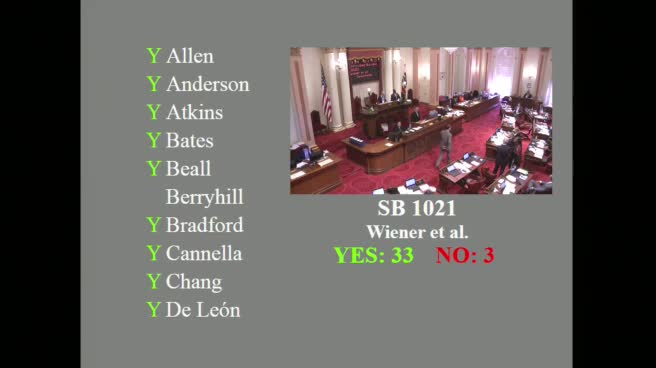 3MIN
Senate Floor
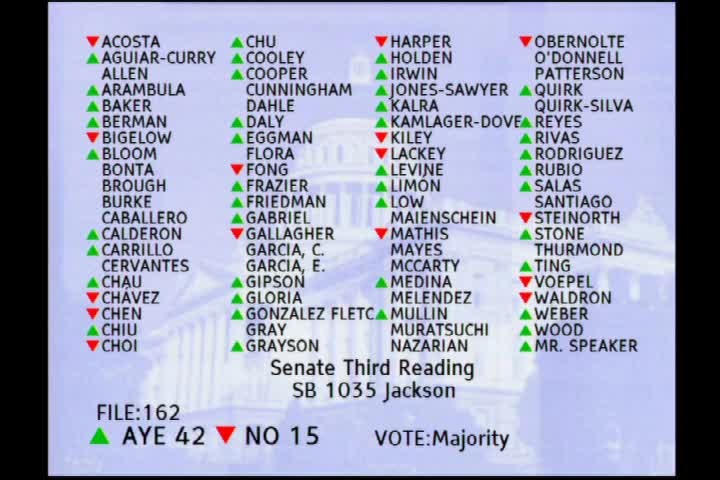 1MIN
Assembly Floor
 14MIN
Senate Standing Committee on Public Safety
Bill Author

Bill Co-Author(s):