SB 1355: Unmanned aircraft systems: correctional facilities.
- Session Year: 2017-2018
- House: Senate
- Latest Version Date: 2018-09-10
Existing federal law, the Federal Aviation Administration Modernization and Reform Act of 2012, provides for the integration of civil unmanned aircraft systems, commonly known as drones, into the national airspace system by September 30, 2015. Existing federal law generally requires an aircraft to be registered with the Federal Aviation Administration (FAA), prohibits a person from operating a United States registered aircraft unless that aircraft displays specified nationality and registration marks, and, unless authorized by the FAA, prohibits a person from placing on any aircraft a design, mark, or symbol that modifies or confuses those nationality and registration marks. Existing federal law establishes an online and paper-based registration process for specified types of unmanned aircraft systems.
Existing state law generally prohibits a person from bringing, possessing, distributing, or selling certain devices and substances, including, among other things, alcoholic beverages, controlled substances, and deadly weapons, in state prison or a jail. Existing law also prohibits unauthorized communication with inmates in state prison or a jail. Existing law provides criminal penalties for violations of these provisions.
This bill would make a person who knowingly and intentionally operates an unmanned aircraft system on or above the grounds of a state prison, a jail, or a juvenile hall, camp, or ranch guilty of an infraction punishable by a fine of $500. The bill would make these provisions inapplicable to a person employed by the prison, jail, or county department that operates the juvenile hall, camp, or ranch acting within the scope of that employment, or a person who receives prior permission from the Department of Corrections and Rehabilitation, the county sheriff, or department that operates the juvenile hall, camp, or ranch. By creating a new crime, the bill would impose a state-mandated local program.
The California Constitution requires the state to reimburse local agencies and school districts for certain costs mandated by the state. Statutory provisions establish procedures for making that reimbursement.
This bill would provide that no reimbursement is required by this act for a specified reason.
Existing federal law, the Federal Aviation Administration Modernization and Reform Act of 2012, provides for the integration of civil unmanned aircraft systems, commonly known as drones, into the national airspace system by September 30, 2015. Existing federal law generally requires an aircraft to be registered with the Federal Aviation Administration (FAA), prohibits a person from operating a United States registered aircraft unless that aircraft displays specified nationality and registration marks, and, unless authorized by the FAA, prohibits a person from placing on any aircraft a design, mark, or symbol that modifies or confuses those nationality and registration marks. Existing federal law establishes an online and paper-based registration process for specified types of unmanned aircraft systems.
Existing state law generally prohibits a person from bringing, possessing, distributing, or selling certain devices and substances, including, among other things, alcoholic beverages, controlled substances, and deadly weapons, in state prison or a jail. Existing law also prohibits unauthorized communication with inmates in state prison or a jail. Existing law provides criminal penalties for violations of these provisions.
This bill would make a person who knowingly and intentionally operates an unmanned aircraft system on or above the grounds of a state prison, a jail, or a juvenile hall, camp, or ranch guilty of an infraction punishable by a fine of $500. The bill would make these provisions inapplicable to a person employed by the prison, jail, or county department that operates the juvenile hall, camp, or ranch acting within the scope of that employment, or a person who receives prior permission from the Department of Corrections and Rehabilitation, the county sheriff, or department that operates the juvenile hall, camp, or ranch. The bill would also make these provisions inapplicable to any entity that is authorized by the Federal Aviation Administration to use an unmanned aircraft system and operates it in accordance with the terms and conditions of the authorization. By creating a new crime, the bill would impose a state-mandated local program.
The California Constitution requires the state to reimburse local agencies and school districts for certain costs mandated by the state. Statutory provisions establish procedures for making that reimbursement.
This bill would provide that no reimbursement is required by this act for a specified reason.
Existing federal law, the Federal Aviation Administration Modernization and Reform Act of 2012, provides for the integration of civil unmanned aircraft systems, commonly known as drones, into the national airspace system by September 30, 2015. Existing federal law generally requires an aircraft to be registered with the Federal Aviation Administration (FAA), prohibits a person from operating a United States registered aircraft unless that aircraft displays specified nationality and registration marks, and, unless authorized by the FAA, prohibits a person from placing on any aircraft a design, mark, or symbol that modifies or confuses those nationality and registration marks. Existing federal law establishes an online and paper-based registration process for specified types of unmanned aircraft systems.
Existing state law generally prohibits a person from bringing, possessing, distributing, or selling certain devices and substances, including, among other things, alcoholic beverages, controlled substances, and deadly weapons, in state prison or a jail. Existing law also prohibits unauthorized communication with inmates in state prison or a jail. Existing law provides criminal penalties for violations of these provisions.
This bill would make a person who knowingly and intentionally operates an unmanned aircraft system on or above the grounds of a state prison or a jail prison, a jail, or a juvenile hall, camp, or ranch guilty of an infraction punishable by a fine of $500. The bill would make these provisions inapplicable to a person employed by the prison or jail prison, jail, or county department that operates the juvenile hall, camp, or ranch acting within the scope of that employment, or a person who receives prior permission from the Department of Corrections and Rehabilitation or the county sheriff. Rehabilitation, the county sheriff, or department that operates the juvenile hall, camp, or ranch. The bill would also make these provisions inapplicable to any entity that is authorized by the Federal Aviation Administration to use an unmanned aircraft system and operates it in accordance with the terms and conditions of the authorization. By creating a new crime, the bill would impose a state-mandated local program.
The California Constitution requires the state to reimburse local agencies and school districts for certain costs mandated by the state. Statutory provisions establish procedures for making that reimbursement.
This bill would provide that no reimbursement is required by this act for a specified reason.
Existing federal law, the Federal Aviation Administration Modernization and Reform Act of 2012, provides for the integration of civil unmanned aircraft systems, commonly known as drones, into the national airspace system by September 30, 2015. Existing federal law generally requires an aircraft to be registered with the Federal Aviation Administration (FAA), prohibits a person from operating a United States registered aircraft unless that aircraft displays specified nationality and registration marks, and, unless authorized by the FAA, prohibits a person from placing on any aircraft a design, mark, or symbol that modifies or confuses those nationality and registration marks. Existing federal law establishes an online and paper-based registration process for specified types of unmanned aircraft systems.
Existing state law generally prohibits a person from bringing, possessing, distributing, or selling certain devices and substances, including, among other things, alcoholic beverages, controlled substances, and deadly weapons, in state prison or a jail. Existing law also prohibits unauthorized communication with inmates in state prison or a jail. Existing law provides criminal penalties for violations of these provisions.
This bill would make a person who knowingly and intentionally operates an unmanned aircraft system on or above the grounds of a state prison or a jail guilty of an infraction punishable by a fine of $500. The bill would make these provisions inapplicable to a person employed by the prison or jail acting within the scope of that employment, or a person who receives prior permission from the Department of Corrections and Rehabilitation or the county sheriff. The bill would also make these provisions inapplicable to any entity that is authorized by the Federal Aviation Administration to use an unmanned aircraft system and operates it in accordance with the terms and conditions of the authorization. By creating a new crime, the bill would impose a state-mandated local program.
The California Constitution requires the state to reimburse local agencies and school districts for certain costs mandated by the state. Statutory provisions establish procedures for making that reimbursement.
This bill would provide that no reimbursement is required by this act for a specified reason.
(a)Except as provided in subdivisions (b), (c), and (d), a person who knowingly and intentionally operates an unmanned aircraft system on or above the grounds of a state prison, a jail, or a juvenile hall, camp, or ranch is guilty of an infraction, punishable by a fine of five hundred dollars ($500).
(b)This section does not apply to a person employed by the prison who operates the unmanned aircraft system within the scope of his or her employment, or a person who receives prior permission from the Department of Corrections and Rehabilitation to operate the unmanned aircraft system over the prison.
(c)This section does not apply to a person employed by the jail who operates the unmanned aircraft system within the scope of his or her employment, or a person who receives prior permission from the county sheriff to operate the unmanned aircraft system over the jail.
(d)This section does not apply to a person employed by the county department that operates the juvenile hall, camp, or ranch who operates the unmanned aircraft system within the scope of his or her employment, or a person who receives prior permission from the county department that operates the juvenile hall, camp, or ranch to operate the unmanned aircraft system over the juvenile hall, camp, or ranch.
(e)For purposes of this section, the following definitions apply:
(1)Unmanned aircraft means an aircraft that is operated without the possibility of direct human intervention from within or on the aircraft.
(2)Unmanned aircraft system means an unmanned aircraft and associated elements, including, but not limited to, communication links and the components that control the unmanned aircraft that are required for the pilot in command to operate safely and efficiently in the national airspace system.
SEC. 2.No reimbursement is required by this act pursuant to Section 6 of Article XIIIB of the California Constitution because the only costs that may be incurred by a local agency or school district will be incurred because this act creates a new crime or infraction, eliminates a crime or infraction, or changes the penalty for a crime or infraction, within the meaning of Section 17556 of the Government Code, or changes the definition of a crime within the meaning of Section 6 of Article XIIIB of the California Constitution.
(a)Except as provided in subdivisions (b), (c), (d), and (e), and (d), a person who knowingly and intentionally operates an unmanned aircraft system on or above the grounds of a state prison, a jail, or a juvenile hall, camp, or ranch is guilty of an infraction, punishable by a fine of five hundred dollars ($500).
(b)This section does not apply to a person employed by the prison who operates the unmanned aircraft system within the scope of his or her employment, or a person who receives prior permission from the Department of Corrections and Rehabilitation to operate the unmanned aircraft system over the prison.
(c)This section does not apply to a person employed by the jail who operates the unmanned aircraft system within the scope of his or her employment, or a person who receives prior permission from the county sheriff to operate the unmanned aircraft system over the jail.
(d)This section does not apply to a person employed by the county department that operates the juvenile hall, camp, or ranch who operates the unmanned aircraft system within the scope of his or her employment, or a person who receives prior permission from the county department that operates the juvenile hall, camp, or ranch to operate the unmanned aircraft system over the juvenile hall, camp, or ranch.
(e)This section does not apply to any entity for which the Federal Aviation Administration has authorized the use of the unmanned aircraft system and the unmanned aircraft system is operated in accordance with the terms and conditions of the authorization.(f)(e)For purposes of this section, the following definitions apply:
(1)Unmanned aircraft means an aircraft that is operated without the possibility of direct human intervention from within or on the aircraft.
(2)Unmanned aircraft system means an unmanned aircraft and associated elements, including, but not limited to, communication links and the components that control the unmanned aircraft that are required for the pilot in command to operate safely and efficiently in the national airspace system.
SEC. 2.No reimbursement is required by this act pursuant to Section 6 of Article XIIIB of the California Constitution because the only costs that may be incurred by a local agency or school district will be incurred because this act creates a new crime or infraction, eliminates a crime or infraction, or changes the penalty for a crime or infraction, within the meaning of Section 17556 of the Government Code, or changes the definition of a crime within the meaning of Section 6 of Article XIIIB of the California Constitution.
(a)Except as provided in subdivisions (b), (c), and (d), (d), and (e), a person who knowingly and intentionally operates an unmanned aircraft system on or above the grounds of a state prison or a jail prison, a jail, or a juvenile hall, camp, or ranch is guilty of an infraction, punishable by a fine of five hundred dollars ($500).
(b)This section does not apply to a person employed by the prison who operates the unmanned aircraft system within the scope of his or her employment, or a person who receives prior permission from the Department of Corrections and Rehabilitation to operate the unmanned aircraft system over the prison.
(c)This section does not apply to a person employed by the jail who operates the unmanned aircraft system within the scope of his or her employment, or a person who receives prior permission from the county sheriff to operate the unmanned aircraft system over the jail.
(d)This section does not apply to a person employed by the county department that operates the juvenile hall, camp, or ranch who operates the unmanned aircraft system within the scope of his or her employment, or a person who receives prior permission from the county department that operates the juvenile hall, camp, or ranch to operate the unmanned aircraft system over the juvenile hall, camp, or ranch.
(d)(e)This section does not apply to any entity for which the Federal Aviation Administration has authorized the use of the unmanned aircraft system and the unmanned aircraft system is operated in accordance with the terms and conditions of the authorization.
(e)(f)For purposes of this section, the following definitions apply:
(1)Unmanned aircraft means an aircraft that is operated without the possibility of direct human intervention from within or on the aircraft.
(2)Unmanned aircraft system means an unmanned aircraft and associated elements, including, but not limited to, communication links and the components that control the unmanned aircraft that are required for the pilot in command to operate safely and efficiently in the national airspace system.
SEC. 2.No reimbursement is required by this act pursuant to Section 6 of Article XIIIB of the California Constitution because the only costs that may be incurred by a local agency or school district will be incurred because this act creates a new crime or infraction, eliminates a crime or infraction, or changes the penalty for a crime or infraction, within the meaning of Section 17556 of the Government Code, or changes the definition of a crime within the meaning of Section 6 of Article XIIIB of the California Constitution.
(a)Except as provided in subdivisions (b), (c), and (d), a person who knowingly and intentionally operates an unmanned aircraft system on or above the grounds of a state prison or a jail is guilty of an infraction, punishable by a fine of five hundred dollars ($500).
(b)This section does not apply to a person employed by the prison who operates the unmanned aircraft system within the scope of his or her employment, or a person who receives prior permission from the Department of Corrections and Rehabilitation to operate the unmanned aircraft system over the prison.
(c)This section does not apply to a person employed by the jail who operates the unmanned aircraft system within the scope of his or her employment, or a person who receives prior permission from the county sheriff to operate the unmanned aircraft system over the jail.
(d)This section does not apply to any entity for which the Federal Aviation Administration has authorized the use of the unmanned aircraft system and the unmanned aircraft system is operated in accordance with the terms and conditions of the authorization.
(e)For purposes of this section, the following definitions apply:
(1)Unmanned aircraft means an aircraft that is operated without the possibility of direct human intervention from within or on the aircraft.
(2)Unmanned aircraft system means an unmanned aircraft and associated elements, including, but not limited to, communication links and the components that control the unmanned aircraft that are required for the pilot in command to operate safely and efficiently in the national airspace system.
SEC. 2.No reimbursement is required by this act pursuant to Section 6 of Article XIIIB of the California Constitution because the only costs that may be incurred by a local agency or school district will be incurred because this act creates a new crime or infraction, eliminates a crime or infraction, or changes the penalty for a crime or infraction, within the meaning of Section 17556 of the Government Code, or changes the definition of a crime within the meaning of Section 6 of Article XIIIB of the California Constitution.
|
Date
|
Status
|
|---|---|
| Sep 10, 2018 | Chaptered by Secretary of State. Chapter 333, Statutes of 2018. |
| Sep 10, 2018 | Approved by the Governor. |
| Aug 24, 2018 | Enrolled and presented to the Governor at 4 p.m. |
| Aug 20, 2018 | Assembly amendments concurred in. (Ayes 38. Noes 0.) Ordered to engrossing and enrolling. |
| Aug 16, 2018 | In Senate. Concurrence in Assembly amendments pending. |
| Aug 16, 2018 | Read third time. Passed. Ordered to the Senate. |
| Aug 9, 2018 | Read second time. Ordered to consent calendar. |
| Aug 8, 2018 | From committee: Do pass. Ordered to consent calendar. (Ayes 17. Noes 0.) (August 8). |
| Aug 6, 2018 | From committee with author's amendments. Read second time and amended. Re-referred to Com. on APPR. |
| Jun 26, 2018 | From committee: Do pass and re-refer to Com. on APPR. (Ayes 7. Noes 0.) (June 26). Re-referred to Com. on APPR. |
| Jun 21, 2018 | Re-referred to Com. on PUB. S. pursuant to Assembly Rule 96. |
| Jun 20, 2018 | From committee: Do pass and re-refer to Com. on APPR. (Ayes 10. Noes 0.) (June 19). Re-referred to Com. on APPR. |
| Jun 12, 2018 | From committee with author's amendments. Read second time and amended. Re-referred to Com. on P. & C.P. |
| May 3, 2018 | Referred to Coms. on P. & C.P. and PUB. S. |
| Apr 23, 2018 | In Assembly. Read first time. Held at Desk. |
| Apr 23, 2018 | Read third time. Passed. (Ayes 38. Noes 0.) Ordered to the Assembly. |
| Apr 17, 2018 | Read second time. Ordered to third reading. |
| Apr 16, 2018 | From committee: Be ordered to second reading pursuant to Senate Rule 28.8. |
| Apr 9, 2018 | Set for hearing April 16. |
| Apr 3, 2018 | From committee: Do pass and re-refer to Com. on APPR. (Ayes 6. Noes 0.) (April 3). Re-referred to Com. on APPR. |
| Mar 13, 2018 | Set for hearing April 3. |
| Mar 8, 2018 | Referred to Com. on PUB. S. |
| Feb 20, 2018 | From printer. May be acted upon on or after March 22. |
| Feb 16, 2018 | Introduced. Read first time. To Com. on RLS. for assignment. To print. |
|
Date
|
Description
|
Location
|
Votes
|
|
|---|---|---|---|---|
| Aug 20, 2018 | Unfinished Business SB1355 Hill Concurrence | Senate Floor |
Passed |
|
| Aug 16, 2018 | SB 1355 Hill Consent Calendar Second Day Regular Session | Assembly Floor |
Passed |
|
| Aug 8, 2018 | Do pass. To Consent Calendar. | Assembly Standing Committee on Appropriations |
Passed |
|
| Jun 26, 2018 | Do pass and be re-referred to the Committee on [Appropriations] | Assembly Standing Committee on Public Safety |
Passed |
|
| Jun 19, 2018 | Do pass and be re-referred to the Committee on [Appropriations] | Assembly Standing Committee on Privacy and Consumer Protection |
Passed |
|
| Apr 23, 2018 | Senate 3rd Reading SB1355 Hill | Senate Floor |
Passed |
|
| Apr 3, 2018 | Do pass, but first be re-referred to the Committee on [Appropriations] | Senate Standing Committee on Public Safety |
Passed |
This list shows positions taken on this bill by organizations on the date displayed, which is linked to the original source.
Positions by individuals are not included.
|
Organization
|
Position
|
Date
|
|---|---|---|
| Association for Unmanned Vehicle Systems International | ** Against | Aug 18, 2018 |
| Association Of National Advertiser | ** Against | Jun 15, 2018 |
| Association of National Advertisers | ** Against | Aug 18, 2018 |
| CalChamber | ** Against | Aug 18, 2018 |
| California Correctional Peace Officers Association | ** Support | Aug 18, 2018 |
| california peace officers' association | ** Support | Aug 18, 2018 |
| California Police Chiefs Association | ** Support | Aug 18, 2018 |
| California State Sheriffs' Association | ** Support | Aug 18, 2018 |
| Chief Probation Officers Of California | * Support | Jun 26, 2018 |
| Consumer Technology Association | ** Against | Aug 18, 2018 |
| PURPOSE | ** Against | Apr 2, 2018 |
| Riverside Sheriff's Association | * Support | Apr 3, 2018 |
Office of Senate Floor Analyses (916) 651-1520 Fax: (916) 327-4478 | SB 1355 |
UNFINISHED BUSINESS
Bill No: SB 1355
Amended: 8/6/18
SENATE PUBLIC SAFETY COMMITTEE: 6-0, 4/3/18
AYES: Skinner, Bradford, Jackson, Mitchell, Stone, Wiener
NO VOTE RECORDED: Anderson
SENATE APPROPRIATIONS COMMITTEE: Senate Rule 28.8
SENATE FLOOR: 38-0, 4/23/18
AYES: Allen, Anderson, Atkins, Bates, Beall, Berryhill, Bradford, Cannella, De León, Dodd, Fuller, Gaines, Galgiani, Glazer, Hernandez, Hertzberg, Hill, Hueso, Jackson, Lara, Leyva, McGuire, Mitchell, Monning, Moorlach, Newman, Nguyen, Nielsen, Pan, Portantino, Roth, Skinner, Stern, Stone, Vidak, Wieckowski, Wiener, Wilk
NO VOTE RECORDED: Morrell
ASSEMBLY FLOOR: 76-0, 8/16/18 (Consent) - See last page for vote
SUBJECT: Unmanned aircraft systems: correctional facilities
DIGEST:
This bill makes a person who knowingly and intentionally operates an unmanned aircraft system on or above the grounds of a state prison or jail, guilty of an infraction punishable by a fine of $500.
Assembly Amendments
remove exemption for any entity that the Federal Aviation Administration has authorized the use of the unmanned aircraft system and the unmanned aircraft system is operated in accordance with the terms and conditions of the authorization.
Existing law:
- Requires an aircraft to be registered with the Federal Aviation Administration (FAA), prohibits a person from operating a United States registered aircraft unless that aircraft displays specified nationality and registration marks, and, unless authorized by the FAA, prohibits a person from placing on any aircraft a design, mark, or symbol that modifies or confuses those nationality and registration marks. (14 CFR 45.21)
- Prohibits wiretapping or eavesdropping on confidential communications. (Penal Code § 630.)
- Makes it a crime for a person, intentionally, and without requisite consent, to eavesdrop on a confidential communication by means of any electronic amplifying or recording device. (Penal Code § 632.)
- Makes a person liable for “physical invasion of privacy” for knowingly entering onto the land of another person or otherwise committing a trespass in order to physically invade the privacy of another person with the intent to capture any type of visual image, sound recording, or other physical impression of that person engaging in a personal or familial activity, and the physical invasion occurs in a manner that is offensive to a reasonable person. (Civil Code § 1708.8 (a).)
- Makes a person liable for “constructive invasion of privacy” for attempting to capture, in a manner highly offensive to a reasonable person, any type of visual image, sound recording, or other physical impression of another person engaging in a personal or familial activity under circumstances in which the plaintiff had a reasonable expectation of privacy, through the use of a visual or auditory enhancing device, regardless of whether there was a physical trespass, if the image or recording could not have been achieved without a trespass unless the visual or auditory enhancing device was used. (Civil Code § 1708.8, subd. (b).)
- Provides that a person who commits an invasion of privacy for a commercial purpose shall, in addition to any other damages or remedies provided, be subject to disgorgement to the plaintiff of any proceeds or other consideration obtained as a result of the violation of this section. Existing law defines “commercial purpose” to mean any act done with the expectation of sale, financial gain, or other consideration. (Civil Code § 1708.8, subd. (d), (k).)
- Makes it a felony for smuggling a controlled substance into a penal institution. (Penal Code § 4573.)
- Makes it a felony to bring drugs or alcoholic beverages into a penal institution. (Penal Code § 4573.5.)
- Makes it a felony to possess controlled substances in a penal institution. (Penal Code § 4573.6.)
- Makes it a felony to possess drugs or paraphernalia into a penal institution. (Penal Code § 4573.8.)
- Makes it a felony to sell or give drugs to a person in custody in a penal institution. (Penal Code § 4573.9.)
- Makes it a felony for smuggling firearms, deadly weapons or tear gas into a penal institution. (Penal Code § 4574.)
- Makes it a misdemeanor to possess a wireless communication device in a local correctional facility. (Penal Code § 4575, subd. (a).)
- Makes it an infraction to possess any tobacco products in a local correctional facility. (Penal Code § 4575, subd. (b).)
- Makes it a misdemeanor to possess with the intent to deliver a wireless communication device in a prison. (Penal Code § 4576.)
This bill:
- Makes a person who knowingly and intentionally operates an unmanned aircraft system on or above the grounds of a state prison or jail, is guilty of an infraction, punishable of a fine of $500.
- Provides exemptions for a person employed by the prison, a person who receives prior permission
- Defines “unmanned aircraft” as an aircraft that is operated without the possibility of direct human intervention from within or on the aircraft.
- Defines “unmanned aircraft system” means an unmanned aircraft and associated elements, including, but not limited to, communication links and the components that control the unmanned aircraft that are required for the pilot in command to operate safely and efficiently in the national airspace system.
Background
This bill uses the term “unmanned aircraft systems,” or UAS as defined, to reference what are commonly known as drones. Drones, the term also used by the FAA, is defined to include the UAS itself and the associated elements, the components that control the aircraft. The FAA’s fact sheet notes the types of UAS:
UAS come in a variety of shapes and sizes and serve diverse purposes. They may have a wingspan as large as a jet airliner or smaller than a radio-controlled model airplane.
Because they are inherently different from manned aircraft, introducing UAS into the nation’s airspace is challenging for both the FAA and aviation community. UAS must be integrated into the busiest, most complex airspace in the world — one that is evolving from ground-based navigation aids to a GPS-based system in NextGen. And because UAS technology also continues to evolve, the agency's rules and policies must be flexible enough to accommodate that progress.
When considering these drones, hobby-size airplanes and helicopters equipped with digital cameras are becoming more and more affordable for the average consumer. Those hobby aircrafts may be used for pure novelty, surveying one’s yard, or even checking to see the condition of a roof. With respect to the treatment of model aircraft as a UAS system, the FAA has issued the following clarification:
The current FAA policy for UAS operations is that no person may operate a UAS in the National Airspace System without specific authority. For UAS operating as public aircraft the authority is the [Certificate of Waiver or Authorization], for UAS operating as civil aircraft the authority is special airworthiness certificates, and for model aircraft the authority is AC 91-57 [(the model aircraft operating standards)].
The FAA recognizes that people and companies other than modelers might be flying UAS with the mistaken understanding that they are legally operating under the authority of AC 91-57. AC 91-57 only applies to modelers, and thus specifically excludes its use by persons or companies for business purposes.
This bill prohibits the use of UAS or drones on state prisons or jails without written permission of the California Department of Corrections and Rehabilitation (CDCR) or the county sheriff. The penalty is an infraction punishable by a fine of $500 plus approximately 310% in penalty assessments. The fine, in total, will amount to approximately $2,050. Traditionally, an infraction is no more than $250.
A person charged with an infraction does not have the constitutional right to counsel or a jury trial. A fine in excess of $2,000 is high penalty for a person who does not have right to counsel or a jury trial, should the fine be lowered?
This bill does not apply to a prison employee who operates the UAS within the scope of their employment, or a person who receives prior permission from CDCR or county sheriff to operate the UAS over the prison.
Nor does this bill apply to any entity for which the FAA has authorized the use of the UAS and the UAS is operated in accordance with the terms and conditions of the authorization.
In 2015, Senator Gaines authored SB 170 which would make a person who knowingly and intentionally operates a UAS on or above the grounds of a state prison or a jail, guilty of a misdemeanor. SB 170 made the same exceptions to a prison employee acting within their scope of employment, a person who receives prior permission from CDCR or the county sheriff, and any entity that is authorized by the FAA in accordance with the terms and conditions of the authorization.
Governor Brown returned the bill unsigned with the following veto message:
[SB 170] creates a new crime - usually by finding a novel way to characterize and criminalize conduct that is already proscribed. This multiplication and particularization of criminal behavior creates increasing complexity without commensurate benefit.
Over the last several decades, California's criminal code has grown to more than 5,000 separate provisions, covering almost every conceivable form of human misbehavior. During the same period, our jail and prison populations have exploded.
Before we keep going down this road, I think we should pause and reflect on how our system of criminal justice could be made more human, more just and more cost-effective.
This bill is a narrowed version of SB 170 as the act of knowingly and intentionally operating a UAS on or above the grounds of a state prison or a jail constitutes a $500 infraction instead of a misdemeanor.
FISCAL EFFECT: Appropriation: No Fiscal Com.: Yes Local: Yes
According to the Assembly Appropriations Committee, there would be negligible fiscal impact.
California Correctional Peace Officers Association
California Peace Officers’ Association
California Police Chiefs Association
California State Sheriffs’ Association
OPPOSITION: (Verified 8/16/18)
Association of National Advertisers
Association for Unmanned Vehicle Systems International
CalChamber
Consumer Technology Association
ASSEMBLY FLOOR: 76-0, 8/16/18
AYES: Acosta, Aguiar-Curry, Travis Allen, Arambula, Baker, Berman, Bigelow, Bonta, Brough, Burke, Caballero, Calderon, Carrillo, Cervantes, Chau, Chávez, Chen, Chiu, Choi, Chu, Cooley, Cooper, Cunningham, Dahle, Daly, Eggman, Flora, Fong, Frazier, Friedman, Gabriel, Gallagher, Eduardo Garcia, Gipson, Gloria, Gonzalez Fletcher, Gray, Grayson, Harper, Holden, Irwin, Jones-Sawyer, Kalra, Kamlager-Dove, Kiley, Lackey, Levine, Limón, Maienschein, Mathis, Mayes, Medina, Melendez, Mullin, Muratsuchi, Nazarian, Obernolte, O'Donnell, Patterson, Quirk, Quirk-Silva, Reyes, Rivas, Rodriguez, Rubio, Salas, Santiago, Steinorth, Mark Stone, Thurmond, Ting, Voepel, Waldron, Weber, Wood, Rendon
NO VOTE RECORDED: Bloom, Cristina Garcia, Low, McCarty
Prepared by: Elle Chen / PUB. S. / , Mary Kennedy / PUB. S. /
8/18/18 12:33:01
**** END ****
Date of Hearing: August 8, 2018
ASSEMBLY COMMITTEE ON APPROPRIATIONS
Lorena Gonzalez Fletcher, Chair
SBPCA Bill Id:SB 1355
Author:(Hill) – As Amended Ver:August 6, 2018
Policy Committee: | Privacy and Consumer Protection | Vote: | 10 - 0 |
Public Safety | 7 - 0 | ||
|
|
Urgency: No State Mandated Local Program: Yes Reimbursable: No
SUMMARY:
This bill makes it an infraction, punishable by a fine of $500 to knowingly and intentionally operate an unmanned aircraft system (UAS) on or above the grounds of a state prison, a jail, or a juvenile hall, camp, or ranch. This bill also specifies that these provisions do not apply to someone employed by the correctional institution operating the UAS in the scope of their employment or a person who receives prior permission from the appropriate entity to operate the UAS over the prison.
FISCAL EFFECT:
Negligible fiscal impact.
COMMENTS:
- Background and purpose. The Federal Aviation Administration (FAA) uses the term “Unmanned Aircraft Systems” (UAS) to refer to the devices commonly known as drones. According to the author:
As drones become smaller and easier to operate, virtually anyone will be able to use these devices to drop contraband into a prison or county jail. Additionally, unmanned aircraft systems can be used to gather sensitive information from prisons and jails which can be used for a variety of dangerous exploits, including inmate escapes and riots. While smuggling contraband into prison or jail through any method is illegal, no statute currently bars drones from flying near correctional facilities. SB 1355 makes it illegal to knowingly and intentionally operate an unmanned aircraft system on or above the grounds of a state prison or a jail.
- Related legislation. AB 3173 (Irwin) of the current legislative session makes it an infraction to operate an unmanned aircraft system without evidence of federal registration. AB 3173 is pending hearing in the Senate Appropriations Committee.
- Prior legislation.
AB 2320 (Calderon), of the 2015-2016 Legislative Session, would have added use of drones to the list of ways in which a person could commit the felony offense of smuggling contraband into a prison. AB 2320 was vetoed by the governor.
SB 170 (Gaines), of the 2015-2016 Legislative Session, was similar to this bill, except it would have made the operation of a drone over a correctional facility a misdemeanor rather than an infraction. SB 170 was vetoed by the governor.
Analysis Prepared by: Jessica Peters / APPR. / (916) 319-2081
Date of Hearing: June 26, 2018
Counsel: Matthew Fleming
ASSEMBLY COMMITTEE ON PUBLIC SAFETY
Reginald Byron Jones-Sawyer, Sr., Chair
SBPCA Bill Id:SB 1355
Author:(Hill) – As Amended Ver:June 12, 2018
SUMMARY: Criminalizes the act of knowingly and intentionally operating an unmanned aircraft system (UAS) on or above the grounds of a state prison, a jail, or a juvenile hall, camp, or ranch. Specifically, this bill:
- Makes it an infraction to operate a UAS on or above the grounds of a state prison, a jail, or a juvenile hall, camp, or ranch, punishable by a fine of five hundred dollars ($500).
- Specifies that these provisions do not apply to someone employed by the correctional institution operating the UAS in the scope of his or her employment, or a person who receives prior permission from the appropriate entity to operate the UAS over the prison.
- Defines “unmanned aircraft” as an aircraft that is operated without the possibility of direct human intervention from within or on the aircraft.
- Defines “unmanned aircraft system” as an unmanned aircraft and associated elements, including, but not limited to, communication links and the components that control the unmanned aircraft that are required for the pilot in command to operate safely and efficiently in the national airspace system.
EXISTING LAW:
- Makes it a felony to smuggle a controlled substance or associated paraphernalia into a prison, jail, camp, farm, or other location were prisoners are held under the custody of law enforcement, punishable by two, three, or four years of incarceration. (Pen. Code, § 4573.)
- Makes it a felony to bring drugs or alcoholic beverages into a prison, jail, camp, farm, or other location were prisoners are held under the custody of law enforcement, punishable by imprisonment for 16 months, or two or three years in the state prison. (Pen. Code, § 4573.5; Pen. Code, § 18.)
- Makes it a felony to possess controlled substances in a prison, jail, camp, farm, or other location were prisoners are held under the custody of law enforcement, punishable by two, three, or four years of incarceration. (Pen. Code, § 4573.6.)
- Makes it a felony to possess drugs, paraphernalia, or alcoholic beverages in prison or jail. (Penal Code § 4573.8.)
- Makes it a felony to sell or give drugs to a person in custody in state prison or other institution under the jurisdiction of CDCR, punishable by two, four, or six years of incarceration. (Pen. Code, § 4573.9.)
- Makes it a misdemeanor to possess a cellular telephone in a correctional facility. (Pen. Code, § 4575.)
- Makes it a misdemeanor to use an unmanned aircraft to impede the duties of emergency personnel at the scene of an emergency. (Pen. Code, § 402, subds. (a)(1) – (2).)
EXISTING FEDERAL LAW:
- States that the Laws of the United States are the supreme Law of the Land. (U.S. Const., art. VI, cl. 2.)
- Defines an “aircraft” as any contrivance invented, used, or designed to navigate or fly in the air. (49 U.S.C., §, subd. 40102(a)(6).)
- States that the United States Government has exclusive sovereignty of airspace of the United States. (49 U.S.C., § 40103, subd. (a)(1).)
- Prohibits the operation of UAS higher than 400 feet above ground level except in specified circumstances. (14 C.F.R., § 107.51, subd. (b).)
FISCAL EFFECT: Unknown.
COMMENTS:
- Author's Statement: According to the author, “As drones become smaller and easier to operate, virtually anyone will be able to use these devices to drop contraband into a prison or county jail. Additionally, unmanned aircraft systems can be used to gather sensitive information from prisons and jails which can be used for a variety of dangerous exploits, including inmate escapes and riots. While smuggling contraband into prison or jail through any method is illegal, no statute currently bars drones from flying near correctional facilities. SB 1355 makes it illegal to knowingly and intentionally operate an unmanned aircraft system on or above the grounds of a state prison or a jail.”
- Background on Drones/Unmanned Aircraft Systems: The Federal Aviation Administration (FAA), uses the term “Unmanned Aircraft Systems” (UAS) to refer to the devices commonly known as drones.
A UAS is an “aircraft” as defined by the FAA is therefore subject to FAA regulation. The FAA defines an “aircraft” as “any contrivance invented, used, or designed to navigate or fly in the air.” (49 U.S.C., §, subd. 40102(a)(6).) Regarding the types of aircraft that may be considered unmanned aircraft systems, the FAA’s fact sheet notes:
UAS come in a variety of shapes and sizes and serve diverse purposes. They may have a wingspan as large as a jet airliner or smaller than a radio-controlled model airplane. Regardless of size, the responsibility to fly safely applies equally to manned and unmanned aircraft operations.
Because they are inherently different from manned aircraft, introducing UAS into the nation’s airspace is challenging for both the FAA and aviation community. UAS must be integrated into a National Airspace System (NAS) that is evolving from ground-based navigation aids to a GPS-based system in NextGen. Safe integration of UAS involves gaining a better understanding of operational issues, such as training requirements, operational specifications and technology considerations.
Integration of UAS has to be safe, efficient and timely. Safety is the FAA's primary mission, the agency is committed to reducing delays and increasing system reliability. This new technology has significant potential safety and economic benefits to help achieve these goals.
The FAA is taking an incremental approach to safe UAS integration as the agency acquires a better understanding of operational issues such as training requirements, operational specifications, and technology considerations. (https://www.faa.gov/news/fact_sheets/news_story.cfm?newsId=18297)
The FAA projects the small model hobbyist UAS fleet to more than double from an estimated 1.1 million vehicles in 2017 to 2.4 million units by 2022. The commercial, small non-model UAS fleet is set to grow from 110,604 in 2017 to 451,800 in 2022. The number of remote pilots is set to increase from 73,673 in 2017 to 301,000 in 2022. (https://www.faa.gov/news/updates/?newsId=89870.)
- Supremacy Clause Issue: The Supremacy Clause of the United States Constitution explains that federal law is the supreme law of the land. (U.S. Const., art. VI, cl. 2.) Although the states have sovereignty that often times must be respected by the federal government, when a state or local law directly conflicts with federal law, it is ultimately the federal law that controls. (See Arizona v. United States (2012) 567 U.S. 387, 388-89.) When such a conflict occurs, the federal law is said to “preempt” the state law, and the legal doctrine is known as “preemption.”
Because congress has stated unequivocally that the United States government has exclusive sovereignty over US airspace (49 U.S.C., § 40103, subd. (a)(1)), the preemption doctrine has previously been raised in regards to local legislation pertaining to drones and UAS. In 2016, the City of Newton, Massachusetts enacted an ordinance that prohibited the operation of drones beyond the line of sight of the operator and over the private property of another person without that person’s permission. (Singer v. City of Newton (2017) 284 F. Supp. 3d 125, 128.) In response, a private citizen brought a lawsuit against the city alleging that the ordinance was unconstitutional because it violated the supremacy clause and should be “preempted” by US law. (Id. at 127.) The Federal Court agreed with the private citizen and found that the ordinance must be struck down because it conflicted with the FAA’s sovereignty over Untied States airspace. (Id. at 131-32.)
This bill also regulates the space in which a drone can be lawfully operated, and therefore opponents to the measure believe it may be subject to a similar lawsuit as the one brought against the City of Newton. The provisions of this bill are more narrowly tailored than the ordinance in the Singer case, which may make it more likely to survive a preemption challenge. (See Id. at 132 (noting that the Newton ordinance amounted to a “wholesale ban” on drone operation in the city).) Nonetheless, there is judicial precedent that would appear to support the argument that this bill violates the Supremacy Clause of the United States Constitution. - Governor’s Veto Message on Previous UAS/Drone Bills: In 2015, several bills were introduced that would have criminalized conduct pertaining to the operation of drones. SB 168 (Gaines) would have made it a misdemeanor to operate a UAS in a manner that prevents or delays the extinguishment of a fire, SB 271 (Gaines) would have made it an infraction to operate a UAS on or above a school, and SB 170 (Gaines) had similar provisions to this bill and would have created a felony crime for the use of a UAS to deliver contraband into a prison or county jail, and created a misdemeanor crime to operate a UAS over a prison or capture images of a prison.
The Governor vetoed all three of those bills and issued the following statement:
“Each of these bills creates a new crime - usually by finding a novel way to characterize and criminalize conduct that is already proscribed. This multiplication and particularization of criminal behavior creates increasing complexity without commensurate benefit.
“Over the last several decades, California's criminal code has grown to more than 5,000 separate provisions, covering almost every conceivable form of human misbehavior. During the same period, our jail and prison populations have exploded.
“Before we keep going down this road, I think we should pause and reflect on how our system of criminal justice could be made more human, more just and more cost-effective.” (https://www.gov.ca.gov/wp-content/uploads/2017/09/SB_168_Veto_Message.pdf.)
Similarly, in 2016, AB 2320 (Calderon) was introduced and passed in both houses. AB 2320 would have added the use of a drone as a way in which a person could commit the felony offense of smuggling contraband into a prison. That bill was also vetoed. At that time the Governor stated:
“This bill prohibits the operation of a drone in a manner that … facilitates delivery of contraband into a jail or prison.
“Current law is sufficient to prosecute the violations referenced in this bill. There is no need to add special reference to drones … in the penal code.”
This bill would create a new crime – an infraction – for operating a drone over a correctional facility. An infraction is the least severe criminal charge in California law, and does not expose an offender to incarceration. (Pen. Code, § 19.6.) Does the fact that this bill punishes drone use over correctional facilities only as an infraction make it different enough from prior legislation that the Governor’s veto messages would not apply?
- Argument in Support: According to the California State Sheriffs’ Association: “In recent years, California jails and prisons have experienced a growing number of incidents in which someone has operated a drone in order to drop contraband into facilities. These ‘drone drops’ have become so problematic that many counties like Santa Clara are considering local ordinances that prohibit drones near jails.
“SB 1355 does not prohibit drone technology, but instead creates a penalty to deter any unauthorized person from operating a drone near a prison or jail facility.” - Argument in Opposition: According to the Consumer Technology Association: “By prohibiting drone flights on or over correctional facilities without authorization, SB 1355 seeks to regulate airspace, which Congress and the court have consistently held is subject to exclusive federal control. To have otherwise would lead to a patchwork of inconsistent state and local laws that would significantly undermine sky safety.
“To the extent the bill is aimed at preventing contraband from being delivered into correctional facilities, existing law already prohibit and punish such conduct, thus making this bill unnecessary.”
- Related Legislation: AB 3173 (Irwin) of the 2017–2018 Legislative Session would make it an infraction to operate an unmanned aircraft system without evidence of federal registration. AB 3173 is pending in the Senate Committee on Public Safety.
- Prior Legislation:
- AB 1680 (Rodriguez) Chapter 817, Statutes of 2016 added drone operation as one means in which a person could commit the crime of interfering with emergency personnel at the scene of an emergency.
- SB 168 (Gaines), of the 2015-2016 Legislative Session would have made it a misdemeanor operate a UAS, in a manner that prevents or delays the extinguishment of a fire, or in any way interferes with the efforts of firefighters to control, contain, or extinguish a fire. SB 168 was vetoed by the Governor.
- AB 2320 (Calderon), of the 2015-2016 Legislative Session, in pertinent part, would have added drones to the list of ways in which a person could commit the felony offense of smuggling contraband into a prison. AB 2320 was vetoed by the Governor.
- SB 271 (Gaines), of the 2015-2016 Legislative Session, of would have made it an infraction to knowingly and intentionally operate an unmanned aircraft system on the grounds of, or less than 350 feet above ground level within the airspace overlaying, a public school providing instruction in kindergarten or grades 1 to 12, inclusive, during school hours and without the written permission of the school principal or higher authority, or his or her designee, or equivalent school authority. SB 271 was vetoed by the Governor.
- SB 170 (Gaines), of the 2015-2016 Legislative Session, was nearly identical to this bill, except it would have made the operation of a drone over a correctional facility a misdemeanor rather than an infraction. SB 170 was vetoed by the Governor.
- SB 142 (Jackson), of the 2015-2016 Legislative Session, would have made it a trespass to operate an unmanned aircraft system less than 350 feet above ground over private property without the consent of the owner. SB 142 was vetoed by the Governor.
- SB 15 (Padilla), of the 2013–2014 Legislative Session would have clarified when a law enforcement agency needs a warrant to use a UAS and that a UAS cannot be used in a manner to invade a person's privacy. SB 15 failed passage in the Assembly Public Safety Committee.
REGISTERED SUPPORT / OPPOSITION:
Support
California Correctional Officers Association
California Police Chiefs Association
California State Sheriffs’ Association
Opposition
Association of National Advertisers
Consumer Technology Association
Analysis Prepared by: Matthew Fleming / PUB. S. / (916) 319-3744
Date of Hearing: June 19, 2018
ASSEMBLY COMMITTEE ON PRIVACY AND CONSUMER PROTECTION
Ed Chau, Chair
SBPCA Bill Id:SB 1355
Author:(Hill) – As Amended Ver:June 12, 2018
SENATE VOTE: 38-0
SUBJECT: Unmanned aircraft systems: correctional facilities
SUMMARY: This bill would generally prohibit a person from knowingly and intentionally operating an unmanned aircraft system (UAS) over a state prison or county jail. Specifically, this bill would:
- Make a person who knowingly intentionally operates an unmanned aircraft system on or above the grounds of a state prison, jail, or a juvenile hall, camp, or ranch guilty of an infraction, punishable of a fine of $500.
- Exempt from the above prohibition:
- A prison employee operating a UAS within the scope of his or her employment, or a person with the prior permission of the Department of Corrections and Rehabilitation.
- A jail employee operating a UAS within the scope of his or her employment, or a person with the prior permission of the county sheriff.
- A person employed by the county department that operates the juvenile hall, camp, or ranch who operates a UAS within the scope of his or her employment, or a person who receives prior permission from the county department that operates the juvenile hall, camp, or ranch.
- Any entity for which the FAA has authorized the use of the unmanned aircraft system and the unmanned aircraft system is operated in accordance with the terms and conditions of the authorization.
- Define the terms “unmanned aircraft” and “unmanned aircraft system” consistent with Federal Aviation Administration (FAA) regulation.
EXISTING LAW:
- Requires, under the FAA Modernization and Reform Act of 2012, the FAA to integrate UAS into the national airspace system by September 30, 2015, and to develop and implement certification requirements for the operation of UAS in the national airspace system by December 31, 2015. (112 P.L. 95, 126 Stat. 11.)
- Requires an aircraft to be registered with the FAA, prohibits a person from operating a United States registered aircraft unless that aircraft displays specified nationality and registration marks, and, unless authorized by the FAA, prohibits a person from placing on any aircraft a design, mark, or symbol that modifies or confuses those nationality and registration marks. (14 C.F.R. 45.21)
- Prohibits wiretapping or eavesdropping on confidential communications. (Pen. Code Sec. 630.)
- Prohibits a person, intentionally, and without requisite consent, from eavesdroping on a confidential communication by means of any electronic amplifying or recording device. (Pen. Code Sec. 632.)
- Makes a person liable for “physical invasion of privacy” for knowingly entering onto the land of another person or otherwise committing a trespass in order to physically invade the privacy of another person with the intent to capture any type of visual image, sound recording, or other physical impression of that person engaging in a personal or familial activity, and the physical invasion occurs in a manner that is offensive to a reasonable person. (Civ. Code Sec. 1708.8(a).)
- Makes a person liable for “constructive invasion of privacy” for attempting to capture, in a manner highly offensive to a reasonable person, any type of visual image, sound recording, or other physical impression of another person engaging in a personal or familial activity under circumstances in which the plaintiff had a reasonable expectation of privacy, through the use of a visual or auditory enhancing device, regardless of whether there was a physical trespass, if the image or recording could not have been achieved without a trespass unless the visual or auditory enhancing device was used. (Civ. Code Sec. 1708.8(b).)
- Provides that a person who commits an invasion of privacy for a commercial purpose shall, in addition to any other damages or remedies provided, be subject to disgorgement to the plaintiff of any proceeds or other consideration obtained as a result of the invasion of privacy. (Civ. Code Sec.1708.8(d).)
- Makes it a misdemeanor to communicate with or bring or take a letter, writing, literature, or reading matter to or from a person in custody in a prison or jail. (Pen. Code Sec. 4570.)
- Makes it a misdemeanor to possess or possess with the intent to deliver a wireless communication device (i.e., cell phone, pager, etc.) in a jail. (Pen. Code Secs. 4574(a), 4576.)
- Makes it a felony to smuggle, sell, or give controlled substances or bring drugs or alcohol to a person in custody in a prison or jail. (Pen. Code Secs. 4573, 4573.5, and 4573.9.)
- Makes it a felony to possess controlled substances, drugs, or drug paraphernalia in a prison or jail. (Pen. Code Secs. 4573.6 and 4573.8.)
- Makes it a felony to smuggle firearms, deadly weapons, or tear gas into a prison or jail. (Pen. Code Sec. 4574.)
- Makes it an infraction to possess tobacco products in a jail. (Pen. Code Sec. 4575(b).)
FISCAL EFFECT: The Senate Appropriations Committee found, pursuant to Senate Rule 28.8, that any additional state costs are not significant, and do not and will not require the appropriation of additional state funds, and that the bill will cause no significant reduction in revenues.
COMMENTS:
- Purpose of this bill: This bill seeks to improve prison and jail security by making a person who knowingly and intentionally operates an unmanned aircraft system on or above the grounds of a state prison or jail, guilty of an infraction punishable by a fine of $500. This bill is author-sponsored.
- Author’s statement: According to the author, “[w]hile smuggling contraband into prison or jail through any method is illegal, no statute currently bars drones from flying near correctional facilities.
As drones become smaller and easier to operate, virtually anyone will be able to use these devises to drop contraband into a prison or county jail. Additionally, unmanned aircraft systems can be used to gather sensitive information from prisons and jails which can be used for a variety of dangerous exploits, including inmate escapes and riots.
There are several recent examples of drones being used to drop contraband into prisons and jails, including:
- An inmate at a high-security federal prison in Victorville, CA recruited someone to use a drone to smuggle in two cell phones in March 2015. The phones were not found by prison officials for five months.
- In August, 2015 at the Mansfield Correctional Institution in Mansfield, OH inmates were able to get their hands on 144.5 grams of tobacco, 65.4 grams of marijuana and 6.6 grams of heroin after a drone dropped a package over a prison yard.
- In May, 2017 inmates at the Richard A. Handlon Correctional Facility in Michigan received two packages containing cell phones. A third package containing additional phones, tobacco and cannabis was intercepted by prison officials.
- A drone carrying cell phones, tobacco, oxycodone and cannabis crashed into the yard at Washington State Prison in Georgia in July, 2017.
- In October, 2017 a small drone crashed inside the perimeter of Elmwood Correctional Facility in Milpitas, CA. Methamphetamines were found on the drone.
SB 1355 makes it illegal to knowingly and intentionally operate an unmanned aircraft system on or above the grounds of a state prison or a jail. A violation would result in an infraction punishable by a fine of $500.”
- Federal Regulation of UAS: Under a 1981 FAA advisory circular (AC 91-57), the FAA authorized the use of small UAS for recreational purposes without a Certificate of Authorization (COA) as long as the UAS is operated below 400 feet and at least five miles from an airport. Subsequently, in 2012, Congress passed the FAA Modernization and Reform Act of 2012 (Act). The Act required the FAA to establish a framework for safely integrating UAS into the national airspace no later than September 30, 2015, and authorized the FAA establish interim requirements for the commercial operation of UAS. Under the interim rules, UAS operators must meet certain standards and apply for a commercial use exemption and an FAA COA to operate in in “navigable airspace,” which is generally above 500 feet for manned flights.
Then, on February 15, 2015, the FAA released proposed a new framework of regulations to allow the use of “small” UAS (under 55 pounds) from the ground up to 500 feet. If enacted, the proposed rules would limit flights to non-recreational, daylight uses and would require the UAS pilot to maintain a visual line of sight with the UAS. The FAA has stated it may create a less strict regulatory framework for “micro” UAS (under 4.4 pounds). To date, this proposed regulatory framework has not been adopted by the FAA.
On this issue of federal regulation, a coalition of organizations including the California Chamber of Commerce, the Association of National Advertisers, and the Association for Unmanned Vehicle Systems International (coalition) argue in opposition that UAS are more appropriately regulated at the federal level. The coalition writes:
Proposals such as SB 1355 have the potential to create a complicated patchwork of laws that may erode, rather than enhance, safety. A federal court recently affirmed the FAA’s regulatory authority over the national airspace, finding for the plaintiff, and UAS operator, Michael Singer in Singer v. City of Newton. The court held that “aviation safety is an area of exclusive federal control,” and “Congress has given the FAA responsibility of regulating the use of airspace for aircraft navigation and to protect individuals and property on the ground,” along with the mandate to safely integrate UAS into the national airspace.
Not only does SB 1355 seek to regulate the airspace, it is redundant. Laws against careless, reckless and illegal behavior, such as delivering contraband to prisons, already exist, rendering UAS-specific legislation duplicative. […] Maintaining federal authority of the airspace will help foster innovation and allow states, municipalities and tribes to tap into the full potential of UAS, while continuing to keep our skies safe.
In the case of Singer v. City of Newton, the court did reaffirm the FAA’s regulatory authority over national airspace. (Singer v. City of Newton (2017) 284 F. Supp. 3d 125.) The facts of that case, however, are distinguishable from the provisions of this bill, which would only regulate the use of UAS over the grounds of a state prison, a jail, or a juvenile hall, camp, or ranch. In Singer the court found that the City of Newton’s local ordinance requiring UAS owners to register with the City Clerk’s Office was preempted because the FAA has explicitly indicated its intent to be the exclusive regulatory authority for registration of pilotless aircraft. (Id at 131.) The court also found that the City of Newton’s prohibition over public property (at any altitude) was preempted because it “certainly reaches into navigable airspace.” (Id.) Finally, the court found that two provisions of the City of Newton’s ordinance, working in tandem, created an essential ban on drone use within the city limits of Newton without first having permission from the owner of the land below, be that the City of Newton or a private land owner. The court noted that this thwarted “not only the FAA’s objectives, but also those of Congress for the FAA to integrate drones into the national airspace.” (Id at 132.)
Unlike the local ordinance issued by the City of Newton, this bill only regulates the use of UAS above the grounds of correctional facility, expressly exempts entities for which the FAA has authorized the use of the UAS, as specified, and allows certain county and correctional facility employees to operate UAS over correctional facility grounds. Thus, this bill does not create a ban on drone use. To this point, the court noted in Singer that the FAA explicitly contemplates state or local regulation of pilotless aircraft, which defeats any argument that the whole field is exclusive to the federal government. (Id at 130.)
The issue of preemption, however, remains uncertain. Specifically, once the FAA has promulgates regulations governing the use of UAS, as noted above, and depending on what those regulations are, a future court may find that the regulations preempt certain state laws, such as the regulations proposed by this bill. The California State Sheriffs’ Association writes in support, “[i]n recent years, California jails and prisons have experienced a growing number of incidents in which someone has operated a drone in order to drop contraband into facilities. These ‘drone drops’ have become so problematic that counties like Santa Clara are considering local ordinances that prohibit drones near jails. SB 1355 does not prohibit drone technology, but instead creates a penalty to deter any unauthorized person from operating a drone near a prison or jail facility.”
- UAS Integration Pilot Program: According to the FAA’s website, the “UAS Integration Pilot Program (IPP) is an opportunity for final awardees of state, local, and tribal governments to partner with private sector entities, such as UAS operators or manufacturers, to accelerate safe UAS integration. The IPP will help the U.S. Department of Transportation (USDOT) and FAA craft new enabling rules that allow more complex low-altitude operations by:
- Identifying ways to balance local and national interests related to UAS integration.
- Improving communications with local, state and tribal jurisdictions.
- Addressing security and privacy risks.
- Accelerating the approval of operations that currently require special authorizations.
The IPP is expected foster a meaningful dialogue on the balance between local and national interests related to UAS integration, and provide actionable information to the USDOT on expanded and universal integration of UAS into the National Airspace System.” (See FAA, UAS Integration Pilot Program (May 7, 2018) <https://www.faa.gov/uas/programs_ partnerships/uas_integration_pilot_program/> [as of June 12, 2018].)
The final awardees chosen to participate in the IPP include, among others: (1) Choctaw Nation of Oklahoma; (2) the City of San Diego; (3) the Innovation and Entrepreneurship Investment Authority of Herndon, Virginia; (4) the Kansas Department of Transportation; (5) the Memphis-Shelby County Airport Authority; and the (5) University of Alaska-Fairbanks.
The Consumer Technology Association (CTA), in opposition to this bill, writes “[w]ithin the last year, the FAA has moved forward to implement the UAS Integration Pilot Program to enable state, local, and tribal entities, along with the UAS industry, to work with the FAA to establish best practices and procedures governing operations within their respective jurisdictions. This pilot program should be allowed to unfold without infringing on the federal jurisdiction of the national airspace.”
Staff notes that among the final awardees chosen to participate in the IPP, the City of San Diego is the only representative from California. San Diego’s particular proposal is slated to focus on “border protection and package delivery of food, with a secondary focus on international commerce, Smart City/autonomous vehicle interoperability and surveillance.” In addition, at the time of this writing, none of the final awardees appear to be focusing on the issues related to correctional facilities or contraband. Thus, it does not appear that this bill, which would regulate UAS over correctional facilities, would have any practical impact on the IPP.
- Prior legislation: AB 2148 (Holden, 2016) would have prohibited the launching, landing, or operation of UAS from lands, waters and airspace managed by the California Department of Fish and Wildlife or the Department of Parks and Recreation, except as authorized by regulation or permit. This bill was vetoed.
SB 2320 (Calderon, 2016) would have prohibited the operation of UAS in a manner that violates a protective order, constitutes stalking, interferes with emergency response personnel, or facilitates delivery of contraband into a jail or prison, and would have also authorized a court to prohibit a sex offender from using UAS. This bill was vetoed.
SB 170 (Gaines, 2015) would have made it a misdemeanor to operate an unmanned aircraft system on or above the grounds of a state prison or jail, except as specified. This bill was vetoed.
SB 271 (Gaines, 2015) would have made it a criminal infraction to knowingly and intentionally operate UAS at or less than 350 feet above a public school campus or to use a UAS to capture images of a public school campus during school hours without the written permission of the school principal. This bill was vetoed.
AB 1327 (Gorell, 2014) would have regulated the use of unmanned aircraft systems by public agencies and the dissemination and use of any images, data and footage obtained by those systems. This bill was vetoed.
SB 15 (Padilla, 2013) would have clarified when a law enforcement agency needs a warrant to use UAS and that UAS cannot be used in a manner to invade a person’s privacy. SB 15 failed passage in the Assembly Public Safety Committee.
- Double-referral: This bill is double-referred to the Assembly Public Safety Committee, where it will be heard if passed by this Committee.
REGISTERED SUPPORT / OPPOSITION:
Support
California Correctional Peace Officers Association
California Peace Officers’ Association
California Police Chiefs Association
California State Sheriffs’ Association
Opposition
Association for Unmanned Vehicle Systems International
Association of National Advertiser
California Chamber of Commerce
Consumer Technology Association
Analysis Prepared by: Nichole Rapier / P. & C.P. / (916) 319-2200
Office of Senate Floor Analyses (916) 651-1520 Fax: (916) 327-4478 | SB |
THIRD READING
Bill No: SB 1355
:
SENATE PUBLIC SAFETY COMMITTEE: 6-0, 4/3/18
AYES: Skinner, Bradford, Jackson, Mitchell, Stone, Wiener
NO VOTE RECORDED: Anderson
SENATE APPROPRIATIONS COMMITTEE: Senate Rule 28.8
DIGEST:
This bill makes a person who knowingly and intentionally operates an unmanned aircraft system on or above the grounds of a state prison or jail, guilty of an infraction punishable by a fine of $500.
Existing law:
- Requires an aircraft to be registered with the Federal Aviation Administration (FAA), prohibits a person from operating a United States registered aircraft unless that aircraft displays specified nationality and registration marks, and, unless authorized by the FAA, prohibits a person from placing on any aircraft a design, mark, or symbol that modifies or confuses those nationality and registration marks. (14 CFR 45.21)
- Prohibits wiretapping or eavesdropping on confidential communications. (Penal Code § 630.)
- Makes it a crime for a person, intentionally, and without requisite consent, to eavesdrop on a confidential communication by means of any electronic amplifying or recording device. (Penal Code § 632.)
- Makes a person liable for “physical invasion of privacy” for knowingly entering onto the land of another person or otherwise committing a trespass in order to physically invade the privacy of another person with the intent to capture any type of visual image, sound recording, or other physical impression of that person engaging in a personal or familial activity, and the physical invasion occurs in a manner that is offensive to a reasonable person. (Civil Code § 1708.8 (a).)
- Makes a person liable for “constructive invasion of privacy” for attempting to capture, in a manner highly offensive to a reasonable person, any type of visual image, sound recording, or other physical impression of another person engaging in a personal or familial activity under circumstances in which the plaintiff had a reasonable expectation of privacy, through the use of a visual or auditory enhancing device, regardless of whether there was a physical trespass, if the image or recording could not have been achieved without a trespass unless the visual or auditory enhancing device was used. (Civil Code § 1708.8, subd. (b).)
- Provides that a person who commits an invasion of privacy for a commercial purpose shall, in addition to any other damages or remedies provided, be subject to disgorgement to the plaintiff of any proceeds or other consideration obtained as a result of the violation of this section. Existing law defines “commercial purpose” to mean any act done with the expectation of sale, financial gain, or other consideration. (Civil Code § 1708.8, subd. (d), (k).)
- Makes it a felony for smuggling a controlled substance into a penal institution. (Penal Code § 4573.)
- Makes it a felony to bring drugs or alcoholic beverages into a penal institution. (Penal Code § 4573.5.)
- Makes it a felony to possess controlled substances in a penal institution. (Penal Code § 4573.6.)
- Makes it a felony to possess drugs or paraphernalia into a penal institution. (Penal Code § 4573.8.)
- Makes it a felony to sell or give drugs to a person in custody in a penal institution. (Penal Code § 4573.9.)
- Makes it a felony for smuggling firearms, deadly weapons or tear gas into a penal institution. (Penal Code § 4574.)
- Makes it a misdemeanor to possess a wireless communication device in a local correctional facility. (Penal Code § 4575, subd. (a).)
- Makes it an infraction to possess any tobacco products in a local correctional facility. (Penal Code § 4575, subd. (b).)
- Makes it a misdemeanor to possess with the intent to deliver a wireless communication device in a prison. (Penal Code § 4576.)
This bill:
- Makes a person who knowingly and intentionally operates an unmanned aircraft system on or above the grounds of a state prison or jail, is guilty of an infraction, punishable of a fine of $500.
- Defines “unmanned aircraft” as an aircraft that is operated without the possibility of direct human intervention from within or on the aircraft.
- Defines “unmanned aircraft system” means an unmanned aircraft and associated elements, including, but not limited to, communication links and the components that control the unmanned aircraft that are required for the pilot in command to operate safely and efficiently in the national airspace system.
Background
This bill uses the term “unmanned aircraft systems,” or UAS as defined, to reference what are commonly known as drones. Drones, the term also used by the FAA, is defined to include the UAS itself and the associated elements, the components that control the aircraft. The FAA’s fact sheet notes the types of UAS:
UAS come in a variety of shapes and sizes and serve diverse purposes. They may have a wingspan as large as a jet airliner or smaller than a radio-controlled model airplane.
Because they are inherently different from manned aircraft, introducing UAS into the nation’s airspace is challenging for both the FAA and aviation community. UAS must be integrated into the busiest, most complex airspace in the world — one that is evolving from ground-based navigation aids to a GPS-based system in NextGen. And because UAS technology also continues to evolve, the agency's rules and policies must be flexible enough to accommodate that progress.
When considering these drones, hobby-size airplanes and helicopters equipped with digital cameras are becoming more and more affordable for the average consumer. Those hobby aircrafts may be used for pure novelty, surveying one’s yard, or even checking to see the condition of a roof. With respect to the treatment of model aircraft as a UAS system, the FAA has issued the following clarification:
The current FAA policy for UAS operations is that no person may operate a UAS in the National Airspace System without specific authority. For UAS operating as public aircraft the authority is the [Certificate of Waiver or Authorization], for UAS operating as civil aircraft the authority is special airworthiness certificates, and for model aircraft the authority is AC 91-57 [(the model aircraft operating standards)].
The FAA recognizes that people and companies other than modelers might be flying UAS with the mistaken understanding that they are legally operating under the authority of AC 91-57. AC 91-57 only applies to modelers, and thus specifically excludes its use by persons or companies for business purposes.
This bill prohibits the use of UAS or drones on state prisons or jails without written permission of the California Department of Corrections and Rehabilitation (CDCR) or the county sheriff. The penalty is an infraction punishable by a fine of $500 plus approximately 310% in penalty assessments. The fine, in total, will amount to approximately $2,050. Traditionally, an infraction is no more than $250.
A person charged with an infraction does not have the constitutional right to counsel or a jury trial. A fine in excess of $2,000 is high penalty for a person who does not have right to counsel or a jury trial, should the fine be lowered?
This bill does not apply to a prison employee who operates the UAS within the scope of their employment, or a person who receives prior permission from CDCR or county sheriff to operate the UAS over the prison.
Nor does this bill apply to any entity for which the FAA has authorized the use of the UAS and the UAS is operated in accordance with the terms and conditions of the authorization.
In 2015, Senator Gaines authored SB 170 which would make a person who knowingly and intentionally operates a UAS on or above the grounds of a state prison or a jail, guilty of a misdemeanor. SB 170 made the same exceptions to a prison employee acting within their scope of employment, a person who receives prior permission from CDCR or the county sheriff, and any entity that is authorized by the FAA in accordance with the terms and conditions of the authorization.
Governor Brown returned the bill unsigned with the following veto message:
[SB 170] creates a new crime - usually by finding a novel way to characterize and criminalize conduct that is already proscribed. This multiplication and particularization of criminal behavior creates increasing complexity without commensurate benefit.
Over the last several decades, California's criminal code has grown to more than 5,000 separate provisions, covering almost every conceivable form of human misbehavior. During the same period, our jail and prison populations have exploded.
Before we keep going down this road, I think we should pause and reflect on how our system of criminal justice could be made more human, more just and more cost-effective.
This bill is a narrowed version of SB 170 as the act of knowingly and intentionally operating a UAS on or above the grounds of a state prison or a jail constitutes a $500 infraction instead of a misdemeanor.
FISCAL EFFECT: Appropriation: Fiscal Com.: Local:
California Correctional Peace Officers Association
California Peace Officers’ Association
California Police Chiefs Association
California State Sheriffs’ Association
OPPOSITION: (Verified 4/16/18)
Association for Unmanned Vehicle Systems International
Association of National Advertisers
CalChamber
Consumer Technology Association
4/18/18 14:37:05
**** END ****
SENATE COMMITTEE ON PUBLIC SAFETY
Senator Nancy Skinner, Chair
2017 - 2018 Regular
Bill No: SB 1355 Hearing Date: April 3, 2018
Author: | Hill | ||
Version: | February 16, 2018 | ||
Urgency: | No | Fiscal: | Yes |
Consultant: | EC | ||
Subject: Unmanned Aircraft Systems: Correctional Facilities
HISTORY
Source: Author
Prior Legislation: AB 2148 (Holden), vetoed, 2016
SB 2320 (Calderon), vetoed, 2016
SB 809 (Gaines), referred to Senate Public Safety and Education, never heard in Senate Public Safety, 2015
SB 170 (Gaines), vetoed, 2015
SB 271 (Gaines), vetoed 2015
AB 1327 (Gorell), vetoed 2014
SB 15 (Padilla), failed passage in Assembly Public Safety
Support: California Correctional Peace Officers Association; California Peace Officers’ Association; California State Sheriffs’ Association
Opposition: Association of National Advertisers; Association for Unmanned Vehicle Systems International; CalChamber; Consumer Technology Association
PURPOSE
The purpose of this bill is to make a person who knowingly and intentionally operates an unmanned aircraft system on or above the grounds of a state prison or jail, guilty of an infraction punishable by a fine of $500.
Existing federal law requires an aircraft to be registered with the Federal Aviation Administration (FAA), prohibits a person from operating a United States registered aircraft unless that aircraft displays specified nationality and registration marks, and, unless authorized by the FAA, prohibits a person from placing on any aircraft a design, mark, or symbol that modifies or confuses those nationality and registration marks. (14 CFR 45.21)
Existing law prohibits wiretapping or eavesdropping on confidential communications. (Penal Code § 630.)
Existing law makes it a crime for a person, intentionally, and without requisite consent, to eavesdrop on a confidential communication by means of any electronic amplifying or recording device. (Penal Code § 632.)
Existing law makes a person liable for “physical invasion of privacy” for knowingly entering onto the land of another person or otherwise committing a trespass in order to physically invade the privacy of another person with the intent to capture any type of visual image, sound recording, or other physical impression of that person engaging in a personal or familial activity, and the physical invasion occurs in a manner that is offensive to a reasonable person. (Civil Code § 1708.8 (a).)
Existing law makes a person liable for “constructive invasion of privacy” for attempting to capture, in a manner highly offensive to a reasonable person, any type of visual image, sound recording, or other physical impression of another person engaging in a personal or familial activity under circumstances in which the plaintiff had a reasonable expectation of privacy, through the use of a visual or auditory enhancing device, regardless of whether there was a physical trespass, if the image or recording could not have been achieved without a trespass unless the visual or auditory enhancing device was used. (Civil Code § 1708.8, subd. (b).)
Existing law provides that a person who commits an invasion of privacy for a commercial purpose shall, in addition to any other damages or remedies provided, be subject to disgorgement to the plaintiff of any proceeds or other consideration obtained as a result of the violation of this section. Existing law defines “commercial purpose” to mean any act done with the expectation of sale, financial gain, or other consideration. (Civil Code § 1708.8, subd. (d), (k).)
Existing law makes it a felony for smuggling a controlled substance into a penal institution. (Penal Code § 4573.)
Existing law makes it a felony to bring drugs or alcoholic beverages into a penal institution. (Penal Code § 4573.5.)
Existing law makes it a felony to possess controlled substances in a penal institution. (Penal Code § 4573.6.)
Existing law makes it a felony to possess drugs or paraphernalia into a penal institution. (Penal Code § 4573.8.)
Existing law makes it a felony to sell or give drugs to a person in custody in a penal institution. (Penal Code § 4573.9.)
Existing law makes it a felony for smuggling firearms, deadly weapons or tear gas into a penal institution. (Penal Code § 4574.)
Existing law makes it a misdemeanor to possess a wireless communication device in a local correctional facility. (Penal Code § 4575, subd. (a).)
Existing law makes it an infraction to possess any tobacco products in a local correctional facility. (Penal Code § 4575, subd. (b).)
Existing law makes it a misdemeanor to possess with the intent to deliver a wireless communication device in a prison. (Penal Code § 4576.)
This bill makes a person who knowingly intentionally operates an unmanned aircraft system on or above the grounds of a state prison or jail, is guilty of an infraction, punishable of a fine of $500.
This bill defines “unmanned aircraft” as an aircraft that is operated without the possibility of direct human intervention from within or on the aircraft.
This bill defines “unmanned aircraft system” means an unmanned aircraft and associated elements, including, but not limited to, communication links and the components that control the unmanned aircraft that are required for the pilot in command to operate safely and efficiently in the national airspace system.
COMMENTS
1. Need for This Bill
The author states:
As drones become smaller and easier to operate, virtually anyone will be able to use these devices to drop contraband into a prison or county jail. Additionally, unmanned aircraft systems can be used to gather sensitive information from prisons and jails which can be used for a variety of dangerous exploits, including inmate escapes and riots.
There are several recent examples of drones being used to drop contraband into prisons and jails, including:
- An inmate at a high-security federal prison in Victorville, CA recruited someone to use a drone to smuggle in two cell phones in March 2015. The phones were not found by prison officials for five months.[1]
- In August, 2015 at the Mansfield Correctional Institution in Mansfield, OH inmates were able to get their hands on 144.5 grams of tobacco, 65.4 grams of marijuana and 6.6 grams of heroin after a drone dropped a package over a prison yard. [2]
- In May, 2017 inmates at the Richard A. Handlon Correctional Facility in Michigan received two packages containing cell phones. A third package containing additional phones, tobacco and cannabis was intercepted by prison officials.[3]
- A drone carrying cell phones, tobacco, oxycodone and cannabis crashed into the yard at Washington State Prison in Georgia in July, 2017. [4]
- In October, 2017 a small drone crashed inside the perimeter of Elmwood Correctional Facility in Milpitas, CA. Methamphetamines were found on the drone.[5]
SB 1355 makes it illegal to knowingly and intentionally operate an unmanned aircraft system on or above the grounds of a state prison or a jail. A violation would result in an infraction punishable by a fine of $500.
2. Unmanned Aircraft System or Drones
This bill uses the term “unmanned aircraft systems,” or UAS as defined, to reference what are commonly known as drones. Drones, the term also used by the FAA, is defined to include the UAS itself and the associated elements, the components that control the aircraft. The FAA’s fact sheet notes the types of UAS:
UAS come in a variety of shapes and sizes and serve diverse purposes. They may have a wingspan as large as a jet airliner or smaller than a radio-controlled model airplane.
Because they are inherently different from manned aircraft, introducing UAS into the nation’s airspace is challenging for both the FAA and aviation community. UAS must be integrated into the busiest, most complex airspace in the world — one that is evolving from ground-based navigation aids to a GPS-based system in NextGen. And because UAS technology also continues to evolve, the agency's rules and policies must be flexible enough to accommodate that progress.[6]
When considering these drones, hobby-size airplanes and helicopters equipped with digital cameras are becoming more and more affordable for the average consumer. Those hobby aircrafts may be used for pure novelty, surveying one’s yard, or even checking to see the condition of a roof. With respect to the treatment of model aircraft as a UAS system, the FAA has issued the following clarification:
The current FAA policy for UAS operations is that no person may operate a UAS in the National Airspace System without specific authority. For UAS operating as public aircraft the authority is the [Certificate of Waiver or Authorization], for UAS operating as civil aircraft the authority is special airworthiness certificates, and for model aircraft the authority is AC 91-57 [(the model aircraft operating standards)].
The FAA recognizes that people and companies other than modelers might be flying UAS with the mistaken understanding that they are legally operating under the authority of AC 91-57. AC 91-57 only applies to modelers, and thus specifically excludes its use by persons or companies for business purposes.
3. No Drones above State Prisons or Jails
This bill prohibits the use of UAS or drones on state prisons or jails without written permission of the California Department of Corrections and Rehabilitation (CDCR) or the county sheriff. The penalty is an infraction punishable by a fine of $500 plus approximately 310% in penalty assessments. The fine, in total, will amount to approximately $2,050. Traditionally, an infraction is no more than $250.
A person charged with an infraction does not have the constitutional right to counsel or a jury trial. A fine in excess of $2,000 is high penalty for a person who does not have right to counsel or a jury trial, should the fine be lowered?
4. Exceptions
This bill does not apply to a prison employee who operates the UAS within the scope of their employment, or a person who receives prior permission from CDCR or county sheriff to operate the UAS over the prison.
Nor does this bill apply to any entity for which the FAA has authorized the use of the UAS and the UAS is operated in accordance with the terms and conditions of the authorization.
5. Governor’s Veto
In 2015, Senator Gaines authored SB 170 which would make a person who knowingly and intentionally operates a UAS on or above the grounds of a state prison or a jail, guilty of a misdemeanor. SB 170 made the same exceptions to a prison employee acting within their scope of employment, a person who receives prior permission from CDCR or the county sheriff, and any entity that is authorized by the FAA in accordance with the terms and conditions of the authorization.
Governor Brown returned the bill unsigned with the following veto message:
[SB 170] creates a new crime - usually by finding a novel way to characterize and criminalize conduct that is already proscribed. This multiplication and particularization of criminal behavior creates increasing complexity without commensurate benefit.
Over the last several decades, California's criminal code has grown to more than 5,000 separate provisions, covering almost every conceivable form of human misbehavior. During the same period, our jail and prison populations have exploded.
Before we keep going down this road, I think we should pause and reflect on how our system of criminal justice could be made more human, more just and more cost-effective.
This bill is a narrowed version of SB 170 (Gaines) as the act of knowingly and intentionally operating a UAS on or above the grounds of a state prison or a jail constitutes a $500 infraction instead of a misdemeanor.
6. Argument in Support
The California State Sheriff’s Association states:
In recent years, California jails and prisons have experienced a growing number of incidents in which someone has operated a drone in order to drop contraband into facilities. These “drone drops” have become so problematic that counties like Santa Clara are considering local ordinances that prohibit drones near jails. SB 1355 does not prohibit drone technology, but instead creates a penalty to deter any unauthorized person from operating a drone near a prison or jail facility.
7. Argument in Opposition
The California Chamber of Commerce states:
Not only does SB 1355 seek to regulate the airspace, it is redundant. Laws against careless, reckless, and illegal behavior, such as delivering contraband to prison, already exist, rending UAS-specific legislation duplicative. This bill also risks being premature, considering the formation law year of the federal UAS Integration Pilot Program. The pilot program creates an opportunity for state, local, and tribal governments, along with the UAS industry, to collaborate with the FAA to further develop a federal policy framework for integrating UAS into the national airspace.
-- END –
“Inmates Fly Mobile Phones, Drugs and Porn into Jail - via Drone,” USA TODAY, accessed March 21, 2018, https://www.usatoday.com/story/news/2017/06/15/inmates-increasingly-look-drones-smuggle-contraband-into-their-cells/102864854/. ↑
“Prison Yard Free-for-All after Drone Drops Drugs - CNN,” accessed March 21, 2018, https://www.cnn.com/2015/08/04/us/prison-yard-drone-drugs-ohio/index.html. ↑
“Drone Breach at Michigan Prison Went Undetected for 2 Months,” Text.Article, Associated Press, October 2, 2017, http://www.foxnews.com/us/2017/10/02/drone-breach-at-michigan-prison-went-undetected-for-2-months.html. ↑
“Drone Carrying Cellphones, Marijuana Crashes into Georgia Prison Yard,” accessed March 21, 2018, https://www.ajc.com/news/drone-carrying-cell-phone-marijuana-crashes-prison-yard/qjaLpPvJDNJcvnRIKOsFsM/. ↑
Robert H and a, “Santa Clara County Targets Drug-Dropping Drones Over Jails,” NBC Bay Area, accessed March 21, 2018, http://www.nbcbayarea.com/news/local/Santa-Clara-County-Targets-Drug-Dropping-Drones-Over-Jails-455717553.html. ↑
“Fact Sheet – Unmanned Aircraft Systems (UAS),” template, accessed March 20, 2018, https://www.faa.gov/news/fact_sheets/news_story.cfm?newsId=18297. ↑
Discussed in Hearing
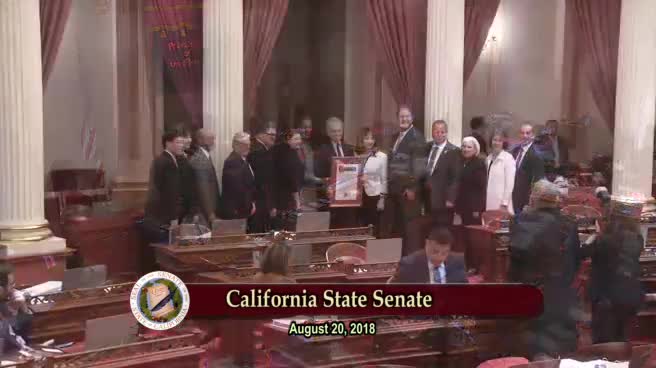 45SEC
Senate Floor
 4MIN
Assembly Standing Committee on Public Safety
 4MIN
Senate Floor
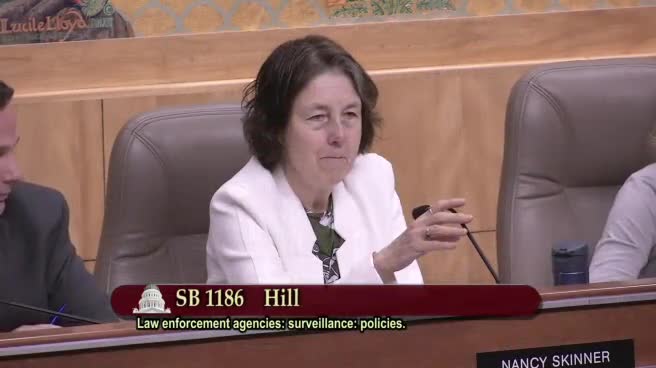 4MIN
Senate Standing Committee on Public Safety
Bill Author

Bill Co-Author(s):