SB 1358: Public Utilities Commission: proceedings: hearings.
- Session Year: 2017-2018
- House: Senate
- Latest Version Date: 2018-09-18
The California Constitution establishes the Public Utilities Commission and authorizes the commission to exercise ratemaking and rulemaking authority over all public utilities, as defined, subject to control by the Legislature. Existing law requires the commission to determine whether each proceeding is a quasi-legislative proceeding, an adjudication proceeding, or a ratesetting proceeding and, consistent with due process, public policy, and statutory requirements, to determine whether the proceeding requires a hearing. After those determinations are made, existing law requires the commission to assign one or more commissioners to oversee the case and an administrative law judge, when appropriate. Existing law requires the assigned commissioner to prepare and issue by order or ruling a scoping memo that describes the issues to be considered and the applicable timetable for resolution.
This bill would require the assigned commissioner, rather than the commission, to determine, as part of the scoping memo, whether the proceeding requires a hearing, and would make conforming changes to related provisions.
Existing law regulates communications in matters before the commission and defines an ex parte communication as any oral or written communication between a decisionmaker and an interested person concerning any matter before the commission that the commission has not specified as being a procedural matter and that does not occur in a public hearing, workshop, or other public proceeding, or on the official record of the proceeding on the matter. After a proposed decision or order is issued in a ratesetting case, existing law authorizes the commission to establish a quiet period during which no oral or written ex parte communications may be permitted and the commission may meet in closed session. If the commission holds the ratesetting decision, existing law authorizes the commission to establish a subsequent quiet period during the second half of the hold period, as described, authorizes ex parte communications only during the first half of the hold period, and authorizes the commission to meet in closed session for the second half of the hold period.
This bill would revise those provisions relating to quiet periods to authorize the commission to establish a quiet period only after a proposed decision or order is issued and is scheduled for a vote or after a proposed decision is scheduled for a vote, but is then held and rescheduled for a vote, and to require the commission to establish a quiet period during the three business days before the commissions scheduled vote on a proposed decision.
The California Constitution establishes the Public Utilities Commission and authorizes the commission to exercise ratemaking and rulemaking authority over all public utilities, as defined, subject to control by the Legislature. Existing law requires the commission to determine whether each proceeding is a quasi-legislative proceeding, an adjudication proceeding, or a ratesetting proceeding and, consistent with due process, public policy, and statutory requirements, to determine whether the proceeding requires a hearing. After those determinations are made, existing law requires the commission to assign one or more commissioners to oversee the case and an administrative law judge, when appropriate. Existing law requires the assigned commissioner to prepare and issue by order or ruling a scoping memo that describes the issues to be considered and the applicable timetable for resolution.
This bill would require the assigned commissioner, rather than the commission, to determine, as part of the scoping memo, whether the proceeding requires a hearing, and would make conforming changes to related provisions.
Existing law regulates communications in matters before the commission and defines an ex parte communication as any oral or written communication between a decisionmaker and an interested person concerning any matter before the commission that the commission has not specified as being a procedural matter and that does not occur in a public hearing, workshop, or other public proceeding, or on the official record of the proceeding on the matter. After a proposed decision or order is issued in a ratesetting case, existing law authorizes the commission to establish a quiet period during which no oral or written ex parte communications may be permitted and the commission may meet in closed session. If the commission holds the ratesetting decision, existing law authorizes the commission to establish a subsequent quiet period during the second half of the hold period, as described, authorizes ex parte communications only during the first half of the hold period, and authorizes the commission to meet in closed session for the second half of the hold period.
This bill would require the subsequent quiet period established by the commission to instead begin on the 7th day preceding the day of the voting meeting at which the item is scheduled to be voted upon and terminate at the end of the voting meeting. revise those provisions relating to quiet periods to authorize the commission to establish a quiet period only after a proposed decision or order is issued and is scheduled for a vote or after a proposed decision is scheduled for a vote, but is then held and rescheduled for a vote, and to require the commission to establish a quiet period during the three business days before the commissions scheduled vote on a decision.
The California Constitution establishes the Public Utilities Commission and authorizes the commission to exercise ratemaking and rulemaking authority over all public utilities, as defined, subject to control by the Legislature. Existing law requires the commission to determine whether each proceeding is a quasi-legislative proceeding, an adjudication proceeding, or a ratesetting proceeding and, consistent with due process, public policy, and statutory requirements, to determine whether the proceeding requires a hearing. After those determinations are made, existing law requires the commission to assign one or more commissioners to oversee the case and an administrative law judge, when appropriate. Existing law requires the assigned commissioner to prepare and issue by order or ruling a scoping memo that describes the issues to be considered and the applicable timetable for resolution.
This bill would require the assigned commissioner, rather than the commission, to determine, as part of the scoping memo, whether the proceeding requires a hearing, and would make conforming changes to related provisions.
Existing law regulates communications in matters before the commission and defines an ex parte communication as any oral or written communication between a decisionmaker and an interested person concerning any matter before the commission that the commission has not specified as being a procedural matter and that does not occur in a public hearing, workshop, or other public proceeding, or on the official record of the proceeding on the matter. After a proposed decision or order is issued in a ratesetting case, existing law authorizes the commission to establish a quiet period during which no oral or written ex parte communications may be permitted and the commission may meet in closed session. If the commission holds the ratesetting decision, existing law authorizes the commission to establish a subsequent quiet period during the second half of the hold period, as described, authorizes ex parte communications only during the first half of the hold period, and authorizes the commission to meet in closed session for the second half of the hold period.
This bill would require the subsequent quiet period established by the commission to instead begin, at the latest, begin on the 7th day preceding the day of the voting meeting at which the item is scheduled to be voted upon and terminate at the end of the voting meeting.
The California Constitution establishes the Public Utilities Commission and authorizes the commission to exercise ratemaking and rulemaking authority over all public utilities, as defined, subject to control by the Legislature. Existing law requires the commission to determine whether each proceeding is a quasi-legislative proceeding, an adjudication proceeding, or a ratesetting proceeding and, consistent with due process, public policy, and statutory requirements, to determine whether the proceeding requires a hearing. After those determinations are made, existing law requires the commission to assign one or more commissioners to oversee the case and an administrative law judge, when appropriate. Existing law requires the assigned commissioner to prepare and issue by order or ruling a scoping memo that describes the issues to be considered and the applicable timetable for resolution.
This bill would require the assigned commissioner, rather than the commission, to determine, as part of the scoping memo, whether the proceeding requires a hearing, and would make conforming changes to related provisions.
Existing law regulates communications in matters before the commission and defines an ex parte communication as any oral or written communication between a decisionmaker and an interested person concerning any matter before the commission that the commission has not specified as being a procedural matter and that does not occur in a public hearing, workshop, or other public proceeding, or on the official record of the proceeding on the matter. After a proposed decision or order is issued in a ratesetting case, existing law authorizes the commission to establish a quiet period during which no oral or written ex parte communications may be permitted and the commission may meet in closed session. If the commission holds the ratesetting decision, existing law authorizes the commission to establish a subsequent quiet period during the second half of the hold period, as described, authorizes ex parte communications only during the first half of the hold period, and authorizes the commission to meet in closed session for the second half of the hold period.
This bill would require the subsequent quiet period established by the commission to instead begin, at the latest, on the 7th day preceding the day of the voting meeting at which the item is scheduled to be voted upon and terminate at the end of the voting meeting.
The California Constitution establishes the Public Utilities Commission and authorizes the commission to exercise ratemaking and rulemaking authority over all public utilities, as defined, subject to control by the Legislature. Existing law requires the commission to determine whether each proceeding is a quasi-legislative proceeding, an adjudication proceeding, or a ratesetting proceeding and, consistent with due process, public policy, and statutory requirements, to determine whether the proceeding requires a hearing. After those determinations are made, existing law requires the commission to assign one or more commissioners to oversee the case and an administrative law judge, when appropriate. Existing law requires the assigned commissioner to prepare and issue by order or ruling a scoping memo that describes the issues to be considered and the applicable timetable for resolution.
This bill would require the assigned commissioner, rather than the commission, to determine, as part of the scoping memo, whether the proceeding requires a hearing. hearing, and would make conforming changes to related provisions.
The California Constitution establishes the Public Utilities Commission and authorizes the commission to exercise ratemaking and rulemaking authority over all public utilities, as defined, subject to control by the Legislature. Existing law requires the commission to determine whether each proceeding is a quasi-legislative proceeding, an adjudication proceeding, or a ratesetting proceeding and, consistent with due process, public policy, and statutory requirements, to determine whether the proceeding requires a hearing. After those determinations are made, existing law requires the commission to assign one or more commissioners to oversee the case and an administrative law judge, when appropriate. Existing law requires the assigned commissioner to prepare and issue by order or ruling a scoping memo that describes the issues to be considered and the applicable timetable for resolution.
This bill would require the assigned commissioner, rather than the commission, to determine, as part of the scoping memo, whether the proceeding requires a hearing.
(a)The commission shall determine whether each proceeding is a quasi-legislative, an adjudication, or a ratesetting proceeding. The commissions decision as to the nature of the proceeding shall be subject to a request for rehearing within 10 days of the date of that decision or of any subsequent ruling that expands the scope of the proceeding. Only those parties who have requested a rehearing within that time period shall subsequently have standing for judicial review and that review shall only be available at the conclusion of the proceeding. The commission shall render its decision regarding the rehearing within 30 days. The commission shall establish rules regarding ex parte communication on case categorization issues.
(b)(1)The commission, upon initiating an adjudication proceeding or ratesetting proceeding, shall assign one or more commissioners to oversee the case and an administrative law judge when appropriate. The assigned commissioner shall schedule a prehearing conference and shall prepare and issue by order or ruling a scoping memo that describes the issues to be considered and the applicable timetable for resolution and that, consistent with due process, public policy, and statutory requirements, determines whether the proceeding requires a hearing.
(2)The administrative law judge shall either preside over and conduct, or assist the assigned commissioner or commissioners in presiding over and conducting, any evidentiary or adjudication hearing that may be required.
(c)The commission, upon initiating a quasi-legislative proceeding, shall assign one or more commissioners to oversee the case and an administrative law judge, when appropriate, who may be assisted by a technical advisory staff member in conducting the proceeding. The assigned commissioner shall prepare and issue by order or ruling a scoping memo that describes the issues to be considered and the applicable timetable for resolution and that, consistent with due process, public policy, and statutory requirements, determines whether the proceeding requires a hearing.
(d)(1)Quasi-legislative cases, for purposes of this article, are cases that establish policy, including, but not limited to, rulemakings and investigations that may establish rules affecting an entire industry.
(2)Adjudication cases, for purposes of this article, are enforcement cases and complaints except those challenging the reasonableness of any rates or charges as specified in Section 1702.
(3)Ratesetting cases, for purposes of this article, are cases in which rates are established for a specific company, including, but not limited to, general rate cases, performance-based ratemaking, and other ratesetting mechanisms.
(e)(1)(A)Ex parte communication, for purposes of this article, means any oral or written communication between a decisionmaker and an interested person concerning any matter before the commission that the commission has not specified in its Rules of Practice and Procedure as being a procedural matter and that does not occur in a public hearing, workshop, or other public proceeding, or on the official record of the proceeding on the matter. The commission shall specify in its Rules of Practice and Procedure, enacted by rulemaking, the types of issues considered procedural matters under this article.
(B)Interested person, for purposes of this article, means any of the following:
(i)Any applicant, an agent or an employee of the applicant, or a person receiving consideration for representing the applicant, or a participant in the proceeding on any matter before the commission.
(ii)Any person with a financial interest, as described in Article 1 (commencing with Section 87100) of Chapter 7 of Title 9 of the Government Code, in a matter before the commission, an agent or employee of the person with a financial interest, or a person receiving consideration for representing the person with a financial interest. A person involved in issuing credit ratings or advising entities or persons who invest in the shares or operations of any party to a proceeding is a person with a financial interest.
(iii)A representative acting on behalf of any civic, environmental, neighborhood, business, labor, trade, or similar organization who intends to influence the decision of a commission member on a matter before the commission.
(iv)Other categories of individuals deemed by the commission, by rule, to be an interested person.
(2)The commission shall by rule adopt and publish a definition of decisionmakers and interested persons for purposes of this article, along with any requirements for written reporting of ex parte communications and appropriate sanctions for noncompliance with any rule proscribing ex parte communications. The definition of decisionmakers shall include, but is not limited to: each commissioner; the personal staff of a commissioner if the staff is acting in a policy or legal advisory capacity; the chief administrative law judge of the commission; and the administrative law judge assigned to the proceeding. The commission shall, by rule, explicitly ban both of the following:
(A)The practice of one-way ex parte communications from a decisionmaker to an interested person.
(B)Any communication between an interested person and a decisionmaker regarding which commissioner or administrative law judge may be assigned to a matter before the commission.
(3)For adjudication cases, the rules shall provide that ex parte communications shall be prohibited, as required by this article. The rules shall provide that if an ex parte communication occurs that is prohibited by this article, or if an ex parte communication occurs in a ratesetting case, whether initiated by a decisionmaker or an interested person, all of the following shall be required:
(A)The interested person shall report the communication within three working days of the communication by filing a notice with the commission that includes all the following:
(i)The date, time, and location of the communication, whether the communication was oral or written, or a combination of both, and the communication medium used.
(ii)The identity of the decisionmaker, the identity of the person initiating the communication, and the identities of any other persons present.
(iii)The topic of the communication, including applicable proceeding numbers.
(iv)A substantive description of the interested persons communication and its content.
(v)A copy of any written material or text used during the communication.
(B)Any decisionmaker who participated in the communication shall promptly log the ex parte communication by filing a notice that includes all the following:
(i)The date, time, and location of the communication, whether the communication was oral or written, or a combination of both, and the communication medium used.
(ii)The identity of the interested person, the identity of the person initiating the communication, and the identities of any other persons present.
(iii)The topic of the communication, including any applicable proceeding numbers.
(iv)A brief description of the communication.
(C)If the interested person who participated in the communication has not timely submitted the notice required by subparagraph (A), the decisionmaker shall refer the matter to the attorney for the commission, and an assigned commissioner, by ruling, shall order the interested person to submit the required notice. The interested person shall be subject to any applicable penalties for the initial violation and, if the interested person does not submit the required notice within the time period specified in the assigned commissioners ruling, the interested person shall be subject to continuing violations pursuant to Section 2108.
(4)The requirements of paragraph (3) shall not apply to any oral ex parte communication occurring at a meeting if all parties are invited to participate and given not less than three working days notice.
(5)The commission shall not take any vote on a matter in which a notice of a prohibited ex parte communication has been filed pursuant to subparagraph (A) or (B) of paragraph (3) until all parties to the proceeding have been provided a reasonable opportunity to respond to the communication.
(6)If an ex parte communication is not disclosed as required by this subdivision until after the commission has issued a decision on the matter to which the communication pertained, a party not participating in the communication may file a petition to rescind or modify the decision. The party may seek a finding that the ex parte communication significantly influenced the decisions process or outcome as part of any petition to rescind or modify the decision. The commission shall process the petition in accordance with the commissions procedures for petitions for modification and shall issue a decision on the petition no later than 180 days after the filing of the petition.
(7)(A)Ex parte communications that occur at conferences and that are within the scope of an adjudication or ratesetting proceeding shall be subject to the requirements of this article.
(B)Ex parte communications that occur at conferences and that are within the scope of a quasi-legislative proceeding shall be governed by the ex parte communication disclosure requirements developed by the commission.
(C)For purposes of this section, ex parte communications that occur at conferences includes, but is not limited to, communications in a private setting or during meals, entertainment events, and tours, and informal discussions among conference attendees.
(8)The commission shall render its decisions based on the law and on the evidence in the record. Ex parte communications shall not be a part of the evidentiary record of the proceedings.
(f)The commission may meet in a closed session to discuss administrative matters so long as no collective consensus is reached or vote taken on any matter requiring a vote of the commissioners. The commission shall, by rule, adopt and publish a definition of administrative matters for purposes of this section.
(g)The commission shall permit written comments received from the public to be included in the record of its proceedings, but the comments shall not be treated as evidence. The commission shall provide parties to the proceeding a reasonable opportunity to respond to any public comments included in the record of proceedings.
(h)It is the intent of the Legislature that the commission, and any entity or person seeking to influence actions taken by the commission, shall be subject to all applicable ethical standards, including any applicable obligations under the Political Reform Act of 1974 (Title 9 (commencing with Section 81000) of the Government Code), including, but not limited to, any applicable lobbying obligations.
SEC. 2.Section 1701.2 of the Public Utilities Code is amended to read:1701.2.(a)This section shall apply to adjudication cases only.
(b)If the commissioner assigned pursuant to subdivision (b) of Section 1701.1 has determined that an adjudication case requires a hearing, the assigned commissioner or the assigned administrative law judge shall hear the case in the manner described in the scoping memo. The scoping memo shall designate whether the assigned commissioner or the assigned administrative law judge shall preside in the case.
(c)The commission shall provide by rule for peremptory challenges and challenges for cause of the administrative law judge. Challenges for cause shall include, but not be limited to, financial interests and prejudice. The rule shall provide that all parties are entitled to one peremptory challenge of the assignment of the administrative law judge in all cases. All parties are entitled to unlimited peremptory challenges in any case in which the administrative law judge has within the previous 12 months served in any capacity in an advocacy position at the commission, been employed by a regulated public utility, or has represented a party or has been an interested person in the case.
(d)The assigned commissioner or the administrative law judge shall prepare and file a decision setting forth recommendations, findings, and conclusions. The decision shall be filed with the commission and served upon all parties to the action or proceeding without undue delay, not later than 60 days after the matter has been submitted for decision. The decision of the assigned commissioner or the administrative law judge shall become the decision of the commission if no further action is taken within 30 days. Any party may appeal the decision to the commission, provided that the appeal is made within 30 days of the issuance of the decision. The commission may itself initiate a review of the proposed decision on any grounds.
(e)The commissions decision shall be supported by findings of fact on all issues material to the decision, and the findings of fact shall be based on the record developed by the assigned commissioner or the administrative law judge. A decision different from that of the assigned commissioner or the administrative law judge shall be accompanied by a written explanation of each of the changes made to the decision.
(f)Notwithstanding Section 307, an officer, employee, or agent of the commission that is personally involved in the prosecution or in the supervision of the prosecution of an adjudication case before the commission shall not participate in the decision of the case or any factually related adjudicatory proceeding, including participation in or advising the commission as to findings of fact, conclusions of law, or orders. An officer, employee, or agent of the commission that is personally involved in the prosecution or in the supervision of the prosecution of an adjudication case may participate in reaching a settlement of the case, but shall not participate in the decision of the commission to accept or reject the settlement, except as a witness or counsel in an open hearing or a hearing closed pursuant to subdivision (h). The Legislature finds that the commission performs both prosecutorial and adjudicatory functions in an adjudication case and declares its intent that an officer, employee, or agent of the commission, including its attorneys, may perform only one of those functions in any adjudication case or factually related adjudicatory proceeding.
(g)(1)Ex parte communications shall be prohibited in adjudication cases.
(2)Any oral or written communications concerning procedural matters in adjudication cases between interested persons and decisionmakers, except the assigned administrative law judge, shall be prohibited.
(h)Notwithstanding any other law, the commission may meet in a closed hearing to consider the decision that is being appealed. The vote on the appeal shall be in a public meeting and shall be accompanied with an explanation of the appeal decision.
(i)Adjudication cases shall be resolved within 12 months of initiation unless the commission makes findings why that deadline cannot be met and issues an order extending that deadline. In the event that a rehearing of an adjudication case is granted, the parties shall have an opportunity for final oral argument.
(j)(1)The commission may determine that the respondent lacks, or may lack, the ability to pay potential penalties, fines, or restitution that may be ordered by the commission.
(2)If the commission determines that a respondent lacks, or may lack, the ability to pay, the commission may order the respondent to demonstrate, to the satisfaction of the commission, sufficient ability to pay potential penalties, fines, or restitution that may be ordered by the commission. The respondent shall demonstrate the ability to pay, or make other financial arrangements satisfactory to the commission, within seven days of the commission commencing an adjudication case. The commission may delegate to the attorney to the commission the determination of whether a sufficient showing has been made by the respondent of an ability to pay.
(3)Within seven days of the commissions determination of the respondents ability to pay potential penalties, fines, or restitution, the respondent shall be entitled to an impartial review by an administrative law judge of the sufficiency of the showing made by the respondent of the respondents ability to pay. The review by an administrative law judge of the ability of the respondent to pay shall become part of the record of the adjudication and is subject to the commissions consideration in its order resolving the adjudication case. The administrative law judge may enter temporary orders modifying any financial requirement made of the respondent pending the review by the administrative law judge.
(4)A respondent that is a public utility regulated under a rate of return or rate of margin regulatory structure or that has gross annual revenues of more than one hundred million dollars ($100,000,000) generated within California is presumed to be able to pay potential penalties, fines, or restitution that may be ordered by the commission, and, therefore, paragraphs (1) to (3), inclusive, do not apply to that respondent.
SEC. 3.Section 1701.3 of the Public Utilities Code is amended to read:1701.3.(a)This section shall apply only to ratesetting cases, except, if the commissioner assigned pursuant to Section 1701.1 has determined that a ratesetting case does not require a hearing, the procedures prescribed by subdivisions (b), (d), (f), and (i) shall not apply.
(b)The assigned commissioner shall determine prior to the first hearing whether the commissioner or the assigned administrative law judge shall be designated as the principal hearing officer. The principal hearing officer shall be present for more than one-half of the hearing days. The decision of the principal hearing officer shall be the proposed decision.
(c)An alternate decision may be issued by the assigned commissioner or the assigned administrative law judge who is not the principal hearing officer. Any alternate decision may be filed with the commission and served upon all parties to the proceeding any time prior to issuance of a final decision by the commission, consistent with the requirements of Section 311.
(d)The commission shall establish a procedure for any party to request the presence of a commissioner at a hearing. The assigned commissioner shall be present at any closing arguments in the case.
(e)The principal hearing officer shall present the proposed decision to the full commission in a public meeting. The alternate decision, if any, shall also be presented to the full commission at that public meeting.
(f)The presentation to the full commission shall contain a record of the number of days of the hearing, the number of days that each commissioner was present, and whether the decision was completed on time.
(g)The commission shall provide by rule for peremptory challenges and challenges for cause of the administrative law judge. Challenges for cause shall include, but not be limited to, financial interests and prejudice. All parties shall be entitled to unlimited peremptory challenges in any case in which the administrative law judge has within the previous 12 months served in any capacity in an advocacy position at the commission, been employed by a regulated public utility, or has represented a party or has been an interested person in the case.
(h)(1)Ex parte communications in ratesetting cases are subject to the disclosure requirements of this article. The commission, by order or ruling, may prohibit ex parte communications in a ratesetting case.
(2)Oral communications may be permitted by a decisionmaker if all parties are given not less than three working days notice. No individual ex parte meetings shall be held during the three business days before the commissions scheduled vote on the decision.
(3)(A)If an ex parte communication meeting is granted to any party, all other parties, upon request, shall also be granted individual ex parte meetings of a substantially equal period of time and shall be sent a notice of that opportunity at the time the request is granted.
(B)Subparagraph (A) shall not apply if the decisionmaker participating in the ex parte communication meeting is a member of the personal staff of a commissioner acting in a policy or legal advisory capacity and no other decisionmaker to whom subparagraph (A) applies is a participant.
(4)Written ex parte communications by any interested person may be permitted if copies of the communication are transmitted to all parties on the same day as the original communication.
(5)Written and oral ex parte communications shall not be part of the evidentiary record of the proceeding.
(6)(A)The commission may establish a quiet period during which no oral or written ex parte communications may be permitted and the commission may meet in closed session during that period.
(B)A quiet period may be established only during the following periods:
(i)After a proposed decision or order is issued and is scheduled for a vote.
(ii)After a proposed decision is scheduled for a vote, but is then held and rescheduled for a vote.
(C)The commission shall establish a quiet period during the three business days before the commissions scheduled vote on a decision.
(D)(i)Any meeting of the commission during a quiet period shall require a minimum of three days advance public notice.
(ii)The requirement specified in subparagraph (F) of paragraph (1) of subdivision (b) of Section 11123 of the Government Code shall not apply to a meeting of the commission during a quiet period that is held by teleconference.
(i)Any party has the right to present a final oral argument of its case before the commission. Those requests shall be scheduled in a timely manner. A quorum of the commission shall be present for the final oral arguments.
(j)The commission may, in issuing its decision, adopt, modify, or set aside the proposed decision or any part of the decision based on evidence in the record. The final decision of the commission shall be issued not later than 60 days after the issuance of the proposed decision. Under extraordinary circumstances the commission may extend this date for a reasonable period. The 60-day period shall be extended for 30 days if any alternate decision is proposed pursuant to Section 311.
SEC. 4.Section 1701.4 of the Public Utilities Code is amended to read:1701.4.(a)This section shall apply only to quasi-legislative cases, except, if the commissioner assigned pursuant to Section 1701.1 has determined that a quasi-legislative case does not require a hearing, the procedures prescribed by subdivisions (b), (d), and (e) shall not apply.
(b)The assigned administrative law judge and any assigned technical advisory staff shall act as an assistant to the assigned commissioner in quasi-legislative cases. The assigned commissioner shall prepare the proposed rule or order with the assistance of the administrative law judge and any assigned technical advisory staff. The assigned commissioner shall present the proposed rule or order to the full commission in a public meeting. The report shall include the number of days of hearing and the number of days that the commissioner was present.
(c)Ex parte communications in quasi-legislative proceedings are permitted and not subject to the disclosure requirements of this article, except when the commission, by order or ruling, determines either of the following:
(1)That ex parte communications are subject to the disclosure requirements of this article.
(2)That ex parte communications are prohibited and subject to the disclosure requirements of this article.
(d)Any party has the right to present a final oral argument of its case before the commission. Those requests shall be scheduled in a timely manner. A quorum of the commission shall be present for the final oral arguments.
(e)The commission may, in issuing its rule or order, adopt, modify, or set aside the proposed decision or any part of the rule or order. The final rule or order of the commission shall be issued not later than 60 days after the issuance of the proposed rule or order. Under extraordinary circumstances the commission may extend this date for a reasonable period. The 60-day period shall be extended for 30 days if any alternate rule or order is proposed pursuant to Section 311.
(f)No informality in the manner of taking testimony or evidence shall invalidate any order, decision, or rule made, approved, or confirmed by the commission in quasi-legislative cases.
(a)The commission shall determine whether each proceeding is a quasi-legislative, an adjudication, or a ratesetting proceeding. The commissions decision as to the nature of the proceeding shall be subject to a request for rehearing within 10 days of the date of that decision or of any subsequent ruling that expands the scope of the proceeding. Only those parties who have requested a rehearing within that time period shall subsequently have standing for judicial review and that review shall only be available at the conclusion of the proceeding. The commission shall render its decision regarding the rehearing within 30 days. The commission shall establish rules regarding ex parte communication on case categorization issues.
(b)(1)The commission, upon initiating an adjudication proceeding or ratesetting proceeding, shall assign one or more commissioners to oversee the case and an administrative law judge when appropriate. The assigned commissioner shall schedule a prehearing conference and shall prepare and issue by order or ruling a scoping memo that describes the issues to be considered and the applicable timetable for resolution and that, consistent with due process, public policy, and statutory requirements, determines whether the proceeding requires a hearing.
(2)The administrative law judge shall either preside over and conduct, or assist the assigned commissioner or commissioners in presiding over and conducting, any evidentiary or adjudication hearing that may be required.
(c)The commission, upon initiating a quasi-legislative proceeding, shall assign one or more commissioners to oversee the case and an administrative law judge, when appropriate, who may be assisted by a technical advisory staff member in conducting the proceeding. The assigned commissioner shall prepare and issue by order or ruling a scoping memo that describes the issues to be considered and the applicable timetable for resolution and that, consistent with due process, public policy, and statutory requirements, determines whether the proceeding requires a hearing.
(d)(1)Quasi-legislative cases, for purposes of this article, are cases that establish policy, including, but not limited to, rulemakings and investigations that may establish rules affecting an entire industry.
(2)Adjudication cases, for purposes of this article, are enforcement cases and complaints except those challenging the reasonableness of any rates or charges as specified in Section 1702.
(3)Ratesetting cases, for purposes of this article, are cases in which rates are established for a specific company, including, but not limited to, general rate cases, performance-based ratemaking, and other ratesetting mechanisms.
(e)(1)(A)Ex parte communication, for purposes of this article, means any oral or written communication between a decisionmaker and an interested person concerning any matter before the commission that the commission has not specified in its Rules of Practice and Procedure as being a procedural matter and that does not occur in a public hearing, workshop, or other public proceeding, or on the official record of the proceeding on the matter. The commission shall specify in its Rules of Practice and Procedure, enacted by rulemaking, the types of issues considered procedural matters under this article.
(B)Interested person, for purposes of this article, means any of the following:
(i)Any applicant, an agent or an employee of the applicant, or a person receiving consideration for representing the applicant, or a participant in the proceeding on any matter before the commission.
(ii)Any person with a financial interest, as described in Article 1 (commencing with Section 87100) of Chapter 7 of Title 9 of the Government Code, in a matter before the commission, an agent or employee of the person with a financial interest, or a person receiving consideration for representing the person with a financial interest. A person involved in issuing credit ratings or advising entities or persons who invest in the shares or operations of any party to a proceeding is a person with a financial interest.
(iii)A representative acting on behalf of any civic, environmental, neighborhood, business, labor, trade, or similar organization who intends to influence the decision of a commission member on a matter before the commission.
(iv)Other categories of individuals deemed by the commission, by rule, to be an interested person.
(2)The commission shall by rule adopt and publish a definition of decisionmakers and interested persons for purposes of this article, along with any requirements for written reporting of ex parte communications and appropriate sanctions for noncompliance with any rule proscribing ex parte communications. The definition of decisionmakers shall include, but is not limited to: each commissioner; the personal staff of a commissioner if the staff is acting in a policy or legal advisory capacity; the chief administrative law judge of the commission; and the administrative law judge assigned to the proceeding. The commission shall, by rule, explicitly ban both of the following:
(A)The practice of one-way ex parte communications from a decisionmaker to an interested person.
(B)Any communication between an interested person and a decisionmaker regarding which commissioner or administrative law judge may be assigned to a matter before the commission.
(3)For adjudication cases, the rules shall provide that ex parte communications shall be prohibited, as required by this article. The rules shall provide that if an ex parte communication occurs that is prohibited by this article, or if an ex parte communication occurs in a ratesetting case, whether initiated by a decisionmaker or an interested person, all of the following shall be required:
(A)The interested person shall report the communication within three working days of the communication by filing a notice with the commission that includes all the following:
(i)The date, time, and location of the communication, whether the communication was oral or written, or a combination of both, and the communication medium used.
(ii)The identity of the decisionmaker, the identity of the person initiating the communication, and the identities of any other persons present.
(iii)The topic of the communication, including applicable proceeding numbers.
(iv)A substantive description of the interested persons communication and its content.
(v)A copy of any written material or text used during the communication.
(B)Any decisionmaker who participated in the communication shall promptly log the ex parte communication by filing a notice that includes all the following:
(i)The date, time, and location of the communication, whether the communication was oral or written, or a combination of both, and the communication medium used.
(ii)The identity of the interested person, the identity of the person initiating the communication, and the identities of any other persons present.
(iii)The topic of the communication, including any applicable proceeding numbers.
(iv)A brief description of the communication.
(C)If the interested person who participated in the communication has not timely submitted the notice required by subparagraph (A), the decisionmaker shall refer the matter to the attorney for the commission, and an assigned commissioner, by ruling, shall order the interested person to submit the required notice. The interested person shall be subject to any applicable penalties for the initial violation and, if the interested person does not submit the required notice within the time period specified in the assigned commissioners ruling, the interested person shall be subject to continuing violations pursuant to Section 2108.
(4)The requirements of paragraph (3) shall not apply to any oral ex parte communication occurring at a meeting if all parties are invited to participate and given not less than three working days notice.
(5)The commission shall not take any vote on a matter in which a notice of a prohibited ex parte communication has been filed pursuant to subparagraph (A) or (B) of paragraph (3) until all parties to the proceeding have been provided a reasonable opportunity to respond to the communication.
(6)If an ex parte communication is not disclosed as required by this subdivision until after the commission has issued a decision on the matter to which the communication pertained, a party not participating in the communication may file a petition to rescind or modify the decision. The party may seek a finding that the ex parte communication significantly influenced the decisions process or outcome as part of any petition to rescind or modify the decision. The commission shall process the petition in accordance with the commissions procedures for petitions for modification and shall issue a decision on the petition no later than 180 days after the filing of the petition.
(7)(A)Ex parte communications that occur at conferences and that are within the scope of an adjudication or ratesetting proceeding shall be subject to the requirements of this article.
(B)Ex parte communications that occur at conferences and that are within the scope of a quasi-legislative proceeding shall be governed by the ex parte communication disclosure requirements developed by the commission.
(C)For purposes of this section, ex parte communications that occur at conferences includes, but is not limited to, communications in a private setting or during meals, entertainment events, and tours, and informal discussions among conference attendees.
(8)The commission shall render its decisions based on the law and on the evidence in the record. Ex parte communications shall not be a part of the evidentiary record of the proceedings.
(f)The commission may meet in a closed session to discuss administrative matters so long as no collective consensus is reached or vote taken on any matter requiring a vote of the commissioners. The commission shall, by rule, adopt and publish a definition of administrative matters for purposes of this section.
(g)The commission shall permit written comments received from the public to be included in the record of its proceedings, but the comments shall not be treated as evidence. The commission shall provide parties to the proceeding a reasonable opportunity to respond to any public comments included in the record of proceedings.
(h)It is the intent of the Legislature that the commission, and any entity or person seeking to influence actions taken by the commission, shall be subject to all applicable ethical standards, including any applicable obligations under the Political Reform Act of 1974 (Title 9 (commencing with Section 81000) of the Government Code), including, but not limited to, any applicable lobbying obligations.
SEC. 2.Section 1701.2 of the Public Utilities Code is amended to read:1701.2.(a)This section shall apply to adjudication cases only.
(b)If the commissioner assigned pursuant to subdivision (b) of Section 1701.1 has determined that an adjudication case requires a hearing, the assigned commissioner or the assigned administrative law judge shall hear the case in the manner described in the scoping memo. The scoping memo shall designate whether the assigned commissioner or the assigned administrative law judge shall preside in the case.
(c)The commission shall provide by rule for peremptory challenges and challenges for cause of the administrative law judge. Challenges for cause shall include, but not be limited to, financial interests and prejudice. The rule shall provide that all parties are entitled to one peremptory challenge of the assignment of the administrative law judge in all cases. All parties are entitled to unlimited peremptory challenges in any case in which the administrative law judge has within the previous 12 months served in any capacity in an advocacy position at the commission, been employed by a regulated public utility, or has represented a party or has been an interested person in the case.
(d)The assigned commissioner or the administrative law judge shall prepare and file a decision setting forth recommendations, findings, and conclusions. The decision shall be filed with the commission and served upon all parties to the action or proceeding without undue delay, not later than 60 days after the matter has been submitted for decision. The decision of the assigned commissioner or the administrative law judge shall become the decision of the commission if no further action is taken within 30 days. Any party may appeal the decision to the commission, provided that the appeal is made within 30 days of the issuance of the decision. The commission may itself initiate a review of the proposed decision on any grounds.
(e)The commissions decision shall be supported by findings of fact on all issues material to the decision, and the findings of fact shall be based on the record developed by the assigned commissioner or the administrative law judge. A decision different from that of the assigned commissioner or the administrative law judge shall be accompanied by a written explanation of each of the changes made to the decision.
(f)Notwithstanding Section 307, an officer, employee, or agent of the commission that is personally involved in the prosecution or in the supervision of the prosecution of an adjudication case before the commission shall not participate in the decision of the case or any factually related adjudicatory proceeding, including participation in or advising the commission as to findings of fact, conclusions of law, or orders. An officer, employee, or agent of the commission that is personally involved in the prosecution or in the supervision of the prosecution of an adjudication case may participate in reaching a settlement of the case, but shall not participate in the decision of the commission to accept or reject the settlement, except as a witness or counsel in an open hearing or a hearing closed pursuant to subdivision (h). The Legislature finds that the commission performs both prosecutorial and adjudicatory functions in an adjudication case and declares its intent that an officer, employee, or agent of the commission, including its attorneys, may perform only one of those functions in any adjudication case or factually related adjudicatory proceeding.
(g)(1)Ex parte communications shall be prohibited in adjudication cases.
(2)Any oral or written communications concerning procedural matters in adjudication cases between interested persons and decisionmakers, except the assigned administrative law judge, shall be prohibited.
(h)Notwithstanding any other law, the commission may meet in a closed hearing to consider the decision that is being appealed. The vote on the appeal shall be in a public meeting and shall be accompanied with an explanation of the appeal decision.
(i)Adjudication cases shall be resolved within 12 months of initiation unless the commission makes findings why that deadline cannot be met and issues an order extending that deadline. In the event that a rehearing of an adjudication case is granted, the parties shall have an opportunity for final oral argument.
(j)(1)The commission may determine that the respondent lacks, or may lack, the ability to pay potential penalties, fines, or restitution that may be ordered by the commission.
(2)If the commission determines that a respondent lacks, or may lack, the ability to pay, the commission may order the respondent to demonstrate, to the satisfaction of the commission, sufficient ability to pay potential penalties, fines, or restitution that may be ordered by the commission. The respondent shall demonstrate the ability to pay, or make other financial arrangements satisfactory to the commission, within seven days of the commission commencing an adjudication case. The commission may delegate to the attorney to the commission the determination of whether a sufficient showing has been made by the respondent of an ability to pay.
(3)Within seven days of the commissions determination of the respondents ability to pay potential penalties, fines, or restitution, the respondent shall be entitled to an impartial review by an administrative law judge of the sufficiency of the showing made by the respondent of the respondents ability to pay. The review by an administrative law judge of the ability of the respondent to pay shall become part of the record of the adjudication and is subject to the commissions consideration in its order resolving the adjudication case. The administrative law judge may enter temporary orders modifying any financial requirement made of the respondent pending the review by the administrative law judge.
(4)A respondent that is a public utility regulated under a rate of return or rate of margin regulatory structure or that has gross annual revenues of more than one hundred million dollars ($100,000,000) generated within California is presumed to be able to pay potential penalties, fines, or restitution that may be ordered by the commission, and, therefore, paragraphs (1) to (3), inclusive, do not apply to that respondent.
SEC. 3.Section 1701.3 of the Public Utilities Code is amended to read:1701.3.(a)This section shall apply only to ratesetting cases, except, if the commissioner assigned pursuant to Section 1701.1 has determined that a ratesetting case does not require a hearing, the procedures prescribed by subdivisions (b), (d), (f), and (i) shall not apply.
(b)The assigned commissioner shall determine prior to the first hearing whether the commissioner or the assigned administrative law judge shall be designated as the principal hearing officer. The principal hearing officer shall be present for more than one-half of the hearing days. The decision of the principal hearing officer shall be the proposed decision.
(c)An alternate decision may be issued by the assigned commissioner or the assigned administrative law judge who is not the principal hearing officer. Any alternate decision may be filed with the commission and served upon all parties to the proceeding any time prior to issuance of a final decision by the commission, consistent with the requirements of Section 311.
(d)The commission shall establish a procedure for any party to request the presence of a commissioner at a hearing. The assigned commissioner shall be present at any closing arguments in the case.
(e)The principal hearing officer shall present the proposed decision to the full commission in a public meeting. The alternate decision, if any, shall also be presented to the full commission at that public meeting.
(f)The presentation to the full commission shall contain a record of the number of days of the hearing, the number of days that each commissioner was present, and whether the decision was completed on time.
(g)The commission shall provide by rule for peremptory challenges and challenges for cause of the administrative law judge. Challenges for cause shall include, but not be limited to, financial interests and prejudice. All parties shall be entitled to unlimited peremptory challenges in any case in which the administrative law judge has within the previous 12 months served in any capacity in an advocacy position at the commission, been employed by a regulated public utility, or has represented a party or has been an interested person in the case.
(h)(1)Ex parte communications in ratesetting cases are subject to the disclosure requirements of this article. The commission, by order or ruling, may prohibit ex parte communications in a ratesetting case.
(2)Oral communications may be permitted by a decisionmaker if all parties are given not less than three working days notice. No individual ex parte meetings shall be held during the three business days before the commissions scheduled vote on the decision.
(3)(A)If an ex parte communication meeting is granted to any party, all other parties, upon request, shall also be granted individual ex parte meetings of a substantially equal period of time and shall be sent a notice of that opportunity at the time the request is granted.
(B)Subparagraph (A) shall not apply if the decisionmaker participating in the ex parte communication meeting is a member of the personal staff of a commissioner acting in a policy or legal advisory capacity and no other decisionmaker to whom subparagraph (A) applies is a participant.
(4)Written ex parte communications by any interested person may be permitted if copies of the communication are transmitted to all parties on the same day as the original communication.
(5)Written and oral ex parte communications shall not be part of the evidentiary record of the proceeding.
(6)After a proposed decision or order is issued, the (A)The commission may establish a quiet period during which no oral or written ex parte communications may be permitted and the commission may meet in closed session during that period. That quiet period shall expire at the end of the commission meeting for which the matter was scheduled to be voted upon and shall not in any circumstance exceed 14 days. If the commission holds the decision, it may establish a subsequent quiet period, which, if established, shall begin on the seventh day preceding the day of the voting meeting at which the item is scheduled to be voted upon and terminate at the end of the voting meeting. Any
(B)A quiet period may be established only during the following periods:
(i)After a proposed decision or order is issued and is scheduled for a vote.
(ii)After a proposed decision is scheduled for a vote, but is then held and rescheduled for a vote.
(C)The commission shall establish a quiet period during the three business days before the commissions scheduled vote on a decision.
(D)(i)Any meeting of the commission pursuant to this paragraph during a quiet period shall require a minimum of three days advance public notice.
(ii)The requirement specified in subparagraph (F) of paragraph (1) of subdivision (b) of Section 11123 of the Government Code shall not apply to a meeting of the commission during a quiet period that is held by teleconference.
(i)Any party has the right to present a final oral argument of its case before the commission. Those requests shall be scheduled in a timely manner. A quorum of the commission shall be present for the final oral arguments.
(j)The commission may, in issuing its decision, adopt, modify, or set aside the proposed decision or any part of the decision based on evidence in the record. The final decision of the commission shall be issued not later than 60 days after the issuance of the proposed decision. Under extraordinary circumstances the commission may extend this date for a reasonable period. The 60-day period shall be extended for 30 days if any alternate decision is proposed pursuant to Section 311.
SEC. 4.Section 1701.4 of the Public Utilities Code is amended to read:1701.4.(a)This section shall apply only to quasi-legislative cases, except, if the commissioner assigned pursuant to Section 1701.1 has determined that a quasi-legislative case does not require a hearing, the procedures prescribed by subdivisions (b), (d), and (e) shall not apply.
(b)The assigned administrative law judge and any assigned technical advisory staff shall act as an assistant to the assigned commissioner in quasi-legislative cases. The assigned commissioner shall prepare the proposed rule or order with the assistance of the administrative law judge and any assigned technical advisory staff. The assigned commissioner shall present the proposed rule or order to the full commission in a public meeting. The report shall include the number of days of hearing and the number of days that the commissioner was present.
(c)Ex parte communications in quasi-legislative proceedings are permitted and not subject to the disclosure requirements of this article, except when the commission, by order or ruling, determines either of the following:
(1)That ex parte communications are subject to the disclosure requirements of this article.
(2)That ex parte communications are prohibited and subject to the disclosure requirements of this article.
(d)Any party has the right to present a final oral argument of its case before the commission. Those requests shall be scheduled in a timely manner. A quorum of the commission shall be present for the final oral arguments.
(e)The commission may, in issuing its rule or order, adopt, modify, or set aside the proposed decision or any part of the rule or order. The final rule or order of the commission shall be issued not later than 60 days after the issuance of the proposed rule or order. Under extraordinary circumstances the commission may extend this date for a reasonable period. The 60-day period shall be extended for 30 days if any alternate rule or order is proposed pursuant to Section 311.
(f)No informality in the manner of taking testimony or evidence shall invalidate any order, decision, or rule made, approved, or confirmed by the commission in quasi-legislative cases.
(a)The commission shall determine whether each proceeding is a quasi-legislative, an adjudication, or a ratesetting proceeding. The commissions decision as to the nature of the proceeding shall be subject to a request for rehearing within 10 days of the date of that decision or of any subsequent ruling that expands the scope of the proceeding. Only those parties who have requested a rehearing within that time period shall subsequently have standing for judicial review and that review shall only be available at the conclusion of the proceeding. The commission shall render its decision regarding the rehearing within 30 days. The commission shall establish rules regarding ex parte communication on case categorization issues.
(b)(1)The commission, upon initiating an adjudication proceeding or ratesetting proceeding, shall assign one or more commissioners to oversee the case and an administrative law judge when appropriate. The assigned commissioner shall schedule a prehearing conference and shall prepare and issue by order or ruling a scoping memo that describes the issues to be considered and the applicable timetable for resolution and that, consistent with due process, public policy, and statutory requirements, determines whether the proceeding requires a hearing.
(2)The administrative law judge shall either preside over and conduct, or assist the assigned commissioner or commissioners in presiding over and conducting, any evidentiary or adjudication hearing that may be required.
(c)The commission, upon initiating a quasi-legislative proceeding, shall assign one or more commissioners to oversee the case and an administrative law judge, when appropriate, who may be assisted by a technical advisory staff member in conducting the proceeding. The assigned commissioner shall prepare and issue by order or ruling a scoping memo that describes the issues to be considered and the applicable timetable for resolution and that, consistent with due process, public policy, and statutory requirements, determines whether the proceeding requires a hearing.
(d)(1)Quasi-legislative cases, for purposes of this article, are cases that establish policy, including, but not limited to, rulemakings and investigations that may establish rules affecting an entire industry.
(2)Adjudication cases, for purposes of this article, are enforcement cases and complaints except those challenging the reasonableness of any rates or charges as specified in Section 1702.
(3)Ratesetting cases, for purposes of this article, are cases in which rates are established for a specific company, including, but not limited to, general rate cases, performance-based ratemaking, and other ratesetting mechanisms.
(e)(1)(A)Ex parte communication, for purposes of this article, means any oral or written communication between a decisionmaker and an interested person concerning any matter before the commission that the commission has not specified in its Rules of Practice and Procedure as being a procedural matter and that does not occur in a public hearing, workshop, or other public proceeding, or on the official record of the proceeding on the matter. The commission shall specify in its Rules of Practice and Procedure, enacted by rulemaking, the types of issues considered procedural matters under this article.
(B)Interested person, for purposes of this article, means any of the following:
(i)Any applicant, an agent or an employee of the applicant, or a person receiving consideration for representing the applicant, or a participant in the proceeding on any matter before the commission.
(ii)Any person with a financial interest, as described in Article 1 (commencing with Section 87100) of Chapter 7 of Title 9 of the Government Code, in a matter before the commission, an agent or employee of the person with a financial interest, or a person receiving consideration for representing the person with a financial interest. A person involved in issuing credit ratings or advising entities or persons who invest in the shares or operations of any party to a proceeding is a person with a financial interest.
(iii)A representative acting on behalf of any civic, environmental, neighborhood, business, labor, trade, or similar organization who intends to influence the decision of a commission member on a matter before the commission.
(iv)Other categories of individuals deemed by the commission, by rule, to be an interested person.
(2)The commission shall by rule adopt and publish a definition of decisionmakers and interested persons for purposes of this article, along with any requirements for written reporting of ex parte communications and appropriate sanctions for noncompliance with any rule proscribing ex parte communications. The definition of decisionmakers shall include, but is not limited to: each commissioner; the personal staff of a commissioner if the staff is acting in a policy or legal advisory capacity; the chief administrative law judge of the commission; and the administrative law judge assigned to the proceeding. The commission shall, by rule, explicitly ban both of the following:
(A)The practice of one-way ex parte communications from a decisionmaker to an interested person.
(B)Any communication between an interested person and a decisionmaker regarding which commissioner or administrative law judge may be assigned to a matter before the commission.
(3)For adjudication cases, the rules shall provide that ex parte communications shall be prohibited, as required by this article. The rules shall provide that if an ex parte communication occurs that is prohibited by this article, or if an ex parte communication occurs in a ratesetting case, whether initiated by a decisionmaker or an interested person, all of the following shall be required:
(A)The interested person shall report the communication within three working days of the communication by filing a notice with the commission that includes all the following:
(i)The date, time, and location of the communication, whether the communication was oral or written, or a combination of both, and the communication medium used.
(ii)The identity of the decisionmaker, the identity of the person initiating the communication, and the identities of any other persons present.
(iii)The topic of the communication, including applicable proceeding numbers.
(iv)A substantive description of the interested persons communication and its content.
(v)A copy of any written material or text used during the communication.
(B)Any decisionmaker who participated in the communication shall promptly log the ex parte communication by filing a notice that includes all the following:
(i)The date, time, and location of the communication, whether the communication was oral or written, or a combination of both, and the communication medium used.
(ii)The identity of the interested person, the identity of the person initiating the communication, and the identities of any other persons present.
(iii)The topic of the communication, including any applicable proceeding numbers.
(iv)A brief description of the communication.
(C)If the interested person who participated in the communication has not timely submitted the notice required by subparagraph (A), the decisionmaker shall refer the matter to the attorney for the commission, and an assigned commissioner, by ruling, shall order the interested person to submit the required notice. The interested person shall be subject to any applicable penalties for the initial violation and, if the interested person does not submit the required notice within the time period specified in the assigned commissioners ruling, the interested person shall be subject to continuing violations pursuant to Section 2108.
(4)The requirements of paragraph (3) shall not apply to any oral ex parte communication occurring at a meeting if all parties are invited to participate and given not less than three working days notice.
(5)The commission shall not take any vote on a matter in which a notice of a prohibited ex parte communication has been filed pursuant to subparagraph (A) or (B) of paragraph (3) until all parties to the proceeding have been provided a reasonable opportunity to respond to the communication.
(6)If an ex parte communication is not disclosed as required by this subdivision until after the commission has issued a decision on the matter to which the communication pertained, a party not participating in the communication may file a petition to rescind or modify the decision. The party may seek a finding that the ex parte communication significantly influenced the decisions process or outcome as part of any petition to rescind or modify the decision. The commission shall process the petition in accordance with the commissions procedures for petitions for modification and shall issue a decision on the petition no later than 180 days after the filing of the petition.
(7)(A)Ex parte communications that occur at conferences and that are within the scope of an adjudication or ratesetting proceeding shall be subject to the requirements of this article.
(B)Ex parte communications that occur at conferences and that are within the scope of a quasi-legislative proceeding shall be governed by the ex parte communication disclosure requirements developed by the commission.
(C)For purposes of this section, ex parte communications that occur at conferences includes, but is not limited to, communications in a private setting or during meals, entertainment events, and tours, and informal discussions among conference attendees.
(8)The commission shall render its decisions based on the law and on the evidence in the record. Ex parte communications shall not be a part of the evidentiary record of the proceedings.
(f)The commission may meet in a closed session to discuss administrative matters so long as no collective consensus is reached or vote taken on any matter requiring a vote of the commissioners. The commission shall, by rule, adopt and publish a definition of administrative matters for purposes of this section.
(g)The commission shall permit written comments received from the public to be included in the record of its proceedings, but the comments shall not be treated as evidence. The commission shall provide parties to the proceeding a reasonable opportunity to respond to any public comments included in the record of proceedings.
(h)It is the intent of the Legislature that the commission, and any entity or person seeking to influence actions taken by the commission, shall be subject to all applicable ethical standards, including any applicable obligations under the Political Reform Act of 1974 (Title 9 (commencing with Section 81000) of the Government Code), including, but not limited to, any applicable lobbying obligations.
SEC. 2.Section 1701.2 of the Public Utilities Code is amended to read:1701.2.(a)This section shall apply to adjudication cases only.
(b)If the commissioner assigned pursuant to subdivision (b) of Section 1701.1 has determined that an adjudication case requires a hearing, the assigned commissioner or the assigned administrative law judge shall hear the case in the manner described in the scoping memo. The scoping memo shall designate whether the assigned commissioner or the assigned administrative law judge shall preside in the case.
(c)The commission shall provide by rule for peremptory challenges and challenges for cause of the administrative law judge. Challenges for cause shall include, but not be limited to, financial interests and prejudice. The rule shall provide that all parties are entitled to one peremptory challenge of the assignment of the administrative law judge in all cases. All parties are entitled to unlimited peremptory challenges in any case in which the administrative law judge has within the previous 12 months served in any capacity in an advocacy position at the commission, been employed by a regulated public utility, or has represented a party or has been an interested person in the case.
(d)The assigned commissioner or the administrative law judge shall prepare and file a decision setting forth recommendations, findings, and conclusions. The decision shall be filed with the commission and served upon all parties to the action or proceeding without undue delay, not later than 60 days after the matter has been submitted for decision. The decision of the assigned commissioner or the administrative law judge shall become the decision of the commission if no further action is taken within 30 days. Any party may appeal the decision to the commission, provided that the appeal is made within 30 days of the issuance of the decision. The commission may itself initiate a review of the proposed decision on any grounds.
(e)The commissions decision shall be supported by findings of fact on all issues material to the decision, and the findings of fact shall be based on the record developed by the assigned commissioner or the administrative law judge. A decision different from that of the assigned commissioner or the administrative law judge shall be accompanied by a written explanation of each of the changes made to the decision.
(f)Notwithstanding Section 307, an officer, employee, or agent of the commission that is personally involved in the prosecution or in the supervision of the prosecution of an adjudication case before the commission shall not participate in the decision of the case or any factually related adjudicatory proceeding, including participation in or advising the commission as to findings of fact, conclusions of law, or orders. An officer, employee, or agent of the commission that is personally involved in the prosecution or in the supervision of the prosecution of an adjudication case may participate in reaching a settlement of the case, but shall not participate in the decision of the commission to accept or reject the settlement, except as a witness or counsel in an open hearing or a hearing closed pursuant to subdivision (h). The Legislature finds that the commission performs both prosecutorial and adjudicatory functions in an adjudication case and declares its intent that an officer, employee, or agent of the commission, including its attorneys, may perform only one of those functions in any adjudication case or factually related adjudicatory proceeding.
(g)(1)Ex parte communications shall be prohibited in adjudication cases.
(2)Any oral or written communications concerning procedural matters in adjudication cases between interested persons and decisionmakers, except the assigned administrative law judge, shall be prohibited.
(h)Notwithstanding any other law, the commission may meet in a closed hearing to consider the decision that is being appealed. The vote on the appeal shall be in a public meeting and shall be accompanied with an explanation of the appeal decision.
(i)Adjudication cases shall be resolved within 12 months of initiation unless the commission makes findings why that deadline cannot be met and issues an order extending that deadline. In the event that a rehearing of an adjudication case is granted, the parties shall have an opportunity for final oral argument.
(j)(1)The commission may determine that the respondent lacks, or may lack, the ability to pay potential penalties, fines, or restitution that may be ordered by the commission.
(2)If the commission determines that a respondent lacks, or may lack, the ability to pay, the commission may order the respondent to demonstrate, to the satisfaction of the commission, sufficient ability to pay potential penalties, fines, or restitution that may be ordered by the commission. The respondent shall demonstrate the ability to pay, or make other financial arrangements satisfactory to the commission, within seven days of the commission commencing an adjudication case. The commission may delegate to the attorney to the commission the determination of whether a sufficient showing has been made by the respondent of an ability to pay.
(3)Within seven days of the commissions determination of the respondents ability to pay potential penalties, fines, or restitution, the respondent shall be entitled to an impartial review by an administrative law judge of the sufficiency of the showing made by the respondent of the respondents ability to pay. The review by an administrative law judge of the ability of the respondent to pay shall become part of the record of the adjudication and is subject to the commissions consideration in its order resolving the adjudication case. The administrative law judge may enter temporary orders modifying any financial requirement made of the respondent pending the review by the administrative law judge.
(4)A respondent that is a public utility regulated under a rate of return or rate of margin regulatory structure or that has gross annual revenues of more than one hundred million dollars ($100,000,000) generated within California is presumed to be able to pay potential penalties, fines, or restitution that may be ordered by the commission, and, therefore, paragraphs (1) to (3), inclusive, do not apply to that respondent.
SEC. 3.Section 1701.3 of the Public Utilities Code is amended to read:1701.3.(a)This section shall apply only to ratesetting cases, except, if the commissioner assigned pursuant to Section 1701.1 has determined that a ratesetting case does not require a hearing, the procedures prescribed by subdivisions (b), (d), (f), and (i) shall not apply.
(b)The assigned commissioner shall determine prior to the first hearing whether the commissioner or the assigned administrative law judge shall be designated as the principal hearing officer. The principal hearing officer shall be present for more than one-half of the hearing days. The decision of the principal hearing officer shall be the proposed decision.
(c)An alternate decision may be issued by the assigned commissioner or the assigned administrative law judge who is not the principal hearing officer. Any alternate decision may be filed with the commission and served upon all parties to the proceeding any time prior to issuance of a final decision by the commission, consistent with the requirements of Section 311.
(d)The commission shall establish a procedure for any party to request the presence of a commissioner at a hearing. The assigned commissioner shall be present at any closing arguments in the case.
(e)The principal hearing officer shall present the proposed decision to the full commission in a public meeting. The alternate decision, if any, shall also be presented to the full commission at that public meeting.
(f)The presentation to the full commission shall contain a record of the number of days of the hearing, the number of days that each commissioner was present, and whether the decision was completed on time.
(g)The commission shall provide by rule for peremptory challenges and challenges for cause of the administrative law judge. Challenges for cause shall include, but not be limited to, financial interests and prejudice. All parties shall be entitled to unlimited peremptory challenges in any case in which the administrative law judge has within the previous 12 months served in any capacity in an advocacy position at the commission, been employed by a regulated public utility, or has represented a party or has been an interested person in the case.
(h)(1)Ex parte communications in ratesetting cases are subject to the disclosure requirements of this article. The commission, by order or ruling, may prohibit ex parte communications in a ratesetting case.
(2)Oral communications may be permitted by a decisionmaker if all parties are given not less than three working days notice. No individual ex parte meetings shall be held during the three business days before the commissions scheduled vote on the decision.
(3)(A)If an ex parte communication meeting is granted to any party, all other parties, upon request, shall also be granted individual ex parte meetings of a substantially equal period of time and shall be sent a notice of that opportunity at the time the request is granted.
(B)Subparagraph (A) shall not apply if the decisionmaker participating in the ex parte communication meeting is a member of the personal staff of a commissioner acting in a policy or legal advisory capacity and no other decisionmaker to whom subparagraph (A) applies is a participant.
(4)Written ex parte communications by any interested person may be permitted if copies of the communication are transmitted to all parties on the same day as the original communication.
(5)Written and oral ex parte communications shall not be part of the evidentiary record of the proceeding.
(6)After a proposed decision or order is issued, the commission may establish a quiet period during which no oral or written ex parte communications may be permitted and the commission may meet in closed session during that period. That quiet period shall expire at the end of the commission meeting for which the matter was scheduled to be voted upon and shall not in any circumstance exceed 14 days. If the commission holds the decision, it may establish a subsequent quiet period, which, if established, shall begin, at the latest, begin on the seventh day preceding the day of the voting meeting at which the item is scheduled to be voted upon and terminate at the end of the voting meeting. Any meeting of the commission pursuant to this paragraph shall require a minimum of three days advance public notice.
(i)Any party has the right to present a final oral argument of its case before the commission. Those requests shall be scheduled in a timely manner. A quorum of the commission shall be present for the final oral arguments.
(j)The commission may, in issuing its decision, adopt, modify, or set aside the proposed decision or any part of the decision based on evidence in the record. The final decision of the commission shall be issued not later than 60 days after the issuance of the proposed decision. Under extraordinary circumstances the commission may extend this date for a reasonable period. The 60-day period shall be extended for 30 days if any alternate decision is proposed pursuant to Section 311.
SEC. 4.Section 1701.4 of the Public Utilities Code is amended to read:1701.4.(a)This section shall apply only to quasi-legislative cases, except, if the commissioner assigned pursuant to Section 1701.1 has determined that a quasi-legislative case does not require a hearing, the procedures prescribed by subdivisions (b), (d), and (e) shall not apply.
(b)The assigned administrative law judge and any assigned technical advisory staff shall act as an assistant to the assigned commissioner in quasi-legislative cases. The assigned commissioner shall prepare the proposed rule or order with the assistance of the administrative law judge and any assigned technical advisory staff. The assigned commissioner shall present the proposed rule or order to the full commission in a public meeting. The report shall include the number of days of hearing and the number of days that the commissioner was present.
(c)Ex parte communications in quasi-legislative proceedings are permitted and not subject to the disclosure requirements of this article, except when the commission, by order or ruling, determines either of the following:
(1)That ex parte communications are subject to the disclosure requirements of this article.
(2)That ex parte communications are prohibited and subject to the disclosure requirements of this article.
(d)Any party has the right to present a final oral argument of its case before the commission. Those requests shall be scheduled in a timely manner. A quorum of the commission shall be present for the final oral arguments.
(e)The commission may, in issuing its rule or order, adopt, modify, or set aside the proposed decision or any part of the rule or order. The final rule or order of the commission shall be issued not later than 60 days after the issuance of the proposed rule or order. Under extraordinary circumstances the commission may extend this date for a reasonable period. The 60-day period shall be extended for 30 days if any alternate rule or order is proposed pursuant to Section 311.
(f)No informality in the manner of taking testimony or evidence shall invalidate any order, decision, or rule made, approved, or confirmed by the commission in quasi-legislative cases.
(a)The commission shall determine whether each proceeding is a quasi-legislative, an adjudication, or a ratesetting proceeding. The commissions decision as to the nature of the proceeding shall be subject to a request for rehearing within 10 days of the date of that decision or of any subsequent ruling that expands the scope of the proceeding. Only those parties who have requested a rehearing within that time period shall subsequently have standing for judicial review and that review shall only be available at the conclusion of the proceeding. The commission shall render its decision regarding the rehearing within 30 days. The commission shall establish rules regarding ex parte communication on case categorization issues.
(b)(1)The commission, upon initiating an adjudication proceeding or ratesetting proceeding, shall assign one or more commissioners to oversee the case and an administrative law judge when appropriate. The assigned commissioner shall schedule a prehearing conference and shall prepare and issue by order or ruling a scoping memo that describes the issues to be considered and the applicable timetable for resolution and that, consistent with due process, public policy, and statutory requirements, determines whether the proceeding requires a hearing.
(2)The administrative law judge shall either preside over and conduct, or assist the assigned commissioner or commissioners in presiding over and conducting, any evidentiary or adjudication hearing that may be required.
(c)The commission, upon initiating a quasi-legislative proceeding, shall assign one or more commissioners to oversee the case and an administrative law judge, when appropriate, who may be assisted by a technical advisory staff member in conducting the proceeding. The assigned commissioner shall prepare and issue by order or ruling a scoping memo that describes the issues to be considered and the applicable timetable for resolution and that, consistent with due process, public policy, and statutory requirements, determines whether the proceeding requires a hearing.
(d)(1)Quasi-legislative cases, for purposes of this article, are cases that establish policy, including, but not limited to, rulemakings and investigations that may establish rules affecting an entire industry.
(2)Adjudication cases, for purposes of this article, are enforcement cases and complaints except those challenging the reasonableness of any rates or charges as specified in Section 1702.
(3)Ratesetting cases, for purposes of this article, are cases in which rates are established for a specific company, including, but not limited to, general rate cases, performance-based ratemaking, and other ratesetting mechanisms.
(e)(1)(A)Ex parte communication, for purposes of this article, means any oral or written communication between a decisionmaker and an interested person concerning any matter before the commission that the commission has not specified in its Rules of Practice and Procedure as being a procedural matter and that does not occur in a public hearing, workshop, or other public proceeding, or on the official record of the proceeding on the matter. The commission shall specify in its Rules of Practice and Procedure, enacted by rulemaking, the types of issues considered procedural matters under this article.
(B)Interested person, for purposes of this article, means any of the following:
(i)Any applicant, an agent or an employee of the applicant, or a person receiving consideration for representing the applicant, or a participant in the proceeding on any matter before the commission.
(ii)Any person with a financial interest, as described in Article 1 (commencing with Section 87100) of Chapter 7 of Title 9 of the Government Code, in a matter before the commission, an agent or employee of the person with a financial interest, or a person receiving consideration for representing the person with a financial interest. A person involved in issuing credit ratings or advising entities or persons who invest in the shares or operations of any party to a proceeding is a person with a financial interest.
(iii)A representative acting on behalf of any civic, environmental, neighborhood, business, labor, trade, or similar organization who intends to influence the decision of a commission member on a matter before the commission.
(iv)Other categories of individuals deemed by the commission, by rule, to be an interested person.
(2)The commission shall by rule adopt and publish a definition of decisionmakers and interested persons for purposes of this article, along with any requirements for written reporting of ex parte communications and appropriate sanctions for noncompliance with any rule proscribing ex parte communications. The definition of decisionmakers shall include, but is not limited to: each commissioner; the personal staff of a commissioner if the staff is acting in a policy or legal advisory capacity; the chief administrative law judge of the commission; and the administrative law judge assigned to the proceeding. The commission shall, by rule, explicitly ban both of the following:
(A)The practice of one-way ex parte communications from a decisionmaker to an interested person.
(B)Any communication between an interested person and a decisionmaker regarding which commissioner or administrative law judge may be assigned to a matter before the commission.
(3)For adjudication cases, the rules shall provide that ex parte communications shall be prohibited, as required by this article. The rules shall provide that if an ex parte communication occurs that is prohibited by this article, or if an ex parte communication occurs in a ratesetting case, whether initiated by a decisionmaker or an interested person, all of the following shall be required:
(A)The interested person shall report the communication within three working days of the communication by filing a notice with the commission that includes all the following:
(i)The date, time, and location of the communication, whether the communication was oral or written, or a combination of both, and the communication medium used.
(ii)The identity of the decisionmaker, the identity of the person initiating the communication, and the identities of any other persons present.
(iii)The topic of the communication, including applicable proceeding numbers.
(iv)A substantive description of the interested persons communication and its content.
(v)A copy of any written material or text used during the communication.
(B)Any decisionmaker who participated in the communication shall promptly log the ex parte communication by filing a notice that includes all the following:
(i)The date, time, and location of the communication, whether the communication was oral or written, or a combination of both, and the communication medium used.
(ii)The identity of the interested person, the identity of the person initiating the communication, and the identities of any other persons present.
(iii)The topic of the communication, including any applicable proceeding numbers.
(iv)A brief description of the communication.
(C)If the interested person who participated in the communication has not timely submitted the notice required by subparagraph (A), the decisionmaker shall refer the matter to the attorney for the commission, and an assigned commissioner, by ruling, shall order the interested person to submit the required notice. The interested person shall be subject to any applicable penalties for the initial violation and, if the interested person does not submit the required notice within the time period specified in the assigned commissioners ruling, the interested person shall be subject to continuing violations pursuant to Section 2108.
(4)The requirements of paragraph (3) shall not apply to any oral ex parte communication occurring at a meeting if all parties are invited to participate and given not less than three working days notice.
(5)The commission shall not take any vote on a matter in which a notice of a prohibited ex parte communication has been filed pursuant to subparagraph (A) or (B) of paragraph (3) until all parties to the proceeding have been provided a reasonable opportunity to respond to the communication.
(6)If an ex parte communication is not disclosed as required by this subdivision until after the commission has issued a decision on the matter to which the communication pertained, a party not participating in the communication may file a petition to rescind or modify the decision. The party may seek a finding that the ex parte communication significantly influenced the decisions process or outcome as part of any petition to rescind or modify the decision. The commission shall process the petition in accordance with the commissions procedures for petitions for modification and shall issue a decision on the petition no later than 180 days after the filing of the petition.
(7)(A)Ex parte communications that occur at conferences and that are within the scope of an adjudication or ratesetting proceeding shall be subject to the requirements of this article.
(B)Ex parte communications that occur at conferences and that are within the scope of a quasi-legislative proceeding shall be governed by the ex parte communication disclosure requirements developed by the commission.
(C)For purposes of this section, ex parte communications that occur at conferences includes, but is not limited to, communications in a private setting or during meals, entertainment events, and tours, and informal discussions among conference attendees.
(8)The commission shall render its decisions based on the law and on the evidence in the record. Ex parte communications shall not be a part of the evidentiary record of the proceedings.
(f)The commission may meet in a closed session to discuss administrative matters so long as no collective consensus is reached or vote taken on any matter requiring a vote of the commissioners. The commission shall, by rule, adopt and publish a definition of administrative matters for purposes of this section.
(g)The commission shall permit written comments received from the public to be included in the record of its proceedings, but the comments shall not be treated as evidence. The commission shall provide parties to the proceeding a reasonable opportunity to respond to any public comments included in the record of proceedings.
(h)It is the intent of the Legislature that the commission, and any entity or person seeking to influence actions taken by the commission, shall be subject to all applicable ethical standards, including any applicable obligations under the Political Reform Act of 1974 (Title 9 (commencing with Section 81000) of the Government Code), including, but not limited to, any applicable lobbying obligations.
SEC. 2.Section 1701.2 of the Public Utilities Code is amended to read:1701.2.(a)This section shall apply to adjudication cases only.
(b)If the commissioner assigned pursuant to subdivision (b) of Section 1701.1 has determined that an adjudication case requires a hearing, the assigned commissioner or the assigned administrative law judge shall hear the case in the manner described in the scoping memo. The scoping memo shall designate whether the assigned commissioner or the assigned administrative law judge shall preside in the case.
(c)The commission shall provide by rule for peremptory challenges and challenges for cause of the administrative law judge. Challenges for cause shall include, but not be limited to, financial interests and prejudice. The rule shall provide that all parties are entitled to one peremptory challenge of the assignment of the administrative law judge in all cases. All parties are entitled to unlimited peremptory challenges in any case in which the administrative law judge has within the previous 12 months served in any capacity in an advocacy position at the commission, been employed by a regulated public utility, or has represented a party or has been an interested person in the case.
(d)The assigned commissioner or the administrative law judge shall prepare and file a decision setting forth recommendations, findings, and conclusions. The decision shall be filed with the commission and served upon all parties to the action or proceeding without undue delay, not later than 60 days after the matter has been submitted for decision. The decision of the assigned commissioner or the administrative law judge shall become the decision of the commission if no further action is taken within 30 days. Any party may appeal the decision to the commission, provided that the appeal is made within 30 days of the issuance of the decision. The commission may itself initiate a review of the proposed decision on any grounds.
(e)The commissions decision shall be supported by findings of fact on all issues material to the decision, and the findings of fact shall be based on the record developed by the assigned commissioner or the administrative law judge. A decision different from that of the assigned commissioner or the administrative law judge shall be accompanied by a written explanation of each of the changes made to the decision.
(f)Notwithstanding Section 307, an officer, employee, or agent of the commission that is personally involved in the prosecution or in the supervision of the prosecution of an adjudication case before the commission shall not participate in the decision of the case or any factually related adjudicatory proceeding, including participation in or advising the commission as to findings of fact, conclusions of law, or orders. An officer, employee, or agent of the commission that is personally involved in the prosecution or in the supervision of the prosecution of an adjudication case may participate in reaching a settlement of the case, but shall not participate in the decision of the commission to accept or reject the settlement, except as a witness or counsel in an open hearing or a hearing closed pursuant to subdivision (h). The Legislature finds that the commission performs both prosecutorial and adjudicatory functions in an adjudication case and declares its intent that an officer, employee, or agent of the commission, including its attorneys, may perform only one of those functions in any adjudication case or factually related adjudicatory proceeding.
(g)(1)Ex parte communications shall be prohibited in adjudication cases.
(2)Any oral or written communications concerning procedural matters in adjudication cases between interested persons and decisionmakers, except the assigned administrative law judge, shall be prohibited.
(h)Notwithstanding any other law, the commission may meet in a closed hearing to consider the decision that is being appealed. The vote on the appeal shall be in a public meeting and shall be accompanied with an explanation of the appeal decision.
(i)Adjudication cases shall be resolved within 12 months of initiation unless the commission makes findings why that deadline cannot be met and issues an order extending that deadline. In the event that a rehearing of an adjudication case is granted, the parties shall have an opportunity for final oral argument.
(j)(1)The commission may determine that the respondent lacks, or may lack, the ability to pay potential penalties, fines, or restitution that may be ordered by the commission.
(2)If the commission determines that a respondent lacks, or may lack, the ability to pay, the commission may order the respondent to demonstrate, to the satisfaction of the commission, sufficient ability to pay potential penalties, fines, or restitution that may be ordered by the commission. The respondent shall demonstrate the ability to pay, or make other financial arrangements satisfactory to the commission, within seven days of the commission commencing an adjudication case. The commission may delegate to the attorney to the commission the determination of whether a sufficient showing has been made by the respondent of an ability to pay.
(3)Within seven days of the commissions determination of the respondents ability to pay potential penalties, fines, or restitution, the respondent shall be entitled to an impartial review by an administrative law judge of the sufficiency of the showing made by the respondent of the respondents ability to pay. The review by an administrative law judge of the ability of the respondent to pay shall become part of the record of the adjudication and is subject to the commissions consideration in its order resolving the adjudication case. The administrative law judge may enter temporary orders modifying any financial requirement made of the respondent pending the review by the administrative law judge.
(4)A respondent that is a public utility regulated under a rate of return or rate of margin regulatory structure or that has gross annual revenues of more than one hundred million dollars ($100,000,000) generated within California is presumed to be able to pay potential penalties, fines, or restitution that may be ordered by the commission, and, therefore, paragraphs (1) to (3), inclusive, do not apply to that respondent.
SEC. 3.Section 1701.3 of the Public Utilities Code is amended to read:1701.3.(a)This section shall apply only to ratesetting cases, except, if the commissioner assigned pursuant to Section 1701.1 has determined that a ratesetting case does not require a hearing, the procedures prescribed by subdivisions (b), (d), (f), and (i) shall not apply.
(b)The assigned commissioner shall determine prior to the first hearing whether the commissioner or the assigned administrative law judge shall be designated as the principal hearing officer. The principal hearing officer shall be present for more than one-half of the hearing days. The decision of the principal hearing officer shall be the proposed decision.
(c)An alternate decision may be issued by the assigned commissioner or the assigned administrative law judge who is not the principal hearing officer. Any alternate decision may be filed with the commission and served upon all parties to the proceeding any time prior to issuance of a final decision by the commission, consistent with the requirements of Section 311.
(d)The commission shall establish a procedure for any party to request the presence of a commissioner at a hearing. The assigned commissioner shall be present at any closing arguments in the case.
(e)The principal hearing officer shall present the proposed decision to the full commission in a public meeting. The alternate decision, if any, shall also be presented to the full commission at that public meeting.
(f)The presentation to the full commission shall contain a record of the number of days of the hearing, the number of days that each commissioner was present, and whether the decision was completed on time.
(g)The commission shall provide by rule for peremptory challenges and challenges for cause of the administrative law judge. Challenges for cause shall include, but not be limited to, financial interests and prejudice. All parties shall be entitled to unlimited peremptory challenges in any case in which the administrative law judge has within the previous 12 months served in any capacity in an advocacy position at the commission, been employed by a regulated public utility, or has represented a party or has been an interested person in the case.
(h)(1)Ex parte communications in ratesetting cases are subject to the disclosure requirements of this article. The commission, by order or ruling, may prohibit ex parte communications in a ratesetting case.
(2)Oral communications may be permitted by a decisionmaker if all parties are given not less than three working days notice. No individual ex parte meetings shall be held during the three business days before the commissions scheduled vote on the decision.
(3)(A)If an ex parte communication meeting is granted to any party, all other parties, upon request, shall also be granted individual ex parte meetings of a substantially equal period of time and shall be sent a notice of that opportunity at the time the request is granted.
(B)Subparagraph (A) shall not apply if the decisionmaker participating in the ex parte communication meeting is a member of the personal staff of a commissioner acting in a policy or legal advisory capacity and no other decisionmaker to whom subparagraph (A) applies is a participant.
(4)Written ex parte communications by any interested person may be permitted if copies of the communication are transmitted to all parties on the same day as the original communication.
(5)Written and oral ex parte communications shall not be part of the evidentiary record of the proceeding.
(6)After a proposed decision or order is issued, the commission may establish a quiet period during which no oral or written ex parte communications may be permitted and the commission may meet in closed session during that period. That quiet period shall expire at the end of the commission meeting for which the matter was scheduled to be voted upon and shall not in any circumstance exceed 14 days. If the commission holds the decision, it may establish a subsequent quiet period during the second half of the hold period, which is the interval between the hold date and the date that the decision is calendared for final decision. If the subsequent quiet period is established, ex parte communications shall be allowed only during the first half of the hold period. The commission may meet in closed session for the second half of that period. period, which, if established, shall begin, at the latest, on the seventh day preceding the day of the voting meeting at which the item is scheduled to be voted upon and terminate at the end of the voting meeting. Any meeting of the commission pursuant to this paragraph shall require a minimum of three days advance public notice.
(i)Any party has the right to present a final oral argument of its case before the commission. Those requests shall be scheduled in a timely manner. A quorum of the commission shall be present for the final oral arguments.
(j)The commission may, in issuing its decision, adopt, modify, or set aside the proposed decision or any part of the decision based on evidence in the record. The final decision of the commission shall be issued not later than 60 days after the issuance of the proposed decision. Under extraordinary circumstances the commission may extend this date for a reasonable period. The 60-day period shall be extended for 30 days if any alternate decision is proposed pursuant to Section 311.
SEC. 4.Section 1701.4 of the Public Utilities Code is amended to read:1701.4.(a)This section shall apply only to quasi-legislative cases, except, if the commissioner assigned pursuant to Section 1701.1 has determined that a quasi-legislative case does not require a hearing, the procedures prescribed by subdivisions (b), (d), and (e) shall not apply.
(b)The assigned administrative law judge and any assigned technical advisory staff shall act as an assistant to the assigned commissioner in quasi-legislative cases. The assigned commissioner shall prepare the proposed rule or order with the assistance of the administrative law judge and any assigned technical advisory staff. The assigned commissioner shall present the proposed rule or order to the full commission in a public meeting. The report shall include the number of days of hearing and the number of days that the commissioner was present.
(c)Ex parte communications in quasi-legislative proceedings are permitted and not subject to the disclosure requirements of this article, except when the commission, by order or ruling, determines either of the following:
(1)That ex parte communications are subject to the disclosure requirements of this article.
(2)That ex parte communications are prohibited and subject to the disclosure requirements of this article.
(d)Any party has the right to present a final oral argument of its case before the commission. Those requests shall be scheduled in a timely manner. A quorum of the commission shall be present for the final oral arguments.
(e)The commission may, in issuing its rule or order, adopt, modify, or set aside the proposed decision or any part of the rule or order. The final rule or order of the commission shall be issued not later than 60 days after the issuance of the proposed rule or order. Under extraordinary circumstances the commission may extend this date for a reasonable period. The 60-day period shall be extended for 30 days if any alternate rule or order is proposed pursuant to Section 311.
(f)No informality in the manner of taking testimony or evidence shall invalidate any order, decision, or rule made, approved, or confirmed by the commission in quasi-legislative cases.
(a)The commission shall determine whether each proceeding is a quasi-legislative, an adjudication, or a ratesetting proceeding. The commissions decision as to the nature of the proceeding shall be subject to a request for rehearing within 10 days of the date of that decision or of any subsequent ruling that expands the scope of the proceeding. Only those parties who have requested a rehearing within that time period shall subsequently have standing for judicial review and that review shall only be available at the conclusion of the proceeding. The commission shall render its decision regarding the rehearing within 30 days. The commission shall establish rules regarding ex parte communication on case categorization issues.
(b)(1)The commission, upon initiating an adjudication proceeding or ratesetting proceeding, shall assign one or more commissioners to oversee the case and an administrative law judge when appropriate. The assigned commissioner shall schedule a prehearing conference and shall prepare and issue by order or ruling a scoping memo that describes the issues to be considered and the applicable timetable for resolution and that, consistent with due process, public policy, and statutory requirements, determines whether the proceeding requires a hearing.
(2)The administrative law judge shall either preside over and conduct, or assist the assigned commissioner or commissioners in presiding over and conducting, any evidentiary or adjudication hearing that may be required.
(c)The commission, upon initiating a quasi-legislative proceeding, shall assign one or more commissioners to oversee the case and an administrative law judge, when appropriate, who may be assisted by a technical advisory staff member in conducting the proceeding. The assigned commissioner shall prepare and issue by order or ruling a scoping memo that describes the issues to be considered and the applicable timetable for resolution and that, consistent with due process, public policy, and statutory requirements, determines whether the proceeding requires a hearing.
(d)(1)Quasi-legislative cases, for purposes of this article, are cases that establish policy, including, but not limited to, rulemakings and investigations that may establish rules affecting an entire industry.
(2)Adjudication cases, for purposes of this article, are enforcement cases and complaints except those challenging the reasonableness of any rates or charges as specified in Section 1702.
(3)Ratesetting cases, for purposes of this article, are cases in which rates are established for a specific company, including, but not limited to, general rate cases, performance-based ratemaking, and other ratesetting mechanisms.
(e)(1)(A)Ex parte communication, for purposes of this article, means any oral or written communication between a decisionmaker and an interested person concerning any matter before the commission that the commission has not specified in its Rules of Practice and Procedure as being a procedural matter and that does not occur in a public hearing, workshop, or other public proceeding, or on the official record of the proceeding on the matter. The commission shall specify in its Rules of Practice and Procedure, enacted by rulemaking, the types of issues considered procedural matters under this article.
(B)Interested person, for purposes of this article, means any of the following:
(i)Any applicant, an agent or an employee of the applicant, or a person receiving consideration for representing the applicant, or a participant in the proceeding on any matter before the commission.
(ii)Any person with a financial interest, as described in Article 1 (commencing with Section 87100) of Chapter 7 of Title 9 of the Government Code, in a matter before the commission, an agent or employee of the person with a financial interest, or a person receiving consideration for representing the person with a financial interest. A person involved in issuing credit ratings or advising entities or persons who invest in the shares or operations of any party to a proceeding is a person with a financial interest.
(iii)A representative acting on behalf of any civic, environmental, neighborhood, business, labor, trade, or similar organization who intends to influence the decision of a commission member on a matter before the commission.
(iv)Other categories of individuals deemed by the commission, by rule, to be an interested person.
(2)The commission shall by rule adopt and publish a definition of decisionmakers and interested persons for purposes of this article, along with any requirements for written reporting of ex parte communications and appropriate sanctions for noncompliance with any rule proscribing ex parte communications. The definition of decisionmakers shall include, but is not limited to: each commissioner; the personal staff of a commissioner if the staff is acting in a policy or legal advisory capacity; the chief administrative law judge of the commission; and the administrative law judge assigned to the proceeding. The commission shall, by rule, explicitly ban both of the following:
(A)The practice of one-way ex parte communications from a decisionmaker to an interested person.
(B)Any communication between an interested person and a decisionmaker regarding which commissioner or administrative law judge may be assigned to a matter before the commission.
(3)For adjudication cases, the rules shall provide that ex parte communications shall be prohibited, as required by this article. The rules shall provide that if an ex parte communication occurs that is prohibited by this article, or if an ex parte communication occurs in a ratesetting case, whether initiated by a decisionmaker or an interested person, all of the following shall be required:
(A)The interested person shall report the communication within three working days of the communication by filing a notice with the commission that includes all the following:
(i)The date, time, and location of the communication, whether the communication was oral or written, or a combination of both, and the communication medium used.
(ii)The identity of the decisionmaker, the identity of the person initiating the communication, and the identities of any other persons present.
(iii)The topic of the communication, including applicable proceeding numbers.
(iv)A substantive description of the interested persons communication and its content.
(v)A copy of any written material or text used during the communication.
(B)Any decisionmaker who participated in the communication shall promptly log the ex parte communication by filing a notice that includes all the following:
(i)The date, time, and location of the communication, whether the communication was oral or written, or a combination of both, and the communication medium used.
(ii)The identity of the interested person, the identity of the person initiating the communication, and the identities of any other persons present.
(iii)The topic of the communication, including any applicable proceeding numbers.
(iv)A brief description of the communication.
(C)If the interested person who participated in the communication has not timely submitted the notice required by subparagraph (A), the decisionmaker shall refer the matter to the attorney for the commission, and an assigned commissioner, by ruling, shall order the interested person to submit the required notice. The interested person shall be subject to any applicable penalties for the initial violation and, if the interested person does not submit the required notice within the time period specified in the assigned commissioners ruling, the interested person shall be subject to continuing violations pursuant to Section 2108.
(4)The requirements of paragraph (3) shall not apply to any oral ex parte communication occurring at a meeting if all parties are invited to participate and given not less than three working days notice.
(5)The commission shall not take any vote on a matter in which a notice of a prohibited ex parte communication has been filed pursuant to subparagraph (A) or (B) of paragraph (3) until all parties to the proceeding have been provided a reasonable opportunity to respond to the communication.
(6)If an ex parte communication is not disclosed as required by this subdivision until after the commission has issued a decision on the matter to which the communication pertained, a party not participating in the communication may file a petition to rescind or modify the decision. The party may seek a finding that the ex parte communication significantly influenced the decisions process or outcome as part of any petition to rescind or modify the decision. The commission shall process the petition in accordance with the commissions procedures for petitions for modification and shall issue a decision on the petition no later than 180 days after the filing of the petition.
(7)(A)Ex parte communications that occur at conferences and that are within the scope of an adjudication or ratesetting proceeding shall be subject to the requirements of this article.
(B)Ex parte communications that occur at conferences and that are within the scope of a quasi-legislative proceeding shall be governed by the ex parte communication disclosure requirements developed by the commission.
(C)For purposes of this section, ex parte communications that occur at conferences includes, but is not limited to, communications in a private setting or during meals, entertainment events, and tours, and informal discussions among conference attendees.
(8)The commission shall render its decisions based on the law and on the evidence in the record. Ex parte communications shall not be a part of the evidentiary record of the proceedings.
(f)The commission may meet in a closed session to discuss administrative matters so long as no collective consensus is reached or vote taken on any matter requiring a vote of the commissioners. The commission shall, by rule, adopt and publish a definition of administrative matters for purposes of this section.
(g)The commission shall permit written comments received from the public to be included in the record of its proceedings, but the comments shall not be treated as evidence. The commission shall provide parties to the proceeding a reasonable opportunity to respond to any public comments included in the record of proceedings.
(h)It is the intent of the Legislature that the commission, and any entity or person seeking to influence actions taken by the commission, shall be subject to all applicable ethical standards, including any applicable obligations under the Political Reform Act of 1974 (Title 9 (commencing with Section 81000) of the Government Code), including, but not limited to, any applicable lobbying obligations.
SEC. 2.Section 1701.2 of the Public Utilities Code is amended to read:1701.2.(a)This section shall apply to adjudication cases only.
(b)If the commission commissioner assigned pursuant to subdivision (a) (b) of Section 1701.1 has determined that an adjudication case requires a hearing, the assigned commissioner or the assigned administrative law judge shall hear the case in the manner described in the scoping memo. The scoping memo shall designate whether the assigned commissioner or the assigned administrative law judge shall preside in the case.
(c)The commission shall provide by rule for peremptory challenges and challenges for cause of the administrative law judge. Challenges for cause shall include, but not be limited to, financial interests and prejudice. The rule shall provide that all parties are entitled to one peremptory challenge of the assignment of the administrative law judge in all cases. All parties are entitled to unlimited peremptory challenges in any case in which the administrative law judge has within the previous 12 months served in any capacity in an advocacy position at the commission, been employed by a regulated public utility, or has represented a party or has been an interested person in the case.
(d)The assigned commissioner or the administrative law judge shall prepare and file a decision setting forth recommendations, findings, and conclusions. The decision shall be filed with the commission and served upon all parties to the action or proceeding without undue delay, not later than 60 days after the matter has been submitted for decision. The decision of the assigned commissioner or the administrative law judge shall become the decision of the commission if no further action is taken within 30 days. Any party may appeal the decision to the commission, provided that the appeal is made within 30 days of the issuance of the decision. The commission may itself initiate a review of the proposed decision on any grounds.
(e)The commissions decision shall be supported by findings of fact on all issues material to the decision, and the findings of fact shall be based on the record developed by the assigned commissioner or the administrative law judge. A decision different from that of the assigned commissioner or the administrative law judge shall be accompanied by a written explanation of each of the changes made to the decision.
(f)Notwithstanding Section 307, an officer, employee, or agent of the commission that is personally involved in the prosecution or in the supervision of the prosecution of an adjudication case before the commission shall not participate in the decision of the case or any factually related adjudicatory proceeding, including participation in or advising the commission as to findings of fact, conclusions of law, or orders. An officer, employee, or agent of the commission that is personally involved in the prosecution or in the supervision of the prosecution of an adjudication case may participate in reaching a settlement of the case, but shall not participate in the decision of the commission to accept or reject the settlement, except as a witness or counsel in an open hearing or a hearing closed pursuant to subdivision (h). The Legislature finds that the commission performs both prosecutorial and adjudicatory functions in an adjudication case and declares its intent that an officer, employee, or agent of the commission, including its attorneys, may perform only one of those functions in any adjudication case or factually related adjudicatory proceeding.
(g)(1)Ex parte communications shall be prohibited in adjudication cases.
(2)Any oral or written communications concerning procedural matters in adjudication cases between interested persons and decisionmakers, except the assigned administrative law judge, shall be prohibited.
(h)Notwithstanding any other law, the commission may meet in a closed hearing to consider the decision that is being appealed. The vote on the appeal shall be in a public meeting and shall be accompanied with an explanation of the appeal decision.
(i)Adjudication cases shall be resolved within 12 months of initiation unless the commission makes findings why that deadline cannot be met and issues an order extending that deadline. In the event that a rehearing of an adjudication case is granted, the parties shall have an opportunity for final oral argument.
(j)(1)The commission may determine that the respondent lacks, or may lack, the ability to pay potential penalties, fines, or restitution that may be ordered by the commission.
(2)If the commission determines that a respondent lacks, or may lack, the ability to pay, the commission may order the respondent to demonstrate, to the satisfaction of the commission, sufficient ability to pay potential penalties, fines, or restitution that may be ordered by the commission. The respondent shall demonstrate the ability to pay, or make other financial arrangements satisfactory to the commission, within seven days of the commission commencing an adjudication case. The commission may delegate to the attorney to the commission the determination of whether a sufficient showing has been made by the respondent of an ability to pay.
(3)Within seven days of the commissions determination of the respondents ability to pay potential penalties, fines, or restitution, the respondent shall be entitled to an impartial review by an administrative law judge of the sufficiency of the showing made by the respondent of the respondents ability to pay. The review by an administrative law judge of the ability of the respondent to pay shall become part of the record of the adjudication and is subject to the commissions consideration in its order resolving the adjudication case. The administrative law judge may enter temporary orders modifying any financial requirement made of the respondent pending the review by the administrative law judge.
(4)A respondent that is a public utility regulated under a rate of return or rate of margin regulatory structure or that has gross annual revenues of more than one hundred million dollars ($100,000,000) generated within California is presumed to be able to pay potential penalties, fines, or restitution that may be ordered by the commission, and, therefore, paragraphs (1) to (3), inclusive, do not apply to that respondent.
SEC. 3.Section 1701.3 of the Public Utilities Code is amended to read:1701.3.(a)This section shall apply only to ratesetting cases, except, if the commission commissioner assigned pursuant to Section 1701.1 has determined that a ratesetting case does not require a hearing, the procedures prescribed by subdivisions (b), (d), (f), and (i) shall not apply.
(b)The assigned commissioner shall determine prior to the first hearing whether the commissioner or the assigned administrative law judge shall be designated as the principal hearing officer. The principal hearing officer shall be present for more than one-half of the hearing days. The decision of the principal hearing officer shall be the proposed decision.
(c)An alternate decision may be issued by the assigned commissioner or the assigned administrative law judge who is not the principal hearing officer. Any alternate decision may be filed with the commission and served upon all parties to the proceeding any time prior to issuance of a final decision by the commission, consistent with the requirements of Section 311.
(d)The commission shall establish a procedure for any party to request the presence of a commissioner at a hearing. The assigned commissioner shall be present at any closing arguments in the case.
(e)The principal hearing officer shall present the proposed decision to the full commission in a public meeting. The alternate decision, if any, shall also be presented to the full commission at that public meeting.
(f)The presentation to the full commission shall contain a record of the number of days of the hearing, the number of days that each commissioner was present, and whether the decision was completed on time.
(g)The commission shall provide by rule for peremptory challenges and challenges for cause of the administrative law judge. Challenges for cause shall include, but not be limited to, financial interests and prejudice. All parties shall be entitled to unlimited peremptory challenges in any case in which the administrative law judge has within the previous 12 months served in any capacity in an advocacy position at the commission, been employed by a regulated public utility, or has represented a party or has been an interested person in the case.
(h)(1)Ex parte communications in ratesetting cases are subject to the disclosure requirements of this article. The commission, by order or ruling, may prohibit ex parte communications in a ratesetting case.
(2)Oral communications may be permitted by a decisionmaker if all parties are given not less than three working days notice. No individual ex parte meetings shall be held during the three business days before the commissions scheduled vote on the decision.
(3)(A)If an ex parte communication meeting is granted to any party, all other parties, upon request, shall also be granted individual ex parte meetings of a substantially equal period of time and shall be sent a notice of that opportunity at the time the request is granted.
(B)Subparagraph (A) shall not apply if the decisionmaker participating in the ex parte communication meeting is a member of the personal staff of a commissioner acting in a policy or legal advisory capacity and no other decisionmaker to whom subparagraph (A) applies is a participant.
(4)Written ex parte communications by any interested person may be permitted if copies of the communication are transmitted to all parties on the same day as the original communication.
(5)Written and oral ex parte communications shall not be part of the evidentiary record of the proceeding.
(6)After a proposed decision or order is issued, the commission may establish a quiet period during which no oral or written ex parte communications may be permitted and the commission may meet in closed session during that period. That quiet period shall expire at the end of the commission meeting for which the matter was scheduled to be voted upon and shall not in any circumstance exceed 14 days. If the commission holds the decision, it may establish a subsequent quiet period during the second half of the hold period, which is the interval between the hold date and the date that the decision is calendared for final decision. If the subsequent quiet period is established, ex parte communications shall be allowed only during the first half of the hold period. The commission may meet in closed session for the second half of that period. Any meeting of the commission pursuant to this paragraph shall require a minimum of three days advance public notice.
(i)Any party has the right to present a final oral argument of its case before the commission. Those requests shall be scheduled in a timely manner. A quorum of the commission shall be present for the final oral arguments.
(j)The commission may, in issuing its decision, adopt, modify, or set aside the proposed decision or any part of the decision based on evidence in the record. The final decision of the commission shall be issued not later than 60 days after the issuance of the proposed decision. Under extraordinary circumstances the commission may extend this date for a reasonable period. The 60-day period shall be extended for 30 days if any alternate decision is proposed pursuant to Section 311.
SEC. 4.Section 1701.4 of the Public Utilities Code is amended to read:1701.4.(a)This section shall apply only to quasi-legislative cases, except, if the commission commissioner assigned pursuant to Section 1701.1 has determined that a quasi-legislative case does not require a hearing, the procedures prescribed by subdivisions (b), (d), and (e) shall not apply.
(b)The assigned administrative law judge and any assigned technical advisory staff shall act as an assistant to the assigned commissioner in quasi-legislative cases. The assigned commissioner shall prepare the proposed rule or order with the assistance of the administrative law judge and any assigned technical advisory staff. The assigned commissioner shall present the proposed rule or order to the full commission in a public meeting. The report shall include the number of days of hearing and the number of days that the commissioner was present.
(c)Ex parte communications in quasi-legislative proceedings are permitted and not subject to the disclosure requirements of this article, except when the commission, by order or ruling, determines either of the following:
(1)That ex parte communications are subject to the disclosure requirements of this article.
(2)That ex parte communications are prohibited and subject to the disclosure requirements of this article.
(d)Any party has the right to present a final oral argument of its case before the commission. Those requests shall be scheduled in a timely manner. A quorum of the commission shall be present for the final oral arguments.
(e)The commission may, in issuing its rule or order, adopt, modify, or set aside the proposed decision or any part of the rule or order. The final rule or order of the commission shall be issued not later than 60 days after the issuance of the proposed rule or order. Under extraordinary circumstances the commission may extend this date for a reasonable period. The 60-day period shall be extended for 30 days if any alternate rule or order is proposed pursuant to Section 311.
(f)No informality in the manner of taking testimony or evidence shall invalidate any order, decision, or rule made, approved, or confirmed by the commission in quasi-legislative cases.
(a)The commission shall determine whether each proceeding is a quasi-legislative, an adjudication, or a ratesetting proceeding and, consistent with due process, public policy, and statutory requirements, determine whether the proceeding requires a hearing. proceeding. The commissions decision as to the nature of the proceeding shall be subject to a request for rehearing within 10 days of the date of that decision or of any subsequent ruling that expands the scope of the proceeding. Only those parties who have requested a rehearing within that time period shall subsequently have standing for judicial review and that review shall only be available at the conclusion of the proceeding. The commission shall render its decision regarding the rehearing within 30 days. The commission shall establish rules regarding ex parte communication on case categorization issues.
(b)(1)The commission, upon initiating an adjudication proceeding or ratesetting proceeding, shall assign one or more commissioners to oversee the case and an administrative law judge when appropriate. The assigned commissioner shall schedule a prehearing conference and shall prepare and issue by order or ruling a scoping memo that describes the issues to be considered and the applicable timetable for resolution. resolution and that, consistent with due process, public policy, and statutory requirements, determines whether the proceeding requires a hearing.
(2)The administrative law judge shall either preside over and conduct, or assist the assigned commissioner or commissioners in presiding over and conducting, any evidentiary or adjudication hearing that may be required.
(c)The commission, upon initiating a quasi-legislative proceeding, shall assign one or more commissioners to oversee the case and an administrative law judge, when appropriate, who may be assisted by a technical advisory staff member in conducting the proceeding. The assigned commissioner shall prepare and issue by order or ruling a scoping memo that describes the issues to be considered and the applicable timetable for resolution. resolution and that, consistent with due process, public policy, and statutory requirements, determines whether the proceeding requires a hearing.
(d)(1)Quasi-legislative cases, for purposes of this article, are cases that establish policy, including, but not limited to, rulemakings and investigations that may establish rules affecting an entire industry.
(2)Adjudication cases, for purposes of this article, are enforcement cases and complaints except those challenging the reasonableness of any rates or charges as specified in Section 1702.
(3)Ratesetting cases, for purposes of this article, are cases in which rates are established for a specific company, including, but not limited to, general rate cases, performance-based ratemaking, and other ratesetting mechanisms.
(e)(1)(A)Ex parte communication, for purposes of this article, means any oral or written communication between a decisionmaker and an interested person concerning any matter before the commission that the commission has not specified in its Rules of Practice and Procedure as being a procedural matter and that does not occur in a public hearing, workshop, or other public proceeding, or on the official record of the proceeding on the matter. The commission shall specify in its Rules of Practice and Procedure, enacted by rulemaking, the types of issues considered procedural matters under this article.
(B)Interested person, for purposes of this article, means any of the following:
(i)Any applicant, an agent or an employee of the applicant, or a person receiving consideration for representing the applicant, or a participant in the proceeding on any matter before the commission.
(ii)Any person with a financial interest, as described in Article 1 (commencing with Section 87100) of Chapter 7 of Title 9 of the Government Code, in a matter before the commission, an agent or employee of the person with a financial interest, or a person receiving consideration for representing the person with a financial interest. A person involved in issuing credit ratings or advising entities or persons who invest in the shares or operations of any party to a proceeding is a person with a financial interest.
(iii)A representative acting on behalf of any civic, environmental, neighborhood, business, labor, trade, or similar organization who intends to influence the decision of a commission member on a matter before the commission.
(iv)Other categories of individuals deemed by the commission, by rule, to be an interested person.
(2)The commission shall by rule adopt and publish a definition of decisionmakers and interested persons for purposes of this article, along with any requirements for written reporting of ex parte communications and appropriate sanctions for noncompliance with any rule proscribing ex parte communications. The definition of decisionmakers shall include, but is not limited to: each commissioner; the personal staff of a commissioner if the staff is acting in a policy or legal advisory capacity; the chief administrative law judge of the commission; and the administrative law judge assigned to the proceeding. The commission shall, by rule, explicitly ban both of the following:
(A)The practice of one-way ex parte communications from a decisionmaker to an interested person.
(B)Any communication between an interested person and a decisionmaker regarding which commissioner or administrative law judge may be assigned to a matter before the commission.
(3)For adjudication cases, the rules shall provide that ex parte communications shall be prohibited, as required by this article. The rules shall provide that if an ex parte communication occurs that is prohibited by this article, or if an ex parte communication occurs in a ratesetting case, whether initiated by a decisionmaker or an interested person, all of the following shall be required:
(A)The interested person shall report the communication within three working days of the communication by filing a notice with the commission that includes all the following:
(i)The date, time, and location of the communication, whether the communication was oral or written, or a combination of both, and the communication medium used.
(ii)The identity of the decisionmaker, the identity of the person initiating the communication, and the identities of any other persons present.
(iii)The topic of the communication, including applicable proceeding numbers.
(iv)A substantive description of the interested persons communication and its content.
(v)A copy of any written material or text used during the communication.
(B)Any decisionmaker who participated in the communication shall promptly log the ex parte communication by filing a notice that includes all the following:
(i)The date, time, and location of the communication, whether the communication was oral or written, or a combination of both, and the communication medium used.
(ii)The identity of the interested person, the identity of the person initiating the communication, and the identities of any other persons present.
(iii)The topic of the communication, including any applicable proceeding numbers.
(iv)A brief description of the communication.
(C)If the interested person who participated in the communication has not timely submitted the notice required by subparagraph (A), the decisionmaker shall refer the matter to the attorney for the commission, and an assigned commissioner, by ruling, shall order the interested person to submit the required notice. The interested person shall be subject to any applicable penalties for the initial violation and, if the interested person does not submit the required notice within the time period specified in the assigned commissioners ruling, the interested person shall be subject to continuing violations pursuant to Section 2108.
(4)The requirements of paragraph (3) shall not apply to any oral ex parte communication occurring at a meeting if all parties are invited to participate and given not less than three working days notice.
(5)The commission shall not take any vote on a matter in which a notice of a prohibited ex parte communication has been filed pursuant to subparagraph (A) or (B) of paragraph (3) until all parties to the proceeding have been provided a reasonable opportunity to respond to the communication.
(6)If an ex parte communication is not disclosed as required by this subdivision until after the commission has issued a decision on the matter to which the communication pertained, a party not participating in the communication may file a petition to rescind or modify the decision. The party may seek a finding that the ex parte communication significantly influenced the decisions process or outcome as part of any petition to rescind or modify the decision. The commission shall process the petition in accordance with the commissions procedures for petitions for modification and shall issue a decision on the petition no later than 180 days after the filing of the petition.
(7)(A)Ex parte communications that occur at conferences and that are within the scope of an adjudication or ratesetting proceeding shall be subject to the requirements of this article.
(B)Ex parte communications that occur at conferences and that are within the scope of a quasi-legislative proceeding shall be governed by the ex parte communication disclosure requirements developed by the commission.
(C)For purposes of this section, ex parte communications that occur at conferences includes, but is not limited to, communications in a private setting or during meals, entertainment events, and tours, and informal discussions among conference attendees.
(8)The commission shall render its decisions based on the law and on the evidence in the record. Ex parte communications shall not be a part of the evidentiary record of the proceedings.
(f)The commission may meet in a closed session to discuss administrative matters so long as no collective consensus is reached or vote taken on any matter requiring a vote of the commissioners. The commission shall, by rule, adopt and publish a definition of administrative matters for purposes of this section.
(g)The commission shall permit written comments received from the public to be included in the record of its proceedings, but the comments shall not be treated as evidence. The commission shall provide parties to the proceeding a reasonable opportunity to respond to any public comments included in the record of proceedings.
(h)It is the intent of the Legislature that the commission, and any entity or person seeking to influence actions taken by the commission, shall be subject to all applicable ethical standards, including any applicable obligations under the Political Reform Act of 1974 (Title 9 (commencing with Section 81000) of the Government Code), including, but not limited to, any applicable lobbying obligations.
|
Date
|
Status
|
|---|---|
| Sep 18, 2018 | Chaptered by Secretary of State. Chapter 519, Statutes of 2018. |
| Sep 18, 2018 | Approved by the Governor. |
| Sep 12, 2018 | Enrolled and presented to the Governor at 5 p.m. |
| Aug 31, 2018 | Assembly amendments concurred in. (Ayes 39. Noes 0.) Ordered to engrossing and enrolling. |
| Aug 31, 2018 | Ordered to special consent calendar. |
| Aug 30, 2018 | In Senate. Concurrence in Assembly amendments pending. |
| Aug 30, 2018 | Read third time. Passed. Ordered to the Senate. |
| Aug 24, 2018 | Read third time and amended. |
| Aug 16, 2018 | From consent calendar on motion of Assembly Member Quirk. |
| Aug 9, 2018 | Read second time. Ordered to consent calendar. |
| Aug 8, 2018 | From committee: Do pass. Ordered to consent calendar. (Ayes 17. Noes 0.) (August 8). |
| Jul 3, 2018 | Read second time and amended. Re-referred to Com. on APPR. |
| Jul 2, 2018 | From committee: Do pass as amended and re-refer to Com. on APPR. (Ayes 15. Noes 0.) (June 27). |
| Jun 13, 2018 | From committee with author's amendments. Read second time and amended. Re-referred to Com. on U. & E. |
| Jun 11, 2018 | Referred to Com. on U. & E. |
| May 31, 2018 | In Assembly. Read first time. Held at Desk. |
| May 30, 2018 | Read third time. Passed. (Ayes 37. Noes 0.) Ordered to the Assembly. |
| May 29, 2018 | Read second time. Ordered to third reading. |
| May 25, 2018 | Read third time and amended. |
| May 1, 2018 | Read second time. Ordered to third reading. |
| Apr 30, 2018 | From committee: Be ordered to second reading pursuant to Senate Rule 28.8. |
| Apr 20, 2018 | Set for hearing April 30. |
| Apr 18, 2018 | From committee: Do pass and re-refer to Com. on APPR. (Ayes 11. Noes 0.) (April 17). Re-referred to Com. on APPR. |
| Apr 11, 2018 | Set for hearing April 17. |
| Mar 8, 2018 | Referred to Com. on E., U. & C. |
| Feb 20, 2018 | From printer. May be acted upon on or after March 22. |
| Feb 16, 2018 | Introduced. Read first time. To Com. on RLS. for assignment. To print. |
|
Date
|
Description
|
Location
|
Votes
|
|
|---|---|---|---|---|
| Aug 31, 2018 | Unfinished Business SB1358 Hueso Concurrence | Senate Floor |
Passed |
|
| Aug 30, 2018 | SB 1358 Hueso Senate Third Reading By HOLDEN | Assembly Floor |
Passed |
|
| Aug 8, 2018 | Do pass. To Consent Calendar. | Assembly Standing Committee on Appropriations |
Passed |
|
| Jun 27, 2018 | Do pass as amended and be re-referred to the Committee on [Appropriations] | Assembly Standing Committee on Utilities and Energy |
Passed |
|
| May 30, 2018 | Senate 3rd Reading SB1358 Hueso | Senate Floor |
Passed |
|
| Apr 17, 2018 | Do pass, but first be re-referred to the Committee on [Appropriations] | Senate Standing Committee on Energy, Utilities and Communications |
Passed |
This list shows positions taken on this bill by organizations on the date displayed, which is linked to the original source.
Positions by individuals are not included.
|
Organization
|
Position
|
Date
|
|---|---|---|
| California Public Utilities Commission | ** Support | Aug 30, 2018 |
| California Water Association | ** Support | Aug 30, 2018 |
Office of Senate Floor Analyses (916) 651-1520 Fax: (916) 327-4478 | SB |
UNFINISHED BUSINESS
Bill No: SB 1358
:
SENATE ENERGY, U. & C. COMMITTEE: 11-0, 4/17/18
AYES: Hueso, Morrell, Bradford, Cannella, Hertzberg, Hill, McGuire, Skinner, Stern, Vidak, Wiener
SENATE APPROPRIATIONS COMMITTEE: Senate Rule 28.8
SENATE FLOOR: 37-0, 5/30/18
AYES: Allen, Anderson, Atkins, Bates, Beall, Berryhill, Bradford, Dodd, Fuller, Gaines, Galgiani, Glazer, Hernandez, Hertzberg, Hill, Hueso, Jackson, Lara, Leyva, McGuire, Mitchell, Monning, Moorlach, Morrell, Newman, Nguyen, Nielsen, Pan, Portantino, Roth, Skinner, Stern, Stone, Vidak, Wieckowski, Wiener, Wilk
NO VOTE RECORDED: Cannella, De León
ASSEMBLY FLOOR: 80-0, 8/30/18 - See last page for vote
SUBJECT: Public Utilities Commission: proceedings: hearings
SOURCE: California Public Utilities Commission
DIGEST:
This bill requires the assigned commissioner, rather than the full California Public Utilities Commission (CPUC), to determine whether a proceeding requires a hearing.
Assembly Amendments
add provisions that clarify the timing of so-called “quiet periods” leading up to a proposed CPUC decision and eliminate the requirement that a commissioner must be physically present for a closed-session, publicly noticed, teleconference meetings.
Existing law:
- Establishes the CPUC with five members appointed by the Governor and confirmed by the Senate and empowers it to regulate privately-owned public utilities in California. Specifies that the Legislature may prescribe that additional classes of private corporations or other persons are public utilities. (Article XII of the California Constitution; Public Utilities Code §301 et seq.)
- Requires the CPUC to determine whether each proceeding is a quasi-legislative, an adjudication, or a ratesetting proceeding.
- Requires the CPUC to determine whether a proceeding, or category of proceeding, requires a hearing. (Public Utilities Code §§§§1701.1, 1701.2, 1701.3, 1701.4)
This bill
- Requires the commissioner of the CPUC assigned to a given proceeding to determine whether a proceeding requires a hearing as part of the initial scoping memo for each proceeding.
- Establishes that a quiet period begins three days before the CPUC’s scheduled vote on a decision.
- Makes other clarifying changes to the quiet period established by the CPUC during rate setting proceedings.
- Deletes the requirement for one commissioner to be physically present at the location specified in the public notice for a closed session meeting which will facilitate teleconferencing.
Background
CPUC proceedings. Proceedings are a formal judicial process used to evaluate a variety of requests related to the industries that the CPUC regulates. A proceeding can be a request, complaint, or application, or it can be a CPUC initiated investigation or rulemaking, etc. The purpose of proceedings is to establish an evidentiary record on which CPUC decisions will be based. Statute directs the CPUC to identify each of its proceedings according to one of three categories:
- Adjudication – enforcement cases and complaints, except those challenging the reasonableness of rates or charges.
- Quasi-legislative – those that establish policy, including, but not limited to, rulemakings and investigations which may establish rules affecting an entire industry.
- Ratesetting – cases in which rates are established for a specific company.
The general progression of the beginning of a proceeding is, as follows:
- An application is filed with the CPUC.
- The application is categorized and a commissioner and an administrative law judge, when appropriate, are assigned to the proceeding.
- A Prehearing Conference (PHC) is scheduled.
- At or after the PHC, a scoping memo is issued, which outlines the schedule and the issues to be addressed, including whether a hearing will be needed.
Enter SB 215. Prior to SB 215 (Leno-Hueso, Chapter 807, Statutes of 2016), the assigned commissioner and judge were not required to hold a PHC and issue a scoping memo in all proceedings. A standing resolution on every CPUC Business Meeting consent agenda served the purpose of determining the need for hearings in routine cases where no scoping memo was issued. However, SB 215 now requires a PHC and scoping memo in every proceeding. The scoping memo is used as the vehicle to determine whether a hearing is required. As such, it is appropriate that the decision as to whether a hearing would be necessary would be managed by the assigned commissioner, as opposed to a full vote of the CPUC. The decision on whether to have a hearing may change as the proceeding evolves. Allowing the assigned commissioner to manage the determination of whether or not a hearing is necessary would improve the efficiency of the proceeding since it would not be subject to delays by requiring a vote of the full CPUC commissioners for a largely procedural matter. Furthermore, the parties would continue to be afforded the opportunity to weigh in on the decision of whether or not to have a hearing.
A quiet period. A "quiet period" is a period, in a ratesetting proceeding, during which no oral or written ex parte communications may be permitted and the CPUC may meet in closed session during that period. This bill clarifies that no ex parte meetings are allowed during the three days leading up to a proposed decision. The current statute provides that the prohibition on ex parte can be up to 14 days or seven days, depending on the whether the proposed decision has been rescheduled. As such, the proposed change will help reduce the lag time between when a proposed decision can be rescheduled, as can often be the case. The changes in this bill will allow the proposed decision to be scheduled at the next business meeting (usually two weeks from the previous) as opposed to no earlier than a month later to account for the 14-day requirement.
Teleconference closed session meetings. This bill also provides commissioners discretion to not be required to be physically present during a closed session, publicly noticed meeting that is not available to the public. As CPUC commissioners travel throughout the state frequently and reside in different locations, the need to have a commissioner be physical present for a meeting that, while publicly noticed, is not a public meeting does not seem necessary. This bill will eliminate that requirement for these closed session, rate-setting deliberate meetings.
Related/Prior Legislation
SB 215 (Leno-Hueso, Chapter 807, Statutes of 2016) proposed a suite of reforms of the rules, operations and procedures of the CPUC pertaining to the laws and rules related to ex parte communications and criteria and process for disqualification of commissioners to a proceeding. The bill also included provisions requiring a PHC and scoping memo for every proceeding.
FISCAL EFFECT: Appropriation: Fiscal Com.: Local:
According to the Assembly Appropriations Committee, there are negligible costs, if any, to the CPUC.
California Public Utilities Commission (source)
California Water Association
OPPOSITION: (Verified 8/29/18)
None received
ARGUMENTS IN SUPPORT: According to the author, “SB 1358 will improve the efficiency of CPUC proceedings by eliminating and reducing some of the bureaucratic hurdles all while maintaining transparency and due process requirements.”
ASSEMBLY FLOOR: 80-0, 8/30/18
AYES: Acosta, Aguiar-Curry, Travis Allen, Arambula, Baker, Berman, Bigelow, Bloom, Bonta, Brough, Burke, Caballero, Calderon, Carrillo, Cervantes, Chau, Chávez, Chen, Chiu, Choi, Chu, Cooley, Cooper, Cunningham, Dahle, Daly, Eggman, Flora, Fong, Frazier, Friedman, Gabriel, Gallagher, Cristina Garcia, Eduardo Garcia, Gipson, Gloria, Gonzalez Fletcher, Gray, Grayson, Harper, Holden, Irwin, Jones-Sawyer, Kalra, Kamlager-Dove, Kiley, Lackey, Levine, Limón, Low, Maienschein, Mathis, Mayes, McCarty, Medina, Melendez, Mullin, Muratsuchi, Nazarian, Obernolte, O'Donnell, Patterson, Quirk, Quirk-Silva, Reyes, Rivas, Rodriguez, Rubio, Salas, Santiago, Steinorth, Mark Stone, Thurmond, Ting, Voepel, Waldron, Weber, Wood, Rendon
8/30/18 20:45:51
**** END ****
SENATE THIRD READING
STR Bill Id:SB 1358
Author:(Hueso)
As Amended Ver:August 24, 2018
Majority vote
SENATE VOTE: 37-0
Committee | Votes | Ayes | Noes |
Utilities | 15-0 | Holden, Patterson, Burke, Chen, Cunningham, Eggman, Gallagher, Eduardo Garcia, Mayes, Muratsuchi, Quirk, Reyes, Santiago, Ting, Friedman |
|
Appropriations | 17-0 | Gonzalez Fletcher, Bigelow, Bloom, Bonta, Brough, Calderon, Carrillo, Chau, Eggman, Fong, Friedman, Gallagher, Eduardo Garcia, Nazarian, Obernolte, Quirk, Reyes |
|
SUMMARY: This bill makes various technical changes to the Public Utilities Code. Specifically, this bill:
- Requires commissioner of the California Public Utilities Commission (CPUC) assigned to a given proceeding to determine whether a proceeding requires a hearing as part of the initial scoping memo for each proceeding.
- Establishes that a quiet period begins three days before the commission’s scheduled vote on a decision.
- Makes other clarifying changes to the quiet period established by the commission during rate setting proceedings.
- Deletes the requirement for one commissioner to be physically present at the location specified in the public notice for a closed session which will facilitate teleconferencing.
FISCAL EFFECT: According to the Assembly Appropriations Committee, negligible costs, if any, to the CPUC.
COMMENTS:
CPUC Proceedings. Current law directs the CPUC to identify each of its proceedings as one of the following types: adjudication, quasi-legislative, and ratesetting. Differing rules for each type of proceeding govern the conduct of decision makers, staff, and interested parties. Legislation in 2016 intended to reform myriad administrative functions of the CPUC. The author describes this bill as an effort to clarify the role of the assigned commissioner in each type of proceeding which will include determining and specifying in the scoping memo whether a proceeding merits a hearing.
A Quiet Period. A "quiet period" is a period, in a ratesetting proceeding, during which no oral or written ex parte communications may be permitted and the CPUC may meet in closed session during that period.
Analysis Prepared by: Elle Hoxworth / U. & E. / (916) 319-2083 FN: 0004845
SENATE THIRD READING
STR Bill Id:SB 1358
Author:()
As Amended Ver:July 3, 2018
Majority vote
SENATE VOTE: 37-0
Committee | Votes | Ayes | Noes |
Utilities | 15-0 | Holden, Patterson, Burke, Chen, Cunningham, Eggman, Gallagher, Eduardo Garcia, Mayes, Muratsuchi, Quirk, Reyes, Santiago, Ting, Friedman | |
Appropriations | 17-0 | Gonzalez Fletcher, Bigelow, Bloom, Bonta, Brough, Calderon, Carrillo, Chau, Eggman, Fong, Friedman, Gallagher, Eduardo Garcia, Nazarian, Obernolte, Quirk, Reyes |
SUMMARY: This bill requires commissioner of the California Public Utilities Commission (CPUC) assigned to a given proceeding to determine specify whether any of the three different types of proceedings requires a hearing as part of the initial scoping memo for each proceeding. Additionally, this bill clarifies that the CPUC has the discretion, in a ratesetting case, to establish a "quiet period" if the CPUC holds a decision and, would require the quiet period begin on the seventh day before the item is to be voted on.
FISCAL EFFECT:
According to the Assembly Appropriations Committee, negligible costs, if any, to the CPUC.
COMMENTS:
CPUC Proceedings. Current law directs the CPUC to identify each of its proceedings as one of the following types: adjudication, quasi-legislative, and ratesetting. Differing rules for each type of proceeding govern the conduct of decision makers, staff, and interested parties. Legislation in 2016 intended to reform myriad administrative functions of the CPUC. The author describes this bill as an effort to clarify the role of the assigned commissioner in each type of proceeding which will include determining and specifying in the scoping memo whether a proceeding merits a hearing.
A Quiet Period. A "quiet period" is a period, in a ratesetting proceeding, during which no oral or written ex parte communications may be permitted and the CPUC may meet in closed session during that period.
Analysis Prepared by: Elle Hoxworth / U. & E. / (916) 319-2083 FN: 0004211
Date of Hearing: August 8, 2018
ASSEMBLY COMMITTEE ON APPROPRIATIONS
Lorena Gonzalez Fletcher, Chair
SBPCA Bill Id:SB 1358
Author:(Hueso) – As Amended Ver:July 3, 2018
Policy Committee: | Utilities and Energy | Vote: | 15 - 0 |
|
| ||
|
|
Urgency: No State Mandated Local Program: No Reimbursable: No
SUMMARY:
This bill requires commissioner of the California Public Utilities Commission (CPUC) assigned to a given proceeding to determine whether the proceeding requires a hearing. Additionally, this bill clarifies that the CPUC has the discretion, in a ratesetting case, to establish a “quiet period” if the CPUC holds a decision and, would require the quiet period begin on the seventh day before the item is to be voted on.
FISCAL EFFECT:
Negligible costs, if any, to the CPUC.
COMMENTS:
- Purpose and Background. The author of this bill has also authored passed legislation—SB 215 ((Leno-Hueso), Chapter 807, Statutes of 2016, intended to reform the functions of the CPUC. The author describes this bill as an effort to clarify the role of the assigned commissioner to determine whether a proceeding merits a hearing and that the bill conforms to the changes adopted in SB 215 by ensuring continued due process and transparency for all parties.
Statute directs the CPUC to identify each of its proceedings as one of the following types: adjudication, quasi-legislative, and ratesetting. Differing rules for each type of proceeding govern the conduct of decisionmakers, staff, and interested parties.
- Be Quiet. A “quiet period” is a period, in a ratesetting proceeding, during which no oral or written ex parte communications may be permitted and the CPUC may meet in closed session during that period.
- I Hear You. Prior to SB 215, a scoping memo was not issued for every proceeding. However, SB 215 now requires the CPUC assigned commissioner to issue a scoping memo for every proceeding, giving the assigned commission opportunity to opine as to whether a hearing is needed.
Analysis Prepared by: Jay Dickenson / APPR. / (916) 319-2081
Date of Hearing: June 27, 2018
ASSEMBLY COMMITTEE ON UTILITIES AND ENERGY
Chris Holden, Chair
SBPCA Bill Id:SB 1358
Author:(Hueso) – As Amended Ver:June 13, 2018
SENATE VOTE: 37-0
SUBJECT: Public Utilities Commission: proceedings: hearings
SUMMARY: This bill requires the assigned commissioner to determine whether the proceeding requires a hearing. Additionally, this bill clarifies that the California Public Utilities Commission (CPUC) has the discretion, in a ratesetting case, to establish a quiet period if the CPUC holds a decision and, in which case, would require the quiet period begin on the seventh day before the item is to be voted on.
EXISTING LAW:
- Requires the CPUC to determine whether each proceeding is a quasi-legislative, an adjudication, or a ratesetting proceeding. (Public Utilities Code §1701.1)
- Requires the CPUC to determine whether a proceeding, or category of proceeding, requires a hearing. (Public Utilities Code §1701.1)
- Defines ex parte communications as any oral or written communication between a decisionmaker and an interested person that does not occur in a public hearing, workshop or other public proceeding. (Public Utilities Code §1701.1)
- Establishes a quiet period during which no oral or written ex parte communication may be permitted and the commission may meet in closed session.( Public Utilities Code § 1701.3)
- Establishes a closed session meeting of the CPUC commissioners requires a minimum of three days’ advance public notice. (Public Utilities Code § 1701.3)
FISCAL EFFECT: Under Senate Rule 28.8 the bill is found to cause no significant reduction in revenues or additional state costs are not significant and do not require the appropriation of additional state funds.
BACKGROUND:
CPUC proceedings – Proceedings are a formal judicial process used to evaluate a variety of requests related to the industries that the CPUC regulates. A proceeding can be a request, complaint, or application, or it can be a CPUC initiated investigation or rulemaking, etc. The purpose of proceedings is to establish an evidentiary record on which CPUC decisions will be based. Statute directs the CPUC to identify each of its proceedings according to one of three categories:
- Adjudication – enforcement cases and complaints, except those challenging the reasonableness of rates or charges.
- Quasi-legislative – those that establish policy, including, but not limited to, rulemakings and investigations which may establish rules affecting an entire industry.
- Ratesetting – cases in which rates are established for a specific company.
The general progression of the beginning of a proceeding is, as follows:
- An application is filed with the CPUC.
- The application is categorized and a commissioner and an administrative law judge, when appropriate, are assigned to the proceeding.
- A Prehearing Conference (PHC) is scheduled.
- At or after the PHC, a scoping memo is issued, which outlines the schedule and the issues to be addressed, including whether a hearing will be needed.
SB 215 – Prior to SB 215 (Leno-Hueso, Chapter 807, Statutes of 2016), the assigned commissioner and judge were not required to hold a PHC and issue a scoping memo in all proceedings. A standing resolution on every CPUC Business Meeting consent agenda served the purpose of determining the need for hearings in routine cases where no scoping memo was issued. However, SB 215 now requires a PHC and scoping memo in every proceeding. The scoping memo is used as the vehicle to determine whether a hearing is required.
Baglee-Keene Open Meeting Act – The purpose of the Bagley Keene Open Meeting Act is to ensure that public agencies conduct the people’s business openly so that the public may observe and be informed. Under Bagley-Keene all meetings require notice to the public. Certain statutes authorize the CPUC to hold closed sessions in specific circumstances. The CPUC most frequently holds closed sessions in three of these circumstances: pending litigation, personnel issues, and for purposes of a ratesetting deliberative meeting.
Ex parte communication – Ex parte communications are oral or written communication, about an issue before the CPUC, that is stated or provided outside the formal proceeding process. There are many rules and restrictions governing ex parte communications. One of the primary purposes of restrictions on ex parte contacts with decision-makers is to prevent a party from gaining an unfair advantage in a contested matter. This bill would clarify the period in which ex parte communications can and cannot occur during ratesetting case if the CPUC holds a decision.
Quiet Period – A “quiet period” is a period, in a ratesetting proceeding, during which no oral or written ex parte communications may be permitted and the CPUC may meet in closed session during that period. That quiet period expires at the end of the CPUC meeting for which the matter was scheduled to be voted upon and shall not in any circumstance exceed 14 days. If the CPUC holds the decision, it may establish a subsequent quiet period which under current law is defined as a period during the second half of the hold period, which is the interval between the hold date and the date that the decision is calendared for final decision. If the subsequent quiet period is established, ex parte communications are allowed only during the first half of the hold period. The commission may meet in closed session for the second half of that period. This bill strikes that language and says the CPUC may establish a quiet period, beginning on the seventh day before the day the item is scheduled to be voted on and terminates at the end of the voting meeting.
COMMENTS:
- Author’s Statement: According to the author, “SB 1358 is an effort to clarify the role of the assigned commissioner to determine whether the proceeding merits a hearing. The bill conforms to the changes adopted in SB 215 by ensuring continued due process and transparency for all parties.”
- Post SB 215 Implementation. SB 215 (Leno-Hueso, Chapter 807, Statutes of 2016) proposed a suite of reforms of the rules, operations and procedures of the CPUC pertaining to the laws and rules related to ex parte communications and criteria and process for disqualification of commissioners to a proceeding. It also included provisions requiring a PHC and scoping memo for every proceeding. The scoping memo is used as the vehicle to determine whether a hearing is required. As such, it is appropriate that the decision as to whether a hearing would be necessary would be managed by the assigned commissioner, as opposed to a full vote of the CPUC. The decision on whether to have a hearing may change as the proceeding evolves. Allowing the assigned commissioner to manage the determination of whether or not a hearing is necessary would improve the efficiency of the proceeding since it would not be subject to delays by requiring a vote of the full CPUC commissioners for a largely procedural matter. Furthermore, the parties would continue to be afforded the opportunity to weigh in on the decision of whether or not to have a hearing.
- Suggested Amendment. According to the author’s office it was their intent that the subsequent quiet period was up to the discretion of the CPUC to establish and if they do choose to establish that quiet period then it shall begin on the seventh day before the voting meeting which the item is to be voted on. The committee may wish to consider amending the bill to strike “at the latest” adds that desired clarity.
“After a proposed decision or order is issued, the commission may establish a “quiet period” during which no oral or written ex parte communications may be permitted and the commission may meet in closed session during that period. That quiet period shall expire at the end of the commission meeting for which the matter was scheduled to be voted upon and shall not in any circumstance exceed 14 days. If the commission holds the decision, it may establish a subsequent quiet period, which, if established, shall begin, at the latest, on the seventh day preceding the day of the voting meeting at which the item is scheduled to be voted upon and terminate at the end of the voting meeting. Any meeting of the commission pursuant to this paragraph shall require a minimum of three days’ advance public notice.”
REGISTERED SUPPORT / OPPOSITION:
Support
California Public Utilities Commission (Sponsor)
Opposition
None on file.
Analysis Prepared by: Elle Hoxworth / U. & E. /
Office of Senate Floor Analyses (916) 651-1520 Fax: (916) 327-4478 | SB |
THIRD READING
Bill No: SB 1358
Amended: 5/25/18
SENATE ENERGY, U. & C. COMMITTEE: 11-0, 4/17/18
AYES: Hueso, Morrell, Bradford, Cannella, Hertzberg, Hill, McGuire, Skinner, Stern, Vidak, Wiener
SENATE APPROPRIATIONS COMMITTEE: Senate Rule 28.8
SOURCE: California Public Utilities Commission
DIGEST:
This bill requires the assigned commissioner, rather than the full California Public Utilities Commission (CPUC), to determine whether a proceeding requires a hearing.
Senate Floor Amendments of 5/25/18 conform all relevant Public Utilities Code sections to authorize a presiding CPUC commissioner to decide whether a proceeding requires a hearing.
Existing law:
- Establishes the CPUC with five members appointed by the governor and confirmed by the Senate and empowers it to regulate privately-owned public utilities in California. Specifies that the Legislature may prescribe that additional classes of private corporations or other persons are public utilities. (Article XII of the California Constitution; Public Utilities Code §301 et seq.)
- Requires the CPUC to determine whether each proceeding is a quasi-legislative, an adjudication, or a ratesetting proceeding.
- Requires the CPUC to determine whether a proceeding, or category of proceeding, requires a hearing. (Public Utilities Code §§§§1701.1, 1701.2, 1701.3, 1701.4)
This bill requires the assigned commissioner, rather than a vote of the CPUC commissioners, to determine, as part of the scoping memo of a proceeding, whether the proceeding requires a hearing, and would make conforming changes to related provisions.
Background
CPUC proceedings. Proceedings are a formal judicial process used to evaluate a variety of requests related to the industries that the CPUC regulates. A proceeding can be a request, complaint, or application, or it can be a CPUC initiated investigation or rulemaking, etc. The purpose of proceedings is to establish an evidentiary record on which CPUC decisions will be based. Statute directs the CPUC to identify each of its proceedings according to one of three categories:
- Adjudication – enforcement cases and complaints, except those challenging the reasonableness of rates or charges.
- Quasi-legislative – those that establish policy, including, but not limited to, rulemakings and investigations which may establish rules affecting an entire industry.
- Ratesetting – cases in which rates are established for a specific company.
The general progression of the beginning of a proceeding is, as follows:
- An application is filed with the CPUC.
- The application is categorized and a commissioner and an administrative law judge, when appropriate, are assigned to the proceeding.
- A Prehearing Conference (PHC) is scheduled.
- At or after the PHC, a scoping memo is issued, which outlines the schedule and the issues to be addressed, including whether a hearing will be needed.
Enter SB 215. Prior to SB 215 (Leno-Hueso, Chapter 807, Statutes of 2016), the assigned commissioner and judge were not required to hold a PHC and issue a scoping memo in all proceedings. A standing resolution on every CPUC Business Meeting consent agenda served the purpose of determining the need for hearings in routine cases where no scoping memo was issued. However, SB 215 now requires a PHC and scoping memo in every proceeding. The scoping memo is used as the vehicle to determine whether a hearing is required. As such, it is appropriate that the decision as to whether a hearing would be necessary would be managed by the assigned commissioner, as opposed to a full vote of the CPUC. The decision on whether to have a hearing may change as the proceeding evolves. Allowing the assigned commissioner to manage the determination of whether or not a hearing is necessary would improve the efficiency of the proceeding since it would not be subject to delays by requiring a vote of the full CPUC commissioners for a largely procedural matter. Furthermore, the parties would continue to be afforded the opportunity to weigh in on the decision of whether or not to have a hearing.
Related/Prior Legislation
SB 215 (Leno-Hueso, Chapter 807, Statutes of 2016) proposed a suite of reforms of the rules, operations and procedures of the CPUC pertaining to the laws and rules related to ex parte communications and criteria and process for disqualification of commissioners to a proceeding. The bill also included provisions requiring a PHC and scoping memo for every proceeding.
FISCAL EFFECT: Appropriation: Fiscal Com.: Local:
California Public Utilities Commission (source)
California Water Association
OPPOSITION: (Verified 5/14/18)
None received
ARGUMENTS IN SUPPORT: According to the author, “SB 1358 is an effort to clarify the role of the assigned commissioner to determine whether the proceeding merits a hearing. This bill conforms to the changes adopted in SB 215 by ensuring continued due process and transparency for all parties.”
5/29/18 17:44:35
**** END ****
Office of Senate Floor Analyses (916) 651-1520 Fax: (916) 327-4478 | SB |
THIRD READING
Bill No: SB 1358
:
SENATE ENERGY, U. & C. COMMITTEE: 11-0, 4/17/18
AYES: Hueso, Morrell, Bradford, Cannella, Hertzberg, Hill, McGuire, Skinner, Stern, Vidak, Wiener
SENATE APPROPRIATIONS COMMITTEE: Senate Rule 28.8
SOURCE: California Public Utilities Commission
DIGEST:
This bill requires the assigned commissioner, rather than the full California Public Utilities Commission (CPUC), to determine whether a proceeding requires a hearing.
Existing law:
- Establishes the CPUC with five members appointed by the governor and confirmed by the Senate and empowers it to regulate privately-owned public utilities in California. Specifies that the Legislature may prescribe that additional classes of private corporations or other persons are public utilities. (Article XII of the California Constitution; Public Utilities Code §301 et seq.)
- Requires the CPUC to determine whether each proceeding is a quasi-legislative, an adjudication, or a ratesetting proceeding.
- Requires the CPUC to determine whether a proceeding requires a hearing. (Public Utilities Code §1701.1)
This bill requires the assigned commissioner, rather than a vote of the CPUC commissioners, to determine, as part of the scoping memo of a proceeding, whether the proceeding requires a hearing.
Background
CPUC proceedings. Proceedings are a formal judicial process used to evaluate a variety of requests related to the industries that the CPUC regulates. A proceeding can be a request, complaint, or application, or it can be a CPUC initiated investigation or rulemaking, etc. The purpose of proceedings is to establish an evidentiary record on which CPUC decisions will be based. Statute directs the CPUC to identify each of its proceedings according to one of three categories:
- Adjudication – enforcement cases and complaints, except those challenging the reasonableness of rates or charges.
- Quasi-legislative – those that establish policy, including, but not limited to, rulemakings and investigations which may establish rules affecting an entire industry.
- Ratesetting – cases in which rates are established for a specific company.
The general progression of the beginning of a proceeding is, as follows:
- An application is filed with the CPUC.
- The application is categorized and a commissioner and an administrative law judge, when appropriate, are assigned to the proceeding.
- A Prehearing Conference (PHC) is scheduled.
- At or after the PHC, a scoping memo is issued, which outlines the schedule and the issues to be addressed, including whether a hearing will be needed.
Enter SB 215. Prior to SB 215 (Leno-Hueso, Chapter 807, Statutes of 2016), the assigned commissioner and judge were not required to hold a PHC and issue a scoping memo in all proceedings. A standing resolution on every CPUC Business Meeting consent agenda served the purpose of determining the need for hearings in routine cases where no scoping memo was issued. However, SB 215 now requires a PHC and scoping memo in every proceeding. The scoping memo is used as the vehicle to determine whether a hearing is required. As such, it is appropriate that the decision as to whether a hearing would be necessary would be appropriately managed by the assigned commissioner, as opposed to a full vote of the CPUC. The decision on whether to have a hearing may change as the proceeding evolves. Allowing the assigned commissioner to manage the determination of whether or not a hearing is necessary would improve the efficiency of the proceeding since it would not be subject to delays by requiring a vote of the full CPUC for a largely procedural matter. Furthermore, the parties would continue to be afforded the opportunity to weigh in on the decision of whether or not to have a hearing.
Related/Prior Legislation
SB 215 (Leno-Hueso, Chapter 807, Statutes of 2016) proposed a suite of reforms of the rules, operations and procedures of the CPUC pertaining to the laws and rules related to ex parte communications and criteria and process for disqualification of commissioners to a proceeding. The bill also included provisions requiring a PHC and scoping memo for every proceeding.
FISCAL EFFECT: Appropriation: Fiscal Com.: Local:
California Public Utilities Commission (source)
California Water Association
OPPOSITION: (Verified 5/14/18)
None received
ARGUMENTS IN SUPPORT: According to the author:
“SB 1358 is an effort to clarify the role of the assigned commissioner to determine whether the proceeding merits a hearing. This bill conforms to the changes adopted in SB 215 by ensuring continued due process and transparency for all parties.”
5/14/18 13:11:15
**** END ****
SENATE COMMITTEE ON ENERGY, UTILITIES AND COMMUNICATIONS
Senator Ben Hueso, Chair
2017 - 2018 Regular
Bill No: SB 1358 Hearing Date: 4/17/2018
Author: | Hueso | ||
Version: | 2/16/2018 As Introduced | ||
Urgency: | No | Fiscal: | Yes |
Consultant: | Nidia Bautista | ||
SUBJECT: Public Utilities Commission: proceedings: hearings
DIGEST: This bill would require the assigned commissioner, rather than the full CPUC commission, to determine whether a proceeding requires a hearing.
ANALYSIS:
Existing law:
- Establishes the California Public Utilities Commission (CPUC) with five members appointed by the governor and confirmed by the Senate and empowers it to regulate privately-owned public utilities in California. Specifies that the Legislature may prescribe that additional classes of private corporations or other persons are public utilities. (Article XII of the California Constitution; Public Utilities Code §301 et seq.)
- Requires the CPUC to determine whether each proceeding is a quasi-legislative, an adjudication, or a ratesetting proceeding.
- Requires the CPUC to determine whether a proceeding requires a hearing.
(Public Utilities Code § 1701.1)
This bill would require the assigned commissioner, rather than a vote of the CPUC commissioners, to determine, as part of the scoping memo of a proceeding, whether the proceeding requires a hearing.
Background
CPUC proceedings. Proceedings are a formal judicial process used to evaluate a variety of requests related to the industries that the CPUC regulates. A proceeding can be a request, complaint, or application, or it can be a CPUC initiated investigation or rulemaking, etc. The purpose of proceedings is to establish an evidentiary record on which CPUC decisions will be based. Statute directs the CPUC to identify each of its proceedings according to one of three categories:
- Adjudication – enforcement cases and complaints, except those challenging the reasonableness of rates or charges.
- Quasi-legislative – those that establish policy, including, but not limited to, rulemakings and investigations which may establish rules affecting an entire industry.
- Ratesetting – cases in which rates are established for a specific company.
The general progression of the beginning of a proceeding is, as follows:
- An application is filed with the CPUC.
- The application is categorized and a Commissioner and judge are assigned to the proceeding.
- A Prehearing Conference (PHC) is scheduled.
- At or after the PHC, a scoping memo is issued, which outlines the schedule and the issues to be addressed, including whether a hearing will be needed.
Enter SB 215. Prior to SB 215 (Leno-Hueso, Chapter 807, Statutes of 2016), the assigned commissioner and judge were not required to hold a pre-hearing conference and issue a scoping memo in all proceedings. A standing ALJ resolution on every CPUC Business Meeting consent agenda served the purpose of determining the need for hearings in routine cases where no scoping memo was issued. However, SB 215 now requires a pre-hearing conference and scoping memo in every proceeding. The scoping memo is used as the vehicle to determine whether a hearing is required. As such, it is appropriate that the decision as to whether a hearing would be necessary would be appropriately managed by the assigned commissioner, as opposed to a full vote of the CPUC, for every decision related to whether a hearing is needed. The decision on whether to have a hearing may change as the proceeding evolves. By allowing the assigned commissioner to manage the determination, the proceeding would not be delayed by requiring a vote of the full CPUC for a largely procedural matter in each proceeding. Furthermore, the parties would continue to be afforded the opportunity to weigh in on the decision of whether to have a hearing or not.
Prior/Related Legislation
SB 215 (Leno-Hueso, Chapter 807, Statutes of 2016) proposed a suite of reforms of the rules, operations and procedures of the CPUC pertaining to the laws and rules related to ex parte communications and criteria and process for disqualification of commissioners to a proceeding. The bill also included provisions requiring a prehearing conference and scoping memo for every proceeding.
FISCAL EFFECT: Appropriation: No Fiscal Com.: Yes Local: No
SUPPORT:
California Public Utilities Commission (Source)
OPPOSITION:
None received
ARGUMENTS IN SUPPORT: According to the author:
“SB 1358 is an effort to clarify the role of the assigned commissioner to determine whether the proceeding merits a hearing. The bill conforms to the changes adopted in SB 215 by ensuring continued due process and transparency for all parties.”
-- END --
Discussed in Hearing
View Older Hearings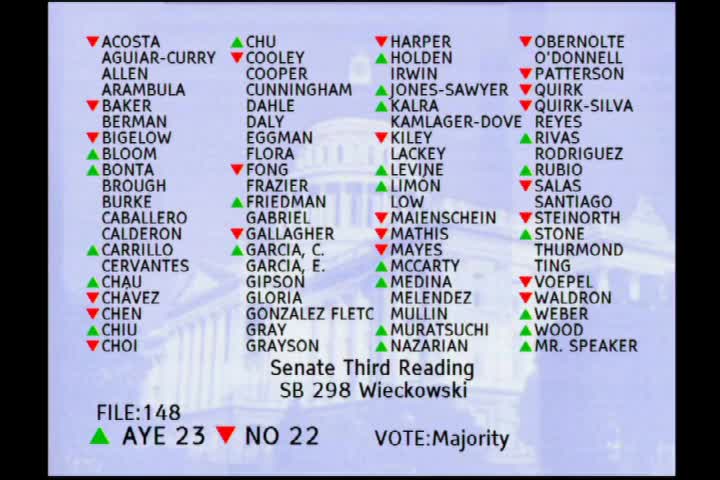
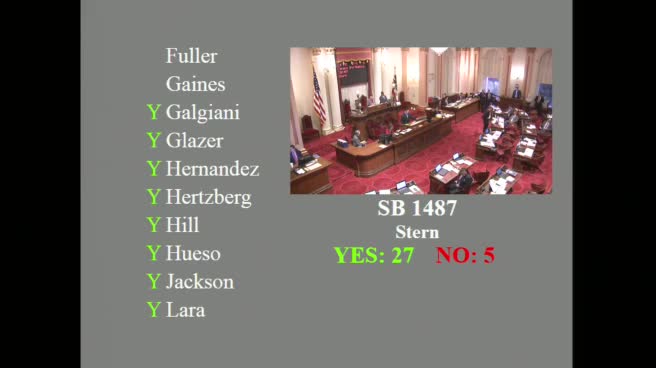
Bill Author
Bill Co-Author(s):