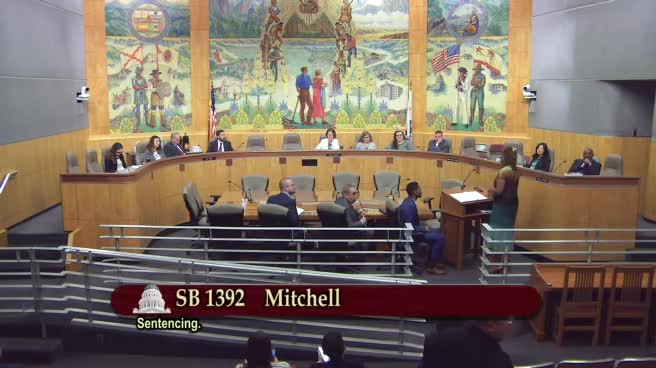
SB 1393: Sentencing.
- Session Year: 2017-2018
- House: Senate
- Latest Version Date: 2018-09-30
Existing law requires the court, when imposing a sentence for a serious felony, in addition and consecutive to the term imposed for that serious felony, to impose a 5-year enhancement for each prior conviction of a serious felony. Existing law generally authorizes a judge, in the interests of justice, to order an action dismissed, but precludes a judge from striking any prior serious felony conviction in connection with imposition of the 5-year enhancement.
This bill would delete the restriction prohibiting a judge from striking a prior serious felony conviction in connection with imposition of the 5-year enhancement described above and would make conforming changes. The bill would make additional technical nonsubstantive changes.
Existing law requires the court, when imposing a sentence for a serious felony, in addition and consecutive to the term imposed for that serious felony, to impose a 5-year enhancement for each prior conviction of a serious felony. Existing law generally authorizes a judge, in the interests of justice, to order an action dismissed, but precludes a judge from striking any prior serious felony conviction in connection with imposition of the 5-year enhancement.
This bill would delete the restriction prohibiting a judge from striking a prior serious felony conviction in connection with imposition of the 5-year enhancement described above and would make conforming changes.
(a)(1)Any person convicted of a serious felony who previously has been convicted of a serious felony in this state or of any offense committed in another jurisdiction which includes all of the elements of any serious felony, shall receive, in addition to the sentence imposed by the court for the present offense, a five-year enhancement for each such prior conviction on charges brought and tried separately. The terms of the present offense and each enhancement shall run consecutively.
(2)This subdivision shall not be applied when the punishment imposed under other provisions of law would result in a longer term of imprisonment. There is no requirement of prior incarceration or commitment for this subdivision to apply.
(3)The Legislature may increase the length of the enhancement of sentence provided in this subdivision by a statute passed by majority vote of each house thereof.
(4)As used in this subdivision, serious felony means a serious felony listed in subdivision (c) of Section 1192.7.
(5)This subdivision shall not apply to a person convicted of selling, furnishing, administering, or giving, or offering to sell, furnish, administer, or give to a minor any methamphetamine-related drug or any precursors of methamphetamine unless the prior conviction was for a serious felony described in subparagraph (24) of subdivision (c) of Section 1192.7.
(b)It is the intent of the Legislature in enacting subdivisions (b) to (i), inclusive, to ensure longer prison sentences and greater punishment for those who commit a felony and have been previously convicted of one or more serious or violent felony offenses.
(c)Notwithstanding any other law, if a defendant has been convicted of a felony and it has been pled and proved that the defendant has one or more prior serious or violent felony convictions as defined in subdivision (d), the court shall adhere to each of the following:
(1)There shall not be an aggregate term limitation for purposes of consecutive sentencing for any subsequent felony conviction.
(2)Probation for the current offense shall not be granted, nor shall execution or imposition of the sentence be suspended for any prior offense.
(3)The length of time between the prior serious or violent felony conviction and the current felony conviction shall not affect the imposition of sentence.
(4)There shall not be a commitment to any other facility other than the state prison. Diversion shall not be granted nor shall the defendant be eligible for commitment to the California Rehabilitation Center as provided in Article 2 (commencing with Section 3050) of Chapter 1 of Division 3 of the Welfare and Institutions Code.
(5)The total amount of credits awarded pursuant to Article 2.5 (commencing with Section 2930) of Chapter 7 of Title 1 of Part 3 shall not exceed one-fifth of the total term of imprisonment imposed and shall not accrue until the defendant is physically placed in the state prison.
(6)If there is a current conviction for more than one felony count not committed on the same occasion, and not arising from the same set of operative facts, the court shall sentence the defendant consecutively on each count pursuant to subdivision (e).
(7)If there is a current conviction for more than one serious or violent felony as described in paragraph (6), the court shall impose the sentence for each conviction consecutive to the sentence for any other conviction for which the defendant may be consecutively sentenced in the manner prescribed by law.
(8)Any sentence imposed pursuant to subdivision (e) will be imposed consecutive to any other sentence which the defendant is already serving, unless otherwise provided by law.
(d)Notwithstanding any other law and for the purposes of subdivisions (b) to (i), inclusive, a prior conviction of a serious and/or violent felony shall be defined as:
(1)Any offense defined in subdivision (c) of Section 667.5 as a violent felony or any offense defined in subdivision (c) of Section 1192.7 as a serious felony in this state. The determination of whether a prior conviction is a prior felony conviction for purposes of subdivisions (b) to (i), inclusive, shall be made upon the date of that prior conviction and is not affected by the sentence imposed unless the sentence automatically, upon the initial sentencing, converts the felony to a misdemeanor. None of the following dispositions shall affect the determination that a prior conviction is a prior felony for purposes of subdivisions (b) to (i), inclusive:
(A)The suspension of imposition of judgment or sentence.
(B)The stay of execution of sentence.
(C)The commitment to the State Department of Health Services as a mentally disordered sex offender following a conviction of a felony.
(D)The commitment to the California Rehabilitation Center or any other facility whose function is rehabilitative diversion from the state prison.
(2)A prior conviction in another jurisdiction for an offense that, if committed in California, is punishable by imprisonment in the state prison shall constitute a prior conviction of a particular serious and/or violent felony if the prior conviction in the other jurisdiction is for an offense that includes all of the elements of a particular violent felony as defined in subdivision (c) of Section 667.5 or serious felony as defined in subdivision (c) of Section 1192.7.
(3)A prior juvenile adjudication shall constitute a prior serious and/or violent felony conviction for purposes of sentence enhancement if:
(A)The juvenile was 16 years of age or older at the time he or she committed the prior offense.
(B)The prior offense is listed in subdivision (b) of Section 707 of the Welfare and Institutions Code or described in paragraph (1) or (2) as a serious or violent felony.
(C)The juvenile was found to be a fit and proper subject to be dealt with under the juvenile court law.
(D)The juvenile was adjudged a ward of the juvenile court within the meaning of Section 602 of the Welfare and Institutions Code because the person committed an offense listed in subdivision (b) of Section 707 of the Welfare and Institutions Code.
(e)For purposes of subdivisions (b) to (i), inclusive, and in addition to any other enhancement or punishment provisions which may apply, the following shall apply where a defendant has one or more prior serious or violent felony convictions:
(1)If a defendant has one prior serious or violent felony conviction as defined in subdivision (d) that has been pled and proved, the determinate term or minimum term for an indeterminate term shall be twice the term otherwise provided as punishment for the current felony conviction.
(2)(A)Except as provided in subparagraph (C), if a defendant has two or more prior serious or violent felony convictions as defined in subdivision (d) that have been pled and proved, the term for the current felony conviction shall be an indeterminate term of life imprisonment with a minimum term of the indeterminate sentence calculated as the greatest of:
(i)Three times the term otherwise provided as punishment for each current felony conviction subsequent to the two or more prior serious or violent felony convictions.
(ii)Imprisonment in the state prison for 25 years.
(iii)The term determined by the court pursuant to Section 1170 for the underlying conviction, including any enhancement applicable under Chapter 4.5 (commencing with Section 1170) of Title 7 of Part 2, or any period prescribed by Section 190 or 3046.
(B)The indeterminate term described in subparagraph (A) shall be served consecutive to any other term of imprisonment for which a consecutive term may be imposed by law. Any other term imposed subsequent to any indeterminate term described in subparagraph (A) shall not be merged therein but shall commence at the time the person would otherwise have been released from prison.
(C)If a defendant has two or more prior serious or violent felony convictions as defined in subdivision (c) of Section 667.5 or subdivision (c) of Section 1192.7 that have been pled and proved, and the current offense is not a serious or violent felony as defined in subdivision (d), the defendant shall be sentenced pursuant to paragraph (1) of subdivision (e) unless the prosecution pleads and proves any of the following:
(i)The current offense is a controlled substance charge, in which an allegation under Section 11370.4 or 11379.8 of the Health and Safety Code was admitted or found true.
(ii)The current offense is a felony sex offense, defined in subdivision (d) of Section 261.5 or Section 262, or any felony offense that results in mandatory registration as a sex offender pursuant to subdivision (c) of Section 290 except for violations of Sections 266 and 285, paragraph (1) of subdivision (b) and subdivision (e) of Section 286, paragraph (1) of subdivision (b) and subdivision (e) of Section 288a, Section 311.11, and Section 314.
(iii)During the commission of the current offense, the defendant used a firearm, was armed with a firearm or deadly weapon, or intended to cause great bodily injury to another person.
(iv)The defendant suffered a prior serious or violent felony conviction, as defined in subdivision (d) of this section, for any of the following felonies:
(I)A sexually violent offense as defined in subdivision (b) of Section 6600 of the Welfare and Institutions Code.
(II)Oral copulation with a child who is under 14 years of age, and who is more than 10 years younger than he or she as defined by Section 288a, sodomy with another person who is under 14 years of age and more than 10 years younger than he or she as defined by Section 286, or sexual penetration with another person who is under 14 years of age, and who is more than 10 years younger than he or she, as defined by Section 289.
(III)A lewd or lascivious act involving a child under 14 years of age, in violation of Section 288.
(IV)Any homicide offense, including any attempted homicide offense, defined in Sections 187 to 191.5, inclusive.
(V)Solicitation to commit murder as defined in Section 653f.
(VI)Assault with a machine gun on a peace officer or firefighter, as defined in paragraph (3) of subdivision (d) of Section 245.
(VII)Possession of a weapon of mass destruction, as defined in paragraph (1) of subdivision (a) of Section 11418.
(VIII)Any serious or violent felony offense punishable in California by life imprisonment or death.
(f)(1)Notwithstanding any other law, subdivisions (b) to (i), inclusive, shall be applied in every case in which a defendant has one or more prior serious or violent felony convictions as defined in subdivision (d). The prosecuting attorney shall plead and prove each prior serious or violent felony conviction except as provided in paragraph (2).
(2)The prosecuting attorney may move to dismiss or strike a prior serious or violent felony conviction allegation in the furtherance of justice pursuant to Section 1385, or if there is insufficient evidence to prove the prior serious or violent felony conviction. If upon the satisfaction of the court that there is insufficient evidence to prove the prior serious or violent felony conviction, the court may dismiss or strike the allegation. Nothing in this section shall be read to alter a courts authority under Section 1385.
(g)Prior serious or violent felony convictions shall not be used in plea bargaining as defined in subdivision (b) of Section 1192.7. The prosecution shall plead and prove all known prior felony serious or violent convictions and shall not enter into any agreement to strike or seek the dismissal of any prior serious and/or violent felony conviction allegation except as provided in paragraph (2) of subdivision (f).
(h)All references to existing statutes in subdivisions (c) to (g), inclusive, are to statutes as they existed on November 7, 2012.
(i)If any provision of subdivisions (b) to (h), inclusive, or the application thereof to any person or circumstance is held invalid, that invalidity shall not affect other provisions or applications of those subdivisions which can be given effect without the invalid provision or application, and to this end the provisions of those subdivisions are severable.
(j)The provisions of this section shall not be amended by the Legislature except by statute passed in each house by rollcall vote entered in the journal, two-thirds of the membership concurring, or by a statute that becomes effective only when approved by the electors.
SEC. 2.Section 1385 of the Penal Code is amended to read:1385.(a)The judge or magistrate may, either of his or her own motion or upon the application of the prosecuting attorney, and in furtherance of justice, order an action to be dismissed. The reasons for the dismissal shall be stated orally on the record. The court shall also set forth the reasons in an order entered upon the minutes if requested by either party or in any case in which the proceedings are not being recorded electronically or reported by a court reporter. A dismissal shall not be made for any cause that would be ground of demurrer to the accusatory pleading.
(b)(1)If the court has the authority pursuant to subdivision (a) to strike or dismiss an enhancement, the court may instead strike the additional punishment for that enhancement in the furtherance of justice in compliance with subdivision (a).
(2)This subdivision does not authorize the court to strike the additional punishment for any enhancement that cannot be stricken or dismissed pursuant to subdivision (a).
(a)(1)Any person convicted of a serious felony who previously has been convicted of a serious felony in this state or of any offense committed in another jurisdiction which includes all of the elements of any serious felony, shall receive, in addition to the sentence imposed by the court for the present offense, a five-year enhancement for each such prior conviction on charges brought and tried separately. The terms of the present offense and each enhancement shall run consecutively.
(2)This subdivision shall not be applied when the punishment imposed under other provisions of law would result in a longer term of imprisonment. There is no requirement of prior incarceration or commitment for this subdivision to apply.
(3)The Legislature may increase the length of the enhancement of sentence provided in this subdivision by a statute passed by majority vote of each house thereof.
(4)As used in this subdivision, serious felony means a serious felony listed in subdivision (c) of Section 1192.7.
(5)This subdivision shall not apply to a person convicted of selling, furnishing, administering, or giving, or offering to sell, furnish, administer, or give to a minor any methamphetamine-related drug or any precursors of methamphetamine unless the prior conviction was for a serious felony described in subparagraph (24) of subdivision (c) of Section 1192.7.
(b)It is the intent of the Legislature in enacting subdivisions (b) to (i), inclusive, to ensure longer prison sentences and greater punishment for those who commit a felony and have been previously convicted of one or more serious and/or or violent felony offenses.
(c)Notwithstanding any other law, if a defendant has been convicted of a felony and it has been pled and proved that the defendant has one or more prior serious and/or or violent felony convictions as defined in subdivision (d), the court shall adhere to each of the following:
(1)There shall not be an aggregate term limitation for purposes of consecutive sentencing for any subsequent felony conviction.
(2)Probation for the current offense shall not be granted, nor shall execution or imposition of the sentence be suspended for any prior offense.
(3)The length of time between the prior serious and/or or violent felony conviction and the current felony conviction shall not affect the imposition of sentence.
(4)There shall not be a commitment to any other facility other than the state prison. Diversion shall not be granted nor shall the defendant be eligible for commitment to the California Rehabilitation Center as provided in Article 2 (commencing with Section 3050) of Chapter 1 of Division 3 of the Welfare and Institutions Code.
(5)The total amount of credits awarded pursuant to Article 2.5 (commencing with Section 2930) of Chapter 7 of Title 1 of Part 3 shall not exceed one-fifth of the total term of imprisonment imposed and shall not accrue until the defendant is physically placed in the state prison.
(6)If there is a current conviction for more than one felony count not committed on the same occasion, and not arising from the same set of operative facts, the court shall sentence the defendant consecutively on each count pursuant to subdivision (e).
(7)If there is a current conviction for more than one serious or violent felony as described in paragraph (6), the court shall impose the sentence for each conviction consecutive to the sentence for any other conviction for which the defendant may be consecutively sentenced in the manner prescribed by law.
(8)Any sentence imposed pursuant to subdivision (e) will be imposed consecutive to any other sentence which the defendant is already serving, unless otherwise provided by law.
(d)Notwithstanding any other law and for the purposes of subdivisions (b) to (i), inclusive, a prior conviction of a serious and/or violent felony shall be defined as:
(1)Any offense defined in subdivision (c) of Section 667.5 as a violent felony or any offense defined in subdivision (c) of Section 1192.7 as a serious felony in this state. The determination of whether a prior conviction is a prior felony conviction for purposes of subdivisions (b) to (i), inclusive, shall be made upon the date of that prior conviction and is not affected by the sentence imposed unless the sentence automatically, upon the initial sentencing, converts the felony to a misdemeanor. None of the following dispositions shall affect the determination that a prior conviction is a prior felony for purposes of subdivisions (b) to (i), inclusive:
(A)The suspension of imposition of judgment or sentence.
(B)The stay of execution of sentence.
(C)The commitment to the State Department of Health Services as a mentally disordered sex offender following a conviction of a felony.
(D)The commitment to the California Rehabilitation Center or any other facility whose function is rehabilitative diversion from the state prison.
(2)A prior conviction in another jurisdiction for an offense that, if committed in California, is punishable by imprisonment in the state prison shall constitute a prior conviction of a particular serious and/or violent felony if the prior conviction in the other jurisdiction is for an offense that includes all of the elements of a particular violent felony as defined in subdivision (c) of Section 667.5 or serious felony as defined in subdivision (c) of Section 1192.7.
(3)A prior juvenile adjudication shall constitute a prior serious and/or violent felony conviction for purposes of sentence enhancement if:
(A)The juvenile was 16 years of age or older at the time he or she committed the prior offense.
(B)The prior offense is listed in subdivision (b) of Section 707 of the Welfare and Institutions Code or described in paragraph (1) or (2) as a serious and/or or violent felony.
(C)The juvenile was found to be a fit and proper subject to be dealt with under the juvenile court law.
(D)The juvenile was adjudged a ward of the juvenile court within the meaning of Section 602 of the Welfare and Institutions Code because the person committed an offense listed in subdivision (b) of Section 707 of the Welfare and Institutions Code.
(e)For purposes of subdivisions (b) to (i), inclusive, and in addition to any other enhancement or punishment provisions which may apply, the following shall apply where a defendant has one or more prior serious and/or or violent felony convictions:
(1)If a defendant has one prior serious and/or or violent felony conviction as defined in subdivision (d) that has been pled and proved, the determinate term or minimum term for an indeterminate term shall be twice the term otherwise provided as punishment for the current felony conviction.
(2)(A)Except as provided in subparagraph (C), if a defendant has two or more prior serious and/or or violent felony convictions as defined in subdivision (d) that have been pled and proved, the term for the current felony conviction shall be an indeterminate term of life imprisonment with a minimum term of the indeterminate sentence calculated as the greatest of:
(i)Three times the term otherwise provided as punishment for each current felony conviction subsequent to the two or more prior serious and/or or violent felony convictions.
(ii)Imprisonment in the state prison for 25 years.
(iii)The term determined by the court pursuant to Section 1170 for the underlying conviction, including any enhancement applicable under Chapter 4.5 (commencing with Section 1170) of Title 7 of Part 2, or any period prescribed by Section 190 or 3046.
(B)The indeterminate term described in subparagraph (A) shall be served consecutive to any other term of imprisonment for which a consecutive term may be imposed by law. Any other term imposed subsequent to any indeterminate term described in subparagraph (A) shall not be merged therein but shall commence at the time the person would otherwise have been released from prison.
(C)If a defendant has two or more prior serious and/or or violent felony convictions as defined in subdivision (c) of Section 667.5 or subdivision (c) of Section 1192.7 that have been pled and proved, and the current offense is not a serious or violent felony as defined in subdivision (d), the defendant shall be sentenced pursuant to paragraph (1) of subdivision (e) unless the prosecution pleads and proves any of the following:
(i)The current offense is a controlled substance charge, in which an allegation under Section 11370.4 or 11379.8 of the Health and Safety Code was admitted or found true.
(ii)The current offense is a felony sex offense, defined in subdivision (d) of Section 261.5 or Section 262, or any felony offense that results in mandatory registration as a sex offender pursuant to subdivision (c) of Section 290 except for violations of Sections 266 and 285, paragraph (1) of subdivision (b) and subdivision (e) of Section 286, paragraph (1) of subdivision (b) and subdivision (e) of Section 288a, Section 311.11, and Section 314.
(iii)During the commission of the current offense, the defendant used a firearm, was armed with a firearm or deadly weapon, or intended to cause great bodily injury to another person.
(iv)The defendant suffered a prior serious and/or or violent felony conviction, as defined in subdivision (d) of this section, for any of the following felonies:
(I)A sexually violent offense as defined in subdivision (b) of Section 6600 of the Welfare and Institutions Code.
(II)Oral copulation with a child who is under 14 years of age, and who is more than 10 years younger than he or she as defined by Section 288a, sodomy with another person who is under 14 years of age and more than 10 years younger than he or she as defined by Section 286, or sexual penetration with another person who is under 14 years of age, and who is more than 10 years younger than he or she, as defined by Section 289.
(III)A lewd or lascivious act involving a child under 14 years of age, in violation of Section 288.
(IV)Any homicide offense, including any attempted homicide offense, defined in Sections 187 to 191.5, inclusive.
(V)Solicitation to commit murder as defined in Section 653f.
(VI)Assault with a machine gun on a peace officer or firefighter, as defined in paragraph (3) of subdivision (d) of Section 245.
(VII)Possession of a weapon of mass destruction, as defined in paragraph (1) of subdivision (a) of Section 11418.
(VIII)Any serious and/or or violent felony offense punishable in California by life imprisonment or death.
(f)(1)Notwithstanding any other law, subdivisions (b) to (i), inclusive, shall be applied in every case in which a defendant has one or more prior serious and/or or violent felony convictions as defined in subdivision (d). The prosecuting attorney shall plead and prove each prior serious and/or or violent felony conviction except as provided in paragraph (2).
(2)The prosecuting attorney may move to dismiss or strike a prior serious and/or or violent felony conviction allegation in the furtherance of justice pursuant to Section 1385, or if there is insufficient evidence to prove the prior serious and/or or violent felony conviction. If upon the satisfaction of the court that there is insufficient evidence to prove the prior serious and/or or violent felony conviction, the court may dismiss or strike the allegation. Nothing in this section shall be read to alter a courts authority under Section 1385.
(g)Prior serious and/or or violent felony convictions shall not be used in plea bargaining as defined in subdivision (b) of Section 1192.7. The prosecution shall plead and prove all known prior felony serious and/or or violent convictions and shall not enter into any agreement to strike or seek the dismissal of any prior serious and/or violent felony conviction allegation except as provided in paragraph (2) of subdivision (f).
(h)All references to existing statutes in subdivisions (c) to (g), inclusive, are to statutes as they existed on November 7, 2012.
(i)If any provision of subdivisions (b) to (h), inclusive, or the application thereof to any person or circumstance is held invalid, that invalidity shall not affect other provisions or applications of those subdivisions which can be given effect without the invalid provision or application, and to this end the provisions of those subdivisions are severable.
(j)The provisions of this section shall not be amended by the Legislature except by statute passed in each house by rollcall vote entered in the journal, two-thirds of the membership concurring, or by a statute that becomes effective only when approved by the electors.
SEC. 2.Section 1385 of the Penal Code is amended to read:1385.(a)The judge or magistrate may, either of his or her own motion or upon the application of the prosecuting attorney, and in furtherance of justice, order an action to be dismissed. The reasons for the dismissal shall be stated orally on the record. The court shall also set forth the reasons in an order entered upon the minutes if requested by either party or in any case in which the proceedings are not being recorded electronically or reported by a court reporter. A dismissal shall not be made for any cause that would be ground of demurrer to the accusatory pleading.
(b)(1)If the court has the authority pursuant to subdivision (a) to strike or dismiss an enhancement, the court may instead strike the additional punishment for that enhancement in the furtherance of justice in compliance with subdivision (a).
(2)This subdivision does not authorize the court to strike the additional punishment for any enhancement that cannot be stricken or dismissed pursuant to subdivision (a).
(a)(1)In compliance with subdivision (b) of Section 1385, any Any person convicted of a serious felony who previously has been convicted of a serious felony in this state or of any offense committed in another jurisdiction which includes all of the elements of any serious felony, shall receive, in addition to the sentence imposed by the court for the present offense, a five-year enhancement for each such prior conviction on charges brought and tried separately. The terms of the present offense and each enhancement shall run consecutively.
(2)This subdivision shall not be applied when the punishment imposed under other provisions of law would result in a longer term of imprisonment. There is no requirement of prior incarceration or commitment for this subdivision to apply.
(3)The Legislature may increase the length of the enhancement of sentence provided in this subdivision by a statute passed by majority vote of each house thereof.
(4)As used in this subdivision, serious felony means a serious felony listed in subdivision (c) of Section 1192.7.
(5)This subdivision shall not apply to a person convicted of selling, furnishing, administering, or giving, or offering to sell, furnish, administer, or give to a minor any methamphetamine-related drug or any precursors of methamphetamine unless the prior conviction was for a serious felony described in subparagraph (24) of subdivision (c) of Section 1192.7.
(b)It is the intent of the Legislature in enacting subdivisions (b) to (i), inclusive, to ensure longer prison sentences and greater punishment for those who commit a felony and have been previously convicted of one or more serious and/or violent felony offenses.
(c)Notwithstanding any other law, if a defendant has been convicted of a felony and it has been pled and proved that the defendant has one or more prior serious and/or violent felony convictions as defined in subdivision (d), the court shall adhere to each of the following:
(1)There shall not be an aggregate term limitation for purposes of consecutive sentencing for any subsequent felony conviction.
(2)Probation for the current offense shall not be granted, nor shall execution or imposition of the sentence be suspended for any prior offense.
(3)The length of time between the prior serious and/or violent felony conviction and the current felony conviction shall not affect the imposition of sentence.
(4)There shall not be a commitment to any other facility other than the state prison. Diversion shall not be granted nor shall the defendant be eligible for commitment to the California Rehabilitation Center as provided in Article 2 (commencing with Section 3050) of Chapter 1 of Division 3 of the Welfare and Institutions Code.
(5)The total amount of credits awarded pursuant to Article 2.5 (commencing with Section 2930) of Chapter 7 of Title 1 of Part 3 shall not exceed one-fifth of the total term of imprisonment imposed and shall not accrue until the defendant is physically placed in the state prison.
(6)If there is a current conviction for more than one felony count not committed on the same occasion, and not arising from the same set of operative facts, the court shall sentence the defendant consecutively on each count pursuant to subdivision (e).
(7)If there is a current conviction for more than one serious or violent felony as described in paragraph (6), the court shall impose the sentence for each conviction consecutive to the sentence for any other conviction for which the defendant may be consecutively sentenced in the manner prescribed by law.
(8)Any sentence imposed pursuant to subdivision (e) will be imposed consecutive to any other sentence which the defendant is already serving, unless otherwise provided by law.
(d)Notwithstanding any other law and for the purposes of subdivisions (b) to (i), inclusive, a prior conviction of a serious and/or violent felony shall be defined as:
(1)Any offense defined in subdivision (c) of Section 667.5 as a violent felony or any offense defined in subdivision (c) of Section 1192.7 as a serious felony in this state. The determination of whether a prior conviction is a prior felony conviction for purposes of subdivisions (b) to (i), inclusive, shall be made upon the date of that prior conviction and is not affected by the sentence imposed unless the sentence automatically, upon the initial sentencing, converts the felony to a misdemeanor. None of the following dispositions shall affect the determination that a prior conviction is a prior felony for purposes of subdivisions (b) to (i), inclusive:
(A)The suspension of imposition of judgment or sentence.
(B)The stay of execution of sentence.
(C)The commitment to the State Department of Health Services as a mentally disordered sex offender following a conviction of a felony.
(D)The commitment to the California Rehabilitation Center or any other facility whose function is rehabilitative diversion from the state prison.
(2)A prior conviction in another jurisdiction for an offense that, if committed in California, is punishable by imprisonment in the state prison shall constitute a prior conviction of a particular serious and/or violent felony if the prior conviction in the other jurisdiction is for an offense that includes all of the elements of a particular violent felony as defined in subdivision (c) of Section 667.5 or serious felony as defined in subdivision (c) of Section 1192.7.
(3)A prior juvenile adjudication shall constitute a prior serious and/or violent felony conviction for purposes of sentence enhancement if:
(A)The juvenile was 16 years of age or older at the time he or she committed the prior offense.
(B)The prior offense is listed in subdivision (b) of Section 707 of the Welfare and Institutions Code or described in paragraph (1) or (2) as a serious and/or violent felony.
(C)The juvenile was found to be a fit and proper subject to be dealt with under the juvenile court law.
(D)The juvenile was adjudged a ward of the juvenile court within the meaning of Section 602 of the Welfare and Institutions Code because the person committed an offense listed in subdivision (b) of Section 707 of the Welfare and Institutions Code.
(e)For purposes of subdivisions (b) to (i), inclusive, and in addition to any other enhancement or punishment provisions which may apply, the following shall apply where a defendant has one or more prior serious and/or violent felony convictions:
(1)If a defendant has one prior serious and/or violent felony conviction as defined in subdivision (d) that has been pled and proved, the determinate term or minimum term for an indeterminate term shall be twice the term otherwise provided as punishment for the current felony conviction.
(2)(A) Except as provided in subparagraph (C), if a defendant has two or more prior serious and/or violent felony convictions as defined in subdivision (d) that have been pled and proved, the term for the current felony conviction shall be an indeterminate term of life imprisonment with a minimum term of the indeterminate sentence calculated as the greatest of:
(i)Three times the term otherwise provided as punishment for each current felony conviction subsequent to the two or more prior serious and/or violent felony convictions.
(ii)Imprisonment in the state prison for 25 years.
(iii)The term determined by the court pursuant to Section 1170 for the underlying conviction, including any enhancement applicable under Chapter 4.5 (commencing with Section 1170) of Title 7 of Part 2, or any period prescribed by Section 190 or 3046.
(B)The indeterminate term described in subparagraph (A) shall be served consecutive to any other term of imprisonment for which a consecutive term may be imposed by law. Any other term imposed subsequent to any indeterminate term described in subparagraph (A) shall not be merged therein but shall commence at the time the person would otherwise have been released from prison.
(C)If a defendant has two or more prior serious and/or violent felony convictions as defined in subdivision (c) of Section 667.5 or subdivision (c) of Section 1192.7 that have been pled and proved, and the current offense is not a serious or violent felony as defined in subdivision (d), the defendant shall be sentenced pursuant to paragraph (1) of subdivision (e) unless the prosecution pleads and proves any of the following:
(i)The current offense is a controlled substance charge, in which an allegation under Section 11370.4 or 11379.8 of the Health and Safety Code was admitted or found true.
(ii)The current offense is a felony sex offense, defined in subdivision (d) of Section 261.5 or Section 262, or any felony offense that results in mandatory registration as a sex offender pursuant to subdivision (c) of Section 290 except for violations of Sections 266 and 285, paragraph (1) of subdivision (b) and subdivision (e) of Section 286, paragraph (1) of subdivision (b) and subdivision (e) of Section 288a, Section 311.11, and Section 314.
(iii)During the commission of the current offense, the defendant used a firearm, was armed with a firearm or deadly weapon, or intended to cause great bodily injury to another person.
(iv)The defendant suffered a prior serious and/or violent felony conviction, as defined in subdivision (d) of this section, for any of the following felonies:
(I)A sexually violent offense as defined in subdivision (b) of Section 6600 of the Welfare and Institutions Code.
(II)Oral copulation with a child who is under 14 years of age, and who is more than 10 years younger than he or she as defined by Section 288a, sodomy with another person who is under 14 years of age and more than 10 years younger than he or she as defined by Section 286, or sexual penetration with another person who is under 14 years of age, and who is more than 10 years younger than he or she, as defined by Section 289.
(III)A lewd or lascivious act involving a child under 14 years of age, in violation of Section 288.
(IV)Any homicide offense, including any attempted homicide offense, defined in Sections 187 to 191.5, inclusive.
(V)Solicitation to commit murder as defined in Section 653f.
(VI)Assault with a machine gun on a peace officer or firefighter, as defined in paragraph (3) of subdivision (d) of Section 245.
(VII)Possession of a weapon of mass destruction, as defined in paragraph (1) of subdivision (a) of Section 11418.
(VIII)Any serious and/or violent felony offense punishable in California by life imprisonment or death.
(f)(1) Notwithstanding any other law, subdivisions (b) to (i), inclusive, shall be applied in every case in which a defendant has one or more prior serious and/or violent felony convictions as defined in subdivision (d). The prosecuting attorney shall plead and prove each prior serious and/or violent felony conviction except as provided in paragraph (2).
(2)The prosecuting attorney may move to dismiss or strike a prior serious and/or violent felony conviction allegation in the furtherance of justice pursuant to Section 1385, or if there is insufficient evidence to prove the prior serious and/or violent felony conviction. If upon the satisfaction of the court that there is insufficient evidence to prove the prior serious and/or violent felony conviction, the court may dismiss or strike the allegation. Nothing in this section shall be read to alter a courts authority under Section 1385.
(g)Prior serious and/or violent felony convictions shall not be used in plea bargaining as defined in subdivision (b) of Section 1192.7. The prosecution shall plead and prove all known prior felony serious and/or violent convictions and shall not enter into any agreement to strike or seek the dismissal of any prior serious and/or violent felony conviction allegation except as provided in paragraph (2) of subdivision (f).
(h)All references to existing statutes in subdivisions (c) to (g), inclusive, are to statutes as they existed on November 7, 2012.
(i)If any provision of subdivisions (b) to (h), inclusive, or the application thereof to any person or circumstance is held invalid, that invalidity shall not affect other provisions or applications of those subdivisions which can be given effect without the invalid provision or application, and to this end the provisions of those subdivisions are severable.
(j)The provisions of this section shall not be amended by the Legislature except by statute passed in each house by rollcall vote entered in the journal, two-thirds of the membership concurring, or by a statute that becomes effective only when approved by the electors.
SEC. 2.Section 1385 of the Penal Code is amended to read:1385.(a)The judge or magistrate may, either of his or her own motion or upon the application of the prosecuting attorney, and in furtherance of justice, order an action to be dismissed. The reasons for the dismissal shall be stated orally on the record. The court shall also set forth the reasons in an order entered upon the minutes if requested by either party or in any case in which the proceedings are not being recorded electronically or reported by a court reporter. A dismissal shall not be made for any cause that would be ground of demurrer to the accusatory pleading.
(b)This section does not authorize a judge to strike any prior conviction of a serious felony for purposes of enhancement of a sentence under Section 667.(c)(b)(1)If the court has the authority pursuant to subdivision (a) to strike or dismiss an enhancement, the court may instead strike the additional punishment for that enhancement in the furtherance of justice in compliance with subdivision (a).
(2)This subdivision does not authorize the court to strike the additional punishment for any enhancement that cannot be stricken or dismissed pursuant to subdivision (a).
|
Date
|
Status
|
|---|---|
| Sep 30, 2018 | Chaptered by Secretary of State. Chapter 1013, Statutes of 2018. |
| Sep 30, 2018 | Approved by the Governor. |
| Sep 7, 2018 | Enrolled and presented to the Governor at 4 p.m. |
| Aug 31, 2018 | In Senate. Ordered to engrossing and enrolling. |
| Aug 31, 2018 | Read third time. Passed. Ordered to the Senate. |
| Aug 16, 2018 | Read second time. Ordered to third reading. |
| Aug 15, 2018 | From committee: Do pass. (Ayes 11. Noes 5.) (August 15). |
| Jun 27, 2018 | June 27 set for first hearing canceled at the request of author. |
| Jun 12, 2018 | From committee: Do pass and re-refer to Com. on APPR. (Ayes 5. Noes 2.) (June 12). Re-referred to Com. on APPR. |
| May 25, 2018 | Referred to Com. on PUB. S. |
| May 15, 2018 | In Assembly. Read first time. Held at Desk. |
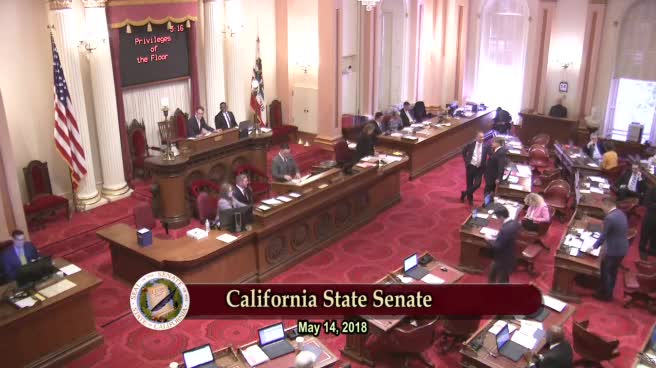
| May 14, 2018 | Read third time. Passed. (Ayes 23. Noes 14.) Ordered to the Assembly. |
| May 10, 2018 | Read second time. Ordered to third reading. |
| May 9, 2018 | Read third time and amended. |
| Apr 17, 2018 | Read second time. Ordered to third reading. |
| Apr 16, 2018 | From committee: Be ordered to second reading pursuant to Senate Rule 28.8. |
| Apr 9, 2018 | Set for hearing April 16. |
| Apr 3, 2018 | From committee: Do pass and re-refer to Com. on APPR. (Ayes 5. Noes 1.) (April 3). Re-referred to Com. on APPR. |
| Mar 20, 2018 | Set for hearing April 3. |
| Mar 8, 2018 | Referred to Com. on PUB. S. |
| Feb 20, 2018 | From printer. May be acted upon on or after March 22. |
| Feb 16, 2018 | Introduced. Read first time. To Com. on RLS. for assignment. To print. |
|
Date
|
Description
|
Location
|
Votes
|
|
|---|---|---|---|---|
| Aug 31, 2018 | SB 1393 Mitchell Senate Third Reading By KALRA | Assembly Floor |
Passed |
|
| Aug 15, 2018 | Do pass. | Assembly Standing Committee on Appropriations |
Passed |
|
| Jun 12, 2018 | Do pass and be re-referred to the Committee on [Appropriations] | Assembly Standing Committee on Public Safety |
Passed |
|
| May 14, 2018 | Senate 3rd Reading SB1393 Mitchell et al. | Senate Floor |
Passed |
|
| Apr 3, 2018 | Do pass, but first be re-referred to the Committee on [Appropriations] | Senate Standing Committee on Public Safety |
Passed |
This list shows positions taken on this bill by organizations on the date displayed, which is linked to the original source.
Positions by individuals are not included.
|
Organization
|
Position
|
Date
|
|---|---|---|
| A New PATH | ** Support | Jun 11, 2018 |
| A New Way of Life Reentry Project | ** Support | Jun 11, 2018 |
| Access Support Network | ** Support | May 11, 2018 |
| ACLU of California | * Indeterminate | Jun 12, 2018 |
| alameda county public defender's office | ** Support | May 11, 2018 |
| Alliance San Diego | ** Support | Jun 11, 2018 |
| American Friends Service Committee | ** Support | Jun 11, 2018 |
| Anti-Recidivism Coalition | * Support | Apr 3, 2018 |
| Asian Americans Advancing Justice California | * Support | Jun 12, 2018 |
| Association For Los Angeles Deputy Sheriffs | ** Against | May 11, 2018 |
| Bay Area | * Support | Jun 12, 2018 |
| Bay Area Chapter of Resource Generation | ** Support | Jun 11, 2018 |
| bay area equal voice coalition | ** Support | Jun 11, 2018 |
| Bend The Arc Jewish Action | ** Support | Jun 11, 2018 |
| Berkeley Underground Scholars | ** Support | Jun 11, 2018 |
| Black Caucus Of The California Community Colleges | ** Support | Jun 11, 2018 |
| Bold Women'S Leadership Network | ** Support | Jun 11, 2018 |
| California Association of Alcohol and Drug Program Executives | ** Support | Jun 11, 2018 |
| California Attorneys For Criminal Justice | * Support | Aug 15, 2018 |
| California Calls | ** Support | Jun 11, 2018 |
| California Catholic Conference | * Support | Jun 12, 2018 |
| California Coalition for Women Prisoners | * Support | Jun 12, 2018 |
| California District Attorney's Association | * Against | Jun 12, 2018 |
| California Immigrant Policy Center | ** Support | Jun 11, 2018 |
| California Police Chiefs Association | ** Against | May 11, 2018 |
| California Public Defenders Association | * Support | Jun 12, 2018 |
| California School-Based Health Alliance | ** Support | Jun 11, 2018 |
| California State Sherriff's Association | * Against | Jun 12, 2018 |
| Californians for Safety and Justice | * Support | Jun 12, 2018 |
| Californians United for a Responsible Budget | ** Support | Jun 11, 2018 |
| Catholic Charities | * Support | Apr 3, 2018 |
| Center for Employment Opportunities | ** Support | Jun 11, 2018 |
| Center for Living and Learning | ** Support | Jun 11, 2018 |
| Center on Juvenile and Criminal Justice | * Support | Jun 12, 2018 |
| Chetolah | * Support | Jun 12, 2018 |
| Children's Defense Fund | * Support | Jun 12, 2018 |
| City of Berkeley | * Support | Jun 12, 2018 |
| City of Los Angeles Mayor Eric Garcetti | * Support | Jun 12, 2018 |
| Coalition for Humane Immigrant Rights | ** Support | Jun 11, 2018 |
| Coleman advocates for Children & Youth | ** Support | Jun 11, 2018 |
| Community Works West | ** Support | Jun 11, 2018 |
| Contra Costa County | * Support | Jun 12, 2018 |
| Contra Costa County Racial Justice Coalition | ** Support | Jun 11, 2018 |
| Courage Campaign | ** Support | Jun 11, 2018 |
| Crossroads, Inc. | ** Support | Jun 11, 2018 |
| Daily Kos | ** Support | Jun 11, 2018 |
| Dr. Martin Luther King, Jr. Academic Middle School | ** Support | May 11, 2018 |
| Drug Policy Alliance | * Support | Jun 12, 2018 |
| East Bay Community Law Center | ** Support | Jun 11, 2018 |
| Ella Baker Center | * Support | Jun 12, 2018 |
| Ella Baker Center For Human Rights | * Support | Jun 12, 2018 |
| Equal Justice Society | ** Support | Jun 11, 2018 |
| Essie Justice Group | ** Support | Jun 11, 2018 |
| Fair Chance Project | ** Support | Jun 11, 2018 |
| Fathers and Families of San Joaquin | ** Support | Jun 11, 2018 |
| Felony Murder Elimination Project | ** Support | Jun 11, 2018 |
| Friends Committee on Legislation California | * Support | Jun 12, 2018 |
| Harm Reduction Coalition | ** Support | Jun 11, 2018 |
| Harm Reduction Services | ** Support | Jun 11, 2018 |
| Human Impact Partners | ** Support | Jun 11, 2018 |
| Immigrant Legal Resource Center | ** Support | Jun 11, 2018 |
| Jeff Adachi, San Francisco Public Defender | * Support | Apr 3, 2018 |
| Justice Now | ** Support | Jun 11, 2018 |
| Law Enforcement Action Partnership | ** Support | Jun 11, 2018 |
| lawyers' committee for civil rights | ** Support | Jun 11, 2018 |
| Los Angeles County Attorney's Office | * Against | Jun 12, 2018 |
| Los Angeles Police Protectively | * Against | Jun 12, 2018 |
| Los Angeles Regional Reentry Partnership | ** Support | Jun 11, 2018 |
| Mendocino County Public Defender's Office | * Support | Apr 3, 2018 |
| milpa | ** Support | Jun 11, 2018 |
| Motivating Individual Leadership for Public Advancement | * Support | Jun 12, 2018 |
| National Association of Social Workers California Chapter | * Support | Jun 12, 2018 |
| National Center for Youth Law | * Support | Jun 12, 2018 |
| Oakland Law Collaborative | ** Support | Jun 11, 2018 |
| Oakland Rising | ** Support | May 11, 2018 |
| Our Family Coalition | ** Support | Jun 11, 2018 |
| Partnership for the Advancement of New Americans | ** Support | Jun 11, 2018 |
| Peace Officers Research Association Of California | ** Against | Jun 11, 2018 |
| Pediatrician and Juvenile Justice Researcher | * Support | Jun 12, 2018 |
| PICO California | ** Support | Jun 11, 2018 |
| Pillars of the Community | * Support | Jun 12, 2018 |
| Prison Law Office | ** Support | Jun 11, 2018 |
| Prison Renaissance | ** Support | May 11, 2018 |
| Prisoner Advocacy Network | ** Support | Jun 11, 2018 |
| Project Rebound | ** Support | Jun 11, 2018 |
| Public Health Justice Collective | ** Support | May 11, 2018 |
| PURPOSE | ** Against | Apr 2, 2018 |
| Rainwater & Associates | ** Support | Jun 11, 2018 |
| Rainwater & Associates, Llc | ** Support | Apr 18, 2018 |
| Rainwater & Associates, Llc. | ** Support | May 11, 2018 |
| Resource Development Associates | ** Support | May 11, 2018 |
| Restaurant Opportunities Centers Of California | ** Support | May 11, 2018 |
| Restore Oakland | ** Support | May 11, 2018 |
| Riverside Share of Association | * Against | Jun 12, 2018 |
| Riverside Sheriffs' Association | ** Against | Jun 11, 2018 |
| Riverside Temple Beth El | ** Support | May 11, 2018 |
| Riverside'S All Of Us Or None | ** Support | Jun 11, 2018 |
| Root & Rebound | ** Support | Jun 11, 2018 |
| Rubicon Programs | ** Support | May 11, 2018 |
| San Diego Immigrant Rights Consortium | ** Support | May 11, 2018 |
| San Diego Pillars of the Community | * Support | Apr 3, 2018 |
| San Francisco Human Services Agency | * Support | Apr 3, 2018 |
| San Francisco Public Defenders Office | ** Support | Jun 11, 2018 |
| Several individuals | ** Support | May 11, 2018 |
| Showing Up For Racial Justice - Bay Area | ** Support | Jun 11, 2018 |
| Showing Up For Racial Justice - Long Beach | ** Support | Jun 11, 2018 |
| Showing Up For Racial Justice - Los Angeles | ** Support | Jun 11, 2018 |
| Sin Barras | ** Support | Jun 11, 2018 |
| Smart Justice California | * Support | Jun 12, 2018 |
| St. James Infirmary | ** Support | May 11, 2018 |
| Starting Over, Inc. | ** Support | Jun 11, 2018 |
| Students Against Mass Incarceration At Ucsd | ** Support | May 11, 2018 |
| Successful Reentry | ** Support | Jun 11, 2018 |
| Survived & Punished | ** Support | Jun 11, 2018 |
| Tarzana Treatment Centers, Inc. | ** Support | May 11, 2018 |
| The Advocacy Fund | ** Support | Jun 11, 2018 |
| The Black Caucus of the California Community Colleges | ** Support | May 11, 2018 |
| The Future Justice Funds | * Support | Jun 12, 2018 |
| The Greenlining Institute | ** Support | Jun 11, 2018 |
| The Women's Foundation of California | * Support | Jun 12, 2018 |
| Tides Advocacy | * Support | Jun 12, 2018 |
| Time for Change Foundation | ** Support | Jun 11, 2018 |
| transitions clinic network | ** Support | Jun 11, 2018 |
| Uncommon Law | ** Support | Jun 11, 2018 |
| Underground Scholars, University Of California Berkeley | ** Support | May 11, 2018 |
| Venice Community Housing | ** Support | Jun 11, 2018 |
| W. Hayward Burns Institute | ** Support | Jun 11, 2018 |
| W. Haywood Burns Institute | * Support | Jun 12, 2018 |
| Wester Center of Law and Poverty | * Support | Aug 15, 2018 |
| Western Regional Advocacy Project | ** Support | Jun 11, 2018 |
| White People for Black Lives | ** Support | Jun 11, 2018 |
| Youth Justice Coalition | * Support | Jun 12, 2018 |
SENATE THIRD READING
STR Bill Id:SB 1393
Author:(Mitchell and Lara)
As Amended Ver:May 9, 2018
Majority vote
SENATE VOTE: 23-14
Committee | Votes | Ayes | Noes |
Public Safety | 5-2 | Jones-Sawyer, Carrillo, McCarty, Quirk, Weber | Lackey, Kiley |
Appropriations | 11-5 | Bloom, Bonta, Calderon, Carrillo, Chau, Eggman, Friedman, Eduardo Garcia, Nazarian, Quirk, Reyes | Bigelow, Brough, Fong, Gallagher, Obernolte |
SUMMARY: Allows a judge discretion to strike a prior serious felony conviction, in furtherance of justice, to avoid the imposition of the five-year prison enhancement when the defendant has been convicted of a serious felony.
EXISTING LAW:
- States that any person convicted of a serious felony who previously has been convicted of a serious felony, as defined, shall receive, in addition to the sentence imposed by the court for the present office, a five-year enhancement for each such prior conviction. The terms of the present offense and each enhancement shall run consecutively.
- Provides that if a defendant has one prior serious and/or violent felony conviction, as defined, that has been pled and proved, the determinate term or minimum term for an indeterminate term shall be twice the term otherwise provided as punishment for the current felony conviction.
- Provides that if a defendant has two or more prior serious and/or violent felony convictions, as defined, that have been pled and proved, the term for the current felony conviction shall be an indeterminate term of life imprisonment as specified.
- Authorizes a judge or magistrate, either of his or her own motion or upon the application of the prosecuting attorney, and in furtherance of justice, to order an action to be dismissed, as specified
- Specifies that a judge may, in furtherance of justice, order an action to be dismissed. The reasons for the dismissal shall be stated orally on the record.
- Prohibits a judge from striking any prior conviction of a serious felony for purposes of enhancement of a sentence.
FISCAL EFFECT: According to the Assembly Appropriations Committee, potentially significant GF savings for the California Department of Corrections and Rehabilitation (CDCR) to the extent judges strike the five-year sentence enhancement for some defendants. For example, in recent years, CDCR has recorded roughly 1,700 sentence enhancements for inmates admitted (some inmates have multiple enhancements). Even if only 100 defendants annually have the five-year enhancement struck, after five years when the full effect of this change is seen, this would equate to 500 fewer inmates in CDCR. Assuming the out-of-state contract bed rate of $30,000, such a reduction in the CDCR average daily population would result in savings of $15 million.
COMMENTS: According to the author, "Nearly every sentence enhancement in California can be dismissed at the time of sentencing if the judge finds that doing so would serve the interest of justice. However, under existing law people with current and prior serious felony convictions receive a mandatory five-year enhancement. As a result, judges lack the discretion to tailor these sentences based on the facts of the case, the defendant's history and culpability or other potential mitigating factors. This has resulted in mandatory additional terms for thousands of individuals incarcerated throughout California's prisons. This rigid and arbitrary system has meted out punishments that are disproportionate to the offense, which does not serve the interests of justice, public safety, or communities.
''SB1393 amends Penal Code Sections 667 and 1385 to restore the court's discretion, in the interest of justice, to strike a five-year sentence enhancement for each prior serious felony conviction on a person's record, when a person is currently convicted of a serious felony. Allowing judicial discretion is consistent with other sentence enhancement laws and retains existing penalties for serious crimes.''
Please see the policy committee analysis for a full discussion of this bill.
Analysis Prepared by: David Billingsley / PUB. S. / (916) 319-3744 FN: 0004026
Date of Hearing: August 15, 2018
ASSEMBLY COMMITTEE ON APPROPRIATIONS
Lorena Gonzalez Fletcher, Chair
SBPCA Bill Id:SB 1393
Author:(Mitchell) – As Amended Ver:May 9, 2018
Policy Committee: | Public Safety | Vote: | 5 - 2 |
|
|
Urgency: No State Mandated Local Program: No Reimbursable: No
SUMMARY:
This bill allows a judge the discretion to strike a prior serious felony conviction to avoid the imposition of the five-year prison enhancement when the defendant has been convicted of a serious felony.
FISCAL EFFECT:
Potentially significant GF savings for the California Department of Corrections and Rehabilitation (CDCR) to the extent judges strike the five-year sentence enhancement for some defendants. For example, in recent years, CDCR has recorded roughly 1,700 sentence enhancements for inmates admitted (some inmates have multiple enhancements). Even if only 100 defendants annually have the five-year enhancement struck, after five years when the full effect of this change is seen, this would equate to 500 fewer inmates in CDCR. Assuming the out-of-state contract bed rate of $30,000, such a reduction in the CDCR average daily population would result in savings of $15 million.
COMMENTS:
- Background. State law provides for various sentence enhancements that require defendants to serve additional time in prison, such as if they have certain prior convictions or the crime they committed has certain particularly egregious factors. Judges generally have broad authority to strike sentence enhancements to provide a sentence that fits the defendant and the facts of the crime. However, judges do not have the discretion to strike the five-year enhancement that all defendants face if they are convicted of a serious felony and have a prior serious felony conviction.
- Purpose. This bill will give judges the discretion to allow or strike the five-year serious felony sentence enhancement. According to the author:
SB1393 amends Penal Code Sections 667 and 1385 to restore the court’s discretion, in the interest of justice, to strike a five-year sentence enhancement for each prior serious felony conviction on a person’s record, when a person is currently convicted of a serious felony. Allowing judicial discretion is consistent with other sentence enhancement laws and retains existing penalties for serious crimes.
Analysis Prepared by: Jessica Peters / APPR. / (916) 319-2081
Date of Hearing: June 27, 2018
ASSEMBLY COMMITTEE ON APPROPRIATIONS
Lorena Gonzalez Fletcher, Chair
SBPCA Bill Id:SB 1393
Author:(Mitchell) – As Amended Ver:May 9, 2018
Policy Committee: | Public Safety | Vote: | 5 - 2 |
|
|
Urgency: No State Mandated Local Program: No Reimbursable: No
SUMMARY:
This bill allows a judge the discretion to strike a prior serious felony conviction to avoid the imposition of the five-year prison enhancement when the defendant has been convicted of a serious felony.
FISCAL EFFECT:
Potentially significant GF savings for the California Department of Corrections and Rehabilitation (CDCR) to the extent judges strike the five-year sentence enhancement for some defendants. For example, in recent years, CDCR has recorded roughly 1,700 sentence enhancements for inmates admitted (some inmates have multiple enhancements). Even if only 100 defendants annually have the five-year enhancement struck, after five years when the full effect of this change is seen, this would equate to 500 fewer inmates in CDCR. Assuming the out-of-state contract bed rate of $30,000, such a reduction in the CDCR average daily population would result in savings of $15 million.
COMMENTS:
- Background. State law provides for various sentence enhancements that require defendants to serve additional time in prison, such as if they have certain prior convictions or the crime they committed has certain particularly egregious factors. Judges generally have broad authority to strike sentence enhancements to provide a sentence that fits the defendant and the facts of the crime. However, judges do not have the discretion to strike the five-year enhancement that all defendants face if they are convicted of a serious felony and have a prior serious felony conviction.
- Purpose. This bill will give judges the discretion to allow or strike the five-year serious felony sentence enhancement. According to the author:
SB1393 amends Penal Code Sections 667 and 1385 to restore the court’s discretion, in the interest of justice, to strike a five-year sentence enhancement for each prior serious felony conviction on a person’s record, when a person is currently convicted of a serious felony. Allowing judicial discretion is consistent with other sentence enhancement laws and retains existing penalties for serious crimes.
Analysis Prepared by: Jessica Peters / APPR. / (916) 319-2081
Date of Hearing: June 12, 2018
Counsel: David Billingsley
ASSEMBLY COMMITTEE ON PUBLIC SAFETY
Reginald Byron Jones-Sawyer, Sr., Chair
SBPCA Bill Id:SB 1393
Author:(Mitchell) – As Amended Ver:May 9, 2018
SUMMARY: Allows a judge discretion to strike a prior serious felony conviction, in furtherance of justice, to avoid the imposition of the five-year prison enhancement when the defendant has been convicted on a serious felony.
EXISTING LAW:
- States that any person convicted of a serious felony who previously has been convicted of a serious felony, as defined, shall receive, in addition to the sentence imposed by the court for the present office, a five-year enhancement for each such prior conviction. The terms of the present offense and each enhancement shall run consecutively. (Pen. Code § 667, subd. (a)(1).)
- Provides that if a defendant has one prior serious and/or violent felony conviction, as defined, that has been pled and proved, the determinate term or minimum term for an indeterminate term shall be twice the term otherwise provided as punishment for the current felony conviction. (Pen. Code, § 667, subd. (e)(1).)
- Provides that if a defendant has two or more prior serious and/or violent felony convictions, as defined, that have been pled and proved, the term for the current felony conviction shall be an indeterminate term of life imprisonment as specified. (Pen. Code, § 667, subd. (e)(2).)
- Authorizes a judge or magistrate, either of his or her own motion or upon the application of the prosecuting attorney, and in furtherance of justice, to order an action to be dismissed, as specified. (Pen. Code, § 1385, subd. (a).)
- Specifies that a judge may, in furtherance of justice, order an action to be dismissed. The reasons for the dismissal shall be stated orally on the record. (Pen. Code, § 1385, subd. (a).)
- Prohibits a judge from striking any prior conviction of a serious felony for purposes of enhancement of a sentence. (Pen. Code, § 1385, subd. (b).)
FISCAL EFFECT:
Unknown
COMMENTS:
- Author's Statement: According to the author, "Nearly every sentence enhancement in California can be dismissed at the time of sentencing if the judge finds that doing so would serve the interest of justice. However, under existing law people with current and prior serious felony convictions receive a mandatory five-year enhancement. As a result, judges lack the discretion to tailor these sentences based on the facts of the case, the defendant’s history and culpability or other potential mitigating factors. This has resulted in mandatory additional terms for thousands of individuals incarcerated throughout California’s prisons. This rigid and arbitrary system has meted out punishments that are disproportionate to the offense, which does not serve the interests of justice, public safety, or communities.
“SB1393 amends Penal Code Sections 667 and 1385 to restore the court’s discretion, in the interest of justice, to strike a five-year sentence enhancement for each prior serious felony conviction on a person’s record, when a person is currently convicted of a serious felony. Allowing judicial discretion is consistent with other sentence enhancement laws and retains existing penalties for serious crimes.” - Courts Have Broad Discretion to Strike Enhancements: Penal Code section 1385 specifies that a judge may, in furtherance of justice, order an action to be dismissed. That provision has been interpreted to allow courts broad discretion to strike prior convictions and enhancements in order to provide individualized sentencing to a defendant.
"Section 1385 has long been recognized as an essential tool to enable a trial court 'to properly individualize the treatment of the offender.'" (People v. Tanner (1979), 24 Cal. 3d 514,530.) “It was designed to alleviate ‘mandatory, arbitrary or rigid sentencing procedures [which] invariably lead to unjust results.’" ( People v. Dorsey (1972), 28 Cal. App. 3d 15,18.) "Society receives maximum protection when the penalty, treatment or disposition of the offender is tailored to the individual case. Only the trial judge has the knowledge, ability and tools at hand to properly individualize the treatment of the offender. " (People v. Williams (1970) 30 Cal. 3d 470,482, citation and internal quotation marks omitted.)
One of the purposes of Section 1385 is to ensure that sentences are proportional to a defendant’s conduct. Striking a prior conviction pursuant to Penal Code section 1385 does not wipe out the prior conviction, or prevent that conviction from being considered in connection with later convictions; it simply means that the judge made a determination that, in the interest of justice, the defendant should not be required to be sentenced to a statutorily increased penalty. (People v. Ortega (2000) 84 Cal.App.4th 659, 666.)
Current law provides that when a defendant is sentenced on an offense which qualifies as a serious felony and the defendant has a prior conviction for a serious felony, the defendant must receive an additional five year prison term for each prior conviction for a serious felony. Current law specifically prohibits a judge from using his or her authority under Section 1385 to strike a serious prior conviction and the additional five year prison term.
This bill would provide judges the discretion to strike the five year prison enhancement if the judge found that it was in the furtherance of justice to do so. - Prison Overcrowding: On February 10, 2014, the federal court ordered California to reduce its in-state adult institution population to 137.5% of design capacity by February 28, 2016, as follows:
- 143% of design bed capacity by June 30, 2014;
- 141.5% of design bed capacity by February 28, 2015; and,
- 137.5% of design bed capacity by February 28, 2016.
- 143% of design bed capacity by June 30, 2014;
California has enacted a series of policy changes intended to reduce the number of adults incarcerated in state prisons and boost investment in rehabilitation. These changes include Realignment, Proposition 47, and Proposition 57.
The California Budget and Policy Center published a report on California’s criminal sentencing scheme in December, 2015, entitled “Sentencing in California: Moving Toward a Smarter, More Cost-Effective Approach.” That report noted that sentencing changes enacted by California had helped the state comply with the federal court orders to reduce prison overcrowding. But the report pointed out that it was not clear that the changes would be enough to maintain the requisite reductions over the long term and that even at the levels ordered by the federal court, the state prisons are still extremely overcrowded. (http://calbudgetcenter.org/resources/sentencing-in-california-moving-toward-a-smarter-more-cost-effective-approach/)
The report stated that an important question for policymakers is whether sentence lengths are appropriate and reflect an efficient use of public resources. The report raised that question in light of the fact that longer prison terms have been a key driver of prison populations and costs and ultimately recommended cutting the length of prison terms as one way to tackle prison costs.
This bill would provide discretion for courts to avoid imposing a five year prison enhancement (which is currently mandatory), if the circumstances of the case establish that to do so would be in furtherance of justice.
State corrections spending remains stubbornly high in California despite recent criminal justice reforms and the substantial drop in the number of people involved with the state correctional system. Cutting the length of prison terms would further reduce the number of incarcerated adults and thereby allow the state to close prisons and other correctional facilities, generating substantial ongoing savings that could be redirected to other public services and systems. To achieve this outcome – a smaller state prison system – policymakers would have to reduce the length of imprisonment for a broad range of crimes, not simply for nonviolent offenses. Experts note that reducing prison lengths of stay has little to no impact on either crime rates or recidivism. (http://calbudgetcenter.org/resources/sentencing-in-california-moving-toward-a-smarter-more-cost-effective-approach/)
- Sentencing Enhancements and Prison Overcrowding: Existing law contains a variety of enhancements that can be used to increase the term of imprisonment a defendant will serve. Multiple enhancements can be imposed in a single case. Enhancements can range from adding a specified number of years to a person’s sentence, or doubling a person’s sentence or even converting a determinate sentence into a life sentence.
According to a recent Public Policy Institute of California (PPIC) publication on enhancements, as of September 2016, 79.9% of prisoners in institutions operated by the California Department of Corrections and Rehabilitation (CDCR) had some kind of sentence enhancement; 25.5% had three or more. (Sentence Enhancements: Next Target of Corrections Reform? PPIC (Sept. 2017)
Among the most common enhancements are a one-year enhancement applied for each prior prison term or felony county jail term and a five-year enhancement applied to individuals convicted of a serious felony for each prior conviction for a serious felony. According to the California Department of Corrections and Rehabilitation, the five-year enhancements, respectively, impacted 19,677 sentences as of Dec. 1, 2017. (www.ocregister.com/2018/04/24/sb1392-and-sb1393-are-needed-fixes-to-californias-overuse-of-sentence-enhancements/) Those five-year enhancements are the subject of this bill. - Argument in Support: According to the California Public Defenders Association, “SB 1393 (Mitchell) amends Penal Code Sections 667 and 1385 to restore the court’s discretion to strike a five-year sentence enhancement for prior serious felony convictions. Allowing judicial discretion is consistent with other sentence enhancement laws and retains existing penalties for serious crimes. This bill does not affect ‘Three Strikes’ or any other enhancements or sentences.
“SB 1393 will provide courts and judges with the ability to impose harsh sentences when the situation calls for it. Indiscriminate sentence enhancements regardless of the circumstances related to the commission of a crime does not make our communities safer.
“Persons convicted of felonies are already sentenced to lengthy prison terms. Sentence enhancements are in addition to those. Studies of sentence enhancements show that adding a longer sentence to an already lengthy sentence has no deterrence on crime. Instead it greatly increases prison populations and disproportionately increases racial disparities in imprisonment.
“Consistent with other enhancement sentence laws, SB 1393 would allow a court use judicial discretion when applying a sentence enhancement for a person convicted of committing a serious felony. SB 1393 does not alter and retains existing sanctions for serious crimes.
“CPDA members have seen individual cases in which imposition of sentence enhancements were not warranted or were manifestly unjust. In one case, a mentally ill defendant was charged with burglary with a burglary prior after literally stealing the shirt he was wearing and food from a home. The defendant was facing at least 7 years in state prison. The judge opined that he would have stricken the priors but his hands were tied under Penal Code section 1385. Under such circumstances sentencing a mentally ill defendant to 7 years in prison is not a deterrent and wastes scarce public resources.” - Argument in Opposition: According to the California District Attorneys Association, “As you know, ‘serious felonies’ are defined in Penal Code section 1192.7(c) and include things like murder, forcible rape, lewd acts on a child under 14 years old, kidnapping, exploding a destructive device with intent to injure, carjacking, and continuous sexual abuse of a child – among many others. It is unclear under what sort of scenario a person convicted of one of these serious offenses, after previously being convicted of a serious offense, should not be subject to the enhancement in PC 667. Yet this bill contemplates exactly that – some situation where a judge is able to dismiss an enhancement that the defendant earned by his or her prior serious criminal conduct.
“Already, under Proposition 57, a non-violent state prison inmate will have an opportunity to go before the Board of Parole Hearings after serving his or her base term, regardless of any enhancements or consecutive sentences. Under that scheme, those who demonstrate their rehabilitation can be paroled without serving the enhancement. SB 1393 would allow the enhancement to be eliminated altogether, before the convicted defendant had even served a day of his or her sentence.
“We believe this is bad public policy that makes our communities less safe.”
- Related Legislation:
- SB 1279 (Bradford), would, with exceptions, as specified, limit the maximum term of imprisonment to twice the number of years imposed by the trial court as the base term. SB 1279 is awaiting referral by the Assembly Rules Committee.
- SB 1392 (Mitchell), would eliminate the sentencing enhancement which imposes an additional one-year of imprisonment term for each prior separate prison term or county jail felony term. SB 1392 failed passage on the Senate Floor.
- SB 1025 (Skinner), would permit a court to grant probation for specified drug offenses. SB 1025 is awaiting referral by the Assembly Rules Committee.
- SB 1279 (Bradford), would, with exceptions, as specified, limit the maximum term of imprisonment to twice the number of years imposed by the trial court as the base term. SB 1279 is awaiting referral by the Assembly Rules Committee.
- Prior Legislation:
- SB 180 (Mitchell), Chapter 677, Statutes of 2017, limits the three year enhancement for a prior conviction related to the sale or possession for sale of specified controlled substance to convictions for a controlled substance offense where a minor was used or employed in the commission of the offense.
- SB 620 (Bradford), Chapter 682, Statutes of 2017, allows a court, in the interest of justice, to strike or dismiss a firearm enhancement which otherwise adds a state prison term of three, four, or 10 years, or five, six, or 10 years, depending on the firearm, or a state prison term of 10 years, 20 years, or 25-years-to-life depending on the underlying offense and manner of use.
- SB 966 (Mitchell), of the 2015-2016 Legislative Session, would have limited the three year enhancement for prior conviction of specified controlled substance offenses to convictions for the manufacture of a controlled substance, or using or employing a minor in the commission of specified controlled substance offenses. SB 966 failed in the Assembly Public Safety Committee.
- SB 180 (Mitchell), Chapter 677, Statutes of 2017, limits the three year enhancement for a prior conviction related to the sale or possession for sale of specified controlled substance to convictions for a controlled substance offense where a minor was used or employed in the commission of the offense.
REGISTERED SUPPORT / OPPOSITION:
Support
American Civil Liberties Union of California (Co-sponsor)
California Coalition for Women Prisoners (Co-sponsor)
Californians United for a Responsible Budget (Co-sponsor)
Coalition for Humane Immigrant Rights (Co-sponsor)
Drug Policy Alliance (Co-sponsor)
Ella Baker Center for Human Rights (Co-sponsor)
Friends Committee on Legislation of California (Co-sponsor)
Pillars of the Community (Co-sponsor)
The Advocacy Fund (Co-sponsor)
The Women’s Foundation of California, Women ‘s Policy Institute (Co-sponsor)
American Friends Service Committee
Alliance San Diego
A New Path
A New Way of Life Reentry Project
Asian Americans Advancing Justice – California
Bay Area Chapter of Resource Generation
Bay Area Equal Voice Coalition
Black Caucus of the California Community Colleges
Bend the Arc Jewish Action
Berkeley Underground Scholars
BOLD Women’s Leadership Network
California Association of Alcohol and Drug Program Executives
California Calls
California Catholic Conference
California Immigrant Policy Center
California Public Defenders Association
California School-Based Health Alliance
Californians for Safety and Justice
Center for Employment Opportunities
Center for Living and Learning
Center for the Study of Racism, Social Justice & Health
Center on Juvenile and Criminal Justice
Coleman Advocates for Children & Youth
Community Works West
Contra Costa County Racial Justice Coalition
Courage Campaign
Crossroads, Inc.
Daily Kos
East Bay Community Law Center
Equal Justice Society
Essie Justice Group
Fair Chance Project
Fathers and Families of San Joaquin
Felony Murder Elimination Project
Harm Reduction Coalition
Harm Reduction Services
Human Impact Partners
Immigrant Legal Resource Center
Justice Now
Law Enforcement Action Partnership
Lawyers’ Committee for Civil Rights
Los Angeles Regional Reentry Partnership
Mayor of Los Angeles, Eric Garcetti
MILPA
National Association of Social Workers, California Chapter
Oakland Law Collaborative
Our Family Coalition
Partnership for the Advancement of New Americans
PICO California
Prison Law Office
Prisoner Advocacy Network
Project Rebound
Rainwater & Associates
Riverside’s All of Us or None
Root & Rebound
San Francisco Public Defenders Office
Showing up for Racial Justice - Bay Area
Showing Up for Racial Justice - Long Beach
Sin Barras
Starting Over, Inc.
Students Against Mass Incarceration at University of California, San Diego
Successful Reentry
Survived & Punished
The Greenlining Institute
Time for Change Foundation
Transitions Clinic Network
UnCommon Law
Venice Community Housing
W. Hayward Burns Institute
Western Center on Law and Poverty
Western Regional Advocacy Project
White People for Black Lives/Showing Up for Racial Justice – Los Angeles
Opposition
California District Attorneys Association
California State Sheriffs’ Association
Los Angeles Police Protective League
Peace Officers Research Association of California
Riverside Sheriffs’ Association
Analysis Prepared by: David Billingsley / PUB. S. / (916) 319-3744
Office of Senate Floor Analyses (916) 651-1520 Fax: (916) 327-4478 | SB |
THIRD READING
Bill No: SB 1393
:
SENATE PUBLIC SAFETY COMMITTEE: 5-1, 4/3/18
AYES: Skinner, Bradford, Jackson, Mitchell, Wiener
NOES: Stone
NO VOTE RECORDED: Anderson
SENATE APPROPRIATIONS COMMITTEE: Senate Rule 28.8
SOURCE: American Civil Liberties Union of California
The Advocacy Fund
California Coalition for Women Prisoners
Californians United for a Responsible Budget
Drug Policy Alliance
Ella Baker Center
Friends Committee on Legislation of California
Pillars of the Community
Women’s Foundation of California
DIGEST:
This bill authorizes a court, in the interest of justice, to strike or dismiss a prior serious felony conviction which otherwise adds an enhancement of 5 years for each prior conviction of a serious felony.
Senate Floor Amendments of 5/9/18 add coauthors.
Existing law:
- States that any person convicted of a serious felony who previously has been convicted of a serious felony, as defined, shall receive, in addition to the sentence imposed by the court for the present office, a five-year enhancement for each such prior conviction. The terms of the present offense and each enhancement shall run consecutively. (Pen. Code § 667, subd. (a)(1).)
- Provides that if a defendant has one prior serious and/or violent felony conviction, as defined, that has been pled and proved, the determinate term or minimum term for an indeterminate term shall be twice the term otherwise provided as punishment for the current felony conviction. (Pen. Code, § 667, subd. (e)(1).)
- Provides that if a defendant has two or more prior serious and/or violent felony convictions, as defined, that have been pled and proved, the term for the current felony conviction shall be an indeterminate term of life imprisonment as specified. (Pen. Code, § 667, subd. (e)(2).)
- Specifies that the total amount of credits that may be awarded to a person convicted of a serious felony shall not exceed 20% of the total term of imprisonment imposed and shall not accrue until the defendant is physically placed in the state prison. (Pen. Code, § 667, subd. (c)(5).)
- Authorizes a judge or magistrate, either of his or her own motion or upon the application of the prosecuting attorney, and in furtherance of justice, to order an action to be dismissed, as specified. (Pen. Code, § 1385, subd. (a).)
- Prohibits a judge from striking any prior conviction of a serious felony for purposes of enhancement of a sentence. (Pen. Code, § 1385, subd. (b).)
This bill deletes the prohibition against striking any prior serious felony convictions for purposes of enhancing a sentence.
FISCAL EFFECT: Appropriation: Fiscal Com.: Local:
American Civil Liberties Union of California (co-source)
The Advocacy Fund (co-source)
California Coalition for Women Prisoners (co-source)
Californians United for a Responsible Budget (co-source)
Drug Policy Alliance (co-source)
Ella Baker Center for Human Rights (co-source)
Friends Committee on Legislation of California (co-source)
Legal Services for Prisoners with Children (co-source)
Pillars of the Community (co-source)
Women’s Foundation of California (co-source)
Access Support Network
Alameda County Public Defender’s Office
Alliance San Diego
American Friends Service Committee
Asian Americans Advancing Justice – California
Bend the Arc Jewish Action
The Black Caucus of the California Community Colleges
BOLD Women’s Leadership Network
California Association of Alcohol and Drug Program Executives
California Catholic Conference
California Immigrant Policy Center
California Public Defenders Association
Center on Juvenile and Criminal Justice
City of Los Angeles, Mayor Eric Garcetti
Coleman Advocates for Children & Youth
Contra Costa County Racial Justice Coalition
Courage Campaign
Crossroads, Inc.
Daily Kos
Dr. Martin Luther King, Jr. Academic Middle School
East Bay Community Law Center
Fair Chance Project
Felony Murder Elimination Project
Harm Reduction Coalition
Harm Reduction Services
HealthRIGHT 360
Human Impact Partners
Immigrant Legal Resource Center
Justice Now
Lawyers’ Committee for Civil Rights
Los Angeles Regional Reentry Partnership
A New Way of Life Reentry Project
Oakland Law Collaborative
Oakland Rising
Our Family Coalition
Partnership for the Advancement of New Americans
PICO California
Prison Renaissance
Project Rebound
Public Health Justice Collective
Rainwater & Associates, LLC.
Resource Development Associates
Restaurant Opportunities Centers of California
Restore Oakland
Riverside Temple Beth El
Root & Rebound
Rubicon Programs
San Diego Immigrant Rights Consortium
San Francisco Public Defenders Office, Jeff Adachi
Showing up for Racial Justice
St. James Infirmary
Students Against Mass Incarceration at UCSD
Successful Reentry
Survived & Punished
Tarzana Treatment Centers, Inc.
Time for Change Foundation
Underground Scholars, University of California Berkeley
W. Hayward Burns Institute
Western Center on Law and Poverty
White People for Black Lives/Showing Up for Racial Justice – Los Angeles
Several individuals
Association for Los Angeles Deputy Sheriffs
California District Attorneys Association
California Police Chiefs Association
California State Sheriffs’ Association
Los Angeles Police Protective League
Peace Officers Research Association of California
ARGUMENT IN SUPPORT: According to Drug Policy Alliance, a co-sponsor of this bill, “SB 1393 is a modest, incremental reform that corrects a costly inconsistency in state law. The bill will provide for judicial discretion in sentencing a person convicted for a second or subsequent serious offense. Current law inappropriately ties a judge’s hands, requiring that the court, when imposing a sentence for a serious felony, in addition and consecutive to the term imposed for that serious felony, to impose an additional 5-year enhancement for each prior conviction of a serious felony. This is above and in addition to “strike enhancements” that may also be applied to persons who have been previously convicted of a serious offense.
“California law generally authorizes a judge, in the interests of justice, to order an action dismissed. SB 1393 will return to the court, appropriate authority to sentence according to the facts of the case, in the interests of justice. It does not affect the base sentence, or [any] another enhancements. It allows the judge to impose the five-year enhancement if they believe it to be just and necessary.”
ARGUMENT IN OPPOSITION: According to Peace Officers Research Association of California, “Current law requires the court, when imposing a sentence for a serious felony, in addition and consecutive to the term imposed for that serious felony, to impose a 5-year enhancement for each prior conviction of a serious felony. Existing law generally authorizes a judge, in the interests of justice, to order an action dismissed, but precludes a judge from striking any prior serious felony conviction in connection with imposition of the 5-year enhancement. This bill would delete the restriction prohibiting a judge from striking a prior serious felony conviction in connection with imposition of the 5-year enhancement described above and would make conforming changes.”
5/11/18 12:41:49
**** END ****
Office of Senate Floor Analyses (916) 651-1520 Fax: (916) 327-4478 | SB |
THIRD READING
Bill No: SB 1393
:
SENATE PUBLIC SAFETY COMMITTEE: 5-1, 4/3/18
AYES: Skinner, Bradford, Jackson, Mitchell, Wiener
NOES: Stone
NO VOTE RECORDED: Anderson
SENATE APPROPRIATIONS COMMITTEE: Senate Rule 28.8
SOURCE: American Civil Liberties Union of California
The Advocacy Fund
California Coalition for Women Prisoners
Californians United for a Responsible Budget
Drug Policy Alliance
Ella Baker Center
Friends Committee on Legislation of California
Legal Services for Prisoners with Children
Pillars of the Community
Women’s Foundation of California
DIGEST: This bill authorizes a court, in the interest of justice, to strike or dismiss a prior serious felony conviction which otherwise adds an enhancement of 5 years for each prior conviction of a serious felony.
Existing law:
- States that any person convicted of a serious felony who previously has been convicted of a serious felony, as defined, shall receive, in addition to the sentence imposed by the court for the present office, a five-year enhancement for each such prior conviction. The terms of the present offense and each enhancement shall run consecutively. (Pen. Code § 667, subd. (a)(1).)
- Provides that if a defendant has one prior serious and/or violent felony conviction, as defined, that has been pled and proved, the determinate term or minimum term for an indeterminate term shall be twice the term otherwise provided as punishment for the current felony conviction. (Pen. Code, § 667, subd. (e)(1).)
- Provides that if a defendant has two or more prior serious and/or violent felony convictions, as defined, that have been pled and proved, the term for the current felony conviction shall be an indeterminate term of life imprisonment as specified. (Pen. Code, § 667, subd. (e)(2).)
- Specifies that the total amount of credits that may be awarded to a person convicted of a serious felony shall not exceed 20% of the total term of imprisonment imposed and shall not accrue until the defendant is physically placed in the state prison. (Pen. Code, § 667, subd. (c)(5).)
- Authorizes a judge or magistrate, either of his or her own motion or upon the application of the prosecuting attorney, and in furtherance of justice, to order an action to be dismissed, as specified. (Pen. Code, § 1385, subd. (a).)
- Prohibits a judge from striking any prior conviction of a serious felony for purposes of enhancement of a sentence. (Pen. Code, § 1385, subd. (b).)
This bill deletes the prohibition against striking any prior serious felony convictions for purposes of enhancing a sentence.
FISCAL EFFECT: Appropriation: Fiscal Com.: Local:
American Civil Liberties Union of California (co-source)
The Advocacy Fund (co-source)
California Coalition for Women Prisoners (co-source)
Californians United for a Responsible Budget (co-source)
Drug Policy Alliance (co-source)
Ella Baker Center for Human Rights (co-source)
Friends Committee on Legislation of California (co-source)
Legal Services for Prisoners with Children (co-source)
Pillars of the Community (co-source)
Women’s Foundation of California (co-source)
Access Support Network
Alameda County Public Defender’s Office
Alliance San Diego
American Friends Service Committee
Asian Americans Advancing Justice – California
Bend the Arc Jewish Action
The Black Caucus of the California Community Colleges
BOLD Women’s Leadership Network
California Association of Alcohol and Drug Program Executives
California Catholic Conference
California Immigrant Policy Center
California Public Defenders Association
Center on Juvenile and Criminal Justice
City of Los Angeles, Mayor Eric Garcetti
Coleman Advocates for Children & Youth
Contra Costa County Racial Justice Coalition
Courage Campaign
Crossroads, Inc.
Daily Kos
Dr. Martin Luther King, Jr. Academic Middle School
East Bay Community Law Center
Fair Chance Project
Felony Murder Elimination Project
Harm Reduction Coalition
Harm Reduction Services
HealthRIGHT 360
Human Impact Partners
Immigrant Legal Resource Center
Justice Now
Lawyers’ Committee for Civil Rights
Los Angeles Regional Reentry Partnership
A New Way of Life Reentry Project
Oakland Law Collaborative
Oakland Rising
Our Family Coalition
Partnership for the Advancement of New Americans
PICO California
Prison Renaissance
Project Rebound
Public Health Justice Collective
Rainwater & Associates, LLC
Resource Development Associates
Restaurant Opportunities Centers of California
Restore Oakland
Riverside Temple Beth El
Root & Rebound
Rubicon Programs
San Diego Immigrant Rights Consortium
San Francisco Public Defenders Office, Jeff Adachi
Showing up for Racial Justice
St. James Infirmary
Students Against Mass Incarceration at UCSD
Successful Reentry
Survived & Punished
Tarzana Treatment Centers, Inc.
Time for Change Foundation
Underground Scholars, University of California Berkeley
W. Hayward Burns Institute
Western Center on Law and Poverty
White People for Black Lives/Showing Up for Racial Justice – Los Angeles
Several individuals
OPPOSITION: (Verified 4/17/18)
Association for Los Angeles Deputy Sheriffs
California District Attorneys Association
California Police Chiefs Association
California State Sheriffs’ Association
Los Angeles Police Protective League
Peace Officers Research Association of California
ARGUMENT IN SUPPORT: According to Drug Policy Alliance, a co-sponsor of this bill, “SB 1393 is a modest, incremental reform that corrects a costly inconsistency in state law. The bill will provide for judicial discretion in sentencing a person convicted for a second or subsequent serious offense. Current law inappropriately ties a judge’s hands, requiring that the court, when imposing a sentence for a serious felony, in addition and consecutive to the term imposed for that serious felony, to impose an additional 5-year enhancement for each prior conviction of a serious felony. This is above and in addition to “strike enhancements” that may also be applied to persons who have been previously convicted of a serious offense.
“California law generally authorizes a judge, in the interests of justice, to order an action dismissed. SB 1393 will return to the court, appropriate authority to sentence according to the facts of the case, in the interests of justice. It does not affect the base sentence, or [any] another enhancements. It allows the judge to impose the five-year enhancement if they believe it to be just and necessary.”
ARGUMENT IN OPPOSITION: According to Peace Officers Research Association of California, “Current law requires the court, when imposing a sentence for a serious felony, in addition and consecutive to the term imposed for that serious felony, to impose a 5-year enhancement for each prior conviction of a serious felony. Existing law generally authorizes a judge, in the interests of justice, to order an action dismissed, but precludes a judge from striking any prior serious felony conviction in connection with imposition of the 5-year enhancement. This bill would delete the restriction prohibiting a judge from striking a prior serious felony conviction in connection with imposition of the 5-year enhancement described above and would make conforming changes.”
4/18/18 14:29:42
**** END ****
SENATE COMMITTEE ON PUBLIC SAFETY
Senator Nancy Skinner, Chair
2017 - 2018 Regular
Bill No: SB 1393 Hearing Date: April 3, 2018
Author: | Mitchell | ||
Version: | February 16, 2018 | ||
Urgency: | No | Fiscal: | Yes |
Consultant: | SC | ||
Subject: Sentencing
HISTORY
Source: American Civil Liberties Union (ACLU) of California
The Advocacy Fund
California Coalition for Women Prisoners
Californians United for a Responsible Budget
Drug Policy Alliance
Ella Baker Center
Friends Committee on Legislation of California
Pillars of the Community
Women’s Foundation of California
Prior Legislation: SB 180 (Mitchell), Ch. 677, Stats. 2017
SB 620 (Bradford), Ch. 682, Stats. 2017
SB 966 (Mitchell), 2015-2016, failed Assembly Public Safety Committee
Support: Access Support Network; Alameda County Public Defender’s Office; Alliance San Diego; American Friends Service Committee; California Association of Alcohol and Drug Program Executives; California Catholic Conference; California Immigrant Policy Center; California Public Defenders Association; Center on Juvenile and Criminal Justice; Coleman Advocates for Children & Youth; Contra Costa County Racial Justice Coalition; Courage Campaign; Crossroads, Inc.; Daily Kos; Dr. Martin Luther King, Jr. Academic Middle School; Felony Murder Elimination Project; Harm Reduction Coalition; Harm Reduction Services; HealthRIGHT 360; Immigrant Legal Resource Center; Justice Now; Lawyers’ Committee for Civil Rights; Legal Services for Prisoners with Children; Los Angeles Regional Reentry Partnership; A New Way of Life Reentry Project; Oakland Rising; Prison Renaissance; Public Health Justice Collective; Restaurant Opportunities Centers of California; Riverside Temple Beth El; Root & Rebound; Rubicon Programs; San Diego Immigrant Rights Consortium; San Francisco Public Defenders Office; Showing up for Racial Justice; St. James Infirmary; Successful Reentry; Tarzana Treatment Centers, Inc.; W. Hayward Burns Institute; Western Center on Law and Poverty; White People for Black Lives/Showing Up for Racial Justice – Los Angeles; several individuals
Opposition: Association for Los Angeles Deputy Sheriffs; California District Attorneys Association; California State Sheriffs’ Association; Los Angeles Police Protective League; Peace Officers Research Association of California
PURPOSE
The purpose of this bill is to allow a court, in the interest of justice, to strike or dismiss a prior serious felony conviction which otherwise adds an enhancement of 5 years for each prior conviction of a serious felony.
Existing law states that any person convicted of a serious felony who previously has been convicted of a serious felony, as defined, shall receive, in addition to the sentence imposed by the court for the present office, a five-year enhancement for each such prior conviction. The terms of the present offense and each enhancement shall run consecutively. (Pen. Code § 667, subd. (a)(1).)
Existing law provides that if a defendant has one prior serious and/or violent felony conviction, as defined, that has been pled and proved, the determinate term or minimum term for an indeterminate term shall be twice the term otherwise provided as punishment for the current felony conviction. (Pen. Code, § 667, subd. (e)(1).)
Existing law provides that if a defendant has two or more prior serious and/or violent felony convictions, as defined, that have been pled and proved, the term for the current felony conviction shall be an indeterminate term of life imprisonment as specified. (Pen. Code, § 667, subd. (e)(2).)
Existing law specifies that the total amount of credits that may be awarded to a person convicted of a serious felony shall not exceed 20% of the total term of imprisonment imposed and shall not accrue until the defendant is physically placed in the state prison. (Pen. Code, § 667, subd. (c)(5).)
Existing law authorizes a judge or magistrate, either of his or her own motion or upon the application of the prosecuting attorney, and in furtherance of justice, to order an action to be dismissed, as specified. (Pen. Code, § 1385, subd. (a).)
Existing law prohibits a judge from striking any prior conviction of a serious felony for purposes of enhancement of a sentence. (Pen. Code, § 1385, subd. (b).)
This bill deletes the prohibition against striking any prior serious felony convictions for purposes of enhancing a sentence.
COMMENTS
- Need for This Bill
According to the author:
Nearly every sentence enhancement in California can be dismissed at the time of sentencing if the judge finds that doing so would serve the interest of justice. However, under existing law people with current and prior serious felony convictions receive a mandatory five-year enhancement. As a result, judges lack the discretion to tailor these sentences based on the facts of the case, the defendant’s history and culpability or other potential mitigating factors. This has resulted in mandatory additional terms for thousands of individuals incarcerated throughout California’s prisons. This rigid and arbitrary system has meted out punishments that are disproportionate to the offense, which does not serve the interests of justice, public safety, or communities.
SB1393 amends Penal Code Sections 667 and 1385 by restoring the court’s discretion, in the interest of justice, to strike a five-year sentence enhancement for each prior serious felony conviction on a person’s record, when a person is currently convicted of a serious felony. Allowing judicial discretion is consistent with other sentence enhancement laws and retains existing penalties for serious crimes.
- Sentencing Enhancements
Existing law contains a variety of enhancements that can be used to increase the term of imprisonment a defendant will serve. Multiple enhancements can be imposed in a single case. Enhancements can range from adding a specified number of years to a person’s sentence, or doubling a person’s sentence or even converting a determinate sentence into a life sentence.
According to a recent Public Policy Institute of California (PPIC) publication on enhancements,
Overall, California has more than 100 separate code sections that enhance sentences based on the current offense or the offender’s record. For example, using a firearm while committing a violent and/or sexual felony adds anywhere from 10 to 25 years. A gang-related felony results in 2 to 10 additional years, depending upon the seriousness of the offense.
As of September 2016, 79.9% of prisoners in institutions operated by the California Department of Corrections and Rehabilitation (CDCR) had some kind of sentence enhancement; 25.5% had three or more.
(Sentence Enhancements: Next Target of Corrections Reform? PPIC (Sept. 2017) <http://www.ppic.org/blog/sentence-enhancements-next-target-corrections-reform/> [as of Mar. 21, 2018].) CDCR data indicates that, as of December 1, 2017, there were 19,677 sentences that included the 5-year enhancement.
This bill provides the judge with discretion to strike a prior serious felony conviction in appropriate circumstances in the interests of justice. The judge retains the ability to continue imposing the enhancement where the additional punishment is warranted. The reasons for the dismissal must be stated orally on the record. If requested by either party, the reasons must also be set forth in a written minute order. (Pen. Code, § 1385, subd. (a).) Where the trial court’s action lacks reason, it may be invalidated as an abuse of discretion. (See People v. Williams, (1998) 17 Cal.4th 148, 159.) For example, in Williams, the Court found that the trial court improperly struck the prior felony because the defendant could not be deemed “outside the spirit” of the three strikes law – i.e., the trial court’s order fell outside the bounds of reason under the applicable law and the relevant facts. (Id. at pp. 161, 162-165.)
Striking a prior conviction pursuant to Penal Code section 1385 does not wipe out the prior conviction, or prevent that conviction from being considered in connection with later convictions; it simply means that the judge made a determination that, in the interest of justice, the defendant should not be required to be sentenced to a statutorily increased penalty. (People v. Ortega (2000) 84 Cal.App.4th 659, 666.)
- Legislative History
Penal Code section 1385 gives discretion to judges to strike or dismiss a prior conviction or added punishment. The California Supreme Court has ruled that even if a statute prescribing a particular sentence uses the term “shall,” this is insufficient to evidence an intent that the trial court was precluded from exercising such discretionary powers. (See People v. Williams (1981) 30 Cal.3d 470.) In Williams, the Court reviewed the history and purpose of Penal Code section 1385:
The trial court's power to dismiss an action has been recognized by statute since the first session of the Legislature in 1850. The rules of criminal procedure enacted in that session included the provision that "[the] Court may, either of its own motion, or upon the application of the District Attorney, and in furtherance of justice, order any action, after indictment, to be dismissed; but in such case the reasons of the dismissal shall be set forth in the order, which must be entered on the minutes." (Stats. 1850, ch. 119, § 629, p. 323.) With slight changes, this provision became section 1385 when the Penal Code was enacted in 1872.
. . . .
"A determination whether to dismiss in the interests of justice after a verdict involves a balancing of many factors, including the weighing of the evidence indicative of guilt or innocence, the nature of the crime involved, the fact that the defendant has or has not been incarcerated in prison awaiting trial and the length of such incarceration, the possible harassment and burdens imposed upon the defendant by a retrial, and the likelihood, if any, that additional evidence will be presented upon a retrial. When the balance falls clearly in favor of the defendant, a trial court not only may but should exercise the powers granted to him by the Legislature and grant a dismissal in the interests of justice." (People v. Superior Court of Marin County (Howard) (1968) 69 Cal. 2d 491, 505.)
The court also discussed the policy served by [the section at issue in the case]. "Mandatory, arbitrary or rigid sentencing procedures invariably lead to unjust results. Society receives maximum protection when the penalty, treatment or disposition of the offender is tailored to the individual case. Only the trial judge has the knowledge, ability and tools at hand to properly individualize the treatment of the offender. Subject always to legislative control and appellate review, trial courts should be afforded maximum leeway in fitting the punishment to the offender." (People v. Dorsey (1972) 28 Cal.App3d 15, 18.)
(People v. Williams, supra, 30 Cal.3d at 479-482.) The Court then looked to the legislative intent and found that there was no indication of contrary legislative intent and thus held that absent a clear expression of legislative intent in this regard, a sentencing statute will not be construed to abrogate a trial court's general section 1385 power to strike. (Id. at p. 482.)
Similarly, in People v. Fritz (1985) 40 Cal.3d 227, the California Supreme Court held that although the language of Penal Code section 667, subdivision (a)(1) is mandatory – "[any] person convicted of a serious felony . . . shall receive . . . a five-year enhancement for each such
prior conviction" – such language did not eliminate the court’s ability under Penal Code section 1385 to strike or dismiss a conviction in the interests of justice. The Court found that neither Penal Code section 667 or article I, section 28, both enacted by the voters as part of Proposition 8 in the June 1982 election, contained express language eliminating this discretion nor was there anything in the ballot analysis or arguments which were before the voters that suggests such a purpose. (Id. at pp. 230-231.)
In 1986, the California Legislature passed, and the governor signed into law, a bill to abrogate Fritz by specifically restricting the authority of the trial court to strike prior convictions of serious felonies when imposing an enhancement under Section 667 of the Penal Code. (Chapter 85, Statutes of 1986.) This bill deletes this restriction and returns the court’s discretion to strike prior serious felony convictions for purposes of the 5-year enhancement.
- Argument in Support
Drug Policy Alliance, a sponsor of this bill, writes:
SB 1393 is a modest, incremental reform that corrects a costly inconsistency in state law. The bill will provide for judicial discretion in sentencing a person convicted for a second or subsequent serious offense. Current law inappropriately ties a judge’s hands, requiring that the court, when imposing a sentence for a serious felony, in addition and consecutive to the term imposed for that serious felony, to impose an additional 5-year enhancement for each prior conviction of a serious felony. This is above and in addition to “strike enhancements” that may also be applied to persons who have been previously convicted of a serious offense.
California law generally authorizes a judge, in the interests of justice, to order an action dismissed. SB 1393 will return to the court, appropriate authority to sentence according to the facts of the case, in the interests of justice. It does not affect the base sentence, or [any] another enhancements. It allows the judge to impose the five-year enhancement if they believe it to be just and necessary.
- Argument in Opposition
The Peace Officers Research Association of California opposes this bill:
Current law requires the court, when imposing a sentence for a serious felony, in addition and consecutive to the term imposed for that serious felony, to impose a 5-year enhancement for each prior conviction of a serious felony. Existing law generally authorizes a judge, in the interests of justice, to order an action dismissed, but precludes a judge from striking any prior serious felony conviction in connection with imposition of the 5-year enhancement. This bill would delete the restriction prohibiting a judge from striking a prior serious felony conviction in connection with imposition of the 5-year enhancement described above and would make conforming changes.
-- END –