SB 1410: Public utilities: inspection and audit of books and records.
- Session Year: 2017-2018
- House: Senate
- Latest Version Date: 2018-09-11
Under existing law, the Public Utilities Commission has regulatory authority over public utilities, including electrical corporations, gas corporations, heat corporations, telegraph corporations, telephone corporations, and water corporations. The California Constitution authorizes the commission to establish rules, examine records, and prescribe a uniform system of accounts for all public utilities. The Public Utilities Act requires the commission to inspect and audit the books and records of electrical corporations, gas corporations, heat corporations, telegraph corporations, telephone corporations, and water corporations for regulatory and tax purposes. An inspection and audit is required to be done at least every 3 years if the utility has over 1,000 customers and at least once every 5 years if the utility has 1,000 or fewer customers.
This bill would require the more frequent inspection and audit only for a utility with more than 10,000 customers. The bill would, for those utilities, alternatively authorize the commission to inspect and audit the books and records of those utilities in accordance with the commission authorized general rate case cycle, if that cycle provides for a rate case no less frequently than once every five years.
Under existing law, the Public Utilities Commission has regulatory authority over public utilities, including electrical corporations, gas corporations, heat corporations, telegraph corporations, telephone corporations, and water corporations. The California Constitution authorizes the commission to establish rules, examine records, and prescribe a uniform system of accounts for all public utilities. The Public Utilities Act requires the commission to inspect and audit the books and records of electrical corporations, gas corporations, heat corporations, telegraph corporations, telephone corporations, and water corporations for regulatory and tax purposes. An inspection and audit is required to be done at least every 3 years if the utility has over 1,000 customers and at least once every 5 years if the utility has 1,000 or fewer customers.
This bill would additionally require the more frequent inspection and audit only for a utility with more than 10,000 customers. The bill would, for those utilities, alternatively authorize the commission to inspect and audit the books and records of those utilities in accordance with the commission authorized general rate case cycle, if that cycle provides for a rate case no less frequently than once every five years.
Under existing law, the Public Utilities Commission has regulatory authority over public utilities, including electrical corporations, gas corporations, heat corporations, telegraph corporations, telephone corporations, and water corporations. The California Constitution authorizes the commission to establish rules, examine records, and prescribe a uniform system of accounts for all public utilities. The Public Utilities Act requires the commission to inspect and audit the books and records of electrical corporations, gas corporations, heat corporations, telegraph corporations, telephone corporations, and water corporations for regulatory and tax purposes. An inspection and audit is required to be done at least every 3 years if the utility has over 1,000 customers.
This bill would additionally authorize the commission to inspect and audit the books and records of those utilities in accordance with the commission authorized general rate case cycle, if that cycle provides for a rate case no less frequently than once every five years.
(a)The commission shall inspect and audit the books and records for regulatory and tax purposes as follows:
(1)At least once every three years in the case of every electrical, gas, heat, telegraph, telephone, and water corporation serving over 10,000 customers or in accordance with the commission authorized general rate case cycle, if that cycle provides for a rate case no less frequently than once every five years.
(2)At least once every five years in the case of every electrical, gas, heat, telegraph, telephone, and water corporation serving 10,000 or fewer customers.
(b)An audit conducted in connection with a rate proceeding shall be deemed to fulfill the requirements of this section.
(c)The commission shall post reports of the inspections and audits and other pertinent information on its Internet Web site.
(a)The commission shall inspect and audit the books and records for regulatory and tax purposes as follows:
(a)(1)At least once every three years in the case of every electrical, gas, heat, telegraph, telephone, and water corporation serving over 1,000 10,000 customers or in accordance with the commission authorized general rate case cycle, if that cycle provides for a rate case no less frequently than once every five years.
(b)(2)At least once every five years in the case of every electrical, gas, heat, telegraph, telephone, and water corporation serving 1,000 10,000 or fewer customers. An
(b)An audit conducted in connection with a rate proceeding shall be deemed to fulfill the requirements of this section. The
(c)The commission shall post reports of the inspections and audits and other pertinent information on its Internet Web site.
The commission shall inspect and audit the books and records for regulatory and tax purposes (1) at as follows:
(a)At least once every three years in the case of every electrical, gas, heat, telegraph, telephone, and water corporation serving over 1,000 customers, and (2) at customers or in accordance with the commission authorized general rate case cycle, if that cycle provides for a rate case no less frequently than once every five years.
(b)At least once every five years in the case of every electrical, gas, heat, telegraph, telephone, and water corporation serving 1,000 or fewer customers. An audit conducted in connection with a rate proceeding shall be deemed to fulfill the requirements of this section. The commission shall post reports of the inspections and audits and other pertinent information on its Internet Web site.
|
Date
|
Status
|
|---|---|
| Sep 11, 2018 | Chaptered by Secretary of State. Chapter 361, Statutes of 2018. |
| Sep 11, 2018 | Approved by the Governor. |
| Aug 24, 2018 | Enrolled and presented to the Governor at 4 p.m. |
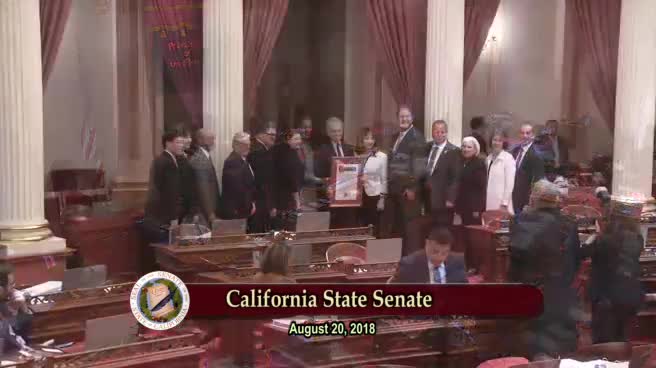
| Aug 20, 2018 | Assembly amendments concurred in. (Ayes 37. Noes 0.) Ordered to engrossing and enrolling. |
| Aug 16, 2018 | In Senate. Concurrence in Assembly amendments pending. |
| Aug 16, 2018 | Read third time. Passed. Ordered to the Senate. |
| Aug 13, 2018 | Read second time. Ordered to consent calendar. |
| Aug 9, 2018 | Read second time and amended. Ordered to second reading. |
| Aug 8, 2018 | From committee: Do pass as amended. Ordered to consent calendar. (Ayes 17. Noes 0.) (August 8). |
| Jun 21, 2018 | From committee: Do pass and re-refer to Com. on APPR. (Ayes 15. Noes 0.) (June 20). Re-referred to Com. on APPR. |
| May 10, 2018 | Referred to Com. on U. & E. |
| May 3, 2018 | In Assembly. Read first time. Held at Desk. |
| May 3, 2018 | Read third time. Passed. (Ayes 38. Noes 0.) Ordered to the Assembly. |
| Apr 17, 2018 | Read second time. Ordered to third reading. |
| Apr 16, 2018 | From committee: Be ordered to second reading pursuant to Senate Rule 28.8. |
| Apr 9, 2018 | Set for hearing April 16. |
| Apr 3, 2018 | From committee: Do pass and re-refer to Com. on APPR. (Ayes 11. Noes 0.) (April 3). Re-referred to Com. on APPR. |
| Mar 12, 2018 | Set for hearing April 3. |
| Mar 8, 2018 | Referred to Com. on E., U. & C. |
| Feb 20, 2018 | From printer. May be acted upon on or after March 22. |
| Feb 16, 2018 | Introduced. Read first time. To Com. on RLS. for assignment. To print. |
|
Date
|
Description
|
Location
|
Votes
|
|
|---|---|---|---|---|
| Aug 20, 2018 | Unfinished Business SB1410 Morrell Concurrence | Senate Floor |
Passed |
|
| Aug 16, 2018 | SB 1410 Morrell Consent Calendar Second Day Regular Session | Assembly Floor |
Passed |
|
| Aug 8, 2018 | Do pass as amended. To Consent Calendar. | Assembly Standing Committee on Appropriations |
Passed |
|
| Jun 20, 2018 | Do pass and be re-referred to the Committee on [Appropriations] | Assembly Standing Committee on Utilities and Energy |
Passed |
|
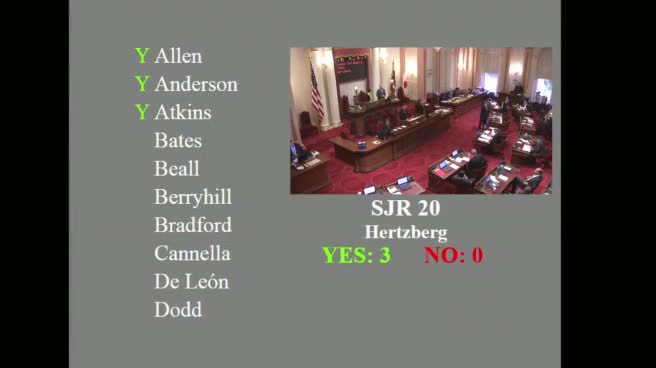
| May 3, 2018 | Senate 3rd Reading SB1410 Morrell | Senate Floor |
Passed |
|
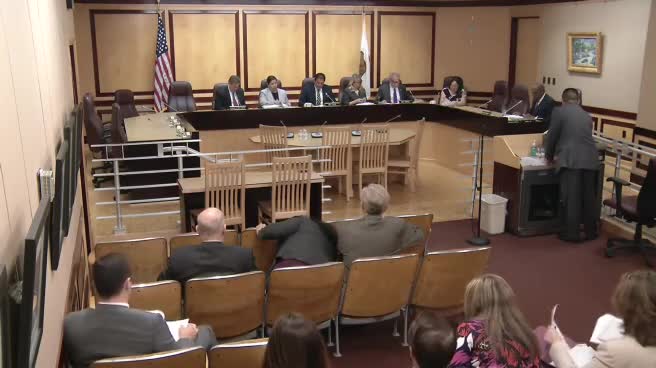
| Apr 3, 2018 | Do pass, but first be re-referred to the Committee on [Appropriations] | Senate Standing Committee on Energy, Utilities and Communications |
Passed |
This list shows positions taken on this bill by organizations on the date displayed, which is linked to the original source.
Positions by individuals are not included.
|
Organization
|
Position
|
Date
|
|---|---|---|
| San Diego Gas & Electric | ** Support | Aug 18, 2018 |
Office of Senate Floor Analyses (916) 651-1520 Fax: (916) 327-4478 | SB |
UNFINISHED BUSINESS
Bill No: SB 1410
:
SENATE ENERGY, U. & C. COMMITTEE: 11-0, 4/3/18
AYES: Hueso, Morrell, Bradford, Cannella, Hertzberg, Hill, McGuire, Skinner, Stern, Vidak, Wiener
SENATE APPROPRIATIONS COMMITTEE: Senate Rule 28.8
SENATE FLOOR: 38-0, 5/3/18
AYES: Allen, Anderson, Atkins, Bates, Beall, Berryhill, Bradford, Cannella, Dodd, Fuller, Gaines, Galgiani, Glazer, Hernandez, Hertzberg, Hill, Hueso, Jackson, Lara, Leyva, McGuire, Mitchell, Monning, Moorlach, Morrell, Newman, Nguyen, Nielsen, Pan, Portantino, Roth, Skinner, Stern, Stone, Vidak, Wieckowski, Wiener, Wilk
NO VOTE RECORDED: De León
ASSEMBLY FLOOR: 76-0, 8/16/18 (Consent) - See last page for vote
SOURCE: San Diego Gas & Electric
DIGEST:
This bill amends the threshold number of customers served by California Public Utilities Commission (CPUC) regulated utility that would be subject to more frequent audit requirements from over 1,000 to over 10,000 customers served.
Assembly Amendments
revise the threshold number of customers served by CPUC-regulated utility subject to the more frequent audit requirements from over 1,000 to over 10,000.
Existing law:
- Establishes that private corporations and persons that own, operate, control or manage furnishing of water to or for the public are public utilities subject to control by the Legislature. Authorizes the CPUC to fix rates, establish rules, examine records, and establish a uniform system of accounts for all public utilities subject to its jurisdiction. (California Constitution Article XII)
- Requires the CPUC to inspect and audit the books and records of electrical corporations, gas corporations, heat corporations, telegraph corporations, telephone corporations, and water corporations for regulatory and tax purposes. An inspection and audit is required to be done at least every three years if the utility has over 1,000 customers. (Public Utilities Code §314.5)
- Requires the CPUC to resolve the issues detailed in a scoping memo in a proceeding within 18 months of the date the proceeding is initiated. Provides that ratesetting proceedings may specify a resolution later than 18 months in the scoping memo if includes specific reasons for the necessity of a later date the assigned commissioner to the case approves the date. (Public Utilities Code §1701.5)
This bill:
- Requires the CPUC to amend and audit the books and records for regulatory and tax purposes:
- At least once every three years in the case of an electric, gas, heat, telegraph, telephone, and water corporation serving over 10,000 customers or in accordance with the CPUC authorized general rate case cycle if that cycle provides for a rate case no less frequently than once every five years.
- At least once every five years in the case of every electrical, gas, heat, telegraph, telephone, and water corporation serving 10,000 or fewer customers.
Background
General Rate Case (GRC). All utilities regulated by the CPUC are required to undergo a GRC whereby the utility requests funding for distribution, generation and operation costs associated with their service. The GRCs are major regulatory proceedings and provide the CPUC an opportunity to perform an exhaustive examination of a utility’s operations and costs with input from all stakeholders, representing consumers, business and other interests, including the Office of Ratepayer Advocates (ORA) whose accountants and analysts closely exam the requests of the utilities. Usually performed every three years and conducted over roughly 18 months, the GRC allows the CPUC to conduct a broad and detailed review of a utility’s revenues, expenses, and investments in plant and equipment to establish an approved revenue requirement. Through the GRC, a utility forecasts how they will structure their operations and make investments for the next three years. Within the adopted GRC decision, a utility may be allocated funds by broad categories, although specific projects are not detailed-out or monitored.
State Auditor issues report. In March 2014, the State Auditor issued a report (2013-109) regarding CPUC oversight of utility balancing accounts. The report concluded that the CPUC lacks adequate processes to provide sufficient oversight of utility balancing accounts to protect ratepayers from unfair rate increases. The auditor also noted that the CPUC had not always complied with requirements to audit utilities’ books and records according to the schedule prescribed in law – every three years for utilities with over 1,000 customers and at least once every five years for utilities serving fewer than 1,000 customers. State law provides that the audit requirements can be fulfilled with the procedures conducted in connection to a GRC. As such, the auditor’s report noted the CPUC does not ensure that utilities file GRCs every three years (or five years for utilities serving fewer than 1,000 customers) to coincide with the audit requirement. The CPUC issued a letter in response to the auditor’s report whereby the CPUC agreed with the auditor’s recommendation to comply with the statutory requirement to comply with the auditing schedule. However, the CPUC also noted the need to assess and identify resources to meet the obligation.
Is a bill necessary? Currently, statute does not make a specific requirement of the frequency of a utility’s GRC. However, in practice, the CPUC has largely instituted a schedule of every three years for most utilities (especially those with over 1,000 customers). In support of this bill, San Diego Gas & Electric (SDG&E) claims that the CPUC has used the audit requirements in Public Utilities Code §314.5 to deny requests for longer GRC cycles. Specifically, SDG&E cites a joint petition by SDG&E and the ORA in which they requested a four year GRC cycle in D.14-12-025 (a decision which incorporated a risk-based decision-making process into the Rate Case Plan). The CPUC issued a decision (D. 16-06-005) to the petition denying the request, but also required a workshop to explore improving efficiencies in the GRC to resolve them in a timely manner, including exploring a longer GRC cycle. Earlier this year, the CPUC’s Energy Division issued “General Rate Case Plan Workshop Report” which followed the workshop held on January 11, 2017. The staff recommendations following the workshop and included in the report are to retain the three-year GRC cycle, but left the door open for future consideration of a four-year cycle under specified criteria.
Related/Prior Legislation
AB 2168 (Williams, Chapter 805, Statutes of 2016) required the CPUC to periodically review balancing accounts of utilities based on a risk-based approach to ensure transactions are for allowable purposes.
FISCAL EFFECT: Appropriation: Fiscal Com.: Local:
According to the Assembly Committee on Appropriations, there are negligible costs to the CPUC.
San Diego Gas & Electric (source)
OPPOSITION: (Verified 8/16/18)
None received
ARGUMENTS IN SUPPORT: The author states that, “allowing for a longer GRC cycle would reduce delays and uncertainty for utilities by allowing the CPUC time to refine implementation of the risk mitigation-based proceedings and to synchronize these proceedings on a more complementary schedule with GRC proceedings that also conform to the state’s audit timetable.”
ASSEMBLY FLOOR: 76-0, 8/16/18
AYES: Acosta, Aguiar-Curry, Travis Allen, Arambula, Baker, Berman, Bigelow, Bonta, Brough, Burke, Caballero, Calderon, Carrillo, Cervantes, Chau, Chávez, Chen, Chiu, Choi, Chu, Cooley, Cooper, Cunningham, Dahle, Daly, Eggman, Flora, Fong, Frazier, Friedman, Gabriel, Gallagher, Eduardo Garcia, Gipson, Gloria, Gonzalez Fletcher, Gray, Grayson, Harper, Holden, Irwin, Jones-Sawyer, Kalra, Kamlager-Dove, Kiley, Lackey, Levine, Limón, Maienschein, Mathis, Mayes, Medina, Melendez, Mullin, Muratsuchi, Nazarian, Obernolte, O'Donnell, Patterson, Quirk, Quirk-Silva, Reyes, Rivas, Rodriguez, Rubio, Salas, Santiago, Steinorth, Mark Stone, Thurmond, Ting, Voepel, Waldron, Weber, Wood, Rendon
NO VOTE RECORDED: Bloom, Cristina Garcia, Low, McCarty
8/18/18 12:44:14
**** END ****
Date of Hearing: August 8, 2018
ASSEMBLY COMMITTEE ON APPROPRIATIONS
Lorena Gonzalez Fletcher, Chair
SBPCA Bill Id:SB 1410
Author:(Morrell) – As Introduced Ver:February 16, 2018
Policy Committee: | Utilities and Energy | Vote: | 15 - 0 |
|
| ||
|
|
Urgency: No State Mandated Local Program: No Reimbursable: No
SUMMARY:
This bill amends the requirement on the California Public Utilities Commission (CPUC) to audit the books and records of CPUC-regulated utilities serving over 1,000 customers, so that the CPUC perform such an audit at least once every five years, instead of at least once every three years, as required by current law. The bill also authorizes the general rate case (GRC) cycle of these utilities to be up to every five years.
In addition, the bill requires the CPUC to audit the books and records of CPUC-regulated utilities serving 1,000 or fewer customers at least once every five years.
FISCAL EFFECT:
Negligible costs to the CPUC.
COMMENTS:
- Purpose. According to the author:
Senate Bill 1410 will allow for but not require a longer public utility general rate case cycle providing the California Public Utilities Commission greater flexibility to review the single largest regulatory proceedings considered by the CPUC. This flexibility will improve efficiencies in the California Public Utilities Commission’s processing of GRC cases should they choose to extend the GRC cycle.
- Background. Generally, the CPUC conducts a triennial “general rate case” (GRC) to establish and approve the rates each IOU may charge its customers. The GRC is a multi-party, technical, and contested judicial proceeding. A GRC proceeding satisfies the statutory requirement that the CPUC audit the books and records of the utilities it regulates.
In a recent decision, several parties requested to change the length of the GRC cycle from three years to four years. The CPUC denied the request, citing a conflict with existing law, which requires the CPUC to audit at least every three years each utility serving more than 1,000 customers. This bill allows, but does not require, the CPUC to conduct the GRC of larger utilities once every five years, instead of once every three years. It is unclear whether the CPUC would exercise this new authority.
- Unintended Consequence. Current law establishes through a single statutory provision the requirement that the CPUC audit the utilities of differing sizes that it regulates. This bill splits that single statutory provision into two provisions: (a) one provision dealing with audit requirements applicable to utilities with more than 1,000 customers and (b) a second provision dealing with audit requirements applicable to utilities with 1,000 or fewer customers. In doing, the bill renders audit requirements applicable to all utilities, under current law, applicable to only smaller utilities.
The author did not intend this effect. The situation can be fixed by amending the bill, as follows, to create a new subsection (c), making the requirements of that subsection generally applicable to audits of all utilities:
314.5.
The commission shall inspect and audit the books and records for regulatory and tax purposes as follows:
(a) At least once every three years in the case of every electrical, gas, heat, telegraph, telephone, and water corporation serving over 1,000 customers or in accordance with the commission authorized general rate case cycle, if that cycle provides for a rate case no less frequently than once every five years.
The (b) commission shall inspect and audit the books and records for regulatory and tax purposes (1) at At least once every three years in the case of every electrical, gas, heat, telegraph, telephone, and water corporation serving over 1,000 customers, and (2) at least once every five years in the case of every electrical, gas, heat, telegraph, telephone, and water corporation serving 1,000 or fewer customers.
(c) An audit conducted in connection with a rate proceeding shall be deemed to fulfill the requirements of this section. The commission shall post reports of the inspections and audits and other pertinent information on its Internet Web site.
Analysis Prepared by: Jay Dickenson / APPR. / (916) 319-2081
Date of Hearing: June 20, 2018
ASSEMBLY COMMITTEE ON UTILITIES AND ENERGY
Chris Holden, Chair
SBPCA Bill Id:SB 1410
Author:(Morrell) – As Introduced Ver:February 16, 2018
SENATE VOTE: 38-0
SUBJECT: Public utilities: inspection and audit of books and records
SUMMARY: This bill amends the requirement on the California Public Utilities Commission (CPUC) to audit the books and records of CPUC-regulated utilities serving over 1,000 customers from every three years to at least once every five years and also authorizes the general rate case cycle of these utilities to be up to every five years. Specifically, this bill:
- Amends the requirement on the CPUC to audit the books and records of CPUC-regulated public utilities serving over 1,000 customers from every three years to no less frequently than once every five years.
- Authorizes the CPUC to inspect and audit the books and records of public utilities in accordance with the commission authorized general rate case cycle, if that cycle provides for a rate case at least once every five years.
EXISTING LAW:
- Defines a “public utility” to includes every common carrier, pipeline corporation, gas corporation, electrical corporation, telephone corporation, water corporation, sewer system corporation, and heat corporation, where the service is performed for, or the commodity is delivered to, the public or any portion thereof. (Public Utilities Code § 216)
- Requires the CPUC to inspect and audit the books and records of electrical corporations, gas corporations, heat corporations, telegraph corporations, telephone corporations, and water corporations for regulatory and tax purposes. An inspection and audit is required to be done at least every three years if the utility has over 1,000 customers. (Public Utilities Code § 314.5)
- Requires the CPUC to resolve the issues detailed in a scoping memo in a proceeding within 18 months of the date the proceeding is initiated. Provides that rate setting proceedings may specify a resolution later than 18 months in the scoping memo if includes specific reasons for the necessity of a later date the assigned commissioner to the case approves the date. (Public Utilities Code § 1701.5)
FISCAL EFFECT: Under Senate Rule 28.8 the bill is found to cause no significant reduction in revenues or additional state costs are not significant and do not require the appropriation of additional state funds.
BACKGROUND:
General Rate Case (GRC). All utilities regulated by the CPUC are required to undergo a GRC whereby the utility requests funding for distribution, generation and operation costs associated with their service. The GRCs are major regulatory proceedings and provide the CPUC an opportunity to perform an exhaustive examination of a utility’s operations and costs with input from all stakeholders, representing consumers, business and other interests, including the Office of Ratepayer Advocates (ORA) whose accountants and analysts closely examine the requests of the utilities. Usually performed every three years and conducted over roughly 18 months, the GRC allows the CPUC to conduct a broad and detailed review of a utility’s revenues, expenses, and investments in plant and equipment to establish an approved revenue requirement. Through the GRC, a utility forecasts how they will structure their operations and make investments for the next three years. Within the adopted GRC decision, a utility may be allocated funds by broad categories, although specific projects are not detailed-out or monitored.
COMMENTS:
- Authors Statement. According to the authors office “Senate Bill 1410 will allow for but not require a longer public utility general rate case cycle providing the California Public Utilities Commission greater flexibility to review the single largest regulatory proceedings considered by the CPUC. This flexibility will improve efficiencies in the California Public Utilities Commission’s processing of GRC cases should they choose to extend the GRC cycle.”
- CPUC Decision. In R.13-11-006, SDG&E, SoCalGas and ORA requested that D.14-12-025 be modified to change the length of the GRC cycle from three to four years. The CPUC denied that request through noting that “moving to a four-year GRC cycle would conflict with Public Utilities Code Section 314.5 which requires an audit of the utilities on a triennial basis.” The CPUC stated that they may revisit the need for a four-year rate cycle in the future. SB 1410 makes the statutory change to provide the commission discretion to move to a longer GRC cycle if it so decides in the future.
REGISTERED SUPPORT / OPPOSITION:
Support
San Diego Gas & Electric (Sponsor)
Opposition
None on file.
Analysis Prepared by: Elle Hoxworth / U. & E. /
Office of Senate Floor Analyses (916) 651-1520 Fax: (916) 327-4478 | SB |
THIRD READING
Bill No: SB 1410
:
SENATE ENERGY, U. & C. COMMITTEE: 11-0, 4/3/18
AYES: Hueso, Morrell, Bradford, Cannella, Hertzberg, Hill, McGuire, Skinner, Stern, Vidak, Wiener
SENATE APPROPRIATIONS COMMITTEE: Senate Rule 28.8
SOURCE: San Diego Gas & Electric
DIGEST:
This bill amends the requirement on the California Public Utilities Commission (CPUC) to audit the books and records of CPUC-regulated utilities serving over 1,000 customers from every three years to no less frequently than once every five years and also authorizes the general rate case cycle of these utilities to be up to every five years.
Existing law:
- Establishes that private corporations and persons that own, operate, control or manage furnishing of water to or for the public are public utilities subject to control by the Legislature. Authorizes the CPUC to fix rates, establish rules, examine records, and establish a uniform system of accounts for all public utilities subject to its jurisdiction. (California Constitution Article XII)
- Requires the CPUC to inspect and audit the books and records of electrical corporations, gas corporations, heat corporations, telegraph corporations, telephone corporations, and water corporations for regulatory and tax purposes. An inspection and audit is required to be done at least every three years if the utility has over 1,000 customers. (Public Utilities Code §314.5)
- Requires the CPUC to resolve the issues detailed in a scoping memo in a proceeding within 18 months of the date the proceeding is initiated. Provides that ratesetting proceedings may specify a resolution later than 18 months in the scoping memo if includes specific reasons for the necessity of a later date the assigned commissioner to the case approves the date. (Public Utilities Code §1701.5)
This bill:
- Amends the requirement on the CPUC to audit the books and records of CPUC-regulated utilities serving over 1,000 customers from every three years to no less frequently than once every five years.
- Consistent with existing law, this bill provides that the audit is done in accordance with the utility’s general rate case (GRC) cycle. As such, this bill authorizes the GRC cycle to also be no less frequently than once every five years.
Background
General Rate Case (GRC). All utilities regulated by the CPUC are required to undergo a GRC whereby the utility requests funding for distribution, generation and operation costs associated with their service. The GRCs are major regulatory proceedings and provide the CPUC an opportunity to perform an exhaustive examination of a utility’s operations and costs with input from all stakeholders, representing consumers, business and other interests, including the Office of Ratepayer Advocates (ORA) whose accountants and analysts closely exam the requests of the utilities. Usually performed every three years and conducted over roughly 18 months, the GRC allows the CPUC to conduct a broad and detailed review of a utility’s revenues, expenses, and investments in plant and equipment to establish an approved revenue requirement. Through the GRC, a utility forecasts how they will structure their operations and make investments for the next three years. Within the adopted GRC decision, a utility may be allocated funds by broad categories, although specific projects are not detailed-out or monitored.
State Auditor issues report. In March 2014, the State Auditor issued a report (2013-109) regarding CPUC oversight of utility balancing accounts. The report concluded that the CPUC lacks adequate processes to provide sufficient oversight of utility balancing accounts to protect ratepayers from unfair rate increases. The auditor also noted that the CPUC had not always complied with requirements to audit utilities’ books and records according to the schedule prescribed in law – every three years for utilities with over 1,000 customers and at least once every five years for utilities serving fewer than 1,000 customers. State law provides that the audit requirements can be fulfilled with the procedures conducted in connection to a GRC. As such, the auditor’s report noted the CPUC does not ensure that utilities file GRCs every three years (or five years for utilities serving fewer than 1,000 customers) to coincide with the audit requirement. The CPUC issued a letter in response to the auditor’s report whereby the CPUC agreed with the auditor’s recommendation to comply with the statutory requirement to comply with the auditing schedule. However, the CPUC also noted the need to assess and identify resources to meet the obligation.
Is a bill necessary? Currently, statute does not make a specific requirement of the frequency of a utility’s GRC. However, in practice, the CPUC has largely instituted a schedule of every three years for most utilities (especially those with over 1,000 customers). In support of this bill, San Diego Gas & Electric (SDG&E) claims that the CPUC has used the audit requirements in Public Utilities Code §314.5 to deny requests for longer GRC cycles. Specifically, SDG&E cites a joint petition by SDG&E and the ORA in which they requested a four year GRC cycle in D.14-12-025 (a decision which incorporated a risk-based decision-making process into the Rate Case Plan). The CPUC issued a decision (D. 16-06-005) to the petition denying the request, but also required a workshop to explore improving efficiencies in the GRC to resolve them in a timely manner, including exploring a longer GRC cycle. Just this month, the CPUC’s Energy Division issued “General Rate Case Plan Workshop Report” which followed the workshop held on January 11, 2017. The staff recommendations following the workshop and included in the report are to retain the three-year GRC cycle, but left the door open for future consideration of a four-year cycle under specified criteria.
Related/Prior Legislation
AB 2168 (Williams, Chapter 805, Statutes of 2016) required the CPUC to periodically review balancing accounts of utilities based on a risk-based approach to ensure transactions are for allowable purposes.
FISCAL EFFECT: Appropriation: Fiscal Com.: Local:
San Diego Gas & Electric (source)
OPPOSITION: (Verified 4/16/18)
None received
ARGUMENTS IN SUPPORT: The author states that, “allowing for a longer GRC cycle would reduce delays and uncertainty for utilities by allowing the CPUC time to refine implementation of the risk mitigation-based proceedings and to synchronize these proceedings on a more complementary schedule with GRC proceedings that also conform to the state’s audit timetable.”
4/18/18 14:29:41
**** END ****
SENATE COMMITTEE ON ENERGY, UTILITIES AND COMMUNICATIONS
Senator Ben Hueso, Chair
2017 - 2018 Regular
Bill No: SB 1410 Hearing Date: 4/3/2018
Author: | Morrell | ||
Version: | 2/16/2018 As Introduced | ||
Urgency: | No | Fiscal: | Yes |
Consultant: | Nidia Bautista | ||
SUBJECT: Public utilities: inspection and audit of books and records
DIGEST: This bill amends the requirement on the California Public Utilities Commission (CPUC) to audit the books and records of CPUC-regulated utilities serving over 1,000 customers from every three years to no less frequently than once every five years and also authorizes the general rate case cycle of these utilities to be up to every five years.
ANALYSIS:
Existing law:
- Establishes that private corporations and persons that own, operate, control or manage furnishing of water to or for the public are public utilities subject to control by the Legislature. Authorizes the CPUC to fix rates, establish rules, examine records, and establish a uniform system of accounts for all public utilities subject to its jurisdiction. (California Constitution Article XII)
- Requires the CPUC to inspect and audit the books and records of electrical corporations, gas corporations, heat corporations, telegraph corporations, telephone corporations, and water corporations for regulatory and tax purposes. An inspection and audit is required to be done at least every three years if the utility has over 1,000 customers. (Public Utilities Code §314.5)
- Requires the CPUC to resolve the issues detailed in a scoping memo in a proceeding within 18 months of the date the proceeding is initiated. Provides that ratesetting proceedings may specify a resolution later than 18 months in the scoping memo if includes specific reasons for the necessity of a later date the assigned commissioner to the case approves the date. (Public Utilities Code § 1701.5)
This bill:
- Amends the requirement on the CPUC to audit the books and records of CPUC-regulated utilities serving over 1,000 customers from every three years to no less frequently than once every five years.
- Consistent with existing law, this bill provides that the audit is done in accordance with the utility’s general rate case cycle. As such, this bill authorizes the general rate case cycle to also be no less frequently than once every five years.
Background
General Rate Case (GRC). All utilities regulated by the CPUC are required to undergo a GRC whereby the utility requests funding for distribution, generation and operation costs associated with their service. The GRCs are major regulatory proceedings and provide the CPUC an opportunity to perform an exhaustive examination of a utility’s operations and costs with input from all stakeholders, representing consumers, business and other interests, including the Office of Ratepayer Advocates (ORA) whose accountants and analysts closely exam the requests of the utilities. Usually performed every three years and conducted over roughly 18 months, the GRC allows the CPUC to conduct a broad and detailed review of a utility’s revenues, expenses, and investments in plant and equipment to establish an approved revenue requirement. Through the GRC, a utility forecasts how they will structure their operations and make investments for the next three years. Within the adopted GRC decision, a utility may be allocated funds by broad categories, although specific projects are not detailed-out or monitored.
State Auditor issues report. In March 2014, the State Auditor issued a report (2013-109) regarding CPUC oversight of utility balancing accounts. The report concluded that the CPUC lacks adequate processes to provide sufficient oversight of utility balancing accounts to protect ratepayers from unfair rate increases. The Auditor also noted that the CPUC had not always complied with requirements to audit utilities’ books and records according to the schedule prescribed in law – every three years for utilities with over 1,000 customers and at least once every five years for utilities serving fewer than 1,000 customers. State law provides that the audit requirements can be fulfilled with the procedures conducted in connection to a general rate case. As such, the Auditor’s report noted the CPUC does not ensure that utilities file GRCs every three years (or five years for utilities serving fewer than 1,000 customers) to coincide with the audit requirement. The CPUC issued a letter in response to the Auditor’s report whereby the CPUC agreed with the Auditor’s recommendation to comply with the statutory requirement to comply with the auditing schedule. However, the CPUC also noted the need to assess and identify resources to meet the obligation.
Is a bill necessary? Currently, statute does not make a specific requirement of the frequency of a utility’s GRC. However, in practice, the CPUC has largely instituted a schedule of every three years for most utilities (especially those with over 1,000 customers). In support of this bill, San Diego Gas & Electric (SDG&E) claims that the CPUC has used the audit requirements in Public Utilities Code §314.5 to deny requests for longer GRC cycles. Specifically, SDG&E cites a joint petition by SDG&E and the ORA in which they requested a four year GRC cycle in D.14-12-025 (a decision which incorporated a risk-based decision-making process into the Rate Case Plan). The CPUC issued a decision (D. 16-06-005) to the petition denying the request, but also required a workshop to explore improving efficiencies in the GRC to resolve them in a timely manner, including exploring a longer GRC cycle. Just this month, the CPUC’s Energy Division issued “General Rate Case Plan Workshop Report” which followed the workshop held on January 11, 2017. The staff recommendations following the workshop and included in the report are to retain the three-year GRC cycle, but left the door open for future consideration of a four-year cycle under specified criteria.
Prior/Related Legislation
AB 2168 (Williams, Chapter 805, Statutes of 2016) requires the CPUC to periodically review balancing accounts of utilities based on a risk-based approach to ensure transactions are for allowable purposes.
FISCAL EFFECT: Appropriation: No Fiscal Com.: Yes Local: No
SUPPORT:
San Diego Gas & Electric (Source)
OPPOSITION:
None received
ARGUMENTS IN SUPPORT: The author states that, “allowing for a longer GRC cycle would reduce delays and uncertainty for utilities by allowing the CPUC time to refine implementation of the risk mitigation-based proceedings and to synchronize these proceedings on a more complementary schedule with GRC proceedings that also conform to the state’s audit timetable.”
-- END --
Discussed in Hearing
 1MIN
Senate Floor
 48SEC
Senate Floor
 3MIN
Senate Standing Committee on Energy, Utilities and Communications
Bill Author
Bill Co-Author(s):