SB 1412: Applicants for employment: criminal history.
- Session Year: 2017-2018
- House: Senate
- Latest Version Date: 2018-09-30
Existing law prohibits an employer, whether a public agency or private individual or corporation, from asking an applicant for employment to disclose, from seeking from any source, or from utilizing as a factor in determining any condition of employment, information concerning participating in a pretrial or posttrial diversion program or concerning a conviction that has been judicially dismissed or ordered sealed, as provided. Existing law makes it a crime to intentionally violate these provisions. Existing law specifies that these provisions do not prohibit an employer from asking an applicant about a criminal conviction of, seeking from any source information regarding a criminal conviction of, utilizing as a factor in determining any condition of employment of, or entry into a pretrial diversion or similar program by the applicant if, pursuant to state or federal law, (1) the employer is required to obtain information regarding a conviction of an applicant, (2) the applicant would be required to possess or use a firearm in the course of his or her employment, (3) an individual who has been convicted of a crime is prohibited by law from holding the position sought, regardless of whether the conviction has been expunged, judicially ordered sealed, statutorily eradicated, or judicially dismissed following probation, or (4) the employer is prohibited by law from hiring an applicant who has been convicted of a crime.
This bill would instead specify that these provisions do not prohibit an employer, including a public agency or private individual or corporation, from asking an applicant about, or seeking from any source information regarding, a particular conviction of the applicant if, pursuant to federal law, federal regulation, or state law, (1) the employer is required to obtain information regarding the particular conviction of the applicant, regardless of whether the conviction has been expunged, judicially ordered sealed, statutorily eradicated, or judicially dismissed following probation, (2) the applicant would be required to possess or use a firearm in the course of his or her employment, (3) an individual with that particular conviction is prohibited by law from holding the position sought, regardless of whether the conviction has been expunged, judicially ordered sealed, statutorily eradicated, or judicially dismissed following probation, or (4) the employer is prohibited by law from hiring an applicant who has that particular conviction, regardless of whether the conviction has been expunged, judicially ordered sealed, statutorily eradicated, or judicially dismissed following probation. The bill would define particular conviction for these purposes and would also make various nonsubstantive and clarifying changes to those provisions. The bill would also specify that these provisions do not prohibit an employer, including a public agency or private individual or corporation, required by state, federal, or local law to conduct criminal background checks for employment purposes or to restrict employment based on criminal history from complying with those requirements or prohibit an employer from seeking or receiving an applicants criminal history report obtained under procedures provided under federal, state, or local law. Because the bill would increase the scope of a crime, it would impose a state-mandated local program.
The California Constitution requires the state to reimburse local agencies and school districts for certain costs mandated by the state. Statutory provisions establish procedures for making that reimbursement.
This bill would provide that no reimbursement is required by this act for a specified reason.
Existing law prohibits an employer, whether a public agency or private individual or corporation, from asking an applicant for employment to disclose, from seeking from any source, or from utilizing as a factor in determining any condition of employment, information concerning participating in a pretrial or posttrial diversion program or concerning a conviction that has been judicially dismissed or ordered sealed, as provided. Existing law makes it a crime to intentionally violate these provisions. Existing law specifies that these provisions do not prohibit an employer from asking an applicant about a criminal conviction of, seeking from any source information regarding a criminal conviction of, utilizing as a factor in determining any condition of employment of, or entry into a pretrial diversion or similar program by the applicant if, pursuant to state or federal law, (1) the employer is required to obtain information regarding a conviction of an applicant, (2) the applicant would be required to possess or use a firearm in the course of his or her employment, (3) an individual who has been convicted of a crime is prohibited by law from holding the position sought, regardless of whether the conviction has been expunged, judicially ordered sealed, statutorily eradicated, or judicially dismissed following probation, or (4) the employer is prohibited by law from hiring an applicant who has been convicted of a crime.
This bill would instead specify that these provisions do not prohibit an employer, including a public agency or private individual or corporation, from asking an applicant about, or seeking from any source information regarding, a particular conviction of the applicant if, pursuant to federal law, federal regulation, or state law, (1) the employer is required to obtain information regarding the particular conviction of the applicant, regardless of whether the conviction has been expunged, judicially ordered sealed, statutorily eradicated, or judicially dismissed following probation, (2) the applicant would be required to possess or use a firearm in the course of his or her employment, (3) an individual with that particular conviction is prohibited by law from holding the position sought, regardless of whether the conviction has been expunged, judicially ordered sealed, statutorily eradicated, or judicially dismissed following probation, or (4) the employer is prohibited by law from hiring an applicant who has that particular conviction, regardless of whether the conviction has been expunged, judicially ordered sealed, statutorily eradicated, or judicially dismissed following probation. The bill would define particular conviction for these purposes and would also make various nonsubstantive and clarifying changes to those provisions. The bill would also specify that these provisions do not prohibit an employer, including a public agency or private individual or corporation, required by state, federal, or local law to conduct criminal background checks for employment purposes or to restrict employment based on criminal history from complying with those requirements. requirements or prohibit an employer from seeking or receiving an applicants criminal history report obtained under procedures provided under federal, state, or local law. Because the bill would increase the scope of a crime, it would impose a state-mandated local program.
The California Constitution requires the state to reimburse local agencies and school districts for certain costs mandated by the state. Statutory provisions establish procedures for making that reimbursement.
This bill would provide that no reimbursement is required by this act for a specified reason.
Existing law prohibits an employer, whether a public agency or private individual or corporation, from asking an applicant for employment to disclose, from seeking from any source, or from utilizing as a factor in determining any condition of employment, information concerning participating in a pretrial or posttrial diversion program or concerning a conviction that has been judicially dismissed or ordered sealed, as provided. Existing law makes it a crime to intentionally violate these provisions. Existing law specifies that these provisions do not prohibit an employer from asking an applicant about a criminal conviction of, seeking from any source information regarding a criminal conviction of, utilizing as a factor in determining any condition of employment of, or entry into a pretrial diversion or similar program by the applicant if, pursuant to state or federal law, (1) the employer is required to obtain information regarding a conviction of an applicant, (2) the applicant would be required to possess or use a firearm in the course of his or her employment, (3) an individual who has been convicted of a crime is prohibited by law from holding the position sought, regardless of whether the conviction has been expunged, judicially ordered sealed, statutorily eradicated, or judicially dismissed following probation, or (4) the employer is prohibited by law from hiring an applicant who has been convicted of a crime.
This bill would instead specify that these provisions do not prohibit an employer employer, including a public agency or private individual or corporation, from asking an applicant about, or seeking from any source information regarding, a particular conviction of the applicant if, pursuant to federal law, federal regulation, or state law, (1) the employer is required to obtain information regarding the particular conviction of the applicant, regardless of whether the conviction has been expunged, judicially ordered sealed, statutorily eradicated, or judicially dismissed following probation, (2) the applicant would be required to possess or use a firearm in the course of his or her employment, (3) an individual with that particular conviction is prohibited by law from holding the position sought, regardless of whether the conviction has been expunged, judicially ordered sealed, statutorily eradicated, or judicially dismissed following probation, or (4) the employer is prohibited by law from hiring an applicant who has that particular conviction, regardless of whether the conviction has been expunged, judicially ordered sealed, statutorily eradicated, or judicially dismissed following probation. The bill would define particular conviction for these purposes and would also make various nonsubstantive and clarifying changes to those provisions. The bill would also specify that these provisions do not prohibit an employer employer, including a public agency or private individual or corporation, required by state, federal, or local law to conduct criminal background checks for employment purposes or to restrict employment based on criminal history from complying with those requirements. Because the bill would increase the scope of a crime, it would impose a state-mandated local program.
The California Constitution requires the state to reimburse local agencies and school districts for certain costs mandated by the state. Statutory provisions establish procedures for making that reimbursement.
This bill would provide that no reimbursement is required by this act for a specified reason.
Existing law prohibits an employer, whether a public agency or private individual or corporation, from asking an applicant for employment to disclose, from seeking from any source, or from utilizing as a factor in determining any condition of employment, information concerning participating in a pretrial or posttrial diversion program or concerning a conviction that has been judicially dismissed or ordered sealed, as provided. Existing law makes it a crime to intentionally violate these provisions. Existing law specifies that these provisions do not prohibit an employer from asking an applicant about a criminal conviction of, seeking from any source information regarding a criminal conviction of, utilizing as a factor in determining any condition of employment of, or entry into a pretrial diversion or similar program by the applicant if, pursuant to state or federal law, (1) the employer is required to obtain information regarding a conviction of an applicant, (2) the applicant would be required to possess or use a firearm in the course of his or her employment, (3) an individual who has been convicted of a crime is prohibited by law from holding the position sought, regardless of whether the conviction has been expunged, judicially ordered sealed, statutorily eradicated, or judicially dismissed following probation, or (4) the employer is prohibited by law from hiring an applicant who has been convicted of a crime.
This bill would instead specify that these provisions do not prohibit an employer from asking an applicant about, or seeking from any source information regarding, a particular conviction of the applicant if, pursuant to federal law, federal regulation, or state law, (1) the employer is required to obtain information regarding the particular conviction of the applicant, regardless of whether the conviction has been expunged, judicially ordered sealed, statutorily eradicated, or judicially dismissed following probation, (2) the applicant would be required to possess or use a firearm in the course of his or her employment, (3) an individual with that particular conviction is prohibited by law from holding the position sought, regardless of whether the conviction has been expunged, judicially ordered sealed, statutorily eradicated, or judicially dismissed following probation, or (4) the employer is prohibited by law from hiring an applicant who has that particular conviction, regardless of whether the conviction has been expunged, judicially ordered sealed, statutorily eradicated, or judicially dismissed following probation. The bill would define particular conviction for these purposes and would also make various nonsubstantive and clarifying changes to those provisions. The bill would also specify that these provisions do not prohibit an employer required by state, federal, or local law to conduct criminal background checks for employment purposes or to restrict employment based on criminal history from complying with those requirements. Because the bill would increase the scope of a crime, it would impose a state-mandated local program.
The California Constitution requires the state to reimburse local agencies and school districts for certain costs mandated by the state. Statutory provisions establish procedures for making that reimbursement.
This bill would provide that no reimbursement is required by this act for a specified reason.
Existing law prohibits an employer, whether a public agency or private individual or corporation, from asking an applicant for employment to disclose, from seeking from any source, or from utilizing as a factor in determining any condition of employment, information concerning participating in a pretrial or posttrial diversion program or concerning a conviction that has been judicially dismissed or ordered sealed, as provided. Existing law makes it a crime to intentionally violate these provisions. Existing law specifies that these provisions do not prohibit an employer from asking an applicant about a criminal conviction of, seeking from any source information regarding a criminal conviction of, utilizing as a factor in determining any condition of employment of, or entry into a pretrial diversion or similar program by the applicant if, pursuant to state or federal law, (1) the employer is required to obtain information regarding a conviction of an applicant, (2) the applicant would be required to possess or use a firearm in the course of his or her employment, (3) an individual who has been convicted of a crime is prohibited by law from holding the position sought, regardless of whether the conviction has been expunged, judicially ordered sealed, statutorily eradicated, or judicially dismissed following probation, or (4) the employer is prohibited by law from hiring an applicant who has been convicted of a crime.
This bill would instead specify that these provisions do not prohibit an employer from asking an applicant about, or seeking from any source information regarding, a particular conviction of the applicant if, pursuant to state or federal law, federal regulation, or state law, (1) the employer is required to obtain information regarding the particular conviction of the applicant, regardless of whether the conviction has been expunged, judicially ordered sealed, statutorily eradicated, or judicially dismissed following probation, (2) the applicant would be required to possess or use a firearm in the course of his or her employment, (3) an individual with that particular conviction is prohibited by law from holding the position sought, regardless of whether the conviction has been expunged, judicially ordered sealed, statutorily eradicated, or judicially dismissed following probation, or (4) the employer is prohibited by law from hiring an applicant who has that particular conviction, regardless of whether the conviction has been expunged, judicially ordered sealed, statutorily eradicated, or judicially dismissed following probation. The bill would define particular conviction for these purposes and would also make various nonsubstantive and clarifying changes to those provisions. Because the bill would increase the scope of a crime, it would impose a state-mandated local program.
The California Constitution requires the state to reimburse local agencies and school districts for certain costs mandated by the state. Statutory provisions establish procedures for making that reimbursement.
This bill would provide that no reimbursement is required by this act for a specified reason.
Existing law prohibits an employer, whether a public agency or private individual or corporation, from asking an applicant for employment to disclose, from seeking from any source, or from utilizing as a factor in determining any condition of employment, information concerning participating in a pretrial or posttrial diversion program or concerning a conviction that has been judicially dismissed or ordered sealed, as provided. Existing law makes it a crime to intentionally violate these provisions. Existing law specifies that these provisions do not prohibit an employer from asking an applicant about a criminal conviction of, seeking from any source information regarding a criminal conviction of, utilizing as a factor in determining any condition of employment of, or entry into a pretrial diversion or similar program by the applicant if, pursuant to state or federal law, (1) the employer is required to obtain information regarding a conviction of an applicant, (2) the applicant would be required to possess or use a firearm in the course of his or her employment, (3) an individual who has been convicted of a crime is prohibited by law from holding the position sought, regardless of whether the conviction has been expunged, judicially ordered sealed, statutorily eradicated, or judicially dismissed following probation, or (4) the employer is prohibited by law from hiring an applicant who has been convicted of a crime.
This bill would instead specify that these provisions do not prohibit an employer from asking an applicant about, or seeking from any source information regarding, a particular conviction of the applicant if, pursuant to state or federal law, (1) the employer is required to obtain information regarding the particular conviction of the applicant, regardless of whether the conviction has been expunged, judicially ordered sealed, statutorily eradicated, or judicially dismissed following probation, (2) the applicant would be required to possess or use a firearm in the course of his or her employment, (3) an individual with that particular conviction is prohibited by law from holding the position sought, regardless of whether the conviction has been expunged, judicially ordered sealed, statutorily eradicated, or judicially dismissed following probation, or (4) the employer is prohibited by law from hiring an applicant who has that particular conviction, regardless of whether the conviction has been expunged, judicially ordered sealed, statutorily eradicated, or judicially dismissed following probation. Because the bill would increase the scope of a crime, it would impose a state-mandated local program.
The California Constitution requires the state to reimburse local agencies and school districts for certain costs mandated by the state. Statutory provisions establish procedures for making that reimbursement.
This bill would provide that no reimbursement is required by this act for a specified reason.
(a)(1)An employer, whether a public agency or private individual or corporation, shall not ask an applicant for employment to disclose, through any written form or verbally, information concerning an arrest or detention that did not result in conviction, or information concerning a referral to, and participation in, any pretrial or posttrial diversion program, or concerning a conviction that has been judicially dismissed or ordered sealed pursuant to law, including, but not limited to, Sections 1203.4, 1203.4a, 1203.45, and 1210.1 of the Penal Code. An employer also shall not seek from any source whatsoever, or utilize, as a factor in determining any condition of employment including hiring, promotion, termination, or any apprenticeship training program or any other training program leading to employment, any record of arrest or detention that did not result in conviction, or any record regarding a referral to, and participation in, any pretrial or posttrial diversion program, or concerning a conviction that has been judicially dismissed or ordered sealed pursuant to law, including, but not limited to, Sections 1203.4, 1203.4a, 1203.45, and 1210.1 of the Penal Code. This section shall not prevent an employer from asking an employee or applicant for employment about an arrest for which the employee or applicant is out on bail or on his or her own recognizance pending trial.
(2)An employer, whether a public agency or private individual or corporation, shall not ask an applicant for employment to disclose, through any written form or verbally, information concerning or related to an arrest, detention, processing, diversion, supervision, adjudication, or court disposition that occurred while the person was subject to the process and jurisdiction of the juvenile court. An employer also shall not seek from any source whatsoever, or utilize, as a factor in determining any condition of employment including hiring, promotion, termination, or any apprenticeship training program or any other training program leading to employment, any record concerning or related to an arrest, detention, processing, diversion, supervision, adjudication, or court disposition that occurred while a person was subject to the process and jurisdiction of the juvenile court.
(3)For purposes of this section:
(A)Conviction includes a plea, verdict, or finding of guilt, regardless of whether a sentence is imposed by the court.
(B)Conviction does not include, and shall not be construed to include, any adjudication by a juvenile court or any other court order or action taken with respect to a person who is under the process and jurisdiction of the juvenile court.
(b)This section shall not prohibit the disclosure of the information authorized for release under Sections 13203 and 13300 of the Penal Code, to a government agency employing a peace officer. However, the employer shall not determine any condition of employment other than paid administrative leave based solely on an arrest report. The information contained in an arrest report may be used as the starting point for an independent, internal investigation of a peace officer in accordance with Chapter 9.7 (commencing with Section 3300) of Division 4 of Title 1 of the Government Code.
(c)If a person violates this section, or Article 6 (commencing with Section 11140) of Chapter 1 of Title 1 of Part 4 of the Penal Code, the applicant may bring an action to recover from that person actual damages or two hundred dollars ($200), whichever is greater, plus costs, and reasonable attorneys fees. An intentional violation of this section shall entitle the applicant to treble actual damages, or five hundred dollars ($500), whichever is greater, plus costs, and reasonable attorneys fees. An intentional violation of this section is a misdemeanor punishable by a fine not to exceed five hundred dollars ($500).
(d)The remedies under this section shall be in addition to and not in derogation of all other rights and remedies that an applicant may have under any other law.
(e)Persons seeking employment or persons already employed as peace officers or persons seeking employment for positions in the Department of Justice or other criminal justice agencies as defined in Section 13101 of the Penal Code are not covered by this section.
(f)(1)Except as provided in paragraph (2), this section does not prohibit an employer at a health facility, as defined in Section 1250 of the Health and Safety Code, from asking an applicant for employment either of the following:
(A)With regard to an applicant for a position with regular access to patients, to disclose an arrest under any section specified in Section 290 of the Penal Code.
(B)With regard to an applicant for a position with access to drugs and medication, to disclose an arrest under any section specified in Section 11590 of the Health and Safety Code.
(2)(A)An employer specified in paragraph (1) shall not inquire into information concerning or related to an applicants arrest, detention, processing, diversion, supervision, adjudication, or court disposition that occurred while the person was subject to the process and jurisdiction of juvenile court law, unless the information concerns an adjudication by the juvenile court in which the applicant has been found by the court to have committed a felony or misdemeanor offense specified in paragraph (1) that occurred within five years preceding the application for employment.
(B)Notwithstanding any other provision of this subdivision, an employer specified in paragraph (1) shall not inquire into information concerning or related to an applicants juvenile offense history that has been sealed by the juvenile court.
(3)An employer seeking disclosure of offense history under paragraph (2) shall provide the applicant with a list describing the specific offenses under Section 11590 of the Health and Safety Code or Section 290 of the Penal Code for which disclosure is sought.
(g)(1)A peace officer or employee of a law enforcement agency with access to criminal or juvenile offender record information maintained by a local law enforcement criminal or juvenile justice agency shall not knowingly disclose, with intent to affect a persons employment, any information pertaining to an arrest or detention or proceeding that did not result in a conviction, including information pertaining to a referral to, and participation in, any pretrial or posttrial diversion program, to any person not authorized by law to receive that information.
(2)Any other person authorized by law to receive criminal or juvenile offender record information maintained by a local law enforcement criminal or juvenile justice agency shall not knowingly disclose any information received pertaining to an arrest or detention or proceeding that did not result in a conviction, including information pertaining to a referral to, and participation in, any pretrial or posttrial diversion program, to any person not authorized by law to receive that information.
(3)Except for those specifically referred to in Section 1070 of the Evidence Code, a person who is not authorized by law to receive or possess criminal or juvenile justice records information maintained by a local law enforcement criminal or juvenile justice agency, pertaining to an arrest or other proceeding that did not result in a conviction, including information pertaining to a referral to, and participation in, any pretrial or posttrial diversion program, shall not knowingly receive or possess that information.
(h)A person authorized by law to receive that information, for purposes of this section, means any person or public agency authorized by a court, statute, or decisional law to receive information contained in criminal or juvenile offender records maintained by a local law enforcement criminal or juvenile justice agency, and includes, but is not limited to, those persons set forth in Section 11105 of the Penal Code, and any person employed by a law enforcement criminal or juvenile justice agency who is required by that employment to receive, analyze, or process criminal or juvenile offender record information.
(i)This section does not require the Department of Justice to remove entries relating to an arrest or detention not resulting in conviction from summary criminal history records forwarded to an employer pursuant to law.
(j)As used in this section, pretrial or posttrial diversion program means any program under Chapter 2.5 (commencing with Section 1000) or Chapter 2.7 (commencing with Section 1001) of Title 6 of Part 2 of the Penal Code, Section 13201 or 13352.5 of the Vehicle Code, Sections 626, 626.5, 654, or 725 of, or Article 20.5 (commencing with Section 790) of Chapter 2 of Part 1 of Division 2 of, the Welfare and Institutions Code, or any other program expressly authorized and described by statute as a diversion program.
(k)(1)Subdivision (a) shall not apply to any city, city and county, county, or district, or any officer or official thereof, in screening a prospective concessionaire, or the affiliates and associates of a prospective concessionaire for purposes of consenting to, or approving of, the prospective concessionaires application for, or acquisition of, any beneficial interest in a concession, lease, or other property interest.
(2)For purposes of this subdivision the following terms apply:
(A)Screening means a written request for criminal or juvenile history information made to a local law enforcement agency.
(B)Prospective concessionaire means any individual, general or limited partnership, corporation, trust, association, or other entity that is applying for, or seeking to obtain, a public agencys consent to, or approval of, the acquisition by that individual or entity of any beneficial ownership interest in any public agencys concession, lease, or other property right whether directly or indirectly held. However, prospective concessionaire does not include any of the following:
(i)A lender acquiring an interest solely as security for a bona fide loan made in the ordinary course of the lenders business and not made for the purpose of acquisition.
(ii)A lender upon foreclosure or assignment in lieu of foreclosure of the lenders security.
(C)Affiliate means any individual or entity that controls, or is controlled by, the prospective concessionaire, or who is under common control with the prospective concessionaire.
(D)Associate means any individual or entity that shares a common business purpose with the prospective concessionaire with respect to the beneficial ownership interest that is subject to the consent or approval of the city, county, city and county, or district.
(E)Control means the possession, direct or indirect, of the power to direct, or cause the direction of, the management or policies of the controlled individual or entity.
(l)(1)Subdivision (a) does not prohibit a public agency, or any officer or official thereof, from denying consent to, or approval of, a prospective concessionaires application for, or acquisition of, any beneficial interest in a concession, lease, or other property interest based on the criminal history information of the prospective concessionaire or the affiliates or associates of the prospective concessionaire that show any criminal conviction for offenses involving moral turpitude. Criminal history information for purposes of this subdivision includes any criminal history information obtained pursuant to Section 11105 or 13300 of the Penal Code.
(2)In considering criminal history information, a public agency shall consider the crime for which the prospective concessionaire or the affiliates or associates of the prospective concessionaire was convicted only if that crime relates to the specific business that is proposed to be conducted by the prospective concessionaire.
(3)Any prospective concessionaire whose application for consent or approval to acquire a beneficial interest in a concession, lease, or other property interest is denied based on criminal history information shall be provided a written statement of the reason for the denial.
(4)(A)If the prospective concessionaire submits a written request to the public agency within 10 days of the date of the notice of denial, the public agency shall review its decision with regard to any corrected record or other evidence presented by the prospective concessionaire as to the accuracy or incompleteness of the criminal history information utilized by the public agency in making its original decision.
(B)The prospective concessionaire shall submit the copy or the corrected record of any other evidence to the public agency within 90 days of a request for review. The public agency shall render its decision within 20 days of the submission of evidence by the prospective concessionaire.
(m)(1)Paragraph (1) of subdivision (a) does not prohibit an employer, whether a public agency or private individual or corporation, from asking an applicant about, or seeking from any source information regarding, a particular conviction of the applicant if, pursuant to Section 1829 of Title 12 of the United States Code or any other federal law, federal regulation, or state law, any of the following apply:
(A)The employer is required by law to obtain information regarding the particular conviction of the applicant, regardless of whether that conviction has been expunged, judicially ordered sealed, statutorily eradicated, or judicially dismissed following probation.
(B)The applicant would be required to possess or use a firearm in the course of his or her employment.
(C)An individual with that particular conviction is prohibited by law from holding the position sought by the applicant, regardless of whether that conviction has been expunged, judicially ordered sealed, statutorily eradicated, or judicially dismissed following probation.
(D)The employer is prohibited by law from hiring an applicant who has that particular conviction, regardless of whether that conviction has been expunged, judicially ordered sealed, statutorily eradicated, or judicially dismissed following probation.
(2)For purposes of this subdivision, particular conviction means a conviction for specific criminal conduct or a category of criminal offenses prescribed by any federal law, federal regulation, or state law that contains requirements, exclusions, or both, expressly based on that specific criminal conduct or category of criminal offenses.
(n)Nothing in this section shall prohibit an employer, whether a public agency or private individual or corporation, required by state, federal, or local law to conduct criminal background checks for employment purposes or to restrict employment based on criminal history from complying with those requirements, or to prohibit the employer from seeking or receiving an applicants criminal history report that has been obtained pursuant to procedures otherwise provided for under federal, state, or local law. For purposes of this subdivision, federal law shall include rules or regulations promulgated by a self-regulatory organization, as defined in Section 3(a)(26) of the Securities Exchange Act of 1934, pursuant to the authority in Section 19(b) of the Securities Exchange Act of 1934, as amended by 124 Stat. 1652 (Public Law 11-203).
SEC. 2.No reimbursement is required by this act pursuant to Section 6 of Article XIIIB of the California Constitution because the only costs that may be incurred by a local agency or school district will be incurred because this act creates a new crime or infraction, eliminates a crime or infraction, or changes the penalty for a crime or infraction, within the meaning of Section 17556 of the Government Code, or changes the definition of a crime within the meaning of Section 6 of Article XIIIB of the California Constitution.
(a)(1)An employer, whether a public agency or private individual or corporation, shall not ask an applicant for employment to disclose, through any written form or verbally, information concerning an arrest or detention that did not result in conviction, or information concerning a referral to, and participation in, any pretrial or posttrial diversion program, or concerning a conviction that has been judicially dismissed or ordered sealed pursuant to law, including, but not limited to, Sections 1203.4, 1203.4a, 1203.45, and 1210.1 of the Penal Code. An employer also shall not seek from any source whatsoever, or utilize, as a factor in determining any condition of employment including hiring, promotion, termination, or any apprenticeship training program or any other training program leading to employment, any record of arrest or detention that did not result in conviction, or any record regarding a referral to, and participation in, any pretrial or posttrial diversion program, or concerning a conviction that has been judicially dismissed or ordered sealed pursuant to law, including, but not limited to, Sections 1203.4, 1203.4a, 1203.45, and 1210.1 of the Penal Code. This section shall not prevent an employer from asking an employee or applicant for employment about an arrest for which the employee or applicant is out on bail or on his or her own recognizance pending trial.
(2)An employer, whether a public agency or private individual or corporation, shall not ask an applicant for employment to disclose, through any written form or verbally, information concerning or related to an arrest, detention, processing, diversion, supervision, adjudication, or court disposition that occurred while the person was subject to the process and jurisdiction of the juvenile court. An employer also shall not seek from any source whatsoever, or utilize, as a factor in determining any condition of employment including hiring, promotion, termination, or any apprenticeship training program or any other training program leading to employment, any record concerning or related to an arrest, detention, processing, diversion, supervision, adjudication, or court disposition that occurred while a person was subject to the process and jurisdiction of the juvenile court.
(3)For purposes of this section:
(A)Conviction includes a plea, verdict, or finding of guilt, regardless of whether a sentence is imposed by the court.
(B)Conviction does not include, and shall not be construed to include, any adjudication by a juvenile court or any other court order or action taken with respect to a person who is under the process and jurisdiction of the juvenile court.
(b)This section shall not prohibit the disclosure of the information authorized for release under Sections 13203 and 13300 of the Penal Code, to a government agency employing a peace officer. However, the employer shall not determine any condition of employment other than paid administrative leave based solely on an arrest report. The information contained in an arrest report may be used as the starting point for an independent, internal investigation of a peace officer in accordance with Chapter 9.7 (commencing with Section 3300) of Division 4 of Title 1 of the Government Code.
(c)If a person violates this section, or Article 6 (commencing with Section 11140) of Chapter 1 of Title 1 of Part 4 of the Penal Code, the applicant may bring an action to recover from that person actual damages or two hundred dollars ($200), whichever is greater, plus costs, and reasonable attorneys fees. An intentional violation of this section shall entitle the applicant to treble actual damages, or five hundred dollars ($500), whichever is greater, plus costs, and reasonable attorneys fees. An intentional violation of this section is a misdemeanor punishable by a fine not to exceed five hundred dollars ($500).
(d)The remedies under this section shall be in addition to and not in derogation of all other rights and remedies that an applicant may have under any other law.
(e)Persons seeking employment or persons already employed as peace officers or persons seeking employment for positions in the Department of Justice or other criminal justice agencies as defined in Section 13101 of the Penal Code are not covered by this section.
(f)(1)Except as provided in paragraph (2), this section does not prohibit an employer at a health facility, as defined in Section 1250 of the Health and Safety Code, from asking an applicant for employment either of the following:
(A)With regard to an applicant for a position with regular access to patients, to disclose an arrest under any section specified in Section 290 of the Penal Code.
(B)With regard to an applicant for a position with access to drugs and medication, to disclose an arrest under any section specified in Section 11590 of the Health and Safety Code.
(2)(A)An employer specified in paragraph (1) shall not inquire into information concerning or related to an applicants arrest, detention, processing, diversion, supervision, adjudication, or court disposition that occurred while the person was subject to the process and jurisdiction of juvenile court law, unless the information concerns an adjudication by the juvenile court in which the applicant has been found by the court to have committed a felony or misdemeanor offense specified in paragraph (1) that occurred within five years preceding the application for employment.
(B)Notwithstanding any other provision of this subdivision, an employer specified in paragraph (1) shall not inquire into information concerning or related to an applicants juvenile offense history that has been sealed by the juvenile court.
(3)An employer seeking disclosure of offense history under paragraph (2) shall provide the applicant with a list describing the specific offenses under Section 11590 of the Health and Safety Code or Section 290 of the Penal Code for which disclosure is sought.
(g)(1)A peace officer or employee of a law enforcement agency with access to criminal or juvenile offender record information maintained by a local law enforcement criminal or juvenile justice agency shall not knowingly disclose, with intent to affect a persons employment, any information pertaining to an arrest or detention or proceeding that did not result in a conviction, including information pertaining to a referral to, and participation in, any pretrial or posttrial diversion program, to any person not authorized by law to receive that information.
(2)Any other person authorized by law to receive criminal or juvenile offender record information maintained by a local law enforcement criminal or juvenile justice agency shall not knowingly disclose any information received pertaining to an arrest or detention or proceeding that did not result in a conviction, including information pertaining to a referral to, and participation in, any pretrial or posttrial diversion program, to any person not authorized by law to receive that information.
(3)Except for those specifically referred to in Section 1070 of the Evidence Code, a person who is not authorized by law to receive or possess criminal or juvenile justice records information maintained by a local law enforcement criminal or juvenile justice agency, pertaining to an arrest or other proceeding that did not result in a conviction, including information pertaining to a referral to, and participation in, any pretrial or posttrial diversion program, shall not knowingly receive or possess that information.
(h)A person authorized by law to receive that information, for purposes of this section, means any person or public agency authorized by a court, statute, or decisional law to receive information contained in criminal or juvenile offender records maintained by a local law enforcement criminal or juvenile justice agency, and includes, but is not limited to, those persons set forth in Section 11105 of the Penal Code, and any person employed by a law enforcement criminal or juvenile justice agency who is required by that employment to receive, analyze, or process criminal or juvenile offender record information.
(i)This section does not require the Department of Justice to remove entries relating to an arrest or detention not resulting in conviction from summary criminal history records forwarded to an employer pursuant to law.
(j)As used in this section, pretrial or posttrial diversion program means any program under Chapter 2.5 (commencing with Section 1000) or Chapter 2.7 (commencing with Section 1001) of Title 6 of Part 2 of the Penal Code, Section 13201 or 13352.5 of the Vehicle Code, Sections 626, 626.5, 654, or 725 of, or Article 20.5 (commencing with Section 790) of Chapter 2 of Part 1 of Division 2 of, the Welfare and Institutions Code, or any other program expressly authorized and described by statute as a diversion program.
(k)(1)Subdivision (a) shall not apply to any city, city and county, county, or district, or any officer or official thereof, in screening a prospective concessionaire, or the affiliates and associates of a prospective concessionaire for purposes of consenting to, or approving of, the prospective concessionaires application for, or acquisition of, any beneficial interest in a concession, lease, or other property interest.
(2)For purposes of this subdivision the following terms apply:
(A)Screening means a written request for criminal or juvenile history information made to a local law enforcement agency.
(B)Prospective concessionaire means any individual, general or limited partnership, corporation, trust, association, or other entity that is applying for, or seeking to obtain, a public agencys consent to, or approval of, the acquisition by that individual or entity of any beneficial ownership interest in any public agencys concession, lease, or other property right whether directly or indirectly held. However, prospective concessionaire does not include any of the following:
(i)A lender acquiring an interest solely as security for a bona fide loan made in the ordinary course of the lenders business and not made for the purpose of acquisition.
(ii)A lender upon foreclosure or assignment in lieu of foreclosure of the lenders security.
(C)Affiliate means any individual or entity that controls, or is controlled by, the prospective concessionaire, or who is under common control with the prospective concessionaire.
(D)Associate means any individual or entity that shares a common business purpose with the prospective concessionaire with respect to the beneficial ownership interest that is subject to the consent or approval of the city, county, city and county, or district.
(E)Control means the possession, direct or indirect, of the power to direct, or cause the direction of, the management or policies of the controlled individual or entity.
(l)(1)Subdivision (a) does not prohibit a public agency, or any officer or official thereof, from denying consent to, or approval of, a prospective concessionaires application for, or acquisition of, any beneficial interest in a concession, lease, or other property interest based on the criminal history information of the prospective concessionaire or the affiliates or associates of the prospective concessionaire that show any criminal conviction for offenses involving moral turpitude. Criminal history information for purposes of this subdivision includes any criminal history information obtained pursuant to Section 11105 or 13300 of the Penal Code.
(2)In considering criminal history information, a public agency shall consider the crime for which the prospective concessionaire or the affiliates or associates of the prospective concessionaire was convicted only if that crime relates to the specific business that is proposed to be conducted by the prospective concessionaire.
(3)Any prospective concessionaire whose application for consent or approval to acquire a beneficial interest in a concession, lease, or other property interest is denied based on criminal history information shall be provided a written statement of the reason for the denial.
(4)(A)If the prospective concessionaire submits a written request to the public agency within 10 days of the date of the notice of denial, the public agency shall review its decision with regard to any corrected record or other evidence presented by the prospective concessionaire as to the accuracy or incompleteness of the criminal history information utilized by the public agency in making its original decision.
(B)The prospective concessionaire shall submit the copy or the corrected record of any other evidence to the public agency within 90 days of a request for review. The public agency shall render its decision within 20 days of the submission of evidence by the prospective concessionaire.
(m)(1)Paragraph (1) of subdivision (a) does not prohibit an employer, whether a public agency or private individual or corporation, from asking an applicant about, or seeking from any source information regarding, a particular conviction of the applicant if, pursuant to Section 1829 of Title 12 of the United States Code or any other federal law, federal regulation, or state law, any of the following apply:
(A)The employer is required by law to obtain information regarding the particular conviction of the applicant, regardless of whether that conviction has been expunged, judicially ordered sealed, statutorily eradicated, or judicially dismissed following probation.
(B)The applicant would be required to possess or use a firearm in the course of his or her employment.
(C)An individual with that particular conviction is prohibited by law from holding the position sought by the applicant, regardless of whether that conviction has been expunged, judicially ordered sealed, statutorily eradicated, or judicially dismissed following probation.
(D)The employer is prohibited by law from hiring an applicant who has that particular conviction, regardless of whether that conviction has been expunged, judicially ordered sealed, statutorily eradicated, or judicially dismissed following probation.
(2)For purposes of this subdivision, particular conviction means a conviction for specific criminal conduct or a category of criminal offenses prescribed by any federal law, federal regulation, or state law that contains requirements, exclusions, or both, expressly based on that specific criminal conduct or category of criminal offenses.
(n)Nothing in this section shall prohibit an employer, whether a public agency or private individual or corporation, required by state, federal, or local law to conduct criminal background checks for employment purposes or to restrict employment based on criminal history from complying with those requirements. requirements, or to prohibit the employer from seeking or receiving an applicants criminal history report that has been obtained pursuant to procedures otherwise provided for under federal, state, or local law. For purposes of this subdivision, federal law shall include rules or regulations promulgated by a self-regulatory organization, as defined in Section 3(a)(26) of the Securities Exchange Act of 1934, pursuant to the authority in Section 19(b) of the Securities Exchange Act of 1934, as amended by 124 Stat. 1652 (Public Law 11-203).
SEC. 2.No reimbursement is required by this act pursuant to Section 6 of Article XIIIB of the California Constitution because the only costs that may be incurred by a local agency or school district will be incurred because this act creates a new crime or infraction, eliminates a crime or infraction, or changes the penalty for a crime or infraction, within the meaning of Section 17556 of the Government Code, or changes the definition of a crime within the meaning of Section 6 of Article XIIIB of the California Constitution.
(a)(1)An employer, whether a public agency or private individual or corporation, shall not ask an applicant for employment to disclose, through any written form or verbally, information concerning an arrest or detention that did not result in conviction, or information concerning a referral to, and participation in, any pretrial or posttrial diversion program, or concerning a conviction that has been judicially dismissed or ordered sealed pursuant to law, including, but not limited to, Sections 1203.4, 1203.4a, 1203.45, and 1210.1 of the Penal Code. An employer also shall not seek from any source whatsoever, or utilize, as a factor in determining any condition of employment including hiring, promotion, termination, or any apprenticeship training program or any other training program leading to employment, any record of arrest or detention that did not result in conviction, or any record regarding a referral to, and participation in, any pretrial or posttrial diversion program, or concerning a conviction that has been judicially dismissed or ordered sealed pursuant to law, including, but not limited to, Sections 1203.4, 1203.4a, 1203.45, and 1210.1 of the Penal Code. This section shall not prevent an employer from asking an employee or applicant for employment about an arrest for which the employee or applicant is out on bail or on his or her own recognizance pending trial.
(2)An employer, whether a public agency or private individual or corporation, shall not ask an applicant for employment to disclose, through any written form or verbally, information concerning or related to an arrest, detention, processing, diversion, supervision, adjudication, or court disposition that occurred while the person was subject to the process and jurisdiction of the juvenile court. An employer also shall not seek from any source whatsoever, or utilize, as a factor in determining any condition of employment including hiring, promotion, termination, or any apprenticeship training program or any other training program leading to employment, any record concerning or related to an arrest, detention, processing, diversion, supervision, adjudication, or court disposition that occurred while a person was subject to the process and jurisdiction of the juvenile court.
(3)For purposes of this section:
(A)Conviction includes a plea, verdict, or finding of guilt, regardless of whether a sentence is imposed by the court.
(B)Conviction does not include, and shall not be construed to include, any adjudication by a juvenile court or any other court order or action taken with respect to a person who is under the process and jurisdiction of the juvenile court.
(b)This section shall not prohibit the disclosure of the information authorized for release under Sections 13203 and 13300 of the Penal Code, to a government agency employing a peace officer. However, the employer shall not determine any condition of employment other than paid administrative leave based solely on an arrest report. The information contained in an arrest report may be used as the starting point for an independent, internal investigation of a peace officer in accordance with Chapter 9.7 (commencing with Section 3300) of Division 4 of Title 1 of the Government Code.
(c)If a person violates this section, or Article 6 (commencing with Section 11140) of Chapter 1 of Title 1 of Part 4 of the Penal Code, the applicant may bring an action to recover from that person actual damages or two hundred dollars ($200), whichever is greater, plus costs, and reasonable attorneys fees. An intentional violation of this section shall entitle the applicant to treble actual damages, or five hundred dollars ($500), whichever is greater, plus costs, and reasonable attorneys fees. An intentional violation of this section is a misdemeanor punishable by a fine not to exceed five hundred dollars ($500).
(d)The remedies under this section shall be in addition to and not in derogation of all other rights and remedies that an applicant may have under any other law.
(e)Persons seeking employment or persons already employed as peace officers or persons seeking employment for positions in the Department of Justice or other criminal justice agencies as defined in Section 13101 of the Penal Code are not covered by this section.
(f)(1)Except as provided in paragraph (2), this section does not prohibit an employer at a health facility, as defined in Section 1250 of the Health and Safety Code, from asking an applicant for employment either of the following:
(A)With regard to an applicant for a position with regular access to patients, to disclose an arrest under any section specified in Section 290 of the Penal Code.
(B)With regard to an applicant for a position with access to drugs and medication, to disclose an arrest under any section specified in Section 11590 of the Health and Safety Code.
(2)(A)An employer specified in paragraph (1) shall not inquire into information concerning or related to an applicants arrest, detention, processing, diversion, supervision, adjudication, or court disposition that occurred while the person was subject to the process and jurisdiction of juvenile court law, unless the information concerns an adjudication by the juvenile court in which the applicant has been found by the court to have committed a felony or misdemeanor offense specified in paragraph (1) that occurred within five years preceding the application for employment.
(B)Notwithstanding any other provision of this subdivision, an employer specified in paragraph (1) shall not inquire into information concerning or related to an applicants juvenile offense history that has been sealed by the juvenile court.
(3)An employer seeking disclosure of offense history under paragraph (2) shall provide the applicant with a list describing the specific offenses under Section 11590 of the Health and Safety Code or Section 290 of the Penal Code for which disclosure is sought.
(g)(1)A peace officer or employee of a law enforcement agency with access to criminal or juvenile offender record information maintained by a local law enforcement criminal or juvenile justice agency shall not knowingly disclose, with intent to affect a persons employment, any information pertaining to an arrest or detention or proceeding that did not result in a conviction, including information pertaining to a referral to, and participation in, any pretrial or posttrial diversion program, to any person not authorized by law to receive that information.
(2)Any other person authorized by law to receive criminal or juvenile offender record information maintained by a local law enforcement criminal or juvenile justice agency shall not knowingly disclose any information received pertaining to an arrest or detention or proceeding that did not result in a conviction, including information pertaining to a referral to, and participation in, any pretrial or posttrial diversion program, to any person not authorized by law to receive that information.
(3)Except for those specifically referred to in Section 1070 of the Evidence Code, a person who is not authorized by law to receive or possess criminal or juvenile justice records information maintained by a local law enforcement criminal or juvenile justice agency, pertaining to an arrest or other proceeding that did not result in a conviction, including information pertaining to a referral to, and participation in, any pretrial or posttrial diversion program, shall not knowingly receive or possess that information.
(h)A person authorized by law to receive that information, for purposes of this section, means any person or public agency authorized by a court, statute, or decisional law to receive information contained in criminal or juvenile offender records maintained by a local law enforcement criminal or juvenile justice agency, and includes, but is not limited to, those persons set forth in Section 11105 of the Penal Code, and any person employed by a law enforcement criminal or juvenile justice agency who is required by that employment to receive, analyze, or process criminal or juvenile offender record information.
(i)This section does not require the Department of Justice to remove entries relating to an arrest or detention not resulting in conviction from summary criminal history records forwarded to an employer pursuant to law.
(j)As used in this section, pretrial or posttrial diversion program means any program under Chapter 2.5 (commencing with Section 1000) or Chapter 2.7 (commencing with Section 1001) of Title 6 of Part 2 of the Penal Code, Section 13201 or 13352.5 of the Vehicle Code, Sections 626, 626.5, 654, or 725 of, or Article 20.5 (commencing with Section 790) of Chapter 2 of Part 1 of Division 2 of, the Welfare and Institutions Code, or any other program expressly authorized and described by statute as a diversion program.
(k)(1)Subdivision (a) shall not apply to any city, city and county, county, or district, or any officer or official thereof, in screening a prospective concessionaire, or the affiliates and associates of a prospective concessionaire for purposes of consenting to, or approving of, the prospective concessionaires application for, or acquisition of, any beneficial interest in a concession, lease, or other property interest.
(2)For purposes of this subdivision the following terms apply:
(A)Screening means a written request for criminal or juvenile history information made to a local law enforcement agency.
(B)Prospective concessionaire means any individual, general or limited partnership, corporation, trust, association, or other entity that is applying for, or seeking to obtain, a public agencys consent to, or approval of, the acquisition by that individual or entity of any beneficial ownership interest in any public agencys concession, lease, or other property right whether directly or indirectly held. However, prospective concessionaire does not include any of the following:
(i)A lender acquiring an interest solely as security for a bona fide loan made in the ordinary course of the lenders business and not made for the purpose of acquisition.
(ii)A lender upon foreclosure or assignment in lieu of foreclosure of the lenders security.
(C)Affiliate means any individual or entity that controls, or is controlled by, the prospective concessionaire, or who is under common control with the prospective concessionaire.
(D)Associate means any individual or entity that shares a common business purpose with the prospective concessionaire with respect to the beneficial ownership interest that is subject to the consent or approval of the city, county, city and county, or district.
(E)Control means the possession, direct or indirect, of the power to direct, or cause the direction of, the management or policies of the controlled individual or entity.
(l)(1)Subdivision (a) does not prohibit a public agency, or any officer or official thereof, from denying consent to, or approval of, a prospective concessionaires application for, or acquisition of, any beneficial interest in a concession, lease, or other property interest based on the criminal history information of the prospective concessionaire or the affiliates or associates of the prospective concessionaire that show any criminal conviction for offenses involving moral turpitude. Criminal history information for purposes of this subdivision includes any criminal history information obtained pursuant to Section 11105 or 13300 of the Penal Code.
(2)In considering criminal history information, a public agency shall consider the crime for which the prospective concessionaire or the affiliates or associates of the prospective concessionaire was convicted only if that crime relates to the specific business that is proposed to be conducted by the prospective concessionaire.
(3)Any prospective concessionaire whose application for consent or approval to acquire a beneficial interest in a concession, lease, or other property interest is denied based on criminal history information shall be provided a written statement of the reason for the denial.
(4)(A)If the prospective concessionaire submits a written request to the public agency within 10 days of the date of the notice of denial, the public agency shall review its decision with regard to any corrected record or other evidence presented by the prospective concessionaire as to the accuracy or incompleteness of the criminal history information utilized by the public agency in making its original decision.
(B)The prospective concessionaire shall submit the copy or the corrected record of any other evidence to the public agency within 90 days of a request for review. The public agency shall render its decision within 20 days of the submission of evidence by the prospective concessionaire.
(m)(1)Paragraph (1) of subdivision (a) does not prohibit an employer employer, whether a public agency or private individual or corporation, from asking an applicant about, or seeking from any source information regarding, a particular conviction of the applicant if, pursuant to Section 1829 of Title 12 of the United States Code or any other federal law, federal regulation, or state law, any of the following apply:
(A)The employer is required by law to obtain information regarding the particular conviction of the applicant, regardless of whether that conviction has been expunged, judicially ordered sealed, statutorily eradicated, or judicially dismissed following probation.
(B)The applicant would be required to possess or use a firearm in the course of his or her employment.
(C)An individual with that particular conviction is prohibited by law from holding the position sought by the applicant, regardless of whether that conviction has been expunged, judicially ordered sealed, statutorily eradicated, or judicially dismissed following probation.
(D)The employer is prohibited by law from hiring an applicant who has that particular conviction, regardless of whether that conviction has been expunged, judicially ordered sealed, statutorily eradicated, or judicially dismissed following probation.
(2)For purposes of this subdivision, particular conviction means a conviction for specific criminal conduct or a category of criminal offenses prescribed by any federal law, federal regulation, or state law that contains requirements, exclusions, or both, expressly based on that specific criminal conduct or category of criminal offenses.
(n)Nothing in this section shall prohibit an employer employer, whether a public agency or private individual or corporation, required by state, federal, or local law to conduct criminal background checks for employment purposes or to restrict employment based on criminal history from complying with those requirements. For purposes of this subdivision, federal law shall include rules or regulations promulgated by a self-regulatory organization, as defined in Section 3(a)(26) of the Securities Exchange Act of 1934, pursuant to the authority in Section 19(b) of the Securities Exchange Act of 1934, as amended by 124 Stat. 1652 (Public Law 11-203).
SEC. 2.No reimbursement is required by this act pursuant to Section 6 of Article XIIIB of the California Constitution because the only costs that may be incurred by a local agency or school district will be incurred because this act creates a new crime or infraction, eliminates a crime or infraction, or changes the penalty for a crime or infraction, within the meaning of Section 17556 of the Government Code, or changes the definition of a crime within the meaning of Section 6 of Article XIIIB of the California Constitution.
(a)(1)An employer, whether a public agency or private individual or corporation, shall not ask an applicant for employment to disclose, through any written form or verbally, information concerning an arrest or detention that did not result in conviction, or information concerning a referral to, and participation in, any pretrial or posttrial diversion program, or concerning a conviction that has been judicially dismissed or ordered sealed pursuant to law, including, but not limited to, Sections 1203.4, 1203.4a, 1203.45, and 1210.1 of the Penal Code. An employer also shall not seek from any source whatsoever, or utilize, as a factor in determining any condition of employment including hiring, promotion, termination, or any apprenticeship training program or any other training program leading to employment, any record of arrest or detention that did not result in conviction, or any record regarding a referral to, and participation in, any pretrial or posttrial diversion program, or concerning a conviction that has been judicially dismissed or ordered sealed pursuant to law, including, but not limited to, Sections 1203.4, 1203.4a, 1203.45, and 1210.1 of the Penal Code. This section shall not prevent an employer from asking an employee or applicant for employment about an arrest for which the employee or applicant is out on bail or on his or her own recognizance pending trial.
(2)An employer, whether a public agency or private individual or corporation, shall not ask an applicant for employment to disclose, through any written form or verbally, information concerning or related to an arrest, detention, processing, diversion, supervision, adjudication, or court disposition that occurred while the person was subject to the process and jurisdiction of the juvenile court. An employer also shall not seek from any source whatsoever, or utilize, as a factor in determining any condition of employment including hiring, promotion, termination, or any apprenticeship training program or any other training program leading to employment, any record concerning or related to an arrest, detention, processing, diversion, supervision, adjudication, or court disposition that occurred while a person was subject to the process and jurisdiction of the juvenile court.
(3)For purposes of this section:
(A)Conviction includes a plea, verdict, or finding of guilt, regardless of whether a sentence is imposed by the court.
(B)Conviction does not include, and shall not be construed to include, any adjudication by a juvenile court or any other court order or action taken with respect to a person who is under the process and jurisdiction of the juvenile court.
(b)This section shall not prohibit the disclosure of the information authorized for release under Sections 13203 and 13300 of the Penal Code, to a government agency employing a peace officer. However, the employer shall not determine any condition of employment other than paid administrative leave based solely on an arrest report. The information contained in an arrest report may be used as the starting point for an independent, internal investigation of a peace officer in accordance with Chapter 9.7 (commencing with Section 3300) of Division 4 of Title 1 of the Government Code.
(c)If a person violates this section, or Article 6 (commencing with Section 11140) of Chapter 1 of Title 1 of Part 4 of the Penal Code, the applicant may bring an action to recover from that person actual damages or two hundred dollars ($200), whichever is greater, plus costs, and reasonable attorneys fees. An intentional violation of this section shall entitle the applicant to treble actual damages, or five hundred dollars ($500), whichever is greater, plus costs, and reasonable attorneys fees. An intentional violation of this section is a misdemeanor punishable by a fine not to exceed five hundred dollars ($500).
(d)The remedies under this section shall be in addition to and not in derogation of all other rights and remedies that an applicant may have under any other law.
(e)Persons seeking employment or persons already employed as peace officers or persons seeking employment for positions in the Department of Justice or other criminal justice agencies as defined in Section 13101 of the Penal Code are not covered by this section.
(f)(1)Except as provided in paragraph (2), this section does not prohibit an employer at a health facility, as defined in Section 1250 of the Health and Safety Code, from asking an applicant for employment either of the following:
(A)With regard to an applicant for a position with regular access to patients, to disclose an arrest under any section specified in Section 290 of the Penal Code.
(B)With regard to an applicant for a position with access to drugs and medication, to disclose an arrest under any section specified in Section 11590 of the Health and Safety Code.
(2)(A)An employer specified in paragraph (1) shall not inquire into information concerning or related to an applicants arrest, detention, processing, diversion, supervision, adjudication, or court disposition that occurred while the person was subject to the process and jurisdiction of juvenile court law, unless the information concerns an adjudication by the juvenile court in which the applicant has been found by the court to have committed a felony or misdemeanor offense specified in paragraph (1) that occurred within five years preceding the application for employment.
(B)Notwithstanding any other provision of this subdivision, an employer specified in paragraph (1) shall not inquire into information concerning or related to an applicants juvenile offense history that has been sealed by the juvenile court.
(3)An employer seeking disclosure of offense history under paragraph (2) shall provide the applicant with a list describing the specific offenses under Section 11590 of the Health and Safety Code or Section 290 of the Penal Code for which disclosure is sought.
(g)(1)A peace officer or employee of a law enforcement agency with access to criminal or juvenile offender record information maintained by a local law enforcement criminal or juvenile justice agency shall not knowingly disclose, with intent to affect a persons employment, any information pertaining to an arrest or detention or proceeding that did not result in a conviction, including information pertaining to a referral to, and participation in, any pretrial or posttrial diversion program, to any person not authorized by law to receive that information.
(2)Any other person authorized by law to receive criminal or juvenile offender record information maintained by a local law enforcement criminal or juvenile justice agency shall not knowingly disclose any information received pertaining to an arrest or detention or proceeding that did not result in a conviction, including information pertaining to a referral to, and participation in, any pretrial or posttrial diversion program, to any person not authorized by law to receive that information.
(3)Except for those specifically referred to in Section 1070 of the Evidence Code, a person who is not authorized by law to receive or possess criminal or juvenile justice records information maintained by a local law enforcement criminal or juvenile justice agency, pertaining to an arrest or other proceeding that did not result in a conviction, including information pertaining to a referral to, and participation in, any pretrial or posttrial diversion program, shall not knowingly receive or possess that information.
(h)A person authorized by law to receive that information, for purposes of this section, means any person or public agency authorized by a court, statute, or decisional law to receive information contained in criminal or juvenile offender records maintained by a local law enforcement criminal or juvenile justice agency, and includes, but is not limited to, those persons set forth in Section 11105 of the Penal Code, and any person employed by a law enforcement criminal or juvenile justice agency who is required by that employment to receive, analyze, or process criminal or juvenile offender record information.
(i)This section does not require the Department of Justice to remove entries relating to an arrest or detention not resulting in conviction from summary criminal history records forwarded to an employer pursuant to law.
(j)As used in this section, pretrial or posttrial diversion program means any program under Chapter 2.5 (commencing with Section 1000) or Chapter 2.7 (commencing with Section 1001) of Title 6 of Part 2 of the Penal Code, Section 13201 or 13352.5 of the Vehicle Code, Sections 626, 626.5, 654, or 725 of, or Article 20.5 (commencing with Section 790) of Chapter 2 of Part 1 of Division 2 of, the Welfare and Institutions Code, or any other program expressly authorized and described by statute as a diversion program.
(k)(1)Subdivision (a) shall not apply to any city, city and county, county, or district, or any officer or official thereof, in screening a prospective concessionaire, or the affiliates and associates of a prospective concessionaire for purposes of consenting to, or approving of, the prospective concessionaires application for, or acquisition of, any beneficial interest in a concession, lease, or other property interest.
(2)For purposes of this subdivision the following terms apply:
(A)Screening means a written request for criminal or juvenile history information made to a local law enforcement agency.
(B)Prospective concessionaire means any individual, general or limited partnership, corporation, trust, association, or other entity that is applying for, or seeking to obtain, a public agencys consent to, or approval of, the acquisition by that individual or entity of any beneficial ownership interest in any public agencys concession, lease, or other property right whether directly or indirectly held. However, prospective concessionaire does not include any of the following:
(i)A lender acquiring an interest solely as security for a bona fide loan made in the ordinary course of the lenders business and not made for the purpose of acquisition.
(ii)A lender upon foreclosure or assignment in lieu of foreclosure of the lenders security.
(C)Affiliate means any individual or entity that controls, or is controlled by, the prospective concessionaire, or who is under common control with the prospective concessionaire.
(D)Associate means any individual or entity that shares a common business purpose with the prospective concessionaire with respect to the beneficial ownership interest that is subject to the consent or approval of the city, county, city and county, or district.
(E)Control means the possession, direct or indirect, of the power to direct, or cause the direction of, the management or policies of the controlled individual or entity.
(l)(1)Subdivision (a) does not prohibit a public agency, or any officer or official thereof, from denying consent to, or approval of, a prospective concessionaires application for, or acquisition of, any beneficial interest in a concession, lease, or other property interest based on the criminal history information of the prospective concessionaire or the affiliates or associates of the prospective concessionaire that show any criminal conviction for offenses involving moral turpitude. Criminal history information for purposes of this subdivision includes any criminal history information obtained pursuant to Section 11105 or 13300 of the Penal Code.
(2)In considering criminal history information, a public agency shall consider the crime for which the prospective concessionaire or the affiliates or associates of the prospective concessionaire was convicted only if that crime relates to the specific business that is proposed to be conducted by the prospective concessionaire.
(3)Any prospective concessionaire whose application for consent or approval to acquire a beneficial interest in a concession, lease, or other property interest is denied based on criminal history information shall be provided a written statement of the reason for the denial.
(4)(A)If the prospective concessionaire submits a written request to the public agency within 10 days of the date of the notice of denial, the public agency shall review its decision with regard to any corrected record or other evidence presented by the prospective concessionaire as to the accuracy or incompleteness of the criminal history information utilized by the public agency in making its original decision.
(B)The prospective concessionaire shall submit the copy or the corrected record of any other evidence to the public agency within 90 days of a request for review. The public agency shall render its decision within 20 days of the submission of evidence by the prospective concessionaire.
(m)(1)Paragraph (1) of subdivision (a) does not prohibit an employer from asking an applicant about, or seeking from any source information regarding, a particular conviction of the applicant if, pursuant to Section 1829 of Title 12 of the United States Code or any other federal law, federal regulation, or state law, any of the following apply:
(A)The employer is required by law to obtain information regarding the particular conviction of the applicant, regardless of whether that conviction has been expunged, judicially ordered sealed, statutorily eradicated, or judicially dismissed following probation.
(B)The applicant would be required to possess or use a firearm in the course of his or her employment.
(C)An individual with that particular conviction is prohibited by law from holding the position sought by the applicant, regardless of whether that conviction has been expunged, judicially ordered sealed, statutorily eradicated, or judicially dismissed following probation.
(D)The employer is prohibited by law from hiring an applicant who has that particular conviction, regardless of whether that conviction has been expunged, judicially ordered sealed, statutorily eradicated, or judicially dismissed following probation.
(2)For purposes of this subdivision, particular conviction means a conviction for specific criminal conduct or a category of criminal offenses prescribed by any federal law, federal regulation, or state law that contains requirements, exclusions, or both, expressly based on that specific criminal conduct or category of criminal offenses.
(n)Nothing in this section shall prohibit an employer required by state, federal, or local law to conduct criminal background checks for employment purposes or to restrict employment based on criminal history from complying with those requirements. For purposes of this subdivision, federal law shall include rules or regulations promulgated by a self-regulatory organization, as defined in Section 3(a)(26) of the Securities Exchange Act of 1934, pursuant to the authority in Section 19(b) of the Securities Exchange Act of 1934, as amended by 124 Stat. 1652 (Public Law 11-203).
SEC. 2.No reimbursement is required by this act pursuant to Section 6 of Article XIIIB of the California Constitution because the only costs that may be incurred by a local agency or school district will be incurred because this act creates a new crime or infraction, eliminates a crime or infraction, or changes the penalty for a crime or infraction, within the meaning of Section 17556 of the Government Code, or changes the definition of a crime within the meaning of Section 6 of Article XIIIB of the California Constitution.
(a)(1)No An employer, whether a public agency or private individual or corporation, shall not ask an applicant for employment to disclose, through any written form or verbally, information concerning an arrest or detention that did not result in conviction, or information concerning a referral to, and participation in, any pretrial or posttrial diversion program, or concerning a conviction that has been judicially dismissed or ordered sealed pursuant to law, including, but not limited to, Sections 1203.4, 1203.4a, 1203.45, and 1210.1 of the Penal Code, nor shall any Code. An employer also shall not seek from any source whatsoever, or utilize, as a factor in determining any condition of employment including hiring, promotion, termination, or any apprenticeship training program or any other training program leading to employment, any record of arrest or detention that did not result in conviction, or any record regarding a referral to, and participation in, any pretrial or posttrial diversion program, or concerning a conviction that has been judicially dismissed or ordered sealed pursuant to law, including, but not limited to, Sections 1203.4, 1203.4a, 1203.45, and 1210.1 of the Penal Code. As used in this section, a conviction shall include a plea, verdict, or finding of guilt regardless of whether sentence is imposed by the court. Nothing in this This section shall not prevent an employer from asking an employee or applicant for employment about an arrest for which the employee or applicant is out on bail or on his or her own recognizance pending trial.
(2)No An employer, whether a public agency or private individual or corporation, shall not ask an applicant for employment to disclose, through any written form or verbally, information concerning or related to an arrest, detention, processing, diversion, supervision, adjudication, or court disposition that occurred while the person was subject to the process and jurisdiction of the juvenile court law, nor shall any court. An employer also shall not seek from any source whatsoever, or utilize, as a factor in determining any condition of employment including hiring, promotion, termination, or any apprenticeship training program or any other training program leading to employment, any record concerning or related to an arrest, detention, processing, diversion, supervision, adjudication, or court disposition that occurred while a person was subject to the process and jurisdiction of the juvenile court law. court.
(3)For purposes of this section, conviction section:
(A)Conviction includes a plea, verdict, or finding of guilt, regardless of whether a sentence is imposed by the court.
(B)Conviction does not include, and shall not be construed to include, any adjudication by a juvenile court or any other court order or action taken with respect to a person who is under the process and jurisdiction of the juvenile court law. court.
(b)Nothing in this section shall This section shall not prohibit the disclosure of the information authorized for release under Sections 13203 and 13300 of the Penal Code, to a government agency employing a peace officer. However, the employer shall not determine any condition of employment other than paid administrative leave based solely on an arrest report. The information contained in an arrest report may be used as the starting point for an independent, internal investigation of a peace officer in accordance with Chapter 9.7 (commencing with Section 3300) of Division 4 of Title 1 of the Government Code.
(c)In any case where If a person violates this section, or Article 6 (commencing with Section 11140) of Chapter 1 of Title 1 of Part 4 of the Penal Code, the applicant may bring an action to recover from that person actual damages or two hundred dollars ($200), whichever is greater, plus costs, and reasonable attorneys fees. An intentional violation of this section shall entitle the applicant to treble actual damages, or five hundred dollars ($500), whichever is greater, plus costs, and reasonable attorneys fees. An intentional violation of this section is a misdemeanor punishable by a fine not to exceed five hundred dollars ($500).
(d)The remedies under this section shall be in addition to and not in derogation of all other rights and remedies that an applicant may have under any other law.
(e)Persons seeking employment or persons already employed as peace officers or persons seeking employment for positions in the Department of Justice or other criminal justice agencies as defined in Section 13101 of the Penal Code are not covered by this section.
(f)(1)Except as provided in paragraph (2), nothing in this section shall does not prohibit an employer at a health facility, as defined in Section 1250 of the Health and Safety Code, from asking an applicant for employment either of the following:
(A)With regard to an applicant for a position with regular access to patients, to disclose an arrest under any section specified in Section 290 of the Penal Code.
(B)With regard to an applicant for a position with access to drugs and medication, to disclose an arrest under any section specified in Section 11590 of the Health and Safety Code.
(2)(A)An employer specified in paragraph (1) shall not inquire into information concerning or related to an applicants arrest, detention, processing, diversion, supervision, adjudication, or court disposition that occurred while the person was subject to the process and jurisdiction of juvenile court law, unless the information concerns an adjudication by the juvenile court in which the applicant has been found by the court to have committed a felony or misdemeanor offense specified in paragraph (1) that occurred within five years preceding the application for employment.
(B)Notwithstanding any other provision of this subdivision, an employer specified in paragraph (1) shall not inquire into information concerning or related to an applicants juvenile offense history that has been sealed by the juvenile court.
(3)An employer seeking disclosure of offense history under paragraph (2) shall provide the applicant with a list describing the specific offenses under Section 11590 of the Health and Safety Code or Section 290 of the Penal Code for which disclosure is sought.
(g)(1)No A peace officer or employee of a law enforcement agency with access to criminal or juvenile offender record information maintained by a local law enforcement criminal or juvenile justice agency shall not knowingly disclose, with intent to affect a persons employment, any information contained therein pertaining to an arrest or detention or proceeding that did not result in a conviction, including information pertaining to a referral to, and participation in, any pretrial or posttrial diversion program, to any person not authorized by law to receive that information.
(2)No Any other person authorized by law to receive criminal or juvenile offender record information maintained by a local law enforcement criminal or juvenile justice agency shall not knowingly disclose any information received therefrom pertaining to an arrest or detention or proceeding that did not result in a conviction, including information pertaining to a referral to, and participation in, any pretrial or posttrial diversion program, to any person not authorized by law to receive that information.
(3)No person, except Except for those specifically referred to in Section 1070 of the Evidence Code, a person who is not authorized by law to receive or possess criminal or juvenile justice records information maintained by a local law enforcement criminal or juvenile justice agency, pertaining to an arrest or other proceeding that did not result in a conviction, including information pertaining to a referral to, and participation in, any pretrial or posttrial diversion program, shall not knowingly receive or possess that information.
(h)A person authorized by law to receive that information, for purposes of this section, means any person or public agency authorized by a court, statute, or decisional law to receive information contained in criminal or juvenile offender records maintained by a local law enforcement criminal or juvenile justice agency, and includes, but is not limited to, those persons set forth in Section 11105 of the Penal Code, and any person employed by a law enforcement criminal or juvenile justice agency who is required by that employment to receive, analyze, or process criminal or juvenile offender record information.
(i)Nothing in this This section shall does not require the Department of Justice to remove entries relating to an arrest or detention not resulting in conviction from summary criminal history records forwarded to an employer pursuant to law.
(j)As used in this section, pretrial or posttrial diversion program means any program under Chapter 2.5 (commencing with Section 1000) or Chapter 2.7 (commencing with Section 1001) of Title 6 of Part 2 of the Penal Code, Section 13201 or 13352.5 of the Vehicle Code, Sections 626, 626.5, 654, or 725 of, or Article 20.5 (commencing with Section 790) of Chapter 2 of Part 1 of Division 2 of, the Welfare and Institutions Code, or any other program expressly authorized and described by statute as a diversion program.
(k)(1)Subdivision (a) shall not apply to any city, city and county, county, or district, or any officer or official thereof, in screening a prospective concessionaire, or the affiliates and associates of a prospective concessionaire for purposes of consenting to, or approving of, the prospective concessionaires application for, or acquisition of, any beneficial interest in a concession, lease, or other property interest.
(2)For purposes of this subdivision the following terms have the following meanings: apply:
(A)Screening means a written request for criminal or juvenile history information made to a local law enforcement agency.
(B)Prospective concessionaire means any individual, general or limited partnership, corporation, trust, association, or other entity that is applying for, or seeking to obtain, a public agencys consent to, or approval of, the acquisition by that individual or entity of any beneficial ownership interest in any public agencys concession, lease, or other property right whether directly or indirectly held. However, prospective concessionaire does not include any of the following:
(i)A lender acquiring an interest solely as security for a bona fide loan made in the ordinary course of the lenders business and not made for the purpose of acquisition.
(ii)A lender upon foreclosure or assignment in lieu of foreclosure of the lenders security.
(C)Affiliate means any individual or entity that controls, or is controlled by, the prospective concessionaire, or who is under common control with the prospective concessionaire.
(D)Associate means any individual or entity that shares a common business purpose with the prospective concessionaire with respect to the beneficial ownership interest that is subject to the consent or approval of the city, county, city and county, or district.
(E)Control means the possession, direct or indirect, of the power to direct, or cause the direction of, the management or policies of the controlled individual or entity.
(l)(1)Nothing in subdivision Subdivision (a) shall does not prohibit a public agency, or any officer or official thereof, from denying consent to, or approval of, a prospective concessionaires application for, or acquisition of, any beneficial interest in a concession, lease, or other property interest based on the criminal history information of the prospective concessionaire or the affiliates or associates of the prospective concessionaire that show any criminal conviction for offenses involving moral turpitude. Criminal history information for purposes of this subdivision includes any criminal history information obtained pursuant to Section 11105 or 13300 of the Penal Code.
(2)In considering criminal history information, a public agency shall consider the crime for which the prospective concessionaire or the affiliates or associates of the prospective concessionaire was convicted only if that crime relates to the specific business that is proposed to be conducted by the prospective concessionaire.
(3)Any prospective concessionaire whose application for consent or approval to acquire a beneficial interest in a concession, lease, or other property interest is denied based on criminal history information shall be provided a written statement of the reason for the denial.
(4)(A)If the prospective concessionaire submits a written request to the public agency within 10 days of the date of the notice of denial, the public agency shall review its decision with regard to any corrected record or other evidence presented by the prospective concessionaire as to the accuracy or incompleteness of the criminal history information utilized by the public agency in making its original decision.
(B)The prospective concessionaire shall submit the copy or the corrected record of any other evidence to the public agency within 90 days of a request for review. The public agency shall render its decision within 20 days of the submission of evidence by the prospective concessionaire.
(m)(1)Paragraph (1) of subdivision (a) does not prohibit an employer from asking an applicant about, or seeking from any source information regarding, a particular criminal conviction of the applicant if, pursuant to Section 1829 of Title 12 of the United States Code or any other state or federal law, federal regulation, or state law, any of the following apply:
(1)(A)The employer is required by law to obtain information regarding the particular conviction of the applicant, regardless of whether that conviction has been expunged, judicially ordered sealed, statutorily eradicated, or judicially dismissed following probation.
(2)(B)The applicant would be required to possess or use a firearm in the course of his or her employment.
(3)(C)An individual with that particular conviction is prohibited by law from holding the position sought by the applicant, regardless of whether that conviction has been expunged, judicially ordered sealed, statutorily eradicated, or judicially dismissed following probation.
(4)(D)The employer is prohibited by law from hiring an applicant who has that particular conviction, regardless of whether that conviction has been expunged, judicially ordered sealed, statutorily eradicated, or judicially dismissed following probation.
(2)For purposes of this subdivision, particular conviction means a conviction for specific criminal conduct or a category of criminal offenses prescribed by any federal law, federal regulation, or state law that contains requirements, exclusions, or both, expressly based on that specific criminal conduct or category of criminal offenses.
SEC. 2.No reimbursement is required by this act pursuant to Section 6 of Article XIIIB of the California Constitution because the only costs that may be incurred by a local agency or school district will be incurred because this act creates a new crime or infraction, eliminates a crime or infraction, or changes the penalty for a crime or infraction, within the meaning of Section 17556 of the Government Code, or changes the definition of a crime within the meaning of Section 6 of Article XIIIB of the California Constitution.
(a)(1)No employer, whether a public agency or private individual or corporation, shall ask an applicant for employment to disclose, through any written form or verbally, information concerning an arrest or detention that did not result in conviction, or information concerning a referral to, and participation in, any pretrial or posttrial diversion program, or concerning a conviction that has been judicially dismissed or ordered sealed pursuant to law, including, but not limited to, Sections 1203.4, 1203.4a, 1203.45, and 1210.1 of the Penal Code, nor shall any employer seek from any source whatsoever, or utilize, as a factor in determining any condition of employment including hiring, promotion, termination, or any apprenticeship training program or any other training program leading to employment, any record of arrest or detention that did not result in conviction, or any record regarding a referral to, and participation in, any pretrial or posttrial diversion program, or concerning a conviction that has been judicially dismissed or ordered sealed pursuant to law, including, but not limited to, Sections 1203.4, 1203.4a, 1203.45, and 1210.1 of the Penal Code. As used in this section, a conviction shall include a plea, verdict, or finding of guilt regardless of whether sentence is imposed by the court. Nothing in this section shall prevent an employer from asking an employee or applicant for employment about an arrest for which the employee or applicant is out on bail or on his or her own recognizance pending trial.
(2)No employer, whether a public agency or private individual or corporation, shall ask an applicant for employment to disclose, through any written form or verbally, information concerning or related to an arrest, detention, processing, diversion, supervision, adjudication, or court disposition that occurred while the person was subject to the process and jurisdiction of juvenile court law, nor shall any employer seek from any source whatsoever, or utilize, as a factor in determining any condition of employment including hiring, promotion, termination, or any apprenticeship training program or any other training program leading to employment, any record concerning or related to an arrest, detention, processing, diversion, supervision, adjudication, or court disposition that occurred while a person was subject to the process and jurisdiction of juvenile court law.
(3)For purposes of this section, conviction does not include, and shall not be construed to include, any adjudication by a juvenile court or any other court order or action taken with respect to a person who is under the process and jurisdiction of the juvenile court law.
(b)Nothing in this section shall prohibit the disclosure of the information authorized for release under Sections 13203 and 13300 of the Penal Code, to a government agency employing a peace officer. However, the employer shall not determine any condition of employment other than paid administrative leave based solely on an arrest report. The information contained in an arrest report may be used as the starting point for an independent, internal investigation of a peace officer in accordance with Chapter 9.7 (commencing with Section 3300) of Division 4 of Title 1 of the Government Code.
(c)In any case where a person violates this section, or Article 6 (commencing with Section 11140) of Chapter 1 of Title 1 of Part 4 of the Penal Code, the applicant may bring an action to recover from that person actual damages or two hundred dollars ($200), whichever is greater, plus costs, and reasonable attorneys fees. An intentional violation of this section shall entitle the applicant to treble actual damages, or five hundred dollars ($500), whichever is greater, plus costs, and reasonable attorneys fees. An intentional violation of this section is a misdemeanor punishable by a fine not to exceed five hundred dollars ($500).
(d)The remedies under this section shall be in addition to and not in derogation of all other rights and remedies that an applicant may have under any other law.
(e)Persons seeking employment or persons already employed as peace officers or persons seeking employment for positions in the Department of Justice or other criminal justice agencies as defined in Section 13101 of the Penal Code are not covered by this section.
(f)(1)Except as provided in paragraph (2), nothing in this section shall prohibit an employer at a health facility, as defined in Section 1250 of the Health and Safety Code, from asking an applicant for employment either of the following:
(A)With regard to an applicant for a position with regular access to patients, to disclose an arrest under any section specified in Section 290 of the Penal Code.
(B)With regard to an applicant for a position with access to drugs and medication, to disclose an arrest under any section specified in Section 11590 of the Health and Safety Code.
(2)(A)An employer specified in paragraph (1) shall not inquire into information concerning or related to an applicants arrest, detention, processing, diversion, supervision, adjudication, or court disposition that occurred while the person was subject to the process and jurisdiction of juvenile court law, unless the information concerns an adjudication by the juvenile court in which the applicant has been found by the court to have committed a felony or misdemeanor offense specified in paragraph (1) that occurred within five years preceding the application for employment.
(B)Notwithstanding any other provision of this subdivision, an employer specified in paragraph (1) shall not inquire into information concerning or related to an applicants juvenile offense history that has been sealed by the juvenile court.
(3)An employer seeking disclosure of offense history under paragraph (2) shall provide the applicant with a list describing the specific offenses under Section 11590 of the Health and Safety Code or Section 290 of the Penal Code for which disclosure is sought.
(g)(1)No peace officer or employee of a law enforcement agency with access to criminal or juvenile offender record information maintained by a local law enforcement criminal or juvenile justice agency shall knowingly disclose, with intent to affect a persons employment, any information contained therein pertaining to an arrest or detention or proceeding that did not result in a conviction, including information pertaining to a referral to, and participation in, any pretrial or posttrial diversion program, to any person not authorized by law to receive that information.
(2)No other person authorized by law to receive criminal or juvenile offender record information maintained by a local law enforcement criminal or juvenile justice agency shall knowingly disclose any information received therefrom pertaining to an arrest or detention or proceeding that did not result in a conviction, including information pertaining to a referral to, and participation in, any pretrial or posttrial diversion program, to any person not authorized by law to receive that information.
(3)No person, except those specifically referred to in Section 1070 of the Evidence Code, who is not authorized by law to receive or possess criminal or juvenile justice records information maintained by a local law enforcement criminal or juvenile justice agency, pertaining to an arrest or other proceeding that did not result in a conviction, including information pertaining to a referral to, and participation in, any pretrial or posttrial diversion program, shall knowingly receive or possess that information.
(h)A person authorized by law to receive that information, for purposes of this section, means any person or public agency authorized by a court, statute, or decisional law to receive information contained in criminal or juvenile offender records maintained by a local law enforcement criminal or juvenile justice agency, and includes, but is not limited to, those persons set forth in Section 11105 of the Penal Code, and any person employed by a law enforcement criminal or juvenile justice agency who is required by that employment to receive, analyze, or process criminal or juvenile offender record information.
(i)Nothing in this section shall require the Department of Justice to remove entries relating to an arrest or detention not resulting in conviction from summary criminal history records forwarded to an employer pursuant to law.
(j)As used in this section, pretrial or posttrial diversion program means any program under Chapter 2.5 (commencing with Section 1000) or Chapter 2.7 (commencing with Section 1001) of Title 6 of Part 2 of the Penal Code, Section 13201 or 13352.5 of the Vehicle Code, Sections 626, 626.5, 654, or 725 of, or Article 20.5 (commencing with Section 790) of Chapter 2 of Part 1 of Division 2 of, the Welfare and Institutions Code, or any other program expressly authorized and described by statute as a diversion program.
(k)(1)Subdivision (a) shall not apply to any city, city and county, county, or district, or any officer or official thereof, in screening a prospective concessionaire, or the affiliates and associates of a prospective concessionaire for purposes of consenting to, or approving of, the prospective concessionaires application for, or acquisition of, any beneficial interest in a concession, lease, or other property interest.
(2)For purposes of this subdivision the following terms have the following meanings:
(A)Screening means a written request for criminal or juvenile history information made to a local law enforcement agency.
(B)Prospective concessionaire means any individual, general or limited partnership, corporation, trust, association, or other entity that is applying for, or seeking to obtain, a public agencys consent to, or approval of, the acquisition by that individual or entity of any beneficial ownership interest in any public agencys concession, lease, or other property right whether directly or indirectly held. However, prospective concessionaire does not include any of the following:
(i)A lender acquiring an interest solely as security for a bona fide loan made in the ordinary course of the lenders business and not made for the purpose of acquisition.
(ii)A lender upon foreclosure or assignment in lieu of foreclosure of the lenders security.
(C)Affiliate means any individual or entity that controls, or is controlled by, the prospective concessionaire, or who is under common control with the prospective concessionaire.
(D)Associate means any individual or entity that shares a common business purpose with the prospective concessionaire with respect to the beneficial ownership interest that is subject to the consent or approval of the city, county, city and county, or district.
(E)Control means the possession, direct or indirect, of the power to direct, or cause the direction of, the management or policies of the controlled individual or entity.
(l)(1)Nothing in subdivision (a) shall prohibit a public agency, or any officer or official thereof, from denying consent to, or approval of, a prospective concessionaires application for, or acquisition of, any beneficial interest in a concession, lease, or other property interest based on the criminal history information of the prospective concessionaire or the affiliates or associates of the prospective concessionaire that show any criminal conviction for offenses involving moral turpitude. Criminal history information for purposes of this subdivision includes any criminal history information obtained pursuant to Section 11105 or 13300 of the Penal Code.
(2)In considering criminal history information, a public agency shall consider the crime for which the prospective concessionaire or the affiliates or associates of the prospective concessionaire was convicted only if that crime relates to the specific business that is proposed to be conducted by the prospective concessionaire.
(3)Any prospective concessionaire whose application for consent or approval to acquire a beneficial interest in a concession, lease, or other property interest is denied based on criminal history information shall be provided a written statement of the reason for the denial.
(4)(A)If the prospective concessionaire submits a written request to the public agency within 10 days of the date of the notice of denial, the public agency shall review its decision with regard to any corrected record or other evidence presented by the prospective concessionaire as to the accuracy or incompleteness of the criminal history information utilized by the public agency in making its original decision.
(B)The prospective concessionaire shall submit the copy or the corrected record of any other evidence to the public agency within 90 days of a request for review. The public agency shall render its decision within 20 days of the submission of evidence by the prospective concessionaire.
(m)Paragraph (1) of subdivision (a) does not prohibit an employer from asking an applicant about a criminal conviction of, about, or seeking from any source information regarding regarding, a particular criminal conviction of, utilizing as a factor in determining any condition of employment of, or entry into a pretrial diversion or similar program by, the applicant if, pursuant to Section 1829 of Title 12 of the United States Code or any other state or federal law, any of the following apply:
(1)The employer is required by law to obtain information regarding a the particular conviction of an applicant, the applicant, regardless of whether that conviction has been expunged, judicially ordered sealed, statutorily eradicated, or judicially dismissed following probation.
(2)The applicant would be required to possess or use a firearm in the course of his or her employment.
(3)An individual who has been convicted of a crime with that particular conviction is prohibited by law from holding the position sought by the applicant, regardless of whether that conviction has been expunged, judicially ordered sealed, statutorily eradicated, or judicially dismissed following probation.
(4)The employer is prohibited by law from hiring an applicant who has been convicted of a crime that particular conviction, regardless of whether that conviction has been expunged, judicially ordered sealed, statutorily eradicated, or judicially dismissed following probation.
SEC. 2.No reimbursement is required by this act pursuant to Section 6 of Article XIIIB of the California Constitution because the only costs that may be incurred by a local agency or school district will be incurred because this act creates a new crime or infraction, eliminates a crime or infraction, or changes the penalty for a crime or infraction, within the meaning of Section 17556 of the Government Code, or changes the definition of a crime within the meaning of Section 6 of Article XIIIB of the California Constitution.
|
Date
|
Status
|
|---|---|
| Sep 30, 2018 | Chaptered by Secretary of State. Chapter 987, Statutes of 2018. |
| Sep 30, 2018 | Approved by the Governor. |
| Sep 12, 2018 | Enrolled and presented to the Governor at 5 p.m. |
| Aug 31, 2018 | Assembly amendments concurred in. (Ayes 26. Noes 13.) Ordered to engrossing and enrolling. |
| Aug 30, 2018 | In Senate. Concurrence in Assembly amendments pending. |
| Aug 30, 2018 | Read third time. Passed. Ordered to the Senate. |
| Aug 23, 2018 | Read third time and amended. |
| Aug 9, 2018 | Read second time. Ordered to third reading. |
| Aug 8, 2018 | From committee: Do pass. (Ayes 12. Noes 5.) (August 8). |
| Jul 3, 2018 | From committee with author's amendments. Read second time and amended. Re-referred to Com. on APPR. |
| Jun 27, 2018 | From committee: Do pass and re-refer to Com. on APPR. (Ayes 5. Noes 2.) (June 27). Re-referred to Com. on APPR. |
| Jun 19, 2018 | From committee with author's amendments. Read second time and amended. Re-referred to Com. on L. & E. |
| Jun 11, 2018 | Referred to Com. on L. & E. |
| May 31, 2018 | In Assembly. Read first time. Held at Desk. |
| May 31, 2018 | Read third time. Passed. (Ayes 21. Noes 14.) Ordered to the Assembly. |
| May 29, 2018 | Read second time. Ordered to third reading. |
| May 25, 2018 | Read third time and amended. |
| May 8, 2018 | Read second time. Ordered to third reading. |
| May 7, 2018 | From committee: Be ordered to second reading pursuant to Senate Rule 28.8. |
| Apr 27, 2018 | Set for hearing May 7. |
| Apr 25, 2018 | From committee: Do pass and re-refer to Com. on APPR. (Ayes 5. Noes 2.) (April 24). Re-referred to Com. on APPR. |
| Apr 12, 2018 | Set for hearing April 24. |
| Apr 11, 2018 | From committee: Do pass and re-refer to Com. on PUB. S. (Ayes 4. Noes 1.) (April 11). Re-referred to Com. on PUB. S. |
| Mar 16, 2018 | Set for hearing April 11. |
| Mar 8, 2018 | Referred to Coms. on L. & I.R. and PUB. S. |
| Feb 20, 2018 | From printer. May be acted upon on or after March 22. |
| Feb 16, 2018 | Introduced. Read first time. To Com. on RLS. for assignment. To print. |
|
Date
|
Description
|
Location
|
Votes
|
|
|---|---|---|---|---|
| Aug 31, 2018 | Unfinished Business SB1412 Bradford Concurrence | Senate Floor |
Passed |
|
| Aug 30, 2018 | SB 1412 Bradford Senate Third Reading By THURMOND | Assembly Floor |
Passed |
|
| Aug 8, 2018 | Do pass. | Assembly Standing Committee on Appropriations |
Passed |
|
| Jun 27, 2018 | Do pass and be re-referred to the Committee on [Appropriations] | Assembly Standing Committee on Labor and Employment |
Passed |
|
| May 31, 2018 | Senate 3rd Reading SB1412 Bradford | Senate Floor |
Passed |
|
| Apr 24, 2018 | Do pass, but first be re-referred to the Committee on [Appropriations] | Senate Standing Committee on Public Safety |
Passed |
|
| Apr 11, 2018 | Do pass, but first be re-referred to the Committee on [Public Safety] | Senate Standing Committee on Labor and Industrial Relations |
Passed |
This list shows positions taken on this bill by organizations on the date displayed, which is linked to the original source.
Positions by individuals are not included.
|
Organization
|
Position
|
Date
|
|---|---|---|
| A New Way of Life Re-Entry Project | ** Support | Aug 30, 2018 |
| ACLU of California | ** Support | Jun 25, 2018 |
| California Bankers Association | * Against | Aug 8, 2018 |
| California Chamber Of Commerce | * Against | Aug 8, 2018 |
| California Credit Union League | ** Against | May 29, 2018 |
| California Mortgage Bankers Association | ** Against | Jun 25, 2018 |
| California Special Districts Association | ** Against | Jun 25, 2018 |
| California State Association Of Counties | ** Against | Jun 25, 2018 |
| Californians United for a Responsible Budget | ** Support | Aug 30, 2018 |
| East Bay Community Law Center | ** Support | Aug 30, 2018 |
| Ella Baker Center For Human Rights | ** Support | Jun 25, 2018 |
| Homeboy Industries | ** Support | Aug 30, 2018 |
| Inner City Law Center | ** Support | Jun 25, 2018 |
| League Of California Cities | ** Against | Jun 25, 2018 |
| Legal Services for Prisoners with Children | ** Support | Aug 30, 2018 |
| Los Angeles Alliance for a New Economy | ** Support | Jun 25, 2018 |
| National Employment Law Project | ** Support | Jun 25, 2018 |
| Root & Rebound | ** Support | Aug 30, 2018 |
| Rubicon Programs | ** Support | Aug 30, 2018 |
| Rural County Representatives of California | ** Against | Jun 25, 2018 |
| Securities Industry And Financial Markets Association | ** Against | Jun 25, 2018 |
| Starting Over Inc. | ** Support | Jun 25, 2018 |
Office of Senate Floor Analyses (916) 651-1520 Fax: (916) 327-4478 | SB |
UNFINISHED BUSINESS
Bill No: SB 1412
:
SENATE LABOR & IND. REL. COMMITTEE: 4-1, 4/11/18
AYES: Pan, Jackson, Mitchell, Wieckowski
NOES: Stone
SENATE PUBLIC SAFETY COMMITTEE: 5-2, 4/24/18
AYES: Skinner, Bradford, Jackson, Mitchell, Wiener
NOES: Anderson, Stone
SENATE APPROPRIATIONS COMMITTEE: Senate Rule 28.8
SENATE FLOOR: 21-14, 5/31/18
AYES: Atkins, Beall, Bradford, De León, Dodd, Glazer, Hernandez, Hertzberg, Hueso, Jackson, Lara, Leyva, Mitchell, Monning, Pan, Portantino, Roth, Skinner, Stern, Wieckowski, Wiener
NOES: Anderson, Bates, Cannella, Fuller, Gaines, Hill, Moorlach, Morrell, Newman, Nguyen, Nielsen, Stone, Vidak, Wilk
NO VOTE RECORDED: Allen, Berryhill, Galgiani, McGuire
ASSEMBLY FLOOR: 45-31, 8/30/18 - See last page for vote
SOURCE: A New Way of Life Re-Entry Project
DIGEST:
This bill requires employers only consider convictions relevant to the job which they are applying for when screening job applicants using a criminal background check.
Assembly Amendments
(1) clarify that employers under this bill also include public agencies, private individuals and corporations; and (2) state that employers will not be prohibited from conducting criminal background checks for employment purposes, restricting employment based on criminal history, or seeking or receiving an applicant’s criminal history report that has been obtained pursuant to procedures otherwise provided for under federal, state, or local law.
Existing law:
- Prohibits employers from considering a judicially sealed or expunged conviction when doing a conviction history background check on a job applicant. This does not apply to a position with a criminal justice agency, a position as a farm labor contractor, or a position where an employer is required by any state, federal, or local law to conduct criminal background checks for employment purposes or to restrict employment based on criminal history. (Government Code §12952)
- Prevents employers from asking a job applicant to disclose information concerning an arrest that did not result in conviction, participation or referral to a diversion program, or a conviction that has been judicially dismissed or ordered sealed. This restriction does not prohibit an employer from considering a criminal conviction as a factor if the employer is required by state or federal law to obtain information regarding a conviction of an applicant, if the applicant would be required to possess or use a firearm in the course of his or her employment, or if an individual who has been convicted of a crime is prohibited by law from holding the position sought by the applicant. (Labor Code §432.7)
This bill:
- Clarifies the circumstances when an employer is prohibited from asking an applicant about criminal convictions that have been judicially dismissed or ordered sealed by limiting employer inquiries to “particular convictions” where conviction of a crime would legally prohibit someone from holding that job.
- Defines particular conviction as “a conviction for specific criminal conduct or a category of criminal offenses prescribed by any federal law, federal regulation or state law that contains requirements, exclusions, or both, expressly based on that specific criminal conduct or category of criminal offenses.”
Comments
Need for this bill? Currently, existing law is structured so that expunged or judicially sealed convictions cannot be considered until a conditional offer of employment has been offered to the applicant. Exceptions exist where certain employers of more sensitive jobs must consider specific convictions to be grounds for dismissal from the application process. For example, an applicant for a job with a bank cannot have any prior convictions of fraud or money-laundering even if they were expunged. Due to the way that background checks return information on all convictions on a person’s record, it has been reported that employers are using this information to exclude employees who have any expunged conviction on their record, rather than considering crimes that would have a direct impact on their ability to do their job. SB 1412 attempts to address this by stipulating that an employer can only consider “particular” convictions when rejecting applicants.
FISCAL EFFECT: Appropriation: Fiscal Com.: Local:
According to the Assembly Appropriations Committee, costs to the state would be minor and absorbable.
A New Way of Life Re-Entry Project (source)
Californians United for a Responsible Budget
East Bay Community Law Center
Homeboy Industries
Legal Services for Prisoners with Children
Root & Rebound
Rubicon Programs
OPPOSITION: (Verified 8/28/18)
None received
ARGUMENTS IN SUPPORT: Proponents argue that allowing expunged convictions to be grounds for denial of a job application does not allow the rehabilitative role of criminal justice system to function properly. Proponents stress the long history of racial bias in the criminal justice system and contend that this bill ensures that those who have taken steps to make amends for their past crimes are allowed to reenter the workforce.
ASSEMBLY FLOOR: 45-31, 8/30/18
AYES: Aguiar-Curry, Arambula, Berman, Bloom, Bonta, Burke, Caballero, Calderon, Carrillo, Chau, Chiu, Chu, Eggman, Frazier, Friedman, Cristina Garcia, Eduardo Garcia, Gipson, Gloria, Gonzalez Fletcher, Grayson, Holden, Jones-Sawyer, Kalra, Kamlager-Dove, Levine, Limón, Low, McCarty, Medina, Mullin, Nazarian, Quirk, Reyes, Rivas, Rodriguez, Rubio, Santiago, Mark Stone, Thurmond, Ting, Waldron, Weber, Wood, Rendon
NOES: Acosta, Travis Allen, Baker, Bigelow, Brough, Cervantes, Chávez, Chen, Choi, Cooley, Cunningham, Dahle, Flora, Fong, Gallagher, Gray, Harper, Irwin, Kiley, Lackey, Maienschein, Mathis, Mayes, Melendez, Obernolte, O'Donnell, Patterson, Quirk-Silva, Salas, Steinorth, Voepel
NO VOTE RECORDED: Cooper, Daly, Gabriel, Muratsuchi
8/30/18 20:45:51
**** END ****
SENATE THIRD READING
STR Bill Id:SB 1412
Author:(Bradford)
As Amended Ver:August 23, 2018
Majority vote
SENATE VOTE: 21-14
Committee | Votes | Ayes | Noes |
Labor | 5-2 | Thurmond, Bonta, Jones-Sawyer, Kalra, Rivas | Flora, Steinorth |
Appropriations | 12-5 | Gonzalez Fletcher, Bloom, Bonta, Calderon, Carrillo, Chau, Eggman, Friedman, Eduardo Garcia, Nazarian, Quirk, Reyes | Bigelow, Brough, Fong, Gallagher, Obernolte |
SUMMARY: Requires employers to only consider convictions relevant to the job when screening job applicants using a criminal background check. Specifically, this bill:
- Clarifies the circumstances when an employer is prohibited from asking an applicant about criminal convictions that have been judicially dismissed or ordered sealed by limiting employer inquiries to "particular convictions" where conviction of a crime would legally prohibit someone from holding that job.
- Defines particular conviction as "a conviction for specific criminal conduct or a category of criminal offenses prescribed by any federal law, federal regulation or state law that contains requirements, exclusions, or both, expressly based on that specific criminal conduct or category of criminal offenses."
- Specifies that these provisions do not prohibit an employer required by state, federal or local laws to conduct criminal background checks for employment purposes or to restrict employment based on criminal history from complying with those requirements.
- Specifies that these provisions do not prohibit an employer from seeking or receiving an applicant’ criminal history report obtained under procedures provided under federal, state, or local law.
EXISTING LAW:
- Prohibits employers from considering a judicially sealed or expunged conviction when doing a conviction history background check on a job applicant. This does not apply to a position with a criminal justice agency, a position as a farm labor contractor, or a position where an employer is required by any state, federal, or local law to conduct criminal background checks for employment purposes or to restrict employment based on criminal history. (Government Code Section 12952)
- Prevents employers from asking a job applicant to disclose information concerning an arrest that did not result in conviction, participation or referral to a diversion program, or a conviction that has been judicially dismissed or ordered sealed. This restriction does not prohibit an employer from considering a criminal conviction as a factor if the employer is required by state or federal law to obtain information regarding a conviction of an applicant, if the applicant would be required to possess or use a firearm in the course of his or her employment, or if an individual who has been convicted of a crime is prohibited by law from holding the position sought by the applicant. (Labor Code Section 432.7)
FISCAL EFFECT: According to the Assembly Appropriations Committee, minor and absorbable state costs.
COMMENTS: According to the author, "Existing law already prevents employers from considering expunged or judicially-sealed convictions until a conditional offer of employment has been offered to a job applicant. Certain employers hiring for sensitive positions are exempted from these requirements when a specific conviction conflicts with requirements imposed on that employer by state or federal law, or federal regulations. A bank teller, for example, cannot have previously been convicted of bank robbery – regardless of whether that conviction was expunged or sealed." The author continues, "This existing prohibition, in practice, is thin protection. Many individuals and organizations report that employers continue to consider expunged convictions that are irrelevant to the job for which they are hiring. The lack of clarity in existing law is further compounded by the role played by racial bias in the criminal justice system and the economy – exacerbating disparities, despite the intent of existing law to minimize them."
Due to the way background checks return information on all convictions on a person's record, it has been reported that employers are using this information to exclude employees who have any expunged conviction on their record, rather than considering crimes that would have a direct impact on their ability to do their job.
SB 530 (Wright) Chapter 721, Statutes 2013, which created the prohibition on asking about expunged convictions, was intended to make it clear that employers were generally not supposed to ask about or use convictions that had been expunged.
Analysis Prepared by: Jennifer Richard / L. & E. / (916) 319-2091 FN: 0004283
SENATE THIRD READING
STR Bill Id:SB 1412
Author:(Bradford)
As Amended Ver:July 3, 2018
Majority vote
SENATE VOTE: 21-14
Committee | Votes | Ayes | Noes |
Labor | 5-2 | Thurmond, Bonta, Jones-Sawyer, Kalra, Rivas | Flora, Steinorth |
Appropriations | 12-5 | Gonzalez Fletcher, Bloom, Bonta, Calderon, Carrillo, Chau, Eggman, Friedman, Eduardo Garcia, Nazarian, Quirk, Reyes | Bigelow, Brough, Fong, Gallagher, Obernolte |
SUMMARY: Requires employers to only consider convictions relevant to the job when screening job applicants using a criminal background check. Specifically, this bill:
- Clarifies the circumstances when an employer is prohibited from asking an applicant about criminal convictions that have been judicially dismissed or ordered sealed by limiting employer inquiries to "particular convictions" where conviction of a crime would legally prohibit someone from holding that job.
- Defines particular conviction as "a conviction for specific criminal conduct or a category of criminal offenses prescribed by any federal law, federal regulation or state law that contains requirements, exclusions, or both, expressly based on that specific criminal conduct or category of criminal offenses."
- Specifies that these provisions do not prohibit an employer required by state, federal or local laws to conduct criminal background checks for employment purposes or to restrict employment based on criminal history from complying with those requirements.
EXISTING LAW:
- Prohibits employers from considering a judicially sealed or expunged conviction when doing a conviction history background check on a job applicant. This does not apply to a position with a criminal justice agency, a position as a farm labor contractor, or a position where an employer is required by any state, federal, or local law to conduct criminal background checks for employment purposes or to restrict employment based on criminal history. (Government Code Section 12952)
- Prevents employers from asking a job applicant to disclose information concerning an arrest that did not result in conviction, participation or referral to a diversion program, or a conviction that has been judicially dismissed or ordered sealed. This restriction does not prohibit an employer from considering a criminal conviction as a factor if the employer is required by state or federal law to obtain information regarding a conviction of an applicant, if the applicant would be required to possess or use a firearm in the course of his or her employment, or if an individual who has been convicted of a crime is prohibited by law from holding the position sought by the applicant. (Labor Code Section 432.7)
FISCAL EFFECT: According to the Assembly Appropriations Committee, minor and absorbable state costs.
COMMENTS: According to the author, "Existing law already prevents employers from considering expunged or judicially-sealed convictions until a conditional offer of employment has been offered to a job applicant. Certain employers hiring for sensitive positions are exempted from these requirements when a specific conviction conflicts with requirements imposed on that employer by state or federal law, or federal regulations. A bank teller, for example, cannot have previously been convicted of bank robbery – regardless of whether that conviction was expunged or sealed." The author continues, "This existing prohibition, in practice, is thin protection. Many individuals and organizations report that employers continue to consider expunged convictions that are irrelevant to the job for which they are hiring. The lack of clarity in existing law is further compounded by the role played by racial bias in the criminal justice system and the economy – exacerbating disparities, despite the intent of existing law to minimize them."
Due to the way background checks return information on all convictions on a person's record, it has been reported that employers are using this information to exclude employees who have any expunged conviction on their record, rather than considering crimes that would have a direct impact on their ability to do their job.
SB 530 (Wright) Chapter 721, Statutes 2013, which created the prohibition on asking about expunged convictions, was intended to make it clear that employers were generally not supposed to ask about or use convictions that had been expunged.
Analysis Prepared by: Jennifer Richard / L. & E. / (916) 319-2091 FN: 0003816
Date of Hearing: August 8, 2018
ASSEMBLY COMMITTEE ON APPROPRIATIONS
Lorena Gonzalez Fletcher, Chair
SBPCA Bill Id:SB 1412
Author:(Bradford) – As Amended Ver:July 3, 2018
Policy Committee: | Labor and Employment | Vote: | 5 - 2 |
|
| ||
|
|
Urgency: No State Mandated Local Program: Yes Reimbursable: No
SUMMARY:
This bill requires employers to consider only convictions relevant to the job when screening job applicants using a criminal background check. Specially, this bill:
- Clarifies the circumstances when an employer is prohibited from asking an applicant about criminal convictions that have been judicially dismissed or ordered sealed by limiting employer inquiries to “particular convictions,” as defined, where conviction of a crime would legally prohibit someone from holding that job.
- Specifies that these provisions do not prohibit an employer, whether a public agency or a private individual or corporation, required by state, federal, or local laws to conduct criminal background checks for employment purposes or to restrict employment based on criminal history from complying with those requirements. This includes rules or regulations promulgated by a self-regulatory organization, as defined.
FISCAL EFFECT:
Minor and absorbable costs.
COMMENTS:
- Background. Existing law places restrictions on how, and when, employers may consider a job applicant’s criminal history when making a hiring decision. Those restrictions include:
- Government Code 12952, created by AB 1008 (McCarty), Chapter 789, Statutes of 2017, lays out the process by which employers with 5 employees or more may consider an applicant’s criminal history. An employer may not seek disclosure of an applicant’s criminal history until a conditional offer of employment is made to the applicant, and after that an employer may not consider information such as convictions that have been sealed, dismissed, expunged, or statutorily eradicated pursuant to law. If an employer denies an applicant a job because of the applicant’s conviction history, that employer must go through a number of specified steps, such as notifying the applicant and providing the applicant an opportunity to respond to the notice.
- Labor Code Section 432.7 similarly prohibits employers from asking an applicant to disclose information concerning an arrest that did not result in a conviction, participation, or referral to a diversion program, or a conviction that has been dismissed or ordered sealed.
- Exemptions. Both Government Code 12952 and Labor Code 432.7 contain exemptions for specific types of activities and for certain types of employers or positions.
- Government Code 12952’s restrictions do not apply to positions for which a state or local agency is required by law to conduct a conviction history background check, a position with a criminal justice agency, a position as a farm labor contractor, or to a position where an employer is required by any state, federal, or local law, or any federal regulations promulgated by a self-regulatory organization, as defined, to conduct background checks or to restrict employment based on criminal history.
- Labor Code 432.7 also clarifies that while employers may not ask about arrests that did not result in a conviction or an expunged conviction, this restriction does not prohibit an employer from considering a criminal conviction if the employer is required by state or federal law to obtain criminal history, if the applicant would need to possess or use a firearm in the course of employment, or if the position may not be filled by a someone with prior convictions, as required by law.
Moreover, the restriction about what types of background information that employers may ask about does not apply to peace officer positions or positions with the Department of Justice or other criminal justice agencies from the prohibition on asking an applicant to disclose information concerning an arrest that did not result in a conviction, participation or referral to a diversion program, or a conviction that has been dismissed or ordered sealed.
- Purpose. According to the author, the existing protections around an employer’s consideration of an expunged or judicially sealed conviction are thin. The author argues that employers continue to consider expunged convictions that are irrelevant to the job.
Analysis Prepared by: Luke Reidenbach / APPR. / (916) 319-2081
Date of Hearing: June 27, 2018
ASSEMBLY COMMITTEE ON LABOR AND EMPLOYMENT
Tony Thurmond, Chair
SBPCA Bill Id:SB 1412
Author:(Bradford) – As Amended Ver:June 19, 2018
SENATE VOTE: 21-14
SUBJECT: Applicants for employment: criminal history
SUMMARY: Requires employers to only consider convictions relevant to the job when screening job applicants using a criminal background check. Specifically, this bill:
- Clarifies the circumstances when an employer is prohibited from asking an applicant about criminal convictions that have been judicially dismissed or ordered sealed by limiting employer inquiries to “particular convictions” where conviction of a crime would legally prohibit someone from holding that job.
- Defines particular conviction as “a conviction for specific criminal conduct or a category of criminal offenses prescribed by any federal law, federal regulation or state law that contains requirements, exclusions, or both, expressly based on that specific criminal conduct or category of criminal offenses.”
- Specifies that these provisions do not prohibit an employer required by state, federal or local laws to conduct criminal background checks for employment purposes or to restrict employment based on criminal history from complying with those requirements.
EXISTING LAW:
- Prohibits employers from considering a judicially sealed or expunged conviction when doing a conviction history background check on a job applicant. This does not apply to a position with a criminal justice agency, a position as a farm labor contractor, or a position where an employer is required by any state, federal, or local law to conduct criminal background checks for employment purposes or to restrict employment based on criminal history. (Government Code Section 12952)
- Prevents employers from asking a job applicant to disclose information concerning an arrest that did not result in conviction, participation or referral to a diversion program, or a conviction that has been judicially dismissed or ordered sealed. This restriction does not prohibit an employer from considering a criminal conviction as a factor if the employer is required by state or federal law to obtain information regarding a conviction of an applicant, if the applicant would be required to possess or use a firearm in the course of his or her employment, or if an individual who has been convicted of a crime is prohibited by law from holding the position sought by the applicant. (Labor Code Section 432.7)
FISCAL EFFECT: According to the Senate Appropriations Committee, pursuant to Senate Rule 28.8, negligible state costs.
COMMENTS: According to the author, “Existing law already prevents employers from considering expunged or judicially-sealed convictions until a conditional offer of employment has been offered to a job applicant. Certain employers hiring for sensitive positions are exempted from these requirements when a specific conviction conflicts with requirements imposed on that employer by state or federal law, or federal regulations. A bank teller, for example, cannot have previously been convicted of bank robbery — regardless of whether that conviction was expunged or sealed.” The author continues, “This existing prohibition, in practice, is thin protection. Many individuals and organizations report that employers continue to consider expunged convictions that are irrelevant to the job for which they are hiring. The lack of clarity in existing law is further compounded by the role played by racial bias in the criminal justice system and the economy — exacerbating disparities, despite the intent of existing law to minimize them.”
Due to the way background checks return information on all convictions on a person’s record, it has been reported that employers are using this information to exclude employees who have any expunged conviction on their record, rather than considering crimes that would have a direct impact on their ability to do their job.
SB 530 (Wright) Chapter 721, Statutes 2013, which created the prohibition on asking about expunged convictions, was intended to make it clear that employers were generally not supposed to ask about or use convictions that had been expunged.
Arguments in Support
The sponsor, A New Way of Life Re-Entry Project, asserts, “We need to make sure that California employees can depend on expungement to help rebuild their lives and that California employers cannot use expunged records unless specifically authorized to do so under law.”
National Employment Law Project (NELP) writes, “Today, most employers perform criminal history background check. Many are required by law to do so. As many as one in three Californians are estimated to have a criminal record of some kind, so this proliferation of background check leads to widespread unemployment and impoverishment. People of color are arrested, convicted, and incarcerated at a disproportionately high rate compared to their share in the population. They also bear a disproportionately high share of the negative consequences from the increasing use of criminal history background check. Labor Code §432.7 is intended to remedy this problem by prohibiting employment use of non-conviction criminal records such as arrest-only and expunged records. As it stands today, however, the text of the statute appears to allow broad exceptions to this prohibition, defeating the very purpose of the law.”
NELP continues, “Specifically, exceptions appear to apply to criminal records of all types and categories even when an employer is required by law to deny employment based only on a specific type or category of crimes. Under the Education Code, schools cannot hire anyone convicted of a serious or violent felony, but what about a librarian with an expunged DUI record? Under a federal law, banks cannot hire a person convicted of a fraud, but what about a customer service agent who successfully completed a drug court program? Under a federal regulation, trucking companies cannot hire a driver with a serious vehicle-related conviction, but what about a driver who expunged a conviction for ‘disturbing the peace’ from his youth?”
NELP concludes, “Senate Bill 1412 would make it clear that employers cannot deny employment based on non-conviction records other than those specifically mentioned in the applicable law or regulation. So schools would still be free to consider a serious or violent felony, even if expunged. Under the bill, employers can still comply with whatever existing laws and regulations require in terms of employment background check, while protecting applicants with unrelated, non-conviction records from unfair denial of employment.”
Arguments in Opposition
The California State Association of Counties (CSAC) and others write, “While we appreciate the intent, SB 1412 unfortunately creates confusion with the recently implemented “ban the box” hiring procedure that affords certain exemptions for specific public agency positions”.
CSAC asserts, “In sum, SB 1412 requires employers to limit their criminal background checks to a “particular” conviction as it relates to the nature of the job duties that the candidate for employment is seeking. Cities, counties and special districts serve vulnerable populations, process sensitive information, and are entrusted with handling taxpayer dollars. Employees in fields ranging from social work to hospital care to tax collection undergo background checks in order to protect the needs of local residents who rely on those services.” CSAC continues, “Due to these service areas, we were involved in the AB 1008 negotiations and ultimately removed our opposition based on amendments that exempted positions where federal, state or local law already mandated a background check be conducted. We are concerned that SB 1412 runs counter to those thoughtful amendments and creates conflicting requirements that will significantly complicate compliance efforts. We believe mirror exemptions should be provided here, as they were in AB 1008.”
Prior and Related Legislation
AB 2138 (Chiu) of 2018 would prevent a person from being denied a license based solely on the fact that they have been convicted of a nonviolent crime. This measure is pending in the Senate.
AB 1008 (McCarty) Chapter 789, Statutes of 2017 prohibits employers of five or more employees from including any question that seeks the disclosure of an applicant’s conviction history until the employer makes a conditional offer of employment. It also prohibits the consideration of expunged records when doing a background check on job applicants.
AB 1843 (Mark Stone) Chapter 686, Statutes of 2016 prohibits employers from asking an applicant for employment to disclose information concerning or related to an arrest, detention, processing, diversion, supervision, adjudication, or court disposition that occurred while the person was subject to the process and jurisdiction of juvenile court law, or seek or utilize any such information as a factor in determining any condition of employment.
SB 530 (Wright) Chapter 721, Statutes of 2013 provides that a potential employer may not ask for, seek, or utilize as a factor in determining any condition of employment, information about a conviction that has been judicially dismissed or ordered sealed, as specified.
REGISTERED SUPPORT / OPPOSITION:
Support
A New Way of Life Re-Entry Project (sponsor)
ACLU of California
All of Us or None
Californians United for a Responsible Budget
East Bay Community Law Center
Ella Baker Center for Human Rights
Homeboy Industries
Inner City Law Center
Legal Services for Prisoners with Children
Los Angeles Alliance for a New Economy
National Employment Law Project
Root & Rebound
Rubicon Programs
Starting Over Inc.
Opposition
California Bankers Association
California Chamber of Commerce
California Mortgage Bankers Association
California Special Districts Association
California State Association of Counties
League of California Cities
Rural County Representatives of California
Securities Industry and Financial Markets Association
Analysis Prepared by: Jennifer Richard / L. & E. /
Office of Senate Floor Analyses (916) 651-1520 Fax: (916) 327-4478 | SB |
THIRD READING
Bill No: SB 1412
Amended: 5/25/18
SENATE LABOR & IND. REL. COMMITTEE: 4-1, 4/11/18
AYES: Pan, Jackson, Mitchell, Wieckowski
NOES: Stone
SENATE PUBLIC SAFETY COMMITTEE: 5-2, 4/24/18
AYES: Skinner, Bradford, Jackson, Mitchell, Wiener
NOES: Anderson, Stone
SENATE APPROPRIATIONS COMMITTEE: Senate Rule 28.8
SOURCE: A New Way of Life Re-Entry Project
DIGEST: This bill requires employers to only consider convictions relevant to the job which they are applying for when screening job applicants using a criminal background check.
Senate Floor Amendments of 5/25/18 defines particular conviction as “a conviction for specific criminal conduct or a category of criminal offenses prescribed by any federal law, federal regulation or state law that contains requirements, exclusions, or both, expressly based on that specific criminal conduct or category of criminal offenses.”
ANALYSIS:
Existing law:
- Prohibits employers from considering a judicially sealed or expunged conviction when doing a conviction history background check on a job applicant. This does not apply to a position with a criminal justice agency, a position as a farm labor contractor, or a position where an employer is required by any state, federal, or local law to conduct criminal background checks for employment purposes or to restrict employment based on criminal history. (Government Code §12952)
- Prevents employers from asking a job applicant to disclose information concerning an arrest that did not result in conviction, participation or referral to a diversion program, or a conviction that has been judicially dismissed or ordered sealed. This restriction does not prohibit an employer from considering a criminal conviction as a factor if the employer is required by state or federal law to obtain information regarding a conviction of an applicant, if the applicant would be required to possess or use a firearm in the course of his or her employment, or if an individual who has been convicted of a crime is prohibited by law from holding the position sought by the applicant. (Labor Code §432.7)
This bill:
- Clarifies the circumstances when an employer is prohibited from asking an applicant about criminal convictions that have been judicially dismissed or ordered sealed by limiting employer inquiries to “particular convictions” where conviction of a crime would legally prohibit someone from holding that job.
- Defines particular conviction as “a conviction for specific criminal conduct or a category of criminal offenses prescribed by any federal law, federal regulation or state law that contains requirements, exclusions, or both, expressly based on that specific criminal conduct or category of criminal offenses.”
Comments
Need for this bill? Currently, existing law is structured so that expunged or judicially sealed convictions cannot be considered until a conditional offer of employment has been offered to the applicant. Exceptions exist where certain employers of more sensitive jobs must consider specific convictions to be grounds for dismissal from the application process. For example, an applicant for a job with a bank cannot have any prior convictions of fraud or money-laundering even if they were expunged. Due to the way that background checks return information on all convictions on a person’s record, it has been reported that employers are using this information to exclude employees who have any expunged conviction on their record, rather than considering crimes that would have a direct impact on their ability to do their job. SB 1412 attempts to address this by stipulating that an employer can only consider “particular” convictions when rejecting applicants.
FISCAL EFFECT: Appropriation: Fiscal Com.: Local:
A New Way of Life Re-Entry Project (source)
Californians United for a Responsible Budget
East Bay Community Law Center
Homeboy Industries
Legal Services for Prisoners with Children
Root & Rebound
Rubicon Programs
OPPOSITION: (Verified 5/25/18)
California Bankers Association
California Chamber of Commerce
California Credit Union League
California Mortgage Bankers Association
Securities Industry and Financial Markets Association
ARGUMENTS IN SUPPORT: Proponents argue that allowing expunged convictions to be grounds for denial of a job application does not allow the rehabilitative role of criminal justice system to function properly. Proponents stress the long history of racial bias in the criminal justice system and contend that this bill ensures that those who have taken steps to make amends for their past crimes are allowed to reenter the workforce.
ARGUMENTS IN OPPOSITION: Opponents argue that the bill is unnecessary, given that AB 1008 (McCarty) only went into effect this year and deals with similar issues contained in this bill. Opponents further contend that this bill directly conflicts with FDIC law by eliminating a financial institution’s ability to consider a pre-trial diversion program in the hiring process. Finally, opponents argue that there is no reasonable way for them to limit the background check information they receive from the FBI to “particular convictions”.
5/29/18 10:17:09
Office of Senate Floor Analyses (916) 651-1520 Fax: (916) 327-4478 | SB |
THIRD READING
Bill No: SB 1412
:
SENATE LABOR & IND. REL. COMMITTEE: 4-1, 4/11/18
AYES: Pan, Jackson, Mitchell, Wieckowski
NOES: Stone
SENATE PUBLIC SAFETY COMMITTEE: 5-2, 4/24/18
AYES: Skinner, Bradford, Jackson, Mitchell, Wiener
NOES: Anderson, Stone
SENATE APPROPRIATIONS COMMITTEE: Senate Rule 28.8
SOURCE: A New Way of Life Re-Entry Project
DIGEST:
This bill amends exemptions in the labor code concerning the consideration of expunged records, preventing employers from denying a job applicant based on an expunged conviction that does not bar the applicant from holding the desired position.
Existing law:
- Prohibits employers from considering a judicially sealed or expunged conviction when doing a conviction history background check on a job applicant. This does not apply to a position with a criminal justice agency, a position as a farm labor contractor, or a position where an employer is required by any state, federal, or local law to conduct criminal background checks for employment purposes or to restrict employment based on criminal history. (Government Code §12952)
- Prevents employers from asking a job applicant to disclose information concerning an arrest that did not result in conviction, participation or referral to a diversion program, or a conviction that has been judicially dismissed or ordered sealed. This restriction does not prohibit an employer from considering a criminal conviction as a factor if the employer is required by state or federal law to obtain information regarding a conviction of an applicant, if the applicant would be required to possess or use a firearm in the course of his or her employment, or if an individual who has been convicted of a crime is prohibited by law from holding the position sought by the applicant. (Labor Code §432.7)
This bill amends exemptions in the labor code concerning the consideration of expunged records, preventing employers from denying a job applicant based on an expunged conviction that does not bar the applicant from holding the desired position.
Comments
Need for this bill? Currently, existing law is structured so that expunged or judicially sealed convictions cannot be considered until a conditional offer of employment has been offered to the applicant. Exceptions exist where certain employers of more sensitive jobs must consider specific convictions to be grounds for dismissal from the application process. For example, an applicant for a job with a bank cannot have any prior convictions of fraud or money laundering even if they were expunged. Due to the way that background checks return information on all convictions on a person’s record, it has been reported that employers are using this information to exclude employees who have any expunged conviction on their record, rather than considering crimes that would have a direct impact on their ability to do their job. SB 1412 attempts to address this by stipulating that an employer can only consider “particular” convictions when rejecting applicants.
FISCAL EFFECT: Appropriation: Fiscal Com.: Local:
A New Way of Life Re-Entry Project (source)
Californians United for a Responsible Budget
East Bat Community Law Center
Homeboy Industries
Legal Services for Prisoners with Children
Root & Rebound
Rubicon Programs
California Bankers Association
California Chamber of Commerce
California Credit Union League
California Mortgage Bankers Association
Securities Industry and Financial Markets Association
ARGUMENTS IN SUPPORT: Proponents argue that allowing expunged convictions to be grounds for denial of a job application does not allow the rehabilitative role of criminal justice system to function properly. Proponents stress the long history of racial bias in the criminal justice system and contend that this bill ensures that those who have taken steps to make amends for their past crimes are allowed to reenter the workforce.
ARGUMENTS IN OPPOSITION: Opponents argue that the bill is unnecessary, given that AB 1008 (McCarty) only went into effect this year and deals with similar issues contained in this bill. Opponents further contend that this bill directly conflicts with FDIC law by eliminating a financial institution’s ability to consider a pre-trial diversion program in the hiring process. Finally, opponents argue that there is no reasonable way for them to limit the background check information they receive from the FBI to “particular convictions”.
5/9/18 16:27:47
**** END ****
SENATE COMMITTEE ON PUBLIC SAFETY
Senator Nancy Skinner, Chair
2017 - 2018 Regular
Bill No: SB 1412 Hearing Date: April 24, 2018
Author: | Bradford | ||
Version: | February 16, 2018 | ||
Urgency: | No | Fiscal: | Yes |
Consultant: | MK | ||
Subject: Applicants for Employment: Criminal History
HISTORY
Source: The New Way of Life Re-Entry Project
Prior Legislation: AB 1008 (McCarty) Chapter 789, Stats. 2017
AB 1843 (Mark Stone) Chapter 686, Stats. 2016
SB 530 (Wright) Chapter 721, Stats. 2013
Support: Unknown
Opposition: None known
PURPOSE
The purpose of this bill is to clarify the limited circumstances when an employer is not prohibited from asking an applicant about particular convictions that have been judicially dismissed or ordered sealed.
Existing law prohibits employers from considering a judicially sealed or expunged conviction when doing a conviction history background check on a job applicant. This does not apply to a position with a criminal justice agency, a position as a farm labor contractor, or a position where an employer is required by any state, federal, or local law to conduct criminal background checks for employment purposes or to restrict employment based on criminal history. (Government Code §12952)
Existing law prevents employers from asking a job applicant to disclose information concerning an arrest that did not result in conviction, participation or referral to a diversion program, or a conviction that has been judicially dismissed or ordered sealed. This restriction does not prohibit an employer from considering a criminal conviction as a factor if the employer is required by state or federal law to obtain information regarding a conviction of an applicant, if the applicant would be required to possess or use a firearm in the course of his or her employment, or if an individual who has been convicted of a crime is prohibited by law from holding the position sought by the applicant. (Labor Code §432.7)
This bill clarifies the exemptions in the labor code concerning the consideration of expunged records, preventing employers from denying a job applicant based on an expunged conviction that does not bar the applicant from holding the desired position.
COMMENTS
1. Need for This Bill
According to the author:
Expungement is a legal practice that allows for the removal of penalties and disabilities incurred from a previous conviction. The process is available to all defendants convicted of misdemeanors, as well as those who committed felonies, if the individual did not serve time in state prison.
Due to various state and federal laws, some employers are required to conduct background checks to screen for specific convictions that are relevant for a sensitive position. For example, a person who has an embezzlement conviction can be denied a job at a bank, even if that conviction was expunged. Police officers and many professions involving childcare are also subject to more stringent job qualifications. Previously, the law was amended to allow employers to review specific convictions, even if expunged, in such circumstances.
However, in recent years, some employers have been overzealous in their screening. Many people with unrelated and expunged convictions have been denied employment for a mistake that they have already been punished for. This defeats the underlying rehabilitation goal of the criminal justice system. Employers wrongly believe that the previous amendment allows them to reject an applicant for an unrelated, expunged conviction.
The problem is that the history surrounding criminal convictions is mired in racial and socioeconomic injustices. Furthermore, the process to have one’s conviction expunged is already arduous and time-consuming. Continuing to allow irrelevant convictions to jeopardize a person’s job application denies too many Californians a second chance at gainful employment. SB 1412 brings the clarity that is needed and the technical fix to existing law that will help allow truly rehabilitated Californians successfully reenter the job market and keep their lives on track.
2. Prohibition on Use of Expunged or Dismissed Documents
Currently, existing law is structured so that expunged or judicially sealed convictions cannot be considered until a conditional offer of employment has been offered to the applicant. Exceptions exist where certain employers of more sensitive jobs must consider specific convictions to be grounds for dismissal from the application process. For example, an applicant for a job with a bank cannot have any prior convictions of fraud or money-laundering even if they were expunged. Due to the way that background checks return information on all convictions on a person’s record, it has been reported that employers are using this information to exclude employees who have any expunged conviction on their record, rather than considering crimes that would have a direct impact on their ability to do their job.
SB 530 (Wright) Chapter 721, Statutes 2013 which created the prohibition on asking about expunged convictions was intended to make it clear that employers were generally not supposed to ask about or use convictions that had been expunged. The author stated as part of his reason for bringing the bill “[e]ven after receiving an expungement, rehabilitated former offenders suffer lifelong discrimination in employment, housing and
travel. Not only is this unjust, it inevitably costs California millions of dollars in dealing with recidivism, unemployment, and under employment.” (Senate Public Safety Analysis of SB 530 (Wright) April 23, 2013))
At least one court has interpreted the exceptions to look at expunged records more broadly than was intended by SB 530. (Frank Noori v. Vivint Inc.) The court allowed an employer to look at all expunged convictions if they were permitted to look at specific convictions, even if those expunged convictions were not one of the convictions specified. This bill clarifies this by stipulating that an employer can only consider “particular” convictions when rejecting applicants.
-- END –
SENATE COMMITTEE ON LABOR AND INDUSTRIAL RELATIONS
Senator Richard Pan, Chair
2017 - 2018 Regular
Bill No: SB 1412 Hearing Date: April 11, 2018
Author: | Bradford | ||
Version: | February 16, 2018 | ||
Urgency: | No | Fiscal: | Yes |
Consultant: | Jake Ferrera | ||
Subject: Applicants for employment: criminal history
KEY ISSUE
Should the Legislature require that employers only consider convictions relevant to the job which they are applying for when screening job applicants using a criminal background check?
ANALYSIS
Existing law
- Prohibits employers from considering a judicially sealed or expunged conviction when doing a conviction history background check on a job applicant. This does not apply to a position with a criminal justice agency, a position as a farm labor contractor, or a position where an employer is required by any state, federal, or local law to conduct criminal background checks for employment purposes or to restrict employment based on criminal history. (Government Code §12952)
- Prevents employers from asking a job applicant to disclose information concerning an arrest that did not result in conviction, participation or referral to a diversion program, or a conviction that has been judicially dismissed or ordered sealed. This restriction does not prohibit an employer from considering a criminal conviction as a factor if the employer is required by state or federal law to obtain information regarding a conviction of an applicant, if the applicant would be required to possess or use a firearm in the course of his or her employment, or if an individual who has been convicted of a crime is prohibited by law from holding the position sought by the applicant. (Labor Code §432.7)
This Bill
- Amends exemptions in the labor code concerning the consideration of expunged records, preventing employers from denying a job applicant based on an expunged conviction that does not bar the applicant from holding the desired position.
COMMENTS
1. Need for this bill?
Currently, existing law is structured so that expunged or judicially sealed convictions cannot be considered until a conditional offer of employment has been offered to the applicant. Exceptions exist where certain employers of more sensitive jobs must consider specific convictions to be grounds for dismissal from the application process. For example, an applicant for a job with a bank cannot have any prior convictions of fraud or money-laundering even if they were expunged. Due to the way that background checks return information on all convictions on a person’s record, it has been reported that employers are using this information to exclude employees who have any expunged conviction on their record, rather than considering crimes that would have a direct impact on their ability to do their job. SB 1412 attempts to address this by stipulating that an employer can only consider “particular” convictions when rejecting applicants.
2. Proponent Arguments:
Proponents argue that allowing expunged convictions to be grounds for denial of a job application does not allow the rehabilitative role of criminal justice system to function properly. Proponents stress the long history of racial bias in the criminal justice system and contend that this bill ensures that those who have taken steps to make amends for their past crimes are allowed to reenter the workforce.
3. Opponent Arguments:
None on file.
4. Double Referral:
This bill has been double referred and, if approved by this committee, it will be sent to the Senate Public Safety Committee for hearing.
5. Authorship Change
At the request of the current author, authorship will be transferred to the new chair of the Labor Committee, Senator Pan. Committee staff recommend amendments to reflect this change.
5. Prior Legislation:
AB 1008 (McCarty) Chaptered by Secretary of State - Chapter 789, Statutes of 2017 prohibits employers of 5 or more from including any question that seeks the disclosure of an applicant’s conviction history until the employer makes a conditional offer of employment. It also prohibits the consideration of expunged records when doing a background check on job applicants.
6. Pending Legislation
AB 2138 (Chiu) Assembly Business and Professions Committee prevents a person from being denied a license based solely on the fact that they have been convicted of a nonviolent crime.
SUPPORT
Legal Services for Prisoners with Children
Root & Rebound
Rubicon Programs
OPPOSITION
None on file.
-- END --
Discussed in Hearing
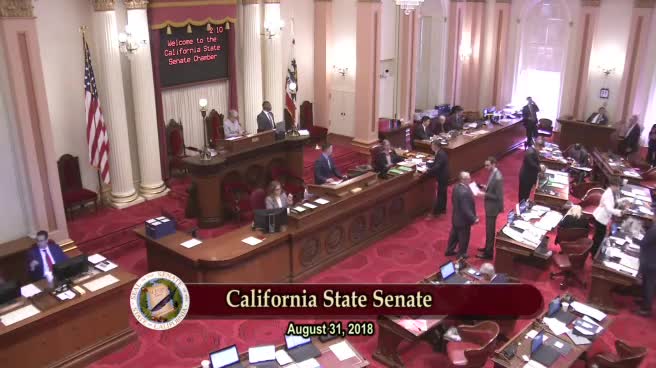 2MIN
Senate Floor
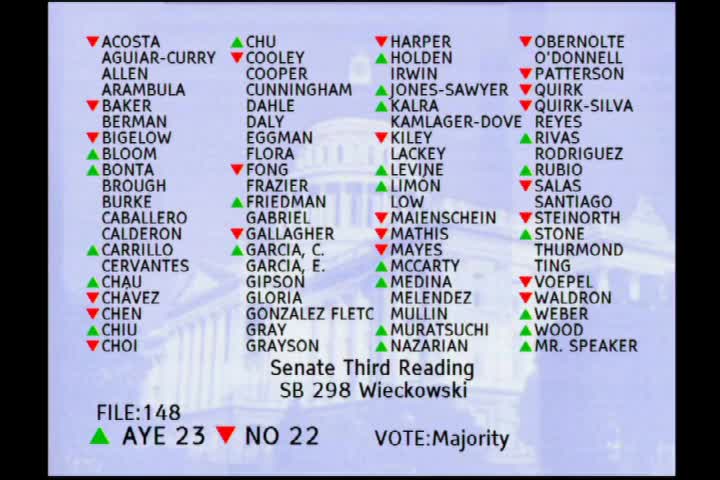 2MIN
Assembly Floor
 3MIN
Assembly Standing Committee on Appropriations
 3MIN
Senate Floor
 10MIN
Senate Standing Committee on Public Safety
 3MIN
Senate Standing Committee on Labor and Industrial Relations
Bill Author

Bill Co-Author(s):