SB 1442: Community pharmacies: staffing.
- Session Year: 2017-2018
- House: Senate
- Latest Version Date: 2018-09-19
Under the Pharmacy Law, the California State Board of Pharmacy licenses and regulates the practice of pharmacy and the conduct of a pharmacy in this state. The Pharmacy Law refers to various types of pharmacies, including community pharmacies, as specified. A knowing violation of that law is a crime.
This bill would prohibit a community pharmacy from requiring a pharmacist to engage in the practice of pharmacy at any time the pharmacy is open to the public, unless either another employee of the pharmacy or, if the pharmacy is located within another establishment, an employee of the establishment within which the pharmacy is located is made available to assist the pharmacist at all times. The bill would exempt certain pharmacies from its provisions, and would specify that violation of its provisions does not constitute a crime.
Under the Pharmacy Law, the California State Board of Pharmacy licenses and regulates the practice of pharmacy and the conduct of a pharmacy in this state. The Pharmacy Law refers to various types of pharmacies, including community pharmacies, as specified. A knowing violation of that law is a crime.
This bill would prohibit a community pharmacy from requiring a pharmacist to engage in the practice of pharmacy at any time the pharmacy is open to the public, unless the pharmacist is assisted at all times by either another employee of the pharmacy or, if the pharmacy is located within another establishment, an employee of the establishment within which the pharmacy is located. located is made available to assist the pharmacist at all times. The bill would exempt certain pharmacies from its provisions. By imposing a new requirement on pharmacies, the knowing violation of which would be a crime, this bill would impose a state-mandated local program. provisions, and would specify that violation of its provisions does not constitute a crime.
The California Constitution requires the state to reimburse local agencies and school districts for certain costs mandated by the state. Statutory provisions establish procedures for making that reimbursement.This bill would provide that no reimbursement is required by this act for a specified reason.Under the Pharmacy Law, the California State Board of Pharmacy licenses and regulates the practice of pharmacy and the conduct of a pharmacy in this state. A knowing violation of that law is a crime.
This bill would prohibit a pharmacy from requiring a pharmacist to engage in the practice of pharmacy at any time the pharmacy is open to the public, unless the pharmacist is assisted at all times by either another employee of the pharmacy or, if the pharmacy is located within another establishment, an employee of the establishment within which the pharmacy is located. The bill would exempt certain pharmacies from its provisions certain pharmacies that are owned and operated primarily by pharmacists, as specified. provisions. By imposing a new requirement on pharmacies, the knowing violation of which would be a crime, this bill would impose a state-mandated local program.
The California Constitution requires the state to reimburse local agencies and school districts for certain costs mandated by the state. Statutory provisions establish procedures for making that reimbursement.
This bill would provide that no reimbursement is required by this act for a specified reason.
Under the Pharmacy Law, the California State Board of Pharmacy licenses and regulates the practice of pharmacy and the conduct of a pharmacy in this state. A knowing violation of that law is a crime.
This bill would prohibit a pharmacy from requiring a pharmacist to engage in the practice of pharmacy unless the pharmacist is assisted at all times by either another employee of the pharmacy or, if the pharmacy is located within another establishment, an employee of the establishment within which the pharmacy is located. The bill would exempt from its provisions certain pharmacies that are owned and operated primarily by pharmacists, as specified. By imposing a new requirement on pharmacies, the knowing violation of which would be a crime, this bill would impose a state-mandated local program.
The California Constitution requires the state to reimburse local agencies and school districts for certain costs mandated by the state. Statutory provisions establish procedures for making that reimbursement.
This bill would provide that no reimbursement is required by this act for a specified reason.
Under the Pharmacy Law, the California State Board of Pharmacy licenses and regulates the practice of pharmacy and the conduct of a pharmacy in this state. A knowing violation of that law is a crime.
This bill would prohibit a pharmacy from requiring a pharmacist to engage in the practice of pharmacy unless the pharmacist is assisted at all times by either another employee of the pharmacy or, if the pharmacy is located within another establishment, an employee of the establishment within which the pharmacy is located. By imposing a new requirement on pharmacies, the knowing violation of which would be a crime, this bill would impose a state-mandated local program.
The California Constitution requires the state to reimburse local agencies and school districts for certain costs mandated by the state. Statutory provisions establish procedures for making that reimbursement.
This bill would provide that no reimbursement is required by this act for a specified reason.
The Legislature finds and declares as follows:
(a)Licensed pharmacists are health care professionals whose training and experience play a vital role in protecting public health.
(b)Pharmacists are legally and ethically bound to advise their patients, physicians, and other health practitioners on the selection, dosages, interactions, and side effects of medications as well as monitor the health and progress of those patients to ensure that they are using their medications safely and effectively.
(c)Pursuant to Section 4001.1 of the Business and Professions Code, the highest priority for the regulation of pharmacists is protection of the public.
(d)The duties of a pharmacist include preventing the abuse of prescription opioids. In August 2013, the California State Board of Pharmacy revoked the licenses of both a pharmacy and its pharmacist because the pharmacist failed to comply with corresponding responsibility requirements in the distribution of opioid drugs. Four patients died as a result of the pharmacists actions.
(e)The California State Board of Pharmacys decision and order in that case identifies red flags that pharmacists are legally obligated to watch for before filling such a prescription. These red flags include:
(1)Irregularities on the face of the prescription itself.
(2)Nervous patient demeanor.
(3)The age or presentation of patient (e.g., youthful patients seeking chronic pain medications).
(4)Multiple patients all with the same address.
(5)Multiple prescriptions for the same patient for duplicate therapy.
(6)Requests for early refills of prescriptions.
(7)Prescriptions written for an unusually large quantity of drugs.
(8)Prescriptions written for duplicative drug therapy.
(9)Initial prescriptions written for strong opiates.
(10)Long distances traveled from the patients home to the prescribers office or to the pharmacy.
(11)Irregularities in the prescribers qualifications in relation to the type of medications prescribed.
(12)Prescriptions that are written outside of the prescribers medical specialty.
(13)Prescriptions for medications with no logical connection to an illness or condition.
(f)In 2013, the Governor signed legislation that significantly expanded the scope of practice of pharmacists. Pharmacists are now, without a prescription from a physician, permitted to vaccinate their patients, aid them in the administration of self-administered hormonal contraception, and provide nicotine replacement products. The California State Board of Pharmacy has by regulation promulgated extensive protocols governing each of these new duties.
(g)For self-administered hormonal contraception, the California Code of Regulations requires a pharmacist to complete the following steps:
(1)Ask the patient to use and complete the self-screening tool.
(2)Review the self-screening answers and clarify responses if needed.
(3)Measure and record the patients seated blood pressure if combined hormonal contraceptives are requested or recommended.
(4)Before furnishing self-administered hormonal contraception, ensure that the patient is appropriately trained in administration of the requested or recommended contraceptive medication.
(5)When a self-administered hormonal contraceptive is furnished, provide the patient with appropriate counseling and information on the product furnished, including:
(A)Dosage.
(B)Effectiveness.
(C)Potential side effects.
(D)Safety.
(E)The importance of receiving recommended preventative health screenings.
(F)That self-administered hormonal contraception does not protect against sexually transmitted infections.
(h)For nicotine replacement products, the California Code of Regulations requires a pharmacist to complete the following steps:
(1)Review the patients current tobacco use and past quit attempts.
(2)Ask the patient screening questions related to pregnancy, heart attacks, history of heart ailments, chest pain, or nasal allergies.
(3)Review the instructions for use with every patient using a nicotine replacement product.
(i)For vaccines, Section 1746.4 of Title 16 of the California Code of Regulations requires a pharmacist to notify each patients primary care provider of any vaccine administered to the patient, or enter the appropriate information in a patient record system shared with the primary care provider, as permitted by the primary care provider.
(j)Notwithstanding the number, complexity, and importance of a pharmacists duties, including those new obligations described above, the Legislature has heard uncontradicted testimony that licensed pharmacists are left alone for indeterminate periods of time in the pharmacy and are, simultaneously, required by such establishments to perform nonpharmacist functions such as staffing cash registers and assisting consumers in purchasing prescriptions, groceries, and other nonpharmacy goods. Survey information of pharmacists working in pharmacies reinforces the testimony.
(k)Staffing inadequacies like these interfere with the professional responsibilities of licensed pharmacists, including those requiring time and professional judgment listed above, and pose a risk to the public health because it leaves licensed pharmacists an insufficient amount of time to perform their licensed functions safely and lawfully, exercise their professional discretion, and comply with their legal and ethical obligations to protect the health and well-being of patients.
SEC. 2.Section 4113.5 is added to the Business and Professions Code, to read:4113.5.(a)A community pharmacy shall not require a pharmacist employee to engage in the practice of pharmacy at any time the pharmacy is open to the public, unless either another employee of the pharmacy or, if the pharmacy is located within another establishment, an employee of the establishment within which the pharmacy is located, is made available to assist the pharmacist at all times.
(b)This section shall not apply to any of the following:
(1)A hospital pharmacy, as defined in Section 4029 or 4056.
(2)A pharmacy located in a hospital facility, including, but not limited to, a building where outpatient services are provided in accordance with the hospitals license.
(3)A pharmacy owned or operated by a federal, state, local, or tribal government entity, including, but not limited to, a correctional pharmacy, a University of California pharmacy, or a pharmacy operated by the State Department of State Hospitals.
(4)A pharmacy owned by a person or persons who, collectively, control the majority of the beneficial interest in no more than four pharmacies in California.
(5)A pharmacy entirely owned and operated by a health care service plan that exclusively contracts with no more than two medical groups in the state to provide, or arrange for the provision of, professional medical services to the enrollees of the plan.
(6)A pharmacy that permits patients to receive medications at a drive-through window when both of the following conditions are met:
(A)A pharmacist is working during the times when patients may receive medication only at the drive-through window.
(B)The pharmacists employer does not require the pharmacist to retrieve items for sale to patients if the items are located outside the pharmacy. These items include, but are not limited to, items for which a prescription is not required.
(7)Any other pharmacy from which controlled substances, dangerous drugs, or dangerous devices are not furnished, sold, or dispensed at retail.
(c)A violation of subdivision (a) is not subject to subdivision (a) of Section 4321.
(d)The board shall not take action against a pharmacy for a violation of this section if both of the following apply:
(1)Another employee is unavailable to assist the pharmacist due to reasonably unanticipated circumstances, including, but not limited to, illness, injury, family emergency, or the employees termination or resignation.
(2)The pharmacy takes all reasonable action to make another employee available to assist the pharmacist.
(e)This section shall not be construed to permit an employee who is not licensed under this chapter to engage in any act for which a license is required under this chapter.
The Legislature finds and declares as follows:
(a)Licensed pharmacists are health care professionals whose training and experience play a vital role in protecting public health.
(b)Pharmacists are legally and ethically bound to advise their patients, physicians, and other health practitioners on the selection, dosages, interactions, and side effects of medications as well as monitor the health and progress of those patients to ensure that they are using their medications safely and effectively.
(c)Pursuant to Section 4001.1 of the Business and Professions Code, the highest priority for the regulation of pharmacists is protection of the public.
(d)The duties of a pharmacist include preventing the abuse of prescription opioids. In August 2013, the California State Board of Pharmacy revoked the licenses of both a pharmacy and its pharmacist because the pharmacist failed to comply with corresponding responsibility requirements in the distribution of opioid drugs. Four patients died as a result of the pharmacists actions.
(e)The California State Board of Pharmacys decision and order in that case identifies red flags that pharmacists are legally obligated to watch for before filling such a prescription. These red flags include:
(1)Irregularities on the face of the prescription itself.
(2)Nervous patient demeanor.
(3)The age or presentation of patient (e.g., youthful patients seeking chronic pain medications).
(4)Multiple patients all with the same address.
(5)Multiple prescriptions for the same patient for duplicate therapy.
(6)Requests for early refills of prescriptions.
(7)Prescriptions written for an unusually large quantity of drugs.
(8)Prescriptions written for duplicative drug therapy.
(9)Initial prescriptions written for strong opiates.
(10)Long distances traveled from the patients home to the prescribers office or to the pharmacy.
(11)Irregularities in the prescribers qualifications in relation to the type of medications prescribed.
(12)Prescriptions that are written outside of the prescribers medical specialty.
(13)Prescriptions for medications with no logical connection to an illness or condition.
(f)In 2013, the Governor signed legislation that significantly expanded the scope of practice of pharmacists. Pharmacists are now, without a prescription from a physician, permitted to vaccinate their patients, aid them in the administration of self-administered hormonal contraception, and provide nicotine replacement products. The California State Board of Pharmacy has by regulation promulgated extensive protocols governing each of these new duties.
(g)For self-administered hormonal contraception, the California Code of Regulations requires a pharmacist to complete the following steps:
(1)Ask the patient to use and complete the self-screening tool.
(2)Review the self-screening answers and clarify responses if needed.
(3)Measure and record the patients seated blood pressure if combined hormonal contraceptives are requested or recommended.
(4)Before furnishing self-administered hormonal contraception, ensure that the patient is appropriately trained in administration of the requested or recommended contraceptive medication.
(5)When a self-administered hormonal contraceptive is furnished, provide the patient with appropriate counseling and information on the product furnished, including:
(A)Dosage.
(B)Effectiveness.
(C)Potential side effects.
(D)Safety.
(E)The importance of receiving recommended preventative health screenings.
(F)That self-administered hormonal contraception does not protect against sexually transmitted infections.
(h)For nicotine replacement products, the California Code of Regulations requires a pharmacist to complete the following steps:
(1)Review the patients current tobacco use and past quit attempts.
(2)Ask the patient screening questions related to pregnancy, heart attacks, history of heart ailments, chest pain, or nasal allergies.
(3)Review the instructions for use with every patient using a nicotine replacement product.
(i)For vaccines, Section 1746.4 of Title 16 of the California Code of Regulations requires a pharmacist to notify each patients primary care provider of any vaccine administered to the patient, or enter the appropriate information in a patient record system shared with the primary care provider, as permitted by the primary care provider.
(j)Notwithstanding the number, complexity, and importance of a pharmacists duties, including those new obligations described above, the Legislature has heard uncontradicted testimony that licensed pharmacists are left alone for indeterminate periods of time in the pharmacy and are, simultaneously, required by such establishments to perform nonpharmacist functions such as staffing cash registers and assisting consumers in purchasing prescriptions, groceries, and other nonpharmacy goods. Survey information of pharmacists working in pharmacies reinforces the testimony.
(k)Staffing inadequacies like these interfere with the professional responsibilities of licensed pharmacists, including those requiring time and professional judgment listed above, and pose a risk to the public health because it leaves licensed pharmacists an insufficient amount of time to perform their licensed functions safely and lawfully, exercise their professional discretion, and comply with their legal and ethical obligations to protect the health and well-being of patients.
SEC. 2.Section 4113.5 is added to the Business and Professions Code, to read:4113.5.(a)A community pharmacy shall not require a pharmacist employee to engage in the practice of pharmacy at any time the pharmacy is open to the public, unless either another employee of the pharmacy or, if the pharmacy is located within another establishment, an employee of the establishment within which the pharmacy is located, is made available to assist the pharmacist at all times.
(b)This section shall not apply to any of the following:
(1)A hospital pharmacy, as defined in Section 4029 or 4056.
(2)A pharmacy located in a hospital facility, including, but not limited to, a building where outpatient services are provided in accordance with the hospitals license.
(3)A pharmacy owned or operated by a federal, state, local, or tribal government entity, including, but not limited to, a correctional pharmacy, a University of California pharmacy, or a pharmacy operated by the State Department of State Hospitals.
(4)A pharmacy that meets both of the following criteria:(A)The pharmacy is owned and operated by at least one or more pharmacists, as defined in Section 4036, who control the majority of the beneficial interest in, and have exclusive management and control over, the operation.(B)The pharmacist or pharmacists with the beneficial interest, management, and control, as described in subparagraph (A), have management and control of(4)A pharmacy owned by a person or persons who, collectively, control the majority of the beneficial interest in no more than four pharmacies collectively. in California.
(5)A pharmacy entirely owned and operated by a health care service plan that exclusively contracts with no more than two medical groups in the state to provide, or arrange for the provision of, professional medical services to the enrollees of the plan.
(6)A pharmacy that permits patients to receive medications at a drive-through window when both of the following conditions are met:
(A)A pharmacist is working during the times when patients may receive medication only at the drive-through window.
(B)The pharmacists employer does not require the pharmacist to retrieve items for sale to patients if the items are located outside the pharmacy. These items include, but are not limited to, items for which a prescription is not required.
(7)Any other pharmacy from which controlled substances, dangerous drugs, or dangerous devices are not furnished, sold, or dispensed at retail.
(c)A violation of subdivision (a) is not subject to subdivision (a) of Section 4321.
(d)The board shall not take action against a pharmacy for a violation of this section if both of the following apply:
(1)Another employee is unavailable to assist the pharmacist due to reasonably unanticipated circumstances, including, but not limited to, illness, injury, family emergency, or the employees termination or resignation.
(2)The pharmacy takes all reasonable action to make another employee available to assist the pharmacist.
(e)This section shall not be construed to permit an employee who is not licensed under this chapter to engage in any act for which a license is required under this chapter.
The Legislature finds and declares as follows:
(a)Licensed pharmacists are health care professionals whose training and experience play a vital role in protecting public health.
(b)Pharmacists are legally and ethically bound to advise their patients, physicians, and other health practitioners on the selection, dosages, interactions, and side effects of medications as well as monitor the health and progress of those patients to ensure that they are using their medications safely and effectively.
(c)Pursuant to Section 4001.1 of the Business and Professions Code, the highest priority for the regulation of pharmacists is protection of the public.
(d)The duties of a pharmacist include preventing the abuse of prescription opioids. In August 2013, the California State Board of Pharmacy revoked the licenses of both a pharmacy and its pharmacist because the pharmacist failed to comply with corresponding responsibility requirements in the distribution of opioid drugs. Four patients died as a result of the pharmacists actions.
(e)The California State Board of Pharmacys decision and order in that case identifies red flags that pharmacists are legally obligated to watch for before filling such a prescription. These red flags include:
(1)Irregularities on the face of the prescription itself.
(2)Nervous patient demeanor.
(3)The age or presentation of patient (e.g., youthful patients seeking chronic pain medications).
(4)Multiple patients all with the same address.
(5)Multiple prescriptions for the same patient for duplicate therapy.
(6)Requests for early refills of prescriptions.
(7)Prescriptions written for an unusually large quantity of drugs.
(8)Prescriptions written for duplicative drug therapy.
(9)Initial prescriptions written for strong opiates.
(10)Long distances traveled from the patients home to the prescribers office or to the pharmacy.
(11)Irregularities in the prescribers qualifications in relation to the type of medications prescribed.
(12)Prescriptions that are written outside of the prescribers medical specialty.
(13)Prescriptions for medications with no logical connection to an illness or condition.
(f)In 2013, the Governor signed legislation that significantly expanded the scope of practice of pharmacists. Pharmacists are now, without a prescription from a physician, permitted to vaccinate their patients, aid them in the administration of self-administered hormonal contraception, and provide nicotine replacement products. The California State Board of Pharmacy has by regulation promulgated extensive protocols governing each of these new duties.
(g)For self-administered hormonal contraception, the California Code of Regulations requires a pharmacist to complete the following steps:
(1)Ask the patient to use and complete the self-screening tool.
(2)Review the self-screening answers and clarify responses if needed.
(3)Measure and record the patients seated blood pressure if combined hormonal contraceptives are requested or recommended.
(4)Before furnishing self-administered hormonal contraception, ensure that the patient is appropriately trained in administration of the requested or recommended contraceptive medication.
(5)When a self-administered hormonal contraceptive is furnished, provide the patient with appropriate counseling and information on the product furnished, including:
(A)Dosage.
(B)Effectiveness.
(C)Potential side effects.
(D)Safety.
(E)The importance of receiving recommended preventative health screenings.
(F)That self-administered hormonal contraception does not protect against sexually transmitted infections.
(h)For nicotine replacement products, the California Code of Regulations requires a pharmacist to complete the following steps:
(1)Review the patients current tobacco use and past quit attempts.
(2)Ask the patient screening questions related to pregnancy, heart attacks, history of heart ailments, chest pain, or nasal allergies.
(3)Review the instructions for use with every patient using a nicotine replacement product.
(i)For vaccines, Section 1746.4 of Title 16 of the California Code of Regulations requires a pharmacist to notify each patients primary care provider of any vaccine administered to the patient, or enter the appropriate information in a patient record system shared with the primary care provider, as permitted by the primary care provider.
(j)Notwithstanding the number, complexity, and importance of a pharmacists duties, including those new obligations described above, the Legislature has heard uncontradicted testimony that licensed pharmacists are left alone for indeterminate periods of time in the pharmacy and are, simultaneously, required by such establishments to perform nonpharmacist functions such as staffing cash registers and assisting consumers in purchasing prescriptions, groceries, and other nonpharmacy goods. Survey information of pharmacists working in pharmacies reinforces the testimony.
(k)Staffing inadequacies like these interfere with the professional responsibilities of licensed pharmacists, including those requiring time and professional judgment listed above, and pose a risk to the public health because it leaves licensed pharmacists an insufficient amount of time to perform their licensed functions safely and lawfully, exercise their professional discretion, and comply with their legal and ethical obligations to protect the health and well-being of patients.
SEC. 2.Section 4113.5 is added to the Business and Professions Code, to read:4113.5.(a)A community pharmacy shall not require a pharmacist employee to engage in the practice of pharmacy at any time the pharmacy is open to the public, unless either another employee of the pharmacy or, if the pharmacy is located within another establishment, an employee of the establishment within which the pharmacy is located, is made available to assist the pharmacist at all times.
(b)This section shall not apply to any of the following:
(1)A hospital pharmacy, as defined in Section 4029. 4029 or 4056.
(2)A pharmacy located in a hospital facility, including, but not limited to, a building where outpatient services are provided in accordance with the hospitals license.
(2)(3)A pharmacy owned or operated by a federal, state, local, or tribal government entity, including, but not limited to, a correctional pharmacy, a University of California pharmacy, or a pharmacy operated by the State Department of State Hospitals.
(3)(4)A pharmacy that meets both of the following criteria:
(A)The pharmacy is owned and operated by at least one or more pharmacists, as defined in Section 4036, who control the majority of the beneficial interest in, and have exclusive management and control over, the operation.
(B)The pharmacist or pharmacists with the beneficial interest, management, and control, as described in subparagraph (A), have management and control of no more than four pharmacies collectively.
(4)(5)A pharmacy entirely owned and operated by a health care service plan that exclusively contracts with no more than two medical groups in the state to provide, or arrange for the provision of, professional medical services to the enrollees of the plan.
(5)(6)A pharmacy that permits patients to receive medications at a drive-through window when both of the following conditions are met:
(A)A pharmacist is working during the times when patients may receive medication only at the drive-through window.
(B)The pharmacists employer does not require the pharmacist to retrieve items for sale to patients if the items are located outside the pharmacy. These items include, but are not limited to, items for which a prescription is not required.
(6)(7)Any other pharmacy from which controlled substances, dangerous drugs, or dangerous devices are not furnished, sold, or dispensed at retail.
(c)A violation of subdivision (a) is not subject to subdivision (a) of Section 4321.
(d)The board shall not take action against a pharmacy for a violation of this section if both of the following apply:
(1)Another employee is unavailable to assist the pharmacist due to reasonably unanticipated circumstances, including, but not limited to, illness, injury, family emergency, or the employees termination or resignation.
(2)The pharmacy takes all reasonable action to make another employee available to assist the pharmacist.
(e)This section shall not be construed to permit an employee who is not licensed under this chapter to engage in any act for which a license is required under this chapter.
The Legislature finds and declares as follows:
(a)Licensed pharmacists are health care professionals whose training and experience play a vital role in protecting public health.
(b)Pharmacists are legally and ethically bound to advise their patients, physicians, and other health practitioners on the selection, dosages, interactions, and side effects of medications as well as monitor the health and progress of those patients to ensure that they are using their medications safely and effectively.
(c)Pursuant to Section 4001.1 of the Business and Professions Code, the highest priority for the regulation of pharmacists is protection of the public.
(d)The duties of a pharmacist include preventing the abuse of prescription opioids. In August 2013, the California State Board of Pharmacy revoked the licenses of both a pharmacy and its pharmacist because the pharmacist failed to comply with corresponding responsibility requirements in the distribution of opioid drugs. Four patients died as a result of the pharmacists actions.
(e)The California State Board of Pharmacys decision and order in that case identifies red flags that pharmacists are legally obligated to watch for before filling such a prescription. These red flags include:
(1)Irregularities on the face of the prescription itself.
(2)Nervous patient demeanor.
(3)The age or presentation of patient (e.g., youthful patients seeking chronic pain medications).
(4)Multiple patients all with the same address.
(5)Multiple prescriptions for the same patient for duplicate therapy.
(6)Requests for early refills of prescriptions.
(7)Prescriptions written for an unusually large quantity of drugs.
(8)Prescriptions written for duplicative drug therapy.
(9)Initial prescriptions written for strong opiates.
(10)Long distances traveled from the patients home to the prescribers office or to the pharmacy.
(11)Irregularities in the prescribers qualifications in relation to the type of medications prescribed.
(12)Prescriptions that are written outside of the prescribers medical specialty.
(13)Prescriptions for medications with no logical connection to an illness or condition.
(f)In 2013, the Governor signed legislation that significantly expanded the scope of practice of pharmacists. Pharmacists are now, without a prescription from a physician, permitted to vaccinate their patients, aid them in the administration of self-administered hormonal contraception, and provide nicotine replacement products. The California State Board of Pharmacy has by regulation promulgated extensive protocols governing each of these new duties.
(g)For self-administered hormonal contraception, the California Code of Regulations requires a pharmacist to complete the following steps:
(1)Ask the patient to use and complete the self-screening tool.
(2)Review the self-screening answers and clarify responses if needed.
(3)Measure and record the patients seated blood pressure if combined hormonal contraceptives are requested or recommended.
(4)Before furnishing self-administered hormonal contraception, ensure that the patient is appropriately trained in administration of the requested or recommended contraceptive medication.
(5)When a self-administered hormonal contraceptive is furnished, provide the patient with appropriate counseling and information on the product furnished, including:
(A)Dosage.
(B)Effectiveness.
(C)Potential side effects.
(D)Safety.
(E)The importance of receiving recommended preventative health screenings.
(F)That self-administered hormonal contraception does not protect against sexually transmitted infections.
(h)For nicotine replacement products, the California Code of Regulations requires a pharmacist to complete the following steps:
(1)Review the patients current tobacco use and past quit attempts.
(2)Ask the patient screening questions related to pregnancy, heart attacks, history of heart ailments, chest pain, or nasal allergies.
(3)Review the instructions for use with every patient using a nicotine replacement product.
(i)For vaccines, Section 1746.4 of Title 16 of the California Code of Regulations requires a pharmacist to notify each patients primary care provider of any vaccine administered to the patient, or enter the appropriate information in a patient record system shared with the primary care provider, as permitted by the primary care provider.
(j)Notwithstanding the number, complexity, and importance of a pharmacists duties, including those new obligations described above, the Legislature has heard uncontradicted testimony that licensed pharmacists are left alone for indeterminate periods of time in the pharmacy and are, simultaneously, required by such establishments to perform nonpharmacist functions such as staffing cash registers and assisting consumers in purchasing prescriptions, groceries, and other nonpharmacy goods. Survey information of pharmacists working in pharmacies reinforces the testimony.
(k)Staffing inadequacies like these interfere with the professional responsibilities of licensed pharmacists, including those requiring time and professional judgment listed above, and pose a risk to the public health because it leaves licensed pharmacists an insufficient amount of time to perform their licensed functions safely and lawfully, exercise their professional discretion, and comply with their legal and ethical obligations to protect the health and well-being of patients.
SEC. 2.Section 4113.5 is added to the Business and Professions Code, to read:4113.5.(a)A community pharmacy shall not require a pharmacist employee to engage in the practice of pharmacy at any time the pharmacy is open to the public, unless the pharmacist is assisted at all times by either another employee of the pharmacy or, if the pharmacy is located within another establishment, an employee of the establishment within which the pharmacy is located. located, is made available to assist the pharmacist at all times.
(b)This section shall not apply to any of the following:
(1)A hospital pharmacy, as defined in Section 4029.
(2)A pharmacy owned or operated by a federal, state, local, or tribal government entity, including, but not limited to, a correctional pharmacy or pharmacy, a University of California pharmacy. pharmacy, or a pharmacy operated by the State Department of State Hospitals.
(3)A pharmacy that meets both of the following criteria:
(A)The pharmacy is owned and operated by at least one or more pharmacists, as defined in Section 4036, who control the majority of the beneficial interest in, and have exclusive management and control over, the operation.
(B)The pharmacist or pharmacists with the beneficial interest, management, and control, as described in subparagraph (A), have management and control of no more than four pharmacies collectively.
(4)A pharmacy entirely owned and operated by health care service plan that exclusively contracts with no more than two medical groups in the state to provide, or arrange for the provision of, professional medical services to the enrollees of the plan.
(5)A pharmacy that permits patients to receive medications at a drive-through window when both of the following conditions are met:
(A)A pharmacist is working during the times when patients may receive medication only at the drive-through window.
(B)The pharmacists employer does not require the pharmacist to retrieve items for sale to patients if the items are located outside the pharmacy. These items include, but are not limited to, items for which a prescription is not required.
(3)(6)Any other pharmacy from which controlled substances, dangerous drugs, or dangerous devices are not furnished, sold, or dispensed at retail.
(c)A pharmacy that permits patients to receive medications at a drive-through window shall not be required to comply with this section if both of the following conditions are met:(1)A pharmacist is working during the times when patients may only receive medication at the drive-through window.(2)The pharmacists employer does not require the pharmacist to retrieve items for sale to patients if the items are located outside the pharmacy. These items include, but are not limited to, items for which a prescription is not required.(d)This section shall not apply to a pharmacy that meets both of the following criteria:(1)Is owned and operated by at least one or more pharmacists, as defined in Section 4036, who control the majority of the beneficial interest in, as well as have exclusive management and control over, the operation.(2)Where the pharmacist or pharmacists with the beneficial interest, management, and control, as described in paragraph (1), have management and control of no more than four pharmacies collectively.(c)A violation of subdivision (a) is not subject to subdivision (a) of Section 4321.
(d)The board shall not take action against a pharmacy for a violation of this section if both of the following apply:
(1)Another employee is unavailable to assist the pharmacist due to reasonably unanticipated circumstances, including, but not limited to, illness, injury, family emergency, or the employees termination or resignation.
(2)The pharmacy takes all reasonable action to make another employee available to assist the pharmacist.
(e)This section shall not be construed to permit an employee who is not licensed under this chapter to engage in any act for which a license is required under this chapter.
SEC. 3.No reimbursement is required by this act pursuant to Section 6 of Article XIIIB of the California Constitution because the only costs that may be incurred by a local agency or school district will be incurred because this act creates a new crime or infraction, eliminates a crime or infraction, or changes the penalty for a crime or infraction, within the meaning of Section 17556 of the Government Code, or changes the definition of a crime within the meaning of Section 6 of Article XIIIB of the California Constitution.The Legislature finds and declares as follows:
(a)Licensed pharmacists are health care professionals whose training and experience play a vital role in protecting public health.
(b)Pharmacists are legally and ethically bound to advise their patients, physicians, and other health practitioners on the selection, dosages, interactions, and side effects of medications as well as monitor the health and progress of those patients to ensure that they are using their medications safely and effectively.
(c)Pursuant to Section 4001.1 of the Business and Professions Code, the highest priority for the regulation of pharmacists is protection of the public.
(d)The duties of a pharmacist include preventing the abuse of prescription opioids. In August 2013, the California State Board of Pharmacy revoked the licenses of both a pharmacy and its pharmacist because the pharmacist failed to comply with corresponding responsibility requirements in the distribution of opioid drugs. Four patients died as a result of the pharmacists actions.
(e)The California State Board of Pharmacys decision and order in that case identifies red flags that pharmacists are legally obligated to watch for before filling such a prescription. These red flags include:
(1)Irregularities on the face of the prescription itself.
(2)Nervous patient demeanor.
(3)The age or presentation of patient (e.g., youthful patients seeking chronic pain medications).
(4)Multiple patients all with the same address.
(5)Multiple prescriptions for the same patient for duplicate therapy.
(6)Requests for early refills of prescriptions.
(7)Prescriptions written for an unusually large quantity of drugs.
(8)Prescriptions written for duplicative drug therapy.
(9)Initial prescriptions written for strong opiates.
(10)Long distances traveled from the patients home to the prescribers office or to the pharmacy.
(11)Irregularities in the prescribers qualifications in relation to the type of medications prescribed.
(12)Prescriptions that are written outside of the prescribers medical specialty.
(13)Prescriptions for medications with no logical connection to an illness or condition.
(f)In 2013, the Governor signed legislation that significantly expanded the scope of practice of pharmacists. Pharmacists are now, without a prescription from a physician, permitted to vaccinate their patients, aid them in the administration of self-administered hormonal contraception, and provide nicotine replacement products. The California State Board of Pharmacy has by regulation promulgated extensive protocols governing each of these new duties.
(g)For self-administered hormonal contraception, the California Code of Regulations requires a pharmacist to complete the following steps:
(1)Ask the patient to use and complete the self-screening tool.
(2)Review the self-screening answers and clarify responses if needed.
(3)Measure and record the patients seated blood pressure if combined hormonal contraceptives are requested or recommended.
(4)Before furnishing self-administered hormonal contraception, ensure that the patient is appropriately trained in administration of the requested or recommended contraceptive medication.
(5)When a self-administered hormonal contraceptive is furnished, provide the patient with appropriate counseling and information on the product furnished, including:
(A)Dosage.
(B)Effectiveness.
(C)Potential side effects.
(D)Safety.
(E)The importance of receiving recommended preventative health screenings.
(F)That self-administered hormonal contraception does not protect against sexually transmitted infections.
(h)For nicotine replacement products, the California Code of Regulations requires a pharmacist to complete the following steps:
(1)Review the patients current tobacco use and past quit attempts.
(2)Ask the patient screening questions related to pregnancy, heart attacks, history of heart ailments, chest pain, or nasal allergies.
(3)Review the instructions for use with every patient using a nicotine replacement product.
(i)For vaccines, Section 1746.4 of Title 16 of the California Code of Regulations requires a pharmacist to notify each patients primary care provider of any vaccine administered to the patient, or enter the appropriate information in a patient record system shared with the primary care provider, as permitted by the primary care provider.
(j)Notwithstanding the number, complexity, and importance of a pharmacists duties, including those new obligations described above, the Legislature has heard uncontradicted testimony that licensed pharmacists are left alone for indeterminate periods of time in the pharmacy and are, simultaneously, required by such establishments to perform nonpharmacist functions such as staffing cash registers and assisting consumers in purchasing prescriptions, groceries, and other nonpharmacy goods. Survey information of pharmacists working in pharmacies reinforces the testimony.
(k)Staffing inadequacies like these interfere with the professional responsibilities of licensed pharmacists, including those requiring time and professional judgment listed above, and pose a risk to the public health because it leaves licensed pharmacists an insufficient amount of time to perform their licensed functions safely and lawfully, exercise their professional discretion, and comply with their legal and ethical obligations to protect the health and well-being of patients.
SEC. 2.Section 4113.5 is added to the Business and Professions Code, to read:4113.5.(a)A pharmacy shall not require a pharmacist employee to engage in the practice of pharmacy at any time the pharmacy is open to the public, unless the pharmacist is assisted at all times by either another employee of the pharmacy or, if the pharmacy is located within another establishment, an employee of the establishment within which the pharmacy is located. This section shall not be construed to permit an employee who is not licensed under this chapter to engage in any act for which a license is required under this chapter.
(b)This section shall not apply to any of the following:
(1)A hospital pharmacy, as defined in Section 4029.
(2)A pharmacy owned or operated by a federal, state, local, or tribal government entity, including, but not limited to, a correctional pharmacy or a University of California pharmacy.
(3)Any other pharmacy from which controlled substances, dangerous drugs, or dangerous devices are not furnished, sold, or dispensed at retail.
(c)A pharmacy that permits patients to receive medications at a drive-through window shall not be required to comply with this section if both of the following conditions are met:
(1)A pharmacist is working during the times when patients may only receive medication at the drive-through window.
(2)The pharmacists employer does not require the pharmacist to retrieve items for sale to patients if the items are located outside the pharmacy. These items include, but are not limited to, items for which a prescription is not required.
(b)(d)This section shall not apply to a pharmacy that meets both of the following criteria:
(1)Is owned and operated by at least one or more pharmacists, as defined in Section 4036, who control the majority of the beneficial interest in, as well as have exclusive management and control over, the operation.
(2)Where the pharmacist or pharmacists with the beneficial interest, management, and control, as described in paragraph (1), have management and control of no more than four pharmacies collectively.
(e)This section shall not be construed to permit an employee who is not licensed under this chapter to engage in any act for which a license is required under this chapter.
SEC. 3.No reimbursement is required by this act pursuant to Section 6 of Article XIIIB of the California Constitution because the only costs that may be incurred by a local agency or school district will be incurred because this act creates a new crime or infraction, eliminates a crime or infraction, or changes the penalty for a crime or infraction, within the meaning of Section 17556 of the Government Code, or changes the definition of a crime within the meaning of Section 6 of Article XIIIB of the California Constitution.
The Legislature finds and declares as follows:
(a)Licensed pharmacists are health care professionals whose training and experience play a vital role in protecting public health.
(b)Pharmacists are legally and ethically bound to advise their patients, physicians, and other health practitioners on the selection, dosages, interactions, and side effects of medications as well as monitor the health and progress of those patients to ensure that they are using their medications safely and effectively.
(c)Pursuant to Section 4001.1 of the Business and Professions Code, the highest priority for the regulation of pharmacists is protection of the public.
(d)The duties of a pharmacist include preventing the abuse of prescription opioids. In August 2013, the California State Board of Pharmacy revoked the licenses of both a pharmacy and its pharmacist because the pharmacist failed to comply with corresponding responsibility requirements in the distribution of opioid drugs. Four patients died as a result of the pharmacists actions.
(e)The California State Board of Pharmacys decision and order in that case identifies red flags that pharmacists are legally obligated to watch for before filling such a prescription. These red flags include:
(1)Irregularities on the face of the prescription itself.
(2)Nervous patient demeanor.
(3)The age or presentation of patient (e.g., youthful patients seeking chronic pain medications).
(4)Multiple patients all with the same address.
(5)Multiple prescriptions for the same patient for duplicate therapy.
(6)Requests for early refills of prescriptions.
(7)Prescriptions written for an unusually large quantity of drugs.
(8)Prescriptions written for duplicative drug therapy.
(9)Initial prescriptions written for strong opiates.
(10)Long distances traveled from the patients home to the prescribers office or to the pharmacy.
(11)Irregularities in the prescribers qualifications in relation to the type of medications prescribed.
(12)Prescriptions that are written outside of the prescribers medical specialty.
(13)Prescriptions for medications with no logical connection to an illness or condition.
(f)In 2013, the Governor signed legislation that significantly expanded the scope of practice of pharmacists. Pharmacists are now, without a prescription from a physician, permitted to vaccinate their patients, aid them in the administration of self-administered hormonal contraception, and provide nicotine replacement products. The California State Board of Pharmacy has by regulation promulgated extensive protocols governing each of these new duties.
(g)For self-administered hormonal contraception, the California Code of Regulations requires a pharmacist to complete the following steps:
(1)Ask the patient to use and complete the self-screening tool.
(2)Review the self-screening answers and clarify responses if needed.
(3)Measure and record the patients seated blood pressure if combined hormonal contraceptives are requested or recommended.
(4)Before furnishing self-administered hormonal contraception, ensure that the patient is appropriately trained in administration of the requested or recommended contraceptive medication.
(5)When a self-administered hormonal contraceptive is furnished, provide the patient with appropriate counseling and information on the product furnished, including:
(A)Dosage.
(B)Effectiveness.
(C)Potential side effects.
(D)Safety.
(E)The importance of receiving recommended preventative health screenings.
(F)That self-administered hormonal contraception does not protect against sexually transmitted infections.
(h)For nicotine replacement products, the California Code of Regulations requires a pharmacist to complete the following steps:
(1)Review the patients current tobacco use and past quit attempts.
(2)Ask the patient screening questions related to pregnancy, heart attacks, history of heart ailments, chest pain, or nasal allergies.
(3)Review the instructions for use with every patient using a nicotine replacement product.
(i)For vaccines, Section 1746.4 of Title 16 of the California Code of Regulations requires a pharmacist to notify each patient's patients primary care provider of any vaccine administered to the patent, patient, or enter the appropriate information in a patient record system shared with the primary care provider, as permitted by the primary care provider.
(j)Notwithstanding the number, complexity, and importance of a pharmacists duties, including those new obligations described above, the Legislature has heard uncontradicted testimony that licensed pharmacists are left alone for indeterminate periods of time in the pharmacy and are, simultaneously, required by such establishments to perform nonpharmacist functions such as staffing cash registers and assisting consumers in purchasing prescriptions, groceries, and other nonpharmacy goods. Survey information of pharmacists working in pharmacies reinforces the testimony.
(k)Staffing inadequacies like these interfere with the professional responsibilities of licensed pharmacists, including those requiring time and professional judgment listed above, and pose a risk to the public health because it leaves licensed pharmacists an insufficient amount of time to perform their licensed functions safely and lawfully, exercise their professional discretion, and comply with their legal and ethical obligations to protect the health and well-being of patients.
SEC. 2.Section 4113.5 is added to the Business and Professions Code, to read:4113.5.(a)A pharmacy shall not require a pharmacist employee to engage in the practice of pharmacy unless the pharmacist is assisted at all times by either another employee of the pharmacy or, if the pharmacy is located within another establishment, an employee of the establishment within which the pharmacy is located. This section shall not be construed to permit an employee who is not licensed under this chapter to engage in any act for which a license is required under this chapter.
(b)This section shall not apply to a pharmacy that meets both of the following criteria:
(1)Is owned and operated by at least one or more pharmacists, as defined in Section 4036, who control the majority of the beneficial interest in, as well as have exclusive management and control over, the operation.
(2)Where the pharmacist or pharmacists with the beneficial interest, management, and control, as described in paragraph (1), have management and control of no more than four pharmacies collectively.
SEC. 3.No reimbursement is required by this act pursuant to Section 6 of Article XIIIB of the California Constitution because the only costs that may be incurred by a local agency or school district will be incurred because this act creates a new crime or infraction, eliminates a crime or infraction, or changes the penalty for a crime or infraction, within the meaning of Section 17556 of the Government Code, or changes the definition of a crime within the meaning of Section 6 of Article XIIIB of the California Constitution.
The Legislature finds and declares as follows:
(a)Licensed pharmacists are health care professionals whose training and experience play a vital role in protecting public health.
(b)Pharmacists are legally and ethically bound to advise their patients, physicians, and other health practitioners on the selection, dosages, interactions, and side effects of medications, medications as well as monitor the health and progress of those patients to ensure that they are using their medications safely and effectively.
(c)Pursuant to Section 4001.1 of the Business and Professions Code, the highest priority for the regulation of pharmacists is protection of the public.
(d)The duties of a pharmacist include preventing the abuse of prescription opioids. In August 2013, the California State Board of Pharmacy revoked the licenses of both a pharmacy and its pharmacist because the pharmacist failed to comply with corresponding responsibility requirements in the distribution of opioid drugs. Four patients died as a result of the pharmacists actions.
(e)The California State Board of Pharmacys decision and order in that case identifies red flags that pharmacists are legally obligated to watch for before filling such a prescription. These red flags include:
(1)Irregularities on the face of the prescription itself.
(2)Nervous patient demeanor.
(3)The age or presentation of patient (e.g., youthful patients seeking chronic pain medications).
(4)Multiple patients all with the same address.
(5)Multiple prescriptions for the same patient for duplicate therapy.
(6)Requests for early refills of prescriptions.
(7)Prescriptions written for an unusually large quantity of drugs.
(8)Prescriptions written for duplicative drug therapy.
(9)Initial prescriptions written for strong opiates.
(10)Long distances traveled from the patients home to the prescribers office or to the pharmacy.
(11)Irregularities in the prescribers qualifications in relation to the type of medications prescribed.
(12)Prescriptions that are written outside of the prescribers medical specialty.
(13)Prescriptions for medications with no logical connection to an illness or condition.
(f)In 2013, the Governor signed legislation that significantly expanded the scope of practice of pharmacists. Pharmacists are now, without a prescription from a physician, permitted to vaccinate their patients, aid them in the administration of self-administered hormonal contraception, and provide nicotine replacement products. The California State Board of Pharmacy has by regulation promulgated extensive protocols governing each of these new duties.
(g)For self-administered hormonal contraception, the California Code of Regulations requires a pharmacist to complete the following steps:
(1)Ask the patient to use and complete the self-screening tool.
(2)Review the self-screening answers and clarify responses if needed.
(3)Measure and record the patients seated blood pressure if combined hormonal contraceptives are requested or recommended.
(4)Before furnishing self-administered hormonal contraception, ensure that the patient is appropriately trained in administration of the requested or recommended contraceptive medication.
(5)When a self-administered hormonal contraceptive is furnished, provide the patient with appropriate counseling and information on the product furnished, including:
(A)Dosage.
(B)Effectiveness.
(C)Potential side effects.
(D)Safety.
(E)The importance of receiving recommended preventative health screenings.
(F)That self-administered hormonal contraception does not protect against sexually transmitted infections.
(h)For nicotine replacement products, the California Code of Regulations requires a pharmacist to complete the following steps:
(a)(1)Review the patients current tobacco use and past quit attempts.
(b)(2)Ask the patient screening questions related to pregnancy, heart attacks, history of heart ailments, chest pain, or nasal allergies.
(c)(3)Review the instructions for use with every patient using a nicotine replacement product.
(i)For vaccines, Section 1746.4 of Title 16 of the California Code of Regulations requires a pharmacist to notify each patient's primary care provider of any vaccine administered to the patent, or enter the appropriate information in a patient record system shared with the primary care provider, as permitted by the primary care provider.
(j)Notwithstanding the number, complexity, and importance of a pharmacists duties, including those new obligations described above, the Legislature has heard uncontradicted testimony that licensed pharmacists are left alone for indeterminate periods of time in the pharmacy and are, simultaneously, required by such establishments to perform nonpharmacist functions such as staffing cash registers and assisting consumers in purchasing prescriptions, groceries, and other nonpharmacy goods. Survey information of pharmacists working in pharmacies reinforces the testimony.
(k)Staffing inadequacies like these interfere with the professional responsibilities of licensed pharmacists, including those requiring time and professional judgment listed above, and pose a risk to the public health because it leaves licensed pharmacists an insufficient amount of time to perform their licensed functions safely and lawfully, exercise their professional discretion, and comply with their legal and ethical obligations to protect the health and well-being of patients.
SEC. 2.Section 4113.5 is added to the Business and Professions Code, to read:4113.5.A pharmacy shall not require a pharmacist employee to engage in the practice of pharmacy unless the pharmacist is assisted at all times by either another employee of the pharmacy or, if the pharmacy is located within another establishment, an employee of the establishment within which the pharmacy is located. This section shall not be construed to permit an employee who is not licensed under this chapter to engage in any act for which a license is required under this chapter.
SEC. 3.No reimbursement is required by this act pursuant to Section 6 of Article XIIIB of the California Constitution because the only costs that may be incurred by a local agency or school district will be incurred because this act creates a new crime or infraction, eliminates a crime or infraction, or changes the penalty for a crime or infraction, within the meaning of Section 17556 of the Government Code, or changes the definition of a crime within the meaning of Section 6 of Article XIIIB of the California Constitution.
The Legislature finds and declares as follows:
(a)Licensed pharmacists are health care professionals whose training and experience play a vital role in protecting public health.
(b)Pharmacists are legally and ethically bound to advise their patients, physicians, and other health practitioners on the selection, dosages, interactions, and side effects of medications, as well as monitor the health and progress of those patients to ensure that they are using their medications safely and effectively.
(c)Pursuant to Section 4001.1 of the Business and Professions Code, the highest priority for the regulation of pharmacists is protection of the public.
(d)The duties of a pharmacist include preventing the abuse of prescription opioids. In August 2013, the California State Board of Pharmacy revoked the licenses of both a pharmacy and its pharmacist because the pharmacist failed to comply with corresponding responsibility requirements in the distribution of opioid drugs. Four patients died as a result of the pharmacists actions.
(e)The California State Board of Pharmacys decision and order in that case identifies red flags that pharmacists are legally obligated to watch for before filling such a prescription. These red flags include:
(1)Irregularities on the face of the prescription itself.
(2)Nervous patient demeanor.
(3)The age or presentation of patient (e.g., youthful patients seeking chronic pain medications).
(4)Multiple patients all with the same address.
(5)Multiple prescriptions for the same patient for duplicate therapy.
(6)Requests for early refills of prescriptions.
(7)Prescriptions written for an unusually large quantity of drugs.
(8)Prescriptions written for duplicative drug therapy.
(9)Initial prescriptions written for strong opiates.
(10)Long distances traveled from the patients home to the prescribers office or to the pharmacy.
(11)Irregularities in the prescribers qualifications in relation to the type of medications prescribed.
(12)Prescriptions that are written outside of the prescribers medical specialty.
(13)Prescriptions for medications with no logical connection to an illness or condition.
(f)In 2013, the Governor signed legislation that significantly expanded the scope of practice of pharmacists. Pharmacists are now, without a prescription from a physician, permitted to vaccinate their patients, aid them in the administration of self-administered hormonal contraception, and provide nicotine replacement products. The California State Board of Pharmacy has by regulation promulgated extensive protocols governing each of these new duties.
(g)For self-administered hormonal contraception, the California Code of Regulations requires a pharmacist to complete the following steps:
(1)Ask the patient to use and complete the self-screening tool.
(2)Review the self-screening answers and clarify responses if needed.
(3)Measure and record the patients seated blood pressure if combined hormonal contraceptives are requested or recommended.
(4)Before furnishing self-administered hormonal contraception, ensure that the patient is appropriately trained in administration of the requested or recommended contraceptive medication.
(5)When a self-administered hormonal contraceptive is furnished, provide the patient with appropriate counseling and information on the product furnished, including:
(A)Dosage.
(B)Effectiveness.
(C)Potential side effects.
(D)Safety.
(E)The importance of receiving recommended preventative health screenings.
(F)That self-administered hormonal contraception does not protect against sexually transmitted infections.
(h)For nicotine replacement products, the California Code of Regulations requires a pharmacist to complete the following steps:
(a)Review the patients current tobacco use and past quit attempts.
(b)Ask the patient screening questions related to pregnancy, heart attacks, history of heart ailments, chest pain, or nasal allergies.
(c)Review the instructions for use with every patient using a nicotine replacement product.
(i)For vaccines, Section 1746.4 of Title 16 of the California Code of Regulations requires a pharmacist to notify each patient's primary care provider of any vaccine administered to the patent, or enter the appropriate information in a patient record system shared with the primary care provider, as permitted by the primary care provider.
(j)Notwithstanding the number, complexity, and importance of a pharmacists duties, including those new obligations described above, the Legislature has heard uncontradicted testimony that licensed pharmacists are left alone for indeterminate periods of time in the pharmacy and are, simultaneously, required by such establishments to perform nonpharmacist functions such as staffing cash registers and assisting consumers in purchasing prescriptions, groceries, and other nonpharmacy goods. Survey information of pharmacists working in pharmacies reinforces the testimony.
(k)Staffing inadequacies like these interfere with the professional responsibilities of licensed pharmacists, including those requiring time and professional judgment listed above, and pose a risk to the public health because it leaves licensed pharmacists an insufficient amount of time to perform their licensed functions safely and lawfully, exercise their professional discretion, and comply with their legal and ethical obligations to protect the health and well-being of patients.
SEC. 2.Section 4113.5 is added to the Business and Professions Code, to read:4113.5.A pharmacy shall not require a pharmacist employee to engage in the practice of pharmacy unless the pharmacist is assisted at all times by either another employee of the pharmacy or, if the pharmacy is located within another establishment, an employee of the establishment within which the pharmacy is located. This section shall not be construed to permit an employee who is not licensed under this chapter to engage in any act for which a license is required under this chapter.
SEC. 3.No reimbursement is required by this act pursuant to Section 6 of Article XIIIB of the California Constitution because the only costs that may be incurred by a local agency or school district will be incurred because this act creates a new crime or infraction, eliminates a crime or infraction, or changes the penalty for a crime or infraction, within the meaning of Section 17556 of the Government Code, or changes the definition of a crime within the meaning of Section 6 of Article XIIIB of the California Constitution.
|
Date
|
Status
|
|---|---|
| Sep 19, 2018 | Chaptered by Secretary of State. Chapter 569, Statutes of 2018. |
| Sep 19, 2018 | Approved by the Governor. |
| Sep 12, 2018 | Enrolled and presented to the Governor at 5 p.m. |
| Aug 31, 2018 | Assembly amendments concurred in. (Ayes 39. Noes 0.) Ordered to engrossing and enrolling. |
| Aug 31, 2018 | In Senate. Concurrence in Assembly amendments pending. |
| Aug 31, 2018 | Read third time. Passed. Ordered to the Senate. |
| Aug 24, 2018 | Read third time and amended. |
| Aug 16, 2018 | Read second time. Ordered to third reading. |
| Aug 15, 2018 | From committee: Do pass. (Ayes 14. Noes 3.) (August 15). |
| Aug 8, 2018 | August 8 hearing postponed by committee. |
| Aug 6, 2018 | From committee with author's amendments. Read second time and amended. Re-referred to Com. on APPR. |
| Jun 21, 2018 | Read second time and amended. Re-referred to Com. on APPR. |
| Jun 20, 2018 | From committee: Do pass as amended and re-refer to Com. on APPR. (Ayes 16. Noes 1.) (June 19). |
| Jun 11, 2018 | From committee with author's amendments. Read second time and amended. Re-referred to Com. on B. & P. |
| May 17, 2018 | Referred to Com. on B. & P. |
| May 10, 2018 | In Assembly. Read first time. Held at Desk. |
| May 10, 2018 | Read third time. Passed. (Ayes 32. Noes 4.) Ordered to the Assembly. |
| May 7, 2018 | Read second time. Ordered to third reading. |
| May 3, 2018 | Read third time and amended. |
| May 1, 2018 | Read second time. Ordered to third reading. |
| Apr 30, 2018 | From committee: Be ordered to second reading pursuant to Senate Rule 28.8. |
| Apr 24, 2018 | Set for hearing April 30. |
| Apr 17, 2018 | From committee: Do pass and re-refer to Com. on APPR. (Ayes 7. Noes 1.) (April 16). Re-referred to Com. on APPR. |
| Apr 2, 2018 | From committee with author's amendments. Read second time and amended. Re-referred to Com. on B., P. & E.D. |
| Mar 8, 2018 | Referred to Com. on B., P. & E.D. |
| Feb 20, 2018 | From printer. May be acted upon on or after March 22. |
| Feb 16, 2018 | Introduced. Read first time. To Com. on RLS. for assignment. To print. |
|
Date
|
Description
|
Location
|
Votes
|
|
|---|---|---|---|---|
| Aug 31, 2018 | SB 1442 Wiener Senate Third Reading By CUNNINGHAM | Assembly Floor |
Passed |
|
| Aug 31, 2018 | Unfinished Business SB1442 Wiener et al. Concurrence | Senate Floor |
Passed |
|
| Aug 15, 2018 | Do pass. | Assembly Standing Committee on Appropriations |
Passed |
|
| Jun 19, 2018 | Do pass as amended and be re-referred to the Committee on [Appropriations] | Assembly Standing Committee on Business and Professions |
Passed |
|
| May 10, 2018 | Senate 3rd Reading SB1442 Wiener et al. | Senate Floor |
Passed |
|
| Apr 16, 2018 | Do pass, but first be re-referred to the Committee on [Appropriations] | Senate Standing Committee on Business, Professions and Economic Development |
Passed |
This list shows positions taken on this bill by organizations on the date displayed, which is linked to the original source.
Positions by individuals are not included.
|
Organization
|
Position
|
Date
|
|---|---|---|
| California Chamber Of Commerce | ** Neutral | Jun 19, 2018 |
| California Council For The Advancement Of Pharmacy | ** Support | Aug 31, 2018 |
| California Labor Federation | ** Support | Aug 31, 2018 |
| California Pharmacists Association | ** Support | Aug 31, 2018 |
| California Retailers Association | * Neutral | Jun 19, 2018 |
| California State Board of Pharmacy | ** Support | Aug 31, 2018 |
| Herself | * Support | Aug 15, 2018 |
| McHugh, Koepke & Associates | * Neutral | Jun 19, 2018 |
| National Association Of Chain Drug Stores | * Neutral | Jun 19, 2018 |
| Pharmacist | * Support | Aug 15, 2018 |
| SCIU | * Support | Apr 16, 2018 |
| United Food & Commercial Workers, Western States Council | ** Support | Aug 31, 2018 |
Office of Senate Floor Analyses (916) 651-1520 Fax: (916) 327-4478 | SB |
UNFINISHED BUSINESS
Bill No: SB 1442
:
SENATE BUS., PROF. & ECON. DEV. COMMITTEE: 7-1, 4/16/18
AYES: Hill, Dodd, Galgiani, Glazer, Hernandez, Newman, Pan
NOES: Wilk
NO VOTE RECORDED: Fuller
SENATE APPROPRIATIONS COMMITTEE: Senate Rule 28.8
SENATE FLOOR: 33-4, 5/10/18
AYES: Allen, Anderson, Atkins, Bates, Beall, Bradford, De León, Dodd, Gaines, Galgiani, Glazer, Hernandez, Hill, Hueso, Jackson, Lara, Leyva, McGuire, Mitchell, Monning, Moorlach, Morrell, Newman, Nielsen, Pan, Portantino, Roth, Skinner, Stern, Stone, Vidak, Wieckowski, Wiener
NOES: Berryhill, Cannella, Nguyen, Wilk
NO VOTE RECORDED: Fuller, Hertzberg
ASSEMBLY FLOOR: Not available
SUBJECT: Community pharmacies: staffing
SOURCE: United Food & Commercial Workers Western States Council
DIGEST:
This bill prohibits a community pharmacy from requiring a pharmacist employee to engage in the practice of pharmacy at any time the pharmacy is open to the public, unless another employee is made available to assist the pharmacist at all times.
Assembly Amendments
specify that the requirement to have another employee available to assist the pharmacist shall not apply to specified types of pharmacies including a hospital or State hospital pharmacy, correctional or University of California pharmacy, a pharmacy using a drive-through window, etc.; and make other clarifying and technical changes.
Existing law:
- Establishes the Board of Pharmacy (Board) to administer and regulate the Pharmacy Law. (Business and Professions Code (BPC) § 4001)
- Defines "pharmacy" as an area, place, or premises licensed by the Board in which the profession of pharmacy is practiced and where prescriptions are compounded. (BPC § 4037)
- Defines "hospital pharmacy" as a pharmacy, licensed by the Board, located within any licensed hospital, institution, or establishment that maintains and operates organized facilities for the diagnosis, care, and treatment of human illnesses to which persons may be admitted for overnight stay.
(BPC § 4029) - Defines "correctional pharmacy" as a pharmacy, licensed by the Board, located within a correctional facility for the purpose of providing pharmaceutical care to inmates of the correctional facility. (BPC § 4021.5)
- Defines "pharmacist" as a natural person to whom a license has been issued by the Board which is required for any person to manufacture, compound, furnish, sell, or dispense a dangerous drug or dangerous device, or to dispense or compound a prescription. (BPC §§ 4036, 4051)
- Authorizes a pharmacist to do all of the following, among other permissible activities, as part of his or her scope of practice: (BPC §§ 4052, 4052.01)
- Provide consultation, training, and education to patients about drug therapy, disease management, and disease prevention.
- Provide professional information, including clinical or pharmacological information, advice, or consultation to other health care professionals, and participate in multidisciplinary review of patient progress, including appropriate access to medical records.
- Administer immunizations pursuant to a protocol with a prescriber.
- Administer drugs and biological products that have been ordered by a prescriber.
- Furnish naloxone hydrochloride in accordance with standardized procedures or protocols.
- Subjects a licensed pharmacist to formal discipline for unprofessional conduct that includes acts or omissions that involve the following: (BPC § 4306.5)
- Inappropriate exercise of his or her education, training, or experience as a pharmacist.
- The failure to exercise or implement his or her best professional judgment or corresponding responsibility with regard to the dispensing or furnishing of controlled substances, dangerous drugs, or dangerous devices, or the provision of services.
- The failure to consult appropriate patient, prescription, and other records pertaining to the performance of any pharmacy function.
- The failure to fully maintain and retain appropriate patient-specific information pertaining to the performance of any pharmacy function.
This bill:
- Finds and declares the many professional responsibilities, legal duties, and public expectations of pharmacists and that staffing inadequacies interfere a pharmacist's ability to comply with these obligations and protect the health and well-being of their patients.
- Prohibits a community pharmacy from requiring a pharmacist employee to engage in the practice of pharmacy at any time the pharmacy is open to the public unless either another employee of the pharmacy or, if the pharmacy is located within another establishment, an employee of the establishment within which the pharmacy is located, is made available to assist the pharmacist at all times.
- Exempts from the minimum staffing requirement all of the following:
- A hospital pharmacy or pharmacy located in a hospital facility.
- A pharmacy owned or operated by a federal, state, local, or tribal government entity, including but not limited to a correctional pharmacy, a University of California pharmacy, or a pharmacy operated by the Department of State Hospitals.
- A pharmacy owned by a person or persons who, collectively, control the majority of the beneficial interest in no more than four pharmacies in California
- A pharmacy entirely owned and operated by a health care service plan that exclusively contracts with no more than two medical groups in the state to provide, or arrange for the provision of, professional medical services to the enrollees of the plan.
- A pharmacy that permits patients to receive medications at a drive-through window when the pharmacist is working during times when patients may only receive medication at the drive-through window and the pharmacist's employer does not require the pharmacist to retrieve items for sale to patients if the items are located outside the pharmacy.
- Any other pharmacy from which controlled substances, dangerous drugs, or dangerous devices are not furnished, sold, or dispensed at retail.
- Clarifies that the provisions of law enacted by the bill shall not be construed to permit an employee who is not licensed to engage in any act for which a license is required under the Pharmacy Law.
- States that a violation of the provisions of law enacted by the bill does not constitute a misdemeanor.
- Prohibits the Board from taking action against a pharmacy for violations of the bill when another employee is unavailable to assist the pharmacist due to reasonably unanticipated circumstances (including but not limited to, illness, injury, family emergency, or the employee's termination or resignation) and the pharmacy takes all reasonable action to make another employee available to assist the pharmacist.
Background
Under current law, licensed pharmacists are authorized to provide pharmacy services in a variety of practice settings, including hospitals, correctional institutions, and community pharmacies. Many pharmacy services are offered in retail settings such as grocery stores, drug stores, and other businesses where other goods and services are offered in addition to the pharmacy. These retail pharmacy settings sometimes offer the services of a pharmacist as a less central component of the overall business; however, these stores are often cited as critical to ensuring access to prescription medication in rural communities.
Pharmacists represented by the sponsor of this bill, the United Food & Commercial Workers, Western States Council, argue that because many community pharmacies are not the primary focus of the business where the pharmacy is located, it is common for a pharmacist to be the only employee assigned to the pharmacy area. According to a survey cited by the sponsor, 83% of pharmacists report being left alone during the workday for an average period of four hours. Within this population, the survey indicates that a high percentage of pharmacist’s state that they do not have enough time to fulfill their professional functions to the extent they believe necessary. The pharmacists represented by the sponsor explain that instead of providing their core pharmacy services, much of their time is instead spent performing clerical tasks and performing non-pharmacy activities on behalf of the business.
Statute authorizes an unlicensed employee to provide purely clerical assistance to a pharmacist, and for a pharmacy technician licensed by the Board to assist a pharmacist with a number of more sensitive pharmacy service activities. The law imposes a strict cap on the number of pharmacy technicians who may be assigned to assist a pharmacist; a single pharmacist may be assisted by no more than a single pharmacy technician. Many community pharmacy owners believe that this restrictive law, referred to as the "pharmacist/pharmacy technician ratio," frequently results in inadequate staff support for pharmacists and an inability for some community pharmacies to adequately meet the demands of their patients. Several efforts to increase this ratio over the years have failed to pass.
Meanwhile, while the overall cap of how many pharmacy technicians may be assigned to assist a pharmacist remains at a 1:1 ratio, there is no minimum for what kind of support a pharmacist in a community pharmacy must receive. This bill seeks to address this issue by requiring most pharmacies located in a retail setting to provide a pharmacist employee with at least one additional employee to assist them. This bill does not require the additional employee to be a pharmacy technician or other licensee—the requirement could be met through the assignment of a clerk or other employee of the pharmacy or business where the pharmacy is located. However, the bill would ensure that a pharmacist could focus on licensed services instead of the performance of purely clerical tasks, and could step away from the pharmacy without having to shut down the entire pharmacy department during his or her absence.
FISCAL EFFECT: Appropriation: Fiscal Com.: Local:
According to the Assembly Appropriations Committee, minor and absorbable costs to the Board.
United Food & Commercial Workers, Western States Council (source)
California Council for the Advancement of Pharmacy
California Labor Federation
California Pharmacists Association
California State Board of Pharmacy
OPPOSITION: (Verified 8/28/18)
None received
ARGUMENTS IN SUPPORT: The California Labor Federation (CLF) writes in support of this measure stating that the bill “will ensure that pharmacists can perform their duties in a safe and effective manner without distraction or disruption. Calling pharmacists “a vital part of our health care system,” CLF refers to recent expansions in a pharmacist’s scope of practice and argues that leaving pharmacists alone for long periods of time, pharmacists “jeopardizes the ability of pharmacists to adequately focus on the most important – and often dangerous – aspects of their professions.” CLF believes that providing an additional employee would “allow pharmacists to pay attention to their primary duties.”
The California Pharmacists Association (CPhA) also supports the bill. CPhA references a pharmacist’s corresponding responsibility to ensure the safety of their patients, to whom they often dispense dangerous prescription drugs. CPhA argues that “pharmacists are clinicians, whose primary focus must be on the patient. Requiring them to serve in any other role is detrimental to their patients.”
8/31/18 13:08:09
**** END ****
SENATE THIRD READING
STR Bill Id:SB 1442
Author:(Wiener and Stone)
As Amended Ver:August 24, 2018
Majority vote
SENATE VOTE: 33-4
Committee | Votes | Ayes | Noes |
Business & Professions | 16-1 | Low, Baker, Bloom, Chen, Chiu, Cunningham, Eggman, Fong, Gipson, Grayson, Holden, Irwin, McCarty, Medina, Mullin, Ting | Obernolte |
Appropriations | 14-3 | Gonzalez Fletcher, Bloom, Bonta, Brough, Calderon, Carrillo, Chau, Eggman, Fong, Friedman, Eduardo Garcia, Nazarian, Quirk, Reyes | Bigelow, Gallagher, Obernolte |
SUMMARY: Prohibits a community pharmacy from requiring a pharmacist employee to engage in the practice of pharmacy at any time the pharmacy is open to the public, unless another employee is made available to assist the pharmacist at all times. Specifically, this bill:
- Finds and declares the many professional responsibilities, legal duties, and public expectations of pharmacists and that staffing inadequacies interfere a pharmacist’s ability to comply with these obligations and protect the health and well-being of their patients.
- Prohibits a community pharmacy from requiring a pharmacist employee to engage in the practice of pharmacy at any time the pharmacy is open to the public unless either another employee of the pharmacy or, if the pharmacy is located within another establishment, an employee of the establishment within which the pharmacy is located, is made available to assist the pharmacist at all times.
- Exempts from the minimum staffing requirement all of the following:
- A hospital pharmacy or pharmacy located in a hospital facility.
- A pharmacy owned or operated by a federal, state, local, or tribal government entity, including but not limited to a correctional pharmacy, a University of California pharmacy, or a pharmacy operated by the Department of State Hospitals.
- Any other pharmacy from which controlled substances, dangerous drugs, or dangerous devices are not furnished, sold, or dispensed at retail.
- A pharmacy entirely owned and operated by a health care service plan that exclusively contracts with no more than two medical groups in the state to provide, or arrange for the provision of, professional medical services to the enrollees of the plan.
- A pharmacy that is owned by a person or persons who, collectively, control the majority of the beneficial interest in no more than four pharmacies in California.
- A pharmacy that permits patients to receive medications at a drive-through window when the pharmacist is working during times when patients may only receive medication at the drive-through window and the pharmacist’s employer does not require the pharmacist to retrieve items for sale to patients if the items are located outside the pharmacy.
- A pharmacy that is owned and operated by at least one or more pharmacists who have management and control of no more than four pharmacies collectively.
- Clarifies that the provisions of law enacted by the bill shall not be construed to permit an employee who is not licensed to engage in any act for which a license is required under the Pharmacy Law.
- States that a violation of the provisions of law enacted by the bill does not constitute a misdemeanor.
- Prohibits the Board of Pharmacy from taking action against a pharmacy for violations of the bill when another employee is unavailable to assist the pharmacist due to reasonably unanticipated circumstances (including but not limited to, illness, injury, family emergency, or the employee’s termination or resignation) and the pharmacy takes all reasonable action to make another employee available to assist the pharmacist.
EXISTING LAW:
- Establishes the Board of Pharmacy (Board) to administer and regulate the Pharmacy Law. (Business and Professions Code Section (BPC) 4001)
- Defines "pharmacy" as an area, place, or premises licensed by the board in which the profession of pharmacy is practiced and where prescriptions are compounded. (BPC 4037)
- Defines "hospital pharmacy" as a pharmacy, licensed by the Board, located within any licensed hospital, institution, or establishment that maintains and operates organized facilities for the diagnosis, care, and treatment of human illnesses to which persons may be admitted for overnight stay. (BPC 4029)
- Defines "correctional pharmacy" as a pharmacy, licensed by the Board, located within a correctional facility for the purpose of providing pharmaceutical care to inmates of the correctional facility. (BPC 4021.5)
- Defines "pharmacist" as a natural person to whom a license has been issued by the Board which is required for any person to manufacture, compound, furnish, sell, or dispense a dangerous drug or dangerous device, or to dispense or compound a prescription. (BPC 4036 and BPC 4051)
- Authorizes a pharmacist to do all of the following, among other permissible activities, as part of his or her scope of practice:
- Provide consultation, training, and education to patients about drug therapy, disease management, and disease prevention.
- Provide professional information, including clinical or pharmacological information, advice, or consultation to other health care professionals, and participate in multidisciplinary review of patient progress, including appropriate access to medical records.
- Administer immunizations pursuant to a protocol with a prescriber.
- Administer drugs and biological products that have been ordered by a prescriber.
- Furnish naloxone hydrochloride in accordance with standardized procedures or protocols.
(BPC 4052; BPC 4052.01)
- Subjects a licensed pharmacist to formal discipline for unprofessional conduct that includes acts or omissions that involve the following:
- Inappropriate exercise of his or her education, training, or experience as a pharmacist.
- The failure to exercise or implement his or her best professional judgment or corresponding responsibility with regard to the dispensing or furnishing of controlled substances, dangerous drugs, or dangerous devices, or the provision of services.
- The failure to consult appropriate patient, prescription, and other records pertaining to the performance of any pharmacy function.
- The failure to fully maintain and retain appropriate patient-specific information pertaining to the performance of any pharmacy function.
(BPC 4306.5)
FISCAL IMPACT: According to the Assembly Committee on Appropriations, minor and absorbable costs to the Board.
COMMENTS:
Purpose. This bill is sponsored by the United Food & Commercial Workers, Western States Council (UFCW). According to the author:
Recent legislative and administrative actions have assigned California pharmacists extensive new responsibilities, including counseling patients, providing vaccinations, and monitoring drug sales for signs of opioid abuse. Unfortunately, pharmacy staffing levels have not grown alongside the scope of practice. As a result, many pharmacists are left alone in the pharmacy for long periods of time or even all day, unable to meet all of their obligations in a safe and effective manner while simultaneously managing the operation of the pharmacy. Senate Bill 1442 would require that a chain pharmacy always has at least one other employee present to assist the pharmacist, so that they are able to take the time necessary to work with and provide guidance to patients as required by law.
Background. Under current law, licensed pharmacists are authorized to provide pharmacy services in a variety of practice settings, including hospitals, correctional institutions, and community pharmacies. Many pharmacy services are offered in retail settings such as grocery stores, drug stores, and other businesses where other goods and services are offered in addition to the pharmacy. These retail pharmacy settings sometimes offer the services of a pharmacist as a less central component of the overall business; however, these stores are often cited as critical to ensuring access to prescription medication in rural communities.
Pharmacists represented by the sponsor of this bill argue that because many community pharmacies are not the primary focus of the business where the pharmacy is located, it is common for a pharmacist to be the only employee assigned to the pharmacy area. According to a survey cited by the sponsor, 83% of pharmacists report being left alone during the workday for an average period of four hours. Within this population, the survey indicates that a high percentage of pharmacists state that they do not have enough time to fulfill their professional functions to the extent they believe necessary. The pharmacists represented by the sponsor explain that instead of providing their core pharmacy services, much of their time is instead spent performing clerical tasks and performing non-pharmacy activities on behalf of the business.
Statute authorizes an unlicensed employee to provide purely clerical assistance to a pharmacist, and for a pharmacy technician licensed by the Board to assist a pharmacist with a number of more sensitive pharmacy service activities. The law imposes a strict cap on the number of pharmacy technicians who may be assigned to assist a pharmacist; a single pharmacist may be assisted by no more than a single pharmacy technician. Many community pharmacy owners believe that this restrictive law, referred to as the "pharmacist/pharmacy technician ratio," frequently results in inadequate staff support for pharmacists and an inability for some community pharmacies to adequately meet the demands of their patients. Several efforts to increase this ratio over the years have failed to pass.
Meanwhile, while the overall cap of how many pharmacy technicians may be assigned to assist a pharmacist remains at a 1:1 ratio, there is no minimum for what kind of support a pharmacist in a community pharmacy must receive. This bill seeks to address this issue by requiring most pharmacies located in a retail setting to provide a pharmacist employee with at least one additional employee to assist them. This bill does not require the additional employee to be a pharmacy technician or other licensee – the requirement could be met through the assignment of a clerk or other employee of the pharmacy or business where the pharmacy is located. However, this bill would ensure that a pharmacist could focus on licensed services instead of the performance of purely clerical tasks, and could step away from the pharmacy without having to shut down the entire pharmacy department during his or her absence.
Analysis Prepared by: Robert Sumner / B. & P. / (916) 319-3301 FN: 0004659
SENATE THIRD READING
STR Bill Id:SB 1442
Author:(Wiener and Stone)
As Amended Ver:August 6, 2018
Majority vote
SENATE VOTE: 33-4
Committee | Votes | Ayes | Noes |
Business & Professions | 16-1 | Low, Baker, Bloom, Chen, Chiu, Cunningham, Eggman, Fong, Gipson, Grayson, Holden, Irwin, McCarty, Medina, Mullin, Ting | Obernolte |
Appropriations | 14-3 | Gonzalez Fletcher, Bloom, Bonta, Brough, Calderon, Carrillo, Chau, Eggman, Fong, Friedman, Eduardo Garcia, Nazarian, Quirk, Reyes | Bigelow, Gallagher, Obernolte |
SUMMARY: Prohibits a community pharmacy from requiring a pharmacist employee to engage in the practice of pharmacy at any time the pharmacy is open to the public, unless another employee is made available to assist the pharmacist at all times. Specifically, this bill:
- Finds and declares the many professional responsibilities, legal duties, and public expectations of pharmacists and that staffing inadequacies interfere a pharmacist's ability to comply with these obligations and protect the health and well-being of their patients.
- Prohibits a community pharmacy from requiring a pharmacist employee to engage in the practice of pharmacy at any time the pharmacy is open to the public unless either another employee of the pharmacy or, if the pharmacy is located within another establishment, an employee of the establishment within which the pharmacy is located, is made available to assist the pharmacist at all times.
- Exempts from the minimum staffing requirement all of the following:
- A hospital pharmacy or pharmacy located in a hospital facility.
- A pharmacy owned or operated by a federal, state, local, or tribal government entity, including but not limited to a correctional pharmacy, a University of California pharmacy, or a pharmacy operated by the Department of State Hospitals.
- Any other pharmacy from which controlled substances, dangerous drugs, or dangerous devices are not furnished, sold, or dispensed at retail.
- A pharmacy entirely owned and operated by a health care service plan that exclusively contracts with no more than two medical groups in the state to provide, or arrange for the provision of, professional medical services to the enrollees of the plan.
- A pharmacy that is owned and operated by at least one or more pharmacists who have management and control of no more than four pharmacies collectively.
- A pharmacy that permits patients to receive medications at a drive-through window when the pharmacist is working during times when patients may only receive medication at the drive-through window and the pharmacist's employer does not require the pharmacist to retrieve items for sale to patients if the items are located outside the pharmacy.
- A pharmacy that is owned and operated by at least one or more pharmacists who have management and control of no more than four pharmacies collectively.
- Clarifies that the provisions of law enacted by the bill shall not be construed to permit an employee who is not licensed to engage in any act for which a license is required under the Pharmacy Law.
- States that a violation of the provisions of law enacted by the bill does not constitute a misdemeanor.
- Prohibits the Board of Pharmacy from taking action against a pharmacy for violations of the bill when another employee is unavailable to assist the pharmacist due to reasonably unanticipated circumstances (including but not limited to, illness, injury, family emergency, or the employee's termination or resignation) and the pharmacy takes all reasonable action to make another employee available to assist the pharmacist.
EXISTING LAW:
- Establishes the Board of Pharmacy (Board) to administer and regulate the Pharmacy Law. (Business and Professions Code (BPC) Section 4001)
- Defines "pharmacy" as an area, place, or premises licensed by the board in which the profession of pharmacy is practiced and where prescriptions are compounded. (BPC Section 4037)
- Defines "hospital pharmacy" as a pharmacy, licensed by the Board, located within any licensed hospital, institution, or establishment that maintains and operates organized facilities for the diagnosis, care, and treatment of human illnesses to which persons may be admitted for overnight stay. (BPC Section 4029)
- Defines "correctional pharmacy" as a pharmacy, licensed by the Board, located within a correctional facility for the purpose of providing pharmaceutical care to inmates of the correctional facility. (BPC Section 4021.5)
- Defines "pharmacist" as a natural person to whom a license has been issued by the Board which is required for any person to manufacture, compound, furnish, sell, or dispense a dangerous drug or dangerous device, or to dispense or compound a prescription. (BPC Section 4036; BPC Section 4051)
- Authorizes a pharmacist to do all of the following, among other permissible activities, as part of his or her scope of practice:
- Provide consultation, training, and education to patients about drug therapy, disease management, and disease prevention.
- Provide professional information, including clinical or pharmacological information, advice, or consultation to other health care professionals, and participate in multidisciplinary review of patient progress, including appropriate access to medical records.
- Administer immunizations pursuant to a protocol with a prescriber.
- Administer drugs and biological products that have been ordered by a prescriber.
- Furnish naloxone hydrochloride in accordance with standardized procedures or protocols.
(BPC Section 4052; BPC Section 4052.01)
- Subjects a licensed pharmacist to formal discipline for unprofessional conduct that includes acts or omissions that involve the following:
- Inappropriate exercise of his or her education, training, or experience as a pharmacist.
- The failure to exercise or implement his or her best professional judgment or corresponding responsibility with regard to the dispensing or furnishing of controlled substances, dangerous drugs, or dangerous devices, or the provision of services.
- The failure to consult appropriate patient, prescription, and other records pertaining to the performance of any pharmacy function.
- The failure to fully maintain and retain appropriate patient-specific information pertaining to the performance of any pharmacy function.
(BPC Section 4306.5)
FISCAL IMPACT: According to the Assembly Committee on Appropriations, minor and absorbable costs to the Board.
COMMENTS:
Purpose. This bill is sponsored by the United Food & Commercial Workers, Western States Council (UFCW). According to the author:
Recent legislative and administrative actions have assigned California pharmacists extensive new responsibilities, including counseling patients, providing vaccinations, and monitoring drug sales for signs of opioid abuse. Unfortunately, pharmacy staffing levels have not grown alongside the scope of practice. As a result, many pharmacists are left alone in the pharmacy for long periods of time or even all day, unable to meet all of their obligations in a safe and effective manner while simultaneously managing the operation of the pharmacy. Senate Bill 1442 would require that a chain pharmacy always has at least one other employee present to assist the pharmacist, so that they are able to take the time necessary to work with and provide guidance to patients as required by law.
Background. Under current law, licensed pharmacists are authorized to provide pharmacy services in a variety of practice settings, including hospitals, correctional institutions, and community pharmacies. Many pharmacy services are offered in retail settings such as grocery stores, drug stores, and other businesses where other goods and services are offered in addition to the pharmacy. These retail pharmacy settings sometimes offer the services of a pharmacist as a less central component of the overall business; however, these stores are often cited as critical to ensuring access to prescription medication in rural communities.
Pharmacists represented by the sponsor of this bill argue that because many community pharmacies are not the primary focus of the business where the pharmacy is located, it is common for a pharmacist to be the only employee assigned to the pharmacy area. According to a survey cited by the sponsor, 83% of pharmacists report being left alone during the workday for an average period of four hours. Within this population, the survey indicates that a high percentage of pharmacists state that they do not have enough time to fulfill their professional functions to the extent they believe necessary. The pharmacists represented by the sponsor explain that instead of providing their core pharmacy services, much of their time is instead spent performing clerical tasks and performing non-pharmacy activities on behalf of the business.
Statute authorizes an unlicensed employee to provide purely clerical assistance to a pharmacist, and for a pharmacy technician licensed by the Board to assist a pharmacist with a number of more sensitive pharmacy service activities. The law imposes a strict cap on the number of pharmacy technicians who may be assigned to assist a pharmacist; a single pharmacist may be assisted by no more than a single pharmacy technician. Many community pharmacy owners believe that this restrictive law, referred to as the "pharmacist/pharmacy technician ratio," frequently results in inadequate staff support for pharmacists and an inability for some community pharmacies to adequately meet the demands of their patients. Several efforts to increase this ratio over the years have failed to pass.
Meanwhile, while the overall cap of how many pharmacy technicians may be assigned to assist a pharmacist remains at a 1:1 ratio, there is no minimum for what kind of support a pharmacist in a community pharmacy must receive. This bill seeks to address this issue by requiring most pharmacies located in a retail setting to provide a pharmacist employee with at least one additional employee to assist them. This bill does not require the additional employee to be a pharmacy technician or other licensee—the requirement could be met through the assignment of a clerk or other employee of the pharmacy or business where the pharmacy is located. However, the bill would ensure that a pharmacist could focus on licensed services instead of the performance of purely clerical tasks, and could step away from the pharmacy without having to shut down the entire pharmacy department during his or her absence.
Analysis Prepared by: Robert Sumner / B. & P. / (916) 319-3301 FN: 0004033
Date of Hearing: August 15, 2018
ASSEMBLY COMMITTEE ON APPROPRIATIONS
Lorena Gonzalez Fletcher, Chair
SBPCA Bill Id:SB 1442
Author:(Wiener) – As Amended Ver:August 6, 2018
Policy Committee: | Business and Professions | Vote: | 16 - 1 |
Urgency: No State Mandated Local Program: No Reimbursable: No
SUMMARY:
This bill prohibits a community pharmacy from requiring a pharmacist to engage in the practice of pharmacy while the pharmacy is open to the public unless another employee is made available to assist the pharmacist at all times, with specified exceptions to this requirement.
FISCAL EFFECT:
Costs, if any, are expected to be minor and absorbable to the Board of Pharmacy to enforce this requirement (Pharmacy Board Contingent Fund).
COMMENTS:
- Purpose. This bill is sponsored by the United Food & Commercial Workers, Western States Council (UFCW), who state pharmacists can be left alone in the pharmacy for long periods of time or even all day, rendering them unable to meet their obligations in a safe and effective manner while simultaneously managing the operation of the pharmacy. This bill requires most retail pharmacies to always have at least one other employee present to assist the pharmacist while the pharmacy is open to the public.
- Support. This bill is supported by labor groups and pharmacists. A number of business interests opposed a prior version of the bill, but have withdrawn their opposition based on recent amendments.
Analysis Prepared by: Lisa Murawski / APPR. / (916) 319-2081
Date of Hearing:
ASSEMBLY COMMITTEE ON BUSINESS AND PROFESSIONS
Evan Low, Chair
SBPCA Bill Id:
Author:() – As Ver:
SENATE VOTE:
SUBJECT:
SUMMARY: Prohibits a community pharmacy from requiring a pharmacist employee to engage in the practice of pharmacy at any time the pharmacy is open to the public, unless the pharmacist is assisted at all times by another employee.
EXISTING LAW:
- Establishes the Board of Pharmacy (Board) to administer and regulate the Pharmacy Law. (Business and Professions Code (BPC) § 4001)
- Provides that protection of the public shall be the highest priority for the Board in exercising its licensing, regulatory, and disciplinary functions. (BPC § 4001.1)
- Authorizes the Board to adopt rules and regulations as may be necessary for the protection of the public. (BPC § 4005)
- Declares pharmacy practice to be “a dynamic, patient-oriented health service that applies a scientific body of knowledge to improve and promote patient health by means of appropriate drug use, drug-related therapy, and communication for clinical and consultative purposes” and that “pharmacy practice is continually evolving to include more sophisticated and comprehensive patient care activities.” (BPC § 4050)
- Defines “pharmacy” as an area, place, or premises licensed by the board in which the profession of pharmacy is practiced and where prescriptions are compounded. (BPC § 4037)
- Defines “hospital pharmacy” as a pharmacy, licensed by the Board, located within any licensed hospital, institution, or establishment that maintains and operates organized facilities for the diagnosis, care, and treatment of human illnesses to which persons may be admitted for overnight stay. (BPC § 4029)
- Defines “correctional pharmacy” as a pharmacy, licensed by the Board, located within a correctional facility for the purpose of providing pharmaceutical care to inmates of the correctional facility. (BPC § 4021.5)
- Defines “pharmacist” as a natural person to whom a license has been issued by the Board which is required for any person to manufacture, compound, furnish, sell, or dispense a dangerous drug or dangerous device, or to dispense or compound a prescription. (BPC § 4036; BPC § 4051)
- Authorizes a pharmacist to do all of the following, among other permissible activities, as part of his or her scope of practice:
- Provide consultation, training, and education to patients about drug therapy, disease management, and disease prevention.
- Provide professional information, including clinical or pharmacological information, advice, or consultation to other health care professionals, and participate in multidisciplinary review of patient progress, including appropriate access to medical records.
- Administer immunizations pursuant to a protocol with a prescriber.
- Administer drugs and biological products that have been ordered by a prescriber.
- Furnish naloxone hydrochloride in accordance with standardized procedures or protocols.
(BPC § 4052; BPC § 4052.01)
- Subjects a licensed pharmacist to formal discipline for unprofessional conduct that includes acts or omissions that involve the following:
- Inappropriate exercise of his or her education, training, or experience as a pharmacist.
- The failure to exercise or implement his or her best professional judgment or corresponding responsibility with regard to the dispensing or furnishing of controlled substances, dangerous drugs, or dangerous devices, or the provision of services.
- The failure to consult appropriate patient, prescription, and other records pertaining to the performance of any pharmacy function.
- The failure to fully maintain and retain appropriate patient-specific information pertaining to the performance of any pharmacy function.
(BPC § 4306.5)
- Defines “Pharmacy technician” as an individual who assists a pharmacist in a pharmacy in the performance of his or her pharmacy related duties. (BPC § 4038)
- Authorizes a pharmacy technician to perform packaging, manipulative, repetitive, or other nondiscretionary tasks only while assisting, and while under the direct supervision and control of, a pharmacist; holds the pharmacist responsible for the duties performed under his or her supervision by a technician. (BPC § 4115(a))
- Limits a pharmacy with only one pharmacist to no more than one pharmacy technician, and states that the total ratio of pharmacy technicians to any additional pharmacist shall not exceed 2:1. (BPC § 4115(f))
- Requires every pharmacy to establish a quality assurance program that shall, at a minimum, document medication errors attributable, in whole or in part, to the pharmacy or its personnel. (BPC § 4125)
- States that knowing violators of the Pharmacy Law are guilty of a misdemeanor, punishable by imprisonment, a fine, or both. (BPC § 4321(a))
THIS BILL:
- Finds and declares the many professional responsibilities, legal duties, and public expectations of pharmacists and that staffing inadequacies interfere a pharmacist’s ability to comply with these obligations and protect the health and well-being of their patients.
- Prohibits a pharmacy from requiring a pharmacist employee to engage in the practice of pharmacy at any time the pharmacy is open to the public, unless the pharmacist is assisted at all times by either another employee of the pharmacy or, if the pharmacy is located within another establishment, an employee of the establishment within which the pharmacy is located.
- Exempts from the minimum staffing requirement all of the following:
- A hospital pharmacy.
- A pharmacy owned or operated by a federal, state, local, or tribal government entity, including a correctional pharmacy or a University of California pharmacy.
- Any other pharmacy from which controlled substances, dangerous drugs, or dangerous devices are not furnished, sold, or dispensed at retail.
- A pharmacy that permits patients to receive medications at a drive-through window when the pharmacist is working during times when patients may only receive medication at the drive-through window and the pharmacist’s employer does not require the pharmacist to retrieve items for sale to patients if the items are located outside the pharmacy.
- A pharmacy that is owned and operated by at least one or more pharmacists who have management and control of no more than four pharmacies collectively.
- Clarifies that the provisions of law enacted by the bill shall not be construed to permit an employee who is not licensed to engage in any act for which a license is required under the Pharmacy Law.
FISCAL EFFECT: Pursuant to Senate Rule 28.8, negligible state costs.
COMMENTS:
Purpose. This bill is sponsored by the United Food & Commercial Workers, Western States Council (UFCW). According to the author:
Recent legislative and administrative actions have assigned California pharmacists extensive new responsibilities, including counseling patients, providing vaccinations, and monitoring drug sales for signs of opioid abuse. Unfortunately, pharmacy staffing levels have not grown alongside the scope of practice. As a result, many pharmacists are left alone in the pharmacy for long periods of time or even all day, unable to meet all of their obligations in a safe and effective manner while simultaneously managing the operation of the pharmacy. Senate Bill 1442 would require that a chain pharmacy always has at least one other employee present to assist the pharmacist, so that they are able to take the time necessary to work with and provide guidance to patients as required by law.
Background. Under current law, licensed pharmacists are authorized to provide pharmacy services in a variety of practice settings, including hospitals, correctional institutions, and community pharmacies. Many pharmacy services are offered in retail settings such as grocery stores, drug stores, and other businesses where other goods and services are offered in addition to the pharmacy. These retail pharmacy settings sometimes offer the services of a pharmacist as a less central component of the overall business; however, these stores are often cited as critical to ensuring access to prescription medication in rural communities.
Pharmacists represented by the sponsor of this bill argue that because many community pharmacies are not the primary focus of the business where the pharmacy is located, it is common for a pharmacist to be the only employee assigned to the pharmacy area. According to a survey cited by the sponsor, 83% of pharmacists report being left alone during the workday for an average period of four hours. Within this population, the survey indicates that a high percentage of pharmacists state that they do not have enough time to fulfill their professional functions to the extent they believe necessary. The pharmacists represented by the sponsor explain that instead of providing their core pharmacy services, much of their time is instead spent performing clerical tasks and performing non-pharmacy activities on behalf of the business.
Statute authorizes an unlicensed employee to provide purely clerical assistance to a pharmacist, and for a pharmacy technician licensed by the Board to assist a pharmacist with a number of more sensitive pharmacy service activities. The law imposes a strict cap on the number of pharmacy technicians who may be assigned to assist a pharmacist; a single pharmacist may be assisted by no more than a single pharmacy technician. Many community pharmacy owners believe that this restrictive law, referred to as the “pharmacist/pharmacy technician ratio,” frequently results in inadequate staff support for pharmacists and an inability for some community pharmacies to adequately meet the demands of their patients. Several efforts to increase this ratio over the years have failed to pass.
Meanwhile, while the overall cap of how many pharmacy technicians may be assigned to assist a pharmacist remains at a 1:1 ratio, there is no minimum for what kind of support a pharmacist in a community pharmacy must receive. This bill seeks to address this issue by requiring most pharmacies located in a retail setting to provide a pharmacist employee with at least one additional employee to assist them. The bill does not require the additional employee to be a pharmacy technician or other licensee—the requirement could be met through the assignment of a clerk or other employee of the pharmacy or business where the pharmacy is located. However, the bill would ensure that a pharmacist could focus on licensed services instead of the performance of purely clerical tasks, and could step away from the pharmacy without having to shut down the entire pharmacy department during his or her absence.
Current Related Legislation. AB 2859 (Caballero) would require community pharmacies to display safe storage products for sale in a place close to the pharmacy. This bill is pending in the Senate Business, Professions and Economic Development Committee.
SB 1286 (Pan) of 2018 would have increased the pharmacist/pharmacy technician ratio from 1:1 to 1:4. This bill did not receive a hearing in the Senate Business, Professions and Economic Development Committee.
Prior Related Legislation. AB 1859 (Bocanegra) of 2017 would have increased the pharmacist/pharmacy technician ratio from 1:1 to 1:4. This bill did not receive a hearing in the Assembly Appropriations Committee.
ARGUMENTS IN SUPPORT:
The California Labor Federation (Labor Fed) supports SB 1442, stating that the bill “will ensure that pharmacists can perform their duties in a safe and effective manner without distraction or disruption. Calling pharmacists “a vital part of our health care system,” Labor Fed refers to recent expansions in a pharmacist’s scope of practice and argues that leaving pharmacists alone for long periods of time, pharmacists “jeopardizes the ability of pharmacists to adequately focus on the most important – and often dangerous – aspects of their professions.” Labor Fed believes that providing an additional employee would “allow pharmacists to pay attention to their primary duties.”
The California Pharmacists Association (CPhA) also supports the bill. CPhA references a pharmacist’s corresponding responsibility to ensure the safety of their patients, to whom they often dispense dangerous prescription drugs. CPhA argues that “pharmacists are clinicians, whose primary focus must be on the patient. Requiring them to serve in any other role is detrimental to their patients.”
ARGUMENTS IN OPPOSITION:
A coalition letter in opposition to this bill was submitted by the California Retailers Association, the National Association of Chain Drug Stores, and the California Chamber of Commerce. In their oppose letter, the coalition states that while they agree with the bill’s intent “to fully support pharmacists’ ability to provide quality and timely patient access to pharmacy services,” the bill as drafted “threatens this access and does not solve the entire staffing problem for pharmacies.” The coalition argues that the term “assist” as used in the bill’s mandate is unclear and would be difficult to effectively implement. The coalition also explains how a number of unexpected staffing changes or emergencies could result in another employee reasonably being unavailable, which would be an unfair situation for which to hold a pharmacy accountable. The coalition also worries that the bill would “discourage pharmacies from providing more access to patients through 24-hour pharmacy services.” Finally, the coalition argues that the bill “does not solve the entire staffing problem in pharmacies,” as the bill fails to address the pharmacist/pharmacy technician ratio cap that continues to persist as a challenge for community pharmacies.
POLICY ISSUES:
This bill, while well-intentioned, has a number of policy issues in need of correction. First, it is not certain whether the bill has been drafted correctly to apply only to the kind of retail community pharmacies referenced in the sponsor’s arguments for the bill. The bill should be amended to further clarify precisely who would be, and wouldn’t be, required to comply with the minimum staffing mandate.
Further, it is unclear how the provision stating that a pharmacy must be “assisted at all times” by another employee should be interpreted. Is it the bill’s intent that the additional employee must be physically located alongside the pharmacist during every moment that the pharmacist is on duty? A straight reading of the bill’s language would indeed indicate that regardless of whether patient traffic at the pharmacy is active—including during late night hours or at pharmacies in low-population areas of the state—a second employee would be required to idle in the pharmacy department instead of engaging in other productive activities. The bill should be amended to clarify that while a community pharmacy should ensure that a second employee is available to assist the pharmacist when assistance is needed, he or she need not be present at all times.
It is also arguably unreasonable to hold a community pharmacy liable for failing to make a second employee in the event that an emergency or other unforeseeable event occurs. There are many situations in which a second employee may not be available, for which the pharmacy should not be held responsible by the Board. The bill should be amended to ensure this concern is resolved.
Finally, even in the event that the bill is sufficiently amended to make its provisions reasonably implementable by community pharmacies, the severity of the bill’s solution to the author’s alleged staffing problem is worthy of pause and careful consideration. By requiring all community pharmacies throughout the state to potentially hire and retain employees in order to ensure licensed pharmacists have assistance during busy periods of patient interaction, the bill would potentially discourage many community pharmacies from offering pharmacy services during off-peak hours or in less populated areas. When or where it is not financially viable to dedicate two employees to the pharmacy of a retail store, many businesses may opt to reduce the overall availability of these services. This could foreseeably result in an impact on low-income or rural parts of the state as well as potentially harm populations of Californians who rely on pharmacy services offered outside standard business hours. The bill’s author and sponsor should clearly articulate the policy needs being prioritized over these conceivable risks associated with the wide-ranging consequences of the bill.
AMENDMENTS:
- To add clarity and practicality to the bill’s language regarding the provision of assistance to pharmacists providing services at community pharmacies:
Subdivision (a) of Section 2 to should be amended to read:
A community pharmacy shall not require a pharmacist employee to engage in the practice of pharmacy at any time the pharmacy is open to the public, unless either another employee of the pharmacy or, if the pharmacy is located within another establishment, an employee of the establishment within which the pharmacy is located, is made available to assist the pharmacist at all times.
- To clarify which pharmacies must comply with the bill’s staffing minimums:
Amend subdivision (b) to contain the entirety of the applicability provisions, as follows:
This section shall not apply to any of the following:
(1) A hospital pharmacy or drug room, as defined in Section 4029.
(2) A pharmacy owned or operated by a federal, state, local, or tribal government entity, including, but not limited to, a correctional pharmacy, a University of California pharmacy, or a pharmacy operated by the Department of State Hospitals.
(3) A pharmacy that meets both of the following criteria:
(A) The pharmacy is owned and operated by at least one or more pharmacists, as defined in Section 4036, who control the majority of the beneficial interest in, as well as have exclusive management and control over, the operation.
(B) The pharmacist or pharmacists with the beneficial interest, management, and control, as described in paragraph (A), have management and control of no more than four pharmacies collectively.
(4) A pharmacy entirely owned and operated by health care service plan that exclusively contracts with no more than two medical groups in the state to provide or arrange for the provision of professional medical services to the enrollees of the plan.
(5) A pharmacy that permits patients to receive medications at a drive-through window when both of the following conditions are met:
(A) A pharmacist is working during the times when patients may only receive medication at the drive-through window.
(B) The pharmacist’s employer does not require the pharmacist to retrieve items for sale to patients if the items are located outside the pharmacy. These items include, but are not limited to, items for which a prescription is not required.
(6) Any other pharmacy from which controlled substances, dangerous drugs, or dangerous devices are not furnished, sold, or dispensed at retail.
- To provide that violations of the provisions enacted by this bill do not constitute a new crime punishable as a misdemeanor:
Insert the following as subdivision (c):
A violation of this section is not subject to subdivision (a) of Section 4321.
- To ensure that community pharmacies are not liable for failures to comply with the bill’s provisions that are the result of emergencies or other reasonably unforeseen circumstances:
Insert language as subdivision (d) to read:
The board shall not take action against a pharmacy for a violation of this section if:
(1) Another employee is unavailable to assist the pharmacist due to reasonably unanticipated circumstances, including but not limited to illness, injury, family emergency, or the employee’s termination or resignation; and
(2) The pharmacy takes all reasonable action to make another employee available to assist the pharmacist.
REGISTERED SUPPORT:
United Food & Commercial Workers, Western States Council (Sponsor)
California Labor Federation
California Pharmacists Association
California State Board of Pharmacy (Prior Version)
Consumer Federation of California
REGISTERED OPPOSITION:
California Chamber of Commerce
California Retailers Association
National Association of Chain Drug Stores
Analysis Prepared by: Robert Sumner / B. & P. / (916) 319-3301
Office of Senate Floor Analyses (916) 651-1520 Fax: (916) 327-4478 | SB |
THIRD READING
Bill No: SB 1442
:
SENATE BUS., PROF. & ECON. DEV. COMMITTEE: 7-1, 4/16/18
AYES: Hill, Dodd, Galgiani, Glazer, Hernandez, Newman, Pan
NOES: Wilk
NO VOTE RECORDED: Fuller
SENATE APPROPRIATIONS COMMITTEE: Senate Rule 28.8
SOURCE: United Food and Commercial Workers Western States Council
DIGEST:
This bill prohibits a pharmacy from requiring a pharmacist employee to engage in the practice of pharmacy unless the pharmacist is assisted at all times by either another employee of the pharmacy or, if the pharmacy is located within another establishment, an employee of the establishment within which the pharmacy is located.
Senate Floor Amendments of 5/3/18 exempt independent pharmacies, as specified, that are owned and operated exclusively by a pharmacist, from the requirements of the bill that a pharmacist employee be assisted at all times by either another employee of the pharmacy, or if the pharmacy is located within another establishment, an employee of that establishment.
Existing law:
- Establishes the California State Board of Pharmacy (Board) in the Department of Consumer Affairs to administer and enforce the Pharmacy Law, which licenses and regulates pharmacists and pharmacy technicians (PTs), among other licensees. (Business and Professions Code (BPC) § 4001 (a))
- Specifies that an “independent community pharmacy” means a pharmacy owned by a person or entity who owns no more than four pharmacies in California. (BPC 4001 (c))
- States that protection of the public shall be the highest priority for the Board in exercising its licensing, regulatory, and disciplinary functions. Whenever the protection of the public is inconsistent with other interests sought to be promoted, the protection of the public shall be paramount. (BPC § 4001.1)
- Provides that a “pharmacist” means a natural person to whom a license has been issued by the Board, as specified, except as specifically provided otherwise under the Pharmacy Law and that the holder of an unexpired and active pharmacist license issued by the Board is entitled to practice pharmacy as provided under the Pharmacy Law, within or outside a licensed pharmacy as authorized by the Pharmacy Law. (BPC § 4036)
- Provides that a “supervising pharmacy” means a licensed pharmacy located in this state that is owned and operated by a person or persons where the majority of the beneficial interest in, as well as the management and control, resides with at least one board-licensed pharmacist, as defined, that exclusively oversees the operations of a remote dispensing site pharmacy. (BPC § 4044.6)
- Authorizes a pharmacist to furnish self-administered hormonal contraceptives; perform emergency contraception drug therapy; perform skin punctures, substitute a drug product with the same active ingredients of equivalent strength; furnish naloxone hydrochloride, nicotine replacement products, and prescriptions not requiring a diagnosis that are recommended by the federal Centers for Disease Control and Prevention for individuals travelling outside the United States; order and interpret tests for the purpose of monitoring and managing the efficacy and toxicity of drug therapies; and administer specified vaccines. (BPC §§ 4052, 4052.01, 4052.1, 4052.2, 4052.3, 4052.4, 4052.5, 4052.8, 4052.9, 4052.10)
- Establishes an advanced practice pharmacist (APP) license and requires the APP to meet specified requirements and enables the licensee to perform the following functions: (BPC §§ 4016.5, 4052.6, 4210)
- Perform patient assessments.
- Order and interpret drug therapy-related tests.
- Refer patients to other health care providers.
- Participate in the evaluation and management of diseases and health conditions in collaboration with other health care providers.
- Initiate, adjust, or discontinue drug therapy, as specified.
- Establishes an intern pharmacist (IP) license and requires the IP to meet specified requirements and enables the licensee to perform all functions of a pharmacist at the discretion of and under the direct supervision and control of, a pharmacist whose license is in good standing with the Board. Specifies that a pharmacist may not supervise more than two IPs at any one time. (BPC §§ 4030, 4114, 4208, 4209)
- Establishes a PT license and requires the PT to meet specified requirements and enables the licensee to perform packaging, manipulative, repetitive, or other nondiscretionary tasks only while assisting, and while under the direct supervision and control of, a pharmacist. The pharmacist shall be responsible for the duties performed under his or her supervision by a technician, and a pharmacist may not supervise more than one PT at any time, except as specified. (BPC §§ 4038, 4115)
- Defines a “dangerous drug” or “dangerous device” to mean any drug or device unsafe for self-use in humans or animals, and includes the following: (BPC § 4022)
- Any drug that bears the legend: “Caution: federal law prohibits dispensing without prescription,” “Rx only,” or words of similar import.
- Any device that bears the statement: “Caution: federal law restricts this device to sale by or on the order of a ____,” “Rx only,” or words of similar import, the blank to be filled in with the designation of the practitioner licensed to use or order use of the device.
- Any other drug or device that by federal or state law can be lawfully dispensed only on prescription or furnished, as specified.
- Prohibits a person from furnishing any dangerous drug or device, except upon the prescription of a physician, dentist, podiatrist, optometrist, veterinarian, or naturopathic doctor, as specified. (BPC § 4059 (a))
- Authorizes a pharmacist to distribute dialysis drugs and devices directly to dialysis patients pursuant to regulations adopted by the Board. (BPC § 4059 (c))
- Authorizes a pharmacist, in good faith, to furnish a dangerous drug or dangerous device in reasonable quantities without a prescription during a federal, state, or local emergency, to further the health and safety of the public. (BPC § 4062 (a))
- Provides that no person shall conduct a pharmacy in the State of California unless he or she has obtained a license from the Board and that a license shall be required for each pharmacy owned or operated by a specific person. A separate license shall be required for each of the premises of any person operating a pharmacy in more than one location. (BPC § 4110)
This bill:
- Prohibits a pharmacy from requiring a pharmacist employee to engage in the practice of pharmacy unless the pharmacist is assisted at all times by either another employee of the pharmacy or, if the pharmacy is located within another establishment, an employee of the establishment within which the pharmacy is located.
- Prohibits an unlicensed employee who assists the pharmacist as specified in 1), above, to engage in any act for which a license is required under the Pharmacy Law.
- Provides that the requirements of 1), above, shall not apply to a licensed pharmacy that is owned and operated by a person or persons where the majority of the beneficial interest in, as well as management and control, resides with at least one board-licensed pharmacist, as defined, that exclusively oversees the operations of the pharmacy; and where the owner and operator with the beneficial interest, management, and control owns, operates, and has management and control of no more than four pharmacies.
- Makes a number of findings and declarations by the Legislature regarding the practice of pharmacists and indicates that notwithstanding the number, complexity, and importance of a pharmacist’s duties, the Legislature has heard uncontradicted testimony that licensed pharmacists are left alone for indeterminate periods of time in the pharmacy and are, simultaneously, required by such establishments to perform nonpharmacist functions such as staffing cash registers and assisting consumers in purchasing prescriptions, groceries, and other nonpharmacy goods. Survey information of pharmacists working in pharmacies reinforces the testimony.
- Finds further that staffing inadequacies like these interfere with the professional responsibilities of licensed pharmacists, including those requiring time and professional judgment listed above, and pose a risk to the public health because it leaves licensed pharmacists an insufficient amount of time to perform their licensed functions safely and lawfully, exercise their professional discretion, and comply with their legal and ethical obligations to protect the health and well-being or patients.
Expansion of Pharmacists Practice. Legislation signed by Governor Brown (SB 493, Hernandez, Chapter 469, Statutes of 2013) expanded the practice of pharmacists. According to the author, “recent legislative and administrative actions have assigned California pharmacists extensive new responsibilities, including counseling patients, providing vaccinations, and monitoring drug sales for signs of opioid abuse. Unfortunately, pharmacy staffing levels have not grown alongside the scope of practice. As a result, many pharmacists are left alone in the pharmacy for long periods of time or even all day, unable to meet all of their obligations while simultaneously managing the operation of the pharmacy. Senate Bill 1442 would require that a pharmacy always has at least one other employee present to assist the pharmacist, so that they are able to take the time necessary to work with and provide guidance to patients as required by law.”
As argued by the author, “pharmacists are simply unable to discharge their varied and complex duties while also answering the telephone, dealing with multiple customers in line, shuttering the entire pharmacy every time they have to step away, etc. For example, when helping patients administer hormonal contraception, a pharmacist must: assist the patient with the use of a self-screening tool and review their responses; measure and record the patient’s blood pressure; ensure that the patient knows how to administer the contraception and train them if necessary; and provide the patient with appropriate counseling on the contraceptive, including information on dosage, effectiveness, potential side effects, safety, the importance of preventive health screenings, and STIs. Without another person to help address constant interruptions, many pharmacists find that they cannot even step away to use the restroom, let alone take the time to verify that a patient knows how to use their medication and is not addicted to opioids.”
FISCAL EFFECT: Appropriation: Fiscal Com.: Local:
United Food and Commercial Workers Western States Council (source)
California State Council of the Service Employees International Union
California Retailers Association
National Association of Chain Drug Stores
ARGUMENTS IN SUPPORT: The United Food and Commercial Workers Western States Council (UFCW) writes in support of this bill and indicates that this bill simply requires that pharmacists – health care professionals who provide vital services – not be left entirely alone when working in a retail setting. The UFCW argues that “[p]harmacists do not simply count pills. This is a common but entirely erroneous assumption. Pharmacists are legally and ethically bound to advise their patients, physicians, and other health practitioners on the selection, dosages, interactions, and side effects of medications, as well as monitor the health and progress of those patients to ensure that they are using their medications safely and effectively.”
The UFCW believes that, notwithstanding the number, complexity, and importance of a pharmacist’s duties, the Legislature has heard uncontradicted testimony that licensed pharmacists are left alone for indeterminate periods of time in the pharmacy and are, simultaneously, required by such establishments to perform nonpharmacist functions.
The UFCW conducted a survey of their member pharmacists and the survey revealed the following results from 81 pharmacists: 91% responded they are being left alone and it has an impact on their ability to perform their functions as a pharmacist.
The California State Council of the Service Employees International Union (SEIU) is also in support of this bill that requires that pharmacists not be left entirely alone when working to service patients. As stated by SEIU, “[p]harmacists are a vital part of our health care system. These licensed healthcare professionals are legally and ethically bound to advise their patients, physicians, and other health practitioners on the selection, dosages, interactions, and side effects of all variety of prescription medications. They are also required to monitor the health and progress of those patients to ensure that they are using their medications safely and effectively.”
SEIU argues that public policy does not support leaving pharmacists alone. The Legislature’s intent in expanding the scope of pharmacists is undermined by leaving pharmacists alone while at the very same time demanding pharmacists perform clerical tasks. And, to the extent that pharmacists cannot do their job, public health is imperiled.
ARGUMENTS IN OPPOSTION: The National Association of Chain Drug Stores (NACDS) and the California Retailers Association (CRA) are opposed to this measure and argue that it poses a direct threat to patient access and prescription drugs. The NACDS and the CRA believe that the bill would require the pharmacy to have shut down if ever a time occurs where a pharmacist is working alone and does not have assistance from another employee. “This would be incredibly disruptive for patients in multiple ways. Patients would not be able to fill their prescriptions if a pharmacy had to close or would need to wait to receive pharmacy services such as immunizations. Patients in rural areas may not be able to find another pharmacy close by for services.”
The NACDS and the CRA believe as well, that while having a solo pharmacist in the pharmacy is fairly rare, emergencies can occur, such as an employee getting sick or suddenly quitting work. In those situations, pharmacies may be unable to ensure that another employee is available to assist the pharmacist and would have to cease operations until another employee could be found. The NACDS and the CRA also indicates that this bill would discourage pharmacies from providing more access to patients through 24-hour pharmacy services since they reduce staffing at night because patient demand is much lower.
The NACDS and the CRA further contends that although this bill establishes minimum staffing requirements for pharmacies it does not address the very limited pharmacist to PT ratio problem in the state. The current restrictive ratios have a significant impact on the ability for pharmacists to provide efficient and comprehensive pharmacy services to patients. The NACDS and the CRA strongly support expanding the existing pharmacist to PT ratio rather than the approach taken by this bill.
5/10/18 9:44:09
**** END ****
Office of Senate Floor Analyses (916) 651-1520 Fax: (916) 327-4478 | SB |
THIRD READING
Bill No: SB 1442
:
SENATE BUS., PROF. & ECON. DEV. COMMITTEE: 7-1, 4/16/18
AYES: Hill, Dodd, Galgiani, Glazer, Hernandez, Newman, Pan
NOES: Wilk
NO VOTE RECORDED: Fuller
SENATE APPROPRIATIONS COMMITTEE: Senate Rule 28.8
SOURCE: United Food and Commercial Workers Western States Council
DIGEST:
This bill prohibits a pharmacy from requiring a pharmacist employee to engage in the practice of pharmacy unless the pharmacist is assisted at all times by either another employee of the pharmacy or, if the pharmacy is located within another establishment, an employee of the establishment within which the pharmacy is located.
Existing law:
- Establishes the California State Board of Pharmacy (Board) in the Department of Consumer Affairs to administer and enforce the Pharmacy Law, which licenses and regulates pharmacists and pharmacy technicians (PTs), among other licensees. (Business and Professions Code (BPC) § 4001 (a))
- States that protection of the public shall be the highest priority for the Board in exercising its licensing, regulatory, and disciplinary functions. Whenever the protection of the public is inconsistent with other interests sought to be promoted, the protection of the public shall be paramount. (BPC § 4001.1)
- Authorizes a pharmacist to furnish self-administered hormonal contraceptives; perform emergency contraception drug therapy; perform skin punctures, substitute a drug product with the same active ingredients of equivalent strength; furnish naloxone hydrochloride, nicotine replacement products, and prescriptions not requiring a diagnosis that are recommended by the federal Centers for Disease Control and Prevention for individuals travelling outside the United States; order and interpret tests for the purpose of monitoring and managing the efficacy and toxicity of drug therapies; and administer specified vaccines. (BPC §§ 4052, 4052.01, 4052.1, 4052.2, 4052.3, 4052.4, 4052.5, 4052.8, 4052.9, 4052.10)
- Establishes an advanced practice pharmacist (APP) license and requires the APP to meet specified requirements and enables the licensee to perform the following functions: (BPC §§ 4016.5, 4052.6, 4210)
- Perform patient assessments.
- Order and interpret drug therapy-related tests.
- Refer patients to other health care providers.
- Participate in the evaluation and management of diseases and health conditions in collaboration with other health care providers.
- Initiate, adjust, or discontinue drug therapy, as specified.
- Establishes an intern pharmacist (IP) license and requires the IP to meet specified requirements and enables the licensee to perform all functions of a pharmacist at the discretion of and under the direct supervision and control of, a pharmacist whose license is in good standing with the Board. Specifies that a pharmacist may not supervise more than two intern pharmacists at any one time. (BPC §§ 4030, 4114, 4208, 4209)
- Establishes a PT license and requires the PT to meet specified requirements and enables the licensee to perform packaging, manipulative, repetitive, or other nondiscretionary tasks only while assisting, and while under the direct supervision and control of, a pharmacist. The pharmacist shall be responsible for the duties performed under his or her supervision by a technician, and a pharmacist may not supervise more than one PT at any time, except as specified. (BPC §§ 4038, 4115)
- Defines a “dangerous drug” or “dangerous device” to mean any drug or device unsafe for self-use in humans or animals, and includes the following: (BPC § 4022)
- Any drug that bears the legend: “Caution: federal law prohibits dispensing without prescription,” “Rx only,” or words of similar import.
- Any device that bears the statement: “Caution: federal law restricts this device to sale by or on the order of a ____,” “Rx only,” or words of similar import, the blank to be filled in with the designation of the practitioner licensed to use or order use of the device.
- Any other drug or device that by federal or state law can be lawfully dispensed only on prescription or furnished, as specified.
- Prohibits a person from furnishing any dangerous drug or device, except upon the prescription of a physician, dentist, podiatrist, optometrist, veterinarian, or naturopathic doctor, as specified. (BPC § 4059 (a))
- Authorizes a pharmacist to distribute dialysis drugs and devices directly to dialysis patients pursuant to regulations adopted by the Board. (BPC § 4059 (c))
- Authorizes a pharmacist, in good faith, to furnish a dangerous drug or dangerous device in reasonable quantities without a prescription during a federal, state, or local emergency, to further the health and safety of the public. (BPC § 4062 (a))
- Provides that no person shall conduct a pharmacy in the State of California unless he or she has obtained a license from the Board and that a license shall be required for each pharmacy owned or operated by a specific person. A separate license shall be required for each of the premises of any person operating a pharmacy in more than one location. (BPC § 4110)
This bill:
- Prohibits a pharmacy from requiring a pharmacist employee to engage in the practice of pharmacy unless the pharmacist is assisted at all times by either another employee of the pharmacy or, if the pharmacy is located within another establishment, an employee of the establishment within which the pharmacy is located.
- Prohibits an unlicensed employee who assists the pharmacist as specified in 1), above, to engage in any act for which a license is required under the Pharmacy Law.
- Makes a number of findings and declarations by the Legislature regarding the practice of pharmacists and indicates that notwithstanding the number, complexity, and importance of a pharmacist’s duties, the Legislature has heard uncontradicted testimony that licensed pharmacists are left alone for indeterminate periods of time in the pharmacy and are, simultaneously, required by such establishments to perform nonpharmacist functions such as staffing cash registers and assisting consumers in purchasing prescriptions, groceries, and other nonpharmacy goods. Survey information of pharmacists working in pharmacies reinforces the testimony.
- Finds further that staffing inadequacies like these interfere with the professional responsibilities of licensed pharmacists, including those requiring time and professional judgment listed above, and pose a risk to the public health because it leaves licensed pharmacists an insufficient amount of time to perform their licensed functions safely and lawfully, exercise their professional discretion, and comply with their legal and ethical obligations to protect the health and well-being or patients.
Expansion of Pharmacists Practice. Legislation signed by Governor Brown
(SB 493, Hernandez, Chapter 469, Statutes of 2013) expanded the practice of pharmacists. According to the author, “recent legislative and administrative actions have assigned California pharmacists extensive new responsibilities, including counseling patients, providing vaccinations, and monitoring drug sales for signs of opioid abuse. Unfortunately, pharmacy staffing levels have not grown alongside the scope of practice. As a result, many pharmacists are left alone in the pharmacy for long periods of time or even all day, unable to meet all of their obligations while simultaneously managing the operation of the pharmacy. Senate Bill 1442 would require that a pharmacy always has at least one other employee present to assist the pharmacist, so that they are able to take the time necessary to work with and provide guidance to patients as required by law.”
As argued by the author, “pharmacists are simply unable to discharge their varied and complex duties while also answering the telephone, dealing with multiple customers in line, shuttering the entire pharmacy every time they have to step away, etc. For example, when helping patients administer hormonal contraception, a pharmacist must: assist the patient with the use of a self-screening tool and review their responses; measure and record the patient’s blood pressure; ensure that the patient knows how to administer the contraception and train them if necessary; and provide the patient with appropriate counseling on the contraceptive, including information on dosage, effectiveness, potential side effects, safety, the importance of preventive health screenings, and STIs. Without another person to help address constant interruptions, many pharmacists find that they cannot even step away to use the restroom, let alone take the time to verify that a patient knows how to use their medication and is not addicted to opioids.”
FISCAL EFFECT: Appropriation: Fiscal Com.: Local:
United Food and Commercial Workers Western States Council (source)
California State Council of the Service Employees International Union
None received
ARGUMENTS IN SUPPORT: The United Food and Commercial Workers Western States Council (UFCW) writes in support of this bill and indicates that it simply requires that pharmacists – health care professionals who provide vital services – not be left entirely alone when working in a retail setting. The UFCW argues that “[p]harmacists do not simply count pills. This is a common but entirely erroneous assumption. Pharmacists are legally and ethically bound to advise their patients, physicians, and other health practitioners on the selection, dosages, interactions, and side effects of medications, as well as monitor the health and progress of those patients to ensure that they are using their medications safely and effectively.”
The UFCW believes that, notwithstanding the number, complexity, and importance of a pharmacist’s duties, the Legislature has heard uncontradicted testimony that licensed pharmacists are left alone for indeterminate periods of time in the pharmacy and are, simultaneously, required by such establishments to perform nonpharmacist functions.
The UFCW conducted a survey of their member pharmacists and the survey revealed the following results from 81 pharmacists: 91% responded they are being left alone and it has an impact on their ability to perform their functions as a pharmacist.
The California State Council of the Service Employees International Union (SEIU) is also in support of this bill that requires that pharmacists not be left entirely alone when working to service patients. As stated by SEIU, “[p]harmacists are a vital part of our health care system. These licensed healthcare professionals are legally and ethically bound to advise their patients, physicians, and other health practitioners on the selection, dosages, interactions, and side effects of all variety of prescription medications. They are also required to monitor the health and progress of those patients to ensure that they are using their medications safely and effectively.”
SEIU argues that public policy does not support leaving pharmacists alone. The Legislature’s intent in expanding the scope of pharmacists is undermined by leaving pharmacists alone while at the very same time demanding pharmacists perform clerical tasks. And, to the extent that pharmacists cannot do their job, public health is imperiled.
5/2/18 14:27:14
**** END ****
SENATE COMMITTEE ON
BUSINESS, PROFESSIONS AND ECONOMIC DEVELOPMENT
Senator Jerry Hill, Chair
2017 - 2018 Regular
Bill No: SB 1442 Hearing Date: April 16, 2018
Author: | Wiener | ||
Version: | April 2, 2018 | ||
Urgency: | No | Fiscal: | Yes |
Consultant: | Bill Gage | ||
Subject: Pharmacies: staffing
SUMMARY:
Prohibits a pharmacy from requiring a pharmacist employee to engage in the practice of pharmacy unless the pharmacist is assisted at all times by either another employee of the pharmacy or, if the pharmacy is located within another establishment, an employee of the establishment within which the pharmacy is located.
Existing law:
- Establishes the California State Board of Pharmacy (Board) in the Department of Consumer Affairs (DCA) to administer and enforce the Pharmacy Law, which licenses and regulates pharmacists and pharmacy technicians (PTs), among other licensees. (Business and Professions Code (BPC) § 4001 (a))
- States that protection of the public shall be the highest priority for the Board in exercising its licensing, regulatory, and disciplinary functions. Whenever the protection of the public is inconsistent with other interests sought to be promoted, the protection of the public shall be paramount. (BPC § 4001.1)
- Authorizes a pharmacist to furnish self-administered hormonal contraceptives; perform emergency contraception drug therapy; perform skin punctures, substitute a drug product with the same active ingredients of equivalent strength; furnish naloxone hydrochloride, nicotine replacement products, and prescriptions not requiring a diagnosis that are recommended by the federal Centers for Disease Control and Prevention for individuals travelling outside the United States; order and interpret tests for the purpose of monitoring and managing the efficacy and toxicity of drug therapies; and administer specified vaccines. (BPC §§ 4052, 4052.01, 4052.1, 4052.2, 4052.3, 4052.4, 4052.5, 4052.8, 4052.9, 4052.10)
- Establishes an advanced practice pharmacist (APP) license and requires the APP to meet specified requirements and enables the licensee to perform the following functions: (BPC §§ 4016.5, 4052.6, 4210)
- Perform patient assessments.
- Order and interpret drug therapy-related tests.
- Refer patients to other health care providers.
- Participate in the evaluation and management of diseases and health conditions in collaboration with other health care providers.
- Initiate, adjust, or discontinue drug therapy, as specified.
- Establishes an intern pharmacist (IP) license and requires the IP to meet specified requirements and enables the licensee to perform all functions of a pharmacist at the discretion of and under the direct supervision and control of, a pharmacist whose license is in good standing with the Board. Specifies that a pharmacist may not supervise more than two intern pharmacists at any one time. (BPC §§ 4030, 4114, 4208, 4209)
- Establishes a pharmacy technician (PT) license and requires the PT to meet specified requirements and enables the licensee to perform packaging, manipulative, repetitive, or other nondiscretionary tasks only while assisting, and while under the direct supervision and control of, a pharmacist. The pharmacist shall be responsible for the duties performed under his or her supervision by a technician, and a pharmacist may not supervise more than one PT at any time, except as specified. (BPC §§ 4038, 4115)
- Defines a “dangerous drug” or “dangerous device” to mean any drug or device unsafe for self-use in humans or animals, and includes the following: (BPC § 4022)
- Any drug that bears the legend: “Caution: federal law prohibits dispensing without prescription,” “Rx only,” or words of similar import.
- Any device that bears the statement: “Caution: federal law restricts this device to sale by or on the order of a ____,” “Rx only,” or words of similar import, the blank to be filled in with the designation of the practitioner licensed to use or order use of the device.
- Any other drug or device that by federal or state law can be lawfully dispensed only on prescription or furnished, as specified.
- Prohibits a person from furnishing any dangerous drug or device, except upon the prescription of a physician, dentist, podiatrist, optometrist, veterinarian, or naturopathic doctor, as specified. (BPC § 4059 (a))
- Authorizes a pharmacist to distribute dialysis drugs and devices directly to dialysis patients pursuant to regulations adopted by the BOP. (BPC § 4059 (c))
- Authorizes a pharmacist, in good faith, to furnish a dangerous drug or dangerous device in reasonable quantities without a prescription during a federal, state, or local emergency, to further the health and safety of the public. (BPC § 4062 (a))
- Provides that no person shall conduct a pharmacy in the State of California unless he or she has obtained a license from the Board and that a license shall be required for each pharmacy owned or operated by a specific person. A separate license shall be required for each of the premises of any person operating a pharmacy in more than one location. (BPC § 4110)
This bill:
- Prohibits a pharmacy from requiring a pharmacist employee to engage in the practice of pharmacy unless the pharmacist is assisted at all times by either another employee of the pharmacy or, if the pharmacy is located within another establishment, an employee of the establishment within which the pharmacy is located.
- Prohibits an unlicensed employee who assists the pharmacist as specified in Item
# 1) above, to engage in any act for which a license is required under the Pharmacy Law. - Makes a number of findings and declarations by the Legislature regarding the practice of pharmacists and indicates that notwithstanding the number, complexity, and importance of a pharmacist’s duties, the Legislature has heard uncontradicted testimony that licensed pharmacists are left alone for indeterminate periods of time in the pharmacy and are, simultaneously, required by such establishments to perform nonpharmacist functions such as staffing cash registers and assisting consumers in purchasing prescriptions, groceries, and other nonpharmacy goods. Survey information of pharmacists working in pharmacies reinforces the testimony.
- Finds further that staffing inadequacies like these interfere with the professional responsibilities of licensed pharmacists, including those requiring time and professional judgment listed above, and pose a risk to the public health because it leaves licensed pharmacists an insufficient amount of time to perform their licensed functions safely and lawfully, exercise their professional discretion, and comply with their legal and ethical obligations to protect the health and well-being or patients.
FISCAL EFFECT:
Unknown. This measure is keyed “fiscal” by Legislative Counsel.
COMMENTS:
- Purpose. This measure is sponsored by the United Food & Commercial Workers Western States Council (UFCW). According to the Author, “recent legislative and administrative actions have assigned California pharmacists extensive new responsibilities, including counseling patients, providing vaccinations, and monitoring drug sales for signs of opioid abuse. Unfortunately, pharmacy staffing levels have not grown alongside the scope of practice. As a result, many pharmacists are left alone in the pharmacy for long periods of time or even all day, unable to meet all of their obligations while simultaneously managing the operation of the pharmacy. Senate Bill 1442 would require that a pharmacy always has at least one other employee present to assist the pharmacist, so that they are able to take the time necessary to work with and provide guidance to patients as required by law.”
The Author further states, “California pharmacists play an increasingly large role in providing direct health care services, as well. In the summer of 2013, the California State Board of Pharmacy revoked the licenses of both a pharmacy and its pharmacist due to failure to comply with responsibility requirements in the distribution of opioid drugs. (Board of Pharmacy case no. 3802; OAH No. 2011010644; Precedential Decision No. 2013-01.) Four patients had died as a result of the pharmacist’s actions. The Board’s decision and order in that case identified “red flags” that pharmacists are legally obligated to watch for before filling a prescription for opioids. Such red flags include nervous patient demeanor, long distances travelled from the patient’s home to the pharmacy, requests for early refills, and many others. In order to detect such potential issues, a pharmacist must be able to adequately focus on the patient without distraction or interruption.”
As explained by the Author, later in 2013, legislation signed by Governor Brown (SB 493, Hernandez, Chapter 469, Statutes of 2013) expanded the practice of pharmacists even further. Pharmacists are now able to – without a prescription from a physician – vaccinate their patients, aid patients in the administration of hormonal contraception, and provide nicotine replacement products. The Board subsequently promulgated regulations governing each of these practices which require extensive amounts of time and effort on the part of the pharmacist.
As argued by the Author, “pharmacists are simply unable to discharge their varied and complex duties while also answering the telephone, dealing with multiple customers in line, shuttering the entire pharmacy every time they have to step away, etc. For example, when helping patients administer hormonal contraception, a pharmacist must: assist the patient with the use of a self-screening tool and review their responses; measure and record the patient’s blood pressure; ensure that the patient knows how to administer the contraception and train them if necessary; and provide the patient with appropriate counseling on the contraceptive, including information on dosage, effectiveness, potential side effects, safety, the importance of preventive health screenings, and STIs. Without another person to help address constant interruptions, many pharmacists find that they cannot even step away to use the restroom, let alone take the time to verify that a patient knows how to use their medication and is not addicted to opioids.”
- Expansion of Pharmacists Practice. As of 2016, there were 43,800 pharmacists licensed with the Board. According to the findings and declarations of this measure, pharmacists are health care professionals whose training and experience play a vital role in protecting public health. Pharmacists are legally and ethically bound to advise their patients, physicians, and other health practitioners on the selection, dosages, interactions, and side effects of medications as well as monitor the health and progress of those patients to ensure that they are using their medications safely and effectively. According to BPC Section 4001.1, the highest priority for the regulation of pharmacists is protection of the public.
The duties of a pharmacist include preventing the abuse of prescription opioids. The Board has identified “red flags” that pharmacists are legally obligated to watch for before filling such a prescription. These “red flags” include a number of factors and considerations which the pharmacist must make before filling a prescription for an opiod drug.
In 2013, the Governor signed legislation that significantly expanded the scope of practice of pharmacists. Pharmacists are now, without a prescription from a physician, permitted to vaccinate their patients, aid them in the administration of self-administered hormonal contraception, and provide nicotine replacement products. The Board has by regulation promulgated extensive protocols governing each of these new duties.
For example, for self-administered hormonal contraception, the Board’s regulations requires a pharmacist to complete the following steps:
(1) Ask the patient to use and complete the self-screening tool.
(2) Review the self-screening answers and clarify responses if needed.
(3) Measure and record the patient’s seated blood pressure if combined hormonal contraceptives are requested or recommended.
(4) Before furnishing self-administered hormonal contraception, ensure that the patient is appropriately trained in administration of the requested or recommended contraceptive medication.
(5) When a self-administered hormonal contraceptive is furnished, provide the patient with appropriate counseling and information on the product furnished, including:
(A) Dosage.
(B) Effectiveness.
(C) Potential side effects.
(D) Safety.
(E) The importance of receiving recommended preventative health screenings.
(F) That self-administered hormonal contraception does not protect against sexually transmitted infections.
For nicotine replacement products, the Board’s regulations require a pharmacist to complete the following steps:
(1) Review the patient’s current tobacco use and past quit attempts.
(2) Ask the patient screening questions related to pregnancy, heart attacks, history of heart ailments, chest pain, or nasal allergies.
(3) Review the instructions for use with every patient using a nicotine replacement product.
For vaccines, the Board’s regulations requires a pharmacist to notify each patient's primary care provider of any vaccine administered to the patent, or enter the appropriate information in a patient record system shared with the primary care provider, as permitted by the primary care provider.
- Related Legislation This Year. SB 1286 (Pan) would increase the ratio of pharmacy technicians allowed to perform tasks as specified under the supervision of a pharmacist from one to four. (Status: This bill is pending in this Committee.)
- Prior Related Legislation. SB 1039 (Hernandez, Chapter 319, Statutes of 2014) made changes to the authorized tasks of a pharmacy technician under the direct supervision or control of a pharmacist and authorized intern pharmacists to perform specified tasks.
SB 493 (Hernandez, Chapter 469, Statutes of 2013) updated Pharmacy Law to authorize pharmacists to perform certain functions according to specified requirements and established advanced practice pharmacist recognition.
SB 1575 (Committee on Business, Professions and Economic Development, Chapter 799, Statutes of 2012) streamlined the processing of applicants for the pharmacist licensure examination, and ensured that applicants who submit verification of intern hours worked from another state board of pharmacy have met the California requirements.
SB 1913 (Committee on Business and Professions, Chapter 695, Statutes of 2004) established the licensure of intern pharmacists and set forth specified requirements that an intern pharmacist must meet, and conditions under which an intern pharmacist license may be issued as well as authorizing an intern pharmacist to perform all functions of a pharmacist at the discretion of and under the supervision of a pharmacist whose license is in good standing with the board.
AB 536 (Bates, Chapter 352, Statutes of 2001) increased the one-to-one ratio of PTs to pharmacists to two PTs for each additional pharmacist in those pharmacies with more than one pharmacist and authorized a pharmacist to refuse to supervise a second PT if the pharmacist determines that a second PT would interfere with the effective performance of the pharmacist's responsibilities.
AB 1244 (Polanco, Chapter 841, Statutes of 1991) provides for the registration of PTs by the Board.
- Arguments in Support. The UFCW writes in support of this measure and indicates that this bill simply requires that pharmacists – health care professionals who provide vital services – not be left entirely alone when working in a retail setting.
The UFCW argues that “[p]harmacists do not simply count pills. This is a common but entirely erroneous assumption. Pharmacists are legally and ethically bound to advise their patients, physicians, and other health practitioners on the selection, dosages, interactions, and side effects of medications, as well as monitor the health and progress of those patients to ensure that they are using their medications safely and effectively.”
The UFCW believes that, notwithstanding the number, complexity, and importance of a pharmacist’s duties, the Legislature has heard uncontradicted testimony that licensed pharmacists are left alone for indeterminate periods of time in the pharmacy and are, simultaneously, required by such establishments to perform nonpharmacist functions.
The UFCW conducted a survey of their member pharmacists and the survey revealed the following results from 81 pharmacists:- 83% say they are left alone during their shift
- The average time alone was four hours – half a normal work day.
- 91% respond they are being left alone and it has an impact on their ability to perform their functions as a pharmacist. Broken down, 89% said they had less time to spend on protecting the patient’s interests, 70% said they had less time to prevent opiod abuse, 76% said they had less time to check-in with physicians, and 85% said they were to some extent unable to fill prescriptions in a timely way because they were delayed in contacting physicians.
The California State Council of the Service Employees International Union (SEIU) is also in support of this measure that requires that pharmacists not be left entirely alone when working to service patients. As stated by SEIU, “[p]harmacists are a vital part of our health care system. These licensed healthcare professionals are legally and ethically bound to advise their patients, physicians, and other health practitioners on the selection, dosages, interactions, and side effects of all variety of prescription medications. They are also required to monitor the health and progress of those patients to ensure that they are using their medications safely and effectively.”
SEIU maintains that the Legislature has heard testimony that licensed pharmacists are left alone for indeterminate periods of time in the pharmacy and are, simultaneously, required to perform non-pharmacist functions, such as staffing registers. SEIU argues that public policy does not support leaving pharmacists alone. The Legislature’s intent in expanding the scope of pharmacists is undermined by leaving pharmacists alone while at the very same time demanding pharmacists perform clerical tasks. And, to the extent that pharmacists cannot do their job, public health is imperiled.
- Policy Concerns. This bill would have the effect of requiring an independent pharmacy business or a business/retail store with a pharmacy within its establishment to assure that another employee is there to assist the pharmacist at all times. As indicated by Legislative Counsel in its Digest, imposing this new requirement on pharmacies would be a crime for any knowing violation of this mandate and would prevent the pharmacy from operating. By prohibiting a pharmacist who is employed by a pharmacy from performing his or her job, for which they are licensed and authorized to perform, this bill grants broad authority to an employer to limit the independent practice ability of one type of health care provider. Licensed health care professionals, other than those subject to supervision under the terms of their license and scope of practice, are not required to practice with another individual, particularly one who may be unlicensed. Also, the bill does not specify what tasks an assisting secondary employee would perform, and since there is no requirement in the bill that the assisting employee is a pharmacy technician, intern pharmacist, or other qualified individual working under the supervision of a pharmacist, the measure sets a new precedent that undermines a pharmacist’s authority. If the intent of this bill is to ensure a workforce proportional to the work, the bill could require additional licensed staff if workload exceeds a threshold, as was established to preserve the integrity of nursing practice with an increase in the nurse-to-patient ratio.
SUPPORT AND OPPOSITION:
Support:
United Food and Commercial Workers Western State Council (Sponsor)
California State Council of the Service Employees International Union
Opposition:
None on file as of April 10, 2018.
-- END --
Discussed in Hearing
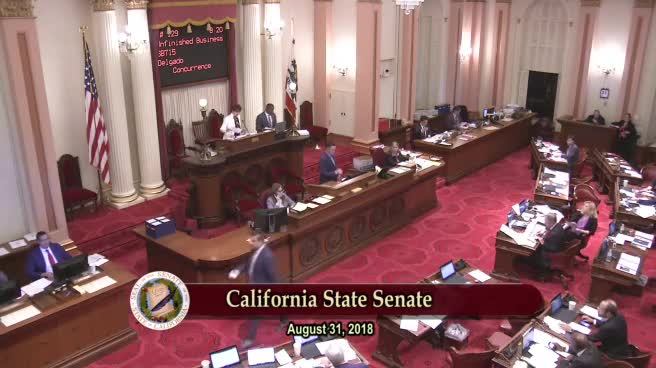 2MIN
Senate Floor
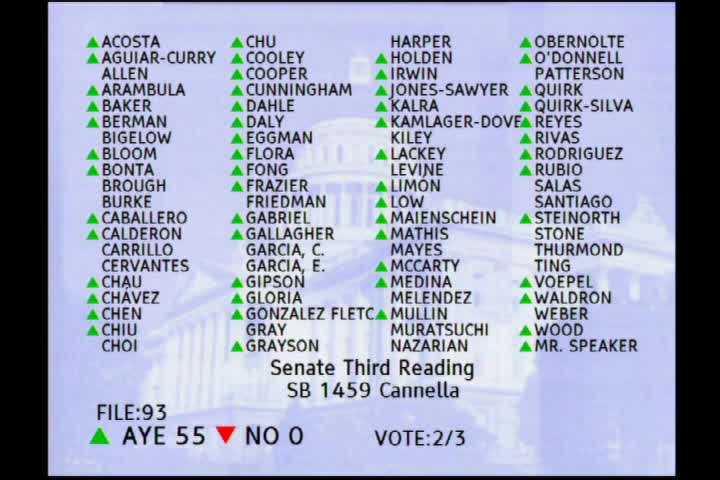 2MIN
Assembly Floor
 4MIN
Assembly Standing Committee on Appropriations
 14MIN
Assembly Standing Committee on Business and Professions
 17MIN
Senate Floor
 22MIN



