SB 1446: CalWORKs: welfare-to-work.
- Session Year: 2017-2018
- House: Senate
- Latest Version Date: 2018-09-23
Existing law establishes the California Work Opportunity and Responsibility to Kids (CalWORKs) program, under which each county provides cash assistance and other benefits to qualified low-income families using federal, state, and county funds. Existing law requires a recipient of CalWORKs to participate in welfare-to-work activities as a condition of eligibility. Existing law limits the time period in which a participant may engage in certain state-authorized work activities, in satisfaction of welfare-to-work requirements, to 24 cumulative months during a participants lifetime, and requires the participant to engage in federally defined work activities after that period expires. Existing law requires that necessary supportive services be available to every participant in order to participate in the program activity to which he or she is assigned. Under existing law, when an individual fails or refuses to comply with specified components of the CalWORKs program without good cause, and conciliation efforts have failed, the participant is subject to prescribed financial sanctions.
This bill would, beginning July 1, 2019, require the county to deem a recipient to be in compliance with CalWORKs welfare-to-work requirements if the recipient reports and the county verifies, or the county otherwise discovers, that the recipient meets the federally required minimum average number of hours per week of welfare-to-work participation, unless the recipient provides notice to the county that he or she wishes to have sanctions imposed, as specified. The bill would require the county to arrange for the provision of necessary supportive services for these recipients, thereby imposing a state-mandated local program. The bill would direct the State Department of Social Services to issue an all-county letter or similar instruction on or before July 1, 2019.
Existing law continuously appropriates moneys from the General Fund to defray a portion of county costs under the CalWORKs program.
This bill would instead provide that the continuous appropriation would not be made for purposes of implementing the bill.
The California Constitution requires the state to reimburse local agencies and school districts for certain costs mandated by the state. Statutory provisions establish procedures for making that reimbursement.
This bill would provide that, if the Commission on State Mandates determines that the bill contains costs mandated by the state, reimbursement for those costs shall be made pursuant to the statutory provisions noted above.
Existing law establishes the California Work Opportunity and Responsibility to Kids (CalWORKs) program, under which each county provides cash assistance and other benefits to qualified low-income families using federal, state, and county funds. Existing law requires a recipient of CalWORKs to participate in welfare-to-work activities as a condition of eligibility. Existing law limits the time period in which a participant may engage in certain state-authorized work activities, in satisfaction of welfare-to-work requirements, to 24 cumulative months during a participants lifetime, and requires the participant to engage in federally defined work activities after that period expires. Existing law requires that necessary supportive services be available to every participant in order to participate in the program activity to which he or she is assigned. Under existing law, when an individual fails or refuses to comply with specified components of the CalWORKs program without good cause, and conciliation efforts have failed, the participant is subject to prescribed financial sanctions.
This bill would, beginning July 1, 2019, require the county to deem a recipient to be in compliance with CalWORKs welfare-to-work requirements if the recipient reports and the county verifies, or the county otherwise discovers, that the recipient meets the federally required minimum average number of hours per week of welfare-to-work participation, as specified. unless the recipient provides notice to the county that he or she wishes to have sanctions imposed, as specified. The bill would require the county to arrange for the provision of necessary supportive services for these recipients, thereby imposing a state-mandated local program. The bill would exempt these adults from sanctions for failure or refusal to comply with welfare-to-work program requirements. The bill would direct the State Department of Social Services to issue an all-county letter or similar instruction on or before July 1, 2019.
Existing law continuously appropriates moneys from the General Fund to defray a portion of county costs under the CalWORKs program.
This bill would instead provide that the continuous appropriation would not be made for purposes of implementing the bill.
The California Constitution requires the state to reimburse local agencies and school districts for certain costs mandated by the state. Statutory provisions establish procedures for making that reimbursement.
This bill would provide that, if the Commission on State Mandates determines that the bill contains costs mandated by the state, reimbursement for those costs shall be made pursuant to the statutory provisions noted above.
Existing law establishes the California Work Opportunity and Responsibility to Kids (CalWORKs) program, under which each county provides cash assistance and other benefits to qualified low-income families using federal, state, and county funds. Existing law requires a recipient of CalWORKs to participate in welfare-to-work activities as a condition of eligibility. Existing law limits the time period in which a participant may engage in certain state-authorized work activities, in satisfaction of welfare-to-work requirements, to 24 cumulative months during a participants lifetime, and requires the participant to engage in federally defined work activities after that period expires. Existing law requires that necessary supportive services be available to every participant in order to participate in the program activity to which he or she is assigned.
This bill would, beginning July 1, 2019, require the county to deem a recipient to be in compliance with CalWORKs welfare-to-work requirements if the recipient reports and the county verifies, or the county otherwise discovers, that the recipient meets the federally required minimum average number of hours per week of welfare-to-work participation, as specified. The bill would require the county to arrange for the provision of necessary supportive services for these recipients, thereby imposing a state-mandated local program. The bill would exempt these adults from sanctions for failure or refusal to comply with welfare-to-work program requirements. The bill would direct the State Department of Social Services to issue an all-county letter or similar instruction on or before July 1, 2019.
Existing law continuously appropriates moneys from the General Fund to defray a portion of county costs under the CalWORKs program.
This bill would instead provide that the continuous appropriation would not be made for purposes of implementing the bill.
The California Constitution requires the state to reimburse local agencies and school districts for certain costs mandated by the state. Statutory provisions establish procedures for making that reimbursement.
This bill would provide that, if the Commission on State Mandates determines that the bill contains costs mandated by the state, reimbursement for those costs shall be made pursuant to the statutory provisions noted above.
(a)Notwithstanding any other law, if an adult recipient reports and the county verifies, or the county otherwise discovers, that the recipient is meeting the federally required minimum average number of hours per week of welfare-to-work participation as set forth in Section 607 of Title 42 of the United States Code, that recipient shall be deemed to be in compliance with Section 11322.8, unless the recipient provides written or, if available, electronic notice to the county that the recipient wishes to have sanctions imposed pursuant to this article.
(b)Necessary supportive services shall be provided to recipients described in this section in accordance with Sections 11323.2 and 11323.4.
(c)This section shall become operative on July 1, 2019.
SEC. 2.Notwithstanding the rulemaking provisions of the Administrative Procedure Act (Chapter 3.5 (commencing with Section 11340) of Part 1 of Division 3 of Title 2 of the Government Code), the State Department of Social Services shall implement this act through an all-county letter or similar instruction from the director. The all-county letter or similar instruction shall be issued no later than July 1, 2019.
SEC. 3.No appropriation pursuant to Section 15200 of the Welfare and Institutions Code shall be made for purposes of implementing this act.
SEC. 4.If the Commission on State Mandates determines that this act contains costs mandated by the state, reimbursement to local agencies and school districts for those costs shall be made pursuant to Part 7 (commencing with Section 17500) of Division 4 of Title 2 of the Government Code.
(a)Notwithstanding any other law, if an adult recipient reports and the county verifies, or the county otherwise discovers, that the recipient is meeting the federally required minimum average number of hours per week of welfare-to-work participation as set forth in Section 607 of Title 42 of the United States Code, that recipient shall be deemed to be in compliance with Section 11322.8. 11322.8, unless the recipient provides written or, if available, electronic notice to the county that the recipient wishes to have sanctions imposed pursuant to this article.
(b)Necessary supportive services shall be provided to recipients described in this section in accordance with Sections 11323.2 and 11323.4.
(c)Recipients described in this section shall not be subject to sanctions for failure or refusal to comply with program requirements under Section 11327.4.(d)(c)This section shall become operative on July 1, 2019.
SEC. 2.Notwithstanding the rulemaking provisions of the Administrative Procedure Act (Chapter 3.5 (commencing with Section 11340) of Part 1 of Division 3 of Title 2 of the Government Code), the State Department of Social Services shall implement this act through an all-county letter or similar instruction from the director. The all-county letter or similar instruction shall be issued no later than July 1, 2019.
SEC. 3.No appropriation pursuant to Section 15200 of the Welfare and Institutions Code shall be made for purposes of implementing this act.
SEC. 4.If the Commission on State Mandates determines that this act contains costs mandated by the state, reimbursement to local agencies and school districts for those costs shall be made pursuant to Part 7 (commencing with Section 17500) of Division 4 of Title 2 of the Government Code.
REVISIONS: HeadingLine 2.(a)Notwithstanding any other law, if an adult recipient reports and the county verifies, or the county otherwise discovers, that the recipient is meeting the federally required minimum average number of hours per week of welfare-to-work participation as set forth in Section 607 of Title 42 of the United States Code, that recipient shall be deemed to be in compliance with Section 11322.8.
(b)Necessary supportive services shall be provided to recipients described in this section in accordance with Sections 11323.2 and 11323.4.
(c)Recipients described in this section shall not be subject to sanctions for failure or refusal to comply with program requirements under Section 11327.4.
(d)This section shall become operative on July 1, 2019.
SEC. 2.Notwithstanding the rulemaking provisions of the Administrative Procedure Act (Chapter 3.5 (commencing with Section 11340) of Part 1 of Division 3 of Title 2 of the Government Code), the State Department of Social Services shall implement this act through an all-county letter or similar instruction from the director. The all-county letter or similar instruction shall be issued no later than July 1, 2019.
SEC. 3.No appropriation pursuant to Section 15200 of the Welfare and Institutions Code shall be made for purposes of implementing this act.
SEC. 4.If the Commission on State Mandates determines that this act contains costs mandated by the state, reimbursement to local agencies and school districts for those costs shall be made pursuant to Part 7 (commencing with Section 17500) of Division 4 of Title 2 of the Government Code.
|
Date
|
Status
|
|---|---|
| Sep 23, 2018 | Chaptered by Secretary of State. Chapter 740, Statutes of 2018. |
| Sep 23, 2018 | Approved by the Governor. |
| Sep 12, 2018 | Enrolled and presented to the Governor at 5 p.m. |
| Aug 30, 2018 | In Senate. Ordered to engrossing and enrolling. |
| Aug 30, 2018 | Read third time. Passed. Ordered to the Senate. |
| Aug 20, 2018 | Read second time. Ordered to third reading. |
| Aug 16, 2018 | From committee: Do pass. (Ayes 17. Noes 0.) (August 16). |
| Aug 8, 2018 | August 8 set for first hearing. Placed on suspense file. |
| Jun 27, 2018 | From committee: Do pass and re-refer to Com. on APPR. (Ayes 7. Noes 0.) (June 26). Re-referred to Com. on APPR. |
| Jun 11, 2018 | Referred to Com. on HUM. S. |
| May 31, 2018 | In Assembly. Read first time. Held at Desk. |
| May 30, 2018 | Read third time. Passed. (Ayes 37. Noes 0.) Ordered to the Assembly. |
| May 29, 2018 | Read second time. Ordered to third reading. |
| May 25, 2018 | From committee: Do pass as amended. (Ayes 7. Noes 0.) (May 25). |
| May 18, 2018 | Set for hearing May 25. |
| Apr 23, 2018 | April 23 hearing: Placed on APPR. suspense file. |
| Apr 13, 2018 | Set for hearing April 23. |
| Apr 11, 2018 | From committee: Do pass and re-refer to Com. on APPR. with recommendation: To consent calendar. (Ayes 6. Noes 0.) (April 10). Re-referred to Com. on APPR. |
| Mar 20, 2018 | Set for hearing April 10. |
| Mar 8, 2018 | Referred to Com. on HUMAN S. |
| Feb 20, 2018 | From printer. May be acted upon on or after March 22. |
| Feb 16, 2018 | Introduced. Read first time. To Com. on RLS. for assignment. To print. |
|
Date
|
Description
|
Location
|
Votes
|
|
|---|---|---|---|---|
| Aug 30, 2018 | SB 1446 Glazer Senate Third Reading By BAKER | Assembly Floor |
Passed |
|
| Aug 16, 2018 | Do pass. | Assembly Standing Committee on Appropriations |
Passed |
|
| Jun 26, 2018 | Do pass and be re-referred to the Committee on [Appropriations] | Assembly Standing Committee on Human Services |
Passed |
|
| May 30, 2018 | Senate 3rd Reading SB1446 Glazer | Senate Floor |
Passed |
|
| May 25, 2018 | Do pass as amended | Senate Standing Committee on Appropriations |
Passed |
|
| Apr 23, 2018 | Placed on suspense file | Senate Standing Committee on Appropriations |
Passed |
|
| Apr 10, 2018 | Do pass, but first be re-referred to the Committee on [Appropriations] with the recommendation: To Consent Calendar | Senate Standing Committee on Human Services |
Passed |
This list shows positions taken on this bill by organizations on the date displayed, which is linked to the original source.
Positions by individuals are not included.
|
Organization
|
Position
|
Date
|
|---|---|---|
| Alameda County Community Food Bank | ** Support | Jun 22, 2018 |
| California Association Of Food Banks | ** Support | May 28, 2018 |
| California Food Policy Advocates | ** Support | Jun 22, 2018 |
| Coalition of California Welfare Rights Organizations | ** Support | Jun 22, 2018 |
| County Welfare Directors Association | * Support | Jun 26, 2018 |
| The Food Bank Of Contra Costa And Solano | ** Support | Jun 22, 2018 |
| the national association of social workers | ** Support | Jun 22, 2018 |
| Western Center On Law And Poverty Inc | * Support | Jun 26, 2018 |
SENATE THIRD READING
STR Bill Id:SB 1446
Author:(Glazer)
As Amended Ver:May 25, 2018
Majority vote
SENATE VOTE: 37-0
Committee | Votes | Ayes | Noes |
Human Services | 7-0 | Rubio, Choi, Arambula, Maienschein, Reyes, Mark Stone, Thurmond | |
Appropriations | 17-0 | Gonzalez Fletcher, Bigelow, Bloom, Bonta, Brough, Calderon, Carrillo, Chau, Eggman, Fong, Friedman, Gallagher, Eduardo Garcia, Nazarian, Obernolte, Quirk, Reyes |
|
SUMMARY: Deems a California Work Opportunity and Responsibility to Kids (CalWORKs) recipient who is meeting certain federal Temporary Assistance for Needy Families (TANF) participation requirements to be in compliance with welfare-to-work activity requirements.
Specifically, this bill:
- Requires, as of July 1, 2019, a CalWORKs recipient to be deemed to be in compliance with welfare-to-work activity requirements if an adult recipient reports and the county verifies, or the county otherwise discovers, that the recipient is meeting the federally required minimum average number of hours per week of welfare-to-work participation, unless the recipient provides notice to the county that the recipient wishes to have sanctions imposed, as specified.
- Requires, as of July 1, 2019, the provision of necessary supportive services, as specified, to recipients to whom the provisions of this bill apply.
- Requires the Department of Social Services (DSS) to implement the provisions of this bill through all-county letter or similar instruction from the director by July 1, 2019.
- Stipulates that no continuous appropriation, as specified, shall be made for purposes of implementing the provisions of this bill.
EXISTING LAW:
- Establishes under federal law the TANF program to provide aid and welfare-to-work services to eligible families and, in California, provides that TANF funds for welfare-to-work services are administered through the CalWORKs program. (42 United States Code Section (U.S.C.) 601 et seq., Welfare and Institutions Code Section (WIC) 11200 et seq.)
- Establishes under federal TANF law mandatory work participation rate requirements that states must meet for purposes of receiving their full TANF block grant, as specified. (42 U.S.C. 607)
- Establishes income, asset and real property limits used to determine eligibility for the program, including net income below the Maximum Aid Payment (MAP), based on family size and county of residence. (WIC 11150 to 11160, 11450 et seq.)
- Establishes a 48-month lifetime limit on CalWORKs benefits for eligible adults, including a period beyond the "24-month time clock" during which a recipient must meet federal work requirements in order to retain eligibility. (WIC 11454, 11322.85)
- Requires all individuals over 16 years of age, unless they are otherwise exempt, to participate in welfare-to-work activities as a condition of eligibility for CalWORKs. (WIC 11320.3, 11322.6)
- Establishes the number of weekly hours of welfare-to-work participation necessary to remain eligible for aid, including requirements for an unemployed parent in a two-parent assistance unit, as specified. (WIC 11322.8)
- Requires necessary supportive services, including child care, transportation, ancillary costs and personal counseling, as specified, to be available to every CalWORKs participant in order to facilitate his or her participation in the CalWORKs program activity to which he or she is assigned or acceptance of employment. (WIC 11323.2)
- Requires payments for supportive services to be advanced to the CalWORKs participant wherever necessary and when desired by the participant, as specified. (WIC 11323.4 (a))
- Stipulates that any CalWORKs participant in on-the-job training, grant-based on-the-job training, supported work, or transitional employment who remains eligible for aid shall be eligible for transportation and ancillary expenses, as specified. (WIC 11323.4 (d))
- Requires CalWORKs participants to be encouraged to apply for financial aid and requires, to the extent permitted by federal law, counties to coordinate with financial aid offices to establish procedures for meeting the educational expenses of participants through available financial aid and supportive services, as specified. (WIC 11323.4 (e))
- Requires an individual participating in CalWORKs to be subject to sanctions whenever he or she has failed or refused to comply with program requirements without good cause and refuses to agree to or fails, without good cause, to comply with a compliance plan, as specified. (WIC 11327.4)
FISCAL EFFECT: According to the Assembly Appropriations Committee on August 8, 2018, this bill may result in the following costs:
- Estimated costs, likely less than $1 million (federal funds/General Fund) annually for benefit payments and providing supportive services, including child care, transportation costs, ancillary expenses, and personal counseling that would have otherwise been retained from sanctioned CalWORKs recipients. DSS indicates this caseload is small and payments are already included in the CalWORKs caseload budget;
- Minor and absorbable costs to DSS for automation changes and producing an all-county letter; and
- Minor administrative costs to counties. These costs are potentially reimbursable by the state but it is unlikely a county would submit a claim to the Commission on State Mandates.
COMMENTS:
CalWORKs: CalWORKs is a county-administered public assistance program that is funded in part by the federal TANF block grant and that aims to help children and families meet basic needs and move out of poverty. Families receive cash assistance and have access to a variety of services, including, where applicable, child care, as well as services aimed at addressing mental health needs, substance use disorders, instances of domestic violence, and learning disabilities, among other issues. Parents must develop and participate in a welfare-to-work plan, unless exempted or otherwise not required to participate. The maximum CalWORKs grant for a family of three living in a high cost county, if the family has no other income, is $714 per month. For Fiscal Year 2017-18, the average monthly CalWORKs cash grant is $564 per household. In Fiscal Year 2016-17, the average monthly CalWORKs caseload was 452,770 households, of which 154,005 were single-parent households and 234,766 were households where only the child or children received aid.
The CalWORKs program typically requires recipients to participate in welfare-to-work activities, which can include public or private sector subsidized or unsubsidized employment; on-the-job training; community service; secondary school, adult basic education and vocational education and training when the education is needed for the recipient to become employed; specific mental health, substance abuse, or domestic violence services if they are necessary to obtain or retain employment; and a number of other activities necessary to assist a recipient in obtaining unsubsidized employment.
Single parent adults with a child under the age of 6, unless exempt, are required to participate for 20 hours per week in welfare-to-work activities. Non-exempt single parent adults whose children are all 6 years of age or older must participate for at least 30 hours per week in welfare-to-work activities. Families with two parents that do not receive an exemption must participate 35 hours per week. SB 1041 (Senate Committee on Budget and Fiscal Review), Chapter 47, Statutes of 2012, adopted a number of changes to the CalWORKs program, including the establishment of the 24-month time clock. While most adult recipients are expected to participate in welfare-to-work activities during the up to 48 months for which they may receive assistance, those participation requirements can include a broad range of activities for 24 of those 48 months, such as employment, training, education, and mental health, domestic violence, and substance abuse services. After this 24-month time clock "runs out," recipients must meet the less-flexible federal TANF requirements in order to remain eligible for aid.
A CalWORKs recipient who does not meet his or her welfare-to-work requirements and is not exempt from them is subject to sanction, which results in that individual's portion of the family's grant being subtracted from the total grant amount provided to the family to meet basic needs. Participants facing potential sanction have the opportunity to claim good cause or enter into a compliance plan; failure to comply with that plan or show good cause results in sanction. In Federal Fiscal Year (FFY) 2016, the average CalWORKs monthly grant for households participating in welfare-to-work was $546 (and $596 for those exempt from welfare-to-work requirements), compared to an average grant of $443 for a sanctioned household.
Federal work requirements and the work participation rate: States receiving federal TANF dollars (California receives an annual TANF block grant of $3.7 billion) are required to meet a performance measure called the "work participation rate" (WPR), or they risk losing a portion of their TANF funding.
Per the WPR, states are required to engage a certain portion of families receiving TANF in federally countable work activities for at a minimum number of average weekly hours (at least 30 hours for single-parent families when all children are ages 6 or older; at least 20 hours for single-parent families with at least one child under the age of 6; and at least 35 combined hours for two-parent families). Fifty percent (50%) of all families, and 90% of two-parent families, must be participating in countable federal work activities (although states can get a caseload reduction credit that reduces the overall target percentage to be reached).
Federal law delineates 12 categories of countable activities, nine of which are "core" activities that can be counted for all requisite hours of participation and include:
- Unsubsidized employment;
- Subsidized private sector employment;
- Subsidized public sector employment;
- Work experience;
- On-the-job training;
- Job search and job readiness assistance;
- Community service programs;
- Vocational educational training, for up to twelve months; and
- Providing child care services to an individual who is participating in a community service program.
Additionally, three sets of "non-core" activities can be counted, but only when combined with at least 20 average weekly hours of a core activity, and include:
- Job skills training directly related to employment;
- Education directly related to employment; and
- Satisfactory attendance at secondary school or in a course of study leading to a high school equivalency certificate.
The WPR is determined by dividing the number of "Work Eligible Individuals" who are meeting federal work requirements by the total number of Work Eligible Individuals subject to those federal requirements. States failing to meet WPR requirements risk facing penalties which reduce the federal block grant; the maximum penalty in the first year is 5% of the block grant, but this increases by 2% a year if a state fails to meet its target WPR for multiple consecutive years.
California failed to comply with WPR requirements for all families between Federal Fiscal Year (FFY) 2007 and FFY 2014, and has failed to comply with the two-parent WPR since FFY 2012. California has submitted corrective compliance plans over the years to address its WPR deficiencies and potential federal fiscal penalties. In February of this year, DSS reported the following regarding the status of its corrective compliance plans:
- "Penalties from 2008 through 2011 have been eliminated through successful corrective compliance.
- Penalties for 2012 and 2013 need to be adjusted downward by ACF [the federal Administration for Children and Families] to reflect prior penalty eliminations.
- A CCP [corrective compliance plan] was submitted to and accepted by ACF in 2016 to respond to the approximately $444 million penalty for WPR noncompliance for FFY 2014. This CCP established FFY 2017 as the target compliance year.
- The state has been assessed a penalty of approximately $93 million for failure to achieve the required two-parent WPR in FFY 2015. The state submitted a dispute of this penalty amount in January 2017. The penalty was preliminarily reduced to $65.8 million in May, 2017.
- The state has been assessed a penalty of approximately $8.8 million for failure to achieve the required two-parent WPR in FFY 2016. The state submitted a dispute of this penalty amount in October 2017."
Need for this bill: According to the author:
"CalWORKs recipients are required to sign a welfare-to-work plan and provide proof of progress in accomplishing the goals set forth in that plan. However, if a CalWORKs recipient finds employment or is engaged in another federally defined work activity without a Welfare to Work plan, their benefits are reduced through a sanction. For a family of 2 that means aid is reduced from $577 to $355 a month. County welfare agencies do allow sanctioned CalWORKs recipients to demonstrate that they had good cause in failing to comply with their intended plan, but this places an unfair burden on these recipients.
Recipients are usually starting new jobs that prevent them from meeting with county welfare agencies during business hours. It is also difficult to ask for time off from an employer if the employee is new to the job.
The sanctioning process for CalWORKs recipients is counterintuitive to helping people get back on their feet. It punishes people for working and discourages CalWORKs recipients from finding employment sooner than what their plan permits.
Although some counties have identified this as a problem and have attempted to address this issue in different ways, many counties do not. A statewide response to this problem is necessary to address the overall problem of sanctioning people meeting federal work participation rates."
PRIOR LEGISLATION:
AB 1790 (Weber), 2016, was substantially similar to this bill and would have prohibited sanctions for adult CalWORKs program recipients who meet federal welfare-to-work requirements. It died in the Assembly Appropriations Committee.
Analysis Prepared by: Daphne Hunt / HUM. S. / (916) 319-2089 FN: 0004119
Date of Hearing: August 8, 2018
ASSEMBLY COMMITTEE ON APPROPRIATIONS
Lorena Gonzalez Fletcher, Chair
SBPCA Bill Id:SB 1446
Author:(Glazer) – As Amended Ver:May 25, 2018
Policy Committee: | Human Services | Vote: | 7 - 0 |
|
| ||
|
|
Urgency: No State Mandated Local Program: Yes Reimbursable: Yes
SUMMARY:
This bill, effective July 1, 2019, deems a California Work Opportunity and Responsibility to Kids (CalWORKs) recipient in compliance with welfare-to-work activity requirements if the recipient is meeting federal work participation requirements. Specifically, this bill:
- Requires a CalWORKs recipient to be deemed to be in compliance with welfare-to-work activity requirements if an adult recipient reports and the county verifies that the recipient is meeting the federally required minimum average number of hours per week of welfare-to-work participation, unless the recipient provides notice to the county that the recipient wishes to have sanctions imposed, as specified.
- Requires the provision of necessary supportive services, as specified, to recipients to whom this bill applies.
FISCAL EFFECT:
- Estimated costs, likely less than $1 million (federal funds/GF) annually for benefit payments and providing supportive services, including child care, transportation costs, ancillary expenses, and personal counseling that would have otherwise been retained from sanctioned CalWORKs recipients. The Department of Social Services (DSS) indicates this caseload is small and payments are already included in the CalWORKs caseload budget.
- Minor and absorbable costs to DSS for automation changes and producing an all-county letter.
- Minor administrative costs to counties. These costs are potentially reimbursable by the state but it is unlikely a county would submit a claim to the Commission on State Mandates.
COMMENTS:
- Purpose. This bill seeks to prohibit sanctioning (reducing benefits to) CalWORKs recipients who meet federal (but not state) work requirements. According to the author:
The sanctioning process for CalWORKs recipients is counterintuitive to helping people get back on their feet. It punishes people for working and discourages CalWORKs recipients from finding employment sooner than what their plan permits.
Although some counties have identified this as a problem and have attempted to address this issue in different ways, many counties do not. A statewide response to this problem is necessary to address the overall problem of sanctioning people meeting federal work participation rates.
- Background. The CalWORKs program, which implements the federal Temporary Assistance for Needy Families (TANF) program, is a welfare program that gives cash aid and employment-related services to eligible California families to move them out of poverty and help families meet basic needs. In order to be eligible for CalWORKs, families must meet income and asset tests. According to a February 2019 CalWORKs Annual Summary, the average monthly cash grant FY 2017-18 was estimated at $564 and the maximum monthly grant amount for a family of three is $714
Adults may not receive CalWORKs benefits for more than 48-months through their lifetime. During those 48 months, adults may receive a total of 24 months of WTW services and activities designed to promote job readiness and self-sufficiency. After receiving 24 months of WTW services, adult recipients may continue to receive assistance but are required to meet federal weekly requirements in core activities. If a CalWORKs recipient fails or refuses to comply with program requirements, the recipient may be subject to financial sanctions, which removes their portion of the cash benefit from the assistance unit. According to DSS, the average reduction is $120 per month, plus the loss of any supportive services, including child care, transportation costs, and other services.
An individual may be sanctioned because they did not agree to a WTW plan, did not show satisfactory progress in a WTW activity, or quit or refused a job without sufficient reason. Recipients can avoid sanction by entering into a compliance plan or claiming good cause for their noncompliance.
- Prior Legislation.
SB 926 (Skinner), of this Legislative Session, establishes additional reasons, related to unpredictable work schedules and workplace rights violations, for relief from CalWORKs sanctions and for good cause for non-compliance with CalFresh work requirements, and further requires information regarding workplace rights be provided to CalWORKs and CalFresh recipients. That bill is pending in this committee.
AB 1790 (Weber), 2016, was substantially similar to this bill and would have prohibited sanctions for adult CalWORKs program recipients who meet federal welfare-to-work requirements. It was held on this committee’s Suspense File.
Analysis Prepared by: Jennifer Swenson / APPR. / (916) 319-2081
Date of Hearing: June 26, 2018
ASSEMBLY COMMITTEE ON HUMAN SERVICES
Blanca Rubio, Chair
SBPCA Bill Id:SB 1446
Author:(Glazer) – As Amended Ver:May 25, 2018
SENATE VOTE: 37-0
SUBJECT: CalWORKs: welfare-to-work
SUMMARY: Deems a California Work Opportunity and Responsibility to Kids (CalWORKs) recipient who is meeting certain federal Temporary Assistance for Needy Families (TANF) participation requirements to be in compliance with welfare-to-work activity requirements.
Specifically, this bill:
- Requires, as of July 1, 2019, a CalWORKs recipient to be deemed to be in compliance with welfare-to-work activity requirements if an adult recipient reports and the county verifies, or the county otherwise discovers, that the recipient is meeting the federally required minimum average number of hours per week of welfare-to-work participation, unless the recipient provides notice to the county that the recipient wishes to have sanctions imposed, as specified.
- Requires, as of July 1, 2019, the provision of necessary supportive services, as specified, to recipients to whom the provisions of this bill apply.
- Requires the Department of Social Services (DSS) to implement the provisions of this bill through all-county letter or similar instruction from the director by July 1, 2019.
- Stipulates that no continuous appropriation, as specified, shall be made for purposes of implementing the provisions of this bill.
EXISTING LAW:
- Establishes under federal law the TANF program to provide aid and welfare-to-work services to eligible families and, in California, provides that TANF funds for welfare-to-work services are administered through the CalWORKs program. (42 U.S.C. 601 et seq., WIC 11200 et seq.)
- Establishes under federal TANF law mandatory work participation rate requirements that states must meet for purposes of receiving their full TANF block grant, as specified. (42 U.S.C. 607)
- Establishes income, asset and real property limits used to determine eligibility for the program, including net income below the Maximum Aid Payment (MAP), based on family size and county of residence. (WIC 11150 to 11160, 11450 et seq.)
- Establishes a 48-month lifetime limit on CalWORKs benefits for eligible adults, including a period beyond the “24-month time clock” during which a recipient must meet federal work requirements in order to retain eligibility. (WIC 11454, 11322.85)
- Requires all individuals over 16 years of age, unless they are otherwise exempt, to participate in welfare-to-work activities as a condition of eligibility for CalWORKs. (WIC 11320.3, 11322.6)
- Establishes the number of weekly hours of welfare-to-work participation necessary to remain eligible for aid, including requirements for an unemployed parent in a two-parent assistance unit, as specified. (WIC 11322.8)
- Requires necessary supportive services, including child care, transportation, ancillary costs and personal counseling, as specified, to be available to every CalWORKs participant in order to facilitate his or her participation in the CalWORKs program activity to which he or she is assigned or acceptance of employment. (WIC 11323.2)
- Requires payments for supportive services to be advanced to the CalWORKs participant wherever necessary and when desired by the participant, as specified. (WIC 11323.4 (a))
- Stipulates that any CalWORKs participant in on-the-job training, grant-based on-the-job training, supported work, or transitional employment who remains eligible for aid shall be eligible for transportation and ancillary expenses, as specified. (WIC 11323.4 (d))
- Requires CalWORKs participants to be encouraged to apply for financial aid and requires, to the extent permitted by federal law, counties to coordinate with financial aid offices to establish procedures for meeting the educational expenses of participants through available financial aid and supportive services, as specified. (WIC 11323.4 (e))
- Requires an individual participating in CalWORKs to be subject to sanctions whenever he or she has failed or refused to comply with program requirements without good cause and refuses to agree to or fails, without good cause, to comply with a compliance plan, as specified. (WIC 11327.4)
FISCAL EFFECT: According to the Senate Appropriations Committee on May 25, 2018, this bill may result in the following costs:
- Significant costs in the hundreds of thousands of dollars for distribution of benefit payments that would have been retained from sanctioned CalWORKs recipients. These costs may be partially offset by any recipient that chooses to remain sanctioned (TANF/General Fund);
- Unknown, significant costs for providing supportive services, including child care, transportation costs, ancillary expenses, and personal counseling, that would have been retained from sanctioned CalWORKs recipients; and
- Minor and absorbable fiscal costs to DSS for automation changes and producing an all-county letter.
COMMENTS:
CalWORKs: CalWORKs is a county-administered public assistance program that is funded in part by the federal TANF block grant and that aims to help children and families meet basic needs and move out of poverty. Families receive cash assistance and have access to a variety of services, including, where applicable, child care, as well as services aimed at addressing mental health needs, substance use disorders, instances of domestic violence, and learning disabilities, among other issues. Parents must develop and participate in a welfare-to-work plan, unless exempted or otherwise not required to participate. The maximum CalWORKs grant for a family of three living in a high cost county, if the family has no other income, is $714 per month. For Fiscal Year 2017-18, the average monthly CalWORKs cash grant is $564 per household. In Fiscal Year 2016-17, the average monthly CalWORKs caseload was 452,770 households, of which 154,005 were single-parent households and 234,766 were households where only the child or children received aid.
The CalWORKs program typically requires recipients to participate in welfare-to-work activities, which can include public or private sector subsidized or unsubsidized employment; on-the-job training; community service; secondary school, adult basic education and vocational education and training when the education is needed for the recipient to become employed; specific mental health, substance abuse, or domestic violence services if they are necessary to obtain or retain employment; and a number of other activities necessary to assist a recipient in obtaining unsubsidized employment.
Single parent adults with a child under the age of 6, unless exempt, are required to participate for 20 hours per week in welfare-to-work activities. Non-exempt single parent adults whose children are all 6 years of age or older must participate for at least 30 hours per week in welfare-to-work activities. Families with two parents that do not receive an exemption must participate 35 hours per week. SB 1041 (Senate Committee on Budget and Fiscal Review), Chapter 47, Statutes of 2012, adopted a number of changes to the CalWORKs program, including the establishment of the 24-month time clock. While most adult recipients are expected to participate in welfare-to-work activities during the up to 48 months for which they may receive assistance, those participation requirements can include a broad range of activities for 24 of those 48 months, such as employment, training, education, and mental health, domestic violence, and substance abuse services. After this 24-month time clock “runs out,” recipients must meet the less-flexible federal TANF requirements in order to remain eligible for aid.
A CalWORKs recipient who does not meet his or her welfare-to-work requirements and is not exempt from them is subject to sanction, which results in that individual’s portion of the family’s grant being subtracted from the total grant amount provided to the family to meet basic needs. Participants facing potential sanction have the opportunity to claim good cause or enter into a compliance plan; failure to comply with that plan or show good cause results in sanction. In Federal Fiscal Year (FFY) 2016, the average CalWORKs monthly grant for households participating in welfare-to-work was $546 (and $596 for those exempt from welfare-to-work requirements), compared to an average grant of $443 for a sanctioned household.
Federal work requirements and the work participation rate: States receiving federal TANF dollars (California receives an annual TANF block grant of $3.7 billion) are required to meet a performance measure called the “work participation rate” (WPR), or they risk losing a portion of their TANF funding.
Per the WPR, states are required to engage a certain portion of families receiving TANF in federally countable work activities for at a minimum number of average weekly hours (at least 30 hours for single-parent families when all children are ages 6 or older; at least 20 hours for single-parent families with at least one child under the age of 6; and at least 35 combined hours for two-parent families). Fifty percent (50%) of all families, and 90% of two-parent families, must be participating in countable federal work activities (although states can get a caseload reduction credit that reduces the overall target percentage to be reached).
Federal law delineates 12 categories of countable activities, nine of which are “core” activities that can be counted for all requisite hours of participation and include:
- Unsubsidized employment;
- Subsidized private sector employment;
- Subsidized public sector employment;
- Work experience;
- On-the-job training;
- Job search and job readiness assistance;
- Community service programs;
- Vocational educational training, for up to twelve months; and
- Providing child care services to an individual who is participating in a community service program.
Additionally, three sets of “non-core” activities can be counted, but only when combined with at least 20 average weekly hours of a core activity, and include:
- Job skills training directly related to employment;
- Education directly related to employment; and
- Satisfactory attendance at secondary school or in a course of study leading to a high school equivalency certificate.
The WPR is determined by dividing the number of “Work Eligible Individuals” who are meeting federal work requirements by the total number of Work Eligible Individuals subject to those federal requirements. States failing to meet WPR requirements risk facing penalties which reduce the federal block grant; the maximum penalty in the first year is 5% of the block grant, but this increases by 2% a year if a state fails to meet its target WPR for multiple consecutive years.
California failed to comply with WPR requirements for all families between Federal Fiscal Year (FFY) 2007 and FFY 2014, and has failed to comply with the two-parent WPR since FFY 2012. California has submitted corrective compliance plans over the years to address its WPR deficiencies and potential federal fiscal penalties. In February of this year, DSS reported the following regarding the status of its corrective compliance plans:
- “Penalties from 2008 through 2011 have been eliminated through successful corrective compliance.
- Penalties for 2012 and 2013 need to be adjusted downward by ACF [the federal Administration for Children and Families] to reflect prior penalty eliminations.
- A CCP [corrective compliance plan] was submitted to and accepted by ACF in 2016 to respond to the approximately $444 million penalty for WPR noncompliance for FFY 2014. This CCP established FFY 2017 as the target compliance year.
- The state has been assessed a penalty of approximately $93 million for failure to achieve the required two-parent WPR in FFY 2015. The state submitted a dispute of this penalty amount in January 2017. The penalty was preliminarily reduced to $65.8 million in May, 2017.
- The state has been assessed a penalty of approximately $8.8 million for failure to achieve the required two-parent WPR in FFY 2016. The state submitted a dispute of this penalty amount in October 2017.”
Need for this bill: According to the author:
“CalWORKs recipients are required to sign a welfare-to-work plan and provide proof of progress in accomplishing the goals set forth in that plan. However, if a CalWORKs recipient finds employment or is engaged in another federally defined work activity without a Welfare to Work plan, their benefits are reduced through a sanction. For a family of 2 that means aid is reduced from $577 to $355 a month. County welfare agencies do allow sanctioned CalWORKs recipients to demonstrate that they had good cause in failing to comply with their intended plan, but this places an unfair burden on these recipients.
Recipients are usually starting new jobs that prevent them from meeting with county welfare agencies during business hours. It is also difficult to ask for time off from an employer if the employee is new to the job.
The sanctioning process for CalWORKs recipients is counterintuitive to helping people get back on their feet. It punishes people for working and discourages CalWORKs recipients from finding employment sooner than what their plan permits.
Although some counties have identified this as a problem and have attempted to address this issue in different ways, many counties do not. A statewide response to this problem is necessary to address the overall problem of sanctioning people meeting federal work participation rates.”
PRIOR LEGISLATION:
AB 1790 (Weber), 2016, was substantially similar to this bill and would have prohibited sanctions for adult CalWORKs program recipients who meet federal welfare-to-work requirements. It died in the Assembly Appropriations Committee.
REGISTERED SUPPORT / OPPOSITION:
Support
Alameda County Community Food Bank
California Food Policy Advocates
Coalition of California Welfare Rights Organizations
County Welfare Directors Association of California
The Food Bank of Contra Costa and Solano
The National Association of Social Workers
Western Center on Law and Poverty
Opposition
None on file.
Analysis Prepared by: Daphne Hunt / HUM. S. / (916) 319-2089
Office of Senate Floor Analyses (916) 651-1520 Fax: (916) 327-4478 | SB |
THIRD READING
Bill No: SB 1446
Amended: 5/25/18
SENATE HUMAN SERVICES COMMITTEE: 6-0, 4/10/18
AYES: Wiener, Glazer, Leyva, McGuire, Nguyen, Portantino
NO VOTE RECORDED: Berryhill
SENATE APPROPRIATIONS COMMITTEE: 7-0, 5/25/18
AYES: Lara, Bates, Beall, Bradford, Hill, Nielsen, Wiener
SOURCE: Coalition of California Welfare Rights Organizations
DIGEST:
This bill requires the county welfare department to deem a California Work Opportunity and Responsibility to Kids (CalWORKs) recipient to be in compliance with CalWORKs’ welfare-to-work (WTW) requirements if the county knows that the recipient meets federally required minimum average of WTW participation, as specified. This bill requires the county to provide necessary supportive services for these recipients and exempt these recipients from sanctions for failure or refusal to comply with WTW program requirements.
Existing Law:
- Establishes the federal Temporary Assistance for Needy Families (TANF) program, which permits states to implement the program under a state plan. (42 USC 601 et seq.)
- Establishes in state law the CalWORKs program to provide cash assistance and other services for low-income families through the federal TANF program. Under CalWORKs, each county provides assistance through a combination of state, county and federal TANF funds. (WIC 10530, 11200)
- Establishes income, asset and real property limits to determine eligibility for CalWORKs program participants, including net income below the maximum aid payment, based on family size and county of residence which is around 40 percent of the Federal Poverty Level. (WIC 11150 et seq., 11450 et seq.)
- Establishes a 48-month lifetime limit on CalWORKs benefits for eligible adults, including a “24-month time clock” (24 cumulative, but not necessarily consecutive, months) during which a recipient has broad range of permissible activities, and after which, a recipient must meet the more stringent federal work requirements in order to retain eligibility. (WIC 11454, 11322.85)
- Requires, generally, a recipient of CalWORKs benefits to participate in WTW activities as a condition of eligibility for aid. (WIC 11320 et seq.)
- Requires that a CalWORKs recipient shall be excused from participation for good cause when the county has determined there is a condition or other circumstance that temporarily prevents or significantly impairs the recipient’s ability to be regularly employed or to participate in WTW activities, as specified. (WIC 11320.3 (f))
- Establishes qualifying WTW activities to include employment, on-the-job training, community service, adult basic education, and other specified activities, and requires a specified number of weekly hours of WTW participation to remain eligible for aid. Establishes the number of weekly hours of WTW participation necessary to remain eligible for aid, as specified. (WIC 11322.6 and WIC 11322.8)
- Requires necessary supportive services to be available to every CalWORKs participant in order to participate in an assigned program activity or to accept employment, to include child care, transportation costs, ancillary expenses – which include the cost of books, tools, clothing specifically required for the job, fees, and other necessary costs – and personal counseling, as specified. (WIC 11323.2)
- Requires that, whenever a WTW participant has failed or refused to comply with program requirements without good cause in a program component to which he or she is assigned and refuses to agree to or fails, without good cause, to comply with a compliance plan agreed to between the county and the participant, the individual shall be subject to financial sanctions, as specified. (WIC 11327.4 et seq.)
This bill:
- Requires that an adult CalWORKs recipient who reports and the county verifies, or the county otherwise discovers, that the recipient is meeting the federally required minimum average number of hours per week of WTW participation, that recipient shall be deemed to be in compliance with the hourly requirements of the recipient’s WTW plan, unless the recipient provides written, or, if available, electronic notice to the county that the recipient wishes to have sanctions imposed, as specified.
- Requires that necessary supportive services shall be provided to recipients meeting federal WTW participation requirements, as specified.
- Becomes operative on July 1, 2019.
- Requires the provisions of this bill to be implemented by the California Department of Social Services (CDSS) via all-county letter or similar instruction issued no later than July 1, 2019, as specified.
Background
SB 1446 prohibits the sanctioning of WTW participants who are meeting federally mandated work participation requirements, regardless of the status of compliance with their WTW plans, unless the recipient provides written notice, or electronic notice if that is available, that the recipient wishes to have the sanction imposed.
CalWORKs recipients are required to sign a WTW plan and provide proof of progress in accomplishing the goals set forth in that plan. However, CalWORKs recipients that find employment or are engaged in some other federally defined work activity that is not addressed in the WTW plan could have their benefits reduced through sanctions. For a family of two, that means aid is reduced from $577 to $355 a month.
While there is a process for curing sanctions, the author states that this process places an unfair burden on recipients who are meeting federal participation requirements. “The sanctioning process for CalWORKs recipients is counterintuitive to helping people get back on their feet. It punishes people for working and discourages CalWORKs recipients from finding employment sooner than what their plan permits,” states the author.
CalWORKs
Federal welfare reform of the mid-1990s created the TANF program at the federal level and led to the establishment of CalWORKs in California. When creating CalWORKs, the Legislature declared its intent that CalWORKs would reduce child poverty in the state, achieve TANF goals, and meet requirements of federal law. The CalWORKs program is funded with a mix of federal TANF money, state, and county funds. CDSS is the designated state agency responsible for program supervision at the state level. The counties are responsible for administering the program at the local level.
Today, the CalWORKs program is one of California’s largest anti-poverty programs. CalWORKs provides cash assistance to more than 450,000 families.
In order to be eligible for CalWORKs, families must meet income and asset tests.
For example, a family of three living in a higher cost of living region could qualify to receive CalWORKs benefits if their monthly income is no more than $1,342. The same family living in a lower cost of living region would qualify if their monthly income is no more than $1,274. According to the CalWORKs Annual Summary dated February 2018, the average CalWORKs grant in Fiscal Year 2017-18 is projected to be $564 per month. The maximum monthly grant is $714.
In addition to cash assistance, CalWORKs recipients may receive employment-related services aimed at moving children out of poverty and helping families meet basic needs. These services are typically outlined in a WTW plan.
Welfare-to-Work (WTW) Requirements
CalWORKs rules require recipients to perform certain activities as a condition of receiving benefits and limit the time period adults may receive benefits. Adults may not receive CalWORKs benefits for more than 48-months throughout the entirety of their life. During those 48 months, adults may receive a total of 24 months of WTW services and activities, if they meet program requirements. These activities are designed to promote job readiness and self-sufficiency. After receiving 24 months of WTW services, adult recipients may continue to receive assistance but are required to meet federal weekly requirements in “core activities.” These federal requirements are less flexible and generally have a heavier emphasis on employment, as opposed to education, training, and other activities intended to remove barriers to employment that are permitted during the first 24 months.
WTW activities include:
- Adult basic education and vocational education and training when the education is needed for the recipient to become employed
- Community service
- On-the-job training
- Other activities necessary to assist a recipient in obtaining unsubsidized employment
- Public or private sector subsidized or unsubsidized employment
- Secondary school
- Specific mental health, substance abuse, or domestic violence services if they are necessary to obtain or retain employment
Federal core activities, all of which meet work participation rate (WPR) requirements, include:
- Community service programs
- Job search and job readiness assistance
- On-the-job training
- Providing child care services to an individual who is participating in a community service program
- Subsidized private-sector employment
- Subsidized public-sector employment
- Unsubsidized employment
- Vocational educational training (for up to 12 months)
- Work experience
CalWORKs recipients may be exempted from participating in WTW for a variety of reasons, including, but not limited to, the recipient is 16 years old or younger, is 60 years or older, has a long term disability and is unable to work, or is the caregiver of an ill or incapacitated household member. CalWORKs recipients who are not exempt are required to be registered for WTW and meet the participation requirements shown below.
State WTW Requirements | ||
Number of Parents in Assistance Unit | Age of Youngest Child in Assistant Unit | Average Weekly Hours of WTW Activities Required |
1 | Under 6 years old | 20 |
1 | 6 years old or older | 30 |
2 | Any age | Combined total of 35 |
Federal WTW Requirements | ||
Number of Parents in Assistance Unit | Age of Youngest Child in Assistant Unit | Average Weekly Hours of WTW Activities Required |
1 | Under 6 years old | 20 hours (20 in core activities) |
1 | 6 years and older | 30 (20 in core activities) |
2 | Any age | 35 (30 in core activities) |
Sanctions
If a CalWORKs recipient fails or refuses to comply with program requirements, the recipient may be subject to financial sanctions. When a recipient is sanctioned, they are removed from the assistance unit and their portion of the cash benefit is reduced. Per CDSS, on average, the reduction is about $120 per month. In addition to reduced aid, recipients that are in sanction status may not receive any supportive services, including child care, transportation costs, ancillary expenses, and personal counseling.
An individual may be sanctioned because they did not agree to a WTW plan, did not show satisfactory progress in a WTW activity, or quit or refused a job without sufficient reason. CalWORKs recipients may avoid sanction by entering into a compliance plan or claiming good cause for their noncompliance. However, failure to comply with that plan or to show good cause will result in sanctions.
When a recipient is sanctioned, counties are required to make attempts to reengage that recipient to help them cure the sanction and reinstate their full benefit. CDSS has issued guidance to counties on innovative ways to cure sanctions, but the counties are not mandated make these efforts.
In 2016, CDSS reported that approximately 2,200 CalWORKs recipients meeting federal work requirements were sanctioned. According to a survey CDSS conducted in 2017, there were more than 1,300 sanctioned clients who were meeting the federal hourly participation requirements between May and December of 2017. It should be noted that the survey did not include Los Angeles County, so the actual statewide total is likely much higher.
Federal Work Participation Rate (WPR)
States that receive federal TANF block grants must meet the federally established WPR, which requires that 50 percent of all families and 90 percent of two-parent families that receive TANF assistance must be working or engaged in federal WTW activities for a minimum number of hours each week. The federally established minimum hours and activities are somewhat different from California’s in that they have a more narrow range of activities and less flexibility.
Failure to meet WPR results in reduced block grants. California failed to meet the all-families WPR threshold for federal fiscal years (FFY) 2006-07 through 2013-14 and has failed to meet the two-parent WPR threshold since FFY 2011-12. In recent years, the state has taken several steps to address WPR noncompliance. As a result of these steps, the state achieved compliance with the all-families requirement in FFY 2014-15 but remains out of compliance with the two-parent requirement. While penalties have been assessed, they have not been enforced. This is because the state has submitted a series of corrective compliance plans that have resulted in reduction of penalties.
Related/Prior Legislation
AB 1790 (Weber 2016) would have prohibited sanctions for adult CalWORKs recipients who are meeting federal work requirements. This bill did not pass out of Assembly Appropriations Committee.
AB 1542 (Duchney, Chapter 270, Statutes of 1997) created the CalWORKs program and recast provisions relating to the funding and administration of that program and other social services programs. It also imposed work participation requirements and time limits upon the receipt of aid.
FISCAL EFFECT: Appropriation: Fiscal Com.: Local:
According to the Senate Appropriations Committee:
- Significant costs in the hundreds of thousands of dollars for distribution of benefit payments that would have been retained from sanctioned CalWORKs recipients. These costs may be partially offset by any recipient that chooses to remain sanctioned. (TANF/GF).
- Unknown, significant costs for providing supportive services, including child care, transportation costs, ancillary expenses, and personal counseling, that would have been retained from sanctioned CalWORKs recipients.
- Minor and absorbable fiscal costs to the Department of Social Services (CDSS) for automation changes and producing an all-county letter.
Coalition of California Welfare Rights Organizations (source)
Alameda County Community Food Bank
California Association of Food Banks
California Food Policy Advocates
County Welfare Directors Association of California
The Food Bank of Contra Costa and Solano
The National Association of Social Workers
Western Center on Law and Poverty
OPPOSITION: (Verified 5/25/18)
None received
5/28/18 9:49:10
**** END ****
SENATE COMMITTEE ON
Senator Ricardo Lara, Chair
2017 - 2018 Regular Session
SB 1446 (Glazer) - CalWORKs: welfare-to-work
Version: | Policy Vote: |
Urgency: | Mandate: |
Hearing Date: | Consultant: |
Bill Summary:
SB 1446 would require the county welfare department to deem a California Work Opportunity and Responsibility to Kids (CalWORKs) recipient to be in compliance with CalWORKs’s welfare-to-work (WTW) requirements if the county knows that the recipient meets the federally required minimum average of WTW participation. This bill would also require the county to provide necessary supportive services for these recipients and exempt these recipients from sanctions for failure or refusal to comply with WTW program requirements.
*********** ANALYSIS ADDENDUM – SUSPENSE FILE ***********
The following information is revised to reflect amendments
adopted by the committee on May 25, 2018
Fiscal Impact:
- Significant costs in the hundreds of thousands of dollars for distribution of benefit payments that would have been retained from sanctioned CalWORKs recipients. These costs may be partially offset by any recipient that chooses to remain sanctioned. (TANF/GF)
- Unknown, significant costs for providing supportive services, including child care, transportation costs, ancillary expenses, and personal counseling, that would have been retained from sanctioned CalWORKs recipients
- Minor and absorbable fiscal costs to the Department of Social Services (CDSS) for automation changes and producing an all-county letter.
Author Amendments:
Authorize a recipient to provide notice to the county that he or she wishes to have sanctions imposed.
-- END --
SENATE COMMITTEE ON APPROPRIATIONS
Senator Ricardo Lara, Chair
2017 - 2018 Regular Session
SB 1446 (Glazer) - CalWORKs: welfare-to-work
Version: February 16, 2018 | Policy Vote: HUMAN S. 6 - 0 |
Urgency: No | Mandate: Yes |
Hearing Date: April 23, 2018 | Consultant: Debra Cooper |
This bill meets the criteria for referral to the Suspense File.
Bill Summary:
SB 1446 would require the county welfare department to deem a California Work Opportunity and Responsibility to Kids (CalWORKs) recipient to be in compliance with CalWORKs’s welfare-to-work (WTW) requirements if the county knows that the recipient meets the federally required minimum average of WTW participation. This bill would also require the county to provide necessary supportive services for these recipients and exempt these recipients from sanctions for failure or refusal to comply with WTW program requirements.
Fiscal Impact:
- Significant costs in the hundreds of thousands of dollars for distribution of benefit payments that would have been retained from sanctioned CalWORKs recipients (TANF/GF)
- Unknown, significant costs for providing supportive services, including child care, transportation costs, ancillary expenses, and personal counseling, that would have been retained from sanctioned CalWORKs recipients
- Minor and absorbable fiscal costs to the Department of Social Services (CDSS) for automation changes and producing an all-county letter.
Background:
The CalWORKs program, which implements the federal Temporary Assistance for Needy Families (TANF) program, is a welfare program that gives cash aid and employment-related services to eligible California families to move them out of poverty and help families meet basic needs. In order to be eligible for CalWORKs, families must meet income and asset tests. In addition, children must be deprived of parental support and care due to the incapacity, death, or absence of a parent or unemployment of the principal wage-earner. According to a February 2019 CalWORKs Annual Summary, the average monthly cash grant FY 2017-18 was estimated at $564 and the maximum monthly grant amount for a family of three is $714
Adults may not receive CalWORKs benefits for more than 48-months through their lifetime. During those 48 months, adults may receive a total of 24 months of WTW services and activities designed to promote job readiness and self-sufficiency. After receiving 24 months of WTW services, adult recipients may continue to receive assistance but are required to meet federal weekly requirements in core activities. If a CalWORKs recipient fails or refuses to comply with program requirements, the recipient may be subject to financial sanctions, which removes their portion of the cash benefit from the assistance unit. According to CDSS, the average reduction is $120 per month. In addition to reduced aid, recipients that are in sanction status may not receive any supportive services, including child care, transportation costs, ancillary expenses, and personal counseling.
An individual may be sanctioned because they did not agree to a WTW plan, did not show satisfactory progress in a WTW activity, or quit or refused a job without sufficient reason. Recipients can avoid sanction by entering into a compliance plan or claiming good cause for their noncompliance.
In 2016, CDSS reported that approximately 2,200 CalWORKs recipients meeting federal work requirements were sanctioned. According to a survey CDSS conducted in 2017, there were more than 1,300 sanctioned clients who were meeting the federal hourly participation requirements between May and December of 2017, 400 of whom had their sanctions cured (these numbers however do not include Los Angeles County, so the actual statewide total is likely much higher).
Proposed Law:
This bill would:
- Require that an adult CalWORKs recipient who reports and the county verifies, or the county otherwise discovers, that the recipient is meeting the federally required minimum average number of hours per week of WTW participation, that recipient shall be deemed to be in compliance with the hourly requirements of the recipients WTW plan;
- Require that necessary supportive services shall be provided to recipients meeting federal WTW participation requirements, as specified;
- Prohibit CalWORKs recipients who are meeting federal WTW participation requirements from being subjected to sanctions for failure or refusal to comply with WTW program requirements, as specified;
- Become operative July 1, 2019;
- Require the provisions of this bill to be implemented by CDSS via all-county letter or similar instruction issued no later than July 1, 2019;
- Prohibit any appropriation to be made for the provisions of this bill to be implemented.
Related Legislation:
AB 1790 (Weber 2016) would have prohibited sanctions for adult CalWORKs recipients who are meeting federal work requirements. This bill was held in the Assembly Appropriations Committee.
Staff Comments:
Staff notes that this bill would result in fewer CalWORKs recipients being sanctioned and therefore more cash benefit being distributed (which otherwise would have been retained if recipients were sanctioned). If the remaining 900 reported clients who were sanctioned in May-December 2017 all had their sanction cured, averaging $120 per sanction, statewide grant costs would increase up to $108,000. Many of these clients would be sanctioned for more than a single month, and as such, the overall annual grant cost would increase accordingly.
-- END --
SENATE COMMITTEE ON HUMAN SERVICES
Senator Wiener, Chair
2017 - 2018 Regular
Bill No: SB 1446
Author: | Glazer | ||
Version: | February 16, 2018 | Hearing Date: | April 10, 2018 |
Urgency: | No | Fiscal: | Yes |
Consultant: | Taryn Smith | ||
Subject: CalWORKs: welfare-to-work
SUMMARY
This bill requires the county welfare department to deem a California Work Opportunity and Responsibility to Kids (CalWORKs) recipient to be in compliance with CalWORKs’ welfare-to-work (WTW) requirements if the county knows that the recipient meets federally required minimum average of WTW participation, as specified. The bill requires the county to provide necessary supportive services for these recipients and exempt these recipients from sanctions for failure or refusal to comply with WTW program requirements.
ABSTRACT
Existing law:
- Establishes the federal Temporary Assistance for Needy Families (TANF) program, which permits states to implement the program under a state plan. (42 USC 601 et seq.)
- Establishes in state law the CalWORKs program to provide cash assistance and other services for low-income families through the federal TANF program. Under CalWORKs, each county provides assistance through a combination of state, county and federal TANF funds. (WIC 10530, 11200)
- Establishes income, asset and real property limits to determine eligibility for CalWORKs program participants, including net income below the maximum aid payment, based on family size and county of residence which is around 40 percent of the Federal Poverty Level. (WIC 11150 et seq., 11450 et seq.)
- Establishes a 48-month lifetime limit on CalWORKs benefits for eligible adults, including a “24-month time clock” (24 cumulative, but not necessarily consecutive, months) during which a recipient has broad range of permissible activities, and after which, a recipient must meet the more stringent federal work requirements in order to retain eligibility. (WIC 11454, 11322.85)
- Generally requires a recipient of CalWORKs benefits to participate in WTW activities as a condition of eligibility for aid. (WIC 11320 et seq.)
- Requires that a CalWORKs recipient shall be excused from participation for good cause when the county has determined there is a condition or other circumstance that temporarily prevents or significantly impairs the recipient’s ability to be regularly employed or to participate in WTW activities, as specified. (WIC 11320.3 (f))
- Establishes qualifying WTW activities to include employment, on-the-job training, community service, adult basic education, and other specified activities, and requires a specified number of weekly hours of WTW participation to remain eligible for aid. Establishes the number of weekly hours of WTW participation necessary to remain eligible for aid, as specified. (WIC 11322.6 and WIC 11322.8)
- Requires necessary supportive services to be available to every CalWORKs participant in order to participate in an assigned program activity or to accept employment, to include child care, transportation costs, ancillary expenses – which include the cost of books, tools, clothing specifically required for the job, fees, and other necessary costs – and personal counseling, as specified. (WIC 11323.2)
- Requires that, whenever a WTW participant has failed or refused to comply with program requirements without good cause in a program component to which he or she is assigned and refuses to agree to or fails, without good cause, to comply with a compliance plan agreed to between the county and the participant, the individual shall be subject to financial sanctions, as specified. (WIC 11327.4 et seq.)
This bill:
- Requires that an adult CalWORKs recipient who reports and the county verifies, or the county otherwise discovers, that the recipient is meeting the federally required minimum average number of hours per week of WTW participation, that recipient shall be deemed to be in compliance with the hourly requirements of the recipient’s WTW plan.
- Requires that necessary supportive services shall be provided to recipients meeting federal WTW participation requirements, as specified.
- Prohibits CalWORKs recipients who are meeting federal WTW participation requirements from being subject to sanctions for failure or refusal to comply with WTW program requirements, as specified.
- Becomes operative on July 1, 2019.
- Requires the provisions of this bill to be implemented by the California Department of Social Services (CDSS) via all-county letter or similar instruction issued no later than July 1, 2019, as specified.
FISCAL IMPACT
This bill has not yet been analyzed by a fiscal committee.
BACKGROUND AND DISCUSSION
Purpose of the bill:
SB 1446 will prohibit the sanctioning of WTW participants who are meeting federally mandated work participation requirements, regardless of the status of compliance with their WTW plans.
CalWORKs recipients are required to sign a WTW plan and provide proof of progress in accomplishing the goals set forth in that plan. However, CalWORKs recipients that find employment or are engaged in some other federally defined work activity that is not addressed in the WTW plan could have their benefits reduced through sanctions. For a family of two, that means aid is reduced from $577 to $355 a month.
While there is a process for curing sanctions, the author states that this process places an unfair burden on recipients who are meeting federal participation requirements. “The sanctioning process for CalWORKs recipients is counterintuitive to helping people get back on their feet. It punishes people for working and discourages CalWORKs recipients from finding employment sooner than what their plan permits,” states the author.
CalWORKs
Federal welfare reform of the mid-1990s created the TANF program at the federal level and led to the establishment of CalWORKs in California. When creating CalWORKs, the Legislature declared its intent that CalWORKs would reduce child poverty in the state, achieve TANF goals, and meet requirements of federal law. The CalWORKs program is funded with a mix of federal TANF money, state, and county funds. CDSS is the designated state agency responsible for program supervision at the state level. The counties are responsible for administering the program at the local level.
Today, the CalWORKs program is one of California’s largest anti-poverty programs. CalWORKs provides cash assistance to more than 450,000 families.
In order to be eligible for CalWORKs, families must meet income and asset tests. For example, a family of three living in a higher cost of living region could qualify to receive CalWORKs benefits if their monthly income is no more than $1,342. The same family living in a lower cost of living region would qualify if their monthly income is no more than $1,274. According to the CalWORKs Annual Summary dated February 2018, the average CalWORKs grant in Fiscal Year 2017-18 is projected to be $564 per month. The maximum monthly grant is $714.
In addition to cash assistance, CalWORKs recipients may receive employment-related services aimed at moving children out of poverty and helping families meet basic needs. These services are typically outlined in a WTW plan.
Welfare-to-Work (WTW) Requirements
CalWORKs rules require recipients to perform certain activities as a condition of receiving benefits and limit the time period adults may receive benefits. Adults may not receive CalWORKs benefits for more than 48-months throughout the entirety of their life. During those 48 months, adults may receive a total of 24 months of WTW services and activities, if they meet program requirements. These activities are designed to promote job readiness and self-sufficiency. After receiving 24 months of WTW services, adult recipients may continue to receive assistance but are required to meet federal weekly requirements in “core activities.” These federal requirements are less flexible and generally have a heavier emphasis on employment, as opposed to education, training, and other activities intended to remove barriers to employment that are permitted during the first 24 months.
WTW activities include:
- Adult basic education and vocational education and training when the education is needed for the recipient to become employed
- Community service
- On-the-job training
- Other activities necessary to assist a recipient in obtaining unsubsidized employment
- Public or private sector subsidized or unsubsidized employment
- Secondary school
- Specific mental health, substance abuse, or domestic violence services if they are necessary to obtain or retain employment
Federal core activities, all of which meet work participation rate (WPR) requirements, include:
- Community service programs
- Job search and job readiness assistance
- On-the-job training
- Providing child care services to an individual who is participating in a community service program
- Subsidized private-sector employment
- Subsidized public-sector employment
- Unsubsidized employment
- Vocational educational training (for up to 12 months)
- Work experience
CalWORKs recipients may be exempted from participating in WTW for a variety of reasons, including, but not limited to, the recipient is 16 years old or younger, is 60 years or older, has a long term disability and is unable to work, or is the caregiver of an ill or incapacitated household member. CalWORKs recipients who are not exempt are required to be registered for WTW and meet the participation requirements shown below.
State WTW Requirements | ||
Number of Parents in Assistance Unit | Age of Youngest Child in Assistant Unit | Average Weekly Hours of WTW Activities Required |
1 | Under 6 years old | 20 |
1 | 6 years old or older | 30 |
2 | Any age | Combined total of 35 |
Federal WTW Requirements | ||
Number of Parents in Assistance Unit | Age of Youngest Child in Assistant Unit | Average Weekly Hours of WTW Activities Required |
1 | Under 6 years old | 20 hours (20 in core activities) |
1 | 6 years and older | 30 (20 in core activities) |
2 | Any age | 35 (30 in core activities) |
Sanctions
If a CalWORKs recipient fails or refuses to comply with program requirements, the recipient may be subject to financial sanctions. When a recipient is sanctioned, they are removed from the assistance unit and their portion of the cash benefit is reduced. Per CDSS, on average, the reduction is about $120 per month. In addition to reduced aid, recipients that are in sanction status may not receive any supportive services, including child care, transportation costs, ancillary expenses, and personal counseling.
An individual may be sanctioned because they did not agree to a WTW plan, did not show satisfactory progress in a WTW activity, or quit or refused a job without sufficient reason. CalWORKs recipients may avoid sanction by entering into a compliance plan or claiming good cause for their noncompliance. However, failure to comply with that plan or to show good cause will result in sanctions.
When a recipient is sanctioned, counties are required to make attempts to reengage that recipient to help them cure the sanction and reinstate their full benefit. CDSS has issued guidance to counties on innovative ways to cure sanctions, but the counties are not mandated make these efforts.
In 2016, CDSS reported that approximately 2,200 CalWORKs recipients meeting federal work requirements were sanctioned. According to a survey CDSS conducted in 2017, there were more than 1,300 sanctioned clients who were meeting the federal hourly participation requirements between May and December of 2017. It should be noted that the survey did not include Los Angeles County, so the actual statewide total is likely much higher.
Federal Work Participation Rate (WPR)
States that receive federal TANF block grants must meet the federally established WPR, which requires that 50 percent of all families and 90 percent of two-parent families that receive TANF assistance must be working or engaged in federal WTW activities for a minimum number of hours each week. The federally established minimum hours and activities are somewhat different from California’s in that they have a more narrow range of activities and less flexibility.
Failure to meet WPR results in reduced block grants. California failed to meet the all-families WPR threshold for federal fiscal years (FFY) 2006-07 through 2013-14 and has failed to meet the two-parent WPR threshold since FFY 2011-12. In recent years, the state has taken several steps to address WPR noncompliance. As a result of these steps, the state achieved compliance with the all-families requirement in FFY 2014-15 but remains out of compliance with the two-parent requirement. While penalties have been assessed, they have not been enforced. This is because the state has submitted a series of corrective compliance plans that have resulted in reduction of penalties.
Related legislation:
AB 1790 (Weber 2016) prohibited sanctions for adult CalWORKs recipients who are meeting federal work requirements. This bill did not pass out of Assembly Appropriations Committee.
AB 1542 (Duchney, Chapter 270, Statutes of 1997) created the CalWORKs program and recast provisions relating to the funding and administration of that program and other social services programs. It also imposed work participation requirements and time limits upon the receipt of aid.
COMMENTS
This bill prohibits a CalWORKs recipient who is meeting federal program requirements from being sanctioned. The author might consider amending the bill to give the recipient the option of being sanctioned. This would give the recipient more control of the status of their CalWORKs case, while still providing the protection from mandatory sanctions for non-compliance.
POSITIONS
Support:
The Coalition of California Welfare Rights Organizations
Alameda County Community Food Bank
California Food Policy Advocates
The Food Bank of Contra Costa and Solano
The National Association of Social Workers
Western Center on Law and Poverty
Oppose:
None received
-- END –
Discussed in Hearing
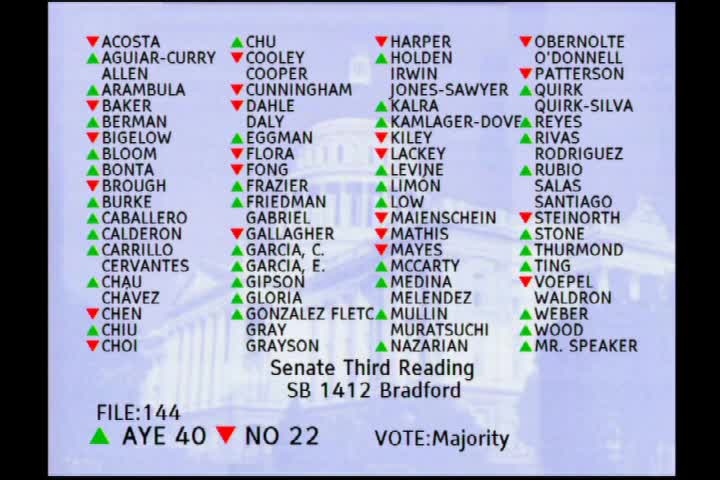 1MIN
Assembly Floor
 1H
Assembly Standing Committee on Appropriations
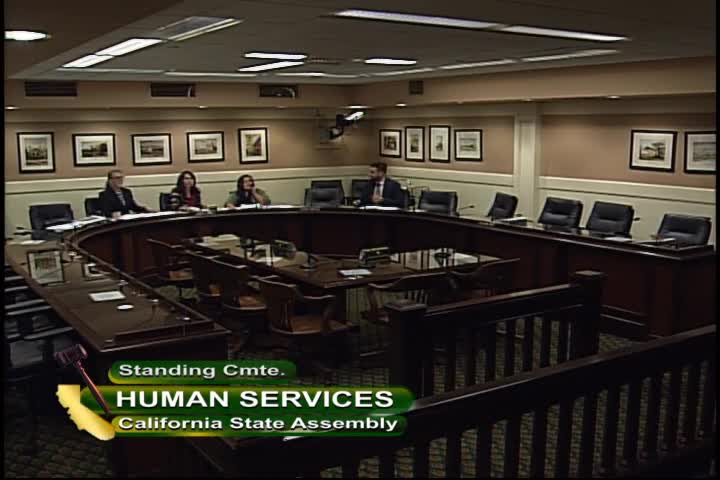 6MIN
Assembly Standing Committee on Human Services
 32SEC
Senate Floor
Bill Author

Bill Co-Author(s):
