SB 1487: Iconic African Species Protection Act.
- Session Year: 2017-2018
- House: Senate
- Latest Version Date: 2018-09-07
Existing law prohibits the importation or possession of birds, mammals, fish, reptiles, or amphibians unless specified conditions are met, including, among other things, the animals were legally taken and legally possessed outside of this state and the Fish and Game Code and regulations adopted pursuant to that code do not expressly prohibit their possession in this state. Existing law provides that a violation of this code or any regulation adopted under this code is a crime.
Existing law makes it a misdemeanor to import into the state for commercial purposes, to possess with intent to sell, or to sell within the state, the dead body or other part or product of specified animals, including leopards, tigers, and elephants. A violation of this provision is punishable by a fine of not less than $1,000, not to exceed $5,000, or imprisonment in a county jail not to exceed 6 months, or by both that fine and imprisonment, for each violation.
This bill would enact the Iconic African Species Protection Act and would prohibit the possession of specified African species and any part, product, or the dead body or parts thereof, including, but not limited to, the African elephant or the black rhinoceros, by any individual, firm, corporation, association, or partnership within the State of California, except as specified for, among other things, use for educational or scientific purposes by a bona fide educational or scientific institution, as defined.
The bill would provide that any person who violates the provisions of the act is subject to a civil penalty of not less than $5,000 or more than $40,000 for each violation. The bill would require that the civil penalties imposed pursuant to the act be deposited in the Fish and Game Preservation Fund. By creating new crimes, the bill would impose a state-mandated local program.
The California Constitution requires the state to reimburse local agencies and school districts for certain costs mandated by the state. Statutory provisions establish procedures for making that reimbursement.
This bill would provide that no reimbursement is required by this act for a specified reason.
Existing law prohibits the importation or possession of birds, mammals, fish, reptiles, or amphibians unless specified conditions are met, including, among other things, the animals were legally taken and legally possessed outside of this state and the Fish and Game Code and regulations adopted pursuant to that code do not expressly prohibit their possession in this state. Existing law provides that a violation of this code or any regulation adopted under this code is a crime.
Existing law makes it a misdemeanor to import into the state for commercial purposes, to possess with intent to sell, or to sell within the state, the dead body or other part or product of specified animals, including leopards, tigers, and elephants. A violation of this provision is punishable by a fine of not less than $1,000, not to exceed $5,000, or imprisonment in a county jail not to exceed 6 months, or by both that fine and imprisonment, for each violation.
This bill would enact the Iconic African Species Protection Act and would prohibit the possession of specified African species and any part, product, offspring, or the dead body or parts thereof, including, but not limited to, the African elephant or the black rhinoceros, by any individual, firm, corporation, association, or partnership within the State of California, except as specified for, among other things, use for educational or scientific purposes by a bona fide educational or scientific institution, as defined.
The bill would impose criminal penalties, including a fine and imprisonment, for first and subsequent convictions for a violation of any provision of the act, or any rule, regulation, or order adopted pursuant to the act. The bill would also authorize an administrative provide that any person who violates the provisions of the act is subject to a civil penalty of up to $10,000 not less than $5,000 or more than $40,000 for a violation of the act, or any rule, regulation, or order adopted pursuant to the act, as specified. each violation. The bill would require that the administrative civil penalties collected imposed pursuant to the act be deposited in the Fish and Game Preservation Fund and used for law enforcement purposes upon appropriation by the Legislature. Fund. By creating new crimes, the bill would impose a state-mandated local program.
The California Constitution requires the state to reimburse local agencies and school districts for certain costs mandated by the state. Statutory provisions establish procedures for making that reimbursement.
This bill would provide that no reimbursement is required by this act for a specified reason.
Existing law prohibits the importation or possession of birds, mammals, fish, reptiles, or amphibians unless specified conditions are met, including, among other things, the animals were legally taken and legally possessed outside of this state and the Fish and Game Code and regulations adopted pursuant to that code do not expressly prohibit their possession in this state. Existing law provides that a violation of this code or any regulation adopted under this code is a crime.
Existing law makes it a misdemeanor to import into the state for commercial purposes, to possess with intent to sell, or to sell within the state, the dead body or other part or product of specified animals, including leopards, tigers, and elephants. A violation of this provision is punishable by a fine of not less than $1,000, not to exceed $5,000, or imprisonment in a county jail not to exceed 6 months, or by both that fine and imprisonment, for each violation.
This bill would enact the Iconic African Species Protection Act and would prohibit the possession of specified African species and any part, product, offspring, or the dead body or parts thereof, including, but not limited to, the African elephant or the black rhinoceros, by any individual, firm, corporation, association, or partnership within the State of California, except as specified for, among other things, use for educational or scientific purposes by a bona fide educational or scientific institution, as defined.
The bill would impose criminal penalties, including a fine and imprisonment, for first and subsequent convictions for a violation of any provision of the act, or any rule, regulation, or order adopted pursuant to the act. The bill would also authorize an administrative penalty of up to $10,000 for a violation of the act, or any rule, regulation, or order adopted pursuant to the act, as specified. The bill would require that the administrative penalties collected pursuant to the act be deposited in the Fish and Game Preservation Fund and used for law enforcement purposes upon appropriation by the Legislature. By creating new crimes, the bill would impose a state-mandated local program.
The California Constitution requires the state to reimburse local agencies and school districts for certain costs mandated by the state. Statutory provisions establish procedures for making that reimbursement.
This bill would provide that no reimbursement is required by this act for a specified reason.
Under existing law, the Public Utilities Commission (PUC) has regulatory authority over public utilities, including electrical corporations. Existing law, enacted as part of the Clean Energy and Pollution Reduction Act of 2015, requires the PUC, in consultation with the State Energy Resources Conservation and Development Commission and State Air Resources Board, to direct electrical corporations to file applications for programs and investments to accelerate widespread transportation electrification to reduce dependence on petroleum, meet air quality standards, achieve the goals set forth in the Charge Ahead California Initiative, and reduce emissions of greenhouse gases to 40% below 1990 levels by 2030 and to 80% below 1990 levels by 2050. That law requires that the programs proposed by electrical corporations seek to minimize overall costs and maximize overall benefits. The PUC is required to approve, or modify and approve, programs and investments in transportation electrification, including those that deploy charging infrastructure, through a reasonable cost recovery mechanism, if they are consistent with the above-described purposes, do not unfairly compete with nonutility enterprises, include performance accountability measures, and are in the interests of ratepayers.This bill would make a nonsubstantive revision to legislative findings and declarations that accompany these requirements of the Clean Energy and Pollution Reduction Act of 2015.Under existing law, the Public Utilities Commission (PUC) has regulatory authority over public utilities, including electrical corporations. Existing law, enacted as part of the Clean Energy and Pollution Reduction Act of 2015, requires the PUC, in consultation with the State Energy Resources Conservation and Development Commission and State Air Resources Board, to direct electrical corporations to file applications for programs and investments to accelerate widespread transportation electrification to reduce dependence on petroleum, meet air quality standards, achieve the goals set forth in the Charge Ahead California Initiative, and reduce emissions of greenhouse gases to 40% below 1990 levels by 2030 and to 80% below 1990 levels by 2050. That law requires that the programs proposed by electrical corporations seek to minimize overall costs and maximize overall benefits. The PUC is required to approve, or modify and approve, programs and investments in transportation electrification, including those that deploy charging infrastructure, through a reasonable cost recovery mechanism, if they are consistent with the above-described purposes, do not unfairly compete with nonutility enterprises, include performance accountability measures, and are in the interests of ratepayers.
This bill would make a nonsubstantive revision to legislative findings and declarations that accompany these requirements of the Clean Energy and Pollution Reduction Act of 2015.
(a)This section may be known, and may be cited, as the Iconic African Species Protection Act.
(b)For the purposes of this section, the following terms have the following meanings:
(1)Iconic African species means any species or subspecies of the following members of the animal kingdom: African elephant (Loxodonta africana and Loxodonta cyclotis), African lion (Panthera leo), leopard (Panthera pardus), black rhinoceros (Diceros bicornis), white rhinoceros (Ceratotherium simum), giraffe (Giraffa camelopardalis), Jentinks duiker (Cephalophus jentinki), plains zebra (Equus quagga), mountain zebra (Equus zebra), hippopotamus (Hippopotamus amphibius), and striped hyena (Hyaena hyaena), this includes any part, product, or the dead body or parts thereof, excluding fossils, whether or not included in a manufactured product or in a food product of any species protected by this part.
(2)Article is synonymous with the term iconic African species.
(3)Bona fide educational or scientific institution means an institution that establishes through documentation either of the following:
(A)Educational or scientific tax exemption, from the federal Internal Revenue Service or the institutions national, state, or local tax authority.
(B)Accreditation as an educational or scientific institution, from a qualified national, regional, state, or local authority for the institutions location.
(c)Except as provided in subdivision (d), iconic African species shall not be possessed by any individual, firm, corporation, association, or partnership within the State of California.
(d)Unless such activity is otherwise prohibited by law, one or more of the following exceptions and defenses apply to the prohibition set forth in subdivision (c):
(1)The prohibition of subdivision (c) does not apply to an employee or agent of the federal, state, or local government undertaking a law enforcement activity pursuant to federal or state law, or a mandatory duty required by federal law.
(2)The article is possessed for wholly noncommercial purposes and the owner can demonstrate the article was in the persons possession within this state before January 1, 2019. An owner may demonstrate his or her possession of the article before January 1, 2019, by furnishing documentation that includes, but is not limited to, any of the following:
(A)A valid permit for the importation of sport-hunted trophies issued by the United States Fish and Wildlife Service before January 1, 2019.
(B)A bill of lading or other valid document regarding the transportation of the article issued before January 1, 2019.
(C)A valid appraisal of the article issued before January 1, 2019.
(D)Photographic or video evidence showing the article in the owners possession that possesses a date stamp indicating a date before January 1, 2019.
(3)The article was lawfully imported pursuant to a permit or exemption under the federal Endangered Species Act (16 U.S.C. Sec. 1531 et seq.). Within 180 days of importation, any such article shall be removed from within the state and may not be subsequently possessed within the state unless possession of the article is expressly authorized by the federal Endangered Species Act (16 U.S.C. Sec. 1531 et seq.) or its implementing regulations.
(4)The article is for use for educational or scientific purposes by a bona fide educational or scientific institution.
(5)In the case of ivory or rhinoceros horn, is possessed in conformance with the requirements of Section 2022.
(6)The article is distributed directly to a legal beneficiary of a trust or to a legal heir provided the article was possessed by the decedent before the enactment of this section.
(e)In addition to any other penalty provided by law, any person who violates this section is subject to a civil penalty of not less than five thousand dollars ($5,000) or more than forty thousand dollars ($40,000) for each violation.
(f)The Attorney General, or the city attorney of the city or county counsel of the county in which a violation of this section occurs, may bring a civil action to recover the civil penalty described in subdivision (e). The civil action shall be brought in the county in which the violation occurs and any penalty imposed shall be transferred to the Controller for deposit in the Fish and Game Preservation Fund in accordance with Section 13003.
(g)For any judgment imposed by a court for a violation of this section resulting in a fine, the department may provide a reward of up to five hundred dollars ($500) to any person giving information that led to the judgment. This reward shall be paid from the Fish and Game Preservation Fund, upon appropriation by the Legislature. This reward shall not apply if the informant is a regular salaried law enforcement officer or an officer or agent of the department.
(h)Upon judgment for a violation of this section, any seized article shall be forfeited and, upon forfeiture, either maintained by the department for educational or training purposes, donated by the department to a bona fide educational or scientific institution, or destroyed.
(i)This section does not preclude enforcement under Section 2022 of this code or Sections 653o, 653p, and 653r of the Penal Code.
(j)The prohibition against possession of the species listed in paragraph (1) of subdivision (b) is severable. A finding of the invalidity of the prohibition against a species shall not affect the validity of the prohibition against other species.
SEC. 2.No reimbursement is required by this act pursuant to Section 6 of Article XIIIB of the California Constitution because the only costs that may be incurred by a local agency or school district will be incurred because this act creates a new crime or infraction, eliminates a crime or infraction, or changes the penalty for a crime or infraction, within the meaning of Section 17556 of the Government Code, or changes the definition of a crime within the meaning of Section 6 of Article XIIIB of the California Constitution.
(a)This section may be known, and may be cited, as the Iconic African Species Protection Act.
(b)For the purposes of this section, the following terms have the following meanings:
(1)Iconic African Species species means any species or subspecies of the following members of the animal kingdom: African elephant (Loxodonta africana and Loxodonta cyclotis), African lion (Panthera leo), leopard (Panthera pardus), black rhinoceros (Diceros bicornis), white rhinoceros (Ceratotherium simum), giraffe (Giraffa camelopardalis), Jentinks duiker (Cephalophus jentinki), plains zebra (Equus quagga), mountain zebra (Equus zebra), hippopotamus (Hippopotamus amphibius), and striped hyena (Hyaena hyaena), including this includes any part, product, or offspring thereof, or the dead body or parts thereof, excluding fossils, whether or not included in a manufactured product or in a food product. product of any species protected by this part.
(2)Article is synonymous with the term Iconic iconic African Species. species.
(3)Bona fide educational or scientific institution means an institution that establishes through documentation either of the following:
(A)Educational or scientific tax exemption, from the federal Internal Revenue Service or the institutions national, state, or local tax authority.
(B)Accreditation as an educational or scientific institution, from a qualified national, regional, state, or local authority for the institutions location.
(c)Except as provided in subdivision (d), Iconic iconic African Species species shall not be possessed by any individual, firm, corporation, association, or partnership within the State of California.
(d)Unless such activity is otherwise prohibited by law, one or more of the following exceptions and defenses apply to the prohibition set forth in subdivision (c):
(1)The prohibition of subdivision (c) does not apply to an employee or agent of the federal, state, or local government undertaking a law enforcement activity pursuant to federal or state law, or a mandatory duty required by federal law.
(2)The article is possessed for wholly noncommercial purposes and was possessed the owner can demonstrate the article was in the persons possession within this state before January 1, 2019. An owner may demonstrate his or her possession of the article before January 1, 2019, by furnishing documentation that includes, but is not limited to, any of the following:
(A)A valid permit for the importation of sport-hunted trophies issued by the United States Fish and Wildlife Service before January 1, 2019.
(B)A bill of lading or other valid document regarding the transportation of the article issued before January 1, 2019.
(C)A valid appraisal of the article issued before January 1, 2019.
(D)Photographic or video evidence showing the article in the owners possession that possesses a date stamp indicating a date before January 1, 2019.
(3)The article is was lawfully imported pursuant to a permit or exemption under the federal Endangered Species Act (16 U.S.C. Sec. 1531 et seq.). Within 30 180 days of importation, any such article shall be removed from within the state and may not be subsequently possessed within the state. state unless possession of the article is expressly authorized by the federal Endangered Species Act (16 U.S.C. Sec. 1531 et seq.) or its implementing regulations.
(4)The article is for use for educational or scientific purposes by a bona fide educational or scientific institution.
(5)In the case of ivory or rhinoceros horn, is possessed in conformance with the requirements of Section 2022.
(6)The article is distributed directly to a legal beneficiary of a trust or to a legal heir provided the article was possessed by the decedent before the enactment of this section.
(e)In addition to any other penalty provided by law, any person who violates this section is subject to a civil penalty of not less than five thousand dollars ($5,000) or more than forty thousand dollars ($40,000) for each violation.
(f)The Attorney General, or the city attorney of the city or the district attorney or county counsel of the county in which a violation of this section occurs, may bring a civil action to recover the civil penalty described in subdivision (e). The civil action shall be brought in the county in which the violation occurs and any penalty imposed shall be transferred to the Controller for deposit in the Fish and Game Preservation Fund in accordance with Section 13003.
(g)For any judgment imposed by a court for a violation of this section resulting in a fine, the court may pay the department may provide a reward of up to five hundred dollars ($500), ($500) to any person giving information that led to the judgment. This reward shall be paid from the Fish and Game Preservation Fund, upon appropriation by the Legislature. This reward shall not apply if the informant is a regular salaried law enforcement officer or an officer or agent of the department.
(h)Upon judgment for a violation of this section, any seized article shall be forfeited and, upon forfeiture, either maintained by the department for educational or training purposes, donated by the department to a bona fide educational or scientific institution, or destroyed.
(i)This section does not preclude enforcement under Section 2022 of this code or Sections 653o, 653p, and 653r of the Penal Code.
(j)The prohibition against possession of the species listed in paragraph (1) of subdivision (b) is severable. A finding of the invalidity of the prohibition against a species shall not affect the validity of the prohibition against other species.
SEC. 2.No reimbursement is required by this act pursuant to Section 6 of Article XIIIB of the California Constitution because the only costs that may be incurred by a local agency or school district will be incurred because this act creates a new crime or infraction, eliminates a crime or infraction, or changes the penalty for a crime or infraction, within the meaning of Section 17556 of the Government Code, or changes the definition of a crime within the meaning of Section 6 of Article XIIIB of the California Constitution.
(a)This section may be known, and may be cited, as the Iconic African Species Protection Act.
(b)For the purposes of this section, the following terms have the following meanings:
(1)Iconic African Species means any species or subspecies of the following members of the animal kingdom: African elephant (Loxodonta africana and Loxodonta cyclotis), African lion (Panthera leo), leopard (Panthera pardus), black rhinoceros (Diceros bicornis), white rhinoceros (Ceratotherium simum), giraffe (Giraffa camelopardalis), Jentinks duiker (Cephalophus jentinki), plains zebra (Equus quagga), mountain zebra (Equus zebra), hippopotamus (Hippopotamus amphibius), and striped hyena (Hyaena hyaena), including any part, product, or offspring thereof, or the dead body or parts thereof, excluding fossils, whether or not included in a manufactured product or in a food product.
(2)Article is synonymous with the term Iconic African Species.
(3)Bona fide educational or scientific institution means an institution that establishes through documentation either of the following:
(A)Educational or scientific tax exemption, from the federal Internal Revenue Service or the institutions national, state, or local tax authority.
(B)Accreditation as an educational or scientific institution, from a qualified national, regional, state, or local authority for the institutions location.
(c)Except as provided in subdivision (d), Iconic African Species shall not be possessed by any individual, firm, corporation, association, or partnership within the State of California.
(d)Unless such activity is otherwise prohibited by law, one or more of the following exceptions and defenses apply to the prohibition set forth in subdivision (c):
(1)The prohibition of subdivision (c) does not apply to an employee or agent of the federal, state, or local government undertaking a law enforcement activity pursuant to federal or state law, or a mandatory duty required by federal law.
(2)The article is possessed for wholly noncommercial purposes and was possessed within this state before January 1, 2019.
(3)The article is lawfully imported pursuant to a permit or exemption under the federal Endangered Species Act (16 U.S.C. Sec. 1531 et seq.). Within 30 days of importation, any such article shall be removed from within the state and may not be possessed within the state.
(4)The article is for use for educational or scientific purposes by a bona fide educational or scientific institution.
(5)In the case of ivory or rhinoceros horn, is possessed in conformance with the requirements of Section 2022.
(6)The article is distributed directly to a legal beneficiary of a trust or to a legal heir provided the article was possessed by the decedent before the enactment of this section.
(e)For a violation of any provision of this section, or any rule, regulation, or order adopted pursuant to this section, the following criminal penalties shall be imposed:(1)For a first conviction, the offense shall be a misdemeanor punishable by a fine of not less than five thousand dollars ($5,000), or more than forty thousand dollars ($40,000), imprisonment in the county jail for not more than one year, or by both the fine and imprisonment.(2)For a second or subsequent conviction, the offense shall be a misdemeanor punishable by a fine of not less than ten thousand dollars ($10,000), or more than fifty thousand dollars ($50,000), imprisonment in county jail for not more than one year, or by both the fine and imprisonment.(f)In addition to, and separate from, any criminal penalty provided for under subdivision (e), an administrative penalty of up to ten thousand dollars ($10,000) may be imposed for a violation of any provision of this section, or any rule, regulation, or order adopted pursuant to this section. Penalties authorized pursuant to this subdivision may be imposed by the department consistent with the provisions of subdivision (f) of Section 2022.(e)In addition to any other penalty provided by law, any person who violates this section is subject to a civil penalty of not less than five thousand dollars ($5,000) or more than forty thousand dollars ($40,000) for each violation.
(f)The Attorney General, or the city attorney of the city or the district attorney or county counsel of the county in which a violation of this section occurs, may bring a civil action to recover the civil penalty described in subdivision (e). The civil action shall be brought in the county in which the violation occurs and any penalty imposed shall be transferred to the Controller for deposit in the Fish and Game Preservation Fund in accordance with Section 13003.
(g)For any conviction or other entry of judgment imposed by a court for a violation of this section resulting in a fine, the court may pay one-half of the fine, but not to exceed up to five hundred dollars ($500), to any person giving information that led to the conviction or other entry of judgment. This reward shall not apply if the informant is a regular salaried law enforcement officer or an officer or agent of the department.
(h)Upon conviction or other entry of judgment for a violation of this section, any seized article shall be forfeited and, upon forfeiture, either maintained by the department for educational or training purposes, donated by the department to a bona fide educational or scientific institution, or destroyed.
(i)Administrative penalties collected pursuant to this section shall be deposited in the Fish and Game Preservation Fund and used for law enforcement purposes upon appropriation by the Legislature.(j)(i)This section does not preclude enforcement under Section 2022 of this code or Sections 653o, 653p, and 653r of the Penal Code.
(k)(j)The prohibition against possession of the species listed in paragraph (1) of subdivision (b) is severable. A finding of the invalidity of the prohibition against a species shall not affect the validity of the prohibition against other species.
SEC. 2.No reimbursement is required by this act pursuant to Section 6 of Article XIIIB of the California Constitution because the only costs that may be incurred by a local agency or school district will be incurred because this act creates a new crime or infraction, eliminates a crime or infraction, or changes the penalty for a crime or infraction, within the meaning of Section 17556 of the Government Code, or changes the definition of a crime within the meaning of Section 6 of Article XIIIB of the California Constitution.
(a)This section may be known, and may be cited, as the Iconic African Species Protection Act.
(b)For the purposes of this section, the following terms have the following meanings:
(1)Iconic African Species means any species or subspecies of the following members of the animal kingdom: African elephant (Loxodonta africana and Loxodonta cyclotis), African lion (Panthera leo), leopard (Panthera pardus), black rhinoceros (Diceros bicornis), white rhinoceros (Ceratotherium simum), giraffe (Giraffa camelopardalis), Jentinks duiker (Cephalophus jentinki), plains zebra (Equus quagga), mountain zebra (Equus zebra), hippopotamus (Hippopotamus amphibius), and striped hyena (Hyaena hyaena), including any part, product, or offspring thereof, or the dead body or parts thereof, excluding fossils, whether or not included in a manufactured product or in a food product.
(2)Article is synonymous with the term Iconic African Species.
(3)Bona fide educational or scientific institution means an institution that establishes through documentation either of the following:
(A)Educational or scientific tax exemption, from the federal Internal Revenue Service or the institutions national, state, or local tax authority.
(B)Accreditation as an educational or scientific institution, from a qualified national, regional, state, or local authority for the institutions location.
(c)Except as provided in subdivision (d), Iconic African Species shall not be possessed by any individual, firm, corporation, association, or partnership within the State of California.
(d)Unless such activity is otherwise prohibited by law, one or more of the following exceptions and defenses apply to the prohibition set forth in subdivision (c):
(1)The prohibition of subdivision (c) does not apply to an employee or agent of the federal, state, or local government undertaking a law enforcement activity pursuant to federal or state law, or a mandatory duty required by federal law.
(2)The article is possessed for wholly noncommercial purposes and was possessed within this state before January 1, 2019, and is not thereafter sold, offered for sale, traded, bartered, or distributed to any private party within the State of California. 2019.
(3)The article is lawfully imported pursuant to a permit or exemption under the California federal Endangered Species Act. Act (16 U.S.C. Sec. 1531 et seq.). Within 30 days of importation, any such article shall be removed from within the state and may not be possessed within the state.
(4)The article is for use for educational or scientific purposes by a bona fide educational or scientific institution.
(5)In the case of ivory or rhinoceros horn, is possessed in conformance with the requirements of Section 2022.
(6)The article is distributed directly to a legal beneficiary of a trust or to a legal heir provided the article was possessed by the decedent before the enactment of this section; provided further, that after transfer to the beneficiary or heir, the article is not thereafter sold, offered for sale, traded, bartered, or distributed to any private party. section.
(e)For a violation of any provision of this section, or any rule, regulation, or order adopted pursuant to this section, the following criminal penalties shall be imposed:
(1)For a first conviction, the offense shall be a misdemeanor punishable by a fine of not less than five thousand dollars ($5,000), or more than forty thousand dollars ($40,000), imprisonment in the county jail for not more than one year, or by both the fine and imprisonment.
(2)For a second or subsequent conviction, the offense shall be a misdemeanor punishable by a fine of not less than ten thousand dollars ($10,000), or more than fifty thousand dollars ($50,000), imprisonment in county jail for not more than one year, or by both the fine and imprisonment.
(f)In addition to, and separate from, any criminal penalty provided for under subdivision (e), an administrative penalty of up to ten thousand dollars ($10,000) may be imposed for a violation of any provision of this section, or any rule, regulation, or order adopted pursuant to this section. Penalties authorized pursuant to this subdivision may be imposed by the department consistent with the provisions of subdivision (f) of Section 2022.
(g)For any conviction or other entry of judgment imposed by a court for a violation of this section resulting in a fine, the court may pay one-half of the fine, but not to exceed five hundred dollars ($500), to any person giving information that led to the conviction or other entry of judgment. This reward shall not apply if the informant is a regular salaried law enforcement officer or an officer or agent of the department.
(h)Upon conviction or other entry of judgment for a violation of this section, any seized article shall be forfeited and, upon forfeiture, either maintained by the department for educational or training purposes, donated by the department to a bona fide educational or scientific institution, or destroyed.
(i)Administrative penalties collected pursuant to this section shall be deposited in the Fish and Game Preservation Fund and used for law enforcement purposes upon appropriation by the Legislature.
(j)This section does not preclude enforcement under Section 2022 of this code or Sections 653o, 653p, and 653r of the Penal Code.
(k)The prohibition against possession of the species listed in paragraph (1) of subdivision (b) is severable. A finding of the invalidity of the prohibition against a species shall not affect the validity of the prohibition against other species.
SEC. 2.No reimbursement is required by this act pursuant to Section 6 of Article XIIIB of the California Constitution because the only costs that may be incurred by a local agency or school district will be incurred because this act creates a new crime or infraction, eliminates a crime or infraction, or changes the penalty for a crime or infraction, within the meaning of Section 17556 of the Government Code, or changes the definition of a crime within the meaning of Section 6 of Article XIIIB of the California Constitution.
(a)This section may be known, and may be cited, as the Iconic African Species Protection Act.
(b)For the purposes of this section, the following terms have the following meanings:
(1)Iconic African Species means any species or subspecies of the following members of the animal kingdom: African elephant (Loxodonta africana and Loxodonta cyclotis), African lion (Panthera leo), leopard (Panthera pardus), black rhinoceros (Diceros bicornis), white rhinoceros (Ceratotherium simum), giraffe (Giraffa camelopardalis), Jentinks duiker (Cephalophus jentinki), plains zebra (Equus quagga), mountain zebra (Equus zebra), hippopotamus (Hippopotamus amphibius), and striped hyena (Hyaena hyaena), including any part, product, or offspring thereof, or the dead body or parts thereof, excluding fossils, whether or not included in a manufactured product or in a food product.
(2)Article is synonymous with the term Iconic African Species.
(3)Bona fide educational or scientific institution means an institution that establishes through documentation either of the following:
(A)Educational or scientific tax exemption, from the federal Internal Revenue Service or the institutions national, state, or local tax authority.
(B)Accreditation as an educational or scientific institution, from a qualified national, regional, state, or local authority for the institutions location.
(c)Except as provided in subdivision (d), Iconic African Species shall not be possessed by any individual, firm, corporation, association, or partnership within the State of California.
(d)Unless such activity is otherwise prohibited by law, one or more of the following exceptions and defenses apply to the prohibition set forth in subdivision (c):
(1)The prohibition of subdivision (c) does not apply to an employee or agent of the federal, state, or local government undertaking a law enforcement activity pursuant to federal or state law, or a mandatory duty required by federal law.
(2)The article is possessed for wholly noncommercial purposes and was possessed within this state before January 1, 2019, and is not thereafter sold, offered for sale, traded, bartered, or distributed to any private party within the State of California.
(3)The article is lawfully imported pursuant to a permit or exemption under the California Endangered Species Act. Within 30 days of importation, any such article shall be removed from within the state and may not be possessed within the state.
(4)The article is for use for educational or scientific purposes by a bona fide educational or scientific institution.
(5)In the case of ivory or rhinoceros horn, is possessed in conformance with the requirements of Section 2022.
(6)The article is distributed directly to a legal beneficiary of a trust or to a legal heir provided the article was possessed by the decedent before the enactment of this section; provided further, that after transfer to the beneficiary or heir, the article is not thereafter sold, offered for sale, traded, bartered, or distributed to any private party.
(e)For a violation of any provision of this section, or any rule, regulation, or order adopted pursuant to this section, the following criminal penalties shall be imposed:
(1)For a first conviction, the offense shall be a misdemeanor punishable by a fine of not less than five thousand dollars ($5,000), or more than forty thousand dollars ($40,000), imprisonment in the county jail for not more than one year, or by both the fine and imprisonment.
(2)For a second or subsequent conviction, the offense shall be a misdemeanor punishable by a fine of not less than ten thousand dollars ($10,000), or more than fifty thousand dollars ($50,000), imprisonment in county jail for not more than one year, or by both the fine and imprisonment.
(f)In addition to, and separate from, any criminal penalty provided for under subdivision (e), an administrative penalty of up to ten thousand dollars ($10,000) may be imposed for a violation of any provision of this section, or any rule, regulation, or order adopted pursuant to this section. Penalties authorized pursuant to this subdivision may be imposed by the department consistent with the provisions of subdivision (f) of Section 2022.
(g)For any conviction or other entry of judgment imposed by a court for a violation of this section resulting in a fine, the court may pay one-half of the fine, but not to exceed five hundred dollars ($500), to any person giving information that led to the conviction or other entry of judgment. This reward shall not apply if the informant is a regular salaried law enforcement officer or an officer or agent of the department.
(h)Upon conviction or other entry of judgment for a violation of this section, any seized article shall be forfeited and, upon forfeiture, either maintained by the department for educational or training purposes, donated by the department to a bona fide educational or scientific institution, or destroyed.
(i)Administrative penalties collected pursuant to this section shall be deposited in the Fish and Game Preservation Fund and used for law enforcement purposes upon appropriation by the Legislature.
(j)This section does not preclude enforcement under Section 2022 of this code or Sections 653o, 653p, and 653r of the Penal Code.
(k)The prohibition against possession of the species listed in paragraph (1) of subdivision (b) is severable. A finding of the invalidity of the prohibition against a species shall not affect the validity of the prohibition against other species.
SEC. 2.No reimbursement is required by this act pursuant to Section 6 of Article XIIIB of the California Constitution because the only costs that may be incurred by a local agency or school district will be incurred because this act creates a new crime or infraction, eliminates a crime or infraction, or changes the penalty for a crime or infraction, within the meaning of Section 17556 of the Government Code, or changes the definition of a crime within the meaning of Section 6 of Article XIIIB of the California Constitution.
SECTION 1.Section 740.12 of the Public Utilities Code is amended to read:740.12.(a)(1)The Legislature finds and declares all of the following:(A)Advanced clean vehicles and fuels are needed to reduce petroleum use, to meet air quality standards, to improve public health, and to achieve the states goals for reducing emissions of greenhouse gases.(B)Widespread transportation electrification is needed to achieve the goals of the Charge Ahead California Initiative (Chapter 8.5 (commencing with Section 44258) of Part 5 of Division 26 of the Health and Safety Code).(C)Widespread transportation electrification requires increased access for disadvantaged communities, low- and moderate-income communities, and other consumers of zero-emission and near-zero-emission vehicles, and increased use of those vehicles in those communities and by other consumers to enhance air quality, lower greenhouse gases emissions, and promote overall benefits to those communities and other consumers.(D)Reducing emissions of greenhouse gases to 40 percent below 1990 levels by 2030 and to 80 percent below 1990 levels by 2050 will require widespread transportation electrification.(E)Widespread transportation electrification requires electrical corporations to increase access to the use of electricity as a transportation fuel.(F)Widespread transportation electrification should stimulate innovation and competition, enable consumer options in charging equipment and services, attract private capital investments, and create high-quality jobs for Californians, where technologically feasible.(G)Deploying electric vehicles should assist in grid management, integrating generation from eligible renewable energy resources, and reducing fuel costs for vehicle drivers who charge in a manner consistent with electrical grid conditions.(H)Deploying electric vehicle charging infrastructure should facilitate increased sales of electric vehicles by making charging easily accessible and should provide the opportunity to access electricity as a fuel that is cleaner and less costly than gasoline or other fossil fuels in public and private locations.(I)According to the State Alternative Fuels Plan analysis by the Energy Commission and the State Air Resources Board, light-, medium-, and heavy-duty vehicle electrification results in approximately 70 percent fewer greenhouse gases emitted, over 85 percent fewer ozone-forming air pollutants emitted, and 100 percent fewer petroleum used. These reductions will become larger as renewable generation increases.(2)It is the policy of the state and the intent of the Legislature to encourage transportation electrification as a means to achieve ambient air quality standards and the states climate goals. Agencies designing and implementing regulations, guidelines, plans, and funding programs to reduce greenhouse gas emissions shall take the findings described in paragraph (1) into account.(b)The commission, in consultation with the State Air Resources Board and the Energy Commission, shall direct electrical corporations to file applications for programs and investments to accelerate widespread transportation electrification to reduce dependence on petroleum, meet air quality standards, achieve the goals set forth in the Charge Ahead California Initiative (Chapter 8.5 (commencing with Section 44258) of Part 5 of Division 26 of the Health and Safety Code), and reduce emissions of greenhouse gases to 40 percent below 1990 levels by 2030 and to 80 percent below 1990 levels by 2050. Programs proposed by electrical corporations shall seek to minimize overall costs and maximize overall benefits. The commission shall approve, or modify and approve, programs and investments in transportation electrification, including those that deploy charging infrastructure, via a reasonable cost recovery mechanism, if they are consistent with this section, do not unfairly compete with nonutility enterprises as required under Section 740.3, include performance accountability measures, and are in the interests of ratepayers as defined in Section 740.8.(c)The commission shall review data concerning current and future electric transportation adoption and charging infrastructure utilization prior to authorizing an electrical corporation to collect new program costs related to transportation electrification in customer rates. If market barriers unrelated to the investment made by an electric corporation prevent electric transportation from adequately utilizing available charging infrastructure, the commission shall not permit additional investments in transportation electrification without a reasonable showing that the investments would not result in long-term stranded costs recoverable from ratepayers.(d)This section applies to an application to the commission for transportation electrification programs and investments if one of the following conditions is met:(1)The application is filed on or after January 1, 2016.(2)The application is filed before January 1, 2016, but has an evidentiary hearing scheduled on or after July 1, 2016.(a)(1)The Legislature finds and declares all of the following:
(A)Advanced clean vehicles and fuels are needed to reduce petroleum use, to meet air quality standards, to improve public health, and to achieve greenhouse gas emissions reduction goals. the states goals for reducing emissions of greenhouse gases.
(B)Widespread transportation electrification is needed to achieve the goals of the Charge Ahead California Initiative (Chapter 8.5 (commencing with Section 44258) of Part 5 of Division 26 of the Health and Safety Code).
(C)Widespread transportation electrification requires increased access for disadvantaged communities, low- and moderate-income communities, and other consumers of zero-emission and near-zero-emission vehicles, and increased use of those vehicles in those communities and by other consumers to enhance air quality, lower greenhouse gases emissions, and promote overall benefits to those communities and other consumers.
(D)Reducing emissions of greenhouse gases to 40 percent below 1990 levels by 2030 and to 80 percent below 1990 levels by 2050 will require widespread transportation electrification.
(E)Widespread transportation electrification requires electrical corporations to increase access to the use of electricity as a transportation fuel.
(F)Widespread transportation electrification should stimulate innovation and competition, enable consumer options in charging equipment and services, attract private capital investments, and create high-quality jobs for Californians, where technologically feasible.
(G)Deploying electric vehicles should assist in grid management, integrating generation from eligible renewable energy resources, and reducing fuel costs for vehicle drivers who charge in a manner consistent with electrical grid conditions.
(H)Deploying electric vehicle charging infrastructure should facilitate increased sales of electric vehicles by making charging easily accessible and should provide the opportunity to access electricity as a fuel that is cleaner and less costly than gasoline or other fossil fuels in public and private locations.
(I)According to the State Alternative Fuels Plan analysis by the Energy Commission and the State Air Resources Board, light-, medium-, and heavy-duty vehicle electrification results in approximately 70 percent fewer greenhouse gases emitted, over 85 percent fewer ozone-forming air pollutants emitted, and 100 percent fewer petroleum used. These reductions will become larger as renewable generation increases.
(2)It is the policy of the state and the intent of the Legislature to encourage transportation electrification as a means to achieve ambient air quality standards and the states climate goals. Agencies designing and implementing regulations, guidelines, plans, and funding programs to reduce greenhouse gas emissions shall take the findings described in paragraph (1) into account.
(b)The commission, in consultation with the State Air Resources Board and the Energy Commission, shall direct electrical corporations to file applications for programs and investments to accelerate widespread transportation electrification to reduce dependence on petroleum, meet air quality standards, achieve the goals set forth in the Charge Ahead California Initiative (Chapter 8.5 (commencing with Section 44258) of Part 5 of Division 26 of the Health and Safety Code), and reduce emissions of greenhouse gases to 40 percent below 1990 levels by 2030 and to 80 percent below 1990 levels by 2050. Programs proposed by electrical corporations shall seek to minimize overall costs and maximize overall benefits. The commission shall approve, or modify and approve, programs and investments in transportation electrification, including those that deploy charging infrastructure, via a reasonable cost recovery mechanism, if they are consistent with this section, do not unfairly compete with nonutility enterprises as required under Section 740.3, include performance accountability measures, and are in the interests of ratepayers as defined in Section 740.8.
(c)The commission shall review data concerning current and future electric transportation adoption and charging infrastructure utilization prior to authorizing an electrical corporation to collect new program costs related to transportation electrification in customer rates. If market barriers unrelated to the investment made by an electric corporation prevent electric transportation from adequately utilizing available charging infrastructure, the commission shall not permit additional investments in transportation electrification without a reasonable showing that the investments would not result in long-term stranded costs recoverable from ratepayers.
(d)This section applies to an application to the commission for transportation electrification programs and investments if one of the following conditions is met:
(1)The application is filed on or after January 1, 2016.
(2)The application is filed before January 1, 2016, but has an evidentiary hearing scheduled on or after July 1, 2016.
|
Date
|
Status
|
|---|---|
| Sep 30, 2018 | In Senate. Consideration of Governor's veto pending. |
| Sep 30, 2018 | Vetoed by the Governor. |
| Sep 12, 2018 | Enrolled and presented to the Governor at 5 p.m. |
| Aug 31, 2018 | Assembly amendments concurred in. (Ayes 27. Noes 11.) Ordered to engrossing and enrolling. |
| Aug 31, 2018 | In Senate. Concurrence in Assembly amendments pending. |
| Aug 31, 2018 | Read third time. Passed. Ordered to the Senate. |
| Aug 20, 2018 | Read second time. Ordered to third reading. |
| Aug 16, 2018 | From committee: Do pass. (Ayes 12. Noes 5.) (August 16). |
| Aug 8, 2018 | August 8 set for first hearing. Placed on suspense file. |
| Jul 2, 2018 | Read second time and amended. Re-referred to Com. on APPR. |
| Jun 28, 2018 | From committee: Do pass as amended and re-refer to Com. on APPR. (Ayes 8. Noes 2.) (June 28). |
| Jun 26, 2018 | From committee: Do pass and re-refer to Com. on JUD. (Ayes 9. Noes 5.) (June 26). Re-referred to Com. on JUD. |
| Jun 21, 2018 | Assembly Rule 56 suspended. |
| Jun 11, 2018 | Referred to Coms. on W.,P., & W. and JUD. |
| May 31, 2018 | In Assembly. Read first time. Held at Desk. |
| May 30, 2018 | Read third time. Passed. (Ayes 27. Noes 6.) Ordered to the Assembly. |
| May 29, 2018 | Read second time. Ordered to third reading. |
| May 25, 2018 | From committee: Do pass as amended. (Ayes 5. Noes 2.) (May 25). |
| May 23, 2018 | Set for hearing May 25. |
| May 22, 2018 | May 22 hearing: Placed on APPR. suspense file. |
| May 14, 2018 | Set for hearing May 22. |
| May 10, 2018 | From committee with author's amendments. Read second time and amended. Re-referred to Com. on APPR. |
| May 10, 2018 | May 14 hearing postponed by committee. |
| May 4, 2018 | Set for hearing May 14. |
| May 3, 2018 | May 7 hearing postponed by committee. |
| Apr 27, 2018 | Set for hearing May 7. |
| Apr 25, 2018 | From committee: Do pass and re-refer to Com. on APPR. (Ayes 5. Noes 2.) (April 24). Re-referred to Com. on APPR. |
| Apr 18, 2018 | Set for hearing April 24. |
| Apr 17, 2018 | From committee: Do pass and re-refer to Com. on PUB. S. (Ayes 7. Noes 2.) (April 16). Re-referred to Com. on PUB. S. |
| Apr 6, 2018 | Set for hearing April 16. |
| Apr 4, 2018 | Re-referred to Coms. on N.R. & W. and PUB. S. |
| Apr 2, 2018 | From committee with author's amendments. Read second time and amended. Re-referred to Com. on RLS. |
| Mar 8, 2018 | Referred to Com. on RLS. |
| Feb 20, 2018 | From printer. May be acted upon on or after March 22. |
| Feb 16, 2018 | Introduced. Read first time. To Com. on RLS. for assignment. To print. |
|
Date
|
Description
|
Location
|
Votes
|
|
|---|---|---|---|---|
| Aug 31, 2018 | SB 1487 Stern Senate Third Reading By KALRA | Assembly Floor |
Passed |
|
| Aug 31, 2018 | Unfinished Business SB1487 Stern Concurrence | Senate Floor |
Passed |
|
| Aug 16, 2018 | Do pass. | Assembly Standing Committee on Appropriations |
Passed |
|
| Jun 28, 2018 | Do pass as amended and be re-referred to the Committee on [Appropriations] | Assembly Standing Committee on Judiciary |
Passed |
|
| Jun 26, 2018 | Do pass and be re-referred to the Committee on [Judiciary] | Assembly Standing Committee on Water, Parks, and Wildlife |
Passed |
|
| May 30, 2018 | Senate 3rd Reading SB1487 Stern | Senate Floor |
Passed |
|
| May 25, 2018 | Do pass as amended | Senate Standing Committee on Appropriations |
Passed |
|
| May 22, 2018 | Placed on suspense file | Senate Standing Committee on Appropriations |
Passed |
|
| Apr 24, 2018 | Do pass, but first be re-referred to the Committee on [Appropriations] | Senate Standing Committee on Public Safety |
Passed |
|
| Apr 16, 2018 | Do pass, but first be re-referred to the Committee on [Public Safety] | Senate Standing Committee on Natural Resources and Water |
Passed |
This list shows positions taken on this bill by organizations on the date displayed, which is linked to the original source.
Positions by individuals are not included.
|
Organization
|
Position
|
Date
|
|---|---|---|
| 337 Individuals | ** Support | Jun 26, 2018 |
| Animal Defenders International | * Support | Jun 26, 2018 |
| Animal Defenders International | * Support | Apr 16, 2018 |
| Animal Defenders International | ** Support | Oct 2, 2018 |
| Animal Legal Defense Fund | ** Support | Oct 2, 2018 |
| Aretha Conservation Camp | * Against | Jun 26, 2018 |
| Black Brant Group | ** Against | Jun 26, 2018 |
| Cal-Ore Wetland And Waterfowl Council | ** Against | Jun 26, 2018 |
| california bowmen hunters | ** Against | Jun 26, 2018 |
| California Chapter Wild Sheep Foundation | * Against | Jun 26, 2018 |
| California Deer Association | * Against | Jun 26, 2018 |
| California Houndsmen For Conservation | ** Against | Jun 26, 2018 |
| California Rifle and Pistol Association | * Against | Jun 26, 2018 |
| California Sportsman's Lobby, Inc. | * Against | Jun 26, 2018 |
| California Waterfowl Association | ** Against | Oct 2, 2018 |
| Cambodia Wildlife Sanctuary | ** Support | Jun 26, 2018 |
| Center For Biological Diversity | ** Support | Oct 2, 2018 |
| Congressional Sportsmen's Foundation | * Against | Jun 26, 2018 |
| Friends of Animals | * Support | Apr 16, 2018 |
| Gun Owners of California | * Against | Jun 26, 2018 |
| HSUS | * Support | Jun 26, 2018 |
| Humane Society International | ** Support | Jun 26, 2018 |
| Humane Society Of The United States | * Support | Jun 26, 2018 |
| Humane Society Of The United States, The | * Support | Jun 26, 2018 |
| Hundreds Of Individuals | ** Support | Oct 2, 2018 |
| Individuals | ** Support | Jun 22, 2018 |
| Jane Goodall, Jane Goodall Institute | ** Support | Jun 26, 2018 |
| Mzuri Safari Club | * Against | Jun 26, 2018 |
| National Rifle Assocation | * Against | Jun 26, 2018 |
| National Rifle Association - Institute For Legislative Action | ** Against | Jun 26, 2018 |
| National Shooting Sports Foundation, Inc. | * Against | Jun 26, 2018 |
| National Shooting Sports Foundations, Inc. | ** Against | Oct 2, 2018 |
| Natural Resources Defense Council | ** Support | Oct 2, 2018 |
| Outdoor Sportsman's Coalition | * Against | Jun 26, 2018 |
| Outdoor Sportsmen'S Coalition Of California | ** Against | Jun 26, 2018 |
| paw project | ** Support | Jun 26, 2018 |
| Paw Project, The | ** Support | Jun 22, 2018 |
| Peace For Animals and World Animal News | * Support | Jun 26, 2018 |
| Pet Assistance Foundation | * Support | Jun 26, 2018 |
| PURPOSE | ** Against | Apr 23, 2018 |
| Rocky Mountain Elk Foundation | * Against | Jun 26, 2018 |
| Sacramento Animal Safe | * Support | Jun 26, 2018 |
| Safari Club International | ** Against | Oct 2, 2018 |
| San Diego County Wildlife Federation | ** Against | Jun 26, 2018 |
| Sierra Club California | * Support | Jun 26, 2018 |
| Social Compassion In Legislation | ** Support | Oct 2, 2018 |
| Sports Club International | * Against | Jun 26, 2018 |
| Sportsmen'S Alliance | ** Against | Jun 26, 2018 |
| state archery association | ** Against | Jun 26, 2018 |
| The California Sportsman'S Lobby | ** Against | Oct 2, 2018 |
| The Humane Society of the United States | * Support | Jun 26, 2018 |
| The Outdoor Sportsmen'S Coalition Of California | ** Against | Oct 2, 2018 |
| Tulare Basin Wetlands Association | ** Against | Jun 26, 2018 |
| Unidentified | * Support | Apr 16, 2018 |
| Waterhouse Animal Hospital | ** Support | Oct 2, 2018 |
| Wild Sheep Foundation, California Chapter | * Against | Jun 26, 2018 |
Office of Senate Floor Analyses (916) 651-1520 Fax: (916) 327-4478 | SB |
VETO
Bill No: SB 1487
:
SENATE NATURAL RES. & WATER COMMITTEE: 7-2, 4/16/18
AYES: Hertzberg, Allen, Hueso, Jackson, McGuire, Monning, Stern
NOES: Stone, Vidak
SENATE PUBLIC SAFETY COMMITTEE: 5-2, 4/24/18
AYES: Skinner, Bradford, Jackson, Mitchell, Wiener
NOES: Anderson, Stone
SENATE APPROPRIATIONS COMMITTEE: 5-2, 5/25/18
AYES: Lara, Beall, Bradford, Hill, Wiener
NOES: Bates, Nielsen
SENATE FLOOR: 27-7, 5/30/18
AYES: Allen, Atkins, Beall, Berryhill, Dodd, Galgiani, Glazer, Hernandez, Hertzberg, Hill, Hueso, Jackson, Lara, Leyva, McGuire, Mitchell, Monning, Moorlach, Newman, Pan, Portantino, Roth, Skinner, Stern, Wieckowski, Wiener, Wilk
NOES: Anderson, Bates, Gaines, Morrell, Nguyen, Stone, Vidak
NO VOTE RECORDED: Bradford, Cannella, De León, Fuller, Nielsen
SENATE FLOOR: 27-11, 8/31/18
AYES: Allen, Atkins, Beall, Bradford, Chang, De León, Delgado, Dodd, Galgiani, Glazer, Hernandez, Hertzberg, Hill, Hueso, Jackson, Lara, Leyva, McGuire, Mitchell, Monning, Pan, Portantino, Roth, Skinner, Stern, Wieckowski, Wiener
NOES: Anderson, Bates, Cannella, Fuller, Gaines, Morrell, Nguyen, Nielsen, Stone, Vidak, Wilk
NO VOTE RECORDED: Berryhill, Moorlach
ASSEMBLY FLOOR: 55-20, 8/31/18 - See last page for vote
SOURCE: Social Compassion in Legislation
DIGEST:
This bill prohibits the possession of specified African species or body parts or products including the African elephant and black rhinoceros by any individual, firm, corporation, association, or partnership in California.
ANALYSIS:
Existing law:
- Prohibits, in Section 2118 of the Fish and Game Code (except with permits) the importation, possession, or release of wild animals defined as bird, amphibians, mammals, and other classes of animal life. Regulations to implement this and related sections of the Fish and Game Code is delegated to the California Fish and Game Commission. Specific penalty provisions may apply, but the general penalties for these provisions are for a fine of from $500-$10,000 per violation, or imprisonment in a county jail for not more than six months.
- Makes it illegal, pursuant to the federal Endangered Species Act, to "harass, harm, pursue, hunt, shoot, wound, kill, trap, capture, collect, or attempt to engage in any such conduct" with regard to an endangered or threatened species. In addition, the body parts and products of endangered or threatened species cannot be imported, exported, or sold. The federal Endangered Species Act lists species regardless of the country the species live in even though the prohibitions regarding those species apply only to people subject to the jurisdiction of the United States. The federal Endangered Species Act does not prohibit the hunting of listed species outside the United States.
- Establishes, pursuant to Section 653o of the Penal Code, a misdemeanor to import into California, to possess with intent to sell, or to sell the dead body or any part or product of polar bear, leopard, ocelot, tiger, cheetah, jaguar, sable antelope, wolf, zebra, whale, cobra, python, sea turtle, colobus monkey, kangaroo, vicuna, sea otter, free-roaming feral horse, dolphin or porpoise, Spanish lynch, or elephant. A separate provision of Section 653o extends the sunset on the importation of certain alligator and crocodile species until January 1, 2020.
- Prohibits, pursuant to Section 653p of the Penal Code, possession with the intent to sell or the sale of a dead body or any part of any species or subspecies of animal or plant that is illegal to import under the federal Endangered Species Act or the Marine Mammal Protection Act.
- Prohibits, pursuant to Section 653r of the Penal Code, possession with the intent to sell or the sale of a body or part from any animal specified in Section 653o or 653p of the Penal Code and establishes any violation as a misdemeanor.
- Establishes, pursuant to Section 2022 of the Fish and Game Code, penalties (and exceptions) for possession and trading in goods made from ivory (from elephants and other species) and rhinoceros horn. Penalties are based on the value of the property. First convictions where the value is $250 or less is subject to a fine of not less than $1,000 nor more than $10,000 plus up to 30 days in the county jail. For first convictions where the value is more than $250, the fine shall be not less than $5,000 and not more than $40,000 plus up to one year in the county jail.
- Provides that subsequent convictions where the value is less than $250 have a penalty of not less than $5,000 and not more than $40,000 plus up to one year in the county jail. Subsequent convictions where the value is more than $250 have a penalty of not less than $10,000 and not more than $50,000 or the amount equal to two times the value whichever is greater, plus up to one year in the county jail.
- Provides that in addition to the these penalties, a separate administrative penalty may be imposed in an amount up to $10,000 which has its separate provisions regarding notice to the respondent, a public hearing, and appeals. Penalties issued pursuant to this provision are deposited in the Fish and Game Preservation Fund and used for law enforcement purposes upon appropriation by the Legislature.
- Provides that federal regulations of the US Fish and Wildlife Service allow an individual to obtain an import permit form its Division of Management Authority to import a sport-hunted trophy for the hunter’s personal use provided that the import is for purposes that enhance the propagation or survival of the species.
This bill:
- Defines “Iconic African species” as any species or subspecies of African elephant, African lion, leopard, black rhinoceros, white rhinoceros, giraffe, Jentink’s duiker, plains zebra, mountain zebra, hippopotamus, and striped hyena, including any part product or offspring, or the dead body or parts, excluding fossils, whether or not included in a manufactured product or in a food product.
- Includes the same definition of bona fide educational or scientific institution that is used in Fish and Game Code Section 2022 (the ivory/rhino horn prohibition).
- Prohibits the possession of these species by any individual, firm, corporation, association, or partnership in California.
- Provides exceptions to the prohibition as follows:
- Employees of the federal, state, or local government undertaking a law enforcement activity.
- When the article is possessed for wholly noncommercial purposes and was possessed within California before January 1, 2019 and is not thereafter sold, offered for sale, traded, bartered, or distributed to any private party within the state. Various methods to demonstrate possession are authorized.
- When the article is lawfully imported in the state pursuant to a permit or exemption under the federal Endangered Species Act. Under such circumstances, the article must be removed from the state and may not be possessed within the state unless expressly authorized by the federal Endangered Species Act.
- For ivory and rhinoceros horn, the article must be possessed in conformity with Fish and Game Code Section 2022.
- If the article is distributed to legal beneficiary of a trust or heir, the article may not be thereafter sold, offered for sale, traded, bartered, or distributed to any private party.
- Establishes civil penalties for convictions of not less than $5,000 and not more than $40,000 for each violation and authorizes the Attorney General or the city attorney or the district attorney or county counsel to bring a civil action to recover any civil penalties.
- Authorizes a court to direct one half of the fine, up to $500, to a person giving information that led to the civil judgment.
- States that this bill does not preclude enforcement under Section 2022 of the Fish and Game Code or Sections 653o, 653p, or 653r of the Penal Code.
- States that the provisions of this bill are severable if a prohibition involving one species is declared invalid.
Comments
- The focus of this bill is to establish California leadership on a matter of significance to the conservation of African species that are frequently hunted as trophy specimens. The “Iconic African species” are the species chosen by the sponsor and author because they are familiar trophy species and they are in demonstrated need of additional conservation measures. Ten of these species are considered threatened or endangered under federal law. Three are not listed under federal law but are considered vulnerable or endangered by the International Union for the Conservation of Nature.
- California has previously established itself as a leader on related topics with legislation that bans the import of species previously identified in the Penal Code and most recently with the ban on importing ivory and rhino horns. California also allowed the legal trade of kangaroo with Australia to sunset because of concerns regarding that species.
- While the importation of trophy specimens is supposedly regulated by the U.S. Fish and Wildlife Service, data on violations related to the import of these trophies shows nearly 3,000 violations since 2010, with about one-half involving violations of the federal Endangered Species Act. This information was provided in a study by Cruise, The Effects of Trophy Hunting on five of Africa’s iconic wild animal populations in six countries, Conservation Action Trust (2016).
- There is also a political dimension to this bill that cannot be overlooked. President Trump has publicly flipped on his position regarding the importation of elephant trophies into the United States. However it is important to note that his appointments to wildlife regulatory agencies may be far more significant. While elephant trophy hunting was illegal under regulations adopted during the Obama administration, a lawsuit by hunting organizations blocked the regulations. Last year, the US Fish and Wildlife Service announced it planned to lift the ban on trophy elephants and lions from Zimbabwe and Zambia even though the elephant population has declined 11 percent since 2005 and as much as 74 percent in certain regions. Elephants, as noted earlier, are listed as threatened under the federal Endangered Species Act. President Trump, in one of his tweets, said that he would “be very hard pressed to change my mind that this horror show in any way helps conservation of elephants or any other animal.”
However, a few months ago, the Fish and Wildlife Service decided to allow the import of trophy animals on a case-by-case basis which represents a completely new direction for this agency. President Trump may or may not weigh in again. He has publicly disagreed with hunting advocates, but it is not known whether the White House was involved in the latest decision. These imports would be allowed based on a determination under existing regulations that the trophy hunting contributed to the survival of the species. These regulations apply to many species, including lions, not just elephants and it is unclear how broad the new policy is. Litigation has been filed challenging the actions of the Fish and Wildlife Service.
- As noted, there is controversy whether the funds paid by hunters for expensive trophy hunts fund actual conservation work and whether many African nations successfully manage their conservation efforts. In a recent event, it was in Zimbabwe where an American trophy hunter shot Cecil the lion, who was enticed out of a national park for the killing. A National Geographic story concluded that it is “notoriously hard to pin down” whether conservation funds are properly used. In another example, Tanzania lost two-thirds of its lions from 1993-2014 despite a trophy hunting program. The National Geographic conclusion is that it is “impossible in kleptocracies” to track whether conservation funds conserve threatened animals. African nations lack the ability and resources to implement their conservation laws and conduct population surveys, prevent poaching, or protect and restore habitat. Trophy hunting may only make the situation worse.
FISCAL EFFECT: Appropriation: Fiscal Com.: Local:
According to the Assembly Appropriations Committee, the Department of Fish and Wildlife notes that to implement this bill, the Department would require 12.0 PYs and $3,028,000 in spending authority for the first year and $2,778,000 ongoing (GF). This estimate does not include litigation costs to defend this bill, which the department expects to exceed $500,000 in attorney fees alone.
SUPPORT: (Verified 10/1/18)
Social Compassion in Legislation (source)
Animal Defenders International
Animal Legal Defense Fund
Center for Biological Diversity
Natural Resources Defense Council
Sam Jojola, retired US Fish and Wildlife Service Special Agent
Waterhouse Animal Hospital
Hundreds of individuals
OPPOSITION: (Verified 10/1/18)
California Waterfowl Association
National Shooting Sports Foundations, Inc.
Safari Club International
The California Sportsman’s Lobby
The Outdoor Sportsmen’s Coalition of California
ARGUMENTS IN SUPPORT: According to the author, the world is currently witnessing the widespread decimation of many of the most iconic and essential large animal populations throughout the African continent. Between 2007 and 2014, Savanna elephant populations declined by 30 percent, equal to 144,000 elephants. African lion populations are estimated to have declined by 43% between 1993 and 2014. Black rhino numbers have declined by 97.6% since 1960. The situation is just as dire for other species such as the white rhino, leopard, giraffe, Jentink’s duiker, plains and mountain zebra, hippopotamus, and hyena. By banning the possession of the dead body or body part of 12 of the most endangered iconic African animal species, SB 1487 takes a big step towards promoting more sustainable ecotourism activities that will save these important endangered animals for generations to come.
In light of the recent decision by the federal government to allow elephant trophy imports, it is time for California step up and send a signal that trophy hunting is fundamentally unsustainable and should not be part of the solution to stemming the tide of extinction.
According to the sponsor, Social Compassion in Legislation, this bill is intended to create a legal obstacle to the importation of iconic African trophy species into California. It points out that even though extinction is a natural phenomenon, that the planet is currently experiencing a sixth mass extinction in the past half-billion years. The natural background rate for extinctions is one to five species per year. The current rate of extinction is 1,000 to 10,000 times the background rate, with literally dozens of species going extinct every day. Despite the urgency of the situation, the sponsors argue that we are failing to save even our most iconic species.
The sponsors argue that trophy hunting is not actually a form of conservation because there are no peer-reviewed studies supporting that point of view. They argue instead that trophy hunting and other lawful killing has negative effects on the species and creates black-market trade and the funds paid to African governments may or may not go to actual conservation work.
The Center for Biological Diversity provided information questioning the “sustainable” nature of trophy hunting. It pointed out that lions may be the most well-known example. Between 1999-2008, the U.S. imported about half of the lions killed in Africa. Several new studies indicate that trophy hunting is the likely cause of multiple lion declines in Africa and that in the regions where trophy hunting is not allowed, that lion populations are increasing.
Additionally, other studies cited by this group (and Animal Defenders International) indicate that as little as 3-5% of trophy hunting revenues are actually shared with local communities. A 2017 study that surveyed eight African nations found that trophy hunting operators and groups overstated the economic benefits and local employment derived from trophy hunting. Trophy hunting proponents claim $426 million in annual revenues in Africa, while the study indicated that it is actually less than $132 million. This is roughly 0.78% of the $17 billion in tourism in these same countries.
One individual with specific knowledge of this bill is a retired Special Agent of the US Fish and Wildlife Service, Sam Jojola. He said in his letter that state laws make a big difference, and he pointed to Penal Code Section 653o which in his experience was used to block illegal shipments of python and kangaroo into California. He also indicated that because of exemptions in federal laws, including the federal Endangered Species Act, that this bill is necessary.
ARGUMENTS IN OPPOSITION: Safari Club International opposes this bill based on arguments that it is pre-empted by the federal Endangered Species Act, that many wildlife hunting and conservation groups support anti-poaching efforts, that permit fees are distributed to local communities, that African nations take very seriously the management and conservation of their native wildlife, and that this bill does not reflect adequate science to support the proposed prohibition.
GOVERNOR'S VETO MESSAGE:
I am returning Senate Bill 1487 without my signature.
This bill establishes the Iconic African Species Protection Act, prohibiting the possession of dead specimens of several African animal species within California.
SB 1487 imposes a state civil penalty for activities expressly authorized by the U.S. Endangered Species Act.
Even though I share the sentiments of the author, this bill, if enacted, would be unenforceable.
ASSEMBLY FLOOR: 55-20, 8/31/18
AYES: Acosta, Aguiar-Curry, Arambula, Baker, Berman, Bloom, Bonta, Burke, Caballero, Calderon, Carrillo, Cervantes, Chau, Chávez, Chiu, Chu, Cooley, Daly, Friedman, Gabriel, Cristina Garcia, Eduardo Garcia, Gipson, Gloria, Gonzalez Fletcher, Holden, Irwin, Jones-Sawyer, Kalra, Kamlager-Dove, Lackey, Levine, Limón, Low, Maienschein, Mayes, McCarty, Medina, Mullin, Muratsuchi, Nazarian, O'Donnell, Quirk, Quirk-Silva, Reyes, Rodriguez, Rubio, Santiago, Steinorth, Mark Stone, Thurmond, Ting, Weber, Wood, Rendon
NOES: Bigelow, Brough, Chen, Choi, Cunningham, Dahle, Flora, Fong, Frazier, Gallagher, Gray, Harper, Kiley, Mathis, Melendez, Obernolte, Rivas, Salas, Voepel, Waldron
NO VOTE RECORDED: Travis Allen, Cooper, Eggman, Grayson, Patterson
10/2/18 14:32:21
**** END ****
Office of Senate Floor Analyses (916) 651-1520 Fax: (916) 327-4478 | SB |
UNFINISHED BUSINESS
Bill No: SB 1487
:
SENATE NATURAL RES. & WATER COMMITTEE: 7-2, 4/16/18
AYES: Hertzberg, Allen, Hueso, Jackson, McGuire, Monning, Stern
NOES: Stone, Vidak
SENATE PUBLIC SAFETY COMMITTEE: 5-2, 4/24/18
AYES: Skinner, Bradford, Jackson, Mitchell, Wiener
NOES: Anderson, Stone
SENATE APPROPRIATIONS COMMITTEE: 5-2, 5/25/18
AYES: Lara, Beall, Bradford, Hill, Wiener
NOES: Bates, Nielsen
SENATE FLOOR: 27-7, 5/30/18
AYES: Allen, Atkins, Beall, Berryhill, Dodd, Galgiani, Glazer, Hernandez, Hertzberg, Hill, Hueso, Jackson, Lara, Leyva, McGuire, Mitchell, Monning, Moorlach, Newman, Pan, Portantino, Roth, Skinner, Stern, Wieckowski, Wiener, Wilk
NOES: Anderson, Bates, Gaines, Morrell, Nguyen, Stone, Vidak
NO VOTE RECORDED: Bradford, Cannella, De León, Fuller, Nielsen
ASSEMBLY FLOOR: Not available
SOURCE: Social Compassion in Legislation
DIGEST:
This bill prohibits the possession of specified African species or body parts or products including the African elephant and black rhinoceros by any individual, firm, corporation, association, or partnership in California.
Assembly Amendments
clarify how possession of these species or parts thereof prior to the prohibition going into effect can be demonstrated, and make other technical changes.
Existing law:
- Prohibits, in Section 2118 of the Fish and Game Code (except with permits) the importation, possession, or release of wild animals defined as bird, amphibians, mammals, and other classes of animal life. Regulations to implement this and related sections of the Fish and Game Code is delegated to the California Fish and Game Commission. Specific penalty provisions may apply, but the general penalties for these provisions are for a fine of from $500-$10,000 per violation, or imprisonment in a county jail for not more than six months.
- Makes it illegal, pursuant to the federal Endangered Species Act, to "harass, harm, pursue, hunt, shoot, wound, kill, trap, capture, collect, or attempt to engage in any such conduct" with regard to an endangered or threatened species. In addition, the body parts and products of endangered or threatened species cannot be imported, exported, or sold. The federal Endangered Species Act lists species regardless of the country the species live in even though the prohibitions regarding those species apply only to people subject to the jurisdiction of the United States. The federal Endangered Species Act does not prohibit the hunting of listed species outside the United States.
- Establishes, pursuant to Section 653o of the Penal Code, a misdemeanor to import into California, to possess with intent to sell, or to sell the dead body or any part or product of polar bear, leopard, ocelot, tiger, cheetah, jaguar, sable antelope, wolf, zebra, whale, cobra, python, sea turtle, colobus monkey, kangaroo, vicuna, sea otter, free-roaming feral horse, dolphin or porpoise, Spanish lynch, or elephant. A separate provision of Section 653o extends the sunset on the importation of certain alligator and crocodile species until January 1, 2020.
- Prohibits, pursuant to Section 653p of the Penal Code, possession with the intent to sell or the sale of a dead body or any part of any species or subspecies of animal or plant that is illegal to import under the federal endangered species act or the Marine Mammal Protection Act.
- Prohibits, pursuant to Section 653r of the Penal Code, possession with the intent to sell or the sale of a body or part from any animal specified in Section 653o or 653p of the Penal Code and establishes any violation as a misdemeanor.
- Establishes, pursuant to Section 2022 of the Fish and Game Code, penalties (and exceptions) for possession and trading in goods made from ivory (from elephants and other species) and rhinoceros horn. Penalties are based on the value of the property. First convictions where the value is $250 or less is subject to a fine of not less than $1,000 nor more than $10,000 plus up to 30 days in the county jail. For first convictions where the value is more than $250, the fine shall be not less than $5,000 and not more than $40,000 plus up to one year in the county jail.
- Provides that subsequent convictions where the value is less than $250 have a penalty of not less than $5,000 and not more than $40,000 plus up to one year in the county jail. Subsequent convictions where the value is more than $250 have a penalty of not less than $10,000 and not more than $50,000 or the amount equal to two times the value whichever is greater, plus up to one year in the county jail.
- Provides that in addition to the these penalties, a separate administrative penalty may be imposed in an amount up to $10,000 which has its separate provisions regarding notice to the respondent, a public hearing, and appeals. Penalties issued pursuant to this provision are deposited in the Fish and Game Preservation Fund and used for law enforcement purposes upon appropriation by the Legislature.
- Provides that federal regulations of the US Fish and Wildlife Service allow an individual to obtain an import permit form its Division of Management Authority to import a sport-hunted trophy for the hunter’s personal use provided that the import is for purposes that enhance the propagation or survival of the species.
This bill:
- Defines “Iconic African species” as any species or subspecies of African elephant, African lion, leopard, black rhinoceros, white rhinoceros, giraffe, Jentink’s duiker, plains zebra, mountain zebra, hippopotamus, and striped hyena, including any part product or offspring, or the dead body or parts, excluding fossils, whether or not included in a manufactured product or in a food product.
- Includes the same definition of bona fide educational or scientific institution that is used in Fish and Game Code Section 2022 (the ivory/rhino horn prohibition).
- Prohibits the possession of these species by any individual, firm, corporation, association, or partnership in California.
- Provides exceptions to the prohibition as follows:
- Employees of the federal, state, or local government undertaking a law enforcement activity.
- When the article is possessed for wholly noncommercial purposes and was possessed within California before January 1, 2019 and is not thereafter sold, offered for sale, traded, bartered, or distributed to any private party within the state. Various methods to demonstrate possession are authorized.
- When the article is lawfully imported in the state pursuant to a permit or exemption under the Endangered Species Act. Under such circumstances, the article must be removed from the state and may not be possessed within the state unless expressly authorized by the Endangered Species Act.
- For ivory and rhinoceros horn, the article must be possessed in conformity with Fish and Game Code Section 2022.
- If the article is distributed to legal beneficiary of a trust or heir, the article may not be thereafter sold, offered for sale, traded, bartered, or distributed to any private party.
- Establishes civil penalties for convictions of not less than $5,000 and not more than $40,000 for each violation and authorizes the Attorney General or the city attorney or the district attorney or county counsel to bring a civil action to recover any civil penalties.
- Authorizes a court to direct one half of the fine, up to $500, to a person giving information that led to the civil judgment.
- States that this bill does not preclude enforcement under Section 2022 of the Fish and Game Code or Sections 653o, 653p, or 653r of the Penal Code.
- States that the provisions of this bill are severable if a prohibition involving one species is declared invalid.
Comments
- The focus of this bill is to establish California leadership on a matter of significance to the conservation of African species that are frequently hunted as trophy specimens. The “Iconic African species” are the species chosen by the sponsor and author because they are familiar trophy species and they are in demonstrated need of additional conservation measures. Ten of these species are considered threatened or endangered under federal law. Three are not listed under federal law but are considered vulnerable or endangered by the International Union for the Conservation of Nature.
- California has previously established itself as a leader on related topics with legislation that bans the import of species previously identified in the Penal Code and most recently with the ban on importing ivory and rhino horns. California also allowed the legal trade of kangaroo with Australia to sunset because of concerns regarding that species.
- While the importation of trophy specimens is supposedly regulated by the U.S. Fish and Wildlife Service, data on violations related to the import of these trophies shows nearly 3,000 violations since 2010, with about one-half involving violations of the federal Endangered Species Act. This information was provided in a study by Cruise, The Effects of Trophy Hunting on five of Africa’s iconic wild animal populations in six countries, Conservation Action Trust (2016).
- There is also a political dimension to this bill that cannot be overlooked. President Trump has publicly flipped on his position regarding the importation of elephant trophies into the United States. However it is important to note that his appointments to wildlife regulatory agencies may be far more significant. While elephant trophy hunting was illegal under regulations adopted during the Obama administration, a lawsuit by hunting organizations blocked the regulations. Last year, the US Fish and Wildlife Service announced it planned to lift the ban on trophy elephants and lions from Zimbabwe and Zambia even though the elephant population has declined 11 percent since 2005 and as much as 74 percent in certain regions. Elephants, as noted earlier, are listed as threatened under the federal Endangered Species Act. President Trump, in one of his tweets, said that he would “be very hard pressed to change my mind that this horror show in any way helps conservation of elephants or any other animal.”
However, a few months ago, the Fish and Wildlife Service decided to allow the import of trophy animals on a case-by-case basis which represents a completely new direction for this agency. President Trump may or may not weigh in again. He has publicly disagreed with hunting advocates, but it is not known whether the White House was involved in the latest decision. These imports would be allowed based on a determination under existing regulations that the trophy hunting contributed to the survival of the species. These regulations apply to many species, including lions, not just elephants and it is unclear how broad the new policy is. Litigation has been filed challenging the actions of the Fish and Wildlife Service.
- As noted, there is controversy whether the funds paid by hunters for expensive trophy hunts fund actual conservation work and whether many African nations successfully manage their conservation efforts. In a recent event, it was in Zimbabwe where an American trophy hunter shot Cecil the lion, who was enticed out of a national park for the killing. A National Geographic story concluded that it is “notoriously hard to pin down” whether conservation funds are properly used. In another example, Tanzania lost two-thirds of its lions from 1993-2014 despite a trophy hunting program. The National Geographic conclusion is that it is “impossible in kleptocracies” to track whether conservation funds conserve threatened animals. African nations lack the ability and resources to implement their conservation laws and conduct population surveys, prevent poaching, or protect and restore habitat. Trophy hunting may only make the situation worse.
FISCAL EFFECT: Appropriation: Fiscal Com.: Local:
According to the Assembly Appropriations Committee, the Department of Fish and Wildlife notes that to implement this bill, the department would require 12.0 PYs and $3,028,000 in spending authority for the first year and $2,778,000 ongoing (GF). This estimate does not include litigation costs to defend this bill, which the department expects to exceed $500,000 in attorney fees alone.
Social Compassion in Legislation (source)
Animal Defenders International
Animal Legal Defense Fund
Center for Biological Diversity
Natural Resources Defense Council
Sam Jojola, retired US Fish and Wildlife Service Special Agent
Waterhouse Animal Hospital
Hundreds of individuals
OPPOSITION: (Verified 8/31/18)
California Waterfowl Association
National Shooting Sports Foundations, Inc.
Safari Club International
The California Sportsman’s Lobby
The Outdoor Sportsmen’s Coalition of California
ARGUMENTS IN SUPPORT: According to the author, the world is currently witnessing the widespread decimation of many of the most iconic and essential large animal populations throughout the African continent. Between 2007 and 2014, Savanna elephant populations declined by 30 percent, equal to 144,000 elephants. African lion populations are estimated to have declined by 43% between 1993 and 2014. Black rhino numbers have declined by 97.6% since 1960. The situation is just as dire for other species such as the white rhino, leopard, giraffe, Jentink’s duiker, plains and mountain zebra, hippopotamus, and hyena. By banning the possession of the dead body or body part of 12 of the most endangered iconic African animal species, SB 1487 takes a big step towards promoting more sustainable ecotourism activities that will save these important endangered animals for generations to come.
In light of the recent decision by the federal government to allow elephant trophy imports, it is time for California step up and send a signal that trophy hunting is fundamentally unsustainable and should not be part of the solution to stemming the tide of extinction.
According to the sponsor, Social Compassion in Legislation, this bill is intended to create a legal obstacle to the importation of iconic African trophy species into California. It points out that even though extinction is a natural phenomenon, that the planet is currently experiencing a sixth mass extinction in the past half-billion years. The natural background rate for extinctions is one to five species per year. The current rate of extinction is 1,000 to 10,000 times the background rate, with literally dozens of species going extinct every day. Despite the urgency of the situation, the sponsors argue that we are failing to save even our most iconic species.
The sponsors argue that trophy hunting is not actually a form of conservation because there are no peer-reviewed studies supporting that point of view. They argue instead that trophy hunting and other lawful killing has negative effects on the species and creates black-market trade and the funds paid to African governments may or may not go to actual conservation work.
The Center for Biological Diversity provided information questioning the “sustainable” nature of trophy hunting. It pointed out that lions may be the most well-known example. Between 1999-2008, the U.S. imported about half of the lions killed in Africa. Several new studies indicate that trophy hunting is the likely cause of multiple lion declines in Africa and that in the regions where trophy hunting is not allowed, that lion populations are increasing.
Additionally, other studies cited by this group (and Animal Defenders International) indicate that as little as 3-5% of trophy hunting revenues are actually shared with local communities. A 2017 study that surveyed eight African nations found that trophy hunting operators and groups overstated the economic benefits and local employment derived from trophy hunting. Trophy hunting proponents claim $426 million in annual revenues in Africa, while the study indicated that it is actually less than $132 million. This is roughly 0.78% of the $17 billion in tourism in these same countries.
One individual with specific knowledge of this bill is a retired Special Agent of the US Fish and Wildlife Service, Sam Jojola. He said in his letter that state laws make a big difference, and he pointed to Penal Code Section 653o which in his experience was used to block illegal shipments of python and kangaroo into California. He also indicated that because of exemptions in federal laws, including the federal Endangered Species Act, that this bill is necessary.
ARGUMENTS IN OPPOSITION: Safari Club International opposes this bill based on arguments that it is pre-empted by the federal Endangered Species Act, that many wildlife hunting and conservation groups support anti-poaching efforts, that permit fees are distributed to local communities, that African nations take very seriously the management and conservation of their native wildlife, and that this bill does not reflect adequate science to support the proposed prohibition.
8/31/18 21:31:09
**** END ****
SENATE THIRD READING
STR Bill Id:SB 1487
Author:(Stern)
As Amended Ver:July 2, 2018
Majority vote
SENATE VOTE: 27-7
Committee | Votes | Ayes | Noes |
Water | 9-5 | Eduardo Garcia, Carrillo, Chu, Friedman, Gloria, Kalra, Levine, Rubio, Wood | Gallagher, Bigelow, Harper, Mathis, Salas |
Judiciary | 8-2 | Mark Stone, Chau, Chiu, Holden, Kalra, Maienschein, Reyes, McCarty | Cunningham, Kiley |
Appropriations | 12-5 | Gonzalez Fletcher, Bloom, Bonta, Calderon, Carrillo, Chau, Eggman, Friedman, Eduardo Garcia, Nazarian, Quirk, Reyes | Bigelow, Brough, Fong, Gallagher, Obernolte |
SUMMARY: Prohibits the possession of iconic African species, as defined, by any individual, firm, corporation, association, or partnership in California. In addition to any other penalty provided by law, establishes a civil penalty of not less than $5,000 or more than $40,000 for each violation of the prohibition. Specifically, this bill:
- Specifies the prohibition does not apply in the following circumstances:
- Employees or agents of federal, state, or local government undertaking a law enforcement activity.
- The iconic African species (article) is possessed for wholly noncommercial purposes and the owner can demonstrate the article was in the person's possession within California before January 1, 2019, through specified actions delineated in the bill.
- The article is lawfully imported in the state pursuant to a permit or exemption under the California Endangered Species Act (CESA). Under such circumstances, within 180 days, the article must be removed from the state and may not be subsequently possessed within the state unless possession of the article is expressly authorized by the federal Endangered Species Act or its implementing regulations.
- The article is used for educational or scientific purposes by a bona fide educational or scientific institution, as defined.
- For ivory and rhinoceros horn, the article is possessed in conformity with existing law.
- The article is distributed to a legal beneficiary of a trust or heir, and the article was possessed by the decedent before January 1, 2019.
- Authorizes the attorney general, a city attorney, or a county counsel to bring a civil action to recover any civil penalties. Specifies that the civil action shall be brought in the county in which the violation occurs and any penalty imposed shall be transferred to the state controller for deposit in the Fish and Game Preservation Fund (FGPF).
- Authorizes a court to direct a reward, up to $500, to a person, with the exception of law enforcement, for giving information that led to the civil judgment. Specifies the reward shall be paid from the FGPF, upon appropriation by the Legislature.
- Provides upon judgement of a violation any seized article shall be forfeited and either maintained by the Department of Fish and Wildlife (DFW) for educational or training purposes, donated by the DFW to a bona fide educational or scientific institution, or destroyed.
- Does not preclude enforcement under existing law regulating the purchase, sale, possession with intent to sell, or import with intent to sell any specified fish, bird, amphibian, reptile, or mammal or ivory, or rhinoceros horn.
- States the provisions of this bill are severable, as specified.
EXISTING LAW:
- Implements the Convention on International Trade in Endangered Species of Wild Fauna and Flora (CITES) treaty to ensure that international trade in plants and animals does not threaten their survival through the United States Endangered Species Act (ESA). Allows for the International Union for Conservation of Nature (IUCN) to list species for protection.
- CITES lists species in three appendices based on scientific evidence and international agreement. In appendix I are plants and animals that are endangered and trade is not permitted. In appendix II are plants and animals who may be endangered, and trade of these species is permitted under specified conditions. In appendix III are plants and animals that are identified and protected within and by one nation.
- Provides that federal United States Fish and Wildlife Service (USFWS) regulations allow an individual to obtain an import permit from its Division of Management Authority to import a sport-hunted trophy for the hunter's personal use provided that the import is for purposes that enhance the propagation or survival of the species.
- Makes it illegal, under the federal Endangered Species Act, to "harass, harm, pursue, hunt, shoot, wound, kill, trap, capture, collect, or attempt to engage in any such conduct" with regard to an endangered or threatened species. In addition, the body parts and products of endangered or threatened species cannot be imported, exported, or sold. The federal Endangered Species Act lists species regardless of the country of origin of the species even though the prohibitions regarding those species apply only to people subject to the jurisdiction of the United States. The federal Endangered Species Act does not prohibit the hunting of listed species outside the United States.
- Federal law provides that any state law or regulation which applies with respect to the importation or exportation of, or interstate or foreign commerce in, endangered species or threatened species is void to the extent that it may effectively do either of the following:
- Permit what is prohibited by the federal Endangered Species Act or by any regulation implementing that act, or
- Prohibit what is authorized pursuant to an exemption or permit provided for in the federal Endangered Species Act or in any regulation implementing that act.
- Federal law provides that the federal Endangered Species Act shall not otherwise be construed to void any State law or regulation which is intended to conserve migratory, resident, or introduced fish or wildlife, or to permit or prohibit sale of such fish or wildlife
- Generally, makes a violation of the Fish and Game code a misdemeanor. Specifically, establishes a misdemeanor to import, to possess with intent to sell, or to sell the dead body or any part or product of polar bear, leopard, ocelot, tiger, cheetah, jaguar, sable antelope, wolf, zebra, whale, cobra, python, sea turtle, colobus monkey, kangaroo, vicuna, sea otter, free-roaming feral horse, dolphin or porpoise, Spanish lynx, or elephant. It also allows the importation of certain alligator and crocodile species until January 1, 2020.
- Prohibits possession with the intent to sell or the sale of a dead body or any part of any species or subspecies of animal or plant that is illegal to import under the federal endangered species act or the Marine Mammal Protection Act. Any violation is established as a misdemeanor.
- Establishes, with exceptions, penalties for possession and trading in goods made from ivory (from elephants and other species) and rhinoceros horn. Specifically:
- Establishes criminal penalties based on the value of the property and number of convictions. Criminal penalties range from $1,000, plus up to 30 days in the county jail, to $50,000 or the amount equal to two times the value, whichever is greater, plus up to one year in the county jail.
- Provides that in addition to criminal penalties, a separate administrative penalty may be imposed in an amount up to $10,000. Administrative penalties are deposited in the FGPF and used for law enforcement purposes upon appropriation by the Legislature.
- Authorizes a court to direct one half of the fine, up to $500, to a person, with the exception of law enforcement, for giving information that led to the civil judgment.
- Provides upon judgement of a violation any seized ivory or rhinoceros horn shall be forfeited and either maintained by the Department of Fish and Wildlife (DFW) for educational or training purposes, donated by the DFW to a bona fide educational or scientific institution, or destroyed.
FISCAL EFFECT: According to Assembly Appropriations Committee:
According to DFW, to implement this bill, the department would require 12.0 position years and $3,028,000 in spending authority for the first year and $2,778,000 ongoing (General Fund). This estimate does not include litigation costs to defend this bill, which DFW expects to exceed $500,000 in attorney fees alone.
COMMENTS: Legality of Hunting and Importing Endangered African Species. In many African nations it is legal to hunt threatened and endangered African species, including elephants, lions, and rhinoceros, among other species. It is legal to import wildlife trophies from foreign countries, even if the species population is declining, if it is determined that the trophy hunting is run in connection with wildlife conservation programs that work to strengthen the overall viability of the species. Effective monitoring of conservation plans in foreign countries can be challenging for the USFWS and there is no specified standard by which the USFWS measures the success of a foreign country's conservation program.
Each year, American hunters shoot and kill more than 70,000 animals abroad for sport, and then ship the wildlife to the United States as trophies. While elephant trophy hunting was illegal under regulations adopted during the Obama administration, a lawsuit by hunting organizations blocked the regulations. Last year, the USFWS announced it planned to lift the ban on trophy elephants and lions from Zimbabwe and Zambia even though the elephant population has declined 11% since 2005 and as much as 74% in certain regions.
Earlier this year, the USFWS decided to allow the import of trophy animals on a case-by-case basis, which represents a new direction for this agency. These imports will be allowed based on a determination under existing regulations that trophy hunting contributes to the survival of the species. These regulations apply to many species, including lions, not just elephants, and it is unclear how broad the new policy is. Litigation has been filed challenging the actions of the USFWS.
African Wildlife. Africa has exceptional mammalian species diversity and is the main destination globally for wildlife watching tourism. According to the United Nations World Tourism Organization (UNWTO), of the 56 million trips to Africa in 2013, wildlife watching represented 80 percent of the total annual sales. According to the World Travel & Tourism Council, the direct economic contribution of tourism in 2016 in Sub Saharan Africa was over $40 billion and supported over 6.1 million jobs.
African Species Hunting and Conservation. Studies have found trophy hunting in Sub Saharan Africa to attract 18,500 hunters annually that generate $200 million a year in revenue. Some researchers have argued that trophy hunting is of key importance to conservation in Africa by creating financial incentives to promote and retain wildlife, combat poaching, and protect large areas of land.
However, according to an International Union of Conservation of Nature report, the sport hunting industry does not provide significant benefits to the communities where it occurs. Across Africa, there are only about 15,000 hunting-related jobs—a small number, considering that the six main game-hunting countries have a population of nearly 150 million..
There is also controversy whether the funds paid by hunters for expensive trophy hunts actually fund conservation work and whether many African nations successfully manage their conservation efforts. A National Geographic story concluded that it is "notoriously hard to pin down" whether conservation funds are properly used. The National Geographic conclusion is that it is "impossible in kleptocracies" to track whether conservation funds conserve threatened animals. African nations lack the ability and resources to implement their conservation laws and conduct population surveys, prevent poaching, or protect and restore habitat. Trophy hunting may only make the situation worse.
Similar Legislative Actions. In 2016, the European Union commissioned a study to examine a similar prohibition. That study recommended that any action must be narrowly tailored and carefully considered to "avoid significant negative impacts on species populations, habitat conservation, poaching levels, and the rights and livelihoods of indigenous and local communities."
Many of the ideas proposed to the European Union to mitigate local impacts are costly, and only achievable by governments at a national or international level. This bill, therefore, does not include several of the features that were recommended to the European Union. Due largely to California's sizable population and globally powerful economy, this bill may have some impact to the sport-hunting market. However, California alone is not likely to make a significant impact on the hunting and tourism market in Africa.
The state of New Jersey passed an expansive law that prohibited any person from possessing, transporting, importing, exporting, processing, selling or offering for sale, or ship, knowingly transport or receive for shipment any part or product of African Species listed, as specified, under CITES. That law was overturned by a federal district court without challenge from the state of New Jersey.
This bill is far narrower than the New Jersey statute in several ways. First, the bill does not apply to the importation of any Iconic African Species, and unlike the New Jersey statute, this bill provides no state law enforcement entity with any specific power related to enforcing laws at any port of entry into California. Secondly, this bill relates specifically to possession and not commercial issues. Currently, few federal provisions relate solely to the possession of sport-hunted trophies.
Potential issues of federal preemption were proactively resolved in the drafting of AB 96 (Atkins), Chapter 475, Statutes of 2015, related to the purchase or sale of ivory or rhinoceros horn. FGC section 2022 contains express language providing that the state prohibitions concerning ivory and rhinoceros horn do not apply to "an activity authorized by an exemption or permit under federal law or that is otherwise expressly authorized under federal law."
The aforementioned statutory language was the basis of the trial court's finding in the Ivory Education Institute case that FGC section 2022 is not preempted by federal law.
Enforcement of This Bill. Enforcement of this measure poses several potential difficulties to the DFW and local law enforcement. The most obvious issue is related to the fact that most sport-hunted trophies are displayed in private residents, outside the view of law enforcement. This bill seeks to avoid retroactivity problems by prohibiting possession of trophies obtained and brought to California after 2018. However, determining when a trophy arrived in California is difficult. The bill includes several factors that law enforcement may utilize to determine the age of a trophy of an Iconic African Species.
A key element of this bill's enforcement provisions involves the reward provided to any party who provides information leading to a judgment against a person unlawfully possessing a trophy of an Iconic African Species. As currently in print the bill provides that FGPF shall pay an informant $500 upon the final judgment.
Analysis Prepared by: Ryan Ojakian / W., P., & W. / (916) 319-2096 FN: 0004120
Date of Hearing: August 8, 2018
ASSEMBLY COMMITTEE ON APPROPRIATIONS
Lorena Gonzalez Fletcher, Chair
SBPCA Bill Id:SB 1487
Author:(Stern) – As Amended Ver:July 2, 2018
Policy Committee: | Water, Parks and Wildlife | Vote: | 9 - 5 |
Judiciary | 8 - 2 | ||
|
|
Urgency: No State Mandated Local Program: Yes Reimbursable: No
SUMMARY:
This bill prohibits the possession of iconic African species, as defined, by any individual, firm, corporation, association, or partnership in California. In addition to any other penalty provided by law, establishes a civil penalty of not less than $5,000 or more than $40,000 for each violation of the prohibition. Specifically, this bill:
- Specifies the prohibition does not apply in the following circumstances:
- Employees or agents of federal, state, or local government undertaking a law enforcement activity.
- The iconic African species (article) is possessed for wholly noncommercial purposes and the owner can demonstrate the article was in the person’s possession within California before January 1, 2019, through specified actions delineated in the bill.
- The article is lawfully imported in the state pursuant to a permit or exemption under the California Endangered Species Act (CESA). Under such circumstances, within 180 days, the article must be removed from the state and may not be subsequently possessed within the state unless possession of the article is expressly authorized by the federal Endangered Species Act or its implementing regulations.
- The article is used for educational or scientific purposes by a bona fide educational or scientific institution, as defined.
- For ivory and rhinoceros horn, the article is possessed in conformity with existing law.
- The article is distributed to a legal beneficiary of a trust or heir, and the article was possessed by the decedent before January 1, 2019.
- Authorizes the attorney general, a city attorney, or a county counsel to bring a civil action to recover any civil penalties. Specifies that the civil action shall be brought in the county in which the violation occurs and any penalty imposed shall be transferred to the state controller for deposit in the Fish and Game Preservation Fund (FGPF).
- Authorizes a court to direct a reward, up to $500, to a person, with the exception of law enforcement, for giving information that led to the civil judgment. Specifies the reward shall be paid from the FGPF, upon appropriation by the Legislature.
- Provides upon judgement of a violation any seized article shall be forfeited and either maintained by the Department of Fish and Wildlife (DFW) for educational or training purposes, donated by the DFW to a bona fide educational or scientific institution, or destroyed.
- Does not preclude enforcement under existing law regulating the purchase, sale, possession with intent to sell, or import with intent to sell any specified fish, bird, amphibian, reptile, or mammal or ivory, or rhinoceros horn.
- States the provisions of this bill are severable, as specified.
FISCAL EFFECT:
According to DFW, to implement this bill, the department would require 12.0 PYs and $3,028,000 in spending authority for the first year and $2,778,000 ongoing (GF). This estimate does not include litigation costs to defend this bill, which DFW expects to exceed $500,000 in attorney fees alone.
COMMENTS:
- Rationale. In many African nations it is legal to hunt threatened and endangered African species, including elephants, lions, and rhinoceros, among other species. It is legal to import wildlife trophies from foreign countries, even if the species population is declining, if it is determined trophy sport hunting is combined with wildlife conservation to strengthen the overall viability of the species. Effective monitoring of conservation plans in foreign countries is challenging for the United States Fish and Wildlife Service (USFWS) and there is no specified standard by which the USFWS measures the success of a foreign country’s conservation program.
Each year, American hunters shoot and kill more than 70,000 animals abroad for sport and ship the wildlife to the United States as trophies. While elephant trophy hunting was illegal under regulations adopted during the Obama administration, a lawsuit by hunting organizations blocked the regulations. Last year, the USFWS announced it planned to lift the ban on trophy elephants and lions from Zimbabwe and Zambia even though the elephant population has declined 11% since 2005 and as much as 74% in certain regions.
Earlier this year, the USFWS decided to allow the import of trophy animals on a case-by-case basis, which represents a new direction for this agency. These imports will be allowed based on a determination under existing regulations that trophy hunting contributes to the survival of the species. These regulations apply to many species, including lions, not just elephants, and it is unclear how broad the new policy is. Litigation has been filed challenging the actions of the USFWS.
By prohibiting the possession of sport-hunted trophies of 11 animals deemed to be iconic African species, this bill seeks to stem the rate of population decline of wildlife on the African continent.
- Prior Legislative Ban. AB 96 (Atkins), Chapter 475, Statutes of 2015, made it unlawful to purchase, sell, offer for sale, possess with intent to sell, or import with intent to sell ivory or rhinoceros horn, except as specified.
In 2015, Ivory Education Institute filed an action challenging the constitutionality of AB 96 in the Superior Court of California in the County of Los Angeles. In 2017, Judge William F. Fahey found in favor of defendant State of California, holding that FGC section 2022 (contained in AB 96) is facially valid. The case is now on appeal. Ivory Education Institute filed their opening brief in February, 2018. The state’s opening brief was filed in May, 2018. Ivory Education Institute filed a reply brief in June, 2018.
Federal preemption was argued in plaintiff’s various court filings, and the trial court held that FGC section 2022 is not preempted by federal law.
Regarding the concept of federal preemption, federal preemption can be express or implied. Express preemption occurs when a federal law expressly states that it is intended to preempt state law. Implied preemption occurs when, even though federal law does not expressly state it preempts state law, it nevertheless preempts state law. There are two types of implied preemption: conflict preemption and field preemption. Conflict preemption occurs when either a state law thwarts the purpose and objective of a federal law or when it is impossible to comply with both state and federal law. Field preemption occurs when Congress legislates in a manner that is comprehensive enough to occupy an entire field.
Because there are various federal laws regulating ivory and rhinoceros horn (including the federal Endangered Species Act), potential issues of federal preemption were proactively resolved in the drafting of AB 96. FGC section 2022 contains express language providing that the state prohibitions concerning ivory and rhinoceros horn do not apply to “an activity authorized by an exemption or permit under federal law or that is otherwise expressly authorized under federal law.”
The aforementioned statutory language was the basis of the trial court’s finding in the Ivory Education Institute case that FGC section 2022 is not preempted by federal law.
The author may wish to consider adding this language to this bill.
- Support and Opposition. This bill is supported by a coalition of animal rights and environmental organizations who argue this bill is an important step in reducing the unnecessary and unsustainable killing of elephants, lions, rhinos, and other species that are under dire threat due to habitat loss and poaching, as well as “lawful” killing by international trophy hunters.
This bill is opposed by a coalition of hunting and sportsmen and sportswomen’s organizations who argue the importation of lawfully hunted wildlife from abroad is heavily regulated by the USFWS under the endangered species act and that the bill ignores the tremendous conservation benefits of regulated and sustainable hunting in Africa.
Analysis Prepared by: Jennifer Galehouse / APPR. / (916) 319-2081
Date of Hearing: June 28, 2018
ASSEMBLY COMMITTEE ON JUDICIARY
Mark Stone, Chair
SBPCA Bill Id:SB 1487
Author:(Stern) – As Amended Ver:May 25, 2018
As Proposed to be Amended
SENATE VOTE: 27-7
SUBJECT: Iconic African Species Protection Act
KEY ISSUE: SHOULD THE POSSESSION OF SPORT-HUNTED TROPHIES OF ELEVEN ICONIC AFRICAN SPECIES, IF OBTAINED AFTER 2018, BE PROHIBITED IN CALIFORNIA?
SYNOPSIS
This bill, as proposed to be amended, seeks to continue California’s historic tradition of being a world leader in protecting animal rights and endangered animal populations. In that tradition, this bill would prohibit the possession in California of sport-hunted trophies, preserved animals in whole or in part, of eleven species deemed “Iconic African Species.” The bill deems many of the most recognizable animals from the African continent as iconic, including lions, zebras, hippos, and elephants. This bill would provide for both criminal and civil enforcement penalties, in accordance with the terms of this bill and existing provisions of the Fish and Game Code.
This bill is supported by several conservation and habitat preservation organizations, including the Animal Legal Defense Fund, the Center for Biological Diversity, and the bill’s sponsor Social Compassion in Legislation, who contend that this bill is a necessary step to curtailing recent declines in many animal populations on the African continent. Although studies, including a report by the European Union, suggest that some of that decline is attributable to changing land use patterns in Africa, the supporters of this bill also suggest that animal populations are being detrimentally impacted by trophy hunting. In opposition to this measure are a number of hunting organizations including the California Sportsman Lobby and Safari Club International, who contend that this bill would reduce funding for conservation efforts paid for by hunting fees, and would limit hunters’ rights to participate in trophy hunting. This bill also received late opposition from the Tanzania Wildlife Management Authority who worries that this bill will undermine that agencies’ conservation funding to the extent that those efforts are supported by hunting permits.
As proposed to be amended, this bill includes several technical and clarifying amendments to ensure that the enforcement of this measure can proceed efficiently and in compliance with federal law. These amendments were agreed to by both the Assembly Committee on Water, Parks, Wildlife, which passed this bill by a 9-5 vote, as well as this Committee. All amendments will be adopted in this Committee due to the looming fiscal bill deadline and are reflected in this analysis.
SUMMARY: Prohibits the possession of Iconic African Species, as defined, in California and makes any such possession subject to a civil penalty of not less than five thousand dollars ($5,000) or more than forty thousand dollars ($40,000). Specifically, this bill:
- Defines “Iconic African Species” as any species or subspecies, including any part product, dead body, or part thereof, excluding fossils, whether or not included in a manufactured product or in a food product, of all of the following animals:
- African elephant;
- African lion;
- Leopard;
- Black rhinoceros;
- White rhinoceros;
- Giraffe;
- Jentink’s duiker;
- Plains zebra;
- Mountain zebra;
- Hippopotamus; and
- Striped hyena.
- Prohibits the possession of an Iconic African Species by any individual, firm, corporation, association, or partnership within the State of California.
- Provides that the prohibition in 2) shall not apply to any of the following:
- An employee or agent of the federal, state, or local government undertaking a law enforcement activity pursuant to federal or state law, or a mandatory duty required by federal law;
- The Iconic African Species is possessed for wholly noncommercial purposes and the owner can demonstrate the article was in the person’s possession within this state before January 1, 2019. Provides that an owner may demonstrate possession before January 1, 2019 by furnishing documentation that includes but is not limited to a valid import permit issued before January 1, 2019 by the United States’ Fish and Wildlife Service, a bill of lading or other valid transportation document issued before January 1, 2019, a valid appraisal of the Iconic African Species, or photographic or video evidence demonstrating possession before January 1, 2019.
- The Iconic African Species was lawfully imported pursuant to a permit issued under or due to an exemption from the federal Endangered Species Act, and the Iconic African Species is either transported out of California within 180 days of importation or remains possessed in the state if such possession is expressly authorized by the federal Endangered Species Act and associated implementing regulations.
- The Iconic African Species is for use for educational or scientific purposes by a bona fide educational or scientific institution.
- The Iconic African Species is distributed directly to a legal beneficiary of a trust or to a legal heir provided the article was possessed by the decedent before the enactment of the bill.
- Provides that, in addition to any other penalty provided by law, any person who violates prohibition in 2) is subject to a civil penalty of not less than five thousand dollars ($5,000) or more than forty thousand dollars ($40,000) for each violation.
- Provides that the Attorney General, or the city attorney of the city or county counsel of the county in which a violation of this section occurs may file an action seeking the civil penalties provided in 4).
- Provides that upon a judgment for a violation of this section, any seized article shall be forfeited and, upon forfeiture, either maintained by the department for educational or training purposes, donated by the department to a bona fide educational or scientific institution, or destroyed.
- Provides that the Department of Fish and Wildlife may provide a reward of $500 to any person giving information that led to the judgment. Provides that the reward may be paid from the Fish and Game Preservation Fund.
- Provides that nothing in the bill precludes enforcement of the existing law regulating the purchase, sale, possession with intent to sell, or import with intent to sell specified fish, bird, amphibian, reptile, or mammal or ivory, or rhinoceros horn.
- States that the provisions of this bill are severable if a prohibition involving one species is declared invalid.
EXISTING LAW:
- Enacts the federal Engendered Species Act. (6 U.S.C. Section 1531 et seq.)
- Federal fish and wildlife regulations enact the Convention on International Trade in Endangered Species of Wild Fauna and Flora (CITES) treaty and provides three categories of protection for wild plants and animals with different levels of protection and is subject to different requirements, depending on the degree to which the species is threatened. (50 CFR 23.1 et seq.)
- Federal law provides that in enacting federal endangered species laws and regulations the United States Secretary of the Interior and the United States Secretary of Commerce shall cooperate to the maximum extent practicable with the states. (16 U.S.C. Section 1535 (a).)
- Federal law provides that any state law or regulation which applies with respect to the importation or exportation of, or interstate or foreign commerce in, endangered species or threatened species is void to the extent that it may effectively do either of the following:
- Permit what is prohibited by the federal Endangered Species Act or by any regulation implementing that act, or
- Prohibit what is authorized pursuant to an exemption or permit provided for in the federal Endangered Species Act or in any regulation implementing that act. (16 U.S.C. Section 1535 (f).)
- Federal law provides that the federal Endangered Species Act shall not otherwise be construed to void any State law or regulation which is intended to conserve migratory, resident, or introduced fish or wildlife, or to permit or prohibit sale of such fish or wildlife. (Id.)
- Federal law defines a “Sport-Hunted Trophy” as a whole dead animal or a readily recognizable part or derivative of an animal specifically identified on accompanying CITES documents that meets the following:
- Is raw, processed, or manufactured;
- Was legally obtained by the hunter through hunting for his or her personal use;
- Is being imported, exported, or re-exported by or on behalf of the hunter as part of the transfer from its country of origin ultimately to the hunter's country of usual residence; and
- Generally includes worked, manufactured, or handicraft items made from the sport-hunted animal. (50 CFR 23.74.)
- Federal law provides that, upon importation, a sport-hunted trophy may be used for any lawful purpose. (50 CFR 23.55.)
- State law provides that, generally, any violation of the Fish and Game Code is an infraction subject to a penalty of $100 to $1,000. (Fish and Game Code Section 12000.)
- State law provides that it is unlawful to possess a bird, mammal, fish, reptile, amphibian, or part of any of those animals, taken in violation of the Fish and Game Code or any regulation implementing that Code. (Fish and Game Code Section 2002.)
- State law requires the Fish and Game Commission to establish a list of species considered engendered under California law. (Fish and Game Code Section 2070.)
- State law provides that no person shall import into this state, export out of this state, or take, possess, purchase, or sell within this state, any species, or any part or product thereof, that the Fish and Game Commission determines to be an endangered species or a threatened species, or attempt any of those acts, unless otherwise provided by law. (Fish and Game Code Section 2080.)
- State law permits the sale of any endangered species or threatened species, or any part or product thereof, when the owner can demonstrate that the species, or part or product thereof, was in the person’s possession before the date upon which the Fish and Game Commission listed the species as an endangered species or threatened species or as an endangered animal or rare animal prior to January 1, 1985. (Fish and Game Code Section 2082.)
- State law prohibits taking, injuring, possessing, transporting, importing or selling a mountain lion or a product of a mountain lion. (Fish and Game Code Section 4800.)
- State law prohibits importation, sales, and possession with the intent to sell, within the state, the dead body, or any part or product thereof, of a polar bear, leopard, ocelot, tiger, cheetah, jaguar, sable antelope, wolf, zebra, whale, cobra, python, sea turtle, colobus monkey, kangaroo, vicuna, sea otter, free-roaming feral horse, dolphin or porpoise, Spanish lynx, or elephant. (Penal Code Section 653o.)
- State law prohibits importation, sales, and possession with the intent to sell, within the state, the dead body, or any part or product thereof, of any species or subspecies of any fish, bird, mammal, amphibian, reptile, mollusk, invertebrate, or plant, the importation of which is illegal under the federal Endangered Species Act of 1973. (Penal Code Section 653p.)
- State law prohibits importation, sales and possession with the intent to sell within the state, the dead body, or any part or product thereof, of any seal. (Penal Code Section 653q.)
FISCAL EFFECT: As currently in print this bill is keyed fiscal.
COMMENTS: Seeking to stem the rate of population decline of several well-known species of wildlife on the African continent, this bill seeks to prohibit the possession in California of sport-hunted trophies of eleven animals deemed to be Iconic African Species. To encourage compliance with the prohibition, the bill proposes significant civil penalties on any person possessing a sport-hunted trophy of an Iconic African Species that was brought to California after the enactment date of this bill.
Some hunt for sport, others hunt for food. Hunting is a long standing American tradition, as hunting was essential to survival in much of pre-industrialized America. Unlike traditional hunting for meat, sport hunting is a recreational activity. Although many sport hunters, or sportsmen, do utilize the meat taken from the fallen animal, others instead prefer to have the deceased animal preserved, stuffed, and turned into a “trophy.” These trophies can range from a fully preserved animal (i.e. taxidermy) and mounted animal heads with antlers, to various forms of clothing made from parts of an animal including vests, sweaters, hats, and shoes.
To many non-hunters the notion of taking the life on an animal for little more than personal enjoyment is barbaric. Nonetheless, sport hunting may serve a useful purpose of controlling wildlife populations if properly regulated to ensure that animals are hunted in a sustainable manner. The California Department of Fish and Wildlife oversees hunting and fishing in the state. With proper licensing and permitting, hunters can take a wide variety of game across California’s wildland areas. In other states, sport hunting is necessary to control animal populations. For example, despite the controversy that surrounds the practice, without the sport hunting of bears in the State of New Jersey, the bear population in that state would quadruple in a matter of years. Because New Jersey is a highly urbanized state, without sport hunting, the incidences of bear-human encounters would increase dramatically, and could potentially result in bears dying through more inhumane means than hunting, including by car accidents and by poisoning from toxics eaten out of human trash cans. (Jennings, Rob. “Bear Population Will Double in 4 Years without Hunt, Officials Warn.” New Jersey Star Ledger, Jan. 11, 2018)
Similar situations exist across the globe, including on the African continent. There, outside of large urbanized areas, many animals are hunted by local populations for sustenance. Additionally, many of the continent’s most famous animals, including lions, hyenas, and zebras are hunted by tourists for sport. The wildlife tourism industry, both hunting and viewing, is vital to the local economy of many rural parts of Africa. According to the World Travel & Tourism Council, the direct economic contribution of tourism in 2016 in Sub Saharan Africa was over $40 billion and supported over 6.1 million jobs. Although most hunting in African is regulated by local authorities, the supporters of the bill note that enforcement can be lax at times.
Trophy-hunting of Iconic African Species is a potential cause of species decline. The author and supporters of this measure contend that trophy-hunting of wild animals on the African continent is leading to unsustainable declines in the populations of these animals. The author points to a 2010 report by the United Nations Environmental Programme (UNEP) that suggests that in 1999 and 2008, 21,914 African lion specimens were traded worldwide. Furthermore, the UNEP suggest that overall the population of lions has declined by 40 percent over the past two decades. (CITES Trade Database, UNEP World Conservation Monitoring Centre, retrieved from: http://www.undep-wcmc-apps.org/citestrade/) Several studies suggest that existing populations of wild animals are currently 30 to 50 percent below the carrying capacity of their existing habitat. (Croes, B. M. et al., (2011). The Impact of Trophy Hunting on Lions and Other Large Carnivores in the Bénoué Complex, Northern Cameroon. Biological Conservation, 144(12), 3064-3072.) This would suggest that hunting, or poaching, is playing a role in the decline of these species. Furthermore, the UNEP suggest that half of all sport-hunted trophies are being imported to the United States.
Given that California comprises a significant portion of the United States population, especially when compared to other states, the author believes that eliminating the possession of sport-hunted trophies in this state would begin to lower the United States demand for these trophies overall. Furthermore, the proponents of this measure believe California should serve as world leader in limiting sport trophy hunting and protecting global animal populations.
Author’s Statement. The author believes that lessening the killing of Iconic African Species for sport will help stabilize declining animal populations in Africa. To that end, this bill would limit the incentive for California-based hunters to seek these animals as trophies by prohibiting the newly acquired possession of such trophies in this state. In support of this bill the author states:
The world is currently witnessing a widespread decimation of many of the most iconic and essential large animal populations throughout the African continent. Between 2007 and 2014, Savanna elephant populations declined by 30 percent, equal to 144,000 elephants. African lion populations are estimated to have declined by 43% between 1993 and 2014. Black rhino numbers have declined by 97.6% since 1960. The situation is just as dire for other species such as the white rhino, leopard, giraffe, Jentink’s duiker, plains and mountain zebra, hippopotamus, and hyena. By banning the possession of the dead body or body part of 12 of the most endangered iconic African animal species, SB 1487 would take a big step towards promoting more sustainable ecotourism activities that will save these important endangered animals for generations to come. This is particularly important in light of recent decisions by the federal government to allow elephant trophy import, despite all the evidence suggesting trophy hunting does not enhance a species’ survival.
The circle of life was not supposed to end mounted above a fireplace, accordingly, this bill would prohibit possessing sport-hunted trophies of eleven Iconic African Species. This bill seeks to ban the possession of sport-hunted trophies of specified wildlife, deemed Iconic African Species. The species covered by the bill include African elephants, African lions, leopards, black and white rhinoceroses, giraffes, Jentink’s duiker (an antelope native to Sub-Saharan African plains), mountain zebras, hippopotamuses, and striped hyenas. This bill would prohibit the possession of sport-trophies of these animals in whole or in part. The bill would provide exemptions to the prohibition for trophies possessed in California prior to 2019, those possessed for valid educational purposes, and those inherited by Californians after 2019, in addition to exemptions necessary to comply with federal law. Finally, as amended by the Senate Committee on Appropriations, the prohibitions in this bill are subject to civil penalties to be enforced by the Attorney General and local city and county counsels in conjunction with the Department of Fish and Wildlife.
Regarding these species’ status as “iconic,” this is an issue outside of this Committee’s typical area of expertise. As noted in the analysis by the Assembly Committee on Water, Parks, and Wildlife, not all of the species deemed iconic by this bill are on the CITES list of protected species. That Committee noted that, “of the eleven species identified in the bill the status under CITES varies. Leopard, black rhinoceros, white rhinoceros, and Jentink’s duiker are covered under appendix I. African elephants, African lions, mountain zebra, and hippopotamus are cover under appendix II. Striped hyena is covered under appendix III. Plains zebra is not listed under CITES.” (Assembly Water Parks and Wildlife Committee, analysis of SB 1487 (2017*2018 Reg. Sess.) As Amended May 25, 2018 at p. 5.) Nonetheless, that Committee approved this bill with the eleven species listed in the bill as currently in print, and this Committee sees no reason to quibble with their judgment.
Potential impacts to local communities from declining sport-hunting. By limiting the possession of sport-hunted trophies, the author and supporters of this bill hope that this bill serves as an example to other governments seeking to limit hunting and the associated declines in animal populations. In this sense, California is not alone in considering such an action. The European Union commissioned a study in 2016 to examine a similar prohibition in the wake of the public outrage that followed an American’s killing of an iconic lion named “Cecil.” That study noted that any such action must be narrowly tailored and carefully considered to “avoid significant negative impacts on species populations, habitat conservation, poaching levels, and the rights and livelihoods of indigenous and local communities.” (Informing decisions on trophy hunting: A briefing paper for EU Decision-makers regarding potential plans for restrictions of imports of hunting-trophies. International Union for Conservation of Nature, January 2016.)
That report notes that sport-hunting generates significant revenue for conservation efforts in many African nations and generates critical revenues for indigenous populations. Accordingly the EU recommends that sport-trophy import restrictions be developed in consultation with local populations in the areas impacted by hunting, and supplemented with other forms of conservation to support to local populations. (Ibid.) Highlighting the need for local input, the Tanzania Wildlife Management Authority submitted very late opposition to this bill, stating their concerns with the potential fiscal impact a decrease in California hunters may have on the budget for their conservation efforts. As noted, this opposition was very late in arriving, nonetheless, the author and supporters of this measure may wish to engage the Tanzanian government to ensure that local input is not wholly void from this bill.
Many of the ideas proposed to the European Union to mitigate local impacts are costly, and only achievable by governments at a national or international level. This bill, therefore, does not include several of the features that were recommended to the European Union. Due largely to California’s sizable population and globally powerful economy, this bill may have some impact to the sport-hunting market. However, California alone is not likely to make a significant impact on the hunting and tourism market in Africa.
Although California law may not impact global markets, this bill poses potential conflicts with federal law. This bill is opposed by a coalition of pro-hunting sportsmen organizations including Safari Club International and the Sportsmen’s Alliance. Together, these organizations have successfully challenged legislation seeking to limit sport-hunting trophies in other states on federal preemption grounds. In opposition to this bill, these groups highlight the successful overturning of a New Jersey statute that provided, in part, that, “no person shall possess, transport, import, export, process, sell or offer for sale, or ship, and no common or contract carrier shall knowingly transport or receive for shipment any part or product of any specified African species.” (N.J. Stat. Ann. Section 23:2A-6.1.) That law provided local authorities, specifically the Port Authority of New York and New Jersey, with the ability to enforce the import provisions at several ports and airports. The State of New Jersey, recognizing the broad scope of their statute, declined to defend the law in court.
Scope of the federal Endangered Species Act. In order to assess the validity of any preemption argument one must look to the federal law in the area. The applicable federal statute is the Endangered Species Act. That act envisions a cooperative arrangement between the states and the federal government, accordingly express preemption is not at issue. Recognizing the dual regulatory system envisioned by the law, the Engendered Species Act specifically addresses potential state and federal conflicts providing that:
Any state law or regulation which applies with respect to the importation or exportation of, or interstate or foreign commerce in, endangered species or threatened species is void to the extent that it may effectively (1) permit what is prohibited by the Act or by any regulation which implements this act, or (2) prohibit what is authorized pursuant to an exemption or permit provided for in this Act or any regulation that implements this act. (16 U.S.C. Section 1535(f).)
The federal regulations implementing the Endangered Species Act and the CITES treaty specifically address sport-hunted trophies. In addition to requiring a valid import permit (typically Form 3-200-20), the regulations also address use after import. Import regulations provide that sport-hunted trophies, in certain circumstances, may only be used for non-commercial purposes, and in all cases that, “the specimen may be used for any lawful purpose.” (50 CFR Section 23.74, referencing 50 CFR Section 23.55.)
Applying case law to federal-state conflicts regarding endangered species. When Congress creates a dual state-federal regulation regime, the United States Supreme Court has noted “conflict pre-emption analysis must be applied so as to prevent the diminution of the role Congress reserved to the states while at the same time preserving the federal role.” (Northwest Central Pipeline Corp. v. State Corporation Commission of Kansas (1989 489 U.S. 493, 515.) As applied to the Endangered Species Act, state and federal law have come into conflict on numerous occasions. Given this state’s pro-conservation and environmentally progressive views, California law frequently is challenged for conflicting with federal law. In an early test of the role of the state law and the Endangered Species Act, California’s ban on the import of African elephant ivory was overturned after federal regulations were enacted providing for a special permit for such importation. Although the state sought to defend the law pointing to a provision of the federal permit that required strict adherence with applicable foreign and state laws the court noted, that such a strict reading would result in state controlling foreign trade as “the federal permit authorizing trade…is void where such trade is prohibited by the state.” (Man Hing Ivory & Imports Inc. v. Deukmejian (1983) 702 F.2d 760, 765.) The court noted that such a statute is preempted “insofar as the state statute prohibits trade in elephant products by an authorized federal permittee.” (Id at 764.)
However, in the absence of explicit federal regulation, courts are far more tolerant of state regulations. The courts have long permitted states to regulate animals not covered by federal law, holding that forward thinking states should not be limited in enacting new wildlife protections solely because, “the state legislature did not see fit to wait until only a handful of species remained before it passed a law affording protection.” (Palladio, Inc. v. Diamond (1970) 321 F.Supp. 630, 633.) Courts have also been sympathetic to state laws that exercise traditional police powers, including wildlife protection and management. Of note to this bill, courts have permitted police powers to extend to protecting wildlife outside of the physical border of the state, holding that, “a state may constitutionally conserve wildlife elsewhere by refusing to accept local complicity in its destruction. The states' authority to establish local prohibitions with respect to out-of-state wildlife has, since the late nineteenth-century, been recognized by the courts." (Cresenzi Bird Importers, Inc. v. State of New York (S.D.N.Y.1987) 658 F.Supp. 1441, 1447.) The California Supreme Court has also stated that, “where a traditional state exercise of the police power implicates foreign affairs concerns, no particular presumption applies.” (VIVA! International Voice for Animals v. Adidas Promotional Retail Operations, Inc. (2007) 41 Cal.4th 929, 939.)
This bill would likely withstand a preemption challenge. In trying to determine potential preemption issues surrounding this legislation, it should be noted that courts have not addressed a statute with this proposal’s specific structure. This bill is far narrower than the New Jersey statute the opposition points to in claiming potential preemption in several ways. First, the bill does not apply to the importation of any Iconic African Species, and unlike the New Jersey statute, this bill provides no state law enforcement entity with any specific power related to enforcing laws at any port of entry into California. In fact, this bill recognizes that two of the federally permitted ports for the import of sport-hunted trophies are in California, and that trophies coming through California via those ports are a valid part of national commerce outside the reach of state law. Accordingly, as currently in print, this bill provided a 30-day safe harbor to enable such imports to travel through the state. To strengthen these provisions, and limit any potential conflicts with federal law, the author is proposing amendments to increase this safe harbor to 180 days. Secondly, this bill relates specifically to possession and not commercial issues. Currently, few federal provisions relate solely to the possession of sport-hunted trophies. If such a provision were to be enacted by federal statute or regulation, the author and supporters of this measure concede the bill would likely be preempted depending on the scope and nature of the federal law. To address this issue, the author is proposing to amend the bill to permit sport-hunted trophy possession in California if, “possession of such article is expressly authorized by the federal Endangered Species Act (16 U.S.C. Sec. 1531 et seq.) or its implementing regulations.”
With the proposed amendments to this measure, a court would likely only hold this bill preempted if the court believed that this measure was seeking to frustrate the purpose of the federal laws. The federal regulations explicitly require a sport-trophy permit holder to use the trophy in any lawful manner. (50 CFR 23.55.) By prohibiting the possession of trophies of Iconic African Species in California, this bill would make such a practice unlawful. A plain reading of the federal regulations would suggest such a prohibition is permitted under federal regulatory scheme, as there is not federal provision directly to the contrary. Additionally, in recent years broader prohibitions on foreign animal products enacted in California have been upheld in the courts. (See VIVA! International Voice for Animals, supra, 41 Cal.4th 929, upholding Penal Code Section 653o.)
This bill may be difficult to enforce given the realities of the sport-trophies. Enforcement of this measure poses several potential difficulties to the Department of Fish and Wildlife and local law enforcement. The most obvious issue is related to the fact that most sport-hunted trophies are displayed in private residents, outside the view of law enforcement. Additionally, as currently in print, this bill seeks to avoid retroactivity problems by prohibiting possession of trophies obtained and brought to California after 2018. However, determining when a trophy arrived in California is difficult. Accordingly, the author is proposing to amend this bill to include several factors that law enforcement may utilize to determine the age of a trophy of an Iconic African Species, including the production of import permits, shipping documents, photographic evidence, and a certified appraisal of the trophy. Additionally, the bill provides flexibility to the Department of Fish and Wildlife, allowing it to use any other means of determining the age and importation date of a sport-hunted trophy as it sees fit. While these amendments provide some clarity to the enforcement process, determining the exact date when a trophy was brought into California will be difficult, especially in the years immediately after this bill would take effect.
This bill is also subject to potentially dual methods of enforcing the prohibition against possessing trophies of Iconic African Species. Existing law provides that unless otherwise specified, all violations of the Fish and Game Code are a misdemeanor. These provisions are sufficient to enable the wardens of the Department of Fish and Wildlife to properly investigate any alleged violations. This bill, however, also provides for civil penalties to be recovered by a civil action. These provisions were added by the Senate Appropriations Committee, seeking to eliminate the creation of a new crime. Although these two models of enforcement are, generally, unique for violations of the Fish and Game Code, they do not appear to conflict. However, a reference to a district attorney remained in the bill after the criminal penalties were removed. Proposed amendments delete that reference to limit enforcement to the Attorney General, county counsel and city attorney’s offices.
Reward provisions may be critical to enforcement. A key element of this bill's enforcement provisions involves the reward provided to any party who provides information leading to a judgment against a person unlawfully possessing a trophy of an Iconic African Species. As currently in print the bill provides that the court shall pay an informant $500 upon the final judgment. The reward provisions appear to be the best means of enforcing this bill, as the money is likely to entice persons into informing the Department of Fish and Wildlife about an illegal trophy. However, the reward money currently would be paid by the courts while the civil penalties would be deposited in the Department of Fish and Wildlife’s Fish and Game Preservation Fund. It appears to be more appropriate for the fund receiving the penalties to pay the reward. Accordingly, as proposed to be amended, the reward money would be paid from the Fish and Game Preservation Fund.
AGRUMENTS IN SUPPORT: This bill is supported by a coalition of animal rights and environmental organizations, in addition to 337 individuals across California. These supporters argue that global efforts are needed to save wildlife. Representative of the coalition, the bill sponsors, Social Compassion in Legislation, suggests:
Our planet is now in the midst of its sixth mass extinction of plants and animals — the sixth wave of extinctions in the past half-billion years. We're currently experiencing the worst spate of species die-offs since the loss of the dinosaurs 65 million years ago. Although extinction is a natural phenomenon, it occurs at a natural “background” rate of about one to five species per year. Scientists estimate we're now losing species at 1,000 to 10,000 times the background rate, with literally dozens going extinct every day. Despite the urgency, we are failing to save even our most iconic species.
Savanna elephant populations declined by 30 percent (equal to 144,000 elephants) between 2007 and 2014. The African lion population is estimated to have declined by 43% between 1993 and 2014. And the black rhino has declined by an estimated 97.6% since 1960 with numbers bottoming out at 2,410 in 1995. And the numbers are just as dire for other species such as the white rhino, leopard, giraffe, Jentink’s duiker, plains and mountain zebra, hippopotamus, and hyena.
Californians want to save these iconic species and one big step towards that goal is ending trophy hunting. While the entire world must come together to save these iconic species, California can again lead the way in wildlife conservation by banning the possession of these species within the State. Californians do not care to encourage or abet the continued demise of these species by sport-hunting.
ARGUMENTS IN OPPOSTION: In opposition a coalition of hunting and sportsmen organizations, as well as the Tanzania Wildlife Management Authority, contend that this bill will harm conservation efforts funded by hunting fees, thereby undermining wildlife populations. The groups also view this bill as an infraction on their rights to hunt. Regarding the conservation impacts, the Sportsmen’s Alliance notes:
Currently, American hunters may hunt Africa’s Big Five which include elephants, lions, leopards, black or white rhinos and cape buffalo, as long as they obtain the proper import permits from both the U.S. Fish and Wildlife Service and are legally permitted to hunt those species in the range countries. The U.S. Fish and Wildlife Service only issues import permits for hunts that occur in countries that maintain sound conservation plans that help improve threatened and endangered wildlife. Dollars spent by American hunters fund anti-poaching operations, and provide much needed funds to villages in these countries.
The Nation Shooting Sports Foundation, who self-identifies as “The Firearms Industry Trade Association,” argues that this bill infringes on hunter’s rights, stating:
The true intent of the legislation is not to protect certain species of animals, but rather to do away with the hunting of such animals; however, SB 1487 does not prohibit the hunting of such animals internationally. Sure, some hunters may choose not to hunt animals they can they can bring home forever, but in keeping people from hunting, the legislation is only harming on the ground conservation efforts.
The legislation is based solely on emotion and not sound scientific evidence.
REGISTERED SUPPORT / OPPOSITION:
Support
Social Compassion in Legislation (sponsor)
Animal Defenders International
Animal Legal Defense Fund
Cambodia Wildlife Sanctuary
Center for Biological Diversity
Humane Society International
Humane Society of the United States
Jane Goodall, Jane Goodall Institute
Natural Resources Defense Council
Paw Project
Sierra Club California
337 Individuals
Opposition
Black Brant Group
California Bowmen Hunters/ State Archery Association
California Deer Association
California Houndsmen for Conservation
California Sportsman's Lobby, Inc.
California Waterfowl Association
Cal-Ore Wetland and Waterfowl Council
National Rifle Association - Institute for Legislative Action
National Shooting Sports Foundation, Inc.
Outdoor Sportsmen's Coalition of California
Rocky Mountain Elk Foundation
San Diego County Wildlife Federation
Safari Club International, California Coalition
Sportsmen's Alliance
Tanzania Wildlife Management Authority, Ministry of Natural Resources & Tourism
Tulare Basin Wetlands Association
Wild Sheep Foundation, California Chapter
Analysis Prepared by: Nicholas Liedtke / JUD. / (916) 319-2334
Date of Hearing: June 26, 2018
ASSEMBLY COMMITTEE ON WATER, PARKS, AND WILDLIFE
Eduardo Garcia, Chair
SBPCA Bill Id:SB 1487
Author:(Stern) – As Amended Ver:May 25, 2018
SENATE VOTE:
SUBJECT: Iconic African Species Protection Act
SUMMARY: Prohibits the possession of Iconic African Species, as defined, by any individual, firm, corporation, association, or partnership in California. In addition to any other penalty provided by law, establishes a civil penalty of not less than $5,000 or more than $40,000 for each violation of the prohibition. Specifically, this bill:
- Defines “Iconic African Species” as any species or subspecies of African elephant, African lion, leopard, black rhinoceros, white rhinoceros, giraffe, Jentink’s duiker, plains zebra, mountain zebra, hippopotamus, and striped hyena, including any part product or offspring, or the dead body or parts, excluding fossils, whether or not included in a manufactured product or in a food product.
- Provides exceptions to the prohibition as follows:
- Employee or agent of federal, state, or local government undertaking a law enforcement activity.
- The article is possessed for wholly noncommercial purposes and was possessed within California before January 1, 2019.
- The article is lawfully imported in the state pursuant to a permit or exemption under the California Endangered Species Act (CESA). Under such circumstances, within 30 days, the article must be removed from the state and may not be possessed within the state.
- The article is used for educational or scientific purposes by a bona fide educational or scientific institution, as defined.
- For ivory and rhinoceros horn, the article is possessed in conformity with existing law.
- The article is distributed to a legal beneficiary of a trust or heir, and the article was possessed by the decedent before January 1, 2019.
- Authorizes the Attorney General, a city attorney, a district attorney, or a county counsel to bring a civil action to recover any civil penalties. Specifies that the civil action shall be brought in the county in which the violation occurs and any penalty imposed shall be transferred to the State Controller for deposit in the Fish and Game Preservation Fund (FGPF).
- Authorizes a court to direct, up to $500, to a person, with the exception of law enforcement, for giving information that led to the civil judgment.
- Provides upon judgement of a violation any seized article shall be forfeited and either maintained by the Department of Fish and Wildlife (DFW) for educational or training purposes, donated by the DFW to a bona fide educational or scientific institution, or destroyed.
- Does not preclude enforcement under existing law regulating the purchase, sale, possession with intent to sell, or import with intent to sell any specified fish, bird, amphibian, reptile, or mammal or ivory, or rhinoceros horn.
- States that the provisions of this bill are severable if a prohibition involving one species is declared invalid.
EXISTING LAW:
- Implements the Convention on International Trade in Endangered Species of Wild Fauna and Flora (CITES) treaty to ensure that international trade in plants and animals does not threaten their survival through the U.S. Endangered Species Act (ESA). Allows for the International Union for Conservation of Nature (IUCN) to list species for protection.
- CITES lists species in three appendices based on scientific evidence and international agreement. In appendix I are plants and animals that are endangered and trade is not permitted. In appendix II are plants and animals who may be endangered, and trade of these species is permitted under specified conditions. In appendix III are plants and animals that are identified and protected within and by one nation.
- Provides that federal U.S. Fish and Wildlife Service (USFWS) regulations allow an individual to obtain an import permit from its Division of Management Authority to import a sport-hunted trophy for the hunter’s personal use provided that the import is for purposes that enhance the propagation or survival of the species.
- Makes it illegal, under the federal Endangered Species Act, to "harass, harm, pursue, hunt, shoot, wound, kill, trap, capture, collect, or attempt to engage in any such conduct" with regard to an endangered or threatened species. In addition, the body parts and products of endangered or threatened species cannot be imported, exported, or sold. The federal Endangered Species Act lists species regardless of the country of origin of the species even though the prohibitions regarding those species apply only to people subject to the jurisdiction of the United States. The federal Endangered Species Act does not prohibit the hunting of listed species outside the United States.
- Generally, makes a violation of the Fish and Game code a misdemeanor. Specifically, establishes a misdemeanor to import, to possess with intent to sell, or to sell the dead body or any part or product of polar bear, leopard, ocelot, tiger, cheetah, jaguar, sable antelope, wolf, zebra, whale, cobra, python, sea turtle, colobus monkey, kangaroo, vicuna, sea otter, free-roaming feral horse, dolphin or porpoise, Spanish lynx, or elephant. It also allows the importation of certain alligator and crocodile species until January 1, 2020.
- Prohibits possession with the intent to sell or the sale of a dead body or any part of any species or subspecies of animal or plant that is illegal to import under the federal endangered species act or the Marine Mammal Protection Act. Any violation is established as a misdemeanor.
- Establishes, with exceptions, penalties for possession and trading in goods made from ivory (from elephants and other species) and rhinoceros horn. Specifically:
- Establishes criminal penalties based on the value of the property and number of convictions. Criminal penalties range from $1,000, plus up to 30 days in the county jail, to $50,000 or the amount equal to two times the value, whichever is greater, plus up to one year in the county jail.
- Provides that in addition to criminal penalties, a separate administrative penalty may be imposed in an amount up to $10,000. Administrative penalties are deposited in the FGPF and used for law enforcement purposes upon appropriation by the Legislature.
- Authorizes a court to direct one half of the fine, up to $500, to a person, with the exception of law enforcement, for giving information that led to the civil judgment.
- Provides upon judgement of a violation any seized ivory or rhinoceros horn shall be forfeited and either maintained by the Department of Fish and Wildlife (DFW) for educational or training purposes, donated by the DFW to a bona fide educational or scientific institution, or destroyed.
FISCAL EFFECT: Unknown.
COMMENTS: Prohibits the possession of Iconic African Species, as defined, by any individual, firm, corporation, association, or partnership in California. In addition to any other penalty provided by law, establishes a civil penalty of not less than $5,000 or more than $40,000 for each violation of the prohibition.
Author’s Statement:
The world is currently witnessing a widespread decimation of many of the most iconic and essential large animal populations throughout the African continent. Between 2007 and 2014, Savanna elephant populations declined by 30 percent, equal to 144,000 elephants. African lion populations are estimated to have declined by 43% between 1993 and 2014. Black rhino numbers have declined by 97.6% since 1960. The situation is just as dire for other species such as the white rhino, leopard, giraffe, Jentink’s duiker, plains and mountain zebra, hippopotamus, and hyena. By banning the possession of the dead body or body part of 12 of the most endangered iconic African animal species, this bill would take a big step towards promoting more sustainable ecotourism activities that will save these important endangered animals for generations to come. This is particularly important in light of recent decisions by the federal government to allow elephant trophy import, despite all the evidence suggesting trophy hunting does not enhance a species’ survival.
Background: Legality of Hunting and Importing Endangered African Species. In many African nations it is legal to hunt threatened and endangered African species, including elephants, lions, and rhinoceros, among other species. It is legal to import wildlife trophies from foreign countries, even if the species population is declining, if it is determined that the trophy hunting is run in connection with wildlife conservation programs that work to strengthen the overall viability of the species. Effective monitoring of conservation plans in foreign countries can be challenging for the USFWS and there is no specified standard by which the USFWS measures the success of a foreign country’s conservation program.
Each year, American hunters shoot and kill more than 70,000 animals abroad for sport, and then ship the wildlife to the United States as trophies. According to a 2015 NBC Bay Area report from 2000 to 2015, there were nearly 7,300 lions, nearly 5,000 elephants, and over 500 rhinoceros hunted and legally imported to the United States.
Most hunting trophies imported from Africa to the United States must come through one of twelve USFWS designated ports. Two of those ports are Los Angeles and San Francisco, CA. According to the 2015 NBC Bay Area report, USFWS inspectors check about 50 percent of incoming trophy shipments. The decision on what to inspect is often based on the shipment’s accompanying paper work and, sometimes, personal intuition.
From 2010 to 2015, the USFWS documented 2,963 violations relating to the import of sport-hunted trophies into the United States. About 96 percent of those cases have been closed; as a result, 14 people had to serve time in jail and 546 violators had to pay criminal fines, ranging from $25 to $390,700. About 54 percent of the listed infractions concerned violations of the Endangered Species Act.
African Wildlife. Africa has exceptional mammalian species diversity and is the main destination globally for wildlife watching tourism. According to the United Nations World Tourism Organization (UNWTO), of the 56 million trips to Africa in 2013, wildlife watching represented 80 percent of the total annual sales. According to the World Travel & Tourism Council, the direct economic contribution of tourism in 2016 in Sub Saharan Africa was over $40 billion and supported over 6.1 million jobs.
There is nothing that precludes trophy hunting tourism and wildlife viewing tourism from coexisting in Africa. However, to date, they have been in conflict. It is believed by some, that legal trophy hunting serves to shield illegal poaching activities. The UNWTO has found that poaching has a negative impact on wildlife viewing tourism. The black market trade of wildlife globally is believed to be worth tens of billions of dollars annually and is considered to be the fourth largest illegal market worldwide behind weapons, humans, and drugs.
In general, African species are in decline. It has been estimated that major national parks and wildlife reserves across Africa lost up to 60 percent of their lions, giraffes, buffalo and other large wild animals between 1970 and 2005. For elephant and rhinoceros, the decline has been largely attributed to illegal poaching, for other species the cause is less clear. A number of factors have been identified as contributing to the decline in addition to illegal trade, including encroachment on habitat, war, and legal species trade.
In 2014, Botswana made hunting illegal in response to significant species decline, and with the belief that by protecting its animals by minimizing human impacts, it could become a leading tourist destination that could bring in more revenue than through allowing hunting. Botswana has since invested heavily in anti-poaching and is home to one-third of elephants in Africa.
African Species Hunting and Conservation. Studies have found trophy hunting in Sub Saharan Africa to attract 18,500 hunters annually that generate $200 million a year in revenue. Some researchers have argued that trophy hunting is of key importance to conservation in Africa by creating financial incentives to promote and retain wildlife, combat poaching, and protect large areas of land.
However, according to an International Union of Conservation of Nature report, the sport hunting industry does not provide significant benefits to the communities where it occurs. Across Africa, there are only about 15,000 hunting-related jobs—a small number, considering that the six main game-hunting countries have a population of nearly 150 million.
There is also controversy whether the funds paid by hunters for expensive trophy hunts actually fund conservation work and whether many African nations successfully manage their conservation efforts. In a recent event in Zimbabwe that made international news, an American trophy hunter enticed out of a national park, Cecil the lion, shooting and killing him. In another example, Tanzania lost two-thirds of its lions from 1993-2014 despite a trophy hunting program.
A National Geographic story concluded that it is “notoriously hard to pin down” whether conservation funds are properly used. The National Geographic conclusion is that it is “impossible in kleptocracies” to track whether conservation funds conserve threatened animals. African nations lack the ability and resources to implement their conservation laws and conduct population surveys, prevent poaching, or protect and restore habitat. Trophy hunting may only make the situation worse.
Federal Actions. President Trump has publicly flipped on his position regarding the importation of elephant trophies into the United States. However, it is important to note that his appointments to wildlife regulatory agencies may be far more significant. While elephant trophy hunting was illegal under regulations adopted during the Obama administration, a lawsuit by hunting organizations blocked the regulations. Last year, the USFWS announced it planned to lift the ban on trophy elephants and lions from Zimbabwe and Zambia even though the elephant population has declined 11 percent since 2005 and as much as 74 percent in certain regions. Elephants, as noted earlier, are listed as threatened under the federal Endangered Species Act.
Earlier this year, the USFWS decided to allow the import of trophy animals on a case-by-case basis, which represents a completely new direction for this agency. These imports would be allowed based on a determination under existing regulations that the trophy hunting contributed to the survival of the species. These regulations apply to many species, including lions, not just elephants, and it is unclear how broad the new policy is. Litigation has been filed challenging the actions of the USFWS.
CITES Status of Species in the Bill. Of the eleven species identified in the bill the status under CITES varies. Leopard, black rhinoceros, white rhinoceros, and Jentink’s duiker are covered under appendix I. African elephants, African lions, mountain zebra, and hippopotamus are cover under appendix II. Striped hyena is covered under appendix III. Plains zebra is not listed under CITES.
Protections, Authority, and Enforcement in California. California has previously established itself as a leader on related topics with legislation that bans the import of species previously identified in the Penal Code and most recently with the ban on importing ivory and rhino horns through the passage of AB 96 (Atkins, 2015). California also allowed the legal trade of kangaroo with Australia to sunset in 2016 because of concerns regarding that species, and the legal trade of alligator and crocodile is set to sunset in 2020.
Passage of AB 96 generated $1.8 million of funding for the DFW which allowed for the formation of a wildlife trafficking enforcement unit. The enforcement unit has five staff and was created to address trafficking of wildlife in California. The enforcement unit has filed 30 cases since 2016.
This bill would provide additional protections for specified African species by attempting to create a civil penalty that could stack on top of existing protections. For example, in the case of elephant or rhinoceros, an individual would face existing criminal and administrative penalties in addition to civil penalties should this bill become law.
New Jersey and Enforcement of This Bill? The state of New Jersey passed an expansive law that prohibited any person from possessing, transporting, importing, exporting, processing, selling or offering for sale, or ship, knowingly transport or receive for shipment any part or product of African Species listed, as specified, under CITES. That law was overturned by a federal district court without challenge from the state of New Jersey.
In contrast, this bill is focused only on possession of the specified African Species after January 1, 2019. This bill specifically allows for importation of the specified species to be transported to another state if the article is removed within 30 days.
It is not known how a federal court would interpret this bill should it become law and be challenged.
It is not immediately clear under the bill how it will be determined if an article was lawfully possessed prior to January 1, 2019. Additionally, violations of provisions of the Fish and Game code are considered a criminal misdemeanor unless explicitly exempt.
Double-Referral: This bill is double referred to the Judiciary Committee.
Prior and Related Legislation:
AB 96 (Atkins), Chapter 475, Statutes of 2015, made it unlawful to purchase, sell, offer for sale, possess with intent to sell, or import with intent to sell ivory or rhinoceros horn, except as specified.
AB 2075 (Alejo), Chapter 464, Statutes of 2013, extended the sunset from Jan 1, 2015, to Jan 1, 2020, for the law permitting trade and possession in alligator and crocodile species.
AB 1188 (Gipson), 2015, would have deleted the prohibition on the importation, possession with the intent to sell, and selling of kangaroos. The bill died in Senate Natural Resources and Water Committee.
Supporting Arguments: This bill is an important step in reducing the unnecessary and unsustainable killing of elephants, lions, rhinos, and other species that are under dire threat due to habitat loss, poaching, as well as “lawful” killing by international trophy hunters. The United States is the largest importer of wildlife trophies in the world, with hundreds of elephants and thousands of lions killed and imported over the past decade. While proponents of trophy hunting regularly cite the “sustainable” nature of their pursuit and the purported conservation benefits that flow from such killing, recent studies have demonstrated that this is often not the case.
Lions are perhaps the most compelling example, as the species has declined by over 40 percent in the past two decades. Between 1999 and 2008, 21,914 African Lion specimens were traded, representing a minimum of 7,445 lions. The U.S. imported over half of these specimens. Several new studies indicate that trophy hunting is the likely cause of multiple lion population declines in Africa. For example, a 2016 study of lions in Tanzania concluded that “trophy hunting of lions is having a negative impact on populations.” In sum, while lions face multiple threats, trophy hunting is far from sustainable and in fact is a significant contributor to the species’ imperilment.
Similar impacts can be demonstrated with regard to each of the species that would be protected by this bill. Because of the large role of the U.S. trophy hunters generally and California hunters specifically, in the unsustainable killing of African wildlife this bill is not just a symbolic bill but one that would ultimately have real impact on the ground. Moreover, this bill will ensure that Californians are no longer complicit in driving the extinction of some of the most imperiled species on the planet.
Opposing Arguments: Currently the importation of lawfully hunted wildlife from abroad is heavily regulated by the USFWS under the endangered species act and through CITES. The purpose of CITES is to ensure that international trade in wild animals and plants does not threaten their continued survival. The U.S. is an active participant in CITES and enforces the treaty by requiring permits for the importation of wildlife into the U.S. Through this process and under the endangered species act, the USFWS must determine that the take of lawful sport-hunted wildlife contributes to the enhancement of the species abroad. Instead of recognizing this process this bill would simply ban the import of certain species of African wildlife with no consideration of conservation of the species whatsoever. Further, because the bill would conflict with the endangered species act it would likely be ruled invalid by the courts if it was enacted into law.
The bill ignores the tremendous conservation benefits of regulated and sustainable hunting in Africa. Hunting of African species supports conservation and anti-poaching efforts. Species that would be banned under the bill are used for personal use, not for commercial purposes. Other California laws that address wildlife outside of California focus on regulating the sale of such wildlife. This bill goes way beyond that to prohibit mere possession of the enumerated species.
For non-endangered species on the list, the state can point to no valid scientific reasons to ban their importation and possession. For listed species, the USFWS has determined and will continue to determine, based on scientific research and on-the-ground data, when importation into the United States benefits the conservation of the species.
REGISTERED SUPPORT / OPPOSITION:
Support
Animal Defenders International
Animal Legal Defense Fund
Cambodia Wildlife Sanctuary
Center for Biological Diversity
Humane Society International
Humane Society of The United States, The
Jane Goodall, Jane Goodall Institute
Natural Resources Defense Council
Paw Project, The
Sierra Club California
Social Compassion in Legislation
Individuals (377)
Opposition
California Sportsman's Lobby, Inc.
California Waterfowl Association
National Rifle Association - Institute for Legislative Action
National Shooting Sports Foundation, Inc.
Outdoor Sportsmen's Coalition of California
Safari Club International, California Coalition
Sportsmen's Alliance
Analysis Prepared by: Ryan Ojakian / W., P., & W. / (916) 319-2096
Office of Senate Floor Analyses (916) 651-1520 Fax: (916) 327-4478 | SB |
THIRD READING
Bill No: SB 1487
:
SENATE NATURAL RES. & WATER COMMITTEE: 7-2, 4/16/18
AYES: Hertzberg, Allen, Hueso, Jackson, McGuire, Monning, Stern
NOES: Stone, Vidak
SENATE PUBLIC SAFETY COMMITTEE: 5-2, 4/24/18
AYES: Skinner, Bradford, Jackson, Mitchell, Wiener
NOES: Anderson, Stone
SENATE APPROPRIATIONS COMMITTEE: 5-2, 5/25/18
AYES: Lara, Beall, Bradford, Hill, Wiener
NOES: Bates, Nielsen
SOURCE: Social Compassion in Legislation
DIGEST:
This bill prohibits the possession of specified African species or body parts or products including the African elephant and black rhinoceros by any individual, firm, corporation, association, or partnership in California.
Existing law:
- Prohibits, in Section 2118 of the Fish and Game Code (except with permits) the importation, possession, or release of wild animals defined as bird, amphibians, mammals, and other classes of animal life. Regulations to implement this and related sections of the Fish and Game Code is delegated to the California Fish and Game Commission. Specific penalty provisions may apply, but the general penalties for these provisions are for a fine of from $500-$10,000 per violation, or imprisonment in a county jail for not more than six months.
- Makes it illegal, pursuant to the federal Endangered Species Act, to "harass, harm, pursue, hunt, shoot, wound, kill, trap, capture, collect, or attempt to engage in any such conduct" with regard to an endangered or threatened species. In addition, the body parts and products of endangered or threatened species cannot be imported, exported, or sold. The federal Endangered Species Act lists species regardless of the country the species live in even though the prohibitions regarding those species apply only to people subject to the jurisdiction of the United States. The federal Endangered Species Act does not prohibit the hunting of listed species outside the United States.
- Establishes, pursuant to Section 653o of the Penal Code, a misdemeanor to import into California, to possess with intent to sell, or to sell the dead body or any part or product of polar bear, leopard, ocelot, tiger, cheetah, jaguar, sable antelope, wolf, zebra, whale, cobra, python, sea turtle, colobus monkey, kangaroo, vicuna, sea otter, free-roaming feral horse, dolphin or porpoise, Spanish lynch, or elephant. A separate provision of Section 653o extends the sunset on the importation of certain alligator and crocodile species until January 1, 2020.
- Prohibits, pursuant to Section 653p of the Penal Code, possession with the intent to sell or the sale of a dead body or any part of any species or subspecies of animal or plant that is illegal to import under the federal endangered species act or the Marine Mammal Protection Act.
- Prohibits, pursuant to Section 653r of the Penal Code, possession with the intent to sell or the sale of a body or part from any animal specified in Section 653o or 653p of the Penal Code and establishes any violation as a misdemeanor.
- Establishes, pursuant to Section 2022 of the Fish and Game Code, penalties (and exceptions) for possession and trading in goods made from ivory (from elephants and other species) and rhinoceros horn. Penalties are based on the value of the property. First convictions where the value is $250 or less is subject to a fine of not less than $1,000 nor more than $10,000 plus up to 30 days in the county jail. For first convictions where the value is more than $250, the fine shall be not less than $5,000 and not more than $40,000 plus up to one year in the county jail.
- Provides that subsequent convictions where the value is less than $250 have a penalty of not less than $5,000 and not more than $40,000 plus up to one year in the county jail. Subsequent convictions where the value is more than $250 have a penalty of not less than $10,000 and not more than $50,000 or the amount equal to two times the value whichever is greater, plus up to one year in the county jail.
- Provides that in addition to the these penalties, a separate administrative penalty may be imposed in an amount up to $10,000 which has its separate provisions regarding notice to the respondent, a public hearing, and appeals. Penalties issued pursuant to this provision are deposited in the Fish and Game Preservation fund and used for law enforcement purposes upon appropriation by the Legislature.
- Provides that federal regulations of the US Fish and Wildlife Service allow an individual to obtain an import permit form its Division of Management Authority to import a sport-hunted trophy for the hunter’s personal use provided that the import is for purposes that enhance the propagation or survival of the species.
This bill:
- Defines “Iconic African Species” as any species or subspecies of African elephant, African lion, leopard, black rhinoceros, white rhinoceros, giraffe, Jentink’s duiker, plains zebra, mountain zebra, hippopotamus, and striped hyena, including any part product or offspring, or the dead body or parts, excluding fossils, whether or not included in a manufactured product or in a food product.
- Includes the same definition of bona fide educational or scientific institution that is used in Fish and Game Code Section 2022 (the ivory/rhino horn prohibition).
- Prohibits the possession of these species by any individual, firm, corporation, association, or partnership in California.
- Provides exceptions to the prohibition as follows:
- Employees of the federal, state, or local government undertaking a law enforcement activity.
- When the article is possessed for wholly noncommercial purposes and was possessed within California before January 1, 2019 and is not thereafter sold, offered for sale, traded, bartered, or distributed to any private party within the state.
- When the article is lawfully imported in the state pursuant to a permit or exemption under the California Endangered Species Act (CESA). Under such circumstances, the article must be removed from the state and may not be possessed within the state.
- For ivory and rhinoceros horn, the article must be possessed in conformity with Fish and Game Code Section 2022.
- If the article is distributed to legal beneficiary of a trust or heir, the article may not be thereafter sold, offered for sale, traded, bartered, or distributed to any private party.
- Establishes civil penalties for convictions of not less than $5,000 and not more than $40,000 for each violation and authorizes the Attorney General or the city attorney or the district attorney or county counsel to bring a civil action to recover any civil penalties.
- Authorizes a court to direct ½ the fine, up to $500, to a person giving information that led to the civil judgment.
- States that this bill does not preclude enforcement under Section 2022 of the Fish and Game Code or Sections 653o, 653p, or 653r of the Penal Code.
- States that the provisions of this bill are severable if a prohibition involving one species is declared invalid.
Comments
- The focus of this bill is to establish California leadership on a matter of significance to the conservation of African species that are frequently hunted as trophy specimens. The “Iconic African Species” are the species chosen by the sponsor and author because they are familiar trophy species and they are in demonstrated need of additional conservation measures. Ten of these species are considered threatened or endangered under federal law. Three are not listed under federal law but are considered vulnerable or endangered by the International Union for the Conservation of Nature.
- California has previously established itself as a leader on related topics with legislation that bans the import of species previously identified in the Penal Code and most recently with the ban on importing ivory and rhino horns. California also allowed the legal trade of kangaroo with Australia to sunset because of concerns regarding that species.
- While the importation of trophy specimens is supposedly regulated by the U.S. Fish and Wildlife Service, data on violations related to the import of these trophies shows nearly 3,000 violations since 2010, with about ½ involving violations of the federal Endangered Species Act. This information was provided in a study by Cruise, The Effects of Trophy Hunting on five of Africa’s iconic wild animal populations in six countries, Conservation Action Trust (2016).
- There is also a political dimension to this bill that cannot be overlooked. President Trump has publicly flipped on his position regarding the importation of elephant trophies into the United States. However it is important to note that his appointments to wildlife regulatory agencies may be far more significant. While elephant trophy hunting was illegal under regulations adopted during the Obama administration, a lawsuit by hunting organizations blocked the regulations. Last year, the US Fish and Wildlife Service announced it planned to lift the ban on trophy elephants and lions from Zimbabwe and Zambia even though the elephant population has declined 11 percent since 2005 and as much as 74 percent in certain regions. Elephants, as noted earlier, are listed as threatened under the federal Endangered Species Act. President Trump, in one of his tweets, said that he would “be very hard pressed to change my mind that this horror show in any way helps conservation of elephants or any other animal.”
However, just this month, the Fish and Wildlife Service decided to allow the import of trophy animals on a case-by-case basis which represents a completely new direction for this agency. President Trump may or may not weigh in again. He has publicly disagreed with hunting advocates, but it is not known whether the White House was involved in the latest decision. These imports would be allowed based on a determination under existing regulations that the trophy hunting contributed to the survival of the species. These regulations apply to many species, including lions, not just elephants and it is unclear how broad the new policy is. Litigation has been filed challenging the actions of the Fish and Wildlife Service.
- As noted, there is controversy whether the funds paid by hunters for expensive trophy hunts fund actual conservation work and whether many African nations successfully manage their conservation efforts. In a recent event, it was in Zimbabwe where an American trophy hunter shot Cecil the lion, who was enticed out of a national park for the killing. A National Geographic story concluded that it is “notoriously hard to pin down” whether conservation funds are properly used. In another example, Tanzania lost two-thirds of its lions from 1993-2014 despite a trophy hunting program. The National Geographic conclusion is that it is “impossible in kleptocracies” to track whether conservation funds conserve threatened animals. African nations lack the ability and resources to implement their conservation laws and conduct population surveys, prevent poaching, or protect and restore habitat. Trophy hunting may only make the situation worse.
FISCAL EFFECT: Appropriation: Fiscal Com.: Local: Yes
According to the Senate Appropriations Committee:
- Unknown, potentially-significant workload cost pressures to the court to adjudicate lawsuits filed pursuant to this bill. While the superior courts are not funded on a workload basis, an increase in workload could result in delayed court services and would put pressure on the General Fund to fund additional staff and resources. (General Fund)
- Unknown enforcement costs to the Department of Justice. (General Fund)
Social Compassion in Legislation (source)
Animal Defenders International
Animal Legal Defense Fund
Center for Biological Diversity
Natural Resources Defense Council
Sam Jojola, retired US Fish and Wildlife Service Special Agent
Waterhouse Animal Hospital
Hundreds of individuals
OPPOSITION: (Verified 5/29/18)
California Waterfowl Association
National Shooting Sports Foundations, Inc.
Safari Club International
The California Sportsman’s Lobby
The Outdoor Sportsmen’s Coalition of California
ARGUMENTS IN SUPPORT: According to the author, the world is currently witnessing the widespread decimation of many of the most iconic and essential large animal populations throughout the African continent. Between 2007 and 2014, Savanna elephant populations declined by 30 percent, equal to 144,000 elephants. African lion populations are estimated to have declined by 43% between 1993 and 2014. Black rhino numbers have declined by 97.6% since 1960. The situation is just as dire for other species such as the white rhino, leopard, giraffe, Jentink’s duiker, plains and mountain zebra, hippopotamus, and hyena. By banning the possession of the dead body or body part of 12 of the most endangered iconic African animal species, SB 1487 takes a big step towards promoting more sustainable ecotourism activities that will save these important endangered animals for generations to come.
In light of the recent decision by the federal government to allow elephant trophy imports, it is time for California step up and send a signal that trophy hunting is fundamentally unsustainable and should not be part of the solution to stemming the tide of extinction.
According to the sponsor, Social Compassion in Legislation, this bill is intended to create a legal obstacle to the importation of iconic African trophy species into California. It points out that even though extinction is a natural phenomenon, that the planet is currently experiencing a sixth mass extinction in the past half-billion years. The natural background rate for extinctions is one to five species per year. The current rate of extinction is 1,000 to 10,000 times the background rate, with literally dozens of species going extinct every day. Despite the urgency of the situation, the sponsors argue that we are failing to save even our most iconic species.
The sponsors argue that trophy hunting is not actually a form of conservation because there are no peer-reviewed studies supporting that point of view. They argue instead that trophy hunting and other lawful killing has negative effects on the species and creates black-market trade and the funds paid to African governments may or may not go to actual conservation work.
The Center for Biological Diversity provided information questioning the “sustainable” nature of trophy hunting. It pointed out that lions may be the most well-known example. Between 1999-2008, the U.S. imported about half of the lions killed in Africa. Several new studies indicate that trophy hunting is the likely cause of multiple lion declines in Africa and that in the regions where trophy hunting is not allowed, that lion populations are increasing.
Additionally, other studies cited by this group (and Animal Defenders International) indicate that as little as 3-5% of trophy hunting revenues are actually shared with local communities. A 2017 study that surveyed eight African nations found that trophy hunting operators and groups overstated the economic benefits and local employment derived from trophy hunting. Trophy hunting proponents claim $426 million in annual revenues in Africa, while the study indicated that it is actually less than $132 million. This is roughly 0.78% of the $17 billion in tourism in these same countries.
One individual with specific knowledge of this bill is a retired Special Agent of the US Fish and Wildlife Service, Sam Jojola. He said in his letter that state laws make a big difference, and he pointed to Penal Code Section 653o which in his experience was used to block illegal shipments of python and kangaroo into California. He also indicated that because of exemptions in federal laws, including the federal Endangered Species Act, that this bill is necessary.
Separately, the California Department of Fish and Wildlife provided information that the ivory prohibition (AB 96, Atkins) has been enforced in California. The Department’s budget was augmented for training and enforcement, and approximately $2.5 million worth of illegal ivory has been seized. Some of these items include jewelry, Narwhal Tusk, Netsuke figures, chess sets, ivory inlaid figurines, etc. Currently there have been 30 cases filed with county/city district attorney’s offices around the state. Within those 30 cases, the new unit successfully executed 11 search warrants. It currently has 37 pending/open investigations relating specifically to ivory. Additionally, there are five open cases under Penal Code Section 653o.
The first conviction and sentencing under AB 96 was successfully prosecuted through the Los Angeles City Attorney’s Office. Oleg N. Chakov was found guilty on April 3 in Los Angeles County Superior Court and sentenced to 10 days in county jail in lieu of a $5,000 fine, three years’ probation and 30 days of community service. He is also prohibited from possessing ivory and all evidence from the case was forfeited to the California Department of Fish and Wildlife.
ARGUMENTS IN OPPOSITION: Safari Club International opposes this bill based on arguments that it is pre-empted by the federal Endangered Species Act, that many wildlife hunting and conservation groups support anti-poaching efforts, that permit fees are distributed to local communities, that African nations take very seriously the management and conservation of their native wildlife, and that this bill does not reflect adequate science to support the proposed prohibition.
5/29/18 12:01:53
**** END ****
SENATE COMMITTEE ON APPROPRIATIONS
Senator Ricardo Lara, Chair
2017 - 2018 Regular Session
SB 1487 (Stern) - Iconic African Species Protection Act
Version: May 10, 2018 | Policy Vote: N.R. & W. 7 - 2, PUB. S. 5 - 2 |
Urgency: No | Mandate: Yes |
Hearing Date: May 25, 2018 | Consultant: Mike Peterson |
Bill Summary:
- SB 1487 prohibits the possession of specified species by any individual, firm, corporation, association, or partnership in California.
*********** ANALYSIS ADDENDUM – SUSPENSE FILE ***********
The following information is revised to reflect amendments
adopted by the committee on May 25, 2018
Fiscal Impact:
- Unknown, potentially-significant workload cost pressures to the court to adjudicate lawsuits filed pursuant to this bill. While the superior courts are not funded on a workload basis, an increase in workload could result in delayed court services and would put pressure on the General Fund to fund additional staff and resources. (General Fund)
- Unknown enforcement costs to the Department of Justice. (General Fund)
Author Amendments:
Strike the criminal and administrative sanctions and replace them with a civil penalty that may be recovered by the Attorney General or the city attorney, district attorney, or county counsel of the appropriation jurisdiction.
-- END --
SENATE COMMITTEE ON APPROPRIATIONS
Senator Ricardo Lara, Chair
2017 - 2018 Regular Session
SB 1487 (Stern) - Iconic African Species Protection Act
Version: April 2, 2018 | Policy Vote: N.R. & W. 7 - 2, PUB. S. 5 - 2 |
Urgency: No | Mandate: Yes |
Hearing Date: May 22, 2018 | Consultant: Narisha Bonakdar |
This bill meets the criteria for referral to the Suspense File.
Bill Summary:
- SB 1487 prohibits the possession of these species by any individual, firm, corporation, association, or partnership in California.
Fiscal Impact:
- Department of Fish and Wildlife (CDFW) estimates costs of approximately $4.5 million in 2019-20 and $2.8 million ongoing to enforce the ban. (Fish and Game Preservation Fund)
Background:
Section 2118 of the Fish and Game Code prohibits (except with permits) the importation possession, or release of wild animals defined as bird, amphibians, mammals, and other classes of animal life. Regulations to implement this and related sections of the Fish and Game Code is delegated to the California Fish and Game Commission. Specific penalty provisions may apply, but the general penalties for these provisions are for a fine of from $500-$10,000 per violation, or imprisonment in a county jail for not more than 6 months.
The federal endangered species act makes it illegal to "harass, harm, pursue, hunt, shoot, wound, kill, trap, capture, collect, or attempt to engage in any such conduct" with regard to an endangered or threatened species. In addition, the body parts and products of endangered or threatened species cannot be imported, exported, or sold.
The federal endangered species act lists species regardless of the country the species live in even though the prohibitions regarding those species apply only to people subject to the jurisdiction of the United States. The federal endangered species act does not prohibit the hunting of listed species outside the United States.
Section 653o of the Penal Code establishes a misdemeanor to import into California, to possess with intent to sell, or to sell the dead body or any part or product of polar bear, leopard, ocelot, tiger, cheetah, jaguar, sable antelope, wolf, zebra, whale, cobra, python, sea turtle, colobus monkey, kangaroo, vicuna, sea otter, free-roaming feral horse, dolphin or porpoise, Spanish lynch, or elephant.
A separate provision of Section 653o extends the sunset on the importation of certain alligator and crocodile species until 1/1/20.
Section 653p of the Penal Code prohibits possession with the intent to sell or the sale of a dead body or any part of any species or subspecies of animal or plant that is illegal to import under the federal endangered species act or the Marine Mammal Protection Act.
Section 653r of the Penal Code prohibits possession with the intent to sell or the sale of a body or part from any animal specified in Section 653o or 653p of the Penal Code and establishes any violation as a misdemeanor.
Section 2022 of the Fish and Game Code establishes penalties (and exceptions) for possession and trading in goods made from ivory (from elephants and other species) and rhinoceros horn.
Penalties are based on the value of the property. First convictions where the value is $250 or less is subject to a fine of not less than $1,000 nor more than $10,000 plus up to 30 days in the county jail. For first convictions where the value is more than $250, the fine shall be not less than $5,000 and not more than $40,000 plus up to 1 year in the county jail.
Subsequent convictions where the value is less than $250 have a penalty of not less than $5,000 and not more than $40,000 plus up to 1 year in the county jail. Subsequent convictions where the value is more than $250 have a penalty of not less than $10,000 and not more than $50,000 or the amount equal to two times the value whichever is greater, plus up to 1 year in the county jail.
In addition to the these penalties, a separate administrative penalty may be imposed in an amount up to $10,000 which has its separate provisions regarding notice to the respondent, a public hearing, and appeals. Penalties issued pursuant to this provision are deposited in the Fish and Game Preservation fund and used for law enforcement purposes upon appropriation by the Legislature.
Federal regulations of the US Fish and Wildlife Service allow an individual to obtain an import permit form its Division of Management Authority to import a sport-hunted trophy for the hunter’s personal use provided that the import is for purposes that enhance the propagation or survival of the species.
Proposed Law: This bill would enact the Iconic African Species Protection Act. It does all the following:
- Defines “Iconic African Species” as any species or subspecies of African elephant, African lion, leopard, black rhinoceros, white rhinoceros, giraffe, Jentink’s duiker, plains zebra, mountain zebra, hippopotamus, and striped hyena, including any part product or offspring, or the dead body or parts, excluding fossils, whether or not included in a manufactured product or in a food product.
- Includes the same definition of bona fide educational or scientific institution that is used in Fish and Game Code 2022 (the ivory/rhino horn prohibition).
- Prohibits the possession of these species by any individual, firm, corporation, association, or partnership in California.
- Provides exceptions to the prohibition as follows:
- Employees of the federal, state, or local government undertaking a law enforcement activity;
- When the article is possessed for wholly noncommercial purposes and was possessed within California before 1/1/2019 and is not thereafter sold, offered for sale, traded, bartered, or distributed to any private party within the state;
- When the article is lawfully imported in the state pursuant to a permit or exemption under the California Endangered Species Act (CESA). Under such circumstances, the article must be removed from the state and may not be possessed within the state.
- For ivory and rhinoceros horn, the article must be possessed in conformity with Fish and Game Code Section 2022.
- If the article is distributed to legal beneficiary of a trust or heir, the article may not be thereafter sold, offered for sale, traded, bartered, or distributed to any private party.
- Establishes penalties for a first violation of not less than $5,000 and not more than $40,000 plus up to 1 year in the county jail.
- Establishes penalties for subsequent convictions of not less than $10,000 and not more than $50,000 plus up to 1 year in the county jail.
- Authorizes a separate administrative penalty of up to $10,000 for a violation that results in a fine, that is identical to the administrative penalties described above pertaining to ivory and rhinoceros horn violations of state law.
- States that this bill would not preclude enforcement under Section 2022 of the Fish and Game Code or Sections 653o, 653p, or 653r of the Penal Code.
- States those provisions of this bill are severable if a prohibition involving one species is declared invalid.
Staff Comments:
CDFW justification for fiscal. According to the department, implementation of this bill will require 12.0 positions and $4.5million in spending authority for Fiscal Year (FY) 2019/20 and $2,778,000 ongoing.
To avoid diverting enforcement staff from the rest of the Law Enforcement Division’s mission, additional eight enforcement personnel, three supervisory enforcement personnel and one Wildlife Forensics Specialist would be necessary. The Wildlife Forensics Specialist would be necessary to handle evidence, develop protocols for genetic testing of each of the iconic African species listed in the bill, to prove their identity in a manner that would stand up in court.
-- END --
SENATE COMMITTEE ON PUBLIC SAFETY
Senator Nancy Skinner, Chair
2017 - 2018 Regular
Bill No: SB 1487 Hearing Date: April 24, 2018
Author: | Stern | ||
Version: | April 2, 2018 | ||
Urgency: | No | Fiscal: | Yes |
Consultant: | MK | ||
Subject: Iconic African Species Protection Act
HISTORY
Source: Social Compassion in Legislation
Prior Legislation: AB 96 (Atkins) Chapter 475, Stats. 2015
AB 2075 (Alejo) Chapter 464, Stats. 2013
Support: Animal Legal Defense Fund; Animal Defenders International; Center for Biological Diversity; Humane Society International; The Humane Society of the United States; Western Animal Hospital; hundreds of individuals
Opposition: Safari Club International
PURPOSE
The purpose of this bill is to make it a misdemeanor to possess any species or subspecies of African elephant, African lion, leopard, black rhinoceros, white rhinoceros, giraffe, Jentink’s duiker, plains zebra, mountain zebra, hippopotamus, and striped hyena, including any part product or offspring, or the dead body or parts, excluding fossils, whether or not included in a manufactured product or in a food product.
Existing law provides that the importation, possession, or release of wild animals defined as bird, amphibians, mammals and other classes of animal life. Violations are misdemeanors with a penalty of up to 6 months in county jail and/or a fine of $500-$10,000 (approximately $2,050 -$41,000 with penalty assessments). (Fish and Game Code § 2118)
Existing law makes it a misdemeanor to possess or trade in goods made from ivory or rhinoceros horn. On a first offense if the value of the ivory or horn is $250 or less then the penalty is 30 days in jail and/or a fine of $1,000-$10,000 (approximately $4,100- $41,000) for second offense the penalty is imprisonment in the county jail for up to a year and a fine of $5,000-$40,000, (approximately $20,500-$164,000). If the value of the ivory or horn is $250 or more then the penalty is imprisonment in the county jail for up to a year and a fine of $5,000-$40,000, (approximately $20,500-$164,000) on the second offense the penalty is up to one year in county jail and a fine of $10,000 to $50,000 (approximately $41,000 to $205,000) or two times the total value. (Fish and Game Code § 2022)
Existing law makes it a misdemeanor to import into California, to possess with intent to sell, or to sell the dead body or any part or product of polar bear, leopard, ocelot, tiger, cheetah, jaguar, sable antelope, wolf, zebra, whale, cobra, python, sea turtle, colobus monkey, kangaroo, vicuna, sea otter, free-roaming feral horse, dolphin or porpoise, Spanish lynch or elephant. The penalty is up to six months in county jail and/ or a fine of $1,000 to $5,000 (approximately $4,100 to $20,500). (Penal Code § 653o)
Existing law prohibits possession with the intent to sell or the sale of a dead body or any part of any species or subspecies of animal or plant that is illegal to import under the federal endangered species act of the Marine Mammal Protection Act. (Penal Code § 653p)
Existing law provides that it is unlawful to import into this state for commercial purposes, to possess with intent to sell or to sell within the state the dead body, or any part of product thereof of any seal. The penalty is up to 6 months in county jail or a fine of $1,000 to $5,000) (approximately $4,100 to $20,500). (Penal Code § 653q)
Existing law provides that it a misdemeanor to possess with intent to sell, or to sell the dead body, or any part or product thereof, of any fish, bird, amphibian, reptile, or mammal specified in Sections 653o or 653p. The penalty is up to 6 months in county jail and/or a fine of $1,000 (approximately $4,100).
This bill would enact the Iconic African Species Protection Act as follows:
1) Defines “Iconic African Species” as any species or subspecies of African elephant, African lion, leopard, black rhinoceros, white rhinoceros, giraffe, Jentink’s duiker, plains zebra, mountain zebra, hippopotamus, and striped hyena, including any part product or offspring, or the dead body or parts, excluding fossils, whether or not included in a manufactured product or in a food product.
2) Includes the same definition of bona fide educational or scientific institution that is used in Fish and Game Code 2022 (the ivory/rhino horn prohibition).
3) Prohibits the possession of these species by any individual, firm, corporation, association, or partnership in California.
4) Provides exceptions to the prohibition as follows:
- Employees of the federal, state, or local government undertaking a law enforcement activity;
- When the article is possessed for wholly noncommercial purposes and was possessed within California before 1/1/2019 and is not thereafter sold, offered for sale, traded, bartered, or distributed to any private party within the state;
- When the article is lawfully imported in the state pursuant to a permit or exemption under the California Endangered Species Act (CESA). Under such circumstances, the article must be removed from the state and may not be possessed within the state.
- For ivory and rhinoceros horn, the article must be possessed in conformity with Fish and Game Code Section 2022.
- If the article is distributed to legal beneficiary of a trust or heir, the article may not be thereafter sold, offered for sale, traded, bartered, or distributed to any private party.
5) Establishes penalties for a first violation as imprisonment in the county jail for up to a year and a fine of $5,000-$40,000 (approximately $20,500-$164,000).
6) Establishes penalties for subsequent convictions penalty is up to one year in county jail and a fine of $10,000 to $50,000 (approximately $41,000 to $205,000).
7) Authorizes a separate administrative penalty of up to $10,000 for a violation that results in a fine, that is identical to the administrative penalties described above pertaining to ivory and rhinoceros horn violations of state law.
8) States that this bill would not preclude enforcement under Section 2022 of the Fish and Game Code or Sections 653o, 653p, or 653r of the Penal Code.
9) States that provisions of this bill are severable if a prohibition involving one species is declared invalid.
COMMENTS
1. Need for This Bill
According to the author:
The world is currently witnessing a widespread decimation of many of the most iconic and essential large animal populations throughout the African continent. Between 2007 and 2014, Savanna elephant populations declined by 30 percent, equal to 144,000 elephants. African lion populations are estimated to have declined by 43% between 1993 and 2014. Black rhino numbers have declined by 97.6% since 1960. The situation is just as dire for other species such as the white rhino, leopard, giraffe, Jentink’s duiker, plains and mountain zebra, hippopotamus, and hyena. By banning the possession of the dead body or body part of 12 of the most endangered iconic African animal species, SB 1487 would take a big step towards promoting more sustainable ecotourism activities that will save these important endangered animals for generations to come.
In light of the recent decision by the federal government to allow elephant trophy imports, it is time for California step up and send a signal that trophy hunting is fundamentally unsustainable and should not be part of the solution to stemming the tide of extinction.
2. Misdemeanor Penalties for Possession of African Species
This bill would create a new misdemeanor for the possession of specified African species and any part, product, offspring, or the dead body or parts thereof, including, but not limited to, the African elephant or the black rhinoceros by any individual, firm, corporation, association, or partnership within the State of California, except as specified for, among other things, use for educational or scientific purposes by a bona fide educational or scientific institution.
The penalties for the misdemeanor are:
- Up to on year in county jail and/or a fine of $5,000 to $40,000. With penalty assessments of approximately 310% the fine will actually be approximately $20,500-$164,000.
- A second or subsequent violation would be up to one year in county jail and a fine of $10,000 to $50,000. With penalty assessments of approximately 310% the fine will actually be approximately $41,000 to $205,000.
The penalties in this bill are identical to those in Fish and Game Code Section 2022 for the possession of ivory or rhinoceros horn of a value of more than $250.
3. Amends from Committee on Natural Resources and Water
The following amendments that were agreed to in the Committee on Natural Resources and Water will be adopted in this Committee.
According to the analysis form the Committee on Natural Resources and Water “the following amendments which are generally intended to make the bill prospective, to eliminate the possibility of penalties being assessed against those not involved in the trade of trophy animals, and to eliminate impractical deadlines.”
- Page 4, line 12. End the sentence after 2019 and delete lines 13-14.
- Page 4, lines 16. Change California Endangered Species Act to “federal endangered species act.”
- Page 4, lines 26-28, delete.
-- END –
SENATE COMMITTEE ON NATURAL RESOURCES AND WATER
Senator Robert Hertzberg, Chair
2017 - 2018 Regular
Bill No: SB 1487 Hearing Date: April 16, 2018
Author: | |||
Version: |
| ||
Urgency: | Fiscal: | ||
Consultant: | |||
Subject: Iconic African Species Protection Act
BACKGROUND AND EXISTING LAW
Section 2118 of the Fish and Game Code prohibits (except with permits) the importation possession, or release of wild animals defined as bird, amphibians, mammals, and other classes of animal life. Regulations to implement this and related sections of the Fish and Game Code is delegated to the California Fish and Game Commission. Specific penalty provisions may apply, but the general penalties for these provisions are for a fine of from $500-$10,000 per violation, or imprisonment in a county jail for not more than 6 months.
The federal endangered species act makes it illegal to "harass, harm, pursue, hunt, shoot, wound, kill, trap, capture, collect, or attempt to engage in any such conduct" with regard to an endangered or threatened species. In addition, the body parts and products of endangered or threatened species cannot be imported, exported, or sold.
The federal endangered species act lists species regardless of the country the species live in even though the prohibitions regarding those species apply only to people subject to the jurisdiction of the United States. The federal endangered species act does not prohibit the hunting of listed species outside the United States.
Section 653o of the Penal Code establishes a misdemeanor to import into California, to possess with intent to sell, or to sell the dead body or any part or product of polar bear, leopard, ocelot, tiger, cheetah, jaguar, sable antelope, wolf, zebra, whale, cobra, python, sea turtle, colobus monkey, kangaroo, vicuna, sea otter, free-roaming feral horse, dolphin or porpoise, Spanish lynch, or elephant.
A separate provision of Section 653o extends the sunset on the importation of certain alligator and crocodile species until 1/1/20.
Section 653p of the Penal Code prohibits possession with the intent to sell or the sale of a dead body or any part of any species or subspecies of animal or plant that is illegal to import under the federal endangered species act or the Marine Mammal Protection Act.
Section 653r of the Penal Code prohibits possession with the intent to sell or the sale of a body or part from any animal specified in Section 653o or 653p of the Penal Code and establishes any violation as a misdemeanor.
Section 2022 of the Fish and Game Code establishes penalties (and exceptions) for possession and trading in goods made from ivory (from elephants and other species) and rhinoceros horn.
Penalties are based on the value of the property. First convictions where the value is $250 or less is subject to a fine of not less than $1,000 nor more than $10,000 plus up to 30 days in the county jail. For first convictions where the value is more than $250, the fine shall be not less than $5,000 and not more than $40,000 plus up to 1 year in the county jail.
Subsequent convictions where the value is less than $250 have a penalty of not less than $5,000 and not more than $40,000 plus up to 1 year in the county jail. Subsequent convictions where the value is more than $250 have a penalty of not less than $10,000 and not more than $50,000 or the amount equal to two times the value whichever is greater, plus up to 1 year in the county jail.
In addition to the these penalties, a separate administrative penalty may be imposed in an amount up to $10,000 which has its separate provisions regarding notice to the respondent, a public hearing, and appeals. Penalties issued pursuant to this provision are deposited in the Fish and Game Preservation fund and used for law enforcement purposes upon appropriation by the Legislature.
Federal regulations of the US Fish and Wildlife Service allow an individual to obtain an import permit form its Division of Management Authority to import a sport-hunted trophy for the hunter’s personal use provided that the import is for purposes that enhance the propagation or survival of the species.
PROPOSED LAW
This bill would enact the Iconic African Species Protection Act. It does all the following:
- Defines “Iconic African Species” as any species or subspecies of African elephant, African lion, leopard, black rhinoceros, white rhinoceros, giraffe, Jentink’s duiker, plains zebra, mountain zebra, hippopotamus, and striped hyena, including any part product or offspring, or the dead body or parts, excluding fossils, whether or not included in a manufactured product or in a food product.
- Includes the same definition of bona fide educational or scientific institution that is used in Fish and Game Code 2022 (the ivory/rhino horn prohibition).
- Prohibits the possession of these species by any individual, firm, corporation, association, or partnership in California.
- Provides exceptions to the prohibition as follows:
- Employees of the federal, state, or local government undertaking a law enforcement activity;
- When the article is possessed for wholly noncommercial purposes and was possessed within California before 1/1/2019 and is not thereafter sold, offered for sale, traded, bartered, or distributed to any private party within the state;
- When the article is lawfully imported in the state pursuant to a permit or exemption under the California Endangered Species Act (CESA). Under such circumstances, the article must be removed from the state and may not be possessed within the state.
- For ivory and rhinoceros horn, the article must be possessed in conformity with Fish and Game Code Section 2022.
- If the article is distributed to legal beneficiary of a trust or heir, the article may not be thereafter sold, offered for sale, traded, bartered, or distributed to any private party.
- Establishes penalties for a first violation of not less than $5,000 and not more than $40,000 plus up to 1 year in the county jail.
- Establishes penalties for subsequent convictions of not less than $10,000 and not more than $50,000 plus up to 1 year in the county jail.
- Authorizes a separate administrative penalty of up to $10,000 for a violation that results in a fine, that is identical to the administrative penalties described above pertaining to ivory and rhinoceros horn violations of state law.
- States that this bill would not preclude enforcement under Section 2022 of the Fish and Game Code or Sections 653o, 653p, or 653r of the Penal Code.
- States that provisions of this bill are severable if a prohibition involving one species is declared invalid.
ARGUMENTS IN SUPPORT
According to the author, the world is currently witnessing a widespread decimation of many of the most iconic and essential large animal populations throughout the African continent. Between 2007 and 2014, Savanna elephant populations declined by 30 percent, equal to 144,000 elephants. African lion populations are estimated to have declined by 43% between 1993 and 2014. Black rhino numbers have declined by 97.6% since 1960. The situation is just as dire for other species such as the white rhino, leopard, giraffe, Jentink’s duiker, plains and mountain zebra, hippopotamus, and hyena. By banning the possession of the dead body or body part of 12 of the most endangered iconic African animal species, SB 1487 would take a big step towards promoting more sustainable ecotourism activities that will save these important endangered animals for generations to come.
In light of the recent decision by the federal government to allow elephant trophy imports, it is time for California step up and send a signal that trophy hunting is fundamentally unsustainable and should not be part of the solution to stemming the tide of extinction.
According to the sponsor, Social Compassion in Legislation, this bill is intended to create a legal obstacle to the importation of iconic African trophy species into California. It points out that even though extinction is a natural phenomenon, that the planet is currently experiencing a sixth mass extinction in the past half-billion years. The natural background rate for extinctions is one to 5 species per year. The current rate of extinction is 1,000 to 10,000 times the background rate, with literally dozens of species going extinct every day. Despite the urgency of the situation, the sponsors argue that we are failing to save even our most iconic species.
The sponsors argue that trophy hunting is not actually a form of conservation because there are no peer-reviewed studies supporting that point of view. They argue instead that trophy hunting and other lawful killing has negative effects on the species and creates black-market trade and the funds paid to African governments may or may not go to actual conservation work.
The Center for Biological Diversity provided information questioning the “sustainable” nature of trophy hunting. It pointed out that lions may be the most well-known example. Between 1999-2008, the U.S. imported about half of the lions killed in Africa. Several new studies indicate that trophy hunting is the likely cause of multiple lion declines in Africa and that in the regions where trophy hunting is not allowed, that lion populations are increasing.
Additionally, other studies cited by this group (and Animal Defenders International) indicate that as little as 3-5% of trophy hunting revenues are actually shared with local communities. A 2017 study that surveyed eight African nations found that trophy hunting operators and groups overstated the economic benefits and local employment derived from trophy hunting. Trophy hunting proponents claim $426 million in annual revenues in Africa, while the study indicated that it is actually less than $132 million. This is roughly 0.78% of the $17 billion in tourism in these same countries.
One individual with specific knowledge of this bill is a retired Special Agent of the US Fish and Wildlife Service, Sam Jojola. He said in his letter that state laws make a big difference, and he pointed to Penal Code 653o which in his experience was used to block illegal shipments of python and kangaroo into California. He also indicated that because of exemptions in federal laws, including the federal endangered species act, that this bill is necessary.
Separately, the California Department of Fish and Wildlife provided information that the ivory prohibition (AB 96, Atkins) has been enforced in California. The department’s budget was augmented for training and enforcement, and approximately $2.5 million worth of illegal ivory has been seized. Some of these items include jewelry, Narwhal Tusk, Netsuke figures, chess sets, ivory inlaid figurines, etc. Currently there have been 30 cases filed with county/city district attorney’s offices around the state. Within those 30 cases, the new unit successfully executed 11 search warrants. It currently has 37 pending/open investigations relating specifically to ivory. Additionally, there are 5 open cases under Penal Code 653o.
The first conviction and sentencing under AB 96 was successfully prosecuted through the Los Angeles City Attorney’s Office. Oleg N. Chakov was found guilty on April 3 in Los Angeles County Superior Court and sentenced to 10 days in county jail in lieu of a $5,000 fine, three years’ probation and 30 days of community service. He is also prohibited from possessing ivory and all evidence from the case was forfeited to the California Department of Fish and Wildlife (CDFW).
ARGUMENTS IN OPPOSITION
Safari Club International opposes the bill based on arguments that it is pre-empted by the federal endangered species act, that many wildlife hunting and conservation groups support anti-poaching efforts, that permit fees are distributed to local communities, that African nations take very seriously the management and conservation of their native wildlife, and that the bill does not reflect adequate science to support the proposed prohibition.
COMMENTS
- The focus of this bill is to establish California leadership on a matter of significance to the conservation of African species that are frequently hunted as trophy specimens. The “Iconic African Species” are the species chosen by the sponsor and author because they are familiar trophy species and they are in demonstrated need of additional conservation measures. Ten of these species are considered threatened or endangered under federal law. Three are not listed under federal law but are considered vulnerable or endangered by the International Union for the Conservation of Nature.
- California has previously established itself as a leader on related topics with legislation that bans the import of species previously identified in the Penal Code and most recently with the ban on importing ivory and rhino horns. California also allowed the legal trade of kangaroo with Australia to sunset because of concerns regarding that species.
- While the importation of trophy specimens is supposedly regulated by the U.S. Fish and Wildlife Service, data on violations related to the import of these trophies shows nearly 3,000 violations since 2010, with about ½ involving violations of the federal endangered species act. This information was provided in a study by Cruise, The Effects of Trophy Hunting on five of Africa’s iconic wild animal populations in six countries, Conservation Action Trust (2016).
- There is also a political dimension to this bill that cannot be overlooked. President Trump has publicly flipped on his position regarding the importation of elephant trophies into the United States. However it is important to note that his appointments to wildlife regulatory agencies may be far more significant. While elephant trophy hunting was illegal under regulations adopted during the Obama administration, a lawsuit by hunting organizations blocked the regulations. Last year, the US Fish and Wildlife Service announced it planned to lift the ban on trophy elephants and lions from Zimbabwe and Zambia even though the elephant population has declined 11 percent since 2005 and as much as 74 percent in certain regions. Elephants, as noted earlier, are listed as threatened under the federal endangered species act. President Trump, in one of his tweets, said that he would “be very hard pressed to change my mind that this horror show in any way helps conservation of elephants or any other animal.”
However, just this month, the Fish and Wildlife Service decided to allow the import of trophy animals on a case-by-case basis which represents a completely new direction for this agency. President Trump may or may not weigh in again. He has publicly disagreed with hunting advocates, but it is not known whether the White House was involved in the latest decision. These imports would be allowed based on a determination under existing regulations that the trophy hunting contributed to the survival of the species. These regulations apply to many species, including lions, not just elephants and it is unclear how broad the new policy is. Litigation has been filed challenging the actions of the Fish and Wildlife Service.
- As noted, there is controversy whether the funds paid by hunters for expensive trophy hunts fund actual conservation work and whether many African nations successfully manage their conservation efforts. In a recent event, it was in Zimbabwe where an American trophy hunter shot Cecil the lion, who was enticed out of a national park for the killing. A National Geographic story concluded that it is “notoriously hard to pin down” whether conservation funds are properly used. In another example, Tanzania lost 2/3 of its lions from 1993-2014 despite a trophy hunting program. The National Geographic conclusion is that it is “impossible in kleptocracies” to track whether conservation funds conserve threatened animals. African nations lack the ability and resources to implement their conservation laws and conduct population surveys, prevent poaching, or protect and restore habitat. Trophy hunting may only make the situation worse.
- The Safari Club letter was late but is included as a courtesy. Not all of its arguments were analyzed because of the lateness of their letter.
Double-referral The Rules Committee referred this bill to both the Committee on Natural Resources and Water and to the Committee on Public Safety. Therefore, if this bill passes this committee, it will be referred to the Committee on Public Safety, which will consider the issues within their jurisdiction.
AMENDMENTS
Staff recommends the following amendments which are generally intended to make the bill prospective, to eliminate the possibility of penalties being assessed against those not involved in the trade of trophy animals, and to eliminate impractical deadlines.
- Page 4, line 12. End the sentence after 2019 and delete lines 13-14.
- Page 4, lines 17-18, delete.
- Page 4, lines 26-28, delete.
SUPPORT
Animal Defenders International
Animal Legal Defense Fund
Center for Biological Diversity
Natural Resources Defense Council
Social Compassion in Legislation
Sam Jojola, retired US Fish and Wildlife Service Special Agent
Waterhouse Animal Hospital
Hundreds of individuals
OPPOSITION
Safari Club International
-- END --
Discussed in Hearing
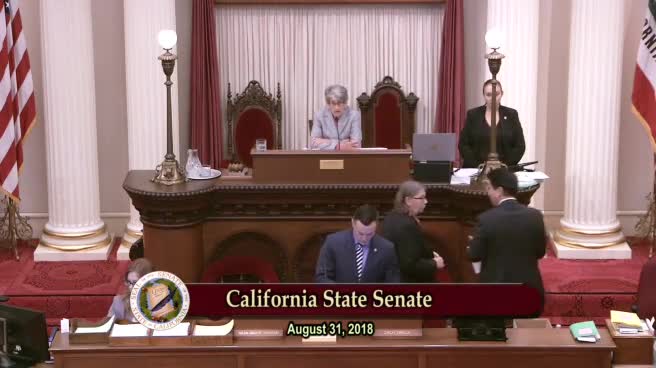 2MIN
Senate Floor
 11MIN
Assembly Floor
 1H
Assembly Standing Committee on Appropriations
 9MIN
Assembly Standing Committee on Judiciary
 53MIN
Assembly Standing Committee on Water, Parks, and Wildlife
 3MIN
Senate Floor
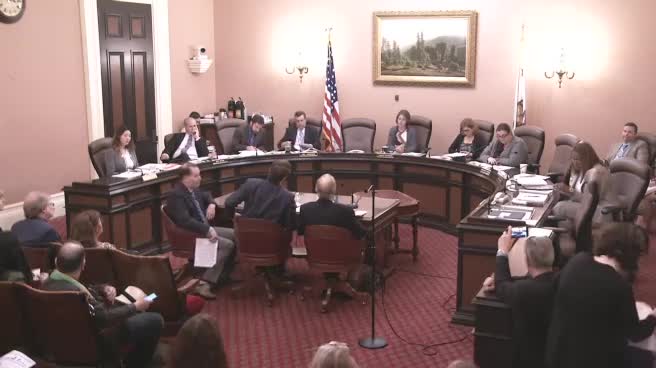 19MIN
Senate Standing Committee on Public Safety
 16MIN
Senate Standing Committee on Natural Resources and Water
Bill Author

Bill Co-Author(s):