SB 1495: Health.
- Session Year: 2017-2018
- House: Senate
- Latest Version Date: 2018-09-14
(1)Existing law provides for the licensure and regulation of various health care practitioners by boards within the Department of Consumer Affairs. Existing law requires licensed health care practitioners who perform stem cell therapies that are not approved by the United States Food and Drug Administration (FDA) to communicate to their patients specified information regarding the therapies in a notice and in writing prior to providing the initial stem cell therapy. Under existing law, for these purposes, a stem cell therapy is a therapy involving the use of HCT/Ps, defined as human cells, tissues, or cellular- or tissue-based products in accordance with specified federal law. Under existing law, these requirements do not apply to a health care practitioner who has obtained approval for an investigational new drug or device from the FDA for the use of HCT/Ps.
This bill would exclude from the definition of stem cell therapy those therapies involving HCT/Ps that meet specified criteria pursuant to, or that qualify for an exception under, federal law. The bill would require only health care practitioners who perform a stem cell therapy that is subject to FDA regulation, and that is not FDA-approved, to provide the notice and writing to their patients. The bill would exempt from these requirements a health care practitioner who has obtained clearance for an investigational new drug, or an investigational device exemption, from the FDA.
(2)Existing law, the Emergency Medical Services System and the Prehospital Emergency Medical Care Personnel Act, establishes the Emergency Medical Services Authority. The authority is responsible for the coordination and integration of all statewide activities concerning emergency medical services.
The act requires health facilities to notify prehospital emergency medical care personnel who have provided emergency medical or rescue services, and have been exposed to a person afflicted with a reportable communicable disease or condition, that they have been exposed. If the affected prehospital emergency medical care person has not provided the health facility infection control officer, as defined, with his or her name and telephone number, existing law requires the health facility infection control officer to immediately notify the designated officer of the employer of the prehospital emergency medical care person and the county health officer under specified circumstances. Otherwise, existing law requires the health facility infection control officer to notify the prehospital emergency medical care person consistent with certain state regulations.
This bill would instead require the health facility infection control officer, in the latter circumstance, to notify the designated officer, not the prehospital emergency medical care person, consistent with those regulations.
(3)Existing law authorizes a local health officer to declare a local health emergency under specified circumstances, including when the release or escape of a hazardous waste or medical waste is an immediate threat to the public health, or upon an imminent and proximate threat of the introduction of certain diseases, chemical agents, toxins, or radioactive agents. Existing law authorizes the local health emergency to remain in effect for 7 days unless the board of supervisors or city council ratifies the local health emergency for a longer period of time. Existing law thereafter requires the board of supervisors or city council to review the need for continuing that local health emergency at least every 14 days.
This bill would instead require the board of supervisors or city council to review the need for continuing that local health emergency at least every 30 days.
(4)Existing law provides the State Department of State Hospitals with jurisdiction over the execution of laws relating to care and treatment of persons with mental health disorders under the custody of the department. Existing law provides that the Chief, Deputy Chief, supervising investigators, and investigators of the Office of Protective Services of the department are peace officers whose authority extends to any place in the state for the purpose of performing their primary duty or when making an arrest, as specified.
This bill would designate the Chief of the Office of Protective Services of the department as the deputy director of the office, with oversight of all protective service components within the departments law enforcement and fire protection services. The bill would require that the deputy director be an experienced law enforcement officer, as specified.
Existing law requires the Director of State Hospitals to appoint and define the duties of the clinical director and the hospital administrator for each state hospital. Existing law requires the Director of State Hospitals to appoint either the clinical director or the hospital administrator to be the hospital director.
This bill would additionally require the Director of State Hospitals to appoint and define the duties of the chief of police services and the hospital director for each state hospital, and would repeal the above provision requiring the appointment of the clinical director or hospital administrator as hospital director. The bill would make conforming changes to related provisions.
Existing law requires the hospital administrator to be responsible for preserving the peace in the hospital buildings and grounds and authorizes him or her to arrest persons, as specified.
This bill would transfer that duty and that authority to the chief of police services at the hospital, and would require the chief of police services to be an experienced law enforcement officer, as specified.
Existing law authorizes the hospital administrator of each state hospital to designate, as a police officer, one or more of the bona fide employees of the hospital. Under existing law, the hospital administrator and each of those police officers have the powers and authority conferred by law upon peace officers, as specified. Existing law prohibits those police officers from receiving compensation, as specified.
This bill would repeal the authority of the hospital administrator to designate hospital employees as police officers, and would delete the provision that prohibits the compensation of those police officers. The bill would instead provide that the chief of police services, supervising investigators, investigators, and each hospital police officer have the powers and authority provided to them under existing laws that apply to peace officers, and are required to help ensure integration of treatment, safety, and security, as directed by the hospital director. The bill would make further conforming changes to related provisions.
(5)Existing law, the Bronzan-McCorquodale Act, contains provisions governing the organization and financing of community mental health services for persons with mental disorders in every county through locally administered and locally controlled community mental health programs. Existing law requires the board of supervisors of each county, or boards of supervisors of counties acting jointly, to adopt, and submit to the Director of Health Care Services in the form and according to the procedures specified by the director, a proposed annual county mental health services performance contract for mental health services in the county or counties. Existing law requires the State Department of Health Care Services to develop and implement the requirements, format, procedure, and submission dates for the preparation and submission of the proposed performance contract. Existing law requires the Director of Health Care Services, or his or her designee, to review each proposed county mental health services performance contract to determine that it complies with specified requirements.
This bill would repeal those provisions relating to an annual county mental health services performance contract, and would instead require the department and each county to have a performance contract for community mental health services, the Mental Health Services Act, the Projects for Assistance in Transition from Homelessness grant, the Community Mental Health Services Block Grant, and other federal grants or county mental health programs for the term of 3 years, as specified. The bill would authorize the department to extend the term of the contract for 2 one-year periods, as specified. The bill would further authorize the department to amend the contract at any time during the term of the contract, as specified.
Existing law requires the proposed annual county mental health services performance contract to include specified provisions, and authorizes the county to choose to include contract provisions for other state-directed mental health managed programs within the performance contract.
This bill would delete that authorization and would instead authorize the department to include contract provisions for other federal grants or county mental health programs in the performance contract. The bill would also delete obsolete provisions and make related, conforming changes.
(6)The California Hospice Licensure Act of 1990 provides for the licensure and regulation by the State Department of Public Health of persons or agencies that provide hospice, to ensure the health and safety of patients experiencing the last phases of life due to the existence of a terminal disease.
This bill would require the department to issue a hospice license to a hospice applicant that meets certain requirements, including, among others, that it is accredited by an entity approved by the federal Centers for Medicare and Medicaid Services as a national accreditation organization, and it meets any other additional licensure requirements under the act that are more stringent than the accreditation requirements of the organization, as specified.
The bill would authorize the department to conduct a survey of an accredited hospice to ensure the accreditation requirements are met, and to conduct a survey to investigate complaints against an accredited hospice for substantial noncompliance with the accreditation standards. The bill would make conforming changes to a related provision for purposes of a home health agency.
(1)Existing law provides for the licensure and regulation of various health care practitioners by boards within the Department of Consumer Affairs. Existing law requires licensed health care practitioners who perform stem cell therapies that are not approved by the United States Food and Drug Administration (FDA) to communicate to their patients specified information regarding the therapies in a notice and in writing prior to providing the initial stem cell therapy. Under existing law, for these purposes, a stem cell therapy is a therapy involving the use of HCT/Ps, defined as human cells, tissues, or cellular- or tissue-based products in accordance with specified federal law. Under existing law, these requirements do not apply to a health care practitioner who has obtained approval for an investigational new drug or device from the FDA for the use of HCT/Ps.
This bill would exclude from the definition of stem cell therapy those therapies involving HCT/Ps that meet specified criteria pursuant to, or that qualify for an exception under, federal law. The bill would require only health care practitioners who perform a stem cell therapy that is subject to FDA regulation, and that is not FDA-approved, to provide the notice and writing to their patients. The bill would exempt from these requirements a health care practitioner who has obtained clearance for an investigational new drug, or an investigational device exemption, from the FDA.
(2)Existing law, the Emergency Medical Services System and the Prehospital Emergency Medical Care Personnel Act, establishes the Emergency Medical Services Authority. The authority is responsible for the coordination and integration of all statewide activities concerning emergency medical services.
The act requires health facilities to notify prehospital emergency medical care personnel who have provided emergency medical or rescue services, and have been exposed to a person afflicted with a reportable communicable disease or condition, that they have been exposed. If the affected prehospital emergency medical care person has not provided the health facility infection control officer, as defined, with his or her name and telephone number, existing law requires the health facility infection control officer to immediately notify the designated officer of the employer of the prehospital emergency medical care person and the county health officer under specified circumstances. Otherwise, existing law requires the health facility infection control officer to notify the prehospital emergency medical care person consistent with certain state regulations.
This bill would instead require the health facility infection control officer, in the latter circumstance, to notify the designated officer, not the prehospital emergency medical care person, consistent with those regulations.
(3)Existing law authorizes a local health officer to declare a local health emergency under specified circumstances, including when the release or escape of a hazardous waste or medical waste is an immediate threat to the public health, or upon an imminent and proximate threat of the introduction of certain diseases, chemical agents, toxins, or radioactive agents. Existing law authorizes the local health emergency to remain in effect for 7 days unless the board of supervisors or city council ratifies the local health emergency for a longer period of time. Existing law thereafter requires the board of supervisors or city council to review the need for continuing that local health emergency at least every 14 days.
This bill would instead require the board of supervisors or city council to review the need for continuing that local health emergency at least every 30 days.
(4)Existing law provides the State Department of State Hospitals with jurisdiction over the execution of laws relating to care and treatment of persons with mental health disorders under the custody of the department. Existing law provides that the Chief, Deputy Chief, supervising investigators, and investigators of the Office of Protective Services of the department are peace officers whose authority extends to any place in the state for the purpose of performing their primary duty or when making an arrest, as specified.
This bill would designate the Chief of the Office of Protective Services of the department as the deputy director of the office, with oversight of all protective service components within the departments law enforcement and fire protection services. The bill would require that the deputy director be an experienced law enforcement officer, as specified.
Existing law requires the Director of State Hospitals to appoint and define the duties of the clinical director and the hospital administrator for each state hospital. Existing law requires the Director of State Hospitals to appoint either the clinical director or the hospital administrator to be the hospital director.
This bill would additionally require the Director of State Hospitals to appoint and define the duties of the chief of police services and the hospital director for each state hospital, and would repeal the above provision requiring the appointment of the clinical director or hospital administrator as hospital director. The bill would make conforming changes to related provisions.
Existing law requires the hospital administrator to be responsible for preserving the peace in the hospital buildings and grounds and authorizes him or her to arrest persons, as specified.
This bill would transfer that duty and that authority to the chief of police services at the hospital, and would require the chief of police services to be an experienced law enforcement officer, as specified.
Existing law authorizes the hospital administrator of each state hospital to designate, as a police officer, one or more of the bona fide employees of the hospital. Under existing law, the hospital administrator and each of those police officers have the powers and authority conferred by law upon peace officers, as specified. Existing law prohibits those police officers from receiving compensation, as specified.
This bill would repeal the authority of the hospital administrator to designate hospital employees as police officers, and would delete the provision that prohibits the compensation of those police officers. The bill would instead provide that the chief of police services, supervising investigators, investigators, and each hospital police officer have the powers and authority provided to them under existing laws that apply to peace officers, and are required to help ensure integration of treatment, safety, and security, as directed by the hospital director. The bill would make further conforming changes to related provisions.
(5)Existing law, the Bronzan-McCorquodale Act, contains provisions governing the organization and financing of community mental health services for persons with mental disorders in every county through locally administered and locally controlled community mental health programs. Existing law requires the board of supervisors of each county, or boards of supervisors of counties acting jointly, to adopt, and submit to the Director of Health Care Services in the form and according to the procedures specified by the director, a proposed annual county mental health services performance contract for mental health services in the county or counties. Existing law requires the State Department of Health Care Services to develop and implement the requirements, format, procedure, and submission dates for the preparation and submission of the proposed performance contract. Existing law requires the Director of Health Care Services, or his or her designee, to review each proposed county mental health services performance contract to determine that it complies with specified requirements.
This bill would repeal those provisions relating to an annual county mental health services performance contract, and would instead require the department and each county to have a performance contract for community mental health services, the Mental Health Services Act, the Projects for Assistance in Transition from Homelessness grant, the Community Mental Health Services Block Grant, and other federal grants or county mental health programs for the term of 3 years, as specified. The bill would authorize the department to extend the term of the contract for 2 one-year periods, as specified. The bill would further authorize the department to amend the contract at any time during the term of the contract, as specified.
Existing law requires the proposed annual county mental health services performance contract to include specified provisions, and authorizes the county to choose to include contract provisions for other state-directed mental health managed programs within the performance contract.
This bill would delete that authorization and would instead authorize the department to include contract provisions for other federal grants or county mental health programs in the performance contract. The bill would also delete obsolete provisions and make related, conforming changes.
(6)The California Hospice Licensure Act of 1990 provides for the licensure and regulation by the State Department of Public Health of persons or agencies that provide hospice, to ensure the health and safety of patients experiencing the last phases of life due to the existence of a terminal disease.
This bill would require the department to issue a hospice license to a hospice applicant that meets certain requirements, including, among others, that it is accredited by an entity approved by the federal Centers for Medicare and Medicaid Services as a national accreditation organization, and it meets any other additional licensure requirements under the act that are more stringent than the accreditation requirements of the organization, as specified.
The bill would authorize the department to conduct a survey of an accredited hospice to ensure the accreditation requirements are met, and to conduct a survey to investigate complaints against an accredited hospice for substantial noncompliance with the accreditation standards. The bill would make conforming changes to a related provision for purposes of a home health agency.
(1)Existing law provides for the licensure and regulation of various health care practitioners by boards within the Department of Consumer Affairs. Existing law requires licensed health care practitioners who perform stem cell therapies that are not approved by the United States Food and Drug Administration (FDA) to communicate to their patients specified information regarding the therapies in a notice and in writing prior to providing the initial stem cell therapy. Under existing law, for these purposes, a stem cell therapy is a therapy involving the use of HCT/Ps, defined as human cells, tissues, or cellular- or tissue-based products in accordance with specified federal law. Under existing law, these requirements do not apply to a health care practitioner who has obtained approval for an investigational new drug or device from the FDA for the use of HCT/Ps.
This bill would exclude from the definition of stem cell therapy those therapies involving HCT/Ps that meet specified criteria pursuant to, or that qualify for an exception under, federal law. The bill would require only health care practitioners who perform a stem cell therapy that is subject to FDA regulation, and that is not FDA-approved, to provide the notice and writing to their patients. The bill would exempt from these requirements a health care practitioner who has obtained clearance for an investigational new drug, or an investigational device exemption, from the FDA.
(2)Existing law, the Emergency Medical Services System and the Prehospital Emergency Medical Care Personnel Act, establishes the Emergency Medical Services Authority. The authority is responsible for the coordination and integration of all statewide activities concerning emergency medical services.
The act requires health facilities to notify prehospital emergency medical care personnel who have provided emergency medical or rescue services, and have been exposed to a person afflicted with a reportable communicable disease or condition, that they have been exposed. If the affected prehospital emergency medical care person has not provided the health facility infection control officer, as defined, with his or her name and telephone number, existing law requires the health facility infection control officer to immediately notify the designated officer of the employer of the prehospital emergency medical care person and the county health officer under specified circumstances. Otherwise, existing law requires the health facility infection control officer to notify the prehospital emergency medical care person consistent with certain state regulations.
This bill would instead require the health facility infection control officer, in the latter circumstance, to notify the designated officer, not the prehospital emergency medical care person, consistent with those regulations.
(3)Existing law authorizes a local health officer to declare a local health emergency under specified circumstances, including when the release or escape of a hazardous waste or medical waste is an immediate threat to the public health, or upon an imminent and proximate threat of the introduction of certain diseases, chemical agents, toxins, or radioactive agents. Existing law authorizes the local health emergency to remain in effect for 7 days unless the board of supervisors or city council ratifies the local health emergency for a longer period of time. Existing law thereafter requires the board of supervisors or city council to review the need for continuing that local health emergency at least every 14 days.
This bill would instead require the board of supervisors or city council to review the need for continuing that local health emergency at least every 30 days.
(4)Existing law provides the State Department of State Hospitals with jurisdiction over the execution of laws relating to care and treatment of persons with mental health disorders under the custody of the department. Existing law provides that the Chief, Deputy Chief, supervising investigators, and investigators of the Office of Protective Services of the department are peace officers whose authority extends to any place in the state for the purpose of performing their primary duty or when making an arrest, as specified.
This bill would designate the Chief of the Office of Protective Services of the department as the deputy director of the office, with oversight of all protective service components within the departments law enforcement and fire protection services. The bill would require that the deputy director be an experienced law enforcement officer, as specified.
Existing law requires the Director of State Hospitals to appoint and define the duties of the clinical director and the hospital administrator for each state hospital. Existing law requires the Director of State Hospitals to appoint either the clinical director or the hospital administrator to be the hospital director.
This bill would additionally require the Director of State Hospitals to appoint and define the duties of the chief of police services and the hospital director for each state hospital, and would repeal the above provision requiring the appointment of the clinical director or hospital administrator as hospital director. The bill would make conforming changes to related provisions.
Existing law requires the hospital administrator to be responsible for preserving the peace in the hospital buildings and grounds and authorizes him or her to arrest persons, as specified.
This bill would transfer that duty and that authority to the chief of police services at the hospital, and would require the chief of police services to be an experienced law enforcement officer, as specified.
Existing law authorizes the hospital administrator of each state hospital to designate, as a police officer, one or more of the bona fide employees of the hospital. Under existing law, the hospital administrator and each of those police officers have the powers and authority conferred by law upon peace officers, as specified. Existing law prohibits those police officers from receiving compensation, as specified.
This bill would repeal the authority of the hospital administrator to designate hospital employees as police officers. The bill would replace the hospital administrator with the chief of police services for purposes of peace officer powers, and would remove the prohibition on compensation of the police officers. The bill would further make conforming changes to related provisions and would add that the chief of police services and the hospital police officers officers, and would delete the provision that prohibits the compensation of those police officers. The bill would instead provide that the chief of police services, supervising investigators, investigators, and each hospital police officer have the powers and authority provided to them under existing laws that apply to peace officers, and are required to help ensure integration of treatment, safety, and security, as directed by the hospital director. The bill would make further conforming changes to related provisions.
(5)Existing law, the Bronzan-McCorquodale Act, contains provisions governing the organization and financing of community mental health services for persons with mental disorders in every county through locally administered and locally controlled community mental health programs. Existing law requires the board of supervisors of each county, or boards of supervisors of counties acting jointly, to adopt, and submit to the Director of Health Care Services in the form and according to the procedures specified by the director, a proposed annual county mental health services performance contract for mental health services in the county or counties. Existing law requires the State Department of Health Care Services to develop and implement the requirements, format, procedure, and submission dates for the preparation and submission of the proposed performance contract. Existing law requires the Director of Health Care Services, or his or her designees, designee, to review each proposed county mental health services performance contract to determine that it complies with specified requirements.
This bill would repeal those provisions relating to an annual county mental health services performance contract, and would instead require the department and each county to have a performance contract for community mental health services, the Mental Health Services Act, the Projects for Assistance in Transition from Homelessness grant, the Community Mental Health Services Block Grant, and other federal grants or county mental health programs for the term of 3 years, as specified. The bill would authorize the department to extend the term of the contract for 2 one-year periods, as specified. The bill would further authorize the department to amend the contract at any time during the term of the contract, as specified.
Existing law requires the proposed annual county mental health services performance contract to include specified provisions, and authorizes the county to choose to include contract provisions for other state-directed mental health managed programs within the performance contract.
This bill would delete that authorization and would instead authorize the department to include contract provisions for other federal grants or county mental health programs in the performance contract. The bill would also delete obsolete provisions and make related, conforming changes.
(6)The California Hospice Licensure Act of 1990 provides for the licensure and regulation by the State Department of Public Health of persons or agencies that provide hospice, to ensure the health and safety of patients experiencing the last phases of life due to the existence of a terminal disease.
This bill would require the department to issue a hospice license to a hospice applicant that meets certain requirements, including, among others, that it is accredited by an entity approved by the federal Centers for Medicare and Medicaid Services as a national accreditation organization, and it meets any other additional licensure requirements under the act that are more stringent than the accreditation requirements of the organization, as specified.
The bill would authorize the department to conduct a survey of an accredited hospice to ensure the accreditation requirements are met, and to conduct a survey to investigate complaints against an accredited hospice for substantial noncompliance with the accreditation standards. The bill would make conforming changes to a related provision for purposes of a home health agency.
(1)Existing law provides for the licensure and regulation of various health care practitioners by boards within the Department of Consumer Affairs. Existing law requires licensed health care practitioners who perform stem cell therapies that are not approved by the United States Food and Drug Administration (FDA) to communicate to their patients specified information regarding the therapies in a notice and in writing prior to providing the initial stem cell therapy. Under existing law, for these purposes, a stem cell therapy is a therapy involving the use of HCT/Ps, defined as human cells, tissues, or cellular- or tissue-based products in accordance with specified federal law. Under existing law, these requirements do not apply to a health care practitioner who has obtained approval for an investigational new drug or device from the FDA for the use of HCT/Ps.
This bill would exclude from the definition of stem cell therapy those therapies involving HCT/Ps that meet specified criteria pursuant to, or that qualify for an exception under, federal law. The bill would require only health care practitioners who perform a stem cell therapy that is subject to FDA regulation, and that is not FDA-approved, to provide the notice and writing to their patients. The bill would exempt from these requirements a health care practitioner who has obtained clearance for an investigational new drug, or an investigational device exemption, from the FDA.
(2)Existing law, the Emergency Medical Services System and the Prehospital Emergency Medical Care Personnel Act, establishes the Emergency Medical Services Authority. The authority is responsible for the coordination and integration of all statewide activities concerning emergency medical services.
The act requires health facilities to notify prehospital emergency medical care personnel who have provided emergency medical or rescue services, and have been exposed to a person afflicted with a reportable communicable disease or condition, that they have been exposed. If the affected prehospital emergency medical care person has not provided the health facility infection control officer, as defined, with his or her name and telephone number, existing law requires the health facility infection control officer to immediately notify the designated officer of the employer of the prehospital emergency medical care person and the county health officer under specified circumstances. Otherwise, existing law requires the health facility infection control officer to notify the prehospital emergency medical care person consistent with certain state regulations.
This bill would instead require the health facility infection control officer, in the latter circumstance, to notify the designated officer, not the prehospital emergency medical care person, consistent with those regulations.
(3)Existing law authorizes a local health officer to declare a local health emergency under specified circumstances, including when the release or escape of a hazardous waste or medical waste is an immediate threat to the public health, or upon an imminent and proximate threat of the introduction of certain diseases, chemical agents, toxins, or radioactive agents. Existing law authorizes the local health emergency to remain in effect for 7 days unless the board of supervisors or city council ratifies the local health emergency for a longer period of time. Existing law thereafter requires the board of supervisors or city council to review the need for continuing that local health emergency at least every 14 days.
This bill would instead require the board of supervisors or city council to review the need for continuing that local health emergency at least every 30 days.
(3)(4)Existing law provides the State Department of State Hospitals with jurisdiction over the execution of laws relating to care and treatment of persons with mental health disorders under the custody of the department. Existing law provides that the Chief, Deputy Chief, supervising investigators, and investigators of the Office of Protective Services of the department are peace officers whose authority extends to any place in the state for the purpose of performing their primary duty or when making an arrest, as specified.
This bill would designate the Chief of the Office of Protective Services of the department as the deputy director of the office, with oversight of all protective service components within the departments law enforcement and fire protection services. The bill would require that the deputy director be an experienced law enforcement officer, as specified.
Existing law requires the Director of State Hospitals to appoint and define the duties of the clinical director and the hospital administrator for each state hospital. Existing law requires the Director of State Hospitals to appoint either the clinical director or the hospital administrator to be the hospital director.
This bill would additionally require the Director of State Hospitals to appoint and define the duties of the chief of police services and the hospital director for each state hospital, and would repeal the above provision requiring the appointment of the clinical director or hospital administrator as hospital director. The bill would make conforming changes to related provisions.
Existing law requires the hospital administrator to be responsible for preserving the peace in the hospital buildings and grounds and authorizes him or her to arrest persons, as specified.
This bill would transfer that duty and that authority to the chief of police services at the hospital, and would require the chief of police services to be an experienced law enforcement officer, as specified.
Existing law authorizes the hospital administrator of each state hospital to designate, as a police officer, one or more of the bona fide employees of the hospital. Under existing law, the hospital administrator and each of those police officers have the powers and authority conferred by law upon peace officers, as specified. Existing law prohibits those police officers from receiving compensation, as specified.
This bill would repeal the authority of the hospital administrator to designate hospital employees as police officers. The bill would replace the hospital administrator with the chief of police services for purposes of peace officer powers, and would remove the prohibition on compensation of the police officers. The bill would further make conforming changes to related provisions and would add that the chief of police services and the hospital police officers are required to help ensure integration of treatment, safety, and security, as directed by the hospital director.
(5)Existing law, the Bronzan-McCorquodale Act, contains provisions governing the organization and financing of community mental health services for persons with mental disorders in every county through locally administered and locally controlled community mental health programs. Existing law requires the board of supervisors of each county, or boards of supervisors of counties acting jointly, to adopt, and submit to the Director of Health Care Services in the form and according to the procedures specified by the director, a proposed annual county mental health services performance contract for mental health services in the county or counties. Existing law requires the State Department of Health Care Services to develop and implement the requirements, format, procedure, and submission dates for the preparation and submission of the proposed performance contract. Existing law requires the Director of Health Care Services, or his or her designees, to review each proposed county mental health services performance contract to determine that it complies with specified requirements.
This bill would repeal those provisions relating to an annual county mental health services performance contract, and would instead require the department and each county to have a performance contract for community mental health services, the Mental Health Services Act, the Projects for Assistance in Transition from Homelessness grant, the Community Mental Health Services Block Grant, and other federal grants or county mental health programs for the term of 3 years, as specified. The bill would authorize the department to extend the term of the contract for 2 one-year periods, as specified. The bill would further authorize the department to amend the contract at any time during the term of the contract, as specified.
Existing law requires the proposed annual county mental health services performance contract to include specified provisions, and authorizes the county to choose to include contract provisions for other state-directed mental health managed programs within the performance contract.
This bill would delete that authorization and would instead authorize the department to include contract provisions for other federal grants or county mental health programs in the performance contract. The bill would also delete obsolete provisions and make related, conforming changes.
(1)Existing law provides for the licensure and regulation of various health care practitioners by boards within the Department of Consumer Affairs. Existing law requires licensed health care practitioners who perform stem cell therapies that are not approved by the United States Food and Drug Administration (FDA) to communicate to their patients specified information regarding the therapies in a notice and in writing prior to providing the initial stem cell therapy. Under existing law, for these purposes, a stem cell therapy is a therapy involving the use of HCT/Ps, defined as human cells, tissues, or cellular- or tissue-based products in accordance with specified federal law. Under existing law, these requirements do not apply to a health care practitioner who has obtained approval for an investigational new drug or device from the FDA for the use of HCT/Ps.
This bill would exclude from the definition of stem cell therapy those therapies involving HCT/Ps that meet specified criteria pursuant to, or that qualify for an exception under, federal law. The bill would require only health care practitioners who perform a stem cell therapy that is subject to FDA regulation, and that is not FDA-approved, to provide the notice and writing to their patients. The bill would exempt from these requirements a health care practitioner who has obtained clearance for an investigational new drug, or an investigational device exemption, from the FDA.
(2)Existing law, the Emergency Medical Services System and the Prehospital Emergency Medical Care Personnel Act, establishes the Emergency Medical Services Authority. The authority is responsible for the coordination and integration of all statewide activities concerning emergency medical services.
The act requires health facilities to notify prehospital emergency medical care personnel who have provided emergency medical or rescue services, and have been exposed to a person afflicted with a reportable communicable disease or condition, that they have been exposed. If the affected prehospital emergency medical care person has not provided the health facility infection control officer, as defined, with his or her name and telephone number, existing law requires the health facility infection control officer to immediately notify the designated officer of the employer of the prehospital emergency medical care person and the county health officer under specified circumstances. Otherwise, existing law requires the health facility infection control officer to notify the prehospital emergency medical care person consistent with certain state regulations.
This bill would instead require the health facility infection control officer, in the latter circumstance, to notify the designated officer, not the prehospital emergency medical care person, consistent with those regulations.
(3)Existing law provides the State Department of State Hospitals with jurisdiction over the execution of laws relating to care and treatment of persons with mental health disorders under the custody of the department. Existing law provides that the Chief, Deputy Chief, supervising investigators, and investigators of the Office of Protective Services of the department are peace officers whose authority extends to any place in the state for the purpose of performing their primary duty or when making an arrest, as specified.
This bill would designate the Chief of the Office of Protective Services of the department as the deputy director of the office, with oversight of all protective service components within the departments law enforcement and fire protection services. The bill would require that the deputy director be an experienced law enforcement officer, as specified.
Existing law requires the Director of State Hospitals to appoint and define the duties of the clinical director and the hospital administrator for each state hospital. Existing law requires the Director of State Hospitals to appoint either the clinical director or the hospital administrator to be the hospital director.
This bill would additionally require the Director of State Hospitals to appoint and define the duties of the chief of police services and the hospital director for each state hospital, and would repeal the above provision requiring the appointment of the clinical director or hospital administrator as hospital director. The bill would make conforming changes to related provisions.
Existing law requires the hospital administrator to be responsible for preserving the peace in the hospital buildings and grounds and authorizes him or her to arrest persons, as specified.
This bill would transfer that duty and that authority to the chief of police services at the hospital, and would require the chief of police services to be an experienced law enforcement officer, as specified.
Existing law authorizes the hospital administrator of each state hospital to designate, as a police officer, one or more of the bona fide employees of the hospital. Under existing law, the hospital administrator and each of those police officers have the powers and authority conferred by law upon peace officers, as specified. Existing law prohibits those police officers from receiving compensation, as specified.
This bill would repeal the authority of the hospital administrator to designate hospital employees as police officers. The bill would replace the hospital administrator with the chief of police services for purposes of peace officer powers, and would remove the prohibition on compensation of the police officers. The bill would further make conforming changes to related provisions and would add that the chief of police services and the hospital police officers are required to help ensure integration of treatment, safety, and security, as directed by the hospital director.
(a)For the purpose of this section:
(1)FDA means the United States Food and Drug Administration.
(2)HCT/Ps means human cells, tissues, or cellular or tissue-based products, as defined in Section 1271.3 of Title 21 of the Code of Federal Regulations, as amended August 31, 2016, as published in the Federal Register (81 Fed. Reg. 60223).
(3)Stem cell therapy means a therapy involving the use of HCT/Ps, but shall not include a therapy involving HCT/Ps that meets the criteria set out in Section 1271.10 of Title 21 of the Code of Federal Regulations, as amended May 25, 2004, as published in the Federal Register (69 Fed. Reg. 29829), or that qualifies for any of the exceptions described in Section 1271.15 of Title 21 of the Code of Federal Regulations, as amended May 25, 2004, as published in the Federal Register (69 Fed. Reg. 29829).
(b)(1)A health care practitioner licensed under this division who performs a stem cell therapy that is subject to FDA regulation, but is not FDA-approved, shall communicate to a patient seeking stem cell therapy the following information in English:
THIS NOTICE MUST BE PROVIDED TO YOU UNDER CALIFORNIA LAW. This health care practitioner performs one or more stem cell therapies that have not been approved by the United States Food and Drug Administration. You are encouraged to consult with your primary care physician prior to undergoing a stem cell therapy.
(2)The information in paragraph (1) shall be communicated to the patient in all of the following ways:
(A)In a prominent display in an area visible to patients in the health care practitioners office and posted conspicuously in the entrance of the health care practitioners office. These notices shall be at least eight and one-half inches by 11 inches and written in no less than 40-point type.
(B)Prior to providing the initial stem cell therapy, a health care practitioner shall provide the patient with the notice described in paragraph (1) in writing. The notice shall be at least eight and one-half inches by 11 inches and written in no less than 40-point type.
(c)This section does not apply to a health care practitioner licensed under this division who has obtained approval or clearance for an investigational new drug, or an investigational device exemption, from the FDA for the use of HCT/Ps.
(d)(1)The licensing board having jurisdiction of the health care practitioner may cite and fine the health care practitioner, not to exceed one thousand dollars ($1,000) per violation of this section.
(2)No citation shall be issued and no fine shall be assessed upon the first complaint against a health care practitioner who violates this section.
(3)Upon a second or subsequent violation of this section, a citation and administrative fine not to exceed one thousand dollars ($1,000) per violation may be assessed.
(e)The Medical Board of California shall indicate in its annual report, commencing with the 201819 annual report, all of the following with regard to licensees who provide stem cell therapies:
(1)The number of complaints received.
(2)Any disciplinary actions taken.
(3)Any administrative actions taken.
SEC. 2.Section 1728.7 of the Health and Safety Code is amended to read:1728.7.(a)Notwithstanding any other provision of this chapter, the department shall issue a license to a home health agency that applies to the department for a home health agency license and meets all of the following requirements:
(1)Is accredited as a home health agency by an entity approved by the federal Centers for Medicare and Medicaid Services as a national accreditation organization, and the national accreditation organization forwards to the department copies of all initial and subsequent survey and other accreditation reports or findings.
(2)Files an application with fees pursuant to this chapter.
(3)Meets any other additional licensure requirements of, or regulations adopted pursuant to, this chapter that the department identifies, after consulting with the national accreditation organizations, as more stringent than the accreditation requirements of the national accreditation organizations.
(b)The department may conduct a survey of an accredited home health agency to ensure the accreditation requirements are met. These surveys shall be conducted using a selective sample basis.
(c)The department may conduct a survey of an accredited home health agency to investigate complaints against an accredited home health agency for substantial noncompliance, as determined by the department, with these accreditation standards.
(d)Notwithstanding subdivisions (a), (b), and (c), the department shall retain its full range of authority over accredited home health agencies to ensure the licensure and accreditation requirements are met. This authority shall include the entire scope of enforcement sanctions and options available for unaccredited home health agencies.
SEC. 3.Section 1751.5 is added to the Health and Safety Code, immediately following Section 1751, to read:1751.5.(a)Notwithstanding any other provision of this chapter, the department shall issue a license to a hospice that applies to the department for a hospice license and meets all of the following requirements:
(1)Is accredited as a hospice by an entity approved by the federal Centers for Medicare and Medicaid Services as a national accreditation organization, and the national accreditation organization forwards to the department copies of all initial and subsequent survey and other accreditation reports or findings.
(2)Files an application with fees pursuant to this chapter.
(3)Meets any other additional licensure requirements of, or regulations adopted if necessary pursuant to, this chapter that the department identifies, after consulting with the national accreditation organization, as more stringent than the accreditation requirements of the national accreditation organization.
(b)The department may conduct a survey of an accredited hospice to ensure the accreditation requirements are met. These surveys shall be conducted using a selective sample basis.
(c)The department may conduct a survey of an accredited hospice to investigate complaints against an accredited hospice for substantial noncompliance, as determined by the department, with these accreditation standards.
(d)Notwithstanding subdivisions (a), (b), and (c), the department shall retain its full range of authority over accredited hospices to ensure the licensure and accreditation requirements are met. This authority shall include the entire scope of enforcement sanctions and options available for unaccredited hospices.
SEC. 4.Section 1797.188 of the Health and Safety Code is amended to read:1797.188.(a)As used in this section:
(1)Prehospital emergency medical care person or personnel means any of the following: an authorized registered nurse or mobile intensive care nurse, emergency medical technician-I, emergency medical technician-II, emergency medical technician-paramedic, lifeguard, firefighter, or peace officer, as defined or described by Sections 1797.56, 1797.80, 1797.82, 1797.84, 1797.182, and 1797.183, respectively, or a physician and surgeon who provides prehospital emergency medical care or rescue services.
(2)Reportable communicable disease or condition or a communicable disease or condition listed as reportable means those diseases prescribed by Subchapter 1 (commencing with Section 2500) of Chapter 4 of Title 17 of the California Code of Regulations, as may be amended from time to time.
(3)Exposed means at risk for contracting the disease, as defined by regulations of the state department.
(4)Health facility means a health facility, as defined in Section 1250, including a publicly operated facility.
(5)Health facility infection control officer means the official or officer who has been designated by the health facility to communicate with a designated officer, or his or her designee.
(6)Designated officer means the official or officer of an employer of a prehospital emergency medical care person or personnel who has been designated by the states public health officer or the employer.
(7)Urgency reporting requirement means a disease required to be reported immediately by telephone or reported by telephone within one working day pursuant to subdivisions (h) and (i) of Section 2500 of Title 17 of the California Code of Regulations.
(b)In addition to the communicable disease testing and notification procedures applicable under Chapter 3.5 (commencing with Section 120260) of Part 1 of Division 105, all prehospital emergency medical care personnel, whether volunteers, partly paid, or fully paid, who have provided emergency medical or rescue services and have been exposed to a person afflicted with a communicable disease or condition listed as reportable, which can, as determined by the county health officer, be transmitted through physical or oral contact or secretions of the body, including blood, shall be notified that they have been exposed to the disease or condition in accordance with the following:
(1)If the prehospital emergency medical care person, who has rendered emergency medical or rescue services and believes that he or she may have been exposed to a person afflicted with a reportable communicable disease or condition in a manner that could result in transmission of a reportable communicable disease or condition, and provides the health facility infection control officer with his or her name and telephone number at the time the patient is transferred from that prehospital emergency medical care person to the admitting health facility; or the party transporting the person afflicted with the reportable communicable disease or condition provides that health facility with the name and telephone number of the prehospital emergency medical care person who provided the emergency medical or rescue services and believes he or she may have been exposed to a person afflicted with a reportable communicable disease or condition in a manner that could result in transmission of a communicable disease or condition, the health facility infection control officer, upon determining that the person to whom the prehospital emergency medical care person provided the emergency medical or rescue services is diagnosed as being afflicted with a reportable communicable disease or condition, and that the reportable communicable disease or condition may have been transmitted during the provision of emergency medical or rescue services, shall immediately notify the designated officer of the prehospital emergency medical care person if the reportable communicable disease or condition has an urgency reporting requirement on the list of reportable diseases or conditions, or if the conditions of the exposure may have included direct contact between the unprotected skin, eyes, or mucous membranes of the prehospital emergency medical care person and the blood of the person afflicted with the reportable communicable disease or condition. Otherwise, the health facility infection control officer shall notify the designated officer consistent with Section 2500 of Title 17 of the California Code of Regulations. The health facility infection control officer shall also report the name and telephone number of the prehospital emergency medical care person to the county health officer. The designated officer shall immediately notify the prehospital emergency medical care person if the reportable communicable disease or condition has an urgency reporting requirement on the list of reportable diseases or conditions, or if the conditions of the exposure may have included direct contact between the unprotected skin, eyes, or mucous membranes of the prehospital emergency medical care person and the blood of the person afflicted with the reportable communicable disease or condition. Otherwise, the designated officer shall notify the prehospital emergency medical care person consistent with Section 2500 of Title 17 of the California Code of Regulations.
(2)If the prehospital emergency medical care person who has rendered emergency medical or rescue services and has been exposed to a person afflicted with a reportable communicable disease or condition, but has not provided the health facility infection control officer with his or her name and telephone number pursuant to paragraph (1), the health facility infection control officer, upon determining that the person to whom the prehospital emergency medical care person provided the emergency medical or rescue services is diagnosed as being afflicted with a reportable communicable disease or condition that may have been transmitted during provision of emergency medical or rescue services, shall immediately notify the designated officer of the employer of the prehospital emergency medical care person and the county health officer if the reportable communicable disease or condition has an urgency reporting requirement on the list of reportable diseases or conditions, or if the conditions of the exposure may have included direct contact between the unprotected skin, eyes, or mucous membranes of the prehospital emergency medical care person and the blood of the person afflicted with the reportable communicable disease or condition. Otherwise, the health facility infection control officer shall notify the designated officer consistent with Section 2500 of Title 17 of the California Code of Regulations. The designated officer shall immediately notify the prehospital emergency medical care person if the reportable communicable disease or condition has an urgency reporting requirement on the list of reportable diseases or conditions, or if the conditions of the exposure may have included direct contact between the unprotected skin, eyes, or mucous membranes of the prehospital emergency medical care person and the blood of the person afflicted with the reportable communicable disease or condition. Otherwise, the designated officer shall notify the prehospital emergency medical care person consistent with Section 2500 of Title 17 of the California Code of Regulations.
(c)The county health officer shall immediately notify the prehospital emergency medical care person who has provided emergency medical or rescue services and has been exposed to a person afflicted with a communicable disease or condition listed as reportable, which can, as determined by the county health officer, be transmitted through oral contact or secretions of the body, including blood, if the reportable communicable disease or condition has an urgency reporting requirement on the list of reportable diseases or conditions, or if the conditions of the exposure may have included direct contact between the unprotected skin, eyes, or mucous membranes of the prehospital emergency medical care person and the blood of the person afflicted with the reportable communicable disease or condition, upon receiving the report from a health facility pursuant to paragraph (1) of subdivision (b). Otherwise, the county health officer shall notify the prehospital emergency medical care person consistent with Section 2500 of Title 17 of the California Code of Regulations. The county health officer shall not disclose the name of the patient or other identifying characteristics to the prehospital emergency medical care person.
(d)An employer of a prehospital emergency medical care person or personnel that maintains an Internet Web site shall post the title and telephone number of the designated officer in a conspicuous location on its Internet Web site accessible from the home page. A health facility that maintains an Internet Web site shall post the title and telephone number of the health facility infection control officer in a conspicuous location on its Internet Web site accessible from the home page.
(e)(1)The health facility infection control officer, or his or her designee, shall be available either onsite or on call 24 hours per day.
(2)The designated officer, or his or her designee, shall be available either onsite or on call 24 hours per day.
(f)An employer of a health facility infection control officer and an employer of a prehospital emergency medical care person or personnel shall inform those employees of this law as part of the Cal-OSHA Injury and Illness Prevention Program training required by paragraph (7) of subdivision (a) of Section 3203 of Title 8 of the California Code of Regulations.
(g)Nothing in this section shall be construed to authorize the further disclosure of confidential medical information by the health facility, the designated officer, or any prehospital emergency medical care personnel described in this section except as otherwise authorized by law.
(h)In the event of the demise of the person afflicted with the reportable communicable disease or condition, the health facility or county health officer shall notify the funeral director, charged with removing the decedent from the health facility, of the reportable communicable disease or condition prior to the release of the decedent from the health facility to the funeral director.
(i)Notwithstanding Section 1798.206, a violation of this section is not a misdemeanor.
SEC. 5.Section 101080 of the Health and Safety Code is amended to read:101080.Whenever a release, spill, escape, or entry of waste occurs as described in paragraph (2) of subdivision (b) of Section 101075 and the director or the local health officer reasonably determines that the waste is a hazardous waste or medical waste, or that it may become a hazardous waste or medical waste because of a combination or reaction with other substances or materials, and the director or local health officer reasonably determines that the release or escape is an immediate threat to the public health, or whenever there is an imminent and proximate threat of the introduction of any contagious, infectious, or communicable disease, chemical agent, noncommunicable biologic agent, toxin, or radioactive agent, the director may declare a health emergency and the local health officer may declare a local health emergency in the jurisdiction or any area thereof affected by the threat to the public health. Whenever a local health emergency is declared by a local health officer pursuant to this section, the local health emergency shall not remain in effect for a period in excess of seven days unless it has been ratified by the board of supervisors, or city council, whichever is applicable to the jurisdiction. The board of supervisors, or city council, if applicable, shall review, at least every 30 days until the local health emergency is terminated, the need for continuing the local health emergency and shall proclaim the termination of the local health emergency at the earliest possible date that conditions warrant the termination.
SEC. 6.Section 4005.8 is added to the Welfare and Institutions Code, to read:4005.8.(a)The Deputy Director of the Office of Protective Services of the State Department of State Hospitals has oversight of all protective service components within the departments law enforcement and fire protection services, including those at each state hospital. The deputy director shall be an experienced law enforcement officer who has completed the management training course prescribed by the Commission on Peace Officer Standards and Training, with extensive management experience directing uniformed peace officers and investigation officers.
(b)Wherever the term Chief of the Office of Protective Services is used in reference to the State Department of State Hospitals, the term shall be deemed to mean the Deputy Director of the Office of Protective Services of the State Department of State Hospitals.
SEC. 7.Section 4300 of the Welfare and Institutions Code is amended to read:4300.As used in this chapter, officers of a state hospital means:
(a)Clinical director.
(b)Hospital administrator.
(c)Hospital director.
(d)Chief of police services at the hospital.
SEC. 8.Section 4301 of the Welfare and Institutions Code is amended to read:4301.(a)The Director of State Hospitals shall appoint and define the duties, subject to the laws governing civil service, of the clinical director, the hospital administrator, the hospital director, and the chief of police services for each state hospital.
(b)The Director of State Hospitals shall appoint a program director for each program at a state hospital.
SEC. 9.Section 4311 of the Welfare and Institutions Code is amended to read:4311.(a)The chief of police services at the hospital shall be responsible for preserving the peace in the hospital buildings and grounds and may arrest or cause the arrest and appearance before the nearest magistrate for examination, of all persons who attempt to commit or have committed a public offense thereon.
(b)The chief of police services shall be an experienced law enforcement officer who has completed the management training course prescribed by the Commission on Peace Officer Standards and Training, with management experience directing uniformed peace officers and investigation officers.
SEC. 10.Section 4313 of the Welfare and Institutions Code is amended to read:4313.The chief of police services, supervising investigators, investigators, and each hospital police officer have the powers and authority conferred by law upon each respectively as set forth in subdivision (v) of Section 830.3 and Section 830.38 of the Penal Code. When and as directed by the hospital director, the chief of police services, supervising investigators, investigators, and hospital police officers shall enforce the rules and regulations of the hospital, preserve peace and order on the premises thereof, protect and preserve the property of the state, and help ensure integration of treatment, safety, and security.
SEC. 11.Section 5349 of the Welfare and Institutions Code is amended to read:5349.This article shall be operative in those counties in which the county board of supervisors, by resolution or through the county budget process, authorizes its application and makes a finding that no voluntary mental health program serving adults, and no childrens mental health program, may be reduced as a result of the implementation of this article. To the extent otherwise permitted under state and federal law, counties that elect to implement this article may pay for the provision of services under Sections 5347 and 5348 using funds distributed to the counties from the Mental Health Subaccount, the Mental Health Equity Subaccount, and the Vehicle License Collection Account of the Local Revenue Fund, funds from the Mental Health Account and the Behavioral Health Subaccount within the Support Services Account of the Local Revenue Fund 2011, funds from the Mental Health Services Fund when included in county plans pursuant to Section 5847, and any other funds from which the Controller makes distributions to the counties for those purposes. Compliance with this section shall be monitored by the State Department of Health Care Services.
SEC. 12.Section 5650 of the Welfare and Institutions Code is repealed.SEC. 13.Section 5650 is added to the Welfare and Institutions Code, to read:5650.(a)The State Department of Health Care Services and each county shall have a performance contract for community mental health services, the Mental Health Services Act, the Projects for Assistance in Transition from Homelessness grant, the Community Mental Health Services Block Grant, and other federal grants or other county mental health programs.
(b)The department shall develop the county mental health services performance contract, which shall be effective for an initial period of three years. The department shall provide the three-year performance contract to the county by January 2 of the year the existing performance contract expires. The county shall adopt, execute, and return the performance contract by May 1 of the year the existing contract expires.
(c)The department may extend the term of the contract for two one-year periods. If the department extends the term of the performance contract, the department shall notify the county by January 2 of the year the existing performance contract expires. The county shall adopt, execute, and return the extension to the performance contract by May 1 of the year the existing contract expires.
(d)The department may amend the contract at any time during the term of the contract and the county shall have 90 days from receipt of an amendment to adopt, execute, and return the amendment to the department.
(e)For the purposes of this chapter, provisions of law referring to the county shall be construed to include counties, counties acting jointly, and cities receiving funds pursuant to Section 5701.5.
SEC. 14.Section 5651 of the Welfare and Institutions Code is amended to read:5651.(a)Counties shall comply with the terms of the county mental health services performance contract.
(b)The county mental health services performance contract shall include all of the following provisions:
(1)That the county shall comply with the expenditure requirements of Section 17608.05.
(2)That the county shall provide services to persons receiving involuntary treatment as required by Part 1 (commencing with Section 5000) and Part 1.5 (commencing with Section 5585).
(3)That the county shall comply with all requirements necessary for Medi-Cal reimbursement for mental health treatment services and case management programs provided to Medi-Cal eligible individuals, including, but not limited to, the provisions set forth in Chapter 3 (commencing with Section 5700), and that the county shall submit cost reports and other data to the department in the form and manner determined by the State Department of Health Care Services.
(4)That the local mental health advisory board has reviewed and approved procedures ensuring citizen and professional involvement at all stages of the planning process pursuant to Section 5604.2.
(5)That the county shall comply with all provisions and requirements in law pertaining to patient rights.
(6)That the county shall comply with all requirements in federal law and regulation, and all agreements, certifications, assurances, and policy letters, pertaining to federally funded mental health programs, including, but not limited to, the Projects for Assistance in Transition from Homelessness grant and Community Mental Health Services Block Grant programs.
(7)That the county shall provide all data and information set forth in Sections 5610 and 5664.
(8)That the county, if it elects to provide the services described in Chapter 2.5 (commencing with Section 5670), shall comply with guidelines established for program initiatives outlined in that chapter.
(9)That the county shall comply with all applicable laws and regulations for all services delivered, including all laws, regulations, and guidelines of the Mental Health Services Act.
(10)The State Department of Health Care Services ability to monitor the countys three-year program and expenditure plan and annual update pursuant to Section 5847.
(11)Other information determined to be necessary by the director, to the extent this requirement does not substantially increase county costs.
(c)The State Department of Health Care Services may include contract provisions for other federal grants or county mental health programs in this performance contract.
SEC. 15.Section 5651.2 of the Welfare and Institutions Code is repealed.SEC. 16.Section 5666 of the Welfare and Institutions Code is repealed.SEC. 17.Section 5897 of the Welfare and Institutions Code is amended to read:5897.(a)Notwithstanding any other state law, the State Department of Health Care Services shall implement the mental health services provided by Part 3 (commencing with Section 5800), Part 3.6 (commencing with Section 5840), and Part 4 (commencing with Section 5850) through contracts with county mental health programs or counties acting jointly. A contract may be exclusive and may be awarded on a geographic basis. For purposes of this section, a county mental health program includes a city receiving funds pursuant to Section 5701.5.
(b)Two or more counties acting jointly may agree to deliver or subcontract for the delivery of those mental health services. The agreement may encompass all or any part of the mental health services provided pursuant to these parts. Any agreement between counties shall delineate each countys responsibilities and fiscal liability.
(c)The department shall implement the provisions of Part 3 (commencing with Section 5800), Part 3.2 (commencing with Section 5830), Part 3.6 (commencing with Section 5840), and Part 4 (commencing with Section 5850) through the county mental health services performance contract, as specified in Chapter 2 (commencing with Section 5650) of Part 2.
(d)The department shall conduct program reviews of performance contracts to determine compliance. Each county performance contract shall be reviewed at least once every three years, subject to available funding for this purpose.
(e)When a county mental health program is not in compliance with its performance contract, the department may request a plan of correction with a specific timeline to achieve improvements. The department shall post on its Internet Web site any plans of correction requested and the related findings.
(f)Contracts awarded by the State Department of Health Care Services, the State Department of Public Health, the California Behavioral Health Planning Council, the Office of Statewide Health Planning and Development, and the Mental Health Services Oversight and Accountability Commission pursuant to Part 3 (commencing with Section 5800), Part 3.1 (commencing with Section 5820), Part 3.2 (commencing with Section 5830), Part 3.6 (commencing with Section 5840), Part 3.7 (commencing with Section 5845), Part 4 (commencing with Section 5850), and Part 4.5 (commencing with Section 5890), may be awarded in the same manner in which contracts are awarded pursuant to Section 5814 and the provisions of subdivisions (g) and (h) of Section 5814 shall apply to those contracts.
(g)For purposes of Section 14712, the allocation of funds pursuant to Section 5892 that are used to provide services to Medi-Cal beneficiaries shall be included in calculating anticipated county matching funds and the transfer to the State Department of Health Care Services of the anticipated county matching funds needed for community mental health programs.
(a)For the purpose of this section:
(1)FDA means the United States Food and Drug Administration.
(2)HCT/Ps means human cells, tissues, or cellular or tissue-based products, as defined in Section 1271.3 of Title 21 of the Code of Federal Regulations, as amended August 31, 2016, as published in the Federal Register (81 Fed. Reg. 60223).
(3)Stem cell therapy means a therapy involving the use of HCT/Ps, but shall not include a therapy involving HCT/Ps that meets the criteria set out in Section 1271.10 of Title 21 of the Code of Federal Regulations, as amended May 25, 2004, as published in the Federal Register (69 Fed. Reg. 29829), or that qualifies for any of the exceptions described in Section 1271.15 of Title 21 of the Code of Federal Regulations, as amended May 25, 2004, as published in the Federal Register (69 Fed. Reg. 29829).
(b)(1)A health care practitioner licensed under this division who performs a stem cell therapy that is subject to FDA regulation, but is not FDA-approved, shall communicate to a patient seeking stem cell therapy the following information in English:
THIS NOTICE MUST BE PROVIDED TO YOU UNDER CALIFORNIA LAW. This health care practitioner performs one or more stem cell therapies that have not been approved by the United States Food and Drug Administration. You are encouraged to consult with your primary care physician prior to undergoing a stem cell therapy.
(2)The information in paragraph (1) shall be communicated to the patient in all of the following ways:
(A)In a prominent display in an area visible to patients in the health care practitioners office and posted conspicuously in the entrance of the health care practitioners office. These notices shall be at least eight and one-half inches by 11 inches and written in no less than 40-point type.
(B)Prior to providing the initial stem cell therapy, a health care practitioner shall provide the patient with the notice described in paragraph (1) in writing. The notice shall be at least eight and one-half inches by 11 inches and written in no less than 40-point type.
(c)This section does not apply to a health care practitioner licensed under this division who has obtained approval or clearance for an investigational new drug, or an investigational device exemption, from the FDA for the use of HCT/Ps.
(d)(1)The licensing board having jurisdiction of the health care practitioner may cite and fine the health care practitioner, not to exceed one thousand dollars ($1,000) per violation of this section.
(2)No citation shall be issued and no fine shall be assessed upon the first complaint against a health care practitioner who violates this section.
(3)Upon a second or subsequent violation of this section, a citation and administrative fine not to exceed one thousand dollars ($1,000) per violation may be assessed.
(e)The Medical Board of California shall indicate in its annual report, commencing with the 201819 annual report, all of the following with regard to licensees who provide stem cell therapies:
(1)The number of complaints received.
(2)Any disciplinary actions taken.
(3)Any administrative actions taken.
SEC. 2.Section 1728.7 of the Health and Safety Code is amended to read:1728.7.(a)Notwithstanding any other provision of this chapter, the department shall issue a license to a home health agency that applies to the department for a home health agency license and meets all of the following requirements:
(1)Is accredited as a home health agency by an entity approved by the federal Centers for Medicare and Medicaid Services as a national accreditation organization, and the national accreditation organization forwards to the department copies of all initial and subsequent survey and other accreditation reports or findings.
(2)Files an application with fees pursuant to this chapter.
(3)Meets any other additional licensure requirements of, or regulations adopted pursuant to, this chapter that the department identifies, after consulting with the national accreditation organizations, as more stringent than the accreditation requirements of the national accreditation organizations.
(b)The department may conduct a survey of an accredited home health agency to ensure the accreditation requirements are met. These surveys shall be conducted using a selective sample basis.
(c)The department may conduct a survey of an accredited home health agency to investigate complaints against an accredited home health agency for substantial noncompliance, as determined by the department, with these accreditation standards.
(d)Notwithstanding subdivisions (a), (b), and (c), the department shall retain its full range of authority over accredited home health agencies to ensure the licensure and accreditation requirements are met. This authority shall include the entire scope of enforcement sanctions and options available for unaccredited home health agencies.
SEC. 3.Section 1751.5 is added to the Health and Safety Code, immediately following Section 1751, to read:1751.5.(a)Notwithstanding any other provision of this chapter, the department shall issue a license to a hospice that applies to the department for a hospice license and meets all of the following requirements:
(1)Is accredited as a hospice by an entity approved by the federal Centers for Medicare and Medicaid Services as a national accreditation organization, and the national accreditation organization forwards to the department copies of all initial and subsequent survey and other accreditation reports or findings.
(2)Files an application with fees pursuant to this chapter.
(3)Meets any other additional licensure requirements of, or regulations adopted if necessary pursuant to, this chapter that the department identifies, after consulting with the national accreditation organization, as more stringent than the accreditation requirements of the national accreditation organization.
(b)The department may conduct a survey of an accredited hospice to ensure the accreditation requirements are met. These surveys shall be conducted using a selective sample basis.
(c)The department may conduct a survey of an accredited hospice to investigate complaints against an accredited hospice for substantial noncompliance, as determined by the department, with these accreditation standards.
(d)Notwithstanding subdivisions (a), (b), and (c), the department shall retain its full range of authority over accredited hospices to ensure the licensure and accreditation requirements are met. This authority shall include the entire scope of enforcement sanctions and options available for unaccredited hospices.
SEC. 4.Section 1797.188 of the Health and Safety Code is amended to read:1797.188.(a)As used in this section:
(1)Prehospital emergency medical care person or personnel means any of the following: an authorized registered nurse or mobile intensive care nurse, emergency medical technician-I, emergency medical technician-II, emergency medical technician-paramedic, lifeguard, firefighter, or peace officer, as defined or described by Sections 1797.56, 1797.80, 1797.82, 1797.84, 1797.182, and 1797.183, respectively, or a physician and surgeon who provides prehospital emergency medical care or rescue services.
(2)Reportable communicable disease or condition or a communicable disease or condition listed as reportable means those diseases prescribed by Subchapter 1 (commencing with Section 2500) of Chapter 4 of Title 17 of the California Code of Regulations, as may be amended from time to time.
(3)Exposed means at risk for contracting the disease, as defined by regulations of the state department.
(4)Health facility means a health facility, as defined in Section 1250, including a publicly operated facility.
(5)Health facility infection control officer means the official or officer who has been designated by the health facility to communicate with a designated officer, or his or her designee.
(6)Designated officer means the official or officer of an employer of a prehospital emergency medical care person or personnel who has been designated by the states public health officer or the employer.
(7)Urgency reporting requirement means a disease required to be reported immediately by telephone or reported by telephone within one working day pursuant to subdivisions (h) and (i) of Section 2500 of Title 17 of the California Code of Regulations.
(b)In addition to the communicable disease testing and notification procedures applicable under Chapter 3.5 (commencing with Section 120260) of Part 1 of Division 105, all prehospital emergency medical care personnel, whether volunteers, partly paid, or fully paid, who have provided emergency medical or rescue services and have been exposed to a person afflicted with a communicable disease or condition listed as reportable, which can, as determined by the county health officer, be transmitted through physical or oral contact or secretions of the body, including blood, shall be notified that they have been exposed to the disease or condition in accordance with the following:
(1)If the prehospital emergency medical care person, who has rendered emergency medical or rescue services and believes that he or she may have been exposed to a person afflicted with a reportable communicable disease or condition in a manner that could result in transmission of a reportable communicable disease or condition, and provides the health facility infection control officer with his or her name and telephone number at the time the patient is transferred from that prehospital emergency medical care person to the admitting health facility; or the party transporting the person afflicted with the reportable communicable disease or condition provides that health facility with the name and telephone number of the prehospital emergency medical care person who provided the emergency medical or rescue services and believes he or she may have been exposed to a person afflicted with a reportable communicable disease or condition in a manner that could result in transmission of a communicable disease or condition, the health facility infection control officer, upon determining that the person to whom the prehospital emergency medical care person provided the emergency medical or rescue services is diagnosed as being afflicted with a reportable communicable disease or condition, and that the reportable communicable disease or condition may have been transmitted during the provision of emergency medical or rescue services, shall immediately notify the designated officer of the prehospital emergency medical care person if the reportable communicable disease or condition has an urgency reporting requirement on the list of reportable diseases or conditions, or if the conditions of the exposure may have included direct contact between the unprotected skin, eyes, or mucous membranes of the prehospital emergency medical care person and the blood of the person afflicted with the reportable communicable disease or condition. Otherwise, the health facility infection control officer shall notify the designated officer consistent with Section 2500 of Title 17 of the California Code of Regulations. The health facility infection control officer shall also report the name and telephone number of the prehospital emergency medical care person to the county health officer. The designated officer shall immediately notify the prehospital emergency medical care person if the reportable communicable disease or condition has an urgency reporting requirement on the list of reportable diseases or conditions, or if the conditions of the exposure may have included direct contact between the unprotected skin, eyes, or mucous membranes of the prehospital emergency medical care person and the blood of the person afflicted with the reportable communicable disease or condition. Otherwise, the designated officer shall notify the prehospital emergency medical care person consistent with Section 2500 of Title 17 of the California Code of Regulations.
(2)If the prehospital emergency medical care person who has rendered emergency medical or rescue services and has been exposed to a person afflicted with a reportable communicable disease or condition, but has not provided the health facility infection control officer with his or her name and telephone number pursuant to paragraph (1), the health facility infection control officer, upon determining that the person to whom the prehospital emergency medical care person provided the emergency medical or rescue services is diagnosed as being afflicted with a reportable communicable disease or condition that may have been transmitted during provision of emergency medical or rescue services, shall immediately notify the designated officer of the employer of the prehospital emergency medical care person and the county health officer if the reportable communicable disease or condition has an urgency reporting requirement on the list of reportable diseases or conditions, or if the conditions of the exposure may have included direct contact between the unprotected skin, eyes, or mucous membranes of the prehospital emergency medical care person and the blood of the person afflicted with the reportable communicable disease or condition. Otherwise, the health facility infection control officer shall notify the designated officer consistent with Section 2500 of Title 17 of the California Code of Regulations. The designated officer shall immediately notify the prehospital emergency medical care person if the reportable communicable disease or condition has an urgency reporting requirement on the list of reportable diseases or conditions, or if the conditions of the exposure may have included direct contact between the unprotected skin, eyes, or mucous membranes of the prehospital emergency medical care person and the blood of the person afflicted with the reportable communicable disease or condition. Otherwise, the designated officer shall notify the prehospital emergency medical care person consistent with Section 2500 of Title 17 of the California Code of Regulations.
(c)The county health officer shall immediately notify the prehospital emergency medical care person who has provided emergency medical or rescue services and has been exposed to a person afflicted with a communicable disease or condition listed as reportable, which can, as determined by the county health officer, be transmitted through oral contact or secretions of the body, including blood, if the reportable communicable disease or condition has an urgency reporting requirement on the list of reportable diseases or conditions, or if the conditions of the exposure may have included direct contact between the unprotected skin, eyes, or mucous membranes of the prehospital emergency medical care person and the blood of the person afflicted with the reportable communicable disease or condition, upon receiving the report from a health facility pursuant to paragraph (1) of subdivision (b). Otherwise, the county health officer shall notify the prehospital emergency medical care person consistent with Section 2500 of Title 17 of the California Code of Regulations. The county health officer shall not disclose the name of the patient or other identifying characteristics to the prehospital emergency medical care person.
(d)An employer of a prehospital emergency medical care person or personnel that maintains an Internet Web site shall post the title and telephone number of the designated officer in a conspicuous location on its Internet Web site accessible from the home page. A health facility that maintains an Internet Web site shall post the title and telephone number of the health facility infection control officer in a conspicuous location on its Internet Web site accessible from the home page.
(e)(1)The health facility infection control officer, or his or her designee, shall be available either onsite or on call 24 hours per day.
(2)The designated officer, or his or her designee, shall be available either onsite or on call 24 hours per day.
(f)An employer of a health facility infection control officer and an employer of a prehospital emergency medical care person or personnel shall inform those employees of this law as part of the Cal-OSHA Injury and Illness Prevention Program training required by paragraph (7) of subdivision (a) of Section 3203 of Title 8 of the California Code of Regulations.
(g)Nothing in this section shall be construed to authorize the further disclosure of confidential medical information by the health facility, the designated officer, or any prehospital emergency medical care personnel described in this section except as otherwise authorized by law.
(h)In the event of the demise of the person afflicted with the reportable communicable disease or condition, the health facility or county health officer shall notify the funeral director, charged with removing the decedent from the health facility, of the reportable communicable disease or condition prior to the release of the decedent from the health facility to the funeral director.
(i)Notwithstanding Section 1798.206, a violation of this section is not a misdemeanor.
SEC. 5.Section 101080 of the Health and Safety Code is amended to read:101080.Whenever a release, spill, escape, or entry of waste occurs as described in paragraph (2) of subdivision (b) of Section 101075 and the director or the local health officer reasonably determines that the waste is a hazardous waste or medical waste, or that it may become a hazardous waste or medical waste because of a combination or reaction with other substances or materials, and the director or local health officer reasonably determines that the release or escape is an immediate threat to the public health, or whenever there is an imminent and proximate threat of the introduction of any contagious, infectious, or communicable disease, chemical agent, noncommunicable biologic agent, toxin, or radioactive agent, the director may declare a health emergency and the local health officer may declare a local health emergency in the jurisdiction or any area thereof affected by the threat to the public health. Whenever a local health emergency is declared by a local health officer pursuant to this section, the local health emergency shall not remain in effect for a period in excess of seven days unless it has been ratified by the board of supervisors, or city council, whichever is applicable to the jurisdiction. The board of supervisors, or city council, if applicable, shall review, at least every 30 days until the local health emergency is terminated, the need for continuing the local health emergency and shall proclaim the termination of the local health emergency at the earliest possible date that conditions warrant the termination.
SEC. 6.Section 4005.8 is added to the Welfare and Institutions Code, to read:4005.8.(a)The Deputy Director of the Office of Protective Services of the State Department of State Hospitals has oversight of all protective service components within the departments law enforcement and fire protection services, including those at each state hospital. The deputy director shall be an experienced law enforcement officer who has completed the management training course prescribed by the Commission on Peace Officer Standards and Training, with extensive management experience directing uniformed peace officers and investigation officers.
(b)Wherever the term Chief of the Office of Protective Services is used in reference to the State Department of State Hospitals, the term shall be deemed to mean the Deputy Director of the Office of Protective Services of the State Department of State Hospitals.
SEC. 7.Section 4300 of the Welfare and Institutions Code is amended to read:4300.As used in this chapter, officers of a state hospital means:
(a)Clinical director.
(b)Hospital administrator.
(c)Hospital director.
(d)Chief of police services at the hospital.
SEC. 8.Section 4301 of the Welfare and Institutions Code is amended to read:4301.(a)The Director of State Hospitals shall appoint and define the duties, subject to the laws governing civil service, of the clinical director, the hospital administrator, the hospital director, and the chief of police services for each state hospital.
(b)The Director of State Hospitals shall appoint a program director for each program at a state hospital.
SEC. 9.Section 4311 of the Welfare and Institutions Code is amended to read:4311.(a)The chief of police services at the hospital shall be responsible for preserving the peace in the hospital buildings and grounds and may arrest or cause the arrest and appearance before the nearest magistrate for examination, of all persons who attempt to commit or have committed a public offense thereon.
(b)The chief of police services shall be an experienced law enforcement officer who has completed the management training course prescribed by the Commission on Peace Officer Standards and Training, with management experience directing uniformed peace officers and investigation officers.
SEC. 10.Section 4313 of the Welfare and Institutions Code is amended to read:4313.The chief of police services, supervising investigators, investigators, and each hospital police officer have the powers and authority conferred by law upon each respectively as set forth in subdivision (v) of Section 830.3 and Section 830.38 of the Penal Code. When and as directed by the hospital director, the chief of police services, supervising investigators, investigators, and hospital police officers shall enforce the rules and regulations of the hospital, preserve peace and order on the premises thereof, protect and preserve the property of the state, and help ensure integration of treatment, safety, and security.
SEC. 11.Section 5349 of the Welfare and Institutions Code is amended to read:5349.This article shall be operative in those counties in which the county board of supervisors, by resolution or through the county budget process, authorizes its application and makes a finding that no voluntary mental health program serving adults, and no childrens mental health program, may be reduced as a result of the implementation of this article. To the extent otherwise permitted under state and federal law, counties that elect to implement this article may pay for the provision of services under Sections 5347 and 5348 using funds distributed to the counties from the Mental Health Subaccount, the Mental Health Equity Subaccount, and the Vehicle License Collection Account of the Local Revenue Fund, funds from the Mental Health Account and the Behavioral Health Subaccount within the Support Services Account of the Local Revenue Fund 2011, funds from the Mental Health Services Fund when included in county plans pursuant to Section 5847, and any other funds from which the Controller makes distributions to the counties for those purposes. Compliance with this section shall be monitored by the State Department of Health Care Services.
SEC. 12.Section 5650 of the Welfare and Institutions Code is repealed.SEC. 13.Section 5650 is added to the Welfare and Institutions Code, to read:5650.(a)The State Department of Health Care Services and each county shall have a performance contract for community mental health services, the Mental Health Services Act, the Projects for Assistance in Transition from Homelessness grant, the Community Mental Health Services Block Grant, and other federal grants or other county mental health programs.
(b)The department shall develop the county mental health services performance contract, which shall be effective for an initial period of three years. The department shall provide the three-year performance contract to the county by January 2 of the year the existing performance contract expires. The county shall adopt, execute, and return the performance contract by May 1 of the year the existing contract expires.
(c)The department may extend the term of the contract for two one-year periods. If the department extends the term of the performance contract, the department shall notify the county by January 2 of the year the existing performance contract expires. The county shall adopt, execute, and return the extension to the performance contract by May 1 of the year the existing contract expires.
(d)The department may amend the contract at any time during the term of the contract and the county shall have 90 days from receipt of an amendment to adopt, execute, and return the amendment to the department.
(e)For the purposes of this chapter, provisions of law referring to the county shall be construed to include counties, counties acting jointly, and cities receiving funds pursuant to Section 5701.5.
SEC. 14.Section 5651 of the Welfare and Institutions Code is amended to read:5651.(a)Counties shall comply with the terms of the county mental health services performance contract.
(b)The county mental health services performance contract shall include all of the following provisions:
(1)That the county shall comply with the expenditure requirements of Section 17608.05.
(2)That the county shall provide services to persons receiving involuntary treatment as required by Part 1 (commencing with Section 5000) and Part 1.5 (commencing with Section 5585).
(3)That the county shall comply with all requirements necessary for Medi-Cal reimbursement for mental health treatment services and case management programs provided to Medi-Cal eligible individuals, including, but not limited to, the provisions set forth in Chapter 3 (commencing with Section 5700), and that the county shall submit cost reports and other data to the department in the form and manner determined by the State Department of Health Care Services.
(4)That the local mental health advisory board has reviewed and approved procedures ensuring citizen and professional involvement at all stages of the planning process pursuant to Section 5604.2.
(5)That the county shall comply with all provisions and requirements in law pertaining to patient rights.
(6)That the county shall comply with all requirements in federal law and regulation, and all agreements, certifications, assurances, and policy letters, pertaining to federally funded mental health programs, including, but not limited to, the Projects for Assistance in Transition from Homelessness grant and Community Mental Health Services Block Grant programs.
(7)That the county shall provide all data and information set forth in Sections 5610 and 5664.
(8)That the county, if it elects to provide the services described in Chapter 2.5 (commencing with Section 5670), shall comply with guidelines established for program initiatives outlined in that chapter.
(9)That the county shall comply with all applicable laws and regulations for all services delivered, including all laws, regulations, and guidelines of the Mental Health Services Act.
(10)The State Department of Health Care Services ability to monitor the countys three-year program and expenditure plan and annual update pursuant to Section 5847.
(11)Other information determined to be necessary by the director, to the extent this requirement does not substantially increase county costs.
(c)The State Department of Health Care Services may include contract provisions for other federal grants or county mental health programs in this performance contract.
SEC. 15.Section 5651.2 of the Welfare and Institutions Code is repealed.SEC. 16.Section 5666 of the Welfare and Institutions Code is repealed.SEC. 17.Section 5897 of the Welfare and Institutions Code is amended to read:5897.(a)Notwithstanding any other state law, the State Department of Health Care Services shall implement the mental health services provided by Part 3 (commencing with Section 5800), Part 3.6 (commencing with Section 5840), and Part 4 (commencing with Section 5850) through contracts with county mental health programs or counties acting jointly. A contract may be exclusive and may be awarded on a geographic basis. For purposes of this section, a county mental health program includes a city receiving funds pursuant to Section 5701.5.
(b)Two or more counties acting jointly may agree to deliver or subcontract for the delivery of those mental health services. The agreement may encompass all or any part of the mental health services provided pursuant to these parts. Any agreement between counties shall delineate each countys responsibilities and fiscal liability.
(c)The department shall implement the provisions of Part 3 (commencing with Section 5800), Part 3.2 (commencing with Section 5830), Part 3.6 (commencing with Section 5840), and Part 4 (commencing with Section 5850) through the county mental health services performance contract, as specified in Chapter 2 (commencing with Section 5650) of Part 2.
(d)The department shall conduct program reviews of performance contracts to determine compliance. Each county performance contract shall be reviewed at least once every three years, subject to available funding for this purpose.
(e)When a county mental health program is not in compliance with its performance contract, the department may request a plan of correction with a specific timeline to achieve improvements. The department shall post on its Internet Web site any plans of correction requested and the related findings.
(f)Contracts awarded by the State Department of Health Care Services, the State Department of Public Health, the California Behavioral Health Planning Council, the Office of Statewide Health Planning and Development, and the Mental Health Services Oversight and Accountability Commission pursuant to Part 3 (commencing with Section 5800), Part 3.1 (commencing with Section 5820), Part 3.2 (commencing with Section 5830), Part 3.6 (commencing with Section 5840), Part 3.7 (commencing with Section 5845), Part 4 (commencing with Section 5850), and Part 4.5 (commencing with Section 5890), may be awarded in the same manner in which contracts are awarded pursuant to Section 5814 and the provisions of subdivisions (g) and (h) of Section 5814 shall apply to those contracts.
(g)For purposes of Section 14712, the allocation of funds pursuant to Section 5892 that are used to provide services to Medi-Cal beneficiaries shall be included in calculating anticipated county matching funds and the transfer to the State Department of Health Care Services of the anticipated county matching funds needed for community mental health programs.
(a)For the purpose of this section:
(1)FDA means the United States Food and Drug Administration.
(2)HCT/Ps means human cells, tissues, or cellular or tissue-based products, as defined in Section 1271.3 of Title 21 of the Code of Federal Regulations, as amended August 31, 2016, as published in the Federal Register (81 Fed. Reg. 60223).
(3)Stem cell therapy means a therapy involving the use of HCT/Ps, but shall not include a therapy involving HCT/Ps that meets the criteria set out in Section 1271.10 of Title 21 of the Code of Federal Regulations, as amended May 25, 2004, as published in the Federal Register (69 Fed. Reg. 29829), or that qualifies for any of the exceptions described in Section 1271.15 of Title 21 of the Code of Federal Regulations, as amended May 25, 2004, as published in the Federal Register (69 Fed. Reg. 29829).
(b)(1)A health care practitioner licensed under this division who performs a stem cell therapy that is subject to FDA regulation, but is not FDA-approved, shall communicate to a patient seeking stem cell therapy the following information in English:
THIS NOTICE MUST BE PROVIDED TO YOU UNDER CALIFORNIA LAW. This health care practitioner performs one or more stem cell therapies that have not been approved by the United States Food and Drug Administration. You are encouraged to consult with your primary care physician prior to undergoing a stem cell therapy.
(2)The information in paragraph (1) shall be communicated to the patient in all of the following ways:
(A)In a prominent display in an area visible to patients in the health care practitioners office and posted conspicuously in the entrance of the health care practitioners office. These notices shall be at least eight and one-half inches by 11 inches and written in no less than 40-point type.
(B)Prior to providing the initial stem cell therapy, a health care practitioner shall provide the patient with the notice described in paragraph (1) in writing. The notice shall be at least eight and one-half inches by 11 inches and written in no less than 40-point type.
(c)This section does not apply to a health care practitioner licensed under this division who has obtained approval or clearance for an investigational new drug, or an investigational device exemption, from the FDA for the use of HCT/Ps.
(d)(1)The licensing board having jurisdiction of the health care practitioner may cite and fine the health care practitioner, not to exceed one thousand dollars ($1,000) per violation of this section.
(2)No citation shall be issued and no fine shall be assessed upon the first complaint against a health care practitioner who violates this section.
(3)Upon a second or subsequent violation of this section, a citation and administrative fine not to exceed one thousand dollars ($1,000) per violation may be assessed.
(e)The Medical Board of California shall indicate in its annual report, commencing with the 201819 annual report, all of the following with regard to licensees who provide stem cell therapies:
(1)The number of complaints received.
(2)Any disciplinary actions taken.
(3)Any administrative actions taken.
SEC. 2.Section 1728.7 of the Health and Safety Code is amended to read:1728.7.(a)Notwithstanding any other provision of this chapter, the department shall issue a license to a home health agency that applies to the department for a home health agency license and meets all of the following requirements:
(1)Is accredited as a home health agency by an entity approved by the federal Centers for Medicare and Medicaid Services as a national accreditation organization, and the national accreditation organization forwards to the department copies of all initial and subsequent survey and other accreditation reports or findings.
(2)Files an application with fees pursuant to this chapter.
(3)Meets any other additional licensure requirements of, or regulations adopted pursuant to, this chapter that the department identifies, after consulting with the national accreditation organizations, as more stringent than the accreditation requirements of the national accreditation organizations.
(b)The department may require conduct a survey of an accredited home health agency to ensure the accreditation requirements are met. These surveys shall be conducted using a selective sample basis.
(c)The department may require conduct a survey of an accredited home health agency to investigate complaints against an accredited home health agency for substantial noncompliance, as determined by the department, with these accreditation standards.
(d)Notwithstanding subdivisions (a), (b), and (c), the department shall retain its full range of authority over accredited home health agencies to ensure the licensure and accreditation requirements are met. This authority shall include the entire scope of enforcement sanctions and options available for unaccredited home health agencies.
SEC. 3.Section 1751.5 is added to the Health and Safety Code, immediately following Section 1751, to read:1751.5.(a)Notwithstanding any other provision of this chapter, the department shall issue a license to a hospice that applies to the department for a hospice license and meets all of the following requirements:
(1)Is accredited as a hospice by an entity approved by the federal Centers for Medicare and Medicaid Services as a national accreditation organization, and the national accreditation organization forwards to the department copies of all initial and subsequent survey and other accreditation reports or findings.
(2)Files an application with fees pursuant to this chapter.
(3)Meets any other additional licensure requirements of, or regulations adopted if necessary pursuant to, this chapter that the department identifies, after consulting with the national accreditation organization, as more stringent than the accreditation requirements of the national accreditation organization.
(b)The department may conduct a survey of an accredited hospice to ensure the accreditation requirements are met. These surveys shall be conducted using a selective sample basis.
(c)The department may conduct a survey of an accredited hospice to investigate complaints against an accredited hospice for substantial noncompliance, as determined by the department, with these accreditation standards.
(d)Notwithstanding subdivisions (a), (b), and (c), the department shall retain its full range of authority over accredited hospices to ensure the licensure and accreditation requirements are met. This authority shall include the entire scope of enforcement sanctions and options available for unaccredited hospices.
SEC. 2.SEC. 4.Section 1797.188 of the Health and Safety Code is amended to read:1797.188.(a)As used in this section:
(1)Prehospital emergency medical care person or personnel means any of the following: an authorized registered nurse or mobile intensive care nurse, emergency medical technician-I, emergency medical technician-II, emergency medical technician-paramedic, lifeguard, firefighter, or peace officer, as defined or described by Sections 1797.56, 1797.80, 1797.82, 1797.84, 1797.182, and 1797.183, respectively, or a physician and surgeon who provides prehospital emergency medical care or rescue services.
(2)Reportable communicable disease or condition or a communicable disease or condition listed as reportable means those diseases prescribed by Subchapter 1 (commencing with Section 2500) of Chapter 4 of Title 17 of the California Code of Regulations, as may be amended from time to time.
(3)Exposed means at risk for contracting the disease, as defined by regulations of the state department.
(4)Health facility means a health facility, as defined in Section 1250, including a publicly operated facility.
(5)Health facility infection control officer means the official or officer who has been designated by the health facility to communicate with a designated officer, or his or her designee.
(6)Designated officer means the official or officer of an employer of a prehospital emergency medical care person or personnel who has been designated by the states public health officer or the employer.
(7)Urgency reporting requirement means a disease required to be reported immediately by telephone or reported by telephone within one working day pursuant to subdivisions (h) and (i) of Section 2500 of Title 17 of the California Code of Regulations.
(b)In addition to the communicable disease testing and notification procedures applicable under Chapter 3.5 (commencing with Section 120260) of Part 1 of Division 105, all prehospital emergency medical care personnel, whether volunteers, partly paid, or fully paid, who have provided emergency medical or rescue services and have been exposed to a person afflicted with a communicable disease or condition listed as reportable, which can, as determined by the county health officer, be transmitted through physical or oral contact or secretions of the body, including blood, shall be notified that they have been exposed to the disease or condition in accordance with the following:
(1)If the prehospital emergency medical care person, who has rendered emergency medical or rescue services and believes that he or she may have been exposed to a person afflicted with a reportable communicable disease or condition in a manner that could result in transmission of a reportable communicable disease or condition, and provides the health facility infection control officer with his or her name and telephone number at the time the patient is transferred from that prehospital emergency medical care person to the admitting health facility; or the party transporting the person afflicted with the reportable communicable disease or condition provides that health facility with the name and telephone number of the prehospital emergency medical care person who provided the emergency medical or rescue services and believes he or she may have been exposed to a person afflicted with a reportable communicable disease or condition in a manner that could result in transmission of a communicable disease or condition, the health facility infection control officer, upon determining that the person to whom the prehospital emergency medical care person provided the emergency medical or rescue services is diagnosed as being afflicted with a reportable communicable disease or condition, and that the reportable communicable disease or condition may have been transmitted during the provision of emergency medical or rescue services, shall immediately notify the designated officer of the prehospital emergency medical care person if the reportable communicable disease or condition has an urgency reporting requirement on the list of reportable diseases or conditions, or if the conditions of the exposure may have included direct contact between the unprotected skin, eyes, or mucous membranes of the prehospital emergency medical care person and the blood of the person afflicted with the reportable communicable disease or condition. Otherwise, the health facility infection control officer shall notify the designated officer consistent with Section 2500 of Title 17 of the California Code of Regulations. The health facility infection control officer shall also report the name and telephone number of the prehospital emergency medical care person to the county health officer. The designated officer shall immediately notify the prehospital emergency medical care person if the reportable communicable disease or condition has an urgency reporting requirement on the list of reportable diseases or conditions, or if the conditions of the exposure may have included direct contact between the unprotected skin, eyes, or mucous membranes of the prehospital emergency medical care person and the blood of the person afflicted with the reportable communicable disease or condition. Otherwise, the designated officer shall notify the prehospital emergency medical care person consistent with Section 2500 of Title 17 of the California Code of Regulations.
(2)If the prehospital emergency medical care person who has rendered emergency medical or rescue services and has been exposed to a person afflicted with a reportable communicable disease or condition, but has not provided the health facility infection control officer with his or her name and telephone number pursuant to paragraph (1), the health facility infection control officer, upon determining that the person to whom the prehospital emergency medical care person provided the emergency medical or rescue services is diagnosed as being afflicted with a reportable communicable disease or condition that may have been transmitted during provision of emergency medical or rescue services, shall immediately notify the designated officer of the employer of the prehospital emergency medical care person and the county health officer if the reportable communicable disease or condition has an urgency reporting requirement on the list of reportable diseases or conditions, or if the conditions of the exposure may have included direct contact between the unprotected skin, eyes, or mucous membranes of the prehospital emergency medical care person and the blood of the person afflicted with the reportable communicable disease or condition. Otherwise, the health facility infection control officer shall notify the designated officer consistent with Section 2500 of Title 17 of the California Code of Regulations. The designated officer shall immediately notify the prehospital emergency medical care person if the reportable communicable disease or condition has an urgency reporting requirement on the list of reportable diseases or conditions, or if the conditions of the exposure may have included direct contact between the unprotected skin, eyes, or mucous membranes of the prehospital emergency medical care person and the blood of the person afflicted with the reportable communicable disease or condition. Otherwise, the designated officer shall notify the prehospital emergency medical care person consistent with Section 2500 of Title 17 of the California Code of Regulations.
(c)The county health officer shall immediately notify the prehospital emergency medical care person who has provided emergency medical or rescue services and has been exposed to a person afflicted with a communicable disease or condition listed as reportable, which can, as determined by the county health officer, be transmitted through oral contact or secretions of the body, including blood, if the reportable communicable disease or condition has an urgency reporting requirement on the list of reportable diseases or conditions, or if the conditions of the exposure may have included direct contact between the unprotected skin, eyes, or mucous membranes of the prehospital emergency medical care person and the blood of the person afflicted with the reportable communicable disease or condition, upon receiving the report from a health facility pursuant to paragraph (1) of subdivision (b). Otherwise, the county health officer shall notify the prehospital emergency medical care person consistent with Section 2500 of Title 17 of the California Code of Regulations. The county health officer shall not disclose the name of the patient or other identifying characteristics to the prehospital emergency medical care person.
(d)An employer of a prehospital emergency medical care person or personnel that maintains an Internet Web site shall post the title and telephone number of the designated officer in a conspicuous location on its Internet Web site accessible from the home page. A health facility that maintains an Internet Web site shall post the title and telephone number of the health facility infection control officer in a conspicuous location on its Internet Web site accessible from the home page.
(e)(1)The health facility infection control officer, or his or her designee, shall be available either onsite or on call 24 hours per day.
(2)The designated officer, or his or her designee, shall be available either onsite or on call 24 hours per day.
(f)An employer of a health facility infection control officer and an employer of a prehospital emergency medical care person or personnel shall inform those employees of this law as part of the Cal-OSHA Injury and Illness Prevention Program training required by paragraph (7) of subdivision (a) of Section 3203 of Title 8 of the California Code of Regulations.
(g)Nothing in this section shall be construed to authorize the further disclosure of confidential medical information by the health facility, the designated officer, or any prehospital emergency medical care personnel described in this section except as otherwise authorized by law.
(h)In the event of the demise of the person afflicted with the reportable communicable disease or condition, the health facility or county health officer shall notify the funeral director, charged with removing the decedent from the health facility, of the reportable communicable disease or condition prior to the release of the decedent from the health facility to the funeral director.
(i)Notwithstanding Section 1798.206, a violation of this section is not a misdemeanor.
SEC. 3.SEC. 5.Section 101080 of the Health and Safety Code is amended to read:101080.Whenever a release, spill, escape, or entry of waste occurs as described in paragraph (2) of subdivision (b) of Section 101075 and the director or the local health officer reasonably determines that the waste is a hazardous waste or medical waste, or that it may become a hazardous waste or medical waste because of a combination or reaction with other substances or materials, and the director or local health officer reasonably determines that the release or escape is an immediate threat to the public health, or whenever there is an imminent and proximate threat of the introduction of any contagious, infectious, or communicable disease, chemical agent, noncommunicable biologic agent, toxin, or radioactive agent, the director may declare a health emergency and the local health officer may declare a local health emergency in the jurisdiction or any area thereof affected by the threat to the public health. Whenever a local health emergency is declared by a local health officer pursuant to this section, the local health emergency shall not remain in effect for a period in excess of seven days unless it has been ratified by the board of supervisors, or city council, whichever is applicable to the jurisdiction. The board of supervisors, or city council, if applicable, shall review, at least every 30 days until the local health emergency is terminated, the need for continuing the local health emergency and shall proclaim the termination of the local health emergency at the earliest possible date that conditions warrant the termination.
SEC. 4.SEC. 6.Section 4005.8 is added to the Welfare and Institutions Code, to read:4005.8.(a)The Deputy Director of the Office of Protective Services of the State Department of State Hospitals has oversight of all protective service components within the departments law enforcement and fire protection services, including those at each state hospital. The deputy director shall be an experienced law enforcement officer who has completed the management training course prescribed by the Commission on Peace Officer Standards and Training, with extensive management experience directing uniformed peace officers and investigation officers.
(b)Wherever the term Chief of the Office of Protective Services is used in reference to the State Department of State Hospitals, the term shall be deemed to mean the Deputy Director of the Office of Protective Services of the State Department of State Hospitals.
SEC. 5.SEC. 7.Section 4300 of the Welfare and Institutions Code is amended to read:4300.As used in this chapter, officers of a state hospital means:
(a)Clinical director.
(b)Hospital administrator.
(c)Hospital director.
(d)Chief of police services at the hospital.
SEC. 6.SEC. 8.Section 4301 of the Welfare and Institutions Code is amended to read:4301.(a)The Director of State Hospitals shall appoint and define the duties, subject to the laws governing civil service, of the clinical director, the hospital administrator, the hospital director, and the chief of police services for each state hospital.
(b)The Director of State Hospitals shall appoint a program director for each program at a state hospital.
SEC. 7.SEC. 9.Section 4311 of the Welfare and Institutions Code is amended to read:4311.(a)The chief of police services at the hospital shall be responsible for preserving the peace in the hospital buildings and grounds and may arrest or cause the arrest and appearance before the nearest magistrate for examination, of all persons who attempt to commit or have committed a public offense thereon.
(b)The chief of police services shall be an experienced law enforcement officer who has completed the management training course prescribed by the Commission on Peace Officer Standards and Training, with management experience directing uniformed peace officers and investigation officers.
SEC. 8.SEC. 10.Section 4313 of the Welfare and Institutions Code is amended to read:4313.The chief of police services services, supervising investigators, investigators, and each hospital police officer have the powers and authority conferred by law upon peace officers listed in each respectively as set forth in subdivision (v) of Section 830.3 and Section 830.38 of the Penal Code. When and as directed by the hospital director, the chief of police services and those services, supervising investigators, investigators, and hospital police officers shall enforce the rules and regulations of the hospital, preserve peace and order on the premises thereof, protect and preserve the property of the state, and help ensure integration of treatment, safety, and security.
SEC. 9.SEC. 11.Section 5349 of the Welfare and Institutions Code is amended to read:5349.This article shall be operative in those counties in which the county board of supervisors, by resolution or through the county budget process, authorizes its application and makes a finding that no voluntary mental health program serving adults, and no childrens mental health program, may be reduced as a result of the implementation of this article. To the extent otherwise permitted under state and federal law, counties that elect to implement this article may pay for the provision of services under Sections 5347 and 5348 using funds distributed to the counties from the Mental Health Subaccount, the Mental Health Equity Subaccount, and the Vehicle License Collection Account of the Local Revenue Fund, funds from the Mental Health Account and the Behavioral Health Subaccount within the Support Services Account of the Local Revenue Fund 2011, funds from the Mental Health Services Fund when included in county plans pursuant to Section 5847, and any other funds from which the Controller makes distributions to the counties for those purposes. Compliance with this section shall be monitored by the State Department of Health Care Services.
SEC. 10.SEC. 12.Section 5650 of the Welfare and Institutions Code is repealed.SEC. 11.SEC. 13.Section 5650 is added to the Welfare and Institutions Code, to read:5650.(a)The State Department of Health Care Services and each county shall have a performance contract for community mental health services, the Mental Health Services Act, the Projects for Assistance in Transition from Homelessness grant, the Community Mental Health Services Block Grant, and other federal grants or other county mental health programs.
(b)The department shall develop the county mental health services performance contract, which shall be effective for an initial period of three years. The department shall provide the three-year performance contract to the county by January 2 of the year the existing performance contract expires. The county shall adopt, execute, and return the performance contract by May 1 of the year the existing contract expires.
(c)The department may extend the term of the contract for two one-year periods. If the department extends the term of the performance contract, the department shall notify the county by January 2 of the year the existing performance contract expires. The county shall adopt, execute, and return the extension to the performance contract by May 1 of the year the existing contract expires.
(d)The department may amend the contract at any time during the term of the contract and the county shall have 90 days from receipt of an amendment to adopt, execute, and return the amendment to the department.
(e)For the purposes of this chapter, provisions of law referring to the county shall be construed to include counties, counties acting jointly, and cities receiving funds pursuant to Section 5701.5.
SEC. 12.SEC. 14.Section 5651 of the Welfare and Institutions Code is amended to read:5651.(a)Counties shall comply with the terms of the county mental health services performance contract.
(b)The county mental health services performance contract shall include all of the following provisions:
(1)That the county shall comply with the expenditure requirements of Section 17608.05.
(2)That the county shall provide services to persons receiving involuntary treatment as required by Part 1 (commencing with Section 5000) and Part 1.5 (commencing with Section 5585).
(3)That the county shall comply with all requirements necessary for Medi-Cal reimbursement for mental health treatment services and case management programs provided to Medi-Cal eligible individuals, including, but not limited to, the provisions set forth in Chapter 3 (commencing with Section 5700), and that the county shall submit cost reports and other data to the department in the form and manner determined by the State Department of Health Care Services.
(4)That the local mental health advisory board has reviewed and approved procedures ensuring citizen and professional involvement at all stages of the planning process pursuant to Section 5604.2.
(5)That the county shall comply with all provisions and requirements in law pertaining to patient rights.
(6)That the county shall comply with all requirements in federal law and regulation, and all agreements, certifications, assurances, and policy letters, pertaining to federally funded mental health programs, including, but not limited to, the Projects for Assistance in Transition from Homelessness grant and Community Mental Health Services Block Grant programs.
(7)That the county shall provide all data and information set forth in Sections 5610 and 5664.
(8)That the county, if it elects to provide the services described in Chapter 2.5 (commencing with Section 5670), shall comply with guidelines established for program initiatives outlined in that chapter.
(9)That the county shall comply with all applicable laws and regulations for all services delivered, including all laws, regulations, and guidelines of the Mental Health Services Act.
(10)The State Department of Health Care Services ability to monitor the countys three-year program and expenditure plan and annual update pursuant to Section 5847.
(11)Other information determined to be necessary by the director, to the extent this requirement does not substantially increase county costs.
(c)The State Department of Health Care Services may include contract provisions for other federal grants or county mental health programs in this performance contract.
SEC. 13.SEC. 15.Section 5651.2 of the Welfare and Institutions Code is repealed.SEC. 14.SEC. 16.Section 5666 of the Welfare and Institutions Code is repealed.SEC. 15.SEC. 17.Section 5897 of the Welfare and Institutions Code is amended to read:5897.(a)Notwithstanding any other state law, the State Department of Health Care Services shall implement the mental health services provided by Part 3 (commencing with Section 5800), Part 3.6 (commencing with Section 5840), and Part 4 (commencing with Section 5850) through contracts with county mental health programs or counties acting jointly. A contract may be exclusive and may be awarded on a geographic basis. For purposes of this section, a county mental health program includes a city receiving funds pursuant to Section 5701.5.
(b)Two or more counties acting jointly may agree to deliver or subcontract for the delivery of those mental health services. The agreement may encompass all or any part of the mental health services provided pursuant to these parts. Any agreement between counties shall delineate each countys responsibilities and fiscal liability.
(c)The department shall implement the provisions of Part 3 (commencing with Section 5800), Part 3.2 (commencing with Section 5830), Part 3.6 (commencing with Section 5840), and Part 4 (commencing with Section 5850) through the county mental health services performance contract, as specified in Chapter 2 (commencing with Section 5650) of Part 2.
(d)The department shall conduct program reviews of performance contracts to determine compliance. Each county performance contract shall be reviewed at least once every three years, subject to available funding for this purpose.
(e)When a county mental health program is not in compliance with its performance contract, the department may request a plan of correction with a specific timeline to achieve improvements. The department shall post on its Internet Web site any plans of correction requested and the related findings.
(f)Contracts awarded by the State Department of Health Care Services, the State Department of Public Health, the California Behavioral Health Planning Council, the Office of Statewide Health Planning and Development, and the Mental Health Services Oversight and Accountability Commission pursuant to Part 3 (commencing with Section 5800), Part 3.1 (commencing with Section 5820), Part 3.2 (commencing with Section 5830), Part 3.6 (commencing with Section 5840), Part 3.7 (commencing with Section 5845), Part 4 (commencing with Section 5850), and Part 4.5 (commencing with Section 5890), may be awarded in the same manner in which contracts are awarded pursuant to Section 5814 and the provisions of subdivisions (g) and (h) of Section 5814 shall apply to those contracts.
(g)For purposes of Section 14712, the allocation of funds pursuant to Section 5892 that are used to provide services to Medi-Cal beneficiaries shall be included in calculating anticipated county matching funds and the transfer to the State Department of Health Care Services of the anticipated county matching funds needed for community mental health programs.
(a)For the purpose of this section:
(1)FDA means the United States Food and Drug Administration.
(2)HCT/Ps means human cells, tissues, or cellular or tissue-based products, as defined in Section 1271.3 of Title 21 of the Code of Federal Regulations, as amended August 31, 2016, as published in the Federal Register (81 Fed. Reg. 60223).
(3)Stem cell therapy means a therapy involving the use of HCT/Ps, but shall not include a therapy involving HCT/Ps that meets the criteria set out in Section 1271.10 of Title 21 of the Code of Federal Regulations, as amended May 25, 2004, as published in the Federal Register (69 Fed. Reg. 29829), or that qualifies for any of the exceptions described in Section 1271.15 of Title 21 of the Code of Federal Regulations, as amended May 25, 2004, as published in the Federal Register (69 Fed. Reg. 29829).
(b)(1)A health care practitioner licensed under this division who performs a stem cell therapy that is subject to FDA regulation, but is not FDA-approved, shall communicate to a patient seeking stem cell therapy the following information in English:
THIS NOTICE MUST BE PROVIDED TO YOU UNDER CALIFORNIA LAW. This health care practitioner performs one or more stem cell therapies that have not been approved by the United States Food and Drug Administration. You are encouraged to consult with your primary care physician prior to undergoing a stem cell therapy.
(2)The information in paragraph (1) shall be communicated to the patient in all of the following ways:
(A)In a prominent display in an area visible to patients in the health care practitioners office and posted conspicuously in the entrance of the health care practitioners office. These notices shall be at least eight and one-half inches by 11 inches and written in no less than 40-point type.
(B)Prior to providing the initial stem cell therapy, a health care practitioner shall provide the patient with the notice described in paragraph (1) in writing. The notice shall be at least eight and one-half inches by 11 inches and written in no less than 40-point type.
(c)This section does not apply to a health care practitioner licensed under this division who has obtained approval or clearance for an investigational new drug, or an investigational device exemption, from the FDA for the use of HCT/Ps.
(d)(1)The licensing board having jurisdiction of the health care practitioner may cite and fine the health care practitioner, not to exceed one thousand dollars ($1,000) per violation of this section.
(2)No citation shall be issued and no fine shall be assessed upon the first complaint against a health care practitioner who violates this section.
(3)Upon a second or subsequent violation of this section, a citation and administrative fine not to exceed one thousand dollars ($1,000) per violation may be assessed.
(e)The Medical Board of California shall indicate in its annual report, commencing with the 201819 annual report, all of the following with regard to licensees who provide stem cell therapies:
(1)The number of complaints received.
(2)Any disciplinary actions taken.
(3)Any administrative actions taken.
SEC. 2.Section 1797.188 of the Health and Safety Code is amended to read:1797.188.(a)As used in this section:
(1)Prehospital emergency medical care person or personnel means any of the following: an authorized registered nurse or mobile intensive care nurse, emergency medical technician-I, emergency medical technician-II, emergency medical technician-paramedic, lifeguard, firefighter, or peace officer, as defined or described by Sections 1797.56, 1797.80, 1797.82, 1797.84, 1797.182, and 1797.183, respectively, or a physician and surgeon who provides prehospital emergency medical care or rescue services.
(2)Reportable communicable disease or condition or a communicable disease or condition listed as reportable means those diseases prescribed by Subchapter 1 (commencing with Section 2500) of Chapter 4 of Title 17 of the California Code of Regulations, as may be amended from time to time.
(3)Exposed means at risk for contracting the disease, as defined by regulations of the state department.
(4)Health facility means a health facility, as defined in Section 1250, including a publicly operated facility.
(5)Health facility infection control officer means the official or officer who has been designated by the health facility to communicate with a designated officer, or his or her designee.
(6)Designated officer means the official or officer of an employer of a prehospital emergency medical care person or personnel who has been designated by the states public health officer or the employer.
(7)Urgency reporting requirement means a disease required to be reported immediately by telephone or reported by telephone within one working day pursuant to subdivisions (h) and (i) of Section 2500 of Title 17 of the California Code of Regulations.
(b)In addition to the communicable disease testing and notification procedures applicable under Chapter 3.5 (commencing with Section 120260) of Part 1 of Division 105, all prehospital emergency medical care personnel, whether volunteers, partly paid, or fully paid, who have provided emergency medical or rescue services and have been exposed to a person afflicted with a communicable disease or condition listed as reportable, which can, as determined by the county health officer, be transmitted through physical or oral contact or secretions of the body, including blood, shall be notified that they have been exposed to the disease or condition in accordance with the following:
(1)If the prehospital emergency medical care person, who has rendered emergency medical or rescue services and believes that he or she may have been exposed to a person afflicted with a reportable communicable disease or condition in a manner that could result in transmission of a reportable communicable disease or condition, and provides the health facility infection control officer with his or her name and telephone number at the time the patient is transferred from that prehospital emergency medical care person to the admitting health facility; or the party transporting the person afflicted with the reportable communicable disease or condition provides that health facility with the name and telephone number of the prehospital emergency medical care person who provided the emergency medical or rescue services and believes he or she may have been exposed to a person afflicted with a reportable communicable disease or condition in a manner that could result in transmission of a communicable disease or condition, the health facility infection control officer, upon determining that the person to whom the prehospital emergency medical care person provided the emergency medical or rescue services is diagnosed as being afflicted with a reportable communicable disease or condition, and that the reportable communicable disease or condition may have been transmitted during the provision of emergency medical or rescue services, shall immediately notify the designated officer of the prehospital emergency medical care person if the reportable communicable disease or condition has an urgency reporting requirement on the list of reportable diseases or conditions, or if the conditions of the exposure may have included direct contact between the unprotected skin, eyes, or mucous membranes of the prehospital emergency medical care person and the blood of the person afflicted with the reportable communicable disease or condition. Otherwise, the health facility infection control officer shall notify the designated officer consistent with Section 2500 of Title 17 of the California Code of Regulations. The health facility infection control officer shall also report the name and telephone number of the prehospital emergency medical care person to the county health officer. The designated officer shall immediately notify the prehospital emergency medical care person if the reportable communicable disease or condition has an urgency reporting requirement on the list of reportable diseases or conditions, or if the conditions of the exposure may have included direct contact between the unprotected skin, eyes, or mucous membranes of the prehospital emergency medical care person and the blood of the person afflicted with the reportable communicable disease or condition. Otherwise, the designated officer shall notify the prehospital emergency medical care person consistent with Section 2500 of Title 17 of the California Code of Regulations.
(2)If the prehospital emergency medical care person who has rendered emergency medical or rescue services and has been exposed to a person afflicted with a reportable communicable disease or condition, but has not provided the health facility infection control officer with his or her name and telephone number pursuant to paragraph (1), the health facility infection control officer, upon determining that the person to whom the prehospital emergency medical care person provided the emergency medical or rescue services is diagnosed as being afflicted with a reportable communicable disease or condition that may have been transmitted during provision of emergency medical or rescue services, shall immediately notify the designated officer of the employer of the prehospital emergency medical care person and the county health officer if the reportable communicable disease or condition has an urgency reporting requirement on the list of reportable diseases or conditions, or if the conditions of the exposure may have included direct contact between the unprotected skin, eyes, or mucous membranes of the prehospital emergency medical care person and the blood of the person afflicted with the reportable communicable disease or condition. Otherwise, the health facility infection control officer shall notify the designated officer consistent with Section 2500 of Title 17 of the California Code of Regulations. The designated officer shall immediately notify the prehospital emergency medical care person if the reportable communicable disease or condition has an urgency reporting requirement on the list of reportable diseases or conditions, or if the conditions of the exposure may have included direct contact between the unprotected skin, eyes, or mucous membranes of the prehospital emergency medical care person and the blood of the person afflicted with the reportable communicable disease or condition. Otherwise, the designated officer shall notify the prehospital emergency medical care person consistent with Section 2500 of Title 17 of the California Code of Regulations.
(c)The county health officer shall immediately notify the prehospital emergency medical care person who has provided emergency medical or rescue services and has been exposed to a person afflicted with a communicable disease or condition listed as reportable, which can, as determined by the county health officer, be transmitted through oral contact or secretions of the body, including blood, if the reportable communicable disease or condition has an urgency reporting requirement on the list of reportable diseases or conditions, or if the conditions of the exposure may have included direct contact between the unprotected skin, eyes, or mucous membranes of the prehospital emergency medical care person and the blood of the person afflicted with the reportable communicable disease or condition, upon receiving the report from a health facility pursuant to paragraph (1) of subdivision (b). Otherwise, the county health officer shall notify the prehospital emergency medical care person consistent with Section 2500 of Title 17 of the California Code of Regulations. The county health officer shall not disclose the name of the patient or other identifying characteristics to the prehospital emergency medical care person.
(d)An employer of a prehospital emergency medical care person or personnel that maintains an Internet Web site shall post the title and telephone number of the designated officer in a conspicuous location on its Internet Web site accessible from the home page. A health facility that maintains an Internet Web site shall post the title and telephone number of the health facility infection control officer in a conspicuous location on its Internet Web site accessible from the home page.
(e)(1)The health facility infection control officer, or his or her designee, shall be available either onsite or on call 24 hours per day.
(2)The designated officer, or his or her designee, shall be available either onsite or on call 24 hours per day.
(f)An employer of a health facility infection control officer and an employer of a prehospital emergency medical care person or personnel shall inform those employees of this law as part of the Cal-OSHA Injury and Illness Prevention Program training required by paragraph (7) of subdivision (a) of Section 3203 of Title 8 of the California Code of Regulations.
(g)Nothing in this section shall be construed to authorize the further disclosure of confidential medical information by the health facility, the designated officer, or any prehospital emergency medical care personnel described in this section except as otherwise authorized by law.
(h)In the event of the demise of the person afflicted with the reportable communicable disease or condition, the health facility or county health officer shall notify the funeral director, charged with removing the decedent from the health facility, of the reportable communicable disease or condition prior to the release of the decedent from the health facility to the funeral director.
(i)Notwithstanding Section 1798.206, a violation of this section is not a misdemeanor.
SEC. 3.Section 101080 of the Health and Safety Code is amended to read:101080.Whenever a release, spill, escape, or entry of waste occurs as described in paragraph (2) of subdivision (b) of Section 101075 and the director or the local health officer reasonably determines that the waste is a hazardous waste or medical waste, or that it may become a hazardous waste or medical waste because of a combination or reaction with other substances or materials, and the director or local health officer reasonably determines that the release or escape is an immediate threat to the public health, or whenever there is an imminent and proximate threat of the introduction of any contagious, infectious, or communicable disease, chemical agent, noncommunicable biologic agent, toxin, or radioactive agent, the director may declare a health emergency and the local health officer may declare a local health emergency in the jurisdiction or any area thereof affected by the threat to the public health. Whenever a local health emergency is declared by a local health officer pursuant to this section, the local health emergency shall not remain in effect for a period in excess of seven days unless it has been ratified by the board of supervisors, or city council, whichever is applicable to the jurisdiction. The board of supervisors, or city council, if applicable, shall review, at least every 14 30 days until the local health emergency is terminated, the need for continuing the local health emergency and shall proclaim the termination of the local health emergency at the earliest possible date that conditions warrant the termination.
SEC. 3.SEC. 4.Section 4005.8 is added to the Welfare and Institutions Code, to read:4005.8.(a)The Deputy Director of the Office of Protective Services of the Department of State Hospitals has oversight of all protective service components within the departments law enforcement and fire protection services, including those at each state hospital. The deputy director shall be an experienced law enforcement officer who has completed the management training course prescribed by the Commission on Peace Officer Standards and Training, with extensive management experience directing uniformed peace officers and investigation officers.
(b)Wherever the term Chief of the Office of Protective Services is used in reference to the State Department of State Hospitals, the term shall be deemed to mean the Deputy Director of the Office of Protective Services of the State Department of State Hospitals.
SEC. 4.SEC. 5.Section 4300 of the Welfare and Institutions Code is amended to read:4300.As used in this chapter, officers of a state hospital means:
(a)Clinical director.
(b)Hospital administrator.
(c)Hospital director.
(d)Chief of police services at the hospital.
SEC. 5.SEC. 6.Section 4301 of the Welfare and Institutions Code is amended to read:4301.(a)The Director of State Hospitals shall appoint and define the duties, subject to the laws governing civil service, of the clinical director, the hospital administrator, the hospital director, and the chief of police services for each state hospital.
(b)The Director of State Hospitals shall appoint a program director for each program at a state hospital.
SEC. 6.SEC. 7.Section 4311 of the Welfare and Institutions Code is amended to read:4311.(a)The chief of police services at the hospital shall be responsible for preserving the peace in the hospital buildings and grounds and may arrest or cause the arrest and appearance before the nearest magistrate for examination, of all persons who attempt to commit or have committed a public offense thereon.
(b)The chief of police services shall be an experienced law enforcement officer who has completed the management training course prescribed by the Commission on Peace Officer Standards and Training, with management experience directing uniformed peace officers and investigation officers.
SEC. 7.SEC. 8.Section 4313 of the Welfare and Institutions Code is amended to read:4313.The chief of police services and each hospital police officer have the powers and authority conferred by law upon peace officers listed in Section 830.38 of the Penal Code. When and as directed by the hospital director, the chief of police services and those police officers shall enforce the rules and regulations of the hospital, preserve peace and order on the premises thereof, protect and preserve the property of the state, and help ensure integration of treatment, safety, and security.
SEC. 9.Section 5349 of the Welfare and Institutions Code is amended to read:5349.This article shall be operative in those counties in which the county board of supervisors, by resolution or through the county budget process, authorizes its application and makes a finding that no voluntary mental health program serving adults, and no childrens mental health program, may be reduced as a result of the implementation of this article. To the extent otherwise permitted under state and federal law, counties that elect to implement this article may pay for the provision of services under Sections 5347 and 5348 using funds distributed to the counties from the Mental Health Subaccount, the Mental Health Equity Subaccount, and the Vehicle License Collection Account of the Local Revenue Fund, funds from the Mental Health Account and the Behavioral Health Subaccount within the Support Services Account of the Local Revenue Fund 2011, funds from the Mental Health Services Fund when included in county plans pursuant to Section 5847, and any other funds from which the Controller makes distributions to the counties for those purposes. Compliance with this section shall be monitored by the State Department of Health Care Services as part of its review and approval of county performance contracts. Services.
SEC. 10.Section 5650 of the Welfare and Institutions Code is repealed.5650.(a)The board of supervisors of each county, or boards of supervisors of counties acting jointly, shall adopt, and submit to the Director of Health Care Services in the form and according to the procedures specified by the director, a proposed annual county mental health services performance contract for mental health services in the county or counties.(b)The State Department of Health Care Services shall develop and implement the requirements, format, procedure, and submission dates for the preparation and submission of the proposed performance contract.SEC. 11.Section 5650 is added to the Welfare and Institutions Code, to read:5650.(a)The State Department of Health Care Services and each county shall have a performance contract for community mental health services, the Mental Health Services Act, the Projects for Assistance in Transition from Homelessness grant, the Community Mental Health Services Block Grant, and other federal grants or other county mental health programs.
(b)The department shall develop the county mental health services performance contract, which shall be effective for an initial period of three years. The department shall provide the three-year performance contract to the county by January 2 of the year the existing performance contract expires. The county shall adopt, execute, and return the performance contract by May 1 of the year the existing contract expires.
(c)The department may extend the term of the contract for two one-year periods. If the department extends the term of the performance contract, the department shall notify the county by January 2 of the year the existing performance contract expires. The county shall adopt, execute, and return the extension to the performance contract by May 1 of the year the existing contract expires.
(d)The department may amend the contract at any time during the term of the contract and the county shall have 90 days from receipt of an amendment to adopt, execute, and return the amendment to the department.
(e)For the purposes of this chapter, provisions of law referring to the county shall be construed to include counties, counties acting jointly, and cities receiving funds pursuant to Section 5701.5.
SEC. 12.Section 5651 of the Welfare and Institutions Code is amended to read:5651.(a)Counties shall comply with the terms of the county mental health services performance contract.
(b)The proposed annual county mental health services performance contract shall include all of the following: following provisions:
(a)The following assurances:(1)That the county is in compliance shall comply with the expenditure requirements of Section 17608.05.
(2)That the county shall provide services to persons receiving involuntary treatment as required by Part 1 (commencing with Section 5000) and Part 1.5 (commencing with Section 5585).
(3)That the county shall comply with all requirements necessary for Medi-Cal reimbursement for mental health treatment services and case management programs provided to Medi-Cal eligible individuals, including, but not limited to, the provisions set forth in Chapter 3 (commencing with Section 5700), and that the county shall submit cost reports and other data to the department in the form and manner determined by the State Department of Health Care Services.
(4)That the local mental health advisory board has reviewed and approved procedures ensuring citizen and professional involvement at all stages of the planning process pursuant to Section 5604.2.
(5)That the county shall comply with all provisions and requirements in law pertaining to patient rights.
(6)That the county shall comply with all requirements in federal law and regulation regulation, and all agreements, certifications, assurances, and policy letters, pertaining to federally funded mental health programs. programs, including, but not limited to, the Projects for Assistance in Transition from Homelessness and Community Mental Health Services Block Grant programs.
(7)That the county shall provide all data and information set forth in Sections 5610 and 5664.
(8)That the county, if it elects to provide the services described in Chapter 2.5 (commencing with Section 5670), shall comply with guidelines established for program initiatives outlined in that chapter.
(9)Assurances that That the county shall comply with all applicable laws and regulations for all services delivered, including all laws, regulations, and guidelines of the Mental Health Services Act.
(b)Any contractual requirements needed for any program initiatives utilized by the county contained within this part. In addition, any county may choose to include contract provisions for other state directed mental health managed programs within this performance contract.(c)(10)The State Department of Health Care Services ability to monitor the countys three-year program and expenditure plan and annual update pursuant to Section 5847.
(d)(11)Other information determined to be necessary by the director, to the extent this requirement does not substantially increase county costs.
(c)The State Department of Health Care Services may include contract provisions for other federal grants or county mental health programs in this performance contract.
SEC. 13.Section 5651.2 of the Welfare and Institutions Code is repealed.5651.2.For the 199192 fiscal year, each county shall, no later than October 1, 1991, submit to the department a simplified performance contract. The performance contract shall contain information that the department determines necessary for the provision and funding of mental health services provided for in law. The performance contract shall include, but not be limited to, assurances necessary to ensure compliance with federal law. In addition, the performance contract may include provisions governing reimbursement to the state for costs associated with state hospitals and institutions for mental disease.SEC. 14.Section 5666 of the Welfare and Institutions Code is repealed.5666.(a)The Director of Health Care Services, or his or her designee, shall review each proposed county mental health services performance contract to determine that it complies with the requirements of this division.(b)The director or his or her designee shall require modifications in the proposed county mental health services performance contract which he or she deems necessary to bring the proposed contract into conformance with the requirements of this division.(c)Upon approval by both parties, the provisions of the performance contract required by Section 5651 shall be deemed to be a contractual arrangement between the state and county.SEC. 15.Section 5897 of the Welfare and Institutions Code is amended to read:5897.(a)Notwithstanding any other state law, the State Department of Health Care Services shall implement the mental health services provided by Part 3 (commencing with Section 5800), Part 3.6 (commencing with Section 5840), and Part 4 (commencing with Section 5850) through contracts with county mental health programs or counties acting jointly. A contract may be exclusive and may be awarded on a geographic basis. For purposes of this section, a county mental health program includes a city receiving funds pursuant to Section 5701.5.
(b)Two or more counties acting jointly may agree to deliver or subcontract for the delivery of those mental health services. The agreement may encompass all or any part of the mental health services provided pursuant to these parts. Any agreement between counties shall delineate each countys responsibilities and fiscal liability.
(c)The department shall implement the provisions of Part 3 (commencing with Section 5800), Part 3.2 (commencing with Section 5830), Part 3.6 (commencing with Section 5840), and Part 4 (commencing with Section 5850) through the annual county mental health services performance contract, as specified in Chapter 2 (commencing with Section 5650) of Part 2.
(d)The department shall conduct program reviews of performance contracts to determine compliance. Each county performance contract shall be reviewed at least once every three years, subject to available funding for this purpose.
(e)When a county mental health program is not in compliance with its performance contract, the department may request a plan of correction with a specific timeline to achieve improvements. The department shall post on its Internet Web site any plans of correction requested and the related findings.
(f)Contracts awarded by the State Department of Health Care Services, the State Department of Public Health, the California Behavioral Health Planning Council, the Office of Statewide Health Planning and Development, and the Mental Health Services Oversight and Accountability Commission pursuant to Part 3 (commencing with Section 5800), Part 3.1 (commencing with Section 5820), Part 3.2 (commencing with Section 5830), Part 3.6 (commencing with Section 5840), Part 3.7 (commencing with Section 5845), Part 4 (commencing with Section 5850), and Part 4.5 (commencing with Section 5890), may be awarded in the same manner in which contracts are awarded pursuant to Section 5814 and the provisions of subdivisions (g) and (h) of Section 5814 shall apply to those contracts.
(g)For purposes of Section 14712, the allocation of funds pursuant to Section 5892 which that are used to provide services to Medi-Cal beneficiaries shall be included in calculating anticipated county matching funds and the transfer to the State Department of Health Care Services of the anticipated county matching funds needed for community mental health programs.
(a)For the purpose of this section:
(1)FDA means the United States Food and Drug Administration.
(2)HCT/Ps means human cells, tissues, or cellular or tissue-based products, as defined in Section 1271.3 of Title 21 of the Code of Federal Regulations, as amended August 31, 2016, as published in the Federal Register (81 Fed. Reg. 60223).
(3)Stem cell therapy means a therapy involving the use of HCT/Ps. HCT/Ps, but shall not include a therapy involving HCT/Ps that meets the criteria set out in Section 1271.10 of Title 21 of the Code of Federal Regulations, as amended May 25, 2004, as published in the Federal Register (69 Fed. Reg. 29829), or that qualifies for any of the exceptions described in Section 1271.15 of Title 21 of the Code of Federal Regulations, as amended May 25, 2004, as published in the Federal Register (69 Fed. Reg. 29829).
(b)(1)A health care practitioner licensed under this division who performs a stem cell therapy that is subject to FDA regulation, but is not FDA-approved FDA-approved, shall communicate to a patient seeking stem cell therapy the following information in English:
THIS NOTICE MUST BE PROVIDED TO YOU UNDER CALIFORNIA LAW. This health care practitioner performs one or more stem cell therapies that have not yet been approved by the United States Food and Drug Administration. You are encouraged to consult with your primary care physician prior to undergoing a stem cell therapy.
(2)The information in paragraph (1) shall be communicated to the patient in all of the following ways:
(A)In a prominent display in an area visible to patients in the health care practitioners office and posted conspicuously in the entrance of the health care practitioners office. These notices shall be at least eight and one-half inches by 11 inches and written in no less than 40-point type.
(B)Prior to providing the initial stem cell therapy, a health care practitioner shall provide the patient with the notice described in paragraph (1) in writing. The notice shall be at least eight and one-half inches by 11 inches and written in no less than 40-point type.
(c)This section does not apply to a health care practitioner licensed under this division who has obtained approval or clearance for an investigational new drug or device drug, or an investigational device exemption, from the FDA for the use of HCT/Ps.
(d)(1)The licensing board having jurisdiction of the health care practitioner may cite and fine the health care practitioner, not to exceed one thousand dollars ($1,000) per violation of this section.
(2)No citation shall be issued and no fine shall be assessed upon the first complaint against a health care practitioner who violates this section.
(3)Upon a second or subsequent violation of this section, a citation and administrative fine not to exceed one thousand dollars ($1,000) per violation may be assessed.
(e)The Medical Board of California shall indicate in its annual report, commencing with the 201819 annual report, all of the following with regard to licensees who provide stem cell therapies:
(1)The number of complaints received.
(2)Any disciplinary actions taken.
(3)Any administrative actions taken.
SEC. 2.Section 1797.188 of the Health and Safety Code is amended to read:1797.188.(a)As used in this section:
(1)Prehospital emergency medical care person or personnel means any of the following: an authorized registered nurse or mobile intensive care nurse, emergency medical technician-I, emergency medical technician-II, emergency medical technician-paramedic, lifeguard, firefighter, or peace officer, as defined or described by Sections 1797.56, 1797.80, 1797.82, 1797.84, 1797.182, and 1797.183, respectively, or a physician and surgeon who provides prehospital emergency medical care or rescue services.
(2)Reportable communicable disease or condition or a communicable disease or condition listed as reportable means those diseases prescribed by Subchapter 1 (commencing with Section 2500) of Chapter 4 of Title 17 of the California Code of Regulations, as may be amended from time to time.
(3)Exposed means at risk for contracting the disease, as defined by regulations of the state department.
(4)Health facility means a health facility, as defined in Section 1250, including a publicly operated facility.
(5)Health facility infection control officer means the official or officer who has been designated by the health facility to communicate with a designated officer, or his or her designee.
(6)Designated officer means the official or officer of an employer of a prehospital emergency medical care person or personnel who has been designated by the states public health officer or the employer.
(7)Urgency reporting requirement means a disease required to be reported immediately by telephone or reported by telephone within one working day pursuant to subdivisions (h) and (i) of Section 2500 of Title 17 of the California Code of Regulations.
(b)In addition to the communicable disease testing and notification procedures applicable under Chapter 3.5 (commencing with Section 120260) of Part 1 of Division 105, all prehospital emergency medical care personnel, whether volunteers, partly paid, or fully paid, who have provided emergency medical or rescue services and have been exposed to a person afflicted with a communicable disease or condition listed as reportable, which can, as determined by the county health officer, be transmitted through physical or oral contact or secretions of the body, including blood, shall be notified that they have been exposed to the disease or condition in accordance with the following:
(1)If the prehospital emergency medical care person, who has rendered emergency medical or rescue services and believes that he or she may have been exposed to a person afflicted with a reportable communicable disease or condition in a manner that could result in transmission of a reportable communicable disease or condition, and provides the health facility infection control officer with his or her name and telephone number at the time the patient is transferred from that prehospital emergency medical care person to the admitting health facility; or the party transporting the person afflicted with the reportable communicable disease or condition provides that health facility with the name and telephone number of the prehospital emergency medical care person who provided the emergency medical or rescue services and believes he or she may have been exposed to a person afflicted with a reportable communicable disease or condition in a manner that could result in transmission of a communicable disease or condition, the health facility infection control officer, upon determining that the person to whom the prehospital emergency medical care person provided the emergency medical or rescue services is diagnosed as being afflicted with a reportable communicable disease or condition, and that the reportable communicable disease or condition may have been transmitted during the provision of emergency medical or rescue services, shall immediately notify the designated officer of the prehospital emergency medical care person if the reportable communicable disease or condition has an urgency reporting requirement on the list of reportable diseases or conditions, or if the conditions of the exposure may have included direct contact between the unprotected skin, eyes, or mucous membranes of the prehospital emergency medical care person and the blood of the person afflicted with the reportable communicable disease or condition. Otherwise, the health facility infection control officer shall notify the designated officer consistent with Section 2500 of Title 17 of the California Code of Regulations. The health facility infection control officer shall also report the name and telephone number of the prehospital emergency medical care person to the county health officer. The designated officer shall immediately notify the prehospital emergency medical care person if the reportable communicable disease or condition has an urgency reporting requirement on the list of reportable diseases or conditions, or if the conditions of the exposure may have included direct contact between the unprotected skin, eyes, or mucous membranes of the prehospital emergency medical care person and the blood of the person afflicted with the reportable communicable disease or condition. Otherwise, the designated officer shall notify the prehospital emergency medical care person consistent with Section 2500 of Title 17 of the California Code of Regulations.
(2)If the prehospital emergency medical care person who has rendered emergency medical or rescue services and has been exposed to a person afflicted with a reportable communicable disease or condition, but has not provided the health facility infection control officer with his or her name and telephone number pursuant to paragraph (1), the health facility infection control officer, upon determining that the person to whom the prehospital emergency medical care person provided the emergency medical or rescue services is diagnosed as being afflicted with a reportable communicable disease or condition that may have been transmitted during provision of emergency medical or rescue services, shall immediately notify the designated officer of the employer of the prehospital emergency medical care person and the county health officer if the reportable communicable disease or condition has an urgency reporting requirement on the list of reportable diseases or conditions, or if the conditions of the exposure may have included direct contact between the unprotected skin, eyes, or mucous membranes of the prehospital emergency medical care person and the blood of the person afflicted with the reportable communicable disease or condition. Otherwise, the health facility infection control officer shall notify the prehospital emergency medical care person designated officer consistent with Section 2500 of Title 17 of the California Code of Regulations. The designated officer shall immediately notify the prehospital emergency medical care person if the reportable communicable disease or condition has an urgency reporting requirement on the list of reportable diseases or conditions, or if the conditions of the exposure may have included direct contact between the unprotected skin, eyes, or mucous membranes of the prehospital emergency medical care person and the blood of the person afflicted with the reportable communicable disease or condition. Otherwise, the designated officer shall notify the prehospital emergency medical care person consistent with Section 2500 of Title 17 of the California Code of Regulations.
(c)The county health officer shall immediately notify the prehospital emergency medical care person who has provided emergency medical or rescue services and has been exposed to a person afflicted with a communicable disease or condition listed as reportable, which can, as determined by the county health officer, be transmitted through oral contact or secretions of the body, including blood, if the reportable communicable disease or condition has an urgency reporting requirement on the list of reportable diseases or conditions, or if the conditions of the exposure may have included direct contact between the unprotected skin, eyes, or mucous membranes of the prehospital emergency medical care person and the blood of the person afflicted with the reportable communicable disease or condition, upon receiving the report from a health facility pursuant to paragraph (1) of subdivision (b). Otherwise, the county health officer shall notify the prehospital emergency medical care person consistent with Section 2500 of Title 17 of the California Code of Regulations. The county health officer shall not disclose the name of the patient or other identifying characteristics to the prehospital emergency medical care person.
(d)An employer of a prehospital emergency medical care person or personnel that maintains an Internet Web site shall post the title and telephone number of the designated officer in a conspicuous location on its Internet Web site accessible from the home page. A health facility that maintains an Internet Web site shall post the title and telephone number of the health facility infection control officer in a conspicuous location on its Internet Web site accessible from the home page.
(e)(1)The health facility infection control officer, or his or her designee, shall be available either onsite or on call 24 hours per day.
(2)The designated officer, or his or her designee, shall be available either onsite or on call 24 hours per day.
(f)An employer of a health facility infection control officer and an employer of a prehospital emergency medical care person or personnel shall inform those employees of this law as part of the Cal-OSHA Injury and Illness Prevention Program training required by paragraph (7) of subdivision (a) of Section 3203 of Title 8 of the California Code of Regulations.
(g)Nothing in this section shall be construed to authorize the further disclosure of confidential medical information by the health facility, the designated officer, or any prehospital emergency medical care personnel described in this section except as otherwise authorized by law.
(h)In the event of the demise of the person afflicted with the reportable communicable disease or condition, the health facility or county health officer shall notify the funeral director, charged with removing the decedent from the health facility, of the reportable communicable disease or condition prior to the release of the decedent from the health facility to the funeral director.
(i)Notwithstanding Section 1798.206, a violation of this section is not a misdemeanor.
SEC. 3.Section 4005.8 is added to the Welfare and Institutions Code, to read:4005.8.(a)The Deputy Director of the Office of Protective Services of the Department of State Hospitals has oversight of all protective service components within the departments law enforcement and fire protection services, including those at each state hospital. The deputy director shall be an experienced law enforcement officer who has completed the management training course prescribed by the Commission on Peace Officer Standards and Training, with extensive management experience directing uniformed peace officers and investigation officers.
(b)Wherever the term Chief of the Office of Protective Services is used in reference to the State Department of State Hospitals, the term shall be deemed to mean the Deputy Director of the Office of Protective Services of the State Department of State Hospitals.
SEC. 4.Section 4300 of the Welfare and Institutions Code is amended to read:4300.As used in this article, chapter, officers of a state hospital means:
(a)Clinical director.
(b)Hospital administrator.
(c)Hospital director.
(d)Chief of police services at the hospital.
SEC. 5.Section 4301 of the Welfare and Institutions Code is amended to read:4301.(a)The Director of State Hospitals shall appoint and define the duties, subject to the laws governing civil service, of the clinical director and director, the hospital administrator administrator, the hospital director, and the chief of police services for each state hospital. The director shall appoint either the clinical director or the hospital administrator to be the hospital director.
(b)The Director of State Hospitals shall appoint a program director for each program at a state hospital.
SEC. 6.Section 4311 of the Welfare and Institutions Code is amended to read:4311.(a)The hospital administrator chief of police services at the hospital shall be responsible for preserving the peace in the hospital buildings and grounds and may arrest or cause the arrest and appearance before the nearest magistrate for examination, of all persons who attempt to commit or have committed a public offense thereon.
(b)The chief of police services shall be an experienced law enforcement officer who has completed the management training course prescribed by the Commission on Peace Officer Standards and Training, with management experience directing uniformed peace officers and investigation officers.
SEC. 7.Section 4313 of the Welfare and Institutions Code is amended to read:4313.The hospital administrator of each state hospital may designate, in writing, as a police officer, one or more of the bona fide employees of the hospital. The hospital administrator and each such police officer The chief of police services and each hospital police officer have the powers and authority conferred by law upon peace officers listed in Section 830.38 of the Penal Code. Such police officers shall receive no compensation as such and the additional duties arising therefrom shall become a part of the duties of their regular positions. When and as directed by the hospital administrator, such director, the chief of police services and those police officers shall enforce the rules and regulations of the hospital, preserve peace and order on the premises thereof, and protect and preserve the property of the state. state, and help ensure integration of treatment, safety, and security.
|
Date
|
Status
|
|---|---|
| Sep 14, 2018 | Chaptered by Secretary of State. Chapter 424, Statutes of 2018. |
| Sep 14, 2018 | Approved by the Governor. |
| Aug 30, 2018 | Enrolled and presented to the Governor at 5 p.m. |
| Aug 27, 2018 | Assembly amendments concurred in. (Ayes 39. Noes 0.) Ordered to engrossing and enrolling. |
| Aug 23, 2018 | In Senate. Concurrence in Assembly amendments pending. |
| Aug 23, 2018 | Read third time. Passed. Ordered to the Senate. |
| Aug 16, 2018 | Read second time. Ordered to consent calendar. |
| Aug 15, 2018 | From committee: Do pass. Ordered to consent calendar. (Ayes 17. Noes 0.) (August 15). |
| Jun 27, 2018 | From committee: Do pass and re-refer to Com. on APPR. (Ayes 15. Noes 0.) (June 26). Re-referred to Com. on APPR. |
| Jun 14, 2018 | From committee with author's amendments. Read second time and amended. Re-referred to Com. on HEALTH. |
| May 25, 2018 | Referred to Com. on HEALTH. |
| May 17, 2018 | In Assembly. Read first time. Held at Desk. |
| May 17, 2018 | Read third time. Passed. (Ayes 37. Noes 0.) Ordered to the Assembly. |
| May 15, 2018 | Read second time. Ordered to consent calendar. |
| May 14, 2018 | From committee: Be ordered to second reading pursuant to Senate Rule 28.8 and ordered to consent calendar. |
| May 9, 2018 | Set for hearing May 14. |
| Apr 26, 2018 | From committee: Do pass and re-refer to Com. on APPR. with recommendation: To consent calendar. (Ayes 9. Noes 0.) (April 25). Re-referred to Com. on APPR. |
| Apr 10, 2018 | From committee with author's amendments. Read second time and amended. Re-referred to Com. on HEALTH. |
| Apr 6, 2018 | Set for hearing April 25. |
| Mar 8, 2018 | Referred to Com. on HEALTH. |
| Mar 1, 2018 | From printer. May be acted upon on or after March 31. |
| Feb 28, 2018 | Introduced. Read first time. To Com. on RLS. for assignment. To print. |
|
Date
|
Description
|
Location
|
Votes
|
|
|---|---|---|---|---|
| Aug 27, 2018 | Unfinished Business SB1495 HEALTH (Pan) Concurrence | Senate Floor |
Passed |
|
| Aug 23, 2018 | SB 1495 HEALTH Consent Calendar Second Day Regular Session | Assembly Floor |
Passed |
|
| Aug 15, 2018 | Do pass. To Consent Calendar. | Assembly Standing Committee on Appropriations |
Passed |
|
| Jun 26, 2018 | Do pass and be re-referred to the Committee on [Appropriations] | Assembly Standing Committee on Health |
Passed |
|
| May 17, 2018 | Consent Calendar SB1495 HEALTH | Senate Floor |
Passed |
|
| Apr 25, 2018 | Do pass, but first be re-referred to the Committee on [Appropriations] with the recommendation: To Consent Calendar | Senate Standing Committee on Health |
Passed |
This list shows positions taken on this bill by organizations on the date displayed, which is linked to the original source.
Positions by individuals are not included.
|
Organization
|
Position
|
Date
|
|---|---|---|
| American Association Of Tissue Banks | ** Support | Aug 23, 2018 |
| California Statewide Law Enforcement Association | ** Support | Aug 23, 2018 |
| County Health Executives Association Of California | ** Support | Aug 23, 2018 |
| Department of Health Care Services | ** Support | Aug 23, 2018 |
| Department of Public Health | ** Support | Aug 23, 2018 |
| Department of State Hospitals | ** Support | Aug 23, 2018 |
| Encino Tarzana Hospital Medical Staff | * Support | Jun 26, 2018 |
| Mimedx | ** Support | Aug 23, 2018 |
| Rural County Representatives of California | ** Support | Aug 23, 2018 |
Office of Senate Floor Analyses (916) 651-1520 Fax: (916) 327-4478 | SB |
UNFINISHED BUSINESS
Bill No: SB 1495
:
SENATE HEALTH COMMITTEE: 9-0, 4/25/18
AYES: Hernandez, Nguyen, Leyva, Mitchell, Monning, Newman, Nielsen, Pan, Roth
SENATE APPROPRIATIONS COMMITTEE: Senate Rule 28.8
SENATE FLOOR: 38-0, 5/17/18 (Consent)
AYES: Allen, Anderson, Atkins, Bates, Beall, Bradford, Cannella, De León, Dodd, Fuller, Gaines, Galgiani, Glazer, Hernandez, Hertzberg, Hill, Hueso, Jackson, Lara, Leyva, McGuire, Mitchell, Monning, Moorlach, Morrell, Newman, Nguyen, Nielsen, Pan, Portantino, Roth, Skinner, Stern, Stone, Vidak, Wieckowski, Wiener, Wilk
NO VOTE RECORDED: Berryhill
ASSEMBLY FLOOR: 75-0, 8/23/18 (Consent) - See last page for vote
DIGEST: This bill makes noncontroversial changes to various provisions of health law, including revising the reporting structure of law enforcement personnel at state hospitals, revising mental health services performance contract requirements, requiring the Department of Public Health (DPH) to license hospice providers who are accredited by an approved accrediting organization, and making clean-up changes to two recently enacted bills.
Assembly Amendments add a provision to require DPH to issue a license to a hospice provider if the hospice provider is accredited by an approved accreditation organization, and the hospice provider meets certain other requirements.
Existing law:
- Requires a health care practitioner who performs a stem cell therapy that is not approved by the United States Food and Drug Administration (FDA) to communicate to a patient seeking stem cell therapy certain information, including that the therapy has not been approved by the FDA. Defines “stem cell therapy” as a therapy involving the use of HCT/Ps [human cells, tissues, or cellular- or tissue-based products]. [BPC §684]
- Requires a health facility to immediately notify an emergency medical services (EMS) provider’s designated officer upon determining that a person to whom EMS were provided is diagnosed with a reportable disease. [HSC §1797.188]
- Establishes a licensure program for hospices by DPH in order to ensure the health and safety of patients who are, by definition, experiencing the last phases of life due to the existence of a terminal disease. [HSC §1745 et seq.]
- Requires DPH to issue a license to a home health agency that meets specified requirements, including accreditation. [HSC §1728.7]
- Requires the Director of the Department of State Hospitals (DSH) to appoint the clinical director and the hospital administrator for each state hospital. Requires the hospital administrator to be responsible for preserving the peace in the state hospital buildings and grounds. Permits the hospital administrator to designate one or more of the employees of the hospital as a police officer, and provides the hospital administrator and each such designated police officer with the powers and authority conferred by law upon peace officers, as specified. [WIC §4301, 4311 and 4313]
- Permits a local emergency to be proclaimed by the governing body of a city, county, or by an official designated by ordinance, requires a local emergency to only be in effect for seven days unless it is ratified by the governing body, and requires the governing body to review the need for continuing the local emergency at least once every 30 days until the local emergency is terminated. [GC §8630]
- Permits, similar to 4) above, a local health officer to declare a local emergency, which can only remain in effect for seven days unless it has been ratified by the board of supervisors, or city council if applicable. Requires the board of supervisors, or city council if applicable, to review the need to continue the health emergency at least every 14 days [compared to every 30 days in 4) above] until the local health emergency is terminated. [HSC §101080]
- Requires the board of supervisors of each county to adopt and submit to the Department of Health Care Services (DHCS) a proposed annual county mental health services performance contract for mental health services in the county (MHS performance contract).
This bill:
- Revises the definition of “stem cell therapy,” for purposes of a law requiring disclosure to a patient when the therapy is not FDA-approved, to exclude from the definition HCT/Ps that meet criteria, or qualify for certain exceptions, as set out in specified federal regulations. Clarifies that the notice requirement only applies to stem cell therapy that is subject to FDA regulation.
- Clarifies that a health facility, upon determining that a person treated by an EMS provider is diagnosed with a reportable disease, is required to notify the designated officer of the EMS provider’s employer, rather than the EMS provider directly.
- Requires DPH to issue a license to a hospice that meets all of the following requirements:
- The applicant is accredited as a hospice by an entity approved by the federal Centers for Medicare and Medicaid Services as a national accreditation organization, and the accrediting organization forwards to DPH copies of all survey reports and findings;
- The applicant files an application with fees as established under existing law; and,
- The applicant meets any other additional licensure requirements that DPH identifies as more stringent than the accreditation organization.
- Permits DPH to conduct a survey of an accredited hospice to ensure the accreditation requirements are met, to be conducted using a selective sample basis. Additionally permits DPH to survey to investigate complaints for substantial noncompliance.
- Requires DPH to retain its full range of authority over accredited hospices to ensure the licensure and accreditation requirements are met, including the entire scope of enforcement sanctions and options available for unaccredited hospices.
- Elevates the Chief of the Office of Protective Services (OPS) of DSH to a deputy director position within DSH, and requires the deputy director of OPS to have oversight of all protective service components within DSH’s law enforcement and fire protection services, including those at each state hospital. Requires the deputy director of OPS to be an experience law enforcement officer, as specified.
- Adds the chief of police services at a state hospital to the list of “officers” of a state hospital, which currently is limited to the clinical director, hospital administrator, and hospital director. Additionally, makes the chief of police services at each state hospital responsible for preserving the peace in the hospital buildings and grounds, rather than the hospital administrator.
- Provides the director of DSH with the appointing authority for the chief of police services at each state hospital. Requires the chief of police services to be an experienced law enforcement officer, as specified.
- Deletes the ability of a hospital administrator at a state hospital to designate an employee of a hospital as a police officer, and deletes police power for the hospital administrator.
- Extends the review period, when a local health emergency has been declared, from at least every 14 days, to at least every 30 days, for a board of supervisors or city council to determine whether the local emergency needs to be continued or can be terminated.
- Revises the MHS performance contract provisions of law so that they are effective for three years instead of only one year, and permits DHCS to extend the term of the contract for two one-year periods. Permits DHCS to amend the contract at any time during the term of the contract and provides the county with 90 days from receipt of an amendment to adopt and return the amendment to DHCS. Makes other technical and conforming changes to the MHS performance contract provisions.
Background
- Stem cell therapy. The revision to the definition of stem cell therapy in this bill is clean-up to SB 512 (Hernandez, Chapter 428, Statutes of 2017) which required health care practitioners to notify patients if they are providing stem cell therapies that have not been approved by the FDA. The intent of SB 512 was to curb abuses by “stem cell clinics” that were using unproven therapies. However, the American Association of Tissue Banks and others brought to the Health Committee’s attention that the definition of stem cell therapy in SB 512 inadvertently captured legitimate tissue use in transplants and other therapies that have been proven and authorized medical procedures for decades. This bill corrects this inadvertent application of the bill to proven therapies by excluding from the definition of stem cell therapies products that are not subject to FDA regulation or that comply with certain federal regulations.
- EMS provider reportable disease notification. SB 432 (Pan, Chapter 426, Statutes of 2017) revised the procedures for health facilities to provide notification to EMS providers when the facility determines that a patient whom the EMS provider treated before or during transport to the hospital was diagnosed with a reportable disease. However, there was a drafting error that made it unclear who the facility was to notify, and this bill simply corrects the drafting error to make clear that the notification is to the designated officer of the EMS provider’s employer.
- Licensing accredited hospice providers. This language was requested by DPH to give them the ability to issue a license based on the applicant being accredited as a hospice provided by a CMS-approved national accrediting organization. DPH states that hospice providers are one of the fastest growing provider types, and DPH is unable to conduct the initial licensing surveys for these new providers in a timely manner. As of October 25, 2017, 72 hospice applicants were awaiting initial licensure surveys. DPH anticipates that continual growth in new operating hospices will further delay wait times. This provision would enable DPH to issue a license without an initial licensing survey if the applicant has been accredited by an approved organization. DPH points out that it implemented a similar program for home health agencies last year that has greatly assisted new home health agencies to begin operations.
- DSH law enforcement oversight. This language came from the Office of Law Enforcement Support (OLES) within the Health and Human Services Agency, which released a report in March 2015 that recommended DSH’s law enforcement personnel report to a law enforcement official, rather than to hospital administrators as current law requires. DSH currently operates five state hospitals: Atascadero, Coalinga, Metropolitan (in Los Angeles), Napa, and Patton. Currently, each hospital’s law enforcement personnel report to a single chief of police at each hospital, who is under the authority of the hospital administrator. Additionally, while DSH has a Chief of OPS based at headquarters in Sacramento, this position does not presently have the authority to give directives to the hospital police chiefs at the individual hospitals. According to OLES, this authority “is necessary to, among other things, ensure consistency in law enforcement policy and procedures statewide and thereby increase patient and staff safety and reduce the department’s exposure to civil liability.” This bill elevates the role of DSH’s Chief of OPS to Deputy Director, which gives this person a seat on the DSH statewide Governing Body.
- Local health emergencies. This issue was brought to the Senate Health Committee by the Rural County Representatives of California (RCRC). RCRC pointed out that most local health emergencies are declared under the California Emergency Services Act in the Government Code. Under this act, the emergency declaration is required to be reviewed every 30 days until terminated. However, the Health and Safety Code sets forth alternative provisions for a local health officer to declare a local emergency, but this declaration must be reviewed every 14 days. RCRC states that this more frequent review places additional burdens and strains on the local governing body, especially during an emergency when resources are stretched, and that governing bodies in rural areas may not ordinarily meet more than once per month.
- MHS performance contracts. This proposal was brought to the Senate Health Committee from DHCS, which states that it is responsible for developing and executing the MHS performance contracts on an annual basis. However, DHCS states that historically, the content of the performance contracts do not change significantly from year to year, and processing them annually is administratively burdensome for both DHCS and the counties. Additionally, other provisions of the MHS performance contract statutes are either outdated or no longer relevant, and are causing confusion among counties and other stakeholders. This bill extends the term of the MHS performance contracts from one to three years, with the ability to extend the contract for two one-year periods. Additionally, this bill makes clear when DHCS is required to provide the contract and amendments to counties, and when counties are required to adopt and execute the contracts.
Author’s statement. According to the author, this bill is an omnibus Senate Health Committee bill, intended to make noncontroversial changes and updates, primarily minor in nature, to various provisions of health law, upon request from state agencies as well as stakeholders representing various health related professions or businesses. To be included as part of the Committee bill, all provisions were vetted with affected stakeholders and departments, and should any opposition arise that cannot be addressed with amendments, that provision will be removed from the Committee bill.
FISCAL EFFECT: Appropriation: No Fiscal Com.: Yes Local: No
According to the Assembly Appropriations Committee, negligible costs.
DHCS estimates one provision in the bill related to performance contracts for mental health plans will result in cost avoidance, as the development of the contract and associated administration would be performed every three to five years, rather than annually.
American Association of Tissue Banks
California Statewide Law Enforcement Association
County Health Executives Association of California
Department of Health Care Services
Department of Public Health
Department of State Hospitals
MiMedx
Rural County Representatives of California
OPPOSITION: (Verified 8/23/18)
None received
ARGUMENTS IN SUPPORT: DHCS states in support that this bill, among other things, would lengthen the term of the MHS performance contract from one year to three years, with the ability to add two one-year extensions. DHCS states that this bill would give DHCS and counties a reasonable timeframe to develop, adopt, execute and return the contract, and would also update existing law to reflect how the performance contracts are developed today. Rural County Representatives of California states in support that this bill would modify the time period from 14 to 30 days for county boards of supervisors to continue a public health emergency. The County Health Executives Association of California also supports this provision of this bill, stating that it would ease the administrative burden of continuing a local state of emergency declaration and save costs associated with additional staffing and preparation of materials. The American Association of Tissue Banks supports the provision of this bill which corrects an inadvertent application of last year’s stem cell therapy bill. MiMedx also supports this provision of this bill, stating that last year’s bill inadvertently applied to tissue allograft products such as bone, ligament, skin, heart valve, and amnion products that do not human stem cell products.
ASSEMBLY FLOOR: 75-0, 8/23/18
AYES: Acosta, Aguiar-Curry, Arambula, Baker, Berman, Bigelow, Bloom, Bonta, Brough, Burke, Caballero, Calderon, Carrillo, Cervantes, Chau, Chávez, Chen, Chiu, Choi, Chu, Cooley, Cooper, Dahle, Daly, Eggman, Flora, Fong, Frazier, Friedman, Gabriel, Gallagher, Cristina Garcia, Eduardo Garcia, Gipson, Gloria, Gonzalez Fletcher, Gray, Grayson, Harper, Holden, Irwin, Jones-Sawyer, Kalra, Kamlager-Dove, Kiley, Lackey, Levine, Limón, Maienschein, Mathis, Mayes, Medina, Melendez, Mullin, Muratsuchi, Nazarian, Obernolte, O'Donnell, Patterson, Quirk, Quirk-Silva, Reyes, Rivas, Rodriguez, Rubio, Salas, Santiago, Steinorth, Mark Stone, Ting, Voepel, Waldron, Weber, Wood, Rendon
NO VOTE RECORDED: Travis Allen, Cunningham, Low, McCarty, Thurmond
8/23/18 17:21:02
Date of Hearing: August 15, 2018
ASSEMBLY COMMITTEE ON APPROPRIATIONS
Lorena Gonzalez Fletcher, Chair
SBPCA Bill Id:SB 1495
Author:(Committee on Health) – As Amended Ver:June 14, 2018
Policy Committee: | Health | Vote: | 15 - 0 |
Urgency: No State Mandated Local Program: No Reimbursable: No
SUMMARY:
This bill is an omnibus Senate Committee Health bill intended to make technical, minor, and noncontroversial changes and updates to various provisions of health law.
FISCAL EFFECT:
Negligible.
The Department of Health Care Services (DHCS) estimates one provision in the bill related to performance contracts for mental health plans will result in cost avoidance, as the development of the contract and associated administration would be performed every three to five years, rather than annually.
COMMENTS:
Purpose. According to the author, this bill is an omnibus Senate Health Committee bill, intended to make noncontroversial changes and updates, primarily minor in nature, to various provisions of health law, upon request from state agencies as well as stakeholders representing various health related professions or businesses. To be included as part of this bill, all provisions were vetted with affected stakeholders and departments. The author notes that should any opposition arise that cannot be addressed with amendments, that provision will be removed from this bill.
Some provisions are minor cleanup to recently chaptered bills, including those related to stem cell therapies and reportable disease notification by emergency medical services providers. The administration requested language to streamline mental health performance contracts administered by DHCS as well as language to streamline hospice licensure by the California Department of Public Health, based on a hospice provider's status as accredited through a federally approved national accrediting organization. CDPH notes a licensure backlog and anticipates the hospice-related provision will allow the department to issue licenses more timeline manner quickly.
Analysis Prepared by: Lisa Murawski / APPR. / (916) 319-2081
Date of Hearing: June 26, 2018
ASSEMBLY COMMITTEE ON HEALTH
Jim Wood, Chair
SBPCA Bill Id:SB 1495
Author:(Committee on Health) – As Amended Ver:June 14, 2018
SENATE VOTE: 38-0
SUBJECT: Health.
SUMMARY: Makes noncontroversial revisions to various provisions of existing law, including revising the reporting structure of law enforcement personnel at state hospitals; revising the mental health services (MHS) performance contract requirements; hospice licensing requirements; and, making clean-up changes to two recently enacted bills. Specifically, this bill:
Stem Cell Therapy
- Revises the definition of stem cell therapy for purposes of existing notice requirements to exclude therapy involving human cells, tissues , or cellular or tissue-based products (HCT/Ps) that meet the criteria, or qualify for certain exceptions consistent with federal regulations. Clarifies that the notice requirement only applies to stem cell therapy that is subject to federal Food and Drug Administration (FDA) regulation, but is not FDA-approved.
Hospice Licensing
- Requires the Department of Public Health (DPH) to issue a hospice license if all of the following requirements are met:
- The hospice is accredited as a hospice by an entity approved by the federal Centers for Medicare and Medicaid Services (CMS) as a national accreditation organization, and the national accreditation organization forwards to DPH copies of all initial and subsequent survey and other accreditation reports or findings;
- Files an application with fees;
- Meets any other additional licensure requirements of, or regulations adopted if necessary, that DPH identifies, after consulting with the national accreditation organization, as more stringent that the accreditation requirements of the national accreditation organization.
- Authorizes DPH to conduct a survey of an accredited hospice to ensure that accreditation requirements are met. Requires the surveys to be conducted using a selective sample basis.
- Authorizes DPH to conduct a survey of an accredited hospice to investigate complaints against an accredited hospice for substantial noncompliance, as determined by DPH, with these accreditation standards.
- Requires DPH to retain its full range of authority over accredited hospices to ensure the licensure and accreditation requirements are met. Requires this authority to include the entire scope of enforcement sanctions and options available for unaccredited hospices.
Emergency Medical Services (EMS)/Local Health Emergency (LHE)
- Conforms statute to regulations that requires a health facility to immediately notify an EMS provider’s designated officer upon determining that a person treated by an EMS provider is diagnosed with a reportable disease, as specified.
- Extends the review period when a LHE has been declared, from at least every 14 days, to at least every 30 days, for a board of supervisors or city council to determine whether the LHE needs to be continued or can be terminated.
State Hospitals
- Specifies that the Deputy Director of the Office of Protective Services (Deputy Director) of the State Department of State Hospitals (DSH) has oversight of all protective service components within the department’s law enforcement and fire protection services, including those at each state hospital. Requires the Deputy Director to be an experienced law enforcement officer who has completed the management training course prescribed by the Commission on Peace Officer Standards and Training, with extensive management experience directing uniformed peace officers and investigation officers.
- Deems the Chief of the Office of Protective Services to mean the Deputy Director specified in 8) above, and adds the chief of police services at the state hospital to the list of the officers of that state hospital. Vests to the chief of police services at the hospital the responsibility of preserving the peace in hospital buildings and grounds, and the authority to make arrests, as specified.
- Gives authority to the DSH to appoint and define the duties of the Deputy Director.
- Deletes the ability of a hospital administrator at a state hospital to designate an employee of a hospital as a police officer, and deletes the police power of the hospital administrator.
- Requires the chief of police services, supervising investigators and hospital police officers help ensure integration of treatment, safety and security.
MHS Performance Contract
- Deletes the requirement for the board of supervisors of each county, or boards of supervisors of counties to submit to the Department of Health Care Services (DHCS) a proposed annual county MHS performance contract for MHS in the county or counties.
- Requires DHCS and each county to have a performance contract for community MHS, the Mental Health Services Act, the Projects for Assistance in Transition from Homelessness grant, the Community Mental Health Services Block Grant, and other federal grants or other county mental health programs.
- Requires DHCS to develop the county MHS performance contract, to be effective for an initial period of three years. Requires DHCS to provide the three-year performance contract to the county by January 2 of the year the existing performance contract expires. Requires the county to adopt, execute, and return the performance contract by May 1 of the year the existing contract expires.
- Authorizes DHCS to amend the contract at any time during the term of the contract, and specifies that the county has 90 days from receipt of an amendment to adopt, execute, and return the amendment to DHCS.
- Clarifies that a county must additionally comply with federal regulations, and all agreements, certifications, assurances, and policy letters relating to federally funded mental health programs, including, but not limited to, the Projects for Assistance in Transition from Homelessness grant and Community Mental Health Services Block grant programs. Clarifies the authority of DHCS to include contract provisions for other federal grants or county mental health programs in the performance contract.
- Deletes obsolete and expired provisions requiring counties to submit a simplified performance contract relating to MHS to DHCS.
- Makes other technical, nonsubstantive and conforming changes.
EXISTING LAW:
- Requires a health care practitioner who performs a stem cell therapy that is not approved by the FDA to communicate to a patient seeking stem cell therapy certain information, including that the therapy has not been approved by the FDA. Defines “stem cell therapy” as a therapy involving the use of HCT/Ps.
- Requires DPH to issue a license to a home health agency that meets specified requirements, including accreditation.
- Requires a health facility to immediately notify an EMS provider’s designated officer upon determining that a person to whom EMS were provided is diagnosed with a reportable disease.
- Requires the Director of DSH to appoint the clinical director and the hospital administrator for each state hospital. Requires the hospital administrator to be responsible for preserving the peace in the state hospital buildings and grounds. Permits the hospital administrator to designate one or more of the employees of the hospital as a police officer, and provides the hospital administrator and each such designated police officer with the powers and authority conferred by law upon peace officers, as specified.
- Permits a LHE to be proclaimed by the governing body of a city, county, or by an official designated by ordinance, requires a LHE to only be in effect for seven days unless it is ratified by the governing body, and requires the governing body to review the need for continuing the LHE at least once every 30 days until the LHE is terminated.
- Permits, similar to 5) above, a local health officer to declare a LHE, which can only remain in effect for seven days unless it has been ratified by the board of supervisors, or city council if applicable. Requires the board of supervisors, or city council if applicable, to review the need to continue the health emergency at least every 14 days [compared to every 30 days in 5) above] until the LHE is terminated.
- Establishes the Bronzan-McCorquodale Act which contains provisions governing the organization and financing of community MHS for persons with mental disorders in every county through locally administered and locally controlled community mental health programs.
- Requires the board of supervisors of each county to adopt and submit to DHCS a proposed annual county MHS performance contract for MHS in the county.
- Establishes the California Hospice Licensure Act of 1990 which provides for the licensure and regulation by DPH of persons or agencies that provide hospice.
FISCAL EFFECT: According to the Senate Appropriations Committee negligible costs pursuant to Senate Rule 28.8.
COMMENTS:
- PURPOSE OF THIS BILL. According to the author, this bill is an omnibus Senate Health Committee bill, intended to make noncontroversial changes and updates, primarily minor in nature, to various provisions of health law, upon request from state agencies as well as stakeholders representing various health related professions or businesses. To be included as part of this bill, all provisions were vetted with affected stakeholders and departments, and should any opposition arise that cannot be addressed with amendments, that provision will be removed from this bill.
- BACKGROUND.
- Stem cell therapy. The revision to the definition of stem cell therapy in this bill is clean-up to SB 512 (Hernandez), Chapter 428, Statutes of 2017, which required health care practitioners to notify patients if they are providing stem cell therapies that have not been approved by the FDA. The intent of SB 512 was to curb abuses by “stem cell clinics” that were using unproven therapies. However, the American Association of Tissue Banks and others brought to the Senate Health Committee’s attention that the definition of stem cell therapy in SB 512 inadvertently captured legitimate tissue use in transplants and other therapies that have been proven and authorized medical procedures for decades. This bill corrects this inadvertent application of SB 512 to proven therapies by excluding from the definition of stem cell therapies products that are not subject to FDA regulation or that comply with certain federal regulations.
- EMS provider reportable disease notification. SB 432 (Pan), Chapter 426, Statutes of 2017, revised the procedures for health facilities to provide notification to EMS providers when the facility determines that a patient whom the EMS provider treated before or during transport to the hospital was diagnosed with a reportable disease. However, there was a drafting error that made it unclear who the facility was to notify, and this bill corrects the drafting error to make clear that the notification is to the designated officer of the EMS provider’s employer.
- DSH law enforcement oversight. This language came from the Office of Law Enforcement Support (OLES) within the Health and Human Services Agency, which released a report in March 2015 that recommended DSH’s law enforcement personnel report to a law enforcement official, rather than to hospital administrators as current law requires. DSH currently operates five state hospitals: Atascadero; Coalinga; Metropolitan (in Los Angeles); Napa; and, Patton. Currently, each hospital’s law enforcement personnel report to a single chief of police at each hospital, who is under the authority of the hospital administrator. Additionally, while DSH has a Chief of Office of Protective Services (OPS) based at headquarters in Sacramento, this position does not presently have the authority to give directives to the hospital police chiefs at the individual hospitals. According to OLES, this authority “is necessary to, among other things, ensure consistency in law enforcement policy and procedures statewide and thereby increase patient and staff safety and reduce the department’s exposure to civil liability.” This bill elevates the role of DSH’s Chief of OPS to Deputy Director, which gives this person a seat on the DSH statewide Governing Body.
- LHEs. This issue was brought to the Senate Health Committee by the Rural County Representatives of California (RCRC). RCRC pointed out that most LHEs are declared under the California Emergency Services Act in the Government Code. Under this act, the emergency declaration is required to be reviewed every 30 days until terminated. However, the Health and Safety Code sets forth alternative provisions for a local health officer to declare a LHE, but this declaration must be reviewed every 14 days. RCRC states that this more frequent review places additional burdens and strains on the local governing body, especially during an emergency when resources are stretched, and that governing bodies in rural areas may not ordinarily meet more than once per month.
- MHS Performance Contracts. This proposal was brought to the Senate Health Committee by DHCS, which states that it is responsible for developing and executing the MHS performance contracts on an annual basis. However, DHCS states that historically, the content of the performance contracts do not change significantly from year to year, and processing them annually is administratively burdensome for both DHCS and the counties. Additionally, other provisions of the MHS performance contract statutes are either outdated or no longer relevant, and are causing confusion among counties and other stakeholders. This bill extends the term of the MHS performance contracts from one to three years, with the ability to extend the contract for two one-year periods. Additionally, this bill makes clear when DHCS is required to provide the contract and amendments to counties, and when counties are required to adopt and execute the contracts.
- Hospice Licensing. This language was requested by DPH to give them the ability to issue a license based on the applicant being accredited as a hospice provided by a CMS-approved national accrediting organization. DPH states that hospice providers are one of the fastest growing provider types, and DPH is unable to conduct the initial licensing surveys for these new providers in a timely manner. As of October 25, 2017, there were 72 hospice applicants awaiting initial licensure surveys. DPH anticipates that continual growth in new operating hospices will further delay wait times. This provision would enable DPH to issue a license without an initial licensing survey if the applicant has been accredited by an approved organization. DPH points out that it implemented a similar program for home health agencies last year that has greatly assisted new home health agencies to begin operations.
- SUPPORT. The County Health Executives Association of California and RCRC support the provisions modifying the amount of time county board of supervisors have to review the continuing need for a local public health emergency to 30 days as these provisions would ease the administrative burden of continuing a local state of emergency declaration and save costs associated with additional staffing and preparation of materials.
The American Association of Tissue Banks and MiMedx support the provisions changing the disclosure requirements for HCT/Ps that are not approved by the FDA and was intended to curb abuses by stem cell clinics. They state that when SB 512 was enacted the definition of stem cell therapy inadvertently included legitimate tissue use in transplants and other therapies which have been proven and authorized medical procedures in the disclosure requirements.
DHCS supports the provisions relating to the MHS performance contract and states that processing these contracts is administratively burdensome not only to DHCS but also for the counties because local resources are used to approve and process the contract. Additionally, the provisions of this bill updating the performance contract conforms with the current process that is place and will help to alleviate any confusion among counties.
DSH supports the provisions elevating the role of the Chief Deputy and indicates that these provisions implements the recommendations of the OLES to put greater emphasis on the importance of integration of law enforcement and fire service with hospital and clinical leadership at the executive team level. Additionally, the California Statewide Law Enforcement Association supports the provisions relating to the state hospitals and state that it is in the best interest of the public and hospital safety that only experienced law enforcement officers are tasked with the duty and responsibility of maintaining peace within state hospitals.
DPH supports the provisions allowing it to issue a license to a hospice that is accredited by an entity approved by the federal Centers for Medicare and Medicaid Services as a national accreditation organization. DPH states that these provisions are consistent with the licensing requirements for home health agencies, and would decrease the backlog of facilities awaiting licensure. DPH states that over the last three fiscal years (FYs), it has seen a steady increase in hospices. As reported in its fee reports, there has been an increase in 147 hospices from FYs 2016-17 to 2017-18, and an estimated 143 hospice increase from FYs 2017-18 to 2018-19, and it anticipates continual growth in new operating hospices that will further delay wait times. The additional pathway this bill provides to obtain licensure will reduce approval times for licensed hospices, and allow these patients to obtain services from the provider best suited to address their needs.
REGISTERED SUPPORT / OPPOSITION:
Support
American Association of Tissue Banks
California Statewide Law Enforcement Association
County Health Executives Association of California
Department of Health Care Services
Department of Public Health
Department of State Hospitals
MiMedx
Rural County Representatives of California
Opposition
None on file.
Analysis Prepared by: Rosielyn Pulmano / HEALTH / (916) 319-2097
Office of Senate Floor Analyses (916) 651-1520 Fax: (916) 327-4478 | SB |
CONSENT
Bill No: SB 1495
:
SENATE HEALTH COMMITTEE: 9-0, 4/25/18
AYES: Hernandez, Nguyen, Leyva, Mitchell, Monning, Newman, Nielsen, Pan, Roth
SENATE APPROPRIATIONS COMMITTEE: Senate Rule 28.8
DIGEST:
This bill makes noncontroversial changes to various provisions of health law, including revising the reporting structure of law enforcement personnel at state hospitals, revising mental health services performance contract requirements, and making clean-up changes to two recently enacted bills.
Existing law:
- Requires a health care practitioner who performs a stem cell therapy that is not approved by the United States Food and Drug Administration (FDA) to communicate to a patient seeking stem cell therapy certain information, including that the therapy has not been approved by the FDA. Defines “stem cell therapy” as a therapy involving the use of HCT/Ps [human cells, tissues, or cellular- or tissue-based products]. [BPC §684]
- Requires a health facility to immediately notify an emergency medical services (EMS) provider’s designated officer upon determining that a person to whom EMS were provided is diagnosed with a reportable disease. [HSC §1797.188]
- Requires the Director of the Department of State Hospitals (DSH) to appoint the clinical director and the hospital administrator for each state hospital. Requires the hospital administrator to be responsible for preserving the peace in the state hospital buildings and grounds. Permits the hospital administrator to designate one or more of the employees of the hospital as a police officer, and provides the hospital administrator and each such designated police officer with the powers and authority conferred by law upon peace officers, as specified. [WIC §4301, 4311 and 4313]
- Permits a local emergency to be proclaimed by the governing body of a city, county, or by an official designated by ordinance, requires a local emergency to only be in effect for seven days unless it is ratified by the governing body, and requires the governing body to review the need for continuing the local emergency at least once every 30 days until the local emergency is terminated. [GC §8630]
- Permits, similar to 4) above, a local health officer to declare a local emergency, which can only remain in effect for seven days unless it has been ratified by the board of supervisors, or city council if applicable. Requires the board of supervisors, or city council if applicable, to review the need to continue the health emergency at least every 14 days [compared to every 30 days in 4) above] until the local health emergency is terminated. [HSC §101080]
- Requires the board of supervisors of each county to adopt and submit to the Department of Health Care Services (DHCS) a proposed annual county mental health services performance contract for mental health services in the county (MHS performance contract).
This bill:
- Revises the definition of “stem cell therapy,” for purposes of a law requiring disclosure to a patient when the therapy is not FDA-approved, to exclude from the definition HCT/Ps that meet criteria, or qualify for certain exceptions, as set out in specified federal regulations. Clarifies that the notice requirement only applies to stem cell therapy that is subject to FDA regulation.
- Clarifies that a health facility, upon determining that a person treated by an EMS provider is diagnosed with a reportable disease, is required to notify the designated officer of the EMS provider’s employer, rather than the EMS provider directly.
- Elevates the Chief of the Office of Protective Services (OPS) of DSH to a deputy director position within DSH, and requires the deputy director of OPS to have oversight of all protective service components within DSH’s law enforcement and fire protection services, including those at each state hospital. Requires the deputy director of OPS to be an experience law enforcement officer, as specified.
- Adds the chief of police services at a state hospital to the list of “officers” of a state hospital, which currently is limited to the clinical director, hospital administrator, and hospital director. Additionally, makes the chief of police services at each state hospital responsible for preserving the peace in the hospital buildings and grounds, rather than the hospital administrator.
- Provides the director of DSH with the appointing authority for the chief of police services at each state hospital. Requires the chief of police services to be an experienced law enforcement officer, as specified.
- Deletes the ability of a hospital administrator at a state hospital to designate an employee of a hospital as a police officer, and deletes police power for the hospital administrator.
- Extends the review period, when a local health emergency has been declared, from at least every 14 days, to at least every 30 days, for a board of supervisors or city council to determine whether the local emergency needs to be continued or can be terminated.
- Revises the MHS performance contract provisions of law so that they are effective for three years instead of only one year, and permits DHCS to extend the term of the contract for two one-year periods. Permits DHCS to amend the contract at any time during the term of the contract and provides the county with 90 days from receipt of an amendment to adopt and return the amendment to DHCS. Makes other technical and conforming changes to the MHS performance contract provisions.
Background
- Stem cell therapy. The revision to the definition of stem cell therapy in this bill is clean-up to SB 512 (Hernandez, Chapter 428, Statutes of 2017) which required health care practitioners to notify patients if they are providing stem cell therapies that have not been approved by the FDA. The intent of SB 512 was to curb abuses by “stem cell clinics” that were using unproven therapies. However, the American Association of Tissue Banks and others brought to the Health Committee’s attention that the definition of stem cell therapy in SB 512 inadvertently captured legitimate tissue use in transplants and other therapies that have been proven and authorized medical procedures for decades. This bill corrects this inadvertent application of the bill to proven therapies by excluding from the definition of stem cell therapies products that are not subject to FDA regulation or that comply with certain federal regulations.
- EMS provider reportable disease notification. SB 432 (Pan, Chapter 426, Statutes of 2017) revised the procedures for health facilities to provide notification to EMS providers when the facility determines that a patient whom the EMS provider treated before or during transport to the hospital was diagnosed with a reportable disease. However, there was a drafting error that made it unclear who the facility was to notify, and this bill simply corrects the drafting error to make clear that the notification is to the designated officer of the EMS provider’s employer.
- DSH law enforcement oversight. This language came from the Office of Law Enforcement Support (OLES) within the Health and Human Services Agency, which released a report in March 2015 that recommended DSH’s law enforcement personnel report to a law enforcement official, rather than to hospital administrators as current law requires. DSH currently operates five state hospitals: Atascadero, Coalinga, Metropolitan (in Los Angeles), Napa, and Patton. Currently, each hospital’s law enforcement personnel report to a single chief of police at each hospital, who is under the authority of the hospital administrator. Additionally, while DSH has a Chief of OPS based at headquarters in Sacramento, this position does not presently have the authority to give directives to the hospital police chiefs at the individual hospitals. According to OLES, this authority “is necessary to, among other things, ensure consistency in law enforcement policy and procedures statewide and thereby increase patient and staff safety and reduce the department’s exposure to civil liability.” This bill elevates the role of DSH’s Chief of OPS to Deputy Director, which gives this person a seat on the DSH statewide Governing Body.
- Local health emergencies. This issue was brought to the Senate Health Committee by the Rural County Representatives of California (RCRC). RCRC pointed out that most local health emergencies are declared under the California Emergency Services Act in the Government Code. Under this act, the emergency declaration is required to be reviewed every 30 days until terminated. However, the Health and Safety Code sets forth alternative provisions for a local health officer to declare a local emergency, but this declaration must be reviewed every 14 days. RCRC states that this more frequent review places additional burdens and strains on the local governing body, especially during an emergency when resources are stretched, and that governing bodies in rural areas may not ordinarily meet more than once per month.
- MHS performance contracts. This proposal was brought to the Senate Health Committee from DHCS, which states that it is responsible for developing and executing the MHS performance contracts on an annual basis. However, DHCS states that historically, the content of the performance contracts do not change significantly from year to year, and processing them annually is administratively burdensome for both DHCS and the counties. Additionally, other provisions of the MHS performance contract statutes are either outdated or no longer relevant, and are causing confusion among counties and other stakeholders. This bill extends the term of the MHS performance contracts from one to three years, with the ability to extend the contract for two one-year periods. Additionally, this bill makes clear when DHCS is required to provide the contract and amendments to counties, and when counties are required to adopt and execute the contracts.
Author’s statement. According to the author, this bill is an omnibus Senate Health Committee bill, intended to make noncontroversial changes and updates, primarily minor in nature, to various provisions of health law, upon request from state agencies as well as stakeholders representing various health related professions or businesses. To be included as part of the Committee bill, all provisions were vetted with affected stakeholders and departments, and should any opposition arise that cannot be addressed with amendments, that provision will be removed from the Committee bill.
FISCAL EFFECT: Appropriation: No Fiscal Com.: Yes Local: No
American Association of Tissue Banks
California Statewide Law Enforcement Association
County Health Executives Association of California
Department of Health Care Services
Department of State Hospitals
MiMedx
Rural County Representatives of California
OPPOSITION: (Verified 5/15/18)
None received
ARGUMENTS IN SUPPORT: DHCS states in support that this bill, among other things, would lengthen the term of the MHS performance contract from one year to three years, with the ability to add two one-year extensions. DHCS states that this bill would give DHCS and counties a reasonable timeframe to develop, adopt, execute and return the contract, and would also update existing law to reflect how the performance contracts are developed today. RCRC states in support that this bill would modify the time period from 14 to 30 days for county boards of supervisors to continue a public health emergency. The County Health Executives Association of California also supports this provision of this bill, stating that it would ease the administrative burden of continuing a local state of emergency declaration and save costs associated with additional staffing and preparation of materials. The American Association of Tissue Banks supports the provision of this bill which corrects an inadvertent application of last year’s stem cell therapy bill. MiMedx also supports this provision of this bill, stating that last year’s bill inadvertently applied to tissue allograft products such as bone, ligament, skin, heart valve, and amnion products that do not human stem cell products.
Prepared by: Vincent D. Marchand / HEALTH / (916) 651-4111
5/16/18 15:52:18
**** END ****
SENATE COMMITTEE ON HEALTH
Senator Ed Hernandez, O.D., Chair
BILL NO: SB 1495
AUTHOR: | Committee on Health | ||
VERSION: | April 10, 2018 | ||
HEARING DATE: | April 25, 2018 | ||
CONSULTANT: | Vincent D. Marchand | ||
SUBJECT: Health
SUMMARY:
Makes noncontroversial changes to various provisions of health law, including revising the reporting structure of law enforcement personnel at state hospitals, revising mental health services performance contract requirements, and making clean-up changes to two recently enacted bills.
Existing law:
- Requires a health care practitioner who performs a stem cell therapy that is not approved by the United States Food and Drug Administration (FDA) to communicate to a patient seeking stem cell therapy certain information, including that the therapy has not been approved by the FDA. Defines “stem cell therapy” as a therapy involving the use of HCT/Ps. [BPC §684]
- Requires a health facility to immediately notify an emergency medical services (EMS) provider’s designated officer upon determining that a person to whom emergency medical services were provided is diagnosed with a reportable disease. [HSC §1797.188]
- Requires the Director of the Department of State Hospitals (DSH) to appoint the clinical director and the hospital administrator for each state hospital. Requires the hospital administrator to be responsible for preserving the peace in the state hospital buildings and grounds. Permits the hospital administrator to designate one or more of the employees of the hospital as a police officer, and provides the hospital administrator and each such designated police officer with the powers and authority conferred by law upon peace officers, as specified. [WIC §4301, §4311 and §4313]
- Permits a local emergency to be proclaimed by the governing body of a city, county, or by an official designated by ordinance, requires a local emergency to only be in effect for seven days unless it is ratified by the governing body, and requires the governing body to review the need for continuing the local emergency at least once every 30 days until the local emergency is terminated. [GC §8630]
- Similar to 4) above, permits a local health officer to declare a local emergency, which can only remain in effect for seven days unless it has been ratified by the board of supervisors, or city council if applicable. Requires the board of supervisors, or city council if applicable, to review the need to continue the health emergency at least every 14 days [compared to every 30 days in 4) above] until the local health emergency is terminated. [HSC §101080]
- Requires the board of supervisors of each county to adopt and submit to the Department of Health Care Services (DHCS) a proposed annual county mental health services performance contract for mental health services in the county (MHS performance contract).
This bill:
- Revises the definition of “stem cell therapy,” for purposes of a law requiring disclosure to a patient when the therapy is not FDA-approved, to exclude from the definition HCT/Ps that meet criteria, or qualify for certain exceptions, as set out in specified federal regulations. Clarifies that the notice requirement only applies to stem cell therapy that is subject to FDA regulation.
- Clarifies that a health facility, upon determining that a person treated by an EMS provider is diagnosed with a reportable disease, is required to notify the designated officer of the EMS provider’s employer, rather than the EMS provider directly.
- Elevates the Chief of the Office of Protective Services (OPS) of DSH to a deputy director position within DSH, and requires the deputy director of OPS to have oversight of all protective service components within DSH’s law enforcement and fire protection services, including those at each state hospital. Requires the deputy director of OPS to be an experience law enforcement officer, as specified.
- Adds the chief of police services at a state hospital to the list of “officers” of a state hospital, which currently is limited to the clinical director, hospital administrator, and hospital director. Additionally, makes the chief of police services at each state hospital responsible for preserving the peace in the hospital buildings and grounds, rather than the hospital administrator.
- Provides the director of DSH with the appointing authority for the chief of police services at each state hospital. Requires the chief of police services to be an experienced law enforcement officer, as specified.
- Deletes the ability of a hospital administrator at a state hospital to designate an employee of a hospital as a police officer, and deletes police power for the hospital administrator.
- Extends the review period, when a local health emergency has been declared, from at least every 14 days, to at least every 30 days, for a board of supervisors or city council to determine whether the local emergency needs to be continued or can be terminated.
- Revises the MHS performance contract provisions of law so that they are effective for three years instead of only one year, and permits DHCS to extend the term of the contract for two one-year periods. Permits DHCS to amend the contract at any time during the term of the contract and provides the county with 90 days from receipt of an amendment to adopt and return the amendment to DHCS. Makes other technical and conforming changes to the MHS performance contract provisions.
FISCAL EFFECT:
This bill has not been analyzed by a fiscal committee.
COMMENTS:
- Author’s statement. According to the author, this bill is an omnibus Senate Health Committee bill, intended to make noncontroversial changes and updates, primarily minor in nature, to various provisions of health law, upon request from state agencies as well as stakeholders representing various health related professions or businesses. To be included as part of the Committee bill, all provisions were vetted with affected stakeholders and departments, and should any opposition arise that cannot be addressed with amendments, that provision will be removed from the Committee bill.
- Background on items in this bill.
- Stem cell therapy. The revision to the definition of stem cell therapy in this bill is clean-up to SB 512 (Hernandez, Chapter 428, Statutes of 2017) which required health care practitioners to notify patients if they are providing stem cell therapies that have not been approved by the FDA. The intent of SB 512 was to curb abuses by “stem cell clinics” that were using unproven therapies. However, the American Association of Tissue Banks and others brought to the Health Committee’s attention that the definition of stem cell therapy in SB 512 inadvertently captured legitimate tissue use in transplants and other therapies that have been proven and authorized medical procedures for decades. This bill corrects this inadvertent application of the bill to proven therapies by excluding from the definition of stem cell therapies products that are not subject to FDA regulation or that comply with certain federal regulations.
- EMS provider reportable disease notification. SB 432 (Pan, Chapter 426, Statutes of 2017) revised the procedures for health facilities to provide notification to EMS providers when the facility determines that a patient whom the EMS provider treated before or during transport to the hospital was diagnosed with a reportable disease. However, there was a drafting error that made it unclear who the facility was to notify, and this bill simply corrects the drafting error to make clear that the notification is to the designated officer of the EMS provider’s employer.
- DSH law enforcement oversight. This language came from the Office of Law Enforcement Support (OLES) within the Health and Human Services Agency, which released a report in March 2015 that recommended DSH’s law enforcement personnel report to a law enforcement official, rather than to hospital administrators as current law requires. DSH currently operates five state hospitals: Atascadero, Coalinga, Metropolitan (in Los Angeles), Napa, and Patton. Currently, each hospital’s law enforcement personnel report to a single chief of police at each hospital, who is under the authority of the hospital administrator. Additionally, while DSH has a Chief of the Office of Protective Services based at headquarters in Sacramento, this position does not presently have the authority to give directives to the hospital police chiefs at the individual hospitals. According to OLES, this authority “is necessary to, among other things, ensure consistency in law enforcement policy and procedures statewide and thereby increase patient and staff safety and reduce the department’s exposure to civil liability.” This bill elevates the role of DSH’s Chief of OPS to Deputy Director, which gives this person a seat on the DSH statewide Governing Body.
- Local health emergencies. This issue was brought to the Health Committee by the Rural County Representatives of California (RCRC). RCRC pointed out that most local health emergencies are declared under the California Emergency Services Act in the Government Code. Under this act, the emergency declaration is required to be reviewed every 30 days until terminated. However, the Health and Safety Code sets forth alternative provisions for a local health officer to declare a local emergency, but this declaration must be reviewed every 14 days. RCRC states that this more frequent review places additional burdens and strains on the local governing body, especially during an emergency when resources are stretched, and that governing bodies in rural areas may not ordinarily meet more than once per month.
- MHS performance contracts. This proposal was brought to Health Committee from DHCS, which states that it is responsible for developing and executing the MHS performance contracts on an annual basis. However, DHCS states that historically, the content of the performance contracts do not change significantly from year to year, and processing them annually is administratively burdensome for both DHCS and the counties. Additionally, other provisions of the MHS performance contract statutes are either outdated or no longer relevant, and are causing confusion among counties and other stakeholders. This bill extends the term of the MHS performance contracts from one to three years, with the ability to extend the contract for two one-year periods. Additionally, this bill makes clear when DHCS is required to provide the contract and amendments to counties, and when counties are required to adopt and execute the contracts.
- Stem cell therapy. The revision to the definition of stem cell therapy in this bill is clean-up to SB 512 (Hernandez, Chapter 428, Statutes of 2017) which required health care practitioners to notify patients if they are providing stem cell therapies that have not been approved by the FDA. The intent of SB 512 was to curb abuses by “stem cell clinics” that were using unproven therapies. However, the American Association of Tissue Banks and others brought to the Health Committee’s attention that the definition of stem cell therapy in SB 512 inadvertently captured legitimate tissue use in transplants and other therapies that have been proven and authorized medical procedures for decades. This bill corrects this inadvertent application of the bill to proven therapies by excluding from the definition of stem cell therapies products that are not subject to FDA regulation or that comply with certain federal regulations.
- Prior legislation. SB 432 revised the required communicable disease exposure notification procedure for EMS providers by requiring a health facility to immediately notify an EMS provider’s designated officer upon determining that a person to whom EMS were provided is diagnosed with a reportable disease, in addition to the existing requirement that provides notification to the county health officer who in turn notifies the EMS provider.
SB 512 required health care practitioners administering stem cell therapies who have not obtained prior approval for an investigational new drug from the FDA to disclose to the patient that the procedures utilizing stem cells have not yet been approved by the FDA. Required the Medical Board of California to report complaints received and disciplinary action taken against licensed physicians for administering non-FDA approved stem cell therapies. - Support. DHCS states in support that this bill, among other things, would lengthen the term of the MHS performance contract from one year to three years, with the ability to add two one-year extensions. DHCS states that this bill would give DHCS and counties a reasonable timeframe to develop, adopt, execute and return the contract, and would also update existing law to reflect how the performance contracts are developed today. RCRC states in support that this bill would modify the time period from 14 to 30 days for county boards of supervisors to continue a public health emergency. The County Health Executives Association of California also supports this provision of this bill, stating that it would ease the administrative burden of continuing a local state of emergency declaration and save costs associated with additional staffing and preparation of materials. The American Association of Tissue Banks supports the provision of this bill which corrects an inadvertent application of last year’s stem cell therapy bill. MiMedx also supports this provision of this bill, stating that last year’s bill inadvertently applied to tissue allograft products such as bone, ligament, skin, heart valve, and amnion products that do not human stem cell products.
SUPPORT AND OPPOSITION:
Support: American Association of Tissue Banks
County Health Executives Association of California
Department of Health Care Services
MiMedx
Rural County Representatives of California
Oppose: None received
-- END
Discussed in Hearing
View Older Hearings
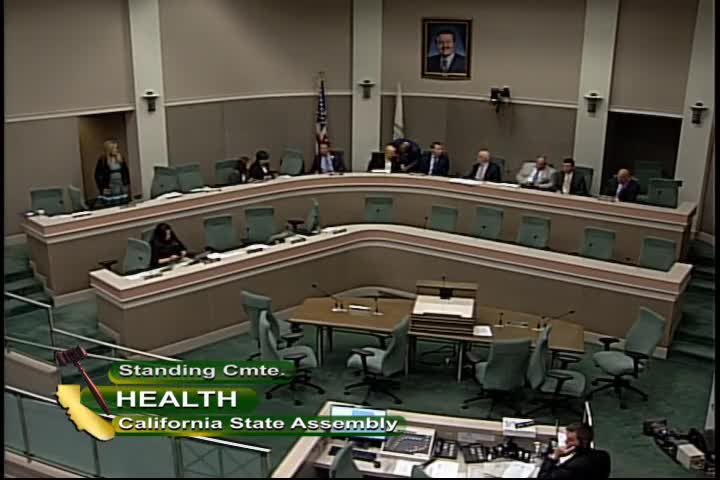
Bill Author
Bill Co-Author(s):