SB 16: Wage garnishment restrictions: exempt earnings: student loans.
- Session Year: 2017-2018
- House: Senate
- Latest Version Date: 2016-12-05
The Wage Garnishment Law prescribes the procedure for withholding an employees earnings for purposes of paying a debt. The law requires that a levy of execution upon the earnings of an employee be made by service of an earnings withholding order upon the employer. An earnings withholding order is issued by a levying officer upon receiving an application submitted by a judgment creditor. An employer is required, except as specified, to withhold the amounts required by an earnings withholding order from all earnings of the employee payable for any pay period of the employee which ends during the withholding period.
The law prohibits the amount of an individual judgment debtors weekly disposable earnings subject to levy under an earnings withholding order from exceeding the lesser of 25% of the individuals weekly disposable earnings or 50% of the amount by which the individuals disposable earnings for the week exceed 40 times the state minimum hourly wage, or applicable local minimum hourly wage, if higher, in effect at the time the earnings are payable.
This bill would establish a reduced maximum amount of disposable earnings of an individual judgment debtor subject to levy under an earnings withholding order for a judgment based in whole or in part on a claim for debt on a student loan that is not made, insured, or guaranteed by the United States Government pursuant to the Federal Family Education Loan Program or the William D. Ford Federal Direct Loan Program. The bill would prohibit the amount of disposable earnings subject to levy from exceeding the lesser of 15% of the individuals disposable earnings for that week or 50% of the amount by which the individuals disposable earnings for the week exceed 40 times the state minimum hourly wage, or applicable local minimum hourly wage, if higher, in effect at the time the earnings are payable.
(a)For a judgment based in whole or in part on a claim for debt from a student loan that is not made, insured, or guaranteed by the United States Government pursuant to the Federal Family Education Loan Program (20 U.S.C. Sec. 1071 et seq.) or the William D. Ford Federal Direct Loan Program (34 C.F.R. 685.100), the maximum amount of disposable earnings of an individual judgment debtor for any workweek that is subject to levy under an earnings withholding order shall not exceed the lesser of the following:
(1)Fifteen percent of the individuals disposable earnings for that week.
(2)Fifty percent of the amount by which the individuals disposable earnings for that week exceed 40 times the state minimum hourly wage in effect at the time the earnings are payable. If a judgment debtor works in a location where the local minimum hourly wage is greater than the state minimum hourly wage, the local minimum hourly wage in effect at the time the earnings are payable shall be used for the calculation made pursuant to this paragraph.
(b)For any pay period other than weekly, the following multipliers shall be used to determine the maximum amount of disposable earnings subject to levy under an earnings withholding order that is proportional in effect to the calculation described in paragraph (2) of subdivision (a), except as specified in paragraph (1):
(1)For a daily pay period, the amounts shall be identical to the amounts described in subdivision (a).
(2)For a biweekly pay period, multiply the applicable hourly minimum wage by 80 work hours.
(3)For a semimonthly pay period, multiply the applicable hourly minimum wage by 862/3 work hours.
(4)For a monthly pay period, multiply the applicable hourly minimum wage by 1731/3 work hours.
|
Date
|
Status
|
|---|---|
| Jun 29, 2017 | Read third time. Refused passage. |
| Jun 14, 2017 | Read second time. Ordered to third reading. |
| Jun 13, 2017 | From committee: Do pass. (Ayes 8. Noes 3.) (June 13). |
| May 18, 2017 | Referred to Com. on JUD. |
| Apr 18, 2017 | In Assembly. Read first time. Held at Desk. |
| Apr 17, 2017 | Read third time. Passed. (Ayes 28. Noes 12. Page 703.) Ordered to the Assembly. |
| Apr 6, 2017 | Read second time. Ordered to third reading. |
| Apr 5, 2017 | Withdrawn from committee. |
| Mar 29, 2017 | From committee: Do pass and re-refer to Com. on APPR. (Ayes 5. Noes 2. Page 538.) (March 28). Re-referred to Com. on APPR. |
| Mar 14, 2017 | Set for hearing March 28. |
| Jan 19, 2017 | Referred to Coms. on JUD. and APPR. |
| Dec 6, 2016 | From printer. May be acted upon on or after January 5. |
| Dec 5, 2016 | Introduced. Read first time. To Com. on RLS. for assignment. To print. |
|
Date
|
Description
|
Location
|
Votes
|
|
|---|---|---|---|---|
| Jun 29, 2017 | SB 16 Wieckowski Senate Third Reading By MCCARTY | Assembly Floor |
Failed |
|
| Jun 13, 2017 | Do pass. | Assembly Standing Committee on Judiciary |
Passed |
|
| Apr 17, 2017 | Favorable (Post-Secondary Education Subcommittee) | Senate Floor |
Passed |
|
| Mar 28, 2017 | Do pass, but first be re-referred to the Committee on [Appropriations] | Senate Standing Committee on Judiciary |
Passed |
This list shows positions taken on this bill by organizations on the date displayed, which is linked to the original source.
Positions by individuals are not included.
|
Organization
|
Position
|
Date
|
|---|---|---|
| Associated Students Incorporated of California State University of Sacramento | * Support | Mar 28, 2017 |
| associated students, csu sacramento | ** Support | Jun 11, 2017 |
| California Association Of Collectors | ** Against | Jun 11, 2017 |
| California Association Of Nonprofits | ** Support | Jun 11, 2017 |
| California Bankers Association | ** Against | Jun 11, 2017 |
| California Faculty Association | ** Support | Jun 11, 2017 |
| California State Student Association | ** Support | Jun 11, 2017 |
| Consumer Federation Of California | ** Support | Jun 11, 2017 |
| CSU Sacramento | * Support | Jun 13, 2017 |
| East Bay Community Law Center | ** Support | Jun 11, 2017 |
| Faculty Association of California | * Support | Mar 28, 2017 |
| Faculty Association Of California Community Colleges | ** Support | Jun 11, 2017 |
| JUD. | ** Against | Apr 10, 2017 |
| Legal Aid Association Of California | ** Support | Jun 11, 2017 |
| Legal Aid Society of San Bernardino | ** Support | Jun 11, 2017 |
| Our Opposition Rests On The Following: | ** Against | Apr 10, 2017 |
| Prepared By: Timothy Griffiths | ** Against | Apr 10, 2017 |
| Prior Legislation.] | ** Against | Apr 10, 2017 |
| Public Counsel | ** Support | Jun 11, 2017 |
| Public Law Center | ** Support | Jun 11, 2017 |
| receivables management association | ** Against | Jun 11, 2017 |
| San Francisco, City And County Of | * Support | Jun 13, 2017 |
| SEIU California | ** Support | Jun 11, 2017 |
| Sergio Jimenez, San Jose City Councilmember, District 2 | ** Support | Jun 11, 2017 |
| Silicon Valley Young Democrats | ** Support | Jun 11, 2017 |
| western center on law and poverty | ** Support | Jun 11, 2017 |
SENATE THIRD READING
STR Bill Id:SB 16
Author:(Wieckowski)
As Introduced Ver:December 5, 2016
Majority vote
SENATE VOTE: 28-12
Committee | Votes | Ayes | Noes |
Judiciary | 8-3 | Mark Stone, Chau, Chiu, Cristina Garcia, Holden, Kalra, Reyes, Ting | Cunningham, Kiley, Maienschein |
SUMMARY: Reduces the maximum amount that a creditor may garnish from the wages of a debtor for a judgment based on private student loan debt. Under the revised formula, the maximum amount that could be garnished is lowered from 25% of the debtor's disposable income to just 15%, unless the debtor is a low-wage worker in which case the amount may be calculated to be lower. Specifically, this bill:
- Provides that for a judgment based in whole or in part on a claim for debt from a student loan that is not made, insured, or guaranteed by the United States government, pursuant to the Federal Family Education Loan Program (20 United States Code Section 1071 et seq.) or the William D. Ford Federal Direct Loan Program (34 Code of Federal Regulations 685.100), the maximum amount of disposable earnings of an individual judgment debtor for any workweek that is subject to levy under an earnings withholding order shall not exceed the lesser of the following:
- Fifteen percent of the individual's disposable earnings for that week.
- Fifty percent of the amount by which the individual's disposable earnings for that week exceed 40 times the state minimum hourly wage in effect at the time the earnings are payable.
- Provides that if a judgment debtor works in a location where the local minimum hourly wage is greater than the state minimum hourly wage, the local minimum hourly wage in effect at the time the earnings are payable shall be used for the calculation made pursuant to 1b) above.
- Specifies multiplier factors used to determine the proportional maximum amount of disposable earnings subject to levy under an earnings withholding order for any pay period other than a weekly period.
FISCAL EFFECT: None
COMMENTS: This bill seeks to reduce the maximum percentage that can be garnished from a debtor's wages to repay private student loan debt (currently 25%) and instead equalizes that figure with the maximum percentage allowed to be garnished by the federal government for the repayment of federal student loans (currently 15%).
According to proponents of the bill, outstanding student loan debt is a ubiquitous and troubling problem of these times. They write:
More than 40 million Americans have student loan debt. Now at $1.3 trillion, education debt outpaces credit card debt as the leading source of household debt. While average student debt hit a record above $30,000 this year, income growth has not kept pace with the rise in student loans or housing costs . . . There is no rationale for treating a struggling borrower with private loans any differently than one with Federal loans. SB 16 will benefit thousands of borrowers in California – home to an estimated $20 billion in outstanding private student loan debt by correcting that inconsistency.
Background on wage garnishment. Existing law prohibits the amount that the employer may withhold for any work week to the lesser of 25% of the employee's disposable income for that week, or 50% of the amount by which the individual's disposable earnings for that week exceed 40 times the applicable state or local minimum hourly wage in effect at the time the earnings are payable. In practical terms, the amount is capped at 25% of the disposable earnings, unless the debtor is a low-wage worke – in which case the maximum amount may potentially be even lower, depending on the calculation.
This bill effectively reduces maximum garnishment amounts for certain borrowers with respect to private student loan debt. This bill would revise the statutory method for calculating wage garnishment for private student loans (i.e.,. "loans not made, insured, or guaranteed by the United States Government pursuant to the Federal Family Education Loan Program or the William D. Ford Federal Direct Loan Program"), and would effectively reduce the cap on garnishment for such loans from 25% to 15% for debtors who earn more than $30,000 per year in disposable income, based on the current state minimum hourly wage of $10.50.
The statutory wage garnishment formula is specified by Code of Civil Procedure Section 706.050. To determine the amount of a debtor's wages that may be garnished, two percentages must be calculated and whichever calculation yields the lower figure is the applicable maximum. The first calculation is based on the debtor's income compared against the applicable minimum wage (i.e., either the state minimum wage, currently $10.50 per hour, or the local minimum hourly wage if the debtor works in a place where the local minimum wage exceeds the state minimum wage.) The practical outcome of this part of the formula is that no garnishment is permitted for debtors who have very little to no income, and that an increasing percentage is allowed for debtors earning more. The second calculation simply employs an absolute percentage of the debtor's disposable earnings for that week; if this calculated percentage is lower than the percentage calculated by the first method, then it controls and effectively caps the percentage of the debtor's disposable earnings that may be garnished. (Disposable earnings are those remaining after certain mandatory deductions are made.)
Under existing law, private student loan debt is not treated differently from other types of consumer debt, so the formula in Section 706.050 applies. Using the current $10.50 state minimum wage, no wage garnishment is permitted for a debtor who has $21,000 or less in annual disposable earnings. For earnings from $21,000 up to $42,000, the maximum percentage that may be garnished under current law gradually increases from zero to 25%. For debtors having $42,000 or more in annual disposable income, the law allows a maximum garnishment of 25% for private student loan debt.
With respect to private student loan debt under this bill and again applying the current $10.50 state minimum wage, it remains true that no wage garnishment is permitted for any debtor who has $21,000 or less in annual disposable earnings. For debtors with disposable earnings from $21,000 up to $30,000, however, the maximum percentage that may be garnished under this bill rises from zero to only 15%. For debtors having $30,000 or more in annual disposable income, this bill allows a lower maximum garnishment of only 15%, rather than 25%. In short, the practical effect of this bill is that debtors having more than $30,000 in annual disposable income will have up to 10% less garnished from their wages, with the full 10% decrease assured for debtors with $42,000 or more in disposable income.
Opponents contend that the bill "creates a significant loophole for wealthy debtors" because it effectively "lowers the 25% limit for wealthy debtors seeking to avoid paying their creditors." They further contend that the bill is unnecessary because the current statutory formula, which applies to private student loans, already protects low and income middle wage earners by tying the amount of garnishable wages to a formula related to income. By contrast, this bill does not consider the ability to pay, and thus "provides an opportunity for those who want to abuse the system at the expense of those that need financial assistance." Proponents counter, however, that the bill is warranted because of specific issues raised by private student loan debt, as discussed below, and not just the effect of wage garnishment upon low-wage earners in California.
Comparison of federal student loans to private student loans. There are a number of key differences between federal student loans and private student loans that underlie the bill's focus on private student loans and its intent to reduce maximum garnishment caps for some debtors having such loans. First, interest rates on federal student loans are generally lower than those on private student loans, and some federal loans are even subsidized, which relieves the borrower from paying interest on the loans while still attending school. Thus, private student loan debt typically increases faster with higher interest. Second, according to the author, federal borrowers typically pay between 10%-15% of their disposable earnings each month under a variety of income-based or income-driven repayment plans that are offered. In contrast, monthly payments under private student loans are typically calculated based on principal and a variable interest rate over a 10-year repayment schedule, meaning that the borrower is required to pay a monthly amount regardless of how much of his or her income is consumed by that payment.
According to the author, federal borrowers enjoy more flexibility to make payments and have more options to avoid default than their private borrower counterparts. Federal loans come with a range of borrower protections that are mandated in the federal Higher Education Act. For example, with federal Direct, Federal Family Education Loan (FFEL) and Perkins loans, every borrower is entitled to deferment due to economic hardship or unemployment for up to three years as long as the borrower meets eligibility requirements for these deferments. Federal loan servicers also offer forbearance, a temporary postponement of payments, for up to 12 months at a time. By contrast, private education loan lenders are not required to offer forbearance or deferment options. Some private lenders charge fees to process forbearance and deferment requests and may have shorter deferment or forbearance periods, if any at all. Private loan repayment terms can presumably be renegotiated to aid the borrower, but only if both parties agree to do so.
Finally, and most relevant to this bill, there is a substantial difference in the extent to which wage garnishment may be used to collect on federal student loans as compared to private loans. Whereas the federal government can only garnish up to 15% of a borrower's disposable earnings for federal student loans, in California private lenders can garnish up to 25% of a borrower's disposable earnings for private student loans.
The author contends that all of the above reasons have the effect of making private lenders less likely to work with borrowers carrying private student loan debt, and that it is appropriate for the state to take steps to level the playing field. According to the author, by restricting the option of wage garnishment, the bill seeks to create greater incentive for creditors to engage with debtors to work out reasonable plans for repayment of private student loan debt. The author states: "Currently, private lenders who can take 25% of a borrower's earnings in wage garnishment have no incentive to modify or negotiate a student's repayment prior to the default. By dropping the private student loan garnishment rate from 25% to 15%, SB 16 not only creates better parity between how Federal loans and private loans are collected, it makes garnishment a less attractive option for private lenders and will encourage them to take a lower monthly payment from struggling graduates trying to keep their loans in good standing."
The bill is supported by consumer advocates, legal aid organizations, nonprofit organizations. and faculty and student associations. They note the strong negative impact that student loan debt has not only upon recent graduates seeking work, but upon recruitment and retention efforts in the workforce of the nonprofit and legal aid sectors.
The bill is opposed by debt collectors and bankers, who note that, unlike private lenders, the federal government need not obtain a court judgment to collect on a student loan in default. Alternatively, the government can collect by withholding money from a borrower's tax returns, or it can also garnish up to 15% of a borrower's disposable wage earnings, as long as it first provides the borrower with notice and an opportunity to contest the garnishment. By contrast, private student lenders may only garnish a borrower's wages after all other methods for repayment have been exhausted, and as a result these limitations on garnishment greatly impact the ability to recover this type of debt since wages are the primary source for repayment of student loans, according to opponents. Opponents also contend that this bill will have the effect of reducing private student loans, and access to college education generally, because lower garnishment rates will discourage private lenders from making student loans in the first place.
It should be noted, however, that student loan debt, whether federal or private, is not dischargeable in bankruptcy, and therefore lenders are assured that underlying student loan debt always survives and is not extinguished. Defaulting on student loan payments does not make the debt go away, nor does it appear to benefit the borrower in any appreciable way. This bill does not seek to restrict creditors from other means of recovery besides wage garnishment.
Analysis Prepared by: Anthony Lew / JUD. / (916) 319-2334 FN: 0000960
Date of Hearing: June 13, 2017
ASSEMBLY COMMITTEE ON JUDICIARY
Mark Stone, Chair
SBPCA Bill Id:SB 16
Author:(Wieckowski) – As Introduced Ver:December 5, 2016
SENATE VOTE: 28-12
SUBJECT: WAGE GARNISHMENT RESTRICTIONS: EXEMPT EARNINGS: STUDENT LOANS
KEY ISSUE: IN ORDER TO LEVEL THE PLAYING FIELD FOR COLLECTION OF STUDENT LOANS, SHOULD THE MAXIMUM AMOUNT THAT MAY BE GARNISHED FROM A DEBTOR'S WAGES TO SATISFY A PRIVATE STUDENT LOAN BE DECREASED BY TEN PERCENT SO THAT IT IS EQUAL TO THE MAXIMUM PERCENTAGE THAT MAY BE GARNISHED TO REPAY A FEDERAL STUDENT LOAN?
SYNOPSIS
Existing state law allows wage garnishment up to a maximum of 25 percent of a debtor's disposable income for the repayment of private student loans—the same rate that applies to other types of consumer debt in California. Federal student loans, however, are subject to wage garnishment by the federal government at a maximum percentage of only 15 percent—a ten percentage point difference. Neither type of loan is dischargeable in bankruptcy, so defaulting on student loans has no benefit and lenders are ultimately assured of repayment over time. According to the author, the 25 percent garnishment rate functions as a statutory 25 percent repayment rate and, when combined with other characteristics of private student loans, virtually eliminates any incentive that lenders have to work with private borrowers to negotiate a lower monthly payment when those borrowers cannot afford their current student loan payments.
Accordingly, this bill seeks to reduce the maximum percentage that can be garnished from a debtor's wages to repay private student loan debt (currently 25 percent) and instead equalizes that figure with the maximum percentage allowed to be garnished by the federal government for the repayment of federal student loans (currently 15 percent). Based on the current state minimum hourly wage of $10.50, this bill would effectively reduce the cap on garnishment for private student loans, from 25 percent to 15 percent, for debtors who earn more than $30,000 per year in disposable income. The bill is strongly supported by consumer advocates, legal aid organizations, and the California State Student Association (CSSA), among others, who believe the proposed reduction in the garnishment rate is needed to help more working borrowers avoid default, particularly in light of the higher rents and cost of living in this state. They point to many examples of working people earning $30,000 to $40,000 per year who still struggle to keep up with their private student loan payments and who would benefit from this bill. Proponents also contend that the proposed changes sought by this bill will hopefully spur more lenders to work with private borrowers to negotiate more manageable payment terms that benefit both parties in the long run.
The bill is opposed by debt collectors and bankers, who note that, unlike private lenders, the federal government can collect on student loans by withholding money from a borrower’s tax returns, thus avoiding the considerable costs of first getting a court judgment against the borrower. In addition, opponents point out that lenders of private student loans may only garnish a borrower’s wages after all other methods for repayment have been exhausted, and thus limitations on garnishment have a greater impact on the ability to recover this type of debt since wages are the primary source for repayment of student loans. Opponents further contend that legislation targeting private student loans is unnecessary because such loans already are predicated on an assessment of a borrower's ability to repay, and that the default rate on such loans is less than three percent. Finally, opponents warn that this bill, if enacted, may have the effect of reducing private student loans specifically, and access to college education generally, if companies are discouraged from making private student loans.
SUMMARY: Reduces the maximum amount that a creditor may garnish from the wages of a debtor for a judgment based on private student loan debt. Under the revised formula, the maximum amount that could be garnished is lowered from 25 percent of the debtor's disposable income to just 15 percent, unless the debtor is a low-wage worker in which case the amount may be calculated to be lower. Specifically, this bill:
- Provides that for a judgment based in whole or in part on a claim for debt from a student loan that is not made, insured, or guaranteed by the United States government, pursuant to the Federal Family Education Loan Program (20 U.S.C. Sec. 1071 et seq.) or the William D. Ford Federal Direct Loan Program (34 C.F.R. 685.100), the maximum amount of disposable earnings of an individual judgment debtor for any workweek that is subject to levy under an earnings withholding order shall not exceed the lesser of the following:
- Fifteen percent of the individual’s disposable earnings for that week.
- Fifty percent of the amount by which the individual’s disposable earnings for that week exceed 40 times the state minimum hourly wage in effect at the time the earnings are payable.
- Provides that if a judgment debtor works in a location where the local minimum hourly wage is greater than the state minimum hourly wage, the local minimum hourly wage in effect at the time the earnings are payable shall be used for the calculation made pursuant to 1b) above.
- Specifies multiplier factors used to determine the proportional maximum amount of disposable earnings subject to levy under an earnings withholding order for any pay period other than a weekly period.
EXISTING LAW:
- Provides that service of an earnings withholding order creates a lien upon the earnings of the judgment debtor that are required to be withheld pursuant to the order, and upon all property of the employer subject to the enforcement of a money judgment in the amount required to be withheld pursuant to such order. Also provides that the lien continues for a period of one year from the date the earnings of the judgment debtor become payable unless the amount required to be withheld pursuant to the order is paid as required by law. (Code of Civil Procedure (CCP) Section 706.029. All further references are to this code unless otherwise stated.)
- Limits the amount that a judgment creditor may garnish from a judgment debtor’s disposable earnings for any work week to the lesser of: (a) 25 percent of the individual’s disposable earnings for that week; or (b) 50 percent of the amount by which the individual’s disposable earnings for that week exceed 40 times the applicable state or local minimum hourly wage in effect at the time the earnings are payable. (Section 706.050 (a).)
- Exempts from garnishment, with certain categorical exceptions, the portion of a judgment debtor's earnings which the judgment debtor proves is necessary for the support of the judgment debtor or his or her family supported in whole or in part by the judgment debtor. (Section 706.051 (b).)
- Exempts from garnishment one-half of the disposable earnings of the judgment debtor, plus any amount withheld from the judgment debtor’s earnings pursuant to any earnings assignment order for support, where the earnings withholding order is a withholding order for support under Section 706.030. (Section 706.052.)
- Specifies the procedural requirements by which a judgment debtor may claim an exemption from the earnings withholding order, and by which a judgment creditor may contest a claim of exemption in order to obtain a court hearing to evaluate the merit of the claim. (Section 706.105 (a) to (f).)
FISCAL EFFECT: As currently in print this bill is keyed non-fiscal.
COMMENTS: This bill seeks to reduce the maximum percentage that can be garnished from a debtor's wages to repay private student loan debt (currently 25 percent) and instead equalizes that figure with the maximum percentage allowed to be garnished by the federal government for the repayment of federal student loans (currently 15 percent).
According to proponents of the bill, outstanding student loan debt is a ubiquitous and troubling problem of these times. They write:
More than 40 million Americans have student loan debt. Now at $1.3 trillion, education debt outpaces credit card debt as the leading source of household debt. These mortgage-sized loans cause many graduates to postpone buying a home, getting married, starting a family, and saving for retirement. And while average student debt hit a record above $30,000 this year, income growth has not kept pace with the rise in student loans or housing costs . . . There is no rationale for treating a struggling borrower with private loans any differently than one with Federal loans. SB 16 will benefit thousands of borrowers in California – home to an estimated $20 billion in outstanding private student loan debt by correcting that inconsistency.
Background on wage garnishment. Under existing law, a judgment creditor may obtain an earnings withholding order (also known as a wage garnishment order) from a court in order to collect from a judgment debtor. The order is served upon the judgment debtor's employer who, in turn, is obligated to withhold from the employee's wages the amount specified in the order. Existing law permits a court to reduce the amount of the garnishment if it is necessary for the support of the debtor and his or her family. Finally, current law also sets forth the procedural requirements that a debtor must follow in order to claim an exemption from wage garnishment, as well as the means by which the creditor may contest the merits of a claim for exemption.
Existing law prohibits the amount that the employer may withhold for any work week to the lesser of 25 percent of the employee's disposable income for that week, or 50 percent of the amount by which the individual’s disposable earnings for that week exceed 40 times the applicable state or local minimum hourly wage in effect at the time the earnings are payable. In practical terms, the amount is capped at 25 percent of the disposable earnings, unless the debtor is a low-wage worker—in which case the maximum amount may potentially be even lower, depending on the calculation.
This bill effectively reduces maximum garnishment amounts for certain borrowers with respect to private student loan debt. This bill would revise the statutory method for calculating wage garnishment for private student loans (i.e.,. "loans not made, insured, or guaranteed by the U.S. Government pursuant to the Federal Family Education Loan Program or the William D. Ford Federal Direct Loan Program"), and would effectively reduce the cap on garnishment for such loans from 25 percent to 15 percent for debtors who earn more than $30,000 per year in disposable income, based on the current state minimum hourly wage of $10.50.
The statutory wage garnishment formula is specified by CCP Section 706.050. To determine the amount of a debtor’s wages that may be garnished, two percentages must be calculated and whichever calculation yields the lower figure is the applicable maximum. The first calculation is based on the debtor’s income compared against the applicable minimum wage (i.e., either the state minimum wage, currently $10.50 per hour, or the local minimum hourly wage if the debtor works in a place where the local minimum wage exceeds the state minimum wage.) The practical outcome of this part of the formula is that no garnishment is permitted for debtors who have very little to no income, and that an increasing percentage is allowed for debtors earning more. The second calculation simply employs an absolute percentage of the debtor's disposable earnings for that week; if this calculated percentage is lower than the percentage calculated by the first method, then it controls and effectively caps the percentage of the debtor’s disposable earnings that may be garnished. (Disposable earnings are those remaining after certain mandatory deductions are made.)
Under existing law, private student loan debt is not treated differently from other types of consumer debt, so the formula in Section 706.050 applies. Using the current $10.50 state minimum wage, no wage garnishment is permitted for a debtor who has $21,000 or less in annual disposable earnings. For earnings from $21,000 up to $42,000, the maximum percentage that may be garnished under current law gradually increases from zero to 25 percent. For debtors having $42,000 or more in annual disposable income, the law allows a maximum garnishment of 25 percent for private student loan debt.
With respect to private student loan debt under this bill and again applying the current $10.50 state minimum wage, it remains true that no wage garnishment is permitted for any debtor who has $21,000 or less in annual disposable earnings. For debtors with disposable earnings from $21,000 up to $30,000, however, the maximum percentage that may be garnished under this bill rises from zero to only 15 percent. For debtors having $30,000 or more in annual disposable income, this bill allows a lower maximum garnishment of only 15 percent, rather than 25 percent. In short, the practical effect of this bill is that debtors having more than $30,000 in annual disposable income will have up to 10 percent less garnished from their wages, with the full 10 percent decrease assured for debtors with $42,000 or more in disposable income.
Opponents contend that the bill "creates a significant loophole for wealthy debtors" because it effectively "lowers the 25% limit for wealthy debtors seeking to avoid paying their creditors." They further contend that the bill is unnecessary because the current statutory formula, which applies to private student loans, already protects low and income middle wage earners by tying the amount of garnishable wages to a formula related to income. By contrast, this bill does not consider the ability to pay, and thus "provides an opportunity for those who want to abuse the system at the expense of those that need financial assistance." Proponents counter, however, that the bill is warranted because of specific issues raised by private student loan debt, as discussed below, and not just the effect of wage garnishment upon low-wage earners in California.
Comparison of federal student loans to private student loans. There are a number of key differences between federal student loans and private student loans that underlie the bill's focus on private student loans and its intent to reduce maximum garnishment caps for some debtors having such loans. First, interest rates on federal student loans are generally lower than those on private student loans, and some federal loans are even subsidized, which relieves the borrower from paying interest on the loans while still attending school. Thus, private student loan debt typically increases faster with higher interest. Second, according to the author, federal borrowers typically pay between 10-15 percent of their disposable earnings each month under a variety of income-based or income-driven repayment plans that are offered. In contrast, monthly payments under private student loans are typically calculated based on principal and a variable interest rate over a 10-year repayment schedule, meaning that the borrower is required to pay a monthly amount regardless of how much of his or her income is consumed by that payment.
According to the author, federal borrowers enjoy more flexibility to make payments and have more options to avoid default than their private borrower counterparts. Federal loans come with a range of borrower protections that are mandated in the federal Higher Education Act. For example, with federal Direct, FFEL and Perkins loans, every borrower is entitled to deferment due to economic hardship or unemployment for up to three years as long as the borrower meets eligibility requirements for these deferments. Federal loan servicers also offer forbearance, a temporary postponement of payments, for up to 12 months at a time. By contrast, private education loan lenders are not required to offer forbearance or deferment options. Some private lenders charge fees to process forbearance and deferment requests and may have shorter deferment or forbearance periods, if any at all. Private loan repayment terms can presumably be renegotiated to aid the borrower, but only if both parties agree to do so.
Finally, and most relevant to this bill, there is a substantial difference in the extent to which wage garnishment may be used to collect on federal student loans as compared to private loans. Whereas the federal government can only garnish up to 15 percent of a borrower’s disposable earnings for federal student loans, in California private lenders can garnish up to 25 percent of a borrower’s disposable earnings for private student loans.
The author contends that all of the above reasons have the effect of making private lenders less likely to work with borrowers carrying private student loan debt, and that it is appropriate for the state to take steps to level the playing field. The author states:
While the state legislature cannot force lenders to offer more favorable interest rates, any flexible repayment plans, or loan forgiveness due to hardships that Federal borrowers enjoy, it can make the collection rate from borrower’s earnings the same. If private lenders are going to continue to refuse to work with generations of graduates buried in student loan debt, the legislature is obligated to reduce the incentive to allow these debts to enter into default and collections: Currently, private lenders who can take 25% of a borrower’s earnings in wage garnishment have no incentive to modify or negotiate a student’s repayment prior to the default.
SB 16 reduces the disparities between Federal student loans and private student loans by equalizing the garnishment rate between the two types of loans. . . By dropping the private student loan garnishment rate from 25% to 15%, SB 16 not only creates better parity between how Federal loans and private loans are collected, it makes garnishment a less attractive option for private lenders and will encourage them to take a lower monthly payment from struggling graduates trying to keep their loans in good standing.
The bill is opposed by debt collectors and bankers, who note that, unlike private lenders, the federal government need not obtain a court judgment to collect on a student loan in default. Alternatively, the government can collect by withholding money from a borrower’s tax returns, or it can also garnish up to 15 percent of a borrower’s disposable wage earnings, as long as it first provides the borrower with notice and an opportunity to contest the garnishment. By contrast, private student lenders may only garnish a borrower’s wages after all other methods for repayment have been exhausted, and as a result these limitations on garnishment greatly impact the ability to recover this type of debt since wages are the primary source for repayment of student loans, according to opponents. These opponents state:
Private lenders must engage in the lengthy and expensive process of filing a lawsuit, obtaining a judgment and applying for a garnishment order before they may proceed with the process of garnishment. The amount that a private lender may garnish is substantially limited by law, the lender may target only a borrower's wages and the private lender faces a statute of limitations.
In contrast, the federal government is not required to file a lawsuit, obtain a judgment and apply for a garnishment order before proceeding with garnishment. The federal government may garnish up to 15 percent of a borrower’s wages, Social Security disability income and Social Security retirement income – directly through the Internal Revenue Service. Also, the federal government may seize a borrower’s tax refunds and there is no time limit for the collection of federal student loans.
Student loan debt, however, whether federal or private, is not dischargeable in bankruptcy, and therefore lenders are assured that underlying student loan debt always survives and is not extinguished. Defaulting on student loan payments does not make the debt go away, nor does it appear to benefit the borrower in any appreciable way. This bill does not seek to restrict the creditor from other means of recovery besides wage garnishment. According to the author, by restricting the option of wage garnishment, the bill seeks to create greater incentive for lenders to engage with debtors to work out reasonable plans for repayment of private student loan debt.
ARGUMENTS IN SUPPORT: This bill is supported by consumer advocates, legal aid organizations, and the California State Student Association (CSSA), among others. CSSA writes in support:
Many students consider, and ultimately use, student loans to afford their college costs. While federal loans have many protections in place, loans from private lenders do not. When students choose to take on nonfederal, private loans, they do so without being aware that private loans come with fewer consumer protections, less repayment flexibility, and have higher rates of default… By setting the private garnishment maximum to the Federal maximum (15%), this bill would provide much needed protections to private student loan borrowers, and work to create more uniformity for all loans students receive.
The bill is supported by both the California Association of Nonprofits (CAN) and the Legal Aid Association of California (LAAC) because of the impact that student loan debt has upon many members of the nonprofit and legal aid workforces, respectively. CAN writes:
CAN recently conducted a survey titled "Student Debt and the Nonprofit Workforce" and found that student debt is hurting recruitment, retention and diversity in the nonprofit workforce. In fact, of the nearly 1,000 employees surveyed, 23 percent have debt of $90,000 or greater. An estimated 160,000 nonprofit employees in California alone carry student debt.
In support of the bill, LAAC also states:
The legal aid safety net in California exists because there are attorneys willing to work at a lower salary than they could earn in private practice to provide life-saving services to Californians in need. Unfortunately, these attorneys are also struggling to survive with the student debt incurred on their path to the practice of law. We conducted a survey on this issue and found that half of the legal aid attorneys, at the time of our survey in 2007, had a median student debt at $60,000-$69,000. And those numbers have increased significantly over the last 10 years.
The recruitment and retention of legal aid attorneys in California is an enormous problem. LAAC published a report entitled, “Shaping the Future of Justice: Effective Recruitment and Retention of Civil Legal Aid Attorneys in California.” We found that half of legal aid attorneys in California stay at their job for less than three years before leaving. Most departing attorneys cited financial reasons for their departure.
ARGUMENTS IN OPPOSITION: The bill is opposed by the California Association of Collectors, the California Bankers Association, and Receivables Management Association, who have submitted a joint letter explaining the reasons for their opposition to the bill. In addition to the reasons cited previously, opponents further contend that legislation targeting private student loans is unnecessary because such loans already are predicated on an assessment of a borrower's ability to repay, and that the default on such loans is less than 3 percent—far superior to the 11 percent default rate on federal student loans. Opponents further contend that this bill, if enacted, will have the effect of reducing private student loans specifically, and access to college education generally. They state:
This bill harms future students who need access to private student loans. As it becomes clearer to the already small number of private student lenders that the tool of last resort for collecting on a delinquent private student loan is severely restricted, lenders will be less likely to lend in this space. This disruption in the already stressed student loan market cannot come at a worse time. The federal student loan program is experiencing unmanageable pressures due to high default rates that are more than 400 percent higher than private student loans.
Over the past few years, some colleges have dropped out of the federal student loan program because their former students are disproportionately defaulting on their federal student loans. Without the accessibility of federal student loans or private student loans, the ability of responsible students to get an education shrinks considerably.
The American Payroll Association (APA) expresses workability concerns about the impact that this bill would have on payroll professionals who would have to update technical systems to facilitate new wage garnishment procedures. APA writes:
As payroll professionals, we appreciate provisions that help the employees we pay, but we also ask lawmakers to recognize that, in the case of garnishment, employers are third parties to a legal dispute. Changes to the law requiring employers to rely on a local minimum wage for garnishments also require that employers spend time, effort, and resources that are quite unrelated to the application of a local minimum wage to pay the workers in their employ….
Updating a payroll system requires specialized coding, technical development, testing, and a great deal of effort. Most payroll systems do not have a mechanism to calculate garnishment amounts based on the local minimum wage. Developing such a system… is expected to be expensive and time consuming for every employer managing creditor garnishments for employees in California. Applying this change for student loan garnishments would require an equal amount of time and effort.
Committee staff notes that APA's primary concerns are not with the policy of reducing wage garnishment, but rather with costs and technical challenges associated with making garnishment calculations based on local, rather than statewide minimum wages. It should be noted, however, that incorporating the local minimum wage into garnishment calculations for consumer debts is already required by law, and presumably the same methods currently employed could be adopted with respect to calculations for private student loan debts, should this bill become law.
Prior Related Legislation. SB 501 (Wieckowski), Ch. 800, Stats. 2015, established the current wage garnishment formula in California for consumer and student debt. The bill, as of July 1, 2016, reduces the maximum amount of disposable earnings subject to wage garnishment to the lesser of either 25 percent of the individual's disposable earnings for that week, or 50 percent of the amount by which the individual's disposable earnings for that week exceed 40 times the state minimum hourly wage.
AB 233 (Wieckowski) of 2013 would have eliminated the use of wage garnishment as a means of collecting judgments based on private student debt. AB 233 passed the Assembly, but failed on the Senate Floor.
AB 1775 (Wieckowski), Ch. 474, Stats. 2012, codified the definition under the federal Consumer Credit Protection Act of “disposable earnings” and the maximum amount of weekly wage garnishment of 25 percent of the individual’s disposable earnings. AB 1775 also capped the weekly wage garnishment amount at 40 times the state minimum hourly wage.
REGISTERED SUPPORT / OPPOSITION:
Support
Associated Students, CSU Sacramento
California Faculty Association
California State Student Association
California Association of Nonprofits
Consumer Federation of California
East Bay Community Law Center
Faculty Association of California Community Colleges
Legal Aid Association of California
Legal Aid Society of San Bernardino
Public Counsel
Public Law Center
SEIU California
Sergio Jimenez, San Jose City Councilmember, District 2
Silicon Valley Young Democrats
Western Center on Law and Poverty
Opposition
California Association of Collectors
California Bankers Association
Receivables Management Association
Analysis Prepared by: Anthony Lew / JUD. / (916) 319-2334
Office of Senate Floor Analyses (916) 651-1520 Fax: (916) 327-4478 | SB |
THIRD READING
Bill No: SB 16
:
SENATE JUDICIARY COMMITTEE: 5-2, 3/28/17
AYES: Jackson, Hertzberg, Monning, Stern, Wieckowski
NOES: Moorlach, Anderson
DIGEST: This bill reduces, from 25 percent to 15 percent, the maximum amount that a judgment creditor could garnish from someone’s wages in order to collect on a private student loan debt.
Existing law:
- Establishes procedures regarding the garnishment of a judgment debtor’s wages for all consumer debts, including private student loans. (Code Civ. Proc. Sec. 706.010 et seq.)
- Restricts the amount of garnishment of a judgment debtor’s disposable earnings for any workweek to the lesser of: (a) 25 percent of the individual’s disposable earnings for that week; or (b) 50 percent of the amount by which the individual’s disposable earnings for that week exceed 40 times the applicable state or local minimum hourly wage in effect at the time the earnings are payable. (Code Civ. Proc. Sec. 706.050(a).)
- Provides that “disposable earnings” means the portion of an individual’s earnings that remains after deducting all amounts required to be withheld by law. (Code Civ. Proc. Sec. 706.011(a).)
- Provides that “earnings” means compensation payable by an employer to an employee for personal services performed by such employee, whether denominated as wages, salary, commission, bonus, or otherwise. (Code Civ. Proc. Sec. 706.011(b).)
- Provides that the state minimum wage will ascend from $10.00 per hour to $15.00 per hour between 2017 and 2023. (Lab. Code Sec. 1182.12).
This bill reduces the maximum amount that a creditor could garnish from the wages of a private student loan debtor. Instead of being able to garnish up to 25 percent of the private student loan debtor’s pay, the creditor is only able to garnish up to 15 percent. Maximum garnishments for low-wage workers is even less.
Background
Student loan debt in the U.S. is substantial and rising. Back in 1994, about half of everyone obtaining a bachelor’s degree graduated with student loan debt and the average debtload was about $10,000 each. By 2016, around two-thirds of graduates had student loan debt and the average debtload was about $35,000. Total student loan debt in the U.S. reached $1.3 trillion by the end of last year.
The bulk of these student loans are public; that is, either issued or backed by the government. Private student loans are significant as well, however. According to the Consumer Financial Protection Bureau, in 2012, Americans owed more than $150 billion in outstanding private student loan debt.
More and more graduates are struggling to pay back these loans. In 2013, student loans surpassed credit cards and became the type of debt that Americans defaulted on most. Today, about 11 percent of student loans are delinquent, compared with seven percent of credit card debt and four percent of auto loans. And these figures likely underestimate the scope of the problem, since they do not count student loans in some form of deferment (about half are) as delinquent. Unlike ordinary consumer debts like credit cards and auto loans, however, student loan debt, except in rare circumstances, cannot automatically be discharged through bankruptcy.
In response to these financial challenges, the government has created a number of alternative payment plans for federal student loans. Under these plans, generally referred to as “income driven repayment” plans, the monthly loan payments are based on a formula that takes the graduate’s income into account. The higher the graduate earns, the more she pays each month. Each plan has slightly different terms, each caps the borrower’s student loan payment at between 10 and 20 percent of the borrower’s discretionary income.
In contrast, private student loan borrowers do not necessarily have the same repayment options as federal student loan borrowers. According to the Consumer Financial Protection Bureau: “[M]any distressed student loan borrowers [are] facing trouble making payments on private student loans due to limited options for alternate payment options. Consumers, as well as businesses, have been able to restructure other types of debts through bankruptcy as a last resort. But with less guaranteed flexibility compared to federal loans and very limited bankruptcy options compared to other consumer loans, private student loan borrowers facing tough economic times may be challenged to emerge as productive contributors to our society.”
NOTE: See the Senate Committee on Judiciary policy analysis for detailed background on this bill.
Comments
- Differences between federal and private student loan repayment and default remedies
- Rates. Federal student loans are based on fixed rates. Private student loans, while not uniform, are often based on variable interest rates. In general, interest rates on federal student loans are lower than their private sector counterparts. Some federal loans are subsidized, in addition, meaning that the borrower does not pay interest on the loan while the borrower is in school.
- Payments. There are a variety of payment plan options for paying back federal loans. Federal borrowers pay between 10 and 20 percent of their disposable earnings, depending on the plan. Federal loans also provide options for forbearance, deferment, loan consolidation, and, in some instances, loan forgiveness. Private loan payments are usually calculated based on principal and a variable interest rate over a 10-year repayment schedule, regardless of the borrower’s income. Private loan payment terms can be renegotiated, but this requires the agreement of both borrower and lender.
- Default. A federal student loan is considered to be in default after 270 days of non-payment. There is also an option for rehabilitating a federal student loan that is in default. A private student loan is considered to be in default after 90 days of non-payment. The possibility of loan rehabilitation is at the discretion of the lender.
- Garnishment. The federal government need not obtain a court judgment to collect on a student loan in default. It has at least two options for collecting. It can withhold money from a borrower’s tax returns. It can also garnish up to 15 percent of a borrower’s disposable wage earnings, though it must provide the borrower with notice and an opportunity to contest the garnishment before doing so. Private lenders in California must obtain a court judgment for the student loan debt before they can pursue non-voluntary collection methods. With a judgment in hand, under existing law, private lenders can garnish up to 25 percent of a California borrower’s disposable earnings for private student loans. Under this bill, private lenders would be capped at 15 percent instead.
- Bankruptcy. Except in rare circumstances, neither federal nor private student loan debt may be discharged in bankruptcy.
Related/Prior Legislation
SB 501 (Wieckowski, Chapter 800, Statutes of 2015) changed one method for calculating the maximum wage garnishment percentage for all consumer debts. The new formula became one-half of the difference between the debtor’s disposable income and 40 times the applicable minimum wage. SB 501 did not alter the other method for calculating the maximum wage garnishment percentage; it remained at 25 percent. The lower percentage derived from the two methods is the applicable maximum.
AB 233 (Wieckowski, 2013) would have eliminated the use of wage garnishment as a means for collecting judgments based on private student debt. AB 233 passed the Assembly, but failed on the Senate Floor in a 13-17 vote.
AB 1775 (Wieckowski, Chapter 474, Statutes of 2012) codified the definition under the federal Consumer Credit Protection Act for “disposable earnings” and the maximum amount of weekly wage garnishment of 25 percent of the individual’s disposable earnings. AB 1775 also capped the weekly wage garnishment amount at 40 times the state minimum hourly wage and provided certain multipliers to determine a maximum amount subject to levy for pay periods other than weekly.
AB 1388 (Wieckowski, Chapter 694, Statutes of 2011) deleted the exception from the wage garnishment exemption for common necessaries of life and instead provided an exception for wages necessary for the support of the judgment debtor and his or her family. AB 1388 also added the exception for debt incurred pursuant to an order or award for the payment of attorney’s fees under specified sections of the Family Code.
FISCAL EFFECT: Appropriation: Fiscal Com.: Local:
California Faculty Association
California State Student Association
CalNonprofits
Consumer Federation of California
East Bay Community Law Center
Faculty Association of California Community Colleges
Legal Aid Association of California
Legal Aid Society of San Bernardino
Public Counsel
Public Law Center
Sergio Jimenez, San Jose City Councilmember, District 2
Silicon Valley Young Democrats
Western Center on Law and Poverty
California Association of Collectors, Inc.
California Bankers Association
Receivables Management Association
ARGUMENTS IN SUPPORT: According to the author:
Defaulting on a private student loan is not the same as defaulting on a federal student loan….
The Federal government typically collects on defaulted student loans by withholding tax returns. The Federal government can also garnish a borrower’s wages but must provide the borrower with notice and an opportunity to contest the garnishment. The Federal government can only garnish up to 15% of a borrower’s disposable earnings for Federal student loans. But private lenders can garnish up to 25% of a California borrower’s disposable earnings for private student loans…
SB 16 reduces the disparities between Federal student loans and private student loans by equalizing the garnishment rate between the two types of loans.
While the state legislature cannot force lenders to offer more favorable interest rates, any flexible repayment plans, or loan forgiveness due to hardships that Federal borrowers enjoy, it can make the collection rate from borrower’s earnings the same.
If private lenders are going to continue to refuse to work with generations of graduates buried in student loan debt, the legislature is obligated to reduce the incentive to allow these debts to enter into default and collections…
By dropping the private student loan garnishment rate from 25% to 15%, SB 16 not only creates better parity between how Federal loans and private loans are collected, it makes garnishment a less attractive option for private lenders and will encourage them to take a lower monthly payment from struggling graduates trying to keep their loans in good standing.
ARGUMENTS IN OPPOSITION: The California Association of Collectors writes:
This bill is unneeded because of enactment of SB 501 (Wieckowski) in 2016. SB 501 reduced the then 25% limit on wage garnishment based upon the debtor’s income. SB 501 protects low and middle income wage earners by tying the amount of garnishable wages to a formula related to income. SB 510 does not lower the 25% limit for wealthy debtors seeking to avoid paying their creditors. SB 501 covers consumer debts including student loans. SB 16 (Wieckowski) is unnecessary, duplicative, and will confuse employers and sheriffs. SB 16 contradicts SB 501 and creates a significant loophole for wealthy borrowers.
In further opposition to the bill, the California Bankers Association, the California Association of Collectors, and the Receivable Management Association write:
The bill unnecessarily targets private student loans and ignores the substantial differences between the procedures and costs involved in the enforcement of private student loans and government-backed student loans. Private student loans account for only six percent of the student loan market. Lenders rely on a borrower’s wages as the primary source for repayment of a student loan. This bill significantly restricts the ability of lenders to garnish wages when borrowers refuse to pay. As a result, lenders will be far less likely to make loans to future students….
Our opposition rests on the following:
Unnecessary Legislation: Private loans, unlike federal loans, include an upfront responsible assessment of a borrower’s “ability to repay.” Private student loans have a dramatically superior repayment rate with a default rate of less than three percent, while the default rate on federal student loans is more than 11 percent.
Ignores the Differences between Private and Federal Student Loans: The tools for enforcement vary greatly between private student loans and federal student loans. Private student lenders may only garnish a borrower’s wages after all other methods for repayment have been exhausted. Private lenders must engage in the lengthy and expensive process of filing a lawsuit, obtaining a judgment and applying for a garnishment order before they may proceed with the process of garnishment. The amount that a private lender may garnish is substantially limited by law, the lender may target only a borrower’s wages, and the private lender faces a statute of limitations. In contrast, the federal government is not required to file a lawsuit, obtain a judgment and apply for a garnishment order before proceeding with garnishment. The federal government may garnish up to 15 percent of a borrower’s wages, Social Security disability income and Social Security retirement income – directly through the Internal Revenue Service. Also, the federal government may seize a borrower’s tax refunds and there is no time limit for the collection of federal student loans.
Protects Affluent Borrowers and Co-Signers: A significant amount of private student lending is for professional and graduate students. These graduates normally have higher incomes and a greater ability to repay their loans. Since the bill does not consider the ability to pay, it provides an opportunity for those who want to abuse the system at the expense of those that need financial assistance.
Reduction in Private Student Loans: This bill harms future students who need access to private student loans. As it becomes clearer to the already small number of private student lenders that the tool of last resort for collecting on a delinquent private student loan is severely restricted, lenders will be less likely to lend in this space. This disruption in the already stressed student loan market cannot come at a worse time. The federal student loan program is experiencing unmanageable pressures due to high default rates that are more than 400 percent higher than private student loans.
Reduction in Access to a College Education: Over the past few years, some colleges have dropped out of the federal student loan program because their former students are disproportionately defaulting on their federal student loans. Without the accessibility of federal student loans or private student loans, the ability of responsible students to get an education shrinks considerably.
Existing Limits on Garnishment: In addition to prohibiting wage garnishment for the collection of private student loans, the bill continues a pattern of restricting the use of wage garnishment for the collection of charged-off consumer debt. This is unnecessary because of recent statutory changes that regulate the debt collection process….[Committee Staff note: see Related/Prior Legislation.]
4/10/17 13:24:15
**** END ****
Senator Hannah-Beth Jackson, Chair
2017-2018 Regular Session
Bill No: SB 16 (Author:Wieckowski)
Version: December 5, 2016
Hearing Date: March 28, 2017
Fiscal: No
Urgency: No
Consultant: TSG
SUBJECT
Wage garnishment restrictions: exempt earnings: student loans
DESCRIPTION
This bill would reduce, from 25 percent to 15 percent, the maximum amount that a judgment creditor could garnish from someone’s wages in order to collect on a private student loan debt.
BACKGROUND
Student loan debt in the U.S. is substantial and rising. Back in 1994, about half of everyone obtaining a bachelor’s degree graduated with student loan debt and the average debtload was about $10,000 each. By 2016, around two-thirds of graduates had student loan debt and the average debtload was about $35,000.[1] Total student loan debt in the U.S. reached $1.3 trillion by the end of last year.[2]
The bulk of these student loans are public; that is, either issued or backed by the government. Private student loans are significant as well, however. According to the Consumer Financial Protection Bureau, in 2012, Americans owed more than $150 billion in outstanding private student loan debt.[3]
More and more graduates are struggling to pay back these loans. In 2013, student loans surpassed credit cards and became the type of debt that Americans defaulted on most. Today, about 11 percent of student loans are delinquent, compared with 7 percent of credit card debt and 4 percent of auto loans. And these figures likely underestimate the scope of the problem, since they do not count student loans in some form of deferment (about half are) as delinquent.[4] Unlike ordinary consumer debts like credit cards and auto loans, however, student loan debt, except in rare circumstances, cannot automatically be discharged through bankruptcy.[5]
In response to these financial challenges, the government has created a number of alternative payment plans for federal student loans. Under these plans, generally referred to as “income driven repayment” plans, the monthly loan payments are based on a formula that takes the graduate’s income into account. The higher the graduate earns, the more she pays each month. Each plan has slightly different terms, each caps the borrower’s student loan payment at between 10 and 20 percent of the borrower’s discretionary income.[6]
In contrast, private student loan borrowers do not necessarily have the same repayment options as federal student loan borrowers. According to the Consumer Financial Protection Bureau’s report: “[M]any distressed student loan borrowers [are] facing trouble making payments on private student loans due to limited options for alternate payment options. Consumers, as well as businesses, have been able to restructure other types of debts through bankruptcy as a last resort. But with less guaranteed flexibility compared to federal loans and very limited bankruptcy options compared to other consumer loans, private student loan borrowers facing tough economic times may be challenged to emerge as productive contributors to our society.”[7]
When someone fails to make payments on a private student loan, the person or company to whom the money is owed (hereafter “the creditor”) may seek a judgment from the courts for the amount unpaid plus fees and interest. Upon obtaining the judgment, the creditor has a number of different tools for collecting the money owed: placing a lien on real property, seizing personal property, or levying on a bank account, for example. Another tool is wage garnishment. When a court orders someone’s wages garnished, it instructs the employer of the person who owes the money (hereafter “the debtor”) to withhold a portion of the debtor’s pay and to redirect those funds to payment of the debt. So that the debtor can still pay for at least the basic necessities of life, however, state and federal laws impose certain limits on the amount of pay that can be garnished.
Under current law, no more than 25 percent of a person’s wages can be garnished for the purpose of collecting on a private student loan. The percentage is even lower for low-wage workers, as Comment 4, below, explains.
This bill would reduce the maximum percentage of a debtor’s wages that can be garnished for collection of a private student loan to 15 percent. The percentage would still be even lower for low-wage workers. See Comment 4, below, for a more detailed explanation.
CHANGES TO EXISTING LAW
Existing law, the Wage Garnishment Law, establishes procedures regarding the garnishment of a judgment debtor’s wages for all consumer debts, including private student loans. (Code Civ. Proc. Sec. 706.010 et seq.)
Existing law restricts the amount of garnishment of a judgment debtor’s disposable earnings for any workweek to the lesser of: (a) 25 percent of the individual’s disposable earnings for that week; or (b) 50 percent of the amount by which the individual’s disposable earnings for that week exceed 40 times the applicable state or local minimum hourly wage in effect at the time the earnings are payable. (Code Civ. Proc. Sec. 706.050(a).)
Existing law provides that “disposable earnings” means the portion of an individual’s earnings that remains after deducting all amounts required to be withheld by law. (Code Civ. Proc. Sec. 706.011(a).)
Existing law provides that “earnings” means compensation payable by an employer to an employee for personal services performed by such employee, whether denominated as wages, salary, commission, bonus, or otherwise. (Code Civ. Proc. Sec. 706.011(b).)
Existing law provides that the state minimum wage will ascend from $10.00 per hour to $15.00 per hour between 2017 and 2023. (Lab. Code Sec. 1182.12).
This bill would reduce the maximum amount that a creditor could garnish from the wages of a private student loan debtor. Instead of being able to garnish up to 25 percent of the private student loan debtor’s pay, the creditor would only be able to garnish up to 15 percent. Maximum garnishments for low-wage workers would be even less.
COMMENT
1. Stated need for the bill
According to the author:
Defaulting on a private student loan is not the same as defaulting on a federal student loan….
The Federal government typically collects on defaulted student loans by withholding tax returns. The Federal government can also garnish a borrower’s wages but must provide the borrower with notice and an opportunity to contest the garnishment. The Federal government can only garnish up to 15% of a borrower’s disposable earnings for Federal student loans. But private lenders can garnish up to 25% of a California borrower’s disposable earnings for private student loans…
SB 16 reduces the disparities between Federal student loans and private student loans by equalizing the garnishment rate between the two types of loans.
While the state legislature cannot force lenders to offer more favorable interest rates, any flexible repayment plans, or loan forgiveness due to hardships that Federal borrowers enjoy, it can make the collection rate from borrower’s earnings the same.
If private lenders are going to continue to refuse to work with generations of graduates buried in student loan debt, the legislature is obligated to reduce the incentive to allow these debts to enter into default and collections…
By dropping the private student loan garnishment rate from 25% to 15%, SB 16 not only creates better parity between how Federal loans and private loans are collected, it makes garnishment a less attractive option for private lenders and will encourage them to take a lower monthly payment from struggling graduates trying to keep their loans in good standing.
In support, the Consumer Federation of California writes:
More than 40 million Americans have student loan debt. Now at $1.3 trillion, education debt outpaces credit card debt as the leading source of household debt. These mortgage-sized loans cause many graduates to postpone buying a home, getting married, starting a family, and saving for retirement. And while average student debt hit a record above $30,000 this year, income growth has not kept pace with the rise in student loans or housing costs.
There are many programs in place to help people with Federal student loans. Meanwhile, private lenders are not required to, and usually don’t, offer different repayment options based on a borrower’s circumstances.
There is no rationale for treating a struggling borrower with private loans any differently than one with Federal loans. SB 16 will benefit thousands of borrowers in California – home to an estimated $20 billion in outstanding private student loan debt by correcting that inconsistency.
In further support, the California State Student Association writes:
Many students consider, and ultimately use, student loans to afford their college costs. While federal loans have many protections in place, loans from private lenders do not. When students choose to take on nonfederal, private loans, they do so without being aware that private loans come with fewer consumer protections, less repayment flexibility, and have higher rates of default… By setting the private garnishment maximum to the Federal maximum (15 %), this bill would provide much needed protections to private student loan borrowers, and work to create more uniformity for all loans students receive.
In further support, the Faculty Association of California Community Colleges writes:
There is an estimated $20 billion in outstanding private student loan debt in California, burdening thousands of students with hefty payments they cannot afford. When students face financial crises, they often have trouble completing their coursework, attending class, or completing a degree. By matching the student loan garnishment maximum to the federal rate, SB 16 would create fairness for California’s student loan borrowers.
In further support, the Public Law Center writes:
Through PLC’s Consumer Law Unit, PLC assists individuals with both federal and private student loans.
Over the past two years in particular, the vast majority of those individuals attended for-profit schools such as Everest College (part of the Corinthian Colleges) and ITT Technical Institute, both of which closed amidst investigations by federal agencies and state attorneys general. These students usually have somewhat of an avenue of relief for their federal student loans, through an income-based payment plan or through possible avenues for discharge. In contrast, the options for private student loans are (1) pay, or (2) don’t pay and risk garnishment of up to 25% of wages if a judgment is entered. In many cases, when we are able to obtain some relief for a student loan borrower on their federal loans, we then have to consider filing bankruptcy to deal with the private student loans.
Some of our borrowers have contacted their private student loan servicers to request assistance and have been told there are no payment options for them. For our clients who have attended for-profit schools, particularly those who were directed to private student loans that were connected to the for-profit school, this is an impossible situation. The students are unable to use their education, and are saddled with significant private student loans that could lead to a judgment and eventually to garnishment for up to 20 years.
In further support, CalNonprofits writes:
CalNonprofits recently conducted a survey, Student Debt and the Nonprofit Workforce and found that student debt is hurting recruitment, retention and diversity in the nonprofit workforce. In fact, of the nearly 1,000 employees surveyed, 23 percent have debt of $90,000 or greater. An estimated 160,000 nonprofit employees in California alone carry student debt.
In further support, the Legal Aid Association of California writes:
The legal aid safety net in California exists because there are attorneys willing to work at a lower salary than they could earn in private practice to provide life-saving services to Californians in need. Unfortunately, these attorneys are also struggling to survive with the student debt incurred on their path to the practice of law. We conducted a survey on this issue and found that half of the legal aid attorneys, at the time of our survey in 2007, had a median student debt at $60,000-$69,000. And those numbers have increased significantly over the last 10 years.
The recruitment and retention of legal aid attorneys in California is an enormous problem. LAAC published a report entitled, “Shaping the Future of Justice: Effecitve Recruitment and Retention of Civil Legal Aid Attorneys in California.” We found that half of legal aid attorneys in California stay at their job for less than 3 years before leaving. Most departing attorneys cited financial reasons for their departure.
2. Expressed concerns about the bill
In opposition to the bill, the California Association of Collectors writes:
This bill is unneeded because of enactment of SB 501 (Wieckowski) in 2016. SB 501 reduced the then 25% limit on wage garnishment based upon the debtor’s income. SB 501 protects low and middle income wage earners by tying the amount of garnishable wages to a formula related to income. SB 510 does not lower the 25% limit for wealthy debtors seeking to avoid paying their creditors. SB 501 covers consumer debts including student loans. SB 16 (Wieckowski) is unnecessary, duplicative, and will confuse employers and sheriffs. SB 16 contradicts SB 501 and creates a significant loophole for wealthy borrowers.
In further opposition to the bill, the California Bankers Association, the California Association of Collectors, and the Receivable Management Association write:
The bill unnecessarily targets private student loans and ignores the substantial differences between the procedures and costs involved in the enforcement of private student loans and government-backed student loans. Private student loans account for only six percent of the student loan market. Lenders rely on a borrower’s wages as the primary source for repayment of a student loan. This bill significantly restricts the ability of lenders to garnish wages when borrowers refuse to pay. As a result, lenders will be far less likely to make loans to future students….
Our opposition rests on the following:
Unnecessary Legislation: Private loans, unlike federal loans, include an upfront responsible assessment of a borrower’s “ability to repay.” Private student loans have a dramatically superior repayment rate with a default rate of less than three percent, while the default rate on federal student loans is more than 11 percent.
Ignores the Differences between Private and Federal Student Loans: The tools for enforcement vary greatly between private student loans and federal student loans. Private student lenders may only garnish a borrower’s wages after all other methods for repayment have been exhausted. Private lenders must engage in the lengthy and expensive process of filing a lawsuit, obtaining a judgment and applying for a garnishment order before they may proceed with the process of garnishment. The amount that a private lender may garnish is substantially limited by law, the lender may target only a borrower’s wages, and the private lender faces a statute of limitations. In contrast, the federal government is not required to file a lawsuit, obtain a judgment and apply for a garnishment order before proceeding with garnishment. The federal government may garnish up to 15 percent of a borrower’s wages, Social Security disability income and Social Security retirement income – directly through the Internal Revenue Service. Also, the federal government may seize a borrower’s tax refunds and there is no time limit for the collection of federal student loans.
Protects Affluent Borrowers and Co-Signers: A significant amount of private student lending is for professional and graduate students. These graduates normally have higher incomes and a greater ability to repay their loans. Since the bill does not consider the ability to pay, it provides an opportunity for those who want to abuse the system at the expense of those that need financial assistance.
Reduction in Private Student Loans: This bill harms future students who need access to private student loans. As it becomes clearer to the already small number of private student lenders that the tool of last resort for collecting on a delinquent private student loan is severely restricted, lenders will be less likely to lend in this space. This disruption in the already stressed student loan market cannot come at a worse time. The federal student loan program is experiencing unmanageable pressures due to high default rates that are more than 400 percent higher than private student loans.
Reduction in Access to a College Education: Over the past few years, some colleges have dropped out of the federal student loan program because their former students are disproportionately defaulting on their federal student loans. Without the accessibility of federal student loans or private student loans, the ability of responsible students to get an education shrinks considerably.
Existing Limits on Garnishment: In addition to prohibiting wage garnishment for the collection of private student loans, the bill continues a pattern of restricting the use of wage garnishment for the collection of charged-off consumer debt. This is unnecessary because of recent statutory changes that regulate the debt collection process….[Committee Staff note: see Prior Legislation, below.]
3. An alternative proposal
The American Payroll Association writes:
As payroll professionals, we appreciate provisions that help the employees we pay, but we also ask lawmakers to recognize that, in the case of garnishment, employers are third parties to a legal dispute. Changes to the law requiring employers to rely on a local minimum wage for garnishments also require that employers spend time, effort, and resources that are quite unrelated to the application of a local minimum wage to pay the workers in their employ….
Updating a payroll system requires specialized coding, technical development, testing, and a great deal of effort. Most payroll systems do not have a mechanism to calculate garnishment amounts based on the local minimum wage. Developing such a system… is expected to be expensive and time consuming for every employer managing creditor garnishments for employees in California. Applying this change for student loan garnishments would require an equal amount of time and effort…
Increasing the amount exempt from garnishment can be accomplished simply, easily, and fairly by adjusting two factors in the limit: (1) lowering the percentage of disposable earning and/or (2) raising the multiple of the state minimum wage. Employers would not experience difficulty if, for example, California were to limit the withholding for a student loan garnishment to the lesser of (1) 10% of disposable earnings or (2) the amount by which the individual’s disposable earnings for that week exceed 50 times the state minimum hourly wage in effect at the time the earnings are payable.
Committee staff notes that while parsing out private student loans from other consumer debt may pose some additional challenges for employers and payroll service providers, the main thrust of the APA’s proposal has to do with alleviating the costs and technical challenges associated with making garnishment calculations based on local, rather than statewide minimum wages. Incorporating the local minimum wage into garnishment calculations for consumer debts is already required by law, however, and SB 16 does nothing to change that. Even if SB 16 were to be altered along the lines that the APA proposes, the change would relate to garnishment based on private student loans only. Employers and payroll service companies would still have to calculate local minimum wages into garnishments based on local minimum wages for all other consumer debt. Thus, while the APA’s proposal arguably merits consideration in the broader context of wage garnishment, it may make less sense if applied solely to the private student loan debts that SB 16 addresses.
4. Understanding the practical impact of wage garnishment calculations
On paper, the formulas for calculating wage garnishments may appear complicated, but their practical effect is fairly straightforward. Both existing law and SB 16 establish two methods for determining the percentage of the worker’s wages that may be garnished. Whichever method yields the lower percentage is the applicable maximum.
The first method is based on the worker’s income compared against the applicable minimum wage. Its practical effect is to make it so that the percentage of a worker’s wages that can be garnished starts at zero (no garnishment permitted) for people earning very little, and gradually builds for those earning more. The second method is simply an absolute percentage. In effect, this second method puts a ceiling on the percentage of a worker’s wages that garnishment can take away.
SB 16 would not alter the first method, so it would make no change to the amount that can be garnished from the wages of low income workers. SB 16 would alter the second method, reducing the absolute cap on garnishments -- for private student loans only – from 25 percent to 15 percent. As a practical matter, what this means is that everyone earning more than a certain amount will have 10 percent less garnished from their paycheck. This may be what the opponents to the bill mean when they say SB 16 “creates a significant loophole for wealthy borrowers.”
SB 16 does not get anyone out of paying their private student loan debt. And, because garnishment levels are based on a percentage of income, the actual amount garnished increases the more the debtor earns, even once the maximum permissible garnishment percentage has hit the upper limit and is no longer growing. On the other hand, SB 16 does potentially increase the length of time that a debtor’s wages will be garnished, and interest is accruing in the meantime. As a result, while private student loan debtors will have less garnished from each paycheck and more of their disposable income available to them, they will also pay a greater total amount to the creditor in the end. From the lender or collector’s perspective, they will have to wait longer to be repaid. And, while, even though interest on the judgment is still accruing to their benefit, over time there is an somewhat increased risk that something (e.g. death of the borrower, a rare instance of a student loan getting discharged in bankruptcy) that could interrupt repayment altogether. These factors might make some lenders less willing to make private student loans in the first place.
Whether SB 16’s reduction in the maximum garnishment percentage primarily protects wealthy or affluent people depends on one’s definition of “wealthy” or “affluent.” Under existing law and applying the current $10.50 state minimum wage, wages cannot be garnished to pay back a private student loan from anyone earning $21,000 or less in disposable income annually. Again, disposable income is what you are left with after mandatory deductions. In other words, it is what you have to live off. It is what you use to pay housing, food, childcare, healthcare, and everything else. From $21,000 up to $42,000, the maximum percentage that may be garnished under current law steadily rises from zero to 25 percent. Everyone earning $42,000 and above is subject to a maximum garnishment of 25 percent.
Under SB 16, wages could not be garnished to pay back a private student loan for anyone earning $21,000 or less in disposable income. This is the same as under existing law. Between $21,000 and $30,000 the maximum percentage that could be garnished would steadily increase from zero to 15 percent. This, too, is the same as under existing law. What changes under SB 16 is that anyone earning $30,000 or above in disposable income annually can only have 15 percent of their wages garnished.
SB 16 makes no change to other debt collection tools available to private student loan lenders. Among other things, they can still levy bank accounts, put liens on real property, and force property sales to recover the principal, fees, and interest owed to them.
5. The broader impact of the reduction proposed by this bill
While wage garnishment is an involuntary form of payment, it is important to recognize that changing the formula for wage garnishment has a broader effect on how debtors and creditors negotiate voluntary payment agreements. In most instances, creditors contact debtors to discuss the possibility of reaching a voluntary payment plan long before creditors resort to garnishing a debtor’s wages. If it can be worked out and the debtor sticks to it, such a voluntary plan is generally a swifter and more cost-effective way to recover the debt.
For a voluntary payment plan to go into effect, both the creditor and the debtor must agree to its terms. For the creditor, one key consideration in deciding whether or not to agree to a voluntary payment plan is: how much more or less would I get if, instead of entering into this agreement, I simply try to force the debtor to pay through collections tools like wage garnishment? Reducing the amount that could be garnished from a private student loan debtor’s wages would impact that calculation and would therefore have a ripple effect on voluntary agreements as well. In short, if this bill passes in its current form, private student loan creditors would arguably accept slightly lower installment amounts on voluntary repayment plans than they would under existing law.
6. Differences between federal and private student loan repayment and default remedies
- Rates. Federal student loans are based on fixed rates. Private student loans, while not uniform, are often based on variable interest rates. In general, interest rates on federal student loans are lower than their private sector counterparts. Some federal loans are subsidized, in addition, meaning that the borrower does not pay interest on the loan while the borrower is in school.
- Payments. There are a variety of payment plan options for paying back federal loans. Federal borrowers pay between 10 and 20 percent of their disposable earnings, depending on the plan. Federal loans also provide options for forbearance, deferment, loan consolidation, and, in some instances, loan forgiveness. Private loan payments are usually calculated based on principal and a variable interest rate over a 10 year repayment schedule, regardless of the borrower’s income. Private loan payment terms can be renegotiated, but this requires the agreement of both borrower and lender.
- Default. A federal student loan is considered to be in default after 270 days of non-payment. There is also an option for rehabilitating a federal student loan that is in default. A private student loan is considered to be in default after 90 days of non-payment. The possibility of loan rehabilitation is at the discretion of the lender.
- Garnishment. The federal government need not obtain a court judgment to collect on a student loan in default. It has at least two options for collecting. It can withhold money from a borrower’s tax returns. It can also garnish up to 15 percent of a borrower’s disposable wage earnings, though it must provide the borrower with notice and an opportunity to contest the garnishment before doing so. Private lenders in California must obtain a court judgment for the student loan debt before they can pursue non-voluntary collection methods. With a judgment in hand, under existing law, private lenders can garnish up to 25 percent of a California borrower’s disposable earnings for private student loans. Under this bill, private lenders would be capped at 15 percent instead.
- Bankruptcy. Except in rare circumstances, neither federal nor private student loan debt may be discharged in bankruptcy.
Support: California Faculty Association; California State Student Association; CalNonprofits; Consumer Federation of California; East Bay Community Law Center; Faculty Association of California Community Colleges; Legal Aid Association of California; Legal Aid Society of San Bernardino; Public Counsel; Public Law Center; Sergio Jimenez, San Jose City Councilmember, District 2; Silicon Valley Young Democrats; Western Center on Law and Poverty
Opposition: California Association of Collectors, Inc.; California Bankers Association; Receivables Management Association
HISTORY
Source: Author
Related Pending Legislation: None Known
Prior Legislation:
SB 501 (Wieckowski, Chapter 800, Statutes of 2015) changed one method for calculating the maximum wage garnishment percentage for all consumer debts. The new formula became one-half of the difference between the debtor’s disposable income and 40 times the applicable minimum wage. SB 501 did not alter the other method for calculating the maximum wage garnishment percentage; it remained at 25 percent. The lower percentage derived from the two methods is the applicable maximum.
AB 233 (Wieckowski, 2013) would have eliminated the use of wage garnishment as a means for collecting judgments based on private student debt. AB 233 passed the Assembly, but failed on the Senate Floor in a 13-17 vote.
AB 1775 (Wieckowski, Chapter 474, Statutes of 2012) codified the definition under the federal Consumer Credit Protection Act for “disposable earnings” and the maximum amount of weekly wage garnishment of 25 percent of the individual’s disposable earnings. AB 1775 also capped the weekly wage garnishment amount at 40 times the state minimum hourly wage and provided certain multipliers to determine a maximum amount subject to levy for pay periods other than weekly.
AB 1388 (Wieckowski, Chapter 694, Statutes of 2011) deleted the exception from the wage garnishment exemption for common necessaries of life and instead provided an exception for wages necessary for the support of the judgment debtor and his or her family. AB 1388 also added the exception for debt incurred pursuant to an order or award for the payment of attorney’s fees under specified sections of the Family Code.
**************
Kantrowitz, Why the Student Loan Crisis Is Even Worse Than People Think (Jan. 11, 2016) Time <http://time.com/money/4168510/why-student-loan-crisis-is-worse-than-people-think/> (as of Mar. 10, 2017). ↑
Quarterly Report on Household Debt and Credit (Feb. 2017) Federal Reserve Bank of New York <https://www.newyorkfed.org/medialibrary/interactives/householdcredit/data/pdf/HHDC_2016Q4.pdf> (as of Mar. 10, 2017). ↑
Private Students Loans (Aug. 29, 2012) Consumer Financial Protection Bureau and U.S. Dept. of Education (Aug. 29, 2012) <http://files.consumerfinance.gov/f/201207_cfpb_Reports_Private-Student-Loans.pdf> (as of Mar 10, 2017) p. 3. ↑
Quarterly Report on Household Debt and Credit, supra, fn. 2. ↑
How to Repay Your Loans » Forgiveness, Cancellation, and Discharge » Discharge in Bankruptcy, U.S. Department of Education <https://studentaid.ed.gov/sa/repay-loans/forgiveness-cancellation/bankruptcy> (as of Mar. 11, 2017). ↑
If Your Federal Student Loan Payments are High Compared to Your Income, You May Want to Repay Your Loans Under an Income-Driven Repayment Plan, U.S. Department of Education <https://studentaid.ed.gov/sa/repay-loans/understand/plans/income-driven#monthly-payments> (as of Mar. 11, 2017). ↑
Private Students Loans, supra, at p. 87. ↑
Discussed in Hearing
 2MIN
Assembly Floor
 36MIN
Assembly Standing Committee on Judiciary
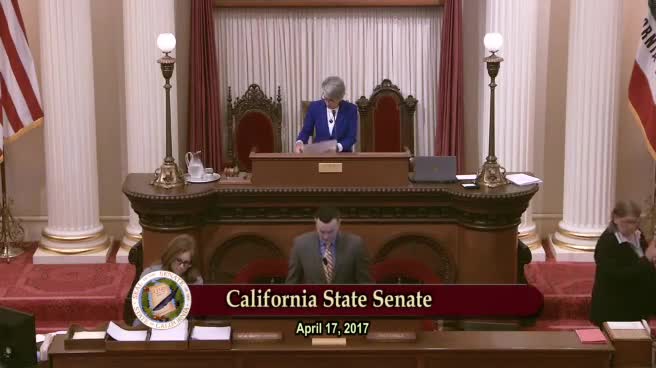 10MIN
Senate Floor
 23MIN
Senate Standing Committee on Judiciary
Bill Author
Bill Co-Author(s):