SB 214: San Diego River Conservancy.
- Session Year: 2017-2018
- House: Senate
- Latest Version Date: 2017-09-26
The San Diego River Conservancy Act establishes the San Diego River Conservancy in the Natural Resources Agency, and prescribes the territory, membership, functions, and duties of the conservancy with regard to, among other things, the acquisition, protection, and management of public lands within the San Diego River area, as defined. The act provides that the conservancy has all rights and powers, expressed or implied, necessary to carry out the purposes of the act. The act authorizes the conservancy to award grants to any local public agency, state agency, and nonprofit organization consistent with the purposes of the act, and subjects a grant from the conservancy to specified conditions.
This bill would specify that the powers of the conservancy include improving, developing, and preserving lands for the purpose of protecting the natural, cultural, and historical resources, and entering into a joint powers agreement, as specified. The bill would additionally authorize the conservancy to award grants to a joint powers agency, special district, or tribal nation, as defined, and would subject these entities to the specified conditions. The bill would also provide that the conversancy is authorized to seek repayment of grant moneys if the terms and conditions of the grant agreement are not met.
Under the act, the governing board of the conservancy consists of 11 voting members and 2 nonvoting members, as specified, and the conservancy is required to establish and maintain an office within the San Diego River area.
This bill would increase the number of voting members to 15 members, as specified. The bill would instead require that the conservancy establish an office within the San Diego River watershed.
The San Diego River Conservancy Act establishes the San Diego River Conservancy in the Natural Resources Agency, and prescribes the territory, membership, functions, and duties of the conservancy with regard to, among other things, the acquisition, protection, and management of public lands within the San Diego River area, as defined. The act provides that the conservancy has all rights and powers, expressed or implied, necessary to carry out the purposes of the act. The act authorizes the conservancy to award grants to any local public agency, state agency, and nonprofit organization consistent with the purposes of the act, and subjects a grant from the conservancy to specified conditions.
This bill would specify that the powers of the conservancy include improving, developing, and preserving lands for the purpose of protecting the natural, cultural, and historical resources, and entering into a joint powers agreement, as specified. The bill would additionally authorize the conservancy to award grants to a joint powers agency, special district, or California tribal nation, as defined, and would subject these entities to the specified conditions. The bill would also provide that the conversancy is authorized to seek repayment of grant moneys if the terms and conditions of the grant agreement are not met.
Under the act, the governing board of the conservancy consists of 11 voting members and 2 nonvoting members, as specified, and the conservancy is required to establish and maintain an office within the San Diego River area.
This bill would increase the number of voting members to 15 members, as specified. The bill would instead require that the conservancy establish an office within the San Diego River watershed.
The San Diego River Conservancy Act establishes the San Diego River Conservancy in the Natural Resources Agency, and prescribes the territory, membership, functions, and duties of the conservancy with regard to, among other things, the acquisition, protection, and management of public lands within the San Diego River area, as defined. The act provides that the conservancy has all rights and powers, expressed or implied, necessary to carry out the purposes of the act. The act authorizes the conservancy to award grants to any local public agency, state agency, and nonprofit organization consistent with the purposes of the act, and subjects a grant from the conservancy to specified conditions.
This bill would specify that the powers of the conservancy include improving, developing, and preserving lands for the purpose of protecting the natural, cultural, and historical resources, engaging in projects that address climate change, engaging in environmental justice projects and programs, and entering into a joint powers agreement, as specified. The bill would additionally authorize the conservancy to award grants to a joint powers agency, special district, or California tribal nation, as defined, and would subject these entities to the specified conditions. The bill would also provide that the conversancy is authorized to seek repayment of grant moneys if the terms and conditions of the grant agreement are not met.
Under the act, the governing board of the conservancy consists of 11 voting members and 2 nonvoting members, as specified, and the conservancy is required to establish and maintain an office within the San Diego River area.
This bill would increase the number of voting members to 15 members, as specified. The bill would instead require that the conservancy establish an office within the San Diego River watershed.
For the purposes of this division, the following terms have the following meanings:
(a)Conservancy means the San Diego River Conservancy established by this division.
(b)Fund means the San Diego River Conservancy Fund established pursuant to Section 32657.
(c)Governing board means the governing board of the conservancy.
(d)Historic flumes means both of the following:
(1)The Padre Dam flume built by Native Americans along the San Diego River to convey water from the Mission Dam to the Mission San Diego de Alcala in the early 1800s.
(2)The flume built by the San Diego Flume Company in the late 1880s to convey water from a diverting dam on the upper San Diego River to the eastern edge of the City of San Diego.
(e)Local public agency means a city, county, district, or joint powers agency.
(f)Nonprofit organization means a private, nonprofit organization that qualifies for exempt status under Section 501(c)(3) of the Internal Revenue Code, as amended, and that has among its principal charitable purposes the preservation of land for scientific, historic, educational, recreational, scenic, or open-space opportunities, the protection of the natural environment, or preservation or enhancement of wildlife.
(g)San Diego River area or area means those lands or other areas that are donated to, or otherwise acquired by, or operated by, the conservancy, which are located within one-half mile on either side of the thread of the river and its tributaries including the historic flumes emanating from the river, from its headwaters near Julian to the Pacific Ocean at Dog Beach in San Diego, and other properties within the watershed of the San Diego River that meet the intent of this division as approved on a case-by-case basis by a two-thirds majority vote of the governing board.
(h)Tribal nation means a federally recognized tribe traditionally and culturally affiliated with the County of San Diego.
SEC. 2.Section 32633 of the Public Resources Code is amended to read:32633.There is in the Natural Resources Agency, the San Diego River Conservancy, which is created for the following purposes:
(a)To acquire and manage public lands within the San Diego River area, and to provide recreational opportunities, open space, wildlife habitat and species restoration and protection, wetland protection and restoration, protection of historical and cultural resources, and protection, maintenance, and improvements of the quality of the waters in the San Diego River and its watershed, its tributaries, and historic flumes emanating from the river for all beneficial uses, lands for educational uses within the area, and natural floodwater conveyance.
(b)To provide for the publics enjoyment, and to enhance the recreational and educational experience and cultural and historic interpretation on public lands in the territory in a manner consistent with the protection of land and natural resources, as well as economic resources, in the area.
SEC. 3.Section 32634 of the Public Resources Code is amended to read:32634.(a)The governing board of the conservancy shall consist of 15 voting members and two nonvoting members.
(b)The voting members of the board shall consist of the following:
(1)The Secretary of the Natural Resources Agency, or his or her designee.
(2)The Director of Finance, or his or her designee.
(3)The Director of Parks and Recreation, or his or her designee.
(4)The Director of Fish and Wildlife, or his or her designee.
(5)A representative of the Colorado Desert District of the Department of Parks and Recreation, or his or her designee.
(6)Five members of the public at large, three of whom shall be appointed by the Governor, one of whom shall be appointed by the Senate Committee on Rules, and one of whom shall be appointed by the Speaker of the Assembly.
(7)The Mayor of San Diego, or his or her designee.
(8)One member of the City Council of San Diego, elected by a majority of the membership of the council.
(9)One member of the Board of Supervisors of the County of San Diego, whose district includes the preponderance of the San Diego River watershed.
(10)One member of the Kumeyaay Diegueno Land Conservancy board of directors, elected by a majority of the membership of that board, or his or her designee.
(11)One member of the City Council of Santee, elected by a majority of the membership of the council.
(c)The two nonvoting members shall consist of the following:
(1)The Executive Director of the Wildlife Conservation Board, or his or her designee.
(2)A representative selected by the San Diego Regional Water Quality Control Board.
(d)Two of the three initial appointments by the Governor pursuant to paragraph (4) of subdivision (b) shall be for three-year terms and the third appointment shall be for a two-year term. All subsequent appointments shall be for four-year terms.
(e)A person shall not continue as a member of the governing board if that person ceases to hold the office that qualifies that person for membership. Upon the occurrence of those events, the persons membership on the governing board shall automatically terminate.
SEC. 4.Section 32639 of the Public Resources Code is amended to read:32639.The conservancy shall establish an office within the San Diego River watershed. The conservancy may rent or own real and personal property and equipment pursuant to applicable statutes and regulations. The conservancy shall not levy a tax or regulate land use.
SEC. 5.Section 32643 of the Public Resources Code is amended to read:32643.The conservancy may do any of the following to provide necessary services:
(a)Select and hire private consultants or contractors.
(b)Enter into memorandums of understanding with state and local public agencies.
(c)Enter into a joint powers agreement pursuant to the Joint Exercise of Powers Act, as described in Chapter 5 (commencing with Section 6500) of Division 7 of Title 1 of the Government Code.
SEC. 6.Section 32645 of the Public Resources Code is amended to read:32645.The conservancy may take any of the following actions for the purposes of this division:
(a)Select and acquire real property or interests in real property in the name of the state pursuant to the Property Acquisition Law (Part 11 (commencing with Section 15850) of Division 3 of Title 2 of the Government Code). The conservancy may coordinate the acquisition with public agencies or partner organizations if the site is under immediate development pressure.
(b)Acquire interests in land by various means, including, but not limited to, land exchanges, easements, development rights, life estates, leases, and leaseback agreements.
(c)Accept and hold real property or an interest in real property that is acquired through acquisition, gift, exchange, donation, or dedication.
(d)Local public agencies shall retain exclusive authority over all zoning or land use regulations within their jurisdiction.
SEC. 7.Section 32649 of the Public Resources Code is amended to read:32649.(a)The conservancy may award grants to any local public agency, state agency, joint powers agency, special district, tribal nation, and nonprofit organization consistent with the purposes of this division.
(b)A grant from the conservancy to an entity described in subdivision (a) for the acquisition of real property or an interest in real property is subject to all of the following conditions:
(1)The purchase price of any interest in land acquired may not exceed fair market value, as established by an appraisal that is approved by the conservancy.
(2)The conservancy shall approve the terms under which the interest in land is acquired.
(3)An interest in land acquired through the use of a grant may not be used as security for any debt to be incurred by the entity.
(4)A transfer of land acquired through the use of a grant is subject to the approval of the conservancy and the execution of an agreement between the conservancy and the transferee sufficient to protect the interest of the people of the state.
(5)The state shall have the right of entry and power of termination over any interest in real property acquired with state funds, and may exercise those rights if any material term or condition of the grant is violated.
(6)If the entity receiving the grant ceases to exist for any reason, the title to all interests in real property acquired with state funds shall immediately vest in the state, except that, prior to that termination, any other public agency or nonprofit organization may receive, upon approval by the conservancy, title to all or a portion of that interest, by recording a written acceptance of title and the conservancys written approval with the county recorders office of the county with jurisdiction over the property.
(7)If the terms and conditions of the grant are not met, the conservancy may seek repayment of moneys granted pursuant to that grant.
(c)Any deed or other instrument of conveyance evidencing the final acquisition of real property by an entity pursuant to this section shall be recorded with the county recorders office in the county with jurisdiction over the property, and shall detail the states right of entry and power of termination of any interest in the property.
SEC. 8.Section 32651 of the Public Resources Code is amended to read:32651.The conservancy may take any of the following actions for the purposes of this division:
(a)Initiate, negotiate, and participate in agreements for the management of land under its ownership or control with a local public agency, state agency, federal agency, nonprofit organization, tribal nation, individual, corporate entity, and partnership, and enter into any other agreement authorized by state or federal law.
(b)Improve, develop, and preserve lands for the purpose of protecting the natural, cultural, and historical resources, or otherwise meeting the purposes of this division. Those purposes include protecting environmental resources by preserving and enhancing the states most valuable natural resources in the San Diego River area, including natural lands such as wetlands, watersheds, wildlife habitat, and other wildlands, recreation lands such as parks, trails, greenbelts, and other open-space lands, and landscapes with locally unique features and areas identified by the state as deserving special protection.
(c)Merge or split parcels, adjust boundary lines, or take similar actions as part of the acquisition of land, or as needed in order to facilitate the management of land under its ownership or control.
(d)Fix and collect fees for any service rendered by the conservancy. The amount of the fee may not exceed the reasonable cost of providing the service rendered by the conservancy.
For the purposes of this division, the following terms have the following meanings:
(a)California tribal nation means a federally recognized Native American tribe or a nonfederally recognized California Native American tribe listed on the California Tribal Consultation List maintained by the Native American Heritage Commission, that is indigenous to the County of San Diego.(b)(a)Conservancy means the San Diego River Conservancy established by this division.
(c)(b)Fund means the San Diego River Conservancy Fund established pursuant to Section 32657.
(d)(c)Governing board means the governing board of the conservancy.
(e)(d)Historic flumes means both of the following:
(1)The Padre Dam flume built by Native Americans along the San Diego River to convey water from the Mission Dam to the Mission San Diego de Alcala in the early 1800s.
(2)The flume built by the San Diego Flume Company in the late 1880s to convey water from a diverting dam on the upper San Diego River to the eastern edge of the City of San Diego.
(f)(e)Local public agency means a city, county, district, or joint powers agency.
(g)(f)Nonprofit organization means a private, nonprofit organization that qualifies for exempt status under Section 501(c)(3) of the Internal Revenue Code, as amended, and that has among its principal charitable purposes the preservation of land for scientific, historic, educational, recreational, scenic, or open-space opportunities, the protection of the natural environment, or preservation or enhancement of wildlife.
(h)(g)San Diego River area or area means those lands or other areas that are donated to, or otherwise acquired by, or operated by, the conservancy, which are located within one-half mile on either side of the thread of the river and its tributaries including the historic flumes emanating from the river, from its headwaters near Julian to the Pacific Ocean at Dog Beach in San Diego, and other properties within the watershed of the San Diego River that meet the intent of this division as approved on a case-by-case basis by a two-thirds majority vote of the governing board.
(h)Tribal nation means a federally recognized tribe traditionally and culturally affiliated with the County of San Diego.
SEC. 2.Section 32633 of the Public Resources Code is amended to read:32633.There is in the Natural Resources Agency, the San Diego River Conservancy, which is created for the following purposes:
(a)To acquire and manage public lands within the San Diego River area, and to provide recreational opportunities, open space, wildlife habitat and species restoration and protection, wetland protection and restoration, protection of historical and cultural resources, and protection, maintenance, and improvements of the quality of the waters in the San Diego River and its watershed, its tributaries, and historic flumes emanating from the river for all beneficial uses, lands for educational uses within the area, and natural floodwater conveyance.
(b)To provide for the publics enjoyment, and to enhance the recreational and educational experience and cultural and historic interpretation on public lands in the territory in a manner consistent with the protection of land and natural resources, as well as economic resources, in the area.
SEC. 3.Section 32634 of the Public Resources Code is amended to read:32634.(a)The governing board of the conservancy shall consist of 15 voting members and two nonvoting members.
(b)The voting members of the board shall consist of the following:
(1)The Secretary of the Natural Resources Agency, or his or her designee.
(2)The Director of Finance, or his or her designee.
(3)The Director of Parks and Recreation, or his or her designee.
(4)The Director of Fish and Wildlife, or his or her designee.
(5)A representative of the Colorado Desert District of the Department of Parks and Recreation, or his or her designee.
(6)Five members of the public at large, three of whom shall be appointed by the Governor, one of whom shall be appointed by the Senate Committee on Rules, and one of whom shall be appointed by the Speaker of the Assembly.
(7)The Mayor of San Diego, or his or her designee.
(8)One member of the City Council of San Diego, elected by a majority of the membership of the council.
(9)One member of the Board of Supervisors of the County of San Diego, whose district includes the preponderance of the San Diego River watershed.
(10)One member of the Kumeyaay Diegueno Land Conservancy board of directors, elected by a majority of the membership of that board, or his or her designee.
(11)One member of the City Council of Santee, elected by a majority of the membership of the council.
(c)The two nonvoting members shall consist of the following:
(1)The Executive Director of the Wildlife Conservation Board, or his or her designee.
(2)A representative selected by the San Diego Regional Water Quality Control Board.
(d)Two of the three initial appointments by the Governor pursuant to paragraph (4) of subdivision (b) shall be for three-year terms and the third appointment shall be for a two-year term. All subsequent appointments shall be for four-year terms.
(e)A person shall not continue as a member of the governing board if that person ceases to hold the office that qualifies that person for membership. Upon the occurrence of those events, the persons membership on the governing board shall automatically terminate.
SEC. 4.Section 32639 of the Public Resources Code is amended to read:32639.The conservancy shall establish an office within the San Diego River watershed. The conservancy may rent or own real and personal property and equipment pursuant to applicable statutes and regulations. The conservancy shall not levy a tax or regulate land use.
SEC. 5.Section 32643 of the Public Resources Code is amended to read:32643.The conservancy may do any of the following to provide necessary services:
(a)Select and hire private consultants or contractors.
(b)Enter into memorandums of understanding with state and local public agencies.
(c)Enter into a joint powers agreement pursuant to the Joint Exercise of Powers Act, as described in Chapter 5 (commencing with Section 6500) of Division 7 of Title 1 of the Government Code.
SEC. 6.Section 32645 of the Public Resources Code is amended to read:32645.The conservancy may take any of the following actions for the purposes of this division:
(a)Select and acquire real property or interests in real property in the name of the state pursuant to the Property Acquisition Law (Part 11 (commencing with Section 15850) of Division 3 of Title 2 of the Government Code). The conservancy may coordinate the acquisition with public agencies or partner organizations if the site is under immediate development pressure.
(b)Acquire interests in land by various means, including, but not limited to, land exchanges, easements, development rights, life estates, leases, and leaseback agreements.
(c)Accept and hold real property or an interest in real property that is acquired through acquisition, gift, exchange, donation, or dedication.
(d)Local public agencies shall retain exclusive authority over all zoning or land use regulations within their jurisdiction.
SEC. 7.Section 32649 of the Public Resources Code is amended to read:32649.(a)The conservancy may award grants to any local public agency, state agency, joint powers agency, special district, California tribal nation, and nonprofit organization consistent with the purposes of this division.
(b)A grant from the conservancy to an entity described in subdivision (a) for the acquisition of real property or an interest in real property is subject to all of the following conditions:
(1)The purchase price of any interest in land acquired may not exceed fair market value, as established by an appraisal that is approved by the conservancy.
(2)The conservancy shall approve the terms under which the interest in land is acquired.
(3)An interest in land acquired through the use of a grant may not be used as security for any debt to be incurred by the entity.
(4)A transfer of land acquired through the use of a grant is subject to the approval of the conservancy and the execution of an agreement between the conservancy and the transferee sufficient to protect the interest of the people of the state.
(5)The state shall have the right of entry and power of termination over any interest in real property acquired with state funds, and may exercise those rights if any material term or condition of the grant is violated.
(6)If the entity receiving the grant ceases to exist for any reason, the title to all interests in real property acquired with state funds shall immediately vest in the state, except that, prior to that termination, any other public agency or nonprofit organization may receive, upon approval by the conservancy, title to all or a portion of that interest, by recording a written acceptance of title and the conservancys written approval with the county recorders office of the county with jurisdiction over the property.
(7)If the terms and conditions of the grant are not met, the conservancy may seek repayment of moneys granted pursuant to that grant.
(c)Any deed or other instrument of conveyance evidencing the final acquisition of real property by an entity pursuant to this section shall be recorded with the county recorders office in the county with jurisdiction over the property, and shall detail the states right of entry and power of termination of any interest in the property.
SEC. 8.Section 32651 of the Public Resources Code is amended to read:32651.The conservancy may take any of the following actions for the purposes of this division:
(a)Initiate, negotiate, and participate in agreements for the management of land under its ownership or control with a local public agency, state agency, federal agency, nonprofit organization, California tribal nation, individual, corporate entity, and partnership, and enter into any other agreement authorized by state or federal law.
(b)Improve, develop, and preserve lands for the purpose of protecting the natural, cultural, and historical resources, or otherwise meeting the purposes of this division. Those purposes include protecting environmental resources by preserving and enhancing the states most valuable natural resources in the San Diego River area, including natural lands such as wetlands, watersheds, wildlife habitat, and other wildlands, recreation lands such as parks, trails, greenbelts, and other open-space lands, and landscapes with locally unique features and areas identified by the state as deserving special protection.
(c)Merge or split parcels, adjust boundary lines, or take similar actions as part of the acquisition of land, or as needed in order to facilitate the management of land under its ownership or control.
(d)Fix and collect fees for any service rendered by the conservancy. The amount of the fee may not exceed the reasonable cost of providing the service rendered by the conservancy.
For the purposes of this division, the following terms have the following meanings:
(a)California tribal nation means a federally recognized Native American tribe or a nonfederally recognized California Native American tribe listed on the California Tribal Consultation List maintained by the Native American Heritage Commission, that is indigenous to the County of San Diego.
(b)Conservancy means the San Diego River Conservancy established by this division.
(c)Disadvantaged community means a community with an annual median household income that is less than 80 percent of the statewide annual median household income.(d)(c)Fund means the San Diego River Conservancy Fund established pursuant to Section 32657.
(e)(d)Governing board means the governing board of the conservancy.
(f)(e)Historic flumes means both of the following:
(1)The Padre Dam flume built by Native Americans along the San Diego River to convey water from the Mission Dam to the Mission San Diego de Alcala in the early 1800s.
(2)The flume built by the San Diego Flume Company in the late 1880s to convey water from a diverting dam on the upper San Diego River to the eastern edge of the City of San Diego.
(g)(f)Local public agency means a city, county, district, or joint powers agency.
(h)(g)Nonprofit organization means a private, nonprofit organization that qualifies for exempt status under Section 501(c)(3) of the Internal Revenue Code, as amended, and that has among its principal charitable purposes the preservation of land for scientific, historic, educational, recreational, scenic, or open-space opportunities, the protection of the natural environment, or preservation or enhancement of wildlife.
(i)(h)San Diego River area or area means those lands or other areas that are donated to, or otherwise acquired by, or operated by, the conservancy, which are located within one-half mile on either side of the thread of the river and its tributaries including the historic flumes emanating from the river, from its headwaters near Julian to the Pacific Ocean at Dog Beach in San Diego, and other properties within the watershed of the San Diego River that meet the intent of this division as approved on a case-by-case basis by a two-thirds majority vote of the governing board.
SEC. 2.Section 32633 of the Public Resources Code is amended to read:32633.There is in the Natural Resources Agency, the San Diego River Conservancy, which is created for the following purposes:
(a)To acquire and manage public lands within the San Diego River area, and to provide recreational opportunities, open space, wildlife habitat and species restoration and protection, wetland protection and restoration, protection of historical and cultural resources, and protection, maintenance, and improvements of the quality of the waters in the San Diego River and its watershed, its tributaries, and historic flumes emanating from the river for all beneficial uses, lands for educational uses within the area, and natural floodwater conveyance.
(b)To provide for the publics enjoyment, and to enhance the recreational and educational experience and cultural and historic interpretation on public lands in the territory in a manner consistent with the protection of land and natural resources, as well as economic resources, in the area.
SEC. 3.Section 32634 of the Public Resources Code is amended to read:32634.(a)The governing board of the conservancy shall consist of 15 voting members and two nonvoting members.
(b)The voting members of the board shall consist of the following:
(1)The Secretary of the Natural Resources Agency, or his or her designee.
(2)The Director of Finance, or his or her designee.
(3)The Director of Parks and Recreation, or his or her designee.
(4)The Director of Fish and Wildlife, or his or her designee.
(5)A representative of the Colorado Desert District of the Department of Parks and Recreation. Recreation, or his or her designee.
(6)Five members of the public at large, three of whom shall be appointed by the Governor, one of whom shall be appointed by the Senate Committee on Rules, and one of whom shall be appointed by the Speaker of the Assembly.
(7)The Mayor of San Diego, or his or her designee.
(8)One member of the City Council of San Diego, elected by a majority of the membership of the council.
(9)One member of the Board of Supervisors of the County of San Diego, whose district includes the preponderance of the San Diego River watershed.
(10)One member of the Kumeyaay Diegueno Land Conservancy board of directors, elected by a majority of the membership of that board. board, or his or her designee.
(11)One member of the City Council of Santee, elected by a majority of the membership of the council.
(c)The two nonvoting members shall consist of the following:
(1)The Executive Director of the Wildlife Conservation Board, or his or her designee.
(2)A representative selected by the San Diego Regional Water Quality Control Board.
(d)Two of the three initial appointments by the Governor pursuant to paragraph (4) of subdivision (b) shall be for three-year terms and the third appointment shall be for a two-year term. All subsequent appointments shall be for four-year terms.
(e)A person shall not continue as a member of the governing board if that person ceases to hold the office that qualifies that person for membership. Upon the occurrence of those events, the persons membership on the governing board shall automatically terminate.
SEC. 4.Section 32639 of the Public Resources Code is amended to read:32639.The conservancy shall establish an office within the San Diego River watershed. The conservancy may rent or own real and personal property and equipment pursuant to applicable statutes and regulations. The conservancy shall not levy a tax or regulate land use.
SEC. 5.Section 32643 of the Public Resources Code is amended to read:32643.The conservancy may do any of the following to provide necessary services:
(a)Select and hire private consultants or contractors.
(b)Enter into memorandums of understanding with state and local public agencies.
(c)Enter into a joint powers agreement pursuant to the Joint Exercise of Powers Act, as described in Chapter 5 (commencing with Section 6500) of Division 7 of Title 1 of the Government Code.
SEC. 6.Section 32645 of the Public Resources Code is amended to read:32645.The conservancy may take any of the following actions for the purposes of this division:
(a)Select and acquire real property or interests in real property in the name of the state pursuant to the Property Acquisition Law (Part 11 (commencing with Section 15850) of Division 3 of Title 2 of the Government Code). The conservancy may coordinate the acquisition with another public agency agencies or partner organization organizations if the site is under immediate development pressure.
(b)Acquire interests in land by various means, including, but not limited to, land exchanges, easements, development rights, life estates, leases, and leaseback agreements.
(c)Accept and hold real property or an interest in real property that is acquired through acquisition, gift, exchange, donation, or dedication.
(d)Local public agencies shall retain exclusive authority over all zoning or land use regulations within their jurisdiction.
SEC. 7.Section 32649 of the Public Resources Code is amended to read:32649.(a)The conservancy may award grants to any local public agency, state agency, joint powers agency, special district, California tribal nation, and nonprofit organization consistent with the purposes of this division.
(b)A grant from the conservancy to an entity described in subdivision (a) for the acquisition of real property or an interest in real property is subject to all of the following conditions:
(1)The purchase price of any interest in land acquired may not exceed fair market value, as established by an appraisal that is approved by the conservancy.
(2)The conservancy shall approve the terms under which the interest in land is acquired.
(3)An interest in land acquired through the use of a grant may not be used as security for any debt to be incurred by the entity.
(4)A transfer of land acquired through the use of a grant is subject to the approval of the conservancy and the execution of an agreement between the conservancy and the transferee sufficient to protect the interest of the people of the state.
(5)The state shall have the right of entry and power of termination over any interest in real property acquired with state funds, and may exercise those rights if any material term or condition of the grant is violated.
(6)If the entity receiving the grant ceases to exist for any reason, the title to all interests in real property acquired with state funds shall immediately vest in the state, except that, prior to that termination, any other public agency or nonprofit organization may receive, upon approval by the conservancy, title to all or a portion of that interest, by recording a written acceptance of title and the conservancys written approval with the county recorders office of the county with jurisdiction over the property.
(7)If the terms and conditions of the grant are not met, the conservancy may seek repayment of moneys granted pursuant to that grant.
(c)Any deed or other instrument of conveyance evidencing the final acquisition of real property by an entity pursuant to this section shall be recorded with the county recorders office in the county with jurisdiction over the property, and shall detail the states right of entry and power of termination of any interest in the property.
SEC. 8.Section 32651 of the Public Resources Code is amended to read:32651.The conservancy may take any of the following actions for the purposes of this division:
(a)Initiate, negotiate, and participate in agreements for the management of land under its ownership or control with a local public agency, state agency, federal agency, nonprofit organization, California tribal nation, individual, corporate entity, and partnership, and enter into any other agreement authorized by state or federal law.
(b)Improve, develop, and preserve lands for the purpose of protecting the natural, cultural, and historical resources, or otherwise meeting the purposes of this division. Those purposes include protecting environmental resources by preserving and enhancing the states most valuable natural resources in the San Diego River area, including natural lands such as wetlands, watersheds, wildlife habitat, and other wildlands, recreation lands such as parks, trails, greenbelts, and other open-space lands, and landscapes with locally unique features and areas identified by the state as deserving special protection.
(c)Merge or split parcels, adjust boundary lines, or take similar actions as part of the acquisition of land, or as needed in order to facilitate the management of land under its ownership or control.
(d)Fix and collect fees for any service rendered by the conservancy. The amount of the fee may not exceed the reasonable cost of providing the service rendered by the conservancy.
(e)Engage in projects that address climate change and the impacts of climate change on resources within the San Diego River watershed.(f)Engage in environmental justice projects and programs for pupils in kindergarten and grades 1 to 12, inclusive, located in or near a disadvantaged community, relating to the preservation, protection, enhancement, and maintenance of natural, cultural, and historic resources as the project or program relates to the San Diego River.For the purposes of this division, the following terms have the following meanings:
(a)California tribal nation means a federally recognized Native American tribe or a nonfederally recognized California Native American tribe listed on the California Tribal Consultation List maintained by the Native American Heritage Commission, that is indigenous to the County of San Diego.
(a)(b)Conservancy means the San Diego River Conservancy established by this division.
(c)Disadvantaged community means a community with an annual median household income that is less than 80 percent of the statewide annual median household income.
(b)(d)Fund means the San Diego River Conservancy Fund established pursuant to Section 32657.
(c)(e)Governing board means the governing board of the conservancy.
(d)(f)Historic flumes means both of the following:
(1)The Padre Dam flume built by Native Americans along the San Diego River to convey water from the Mission Dam to the Mission San Diego de Alcala in the early 1800s.
(2)The flume built by the San Diego Flume Company in the late 1880s to convey water from a diverting dam on the upper San Diego River to the eastern edge of the City of San Diego.
(e)(g)Local public agency means a city, county, district, or joint powers agency.
(f)(h)Nonprofit organization means a private, nonprofit organization that qualifies for exempt status under Section 501(c)(3) of the Internal Revenue Code, as amended, and that has among its principal charitable purposes the preservation of land for scientific, historic, educational, recreational, scenic, or open-space opportunities, the protection of the natural environment, or preservation or enhancement of wildlife.
(g)(i)San Diego River area or area means those lands or other areas that are donated to, or otherwise acquired by, or operated by, the conservancy, which are located within one-half mile on either side of the thread of the river and its tributaries including the historic flumes emanating from the river, from its headwaters near Julian to the Pacific Ocean at Dog Beach in San Diego, and other properties within the watershed of the San Diego River that meet the intent of this division as approved on a case-by-case basis by a two-thirds majority vote of the governing board.
SEC. 2.Section 32633 of the Public Resources Code is amended to read:32633.There is in the Natural Resources Agency, the San Diego River Conservancy, which is created for the following purposes:
(a)To acquire and manage public lands within the San Diego River area, and to provide recreational opportunities, open space, wildlife habitat and species restoration and protection, wetland protection and restoration, protection of historical and cultural resources, and protection, maintenance maintenance, and improvements of the quality of the waters in the San Diego River and its watershed, its tributaries tributaries, and historic flumes emanating from the river for all beneficial uses, lands for educational uses within the area, and natural floodwater conveyance.
(b)To provide for the publics enjoyment, and to enhance the recreational and educational experience and cultural and historic interpretation on public lands in the territory in a manner consistent with the protection of land and natural resources, as well as economic resources, in the area.
SEC. 3.Section 32634 of the Public Resources Code is amended to read:32634.(a)The governing board of the conservancy shall consist of 11 15 voting members and two nonvoting members.
(b)The voting members of the board shall consist of the following:
(1)The Secretary of the Natural Resources Agency, or his or her designee.
(2) The Director of Finance, or his or her designee.
(3)The Director of Parks and Recreation, or his or her designee.
(4)The Director of Fish and Wildlife, or his or her designee.
(5)A representative of the Colorado Desert District of the Department of Parks and Recreation.
(4)(6)Five members of the public at large, three of whom shall be appointed by the Governor, one of whom shall be appointed by the Senate Committee on Rules, and one of whom shall be appointed by the Speaker of the Assembly.
(5)(7)The Mayor of San Diego, or his or her designee.
(6)(8)One member of the City Council of San Diego, elected by a majority of the membership of the council.
(7)(9)One member of the Board of Supervisors of the County of San Diego, whose district includes the preponderance of the San Diego River watershed.
(10)One member of the Kumeyaay Diegueno Land Conservancy board of directors, elected by a majority of the membership of that board.
(11)One member of the City Council of Santee, elected by a majority of the membership of the council.
(c)The two nonvoting members shall consist of the following:
(1)The Executive Director of the Wildlife Conservation Board, or his or her designee.
(2)A representative selected by the San Diego Regional Water Quality Control Board.
(d)Two of the three initial appointments by the Governor pursuant to paragraph (4) of subdivision (b) shall be for three-year terms and the third appointment shall be for a two-year term. All subsequent appointments shall be for four-year terms.
(e)No A person shall not continue as a member of the governing board if that person ceases to hold the office that qualifies that person for membership. Upon the occurrence of those events, the persons membership on the governing board shall automatically terminate.
SEC. 4.Section 32639 of the Public Resources Code is amended to read:32639.The conservancy shall establish and maintain an office within the area. San Diego River watershed. The conservancy may rent or own real and personal property and equipment pursuant to applicable statutes and regulations. The conservancy may shall not levy a tax or regulate land use.
SEC. 5.Section 32643 of the Public Resources Code is amended to read:32643.The conservancy may do both any of the following to provide necessary services:
(a)Select and hire private consultants or contractors.
(b)Enter into memorandums of understanding with state and local public agencies.
(c)Enter into a joint powers agreement pursuant to the Joint Exercise of Powers Act, as described in Chapter 5 (commencing with Section 6500) of Division 7 of Title 1 of the Government Code.
SEC. 6.Section 32645 of the Public Resources Code is amended to read:32645.The conservancy may take any of the following actions for the purposes of this division:
(a)Select and acquire real property or interests in real property in the name of the state pursuant to the Property Acquisition Law (Part 11 (commencing with Section 15850) of Division 3 of Title 2 of the Government Code). The conservancy may coordinate the acquisition with another public agency or partner organization if the site is under immediate development pressure.
(b)Acquire interests in land by various means, including, but not limited to, land exchanges, easements, development rights, life estates, leases, and leaseback agreements.
(c)Accept and hold real property or an interest in real property that is acquired through acquisition, gift, exchange, donation, or dedication.
(d)Local public agencies shall retain exclusive authority over all zoning or land use regulations within their jurisdiction.
SEC. 7.Section 32649 of the Public Resources Code is amended to read:32649.(a)The conservancy may award grants to any local public agency, state agency, joint powers agency, special district, California tribal nation, and nonprofit organization consistent with the purposes of this division.
(b)A grant from the conservancy to a nonprofit organization an entity described in subdivision (a) for the acquisition of real property or an interest in real property is subject to all of the following conditions:
(1)The purchase price of any interest in land acquired may not exceed fair market value, as established by an appraisal that is approved by the conservancy.
(2)The conservancy shall approve the terms under which the interest in land is acquired.
(3)An interest in land acquired through the use of a grant may not be used as security for any debt to be incurred by the nonprofit organization. entity.
(4)A transfer of land acquired through the use of a grant is subject to the approval of the conservancy and the execution of an agreement between the conservancy and the transferee sufficient to protect the interest of the people of the state.
(5)The state shall have the right of entry and power of termination over any interest in real property acquired with state funds, and may exercise those rights if any material term or condition of the grant is violated.
(6)If the nonprofit organization entity receiving the grant ceases to exist for any reason, the title to all interests in real property acquired with state funds shall immediately vest in the state, except that, prior to that termination, any other public agency or nonprofit organization may receive, upon approval by the conservancy, title to all or a portion of that interest, by recording a written acceptance of title and the conservancys written approval with the county recorders office of the county with jurisdiction over the property.
(7)If the terms and conditions of the grant are not met, the conservancy may seek repayment of moneys granted pursuant to that grant.
(c)Any deed or other instrument of conveyance evidencing the final acquisition of real property by a nonprofit organization an entity pursuant to this section shall be recorded with the county recorders office in the county with jurisdiction over the property, and shall detail the states states right of entry and power of termination of any interest in the property.
SEC. 8.Section 32651 of the Public Resources Code is amended to read:32651.The conservancy may take any of the following actions for the purposes of this division:
(a)Initiate, negotiate, and participate in agreements for the management of land under its ownership or control with a local public agency, state agency, federal agency, nonprofit organization, California tribal nation, individual, corporate entity, and partnership, and enter into any other agreement authorized by state or federal law.
(b)Improve and develop Improve, develop, and preserve lands for the purpose of protecting the natural environment natural, cultural, and historical resources, or otherwise meeting the purposes of this division. Those purposes include protecting environmental resources by preserving and enhancing the states most valuable natural resources in the San Diego River area, including natural lands such as wetlands, watersheds, wildlife habitat, and other wildlands, recreation lands such as parks, trails, greenbelts, and other open-space lands, and landscapes with locally unique features and areas identified by the state as deserving special protection.
(c)Merge or split parcels, adjust boundary lines, or take similar actions as part of the acquisition of land, or as needed in order to facilitate the management of land under its ownership or control.
(d)Fix and collect fees for any service rendered by the conservancy. The amount of the fee may not exceed the reasonable cost of providing the service rendered by the conservancy.
(e)Engage in projects that address climate change and the impacts of climate change on resources within the San Diego River watershed.
(f)Engage in environmental justice projects and programs for pupils in kindergarten and grades 1 to 12, inclusive, located in or near a disadvantaged community, relating to the preservation, protection, enhancement, and maintenance of natural, cultural, and historic resources as the project or program relates to the San Diego River.
|
Date
|
Status
|
|---|---|
| Sep 26, 2017 | Chaptered by Secretary of State. Chapter 306, Statutes of 2017. |
| Sep 26, 2017 | Approved by the Governor. |
| Sep 18, 2017 | Enrolled and presented to the Governor at 3 p.m. |
| Sep 12, 2017 | Assembly amendments concurred in. (Ayes 34. Noes 6.) Ordered to engrossing and enrolling. |
| Sep 11, 2017 | In Senate. Concurrence in Assembly amendments pending. |
| Sep 11, 2017 | Read third time. Passed. Ordered to the Senate. |
| Sep 5, 2017 | Read third time and amended. |
| Jun 29, 2017 | Read second time. Ordered to third reading. |
| Jun 28, 2017 | From committee: Do pass. (Ayes 11. Noes 2.) (June 28). |
| Jun 20, 2017 | From committee: Do pass and re-refer to Com. on APPR. (Ayes 8. Noes 0.) (June 19). Re-referred to Com. on APPR. |
| May 22, 2017 | Referred to Com. on NAT. RES. |
| Apr 24, 2017 | In Assembly. Read first time. Held at Desk. |
| Apr 24, 2017 | Read third time. Passed. (Ayes 33. Noes 5. Page 800.) Ordered to the Assembly. |
| Apr 18, 2017 | Read second time. Ordered to third reading. |
| Apr 17, 2017 | From committee: Do pass. (Ayes 7. Noes 0. Page 708.) (April 17). |
| Apr 6, 2017 | From committee with author's amendments. Read second time and amended. Re-referred to Com. on APPR. |
| Apr 5, 2017 | Set for hearing April 17. |
| Mar 27, 2017 | April 3 set for first hearing canceled at the request of author. |
| Mar 24, 2017 | Set for hearing April 3. |
| Mar 14, 2017 | From committee: Do pass and re-refer to Com. on APPR. (Ayes 8. Noes 1. Page 364.) (March 14). Re-referred to Com. on APPR. |
| Feb 14, 2017 | Set for hearing March 14. |
| Feb 9, 2017 | Referred to Com. on N.R. & W. |
| Feb 2, 2017 | From printer. May be acted upon on or after March 4. |
| Feb 1, 2017 | Introduced. Read first time. To Com. on RLS. for assignment. To print. |
|
Date
|
Description
|
Location
|
Votes
|
|
|---|---|---|---|---|
| Sep 12, 2017 | Unfinished Business SB214 Atkins Concurrence | Senate Floor |
Passed |
|
| Sep 11, 2017 | SB 214 Atkins Senate Third Reading By GLORIA | Assembly Floor |
Passed |
|
| Jun 28, 2017 | Do pass. | Assembly Standing Committee on Appropriations |
Passed |
|
| Jun 19, 2017 | Do pass and be re-referred to the Committee on [Appropriations] | Assembly Standing Committee on Natural Resources |
Passed |
|
| Apr 24, 2017 | Senate 3rd Reading SB214 Atkins | Senate Floor |
Passed |
|
| Apr 17, 2017 | Do pass | Senate Standing Committee on Appropriations |
Passed |
|
| Mar 14, 2017 | Do pass, but first be re-referred to the Committee on [Appropriations] | Senate Standing Committee on Natural Resources and Water |
Passed |
This list shows positions taken on this bill by organizations on the date displayed, which is linked to the original source.
Positions by individuals are not included.
|
Organization
|
Position
|
Date
|
|---|---|---|
| 3 individuals, San Diego State University | ** Support | Sep 11, 2017 |
| City Of San Diego | * Support | Jun 28, 2017 |
| City Of Santee | ** Support | Sep 11, 2017 |
| Helix Water District | ** Support | Sep 11, 2017 |
| Iipay Nation Of Santa Ysabel | ** Support | Sep 11, 2017 |
| Kumeyaay Diegueno Land Conservancy | ** Support | Sep 11, 2017 |
| Kumeyaay Diegueo Land Conservancy | ** Support | Apr 19, 2017 |
| Lakeside Chamber of Commerce | ** Support | Sep 11, 2017 |
| Lakeside's River Park Conservancy | ** Support | Sep 11, 2017 |
| One individual | ** Support | Jun 16, 2017 |
| Padre Dam Municipal Water District | ** Support | Sep 11, 2017 |
| Resource Conservation District of Greater San Diego County | ** Support | Sep 11, 2017 |
| San Diego Canyonlands | ** Support | Sep 11, 2017 |
| San Diego County Board of Supervisors | ** Support | Sep 11, 2017 |
| San Diego County Water Authority | ** Support | Jun 16, 2017 |
| San Diego History Center | ** Support | Sep 11, 2017 |
| San Diego River Conservancy | * Support | Mar 14, 2017 |
| Santee Historical Society | ** Support | Sep 11, 2017 |
| Scott Sherman, San Diego City Councilmember | ** Support | Sep 11, 2017 |
| soil ecology and restoration group | ** Support | Jun 16, 2017 |
| Sycuan | ** Support | Jun 16, 2017 |
| the kumeyaay heritage preservation committee | ** Support | Jun 16, 2017 |
| the sycuan band of the kumeyaay nation | ** Support | Jun 16, 2017 |
| Trust for Public Land | ** Support | Sep 11, 2017 |
| Trust For Public Land, The | * Support | Mar 14, 2017 |
Office of Senate Floor Analyses (916) 651-1520 Fax: (916) 327-4478 | SB |
UNFINISHED BUSINESS
Bill No: SB 214
:
SENATE NATURAL RES. & WATER COMMITTEE: 8-1, 3/14/17
AYES: Hertzberg, Allen, Atkins, Hueso, Jackson, Monning, Stern, Vidak
NOES: Stone
SENATE APPROPRIATIONS COMMITTEE: 7-0, 4/17/17
AYES: Lara, Bates, Beall, Bradford, Hill, Nielsen, Wiener
SENATE FLOOR: 33-5, 4/24/17
AYES: Allen, Atkins, Bates, Beall, Berryhill, Bradford, Cannella, Dodd, Fuller, Galgiani, Glazer, Hernandez, Hertzberg, Hill, Hueso, Jackson, Lara, Leyva, McGuire, Mendoza, Mitchell, Monning, Moorlach, Newman, Nguyen, Pan, Roth, Skinner, Stern, Vidak, Wieckowski, Wiener, Wilk
NOES: Anderson, Gaines, Morrell, Nielsen, Stone
NO VOTE RECORDED: De León, Portantino
ASSEMBLY FLOOR: 66-10, 9/11/17 - See last page for vote
DIGEST: This bill expands, from 11 to 15, the number of voting members on the San Diego Conservancy (Conservancy) governing board, and specifies the additional members. The bill also aligns the Conservancy’s powers and authorities with other permanent conservancies.
Assembly Amendments make technical changes clarifying the definition of “Tribal nation.”
Existing law:
- Establishes the Conservancy under the Natural Resources Agency (NRA). The purpose of the Conservancy is to preserve, restore and enhance the San Diego River Area. It does so by acquiring, managing and conserving land; and protecting or providing recreational opportunities, open space, wildlife species and habitat, wetlands, water quality, natural flood conveyance, historical/cultural resources, and educational opportunities.
- Establishes the Conservancy’s governing board, consisting of 11 voting members, including the Secretary of Resources, the Director of Finance, the Director of Parks and Recreation, the Mayor of San Diego, a San Diego City Council member, a San Diego County Supervisor, and five public members. Of the five public members, three are appointed by the Governor, and the Senate Rules Committee and the Assembly Speaker each appoint one. The nonvoting members are the executive director of the Wildlife Conservation Board and a representative of the San Diego Regional Water Quality Control Board.
This bill:
- Expands the number of voting members of the board from 11 to 15, by adding the following members:
- The Director of Fish and Wildlife, or his or her designee.
- A representative of the Colorado Desert District of the Department of Parks and Recreation.
- One member of the Kumeyaay Diegueño Land Conservancy board of directors, elected by a majority of the membership of that board.
- One member of the City Council of Santee, elected by a majority of the membership of the council.
- Provides the Conservancy powers and authorities common to other conservancies, such as the ability to:
- Award grants to joint powers agencies and special districts, and
- Seek repayment of moneys granted if the terms and conditions are not met.
- Makes conforming and other technical amendments.
FISCAL EFFECT: Appropriation: Fiscal Com.: Local:
According to the Assembly Appropriations Committee:
- Increased one-time GF (general fund) costs of approximately $20,000 to move the Conservancy office.
- Absorbable ongoing costs associated with expanded membership and authority.
City of Santee
Helix Water District
Iipay Nation of Santa Ysabel
Kumeyaay Diegueño Land Conservancy
Lakeside Chamber of Commerce
Lakeside’s River Park Conservancy
Padre Dam Municipal Water District
Resource Conservation District of Greater San Diego County
San Diego Canyonlands
San Diego County Board of Supervisors
San Diego History Center
Santee Historical Society
Scott Sherman, San Diego City Councilmember
Trust for Public Land
3 individuals, San Diego State University
OPPOSITION: (Verified 9/11/17)
None received
ARGUMENTS IN SUPPORT: According to the author, “The San Diego Conservancy became a permanent state conservancy in 2015. The Conservancy would benefit from the addition of enabling language currently in the Public Resources Code sections governing the Baldwin Hills Conservancy, Santa Monica Mountains Conservancy, and the Sierra Nevada Conservancy; plus the addition of four new Board positions -- one representative from the City of Santee, one from the Kumeyaay Diegueño Land Conservancy with its historic and cultural roots in this water shed, and one representative each from the California Department of Fish and Wildlife and from the Colorado Desert Division of California Department of Parks and Recreation. While the Coastal Division of State Parks and Recreation has a seat on the conservancy, the 52-mile San Diego River actually stretches from the Desert Division to the Coastal Division and the conservancy would benefit from a representative from each Parks and Recreation Division. The river runs through Santee and the city has been an active partner in supporting the Conservancy’s goals and objections.”
ASSEMBLY FLOOR: 66-10, 9/11/17
AYES: Acosta, Aguiar-Curry, Arambula, Baker, Berman, Bloom, Bocanegra, Bonta, Burke, Caballero, Calderon, Cervantes, Chau, Chávez, Chen, Chiu, Chu, Cooley, Cooper, Cunningham, Dababneh, Daly, Eggman, Flora, Fong, Frazier, Friedman, Cristina Garcia, Eduardo Garcia, Gipson, Gloria, Gonzalez Fletcher, Gray, Grayson, Holden, Irwin, Jones-Sawyer, Kalra, Levine, Limón, Low, Maienschein, Mayes, McCarty, Medina, Mullin, Muratsuchi, Nazarian, Obernolte, O'Donnell, Quirk, Quirk-Silva, Reyes, Rodriguez, Rubio, Salas, Santiago, Steinorth, Mark Stone, Thurmond, Ting, Voepel, Waldron, Weber, Wood, Rendon
NOES: Travis Allen, Bigelow, Brough, Dahle, Gallagher, Harper, Kiley, Lackey, Mathis, Melendez
NO VOTE RECORDED: Choi, Patterson, Ridley-Thomas
9/11/17 21:43:55
**** END ****
SENATE THIRD READING
STR Bill Id:SB 214
Author:(Atkins)
As Amended Ver:September 5, 2017
Majority vote
SENATE VOTE: 33-5
Committee | Votes | Ayes | Noes |
Natural Resources | 8-0 | Cristina Garcia, Acosta, Chau, Eggman, Flora, Limón, McCarty, Mark Stone | |
Appropriations | 11-2 | Gonzalez Fletcher, Bloom, Bocanegra, Bonta, Limón, Chau, Eggman, Friedman, Muratsuchi, Obernolte, Reyes | Bigelow, Gallagher |
SUMMARY: Increases the membership of the San Diego River Conservancy (SDRC) from 11 to 15 voting members and provides SDRC with additional authority to carry out its mission. Specifically, this bill:
- Specifies the four new voting members to be the following:
- Director of Fish and Wildlife, or his or her designee;
- A representative of the Colorado Desert District of the Department of Parks and Recreation, or his or her designee;
- A member of the Kumeyaay Diegueño Land Conservancy board of directors, or his or her designee; and,
- One member of the City Council of Santee.
- Requires SDRC to establish an office in the San Diego River Watershed.
- Authorizes SDRC to enter into a joint powers agreement.
- Authorizes SDRC to coordinate the acquisition with public agencies or partner organizations if a site is under immediate development pressure.
- Expands the list of entities eligible for grants from SDRC to include a joint powers agency, a special district, and a federally recognized tribal nation.
- Authorizes SDRC to seek repayment of moneys granted if the terms and conditions of the grant are not met.
EXISTING LAW:
- Establishes the SDRC in 2002 in the Natural Resources Agency (NRA) and authorized the SDRC to acquire and accept donations of land or interests in land that are located within one-half mile of the San Diego River and its tributaries, historic flumes, and otherwise within the San Diego River Watershed.
- Specifies the SDRC's governing board of 11 members include the Secretary of Resources, the Director of Finance, the Director of Parks and Recreation, the mayor of San Diego, a San Diego City Council member, a San Diego County Supervisor, and five public members. Of the five public members, three are appointed by the Governor; the Senate Rules Committee, and the Assembly Speaker appoint one each.
- Authorizes SDRC to acquire land or interests in land and to hold real property or an interest in real property that is acquired through gift, exchange, donation, or dedication. Authorizes SDRC to improve and develop land for the purposes of protecting the natural environment.
- Prohibits the SDRC from levying taxes, regulating land use, and exercising the power of eminent domain.
- Authorizes that SDRC may award grants to any local public agency, state agency, and nonprofit organization consistent with the purposes of this division.
- Requires SDRC to prepare and submit to the Governor and the Legislature a biennial report that includes all of the following:
- A description of, and the amount of money expended for, every project funded or undertaken by SDRC, directly or by an entity under the direction of SDRC, during the two years prior to the date of the report;
- A description of the progress made in accomplishing the purposes of SDRC during the two years prior to the date of the report; and,
- Recommendations regarding legislative action that may be needed to provide funding or other resources to enable SDRC to more effectively and efficiently carry out its mission, goals, and objectives.
FISCAL EFFECT: According to the Assembly Appropriations Committee:
- Increased one-time GF (general fund) costs of approximately $20,000 to move the Conservancy office.
- Absorbable ongoing costs associated with expanded membership and authority.
COMMENTS: The SDRC watershed spans 440 square miles, includes six major reservoirs, four cities, a large area of unincorporated county lands, Cleveland National Forest, and Native American reservations, with 700,000 people living within its area of influence and an additional 2 million people in adjacent communities. The river is 52 miles from its headwaters near Julian to the Pacific Ocean at Ocean Beach. Its rich cultural and historic connections began with the Kumeyaay who settled in the area more than 11,000 years ago and extends through Spanish, Mexican, and early Californian settlements. In its 14-year history, SDRC has overseen over 100 acres of restoration along the river, the construction and renovation of approximately 15 miles of a public multi-user trail along the river that is well used and the acquisition of over 300 acres of land. The Water Quality, Supply, and Infrastructure Improvement Act of 2014 (Proposition 1) allocated $17 million to SDRC. AB 392 (Atkins) Chapter 622, Statutes of 2015, made SDRC a permanent conservancy and required SDRC to submit biennial reports to the Legislature. SDRC submitted its first report to the Legislature earlier this year. Besides adding members to SDRC board, this bill provides SDRC with powers and authorities that other state conservancies already have and requires SDRC to establish an office within the San Diego River Watershed. The new office would be closer to SDRC activities and its staff.
Analysis Prepared by: Michael Jarred / NAT. RES. / (916) 319-2092 FN: 0001603
SENATE THIRD READING
STR Bill Id:SB 214
Author:(Atkins)
As Amended Ver:April 6, 2017
Majority vote
SENATE VOTE: 33-5
Committee | Votes | Ayes | Noes |
Natural Resources | 8-0 | Cristina Garcia, Acosta, Chau, Eggman, Flora, Limón, McCarty, Mark Stone | |
Appropriations | 11-2 | Gonzalez Fletcher, Bloom, Bocanegra, Bonta, Limón, Chau, Eggman, Friedman, Muratsuchi, Obernolte, Reyes | Bigelow, Gallagher |
SUMMARY: Increases the membership of the San Diego River Conservancy (SDRC) from 11 to 15 voting members and provides SDRC with additional authority to carry out its mission. Specifically, this bill:
- Specifies the four new voting members to be the following:
- Director of Fish and Wildlife, or his or her designee;
- A representative of the Colorado Desert District of the Department of Parks and Recreation, or his or her designee;
- A member of the Kumeyaay Diegueño Land Conservancy board of directors, or his or her designee; and,
- One member of the City Council of Santee.
- Requires SDRC to establish an office in the San Diego River Watershed.
- Authorizes SDRC to enter into a joint powers agreement.
- Authorizes SDRC to coordinate the acquisition with public agencies or partner organizations if a site is under immediate development pressure.
- Expands the list of entities eligible for grants from SDRC to include a joint powers agency, a special district, and a California tribal nation.
- Authorizes SDRC to seek repayment of moneys granted if the terms and conditions of the grant are not met.
EXISTING LAW:
- Establishes the SDRC in 2002 in the Natural Resources Agency (NRA) and authorized the SDRC to acquire and accept donations of land or interests in land that are located within one-half mile of the San Diego River and its tributaries, historic flumes, and otherwise within the San Diego River Watershed.
- Specifies the SDRC's governing board of 11 members include the Secretary of Resources, the Director of Finance, the Director of Parks and Recreation, the mayor of San Diego, a San Diego City Council member, a San Diego County Supervisor, and five public members. Of the five public members, three are appointed by the Governor; the Senate Rules Committee, and the Assembly Speaker appoint one each.
- Authorizes SDRC to acquire land or interests in land and to hold real property or an interest in real property that is acquired through gift, exchange, donation, or dedication. Authorizes SDRC to improve and develop land for the purposes of protecting the natural environment.
- Prohibits the SDRC from levying taxes, regulating land use, and exercising the power of eminent domain.
- Authorizes that SDRC may award grants to any local public agency, state agency, and nonprofit organization consistent with the purposes of this division.
- Requires SDRC to prepare and submit to the Governor and the Legislature a biennial report that includes all of the following:
- A description of, and the amount of money expended for, every project funded or undertaken by SDRC, directly or by an entity under the direction of SDRC, during the two years prior to the date of the report;
- A description of the progress made in accomplishing the purposes of SDRC during the two years prior to the date of the report; and,
- Recommendations regarding legislative action that may be needed to provide funding or other resources to enable SDRC to more effectively and efficiently carry out its mission, goals, and objectives.
FISCAL EFFECT: According to the Assembly Appropriations Committee:
- Increased one-time GF (general fund) costs of approximately $20,000 to move the Conservancy office.
- Absorbable ongoing costs associated with expanded membership and authority.
COMMENTS: The SDRC watershed spans 440 square miles, includes six major reservoirs, four cities, a large area of unincorporated county lands, Cleveland National Forest, and Native American reservations, with 700,000 people living within its area of influence and an additional 2 million people in adjacent communities. The river is 52 miles from its headwaters near Julian to the Pacific Ocean at Ocean Beach. Its rich cultural and historic connections began with the Kumeyaay who settled in the area more than 11,000 years ago and extends through Spanish, Mexican, and early Californian settlements. In its 14-year history, SDRC has overseen over 100 acres of restoration along the river, the construction and renovation of approximately 15 miles of a public multi-user trail along the river that is well used and the acquisition of over 300 acres of land. The Water Quality, Supply, and Infrastructure Improvement Act of 2014 (Proposition 1) allocated $17 million to SDRC. AB 392 (Atkins) Chapter 622, Statutes of 2015, made SDRC a permanent conservancy and required SDRC to submit biennial reports to the Legislature. SDRC submitted its first report to the Legislature earlier this year. Besides adding members to SDRC board, this bill provides SDRC with powers and authorities that other state conservancies already have and requires SDRC to establish an office within the San Diego River Watershed. The new office would be closer to SDRC activities and its staff.
Analysis Prepared by: Michael Jarred / NAT. RES. / (916) 319-2092 FN: 0001085
Date of Hearing: June 28, 2017
ASSEMBLY COMMITTEE ON APPROPRIATIONS
Lorena Gonzalez Fletcher, Chair
SBPCA Bill Id:SB 214
Author:(Atkins) – As Amended Ver:April 6, 2017
Policy Committee: | Natural Resources | Vote: | 8 - 0 |
|
| ||
|
|
Urgency: No State Mandated Local Program: No Reimbursable: No
SUMMARY:
This bill increases the membership of the San Diego River Conservancy (Conservancy) from 11 to 15 members and provides the Conservancy with additional authority. Specifically, this bill:
- Adds the following voting members:
- The Director of the Department of Fish and Wildlife (DFW), or his or her designee;
- A representative of the Colorado Desert District of the Department of Parks and Recreation (DPR), or his or her designee;
- One member of the Kumeyaay Diegueno Land Conservancy board of Directors, elected by the board, or his or her designee; and
- One member of the Santee City Council, elected by the Council, or his or her designee.
- Requires the Conservancy to establish an office in the San Diego River Watershed.
- Authorizes the Conservancy to enter into a joint powers agreement.
- Authorizes the Conservancy to coordinate the acquisition with public agencies or partner organizations if a site is under immediate development pressure.
- Expands the list of entities eligible for grants from the Conservancy to include a joint powers agency, a special district, and a California tribal nation.
- Authorizes the Conservancy to seek repayment of moneys granted if the terms and conditions of the grant are not met.
FISCAL EFFECT:
- Increased one-time GF costs of approximately $20,000 to move the Conservancy office.
- Absorbable ongoing costs associated with expanded membership and authority.
COMMENTS:
- Purpose. According to the author, the San Diego Conservancy became a permanent state conservancy in 2015. The Conservancy will benefit from the addition of enabling language currently in the Public Resources Code sections governing other Conservancies. This bill also adds four board positions, two state representatives and two local.
- Background. The San Diego River watershed spans 440 square miles, includes 6 major reservoirs, 4 cities, a large area of unincorporated county lands, Cleveland National Forest, and Native American reservations. Seven hundred thousand people live within the Conservancy's area of influence and an additional 2 million people live in adjacent communities.
The river is 52 miles from its headwaters near Julian to the Pacific Ocean at Ocean Beach. The Conservancy has overseen over 100 acres of restoration along the river, the construction and renovation of approximately 15 miles of a public trail, and the acquisition of over 200 acres of land.
- State Conservancies. There are currently 10 state conservancies located within the Natural Resources Agency: a) Sierra Nevada Conservancy; b) California Tahoe Conservancy; c) State Coastal Conservancy; d) San Joaquin River Conservancy; e) Sacramento-San Joaquin Delta Conservancy; f) Coachella Mountains Conservancy; g) San Gabriel and Lower Los Angeles Rivers Conservancy; h) Santa Monica Mountains Conservancy; j) Baldwin Hills Conservancy; and j) San Diego River Conservancy.
- Previous Legislation. AB 392 (Atkins), Chapter 622, Statutes of 2015, made the San Diego River Conservancy a permanent conservancy and required it to submit biennial reports to the Legislature. The Conservancy submitted its first report to the Legislature earlier this year.
Analysis Prepared by: Jennifer Galehouse / APPR. / (916) 319-2081
Date of Hearing: June 19, 2017
ASSEMBLY COMMITTEE ON NATURAL RESOURCES
Cristina Garcia, Chair
SBPCA Bill Id:SB 214
Author:(Atkins) – As Amended Ver:April 6, 2017
SENATE VOTE: 33-5
SUBJECT: San Diego River Conservancy
SUMMARY: Increases the membership of the San Diego River Conservancy (SDRC) from 11 to 15 voting members and provides SDRC with additional authority to carry out its mission.
EXISTING LAW:
- Established the SDRC in 2002 in the Natural Resources Agency (NRA) and authorized the SDRC to acquire and accept donations of land or interests in land that are located within one-half mile of the San Diego River and its tributaries, historic flumes, and otherwise within the San Diego River Watershed.
- Specifies the SDRC's governing board of 11 members include the Secretary of Resources, the Director of Finance, the Director of Parks and Recreation, the mayor of San Diego, a San Diego City Council member, a San Diego County Supervisor, and 5 public members. Of the five public members, three are appointed by the Governor, the Senate Rules Committee, and the Assembly Speaker appoint one each.
- Authorizes SDRC to acquire land or interests in land and to hold real property or an interest in real property that is acquired through gift, exchange, donation, or dedication. Authorizes SDRC to improve and develop land for the purposes of protecting the natural environment.
- Prohibits the SDRC from levying taxes, regulating land use, and exercising the power of eminent domain.
- Authorizes that SDRC may award grants to any local public agency, state agency, and nonprofit organization consistent with the purposes of this division.
- Requires SDRC to prepare and submit to the Governor and the Legislature a biennial report that includes all of the following:
- A description of, and the amount of money expended for, every project funded or undertaken by SDRC, directly or by an entity under the direction of SDRC, during the two years prior to the date of the report;
- A description of the progress made in accomplishing the purposes of SDRC during the two years prior to the date of the report; and,
- Recommendations regarding legislative action that may be needed to provide funding or other resources to enable SDRC to more effectively and efficiently carry out its mission, goals, and objectives.
- A description of, and the amount of money expended for, every project funded or undertaken by SDRC, directly or by an entity under the direction of SDRC, during the two years prior to the date of the report;
THIS BILL:
- Expands the SDRC’s voting board members from 11 to 15 voting members. Specifies the four new voting members to be the following:
- Director of Fish and Wildlife, or his or her designee;
- A representative of the Colorado Desert District of the Department of Parks and Recreation, or his or her designee;
- A member of the Kumeyaay Diegueño Land Conservancy board of directors, or his or her designee; and,
- One member of the City Council of Santee.
- Director of Fish and Wildlife, or his or her designee;
- Requires SDRC to establish an office in the San Diego River Watershed.
- Authorizes SDRC to enter into a joint powers agreement.
- Authorizes SDRC to coordinate the acquisition with public agencies or partner organizations if a site is under immediate development pressure.
- Expands the list of entities eligible for grants from SDRC to include a joint powers agency, a special district, and a California tribal nation.
- Authorizes SDRC to seek repayment of moneys granted if the terms and conditions of the grant are not met.
FISCAL EFFECT: According to the Senate Appropriations Committee, minor costs, likely under $50,000 (various special funds), for SDRC to relocate its office to the San Diego Watershed and for costs associated with expanding the board.
COMMENTS: The SDRC watershed spans 440 square miles, includes 6 major reservoirs, 4 cities, a large area of unincorporated county lands, Cleveland National Forest, and Native American reservations, with 700,000 people living within its area of influence and an additional 2 million people in adjacent communities. The river is 52 miles from its headwaters near Julian to the Pacific Ocean at Ocean Beach. Its rich cultural and historic connections began with the Kumeyaay who settled in the area more than 11,000 years ago and extends through Spanish, Mexican, and early Californian settlements. In its 14-year history, SDRC has overseen over 100 acres of restoration along the river, the construction and renovation of approximately 15 miles of a public multi-user trail along the river that is well used and the acquisition of over 300 acres of land. The Water Quality, Supply, and Infrastructure Improvement Act of 2014 (Proposition 1) allocated $17 million to SDRC. AB 392 (Atkins) Chapter 622, Statutes of 2015, made SDRC a permanent conservancy and required SDRC to submit biennial reports to the Legislature. SDRC submitted its first report to the Legislature earlier this year. Besides adding members to SDRC board, this bill provides SDRC with powers and authorities that other state conservancies already have and requires SDRC to establish an office within the San Diego River Watershed. The new office would be closer to SDRC activities and its staff.
REGISTERED SUPPORT / OPPOSITION:
Support
City of Santee
Councilmember Scott Sherman, San Diego City Council, District 7
Helix Water District
Kumeyaay Diegueño Land Conservancy
Lakeside’s River Park Conservancy
Padre Dam Municipal Water District
San Diego Canyonlands
San Diego County Board of Supervisors
San Diego County Water Authority
San Diego History Center
Santee Historical Society
Soil Ecology and Restoration Group
Supervisor Dianne Jacob, San Diego County Board of Supervisors, 2nd District
Sycuan
The Kumeyaay Heritage Preservation Committee
The Resource Conservation District of Greater San Diego County
The Sycuan Band of the Kumeyaay Nation
Trust for Public Land
One individual
Opposition
None on file
Analysis Prepared by: Michael Jarred / NAT. RES. /
Office of Senate Floor Analyses (916) 651-1520 Fax: (916) 327-4478 | SB |
THIRD READING
Bill No: SB 214
:
SENATE NATURAL RES. & WATER COMMITTEE: 8-1, 3/14/17
AYES: Hertzberg, Allen, Atkins, Hueso, Jackson, Monning, Stern, Vidak
NOES: Stone
SENATE APPROPRIATIONS COMMITTEE: 7-0, 4/17/17
AYES: Lara, Bates, Beall, Bradford, Hill, Nielsen, Wiener
DIGEST: This bill expands, from 11 to 15, the number of voting members on the San Diego Conservancy (Conservancy) governing board, and specifies the additional members. The bill also aligns the Conservancy’s powers and authorities with other permanent conservancies.
Existing law:
- Establishes the Conservancy under the Natural Resources Agency (NRA). The purpose of the Conservancy is to preserve, restore and enhance the San Diego River Area. It does so by acquiring, managing and conserving land; and protecting or providing recreational opportunities, open space, wildlife species and habitat, wetlands, water quality, natural flood conveyance, historical/cultural resources, and educational opportunities.
- Establishes the Conservancy’s governing board, consisting of 11 voting members, including the Secretary of Resources, the Director of Finance, the Director of Parks and Recreation, the Mayor of San Diego, a San Diego City Council member, a San Diego County Supervisor, and five public members. Of the five public members, three are appointed by the Governor, and the Senate Rules Committee and the Assembly Speaker each appoint one. The nonvoting members are the executive director of the Wildlife Conservation Board and a representative of the San Diego Regional Water Quality Control Board.
This bill:
- Expands the number of voting members of the board from 11 to 15, by adding the following members:
- The Director of Fish and Wildlife, or his or her designee.
- A representative of the Colorado Desert District of the Department of Parks and Recreation.
- One member of the Kumeyaay Diegueño Land Conservancy board of directors, elected by a majority of the membership of that board.
- One member of the City Council of Santee, elected by a majority of the membership of the council.
- Provides the Conservancy powers and authorities common to other conservancies, such as the ability to:
- Award grants to joint powers agencies and special districts, and
- Seek repayment of moneys granted if the terms and conditions are not met.
- Makes conforming and other technical amendments.
FISCAL EFFECT: Appropriation: Fiscal Com.: Local:
According to the Senate Appropriations Committee, “Minor costs, likely under $50,000 (various special funds), for the Conservancy to relocate its office to the San Diego Watershed and for costs associated with expanding the board.”
City of Santee
Helix Water District
Kumeyaay Diegueño Land Conservancy
Lakeside Chamber of Commerce
Lakeside’s River Park Conservancy
Padre Dam Municipal Water District
Resource Conservation District of Greater San Diego County
San Diego Canyonlands
San Diego County Board of Supervisors
San Diego History Center
Santee Historical Society
Trust for Public Land
Scott Sherman, San Diego City Councilmember
3 individuals, San Diego State University
OPPOSITION: (Verified 4/18/17)
None received
ARGUMENTS IN SUPPORT: According to the author, “The San Diego Conservancy became a permanent state conservancy in 2015. The Conservancy would benefit from the addition of enabling language currently in the Public Resources Code sections governing the Baldwin Hills Conservancy, Santa Monica Mountains Conservancy, and the Sierra Nevada Conservancy; plus the addition of four new Board positions -- one representative from the City of Santee, one from the Kumeyaay Diegueño Land Conservancy with its historic and cultural roots in this water shed, and one representative each from the California Department of Fish and Wildlife and from the Colorado Desert Division of California Department of Parks and Recreation. While the Coastal Division of State Parks and Recreation has a seat on the conservancy, the 52-mile San Diego River actually stretches from the Desert Division to the Coastal Division and the conservancy would benefit from a representative from each Parks and Recreation Division. The river runs through Santee and the city has been an active partner in supporting the Conservancy’s goals and objections.”
4/19/17 17:07:49
**** END ****
SENATE COMMITTEE ON
Senator Ricardo Lara, Chair
2017 - 2018 Regular Session
SB 214 (Atkins) - San Diego River Conservancy
Version: | Policy Vote: |
Urgency: | Mandate: |
Hearing Date: April 17, 2017 | Consultant: |
This bill does not meet the criteria for referral to the Suspense File.
Bill Summary:
SB 214 expands, from 11 to 15, the number of voting members on the San Diego Conservancy (Conservancy) governing board, and specifies the additional members. The bill also aligns the Conservancy’s powers and authorities with other permanent conservancies.
Fiscal Impact:
Minor costs, likely under $50,000 (various special funds), for the Conservancy to relocate its office to the San Diego Watershed and for costs associated with expanding the board.
Background:
The Conservancy was created in the Natural Resources Agency in 2002 to preserve, restore and enhance the San Diego River Area. It does so by acquiring, managing and conserving land; and protecting or providing recreational opportunities, open space, wildlife species and habitat, wetlands, water quality, natural flood conveyance, historical/cultural resources, and educational opportunities.
The Conservancy’s governing board consists of 11 voting members, including the Secretary of Resources, the Director of Finance, the Director of Parks and Recreation, the Mayor of San Diego, a San Diego City Council member, a San Diego County Supervisor, and five public members. Of the five public members, three are appointed by the Governor, and the Senate Rules Committee and the Assembly Speaker each appoint one. The nonvoting members are the executive director of the Wildlife Conservation Board and a representative of the San Diego Regional Water Quality Control Board.
Proposed Law:
This bill:
- Adds the following four members to the Conservancy’s board: (1) the Director of Fish and Wildlife, (2) a representative of the Colorado Desert District of the Department of Parks and Recreation, (3) One member of the Kumeyaay Diegueño Land Conservancy Board of Directors, and (4) one member of the City Council of Santee, elected by a majority of the membership of the council.
- Authorizes the Conservancy to award grants to joint powers agencies and special districts.
- Authorizes the Conservancy to seek repayment of moneys granted if the terms and conditions are not met; and
- Makes conforming and other technical amendments.
Related Legislation:
SB 392 (Atkins, Chapter 665, Statutes of 2015) eliminated the sunset date of the Conservancy and imposed biannual reporting requirements.
AB 2156 (Kehoe, Chapter 574, Statutes of 2002) established, until January 1, 2010, the Conservancy and prescribed the management, powers, and duties of the Conservancy.
-- END --
SENATE COMMITTEE ON NATURAL RESOURCES AND WATER
Senator Robert Hertzberg, Chair
2017 - 2018 Regular
Bill No: SB 214 Hearing Date: March 14, 2017
Author: | |||
Version: |
| ||
Urgency: | Fiscal: | ||
Consultant: | |||
Subject: San Diego River Conservancy
BACKGROUND AND EXISTING LAW
The San Diego River Conservancy (SDRC) was created in 2002 under the Natural Resources Agency (NRA). The SDRC was established to preserve, restore and enhance the San Diego River Area. It does so by acquiring, managing and conserving land; and protecting or providing recreational opportunities, open space, wildlife species and habitat, wetlands, water quality, natural flood conveyance, historical/cultural resources, and educational opportunities.
The SDRC’s governing board consists of 11 voting members, including the Secretary of Resources, the Director of Finance, the Director of Parks and Recreation, the Mayor of San Diego, a San Diego City Council member, a San Diego County Supervisor, and five public members. Of the five public members, three are appointed by the Governor, and the Senate Rules Committee and the Assembly Speaker each appoint one. The nonvoting members are the executive director of the Wildlife Conservation Board and a representative of the San Diego Regional Water Quality Control Board.
PROPOSED LAW
This bill would expand the number of voting members of the board from 11 to 15, by adding the following members:
- The Director of Fish and Wildlife, or his or her designee.
- A representative of the Colorado Desert District of the Department of Parks and Recreation.
- One member of the Kumeyaay Diegueño Land Conservancy board of directors, elected by a majority of the membership of that board.
- One member of the City Council of Santee, elected by a majority of the membership of the council.
Provide the SDRC powers and authorities common to other conservancies, such as the ability to:
- Award grants to joint powers agencies and special districts;
- Seek repayment of moneys granted if the terms and conditions are not met; and
- Engage in projects that address the impacts of climate change
The bill also makes conforming and other technical amendments.
ARGUMENTS IN SUPPORT
According to the author, “The San Diego Conservancy became a permanent state conservancy in 2015. The Conservancy would benefit from the addition of enabling language currently in the Public Resources Code sections governing the Baldwin Hills Conservancy, Santa Monica Mountains Conservancy, and the Sierra Nevada Conservancy; plus the addition of four new Board positions -- one representative from the City of Santee, one from the Kumeyaay Diegueño Land Conservancy with its historic and cultural roots in this water shed, and one representative each from the California Department of Fish and Wildlife and from the Colorado Desert Division of California Department of Parks and Recreation. While the Coastal Division of State Parks and Recreation has a seat on the conservancy, the 52-mile San Diego River actually stretches from the Desert Division to the Coastal Division and the conservancy would benefit from a representative from each Parks and Recreation Division. The river runs through Santee and the city has been an active partner in supporting the Conservancy’s goals and objections.”
ARGUMENTS IN OPPOSITION
None Received
SUPPORT
City of Santee
Helix Water District
Kumeyaay Diegueño Land Conservancy
Lakeside’s River Park Conservancy
Padre Dam Municipal Water District
Resource Conservation District of Greater San Diego County
San Diego Canyonlands
San Diego History Center
Santee Historical Society
Trust for Public Land
Scott Sherman, San Diego City Councilmember
3 individuals, San Diego State University
OPPOSITION
None Received
-- END --
Discussed in Hearing
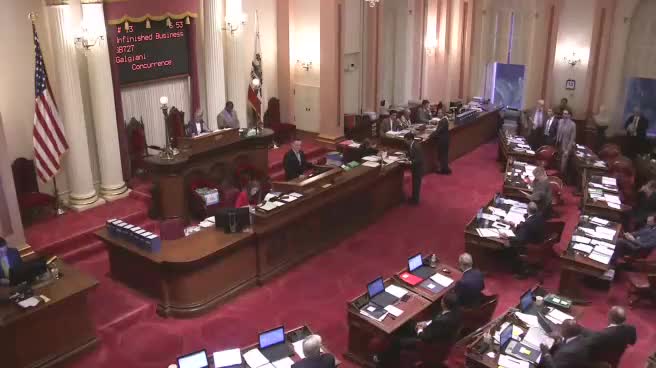 1MIN
Senate Floor
 54SEC
Assembly Floor
 47SEC
Assembly Floor
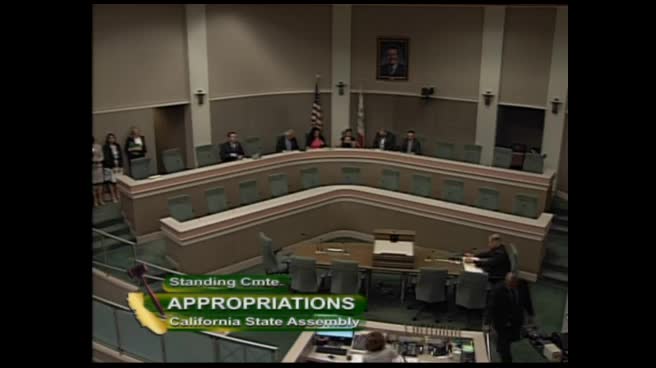 1MIN
Assembly Standing Committee on Appropriations
 4MIN
Assembly Standing Committee on Natural Resources
 3MIN
Senate Floor
 3MIN
Senate Standing Committee on Appropriations
 3MIN
Senate Standing Committee on Natural Resources and Water
Bill Author

Bill Co-Author(s):