SB 218: The Qualified ABLE Program: tax-advantaged savings accounts.
- Session Year: 2017-2018
- House: Senate
- Latest Version Date: 2017-10-04
Existing federal law, the Stephen Beck, Jr., Achieving a Better Life Experience Act of 2014 (ABLE Act), encourages and assists individuals and families to save private funds in a tax-advantaged savings account for the purpose of supporting persons with disabilities to maintain their health, independence, and quality of life by excluding from gross income distributions used for qualified disability expenses by a designated beneficiary of a qualified ABLE program established and maintained by a state, as specified. Existing state law authorizes a designated beneficiary, as defined, to have one ABLE account for these purposes. Existing state law creates the California ABLE Program Trust, the purposes, powers, and duties of which are vested in, and exercised by, the California ABLE Act Board, which is established under the Qualified ABLE Program.
Existing law establishes the Medi-Cal program, which is administered by the State Department of Health Care Services, under which qualified low-income persons receive health care benefits. The Medi-Cal program is, in part, governed and funded by federal Medicaid program provisions. Existing law, with certain exceptions, requires the department to seek recovery from a decedents estate for specified health care services, including home and community-based services, if the individual was 55 years of age or older when he or she received those health care services or against the real property of a Medi-Cal member of any age who is a permanently institutionalized individual who is an inpatient in a nursing facility, intermediate care facility for the intellectually disabled, or other medical institution. Existing law limits any claims against the estate of a decedent to only the real and personal property or other assets included in the individuals probate estate that are required to be subject to a claim for recovery under federal law.
This bill would authorize, only to the extent permitted under federal law, the transfer of all amounts in the designated beneficiarys ABLE account to an ABLE account for another eligible individual specified by either the designated beneficiary or the estate of the designated beneficiary upon the death of the designated beneficiary. The bill would require the board, upon establishing a CalABLE account and prior to any transfer of funds from one ABLE account to another, to notify all designated beneficiaries or the estates of the designated beneficiaries, as applicable, of the potential tax consequences of transferring funds from one ABLE account to another pursuant to these provisions.
This bill, following the death of a designated beneficiary, and only after the department has received approval by the federal Centers for Medicare and Medicaid Services, would prohibit the state from seeking recovery under the Medi-Cal estate recovery provisions of any amount remaining in the designated beneficiarys ABLE account for any amount of medical assistance paid under the states Medicaid plan, and would prohibit the state from filing a claim for the payment under the ABLE Act.
Existing federal law, the Stephen Beck, Jr., Achieving a Better Life Experience Act of 2014 (ABLE Act), encourages and assists individuals and families to save private funds in a tax-advantaged savings account for the purpose of supporting persons with disabilities to maintain their health, independence, and quality of life by excluding from gross income distributions used for qualified disability expenses by a designated beneficiary of a qualified ABLE program established and maintained by a state, as specified. Existing state law authorizes a designated beneficiary, as defined, to have one ABLE account for these purposes. Existing state law creates the California ABLE Program Trust, the purposes, powers, and duties of which are vested in, and exercised by, the California ABLE Act Board, which is established under the Qualified ABLE Program.
Existing law establishes the Medi-Cal program, which is administered by the State Department of Health Care Services, under which qualified low-income persons receive health care benefits. The Medi-Cal program is, in part, governed and funded by federal Medicaid program provisions. Existing law, with certain exceptions, requires the department to seek recovery from a decedents estate for specified health care services, including home and community-based services, if the individual was 55 years of age or older when he or she received those health care services or against the real property of a Medi-Cal member of any age who is a permanently institutionalized individual who is an inpatient in a nursing facility, intermediate care facility for the intellectually disabled, or other medical institution. Existing law limits any claims against the estate of a decedent to only the real and personal property or other assets included in the individuals probate estate that are required to be subject to a claim for recovery under federal law.
This bill would authorize, only to the extent permitted under federal law, the transfer of all amounts in the designated beneficiarys ABLE account to an ABLE account for another eligible individual specified by either the designated beneficiary or the estate of the designated beneficiary upon the death of the designated beneficiary. The bill would require the board, upon establishing a CalABLE account and prior to any transfer of funds from one ABLE account to another, to notify all designated beneficiaries or the estates of the designated beneficiaries, as applicable, of the potential tax consequences of transferring funds from one ABLE account to another pursuant to these provisions.
This bill, following the death of a designated beneficiary, and only after the department has received approval by the federal Centers for Medicare and Medicaid Services, would prohibit the state from seeking recovery under the Medi-Cal estate recovery provisions of any amount remaining in the designated beneficiarys ABLE account for any amount of medical assistance paid under the states Medicaid plan, and would prohibit the state from filing a claim for the payment under the ABLE Act.
Existing federal law, the Stephen Beck, Jr., Achieving a Better Life Experience Act of 2014 (ABLE Act), encourages and assists individuals and families to save private funds in a tax-advantaged savings account for the purpose of supporting persons with disabilities to maintain their health, independence, and quality of life by excluding from gross income distributions used for qualified disability expenses by a designated beneficiary of a qualified ABLE program established and maintained by a state, as specified. Existing state law authorizes a designated beneficiary, as defined, to have one ABLE account for these purposes. Existing state law creates the California ABLE Program Trust, the purposes, powers, and duties of which are vested in, and exercised by, the California ABLE Act Board, which is established under the Qualified ABLE Program.
Existing law establishes the Medi-Cal program, which is administered by the State Department of Health Care Services, under which qualified low-income persons receive health care benefits. The Medi-Cal program is, in part, governed and funded by federal Medicaid program provisions. Existing law, with certain exceptions, requires the department to seek recovery from a decedents estate for specified health care services, including home and community-based services, if the individual was 55 years of age or older when he or she received those health care services or against the real property of a Medi-Cal member of any age who is a permanently institutionalized individual who is an inpatient in a nursing facility, intermediate care facility for the intellectually disabled, or other medical institution. Existing law limits any claims against the estate of a decedent to only the real and personal property or other assets included in the individuals probate estate that are required to be subject to a claim for recovery under federal law.
This bill would authorize authorize, only to the extent permitted under federal law, the transfer of all amounts in the designated beneficiarys ABLE account to an ABLE account for another eligible individual specified by either the designated beneficiary or the estate of the designated beneficiary upon the death of the designated beneficiary. The bill would require the board board, upon establishing a CalABLE account and prior to any transfer of funds from one ABLE account to another, to notify all designated beneficiaries or the estates of the designated beneficiaries beneficiaries, as applicable, of the potential tax consequences of transferring funds from one ABLE account to another pursuant to these provisions.
This bill, following the death of a designated beneficiary, and only after the department has received approval by the federal Centers for Medicare and Medicaid Services, would prohibit the state from seeking recovery under the Medi-Cal estate recovery provisions of any amount remaining in the designated beneficiarys ABLE account for any amount of medical assistance paid under the states Medicaid plan, and would prohibit the state from filing a claim for the payment under the ABLE Act.
Existing federal law, the Stephen Beck, Jr., Achieving a Better Life Experience Act of 2014 (ABLE Act), encourages and assists individuals and families to save private funds in a tax-advantaged savings account for the purpose of supporting persons with disabilities to maintain their health, independence, and quality of life by excluding from gross income distributions used for qualified disability expenses by a designated beneficiary of a qualified ABLE program established and maintained by a state, as specified. Existing state law authorizes a designated beneficiary, as defined, to have one ABLE account for these purposes. Existing state law creates the California ABLE Program Trust, the purposes, powers, and duties of which are vested in, and exercised by, the California ABLE Act Board, which is established under the Qualified ABLE Program.
Existing law establishes the Medi-Cal program, which is administered by the State Department of Health Care Services, under which qualified low-income persons receive health care benefits. The Medi-Cal program is, in part, governed and funded by federal Medicaid program provisions. Existing law, with certain exceptions, requires the State Department of Health Care Services department to seek recovery from a decedents estate for specified health care services, including home and community-based services, if the individual was 55 years of age or older when he or she received those health care services or against the real property of a Medi-Cal member of any age who is a permanently institutionalized individual who is an inpatient in a nursing facility, intermediate care facility for the intellectually disabled, or other medical institution. Existing law limits any claims against the estate of a decedent to only the real and personal property or other assets included in the individuals probate estate that are required to be subject to a claim for recovery under federal law.
This bill would authorize the transfer of all amounts in the designated beneficiarys ABLE account to an ABLE account for another eligible individual specified by either the designated beneficiary or the estate of the designated beneficiary upon the death of the designated beneficiary. The bill The bill would require the board to notify all designated beneficiaries or the estates of the designated beneficiaries of the potential tax consequences of transferring funds from one ABLE account to another pursuant to these provisions.
This bill, following the death of a designated beneficiary, and only after the department has received approval by the federal Centers for Medicare and Medicaid Services, would prohibit the state from seeking recovery under the Medi-Cal estate recovery provisions of any amount remaining in the designated beneficiarys ABLE account for any amount of medical assistance paid under the states Medicaid plan, unless the federal Centers for Medicare and Medicaid Services determines this provision is inconsistent with federal law, and would prohibit the state from filing a claim for the payment under the ABLE Act.
Existing federal law, the Stephen Beck, Jr., Achieving a Better Life Experience Act of 2014 (ABLE Act), encourages and assists individuals and families to save private funds in a tax-advantaged savings account for the purpose of supporting persons with disabilities to maintain their health, independence, and quality of life by excluding from gross income distributions used for qualified disability expenses by a designated beneficiary of a qualified ABLE program established and maintained by a state, as specified. Existing state law authorizes a designated beneficiary, as defined, to have one ABLE account for these purposes.
Existing law establishes the Medi-Cal program, which is administered by the State Department of Health Care Services, under which qualified low-income persons receive health care benefits. The Medi-Cal program is, in part, governed and funded by federal Medicaid program provisions. Existing law, with certain exceptions, requires the State Department of Health Care Services to seek recovery from a decedents estate for specified health care services, including home and community-based services, if the individual was 55 years of age or older when he or she received those health care services or against the real property of a Medi-Cal member of any age who is a permanently institutionalized individual who is an inpatient in a nursing facility, intermediate care facility for the intellectually disabled, or other medical institution. Existing law limits any claims against the estate of a decedent to only the real and personal property or other assets included in the individuals probate estate that are required to be subject to a claim for recovery under federal law.
This bill would authorize the transfer of all amounts in the designated beneficiarys ABLE account to an ABLE account for another individual specified by either the designated beneficiary or the estate of the designated beneficiary upon the death of the designated beneficiary. The bill would prohibit the state from seeking distribution recovery under the Medi-Cal estate recovery provisions of any amount remaining in the designated beneficiarys ABLE account for any amount of medical assistance paid under the states Medicaid plan plan, unless the federal Centers for Medicare and Medicaid Services determines this provision is inconsistent with federal law, and would prohibit the state from filing a claim for the payment, as specified. payment under the ABLE Act.
Existing federal law, the Stephen Beck, Jr., Achieving a Better Life Experience Act of 2014 (ABLE Act), encourages and assists individuals and families to save private funds in a tax-advantaged savings account for the purpose of supporting persons with disabilities to maintain their health, independence, and quality of life by excluding from gross income distributions used for qualified disability expenses by a designated beneficiary of a qualified ABLE program established and maintained by a state, as specified. Existing state law authorizes a designated beneficiary, as defined, to have one ABLE account for these purposes.
This bill would authorize the transfer of all amounts in the designated beneficiarys ABLE account to an ABLE account for another individual specified by either the designated beneficiary or the estate of the designated beneficiary upon the death of the designated beneficiary. The bill would prohibit the state from seeking distribution of any amount remaining in the designated beneficiarys ABLE account for any amount of medical assistance paid under the states Medicaid plan and would prohibit the state from filing a claim for the payment, as specified.
(a)(1)Notwithstanding any other state law, and only to the extent permitted under federal law, all amounts in the designated beneficiarys ABLE account, upon the death of the designated beneficiary, may be transferred to an ABLE account for another eligible individual specified by either the designated beneficiary or the estate of the designated beneficiary.
(2)Upon establishing a CalABLE account and prior to any transfer of funds from one ABLE account to another pursuant to paragraph (1), the board shall notify all designated beneficiaries or the estates of the designated beneficiaries, as applicable, of the potential tax consequences of transferring funds from one ABLE account to another pursuant to paragraph (1).
(b)Following the death of a designated beneficiary, and only after the State Department of Health Care Services has received approval by the federal Centers for Medicare and Medicaid Services, both of the following shall apply:
(1)The state shall not seek recovery pursuant to Section 14009.5 of any amount remaining in the designated beneficiarys ABLE account for any amount of medical assistance paid for the designated beneficiary after the establishment of the account under the states Medicaid plan established under Title XIX of the federal Social Security Act.
(2)The state shall not file a claim for the payment under subdivision (f) of Section 529A of the Internal Revenue Code.
(a)(1)Notwithstanding any other state law, and only to the extent permitted under federal law, all amounts in the designated beneficiarys ABLE account, upon the death of the designated beneficiary, may be transferred to an ABLE account for another eligible individual specified by either the designated beneficiary or the estate of the designated beneficiary.
(2)Upon establishing a CalABLE account and prior to any transfer of funds from one ABLE account to another pursuant to paragraph (1), the board shall notify all designated beneficiaries or the estates of the designated beneficiaries, as applicable, of the potential tax consequences of transferring funds from one ABLE account to another pursuant to paragraph (1).
(b)Following the death of a designated beneficiary, and only after the State Department of Health Care Services has received approval by the federal Centers for Medicare and Medicaid Services, both of the following shall apply:
(1)The state shall not seek recovery pursuant to Section 14009.5 of any amount remaining in the designated beneficiarys ABLE account for any amount of medical assistance paid for the designated beneficiary after the establishment of the account under the states Medicaid plan established under Title XIX of the federal Social Security Act.
(2)The state shall not file a claim for the payment under subdivision (f) of Section 529A of the Internal Revenue Code.
(a)(1)Notwithstanding any other state law, and only to the extent permitted under federal law, all amounts in the designated beneficiarys ABLE account, upon the death of the designated beneficiary, may be transferred to an ABLE account for another eligible individual specified by either the designated beneficiary or the estate of the designated beneficiary.
(2)The Upon establishing a CalABLE account and prior to any transfer of funds from one ABLE account to another pursuant to paragraph (1), the board shall notify all designated beneficiaries or the estates of the designated beneficiaries beneficiaries, as applicable, of the potential tax consequences of transferring funds from one ABLE account to another pursuant to paragraph (1).
(b)Following the death of a designated beneficiary, and only after the State Department of Health Care Services has received approval by the federal Centers for Medicare and Medicaid Services, both of the following shall apply:
(1)The state shall not seek recovery pursuant to Section 14009.5 of any amount remaining in the designated beneficiarys ABLE account for any amount of medical assistance paid for the designated beneficiary after the establishment of the account under the states Medicaid plan established under Title XIX of the federal Social Security Act.
(2)The state shall not file a claim for the payment under subdivision (f) of Section 529A of the Internal Revenue Code.
(a)(1)Notwithstanding any other state law, all amounts in the designated beneficiarys ABLE account, upon the death of the designated beneficiary, may be transferred to an ABLE account for another eligible individual specified by either the designated beneficiary or the estate of the designated beneficiary.
(2)The board shall notify all designated beneficiaries or the estates of the designated beneficiaries of the potential tax consequences of transferring funds from one ABLE account to another pursuant to paragraph (1).
(b)Following the death of a designated beneficiary, and only after the State Department of Health Care Services has received approval by the federal Centers for Medicare and Medicaid Services, both of the following shall apply:
(1)The state shall not seek recovery pursuant to Section 14009.5 of any amount remaining in the designated beneficiarys ABLE account for any amount of medical assistance paid for the designated beneficiary after the establishment of the account under the states Medicaid plan established under Title XIX of the federal Social Security Act. This paragraph shall remain operative unless the federal Centers for Medicare and Medicaid Services determines this paragraph is inconsistent with federal law.
(2)The state shall not file a claim for the payment under subdivision (f) of Section 529A of the Internal Revenue Code.
(a)Notwithstanding any other state law, all amounts in the designated beneficiarys ABLE account, upon the death of the designated beneficiary, may be transferred to an ABLE account for another eligible individual specified by either the designated beneficiary or the estate of the designated beneficiary.
(b)Following the death of a designated beneficiary, the both of the following shall apply:
(1)The state shall not seek distribution recovery pursuant to Section 14009.5 of any amount remaining in the designated beneficiarys ABLE account for any amount of medical assistance paid for the designated beneficiary after the establishment of the account under the states Medicaid plan established under Title XIX of the Social Security Act, and the federal Social Security Act. This paragraph shall remain operative unless the federal Centers for Medicare and Medicaid Services determines this paragraph is inconsistent with federal law.
(2)The state shall not file a claim for the payment under subdivision (f) of Section 529A of the Internal Revenue Code.
(a)Notwithstanding any other state law, all amounts in the designated beneficiarys ABLE account, upon the death of the designated beneficiary, may be transferred to an ABLE account for another eligible individual specified by either the designated beneficiary or the estate of the designated beneficiary.
(b)Following the death of a designated beneficiary, the state shall not seek distribution of any amount remaining in the designated beneficiarys ABLE account for any amount of medical assistance paid for the designated beneficiary after the establishment of the account under the states Medicaid plan established under Title XIX of the Social Security Act, and the state shall not file a claim for the payment under Section 529A of the Internal Revenue Code.
|
Date
|
Status
|
|---|---|
| Oct 4, 2017 | Chaptered by Secretary of State. Chapter 482, Statutes of 2017. |
| Oct 4, 2017 | Approved by the Governor. |
| Sep 20, 2017 | Enrolled and presented to the Governor at 4 p.m. |
| Sep 14, 2017 | Assembly amendments concurred in. (Ayes 40. Noes 0.) Ordered to engrossing and enrolling. |
| Sep 14, 2017 | In Senate. Concurrence in Assembly amendments pending. |
| Sep 13, 2017 | Read third time. Passed. Ordered to the Senate. |
| Sep 6, 2017 | Read second time. Ordered to third reading. |
| Sep 5, 2017 | Read second time and amended. Ordered to second reading. |
| Sep 1, 2017 | From committee: Do pass as amended. (Ayes 16. Noes 0.) (September 1). |
| Aug 23, 2017 | August 23 set for first hearing. Placed on suspense file. |
| Jul 17, 2017 | Read second time and amended. Re-referred to Com. on APPR. |
| Jul 13, 2017 | From committee: Do pass as amended and re-refer to Com. on APPR. (Ayes 10. Noes 0.) (July 10). |
| Jun 15, 2017 | Referred to Com. on REV. & TAX. |
| Jun 1, 2017 | In Assembly. Read first time. Held at Desk. |
| May 31, 2017 | Read third time. Passed. (Ayes 40. Noes 0. Page 1354.) Ordered to the Assembly. |
| May 26, 2017 | Ordered to special consent calendar. |
| May 26, 2017 | Read second time. Ordered to third reading. |
| May 25, 2017 | From committee: Do pass. (Ayes 7. Noes 0. Page 1179.) (May 25). |
| May 19, 2017 | Set for hearing May 25. |
| May 1, 2017 | May 1 hearing: Placed on APPR. suspense file. |
| Apr 21, 2017 | Set for hearing May 1. |
| Apr 19, 2017 | From committee with author's amendments. Read second time and amended. Re-referred to Com. on APPR. |
| Apr 17, 2017 | Withdrawn from committee. |
| Mar 29, 2017 | From committee: Do pass and re-refer to Com. on RLS. (Ayes 7. Noes 0. Page 537.) (March 29). Re-referred to Com. on RLS. |
| Mar 8, 2017 | Set for hearing March 29. |
| Feb 9, 2017 | Referred to Com. on GOV. & F. |
| Feb 2, 2017 | From printer. May be acted upon on or after March 4. |
| Feb 1, 2017 | Introduced. Read first time. To Com. on RLS. for assignment. To print. |
|
Date
|
Description
|
Location
|
Votes
|
|
|---|---|---|---|---|
| Sep 14, 2017 | Unfinished Business SB218 Dodd Concurrence | Senate Floor |
Passed |
|
| Sep 13, 2017 | SB 218 Dodd Senate Third Reading By IRWIN | Assembly Floor |
Passed |
|
| Sep 1, 2017 | Do pass as amended. | Assembly Standing Committee on Appropriations |
Passed |
|
| Jul 10, 2017 | Do pass as amended and be re-referred to the Committee on [Appropriations] | Assembly Standing Committee on Revenue and Taxation |
Passed |
|
| May 31, 2017 | Special Consent Calendar # SB218 | Senate Floor |
Passed |
|
| May 25, 2017 | Do pass | Senate Standing Committee on Appropriations |
Passed |
|
| May 1, 2017 | Placed on suspense file | Senate Standing Committee on Appropriations |
Passed |
|
| Mar 29, 2017 | Do pass, but first be re-referred to the Committee on [Rules] | Senate Standing Committee on Governance and Finance |
Passed |
This list shows positions taken on this bill by organizations on the date displayed, which is linked to the original source.
Positions by individuals are not included.
|
Organization
|
Position
|
Date
|
|---|---|---|
| 13 individuals | ** Support | Jul 7, 2017 |
| 33 individuals. | ** Support | May 27, 2017 |
| Advanced Behavioral Pathways | ** Support | Sep 14, 2017 |
| Association Of Regional Center Agencies | ** Support | Sep 14, 2017 |
| Autism Speaks | ** Support | Sep 14, 2017 |
| California Access Coalition | ** Support | Sep 14, 2017 |
| California Association For Health Services At Home | ** Support | Sep 14, 2017 |
| California Council Of Community Behavioral Health Agencies | ** Support | Sep 14, 2017 |
| California Down Syndrome Advocacy Coalition | ** Support | Sep 14, 2017 |
| California In-Home Supportive Services Alliance | ** Support | Sep 14, 2017 |
| california in-home supportive services consumer alliance | ** Support | May 27, 2017 |
| Community Resources for Independent Living | ** Support | Sep 14, 2017 |
| Disability Rights California | ** Support | Sep 14, 2017 |
| Down Syndrome Association of Orange County | ** Support | Sep 14, 2017 |
| Down Syndrome Connection of the Bay Area | ** Support | Sep 14, 2017 |
| Down Syndrome Information Alliance | ** Support | Sep 14, 2017 |
| Easterseals Bay area | ** Support | Sep 14, 2017 |
| escuela de la raza unida | ** Support | Sep 14, 2017 |
| family focus resource and empowerment center | ** Support | May 27, 2017 |
| Family Focus Resource Center Csu Northridge | ** Support | Sep 14, 2017 |
| family resource network | ** Support | Sep 14, 2017 |
| Fetal Alcohol Syndrome Network | ** Support | Sep 14, 2017 |
| Financial Services Institute | ** Support | Sep 14, 2017 |
| housing now | ** Support | Sep 14, 2017 |
| Humboldt County Ihhs Advisory Committee | ** Support | Sep 14, 2017 |
| humboldt county in-home supportive services advisory board | ** Support | May 27, 2017 |
| kern down syndrome network | ** Support | Sep 14, 2017 |
| Lanterman Coalition | ** Support | Sep 14, 2017 |
| Mental Health America | ** Support | Sep 14, 2017 |
| Muscular Dystrophy Association | ** Support | Sep 14, 2017 |
| National Association of Social Workers | ** Support | Jul 7, 2017 |
| new leaf solutions | ** Support | May 27, 2017 |
| New Leaf Supportive Services | ** Support | Sep 14, 2017 |
| North Bay Regional Center | ** Support | Sep 14, 2017 |
| Numerous Individual Parents | ** Support | Sep 14, 2017 |
| Professional Fiduciaries Association Of California | ** Support | Sep 14, 2017 |
| Service Center for Independent Life | ** Support | Sep 14, 2017 |
| South Bay Down Syndrome Association | ** Support | Sep 14, 2017 |
| State Treasurer John Chiang | ** Support | Sep 14, 2017 |
| Strategies to Empower People | ** Support | Sep 14, 2017 |
| The Arc | ** Support | Sep 14, 2017 |
| the lanterman coalition | ** Support | May 27, 2017 |
| Treasurer, State of California | ** Support | Jul 7, 2017 |
| United Cerebral Palsy | ** Support | Sep 14, 2017 |
| Western Center For Law & Poverty | ** Support | Sep 14, 2017 |
Office of Senate Floor Analyses (916) 651-1520 Fax: (916) 327-4478 | SB |
UNFINISHED BUSINESS
Bill No: SB 218
:
SENATE GOVERNANCE & FIN. COMMITTEE: 7-0, 3/29/17
AYES: McGuire, Nguyen, Beall, Hernandez, Hertzberg, Lara, Moorlach
SENATE APPROPRIATIONS COMMITTEE: 7-0, 5/25/17
AYES: Lara, Bates, Beall, Bradford, Hill, Nielsen, Wiener
SENATE FLOOR: 40-0, 5/31/17 (Consent)
AYES: Allen, Anderson, Atkins, Bates, Beall, Berryhill, Bradford, Cannella, De León, Dodd, Fuller, Gaines, Galgiani, Glazer, Hernandez, Hertzberg, Hill, Hueso, Jackson, Lara, Leyva, McGuire, Mendoza, Mitchell, Monning, Moorlach, Morrell, Newman, Nguyen, Nielsen, Pan, Portantino, Roth, Skinner, Stern, Stone, Vidak, Wieckowski, Wiener, Wilk
ASSEMBLY FLOOR: 79-0, 9/13/17 - See last page for vote
SOURCE: State Treasurer John Chiang
DIGEST:
This bill allows balance transfers from ABLE accounts to other eligible beneficiaries, and prohibits the state from filing a claim to recover Medi-Cal costs from the account upon the beneficiary’s death.
Assembly Amendments
(1) require CalABLE to notify all designated beneficiaries or the estates of those beneficiaries regarding the potential tax consequences of transferring funds from one ABLE Account to another when establishing the account and before any transfer, and (2) provide that this bill only applies after the Department of Health Care Services (DHCS) receives approval from the Centers for Medicaid and Medi-Cal Services.
Existing law:
- Conforms to the Stephen Beck, Jr., Achieving a Better Life Experience (ABLE) Act of 2014, which allows tax-free savings accounts for eligible individuals who became blind or disabled before reaching age 26, and directs states to establish one ABLE account for each eligible individual who is a resident of the state.
- Creates the ABLE trust with specified powers, as well as an ABLE board with specified membership within the State Treasurer’s Office to administer the program (SB 324, Pavley, Chapter 796, and AB 449, Irwin, Chapter 774, Statutes of 2015).
- Limits an individual to $2,000 for an individual or $3,000 for a couple in countable resources to qualify for Supplemental Security Income (SSI). However, under state and federal law, ABLE account balances up to a $100,000 are not counted against limits on personal assets or income for individuals to qualify for SSI and other public benefits, such as Medi-Cal.
- Allows DHCS to recover medical assistance costs in some cases from a deceased beneficiary’s estate (or any recipient of the deceased beneficiary’s estate) if he or she was over age 55, or cared for at an institution, such as a nursing home.
- Requires that a portion or all of the balance remaining in the ABLE account of a deceased designated beneficiary must be distributed to a State if it files a claim against the designated beneficiary or the ABLE account for the costs of Medi-Cal benefits provided to the beneficiary. Payment to the state can only be made after all outstanding payments for the beneficiary’s disability expenses are made, and is limited to the amount of the total medical assistance paid after the establishment of the ABLE account.
This bill:
- Allows the designated beneficiary of any ABLE account, or his or her estate, to transfer all amounts remaining in his or her account upon death to another specified ABLE account beneficiary.
- Requires CalABLE to notify all designated beneficiaries or the estates of those beneficiaries regarding the potential tax consequences of transferring funds from one ABLE Account to another when establishing the account and before any transfer from one ABLE Account to another.
- States that following the death of a designated beneficiary, the state shall not seek distribution of any amount remaining in the designated beneficiary’s ABLE account for any amount of medical assistance paid for the designated beneficiary after the establishment of the account under the state’s Medicaid plan established under Title XIX of the Social Security Act. However, this bill only applies after DHCS receives approval from the Centers for Medicaid and Medi-Cal Services.
- Bars the state from filing a claim for the payment under Section 529A of the Internal Revenue Code.
- Provides that the measure applies notwithstanding any other law; however, the bill is only operative until the federal Center for Medicare and Medicaid Services determines that is inconsistent with federal law.
Comments
According to the State Treasurer, California’s ABLE program, known as CalABLE, will likely begin accepting donations for participants this summer. Recently, CalABLE conducted a survey of potential beneficiaries and their parents or guardians. Of 924 responses, the survey reported that 62% reported having an annual household income of less than $24,999, 70% of potential beneficiaries were enrolled in Medi-Cal, and 61% in SSI. Survey respondents indicated that a barrier to CalABLE enrollment is Medi-Cal recovery, as family members and others who donate to the disabled beneficiary’s account would be lost to the state after the beneficiary passes. While California recently limited the circumstances to which cost recovery applies (SB 833, Committee on Budget and Fiscal Review, Chapter 30, Statutes of 2016), CalABLE is concerned that potential Medi-Cal recovery of ABLE account balances could deter potential beneficiaries from enrolling.
FISCAL EFFECT: Appropriation: Fiscal Com.: Local:
According to the Assembly Appropriations Committee:
- Unknown reduction in General Fund (GF) revenue because of the estate recovery provisions of this bill. Limiting the California’s estate recovery from ABLE accounts will reduce future revenue, but the amount of estate recovery that will occur is unknown. The ultimate impact on future state revenue depends on the utilization of ABLE accounts, the balances of those accounts, and federal policy around whether states are required to seek estate recovery from ABLE accounts.
- Modest one-time costs, likely less than $150,000 (GF and federal funds) to the Department of Health Care Services for the development of regulations and procedures to implement the bill.
State Treasurer John Chiang (source)
Advanced Behavioral Pathways
Association of Regional Center Agencies
Autism Speaks
California Access Coalition
California Association for Health Services at Home
California Council of Community Behavioral Health Agencies
California Down Syndrome Advocacy Coalition
California In-Home Supportive Services Alliance
Community Resources for Independent Living
Disability Rights California
Down Syndrome Association of Orange County
Down Syndrome Connection of the Bay Area
Down Syndrome Information Alliance
Easterseals Bay Area
Escuela de la Raza Unida
Family Focus Resource Center CSU Northridge
Family Resource Network
Fetal Alcohol Syndrome Network
Financial Services Institute
Housing Now
Humboldt County IHHS Advisory Committee
Kern Down Syndrome Network
Lanterman Coalition
Mental Health America
Muscular Dystrophy Association (Los Angeles, San Diego, Orange County)
New Leaf Supportive Services
North Bay Regional Center
Professional Fiduciaries Association of California
Service Center for Independent Life
South Bay Down Syndrome Association
State Independent Living Council
Strategies to Empower People
The ARC
United Cerebral Palsy
Western Center for Law & Poverty
Numerous individual parents
OPPOSITION: (Verified 9/13/17)
None received
ARGUMENTS IN SUPPORT: According to the author, “Until recently, individuals receiving federal benefits have been restricted in the amount of money they can save, essentially keeping them in poverty and preventing them from planning for the future. With the Stephen Beck Jr. Achieving a Better Life Experience (ABLE) Act, signed into federal law by President Obama, these thresholds are no longer an obstacle. In 2015, Governor Brown signed the California ABLE Act into law. CalABLE allows qualified individuals with disabilities and their families to open tax-free savings accounts without the worry of losing vital government assistance. The law establishes a board that will administer the CalABLE savings program. The CalABLE program in California will open up life-improving opportunities for people with disabilities and their families in much the same way California’s ScholarShare 529 plans formed educational opportunities for the state’s students. Contributions to an ABLE account, currently limited to $14,000 per year, can be made by family, friends, or the beneficiary themselves. The account’s earnings are allowed to accumulate tax-free, and the withdrawals, provided they are applied to qualifying disability expenses, are tax-free. SB 218 will prohibit the state seeking distribution of any amount remaining in the designated beneficiary’s ABLE account for any amount of medical assistance paid under the state’s Medicaid plan and would prohibit the state from filing a claim for the payment.”
ASSEMBLY FLOOR: 79-0, 9/13/17
AYES: Acosta, Aguiar-Curry, Travis Allen, Arambula, Baker, Berman, Bigelow, Bloom, Bocanegra, Bonta, Brough, Burke, Caballero, Calderon, Cervantes, Chau, Chávez, Chen, Chiu, Choi, Chu, Cooley, Cooper, Cunningham, Dababneh, Dahle, Daly, Eggman, Flora, Fong, Frazier, Friedman, Gallagher, Cristina Garcia, Eduardo Garcia, Gipson, Gloria, Gonzalez Fletcher, Gray, Grayson, Harper, Holden, Irwin, Jones-Sawyer, Kalra, Kiley, Lackey, Levine, Limón, Low, Maienschein, Mathis, Mayes, McCarty, Medina, Melendez, Mullin, Muratsuchi, Nazarian, Obernolte, O'Donnell, Patterson, Quirk, Quirk-Silva, Reyes, Ridley-Thomas, Rodriguez, Rubio, Salas, Santiago, Steinorth, Mark Stone, Thurmond, Ting, Voepel, Waldron, Weber, Wood, Rendon
9/14/17 10:02:46
**** END ****
SENATE THIRD READING
STR Bill Id:SB 218
Author:(Dodd)
As Amended Ver:September 5, 2017
Majority vote
SENATE VOTE: 40-0
Committee | Votes | Ayes | Noes |
Revenue & Taxation | 10-0 | Ridley-Thomas, Brough, Travis Allen, Bocanegra, Burke, Chen, Dababneh, Gipson, Mullin, Quirk | |
Appropriations | 16-0 | Gonzalez Fletcher, Bigelow, Bloom, Bocanegra, Bonta, Brough, Calderon, Chau, Eggman, Fong, Friedman, Gallagher, Eduardo Garcia, Jones-Sawyer, Obernolte, Reyes |
|
SUMMARY: Allows assets in an Achieving a Better Life Experience Act (ABLE) account to be transferred to another ABLE account upon the death of the designated beneficiary and prohibits the state from recovering the balance of an ABLE account to recoup Medi-Cal spending by the state. Specifically, this bill:
- Provides, notwithstanding any other state law, and only to the extent permitted under federal law, that all amounts in an ABLE account, upon the death of the designated beneficiary, may be transferred to an ABLE account for another eligible individual specified by either the designated beneficiary or the estate of the designated beneficiary.
- Requires the California ABLE Act Board (Board) to notify all designated beneficiaries or the estates of the designated beneficiaries, as applicable, of the potential tax consequences of transferring funds from one ABLE account to another. Notification must be provided upon establishment of a CalABLE account and prior to any transfer of funds from one ABLE account to another.
- Prevents, upon the death of the beneficiary, and only after federal approval, as specified, both of the following:
- The state from seeking recovery pursuant to Welfare and Institutions Code Section 14009.5 of any amount remaining in a designated beneficiary's ABLE account for any amount of medical assistance paid to the designated beneficiary after the establishment of the account; and,
- The state from filing a claim for the payment under Internal Revenue Code Section 529A, subdivision (f).
EXISTING FEDERAL LAW:
- Enacts the Stephen Beck, Jr., Achieving a Better Life Experience Act of 2014 (ABLE Act), which assists individuals and families save private funds to support persons with disabilities, as specified, by excluding from gross income distributions used for qualified disability expenses by a beneficiary of a qualified ABLE program established and maintained by a state.
- Provides that contributions to an ABLE account are not deductible for federal income tax purposes, and aggregate contributions during a taxable year may not exceed the annual gift tax exclusion amount. For 2016, the annual gift tax exclusion amount is $14,000.
- Provides that distributions from an ABLE account are excludable from income to the extent the total distribution does not exceed the qualified disability expenses of the beneficiary during the taxable year.
- Provides that funds in an ABLE account, contributions to an ABLE account, and distributions from an ABLE account, shall be disregarded for certain federal means-tested programs. However, for Supplemental Security Income (SSI) purposes, an eligible individual cannot have more than $100,000 in their ABLE account. If funds exceed this amount, SSI benefits will be suspended but not terminated. Funds in excess of $100,000 have no impact on Medicaid eligibility.
- Provides, upon the death of a beneficiary, that any amount remaining in an ABLE account equal to the total medical assistance paid for the designated beneficiary shall be distributed to the state upon the filing of a claim for payment by the state.
- Permits the transfer of ABLE account balances from one eligible beneficiary to another, so long as the transfer takes place between family members.
EXISTING STATE LAW:
- Conforms to federal income tax law provisions relating to the ABLE Act under the Personal Income Tax Law and the Corporation Tax Law, allowing the creation of ABLE accounts for beneficiaries in California and ensuring that ABLE account earnings and distributions for qualified disability expenses are not included in the eligible individual's income for state tax purposes.
- Allows the Department of Health Care Services to recover medical assistance costs in some cases from a deceased beneficiary's estate (or any recipient of the deceased beneficiary's estate) if he or she was over age 55, or cared for at an institution, such as a nursing home.
FISCAL EFFECT: According to the Assembly Appropriations Committee:
- Unknown reduction in General Fund (GF) revenue because of the estate recovery provisions of this bill. Limiting the California's estate recovery from ABLE accounts will reduce future revenue, but the amount of estate recovery that will occur is unknown. The ultimate impact on future state revenue depends on the utilization of ABLE accounts, the balances of those accounts, and federal policy around whether states are required to seek estate recovery from ABLE accounts.
- Modest one-time costs, likely less than $150,000 (GF and federal funds) to the Department of Health Care Services for the development of regulations and procedures to implement the bill.
COMMENTS:
- Taxable distributions: The ABLE Act allows a beneficiary to transfer funds in an ABLE account to another ABLE account for a new eligible individual who is a family member of the designated beneficiary. Transfers that are made in such a manner are not treated as distributions subject to tax or additional penalties. The ABLE Act defines a "member of the family," with respect to any designated beneficiary, as a brother, sister, stepbrother, or stepsister. This bill, however, allows for the transfer of funds in an ABLE account, upon the death of the designated beneficiary, to another eligible individual specified by either the designated beneficiary or the estate of the designated beneficiary. A person is considered to be an eligible individual if the individual is entitled to benefits based on blindness or disability under the Social Security Act and such blindness or disability occurred before the age of 26, or a disability certification is filed with the Secretary of the Treasury. Unfortunately, the definition of "eligible individual" includes a very broad range of people, and may include individuals who are not family members of the designated beneficiary. Therefore, if a designated beneficiary transfers funds in an ABLE account, upon his/her death, to an eligible individual, that transfer may be subject to tax and penalties. To ensure a designated beneficiary or the estate of a designated beneficiary does not have the false impression that such a transfer can be made without taxes or penalties, this bill requires the Board to notify all designated beneficiaries or the estates of designated beneficiaries of the potential tax consequences related to transferring funds.
- Prohibition on state claims: According to the author's office, a prohibition on state claims is needed because without such a prohibition, individuals may become wary of contributing funds to a beneficiary's account for fear of having those funds taken by the state to offset the costs of Medi-Cal services received by a designated beneficiary before death. The prohibition, however, only applies to state claims and does not prohibit the Federal Government from making its own claim on funds in an ABLE account. Therefore, it is not clear if prohibiting the state from making a claim on funds in an ABLE account will address the perceived disincentive that may be created by a claim since this bill can do nothing to change federal action.
The ABLE program has been informed that if claims are prohibited by this bill and the federal Centers for Medicare and Medicaid Services determines that the prohibition is inconsistent with federal law, California may be forced to pay for back claims that were not collected during the prohibition period. In order to avoid the possibility of California potentially having to pay a large sum of money, this bill specifies that claims will only be prohibited once Department of Health Care Services has received approval to do so by the federal Centers for Medicare and Medicaid Services.
Analysis Prepared by: Carlos Anguiano and Irene Ho / REV. & TAX. / (916) 319-2098 FN: 0001866
Date of Hearing: August 23, 2017
ASSEMBLY COMMITTEE ON APPROPRIATIONS
Lorena Gonzalez Fletcher, Chair
SBPCA Bill Id:SB 218
Author:(Dodd) – As Amended Ver:July 17, 2017
Policy Committee: | Revenue and Taxation | Vote: | 10 - 0 |
Urgency: No State Mandated Local Program: No Reimbursable: No
SUMMARY:
This bill allows assets in a Achieving a Better Life Experience (ABLE) account to be transferred to another ABLE account upon the death of the designated beneficiary and prohibits the state, upon approval from the federal Centers for Medicare and Medicaid Services, from recovering the balance of an ABLE account to recoup Medi-Cal spending by the state.
FISCAL EFFECT:
- Unknown reduction in General Fund (GF) revenue because of the estate recovery provisions of this bill. Limiting the California’s estate recovery from ABLE accounts will reduce future revenue, but the amount of estate recovery that will occur is unknown. The ultimate impact on future state revenue depends on the utilization of ABLE accounts, the balances of those accounts, and federal policy around whether states are required to seek estate recovery from ABLE accounts.
- Modest one-time costs, likely less than $150,000 (GF and federal funds) to the Department of Health Care Services for the development of regulations and procedures to implement the bill.
COMMENTS:
- Background. The federal ABLE Act creates tax-free savings accounts for individuals with disabilities. The ABLE Act aims to ease the financial stress faced by individuals with disabilities by allowing these individuals to save without those savings jeopardizing eligibility for programs like Supplementary Security Income (SSI) or Medicaid. Funds in an ABLE account grow tax free and distributions from the account are not included in a beneficiary’s tax liability, provided they are used for qualified services for the beneficiary. California’s ABLE program (CalABLE) will be managed by the Treasurer’s Office starting in Fall 2017.
- Medi-Cal cost recovery. The federal Centers for Medicare and Medicaid Services has not yet indicated whether federal law and guidance require states to seek recovery of assets in a deceased beneficiary’s ABLE accounts for Medicaid costs. To date, about 40 states have authorized ABLE accounts and those states have generally limited estate recovery from those accounts when a beneficiary dies. Recent amendments make the prohibition of estate recovery of CalABLE balances contingent upon approval from the federal government, thereby reducing future uncertainty around federal policy in this arena.
- Transferring ABLE account balances. Under current federal law, a beneficiary can transfer funds in an ABLE account to another ABLE account for a new eligible individual who is a family member of the beneficiary. These transfers are not treated as distributions subject to penalties or tax. This bill allows assets to be transferred to any other eligible ABLE account, which could result in some of these transfers to non-family members subject to certain taxes and penalties. Recent amendments require the California ABLE Act Board to notify CalABLE account beneficiaries of the tax consequences of such fund transfers.
- Purpose. According to supporters, SB 218 will remove barriers that keep individuals who are blind or disabled in poverty by allowing them to save and plan for their own future and the future of loved ones.
Analysis Prepared by: Luke Reidenbach / APPR. / (916) 319-2081
Date of Hearing: July 10, 2017
ASSEMBLY COMMITTEE ON REVENUE AND TAXATION
Sebastian Ridley-Thomas, Chair
SBPCA Bill Id:SB 218
Author:(Dodd) – As Amended Ver:April 19, 2017
Majority vote. Fiscal committee.
SENATE VOTE: 40-0
SUBJECT: The Qualified ABLE Program: tax-advantaged savings accounts
SUMMARY: Allows assets in an ABLE account to be transferred to another ABLE account upon the death of the designated beneficiary and prohibits the state from recovering the balance of an ABLE account to recoup Medi-Cal spending by the state. Specifically, this bill:
- Provides, notwithstanding any other state law, that all amounts in an ABLE account, upon the death of the designated beneficiary, may be transferred to an ABLE account for another eligible individual specified by either the designated beneficiary or the estate of the designated beneficiary.
- Prevents, upon the death of the beneficiary, both of the following:
- The state from seeking recovery pursuant to Welfare and Institutions Code Section 14009.5 of any amount remaining in a designated beneficiary’s ABLE account for any amount of medical assistance paid to the designated beneficiary after the establishment of the account. This prohibition shall remain operative unless the federal Centers for Medicare and Medicaid Services determines this provision is inconsistent with federal law; and,
- The state from filing a claim for the payment under Internal Revenue Code (IRC) Section 529A, subdivision (f).
EXISTING FEDERAL LAW:
- Enacts the Stephen Beck, Jr., Achieving a Better Life Experience Act of 2014 (ABLE Act), which assists individuals and families save private funds to support persons with disabilities, as specified, by excluding from gross income distributions used for qualified disability expenses by a beneficiary of a qualified ABLE program established and maintained by a state.
- Provides that contributions to an ABLE account are not deductible for federal income tax purposes, and aggregate contributions during a taxable year may not exceed the annual gift tax exclusion amount. For 2016, the annual gift tax exclusion amount is $14,000.
- Provides that distributions from an ABLE account are excludable from income to the extent the total distribution does not exceed the qualified disability expenses of the beneficiary during the taxable year.
- Provides that funds in an ABLE account, contributions to an ABLE account, and distributions from an ABLE account, shall be disregarded for certain federal means-tested programs. However, for Supplemental Security Income (SSI) purposes, an eligible individual cannot have more than $100,000 in their ABLE account. If funds exceed this amount, SSI benefits will be suspended but not terminated. Funds in excess of $100,000 have no impact on Medicaid eligibility.
- Provides, upon the death of a beneficiary, that any amount remaining in an ABLE account equal to the total medical assistance paid for the designated beneficiary shall be distributed to the state upon the filing of a claim for payment by the state.
- Permits the transfer of ABLE account balances from one eligible beneficiary to another, so long as the transfer takes place between family members.
EXISTING STATE LAW:
- Conforms to federal income tax law provisions relating to the ABLE Act under the Personal Income Tax (PIT) Law and the Corporation Tax (CT) Law, allowing the creation of ABLE accounts for beneficiaries in California and ensuring that ABLE account earnings and distributions for qualified disability expenses are not included in the eligible individual's income for state tax purposes.
- Allows the Department of Health Care Services to recover medical assistance costs in some cases from a deceased beneficiary’s estate (or any recipient of the deceased beneficiary’s estate) if he or she was over age 55, or cared for at an institution, such as a nursing home.
FISCAL EFFECT: Unknown
COMMENTS:
- The author has provided the following statement in support of this bill:
Until recently, individuals receiving federal benefits have been restricted in the amount of money they can save, essentially keeping them in poverty and preventing them from planning for the future. With the Stephen Beck Jr. Achieving a Better Life Experience (ABLE) Act, signed into federal law by President Obama, these thresholds are no longer an obstacle.
In 2015, Governor Brown signed the California ABLE Act into law. CalABLE allows qualified individuals with disabilities and their families to open tax-free savings accounts without the worry of losing vital government assistance. The law establishes a board that will administer the CalABLE savings program.
The CalABLE program in California will open up life-improving opportunities for people with disabilities and their families in much the same way California’s ScholarShare 529 plans formed educational opportunities for the state’s students. Contributions to an ABLE account, currently limited to $14,000 per year, can be made by family, friends, or the beneficiary themselves. The account’s earnings are allowed to accumulate tax-free, and the withdrawals, provided they are applied to qualifying disability expenses, are tax-free.
SB 218 will prohibit the state seeking distribution of any amount remaining in the designated beneficiary’s ABLE account for any amount of medical assistance paid under the state’s Medicaid plan and would prohibit the state from filing a claim for the payment.
- Proponents of this bill state "[p]rior to January 1, 2017, the state recovered for all Medi-Cal Payments made, but now is limited to what is federally required. The prior rules resulted in many low-income Californians age 55 and older being reluctant to enroll in Medi-Cal because they were afraid the state would recover their house when they die. Similarly, just as the new estate recovery rules allow families to keep their homes within the family, this bill would allow CalABLE beneficiaries to designate a new CalABLE beneficiary. The bill seeks to remove barriers that keep individuals who are blind or disabled in poverty by allowing them to save and plan for their future, and the future of loved ones."
- Committee Staff Comments:
- Taxable distributions: The ABLE Act allows a beneficiary to transfer funds in an ABLE account to another ABLE account for a new eligible individual who is a family member of the designated beneficiary. Transfers that are made in such a manner are not treated as distributions subject to tax or additional penalties. The ABLE Act defines a "member of the family," with respect to any designated beneficiary, as a brother, sister, stepbrother, or stepsister. This bill, however, allows for the transfer of funds in an ABLE account, upon the death of the designated beneficiary, to another eligible individual specified by either the designated beneficiary or the estate of the designated beneficiary. A person is considered to be an eligible individual if the individual is entitled to benefits based on blindness or disability under the Social Security Act and such blindness or disability occurred before the age of 26, or a disability certification is filed with the Secretary of the Treasury. Unfortunately, the definition of "eligible individual" includes a very broad range of people, and may include individuals who are not family members of the designated beneficiary. Therefore, if a designated beneficiary transfers funds in an ABLE account, upon his/her death, to an eligible individual, that transfer may be subject to tax and penalties. The language, as currently drafted, may give a designated beneficiary or the estate of a designated beneficiary the false impression that a transfer can be made without taxes or penalties. To address this concern, the author may wish to add language specifying that the California ABLE program must notify designated beneficiaries and the estate of the potential tax consequences related to transferring funds.
- Prohibition on state claims: According to the author's office, a prohibition on state claims is needed because without such a prohibition, individuals may become wary of contributing funds to a beneficiary's account for fear of having those funds taken by the state to offset the costs of Medi-Cal services received by a designated beneficiary before death. The prohibition, however, only applies to state claims and does not prohibit the Federal Government from making its own claim on funds in an ABLE account. Therefore, it is not clear if prohibiting the state from making a claim on funds in an ABLE account will address the perceived disincentive that may be created by a claim since this bill can do nothing to change federal action.
Additionally, language added in the Senate Governance and Finance Committee specifies that the prohibition on state claims exists unless the federal Centers for Medicare and Medicaid Services determines that this bill is inconsistent with federal law. Since the adoption of these amendments, the ABLE program has been informed that if claims are prohibited by this bill and the federal Centers for Medicare and Medicaid Services determines that the prohibition is inconsistent with federal law, California may be forced to pay for back claims that were not collected during the prohibition period. In order to avoid the possibility of California potentially having to pay a large sum of money, the author would like to amend this bill to specify that claims will only be prohibited once Department of Health Care Services has received approval to do so by the federal Centers for Medicare and Medicaid Services.
REGISTERED SUPPORT / OPPOSITION:
Support
Treasurer, State of California (Sponsor)
Association of Regional Center Agencies
California Access Coalition
California Association for Health Services at Home
California Council of Community Behavioral Health Agencies
Down Syndrome Association of Orange County
Mental Health America of California
National Association of Social Workers
Western Center on Law and Poverty
13 individuals
Opposition
None on file
Analysis Prepared by: Carlos Anguiano / REV. & TAX. / (916) 319-2098
Office of Senate Floor Analyses (916) 651-1520 Fax: (916) 327-4478 | SB |
THIRD READING
Bill No: SB 218
:
SENATE GOVERNANCE & FIN. COMMITTEE: 7-0, 3/29/17
AYES: McGuire, Nguyen, Beall, Hernandez, Hertzberg, Lara, Moorlach
SENATE APPROPRIATIONS COMMITTEE: 7-0, 5/25/17
AYES: Lara, Bates, Beall, Bradford, Hill, Nielsen, Wiener
SOURCE: State Treasurer John Chiang
DIGEST:
This bill allows balance transfers from ABLE accounts to other eligible beneficiaries, and prohibits the state from filing a claim to recover Medi-Cal costs from the account upon the beneficiary’s death.
Existing law:
- Conforms to the Stephen Beck, Jr., Achieving a Better Life Experience (ABLE) Act of 2014, which allows tax-free savings accounts for eligible individuals who became blind or disabled before reaching age 26, and directs states to establish one ABLE account for each eligible individual who is a resident of the state.
- Creates the ABLE trust with specified powers, as well as an ABLE board with specified membership within the State Treasurer’s Office to administer the program (SB 324, Pavley, Chapter 796, and AB 449, Irwin, Chapter 774, Statutes of 2015).
- Limits an individual to $2,000 for an individual or $3,000 for a couple in countable resources to qualify for Supplemental Security Income (SSI). However, under state and federal law, ABLE account balances up to a $100,000 are not counted against limits on personal assets or income for individuals to qualify for SSI and other public benefits, such as Medi-Cal.
- Allows the Department of Health Care Services to recover medical assistance costs in some cases from a deceased beneficiary’s estate (or any recipient of the deceased beneficiary’s estate) if he or she was over age 55, or cared for at an institution, such as a nursing home.
- Requires that a portion or all of the balance remaining in the ABLE account of a deceased designated beneficiary must be distributed to a State if it files a claim against the designated beneficiary or the ABLE account for the costs of Medi-Cal benefits provided to the beneficiary. Payment to the state can only be made after all outstanding payments for the beneficiary’s disability expenses are made, and is limited to the amount of the total medical assistance paid after the establishment of the ABLE account.
This bill:
- Allows the designated beneficiary of any ABLE account, or his or her estate, to transfer all amounts remaining in his or her account upon death to another specified ABLE account beneficiary.
- States that following the death of a designated beneficiary, the state shall not seek distribution of any amount remaining in the designated beneficiary’s ABLE account for any amount of medical assistance paid for the designated beneficiary after the establishment of the account under the state’s Medicaid plan established under Title XIX of the Social Security Act.
- Bars the state from filing a claim for the payment under Section 529A of the Internal Revenue Code.
- Provides that the measure applies notwithstanding any other law; however, the bill is only operative until the federal Center for Medicare and Medicaid Services determines that is inconsistent with federal law.
Comments
According to the State Treasurer, California’s ABLE program, known as CalABLE, will likely begin accepting donations for participants this summer. Recently, CalABLE conducted a survey of potential beneficiaries and their parents or guardians. Of 924 responses, the survey reported that 62% reported having an annual household income of less than $24,999, 70% of potential beneficiaries were enrolled in Medi-Cal, and 61% in SSI. Survey respondents indicated that a barrier to CalABLE enrollment is Medi-Cal recovery, as family members and others who donate to the disabled beneficiary’s account would be lost to the state after the beneficiary passes. While California recently limited the circumstances to which cost recovery applies (SB 833, Committee on Budget and Fiscal Review, Chapter 30, Statutes of 2016), CalABLE is concerned that potential Medi-Cal recovery of ABLE account balances could deter potential beneficiaries from enrolling.
FISCAL EFFECT: Appropriation: Fiscal Com.: Local:
According to the Senate Appropriations Committee:
- One-time costs, likely less than $150,000 for the development of regulations and procedures to implement the bill by the Department of Health Care Services (General Fund and federal funds).
- Unknown, highly uncertain, reduction in future revenue to the state (General Fund and federal funds). Under federal law, the Department of Health Care Services is required to seek to recover the costs of providing certain Medi-Cal services from the estates of deceased Medi-Cal beneficiaries. Under this bill, the Department would be prohibiting from seeking such recovery from a deceased Medi-Cal beneficiary’s ABLE account.
State Treasurer John Chiang (source)
The ARC and United Cerebral Palsy California Collaboration
California Down Syndrome Advocacy Coalition
California In-Home Supportive Services Consumer Alliance
Community Resources for Independent Living
Disability Rights California
Down Syndrome Association of Orange County
Down Syndrome Connection of the Bay Area
Down Syndrome Information Alliance
Escuela de la Raza Unida
Family Focus Resource and Empowerment Center
Family Resource Network
Family Support and Clinical Care Department of the Muscular Dystrophy Association Los Angeles, Orange, and San Diego County Chapters
Housing Now
Humboldt County In-Home Supportive Services Advisory Board
Kern Down Syndrome Network
The Lanterman Coalition
Mental Health America of Los Angeles
New Leaf Solutions
North Bay Regional Center
State Independent Living Council
Strategies to Empower People
Western Center on Law and Poverty
33 individuals.
OPPOSITION: (Verified 5/25/17)
None received
ARGUMENTS IN SUPPORT: According to the author, “Until recently, individuals receiving federal benefits have been restricted in the amount of money they can save, essentially keeping them in poverty and preventing them from planning for the future. With the Stephen Beck Jr. Achieving a Better Life Experience (ABLE) Act, signed into federal law by President Obama, these thresholds are no longer an obstacle. In 2015, Governor Brown signed the California ABLE Act into law. CalABLE allows qualified individuals with disabilities and their families to open tax-free savings accounts without the worry of losing vital government assistance. The law establishes a board that will administer the CalABLE savings program. The CalABLE program in California will open up life-improving opportunities for people with disabilities and their families in much the same way California’s ScholarShare 529 plans formed educational opportunities for the state’s students. Contributions to an ABLE account, currently limited to $14,000 per year, can be made by family, friends, or the beneficiary themselves. The account’s earnings are allowed to accumulate tax-free, and the withdrawals, provided they are applied to qualifying disability expenses, are tax-free. SB 218 will prohibit the state seeking distribution of any amount remaining in the designated beneficiary’s ABLE account for any amount of medical assistance paid under the state’s Medicaid plan and would prohibit the state from filing a claim for the payment.”
5/27/17 16:08:09
SENATE COMMITTEE ON APPROPRIATIONS
Senator Ricardo Lara, Chair
2017 - 2018 Regular Session
SB 218 (Dodd) - The Qualified ABLE Program: tax-advantaged savings accounts
Version: April 19, 2017 | Policy Vote: GOV. & F. 7 - 0 |
Urgency: No | Mandate: No |
Hearing Date: May 1, 2017 | Consultant: Brendan McCarthy |
This bill meets the criteria for referral to the Suspense File.
Bill Summary:
SB 218 would allow assets in an ABLE account to be transferred to another ABLE account upon the death of the designated beneficiary. The bill would prohibit the state from recovering the balance of an ABLE account to recoup Medi-Cal spending by the state.
Fiscal Impact:
- One-time costs, likely less than $150,000 for the development of regulations and procedures to implement the bill by the Department of Health Care Services (General Fund and federal funds).
- Unknown reduction in future revenue to the state (General Fund and federal funds). Under federal law, the Department of Health Care Services is required to seek to recover the costs of providing certain Medi-Cal services from the estates of deceased Medi-Cal beneficiaries. Under this bill, the Department would be prohibiting from seeking such recovery from a deceased Medi-Cal beneficiary’s ABLE account. As is discussed further below, the actual future revenue loss due to this bill is highly uncertain.
Background:
Under the federal Achieving a Better Life Experience Act of 2014 (ABLE Act) and conforming state law, individuals who become blind or disabled before age 26 can create ABLE accounts. ABLE accounts allow contributions to be made by others (such as friends and family members of the account beneficiary). Funds in an ABLE account grow tax free and distributions from the account are not included in a beneficiary’s tax liability, provided they are used for qualified services for the beneficiary. In addition, balances in an ABLE account, up to $100,000, are not counted when determining a beneficiary’s eligibility for public assistance programs such as Supplemental Security Income or Medi-Cal.
In California, the ABLE program will be managed by the Treasurer’s Office, beginning in the Summer of 2017.
Federal law requires state Medicaid programs (Medi-Cal in California) to make a claim against the estate of a deceased beneficiary to recover the costs of certain services provided to that beneficiary. Federal law requires states to recover the costs of health care services provided to beneficiaries of any age who are permanently institutionalized and the costs of nursing facilities, home and community based services, and related hospital and prescription drug costs for beneficiaries over 55 years of age. Federal law authorizes states to seek recovery for other health care services provided to beneficiaries over 55 years of age. Federal law allows states to define what constitutes an estate for the purposes of determining which assets to claim. Previously, state law required the Department of Health Care Services to seek estate recovery to the maximum amount allowed under federal law. However, in 2015 state law was changed to limit estate recovery for Medi-Cal costs to those which are required under federal law.
To date, about 40 states have authorized ABLE accounts and those state have generally limited estate recovery from those accounts when a beneficiary dies.
The federal ABLE Act requires payment from an ABLE account balance, upon a beneficiary’s death, to repay costs incurred by a state’s Medicaid program, if the state makes such a claim. The federal Centers for Medicare and Medicaid Services has not yet indicated whether federal law and guidance require states to seek recovery of assets in a deceased beneficiary’s ABLE accounts for Medicaid costs.
Proposed Law:
SB 218 would allow assets in an ABLE account to be transferred to another ABLE account upon the death of the designated beneficiary.
The bill would prohibit the state from recovering the balance of an ABLE account to recoup Medi-Cal spending by the state. The bill’s provisions relating to estate recovery for the Medi-Cal program would remain operative unless the federal government determines these provisions are inconsistent with federal law.
Related Legislation:
- SB 833 (Committee on Budget and Fiscal Review, Statutes of 2016) limits estate recovery to only those costs required to be recovered by federal law.
- SB 33 (Hernandez, 2015) would have limited the authority of the state to recover funds from the estate or survivors of a deceased Medi-Cal beneficiary. That bill was held on the Assembly Floor.
Staff Comments:
The fiscal impact of this bill is highly uncertain. In theory, by prohibiting estate recovery from ABLE accounts when a beneficiary dies, the bill would result in reduced future revenue to the state. To date, no California residents have opened ABLE accounts, so information about the number of participating individuals or their account balances is unavailable.
However, there are several factors that indicate that the potential for the state to recover significant amounts of money from ABLE accounts is limited, even without this bill. There are indications from other states that ABLE account balances tend to be small, with donors depositing relatively small amounts of money on an as-needed basis. Also, ABLE accounts can be used to pay any outstanding bills and funeral expenses for a deceased beneficiary which would tend to reduce the amount of funding that would be available for later recovery by the state. In addition, a survey conducted by the Treasurer’s Office indicated that potential users of ABLE accounts are concerned that account balances could be claimed by the state through estate recovery and therefore they may limit their use of ABLE accounts. In sum, these factors are likely to limit the ability of the state to recovery significant amounts of money from ABLE accounts, even without this bill.
Finally, as noted above, the federal government has not yet indicated whether states are required to seek estate recovery from ABLE accounts.
-- END --
SENATE COMMITTEE ON GOVERNANCE AND FINANCE
Senator Mike McGuire, Chair
2017 - 2018 Regular
Bill No: | SB 218 | Hearing Date: | 3/29/17 |
Author: | Dodd | Tax Levy: | No |
Version: | 2/1/17 | Fiscal: | Yes |
Consultant: | Grinnell | ||
The Qualified ABLE Program: tax-advantaged savings accounts
Allows balance transfers from ABLE accounts to other eligible beneficiaries, and prohibits the state from filing a claim to recover Medi-Cal costs from the account upon the beneficiary’s death.
Background
California law does not automatically conform to changes to federal tax law, except for specific retirement provisions. Instead, the Legislature must affirmatively conform to federal changes. Conformity legislation is introduced either as individual tax bills to conform to specific federal changes, like the Mortgage Debt Forgiveness Relief Act (AB 1393, Perea, 2014), or as one omnibus bill that provides that state law conforms to federal law as of a specified date, currently January 1, 2015 (AB 154, Ting, 2010).
On December 19, 2014, President Obama signed the Stephen Beck, Jr., Achieving a Better Life Experience Act of 2014 (ABLE), which allows individuals who became blind or disabled before reaching age 26 to create a tax-preferred savings account. ABLE accounts generally follow the same rules as educations savings accounts allowed by Section 529 of the Internal Revenue Code (529s): individuals can make nondeductible cash contributions to an ABLE account in the name of a specified beneficiary, and earnings can grow tax free. ABLE account distributions are also not included in the beneficiary’s income so long as they’re used for qualified services for the beneficiary, and distributions don’t exceed the cost of the qualified services. The ABLE Act directed states to establish one ABLE account for each beneficiary who is a resident of the state. The ABLE Act additionally directed the Internal Revenue Service (IRS) to issue regulations to implement the program to guide states as they enact legislation creating ABLE accounts, which were finalized in November, 2015. Additionally, IRS issued Publication 907: Tax Highlights for Persons with Disabilities, which details ABLE accounts.
Currently, an individual can only have countable resources under $2,000 for an individual or $3,000 for a couple to qualify for Supplemental Security Income (SSI). ABLE account balances up to a $100,000 are not counted against limits on personal assets or income for individuals to qualify for SSI and other public benefits, such as Medi-Cal.
In 2015, the Legislature enacted two complementary bills (SB 324, Pavley, and AB 449, Irwin) to comprehensively implement ABLE accounts in California, which created the ABLE trust with specified powers, as well as an ABLE board with specified membership within the State Treasurer’s Office to administer the program, among other measures. According to the State
Treasurer, California’s program, known as CalABLE, will likely begin accepting donations for participants this summer.
Current federal and state law guiding Medi-Cal allows the Department of Health Care Services to recover medical assistance costs in some cases from a deceased beneficiary’s estate (or any recipient of the deceased beneficiary’s estate) if he or she was over age 55, or cared for at an institution, such as a nursing home. Additionally, the federal ABLE Act, which California conforms to, requires that a portion or all of the balance remaining in the ABLE account of a deceased designated beneficiary must be distributed to a State if it files a claim against the designated beneficiary or the ABLE account for the costs of Medi-Cal benefits provided to the beneficiary. Payment to the state can only be made after all outstanding payments for the beneficiary’s disability expenses are made, and is limited to the amount of the total medical assistance paid after the establishment of the ABLE account.
Recently, CalABLE conducted a survey of potential beneficiaries and their parents or guardians. Of 924 responses, the survey reported that 62% reported having an annual household income of less than $24,999, 70% of potential beneficiaries were enrolled in Medi-Cal, and 61% in SSI. Survey respondents indicated that a barrier to CalABLE enrollment is Medi-Cal recovery, as family members and others who donate to the disabled beneficiary’s account would be lost to the state after the beneficiary passes. While California recently limited the circumstances to which cost recovery applies (SB 833, Committee on Budget and Fiscal Review, 2016), CalABLE is concerned that potential Medi-Cal recovery of ABLE account balances could deter potential beneficiaries from enrolling.
Additionally, IRS regulations permit transfers of ABLE account balances from one eligible beneficiary to another, so long as the transfer takes place between family members. State Treasurer John Chiang wants to allow the designated beneficiary of any ABLE account, or his or her estate, to transfer amounts remaining in an account after death to another specified ABLE account beneficiary. Additionally, the Treasurer wants to prevent the state from applying Medi-Cal cost recovery to ABLE account balances.
Proposed Law
Senate Bill 218 allows the designated beneficiary of any ABLE account, or his or her estate, to transfer all amounts remaining in his or her account upon death to another specified ABLE account beneficiary. The measure also states that following the death of a designated beneficiary, the state shall not seek distribution of any amount remaining in the designated beneficiary’s ABLE account for any amount of medical assistance paid for the designated beneficiary after the establishment of the account under the state’s Medicaid plan established under Title XIX of the Social Security Act. The measure bars the state from filing a claim for the payment under Section 529A of the Internal Revenue Code.
State Revenue Impact
No estimate.
Comments
1. Purpose of the bill. According to the author, “Until recently, individuals receiving federal benefits have been restricted in the amount of money they can save, essentially keeping them in poverty and preventing them from planning for the future. With the Stephen Beck Jr. Achieving a Better Life Experience (ABLE) Act, signed into federal law by President Obama, these thresholds are no longer an obstacle. In 2015, Governor Brown signed the California ABLE Act into law. CalABLE allows qualified individuals with disabilities and their families to open tax-free savings accounts without the worry of losing vital government assistance. The law establishes a board that will administer the CalABLE savings program. The CalABLE program in California will open up life-improving opportunities for people with disabilities and their families in much the same way California’s ScholarShare 529 plans formed educational opportunities for the state’s students. Contributions to an ABLE account, currently limited to $14,000 per year, can be made by family, friends, or the beneficiary themselves. The account’s earnings are allowed to accumulate tax-free, and the withdrawals, provided they are applied to qualifying disability expenses, are tax-free. SB 218 will prohibit the state seeking distribution of any amount remaining in the designated beneficiary’s ABLE account for any amount of medical assistance paid under the state’s Medicaid plan and would prohibit the state from filing a claim for the payment.”
2. Tradeoffs. While the program is not yet operative, California could file a claim in the future against an ABLE account to recover costs of Medi-Cal benefits it provides upon death of the beneficiary after all other disability-related costs are paid. Normally, these funds would be sent to whomever had executive authority over the beneficiary’s estate, and taxed at the appropriate rate. Medi-Cal cost recovery could deter individuals from enrolling, thereby limiting the reach of the ABLE program’s benefits as families seek other alternatives. Because ABLE accounts will be managed as a pool, investment cost per account usually decreases as more beneficiaries open accounts. Additionally, professionally managed pooled investment funds generally perform better as assets under management grow. However, the state wouldn’t pursue a claim unless it has incurred costs on behalf of the beneficiary, which would otherwise be paid from Medi-Cal. The Committee may wish to consider that if proceeds remain in the account, why shouldn’t the state be able to recover its costs if it paid for benefits?
3. Technicals. SB 218 changes sections of law in the Welfare and Institutions Code implementing the ABLE Act to preclude the state from filing claims to recover its Medi-Cal costs. Committee staff recommends an amendment to make a similar change to the part of the Welfare and Institutions Code relating to Medi-Cal cost recovery.
Support and Opposition
(3/23/17)
Support: State Treasurer John Chiang; The ARC and United Cerebral Palsy California Collaboration; California Down Syndrome Advocacy Coalition; California In-Home Supportive Services Consumer Alliance; Community Resources for Independent Living; Down Syndrome Association of Orange County; Down Syndrome Connection of the Bay Area; Down Syndrome Information Alliance; Escuela de la Raza Unida; Family Focus Resource and Empowerment Center; Housing Now; Humboldt County In-Home Supportive Services Advisory Board; Kern Down Syndrome Network; Mental Health America of Los Angeles, North Bay Regional Center; State Independent Living Council; Strategies to Empower People (STEP); Western Center on Law and Poverty; 33 individuals.
Opposition: None received.
-- END --
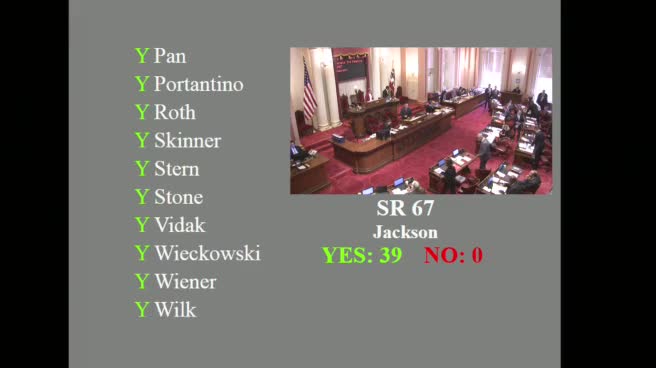
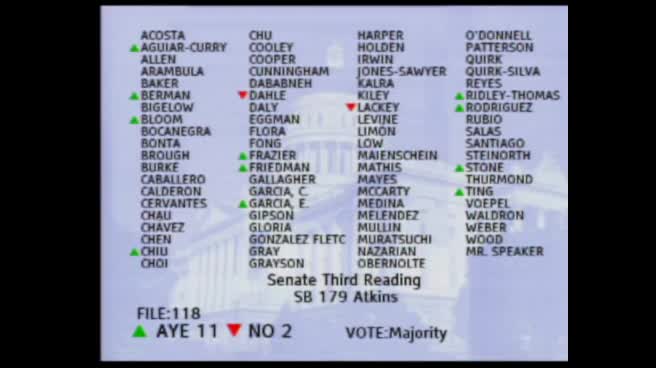
Bill Author

Bill Co-Author(s):