SB 221: Agricultural District 1-A: firearm and ammunition sales at the Cow Palace.
- Session Year: 2017-2018
- House: Senate
- Latest Version Date: 2018-09-04
Existing law generally regulates the transfer of firearms and divides the state into agricultural districts. District 1-A is the County of San Mateo and the City and County of San Francisco. A violation of the statutes governing agricultural districts is generally a misdemeanor.
This bill would, on and after January 1, 2020, prohibit the sale of firearms and ammunition at the Cow Palace located in District 1-A, as specified, and would thereby make a violation of that prohibition a misdemeanor. The bill would exclude from its provisions a gun buy-back event held by a law enforcement agency.
By creating a new crime, this bill would impose a state-mandated local program.
The California Constitution requires the state to reimburse local agencies and school districts for certain costs mandated by the state. Statutory provisions establish procedures for making that reimbursement.
This bill would provide that no reimbursement is required by this act for a specified reason.
Existing law allows a judge to assess an additional fine in an amount not to exceed $70 against a person who violates specified sex offenses or controlled substance offenses. Former law, repealed as of January 1, 2018, required that $50 of this fine be deposited in a special account in the county treasury to be used exclusively to pay for the reasonable costs of establishing and providing an AIDS education program under the direction of the county health department.This bill would authorize counties with funds collected pursuant to the above provision as it read on December 31, 2017, to expend the unencumbered balance of those funds on general HIV prevention and education programs.Existing law allows a judge to assess an additional fine in an amount not to exceed $70 against a person who violates specified sex offenses or controlled substance offenses. Former law, repealed as of January 1, 2018, required that $50 of this fine be deposited in a special account in the county treasury to be used exclusively to pay for the reasonable costs of establishing and providing an AIDS education program under the direction of the county health department.
This bill would authorize counties with funds collected pursuant to the above provision as it read on December 31, 2017, to expend the unencumbered balance of those funds on general HIV prevention and education programs.
Existing law, the Knox-Keene Health Care Service Plan Act of 1975, provides for the licensure and regulation of health care service plans by the Department of Managed Health Care and makes a willful violation of the act a crime. Existing law also provides for the regulation of health insurers by the Department of Insurance. Existing law requires health care service plan contracts and health insurance policies to provide coverage for specified benefits.This bill would require health care service plan contracts and health insurance policies issued, amended, renewed, or delivered on or after January 1, 2018, to include coverage for medical or drug treatments to correct or repair disturbances of body composition caused by human immunodeficiency virus (HIV) associated lipodystrophy syndrome, including, but not limited to, reconstructive surgery, such as suction assisted lipectomy, other restorative procedures and dermal injections or fillers for reversal of facial lipoatrophy syndrome, as provided. Because a willful violation of the bills provisions by a health care service plan would be a crime, it would impose a state-mandated local program.Existing law provides for the Medi-Cal program, which is administered by the State Department of Health Care Services and under which qualified low-income persons receive health care benefits. The Medi-Cal program is, in part, governed and funded by federal Medicaid provisions. Existing law provides for coverage of certain medical services, including, but not limited to, physician, hospital or clinic outpatient, surgical center, optometric, chiropractic, psychology, occupational therapy, physical therapy, speech therapy, and audiology under the Medi-Cal program.This bill would require the Medi-Cal program to cover medical or drug treatments to correct or repair disturbances of body composition caused by HIV associated lipodystrophy syndrome, including, but not limited to, reconstructive surgery, such as suction assisted lipectomy, other restorative procedures and dermal injections or fillers for reversal of facial lipoatrophy syndrome, as provided.The California Constitution requires the state to reimburse local agencies and school districts for certain costs mandated by the state. Statutory provisions establish procedures for making that reimbursement.This bill would provide that no reimbursement is required by this act for a specified reason.Existing law, the Knox-Keene Health Care Service Plan Act of 1975, provides for the licensure and regulation of health care service plans by the Department of Managed Health Care and makes a willful violation of the act a crime. Existing law also provides for the regulation of health insurers by the Department of Insurance. Existing law requires health care service plan contracts and health insurance policies to provide coverage for specified benefits.
This bill would require health care service plan contracts and health insurance policies issued, amended, renewed, or delivered on or after January 1, 2018, to include coverage for medical or drug treatments to correct or repair disturbances of body composition caused by human immunodeficiency virus (HIV) associated lipodystrophy syndrome, including, but not limited to, reconstructive surgery, such as suction assisted lipectomy, other restorative procedures and dermal injections or fillers for reversal of facial lipoatrophy syndrome, as provided. Because a willful violation of the bills provisions by a health care service plan would be a crime, it would impose a state-mandated local program.
Existing law provides for the Medi-Cal program, which is administered by the State Department of Health Care Services and under which qualified low-income persons receive health care benefits. The Medi-Cal program is, in part, governed and funded by federal Medicaid provisions. Existing law provides for coverage of certain medical services, including, but not limited to, physician, hospital or clinic outpatient, surgical center, optometric, chiropractic, psychology, occupational therapy, physical therapy, speech therapy, and audiology under the Medi-Cal program.
This bill would require the Medi-Cal program to cover medical or drug treatments to correct or repair disturbances of body composition caused by HIV associated lipodystrophy syndrome, including, but not limited to, reconstructive surgery, such as suction assisted lipectomy, other restorative procedures and dermal injections or fillers for reversal of facial lipoatrophy syndrome, as provided.
The California Constitution requires the state to reimburse local agencies and school districts for certain costs mandated by the state. Statutory provisions establish procedures for making that reimbursement.
This bill would provide that no reimbursement is required by this act for a specified reason.
(a)Notwithstanding any other law, no officer, employee, operator, or any lessee of District 1-A, as defined in Section 3853, may contract for, authorize, or allow the sale of any firearm or ammunition on the property or in the buildings that comprise the Cow Palace property in San Mateo County and the City and County of San Francisco or any successor or additional property owned, leased, or otherwise occupied or operated by the district.
(b)For purposes of this section:
(1)The definition of firearm means the term as included in Section 12001 of the Penal Code.
(2)The term ammunition includes assembled ammunition for use in a firearm and components of ammunition, including smokeless and black powder, and any projectile capable of being fired from a firearm with deadly consequence.
(c)This section does not apply to a gun buy-back event held by a law enforcement agency.
(d)This section shall become operative on January 1, 2020.
SEC. 2.No reimbursement is required by this act pursuant to Section 6 of Article XIIIB of the California Constitution because the only costs that may be incurred by a local agency or school district will be incurred because this act creates a new crime or infraction, eliminates a crime or infraction, or changes the penalty for a crime or infraction, within the meaning of Section 17556 of the Government Code, or changes the definition of a crime within the meaning of Section 6 of Article XIIIB of the California Constitution.
SECTION 1.Section 1463.23 is added to the Penal Code, to read:1463.23.Counties with funds collected pursuant to former Section 1463.23, as that section read on December 31, 2017, are authorized to expend the unencumbered balance of those funds on general HIV prevention and education programs. REVISIONS: HeadingLine 5.Counties with funds collected pursuant to former Section 1463.23, as that section read on December 31, 2017, are authorized to expend the unencumbered balance of those funds on general HIV prevention and education programs.
SECTION 1.Section 1367.47 is added to the Health and Safety Code, to read:1367.47.(a)A health care service plan contract issued, amended, renewed, or delivered on or after January 1, 2018, shall include coverage for medical or drug treatments to correct or repair disturbances of body composition caused by human immunodeficiency virus (HIV) associated lipodystrophy syndrome, including, but not limited to, reconstructive surgery, such as suction assisted lipectomy, other restorative procedures and dermal injections or fillers for reversal of facial lipoatrophy syndrome. Coverage shall be subject to a statement from a treating provider that the treatment is necessary for correcting, repairing, or ameliorating the effects of HIV associated lipodystrophy syndrome.(b)This section shall not apply to accident-only, specified disease, hospital indemnity, Medicare supplement, dental-only, or vision-only health care service plan contracts.SEC. 2.Section 10123.92 is added to the Insurance Code, to read:10123.92.(a)A health insurance policy issued, amended, renewed, or delivered on or after January 1, 2018, shall include coverage for medical or drug treatments to correct or repair disturbances of body composition caused by human immunodeficiency virus (HIV) associated lipodystrophy syndrome, including, but not limited to, reconstructive surgery, such as suction assisted lipectomy, other restorative procedures and dermal injections or fillers for reversal of facial lipoatrophy syndrome. Coverage shall be subject to a statement from a treating provider that the treatment is necessary for correcting, repairing, or ameliorating the effects of HIV associated lipodystrophy syndrome.(b)This section shall not apply to accident-only, specified disease, hospital indemnity, CHAMPUS supplement, TRI-CARE supplement, Medicare supplement, dental-only, or vision-only health insurance policies.SEC. 3.Section 14132.04 is added to the Welfare and Institutions Code, to read:14132.04.(a)A covered Medi-Cal benefit shall include medical or drug treatments to correct or repair disturbances of body composition caused by human immunodeficiency virus (HIV) associated lipodystrophy syndrome, including, but not limited to, reconstructive surgery, such as suction assisted lipectomy, other restorative procedures and dermal injections or fillers for reversal of facial lipoatrophy syndrome. Coverage shall be subject to a statement from a treating provider that the treatment is necessary for correcting, repairing, or ameliorating the effects of HIV associated lipodystrophy syndrome.(b)This section shall be implemented only to the extent permitted by federal law.(c)Notwithstanding Chapter 3.5 (commencing with Section 11340) of Part 1 of Division 3 of Title 2 of the Government Code, the department may implement the provisions of this section by means of all-county letters, provider bulletins, or similar instructions, without taking further regulatory action.(d)The department shall seek any necessary federal approval for federal financial participation and coverage of services in this section under the Medi-Cal program.SEC. 4.No reimbursement is required by this act pursuant to Section 6 of Article XIIIB of the California Constitution because the only costs that may be incurred by a local agency or school district will be incurred because this act creates a new crime or infraction, eliminates a crime or infraction, or changes the penalty for a crime or infraction, within the meaning of Section 17556 of the Government Code, or changes the definition of a crime within the meaning of Section 6 of Article XIIIB of the California Constitution.(a)A health care service plan contract issued, amended, renewed, or delivered on or after January 1, 2018, shall include coverage for medical or drug treatments to correct or repair disturbances of body composition caused by human immunodeficiency virus (HIV) associated lipodystrophy syndrome, including, but not limited to, reconstructive surgery, such as suction assisted lipectomy, other restorative procedures and dermal injections or fillers for reversal of facial lipoatrophy syndrome. Coverage shall be subject to a statement from a treating provider that the treatment is necessary for correcting, repairing, or ameliorating the effects of HIV associated lipodystrophy syndrome.
(b)This section shall not apply to accident-only, specified disease, hospital indemnity, Medicare supplement, dental-only, or vision-only health care service plan contracts.
SEC. 2.Section 10123.92 is added to the Insurance Code, to read:10123.92.(a)A health insurance policy issued, amended, renewed, or delivered on or after January 1, 2018, shall include coverage for medical or drug treatments to correct or repair disturbances of body composition caused by human immunodeficiency virus (HIV) associated lipodystrophy syndrome, including, but not limited to, reconstructive surgery, such as suction assisted lipectomy, other restorative procedures and dermal injections or fillers for reversal of facial lipoatrophy syndrome. Coverage shall be subject to a statement from a treating provider that the treatment is necessary for correcting, repairing, or ameliorating the effects of HIV associated lipodystrophy syndrome.
(b)This section shall not apply to accident-only, specified disease, hospital indemnity, CHAMPUS supplement, TRI-CARE supplement, Medicare supplement, dental-only, or vision-only health insurance policies.
SEC. 3.Section 14132.04 is added to the Welfare and Institutions Code, to read:14132.04.(a)A covered Medi-Cal benefit shall include medical or drug treatments to correct or repair disturbances of body composition caused by human immunodeficiency virus (HIV) associated lipodystrophy syndrome, including, but not limited to, reconstructive surgery, such as suction assisted lipectomy, other restorative procedures and dermal injections or fillers for reversal of facial lipoatrophy syndrome. Coverage shall be subject to a statement from a treating provider that the treatment is necessary for correcting, repairing, or ameliorating the effects of HIV associated lipodystrophy syndrome.
(b)This section shall be implemented only to the extent permitted by federal law.
(c)Notwithstanding Chapter 3.5 (commencing with Section 11340) of Part 1 of Division 3 of Title 2 of the Government Code, the department may implement the provisions of this section by means of all-county letters, provider bulletins, or similar instructions, without taking further regulatory action.
(d)The department shall seek any necessary federal approval for federal financial participation and coverage of services in this section under the Medi-Cal program.
SEC. 4.No reimbursement is required by this act pursuant to Section 6 of Article XIIIB of the California Constitution because the only costs that may be incurred by a local agency or school district will be incurred because this act creates a new crime or infraction, eliminates a crime or infraction, or changes the penalty for a crime or infraction, within the meaning of Section 17556 of the Government Code, or changes the definition of a crime within the meaning of Section 6 of Article XIIIB of the California Constitution.
|
Date
|
Status
|
|---|---|
| Sep 28, 2018 | In Senate. Consideration of Governor's veto pending. |
| Sep 28, 2018 | Vetoed by the Governor. |
| Sep 6, 2018 | Enrolled and presented to the Governor at 4 p.m. |
| Aug 30, 2018 | Assembly amendments concurred in. (Ayes 26. Noes 13.) Ordered to engrossing and enrolling. |
| Aug 29, 2018 | From committee: That the Assembly amendments be concurred in. (Ayes 5. Noes 2.) |
| Aug 28, 2018 | From committee: Be re-referred to Com. on PUB. S. pursuant to Senate Rule 29.10(d). (Ayes 5. Noes 0.) Re-referred to Com. on PUB. S. |
| Aug 28, 2018 | Re-referred to Com. on RLS. pursuant to Senate Rule 29.10(d). |
| Aug 28, 2018 | In Senate. Concurrence in Assembly amendments pending. |
| Aug 27, 2018 | Read third time. Passed. Ordered to the Senate. |
| Aug 9, 2018 | Read second time. Ordered to third reading. |
| Aug 8, 2018 | From committee: Do pass. (Ayes 12. Noes 5.) (August 8). |
| Jun 19, 2018 | Coauthors revised. |
| Jun 12, 2018 | June 12 set for first hearing canceled at the request of author. |
| May 17, 2018 | From committee with author's amendments. Read second time and amended. Re-referred to Com. on PUB. S. |
| Apr 26, 2018 | Referred to Com. on PUB. S. |
| Jan 30, 2018 | In Assembly. Read first time. Held at Desk. |
| Jan 29, 2018 | Read third time. Passed. (Ayes 39. Noes 0.) Ordered to the Assembly. |
| Jan 10, 2018 | Read second time. Ordered to consent calendar. |
| Jan 9, 2018 | From committee: Do pass. Ordered to consent calendar. (Ayes 7. Noes 0.) (January 9). |
| Jan 4, 2018 | Set for hearing January 9. |
| Jan 3, 2018 | Re-referred to Com. on PUB. S. |
| Jan 3, 2018 | Withdrawn from committee. |
| Jan 3, 2018 | From committee with author's amendments. Read second time and amended. Re-referred to Com. on HEALTH. |
| Dec 21, 2017 | Set for hearing January 10. |
| Apr 20, 2017 | April 26 set for first hearing canceled at the request of author. |
| Mar 31, 2017 | Set for hearing April 26. |
| Feb 16, 2017 | Referred to Com. on HEALTH. |
| Feb 3, 2017 | From printer. May be acted upon on or after March 5. |
| Feb 2, 2017 | Introduced. Read first time. To Com. on RLS. for assignment. To print. |
|
Date
|
Description
|
Location
|
Votes
|
|
|---|---|---|---|---|
| Aug 30, 2018 | Unfinished Business SB221 Wiener et al. Concurrence | Senate Floor |
Passed |
|
| Aug 29, 2018 | That the Assembly amendments be concurred in | Senate Standing Committee on Public Safety |
Passed |
|
| Aug 27, 2018 | SB 221 Wiener Senate Third Reading By TING | Assembly Floor |
Passed |
|
| Aug 8, 2018 | Do pass. | Assembly Standing Committee on Appropriations |
Passed |
|
| Jun 19, 2018 | Do pass and be re-referred to the Committee on [Appropriations] | Assembly Standing Committee on Public Safety |
Passed |
|
| Jan 29, 2018 | Consent Calendar SB221 Wiener et al. | Senate Floor |
Passed |
|
| Jan 9, 2018 | Do pass and be ordered to the Consent Calendar | Senate Standing Committee on Public Safety |
Passed |
This list shows positions taken on this bill by organizations on the date displayed, which is linked to the original source.
Positions by individuals are not included.
|
Organization
|
Position
|
Date
|
|---|---|---|
| B&L Productions Dba Crossroads Of The West Gun Shows | * Against | Aug 8, 2018 |
| Bay Area Student Activists | * Support | Jun 19, 2018 |
| California Rifle and Pistol Association | * Against | Aug 29, 2018 |
| California Sportsman's Lobby | ** Against | Oct 4, 2018 |
| California Std | ** Support | Jan 10, 2018 |
| City and County of San Francisco | ** Support | Oct 4, 2018 |
| City Of Daly City | ** Support | Oct 4, 2018 |
| City of San Francisco | * Support | Jun 19, 2018 |
| County Health Executives Association Of California | ** Support | Jan 10, 2018 |
| Crossroads of the West | ** Against | Oct 4, 2018 |
| Firearms Policy Coalition | * Against | Aug 29, 2018 |
| Gun Owners of California | * Against | Aug 29, 2018 |
| Hiv Controllers Association | ** Support | Jan 10, 2018 |
| Jefferson Union High School District | ** Support | Oct 4, 2018 |
| Juslyn Manalo, Mayor Of Daly City | ** Support | Jun 18, 2018 |
| National Rifle Association | * Against | Aug 29, 2018 |
| National Shooting Sports Foundation | ** Against | Oct 4, 2018 |
| Outdoor Sportsmen'S Coalition Of California | ** Against | Oct 4, 2018 |
| Safari Club International | ** Against | Oct 4, 2018 |
| Safari Club International Foundation | ** Against | Oct 4, 2018 |
| San Francisco Board of Supervisors | * Support | Aug 8, 2018 |
| san francisco marin medical society | ** Support | Oct 4, 2018 |
| San Francisco Unified School District | ** Support | Oct 4, 2018 |
| San Mateo County Board of Supervisors | ** Support | Oct 4, 2018 |
| self | * Support | Jun 19, 2018 |
| Western Fairs Association | * Against | Aug 29, 2018 |
Office of Senate Floor Analyses (916) 651-1520 Fax: (916) 327-4478 | SB 221 |
VETO
Bill No: SB 221
Amended: 5/17/18
PRIOR SENATE VOTES NOT RELEVANT
SENATE PUBLIC SAFETY COMMITTEE: 5-2, 8/29/18 (Pursuant to Senate Rule 29.10)
AYES: Skinner, Bradford, Jackson, Mitchell, Wiener
NOES: Anderson, Stone
SENATE FLOOR: 26-13, 8/30/18
AYES: Allen, Atkins, Beall, Bradford, De León, Delgado, Dodd, Galgiani, Glazer, Hernandez, Hertzberg, Hill, Hueso, Jackson, Lara, Leyva, McGuire, Mitchell, Monning, Pan, Portantino, Roth, Skinner, Stern, Wieckowski, Wiener
NOES: Anderson, Bates, Cannella, Chang, Fuller, Gaines, Moorlach, Morrell, Nguyen, Nielsen, Stone, Vidak, Wilk
NO VOTE RECORDED: Berryhill
ASSEMBLY FLOOR: 44-31, 8/27/18 - See last page for vote
SUBJECT: Agricultural District 1-A: firearm and ammunition sales at the Cow Palace
DIGEST:
This bill prohibits the sale of firearms and ammunitions at the Cow Palace located in San Mateo County and San Francisco County.
Existing law:
- Divides the state into agricultural districts, and designates District 1-A as the County of San Mateo and the City and County of San Francisco. (Food & Agr. Code, §§ 3851, 3853.)
- Establishes District Agricultural Associations (DAA) within each agricultural district, for the purposes of holding fairs, expositions and exhibitions, and constructing, maintaining, and operating recreational and cultural facilities of general public interest, and states that each association is a state institution. (Food & Agr. Code, §§ 3951, 3893.)
- States that a DAA may:
- Contract for programs and for the purchase or lease of goods, either independently or in cooperation with any individual, public or private organization, or federal, state, or local governmental agency;
- Purchase, acquire, hold, sell, or exchange, or convey any interest in real property;
- Lease for the use of its real property, or any portion of that property, to any person or public body for whatever purpose; and,
- Use, manage, or operate any of its property jointly or in connection with any lessee or sublessee, for any purpose. (Food & Agr. Code, § 4051.)
- Provides that brining or possessing a firearm within any state or local public building is punishable by imprisonment in a county jail for not more than one year, or in the state prison, unless a person brings any weapon that may be lawfully transferred into a gun show for the purpose of sale or trade. (Pen. Code §§ 171b subd. (a), 171b subd. (b)(7)(A).)
- Prohibits the sale, lease, or transfer of firearms without a license, unless the sale, lease, or transfer is pursuant to operation of law or a court order, made by a person who obtains the firearm by intestate succession or bequest, or is an infrequent sale, transfer, or transfer, as defined. (Pen. Code § 26500, 26505, 26520.)
- Excludes persons with a valid federal firearms license and a current certificate of eligibility issued by the Department of Justice (DOJ) from the prohibitions on the sale, lease, or transfer of used firearms, other than handguns, at gun shows or events. (Pen. Code § 26525.)
- Permits licensed dealers to sell firearms only from their licensed premises and at gun shows. (Pen. Code § 26805.)
- States that a dealer operating at a gun show must comply with all applicable laws, including California’s waiting period law, laws governing the transfer of firearms by dealers, and all local ordinances, regulations, and fees. (Pen. Code § 26805.)
- States that no person shall produce, promote, sponsor, operate, or otherwise organize a gun show, unless that person possesses a valid certificate of eligibility from DOJ. (Pen. Code § 27200.)
- Specifies the requirements that gun show operators must comply with at gun shows, including entering into a written contract with each gun show vendor selling firearms at the show, ensuring that liability insurance is in effect for the duration of a gun show, posting visible signs pertaining to gun show laws at the entrances of the event, and submitting a list of all prospective vendors and designated firearms transfer agents who are licensed firearms dealers to DOJ, as specified. (Pen. Code §§ 27200, 27245.)
This bill:
- Prohibits any officer, employee, operator, or lessee of Agriculture District 1-A, from contracting for, authorizing, or allowing the sale of any firearm or ammunition at the Cow Palace property in San Mateo County and San Francisco County.
- Provides that the prohibition on firearms and ammunitions sales at the Cow Palace does not apply to gun buy-back events held by a law enforcement agency.
- States that this bill will become operative on January 1, 2020.
Background
Cow Palace is the 1-A DAA, a state agency of the California Department of Food and Agriculture, located in Daly City at the border of San Mateo and San Francisco counties. The Cow Palace arena was originally constructed in 1941, to serve as a permanent structure to house an animal livestock exposition. Cow Palace has since become a venue for various events including circuses, sports matches, concerts, and political conventions. Since the 1980s, Cow Palace has hosted gun shows four or five times a year.
According to an editorial in the San Francisco Chronicle, “[t]he communities living near the Cow Palace, the enormous state-owned exhibition hall in Daly City, overwhelmingly want the venue to stop hosting gun shows.” San Francisco has adopted local ordinances banning gun shows on city and county property. Likewise, since 1996, San Mateo County’s Board of Supervisors has barred gun shows at its county fairgrounds and expo center. But, because Cow Palace is situated on state-owned land between San Francisco and San Mateo County, the local governing bodies cannot regulate gun shows at Cow Palace. Thus, the Legislature would have to enact a state-law to specifically ban gun shows on the property.
Gun shows are essentially a flea market for firearms. At gun shows, individuals may buy, sale, and trade firearms and fire-arms related accessories. These events typically attract several thousand people, and a single gun show can have sales of over 1,000 firearms over the course of one weekend. (Bureau of Alcohol, Tobacco, Firearms and Explosives,
According to the NRA’s Institute for Legislative Action, less than one percent of inmates incarcerated in state prisons for gun crimes acquired their firearms at a gun show. However, gun shows rank second to corrupt dealers as a source for illegally trafficked firearms. Though violent criminals do not buy most of their guns directly from gun shows, gun shows are “the critical moment in the chain of custody for many guns, the point at which they move from the somewhat-regulated legal market to the shadowy, no-questions-asked illegal market.” (Center for American Progress.)
Concerns about gun shows extend beyond the state. A report by the Government Accountability Office regarding gun trafficking to Mexico confirmed that many traffickers buy guns at gun shows. 87 percent of firearms seized by Mexican authorities and traced in the last 5 years originated in the United States, according to data from DOJ’s Bureau of Alcohol, Tobacco, Firearms and Explosives. According to United States and Mexican government officials, these firearms have been increasingly more powerful and lethal in recent years. Many of these firearms come from gun shops and gun shows in south-west border states.
AB 295 (Corbett, Chapter 247, Statutes of 1999), the Gun Show Enforcement and Security Act of 2000, added a number of requirements for gun shows. To obtain a certificate of eligibility from the DOJ, a promoter must certify that he or she is familiar with existing law regarding gun shows; obtain at least $1 million of liability insurance; provide an annual list of gun shows the applicant plans to promote; pay an annual fee; make available to local law enforcement a complete list of all entities that have rented any space at the show; submit not later than 15 days before the start of the show an event and security plan; submit a list to DOJ of prospective vendors and designated firearms transfer agents who are licensed dealers; provide photo identification of each vendor and vendor’s employee; prepare an annual event and security plan; and require all firearms carried onto the premises of a show to be checked, cleared of ammunition, secured in a way that they cannot be operated, and have an identification tag or sticker attached. AB 295 also provided for a number of penalties for a gun show producer’s willful failure to comply with the specified requirements. California’s strict gun show regulations may help to prevent increases in firearm deaths and injuries following gun shows. (See Ellicott C. Matthay, et al., “In-State and Interstate Associations Between Gun Shows and Firearm Deaths and Injuries,” Annals of Internal Medicine (2017) Vol. 1 Iss. 8.)
In addition to state laws regulating gun shows, a total ban on gun shows on county property is within the scope of a county’s authority. “Under California Government Code section 23004(d), a county is given substantial authority to manage its property, including the most fundamental decision as to how the property will be used and that nothing in the gun show statutes evince intent to override that authority. The gun show statutes do not mandate that counties use their property for such shows. If the county does allow such shows, it may impose more stringent restrictions on the sale of firearms than state law prescribes.” (Nordyke v. Santa Clara County (9th Cir. Cal. 1997) 110 F.3d 707, 766.) However, counties do not have authority to prohibit gun shows on state property such as Cow Palace.
There have been several legislative attempts to regulate gun shows at Cow Palace—most notably, SB 475 (Leno, 2014) and SB 585 (Leno, 2010), which were both vetoed.
Like this bill, SB 585 would have prohibited gun shows at Cow Palace. SB 585 would have additionally required the Cow Palace DAA to replace gun show events with non-firearm or non-ammunition related events. In his veto message, Governor Schwarzenegger stated that SB 585 would “set a confusing precedent at the state level by statutorily prohibiting one [DAA] from selling firearms and ammunition, a legal and regulated activity, while allowing other DAAs to continue to do so. In addition, [SB 585] would result in decreased state and local tax revenues by restricting events at the Cow Palace.” Unlike SB 585, this bill will not impair any of Cow Palace’s ongoing contracts because, if chaptered, it will not become operative until January 1, 2020.
Another attempt to prohibit gun sales at Cow Palace was similarly vetoed by Governor Brown. SB 475 would have permitted gun shows at Cow Palace only upon prior approval by resolution adopted by both the Board of Supervisors of the County of San Mateo and the Board of Supervisors of the City and County of San Francisco. SB 475 was vetoed by because it required the Cow Palace DAA to obtain approval from the County of San Mateo and the City and County of San Francisco prior to entering into a contract for a gun show on state property. In his veto message, Governor Brown stated, “I encourage all [DAAs] to work with their local communities when determining their operations and events. [SB 475], however, totally pre-empts the Board of Directors of the Cow Palace from exercising its contracting authority whenever a gun show is involved. I prefer to leave these decisions to the sound discretion of the Board.” Under SB 475, the Cow Palace DAA would have been permitted to host gun shows, but only at the discretion of San Francisco and San Mateo counties. In practice, SB 475 would have allowed the Board of Cow Palace to permit some approved gun shows, and required it to prohibit other non-county-approved gun shows. In comparison, this bill instead completely prohibits all gun shows at Cow Palace.
FISCAL EFFECT: Appropriation: No Fiscal Com.: Yes Local: Yes
According to the Assembly Appropriations Committee:
- Minor GF costs for DOJ to update records.
- No direct cost to the California Department of Food and Agriculture.
City and County of San Francisco
City of Daly City
Jefferson Union High School District
San Francisco Marin Medical Society
San Francisco Unified School District
San Mateo County Board of Supervisors
OPPOSITION: (Verified 10/2/18)
California Sportsman’s Lobby
Crossroads of the West
National Shooting Sports Foundation
Outdoor Sportsmen’s Coalition of California
Safari Club International
Safari Club International Foundation
ARGUMENTS IN SUPPORT: According to the San Mateo County Board of Supervisors:
The San Mateo County Board of Supervisors cannot restrict gun shows at the Cow Palace since it is owned by the California Department of Agriculture’s Division of Fairs and Expositions. Gun shows at the Cow Palace and other California State Agriculture Districts promote and proliferate firearms throughout the State.
At a time when gun violence is increasing throughout the country, it is critically important that local governing bodies be afforded an opportunity to have a direct say in whether gun shows should occur in venues located within their borders.
ARGUMENTS IN OPPOSITION: According to Crossroads of the West:
It is estimated that, if the bill is enacted, the annual revenue decline to the Cow Palace from lost gun show leases, parking and related revenues will be more than $730,000 (based on latest figures available) and that the annual loss in sales tax revenue would exceed $600,000. It is important to note that newly-enacted legislation, AB 1499, requires vendors who sell merchandise on state fair properties to report those sales separately, providing thousands of dollars in additional revenue annually for the Cow Palace…
Firearms sales at gun shows are conducted through a dealer licensed in accordance with California law. The dealer retains custody of the firearm during the ten-day waiting period and sends the buyer’s information to the State Department of Justice, which conducts a criminal and mental history background check to determine if the person is in a category prohibited from possessing firearms.
GOVERNOR'S VETO MESSAGE:
I am returning Senate Bill 221 without my signature.
This bill would prohibit the sale of firearms and ammunition at the District Agricultural Association 1A, commonly known as the Cow Palace.
This bill has been vetoed twice over the last ten years, once by myself, and once by Governor Schwarzenegger.
The decision on what kind of shows occur at the Cow Palace rests with the local board of directors which, incidentally, represents a broad cross section of the community. They are in the best position to make these decisions.
ASSEMBLY FLOOR: 44-31, 8/27/18
AYES: Baker, Berman, Bloom, Bonta, Burke, Calderon, Carrillo, Chau, Chiu, Chu, Eggman, Friedman, Gabriel, Cristina Garcia, Eduardo Garcia, Gipson, Gloria, Gonzalez Fletcher, Grayson, Holden, Irwin, Jones-Sawyer, Kalra, Kamlager-Dove, Levine, Limón, Low, McCarty, Medina, Mullin, Muratsuchi, Nazarian, O'Donnell, Quirk-Silva, Reyes, Rivas, Rubio, Santiago, Mark Stone, Thurmond, Ting, Weber, Wood, Rendon
NOES: Acosta, Travis Allen, Bigelow, Brough, Caballero, Cervantes, Chávez, Chen, Choi, Cooley, Cooper, Cunningham, Dahle, Flora, Fong, Frazier, Gallagher, Gray, Harper, Kiley, Lackey, Maienschein, Mathis, Mayes, Melendez, Obernolte, Patterson, Salas, Steinorth, Voepel, Waldron
NO VOTE RECORDED: Aguiar-Curry, Arambula, Daly, Quirk, Rodriguez
Prepared by: Gabe Caswell / PUB. S. /
10/4/18 12:41:12
**** END ****
Office of Senate Floor Analyses (916) 651-1520 Fax: (916) 327-4478 | SB |
UNFINISHED BUSINESS
Bill No: SB 221
:
PRIOR SENATE VOTES NOT RELEVANT
SENATE PUBLIC SAFETY COMMITTEE: 5-2, 8/29/18 (Pursuant to Senate Rule 29.10)
AYES: Skinner, Bradford, Jackson, Mitchell, Wiener
NOES: Anderson, Stone
ASSEMBLY FLOOR: 44-31, 8/27/18 - See last page for vote
SUBJECT: Agricultural District 1-A: firearm and ammunition sales at the Cow Palace
DIGEST:
This bill prohibits the sale of firearms and ammunitions at the Cow Palace located in San Mateo County and San Francisco County.
Assembly Amendments
delete the Senate version of the bill and amend the bill to the current version.
Existing law:
- Divides the state into agricultural districts, and designates District 1-A as the County of San Mateo and the City and County of San Francisco. (Food & Agr. Code, §§ 3851, 3853.)
- Establishes District Agricultural Associations (DAA) within each agricultural district, for the purposes of holding fairs, expositions and exhibitions, and constructing, maintaining, and operating recreational and cultural facilities of general public interest, and states that each association is a state institution. (Food & Agr. Code, §§ 3951, 3893.)
- States that a DAA may:
- Contract for programs and for the purchase or lease of goods, either independently or in cooperation with any individual, public or private organization, or federal, state, or local governmental agency;
- Purchase, acquire, hold, sell, or exchange, or convey any interest in real property;
- Lease for the use of its real property, or any portion of that property, to any person or public body for whatever purpose; and,
- Use, manage, or operate any of its property jointly or in connection with any lessee or sublessee, for any purpose. (Food & Agr. Code, § 4051.)
- Provides that brining or possessing a firearm within any state or local public building is punishable by imprisonment in a county jail for not more than one year, or in the state prison, unless a person brings any weapon that may be lawfully transferred into a gun show for the purpose of sale or trade. (Pen. Code §§ 171b subd. (a), 171b subd. (b)(7)(A).)
- Prohibits the sale, lease, or transfer of firearms without a license, unless the sale, lease, or transfer is pursuant to operation of law or a court order, made by a person who obtains the firearm by intestate succession or bequest, or is an infrequent sale, transfer, or transfer, as defined. (Pen. Code § 26500, 26505, 26520.)
- Excludes persons with a valid federal firearms license and a current certificate of eligibility issued by the Department of Justice (DOJ) from the prohibitions on the sale, lease, or transfer of used firearms, other than handguns, at gun shows or events. (Pen. Code § 26525.)
- Permits licensed dealers to sell firearms only from their licensed premises and at gun shows. (Pen. Code § 26805.)
- States that a dealer operating at a gun show must comply with all applicable laws, including California’s waiting period law, laws governing the transfer of firearms by dealers, and all local ordinances, regulations, and fees. (Pen. Code § 26805.)
- States that no person shall produce, promote, sponsor, operate, or otherwise organize a gun show, unless that person possesses a valid certificate of eligibility from DOJ. (Pen. Code § 27200.)
- Specifies the requirements that gun show operators must comply with at gun shows, including entering into a written contract with each gun show vendor selling firearms at the show, ensuring that liability insurance is in effect for the duration of a gun show, posting visible signs pertaining to gun show laws at the entrances of the event, and submitting a list of all prospective vendors and designated firearms transfer agents who are licensed firearms dealers to DOJ, as specified. (Pen. Code §§ 27200, 27245.)
This bill:
- Prohibits any officer, employee, operator, or lessee of Agriculture District 1-A, from contracting for, authorizing, or allowing the sale of any firearm or ammunition at the Cow Palace property in San Mateo County and San Francisco County.
- Provides that the prohibition on firearms and ammunitions sales at the Cow Palace does not apply to gun buy-back events held by a law enforcement agency.
- States that this bill will become operative on January 1, 2020.
Background
Cow Palace is the 1-A DAA, a state agency of the California Department of Food and Agriculture, located in Daly City at the border of San Mateo and San Francisco counties. The Cow Palace arena was originally constructed in 1941, to serve as a permanent structure to house an animal livestock exposition. Cow Palace has since become a venue for various events including circuses, sports matches, concerts, and political conventions. Since the 1980s, Cow Palace has hosted gun shows four or five times a year.
According to an editorial in the San Francisco Chronicle, “[t]he communities living near the Cow Palace, the enormous state-owned exhibition hall in Daly City, overwhelmingly want the venue to stop hosting gun shows.” San Francisco has adopted local ordinances banning gun shows on city and county property. Likewise, since 1996, San Mateo County’s Board of Supervisors has barred gun shows at its county fairgrounds and expo center. But, because Cow Palace is situated on state-owned land between San Francisco and San Mateo County, the local governing bodies cannot regulate gun shows at Cow Palace. Thus, the Legislature would have to enact a state-law to specifically ban gun shows on the property.
Gun shows are essentially a flea market for firearms. At gun shows, individuals may buy, sale, and trade firearms and fire-arms related accessories. These events typically attract several thousand people, and a single gun show can have sales of over 1,000 firearms over the course of one weekend. (Bureau of Alcohol, Tobacco, Firearms and Explosives,
According to the NRA’s Institute for Legislative Action, less than one percent of inmates incarcerated in state prisons for gun crimes acquired their firearms at a gun show. However, gun shows rank second to corrupt dealers as a source for illegally trafficked firearms. Though violent criminals do not buy most of their guns directly from gun shows, gun shows are “the critical moment in the chain of custody for many guns, the point at which they move from the somewhat-regulated legal market to the shadowy, no-questions-asked illegal market.” (Center for American Progress.)
Concerns about gun shows extend beyond the state. A report by the Government Accountability Office regarding gun trafficking to Mexico confirmed that many traffickers buy guns at gun shows. 87 percent of firearms seized by Mexican authorities and traced in the last 5 years originated in the United States, according to data from DOJ’s Bureau of Alcohol, Tobacco, Firearms and Explosives. According to United States and Mexican government officials, these firearms have been increasingly more powerful and lethal in recent years. Many of these firearms come from gun shops and gun shows in south-west border states.
AB 295 (Corbett, Chapter 247, Statutes of 1999), the Gun Show Enforcement and Security Act of 2000, added a number of requirements for gun shows. To obtain a certificate of eligibility from the DOJ, a promoter must certify that he or she is familiar with existing law regarding gun shows; obtain at least $1 million of liability insurance; provide an annual list of gun shows the applicant plans to promote; pay an annual fee; make available to local law enforcement a complete list of all entities that have rented any space at the show; submit not later than 15 days before the start of the show an event and security plan; submit a list to DOJ of prospective vendors and designated firearms transfer agents who are licensed dealers; provide photo identification of each vendor and vendor’s employee; prepare an annual event and security plan; and require all firearms carried onto the premises of a show to be checked, cleared of ammunition, secured in a way that they cannot be operated, and have an identification tag or sticker attached. AB 295 also provided for a number of penalties for a gun show producer’s willful failure to comply with the specified requirements. California’s strict gun show regulations may help to prevent increases in firearm deaths and injuries following gun shows. (See Ellicott C. Matthay, et al., “In-State and Interstate Associations Between Gun Shows and Firearm Deaths and Injuries,” Annals of Internal Medicine (2017) Vol. 1 Iss. 8.)
In addition to state laws regulating gun shows, a total ban on gun shows on county property is within the scope of a county’s authority. “Under California Government Code section 23004(d), a county is given substantial authority to manage its property, including the most fundamental decision as to how the property will be used and that nothing in the gun show statutes evince intent to override that authority. The gun show statutes do not mandate that counties use their property for such shows. If the county does allow such shows, it may impose more stringent restrictions on the sale of firearms than state law prescribes.” (Nordyke v. Santa Clara County (9th Cir. Cal. 1997) 110 F.3d 707, 766.) However, counties do not have authority to prohibit gun shows on state property such as Cow Palace.
There have been several legislative attempts to regulate gun shows at Cow Palace—most notably, SB 475 (Leno, 2014) and SB 585 (Leno, 2010), which were both vetoed.
Like this bill, SB 585 would have prohibited gun shows at Cow Palace. SB 585 would have additionally required the Cow Palace DAA to replace gun show events with non-firearm or non-ammunition related events. In his veto message, Governor Schwarzenegger stated that SB 585 would “set a confusing precedent at the state level by statutorily prohibiting one [DAA] from selling firearms and ammunition, a legal and regulated activity, while allowing other DAAs to continue to do so. In addition, [SB 585] would result in decreased state and local tax revenues by restricting events at the Cow Palace.” Unlike SB 585, this bill will not impair any of Cow Palace’s ongoing contracts because, if chaptered, it will not become operative until January 1, 2020.
Another attempt to prohibit gun sales at Cow Palace was similarly vetoed by Governor Brown. SB 475 would have permitted gun shows at Cow Palace only upon prior approval by resolution adopted by both the Board of Supervisors of the County of San Mateo and the Board of Supervisors of the City and County of San Francisco. SB 475 was vetoed by because it required the Cow Palace DAA to obtain approval from the County of San Mateo and the City and County of San Francisco prior to entering into a contract for a gun show on state property. In his veto message, Governor Brown stated, “I encourage all [DAAs] to work with their local communities when determining their operations and events. [SB 475], however, totally pre-empts the Board of Directors of the Cow Palace from exercising its contracting authority whenever a gun show is involved. I prefer to leave these decisions to the sound discretion of the Board.” Under SB 475, the Cow Palace DAA would have been permitted to host gun shows, but only at the discretion of San Francisco and San Mateo counties. In practice, SB 475 would have allowed the Board of Cow Palace to permit some approved gun shows, and required it to prohibit other non-county-approved gun shows. In comparison, this bill instead completely prohibits all gun shows at Cow Palace.
FISCAL EFFECT: Appropriation: Fiscal Com.: Local:
According to the Assembly Appropriations Committee:
- Minor GF costs for DOJ to update records.
- No direct cost to the California Department of Food and Agriculture.
City and County of San Francisco
City of Daly City
Jefferson Union High School District
San Francisco Marin Medical Society
San Francisco Unified School District
San Mateo County Board of Supervisors
OPPOSITION: (Verified 8/27/18)
California Sportsman’s Lobby
Crossroads of the West
National Shooting Sports Foundation
Outdoor Sportsmen’s Coalition of California
Safari Club International
Safari Club International Foundation
ARGUMENTS IN SUPPORT: According to the San Mateo County Board of Supervisors:
The San Mateo County Board of Supervisors cannot restrict gun shows at the Cow Palace since it is owned by the California Department of Agriculture’s Division of Fairs and Expositions. Gun shows at the Cow Palace and other California State Agriculture Districts promote and proliferate firearms throughout the State.
At a time when gun violence is increasing throughout the country, it is critically important that local governing bodies be afforded an opportunity to have a direct say in whether gun shows should occur in venues located within their borders.
ARGUMENTS IN OPPOSITION: According to Crossroads of the West:
It is estimated that, if the bill is enacted, the annual revenue decline to the Cow Palace from lost gun show leases, parking and related revenues will be more than $730,000 (based on latest figures available) and that the annual loss in sales tax revenue would exceed $600,000. It is important to note that newly-enacted legislation, AB 1499, requires vendors who sell merchandise on state fair properties to report those sales separately, providing thousands of dollars in additional revenue annually for the Cow Palace…
Firearms sales at gun shows are conducted through a dealer licensed in accordance with California law. The dealer retains custody of the firearm during the ten-day waiting period and sends the buyer’s information to the State Department of Justice, which conducts a criminal and mental history background check to determine if the person is in a category prohibited from possessing firearms.
ASSEMBLY FLOOR: 44-31, 8/27/18
AYES: Baker, Berman, Bloom, Bonta, Burke, Calderon, Carrillo, Chau, Chiu, Chu, Eggman, Friedman, Gabriel, Cristina Garcia, Eduardo Garcia, Gipson, Gloria, Gonzalez Fletcher, Grayson, Holden, Irwin, Jones-Sawyer, Kalra, Kamlager-Dove, Levine, Limón, Low, McCarty, Medina, Mullin, Muratsuchi, Nazarian, O'Donnell, Quirk-Silva, Reyes, Rivas, Rubio, Santiago, Mark Stone, Thurmond, Ting, Weber, Wood, Rendon
NOES: Acosta, Travis Allen, Bigelow, Brough, Caballero, Cervantes, Chávez, Chen, Choi, Cooley, Cooper, Cunningham, Dahle, Flora, Fong, Frazier, Gallagher, Gray, Harper, Kiley, Lackey, Maienschein, Mathis, Mayes, Melendez, Obernolte, Patterson, Salas, Steinorth, Voepel, Waldron
NO VOTE RECORDED: Aguiar-Curry, Arambula, Daly, Quirk, Rodriguez
8/29/18 23:28:21
**** END ****
SENATE THIRD READING
STR Bill Id:SB 221
Author:(Wiener)
As Amended Ver:May 17, 2018
Majority vote
SENATE VOTE: 39-0
Committee | Votes | Ayes | Noes |
Public Safety | 4-2 | Jones-Sawyer, Carrillo, Kamlager-Dove, Santiago | Lackey, Kiley |
Appropriations | 12-5 | Gonzalez Fletcher, Bloom, Bonta, Calderon, Carrillo, Chau, Eggman, Friedman, Eduardo Garcia, Nazarian, Quirk, Reyes | Bigelow, Brough, Fong, Gallagher, Obernolte |
SUMMARY: Prohibits the sale of firearms and ammunitions at the Cow Palace located in San Mateo County and San Francisco County. Specifically, this bill:
- Prohibits any officer, employee, operator, or lessee of Agriculture District 1-A, from contracting for, authorizing, or allowing the sale of any firearm or ammunition at the Cow Palace property in San Mateo County and San Francisco County.
- Provides that the prohibition on firearms and ammunitions sales at the Cow Palace does not apply to gun buy-back events held by a law enforcement agency.
- States that this section will become operative on January 1, 2020.
EXISTING LAW:
- Divides the state into agricultural districts, and designates District 1-A as the County of San Mateo and the City and County of San Francisco.
- Establishes District Agricultural Associations within each agricultural district, for the purposes of holding fairs, expositions and exhibitions, and constructing, maintaining, and operating recreational and cultural facilities of general public interest, and states that each association is a state institution.
- States that a District Agricultural Association may:
- Contract for programs and for the purchase or lease of goods, either independently or in cooperation with any individual, public or private organization, or federal, state, or local governmental agency;
- Purchase, acquire, hold, sell, or exchange, or convey any interest in real property;
- Lease for the use of its real property, or any portion of that property, to any person or public body for whatever purpose; and,
- Use, manage, or operate any of its property jointly or in connection with any lessee or sublessee, for any purpose.
- Provides that brining or possessing a firearm within any state or local public building is punishable by imprisonment in a county jail for not more than one year, or in the state prison, unless a person brings any weapon that may be lawfully transferred into a gun show for the purpose of sale or trade.
- Prohibits the sale, lease, or transfer of firearms without a license, unless the sale, lease, or transfer is pursuant to operation of law or a court order, made by a person who obtains the firearm by intestate succession or bequest, or is an infrequent sale, transfer, or transfer, as defined.
- Excludes persons with a valid federal firearms license and a current certificate of eligibility issued by the Department of Justice from the prohibitions on the sale, lease, or transfer of used firearms, other than handguns, at gun shows or events.
- Permits licensed dealers to sell firearms only from their licensed premises and at gun shows.
- States that a dealer operating at a gun show must comply with all applicable laws, including California's waiting period law, laws governing the transfer of firearms by dealers, and all local ordinances, regulations, and fees.
- States that no person shall produce, promote, sponsor, operate, or otherwise organize a gun show, unless that person possesses a valid certificate of eligibility from the Department of Justice.
- Specifies the requirements that gun show operators must comply with at gun shows, including entering into a written contract with each gun show vendor selling firearms at the show, ensuring that liability insurance is in effect for the duration of a gun show, posting visible signs pertaining to gun show laws at the entrances of the event, and submitting a list of all prospective vendors and designated firearms transfer agents who are licensed firearms dealers to the Department of Justice, as specified.
FISCAL EFFECT: According to the Assembly Appropriations Committee:
- Minor general fund (GF) costs for the Department of Justice to update records.
- No direct cost to the California Department of Food and Agriculture (CDFA).
COMMENTS: According to the author, ''Recently, our nation has experienced numerous accounts of mass gun violence. Withstanding these tragic events, guns continue to be sold in publicly owned venues statewide.
''The state-owned Cow Palace, in Daly City hosts gun shows a several times a year, most recently in April of 2018. At that event, a group of high school students protested the gun show in hopes of ending gun sales in their community.
''Additionally, the governing bodies of San Francisco, Daly City, and San Mateo County have continuously voiced their opposition to the gun shows being held at the Cow Palace Fairgrounds. In fact, both the City of San Francisco and Daly City do not allow gun shops to exists within their communities. The loophole exists at the state-owned Cow Palace where the local community holds no jurisdiction.
''In addition, these densely populated cities experience a high level of crime and violence causing residing citizens to feel unsafe in their respective cities. Gun shows continue to exacerbate the level of access to firearms that these communities already experience.''
Please see the policy committee analysis for a full discussion of this bill.
Analysis Prepared by: Liah Burnley / PUB. S. / (916) 319-3744 FN: 0003854
Date of Hearing: August 8, 2018
ASSEMBLY COMMITTEE ON APPROPRIATIONS
Lorena Gonzalez Fletcher, Chair
SBPCA Bill Id:SB 221
Author:(Wiener) – As Amended Ver:May 17, 2018
Policy Committee: | Public Safety | Vote: | 4 - 2 |
|
| ||
|
|
Urgency: No State Mandated Local Program: Yes Reimbursable: No
SUMMARY:
This bill, beginning January 1, 2020, prohibits the sale of firearms and ammunitions at the Cow Palace located in San Mateo County and San Francisco County.
FISCAL EFFECT:
- Minor GF costs for the Department of Justice to update records.
- No direct cost to the California Department of Food and Agriculture (CDFA).
COMMENTS:
- Background. The Cow Palace is the 1-A District Agricultural Association, a state agency of the CDFA, located in Daly City at the border of San Mateo and San Francisco counties. The Cow Palace arena was originally constructed in 1941 to serve as a permanent structure to house an animal livestock exposition. The Cow Palace has since become a venue for various events including circuses, sports matches, concerts, and political conventions. Since the 1980s, the Cow Palace has hosted gun shows four-or-five times a year.
- Purpose. This bill will prohibit CDFA from allowing gun shows at the Cow Palace. According to the author:
The state-owned Cow Palace, in Daly City hosts gun shows a several times a year, most recently in April of 2018. At that event, a group of high school students protested the gun show in hopes of ending gun sales in their community. Additionally, the governing bodies of San Francisco, Daly City, and San Mateo County have continuously voiced their opposition to the gun shows being held at the Cow Palace Fairgrounds. In fact, both the City of San Francisco and Daly City do not allow gun shops to exists within their communities. The loophole exists at the state-owned Cow Palace where the local community holds no jurisdiction
- Prior Legislation.
SB 475 (Leno), of the 2013-14 Legislative Session, would have required gun shows at the Cow Palace to have prior approval of both the boards of supervisors of the County of San Mateo and the City and County of San Francisco. SB 475 was vetoed by Governor Brown.
SB 585 (Leno), of the 2009-10 Legislative Session, would have prohibited the sale of firearms and ammunition at the Cow Palace. SB 585 was vetoed by Governor Schwarzenegger.
Analysis Prepared by: Jessica Peters / APPR. / (916) 319-2081
Date of Hearing: June 19, 2018
Counsel: Liah Burnley
ASSEMBLY COMMITTEE ON PUBLIC SAFETY
Reginald Byron Jones-Sawyer, Sr., Chair
SBPCA Bill Id:SB 221
Author:(Wiener) – As Amended Ver:May 17, 2018
SUMMARY: Prohibits the sale of firearms and ammunitions at the Cow Palace located in San Mateo County and San Francisco County. Specifically, this bill:
- Prohibits any officer, employee, operator, or lessee of Agriculture District 1-A, from contracting for, authorizing, or allowing the sale of any firearm or ammunition at the Cow Palace property in San Mateo County and San Francisco County.
- Provides that the prohibition on firearms and ammunitions sales at the Cow Palace does not apply to gun buy-back events held by a law enforcement agency.
- States that this section will become operative on January 1, 2020.
EXISTING LAW:
- Divides the state into agricultural districts, and designates District 1-A as the County of San Mateo and the City and County of San Francisco. (Food & Agr. Code, §§ 3851, 3853.)
- Establishes District Agricultural Associations within each agricultural district, for the purposes of holding fairs, expositions and exhibitions, and constructing, maintaining, and operating recreational and cultural facilities of general public interest, and states that each association is a state institution. (Food & Agr. Code, §§ 3951, 3893.)
- States that a District Agricultural Association may:
- Contract for programs and for the purchase or lease of goods, either independently or in cooperation with any individual, public or private organization, or federal, state, or local governmental agency;
- Purchase, acquire, hold, sell, or exchange, or convey any interest in real property;
- Lease for the use of its real property, or any portion of that property, to any person or public body for whatever purpose; and,
- Use, manage, or operate any of its property jointly or in connection with any lessee or sublessee, for any purpose. (Food & Agr. Code, § 4051.)
- Contract for programs and for the purchase or lease of goods, either independently or in cooperation with any individual, public or private organization, or federal, state, or local governmental agency;
- Provides that brining or possessing a firearm within any state or local public building is punishable by imprisonment in a county jail for not more than one year, or in the state prison, unless a person brings any weapon that may be lawfully transferred into a gun show for the purpose of sale or trade. (Pen. Code §§ 171b subd. (a), 171b subd. (b)(7)(A).)
- Prohibits the sale, lease, or transfer of firearms without a license, unless the sale, lease, or transfer is pursuant to operation of law or a court order, made by a person who obtains the firearm by intestate succession or bequest, or is an infrequent sale, transfer, or transfer, as defined. (Pen. Code § 26500, 26505, 26520.)
- Excludes persons with a valid federal firearms license and a current certificate of eligibility issued by the Department of Justice from the prohibitions on the sale, lease, or transfer of used firearms, other than handguns, at gun shows or events. (Pen. Code § 26525.)
- Permits licensed dealers to sell firearms only from their licensed premises and at gun shows. (Pen. Code § 26805.)
- States that a dealer operating at a gun show must comply with all applicable laws, including California’s waiting period law, laws governing the transfer of firearms by dealers, and all local ordinances, regulations, and fees. (Pen. Code § 26805.)
- States that no person shall produce, promote, sponsor, operate, or otherwise organize a gun show, unless that person possesses a valid certificate of eligibility from the Department of Justice. (Pen. Code § 27200.)
- Specifies the requirements that gun show operators must comply with at gun shows, including entering into a written contract with each gun show vendor selling firearms at the show, ensuring that liability insurance is in effect for the duration of a gun show, posting visible signs pertaining to gun show laws at the entrances of the event, and submitting a list of all prospective vendors and designated firearms transfer agents who are licensed firearms dealers to the Department of Justice, as specified. (Pen. Code §§ 27200, 27245.)
FISCAL EFFECT: Unknown.
COMMENTS:
- Author’s Statement: According to the author, “Recently, our nation has experienced numerous accounts of mass gun violence. Withstanding these tragic events, guns continue to be sold in publicly owned venues statewide.
“The state-owned Cow Palace, in Daly City hosts gun shows a several times a year, most recently in April of 2018. At that event, a group of high school students protested the gun show in hopes of ending gun sales in their community.
“Additionally, the governing bodies of San Francisco, Daly City, and San Mateo County have continuously voiced their opposition to the gun shows being held at the Cow Palace Fairgrounds. In fact, both the City of San Francisco and Daly City do not allow gun shops to exists within their communities. The loophole exists at the state-owned Cow Palace where the local community holds no jurisdiction.
“In addition, these densely populated cities experience a high level of crime and violence causing residing citizens to feel unsafe in their respective cities. Gun shows continue to exacerbate the level of access to firearms that these communities already experience.”
- Cow Palace: Cow Palace is the 1-A District Agricultural Association (DAA), a state agency of the California Department of Food and Agriculture, located in Daly City at the border of San Mateo and San Francisco counties. The Cow Palace arena was originally constructed in 1941, to serve as a permanent structure to house an animal livestock exposition. Cow Palace has since become a venue for various events including circuses, sports matches, concerts, and political conventions. Since the 1980s, Cow Palace has hosted gun shows four or five times a year.
According to an editorial in the San Francisco Chronicle, “[t]he communities living near the Cow Palace, the enormous state-owned exhibition hall in Daly City, overwhelmingly want the venue to stop hosting gun shows.” (https://www.sfchronicle.com/opinion/editorials/article/Editorial-Stop-the-gun-shows-at-the-Cow-Palace-12932472.php.) San Francisco has adopted local ordinances banning gun shows on city and county property. Likewise, since 1996, San Mateo County’s Board of Supervisors has barred gun shows at its county fairgrounds and expo center. But, because Cow Palace is situated on state-owned land between San Francisco and San Mateo County, the local governing bodies cannot regulate gun shows at Cow Palace. Thus, the Legislature would have to enact a state-law to specifically ban gun shows on the property.
- Gun Shows: Gun shows are essentially a flea market for firearms. At gun shows, individuals may buy, sale, and trade firearms and fire-arms related accessories. These events typically attract several thousand people, and a single gun show can have sales of over 1,000 firearms over the course of one weekend. (Bureau of Alcohol, Tobacco, Firearms and Explosives, https://www.atf.gov/file/57506/download.)
According to the NRA’s Institute for Legislative Action (NRA-ILA), less than one percent of inmates incarcerated in state prisons for gun crimes acquired their firearms at a gun show. (NRA-ILA, https://www.nraila.org/get-the-facts/background-checks-nics.) However, gun shows rank second to corrupt dealers as a source for illegally trafficked firearms. (https://www.ucdmc.ucdavis.edu/vprp/pdf/IGS/IGS1web.pdf.) Though violent criminals do not buy most of their guns directly from gun shows, gun shows are “the critical moment in the chain of custody for many guns, the point at which they move from the somewhat-regulated legal market to the shadowy, no-questions-asked illegal market.” (Center for American Progress, http://www.americanprogress.org/issues/guns-crime/report/2013/12/13/80795/the-gun-debate-1-year-after-newtown/.)
Concerns about gun shows extend beyond the state. A report by the Government Accountability Office regarding gun trafficking to Mexico confirmed that many traffickers buy guns at gun shows. (https://www.gao.gov/assets/680/674570.pdf.) 87 percent of firearms seized by Mexican authorities and traced in the last 5 years originated in the United States, according to data from Department of Justice’s Bureau of Alcohol, Tobacco, Firearms and Explosives. According to United States and Mexican government officials, these firearms have been increasingly more powerful and lethal in recent years. Many of these firearms come from gun shops and gun shows in south-west border states. (https://www.ucdmc.ucdavis.edu/vprp/pdf/IGS/IGS1web.pdf.)
- Gun Show Regulations in California: AB 295 (Corbett), Chapter 247, Statutes of 1999, the Gun Show Enforcement and Security Act of 2000, added a number of requirements for gun shows. To obtain a certificate of eligibility from the DOJ, a promoter must certify that he or she is familiar with existing law regarding gun shows; obtain at least $1,000,000 of liability insurance; provide an annual list of gun shows the applicant plans to promote; pay an annual fee; make available to local law enforcement a complete list of all entities that have rented any space at the show; submit not later than 15 days before the start of the show an event and security plan; submit a list to DOJ of prospective vendors and designated firearms transfer agents who are licensed dealers; provide photo identification of each vendor and vendor’s employee; prepare an annual event and security plan; and require all firearms carried onto the premises of a show to be checked, cleared of ammunition, secured in a way that they cannot be operated, and have an identification tag or sticker attached. AB 295 also provided for a number of penalties for a gun show producer’s willful failure to comply with the specified requirements. California’s strict gun show regulations may help to prevent increases in firearm deaths and injuries following gun shows. (See Ellicott C. Matthay, et al., “In-State and Interstate Associations Between Gun Shows and Firearm Deaths and Injuries,” Annals of Internal Medicine (2017) Vol. 1 Iss. 8.)
In addition to state laws regulating gun shows, a total ban on gun shows on county property is within the scope of a county’s authority. “Under California Government Code section 23004(d), a county is given substantial authority to manage its property, including the most fundamental decision as to how the property will be used and that nothing in the gun show statutes evince intent to override that authority. The gun show statutes do not mandate that counties use their property for such shows. If the county does allow such shows, it may impose more stringent restrictions on the sale of firearms than state law prescribes.” (Nordyke v. Santa Clara County (9th Cir. Cal. 1997) 110 F.3d 707, 766.) However, counties do not have authority to prohibit gun shows on state property such as Cow Palace.
- Previous Attempts to Ban Gun Shows at Cow Palace: There have been several legislative attempts to regulate gun shows at Cow Palace—most notably, SB 475 (2014) and SB 585 (2010), which were both vetoed.
Like this bill, SB 585 (Leno) would have prohibited gun shows at Cow Palace. SB 585 would have additionally required the Cow Palace DAA to replace gun show events with non-firearm or non-ammunition related events. In his veto message, Governor Schwarzenegger stated that SB 585 would “set a confusing precedent at the state level by statutorily prohibiting one [DAA] from selling firearms and ammunition, a legal and regulated activity, while allowing other DAAs to continue to do so. In addition, [SB 585] would result in decreased state and local tax revenues by restricting events at the Cow Palace.” Unlike SB 585, this bill would not impair any of Cow Palace’s ongoing contracts because, if chaptered, it will not become operative until January 1, 2020.
Another attempt to prohibit gun sales at Cow Palace was similarly vetoed by Governor Brown. SB 475 (Leno) would have permitted gun shows at Cow Palace only upon prior approval by resolution adopted by both the Board of Supervisors of the County of San Mateo and the Board of Supervisors of the City and County of San Francisco. SB 475 was vetoed by because it required the Cow Palace DAA to obtain approval from the County of San Mateo and the City and County of San Francisco prior to entering into a contract for a gun show on state property. In his veto message, Governor Brown stated, “I encourage all [DAAs] to work with their local communities when determining their operations and events. [SB 475], however, totally pre-empts the Board of Directors of the Cow Palace from exercising its contracting authority whenever a gun show is involved. I prefer to leave these decisions to the sound discretion of the Board.” Under SB 475, the Cow Palace DAA would have been permitted to host gun shows, but only at the discretion of San Francisco and San Mateo counties. In practice, SB 475 would have allowed the Board of Cow Palace to permit some approved gun shows, and required it to prohibit other non-county-approved gun shows. In comparison, this bill would instead completely prohibit all gun shows at Cow Palace.
- Argument in Support: Writing in support, Bay Area Student Activists state, “Currently, the Cow Palace is the site of regular gun shows, which have been condemned by the boards of supervisors of the adjacent San Mateo and San Francisco counties. The residents of both counties overwhelmingly oppose allowing these gun shows to take place, but because the grounds are owned by the state, local authorities have no power to block them.
“We support this bill because, as students, and as citizens of this country, we are unilaterally
opposed to the celebration of America’s deeply disturbing gun culture as exemplified by these gun shows. Allowing gun shows to be held at the Cow Palace runs against the policies pursued by the surrounding communities that aim to minimize access to weapons that can easily be used to inflict death and destruction on those very communities.”
- Argument in Opposition: Writing in opposition, the Western Fairs Association states, “The Cow Palace is a District Agricultural Association, which receives minimal support from the State Budget. It, like the other DAAs in California are expected to generate its own revenues from trade shows, livestock auctions, concerts, etc. Prohibiting gun shows at the Cow Palace not only eliminates legal venue for the sale of firearms and ammunition under the watchful eye of law enforcement personnel and in full compliance with state law, but it also harms the financial situation of the venue.”
- Related Legislation: SJR 24 (Jackson), calls on CalPERS to engage with companies in which it is invested that produce or sell firearms, to determine a method for those companies to withdraw from the production and sale of firearms or to produce a plan to divest from those companies. SJR 24 is pending hearing in the Assembly Public Employees, Retirement, and Social Security Committee.
- Prior Legislation:
- SB 475 (Leno), of the 2013-14 Legislative Session, would have required gun shows at the Cow Palace to have prior approval of both the Board of Supervisors of the County of San Mateo and the City and County of San Francisco, as specified. SB 475 was vetoed by Governor Brown.
- SB 585 (Leno), of the 2009-10 Legislative Session, would have prohibited events at which any firearm or ammunition is sold at the Cow Palace, as specified. SB 585 was vetoed by Governor Schwarzenegger.
- AB 2948 (Leno), of the 2007-08 Legislative Session, would have prohibited the sale of firearms or ammunition at the Cow Palace. AB 2948 failed passage on the Senate Floor.
- SB 1527 (Yee), of the 2007-08 Legislative Session, would have sold the Cow Palace for fair market value to the Daly City Redevelopment Agency or to the City of Daly City. SB 1527 failed passage on the Assembly Floor.
- SB 1733 (Speier), of the 2003-04 Legislative Session, would have required gun shows at the Cow Palace to have prior approval of both the Board of Supervisors of the County of San Mateo and the City and County of San Francisco, as specified. SB 1733 failed passage on the Assembly Floor.
- AB 295 (Corbett), Chapter 247, Statutes of 1999, established the Gun Show Enforcement and Security Act of 2000, which includes a number of requirements for producers that promote gun shows.
- HR 26 (Machado), of the 1999-00 Legislative Session, requested that the Governor place a moratorium on all gun shows that would take place on state-owned property until the Attorney General and local law enforcement officials are satisfied that existing federal and state laws relating to gun shows are sufficiently enforced. HR 26 was never heard by this Committee.
- AB 1107 (Ortiz), of the 1997-98 Legislative Session, would have authorized any city, county or agricultural association to prohibit gun sales at gun shows or events. AB 1107 failed in the Assembly Appropriations Committee.
REGISTERED SUPPORT / OPPOSITION:
Support
Bay Area Student Activists
Juslyn Manalo, Mayor of Daly City
San Francisco City
San Francisco County
San Francisco Marin Medical Society
San Francisco Unified School District
San Mateo County Board of Supervisors
Opposition
California Sportsman’s Lobby
Crossroads of the West
Firearms Policy Coalition
National Shooting Sports Foundation, Inc.
Outdoor Sportsmen’s Coalition of California
Safari Club International
Western Fairs Association
Analysis Prepared by: Liah Burnley / PUB. S. / (916) 319-3744
Office of Senate Floor Analyses (916) 651-1520 Fax: (916) 327-4478 | SB |
CONSENT
Bill No: SB 221
:
SENATE PUBLIC SAFETY COMMITTEE: 7-0, 1/9/18
AYES: Skinner, Anderson, Bradford, Jackson, Mitchell, Stone, Wiener
DIGEST:
This bill authorizes counties with funds collected from specific sex or controlled substances offenses, to expend these funds on human immunodeficiency virus (HIV) prevention and education programs.
Existing law:
- Allows a judge to assess an additional fine in an amount not exceeding $70 against any person who violates specified sex or controlled substance offenses, however, the court shall take into consideration the defendant’s ability to pay, and no defendant shall be denied probation because of their inability to pay the fine permitted. (Pen. Code, § 261.5, subd. (e)(3).)
- Former law, repealed as of January 1, 2018, required that $50 of each fine imposed for violations of specified offenses, be deposited in a special account in the county treasury. The $50 fine applies to the following offenses: possessing or using a controlled substance or narcotic drug, selling of a hypodermic needle without a prescription, intravenous use of a controlled substance, rape, sodomy, and lewd acts on a minor. The funds would be used exclusively to pay for the reasonable costs of establishing and providing an acquired immune deficiency syndrome (AIDS) education program under the direction of the county of health department. (Pen. Code, § 1463.23.)
This bill authorizes counties with funds collected in pursuant to Penal Code section 1463.23 as it read of December 31, 2017, against any person who violates specific sex or controlled substances offenses, to expend the unencumbered balance of those funds on general HIV prevention and education programs.
Former law, repealed as of January 1, 2018, made it a felony punishable by imprisonment in state prison to expose another person to HIV as it related to intentional transmission through sexual activity and tissue donation. Former law provided that a person, afflicted with a contagious, infectious, or communicable disease, who willfully exposes themselves to another person is guilty of a misdemeanor.
Passed in 2017, SB 239 (Weiner, Chapter 537, Statues of 2017) reformed criminal penalties related to HIV so the punishments were in accordance with other penalties involving communicable diseases. The law, effective January 1, 2018, repeals those provisions and instead, makes the intentional transmission of an infection or communicable disease a misdemeanor punishable by imprisonment in a county if certain circumstances apply.
SB 239 repealed Penal Code section 1463.23 that authorized fees to be collected by the courts for specific HIV-associated sex or controlled substances offenses, to fund general HIV prevention and education programs. However, there are several counties in California that deposited this fine for this purpose until December 31, 2017.
This bill authorizes counties with money saved in this particular HIV prevention fund to spend that money until the fund is exhausted.
FISCAL EFFECT: Appropriation: Fiscal Com.: Local:
California STD/HIV Controllers Association
County Health Executives Association of California
OPPOSITION: (Verified 1/10/18)
None received
1/10/18 15:07:35
**** END ****
SENATE COMMITTEE ON PUBLIC SAFETY
Senator Nancy Skinner, Chair
2017 - 2018 Regular
Bill No: SB 221 Hearing Date: January 9, 2018
Author: | Wiener | ||
Version: | January 3, 2018 | ||
Urgency: | No | Fiscal: | No |
Consultant: | EC | ||
Subject: Criminal Fines: HIV Prevention and Education Programs
HISTORY
Source: Author
Prior Legislation: SB 239 (Wiener), Chapter 537, Statutes of 2017
Support: Unknown
Opposition: None known
PURPOSE
The purpose of this bill is to authorize counties with funds collected from specific sex or controlled substances offenses, to expend these funds on human immunodeficiency virus (HIV) prevention and education programs.
Existing law allows a judge to assess an additional fine in an amount not exceeding $70 against any person who violates specified sex or controlled substance offenses, however, the court shall take into consideration the defendant’s ability to pay, and no defendant shall be denied probation because of their inability to pay the fine permitted. (Pen. Code, § 261.5, subd. (e)(3).)
Former law, repealed as of January 1, 2018, required that $50 of each fine imposed for violations of specified offenses, be deposited in a special account in the county treasury. The $50 fine applies to the following offenses: possessing or using a controlled substance or narcotic drug, selling of a hypodermic needle without a prescription, intravenous use of a controlled substance, rape, sodomy, and lewd acts on a minor. The funds would be used exclusively to pay for the reasonable costs of establishing and providing an acquired immune deficiency syndrome (AIDS) education program under the direction of the county of health department. (Pen. Code, § 1463.23.)
This bill would authorize counties with funds collected in pursuant to Penal Code section 1463.23 as it read of December 31, 2017, against any person who violates specific sex or controlled substances offenses, to expend the unencumbered balance of those funds on general HIV prevention and education programs.
COMMENTS
- Need for This Bill
According to the author:
SB 221 is a simple bill that clarifies for counties how they are authorized to spend money that was collected for HIV prevention, but no longer has reference in state law since Senate Bill 239 (2017) repealed that code section. Although counties will no longer be collecting fees to support this fund, those counties who still had money in their account need authorization in state law to spend it until the fund is exhausted. This bill has no fiscal impact on the state -- it simply provides direction to counties who used to participate in this program and need guidance on transitioning out of it.
- Background
Former law, repealed as of January 1, 2018, made it a felony punishable by imprisonment in state prison to expose another person to HIV as it related to intentional transmission through sexual activity and tissue donation. Former law provided that a person, afflicted with a contagious, infectious, or communicable disease, who willfully exposes themselves to another person is guilty of a misdemeanor.
Passed in 2017, SB 239 reformed criminal penalties related to HIV so the punishments were in accordance with other penalties involving communicable diseases. The law, effective January 1, 2018, repeals those provisions and instead, makes the intentional transmission of an infection or communicable disease a misdemeanor punishable by imprisonment in a county if certain circumstances apply.
SB 239 repealed Penal Code section 1463.23 that authorized fees to be collected by the courts for specific HIV-associated sex or controlled substances offenses, to fund general HIV prevention and education programs. However, there are several counties in California that deposited this fine for this purpose until December 31, 2017.
This bill authorizes counties with money saved in this particular HIV prevention fund to spend that money until the fund is exhausted.
-- END –
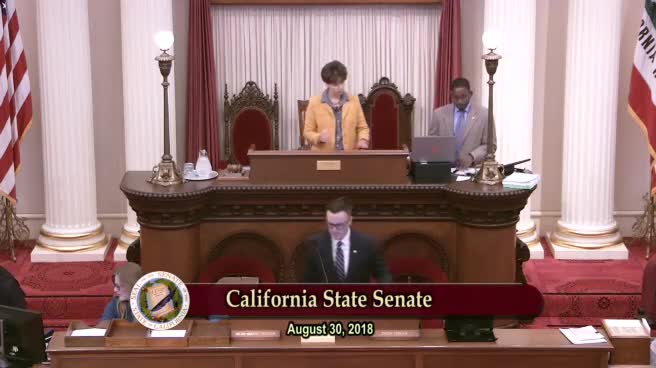
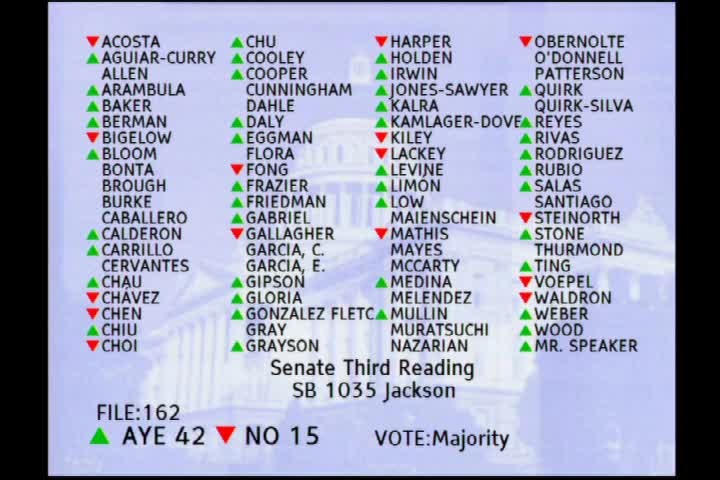
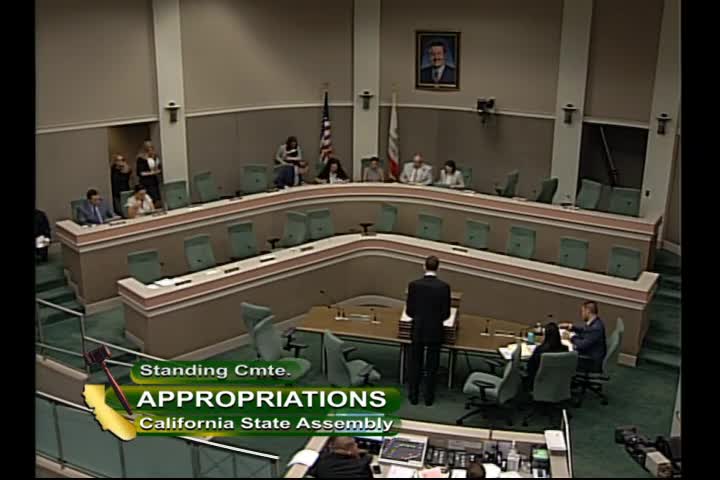
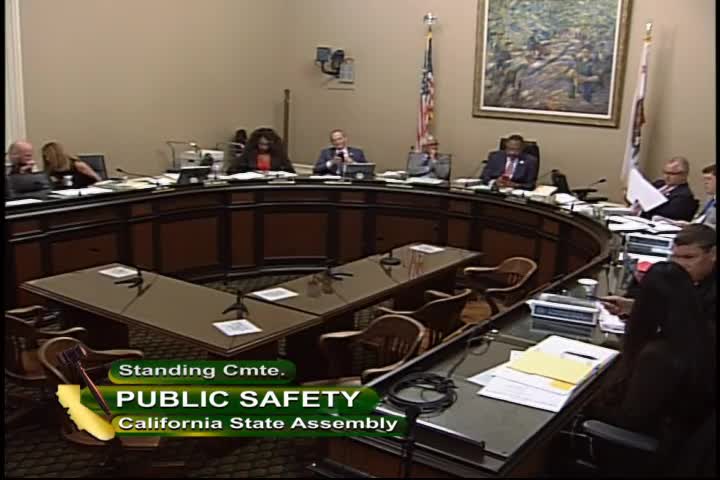
Bill Author

Bill Co-Author(s):






