SB 235: Elections: ballot designation requirements.
- Session Year: 2017-2018
- House: Senate
- Latest Version Date: 2017-10-05
Existing law provides, with the exception of candidates for Justice of the State Supreme Court or court of appeal, that each candidate for elective city, county, district, state, or federal office may choose to have only one of specified designations, including his or her current principal professions, vocations, or occupations appear immediately under his or her name as a candidate on an election ballot.
This bill would impose additional requirements for a designation that may appear under the name of a candidate for judicial office. The bill would apply to all judicial elections occurring on or after January 1, 2018.
Existing law provides, with the exception of candidates for Justice of the State Supreme Court or court of appeal, that each candidate for elective city, county, district, state, or federal office may choose to have only one of specified designations, including his or her current principal professions, vocations, or occupations occupations appear immediately under his or her name as a candidate on an election ballot.
This bill would impose additional requirements for a designation that may appear under the name of a candidate for judicial office. The bill would apply to all judicial elections occurring on or after January 1, 2018.
Existing law provides, with the exception of candidates for Justice of the State Supreme Court or court of appeal, that each candidate for elective city, county, district, state, or federal office may choose to have only one of specified designations, including his or her current principal professions, vocations, or occupations appear immediately under his or her name as a candidate on an election ballot.
This bill would impose additional requirements for a designation that may appear under the name of a candidate for Justice of the State Supreme Court or court of appeal. judicial office.
Existing law provides, with the exception of candidates for Justice of the State Supreme Court or court of appeal, that each candidate for elective city, county, district, state, or federal office may choose to have only one of specified designations, including his or her current principal professions, vocations, or occupations appear immediately under his or her name as a candidate on an election ballot.
This bill would impose additional requirements for a designation that may appear under the name of a candidate for judicial office. Justice of the State Supreme Court or court of appeal.
Existing law provides, with the exception of candidates for Justice of the State Supreme Court or court of appeal, that each candidate for elective city, county, district, state, or federal office may choose to have only one of specified designations, including his or her current principal professions, vocations, or occupations appear immediately under his or her name as a candidate on an election ballot.
This bill would impose additional requirements for a designation that may appear under the name of a candidate for judicial office.
Existing law requires the California Coastal Commission to prepare a public coastal access program including an inventory and map of existing and proposed accessways and offers of dedication of property for this purpose. The commission, within 10 days of receiving evidence of recordation of an offer to dedicate real property for access to or along the coast, is required to forward a copy of the evidence and a description of the real property to the Department of Parks and Recreation, the State Coastal Conservancy, and the State Lands Commission.This bill would require the commission to additionally forward a copy of the evidence and a description of the real property to the Natural Resources Agency.Existing law requires the California Coastal Commission to prepare a public coastal access program including an inventory and map of existing and proposed accessways and offers of dedication of property for this purpose. The commission, within 10 days of receiving evidence of recordation of an offer to dedicate real property for access to or along the coast, is required to forward a copy of the evidence and a description of the real property to the Department of Parks and Recreation, the State Coastal Conservancy, and the State Lands Commission.
This bill would require the commission to additionally forward a copy of the evidence and a description of the real property to the Natural Resources Agency.
(a)With the exception of candidates for Justice of the State Supreme Court or court of appeal, immediately under the name of each candidate, and not separated from the name by any line, unless the designation made by the candidate pursuant to Section 8002.5 must be listed immediately below the name of the candidate pursuant to Section 13105, and in that case immediately under the designation, may appear at the option of the candidate only one of the following designations:
(1)Words designating the elective city, county, district, state, or federal office which the candidate holds at the time of filing the nomination documents to which he or she was elected by vote of the people.
(2)The word incumbent if the candidate is a candidate for the same office which he or she holds at the time of filing the nomination papers, and was elected to that office by a vote of the people.
(3)No more than three words designating either the current principal professions, vocations, or occupations of the candidate, or the principal professions, vocations, or occupations of the candidate during the calendar year immediately preceding the filing of nomination documents.
(4)The phrase appointed incumbent if the candidate holds an office by virtue of appointment, and the candidate is a candidate for election to the same office, or, if the candidate is a candidate for election to the same office or to some other office, the word appointed and the title of the office. In either instance, the candidate may not use the unmodified word incumbent or any words designating the office unmodified by the word appointed. However, the phrase appointed incumbent shall not be required of a candidate who seeks reelection to an office which he or she holds and to which he or she was appointed, as a nominated candidate, in lieu of an election, pursuant to Sections 5326 and 5328 of the Education Code or Section 7228, 7423, 7673, 10229, or 10515 of this code.
(b)(1)Except as specified in paragraph (2), for candidates for judicial office, immediately under the name of each candidate, and not separated from the name by any line, only one of the following designations may appear at the option of the candidate:
(A)Words designating the city, county, district, state, or federal office held by the candidate at the time of filing the nomination documents.
(B)The word incumbent if the candidate is a candidate for the same office that he or she holds at the time of filing the nomination papers.
(C)No more than three words designating either the current principal professions, vocations, or occupations of the candidate, or the principal professions, vocations, or occupations of the candidate during the calendar year immediately preceding the filing of nomination documents.
(2)For a candidate for judicial office who is an active member of the State Bar employed by a city, county, district, state, or by the United States, the designation shall appear as one of the following:
(A)Words designating the actual job title, as defined by statute, charter, or other governing instrument.
(B)One of the following ballot designations: Attorney, Attorney at Law, Lawyer, or Counselor at Law. The designations Attorney and Lawyer may be used in combination with one other current principal profession, vocation, or occupation of the candidate, or the principal profession, vocation, or occupation of the candidate during the calendar year immediately preceding the filing of nomination documents.
(3)A designation made pursuant to subparagraph (A) of paragraph (1) or paragraph (2) shall also contain relevant qualifiers, as follows:
(A)If the candidate is an official or employee of a city, the name of the city shall appear preceded by the words City of.
(B)If the candidate is an official or employee of a county, the name of the county shall appear preceded by the words County of.
(C)If the candidate is an official or employee of a city and county, the name of the city and county shall appear preceded by the words City and County.
(D)If the candidate performs quasi-judicial functions for a governmental agency, the full name of the agency shall be included.
(c)A candidate for superior court judge who is an active member of the State Bar and practices law as one of his or her principal professions shall use one of the following ballot designations as his or her ballot designation: Attorney, Attorney at Law, Lawyer, or Counselor at Law. The designations Attorney and Lawyer may be used in combination with one other current principal profession, vocation, or occupation of the candidate, or the principal profession, vocation, or occupation of the candidate during the calendar year immediately preceding the filing of nomination documents.
(d)For purposes of this section, all California geographical names shall be considered to be one word. Hyphenated words that appear in any generally available standard reference dictionary, published in the United States at any time within the 10 calendar years immediately preceding the election for which the words are counted, shall be considered as one word. Each part of all other hyphenated words shall be counted as a separate word.
(e)The Secretary of State and any other elections official shall not accept a designation of which any of the following would be true:
(1)It would mislead the voter.
(2)It would suggest an evaluation of a candidate, such as outstanding, leading, expert, virtuous, or eminent.
(3)It abbreviates the word retired or places it following any word or words which it modifies.
(4)It uses a word or prefix, such as former or ex-, which means a prior status. The only exception is the use of the word retired.
(5)It uses the name of any political party, whether or not it has qualified for the ballot.
(6)It uses a word or words referring to a racial, religious, or ethnic group.
(7)It refers to any activity prohibited by law.
(f)If, upon checking the nomination documents and the ballot designation worksheet described in Section 13107.3, the elections official finds the designation to be in violation of any of the restrictions set forth in this section, the elections official shall notify the candidate by registered or certified mail return receipt requested, addressed to the mailing address provided on the candidates ballot designation worksheet.
(1)The candidate shall, within three days, excluding Saturday, Sunday, and state holidays, from the date he or she receives notice by registered or certified mail, or from the date the candidate receives actual notice of the violation, whichever occurs first, appear before the elections official or, in the case of the Secretary of State, notify the Secretary of State by telephone, and provide a designation that complies with subdivision (a) or (b).
(2)If a candidate fails to provide a designation that complies with subdivision (a) or (b) within the three-day period specified in paragraph (1), a designation shall not appear after the candidates name.
(g)A designation given by a candidate shall not be changed by the candidate after the final date for filing nomination documents, except as specifically requested by the elections official as specified in subdivision (f) or as provided in subdivision (h). The elections official shall maintain a copy of the ballot designation worksheet for each candidate that appears on the ballot in the county for the same period of time as applied to nomination documents pursuant to Section 17100.
(h)The designation shall remain the same for all purposes of both primary and general elections, unless the candidate, at least 98 days before the general election, requests in writing a different designation which the candidate is entitled to use at the time of the request.
(i)In all cases, the words so used shall be printed in 8-point roman uppercase and lowercase type except that, if the designation selected is so long that it would conflict with the space requirements of Sections 13207 and 13211, the elections official shall use a type size for the designation for each candidate for that office sufficiently smaller to meet these requirements.
(j)If a foreign language translation of a candidates designation is required under the federal Voting Rights Act of 1965 (52 U.S.C. Sec. 10101 et seq.), as amended, to appear on the ballot in addition to the English language version, it shall be as short as possible, as consistent as is practicable with this section, and shall employ abbreviations and initials wherever possible in order to avoid undue length.
SEC. 2.This act applies to all judicial elections held on or after January 1, 2018.
(a)With the exception of candidates for Justice of the State Supreme Court or Court of Appeal, court of appeal, immediately under the name of each candidate, and not separated from the name by any line, unless the designation made by the candidate pursuant to Section 8002.5 must be listed immediately below the name of the candidate pursuant to Section 13105, and in that case immediately under the designation, may appear at the option of the candidate only one of the following designations:
(1)Words designating the elective city, county, district, state, or federal office which the candidate holds at the time of filing the nomination documents to which he or she was elected by vote of the people.
(2)The word incumbent if the candidate is a candidate for the same office which he or she holds at the time of filing the nomination papers, and was elected to that office by a vote of the people.
(3)No more than three words designating either the current principal professions, vocations, or occupations of the candidate, or the principal professions, vocations, or occupations of the candidate during the calendar year immediately preceding the filing of nomination documents.
(4)The phrase appointed incumbent if the candidate holds an office by virtue of appointment, and the candidate is a candidate for election to the same office, or, if the candidate is a candidate for election to the same office or to some other office, the word appointed and the title of the office. In either instance, the candidate may not use the unmodified word incumbent or any words designating the office unmodified by the word appointed. However, the phrase appointed incumbent shall not be required of a candidate who seeks reelection to an office which he or she holds and to which he or she was appointed, as a nominated candidate, in lieu of an election, pursuant to Sections 5326 and 5328 of the Education Code or Section 7228, 7423, 7673, 10229, or 10515 of this code.
(b)(1)Except as specified in paragraph (2), for candidates for judicial office, immediately under the name of each candidate, and not separated from the name by any line, only one of the following designations may appear at the option of the candidate:
(A)Words designating the city, county, district, state, or federal office held by the candidate at the time of filing the nomination documents.
(B)The word incumbent if the candidate is a candidate for the same office that he or she holds at the time of filing the nomination papers.
(C)No more than three words designating either the current principal professions, vocations, or occupations of the candidate, or the principal professions, vocations, or occupations of the candidate during the calendar year immediately preceding the filing of nomination documents.
(2)For a candidate for judicial office who is an active member of the State Bar employed by a city, county, district, state, or by the United States, the designation shall appear as one of the following:
(A)Words designating the actual job title, as defined by statute, charter, or other governing instrument.
(B)One of the following ballot designations: Attorney, Attorney at Law, Lawyer, or Counselor at Law. The designations Attorney and Lawyer may be used in combination with one other current principal profession, vocation, or occupation of the candidate, or the principal profession, vocation, or occupation of the candidate during the calendar year immediately preceding the filing of nomination documents.
(3)A designation made pursuant to subparagraph (A) of paragraph (1) or paragraph (2) shall also contain relevant qualifiers, as follows:
(A)If the candidate is an official or employee of a city, the name of the city shall appear preceded by the words City of.
(B)If the candidate is an official or employee of a county, the name of the county shall appear preceded by the words County of.
(C)If the candidate is an official or employee of a city and county, the name of the city and county shall appear preceded by the words City and County.
(D)If the candidate performs quasi-judicial functions for a governmental agency, the full name of the agency shall be included.
(c)A candidate for superior court judge who is an active member of the State Bar and practices law as one of his or her principal professions shall use one of the following ballot designations as his or her ballot designation: Attorney, Attorney at Law, Lawyer, or Counselor at Law. The designations Attorney and Lawyer may be used in combination with one other current principal profession, vocation, or occupation of the candidate, or the principal profession, vocation, or occupation of the candidate during the calendar year immediately preceding the filing of nomination documents.
(d)For purposes of this section, all California geographical names shall be considered to be one word. Hyphenated words that appear in any generally available standard reference dictionary, published in the United States at any time within the 10 calendar years immediately preceding the election for which the words are counted, shall be considered as one word. Each part of all other hyphenated words shall be counted as a separate word.
(e)The Secretary of State and any other elections official shall not accept a designation of which any of the following would be true:
(1)It would mislead the voter.
(2)It would suggest an evaluation of a candidate, such as outstanding, leading, expert, virtuous, or eminent.
(3)It abbreviates the word retired or places it following any word or words which it modifies.
(4)It uses a word or prefix, such as former or ex-, which means a prior status. The only exception is the use of the word retired.
(5)It uses the name of any political party, whether or not it has qualified for the ballot.
(6)It uses a word or words referring to a racial, religious, or ethnic group.
(7)It refers to any activity prohibited by law.
(f)If, upon checking the nomination documents and the ballot designation worksheet described in Section 13107.3, the elections official finds the designation to be in violation of any of the restrictions set forth in this section, the elections official shall notify the candidate by registered or certified mail return receipt requested, addressed to the mailing address provided on the candidates ballot designation worksheet.
(1)The candidate shall, within three days, excluding Saturday, Sunday, and state holidays, from the date he or she receives notice by registered or certified mail, or from the date the candidate receives actual notice of the violation, whichever occurs first, appear before the elections official or, in the case of the Secretary of State, notify the Secretary of State by telephone, and provide a designation that complies with subdivision (a) or (b).
(2)If a candidate fails to provide a designation that complies with subdivision (a) or (b) within the three-day period specified in paragraph (1), a designation shall not appear after the candidates name.
(g)A designation given by a candidate shall not be changed by the candidate after the final date for filing nomination documents, except as specifically requested by the elections official as specified in subdivision (f) or as provided in subdivision (h). The elections official shall maintain a copy of the ballot designation worksheet for each candidate that appears on the ballot in the county for the same period of time as applied to nomination documents pursuant to Section 17100.
(h)The designation shall remain the same for all purposes of both primary and general elections, unless the candidate, at least 98 days before the general election, requests in writing a different designation which the candidate is entitled to use at the time of the request.
(i)In all cases, the words so used shall be printed in 8-point roman uppercase and lowercase type except that, if the designation selected is so long that it would conflict with the space requirements of Sections 13207 and 13211, the elections official shall use a type size for the designation for each candidate for that office sufficiently smaller to meet these requirements.
(j)If a foreign language translation of a candidates designation is required under the federal Voting Rights Act of 1965 (52 U.S.C. Sec. 10101 et seq.), as amended, to appear on the ballot in addition to the English language version, it shall be as short as possible, as consistent as is practicable with this section, and shall employ abbreviations and initials wherever possible in order to avoid undue length.
SEC. 2.This act applies to all judicial elections held on or after January 1, 2018.
(a)With the exception of candidates for Justice of the State Supreme Court or Court of Appeal, immediately under the name of each candidate, and not separated from the name by any line, unless the designation made by the candidate pursuant to Section 8002.5 must be listed immediately below the name of the candidate pursuant to Section 13105, and in that case immediately under the designation, may appear at the option of the candidate only one of the following designations:
(1)Words designating the elective city, county, district, state, or federal office which the candidate holds at the time of filing the nomination documents to which he or she was elected by vote of the people.
(2)The word incumbent if the candidate is a candidate for the same office which he or she holds at the time of filing the nomination papers, and was elected to that office by a vote of the people.
(3)No more than three words designating either the current principal professions, vocations, or occupations of the candidate, or the principal professions, vocations, or occupations of the candidate during the calendar year immediately preceding the filing of nomination documents.
(4)The phrase appointed incumbent if the candidate holds an office by virtue of appointment, and the candidate is a candidate for election to the same office, or, if the candidate is a candidate for election to the same office or to some other office, the word appointed and the title of the office. In either instance, the candidate may not use the unmodified word incumbent or any words designating the office unmodified by the word appointed. However, the phrase appointed incumbent shall not be required of a candidate who seeks reelection to an office which he or she holds and to which he or she was appointed, as a nominated candidate, in lieu of an election, pursuant to Sections 5326 and 5328 of the Education Code or Section 7228, 7423, 7673, 10229, or 10515 of this code.
(b)(1)Except as specified in paragraph (2), for candidates for judicial office, immediately under the name of each candidate, and not separated from the name by any line, only one of the following designations may appear at the option of the candidate:
(A)Words designating the city, county, district, state, or federal office held by the candidate at the time of filing the nomination documents.
(B)The word incumbent if the candidate is a candidate for the same office that he or she holds at the time of filing the nomination papers.
(C)No more than three words designating either the current principal professions, vocations, or occupations of the candidate, or the principal professions, vocations, or occupations of the candidate during the calendar year immediately preceding the filing of nomination documents.
(2)For a candidate for judicial office who is an attorney active member of the State Bar employed by a city, county, district, state, or by the United States, the designation shall appear as words designating the actual job title, as defined by statute, charter, or other governing instrument. one of the following:
(A)Words designating the actual job title, as defined by statute, charter, or other governing instrument.
(B)One of the following ballot designations: Attorney, Attorney at Law, Lawyer, or Counselor at Law. The designations Attorney and Lawyer may be used in combination with one other current principal profession, vocation, or occupation of the candidate, or the principal profession, vocation, or occupation of the candidate during the calendar year immediately preceding the filing of nomination documents.
(3)A designation made pursuant to subparagraph (A) of paragraph (1) or paragraph (2) shall also contain relevant qualifiers, as follows:
(A)If the candidate is an official or employee of a city, the name of the city shall appear preceded by the words City of.
(B)If the candidate is an official or employee of a county, the name of the county shall appear preceded by the words County of.
(C)If the candidate is an official or employee of a city and county, the name of the city and county shall appear preceded by the words City and County.
(C)(D)If the candidate performs quasi-judicial functions for a governmental agency, the full name of the agency shall be included.
(c)A candidate for superior court judge who is an active member of the State Bar and practices law as one of his or her principal professions may shall use the word one of the following ballot designations as his or her ballot designation: Attorney, Attorney at Law, Lawyer, or Counselor at Law as his or her ballot designation. Law. The designations Attorney and Lawyer may be used in combination with one other current principal profession, vocation, or occupation of the candidate, or the principal profession, vocation, or occupation of the candidate during the calendar year immediately preceding the filing of nomination documents.
(d)For purposes of this section, all California geographical names shall be considered to be one word. Hyphenated words that appear in any generally available standard reference dictionary, published in the United States at any time within the 10 calendar years immediately preceding the election for which the words are counted, shall be considered as one word. Each part of all other hyphenated words shall be counted as a separate word.
(e)The Secretary of State and any other elections official shall not accept a designation of which any of the following would be true:
(1)It would mislead the voter.
(2)It would suggest an evaluation of a candidate, such as outstanding, leading, expert, virtuous, or eminent.
(3)It abbreviates the word retired or places it following any word or words which it modifies.
(4)It uses a word or prefix, such as former or ex-, which means a prior status. The only exception is the use of the word retired.
(5)It uses the name of any political party, whether or not it has qualified for the ballot.
(6)It uses a word or words referring to a racial, religious, or ethnic group.
(7)It refers to any activity prohibited by law.
(f)If, upon checking the nomination documents and the ballot designation worksheet described in Section 13107.3, the elections official finds the designation to be in violation of any of the restrictions set forth in this section, the elections official shall notify the candidate by registered or certified mail return receipt requested, addressed to the mailing address provided on the candidates ballot designation worksheet.
(1)The candidate shall, within three days, excluding Saturday, Sunday, and state holidays, from the date he or she receives notice by registered or certified mail, or from the date the candidate receives actual notice of the violation, whichever occurs first, appear before the elections official or, in the case of the Secretary of State, notify the Secretary of State by telephone, and provide a designation that complies with subdivision (a) or (b).
(2)If a candidate fails to provide a designation that complies with subdivision (a) or (b) within the three-day period specified in paragraph (1), a designation shall not appear after the candidates name.
(g)A designation given by a candidate shall not be changed by the candidate after the final date for filing nomination documents, except as specifically requested by the elections official as specified in subdivision (f) or as provided in subdivision (h). The elections official shall maintain a copy of the ballot designation worksheet for each candidate that appears on the ballot in the county for the same period of time as applied to nomination documents pursuant to Section 17100.
(h)The designation shall remain the same for all purposes of both primary and general elections, unless the candidate, at least 98 days before the general election, requests in writing a different designation which the candidate is entitled to use at the time of the request.
(i)In all cases, the words so used shall be printed in 8-point roman uppercase and lowercase type except that, if the designation selected is so long that it would conflict with the space requirements of Sections 13207 and 13211, the elections official shall use a type size for the designation for each candidate for that office sufficiently smaller to meet these requirements.
(j)If a foreign language translation of a candidates designation is required under the federal Voting Rights Act of 1965 (52 U.S.C. Sec. 10101 et seq.), as amended, to appear on the ballot in addition to the English language version, it shall be as short as possible, as consistent as is practicable with this section, and shall employ abbreviations and initials wherever possible in order to avoid undue length.
(a)With the exception of candidates for judicial office, Justice of the State Supreme Court or Court of Appeal, immediately under the name of each candidate, and not separated from the name by any line, unless the designation made by the candidate pursuant to Section 8002.5 must be listed immediately below the name of the candidate pursuant to Section 13105, and in that case immediately under the designation, may appear at the option of the candidate only one of the following designations:
(1)Words designating the elective city, county, district, state, or federal office which the candidate holds at the time of filing the nomination documents to which he or she was elected by vote of the people.
(2)The word incumbent if the candidate is a candidate for the same office which he or she holds at the time of filing the nomination papers, and was elected to that office by a vote of the people.
(3)No more than three words designating either the current principal professions, vocations, or occupations of the candidate, or the principal professions, vocations, or occupations of the candidate during the calendar year immediately preceding the filing of nomination documents.
(4)The phrase appointed incumbent if the candidate holds an office by virtue of appointment, and the candidate is a candidate for election to the same office, or, if the candidate is a candidate for election to the same office or to some other office, the word appointed and the title of the office. In either instance, the candidate may not use the unmodified word incumbent or any words designating the office unmodified by the word appointed. However, the phrase appointed incumbent shall not be required of a candidate who seeks reelection to an office which he or she holds and to which he or she was appointed, as a nominated candidate, in lieu of an election, pursuant to Sections 5326 and 5328 of the Education Code or Section 7228, 7423, 7673, 10229, or 10515 of this code.
(b)(1)Except as specified in paragraph (2), for candidates for judicial office, immediately under the name of each candidate, and not separated from the name by any line, only one of the following designations may appear at the option of the candidate:
(A)Words designating the city, county, district, state, or federal office held by the candidate at the time of filing the nomination documents.
(B)The word incumbent if the candidate is a candidate for the same office that he or she holds at the time of filing the nomination papers.
(C)No more than three words designating either the current principal professions, vocations, or occupations of the candidate, or the principal professions, vocations, or occupations of the candidate during the calendar year immediately preceding the filing of nomination documents.
(2)For a candidate for judicial office who is an attorney employed by a city, county, district, state, or by the United States, the designation shall appear as words designating the actual job title, as defined by statute, charter, or other governing instrument.
(3)A designation made pursuant to subparagraph (A) of paragraph (1) or paragraph (2) shall also contain relevant qualifiers, as follows:
(A)If the candidate is an official or employee of a city, the name of the city shall appear preceded by the words City of.
(B)If the candidate is an official or employee of a county, the name of the county shall appear preceded by the words County of.
(C)If the candidate performs quasi-judicial functions for a governmental agency, the full name of the agency shall be included.
(D)If the candidate is employed for fewer than 30 hours per week as an official or employee of a city, county, district, state, or the United States, the phrase Part-time shall appear before the designation.(c)For purposes of this section, a A candidate for superior court judge who is a an active member of the State Bar, whether on active or inactive status, shall not Bar and practices law as one of his or her principal professions may use the word Attorney, Attorney at Law, Lawyer, or Counselor at Law, or any variation of those words, if, during the year preceding the filing of the nomination documents, the candidate did not derive at least half of his or her income from the practice of law or did not practice law during at least half of the time he or she spent working in the profession, vocation, or occupation. Law as his or her ballot designation.
(d)For purposes of this section, all California geographical names shall be considered to be one word. Hyphenated words that appear in any generally available standard reference dictionary, published in the United States at any time within the 10 calendar years immediately preceding the election for which the words are counted, shall be considered as one word. Each part of all other hyphenated words shall be counted as a separate word.
(e)The Secretary of State and any other elections official shall not accept a designation of which any of the following would be true:
(1)It would mislead the voter.
(2)It would suggest an evaluation of a candidate, such as outstanding, leading, expert, virtuous, or eminent.
(3)It abbreviates the word retired or places it following any word or words which it modifies.
(4)It uses a word or prefix, such as former or ex-, which means a prior status. The only exception is the use of the word retired.
(5)It uses the name of any political party, whether or not it has qualified for the ballot.
(6)It uses a word or words referring to a racial, religious, or ethnic group.
(7)It refers to any activity prohibited by law.
(f)If, upon checking the nomination documents and the ballot designation worksheet described in Section 13107.3, the elections official finds the designation to be in violation of any of the restrictions set forth in this section, the elections official shall notify the candidate by registered or certified mail return receipt requested, addressed to the mailing address provided on the candidates ballot designation worksheet.
(1)The candidate shall, within three days, excluding Saturday, Sunday, and state holidays, from the date he or she receives notice by registered or certified mail, or from the date the candidate receives actual notice of the violation, whichever occurs first, appear before the elections official or, in the case of the Secretary of State, notify the Secretary of State by telephone, and provide a designation that complies with subdivision (a) or (b).
(2)If a candidate fails to provide a designation that complies with subdivision (a) or (b) within the three-day period specified in paragraph (1), a designation shall not appear after the candidates name.
(g)A designation given by a candidate shall not be changed by the candidate after the final date for filing nomination documents, except as specifically requested by the elections official as specified in subdivision (f) or as provided in subdivision (h). The elections official shall maintain a copy of the ballot designation worksheet for each candidate that appears on the ballot in the county for the same period of time as applied to nomination documents pursuant to Section 17100.
(h)The designation shall remain the same for all purposes of both primary and general elections, unless the candidate, at least 98 days before the general election, requests in writing a different designation which the candidate is entitled to use at the time of the request.
(i)In all cases, the words so used shall be printed in 8-point roman uppercase and lowercase type except that, if the designation selected is so long that it would conflict with the space requirements of Sections 13207 and 13211, the elections official shall use a type size for the designation for each candidate for that office sufficiently smaller to meet these requirements.
(j)If a foreign language translation of a candidates designation is required under the federal Voting Rights Act of 1965 (52 U.S.C. Sec. 10101 et seq.), as amended, to appear on the ballot in addition to the English language version, it shall be as short as possible, as consistent as is practicable with this section, and shall employ abbreviations and initials wherever possible in order to avoid undue length.
(a)With the exception of candidates for Justice of the State Supreme Court or Court of Appeal, judicial office, immediately under the name of each candidate, and not separated from the name by any line, unless the designation made by the candidate pursuant to Section 8002.5 must be listed immediately below the name of the candidate pursuant to Section 13105, and in that case immediately under the designation, may appear at the option of the candidate only one of the following designations:
(1)Words designating the elective city, county, district, state, or federal office which the candidate holds at the time of filing the nomination documents to which he or she was elected by vote of the people, or to which he or she was appointed, in the case of a superior court judge. people.
(2)The word incumbent if the candidate is a candidate for the same office which he or she holds at the time of filing the nomination papers, and was elected to that office by a vote of the people, or, in the case of a superior court judge, was appointed to that office. people.
(3)No more than three words designating either the current principal professions, vocations, or occupations of the candidate, or the principal professions, vocations, or occupations of the candidate during the calendar year immediately preceding the filing of nomination documents. For purposes of this section, all California geographical names shall be considered to be one word. Hyphenated words that appear in any generally available standard reference dictionary, published in the United States at any time within the 10 calendar years immediately preceding the election for which the words are counted, shall be considered as one word. Each part of all other hyphenated words shall be counted as a separate word.
(4)The phrase appointed incumbent if the candidate holds an office other than a judicial office by virtue of appointment, and the candidate is a candidate for election to the same office, or, if the candidate is a candidate for election to the same office or to some other office, the word appointed and the title of the office. In either instance, the candidate may not use the unmodified word incumbent or any words designating the office unmodified by the word appointed. However, the phrase appointed incumbent shall not be required of a candidate who seeks reelection to an office which he or she holds and to which he or she was appointed, as a nominated candidate, in lieu of an election, pursuant to Sections 5326 and 5328 of the Education Code or Section 7228, 7423, 7673, 10229, or 10515 of this code.
(b)(1)Except as specified in paragraph (2), for candidates for judicial office, immediately under the name of each candidate, and not separated from the name by any line, only one of the following designations may appear at the option of the candidate:
(A)Words designating the city, county, district, state, or federal office held by the candidate at the time of filing the nomination documents.
(B)The word incumbent if the candidate is a candidate for the same office that he or she holds at the time of filing the nomination papers.
(C)No more than three words designating either the current principal professions, vocations, or occupations of the candidate, or the principal professions, vocations, or occupations of the candidate during the calendar year immediately preceding the filing of nomination documents.
(2)For a candidate for judicial office who is an attorney employed by a city, county, district, state or by the United States, the designation shall appear as words designating the actual job title, as defined by statute, charter, or other governing instrument.
(3)A designation made pursuant to subparagraph (A) of paragraph (1) or paragraph (2) shall also contain relevant qualifiers, as follows:
(A)If the candidate is an official or employee of a city, the name of the city shall appear preceded by the words City of.
(B)If the candidate is an official or employee of a county, the name of the county shall appear preceded by the words County of.
(C)If the candidate performs quasi-judicial functions for a governmental agency, the full name of the agency shall be included.
(D)If the candidate is employed for fewer than 30 hours per week as an official or employee of a city, county, district, state, or the United States, the phrase Part-time shall appear before the designation.
(c)For purposes of this section, a candidate for superior court judge who is a member of the State Bar, whether on active or inactive status, shall not use the word Attorney, Lawyer, or Counselor at Law, or any variation of those words, if, during the year preceding the filing of the nomination documents, the candidate did not derive at least half of his or her income from the practice of law or did not practice law during at least half of the time he or she spent working in the profession, vocation, or occupation.
(d)For purposes of this section, all California geographical names shall be considered to be one word. Hyphenated words that appear in any generally available standard reference dictionary, published in the United States at any time within the 10 calendar years immediately preceding the election for which the words are counted, shall be considered as one word. Each part of all other hyphenated words shall be counted as a separate word.
(b)Neither the(e)The Secretary of State nor and any other elections official shall not accept a designation of which any of the following would be true:
(1)It would mislead the voter.
(2)It would suggest an evaluation of a candidate, such as outstanding, leading, expert, virtuous, or eminent.
(3)It abbreviates the word retired or places it following any word or words which it modifies.
(4)It uses a word or prefix, such as former or ex-, which means a prior status. The only exception is the use of the word retired.
(5)It uses the name of any political party, whether or not it has qualified for the ballot.
(6)It uses a word or words referring to a racial, religious, or ethnic group.
(7)It refers to any activity prohibited by law.
(c)(f)If, upon checking the nomination documents and the ballot designation worksheet described in Section 13107.3, the elections official finds the designation to be in violation of any of the restrictions set forth in this section, the elections official shall notify the candidate by registered or certified mail return receipt requested, addressed to the mailing address provided on the candidates ballot designation worksheet.
(1)The candidate shall, within three days, excluding Saturday, Sunday, and state holidays, from the date he or she receives notice by registered or certified mail, or from the date the candidate receives actual notice of the violation, whichever occurs first, appear before the elections official or, in the case of the Secretary of State, notify the Secretary of State by telephone, and provide a designation that complies with subdivision (a). (a) or (b).
(2)In the event the If a candidate fails to provide a designation that complies with subdivision (a) or (b) within the three-day period specified in paragraph (1), no a designation shall not appear after the candidates name.
(d)No(g)A designation given by a candidate shall not be changed by the candidate after the final date for filing nomination documents, except as specifically requested by the elections official as specified in subdivision (c) (f) or as provided in subdivision (e). (h). The elections official shall maintain a copy of the ballot designation worksheet for each candidate that appears on the ballot in the county for the same period of time as applied to nomination documents pursuant to Section 17100.
(e)(h)The designation shall remain the same for all purposes of both primary and general elections, unless the candidate, at least 98 days before the general election, requests in writing a different designation which the candidate is entitled to use at the time of the request.
(f)(i)In all cases, the words so used shall be printed in 8-point roman uppercase and lowercase type except that, if the designation selected is so long that it would conflict with the space requirements of Sections 13207 and 13211, the elections official shall use a type size for the designation for each candidate for that office sufficiently smaller to meet these requirements.
(g)Whenever(j)If a foreign language translation of a candidates designation is required under the federal Voting Rights Act of 1965 (52 U.S.C. Sec. 10101), 10101 et seq.), as amended, to appear on the ballot in addition to the English language version, it shall be as short as possible, as consistent as is practicable with this section, and shall employ abbreviations and initials wherever possible in order to avoid undue length.
SECTION 1.Section 30534 of the Public Resources Code is amended to read:30534.The commission shall, within 10 days after receiving evidence of recordation of any offer to dedicate real property for access to or along the coast, which dedication was required as a condition to the issuance of a coastal development permit, forward a copy of the evidence and a description of the real property to the Natural Resources Agency, the Department of Parks and Recreation, the State Coastal Conservancy, and the State Lands Commission.The commission shall, within 10 days after receiving evidence of recordation of any offer to dedicate real property for access to or along the coast, which dedication was required as a condition to the issuance of a coastal development permit, forward a copy of such the evidence and a description of such the real property to the Natural Resources Agency, the Department of Parks and Recreation, the State Coastal Conservancy, and the State Lands Commission.
|
Date
|
Status
|
|---|---|
| Oct 5, 2017 | Chaptered by Secretary of State. Chapter 512, Statutes of 2017. |
| Oct 5, 2017 | Approved by the Governor. |
| Sep 22, 2017 | Enrolled and presented to the Governor at 3 p.m. |
| Sep 15, 2017 | Assembly amendments concurred in. (Ayes 34. Noes 4.) Ordered to engrossing and enrolling. |
| Sep 15, 2017 | In Senate. Concurrence in Assembly amendments pending. |
| Sep 14, 2017 | Read third time. Passed. Ordered to the Senate. |
| Sep 8, 2017 | Read third time and amended. |
| Jul 19, 2017 | Read second time. Ordered to third reading. |
| Jul 18, 2017 | From committee: Do pass. (Ayes 10. Noes 1.) (July 18). |
| Jun 29, 2017 | Read second time and amended. Re-referred to Com. on JUD. |
| Jun 28, 2017 | From committee: Do pass as amended and re-refer to Com. on JUD. (Ayes 6. Noes 1.) (June 28). |
| Jun 1, 2017 | Referred to Coms. on E. & R. and JUD. |
| May 23, 2017 | In Assembly. Read first time. Held at Desk. |
| May 22, 2017 | Read third time. Passed. (Ayes 34. Noes 1. Page 1133.) Ordered to the Assembly. |
| May 16, 2017 | Read second time and amended. Ordered to third reading. |
| May 15, 2017 | From committee: Do pass as amended. (Ayes 6. Noes 1. Page 1020.) (May 9). |
| May 4, 2017 | Set for hearing May 9. |
| May 2, 2017 | From committee: Do pass and re-refer to Com. on JUD. (Ayes 4. Noes 1. Page 929.) (May 2). Re-referred to Com. on JUD. |
| Apr 25, 2017 | Set for hearing May 2. |
| Apr 5, 2017 | Re-referred to Coms. on E. & C.A. and JUD. |
| Mar 29, 2017 | Withdrawn from committee. |
| Mar 28, 2017 | From committee with author's amendments. Read second time and amended. Re-referred to Com. on N.R. & W. |
| Feb 16, 2017 | Referred to Com. on N.R. & W. |
| Feb 7, 2017 | From printer. May be acted upon on or after March 9. |
| Feb 6, 2017 | Introduced. Read first time. To Com. on RLS. for assignment. To print. |
|
Date
|
Description
|
Location
|
Votes
|
|
|---|---|---|---|---|
| Sep 15, 2017 | Unfinished Business SB235 Allen Concurrence | Senate Floor |
Passed |
|
| Sep 14, 2017 | SB 235 Allen Senate Third Reading By CUNNINGHAM | Assembly Floor |
Passed |
|
| Jul 18, 2017 | Do pass. | Assembly Standing Committee on Judiciary |
Passed |
|
| Jun 28, 2017 | Do pass as amended and be re-referred to the Committee on [Judiciary] | Assembly Standing Committee on Elections and Redistricting |
Passed |
|
| May 22, 2017 | Senate 3rd Reading SB235 Allen | Senate Floor |
Passed |
|
| May 9, 2017 | Do pass as amended | Senate Standing Committee on Judiciary |
Passed |
|
| May 2, 2017 | Do pass, but first be re-referred to the Committee on [Judiciary] | Senate Standing Committee on Elections and Constitutional Amendments |
Passed |
This list shows positions taken on this bill by organizations on the date displayed, which is linked to the original source.
Positions by individuals are not included.
|
Organization
|
Position
|
Date
|
|---|---|---|
| Alliance Of California Judges | ** Support | Sep 15, 2017 |
| California Judges Association | ** Support | Sep 15, 2017 |
| Conference of California's Bar Association | * Support | Jul 18, 2017 |
| Individual Current And Former Judges And Attorneys | ** Support | Sep 15, 2017 |
| LA Superior Court | * Support | May 2, 2017 |
| los angeles county bar association | ** Support | Sep 15, 2017 |
| Novian and Novian | * Support | May 9, 2017 |
| san diego county bar association | ** Support | Sep 15, 2017 |
| several current and former judges and attorneys | ** Support | May 17, 2017 |
| sutton law firm | ** Against | Jul 16, 2017 |
| The Sutton Law Firm | ** Against | Sep 15, 2017 |
| Two individuals | ** Support | Jul 16, 2017 |
Office of Senate Floor Analyses (916) 651-1520 Fax: (916) 327-4478 | SB |
UNFINISHED BUSINESS
Bill No: SB 235
Amended: 9/8/17
SENATE ELECTIONS & C.A. COMMITTEE: 4-1, 5/2/17
AYES: Stern, Allen, Hertzberg, Leyva
NOES: Anderson
SENATE JUDICIARY COMMITTEE: 6-1, 5/9/17
AYES: Jackson, Moorlach, Hertzberg, Monning, Stern, Wieckowski
NOES: Anderson
SENATE FLOOR: 34-1, 5/22/17
AYES: Allen, Atkins, Bates, Beall, Berryhill, Bradford, Cannella, De León, Dodd, Galgiani, Glazer, Hernandez, Hertzberg, Hill, Hueso, Jackson, Lara, Leyva, McGuire, Mendoza, Mitchell, Monning, Moorlach, Newman, Nguyen, Nielsen, Portantino, Roth, Skinner, Stern, Vidak, Wieckowski, Wiener, Wilk
NOES: Stone
NO VOTE RECORDED: Anderson, Fuller, Gaines, Morrell, Pan
ASSEMBLY FLOOR: 69-7, 9/14/17 - See last page for vote
SOURCE: Conference of California Bar Associations
DIGEST:
This bill enacts new requirements for judicial candidate ballot designations.
Assembly Amendments
make further revisions to the way in which judicial candidates who are attorneys may describe their job titles for the purpose of their candidate ballot designations as well other technical, conforming changes.
Existing law:
- Permits a candidate, including a candidate for judicial office, to place a ballot designation immediately below his or her name pursuant to the following requirements:
- Words designating the elective city, county, district, state, or federal office which the candidate holds at the time of filing the nomination documents.
- The word “incumbent” if the candidate is a candidate for the same office which he or she holds at the time of filing the nomination papers.
- No more than three words designating either the current principal professions, vocations, or occupations of the candidate, or the principal professions, vocations, or occupations of the candidate during the calendar year immediately preceding the filing of nomination documents. For purposes of this provision, all California geographical names and generally recognized hyphenated words are considered to be one word.
- The phrase “appointed incumbent,” if applicable, and the candidate is a candidate for election to the same office. Alternatively, if the candidate is a candidate for election to the same office or to some other office, he or she may use the word “appointed” and the title of the office. However, the phrase “appointed incumbent” is not required of a candidate for judicial office or for a candidate who seeks reelection to an office which he or she holds and to which he or she was appointed, as a nominated candidate, in lieu of an election, as specified (candidates for some local offices do not have to appear on the ballot if they have no opponent or the number of candidates does not exceed the number of available open seats).
- A candidate may use the ballot designation “community volunteer” provided it is not used in combination with any other principal profession, vocation, or occupation designation, the candidate’s community volunteer activities constitute his or her principal profession, vocation, or occupation, and the candidate is not engaged concurrently in another principal profession, vocation, or occupation.
- Prohibits the Secretary of State (SOS) or any other elections official from accepting a candidate ballot designation for which any of the following would be true:
- It would mislead voters.
- It would suggest an evaluation of a candidate, such as outstanding, leading, expert, virtuous, or eminent.
- It abbreviates the word “retired” or places it following any word or words which it modifies.
- It uses a word or prefix, such as “former” or “ex-,” which means a prior status. The only exception is the use of the word “retired.”
- It uses the name of any political party, whether or not it has qualified for the ballot.
- It uses a word or words referring to a racial, religious, or ethnic group.
- It refers to any activity prohibited by law.
- Provides, pursuant to SOS regulations, that if a candidate is licensed by the State to engage in a profession, vocation or occupation (including the practice of law), the candidate is entitled to consider it one of his or her "principal" professions, vocations or occupations if the candidate has kept his or her license current as of the date he or she filed his or her nomination documents.
- Provides that if the elections official finds the submitted designation to be in violation of any of the aforementioned restrictions, the elections official must notify the candidate who then must provide a compliant designation, as specified. If the candidate fails to provide a compliant designation within specified timeframes, no designation shall appear after the candidate’s name.
- Provides that the designation shall remain the same for both primary and general elections, unless the candidate, at least 98 days before the general election, requests in writing a different designation which the candidate is entitled to use at the time of the request.
- Provides that an elector may challenge the validity of a candidate’s ballot designation by seeking a writ of mandate. The action or appeal shall have priority over all other civil matters. A peremptory writ of mandate shall be issued only upon proof that the error, omission, or neglect is in violation of the Elections Code or the California Constitution and that issuance of the writ will not substantially interfere with the conduct of the election.
This bill:
- Permits a candidate for judicial office to only use one of the following ballot designations, as specified:
- Words designating the city, county, district, state, or federal office held by the candidate at the time of filing the nomination papers;
- The word "incumbent" if the candidate is a candidate for the same office that he or she holds at the time of filing the nomination papers; or,
- No more than three words designating the current principal professions, vocations, or occupations of the candidate, or the principal professions, vocations, or occupations of the candidate during the calendar year immediately preceding the filing of nomination documents.
- Requires the ballot designation for a candidate for judicial office who is an active member of the State Bar employed by a city, county, district, state, or by the United States to appear as either of the following:
- Words designating the actual job title, as defined by current law, charter, or other governing instrument; or,
- One of the following ballot designations: "Attorney," "Attorney at Law," "Lawyer," or "Counselor at Law," as his or her ballot designation. Permits the words "Attorney," or "Lawyer," to also be used in combination with one other current principal profession, vocation, or occupation of the candidate, or the principal profession, vocation, or occupation of the candidate during the calendar year immediately preceding the filing of nomination documents.
- Requires a ballot designation that uses words designating the office or job title to contain the following relevant qualifiers:
- Requires the name of the city, if the candidate is an official or employee of a city, to appear preceded by the words "City of."
- Requires the name of the county, if the candidate is an official or employee of a county, to appear preceded by the words "County of."
- Requires the full name of the agency to be included if the candidate performs quasi-judicial functions for a governmental agency.
- Requires a candidate for superior court judge who is an active member of the State Bar and practices law as one of his or her principal professions to use one of the following ballot designations: "Attorney," "Attorney at Law," "Lawyer," or "Counselor at Law," as his or her ballot designation. Allows the words "Attorney," or "Lawyer," to also be used in combination with one other current principal profession, vocation, or occupation of the candidate, or the principal profession, vocation, or occupation of the candidate during the calendar year immediately preceding the filing of nomination documents.
- Clarifies that the provisions of this bill apply to all judicial elections occurring on or after January 1, 2018.
Background
Judicial Candidates. Justices of the California Supreme Court and Courts of Appeal appear on the ballot for retention only and therefore do not have opponents who can run against them. If a majority of voters vote against retention of one of these justices, the Governor makes an appointment to fill the vacancy subject to confirmation by the Commission on Judicial Appointments. On the other hand, superior court judges serve six-year terms and are elected by county voters at a general election and may be challenged by qualified candidates. A candidate for superior court judge must have been an attorney admitted to practice law in California or have served as a judge of a court of record in this state for at least 10 years immediately preceding election. Most incumbent superior court judges are unopposed when running for reelection and incumbent judges without an opponent are declared elected and their names do not appear on the ballot.
Creative Ballot Designations. According to research conducted by Los Angeles County Superior Court Judge Randolph Hammock, between 2006 and 2016 in Los Angeles County, there were 41 Deputy District Attorneys (DDA) who were candidates for superior court judge. Only once did a DDA utilize the ballot designation of “Deputy District Attorney” (2006). The other 40 times the DDA used one of the following designations or some variation thereof: “Hardcore Gang Prosecutor,” “Sex Crimes Prosecutor,” “Gang Homicide Prosecutor,” “Criminal Gang Prosecutor,” “Gang Murder Prosecutor,” “Major Narcotics Prosecutor,” “Criminal Murder Prosecutor,” “Criminal Homicide Prosecutor,” “Child Molestation Prosecutor,” “Government Corruption Prosecutor,” “Violent Crimes Prosecutor,” or “Sexual Predator Prosecutor.”
Comments
- According to the author, California law requires candidates for judicial office who are not appointed or current office holders to write their own ballot designations using three words. This ballot designation is designed to describe the candidate’s “principal professions, vocations, or occupation.” These ballot designations are especially important in judicial races because the elections are nonpartisan and the candidates are among the least known on the ballot.
California’s Code of Judicial Ethics prohibits candidates for judicial office from engaging in any campaign activity that is inconsistent with the integrity of the judiciary. Integrity is further defined as fairness honesty, and soundness of character. Nevertheless, candidates for judicial office are often incentivized to exaggerate their experiences of punishing criminals in their ballot designations.
The perverse incentive for candidates for judicial office to provide an emotion-gripping ballot designation has not served the public’s interest. One candidate was accused of delaying a settlement in a domestic violence case merely to justify her ballot designation. In another recent judicial election, three out of five candidates were forced to change their titles after rivals claimed the titles misled voters. These cases are expensive for candidates and the court system while not necessarily providing voters more information. A recent ruling merely required a candidate to change his designation from “gang murder prosecutor” to “gang homicide prosecutor.”
Some ballot designations have also misled voters. In an election between a “supervising criminal prosecutor” and a “gang murder prosecutor,” a voter would likely deduce that the supervising criminal prosecutor supervised the gang murder prosecutor. This however, was not the case and one could have easily argued the opposite.
Ballot designations also provide little information about whether the job description is current or performed on a full-time basis. In 2006, a candidate for Los Angeles Superior Court who had not practiced law consistently in more than a decade designated herself an “attorney at law,” despite spending the previous decade managing a bagel shop. While this experience of running a bagel shop may have contributed to the individual becoming a better judge, the information was not available to a voter from her ballot designation and the voter might have been led to believe the candidate practiced law.
FISCAL EFFECT: Appropriation: Fiscal Com.: Local:
Alliance of California Judges
California Judges Association
Los Angeles County Bar Association
San Diego County Bar Association
Individual current and former judges and attorneys
The Sutton Law Firm
ASSEMBLY FLOOR: 69-7, 9/14/17
AYES: Acosta, Aguiar-Curry, Arambula, Berman, Bloom, Bocanegra, Bonta, Brough, Burke, Caballero, Calderon, Cervantes, Chau, Chávez, Chen, Chiu, Choi, Chu, Cooley, Cooper, Cunningham, Dababneh, Daly, Eggman, Flora, Frazier, Friedman, Cristina Garcia, Eduardo Garcia, Gipson, Gloria, Gonzalez Fletcher, Gray, Grayson, Holden, Irwin, Jones-Sawyer, Kalra, Lackey, Levine, Limón, Low, Maienschein, Mathis, Mayes, McCarty, Medina, Melendez, Mullin, Muratsuchi, Nazarian, Obernolte, O'Donnell, Quirk, Quirk-Silva, Reyes, Ridley-Thomas, Rodriguez, Rubio, Salas, Santiago, Steinorth, Mark Stone, Thurmond, Ting, Waldron, Weber, Wood, Rendon
NOES: Travis Allen, Baker, Dahle, Gallagher, Harper, Kiley, Voepel
NO VOTE RECORDED: Bigelow, Fong, Patterson
9/15/17 9:11:24
**** END ****
SENATE THIRD READING
STR Bill Id:SB 235
Author:(Allen)
As Amended Ver:September 8, 2017
Majority vote
SENATE VOTE: 34-1
Committee | Votes | Ayes | Noes |
Elections | 6-1 | Berman, McCarty, Cunningham, Low, Mullin, Weber | Harper |
Judiciary | 10-1 | Mark Stone, Cunningham, Chau, Chiu, Cristina Garcia, Holden, Kalra, Maienschein, Reyes, Ting | Kiley |
SUMMARY: Limits the ballot designations that candidates for judicial office are permitted to use, as specified. Specifically, this bill:
- Permits a candidate for judicial office to only use one of the following ballot designations, as specified:
- Words designating the city, county, district, state, or federal office held by the candidate at the time of filing the nomination papers;
- The word "incumbent" if the candidate is a candidate for the same office that he or she holds at the time of filing the nomination papers; or,
- No more than three words designating the current principal professions, vocations, or occupations of the candidate, or the principal professions, vocations, or occupations of the candidate during the calendar year immediately preceding the filing of nomination documents.
- Requires the ballot designation for a candidate for judicial office who is an active member of the State Bar employed by a city, county, district, state, or by the United States to appear as either of the following:
- Words designating the actual job title, as defined by current law, charter, or other governing instrument; or,
- One of the following ballot designations: "Attorney," "Attorney at Law," "Lawyer," or "Counselor at Law," as his or her ballot designation. Permits the words "Attorney," or "Lawyer," to also be used in combination with one other current principal profession, vocation, or occupation of the candidate, or the principal profession, vocation, or occupation of the candidate during the calendar year immediately preceding the filing of nomination documents.
- Requires a ballot designation that uses words designating the office or job title to contain the following relevant qualifiers:
- Requires the name of the city, if the candidate is an official or employee of a city, to appear preceded by the words "City of."
- Requires the name of the county, if the candidate is an official or employee of a county, to appear preceded by the words "County of."
- Requires the full name of the agency to be included if the candidate performs quasi-judicial functions for a governmental agency.
- Requires a candidate for superior court judge who is an active member of the State Bar and practices law as one of his or her principal professions to use one of the following ballot designations: "Attorney," "Attorney at Law," "Lawyer," or "Counselor at Law," as his or her ballot designation. Allows the words "Attorney," or "Lawyer," to also be used in combination with one other current principal profession, vocation, or occupation of the candidate, or the principal profession, vocation, or occupation of the candidate during the calendar year immediately preceding the filing of nomination documents.
- Clarifies that the provisions of this bill apply to all judicial elections occurring on or after January 1, 2018.
FISCAL EFFECT: This bill is keyed non-fiscal by the Legislative Counsel.
COMMENTS: According to the author, "SB 235 prevents misleading ballot designations among candidates for judicial office who are practicing attorneys. California law allows candidates for judicial office to write their own ballot designations using three words. According to code, these words should describe the candidate's 'principal professions, vocations, or occupation.' The designations are especially consequential in judicial races because those elections are nonpartisan and the candidates are often among the least known on the ballot…
"[Certain] candidates for judicial office have chosen designations that emphasize and indeed exaggerate their purported experience in punishing criminals, so as to demonstrate that they are 'tough on crime.' According to research conducted by Los Angeles County Superior Court Judge Randolph Hammock, between 2006 and 2016 in LA County, there were 41 Deputy District Attorneys (DDA) who were candidates for superior court judge. Only once did a DDA utilize the straightforward ballot designation of 'Deputy District Attorney' (2006). The other 40 times the [DDAs] used one of the following designations or some variant thereof: 'Hardcore Gang Prosecutor,' 'Sex Crimes Prosecutor,' 'Gang Homicide Prosecutor,' 'Criminal Gang Prosecutor,' 'Gang Murder Prosecutor,' 'Major Narcotics Prosecutor,' 'Criminal Murder Prosecutor,' 'Criminal Homicide Prosecutor,' 'Child Molestation Prosecutor,' 'Government Corruption Prosecutor,' 'Violent Crimes Prosecutor,' or 'Sexual Predator Prosecutor'…
"Disingenuous and histrionic ballot designations do a disservice to public interest… SB 235 is not perfect, but by limiting ballot designations among candidates for judicial office who are practicing attorneys, it strikes a better balance on behalf of the public interest than that provided under current law."
Please see the policy committee analysis for a full discussion of this bill.
Analysis Prepared by: Nichole Becker / E. & R. / (916) 319-2094 FN: 0002098
SENATE THIRD READING
STR Bill Id:SB 235
Author:(Allen)
As Amended Ver:June 29, 2017
Majority vote
SENATE VOTE: 34-1
Committee | Votes | Ayes | Noes |
Elections | 6-1 | Berman, McCarty, Cunningham, Low, Mullin, Weber | Harper |
Judiciary | 10-1 | Mark Stone, Cunningham, Chau, Chiu, Cristina Garcia, Holden, Kalra, Maienschein, Reyes, Ting | Kiley |
SUMMARY: Limits the ballot designations that candidates for judicial office are permitted to use, as specified. Specifically, this bill:
- Permits a candidate for judicial office to only use one of the following ballot designations, as specified:
- Words designating the city, county, district, state, or federal office held by the candidate at the time of filing the nomination papers;
- The word "incumbent" if the candidate is a candidate for the same office that he or she holds at the time of filing the nomination papers; or,
- No more than three words designating the current principal professions, vocations, or occupations of the candidate, or the principal professions, vocations, or occupations of the candidate during the calendar year immediately preceding the filing of nomination documents.
- Requires the ballot designation for a candidate for judicial office who is an active member of the State Bar employed by a city, county, district, state, or by the United States to appear as either of the following:
- Words designating the actual job title, as defined by current law, charter, or other governing instrument; or,
- One of the following ballot designations: "Attorney," "Attorney at Law," "Lawyer," or "Counselor at Law," as his or her ballot designation. Permits the words "Attorney," or "Lawyer," to also be used in combination with one other current principal profession, vocation, or occupation of the candidate, or the principal profession, vocation, or occupation of the candidate during the calendar year immediately preceding the filing of nomination documents.
- Requires a ballot designation that uses words designating the office or job title to contain the following relevant qualifiers:
- Requires the name of the city, if the candidate is an official or employee of a city, to appear preceded by the words "City of."
- Requires the name of the county, if the candidate is an official or employee of a county, to appear preceded by the words "County of."
- Requires the full name of the agency to be included if the candidate performs quasi-judicial functions for a governmental agency.
- Requires a candidate for superior court judge who is an active member of the State Bar and practices law as one of his or her principal professions to use one of the following ballot designations: "Attorney," "Attorney at Law," "Lawyer," or "Counselor at Law," as his or her ballot designation. Allows the words "Attorney," or "Lawyer," to also be used in combination with one other current principal profession, vocation, or occupation of the candidate, or the principal profession, vocation, or occupation of the candidate during the calendar year immediately preceding the filing of nomination documents.
FISCAL EFFECT: This bill is keyed non-fiscal by the Legislative Counsel.
COMMENTS: According to the author, "SB 235 prevents misleading ballot designations among candidates for judicial office who are practicing attorneys. California law allows candidates for judicial office to write their own ballot designations using three words. According to code, these words should describe the candidate's 'principal professions, vocations, or occupation.' The designations are especially consequential in judicial races because those elections are nonpartisan and the candidates are often among the least known on the ballot…
"[Certain] candidates for judicial office have chosen designations that emphasize and indeed exaggerate their purported experience in punishing criminals, so as to demonstrate that they are 'tough on crime.' According to research conducted by Los Angeles County Superior Court Judge Randolph Hammock, between 2006 and 2016 in LA County, there were 41 Deputy District Attorneys (DDA) who were candidates for superior court judge. Only once did a DDA utilize the straightforward ballot designation of 'Deputy District Attorney' (2006). The other 40 times the [DDAs] used one of the following designations or some variant thereof: 'Hardcore Gang Prosecutor,' 'Sex Crimes Prosecutor,' 'Gang Homicide Prosecutor,' 'Criminal Gang Prosecutor,' 'Gang Murder Prosecutor,' 'Major Narcotics Prosecutor,' 'Criminal Murder Prosecutor,' 'Criminal Homicide Prosecutor,' 'Child Molestation Prosecutor,' 'Government Corruption Prosecutor,' 'Violent Crimes Prosecutor,' or 'Sexual Predator Prosecutor'…
"Disingenuous and histrionic ballot designations do a disservice to public interest… SB 235 is not perfect, but by limiting ballot designations among candidates for judicial office who are practicing attorneys, it strikes a better balance on behalf of the public interest than that provided under current law."
Please see the policy committee analysis for a full discussion of this bill.
Analysis Prepared by: Nichole Becker / E. & R. / (916) 319-2094 FN: 0001217
Date of Hearing: July 18, 2017
ASSEMBLY COMMITTEE ON JUDICIARY
Mark Stone, Chair
SBPCA Bill Id:SB 235
Author:(Allen) – As Amended Ver:June 29, 2017
SENATE VOTE: 34-1
SUBJECT: Elections: ballot designation requirements
KEY ISSUE: Should the ballot designation for a judicial CANDIDATE BE limited to the candidate's actual or official job title, as opposed to some other more colorful, albeit potentially misleading, description chosen by the candidate?
SYNOPSIS
According to the author and sponsor, candidates for judicial office – at least non-incumbents in contested superior court elections – take liberties with the ballot designations that are meant to identify the candidate's profession. Because judicial candidates (unless they are already sitting judges) must have been members of the State Bar for the preceding ten years, the usual professional title designates an attorney of some sort. However, some candidates are not happy with such bland titles as "Attorney at Law" or "Deputy District Attorney," and prefer to be designated as a "Hardcore Gang Prosecutor" or "Child Molestation Prosecutor" or "Government Corruption Prosecutor." Existing law limits a candidate to "three words" designating the candidate's primary profession, but it does not require those three words to be an actual job title. Existing law also allows the Secretary of State to reject ballot designations that would "mislead" voters or that would suggest a subjective evaluation of the candidate, such as "virtuous" or "eminent" or "leading." In addition, the Code of Judicial Ethics and the Code of Professional Conduct arguably impose limits on false, misleading, or exaggerated claims. However, according to the author and sponsor, this bill would create a bright line rule for the content of a judicial candidate's ballot designation. In theory the Secretary of State could reject the kind of ballot designations with which this bill is concerned; however, the subjective nature of what is "misleading" leads to legal challenges, by candidates who believe their designation was wrongly rejected, or by opponents who believe that a designation should have been rejected. This bill hopes to eliminate the problem of misleading ballot designations, and the possible rejections and challenges, by simply restricting the designation to the official job title or a few common designations for lawyers. The author and sponsor believe that given the historically non-partisan nature of judicial elections – and the long-standing conviction that judges should rise above the usual political fray – it is appropriate to impose limits on ballot designations. This special status of the judicial candidate perhaps explains why the bill does not similarly prohibit candidates for other elective offices from using misleading ballot designations, since a former prosecutor running for City Council and using such designations would also mislead voters. The bill is sponsored the California Conference of Bar Associations and supported by the California Judges Association, and the Los Angeles and San Diego county bar associations. The bill is opposed by the Sutton Law Firm, who contends that this bill eliminates one of the few tools that low-profile judicial candidates can use to distinguish themselves from other candidates.
SUMMARY: Limits the ballot designations for judicial candidates to three words describing the candidate's official job title or other commonly used title. Specifically, this bill:
- Requires candidates for judicial office, except as specified in 2) or 3) below to select one of the following designations to appear immediately under the name of the candidate:
- Words designating the city, county, district, state, or federal office held by the candidate at the time of filing the nomination documents.
- The word "incumbent" if the candidate is a candidate for the same office that he or she holds at the time of filing nomination documents.
- No more than three words designating the current principal professions, vocations, or occupations of the candidate, or the principal professions, vocations, or occupations of the candidate during the calendar year immediately preceding the filing of nomination documents. Specifies that all California geographical names and hyphenated words shall be counted as one word.
- Provides that a candidate for judicial office who is an active member of the State Bar employed by a city, county, district, state, or by the United States, the designation shall appear as one of the following:
- Words designating the actual job title, as defined by statute, charter, or other governing instrument.
- One of the following ballot designations: "Attorney," "Attorney at Law," "Lawyer," or "Counselor of Law." Specifies that the designations "Attorney" and "Lawyer" may be used in combination with one other current principal profession, vocation, or occupation of the candidate, or the principal profession, vocation, or occupation of the candidate during the calendar year immediately preceding the filing of nomination documents.
- Provides that a candidate for judicial office who is an active member of the State Bar and practices law as one of his or her principal professions shall use one of the following ballot designations: "Attorney," "Attorney at Law," "Lawyer," or "Counselor of Law." Specifies that the designations "Attorney" and "Lawyer" may be used in combination with one other current principal profession, vocation, or occupation of the candidate, or the principal profession, vocation, or occupation of the candidate during the calendar year immediately preceding the filing of nomination documents.
EXISTING LAW:
- Provides that a person is not eligible to be a judge of a court of record (California Supreme Court, Court of Appeal, or superior court) unless for ten years immediately preceding selection, the person has been a member of the State Bar or served as a judge of a court of record in this State. (California Constitution, Article VI, Section 15.)
- Provides that judges of the California Supreme Court and the Courts of Appeal shall be appointed by the Governor and confirmed by the voters in the first general election after appointment, and then every twelve years thereafter. Provides that judges for the superior court shall be elected for six-year terms. (California Constitution, Article VI, Section 16.)
- Requires candidates for any office (with the exception of candidates for the Supreme Court or Court of Appeal) to select one of the following designations to appear immediately under the candidate's name:
- Words designating the elective city, county, district, state, or federal office which the candidate holds at the time of filing the nomination documents to which he or she was elected by a vote of the people, or to which he or she was appointed, in the case of a superior court judge. (Elections Code Section 13107 (a)(1).)
- The word "incumbent" if the candidate is a candidate for the same office which the candidate holds at the time of filing nomination papers, and was elected to that office by a vote of the people, or in the case of a superior court judge, was appointed to that office. (Elections Code Section 13107 (a)(2).)
- No more than three words designating the current principal professions, vocations, or occupations of the candidate, or the principal professions, vocations, or occupations of the candidate during the calendar year immediately preceding the filing of nomination documents. (Elections Code Section 13107 (a)(4).)
- Requires a candidate for elective office to submit a worksheet supporting his or her ballot designation and prohibits the Secretary of State or any other elections official from accepting a ballot designation of which any of the following would be true:
- It would mislead the voter.
- It would suggest an evaluation of a candidate, such as outstanding, leading, expert, virtuous, or eminent.
- It abbreviates the word "retired" or places it following any word or words which it modifies.
- It uses a word or prefix, such as "former," or "ex-," which means a prior status. Specifies that the only exception is the use of the word "retired."
- It uses the name of any political party, whether or not it has qualified for the ballot.
- It uses a word or words referring to a racial, religious, or ethnic group.
- It refers to any activity prohibited by law. (Election Code Sections 13107 (b), 13107.3.)
- Provides that if the elections official finds the designation violates any of restrictions set forth in the above provisions, then the elections offical shall notify the candidate by registered or certified mail, as specified. Requires the candidate to appear before the elections official within three days, as specified, and provide a designation that complies with the law. If the candidate fails to provide a designation that complies within the three day period, then a designation will not appear after the candidate's name. (Election Code Section 13107 (c).)
- Permits an elector to file a writ of mandate alleging an error or omission has occurred, or is about to occur, in the placing of a name on, or in the printing of, a ballot, county voter information guide, state voter information guide, or other official matter, or that any neglect of duty has occurred, or is about to occur. (Election Code Section 13314.)
FISCAL EFFECT: As currently in print this bill is keyed non-fiscal.
COMMENTS: Judicial elections in California are usually a mundane affair. California Supreme Court justices and judges of the courts of appeal are appointed by the Governor, confirmed by the Commission on Judicial Performance, and then confirmed by the voters at the next general election with an up-or-down vote. After that, sitting justices on the Supreme Court and courts of appeal are subject to an up-or-down "retention" election every twelve years. In elections for the county superior courts, the vast majority involve the incumbent running uncontested. When an incumbent is challenged, he or she wins most of the time. Therefore, the only contested elections are those with candidates who are not sitting judges running for an open seat. Because existing law generally requires any non-incumbent judicial candidate to have been a member of the State Bar for the previous ten years, most candidates for judgeships are practicing attorneys. Not infrequently, judicial candidates emerge from the ranks of deputy district attorneys.
For most elected offices, both judicial and non-judicial, the candidate's profession or occupation is printed directly below his or her name. Existing law imposes limits on these "ballot designations," and the designation must be approved by the Secretary of State or local elections official. Existing law gives candidates three options: words designating the elective office the candidate holds at the time of filing; the word "incumbent" if the candidate is indeed the incumbent; or "no more than three words" designating the candidate's "principal professions, vocations, or occupations." It is this last option that creates the problem that this bill seeks to resolve. By allowing "three words" to designate a profession, with no other limitation, some candidates have begun using adjectives and qualifiers – usually denoting a "tough on crime" approach – that the author and the supporters of this bill find misleading and beneath the dignity of the judiciary.
This bill, therefore, seeks to restrict the manner in which judicial candidates may designate their principal profession, vocation, or occupation on the ballot. Judicial candidates who are active members of the State Bar and employed as attorneys in a public entity – whether of a city, county, district, or federal government – would be permitted to use either the words designating their actual job title, as defined by statute, charter, or other governing document, or to use one of the following generic terms: "Attorney," "Attorney at Law," "Lawyer," or "Counselor at Law." Any elaboration – such as "Child Molestation Prosecutor" or "Gang Homicide Prosecutor" – would be prohibited. Similarly, judicial candidates who are active members of the State Bar and are practicing law in the private sector must use "Attorney," "Attorney at Law," "Lawyer," or "Counselor at Law."
The Scope of the Problem and the Limitations of Existing Law: The November 2016 elections in Los Angeles County illustrate both the relative scarcity of contested judicial elections and the kinds of problems that this bill seeks to address. To begin with, there were only four contested judicial elections in Los Angeles County in the November 2016 election, compared to 170 uncontested elections. Deputy District Attorneys (DDAs) predominated. Six of the eight candidates in those four elections were DDAs. Of the other two, one was a Deputy Attorney General and the other was a private attorney. Five of the six DDAs used an embellished title, specifically: Violent Crime Prosecutor; Gang Homicide Prosecutor; Child Molestation Prosecutor; Criminal Fraud Prosecutor; and Violent Crimes Prosecutor. Three of those five embellishers won; two of them lost. The two non-DDA candidates, and one of the six DDAs, used a conventional job title: one of them won; two of them lost. While this is just one county and one general election, data provided to the Committee by the author's office and Los Angeles Superior Court Judge Randolph Hammock – who examined Los Angeles County ballots between 2006 and 2016 – suggests that these results are not atypical. This data suggests the following: (1) very few judicial elections are contested; (2) DDAs make up a majority of the judicial candidates in contested elections – so much so that many contested judicial elections feature two DDAs running against each other; (3) most of the DDA candidates for judicial office use an embellished "prosecutor" designation; and (4) DDAs who use those labels often win. However, because many cases involve both candidates using embellished labels, it is difficult to tell how effective they are. Moreover, when a DDA using an embellished designation defeats a non-DDA using an actual or conventional job title, it is not clear whether the DDA won because he or she used an embellished label, or if voters simply prefer DDAs over other attorneys when it comes to electing superior court judges. Despite these caveats, there is little question that the use of embellished labels has become commonplace in contested judicial elections.
In theory, existing law provides a remedy for judicial candidates who abuse the ballot designation. Specifically, the Election Code already requires candidates to submit a worksheet that supports the use of the ballot designation and it prohibits the Secretary of State or any other elections official from accepting a designation that "would mislead the voter." (Elections Code Sections 13107, 13107.3.) In addition, any elector who believes that any error or omission has occurred in placing a name or any other matter on the ballot may obtain a writ of mandate against the Secretary of State or elections official. (Elections Code Section 13314.) However, according to the author and sponsor, the subjective nature of what constitutes a designation that would "mislead the voter" means that these issues must be resolved through costly and time-consuming judicial proceedings. The author and sponsor believe that a bright-line rule would eliminate the need to determine whether embellished job titles are in fact misleading. That is, under this bill the designation must be an official job title or one of the four generic terms for an attorney listed in the statute. Anything else would be rejected. In sum, the author believes, this measure would provide clear boundaries to both candidates and elections officials about what is acceptable.
If puffed up ballot designations are misleading to voters, why should limitations only be imposed on candidates for judicial office? The provisions in existing law limiting a candidate to the name of his or her elective office, the term "incumbent," or any three words that describes the candidate's profession or occupation, applies to judicial as well non-judicial candidates. However, the restrictions added by this bill only apply to judicial candidates. The question arises, therefore: why is it only misleading to voters when judicial candidates use embellished job descriptions? Under this bill, a deputy district attorney could run for City Council and designate his or her profession as "Child Molestation Prosecutor," but that same deputy district attorney could not use that title when seeking judicial office. It is difficult to see why the voter would be misled in one case but not in the other. This might suggest that this bill is not so much about not misleading voters as it is about expecting a higher level of decorum for judicial candidates than for other, "political" candidates. The author and sponsor believe that given the historically non-partisan nature of judicial elections – and the long-standing conviction that judges should rise above the usual political fray – it is appropriate to single out judicial candidates. However, opponents of this measure (as detailed below) argue that the bill unfairly targets judicial candidates. Because judicial elections are such "low-profile" elections, and many justices cannot afford to pay the fee for a longer candidate statement, the ballot designation is one of the few tools that judicial candidates have to distinguish themselves from other candidates.
Singling out judicial candidates does not appear to raise major First Amendment issues. Putting aside the opponent's argument that judicial candidates rely more on ballot designations than other candidates, the author and sponsor might nonetheless be justified in their belief that singling out judicial candidates is appropriate. Indeed, the courts have generally permitted more extensive restrictions on judicial campaigning on the grounds that the state has a compelling interest in preserving public confidence in the integrity of the judiciary. For this reason, restrictions on judicial campaigning, judicial solicitations, and political activity more generally have withstood First Amendment challenges where such restrictions on other candidates might not have passed constitutional muster. Clearly, judicial candidates do not lose their First Amendment rights, and the courts have generally applied strict scrutiny in considering whether campaigning restrictions on judicial candidates violate the First Amendment. However, the U.S. Supreme Court has usually found that restrictions on judicial candidates meet the strict scrutiny test, precisely because of the state's compelling interest in preserving public confidence in judicial integrity. (See e.g. Republican Party v. White (2002) 536 U.S. 765, 783; Caperton v. A.T. Massey Coal Co. (2009) 556 U.S. 869, 889; Williams-Yulee v. Florida Bar (2015) 135 S. Ct. 1656.) [Some might argue, as has former U.S. Supreme Court Justice Sandra Day O'Connor, that if we really believe judges sacrifice their integrity to publicly enter the political fray, then we should eliminate contested judicial elections altogether and replace them with merit-based appointments with periodic retention elections, as California already does with its appellate justices. (See Sandra Day O'Connor, "Take Justice Off the Ballot," New York Times, May 22, 2010).]
ARGUMENTS IN SUPPORT: The author contends that SB 235 will prevent "misleading ballot designations among candidates for judicial office, striking a better balance on behalf of public interest than that provided under current law. . . In short, the legislation requires publicly employed attorneys to use their actual job title or one of four straightforward ballot designations. Other candidates who practice law as their principal profession must use one of the same four straightforward ballot designations. The legislation still allows qualified candidates who have other principal occupations to use those as designations."
According to the sponsor, the Conference of California Bar Associations (CCBA), "SB 235 will establish statutory standards for accuracy and honesty in ballot designations for candidates for judicial office, to help insure that voters can make decisions in these races based on facts, not misleading marketing." Because current law allows judicial candidates to use "any three words as a ballot title," CCBA contends that the result has been "judicial ballots . . . replete with lofty and tough-on-crime-sounding ballot titles such as “violent crimes prosecutor,” “gang murder prosecutor,” “terrorist prosecutor,” and the like – even in cases where the candidate has never prosecuted a violent crime, gang murder, or terrorist." CCBA concludes that "SB 235 will address this growing problem by requiring employees of governmental law offices to use only their official titles – such as 'deputy district attorney' or 'deputy public defender' – for ballot designations. It also would require lawyer candidates for judicial office not employed by governmental offices to devote a certain minimum percentage of their professional time to the practice of law before they can designate themselves as “attorney” on the ballot . . . SB 235 will not prevent candidates for judicial office from informing the electorate of their qualifications for office. It will simply prevent them from doing so through exaggerated and misleading ballot titles."
The California Judges Association (CJA) writes that "SB 235 will create a more neutral framework for ballot designations for candidates for superior court judge [by requiring] public sector attorneys to utilize their official job titles . . . as a ballot designation. SB 235 would also regulate candidates who are not public sector attorneys, and would also mandate a geographic designation for all public sector candidates in the event that they utilize the mandatory ballot designation." CJA contends that "some of the most important qualities and characteristics to be a judge are honesty and integrity. It seems fundamentally at odds with becoming a judge that a candidate would attempt to mislabel or embellish their current occupation. The reforms sought by SB 235," CJA concludes, "will help give voters in judicial elections accurate and useful information."
ARGUMENTS IN OPPOSITION: The Sutton Law Firm of San Francisco and Los Angeles remains opposed to this bill. At least one of their concerns, however, has been addressed by a recent amendment that extended the ballot restrictions to attorneys working in the private sector, whereas prior versions of the bill had only applied the restriction to attorneys working for a public entity. Sutton argued that the prior bill created a potential equal protection issue, as judicial candidates who were public attorneys would be treated differently than judicial candidates that were private attorneys, even though both were running for the same public office. With the recent amendments, the bill would limit both categories. Sutton indicates that it supports some changes proposed by the bill, such as those having to do with geographic designations. It also supports strengthening existing law to ensure that a candidate provides his or her "current" principal profession. Relatedly, Sutton suggests that the provision requiring the professional designation to the candidate's profession in the "calendar year immediately preceding the filing" should be modified so as to clarify whether this means January 1st to December 31st or whether it refers to the immediately preceding twelve months. [Staff Note: The committee reads the current bill to apply to the year (i.e. 12 months) "immediately preceding the filing of nomination documents," which would mean the 12 months preceding the filing, not the calendar year running from January 1st to December 31st.]
However, Sutton has a much more fundamental concern with the heart of the bill – that is, the provisions that would limit the ballot designation to the actual job title or one of the four designated terms for an attorney. Sutton contends that requiring a candidate to only use the official title or "bland" terms like "Attorney at Law" "paints with too broad of a brush and will deprive the voters of much-needed information about their choice of candidates." First, Sutton contends that to the extent that ballot designations are truly false or misleading, existing law already provides a remedy. Under existing law, candidates submit ballot designation "worksheets" to support the ballot designation. "Election officials scrutinize these worksheets," writes Sutton, "as do opposing candidates, the media, and others . . . If a candidate's designation is rejected – which happens fairly often – the candidate can seek a court order restoring his or her designation, or can provide a substitute designation." If the candidate's designation is not rejected, any voter or opposing candidate "may seek a writ of mandate." Second, Sutton contends that because judicial elections are "low visibility races" the ballot designation can "often make or break one's candidacy." That is, Sutton claims that most candidates cannot afford the money required to have a candidate statement placed in the voter information, so the ballot designation becomes the only means by which a candidate can distinguish herself from other candidates. Sutton concludes that "restricting this important tool by which candidates distinguish themselves from other candidates not only raises constitutional free speech issues, but also is likely to lead to a less informed electorate and more random judicial outcomes."
REGISTERED SUPPORT / OPPOSITION:
Support
California Conference of Bar Associations (sponsor)
California Judges Association
Los Angeles County Bar Association
San Diego County Bar Association
Two individuals
Opposition
Sutton Law Firm
Analysis Prepared by: Thomas Clark / JUD. / (916) 319-2334
Date of Hearing: June 28, 2017
ASSEMBLY COMMITTEE ON ELECTIONS AND REDISTRICTING
Marc Berman, Chair
SBPCA Bill Id:SB 235
Author:(Allen) – As Amended Ver:May 16, 2017
AS PROPOSED TO BE AMENDED
SENATE VOTE: 34-1
SUBJECT: Elections: ballot designation requirements.
SUMMARY: Limits the ballot designations that candidates for judicial office are permitted to use, as specified. Specifically, this bill:
- Permits a candidate for judicial office to only use one of the following ballot designations, as specified:
- Words designating the city, county, district, state, or federal office held by the candidate at the time of filing the nomination papers;
- The word "incumbent" if the candidate is a candidate for the same office that he or she holds at the time of filing the nomination papers; or,
- No more than three words designating the current principal professions, vocations, or occupations of the candidate, or the principal professions, vocations, or occupations of the candidate during the calendar year immediately preceding the filing of nomination documents.
- Requires the ballot designation for a candidate for judicial office who is an active member of the State Bar employed by a city, county, district, state, or by the United States to appear as either of the following:
- Words designating the actual job title, as defined by current law, charter, or other governing instrument; or,
- One of the following ballot designations: "Attorney," "Attorney at Law," "Lawyer," or "Counselor at Law," as his or her ballot designation. Permits the words "Attorney," or "Lawyer," to also be used in combination with one other current principal profession, vocation, or occupation of the candidate, or the principal profession, vocation, or occupation of the candidate during the calendar year immediately preceding the filing of nomination documents.
- Requires a ballot designation that uses words designating the office or job title to contain the following relevant qualifiers:
- Requires the name of the city, if the candidate is an official or employee of a city, to appear preceded by the words "City of."
- Requires the name of the county, if the candidate is an official or employee of a county, to appear preceded by the words "County of."
- Requires the full name of the agency to be included if the candidate performs quasi-judicial functions for a governmental agency.
- Requires a candidate for superior court judge who is an active member of the State Bar and practices law as one of his or her principal professions to use one of the following ballot designations: "Attorney," "Attorney at Law," "Lawyer," or "Counselor at Law," as his or her ballot designation. Allows the words "Attorney," or "Lawyer," to also be used in combination with one other current principal profession, vocation, or occupation of the candidate, or the principal profession, vocation, or occupation of the candidate during the calendar year immediately preceding the filing of nomination documents.
- Makes corresponding changes.
EXISTING LAW:
- Permits a candidate, including a candidate for judicial office, to use only one of the following designations immediately below his or her name on the ballot, as specified:
- Words designating the elective city, county, district, state, or federal office which the candidate holds at the time of filing the nomination documents to which he or she was elected by a vote of the people, or to which he or she was appointed, in the case of a superior court judge;
- The word “incumbent” if the candidate is a candidate for the same office that he or she holds at the time of filing nomination papers, and was elected to that office by a vote of the people, or, in the case of a superior court judge, was appointed to that office;
- No more than three words designating the current principal professions, vocations, or occupations of the candidate, or the principal professions, vocations, or occupations of the candidate during the calendar year immediately preceding the filing of nomination documents, as specified; or,
- The phrase “appointed incumbent” if the candidate holds an office other than a judicial office by virtue of appointment, and the candidate is a candidate for election to the same office, or, if the candidate is a candidate for election to the same office or to some other office, the word "appointed" and the title of the office, as specified.
- Words designating the elective city, county, district, state, or federal office which the candidate holds at the time of filing the nomination documents to which he or she was elected by a vote of the people, or to which he or she was appointed, in the case of a superior court judge;
- Permits a candidate to use the ballot designation “community volunteer” provided it is not used in combination with any other principal profession, vocation, or occupation designation, the candidate’s community volunteer activities constitute his or her principal profession, vocation, or occupation, and the candidate is not engaged concurrently in another principal profession, vocation, or occupation.
- Defines "profession" to mean a field of employment requiring special education or skill and requiring knowledge of a particular discipline. Provides that the labor and skill involved in a profession is predominantly mental or intellectual, rather than physical or manual.
- Defines "vocation" to mean a trade, a religious calling, or the work upon which a person, in most but not all cases, relies for his or her livelihood and spends a major portion of his or her time.
- Defines "occupation" to mean the employment in which one regularly engages or follows as the means of making a livelihood.
- Defines "principal" to mean a substantial involvement of time and effort such that the activity is one of the primary, main or leading professional, vocational or occupational endeavors of the candidate. Provides that the term "principal" precludes any activity which does not entail a significant involvement on the part of the candidate and provides that involvement which is only nominal, pro forma, or titular in character does not meet the requirements.
- Prohibits the Secretary of State (SOS) or any other elections official from accepting a candidate ballot designation for which any of the following would be true:
- It would mislead voters.
- It would suggest an evaluation of a candidate, such as outstanding, leading, expert, virtuous, or eminent.
- It abbreviates the word “retired” or places it following any word or words which it modifies.
- It uses a word or prefix, such as “former” or “ex-,” which means a prior status. The only exception is the use of the word “retired.”
- It uses the name of any political party, whether or not it has qualified for the ballot.
- It uses a word or words referring to a racial, religious, or ethnic group.
- It refers to any activity prohibited by law.
- It would mislead voters.
- Requires a candidate who submits a ballot designation to file a ballot designation worksheet that supports the use of that ballot designation by the candidate, as specified. Provides that if a candidate fails to file a ballot designation worksheet, no designation shall appear under the candidate's name on the ballot.
- Permits an elector to challenge the validity of a candidate’s ballot designation by seeking a writ of mandate. Provides that a peremptory writ of mandate shall be issued only upon proof that the error, omission, or neglect is in violation of the Elections Code or the California Constitution and that issuance of the writ will not substantially interfere with the conduct of the election.
FISCAL EFFECT: This bill is keyed non-fiscal by the Legislative Counsel.
COMMENTS:
- Author's Amendments: After the committee's deadline for pre-committee author's amendments, the author proposed amendments to add additional requirements to candidates for judgeships who are practicing attorneys. Specifically, the author's amendments require a candidate employed by a public entity who is an active member of the State Bar to use one of the following ballot designations: 1) words designating the actual job title (as defined by statute, charter, or other governing instrument), 2) one of four ballot designations (“Attorney”, “Attorney at Law,” “Lawyer,” or “Counselor at Law”), or 3) the word “Attorney” or “Lawyer”, used in combination with one other principal profession, vocation, or occupation. Additionally, the author's amendments require a candidate not employed by a public entity who is an active member of the State Bar and practices law as one of his or her principal professions to use one of the following ballot designations: 1) one of four ballot designations (“Attorney”, “Attorney at Law,” “Lawyer,” or “Counselor at Law”), or 2) the word “Attorney” or “Lawyer”, used in combination with one other principal profession, vocation, or occupation, as defined. The analysis reflects those proposed author's amendments.
- Purpose of the Bill: According to the author:
SB 235 prevents misleading ballot designations among candidates for judicial office who are practicing attorneys.
California law allows candidates for judicial office to write their own ballot designations using three words. According to code, these words should describe the candidate’s “principal professions, vocations, or occupation.” The designations are especially consequential in judicial races because those elections are nonpartisan and the candidates are often among the least known on the ballot.
California’s Code of Judicial Ethics prohibits candidates for judicial office from engaging in any campaign activity that is inconsistent with the integrity of the judiciary. Integrity is defined as fairness, honesty, and soundness of character. Nevertheless certain candidates for judicial office have chosen designations that emphasize and indeed exaggerate their purported experience in punishing criminals, so as to demonstrate that they are “tough on crime.”
According to research conducted by Los Angeles County Superior Court Judge Randolph Hammock, between 2006 and 2016 in LA County, there were 41 Deputy District Attorneys (DDA) who were candidates for superior court judge. Only once did a DDA utilize the straightforward ballot designation of “Deputy District Attorney” (2006). The other 40 times the [DDAs] used one of the following designations or some variant thereof:
“Hardcore Gang Prosecutor,” “Sex Crimes Prosecutor,” “Gang Homicide Prosecutor,” “Criminal Gang Prosecutor,” “Gang Murder Prosecutor,” “Major Narcotics Prosecutor,” “Criminal Murder Prosecutor,” “Criminal Homicide Prosecutor,” “Child Molestation Prosecutor,” “Government Corruption Prosecutor,” “Violent Crimes Prosecutor,” or “Sexual Predator Prosecutor”
Disingenuous and histrionic ballot designations do a disservice to public interest. Unfortunately, such designations are also effective in winning elections. Out of these 41 DDAs cited above, who ran in a total of 37 separate races, they won an astounding 86% of the time, including in [a] race that un-seated a sitting judge.
The litigating of ballot designations itself is becoming a common occurrence. In [one] recent judicial election three out of five candidates were forced to change their titles after rivals claimed the designations misled voters. Such cases are expensive for both candidates and the court system while not necessarily providing voters any better information. For instance, a recent ruling merely required a candidate to change his designation from “gang murder prosecutor” to “gang homicide prosecutor.”
Nothing in statute or in SB 235 prevents flashy mailers or “shock and awe” TV ads on behalf of judicial candidates. But when voters are presented with official ballot materials in nonpartisan judicial elections, they deserve more accurate and less deceptive representations of the candidates than current law provides.
SB 235 is not perfect, but by limiting ballot designations among candidates for judicial office who are practicing attorneys, it strikes a better balance on behalf of the public interest than that provided under current law.
- Judicial Candidates: Justices of the California Supreme Court and Courts of Appeal serve 12 year terms and appear on the ballot for retention only. As a result, they do not have opponents who can run against them. If a majority of voters vote against retention of one of these justices, the Governor makes an appointment to fill the vacancy subject to confirmation by the Commission on Judicial Appointments. On the other hand, superior court judges serve six year terms and are elected by county voters at a general election and may be challenged by qualified candidates. The state Constitution requires a candidate for superior court judge to have been an attorney admitted to practice law in California or have served as a judge of a court of record in this state for at least 10 years immediately preceding the election. Most incumbent superior court judges are unopposed when running for reelection and as a result, the incumbent judge is declared elected and his or her name does not appear on the ballot.
- Arguments in Support: In support of a prior version of the bill, the San Diego County Bar Association wrote:
Under existing law, non-incumbent candidates for judicial office are permitted to write their own three-word ballot designations describing their “principal professions, vocations, or occupation.” These ballot designations are especially important in judicial races because the elections are nonpartisan, are rarely well funded, and the candidates are among the least-known on the ballot. This combination of factors provides a perverse incentive for candidates for judicial office to create emotion-gripping ballot designations that exaggerate their experiences – particularly their experience prosecuting the worst kind of criminals. Thus ballot designations of “Criminal Gang Prosecutor,” “Violent Crimes Prosecutor,” “Child Molestation Prosecutor,” “Human Trafficking Attorney,” and the like abound – even if the candidate’s ties to the designation are tenuous, at best.
Ballot designations also provide little information about whether the included job description is current or full-time. Current law permits an individual with a law license who hasn’t practiced actively in 10 or 20 years to designate herself as an attorney immediately upon payment of the higher “active” licensing fee, and permits a once-a-month law school lecturer to designate herself as a “law professor.” The decision as to what is and is not permitted is up to the county registrar of voters or a local court – provided an opponent is willing to make the challenge, which many sitting judges believe is inconsistent with judicial ethics.
The end result is that too often, judicial candidates with few qualifications and “unqualified” recommendations from their local bar associations, but with a talent for self-promotion, have been able to rise to the bench over arguably much better-qualified candidates, largely on the strength of misleading ballot designations. Whether such candidates attain the bench because of the will of informed voters is one thing. But it is essential that the voters be truly informed, not misled by deceptive and misleading ballot designations.
SB 235 will put an end to this kind of deception by requiring government attorneys running for judicial office to use their job description (even if more than the current three words) as their ballot designation, rather than permitting creative aggrandizement, so that a Deputy District Attorney will be designated as such – not as a Human Trafficking Prosecutor because she was involved in such a case a decade ago. The bill also would prohibit persons licensed to practice law to call themselves “Attorney” on the ballot designation unless they have been truly and actively engaged in the practice of law during the year preceding their candidacy.
SB 235 does not limit a judicial candidate’s ability to present to the voters an accurate description of his or her qualifications for office. Rather, the bill will ensure that the ballot designation, which is often the only candidate description the voters see, provides an accurate, unembellished, description of the candidate for the voters’ consideration. It is a reasonable and much-needed bill that deserves to be signed into law.
- Concerns Raised: In a letter referencing a prior version of the bill, the Sutton Law Firm raises the following concerns in part:
As frustrating as it is for some – whether candidates, the media, the voters, or others – to have to determine what “Gang Homicide Prosecutor,” “Child Molestation Prosecutor,” “Violent Crimes Prosecutor” and similar terms really mean, from our perspective such designations, if accurate and not misleading, are better than requiring common and less descriptive denominators (such as “Deputy District Attorney” or “Assistant United States Attorney”).
It is generally agreed that judicial elections are considered low visibility races and that ballot designations often make or break one’s candidacy. Most candidates cannot afford the tens of thousands of dollars required to have a candidate statement (as permitted by Elections Code section 13307) printed in the voter information pamphlet. Although some judicial candidates can afford slate mailers, newspaper ads, and other means of publicizing their candidacies, the election often is decided based on the candidate’s name and ballot designation. Restricting this important tool by which candidates can distinguish themselves from other candidates not only raises constitutional free speech issues, but also is likely to lead to a less informed electorate and more random judicial election outcomes.
- Previous Legislation: AB 1090 (Spitzer), Chapter 505, Statutes of 2007, required every candidate who submits a ballot designation, when filing their declaration of candidacy, to also file a ballot designation worksheet, in a format prescribed by the SOS, supporting the use of the candidate’s ballot designation, as specified.
- Double-Referral: This bill is double-referred to the Assembly Judiciary Committee.
REGISTERED SUPPORT / OPPOSITION:
Support
California Conference of Bar Associations (sponsor)
California Judges Association
Los Angeles County Bar Association (prior version)
San Diego County Bar Association (prior version)
Two individuals
Opposition
None on file
Analysis Prepared by: Nichole Becker / E. & R. / (916) 319-2094
Office of Senate Floor Analyses (916) 651-1520 Fax: (916) 327-4478 | SB |
THIRD READING
Bill No: SB 235
:
SENATE ELECTIONS & C.A. COMMITTEE: 4-1, 5/2/17
AYES: Stern, Allen, Hertzberg, Leyva
NOES: Anderson
SENATE JUDICIARY COMMITTEE: 6-1, 5/9/17
AYES: Jackson, Moorlach, Hertzberg, Monning, Stern, Wieckowski
NOES: Anderson
SUBJECT: Elections: ballot designation requirements
SOURCE: Conference of California Bar Associations
This bill enacts new requirements for judicial candidate ballot designations.
Existing law:
- Permits a candidate, including a candidate for judicial office, to place a ballot designation immediately below his or her name pursuant to the following requirements:
- Words designating the elective city, county, district, state, or federal office which the candidate holds at the time of filing the nomination documents.
- The word “incumbent” if the candidate is a candidate for the same office which he or she holds at the time of filing the nomination papers.
- No more than three words designating either the current principal professions, vocations, or occupations of the candidate, or the principal professions, vocations, or occupations of the candidate during the calendar year immediately preceding the filing of nomination documents. For purposes of this provision, all California geographical names and generally recognized hyphenated words are considered to be one word.
- The phrase “appointed incumbent,” if applicable, and the candidate is a candidate for election to the same office. Alternatively, if the candidate is a candidate for election to the same office or to some other office, he or she may use the word “appointed” and the title of the office. However, the phrase “appointed incumbent” is not required of a candidate for judicial office or for a candidate who seeks reelection to an office which he or she holds and to which he or she was appointed, as a nominated candidate, in lieu of an election, as specified (candidates for some local offices do not have to appear on the ballot if they have no opponent or the number of candidates does not exceed the number of available open seats).
- A candidate may use the ballot designation “community volunteer” provided it is not used in combination with any other principal profession, vocation, or occupation designation, the candidate’s community volunteer activities constitute his or her principal profession, vocation, or occupation, and the candidate is not engaged concurrently in another principal profession, vocation, or occupation.
- Prohibits the Secretary of State (SOS) or any other elections official from accepting a candidate ballot designation for which any of the following would be true:
- It would mislead voters.
- It would suggest an evaluation of a candidate, such as outstanding, leading, expert, virtuous, or eminent.
- It abbreviates the word “retired” or places it following any word or words which it modifies.
- It uses a word or prefix, such as “former” or “ex-,” which means a prior status. The only exception is the use of the word “retired.”
- It uses the name of any political party, whether or not it has qualified for the ballot.
- It uses a word or words referring to a racial, religious, or ethnic group.
- It refers to any activity prohibited by law.
- Provides, pursuant to SOS regulations, that if a candidate is licensed by the state to engage in a profession, vocation or occupation (including the practice of law), the candidate is entitled to consider it one of his or her "principal" professions, vocations or occupations if the candidate has kept his or her license current as of the date he or she filed his or her nomination documents.
- Provides that if the elections official finds the submitted designation to be in violation of any of the aforementioned restrictions, the elections official must notify the candidate who then must provide a compliant designation, as specified. If the candidate fails to provide a compliant designation within specified timeframes, no designation shall appear after the candidate’s name.
- Provides that the designation shall remain the same for both primary and general elections, unless the candidate, at least 98 days before the general election, requests in writing a different designation which the candidate is entitled to use at the time of the request.
- Provides that an elector may challenge the validity of a candidate’s ballot designation by seeking a writ of mandate. The action or appeal shall have priority over all other civil matters. A peremptory writ of mandate shall be issued only upon proof that the error, omission, or neglect is in violation of the Elections Code or the California Constitution and that issuance of the writ will not substantially interfere with the conduct of the election.
This bill:
- Provides that candidates for judicial office may only use one of the following ballot designations:
- Words designating the city, county, district, state, or federal office held by the candidate at the time of filing the nomination documents, including the name of any applicable city or county.
- The word “incumbent” if the candidate is a candidate for the same office that he or she holds at the time of filing the nomination papers.
- No more than three words designating either the current principal professions, vocations, or occupations of the candidate, or the principal professions, vocations, or occupations of the candidate during the calendar year immediately preceding the filing of nomination documents.
- For a candidate who is an attorney employed by a city, county, district, state or by the United States, the designation must appear as words designating the actual job title, as defined by statute, charter, or other governing instrument, including the name of any applicable city or county (e.g., County of Los Angeles Deputy Public Defender IV, County of San Joaquin Chief Deputy District Attorney, City of San Diego Deputy City Attorney III, etc.).
- Provides that if the candidate performs quasi-judicial functions for a governmental agency, the full name of the agency must be included.
- Provides that a candidate for superior court judge who is an active member of the State Bar and practices law as one of his or her principal professions may use the word “Attorney,” “Attorney at Law,” “Lawyer,” or “Counselor at Law” as his or her ballot designation.
Background
Judicial candidates. Justices of the California Supreme Court and Courts of Appeal appear on the ballot for retention only and therefore do not have opponents who can run against them. If a majority of voters vote against retention of one of these justices, the Governor makes an appointment to fill the vacancy subject to confirmation by the Commission on Judicial Appointments. On the other hand, superior court judges serve six-year terms and are elected by county voters at a general election and may be challenged by qualified candidates. A candidate for superior court judge must have been an attorney admitted to practice law in California or have served as a judge of a court of record in this state for at least 10 years immediately preceding election. Most incumbent superior court judges are unopposed when running for reelection and incumbent judges without an opponent are declared elected and their names do not appear on the ballot.
Creative ballot designations. According to research conducted by Los Angeles County Superior Court Judge Randolph Hammock, between 2006 and 2016 in Los Angeles County, there were 41 Deputy District Attorneys (DDA) who were candidates for superior court judge. Only once did a DDA utilize the ballot designation of “Deputy District Attorney” (2006). The other 40 times the DDA used one of the following designations or some variation thereof: “Hardcore Gang Prosecutor,” “Sex Crimes Prosecutor,” “Gang Homicide Prosecutor,” “Criminal Gang Prosecutor,” “Gang Murder Prosecutor,” “Major Narcotics Prosecutor,” “Criminal Murder Prosecutor,” “Criminal Homicide Prosecutor,” “Child Molestation Prosecutor,” “Government Corruption Prosecutor,” “Violent Crimes Prosecutor,” or “Sexual Predator Prosecutor.”
Comments
- According to the author, California law requires candidates for judicial office who are not appointed or current office holders to write their own ballot designations using three words. This ballot designation is designed to describe the candidate’s “principal professions, vocations, or occupation.” These ballot designations are especially important in judicial races because the elections are nonpartisan and the candidates are among the least known on the ballot.
California’s Code of Judicial Ethics prohibits candidates for judicial office from engaging in any campaign activity that is inconsistent with the integrity of the judiciary. Integrity is further defined as fairness honesty, and soundness of character. Nevertheless, candidates for judicial office are often incentivized to exaggerate their experiences of punishing criminals in their ballot designations.
The perverse incentive for candidates for judicial office to provide an emotion-gripping ballot designation has not served the public’s interest. One candidate was accused of delaying a settlement in a domestic violence case merely to justify her ballot designation. In another recent judicial election, three out of five candidates were forced to change their titles after rivals claimed the titles misled voters. These cases are expensive for candidates and the court system while not necessarily providing voters more information. A recent ruling merely required a candidate to change his designation from “gang murder prosecutor” to “gang homicide prosecutor.”
Some ballot designations have also misled voters. In an election between a “supervising criminal prosecutor” and a “gang murder prosecutor,” a voter would likely deduce that the supervising criminal prosecutor supervised the gang murder prosecutor. This however, was not the case and one could have easily argued the opposite.
- Different perspective. In a letter expressing concerns with SB 235, the Sutton Law Firm states, in part:
As frustrating as it is for some – whether candidates, the media, the voters, or others – to have to determine what “Gang Homicide Prosecutor,” “Child Molestation Prosecutor,” “Violent Crimes Prosecutor” and similar terms really mean, from our perspective such designations, if accurate and not misleading, are better than requiring common and less descriptive denominators (such as “Deputy District Attorney” or “Assistant United States Attorney”).
It is generally agreed that judicial elections are considered low visibility races and that ballot designations often make or break one’s candidacy. Most candidates cannot afford the tens of thousands of dollars required to have a candidate statement (as permitted by Elections Code section 13307) printed in the voter information pamphlet. Although some judicial candidates can afford slate mailers, newspaper ads, and other means of publicizing their candidacies, the election often is decided based on the candidate’s name and ballot designation. Restricting this important tool by which candidates can distinguish themselves from other candidates not only raises constitutional free speech issues, but also is likely to lead to a less informed electorate and more random judicial election outcomes.
FISCAL EFFECT: Appropriation: Fiscal Com.: Local:
Conference of California Bar Associations (source)
Alliance of California Judges
California Judges Association
Los Angeles County Bar Association
San Diego County Bar Association
Several current and former judges and attorneys
OPPOSITION: (Verified 5/17/17)
The Sutton Law Firm
5/17/17 15:44:26
**** END ****
Senator Hannah-Beth Jackson, Chair
2017-2018 Regular Session
Bill No: SB 235 (Author:Allen)
Version: March 28, 2017
Hearing Date: May 9, 2017
Fiscal: No
Urgency: No
Consultant: MS
SUBJECT
Elections: ballot designation requirements
DESCRIPTION
Existing law provides, with the exception of candidates for Justice of the State Supreme Court or court of appeal, that each candidate for elective, city, county, district, state, or federal office may choose to have only one of specified designations, including his or her current principal professions, vocations, or occupations’ appear immediately under his or her name as a candidate on an election ballot.
This bill would impose additional requirements for a designation that may appear under the name of a candidate for judicial office.
BACKGROUND
Superior court judges serve six-year terms and are elected by county voters at a general election. Incumbent superior court judges may face challenges by qualified candidates. A candidate for superior court judge must have been an attorney admitted to practice law in California or have served as a judge of a court of record in this state for at least 10 years immediately preceding the election. Many incumbent superior court judges run unopposed when running for reelection; this sometimes results in them being declared elected without their name appearing on the ballot. (Elec. Code Secs. 8203, 8140 et. seq.)
Justices of the California Supreme Court and Courts of Appeal appear on the ballot for retention only and therefore do not have opponents who can run against them. If a majority of voters vote against retention for one of these justices, the Governor makes an appointment to fill the vacancy subject to confirmation by the Commission on Judicial Appointments. (Cal. Const., art. VI, Sec. 8.)
Existing law limits candidates for judicial office who are not appointed or current office holders to write their ballot designations using three words. (Elec. Code Sec. 13107.) This purpose of this designation is for the candidate to describe their “principal professions, vocations, or occupation.” (Id.) These designations are believed to be especially important in judicial races because the elections are nonpartisan and the candidates are among the least known on the ballot.
Under existing law, some candidates for superior court judge have been creative in their utilization of ballot designations. According to research conducted by Los Angeles County Superior Court Judge Randolph Hammock, between 2006 and 2016 in Los Angeles County, there were 41 Deputy District Attorneys (DDA) who were candidates for superior court judge. Only once did a DDA utilize the ballot designation of “Deputy District Attorney.” The other 40 times the DDA used one of the following designations or some variation thereof: “Hardcore Gang Prosecutor,” “Sex Crimes Prosecutor,” “Gang Homicide Prosecutor,” “Criminal Gang Prosecutor,” “Gang Murder Prosecutor,” “Major Narcotics Prosecutor,” “Criminal Murder Prosecutor,” “Criminal Homicide Prosecutor,” “Child Molestation Prosecutor,” “Government Corruption Prosecutor,” “Violent Crimes Prosecutor,” or “Sexual Predator Prosecutor.”
This bill seeks to prevent these creative ballot designations and their potentially misleading impact on the public by imposing additional requirements for judicial candidate ballot designations.
CHANGES TO EXISTING LAW
Existing law provides that, with the exception of candidates for Justice of the State Supreme Court or Court of Appeal, immediately under the name of each candidate, and not separated from the name by any line, may appear at the option of the candidate only one of the following designations:
- words designating the elective city, county, district, state, or federal office which the candidate holds at the time of filing the nomination documents to which they were elected by a vote of the people, or to which he or she was appointed, in the case of a superior court judge;
- the word “incumbent” if the candidate is a candidate for the same office which he or she holds at the time of filing the nomination papers, and was elected to that office by a vote of the people, or, in the case of a superior court judge, was appointed to that office;
- no more than three words designating either the current principal professions, vocations, or occupations of the candidate, or the principal professions, vocations, or occupations of the candidate during the calendar year immediately preceding the filing of the nomination documents. For the purposes of this section, all California geographical names shall be considered to be one word, and hyphenated words that appear in any generally available standard reference, United States dictionary within the past 10 years shall be considered one word, each part of all other hyphenated words shall be counted as a separate word; and
- the phrase “appointed incumbent” if the candidate holds an office other than a judicial office by virtue of appointment, and the candidate is a candidate for election to the same office, or, if the candidate is a candidate for election to the same office or to some other office, the word “appointed” and the title of the office. (Elec. Code Sec. 13107(a).)
Existing law provides that neither the Secretary of State nor any other elections official shall accept a designation of which any of the following would be true:
- it would mislead the voter;
- it would suggest an evaluation of the candidate, such as outstanding, leading, expert, virtuous, or eminent;
- it abbreviates the word “retired” or places it following any word or words which it modifies;
- it uses a word or prefix, such as “former” or “ex-,” which means a prior status, with the exception for the use of the word retired;
- it uses the name of any political party, whether or not it has qualified for the ballot;
- it uses a word or words referring to a racial, religious, or ethnic group; or
- it refers to any activity prohibited by law. (Elec. Code Sec. 13107(b).)
Existing law provides that if, upon checking the nomination documents and the ballot designation worksheet, the elections official finds the designation to be in violation of any of the restrictions set forth in this section, the elections official shall notify the candidate by registered or certified mail return receipt requested, address to the mailing address provided on the candidate’s ballot designation. (Elec. Code Sec. 13107(c).)
Existing law provides that if a candidate receives notification that their designation is in violation of any of the restrictions, the candidate shall appear before the elections official or, in the case of the Secretary of State, notify the Secretary of State by telephone, and provide a designation that complies with the restrictions within three business days of receiving notice of the violation. Should a candidate fail to meet these requirements, no designation shall appear after the candidate’s name (Elec. Code Sec. 13107(c)(1)-(2).)
Existing law provides that no designation given by a candidate shall be changed by the candidate after the final date for filing nomination documents, except as specifically requested by the elections official or if a request is made for a change prior to the general election, as provided. The election official shall maintain a copy of the ballot designation worksheet for each candidate that appears on the ballot in the county for the same period of time as applied to nomination documents. (Elec. Code Sec. 13107(d).)
Existing law provides that the designation shall remain the same for all purposes of both primary and general elections, unless the candidate, at least 98 days before the general election, requests in writing a different designation which the candidate is entitled to use at the time of the request. (Elec. Code Sec. 13107(e).)
Existing law provides that whenever a foreign language translation of a candidate’s designation is required to appear on the ballot in addition to the English language version, it shall be as short as possible, as consistent as is practicable with this section, and shall employ abbreviations and initials wherever possible in order to avoid undue length. (Elec. Code Sec. 13107(g).)
This bill would provide that candidates for judicial office may only use one of the following ballot designations:
- words designating the city, county, district, state, or federal office held by the candidate at the time of filing the nomination documents;
- the word “incumbent” if the candidate is a candidate for the same office that he or she holds at the time of filing the nomination papers; or
- no more than three words designating either the current principal professions, vocations, or occupations of the candidate, or the principal professions, vocations, or occupations of the candidate during the calendar year immediately preceding the filing of nomination documents.
This bill would provide that a candidate for judicial office who is an attorney employed by a city, county, district, state or by the United States, the designation shall appear as words designating the actual job title, as defined by statute, charter, or other governing instrument.
This bill would provide that if the candidate is employed for fewer than 30 hours per week as an official or employee of a city, county, district, state, or the United States, the phrase “Part-time” shall appear before the designation.
This bill would provide that for purposes of this section, a candidate for superior court judge, who is a member of the state bar, whether on active or inactive status, shall not use the word “Attorney,” “Lawyer,” or “Counselor at Law,” or any variation of those words, if during the year preceding the filing of the nomination documents, the candidate did not derive at least half of his or her income from the practice of law or did not practice law during at least half of the time he or she spent working in the profession, vocation, or occupation.
This bill would provide that all California geographical names shall be considered one word. Hyphenated words that appear in any generally available standard reference dictionary published within the 10 calendar years immediately preceding the election shall be considered one word. All other hyphenated words shall be counted as a separate word.
This bill would strike the reference to Justice of the State Supreme Court or Court of Appeal and would replace it with “judicial officer,” and would make other conforming changes.
COMMENT
- Stated need for this bill
According to the Author:
California’s Code of Judicial Ethics prohibits candidates for judicial office from engaging in any campaign activity that is inconsistent with the integrity of the judiciary. Integrity is further defined as fairness, honesty, and soundness of character. Nevertheless, candidates for judicial office are often incentivized to exaggerate their experiences of punishing criminals in their ballot designations.
The perverse incentive for candidates for judicial office to provide an emotion-gripping ballot designation has not served the public’s interest. One candidate was accused of delaying a settlement in a domestic violence case merely to justify her ballot designation. In another recent judicial election, three out of five candidates were forced to change their titles after rivals claimed the titles misled voters. These cases are expensive for candidates and the court system while not necessarily providing voters more information.
SB 235 prevents misleading ballot designations by requiring candidates for judicial office to use their official job titles if employed by a public entity, or to be limited to a three word description of their job. The bill provides additional limitations on part-time job descriptions and prior experiences.
- Need for additional oversight of judicial candidates’ ballot designations
Los Angeles County offers insight as to the need for clarification in existing law regarding judicial candidates’ ballot designations. Over the past several years there have been a series of law suits resulting from rival candidates bringing each other to court to challenge ballot designations. For example, in 2016 a deputy district attorney in the white-collar crimes unit was taken to court regarding her designation as a “violent crimes prosecutor.” Despite handling embezzlement and complex theft cases, the candidate successfully defended this ballot designation. (Gerber, Campaigning for a judge’s seat? A sexier title could get you elected – or sued, Los Angeles Times (June 1, 2016) <http://www.latimes.com/local/lanow/la-me-ln-judge-elections-ballot-06012016-snap-story.html> [accessed May 1, 2017].) Political Consultant David Gould, when interviewed by the Los Angeles Times, reported that “the sexier your title, the better your chance of getting elected.” Gould went on to share that informal polls done in his office resulted in “child molestation prosecutor” being chosen as one candidate’s designation, that candidate went on to win his election. (Id.)
The California Conference of Bar Associations, sponsor of this bill, suggests that this creativity is particularly detrimental to the election of judicial officers because they are often the candidates the public knows the least about. Furthermore, judgeships they are running for are non-partisan. Thus, many members of the public rely heavily on their ballot designation when casting their vote. Existing law on this issue has done little to curb the creativity of these candidates and their political consultants. Therefore, this bill proposes additional limitations on what may be utilized as a ballot designation. Specifically, this bill would limit a candidate for judicial office who is an attorney employed by a city, county, district, state or by the United States, to designate their actual job title, as defined by statute, charter or governing instrument as their ballot designation. This would prevent these candidates from potentially misleading the public through use of creative designations.
Writing in support, the Los Angeles County Bar Association (LACBA) states:
As you may know, three of LACBA’s twenty committees work specifically on judicial candidates. One of these committees, called the Judicial Elections Evaluation Committee, consists of approximately forty LACBA members who voluntarily invest hundreds of hours interviewing candidates and those who know the candidates, plus attending plenary meetings at which each candidate’s qualifications are evaluated, in order to produce ratings for each candidate. These are not competitive rankings; each candidate is evaluated on his or her own merits. LACBA distributes these ratings widely to the public and press. LACBA has used this process for some four decades, and we have very high confidence in the correctness of the committee’s evaluations.
But for those voters who do not see our ratings, or where our committee has given the same high rating to multiple candidates, voters often have nowhere to turn for information besides their ballot materials, and these are sometimes misleading. A striking example occurred in the 2014 election. Deputy district Attorney Carol Najera received a “not qualified” rating from our committee, yet she defeated sitting judge, Hon. James Pierce, whom our committee rated “well qualified.” One likely reason for her victory was her ballot designation of “Violent Crimes Prosecutor” – a label unquestionably designed to play upon voters’ emotions.
We might view the situation differently if judicial elections received the same publicity and interest that other elections do, but they don’t and almost certainly never will. Under those circumstances, it is vital that information on a ballot provides accurate and consistent information regarding any position up for election, but even more when the position is one of the judiciary. SB 235 will help achieve this goal.
- Proposed amendments
Due to deadlines and this bill being double-referred to both the Senate Elections and Constitutional Amendments Committee and this Committee, those amendments suggested by both the Author and the Senate Elections and Constitutional Amendments Committee must be taken in this Committee.
The Author wishes to strike out lines 3 to 15 on page 4, resulting in the following:
(b)(3)(D) If the candidate is employed for fewer than 30 hours per week as an official or employee of a city, county, district, state, or the United States, the phrase “Part time” shall appear before the designation.
(c) For purposes of this section, a candidate for superior court judge who is a member of the State Bar, whether on active or inactive status, shall not use the word “Attorney,” “Lawyer,” or “Counselor at Law,” or any variation of those words, if, during the year preceding the filing of the nomination documents, the candidate did not derive at least half of his or her income from the practice of law or did not practice law during at least half of the time he or she spent working in the profession, vocation, or occupation.
It is arguably appropriate to amend out the above language because it could disadvantage qualified candidates. All candidates are currently required to have been an attorney for at least 10 years prior to running for judicial office. Additionally, there was concern that these provisions may have disproportionately impacted women due to existing societal norms frequently resulting in women being expected to balance more familial obligations alongside their career. These amendments do not impact the effect this bill will have on ensuring greater honesty in ballot designations.
The Author requests the addition of the following language to grant attorneys employed by a city, county, district, state or by the United States the option of using the designation of “attorney” or “lawyer” rather than their actual job title.
Proposed amendment:
On page 4, in between line 15 and 16, insert:
(c) A candidate for superior court judge, provided he or she is an active member of the State Bar and the practice of law is one of his her principal professions, may use the ballot designations of “Attorney,” ”Attorney at Law,” “Lawyer,” or “Counselor at Law.”
Finally, due to concerns from the Secretary of State’s Office and drafting errors, the Author requests the following amendments.
On page 2, line 4, strike “judicial office” and insert:
Justice of the State Supreme Court or Court of Appeal
Support: Alliance of California Judges; California Judges Association; Individual current and former judges and attorneys; Los Angeles County Bar Association
Opposition: The Sutton Law Firm
HISTORY
Source: California Conference of Bar Associations
Related Pending Legislation: AB 894 (Frazier 2017) would clarify existing law regarding the unlawfulness of a candidate in an election knowingly making a false statement of material fact in a candidate’s statement. This bill would additionally specify that a candidate for office who is convicted of making such a false statement will forfeit the office for which the candidate’s statement was prepared for.
Prior Legislation: AB 1090 (Spitzer, Ch. 505, Stats. 2007) required every candidate who submits a ballot designation, when filing their declaration of candidacy, to also file a ballot designation worksheet, in a format prescribed by the Secretary of State, supporting the use of the candidate’s ballot designation. Additionally, this bill requires elections officials to check the ballot designation worksheet for conformance with existing restrictions on ballot designations and to maintain a copy of the worksheet for the same time period as required of a candidate’s nomination documents. This bill is in the Assembly Elections and Redistricting Committee.
Prior Vote: Senate Elections and Constitutional Amendments Committee (4 Ayes, 1 Noes)
**************
SENATE COMMITTEE ON
ELECTIONS AND CONSTITUTIONAL AMENDMENTS
Senator Henry Stern, Chair
2017 - 2018 Regular
Bill No: 235 Hearing Date: 5/2/17
Author: | Allen | ||
Version: |
| ||
Urgency: | Fiscal: | ||
Consultant: | |||
Subject:
DIGEST
This bill enacts new requirements for judicial candidate ballot designations.
ANALYSIS
Existing law:
- Permits a candidate, including a candidate for judicial office, to place a ballot designation immediately below his or her name pursuant to the following requirements:
- Words designating the elective city, county, district, state, or federal office which the candidate holds at the time of filing the nomination documents.
- The word “incumbent” if the candidate is a candidate for the same office which he or she holds at the time of filing the nomination papers.
- No more than three words designating either the current principal professions, vocations, or occupations of the candidate, or the principal professions, vocations, or occupations of the candidate during the calendar year immediately preceding the filing of nomination documents. For purposes of this provision, all California geographical names and generally recognized hyphenated words are considered to be one word.
- The phrase “appointed incumbent,” if applicable, and the candidate is a candidate for election to the same office. Alternatively, if the candidate is a candidate for election to the same office or to some other office, he or she may use the word “appointed” and the title of the office. However, the phrase “appointed incumbent” is not required of a candidate for judicial office or for a candidate who seeks reelection to an office which he or she holds and to which he or she was appointed, as a nominated candidate, in lieu of an election, as specified (candidates for some local offices do not have to appear on the ballot if they have no opponent or the number of candidates does not exceed the number of available open seats).
- A candidate may use the ballot designation “community volunteer” provided it is not used in combination with any other principal profession, vocation, or occupation designation, the candidate’s community volunteer activities constitute his or her principal profession, vocation, or occupation, and the candidate is not engaged concurrently in another principal profession, vocation, or occupation.
- Prohibits the Secretary of State (SOS) or any other elections official from accepting a candidate ballot designation for which any of the following would be true:
- It would mislead voters.
- It would suggest an evaluation of a candidate, such as outstanding, leading, expert, virtuous, or eminent.
- It abbreviates the word “retired” or places it following any word or words which it modifies.
- It uses a word or prefix, such as “former” or “ex-,” which means a prior status. The only exception is the use of the word “retired.”
- It uses the name of any political party, whether or not it has qualified for the ballot.
- It uses a word or words referring to a racial, religious, or ethnic group.
- It refers to any activity prohibited by law.
- Provides, pursuant to SOS regulations, that if a candidate is licensed by the State to engage in a profession, vocation or occupation (including the practice of law), the candidate is entitled to consider it one of his or her "principal" professions, vocations or occupations if the candidate has kept his or her license current as of the date he or she filed his or her nomination documents.
- Provides that if the elections official finds the submitted designation to be in violation of any of the aforementioned restrictions, the elections official must notify the candidate who then must provide a compliant designation, as specified. If the candidate fails to provide a compliant designation within specified timeframes, no designation shall appear after the candidate’s name.
- Provides that the designation shall remain the same for both primary and general elections, unless the candidate, at least 98 days before the general election, requests in writing a different designation which the candidate is entitled to use at the time of the request.
- Provides that an elector may challenge the validity of a candidate’s ballot designation by seeking a writ of mandate. The action or appeal shall have priority over all other civil matters. A peremptory writ of mandate shall be issued only upon proof that the error, omission, or neglect is in violation of the Elections Code or the California Constitution and that issuance of the writ will not substantially interfere with the conduct of the election.
This bill:
- Provides that candidates for judicial office may only use one of the following ballot designations:
- Words designating the city, county, district, state, or federal office held by the candidate at the time of filing the nomination documents, including the name of any applicable city or county.
- The word “incumbent” if the candidate is a candidate for the same office that he or she holds at the time of filing the nomination papers.
- No more than three words designating either the current principal professions, vocations, or occupations of the candidate, or the principal professions, vocations, or occupations of the candidate during the calendar year immediately preceding the filing of nomination documents.
- For a candidate who is an attorney employed by a city, county, district, state or by the United States, the designation must appear as words designating the actual job title, as defined by statute, charter, or other governing instrument, including the name of any applicable city or county (e.g., County of Los Angeles Deputy Public Defender IV, County of San Joaquin Chief Deputy District Attorney, City of San Diego Deputy City Attorney III, etc.).
- If the candidate performs quasi-judicial functions for a governmental agency, the full name of the agency must be included.
- Requires that if the candidate is employed for fewer than 30 hours per week as an official or employee of a city, county, district, state, or the United States, the phrase “Part-time” shall appear before the designation.
- Provides that a candidate for superior court judge who is a member of the State Bar, whether on active or inactive status, shall not use the word “Attorney,” “Lawyer,” or “Counselor at Law,” or any variation of those words, if, during the year preceding the filing of the nomination documents, the candidate did not derive at least half of his or her income from the practice of law or did not practice law during at least half of the time he or she spent working in the profession, vocation, or occupation.
BACKGROUND
Judicial Candidates. Justices of the California Supreme Court and Courts of Appeal appear on the ballot for retention only and therefore do not have opponents who can run against them. If a majority of voters vote against retention of one of these justices, the Governor makes an appointment to fill the vacancy subject to confirmation by the Commission on Judicial Appointments. On the other hand, superior court judges serve six-year terms and are elected by county voters at a general election and may be challenged by qualified candidates. A candidate for superior court judge must have been an attorney admitted to practice law in California or have served as a judge of a court of record in this state for at least 10 years immediately preceding election. Most incumbent superior court judges are unopposed when running for reelection and incumbent judges without an opponent are declared elected and their names do not appear on the ballot.
Creative Ballot Designations. According to research conducted by Los Angeles County Superior Court Judge Randolph Hammock, between 2006 and 2016 in Los Angeles County, there were 41 Deputy District Attorneys (DDA) who were candidates for superior court judge. Only once did a DDA utilize the ballot designation of “Deputy District Attorney” (2006). The other 40 times the DDA used one of the following designations or some variation thereof: “Hardcore Gang Prosecutor,” “Sex Crimes Prosecutor,” “Gang Homicide Prosecutor,” “Criminal Gang Prosecutor,” “Gang Murder Prosecutor,” “Major Narcotics Prosecutor,” “Criminal Murder Prosecutor,” “Criminal Homicide Prosecutor,” “Child Molestation Prosecutor,” “Government Corruption Prosecutor,” “Violent Crimes Prosecutor,” or “Sexual Predator Prosecutor.”
COMMENTS
- According to the author: California law requires candidates for judicial office who are not appointed or current office holders to write their own ballot designations using three words. This ballot designation is designed to describe the candidate’s “principal professions, vocations, or occupation.” These ballot designations are especially important in judicial races because the elections are nonpartisan and the candidates are among the least known on the ballot.
California’s Code of Judicial Ethics prohibits candidates for judicial office from engaging in any campaign activity that is inconsistent with the integrity of the judiciary. Integrity is further defined as fairness honesty, and soundness of character. Nevertheless, candidates for judicial office are often incentivized to exaggerate their experiences of punishing criminals in their ballot designations.
The perverse incentive for candidates for judicial office to provide an emotion-gripping ballot designation has not served the public’s interest. One candidate was accused of delaying a settlement in a domestic violence case merely to justify her ballot designation. In another recent judicial election, three out of five candidates were forced to change their titles after rivals claimed the titles misled voters. These cases are expensive for candidates and the court system while not necessarily providing voters more information. A recent ruling merely required a candidate to change his designation from “gang murder prosecutor” to “gang homicide prosecutor.”
Some ballot designations have also misled voters. In an election between a “supervising criminal prosecutor” and a “gang murder prosecutor,” a voter would likely deduce that the supervising criminal prosecutor supervised the gang murder prosecutor. This however, was not the case and one could have easily argued the opposite.
Ballot designations also provide little information about whether the job description is current or performed on a full-time basis. In 2006, a candidate for Los Angeles Superior Court who had not practiced law consistently in more than a decade designated herself an “attorney at law,” despite spending the previous decade managing a bagel shop. While this experience of running a bagel shop may have contributed to the individual becoming a better judge, the information was not available to a voter from her ballot designation and the voter might have been led to believe the candidate practiced law. - Double Referral and Deadlines. This bill has been double-referred to the Senate Judiciary Committee who will hear it next week. In order to meet applicable deadlines, any proposed amendments should be taken in the Judiciary Committee.
- Issues to Consider. Staff has identified the following issues that the committee and author may wish to address:
- Is it appropriate to force government attorneys to identify themselves on the ballot as “part time?” Does working part time the year prior to appearing on the ballot make a candidate less qualified to serve as a judge?
- Is it appropriate to prohibit candidates working as attorneys from identifying themselves on the ballot as an “Attorney,” “Lawyer,” or “Counselor at Law” just because they may have other, larger sources of income?
- Should government attorneys be forced to identify themselves on the ballot using their official job titles if they would rather just use the more generic, but still accurate, “Attorney,” “Lawyer,” or “Counselor at Law” if they so choose?
POSITIONS
Sponsor: Conference of California Bar Associations
Support: Alliance of California Judges
California Judges Association
Individual current and former judges and attorneys
Los Angeles County Bar Association
Oppose: None received
-- END –
Discussed in Hearing
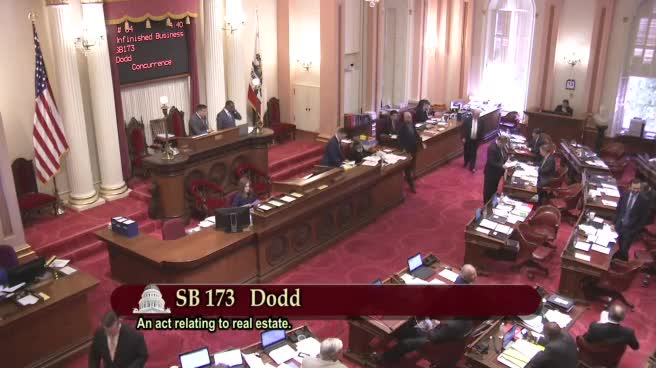 2MIN
Senate Floor
 5MIN
Assembly Floor
 44SEC
Assembly Floor
 19MIN
Assembly Standing Committee on Judiciary
 21MIN
Assembly Standing Committee on Elections and Redistricting
 3MIN
Senate Floor
 16MIN
Senate Standing Committee on Judiciary
 32MIN
Senate Standing Committee on Elections and Constitutional Amendments
Bill Author

Bill Co-Author(s):