SB 241: Medical records: access.
- Session Year: 2017-2018
- House: Senate
- Latest Version Date: 2017-10-05
Existing law governs a patients access to his or her health records. Existing law requires a health care provider to provide a patient or his or her representative with all or any part of the patients medical records that the patient has a right to inspect, subject to the payment of clerical costs incurred in locating and making the records available, following a written request from the patient. If the patient or patients representative presents proof to the provider that the records are needed to support an appeal regarding eligibility for a public benefit program, as defined, the health care provider must provide one copy of the relevant portion of the patients record at no charge under specified circumstances. Existing law makes a violation of these provisions by specified health care providers an infraction.
This bill would change the basis of the fee that a health care provider is authorized to charge from clerical costs to specified costs for labor, supplies, postage, and preparing an explanation or summary of the patient record. The bill would require the health care provider to provide the patient or patients personal representative with a copy of the records in a paper or electronic copy, in the form or format requested if the records are readily producible in that form or format. By expanding the scope of a crime, this bill would create a state-mandated local program.
Existing law provides that information and records obtained in the course of providing mental health and developmental services are confidential, but allows disclosure of communications under specified circumstances.
This bill would allow disclosure to a business associate or for health care operations purposes, as specified.
This bill would incorporate additional changes to Section 123110 of the Health and Safety Code proposed by SB 575 to be operative only if this bill and SB 575 are enacted and this bill is enacted last.
This bill would incorporate additional changes to Section 5328 of the Welfare and Institutions Code proposed by AB 1119 to be operative only if this bill and AB 1119 are enacted and this bill is enacted last.
The California Constitution requires the state to reimburse local agencies and school districts for certain costs mandated by the state. Statutory provisions establish procedures for making that reimbursement.
This bill would provide that no reimbursement is required by this act for a specified reason.
Existing law governs a patients access to his or her health records. Existing law requires a health care provider to provide a patient or his or her representative with all or any part of the patients medical records that the patient has a right to inspect, subject to the payment of clerical costs incurred in locating and making the records available, following a written request from the patient. If the patient or patients representative presents proof to the provider that the records are needed to support an appeal regarding eligibility for a public benefit program, as defined, the health care provider must provide one copy of the relevant portion of the patients record at no charge under specified circumstances. Existing law makes a violation of these provisions by specified health care providers an infraction.
This bill would change the basis of the fee that a health care provider is authorized to charge from clerical costs to specified costs for labor, supplies, postage, and preparing an explanation or summary of the patient record. The bill would require the health care provider to provide the patient or patients personal representative with a copy of the records in a paper or electronic copy, in the form or format requested if the records are readily producible in that form or format.
Existing law provides that information and records obtained in the course of providing mental health and developmental services are confidential, but allows disclosure of communications under specified circumstances.
This bill would allow disclosure to a business associate or for health care operations purposes, as specified.
The California Constitution requires the state to reimburse local agencies and school districts for certain costs mandated by the state. Statutory provisions establish procedures for making that reimbursement.
This bill would provide that no reimbursement is required by this act for a specified reason.
As used in this chapter:
(a)Health care provider means any of the following:
(1)A health facility licensed pursuant to Chapter 2 (commencing with Section 1250) of Division 2.
(2)A clinic licensed pursuant to Chapter 1 (commencing with Section 1200) of Division 2.
(3)A home health agency licensed pursuant to Chapter 8 (commencing with Section 1725) of Division 2.
(4)A physician and surgeon licensed pursuant to Chapter 5 (commencing with Section 2000) of Division 2 of the Business and Professions Code or pursuant to the Osteopathic Act.
(5)A podiatrist licensed pursuant to Article 22 (commencing with Section 2460) of Chapter 5 of Division 2 of the Business and Professions Code.
(6)A dentist licensed pursuant to Chapter 4 (commencing with Section 1600) of Division 2 of the Business and Professions Code.
(7)A psychologist licensed pursuant to Chapter 6.6 (commencing with Section 2900) of Division 2 of the Business and Professions Code.
(8)An optometrist licensed pursuant to Chapter 7 (commencing with Section 3000) of Division 2 of the Business and Professions Code.
(9)A chiropractor licensed pursuant to the Chiropractic Initiative Act.
(10)A marriage and family therapist licensed pursuant to Chapter 13 (commencing with Section 4980) of Division 2 of the Business and Professions Code.
(11)A clinical social worker licensed pursuant to Chapter 14 (commencing with Section 4990) of Division 2 of the Business and Professions Code.
(12)A physical therapist licensed pursuant to Chapter 5.7 (commencing with Section 2600) of Division 2 of the Business and Professions Code.
(13)An occupational therapist licensed pursuant to Chapter 5.6 (commencing with Section 2570).
(14)A professional clinical counselor licensed pursuant to Chapter 16 (commencing with Section 4999.10) of Division 2 of the Business and Professions Code.
(b)Mental health records means patient records, or discrete portions thereof, specifically relating to evaluation or treatment of a mental disorder. Mental health records includes, but is not limited to, all alcohol and drug abuse records.
(c)Patient means a patient or former patient of a health care provider.
(d)Patient records means records in any form or medium maintained by, or in the custody or control of, a health care provider relating to the health history, diagnosis, or condition of a patient, or relating to treatment provided or proposed to be provided to the patient. Patient records includes only records pertaining to the patient requesting the records or whose representative requests the records. Patient records does not include information given in confidence to a health care provider by a person other than another health care provider or the patient, and that material may be removed from any records prior to inspection or copying under Section 123110 or 123115. Patient records does not include information contained in aggregate form, such as indices, registers, or logs.
(e)Patients representative, patients personal representative, or representative means any of the following:
(1)A parent or guardian of a minor who is a patient.
(2)The guardian or conservator of the person of an adult patient.
(3)An agent as defined in Section 4607 of the Probate Code, to the extent necessary for the agent to fulfill his or her duties as set forth in Division 4.7 (commencing with Section 4600) of the Probate Code.
(4)The beneficiary as defined in Section 24 of the Probate Code or personal representative as defined in Section 58 of the Probate Code, of a deceased patient.
(f)Alcohol and drug abuse records means patient records, or discrete portions thereof, specifically relating to evaluation and treatment of alcoholism or drug abuse.
SEC. 2.Section 123110 of the Health and Safety Code is amended to read:123110.(a)Notwithstanding Section 5328 of the Welfare and Institutions Code, and except as provided in Sections 123115 and 123120, any adult patient of a health care provider, any minor patient authorized by law to consent to medical treatment, and any patients personal representative shall be entitled to inspect patient records upon presenting to the health care provider a request for those records and upon payment of reasonable costs as specified in subdivision (k). However, a patient who is a minor shall be entitled to inspect patient records pertaining only to health care of a type for which the minor is lawfully authorized to consent. A health care provider shall permit this inspection during business hours within five working days after receipt of the request. The inspection shall be conducted by the patient or patients personal representative requesting the inspection, who may be accompanied by one other person of his or her choosing.
(b) (1)Additionally, any patient or patients personal representative shall be entitled to a paper or electronic copy of all or any portion of the patient records that he or she has a right to inspect, upon presenting a request to the health care provider specifying the records to be copied, together with a fee to defray the costs of producing the copy or summary, as specified in subdivision (k). The health care provider shall ensure that the copies are transmitted within 15 days after receiving the request.
(2)The health care provider shall provide the patient or patients personal representative with a copy of the record in the form and format requested if it is readily producible in the requested form and format, or, if not, in a readable paper copy form or other form and format as agreed to by the health care provider and the patient or patients personal representative. If the requested patient records are maintained electronically and if the patient or patients personal representative requests an electronic copy of those records, the health care provider shall provide them in the electronic form and format requested if they are readily producible in that form and format, or, if not, in a readable electronic form and format as agreed to by the health care provider and the patient or patients personal representative.
(c) Copies of X-rays or tracings derived from electrocardiography, electroencephalography, or electromyography need not be provided to the patient or patients personal representative under this section, if the original X-rays or tracings are transmitted to another health care provider upon written request of the patient or patients personal representative and within 15 days after receipt of the request. The request shall specify the name and address of the health care provider to whom the records are to be delivered. All reasonable costs, not exceeding actual costs, incurred by a health care provider in providing copies pursuant to this subdivision may be charged to the patient or representative requesting the copies.
(d) (1) Notwithstanding any provision of this section, and except as provided in Sections 123115 and 123120, any patient or former patient or the patients personal representative shall be entitled to a copy, at no charge, of the relevant portion of the patients records, upon presenting to the provider a written request, and proof that the records are needed to support an appeal regarding eligibility for a public benefit program. These programs shall be the Medi-Cal program, social security disability insurance benefits, and Supplemental Security Income/State Supplementary Program for the Aged, Blind, and Disabled (SSI/SSP) benefits. For purposes of this subdivision, relevant portion of the patients records means those records regarding services rendered to the patient during the time period beginning with the date of the patients initial application for public benefits up to and including the date that a final determination is made by the public benefits program with which the patients application is pending.
(2) Although a patient shall not be limited to a single request, the patient or patients personal representative shall be entitled to no more than one copy of any relevant portion of his or her record free of charge.
(3) This subdivision shall not apply to any patient who is represented by a private attorney who is paying for the costs related to the patients appeal, pending the outcome of that appeal. For purposes of this subdivision, private attorney means any attorney not employed by a nonprofit legal services entity.
(e) If the patients appeal regarding eligibility for a public benefit program specified in subdivision (d) is successful, the hospital or other health care provider may bill the patient, at the rates specified in subdivisions (b) and (c), for the copies of the medical records previously provided free of charge.
(f) If a patient or his or her personal representative requests a record pursuant to subdivision (d), the health care provider shall ensure that the copies are transmitted within 30 days after receiving the written request.
(g) This section shall not be construed to preclude a health care provider from requiring reasonable verification of identity prior to permitting inspection or copying of patient records, provided this requirement is not used oppressively or discriminatorily to frustrate or delay compliance with this section. Nothing in this chapter shall be deemed to supersede any rights that a patient or personal representative might otherwise have or exercise under Section 1158 of the Evidence Code or any other provision of law. Nothing in this chapter shall require a health care provider to retain records longer than required by applicable statutes or administrative regulations.
(h) This chapter shall not be construed to render a health care provider liable for the quality of his or her records or the copies provided in excess of existing law and regulations with respect to the quality of medical records. A health care provider shall not be liable to the patient or any other person for any consequences that result from disclosure of patient records as required by this chapter. A health care provider shall not discriminate against classes or categories of providers in the transmittal of X-rays or other patient records, or copies of these X-rays or records, to other providers as authorized by this section.
Every health care provider shall adopt policies and establish procedures for the uniform transmittal of X-rays and other patient records that effectively prevent the discrimination described in this subdivision. A health care provider may establish reasonable conditions, including a reasonable deposit fee, to ensure the return of original X-rays transmitted to another health care provider, provided the conditions do not discriminate on the basis of, or in a manner related to, the license of the provider to which the X-rays are transmitted.
(i) Any health care provider described in paragraphs (4) to (10), inclusive, of subdivision (a) of Section 123105 who willfully violates this chapter is guilty of unprofessional conduct. Any health care provider described in paragraphs (1) to (3), inclusive, of subdivision (a) of Section 123105 that willfully violates this chapter is guilty of an infraction punishable by a fine of not more than one hundred dollars ($100). The state agency, board, or commission that issued the health care providers professional or institutional license shall consider a violation as grounds for disciplinary action with respect to the licensure, including suspension or revocation of the license or certificate.
(j) This section shall be construed as prohibiting a health care provider from withholding patient records or summaries of patient records because of an unpaid bill for health care services. Any health care provider who willfully withholds patient records or summaries of patient records because of an unpaid bill for health care services shall be subject to the sanctions specified in subdivision (i).
(k)(1)Except as provided in subdivision (d), a health care provider may impose a reasonable, cost-based fee for providing a paper or electronic copy or summary of patient records, provided the fee includes only the cost of the following:
(A)Labor for copying the patient records requested by the patient or patients personal representative, whether in paper or electronic form.
(B)Supplies for creating the paper copy or electronic media if the patient or patients personal representative requests that the electronic copy be provided on portable media.
(C)Postage, if the patient or patients personal representative has requested the copy, or the summary or explanation, be mailed.
(D)Preparing an explanation or summary of the patient record, if agreed to by the patient or patients personal representative.
(2)The fee from a health care provider shall not exceed twenty-five cents ($0.25) per page for paper copies or fifty cents ($0.50) per page for records that are copied from microfilm.
SEC. 2.5.Section 123110 of the Health and Safety Code is amended to read:123110.(a) Notwithstanding Section 5328 of the Welfare and Institutions Code, and except as provided in Sections 123115 and 123120, any adult patient of a health care provider, any minor patient authorized by law to consent to medical treatment, and any patients personal representative shall be entitled to inspect patient records upon presenting to the health care provider a request for those records and upon payment of reasonable costs, as specified in subdivision (k). However, a patient who is a minor shall be entitled to inspect patient records pertaining only to health care of a type for which the minor is lawfully authorized to consent. A health care provider shall permit this inspection during business hours within five working days after receipt of the request. The inspection shall be conducted by the patient or patients personal representative requesting the inspection, who may be accompanied by one other person of his or her choosing.
(b)(1)Additionally, any patient or patients personal representative shall be entitled to a paper or electronic copy of all or any portion of the patient records that he or she has a right to inspect, upon presenting a request to the health care provider specifying the records to be copied, together with a fee to defray the costs of producing the copy or summary, as specified in subdivision (k). The health care provider shall ensure that the copies are transmitted within 15 days after receiving the request.
(2)The health care provider shall provide the patient or patients personal representative with a copy of the record in the form and format requested if it is readily producible in the requested form and format, or, if not, in a readable paper copy form or other form and format as agreed to by the health care provider and the patient or patients personal representative. If the requested patient records are maintained electronically and if the patient or patients personal representative requests an electronic copy of those records, the health care provider shall provide them in the electronic form and format requested if they are readily producible in that form and format, or, if not, in a readable electronic form and format as agreed to by the health care provider and the patient or patients personal representative.
(c) Copies of X-rays or tracings derived from electrocardiography, electroencephalography, or electromyography need not be provided to the patient or patients personal representative under this section, if the original X-rays or tracings are transmitted to another health care provider upon written request of the patient or patients personal representative and within 15 days after receipt of the request. The request shall specify the name and address of the health care provider to whom the records are to be delivered. All reasonable costs, not exceeding actual costs, incurred by a health care provider in providing copies pursuant to this subdivision may be charged to the patient or representative requesting the copies.
(d)(1)Notwithstanding any provision of this section, and except as provided in Sections 123115 and 123120, a patient, former patient, or the representative of a patient or former patient, is entitled to a copy, at no charge, of the relevant portion of the patients records, upon presenting to the provider a written request, and proof that the records or supporting forms are needed to support a claim or appeal regarding eligibility for a public benefit program. These programs shall be the Medi-Cal program, the In-Home Supportive Services Program, the California Work Opportunity and Responsibility to Kids (CalWORKS) program, social security disability insurance benefits, Supplemental Security Income/State Supplementary Program for the Aged, Blind, and Disabled (SSI/SSP) benefits, federal veterans service-connected compensation and nonservice connected pension disability benefits, and CalFresh.
(2)Although a patient shall not be limited to a single request, the patient or patients personal representative shall be entitled to no more than one copy of any relevant portion of his or her record free of charge.
(3)This subdivision shall not apply to any patient who is represented by a private attorney who is paying for the costs related to the patients claim or appeal, pending the outcome of that claim or appeal. For purposes of this subdivision, private attorney means any attorney not employed by a nonprofit legal services entity.
(e)If the patients appeal regarding eligibility for a public benefit program specified in subdivision (d) is successful, the hospital or other health care provider may bill the patient, at the rates specified in subdivisions (b) and (c), for the copies of the medical records previously provided free of charge.
(f)If a patient or his or her personal representative requests a record pursuant to subdivision (d), the health care provider shall ensure that the copies are transmitted within 30 days after receiving the written request.
(g)This section shall not be construed to preclude a health care provider from requiring reasonable verification of identity prior to permitting inspection or copying of patient records, provided this requirement is not used oppressively or discriminatorily to frustrate or delay compliance with this section. Nothing in this chapter shall be deemed to supersede any rights that a patient or personal representative might otherwise have or exercise under Section 1158 of the Evidence Code or any other provision of law. Nothing in this chapter shall require a health care provider to retain records longer than required by applicable statutes or administrative regulations.
(h)This chapter shall not be construed to render a health care provider liable for the quality of his or her records or the copies provided in excess of existing law and regulations with respect to the quality of medical records. A health care provider shall not be liable to the patient or any other person for any consequences that result from disclosure of patient records as required by this chapter. A health care provider shall not discriminate against classes or categories of providers in the transmittal of X-rays or other patient records, or copies of these X-rays or records, to other providers as authorized by this section.
Every health care provider shall adopt policies and establish procedures for the uniform transmittal of X-rays and other patient records that effectively prevent the discrimination described in this subdivision. A health care provider may establish reasonable conditions, including a reasonable deposit fee, to ensure the return of original X-rays transmitted to another health care provider, provided the conditions do not discriminate on the basis of, or in a manner related to, the license of the provider to which the X-rays are transmitted.
(i)Any health care provider described in paragraphs (4) to (10), inclusive, of subdivision (a) of Section 123105 who willfully violates this chapter is guilty of unprofessional conduct. Any health care provider described in paragraphs (1) to (3), inclusive, of subdivision (a) of Section 123105 that willfully violates this chapter is guilty of an infraction punishable by a fine of not more than one hundred dollars ($100). The state agency, board, or commission that issued the health care providers professional or institutional license shall consider a violation as grounds for disciplinary action with respect to the licensure, including suspension or revocation of the license or certificate.
(j)This section prohibits a health care provider from withholding patient records or summaries of patient records because of an unpaid bill for health care services. Any health care provider who willfully withholds patient records or summaries of patient records because of an unpaid bill for health care services is subject to the sanctions specified in subdivision (i).
(k)(1)Except as provided in subdivision (d), a health care provider may impose a reasonable, cost-based fee for providing a paper or electronic copy or summary of patient records, provided the fee includes only the cost of the following:
(A)Labor for copying the patient records requested by the patient or patients personal representative, whether in paper or electronic form.
(B)Supplies for creating the paper copy or electronic media if the patient or patients personal representative requests that the electronic copy be provided on portable media.
(C)Postage, if the patient or patients personal representative has requested the copy, or the summary or explanation, be mailed.
(D)Preparing an explanation or summary of the patient record, if agreed to by the patient or patients personal representative.
(2)The fee from a health care provider shall not exceed twenty-five cents ($0.25) per page for paper copies or fifty cents ($0.50) per page for records that are copied from microfilm.
SEC. 3.Section 5328 of the Welfare and Institutions Code is amended to read:5328.All information and records obtained in the course of providing services under Division 4 (commencing with Section 4000), Division 4.1 (commencing with Section 4400), Division 4.5 (commencing with Section 4500), Division 5 (commencing with Section 5000), Division 6 (commencing with Section 6000), or Division 7 (commencing with Section 7100), to either voluntary or involuntary recipients of services shall be confidential. Information and records obtained in the course of providing similar services to either voluntary or involuntary recipients prior to 1969 shall also be confidential. Information and records shall be disclosed only in any of the following cases:
(a)In communications between qualified professional persons in the provision of services or appropriate referrals, or in the course of conservatorship proceedings. The consent of the patient, or his or her guardian or conservator, shall be obtained before information or records may be disclosed by a professional person employed by a facility to a professional person not employed by the facility who does not have the medical or psychological responsibility for the patients care.
(b)When the patient, with the approval of the physician and surgeon, licensed psychologist, social worker with a masters degree in social work, licensed marriage and family therapist, or licensed professional clinical counselor, who is in charge of the patient, designates persons to whom information or records may be released, except that nothing in this article shall be construed to compel a physician and surgeon, licensed psychologist, social worker with a masters degree in social work, licensed marriage and family therapist, licensed professional clinical counselor, nurse, attorney, or other professional person to reveal information that has been given to him or her in confidence by members of a patients family. Nothing in this subdivision shall be construed to authorize a licensed marriage and family therapist or licensed professional clinical counselor to provide services or to be in charge of a patients care beyond his or her lawful scope of practice.
(c)To the extent necessary for a recipient to make a claim, or for a claim to be made on behalf of a recipient for aid, insurance, or medical assistance to which he or she may be entitled.
(d)If the recipient of services is a minor, ward, dependent, or conservatee, and his or her parent, guardian, guardian ad litem, conservator, or authorized representative designates, in writing, persons to whom records or information may be disclosed, except that nothing in this article shall be construed to compel a physician and surgeon, licensed psychologist, social worker with a masters degree in social work, licensed marriage and family therapist, licensed professional clinical counselor, nurse, attorney, or other professional person to reveal information that has been given to him or her in confidence by members of a patients family.
(e)For research, provided that the Director of Health Care Services, the Director of State Hospitals, the Director of Social Services, or the Director of Developmental Services designates by regulation, rules for the conduct of research and requires the research to be first reviewed by the appropriate institutional review board or boards. The rules shall include, but need not be limited to, the requirement that all researchers shall sign an oath of confidentiality as follows:
Date |
As a condition of doing research concerning persons who have received services from ____ (fill in the facility, agency or person), I, ____, agree to obtain the prior informed consent of such persons who have received services to the maximum degree possible as determined by the appropriate institutional review board or boards for protection of human subjects reviewing my research, and I further agree not to divulge any information obtained in the course of such research to unauthorized persons, and not to publish or otherwise make public any information regarding persons who have received services such that the person who received services is identifiable.
I recognize that the unauthorized release of confidential information may make me subject to a civil action under provisions of the Welfare and Institutions Code.
(f)To the courts, as necessary to the administration of justice.
(g)To governmental law enforcement agencies as needed for the protection of federal and state elective constitutional officers and their families.
(h)To the Senate Committee on Rules or the Assembly Committee on Rules for the purposes of legislative investigation authorized by the committee.
(i)If the recipient of services who applies for life or disability insurance designates in writing the insurer to which records or information may be disclosed.
(j)To the attorney for the patient in any and all proceedings upon presentation of a release of information signed by the patient, except that when the patient is unable to sign the release, the staff of the facility, upon satisfying itself of the identity of the attorney, and of the fact that the attorney does represent the interests of the patient, may release all information and records relating to the patient except that nothing in this article shall be construed to compel a physician and surgeon, licensed psychologist, social worker with a masters degree in social work, licensed marriage and family therapist, licensed professional clinical counselor, nurse, attorney, or other professional person to reveal information that has been given to him or her in confidence by members of a patients family.
(k)Upon written agreement by a person previously confined in or otherwise treated by a facility, the professional person in charge of the facility or his or her designee may release any information, except information that has been given in confidence by members of the persons family, requested by a probation officer charged with the evaluation of the person after his or her conviction of a crime if the professional person in charge of the facility determines that the information is relevant to the evaluation. The agreement shall only be operative until sentence is passed on the crime of which the person was convicted. The confidential information released pursuant to this subdivision shall be transmitted to the court separately from the probation report and shall not be placed in the probation report. The confidential information shall remain confidential except for purposes of sentencing. After sentencing, the confidential information shall be sealed.
(l)(1)Between persons who are trained and qualified to serve on multidisciplinary personnel teams pursuant to subdivision (d) of Section 18951. The information and records sought to be disclosed shall be relevant to the provision of child welfare services or the investigation, prevention, identification, management, or treatment of child abuse or neglect pursuant to Chapter 11 (commencing with Section 18950) of Part 6 of Division 9. Information obtained pursuant to this subdivision shall not be used in any criminal or delinquency proceeding. Nothing in this subdivision shall prohibit evidence identical to that contained within the records from being admissible in a criminal or delinquency proceeding, if the evidence is derived solely from means other than this subdivision, as permitted by law.
(2)As used in this subdivision, child welfare services means those services that are directed at preventing child abuse or neglect.
(m)To county patients rights advocates who have been given knowing voluntary authorization by a client or a guardian ad litem. The client or guardian ad litem, whoever entered into the agreement, may revoke the authorization at any time, either in writing or by oral declaration to an approved advocate.
(n)To a committee established in compliance with Section 14725.
(o)In providing information as described in Section 7325.5. Nothing in this subdivision shall permit the release of any information other than that described in Section 7325.5.
(p)To the county behavioral health director or the directors designee, or to a law enforcement officer, or to the person designated by a law enforcement agency, pursuant to Sections 5152.1 and 5250.1.
(q)If the patient gives his or her consent, information specifically pertaining to the existence of genetically handicapping conditions, as defined in Section 125135 of the Health and Safety Code, may be released to qualified professional persons for purposes of genetic counseling for blood relatives upon request of the blood relative. For purposes of this subdivision, qualified professional persons means those persons with the qualifications necessary to carry out the genetic counseling duties under this subdivision as determined by the genetic disease unit established in the State Department of Health Care Services under Section 125000 of the Health and Safety Code. If the patient does not respond or cannot respond to a request for permission to release information pursuant to this subdivision after reasonable attempts have been made over a two-week period to get a response, the information may be released upon request of the blood relative.
(r)When the patient, in the opinion of his or her psychotherapist, presents a serious danger of violence to a reasonably foreseeable victim or victims, then any of the information or records specified in this section may be released to that person or persons and to law enforcement agencies and county child welfare agencies as the psychotherapist determines is needed for the protection of that person or persons. For purposes of this subdivision, psychotherapist means anyone so defined within Section 1010 of the Evidence Code.
(s)(1)To the designated officer of an emergency response employee, and from that designated officer to an emergency response employee regarding possible exposure to HIV or AIDS, but only to the extent necessary to comply with provisions of the federal Ryan White Comprehensive AIDS Resources Emergency Act of 1990 (Public Law 101-381; 42 U.S.C. Sec. 201).
(2)For purposes of this subdivision, designated officer and emergency response employee have the same meaning as these terms are used in the federal Ryan White Comprehensive AIDS Resources Emergency Act of 1990 (Public Law 101-381; 42 U.S.C. Sec. 201).
(3)The designated officer shall be subject to the confidentiality requirements specified in Section 120980, and may be personally liable for unauthorized release of any identifying information about the HIV results. Further, the designated officer shall inform the exposed emergency response employee that the employee is also subject to the confidentiality requirements specified in Section 120980, and may be personally liable for unauthorized release of any identifying information about the HIV test results.
(t)(1)To a law enforcement officer who personally lodges with a facility, as defined in paragraph (2), a warrant of arrest or an abstract of such a warrant showing that the person sought is wanted for a serious felony, as defined in Section 1192.7 of the Penal Code, or a violent felony, as defined in Section 667.5 of the Penal Code. The information sought and released shall be limited to whether or not the person named in the arrest warrant is presently confined in the facility. This paragraph shall be implemented with minimum disruption to health facility operations and patients, in accordance with Section 5212. If the law enforcement officer is informed that the person named in the warrant is confined in the facility, the officer may not enter the facility to arrest the person without obtaining a valid search warrant or the permission of staff of the facility.
(2)For purposes of paragraph (1), a facility means all of the following:
(A)A state hospital, as defined in Section 4001.
(B)A general acute care hospital, as defined in subdivision (a) of Section 1250 of the Health and Safety Code, solely with regard to information pertaining to a person with mental illness subject to this section.
(C)An acute psychiatric hospital, as defined in subdivision (b) of Section 1250 of the Health and Safety Code.
(D)A psychiatric health facility, as described in Section 1250.2 of the Health and Safety Code.
(E)A mental health rehabilitation center, as described in Section 5675.
(F)A skilled nursing facility with a special treatment program for individuals with mental illness, as described in Sections 51335 and 72445 to 72475, inclusive, of Title 22 of the California Code of Regulations.
(u)Between persons who are trained and qualified to serve on multidisciplinary personnel teams pursuant to Section 15610.55, 15753.5, or 15761. The information and records sought to be disclosed shall be relevant to the prevention, identification, management, or treatment of an abused elder or dependent adult pursuant to Chapter 13 (commencing with Section 15750) of Part 3 of Division 9.
(v)The amendment of subdivision (d) enacted at the 1970 Regular Session of the Legislature does not constitute a change in, but is declaratory of, the preexisting law.
(w)This section shall not be limited by Section 5150.05 or 5332.
(x)(1)When an employee is served with a notice of adverse action, as defined in Section 19570 of the Government Code, the following information and records may be released:
(A)All information and records that the appointing authority relied upon in issuing the notice of adverse action.
(B)All other information and records that are relevant to the adverse action, or that would constitute relevant evidence as defined in Section 210 of the Evidence Code.
(C)The information described in subparagraphs (A) and (B) may be released only if both of the following conditions are met:
(i)The appointing authority has provided written notice to the consumer and the consumers legal representative or, if the consumer has no legal representative or if the legal representative is a state agency, to the clients rights advocate, and the consumer, the consumers legal representative, or the clients rights advocate has not objected in writing to the appointing authority within five business days of receipt of the notice, or the appointing authority, upon review of the objection has determined that the circumstances on which the adverse action is based are egregious or threaten the health, safety, or life of the consumer or other consumers and without the information the adverse action could not be taken.
(ii)The appointing authority, the person against whom the adverse action has been taken, and the persons representative, if any, have entered into a stipulation that does all of the following:
(I)Prohibits the parties from disclosing or using the information or records for any purpose other than the proceedings for which the information or records were requested or provided.
(II)Requires the employee and the employees legal representative to return to the appointing authority all records provided to them under this subdivision, including, but not limited to, all records and documents from any source containing confidential information protected by this section, and all copies of those records and documents, within 10 days of the date that the adverse action becomes final except for the actual records and documents or copies thereof that are no longer in the possession of the employee or the employees legal representative because they were submitted to the administrative tribunal as a component of an appeal from the adverse action.
(III)Requires the parties to submit the stipulation to the administrative tribunal with jurisdiction over the adverse action at the earliest possible opportunity.
(2)For the purposes of this subdivision, the State Personnel Board may, prior to any appeal from adverse action being filed with it, issue a protective order, upon application by the appointing authority, for the limited purpose of prohibiting the parties from disclosing or using information or records for any purpose other than the proceeding for which the information or records were requested or provided, and to require the employee or the employees legal representative to return to the appointing authority all records provided to them under this subdivision, including, but not limited to, all records and documents from any source containing confidential information protected by this section, and all copies of those records and documents, within 10 days of the date that the adverse action becomes final, except for the actual records and documents or copies thereof that are no longer in the possession of the employee or the employees legal representatives because they were submitted to the administrative tribunal as a component of an appeal from the adverse action.
(3)Individual identifiers, including, but not limited to, names, social security numbers, and hospital numbers, that are not necessary for the prosecution or defense of the adverse action, shall not be disclosed.
(4)All records, documents, or other materials containing confidential information protected by this section that have been submitted or otherwise disclosed to the administrative agency or other person as a component of an appeal from an adverse action shall, upon proper motion by the appointing authority to the administrative tribunal, be placed under administrative seal and shall not, thereafter, be subject to disclosure to any person or entity except upon the issuance of an order of a court of competent jurisdiction.
(5)For purposes of this subdivision, an adverse action becomes final when the employee fails to answer within the time specified in Section 19575 of the Government Code, or, after filing an answer, withdraws the appeal, or, upon exhaustion of the administrative appeal or of the judicial review remedies as otherwise provided by law.
(y)To the person appointed as the developmental services decisionmaker for a minor, dependent, or ward pursuant to Section 319, 361, or 726.
(z)To a business associate or for health care operations purposes, in accordance with Part 160 (commencing with Section 160.101) and Part 164 (commencing with Section 164.102) of Subchapter C of Subtitle A of Title 45 of the Code of Federal Regulations.
SEC. 3.5.Section 5328 of the Welfare and Institutions Code is amended to read:5328.(a)All information and records obtained in the course of providing services under Division 4 (commencing with Section 4000), Division 4.1 (commencing with Section 4400), Division 4.5 (commencing with Section 4500), Division 5 (commencing with Section 5000), Division 6 (commencing with Section 6000), or Division 7 (commencing with Section 7100), to either voluntary or involuntary recipients of services shall be confidential. Information and records obtained in the course of providing similar services to either voluntary or involuntary recipients prior to 1969 shall also be confidential. Information and records shall be disclosed only in any of the following cases:
(1)In communications between qualified professional persons in the provision of services or appropriate referrals, or in the course of conservatorship proceedings. The consent of the patient, or his or her guardian or conservator, shall be obtained before information or records may be disclosed by a professional person employed by a facility to a professional person not employed by the facility who does not have the medical or psychological responsibility for the patients care.
(2)When the patient, with the approval of the physician and surgeon, licensed psychologist, social worker with a masters degree in social work, licensed marriage and family therapist, or licensed professional clinical counselor, who is in charge of the patient, designates persons to whom information or records may be released, except that this article does not compel a physician and surgeon, licensed psychologist, social worker with a masters degree in social work, licensed marriage and family therapist, licensed professional clinical counselor, nurse, attorney, or other professional person to reveal information that has been given to him or her in confidence by members of a patients family. This paragraph does not authorize a licensed marriage and family therapist or licensed professional clinical counselor to provide services or to be in charge of a patients care beyond his or her lawful scope of practice.
(3)To the extent necessary for a recipient to make a claim, or for a claim to be made on behalf of a recipient for aid, insurance, or medical assistance to which he or she may be entitled.
(4)If the recipient of services is a minor, ward, dependent, or conservatee, and his or her parent, guardian, guardian ad litem, conservator, or authorized representative designates, in writing, persons to whom records or information may be disclosed, except that this article does not compel a physician and surgeon, licensed psychologist, social worker with a masters degree in social work, licensed marriage and family therapist, licensed professional clinical counselor, nurse, attorney, or other professional person to reveal information that has been given to him or her in confidence by members of a patients family.
(5)For research, provided that the Director of Health Care Services, the Director of State Hospitals, the Director of Social Services, or the Director of Developmental Services designates by regulation, rules for the conduct of research and requires the research to be first reviewed by the appropriate institutional review board or boards. The rules shall include, but need not be limited to, the requirement that all researchers shall sign an oath of confidentiality as follows:
Date |
As a condition of doing research concerning persons who have received services from ____ (fill in the facility, agency or person), I, ____, agree to obtain the prior informed consent of such persons who have received services to the maximum degree possible as determined by the appropriate institutional review board or boards for protection of human subjects reviewing my research, and I further agree not to divulge any information obtained in the course of such research to unauthorized persons, and not to publish or otherwise make public any information regarding persons who have received services such that the person who received services is identifiable.
I recognize that the unauthorized release of confidential information may make me subject to a civil action under provisions of the Welfare and Institutions Code.
(6)To the courts, as necessary to the administration of justice.
(7)To governmental law enforcement agencies as needed for the protection of federal and state elective constitutional officers and their families.
(8)To the Senate Committee on Rules or the Assembly Committee on Rules for the purposes of legislative investigation authorized by the committee.
(9)If the recipient of services who applies for life or disability insurance designates in writing the insurer to which records or information may be disclosed.
(10)To the attorney for the patient in any and all proceedings upon presentation of a release of information signed by the patient, except that when the patient is unable to sign the release, the staff of the facility, upon satisfying itself of the identity of the attorney, and of the fact that the attorney does represent the interests of the patient, may release all information and records relating to the patient except that this article does not compel a physician and surgeon, licensed psychologist, social worker with a masters degree in social work, licensed marriage and family therapist, licensed professional clinical counselor, nurse, attorney, or other professional person to reveal information that has been given to him or her in confidence by members of a patients family.
(11)Upon written agreement by a person previously confined in or otherwise treated by a facility, the professional person in charge of the facility or his or her designee may release any information, except information that has been given in confidence by members of the persons family, requested by a probation officer charged with the evaluation of the person after his or her conviction of a crime if the professional person in charge of the facility determines that the information is relevant to the evaluation. The agreement shall only be operative until sentence is passed on the crime of which the person was convicted. The confidential information released pursuant to this paragraph shall be transmitted to the court separately from the probation report and shall not be placed in the probation report. The confidential information shall remain confidential except for purposes of sentencing. After sentencing, the confidential information shall be sealed.
(12)(A)Between persons who are trained and qualified to serve on multidisciplinary personnel teams pursuant to subdivision (d) of Section 18951. The information and records sought to be disclosed shall be relevant to the provision of child welfare services or the investigation, prevention, identification, management, or treatment of child abuse or neglect pursuant to Chapter 11 (commencing with Section 18950) of Part 6 of Division 9. Information obtained pursuant to this paragraph shall not be used in any criminal or delinquency proceeding. This paragraph does not prohibit evidence identical to that contained within the records from being admissible in a criminal or delinquency proceeding, if the evidence is derived solely from means other than this paragraph, as permitted by law.
(B)As used in this paragraph, child welfare services means those services that are directed at preventing child abuse or neglect.
(13)To county patients rights advocates who have been given knowing voluntary authorization by a client or a guardian ad litem. The client or guardian ad litem, whoever entered into the agreement, may revoke the authorization at any time, either in writing or by oral declaration to an approved advocate.
(14)To a committee established in compliance with Section 14725.
(15)In providing information as described in Section 7325.5. This paragraph does not permit the release of any information other than that described in Section 7325.5.
(16)To the county behavioral health director or the directors designee, or to a law enforcement officer, or to the person designated by a law enforcement agency, pursuant to Sections 5152.1 and 5250.1.
(17)If the patient gives his or her consent, information specifically pertaining to the existence of genetically handicapping conditions, as defined in Section 125135 of the Health and Safety Code, may be released to qualified professional persons for purposes of genetic counseling for blood relatives upon request of the blood relative. For purposes of this paragraph, qualified professional persons means those persons with the qualifications necessary to carry out the genetic counseling duties under this paragraph as determined by the genetic disease unit established in the State Department of Health Care Services under Section 125000 of the Health and Safety Code. If the patient does not respond or cannot respond to a request for permission to release information pursuant to this paragraph after reasonable attempts have been made over a two-week period to get a response, the information may be released upon request of the blood relative.
(18)When the patient, in the opinion of his or her psychotherapist, presents a serious danger of violence to a reasonably foreseeable victim or victims, then any of the information or records specified in this section may be released to that person or persons and to law enforcement agencies and county child welfare agencies as the psychotherapist determines is needed for the protection of that person or persons. For purposes of this paragraph, psychotherapist has the same meaning as provided in Section 1010 of the Evidence Code.
(19)(A)To the designated officer of an emergency response employee, and from that designated officer to an emergency response employee regarding possible exposure to HIV or AIDS, but only to the extent necessary to comply with the federal Ryan White Comprehensive AIDS Resources Emergency Act of 1990 (Public Law 101-381; 42 U.S.C. Sec. 201).
(B)For purposes of this paragraph, designated officer and emergency response employee have the same meaning as these terms are used in the federal Ryan White Comprehensive AIDS Resources Emergency Act of 1990 (Public Law 101-381; 42 U.S.C. Sec. 201).
(C)The designated officer shall be subject to the confidentiality requirements specified in Section 120980, and may be personally liable for unauthorized release of any identifying information about the HIV results. Further, the designated officer shall inform the exposed emergency response employee that the employee is also subject to the confidentiality requirements specified in Section 120980, and may be personally liable for unauthorized release of any identifying information about the HIV test results.
(20)(A)To a law enforcement officer who personally lodges with a facility, as defined in subparagraph (B), a warrant of arrest or an abstract of a warrant showing that the person sought is wanted for a serious felony, as defined in Section 1192.7 of the Penal Code, or a violent felony, as defined in Section 667.5 of the Penal Code. The information sought and released shall be limited to whether or not the person named in the arrest warrant is presently confined in the facility. This subparagraph shall be implemented with minimum disruption to health facility operations and patients, in accordance with Section 5212. If the law enforcement officer is informed that the person named in the warrant is confined in the facility, the officer may not enter the facility to arrest the person without obtaining a valid search warrant or the permission of staff of the facility.
(B)For purposes of subparagraph (A), a facility means all of the following:
(i)A state hospital, as defined in Section 4001.
(ii)A general acute care hospital, as defined in subdivision (a) of Section 1250 of the Health and Safety Code, solely with regard to information pertaining to a person with mental illness subject to this section.
(iii)An acute psychiatric hospital, as defined in subdivision (b) of Section 1250 of the Health and Safety Code.
(iv)A psychiatric health facility, as described in Section 1250.2 of the Health and Safety Code.
(v)A mental health rehabilitation center, as described in Section 5675.
(vi)A skilled nursing facility with a special treatment program for individuals with mental illness, as described in Sections 51335 and 72445 to 72475, inclusive, of Title 22 of the California Code of Regulations.
(21)Between persons who are trained and qualified to serve on multidisciplinary personnel teams pursuant to Section 15610.55, 15753.5, or 15761. The information and records sought to be disclosed shall be relevant to the prevention, identification, management, or treatment of an abused elder or dependent adult pursuant to Chapter 13 (commencing with Section 15750) of Part 3 of Division 9.
(22)(A)When an employee is served with a notice of adverse action, as defined in Section 19570 of the Government Code, all of the following information and records may be released:
(i)All information and records that the appointing authority relied upon in issuing the notice of adverse action.
(ii)All other information and records that are relevant to the adverse action, or that would constitute relevant evidence as defined in Section 210 of the Evidence Code.
(iii)The information described in clauses (i) and (ii) may be released only if both of the following conditions are met:
(I)The appointing authority has provided written notice to the consumer and the consumers legal representative or, if the consumer has no legal representative or if the legal representative is a state agency, to the clients rights advocate, and the consumer, the consumers legal representative, or the clients rights advocate has not objected in writing to the appointing authority within five business days of receipt of the notice, or the appointing authority, upon review of the objection has determined that the circumstances on which the adverse action is based are egregious or threaten the health, safety, or life of the consumer or other consumers and without the information the adverse action could not be taken.
(II)The appointing authority, the person against whom the adverse action has been taken, and the persons representative, if any, have entered into a stipulation that does all of the following:
(ia)Prohibits the parties from disclosing or using the information or records for any purpose other than the proceedings for which the information or records were requested or provided.
(ib)Requires the employee and the employees legal representative to return to the appointing authority all records provided to them under this paragraph, including, but not limited to, all records and documents from any source containing confidential information protected by this section, and all copies of those records and documents, within 10 days of the date that the adverse action becomes final except for the actual records and documents or copies thereof that are no longer in the possession of the employee or the employees legal representative because they were submitted to the administrative tribunal as a component of an appeal from the adverse action.
(ic)Requires the parties to submit the stipulation to the administrative tribunal with jurisdiction over the adverse action at the earliest possible opportunity.
(B)For the purposes of this paragraph, the State Personnel Board may, prior to any appeal from adverse action being filed with it, issue a protective order, upon application by the appointing authority, for the limited purpose of prohibiting the parties from disclosing or using information or records for any purpose other than the proceeding for which the information or records were requested or provided, and to require the employee or the employees legal representative to return to the appointing authority all records provided to them under this paragraph, including, but not limited to, all records and documents from any source containing confidential information protected by this section, and all copies of those records and documents, within 10 days of the date that the adverse action becomes final, except for the actual records and documents or copies thereof that are no longer in the possession of the employee or the employees legal representatives because they were submitted to the administrative tribunal as a component of an appeal from the adverse action.
(C)Individual identifiers, including, but not limited to, names, social security numbers, and hospital numbers, that are not necessary for the prosecution or defense of the adverse action, shall not be disclosed.
(D)All records, documents, or other materials containing confidential information protected by this section that have been submitted or otherwise disclosed to the administrative agency or other person as a component of an appeal from an adverse action shall, upon proper motion by the appointing authority to the administrative tribunal, be placed under administrative seal and shall not, thereafter, be subject to disclosure to any person or entity except upon the issuance of an order of a court of competent jurisdiction.
(E)For purposes of this paragraph, an adverse action becomes final when the employee fails to answer within the time specified in Section 19575 of the Government Code, or, after filing an answer, withdraws the appeal, or, upon exhaustion of the administrative appeal or of the judicial review remedies as otherwise provided by law.
(23)To the person appointed as the developmental services decisionmaker for a minor, dependent, or ward pursuant to Section 319, 361, or 726.
(24)During the provision of emergency services and care, as defined in Section 1317.1 of the Health and Safety Code, the communication of patient information between a physician and surgeon, licensed psychologist, social worker with a masters degree in social work, licensed marriage and family therapist, licensed professional clinical counselor, nurse, emergency medical personnel at the scene of an emergency or in an emergency medical transport vehicle, or other professional person or emergency medical personnel at a health facility licensed pursuant to Chapter 2 (commencing with Section 1250) of Division 2 of the Health and Safety Code.
(25)To a business associate or for health care operations purposes, in accordance with Part 160 (commencing with Section 160.101) and Part 164 (commencing with Section 164.102) of Subchapter C of Subtitle A of Title 45 of the Code of Federal Regulations.
(b)The amendment of paragraph (4) of subdivision (a) enacted at the 1970 Regular Session of the Legislature does not constitute a change in, but is declaratory of, the preexisting law.
(c)This section is not limited by Section 5150.05 or 5332.
SEC. 4.(a)Section 2.5 of this bill incorporates amendments to Section 123110 of the Health and Safety Code proposed by both this bill and Senate Bill 575. That section shall only become operative if (1) both bills are enacted and become effective on or before January 1, 2018, (2) each bill amends Section 123110 of the Health and Safety Code, and (3) this bill is enacted after Senate Bill 575, in which case Section 2 of this bill shall not become operative.
(b)Section 3.5 of this bill incorporates amendments to 5328 of the Welfare and Institutions Code proposed by both this bill and Assembly Bill 1119. That section shall only become operative if (1) both bills are enacted and become effective on or before January 1, 2018, (2) each bill amends Section 5328 of the Welfare and Institutions Code, and (3) this bill is enacted after Assembly Bill 1119, in which case Section 3 of this bill shall not become operative.
SEC. 5.No reimbursement is required by this act pursuant to Section 6 of Article XIIIB of the California Constitution because the only costs that may be incurred by a local agency or school district will be incurred because this act creates a new crime or infraction, eliminates a crime or infraction, or changes the penalty for a crime or infraction, within the meaning of Section 17556 of the Government Code, or changes the definition of a crime within the meaning of Section 6 of Article XIIIB of the California Constitution.
As used in this chapter:
(a)Health care provider means any of the following:
(1)A health facility licensed pursuant to Chapter 2 (commencing with Section 1250) of Division 2.
(2)A clinic licensed pursuant to Chapter 1 (commencing with Section 1200) of Division 2.
(3)A home health agency licensed pursuant to Chapter 8 (commencing with Section 1725) of Division 2.
(4)A physician and surgeon licensed pursuant to Chapter 5 (commencing with Section 2000) of Division 2 of the Business and Professions Code or pursuant to the Osteopathic Act.
(5)A podiatrist licensed pursuant to Article 22 (commencing with Section 2460) of Chapter 5 of Division 2 of the Business and Professions Code.
(6)A dentist licensed pursuant to Chapter 4 (commencing with Section 1600) of Division 2 of the Business and Professions Code.
(7)A psychologist licensed pursuant to Chapter 6.6 (commencing with Section 2900) of Division 2 of the Business and Professions Code.
(8)An optometrist licensed pursuant to Chapter 7 (commencing with Section 3000) of Division 2 of the Business and Professions Code.
(9)A chiropractor licensed pursuant to the Chiropractic Initiative Act.
(10)A marriage and family therapist licensed pursuant to Chapter 13 (commencing with Section 4980) of Division 2 of the Business and Professions Code.
(11)A clinical social worker licensed pursuant to Chapter 14 (commencing with Section 4990) of Division 2 of the Business and Professions Code.
(12)A physical therapist licensed pursuant to Chapter 5.7 (commencing with Section 2600) of Division 2 of the Business and Professions Code.
(13)An occupational therapist licensed pursuant to Chapter 5.6 (commencing with Section 2570).
(14)A professional clinical counselor licensed pursuant to Chapter 16 (commencing with Section 4999.10) of Division 2 of the Business and Professions Code.
(b)Mental health records means patient records, or discrete portions thereof, specifically relating to evaluation or treatment of a mental disorder. Mental health records includes, but is not limited to, all alcohol and drug abuse records.
(c)Patient means a patient or former patient of a health care provider.
(d)Patient records means records in any form or medium maintained by, or in the custody or control of, a health care provider relating to the health history, diagnosis, or condition of a patient, or relating to treatment provided or proposed to be provided to the patient. Patient records includes only records pertaining to the patient requesting the records or whose representative requests the records. Patient records does not include information given in confidence to a health care provider by a person other than another health care provider or the patient, and that material may be removed from any records prior to inspection or copying under Section 123110 or 123115. Patient records does not include information contained in aggregate form, such as indices, registers, or logs.
(e)Patients representative representative, patients personal representative, or representative means any of the following:
(1)A parent or guardian of a minor who is a patient.
(2)The guardian or conservator of the person of an adult patient.
(3)An agent as defined in Section 4607 of the Probate Code, to the extent necessary for the agent to fulfill his or her duties as set forth in Division 4.7 (commencing with Section 4600) of the Probate Code.
(4)The beneficiary as defined in Section 24 of the Probate Code or personal representative as defined in Section 58 of the Probate Code, of a deceased patient.
(f)Alcohol and drug abuse records means patient records, or discrete portions thereof, specifically relating to evaluation and treatment of alcoholism or drug abuse.
SECTION 1.SEC. 2.Section 123110 of the Health and Safety Code is amended to read:123110.(a)Notwithstanding Section 5328 of the Welfare and Institutions Code, and except as provided in Sections 123115 and 123120, any adult patient of a health care provider, any minor patient authorized by law to consent to medical treatment, and any patients personal representative shall be entitled to inspect patient records upon presenting to the health care provider a request for those records and upon payment of reasonable costs as specified in subdivision (k). However, a patient who is a minor shall be entitled to inspect patient records pertaining only to health care of a type for which the minor is lawfully authorized to consent. A health care provider shall permit this inspection during business hours within five working days after receipt of the request. The inspection shall be conducted by the patient or patients personal representative requesting the inspection, who may be accompanied by one other person of his or her choosing.
(b) (1)Additionally, any patient or patients personal representative shall be entitled to a paper or electronic copy of all or any portion of the patient records that he or she has a right to inspect, upon presenting a request to the health care provider specifying the records to be copied, together with a fee to defray the costs of producing the copy or summary, as specified in subdivision (k). The health care provider shall ensure that the copies are transmitted within 15 days after receiving the request.
(2)The health care provider shall provide the patient or patients personal representative with a copy of the record in the form and format requested if it is readily producible in the requested form and format, or, if not, in a readable paper copy form or other form and format as agreed to by the health care provider and the patient or patients personal representative. If the requested patient records are maintained electronically and if the patient or patients personal representative requests an electronic copy of those records, the health care provider shall provide them in the electronic form and format requested if they are readily producible in that form and format, or, if not, in a readable electronic form and format as agreed to by the health care provider and the patient or patients personal representative.
(c) Copies of X-rays or tracings derived from electrocardiography, electroencephalography, or electromyography need not be provided to the patient or patients personal representative under this section, if the original X-rays or tracings are transmitted to another health care provider upon written request of the patient or patients personal representative and within 15 days after receipt of the request. The request shall specify the name and address of the health care provider to whom the records are to be delivered. All reasonable costs, not exceeding actual costs, incurred by a health care provider in providing copies pursuant to this subdivision may be charged to the patient or representative requesting the copies.
(d) (1) Notwithstanding any provision of this section, and except as provided in Sections 123115 and 123120, any patient or former patient or the patients personal representative shall be entitled to a copy, at no charge, of the relevant portion of the patients records, upon presenting to the provider a written request, and proof that the records are needed to support an appeal regarding eligibility for a public benefit program. These programs shall be the Medi-Cal program, social security disability insurance benefits, and Supplemental Security Income/State Supplementary Program for the Aged, Blind, and Disabled (SSI/SSP) benefits. For purposes of this subdivision, relevant portion of the patients records means those records regarding services rendered to the patient during the time period beginning with the date of the patients initial application for public benefits up to and including the date that a final determination is made by the public benefits program with which the patients application is pending.
(2) Although a patient shall not be limited to a single request, the patient or patients personal representative shall be entitled to no more than one copy of any relevant portion of his or her record free of charge.
(3) This subdivision shall not apply to any patient who is represented by a private attorney who is paying for the costs related to the patients appeal, pending the outcome of that appeal. For purposes of this subdivision, private attorney means any attorney not employed by a nonprofit legal services entity.
(e) If the patients appeal regarding eligibility for a public benefit program specified in subdivision (d) is successful, the hospital or other health care provider may bill the patient, at the rates specified in subdivisions (b) and (c), for the copies of the medical records previously provided free of charge.
(f) If a patient or his or her personal representative requests a record pursuant to subdivision (d), the health care provider shall ensure that the copies are transmitted within 30 days after receiving the written request.
(g) This section shall not be construed to preclude a health care provider from requiring reasonable verification of identity prior to permitting inspection or copying of patient records, provided this requirement is not used oppressively or discriminatorily to frustrate or delay compliance with this section. Nothing in this chapter shall be deemed to supersede any rights that a patient or personal representative might otherwise have or exercise under Section 1158 of the Evidence Code or any other provision of law. Nothing in this chapter shall require a health care provider to retain records longer than required by applicable statutes or administrative regulations.
(h) This chapter shall not be construed to render a health care provider liable for the quality of his or her records or the copies provided in excess of existing law and regulations with respect to the quality of medical records. A health care provider shall not be liable to the patient or any other person for any consequences that result from disclosure of patient records as required by this chapter. A health care provider shall not discriminate against classes or categories of providers in the transmittal of X-rays or other patient records, or copies of these X-rays or records, to other providers as authorized by this section.
Every health care provider shall adopt policies and establish procedures for the uniform transmittal of X-rays and other patient records that effectively prevent the discrimination described in this subdivision. A health care provider may establish reasonable conditions, including a reasonable deposit fee, to ensure the return of original X-rays transmitted to another health care provider, provided the conditions do not discriminate on the basis of, or in a manner related to, the license of the provider to which the X-rays are transmitted.
(i) Any health care provider described in paragraphs (4) to (10), inclusive, of subdivision (a) of Section 123105 who willfully violates this chapter is guilty of unprofessional conduct. Any health care provider described in paragraphs (1) to (3), inclusive, of subdivision (a) of Section 123105 that willfully violates this chapter is guilty of an infraction punishable by a fine of not more than one hundred dollars ($100). The state agency, board, or commission that issued the health care providers professional or institutional license shall consider a violation as grounds for disciplinary action with respect to the licensure, including suspension or revocation of the license or certificate.
(j) This section shall be construed as prohibiting a health care provider from withholding patient records or summaries of patient records because of an unpaid bill for health care services. Any health care provider who willfully withholds patient records or summaries of patient records because of an unpaid bill for health care services shall be subject to the sanctions specified in subdivision (i).
(k)(1)Except as provided in subdivision (d), a health care provider may impose a reasonable, cost-based fee for providing a paper or electronic copy or summary of patient records, provided the fee includes only the cost of the following:
(A)Labor for copying the patient records requested by the patient or patients personal representative, whether in paper or electronic form.
(B)Supplies for creating the paper copy or electronic media if the patient or patients personal representative requests that the electronic copy be provided on portable media.
(C)Postage, if the patient or patients personal representative has requested the copy, or the summary or explanation, be mailed.
(D)Preparing an explanation or summary of the patient record, if agreed to by the patient or patients personal representative.
(2)The fee from a health care provider shall not exceed twenty-five cents ($0.25) per page for paper copies or fifty cents ($0.50) per page for records that are copied from microfilm.
SEC. 1.5.SEC. 2.5.Section 123110 of the Health and Safety Code is amended to read:123110.(a) Notwithstanding Section 5328 of the Welfare and Institutions Code, and except as provided in Sections 123115 and 123120, any adult patient of a health care provider, any minor patient authorized by law to consent to medical treatment, and any patients personal representative shall be entitled to inspect patient records upon presenting to the health care provider a request for those records and upon payment of reasonable costs, as specified in subdivision (k). However, a patient who is a minor shall be entitled to inspect patient records pertaining only to health care of a type for which the minor is lawfully authorized to consent. A health care provider shall permit this inspection during business hours within five working days after receipt of the request. The inspection shall be conducted by the patient or patients personal representative requesting the inspection, who may be accompanied by one other person of his or her choosing.
(b)(1)Additionally, any patient or patients personal representative shall be entitled to a paper or electronic copy of all or any portion of the patient records that he or she has a right to inspect, upon presenting a request to the health care provider specifying the records to be copied, together with a fee to defray the costs of producing the copy or summary, as specified in subdivision (k). The health care provider shall ensure that the copies are transmitted within 15 days after receiving the request.
(2)The health care provider shall provide the patient or patients personal representative with a copy of the record in the form and format requested if it is readily producible in the requested form and format, or, if not, in a readable paper copy form or other form and format as agreed to by the health care provider and the patient or patients personal representative. If the requested patient records are maintained electronically and if the patient or patients personal representative requests an electronic copy of those records, the health care provider shall provide them in the electronic form and format requested if they are readily producible in that form and format, or, if not, in a readable electronic form and format as agreed to by the health care provider and the patient or patients personal representative.
(c) Copies of X-rays or tracings derived from electrocardiography, electroencephalography, or electromyography need not be provided to the patient or patients personal representative under this section, if the original X-rays or tracings are transmitted to another health care provider upon written request of the patient or patients personal representative and within 15 days after receipt of the request. The request shall specify the name and address of the health care provider to whom the records are to be delivered. All reasonable costs, not exceeding actual costs, incurred by a health care provider in providing copies pursuant to this subdivision may be charged to the patient or representative requesting the copies.
(d)(1)Notwithstanding any provision of this section, and except as provided in Sections 123115 and 123120, a patient, former patient, or the representative of a patient or former patient, is entitled to a copy, at no charge, of the relevant portion of the patients records, upon presenting to the provider a written request, and proof that the records or supporting forms are needed to support a claim or appeal regarding eligibility for a public benefit program. These programs shall be the Medi-Cal program, the In-Home Supportive Services Program, the California Work Opportunity and Responsibility to Kids (CalWORKS) program, social security disability insurance benefits, Supplemental Security Income/State Supplementary Program for the Aged, Blind, and Disabled (SSI/SSP) benefits, federal veterans service-connected compensation and nonservice connected pension disability benefits, and CalFresh.
(2)Although a patient shall not be limited to a single request, the patient or patients personal representative shall be entitled to no more than one copy of any relevant portion of his or her record free of charge.
(3)This subdivision shall not apply to any patient who is represented by a private attorney who is paying for the costs related to the patients claim or appeal, pending the outcome of that claim or appeal. For purposes of this subdivision, private attorney means any attorney not employed by a nonprofit legal services entity.
(e)If the patients appeal regarding eligibility for a public benefit program specified in subdivision (d) is successful, the hospital or other health care provider may bill the patient, at the rates specified in subdivisions (b) and (c), for the copies of the medical records previously provided free of charge.
(f)If a patient or his or her personal representative requests a record pursuant to subdivision (d), the health care provider shall ensure that the copies are transmitted within 30 days after receiving the written request.
(g)This section shall not be construed to preclude a health care provider from requiring reasonable verification of identity prior to permitting inspection or copying of patient records, provided this requirement is not used oppressively or discriminatorily to frustrate or delay compliance with this section. Nothing in this chapter shall be deemed to supersede any rights that a patient or personal representative might otherwise have or exercise under Section 1158 of the Evidence Code or any other provision of law. Nothing in this chapter shall require a health care provider to retain records longer than required by applicable statutes or administrative regulations.
(h)This chapter shall not be construed to render a health care provider liable for the quality of his or her records or the copies provided in excess of existing law and regulations with respect to the quality of medical records. A health care provider shall not be liable to the patient or any other person for any consequences that result from disclosure of patient records as required by this chapter. A health care provider shall not discriminate against classes or categories of providers in the transmittal of X-rays or other patient records, or copies of these X-rays or records, to other providers as authorized by this section.
Every health care provider shall adopt policies and establish procedures for the uniform transmittal of X-rays and other patient records that effectively prevent the discrimination described in this subdivision. A health care provider may establish reasonable conditions, including a reasonable deposit fee, to ensure the return of original X-rays transmitted to another health care provider, provided the conditions do not discriminate on the basis of, or in a manner related to, the license of the provider to which the X-rays are transmitted.
(i)Any health care provider described in paragraphs (4) to (10), inclusive, of subdivision (a) of Section 123105 who willfully violates this chapter is guilty of unprofessional conduct. Any health care provider described in paragraphs (1) to (3), inclusive, of subdivision (a) of Section 123105 that willfully violates this chapter is guilty of an infraction punishable by a fine of not more than one hundred dollars ($100). The state agency, board, or commission that issued the health care providers professional or institutional license shall consider a violation as grounds for disciplinary action with respect to the licensure, including suspension or revocation of the license or certificate.
(j)This section prohibits a health care provider from withholding patient records or summaries of patient records because of an unpaid bill for health care services. Any health care provider who willfully withholds patient records or summaries of patient records because of an unpaid bill for health care services is subject to the sanctions specified in subdivision (i).
(k)(1)Except as provided in subdivision (d), a health care provider may impose a reasonable, cost-based fee for providing a paper or electronic copy or summary of patient records, provided the fee includes only the cost of the following:
(A)Labor for copying the patient records requested by the patient or patients personal representative, whether in paper or electronic form.
(B)Supplies for creating the paper copy or electronic media if the patient or patients personal representative requests that the electronic copy be provided on portable media.
(C)Postage, if the patient or patients personal representative has requested the copy, or the summary or explanation, be mailed.
(D)Preparing an explanation or summary of the patient record, if agreed to by the patient or patients personal representative.
(2)The fee from a health care provider shall not exceed twenty-five cents ($0.25) per page for paper copies or fifty cents ($0.50) per page for records that are copied from microfilm.
SEC. 2.SEC. 3.Section 5328 of the Welfare and Institutions Code is amended to read:5328.All information and records obtained in the course of providing services under Division 4 (commencing with Section 4000), Division 4.1 (commencing with Section 4400), Division 4.5 (commencing with Section 4500), Division 5 (commencing with Section 5000), Division 6 (commencing with Section 6000), or Division 7 (commencing with Section 7100), to either voluntary or involuntary recipients of services shall be confidential. Information and records obtained in the course of providing similar services to either voluntary or involuntary recipients prior to 1969 shall also be confidential. Information and records shall be disclosed only in any of the following cases:
(a)In communications between qualified professional persons in the provision of services or appropriate referrals, or in the course of conservatorship proceedings. The consent of the patient, or his or her guardian or conservator, shall be obtained before information or records may be disclosed by a professional person employed by a facility to a professional person not employed by the facility who does not have the medical or psychological responsibility for the patients care.
(b)When the patient, with the approval of the physician and surgeon, licensed psychologist, social worker with a masters degree in social work, licensed marriage and family therapist, or licensed professional clinical counselor, who is in charge of the patient, designates persons to whom information or records may be released, except that nothing in this article shall be construed to compel a physician and surgeon, licensed psychologist, social worker with a masters degree in social work, licensed marriage and family therapist, licensed professional clinical counselor, nurse, attorney, or other professional person to reveal information that has been given to him or her in confidence by members of a patients family. Nothing in this subdivision shall be construed to authorize a licensed marriage and family therapist or licensed professional clinical counselor to provide services or to be in charge of a patients care beyond his or her lawful scope of practice.
(c)To the extent necessary for a recipient to make a claim, or for a claim to be made on behalf of a recipient for aid, insurance, or medical assistance to which he or she may be entitled.
(d)If the recipient of services is a minor, ward, dependent, or conservatee, and his or her parent, guardian, guardian ad litem, conservator, or authorized representative designates, in writing, persons to whom records or information may be disclosed, except that nothing in this article shall be construed to compel a physician and surgeon, licensed psychologist, social worker with a masters degree in social work, licensed marriage and family therapist, licensed professional clinical counselor, nurse, attorney, or other professional person to reveal information that has been given to him or her in confidence by members of a patients family.
(e)For research, provided that the Director of Health Care Services, the Director of State Hospitals, the Director of Social Services, or the Director of Developmental Services designates by regulation, rules for the conduct of research and requires the research to be first reviewed by the appropriate institutional review board or boards. The rules shall include, but need not be limited to, the requirement that all researchers shall sign an oath of confidentiality as follows:
Date |
As a condition of doing research concerning persons who have received services from ____ (fill in the facility, agency or person), I, ____, agree to obtain the prior informed consent of such persons who have received services to the maximum degree possible as determined by the appropriate institutional review board or boards for protection of human subjects reviewing my research, and I further agree not to divulge any information obtained in the course of such research to unauthorized persons, and not to publish or otherwise make public any information regarding persons who have received services such that the person who received services is identifiable.
I recognize that the unauthorized release of confidential information may make me subject to a civil action under provisions of the Welfare and Institutions Code.
(f)To the courts, as necessary to the administration of justice.
(g)To governmental law enforcement agencies as needed for the protection of federal and state elective constitutional officers and their families.
(h)To the Senate Committee on Rules or the Assembly Committee on Rules for the purposes of legislative investigation authorized by the committee.
(i)If the recipient of services who applies for life or disability insurance designates in writing the insurer to which records or information may be disclosed.
(j)To the attorney for the patient in any and all proceedings upon presentation of a release of information signed by the patient, except that when the patient is unable to sign the release, the staff of the facility, upon satisfying itself of the identity of the attorney, and of the fact that the attorney does represent the interests of the patient, may release all information and records relating to the patient except that nothing in this article shall be construed to compel a physician and surgeon, licensed psychologist, social worker with a masters degree in social work, licensed marriage and family therapist, licensed professional clinical counselor, nurse, attorney, or other professional person to reveal information that has been given to him or her in confidence by members of a patients family.
(k)Upon written agreement by a person previously confined in or otherwise treated by a facility, the professional person in charge of the facility or his or her designee may release any information, except information that has been given in confidence by members of the persons family, requested by a probation officer charged with the evaluation of the person after his or her conviction of a crime if the professional person in charge of the facility determines that the information is relevant to the evaluation. The agreement shall only be operative until sentence is passed on the crime of which the person was convicted. The confidential information released pursuant to this subdivision shall be transmitted to the court separately from the probation report and shall not be placed in the probation report. The confidential information shall remain confidential except for purposes of sentencing. After sentencing, the confidential information shall be sealed.
(l)(1)Between persons who are trained and qualified to serve on multidisciplinary personnel teams pursuant to subdivision (d) of Section 18951. The information and records sought to be disclosed shall be relevant to the provision of child welfare services or the investigation, prevention, identification, management, or treatment of child abuse or neglect pursuant to Chapter 11 (commencing with Section 18950) of Part 6 of Division 9. Information obtained pursuant to this subdivision shall not be used in any criminal or delinquency proceeding. Nothing in this subdivision shall prohibit evidence identical to that contained within the records from being admissible in a criminal or delinquency proceeding, if the evidence is derived solely from means other than this subdivision, as permitted by law.
(2)As used in this subdivision, child welfare services means those services that are directed at preventing child abuse or neglect.
(m)To county patients rights advocates who have been given knowing voluntary authorization by a client or a guardian ad litem. The client or guardian ad litem, whoever entered into the agreement, may revoke the authorization at any time, either in writing or by oral declaration to an approved advocate.
(n)To a committee established in compliance with Section 14725.
(o)In providing information as described in Section 7325.5. Nothing in this subdivision shall permit the release of any information other than that described in Section 7325.5.
(p)To the county behavioral health director or the directors designee, or to a law enforcement officer, or to the person designated by a law enforcement agency, pursuant to Sections 5152.1 and 5250.1.
(q)If the patient gives his or her consent, information specifically pertaining to the existence of genetically handicapping conditions, as defined in Section 125135 of the Health and Safety Code, may be released to qualified professional persons for purposes of genetic counseling for blood relatives upon request of the blood relative. For purposes of this subdivision, qualified professional persons means those persons with the qualifications necessary to carry out the genetic counseling duties under this subdivision as determined by the genetic disease unit established in the State Department of Health Care Services under Section 125000 of the Health and Safety Code. If the patient does not respond or cannot respond to a request for permission to release information pursuant to this subdivision after reasonable attempts have been made over a two-week period to get a response, the information may be released upon request of the blood relative.
(r)When the patient, in the opinion of his or her psychotherapist, presents a serious danger of violence to a reasonably foreseeable victim or victims, then any of the information or records specified in this section may be released to that person or persons and to law enforcement agencies and county child welfare agencies as the psychotherapist determines is needed for the protection of that person or persons. For purposes of this subdivision, psychotherapist means anyone so defined within Section 1010 of the Evidence Code.
(s)(1)To the designated officer of an emergency response employee, and from that designated officer to an emergency response employee regarding possible exposure to HIV or AIDS, but only to the extent necessary to comply with provisions of the federal Ryan White Comprehensive AIDS Resources Emergency Act of 1990 (Public Law 101-381; 42 U.S.C. Sec. 201).
(2)For purposes of this subdivision, designated officer and emergency response employee have the same meaning as these terms are used in the federal Ryan White Comprehensive AIDS Resources Emergency Act of 1990 (Public Law 101-381; 42 U.S.C. Sec. 201).
(3)The designated officer shall be subject to the confidentiality requirements specified in Section 120980, and may be personally liable for unauthorized release of any identifying information about the HIV results. Further, the designated officer shall inform the exposed emergency response employee that the employee is also subject to the confidentiality requirements specified in Section 120980, and may be personally liable for unauthorized release of any identifying information about the HIV test results.
(t)(1)To a law enforcement officer who personally lodges with a facility, as defined in paragraph (2), a warrant of arrest or an abstract of such a warrant showing that the person sought is wanted for a serious felony, as defined in Section 1192.7 of the Penal Code, or a violent felony, as defined in Section 667.5 of the Penal Code. The information sought and released shall be limited to whether or not the person named in the arrest warrant is presently confined in the facility. This paragraph shall be implemented with minimum disruption to health facility operations and patients, in accordance with Section 5212. If the law enforcement officer is informed that the person named in the warrant is confined in the facility, the officer may not enter the facility to arrest the person without obtaining a valid search warrant or the permission of staff of the facility.
(2)For purposes of paragraph (1), a facility means all of the following:
(A)A state hospital, as defined in Section 4001.
(B)A general acute care hospital, as defined in subdivision (a) of Section 1250 of the Health and Safety Code, solely with regard to information pertaining to a person with mental illness subject to this section.
(C)An acute psychiatric hospital, as defined in subdivision (b) of Section 1250 of the Health and Safety Code.
(D)A psychiatric health facility, as described in Section 1250.2 of the Health and Safety Code.
(E)A mental health rehabilitation center, as described in Section 5675.
(F)A skilled nursing facility with a special treatment program for individuals with mental illness, as described in Sections 51335 and 72445 to 72475, inclusive, of Title 22 of the California Code of Regulations.
(u)Between persons who are trained and qualified to serve on multidisciplinary personnel teams pursuant to Section 15610.55, 15753.5, or 15761. The information and records sought to be disclosed shall be relevant to the prevention, identification, management, or treatment of an abused elder or dependent adult pursuant to Chapter 13 (commencing with Section 15750) of Part 3 of Division 9.
(v)The amendment of subdivision (d) enacted at the 1970 Regular Session of the Legislature does not constitute a change in, but is declaratory of, the preexisting law.
(w)This section shall not be limited by Section 5150.05 or 5332.
(x)(1)When an employee is served with a notice of adverse action, as defined in Section 19570 of the Government Code, the following information and records may be released:
(A)All information and records that the appointing authority relied upon in issuing the notice of adverse action.
(B)All other information and records that are relevant to the adverse action, or that would constitute relevant evidence as defined in Section 210 of the Evidence Code.
(C)The information described in subparagraphs (A) and (B) may be released only if both of the following conditions are met:
(i)The appointing authority has provided written notice to the consumer and the consumers legal representative or, if the consumer has no legal representative or if the legal representative is a state agency, to the clients rights advocate, and the consumer, the consumers legal representative, or the clients rights advocate has not objected in writing to the appointing authority within five business days of receipt of the notice, or the appointing authority, upon review of the objection has determined that the circumstances on which the adverse action is based are egregious or threaten the health, safety, or life of the consumer or other consumers and without the information the adverse action could not be taken.
(ii)The appointing authority, the person against whom the adverse action has been taken, and the persons representative, if any, have entered into a stipulation that does all of the following:
(I)Prohibits the parties from disclosing or using the information or records for any purpose other than the proceedings for which the information or records were requested or provided.
(II)Requires the employee and the employees legal representative to return to the appointing authority all records provided to them under this subdivision, including, but not limited to, all records and documents from any source containing confidential information protected by this section, and all copies of those records and documents, within 10 days of the date that the adverse action becomes final except for the actual records and documents or copies thereof that are no longer in the possession of the employee or the employees legal representative because they were submitted to the administrative tribunal as a component of an appeal from the adverse action.
(III)Requires the parties to submit the stipulation to the administrative tribunal with jurisdiction over the adverse action at the earliest possible opportunity.
(2)For the purposes of this subdivision, the State Personnel Board may, prior to any appeal from adverse action being filed with it, issue a protective order, upon application by the appointing authority, for the limited purpose of prohibiting the parties from disclosing or using information or records for any purpose other than the proceeding for which the information or records were requested or provided, and to require the employee or the employees legal representative to return to the appointing authority all records provided to them under this subdivision, including, but not limited to, all records and documents from any source containing confidential information protected by this section, and all copies of those records and documents, within 10 days of the date that the adverse action becomes final, except for the actual records and documents or copies thereof that are no longer in the possession of the employee or the employees legal representatives because they were submitted to the administrative tribunal as a component of an appeal from the adverse action.
(3)Individual identifiers, including, but not limited to, names, social security numbers, and hospital numbers, that are not necessary for the prosecution or defense of the adverse action, shall not be disclosed.
(4)All records, documents, or other materials containing confidential information protected by this section that have been submitted or otherwise disclosed to the administrative agency or other person as a component of an appeal from an adverse action shall, upon proper motion by the appointing authority to the administrative tribunal, be placed under administrative seal and shall not, thereafter, be subject to disclosure to any person or entity except upon the issuance of an order of a court of competent jurisdiction.
(5)For purposes of this subdivision, an adverse action becomes final when the employee fails to answer within the time specified in Section 19575 of the Government Code, or, after filing an answer, withdraws the appeal, or, upon exhaustion of the administrative appeal or of the judicial review remedies as otherwise provided by law.
(y)To the person appointed as the developmental services decisionmaker for a minor, dependent, or ward pursuant to Section 319, 361, or 726.
(z)To a business associate or for health care operations purposes, in accordance with Part 160 (commencing with Section 160.101) and Part 164 (commencing with Section 164.102) of Subchapter C of Subtitle A of Title 45 of the Code of Federal Regulations.
SEC. 2.5.SEC. 3.5.Section 5328 of the Welfare and Institutions Code is amended to read:5328.(a)All information and records obtained in the course of providing services under Division 4 (commencing with Section 4000), Division 4.1 (commencing with Section 4400), Division 4.5 (commencing with Section 4500), Division 5 (commencing with Section 5000), Division 6 (commencing with Section 6000), or Division 7 (commencing with Section 7100), to either voluntary or involuntary recipients of services shall be confidential. Information and records obtained in the course of providing similar services to either voluntary or involuntary recipients prior to 1969 shall also be confidential. Information and records shall be disclosed only in any of the following cases:
(1)In communications between qualified professional persons in the provision of services or appropriate referrals, or in the course of conservatorship proceedings. The consent of the patient, or his or her guardian or conservator, shall be obtained before information or records may be disclosed by a professional person employed by a facility to a professional person not employed by the facility who does not have the medical or psychological responsibility for the patients care.
(2)When the patient, with the approval of the physician and surgeon, licensed psychologist, social worker with a masters degree in social work, licensed marriage and family therapist, or licensed professional clinical counselor, who is in charge of the patient, designates persons to whom information or records may be released, except that this article does not compel a physician and surgeon, licensed psychologist, social worker with a masters degree in social work, licensed marriage and family therapist, licensed professional clinical counselor, nurse, attorney, or other professional person to reveal information that has been given to him or her in confidence by members of a patients family. This paragraph does not authorize a licensed marriage and family therapist or licensed professional clinical counselor to provide services or to be in charge of a patients care beyond his or her lawful scope of practice.
(3)To the extent necessary for a recipient to make a claim, or for a claim to be made on behalf of a recipient for aid, insurance, or medical assistance to which he or she may be entitled.
(4)If the recipient of services is a minor, ward, dependent, or conservatee, and his or her parent, guardian, guardian ad litem, conservator, or authorized representative designates, in writing, persons to whom records or information may be disclosed, except that this article does not compel a physician and surgeon, licensed psychologist, social worker with a masters degree in social work, licensed marriage and family therapist, licensed professional clinical counselor, nurse, attorney, or other professional person to reveal information that has been given to him or her in confidence by members of a patients family.
(5)For research, provided that the Director of Health Care Services, the Director of State Hospitals, the Director of Social Services, or the Director of Developmental Services designates by regulation, rules for the conduct of research and requires the research to be first reviewed by the appropriate institutional review board or boards. The rules shall include, but need not be limited to, the requirement that all researchers shall sign an oath of confidentiality as follows:
Date |
As a condition of doing research concerning persons who have received services from ____ (fill in the facility, agency or person), I, ____, agree to obtain the prior informed consent of such persons who have received services to the maximum degree possible as determined by the appropriate institutional review board or boards for protection of human subjects reviewing my research, and I further agree not to divulge any information obtained in the course of such research to unauthorized persons, and not to publish or otherwise make public any information regarding persons who have received services such that the person who received services is identifiable.
I recognize that the unauthorized release of confidential information may make me subject to a civil action under provisions of the Welfare and Institutions Code.
(6)To the courts, as necessary to the administration of justice.
(7)To governmental law enforcement agencies as needed for the protection of federal and state elective constitutional officers and their families.
(8)To the Senate Committee on Rules or the Assembly Committee on Rules for the purposes of legislative investigation authorized by the committee.
(9)If the recipient of services who applies for life or disability insurance designates in writing the insurer to which records or information may be disclosed.
(10)To the attorney for the patient in any and all proceedings upon presentation of a release of information signed by the patient, except that when the patient is unable to sign the release, the staff of the facility, upon satisfying itself of the identity of the attorney, and of the fact that the attorney does represent the interests of the patient, may release all information and records relating to the patient except that this article does not compel a physician and surgeon, licensed psychologist, social worker with a masters degree in social work, licensed marriage and family therapist, licensed professional clinical counselor, nurse, attorney, or other professional person to reveal information that has been given to him or her in confidence by members of a patients family.
(11)Upon written agreement by a person previously confined in or otherwise treated by a facility, the professional person in charge of the facility or his or her designee may release any information, except information that has been given in confidence by members of the persons family, requested by a probation officer charged with the evaluation of the person after his or her conviction of a crime if the professional person in charge of the facility determines that the information is relevant to the evaluation. The agreement shall only be operative until sentence is passed on the crime of which the person was convicted. The confidential information released pursuant to this paragraph shall be transmitted to the court separately from the probation report and shall not be placed in the probation report. The confidential information shall remain confidential except for purposes of sentencing. After sentencing, the confidential information shall be sealed.
(12)(A)Between persons who are trained and qualified to serve on multidisciplinary personnel teams pursuant to subdivision (d) of Section 18951. The information and records sought to be disclosed shall be relevant to the provision of child welfare services or the investigation, prevention, identification, management, or treatment of child abuse or neglect pursuant to Chapter 11 (commencing with Section 18950) of Part 6 of Division 9. Information obtained pursuant to this paragraph shall not be used in any criminal or delinquency proceeding. This paragraph does not prohibit evidence identical to that contained within the records from being admissible in a criminal or delinquency proceeding, if the evidence is derived solely from means other than this paragraph, as permitted by law.
(B)As used in this paragraph, child welfare services means those services that are directed at preventing child abuse or neglect.
(13)To county patients rights advocates who have been given knowing voluntary authorization by a client or a guardian ad litem. The client or guardian ad litem, whoever entered into the agreement, may revoke the authorization at any time, either in writing or by oral declaration to an approved advocate.
(14)To a committee established in compliance with Section 14725.
(15)In providing information as described in Section 7325.5. This paragraph does not permit the release of any information other than that described in Section 7325.5.
(16)To the county behavioral health director or the directors designee, or to a law enforcement officer, or to the person designated by a law enforcement agency, pursuant to Sections 5152.1 and 5250.1.
(17)If the patient gives his or her consent, information specifically pertaining to the existence of genetically handicapping conditions, as defined in Section 125135 of the Health and Safety Code, may be released to qualified professional persons for purposes of genetic counseling for blood relatives upon request of the blood relative. For purposes of this paragraph, qualified professional persons means those persons with the qualifications necessary to carry out the genetic counseling duties under this paragraph as determined by the genetic disease unit established in the State Department of Health Care Services under Section 125000 of the Health and Safety Code. If the patient does not respond or cannot respond to a request for permission to release information pursuant to this paragraph after reasonable attempts have been made over a two-week period to get a response, the information may be released upon request of the blood relative.
(18)When the patient, in the opinion of his or her psychotherapist, presents a serious danger of violence to a reasonably foreseeable victim or victims, then any of the information or records specified in this section may be released to that person or persons and to law enforcement agencies and county child welfare agencies as the psychotherapist determines is needed for the protection of that person or persons. For purposes of this paragraph, psychotherapist has the same meaning as provided in Section 1010 of the Evidence Code.
(19)(A)To the designated officer of an emergency response employee, and from that designated officer to an emergency response employee regarding possible exposure to HIV or AIDS, but only to the extent necessary to comply with the federal Ryan White Comprehensive AIDS Resources Emergency Act of 1990 (Public Law 101-381; 42 U.S.C. Sec. 201).
(B)For purposes of this paragraph, designated officer and emergency response employee have the same meaning as these terms are used in the federal Ryan White Comprehensive AIDS Resources Emergency Act of 1990 (Public Law 101-381; 42 U.S.C. Sec. 201).
(C)The designated officer shall be subject to the confidentiality requirements specified in Section 120980, and may be personally liable for unauthorized release of any identifying information about the HIV results. Further, the designated officer shall inform the exposed emergency response employee that the employee is also subject to the confidentiality requirements specified in Section 120980, and may be personally liable for unauthorized release of any identifying information about the HIV test results.
(20)(A)To a law enforcement officer who personally lodges with a facility, as defined in subparagraph (B), a warrant of arrest or an abstract of a warrant showing that the person sought is wanted for a serious felony, as defined in Section 1192.7 of the Penal Code, or a violent felony, as defined in Section 667.5 of the Penal Code. The information sought and released shall be limited to whether or not the person named in the arrest warrant is presently confined in the facility. This subparagraph shall be implemented with minimum disruption to health facility operations and patients, in accordance with Section 5212. If the law enforcement officer is informed that the person named in the warrant is confined in the facility, the officer may not enter the facility to arrest the person without obtaining a valid search warrant or the permission of staff of the facility.
(B)For purposes of subparagraph (A), a facility means all of the following:
(i)A state hospital, as defined in Section 4001.
(ii)A general acute care hospital, as defined in subdivision (a) of Section 1250 of the Health and Safety Code, solely with regard to information pertaining to a person with mental illness subject to this section.
(iii)An acute psychiatric hospital, as defined in subdivision (b) of Section 1250 of the Health and Safety Code.
(iv)A psychiatric health facility, as described in Section 1250.2 of the Health and Safety Code.
(v)A mental health rehabilitation center, as described in Section 5675.
(vi)A skilled nursing facility with a special treatment program for individuals with mental illness, as described in Sections 51335 and 72445 to 72475, inclusive, of Title 22 of the California Code of Regulations.
(21)Between persons who are trained and qualified to serve on multidisciplinary personnel teams pursuant to Section 15610.55, 15753.5, or 15761. The information and records sought to be disclosed shall be relevant to the prevention, identification, management, or treatment of an abused elder or dependent adult pursuant to Chapter 13 (commencing with Section 15750) of Part 3 of Division 9.
(22)(A)When an employee is served with a notice of adverse action, as defined in Section 19570 of the Government Code, all of the following information and records may be released:
(i)All information and records that the appointing authority relied upon in issuing the notice of adverse action.
(ii)All other information and records that are relevant to the adverse action, or that would constitute relevant evidence as defined in Section 210 of the Evidence Code.
(iii)The information described in clauses (i) and (ii) may be released only if both of the following conditions are met:
(I)The appointing authority has provided written notice to the consumer and the consumers legal representative or, if the consumer has no legal representative or if the legal representative is a state agency, to the clients rights advocate, and the consumer, the consumers legal representative, or the clients rights advocate has not objected in writing to the appointing authority within five business days of receipt of the notice, or the appointing authority, upon review of the objection has determined that the circumstances on which the adverse action is based are egregious or threaten the health, safety, or life of the consumer or other consumers and without the information the adverse action could not be taken.
(II)The appointing authority, the person against whom the adverse action has been taken, and the persons representative, if any, have entered into a stipulation that does all of the following:
(ia)Prohibits the parties from disclosing or using the information or records for any purpose other than the proceedings for which the information or records were requested or provided.
(ib)Requires the employee and the employees legal representative to return to the appointing authority all records provided to them under this paragraph, including, but not limited to, all records and documents from any source containing confidential information protected by this section, and all copies of those records and documents, within 10 days of the date that the adverse action becomes final except for the actual records and documents or copies thereof that are no longer in the possession of the employee or the employees legal representative because they were submitted to the administrative tribunal as a component of an appeal from the adverse action.
(ic)Requires the parties to submit the stipulation to the administrative tribunal with jurisdiction over the adverse action at the earliest possible opportunity.
(B)For the purposes of this paragraph, the State Personnel Board may, prior to any appeal from adverse action being filed with it, issue a protective order, upon application by the appointing authority, for the limited purpose of prohibiting the parties from disclosing or using information or records for any purpose other than the proceeding for which the information or records were requested or provided, and to require the employee or the employees legal representative to return to the appointing authority all records provided to them under this paragraph, including, but not limited to, all records and documents from any source containing confidential information protected by this section, and all copies of those records and documents, within 10 days of the date that the adverse action becomes final, except for the actual records and documents or copies thereof that are no longer in the possession of the employee or the employees legal representatives because they were submitted to the administrative tribunal as a component of an appeal from the adverse action.
(C)Individual identifiers, including, but not limited to, names, social security numbers, and hospital numbers, that are not necessary for the prosecution or defense of the adverse action, shall not be disclosed.
(D)All records, documents, or other materials containing confidential information protected by this section that have been submitted or otherwise disclosed to the administrative agency or other person as a component of an appeal from an adverse action shall, upon proper motion by the appointing authority to the administrative tribunal, be placed under administrative seal and shall not, thereafter, be subject to disclosure to any person or entity except upon the issuance of an order of a court of competent jurisdiction.
(E)For purposes of this paragraph, an adverse action becomes final when the employee fails to answer within the time specified in Section 19575 of the Government Code, or, after filing an answer, withdraws the appeal, or, upon exhaustion of the administrative appeal or of the judicial review remedies as otherwise provided by law.
(23)To the person appointed as the developmental services decisionmaker for a minor, dependent, or ward pursuant to Section 319, 361, or 726.
(24)During the provision of emergency services and care, as defined in Section 1317.1 of the Health and Safety Code, the communication of patient information between a physician and surgeon, licensed psychologist, social worker with a masters degree in social work, licensed marriage and family therapist, licensed professional clinical counselor, nurse, emergency medical personnel at the scene of an emergency or in an emergency medical transport vehicle, or other professional person or emergency medical personnel at a health facility licensed pursuant to Chapter 2 (commencing with Section 1250) of Division 2 of the Health and Safety Code.
(25)To a business associate or for health care operations purposes, in accordance with Part 160 (commencing with Section 160.101) and Part 164 (commencing with Section 164.102) of Subchapter C of Subtitle A of Title 45 of the Code of Federal Regulations.
(b)The amendment of paragraph (4) of subdivision (a) enacted at the 1970 Regular Session of the Legislature does not constitute a change in, but is declaratory of, the preexisting law.
(c)This section is not limited by Section 5150.05 or 5332.
SEC. 3.SEC. 4.(a)Section 1.5 2.5 of this bill incorporates amendments to Section 123110 of the Health and Safety Code proposed by both this bill and Senate Bill 575. That section shall only become operative if (1) both bills are enacted and become effective on or before January 1, 2018, (2) each bill amends Section 123110 of the Health and Safety Code, and (3) this bill is enacted after Senate Bill 575, in which case Section 1 2 of this bill shall not become operative.
(b)Section 2.5 3.5 of this bill incorporates amendments to 5328 of the Welfare and Institutions Code proposed by both this bill and Assembly Bill 1119. That section shall only become operative if (1) both bills are enacted and become effective on or before January 1, 2018, (2) each bill amends Section 5328 of the Welfare and Institutions Code, and (3) this bill is enacted after Assembly Bill 1119, in which case Section 2 3 of this bill shall not become operative.
SEC. 4.SEC. 5.No reimbursement is required by this act pursuant to Section 6 of Article XIIIB of the California Constitution because the only costs that may be incurred by a local agency or school district will be incurred because this act creates a new crime or infraction, eliminates a crime or infraction, or changes the penalty for a crime or infraction, within the meaning of Section 17556 of the Government Code, or changes the definition of a crime within the meaning of Section 6 of Article XIIIB of the California Constitution.
(a)Notwithstanding Section 5328 of the Welfare and Institutions Code, and except as provided in Sections 123115 and 123120, any adult patient of a health care provider, any minor patient authorized by law to consent to medical treatment, and any patient personal patients representative shall be entitled to inspect patient records upon presenting to the health care provider a request for those records and upon payment of reasonable costs as specified in subdivision (k). However, a patient who is a minor shall be entitled to inspect patient records pertaining only to health care of a type for which the minor is lawfully authorized to consent. A health care provider shall permit this inspection during business hours within five working days after receipt of the request. The inspection shall be conducted by the patient or patients personal representative requesting the inspection, who may be accompanied by one other person of his or her choosing.
(b) (1)Additionally, any patient or patients personal representative shall be entitled to a paper or electronic copy of all or any portion of the patient records that he or she has a right to inspect, upon presenting a request to the health care provider specifying the records to be copied, together with a fee to defray the costs of producing the copy or summary, as specified in subdivision (k). The health care provider shall ensure that the copies are transmitted within 15 days after receiving the request.
(2)The health care provider shall provide the patient or patients personal representative with a copy of the record in the form and format requested if it is readily producible in the requested form and format, or, if not, in a readable paper copy form or other form and format as agreed to by the health care provider and the patient or patients personal representative. If the requested patient records are maintained electronically and if the patient or patients personal representative requests an electronic copy of those records, the health care provider shall provide them in the electronic form and format requested if they are readily producible in that form and format, or, if not, in a readable electronic form and format as agreed to by the health care provider and the patient or patients personal representative.
(c) Copies of X-rays or tracings derived from electrocardiography, electroencephalography, or electromyography need not be provided to the patient or patients personal representative under this section, if the original X-rays or tracings are transmitted to another health care provider upon written request of the patient or patients personal representative and within 15 days after receipt of the request. The request shall specify the name and address of the health care provider to whom the records are to be delivered. All reasonable costs, not exceeding actual costs, incurred by a health care provider in providing copies pursuant to this subdivision may be charged to the patient or representative requesting the copies.
(d) (1) Notwithstanding any provision of this section, and except as provided in Sections 123115 and 123120, any patient or former patient or the patients personal representative shall be entitled to a copy, at no charge, of the relevant portion of the patients records, upon presenting to the provider a written request, and proof that the records are needed to support an appeal regarding eligibility for a public benefit program. These programs shall be the Medi-Cal program, social security disability insurance benefits, and Supplemental Security Income/State Supplementary Program for the Aged, Blind Blind, and Disabled (SSI/SSP) benefits. For purposes of this subdivision, relevant portion of the patients records means those records regarding services rendered to the patient during the time period beginning with the date of the patients initial application for public benefits up to and including the date that a final determination is made by the public benefits program with which the patients application is pending.
(2) Although a patient shall not be limited to a single request, the patient or patients personal representative shall be entitled to no more than one copy of any relevant portion of his or her record free of charge.
(3) This subdivision shall not apply to any patient who is represented by a private attorney who is paying for the costs related to the patients appeal, pending the outcome of that appeal. For purposes of this subdivision, private attorney means any attorney not employed by a nonprofit legal services entity.
(e) If the patients appeal regarding eligibility for a public benefit program specified in subdivision (d) is successful, the hospital or other health care provider may bill the patient, at the rates specified in subdivisions (b) and (c), for the copies of the medical records previously provided free of charge.
(f) If a patient or his or her personal representative requests a record pursuant to subdivision (d), the health care provider shall ensure that the copies are transmitted within 30 days after receiving the written request.
(g) This section shall not be construed to preclude a health care provider from requiring reasonable verification of identity prior to permitting inspection or copying of patient records, provided this requirement is not used oppressively or discriminatorily to frustrate or delay compliance with this section. Nothing in this chapter shall be deemed to supersede any rights that a patient or personal representative might otherwise have or exercise under Section 1158 of the Evidence Code or any other provision of law. Nothing in this chapter shall require a health care provider to retain records longer than required by applicable statutes or administrative regulations.
(h) This chapter shall not be construed to render a health care provider liable for the quality of his or her records or the copies provided in excess of existing law and regulations with respect to the quality of medical records. A health care provider shall not be liable to the patient or any other person for any consequences that result from disclosure of patient records as required by this chapter. A health care provider shall not discriminate against classes or categories of providers in the transmittal of X-rays or other patient records, or copies of these X-rays or records, to other providers as authorized by this section.
Every health care provider shall adopt policies and establish procedures for the uniform transmittal of X-rays and other patient records that effectively prevent the discrimination described in this subdivision. A health care provider may establish reasonable conditions, including a reasonable deposit fee, to ensure the return of original X-rays transmitted to another health care provider, provided the conditions do not discriminate on the basis of, or in a manner related to, the license of the provider to which the X-rays are transmitted.
(i) Any health care provider described in paragraphs (4) to (10), inclusive, of subdivision (a) of Section 123105 who willfully violates this chapter is guilty of unprofessional conduct. Any health care provider described in paragraphs (1) to (3), inclusive, of subdivision (a) of Section 123105 that willfully violates this chapter is guilty of an infraction punishable by a fine of not more than one hundred dollars ($100). The state agency, board, or commission that issued the health care providers professional or institutional license shall consider a violation as grounds for disciplinary action with respect to the licensure, including suspension or revocation of the license or certificate.
(j) This section shall be construed as prohibiting a health care provider from withholding patient records or summaries of patient records because of an unpaid bill for health care services. Any health care provider who willfully withholds patient records or summaries of patient records because of an unpaid bill for health care services shall be subject to the sanctions specified in subdivision (i).
(k)(1)Except as provided in subdivision (d), a health care provider may impose a reasonable, cost-based fee for providing a paper or electronic copy or summary of patient records, provided the fee includes only the cost of the following:
(A)Labor for copying the patient records requested by the patient or patients personal representative, whether in paper or electronic form.
(B)Supplies for creating the paper copy or electronic media if the patient or patients personal representative requests that the electronic copy be provided on portable media.
(C)Postage, if the patient or patients personal representative has requested the copy, or the summary or explanation, be mailed.
(D)Preparing an explanation or summary of the patient record, if agreed to by the patient or patients personal representative.
(2)The fee from a health care provider shall not exceed twenty-five cents ($0.25) per page for paper copies or fifty cents ($0.50) per page for records that are copied from microfilm.
SEC. 1.5.Section 123110 of the Health and Safety Code is amended to read:123110.(a) Notwithstanding Section 5328 of the Welfare and Institutions Code, and except as provided in Sections 123115 and 123120, any adult patient of a health care provider, any minor patient authorized by law to consent to medical treatment, and any patient patients representative shall be entitled to inspect patient records upon presenting to the health care provider a written request for those records and upon payment of reasonable clerical costs incurred in locating and making the records available. costs, as specified in subdivision (k). However, a patient who is a minor shall be entitled to inspect patient records pertaining only to health care of a type for which the minor is lawfully authorized to consent. A health care provider shall permit this inspection during business hours within five working days after receipt of the written request. The inspection shall be conducted by the patient or patients representative requesting the inspection, who may be accompanied by one other person of his or her choosing.
(b)(1)Additionally, any patient or patients representative shall be entitled to copies a paper or electronic copy of all or any portion of the patient records that he or she has a right to inspect, upon presenting a written request to the health care provider specifying the records to be copied, together with a fee to defray the cost of copying, that shall not exceed twenty-five cents ($0.25) per page or fifty cents ($0.50) per page for records that are copied from microfilm and any additional reasonable clerical costs incurred in making the records available. costs of producing the copy or summary, as specified in subdivision (k). The health care provider shall ensure that the copies are transmitted within 15 days after receiving the written request.
(2)The health care provider shall provide the patient or patients representative with a copy of the record in the form and format requested if it is readily producible in the requested form and format, or, if not, in a readable paper copy form or other form and format as agreed to by the health care provider and the patient or patients representative. If the requested patient records are maintained electronically and if the patient or patients representative requests an electronic copy of those records, the health care provider shall provide them in the electronic form and format requested if they are readily producible in that form and format, or, if not, in a readable electronic form and format as agreed to by the health care provider and the patient or patients representative.
(c) Copies of X-rays or tracings derived from electrocardiography, electroencephalography, or electromyography need not be provided to the patient or patients representative under this section, if the original X-rays or tracings are transmitted to another health care provider upon written request of the patient or patients representative and within 15 days after receipt of the request. The request shall specify the name and address of the health care provider to whom the records are to be delivered. All reasonable costs, not exceeding actual costs, incurred by a health care provider in providing copies pursuant to this subdivision may be charged to the patient or representative requesting the copies.
(d)(1)Notwithstanding any provision of this section, and except as provided in Sections 123115 and 123120, any a patient, former patient, or the representative of a patient or former patient or the patients representative shall be patient, is entitled to a copy, at no charge, of the relevant portion of the patients records, upon presenting to the provider a written request, and proof that the records or supporting forms are needed to support an a claim or appeal regarding eligibility for a public benefit program. These programs shall be the Medi-Cal program, the In-Home Supportive Services Program, the California Work Opportunity and Responsibility to Kids (CalWORKS) program, social security disability insurance benefits, and Supplemental Security Income/State Supplementary Program for the Aged, Blind Blind, and Disabled (SSI/SSP) benefits. For purposes of this subdivision, relevant portion of the patients records means those records regarding services rendered to the patient during the time period beginning with the date of the patients initial application for public benefits up to and including the date that a final determination is made by the public benefits program with which the patients application is pending. benefits, federal veterans service-connected compensation and nonservice connected pension disability benefits, and CalFresh.
(2)Although a patient shall not be limited to a single request, the patient or patients representative shall be entitled to no more than one copy of any relevant portion of his or her record free of charge.
(3)This subdivision shall not apply to any patient who is represented by a private attorney who is paying for the costs related to the patients claim or appeal, pending the outcome of that claim or appeal. For purposes of this subdivision, private attorney means any attorney not employed by a nonprofit legal services entity.
(e)If the patients appeal regarding eligibility for a public benefit program specified in subdivision (d) is successful, the hospital or other health care provider may bill the patient, at the rates specified in subdivisions (b) and (c), for the copies of the medical records previously provided free of charge.
(f)If a patient or his or her representative requests a record pursuant to subdivision (d), the health care provider shall ensure that the copies are transmitted within 30 days after receiving the written request.
(g)This section shall not be construed to preclude a health care provider from requiring reasonable verification of identity prior to permitting inspection or copying of patient records, provided this requirement is not used oppressively or discriminatorily to frustrate or delay compliance with this section. Nothing in this chapter shall be deemed to supersede any rights that a patient or representative might otherwise have or exercise under Section 1158 of the Evidence Code or any other provision of law. Nothing in this chapter shall require a health care provider to retain records longer than required by applicable statutes or administrative regulations.
(h)This chapter shall not be construed to render a health care provider liable for the quality of his or her records or the copies provided in excess of existing law and regulations with respect to the quality of medical records. A health care provider shall not be liable to the patient or any other person for any consequences that result from disclosure of patient records as required by this chapter. A health care provider shall not discriminate against classes or categories of providers in the transmittal of X-rays or other patient records, or copies of these X-rays or records, to other providers as authorized by this section.
Every health care provider shall adopt policies and establish procedures for the uniform transmittal of X-rays and other patient records that effectively prevent the discrimination described in this subdivision. A health care provider may establish reasonable conditions, including a reasonable deposit fee, to ensure the return of original X-rays transmitted to another health care provider, provided the conditions do not discriminate on the basis of, or in a manner related to, the license of the provider to which the X-rays are transmitted.
(i)Any health care provider described in paragraphs (4) to (10), inclusive, of subdivision (a) of Section 123105 who willfully violates this chapter is guilty of unprofessional conduct. Any health care provider described in paragraphs (1) to (3), inclusive, of subdivision (a) of Section 123105 that willfully violates this chapter is guilty of an infraction punishable by a fine of not more than one hundred dollars ($100). The state agency, board, or commission that issued the health care providers professional or institutional license shall consider a violation as grounds for disciplinary action with respect to the licensure, including suspension or revocation of the license or certificate.
(j)This section shall be construed as prohibiting prohibits a health care provider from withholding patient records or summaries of patient records because of an unpaid bill for health care services. Any health care provider who willfully withholds patient records or summaries of patient records because of an unpaid bill for health care services shall be is subject to the sanctions specified in subdivision (i).
(k)(1)Except as provided in subdivision (d), a health care provider may impose a reasonable, cost-based fee for providing a paper or electronic copy or summary of patient records, provided the fee includes only the cost of the following:
(A)Labor for copying the patient records requested by the patient or patients representative, whether in paper or electronic form.
(B)Supplies for creating the paper copy or electronic media if the patient or patients representative requests that the electronic copy be provided on portable media.
(C)Postage, if the patient or patients representative has requested the copy, or the summary or explanation, be mailed.
(D)Preparing an explanation or summary of the patient record, if agreed to by the patient or patients representative.
(2)The fee from a health care provider shall not exceed twenty-five cents ($0.25) per page for paper copies or fifty cents ($0.50) per page for records that are copied from microfilm.
SEC. 2.Section 5328 of the Welfare and Institutions Code is amended to read:5328.All information and records obtained in the course of providing services under Division 4 (commencing with Section 4000), Division 4.1 (commencing with Section 4400), Division 4.5 (commencing with Section 4500), Division 5 (commencing with Section 5000), Division 6 (commencing with Section 6000), or Division 7 (commencing with Section 7100), to either voluntary or involuntary recipients of services shall be confidential. Information and records obtained in the course of providing similar services to either voluntary or involuntary recipients prior to 1969 shall also be confidential. Information and records shall be disclosed only in any of the following cases:
(a)In communications between qualified professional persons in the provision of services or appropriate referrals, or in the course of conservatorship proceedings. The consent of the patient, or his or her guardian or conservator, shall be obtained before information or records may be disclosed by a professional person employed by a facility to a professional person not employed by the facility who does not have the medical or psychological responsibility for the patients care.
(b)When the patient, with the approval of the physician and surgeon, licensed psychologist, social worker with a masters degree in social work, licensed marriage and family therapist, or licensed professional clinical counselor, who is in charge of the patient, designates persons to whom information or records may be released, except that nothing in this article shall be construed to compel a physician and surgeon, licensed psychologist, social worker with a masters degree in social work, licensed marriage and family therapist, licensed professional clinical counselor, nurse, attorney, or other professional person to reveal information that has been given to him or her in confidence by members of a patients family. Nothing in this subdivision shall be construed to authorize a licensed marriage and family therapist or licensed professional clinical counselor to provide services or to be in charge of a patients care beyond his or her lawful scope of practice.
(c)To the extent necessary for a recipient to make a claim, or for a claim to be made on behalf of a recipient for aid, insurance, or medical assistance to which he or she may be entitled.
(d)If the recipient of services is a minor, ward, dependent, or conservatee, and his or her parent, guardian, guardian ad litem, conservator, or authorized representative designates, in writing, persons to whom records or information may be disclosed, except that nothing in this article shall be construed to compel a physician and surgeon, licensed psychologist, social worker with a masters degree in social work, licensed marriage and family therapist, licensed professional clinical counselor, nurse, attorney, or other professional person to reveal information that has been given to him or her in confidence by members of a patients family.
(e)For research, provided that the Director of Health Care Services, the Director of State Hospitals, the Director of Social Services, or the Director of Developmental Services designates by regulation, rules for the conduct of research and requires the research to be first reviewed by the appropriate institutional review board or boards. The rules shall include, but need not be limited to, the requirement that all researchers shall sign an oath of confidentiality as follows:
Date |
As a condition of doing research concerning persons who have received services from ____ (fill in the facility, agency or person), I, ____, agree to obtain the prior informed consent of such persons who have received services to the maximum degree possible as determined by the appropriate institutional review board or boards for protection of human subjects reviewing my research, and I further agree not to divulge any information obtained in the course of such research to unauthorized persons, and not to publish or otherwise make public any information regarding persons who have received services such that the person who received services is identifiable.
I recognize that the unauthorized release of confidential information may make me subject to a civil action under provisions of the Welfare and Institutions Code.
(f)To the courts, as necessary to the administration of justice.
(g)To governmental law enforcement agencies as needed for the protection of federal and state elective constitutional officers and their families.
(h)To the Senate Committee on Rules or the Assembly Committee on Rules for the purposes of legislative investigation authorized by the committee.
(i)If the recipient of services who applies for life or disability insurance designates in writing the insurer to which records or information may be disclosed.
(j)To the attorney for the patient in any and all proceedings upon presentation of a release of information signed by the patient, except that when the patient is unable to sign the release, the staff of the facility, upon satisfying itself of the identity of the attorney, and of the fact that the attorney does represent the interests of the patient, may release all information and records relating to the patient except that nothing in this article shall be construed to compel a physician and surgeon, licensed psychologist, social worker with a masters degree in social work, licensed marriage and family therapist, licensed professional clinical counselor, nurse, attorney, or other professional person to reveal information that has been given to him or her in confidence by members of a patients family.
(k)Upon written agreement by a person previously confined in or otherwise treated by a facility, the professional person in charge of the facility or his or her designee may release any information, except information that has been given in confidence by members of the persons family, requested by a probation officer charged with the evaluation of the person after his or her conviction of a crime if the professional person in charge of the facility determines that the information is relevant to the evaluation. The agreement shall only be operative until sentence is passed on the crime of which the person was convicted. The confidential information released pursuant to this subdivision shall be transmitted to the court separately from the probation report and shall not be placed in the probation report. The confidential information shall remain confidential except for purposes of sentencing. After sentencing, the confidential information shall be sealed.
(l)(1)Between persons who are trained and qualified to serve on multidisciplinary personnel teams pursuant to subdivision (d) of Section 18951. The information and records sought to be disclosed shall be relevant to the provision of child welfare services or the investigation, prevention, identification, management, or treatment of child abuse or neglect pursuant to Chapter 11 (commencing with Section 18950) of Part 6 of Division 9. Information obtained pursuant to this subdivision shall not be used in any criminal or delinquency proceeding. Nothing in this subdivision shall prohibit evidence identical to that contained within the records from being admissible in a criminal or delinquency proceeding, if the evidence is derived solely from means other than this subdivision, as permitted by law.
(2)As used in this subdivision, child welfare services means those services that are directed at preventing child abuse or neglect.
(m)To county patients rights advocates who have been given knowing voluntary authorization by a client or a guardian ad litem. The client or guardian ad litem, whoever entered into the agreement, may revoke the authorization at any time, either in writing or by oral declaration to an approved advocate.
(n)To a committee established in compliance with Section 14725.
(o)In providing information as described in Section 7325.5. Nothing in this subdivision shall permit the release of any information other than that described in Section 7325.5.
(p)To the county behavioral health director or the directors designee, or to a law enforcement officer, or to the person designated by a law enforcement agency, pursuant to Sections 5152.1 and 5250.1.
(q)If the patient gives his or her consent, information specifically pertaining to the existence of genetically handicapping conditions, as defined in Section 125135 of the Health and Safety Code, may be released to qualified professional persons for purposes of genetic counseling for blood relatives upon request of the blood relative. For purposes of this subdivision, qualified professional persons means those persons with the qualifications necessary to carry out the genetic counseling duties under this subdivision as determined by the genetic disease unit established in the State Department of Health Care Services under Section 125000 of the Health and Safety Code. If the patient does not respond or cannot respond to a request for permission to release information pursuant to this subdivision after reasonable attempts have been made over a two-week period to get a response, the information may be released upon request of the blood relative.
(r)When the patient, in the opinion of his or her psychotherapist, presents a serious danger of violence to a reasonably foreseeable victim or victims, then any of the information or records specified in this section may be released to that person or persons and to law enforcement agencies and county child welfare agencies as the psychotherapist determines is needed for the protection of that person or persons. For purposes of this subdivision, psychotherapist means anyone so defined within Section 1010 of the Evidence Code.
(s)(1)To the designated officer of an emergency response employee, and from that designated officer to an emergency response employee regarding possible exposure to HIV or AIDS, but only to the extent necessary to comply with provisions of the federal Ryan White Comprehensive AIDS Resources Emergency Act of 1990 (Public Law 101-381; 42 U.S.C. Sec. 201).
(2)For purposes of this subdivision, designated officer and emergency response employee have the same meaning as these terms are used in the federal Ryan White Comprehensive AIDS Resources Emergency Act of 1990 (Public Law 101-381; 42 U.S.C. Sec. 201).
(3)The designated officer shall be subject to the confidentiality requirements specified in Section 120980, and may be personally liable for unauthorized release of any identifying information about the HIV results. Further, the designated officer shall inform the exposed emergency response employee that the employee is also subject to the confidentiality requirements specified in Section 120980, and may be personally liable for unauthorized release of any identifying information about the HIV test results.
(t)(1)To a law enforcement officer who personally lodges with a facility, as defined in paragraph (2), a warrant of arrest or an abstract of such a warrant showing that the person sought is wanted for a serious felony, as defined in Section 1192.7 of the Penal Code, or a violent felony, as defined in Section 667.5 of the Penal Code. The information sought and released shall be limited to whether or not the person named in the arrest warrant is presently confined in the facility. This paragraph shall be implemented with minimum disruption to health facility operations and patients, in accordance with Section 5212. If the law enforcement officer is informed that the person named in the warrant is confined in the facility, the officer may not enter the facility to arrest the person without obtaining a valid search warrant or the permission of staff of the facility.
(2)For purposes of paragraph (1), a facility means all of the following:
(A)A state hospital, as defined in Section 4001.
(B)A general acute care hospital, as defined in subdivision (a) of Section 1250 of the Health and Safety Code, solely with regard to information pertaining to a person with mental illness subject to this section.
(C)An acute psychiatric hospital, as defined in subdivision (b) of Section 1250 of the Health and Safety Code.
(D)A psychiatric health facility, as described in Section 1250.2 of the Health and Safety Code.
(E)A mental health rehabilitation center, as described in Section 5675.
(F)A skilled nursing facility with a special treatment program for individuals with mental illness, as described in Sections 51335 and 72445 to 72475, inclusive, of Title 22 of the California Code of Regulations.
(u)Between persons who are trained and qualified to serve on multidisciplinary personnel teams pursuant to Section 15610.55, 15753.5, or 15761. The information and records sought to be disclosed shall be relevant to the prevention, identification, management, or treatment of an abused elder or dependent adult pursuant to Chapter 13 (commencing with Section 15750) of Part 3 of Division 9.
(v)The amendment of subdivision (d) enacted at the 1970 Regular Session of the Legislature does not constitute a change in, but is declaratory of, the preexisting law.
(w)This section shall not be limited by Section 5150.05 or 5332.
(x)(1)When an employee is served with a notice of adverse action, as defined in Section 19570 of the Government Code, the following information and records may be released:
(A)All information and records that the appointing authority relied upon in issuing the notice of adverse action.
(B)All other information and records that are relevant to the adverse action, or that would constitute relevant evidence as defined in Section 210 of the Evidence Code.
(C)The information described in subparagraphs (A) and (B) may be released only if both of the following conditions are met:
(i)The appointing authority has provided written notice to the consumer and the consumers legal representative or, if the consumer has no legal representative or if the legal representative is a state agency, to the clients rights advocate, and the consumer, the consumers legal representative, or the clients rights advocate has not objected in writing to the appointing authority within five business days of receipt of the notice, or the appointing authority, upon review of the objection has determined that the circumstances on which the adverse action is based are egregious or threaten the health, safety, or life of the consumer or other consumers and without the information the adverse action could not be taken.
(ii)The appointing authority, the person against whom the adverse action has been taken, and the persons representative, if any, have entered into a stipulation that does all of the following:
(I)Prohibits the parties from disclosing or using the information or records for any purpose other than the proceedings for which the information or records were requested or provided.
(II)Requires the employee and the employees legal representative to return to the appointing authority all records provided to them under this subdivision, including, but not limited to, all records and documents from any source containing confidential information protected by this section, and all copies of those records and documents, within 10 days of the date that the adverse action becomes final except for the actual records and documents or copies thereof that are no longer in the possession of the employee or the employees legal representative because they were submitted to the administrative tribunal as a component of an appeal from the adverse action.
(III)Requires the parties to submit the stipulation to the administrative tribunal with jurisdiction over the adverse action at the earliest possible opportunity.
(2)For the purposes of this subdivision, the State Personnel Board may, prior to any appeal from adverse action being filed with it, issue a protective order, upon application by the appointing authority, for the limited purpose of prohibiting the parties from disclosing or using information or records for any purpose other than the proceeding for which the information or records were requested or provided, and to require the employee or the employees legal representative to return to the appointing authority all records provided to them under this subdivision, including, but not limited to, all records and documents from any source containing confidential information protected by this section, and all copies of those records and documents, within 10 days of the date that the adverse action becomes final, except for the actual records and documents or copies thereof that are no longer in the possession of the employee or the employees legal representatives because they were submitted to the administrative tribunal as a component of an appeal from the adverse action.
(3)Individual identifiers, including, but not limited to, names, social security numbers, and hospital numbers, that are not necessary for the prosecution or defense of the adverse action, shall not be disclosed.
(4)All records, documents, or other materials containing confidential information protected by this section that have been submitted or otherwise disclosed to the administrative agency or other person as a component of an appeal from an adverse action shall, upon proper motion by the appointing authority to the administrative tribunal, be placed under administrative seal and shall not, thereafter, be subject to disclosure to any person or entity except upon the issuance of an order of a court of competent jurisdiction.
(5)For purposes of this subdivision, an adverse action becomes final when the employee fails to answer within the time specified in Section 19575 of the Government Code, or, after filing an answer, withdraws the appeal, or, upon exhaustion of the administrative appeal or of the judicial review remedies as otherwise provided by law.
(y)To the person appointed as the developmental services decisionmaker for a minor, dependent, or ward pursuant to Section 319, 361, or 726.
(z)To a business associate or for health care operations purposes, in accordance with Part 160 (commencing with Section 160.101) and Part 164 (commencing with Section 164.102) of Subchapter C of Subtitle A of Title 45 of the Code of Federal Regulations.
SEC. 2.5.Section 5328 of the Welfare and Institutions Code is amended to read:5328.(a)All information and records obtained in the course of providing services under Division 4 (commencing with Section 4000), Division 4.1 (commencing with Section 4400), Division 4.5 (commencing with Section 4500), Division 5 (commencing with Section 5000), Division 6 (commencing with Section 6000), or Division 7 (commencing with Section 7100), to either voluntary or involuntary recipients of services shall be confidential. Information and records obtained in the course of providing similar services to either voluntary or involuntary recipients prior to 1969 shall also be confidential. Information and records shall be disclosed only in any of the following cases:
(a)(1)In communications between qualified professional persons in the provision of services or appropriate referrals, or in the course of conservatorship proceedings. The consent of the patient, or his or her guardian or conservator, shall be obtained before information or records may be disclosed by a professional person employed by a facility to a professional person not employed by the facility who does not have the medical or psychological responsibility for the patients care.
(b)(2)When the patient, with the approval of the physician and surgeon, licensed psychologist, social worker with a masters degree in social work, licensed marriage and family therapist, or licensed professional clinical counselor, who is in charge of the patient, designates persons to whom information or records may be released, except that nothing in this article shall be construed to does not compel a physician and surgeon, licensed psychologist, social worker with a masters degree in social work, licensed marriage and family therapist, licensed professional clinical counselor, nurse, attorney, or other professional person to reveal information that has been given to him or her in confidence by members of a patients family. Nothing in this subdivision shall be construed to This paragraph does not authorize a licensed marriage and family therapist or licensed professional clinical counselor to provide services or to be in charge of a patients care beyond his or her lawful scope of practice.
(c)(3)To the extent necessary for a recipient to make a claim, or for a claim to be made on behalf of a recipient for aid, insurance, or medical assistance to which he or she may be entitled.
(d)(4)If the recipient of services is a minor, ward, dependent, or conservatee, and his or her parent, guardian, guardian ad litem, conservator, or authorized representative designates, in writing, persons to whom records or information may be disclosed, except that nothing in this article shall be construed to does not compel a physician and surgeon, licensed psychologist, social worker with a masters degree in social work, licensed marriage and family therapist, licensed professional clinical counselor, nurse, attorney, or other professional person to reveal information that has been given to him or her in confidence by members of a patients family.
(e)(5)For research, provided that the Director of Health Care Services, the Director of State Hospitals, the Director of Social Services, or the Director of Developmental Services designates by regulation, rules for the conduct of research and requires the research to be first reviewed by the appropriate institutional review board or boards. The rules shall include, but need not be limited to, the requirement that all researchers shall sign an oath of confidentiality as follows:
Date |
As a condition of doing research concerning persons who have received services from ____ (fill in the facility, agency or person), I, ____, agree to obtain the prior informed consent of such persons who have received services to the maximum degree possible as determined by the appropriate institutional review board or boards for protection of human subjects reviewing my research, and I further agree not to divulge any information obtained in the course of such research to unauthorized persons, and not to publish or otherwise make public any information regarding persons who have received services such that the person who received services is identifiable.
I recognize that the unauthorized release of confidential information may make me subject to a civil action under provisions of the Welfare and Institutions Code.
(f)
(6)To the courts, as necessary to the administration of justice.
(g)(7)To governmental law enforcement agencies as needed for the protection of federal and state elective constitutional officers and their families.
(h)(8)To the Senate Committee on Rules or the Assembly Committee on Rules for the purposes of legislative investigation authorized by the committee.
(i)(9)If the recipient of services who applies for life or disability insurance designates in writing the insurer to which records or information may be disclosed.
(j)(10)To the attorney for the patient in any and all proceedings upon presentation of a release of information signed by the patient, except that when the patient is unable to sign the release, the staff of the facility, upon satisfying itself of the identity of the attorney, and of the fact that the attorney does represent the interests of the patient, may release all information and records relating to the patient except that nothing in this article shall be construed to does not compel a physician and surgeon, licensed psychologist, social worker with a masters degree in social work, licensed marriage and family therapist, licensed professional clinical counselor, nurse, attorney, or other professional person to reveal information that has been given to him or her in confidence by members of a patients family.
(k)(11)Upon written agreement by a person previously confined in or otherwise treated by a facility, the professional person in charge of the facility or his or her designee may release any information, except information that has been given in confidence by members of the persons family, requested by a probation officer charged with the evaluation of the person after his or her conviction of a crime if the professional person in charge of the facility determines that the information is relevant to the evaluation. The agreement shall only be operative until sentence is passed on the crime of which the person was convicted. The confidential information released pursuant to this subdivision paragraph shall be transmitted to the court separately from the probation report and shall not be placed in the probation report. The confidential information shall remain confidential except for purposes of sentencing. After sentencing, the confidential information shall be sealed.
(l)(1)(12)(A)Between persons who are trained and qualified to serve on multidisciplinary personnel teams pursuant to subdivision (d) of Section 18951. The information and records sought to be disclosed shall be relevant to the provision of child welfare services or the investigation, prevention, identification, management, or treatment of child abuse or neglect pursuant to Chapter 11 (commencing with Section 18950) of Part 6 of Division 9. Information obtained pursuant to this subdivision paragraph shall not be used in any criminal or delinquency proceeding. Nothing in this subdivision shall This paragraph does not prohibit evidence identical to that contained within the records from being admissible in a criminal or delinquency proceeding, if the evidence is derived solely from means other than this subdivision, paragraph, as permitted by law.
(2)(B)As used in this subdivision, paragraph, child welfare services means those services that are directed at preventing child abuse or neglect.
(m)(13)To county patients rights advocates who have been given knowing voluntary authorization by a client or a guardian ad litem. The client or guardian ad litem, whoever entered into the agreement, may revoke the authorization at any time, either in writing or by oral declaration to an approved advocate.
(n)(14)To a committee established in compliance with Section 14725.
(o)(15)In providing information as described in Section 7325.5. Nothing in this subdivision shall This paragraph does not permit the release of any information other than that described in Section 7325.5.
(p)(16)To the county behavioral health director or the directors designee, or to a law enforcement officer, or to the person designated by a law enforcement agency, pursuant to Sections 5152.1 and 5250.1.
(q)(17)If the patient gives his or her consent, information specifically pertaining to the existence of genetically handicapping conditions, as defined in Section 125135 of the Health and Safety Code, may be released to qualified professional persons for purposes of genetic counseling for blood relatives upon request of the blood relative. For purposes of this subdivision, paragraph, qualified professional persons means those persons with the qualifications necessary to carry out the genetic counseling duties under this subdivision paragraph as determined by the genetic disease unit established in the State Department of Health Care Services under Section 125000 of the Health and Safety Code. If the patient does not respond or cannot respond to a request for permission to release information pursuant to this subdivision paragraph after reasonable attempts have been made over a two-week period to get a response, the information may be released upon request of the blood relative.
(r)(18)When the patient, in the opinion of his or her psychotherapist, presents a serious danger of violence to a reasonably foreseeable victim or victims, then any of the information or records specified in this section may be released to that person or persons and to law enforcement agencies and county child welfare agencies as the psychotherapist determines is needed for the protection of that person or persons. For purposes of this subdivision, psychotherapist means anyone so defined within paragraph, psychotherapist has the same meaning as provided in Section 1010 of the Evidence Code.
(s)(1)(19)(A)To the designated officer of an emergency response employee, and from that designated officer to an emergency response employee regarding possible exposure to HIV or AIDS, but only to the extent necessary to comply with provisions of the federal Ryan White Comprehensive AIDS Resources Emergency Act of 1990 (Public Law 101-381; 42 U.S.C. Sec. 201).
(2)(B)For purposes of this subdivision, paragraph, designated officer and emergency response employee have the same meaning as these terms are used in the federal Ryan White Comprehensive AIDS Resources Emergency Act of 1990 (Public Law 101-381; 42 U.S.C. Sec. 201).
(3)(C)The designated officer shall be subject to the confidentiality requirements specified in Section 120980, and may be personally liable for unauthorized release of any identifying information about the HIV results. Further, the designated officer shall inform the exposed emergency response employee that the employee is also subject to the confidentiality requirements specified in Section 120980, and may be personally liable for unauthorized release of any identifying information about the HIV test results.
(t)(1)(20)(A)To a law enforcement officer who personally lodges with a facility, as defined in paragraph (2), subparagraph (B), a warrant of arrest or an abstract of such a warrant showing that the person sought is wanted for a serious felony, as defined in Section 1192.7 of the Penal Code, or a violent felony, as defined in Section 667.5 of the Penal Code. The information sought and released shall be limited to whether or not the person named in the arrest warrant is presently confined in the facility. This paragraph subparagraph shall be implemented with minimum disruption to health facility operations and patients, in accordance with Section 5212. If the law enforcement officer is informed that the person named in the warrant is confined in the facility, the officer may not enter the facility to arrest the person without obtaining a valid search warrant or the permission of staff of the facility.
(2)(B)For purposes of paragraph (1), subparagraph (A), a facility means all of the following:
(A)(i)A state hospital, as defined in Section 4001.
(B)(ii)A general acute care hospital, as defined in subdivision (a) of Section 1250 of the Health and Safety Code, solely with regard to information pertaining to a person with mental illness subject to this section.
(C)(iii)An acute psychiatric hospital, as defined in subdivision (b) of Section 1250 of the Health and Safety Code.
(D)(iv)A psychiatric health facility, as described in Section 1250.2 of the Health and Safety Code.
(E)(v)A mental health rehabilitation center, as described in Section 5675.
(F)(vi)A skilled nursing facility with a special treatment program for individuals with mental illness, as described in Sections 51335 and 72445 to 72475, inclusive, of Title 22 of the California Code of Regulations.
(u)(21)Between persons who are trained and qualified to serve on multidisciplinary personnel teams pursuant to Section 15610.55, 15753.5, or 15761. The information and records sought to be disclosed shall be relevant to the prevention, identification, management, or treatment of an abused elder or dependent adult pursuant to Chapter 13 (commencing with Section 15750) of Part 3 of Division 9.
(v)The amendment of subdivision (d) enacted at the 1970 Regular Session of the Legislature does not constitute a change in, but is declaratory of, the preexisting law.(w)This section shall not be limited by Section 5150.05 or 5332.(x)(1)(22)(A)When an employee is served with a notice of adverse action, as defined in Section 19570 of the Government Code, all of the following information and records may be released:
(A)(i)All information and records that the appointing authority relied upon in issuing the notice of adverse action.
(B)(ii)All other information and records that are relevant to the adverse action, or that would constitute relevant evidence as defined in Section 210 of the Evidence Code.
(C)(iii)The information described in subparagraphs (A) and (B) clauses (i) and (ii) may be released only if both of the following conditions are met:
(i)(I)The appointing authority has provided written notice to the consumer and the consumers legal representative or, if the consumer has no legal representative or if the legal representative is a state agency, to the clients rights advocate, and the consumer, the consumers legal representative, or the clients rights advocate has not objected in writing to the appointing authority within five business days of receipt of the notice, or the appointing authority, upon review of the objection has determined that the circumstances on which the adverse action is based are egregious or threaten the health, safety, or life of the consumer or other consumers and without the information the adverse action could not be taken.
(ii)(II)The appointing authority, the person against whom the adverse action has been taken, and the persons representative, if any, have entered into a stipulation that does all of the following:
(I)(ia)Prohibits the parties from disclosing or using the information or records for any purpose other than the proceedings for which the information or records were requested or provided.
(II)(ib)Requires the employee and the employees legal representative to return to the appointing authority all records provided to them under this subdivision, paragraph, including, but not limited to, all records and documents from any source containing confidential information protected by this section, and all copies of those records and documents, within 10 days of the date that the adverse action becomes final except for the actual records and documents or copies thereof that are no longer in the possession of the employee or the employees legal representative because they were submitted to the administrative tribunal as a component of an appeal from the adverse action.
(III)(ic)Requires the parties to submit the stipulation to the administrative tribunal with jurisdiction over the adverse action at the earliest possible opportunity.
(2)(B)For the purposes of this subdivision, paragraph, the State Personnel Board may, prior to any appeal from adverse action being filed with it, issue a protective order, upon application by the appointing authority, for the limited purpose of prohibiting the parties from disclosing or using information or records for any purpose other than the proceeding for which the information or records were requested or provided, and to require the employee or the employees legal representative to return to the appointing authority all records provided to them under this subdivision, paragraph, including, but not limited to, all records and documents from any source containing confidential information protected by this section, and all copies of those records and documents, within 10 days of the date that the adverse action becomes final, except for the actual records and documents or copies thereof that are no longer in the possession of the employee or the employees legal representatives because they were submitted to the administrative tribunal as a component of an appeal from the adverse action.
(3)(C)Individual identifiers, including, but not limited to, names, social security numbers, and hospital numbers, that are not necessary for the prosecution or defense of the adverse action, shall not be disclosed.
(4)(D)All records, documents, or other materials containing confidential information protected by this section that have been submitted or otherwise disclosed to the administrative agency or other person as a component of an appeal from an adverse action shall, upon proper motion by the appointing authority to the administrative tribunal, be placed under administrative seal and shall not, thereafter, be subject to disclosure to any person or entity except upon the issuance of an order of a court of competent jurisdiction.
(5)(E)For purposes of this subdivision, paragraph, an adverse action becomes final when the employee fails to answer within the time specified in Section 19575 of the Government Code, or, after filing an answer, withdraws the appeal, or, upon exhaustion of the administrative appeal or of the judicial review remedies as otherwise provided by law.
(y)(23)To the person appointed as the developmental services decisionmaker for a minor, dependent, or ward pursuant to Section 319, 361, or 726.
(24)During the provision of emergency services and care, as defined in Section 1317.1 of the Health and Safety Code, the communication of patient information between a physician and surgeon, licensed psychologist, social worker with a masters degree in social work, licensed marriage and family therapist, licensed professional clinical counselor, nurse, emergency medical personnel at the scene of an emergency or in an emergency medical transport vehicle, or other professional person or emergency medical personnel at a health facility licensed pursuant to Chapter 2 (commencing with Section 1250) of Division 2 of the Health and Safety Code.
(25)To a business associate or for health care operations purposes, in accordance with Part 160 (commencing with Section 160.101) and Part 164 (commencing with Section 164.102) of Subchapter C of Subtitle A of Title 45 of the Code of Federal Regulations.
(b)The amendment of paragraph (4) of subdivision (a) enacted at the 1970 Regular Session of the Legislature does not constitute a change in, but is declaratory of, the preexisting law.
(c)This section is not limited by Section 5150.05 or 5332.
SEC. 3.(a)Section 1.5 of this bill incorporates amendments to Section 123110 of the Health and Safety Code proposed by both this bill and Senate Bill 575. That section shall only become operative if (1) both bills are enacted and become effective on or before January 1, 2018, (2) each bill amends Section 123110 of the Health and Safety Code, and (3) this bill is enacted after Senate Bill 575, in which case Section 1 of this bill shall not become operative.
(b)Section 2.5 of this bill incorporates amendments to 5328 of the Welfare and Institutions Code proposed by both this bill and Assembly Bill 1119. That section shall only become operative if (1) both bills are enacted and become effective on or before January 1, 2018, (2) each bill amends Section 5328 of the Welfare and Institutions Code, and (3) this bill is enacted after Assembly Bill 1119, in which case Section 2 of this bill shall not become operative.
SEC. 3.SEC. 4.No reimbursement is required by this act pursuant to Section 6 of Article XIIIB of the California Constitution because the only costs that may be incurred by a local agency or school district will be incurred because this act creates a new crime or infraction, eliminates a crime or infraction, or changes the penalty for a crime or infraction, within the meaning of Section 17556 of the Government Code, or changes the definition of a crime within the meaning of Section 6 of Article XIIIB of the California Constitution.
(a) Notwithstanding Section 5328 of the Welfare and Institutions Code, and except as provided in Sections 123115 and 123120, any adult patient of a health care provider, any minor patient authorized by law to consent to medical treatment, and any patient personal representative shall be entitled to inspect patient records upon presenting to the health care provider a written request for those records and upon payment of reasonable clerical costs incurred in locating and making the records available. costs as specified in subdivision (k). However, a patient who is a minor shall be entitled to inspect patient records pertaining only to health care of a type for which the minor is lawfully authorized to consent. A health care provider shall permit this inspection during business hours within five working days after receipt of the written request. The inspection shall be conducted by the patient or patients personal representative requesting the inspection, who may be accompanied by one other person of his or her choosing.
(b) (1)Additionally, any patient or patients personal representative shall be entitled to copies a paper or electronic copy of all or any portion of the patient records that he or she has a right to inspect, upon presenting a written request to the health care provider specifying the records to be copied, together with a fee to defray the cost of copying, that shall not exceed twenty-five cents ($0.25) per page or fifty cents ($0.50) per page for records that are copied from microfilm and any additional reasonable clerical costs incurred in making the records available. costs of producing the copy or summary, as specified in subdivision (k). The health care provider shall ensure that the copies are transmitted within 15 days after receiving the written request.
(2)The health care provider shall provide the patient or patients personal representative with a copy of the record in the form and format requested if it is readily producible in the requested form and format, or, if not, in a readable paper copy form or other form and format as agreed to by the health care provider and the patient or patients personal representative. If the requested patient records are maintained electronically and if the patient or patients personal representative requests an electronic copy of those records, the health care provider shall provide them in the electronic form and format requested if they are readily producible in that form and format, or, if not, in a readable electronic form and format as agreed to by the health care provider and the patient or patients personal representative.
(c) Copies of X-rays or tracings derived from electrocardiography, electroencephalography, or electromyography need not be provided to the patient or patients personal representative under this section, if the original X-rays or tracings are transmitted to another health care provider upon written request of the patient or patients personal representative and within 15 days after receipt of the request. The request shall specify the name and address of the health care provider to whom the records are to be delivered. All reasonable costs, not exceeding actual costs, incurred by a health care provider in providing copies pursuant to this subdivision may be charged to the patient or representative requesting the copies.
(d) (1) Notwithstanding any provision of this section, and except as provided in Sections 123115 and 123120, any patient or former patient or the patients personal representative shall be entitled to a copy, at no charge, of the relevant portion of the patients records, upon presenting to the provider a written request, and proof that the records are needed to support an appeal regarding eligibility for a public benefit program. These programs shall be the Medi-Cal program, social security disability insurance benefits, and Supplemental Security Income/State Supplementary Program for the Aged, Blind and Disabled (SSI/SSP) benefits. For purposes of this subdivision, relevant portion of the patients records means those records regarding services rendered to the patient during the time period beginning with the date of the patients initial application for public benefits up to and including the date that a final determination is made by the public benefits program with which the patients application is pending.
(2) Although a patient shall not be limited to a single request, the patient or patients personal representative shall be entitled to no more than one copy of any relevant portion of his or her record free of charge.
(3) This subdivision shall not apply to any patient who is represented by a private attorney who is paying for the costs related to the patients appeal, pending the outcome of that appeal. For purposes of this subdivision, private attorney means any attorney not employed by a nonprofit legal services entity.
(e) If the patients appeal regarding eligibility for a public benefit program specified in subdivision (d) is successful, the hospital or other health care provider may bill the patient, at the rates specified in subdivisions (b) and (c), for the copies of the medical records previously provided free of charge.
(f) If a patient or his or her personal representative requests a record pursuant to subdivision (d), the health care provider shall ensure that the copies are transmitted within 30 days after receiving the written request.
(g) This section shall not be construed to preclude a health care provider from requiring reasonable verification of identity prior to permitting inspection or copying of patient records, provided this requirement is not used oppressively or discriminatorily to frustrate or delay compliance with this section. Nothing in this chapter shall be deemed to supersede any rights that a patient or personal representative might otherwise have or exercise under Section 1158 of the Evidence Code or any other provision of law. Nothing in this chapter shall require a health care provider to retain records longer than required by applicable statutes or administrative regulations.
(h) This chapter shall not be construed to render a health care provider liable for the quality of his or her records or the copies provided in excess of existing law and regulations with respect to the quality of medical records. A health care provider shall not be liable to the patient or any other person for any consequences that result from disclosure of patient records as required by this chapter. A health care provider shall not discriminate against classes or categories of providers in the transmittal of X-rays or other patient records, or copies of these X-rays or records, to other providers as authorized by this section.
Every health care provider shall adopt policies and establish procedures for the uniform transmittal of X-rays and other patient records that effectively prevent the discrimination described in this subdivision. A health care provider may establish reasonable conditions, including a reasonable deposit fee, to ensure the return of original X-rays transmitted to another health care provider, provided the conditions do not discriminate on the basis of, or in a manner related to, the license of the provider to which the X-rays are transmitted.
(i) Any health care provider described in paragraphs (4) to (10), inclusive, of subdivision (a) of Section 123105 who willfully violates this chapter is guilty of unprofessional conduct. Any health care provider described in paragraphs (1) to (3), inclusive, of subdivision (a) of Section 123105 that willfully violates this chapter is guilty of an infraction punishable by a fine of not more than one hundred dollars ($100). The state agency, board, or commission that issued the health care providers professional or institutional license shall consider a violation as grounds for disciplinary action with respect to the licensure, including suspension or revocation of the license or certificate.
(j) This section shall be construed as prohibiting a health care provider from withholding patient records or summaries of patient records because of an unpaid bill for health care services. Any health care provider who willfully withholds patient records or summaries of patient records because of an unpaid bill for health care services shall be subject to the sanctions specified in subdivision (i).
(k)(1)Except as provided in subdivision (d), a health care provider may impose a reasonable, cost-based fee for providing a paper or electronic copy or summary of patient records, provided the fee includes only the cost of the following:
(A)Labor for copying the patient records requested by the patient or patients personal representative, whether in paper or electronic form.
(B)Supplies for creating the paper copy or electronic media if the patient or patients personal representative requests that the electronic copy be provided on portable media.
(C)Postage, if the patient or patients personal representative has requested the copy, or the summary or explanation, be mailed.
(D)Preparing an explanation or summary of the patient record, if agreed to by the patient or patients personal representative.
(2)The fee from a health care provider shall not exceed twenty-five cents ($0.25) per page for paper copies or fifty cents ($0.50) per page for records that are copied from microfilm.
SEC. 2.Section 5328 of the Welfare and Institutions Code is amended to read:5328.All information and records obtained in the course of providing services under Division 4 (commencing with Section 4000), Division 4.1 (commencing with Section 4400), Division 4.5 (commencing with Section 4500), Division 5 (commencing with Section 5000), Division 6 (commencing with Section 6000), or Division 7 (commencing with Section 7100), to either voluntary or involuntary recipients of services shall be confidential. Information and records obtained in the course of providing similar services to either voluntary or involuntary recipients prior to 1969 shall also be confidential. Information and records shall be disclosed only in any of the following cases:
(a)In communications between qualified professional persons in the provision of services or appropriate referrals, or in the course of conservatorship proceedings. The consent of the patient, or his or her guardian or conservator, shall be obtained before information or records may be disclosed by a professional person employed by a facility to a professional person not employed by the facility who does not have the medical or psychological responsibility for the patients care.
(b)When the patient, with the approval of the physician and surgeon, licensed psychologist, social worker with a masters degree in social work, licensed marriage and family therapist, or licensed professional clinical counselor, who is in charge of the patient, designates persons to whom information or records may be released, except that nothing in this article shall be construed to compel a physician and surgeon, licensed psychologist, social worker with a masters degree in social work, licensed marriage and family therapist, licensed professional clinical counselor, nurse, attorney, or other professional person to reveal information that has been given to him or her in confidence by members of a patients family. Nothing in this subdivision shall be construed to authorize a licensed marriage and family therapist or licensed professional clinical counselor to provide services or to be in charge of a patients care beyond his or her lawful scope of practice.
(c)To the extent necessary for a recipient to make a claim, or for a claim to be made on behalf of a recipient for aid, insurance, or medical assistance to which he or she may be entitled.
(d)If the recipient of services is a minor, ward, dependent, or conservatee, and his or her parent, guardian, guardian ad litem, conservator, or authorized representative designates, in writing, persons to whom records or information may be disclosed, except that nothing in this article shall be construed to compel a physician and surgeon, licensed psychologist, social worker with a masters degree in social work, licensed marriage and family therapist, licensed professional clinical counselor, nurse, attorney, or other professional person to reveal information that has been given to him or her in confidence by members of a patients family.
(e)For research, provided that the Director of Health Care Services, the Director of State Hospitals, the Director of Social Services, or the Director of Developmental Services designates by regulation, rules for the conduct of research and requires the research to be first reviewed by the appropriate institutional review board or boards. The rules shall include, but need not be limited to, the requirement that all researchers shall sign an oath of confidentiality as follows:
Date |
As a condition of doing research concerning persons who have received services from ____ (fill in the facility, agency or person), I, ____, agree to obtain the prior informed consent of such persons who have received services to the maximum degree possible as determined by the appropriate institutional review board or boards for protection of human subjects reviewing my research, and I further agree not to divulge any information obtained in the course of such research to unauthorized persons, and not to publish or otherwise make public any information regarding persons who have received services such that the person who received services is identifiable.
I recognize that the unauthorized release of confidential information may make me subject to a civil action under provisions of the Welfare and Institutions Code.
(f)To the courts, as necessary to the administration of justice.
(g)To governmental law enforcement agencies as needed for the protection of federal and state elective constitutional officers and their families.
(h)To the Senate Committee on Rules or the Assembly Committee on Rules for the purposes of legislative investigation authorized by the committee.
(i)If the recipient of services who applies for life or disability insurance designates in writing the insurer to which records or information may be disclosed.
(j)To the attorney for the patient in any and all proceedings upon presentation of a release of information signed by the patient, except that when the patient is unable to sign the release, the staff of the facility, upon satisfying itself of the identity of the attorney, and of the fact that the attorney does represent the interests of the patient, may release all information and records relating to the patient except that nothing in this article shall be construed to compel a physician and surgeon, licensed psychologist, social worker with a masters degree in social work, licensed marriage and family therapist, licensed professional clinical counselor, nurse, attorney, or other professional person to reveal information that has been given to him or her in confidence by members of a patients family.
(k)Upon written agreement by a person previously confined in or otherwise treated by a facility, the professional person in charge of the facility or his or her designee may release any information, except information that has been given in confidence by members of the persons family, requested by a probation officer charged with the evaluation of the person after his or her conviction of a crime if the professional person in charge of the facility determines that the information is relevant to the evaluation. The agreement shall only be operative until sentence is passed on the crime of which the person was convicted. The confidential information released pursuant to this subdivision shall be transmitted to the court separately from the probation report and shall not be placed in the probation report. The confidential information shall remain confidential except for purposes of sentencing. After sentencing, the confidential information shall be sealed.
(l)(1)Between persons who are trained and qualified to serve on multidisciplinary personnel teams pursuant to subdivision (d) of Section 18951. The information and records sought to be disclosed shall be relevant to the provision of child welfare services or the investigation, prevention, identification, management, or treatment of child abuse or neglect pursuant to Chapter 11 (commencing with Section 18950) of Part 6 of Division 9. Information obtained pursuant to this subdivision shall not be used in any criminal or delinquency proceeding. Nothing in this subdivision shall prohibit evidence identical to that contained within the records from being admissible in a criminal or delinquency proceeding, if the evidence is derived solely from means other than this subdivision, as permitted by law.
(2)As used in this subdivision, child welfare services means those services that are directed at preventing child abuse or neglect.
(m)To county patients rights advocates who have been given knowing voluntary authorization by a client or a guardian ad litem. The client or guardian ad litem, whoever entered into the agreement, may revoke the authorization at any time, either in writing or by oral declaration to an approved advocate.
(n)To a committee established in compliance with Section 14725.
(o)In providing information as described in Section 7325.5. Nothing in this subdivision shall permit the release of any information other than that described in Section 7325.5.
(p)To the county behavioral health director or the directors designee, or to a law enforcement officer, or to the person designated by a law enforcement agency, pursuant to Sections 5152.1 and 5250.1.
(q)If the patient gives his or her consent, information specifically pertaining to the existence of genetically handicapping conditions, as defined in Section 125135 of the Health and Safety Code, may be released to qualified professional persons for purposes of genetic counseling for blood relatives upon request of the blood relative. For purposes of this subdivision, qualified professional persons means those persons with the qualifications necessary to carry out the genetic counseling duties under this subdivision as determined by the genetic disease unit established in the State Department of Health Care Services under Section 125000 of the Health and Safety Code. If the patient does not respond or cannot respond to a request for permission to release information pursuant to this subdivision after reasonable attempts have been made over a two-week period to get a response, the information may be released upon request of the blood relative.
(r)When the patient, in the opinion of his or her psychotherapist, presents a serious danger of violence to a reasonably foreseeable victim or victims, then any of the information or records specified in this section may be released to that person or persons and to law enforcement agencies and county child welfare agencies as the psychotherapist determines is needed for the protection of that person or persons. For purposes of this subdivision, psychotherapist means anyone so defined within Section 1010 of the Evidence Code.
(s)(1)To the designated officer of an emergency response employee, and from that designated officer to an emergency response employee regarding possible exposure to HIV or AIDS, but only to the extent necessary to comply with provisions of the federal Ryan White Comprehensive AIDS Resources Emergency Act of 1990 (Public Law 101-381; 42 U.S.C. Sec. 201).
(2)For purposes of this subdivision, designated officer and emergency response employee have the same meaning as these terms are used in the federal Ryan White Comprehensive AIDS Resources Emergency Act of 1990 (Public Law 101-381; 42 U.S.C. Sec. 201).
(3)The designated officer shall be subject to the confidentiality requirements specified in Section 120980, and may be personally liable for unauthorized release of any identifying information about the HIV results. Further, the designated officer shall inform the exposed emergency response employee that the employee is also subject to the confidentiality requirements specified in Section 120980, and may be personally liable for unauthorized release of any identifying information about the HIV test results.
(t)(1)To a law enforcement officer who personally lodges with a facility, as defined in paragraph (2), a warrant of arrest or an abstract of such a warrant showing that the person sought is wanted for a serious felony, as defined in Section 1192.7 of the Penal Code, or a violent felony, as defined in Section 667.5 of the Penal Code. The information sought and released shall be limited to whether or not the person named in the arrest warrant is presently confined in the facility. This paragraph shall be implemented with minimum disruption to health facility operations and patients, in accordance with Section 5212. If the law enforcement officer is informed that the person named in the warrant is confined in the facility, the officer may not enter the facility to arrest the person without obtaining a valid search warrant or the permission of staff of the facility.
(2)For purposes of paragraph (1), a facility means all of the following:
(A)A state hospital, as defined in Section 4001.
(B)A general acute care hospital, as defined in subdivision (a) of Section 1250 of the Health and Safety Code, solely with regard to information pertaining to a person with mental illness subject to this section.
(C)An acute psychiatric hospital, as defined in subdivision (b) of Section 1250 of the Health and Safety Code.
(D)A psychiatric health facility, as described in Section 1250.2 of the Health and Safety Code.
(E)A mental health rehabilitation center, as described in Section 5675.
(F)A skilled nursing facility with a special treatment program for individuals with mental illness, as described in Sections 51335 and 72445 to 72475, inclusive, of Title 22 of the California Code of Regulations.
(u)Between persons who are trained and qualified to serve on multidisciplinary personnel teams pursuant to Section 15610.55, 15753.5, or 15761. The information and records sought to be disclosed shall be relevant to the prevention, identification, management, or treatment of an abused elder or dependent adult pursuant to Chapter 13 (commencing with Section 15750) of Part 3 of Division 9.
(v)The amendment of subdivision (d) enacted at the 1970 Regular Session of the Legislature does not constitute a change in, but is declaratory of, the preexisting law.
(w)This section shall not be limited by Section 5150.05 or 5332.
(x)(1)When an employee is served with a notice of adverse action, as defined in Section 19570 of the Government Code, the following information and records may be released:
(A)All information and records that the appointing authority relied upon in issuing the notice of adverse action.
(B)All other information and records that are relevant to the adverse action, or that would constitute relevant evidence as defined in Section 210 of the Evidence Code.
(C)The information described in subparagraphs (A) and (B) may be released only if both of the following conditions are met:
(i)The appointing authority has provided written notice to the consumer and the consumers legal representative or, if the consumer has no legal representative or if the legal representative is a state agency, to the clients rights advocate, and the consumer, the consumers legal representative, or the clients rights advocate has not objected in writing to the appointing authority within five business days of receipt of the notice, or the appointing authority, upon review of the objection has determined that the circumstances on which the adverse action is based are egregious or threaten the health, safety, or life of the consumer or other consumers and without the information the adverse action could not be taken.
(ii)The appointing authority, the person against whom the adverse action has been taken, and the persons representative, if any, have entered into a stipulation that does all of the following:
(I)Prohibits the parties from disclosing or using the information or records for any purpose other than the proceedings for which the information or records were requested or provided.
(II)Requires the employee and the employees legal representative to return to the appointing authority all records provided to them under this subdivision, including, but not limited to, all records and documents from any source containing confidential information protected by this section, and all copies of those records and documents, within 10 days of the date that the adverse action becomes final except for the actual records and documents or copies thereof that are no longer in the possession of the employee or the employees legal representative because they were submitted to the administrative tribunal as a component of an appeal from the adverse action.
(III)Requires the parties to submit the stipulation to the administrative tribunal with jurisdiction over the adverse action at the earliest possible opportunity.
(2)For the purposes of this subdivision, the State Personnel Board may, prior to any appeal from adverse action being filed with it, issue a protective order, upon application by the appointing authority, for the limited purpose of prohibiting the parties from disclosing or using information or records for any purpose other than the proceeding for which the information or records were requested or provided, and to require the employee or the employees legal representative to return to the appointing authority all records provided to them under this subdivision, including, but not limited to, all records and documents from any source containing confidential information protected by this section, and all copies of those records and documents, within 10 days of the date that the adverse action becomes final, except for the actual records and documents or copies thereof that are no longer in the possession of the employee or the employees legal representatives because they were submitted to the administrative tribunal as a component of an appeal from the adverse action.
(3)Individual identifiers, including, but not limited to, names, social security numbers, and hospital numbers, that are not necessary for the prosecution or defense of the adverse action, shall not be disclosed.
(4)All records, documents, or other materials containing confidential information protected by this section that have been submitted or otherwise disclosed to the administrative agency or other person as a component of an appeal from an adverse action shall, upon proper motion by the appointing authority to the administrative tribunal, be placed under administrative seal and shall not, thereafter, be subject to disclosure to any person or entity except upon the issuance of an order of a court of competent jurisdiction.
(5)For purposes of this subdivision, an adverse action becomes final when the employee fails to answer within the time specified in Section 19575 of the Government Code, or, after filing an answer, withdraws the appeal, or, upon exhaustion of the administrative appeal or of the judicial review remedies as otherwise provided by law.
(y)To the person appointed as the developmental services decisionmaker for a minor, dependent, or ward pursuant to Section 319, 361, or 726.
(z)To a business associate or for health care operations purposes, in accordance with Part 160 (commencing with Section 160.101) and Part 164 (commencing with Section 164.102) of Subchapter C of Subtitle A of Title 45 of the Code of Federal Regulations.
SEC. 3.No reimbursement is required by this act pursuant to Section 6 of Article XIIIB of the California Constitution because the only costs that may be incurred by a local agency or school district will be incurred because this act creates a new crime or infraction, eliminates a crime or infraction, or changes the penalty for a crime or infraction, within the meaning of Section 17556 of the Government Code, or changes the definition of a crime within the meaning of Section 6 of Article XIIIB of the California Constitution.
|
Date
|
Status
|
|---|---|
| Oct 5, 2017 | Chaptered by Secretary of State. Chapter 513, Statutes of 2017. |
| Oct 5, 2017 | Approved by the Governor. |
| Sep 22, 2017 | Enrolled and presented to the Governor at 3 p.m. |
| Sep 15, 2017 | Assembly amendments concurred in. (Ayes 37. Noes 0.) Ordered to engrossing and enrolling. |
| Sep 15, 2017 | In Senate. Concurrence in Assembly amendments pending. |
| Sep 14, 2017 | Read third time. Passed. Ordered to the Senate. |
| Sep 7, 2017 | Read third time and amended. |
| Aug 31, 2017 | Ordered to third reading. |
| Aug 29, 2017 | From inactive file. |
| Aug 28, 2017 | Notice of intention to remove from inactive file given by Assembly Member Calderon. |
| Jul 6, 2017 | Ordered to inactive file on request of Assembly Member Bonta. |
| Jul 3, 2017 | From consent calendar on motion of Assembly Member Bonta. |
| Jun 29, 2017 | Read second time. Ordered to consent calendar. |
| Jun 28, 2017 | From committee: Do pass. Ordered to consent calendar. (Ayes 14. Noes 0.) (June 28). |
| Jun 20, 2017 | From committee: Do pass and re-refer to Com. on APPR. with recommendation: To consent calendar. (Ayes 9. Noes 0.) (June 20). Re-referred to Com. on APPR. |
| Jun 13, 2017 | From committee: Do pass and re-refer to Com. on P. & C.P. with recommendation: To consent calendar. (Ayes 14. Noes 0.) (June 13). Re-referred to Com. on P. & C.P. |
| May 26, 2017 | Referred to Coms. on HEALTH and P. & C.P. |
| May 16, 2017 | In Assembly. Read first time. Held at Desk. |
| May 15, 2017 | Read third time. Passed. (Ayes 39. Noes 0. Page 1066.) Ordered to the Assembly. |
| May 9, 2017 | Read second time. Ordered to third reading. |
| May 8, 2017 | From committee: Be ordered to second reading pursuant to Senate Rule 28.8. |
| May 4, 2017 | Set for hearing May 15. |
| May 3, 2017 | May 8 hearing postponed by committee. |
| May 1, 2017 | Set for hearing May 8. |
| Apr 26, 2017 | From committee: Do pass and re-refer to Com. on APPR. with recommendation: To consent calendar. (Ayes 7. Noes 0. Page 851.) (April 25). Re-referred to Com. on APPR. |
| Apr 13, 2017 | Set for hearing April 25. |
| Mar 30, 2017 | From committee: Do pass and re-refer to Com. on JUD. (Ayes 7. Noes 0. Page 558.) (March 29). Re-referred to Com. on JUD. |
| Mar 16, 2017 | Set for hearing March 29. |
| Feb 16, 2017 | Referred to Coms. on HEALTH and JUD. |
| Feb 7, 2017 | From printer. May be acted upon on or after March 9. |
| Feb 6, 2017 | Introduced. Read first time. To Com. on RLS. for assignment. To print. |
|
Date
|
Description
|
Location
|
Votes
|
|
|---|---|---|---|---|
| Sep 15, 2017 | Unfinished Business SB241 Monning Concurrence | Senate Floor |
Passed |
|
| Sep 14, 2017 | SB 241 Monning Senate Third Reading By LIMÓN | Assembly Floor |
Passed |
|
| Jun 28, 2017 | Do pass. To Consent Calendar. | Assembly Standing Committee on Appropriations |
Passed |
|
| Jun 20, 2017 | Do pass and be re-referred to the Committee on [Appropriations] with recommendation: To Consent Calendar | Assembly Standing Committee on Privacy and Consumer Protection |
Passed |
|
| Jun 13, 2017 | Do pass and be re-referred to the Committee on [Privacy and Consumer Protection] with recommendation: To Consent Calendar | Assembly Standing Committee on Health |
Passed |
|
| May 15, 2017 | Senate 3rd Reading SB241 Monning | Senate Floor |
Passed |
|
| Apr 25, 2017 | Do pass, but first be re-referred to the Committee on [Appropriations] with the recommendation: To Consent Calendar | Senate Standing Committee on Judiciary |
Passed |
|
| Mar 29, 2017 | Do pass, but first be re-referred to the Committee on [Judiciary] | Senate Standing Committee on Health |
Passed |
This list shows positions taken on this bill by organizations on the date displayed, which is linked to the original source.
Positions by individuals are not included.
|
Organization
|
Position
|
Date
|
|---|---|---|
| Association of California Healthcare Districts | ** Support | Sep 15, 2017 |
| California Association Of Health Facilities | ** Support | Sep 15, 2017 |
| California Hospital Association | ** Support | Sep 15, 2017 |
| Los Angeles County Professional Peace Officers Association | ** Support | Sep 15, 2017 |
| Medical Board of California | ** Support | Sep 15, 2017 |
| Organization Of Smud Employees | ** Support | Sep 15, 2017 |
| San Diego County Court Employees Association | ** Support | Sep 15, 2017 |
| San Luis Obispo County Employees Association | ** Support | Sep 15, 2017 |
| western center on law and poverty | ** Support | Sep 15, 2017 |
Office of Senate Floor Analyses (916) 651-1520 Fax: (916) 327-4478 | SB |
UNFINISHED BUSINESS
Bill No: SB 241
:
SENATE HEALTH COMMITTEE: 7-0, 3/29/17
AYES: Hernandez, Nguyen, Leyva, Mitchell, Monning, Newman, Nielsen
NO VOTE RECORDED: Atkins, Roth
SENATE JUDICIARY COMMITTEE: 7-0, 4/25/17
AYES: Jackson, Moorlach, Anderson, Hertzberg, Monning, Stern, Wieckowski
SENATE APPROPRIATIONS COMMITTEE: Senate Rule 28.8
SENATE FLOOR: 39-0, 5/15/17
AYES: Allen, Anderson, Atkins, Bates, Beall, Berryhill, Bradford, Cannella, De León, Dodd, Fuller, Gaines, Galgiani, Glazer, Hernandez, Hertzberg, Hill, Hueso, Jackson, Lara, Leyva, McGuire, Mendoza, Mitchell, Monning, Moorlach, Morrell, Newman, Nguyen, Nielsen, Pan, Portantino, Roth, Skinner, Stern, Stone, Wieckowski, Wiener, Wilk
NO VOTE RECORDED: Vidak
ASSEMBLY FLOOR: 79-0, 9/14/17 - See last page for vote
DIGEST: This bill revises and recasts provisions of law governing the right of patients to access and copy their medical records by conforming these requirements to federal Health Information Portability and Accountability Act of 1996 (HIPAA) requirements, including requiring health care providers to provide the records in an electronic format if they are maintained electronically and if the patient requests the records in an electronic format, more clearly specifying the reasonable clerical costs that can be charged by the providers, and by making other technical, clarifying and conforming changes.
Assembly Amendments add double-jointing amendments that incorporate changes made by SB 575 (Leyva) and AB 1119 (Limón) in order to prevent chaptering out conflicts, and made clarifying changes.
ANALYSIS: Existing federal law establishes HIPAA, which provides federal protections for patient’s health information held by “covered entities” and any “business associates” that a covered entity engages to help it carry out its health care activities. A covered entity can be a provider, a health plan, or a health care clearinghouse that processes health information it receives from another entity. While HIPAA establishes a federal floor for minimum privacy protections of individually identifiable health information, states are permitted to enact laws that provide greater privacy protections or rights.
Existing state law:
- Requires, under the Patient Access to Health Records (PAHR) law, any adult patient of a health care provider, any minor patient authorized by law to consent to medical treatment, and any patient representative, to be entitled to inspect patient records upon presenting a health care provider with a written request for those records and upon payment of reasonable clerical costs incurred in locating and making the records available.
- Defines “patient records,” for purposes of PAHR, as records in any form or medium maintained by, or in the custody or control of, a health care provider relating to the health history, diagnosis, or condition of a patient, or relating to treatment provided or proposed to be provided to the patient.
- Defines “health care provider,” for purposes of PAHR, as a licensed health facility, clinic, or home health agency, or a licensed health care professional, as specified.
- Requires any patient or patient’s representative to be entitled to copies of all or any portion of the patient records that he or she has a right to inspect, upon presenting a written request of the health care provider specifying the records to be copied, together with a fee to defray the cost of copying, that does not exceed $.25 per page of $.50 per page for records that are copied from microfilm and any additional reasonable clerical costs incurred in making the records available.
- Requires a patient or the representative of a patient to be entitled to a copy, at no charge, of the relevant portion of the patient’s records, upon presenting to the provider proof that the records are needed to support an appeal regarding eligibility for the Medi-Cal program, social security disability insurance benefits, or Supplemental Security Income/State Supplementary Program for the Aged, Blind and Disabled benefits.
- Makes any licensed health care professional that willfully violates PAHR guilty of unprofessional conduct. Makes any health facility, clinic, or home health agency that willfully violates PAHR guilty of an infraction punishable by a fine of not more than $100. Requires the state agency, board, or commission that issued the provider’s professional or institutional license to consider a violation as grounds for disciplinary action with respect to the licensure, including suspension or revocation of the license.
- Establishes the Lanterman-Petris-Short Act, which governs the involuntary commitment of individuals with mental health disorders and developmental disabilities.
This bill:
- Conforms PAHR to HIPAA repealing the ability for a health care provider to charge patients any costs incurred in locating and making health records available to a patient, which is already prohibited under HIPAA.
- Repeals a requirement that requests by patients to inspect or copy patient records be “written” requests.
- Clarifies that a patient or patient representative is entitled to a paper or electronic copy of patient records.
- Conforms PAHR to HIPAA by requiring a health care provider to provide the patient or patient’s personal representative with a copy of patient records in the form and format requested if it is readily producible in the requested format, or, if not, in a readable paper copy form or other form and format as agreed to by the health care provider and the patient or patient’s personal representative.
- Conforms PAHR to HIPAA by requiring a health care provider, if the requested records are maintained electronically and if the patient or patient’s personal representative requests an electronic copy of those records, to provide them in the electronic form and format requested if they are readily producible in that format, or, if not, in a readable electronic form and format as agreed to by the health care provider and the patient or patient’s personal representative.
- Revises and recasts provisions of PAHR relating to what a provider can charge a patient to copy patient records by retaining the maximum limit of $.25 per page or $.50 per page for copies from microfilm, and limiting the reasonable clerical costs within those page cost limits to conform to what is allowed under HIPAA, which include the cost of the following:
- Labor for copying the patient records requesting by the patient, whether in paper or electronic form;
- Supplies for creating the paper copy or electronic media if the patient requests the electronic copy be provided on portable media;
- Postage, if the patient has requested the copy, or the summary or explanation, be mailed; and,
- Preparing an explanation or summary of the patient record, if agreed to by the patient or patient’s personal representative.
- Conforms provisions of the Lanterman-Petris-Short Act to specified medical record disclosure requirements under HIPAA by permitting disclosure of records obtained in the course of providing services to either voluntary or involuntary recipients of services to a business associate or for health care operations purposes, in accordance with specified HIPAA regulations.
Comments
- Author’s statement. According to the author, under federal and state law, patients and their personal representatives have rights to accessing their medical records, and these rights need to be understandable if we are to expect they be exercised and followed. The purposes for why a patient needs to have access to their records include tracking their care between different health care providers or verifying their records are accurate. Because of differences with federal law, this bill seeks to align and better clarify state law regarding a patient’s rights to accessing their medical records in areas where federal law preempts or is more detailed. The sum of these changes will reduce confusion among patients and providers, and may allow for better adherence among all health care providers.
- Privacy and access to medical records. In general, patient protections of medical records fall under two main bodies of law: federal HIPAA, and the Confidentiality of Medical Information Act (CMIA) in California. HIPAA and CMIA generally govern the use and protection of health information by health care providers, health plans and their business associates. Separately, two bodies of state law govern patient access to those records: PAHR in the Health and Safety Code, and provisions of law in the Evidence Code governing requests for medical information made by attorneys representing patients. HIPAA also provides for patient access to medical records, and sets minimum requirements on providers, although state law can be more restrictive. In this case, this bill generally conforms PAHR to the more patient-friendly requirements of HIPAA, which providers are already required to follow (prohibition on charging for record retrieval, requiring records to be in the form and format of the patient’s choice, including electronic, if possible, etc.). However, other than limiting providers to reasonable clerical costs, as specified, HIPAA does not place a specific monetary limit on the copying costs, while PAHR limits those costs to $.25 per page, or $.50 for copies from microfilm.
FISCAL EFFECT: Appropriation: Fiscal Com.: Local:
According to the Assembly Appropriations Committee, this bill has negligible state fiscal effect.
Association of California Healthcare Districts
California Association of Health Facilities
California Hospital Association
Los Angeles County Professional Peace Officers Association
Medical Board of California
Organization of SMUD Employees
San Diego County Court Employees Association
San Luis Obispo County Employees Association
Western Center on Law and Poverty
OPPOSITION: (Verified 9/12/17)
None received
ARGUMENTS IN SUPPORT: This bill is supported by the California Hospital Association (CHA), which states it has long advocated harmonizing state law with the federal health information privacy regulations adopted under HIPAA, and this bill takes a meaningful step towards this goal. Specifically, CHA states that this bill codifies HIPAA rules regarding the charges a health care provider can charge for copies, and the rules regarding the patient’s right to have the medical record in paper or electronically, in the form and format of the patient’s choice, if the provider can readily produce it in that format. Finally, CHA states this bill harmonizes state law with HIPAA regarding disclosures of medical information to business associates and for health care operations purposes, which allows providers to share information for quality assurance and improvement activities, patient safety activities, claims pricing, data analysis, auditing, legal services, etc. CHA notes that the information that may be shared with business associates is limited to the minimum necessary to accomplish the purpose of the sharing, and the business associate is also required to comply with federal privacy laws and a confidentiality agreement.
ASSEMBLY FLOOR: 79-0, 9/14/17
AYES: Acosta, Aguiar-Curry, Travis Allen, Arambula, Baker, Berman, Bigelow, Bloom, Bocanegra, Bonta, Brough, Burke, Caballero, Calderon, Cervantes, Chau, Chávez, Chen, Chiu, Choi, Chu, Cooley, Cooper, Cunningham, Dababneh, Dahle, Daly, Eggman, Flora, Fong, Frazier, Friedman, Gallagher, Cristina Garcia, Eduardo Garcia, Gipson, Gloria, Gonzalez Fletcher, Gray, Grayson, Harper, Holden, Irwin, Jones-Sawyer, Kalra, Kiley, Lackey, Levine, Limón, Low, Maienschein, Mathis, Mayes, McCarty, Medina, Melendez, Mullin, Muratsuchi, Nazarian, Obernolte, O'Donnell, Patterson, Quirk, Quirk-Silva, Reyes, Ridley-Thomas, Rodriguez, Rubio, Salas, Santiago, Steinorth, Mark Stone, Thurmond, Ting, Voepel, Waldron, Weber, Wood, Rendon
9/15/17 9:20:38
**** END ****
SENATE THIRD READING
STR Bill Id:SB 241
Author:(Monning)
As Amended Ver:September 7, 2017
Majority vote
SENATE VOTE: 39-0
Committee | Votes | Ayes | Noes |
Health | 14-0 | Wood, Maienschein, Bonta, Burke, Gallagher, Limón, McCarty, Nazarian, Quirk-Silva, Ridley-Thomas, Rodriguez, Santiago, Thurmond, Waldron | |
Privacy | 9-0 | Chau, Kiley, Baker, Berman, Dababneh, Irwin, Kalra, Obernolte, Reyes | |
Appropriations | 14-0 | Gonzalez Fletcher, Bigelow, Bloom, Bocanegra, Bonta, Limón, Chau, Eggman, Fong, Friedman, Gallagher, Muratsuchi, Obernolte, Reyes |
SUMMARY: Entitles a patient or patient's personal representative to a paper or electronic copy of all or any portion of the patient records; and imposes a reasonable, cost-based fee for providing a paper or electronic copy or summary of patient records, as specified. Authorizes the disclosure of patient information and records of individuals with developmental and mental health disabilities who are voluntarily or involuntarily detained, including those detained under the Lanterman-Petris-Short (LPS) Act, to a business associate or for health care operations purposes, in accordance with specified federal law. Specifically, this bill:
- Repeals the ability for a health care provider to charge patients reasonable clerical costs incurred in locating and making health records available to a patient and instead imposes a reasonable, cost-based fee for providing a paper or electronic copy or summary of patient records, provided the fee is limited to the following:
- Labor for copying the patient records requested by the patient or patient's personal representative in paper or electronic form;
- Supplies for creating the paper copy or electronic media if the patient or patient's personal representative requests that the electronic copy be provided on portable media;
- Postage, if the patient or patient's personal representative has requested the copy, the summary, or explanation be mailed; and,
- Preparing an explanation or summary of the patient record, if agreed to by the patient or patient's personal representative.
- Limits the fee to $0.25 per page for paper copies or $0.50 per page for records that are copied from microfilm, consistent with existing law.
- Repeals a requirement that a patient's or patient's personal representative request to inspect or copy patient records must be in writing.
- Requires a health care provider to provide the patient or patient's personal representative with a copy of patient records in the form and format requested, if it is readily producible in the requested form and format, including electronically, or, if not, in a readable paper copy form, including a readable electronic form and format, or other form and format as agreed to by the health care provider and the patient or patient's personal representative.
- Authorizes the disclosure of patient information and records of individuals with developmental and mental health disabilities who are voluntarily or involuntarily detained, including those detained under the LPS Act, to a business associate or for health care operations purposes in accordance with specified federal regulations.
- Adds language to avoid chaptering out this bill with SB 575 (Leyva) of the current legislative session, and AB 1119 (Limón) of the current legislative session.
FISCAL EFFECT: According to the Assembly Appropriations Committee, negligible state fiscal effect.
COMMENTS: According to the author, under federal and state law, patients and their representatives have rights to access their medical records, and these rights need to be understandable if we are to expect they be exercised and followed. Purposes for a patient to have access to their records include tracking their care between different health care providers or verifying their records are accurate. Because of differences with federal law, this bill seeks to align and better clarify state law regarding a patient's rights to accessing their medical records in areas where federal law preempts or is more detailed. The sum of these changes will reduce confusion among patients and providers, and may allow for better adherence among all health care providers.
Both federal and state laws establish protections provided to patients in California. The Health Insurance Portability and Accountability Act of 1996 (HIPAA) Privacy Rule (Rule) establishes national standards to protect individuals' medical records and other personal health information and applies to health plans, health care clearinghouses, and those health care providers that conduct certain health care transactions electronically. The Rule requires appropriate safeguards to protect the privacy of personal health information, and sets limits and conditions on the uses and disclosures that may be made of such information without patient authorization. The Rule also gives patients' rights over their health information, including rights to examine and obtain a copy of their health records, and to request corrections.
The HIPAA Security Rule establishes national standards to protect individuals' electronic personal health information that is created, received, used, or maintained by a covered entity. The Security Rule requires appropriate administrative, physical, and technical safeguards to ensure the confidentiality, integrity, and security of electronic protected health information. HIPAA provides a baseline of protection, meaning providers in a state must comply with its privacy protections even if the state's privacy laws are more lenient than HIPAA. HIPAA does not pre-empt state or federal laws that provide stronger privacy protections. A HIPAA regulation effective March 26, 2013, expanded individuals' rights to receive electronic copies of their health information.
California privacy laws largely follow the pattern of federal privacy laws. Like HIPAA, California's Confidentiality of Medical Information Act (CMIA) treats medical information as confidential and prohibits its disclosure unless a specific exception under the law applies. Additionally, the LPS Act, rather than the CMIA, governs the exchange of patient information by some mental health providers.
Analysis Prepared by: Kristene Mapile / HEALTH / (916) 319-2097 FN: 0001981
SENATE THIRD READING
STR Bill Id:SB 241
Author:(Monning)
As Amended Ver:August 31, 2017
Majority vote
SENATE VOTE: 39-0
Committee | Votes | Ayes | Noes |
Health | 14-0 | Wood, Maienschein, Bonta, Burke, Gallagher, Limón, McCarty, Nazarian, Quirk-Silva, Ridley-Thomas, Rodriguez, Santiago, Thurmond, Waldron |
|
Privacy | 9-0 | Chau, Kiley, Baker, Berman, Dababneh, Irwin, Kalra, Obernolte, Reyes |
|
Appropriations | 14-0 | Gonzalez Fletcher, Bigelow, Bloom, Bocanegra, Bonta, Limón, Chau, Eggman, Fong, Friedman, Gallagher, Muratsuchi, Obernolte, Reyes |
|
SUMMARY: Entitles a patient or patient's representative to a paper or electronic copy of all or any portion of the patient records; and imposes a reasonable, cost-based fee for providing a paper or electronic copy or summary of patient records, as specified. Authorizes the disclosure of patient information and records of individuals with developmental and mental health disabilities who are voluntarily or involuntarily detained, including those detained under the Lanterman-Petris-Short (LPS) Act, to a business associate or for health care operations purposes, in accordance with specified federal law. Specifically, this bill:
- Repeals the ability for a health care provider to charge patients reasonable clerical costs incurred in locating and making health records available to a patient and instead imposes a reasonable, cost-based fee for providing a paper or electronic copy or summary of patient records, provided the fee is limited to the following:
- Labor for copying the patient records requested by the patient or patient's representative in paper or electronic form;
- Supplies for creating the paper copy or electronic media if the patient or patient's representative requests that the electronic copy be provided on portable media;
- Postage, if the patient or patient's representative has requested the copy, the summary, or explanation be mailed; and,
- Preparing an explanation or summary of the patient record, if agreed to by the patient or patient representative.
- Limits the fee to $0.25 per page for paper copies or $0.50 per page for records that are copied from microfilm, consistent with existing law.
- Repeals a requirement that a patient's or patient's representative's request to inspect or copy patient records must be in writing.
- Requires a health care provider to provide the patient or patient's representative with a copy of patient records in the form and format requested, if it is readily producible in the requested form and format, including electronically, or, if not, in a readable paper copy form, including a readable electronic form and format, or other form and format as agreed to by the health care provider and the patient or patient's representative.
- Authorizes the disclosure of patient information and records of individuals with developmental and mental health disabilities who are voluntarily or involuntarily detained, including those detained under the LPS Act, to a business associate or for health care operations purposes in accordance with specified federal regulations.
FISCAL EFFECT: According to the Assembly Appropriations Committee, negligible state fiscal effect.
COMMENTS: According to the author, under federal and state law, patients and their representatives have rights to access their medical records, and these rights need to be understandable if we are to expect they be exercised and followed. Purposes for a patient to have access to their records include tracking their care between different health care providers or verifying their records are accurate. Because of differences with federal law, this bill seeks to align and better clarify state law regarding a patient's rights to accessing their medical records in areas where federal law preempts or is more detailed. The sum of these changes will reduce confusion among patients and providers, and may allow for better adherence among all health care providers.
Both federal and state laws establish protections provided to patients in California. The Health Insurance Portability and Accountability Act of 1996 (HIPAA) Privacy Rule (Rule) establishes national standards to protect individuals' medical records and other personal health information and applies to health plans, health care clearinghouses, and those health care providers that conduct certain health care transactions electronically. The Rule requires appropriate safeguards to protect the privacy of personal health information, and sets limits and conditions on the uses and disclosures that may be made of such information without patient authorization. The Rule also gives patients' rights over their health information, including rights to examine and obtain a copy of their health records, and to request corrections.
The HIPAA Security Rule establishes national standards to protect individuals' electronic personal health information that is created, received, used, or maintained by a covered entity. The Security Rule requires appropriate administrative, physical, and technical safeguards to ensure the confidentiality, integrity, and security of electronic protected health information. HIPAA provides a baseline of protection, meaning providers in a state must comply with its privacy protections even if the state's privacy laws are more lenient than HIPAA. HIPAA does not pre-empt state or federal laws that provide stronger privacy protections. A HIPAA regulation effective March 26, 2013, expanded individuals' rights to receive electronic copies of their health information.
California privacy laws largely follow the pattern of federal privacy laws. Like HIPAA, California's Confidentiality of Medical Information Act (CMIA) treats medical information as confidential and prohibits its disclosure unless a specific exception under the law applies. Additionally, the LPS Act, rather than the CMIA, governs the exchange of patient information by some mental health providers.
Western Center on Law and Poverty states that patients are entitled to their own medical records and in the format of their choice, if available. The Medical Board of California writes that this bill conforms existing law related to patient access to health records with HIPAA. The Association of Healthcare Districts supports bringing state and federal HIPAA rules together to remove confusion for patient and providers.
There is no known opposition to this bill.
Analysis Prepared by: Kristene Mapile / HEALTH / (916) 319-2097 FN: 0001524
SENATE THIRD READING
STR Bill Id:SB 241
Author:()
As Introduced Ver:February 6, 2017
Majority vote
SENATE VOTE: 39-0
Committee | Votes | Ayes | Noes |
Health | 14-0 | Wood, Maienschein, Bonta, Burke, Gallagher, Limón, McCarty, Nazarian, Quirk-Silva, Ridley-Thomas, Rodriguez, Santiago, Thurmond, Waldron | |
Privacy | 9-0 | Chau, Kiley, Baker, Berman, Dababneh, Irwin, Kalra, Obernolte, Reyes | |
Appropriations | 14-0 | Gonzalez Fletcher, Bigelow, Bloom, Bocanegra, Bonta, Limón, Chau, Eggman, Fong, Friedman, Gallagher, Muratsuchi, Obernolte, Reyes |
SUMMARY: Entitles a patient or patient's personal representative to a paper or electronic copy of all or any portion of the patient records; and imposes a reasonable, cost-based fee for providing a paper or electronic copy or summary of patient records, as specified. Authorizes the disclosure of patient information and records of individuals with developmental and mental health disabilities who are voluntarily or involuntarily detained, including those detained under the Lanterman-Petris-Short (LPS) Act, to a business associate or for health care operations purposes, in accordance with specified federal law. Specifically, this bill:
- Repeals the ability for a health care provider to charge patients reasonable clerical costs incurred in locating and making health records available to a patient and instead imposes a reasonable, cost-based fee for providing a paper or electronic copy or summary of patient records, provided the fee is limited to the following:
- Labor for copying the patient records requested by the patient or patient's representative in paper or electronic form;
- Supplies for creating the paper copy or electronic media if the patient or patient's personal representative requests that the electronic copy be provided on portable media;
- Postage, if the patient or patient's representative has requested the copy, the summary, or explanation be mailed; and,
- Preparing an explanation or summary of the patient record, if agreed to by the patient or patient representative.
- Limits the fee to $0.25 per page for paper copies or $0.50 per page for records that are copied from microfilm, consistent with existing law.
- Repeals a requirement that a patient's or patient's personal representative's request to inspect or copy patient records must be in writing.
- Requires a health care provider to provide the patient or patient's personal representative with a copy of patient records in the form and format requested, if it is readily producible in the requested form and format, including electronically, or, if not, in a readable paper copy form, including a readable electronic form and format, or other form and format as agreed to by the health care provider and the patient or patient's personal representative.
- Authorizes the disclosure of patient information and records of individuals with developmental and mental health disabilities who are voluntarily or involuntarily detained, including those detained under the LPS Act, to a business associate or for health care operations purposes in accordance with specified federal regulations.
FISCAL EFFECT: According to the Senate Appropriations Committee, pursuant to Senate Rule 28.8, negligible state costs.
COMMENTS: According to the author, under federal and state law, patients and their personal representatives have rights to access their medical records, and these rights need to be understandable if we are to expect they be exercised and followed. Purposes for a patient to have access to their records include tracking their care between different health care providers or verifying their records are accurate. Because of differences with federal law, this bill seeks to align and better clarify state law regarding a patient's rights to accessing their medical records in areas where federal law preempts or is more detailed. The sum of these changes will reduce confusion among patients and providers, and may allow for better adherence among all health care providers.
Both federal and state laws establish protections provided to patients in California. The Health Insurance Portability and Accountability Act of 1996 (HIPAA) Privacy Rule (Rule) establishes national standards to protect individuals' medical records and other personal health information and applies to health plans, health care clearinghouses, and those health care providers that conduct certain health care transactions electronically. The Rule requires appropriate safeguards to protect the privacy of personal health information, and sets limits and conditions on the uses and disclosures that may be made of such information without patient authorization. The Rule also gives patients' rights over their health information, including rights to examine and obtain a copy of their health records, and to request corrections.
The HIPAA Security Rule establishes national standards to protect individuals' electronic personal health information that is created, received, used, or maintained by a covered entity. The Security Rule requires appropriate administrative, physical, and technical safeguards to ensure the confidentiality, integrity, and security of electronic protected health information. HIPAA provides a baseline of protection, meaning providers in a state must comply with its privacy protections even if the state's privacy laws are more lenient than HIPAA. HIPAA does not pre-empt state or federal laws that provide stronger privacy protections. A HIPAA regulation effective March 26, 2013, expanded individuals' rights to receive electronic copies of their health information.
California privacy laws largely follow the pattern of federal privacy laws. Like HIPAA, California's Confidentiality of Medical Information Act (CMIA) treats medical information as confidential and prohibits its disclosure unless a specific exception under the law applies. Additionally, the LPS Act, rather than the CMIA, governs the exchange of patient information by some mental health providers.
Western Center on Law and Poverty states that patients are entitled to their own medical records and in the format of their choice, if available. The Medical Board of California writes that this bill conforms existing law related to patient access to health records with HIPAA. The Association of Healthcare Districts supports bringing state and federal HIPAA rules together to remove confusion for patient and providers.
There is no known opposition to this bill.
Analysis Prepared by: Kristene Mapile / HEALTH / (916) 319-2097 FN: 0001104
Date of Hearing: June 28, 2017
ASSEMBLY COMMITTEE ON APPROPRIATIONS
Lorena Gonzalez Fletcher, Chair
SBPCA Bill Id:SB 241
Author:(Monning) – As Introduced Ver:February 6, 2017
Policy Committee: | Health | Vote: | 14 - 0 |
Privacy and Consumer Protection | 9 - 0 |
Urgency: No State Mandated Local Program: Yes Reimbursable: No
SUMMARY:
This bill changes several provisions related to a patient's access to his or her own medical records in order to conform with federal law and regulation. Specifically, this bill:
- Specifies allowable fees for providing a paper or electronic copy or summary of patients' records.
- Adds disclosure of health information to a business associate or for health care operations purposes, as allowed under specified federal rules, to a list of cases in which health information may be shared.
- Modifies requirements related to patients' requests for records in certain formats.
FISCAL EFFECT:
Negligible state fiscal effect.
COMMENTS:
- Purpose. This author-sponsored bill conforms state law to federal law with respect to patients' rights to medical records. The intent is reduce confusion among patients and providers by encouraging adherence to a single standard.
- Background. The federal law, the Health Insurance Portability and Accountability Act of 1996 (HIPAA), establishes standards for privacy of individually identifiable health information and security standards for the protection of electronic protected health information. It permits disclosure of information only in specified circumstances, defines which entities are covered under privacy and security requirements, and allows patients or their representative to access their medical records. California law governing confidentiality of medical information generally mirrors federal law. This bill makes minor and clarifying changes to conform state law to the most recent federal rules issued under HIPAA in 2013.
- Related Legislation. SB 575 (Leyva) allows patients to receive their medical records free of charge to support an application for public benefit programs. SB 575 is also being heard today in this committee. SB 575 amends the same code section as SB 241. Furthermore, AB 1119 (Limon), related to records of individuals with disabilities who are detained, also amends the same code section. These bills will likely require amendments in order to avoid chaptering-out issues.
Analysis Prepared by: Lisa Murawski / APPR. / (916) 319-2081
Date of Hearing: June 20, 2017
ASSEMBLY COMMITTEE ON PRIVACY AND CONSUMER PROTECTION
Ed Chau, Chair
SBPCA Bill Id:SB 241
Author:(Monning) – As Introduced Ver:February 6, 2017
SENATE VOTE: 39-0
SUBJECT: Medical records: access
SUMMARY: Revises and recasts provisions of law governing the right of patients to access a copy of their medical records by conforming these requirements to the federal Health Information Portability and Accountability Act of 1996 (HIPAA). Specifically, this bill:
- Repeals the ability for a health care provider to charge patients for any costs incurred in locating and making health records available to a patient, which is already prohibited under HIPAA.
- Repeals the requirement that requests by patients to inspect or copy patient records be “written” requests.
- Clarifies that a patient or patient representative is entitled to a paper or electronic copy of patient records.
- Requires a health care provider to provide the patient or patient’s personal representative with a copy of patient records in the form and format requested if it is readily producible in the requested form and format, or, if not, in a readable paper copy form or other form and format as agreed to by the health care provider and the patient or patient’s personal representative.
- Requires a health care provider, if the requested patient records are maintained electronically and if the patient or patient’s personal representative requests an electronic copy of those records, to provide them in the electronic form and format requested if they are readily producible in that form and format, or, if not, in a readable electronic form and format as agreed to by the health care provider and the patient or patient’s personal representative.
- Revises and recasts state law relating to what a provider can charge a patient to copy patient records by keeping the maximum limit of $.25 per page or $.50 per page for copies from microfilm, and limiting the reasonable clerical costs within those page cost limits to conform to what is allowed under HIPAA, which include the cost of the following:
- Labor for copying the patient records requested by the patient, whether in paper or electronic form;
- Supplies for creating the paper copy or electronic media if the patient requests the electronic copy by provided on portable media;
- Postage, if the patient has requested the copy, or the summary or explanation, be mailed; and,
- Preparing an explanation or summary of the patient record, if agreed to by the patient or patient’s personal representative.
- Permits disclosure of records obtained in the course of providing services to either voluntary or involuntary recipients of services to a business associate or for health care operations purposes, in accordance with specified HIPAA regulations.
- Makes other technical, clarifying and conforming changes.
EXISTING FEDERAL LAW:
- Requires, under HIPAA, that health care providers and health plans give patients access to their health information in the format requested by the patient, if the information is readily producible in that format, or, if not, then in a readable hard copy form or a different format as agreed to by the provider or plan and the patient. (45 Code of Federal Regulations (C.F.R.) Section 164.524(a)(1))
- Requires, under HIPAA, that if the protected health information that is the subject of a patient request is maintained electronically and the patient requests an electronic copy of such information, then the provider or plan must provide the individual access in the electronic format requested by the patient, if it is readily producible in that format; or, if not, in a readable electronic format as agreed to by the covered entity and the individual. (45 C.F.R. 164.524(c)(2))
- Permits, under HIPAA, that if an individual requests a copy of the individual’s protected health information or agrees to a summary or explanation of such information, certain health care providers and plans may impose a reasonable, cost-based fee, provided that the fee includes only the cost of:
- Labor for copying the protected health information requested by the individual, whether in paper or electronic form;
- Supplies for creating the paper copy or electronic media if the individual requests that the electronic copy be provided on portable media;
- Postage, when the individual has requested the copy, or the summary or explanation, be mailed; and,
- Preparing an explanation or summary of the protected health information, if agreed to by the individual. (45 C.F.R. 164.524(c)(4).)
EXISTING STATE LAW:
- Requires, under the state Patient Access to Health Records (PAHR) law, any adult patient of a health care provider, any minor patient authorized by law to consent to medical treatment, and any patient representative, to be entitled to inspect patient records upon presenting a health care provider with a written request for those records and upon payment of reasonable clerical costs incurred in locating and making the records available. (Health and Safety (H&S) Code Section 123100 et seq.)
- Defines “health care provider,” for purposes of PAHR, as a licensed health facility, clinic, or home health agency, or a licensed health care professional, as specified. (H&S 123105(a))
- Defines “patient records,” for purposes of PAHR, as records in any form or medium maintained by, or in the custody or control of, a health care provider relating to the health history, diagnosis, or condition of a patient, or relating to treatment provided or proposed to be provided to the patient. (H&S 123105(d))
- Requires any patient or patient’s representative to be entitled to copies of all or any portion of the patient records that he or she has a right to inspect, upon presenting a written request of the health care provider specifying the records to be copied, together with a fee to defray the cost of copying, that does not exceed $.25 per page of $.50 per page for records that are copied from microfilm and any additional reasonable clerical costs incurred in making the records available. (H&S 123110(b))
- Requires a patient or the representative of a patient to be entitled to a copy, at no charge, of the relevant portion of the patient’s records, upon presenting to the provider proof that the records are needed to support an appeal regarding eligibility for the Medi-Cal program, social security disability insurance benefits, or Supplemental Security Income/State Supplementary Program for the Aged, Blind and Disabled (SSI/SSP) benefits. (H&S 123110(d))
- Makes any licensed health care professional that willfully violates PAHR guilty of unprofessional conduct. Makes any health facility, clinic, or home health agency that willfully violates PAHR guilty of an infraction punishable by a fine of not more than $100. Requires the state agency, board, or commission that issued the provider’s professional or institutional license to consider a violation as grounds for disciplinary action with respect to the licensure, including suspension or revocation of the license. (H&S 123110(i))
- Establishes the Lanterman-Petris-Short Act (LPS Act), which governs the involuntary commitment of individuals with mental health disorders and developmental disabilities. (Welfare and Institutions Code Section 5000 et seq.)
FISCAL EFFECT: According to the Senate Appropriations Committee, pursuant to Senate Rule 28.8, any additional state costs are not significant, and do not and will not require the appropriation of additional state funds, and the bill will cause no significant reduction in revenues.
COMMENTS:
- Purpose of this bill: This bill is intended to improve patient access to medical records by aligning California law with federal rules, so that patients can better track their own care and make sure their records are accurate. This bill is author-sponsored.
- Author's statement: According to the author, “Under federal and state law, patients and their personal representatives have rights to accessing their medical records, and these rights need to be understandable if we are to expect they be exercised and followed. The purposes for why a patient needs to have access to their records include tracking their care between different health care providers or verifying their records are accurate. Because of differences with federal law, this bill seeks to align and better clarify state law regarding a patient’s rights to accessing their medical records in areas where federal law preempts or is more detailed. The sum of these changes will reduce confusion among patients and providers, and may allow for better adherence among all health care providers.”
- Federal and state medical privacy laws permit patient access. HIPAA establishes national standards to protect individuals’ medical records and other personal health information and applies to health plans, health care clearinghouses, and those health care providers that conduct certain health care transactions electronically. HIPAA requires appropriate safeguards to protect the privacy of personal health information, and sets limits and conditions on the uses and disclosures that may be made of such information without patient authorization. HIPAA also gives patients’ rights over their health information, including rights to examine and obtain a copy of their health records, and to request corrections.
HIPAA provides a baseline of protection but does not pre-empt state or federal laws that provide stronger privacy protections. A HIPAA regulation effective March 26, 2013, expanded individuals’ rights to receive electronic copies of their health information.
California privacy laws largely follow the pattern of federal privacy laws. Like HIPAA, California’s Confidentiality of Medical Information Act treats medical information as confidential and prohibits its disclosure unless a specific exception under the law applies. PAHR allows patients to get copies of their medical records and establishes various fees that maybe charged for this service, while the LPS Act governs the patient information held by some mental health providers.
This bill improves patient access to medical records by bringing California in line with federal rules that limit the fees that can be charged for providing copies of medical records and that require health care providers to provide a copy of records in the format the patient requests, if that format is readily producible, or if not then in a readable paper copy.
- Access as a privacy principle. The United States Federal Trade Commission (FTC) Fair Information Practice Principles (FIPPs) are widely accepted recommendations for maintaining privacy-friendly, consumer-oriented data collection practices online. Fair information practices were first developed by the U.S. Department of Health and Human Service in 1973 in response to the growing use of automated data systems containing information about individuals. The FTC later developed guiding principles that have helped shape privacy laws and industry practices throughout the United States because they serve as a framework for thinking about how to approach privacy and data protection.
Relative to this bill, one of the FIPPs is “individual participation,” which means to "involve the individual in the process of using personally identifying information (PII) by allowing an individual access to their PII and, to the extent practicable, seeking consent for the collection, use, dissemination, and maintenance of PII."
This bill honors the FIPPs principles, because it improves patient access to their PII and medical data. The bill also aligns state law to the more patient-friendly access requirements of HIPAA, which providers are already required to follow, including the prohibition on charging for record retrieval and the requirement that records be provided in the format of the patient’s choice.
- Arguments in support: The California Medical Board states in support that “this bill would make it clear that any fee imposed must be reasonable and cost-based, which may help to clarify what actual costs may be charged.”
The California Hospital Association states in support that “this bill harmonizes state law with the HIPAA rules about disclosures of medical information to business associates and for health care operations purposes, which allows health care providers to share patient information for quality assurance and improvement activities, patient safety activities, claims pricing, data analysis, auditing, legal services, etc.”
- Chaptering issues: This bill is currently in conflict with AB 1119 (Limón) and SB 575 (Leyva), which in part amend the same code sections as this bill. According to the author’s office, when all three bills are in final form the author will accept amendments to avoid a chaptering out issue, which would otherwise occur when the bills are signed into law.
- Related legislation: AB 1119 (Limón) authorizes the disclosure of patient information and records of individuals with developmental and mental health disabilities who are voluntarily or involuntarily detained, including those detained under the Lanterman-Petris-Short (LPS) Act, during the provision of emergency services and care. AB 1119 is pending before the Senate Judiciary Committee.
SB 575 (Leyva) expands a provision of law that entitles a patient to a copy, at no charge, of the relevant portion of the patient’s records that are needed to support an appeal regarding eligibility for certain public benefit programs, by including initial applications in addition to appeals, and by expanding the list of public benefit programs to include In-Home Supportive Services, the California Work Opportunity and Responsibility to Kids program, CalFresh, and certain veterans-related benefits. SB 575 passed the Assembly Health Committee on a 14-0 vote and is also pending before this Committee.
- Prior legislation: AB 1337 (Linder, Chapter 528, Statutes of 2015) amended the Evidence Code to create an authorization form for disclosure of health information by medical providers, and required electronic medical records requested prior to the filing of any action or appearance of a defendant in an action to be provided electronically if requested in an electronic format, and if it is readily producible in that format.
AB 1311 (Goldberg, Chapter 325, Statutes of 2001) required a health care provider, within 30 days of a written request from a patient, former patient, or patient's representative, to provide a free copy of that portion of the patient's medical records relevant to the patient's appeal from the denial of eligibility for a public benefit program, as specified. - Double-referral: This bill was double-referred to the Assembly Health Committee where it passed on a 14-0 vote.
REGISTERED SUPPORT / OPPOSITION:
Support
Association of California Healthcare Districts
California Association of Health Facilities
California Hospital Association
Medical Board of California
Western Center on Law and Poverty
Opposition
None on file.
Analysis Prepared by: Jennie Bretschneider / P. & C.P. / (916) 319-2200
Date of Hearing: June 13, 2017
ASSEMBLY COMMITTEE ON HEALTH
Jim Wood, Chair
SBPCA Bill Id:SB 241
Author:(Monning) – As Introduced Ver:February 6, 2017
SENATE VOTE: 39-0
SUBJECT: Medical records: access.
SUMMARY: Entitles a patient or patient’s personal representative to a paper or electronic copy of all or any portion of the patient records; and imposes a reasonable, cost-based fee for providing a paper or electronic copy or summary of patient records, as specified. Authorizes the disclosure of patient information and records of individuals with developmental and mental health disabilities who are voluntarily or involuntarily detained, including those detained under the Lanterman-Petris-Short (LPS) Act, to a business associate or for health care operations purposes, in accordance with specified federal law. Specifically, this bill:
- Repeals the ability for a health care provider to charge patients reasonable clerical costs incurred in locating and making health records available to a patient and instead imposes a reasonable, cost-based fee for providing a paper or electronic copy or summary of patient records, provided the fee is limited to the following:
- Labor for copying the patient records requested by the patient or patient’s representative in paper or electronic form;
- Supplies for creating the paper copy or electronic media if the patient or patient’s personal representative requests that the electronic copy be provided on portable media;
- Postage, if the patient or patient’s representative has requested the copy, the summary, or explanation be mailed; and,
- Preparing an explanation or summary of the patient record, if agreed to by the patient or patient representative.
- Limits the fee to $0.25 per page for paper copies or $0.50 per page for records that are copied from microfilm, consistent with existing law.
- Repeals a requirement that a patient’s or patient’s personal representative’s request to inspect or copy patient records must be in writing.
- Requires a health care provider to provide the patient or patient’s personal representative with a copy of patient records in the form and format requested, if it is readily producible in the requested form and format, including electronically, or, if not, in a readable paper copy form, including a readable electronic form and format, or other form and format as agreed to by the health care provider and the patient or patient’s personal representative.
- Authorizes the disclosure of patient information and records of individuals with developmental and mental health disabilities who are voluntarily or involuntarily detained, including those detained under the LPS Act, to a business associate or for health care operations purposes in accordance with specified federal regulations.
EXISTING LAW:
- Establishes under federal law Health Insurance Portability and Accountability Act of 1996 (HIPAA) standards for privacy of individually identifiable health information and security standards for the protection of electronic protected health information. Permits the disclosure of certain health information as needed for patient care and certain other purposes, including: public health activities; research; prevention of a serious threat to health or safety; law enforcement purposes; and, judicial and administrative proceedings. Provides that covered entities under the HIPAA Privacy Rule are health care providers, health plans, and health care clearinghouses.
- Entitles any adult patient of a health care provider, any minor patient authorized by law to consent to medical treatment, and any patient representative, to inspect patient records upon presenting a health care provider with a written request for those records and upon payment of reasonable clerical costs incurred in locating and making the records available.
- Defines patient records as records in any form or medium maintained by, or in the custody or control of, a health care provider relating to the health history, diagnosis, or condition of a patient, or relating to treatment provided or proposed to be provided to the patient.
- Defines health care provider as a licensed health facility, clinic, or home health agency, or a licensed health care professional, as specified.
- Requires any patient or patient’s representative to be entitled to copies of all or any portion of the patient records that he or she has a right to inspect, upon presenting a written request to the health care provider specifying the records to be copied, together with a fee to defray the cost of copying, that does not exceed $0.25 per page of $0.50 per page for records that are copied from microfilm and any additional reasonable clerical costs incurred in making the records available.
- Entitles a patient or the representative of a patient to a copy, at no charge, of the relevant portion of the patient’s records, upon presenting to the provider proof that the records are needed to support an appeal regarding eligibility for the Medi-Cal program, social security disability insurance benefits, or Supplemental Security Income/State Supplementary Program for the Aged, Blind and Disabled (SSI/SSP) benefits.
- Makes any licensed health care professional that willfully violates the provisions in 2) above guilty of unprofessional conduct. Makes any health facility, clinic, or home health agency that willfully violates the provisions in 2) above guilty of an infraction punishable by a fine of not more than $100. Requires the state agency, board, or commission that issued the provider’s professional or institutional license to consider a violation as grounds for disciplinary action with respect to the licensure, including suspension or revocation of the license.
- Establishes the LPS Act, which governs the involuntary commitment of individuals with mental health disorders and developmental disabilities.
FISCAL EFFECT: According to the Senate Appropriations Committee, pursuant to Senate Rule 28.8, negligible state costs.
COMMENTS:
- PURPOSE OF THIS BILL. According to the author, under federal and state law, patients and their personal representatives have rights to access their medical records, and these rights need to be understandable if we are to expect they be exercised and followed. Purposes for a patient to have access to their records include tracking their care between different health care providers or verifying their records are accurate. Because of differences with federal law, this bill seeks to align and better clarify state law regarding a patient’s rights to accessing their medical records in areas where federal law preempts or is more detailed. The sum of these changes will reduce confusion among patients and providers, and may allow for better adherence among all health care providers.
- BACKGROUND. Both federal and state laws establish protections provided to patients in California. The HIPAA Privacy Rule (Rule) establishes national standards to protect individuals’ medical records and other personal health information and applies to health plans, health care clearinghouses, and those health care providers that conduct certain health care transactions electronically. The Rule requires appropriate safeguards to protect the privacy of personal health information, and sets limits and conditions on the uses and disclosures that may be made of such information without patient authorization. The Rule also gives patients’ rights over their health information, including rights to examine and obtain a copy of their health records, and to request corrections.
The HIPAA Security Rule establishes national standards to protect individuals’ electronic personal health information that is created, received, used, or maintained by a covered entity. The Security Rule requires appropriate administrative, physical, and technical safeguards to ensure the confidentiality, integrity, and security of electronic protected health information. HIPAA provides a baseline of protection, meaning providers in a state must comply with its privacy protections even if the state’s privacy laws are more lenient than HIPAA. HIPAA does not pre-empt state or federal laws that provide stronger privacy protections. A HIPAA regulation effective March 26, 2013, expanded individuals’ rights to receive electronic copies of their health information.
California privacy laws largely follow the pattern of federal privacy laws. Like HIPAA, California’s Confidentiality of Medical Information Act (CMIA) treats medical information as confidential and prohibits its disclosure unless a specific exception under the law applies. Additionally, the LPS Act, rather than the CMIA, governs the exchange of patient information by some mental health providers.
- SUPPORT. Western Center on Law and Poverty states that patients are entitled to their own medical records and in the format of their choice, if available. The Medical Board of California writes that this bill conforms existing law related to patient access to health records with HIPAA. The Association of Healthcare Districts supports bringing state and federal HIPAA rules together to remove confusion for patient and providers.
- RELATED LEGISLATION.
- AB 1119 (Limón) authorizes the disclosure of patient information and records of individuals with developmental and mental health disabilities who are voluntarily or involuntarily detained, including those detained under the LPS Act, during the provision of emergency services and care, as defined. AB 1119 is double-referred to the Senate Health and Judiciary Committees.
- SB 575 (Leyva) entitles a patient to a copy, at no charge, of the relevant portion of the patient’s records that are needed to support a claim regarding eligibility for specified public benefit programs. Adds to the list of public benefit programs the In-Home Supportive Services (IHSS) Program, the California Work Opportunity and Responsibility to Kids (CalWORKs) program, federal veterans service-connected compensation and nonservice connected pension disability benefits, and CalFRESH. SB 575 is pending in Assembly Health Committee.
- PREVIOUS LEGISLATION.
- AB 1337 (Linder), Chapter 528, Statutes of 2015, creates an authorization form for disclosure of health information by medical providers, and requires electronic medical records requested prior to the filing of any action or appearance of a defendant in an action to be provided electronically if requested in an electronic format, and if it is readily producible in that format.
- AB 2059 (Muratsuchi) of 2014 would have required a health care provider to provide an electronic copy of an electronic medical record or electronic health record, when an electronic copy is requested, if the medical record exists in digital or electronic format and the medical record can be delivered electronically. AB 2059 would have also required a health care provider that provides electronic copies of medical records to charge $0.25 per page, not to exceed $125, and retrieval or processing fee in an amount not to exceed $30. Additionally, AB 2059 would have required the period in which a health care provider must make records available or be subject to liability for all reasonable expenses, including attorney’s fees and court costs, from five days to 20 business days. AB 2059 was held on the Senate Floor.
- AB 1311 (Goldberg), Chapter 325, Statutes of 2001, requires a health care provider, within 30 days of a written request from a patient, former patient, or patient's representative, to provide a free copy of that portion of the patient's medical records relevant to the patient's appeal from the denial of eligibility for a public benefit program, as specified.
- DOUBLE REFERRAL. This bill is double referred, upon passage of this committee; it will be referred to the Assembly Privacy and Consumer Protections Committee.
REGISTERED SUPPORT / OPPOSITION:
Support
Association of California Healthcare Districts
California Association of Health Facilities
California Hospital Association
Medical Board of California
Western Center on Law and Poverty
Opposition
None on file.
Analysis Prepared by: Kristene Mapile / HEALTH / (916) 319-2097
Office of Senate Floor Analyses (916) 651-1520 Fax: (916) 327-4478 | SB |
THIRD READING
Bill No: SB 241
:
SENATE HEALTH COMMITTEE: 7-0, 3/29/17
AYES: Hernandez, Nguyen, Leyva, Mitchell, Monning, Newman, Nielsen
NO VOTE RECORDED: Atkins, Roth
SENATE JUDICIARY COMMITTEE: 7-0, 4/25/17
AYES: Jackson, Moorlach, Anderson, Hertzberg, Monning, Stern, Wieckowski
SENATE APPROPRIATIONS COMMITTEE: Senate Rule 28.8
DIGEST:
This bill revises and recasts provisions of law governing the right of patients to access and copy their medical records by conforming these requirements to federal Health Information Portability and Accountability Act of 1996 (HIPAA) requirements, including requiring health care providers to provide the records in an electronic format if they are maintained electronically and if the patient requests the records in an electronic format, more clearly specifying the reasonable clerical costs that can be charged by the providers, and by making other technical, clarifying and conforming changes.
ANALYSIS: Existing federal law establishes HIPAA, which provides federal protections for patient’s health information held by “covered entities” and any “business associates” that a covered entity engages to help it carry out its health care activities. A covered entity can be a provider, a health plan, or a health care clearinghouse that processes health information it receives from another entity. While HIPAA establishes a federal floor for minimum privacy protections of individually identifiable health information, states are permitted to enact laws that provide greater privacy protections or rights.
Existing state law:
- Requires, under the Patient Access to Health Records (PAHR) law, any adult patient of a health care provider, any minor patient authorized by law to consent to medical treatment, and any patient representative, to be entitled to inspect patient records upon presenting a health care provider with a written request for those records and upon payment of reasonable clerical costs incurred in locating and making the records available.
- Defines “patient records,” for purposes of PAHR, as records in any form or medium maintained by, or in the custody or control of, a health care provider relating to the health history, diagnosis, or condition of a patient, or relating to treatment provided or proposed to be provided to the patient.
- Defines “health care provider,” for purposes of PAHR, as a licensed health facility, clinic, or home health agency, or a licensed health care professional, as specified.
- Requires any patient or patient’s representative to be entitled to copies of all or any portion of the patient records that he or she has a right to inspect, upon presenting a written request of the health care provider specifying the records to be copied, together with a fee to defray the cost of copying, that does not exceed $.25 per page of $.50 per page for records that are copied from microfilm and any additional reasonable clerical costs incurred in making the records available.
- Requires a patient or the representative of a patient to be entitled to a copy, at no charge, of the relevant portion of the patient’s records, upon presenting to the provider proof that the records are needed to support an appeal regarding eligibility for the Medi-Cal program, social security disability insurance benefits, or Supplemental Security Income/State Supplementary Program for the Aged, Blind and Disabled benefits.
- Makes any licensed health care professional that willfully violates PAHR guilty of unprofessional conduct. Makes any health facility, clinic, or home health agency that willfully violates PAHR guilty of an infraction punishable by a fine of not more than $100. Requires the state agency, board, or commission that issued the provider’s professional or institutional license to consider a violation as grounds for disciplinary action with respect to the licensure, including suspension or revocation of the license.
- Establishes the Lanterman-Petris-Short Act, which governs the involuntary commitment of individuals with mental health disorders and developmental disabilities.
This bill:
- Conforms PAHR to HIPAA repealing the ability for a health care provider to charge patients any costs incurred in locating and making health records available to a patient, which is already prohibited under HIPAA.
- Repeals a requirement that requests by patients to inspect or copy patient records be “written” requests.
- Clarifies that a patient or patient representative is entitled to a paper or electronic copy of patient records.
- Conforms PAHR to HIPAA by requiring a health care provider to provide the patient or patient’s personal representative with a copy of patient records in the form and format requested if it is readily producible in the requested format, or, if not, in a readable paper copy form or other form and format as agreed to by the health care provider and the patient or patient’s personal representative.
- Conforms PAHR to HIPAA by requiring a health care provider, if the requested records are maintained electronically and if the patient or patient’s personal representative requests an electronic copy of those records, to provide them in the electronic form and format requested if they are readily producible in that format, or, if not, in a readable electronic form and format as agreed to by the health care provider and the patient or patient’s personal representative.
- Revises and recasts provisions of PAHR relating to what a provider can charge a patient to copy patient records by retaining the maximum limit of $.25 per page or $.50 per page for copies from microfilm, and limiting the reasonable clerical costs within those page cost limits to conform to what is allowed under HIPAA, which include the cost of the following:
- Labor for copying the patient records requesting y the patient, whether in paper or electronic form;
- Supplies for creating the paper copy or electronic media if the patient requests the electronic copy be provided on portable media;
- Postage, if the patient has requested the copy, or the summary or explanation, be mailed; and,
- Preparing an explanation or summary of the patient record, if agreed to by the patient or patient’s personal representative.
- Conforms provisions of the Lanterman-Petris-Short Act to specified medical record disclosure requirements under HIPAA by permitting disclosure of records obtained in the course of providing services to either voluntary or involuntary recipients of services to a business associate or for health care operations purposes, in accordance with specified HIPAA regulations.
Comments
- Author’s statement. According to the author, under federal and state law, patients and their personal representatives have rights to accessing their medical records, and these rights need to be understandable if we are to expect they be exercised and followed. The purposes for why a patient needs to have access to their records include tracking their care between different health care providers or verifying their records are accurate. Because of differences with federal law, this bill seeks to align and better clarify state law regarding a patient’s rights to accessing their medical records in areas where federal law preempts or is more detailed. The sum of these changes will reduce confusion among patients and providers, and may allow for better adherence among all health care providers.
- Privacy and access to medical records. In general, patient protections of medical records fall under two main bodies of law: federal HIPAA, and the Confidentiality of Medical Information Act (CMIA) in California. HIPAA and CMIA generally govern the use and protection of health information by health care providers, health plans and their business associates. Separately, two bodies of state law govern patient access to those records: PAHR in the Health and Safety Code, and provisions of law in the Evidence Code governing requests for medical information made by attorneys representing patients. HIPAA also provides for patient access to medical records, and sets minimum requirements on providers, although state law can be more restrictive. In this case, this bill generally conforms PAHR to the more patient-friendly requirements of HIPAA, which providers are already required to follow (prohibition on charging for record retrieval, requiring records to be in the form and format of the patient’s choice, including electronic, if possible, etc.). However, other than limiting providers to reasonable clerical costs, as specified, HIPAA does not place a specific monetary limit on the copying costs, while PAHR limits those costs to $.25 per page, or $.50 for copies from microfilm.
FISCAL EFFECT: Appropriation: Fiscal Com.: Local:
California Association of Health Facilities
California Hospital Association
Los Angeles County Professional Peace Officers Association
Medical Board of California
Organization of SMUD Employees
San Diego County Court Employees Association
San Luis Obispo County Employees Association
Western Center on Law and Poverty
OPPOSITION: (Verified 5/10/17)
None received
ARGUMENTS IN SUPPORT: This bill is supported by the California Hospital Association (CHA), which states it has long advocated harmonizing state law with the federal health information privacy regulations adopted under HIPAA, and this bill takes a meaningful step towards this goal. Specifically, CHA states that this bill codifies HIPAA rules regarding the charges a health care provider can charge for copies, and the rules regarding the patient’s right to have the medical record in paper or electronically, in the form and format of the patient’s choice, if the provider can readily produce it in that format. Finally, CHA states this bill harmonizes state law with HIPAA regarding disclosures of medical information to business associates and for health care operations purposes, which allows providers to share information for quality assurance and improvement activities, patient safety activities, claims pricing, data analysis, auditing, legal services, etc. CHA notes that the information that may be shared with business associates is limited to the minimum necessary to accomplish the purpose of the sharing, and the business associate is also required to comply with federal privacy laws and a confidentiality agreement.
5/10/17 14:29:25
**** END ****
Senator Hannah-Beth Jackson, Chair
2017-2018 Regular Session
Bill No: SB 241 (Author:Monning)
Version: February 6, 2017
Hearing Date: April 25, 2017
Fiscal: Yes
Urgency: No
Consultant: CK
SUBJECT
Medical records: access
DESCRIPTION
This bill would harmonize California law with existing federal regulations relating to access to protected health information, specifically the form and format of health records and the fees that may be charged by health care providers and health plans to individuals for those records.
BACKGROUND
The Health Insurance Portability and Accountability Act of 1996 (HIPAA) and its attendant regulations serve to protect the privacy and security of patients’ health information but also serve as a patient bill of rights. One of the core rights that HIPAA and its underlying regulations provide individuals is the ability to access and obtain a copy of a patient’s personal health information. With limited exceptions, the HIPAA Privacy Rule (the Privacy Rule) provides individuals with a legal, enforceable right to see and receive copies upon request of the information in their medical and other health records maintained by their health care providers and health plans. The Privacy Rule is found in Title 45 of the Code of Federal Regulations in Part 160 and Subparts A and E of Part 164.
Currently, the HIPAA regulations require health care providers to provide an individual with “access to the protected health information in the form and format requested by the individual, if it is readily producible in such form and format; or, if not, in a readable hard copy form or such other form and format as agreed to by the covered entity and the individual.” Furthermore, if the requested information is maintained electronically, and the individual requests an electronic copy, the covered entity “must provide the individual with access to the protected health information in the electronic form and format requested by the individual, if it is readily producible in such form and format; or, if not, in a readable electronic form and format as agreed to by the covered entity and the individual.” This bill would insert these provisions into California law.
The Privacy Rule permits certain health plans and health care providers to impose a reasonable, cost-based fee when individuals request copies of their protected health information. However, such a fee may include only the cost of: (1) labor for copying the protected health information requested by the individual, whether in paper or electronic form; (2) supplies for creating the paper copy or electronic media (e.g., CD or USB drive) if the individual requests that the electronic copy be provided on portable media; (3) postage, when the individual requests that the copy, or the summary or explanation, be mailed; and (4) preparation of an explanation or summary of the protected health information, if agreed to by the individual. Federal regulations specifically prohibit the fee from including costs associated with verification; documentation; searching for and retrieving the health information; maintaining systems; recouping capital for data access, storage, or infrastructure; or other costs not listed. The United States Health and Human Services guidance indicates that additional costs, even if authorized by state law, shall not be included in any fee charged for health records.
Currently, California law permits providers to charge a fee to defray reasonable clerical costs incurred in making patient records available. This bill would replace the current provisions in California law relating to the costs a health care provider can charge for health records to track the Privacy Rule’s provisions.
CHANGES TO EXISTING LAW
Existing law declares that every person having ultimate responsibility for decisions respecting his or her own health care also possesses a concomitant right of access to complete information respecting his or her condition and care provided. (Health & Saf. Code Sec. 123100.)
Existing federal regulations require certain health care providers and health plans to provide individuals with access to their protected health information in the form and format requested by the individuals, if the information is readily producible in such form and format; or, if not, in a readable hard copy form or such other form and format as agreed to by the provider or plan and the individuals. However, if the protected health information that is the subject of a request is maintained electronically and the individual requests an electronic copy of such information, the provider or plan must provide the individual with access to the protected health information in the electronic form and format requested by the individual, if it is readily producible in such form and format; or, if not, in a readable electronic form and format as agreed to by the covered entity and the individual. (45 C.F.R. Sec. 164.524(c)(2).)
Existing law requires a medical provider, as defined, to allow for the inspection and copying of a patient’s records by an attorney with signed consent from the individual. All reasonable costs incurred by the medical provider in so making these records available may be charged to the attorney requesting the records. If the records requested are maintained electronically and the attorney requests an electronic copy of such information, the medical provider shall provide the requested medical records in the electronic form and format requested, if it is readily producible in such form and format, or, if not, in a readable form and format as agreed to by the medical provider and the requesting party. (Evid. Code Sec. 1158.)
Existing law provides individuals and their representatives a right to inspect and to receive copies of their patient records from their health care providers upon written request. Providers are authorized to charge patients fees to defray the costs of copying that shall not exceed 25 cents ($0.25) per page or 50 cents ($0.50) per page for records that are copied from microfilm. Providers are also authorized to charge a fee for reasonable clerical costs incurred in making the records available. (Health & Saf. Code Sec. 123110(a)-(c).)
Existing federal regulations provide that if an individual requests a copy of the individual’s protected health information or agrees to a summary or explanation of such information, certain health care providers and plans may impose a reasonable, cost-based fee, provided that the fee includes only the cost of:
- labor for copying the protected health information requested by the individual, whether in paper or electronic form;
- supplies for creating the paper copy or electronic media if the individual requests that the electronic copy be provided on portable media;
- postage, when the individual has requested the copy, or the summary or explanation, be mailed; and,
- preparing an explanation or summary of the protected health information, if agreed to by the individual. (45 C.F.R. Sec. 164.524(c)(4).)
Existing law provides that individuals or their representatives are entitled to copies of the relevant portions of their records at no charge if the records are needed to support an appeal regarding eligibility for specified public benefit programs. Individuals need to present a written request along with proof that the records are so needed. (Health & Saf. Code Sec. 123110(d)(1).)
Existing federal regulations generally require certain health care providers and health plans to treat a personal representative as the individual for purposes of health record access. (45 C.F.R. Sec. 164.502(g).)
Existing law limits the disclosure of information and records that were obtained in the course of providing specified mental health services and other services for persons with developmental disabilities. The cases in which such information and records can be disclosed are specifically enumerated. (Welf. & Inst. Code Sec. 5328.)
Existing federal regulations specifically define the term “business associate” as a person who either: (1) creates, receives, maintains, or transmits protected health information for specified functions and activities, such as claims processing and administration; or (2) provides legal, actuarial, accounting, consulting, data aggregation, management, administrative, accreditation, or financial services to or for certain health care providers or plans where the provision of such services involves the disclosure of protected health information. (45 C.F.R. Sec. 160.103.)
Existing federal regulations specifically define the term “health care operations” as a host of activities engaged in by health care providers and health plans to the extent the activities are related to relevant functions, including, but not limited to, conducting quality assessment and improvement activities, evaluating the competence or qualifications of health care professionals, business planning and development, and general administrative activities. (45 C.F.R. Sec. 164.501.)
This bill would remove the requirement that a request to inspect or receive copies of medical records be written.
This bill would delete the current authorization for health care providers to charge for reasonable clerical costs incurred and would instead authorize a reasonable, cost-based fee for providing copies of medical records limited to the cost of:
- labor for copying the patient records requested by the patient or patient’s personal representative, whether in paper or electronic form;
- supplies for creating the paper copy or electronic media if the patient or patient’s personal representative requests that the electronic copy be provided on portable media;
- postage, if the patient or patient’s personal representative has requested the copy, or the summary or explanation, be mailed; and,
- preparing an explanation or summary of the patient record, if agreed to by the patient or patient’s personal representative.
This bill would move the existing cap on the per page fees charged to a new section.
This bill would require health care providers to provide a patient or the patient’s personal representative with a copy of the patient’s records in the form and format requested if it is readily producible in the requested form and format, or, if not, in a readable paper copy form or other form and format as agreed to by the health care provider and the patient or patient’s personal representative. If the requested patient records are maintained electronically and an electronic copy of those records is requested, this bill would require the health care provider to provide them in the electronic form and format requested if readily producible in that form and format, or, if not, in a readable electronic form and format as agreed to by the parties.
This bill would clarify that existing references to an individual’s “representative” is intended to track with an individual’s “personal representative” as that phrase is used in federal law.
This bill would also include “business associates” and for purposes of “health care operations,” in accordance with HIPAA regulations, to the list of cases in which information and records that were obtained in the course of providing mental health services and other services for persons with developmental disabilities can be disclosed.
COMMENT
1. Stated need for the bill
According to the author:
Current state law is deficient in outlining a patient’s right to accessing their medical records and in some cases there are conflicts with federal regulations (HIPAA) which preempt state law. This has led to confusion among both patients and providers, reducing the likelihood that patients will be able to fully exercise their right to their medical records. In addition, there may be some providers for which federal regulations do not apply and by codifying these rights in state law we will be expanding reasonable access to [] patients’ medical records to all.
The proposed changes to state law specify that patients have the right to: (1) receive an electronic copy of their medical record, if the health care provider maintains it electronically; and (2) receive a copy of their medical record in the form and format of choice, if the health care provider can readily produce it in that way. The bill eliminates the ability of providers to collect a retrieval fee for medical records, in accordance with federal law; deletes explicit requirement for a “written” request to allow for easier forms of submitting [a] request; and specifies a patients’ “personal” representation consistent with federal regulations.
The bill will also align state privacy laws for mental health patients with federal law by permitting the disclosure of patient information from providers to business associates or for health care operations in accordance with the federal “minimum necessary” standard.
2. Syncing California law with HIPAA and its attendant regulations
Federal regulations governing access to protected health care information provide a baseline of protections to patients. These guidelines are amended from time to time to keep up to date with certain changing circumstances, such as advances in technology and the methods health information is maintained and tracked. California laws governing access to medical records and the costs that may be charged generally apply to the same set of health care providers and plans that HIPAA and its regulations do. This bill would ensure harmony between California and federal law with regard to access to health records in the following ways:
- clarifying that the use of “representative” is intended to sync with the federal regulatory use of “personal representative”;
- adding provisions regarding the form and format of records that must be produced to harmonize with federal regulations;
- narrowing the fee that may be charged by providers and plans for records to include only those costs authorized by federal law; and,
- extending the bases for disclosure of certain mental health information to business associates and for health care operations purposes to accord with federal regulations.
3. The same reasoning that supports the federal regulations supports these changes
After receiving tens of thousands of comments and refining their provisions through the rulemaking process, the United States Department of Health and Human Services (HHS) crafted federal regulations that carefully lay out the health information health care providers and plans are required to provide individuals, how they are required to provide it, and what they are permitted to charge for it. Therefore, the regulations that resulted represent reasoned and vetted policy determinations that this bill would now integrate into existing California law.
For example, through its rulemaking process, HHS determined that fees associated with maintaining systems and recouping capital for data access, storage, and infrastructure should not be considered “reasonable, cost-based fees” and therefore would not be permissible elements of the fees paid by individuals. HHS reasoned that health care providers and plans are not required by law to adopt or purchase new systems, and thus any costs associated with maintaining them are present regardless of individuals’ right to electronic access to their protected health information. This bill would adopt this reasoning by amending existing provisions regarding what health care providers and plans can charge individuals.
In addition, this bill would arguably make an individual’s access to the individual’s medical records cheaper and easier.
Writing in support, the California Hospital Association states that this bill harmonizes state and federal law helping “both patients and providers understand their rights and obligations.
Support: Association of California Healthcare Districts; California Association of Health Facilities; California Hospital Association; Western Center on Law and Poverty
Opposition: None Known
HISTORY
Source: Author
Related Pending Legislation: SB 575 (Leyva, 2017) would provide individuals free access to their medical records when needed for an application or appeal of denial for benefits from specified public benefit programs. It passed out of the Senate Health Committee and is in the Senate Judiciary Committee.
Prior Legislation:
AB 1337 (Linder, Ch. 528, Stats. 2015) amended the Evidence Code to create an authorization form for disclosure of health information by medical providers, and required electronic medical records requested prior to the filing of any action or appearance of a defendant in an action to be provided electronically if requested in an electronic format, and if it is readily producible in that format.
SB 588 (Emmerson, 2013) would have made significant adjustments to the fees charged for copies of medical records and amended the requirements for access. This bill was held in the Senate Judiciary Committee.
SB 1543 (Emmerson, 2012) would have made adjustments to the fees charged for patient records. This bill was held in the Senate Judiciary Committee.
AB 1311 (Goldberg, Ch. 325, Stats. 2001) required a health care provider, within 30 days of a written request from a patient, former patient, or patient's representative, to provide a free copy of that portion of the patient's medical records relevant to the patient's appeal from the denial of eligibility for a public benefit program, as specified.
Prior Vote: Senate Health Committee (Ayes 7, Noes 0)
**************
SENATE COMMITTEE ON HEALTH
Senator Ed Hernandez, O.D., Chair
BILL NO: SB 241
AUTHOR: | Monning | ||
VERSION: | February 6, 2017 | ||
HEARING DATE: | March 29, 2017 | ||
CONSULTANT: | Vince Marchand | ||
SUBJECT: Medical records: access
SUMMARY:
Revises and recasts provisions of law governing the right of patients to access and copy their medical records by conforming these requirements to federal Health Information Portability and Accountability Act of 1996 (HIPAA) requirements, including requiring health care providers to provide the records in an electronic format if they are maintained electronically and if the patient requests the records in an electronic format, more clearly specifying the reasonable clerical costs that can be charged by the providers, and by making other technical, clarifying and conforming changes.
Existing law:
- Requires, under the Patient Access to Health Records (PAHR) law, any adult patient of a health care provider, any minor patient authorized by law to consent to medical treatment, and any patient representative, to be entitled to inspect patient records upon presenting a health care provider with a written request for those records and upon payment of reasonable clerical costs incurred in locating and making the records available.
- Defines “patient records,” for purposes of PAHR, as records in any form or medium maintained by, or in the custody or control of, a health care provider relating to the health history, diagnosis, or condition of a patient, or relating to treatment provided or proposed to be provided to the patient.
- Defines “health care provider,” for purposes of PAHR, as a licensed health facility, clinic, or home health agency, or a licensed health care professional, as specified.
- Requires any patient or patient’s representative to be entitled to copies of all or any portion of the patient records that he or she has a right to inspect, upon presenting a written request of the health care provider specifying the records to be copied, together with a fee to defray the cost of copying, that does not exceed $.25 per page of $.50 per page for records that are copied from microfilm and any additional reasonable clerical costs incurred in making the records available.
- Requires a patient or the representative of a patient to be entitled to a copy, at no charge, of the relevant portion of the patient’s records, upon presenting to the provider proof that the records are needed to support an appeal regarding eligibility for the Medi-Cal program, social security disability insurance benefits, or Supplemental Security Income/State Supplementary Program for the Aged, Blind and Disabled (SSI/SSP) benefits.
- Makes any licensed health care professional that willfully violates PAHR guilty of unprofessional conduct. Makes any health facility, clinic, or home health agency that willfully violates PAHR guilty of an infraction punishable by a fine of not more than $100. Requires the state agency, board, or commission that issued the provider’s professional or institutional license to consider a violation as grounds for disciplinary action with respect to the licensure, including suspension or revocation of the license.
- Establishes the Lanterman-Petris-Short Act, which governs the involuntary commitment of individuals with mental health disorders and developmental disabilities.
Existing federal law: Establishes HIPAA, which provides federal protections for patient’s health information held by “covered entities” and any “business associates” that a covered entity engages to help it carry out its health care activities. A covered entity can be a provider, a health plan, or a health care clearinghouse that processes health information it receives from another entity. While HIPAA establishes a federal floor for minimum privacy protections of individually identifiable health information, states are permitted to enact laws that provide greater privacy protections or rights.
This bill:
- Conforms PAHR to HIPAA repealing the ability for a health care provider to charge patients any costs incurred in locating and making health records available to a patient, which is already prohibited under HIPAA.
- Repeals a requirement that requests by patients to inspect or copy patient records be “written” requests.
- Clarifies that a patient or patient representative is entitled to a paper or electronic copy of patient records.
- Conforms PAHR to HIPAA by requiring a health care provider to provide the patient or patient’s personal representative with a copy of patient records in the form and format requested if it is readily producible in the requested form and format, or, if not, in a readable paper copy form or other form and format as agreed to by the health care provider and the patient or patient’s personal representative.
- Conforms PAHR to HIPAA by requiring a health care provider, if the requested patient records are maintained electronically and if the patient or patient’s personal representative requests an electronic copy of those records, to provide them in the electronic form and format requested if they are readily producible in that form and format, or, if not, in a readable electronic form and format as agreed to by the health care provider and the patient or patient’s personal representative.
- Revises and recasts provisions of PAHR relating to what a provider can charge a patient to copy patient records by retaining the maximum limit of $.25 per page or $.50 per page for copies from microfilm, and limiting the reasonable clerical costs within those page cost limits to conform to what is allowed under HIPAA, which include the cost of the following:
- Labor for copying the patient records requesting y the patient, whether in paper or electronic form;
- Supplies for creating the paper copy or electronic media if the patient requests the electronic copy by provided on portable media;
- Postage, if the patient has requested the copy, or the summary or explanation, be mailed; and,
- Preparing an explanation or summary of the patient record, if agreed to by the patient or patient’s personal representative.
- Conforms provisions of the Lanterman-Petris-Short Act to specified medical record disclosure requirements under HIPAA by permitting disclosure of records obtained in the course of providing services to either voluntary or involuntary recipients of services to a business associate or for health care operations purposes, in accordance with specified HIPAA regulations.
FISCAL EFFECT:
This bill has not been analyzed by a fiscal committee.
COMMENTS:
- Author’s statement. According to the author, under federal and state law, patients and their personal representatives have rights to accessing their medical records, and these rights need to be understandable if we are to expect they be exercised and followed. The purposes for why a patient needs to have access to their records include tracking their care between different health care providers or verifying their records are accurate. Because of differences with federal law, this bill seeks to align and better clarify state law regarding a patient’s rights to accessing their medical records in areas where federal law preempts or is more detailed. The sum of these changes will reduce confusion among patients and providers, and may allow for better adherence among all health care providers.
- Privacy and access to medical records. In general, patient protections of medical records fall under two main bodies of law: federal HIPAA, and the Confidentiality of Medical Information Act (CMIA) in California. HIPAA and CMIA generally govern the use and protection of health information by health care providers, health plans and their business associates. Separately, two bodies of state law govern patient access to those records: PAHR in the Health and Safety Code, and provisions of law in the Evidence Code governing requests for medical information made by attorneys representing patients. HIPAA also provides for patient access to medical records, and sets minimum requirements on providers, although state law can be more restrictive. In this case, this bill generally conforms PAHR to the more patient-friendly requirements of HIPAA, which providers are already required to follow (prohibition on charging for record retrieval, requiring records to be in the form and format of the patient’s choice, including electronic, if possible, etc.). However, other than limiting providers to reasonable clerical costs, as specified, HIPAA does not place a specific monetary limit on the copying costs, while PAHR limits those costs to $.25 per page, or $.50 for copies from microfilm.
- Double referral. This bill is double referred. Should it pass out of this committee, it will be referred to the Senate Judiciary Committee.
- Related legislation. SB 575 (Leyva) Expands a provision of law that entitles a patient to a copy, at no charge, of the relevant portion of the patient’s records that are need to support an appeal regarding eligibility for certain public benefit programs, by including initial applications in addition to appeals, and by expanding the list of public benefit programs to include In-Home Supportive Services, the California Work Opportunity and Responsibility to Kids program, CalFresh, and certain veterans related benefits. SB 575 is pending in Senate Health Committee.
- Prior legislation. AB 1337 (Linder, Chapter 528, Statutes of 2015) amended the Evidence Code to create an authorization form for disclosure of health information by medical providers, and required electronic medical records requested prior to the filing of any action or appearance of a defendant in an action to be provided electronically if requested in an electronic format, and if it is readily producible in that format.
AB 1311 (Goldberg, Chapter 325, Statutes of 2001) required a health care provider, within 30 days of a written request from a patient, former patient, or patient's representative, to provide a free copy of that portion of the patient's medical records relevant to the patient's appeal from the denial of eligibility for a public benefit program, as specified. - Support. This bill is supported by the California Hospital Association (CHA), which states it has long advocated harmonizing state law with the federal health information privacy regulations adopted under HIPAA, and this bill takes a meaningful step towards this goal. Specifically, CHA states that this bill codifies HIPAA rules regarding the charges a health care provider can charge for copies, and the rules regarding the patient’s right to have the medical record in paper or electronically, in the form and format of the patient’s choice, if the provider can readily produce it in that format. Finally, CHA states that this bill harmonizes state law with the HIPAA rules about disclosures of medical information to business associates and for health care operations purposes, which allows health care providers to share patient information for quality assurance and improvement activities, patient safety activities, claims pricing, data analysis, auditing, legal services, etc. CHA notes that the information that may be shared with business associates is limited to the minimum elements necessary to accomplish the purpose of the sharing, and the business associate is also required to comply with federal privacy laws and a confidentiality agreement.
SUPPORT AND OPPOSITION:
Support: California Association of Health Facilities
California Hospital Association
Los Angeles County Professional Peace Officers Association
Organization of SMUD Employees
San Diego County Court Employees Association
San Luis Obispo County Employees Association
Western Center on Law and Poverty
Oppose: None received.
-- END --

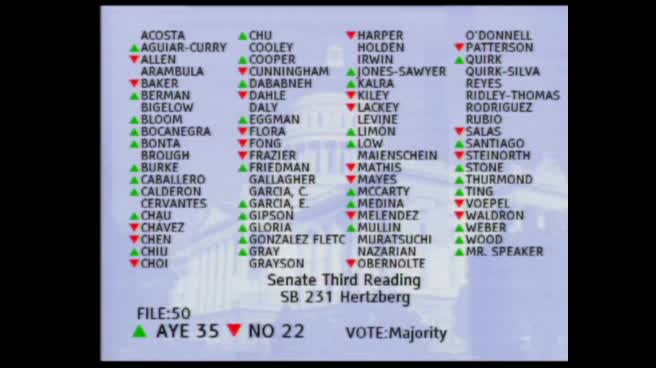


Bill Author

Bill Co-Author(s):