SB 267: Political Reform Act of 1974: City of Sacramento.
- Session Year: 2017-2018
- House: Senate
- Latest Version Date: 2017-10-09
Existing law authorizes the Fair Political Practices Commission, upon mutual agreement between the Commission and the Board of Supervisors of the County of San Bernardino, to have primary responsibility for the impartial, effective administration, implementation, and enforcement of a local campaign finance reform ordinance of the County of San Bernardino, as specified. Existing law also authorizes the Fair Political Practices Commission to enter into such an agreement with the City Council of the City of Stockton.
This bill would authorize the Commission and the City Council of the City of Sacramento to also enter into such an agreement, as specified. The bill would require, if such an agreement is executed, that the Commission report specified information to the Legislature regarding the performance of that agreement on or before January 1, 2022. The bill would repeal its provisions on January 1, 2023.
This bill would make legislative findings and declarations as to the necessity of a special statute for the City of Sacramento.
The Political Reform Act of 1974, an initiative measure, provides that the Legislature may amend the act to further the acts purposes upon a 2/3 vote of each house of the Legislature and compliance with specified procedural requirements.
This bill would declare that it furthers the purposes of the act.
This bill would declare that it is to take effect immediately as an urgency statute.
Existing law authorizes the Fair Political Practices Commission, upon mutual agreement between the Commission and the Board of Supervisors of the County of San Bernardino, to have primary responsibility for the impartial, effective administration, implementation, and enforcement of a local campaign finance reform ordinance of the County of San Bernardino, as specified. Existing law also authorizes the Fair Political Practices Commission to enter into such an agreement with the City Council of the City of Stockton.
This bill would authorize the Commission and the City Council of the City of Sacramento to also enter into such an agreement, as specified. The bill would require, if such an agreement is executed, that the Commission report specified information to the Legislature regarding the performance of that agreement within four years of the date on which the agreement was entered. on or before January 1, 2022. The bill would repeal its provisions on January 1, 2023.
This bill would make legislative findings and declarations as to the necessity of a special statute for the City of Sacramento.
The Political Reform Act of 1974, an initiative measure, provides that the Legislature may amend the act to further the acts purposes upon a 2/3 vote of each house of the Legislature and compliance with specified procedural requirements.
This bill would declare that it furthers the purposes of the act.
This bill would declare that it is to take effect immediately as an urgency statute.
Existing law authorizes the Fair Political Practices Commission, upon mutual agreement between the Commission and the Board of Supervisors of the County of San Bernardino, to have primary responsibility for the impartial, effective administration, implementation, and enforcement of a local campaign finance reform ordinance of the County of San Bernardino, as specified. Existing law also authorizes the Fair Political Practices Commission to enter into such an agreement with the City Council of the City of Stockton.
This bill would authorize the Commission and the City Council of the City of Sacramento to also enter into such an agreement, as specified. The bill would require, if such an agreement is executed, that the Commission report specified information to the Legislature regarding the performance of that agreement within four years of the date on which the agreement was entered. The bill would repeal its provisions on January 1, 2022.
This bill would make legislative findings and declarations as to the necessity of a special statute for the City of Sacramento.
The Political Reform Act of 1974, an initiative measure, provides that the Legislature may amend the act to further the acts purposes upon a 2/3 vote of each house of the Legislature and compliance with specified procedural requirements.
This bill would declare that it furthers the purposes of the act.
(a)Upon mutual agreement between the Commission and the City Council of the City of Sacramento, the Commission is authorized to assume primary responsibility for the impartial, effective administration, implementation, and enforcement of a local campaign finance reform ordinance passed by the City Council of the City of Sacramento. The Commission is authorized to be the civil prosecutor responsible for the civil enforcement of that local campaign finance reform ordinance in accordance with this title. As the civil prosecutor of the City of Sacramentos local campaign finance reform ordinance, the Commission may do both of the following:
(1)Investigate possible violations of the local campaign finance reform ordinance.
(2)Bring administrative actions in accordance with this title and Chapter 5 (commencing with Section 11500) of Part 1 of Division 3 of Title 2.
(b)Any local campaign finance reform ordinance of the City of Sacramento enforced by the Commission pursuant to this section shall comply with this title.
(c)The City Council of the City of Sacramento shall consult with the Commission before adopting and amending any local campaign finance reform ordinance that is subsequently enforced by the Commission pursuant to this section.
(d)(1) The City Council of the City of Sacramento and the Commission may enter into any agreements necessary and appropriate to carry out the provisions of this section, including agreements pertaining to any necessary reimbursement of state costs with city funds for costs incurred by the Commission in administering, implementing, or enforcing a local campaign finance reform ordinance pursuant to this section.
(2)An agreement entered into pursuant to this subdivision shall not contain any form of a cancellation fee, a liquidated damages provision, or other financial disincentive to the exercise of the right to terminate the agreement pursuant to subdivision (e), except that the Commission may require the City Council of the City of Sacramento to pay the Commission for services rendered and any other expenditures reasonably made by the Commission in anticipation of services to be rendered pursuant to the agreement if the City Council of the City of Sacramento terminates the agreement.
(e)The City Council of the City of Sacramento or the Commission may, at any time, by ordinance or resolution, terminate any agreement made pursuant to this section for the Commission to administer, implement, or enforce a local campaign finance reform ordinance or any provision of the ordinance.
(f)If an agreement is entered into pursuant to this section, the Commission shall report to the Legislature regarding the performance of that agreement on or before January 1, 2022, and shall submit that report in compliance with Section 9795. The Commission shall develop the report in consultation with the City Council of the City of Sacramento. The report shall include, but is not limited to, all of the following:
(1)The status of the agreement.
(2)The estimated annual cost savings, if any, for the City of Sacramento.
(3)A summary of relevant annual performance metrics, including measures of use, enforcement, and customer satisfaction.
(4)Public comments submitted to the Commission or the City of Sacramento relative to the operation of the agreement.
(5)Legislative recommendations.
(g)This section shall remain in effect only until January 1, 2023, and as of that date is repealed, unless a later enacted statute, that is enacted before January 1, 2023, deletes or extends that date.
SEC. 2.The Legislature finds and declares that a special statute is necessary and that a general statute cannot be made applicable within the meaning of Section 16 of Article IV of the California Constitution because of the necessity to avoid an appearance of corruption in the City of Sacramentos electoral process. The proposed local campaign finance reform ordinance is intended to make it more difficult for candidates and influential individuals and entities to engage in quid pro quo corruption, make the financing of campaigns for elective city offices more transparent, and to make more information, especially financial information, regarding candidates and their supporters available to voters. Enforcement of the local campaign finance reform ordinance by the Commission is needed to ensure the integrity of the ordinance.
SEC. 3.The Legislature finds and declares that this bill furthers the purposes of the Political Reform Act of 1974 within the meaning of subdivision (a) of Section 81012 of the Government Code.
SEC. 4.This act is an urgency statute necessary for the immediate preservation of the public peace, health, or safety within the meaning of Article IV of the California Constitution and shall go into immediate effect. The facts constituting the necessity are:
In order to facilitate timely contract negotiations between the City of Sacramento and the Commission, it is necessary that this act take effect immediately.
(a)Upon mutual agreement between the Commission and the City Council of the City of Sacramento, the Commission is authorized to assume primary responsibility for the impartial, effective administration, implementation, and enforcement of a local campaign finance reform ordinance passed by the City Council of the City of Sacramento. The Commission is authorized to be the civil prosecutor responsible for the civil enforcement of that local campaign finance reform ordinance in accordance with this title. As the civil prosecutor of the City of Sacramentos local campaign finance reform ordinance, the Commission may do both of the following:
(1)Investigate possible violations of the local campaign finance reform ordinance.
(2)Bring administrative actions in accordance with this title and Chapter 5 (commencing with Section 11500) of Part 1 of Division 3 of Title 2.
(b)Any local campaign finance reform ordinance of the City of Sacramento enforced by the Commission pursuant to this section shall comply with this title.
(c)The City Council of the City of Sacramento shall consult with the Commission before adopting and amending any local campaign finance reform ordinance that is subsequently enforced by the Commission pursuant to this section.
(d)(1) The City Council of the City of Sacramento and the Commission may enter into any agreements necessary and appropriate to carry out the provisions of this section, including agreements pertaining to any necessary reimbursement of state costs with city funds for costs incurred by the Commission in administering, implementing, or enforcing a local campaign finance reform ordinance pursuant to this section.
(2)An agreement entered into pursuant to this subdivision shall not contain any form of a cancellation fee, a liquidated damages provision, or other financial disincentive to the exercise of the right to terminate the agreement pursuant to subdivision (e), except that the Commission may require the City Council of the City of Sacramento to pay the Commission for services rendered and any other expenditures reasonably made by the Commission in anticipation of services to be rendered pursuant to the agreement if the City Council of the City of Sacramento terminates the agreement.
(e)The City Council of the City of Sacramento or the Commission may, at any time, by ordinance or resolution, terminate any agreement made pursuant to this section for the Commission to administer, implement, or enforce a local campaign finance reform ordinance or any provision of the ordinance.
(f)If an agreement is entered into pursuant to this section, the Commission shall report to the Legislature regarding the performance of that agreement within four years of the date on which the agreement was entered, on or before January 1, 2022, and shall submit that report in compliance with Section 9795. The Commission shall develop the report in consultation with the City Council of the City of Sacramento. The report shall include, but is not limited to, all of the following:
(1)The status of the agreement.
(2)The estimated annual cost savings, if any, for the City of Sacramento.
(3)A summary of relevant annual performance metrics, including measures of use, enforcement, and customer satisfaction.
(4)Public comments submitted to the Commission or the City of Sacramento relative to the operation of the agreement.
(5)Legislative recommendations.
(g)This section shall remain in effect only until January 1, 2023, and as of that date is repealed, unless a later enacted statute, that is enacted before January 1, 2023, deletes or extends that date.
SEC. 2.The Legislature finds and declares that a special statute is necessary and that a general statute cannot be made applicable within the meaning of Section 16 of Article IV of the California Constitution because of the necessity to avoid an appearance of corruption in the City of Sacramentos electoral process. The proposed local campaign finance reform ordinance is intended to make it more difficult for candidates and influential individuals and entities to engage in quid pro quo corruption, make the financing of campaigns for elective city offices more transparent, and to make more information, especially financial information, regarding candidates and their supporters available to voters. Enforcement of the local campaign finance reform ordinance by the Commission is needed to ensure the integrity of the ordinance.
SEC. 3.The Legislature finds and declares that this bill furthers the purposes of the Political Reform Act of 1974 within the meaning of subdivision (a) of Section 81012 of the Government Code.
SEC. 4.This act is an urgency statute necessary for the immediate preservation of the public peace, health, or safety within the meaning of Article IV of the California Constitution and shall go into immediate effect. The facts constituting the necessity are:
In order to facilitate timely contract negotiations between the City of Sacramento and the Commission, it is necessary that this act take effect immediately.
(a)Upon mutual agreement between the Commission and the City Council of the City of Sacramento, the Commission is authorized to assume primary responsibility for the impartial, effective administration, implementation, and enforcement of a local campaign finance reform ordinance passed by the City Council of the City of Sacramento. The Commission is authorized to be the civil prosecutor responsible for the civil enforcement of that local campaign finance reform ordinance in accordance with this title. As the civil prosecutor of the City of Sacramentos local campaign finance reform ordinance, the Commission may do both of the following:
(1)Investigate possible violations of the local campaign finance reform ordinance.
(2)Bring administrative actions in accordance with this title and Chapter 5 (commencing with Section 11500) of Part 1 of Division 3 of Title 2.
(b)Any local campaign finance reform ordinance of the City of Sacramento enforced by the Commission pursuant to this section shall comply with this title.
(c)The City Council of the City of Sacramento shall consult with the Commission before adopting and amending any local campaign finance reform ordinance that is subsequently enforced by the Commission pursuant to this section.
(d)(1) The City Council of the City of Sacramento and the Commission may enter into any agreements necessary and appropriate to carry out the provisions of this section, including agreements pertaining to any necessary reimbursement of state costs with city funds for costs incurred by the Commission in administering, implementing, or enforcing a local campaign finance reform ordinance pursuant to this section.
(2)An agreement entered into pursuant to this subdivision shall not contain any form of a cancellation fee, a liquidated damages provision, or other financial disincentive to the exercise of the right to terminate the agreement pursuant to subdivision (e), except that the Commission may require the City Council of the City of Sacramento to pay the Commission for services rendered and any other expenditures reasonably made by the Commission in anticipation of services to be rendered pursuant to the agreement if the City Council of the City of Sacramento terminates the agreement.
(e)The City Council of the City of Sacramento or the Commission may, at any time, by ordinance or resolution, terminate any agreement made pursuant to this section for the Commission to administer, implement, or enforce a local campaign finance reform ordinance or any provision of the ordinance.
(f)If an agreement is entered into pursuant to this section, the Commission shall report to the Legislature regarding the performance of that agreement within four years of the date on which the agreement was entered, and shall submit that report in compliance with Section 9795. The Commission shall develop the report in consultation with the City Council of the City of Sacramento. The report shall include, but is not limited to, all of the following:
(1)The status of the agreement.
(2)The estimated annual cost savings, if any, for the City of Sacramento.
(3)A summary of relevant annual performance metrics, including measures of use, enforcement, and customer satisfaction.
(4)Public comments submitted to the Commission or the City of Sacramento relative to the operation of the agreement.
(5)Legislative recommendations.
(g)This section shall remain in effect only until January 1, 2022, and as of that date is repealed, unless a later enacted statute, that is enacted before January 1, 2022, deletes or extends that date. SEC. 2.The Legislature finds and declares that a special statute is necessary and that a general statute cannot be made applicable within the meaning of Section 16 of Article IV of the California Constitution because of the necessity to avoid an appearance of corruption in the City of Sacramentos electoral process. The proposed local campaign finance reform ordinance is intended to make it more difficult for candidates and influential individuals and entities to engage in quid pro quo corruption, make the financing of campaigns for elective city offices more transparent, and to make more information, especially financial information, regarding candidates and their supporters available to voters. Enforcement of the local campaign finance reform ordinance by the Commission is needed to ensure the integrity of the ordinance.
SEC. 3.The Legislature finds and declares that this bill furthers the purposes of the Political Reform Act of 1974 within the meaning of subdivision (a) of Section 81012 of the Government Code.
SEC. 4.This act is an urgency statute necessary for the immediate preservation of the public peace, health, or safety within the meaning of Article IV of the California Constitution and shall go into immediate effect. The facts constituting the necessity are:
In order to facilitate timely contract negotiations between the City of Sacramento and the Commission, it is necessary that this act take effect immediately.
(a)Upon mutual agreement between the Commission and the City Council of the City of Sacramento, the Commission is authorized to assume primary responsibility for the impartial, effective administration, implementation, and enforcement of a local campaign finance reform ordinance passed by the City Council of the City of Sacramento. The Commission is authorized to be the civil prosecutor responsible for the civil enforcement of that local campaign finance reform ordinance in accordance with this title. As the civil prosecutor of the City of Sacramentos local campaign finance reform ordinance, the Commission may do both of the following:
(1)Investigate possible violations of the local campaign finance reform ordinance.
(2)Bring administrative actions in accordance with this title and Chapter 5 (commencing with Section 11500) of Part 1 of Division 3 of Title 2.
(b)Any local campaign finance reform ordinance of the City of Sacramento enforced by the Commission pursuant to this section shall comply with this title.
(c)The City Council of the City of Sacramento shall consult with the Commission before adopting and amending any local campaign finance reform ordinance that is subsequently enforced by the Commission pursuant to this section.
(d)(1) The City Council of the City of Sacramento and the Commission may enter into any agreements necessary and appropriate to carry out the provisions of this section, including agreements pertaining to any necessary reimbursement of state costs with city funds for costs incurred by the Commission in administering, implementing, or enforcing a local campaign finance reform ordinance pursuant to this section.
(2)An agreement entered into pursuant to this subdivision shall not contain any form of a cancellation fee, a liquidated damages provision, or other financial disincentive to the exercise of the right to terminate the agreement pursuant to subdivision (e), except that the Commission may require the City Council of the City of Sacramento to pay the Commission for services rendered and any other expenditures reasonably made by the Commission in anticipation of services to be rendered pursuant to the agreement if the City Council of the City of Sacramento terminates the agreement.
(e)The City Council of the City of Sacramento or the Commission may, at any time, by ordinance or resolution, terminate any agreement made pursuant to this section for the Commission to administer, implement, or enforce a local campaign finance reform ordinance or any provision of the ordinance.
(f)If an agreement is entered into pursuant to this section, the Commission shall report to the Legislature regarding the performance of that agreement within four years of the date on which the agreement was entered, and shall submit that report in compliance with Section 9795. The Commission shall develop the report in consultation with the City Council of the City of Sacramento. The report shall include, but is not limited to, all of the following:
(1)The status of the agreement.
(2)The estimated annual cost savings, if any, for the City of Sacramento.
(3)A summary of relevant annual performance metrics, including measures of use, enforcement, and customer satisfaction.
(4)Public comments submitted to the Commission or the City of Sacramento relative to the operation of the agreement.
(5)Legislative recommendations.
(g)This section shall remain in effect only until January 1, 2022, and as of that date is repealed, unless a later enacted statute, that is enacted before January 1, 2022, deletes or extends that date.
SEC. 2.The Legislature finds and declares that a special statute is necessary and that a general statute cannot be made applicable within the meaning of Section 16 of Article IV of the California Constitution because of the necessity to avoid an appearance of corruption in the City of Sacramentos electoral process. The proposed local campaign finance reform ordinance is intended to make it more difficult for candidates and influential individuals and entities to engage in quid pro quo corruption, make the financing of campaigns for elective city offices more transparent, and to make more information, especially financial information, regarding candidates and their supporters available to voters. Enforcement of the local campaign finance reform ordinance by the Commission is needed to ensure the integrity of the ordinance.
SEC. 3.The Legislature finds and declares that this bill furthers the purposes of the Political Reform Act of 1974 within the meaning of subdivision (a) of Section 81012 of the Government Code.
|
Date
|
Status
|
|---|---|
| Oct 9, 2017 | Chaptered by Secretary of State. Chapter 622, Statutes of 2017. |
| Oct 9, 2017 | Approved by the Governor. |
| Sep 11, 2017 | Enrolled and presented to the Governor at 4 p.m. |
| Sep 5, 2017 | Assembly amendments concurred in. (Ayes 40. Noes 0.) Ordered to engrossing and enrolling. |
| Sep 1, 2017 | Ordered to special consent calendar. |
| Aug 31, 2017 | In Senate. Concurrence in Assembly amendments pending. |
| Aug 31, 2017 | Read third time. Urgency clause adopted. Passed. Ordered to the Senate. |
| Aug 24, 2017 | Read second time. Ordered to consent calendar. |
| Aug 23, 2017 | From committee: Do pass. Ordered to consent calendar. (Ayes 15. Noes 0.) (August 23). |
| Jul 13, 2017 | From committee: Do pass and re-refer to Com. on APPR. (Ayes 9. Noes 0.) (July 12). Re-referred to Com. on APPR. |
| Jun 20, 2017 | Read second time and amended. Re-referred to Com. on L. GOV. |
| Jun 19, 2017 | From committee: Do pass as amended and re-refer to Com. on L. GOV. with recommendation: To consent calendar. (Ayes 6. Noes 0.) (June 14). |
| May 22, 2017 | Referred to Coms. on E. & R. and L. GOV. |
| Apr 27, 2017 | In Assembly. Read first time. Held at Desk. |
| Apr 27, 2017 | Read third time. Urgency clause adopted. Passed. (Ayes 37. Noes 0. Page 870.) Ordered to the Assembly. |
| Apr 18, 2017 | Read second time. Ordered to third reading. |
| Apr 17, 2017 | From committee: Be ordered to second reading pursuant to Senate Rule 28.8. |
| Apr 7, 2017 | Set for hearing April 17. |
| Apr 5, 2017 | From committee: Do pass and re-refer to Com. on APPR. (Ayes 4. Noes 0. Page 620.) (April 4). Re-referred to Com. on APPR. |
| Mar 21, 2017 | From committee with author's amendments. Read second time and amended. Re-referred to Com. on E. & C.A. |
| Feb 16, 2017 | Referred to Com. on E. & C.A. |
| Feb 9, 2017 | From printer. May be acted upon on or after March 11. |
| Feb 8, 2017 | Introduced. Read first time. To Com. on RLS. for assignment. To print. |
|
Date
|
Description
|
Location
|
Votes
|
|
|---|---|---|---|---|
| Sep 5, 2017 | Special Consent SB267 Pan et al. Urgency Clause | Senate Floor |
Passed |
|
| Aug 31, 2017 | SB 267 Pan Consent Calendar Second Day Regular Session | Assembly Floor |
Passed |
|
| Aug 23, 2017 | Do pass. To Consent Calendar. | Assembly Standing Committee on Appropriations |
Passed |
|
| Jul 12, 2017 | Do pass and be re-referred to the Committee on [Appropriations] | Assembly Standing Committee on Local Government |
Passed |
|
| Jun 14, 2017 | Do pass as amended, and be re-referred to the Committee on [Local Government] with recommendation: To Consent Calendar | Assembly Standing Committee on Elections and Redistricting |
Passed |
|
| Apr 27, 2017 | Senate 3rd Reading SB267 Pan et al. Urgency Clause | Senate Floor |
Passed |
|
| Apr 4, 2017 | Do pass, but first be re-referred to the Committee on [Appropriations] | Senate Standing Committee on Elections and Constitutional Amendments |
Passed |
This list shows positions taken on this bill by organizations on the date displayed, which is linked to the original source.
Positions by individuals are not included.
|
Organization
|
Position
|
Date
|
|---|---|---|
| California Common Cause | ** Support | Aug 31, 2017 |
| City Of Sacramento | ** Support | Aug 31, 2017 |
| city of sacramento [sponsor] | ** Support | Jul 11, 2017 |
| League Of Women Voters Of California | ** Support | Aug 31, 2017 |
Office of Senate Floor Analyses (916) 651-1520 Fax: (916) 327-4478 | SB |
UNFINISHED BUSINESS
Bill No: SB 267
:
SENATE ELECTIONS & C.A. COMMITTEE: 4-0, 4/4/17
AYES: Stern, Allen, Hertzberg, Leyva
NO VOTE RECORDED: Anderson
SENATE APPROPRIATIONS COMMITTEE: Senate Rule 28.8
SENATE FLOOR: 37-0, 4/27/17
AYES: Allen, Anderson, Atkins, Bates, Beall, Bradford, Cannella, De León, Dodd, Fuller, Gaines, Galgiani, Glazer, Hernandez, Hertzberg, Hill, Hueso, Jackson, Lara, Leyva, McGuire, Mendoza, Mitchell, Monning, Moorlach, Morrell, Newman, Nguyen, Nielsen, Pan, Roth, Skinner, Stern, Stone, Wieckowski, Wiener, Wilk
NO VOTE RECORDED: Berryhill, Portantino, Vidak
ASSEMBLY FLOOR: 73-0, 8/31/17 (Consent) - See last page for vote
DIGEST:
This bill permits the City Council of the City of Sacramento and the Fair Political Practices Commission (FPPC) to enter into an agreement that provides for the FPPC to enforce Sacramento’s campaign finance ordinance.
Assembly Amendments
provide that if an agreement is entered into pursuant to this bill, the FPPC shall report to the Legislature regarding the performance of that agreement on or before January 1, 2022, and provide that this bill shall remain in effect only until January 1, 2023, and as of that date is repealed.
Existing law:
- Creates the FPPC, and makes it responsible for the impartial, effective administration and implementation of the Political Reform Act (PRA).
- Requires a local government agency that adopts or amends a local campaign finance ordinance to file a copy of the ordinance with the FPPC.
- Prohibits a local government agency from enacting a campaign finance ordinance that imposes campaign reporting requirements that are additional to or different from those set forth in the PRA for elections held in its jurisdiction unless the additional or different requirements apply only to the candidates seeking election in that jurisdiction, their controlled committees or committees formed or existing primarily to support or oppose their candidacies, and to committees formed or existing primarily to support or oppose a candidate or to support or oppose the qualification or passage of a local ballot measure which is being voted on only in that jurisdiction, and to city or county general purpose committees active only in that city or county, respectively.
- Authorizes the FPPC, upon mutual agreement between the FPPC and the San Bernardino County Board of Supervisors, to have primary responsibility for the impartial, effective administration, implementation, and enforcement of the County’s campaign finance reform ordinance.
- Authorizes the FPPC, upon mutual agreement between the FPPC and the City Council of the City of Stockton, to have primary responsibility for the impartial, effective administration, implementation, and enforcement of the City’s campaign finance reform ordinance.
- Permits the San Bernardino County Board of Supervisors and the City Council of the City of Stockton to enter into any agreements with the FPPC necessary and appropriate for the operation of these provisions, including agreements for reimbursement of state costs with county funds, as specified. Permits the San Bernardino County Board of Supervisors or the City Council of the City of Stockton or the FPPC, at any time, by ordinance or resolution, to terminate any agreement for the FPPC to administer, implement, or enforce the local campaign finance reform ordinance or any provision thereof.
This bill:
- Authorizes the FPPC and the City Council of the City of Sacramento to enter into an agreement similar to the ones currently permitted for San Bernardino County and the City of Stockton, as specified.
- Provides that, upon mutual agreement between the FPPC and the City Council of the City of Sacramento, the FPPC is authorized to assume primary responsibility for the impartial, effective administration, implementation, and enforcement of a local campaign finance reform ordinance passed by the City Council of the City of Sacramento.
- Authorizes the FPPC to be the civil prosecutor responsible for the civil enforcement of that local campaign finance reform ordinance and provides as such that the FPPC may investigate possible violations of the local campaign finance reform ordinance and bring administrative actions in accordance with existing provisions of the PRA.
- Requires the City Council of the City of Sacramento to consult with the FPPC before adopting and amending any local campaign finance reform ordinance that is subsequently enforced by the FPPC.
- Provides that the City Council of the City of Sacramento and the FPPC may enter into any agreements necessary and appropriate to carry out the provisions of this bill, including agreements pertaining to any necessary reimbursement of state costs with city funds for costs incurred by the FPPC.
- Provides that the City Council of the City of Sacramento or the FPPC may, at any time, by ordinance or resolution, terminate any agreement made for the FPPC to administer, implement, or enforce a local campaign finance reform ordinance or any provision of the ordinance.
- Provides that if an agreement is entered into pursuant to this bill, the FPPC shall report to the Legislature regarding the performance of that agreement on or before January 1, 2022. The FPPC shall develop the report in consultation with the City Council of the City of Sacramento. The report shall include, but is not limited to, all of the following:
- The status of the agreement.
- The estimated annual cost savings, if any, for the City of Sacramento.
- A summary of relevant annual performance metrics, including measures of use, enforcement, and customer satisfaction.
- Public comments submitted to the FPPC or the City of Sacramento relative to the operation of the agreement.
- Legislative recommendations.
- Contains an urgency clause.
- Provides that it shall remain in effect only until January 1, 2023, and as of that date is repealed.
Background
San Bernardino County and City of Stockton Contracts with the FPPC. In 2012, the Legislature enacted AB 2146 (Cook, Chapter 169, Statutes of 2012), which permitted San Bernardino County and the FPPC to enter into an agreement that provides for the FPPC to enforce the County’s local campaign finance reform ordinance. Prior to this, the FPPC did not enforce any local campaign finance ordinances. The County of San Bernardino, which had been the subject of several high-profile corruption cases, was in the process of developing a campaign finance ordinance. Rather than appoint an ethics commission, which could present financial as well as conflict of interest challenges, the County proposed to contract with the FPPC to enforce their local campaign finance ordinance. Moreover, the County determined that it was in the best interest of the County to retain the services of the FPPC to provide for the enforcement and interpretation of San Bernardino County's local campaign finance ordinance as the FPPC has special skills, knowledge, experience, and expertise in the area of enforcement and interpretation of campaign laws necessary to effectively advise, assist, litigate, and otherwise represent the County on such matters.
As a result, the FPPC and San Bernardino County entered into a mutual agreement that commenced January 1, 2013, for the FPPC to provide the County campaign enforcement and interpretation services for the impartial, effective administration, implementation, and enforcement of San Bernardino's campaign finance reform ordinance. According to the FPPC, San Bernardino County and the FPPC have already renewed the initial agreement.
The City of Stockton, while authorized to enter into a similar agreement pursuant to AB 1083 (Eggman, Chapter 186, Statutes of 2015) has not yet taken any steps to do so.
Local campaign ordinances and the PRA. Under existing law, local government agencies have the ability to adopt campaign ordinances that apply to elections within their jurisdictions, though the PRA imposes certain limited restrictions on those local ordinances. For instance, SB 726 (McCorquodale, Chapter 1456, Statutes of 1985) limited the ability of local jurisdictions to impose campaign filing requirements that differed from those in the PRA, permitting such requirements only when they applied solely to candidates and committees whose activity is restricted primarily to the jurisdiction in question. This provision sought to avoid the necessity of a candidate or committee active over a wider area being required to adhere to several different campaign filing schedules. Similarly, AB 1430 (Garrick, Chapter 708, Statutes of 2007) prohibited local governments from adopting rules governing member communications that are different than the rules that govern member communications at the state level.
Aside from these restrictions, however, local government agencies generally have a significant amount of latitude when developing local campaign finance ordinances that apply to elections in those agencies' jurisdictions. Any jurisdiction that adopts or amends a local campaign finance ordinance is required to file a copy of that ordinance with the FPPC, and the FPPC posts those ordinances on its Web site. Several cities and counties have adopted campaign finance ordinances, some of which are very extensive.
In some cases, those ordinances include campaign contribution limits, reporting and disclosure requirements that supplement the requirements of the PRA, temporal restrictions on when campaign funds may be raised, and voluntary public financing of local campaigns, among other provisions. In many cases, local campaign finance ordinances are enforced by the district attorney of the county or by the city attorney. In at least a few cases, however, local jurisdictions have set up independent boards or commissions to enforce the local campaign finance laws.
The FPPC does not currently enforce any local campaign finance ordinances other than San Bernardino County's. The FPPC can and does, however, bring enforcement actions in response to violations of the PRA that occur in campaigns for local office, even in cases where the local jurisdiction brings separate enforcement actions for violations of a local campaign finance ordinance.
Criminal, civil, and administrative enforcement of the PRA and local campaign ordinances. Violations of the PRA are subject to administrative, civil, and criminal penalties. Generally, the Attorney General (AG) and district attorneys have responsibility for enforcing the criminal provisions of the PRA, though any elected city attorney of a charter city also has the authority to act as the criminal prosecutor for violations of the PRA that occur within the city. The FPPC, the AG, district attorneys, and elected city attorneys of charter cities all have responsibility for enforcement of the civil penalties and remedies provided under the PRA, depending on the nature and location of the violation, while any member of the public also has the ability to file a civil action to enforce the civil provisions of the PRA, subject to certain restrictions.
The FPPC has the sole authority to bring administrative proceedings for enforcement of the PRA. When the FPPC determines on the basis of such a proceeding that a violation of the PRA has occurred, it can impose monetary penalties of up to $5,000 per violation in addition to ordering the violator to cease and desist violation of the PRA and to file any reports, statements, or other documents or information required by the PRA. In the case of local campaign ordinances, there is no single approach as to the types of penalties that are available for the violations of those ordinances. Many local ordinances provide for misdemeanor or civil penalties for violations, while some ordinances do not establish any penalties for violations. In some local jurisdictions that have independent boards or commissions to enforce the local campaign finance ordinances, those boards or commissions have the authority to bring administrative enforcement proceedings, similar to the authority the FPPC has under the PRA.
Comments
- According to the author, SB 267 seeks to authorize the City of Sacramento and the FPPC to enter into a voluntary contract for enforcement of Sacramento’s local campaign finance ordinance. SB 267 will help reduce costs for the City, while also ensuring that enforcement and compliance of the City’s campaign finance ordinance is carried out in an effective and professional manner.
In current law, only two jurisdictions have been authorized to contract with the FPPC for enforcement of local campaign finance laws. Those local governments – the County of San Bernardino and the City of Stockton – were given specific authorization to enter a voluntary contract with the FPPC via legislation in 2012 and 2015, respectively. Only the County of San Bernardino has actually entered into a contract with the FPPC.
The City of Sacramento is seeking to increase transparency and accountability in local elections by leveraging the FPPC’s substantial expertise enforcing and providing technical assistance relating to campaign finance law. Sacramento anticipates significant cost savings for the city could be achieved by contracting with the FPPC instead of creating a local ethics commission responsible for administering and enforcing the local campaign finance ordinance.
Related/Prior Legislation
AB 2146 (Cook, Chapter 169, Statutes of 2012) permitted San Bernardino County and the FPPC to enter into an agreement that provides for the FPPC to enforce the County’s local campaign finance reform ordinance.
AB 1083 (Eggman, Chapter 186, Statutes of 2015) authorized the City of Stockton to enter into a similar agreement.
FISCAL EFFECT: Appropriation: Fiscal Com.: Local:
According to the Assembly Appropriations Committee:
- Costs to FPPC in the tens of thousands of dollars, reimbursed by the City of Sacramento. For example, a similar agreement between the FPPC and the County of San Bernardino costs FPPC about $55,000 annually to implement, which is reimbursed by the County. The campaign finance ordinance passed by the City Council of the City of Sacramento is potentially more complex that the San Bernardino example, therefore costs could be somewhat higher. The actual costs will be determined based on the actual agreement entered into between the FPPC and the City and based on the need for enforcement actions.
- Minor and absorbable costs to FPPC to make the required report.
City of Sacramento (source)
California Common Cause
League of Women Voters of California
OPPOSITION: (Verified 8/31/17)
None received
ASSEMBLY FLOOR: 73-0, 8/31/17
AYES: Acosta, Aguiar-Curry, Travis Allen, Arambula, Baker, Berman, Bigelow, Bocanegra, Bonta, Brough, Caballero, Calderon, Cervantes, Chau, Chávez, Chen, Chiu, Choi, Chu, Cooley, Cooper, Cunningham, Dababneh, Dahle, Daly, Eggman, Flora, Fong, Frazier, Friedman, Gallagher, Gipson, Gloria, Gonzalez Fletcher, Gray, Grayson, Harper, Holden, Irwin, Jones-Sawyer, Kalra, Kiley, Lackey, Levine, Limón, Low, Maienschein, Mathis, Mayes, McCarty, Medina, Melendez, Mullin, Muratsuchi, Nazarian, Obernolte, O'Donnell, Patterson, Quirk, Reyes, Rodriguez, Rubio, Salas, Santiago, Steinorth, Mark Stone, Thurmond, Ting, Voepel, Waldron, Weber, Wood, Rendon
NO VOTE RECORDED: Bloom, Burke, Cristina Garcia, Eduardo Garcia, Quirk-Silva, Ridley-Thomas
8/31/17 18:09:14
**** END ****
Date of Hearing: August 23, 2017
ASSEMBLY COMMITTEE ON APPROPRIATIONS
Lorena Gonzalez Fletcher, Chair
SBPCA Bill Id:SB 267
Author:(Pan) – As Amended Ver:June 20, 2017
Policy Committee: | Elections and Redistricting | Vote: | 6 - 0 |
|
| ||
|
|
Urgency: Yes State Mandated Local Program: No Reimbursable: No
SUMMARY:
This bill, an urgency measure, permits the City of Sacramento and the Fair Political Practices Commission (FPPC) to enter into an agreement that provides for the FPPC to enforce a local campaign finance ordinance passed by the City Council of the City of Sacramento. Specifically, this bill:
- Provides that, upon agreement between the FPPC and the City of Sacramento, the FPPC is authorized to assume primary responsibility for the impartial, effective administration, implementation, and enforcement of a local campaign finance ordinance passed by the City Council of the City of Sacramento.
- Permits the City of Sacramento and the FPPC to enter into any agreements necessary and appropriate to carry out the provisions of this bill, including agreements pertaining to any necessary reimbursement of state costs with city funds for costs incurred by the FPPC in administering, implementing, or enforcing a local campaign finance reform ordinance pursuant to this bill.
- Requires the FPPC, if an agreement is entered into pursuant to the provisions of this bill, to report to the Legislature regarding the performance of that agreement within four years of the date on which the agreement was entered. Requires the FPPC to develop the report in consultation with the City Council of the City of Sacramento and specifies certain information that must be included in the report.
- Contains an urgency clause, allowing this bill to take effect immediately upon enactment.
FISCAL EFFECT:
- Costs to FPPC in the tens of thousands of dollars, reimbursed by the City of Sacramento. For example, a similar agreement between the FPPC and the County of San Bernardino costs FPPC about $55,000 annually to implement, which is reimbursed by the County. The campaign finance ordinance passed by the City Council of the City of Sacramento is potentially more complex that the San Bernardino example, therefore costs could be somewhat higher. The actual costs will be determined based on the actual agreement entered into between the FPPC and the City and based on the need for enforcement actions.
- Minor and absorbable costs to FPPC to make the required report.
COMMENTS:
- Background. Existing law creates the FPPC, and makes it responsible for the impartial, effective administration and implementation of the Political Reform Act, which includes the state’s campaign finance laws. While local governments are generally responsible for enforcing local campaign finance ordinances, FPPC has received authorization through state law to enter into agreements to enforce the campaign finance ordinances of two local jurisdictions—the County of San Bernardino and the City of Stockton.
- Purpose. This bill adds Sacramento to the list of local jurisdictions for which FPPC can enter into an agreement to enforce local campaign finance rules. According to the author, “SB 267 seeks to authorize the City of Sacramento and the FPPC to entire into a voluntary contract for enforcement of Sacramento’s local campaign finance ordinance. SB 267 will help reduce costs for the City, while also ensuring that enforcement and compliance of the City’s campaign finance ordinance is carried out in an effective and professional manner.”
Analysis Prepared by: Jessica Peters / APPR. / (916) 319-2081
Date of Hearing: July 12, 2017
ASSEMBLY COMMITTEE ON LOCAL GOVERNMENT
Cecilia Aguiar-Curry, Chair
SBPCA Bill Id:SB 267
Author:(Pan) – As Amended Ver:June 20, 2017
SENATE VOTE: 37-0
SUBJECT: Political Reform Act of 1974: City of Sacramento.
SUMMARY: Allows the City of Sacramento (City) to enter into an agreement with the Fair Political Practices Commission (FPPC) for the FPPC to administer and enforce the City's local campaign finance reform ordinance. Specifically, this bill:
- Authorizes, upon mutual agreement between the FPPC and the City Council of the City (City Council), the FPPC to assume primary responsibility for the impartial, effective administration, implementation, and enforcement of a local campaign finance reform ordinance (campaign finance ordinance) passed by the City Council.
- Authorizes the FPPC to be the civil prosecutor responsible for the civil enforcement of the City's campaign finance ordinance in accordance with existing law, as specified.
- Allows the FPPC, as the civil prosecutor of the City’s campaign finance ordinance, to do both of the following:
- Investigate possible violations of the campaign finance ordinance; and,
- Bring administrative actions in accordance with existing law, as specified.
- Requires any campaign finance ordinance of the City enforced by the FPPC pursuant to this bill to comply with existing law, as specified.
- Requires the City Council to consult with the FPPC before adopting and amending any campaign finance ordinance that is subsequently enforced by the FPPC pursuant to this bill.
- Allows the City Council and the FPPC to enter into any agreements necessary and appropriate to carry out the provisions of this bill, including agreements pertaining to any necessary reimbursement of state costs with city funds for costs incurred by the FPPC in administering, implementing, or enforcing a campaign finance ordinance pursuant to this bill.
- Prohibits an agreement entered into pursuant to this bill from containing any form of a cancellation fee, a liquidated damages provision, or other financial disincentive to the exercise of the right to terminate the agreement pursuant to 8), below, except that the FPPC may require the City Council to pay the FPPC for services rendered and any other expenditures reasonably made by the FPPC in anticipation of services to be rendered pursuant to the agreement if the City Council terminates the agreement.
- Allows the City Council or the FPPC, at any time, by ordinance or resolution, to terminate any agreement made pursuant to this bill for the FPPC to administer, implement, or enforce a campaign finance ordinance or any provision of the ordinance.
- Requires, if an agreement is entered into pursuant to this bill, the FPPC to report to the Legislature regarding the performance of that agreement on or before January 1, 2022, and to submit that report in compliance with existing law, as specified. The FPPC must develop the report in consultation with the City Council and the report must include, but is not limited to, all of the following:
- The status of the agreement;
- The estimated annual cost savings, if any, for the City;
- A summary of relevant annual performance metrics, including measures of use, enforcement, and customer satisfaction;
- Public comments submitted to the FPPC or the City relative to the operation of the agreement; and,
- Legislative recommendations.
- Finds and declares the following:
- A special statute is necessary and that a general statute cannot be made applicable within the meaning of Section 16 of Article IV of the California Constitution because of the necessity to avoid an appearance of corruption in the City’s electoral process;
- The proposed campaign finance ordinance is intended to make it more difficult for candidates and influential individuals and entities to engage in quid pro quo corruption, make the financing of campaigns for elective city offices more transparent, and to make more information, especially financial information, regarding candidates and their supporters available to voters;
- Enforcement of the campaign finance ordinance by the FPPC is needed to ensure the integrity of the ordinance; and,
- This bill furthers the purposes of the Political Reform Act (PRA) of 1974, as specified.
- Declares that this bill is an urgency statute necessary for the immediate preservation of the public peace, health, or safety within the meaning of Article IV of the California Constitution and shall go into immediate effect, and the facts constituting the necessity are: in order to facilitate timely contract negotiations between the City and the FPPC, it is necessary that this act take effect immediately.
- Contains a sunset date of January 1, 2023.
EXISTING LAW:
- Creates the FPPC, and makes it responsible for the impartial, effective administration and implementation of the PRA.
- Requires a local government agency that adopts or amends a local campaign finance ordinance to file a copy of the ordinance with the FPPC.
- Prohibits a local government agency from enacting a campaign finance ordinance that imposes campaign reporting requirements that are additional to or different from those set forth in the PRA for elections held in its jurisdiction, unless the additional or different requirements apply only to the candidates seeking election in that jurisdiction, their controlled committees or committees formed or existing primarily to support or oppose their candidacies, and to committees formed or existing primarily to support or oppose a candidate or to support or oppose the qualification or passage of a local ballot measure which is being voted on only in that jurisdiction, and to city or county general purpose committees active only in that city or county, respectively.
- Authorizes the FPPC, upon mutual agreement between the FPPC and the San Bernardino County Board of Supervisors, to have primary responsibility for the impartial, effective administration, implementation, and enforcement of a local San Bernardino County campaign finance reform ordinance. Requires the San Bernardino County Board of Supervisors to consult with the FPPC prior to adopting and amending any local campaign finance reform ordinance that is subsequently enforced by the FPPC.
- Allows the FPPC, until January 1, 2020, upon mutual agreement between the FPPC and the City Council of the City of Stockton, to have primary responsibility for the impartial, effective administration, implementation, and enforcement of a local City of Stockton campaign finance reform ordinance. Requires the City Council of the City of Stockton to consult with the FPPC prior to adopting and amending any local campaign finance reform ordinance that is subsequently enforced by the FPPC.
- Authorizes the FPPC, pursuant to the aforementioned agreements, to investigate possible violations of the San Bernardino County or the City of Stockton campaign finance reform ordinances and bring administrative actions against persons who violate the ordinances, as specified.
- Permits the San Bernardino County Board of Supervisors and the City Council of the City of Stockton to enter into any agreements with the FPPC that are necessary and appropriate for the operation of these provisions, including agreements for reimbursement of state costs with county or city funds, as specified. Permits the San Bernardino County Board of Supervisors, the City Council of the City of Stockton or the FPPC, at any time, by ordinance or resolution, to terminate any agreement for the FPPC to administer, implement, or enforce the local campaign finance reform ordinances or any provisions thereof.
- Requires the FPPC to report to the Legislature with specified information on or before January 1, 2017, if the FPPC enters into such an agreement with the San Bernardino County Board of Supervisors.
- Requires the FPPC to report to the Legislature with specified information on or before January 1, 2019, if the FPPC enters into such an agreement with the City Council of the City of Stockton.
FISCAL EFFECT: According to the Senate Appropriations Committee, pursuant to Senate Rule 28.8, negligible state costs.
COMMENTS:
- Bill Summary. This bill expands a limited authority that allows the FPPC to enter agreements with San Bernardino County and the City of Stockton for the FPPC to administer and enforce those jurisdictions' campaign finance ordinances. This bill extends this authority to the City of Sacramento, until January 1, 2023. This bill is sponsored by the City of Sacramento.
- Author's Statement. According to the author, "SB 267 seeks to authorize the City of Sacramento and the FPPC to enter into a voluntary contract for enforcement of Sacramento’s local campaign finance ordinance. SB 267 will help reduce costs for the City, while also ensuring that enforcement and compliance of the City’s campaign finance ordinance is carried out in an effective and professional manner."
- Background. Existing law, pursuant to AB 2146 (Cook), Chapter 169, Statutes of 2012, allows San Bernardino County and the FPPC to enter into a mutual agreement that permits the FPPC to enforce the County’s local campaign finance reform ordinance. AB 2146 was prompted by several high-profile campaign finance corruption cases in San Bernardino County, which subsequently developed and enacted a campaign finance reform ordinance. Prior to AB 2146, the FPPC did not enforce any local campaign finance ordinances.
San Bernardino County asked for legislative authority to contract with the FPPC to administer and enforce its campaign finance ordinance instead of creating an ethics commission as a means to avoid financial and conflict-of-interest challenges. San Bernardino County also wished to retain the services of the FPPC to provide for the enforcement and interpretation of San Bernardino County's local campaign finance ordinance because the FPPC has special skills, knowledge, experience, and expertise in the area of enforcement and interpretation of campaign laws necessary to effectively advise, assist, litigate, and otherwise represent the County on such matters. The FPPC and San Bernardino County entered into a mutual agreement on January 1, 2013, which they have extend twice. The current agreement ends December 31, 2018.
As required by law, the FPPC submitted a report to the Legislature on March 24, 2016. According to the report, the agreement between the FPPC and San Bernardino County resulted in substantial savings when compared to the cost of other public ethics commissions and aided in enforcement proceedings by removing any semblance of conflict of interest. The report concluded by stating that the partnership between the FPPC and San Bernardino County has been successful. Both the FPPC and San Bernardino County supported removing the January 1, 2018, sunset date from the statute. Consequently, the Legislature passed AB 2558 (Steinorth), Chapter 202, Statutes of 2016, which removed the sunset date.
Last session, the Legislature passed and the Governor signed AB 1083 (Eggman), Chapter 186, Statutes of 2015, which authorized the City of Stockton and the FPPC to enter into an agreement that allows the FPPC to enforce the City of Stockton's campaign finance ordinance. According to the FPPC, no steps have been taken to enter into an agreement with the City of Stockton at this time.
- Local Campaign Ordinances and the PRA. Current law allows local government agencies to adopt campaign ordinances that apply to elections within their jurisdictions, though the PRA imposes certain limited restrictions on those local ordinances. Several cities and counties have adopted campaign finance ordinances, some of which are very extensive. In some cases, these ordinances include campaign contribution limits, reporting and disclosure requirements that supplement the requirements of the PRA, restrictions on when campaign funds can be raised, and voluntary public financing of local campaigns, among other provisions. In many cases, local campaign finance ordinances are enforced by the district attorney of the county or by the city attorney. However, some local jurisdictions have established independent boards or commissions to enforce local campaign finance laws.
The FPPC does not currently enforce any local campaign finance ordinances other than San Bernardino County's. However, the FPPC brings enforcement actions in response to violations of the PRA that occur in campaigns for local office, even in cases where the local jurisdiction brings separate enforcement actions for violations of a local campaign finance ordinance.
- Penalties Under Local Campaign Finance Ordinances and the PRA. Violations of the PRA are subject to administrative, civil, and criminal penalties. Generally speaking, the Attorney General (AG) and district attorneys have responsibility for enforcing the criminal provisions of the PRA, though any elected city attorney of a charter city also has the authority to act as the criminal prosecutor for violations of the PRA that occur within the city. The FPPC, the AG, district attorneys, and elected city attorneys of charter cities all have responsibility for enforcement of the civil penalties and remedies provided under the PRA, depending on the nature and location of the violation. In addition, any member of the public may file a civil action to enforce the civil provisions of the PRA, subject to certain restrictions.
The FPPC has the sole authority to bring administrative proceedings for enforcement of the PRA. When the FPPC determines on the basis of such a proceeding that a violation of the PRA has occurred, it has the authority to impose monetary penalties of up to $5,000 per violation, in addition to ordering the violator to cease and desist violation of the PRA and to file any reports, statements, or other documents or information required by the PRA.
In the case of local campaign ordinances, there is no single approach as to the types of penalties that are available for the violations of those ordinances. Many local ordinances provide for misdemeanor or civil penalties for violations, while some ordinances do not establish any penalties for violations. In some local jurisdictions that have independent boards or commissions to enforce the local campaign finance ordinances, those boards or commissions have the authority to bring administrative enforcement proceedings, similar to the authority the FPPC has under the PRA.
- Previous Legislation. AB 2558 (Steinorth), Chapter 202, Statutes of 2016, removed the January 1, 2018, sunset date from statutes authorizing the FPPC to enforce San Bernardino County's local campaign finance reform ordinance, as specified.
AB 1083 (Eggman), Chapter 186, Statutes of 2015, allowed the City of Stockton to enter into an agreement with the FPPC for the FPPC to administer and enforce the City's local campaign finance ordinance.
AB 910 (Harper) of 2015 would have allowed any city or county to enter into an agreement with the FPPC for the FPPC to administer and enforce a local campaign finance ordinance. AB 910 was held in the Assembly Elections and Redistricting Committee.
SB 1226 (Correa) of 2014 would have allowed any city or county to enter into an agreement with the FPPC for the FPPC to administer and enforce a local campaign finance ordinance. SB 1226 was amended to address an unrelated issue.
AB 2146 (Cook), Chapter 169, Statutes of 2012, allowed San Bernardino County and the FPPC to enter into an agreement for the FPPC to enforce the County’s local campaign finance ordinance.
- Two-thirds Vote. California voters in 1974 passed Proposition 9, commonly known as the PRA, which created the FPPC and codified significant restrictions and prohibitions on candidates, officeholders, and lobbyists. Amendments to the PRA that are not submitted to the voters, such as those contained in this bill, must further the purposes of the PRA and require a two-thirds vote of each house of the Legislature. This bill also requires a two-thirds vote because of the urgency clause contained in the bill.
- Arguments in Support. The City of Sacramento, sponsor of this measure, writes, "Mayor Darrell Steinberg is making increased transparency, accountability, and governmental ethics a cornerstone of his administration. The City faces many policy issues with demands on our budget and contracting with the FPPC will allow us to investigate and enforce the law at the local level in the most cost-effective manner. It will also give the City the benefit of relying on the expertise of an agency whose sole purpose for over 40 years has been to aggressively investigate these types of cases."
- Arguments in Opposition. None on file.
- Double-Referral. This bill was heard by the Elections and Redistricting Committee on June 14, 2017, where it passed on a 6-0 vote.
REGISTERED SUPPORT / OPPOSITION:
Support
City of Sacramento [SPONSOR]
California Common Cause
League of Women Voters of California
Opposition
None on file
Analysis Prepared by: Angela Mapp / L. GOV. / (916) 319-3958
Date of Hearing: June 14, 2017
ASSEMBLY COMMITTEE ON ELECTIONS AND REDISTRICTING
Marc Berman, Chair
SBPCA Bill Id:SB 267
Author:(Pan) – As Amended Ver:March 21, 2017
SENATE VOTE: 37-0
SUBJECT: Political Reform Act of 1974: City of Sacramento.
SUMMARY: Permits the City of Sacramento and the Fair Political Practices Commission (FPPC) to enter into an agreement that provides for the FPPC to enforce a local campaign finance ordinance passed by the City Council of the City of Sacramento. Specifically, this bill:
- Provides that, upon mutual agreement between the FPPC and the City Council of the City of Sacramento, the FPPC is authorized to assume primary responsibility for the impartial, effective administration, implementation, and enforcement of a local campaign finance ordinance passed by the City Council of the City of Sacramento. Provides that the FPPC is authorized to be the civil prosecutor responsible for the civil enforcement of such an ordinance. Provides that as the civil prosecutor, the FPPC may do both of the following:
- Investigate possible violations of the local campaign finance reform ordinance; and,
- Bring administrative actions in accordance with the Political Reform Act (PRA) and the administrative adjudication provisions of the Administrative Procedure Act.
- Requires any local campaign finance reform ordinance of the City of Sacramento that is enforced by the FPPC to comply with the PRA.
- Requires the City Council of the City of Sacramento to consult with the FPPC prior to adopting and amending any local campaign finance reform ordinance that will be enforced by the FPPC.
- Permits the City Council of the City of Sacramento and the FPPC to enter into any agreements necessary and appropriate to carry out the provisions of this bill, including agreements pertaining to any necessary reimbursement of state costs with city funds for costs incurred by the FPPC in administering, implementing, or enforcing a local campaign finance reform ordinance pursuant to this bill.
- Prohibits an agreement entered into pursuant to the provisions of this bill from containing any form of a cancellation fee, liquidated damages provision, or other financial disincentive to the exercise of the right to terminate the agreement, except that the FPPC may require the City Council of the City of Sacramento to pay the FPPC for services rendered and any other expenditures reasonably made by the FPPC in anticipation of services to be rendered pursuant to the agreement if the City Council of the City of Sacramento terminates the agreement.
- Permits the City Council of the City of Sacramento or the FPPC to terminate, at any time, by ordinance or resolution, any agreement made pursuant to this bill for the FPPC to administer, implement, or enforce a local campaign finance reform ordinance or any other provisions thereof.
- Requires the FPPC, if an agreement is entered into pursuant to the provisions of this bill, to report to the Legislature regarding the performance of that agreement within four years of the date on which the agreement was entered, and submit that report in compliance with current law. Requires the FPPC to develop the report in consultation with the City Council of the City of Sacramento.
- Requires the report to include, but not be limited to, all of the following:
a) The status of the agreement;
b) The estimated annual cost savings, if any, for the City of Sacramento;
c) A summary of relevant annual performance metrics, including measures of use, enforcement, and customer satisfaction;
d) Public comments submitted to the FPPC or the City of Sacramento relative to the operation of the agreement; and,
e) Legislative recommendations.
- Contains an urgency clause, allowing this bill to take effect immediately upon enactment.
- Makes legislative findings and declarations as to the necessity of a special statute for the City of Sacramento due to the need to avoid an appearance of corruption in the city’s electoral process.
EXISTING LAW:
- Creates the FPPC, and makes it responsible for the impartial, effective administration and implementation of the PRA.
- Requires a local government agency that adopts or amends a local campaign finance ordinance to file a copy of the ordinance with the FPPC.
- Prohibits a local government agency from enacting a campaign finance ordinance that imposes campaign reporting requirements that are additional to or different from those set forth in the PRA for elections held in its jurisdiction unless the additional or different requirements apply only to the candidates seeking election in that jurisdiction, their controlled committees or committees formed or existing primarily to support or oppose their candidacies, and to committees formed or existing primarily to support or oppose a candidate or to support or oppose the qualification or passage of a local ballot measure which is being voted on only in that jurisdiction, and to city or county general purpose committees active only in that city or county, respectively.
- Authorizes the FPPC, upon mutual agreement between the FPPC and the San Bernardino County Board of Supervisors, to have primary responsibility for the impartial, effective administration, implementation, and enforcement of a local San Bernardino County campaign finance reform ordinance. Requires the San Bernardino County Board of Supervisors to consult with the FPPC prior to adopting and amending any local campaign finance reform ordinance that is subsequently enforced by the FPPC.
- Allows the FPPC, until January 1, 2020, upon mutual agreement between the FPPC and the City Council of the City of Stockton, to have primary responsibility for the impartial, effective administration, implementation, and enforcement of a local City of Stockton campaign finance reform ordinance. Requires the City Council of the City of Stockton to consult with the FPPC prior to adopting and amending any local campaign finance reform ordinance that is subsequently enforced by the FPPC.
- Authorizes the FPPC, pursuant to the aforementioned agreements, to investigate possible violations of the San Bernardino County or the City of Stockton campaign finance reform ordinances and bring administrative actions against persons who violate the ordinances, as specified.
- Permits the San Bernardino County Board of Supervisors and the City Council of the City of Stockton to enter into any agreements with the FPPC that are necessary and appropriate for the operation of these provisions, including agreements for reimbursement of state costs with county or city funds, as specified. Permits the San Bernardino County Board of Supervisors, the City Council of the City of Stockton or the FPPC, at any time, by ordinance or resolution, to terminate any agreement for the FPPC to administer, implement, or enforce the local campaign finance reform ordinances or any provisions thereof.
- Requires the FPPC to report to the Legislature with specified information on or before January 1, 2017, if the FPPC enters into such an agreement with the San Bernardino County Board of Supervisors.
- Requires the FPPC to report to the Legislature with specified information on or before January 1, 2019, if the FPPC enters into such an agreement with the City Council of the City of Stockton.
FISCAL EFFECT: According to the Senate Appropriations Committee, pursuant to Senate Rules 28.8, negligible state costs.
COMMENTS:
- Purpose of the Bill: According to the author:
SB 267 seeks to authorize the City of Sacramento and the FPPC to enter into a voluntary contract for enforcement of Sacramento’s local campaign finance ordinance. SB 267 will help reduce costs for the City, while also ensuring that enforcement and compliance of the City’s campaign finance ordinance is carried out in an effective and professional manner.
- San Bernardino County and the City of Stockton: In 2012, the Legislature passed and the Governor signed AB 2146 (Cook), Chapter 169, Statutes of 2012, which permitted San Bernardino County and the FPPC to enter into an agreement that provides for the FPPC to enforce the County’s local campaign finance reform ordinance, until January 1, 2018. Prior to this, the FPPC did not enforce any local campaign finance ordinances. According to previous analyses, the County of San Bernardino, which had been the subject of several high-profile corruption cases, was in the process of developing a campaign finance ordinance. Rather than appoint an ethics commission, which could present financial as well as conflict of interest challenges, the County proposed to contract with the FPPC to enforce their local campaign finance ordinance. Moreover, the County determined that it was in the best interest of the County to retain the services of the FPPC to provide for the enforcement and interpretation of San Bernardino County's local campaign finance ordinance as the FPPC has special skills, knowledge, experience, and expertise in the area of enforcement and interpretation of campaign laws necessary to effectively advise, assist, litigate, and otherwise represent the County on such matters. As a result, the FPPC and San Bernardino County entered into a mutual agreement, from January 1, 2013 through December 31, 2014, for the FPPC to provide the County campaign enforcement and interpretation services for the impartial, effective administration, implementation, and enforcement of the San Bernardino's campaign finance reform ordinance. Subsequently, San Bernardino County and the FPPC entered into another two-year mutual agreement covering the period from January 1, 2015 through December 31, 2016, and recently entered into a new two-year agreement covering the period from January 1, 2017 through December 31, 2018.
As required by law, the FPPC submitted a report to the Legislature on March 24, 2016. According to the report, the agreement between the FPPC and the San Bernardino County resulted in substantial savings when compared to the cost of other public ethics commissions and aided in enforcement proceedings by removing any semblance of conflict of interest. The report concluded by stating that the partnership between the FPPC and the San Bernardino County has been successful and both the FPPC and San Bernardino County supported removing the January 1, 2018 sunset date from the statute. Consequently, the Legislature passed and the Governor signed AB 2558 (Steinorth), Chapter 202, Statutes of 2016, which removed the sunset date.
Last session, the Legislature passed and the Governor signed AB 1083 (Eggman), Chapter 186, Statutes of 2015, which authorized the City Council of the City of Stockton and the FPPC to enter into an agreement that provides for the FPPC to enforce a local campaign finance ordinance passed by the City Council of the City of Stockton, as specified. According to the FPPC, no steps have been taken to enter into an agreement with the City of Stockton at this time. - Local Campaign Ordinances and the PRA: Under existing law, local government agencies have the ability to adopt campaign ordinances that apply to elections within their jurisdictions, though the PRA imposes certain limited restrictions on those local ordinances. For instance, SB 726 (McCorquodale), Chapter 1456, Statutes of 1985, limited the ability of local jurisdictions to impose campaign filing requirements that differed from those in the PRA, permitting such requirements only when they applied solely to candidates and committees whose activity is restricted primarily to the jurisdiction in question. This provision sought to avoid the necessity of a candidate or committee active over a wider area being required to adhere to several different campaign filing schedules. Similarly, AB 1430 (Garrick), Chapter 708, Statutes of 2007, prohibited local governments from adopting rules governing member communications that are different than the rules that govern member communications at the state level.
Aside from these restrictions, however, local government agencies generally have a significant amount of latitude when developing local campaign finance ordinances that apply to elections in those agencies' jurisdictions. Any jurisdiction that adopts or amends a local campaign finance ordinance is required to file a copy of that ordinance with the FPPC, and the FPPC posts those ordinances on its website.
Several cities and counties have adopted campaign finance ordinances, some of which are very extensive. In some cases, those ordinances include campaign contribution limits, reporting and disclosure requirements that supplement the requirements of the PRA, temporal restrictions on when campaign funds may be raised, and voluntary public financing of local campaigns, among other provisions. In many cases, local campaign finance ordinances are enforced by the district attorney of the county or by the city attorney. In at least a few cases, however, local jurisdictions have set up independent boards or commissions to enforce the local campaign finance laws.
The FPPC does not currently enforce any local campaign finance ordinances other than San Bernardino County's. The FPPC can and does, however, bring enforcement actions in response to violations of the PRA that occur in campaigns for local office, even in cases where the local jurisdiction brings separate enforcement actions for violations of a local campaign finance ordinance.
- Expansion of the Law: As mentioned above, while the FPPC has the authority to enter into mutual agreements to enforce two local campaign finance ordinances, it is currently only in agreement to enforce San Bernardino County's local campaign finance ordinance. At the time that the Legislature was considering AB 2146 (Cook) to authorize the FPPC and San Bernardino County to enter into a mutual agreement for the FPPC to enforce San Bernardino County's local campaign finance ordinance, San Bernardino was in the process of developing a campaign finance ordinance. In the end, however, San Bernardino County only approved a campaign contribution limit law and decided it was in the best interest of the County to retain the services of the FPPC to provide for the enforcement and interpretation of the County's local campaign finance ordinance.
According to background information provided to the committee, the City of Sacramento currently has a campaign finance ordinance and recently approved a package of ethics reforms to update the city's campaign finance ordinance. This is particularly important as the City of Sacramento already has an extensive campaign finance ordinance in place, unlike San Bernardino County. Consequently, the committee may wish to consider whether adding the City of Sacramento's local campaign finance ordinance could add complexity to the FPPC's work, especially if the local ordinance is inconsistent with the general framework of the PRA. Moreover, the committee may wish to consider whether such an expansion of the FPPC's workload could negatively impact the ongoing enforcement of the PRA. On the other hand, this bill only gives the FPPC discretion to enter into an agreement with the City Council of the City of Sacramento to enforce its local campaign finance ordinance, and if the FPPC is concerned that the enforcement of such an ordinance would negatively impact its ability to enforce and administer the PRA, the FPPC could decline to enter into an agreement with the City of Sacramento.
- Sunset Date and Suggested Amendment: The previous bills that authorized the FPPC to enter into an agreement to enforce a local campaign finance ordinance for either San Bernardino County or the City of Stockton both contained sunset dates. The sunset date serves as a mechanism for the Legislature to review and evaluate whether the partnership between the entities is successful and to assess whether future expansion of this policy should be considered. Contrary to those bills, this bill does not contain a sunset date. Additionally, unlike the previous bills, this bill does not contain a specific date by which the FPPC is required to submit a report to the Legislature and instead requires the report to be submitted within four years of an agreement with the City of Sacramento. Committee staff recommends amending the bill to add a sunset date and add a specific date by which the FPPC must submit a report to the Legislature, similar to provisions that were included in previous bills. Committee staff recommends adding a sunset date of January 1, 2023, and a January 1, 2022 date by which the report must be submitted to the Legislature.
- Criminal, Civil, and Administrative Enforcement of the PRA and Local Campaign Ordinances: Violations of the PRA are subject to administrative, civil, and criminal penalties. Generally, the Attorney General (AG) and district attorneys have responsibility for enforcing the criminal provisions of the PRA, though any elected city attorney of a charter city also has the authority to act as the criminal prosecutor for violations of the PRA that occur within the city. The FPPC, the AG, district attorneys, and elected city attorneys of charter cities all have responsibility for enforcement of the civil penalties and remedies provided under the PRA, depending on the nature and location of the violation, while any member of the public also has the ability to file a civil action to enforce the civil provisions of the PRA, subject to certain restrictions. The FPPC has the sole authority to bring administrative proceedings for enforcement of the PRA. When the FPPC determines on the basis of such a proceeding that a violation of the PRA has occurred, it can impose monetary penalties of up to $5,000 per violation, in addition to ordering the violator to cease and desist violation of the PRA and to file any reports, statements, or other documents or information required by the PRA.
In the case of local campaign ordinances, there is no single approach as to the types of penalties that are available for the violations of those ordinances. Many local ordinances provide for misdemeanor or civil penalties for violations, while some ordinances do not establish any penalties for violations. In some local jurisdictions that have independent boards or commissions to enforce the local campaign finance ordinances, those boards or commissions have the authority to bring administrative enforcement proceedings, similar to the authority the FPPC has under the PRA.
- Previous Legislation: AB 2558 (Steinorth), Chapter 202, Statutes of 2016, removed the January 1, 2018, sunset date from a provision of law that authorizes the FPPC to enforce San Bernardino County's local campaign finance reform ordinance, as specified.
AB 1083 (Eggman), Chapter 186, Statutes of 2015, authorized the City of Stockton to enter into an agreement with the FPPC to enforce a local campaign finance ordinance, as specified.
AB 910 (Harper) of 2015, would have authorized the FPPC to administer and enforce a local campaign finance ordinance for any city or county, upon mutual agreement between the FPPC and the local agency, as specified. That bill was never heard in this committee.
SB 1226 (Correa) of 2014, would have authorized any city or county to enter into an agreement with the FPPC to administer and enforce a local campaign finance ordinance. That bill was gutted and amended in the Assembly Appropriations Committee.
AB 2146 (Cook), Chapter 169, Statutes of 2012, permitted San Bernardino County and the FPPC to enter into an agreement that provides for the FPPC to enforce the County’s local campaign finance ordinance, as specified. - Political Reform Act of 1974: California voters passed an initiative, Proposition 9, in 1974
that created the FPPC and codified significant restrictions and prohibitions on candidates, officeholders, and lobbyists. That initiative is commonly known as the PRA. Amendments to the PRA that are not submitted to the voters, such as those contained in this bill, must further the purposes of the proposition and require a two-thirds vote of each house of the Legislature.
- Double-Referral: This bill is double-referred to the Assembly Local Government Committee.
REGISTERED SUPPORT / OPPOSITION:
Support
California Common Cause
City of Sacramento
League of Women Voters of California
Opposition
None on file.
Analysis Prepared by: Nichole Becker / E. & R. / (916) 319-2094
Office of Senate Floor Analyses (916) 651-1520 Fax: (916) 327-4478 | SB |
THIRD READING
Bill No: SB 267
:
SENATE ELECTIONS & C.A. COMMITTEE: 4-0, 4/4/17
AYES: Stern, Allen, Hertzberg, Leyva
NO VOTE RECORDED: Anderson
SENATE APPROPRIATIONS COMMITTEE: Senate Rule 28.8
DIGEST: This bill permits the City Council of the City of Sacramento and the Fair Political Practices Commission (FPPC) to enter into an agreement that provides for the FPPC to enforce Sacramento’s campaign finance ordinance.
Existing law:
- Creates the FPPC, and makes it responsible for the impartial, effective administration and implementation of the Political Reform Act (PRA).
- Requires a local government agency that adopts or amends a local campaign finance ordinance to file a copy of the ordinance with the FPPC.
- Prohibits a local government agency from enacting a campaign finance ordinance that imposes campaign reporting requirements that are additional to or different from those set forth in the PRA for elections held in its jurisdiction unless the additional or different requirements apply only to the candidates seeking election in that jurisdiction, their controlled committees or committees formed or existing primarily to support or oppose their candidacies, and to committees formed or existing primarily to support or oppose a candidate or to support or oppose the qualification or passage of a local ballot measure which is being voted on only in that jurisdiction, and to city or county general purpose committees active only in that city or county, respectively.
- Authorizes the FPPC, upon mutual agreement between the FPPC and the San Bernardino County Board of Supervisors, to have primary responsibility for the impartial, effective administration, implementation, and enforcement of the County’s campaign finance reform ordinance.
- Authorizes the FPPC, upon mutual agreement between the FPPC and the City Council of the City of Stockton, to have primary responsibility for the impartial, effective administration, implementation, and enforcement of the City’s campaign finance reform ordinance.
- Permits the San Bernardino County Board of Supervisors and the City Council of the City of Stockton to enter into any agreements with the FPPC necessary and appropriate for the operation of these provisions, including agreements for reimbursement of state costs with county funds, as specified. Permits the San Bernardino County Board of Supervisors or the City Council of the City of Stockton or the FPPC, at any time, by ordinance or resolution, to terminate any agreement for the FPPC to administer, implement, or enforce the local campaign finance reform ordinance or any provision thereof.
This bill:
- Authorizes the FPPC and the City Council of the City of Sacramento to enter into an agreement similar to the ones currently permitted for San Bernardino County and the City of Stockton, as specified.
- Provides that, upon mutual agreement between the FPPC and the City Council of the City of Sacramento, the FPPC is authorized to assume primary responsibility for the impartial, effective administration, implementation, and enforcement of a local campaign finance reform ordinance passed by the City Council of the City of Sacramento.
- Authorizes the FPPC to be the civil prosecutor responsible for the civil enforcement of that local campaign finance reform ordinance and provides as such that the FPPC may investigate possible violations of the local campaign finance reform ordinance and bring administrative actions in accordance with existing provisions of the PRA.
- Requires the City Council of the City of Sacramento to consult with the FPPC before adopting and amending any local campaign finance reform ordinance that is subsequently enforced by the FPPC.
- Provides that the City Council of the City of Sacramento and the FPPC may enter into any agreements necessary and appropriate to carry out the provisions of this bill, including agreements pertaining to any necessary reimbursement of state costs with city funds for costs incurred by the FPPC.
- Provides that the City Council of the City of Sacramento or the FPPC may, at any time, by ordinance or resolution, terminate any agreement made for the FPPC to administer, implement, or enforce a local campaign finance reform ordinance or any provision of the ordinance.
- Provides that if an agreement is entered into pursuant to this bill, the FPPC shall report to the Legislature regarding the performance of that agreement within four years of the date on which the agreement was entered. The FPPC shall develop the report in consultation with the City Council of the City of Sacramento. The report shall include, but is not limited to, all of the following:
- The status of the agreement.
- The estimated annual cost savings, if any, for the City of Sacramento.
- A summary of relevant annual performance metrics, including measures of use, enforcement, and customer satisfaction.
- Public comments submitted to the FPPC or the City of Sacramento relative to the operation of the agreement.
- Legislative recommendations.
- Contains an urgency clause.
Background
San Bernardino County and City of Stockton Contracts with the FPPC. In 2012, the Legislature enacted AB 2146 (Cook, Chapter 169, Statutes of 2012), which permitted San Bernardino County and the FPPC to enter into an agreement that provides for the FPPC to enforce the County’s local campaign finance reform ordinance. Prior to this, the FPPC did not enforce any local campaign finance ordinances. The County of San Bernardino, which had been the subject of several high-profile corruption cases, was in the process of developing a campaign finance ordinance. Rather than appoint an ethics commission, which could present financial as well as conflict of interest challenges, the County proposed to contract with the FPPC to enforce their local campaign finance ordinance. Moreover, the County determined that it was in the best interest of the County to retain the services of the FPPC to provide for the enforcement and interpretation of San Bernardino County's local campaign finance ordinance as the FPPC has special skills, knowledge, experience, and expertise in the area of enforcement and interpretation of campaign laws necessary to effectively advise, assist, litigate, and otherwise represent the County on such matters.
As a result, the FPPC and San Bernardino County entered into a mutual agreement that commenced January 1, 2013, for the FPPC to provide the County campaign enforcement and interpretation services for the impartial, effective administration, implementation, and enforcement of San Bernardino's campaign finance reform ordinance. According to the FPPC, San Bernardino County and the FPPC have already renewed the initial agreement.
The City of Stockton, while authorized to enter into a similar agreement pursuant to AB 1083 (Eggman, Chapter 186, Statutes of 2015) has not yet taken any steps to do so.
Local campaign ordinances and the PRA. Under existing law, local government agencies have the ability to adopt campaign ordinances that apply to elections within their jurisdictions, though the PRA imposes certain limited restrictions on those local ordinances. For instance, SB 726 (McCorquodale, Chapter 1456, Statutes of 1985), limited the ability of local jurisdictions to impose campaign filing requirements that differed from those in the PRA, permitting such requirements only when they applied solely to candidates and committees whose activity is restricted primarily to the jurisdiction in question. This provision sought to avoid the necessity of a candidate or committee active over a wider area being required to adhere to several different campaign filing schedules. Similarly, AB 1430 (Garrick, Chapter 708, Statutes of 2007), prohibited local governments from adopting rules governing member communications that are different than the rules that govern member communications at the state level.
Aside from these restrictions, however, local government agencies generally have a significant amount of latitude when developing local campaign finance ordinances that apply to elections in those agencies' jurisdictions. Any jurisdiction that adopts or amends a local campaign finance ordinance is required to file a copy of that ordinance with the FPPC, and the FPPC posts those ordinances on its website. Several cities and counties have adopted campaign finance ordinances, some of which are very extensive.
In some cases, those ordinances include campaign contribution limits, reporting and disclosure requirements that supplement the requirements of the PRA, temporal restrictions on when campaign funds may be raised, and voluntary public financing of local campaigns, among other provisions. In many cases, local campaign finance ordinances are enforced by the district attorney of the county or by the city attorney. In at least a few cases, however, local jurisdictions have set up independent boards or commissions to enforce the local campaign finance laws.
The FPPC does not currently enforce any local campaign finance ordinances other than San Bernardino County's. The FPPC can and does, however, bring enforcement actions in response to violations of the PRA that occur in campaigns for local office, even in cases where the local jurisdiction brings separate enforcement actions for violations of a local campaign finance ordinance.
Criminal, civil, and administrative enforcement of the PRA and local campaign ordinances. Violations of the PRA are subject to administrative, civil, and criminal penalties. Generally, the Attorney General (AG) and district attorneys have responsibility for enforcing the criminal provisions of the PRA, though any elected city attorney of a charter city also has the authority to act as the criminal prosecutor for violations of the PRA that occur within the city. The FPPC, the AG, district attorneys, and elected city attorneys of charter cities all have responsibility for enforcement of the civil penalties and remedies provided under the PRA, depending on the nature and location of the violation, while any member of the public also has the ability to file a civil action to enforce the civil provisions of the PRA, subject to certain restrictions.
The FPPC has the sole authority to bring administrative proceedings for enforcement of the PRA. When the FPPC determines on the basis of such a proceeding that a violation of the PRA has occurred, it can impose monetary penalties of up to $5,000 per violation in addition to ordering the violator to cease and desist violation of the PRA and to file any reports, statements, or other documents or information required by the PRA. In the case of local campaign ordinances, there is no single approach as to the types of penalties that are available for the violations of those ordinances. Many local ordinances provide for misdemeanor or civil penalties for violations, while some ordinances do not establish any penalties for violations. In some local jurisdictions that have independent boards or commissions to enforce the local campaign finance ordinances, those boards or commissions have the authority to bring administrative enforcement proceedings, similar to the authority the FPPC has under the PRA.
Comments
- According to the author, SB 267 seeks to authorize the City of Sacramento and the FPPC to enter into a voluntary contract for enforcement of Sacramento’s local campaign finance ordinance. SB 267 will help reduce costs for the City, while also ensuring that enforcement and compliance of the City’s campaign finance ordinance is carried out in an effective and professional manner.
In current law, only two jurisdictions have been authorized to contract with the FPPC for enforcement of local campaign finance laws. Those local governments – the County of San Bernardino and the City of Stockton – were given specific authorization to enter a voluntary contract with the FPPC via legislation in 2012 and 2015, respectively. Only the County of San Bernardino has actually entered into a contract with the FPPC.
The City of Sacramento is seeking to increase transparency and accountability in local elections by leveraging the FPPC’s substantial expertise enforcing and providing technical assistance relating to campaign finance law. Sacramento anticipates significant cost savings for the city could be achieved by contracting with the FPPC instead of creating a local ethics commission responsible for administering and enforcing the local campaign finance ordinance.
Related/Prior Legislation
AB 2146 (Cook, Chapter 169, Statutes of 2012) permitted San Bernardino County and the FPPC to enter into an agreement that provides for the FPPC to enforce the County’s local campaign finance reform ordinance.
AB 1083 (Eggman, Chapter 186, Statutes of 2015) authorized the City of Stockton to enter into a similar agreement.
FISCAL EFFECT: Appropriation: Fiscal Com.: Local:
City of Sacramento (source)
California Common Cause
League of Women Voters of California
OPPOSITION: (Verified 4/17/17)
None received
4/19/17 10:26:35
**** END ****
SENATE COMMITTEE ON
ELECTIONS AND CONSTITUTIONAL AMENDMENTS
Senator Henry Stern, Chair
2017 - 2018 Regular
Bill No: SB Hearing Date: 4/4/17
Author: | |||
Version: | 3/21/17 | ||
Urgency: | Yes | Fiscal: | Yes |
Consultant: | Darren Chesin | ||
Subject: Political Reform Act of 1974: City of Sacramento
DIGEST
This bill permits the City Council of the City of Sacramento and the Fair Political Practices Commission (FPPC) to enter into an agreement that provides for the FPPC to enforce Sacramento’s campaign finance ordinance.
ANALYSIS
Existing Law:
- Creates the FPPC, and makes it responsible for the impartial, effective administration and implementation of the Political Reform Act (PRA).
- Requires a local government agency that adopts or amends a local campaign finance ordinance to file a copy of the ordinance with the FPPC.
- Prohibits a local government agency from enacting a campaign finance ordinance that imposes campaign reporting requirements that are additional to or different from those set forth in the PRA for elections held in its jurisdiction unless the additional or different requirements apply only to the candidates seeking election in that jurisdiction, their controlled committees or committees formed or existing primarily to support or oppose their candidacies, and to committees formed or existing primarily to support or oppose a candidate or to support or oppose the qualification or passage of a local ballot measure which is being voted on only in that jurisdiction, and to city or county general purpose committees active only in that city or county, respectively.
- Authorizes the FPPC, upon mutual agreement between the FPPC and the San Bernardino County Board of Supervisors, to have primary responsibility for the impartial, effective administration, implementation, and enforcement of the County’s campaign finance reform ordinance.
- Authorizes the FPPC, upon mutual agreement between the FPPC and the City Council of the City of Stockton, to have primary responsibility for the impartial, effective administration, implementation, and enforcement of the City’s campaign finance reform ordinance.
- Permits the San Bernardino County Board of Supervisors and the City Council of the City of Stockton to enter into any agreements with the FPPC necessary and appropriate for the operation of these provisions, including agreements for reimbursement of state costs with county funds, as specified. Permits the San Bernardino County Board of Supervisors or the City Council of the City of Stockton or the FPPC, at any time, by ordinance or resolution, to terminate any agreement for the FPPC to administer, implement, or enforce the local campaign finance reform ordinance or any provision thereof.
This bill:
- Authorizes the FPPC and the City Council of the City of Sacramento to enter into an agreement similar to the ones currently permitted for San Bernardino County and the City of Stockton, as specified.
- Provides that, upon mutual agreement between the FPPC and the City Council of the City of Sacramento, the FPPC is authorized to assume primary responsibility for the impartial, effective administration, implementation, and enforcement of a local campaign finance reform ordinance passed by the City Council of the City of Sacramento.
- Authorizes the FPPC to be the civil prosecutor responsible for the civil enforcement of that local campaign finance reform ordinance and provides as such that the FPPC may investigate possible violations of the local campaign finance reform ordinance and bring administrative actions in accordance with existing provisions of the PRA.
- Requires the City Council of the City of Sacramento to consult with the FPPC before adopting and amending any local campaign finance reform ordinance that is subsequently enforced by the FPPC.
- Provides that the City Council of the City of Sacramento and the FPPC may enter into any agreements necessary and appropriate to carry out the provisions of this bill, including agreements pertaining to any necessary reimbursement of state costs with city funds for costs incurred by the FPPC.
- Provides that the City Council of the City of Sacramento or the FPPC may, at any time, by ordinance or resolution, terminate any agreement made for the FPPC to administer, implement, or enforce a local campaign finance reform ordinance or any provision of the ordinance.
- Provides that if an agreement is entered into pursuant to this bill, the FPPC shall report to the Legislature regarding the performance of that agreement within four years of the date on which the agreement was entered. The FPPC shall develop the report in consultation with the City Council of the City of Sacramento. The report shall include, but is not limited to, all of the following:
- The status of the agreement.
- The estimated annual cost savings, if any, for the City of Sacramento.
- A summary of relevant annual performance metrics, including measures of use, enforcement, and customer satisfaction.
- Public comments submitted to the FPPC or the City of Sacramento relative to the operation of the agreement.
- Legislative recommendations.
- The status of the agreement.
- Contains an urgency clause.
BACKGROUND
San Bernardino County and City of Stockton Contracts with the FPPC. In 2012, the Legislature enacted AB 2146 (Cook, Chapter 169, Statutes of 2012), which permitted San Bernardino County and the FPPC to enter into an agreement that provides for the FPPC to enforce the County’s local campaign finance reform ordinance. Prior to this, the FPPC did not enforce any local campaign finance ordinances. The County of San Bernardino, which had been the subject of several high-profile corruption cases, was in the process of developing a campaign finance ordinance. Rather than appoint an ethics commission, which could present financial as well as conflict of interest challenges, the County proposed to contract with the FPPC to enforce their local campaign finance ordinance. Moreover, the County determined that it was in the best interest of the County to retain the services of the FPPC to provide for the enforcement and interpretation of San Bernardino County's local campaign finance ordinance as the FPPC has special skills, knowledge, experience, and expertise in the area of enforcement and interpretation of campaign laws necessary to effectively advise, assist, litigate, and otherwise represent the County on such matters.
As a result, the FPPC and San Bernardino County entered into a mutual agreement that commenced January 1, 2013, for the FPPC to provide the County campaign enforcement and interpretation services for the impartial, effective administration, implementation, and enforcement of San Bernardino's campaign finance reform ordinance. According to the FPPC, San Bernardino County and the FPPC have already renewed the initial agreement.
The City of Stockton, while authorized to enter into a similar agreement pursuant to AB 1083 (Eggman, Chapter 186, Statutes of 2015) has not yet taken any steps to do so.
Local Campaign Ordinances and the PRA. Under existing law, local government agencies have the ability to adopt campaign ordinances that apply to elections within their jurisdictions, though the PRA imposes certain limited restrictions on those local ordinances. For instance, SB 726 (McCorquodale, Chapter 1456, Statutes of 1985), limited the ability of local jurisdictions to impose campaign filing requirements that differed from those in the PRA, permitting such requirements only when they applied solely to candidates and committees whose activity is restricted primarily to the jurisdiction in question. This provision sought to avoid the necessity of a candidate or committee active over a wider area being required to adhere to several different campaign filing schedules. Similarly, AB 1430 (Garrick, Chapter 708, Statutes of 2007), prohibited local governments from adopting rules governing member communications that are different than the rules that govern member communications at the state level.
Aside from these restrictions, however, local government agencies generally have a significant amount of latitude when developing local campaign finance ordinances that apply to elections in those agencies' jurisdictions. Any jurisdiction that adopts or amends a local campaign finance ordinance is required to file a copy of that ordinance with the FPPC, and the FPPC posts those ordinances on its website. Several cities and counties have adopted campaign finance ordinances, some of which are very extensive.
In some cases, those ordinances include campaign contribution limits, reporting and disclosure requirements that supplement the requirements of the PRA, temporal restrictions on when campaign funds may be raised, and voluntary public financing of local campaigns, among other provisions. In many cases, local campaign finance ordinances are enforced by the district attorney of the county or by the city attorney. In at least a few cases, however, local jurisdictions have set up independent boards or commissions to enforce the local campaign finance laws.
The FPPC does not currently enforce any local campaign finance ordinances other than San Bernardino County's. The FPPC can and does, however, bring enforcement actions in response to violations of the PRA that occur in campaigns for local office, even in cases where the local jurisdiction brings separate enforcement actions for violations of a local campaign finance ordinance.
Criminal, Civil, and Administrative Enforcement of the PRA and Local Campaign Ordinances. Violations of the PRA are subject to administrative, civil, and criminal penalties. Generally, the Attorney General (AG) and district attorneys have responsibility for enforcing the criminal provisions of the PRA, though any elected city attorney of a charter city also has the authority to act as the criminal prosecutor for violations of the PRA that occur within the city. The FPPC, the AG, district attorneys, and elected city attorneys of charter cities all have responsibility for enforcement of the civil penalties and remedies provided under the PRA, depending on the nature and location of the violation, while any member of the public also has the ability to file a civil action to enforce the civil provisions of the PRA, subject to certain restrictions.
The FPPC has the sole authority to bring administrative proceedings for enforcement of the PRA. When the FPPC determines on the basis of such a proceeding that a violation of the PRA has occurred, it can impose monetary penalties of up to $5,000 per violation in addition to ordering the violator to cease and desist violation of the PRA and to file any reports, statements, or other documents or information required by the PRA. In the case of local campaign ordinances, there is no single approach as to the types of penalties that are available for the violations of those ordinances. Many local ordinances provide for misdemeanor or civil penalties for violations, while some ordinances do not establish any penalties for violations. In some local jurisdictions that have independent boards or commissions to enforce the local campaign finance ordinances, those boards or commissions have the authority to bring administrative enforcement proceedings, similar to the authority the FPPC has under the PRA.
COMMENTS
- According to the author: SB 267 seeks to authorize the City of Sacramento and the FPPC to enter into a voluntary contract for enforcement of Sacramento’s local campaign finance ordinance. SB 267 will help reduce costs for the City, while also ensuring that enforcement and compliance of the City’s campaign finance ordinance is carried out in an effective and professional manner.
In current law, only two jurisdictions have been authorized to contract with the FPPC for enforcement of local campaign finance laws. Those local governments – the County of San Bernardino and the City of Stockton – were given specific authorization to enter a voluntary contract with the FPPC via legislation in 2012 and 2015, respectively. Only the County of San Bernardino has actually entered into a contract with the FPPC.
The City of Sacramento is seeking to increase transparency and accountability in local elections by leveraging the FPPC’s substantial expertise enforcing and providing technical assistance relating to campaign finance law. Sacramento anticipates significant cost savings for the city could be achieved by contracting with the FPPC instead of creating a local ethics commission responsible for administering and enforcing the local campaign finance ordinance.
RELATED/PRIOR LEGISLATION
AB 2146 (Cook, Chapter 169, Statutes of 2012), permitted San Bernardino County and the FPPC to enter into an agreement that provides for the FPPC to enforce the County’s local campaign finance reform ordinance.
AB 1083 (Eggman, Chapter 186, Statutes of 2015), authorized the City of Stockton to enter into a similar agreement.
POSITIONS
Sponsor: City of Sacramento
Support: California Common Cause
Oppose: None received
-- END --
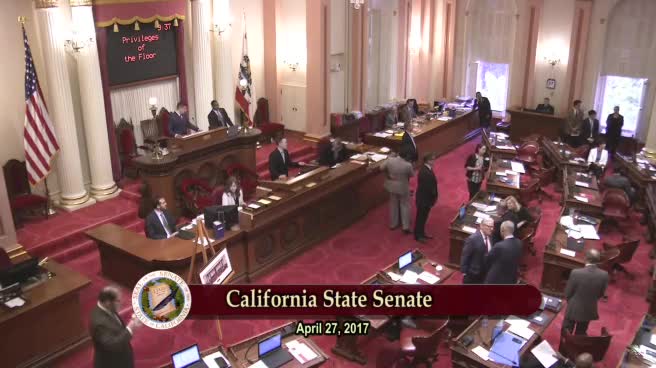
Bill Author

Bill Co-Author(s):
