SB 331: Evidentiary privileges: domestic violence counselor-victim privilege.
- Session Year: 2017-2018
- House: Senate
- Latest Version Date: 2017-08-07
Existing law relating to legal proceedings generally provides that a person does not have a privilege to refuse to disclose any matter or produce any writing, object, or other thing. However, a victim of domestic violence has a privilege to refuse to disclose, and to prevent another from disclosing, a confidential communication between the victim and a domestic violence counselor. Existing law requires the domestic violence counselor who received or made a communication subject to this privilege to claim the privilege whenever he or she is present when the communication is sought to be disclosed. Existing law defines domestic violence counselor to mean a specified person who is employed at a domestic violence victim service organization. Existing law defines domestic violence victim service organization to mean a nongovernmental organization or entity that provides shelter, programs, or services to victims of domestic violence and their children, as specified.
This bill would expand the definition of domestic violence victim service organization to include a public or private institution of higher education, as specified, thereby expanding the scope of the privilege.
The California Constitution requires that a statute that would exclude relevant evidence in any criminal proceeding be enacted by a 2/3 vote of each house of the Legislature.
Because this bill would exclude certain communications between a victim of domestic violence and a domestic violence counselor in criminal proceedings, the bill would require a 2/3 vote.
Existing law relating to legal proceedings generally provides that a person does not have a privilege to refuse to disclose any matter or produce any writing, object, or other thing. However, a victim of domestic violence has a privilege to refuse to disclose, and to prevent another from disclosing, a confidential communication between the victim and a domestic violence counselor. Existing law requires the domestic violence counselor who received or made a communication subject to this privilege to claim the privilege whenever he or she is present when the communication is sought to be disclosed. Existing law defines domestic violence counselor to mean a specified person who is employed at a domestic violence victim service organization. Existing law defines domestic violence victim service organization to mean a nongovernmental organization or entity that provides shelter, programs, or services to victims of domestic violence and their children, as specified.
This bill would expand the definition domestic violence victim service organization to include a public or private institution of higher education, as specified, thereby expanding the scope of the privilege.
The California Constitution requires that a statute that would exclude relevant evidence in any criminal proceeding be enacted by a 2/3 vote.
Because this bill would exclude certain communications between a victim of domestic violence and a domestic violence counselor in criminal proceedings, the bill would require a 2/3 vote.
(a)(1)As used in this article, domestic violence counselor means a person who is employed by a domestic violence victim service organization, as defined in this article, whether financially compensated or not, for the purpose of rendering advice or assistance to victims of domestic violence and who has at least 40 hours of training as specified in paragraph (2).
(2)The 40 hours of training shall be supervised by an individual who qualifies as a counselor under paragraph (1), and who has at least one year of experience counseling domestic violence victims for the domestic violence victim service organization. The training shall include, but need not be limited to, the following areas: history of domestic violence, civil and criminal law as it relates to domestic violence, the domestic violence victim-counselor privilege and other laws that protect the confidentiality of victim records and information, societal attitudes towards domestic violence, peer counseling techniques, housing, public assistance and other financial resources available to meet the financial needs of domestic violence victims, and referral services available to domestic violence victims.
(3)A domestic violence counselor who has been employed by the domestic violence victim service organization for a period of less than six months shall be supervised by a domestic violence counselor who has at least one year of experience counseling domestic violence victims for the domestic violence victim service organization.
(b)As used in this article, domestic violence victim service organization means either of the following:
(1)A nongovernmental organization or entity that provides shelter, programs, or services to victims of domestic violence and their children, including, but not limited to, either of the following:
(A)Domestic violence shelter-based programs, as described in Section 18294 of the Welfare and Institutions Code.
(B)Other programs with the primary mission to provide services to victims of domestic violence whether or not that program exists in an agency that provides additional services.
(2)Programs on the campus of a public or private institution of higher education with the primary mission to provide support or advocacy services to victims of domestic violence.
(a)(1)As used in this article, domestic violence counselor means a person who is employed by a domestic violence victim service organization, as defined in this article, whether financially compensated or not, for the purpose of rendering advice or assistance to victims of domestic violence and who has at least 40 hours of training as specified in paragraph (2).
(2)The 40 hours of training shall be supervised by an individual who qualifies as a counselor under paragraph (1), and who has at least one year of experience counseling domestic violence victims for the domestic violence victim service organization. The training shall include, but need not be limited to, the following areas: history of domestic violence, civil and criminal law as it relates to domestic violence, the domestic violence victim-counselor privilege and other laws that protect the confidentiality of victim records and information, societal attitudes towards domestic violence, peer counseling techniques, housing, public assistance and other financial resources available to meet the financial needs of domestic violence victims, and referral services available to domestic violence victims.
(3)A domestic violence counselor who has been employed by the domestic violence victim service organization for a period of less than six months shall be supervised by a domestic violence counselor who has at least one year of experience counseling domestic violence victims for the domestic violence victim service organization.
(b)As used in this article, domestic violence victim service organization means a nongovernmental organization or entity, or a public or private institution of higher education, that provides shelter, programs, or services to victims of domestic violence and their children, including, but not limited to, either of the following:
(1)A nongovernmental organization or entity that provides shelter, programs, or services to victims of domestic violence and their children, including, but not limited to, either of the following:
(1)(A)Domestic violence shelter-based programs, as described in Section 18294 of the Welfare and Institutions Code.
(2)(B)Other programs with the primary mission to provide services to victims of domestic violence whether or not that program exists in an agency that provides additional services.
(2)Programs on the campus of a public or private institution of higher education with the primary mission to provide support or advocacy services to victims of domestic violence.
(a)(1)As used in this article, domestic violence counselor means a person who is employed by a domestic violence victim service organization, as defined in this article, whether financially compensated or not, for the purpose of rendering advice or assistance to victims of domestic violence and who has at least 40 hours of training as specified in paragraph (2).
(2)The 40 hours of training shall be supervised by an individual who qualifies as a counselor under paragraph (1), and who has at least one year of experience counseling domestic violence victims for the domestic violence victim service organization. The training shall include, but need not be limited to, the following areas: history of domestic violence, civil and criminal law as it relates to domestic violence, the domestic violence victim-counselor privilege and other laws that protect the confidentiality of victim records and information, societal attitudes towards domestic violence, peer counseling techniques, housing, public assistance and other financial resources available to meet the financial needs of domestic violence victims, and referral services available to domestic violence victims.
(3)A domestic violence counselor who has been employed by the domestic violence victim service organization for a period of less than six months shall be supervised by a domestic violence counselor who has at least one year of experience counseling domestic violence victims for the domestic violence victim service organization.
(b)As used in this article, domestic violence victim service organization means a nongovernmental organization or entity entity, or a public or private institution of higher education, that provides shelter, programs, or services to victims of domestic violence and their children, including, but not limited to, either of the following:
(1)Domestic violence shelter-based programs, as described in Section 18294 of the Welfare and Institutions Code.
(2)Other programs with the primary mission to provide services to victims of domestic violence whether or not that program exists in an agency that provides additional services.
|
Date
|
Status
|
|---|---|
| Aug 7, 2017 | Chaptered by Secretary of State. Chapter 178, Statutes of 2017. |
| Aug 7, 2017 | Approved by the Governor. |
| Jul 28, 2017 | Enrolled and presented to the Governor at 12 p.m. |
| Jul 20, 2017 | In Senate. Ordered to engrossing and enrolling. |
| Jul 20, 2017 | Read third time. Passed. Ordered to the Senate. |
| Jul 13, 2017 | Read second time. Ordered to consent calendar. |
| Jul 12, 2017 | From committee: Do pass. Ordered to consent calendar. (Ayes 7. Noes 0.) (July 11). |
| Jun 13, 2017 | From committee: Do pass and re-refer to Com. on PUB. S. with recommendation: To consent calendar. (Ayes 11. Noes 0.) (June 13). Re-referred to Com. on PUB. S. |
| Jun 1, 2017 | Referred to Coms. on JUD. and PUB. S. |
| May 23, 2017 | In Assembly. Read first time. Held at Desk. |
| May 22, 2017 | Read third time. Passed. (Ayes 37. Noes 0. Page 1148.) Ordered to the Assembly. |
| May 15, 2017 | Read second time and amended. Ordered to consent calendar. |
| May 11, 2017 | From committee: Do pass as amended. Ordered to consent calendar. (Ayes 7. Noes 0. Page 1020.) (May 9). |
| May 1, 2017 | Set for hearing May 9. |
| Apr 27, 2017 | May 2 set for first hearing canceled at the request of author. |
| Apr 13, 2017 | Set for hearing May 2. |
| Mar 22, 2017 | From committee: Do pass and re-refer to Com. on JUD. (Ayes 7. Noes 0. Page 430.) (March 21). Re-referred to Com. on JUD. |
| Mar 2, 2017 | Set for hearing March 21. |
| Feb 23, 2017 | Referred to Coms. on PUB. S. and JUD. |
| Feb 14, 2017 | From printer. May be acted upon on or after March 16. |
| Feb 13, 2017 | Introduced. Read first time. To Com. on RLS. for assignment. To print. |
|
Date
|
Description
|
Location
|
Votes
|
|
|---|---|---|---|---|
| Jul 20, 2017 | SB 331 Jackson Consent Calendar Second Day | Assembly Floor |
Passed |
|
| Jul 11, 2017 | Do pass. To Consent Calendar. | Assembly Standing Committee on Public Safety |
Passed |
|
| Jun 13, 2017 | Do pass and be re-referred to the Committee on [Public Safety] with recommendation: To Consent Calendar | Assembly Standing Committee on Judiciary |
Passed |
|
| May 22, 2017 | Consent Calendar 2nd SB331 | Senate Floor |
Passed |
|
| May 9, 2017 | Do pass as amended, and be ordered to the Consent Calendar | Senate Standing Committee on Judiciary |
Passed |
|
| Mar 21, 2017 | Do pass, but first be re-referred to the Committee on [Judiciary] | Senate Standing Committee on Public Safety |
Passed |
This list shows positions taken on this bill by organizations on the date displayed, which is linked to the original source.
Positions by individuals are not included.
|
Organization
|
Position
|
Date
|
|---|---|---|
| Alameda County District Attorney's Office | ** Support | May 16, 2017 |
| California Partnership To End Domestic Violence | ** Support | Jul 10, 2017 |
| California State University | ** Support | Jul 10, 2017 |
| Faculty Association Of California Community Colleges | ** Support | Jul 10, 2017 |
| Santa Barbara Women's Political Committee | ** Support | Jul 10, 2017 |
| UC Davis | * Indeterminate | Mar 21, 2017 |
| University of California | ** Support | Jul 10, 2017 |
| University of California, Office of the President | ** Support | Jun 9, 2017 |
Date of Hearing: July 11, 2017
Counsel: Sandy Uribe
ASSEMBLY COMMITTEE ON PUBLIC SAFETY
Reginald Byron Jones-Sawyer, Sr., Chair
SBPCA Bill Id:SB 331
Author:(Jackson) – As Amended Ver:May 15, 2017
SUMMARY: Expands the definition of a “domestic violence victim services organization” for purposes of the domestic violence victim-counselor evidentiary privilege. Specifically, this bill: Adds organizations that operate on the campus of a public or private college or university with the primary mission to provide services to victims of domestic violence to the definition of “domestic violence victim service organization” in current law so that communications between a victim and counselor at such an organization are covered by the privilege.
EXISTING LAW:
- Provides, generally, that no person has a privilege to refuse to be a witness or to refuse to disclose any matter or to refuse to procedure any writing, object or other thing. (Evid. Code, § 911.)
- Provides that communications made in the context of specified relationships (husband-wife, lawyer-client, physician-patient, clergy member-penitent, sexual assault victim-counselor, domestic violence victim-counselor, human trafficking caseworker-victim) are privileged, entitling the holder of the privilege to refuse to disclose, and to prevent another from disclosing, the communication. (Evid. Code, §§ 954, 980, 994, 1014, 1033, 1037.5, 1038.)
- Provides that the right of any person to claim a privilege provided in statute is waived with respect to a communication protected by the privilege if any holder of the privilege, without coercion, has disclosed a significant part of the communication or has consented to disclosure made by anyone. (Evid. Code, § 912, subd. (a).)
- Requires a domestic violence counselor who received or made a communication subject to the domestic violence victim-counselor privilege to claim the privilege whenever he or she is present when the communication is sought to be disclosed. (Evid. Code, § 1037.6.)
- Defines “domestic violence counselor” to mean a person who is employed by a domestic violence victim service organization, as defined, whether financially compensated or not, for the purpose of rendering advice or assistance to victims of domestic violence and who has at least 40 hours of training, as specified. (Evid. Code, §1037.1, subd. (a)(2).)
- Defines “domestic violence victim service organization” to mean a nongovernmental organization or entity that provides shelter, programs, or services to victims of domestic violence and their children, including, but not limited to the following:
- Domestic violence shelter-based programs; and,
- Other programs with the primary mission to provide services to victims of domestic violence whether or not that program exists in an agency that provides additional services. (Evid. Code, §1037.1, subd. (b).)
- Domestic violence shelter-based programs; and,
FISCAL EFFECT: Unknown.
COMMENTS:
- Author's Statement: According to the author, “The special relationship of trust developed between a victim of domestic violence and a domestic violence counselor is supported by the confidential nature of their communications and preserved through counselor-victim privilege. Currently, this privilege is provided for campus sexual assault counselors in California’s colleges and universities, but it does not exist for campus domestic violence counselors.
“In 2015, California took a significant step forward in its efforts to respond to sexual harassment and gender-based violence impacting students as they worked to achieve a college education. Senate Bill 967, the nation’s first Yes Means Yes law, required California’s institutions of higher education to adopt victim-centered sexual assault, domestic violence, dating violence, and stalking policies.
“Additionally, SB 967 required campuses to implement comprehensive prevention, outreach, and support programs addressing sexual violence, domestic violence, dating violence, and stalking, and – at a minimum – inform the student body, campus organizations, athletic programs and student groups about the rights and responsibilities of students under these policies.
“In recent years, colleges have increased support services to their students and taken additional steps to ensure accessibility and improve quality. Institutions of higher education have enhanced on-campus counseling support services, and these services are being utilized by an increasing number of students.
“In order to preserve the integrity of the relationship of trust between victims and survivors of domestic violence and their on-campus counselors, an assurance of confidentiality must be present, and this confidentiality must be protected in law as a counselor-victim privilege. Absent an assurance of confidentiality, communications may be chilled or guarded, thus impacting the effectiveness of counseling and the progression of healing.” - Evidentiary Privileges: In general, a person who is subject to a legal proceeding must disclose any matter or produce any writing, object or other thing requested of the person. There are exceptions which include the constitutional right not to incriminate oneself (U.S. Const., 5th Amend.; Pen. Code, §§ 930, 940) and confidential communications between persons with certain professional relationships, such as communications made between a lawyer and his or her client.
Under existing law, communications between specified counselors and victims are confidential communications, and may not be disclosed to third persons unless the privilege is waived or the court compels disclosure. These privileges apply to communications between a counselor or caseworker and a victim of sexual assault, domestic violence, or human trafficking. A victim may refuse to disclose and may prevent another from disclosing a confidential communication if the privilege is claimed by the holder of the privilege or a person authorized to claim the privilege or by the counselor. (Evid. Code, §§ 1035 et seq. and 1037 et seq.) In order to establish this privilege, the counselor or caseworker must have completed the required training and must be employed by a qualifying organization that provides specified services. (Evid. Code, § 1037.1.)
Generally, evidentiary privileges are disfavored because it prevents the disclosure of otherwise relevant and admissible information in a criminal case. “For more than three centuries it has now been recognized as a fundamental maxim that the public . . . has a right to every man's evidence. When we come to examine the various claims of exemption, we start with the primary assumption that there is a general duty to give what testimony one is capable of giving, and that any exemptions which may exist are distinctly exceptional, being so many derogations from a positive general rule.'' (Jaffee v. Redmond (1996) 518 U.S. 1, citing United States v. Bryan (1950) 339 U.S. 323, 331.) Because it creates exceptions to the general rule that information cannot be withheld from being disclosed, privileges must be narrowly construed. (Sullivan v. Superior Court for San Mateo County (1972) 29 Cal.App.3d 64.)
The Legislature has recognized that certain relationships should be protected under statutory privilege, generally a professional who provides counseling services with a person who receives those services. The purpose of this privilege is to foster the effective rendering of the professional service offered by the counselor. - Domestic Violence Victim-Counselor Privilege: Relevant to this bill, in 1986 the Legislature created a privilege between victims and domestic violence counselors. (SB 2040 (Morgan), Chapter 854, Statutes of 1986). The Senate Judiciary Committee analysis of the bill explained the purpose of the bill was to encourage full and free disclosure between a victim and counselor in domestic violence situations. Victims who are aware that the counselor cannot guarantee confidentiality may not use the service.
A domestic violence victim, whether or not a party to an action, has a privilege to refuse to personally disclose, and to prevent a domestic violence counselor from disclosing, a confidential communication between the victim and the counselor. (Evid. Code, § 1037.5.) The domestic violence counselor who was a party to the communication is under a duty to claim the privilege when he or she is present and the communication is sought to be disclosed. (Evid. Code, § 1037.6.)
Under existing law “a domestic violence counselor” is defined as a person who is employed by a domestic violence victim service organization, whether financially compensated or not, for the purpose of rendering advice or assistance to victims of domestic violence and who has specified training. (Evid. Code, § 1037.1, subd. (a).) Further, the “domestic violence victim service organization” must be “nongovernmental” in order for the communications between a counselor working at such an organization and a victim being counseled there to be covered by the domestic violence counselor-victim privilege. (Evid. Code, § 1037.1, subd. (b).)
This bill would expand that definition to include organizations operating on the campus of a public or private college or university who’s primary mission is to provide services to domestic violence victims.
The expanded definition of "domestic violence victim service organization" proposed by this bill is consistent with the broader definition of organizations that qualify for the sexual assault counselor-victim privilege. In that context, "sexual assault counselor" is defined to mean any person who has specified training and experience and who is engaged or employed in either: (1) an office, hospital, institution, or center commonly known as a “rape crisis center,” and whose primary purpose is the rendering of advice or assistance to victims of sexual assault; or, (2) in a public or private non-profit organization providing victim services which is eligible to receive funds through the Office of Emergency Services for the purpose of counseling and assisting sexual assault victims. (Evid. Code, § 1035.2.)
The definition of a sexual assault counselor does not require that either the office or the organization where the counselor is employed is “non-governmental.” Therefore, sexual assault counselors employed by a public college or university are entitled to hold the privilege and the confidentiality of their communications with victims of sexual assault that are made in the course of the relationship and in confidence, are protected.
It is inconsistent for the communications between a college student who is the victim of a sexual assault and a counselor to be protected, but for the communications between a college student who is the victim of domestic violence and the same counselor not to be protected. This bill would fix that inconsistency. - Argument in Support: The California State University (CSU) states, “SB 331 authorizes ‘a public or private institution of higher education’ to qualify under the law as a ‘domestic violence victim service organization.’ Each CSU campus employs at least one confidential Sexual Assault Victim Advocates (SAVA) counselor who enjoys privileged communication rights per the California Evidence Code. These communications must be kept confidential and could not be forced to be disclosed or used as evidence in a court setting. SB 331 would allow CSU employed counselors to act as a Domestic Violence Counselor with the same privilege as our SAVA counselors.
“This bill supports the CSU’s effort to ensure a victim-centered policy regarding sexual assault, domestic violence, dating violence, and stalking policies as envisioned by SB 967 (De Leon, 2014). It would fill an important and troubling gap in the services offered on our campuses and we believe it would encourage more students to come forward regarding issues they might not otherwise disclose. It would also create greater parity between on-campus sexual assault and domestic violence counselors.” - Prior Legislation:
- SB 668 (Leyva), of the 2015-2016 Legislative Session, would have modified the definition of the term “sexual assault counselor” for purposes of the sexual assault counselor-victim privilege. SB 668 was referred to the Senate Public Safety Committee, but was not heard.
- SB 407 (Romero), Chapter 206, Statutes of 2007, made a number of changes to the domestic violence victim-counselor evidentiary privilege including, changing the definition of “domestic violence counselor” and defining a “domestic violence victim service organization.”
- SB 2040 (Morgan), Chapter 854, Statutes of 1986, established the domestic violence victim-counselor privilege.
- SB 668 (Leyva), of the 2015-2016 Legislative Session, would have modified the definition of the term “sexual assault counselor” for purposes of the sexual assault counselor-victim privilege. SB 668 was referred to the Senate Public Safety Committee, but was not heard.
REGISTERED SUPPORT / OPPOSITION:
Support
University of California (Sponsor)
California Partnership to End Domestic Violence
California State University
Faculty Association of California Community Colleges
Santa Barbara Women’s Political Committee
Opposition
None
Analysis Prepared by: Sandy Uribe / PUB. S. / (916) 319-3744
Date of Hearing: June 13, 2017
ASSEMBLY COMMITTEE ON JUDICIARY
Mark Stone, Chair
SBPCA Bill Id:SB 331
Author:(Jackson) – As Amended Ver:May 15, 2017
PROPOSED CONSENT
SENATE VOTE: 37-0
SUBJECT: EVIDENTIARY PRIVILEGES: DOMESTIC VIOLENCE COUNSELOR-VICTIM PRIVILEGE
KEY ISSUE: SHOULD THE current DEFINITION OF “DOMESTIC VIOLENCE VICTIM SERVICE ORGANIZATION” BE EXPANDED TO include AN ORGANIZATION that OPERATes ON THE CAMPUS OF A PUBLIC OR PRIVATE COLLEGE OR UNIVERSITY, SO THAT COMMUNICATIONS BETWEEN COUNSELORS AND VICTIMS AT THOSE ORGANIZATIONS would be COVERED BY THE domestic violence counselor-victim PRIVILEGE?
SYNOPSIS
Under current law, a “domestic violence victim service organization” must be “nongovernmental” in order for the communications between a counselor working at such an organization and a victim being counseled to be covered by the domestic violence counselor-victim privilege. (Evidence Code Section 1037.1 (b).) As a result, communications between counselors working at public universities, such as the University of California, are not privileged. According to the University of California, which is the sponsor of this bill, current law limits the ability of public colleges and university domestic violence counselors to offer confidential services to their clients in the same manner as counselors working in nongovernmental organizations (including private colleges and universities) would be able to provide. This bill, sponsored by the University of California, would expand the definition of a “domestic violence victim service organization” in current law to include organizations that operate on the campus of a public or private college or university with the primary mission to provide support or advocacy services to victims of domestic violence so that the confidentiality of communications between a victim and counselor at such an organization is protected. This bill is supported by the Partnership to End Domestic Violence; California State University; Faculty Association of California Community Colleges; and the Santa Barbara Women’s Political Committee. It has no opposition on file.
SUMMARY: Expands the definition of a “domestic violence victim service organization” for purposes of the domestic violence counselor-victim privilege. Specifically, this bill adds organizations that operate on the campus of a public or private college or university with the primary mission to provide support or advocacy services to victims of domestic violence to the definition of “domestic violence victim service organization” in current law so that communications between a victim and counselor at such an organization are covered by the privilege.
EXISTING LAW:
- Defines “domestic violence counselor” as a person who is employed by a domestic violence victim service organization, whether financially compensated or not, for the purpose of rendering advice or assistance to victims of domestic violence and who has at least 40 hours of training. (Evidence Code Section 1037.1 (a)(1). All further statutory references are to this code section, unless otherwise indicated.)
- Requires the 40 hours of training, specified in 1), above, to be supervised by an individual who qualifies as a “domestic violence counselor” and who has at least one year of experience counseling domestic violence victims for the domestic violence victim service organization and to include the following subject areas: history of domestic violence, civil and criminal law as it relates to domestic violence, the domestic violence victim-counselor privilege and other laws that protect the confidentiality of victim records and information, societal attitudes towards domestic violence, peer counseling techniques, housing, public assistance and other financial resources available to meet the financial needs of domestic violence victims, and referral services available to domestic violence victims. (Section 1037.1 (a)(2).)
- Requires that a domestic violence counselor who has been employed by the domestic violence victim service organization for a period of less than six months shall be supervised by a domestic violence counselor who has at least one year of experience counseling domestic violence victims for the domestic violence victim service organization. (Section 1037.1 (a)(3).)
- Defines a “domestic violence victim service organization” as a nongovernmental organization or entity that provides shelter, programs, or services to victims of domestic violence and their children, including, but not limited to, either of the following:
- Domestic violence shelter-based programs, as described in Section 18294 of the Welfare and Institutions Code.
- Other programs with the primary mission to provide services to victims of domestic violence whether or not that program exists in an agency that provides additional services. (Section 1037.1 (b).)
- Defines “sexual assault counselor” to mean any person who has specified training and experience and who is engaged or employed in either of the following:
- A person who is engaged in any office, hospital, institution, or center commonly known as a rape crisis center, whose primary purpose is the rendering of advice or assistance to victims of sexual assault and who has received a certificate evidencing completion of a training program in the counseling of sexual assault victims issued by a counseling center that meets the criteria for the award of a grant established pursuant to Section 13837 of the Penal Code.
- A person who is employed by any organization providing the programs specified in Section 13835.2 of the Penal Code, whether financially compensated or not, for the purpose of counseling and assisting sexual assault victims. (Section 1035.2.)
FISCAL EFFECT: As currently in print this bill is keyed non-fiscal.
COMMENTS: This bill would expand the current definition of a “domestic violence victim service organization” to include organizations that operate on the campus of a public or private college or university with the primary mission to provide support or advocacy services to victims of domestic violence. As a result, the confidentiality of communications between a victim and counselor at such organizations would be protected by the domestic violence counselor-victim privilege.
The purpose of protecting the confidentiality of certain “privileged” communications. Unless otherwise provided by statute, no person has a privilege to do any of the following: refuse to be a witness; refuse to disclose a matter, object, or writing; or to insist that another person does not testify, disclose a matter, or produce a writing. (Section 911.) Section 911 codifies established law. (See Chronicle Publishing Co. v. Superior Court (1960) 54 C.2d 548, 565, quoting the text of Section 911.) A privilege may be an exemption from the duty to take the stand and testify (e.g., criminal defendant, spouse) or an exemption from the duty to testify as to privileged matters (the usual witness's privilege). (9 Witkin Cal. Evid. Witnesses Section 60.) A privilege is personal to the holder; thus, it must be claimed and may be waived. (Ibid.)
Current law governing the domestic violence counselor-victim privilege. Under current law, a “domestic violence victim service organization” must be “nongovernmental” in order for the communications between a counselor working at such an organization and a victim being counseled there to be covered by the domestic violence counselor-victim privilege. (Section 1037.1 (b).) As a result, communications between counselors working at public universities, such as the University of California, and victims of domestic violence who are counseled there is not privileged. According to the University of California, the sponsor of this bill, current law limits the ability of public colleges and university domestic violence counselors to offer confidential services to their clients so they cannot do so in the same manner as counselors who work in nongovernmental organizations (including private colleges and universities). According to the author:
[SB 331 would] allow DV counselors at public institutions of higher education to enjoy privilege in the same manner as sexual assault counselors at those institutions. SB 331 (Jackson) provides for a small change to the definition of “domestic violence victim service organization” (Evidence Code Section 1037.1(b)) so that domestic violence counselors working for colleges and universities can be entitled to privilege.
The exemption of domestic violence organizations run by government entities was enacted by Senate Bill 407 (Romero), Chapter 206, Statutes of 2007. This Committee’s analysis of SB 407 observed at the time that the bill “revises the definition of "domestic violence counselor" to exclude government agency employees.” The rationale for that bill, according to the Committee’s analysis, was to avoid the potential conflict of interest that could arise when an organization is associated with a local prosecutor’s office so that the employee may pressure the victim to cooperate with the prosecution against the victim’s best interests and stated wishes:
[T]his definition [of domestic violence victim service organization] excludes individuals employed by governmental agencies that receive victim-witness assistance funds, which provide services for victims and witnesses of crime, and encourage their cooperation in the investigation of the case and prosecution of the offender. According to the author, this would avoid a potential conflict of interest for individuals who are employed to assist law enforcement agencies in prosecution of crimes in providing counseling services for victims of domestic violence. According to the California Partnership to End Domestic Violence, there have been situations where victims have inadvertently disclosed information to individuals, such as prosecutors or law enforcement officials who have improperly held themselves out to be domestic violence counselors. This bill would clarify that certain individuals who generally work with victims of crimes as part of the victim-witness assistance program are not qualified privilege holders.
Given that SB 407 was focused on the potential conflict of interest that could arise for a counselor working for just one type of government entity, but applied to all government entities, its language appears in retrospect to have been overbroad. This bill seeks to undo the inadvertently overinclusive language of SB 407 because of its impact on domestic violence counselors who work on the campuses of public universities in the state. Thus, the California Partnership to End Domestic Violence, which supported SB 407 in 2007, now supports this bill, writing the following:
By extending the existing privilege statute to include these on-campus program, and narrowly tailor[ing] the new legislative language to keep that privilege centered on the specific programs working with survivors instead of the universities at large. [SB 331 provides] a needed, focused solution to allow survivors the confidential services they need on campus.
The expanded definition of “domestic violence victim service organization” proposed by this bill is consistent with the definition in existing law of organizations that provide sexual assault counseling. Under existing law that governs the confidentiality privilege between sexual assault counselors and victims of sexual assault, “sexual assault counselor” is defined to mean any person who has specified training and experience and who is engaged or employed in one of the following:
- A person who is engaged in any office, hospital, institution, or center commonly known as a rape crisis center, whose primary purpose is the rendering of advice or assistance to victims of sexual assault and who has received a certificate evidencing completion of a training program in the counseling of sexual assault victims issued by a counseling center that meets the criteria for the award of a grant established pursuant to Section 13837 of the Penal Code.
- A person who is employed by any organization providing the programs specified in Section 13835.2 of the Penal Code, whether financially compensated or not, for the purpose of counseling and assisting sexual assault victims. (Section 1035.2.)
The definition does not require that either the office or the organization for which the counselor is employed or engaged is “non-governmental.” Therefore, sexual assault counselors employed by the University of California are entitled to hold privilege under Evidence Code Section 1035.2 and the confidentiality of their communications with victims of sexual assault that are made in the course of the relationship and in confidence, are protected. The victim is the holder of the privilege and the sexual assault counselor must assert the privilege on the victim’s behalf if there is a request for disclosure of communications between the victim and the counselor. This bill would similarly not require a domestic violence counselor to be employed by a non-governmental organization in order to qualify to hold the domestic violence counselor-victim privilege.
ARGUMENTS IN SUPPORT: According to the sponsor of the bill:
UC reports that the number of domestic violence victims coming forward for services is growing significantly in response to the University’s efforts to institute a victim-centered culture on campus. The following figures reflect data from 8 of the 10 UC campuses (data from UC Berkeley and UC Merced are still being tabulated), and note that DV counselors at these campuses served 85 domestic violence victims in the 2013-14 academic year, 183 victims in the 2014-15 academic year, and 295 victims in the 2015-16 academic year – and the UC anticipates that these figures will continue to grow.
The Faculty Association of California Community Colleges writes the following in support of the bill:
By guaranteeing confidentiality, SB 331 alleviates many of the fears expressed by victims in seeking assistance, and encourages an open relationship between counselor and student in the process. FACCC is supportive of this measure’s contribution to a safe and inclusive campus environment.
PRIOR RELATED LEGISLATION: SB 668 (Leyva, 2016) would have removed programs on the campus of a public or private institution of higher education with the primary mission to provide support or advocacy services to victims of sexual assault from the definition of “sexual assault victim service organization” so that communications between a victim and such a program would not be covered by the sexual assault counselor-victim privilege. SB 668 died in the Senate Public Safety Committee without being heard.
REGISTERED SUPPORT / OPPOSITION:
Support
University of California, Office of the President (sponsor)
California State University
California Partnership to End Domestic Violence
Faculty Association of California Community Colleges
Santa Barbara Women’s Political Committee
Opposition
None on file
Analysis Prepared by: Alison Merrilees / JUD. / (916) 319-2334
Office of Senate Floor Analyses (916) 651-1520 Fax: (916) 327-4478 | SB 331 |
CONSENT
Bill No: SB 331
Amended: 5/15/17
SENATE PUBLIC SAFETY COMMITTEE: 7-0, 3/21/17
AYES: Skinner, Anderson, Bradford, Jackson, Mitchell, Stone, Wiener
SENATE JUDICIARY COMMITTEE: 7-0, 5/9/17
AYES: Jackson, Moorlach, Anderson, Hertzberg, Monning, Stern, Wieckowski
SUBJECT: Evidentiary privileges: domestic violence counselor-victim privilege
SOURCE: University of California
DIGEST:
This bill includes within the definition of “domestic violence victim service organization” programs on the campus of a public or private institution of higher education with the primary mission to provide support and/or advocacy services to victims of domestic violence.
Existing law:
- Provides, generally, that no person has a privilege to refuse to be a witness or to refuse to disclose any matter or to refuse to procedure any writing, object or other thing. (Evid. Code, § 911.)
- Provides that communications made in the context of specified relationships (husband-wife, lawyer-client, physician-patient, clergy member-penitent, sexual assault victim-counselor, domestic violence victim-counselor, human trafficking caseworker-victim) are privileged, entitling the holder of the privilege to refuse to disclose, and to prevent another from disclosing, the communication. (Evid. Code, §§ 954, 980, 994, 1014, 1033, 1037.5, 1038.)
- Provides that the right of any person to claim a privilege provided in statute is waived with respect to a communication protected by the privilege if any holder of the privilege, without coercion, has disclosed a significant part of the communication or has consented to disclosure made by anyone. (Evid. Code, § 912, subd. (a).)
- Requires a domestic violence counselor who received or made a communication subject to this privilege to claim the privilege whenever he or she is present when the communication is sought to be disclosed. (Evid. Code, § 1037.6.)
- Defines “confidential communication” as any information, including, but not limited to, written or oral communication, transmitted between the victim and the counselor in the course of their relationship and in confidence by a means which, so far as the victim is aware, discloses to information to no third persons other than those who are present to further the interests of the victim in the consultation or those to whom disclosure is necessary for the transmission of the information or an accomplishment of the purposes for which the domestic violence counselor is consulted. The term includes all information regarding the facts and circumstances involving all incidences of domestic violence, as well as all information about the children of the victim or abuser and the relationship of the victim with the abuser. (Evid. Code, § 1037.2, subd. (a).)
- Defines “domestic violence counselor” to mean a person who is employed by a domestic violence victim service organization, as defined, whether financially compensated or not, for the purpose of rendering advice or assistance to victims of domestic violence and who has at least 40 hours of training, as specified. (Evid. Code, §1037.1, subd. (a)(2).)
- Defines “domestic violence victim service organization” to mean a nongovernmental organization or entity that provides shelter, programs, or services to victims of domestic violence and their children, including, but not limited to, the following:
- Domestic violence shelter-based programs; and
- Other programs with the primary mission to provide services to victims of domestic violence whether or not that program exists in an agency that provides additional services. (Evid. Code, §1037.1, subd. (b).)
This bill includes within the definition of “domestic violence victim service organization” programs on the campus of a public or private institution of higher education with the primary mission to provide support and/or advocacy services to victims of domestic violence.
FISCAL EFFECT: Appropriation: No Fiscal Com.: No Local: No
University of California (source)
Alameda County District Attorney’s Office
California Partnership to End Domestic Violence
California State University
Santa Barbara Women’s Political Committee
OPPOSITION: (Verified 5/15/17)
None received
ARGUMENTS IN SUPPORT: The California Partnership to End Domestic Violence writes:
As the legislature is well aware, over the last several years there has been increasing attention paid to the rates of sexual assault and dating and domestic violence on college campuses and among college students. We welcome the increased awareness, prevention efforts, and the increase in available on-campus services for survivors. For a survivor, being able to access supportive services on campus can be the most easily accessible option. Many students do not have easy access to transportation and the time and travel to off-campus services can be barriers to access the support they need. However, without assurance that domestic violence counselor privilege includes these on-campus advocates, survivors are left without the legal assurances that their information will remain confidential.
By extending the existing privilege statute to include these on-campus programs, and narrowly tailoring the new legislative language to keep that privilege centered on the specific programs working with survivors instead of the universities at large, we provide a needed, focused solution to allow survivors the confidential services they need on campus.
Prepared by: Stella Choe / PUB. S. /
5/16/17 16:09:29
Senator Hannah-Beth Jackson, Chair
2017-2018 Regular Session
Bill No: SB 331 (Author:Jackson)
Version: February 13, 2017
Hearing Date: May 9, 2017
Fiscal: No
Urgency: No
Consultant: MS
SUBJECT
Evidentiary privileges: domestic violence counselor-victim privilege
DESCRIPTION
This bill would include within the definition of “domestic violence victim service organization” a public or private institution of higher education. This change would enable domestic violence counselors working for colleges and universities to be entitled to the domestic violence counselor-victim privilege.
BACKGROUND
Sexual assault is a pervasive problem faced on our college campuses. A recent study by the Association of American Universities (AAU) reports that among female college students, 23 percent have reported experiencing some kind of unwanted sexual conduct. (AAU Climate Survey on Sexual Assault and Sexual Misconduct, Association of American Universities, <https://www.aau.edu/key-issues/aau-climate-survey-sexual-assault-and-sexual-misconduct?id=16525> [as of April 24, 2017].) In recent years, sexual assault on college campuses has been a topic of growing concern and attention. This increased attention has led to increased study and action to protect students and provide for the needs of victims.
Sexual assault is not the only type of violence impacting California’s college students. Intimate partner violence and domestic violence also occur in the context of a college relationship. Although not currently receiving the same level of public attention as sexual assault on college campuses, it is reported that one in five college students have experienced domestic violence. Additionally, there is often overlap between the sexual assault occurring on college campuses and intimate partner violence, with 6 in 10 acquaintance rapes on college campuses occurring in dating relationships. (New, Domestic Violence as Prevalent for College Students as Sexual Assault, PBS News Hour, <http://www.pbs.org/newshour/rundown/domestic-violence-prevalent-college-students-sexual-assault/> [as of April 24, 2017].)
In 2014, SB 967 (de León, 2014, Ch. 748, Stats. 2014) required California’s public institutions of higher education adopt a policy concerning sexual assault, domestic violence, dating violence, and stalking in order to receive state funds for student financial assistance. This legislation further motivated California’s colleges and universities to provide resources for students affected by sexual assault, domestic violence, dating violence, and stalking.
One such resource is the University of California’s (UC) CARE advocate office. In January of 2015, the UC system opened a CARE Advocate Office for Sexual and Gender-Based Violence and Sexual Misconduct on every UC campus to provide dedicated, full-time support to survivors of sexual assault and other forms of gender-based violence. The CARE advocate office includes sexual assault and domestic violence counselors for UC students. Counselors within the CARE advocate offices and other college counseling programs provide a vital resource for California’s college students. These on-campus counseling programs provide students with access to needed services and treatment without requiring students to navigate resources outside the campus system.
Existing law provides for privilege in the context of specified relationships, including that of a sexual assault victim and their counselor and a domestic violence victim and their counselor. The domestic violence victim-counselor privilege was enacted in 1986 by SB 2040 (Morgan, Ch. 854, Stats. 1986). The Senate Judiciary Committee analysis of the bill explained the purpose of the bill was to encourage full and free disclosure between a victim and counselor in domestic violence situations. The analysis also stated:
The sponsor claims that victims who are aware that the counselor cannot guarantee confidentiality may not use the service. Trust may be destroyed once a counselor is subpoenaed because a restraint may be placed on the counseling process. Proponents believe that the beneficial effect of the counselor’s involvement with the victim is thus defeated when the counselor is called as a witness. (SB 407 (Romero, Ch. 206, Stats. 2007), Senate Judiciary Committee Analysis, (May 8, 2007) p. 2.)
In 2007, SB 407 (Romero, Ch. 206, Stats. 2007) revised the existing statutory definitions relating to the domestic violence victim-counselor privilege. These revisions resulted in individuals employed by governmental agencies being excluded from the definition of “domestic violence counselor.” On college campuses, sexual assault counselors are included in the privilege provided to sexual assault victims and their counselors. However, the way domestic violence counselors are currently defined results in the existing domestic violence counselor-victim privilege not extending to campus domestic violence counselors. This bill would add a public or private institution of higher education to the definition of “domestic violence victim service organization,” so that this privilege would be extended to domestic violence counselors working within California’s college campuses.
CHANGES TO EXISTING LAW
Existing law generally provides that no person has a privilege to refuse to be a witness, or refuse to disclose any matter, or to refuse to produce any writing, object, or other thing. (Evid. Code Sec. 911.)
Existing law provides that communications made in the context of specified relationships are privileged, entitle the holder of the privilege to refuse to disclose, and to prevent another from disclosing, the communication. These specified relationships include: husband-wife, lawyer-client, physician-patient, clergy member-penitent, sexual assault counselor-victim, domestic violence counselor-vicitm, human trafficking caseworker-victim. (Evid. Code Secs. 954, 980, 994, 1014, 1033, 1037.5, 1038.)
Existing law provides that the right of any person to claim a privilege provided in statute is waived with respect to a communication protected by the privilege if any holder of the privilege, without coercion, has disclosed a significant part of the communication or has consented to disclosure made by anyone. (Evid. Code Sec. 912(a).)
Existing law provides that a domestic violence counselor who received or made a communication subject to this privilege must claim the privilege whenever he or she is present when the communication is sought to be disclosed. (Evid. Code Sec. 1037.6.)
Existing law defines “confidential communication” as any information including but not limited to, written or oral communication, transmitted between the victim and the counselor in the course of their relationship and in confidence by a means, which so far as the victim is aware, discloses the information to no third persons other than those who are present to further the interests of the victim in the consultation or those to whom disclosure is necessary for the transmission of the information or an accomplishment of the purposes for which the domestic violence counselor is consulted. The term includes all information regarding the facts and circumstances involving all incidences of domestic violence, as well as all other information about the children of the victim or abuser and the relationship of the victim with the abuser. (Evid. Code Sec. 1037.2(a).)
Existing law provides that as used in this article, “domestic violence counselor” means a person who is employed by a domestic violence victim service organization, whether financially compensated or not, for the purpose of rendering advice or assistance to victims of domestic violence, who has at least 40 hours of training, as specified. (Evid. Code Sec. 1037.1(a)(1).)
Existing law provides that the 40 hours of training shall be supervised by an individual who qualifies as a counselor and who has at least one year of experience counseling domestic violence victims for the domestic violence victim service organization. The training shall include, but need not be limited to, the following areas:
- history of domestic violence;
- civil and criminal law as it relates to domestic violence;
- the domestic violence victim-counselor privilege and other laws that protect the confidentiality of a victim’s records and information;
- societal attitudes towards domestic violence;
- peer counseling techniques;
- housing, public assistance, and other financial resources available to meet the financial needs of domestic violence victims; and
- referral services available to domestic violence victims. (Evid. Code Sec. 1037.1(a)(2).)
Existing law provides that a domestic violence counselor who has been employed by the domestic violence victim service organization for a period of less than six months shall be supervised by a domestic violence counselor who has at least one year of experience counseling domestic violence victims for the domestic violence victim service organization. (Evid. Code Sec. 1037.1(a)(3).)
Existing law provides that “domestic violence victim service organization” means a nongovernmental organization or entity, that provides shelter, programs, or services to victims of domestic violence and their children, including, but not limited to, either of the following:
- domestic violence shelter-based programs;
- other programs with the primary mission to provide services to victims of domestic violence whether or not that program exists in an agency that provides additional services. (Evid. Code Sec. 1037.1(b).)
This bill would add a “public or private institution of higher education” to the meaning of domestic violence victim service organization.
COMMENT
- Stated need for this bill
According to the Author:
Under current law, a college or university’s sexual assault counselors are entitled to hold privilege under Evidence Code Section 1035.2 in order to prevent the disclosure of confidential communications, communications made in the course of the relationship and in confidence, between them and sexual assault victims. The victim is the holder of the privilege and the sexual assault counselor must assert the privilege on the victim’s behalf if there is a request for disclosure of communications between the victim and the counselor. As long as the victim does not waive this privilege, the victim is entitled to the protections of confidentiality for information disclosed to the counselor.
The sexual assault privilege empowers victims of sexual assault to seek the assistance and services they need free of the fear that their private information may be disclosed to others. Moreover, by promising confidentiality, the UC encourages victims of sexual assault to come forward, allowing its counselors to provide victims with much needed information and for more accurate reports of incidents of sexual assault pursuant to federal reporting requirements. In short, the sexual assault privilege allows college counselors to better serve victims and helps the college or university better comply with its obligations under the law.
Unfortunately, counselors who serve victims of domestic violence on California’s college and university campuses are not entitled to hold privilege in the same manner. This is a result of the definition in existing law for “domestic violence victim service organization” stating that such organizations must be “nongovernmental.” This limits the ability of public colleges and universities domestic violence counselors to be eligible to hold privilege – and therefore be able to assist victims of campus domestic violence in the same manner as their fellow sexual assault counselor colleagues.
Writing in support, the University of California (UC), sponsor of this bill, states:
As a result of recent changes in federal and state law and University policy, the University has additional obligations to respond to cases of sexual violence and domestic violence, and protect the confidentiality of those involved. Seeking to be a standard bearer in sexual violence prevention and response, the University established on each campus an independent CARE: Advocate office for Sexual and Gender-Based Violence and Sexual Misconduct. The CARE offices include confidential advocates serving University students, faculty and staff who have experienced sexual violence, including domestic violence and sexual assault. Existing law (Evidence Code Sec. 1035.2) allows the University’s CARE advocates and other counselors to qualify as sexual assault counselors who can hold privilege, but the current statutory definition does not allow them to qualify as domestic violence counselors who enjoy the same benefit.
Privileged communication is of the utmost importance in both types of cases. The University believes that SB 331 will encourage more students, faculty, and staff at the UC and other public institutions of higher education to seek assistance for domestic violence issues. Providing all members of our campus communities with statutorily guaranteed confidentiality will alleviate many of the fears and concerns that victims may have in seeking assistance, including concerns that their private information will be disclosed or used in an unauthorized manner.
- Evidentiary privileges for domestic violence counselors
As a general matter, privileges function to exclude evidence, no matter how relevant or reliable that evidence might be, in order to promote some other extrinsic policy. Because they tend to suppress otherwise relevant evidence, statutory privileges are strictly construed and in California, unlike under federal law, the courts are not free to create new privileges as a matter of judicial policy; they may only apply those privileges created by statute or those that arise out of state or federal constitutional law. (Evid. Code Sec. 911; Sullivan v. Superior Court (Spingola) 29 Cal.App.3rd 64 (1972).)
The Legislature has recognized that certain relationships should be protected under statutory privilege, generally a professional who provides counseling services with a person who receives those services. The purpose of this privilege is to foster the effective rendering of the professional service offered by the counselor. Relevant to this bill, in 1986, the Legislature created a privilege between victims and domestic violence counselors. (SB 2040, Morgan, Ch. 854, Statutes of 1986). The Senate Judiciary Committee analysis of the bill explained the purpose of the bill was to encourage full and free disclosure between a victim and counselor in domestic violence situations. (SB 407 (Romero, Ch. 206, Stats. 2007), Senate Judiciary Committee Analysis, (May 8, 2007).) Victims who are aware that the counselor cannot guarantee confidentiality may choose not to use the service.
Additionally, under existing law, communications between specified counselors and victims are confidential communications, and may not be disclosed to third persons unless the privilege is waived or the court compels disclosure. These privileges apply to communications between a counselor or caseworker and a victim of sexual assault, domestic violence, or human trafficking. A victim may refuse to disclose and may prevent another from disclosing a confidential communication if the privilege is claimed by the holder of the privilege or a person authorized to claim the privilege or by the counselor. (Evid. Code Secs. 1035 et seq., 1037 et seq.) In order to establish this privilege, the counselor or caseworker must have completed the statutorily required training and must be employed by a qualifying organization that provides specified services. (Evid. Code Sec. 1037.1.)
- The role of a college or university counselor
When Section 1037.1 of the Evidence Code was amended in 2007, the revisions to this provision had the effect of excluding persons employed by governmental agencies. This Committee’s analysis of SB 407 (Romero, Ch. 206, Stats. 2007) stated:
This bill would change the definition of “domestic violence counselor” by deleting existing provisions which cross-reference other sections of law which identify shelter-based and other victim service organization, and replacing them with a new definition that references persons employed by a “domestic violence victim service organization.”
The net effect of this change would be to exclude individuals employed by governmental agencies that receive victim-witness assistance funds, which provide services for victims and witnesses of crime, and encourage their cooperation in the investigation of the case and prosecution of the offender. There is an arguable conflict of interest for individuals who are employed to assist law enforcement agencies in prosecution of crimes in providing counseling services for victims of domestic violence. According to the author and sponsor, there have been situations where victims have inadvertently disclosed information to individuals, such as prosecutors or law enforcement officials, who have improperly held themselves out to be domestic violence counselors. This bill would clarify that certain individuals who generally work with victims of crimes as part of the victim-witness assistance program are not qualified privilege holders.
When this change was made, California’s colleges and universities were not providing the same level of services for victims of domestic violence or sexual assault that are found on many campuses today. The analysis of SB 407 (Romero, Ch. 206, Stats. 2007) suggests that the reason for excluding government agencies stemmed from concern surrounding individuals employed to assist law enforcement agencies in the prosecution of domestic violence or sexual assault crimes attempting to also fill the role of counselor for these victims. It seemed that this at times lead to victims divulging information when they felt they were in a safe space that was then used in a non-privileged manner.
These concerns do not seem to be at issue when a student seeks counseling services from a campus counselor. These counselors are not part of any internal discipline process for students accused of sexual assault or domestic violence, nor are they working with law enforcement or district attorneys to prosecute these crimes. Therefore, the concerns raised when this statute was last amended do not seem to apply to college or university counselors. Arguably, amending this statute to include these counselors fits with the original intentions of this code section by protecting this domestic violence counselor-victim relationship regardless of the counselor being employed by a state university or college.
- Adding a “public or private institution of higher education” to the definition of “domestic violence victim service organization”
The changes proposed by this bill do not modify the qualifications required of a domestic violence counselor. Rather, this bill would add colleges and universities to the definition of “domestic violence victim service organization.” This enables those who meet the existing definition of “domestic violence counselor” and are employed in this role at a public or private college or university to be extended the same privilege that exists for other domestic violence counselors and campus sexual assault counselors.
The California State University (CSU), in support, writes:
SB 331 authorizes a “public or private institution of higher education” to qualify under the law as a “domestic violence victim service organization.” Each CSU campus employs at least one confidential Sexual Assault Victim Advocates (SAVA) counselor who enjoys privileged communication rights per the California Evidence Code. These communications must be kept confidential and could not be forced to be disclosed or used as evidence in a court setting. SB 331 would allow CSU counselors to act as Domestic Violence Counselors with the same confidential privilege as our SAVA counselors.
This bill supports the CSU’s efforts to ensure a victim-centered policy regarding sexual assault, domestic violence, dating violence, and stalking policies as envisioned by SB 967 (De León, 2014, Ch. 748, Stats. 2014). It would fill an important and troubling gap in the services offered on our campuses and we believe it would encourage more students to come forward regarding issues they might otherwise not disclose.
The existing definition for domestic violence counselor requires that the counselor be employed by a domestic violence victim service organization for the purpose of rendering advice or assistance to victims of domestic violence and have at least 40 hours of training on subjects relating to domestic violence victims, as provided. Additionally, if a counselor has been employed by the domestic violence victim service organization for a period of less than six months, the counselor must be supervised by a domestic violence counselor who has at least one year of experience counseling domestic violence victims. A domestic violence counselor does not need to be financially compensated. (Evid. Code Sec. 1037.1(a).)
The goal of this bill is to enable university or college staff employed as counselors for victims of domestic violence, who also happen to be students, staff or faculty, to receive the same domestic violence counselor-victim privilege that currently exists for other domestic violence counselors. To ensure this bill would not unintentionally extend privilege to any individuals who may meet the definition of counselor but are employed by the university or college for other reasons, the Author has suggested the following amendments.
Proposed amendments:
(b) As used in this article, “domestic violence victim service organization” means:
(1) a nongovernmental organization or entity that provides shelter, programs, or services to victims of domestic violence and their children, including, but not limited to, either of the following:
(A) Domestic violence shelter-based programs, as described in Section 18294 of the Welfare and Institutions Code; or
(B) Other programs with the primary mission to provide services to victims of domestic violence whether or not that program exists in an agency that provides additional service.
(2) programs on the campus of a public or private institution of higher education with the primary mission to provide support and/or advocacy services to victims of domestic violence.
In support, the California Partnership to End Domestic Violence writes:
As the legislature is well aware, over the last several years there has been increasing attention paid to the rates of sexual assault and dating and domestic violence on college campuses and among college students. We welcome the increased awareness, prevention efforts, and the increase in available on-campus services for survivors. For a survivor, being able to access supportive services on campus can be the most easily accessible option. Many students do not have easy access to transportation and the time and travel to off-campus services can be barriers to access the support they need. However, without assurance that domestic violence counselor privilege includes these on-campus advocates, survivors are left without the legal assurances that their information will remain confidential.
By extending the existing privilege statute to include these on-campus programs, and narrowly tailoring the new legislative language to keep that privilege centered on the specific programs working with survivors instead of the universities at large, we provide a needed, focused solution to allow survivors the confidential services they need on campus.
Support: California Partnership to End Domestic Violence; California State University; Faculty Association of California Community Colleges
Opposition: None Known
HISTORY
Source: University of California
Related Pending Legislation: SB 169 (Jackson, 2017) would add sexual violence to the definition of sexual harassment in the Education Code and would direct all California K-12 and post-secondary educational institutions receiving financial assistance from the state to implement the standards for sexual harassment prevention issued by the U.S. Department of Education Office of Civil Rights in its Dear Colleague Letter of April 4, 2011. This bill is in the Senate Appropriations Committee.
Prior Legislation: SB 668 (Levya, 2015) would have narrowed the definition of “sexual assault counselor.” The narrowing of this definition would have excluded campus sexual assault counselors, thus eliminating the privilege currently extended to sexual assault victims and their counselors through college counseling programs. This bill was held in the Senate Public Safety Committee.
SB 967 (de Leon, 2014, Ch. 748, Stats. 2014) See background.
SB 407 (Ch. 206, Stats. 2007) See background.
Prior Vote: Senate Public Safety Committee (Ayes 7, Noes 0)
**************
SENATE COMMITTEE ON PUBLIC SAFETY
Senator Nancy Skinner, Chair
2017 - 2018 Regular
Bill No: SB 331 Hearing Date: March 21, 2017
Author: | Jackson | ||
Version: | February 13, 2017 | ||
Urgency: | No | Fiscal: | No |
Consultant: | SC | ||
Subject: Evidentiary Privileges: Domestic Violence Counselor-Victim Privilege
HISTORY
Source: University of California
Prior Legislation: AB 267 (Chau), Ch. 123, Stats. 2013
AB 729 (Hernandez), 2013-14 Legislative Session, vetoed
SB 407 (Romero), Ch. 206, Stats. 2007
AB 1133 (Harman), 2005, failed Sen. Judiciary Committee
AB 22 (Lieber), Ch. 240, Stats. 2005
SB 2061 (Morrow), Ch. 72, Stats. 2002
Support: Unknown
Opposition: None known
PURPOSE
The purpose of this bill is to include within the definition of “domestic violence victim service organization” a public or private institution of higher education.
Existing law generally provides that no person has a privilege to refuse to be a witness or to refuse to disclose any matter or to refuse to procedure any writing, object or other thing. (Evid. Code, § 911.)
Existing law provides that communications made in the context of specified relationships (husband-wife, lawyer-client, physician-patient, clergy member-penitent, sexual assault victim-counselor, domestic violence victim-counselor, human trafficking caseworker-victim) are privileged, entitling the holder of the privilege to refuse to disclose, and to prevent another from disclosing, the communication. (Evid. Code, §§ 954, 980, 994, 1014, 1033, 1037.5, 1038.)
Existing law provides that the right of any person to claim a privilege provided in statute is waived with respect to a communication protected by the privilege if any holder of the privilege, without coercion, has disclosed a significant part of the communication or has consented to disclosure made by anyone. (Evid. Code, § 912, subd. (a).)
Existing law requires a domestic violence counselor who received or made a communication subject to this privilege to claim the privilege whenever he or she is present when the communication is sought to be disclosed. (Evid. Code, § 1037.6.)
Existing law defines “confidential communication” as any information, including but not limited to, written or oral communication, transmitted between the victim and the counselor in the course of their relationship and in confidence by a means which, so far as the victim is aware, discloses to information to no third persons other than those who are present to further the interests of the victim in the consultation or those to whom disclosure is necessary for the transmission of the information or an accomplishment of the purposes for which the domestic violence counselor is consulted. The term includes all information regarding the facts and circumstances involving all incidences of domestic violence, as well as all information about the children of the victim or abuser and the relationship of the victim with the abuser. (Evid. Code, § 1037.2, subd. (a).)
Existing law defines “domestic violence counselor” to mean a person who is employed by a domestic violence victim service organization, as defined, whether financially compensated or not, for the purpose of rendering advice or assistance to victims of domestic violence and who has at least 40 hours of training, as specified. (Evid. Code, §1037.1, subd. (a)(2).)
Existing law defines “domestic violence victim service organization to mean a nongovernmental organization or entity that provides shelter, programs, or services to victims of domestic violence and their children, including, but not limited to the following:
- Domestic violence shelter-based programs; and
- Other programs with the primary mission to provide services to victims of domestic violence whether or not that program exists in an agency that provides additional services. (Evid. Code, §1037.1, subd. (b).)
This bill adds a public or private institution of higher learning to the definition of a “domestic violence victim service organization.”
COMMENTS
1. Need for This Bill
According to the author of this bill:
SB 331 would provide consistency for campus-based counseling services by amending Evidence Code §1037.1 to include public and private institutions of higher education in the definition of a domestic violence counselor. Campus-based counselors will be subject to the privilege a victim of domestic violence holds to refuse to disclose, and to prevent another form disclosing, a confidential communication between herself and her counselor.
The special relationship of trust developed between a victim of domestic violence and a domestic violence counselor is supported by the confidential nature of their communications and preserved through counselor-victim privilege. Currently, this privilege is provided for campus sexual assault counselors in California’s colleges and universities, but it does not exist for campus domestic violence counselors.
In order to preserve the integrity of this relationship of trust between survivors of domestic violence and their on-campus counselors, an assurance of confidentiality must be present, and this confidentiality must be protected in law as a counselor-victim privilege. Absent an assurance of confidentiality, communications may be chilled or guarded, thus impacting the effectiveness of counseling and the progression of healing.
2. Evidentiary Privileges
In general, a person who is subject to a legal proceeding must disclose any matter or produce any writing, object or other thing requested of the person. There are exceptions which include the constitutional right not to incriminate oneself (U.S. Const., 5th Amend.; Pen. Code, §§ 930, 940) and confidential communications between persons with certain professional relationships, such as communications made between a lawyer and his or her client.
Under existing law, communications between specified counselors and victims are confidential communications, and may not be disclosed to third persons unless the privilege is waived or the court compels disclosure. These privileges apply to communications between a counselor or caseworker and a victim of sexual assault, domestic violence, or human trafficking. A victim may refuse to disclose and may prevent another from disclosing a confidential communication if the privilege is claimed by the holder of the privilege or a person authorized to claim the privilege or by the counselor. (Evid. Code, §§ 1035 et seq. and 1037 et seq.) In order to establish this privilege, the counselor or caseworker must have completed the required training and must be employed by a qualifying organization that provides specified services. (Evid. Code, § 1037.1.)
Generally, evidentiary privileges are disfavored because it prevents the disclosure of otherwise relevant and admissible information in a criminal case. “For more than three centuries it has now been recognized as a fundamental maxim that the public . . . has a right to every man's evidence. When we come to examine the various claims of exemption, we start with the primary assumption that there is a general duty to give what testimony one is capable of giving, and that any exemptions which may exist are distinctly exceptional, being so many derogations from a positive general rule.'' (Jaffee v. Redmond (1996) 518 U.S. 1 (citing United States v. Bryan (1950) 339 U.S. 323, 331).) Because it creates exceptions to the general rule that information cannot be withheld from being disclosed, privileges must be narrowly construed. (Sullivan v. Superior Court for San Mateo County (1972) 29 Cal.App.3d 64.)
The Legislature has recognized that certain relationships should be protected under statutory privilege, generally a professional who provides counseling services with a person who receives those services. The purpose of this privilege is to foster the effective rendering of the professional service offered by the counselor. Relevant to this bill, in 1986 the Legislature created a privilege between victims and domestic violence counselors. (SB 2040, Morgan, Ch. 854, Statutes of 1986). The Senate Judiciary Committee analysis of the bill explained the purpose of the bill was to encourage full and free disclosure between a victim and counselor in domestic violence situations. Victims who are aware that the counselor cannot guarantee confidentiality may not use the service.
3. Effect of This Legislation
This bill would specify that a public or private institution of higher education may qualify as a domestic violence victim service organization for purposes of establishing privilege between a domestic violence counselor and a victim. Under existing law, the definition of a domestic violence victim service organization applies to “a nongovernmental organization or entity that provides shelter, programs, or services to victims of domestic violence and their children. . . .” (Evid. Code, § 1037.1, subd. (b).) The term “nongovernmental” indicates that the organization or entity is unassociated with government and is non-profit, therefore public and private institutions may not qualify as a domestic violence victim service organization. Because evidentiary privileges must be narrowly construed (Sullivan v. Superior Court, supra, 29 Cal.App.3d 64), this definition may exclude governmental organizations or private for-profit organizations that otherwise meet the requirements under Evidence Code section 1037.1. As stated by the author, this similar restriction is not found in the Evidence Code section related to privilege between a sex assault counselor and victim. (Evid. Code, § 1035.2.)
This bill expands the qualifying employment to a private or public institution of higher education but retains the other requirements for training of the counselor and services provided by the organization. Extending the privilege to organizations or entities that are essentially the same as those in the existing domestic violence counselor-victim privilege statute would be reasonable.
Do colleges and universities who provide counseling and services to domestic violence victims serve the same function as nongovernmental organizations and entities whose main purpose is to aid domestic violence victims? Could extending this privilege have a negative impact on the ability of accused students to defend themselves in administrative hearings related to the domestic violence incident or incidents conducted by the school?
4. Support
The University of California is the sponsor of this bill and writes in support stating:
As a result of recent changes in federal and state law and University policy, the University has additional obligations to respond to cases of sexual violence and domestic violence, and protect the confidentiality of those involved. Seeking to be a standard bearer in sexual violence prevention and response, the University established on each campus an independent CARE: Advocate Office for Sexual and Gender-Based Violence and Sexual Misconduct. The CARE offices include confidential advocates serving University students, faculty and staff who have experienced sexual violence, including domestic violence and sexual assault. Existing state law (Evidence Code §§ 1035.2) allows the University’s CARE advocates and other counselors to qualify as sexual assault counselors who can hold privilege, but the current statutory definition does not allow them to qualify as domestic violence counselors who enjoy the same benefit.
Privileged communication is of the utmost importance in both types of cases. The University believes that SB 331 will encourage more students, faculty, and staff at the UC and other public institutions of higher education to seek assistance for domestic violence issues. Providing all members of our campus communities with statutorily guaranteed confidentiality will alleviate many of the fears and concerns that victims may have in seeking assistance, including concerns that their private information will be disclosed or used in an unauthorized manner.
-- END –
Discussed in Hearing
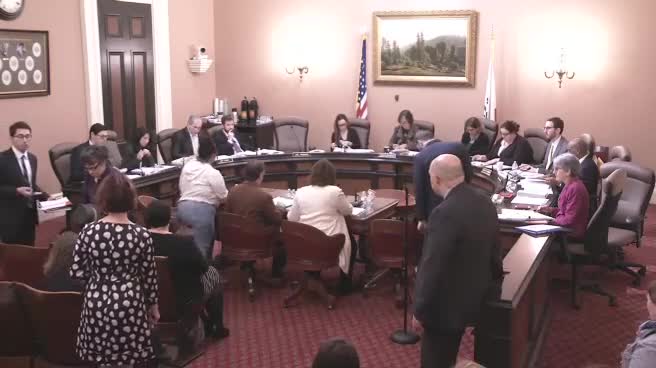 8MIN
Senate Standing Committee on Public Safety
Bill Author

Bill Co-Author(s):