SB 339: Veterans treatment courts: Judicial Council assessment and survey.
- Session Year: 2017-2018
- House: Senate
- Latest Version Date: 2017-10-08
Existing law establishes a statewide system of courts with a superior court of one or more judges in each county. Existing law authorizes the Judicial Council to prescribe the methods, means, and standards for electronic collection of data related to court administration, practice, and procedure.
This bill would require the Judicial Council, if certain funding is provided, to report to the Legislature, on or before June 1, 2020, on a study of veterans and veterans treatment courts that includes a statewide assessment, as specified, of veterans treatment courts currently in operation and a survey of counties that do not operate veterans treatment courts that identifies barriers to program implementation and assesses the need for veterans treatment courts in those counties. The bill would repeal these provisions on January 1, 2021.
Existing law establishes a statewide system of courts with a superior court of one or more judges in each county. Existing law authorizes the Judicial Council to prescribe the methods, means, and standards for electronic collection of data related to court administration, practice, and procedure.
This bill would require the Judicial Council, if certain funding is provided, to report to the Legislature, on or before June 1, 2020, on a study of veterans and veterans treatment courts that includes a statewide assessment, as specified, of veterans treatment courts currently in operation and a survey of counties that do not operate veterans treatment courts that identifies barriers to program implementation and assesses the need for veterans treatment courts in those counties. The bill would create the Veterans Court Assessment Fund in the State Treasury, administered by the Judicial Council, and would authorize the fund to accept private donations, as specified. The bill would repeal these provisions on January 1, 2021.
This bill would appropriate $200,000 from the Veterans Court Assessment Fund to the Judicial Council for the purpose of conducting the study and report described above if that amount is deposited into the fund and at least $100,000 of those moneys are donated funds directed to that same purpose. By providing for an appropriation from the fund to the Judicial Council in this manner, the bill would make an appropriation. The bill would require the Judicial Council to return any donated funds, in an amount equal to the donation, if $200,000 is not appropriated on or before June 1, 2020.Existing law establishes a statewide system of courts with a superior court of one or more judges in each county. Existing law authorizes the Judicial Council to prescribe the methods, means, and standards for electronic collection of data related to court administration, practice, and procedure.
This bill would require the Judicial Council Council, if certain funding is provided, to report to the Legislature Legislature, on or before June 1, 2020, on a study of veterans and veterans treatment courts that includes a statewide assessment, as specified, of veterans treatment courts currently in operation and a survey of counties that do not operate veterans treatment courts that identifies barriers to program implementation and assesses the need for veterans treatment courts in those counties, if funds are received for that purpose. The bill would require the Judicial Council to report to the Legislature on the results of the study, as specified, on or before June 1, 2020. counties. The bill would create the Veterans Court Assessment Fund in the State Treasury, administered by the Judicial Council, and would authorize the fund to accept private donations, as specified. The bill would appropriate specified sums from the Veterans Court Assessment Fund and from the General Fund for the purpose of conducting the study and report. The bill would repeal these provisions on January 1, 2021.
This bill would appropriate $200,000 from the Veterans Court Assessment Fund to the Judicial Council for the purpose of conducting the study and report described above if that amount is deposited into the fund and at least $100,000 of those moneys are donated funds directed to that same purpose. By providing for an appropriation from the fund to the Judicial Council in this manner, the bill would make an appropriation. The bill would require the Judicial Council to return any donated funds, in an amount equal to the donation, if $200,000 is not appropriated on or before June 1, 2020.
Existing law establishes a statewide system of courts with a superior court of one or more judges in each county. Existing law authorizes the Judicial Council to prescribe the methods, means, and standards for electronic collection of data related to court administration, practice, and procedure.
This bill would require the Judicial Council to report to the Legislature on a study of veterans and veterans treatment courts that includes a statewide assessment, as specified, of veterans treatment courts currently in operation and a survey of counties that do not operate veterans treatment courts that identifies barriers to program implementation and assesses the need for veterans treatment courts in those counties, if funds are received for that purpose. The bill would require the Judicial Council to report to the Legislature on the results of the study, as specified, on or before June 1, 2020. The bill would create the Veterans Court Assessment Fund in the State Treasury, administered by the Judicial Council, and would authorize the fund to accept private donations, as specified. The bill would appropriate specified sums from the Veterans Court Assessment Fund and from the General Fund for the purpose of conducting the study and report.
(a)If the Judicial Council receives funds for the purpose of implementing this section, the Judicial Council shall do all of the following:
(1)Conduct a study of veterans and veterans treatment courts that includes all of the following:
(A)A statewide assessment of the veterans treatment courts currently in operation that includes the number of veteran participants in the program, services available, and program outcomes, including successful completion or program terminations. The assessment shall evaluate the impact of a sample of veterans treatment courts on participant outcomes, including, but not limited to, program recidivism, mental health, homelessness, employment, social stability, and substance abuse.
(B)A survey of counties that do not operate veterans treatment courts that identifies barriers to program implementation and assesses the need for veterans treatment courts in those jurisdictions based on the veterans services available and the estimated number of veterans involved in the local criminal justice system. The survey shall identify alternative resources that may be available to veterans, such as community courts or other collaborative justice courts.
(2)On or before June 1, 2020, report to the Legislature on the results of the study described in paragraph (1). The report shall include recommendations regarding the expansion of veterans treatment courts or services to counties without veterans treatment courts and shall explore the feasibility of designing regional model veterans treatment courts through the use of service coordination or technological resources. The report shall be submitted in compliance with Section 9795.
(b)This section shall remain in effect only until January 1, 2021, and as of that date is repealed, unless a later enacted statute that is enacted before January 1, 2021, deletes or extends that date.
(a)If the Judicial Council receives funds for the purpose of implementing this section, the Judicial Council shall do all of the following:
(1)Conduct a study of veterans and veterans treatment courts that includes all of the following:
(A)A statewide assessment of the veterans treatment courts currently in operation that includes the number of veteran participants in the program, services available, and program outcomes, including successful completion or program terminations. The assessment shall evaluate the impact of a sample of veterans treatment courts on participant outcomes, including, but not limited to, program recidivism, mental health, homelessness, employment, social stability, and substance abuse.
(B)A survey of counties that do not operate veterans treatment courts that identifies barriers to program implementation and assesses the need for veterans treatment courts in those jurisdictions based on the veterans services available and the estimated number of veterans involved in the local criminal justice system. The survey shall identify alternative resources that may be available to veterans, such as community courts or other collaborative justice courts.
(2)On or before June 1, 2020, report to the Legislature on the results of the study described in paragraph (1). The report shall include recommendations regarding the expansion of veterans treatment courts or services to counties without veterans treatment courts and shall explore the feasibility of designing regional model veterans treatment courts through the use of service coordination or technological resources. The report shall be submitted in compliance with Section 9795.
(b)At least 50 percent of the funds required for the study and report described in this section shall be funded by private sources.(c)The Veterans Court Assessment Fund is hereby created in the State Treasury. The fund shall be administered by the Judicial Council. The fund may accept private donations from entities and individuals. The Judicial Council shall deposit the donations into the fund.(d)(b)This section shall remain in effect only until January 1, 2021, and as of that date is repealed, unless a later enacted statute that is enacted before January 1, 2021, deletes or extends that date.
SEC. 2.If the funds described in Section 3 of this act are not appropriated on or before June 1, 2020, the Judicial Council shall return any funds donated to the Veterans Court Assessment Fund or donated for the purpose of carrying out the study and report described in Section 68530 of the Government Code to the entity or individual who made the donation in an amount equal to the donation.SEC. 3.If a total sum of two hundred thousand dollars ($200,000) is deposited into the Veterans Court Assessment Fund for the purpose of conducting the study and report described in Section 68530 of the Government Code, of which at least one hundred thousand dollars ($100,000) are donated funds directed to that same purpose, then the two hundred thousand dollars ($200,000) is appropriated from the Veterans Court Assessment Fund to the Judicial Council for the purpose of conducting the study and report described in Section 68530 of the Government Code. REVISIONS: HeadingLine 5.(a)If the Judicial Council receives funds for the purpose of implementing this section, the Judicial Council shall report to the Legislature on do all of the following:
(1)Conduct a study of veterans and veterans treatment courts that includes all of the following:
(1)(A)A statewide assessment of the veterans treatment courts currently in operation that includes the number of veteran participants in the program, services available, and program outcomes, including successful completion or program terminations. The assessment shall evaluate the impact of a sample of veterans treatment courts on participant outcomes, including, but not limited to, program recidivism, mental health, homelessness, employment, social stability, and substance abuse.
(2)(B)A survey of counties that do not operate veterans treatment courts that identifies barriers to program implementation and assesses the need for veterans treatment courts in those jurisdictions based on the veterans services available and the estimated number of veterans involved in the local criminal justice system. The survey shall identify alternative resources that may be available to veterans, such as community courts or other collaborative justice courts.
(b)(2)On or before June 1, 2020, the Judicial Council shall report to the Legislature on the results of the study described in subdivision (a). paragraph (1). The report shall include recommendations regarding the expansion of veterans treatment courts or services to counties without veterans treatment courts and shall explore the feasibility of designing regional model veterans treatment courts through the use of service coordination or technological resources. The report shall be submitted in compliance with Section 9795.
(c)Fifty
(b)At least 50 percent of the funds required for the study and report described in this section shall be funded by private sources, and 50 percent of the funds shall be funded by the state, upon appropriation by the Legislature. sources.
(d)(c)The Veterans Court Assessment Fund is hereby created in the State Treasury. The fund shall be administered by the Judicial Council. The fund may accept private donations from entities and individuals. The Judicial Council shall deposit the donations into the fund.
(e)(d)This section shall remain in effect only until January 1, 2021, and as of that date is repealed, unless a later enacted statute that is enacted before January 1, 2021, deletes or extends that date.
SEC. 2.If this act is not enacted, the funds described in Section 3 of this act are not appropriated on or before June 1, 2020, the Judicial Council shall return any funds donated to the Veterans Court Assessment Fund or donated for the purpose of carrying out the study and report described in Section 1 of this act 68530 of the Government Code to the entity or individual who made the donation in an amount equal to the donation.
SEC. 3.The If a total sum of one two hundred thousand dollars ($100,000) ($200,000) is deposited into the Veterans Court Assessment Fund for the purpose of conducting the study and report described in Section 68530 of the Government Code, of which at least one hundred thousand dollars ($100,000) are donated funds directed to that same purpose, then the two hundred thousand dollars ($200,000) is hereby appropriated from the Veterans Court Assessment Fund to the Judicial Council for the purpose of conducting the study and report described in Section 68530 of the Government Code.
SEC. 4.The sum of one hundred thousand dollars ($100,000) is hereby appropriated from the General Fund to the Judicial Council for the purpose of conducting the study and report described in Section 68530 of the Government Code.(a)If the Judicial Council receives funds for the purpose of implementing this section, the Judicial Council shall report to the Legislature on a study of veterans and veterans treatment courts that includes the following:
(1)A statewide assessment of the veterans treatment courts currently in operation that includes the number of veteran participants in the program, services available, and program outcomes, including successful completion or program terminations. The assessment shall evaluate the impact of a sample of veterans treatment courts on participant outcomes, including, but not limited to, program recidivism, mental health, homelessness, employment, social stability, and substance abuse.
(2)A survey of counties that do not operate veterans treatment courts that identifies barriers to program implementation and assesses the need for veterans treatment courts in those jurisdictions based on the veterans services available and the estimated number of veterans involved in the local criminal justice system. The survey shall identify alternative resources that may be available to veterans, such as community courts or other collaborative justice courts.(b)On or before June 1, 2020, the Judicial Council shall report to the Legislature on the results of the study described in subdivision (a). The report shall include recommendations regarding the expansion of veterans treatment courts or services to counties without veterans treatment courts and shall explore the feasibility of designing regional model veterans treatment courts through the use of service coordination or technological resources. The report shall be submitted in compliance with Section 9795.
(c)Fifty percent of the funds required for the study and report described in this section shall be funded by private sources, and 50 percent of the funds shall be funded by the state, upon appropriation by the Legislature.
(d)The Veterans Court Assessment Fund is hereby created in the State Treasury. The fund shall be administered by the Judicial Council. The fund may accept private donations from entities and individuals. The Judicial Council shall deposit the donations into the fund.
(e)This section shall remain in effect only until January 1, 2021, and as of that date is repealed, unless a later enacted statute that is enacted before January 1, 2021, deletes or extends that date.
SEC. 2.If this act is not enacted, the Judicial Council shall return any funds donated to the Veterans Court Assessment Fund or donated for the purpose of carrying out the study and report described in Section 1 of this act to the entity or individual who made the donation in an amount equal to the donation.
SEC. 3.The sum of one hundred thousand dollars ($100,000) is hereby appropriated from the Veterans Court Assessment Fund to the Judicial Council for the purpose of conducting the study and report described in Section 68530 of the Government Code.
SEC. 4.The sum of one hundred thousand dollars ($100,000) is hereby appropriated from the General Fund to the Judicial Council for the purpose of conducting the study and report described in Section 68530 of the Government Code.
|
Date
|
Status
|
|---|---|
| Oct 8, 2017 | Chaptered by Secretary of State. Chapter 595, Statutes of 2017. |
| Oct 8, 2017 | Approved by the Governor. |
| Sep 20, 2017 | Enrolled and presented to the Governor at 4 p.m. |
| Sep 14, 2017 | Assembly amendments concurred in. (Ayes 39. Noes 0.) Ordered to engrossing and enrolling. |
| Sep 12, 2017 | Ordered to special consent calendar. |
| Sep 8, 2017 | In Senate. Concurrence in Assembly amendments pending. |
| Sep 7, 2017 | Read third time. Passed. Ordered to the Senate. |
| Sep 5, 2017 | Read second time. Ordered to third reading. |
| Sep 1, 2017 | From committee: Do pass. (Ayes 16. Noes 0.) (September 1). |
| Aug 23, 2017 | August 23 set for first hearing. Placed on suspense file. |
| Jul 12, 2017 | Coauthors revised. |
| Jun 28, 2017 | From committee: Do pass and re-refer to Com. on PUB. S. (Ayes 8. Noes 0.) (June 27). Re-referred to Com. on PUB. S. |
| Jun 22, 2017 | From committee with author's amendments. Read second time and amended. Re-referred to Com. on V.A. |
| Jun 12, 2017 | Referred to Coms. on V.A. and PUB. S. |
| Jun 1, 2017 | In Assembly. Read first time. Held at Desk. |
| May 31, 2017 | Read third time. Passed. (Ayes 39. Noes 0. Page 1322.) Ordered to the Assembly. |
| May 26, 2017 | Read second time and amended. Ordered to third reading. |
| May 25, 2017 | From committee: Do pass as amended. (Ayes 7. Noes 0. Page 1182.) (May 25). |
| May 19, 2017 | Set for hearing May 25. |
| May 15, 2017 | May 15 hearing: Placed on APPR. suspense file. |
| May 4, 2017 | Set for hearing May 15. |
| May 3, 2017 | May 8 hearing postponed by committee. |
| May 1, 2017 | Set for hearing May 8. |
| Apr 26, 2017 | From committee: Do pass and re-refer to Com. on APPR. with recommendation: To consent calendar. (Ayes 7. Noes 0. Page 830.) (April 25). Re-referred to Com. on APPR. |
| Apr 7, 2017 | Set for hearing April 25. |
| Apr 4, 2017 | From committee: Do pass and re-refer to Com. on V.A. with recommendation: To consent calendar. (Ayes 6. Noes 0. Page 599.) (April 4). Re-referred to Com. on V.A. |
| Mar 9, 2017 | Set for hearing April 4. |
| Feb 23, 2017 | Referred to Coms. on PUB. S. and V.A. |
| Feb 15, 2017 | From printer. May be acted upon on or after March 17. |
| Feb 14, 2017 | Introduced. Read first time. To Com. on RLS. for assignment. To print. |
|
Date
|
Description
|
Location
|
Votes
|
|
|---|---|---|---|---|
| Sep 14, 2017 | Special Consent Calendar SB339 | Senate Floor |
Passed |
|
| Sep 7, 2017 | SB 339 Roth Senate Third Reading By IRWIN | Assembly Floor |
Passed |
|
| Sep 1, 2017 | Do pass. | Assembly Standing Committee on Appropriations |
Passed |
|
| Jul 11, 2017 | Do pass and be re-referred to the Committee on [Appropriations] with recommendation: To Consent Calendar | Assembly Standing Committee on Public Safety |
Passed |
|
| Jun 27, 2017 | Do pass and be re-referred to the Committee on [Public Safety] | Assembly Standing Committee on Veterans Affairs |
Passed |
|
| May 31, 2017 | Senate 3rd Reading SB339 Roth et al. | Senate Floor |
Passed |
|
| May 25, 2017 | Do pass as amended | Senate Standing Committee on Appropriations |
Passed |
|
| May 15, 2017 | Placed on suspense file | Senate Standing Committee on Appropriations |
Passed |
|
| Apr 25, 2017 | Do pass, but first be re-referred to the Committee on [Appropriations] with the recommendation: To Consent Calendar | Senate Standing Committee on Veterans Affairs |
Passed |
|
| Apr 4, 2017 | Do pass, but first be re-referred to the Committee on [Veterans Affairs] with the recommendation: To Consent Calendar | Senate Standing Committee on Public Safety |
Passed |
This list shows positions taken on this bill by organizations on the date displayed, which is linked to the original source.
Positions by individuals are not included.
|
Organization
|
Position
|
Date
|
|---|---|---|
| American G.I. Forum of California | ** Support | Sep 8, 2017 |
| American Legion Department of California | ** Support | Sep 8, 2017 |
| AMVETS-Department of California | ** Support | Sep 8, 2017 |
| California Association Of County Veterans Service Officers | ** Support | Sep 8, 2017 |
| California Council of Chapters | ** Support | Jun 26, 2017 |
| California Public Defenders Association | ** Support | Sep 8, 2017 |
| california public defenders office | ** Support | May 27, 2017 |
| California State Commanders Veterans Council | ** Support | Sep 8, 2017 |
| Educate Advocate | ** Support | Jul 10, 2017 |
| Judicial Council of California | ** Support | Sep 8, 2017 |
| Military Officers Association of America | ** Support | Jun 26, 2017 |
| National Association of Social Workers | ** Support | Jun 26, 2017 |
| National Association Of Social Workers, California Chapter | ** Support | Jul 10, 2017 |
| Rural County Representatives of California | ** Support | Jul 10, 2017 |
| Vietnam Veterans of America-California Council | ** Support | Jul 10, 2017 |
Office of Senate Floor Analyses (916) 651-1520 Fax: (916) 327-4478 | SB |
UNFINISHED BUSINESS
Bill No: SB 339
:
SENATE PUBLIC SAFETY COMMITTEE: 6-0, 4/4/17
AYES: Skinner, Bradford, Jackson, Mitchell, Stone, Wiener
NO VOTE RECORDED: Anderson
SENATE VETERANS AFFAIRS COMMITTEE: 7-0, 4/25/17
AYES: Newman, Nielsen, Dodd, Hueso, Nguyen, Roth, Wilk
SENATE APPROPRIATIONS COMMITTEE: 7-0, 5/25/17
AYES: Lara, Bates, Beall, Bradford, Hill, Nielsen, Wiener
SENATE FLOOR: 39-0, 5/31/17
AYES: Allen, Anderson, Atkins, Bates, Beall, Berryhill, Bradford, Cannella, De León, Dodd, Fuller, Gaines, Galgiani, Glazer, Hernandez, Hertzberg, Hill, Hueso, Jackson, Lara, Leyva, McGuire, Mendoza, Mitchell, Monning, Moorlach, Morrell, Newman, Nguyen, Nielsen, Pan, Roth, Skinner, Stern, Stone, Vidak, Wieckowski, Wiener, Wilk
NO VOTE RECORDED: Portantino
ASSEMBLY FLOOR: 78-0, 9/7/17 - See last page for vote
DIGEST:
This bill requires the Judicial Council, contingent upon funding, to conduct a statewide study of veterans and veterans treatment courts, as specified, and to report its findings to the Legislature.
Assembly Amendments
eliminate the Veterans Court Assessment Fund that was created in the State Treasury, and was to be administered by the Judicial Council. The amendments also eliminate $200,000 in appropriations to the Judicial Council to conduct a study.
Existing law:
- Vests in the superior courts the judicial power of California. (Cal. Const. art. VI, § 1.)
- Establishes the Judicial Council and authorizes them to improve the administration of justice, to survey judicial business and make recommendations to the courts to the Governor and Legislature, and adopt rules for court administration, practice and procedure, and perform other functions prescribed by statue. (Cal. Const. art. VI§ 6(d).)
- Allows courts to make rules for the administration of the courts so long as they are not otherwise prohibited by the Constitution, statute or rules adopted by the Judicial Council. (Gov. Code, § 68070; Wisniewski v. Clary (1975) 46 Cal.App.3d 499.)
- Requires judges to identify veteran defendants suffering from sexual trauma, post-traumatic stress disorder, traumatic brain injury, substance abuse, or mental health problems as a result of his or her service and use this status as a factor in favor of granting probation and/or ordering participation in approved treatment programs. (Pen. Code, § 1170.9.)
This bill:
- Requires the Judicial Council to conduct a study of veterans and veterans treatment courts that includes:
- A statewide assessment of veterans treatment courts currently in operation that includes the number of veteran participants in the program, services available, and program outcomes, including successful completion or program terminations. This assessment is required to evaluate the impact of a sample of veterans treatment courts on participant outcomes, including, but not limited to, program recidivism, mental health, homelessness, employment, social stability, and substance abuse.
- A survey of counties that do not operate veterans treatment courts that identifies barriers to program implementation and assesses the need for veterans treatment courts in those jurisdictions based on the services available to veterans and the estimated number of veterans involved in the local criminal justice system. This survey is required to identify alternative resources that may be available to veterans.
- Requires the Judicial Council to report the study and its findings and recommendations to the Legislature by June 1, 2020.
Background
Veterans' courts are hybrid drug and mental health courts that use the drug court model to serve veterans struggling with addiction, serious mental illness and/or co-occurring disorders. They promote sobriety, recovery and stability through a coordinated response that involves cooperation and collaboration with the traditional partners found in drug and mental health courts in addition to the United States Department of Veterans Affairs health care networks, the Veterans' Benefits Administration, and, in some programs, volunteer veteran mentors and veterans' family support organizations.
Veterans' Treatment Courts are a response to the growing trend of veterans appearing before the courts to face charges stemming from substance abuse or mental illness. Drug and mental health courts frequently serve veteran populations. Research has shown that traditional services do not always adequately meet the needs of veterans. Many veterans are entitled to treatment through the Veterans' Administration and veterans treatment courts help connect them with these benefits.
According to the Judicial Council, there are 29 Veterans Treatment Courts in 24 counties in California. In addition, some counties have, or are establishing, community courts that integrate programs and services for a range of existing collaborative justice courts. While there have been studies on the benefits of many collaborative justice courts, as well as studies on best practices for those courts, there has not been an extensive study on the impact of veterans' courts. However, the studies conducted on other collaborative justice courts have been encouraging. For example, drug courts have seen recidivism reductions of 85% and annual savings of $90 million among participating counties.
FISCAL EFFECT: Appropriation: Fiscal Com.: Local:
According to the Assembly Appropriations Committee, one-time cost to the Judicial Council of $200,000 to complete the study and report. The bill requires the study to be done only if funding is received for that purpose. There is no funding source identified in the bill.
American G.I. Forum of California
American Legion Department of California
AMVETS-Department of California
California Association of County Veterans Service Officers
California Public Defenders Association
California State Commanders Veterans Council
Judicial Council of California
Military Officers Association of America, California Council of Chapters
Rural County Representatives of California
Vietnam Veterans of America-California State Council
None received
ASSEMBLY FLOOR: 78-0, 9/7/17
AYES: Acosta, Aguiar-Curry, Travis Allen, Arambula, Baker, Berman, Bigelow, Bloom, Bocanegra, Bonta, Brough, Burke, Caballero, Calderon, Cervantes, Chau, Chávez, Chen, Chiu, Choi, Chu, Cooper, Cunningham, Dababneh, Dahle, Daly, Eggman, Flora, Fong, Frazier, Friedman, Gallagher, Cristina Garcia, Eduardo Garcia, Gipson, Gloria, Gonzalez Fletcher, Gray, Grayson, Harper, Holden, Irwin, Jones-Sawyer, Kalra, Kiley, Lackey, Levine, Limón, Low, Maienschein, Mathis, Mayes, McCarty, Medina, Melendez, Mullin, Muratsuchi, Nazarian, Obernolte, O'Donnell, Patterson, Quirk, Quirk-Silva, Reyes, Ridley-Thomas, Rodriguez, Rubio, Salas, Santiago, Steinorth, Mark Stone, Thurmond, Ting, Voepel, Waldron, Weber, Wood, Rendon
NO VOTE RECORDED: Cooley
9/8/17 15:10:46
**** END ****
SENATE THIRD READING
STR Bill Id:SB 339
Author:(Roth)
As Amended Ver:June 22, 2017
Majority vote
SENATE VOTE: 39-0
Committee | Votes | Ayes | Noes |
Veterans Affairs | 8-0 | Irwin, Chávez, Daly, Frazier, Gloria, Quirk-Silva, Salas, Voepel | |
Public Safety | 7-0 | Jones-Sawyer, Lackey, Flora, Gonzalez Fletcher, Quirk, Rubio, Santiago | |
Appropriations | 16-0 | Gonzalez Fletcher, Bigelow, Bloom, Bocanegra, Bonta, Brough, Calderon, Chau, Eggman, Fong, Friedman, Gallagher, Eduardo Garcia, Jones-Sawyer, Obernolte, Reyes |
|
SUMMARY: Requires the Judicial Council, contingent upon funding, to conduct a statewide study of veterans and veterans treatment courts, as specified, and to report its findings to the Legislature. Specifically, this bill:
- Requires the Judicial Council to conduct a study of veterans and veterans treatment courts that includes:
- A statewide assessment of veterans treatment courts currently in operation that includes the number of veteran participants in the program, services available, and program outcomes, including successful completion or program terminations. This assessment is required to evaluate the impact of a sample of veterans treatment courts on participant outcomes, including, but not limited to, program recidivism, mental health, homelessness, employment, social stability, and substance abuse.
- A survey of counties that do not operate veterans treatment courts that identifies barriers to program implementation and assesses the need for veterans treatment courts in those jurisdictions based on the services available to veterans and the estimated number of veterans involved in the local criminal justice system. This survey is required to identify alternative resources that may be available to veterans.
- Requires the Judicial Council to report the study and its findings and recommendations to the Legislature by June 1, 2020.
FISCAL EFFECT: According to the Assembly Appropriations Committee, one-time cost to the Judicial Council of $200,000 to complete the study and report. The bill requires the study to be done only if funding is received for that purpose. There is no funding source identified in the bill.
COMMENTS:
- Purpose. According to the author, "A veterans' court is a problem-solving court intended to serve veterans who are involved with the justice system and whose court cases are affected by issues such as addiction, mental illness, and co-occurring disorders. These courts promote sobriety, recovery, and stability through a coordinated response involving cooperation and collaboration with prosecutors, defense lawyers, probation departments, county veterans service offices, the California Department of Veterans Affairs, health-care networks, employment and housing agencies and groups, volunteer mentors who are usually also veterans, and family support organizations. This bill aims to provide greater access for these courts so all Veterans can get the treatment they need."
- Background. Veterans' courts are hybrid drug and mental health courts that use the drug court model to serve veterans struggling with addiction, serious mental illness and/or co-occurring disorders. They promote sobriety, recovery and stability through a coordinated response that involves cooperation and collaboration with the traditional partners found in drug and mental health courts in addition to the United States Department of Veterans Affairs health care networks, the Veterans' Benefits Administration, and, in some programs, volunteer veteran mentors and veterans' family support organizations.
Veterans' Treatment Courts are a response to the growing trend of veterans appearing before the courts to face charges stemming from substance abuse or mental illness. Drug and mental health courts frequently serve veteran populations. Research has shown that traditional services do not always adequately meet the needs of veterans. Many veterans are entitled to treatment through the Veterans' Administration and veterans treatment courts help connect them with these benefits.
According to the Judicial Council, there are 29 Veterans Treatment Courts in 24 counties in California. In addition, some counties have, or are establishing, community courts that integrate programs and services for a range of existing collaborative justice courts. While there have been studies on the benefits of many collaborative justice courts, as well as studies on best practices for those courts, there has not been an extensive study on the impact of veterans' courts. However, the studies conducted on other collaborative justice courts have been encouraging. For example, drug courts have seen recidivism reductions of 85% and annual savings of $90 million among participating counties.
- Prior Legislation. AB 1672 (Mathis) of 2016, was substantially similar to this bill in that it required to study the impact of veterans courts, or the lack thereof, on veterans involved in the criminal justice system. AB 1672 was held on the Senate Appropriations suspense file.
AB 2098 (Levine), Chapter 163, Statutes of 2014, requires the court to consider a defendant's status as a veteran suffering from post-traumatic stress disorder (PTSD) or other forms of trauma when making specified sentencing determinations.
Analysis Prepared by: Christian Burkin / V.A. / (916) 319-3550 FN: 0001697
Date of Hearing: August 23, 2017
ASSEMBLY COMMITTEE ON APPROPRIATIONS
Lorena Gonzalez Fletcher, Chair
SBPCA Bill Id:SB 339
Author:(Roth) – As Amended Ver:June 22, 2017
Policy Committee: | Veterans Affairs | Vote: | 8 - 0 |
Public Safety | 7 - 0 | ||
|
|
Urgency: No State Mandated Local Program: No Reimbursable: No
SUMMARY:
This bill requires the Judicial Council, contingent upon funding, to conduct a statewide study of veterans and veterans' treatment courts, including counties that do and do not operate these courts, as specified. The bill further requires the Judicial Council to report to the Legislature by June 1, 2020, the results of the study, including recommendations for expansions of veterans' treatment courts, as specified.
FISCAL EFFECT:
One-time cost to the Judicial Council of $200,000 to complete the study and report. The bill requires the study to be done only if funding is received for that purpose. There is no funding source identified in the bill.
COMMENTS:
- Purpose. According to the author, "A veterans’ court is a problem-solving court intended to serve veterans who are involved with the justice system and whose court cases are affected by issues such as addiction, mental illness, and co-occurring disorders. These courts promote sobriety, recovery, and stability through a coordinated response involving cooperation and collaboration with prosecutors, defense lawyers, probation departments, county veterans service offices, the California Department of Veterans Affairs, health-care networks, employment and housing agencies and groups, volunteer mentors who are usually also veterans, and family support organizations. This bill aims to provide greater access for these courts so all Veterans can get the treatment they need.”
- Background. Veterans’ courts are hybrid drug and mental health courts that use the drug court model to serve veterans struggling with addiction, serious mental illness and/or co-occurring disorders. They promote sobriety, recovery and stability through a coordinated response that involves cooperation and collaboration with the traditional partners found in drug and mental health courts in addition to the United States Department of Veterans Affairs health care networks, the Veterans' Benefits Administration, and, in some programs, volunteer veteran mentors and veterans' family support organizations.
Veterans’ Treatment Courts are in response to the growing trend of veterans appearing before the courts to face charges stemming from substance abuse or mental illness. Drug and mental health courts frequently serve veteran populations. Research has shown that traditional services do not always adequately meet the needs of veterans. Many veterans are entitled to treatment through the Veterans' Administration and veterans treatment courts help connect them with these benefits.
According to the Judicial Council, there are 29 Veterans Treatment Courts in 24 counties in California. In addition, some counties have, or are establishing, community courts that integrate programs and services for a range of existing collaborative justice courts. While there have been studies on the benefits of many collaborative justice courts, as well as studies on best practices for those courts, there has not been an extensive study on the impact of veterans’ courts. However, the studies conducted on other collaborative justice courts have been encouraging. For example, drug courts have seen recidivism reductions of 85% and annual savings of $90 million among participating counties.
- Prior Legislation. AB 1672 (Mathis), of the 2015-16 Legislative Session, was substantially similar to this bill in that it required to study the impact of veterans courts, or the lack thereof, on veterans involved in the criminal justice system. AB 1672 was held on the Senate Appropriations suspense file.
AB 2098 (Levine), Chapter 163, Statutes of 2014, requires the court to consider a defendant’s status as a veteran suffering from post-traumatic stress disorder (PTSD) or other forms of trauma when making specified sentencing determinations.
AB 201 (Butler), of the 2011-12 Legislative Session, would have authorized superior courts to develop and implement veterans’ courts. This bill would have established standards and procedures for veterans courts and would have specified that county participation in the veterans courts program is voluntary. AB 201 was vetoed by Governor Brown.
Analysis Prepared by: Jennifer Swenson / APPR. / (916) 319-2081
Date of Hearing: July 11, 2017
Chief Counsel: Gregory Pagan
ASSEMBLY COMMITTEE ON PUBLIC SAFETY
Reginald Byron Jones-Sawyer, Sr., Chair
SBPCA Bill Id:SB 339
Author:(Roth) – As Amended Ver:June 22, 2017
SUMMARY: Requires the Judicial Council, if funding is provided, to report to the Legislature on a study of veterans and veteran's treatment courts, as specified. Specifically, this bill:
- Requires the Judicial Council, if funding is provided, to conduct a study of veterans and veteran's treatment courts that includes all of the following:
- A statewide assessment of the veteran's treatment courts currently in operation that includes the number of veteran participation in the program, services available, and program outcomes, including successful completion or program terminations. The assessment shall evaluate the impact of a sample of veterans treatments courts on participant outcomes, including, not limited to, program recidivism, mental health, homelessness, employment social stability, and substance abuse;
- A survey of counties that do not operate veteran's treatment courts that identifies barriers to program implementation and assesses the need for veteran's treatment courts in those jurisdictions based on the veterans involved in the local criminal justice system. The survey shall identify alternative resources that may be available to veterans, such as community courts or other collaborative justice courts; and,
- On or before June 1, 2020, report to the Legislature on the results of the study, including recommendations regarding the expansion of veteran's treatment courts or services to counties without veteran's treatment courts and shall explore the feasibility of designing regional model veterans treatment courts through the use of service coordination or technological resources.
- A statewide assessment of the veteran's treatment courts currently in operation that includes the number of veteran participation in the program, services available, and program outcomes, including successful completion or program terminations. The assessment shall evaluate the impact of a sample of veterans treatments courts on participant outcomes, including, not limited to, program recidivism, mental health, homelessness, employment social stability, and substance abuse;
- States that the above provisions shall only remain in effect until January 1, 2021, and as of that date is repealed unless a statute enacted before that date deletes or extends that date.
EXISTING LAW:
- Vests in the superior courts the judicial power of California. (Cal. Const. art. VI, § 1.)
- Establishes the Judicial Council and authorizes them to improve the administration of justice, to survey judicial business and make recommendations to the courts to the Governor and Legislature, and adopt rules for court administration, practice and procedure, and perform other functions prescribed by statue. (Cal. Const. art. VI§ 6(d).)
- Allows courts to make rules for the administration of the courts so long as they are not otherwise prohibited by the Constitution, statute or rules adopted by the Judicial Council. (Gov. Code, § 68070; Wisniewski v. Clary (1975) 46 Cal.App.3d 499.)
- Requires judges to identify veteran defendants suffering from sexual trauma, post-traumatic stress disorder, traumatic brain injury, substance abuse, or mental health problems as a result of his or her service and use this status as a factor in favor of granting probation and/or ordering participation in approved treatment programs. (Pen. Code, § 1170.9.)
FISCAL EFFECT: Unknown
COMMENTS:
- Author's Statement: According to the author, "A veterans’ court is a problem-solving court intended to serve veterans who are involved with the justice system and whose court cases are affected by issues such as addiction, mental illness, and co-occurring disorders. These courts promote sobriety, recovery, and stability through a coordinated response involving cooperation and collaboration with prosecutors, defense lawyers, probation departments, county veterans service offices, the California Department of Veterans Affairs, health-care networks, employment and housing agencies and groups, volunteer mentors who are usually also veterans, and family support organizations. This bill aims to provide greater access for these courts so all Veterans can get the treatment they need.”
- Background: Under California law, every court has the authority to make rules for its own government. This is an inherent power of the courts, but this power has also been codified in the Government Code. This power is limited only by any conflict with the California Constitution, statute or rules adopted by the Judicial Council of California.
Nothing in California’s Constitution or statutes prohibits or requires the development of veterans’ courts. However, under the Penal Code, courts are required to identify veteran defendants suffering from post-traumatic stress disorder, traumatic brain injury, and other issues for purposes of sentencing. For this and other reasons, the Judicial Council has encouraged the development of veterans’ courts.
The Judicial Council has authority under the California Constitution to make rules governing California courts and to make recommendations to the Legislature and Governor regarding the operation of the courts. Under this authority, the Judicial Council created the Collaborative Justice Court Advisory Committee to make recommendations to the Judicial Council on criteria for identifying and evaluating collaborative justice courts and for improving the processing of cases in these courts, which include drug courts, domestic violence courts, youth courts, community courts, veterans’ courts and other collaborative justice courts. Currently, at least 12 counties in California have established veterans’ courts and two have established community courts.
Collaborative justice courts primary purpose is to connect criminal defendants with mental health, drug treatment and other rehabilitative services to reduce recidivism. In general, community courts have similar aims –in terms of connecting defendants with rehabilitative services- with the additional aims of promoting principles of community involvement, balanced and restorative justice, and accountability. Community courts can channel required community service hours to help meet community needs. In practice, community courts may differ little or not at all from other collaborative justice courts. For example, in Orange County the Community Court is the umbrella court for all of Orange County’s collaborative justice courts, including their veterans’ court.
Veterans’ courts are hybrid drug and mental health courts that use the drug court model to serve veterans struggling with addiction, serious mental illness and/or co-occurring disorders. They promote sobriety, recovery and stability through a coordinated response that involves cooperation and collaboration with the traditional partners found in drug and mental health courts in addition to the United States (U.S.) Department of Veterans Affairs health care networks, the Veterans' Benefits Administration, and, in some programs, volunteer veteran mentors and veterans' family support organizations.
Veterans' Treatment Courts are responses to the growing trend of veterans appearing before the courts to face charges stemming from substance abuse or mental illness. Drug and mental health courts frequently serve veteran populations. Research has shown that traditional services do not always adequately meet the needs of veterans. Many veterans are entitled to treatment through the Veterans' Administration and veterans treatment courts help connect them with these benefits.
According to government reports, there are 23,440,000 veterans in the United States and approximately 1.7 million veterans of Iraq and Afghanistan. The U.S. Department of Veterans Affairs estimates that as many as one third of the adult homeless population have served in the military and that at any given time there are as many as 130,000 homeless veterans. This population mirrors the general homeless population in that 45% suffer mental illness and 75% suffer from substance abuse problems. Veterans are not more likely to be arrested than the general population. But there are significant numbers of veterans involved with the criminal justice system, many of whom struggle with mental health and/or substance abuse illnesses. A 2000 Bureau of Justice Statistics Report found that 81% of all justice involved veterans had a substance abuse problem prior to incarceration, 35% were identified as suffering from alcohol dependency, 23% were homeless at some point in the prior year, and 25% were identified as mentally ill.
While there have been studies on the benefits of many collaborative justice courts, as well as studies on best practices for those courts, there has not been an extensive study on the impact of veterans’ courts. However, the studies conducted on other collaborative justice courts have been encouraging. For example, drug courts have seen recidivism reductions of 85% and annual savings of $90 million among participating counties. This bill would determine if similar positive impacts can be extended to veterans involved in the criminal justice system.
- Prior Legislation:
- AB 1672 (Mathis), of the 2015-16 Legislative Session, was substantially similar to this bill in that it required to study the impact of veteran' courts, or the lack thereof, on veterans involved in the criminal justice system. AB 1672 was held on the Senate Appropriations suspense file.
- AB 2098 (Levine), Chapter 163, Statutes of 2014, requires the court to consider a defendant’s status as a veteran suffering from post-traumatic stress disorder (PTSD) or other forms of trauma when making specified sentencing determinations.
- AB 201 (Butler), of the 2011-12 Legislative Session, would have authorized superior courts to develop and implement veterans’ courts. This bill would have established standards and procedures for veterans’ courts and would have specified that county participation in the veterans’ courts program is voluntary. AB 201 was vetoed.
- AB 1925 (Salas), of the 2009-10 Legislative Session, would have authorized superior courts to develop and implement veterans’ courts for eligible veterans of the United States (U.S.) military. AB 1925 was vetoed. The Governor’s veto message stated “authorizing legislation is not required for the superior courts to establish specialized courts with dedicated calendars. I would urge the Judicial Council to examine the need for veterans' courts, however, and establish appropriate guidelines for the superior courts to follow.”
- AB 1672 (Mathis), of the 2015-16 Legislative Session, was substantially similar to this bill in that it required to study the impact of veteran' courts, or the lack thereof, on veterans involved in the criminal justice system. AB 1672 was held on the Senate Appropriations suspense file.
REGISTERED SUPPORT / OPPOSITION:
Support
Judicial Council of California
California Public Defenders Association
Educate Advocate
Rural County Representatives of California
National Association of Social Workers, California Chapter
American G.I. Forum of California
AMVETS-Department of California
American Legion – Department of California
California Association of County Veterans Service Officers
California State Commanders Veterans Council
Military Officers Association of America, California Council of Chapters
Vietnam Veterans of America-California Council
Opposition
None
Analysis Prepared by: Gregory Pagan / PUB. S. / (916) 319-3744
Date of Hearing: June 27, 2017
ASSEMBLY COMMITTEE ON VETERANS AFFAIRS
Jacqui Irwin, Chair
SBPCA Bill Id:SB 339
Author:(Roth) – As Amended Ver:May 26, 2017
SENATE VOTE: 39-0
SUBJECT: Veterans treatment courts: Judicial Council assessment and survey
SUMMARY: Commissions a statewide report, authored by the Judicial Council, which examines veterans and veteran’s treatment courts, and creates the Veterans Court Assessment Funding within the State Treasury, which may accept private donations. Specifically, this bill:
- Requires the Judicial Council, if Judicial Council receives funds for the purpose of implementing this section, to do all of the following:
- Conduct a study of veterans and veterans treatment courts that includes all of the following:
- A statewide assessment of the veterans treatment courts currently in operation that includes the number of veteran participants in the program, services available, and program outcomes, including successful completion or program terminations. The assessment shall evaluate the impact of a sample of veterans treatment courts on participant outcomes, including, but not limited to, program recidivism, mental health, homelessness, employment, social stability, and substance abuse.
- A survey of counties that do not operate veterans treatment courts that identifies barriers to program implementation and assesses the need for veterans treatment courts in those jurisdictions based on the veterans services available and the estimated number of veterans involved in the local criminal justice system. The survey shall identify alternative resources that may be available to veterans, such as community courts or other collaborative justice courts.
- On or before June 1, 2020, report to the Legislature on the results of the study. The report shall include recommendations regarding the expansion of veterans treatment courts or services to counties without veterans treatment courts and shall explore the feasibility of designing regional model veterans treatment courts through the use of service coordination or technological resources.
- Conduct a study of veterans and veterans treatment courts that includes all of the following:
- Requires that at least 50 percent of the funds required for the study and report described in this bill shall be funded by private sources.
- Establishes the Veterans Court Assessment Fund (Fund) within the State Treasury. The fund shall be administered by the Judicial Council, and may accept private donations from entities and individuals. The Judicial Council shall deposit the donations into the Fund.
- Remains in effect only until January 1, 2021, unless a later enacted statue that is enacted before January 1, 2021, deletes or extends that date.
- Requires that, if funds are not appropriated on or before June 1, 2020, the Judicial Council shall return any funds donated to the Fund or donated for the purpose of carrying out the study and report described in this bill to the entity or individual who made the donation in an amount equal to the donation.
- Requires that, if a total sum of $200,000 is deposited into the Veterans Court Assessment Fund for the purpose of conducting the study and report, of which at least $100,000 are donated funds directed to that same purpose, then the $200,000 is appropriated from the Fund to the Judicial Council for purpose of conducting the study and report described in this bill.
EXISTING LAW:
- Establishes a statewide system of courts with a superior court of one or more judges in each county.
- Authorizes the Judicial Council to prescribe the methods, means, and standards for electronic collection of data related to court administration, practice, and procedure.
FISCAL EFFECT: One-time cost to the Judicial Council of $200,000 to complete the study and report.
COMMENTS: This bill would, if funded, direct the Judicial Council to study various aspects of veteran treatment courts. The study would, if completed, provide the Legislature and the Governor with additional information on which to base policy decisions concerning veteran treatment courts.
Veteran Treatment Courts follow the Drug Treatment model, in that it is a collaborative justice court. The court offers alternatives to case proceedings that address underlying problems which contribute to criminal activity or other court involvement. Veteran Treatment Courts lead to the placement of mentally ill offenders who are veterans of the U.S. military, including those with PTSD, TBI and MST, substance abuse, or any mental health problem, in VA counseling and treatment programs. In many cases, counseling is required and incorporated into the treatment programs that are designed to treat the underlying psychological disorders. Participating veterans are ordered to complete the recommended treatment plan and comply with any other terms and conditions of probation imposed by the court.
Currently, there are 31 Veteran Treatment Courts within 29 counties (Los Angeles and Santa Barbara Counties each have two), yet the state does not have a standard operating procedure for the courts. Each county and court operates under its own set of rules and guidelines. This bill will gather the information necessary to determine the success or failures of each VTC, find what is lacking in any given county, and give the state the tools to make a best practices list for VTCs.
Counties which do not have a VTC will be assessed for the need for a VTC and alternative resources, if available, will be identified. The possibility for a regional VTC through service coordination and/or technological resources as an alternative to a County VTC will also be explored. This may give smaller counties who lack resources for a VTC a chance to give veterans a chance to participate in the program who otherwise would not be able to get the counseling and services they might need.
Related/Prior Legislation
AB 1672 (Mathis, Held under Submission, Senate Appropriations, 2016) requires the Judicial Council to report to the Legislature on a study of veterans and veterans treatment courts that includes a statewide assessment of veterans treatment courts currently in operation and a survey of counties that do not operate veterans treatment courts that identifies barriers to program implementation and assesses the need for veterans treatment courts in those counties, if funds are received for that purpose.
AB 2098 (Levine, Chapter 163, Statutes of 2014) requires the court to consider a defendant’s status as a veteran suffering from PTSD or other forms of trauma when making specified sentencing determinations.
ACR 36 (Atkins, Resolution Chapter 39, Statutes of 2013) encourages all superior courts to consider establishing VTCs and/or veterans treatment review calendars to assist troubled veterans who have service-related mental health issues.
AB 201 (Butler, vetoed, 2012) would have authorized superior courts to develop and implement veterans’ courts. This bill would have established standards and procedures for veterans’ courts and would have specified that county participation in the veterans’ courts program is voluntary.
AB 1925 (Salas, vetoed, 2010) would have authorized superior courts to develop and implement veterans’ courts for eligible veterans of the United States (U.S.) military. The Governor’s veto message stated “authorizing legislation is not required for the superior courts to establish specialized courts with dedicated calendars. I would urge the Judicial Council to examine the need for veterans' courts, however, and establish appropriate guidelines for the superior courts to follow.”
AB 674 (Salas, Chapter 347, Statutes of 2010) allows a court to order a defendant who suffers from sexual trauma, traumatic brain injury, post-traumatic stress disorder, substance abuse, or mental health problems as a result of military service, into a treatment program or veteran's court for a period not to exceed that which the defendant would have served in state prison or jail.
REGISTERED SUPPORT / OPPOSITION:
Support
American G.I. Forum of California
American Legion Department of California
AMVETS Department of California
California Association of County Veterans Service Officers
California Council of Chapters
California Public Defenders Association
California State Commanders Veterans Council
Educate. Advocate.
Judicial Council of California
Military Officers Association of America
National Association of Social Workers
Rural County Representatives of California
Vietnam Veterans of America- California State Council
Opposition
None on File.
Analysis Prepared by: Jenny Callison / V.A. / (916) 319-3550
Office of Senate Floor Analyses (916) 651-1520 Fax: (916) 327-4478 | SB |
THIRD READING
Bill No: SB 339
Amended:
SENATE PUBLIC SAFETY COMMITTEE: 6-0, 4/4/17
AYES: Skinner, Bradford, Jackson, Mitchell, Stone, Wiener
NO VOTE RECORDED: Anderson
SENATE VETERANS AFFAIRS COMMITTEE: 7-0, 4/25/17
AYES: Newman, Nielsen, Dodd, Hueso, Nguyen, Roth, Wilk
SENATE APPROPRIATIONS COMMITTEE: 7-0, 5/25/17
AYES: Lara, Bates, Beall, Bradford, Hill, Nielsen, Wiener
SUBJECT: Veterans treatment courts: Judicial Council assessment and survey
DIGEST:
This bill 1) commissions a statewide report, authored by the Judicial Council, which examines veterans and veteran’s treatment courts, as specified; and 2) creates the Veterans Court Assessment Funding within the State Treasury, which may accept private donations.
Existing law:
- Vests in the superior courts the judicial power of California. (Cal. Const. art. VI§ 1.)
- Establishes the Judicial Council and authorizes them, to improve the administration of justice, to survey judicial business and make recommendations to the courts to the Governor and Legislature, and adopt rules for court administration, practice and procedure, and perform other functions prescribed by statue. (Cal. Const. art. VI§ 6(d).)
- Allows courts to make rules its own administration, provided that such rules are not otherwise prohibited by the Constitution, statue, or rules adopted by the Judicial Council. (Gov. Code §68070; Wisniewski v. Clary (1975) 46 Cal.App.3d 499.)
- Requires judges to identify if veterans defendants, prior to sentencing, have committed a criminal offense as a result of sexual trauma, post-traumatic stress disorder, traumatic brain injury, substance abuse, or mental health problems as a result of his or her service, and may use this status to grant probation and, or, participation in approved treatment programs. (Penal Code §1170.9) (Penal Code §1170.9(b)(1)(2).)
This bill:
- Requires the Judicial Council, if Judicial Council receives funds for the purpose of implementing this section, to do all of the following:
- Conduct a study of veterans and veterans treatment courts that includes all of the following:
- A statewide assessment of the veterans treatment courts currently in operation that includes the number of veteran participants in the program, services available, and program outcomes, including successful completion or program terminations. The assessment shall evaluate the impact of a sample of veterans treatment courts on participant outcomes, including, but not limited to, program recidivism, mental health, homelessness, employment, social stability, and substance abuse.
- A survey of counties that do not operate veterans treatment courts that identifies barriers to program implementation and assesses the need for veterans treatment courts in those jurisdictions based on the veterans services available and the estimated number of veterans involved in the local criminal justice system. The survey shall identify alternative resources that may be available to veterans, such as community courts or other collaborative justice courts.
- On or before June 1, 2020, report to the Legislature on the results of the study. The report shall include recommendations regarding the expansion of veterans treatment courts or services to counties without veterans treatment courts and shall explore the feasibility of designing regional model veterans treatment courts through the use of service coordination or technological resources.
- Conduct a study of veterans and veterans treatment courts that includes all of the following:
- Requires that at least 50 percent of the funds required for the study and report described in this bill shall be funded by private sources.
- Establishes the Veterans Court Assessment Fund (Fund) within the State Treasury. The fund shall be administered by the Judicial Council, and may accept private donations from entities and individuals. The Judicial Council shall deposit the donations into the Fund.
- Remains in effect only until January 1, 2021, unless a later enacted statue that is enacted before January 1, 2021, deletes or extends that date.
- Requires that, if funds are not appropriated on or before June 1, 2020, the Judicial Council shall return any funds donated to the Fund or donated for the purpose of carrying out the study and report described in this bill to the entity or individual who made the donation in an amount equal to the donation.
- Requires that, if a total sum of $200,000 is deposited into the Veterans Court Assessment Fund for the purpose of conducting the study and report, of which at least $100,000 are donated funds directed to that same purpose, then the $200,000 is appropriated from the Fund to the Judicial Council for purpose of conducting the study and report described in this bill.
FISCAL EFFECT: Appropriation: Yes Fiscal Com.: Yes Local: No
According to the Senate Appropriations Committee, one-time cost to the Judicial Council of $200,000 to complete the study and report.
American G.I. Forum of California
American Legion Department of California
AMVETS-Department of California
California Association of County Veterans Service Officers
California Public Defenders Office
California State Commanders Veterans Council
Judicial Council of California
Military Officers Association of America, California Council of Chapters
Rural County Representatives of California
Vietnam Veterans of America-California State Council
OPPOSITION: (Verified 5/25/17)
None received
ARGUMENTS IN SUPPORT: According to the Judicial Council of California:
The Judicial Council believes that evaluating processes and identifying promising practices of Veterans Treatment Courts that are currently in operation and understanding needs and service gaps would be beneficial to those courts as well as other jurisdictions interested in replicating these programs. The council also notes that the number of Veterans Treatment Courts has expanded more than any other type of Collaborative Court in recent years… Further, some counties are establishing community courts that integrate programs and services from a range of existing collaborative justice courts. Finally, the Judicial Branch currently has over 400 collaborative justice courts throughout the state.
Prepared by: Nico Galvan / PUB. S. /
5/27/17 18:03:44
**** END ****
SENATE COMMITTEE ON
Senator Ricardo Lara, Chair
2017 - 2018 Regular Session
SB 339 (Roth) - Veterans treatment courts: Judicial Council assessment and survey
Version: | Policy Vote: |
Urgency: | Mandate: |
Hearing Date: | Consultant: |
*********** ANALYSIS ADDENDUM – SUSPENSE FILE ***********
The following information is revised to reflect amendments
adopted by the committee on May 25, 2017
Bill Summary:
SB 339 would require the Judicial Council to report to the Legislature on a study of veterans and veterans treatment courts, as specified.
Fiscal Impact:
One-time cost to the Judicial Council of $200,000 to complete the study and report.
Author Amendments:
Add a coauthor.
Committee Amendments:
Strike the direct appropriation from the General Fund. Specify that at least 50 percent of the funds required for the study and report are to be funded by private sources. Strike the requirement that 50 percent of the funds are to be funded by the state.
-- END --
SENATE COMMITTEE ON
Senator Ricardo Lara, Chair
2017 - 2018 Regular Session
SB 339 (Roth) - Veterans treatment courts: Judicial Council assessment and survey
Version: | Policy Vote: |
Urgency: | Mandate: |
Hearing Date: | Consultant: |
This bill meets the criteria for referral to the Suspense File.
Bill Summary:
SB 339 would require the Judicial Council to report to the Legislature on a study of veterans and veterans treatment courts, as specified, and would appropriate $100,000 from the General Fund for half of that purpose.
Fiscal Impact: One-time cost to the Judicial Council of $200,000 to complete the study and report, to be funded as follows:
- General Fund appropriation: $100,000, included in this bill.
- VCA Fund appropriation: $100,000, included in this bill. The VCA Fund is newly created in this bill to accept private donations from entities and individuals.
Background:
Under California law, every court has the authority to make rules for its own government. This is an inherent power of the courts, but this power has also been codified in the Government Code. This power is limited only by any conflict with the California Constitution, statute or rules adopted by the Judicial Council of California.
Nothing in California’s Constitution or statutes prohibits or requires the development of veterans’ courts. However, under the Penal Code, courts are required to identify veteran defendants suffering from post-traumatic stress disorder, traumatic brain injury, and other issues for purposes of sentencing. For this and other reasons, the Judicial Council has encouraged the development of veterans’ courts.
The Judicial Council has authority under the California Constitution to make rules governing California courts and to make recommendations to the Legislature and Governor regarding the operation of the courts. Under this authority, the Judicial Council created the Collaborative Justice Court Advisory Committee to make recommendations to the Judicial Council on criteria for identifying and evaluating collaborative justice courts and for improving the processing of cases in these courts, which include drug courts, domestic violence courts, youth courts, community courts, veterans’ courts and other collaborative justice courts. Currently, at least 12 counties in California have established veterans’ courts and two have established community courts.
Proposed Law:
This bill would require the Judicial Council to report to the Legislature on a study of veterans and veterans treatment courts if the Judicial Council receives funds for that purpose. This bill requires the study to include the following:
- A statewide assessment of the veterans treatment courts currently in operation that includes the number of veteran participants in the program, services available, and program outcomes, including successful completion or program terminations. The assessment shall evaluate the impact of a sample of veterans treatment courts on participant outcomes, including, but not limited to, program recidivism, mental health, homelessness, employment, social stability, and substance abuse.
- A survey of counties that do not operate veterans treatment courts that identifies barriers to program implementation and assesses the need for veterans treatment courts in those jurisdictions based on the veterans services available and the estimated number of veterans involved in the local criminal justice system. The survey shall identify alternative resources that may be available to veterans, such as community courts or other collaborative justice courts.
This bill requires the Judicial Council to, on or before June 1, 2020, report to the Legislature on the results of the study. The report shall include recommendations regarding the expansion of veterans treatment courts or services to counties without veterans treatment courts and shall explore the feasibility of designing regional model veterans treatment courts through the use of service coordination or technological resources. Additionally, this bill:
- Requires 50 percent of the funds required for the study and report to be funded by private sources, and 50 percent of the funds to be funded by the state, upon appropriation by the Legislature.
- Creates the Veterans Court Assessment (VCA) Fund in the State Treasury, and provides that the VCA Fund shall be administered by the Judicial Council. The VCA Fund may accept private donations from entities and individuals, and the Judicial Council shall deposit the donations into the fund.
- Sunsets the bill’s provisions on January 1, 2021.
- Provides that if this act is not enacted, the Judicial Council shall return any funds donated to the VCA Fund or donated for the purpose of carrying out the study and report to the entity or individual who made the donation in an amount equal to the donation.
- Appropriates $100,000 from the Veterans Court Assessment Fund to the Judicial Council for the purpose of conducting the study and report.
- Appropriates $100,000 from the General Fund to the Judicial Council for the purpose of conducting the study and report.
Prior Legislation:
AB 1672 (Mathis, 2016) was nearly identical to this bill. AB 1672 was held on the Suspense File of this Committee.
Staff Comments:
This bill appropriates $100,000 from the General Fund on a one-time basis, and additionally appropriates $100,000 from the VCA Fund, which is newly created in this bill. The VCA Fund is to be funded through private donations from entities and individuals, and, as a result, the timing of the availability of funding from the VCA Fund sufficient to enable the mandated appropriation in this bill is unknown. Staff notes that proponents of this bill assert that private funds are ready to be received but that the state is unable to accept it. The mandate on the Judicial Council to conduct the study and report to the Legislature is predicated on the receipt of funds, but it is not specific to the receipt of the full $200,000 necessary to sufficiently fund the workload. Should the private funds ultimately not materialize, Judicial Council still would be required to commence with the effort of conducting the study.
-- END --
SENATE COMMITTEE ON
Senator Josh Newman, Chair
2017 - 2018 Regular
Bill No: Hearing Date: 4/25/17
Author: | Roth | ||
Version: |
| ||
Urgency: | Fiscal: | ||
Consultant: | |||
Subject:
DESCRIPTION
Summary:
Requires the Judicial Council of California (Council) to report to the Legislature on a study of veterans and veterans treatment courts (VTC) that includes a statewide assessment of VTCs currently in operation, and a survey of counties that do not operate VTCs to help identify barriers to implementation and the need for VTCs in those counties. Also establishes a fund within the State Treasury to accept private donations to pay for the study and survey.
Existing law:
- Establishes the Council and authorizes them to make rules and recommendations regarding the operation of the courts.
- Allows courts to make rules for the administration of the courts so long as they are not otherwise prohibited by the Constitution, statute or rules adopted by the Council.
- Requires judges to identify veteran defendants suffering from sexual trauma, post-traumatic stress disorder, traumatic brain injury, substance abuse, or mental health problems as a result of his or her service and use this status as a factor in favor of granting probation and/or ordering participation in approved treatment programs.
This bill:
- Requires the Council – if funds are received for the purpose – to report to the Legislature on a study of veterans and VTCs that includes:
- A statewide assessment, as specified, of VTCs currently in operation; and
- A survey of counties that do not operate VTCs that identifies barriers to program implementation and assesses the need for VTCs in those counties.
- Requires the Council to report to the Legislature on the results of the study, as specified, on or before June 1, 2020.
- Regarding the Veterans Court Assessment Fund (Fund):
- Establishes the Fund within the State Treasury.
- Provides that the Fund will be administered by the Council.
- Authorizes the fund to accept private donations, as specified.
- Authorizes that specified sums be appropriated from the Fund and from the General Fund for the purpose of conducting the study and report.
BACKGROUND
Judicial Council of California
The California Constitution [Article VI, § 6(d)] establishes the Council, which serves as the policymaking body of the California courts. Chaired by the Chief Justice of California, the Council is responsible for ensuring the consistent, independent, impartial, and accessible administration of justice.
Collaborative Courts
Collaborative justice courts are non-adversarial venues that combine judicial supervision with rehabilitation services that are rigorously monitored and focused on recovery to reduce recidivism and improve offender outcomes. Collaborative justice courts are distinguished by the following elements:
- Problem-solving focus
- Team approach to decision making
- Integration of social and treatment services
- Judicial supervision of the treatment process
- Community outreach
- Direct interaction between defendants and judge
- Proactive role for the judge inside and outside the courtroom
Examples include domestic violence courts, drug courts, DUI courts, elder abuse courts, homeless courts, and mental health courts.
Veterans Treatment Courts
In 2006, California became the first of numerous states to establish a prison diversion program for veterans and military members. The resulting VTCs are judicially-supervised court dockets intended to (1) reduce correctional costs, (2) protect community safety, and (3) improve public welfare. The VTC combines rigorous treatment and accountability for veterans facing incarceration due to charges stemming from substance abuse and/or mental health issues. They promote sobriety, recovery and stability through a coordinated response and the understanding that the bonds of military service and combat run deep.
In California, VTCs are the principal source of alternative sentencing for veterans, and are grounded primarily on the two alternative justice statutes for veterans, Penal Code Sections 1001.80 and 1170.9, but they also employ other applicable law. Supervision time of veteran participants is usually in the range of 12 to 18 months, with a few shorter and a few longer than that. VTCs convene once or twice per month, with a few having weekly calendars.
For example, each VTC has a legislative foundation, but:
- Some VTCs are based on Penal Code section 1170.9. This section applies to qualified veterans, who have been convicted and have then been determined to be qualified to be placed on probation rather than being incarcerated.
- Some VTCs are based on Penal Code section 1001.80. This section applies to qualified veterans, whose guilt or innocence has not been determined, but who have been determined to be diverted from the traditional criminal justice system.
- Some VTCs deal with a portion of their caseload using Penal Code section 1170.9 and for their remaining cases use Penal Code section 1001.80.
- Some VTCs rely on the traditional criminal justice legislation, rather than 1170.9 or 1001.80. [1]
Veterans treatment courts not only allow veterans to go through the process with other veterans, who are similarly situated and have common past experiences, but also link them with services uniquely designed for the distinct needs that arise from that military experience. The approach requires a coordinated response involving collaboration among the traditional county and nonprofit partners found in typical drug and mental health courts, the United States Department of Veterans Affairs’ (USDVA) health care and benefits agencies, the California Department of Veterans Affairs, county veterans service officers (CVSOs), and, in some programs, volunteer veteran mentors and veterans' family support organizations.
According to the California Veterans Legal Task Force (CVLTF), VTCs include a variety of offenses. With eight participating counties providing data, a recent CVLTF study[2] found the following to be the most common categories of offense:
- Driving Under the Influence 30%
- Drug possession 17%
- Domestic violence[3] 15%
- Other violent offenses 12%
- Crimes against property 12%
VTC Funding
County VTCs are purely discretionary. Like other California collaborative justice courts, VTCs are funded from existing trial court resources and do not receive a dedicated stream of funding from the State General Fund.
Existing court resources allow VTCs to be funded in a variety of ways. Some rely on in-kind services of the courts or justice system partners. The U.S. Department of Justice’s Bureau of Justice Assistance (BJA), supervises a grant program and works in partnership with Justice for Vets to provide technical assistance to VTCs. Because VTCs generally use the drug court model, they also can apply for federal drug court funding through BJA and the Substance Abuse and Mental Health Services Administration, when that funding is available.
In addition, the Council’s Collaborative Justice Courts Advisory Committee administers the Substance Abuse Focus Grant, an ongoing grant program, which may be used to help support VTCs. This program is funded annually from a line item from the Judicial Council portion of the State Budget Act. It is available to local courts for the purpose of implementing, enhancing or expanding drug courts or other collaborative justice courts. Individual court awards range in size, but generally do not exceed $50,000.
COMMENT
Committee Comments:
- VTCs may be significant cost-savers for several logical reasons. VTC graduates demonstrate extremely low rates of reoffending. Recidivism rates as low as 8% have been reported within VTCs for those eligible to participate. In addition, most counties require VTC participants to be eligible for and receive supportive services from the USDVA. This arrangement not only provides participants with culturally competent, veteran-centric support, but also diverts many service costs away from state and local coffers.
- Budget Request:
In early April 2017, multiple members of both Senate and Assembly Budget Subcommittees #5 (Public Safety) signed letters to their respective Chairs stating:
“We, the undersigned , are supporting budget control language for a $100,000.00 General Fund expenditure that, in combination with a $100,000.00 private contribution from an identified donor, will fund a study of unmet needs of the State's Veterans ' Treatment Courts as described in attached language.
“Mr. B. Wayne Hughes Jr., the sponsor of this budget request, has agreed to make a donation in the sum of one hundred thousand dollars ($100,000.00) to the Veterans ' Court Assessment Fund in order for the Judicial Council to conduct a best practices study of veterans ' courts as well as identify barriers to program implementation in counties without veterans' courts. A private matched $100,000.00 General Fund appropriation to fund this Judicial Council study is the type of a public-private partnership we proudly support, and are confident will benefit California's veterans.”
Prior/Related Legislation:
AB 1672 (Mathis & Eggman, 2016) is identical to SB 339 (Roth) – except for the adjusted delivery date for the Judicial Council report to the Legislature. (Held in Senate Appropriations Committee)
POSITIONS
Sponsor: Author.
Support:
American G.I Forum of California
American Legion-Department of California
AMVETS-Department of California
California Association of County Veterans Service Officers
California Public Defenders Association
California State Commanders Veterans Council
Judicial Council of California
Military Officers Association of America-California Council of Chapters
Rural County Representatives of California
Vietnam Veterans of America-California State Council
Oppose: None received.
-- END --
SENATE COMMITTEE ON PUBLIC SAFETY
Senator Nancy Skinner, Chair
2017 - 2018 Regular
Bill No: SB 339 Hearing Date: April 4, 2017
Author: | Roth | ||
Version: | February 14, 2017 | ||
Urgency: | No | Fiscal: | Yes |
Consultant: | NG | ||
Subject: Veterans Treatment Courts: Judicial Council Assessment and Survey
HISTORY
Source: B. Wayne Hughes, Jr., represented by Cline & Duplissea
Prior Legislation: AB 1672 (Mathis) – Held in Senate Appropriations 2016
AB 2098 (Levine) – Chaptered 163, Statues of 2014
AB 201 (Butler) – Vetoed by Governor, 2012
AB 1925 (Salas) – Vetoed by Governor 2010
Support: American G.I. Forum of California; American Legion Department of California; AMVETS-Department of California; California Association of County Veterans Service Officers; California Public Defenders Office; California State Commanders Veterans Council; Military Officers Association of America, California Council of Chapters; Vietnam Veterans of America-California State Council; Rural County Representatives of California
Opposition: None known
PURPOSE
The purpose of this bill is for the Legislature to commission a statewide report, authored by the Judicial Council, that examines veterans treatment courts that are currently in operation, a survey of the services offered to veterans through the treatment courts, the goals, outcomes and effectiveness of these treatment courts, a survey of counties that do not offer veterans treatment courts, identification of barriers to the implementation of veteran treatment courts in these counties, and assess the need for veteran treatment courts in the counties that do not currently offer this service.
Existing law vests in the superior courts the judicial power of California. (Cal. Const. art. VI§ 1.)
Existing law establishes the Judicial Council and authorizes them, to improve the administration of justice, to survey judicial business and make recommendations to the courts to the Governor and Legislature, and adopt rules for court administration, practice and procedure, and perform other functions prescribed by statue. (Cal. Const. art. VI§ 6(d).)
Existing law allows courts to make rules its own administration, provided that such rules are not otherwise prohibited by the Constitution, statue, or rules adopted by the Judicial Council. (Gov. Code §68070; Wisniewski v. Clary (1975) 46 Cal.App.3d 499.)
Existing law requires judges to identify if veterans defendants, prior to sentencing, have committed a criminal offense as a result of sexual trauma, post-traumatic stress disorder, traumatic brain injury, substance abuse, or mental health problems as a result of his or her service, and may use this status to grant probation and, or, participation in approved treatment programs. (Penal Code §1170.9) (Penal Code §1170.9(b)(1)(2).)
This bill would require the Judicial Council, if Judicial Council receives funds for the purpose of implementing this section, to report to the Legislature on a statewide study of veterans and veterans treatment courts that includes, at a minimum, as follows:
- A statewide assessment of the veterans treatment courts currently in operation that includes the number of veteran participation in the program, services available, and program outcomes, including successful completion or program terminations. The assessment shall evaluate the impact of a sample of veterans treatments courts on participant outcomes, including, not limited to, program recidivism, mental health, homelessness, employment social stability, and substance abuse.
- A survey of counties that do not operate veterans treatment courts that identifies barriers to program implementation and assesses the need for veterans treatment courts in those jurisdictions based on the veterans involved in the local criminal justice system. The survey shall identify alternative resources that may be available to veterans, such as community courts or other collaborative justice courts
- The report shall include recommendations regarding the expansion of veterans treatment courts or services to counties without veterans treatment courts and shall explore the feasibility of designing regional model veterans treatment courts through the use of service coordination or technological resources
This bill would require the Judicial Council to report the findings of this statewide assessment to the Legislature on or before June 1, 2020.
This bill would require that 50 percent of the funds required by the study and report shall be funded by private sources, and 50 percent of the funds shall be funded by the state, upon appropriation by the Legislature.
This bill would establish the Veterans Court Assessment Fund within the State Treasury, which will be administered by the Judicial Council. The Veterans Court Assessment Fund will have the discretion to accept private donations from entities and individuals. The Judicial Council shall deposit the donations into the fund.
This bill would, if not enacted, require any funds donated to the Veterans Court Assessment Fund for the purposes of the statewide study and report to be transferred to the entity or individual who made the donation in an amount equal to the donation.
This bill would appropriate $100,000.00 from the Veterans Court Assessment Fund to the Judicial Council for the purpose of conducting the state study and report.
This bill would appropriate $100,000.00 from the General Fund to the Judicial for the purpose of conducting the state wide study and report.
This bill would remain in effect only until January 1, 2021, unless a later enacted statue that is enacted before January 1, 2021, deletes or extends that date.
COMMENTS
1. Need for This Bill
According to the author:
All too often, veterans returning from overseas conflict fall through the cracks and do not receive the proper treatment they need when transitioning to civilian life. Combat-related mental illness is common and has been shown to be linked to substance abuse. Left untreated, mental health disorders common among veterans can directly lead to involvement in the criminal justice system. According to dragabuse.gov one in six veterans returning from Iraq and Afghanistan have reported symptoms of post-traumatic stress disorder (PTSD). In many cases, substance abuse and PTSD are co-occurring disorders that have unfortunately been fueled by a 270% increase in opioid based prescriptions in the last 12 years among VA patients.
A veterans’ court is a problem-solving court intended to serve veterans who are involved with the justice system and whose court cases are affected by issues such as addiction, mental illness, and co-occurring disorders. These courts promote sobriety, recovery, and stability through a coordinated response involving cooperation and collaboration with prosecutors, defense lawyers, probation departments, county veterans service offices, the California Department of Veterans Affairs, health-care networks, employment and housing agencies and groups, volunteer mentors who are usually also veterans, and family support organizations.
Several counties throughout the state do not currently have a veterans’ court within their limits. As such, these veterans often find themselves neglected and underrepresented once they become involved in the judicial system. This problem is exacerbated because neighboring counties are not currently authorized to provide the services needed by these veterans. Without proper representation and information, these veterans are left to manage and navigate the challenges of the justice system without vital assistance.
Every veteran deserves access to courts specifically designed to assist them through our complex justice system. These courts also provide vital information on mental health and substance abuse recovery programs. As such, a study should be conducted on the feasibility of counties to share access to veterans courts compared to counties without them.
2. Effect of This Bill
This bill would commission the Judicial Council to create a state wide survey and report to assess veteran treatments courts, as specified.
According to the Rural County Representatives of California:
Veteran’s Courts, in collaboration with the California Department of Veterans Affairs, probation departments, employment and housing agencies, and other family organizations, serve veterans involved in the criminal justice system. Veterans’ Court offer veterans, who have committed low-level offenses, a wide variety of supportive services including mental health and substance abuse recovery programs. Veterans’ Courts reduce recidivism, lessen jail costs and encourage veterans to reintegrate into their communities.
According to the AMVETS Department of California, the California Association of County Veterans Service Officers, the California State Commanders Veterans Council, Military Officers Association of America, California Council of Chapters, and Vietnam Veterans of America-California State Council:
We strongly support this study which will look at the impact on veterans that lack access to such courts in those counties that do not have them, the utility of community courts as a substitute for veterans’ courts and the use of technology to deliver veterans court services to counties with veterans’ courts. Veterans treatment courts have proven very effective in helping veterans who have extenuating circumstances (post-traumatic stress disorder (PTSD), traumatic brain injury (TBI), addiction issues, etc.) as a result of their service, to find treatment and recovery through the judicial system.
– END –
Discussed in Hearing
 1MIN
Assembly Floor
 1H
Assembly Standing Committee on Appropriations
 48SEC
Assembly Standing Committee on Appropriations
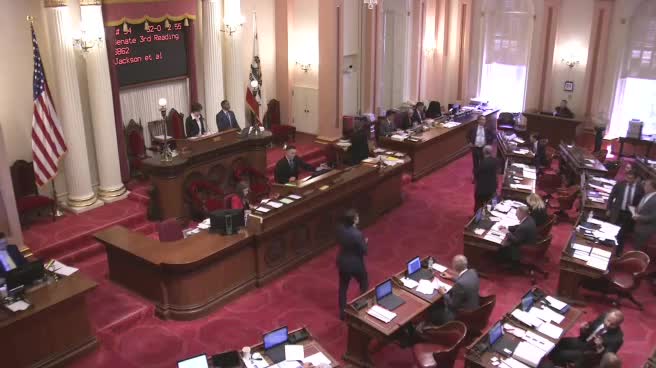 57SEC
Senate Floor
 48MIN
Senate Standing Committee on Appropriations
 2MIN
Senate Standing Committee on Appropriations
Bill Author