SB 357: International trade and investment office: Mexico.
- Session Year: 2017-2018
- House: Senate
- Latest Version Date: 2017-09-15
(1)The Economic Revitalization Act establishes the Governors Office of Business and Economic Development, also known as GO-Biz, to, among other duties, serve the Governor as the lead entity for economic strategy and the marketing of California on issues relating to business development, private sector investment, and economic growth. Existing law authorizes the Director of GO-Biz to establish and terminate international trade and investment offices outside of the United States as he or she determines is appropriate, if specific requirements are met. Existing law establishes the Economic Development and Trade Promotion Account, a continuously appropriated account, to accept private moneys to fund international trade and investment offices.
This bill would, notwithstanding provisions authorizing the Director of GO-Biz to establish and terminate international trade and investment offices outside of the United States if specified conditions are satisfied, and to the extent private moneys are available, require the Director of GO-Biz to enter into an agreement, on or before July 1, 2018, to establish, and thereafter to operate, an international trade and investment office in Mexico City, Mexico, as specified. The bill would require the Director of GO-Biz to include information regarding the Mexico City trade and investment office in existing reporting requirements relating to an International Trade and Investment Program, as specified. The bill would require GO-Biz to accept and administer private moneys through the Economic Development and Trade Promotion Account. By expanding the use of a continuously appropriated account, this bill would make an appropriation.
This bill would require the Mexico City trade and investment office to, among other things, promote the export of California goods and services into Mexico and facilitate access to educational exchange programs between California and Mexico.
(2)Existing law requires the Director of GO-Biz to develop an International Trade and Investment Program for the state and to submit the strategy and business plan for the International Trade and Investment Program to the Chief Clerk of the Assembly, the Secretary of the Senate, the Speaker of the Assembly, the President pro Tempore of the Senate, the chair of the Assembly Committee on Jobs, Economic Development, and the Economy and the chair of the Senate Committee on Business, Professions and Economic Development, or respective successor committees, with jurisdiction over the international trade and economic development programs.
This bill would also require the Director of GO-Biz to submit the strategy and business plan to the Senate Select Committee on California-Mexico Cooperation and the chair of the Assembly Select Committee on California-Mexico Bi-National Affairs.
(1)The Economic Revitalization Act establishes the Governors Office of Business and Economic Development, also known as GO-Biz, to, among other duties, serve the Governor as the lead entity for economic strategy and the marketing of California on issues relating to business development, private sector investment, and economic growth. Existing law authorizes the director Director of GO-Biz to establish and terminate international trade and investment offices outside of the United States as he or she determines is appropriate, if specific requirements are met. Existing law establishes the Economic Development and Trade Promotion Account, a continuously appropriated account, to accept private moneys to fund international trade and investment offices.
This bill would, notwithstanding provisions authorizing the director Director of GO-Biz to establish and terminate international trade and investment offices outside of the United States if specified conditions are satisfied, and to the extent private moneys are available, require the director Director of GO-Biz to enter into an agreement, on or before July 1, 2018, to establish and operate, or to create a public-private partnership to establish and operate, establish, and thereafter to operate, an international trade and investment office in Mexico City, Mexico. This Mexico, as specified. The bill would require the director Director of GO-Biz to include information regarding the Mexico City trade and investment office in existing reporting requirements relating to an International Trade and Investment Program, as specified. This The bill would require GO-Biz to accept and administer private moneys through the Economic Development and Trade Promotion Account. By expanding the use of a continuously appropriated account, this bill would make an appropriation.
This bill would require the Mexico City trade and investment office to, among other things, promote the export of California goods and services into Mexico and facilitate access to educational exchange programs between California and Mexico.
(2)Existing law requires the director Director of GO-Biz to develop an International Trade and Investment Program for the state and to submit the strategy and business plan for the International Trade and Investment Program to the Chief Clerk of the Assembly, the Secretary of the Senate, the Speaker of the Assembly, the President pro Tempore of the Senate, the chair of the Assembly Committee on Jobs, Economic Development, and the Economy and the chair of the Senate Committee on Business, Professions and Economic Development, or respective successor committees, with jurisdiction over the international trade and economic development programs.
This bill would also require the director Director of GO-Biz to submit the strategy and business plan to the Senate Select Committee on California-Mexico Cooperation. Cooperation and the chair of the Assembly Select Committee on California-Mexico Bi-National Affairs.
(1)The Economic Revitalization Act establishes the Governors Office of Business and Economic Development, also known as GO-Biz, to, among other duties, serve the Governor as the lead entity for economic strategy and the marketing of California on issues relating to business development, private sector investment, and economic growth. Existing law authorizes the director of GO-Biz to establish and terminate international trade and investment offices outside of the United States as he or she determines is appropriate, if specific requirements are met. Existing law establishes the Economic Development and Trade Promotion Account, a continuously appropriated account, to accept private moneys to fund international trade and investment offices.
This bill would, notwithstanding provisions authorizing the director of GO-Biz to establish and terminate international trade and investment offices outside of the United States if specified conditions are satisfied, and to the extent private moneys are available, require the director of GO-Biz, on or before July 1, 2018, to establish and operate, or to create a public-private partnership to establish and operate, an international trade and investment office in Mexico City, Mexico. This bill would require the director of GO-Biz to include information regarding the Mexico City trade and investment office in existing reporting requirements relating to an International Trade and Investment Program, as specified. This bill would require GO-Biz to accept and administer private moneys through the Economic Development and Trade Promotion Account. By expanding the use of a continuously appropriated account, this bill would make an appropriation.
This bill would require the Mexico City trade and investment office to, among other things, promote the export of California goods and services into Mexico and facilitate access to educational exchange programs between California and Mexico.
(2)Existing law requires the director of GO-Biz to develop an International Trade and Investment Program for the state and to submit the strategy and business plan for the International Trade and Investment Program to the Chief Clerk of the Assembly, the Secretary of the Senate, the Speaker of the Assembly, the President pro Tempore of the Senate, the chair of the Assembly Committee on Jobs, Economic Development, and the Economy and the chair of the Senate Committee on Business, Professions and Economic Development, or respective successor committees, with jurisdiction over the international trade and economic development programs.
This bill would also require the director of GO-Biz to submit the strategy and business plan to the Senate Select Committee on California-Mexico Cooperation.
The California Constitution provides that the civil service includes every officer and employee in the state, except as otherwise provided in the Constitution, and existing statutory law, the State Civil Service Act, prescribes a comprehensive civil service personnel system for the state. This bill would state the intent of the Legislature to enact legislation amending the Government Code to establish the Employee Right to Privacy.The California Constitution provides that the civil service includes every officer and employee in the state, except as otherwise provided in the Constitution, and existing statutory law, the State Civil Service Act, prescribes a comprehensive civil service personnel system for the state.
This bill would state the intent of the Legislature to enact legislation amending the Government Code to establish the Employee Right to Privacy.
(a)Notwithstanding subdivision (b) of Section 13996.41 and Section 13996.42, the director shall enter into an agreement, on or before July 1, 2018, pursuant to subdivision (f) of Section 13996.41, to establish, and thereafter to operate, an international trade and investment office in Mexico City, Mexico.
(b)The Mexico City trade and investment office shall do all of the following:
(1)Facilitate access to educational exchange programs between California and Mexico.
(2)Promote the export of California goods and services into Mexico.
(3)Encourage and facilitate capital investment from Mexico into California.
(c)The director shall include information regarding the Mexico City trade and investment office in the reports prepared and transmitted pursuant to Section 13996.65.
(d)Costs associated with the physical location and direct operation of the international trade and investment office, established pursuant to this section, shall be supported through private moneys. The office and the director shall perform the duties required by this section only to the extent private moneys are available for the management and operation of the international trade and investment office in Mexico. The office shall accept and administer private moneys pursuant to subdivision (a) of Section 13997.
(e)For purposes of this section, the following definitions shall apply:
(1)Director means the Director of the Governors Office of Business and Economic Development.
(2)Office means the Governors Office of Business and Economic Development.
SEC. 2.Section 13996.65 of the Government Code is amended to read:13996.65.(a)The director shall prepare the following:
(1)A budget for the International Trade and Investment Program that includes a separately stated budget for each international trade and investment office. The budget shall provide all the following:
(A)A description of how the International Trade and Investment Program and each individual international trade and investment office will be funded.
(B)A description of staffing levels and the positions needed to operate each international trade and investment office.
(2)A strategy and business plan for the International Trade and Investment Program, developed with input from California businesses that shall include, but not be limited to, measurable goals, objectives, and outcomes and timelines necessary to attract employment-producing direct foreign investment to the state and increase California exports. The strategy and business plan shall include, but not be limited to, all of the following:
(A)A description of the staffing levels and staff expertise needed to operate each international trade and investment office.
(B)A description of monitoring and oversight procedures implemented for the International Trade and Investment Program.
(C)A description of how a newly proposed international trade and investment office will facilitate an increase of direct foreign investment in California or an increase in California exports, or both.
(3)A written review of the implementation of the prior years strategy and business plan for the International Trade and Investment Program that addresses the performance of the program and each international trade and investment office.
(b)The annual budget, the strategy and business plan for the International Trade and Investment Program, and the prior years review drafted pursuant to subdivision (a) shall be transmitted to the Chief Clerk of the Assembly, the Secretary of the Senate, the Speaker of the Assembly, the President pro Tempore of the Senate, the chair of the Assembly Committee on Jobs, Economic Development, and the Economy, the chair of the Senate Committee on Business, Professions and Economic Development, the chair of the Assembly Select Committee on California-Mexico Bi-National Affairs, and the Senate Select Committee on California-Mexico Cooperation, or the respective successor committees, with jurisdiction over the international trade and economic development programs.
(a)Notwithstanding subdivision (b) of Section 13996.41 and Section 13996.42, the director shall, shall enter into an agreement, on or before July 1, 2018, establish and operate, or create a public-private partnership to establish and pursuant to subdivision (f) of Section 13996.41, to establish, and thereafter to operate, an international trade and investment office in Mexico City, Mexico.
(b)The Mexico City trade and investment office shall do all of the following:
(1)Facilitate access to educational exchange programs between California and Mexico.
(2)Promote the export of California goods and services into Mexico.
(3)Encourage and facilitate capital investment from Mexico into California.
(c)The director shall include information regarding the Mexico City trade and investment office in the reports prepared and transmitted pursuant to Section 13996.65.
(d)Costs associated with the physical location and direct operation of the international trade and investment office, established pursuant to this section, shall be supported through private moneys. The office and the director shall perform the duties required by this section only to the extent private moneys are available for these purposes. the management and operation of the international trade and investment office in Mexico. The office shall accept and administer private moneys pursuant to subdivision (a) of Section 13997.
(e)For purposes of this section, the following definitions shall apply:
(1)Director means the Director of the Governors Office of Business and Economic Development.
(2)Office means the Governors Office of Business and Economic Development.
SEC. 2.Section 13996.65 of the Government Code is amended to read:13996.65.(a)The director shall prepare the following:
(1)A budget for the International Trade and Investment Program that includes a separately stated budget for each international trade and investment office. The budget shall provide all the following:
(A)A description of how the International Trade and Investment Program and each individual international trade and investment office will be funded.
(B)A description of staffing levels and the positions needed to operate each international trade and investment office.
(2)A strategy and business plan for the International Trade and Investment Program, developed with input from California businesses that shall include, but not be limited to, measurable goals, objectives, and outcomes and timelines necessary to attract employment-producing direct foreign investment to the state and increase California exports. The strategy and business plan shall include, but not be limited to, all of the following:
(A)A description of the staffing levels and staff expertise needed to operate each international trade and investment office.
(B)A description of monitoring and oversight procedures implemented for the International Trade and Investment Program.
(C)A description of how a newly proposed international trade and investment office will facilitate an increase of direct foreign investment in California or an increase in California exports, or both.
(3)A written review of the implementation of the prior years strategy and business plan for the International Trade and Investment Program that addresses the performance of the program and each international trade and investment office.
(b)The annual budget, the strategy and business plan for the International Trade and Investment Program, and the prior years review drafted pursuant to subdivision (a) shall be transmitted to the Chief Clerk of the Assembly, the Secretary of the Senate, the Speaker of the Assembly, the President pro Tempore of the Senate, the chair of the Assembly Committee on Jobs, Economic Development, and the Economy, the chair of the Senate Committee on Business, Professions and Economic Development, the chair of the Assembly Select Committee on California-Mexico Bi-National Affairs, and the Senate Select Committee on California-Mexico Cooperation, or the respective successor committees, with jurisdiction over the international trade and economic development programs.
REVISIONS: HeadingLine 1.(a)Notwithstanding subdivision (b) of Section 13996.41 and Section 13996.42, the director shall, on or before July 1, 2018, establish and operate, or create a public-private partnership to establish and operate, an international trade and investment office in Mexico City, Mexico.
(b)The Mexico City trade and investment office shall do all of the following:
(1)Facilitate access to educational exchange programs between California and Mexico.
(2)Promote the export of California goods and services into Mexico.
(3)Encourage and facilitate capital investment from Mexico into California.
(c)The director shall include information regarding the Mexico City trade and investment office in the reports prepared and transmitted pursuant to Section 13996.65.
(d)The office and the director shall perform the duties required by this section only to the extent private moneys are available for these purposes. The office shall accept and administer private moneys pursuant to subdivision (a) of Section 13997.
(e)For purposes of this section, the following definitions shall apply:
(1)Director means the Director of the Governors Office of Business and Economic Development.
(2)Office means the Governors Office of Business and Economic Development.
SEC. 2.Section 13996.65 of the Government Code is amended to read:13996.65.(a)The director shall prepare the following:
(1)A budget for the International Trade and Investment Program that includes a separately stated budget for each international trade and investment office. The budget shall provide all the following:
(A)A description of how the International Trade and Investment Program and each individual international trade and investment office will be funded.
(B)A description of staffing levels and the positions needed to operate each international trade and investment office.
(2)A strategy and business plan for the International Trade and Investment Program, developed with input from California businesses that shall include, but not be limited to, measurable goals, objectives, and outcomes and timelines necessary to attract employment-producing direct foreign investment to the state and increase California exports. The strategy and business plan shall include, but not be limited to, all of the following:
(A)A description of the staffing levels and staff expertise needed to operate each international trade and investment office.
(B)A description of monitoring and oversight procedures implemented for the International Trade and Investment Program.
(C)A description of how a newly proposed international trade and investment office will facilitate an increase of direct foreign investment in California or an increase in California exports, or both.
(3)A written review of the implementation of the prior years strategy and business plan for the International Trade and Investment Program that addresses the performance of the program and each international trade and investment office.
(b)The annual budget, the strategy and business plan for the International Trade and Investment Program, and the prior years review drafted pursuant to subdivision (a) shall be transmitted to the Chief Clerk of the Assembly, the Secretary of the Senate, the Speaker of the Assembly, the President pro Tempore of the Senate, the chair of the Assembly Committee on Jobs, Economic Development, and the Economy and Economy, the chair of the Senate Committee on Business, Professions and Economic Development, or and the Senate Select Committee on California-Mexico Cooperation, or the respective successor committees, with jurisdiction over the international trade and economic development programs.
SECTION 1.It is the intent of the Legislature to enact legislation amending the Government Code to establish the Employee Right to Privacy. REVISIONS: HeadingLine 2.It is the intent of the Legislature to enact legislation amending the Government Code to establish the Employee Right to Privacy.
|
Date
|
Status
|
|---|---|
| Mar 3, 2018 | Last day to consider Governor’s veto pursuant to Joint Rule 58.5. |
| Oct 15, 2017 | In Senate. Consideration of Governor's veto pending. |
| Oct 15, 2017 | Vetoed by the Governor. |
| Sep 19, 2017 | Enrolled and presented to the Governor at 4 p.m. |
| Sep 13, 2017 | Assembly amendments concurred in. (Ayes 40. Noes 0.) Ordered to engrossing and enrolling. |
| Sep 13, 2017 | In Senate. Concurrence in Assembly amendments pending. |
| Sep 12, 2017 | Read third time. Passed. Ordered to the Senate. |
| Sep 5, 2017 | Read second time. Ordered to third reading. |
| Sep 1, 2017 | Coauthors revised. |
| Aug 23, 2017 | August 23 set for first hearing. Placed on suspense file. |
| Jul 18, 2017 | Read second time and amended. Re-referred to Com. on APPR. |
| Jul 17, 2017 | From committee: Do pass as amended and re-refer to Com. on APPR. (Ayes 6. Noes 0.) (July 11). |
| Jul 3, 2017 | Coauthors revised. |
| Jun 12, 2017 | Referred to Com. on J., E.D., & E. |
| Jun 1, 2017 | In Assembly. Read first time. Held at Desk. |
| May 31, 2017 | Read third time. Passed. (Ayes 40. Noes 0. Page 1355.) Ordered to the Assembly. |
| May 26, 2017 | Ordered to special consent calendar. |
| May 26, 2017 | Read second time. Ordered to third reading. |
| May 25, 2017 | From committee: Do pass. (Ayes 7. Noes 0. Page 1183.) (May 25). |
| May 19, 2017 | Set for hearing May 25. |
| Apr 24, 2017 | April 24 hearing: Placed on APPR. suspense file. |
| Apr 19, 2017 | Set for hearing April 24. |
| Apr 18, 2017 | From committee: Do pass and re-refer to Com. on APPR. (Ayes 9. Noes 0. Page 726.) (April 17). Re-referred to Com. on APPR. |
| Apr 7, 2017 | Set for hearing April 17. |
| Apr 5, 2017 | Re-referred to Com. on B., P. & E.D. |
| Mar 28, 2017 | From committee with author's amendments. Read second time and amended. Re-referred to Com. on RLS. |
| Feb 23, 2017 | Referred to Com. on RLS. |
| Feb 15, 2017 | From printer. May be acted upon on or after March 17. |
| Feb 14, 2017 | Introduced. Read first time. To Com. on RLS. for assignment. To print. |
|
Date
|
Description
|
Location
|
Votes
|
|
|---|---|---|---|---|
| Sep 13, 2017 | Unfinished Business SB357 Hueso et al. Concurrence | Senate Floor |
Passed |
|
| Sep 12, 2017 | SB 357 Hueso Senate Third Reading By GARCIA, E. | Assembly Floor |
Passed |
|
| Sep 1, 2017 | Do pass. | Assembly Standing Committee on Appropriations |
Passed |
|
| Jul 11, 2017 | Do pass as amended and be re-referred to the Committee on [Appropriations] | Assembly Standing Committee on Jobs, Economic Development, and the Economy |
Passed |
|
| May 31, 2017 | Special Consent Calendar # SB357 | Senate Floor |
Passed |
|
| May 25, 2017 | Do pass | Senate Standing Committee on Appropriations |
Passed |
|
| Apr 24, 2017 | Placed on suspense file | Senate Standing Committee on Appropriations |
Passed |
|
| Apr 17, 2017 | Do pass, but first be re-referred to the Committee on [Appropriations] | Senate Standing Committee on Business, Professions and Economic Development |
Passed |
This list shows positions taken on this bill by organizations on the date displayed, which is linked to the original source.
Positions by individuals are not included.
|
Organization
|
Position
|
Date
|
|---|---|---|
| City and County of San Francisco | ** Support | Jul 9, 2017 |
| City Of San Diego | * Support | Jul 11, 2017 |
| city of tijuana | ** Support | Jul 9, 2017 |
| Greater Coachella Valley Chamber of Commerce | ** Support | Jul 9, 2017 |
| La Cooperativa | ** Support | Jul 9, 2017 |
| la Cooperativa Campesina de California | ** Support | Jan 2, 2018 |
| national association of importers and exporters of mexico | ** Support | Jul 9, 2017 |
| Or Other Initiatives Undertaken Pursuant To The Agreement. | ** Support | Apr 13, 2017 |
| Otay Mesa Chamber of Commerce | ** Support | Jan 2, 2018 |
| San Diego Regional Chamber Of Commerce | ** Support | Jan 2, 2018 |
| San Ysidro Chamber of Commerce | ** Support | Jan 2, 2018 |
| secretaria de desarollo economico de tijuana | ** Support | Jan 2, 2018 |
| Smart Border Coalition | ** Support | Jan 2, 2018 |
| South County Economic Development Council | ** Support | Jan 2, 2018 |
| us-mexico chamber of commerce | ** Support | Jul 9, 2017 |
| US-Mexico Chamber of Commerce, California Regional Chapter | ** Support | Jan 2, 2018 |
Office of Senate Floor Analyses (916) 651-1520 Fax: (916) 327-4478 | SB |
VETO
Bill No: SB 357
:
SENATE BUS., PROF. & ECON. DEV. COMMITTEE: 9-0, 4/17/17
AYES: Hill, Bates, Dodd, Galgiani, Glazer, Hernandez, Newman, Pan, Wilk
SENATE APPROPRIATIONS COMMITTEE: 7-0, 5/25/17
AYES: Lara, Bates, Beall, Bradford, Hill, Nielsen, Wiener
SENATE FLOOR: 40-0, 5/31/17 (Consent)
AYES: Allen, Anderson, Atkins, Bates, Beall, Berryhill, Bradford, Cannella, De León, Dodd, Fuller, Gaines, Galgiani, Glazer, Hernandez, Hertzberg, Hill, Hueso, Jackson, Lara, Leyva, McGuire, Mendoza, Mitchell, Monning, Moorlach, Morrell, Newman, Nguyen, Nielsen, Pan, Portantino, Roth, Skinner, Stern, Stone, Vidak, Wieckowski, Wiener, Wilk
SENATE FLOOR: 40-0, 9/13/17
AYES: Allen, Anderson, Atkins, Bates, Beall, Berryhill, Bradford, Cannella, De León, Dodd, Fuller, Gaines, Galgiani, Glazer, Hernandez, Hertzberg, Hill, Hueso, Jackson, Lara, Leyva, McGuire, Mendoza, Mitchell, Monning, Moorlach, Morrell, Newman, Nguyen, Nielsen, Pan, Portantino, Roth, Skinner, Stern, Stone, Vidak, Wieckowski, Wiener, Wilk
ASSEMBLY FLOOR: 78-0, 9/12/17 - See last page for vote
SOURCE: San Diego Regional Chamber of Commerce
DIGEST:
This bill requires the Governor’s Office of Business and Economic Development (GO-Biz) to establish and operate, or create a public-private partnership to establish and operate, an international trade and investment office in Mexico City, Mexico, by July 1, 2018.
Existing law:
- Establishes GO-Biz within the Governor's office for the purpose of serving as the lead state entity for economic strategy and marketing of California on issues relating to business development, private sector investment and economic growth. (Government Code (GC) §§ 12096 – 12098.5)
- Specifies that GO-Biz is the primary state agency authorized to attract foreign investments, cooperate in international public infrastructure projects, and support California businesses in accessing markets, and requires the Director of GO-Biz to develop an international trade and investment program (Program) attracting employment-producing direct foreign investment to the state and provides support for California businesses in accessing international markets and increasing exports. (GC § 13996.41)
- Authorizes GO-Biz to establish international trade and investment (ITI) offices outside of the U.S. according to certain requirements. (GC § 13996.42)
- Requires GO-Biz to prepare an ITI strategy and provide a report to the Legislature on or before February 1, 2014, updated once every five years.
(GC § 13996.55) - Requires the Director of GO-Biz to prepare and transmit the following to the Chief Clerk of the Assembly, Secretary of the Senate, Speaker of the Assembly, President pro Tempore of the Senate, the Chair of the Assembly Committee on Jobs, Economic Development and the Economy and the Chair of the Senate Committee on Business, Professions and Economic Development:
(GC § 13996.65) - A budget for the Program and a separately stated budget for each ITI office, with specified information.
- A strategy and business plan for the Program, with specified information, that is developed with input from California businesses that shall include, but not be limited to, measurable goals, objectives, and outcomes and timelines necessary to attract employment-producing direct foreign investment to the state and increase California exports.
- A written review of the implementation of the prior year’s strategy and business plan for the Program that addresses the performance of the program and each ITI Office.
- Establishes processes and accountability measures for GO-Biz to accept private monies to fund, establish and operate ITI offices. (GC § 13997)
This bill:
- Requires the Director of GO-Biz to enter into an agreement to establish and operate, an ITI office in Mexico City, Mexico (Mexico office), by July 1, 2018.
- Requires the Mexico office to do all of the following:
- Facilitate access to educational exchange programs between California and Mexico.
- Promote the export of California goods and services into Mexico.
- Encourage and facilitate capital investment from Mexico into California.
- Requires GO-Biz to include information regarding the Mexico office in its reports.
- Specifies that costs associated with the physical location and direct operation of the Mexico office shall be supported through private monies and that the Director shall only perform duties related to the Mexico office to the extent private funds are available for the management and operation of the Mexico office.
- Adds the Chair of the Assembly Select Committee on California-Mexico Bi-National Affairs and Senate Select Committee for California-Mexico Cooperation to the list of legislative entities to which GO-Biz must transmit the annual budget and strategy and business plan for the ITI Program.
Background
Trade with Mexico. According to information provided by United States International Trade Commission, in 2015, Mexico was the United States' third-largest single-country merchandise trading partner. According to the U.S. Census Bureau's Foreign Trade Data, Mexico remained California's number one destination for goods in 2016, accounting for 15.4 percent of the state's exports, led by computers and electronic products. Other top categories included transportation equipment, machinery, except electrical, and chemicals. Mexico is California's largest source of imports, second only to China.
GO-Biz and Current International Trade Activities. GO-Biz has authority for undertaking international trade and foreign investment activities, including establishing any ITI office. In July 2014, Governor Brown entered into a Memorandum of Understanding for Strengthening Trade and Investment Cooperation (MOU) with Mexico's Ministry of Economy to expand trade between businesses in Mexico and California. The agreement is designed to boost economic, cultural and academic cooperation between California and Mexico, with an emphasis on advanced manufacturing, alternative energy, health and biotechnology, education, agricultural technology and tourism. The agreement also enables Mexican companies to access California's iHubs. The MOU outlined objectives to, among other efforts, promote the organization of trade and investment missions and facilitate the identification of economic opportunities. The MOU also established a working group to oversee the agreement’s objectives and specifically authorized other governmental agencies, chambers of commerce or business associations to participate in the working group and/or other initiatives undertaken pursuant to the agreement.
The International Trade and Investment Strategy prepared by GO-Biz in 2014 notes that as part of meeting its strategic objective to “develop a comprehensive, coordinated and cohesive strategy development framework with a clear vision to expand trade and investment which includes other relevant state agencies”, GO-Biz engaged in ongoing efforts to “identify foreign markets with the greatest potential for export expansion including our top trading partners such as Canada, Mexico and China…[and] utilize the public-private sector trade and investment working group to identify and target new foreign sources of investment with likely potential to invest in California.”
This bill requires GO-Biz to establish an ITI office in Mexico. Under current law, GO-Biz is authorized to establish any ITI office; nothing precludes GO-Biz from establishing an ITI office in Mexico.
ITI Offices. As part of its mission, the former Technology, Trade and Commerce Agency (TTCA) worked to promote international trade and foreign investment through trade missions, trade shows, loan guarantees, and technical assistance. Additionally, TTCA was charged with overseeing the state’s ITI offices, which by 2003 included five contract offices and seven state-staffed offices throughout the world. In 2003, the Orange County Register issued a series of reports claiming that foreign trade offices may have purposefully misled lawmakers and the public about their effectiveness, citing $44.2 million in false or overblown success claims. In 2003, the Legislative Analyst’s Office recommended that the Legislature eliminate all ITI offices, noting that the offices had failed to demonstrate a clear impact on exports or foreign investment in California. The Legislature, in the approved 2003-04 Budget, eliminated TTCA along with the foreign trade offices (except for a privately-funded trade office in Armenia, which was transferred to then Business, Transportation and Housing Agency), effective January 1, 2004.
Following the elimination of TTCA, a number of bills were introduced to extend the operation of, or create new, ITI offices, including the Armenia office (SB 515, Scott, 2007, sought to extend the operation of the office but was vetoed); an office in Johannesburg, South Africa (SB 1525, Murray, 2006, was held in the Assembly Committee on Jobs, Economic Development and the Economy); and offices in Asia, the Middle East, Europe and Mexico (AB 2233, Chan, 2006, was held in the Assembly Committee on Jobs, Economic Development and the Economy).
In recent years, legislative efforts have continued to focus on trade promotion with specific entities, including African and Caribbean countries (AB 923 Ridley-Thomas of 2017 was held in the Senate Committee on Appropriations ); Israel (AB 1166, Blumenfield of 2013 was never heard in a policy committee); South Korea (AB 2713 Quirk-Silva of 2014 was held in the Senate Appropriations Committee); Japan (AB 1088 Muratsuchi of 2013 was never heard in a policy committee); and Mexico (SB 928, Correa of 2014 was almost identical to this bill but was vetoed by Governor Brown who wrote in his veto message that “We are working directly with the Mexican government and the business community on increasing bilateral trade and other initiatives. I am not convinced we need a legislatively-mandated trade office to continue our growing partnership with Mexico.”).
Comments
According to the author, “While existing law authorizes GO-Biz to establish an international trade and investment office, GO-Biz has not yet established an office in Mexico. Establishing an international trade and investment office in Mexico City is imperative, especially given the negative rhetoric of the current presidential administration regarding our relationship with Mexico. Throughout the campaign and while currently in office, the presidential administration has made it clear that they will be renegotiating trade agreements with Mexico regardless of the negative impact this may have on our partnership. On February 23, 2017, US News quoted President Trump as saying ‘The deals we have with other countries are unbelievably bad. We don’t have any good deals. We’re going to have a good relationship with Mexico, I hope. And if we don’t, we don’t.’”
The author asserts that “this type of disregard has also been coupled with a continued assertion that Mexico will pay for a wall to be constructed on our southern border. White House Press Secretary Sean Spicer suggested that in order to make Mexico pay for this wall, the U.S. could levy a 20% tax in imports at the border. Although he later said that many proposals were on the table, this type of uncertainty has the potential to have a huge negative impact on California’s trading partnership with Mexico.” The author also notes that “In response to all of this, CNN reported that Mexican Senator Armando Rios planned to introduce a bill in the Mexico Legislature that would drastically cut down Mexico’s purchases of U.S. corn and instead shift those purchases to Brazil and Argentina. They quoted him as saying that this was a ‘good way to tell them (the US) that this hostile relationship has consequences.’ This rhetoric could have a huge impact on California, being that Mexico is one of our biggest trading partners.” According to the Author, “establishing a trade and investment office in Mexico is necessary to protect and enhance our trading and investment partnership with Mexico. It is important to note that Arizona and the City of Phoenix have recently established trade offices in Mexico. It is time that California followed suit.”
FISCAL EFFECT: Appropriation: Fiscal Com.: Local:
According to the Assembly Appropriations Committee, this bill will result in estimates of $720,000 annually to staff the Mexico office, rent office space, provide office supplies and a travel budget.
San Diego Regional Chamber of Commerce (source)
Asociación Nacionel De Importadores Y Exportadores De La República Mexicana A.C.
La Cooperativa Campesina de California
Mexican Business Council for Foreign Trade, Investment and Technology
Otay Mesa Chamber of Commerce
San Ysidro Chamber of Commerce
Secretaria de Desarollo Economico de Tijuana
Smart Border Coalition
South County Economic Development Council
US-Mexico Chamber of Commerce, California Regional Chapter
OPPOSITION: (Verified 10/23/17)
None received
ARGUMENTS IN SUPPORT: Supporters write that write that this bill “would strengthen our economic, political and social bonds with Mexico. Given the uncertain message from the current federal administration regarding our trading partnership with Mexico, it is vital that California open and maintain an ongoing presence in Mexico City. In doing so, we can expand our economic opportunities and reassure Mexico’s civic and business leaders that we value robust trade and open dialogue with them. By opening a trade and investment office in the commercial and political capital of Mexico, SB 357 would strengthen the California and Mexico economies and contribute to the prosperity of both the American and Mexican people.”
GOVERNOR'S VETO MESSAGE:
I am returning Senate Bill 357 without my signature.
This bill directs the Governor's Office of Business and Economic Development to establish and operate a trade and investment office in Mexico City.
California and Mexico have a proven partnership of trade, commerce, and the exchange of culture that runs long and deep. Our relationship with Mexico is fundamental to our mutual prosperity. Through memorandums of understanding, we are directly working with the Mexican government and business community on climate change, trade, transportation, tourism, and education.
As I stated in 2014 when I vetoed a nearly identical bill, I remain unconvinced that California needs a legislatively-mandated trade office to continue our ongoing and enduring partnership with Mexico.
ASSEMBLY FLOOR: 78-0, 9/12/17
AYES: Acosta, Aguiar-Curry, Travis Allen, Arambula, Baker, Bigelow, Bloom, Bocanegra, Bonta, Brough, Burke, Caballero, Calderon, Cervantes, Chau, Chávez, Chen, Chiu, Choi, Chu, Cooley, Cooper, Cunningham, Dababneh, Dahle, Daly, Eggman, Flora, Fong, Frazier, Friedman, Gallagher, Cristina Garcia, Eduardo Garcia, Gipson, Gloria, Gonzalez Fletcher, Gray, Grayson, Harper, Holden, Irwin, Jones-Sawyer, Kalra, Kiley, Lackey, Levine, Limón, Low, Maienschein, Mathis, Mayes, McCarty, Medina, Melendez, Mullin, Muratsuchi, Nazarian, Obernolte, O'Donnell, Patterson, Quirk, Quirk-Silva, Reyes, Ridley-Thomas, Rodriguez, Rubio, Salas, Santiago, Steinorth, Mark Stone, Thurmond, Ting, Voepel, Waldron, Weber, Wood, Rendon
NO VOTE RECORDED: Berman
1/2/18 10:09:52
**** END ****
Office of Senate Floor Analyses (916) 651-1520 Fax: (916) 327-4478 | SB |
UNFINISHED BUSINESS
Bill No: SB 357
:
SENATE BUS., PROF. & ECON. DEV. COMMITTEE: 9-0, 4/17/17
AYES: Hill, Bates, Dodd, Galgiani, Glazer, Hernandez, Newman, Pan, Wilk
SENATE APPROPRIATIONS COMMITTEE: 7-0, 5/25/17
AYES: Lara, Bates, Beall, Bradford, Hill, Nielsen, Wiener
SENATE FLOOR: 40-0, 5/31/17 (Consent)
AYES: Allen, Anderson, Atkins, Bates, Beall, Berryhill, Bradford, Cannella, De León, Dodd, Fuller, Gaines, Galgiani, Glazer, Hernandez, Hertzberg, Hill, Hueso, Jackson, Lara, Leyva, McGuire, Mendoza, Mitchell, Monning, Moorlach, Morrell, Newman, Nguyen, Nielsen, Pan, Portantino, Roth, Skinner, Stern, Stone, Vidak, Wieckowski, Wiener, Wilk
ASSEMBLY FLOOR: 78-0, 9/12/17 - See last page for vote
SOURCE: San Diego Regional Chamber of Commerce
DIGEST:
This bill requires the Governor’s Office of Business and Economic Development (GO-Biz) to establish and operate, or create a public-private partnership to establish and operate, an international trade and investment office in Mexico City, Mexico, by July 1, 2018.
Assembly Amendments
make various technical and clarifying changes to further the intent of the bill.
Existing law:
- Establishes GO-Biz within the Governor's office for the purpose of serving as the lead state entity for economic strategy and marketing of California on issues relating to business development, private sector investment and economic growth. (Government Code (GC) §§ 12096 – 12098.5)
- Specifies that GO-Biz is the primary state agency authorized to attract foreign investments, cooperate in international public infrastructure projects, and support California businesses in accessing markets, and requires the Director of GO-Biz to develop an international trade and investment program (Program) attracting employment-producing direct foreign investment to the state and provides support for California businesses in accessing international markets and increasing exports. (GC § 13996.41)
- Authorizes GO-Biz to establish international trade and investment (ITI) offices outside of the U.S. according to certain requirements. (GC § 13996.42)
- Requires GO-Biz to prepare an ITI strategy and provide a report to the Legislature on or before February 1, 2014, updated once every five years.
(GC § 13996.55) - Requires the Director of GO-Biz to prepare and transmit the following to the Chief Clerk of the Assembly, Secretary of the Senate, Speaker of the Assembly, President pro Tempore of the Senate, the Chair of the Assembly Committee on Jobs, Economic Development and the Economy and the Chair of the Senate Committee on Business, Professions and Economic Development:
(GC § 13996.65) - A budget for the Program and a separately stated budget for each ITI office, with specified information.
- A strategy and business plan for the Program, with specified information, that is developed with input from California businesses that shall include, but not be limited to, measurable goals, objectives, and outcomes and timelines necessary to attract employment-producing direct foreign investment to the state and increase California exports.
- A written review of the implementation of the prior year’s strategy and business plan for the Program that addresses the performance of the program and each ITI Office.
- Establishes processes and accountability measures for GO-Biz to accept private monies to fund, establish and operate ITI offices. (GC § 13997)
This bill:
- Requires the Director of GO-Biz to enter into an agreement to establish and operate, an ITI office in Mexico City, Mexico (Mexico office), by July 1, 2018.
- Requires the Mexico office to do all of the following:
- Facilitate access to educational exchange programs between California and Mexico.
- Promote the export of California goods and services into Mexico.
- Encourage and facilitate capital investment from Mexico into California.
- Requires GO-Biz to include information regarding the Mexico office in its reports.
- Specifies that costs associated with the physical location and direct operation of the Mexico office shall be supported through private monies and that the Director shall only perform duties related to the Mexico office to the extent private funds are available for the management and operation of the Mexico office.
- Adds the Chair of the Assembly Select Committee on California-Mexico Bi-National Affairs and Senate Select Committee for California-Mexico Cooperation to the list of legislative entities to which GO-Biz must transmit the annual budget and strategy and business plan for the ITI Program.
Background
Trade with Mexico. According to information provided by United States International Trade Commission, in 2015, Mexico was the United States' third-largest single-country merchandise trading partner. According to the U.S. Census Bureau's Foreign Trade Data, Mexico remained California's number one destination for goods in 2016, accounting for 15.4 percent of the state's exports, led by computers and electronic products. Other top categories included transportation equipment, machinery, except electrical, and chemicals. Mexico is California's largest source of imports, second only to China.
GO-Biz and Current International Trade Activities. GO-Biz has authority for undertaking international trade and foreign investment activities, including establishing any ITI office. In July 2014, Governor Brown entered into a Memorandum of Understanding for Strengthening Trade and Investment Cooperation (MOU) with Mexico's Ministry of Economy to expand trade between businesses in Mexico and California. The agreement is designed to boost economic, cultural and academic cooperation between California and Mexico, with an emphasis on advanced manufacturing, alternative energy, health and biotechnology, education, agricultural technology and tourism. The agreement also enables Mexican companies to access California's iHubs. The MOU outlined objectives to, among other efforts, promote the organization of trade and investment missions and facilitate the identification of economic opportunities. The MOU also established a working group to oversee the agreement’s objectives and specifically authorized other governmental agencies, chambers of commerce or business associations to participate in the working group and/or other initiatives undertaken pursuant to the agreement.
The International Trade and Investment Strategy prepared by GO-Biz in 2014 notes that as part of meeting its strategic objective to “develop a comprehensive, coordinated and cohesive strategy development framework with a clear vision to expand trade and investment which includes other relevant state agencies”, GO-Biz engaged in ongoing efforts to “identify foreign markets with the greatest potential for export expansion including our top trading partners such as Canada, Mexico and China…[and] utilize the public-private sector trade and investment working group to identify and target new foreign sources of investment with likely potential to invest in California.”
This bill requires GO-Biz to establish an ITI office in Mexico. Under current law, GO-Biz is authorized to establish any ITI office; nothing precludes GO-Biz from establishing an ITI office in Mexico.
ITI Offices. As part of its mission, the former Technology, Trade and Commerce Agency (TTCA) worked to promote international trade and foreign investment through trade missions, trade shows, loan guarantees, and technical assistance. Additionally, TTCA was charged with overseeing the state’s ITI offices, which by 2003 included five contract offices and seven state-staffed offices throughout the world. In 2003, the Orange County Register issued a series of reports claiming that foreign trade offices may have purposefully misled lawmakers and the public about their effectiveness, citing $44.2 million in false or overblown success claims. In 2003, the Legislative Analyst’s Office recommended that the Legislature eliminate all ITI offices, noting that the offices had failed to demonstrate a clear impact on exports or foreign investment in California. The Legislature, in the approved 2003-04 Budget, eliminated TTCA along with the foreign trade offices (except for a privately-funded trade office in Armenia, which was transferred to then Business, Transportation and Housing Agency), effective January 1, 2004.
Following the elimination of TTCA, a number of bills were introduced to extend the operation of, or create new, ITI offices, including the Armenia office (SB 515, Scott, 2007, sought to extend the operation of the office but was vetoed); an office in Johannesburg, South Africa (SB 1525, Murray, 2006, was held in the Assembly Committee on Jobs, Economic Development and the Economy); and offices in Asia, the Middle East, Europe and Mexico (AB 2233, Chan, 2006, was held in the Assembly Committee on Jobs, Economic Development and the Economy).
In recent years, legislative efforts have continued to focus on trade promotion with specific entities, including African and Caribbean countries (AB 923 Ridley-Thomas of 2017 was held in the Senate Committee on Appropriations ); Israel (AB 1166, Blumenfield of 2013 was never heard in a policy committee); South Korea (AB 2713 Quirk-Silva of 2014 was held in the Senate Appropriations Committee); Japan (AB 1088 Muratsuchi of 2013 was never heard in a policy committee); and Mexico (SB 928, Correa of 2014 was almost identical to this bill but was vetoed by Governor Brown who wrote in his veto message that “We are working directly with the Mexican government and the business community on increasing bilateral trade and other initiatives. I am not convinced we need a legislatively-mandated trade office to continue our growing partnership with Mexico.”).
Comments
According to the author, “While existing law authorizes GO-Biz to establish an international trade and investment office, GO-Biz has not yet established an office in Mexico. Establishing an international trade and investment office in Mexico City is imperative, especially given the negative rhetoric of the current presidential administration regarding our relationship with Mexico. Throughout the campaign and while currently in office, the presidential administration has made it clear that they will be renegotiating trade agreements with Mexico regardless of the negative impact this may have on our partnership. On February 23, 2017, US News quoted President Trump as saying ‘The deals we have with other countries are unbelievably bad. We don’t have any good deals. We’re going to have a good relationship with Mexico, I hope. And if we don’t, we don’t.’”
The author asserts that “this type of disregard has also been coupled with a continued assertion that Mexico will pay for a wall to be constructed on our southern border. White House Press Secretary Sean Spicer suggested that in order to make Mexico pay for this wall, the U.S. could levy a 20% tax in imports at the border. Although he later said that many proposals were on the table, this type of uncertainty has the potential to have a huge negative impact on California’s trading partnership with Mexico.” The author also notes that “In response to all of this, CNN reported that Mexican Senator Armando Rios planned to introduce a bill in the Mexico Legislature that would drastically cut down Mexico’s purchases of U.S. corn and instead shift those purchases to Brazil and Argentina. They quoted him as saying that this was a ‘good way to tell them (the US) that this hostile relationship has consequences.’ This rhetoric could have a huge impact on California, being that Mexico is one of our biggest trading partners.” According to the Author, “establishing a trade and investment office in Mexico is necessary to protect and enhance our trading and investment partnership with Mexico. It is important to note that Arizona and the City of Phoenix have recently established trade offices in Mexico. It is time that California followed suit.”
FISCAL EFFECT: Appropriation: Fiscal Com.: Local:
According to the Assembly Appropriations Committee, this bill will result in estimates of $720,000 annually to staff the Mexico office, rent office space, provide office supplies and a travel budget.
San Diego Regional Chamber of Commerce (source)
Asociación Nacionel De Importadores Y Exportadores De La República Mexicana A.C.
La Cooperativa Campesina de California
Mexican Business Council for Foreign Trade, Investment and Technology
Otay Mesa Chamber of Commerce
San Ysidro Chamber of Commerce
Secretaria de Desarollo Economico de Tijuana
Smart Border Coalition
South County Economic Development Council
US-Mexico Chamber of Commerce, California Regional Chapter
OPPOSITION: (Verified 9/12/17)
None received
ARGUMENTS IN SUPPORT: Supporters write that write that this bill “would strengthen our economic, political and social bonds with Mexico. Given the uncertain message from the current federal administration regarding our trading partnership with Mexico, it is vital that California open and maintain an ongoing presence in Mexico City. In doing so, we can expand our economic opportunities and reassure Mexico’s civic and business leaders that we value robust trade and open dialogue with them. By opening a trade and investment office in the commercial and political capital of Mexico, SB 357 would strengthen the California and Mexico economies and contribute to the prosperity of both the American and Mexican people.”
ASSEMBLY FLOOR: 78-0, 9/12/17
AYES: Acosta, Aguiar-Curry, Travis Allen, Arambula, Baker, Bigelow, Bloom, Bocanegra, Bonta, Brough, Burke, Caballero, Calderon, Cervantes, Chau, Chávez, Chen, Chiu, Choi, Chu, Cooley, Cooper, Cunningham, Dababneh, Dahle, Daly, Eggman, Flora, Fong, Frazier, Friedman, Gallagher, Cristina Garcia, Eduardo Garcia, Gipson, Gloria, Gonzalez Fletcher, Gray, Grayson, Harper, Holden, Irwin, Jones-Sawyer, Kalra, Kiley, Lackey, Levine, Limón, Low, Maienschein, Mathis, Mayes, McCarty, Medina, Melendez, Mullin, Muratsuchi, Nazarian, Obernolte, O'Donnell, Patterson, Quirk, Quirk-Silva, Reyes, Ridley-Thomas, Rodriguez, Rubio, Salas, Santiago, Steinorth, Mark Stone, Thurmond, Ting, Voepel, Waldron, Weber, Wood, Rendon
NO VOTE RECORDED: Berman
9/13/17 10:19:27
**** END ****
SENATE THIRD READING
STR Bill Id:SB 357
Author:(Hueso)
As Amended Ver:July 18, 2017
Majority vote
SENATE VOTE: 40-0
Committee | Votes | Ayes | Noes |
Jobs | 6-0 | Quirk-Silva, Berman, Cervantes, Grayson, Rodriguez, Steinorth | |
Appropriations | 16-0 | Gonzalez Fletcher, Bigelow, Bloom, Bocanegra, Bonta, Brough, Calderon, Chau, Eggman, Fong, Friedman, Gallagher, Eduardo Garcia, Jones-Sawyer, Obernolte, Reyes |
|
SUMMARY: Requires the establishment of a California foreign trade and investment office in Mexico City, Mexico. Specifically, this bill:
- Requires California Governor's Office of Business and Economic Development (GO-Biz), on or before July 1, 2018, to enter into an agreement to establish an international trade and investment office in Mexico City, Mexico.
- Requires the Mexico City trade and investment office to do all of the following:
- Facilitate access to educational exchange programs between California and Mexico.
- Promote the export of California goods and services into Mexico.
- Encourage and facilitate capital investment from Mexico into California.
- Requires the Director of GO-Biz to include information on the activities of the Mexico trade office, when reporting on other foreign trade office-related activities, as specified.
- Limits the implementation of this measure to that which can be paid for by private moneys received by GO-Biz for this purpose, as specified.
- Expands the list of legislative committees that receive information on GO-Biz' foreign trade activities to include the Senate Select Committee on California-Mexico Cooperation and the Assembly Select Committee on California-Mexico Bi-National Affairs.
EXISTING LAW:
- Establishes GO-Biz within the Governor's Office for the purpose of serving as the state's principal entity for issues relating to international trade and foreign investment, excluding agricultural issues. GO-Biz is led by a director, which is appointed by the Governor.
- Authorizes the Director of GO-Biz to establish and terminate trade offices outside the U.S., as he or she determines as appropriate and specific requirements are met. A trade office may be funded in whole or in part by nonstate funds.
FISCAL EFFECT: Assembly Appropriations estimates $720,000 annually to staff the trade office, rent office space, provide office supplies and a travel budget. While the bill stipulates that GO-Biz need only perform the duties related to the trade office to the extent that private funds are available, the bill will result in General Fund cost pressures in the absence of or a shortfall of private funds. The Governor's 2017-18 budget did not include funding to expand international trade and foreign investment facilities.
COMMENTS: This bill mandates the establishment of a foreign trade office in Mexico City, Mexico. Mexico is California's number one trade partner and the opening of a Mexico trade office has been, and continues to be, a priority of many Members of the California Legislature. In proposing to mandate the establishment of this office, however, the bill would set precedent for the Legislature's involvement in establishing trade offices through statute.
Given the proposed changes at the federal level and the importance of the California/Mexico economic and social relationship, it may be appropriate for the Legislature and Administration to take a renewed look at ways to support the California and Mexico trade relationship.
Establishment of Foreign Trade Offices: Over the past several decades, the state has used a variety of methods for establishing trade offices. In 2003, when the Legislature and the Governor agreed to eliminate the Technology, Trade, and Commerce Agency (TTCA), the state directly operated or contracted for the operation of 12 trade offices including offices in Shanghai, Mexico City, Buenos Aires, London, Frankfurt, Jerusalem, Johannesburg, Seoul, Tokyo, Hong Kong, Taipei, and Singapore. With the closure of TTCA, nearly all related programs were removed from statute including the authority to engage in international trade activities and operate trade offices. One trade office remained, that being a "self-supporting" office in Armenia, which had been established through a separate statute, SB 1657 (Scott), Chapter 863, Statutes of 2002, and later extended through SB 897 (Scott), Chapter 604, Statutes of 2005.
It was not until 2006, that the Governor and Legislature were able to come to agreement about a new trade framework, which was included in SB 1513 (Romero), Chapter 663, Statutes of 2006. As a condition for re-granting the Governor's authority to open trade offices, the Legislature required the Governor to obtain its pre-approval in the form of a resolution or statute and to have the five-year International Trade Investment Strategy be reviewed by the Legislature prior to its implementation. With the implementation of AB 2012 (John A. Pérez), Chapter 294, Statutes of 2012, however, the Legislature's pre-approval authority and mandatory strategy review was eliminated.
In April 2013, Governor Brown opened a trade office in Shanghai, China, which is the first trade office opened under the AB 2012 rules. The Shanghai trade office was established pursuant to a public-private partnership between the state and the Bay Area Council. The operation of the China Office is dependent on private donations and the collection of those donations is the responsibility of the Bay Area Council.
California's Global Economy: International trade and foreign investment are important components of California's $2.6 trillion economy supporting over 4 million California jobs. Workers in trade-related jobs earn on average 13% to 28% higher wages than the national average. California leads the nation in export-related jobs. The U.S. Department of Commerce estimates that 775,320 California jobs were directly supported by the export of products in 2014, including 665,000 manufacturing jobs. Mexico has been California's top trade partner since 1999.
California Exports 2011 to 2016 (billions of dollars) | |||||||
Partner | 2011 | 2012 | 2013 | 2014 | 2015 | 2016 | |
World | 159.4 | 161.7 | 168.0 | 174.1 | 165.3 | 163.5 | |
1 | Mexico | 25.8 | 26.3 | 23.9 | 25.4 | 26.7 | 25.2 |
2 | Canada | 17.2 | 17.4 | 18.8 | 18.2 | 17.2 | 16.1 |
3 | China | 14.2 | 13.9 | 16.2 | 16.0 | 14.3 | 14.3 |
4 | Japan | 13.1 | 13.0 | 12.7 | 12.2 | 11.7 | 11.7 |
5 | Hong King | 7.6 | 7.8 | 7.7 | 8.5 | 8.7 | 9.6 |
6 | South Korea | 8.4 | 8.2 | 8.3 | 8.6 | 8.6 | 8.2 |
Source: International Trade Administration, accessed 04/11/2017 | |||||||
In today's globally linked economy, manufacturing utilizes products from across the U.S., as well as from other nations. In 2012, 61% ($1.3 trillion) of the products imported into the U.S. were inputs and components intended for use by American producers. In addition, U.S. exports often include components. The Wilson Center estimates that Mexican imports contain 40% U.S. components, respectively. The Chart below shows the top 16 California exports from California to Mexico in 2016, many of which include components and partially assembled items.
California Trade with Mexico 2016 (Top 5 Products) | |
NAICS Code – Product Type | Export Value in Dollars ($) |
334-Computer And Electronic Products | $5,476,371,388 |
336-Transportation Equipment | $3,117,953,937 |
333-Machinery, Except Electrical | $2,015,808,955 |
325-Chemicals | $1,729,665,250 |
335-Electrical Equipment, Appliances & Components | $1,690,572,638 |
Source: International Trade Administration http://tse.export.gov/TSE/ChartDisplay.aspx | |
In addition to exporting goods and services, the California economy benefits from foreign-owned firms. The federal International Trade Administration estimates that in 2013 over 631,500 California workers benefit from jobs with foreign-owned firms, which accounts for 10.3% of all jobs in foreign-owned firms in the U.S. California has had the highest level of employment in foreign-owned firms in the nation since at least 1997. In 2013, jobs in California foreign-owned firms represented 4.1% of all private sector jobs in the state. Along with employment, foreign-owned firms own more property, plants, and equipment in California than in any other state.
California Agreements with Mexico: Existing law requires the state's International Trade and Investment Program to be focused on attracting employment producing direct foreign investment; to support California businesses' access to foreign markets; and to engage in other trade and foreign investment activities assigned by the Governor. One of the ways in which the GO-Biz implements its trade program is through the development and enactment of MOUs between California and foreign governments.
While no trade office has been established, Governor Brown has been supportive of developing a deeper relationship with Mexico. Among other activities, he led a trade delegation in 2014, hosted two presidents of Mexico at the Capitol during his tenure, and entered into a half-dozen MOUs. The chart below summarizes these MOUs and includes links for additional information.
California and Mexico MOU 2014 and 2015 | ||
Date Signed | Title | Link to Governor's Press Release |
July 28, 2014 | MOU to Enhance Cooperation on Climate Change and the Environment between the State of California of the United States and the Ministry of Environment and Natural Resources and the National Forestry of Commission of the United Mexican States | |
July 29, 2014 | MOU for Cooperation in Clean Energies Between the Ministry of Energy of the United Mexican States and the State of California of the United States of America | |
July 29, 2014 | MOU for Cooperation on Education, Research and Scholarly Activities Between the Ministry of Foreign Affairs, the Ministry of Public Education and the National Council for Science and Technology of the United Mexican States and the State of California | |
July 30, 2014 | MOU for Strengthening Trade and Investment Cooperation Between the Ministry of Economy of the United Mexican States and the Government of the State of California of the United States of America | |
July 30, 2014 | MOU Between the State of California and the Ministry of Communications and Transportation of the United Mexican States on the Establishment of An Oversight Committee for the New Otay Mesa East Port of Entry, California State Route 11 and Otay Highways and Port of Entry Projects | NA |
August 26, 2014 | MOU Between the Secretariat of Tourism of the United Mexican States and the Government of California of the United States on Cooperation in the Tourism Sector | |
May 19, 2015 | MOU on Subnational Global Climate Leadership with State of Baja California, Mexico State of Jalisco, Mexico | |
September 24, 2015 | MOU on Subnational Global Climate Leadership with Mexico City, Mexico | |
Key elements of these agreements promoting trade and investment missions, encouraging innovation, and strengthening the capacity of both parties to participate in business development activities that are mutually beneficial. Priority initiatives include work in the following industry and issues areas:
- Advanced Manufacturing;
- Alternative and Renewable Energy;
- Environmental Protection and other related Clean Technologies;
- Biotechnology;
- Medical Devices;
- Information Technologies;
- Agriculture and Agricultural Technologies;
- Education;
- Tourism;
- Cross-Border Goods Movement Infrastructure. Bilateral working groups have been established to support the implementation of these MOUs.
The policy analysis includes further background on California and Mexico relations, establishment of foreign trade offices, and California's globally-linked economy.
Analysis Prepared by: Toni Symonds / J., E.D., & E. / (916) 319-2090 FN: 0001642
Date of Hearing: August 23, 2017
ASSEMBLY COMMITTEE ON APPROPRIATIONS
Lorena Gonzalez Fletcher, Chair
SBPCA Bill Id:SB 357
Author:(Hueso) – As Amended Ver:July 18, 2017
Policy Committee: | Jobs, Economic Development, and the Economy | Vote: | 6 - 0 |
|
| ||
|
|
Urgency: No State Mandated Local Program: No Reimbursable: No
SUMMARY:
This bill requires the Governor’s Office of Business and Economic Development (GO-Biz) to enter into an agreement to establish a California foreign trade and investment office in Mexico City, Mexico. Specifically, this bill:
- Requires the Director of GO-Biz to include information on the activities of the Mexico trade office, when reporting on other foreign trade office-related activities.
- Limits the implementation and operation of the Mexico City office, to that which can be paid for by private moneys received by GO-Biz.
- Expands the list of legislative committees that receive information on GO-Biz' foreign trade activities.
FISCAL EFFECT:
$720,000 annually to staff the trade office, rent office space, provide office supplies and a travel budget. While the bill stipulates that GO-Biz need only perform the duties related to the trade office to the extent that private funds are available, the bill will result in a General Fund cost pressures in the absence of or a shortfall of private funds. The Governor’s 2017-18 budget did not include funding to expand international trade and foreign investment facilities.
COMMENTS:
- Background. Existing law establishes GO-Biz within the Governor's Office for the purpose of serving as the state's principal entity for issues relating to international trade and foreign investment, excluding agricultural issues. Since its creation in 2011, GO-Biz has reportedly served over 3,000 businesses in the areas of permit streamlining, business creation, relocation, expansion, and regulation. GO-Biz is led by a director, which is appointed by the Governor. The Director of GO-Biz is authorized to establish and terminate trade offices outside the U.S. and allows for the trade offices to be funded in whole or in part by nonstate funds. GO-Biz also operates a number of key programs to facilitate business development, in general, and trade and foreign investment, specifically, including the State Trade and Export Promotion (STEP) Program.
STEP is a three-year pilot trade and export initiative authorized by the federal Small Business Jobs Act of 2010. The program is regionally administered through a partnership between GO-Biz and the California Community Colleges through a network of Centers for International Trade and Development (CITDs). The primary purpose of the program is to create jobs by increasing the number and volume of small businesses exporting. The California Trade and Investment Office in Shanghai is self-funded through private contributions and operates under a cooperative agreement between GO-Biz and the Bay Area Council, a San Francisco-headquartered nonprofit business organization. Opened in October 2012, the purpose of the Trade Office is to provide California companies with increased access to Chinese business contacts, Chinese investors with access to California projects, and to spur new investment and trade growth between California and China. In order to expand the Offices' outreach, GO-Biz later entered into a memorandum of understanding (MOU) with additional California-China trade partners including the California Asian Pacific Chamber of Commerce; World Trade Center Los Angeles; and the City of Sacramento.
- Purpose. According to the author, “While existing law authorizes GO-Biz to establish an international trade and investment office, GO-Biz has not yet established an office in Mexico. Establishing an international trade and investment office in Mexico City is imperative, especially given the negative rhetoric of the current presidential administration regarding our relationship with Mexico. Throughout the campaign and while currently in office, the presidential administration has made it clear that they will be renegotiating trade agreements with Mexico regardless of the negative impact this may have on our partnership. On February 23, 2017, US News quoted President Trump as saying ‘The deals we have with other countries are unbelievably bad. We don’t have any good deals. We’re going to have a good relationship with Mexico, I hope. And if we don’t, we don’t.’ Establishing a trade and investment office in Mexico is necessary to protect and enhance our trading and investment partnership with Mexico. It is important to note that Arizona and the City of Phoenix have recently established trade offices in Mexico. It is time that California followed suit.”
- Related Legislation. AB 928 (Correa), of the 2013-14 Legislative Session, would have required the establishment of an international trade and investment office in Mexico City by January 1, 2016. The bill was vetoed by the Governor who stated: "I agree that trade with Mexico is of significant economic importance which is why I led a trade mission to Mexico City in August and hosted the President of Mexico in Sacramento shortly afterwards. We are working directly with the Mexican government and the business community on increasing bilateral trade and other initiatives. I am not convinced we need a legislatively-mandated trade office to continue our growing partnership with Mexico."
- Staff Comments. GO-Biz is already authorized to establish and terminate trade offices outside the U.S., as he or she determines as appropriate and if specific requirements are met. These requirements include: a budget plan, which includes state and non-state funds; a description of the program; a description of staffing levels and the positions needed to operate each trade office; and a strategy and business plan for the overall international trade and investment program.
Analysis Prepared by: Daisy Gonzales / APPR. / (916) 319-2081
Date of Hearing: July 11, 2017
ASSEMBLY COMMITTEE ON JOBS, ECONOMIC DEVELOPMENT, AND THE ECONOMY
Sharon Quirk-Silva, Chair
SBPCA Bill Id:SB 357
Author:(Hueso) – As Amended Ver:March 28, 2017
SENATE VOTE: 40-0
SUBJECT: International trade and investment office: Mexico
SUMMARY: Requires the establishment of a California foreign trade and investment office in Mexico City, Mexico. Specifically, this bill:
- Requires GO-Biz, on or before July 1, 2018, to establish and operate an international trade and investment office in Mexico City, Mexico. Alternatively, GO-Biz may create a public-private partnership to establish and operate the office.
- Requires the Mexico City trade and investment office to do all of the following:
- Facilitate access to educational exchange programs between California and Mexico.
- Promote the export of California goods and services into Mexico.
- Encourage and facilitate capital investment from Mexico into California.
- Requires the Director of GO-Biz to include information on the activities of the Mexico trade office, when reporting on other foreign trade office-related activities, as specified.
- Limits the implementation of this measure to that which can be paid for by private moneys received by GO-Biz for this purpose, as specified.
- Expands the list of legislative committees that receive information on GO-Biz' foreign trade activities to include the Senate Select Committee on California-Mexico Cooperation.
EXISTING LAW:
- Establishes GO-Biz within the Governor's Office for the purpose of serving as the state's principal entity for issues relating to international trade and foreign investment, excluding agricultural issues. GO-Biz is led by a director, which is appointed by the Governor.
- Authorizes the Director of GO-Biz to establish and terminate trade offices outside the U.S., as he or she determines as appropriate and specific requirements are met. These requirements include:
- A budget that is prepared for the overall international trade and investment program, which includes a separately stated budget for each trade office;
- A description of how the overall program and each individual office will be staffed;
- A description of staffing levels and the positions needed to operate each trade office;
- A strategy and business plan for the overall international trade and investment program including a description of staffing levels and how a newly proposed trade office will facilitate an increase in direct foreign investment in California or an increase in California exports, or both.
- Authorizes trade offices to be funded in whole or in part by nonstate funds.
- Requires that the International Trade and Investment Program's annual budget, strategy and business plan, and review of the prior year's activities be submitted to specified legislative offices in the Assembly and the Senate, including the Chief Clerk in each House, the Office of the Speaker and pro Tempore, and the standing committee in each House with international trade oversight responsibilities.
- Establishes the California-Mexico Border Relations Council comprised of the Director of the Governor’s Office of Business and Economic Development, the Secretary of the Natural Resources Agency, the Secretary for Environmental Protection, the Secretary of California Health and Human Services, the Secretary of Transportation, the Secretary of Food and Agriculture, the Secretary of State and Consumer Services, and the Director of Emergency Services. The Regional Administrator of the United States Environmental Protection Agency, Region 9, may appoint a representative from his or her staff to serve as an ex-officio, nonvoting member of the council. The Secretary for Environmental Protection serves as chair the California-Mexico Border Relations Council.
FISCAL EFFECT: Unknown
POLICY FRAME:
This bill mandates the establishment of a foreign trade office in Mexico City, Mexico. Mexico is California's number one trade partner and the opening of a Mexico trade office has been, and continues to be, a priority of many Members of the California Legislature. In proposing to mandate the establishment of this office, however, the bill would set precedent for the Legislature's involvement in establishing trade offices through statute.
Given the proposed changes at the federal level and the importance of the California/Mexico economic and social relationship, it may be appropriate for the Legislature and Administration to take a renewed look at ways to support the California and Mexico trade relationship.
The analysis includes background on California and Mexico relations, establishment of foreign trade offices, and California's globally-linked economy. Suggested amendments are listed in Comment 9.
COMMENTS:
- Author's Statement: According to the author, "Given the uncertain message from the current federal Administration regarding our trading partnership with Mexico, it is vital that California open and maintain an ongoing presence in Mexico City. By doing this, we can reassure Mexico’s civic and business leaders that the people of California value robust trade and an open dialogue with them.
Establishing a California trade and investment office in Mexico would position our state to take advantage of the U.S. – Mexico manufacturing platform, one which is unlike anything seen around the world. Goods exported to the U.S from Mexico contain on average 40% of U.S. content. This means that trade between our two countries, regardless of direction, creates jobs and fosters economic growth that benefits all parties involved. Unfortunately, California isn’t reaping the most out of our shared values and close proximity with Mexico. In 2016, Texas goods exports outdid California’s by $69 billion dollars. By establishing our own trade and investment office, we can take advantage of Mexico’s market and show the rest of the world that California and Mexico not only trade with each other but produce goods together."
- The Governor's Office of Business and Economic Development: In California, the primary state agency responsible for state trade and foreign investment activity (excluding agriculture) is GO-Biz. Initially established in 2011, international trade responsibility was transferred from the Business, Transportation, and Housing Agency to GO-Biz in 2012. Among GO-Biz' assets are the Office of the Small Business Advocate, the Permit Assistance Unit, the Office Foreign Trade and Investment, and the Business Investment Services Unit. [AB 29 (John A. Pérez), Chapter 475, Statutes of 2011 and AB 2012 (John A. Pérez), Chapter 294, Statutes of 2012]
A Governor's Reorganization Plan transferred a number of additional economic development related entities under the purview of GO-Biz in 2012 including the California Travel and Tourism Commission, the California Infrastructure and Economic Development Bank (IBank), and the California Film Commission. In 2013, the Innovation Hub Program, the California Competes Tax Credit, and the EB-5 investment visa program were codified under the administration of GO-Biz. Also in 2013, a Small Business Finance Center was established within the IBank, and debt and credit enhancement programs administered through a network of 11 small business financial development corporations were transferred to GO-Biz under the auspices of the new Center. The Office of Permit Assistance was codified in 2016. [AB 93 (Assembly Committee on Budget), Chapter 69, Statutes of 2013; AB 250 (Holden and V. Manuel Pérez), Chapter 530, Statutes of 2013; AB 1067 (Medina), Chapter 535, Statutes of 2013; AB 1247 (Medina and Bocanegra), Chapter 537, Statutes of 2013; AB 2605 (Nazarian), Chapter 78, Statutes of 2016.]
As the state's lead agency on trade and foreign investment, GO-Biz is tasked with the development of a state International Trade and Investment Strategy, which sets policies and priorities for the state's activities. GO-Biz also operates a number of key programs to facilitate business development, in general, and trade and foreign investment, specifically, including the State Trade and Export Promotion (STEP) Program, EB-5 investment visa activities, export finance support through the Small Business Finance Center, data reports and tracking of foreign trade trends, and the China Trade Office.
STEP is a three-year pilot trade and export initiative authorized by the federal Small Business Jobs Act of 2010. The program is regionally administered through a partnership between GO-Biz and the California Community Colleges through a network of Centers for International Trade and Development (CITDs). The primary purpose of the program is to create jobs by increasing the number of, and the volume of, small businesses exporting.
The California Trade and Investment Office in Shanghai is self-funded through private contributions and operates under a cooperative agreement between GO-Biz and the Bay Area Council, a San Francisco-headquartered nonprofit business organization. Opened in October 2012, the purpose of the Trade Office is to provide California companies with increased access to Chinese business contacts, Chinese investors with access to California projects, and to spur new investment and trade growth between California and China. In order to expand the Offices' outreach, GO-Biz later entered into a memorandum of understanding (MOU) with additional California-China trade partners including the California Asian Pacific Chamber of Commerce; World Trade Center Los Angeles; and the City of Sacramento.
- Establishment of Foreign Trade Offices: Over the past several decades, the state has used a variety of methods for establishing trade offices. In 2003, when the Legislature and the Governor agreed to eliminate the Technology, Trade, and Commerce Agency (TTCA), the state directly operated or contracted for the operation of 12 trade offices including offices in Shanghai, Mexico City, Buenos Aires, London, Frankfurt, Jerusalem, Johannesburg, Seoul, Tokyo, Hong Kong, Taipei, and Singapore. With the closure of TTCA, nearly all related programs were removed from statute including the authority to engage in international trade activities and operate trade offices. One trade office remained, that being a "self-supporting" office in Armenia, which had been established through a separate statute, SB 1657 (Scott), Chapter 863, Statutes of 2002, and later extended through SB 897 (Scott), Chapter 604, Statutes of 2005.
It was not until 2006, that the Governor and Legislature were able to come to agreement about a new trade framework, which was included in SB 1513 (Romero), Chapter 663, Statutes of 2006. As a condition for re-granting the Governor's authority to open trade offices, the Legislature required the Governor to obtain its pre-approval in the form of a resolution or statute and to have the five-year International Trade Investment Strategy be reviewed by the Legislature prior to its implementation. With the implementation of AB 2012, however, the Legislature's pre-approval authority and mandatory strategy review was eliminated.
In April 2013, Governor Brown opened a trade office in Shanghai, China, which is the first trade office opened under the AB 2012 rules. The Shanghai trade office was established pursuant to a public-private partnership between the state and the Bay Area Council. The operation of the China Office is dependent on private donations and the collection of those donations is the responsibility of the Bay Area Council.
SB 357 reasserts the Legislature's involvement in the selection of location and timing of new trade offices. The bill proposes the opening of a trade office in Mexico City either by GO-Biz or under a public private partnership, similar to the Shanghai Office. Funding for the operation of the Mexico City trade office is limited to private funding.
- Path Forward: AB 2012 made significant changes to California statute from the perspective of what actions GO-Biz was to take once a decision was made to open a trade office. Statute is relatively silent, however, as to how an outside public or private organization would approach GO-Biz about establishing a new trade office.
While this lack of specificity was likely designed to encourage innovation and flexibility, the current statutory structure has not resulted in a vibrant public process nor new trade offices aside from the initial office for which AB 2012 had been crafted to authorize. Every session, legislation is introduced to open one or more trade offices. Beyond legislation, various constituency groups approach Members of the Legislature to help present their case to GO-Biz about opening trade offices. The Committee may wish to modify the existing statute to include a specific process for making new trade office proposals to GO-Biz.
- State's Diverse Population as a Trade Advantage: New globally-based models for innovation and technology have brought great changes in how world economies work. The emerging economies of China, India, and Singapore, just to name a few, have been and are committed to continuing massive investments in research and development. While these dynamics may pose challenges to some existing technology centers, California's diverse population provides the state with a key trade and investment advantage over other states and nations.
Due to strong past immigration from other nations, more than one-in-four of California's current residents (9.5 million people) were born outside the U.S., compared to just over one-in-ten nationally. About half of foreign-born Californians are from Latin America, and another third are from Asia. Regionally, 36% of the population in Los Angeles is foreign-born, as is 27% of the Bay Area. It is estimated that 40% of the entrepreneurs in the Silicon Valley are foreign born. For many immigrant groups, California represents the single largest gathering of their brethren outside their native lands.
- California's Global Economy: International trade and foreign investment are important components of California's $2.6 trillion economy supporting over 4 million California jobs. The importance of trade to the California economy is increasing as reflected in the percentage of California jobs tied to trade more than doubled from 1992 to 2011, 10.6% vs. 22.0%.
California's largest industry sector by employment is Trade, Transportation, and Utilities, which encompasses everything from major retail outlets, to import-export businesses, to transportation and warehousing. Workers in trade-related jobs earn on average 13% to 28% higher wages than the national average. California leads the nation in export-related jobs. The U.S. Department of Commerce estimates that 775,320 jobs were directly supported by the export of products in 2014, including 665,000 manufacturing jobs.
California's land, sea, and air ports of entry served as key international commercial gateways for the $573.5 billion in products entering and exiting the U.S. in 2016. If California were a country, it would be the 28th largest exporter and the 10th largest importer in the world, based on 2016 trade numbers. Exports out of California were valued at $163.5 billion and represented 11.3% of total U.S. exports in 2016. Imports into California were valued at $410 billion and represented 18.7% of total U.S. imports in 2016.
The Chart below shows export data on the state's top five trade partners, based on origin of movement. Mexico has been California's top trade partner since 1999. Other top-ranking export destinations, not shown on the chart, include Hong Kong, Taiwan, Germany, the Netherlands, and the United Kingdom.
California Exports 2011 to 2016 (billions of dollars) | |||||||
Partner | 2011 | 2012 | 2013 | 2014 | 2015 | 2016 | |
World | 159.4 | 161.7 | 168.0 | 174.1 | 165.3 | 163.5 | |
1 | Mexico | 25.8 | 26.3 | 23.9 | 25.4 | 26.7 | 25.2 |
2 | Canada | 17.2 | 17.4 | 18.8 | 18.2 | 17.2 | 16.1 |
3 | China | 14.2 | 13.9 | 16.2 | 16.0 | 14.3 | 14.3 |
4 | Japan | 13.1 | 13.0 | 12.7 | 12.2 | 11.7 | 11.7 |
5 | Hong King | 7.6 | 7.8 | 7.7 | 8.5 | 8.7 | 9.6 |
6 | South Korea | 8.4 | 8.2 | 8.3 | 8.6 | 8.6 | 8.2 |
Source: International Trade Administration, accessed 04/11/2017 | |||||||
In today's globally linked economy, manufacturing utilizes products from across the U.S., as well as from other nations. In 2012, 61% ($1.3 trillion) of the products imported into the U.S. were inputs and components intended for use by American producers. In addition, U.S. exports often include components. The Wilson Center estimates that Mexican imports contain 40% U.S. components, respectively. The Chart below shows the top 16 California exports from California to Mexico in 2016, many of which include components and partially assembled items.
California Trade with Mexico 2016 (Top 16 Products) | ||||
NAICS Code – Product Type | Export Value in Dollars ($) | NAICS Code – Product Type | Export Value in Dollars ($) | |
334-Computer And Electronic Products | $5,476,371,388 | 331-Primary Metal Mfg | $1,193,660,535 | |
336-Transportation Equipment | $3,117,953,937 | 339-Miscellaneous Manufactured Commodities | $1,124,692,912 | |
333-Machinery, Except Electrical | $2,015,808,955 | 324-Petroleum & Coal Products | $850,162,918 | |
325-Chemicals | $1,729,665,250 | 322-Paper | $710,612,810 | |
335-Electrical Equipment, Appliances & Components | $1,690,572,638 | 111-Agricultural Products | $644,940,769 | |
326-Plastics & Rubber Products | $1,504,925,195 | 315-Apparel Manufacturing Products | $486,734,238 | |
332-Fabricated Metal Products, Nesoi | $1,314,190,485 | 313-Textiles & Fabrics | $459,895,716 | |
311-Food Manufactures | $1,267,539,270 | 321-Wood Products | $318,459,088 | |
Total Exports - All Products | $25,266,104,804 | |||
Source: International Trade Administration http://tse.export.gov/TSE/ChartDisplay.aspx | ||||
In addition to exporting goods and services, the California economy benefits from foreign-owned firms. The federal International Trade Administration estimates that in 2013 over 631,500 California workers benefit from jobs with foreign-owned firms, which accounts for 10.3% of all jobs in foreign-owned firms in the U.S. California has had the highest level of employment in foreign-owned firms in the nation since at least 1997. In 2013, jobs in California foreign-owned firms represented 4.1% of all private sector jobs in the state. Along with employment, foreign-owned firms own more property, plants, and equipment in California than in any other state.
- California Agreements with Mexico: Existing law requires the state's International Trade and Investment Program to be focused on attracting employment producing direct foreign investment; to support California businesses' access to foreign markets; and to engage in other trade and foreign investment activities assigned by the Governor. One of the ways in which the GO-Biz implements its trade program is through the development and enactment of MOUs between California and foreign governments.
While no trade office has been established, Governor Brown has been supportive of developing a deeper relationship with Mexico. Among other activities, he led a trade delegation in 2014, hosted two presidents of Mexico at the Capitol during his tenure, and entered into a half-dozen MOUs. The chart below summarizes these MOUs and includes links for additional information.
California and Mexico MOU 2014 and 2015 | ||
Date Signed | Title | Link to Governor’s Press Release |
July 28, 2014 | MOU to Enhance Cooperation on Climate Change and the Environment between the State of California of the United States and the Ministry of Environment and Natural Resources and the National Forestry of Commission of the United Mexican States | |
July 29, 2014 | MOU for Cooperation in Clean Energies Between the Ministry of Energy of the United Mexican States and the State of California of the United States of America | |
July 29, 2014 | MOU for Cooperation on Education, Research and Scholarly Activities Between the Ministry of Foreign Affairs, the Ministry of Public Education and the National Council for Science and Technology of the United Mexican States and the State of California | |
July 30, 2014 | MOU for Strengthening Trade and Investment Cooperation Between the Ministry of Economy of the United Mexican States and the Government of the State of California of the United States of America | |
July 30, 2014 | MOU Between the State of California and the Ministry of Communications and Transportation of the United Mexican States on the Establishment of An Oversight Committee for the New Otay Mesa East Port of Entry, California State Route 11 and Otay Highways and Port of Entry Projects | Still trying to identify the link |
August 26, 2014 | MOU Between the Secretariat of Tourism of the United Mexican States and the Government of California of the United States on Cooperation in the Tourism Sector | |
May 19, 2015 | MOU on Subnational Global Climate Leadership with State of Baja California, Mexico State of Jalisco, Mexico | |
September 24, 2015 | MOU on Subnational Global Climate Leadership with Mexico City, Mexico | |
Key elements of these agreements are the importance of promoting trade and investment missions, encouraging innovation, and strengthening the capacity of both parties to participate in business development activities that are mutually beneficial. Priority initiatives include work in the following industry and issues areas:
- Advanced Manufacturing;
- Alternative and Renewable Energy;
- Environmental Protection and other related Clean Technologies;
- Biotechnology;
- Medical Devices;
- Information Technologies;
- Agriculture and Agricultural Technologies;
- Education;
- Tourism;
- Cross-Border Goods Movement Infrastructure.
Bilateral working groups have been established to support the implementation of these MOUs.
- Profile on Mexico: Mexico is located in North America, south of the U.S. and north of Belize and Guatemala in Central America, with a coastline along the Pacific Ocean, and borders the Caribbean Sea and the Gulf of Mexico. Mexico is the 14th largest country in the world, based on area (1.9 million square miles), and its 123.1 million people place Mexico as the 12th most populous country in the world.
Mexico's climate varies from tropical to desert. The 31 states that make up Mexico have varied terrain ranging from rugged mountains with high elevations, low coastal plains, high plateaus and desert, to tropical jungles, and seacoast regions.
With rapid urbanization, 79.2% of the population live in urban areas. There are six cities with populations at or over 2 million including the federal district, Mexico City. A majority of the population live in central Mexico with one-quarter of the total population living in and around Mexico City. While Spanish is the official language for most people of Mexico, the government recognizes 68 Mexican indigenous languages as official national languages.
Since NAFTA came into force, Mexico's $2.3 trillion economy has increasingly become oriented toward manufacturing. However, employment in service related industries is still the dominant form of work, representing 61.9% of jobs, and contributing 63.2% of the country's GDP in 2016. Agriculture-related industries were responsible for the employment of 13.4% of workers and represented 3.7% of GDP. Favorable trade and commerce provisions under NAFTA have attracted multinational corporations and other investors to Mexico, who have established new manufacturing facilities and provided an increasing number of mid- to high-tech related jobs, notably in the automotive industry. In 2016, industry, including manufacturing, employed 24.1% of the labor force and accounted for 33.1% of GDP.
Not surprisingly, Mexico's largest trading partners are the U.S. and Canada with trade between the countries having tripled since NAFTA came into force in 1994. Mexico has also benefited from the largest network of free trade agreements in the world, including 46 countries, which provide access to a potential market of more than 113 million consumers. Currently, more than 90% of Mexico's trade occurs under free trade agreements.
Mexico is the 12th largest exporter in the world totaling $373.7 billion in 2016. Mexico’s top 10 exports accounted for 81% of the overall value of its global shipments. The country's largest exports include: manufactured goods, oil and oil products, silver, fruits, vegetables, coffee, cotton. Mexico is also a major importer of goods, ranking 11th largest in the world with $387 billion in imports in 2016. Top imports include: metalworking machines, steel mill products, agricultural machinery, electrical equipment, automobile parts for assembly and repair, aircraft, and aircraft parts. In 2015, Mexico imports were comprised of 47.3% from the US, 17.7% from China, and 4.4% from Japan. As noted above, Mexico is California's largest trading partner receiving 15.5% of California exports in 2016. This large flow of imports and exports are why component parts from the U.S. play such a significant role in finished goods from Mexico.
California is home to 11 million residents of Mexican descent. While many of these people are third and fourth generation Americans, a significant number of people living in California still have family ties to Mexico. In 2016, individuals in Mexico received upwards of $27 billion in remittances from the U.S.
Given the close economic relationship between California and Mexico, changes in NAFTA could have a significant economic impact on California businesses.
- Proposed Amendments: Below is a list of amendments the Committee may wish to consider:
- Establishing a general process for submitting applications to GO-Biz for establishment of a foreign trade office.
- Expanding the list of committees that receive copies of the annual report on trade offices to include the Assembly Select Committee on California-Mexico Bi-National Affairs.
- Specifying what is happens should GO-Biz be unsuccessful in raising sufficient private capital to establish a trade office in Mexico.
- Related Legislation: Below is a list of bills from the current and prior sessions.
- AB 29 (John A. Pérez, Feuer and V. Manuel Pérez) Office of Business and Economic Development:* This bill establishes the Governor's Office of Business and Economic Development (GO-BIZ), to be administered by a director appointed by the Governor. The bill would also moves the Office of the Small Business Advocate to the Office of Economic Development. Status: Signed by the Governor, Chapter 475, Statutes of 2011.
- AB 337 (Allen) Economic Development: International Trade and Investment Strategy: This bill adds specificity to the development and content of the state international trade and investment strategy (ITI Strategy), which is an existing report requirement of the Governor's Office of Business and Economic Development (GO-Biz). This bill requires the ITI Strategy to be based on current and emerging market conditions and the needs of investors, businesses, and workers. Specific new content requirements include the addition of a framework, which can be used by GO-Biz to evaluate the changing needs of business during the five-year term of the ITI Strategy. Status: Signed by the Governor, Chapter 776, Statutes of 2014.
- AB 928 (Correa) Mexico Trade Office: This bill requires the establishment of an international trade and investment office in Mexico by January 1, 2016. Status: Vetoed by the Governor. His veto message stated: "I agree that trade with Mexico is of significant economic importance which is why I led a trade mission to Mexico City in August and hosted the President of Mexico in Sacramento shortly afterwards. We are working directly with the Mexican government and the business community on increasing bilateral trade and other initiatives. I am not convinced we need a legislatively-mandated trade office to continue our growing partnership with Mexico."
- AB 1137 (V. Manuel Pérez) Small Business Assistance and Attracting Private Investment: This bill would have facilitated local economic development and job creation by assisting small businesses to access new export markets for their goods and services, updating the law relating to free trade zones, and authorizing the use of new federal funds under the Small Business Jobs Act of 2010. Status: Held in Senate Committee on Appropriations, 2012.
- AB 1409 (Jobs, Economic Development and the Economy Committee) International Trade and Investment Strategy: This bill, as it passed JEDE, would have required that the next update by Business, Transportation and Housing Agency, of the international trade and investment strategy to include policy goals, objectives and recommendations from the state Goods Movement Action Plan. The measure was amended in the Senate related another subject matter. Status: Held in Senate Rules Committee, 2012.
- AB 1727 (JEDE) Trade Omnibus Bill: This bill makes technical changes to update the content and the statutory placement of the codes relating to Foreign Trade Zones and the California Foreign Investment Program. Status: Signed by the Governor, Chapter 13, Statutes of 2017.
- AB 2012 (John A. Pérez) Economic Development Reorganization: This bill transfers the authority for undertaking international trade and foreign investment activities from the Business, Transportation and Housing Agency to the Governor's Office of Business and Economic Development. In addition, the bill transfers the responsibility for establishing an Internet-based permit assistance center from the Secretary of the California Environmental Protection Agency to GO-Biz. Status: Signed by the Governor, Chapter 294, Statutes of 2012.
- SB 460 (Price) International Trade Marketing and Promotion: This bill would have required the Secretary of the Business, Transportation and Housing Agency to convene a statewide business partnership for international trade marketing and promotion. Status: Held on the Suspense File of the Assembly Committee on Appropriations, 2011.
REGISTERED SUPPORT / OPPOSITION:
Support
City and County of San Francisco
City of San Diego
City of Tijuana
Greater Coachella Valley Chamber of Commerce
La Cooperativa
Mexican Business Council for Foreign Trade, Investment, and Technology
National Association of Importers and Exporters of Mexico
Otay Mesa Chamber of Commerce
San Diego Regional Chamber of Commerce (Sponsor)
San Ysidro Chamber of Commerce
Smart Border Coalition
South County Economic Development Council
US-Mexico Chamber of Commerce
Opposition
None on File
Analysis Prepared by: Toni Symonds / J., E.D., & E. / (916) 319-2090
Office of Senate Floor Analyses (916) 651-1520 Fax: (916) 327-4478 | SB |
THIRD READING
Bill No: SB 357
:
SENATE BUS., PROF. & ECON. DEV. COMMITTEE: 9-0, 4/17/17
AYES: Hill, Bates, Dodd, Galgiani, Glazer, Hernandez, Newman, Pan, Wilk
SENATE APPROPRIATIONS COMMITTEE: 7-0, 5/25/17
AYES: Lara, Bates, Beall, Bradford, Hill, Nielsen, Wiener
SOURCE: San Diego Regional Chamber of Commerce
DIGEST:
This bill requires the Governor’s Office of Business and Economic Development (GO-Biz) to establish and operate, or create a public-private partnership to establish and operate, an international trade and investment office in Mexico City, Mexico, by July 1, 2018.
Existing law:
- Establishes GO-Biz within the Governor's office for the purpose of serving as the lead state entity for economic strategy and marketing of California on issues relating to business development, private sector investment and economic growth. (Government Code (GC) §§ 12096 – 12098.5)
- Specifies that GO-Biz is the primary state agency authorized to attract foreign investments, cooperate in international public infrastructure projects, and support California businesses in accessing markets, and requires the Director of GO-Biz to develop an international trade and investment program (Program) attracting employment-producing direct foreign investment to the state and provides support for California businesses in accessing international markets and increasing exports. (GC § 13996.41)
- Authorizes GO-Biz to establish international trade and investment (ITI) offices outside of the U.S. according to certain requirements. (GC § 13996.42)
- Requires GO-Biz to prepare an ITI strategy and provide a report to the Legislature on or before February 1, 2014, updated once every five years. (GC § 13996.55)
- Requires the Director of GO-Biz to prepare and transmit the following to the Chief Clerk of the Assembly, Secretary of the Senate, Speaker of the Assembly, President pro Tempore of the Senate, the Chair of the Assembly Committee on Jobs, Economic Development and the Economy and the Chair of the Senate Committee on Business, Professions and Economic Development.
(GC § 13996.65) - A budget for the Program and a separately stated budget for each ITI office, with specified information.
- A strategy and business plan for the Program, with specified information, that is developed with input from California businesses that shall include, but not be limited to, measurable goals, objectives, and outcomes and timelines necessary to attract employment-producing direct foreign investment to the state and increase California exports.
- A written review of the implementation of the prior year’s strategy and business plan for the Program that addresses the performance of the program and each ITI Office.
- Establishes processes and accountability measures for GO-Biz to accept private monies to fund, establish and operate ITI offices. (GC § 13997)
This bill:
- Requires the Director of GO-Biz to establish and operate, or create a public-private partnership to establish and operate, an ITI office in Mexico City, Mexico (Mexico office), by July 1, 2018.
- Requires the Mexico office to do all of the following:
- Facilitate access to educational exchange programs between California and Mexico.
- Promote the export of California goods and services into Mexico.
- Encourage and facilitate capital investment from Mexico into California.
- Requires GO-Biz to include information regarding the Mexico office in its reports.
- Specifies that GO-Biz need only perform duties related to the Mexico office to the extent private funds are available for these purposes.
- Requires GO-Biz to accept and administer private moneys pursuant to current law to fund the Mexico office.
- Adds the Senate Select Committee for California-Mexico Cooperation to the list of legislative entities to which GO-Biz must transmit the annual budget and strategy and business plan for the ITI Program.
Background
Trade with Mexico. According to information provided by United States International Trade Commission, in 2015, Mexico was the United States' third-largest single-country merchandise trading partner. With total two-way merchandise trade valued at $531.1 billion, Mexico accounted for 14.2 percent of U.S. trade with the world. U.S. merchandise exports to Mexico totaled $236.4 billion in 2015, and U.S. merchandise imports from Mexico amounted to $294.7 billion, resulting in a merchandise trade deficit of $58.4 billion, up from $53.8 billion in 2014.
According to the U.S. Census Bureau's Foreign Trade Data, Mexico remained California's number one destination for goods in 2016, accounting for 15.4 percent of the state's exports, led by computers and electronic products. Other top categories included transportation equipment, machinery, except electrical, and chemicals.
Mexico is California's largest source of imports, second only to China.
GO-Biz and Current International Trade Activities. GO-Biz has authority for undertaking international trade and foreign investment activities, including establishing any ITI office. GO-Biz has partnered with the Bay Area Council to open a California-China Trade and Investment office (CCTO) in Shanghai's downtown Yangpu district. The 2015 CCTO Annual Report noted that “In fulfilling this mission the CCTO engages with California companies seeking to enter into or expand in the Chinese market as well as with Chinese entities looking to invest in California. The CCTO has had direct engagement with 69 entities between January 2014 and October 2015.” The report outlined efforts to expand opportunities and to increase the state’s presence in China to other cities and provide a broader representation of regions in California.
In July 2014, Governor Brown entered into a Memorandum of Understanding for Strengthening Trade and Investment Cooperation (MOU) with Mexico's Ministry of Economy to expand trade between businesses in Mexico and California. The agreement is designed to boost economic, cultural and academic cooperation between California and Mexico, with an emphasis on advanced manufacturing, alternative energy, health and biotechnology, education, agricultural technology and tourism. The agreement also enables Mexican companies to access California's iHubs. The MOU outlined objectives to, among other efforts, promote the organization of trade and investment missions and facilitate the identification of economic opportunities. The MOU also established a working group to oversee the agreement’s objectives and specifically authorized other governmental agencies, chambers of commerce or business associations to participate in the working group and/or other initiatives undertaken pursuant to the agreement.
The International Trade and Investment Strategy prepared by GO-Biz in 2014 notes that as part of meeting its strategic objective to “develop a comprehensive, coordinated and cohesive strategy development framework with a clear vision to expand trade and investment which includes other relevant state agencies”, GO-Biz engaged in ongoing efforts to “identify foreign markets with the greatest potential for export expansion including our top trading partners such as Canada, Mexico and China…[and] utilize the public-private sector trade and investment working group to identify and target new foreign sources of investment with likely potential to invest in California.”
This bill requires GO-Biz to establish an ITI office in Mexico. Under current law, GO-Biz is authorized to establish any ITI office; nothing precludes GO-Biz from establishing an ITI office in Mexico.
ITI Offices. As part of its mission, the former Technology, Trade and Commerce Agency (TTCA) worked to promote international trade and foreign investment through trade missions, trade shows, loan guarantees, and technical assistance. Additionally, TTCA was charged with overseeing the state’s ITI offices, which by 2003 included five contract offices and seven state-staffed offices throughout the world. In 2003, the Orange County Register issued a series of reports claiming that foreign trade offices may have purposefully misled lawmakers and the public about their effectiveness, citing $44.2 million in false or overblown success claims. In 2003, the Legislative Analyst’s Office recommended that the Legislature eliminate all ITI offices, noting that the offices had failed to demonstrate a clear impact on exports or foreign investment in California. The Legislature, in the approved 2003-04 Budget, eliminated TTCA along with the foreign trade offices (except for a privately-funded trade office in Armenia, which was transferred to then Business, Transportation and Housing Agency), effective January 1, 2004.
Following the elimination of TTCA, a number of bills were introduced to extend the operation of, or create new, ITI offices, including the Armenia office (SB 515, Scott, 2007, sought to extend the operation of the office but was vetoed); an office in Johannesburg, South Africa (SB 1525, Murray, 2006, was held in the Assembly Committee on Jobs, Economic Development and the Economy); and offices in Asia, the Middle East, Europe and Mexico (AB 2233, Chan, 2006, was held in the Assembly Committee on Jobs, Economic Development and the Economy).
In recent years, legislative efforts have continued to focus on trade promotion with specific entities, including African and Caribbean countries (AB 923 Ridley-Thomas is currently pending in the Assembly Committee on Jobs, Economic Development and the Economy); Israel (AB 1166, Blumenfield of 2013 was never heard in a policy committee); South Korea (AB 2713 Quirk-Silva of 2014 was held in the Senate Appropriations Committee); Japan (AB 1088 Muratsuchi of 2013 was never heard in a policy committee); and Mexico (SB 928, Correa of 2014 was almost identical to this bill but was vetoed by Governor Brown who wrote in his veto message that “We are working directly with the Mexican government and the business community on increasing bilateral trade and other initiatives. I am not convinced we need a legislatively-mandated trade office to continue our growing partnership with Mexico.”).
According to the author, “While existing law authorizes GO-Biz to establish an international trade and investment office, GO-Biz has not yet established an office in Mexico. Establishing an international trade and investment office in Mexico City is imperative, especially given the negative rhetoric of the current presidential administration regarding our relationship with Mexico. Throughout the campaign and while currently in office, the presidential administration has made it clear that they will be renegotiating trade agreements with Mexico regardless of the negative impact this may have on our partnership. On February 23, 2017, US News quoted President Trump as saying ‘The deals we have with other countries are unbelievably bad. We don’t have any good deals. We’re going to have a good relationship with Mexico, I hope. And if we don’t, we don’t.’”
The author asserts that “this type of disregard has also been coupled with a continued assertion that Mexico will pay for a wall to be constructed on our southern border. White House Press Secretary Sean Spicer suggested that in order to make Mexico pay for this wall, the U.S. could levy a 20% tax in imports at the border. Although he later said that many proposals were on the table, this type of uncertainty has the potential to have a huge negative impact on California’s trading partnership with Mexico.” The Author also notes that “In response to all of this, CNN reported that Mexican Senator Armando Rios planned to introduce a bill in the Mexico Legislature that would drastically cut down Mexico’s purchases of U.S. corn and instead shift those purchases to Brazil and Argentina. They quoted him as saying that this was a ‘good way to tell them (the US) that this hostile relationship has consequences.’ This rhetoric could have a huge impact on California, being that Mexico is one of our biggest trading partners.” According to the Author, “establishing a trade and investment office in Mexico is necessary to protect and enhance our trading and investment partnership with Mexico. It is important to note that Arizona and the City of Phoenix have recently established trade offices in Mexico. It is time that California followed suit.”
FISCAL EFFECT: Appropriation: Fiscal Com.: Local:
According to the Senate Appropriations Committee, this bill will result in roughly $720,000 annually for GO-Biz to staff the Mexico trade office. According to the analysis, while the bill stipulates that GO-Biz need only perform the duties related to the trade office to the extent that private funds are available, the bill will result in a General Fund cost pressure to offset any shortfall in private monies raised. The analysis also notes that Senate Appropriations Committee staff is unaware of a formal commitment of private funds to establish and run the trade office proposed by this bill.
San Diego Regional Chamber of Commerce (source)
Asociación Nacionel De Importadores Y Exportadores De La República Mexicana A.C.
La Cooperativa Campesina de California
Mexican Business Council for Foreign Trade, Investment and Technology
Otay Mesa Chamber of Commerce
San Ysidro Chamber of Commerce
Secretaria de Desarollo Economico de Tijuana
Smart Border Coalition
South County Economic Development Council
US-Mexico Chamber of Commerce, California Regional Chapter
OPPOSITION: (Verified 5/25/17)
None received
ARGUMENTS IN SUPPORT: Supporters write that write that this bill “would strengthen our economic, political and social bonds with Mexico. Given the uncertain message from the current federal administration regarding our trading partnership with Mexico, it is vital that California open and maintain an ongoing presence in Mexico City. In doing so, we can expand our economic opportunities and reassure Mexico’s civic and business leaders that we value robust trade and open dialogue with them. By opening a trade and investment office in the commercial and political capital of Mexico, SB 357 would strengthen the California and Mexico economies and contribute to the prosperity of both the American and Mexican people.”
5/27/17 17:05:29
**** END ****
SENATE COMMITTEE ON
Senator Ricardo Lara, Chair
2017 - 2018 Regular Session
SB 357 (Hueso) - International trade and investment office: Mexico
Version: | Policy Vote: |
Urgency: | Mandate: |
Hearing Date: | Consultant: |
This bill meets the criteria for referral to the Suspense File.
Bill Summary: SB 357 would establish an international trade and investment office in Mexico City by July 1, 2018.
Fiscal Impact: The Governor’s Office of Business and Economic Development (GO-Biz) indicates that it would require four positions and roughly $720,000 annually to staff the trade office. While the bill stipulates that GO-Biz need only perform the duties related to the trade office to the extent that private funds are available, the bill would result in a General Fund cost pressure to offset any shortfall in private monies raised.
Background: In February 2010, the Little Hoover Commission reviewed the State’s economic and workforce development programs. Specifically, it (1) analyzed the effectiveness of all current programs since the elimination of the California Technology, Trade and Commerce Agency (TTCA) in 2003, and (2) recommended the creation of a new governmental entity to replace TTCA, to promote greater economic development, foster job creation, serve as a policy advisor and deliver specific services (e.g. permitting, regulatory and other information) directly to the State’s business community. In 2012, the Legislature created GO-Biz for these purposes. Since its creation, GO-Biz has reportedly served over 3,000 businesses in the areas of permit streamlining, business creation, relocation, expansion, and regulation.
Among other programs, GO-Biz administers the Innovation Hub (iHub) program in partnership with the statewide network of Small Business Development Centers. There are currently 12 regional iHubs located throughout the State. The iHub program is designed to improve the state's national and global competitiveness by stimulating partnerships, economic development, and job creation around specific research clusters. Key assets and partners of the initiative include technology incubators, research parks, universities, federal laboratories, economic development organizations, business groups, and venture capitalists.
Proposed Law: This bill would require the Director of GO-Biz to establish and operate an international trade and investment office in Mexico City, Mexico by July 1, 2018. The office would be required to do all of the following: (1) facilitate access to educational exchange programs between California and Mexico, (2) promote the export of California goods and services into Mexico, and (3) encourage and facilitate capital investment from Mexico into California. The bill specifies that GO-Biz need only perform duties related to the Mexico office to the extent private funds are available for these purposes.
Related Legislation: SB 928 (Correa, 2014) was virtually identical to this bill, and was vetoed by the Governor.
Staff Comments: The cost of operating a foreign trade office varies significantly, and is driven by a number of factors, including number of staff, level of service provided, number of state business trips to and from California, and the cost of living in the given country/region. Staff is unaware of a formal commitment of private funds to establish and run this proposed trade office.
As late as 2003-04, the State operated trade offices in 12 locations around the world, including Mexico. Seven foreign trade offices were staffed by state employees, while five other offices were staffed by contracted consultants. According to the Legislative Analyst’s Office (LAO), these offices did not demonstrate a clear impact on state exports or foreign investment in California. All of the trade offices were soon closed, though an office in Shanghai, China reopened in 2012.
In past assessments, the foreign trade offices were claimed to have been cost-effective. The LAO points out, however, that TTCA counted the entire value of export and foreign investment agreements in which they played some role as attributable to the offices' efforts—regardless of how much involvement the offices had. For instance, an office may only have provided a list of foreign companies potentially interested in a product developed by a California business. However, TTCA counted the total value of a subsequent export agreement as attributable to the office's assistance.
Under current law, GO-Biz has the authority to open and operate international trade and investment offices outside the United States that it determines have the greatest potential for direct foreign investment in California and export growth. GO-Biz has not determined that a trade office in Mexico would meet those criteria.
-- END --
SENATE COMMITTEE ON
BUSINESS, PROFESSIONS AND ECONOMIC DEVELOPMENT
Senator Jerry Hill, Chair
2017 - 2018 Regular
Bill No: Hearing Date: April 17, 2017
Author: | |||
Version: | March 28, 2017 | ||
Urgency: | No | Fiscal: | Yes |
Consultant: | Sarah Mason | ||
Subject:
SUMMARY: Requires the Governor’s Office of Business and Economic Development (GO-Biz) to establish and operate, or create a public-private partnership to establish and operate, an international trade and investment office in Mexico City, Mexico by July 1, 2018.
Existing law:
- Establishes GO-Biz within the Governor's office for the purpose of serving as the lead state entity for economic strategy and marketing of California on issues relating to business development, private sector investment and economic growth. (Government Code (GC) §§ 12096 – 12098.5)
- Specifies that GO-Biz is the primary state agency authorized to attract foreign investments, cooperate in international public infrastructure projects, and support California businesses in accessing markets, and requires the Director of GO-Biz to develop an international trade and investment program (Program) attracting employment-producing direct foreign investment to the state and provides support for California businesses in accessing international markets and increasing exports. (GC § 13996.41)
- Authorizes GO-Biz to establish international trade and investment (ITI) offices outside of the U.S. according to certain requirements. (GC § 13996.42)
- Requires GO-Biz to prepare an international trade and investment strategy and provide a report to the Legislature on or before February 1, 2014, updated once every five years that includes: (GC § 13996.55)
- Policy goals, objectives and recommendations necessary to implement a comprehensive international trade and investment program.
- Measurable outcomes and timelines for the goals, objectives and actions for the program.
- Impediments to achieving goals and objectives.
- Key stakeholder partnerships that will be used to implement the strategy.
- Options for funding.
- An organizational structure for state administration of international trade and investment policies, programs and services.
- Requires the Director of GO-Biz to prepare and transmit the following to the Chief Clerk of the Assembly, Secretary of the Senate, Speaker of the Assembly, President pro Tempore of the Senate, the Chair of the Assembly Committee on Jobs, Economic Development and the Economy and the Chair of the Senate Committee on Business, Professions and Economic Development: (GC § 13996.65)
- A budget for the Program and a separately stated budget for each ITI office, with specified information.
- A strategy and business plan for the Program, with specified information, that is developed with input from California businesses that shall include, but not be limited to, measurable goals, objectives, and outcomes and timelines necessary to attract employment-producing direct foreign investment to the state and increase California exports.
- A written review of the implementation of the prior year’s strategy and business plan for the Program that addresses the performance of the program and each ITI Office.
- Establishes processes and accountability measures for GO-Biz to accept private monies to fund, establish and operate ITI offices. (GC § 13997)
This bill:
- Requires the Director of GO-Biz to establish and operate, or create a public-private partnership to establish and operate, an international trade and investment office in Mexico City, Mexico (Mexico office) by July 1, 2018.
- Requires the Mexico office to do all of the following:
- Facilitate access to educational exchange programs between California and Mexico.
- Promote the export of California goods and services into Mexico.
- Encourage and facilitate capital investment from Mexico into California.
- Requires GO-Biz to include information regarding the Mexico office in its reports.
- Specifies that GO-Biz need only perform duties related to the Mexico office to the extent private funds are available for these purposes.
- Requires GO-Biz to accept and administer private moneys pursuant to current law to fund the Mexico office.
- Adds the Senate Select Committee for California-Mexico Cooperation to the list of Legislative entities to which GO-Biz must transmit the annual budget and strategy and business plan for the International Trade and Investment Program.
FISCAL EFFECT: Unknown. This bill is keyed “fiscal” by Legislative Counsel.
COMMENTS:
- Purpose. The San Diego Regional Chamber of Commerce is the Sponsor of this bill. According to the Author, “While existing law authorizes GO-Biz to establish an international trade and investment office, GO-Biz has not yet established an office in Mexico. Establishing an international trade and investment office in Mexico City is imperative, especially given the negative rhetoric of the current presidential administration regarding our relationship with Mexico. Throughout the campaign and while currently in office, the presidential administration has made it clear that they will be renegotiating trade agreements with Mexico regardless of the negative impact this may have on our partnership. On February 23, 2017, US News quoted President Trump as saying ‘The deals we have with other countries are unbelievably bad. We don’t have any good deals. We’re going to have a good relationship with Mexico, I hope. And if we don’t, we don’t .’
The Author asserts that “this type of disregard has also been coupled with a continued assertion that Mexico will pay for a wall to be constructed on our southern border. White House Press Secretary Sean Spicer suggested that in order to make Mexico pay for this wall, the U.S. could levy a 20% tax in imports at the border. Although he later said that many proposals were on the table, this type of uncertainty has the potential to have a huge negative impact on California’s trading partnership with Mexico.” The Author also notes that “In response to all of this, CNN reported that Mexican Senator Armando Rios planned to introduce a bill in the Mexico Legislature that would drastically cut down Mexico’s purchases of U.S. corn and instead shift those purchases to Brazil and Argentina. They quoted him as saying that this was a ‘good way to tell them (the US) that this hostile relationship has consequences .’ This rhetoric could have a huge impact on California, being that Mexico is one of our biggest trading partners.”
According to the Author, “establishing a trade and investment office in Mexico is necessary to protect and enhance our trading and investment partnership with Mexico. It is important to note that Arizona and the City of Phoenix have recently established trade offices in Mexico. It is time that California followed suit.”
- Background.
- Trade with Mexico. According to information provided by United States International Trade Commission (USITC), in 2015, Mexico was the United States' third-largest single-country merchandise trading partner. With total two-way merchandise trade valued at $531.1 billion, Mexico accounted for 14.2 percent of U.S. trade with the world. U.S. merchandise exports to Mexico totaled $236.4 billion in 2015, and U.S. merchandise imports from Mexico amounted to $294.7 billion, resulting in a merchandise trade deficit of $58.4 billion, up from $53.8 billion in 2014.
According to the U.S. Census Bureau's Foreign Trade Data, Mexico remained California's number one destination for goods in 2016, accounting for 15.4 percent of the state's exports, led by computers and electronic products. Other top categories included transportation equipment, machinery, except electrical, and chemicals.
Mexico is California's largest source of imports, second only to China.
- Governor's Office of Business and Economic Development (GO-Biz) and Current International Trade Activities. In February 2010, the Little Hoover Commission undertook a review of the state's economic and workforce development programs. In its final report, Making up for Lost Ground: Creating a Governor's Office of Economic Development, it analyzed the status and effectiveness of current programs since the 2003 demise of the Technology, Trade and Commerce Agency (TTCA) and recommended the creation of a new governmental entity to fill the void left by the dismantled agency.
The report called for a single entity that would promote greater economic development, foster job creation, serve as a policy advisor, and deliver specific services directly to the California business community. In April 2010, Governor Schwarzenegger issued Executive Order S-05-10 as a means to operationalize the report recommendations, which included the creation of the Governor's Office of Economic Development (GOED).
In October 2011, the Governor signed AB 29 (John A. Pérez, Chapter 475, Statutes of 2011), which effectively codified GOED and changed its name to GO-Biz. Since its inception, the office has served thousands of businesses, 95 percent of which are small businesses. The most frequent types of assistance include help with permit streamlining, starting a business, relocation and expansion of businesses, and regulatory challenges.
In March 2012, Governor Brown initiated a reorganization process to realign the state's administrative structure. Key changes include dismantling of the Business, Transportation and Housing Agency and the shifting of a number of key programs to GO-Biz including the Small Business Loan Guarantee Program, the California Travel and Tourism Commission, the California Film Commission, the Film California First Program, and the Infrastructure and Economic Development Bank (I-Bank). GO-Biz also administers the “Made In California” program for the purpose of encouraging consumer product awareness and to foster the purchases of products manufactured in California. A key initiative of GO-Biz is the "strike teams" which can be mobilized to help attract and/or retain specific businesses. Among these other programs, GO-Biz also administers the Innovation Hub (iHub) program, an effort to harness and enhance California's innovative spirit. The iHubs aim to improve the state's national and global competitiveness by stimulating partnerships, economic development, and job creation around specific research clusters through state-designated iHubs.
GO-Biz has authority for undertaking international trade and foreign investment activities, including establishing any international trade and investment office. GO-Biz has partnered with the Bay Area Council to open a California-China Trade and Investment office (CCTO) in Shanghai's downtown Yangpu district. The 2015 CCTO Annual Report noted that “In fulfilling this mission the CCTO engages with California companies seeking to enter into or expand in the Chinese market as well as with Chinese entities looking to invest in California. The CCTO has had direct engagement with 69 entities between January 2014 and October 2015.” The report outlined efforts to expand opportunities and to increase the state’s presence in China to other cities and provide a broader representation of regions in California.
In July 2014, Governor Brown entered into a Memorandum of Understanding for Strengthening Trade and Investment Cooperation (MOU) with Mexico's Ministry of Economy to expand trade between businesses in Mexico and California. The agreement is designed to boost economic, cultural and academic cooperation between California and Mexico, with an emphasis on advanced manufacturing, alternative energy, health and biotechnology, education, agricultural technology and tourism. The agreement also enables Mexican companies to access California's iHubs. The MOU outlined objectives to, among other efforts, promote the organization of trade and investment missions and facilitate the identification of economic opportunities. The MOU also established a working group to oversee the agreement’s objectives and specifically authorized other governmental agencies, chambers of commerce or business associations to participate in the working group and/or other initiatives undertaken pursuant to the agreement.
The International Trade and Investment Strategy prepared by GO-Biz in 2014 notes that as part of meeting its strategic objective to “develop a comprehensive, coordinated and cohesive strategy development framework with a clear vision to expand trade and investment which includes other relevant state agencies”, GO-Biz engaged in ongoing efforts to “identify foreign markets with the greatest potential for export expansion including our top trading partners such as Canada, Mexico and China…[and] utilize the public-private sector trade and investment working group to identify and target new foreign sources of investment with likely potential to invest in California.”
- ITI Offices. As part of its mission, the former TTCA worked to promote international trade and foreign investment through trade missions, trade shows, loan guarantees, and technical assistance. Additionally, TTCA was charged with overseeing the state’s ITI offices, which by 2003 included five contract offices and seven state-staffed offices throughout the world.
In 2003, the Orange County Register issued a series of reports claiming that foreign trade offices may have purposefully misled lawmakers and the public about their effectiveness, citing $44.2 million in false or overblown success claims. In 2003, the Legislative Analyst’s Office recommended that the Legislature eliminate all ITI offices, noting that the offices had failed to demonstrate a clear impact on exports or foreign investment in California. The Legislature, in the approved 2003-04 budget, eliminated TTCA along with the foreign trade offices (except for a privately-funded trade office in Armenia, which was transferred to BTH), effective January 1, 2004.
Following the elimination of TTCA, a number of bills were introduced to extend the operation of, or create new, ITI offices, including the Armenia office (SB 515, Scott of 2007 sought to extend the operation of the office but was vetoed); an office in Johannesburg, South Africa (SB 1525, Murray of 2006 was held in the Assembly Committee on Jobs, Economic Development and the Economy); and offices in Asia, the Middle East, Europe and Mexico (AB 2233, Chan of 2006 was held in the Assembly Committee on Jobs, Economic Development and the Economy).
In recent years, legislative efforts have continued to focus on trade promotion with specific entities, including African and Caribbean countries (AB 923 Ridley-Thomas is currently pending in the Assembly Committee on Jobs, Economic Development and the Economy); Israel (AB 1166, Blumenfield of 2013 was never heard in a policy committee); South Korea (AB 2713 Quirk-Silva of 2014 was held in the Senate Appropriations Committee); Japan (AB 1088 Muratsuchi of 2013 was never heard in a policy committee); and Mexico (SB 928, Correa of 2014 was almost identical to this bill but was vetoed by Governor Brown who wrote in his veto message that “We are working directly with the Mexican government and the business community on increasing bilateral trade and other initiatives. I am not convinced we need a legislatively-mandated trade office to continue our growing partnership with Mexico.”).
- Prior Related Legislation. AB 826 (Chau) of 2016 would have required GO-Biz’s official website to include links to federally-approved regional centers of the EB-5 visa program operating in California, would have defined regional center and would have expanded the role of the California Business Investment Services Program within GO-Biz. (Status: The bill was never set for a hearing in a policy committee of the Senate.)
SCR 25 (Block, CHR 127, Statues of 2015) stated the Legislature’s recognition and support for the memorandum of understanding for strategic partnerships for joint innovation, exchanges, and cooperation between California and Israel.
SB 511 (Lieu) of 2014 would have established the California Export Finance Office within the I-Bank and would have required GO-Biz to convene a statewide business partnership to discuss the promotion and greater utilization of California ports. (Status: This bill was held in the Assembly Committee on Appropriations.)
AB 337 (Allen, Chapter 776, Statutes of 2014) updated requirements for the ITI strategy prepared by GO-Biz to be based on current and emerging market conditions and the needs of investors, businesses, and workers to be competitive in global markets.
AB 690 (Campos, Chapter 716, Statutes of 2014) repealed and recast statutory provisions relating to California and Mexico relations including adding the Director of the GO-Biz to the membership of the California-Mexico Border Relations Council and designating him or her as Chair.
SB 592 (Price) of 2013 included the same language as SB 511, but also required GO-Biz to provide a port trade promotion strategy to the Legislature on or before April 1, 2014. (Status: The bill was held in the Assembly Committee on Appropriations.)
AB 412 (Allen) of 2013 would have required GO-Biz to undertake a study of the potential roles for the state in global markets. (Status: This bill was held in the Assembly Committee on Appropriations.)
AB 1067 (Medina, Chapter 535, Statutes of 2013) established the California Foreign Investment Program within GO-Biz as the lead entity for overseeing the state’s participation in the U.S. Citizenship Immigration Services’ EB-5 Investment Program (EB-5 Program).
AB 2012 (Perez, Chapter 294, Statutes of 2012) transferred the authority for undertaking international trade and foreign investment activities from BT&H to GO-Biz, including establishing any international trade and investment office.
SB 460 (Price) of 2011 included similar language as contained in SB 511 and
SB 592 above. (Status: The bill was held in the Assembly Committee on Appropriations.)
AB 1137 (V. Manuel Pérez) of 2011 would have codified the EB-5 Program, updated the law relating to free trade zones, and authorized the use of new federal funds under the Small Business Jobs Act of 2010. (Status: The bill was held in Senate Committee on Appropriations in 2012.)
AB 1409 (Jobs, Economic Development and the Economy Committee) of 2011 would have required that the next update of the ITI strategy prepared by BTH to include policy goals, objectives and recommendations from the state Goods Movement Action Plan. (Status: The bill was amended to deal with another subject matter and held in the Senate Committee on Rules in 2012.)
AB 1558 (Assembly Committee on Jobs, 2009) aimed to recodify and reorganize sections of the Government Code to create one comprehensive code for the state's international trade activities and programs. The measure was amended to deal with reorganization of the state’s economic development programs. (Status: The bill was held in the Senate Committee on Appropriations in 2010.)
SB 1513 (Romero, Chapter 663, Statutes of 2006) provided new authority for BTH to undertake international trade and investment activities, and as a condition of that new authority, directed the development of a comprehensive ITI policy for California.
- Arguments in Support. The Asociación Nacionel De Importadores Y Exportadores De La República Mexicana A.C. states that it is the oldest international trade association in Mexico and believes that “opening a trade office to represent California will be a great decision.”
The San Diego Regional Chamber of Commerce, Otay Mesa Chamber of Commerce, San Ysidro Chamber of Commerce and US-Mexico Chamber of Commerce, California Regional Chapter write that “SB 357 would strengthen our economic, political and social bonds with Mexico. Given the uncertain message from the current federal administration regarding our trading partnership with Mexico, it is vital that California open and maintain an ongoing presence in Mexico City. In doing so, we can expand our economic opportunities and reassure Mexico’s civic and business leaders that we value robust trade and open dialogue with them. By opening a trade and investment office in the commercial and political capital of Mexico, SB 357 would strengthen the California and Mexico economies and contribute to the prosperity of both the American and Mexican people.”
According to the Smart Border Coalition, this bill “would strengthen the California and Mexico economies and contribute to the prosperity of both of the American and Mexican people”.
- Could GO-Biz Establish an ITI Office? This measure requires GO-Biz to establish a ITI office in Mexico. Under current law, GO-Biz is authorized to establish any ITI office; nothing precludes GO-Biz from establishing an ITI office in Mexico. Further, California has a standing agreement with Mexico directly related to trade and business expansion opportunities designed to do the exact activities this bill requires.
SUPPORT AND OPPOSITION:
Support:
Asociación Nacionel De Importadores Y Exportadores De La República Mexicana A.C.
Otay Mesa Chamber of Commerce
San Diego Regional Chamber of Commerce
San Ysidro Chamber of Commerce
Smart Border Coalition
US-Mexico Chamber of Commerce, California Regional Chapter
Opposition:
None on file as of April 11, 2017.
-- END --
Discussed in Hearing
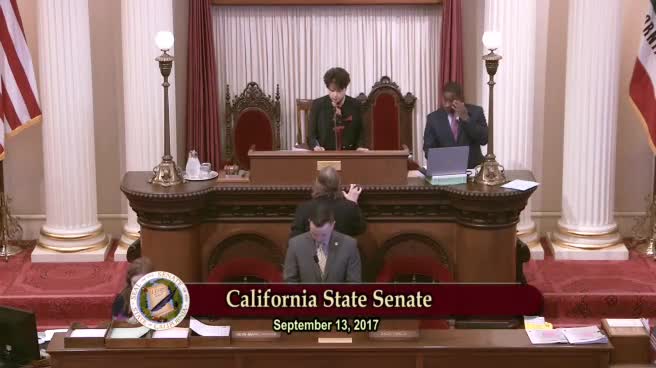 1MIN
Senate Floor
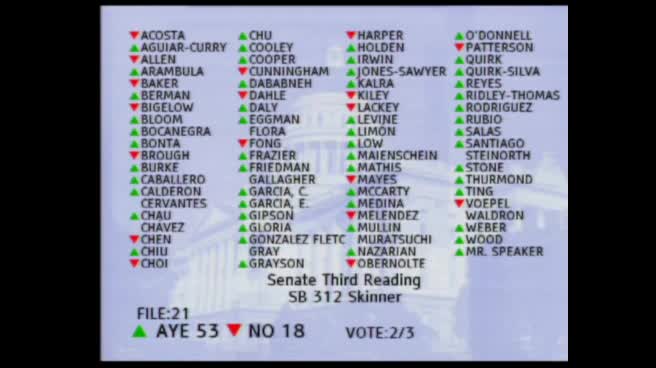 3MIN
Assembly Floor
 1H
Assembly Standing Committee on Appropriations
 12MIN
Assembly Standing Committee on Jobs, Economic Development, and the Economy
 48MIN
Senate Standing Committee on Appropriations
 3MIN