SB 36: Attorneys: State Bar: Sections of the State Bar.
- Session Year: 2017-2018
- House: Senate
- Latest Version Date: 2017-10-02
(1)The State Bar Act provides for the licensure and regulation of attorneys by the State Bar of California, a public corporation governed by a board of trustees comprised of appointed and elected members. The act requires 6 members of the 19-member board to be attorneys elected from State Bar Districts. The act requires the board of trustees to elect or select the president, vice president, and treasurer of the State Bar, as specified.
This bill would state that it is the intent of the Legislature that the board transition to a 13-member board, as specified. The bill would require that a maximum of 6 members of the board be public members, appointed as specified, and would require members of the board to serve a term of 4 years. The bill would require the California Supreme Court to appoint a chair and vice chair, as specified, instead of the board electing a president and vice president. The bill would require members of the executive committee of the board to include at least one member of the board appointed by each appointing authority.
The bill would, until January 1, 2019, require the board to charge an annual membership fee for active members in a specified amount for 2018, and would require the State Bar to adhere to a Supreme Court-approved policy to identify and address any proposed decision of the board of trustees that raises antitrust concerns.
(2)Existing law prohibits the Legislature, when the board places a charge upon or otherwise makes available all or any portion of the income or revenue from membership fees for the payment of security of an obligation of the State Bar and so long as any obligation remains unpaid, from reducing the maximum membership fee below the maximum in effect at the time the obligation is created or incurred and provides that this provision constitutes a covenant to the holder of such an obligation.
This bill would repeal the provision prohibiting the Legislature from reducing the maximum membership fee.
(3)Existing law prohibits the State Bar from awarding contracts for goods or services in excess of specified amounts unless certain standards are followed.
This bill would additionally require the approval of the board of trustees for those contracts and would, by January 1, 2019, require the State Bar to align its purchasing policies with those of other state agencies. The bill would also require the State Bar to conduct a review and study regarding errors and omissions insurance and to report its findings to the California Supreme Court and the Legislature, as specified. The bill would also require the State Bar to provide offers of discounts and other benefits to active and inactive members, including, but not limited to, insurance and affinity programs and would specify how the revenues received from those programs are to be allocated.
(4)Existing law requires applicants for admission to, among other things, take and pass a bar examination and be fingerprinted, as specified.
This bill would require the board of trustees to, at least once every 7 years, oversee an evaluation of the bar examination to determine if it properly tests for minimally needed competence for entry-level attorneys and to report on the results of the evaluation to the California Supreme Court and the Legislature, as specified. The bill would require the State Bar to notify the Department of Justice about individuals who are no longer members of the State Bar and applicants who are denied admission and to request from the Department of Justice subsequent arrest notifications services for applicants to, and members of, the State Bar.
(5)The act provides that the State Bar is subject to the Bagley-Keene Open Meeting Act and the California Public Records Act, as specified.
This bill would provide that access to records of the State Bar Court is subject to the rules and laws applicable to the judiciary instead of the California Public Records Act and would exempt the State Bar Court from the Bagley-Keene Open Meeting Act. The bill would authorize closed sessions for meetings, or portions thereof, relating to, among other things, the preparation, approval, grading, or administration of the California Bar Examination or the First-Year Law Students Examination.
(6)Existing law establishes the Client Security Fund to relieve or mitigate pecuniary losses caused by the dishonest conduct of, among others, active members of the State Bar.
This bill would require the State Bar to conduct a thorough analysis of the Client Security Fund to ensure that the structure provides for the most effective and efficient operation of the fund by, among other things, making a determination of the ongoing needs of the fund to satisfy claims in a timely manner, as defined. The bill would require the State Bar to submit a report on its analysis to the Legislature, as specified.
(7)Existing law requires the State Bar to establish and administer an Attorney Diversion and Assistance Program and requires the program to be funded by mandatory fees. Existing law provides that funds from those fees may be applied to costs of the State Bar general fund programs if alternative sources of funding are obtained and a specified amount of funds remain available for support of the program each year.
This bill would instead authorize any excess funds not needed to support the program to be transferred to fund the Client Security Fund, provided there are sufficient funds available to support the program. The bill would also authorize applicants who are in law school or who have applied for admission to the State Bar to enter the program subject to the approval of the board of trustees.
(8)Existing law requires the net proceeds from the sale or lease of real property, after payment of obligations and encumbrances and reasonable costs of acquiring and relocating its facilities, if any, to be held by the State Bar without expenditure or commitment until approved by the Legislature.
This bill would instead require the net proceeds from the lease of real property, after payment of obligations and encumbrances and reasonable costs of acquiring and relocating its facilities, if any, to be used by the State Bar for the protection of the public.
(9)Existing law authorizes the State Bar to establish sections and prohibits the activities of the sections from being funded from the annual membership fee. Existing law authorizes the State Bar to provide the sections with administrative support services, provided that the State Bar is reimbursed for the full cost of those services, and authorizes the State Bar to collect voluntary fees to fund the State Bar sections in conjunction with the collection of the annual membership fee. Existing law requires members of the State Bar to complete continuing education requirements, as specified.
This bill would require the State Bar to assist the Sections of the State Bar to incorporate as a private, nonprofit corporation and to transfer the functions and activities of the existing State Bar Sections to the new private, nonprofit corporation, defined as the Association. The bill would provide that the Association is a voluntary association, is not part of the State Bar, is prohibited from being funded by membership fees, and is not considered a state, local, or other public body for any purpose. The bill would require the bylaws of the Association to ensure that the governing board of the Association includes one representative of each of the existing Sections of the State Bar and that each of these governing board members have equal voting power. The bill would require the bylaws of the Association to ensure that the governing board may terminate individual sections or add individual sections by a 2/3 vote of the governing board. The bill would require the Sections of the State Bar or the Association to enter into a memorandum of understanding with the State Bar regarding the terms of separation of the Sections of the State Bar from the State Bar. The bill would require the State Bar to, among other things, collect voluntary dues set by the Association with the annual membership fee and to pay any such voluntary dues collected to the Association. The bill would prohibit the State Bar from having sections and would transfer the existing Sections of the State Bar to the Association, as specified. The bill would require the Association to provide and develop low-cost continuing education programs and materials as a condition of the State Bar collecting membership fees on behalf of the Association.
(10)Existing constitutional provisions require that a statute that limits the right of access to the meetings of public bodies or the writings of public officials and agencies be adopted with findings demonstrating the interest protected by the limitation and the need for protecting that interest.
This bill would make legislative findings to that effect.
(1)The State Bar Act provides for the licensure and regulation of attorneys by the State Bar of California, a public corporation governed by a board of trustees comprised of appointed and elected members. The act requires 6 members of the 19-member board to be attorneys elected from State Bar Districts. The act requires the board of trustees to elect or select the president, vice president, and treasurer of the State Bar, as specified.
This bill would state that it is the intent of the Legislature that the board transition to a 13-member board, as specified. The bill would require that a maximum of 6 members of the board be public members, appointed as specified, and would require members of the board to serve a term of 4 years. The bill would require the California Supreme Court to appoint a chair and vice chair, as specified, instead of the board electing a president and vice president. The bill would require members of the executive committee of the board to include at least one member of the board appointed by each appointing authority.
The bill would, until January 1, 2019, require the board to charge an annual membership fee for active members in a specified amount for 2018, and would require the State Bar to adhere to a Supreme Court-approved policy to identify and address any proposed decision of the board of trustees that raises antitrust concerns.
(2)Existing law prohibits the Legislature, when the board places a charge upon or otherwise makes available all or any portion of the income or revenue from membership fees for the payment of security of an obligation of the State Bar and so long as any obligation remains unpaid, from reducing the maximum membership fee below the maximum in effect at the time the obligation is created or incurred and provides that this provision constitutes a covenant to the holder of such an obligation.
This bill would repeal the provision prohibiting the Legislature from reducing the maximum membership fee.
(3)Existing law prohibits the State Bar from awarding contracts for goods or services in excess of specified amounts unless certain standards are followed.
This bill would additionally require the approval of the board of trustees for those contracts and would, by January 1, 2019, require the State bar Bar to align its purchasing policies with those of other state agencies. The bill would also require the State Bar to conduct a review and study regarding errors and omissions insurance and to report its findings to the California Supreme Court and the Legislature, as specified. The bill would also require the State Bar to provide offers of discounts and other benefits to active and inactive members, including, but not limited to, insurance and affinity programs and would specify how the revenues received from those programs are to be allocated.
(4)Existing law requires applicants for admission to, among other things, take and pass a bar examination and be fingerprinted, as specified.
This bill would require the board of trustees to, at least once every 7 years, oversee an evaluation of the bar examination to determine if it properly tests for minimally needed competence for entry-level attorneys and to report on the results of the evaluation to the California Supreme Court and the Legislature, as specified. The bill would require the State Bar to notify the Department of Justice about individuals who are no longer members of the State Bar and applicants who are denied admission and to request from the Department of Justice subsequent arrest notifications services for applicants to, and members of, the State Bar.
(5)The act provides that the State Bar is subject to the Bagley-Keene Open Meeting Act and the California Public Records Act, as specified.
This bill would provide that access to records of the State Bar Court is subject to the rules and laws applicable to the judiciary instead of the California Public Records Act and would exempt the State Bar Court from the Bagley-Keene Open Meeting Act. The bill would authorize closed sessions for meetings, or portions thereof, relating to, among other things, the preparation, approval, grading, or administration of the California Bar Examination or the First Year First-Year Law Students Examination.
(6)Existing law establishes the Client Security Fund to relieve or mitigate pecuniary losses caused by the dishonest conduct of, among others, active members of the State Bar.
This bill would require the State Bar to conduct a thorough analysis of the Client Security Fund to ensure that the structure provides for the most effective and efficient operation of the fund by, among other things, making a determination of the ongoing needs of the fund to satisfy claims in a timely manner, as defined. The bill would require the State Bar to submit a report on its analysis to the Legislature, as specified.
(7)Existing law requires the State Bar to establish and administer an Attorney Diversion and Assistance Program and requires the program to be funded by mandatory fees. Existing law provides that funds from those fees may be applied to costs of the State bar Bar general fund programs if alternative sources of funding are obtained and a specified amount of funds remain available for support of the program each year.
This bill would instead authorize any excess funds not needed to support the program to be transferred to fund the Client Security Fund, provided there are sufficient funs funds available to support the program. The bill would also authorize applicants who are in law school or who have applied for admission to the State Bar to enter the program subject to the approval of the board of trustees.
(8)Existing law requires the net proceeds from the sale or lease of real property, after payment of obligations and encumbrances and reasonable costs of acquiring and relocating its facilities, if any, to be held by the State Bar without expenditure or commitment until approved by the Legislature.
This bill would instead require the net proceeds from the lease of real property, after payment of obligations and encumbrances and reasonable costs of acquiring and relocating its facilities, if any, to be used by the State Bar for the protection of the public.
(9)Existing law authorizes the State Bar to establish sections and prohibits the activities of the sections from being funded from the annual membership fee. Existing law authorizes the State Bar to provide the sections with administrative support services, provided that the State Bar is reimbursed for the full cost of those services, and authorizes the State Bar to collect voluntary fees to fund the State Bar sections in conjunction with the collection of the annual membership fee. Existing law requires members of the State Bar to complete continuing education requirements, as specified.
This bill would require the State Bar to assist the Sections of the State Bar to incorporate as a private, nonprofit corporation and to transfer the functions and activities of the existing State Bar Sections to the new private, nonprofit corporation, defined as the Association. The bill would provide that the Association is a voluntary association, is not part of the State Bar, is prohibited from being funded by membership fees, and is not considered a state, local, or other public body for any purpose. The bill would require the bylaws of the Association to ensure that the governing board of the Association includes one representative of each of the existing Sections of the State Bar and that each of these governing board members have equal voting power. The bill would require the bylaws of the Association to ensure that the governing board may terminate individual sections or add individual sections by a 2/3 vote of the governing board. The bill would require the Sections of the State Bar or the Association to enter into a memorandum of understanding with the State Bar regarding the terms of separation of the Sections of the State Bar from the State Bar. The bill would require the State Bar to, among other things, collect voluntary dues set by the Association with the annual membership fee and to pay any such voluntary dues collected to the Association. The bill would prohibit the State Bar from having sections and would transfer the existing sections Sections of the State Bar to the Association, as specified. The bill would require the Association to provide and develop low-cost continuing education programs and materials as a condition of the State Bar collecting membership fees on behalf of the Association.
(10)Existing constitutional provisions require that a statute that limits the right of access to the meetings of public bodies or the writings of public officials and agencies be adopted with findings demonstrating the interest protected by the limitation and the need for protecting that interest.
This bill would make legislative findings to that effect.
(1)The State Bar Act provides for the licensure and regulation of attorneys by the State Bar of California, a public corporation governed by a board of trustees comprised of appointed and elected members. The act requires 6 members of the 19-member board to be attorneys elected from State Bar Districts. The act requires the board of trustees to elect or select the president, vice president, and treasurer of the State Bar, as specified.
This bill would state that it is the intent of the Legislature that the board transition to a 13-member board, as specified. The bill would require that a maximum of 6 members of the board be public members, appointed as specified, and would require members of the board to serve a term of 4 years. The bill would require the California Supreme Court to select from the members of the board appoint a chair and vice chair chair, as specified, instead of the board electing a president and vice president. The bill would require members of the executive committee of the board to include at least one member of the board appointed by each appointing authority.
The bill would, until January 1, 2020, 2019, require the board to charge an annual membership fee for active members in a specified amount for 2018 and 2019, 2018, and would require the State Bar to adhere to a Supreme Court-approved policy to identify and address any proposed decision of the board of trustees that raises antitrust concerns.
(2)Existing law prohibits the Legislature, when the board places a charge upon or otherwise makes available all or any portion of the income or revenue from membership fees for the payment of security of an obligation of the State Bar and so long as any obligation remains unpaid, from reducing the maximum membership fee below the maximum in effect at the time the obligation is created or incurred and provides that this provision constitutes a covenant to the holder of such an obligation.
This bill would repeal the provision prohibiting the Legislature from reducing the maximum membership fee.
(3)Existing law prohibits the State Bar from awarding contracts for goods or services in excess of specified amounts unless certain standards are followed.
This bill would additionally require the approval of the board of trustees for those contracts and would, by January 1, 2019, require the State bar to align its purchasing policies with those of other state agencies. The bill would also require the State Bar to conduct a review and study regarding errors and omissions insurance and to report its findings to the California Supreme Court and the Legislature, as specified. The bill would also require the State Bar to provide offers of discounts and other benefits to active and inactive members, including, but not limited to, insurance and affinity programs and would specify how the revenues received from those programs are to be allocated.
(4)Existing law requires applicants for admission to, among other things, take and pass a bar examination and be fingerprinted, as specified.
This bill would require the board of trustees to, at least once every 7 years, oversee an evaluation of the bar examination to determine if it properly tests for minimally needed competence for entry-level attorneys and to report on the results of the evaluation to the California Supreme Court and the Legislature, as specified. The bill would require the State Bar to notify the Department of Justice about individuals who are no longer members of the State Bar and applicants who are denied admission and to request from the Department of Justice subsequent arrest notifications services for applicants to, and members of, the State Bar.
(3)(5)The act provides that the State Bar is subject to the Bagley-Keene Open Meeting Act and the California Public Records Act, as specified.
This bill would provide that access to records of the State Bar Court is subject to the rules and laws applicable to the judiciary instead of the California Public Records Act and would exempt the State Bar Court from the Bagley-Keene Open Meeting Act. The bill would authorize closed sessions for meetings, or portions thereof, relating to, among other things, the preparation, approval, grading, or administration of the California Bar Examination or the First Year Law Students Examination.
(6)Existing law establishes the Client Security Fund to relieve or mitigate pecuniary losses caused by the dishonest conduct of, among others, active members of the State Bar.
This bill would require the State Bar to conduct a thorough analysis of the Client Security Fund to ensure that the structure provides for the most effective and efficient operation of the fund by, among other things, making a determination of the ongoing needs of the fund to satisfy claims in a timely manner, as defined. The bill would require the State Bar to submit a report on its analysis to the Legislature, as specified.
(7)Existing law requires the State Bar to establish and administer an Attorney Diversion and Assistance Program and requires the program to be funded by mandatory fees. Existing law provides that funds from those fees may be applied to costs of the State bar general fund programs if alternative sources of funding are obtained and a specified amount of funds remain available for support of the program each year.
This bill would instead authorize any excess funds not needed to support the program to be transferred to fund the Client Security Fund, provided there are sufficient funs available to support the program. The bill would also authorize applicants who are in law school or who have applied for admission to the State Bar to enter the program subject to the approval of the board of trustees.
(8)Existing law requires the net proceeds from the sale or lease of real property, after payment of obligations and encumbrances and reasonable costs of acquiring and relocating its facilities, if any, to be held by the State Bar without expenditure or commitment until approved by the Legislature.
This bill would instead require the net proceeds from the lease of real property, after payment of obligations and encumbrances and reasonable costs of acquiring and relocating its facilities, if any, to be used by the State Bar for the protection of the public.
(4)(9)Existing law authorizes the State Bar to establish sections and prohibits the activities of the sections from being funded from the annual membership fee. Existing law authorizes the State Bar to provide the sections with administrative support services, provided that the State Bar is reimbursed for the full cost of those services, and authorizes the State Bar to collect voluntary fees to fund the State Bar sections in conjunction with the collection of the annual membership fee. Existing law requires members of the State Bar to complete continuing education requirements, as specified.
This bill would establish the California Bar Sections Association as a private, nonprofit corporation, which would be governed by a board of governors. require the State Bar to assist the Sections of the State Bar to incorporate as a private, nonprofit corporation and to transfer the functions and activities of the existing State Bar Sections to the new private, nonprofit corporation, defined as the Association. The bill would provide that the association Association is a voluntary association, is not part of the State Bar, is prohibited from being funded by membership fees, and is not considered a state, local, or other public body for any purpose. The bill would require the board of governors to, among other things, adopt a dues schedule for membership in the association. bylaws of the Association to ensure that the governing board of the Association includes one representative of each of the existing Sections of the State Bar and that each of these governing board members have equal voting power. The bill would require the Sections of the State Bar or the Association to enter into a memorandum of understanding with the State Bar regarding the terms of separation of the Sections of the State Bar from the State Bar. The bill would require the State Bar to, among other things, collect voluntary dues set by the association Association with the annual membership fee and to pay any such voluntary dues collected to the association. Association. The bill would prohibit the State Bar from having sections and would transfer the existing sections of the State Bar to the association, Association, as specified. The bill would prohibit the State Bar from providing educational programs or materials by which members may satisfy continuing education requirements, except as provided, and would require the association Association to provide and develop low-cost continuing education programs and materials. The bill would make various findings and declarations. materials as a condition of the State Bar collecting membership fees on behalf of the Association.
(5)(10)Existing constitutional provisions require that a statute that limits the right of access to the meetings of public bodies or the writings of public officials and agencies be adopted with findings demonstrating the interest protected by the limitation and the need for protecting that interest.
This bill would make legislative findings to that effect.
(1)The State Bar Act provides for the licensure and regulation of attorneys by the State Bar of California, a public corporation governed by a board of trustees. Existing law, until January 1, 2017, requires the board to charge an annual membership fee for active members of up to $315 for 2016. trustees comprised of appointed and elected members. The act requires 6 members of the 19-member board to be attorneys elected from State Bar Districts. The act requires the board of trustees to elect or select the president, vice president, and treasurer of the State Bar, as specified.
This bill would state that it is the intent of the Legislature that the board transition to a 13-member board, as specified. The bill would require that a maximum of 6 members of the board be public members, appointed as specified, and would require members of the board to serve a term of 4 years. The bill would require the California Supreme Court to select from the members of the board a chair and vice chair instead of the board electing a president and vice president. The bill would require members of the executive committee of the board to include at least one member of the board appointed by each appointing authority.
ThisThe bill would, until January 1, 2019, 2020, require the board to charge an annual membership fee for active members in the same a specified amount for 2018. 2018 and 2019, and would require the State Bar to adhere to a Supreme Court-approved policy to identify and address any proposed decision of the board of trustees that raises antitrust concerns.
(2)Existing law prohibits the Legislature, when the board places a charge upon or otherwise makes available all or any portion of the income or revenue from membership fees for the payment of security of an obligation of the State Bar and so long as any obligation remains unpaid, from reducing the maximum membership fee below the maximum in effect at the time the obligation is created or incurred and provides that this provision constitutes a covenant to the holder of such an obligation.
This bill would repeal the provision prohibiting the Legislature from reducing the maximum membership fee.
(3)The act provides that the State Bar is subject to the Bagley-Keene Open Meeting Act and the California Public Records Act, as specified.
This bill would provide that access to records of the State Bar Court is subject to the rules and laws applicable to the judiciary instead of the California Public Records Act and would exempt the State Bar Court from the Bagley-Keene Open Meeting Act.
(4)Existing law authorizes the State Bar to establish sections and prohibits the activities of the sections from being funded from the annual membership fee. Existing law authorizes the State Bar to provide the sections with administrative support services, provided that the State Bar is reimbursed for the full cost of those services, and authorizes the State Bar to collect voluntary fees to fund the State Bar sections in conjunction with the collection of the annual membership fee. Existing law requires members of the State Bar to complete continuing education requirements, as specified.
This bill would establish the California Bar Sections Association as a private, nonprofit corporation, which would be governed by a board of governors. The bill would provide that the association is a voluntary association, is not part of the State Bar, is prohibited from being funded by membership fees, and is not considered a state, local, or other public body for any purpose. The bill would require the board of governors to, among other things, adopt a dues schedule for membership in the association. The bill would require the State Bar to, among other things, collect voluntary dues set by the association with the annual membership fee and to pay any such voluntary dues collected to the association. The bill would prohibit the State Bar from having sections and would transfer the existing sections of the State Bar to the association, as specified. The bill would prohibit the State Bar from providing educational programs or materials by which members may satisfy continuing education requirements, except as provided, and would require the association to provide and develop low-cost continuing education programs and materials. The bill would make various findings and declarations.
(5)Existing constitutional provisions require that a statute that limits the right of access to the meetings of public bodies or the writings of public officials and agencies be adopted with findings demonstrating the interest protected by the limitation and the need for protecting that interest.
This bill would make legislative findings to that effect.
The State Bar Act provides for the licensure and regulation of attorneys by the State Bar of California, a public corporation governed by a board of trustees. Existing law, until January 1, 2017, requires the board to charge an annual membership fee for active members of up to $315 for 2016.
This bill would, until January 1, 2019, require the board to charge an annual membership fee in the same amount for 2018.
The State Bar of California is a public corporation. It is hereinafter designated as the State Bar.
The State Bar has perpetual succession and a seal and it may sue and be sued. It may, for the purpose of carrying into effect and promoting its objectives:
(a)Make contracts.
(b)Borrow money, contract debts, issue bonds, notes and debentures and secure the payment or performance of its obligations.
(c)Own, hold, use, manage and deal in and with real and personal property.
(d)Construct, alter, maintain and repair buildings and other improvements to real property.
(e)Purchase, lease, obtain options upon, acquire by gift, bequest, devise or otherwise, any real or personal property or any interest therein.
(f)Sell, lease, exchange, convey, transfer, assign, encumber, pledge, dispose of any of its real or personal property or any interest therein, including without limitation all or any portion of its income or revenues from membership fees paid or payable by members.
(g)Do all other acts incidental to the foregoing or necessary or expedient for the administration of its affairs and the attainment of its purposes.
Pursuant to those powers enumerated in subdivisions (a) to (g), inclusive, it is recognized that the State Bar has authority to raise revenue in addition to that provided for in Section 6140 and other statutory provisions. The State Bar is empowered to raise that additional revenue by any lawful means. However, as of March 31, 2018, the State Bar shall not create any foundations or nonprofit corporations.
The State Bar shall conspicuously publicize to its members in the annual dues statement and other appropriate communications, including its Internet Web site and electronic communications, that its members have the right to limit the sale or disclosure of member information not reasonably related to regulatory purposes. In those communications the State Bar shall note the location of the State Bars privacy policy, and shall also note the simple procedure by which a member may exercise his or her right to prohibit or restrict, at the members option, the sale or disclosure of member information not reasonably related to regulatory purposes. On or before May 1, 2005, the State Bar shall report to the Assembly and Senate Committees on Judiciary regarding the procedures that it has in place to ensure that members can appropriately limit the use of their member information not reasonably related to regulatory purposes, and the number of members choosing to utilize these procedures.
No law of this state restricting, or prescribing a mode of procedure for the exercise of powers of state public bodies or state agencies, or classes thereof, including, but not by way of limitation, the provisions contained in Division 3 (commencing with Section 11000), Division 4 (commencing with Section 16100), and Part 1 (commencing with Section 18000) and Part 2 (commencing with Section 18500) of Division 5, of Title 2 of the Government Code, shall be applicable to the State Bar, unless the Legislature expressly so declares. Notwithstanding the foregoing or any other law, pursuant to Sections 6026.7 and 6026.11, the State Bar is subject to the California Public Records Act (Chapter 3.5 (commencing with Section 6250) of Division 7 of Title 1 of the Government Code) and, commencing April 1, 2016, the Bagley-Keene Open Meeting Act (Article 9 (commencing with Section 11120) of Chapter 1 of Part 1 of Division 3 of Title 2 of the Government Code).
SEC. 2.Section 6008.5 of the Business and Professions Code is repealed.SEC. 3.Section 6008.6 of the Business and Professions Code is amended to read:6008.6.The State Bar shall award no contract for goods, services, or both, for an aggregate amount in excess of fifty thousand dollars ($50,000), or for information technology goods, services, or both, for an aggregate amount in excess of one hundred thousand dollars ($100,000), except pursuant to the standards established in Article 4 (commencing with Section 10335) of Chapter 2 of Part 2 of Division 2 of the Public Contract Code and approval of the board of trustees. In the event that approval for a particular contract by the board is not feasible because approval of the contract is necessary prior to the next regularly scheduled meeting of the board of trustees, the chief executive officer of the State Bar may approve the contract after consultation with and approval by a designated committee of the board and subject to notification of the full board at the boards next regularly scheduled meeting. The State Bar shall establish a request for proposal procedure by rule, pursuant to the general standards established in Article 4 (commencing with Section 10335) of Chapter 2 of Part 2 of Division 2 of the Public Contract Code. For the purposes of this section, information technology includes, but is not limited to, all electronic technology systems and services, automated information handling, system design and analysis, conversion voice, video, and data communications, network systems, requisite facilities, equipment, system controls, stimulation, electronic commerce, and all related interactions between people and machines.
SEC. 4.Section 6008.7 is added to the Business and Professions Code, to read:6008.7.The State Bar shall, by January 1, 2019, develop purchasing policies that align with the purchasing policies of other state agencies.
SEC. 5.Section 6009.7 of the Business and Professions Code is repealed.SEC. 6.Section 6011 of the Business and Professions Code is amended to read:6011.(a)The board shall consist of no more than 19 members and no fewer than 13 members.
(b)It is the intent of the Legislature that the board consist of no more than 19 members and no fewer than 13 members during the period of transition from a 19-member board to a 13-member board. It is the intent of the Legislature that the board decrease its size without shortening, lengthening, or abolishing terms commencing prior to December 31, 2017, with the ultimate goal of instituting a 13-member board no later than October 31, 2020. It is the intent of the Legislature that this transition occur by the expiration of the terms of the elected members who are serving on the board as of December 31, 2017.
SEC. 7.Section 6012 of the Business and Professions Code is repealed.SEC. 8.Section 6013.1 of the Business and Professions Code is amended to read:6013.1.(a)The Supreme Court shall appoint five attorney members of the board pursuant to a process that the Supreme Court may prescribe. These attorney members shall serve for a term of four years and may be reappointed by the Supreme Court for one additional term only.
(b)An attorney member elected pursuant to Section 6013.2 may be appointed by the Supreme Court pursuant to this section to a term as an appointed attorney member.
(c)The Supreme Court shall fill any vacancy in the term of, and make any reappointment of, any appointed attorney member.
(d)When making appointments to the board, the Supreme Court should consider appointing attorneys that represent the following categories: legal services; small firm or solo practitioners; historically underrepresented groups, including consideration of race, ethnicity, gender, and sexual orientation; and legal academics. In making appointments to the board, the Supreme Court should also consider geographic distribution, years of practice, particularly attorneys who are within the first five years of practice or 36 years of age and under, and participation in voluntary local or state bar activities.
(e)The State Bar shall be responsible for carrying out the administrative responsibilities related to the appointment process described in subdivision (a).
SEC. 9.Section 6013.2 of the Business and Professions Code is repealed.SEC. 10.Section 6013.3 of the Business and Professions Code is amended to read:6013.3.(a)One attorney member of the board shall be appointed by the Senate Committee on Rules and one attorney member of the board shall be appointed by the Speaker of the Assembly.
(b)An attorney member appointed pursuant to this section shall serve for a term of four years. Vacancies shall be filled for the remainder of the term. An appointed attorney member may be reappointed pursuant to this section.
SEC. 11.Section 6013.5 of the Business and Professions Code is amended to read:6013.5.(a)Effective January 1, 2018, a maximum of six members of the board shall be members of the public who have never been members of the State Bar or admitted to practice before any court in the United States.
(b)Each of these members shall serve for a term of four years. Vacancies shall be filled for the remainder of the term.
(c)Effective January 1, 2018, one public member shall be appointed by the Senate Committee on Rules and one public member shall be appointed by the Speaker of the Assembly.
(d)Four public members shall be appointed by the Governor, subject to the confirmation of the Senate.
(e)Each respective appointing authority shall fill any vacancy in and make any reappointment to each respective office.
SEC. 12.Section 6015 of the Business and Professions Code is amended to read:6015.No person is eligible for attorney membership on the board unless both of the following conditions are satisfied:
(a)He or she is an active member of the State Bar.
(b)Either:
(1)Prior to October 31, 2020, if elected, he or she maintains his or her principal office for the practice of law within the State Bar district from which he or she is elected.
(2)If appointed by the Supreme Court or the Legislature, he or she maintains his or her principal office for the practice of law within the State of California.
SEC. 13.Section 6016 of the Business and Professions Code is amended to read:6016.The term of office of each attorney member of the board shall be four years and he or she shall hold office until his or her successor is appointed and qualified. Vacancies shall be filled for the remainder of the term.
The board of trustees may provide by rule for an interim board to act in the place and stead of the board when because of vacancies during terms of office there is less than a quorum of the board.
SEC. 14.Section 6018 of the Business and Professions Code is repealed.SEC. 15.Section 6019 of the Business and Professions Code is amended to read:6019.Each place upon the board for which a member is to be appointed shall for the purposes of the appointment be deemed a separate office.
SEC. 16.Section 6021 of the Business and Professions Code is amended to read:6021.(a)On the effective date of the measure adding this subdivision, the selection of the chair and vice chair of the board shall be made by appointment of the Supreme Court.
(b)For 2018, the Supreme Court shall appoint a chair and a vice chair to serve a term that commences upon appointment and ends at the conclusion of the annual meeting in 2018. Thereafter, the term of the chair and the vice chair shall be one year, and the chair and vice chair shall assume the duties of their respective offices at the conclusion of the annual meeting following their appointment. The chair and vice chair shall not serve more than two terms, except that a chair or vice chair who is appointed to fill a vacancy for the balance of a term is eligible to serve two full terms in addition to the remainder of the term for which he or she was appointed.
(c)The president and vice president in place on the effective date of the measure adding this subdivision shall retain their positions until the chair and vice chair are appointed.
SEC. 17.Section 6022 of the Business and Professions Code is amended to read:6022.The secretary of the State Bar shall be selected annually by the board and need not be a member of the State Bar.
SEC. 18.Section 6026.5 of the Business and Professions Code is repealed.SEC. 19.Section 6026.7 of the Business and Professions Code is amended to read:6026.7.(a)The State Bar is subject to the Bagley-Keene Open Meeting Act (Article 9 (commencing with Section 11120) of Chapter 1 of Part 1 of Division 3 of Title 2 of the Government Code) and all meetings of the State Bar are subject to the Bagley-Keene Open Meeting Act.
(b)Notwithstanding any other law, the Bagley-Keene Open Meeting Act shall not apply to the Judicial Nominees Evaluation Commission or the State Bar Court.
(c)In addition to the grounds authorized in the Bagley-Keene Open Meeting Act, a closed session may be held for those meetings, or portions thereof, relating to both of the following:
(1)Appeals from decisions of the Board of Legal Specialization refusing to certify or recertify an applicant or suspending or revoking a specialists certificate.
(2)The preparation, approval, grading, or administration of examinations for certification of a specialist.
(3)The preparation, approval, grading, or administration of the California Bar Examination or the First-Year Law Students Examination.
(4)Matters related to the Committee of Bar Examiners consideration of moral character, including allegations of criminal or professional misconduct, competence, or physical or mental health of an individual, requests by applicants for testing accommodations in connection with an application for admission to practice law, or appeals of the Committee of Bar Examiners determinations.
(5)Information about a law schools operations that constitutes a trade secret as defined in subdivision (d) of Section 3426.1 of the Civil Code.
SEC. 20.Section 6029 of the Business and Professions Code is amended to read:6029.(a)The board may appoint such committees, officers and employees as it deems necessary or proper, and fix and pay salaries and necessary expenses.
(b)The members of the executive committee of the board shall include at least one board member appointed by each of the following appointing authorities:
(1)The Supreme Court.
(2)The Governor.
(3)The Speaker of the Assembly.
(4)The Senate Committee on Rules.
SEC. 21.Section 6031.5 of the Business and Professions Code is amended to read:6031.5.(a)The Association and its activities shall not be funded with mandatory fees collected pursuant to subdivision (a) of Section 6140.
The State Bar may provide the Association with administrative and support services, provided the Association agrees, before such services are provided, to the nature, scope, and cost of those services. The State Bar shall be reimbursed for the full cost of those services out of funds collected pursuant to subdivision (b) or funds provided by the Association. The financial audit specified in Section 6145 shall confirm that the amount assessed by the State Bar for providing the services reimburses the costs of providing them, and shall verify that mandatory dues are not used to fund the Association. The State Bar and the Association may also contract for other services provided by the State Bar or by the Association.
(b)Notwithstanding any other law, the State Bar shall collect fees for the Association provided the Board of Trustees of the State Bar determines that both of the following conditions are met: (1) the Association continues to comply with the requirements in subdivision (b) of Section 6056, and (2) the Association continues to serve a public purpose by providing the services described in subdivision (f) of Section 6056. The Association shall pay for the actual costs of the collection.
(c)Notwithstanding any other law, the State Bar is expressly authorized to collect, in conjunction with the State Bars collection of its annual membership dues, voluntary fees or donations on behalf of the Conference of Delegates of California Bar Associations, the independent nonprofit successor entity to the former Conference of Delegates of the State Bar which has been incorporated for the purposes of aiding in matters pertaining to the advancement of the science of jurisprudence or to the improvement of the administration of justice, and to convey any unexpended voluntary fees or donations previously made to the Conference of Delegates of the State Bar pursuant to this section to the Conference of Delegates of California Bar Associations. The Conference of Delegates of California Bar Associations shall pay for the cost of the collection. The State Bar and the Conference of Delegates of California Bar Associations may also contract for other services. The financial audit specified in Section 6145 shall confirm that the amount of any contract shall fully cover the costs of providing the services, and shall verify that mandatory dues are not used to fund any successor entity.
(d)The Conference of Delegates of California Bar Associations, which is the independent nonprofit successor entity to the former Conference of Delegates of the State Bar as referenced in subdivision (c), is a voluntary association, is not a part of the State Bar of California, and shall not be funded in any way through mandatory dues collected by the State Bar of California. Any contribution or membership option included with a State Bar of California mandatory dues billing statement shall include a statement that the Conference of Delegates of California Bar Associations is not a part of the State Bar of California and that membership in that organization is voluntary.
SEC. 22.Section 6046.8 is added to the Business and Professions Code, to read:6046.8.At least once every seven years, or more frequently if directed by the Supreme Court, the board of trustees shall oversee an evaluation of the bar examination to determine if it properly tests for minimally needed competence for entry-level attorneys and shall make a determination, supported by findings, whether to adjust the examination or the passing score based on the evaluation. The board of trustees shall report the results of the evaluation and any determination regarding adjustment in the passing score to the Supreme Court and the Legislature no later than March 15, 2018, and at least every seven years from the date of the previous report.
SEC. 23.Section 6054 of the Business and Professions Code is amended to read:6054.(a)State and local law enforcement and licensing bodies and departments, officers and employees thereof, and officials and attaches of the courts of this state shall cooperate with and give reasonable assistance and information, including the providing of state summary criminal history information and local summary criminal history information, to the State Bar of California or any authorized representative thereof, in connection with any investigation or proceeding within the jurisdiction of the State Bar of California, regarding the admission to the practice of law or discipline of attorneys or their reinstatement to the practice of law.
(b)The State Bar of California shall require that an applicant for admission or reinstatement to the practice of law in California, or may require a member to submit or resubmit fingerprints to the Department of Justice in order to establish the identity of the applicant and in order to determine whether the applicant or member has a record of criminal conviction in this state or in other states. The information obtained as a result of the fingerprinting of an applicant or member shall be limited to the official use of the State Bar in establishing the identity of the applicant and in determining the character and fitness of the applicant for admission or reinstatement, and in discovering prior and subsequent criminal arrests of an applicant, member, or applicant for reinstatement. The State Bar shall notify the Department of Justice about individuals who are no longer members and applicants who are denied admission to the State Bar within 30 days of any change in status of a member or denial of admission. All fingerprint records of applicants admitted or members reinstated, or provided by a member, shall be retained thereafter by the Department of Justice for the limited purpose of criminal arrest notification to the State Bar.
(c)The State Bar shall request from the Department of Justice subsequent arrest notification service, as provided pursuant to Section 11105.2 of the Penal Code, for applicants to, and members of, the State Bar.
(d)If required to be fingerprinted pursuant to this section, a member of the State Bar who fails to be fingerprinted may be enrolled as an inactive member pursuant to rules adopted by the board of trustees.
(e)The State Bar shall report to the Supreme Court and the Legislature by March 15, 2018, regarding its compliance with the requirements of this section.
SEC. 24.Article 3 (commencing with Section 6055) is added to Chapter 4 of Division 3 of the Business and Professions Code, to read:3.Nonprofit Association6055.This article shall be known, and may be cited, as the Nonprofit Association Act.
6056.(a)The State Bar, acting pursuant to Section 6001, shall assist the Sections of the State Bar to incorporate as a private, nonprofit corporation organized under Section 501(c)(6) of the Internal Revenue Code and shall transfer the functions and activities of the 16 State Bar Sections and the California Young Lawyers Association to the new private, nonprofit corporation, defined as the Association in this article. The new private, nonprofit corporation shall be called any name that sufficiently distinguishes itself from the State Bar, makes clear that it is not a government entity, and is approved by the Chief Justice of California. The Association shall be a voluntary association, shall not be a part of the State Bar, and shall not be funded in any way through mandatory dues collected by the State Bar. The Association shall have independent contracting authority and full control of its resources. The Association shall not be considered a state, local, or other public body for any purpose, including, but not limited to, the Bagley-Keene Open Meeting Act (Article 9 (commencing with Section 11120) of Chapter 1 of Part 1 of Division 3 of Title 2 of the Government Code) and the California Public Records Act (Chapter 3.5 (commencing with Section 6250) of Division 7 of Title 1 of the Government Code).
(b)The Association shall be governed in accordance with the bylaws of the Association, which shall ensure that all of the State Bar Sections and the California Young Lawyers Association are adequately represented and are able to make decisions in a fair and representative manner that complies with all provisions of state and federal law governing private nonprofit corporations organized under Section 501(c)(6) of the Internal Revenue Code. The bylaws of the Association shall ensure that the governing board of the Association includes one representative of each of the 16 sections of the State Bar Sections and one representative from the California Young Lawyers Association. The bylaws shall ensure that each of these 17 governing board members have equal voting power on the governing board. The bylaws shall ensure that the governing board may terminate individual sections or add individual sections by a two-thirds vote of the governing board.
(c)The State Bar may assist the Association in gaining appointment to the American Bar Association (ABA) House of Delegates, consistent with the Associations mission and subject to the consent of the ABA.
(d)The State Bar shall support the Associations efforts to partner with the Continuing Education of the Bar (CEB), subject to agreement by the University of California.
(e)The State Bar of California shall ensure that State Bar staff who support the sections, as of September 15, 2017, are reassigned to other comparable positions within the State Bar.
(f)The Sections of the State Bar or the Association and the State Bar shall enter into a memorandum of understanding regarding the terms of separation of the Sections of the State Bar from the State Bar and mandatory duties of the Association, including a requirement to provide all of the following:
(1)Low- and no-cost mandatory continuing legal education (MCLE).
(2)Expertise and information to the State Bar, as requested.
(3)Educational programs and materials to the members of the State Bar and the public.
6056.3.(a)On or before January 31, 2018, the State Bar shall transfer to the Association all membership fees and other funds paid for membership in the sections or paid in sponsorships, donations, or funds for the benefit of the sections, including, but not limited to, State Bar section financial reserves, with an accounting that specifies which funds are attributable to each individual section of the Association. The State Bar shall work with the Association to transfer all contracts previously entered into by the State Bar on behalf of the sections, as soon as practicable, consistent with any contractual obligations and legal requirements, unless an alternative arrangement is mutually acceptable to the State Bar and the Association.
(b)On or before January 31, 2018, the State Bar shall provide an itemized list of any outstanding expenses, including contracts made on behalf of section activities.
(c)The State Bar and the Association shall confer and work cooperatively to establish an orderly transition plan.
(d)All current intellectual property of the Sections of the State Bar and the board of governors, currently in the possession of the State Bar, shall be transferred to and retained by the Association, including, but not limited to, publications, educational materials, online education, membership lists of section members, and products.
(e)Programs created by the sections within the State Bars online education catalog shall be transferred to the Association.
(f)The amount of the State Bar sections reserves that are to be transferred shall be determined by cooperative review and accounting between the State Bar and the Association no later than January 31, 2018. If the State Bar and Sections of the State Bar do not agree on the amount by January 31, 2018, the parties shall submit the matter to binding arbitration by a neutral arbitrator who will determine the amount. If the parties cannot agree on a neutral arbitrator, each shall select a neutral arbitrator and the two neutral arbitrators shall select a single neutral arbitrator to determine the amount. The neutral arbitrator chosen to oversee the matter may hire an auditor to assist in this task. The fees charged by the arbitrator, including any auditor fees, shall be borne equally by the State Bar and the Association.
(g)The State Bar shall no longer include individual sections or voluntary organizations that are similar to Sections of the State Bar as they existed before being transferred to the Association.
SEC. 25.Section 6060.2 of the Business and Professions Code is amended to read:6060.2.(a)All investigations or proceedings conducted by the State Bar concerning the moral character of an applicant shall be confidential and shall not be disclosed pursuant to any state law, including, but not limited to, the California Public Records Act (Chapter 3.5 (commencing with Section 6250) of Division 7 of Title 1 of the Government Code) unless the applicant, in writing, waives the confidentiality.
(b)Notwithstanding subdivision (a), the records of the proceeding may be disclosed in response to either of the following:
(1)A lawfully issued subpoena.
(2)A written request from a government agency responsible for either the enforcement of civil or criminal laws or the professional licensing of individuals that is conducting an investigation about the applicant.
SEC. 26.Section 6069.5 is added to the Business and Professions Code, to read:6069.5.(a)In recognition of the importance of protecting the public from attorney errors through errors and omissions insurance, the State Bar shall conduct a review and study regarding errors and omissions insurance for attorneys licensed in this state. The State Bar shall conduct this review and study, which shall specifically include determinations of all of the following:
(1)The adequacy, availability, and affordability of errors and omissions insurance for attorneys licensed in this state.
(2)Proposed measures for encouraging attorneys licensed in this state to obtain and maintain errors and omissions insurance.
(3)The ranges of errors and omissions insurance limits for attorneys licensed in this state recommended to protect the public.
(4)The adequacy and efficacy of the disclosure rule regarding errors and omissions insurance, currently embodied in Rule 3-410 of the Rules of Professional Conduct.
(5)The advisability of mandating errors and omissions insurance for attorneys licensed in this state and attendant considerations.
(6)Other proposed measures relating to errors and omissions insurance for attorneys in this state that will further the goal of public protection.
(b)The State Bar shall report its findings under this section to the Supreme Court and the Legislature no later than March 31, 2019.
(c)The State Bar may consider any past studies, including, but not limited to, any relevant actuarial studies, and any current information that is available to the State Bar from other entities, such as the American Bar Association, regarding errors and omissions insurance.
SEC. 27.Section 6070 of the Business and Professions Code is amended to read:6070.(a)The State Bar shall request the California Supreme Court to adopt a rule of court authorizing the State Bar to establish and administer a mandatory continuing legal education program. The rule that the State Bar requests the Supreme Court to adopt shall require that, within designated 36-month periods, all active members of the State Bar shall complete at least 25 hours of legal education activities approved by the State Bar or offered by a State Bar-approved provider, with four of those hours in legal ethics. The legal education activities shall focus on California law and practice and federal law as relevant to its practice in California or tribal law. A member of the State Bar who fails to satisfy the mandatory continuing legal education requirements of the program authorized by the Supreme Court rule shall be enrolled as an inactive member pursuant to rules adopted by the Board of Trustees of the State Bar.
(b)For purposes of this section, statewide associations of public agencies and incorporated, nonprofit professional associations of attorneys, including the Association, shall be certified as State Bar approved providers upon completion of an appropriate application process to be established by the State Bar. The certification may be revoked only by majority vote of the board, after notice and hearing, and for good cause shown. Programs provided by the California District Attorneys Association or the California Public Defenders Association, or both, including, but not limited to, programs provided pursuant to Title 1.5 (commencing with Section 11500) of Part 4 of the Penal Code, are deemed to be legal education activities approved by the State Bar or offered by a State Bar-approved provider.
(c)Notwithstanding the provisions of subdivision (a), officers and elected officials of the State of California, and full-time professors at law schools accredited by the State Bar of California, the American Bar Association, or both, shall be exempt from the provisions of this section. Full-time employees of the State of California, acting within the scope of their employment, shall be exempt from the provisions of this section. Nothing in this section shall prohibit the State of California, or any political subdivision thereof, from establishing or maintaining its own continuing education requirements for its employees.
(d)The Association shall provide and encourage the development of low-cost programs and materials by which members of the State Bar may satisfy their continuing education requirements. Special emphasis shall be placed upon the use of internet capabilities and computer technology in the development and provision of no-cost and low-cost programs and materials. Towards this purpose, as a condition of the State Bars collection of membership fees on behalf of the Association pursuant to subdivision (b) of Section 6031.5, the Association shall ensure that any member possessing or having access to the Internet or specified generally available computer technology shall be capable of satisfying the full self-study portion of his or her MCLE requirement at a cost of twenty dollars ($20) per hour or less.
SEC. 28.Section 6086.5 of the Business and Professions Code is amended to read:6086.5.The board of trustees shall establish a State Bar Court, to act in its place and stead in the determination of disciplinary and reinstatement proceedings and proceedings pursuant to subdivisions (b) and (c) of Section 6007 to the extent provided by rules adopted by the board of trustees pursuant to this chapter. In these proceedings the State Bar Court may exercise the powers and authority vested in the board of trustees by this chapter, including those powers and that authority vested in committees of, or established by, the board, except as limited by rules of the board of trustees within the scope of this chapter.
Access to records of the State Bar Court shall be governed by court rules and laws applicable to records of the judiciary and not the California Public Records Act (Chapter 3.5 (commencing with Section 6250) of Division 7 of Title 1 of the Government Code).
For the purposes of Sections 6007, 6043, 6049, 6049.2, 6050, 6051, 6052, 6077 (excluding the first sentence), 6078, 6080, 6081, and 6082, board includes the State Bar Court.
Nothing in this section shall authorize the State Bar Court to adopt rules of professional conduct or rules of procedure.
The Executive Committee of the State Bar Court may adopt rules of practice for the conduct of all proceedings within its jurisdiction. These rules may not conflict with the rules of procedure adopted by the board, unless approved by the Supreme Court.
SEC. 29.Section 6140 is added to the Business and Professions Code, to read:6140.(a)The board shall fix the annual membership fee for active members for 2018 at a sum not exceeding three hundred fifteen dollars ($315).
(b)The annual membership fee for active members is payable on or before the first day of February of each year. If the board finds it appropriate and feasible, it may provide by rule for payment of fees on an installment basis with interest, by credit card, or other means, and may charge members choosing any alternative method of payment an additional fee to defray costs incurred by that election.
(c)This section shall remain in effect only until January 1, 2019, and as of that date is repealed.
SEC. 30.Section 6140.02 is added to the Business and Professions Code, to read:6140.02.(a)The Association shall adopt a dues schedule for membership and shall provide that schedule to the State Bar by October 1 of each year.
(b)Payment of dues for membership in the Association and individual sections of the Association is voluntary. Each member of the State Bar shall have the option of joining the Association and one or more individual sections by including the dues set by the schedule established pursuant to subdivision (a) with that State Bar members annual membership fees. Any contribution or membership option included with a State Bar of California mandatory dues billing statement shall include a statement that the Association is not a part of the State Bar and that membership in that organization is voluntary.
(c)The State Bar shall collect, in conjunction with the collection of its annual membership fees under Section 6140, membership fees for the Association as provided by subdivision (b) of Section 6031.5.
(d)This section is not intended to limit the Association membership to members of the State Bar or restrict the Association from collecting membership dues or donations by other means.
SEC. 31.Section 6140.56 is added to the Business and Professions Code, to read:6140.56.(a)To ensure that the Client Security Fund can adequately protect the public and relieve or mitigate financial losses caused by the dishonest conduct of members of the State Bar by paying claims in a timely manner, the State Bar shall conduct a thorough analysis of the Client Security Fund, including a review of the State Bars oversight of the Client Security Fund, to ensure that the structure provides for the most effective and efficient operation of the fund, a determination of the ongoing needs of the fund to satisfy claims in a timely manner, a review of additional efforts that can be taken to increase the collection of payments from the responsible attorneys, and a review of other State Bar expenditures to determine whether other expenditures that do not directly impact the State Bars public protection functions, including, but not limited to, executive salaries and benefits, can be reduced or redirected in order to better fund the Client Security Fund through existing revenue, and, whether, after all other options have been fully and thoroughly exhausted, an increase in membership dues is necessary to ensure that the Client Security Fund can timely pay claims.
(b)The State Bar shall submit a report on its analysis of the Client Security Fund to the Legislature by March 15, 2018, so that the plans can be reviewed in conjunction with the bill that would authorize the imposition of the State Bars membership fee. The report shall be submitted in compliance with Section 9795 of the Government Code.
(c)For purposes of this section, timely manner means within 12 months from either the time the claim is received by the State Bar or the resolution of the underlying discipline case involving an attorney member that is a prerequisite to paying the claim, whichever is later.
SEC. 32.Section 6140.9 of the Business and Professions Code is amended to read:6140.9.Moneys for the support of the program established pursuant to Article 15 (commencing with Section 6230) and related programs approved by the committee established pursuant to Section 6231 shall be paid in whole or part by a fee of ten dollars ($10) per active member per year, and by a fee of five dollars ($5) per inactive member per year.
The board may seek alternative sources for funding the program. Any excess funds not needed to support the program, including reserve funds, may be transferred to fund the Client Security Fund established pursuant to Section 6140.5, provided there are sufficient funds available to fully support the program.
SEC. 33.Section 6141.3 is added to the Business and Professions Code, to read:6141.3.(a)Except as provided in subdivision (b), the State Bar shall provide offers of discounts and other benefits to active and inactive members of the State Bar, including, but not limited to, insurance and affinity programs. Any revenue generated by these programs shall be used as follows:
(1)The revenue received from the affinity programs shall support the programs of the California Bar Foundation.
(2)(A)For all other revenue received from January 1, 2018, until December 31, 2018, 50 percent of the revenue shall be used to assist the Association in transitioning to an independent entity, 25 percent of the revenue shall be distributed to qualified legal services projects and support centers as provided in Section 6216, and 25 percent shall be used to support the discipline functions of the State Bar or to support the Client Security Fund.
(B)For all other revenue received after December 31, 2018, 50 percent of the revenue shall be distributed to qualified legal services projects and support centers as provided in Section 6216, and 50 percent of the revenue shall be used to support the discipline functions of the State Bar or to support the Client Security Fund.
(b)Notwithstanding subdivision (a), if approved by the board of trustees and the California Bar Foundation, the State Bar may transfer administration of the programs offering discounts and other benefits to active and inactive members of the State Bar under subdivision (a) to the California Bar Foundation provided that any revenue received, less the administrative costs of the California Bar Foundation in operating the program, shall be distributed as follows on and after January 1, 2019:
(1)All of the revenue received from the affinity programs shall be kept by the California Bar Foundation, which shall distribute 50 percent of that revenue to support the programs of the California Bar Foundation and 50 percent of that revenue to qualified legal services projects and support centers as provided in Section 6216.
(2)For all other revenue received, 50 percent of the revenue shall be kept by the California Bar Foundation, which shall distribute 50 percent of that revenue to support the programs of the California Bar Foundation and 50 percent of that revenue to qualified legal services projects and support centers in accordance with the formula provided in Section 6216, and 50 percent of the revenue shall be used to support the discipline functions of the State Bar or to support the Client Security Fund.
(c)Given the public protection mission of the State Bar, the Legislature finds that it would be inappropriate for the State Bar to administer the program on a long-term basis. Therefore, should the program continue to operate after December 31, 2018, it is the intent of the Legislature that the program be administered by an entity other than the State Bar.
SEC. 34.Section 6144 of the Business and Professions Code is amended to read:6144.(a)All fees shall be paid into the treasury of the State Bar, and, when so paid, shall become part of its funds.
(b)Notwithstanding subdivision (a) and consistent with the reimbursement requirement under Section 6031.5, all fees paid pursuant to Section 6140.02 shall be paid by the State Bar to the Association, and, when paid, shall become part of the funds of the Association.
SEC. 35.Section 6144.1 of the Business and Professions Code is amended to read:6144.1.The net proceeds from the sale of real property, after payment of obligations and encumbrances and reasonable costs of acquiring and relocating its facilities, if any, shall be held by the State Bar without expenditure or commitment for any purpose until approved by the Legislature by statute. The net proceeds from the lease of real property, after payment of obligations and encumbrances and reasonable costs of acquiring and relocating its facilities, if any, shall be used by the State Bar for the protection of the public.
SEC. 36.Section 6145 of the Business and Professions Code is amended to read:6145.(a)The board shall engage the services of an independent national or regional public accounting firm with at least five years of experience in governmental auditing for an audit of its financial statement for each fiscal year. The financial statement shall be promptly certified under oath by the treasurer of the State Bar, and a copy of the audit and financial statement shall be submitted within 120 days of the close of the fiscal year to the board, to the Chief Justice of the Supreme Court, and to the Assembly and Senate Committees on Judiciary.
The audit also shall examine the receipts and expenditures of the State Bar to ensure that the funds collected on behalf of the Conference of Delegates of California Bar Associations as the independent successor entity to the former Conference of Delegates of the State Bar are conveyed to that entity, that the State Bar has been paid or reimbursed for the full cost of any administrative and support services provided to the successor entity, including the collection of fees or donations on its behalf, and that no mandatory dues are being used to fund the activities of the successor entity.
In selecting the accounting firm, the board shall consider the value of continuity, along with the risk that continued long-term engagements of an accounting firm may affect the independence of that firm.
(b)The board shall contract with the California State Auditors Office to conduct a performance audit of the State Bars operations from July 1, 2000, to December 31, 2000, inclusive. A copy of the performance audit shall be submitted by May 1, 2001, to the board, to the Chief Justice of the Supreme Court, and to the Assembly and Senate Committees on Judiciary.
Every two years thereafter, the board shall contract with the California State Auditors Office to conduct a performance audit of the State Bars operations for the respective fiscal year, commencing with January 1, 2002, to December 31, 2002, inclusive. A copy of the performance audit shall be submitted within 120 days of the close of the fiscal year for which the audit was performed to the board, to the Chief Justice of the Supreme Court, and to the Assembly and Senate Committees on Judiciary.
For the purposes of this subdivision, the California State Auditors Office may contract with a third party to conduct the performance audit. This subdivision is not intended to reduce the number of audits the California State Auditors Office may otherwise be able to conduct.
(c)Effective January 1, 2016, the board shall contract with the California State Auditors Office to conduct an in-depth financial audit of the State Bar, including an audit of its financial statement, internal controls, and relevant management practices. The contract shall include reimbursement for the California State Auditors Office for the costs of conducting the audit. The audit shall, at a minimum, examine the revenues, expenditures, and reserves of the State Bar, including all fund transfers. The California State Auditors Office shall commence the audit no later than January 1, 2016, and a copy of the audit shall be submitted by May 15, 2016, to the board, the Chief Justice of the Supreme Court, and to the Assembly and Senate Committees on Judiciary. The audit shall be submitted in compliance with Section 9795 of the Government Code. This subdivision shall cease to be operative January 1, 2017.
SEC. 37.Section 6232 of the Business and Professions Code is amended to read:6232.(a)The committee shall establish practices and procedures for the acceptance, denial, completion, or termination of attorneys in the Attorney Diversion and Assistance Program, and may recommend rehabilitative criteria for adoption by the board for acceptance, denial, completion of, or termination from, the program.
(b)An attorney currently under investigation by the State Bar may enter the program in the following ways:
(1)By referral of the Office of the Chief Trial Counsel.
(2)By referral of the State Bar Court following the initiation of a disciplinary proceeding.
(3)Voluntarily, and in accordance with terms and conditions agreed upon by the attorney participant with the Office of the Chief Trial Counsel or upon approval by the State Bar Court, as long as the investigation is based primarily on the self-administration of drugs or alcohol or the illegal possession, prescription, or nonviolent procurement of drugs for self-administration, or on mental illness, and does not involve actual harm to the public or his or her clients. An attorney seeking entry under this paragraph may be required to execute an agreement that violations of this chapter, or other statutes that would otherwise be the basis for discipline, may nevertheless be prosecuted if the attorney is terminated from the program for failure to comply with program requirements.
(c)Neither acceptance into nor participation in the Attorney Diversion and Assistance Program shall relieve the attorney of any lawful duties and obligations otherwise required by any agreements or stipulations with the Office of the Chief Trial Counsel, court orders, or applicable statutes relating to attorney discipline.
(d)An attorney who is not the subject of a current investigation may voluntarily enter, whether by self-referral or referral by a third party, the diversion and assistance program on a confidential basis and such information shall not be disclosed pursuant to any state law, including, but not limited to, the California Public Records Act (Chapter 3.5 (commencing with Section 6250) of Division 7 of Title 1 of the Government Code). Confidentiality pursuant to this subdivision shall be absolute unless waived by the attorney.
(e)By rules subject to the approval of the board and consistent with the requirements of this article, applicants who are in law school or have applied for admission to the State Bar may enter the program.
SEC. 38.The State Bar shall adhere to a Supreme Court-approved policy to identify and address any proposed decision of the board of trustees of the State Bar that raises antitrust concerns, including a procedure for submitting any such proposed decisions to the California Supreme Court for the Supreme Court to review prior to implementation and for processing complaints from the public about antitrust issues.
SEC. 39.The Legislature finds and declares that Sections 19 and 28 of this act, which amend Sections 6026.7 and 6086.5 of the Business and Professions Code, impose a limitation on the publics right of access to the meetings of public bodies or the writings of public officials and agencies within the meaning of Section 3 of Article I of the California Constitution. Pursuant to that constitutional provision, the Legislature makes the following findings to demonstrate the interest protected by this limitation and the need for protecting that interest:
In order to protect the decisionmaking process of the State Bar Court in a manner that is similar to the deliberative functions of other courts and in order to ensure that personal or sensitive information regarding discipline by the State Bar Court is kept confidential, including for persons participating in discussions and offers of settlement pursuant to arbitration or mediation, it is necessary to exempt the State Bar Court from the provision of the Bagley-Keene Open Meeting Act and the California Public Records Act.
SEC. 40.The Legislature finds and declares that in order to assist the State Bar in fulfilling its licensing and regulatory duties and its duty to protect the public, the Sections of the State Bar and the California Young Lawyers Association are properly separated into an independent nonprofit organization and that these amendments serve a public purpose.
The State Bar of California is a public corporation. It is hereinafter designated as the State Bar.
The State Bar has perpetual succession and a seal and it may sue and be sued. It may, for the purpose of carrying into effect and promoting its objectives:
(a)Make contracts.
(b)Borrow money, contract debts, issue bonds, notes and debentures and secure the payment or performance of its obligations.
(c)Own, hold, use, manage and deal in and with real and personal property.
(d)Construct, alter, maintain and repair buildings and other improvements to real property.
(e)Purchase, lease, obtain options upon, acquire by gift, bequest, devise or otherwise, any real or personal property or any interest therein.
(f)Sell, lease, exchange, convey, transfer, assign, encumber, pledge, dispose of any of its real or personal property or any interest therein, including without limitation all or any portion of its income or revenues from membership fees paid or payable by members.
(g)Do all other acts incidental to the foregoing or necessary or expedient for the administration of its affairs and the attainment of its purposes.
Pursuant to those powers enumerated in subdivisions (a) to (g), inclusive, it is recognized that the State Bar has authority to raise revenue in addition to that provided for in Section 6140 and other statutory provisions. The State Bar is empowered to raise that additional revenue by any lawful means. However, as of March 31, 2018, the State Bar shall not create any foundations or nonprofit corporations.
The State Bar shall conspicuously publicize to its members in the annual dues statement and other appropriate communications, including its Internet Web site and electronic communications, that its members have the right to limit the sale or disclosure of member information not reasonably related to regulatory purposes. In those communications the State Bar shall note the location of the State Bars privacy policy, and shall also note the simple procedure by which a member may exercise his or her right to prohibit or restrict, at the members option, the sale or disclosure of member information not reasonably related to regulatory purposes. On or before May 1, 2005, the State Bar shall report to the Assembly and Senate Committees on Judiciary regarding the procedures that it has in place to ensure that members can appropriately limit the use of their member information not reasonably related to regulatory purposes, and the number of members choosing to utilize these procedures.
No law of this state restricting, or prescribing a mode of procedure for the exercise of powers of state public bodies or state agencies, or classes thereof, including, but not by way of limitation, the provisions contained in Division 3 (commencing with Section 11000), Division 4 (commencing with Section 16100), and Part 1 (commencing with Section 18000) and Part 2 (commencing with Section 18500) of Division 5, of Title 2 of the Government Code, shall be applicable to the State Bar, unless the Legislature expressly so declares. Notwithstanding the foregoing or any other law, pursuant to Sections 6026.7 and 6026.11, the State Bar is subject to the California Public Records Act (Chapter 3.5 (commencing with Section 6250) of Division 7 of Title 1 of the Government Code) and, commencing April 1, 2016, the Bagley-Keene Open Meeting Act (Article 9 (commencing with Section 11120) of Chapter 1 of Part 1 of Division 3 of Title 2 of the Government Code).
SEC. 2.Section 6008.5 of the Business and Professions Code is repealed.SEC. 3.Section 6008.6 of the Business and Professions Code is amended to read:6008.6.The State Bar shall award no contract for goods, services, or both, for an aggregate amount in excess of fifty thousand dollars ($50,000), or for information technology goods, services, or both, for an aggregate amount in excess of one hundred thousand dollars ($100,000), except pursuant to the standards established in Article 4 (commencing with Section 10335) of Chapter 2 of Part 2 of Division 2 of the Public Contract Code and approval of the board of trustees. In the event that approval for a particular contract by the board is not feasible because approval of the contract is necessary prior to the next regularly scheduled meeting of the board of trustees, the chief executive officer of the State Bar may approve the contract after consultation with and approval by a designated committee of the board and subject to notification of the full board at the boards next regularly scheduled meeting. The State Bar shall establish a request for proposal procedure by rule, pursuant to the general standards established in Article 4 (commencing with Section 10335) of Chapter 2 of Part 2 of Division 2 of the Public Contract Code. For the purposes of this section, information technology includes, but is not limited to, all electronic technology systems and services, automated information handling, system design and analysis, conversion voice, video, and data communications, network systems, requisite facilities, equipment, system controls, stimulation, electronic commerce, and all related interactions between people and machines.
SEC. 4.Section 6008.7 is added to the Business and Professions Code, to read:6008.7.The State Bar shall, by January 1, 2019, develop purchasing policies that align with the purchasing policies of other state agencies.
SEC. 5.Section 6009.7 of the Business and Professions Code is repealed.SEC. 6.Section 6011 of the Business and Professions Code is amended to read:6011.(a)The board shall consist of no more than 19 members and no fewer than 13 members.
(b)It is the intent of the Legislature that the board consist of no more than 19 members and no fewer than 13 members during the period of transition from a 19-member board to a 13-member board. It is the intent of the Legislature that the board decrease its size without shortening, lengthening, or abolishing terms commencing prior to December 31, 2017, with the ultimate goal of instituting a 13-member board no later than October 31, 2020. It is the intent of the Legislature that this transition occur by the expiration of the terms of the elected members who are serving on the board as of December 31, 2017.
SEC. 7.Section 6012 of the Business and Professions Code is repealed.SEC. 8.Section 6013.1 of the Business and Professions Code is amended to read:6013.1.(a)The Supreme Court shall appoint five attorney members of the board pursuant to a process that the Supreme Court may prescribe. These attorney members shall serve for a term of four years and may be reappointed by the Supreme Court for one additional term only.
(b)An attorney member elected pursuant to Section 6013.2 may be appointed by the Supreme Court pursuant to this section to a term as an appointed attorney member.
(c)The Supreme Court shall fill any vacancy in the term of, and make any reappointment of, any appointed attorney member.
(d)When making appointments to the board, the Supreme Court should consider appointing attorneys that represent the following categories: legal services; small firm or solo practitioners; historically underrepresented groups, including consideration of race, ethnicity, gender, and sexual orientation; and legal academics. In making appointments to the board, the Supreme Court should also consider geographic distribution, years of practice, particularly attorneys who are within the first five years of practice or 36 years of age and under, and participation in voluntary local or state bar activities.
(e)The State Bar shall be responsible for carrying out the administrative responsibilities related to the appointment process described in subdivision (a).
SEC. 9.Section 6013.2 of the Business and Professions Code is repealed.SEC. 10.Section 6013.3 of the Business and Professions Code is amended to read:6013.3.(a)One attorney member of the board shall be appointed by the Senate Committee on Rules and one attorney member of the board shall be appointed by the Speaker of the Assembly.
(b)An attorney member appointed pursuant to this section shall serve for a term of four years. Vacancies shall be filled for the remainder of the term. An appointed attorney member may be reappointed pursuant to this section.
SEC. 11.Section 6013.5 of the Business and Professions Code is amended to read:6013.5.(a)Effective January 1, 2018, a maximum of six members of the board shall be members of the public who have never been members of the State Bar or admitted to practice before any court in the United States.
(b)Each of these members shall serve for a term of four years. Vacancies shall be filled for the remainder of the term.
(c)Effective January 1, 2018, one public member shall be appointed by the Senate Committee on Rules and one public member shall be appointed by the Speaker of the Assembly.
(d)Four public members shall be appointed by the Governor, subject to the confirmation of the Senate.
(e)Each respective appointing authority shall fill any vacancy in and make any reappointment to each respective office.
SEC. 12.Section 6015 of the Business and Professions Code is amended to read:6015.No person is eligible for attorney membership on the board unless both of the following conditions are satisfied:
(a)He or she is an active member of the State Bar.
(b)Either:
(1)Prior to October 31, 2020, if elected, he or she maintains his or her principal office for the practice of law within the State Bar district from which he or she is elected.
(2)If appointed by the Supreme Court or the Legislature, he or she maintains his or her principal office for the practice of law within the State of California.
SEC. 13.Section 6016 of the Business and Professions Code is amended to read:6016.The term of office of each attorney member of the board shall be four years and he or she shall hold office until his or her successor is appointed and qualified. Vacancies shall be filled for the remainder of the term.
The board of trustees may provide by rule for an interim board to act in the place and stead of the board when because of vacancies during terms of office there is less than a quorum of the board.
SEC. 14.Section 6018 of the Business and Professions Code is repealed.SEC. 15.Section 6019 of the Business and Professions Code is amended to read:6019.Each place upon the board for which a member is to be appointed shall for the purposes of the appointment be deemed a separate office.
SEC. 16.Section 6021 of the Business and Professions Code is amended to read:6021.(a)On the effective date of the measure adding this subdivision, the selection of the chair and vice chair of the board shall be made by appointment of the Supreme Court.
(b)For 2018, the Supreme Court shall appoint a chair and a vice chair to serve a term that commences upon appointment and ends at the conclusion of the annual meeting in 2018. Thereafter, the term of the chair and the vice chair shall be one year, and the chair and vice chair shall assume the duties of their respective offices at the conclusion of the annual meeting following their appointment. The chair and vice chair shall not serve more than two terms, except that a chair or vice chair who is appointed to fill a vacancy for the balance of a term is eligible to serve two full terms in addition to the remainder of the term for which he or she was appointed.
(c)The president and vice president in place on the effective date of the measure adding this subdivision shall retain their positions until the chair and vice chair are appointed.
SEC. 17.Section 6022 of the Business and Professions Code is amended to read:6022.The secretary of the State Bar shall be selected annually by the board and need not be a member of the State Bar.
SEC. 18.Section 6026.5 of the Business and Professions Code is repealed.SEC. 19.Section 6026.7 of the Business and Professions Code is amended to read:6026.7.(a)The State Bar is subject to the Bagley-Keene Open Meeting Act (Article 9 (commencing with Section 11120) of Chapter 1 of Part 1 of Division 3 of Title 2 of the Government Code) and all meetings of the State Bar are subject to the Bagley-Keene Open Meeting Act.
(b)Notwithstanding any other law, the Bagley-Keene Open Meeting Act shall not apply to the Judicial Nominees Evaluation Commission or the State Bar Court.
(c)In addition to the grounds authorized in the Bagley-Keene Open Meeting Act, a closed session may be held for those meetings, or portions thereof, relating to both of the following:
(1)Appeals from decisions of the Board of Legal Specialization refusing to certify or recertify an applicant or suspending or revoking a specialists certificate.
(2)The preparation, approval, grading, or administration of examinations for certification of a specialist.
(3)The preparation, approval, grading, or administration of the California Bar Examination or the First Year First-Year Law Students Examination.
(4)Matters related to the Committee of Bar Examiners consideration of moral character, including allegations of criminal or professional misconduct, competence, or physical or mental health of an individual, requests by applicants for testing accommodations in connection with an application for admission to practice law, or appeals of the Committee of Bar Examiners determinations.
(5)Information about a law schools operations that constitutes a trade secret as defined in subdivision (d) of Section 3426.1 of the Civil Code.
SEC. 20.Section 6029 of the Business and Professions Code is amended to read:6029.(a)The board may appoint such committees, officers and employees as it deems necessary or proper, and fix and pay salaries and necessary expenses.
(b)The members of the executive committee of the board shall include at least one board member appointed by each of the following appointing authorities:
(1)The Supreme Court.
(2)The Governor.
(3)The Speaker of the Assembly.
(4)The Senate Committee on Rules.
SEC. 21.Section 6031.5 of the Business and Professions Code is amended to read:6031.5.(a)The Association and its activities shall not be funded with mandatory fees collected pursuant to subdivision (a) of Section 6140.
The State Bar may provide the Association with administrative and support services, provided the Association agrees, before such services are provided, to the nature, scope, and cost of those services. The State Bar shall be reimbursed for the full cost of those services out of funds collected pursuant to subdivision (b) or funds provided by the Association. The financial audit specified in Section 6145 shall confirm that the amount assessed by the State Bar for providing the services reimburses the costs of providing them, and shall verify that mandatory dues are not used to fund the Association. The State Bar and the Association may also contract for other services provided by the State Bar or by the Association.
(b)Notwithstanding any other law, the State Bar shall collect fees for the Association provided the State Bar Board of Trustees of the State Bar determines that both of the following conditions are met: (1) the Association continues to comply with the requirements in subdivision (b) of Section 6056, and (2) the Association continues to serve a public purpose by providing the services described in subdivision (f) of Section 6056. The Association shall pay for the actual costs of the collection.
(c)Notwithstanding any other law, the State Bar is expressly authorized to collect, in conjunction with the State Bars collection of its annual membership dues, voluntary fees or donations on behalf of the Conference of Delegates of California Bar Associations, the independent nonprofit successor entity to the former Conference of Delegates of the State Bar which has been incorporated for the purposes of aiding in matters pertaining to the advancement of the science of jurisprudence or to the improvement of the administration of justice, and to convey any unexpended voluntary fees or donations previously made to the Conference of Delegates of the State Bar pursuant to this section to the Conference of Delegates of California Bar Associations. The Conference of Delegates of California Bar Associations shall pay for the cost of the collection. The State Bar and the Conference of Delegates of California Bar Associations may also contract for other services. The financial audit specified in Section 6145 shall confirm that the amount of any contract shall fully cover the costs of providing the services, and shall verify that mandatory dues are not used to fund any successor entity.
(d)The Conference of Delegates of California Bar Associations, which is the independent nonprofit successor entity to the former Conference of Delegates of the State Bar as referenced in subdivision (c), is a voluntary association, is not a part of the State Bar of California, and shall not be funded in any way through mandatory dues collected by the State Bar of California. Any contribution or membership option included with a State Bar of California mandatory dues billing statement shall include a statement that the Conference of Delegates of California Bar Associations is not a part of the State Bar of California and that membership in that organization is voluntary.
SEC. 22.Section 6046.8 is added to the Business and Professions Code, to read:6046.8.At least once every seven years, or more frequently if directed by the Supreme Court, the board of trustees shall oversee an evaluation of the bar examination to determine if it properly tests for minimally needed competence for entry-level attorneys and shall make a determination, supported by findings, whether to adjust the examination or the passing score based on the evaluation. The board of trustees shall report the results of the evaluation and any determination regarding adjustment in the passing score to the Supreme Court and the Legislature no later than March 15, 2018, and at least every seven years from the date of the previous report.
SEC. 23.Section 6054 of the Business and Professions Code is amended to read:6054.(a)State and local law enforcement and licensing bodies and departments, officers and employees thereof, and officials and attaches of the courts of this state shall cooperate with and give reasonable assistance and information, including the providing of state summary criminal history information and local summary criminal history information, to the State Bar of California or any authorized representative thereof, in connection with any investigation or proceeding within the jurisdiction of the State Bar of California, regarding the admission to the practice of law or discipline of attorneys or their reinstatement to the practice of law.
(b)The State Bar of California shall require that an applicant for admission or reinstatement to the practice of law in California, or may require a member to submit or resubmit fingerprints to the Department of Justice in order to establish the identity of the applicant and in order to determine whether the applicant or member has a record of criminal conviction in this state or in other states. The information obtained as a result of the fingerprinting of an applicant or member shall be limited to the official use of the State Bar in establishing the identity of the applicant and in determining the character and fitness of the applicant for admission or reinstatement, and in discovering prior and subsequent criminal arrests of an applicant, member, or applicant for reinstatement. The State Bar shall notify the Department of Justice about individuals who are no longer members and applicants who are denied admission to the State Bar within 30 days of any change in status of a member or denial of admission. All fingerprint records of applicants admitted or members reinstated, or provided by a member, shall be retained thereafter by the Department of Justice for the limited purpose of criminal arrest notification to the State Bar.
(c)The State Bar shall request from the Department of Justice subsequent arrest notification service, as provided pursuant to Section 11105.2 of the Penal Code, for applicants to, and members of, the bar. State Bar.
(d)If required to be fingerprinted pursuant to this section, a member of the State Bar who fails to be fingerprinted may be enrolled as an inactive member pursuant to rules adopted by the board of trustees.
(e)The State Bar shall report to the Supreme Court and the Legislature by March 15, 2018, regarding its compliance with the requirements of this section.
SEC. 24.Article 3 (commencing with Section 6055) is added to Chapter 4 of Division 3 of the Business and Professions Code, to read:3.Nonprofit Association6055.This article shall be known, and may be cited, as the Nonprofit Association Act.
6056.(a)The State Bar, acting pursuant to Section 6001, shall assist the Sections of the State Bar to incorporate as a private, nonprofit corporation organized under Section 501(c)(6) of the Internal Revenue Code and shall transfer the functions and activities of the 16 State Bar Sections and the California Young Lawyers Association to the new private, nonprofit corporation, defined as the Association in this article. The new private, nonprofit corporation shall be called any name that sufficiently distinguishes itself from the State Bar, makes clear that it is not a government entity, and is approved by the Chief Justice of California. The Association shall be a voluntary association, shall not be a part of the State Bar, and shall not be funded in any way through mandatory dues collected by the State Bar. The Association shall have independent contracting authority and full control of its resources. The Association shall not be considered a state, local, or other public body for any purpose, including, but not limited to, the Bagley-Keene Open Meeting Act (Article 9 (commencing with Section 11120) of Chapter 1 of Part 1 of Division 3 of Title 2 of the Government Code) and the California Public Records Act (Chapter 3.5 (commencing with Section 6250) of Division 7 of Title 1 of the Government Code).
(b)The Association shall be governed in accordance with the bylaws of the Association, which shall ensure that all of the State Bar Sections and the California Young Lawyers Association are adequately represented and are able to make decisions in a fair and representative manner that complies with all provisions of state and federal law governing private nonprofit corporations organized under Section 501(c)(6) of the Internal Revenue Code. The bylaws of the association Association shall ensure that the governing board of the Association includes one representative of each of the 16 sections of the State Bar Sections and one representative from the California Young Lawyers Association. The bylaws shall ensure that each of these 17 governing board members have equal voting power on the governing board. The bylaws shall ensure that the governing board may terminate individual sections or add individual sections by a two-thirds vote of the governing board.
(c)The State Bar may assist the Association in gaining appointment to the American Bar Association (ABA) House of Delegates, consistent with the Associations mission and subject to the consent of the ABA.
(d)The State Bar shall support the Associations efforts to partner with the Continuing Education of the Bar (CEB), subject to agreement by the University of California.
(e)The State Bar of California shall ensure that State Bar staff who support the sections, as of September 15, 2017, are reassigned to other comparable positions within the State Bar.
(f)The Sections of the State Bar or the Association and the State Bar shall enter into a memorandum of understanding regarding the terms of separation of the Sections of the State Bar from the State Bar and mandatory duties of the Association, including a requirement to provide all of the following:
(1)Low- and no-cost mandatory continuing legal education (MCLE).
(2)Expertise and information to the State Bar, as requested.
(3)Educational programs and materials to the members of the State Bar and the public.
6056.3.(a)On or before _______, January 31, 2018, the State Bar shall transfer to the Association all membership fees and other funds paid for membership in the sections or paid in sponsorships, donations, or funds for the benefit of the sections, including, but not limited to, State Bar section financial reserves, with an accounting that specifies which funds are attributable to each individual section of the Association. The State Bar shall work with the Association to transfer all contracts previously entered into by the State Bar on behalf of the sections, as soon as practicable, consistent with any contractual obligations and legal requirements, unless an alternative arrangement is mutually acceptable to the State Bar and the Association.
(b)On or before _____, January 31, 2018, the State Bar shall provide an itemized list of any outstanding expenses, including contracts made on behalf of section activities.
(c)The State Bar and the Association shall confer and work cooperatively to establish an orderly transition plan.
(d)All current intellectual property of the sections Sections of the State Bar and the board of governors, currently in the possession of the State Bar, shall be transferred to and retained by the Association, including, but not limited to, publications, educational materials, online education, membership lists of section members, and products.
(e)Programs created by the sections within the State Bars online education catalog shall be transferred to the Association.
(f)The amount of the State Bar sections reserves that are to be transferred shall be determined by cooperative review and accounting between the State Bar and the Association no later than ____. January 31, 2018. If the State Bar and sections Sections of the State Bar do not agree on the amount by _____, January 31, 2018, the parties shall submit the matter to binding arbitration by a neutral arbitrator who will determine the amount. If the parties cannot agree on a neutral arbitrator, each shall select a neutral arbitrator and the two neutral arbitrators shall select a single neutral arbitrator to determine the amount. The neutral arbitrator chosen to oversee the matter may hire an auditor to assist in this task. The fees charged by the arbitrator, including any auditor fees, shall be borne equally by the State Bar and the Association.
(g)The State Bar shall no longer include individual sections or voluntary organizations that are similar to sections Sections of the State Bar as they existed before being transferred to the Association.
SEC. 25.Section 6060.2 of the Business and Professions Code is amended to read:6060.2.(a)All investigations or proceedings conducted by the State Bar concerning the moral character of an applicant shall be confidential and shall not be disclosed pursuant to any state law, including, but not limited to, the California Public Records Act (Chapter 3.5 (commencing with Section 6250) of Division 7 of Title 1 of the Government Code) unless the applicant, in writing, waives the confidentiality.
(b)Notwithstanding subdivision (a), the records of the proceeding may be disclosed in response to either of the following:
(1)A lawfully issued subpoena.
(2)A written request from a government agency responsible for either the enforcement of civil or criminal laws or the professional licensing of individuals that is conducting an investigation about the applicant.
SEC. 26.Section 6069.5 is added to the Business and Professions Code, to read:6069.5.(a)In recognition of the importance of protecting the public from attorney errors through errors and omissions insurance, the State Bar shall conduct a review and study regarding errors and omissions insurance for attorneys licensed in this state. The State Bar shall conduct this review and study, which shall specifically include determinations of all of the following:
(1)The adequacy, availability, and affordability of errors and omissions insurance for attorneys licensed in this state.
(2)Proposed measures for encouraging attorneys licensed in this state to obtain and maintain errors and omissions insurance.
(3)The ranges of errors and omissions insurance limits for attorneys licensed in this state recommended to protect the public.
(4)The adequacy and efficacy of the disclosure rule regarding errors and omissions insurance, currently embodied in Rule 3-410 of the Rules of Professional Conduct.
(5)The advisability of mandating errors and omissions insurance for attorneys licensed in this state and attendant considerations.
(6)Other proposed measures relating to errors and omissions insurance for attorneys in this state that will further the goal of public protection.
(b)The State Bar shall report its findings under this section to the Supreme Court and the Legislature no later than March 31, 2019.
(c)The State Bar may consider any past studies, including, but not limited to, any relevant actuarial studies, and any current information that is available to the State Bar from other entities, such as the American Bar Association, regarding errors and omissions insurance.
SEC. 27.Section 6070 of the Business and Professions Code is amended to read:6070.(a)The State Bar shall request the California Supreme Court to adopt a rule of court authorizing the State Bar to establish and administer a mandatory continuing legal education program. The rule that the State Bar requests the Supreme Court to adopt shall require that, within designated 36-month periods, all active members of the State Bar shall complete at least 25 hours of legal education activities approved by the State Bar or offered by a State Bar approved Bar-approved provider, with four of those hours in legal ethics. The legal education activities shall focus on California law and practice and federal law as relevant to its practice in California or tribal law. A member of the State Bar who fails to satisfy the mandatory continuing legal education requirements of the program authorized by the Supreme Court rule shall be enrolled as an inactive member pursuant to rules adopted by the Board of Trustees of the State Bar.
(b)For purposes of this section, statewide associations of public agencies and incorporated, nonprofit professional associations of attorneys, including the Association, shall be certified as State Bar approved providers upon completion of an appropriate application process to be established by the State Bar. The certification may be revoked only by majority vote of the board, after notice and hearing, and for good cause shown. Programs provided by the California District Attorneys Association or the California Public Defenders Association, or both, including, but not limited to, programs provided pursuant to Title 1.5 (commencing with Section 11500) of Part 4 of the Penal Code, are deemed to be legal education activities approved by the State Bar or offered by a State Bar approved Bar-approved provider.
(c)Notwithstanding the provisions of subdivision (a), officers and elected officials of the State of California, and full-time professors at law schools accredited by the State Bar of California, the American Bar Association, or both, shall be exempt from the provisions of this section. Full-time employees of the State of California, acting within the scope of their employment, shall be exempt from the provisions of this section. Nothing in this section shall prohibit the State of California, or any political subdivision thereof, from establishing or maintaining its own continuing education requirements for its employees.
(d)The Association shall provide and encourage the development of low-cost programs and materials by which members of the State Bar may satisfy their continuing education requirements. Special emphasis shall be placed upon the use of internet capabilities and computer technology in the development and provision of no-cost and low-cost programs and materials. Towards this purpose, as a condition of the State Bars collection of membership fees on behalf of the Association pursuant to subdivision (b) of Section 6031.5, the Association shall ensure that any member possessing or having access to the Internet or specified generally available computer technology shall be capable of satisfying the full self-study portion of his or her MCLE requirement at a cost of twenty dollars ($20) per hour or less.
SEC. 28.Section 6086.5 of the Business and Professions Code is amended to read:6086.5.The board of trustees shall establish a State Bar Court, to act in its place and stead in the determination of disciplinary and reinstatement proceedings and proceedings pursuant to subdivisions (b) and (c) of Section 6007 to the extent provided by rules adopted by the board of trustees pursuant to this chapter. In these proceedings the State Bar Court may exercise the powers and authority vested in the board of trustees by this chapter, including those powers and that authority vested in committees of, or established by, the board, except as limited by rules of the board of trustees within the scope of this chapter.
Access to records of the State Bar Court shall be governed by court rules and laws applicable to records of the judiciary and not the California Public Records Act (Chapter 3.5 (commencing with Section 6250) of Division 7 of Title 1 of the Government Code).
For the purposes of Sections 6007, 6043, 6049, 6049.2, 6050, 6051, 6052, 6077 (excluding the first sentence), 6078, 6080, 6081, and 6082, board includes the State Bar Court.
Nothing in this section shall authorize the State Bar Court to adopt rules of professional conduct or rules of procedure.
The Executive Committee of the State Bar Court may adopt rules of practice for the conduct of all proceedings within its jurisdiction. These rules may not conflict with the rules of procedure adopted by the board, unless approved by the Supreme Court.
SEC. 29.Section 6140 is added to the Business and Professions Code, to read:6140.(a)The board shall fix the annual membership fee for active members for 2018 at a sum not exceeding three hundred fifteen dollars ($315).
(b)The annual membership fee for active members is payable on or before the first day of February of each year. If the board finds it appropriate and feasible, it may provide by rule for payment of fees on an installment basis with interest, by credit card, or other means, and may charge members choosing any alternative method of payment an additional fee to defray costs incurred by that election.
(c)This section shall remain in effect only until January 1, 2019, and as of that date is repealed.
SEC. 30.Section 6140.02 is added to the Business and Professions Code, to read:6140.02.(a)The Association shall adopt a dues schedule for membership in the Association and shall provide that schedule to the State Bar that schedule and a schedule for each individual section that is adopted by each section. The board of governors shall provide that schedule to the State Bar by October 1 of each year.
(b)Payment of dues for membership in the Association and individual sections of the Association is voluntary. Each member of the State Bar shall have the option of joining the Association and one or more individual sections by including the dues set by the schedule established pursuant to subdivision (a) with that State Bar members annual membership fees. Any contribution or membership option included with a State Bar of California mandatory dues billing statement shall include a statement that the Association is not a part of the State Bar and that membership in that organization is voluntary.
(c)The State Bar shall collect, in conjunction with the collection of its annual membership fees under Section 6140, membership fees for the Association as provided by subdivision (b) of Section 6031.5.
(d)This section is not intended to limit the Association membership to members of the State Bar or restrict the Association from collecting membership dues or donations by other means.
SEC. 31.Section 6140.56 is added to the Business and Professions Code, to read:6140.56.(a)To ensure that the Client Security Fund can adequately protect the public and relieve or mitigate financial losses caused by the dishonest conduct of members of the State Bar by paying claims in a timely manner, the State Bar shall conduct a thorough analysis of the Client Security Fund, including a review of the State Bars oversight of the Client Security Fund, to ensure that the structure provides for the most effective and efficient operation of the fund, a determination of the ongoing needs of the fund to satisfy claims in a timely manner, a review of additional efforts that can be taken to increase the collection of payments from the responsible attorneys, and a review of other State Bar expenditures to determine whether other expenditures that do not directly impact the State Bars public protection functions, including, but not limited to, executive salaries and benefits, can be reduced or redirected in order to better fund the Client Security Fund through existing revenue, and, whether, after all other options have been fully and thoroughly exhausted, an increase in membership dues is necessary to ensure that the Client Security Fund can timely pay claims.
(b)The State Bar shall submit a report on its analysis of the Client Security Fund to the Legislature by March 15, 2018, so that the plans can be reviewed in conjunction with the bill that would authorize the imposition of the State Bars membership fee. The report shall be submitted in compliance with Section 9795 of the Government Code.
(c)For purposes of this section, timely manner means within 12 months from either the time the claim is received by the State Bar or the resolution of the underlying discipline case involving an attorney member that is a prerequisite to paying the claim, whichever is later.
SEC. 32.Section 6140.9 of the Business and Professions Code is amended to read:6140.9.Moneys for the support of the program established pursuant to Article 15 (commencing with Section 6230) and related programs approved by the committee established pursuant to Section 6231 shall be paid in whole or part by a fee of ten dollars ($10) per active member per year, and by a fee of five dollars ($5) per inactive member per year.
The board may seek alternative sources for funding the program. Any excess funds not needed to support the program, including reserve funds, may be transferred to fund the Client Security Fund established pursuant to Section 6140.5, provided there are sufficient funds available to fully support the program.
SEC. 33.Section 6141.3 is added to the Business and Professions Code, to read:6141.3.(a)Except as provided in subdivision (b), the State Bar shall provide offers of discounts and other benefits to active and inactive members of the State Bar, including, but not limited to, insurance and affinity programs. Any revenue generated by these programs shall be used as follows:
(1)The revenue received from the affinity programs shall support the programs of the California Bar Foundation.
(2)(A)For all other revenue received from January 1, 2018, until December 31, 2018, 50 percent of the revenue shall be used to assist the Association in transitioning to an independent entity, 25 percent of the revenue shall be distributed to qualified legal services projects and support centers as provided in Section 6216, and 25 percent shall be used to support the discipline functions of the State Bar or to support the Client Security Fund.
(B)For all other revenue received after December 31, 2018, 50 percent of the revenue shall be distributed to qualified legal services projects and support centers as provided in Section 6216, and 50 percent of the revenue shall be used to support the discipline functions of the State Bar or to support the Client Security Fund.
(b)Notwithstanding subdivision (a), if approved by the board of trustees and the California Bar Foundation, the State Bar may transfer administration of the programs offering discounts and other benefits to active and inactive members of the State Bar under subdivision (a) to the California Bar Foundation provided that any revenue received, less the administrative costs of the California Bar Foundation in operating the program, shall be distributed as follows on and after January 1, 2019:
(1)All of the revenue received from the affinity programs shall be kept by the California Bar Foundation, which shall distribute 50 percent of that revenue to support the programs of the California Bar Foundation and 50 percent of that revenue to qualified legal services projects and support centers as provided in Section 6216.
(2)For all other revenue received, 50 percent of the revenue shall be kept by the California Bar Foundation, which shall distribute 50 percent of that revenue to support the programs of the California Bar Foundation and 50 percent of that revenue to qualified legal services projects and support centers in accordance with the formula provided in Section 6216, and 50 percent of the revenue shall be used to support the discipline functions of the State Bar or to support the Client Security Fund.
(c)Given the public protection mission of the State Bar, the Legislature finds that it would be inappropriate for the State Bar to administer the program on a long-term basis. Therefore, should the program continue to operate after December 31, 2018, it is the intent of the Legislature that the program be administered by an entity other than the State Bar.
SEC. 34.Section 6144 of the Business and Professions Code is amended to read:6144.(a)All fees shall be paid into the treasury of the State Bar, and, when so paid, shall become part of its funds.
(b)Notwithstanding subdivision (a) and consistent with the reimbursement requirement under Section 6031.5, all fees paid pursuant to Section 6140.02 shall be paid by the State Bar to the Association, and, when paid, shall become part of the funds of the Association.
SEC. 35.Section 6144.1 of the Business and Professions Code is amended to read:6144.1.The net proceeds from the sale of real property, after payment of obligations and encumbrances and reasonable costs of acquiring and relocating its facilities, if any, shall be held by the State Bar without expenditure or commitment for any purpose until approved by the Legislature by statute. The net proceeds from the lease of real property, after payment of obligations and encumbrances and reasonable costs of acquiring and relocating its facilities, if any, shall be used by the State Bar for the protection of the public.
SEC. 36.Section 6145 of the Business and Professions Code is amended to read:6145.(a)The board shall engage the services of an independent national or regional public accounting firm with at least five years of experience in governmental auditing for an audit of its financial statement for each fiscal year. The financial statement shall be promptly certified under oath by the Treasurer treasurer of the State Bar, and a copy of the audit and financial statement shall be submitted within 120 days of the close of the fiscal year to the board, to the Chief Justice of the Supreme Court, and to the Assembly and Senate Committees on Judiciary.
The audit also shall examine the receipts and expenditures of the State Bar to ensure that the funds collected on behalf of the Conference of Delegates of California Bar Associations as the independent successor entity to the former Conference of Delegates of the State Bar are conveyed to that entity, that the State Bar has been paid or reimbursed for the full cost of any administrative and support services provided to the successor entity, including the collection of fees or donations on its behalf, and that no mandatory dues are being used to fund the activities of the successor entity.
In selecting the accounting firm, the board shall consider the value of continuity, along with the risk that continued long-term engagements of an accounting firm may affect the independence of that firm.
(b)The board shall contract with the California State Auditors Office to conduct a performance audit of the State Bars operations from July 1, 2000, to December 31, 2000, inclusive. A copy of the performance audit shall be submitted by May 1, 2001, to the board, to the Chief Justice of the Supreme Court, and to the Assembly and Senate Committees on Judiciary.
Every two years thereafter, the board shall contract with the California State Auditors Office to conduct a performance audit of the State Bars operations for the respective fiscal year, commencing with January 1, 2002, to December 31, 2002, inclusive. A copy of the performance audit shall be submitted within 120 days of the close of the fiscal year for which the audit was performed to the board, to the Chief Justice of the Supreme Court, and to the Assembly and Senate Committees on Judiciary.
For the purposes of this subdivision, the California State Auditors Office may contract with a third party to conduct the performance audit. This subdivision is not intended to reduce the number of audits the California State Auditors Office may otherwise be able to conduct.
(c)Effective January 1, 2016, the board shall contract with the California State Auditors Office to conduct an in-depth financial audit of the State Bar, including an audit of its financial statement, internal controls, and relevant management practices. The contract shall include reimbursement for the California State Auditors Office for the costs of conducting the audit. The audit shall, at a minimum, examine the revenues, expenditures, and reserves of the State Bar, including all fund transfers. The California State Auditors Office shall commence the audit no later than January 1, 2016, and a copy of the audit shall be submitted by May 15, 2016, to the board, the Chief Justice of the Supreme Court, and to the Assembly and Senate Committees on Judiciary. The audit shall be submitted in compliance with Section 9795 of the Government Code. This subdivision shall cease to be operative January 1, 2017.
SEC. 37.Section 6232 of the Business and Professions Code is amended to read:6232.(a)The committee shall establish practices and procedures for the acceptance, denial, completion, or termination of attorneys in the Attorney Diversion and Assistance Program, and may recommend rehabilitative criteria for adoption by the board for acceptance, denial, completion of, or termination from, the program.
(b)An attorney currently under investigation by the State Bar may enter the program in the following ways:
(1)By referral of the Office of the Chief Trial Counsel.
(2)By referral of the State Bar Court following the initiation of a disciplinary proceeding.
(3)Voluntarily, and in accordance with terms and conditions agreed upon by the attorney participant with the Office of the Chief Trial Counsel or upon approval by the State Bar Court, as long as the investigation is based primarily on the self-administration of drugs or alcohol or the illegal possession, prescription, or nonviolent procurement of drugs for self-administration, or on mental illness, and does not involve actual harm to the public or his or her clients. An attorney seeking entry under this paragraph may be required to execute an agreement that violations of this chapter, or other statutes that would otherwise be the basis for discipline, may nevertheless be prosecuted if the attorney is terminated from the program for failure to comply with program requirements.
(c)Neither acceptance into nor participation in the Attorney Diversion and Assistance Program shall relieve the attorney of any lawful duties and obligations otherwise required by any agreements or stipulations with the Office of the Chief Trial Counsel, court orders, or applicable statutes relating to attorney discipline.
(d)An attorney who is not the subject of a current investigation may voluntarily enter, whether by self-referral or referral by a third party, the diversion and assistance program on a confidential basis and such information shall not be disclosed pursuant to any state law, including, but not limited to, the California Public Records Act (Chapter 3.5 (commencing with Section 6250) of Division 7 of Title 1 of the Government Code). Confidentiality pursuant to this subdivision shall be absolute unless waived by the attorney.
(e)By rules subject to the approval of the board and consistent with the requirements of this article, applicants who are in law school or have applied for admission to the State Bar may enter the program.
SEC. 38.The State Bar shall adhere to a Supreme Court-approved policy to identify and address any proposed decision of the board of trustees of the State Bar that raises antitrust concerns, including a procedure for submitting any such proposed decisions to the California Supreme Court for the Supreme Court to review prior to implementation and for processing complaints from the public about antitrust issues.
SEC. 39.The Legislature finds and declares that Sections 19 and 28 of this act, which amend Sections 6026.7 and 6086.5 of the Business and Professions Code, impose a limitation on the publics right of access to the meetings of public bodies or the writings of public officials and agencies within the meaning of Section 3 of Article I of the California Constitution. Pursuant to that constitutional provision, the Legislature makes the following findings to demonstrate the interest protected by this limitation and the need for protecting that interest:
In order to protect the decisionmaking process of the State Bar Court in a manner that is similar to the deliberative functions of other courts and in order to ensure that personal or sensitive information regarding discipline by the State Bar Court is kept confidential, including for persons participating in discussions and offers of settlement pursuant to arbitration or mediation, it is necessary to exempt the State Bar Court from the provision of the Bagley-Keene Open Meeting Act and the California Public Records Act.
SEC. 40.The Legislature finds and declares that in order to assist the State Bar in fulfilling its licensing and regulatory duties and its duty to protect the public, the Sections of the State Bar and the California Young Lawyers Association are properly separated into an independent nonprofit organization and that these amendments serve a public purpose.
The State Bar of California is a public corporation. It is hereinafter designated as the State Bar.
The State Bar has perpetual succession and a seal and it may sue and be sued. It may, for the purpose of carrying into effect and promoting its objectives:
(a)Make contracts.
(b)Borrow money, contract debts, issue bonds, notes and debentures and secure the payment or performance of its obligations.
(c)Own, hold, use, manage and deal in and with real and personal property.
(d)Construct, alter, maintain and repair buildings and other improvements to real property.
(e)Purchase, lease, obtain options upon, acquire by gift, bequest, devise or otherwise, any real or personal property or any interest therein.
(f)Sell, lease, exchange, convey, transfer, assign, encumber, pledge, dispose of any of its real or personal property or any interest therein, including without limitation all or any portion of its income or revenues from membership fees paid or payable by members.
(g)Do all other acts incidental to the foregoing or necessary or expedient for the administration of its affairs and the attainment of its purposes.
Pursuant to those powers enumerated in subdivisions (a) to (g), inclusive, it is recognized that the State Bar has authority to raise revenue in addition to that provided for in Section 6140 and other statutory provisions. The State Bar is empowered to raise that additional revenue by any lawful means, including, but not limited to, the creation of foundations or not-for-profit corporations. means. However, as of March 31, 2018, the State Bar shall not create any foundations or nonprofit corporations.
The State Bar shall conspicuously publicize to its members in the annual dues statement and other appropriate communications, including its Web site and electronic communications, that its members have the right to limit the sale or disclosure of member information not reasonably related to regulatory purposes. In those communications the State Bar shall note the location of the State Bars privacy policy, and shall also note the simple procedure by which a member may exercise his or her right to prohibit or restrict, at the members option, the sale or disclosure of member information not reasonably related to regulatory purposes. On or before May 1, 2005, the State Bar shall report to the Assembly and Senate Committees on Judiciary regarding the procedures that it has in place to ensure that members can appropriately limit the use of their member information not reasonably related to regulatory purposes, and the number of members choosing to utilize these procedures.
No law of this state restricting, or prescribing a mode of procedure for the exercise of powers of state public bodies or state agencies, or classes thereof, including, but not by way of limitation, the provisions contained in Division 3 (commencing with Section 11000), Division 4 (commencing with Section 16100), and Part 1 (commencing with Section 18000) and Part 2 (commencing with Section 18500) of Division 5, of Title 2 of the Government Code, shall be applicable to the State Bar, unless the Legislature expressly so declares. Notwithstanding the foregoing or any other law, pursuant to Sections 6026.7 and 6026.11, the State Bar is subject to the California Public Records Act (Chapter 3.5 (commencing with Section 6250) of Division 7 of Title 1 of the Government Code) and, commencing April 1, 2016, the Bagley-Keene Open Meeting Act (Article 9 (commencing with Section 11120) of Chapter 1 of Part 1 of Division 3 of Title 2 of the Government Code).
SEC. 2.Section 6008.5 of the Business and Professions Code is repealed.SEC. 3.Section 6008.6 of the Business and Professions Code is amended to read:6008.6.The State Bar shall award no contract for goods, services, or both, for an aggregate amount in excess of fifty thousand dollars ($50,000), or for information technology goods, services, or both, for an aggregate amount in excess of one hundred thousand dollars ($100,000), except pursuant to the standards established in Article 4 (commencing with Section 10335) of Chapter 2 of Part 2 of Division 2 of the Public Contract Code. Code and approval of the board of trustees. In the event that approval for a particular contract by the board is not feasible because approval of the contract is necessary prior to the next regularly scheduled meeting of the board of trustees, the chief executive officer of the State Bar may approve the contract after consultation with and approval by a designated committee of the board and subject to notification of the full board at the boards next regularly scheduled meeting. The State Bar shall establish a request for proposal procedure by rule, pursuant to the general standards established in Article 4 (commencing with Section 10335) of Chapter 2 of Part 2 of Division 2 of the Public Contract Code. For the purposes of this section, information technology includes, but is not limited to, all electronic technology systems and services, automated information handling, system design and analysis, conversion voice, video, and data communications, network systems, requisite facilities, equipment, system controls, stimulation, electronic commerce, and all related interactions between people and machines.
SEC. 4.Section 6008.7 is added to the Business and Professions Code, to read:6008.7.The State Bar shall, by January 1, 2019, develop purchasing policies that align with the purchasing policies of other state agencies.
SEC. 3.SEC. 5.Section 6009.7 of the Business and Professions Code is repealed.SEC. 4.SEC. 6.Section 6011 of the Business and Professions Code is amended to read:6011.(a)The board shall consist of no more than 19 members and no fewer than 13 members.
(b)It is the intent of the Legislature that the board consist of no more than 19 members and no fewer than 13 members during the period of transition from a 19-member board to a 13-member board. It is the intent of the Legislature that the board decrease its size without shortening, lengthening, or abolishing terms commencing prior to December 31, 2017, with the ultimate goal of instituting a 13-member board no later than October 31, 2020. It is the intent of the Legislature that this transition occur by the expiration of the terms of the elected members who are serving on the board as of December 31, 2017.
SEC. 5.SEC. 7.Section 6012 of the Business and Professions Code is repealed.SEC. 6.SEC. 8.Section 6013.1 of the Business and Professions Code is amended to read:6013.1.(a)The Supreme Court shall appoint five attorney members of the board pursuant to a process that the Supreme Court may prescribe. These attorney members shall serve for a term of four years and may be reappointed by the Supreme Court for one additional term only.
(b)An attorney member elected pursuant to Section 6013.2 may be appointed by the Supreme Court pursuant to this section to a term as an appointed attorney member.
(c)The Supreme Court shall fill any vacancy in the term of, and make any reappointment of, any appointed attorney member.
(d)When making appointments to the board, the Supreme Court should consider appointing attorneys that represent the following categories: legal services; small firm or solo practitioners; historically underrepresented groups, including consideration of race, ethnicity, gender, and sexual orientation; and legal academics. In making appointments to the board, the Supreme Court should also consider geographic distribution, years of practice, particularly attorneys who are within the first five years of practice or 36 years of age and under, and participation in voluntary local or state bar activities.
(e)The State Bar shall be responsible for carrying out the administrative responsibilities related to the appointment process described in subdivision (a).
SEC. 7.SEC. 9.Section 6013.2 of the Business and Professions Code is repealed.SEC. 8.SEC. 10.Section 6013.3 of the Business and Professions Code is amended to read:6013.3.(a)One attorney member of the board shall be appointed by the Senate Committee on Rules and one attorney member of the board shall be appointed by the Speaker of the Assembly.
(b)An attorney member appointed pursuant to this section shall serve for a term of four years. Vacancies shall be filled for the remainder of the term. An appointed attorney member may be reappointed pursuant to this section.
SEC. 9.SEC. 11.Section 6013.5 of the Business and Professions Code is amended to read:6013.5.(a)Effective January 1, 2018, a maximum of six members of the board shall be members of the public who have never been members of the State Bar or admitted to practice before any court in the United States.
(b)Each of these members shall serve for a term of four years. Vacancies shall be filled for the remainder of the term.
(c)Effective January 1, 2018, one public member shall be appointed by the Senate Committee on Rules and one public member shall be appointed by the Speaker of the Assembly.
(d)Four public members shall be appointed by the Governor, subject to the confirmation of the Senate.
(e)Each respective appointing authority shall fill any vacancy in and make any reappointment to each respective office.
SEC. 10.SEC. 12.Section 6015 of the Business and Professions Code is amended to read:6015.No person is eligible for attorney membership on the board unless both of the following conditions are satisfied:
(a)He or she is an active member of the State Bar.
(b)Either:
(1)Prior to October 31, 2020, if elected, he or she maintains his or her principal office for the practice of law within the State Bar district from which he or she is elected.
(2)If appointed by the Supreme Court or the Legislature, he or she maintains his or her principal office for the practice of law within the State of California.
SEC. 11.SEC. 13.Section 6016 of the Business and Professions Code is amended to read:6016.The term of office of each attorney member of the board shall be four years and he or she shall hold office until his or her successor is appointed and qualified. Vacancies shall be filled for the remainder of the term.
The board of trustees may provide by rule for an interim board to act in the place and stead of the board when because of vacancies during terms of office there is less than a quorum of the board.
SEC. 12.SEC. 14.Section 6018 of the Business and Professions Code is repealed.SEC. 13.SEC. 15.Section 6019 of the Business and Professions Code is amended to read:6019.Each place upon the board for which a member is to be appointed shall for the purposes of the appointment be deemed a separate office.
SEC. 14.SEC. 16.Section 6021 of the Business and Professions Code is amended to read:6021.(a)(1) The California Supreme Court shall select from the members of the board a chair and a vice chair to serve in the absence of the chair.(2)The chair and vice chairs shall assume the duties of their respective offices at the conclusion of the annual meeting following their appointment.(b)The term of the chair and vice chair shall be one year.6021.(a)On the effective date of the measure adding this subdivision, the selection of the chair and vice chair of the board shall be made by appointment of the Supreme Court.
(b)For 2018, the Supreme Court shall appoint a chair and a vice chair to serve a term that commences upon appointment and ends at the conclusion of the annual meeting in 2018. Thereafter, the term of the chair and the vice chair shall be one year, and the chair and vice chair shall assume the duties of their respective offices at the conclusion of the annual meeting following their appointment. The chair and vice chair shall not serve more than two terms, except that a chair or vice chair who is appointed to fill a vacancy for the balance of a term is eligible to serve two full terms in addition to the remainder of the term for which he or she was appointed.
(c)The president and vice president in place on the effective date of the measure adding this subdivision shall retain their positions until the chair and vice chair are appointed.
SEC. 15.SEC. 17.Section 6022 of the Business and Professions Code is amended to read:6022.The secretary and the treasurer of the State Bar shall be selected annually by the board and need not be members a member of the State Bar.
SEC. 16.SEC. 18.Section 6026.5 of the Business and Professions Code is repealed.SEC. 17.SEC. 19.Section 6026.7 of the Business and Professions Code is amended to read:6026.7.(a)The State Bar is subject to the Bagley-Keene Open Meeting Act (Article 9 (commencing with Section 11120) of Chapter 1 of Part 1 of Division 3 of Title 2 of the Government Code) and all meetings of the State Bar are subject to the Bagley-Keene Open Meeting Act.
(b)Notwithstanding any other law, the Bagley-Keene Open Meeting Act shall not apply to the Judicial Nominees Evaluation Commission, the Committee of Bar Examiners, Commission or the State Bar Court.
(c)In addition to the grounds authorized in the Bagley-Keene Open Meeting Act, a closed session may be held for those meetings, or portions thereof, relating to both of the following:
(1)Appeals from decisions of the Board of Legal Specialization refusing to certify or recertify an applicant or suspending or revoking a specialists certificate.
(2)The preparation, approval, grading, or administration of examinations for certification of a specialist.
(3)The preparation, approval, grading, or administration of the California Bar Examination or the First Year Law Students Examination.
(4)Matters related to the Committee of Bar Examiners consideration of moral character, including allegations of criminal or professional misconduct, competence, or physical or mental health of an individual, requests by applicants for testing accommodations in connection with an application for admission to practice law, or appeals of the Committee of Bar Examiners determinations.
(5)Information about a law schools operations that constitutes a trade secret as defined in subdivision (d) of Section 3426.1 of the Civil Code.
SEC. 18.SEC. 20.Section 6029 of the Business and Professions Code is amended to read:6029.(a)The board may appoint such committees, officers and employees as it deems necessary or proper, and fix and pay salaries and necessary expenses.
(b)The members of the executive committee of the board shall include at least one board member appointed by each of the following appointing authorities:
(1)The Supreme Court.
(2)The Governor.
(3)The Speaker of the Assembly.
(4)The Senate Committee on Rules.
SEC. 19.SEC. 21.Section 6031.5 of the Business and Professions Code is amended to read:6031.5.(a)The California Bar Sections Association and its activities shall not be funded with mandatory fees collected pursuant to subdivision (a) of Section 6140.
The State Bar may provide an individual California Bar Sections Association section, or two or more sections collectively, or the board of governors the Association with administrative and support services, provided the board of governors Association agrees, before such services are provided, to the nature, scope, and cost of those services. The State Bar shall be reimbursed for the full cost of those services out of funds collected pursuant to subdivision (b), funds raised by or through the activities of the California Bar Sections Association, or other funds collected from voluntary sources. (b) or funds provided by the Association. The financial audit specified in Section 6145 shall confirm that the amount assessed by the State Bar for providing the services reimburses the costs of providing them, and shall verify that mandatory dues are not used to fund the sections. Association. The State Bar and California Bar Sections the Association may also contract for other services provided by the State Bar or by the California Bar Sections Association.
(b)Notwithstanding any other law, the State Bar shall collect fees for the California Bar Sections Association and the board of governors as expressly authorized and required by Section 6140.02. provided the State Bar Board of Trustees determines that both of the following conditions are met: (1) the Association continues to comply with the requirements in subdivision (b) of Section 6056, and (2) the Association continues to serve a public purpose by providing the services described in subdivision (f) of Section 6056. The California Bar Sections Association shall pay for the actual costs of the collection. Funds collected pursuant to this subdivision, and other funds raised by or through the activities of the California Bar Sections Association, or collected from voluntary sources, for its support or operation, shall not be subject to the expenditure limitations of subdivision (b) of Section 6140.05.
(c)Notwithstanding any other law, the State Bar is expressly authorized to collect, in conjunction with the State Bars collection of its annual membership dues, voluntary fees or donations on behalf of the Conference of Delegates of California Bar Associations, the independent nonprofit successor entity to the former Conference of Delegates of the State Bar which has been incorporated for the purposes of aiding in matters pertaining to the advancement of the science of jurisprudence or to the improvement of the administration of justice, and to convey any unexpended voluntary fees or donations previously made to the Conference of Delegates of the State Bar pursuant to this section to the Conference of Delegates of California Bar Associations. The Conference of Delegates of California Bar Associations shall pay for the cost of the collection. The State Bar and the Conference of Delegates of California Bar Associations may also contract for other services. The financial audit specified in Section 6145 shall confirm that the amount of any contract shall fully cover the costs of providing the services, and shall verify that mandatory dues are not used to fund any successor entity.
(d)The Conference of Delegates of California Bar Associations, which is the independent nonprofit successor entity to the former Conference of Delegates of the State Bar as referenced in subdivision (c), is a voluntary association, is not a part of the State Bar of California, and shall not be funded in any way through mandatory dues collected by the State Bar of California. Any contribution or membership option included with a State Bar of California mandatory dues billing statement shall include a statement that the Conference of Delegates of California Bar Associations is not a part of the State Bar of California and that membership in that organization is voluntary.
SEC. 22.Section 6046.8 is added to the Business and Professions Code, to read:6046.8.At least once every seven years, or more frequently if directed by the Supreme Court, the board of trustees shall oversee an evaluation of the bar examination to determine if it properly tests for minimally needed competence for entry-level attorneys and shall make a determination, supported by findings, whether to adjust the examination or the passing score based on the evaluation. The board of trustees shall report the results of the evaluation and any determination regarding adjustment in the passing score to the Supreme Court and the Legislature no later than March 15, 2018, and at least every seven years from the date of the previous report.
SEC. 23.Section 6054 of the Business and Professions Code is amended to read:6054.(a)State and local law enforcement and licensing bodies and departments, officers and employees thereof, and officials and attaches of the courts of this state shall cooperate with and give reasonable assistance and information, including the providing of state summary criminal history information and local summary criminal history information, to the State Bar of California or any authorized representative thereof, in connection with any investigation or proceeding within the jurisdiction of the State Bar of California, regarding the admission to the practice of law or discipline of attorneys or their reinstatement to the practice of law.
The(b)The State Bar of California shall require that an applicant for admission or reinstatement to the practice of law in California, or may require a member pursuant to subdivision (k) or (l) of Section 6068, be fingerprinted to submit or resubmit fingerprints to the Department of Justice in order to establish the identity of the applicant and in order to determine whether the applicant or member has a record of criminal conviction in this state or in other states. The information obtained as a result of the fingerprinting of an applicant or member shall be limited to the official use of the State Bar in establishing the identity of the applicant and in determining the character and fitness of the applicant for admission or reinstatement, and in discovering prior and subsequent criminal arrests of an applicant, member, or applicant for reinstatement. All fingerprint records of The State Bar shall notify the Department of Justice about individuals who are no longer members and applicants who are denied admission to the State Bar shall be destroyed within one year of the decision not to admit. within 30 days of any change in status of a member or denial of admission. All fingerprint records of applicants admitted or members reinstated, or provided pursuant to subdivision (k) or (l) of Section 6068, by a member, shall be retained thereafter by the Department of Justice for the limited purpose of criminal arrest notification. notification to the State Bar.
All costs of providing criminal history information to, and the processing of fingerprints for, the State Bar, except for print furnishing and encoding, as required by this section, shall be borne by the State Bar.(c)The State Bar shall request from the Department of Justice subsequent arrest notification service, as provided pursuant to Section 11105.2 of the Penal Code, for applicants to, and members of, the bar.
(d)If required to be fingerprinted pursuant to this section, a member of the State Bar who fails to be fingerprinted may be enrolled as an inactive member pursuant to rules adopted by the board of trustees.
(e)The State Bar shall report to the Supreme Court and the Legislature by March 15, 2018, regarding its compliance with the requirements of this section.
SEC. 20.SEC. 24.Article 3 (commencing with Section 6055) is added to Chapter 4 of Division 3 of the Business and Professions Code, to read:3.California Bar Sections Nonprofit Association6055.This article shall be known, and may be cited, as the California Bar Sections Nonprofit Association Act.
6056.(a)The State Bar, acting pursuant to Section 6001, shall assist the California Bar Sections Association of the State Bar to incorporate as a private, nonprofit corporation organized under Section 501(c)(6) of the Internal Revenue Code. The California Bar Sections Code and shall transfer the functions and activities of the 16 State Bar Sections and the California Young Lawyers Association to the new private, nonprofit corporation, defined as the Association in this article. The new private, nonprofit corporation shall be called any name that sufficiently distinguishes itself from the State Bar, makes clear that it is not a government entity, and is approved by the Chief Justice of California. The Association shall be a voluntary association, shall not be a part of the State Bar of California, Bar, and shall not be funded in any way through mandatory dues collected by the State Bar. The California Bar Sections Association shall have independent contracting authority and full control of its resources. The California Bar Sections Association shall not be considered a state, local, or other public body for any purpose, including, but not limited to, the Bagley-Keene Open Meeting Act (Article 9 (commencing with Section 11120) of Chapter 1 of Part 1 of Division 3 of Title 2 of the Government Code) and the California Public Records Act (Chapter 3.5 (commencing with Section 6250) of Division 7 of Title 1 of the Government Code).
(b)The California Bar Sections Association shall be governed by a board of governors established pursuant to this article. The mission of the California Bar Sections Association and the board of governors is to serve the public by fostering and promoting educational programs and materials to the members of the State Bar and the public, including low- or no-cost mandatory continuing legal education (MCLE), providing expertise and information as requested regarding pending legislation, and assuring the ethical practice of law, thereby enhancing protection of the public and access to justice by the public. in accordance with the bylaws of the Association, which shall ensure that all of the State Bar Sections and the California Young Lawyers Association are adequately represented and are able to make decisions in a fair and representative manner that complies with all provisions of state and federal law governing private nonprofit corporations organized under Section 501(c)(6) of the Internal Revenue Code. The bylaws of the association shall ensure that the governing board of the Association includes one representative of each of the 16 sections of the State Bar Sections and one representative from the California Young Lawyers Association. The bylaws shall ensure that each of these 17 governing board members have equal voting power on the governing board.
(c)The State Bar shall may assist the California Bar Sections Association in assuming responsibility for appointment and supervision of some of the positions the State Bar currently holds on gaining appointment to the American Bar Association (ABA) House of Delegates, consistent with the California Bar Sections Associations mission and subject to the consent of the ABA.
(d)The State Bar shall support the California Bar Sections Associations efforts to partner with the Continuing Education of the Bar (CEB), subject to agreement by the University of California.
(e)The State Bar of California shall ensure that State Bar staff who support the sections, as of September 15, 2017, are reassigned to other comparable positions within the State Bar.
(f)For purposes of this chapter, the term board of governors shall mean the board of governors of the California Bar Sections Association.(f)The Sections of the State Bar or the Association and the State Bar shall enter into a memorandum of understanding regarding the terms of separation of the Sections of the State Bar from the State Bar and mandatory duties of the Association, including a requirement to provide all of the following:
(1)Low- and no-cost mandatory continuing legal education (MCLE).
(2)Expertise and information to the State Bar, as requested.
(3)Educational programs and materials to the members of the State Bar and the public.
6056.1.(a)The California Bar Sections Association shall initially consist of the following sections:(1)Antitrust, Unfair Competition Law, and Privacy Section.(2)Business Law Section.(3)Criminal Law Section.(4)Environmental Law Section.(5)Family Law Section.(6)Intellectual Property Law Section.(7)International Law Section.(8)Labor and Employment Law Section.(9)Law Practice Management and Technology Section.(10)Litigation Section.(11)Public Law Section.(12)Real Property Law Section.(13)Solo and Small Firm Section.(14)Taxation Section.(15)Trusts and Estates Section.(16)Workers Compensation Law Section.(17)California Young Lawyers Association.(b)The board of governors may authorize the termination of individual sections and the formation of additional sections by a two-thirds vote of the board of governors.(c)The individual sections of the California Bar Sections Association are voluntary organizations of attorneys and affiliates who share interests in legal areas. Each section shall be governed by an executive committee of members of the individual section.(d)The board of governors shall be comprised of one representative from each individual section and the California Young Lawyers Association. The representative to the board of governors shall be appointed by the executive committee of each individual section and the California Young Lawyers Association.(e)The California Bar Sections Association shall not engage in political activities. It shall not be a violation of this section for the California Bar Sections Association or individual sections to take positions on legislation or make affirmative legislative proposals that are germane to the designated practice area of the section under one of the following germaneness standards:(1)The matter is necessarily or reasonably related to the regulation of the legal profession or improvement of the quality of legal services available to the people of the state.(2)The matter requires the special knowledge, training, experience, or technical expertise of the section.(3)The position advocated, while not specifically related to the regulation of the legal profession or improvement of the quality of legal services, would promote clarity or consistency in the law.6056.2.(a)The board of governors is the governing body of the California Bar Sections Association. The board of governors may, for the purpose of carrying into effect and promoting the California Bar Sections Associations mission and objectives, do all other acts necessary or expedient for the administration of its affairs and the attainment of its purposes as provided in this article.(b)(1)The board of governors may also enter into agreements to provide offers of discounts and other benefits to active and inactive members of the State Bar, including, but not limited to, insurance and affinity programs. Notwithstanding any other law, the State Bar shall coordinate with the California Bar Sections Association to ensure the California Bar Sections Association receives updated contact information for all active and inactive members of the State Bar of California, subject to compliance with any applicable privacy laws, and the State Bar shall provide a method for all members of the State Bar to opt out of sharing information with the California Bar Sections Association.(2)The State Bar shall transfer all of the State Bars affinity and insurance programs, except for the legal malpractice insurance program, to the California Bar Sections Association as soon as practicable consistent with any existing contractual or legal requirements. The State Bar shall not enter into new contracts to offer these programs or similar benefits to its members after January 1, 2018, except for the legal malpractice insurance program.(3)The revenues generated by the California Bar Sections Associations insurance and affinity programs shall be used to assist in making membership dues affordable to attorneys in all income brackets and practice areas and to fund the California Young Lawyers Association and other California Bar Sections Associations programs approved by the Board of Governors.(c)The officers of the board of governors shall be a president, a vice president, a secretary, and a treasurer.(d)The board of governors shall be the exclusive body that is authorized to declare rules and regulations necessary or expedient for the carrying out of the work of the California Bar Sections Association.(e)The board of governors may appoint any committees, officers, and employees as it deems necessary or proper and fix and pay salaries and necessary expenses.(f)(1)The board of governors shall fix the time and place of its annual meeting and may coordinate the annual meeting with the State Bar.(2)At the board of governors annual meeting, reports of the proceedings by the board of governors since the last annual meeting, reports of other officers and committees, and recommendations of the board shall be received.6056.3.(a)On or before _______, the State Bar shall transfer to the California Bar Sections Association all membership fees and other funds paid for membership in the sections or paid in sponsorships, donations, or funds for the benefit of the sections, including, but not limited to, State Bar section financial reserves, with an accounting that specifies which funds are attributable to each individual section of the California Bar Sections Association. The State Bar shall work with the California Bar Sections Association to transfer all contracts previously entered into by the State Bar on behalf of the sections, as soon as practicable, consistent with any contractual obligations and legal requirements, unless an alternative arrangement is mutually acceptable to the State Bar and the California Bar Sections Association.
(b)On or before _____, the State Bar shall provide an itemized list of any outstanding expenses, including contracts made on behalf of section activities.
(c)The State Bar and the California Bar Sections Association shall confer and work cooperatively to establish an orderly transition plan.
(d)All current intellectual property of the sections of the State Bar and the board of governors, currently in the possession of the State Bar, shall be transferred to and retained by the California Bar Sections Association and the board of governors, Association, including, but not limited to, publications, educational materials, online education, membership lists of section members, and products.
(e)Programs created by the sections within the State Bars online education catalog shall be transferred to the California Bar Sections Association, except for the programs or materials the State Bar is permitted to create pursuant to paragraphs (2) to (5), inclusive, of subdivision (e) of Section 6070 that were not created through the efforts of the sections of the State Bar. Association.
(f)The amount of the State Bar sections reserves that are to be transferred shall be determined by cooperative review and accounting between the State Bar and the California Bar Sections Association no later than ____. If the State Bar and sections of the State Bar do not agree on the amount by _____, the parties shall submit the matter to binding arbitration by a neutral arbitrator who will determine the amount. If the parties cannot agree on a neutral arbitrator, each shall select a neutral arbitrator and the two neutral arbitrators shall select a single neutral arbitrator to determine the amount. The neutral arbitrator chosen to oversee the matter may hire an auditor to assist in this task. The fees charged by the arbitrator, including any auditor fees, shall be borne equally by the State Bar and the California State Sections Association.
(g)The State Bar shall no longer include individual sections or voluntary organizations that are similar to sections of the State Bar as they existed before being transferred to the California State Sections Association.
SEC. 21.SEC. 25.Section 6060.2 of the Business and Professions Code is amended to read:6060.2.(a)All investigations or proceedings conducted by the State Bar concerning the moral character of an applicant shall be confidential and shall not be disclosed pursuant to any state law, including, but not limited to, the California Public Records Act (Chapter 3.5 (commencing with Section 6250) of Division 7 of Title 1 of the Government Code) unless the applicant, in writing, waives the confidentiality.
(b)Notwithstanding subdivision (a), the records of the proceeding may be disclosed in response to either of the following:
(1)A lawfully issued subpoena.
(2)A written request from a government agency responsible for either the enforcement of civil or criminal laws or the professional licensing of individuals that is conducting an investigation about the applicant.
SEC. 26.Section 6069.5 is added to the Business and Professions Code, to read:6069.5.(a)In recognition of the importance of protecting the public from attorney errors through errors and omissions insurance, the State Bar shall conduct a review and study regarding errors and omissions insurance for attorneys licensed in this state. The State Bar shall conduct this review and study, which shall specifically include determinations of all of the following:
(1)The adequacy, availability, and affordability of errors and omissions insurance for attorneys licensed in this state.
(2)Proposed measures for encouraging attorneys licensed in this state to obtain and maintain errors and omissions insurance.
(3)The ranges of errors and omissions insurance limits for attorneys licensed in this state recommended to protect the public.
(4)The adequacy and efficacy of the disclosure rule regarding errors and omissions insurance, currently embodied in Rule 3-410 of the Rules of Professional Conduct.
(5)The advisability of mandating errors and omissions insurance for attorneys licensed in this state and attendant considerations.
(6)Other proposed measures relating to errors and omissions insurance for attorneys in this state that will further the goal of public protection.
(b)The State Bar shall report its findings under this section to the Supreme Court and the Legislature no later than March 31, 2019.
SEC. 22.SEC. 27.Section 6070 of the Business and Professions Code is amended to read:6070.(a)The State Bar shall request the California Supreme Court to adopt a rule of court authorizing the State Bar to establish and administer a mandatory continuing legal education program. The rule that the State Bar requests the Supreme Court to adopt shall require that, within designated 36-month periods, all active members of the State Bar shall complete at least 25 hours of legal education activities approved by the State Bar or offered by a State Bar approved provider, with four of those hours in legal ethics. The legal education activities shall focus on California law and practice and federal law as relevant to its practice in California or tribal law. A member of the State Bar who fails to satisfy the mandatory continuing legal education requirements of the program authorized by the Supreme Court rule shall be enrolled as an inactive member pursuant to rules adopted by the Board of Trustees of the State Bar.
(b)For purposes of this section, statewide associations of public agencies and incorporated, nonprofit professional associations of attorneys, including the Association, shall be certified as State Bar approved providers upon completion of an appropriate application process to be established by the State Bar. The certification may be revoked only by majority vote of the board, after notice and hearing, and for good cause shown. Programs provided by the California District Attorneys Association or the California Public Defenders Association, or both, including, but not limited to, programs provided pursuant to Title 1.5 (commencing with Section 11500) of Part 4 of the Penal Code, are deemed to be legal education activities approved by the State Bar or offered by a State Bar approved provider. Programs provided by the California Bar Sections Association are deemed to be legal education activities approved by the State Bar or offered by a State Bar-approved provider.
(c)Notwithstanding the provisions of subdivision (a), officers and elected officials of the State of California, and full-time professors at law schools accredited by the State Bar of California, the American Bar Association, or both, shall be exempt from the provisions of this section. Full-time employees of the State of California, acting within the scope of their employment, shall be exempt from the provisions of this section. Nothing in this section shall prohibit the State of California, or any political subdivision thereof, from establishing or maintaining its own continuing education requirements for its employees.
(d)The California Bar Sections Association shall provide and encourage the development of low-cost programs and materials by which members of the State Bar may satisfy their continuing education requirements. Special emphasis shall be placed upon the use of internet capabilities and computer technology in the development and provision of no-cost and low-cost programs and materials. Towards this purpose, as a condition of the State Bars collection of membership fees on behalf of the Association pursuant to subdivision (b) of Section 6031.5, the California Bar Sections Association shall ensure that any member possessing or having access to the Internet or specified generally available computer technology shall be capable of satisfying the full self-study portion of his or her MCLE requirement at a cost of twenty dollars ($20) per hour or less.
(e)The State Bar shall no longer provide educational programs or materials by which members of the State Bar may satisfy their continuing education requirements, except the State Bar may offer programs directly related to its licensing, disciplinary, and regulatory functions, including:(1)Those programs or materials approved by the California Bar Sections Association.(2)The programs offered by the Office of Chief Trial Counsel and the Office of Professional Competence for attorneys involved in disciplinary proceedings or at risk of being involved in those proceedings.(3)The internal programs offered by the State Bar exclusively for attorneys employed by the State Bar.(4)Programs or materials for members to satisfy their legal ethics, elimination of bias, and competency requirements.(5)Programs or materials for new attorneys to satisfy requirements for new attorneys.SEC. 23.SEC. 28.Section 6086.5 of the Business and Professions Code is amended to read:6086.5.The board of trustees shall establish a State Bar Court, to act in its place and stead in the determination of disciplinary and reinstatement proceedings and proceedings pursuant to subdivisions (b) and (c) of Section 6007 to the extent provided by rules adopted by the board of trustees pursuant to this chapter. In these proceedings the State Bar Court may exercise the powers and authority vested in the board of trustees by this chapter, including those powers and that authority vested in committees of, or established by, the board, except as limited by rules of the board of trustees within the scope of this chapter.
Access to records of the State Bar Court shall be governed by court rules and laws applicable to records of the judiciary and not the California Public Records Act (Chapter 3.5 (commencing with Section 6250) of Division 7 of Title 1 of the Government Code).
For the purposes of Sections 6007, 6043, 6049, 6049.2, 6050, 6051, 6052, 6077 (excluding the first sentence), 6078, 6080, 6081, and 6082, board includes the State Bar Court.
Nothing in this section shall authorize the State Bar Court to adopt rules of professional conduct or rules of procedure.
The Executive Committee of the State Bar Court may adopt rules of practice for the conduct of all proceedings within its jurisdiction. These rules may not conflict with the rules of procedure adopted by the board, unless approved by the Supreme Court.
SEC. 24.SEC. 29.Section 6140 is added to the Business and Professions Code, to read:6140.(a)The board shall fix the annual membership fee for active members for 2018 and 2019 at a sum not exceeding three hundred fifteen dollars ($315).
(b)The annual membership fee for active members is payable on or before the first day of February of each year. If the board finds it appropriate and feasible, it may provide by rule for payment of fees on an installment basis with interest, by credit card, or other means, and may charge members choosing any alternative method of payment an additional fee to defray costs incurred by that election.
(c)This section shall remain in effect only until January 1, 2020, 2019, and as of that date is repealed.
SEC. 25.SEC. 30.Section 6140.02 is added to the Business and Professions Code, to read:6140.02.(a)The Board of Governors of the California Bar Sections Association shall adopt a dues schedule for membership in the California Bar Sections Association and shall provide to the State Bar that schedule and a schedule for each individual section that is adopted by each section. The board of governors shall provide that schedule to the State Bar by October 1 of each year.
(b)Payment of dues for membership in the California Bar Sections Association and individual sections of the association Association is voluntary. Each member of the State Bar shall have the option of joining the California Bar Sections Association and one or more individual sections by including the dues set by the schedule established pursuant to subdivision (a) with that State Bar members annual membership fees. Any contribution or membership option included with a State Bar of California mandatory dues billing statement shall include a statement that the California Bar Sections Association is not a part of the State Bar and that membership in that organization is voluntary.
(c)The State Bar shall collect, in conjunction with the collection of its annual membership fees under Section 6140, the dues paid by members to join the California Bar Sections Association or individual sections. The State Bar shall include the option to join one or more sections on the same invoice provided to members for payment of the annual membership fee. membership fees for the Association as provided by subdivision (b) of Section 6031.5.
(d)This section is not intended to limit the California Bar Sections Association membership to members of the State Bar or restrict the California Bar Sections Association from collecting membership dues or donations by other means.
SEC. 31.Section 6140.56 is added to the Business and Professions Code, to read:6140.56.(a)To ensure that the Client Security Fund can adequately protect the public and relieve or mitigate financial losses caused by the dishonest conduct of members of the State Bar by paying claims in a timely manner, the State Bar shall conduct a thorough analysis of the Client Security Fund, including a review of the State Bars oversight of the Client Security Fund, to ensure that the structure provides for the most effective and efficient operation of the fund, a determination of the ongoing needs of the fund to satisfy claims in a timely manner, a review of additional efforts that can be taken to increase the collection of payments from the responsible attorneys, and a review of other State Bar expenditures to determine whether other expenditures that do not directly impact the State Bars public protection functions, including, but not limited to, executive salaries and benefits, can be reduced or redirected in order to better fund the Client Security Fund through existing revenue, and, whether, after all other options have been fully and thoroughly exhausted, an increase in membership dues is necessary to ensure that the Client Security Fund can timely pay claims.
(b)The State Bar shall submit a report on its analysis of the Client Security Fund to the Legislature by March 15, 2018, so that the plans can be reviewed in conjunction with the bill that would authorize the imposition of the State Bars membership fee. The report shall be submitted in compliance with Section 9795 of the Government Code.
(c)For purposes of this section, timely manner means within 12 months from either the time the claim is received by the State Bar or the resolution of the underlying discipline case involving an attorney member that is a prerequisite to paying the claim, whichever is later.
SEC. 32.Section 6140.9 of the Business and Professions Code is amended to read:6140.9.Moneys for the support of the program established pursuant to Article 15 (commencing with Section 6230) and related programs approved by the committee established pursuant to Section 6231 shall be paid in whole or part by a fee of ten dollars ($10) per active member per year, and by a fee of five dollars ($5) per inactive member per year.
The board may seek alternative sources for funding the program. To the extent that funds from alternative sources are obtained and used for the support of the program, and provided that at least ten dollars ($10) per active member and five dollars ($5) per inactive member is available for support of the program each year, funds provided by the fee established by this section may be applied to the costs of State Bar general fund programs. Any excess funds not needed to support the program, including reserve funds, may be transferred to fund the Client Security Fund established pursuant to Section 6140.5, provided there are sufficient funds available to fully support the program.
SEC. 33.Section 6141.3 is added to the Business and Professions Code, to read:6141.3.(a)Except as provided in subdivision (b), the State Bar shall provide offers of discounts and other benefits to active and inactive members of the State Bar, including, but not limited to, insurance and affinity programs. Any revenue generated by these programs shall be used as follows:
(1)The revenue received from the affinity programs shall support the programs of the California Bar Foundation.
(2)(A)For all other revenue received from January 1, 2018, until December 31, 2018, 50 percent of the revenue shall be used to assist the Association in transitioning to an independent entity, 25 percent of the revenue shall be distributed to qualified legal services projects and support centers as provided in Section 6216, and 25 percent shall be used to support the discipline functions of the State Bar or to support the Client Security Fund.
(B)For all other revenue received after December 31, 2018, 50 percent of the revenue shall be distributed to qualified legal services projects and support centers as provided in Section 6216, and 50 percent of the revenue shall be used to support the discipline functions of the State Bar or to support the Client Security Fund.
(b)Notwithstanding subdivision (a), if approved by the board of trustees and the California Bar Foundation, the State Bar may transfer administration of the programs offering discounts and other benefits to active and inactive members of the State Bar under subdivision (a) to the California Bar Foundation provided that any revenue received, less the administrative costs of the California Bar Foundation in operating the program, shall be distributed as follows on and after January 1, 2019:
(1)All of the revenue received from the affinity programs shall be kept by the California Bar Foundation, which shall distribute 50 percent of that revenue to support the programs of the California Bar Foundation and 50 percent of that revenue to qualified legal services projects and support centers as provided in Section 6216.
(2)For all other revenue received, 50 percent of the revenue shall be kept by the California Bar Foundation, which shall distribute 50 percent of that revenue to support the programs of the California Bar Foundation and 50 percent of that revenue to qualified legal services projects and support centers in accordance with the formula provided in Section 6216, and 50 percent of the revenue shall be used to support the discipline functions of the State Bar or to support the Client Security Fund.
(c)Given the public protection mission of the State Bar, the Legislature finds that it would be inappropriate for the State Bar to administer the program on a long-term basis. Therefore, should the program continue to operate after December 31, 2018, it is the intent of the Legislature that the program be administered by an entity other than the State Bar.
SEC. 26.SEC. 34.Section 6144 of the Business and Professions Code is amended to read:6144.(a)All fees shall be paid into the treasury of the State Bar, and, when so paid, shall become part of its funds.
(b)Notwithstanding subdivision (a) and consistent with the reimbursement requirement under Section 6031.5, all fees paid pursuant to Section 6140.02 shall be paid by the State Bar to the California Bar Sections Association, and, when paid, shall become part of the funds of the California Bar Sections Association.
SEC. 35.Section 6144.1 of the Business and Professions Code is amended to read:6144.1.The net proceeds from the sale or lease of real property, after payment of obligations and encumbrances and reasonable costs of acquiring and relocating its facilities, if any, shall be held by the State Bar without expenditure or commitment for any purpose until approved by the Legislature by statute. The net proceeds from the lease of real property, after payment of obligations and encumbrances and reasonable costs of acquiring and relocating its facilities, if any, shall be used by the State Bar for the protection of the public.
SEC. 27.SEC. 36.Section 6145 of the Business and Professions Code is amended to read:6145.(a)The board shall engage the services of an independent national or regional public accounting firm with at least five years of experience in governmental auditing for an audit of its financial statement for each fiscal year. The financial statement shall be promptly certified under oath by the Treasurer of the State Bar, and a copy of the audit and financial statement shall be submitted within 120 days of the close of the fiscal year to the board, to the Chief Justice of the Supreme Court, and to the Assembly and Senate Committees on Judiciary.
The audit also shall examine the receipts and expenditures of the State Bar to ensure that the funds collected on behalf of the Conference of Delegates of California Bar Associations as the independent successor entity to the former Conference of Delegates of the State Bar are conveyed to that entity, that the State Bar has been paid or reimbursed for the full cost of any administrative and support services provided to the successor entity, including the collection of fees or donations on its behalf, and that no mandatory dues are being used to fund the activities of the successor entity.
In selecting the accounting firm, the board shall consider the value of continuity, along with the risk that continued long-term engagements of an accounting firm may affect the independence of that firm.
(b)The board shall contract with the California State Auditors Office to conduct a performance audit of the State Bars operations from July 1, 2000, to December 31, 2000, inclusive. A copy of the performance audit shall be submitted by May 1, 2001, to the board, to the Chief Justice of the Supreme Court, and to the Assembly and Senate Committees on Judiciary.
Every two years thereafter, the board shall contract with the California State Auditors Office to conduct a performance audit of the State Bars operations for the respective fiscal year, commencing with January 1, 2002, to December 31, 2002, inclusive. A copy of the performance audit shall be submitted within 120 days of the close of the fiscal year for which the audit was performed to the board, to the Chief Justice of the Supreme Court, and to the Assembly and Senate Committees on Judiciary.
For the purposes of this subdivision, the California State Auditors Office may contract with a third party to conduct the performance audit. This subdivision is not intended to reduce the number of audits the California State Auditors Office may otherwise be able to conduct.
(c)Effective January 1, 2016, the board shall contract with the California State Auditors Office to conduct an in-depth financial audit of the State Bar, including an audit of its financial statement, internal controls, and relevant management practices. The contract shall include reimbursement for the California State Auditors Office for the costs of conducting the audit. The audit shall, at a minimum, examine the revenues, expenditures, and reserves of the State Bar, including all fund transfers. The California State Auditors Office shall commence the audit no later than January 1, 2016, and a copy of the audit shall be submitted by May 15, 2016, to the board, the Chief Justice of the Supreme Court, and to the Assembly and Senate Committees on Judiciary. The audit shall be submitted in compliance with Section 9795 of the Government Code. This subdivision shall cease to be operative January 1, 2017.
SEC. 37.Section 6232 of the Business and Professions Code is amended to read:6232.(a)The committee shall establish practices and procedures for the acceptance, denial, completion, or termination of attorneys in the Attorney Diversion and Assistance Program, and may recommend rehabilitative criteria for adoption by the board for acceptance, denial, completion of, or termination from, the program.
(b)An attorney currently under investigation by the State Bar may enter the program in the following ways:
(1)By referral of the Office of the Chief Trial Counsel.
(2)By referral of the State Bar Court following the initiation of a disciplinary proceeding.
(3)Voluntarily, and in accordance with terms and conditions agreed upon by the attorney participant with the Office of the Chief Trial Counsel or upon approval by the State Bar Court, as long as the investigation is based primarily on the self-administration of drugs or alcohol or the illegal possession, prescription, or nonviolent procurement of drugs for self-administration, or on mental illness, and does not involve actual harm to the public or his or her clients. An attorney seeking entry under this paragraph may be required to execute an agreement that violations of this chapter, or other statutes that would otherwise be the basis for discipline, may nevertheless be prosecuted if the attorney is terminated from the program for failure to comply with program requirements.
(c)Neither acceptance into nor participation in the Attorney Diversion and Assistance Program shall relieve the attorney of any lawful duties and obligations otherwise required by any agreements or stipulations with the Office of the Chief Trial Counsel, court orders, or applicable statutes relating to attorney discipline.
(d)An attorney who is not the subject of a current investigation may voluntarily enter, whether by self-referral or referral by a third party, the diversion and assistance program on a confidential basis and such information shall not be disclosed pursuant to any state law, including, but not limited to, the California Public Records Act (Chapter 3.5 (commencing with Section 6250) of Division 7 of Title 1 of the Government Code). Confidentiality pursuant to this subdivision shall be absolute unless waived by the attorney.
(e)By rules subject to the approval of the board and consistent with the requirements of this article, applicants who are in law school or have applied for admission to the State Bar may enter the program.
SEC. 28.SEC. 38.The State Bar shall adhere to a Supreme Court-approved policy to identify and address any proposed decision of the board of trustees of the State Bar that raises antitrust concerns. concerns, including a procedure for submitting any such proposed decisions to the California Supreme Court for the Supreme Court to review prior to implementation and for processing complaints from the public about antitrust issues.
SEC. 29.Upon enactment of this measure, and to carry out its purposes, the Board of Governors of the California Bar Sections Association is empowered to revise, rescind, modify, or adopt any policies, rules, regulations, guidelines, or other actions adopted by the State Bar with respect to the Council of State Bar Sections and sections of the State Bar.SEC. 30.SEC. 39.The Legislature finds and declares that Sections 17 19 and 23 28 of this act, which amend Sections 6026.7 and 6086.5 of the Business and Professions Code, impose a limitation on the publics right of access to the meetings of public bodies or the writings of public officials and agencies within the meaning of Section 3 of Article I of the California Constitution. Pursuant to that constitutional provision, the Legislature makes the following findings to demonstrate the interest protected by this limitation and the need for protecting that interest:
In order to protect the decisionmaking process of the State Bar Court in a manner that is similar to the deliberative functions of other courts and in order to ensure that personal or sensitive information regarding discipline by the State Bar Court is kept confidential, including for persons participating in discussions and offers of settlement pursuant to arbitration or mediation, it is necessary to exempt the State Bar Court from the provision of the Bagley-Keene Open Meeting Act and the California Public Records Act.
The Legislature finds and declares all of the following:
(a)The proper administration of justice protects people from harm, ensures a common good, settles legal challenges and disputes efficiently, ensures access to justice, and ensures justice is dispensed fairly and equally.
(b)California has long led the nation and the world in groundbreaking legal jurisprudence.
(c)It is in the interest of the people of California that the attorneys of this state achieve the highest standards of education, effectiveness, professionalism, and competence.
(d)Whereas the sections of the State Bar of California are primarily educational entities that do vital work to mentor and train attorneys throughout the state and to further an ethical, diverse, and responsive bar membership.
(e)Whereas the sections of the State Bar would like to safeguard their ability to continue to serve the public and bar members through educational activities and services.
(f)Whereas the sections of the State Bar would like to continue a policy of inclusive, affordable membership that provides diversity of representation, including solo practitioners, government attorneys, nongovernment attorneys, and firms of all sizes.
(g)Whereas the regulatory and nonregulatory functions of the State Bar of California are each strengthened by a separation of governance, staff, and budgets that enables the Board of Trustees of the State Bar to focus on its primary mission of public protection through regulatory oversight while allowing and enhancing the ability of the sections of the State Bar to advance the public interest by providing educational programs and materials to members of the State Bar and the public (including low- or no-cost mandatory continuing legal education (MCLE)), proposing legislation, rule changes, regulations, and similar acts, and providing expertise and comments on pending, or proposed legislation, rule changes, regulations, and similar acts, and advancing the competent and ethical practice of law, thereby enhancing protection of the public and access to justice for all.
(h)Therefore, the State Bar shall establish the California Bar Sections Association, a private, nonprofit corporation, that will be comprised of the current sections of the State Bar and the California Young Lawyers Association.
SEC. 2.Section 6008.5 of the Business and Professions Code is repealed.6008.5.Whenever the board has pledged, placed a charge upon, or otherwise made available all or any portion of the income or revenue from membership fees for the payment of security of an obligation of the State Bar or any interest thereon, and so long as any such obligation or any interest thereon remains unpaid, the Legislature shall not reduce the maximum membership fee below the maximum in effect at the time such obligation is created or incurred, and the provisions of this section shall constitute a covenant to the holder or holders of any such obligation.SEC. 3.Section 6009.7 of the Business and Professions Code is repealed.6009.7.(a)(1)The State Bar shall determine the manner by which to reduce the board of trustees from 23 members to 19 members, as described in Section 6011, pursuant to the election and appointment processes specified in Sections 6012, 6013.1, 6013.2, and 6013.3.(2)The State Bar shall develop a plan for implementing the transition to a 19-member board by January 31, 2012.(3)By January 31, 2012, the State Bar shall submit a written report to the Senate and Assembly Committees on Judiciary that includes, but is not limited to, the implementation plan described in paragraph (2).(b)The State Bar shall complete the transition to a 19-member board no later than October 31, 2014.(c)The State Bar shall not change, reduce, shorten, lengthen, or abolish the terms of board members commencing prior to December 31, 2011, or force any board member to resign in order to institute a 19-member board pursuant to this section.(d)The State Bar shall report annually to the Senate and Assembly Committees on Judiciary on its progress toward implementing the transition to a 19-member board.SEC. 4.Section 6011 of the Business and Professions Code is amended to read:6011.(a)The board shall consist of no more than 23 19 members and no less fewer than 19 13 members.
(b)It is the intent of the Legislature that the board consist of no more than 23 19 members and no less fewer than 19 13 members during the period of transition from a 23-member 19-member board to a 19-member board, as described in Section 6009.7. 13-member board. It is the intent of the Legislature that the board, pursuant to the plan developed by the State Bar as described in Section 6009.7, gradually board decrease its size without shortening, lengthening, or abolishing terms commencing prior to December 31, 2011, 2017, with the ultimate goal of instituting a 19-member 13-member board no later than October 31, 2014, pursuant to Section 6009.7. 2020. It is the intent of the Legislature that this transition occur by the expiration of the terms of the elected members who are serving on the board as of December 31, 2017.
SEC. 5.Section 6012 of the Business and Professions Code is repealed.6012.(a)State Bar Districts, as they existed on December 31, 2011, pursuant to Section 6012.5, as added by Chapter 1223 of the Statutes of 1989, shall cease, pursuant to the act that added this section, for purposes of the election of attorney members of the board. However, attorney members who were elected in 2009, 2010, or 2011 to serve for a three-year term commencing at the conclusion of the annual meeting held in those years shall be eligible to serve their full three-year terms.(b)Commencing on January 1, 2012, State Bar Districts shall be based on the six court of appeal districts as constituted pursuant to Section 69100 of the Government Code, as they existed on December 31, 2011. The board shall provide for the election of six attorney members of the board from these six State Bar Districts as specified in Section 6013.2.SEC. 6.Section 6013.1 of the Business and Professions Code is amended to read:6013.1.(a)The Supreme Court shall appoint five attorney members of the board pursuant to a process that the Supreme Court may prescribe. These attorney members shall serve for a term of three four years and may be reappointed by the Supreme Court for one additional term only.
(b)An attorney member elected pursuant to Section 6013.2 may be appointed by the Supreme Court pursuant to this section to a term as an appointed attorney member.
(c)The Supreme Court shall fill any vacancy in the term of, and make any reappointment of, any appointed attorney member.
(d)When making appointments to the board, the Supreme Court should consider appointing attorneys that represent the following categories: legal services; small firm or solo practitioners; historically underrepresented groups, including consideration of race, ethnicity, gender, and sexual orientation; and legal academics. In making appointments to the board, the Supreme Court should also consider geographic distribution, years of practice, particularly attorneys who are within the first five years of practice or 36 years of age and under, and participation in voluntary local or state bar activities.
(e)The State Bar shall be responsible for carrying out the administrative responsibilities related to the appointment process described in subdivision (a).
SEC. 7.Section 6013.2 of the Business and Professions Code is repealed.6013.2.(a)Six members of the board shall be attorneys elected from the State Bar Districts created by the board pursuant to Section 6012.(b)An attorney member elected pursuant to this section shall serve for a term of three years. An elected attorney member may run for reelection, but may be reelected to only serve one additional term.SEC. 8.Section 6013.3 of the Business and Professions Code is amended to read:6013.3.(a)One attorney member of the board shall be appointed by the Senate Committee on Rules and one attorney member of the board shall be appointed by the Speaker of the Assembly.
(b)An attorney member appointed pursuant to this section shall serve for a term of three years. four years. Vacancies shall be filled for the remainder of the term. An appointed attorney member may be reappointed pursuant to this section.
SEC. 9.Section 6013.5 of the Business and Professions Code is amended to read:6013.5.Notwithstanding any other provision of law, six 6013.5.(a)Effective January 1, 2018, a maximum of six members of the board shall be members of the public who have never been members of the State Bar or admitted to practice before any court in the United States. They shall be appointed through 1982 by the Governor, subject to the confirmation of the Senate.
Each(b)Each of such these members shall serve for a term of three years, commencing at the conclusion of the annual meeting next succeeding his appointment, except that for the initial term after enactment of this section, two shall serve for one year, two for two years, and the other two for three years, as determined by lot. four years. Vacancies shall be filled for the remainder of the term.
In 1983 one(c)Effective January 1, 2018, one public member shall be appointed by the Senate Committee on Rules and one public member shall be appointed by the Speaker of the Assembly.
For each of the years, 1984 and 1985, two public(d)Four public members shall be appointed by the Governor, subject to the confirmation of the Senate.
Each(e)Each respective appointing authority shall fill any vacancy in and make any reappointment to each respective office.
SEC. 10.Section 6015 of the Business and Professions Code is amended to read:6015.No person is eligible for attorney membership on the board unless both of the following conditions are satisfied:
(a)He or she is an active member of the State Bar.
(b)Either:
(1)If Prior to October 31, 2020, if elected, he or she maintains his or her principal office for the practice of law within the State Bar district from which he or she is elected.
(2)If appointed by the Supreme Court or the Legislature, he or she maintains his or her principal office for the practice of law within the State of California.
SEC. 11.Section 6016 of the Business and Professions Code is amended to read:6016.The term of office of each attorney member of the board shall commence at the conclusion of the annual meeting next succeeding his or her election or appointment, be four years and he or she shall hold office until his or her successor is elected or appointed and qualified. For the purposes of this section, the time intervening between any two successive annual meetings shall be deemed to be one year. Vacancies shall be filled for the remainder of the term.
Except as specified in Section 6013.1, vacancies in the board of trustees shall be filled by the board by special election or by appointment for the unexpired term.The board of trustees may provide by rule for an interim board to act in the place and stead of the board when because of vacancies during terms of office there is less than a quorum of the board.
SEC. 12.Section 6018 of the Business and Professions Code is repealed.6018.Nominations of elected members of the board shall be by petition signed by at least 20 persons entitled to vote for such nominees.Only active members of the State Bar maintaining their principal offices for the practice of the law in the respective State Bar districts shall be entitled to vote for the member or members of the board therefrom.SEC. 13.Section 6019 of the Business and Professions Code is amended to read:6019.Each place upon the board for which a member is to be elected or appointed shall for the purposes of the election or appointment be deemed a separate office.
If only one member seeks election to an office, the member is deemed elected. If two or more members seek election to the same office, the election shall be by ballot. The ballots shall be distributed to those entitled to vote at least twenty days prior to the date of canvassing the ballots and shall be returned to a site or sites designated by the State Bar, where they shall be canvassed at least five days prior to the ensuing annual meeting. At the annual meeting, the count shall be certified and the result officially declared.In all other respects the elections shall be as the board may by rule direct.SEC. 14.Section 6021 of the Business and Professions Code is amended to read:6021.(a)(1)Within the period of 90 days next preceding the annual meeting, the board, at a meeting called for that purpose, shall elect the president, vice president, and treasurer for the ensuing year. The president, the vice president, and the treasurer shall be elected from among all members of the board. The California Supreme Court shall select from the members of the board a chair and a vice chair to serve in the absence of the chair.
(2)The newly elected president, vice president, and treasurer chair and vice chairs shall assume the duties of their respective offices at the conclusion of the annual meeting following their election. appointment.
(b)The term of the board president chair and vice chair shall be one year, except that he or she may be reelected to a second one-year term as the board president. year.
(c)Notwithstanding the provisions of Sections 6009.7 and 6011 regarding a 19-member board, if the president is elected from among those members of the board whose terms on the board expire that year and has not been reelected or reappointed to another term under Section 6013.1, 6013.2, 6013.3, or 6013.5, the president shall serve as a 20th member of the board during his or her one-year term, and he or she may vote.SEC. 15.Section 6022 of the Business and Professions Code is amended to read:6022.The secretary and the treasurer of the State Bar shall be selected annually by the board and need not be a member members of the State Bar.
SEC. 16.Section 6026.5 of the Business and Professions Code is repealed.6026.5.(a)Pursuant to Section 6026.7, every meeting of the board shall be open to the public except those meetings, or portions thereof, relating to:(1)Consultation with counsel concerning pending or prospective litigation.(2)Involuntary enrollment of active members as inactive members due to mental infirmity or illness or addiction to intoxicants or drugs.(3)The qualifications of judicial appointees, nominees, or candidates.(4)The appointment, employment, or dismissal of an employee, consultant, or officer of the State Bar or to hear complaints or charges brought against such employee, consultant, or officer, unless such person requests a public hearing.(5)Disciplinary investigations and proceedings, including resignations with disciplinary investigations or proceedings pending, and reinstatement proceedings.(6)Appeals to the board from decisions of the Board of Legal Specialization refusing to certify or recertify an applicant or suspending or revoking a specialists certificate.(7)Appointments to or removals from committees, boards, or other entities.(8)Joint meetings with agencies provided in Article VI of the California Constitution.(b)This section shall become operative on April 1, 2016.SEC. 17.Section 6026.7 of the Business and Professions Code is amended to read:6026.7.(a)The State Bar is subject to the Bagley-Keene Open Meeting Act (Article 9 (commencing with Section 11120) of Chapter 1 of Part 1 of Division 3 of Title 2 of the Government Code) and all meetings of the State Bar are subject to the Bagley-Keene Open Meeting Act.
(b)Notwithstanding any other law, the Bagley-Keene Open Meeting Act shall not apply to the Commission on Judicial Nominees Evaluation or Commission, the Committee of Bar Examiners. Examiners, or the State Bar Court.
(c)This section shall become operative on April 1, 2016.(c)In addition to the grounds authorized in the Bagley-Keene Open Meeting Act, a closed session may be held for those meetings, or portions thereof, relating to both of the following:
(1)Appeals from decisions of the Board of Legal Specialization refusing to certify or recertify an applicant or suspending or revoking a specialists certificate.
(2)The preparation, approval, grading, or administration of examinations for certification of a specialist.
SEC. 18.Section 6029 of the Business and Professions Code is amended to read:6029.(a)The board may appoint such committees, officers and employees as it deems necessary or proper, and fix and pay salaries and necessary expenses.
(b)The members of the executive committee of the board shall include at least one board member appointed by each of the following appointing authorities:
(1)The Supreme Court.
(2)The Governor.
(3)The Speaker of the Assembly.
(4)The Senate Committee on Rules.
SEC. 19.Section 6031.5 of the Business and Professions Code is amended to read:6031.5.(a)State Bar sections, as established under and pursuant to Article 13 of the Rules and Regulations of the State Bar, and their The California Bar Sections Association and its activities shall not be funded with mandatory fees collected pursuant to subdivision (a) of Section 6140.
The State Bar may provide an individual California Bar Sections Association section, or two or more sections collectively, or the board of governors with administrative and support services, provided the board of governors agrees, before such services are provided, to the nature, scope, and cost of those services. The State Bar shall be reimbursed for the full cost of those services out of funds collected pursuant to subdivision (b), funds raised by or through the activities of the sections, California Bar Sections Association, or other funds collected from voluntary sources. The financial audit specified in Section 6145 shall confirm that the amount assessed by the State Bar for providing the services reimburses the costs of providing them, and shall verify that mandatory dues are not used to fund the sections. The State Bar and California Bar Sections Association may also contract for other services provided by the State Bar or by the California Bar Sections Association.
(b)Notwithstanding the any other provisions of this section, law, the State Bar is expressly authorized to collect voluntary fees to fund the State Bar sections on behalf of those organizations in conjunction with the State Bars collection of its annual membership dues. shall collect fees for the California Bar Sections Association and the board of governors as expressly authorized and required by Section 6140.02. The California Bar Sections Association shall pay for the actual costs of the collection. Funds collected pursuant to this subdivision, and other funds raised by or through the activities of the sections, California Bar Sections Association, or collected from voluntary sources, for their its support or operation, shall not be subject to the expenditure limitations of subdivision (b) of Section 6140.05.
(c)Notwithstanding any other provision of law, the State Bar is expressly authorized to collect, in conjunction with the State Bars collection of its annual membership dues, voluntary fees or donations on behalf of the Conference of Delegates of California Bar Associations, the independent nonprofit successor entity to the former Conference of Delegates of the State Bar which has been incorporated for the purposes of aiding in matters pertaining to the advancement of the science of jurisprudence or to the improvement of the administration of justice, and to convey any unexpended voluntary fees or donations previously made to the Conference of Delegates of the State Bar pursuant to this section to the Conference of Delegates of California Bar Associations. The Conference of Delegates of California Bar Associations shall pay for the cost of the collection. The State Bar and the Conference of Delegates of California Bar Associations may also contract for other services. The financial audit specified in Section 6145 shall confirm that the amount of any contract shall fully cover the costs of providing the services, and shall verify that mandatory dues are not used to fund any successor entity.
(d)The Conference of Delegates of California Bar Associations, which is the independent nonprofit successor entity to the former Conference of Delegates of the State Bar as referenced in subdivision (c), is a voluntary association, is not a part of the State Bar of California, and shall not be funded in any way through mandatory dues collected by the State Bar of California. Any contribution or membership option included with a State Bar of California mandatory dues billing statement shall include a statement that the Conference of Delegates of California Bar Associations is not a part of the State Bar of California and that membership in that organization is voluntary.
SEC. 20.Article 3 (commencing with Section 6055) is added to Chapter 4 of Division 3 of the Business and Professions Code, to read:3.California Bar Sections Association6055.This article shall be known, and may be cited, as the California Bar Sections Association Act.
6056.(a)The State Bar, acting pursuant to Section 6001, shall assist the California Bar Sections Association to incorporate as a private, nonprofit corporation organized under Section 501(c)(6) of the Internal Revenue Code. The California Bar Sections Association shall be a voluntary association, shall not be a part of the State Bar of California, and shall not be funded in any way through mandatory dues collected by the State Bar. The California Bar Sections Association shall have independent contracting authority and full control of its resources. The California Bar Sections Association shall not be considered a state, local, or other public body for any purpose, including, but not limited to, the Bagley-Keene Open Meeting Act (Article 9 (commencing with Section 11120) of Chapter 1 of Part 1 of Division 3 of Title 2 of the Government Code) and the California Public Records Act (Chapter 3.5 (commencing with Section 6250) of Division 7 of Title 1 of the Government Code).
(b)The California Bar Sections Association shall be governed by a board of governors established pursuant to this article. The mission of the California Bar Sections Association and the board of governors is to serve the public by fostering and promoting educational programs and materials to the members of the State Bar and the public, including low- or no-cost mandatory continuing legal education (MCLE), providing expertise and information as requested regarding pending legislation, and assuring the ethical practice of law, thereby enhancing protection of the public and access to justice by the public.
(c)The State Bar shall assist the California Bar Sections Association in assuming responsibility for appointment and supervision of some of the positions the State Bar currently holds on the American Bar Association (ABA) House of Delegates, consistent with the California Bar Sections Associations mission and subject to the consent of the ABA.
(d)The State Bar shall support the California Bar Sections Associations efforts to partner with the Continuing Education of the Bar (CEB), subject to agreement by the University of California.
(e)The State Bar of California shall ensure that State Bar staff who support the sections, as of September 15, 2017, are reassigned to other comparable positions within the State Bar.
(f)For purposes of this chapter, the term board of governors shall mean the board of governors of the California Bar Sections Association.
6056.1.(a)The California Bar Sections Association shall initially consist of the following sections:
(1)Antitrust, Unfair Competition Law, and Privacy Section.
(2)Business Law Section.
(3)Criminal Law Section.
(4)Environmental Law Section.
(5)Family Law Section.
(6)Intellectual Property Law Section.
(7)International Law Section.
(8)Labor and Employment Law Section.
(9)Law Practice Management and Technology Section.
(10)Litigation Section.
(11)Public Law Section.
(12)Real Property Law Section.
(13)Solo and Small Firm Section.
(14)Taxation Section.
(15)Trusts and Estates Section.
(16)Workers Compensation Law Section.
(17)California Young Lawyers Association.
(b)The board of governors may authorize the termination of individual sections and the formation of additional sections by a two-thirds vote of the board of governors.
(c)The individual sections of the California Bar Sections Association are voluntary organizations of attorneys and affiliates who share interests in legal areas. Each section shall be governed by an executive committee of members of the individual section.
(d)The board of governors shall be comprised of one representative from each individual section and the California Young Lawyers Association. The representative to the board of governors shall be appointed by the executive committee of each individual section and the California Young Lawyers Association.
(e)The California Bar Sections Association shall not engage in political activities. It shall not be a violation of this section for the California Bar Sections Association or individual sections to take positions on legislation or make affirmative legislative proposals that are germane to the designated practice area of the section under one of the following germaneness standards:
(1)The matter is necessarily or reasonably related to the regulation of the legal profession or improvement of the quality of legal services available to the people of the state.
(2)The matter requires the special knowledge, training, experience, or technical expertise of the section.
(3)The position advocated, while not specifically related to the regulation of the legal profession or improvement of the quality of legal services, would promote clarity or consistency in the law.
6056.2.(a)The board of governors is the governing body of the California Bar Sections Association. The board of governors may, for the purpose of carrying into effect and promoting the California Bar Sections Associations mission and objectives, do all other acts necessary or expedient for the administration of its affairs and the attainment of its purposes as provided in this article.
(b)(1)The board of governors may also enter into agreements to provide offers of discounts and other benefits to active and inactive members of the State Bar, including, but not limited to, insurance and affinity programs. Notwithstanding any other law, the State Bar shall coordinate with the California Bar Sections Association to ensure the California Bar Sections Association receives updated contact information for all active and inactive members of the State Bar of California, subject to compliance with any applicable privacy laws, and the State Bar shall provide a method for all members of the State Bar to opt out of sharing information with the California Bar Sections Association.
(2)The State Bar shall transfer all of the State Bars affinity and insurance programs, except for the legal malpractice insurance program, to the California Bar Sections Association as soon as practicable consistent with any existing contractual or legal requirements. The State Bar shall not enter into new contracts to offer these programs or similar benefits to its members after January 1, 2018, except for the legal malpractice insurance program.
(3)The revenues generated by the California Bar Sections Associations insurance and affinity programs shall be used to assist in making membership dues affordable to attorneys in all income brackets and practice areas and to fund the California Young Lawyers Association and other California Bar Sections Associations programs approved by the Board of Governors.
(c)The officers of the board of governors shall be a president, a vice president, a secretary, and a treasurer.
(d)The board of governors shall be the exclusive body that is authorized to declare rules and regulations necessary or expedient for the carrying out of the work of the California Bar Sections Association.
(e)The board of governors may appoint any committees, officers, and employees as it deems necessary or proper and fix and pay salaries and necessary expenses.
(f)(1)The board of governors shall fix the time and place of its annual meeting and may coordinate the annual meeting with the State Bar.
(2)At the board of governors annual meeting, reports of the proceedings by the board of governors since the last annual meeting, reports of other officers and committees, and recommendations of the board shall be received.
6056.3.(a)On or before _______, the State Bar shall transfer to the California Bar Sections Association all membership fees and other funds paid for membership in the sections or paid in sponsorships, donations, or funds for the benefit of the sections, including, but not limited to, State Bar section financial reserves, with an accounting that specifies which funds are attributable to each individual section of the California Bar Sections Association. The State Bar shall work with the California Bar Sections Association to transfer all contracts previously entered into by the State Bar on behalf of the sections, as soon as practicable, consistent with any contractual obligations and legal requirements, unless an alternative arrangement is mutually acceptable to the State Bar and the California Bar Sections Association.
(b)On or before _____, the State Bar shall provide an itemized list of any outstanding expenses, including contracts made on behalf of section activities.
(c)The State Bar and the California Bar Sections Association shall confer and work cooperatively to establish an orderly transition plan.
(d)All current intellectual property of the sections of the State Bar and the board of governors, currently in the possession of the State Bar, shall be transferred to and retained by the California Bar Sections Association and the board of governors, including, but not limited to, publications, educational materials, online education, membership lists of section members, and products.
(e)Programs created by the sections within the State Bars online education catalog shall be transferred to the California Bar Sections Association, except for the programs or materials the State Bar is permitted to create pursuant to paragraphs (2) to (5), inclusive, of subdivision (e) of Section 6070 that were not created through the efforts of the sections of the State Bar.
(f)The amount of the State Bar sections reserves that are to be transferred shall be determined by cooperative review and accounting between the State Bar and the California Bar Sections Association no later than ____. If the State Bar and sections of the State Bar do not agree on the amount by _____, the parties shall submit the matter to binding arbitration by a neutral arbitrator who will determine the amount. If the parties cannot agree on a neutral arbitrator, each shall select a neutral arbitrator and the two neutral arbitrators shall select a single neutral arbitrator to determine the amount. The neutral arbitrator chosen to oversee the matter may hire an auditor to assist in this task. The fees charged by the arbitrator, including any auditor fees, shall be borne equally by the State Bar and the California State Sections Association.
(g)The State Bar shall no longer include individual sections or voluntary organizations that are similar to sections of the State Bar as they existed before being transferred to the California State Sections Association.
SEC. 21.Section 6060.2 of the Business and Professions Code is amended to read:6060.2.(a)All investigations or proceedings conducted by the State Bar concerning the moral character of an applicant shall be confidential and shall not be disclosed pursuant to any state law, including, but not limited to, the California Public Records Act (Chapter 3.5 (commencing with Section 6250) of Division 7 of Title 1 of the Government Code) unless the applicant, in writing, waives the confidentiality. However, the records of the proceeding may be subject to lawfully issued subpoenas.
(b)Notwithstanding subdivision (a), the records of the proceeding may be disclosed in response to either of the following:
(1)A lawfully issued subpoena.
(2)A written request from a government agency responsible for either the enforcement of civil or criminal laws or the professional licensing of individuals that is conducting an investigation about the applicant.
SEC. 22.Section 6070 of the Business and Professions Code is amended to read:6070.(a)The State Bar shall request the California Supreme Court to adopt a rule of court authorizing the State Bar to establish and administer a mandatory continuing legal education program. The rule that the State Bar requests the Supreme Court to adopt shall require that, within designated 36-month periods, all active members of the State Bar shall complete at least 25 hours of legal education activities approved by the State Bar or offered by a State Bar approved provider, with four of those hours in legal ethics. The legal education activities shall focus on California law and practice and federal law as relevant to its practice in California or tribal law. A member of the State Bar who fails to satisfy the mandatory continuing legal education requirements of the program authorized by the Supreme Court rule shall be enrolled as an inactive member pursuant to rules adopted by the Board of Trustees of the State Bar.
(b)For purposes of this section, statewide associations of public agencies and incorporated, nonprofit professional associations of attorneys, shall be certified as State Bar approved providers upon completion of an appropriate application process to be established by the State Bar. The certification may be revoked only by majority vote of the board, after notice and hearing, and for good cause shown. Programs provided by the California District Attorneys Association or the California Public Defenders Association, or both, including, but not limited to, programs provided pursuant to Title 1.5 (commencing with Section 11500) of Part 4 of the Penal Code, are deemed to be legal education activities approved by the State Bar or offered by a State Bar approved provider. Programs provided by the California Bar Sections Association are deemed to be legal education activities approved by the State Bar or offered by a State Bar-approved provider.
(c)Notwithstanding the provisions of subdivision (a), officers and elected officials of the State of California, and full-time professors at law schools accredited by the State Bar of California, the American Bar Association, or both, shall be exempt from the provisions of this section. Full-time employees of the State of California, acting within the scope of their employment, shall be exempt from the provisions of this section. Nothing in this section shall prohibit the State of California, or any political subdivision thereof, from establishing or maintaining its own continuing education requirements for its employees.
(d)The State Bar California Bar Sections Association shall provide and encourage the development of low-cost programs and materials by which members of the State Bar may satisfy their continuing education requirements. Special emphasis shall be placed upon the use of internet capabilities and computer technology in the development and provision of no-cost and low-cost programs and materials. Towards this purpose, the State Bar California Bar Sections Association shall ensure that by July 1, 2000, any member possessing or having access to the Internet or specified generally available computer technology shall be capable of satisfying the full self-study portion of his or her MCLE requirement at a cost of fifteen twenty dollars ($15) ($20) per hour or less.
(e)The State Bar shall no longer provide educational programs or materials by which members of the State Bar may satisfy their continuing education requirements, except the State Bar may offer programs directly related to its licensing, disciplinary, and regulatory functions, including:
(1)Those programs or materials approved by the California Bar Sections Association.
(2)The programs offered by the Office of Chief Trial Counsel and the Office of Professional Competence for attorneys involved in disciplinary proceedings or at risk of being involved in those proceedings.
(3)The internal programs offered by the State Bar exclusively for attorneys employed by the State Bar.
(4)Programs or materials for members to satisfy their legal ethics, elimination of bias, and competency requirements.
(5)Programs or materials for new attorneys to satisfy requirements for new attorneys.
SEC. 23.Section 6086.5 of the Business and Professions Code is amended to read:6086.5.The board of trustees shall establish a State Bar Court, to act in its place and stead in the determination of disciplinary and reinstatement proceedings and proceedings pursuant to subdivisions (b) and (c) of Section 6007 to the extent provided by rules adopted by the board of trustees pursuant to this chapter. In these proceedings the State Bar Court may exercise the powers and authority vested in the board of trustees by this chapter, including those powers and that authority vested in committees of, or established by, the board, except as limited by rules of the board of trustees within the scope of this chapter.
Access to records of the State Bar Court shall be governed by court rules and laws applicable to records of the judiciary and not the California Public Records Act (Chapter 3.5 (commencing with Section 6250) of Division 7 of Title 1 of the Government Code).
For the purposes of Sections 6007, 6043, 6049, 6049.2, 6050, 6051, 6052, 6077 (excluding the first sentence), 6078, 6080, 6081, and 6082, board includes the State Bar Court.
Nothing in this section shall authorize the State Bar Court to adopt rules of professional conduct or rules of procedure.
The Executive Committee of the State Bar Court may adopt rules of practice for the conduct of all proceedings within its jurisdiction. These rules may not conflict with the rules of procedure adopted by the board, unless approved by the Supreme Court.
SEC. 24.Section 6140 is added to the Business and Professions Code, to read:6140.(a)The board shall fix the annual membership fee for active members for 2018 and 2019 at a sum not exceeding three hundred fifteen dollars ($315).
(b)The annual membership fee for active members is payable on or before the first day of February of each year. If the board finds it appropriate and feasible, it may provide by rule for payment of fees on an installment basis with interest, by credit card, or other means, and may charge members choosing any alternative method of payment an additional fee to defray costs incurred by that election.
(c)This section shall remain in effect only until January 1, 2020, and as of that date is repealed.
SEC. 25.Section 6140.02 is added to the Business and Professions Code, to read:6140.02.(a)The Board of Governors of the California Bar Sections Association shall adopt a dues schedule for membership in the California Bar Sections Association and shall provide to the State Bar that schedule and a schedule for each individual section that is adopted by each section. The board of governors shall provide that schedule to the State Bar by October 1 of each year.
(b)Payment of dues for membership in the California Bar Sections Association and individual sections of the association is voluntary. Each member of the State Bar shall have the option of joining the California Bar Sections Association and one or more individual sections by including the dues set by the schedule established pursuant to subdivision (a) with that State Bar members annual membership fees. Any contribution or membership option included with a State Bar of California mandatory dues billing statement shall include a statement that the California Bar Sections Association is not a part of the State Bar and that membership in that organization is voluntary.
(c)The State Bar shall collect, in conjunction with the collection of its annual membership fees under Section 6140, the dues paid by members to join the California Bar Sections Association or individual sections. The State Bar shall include the option to join one or more sections on the same invoice provided to members for payment of the annual membership fee.
(d)This section is not intended to limit the California Bar Sections Association membership to members of the State Bar or restrict the California Bar Sections Association from collecting membership dues or donations by other means.
SEC. 26.Section 6144 of the Business and Professions Code is amended to read:6144.(a)All fees shall be paid into the treasury of the State Bar, and, when so paid, shall become part of its funds.
(b)Notwithstanding subdivision (a) and consistent with the reimbursement requirement under Section 6031.5, all fees paid pursuant to Section 6140.02 shall be paid by the State Bar to the California Bar Sections Association, and, when paid, shall become part of the funds of the California Bar Sections Association.
SEC. 27.Section 6145 of the Business and Professions Code is amended to read:6145.(a)The board shall engage the services of an independent national or regional public accounting firm with at least five years of experience in governmental auditing for an audit of its financial statement for each fiscal year. The financial statement shall be promptly certified under oath by the Treasurer of the State Bar, and a copy of the audit and financial statement shall be submitted within 120 days of the close of the fiscal year to the board, to the Chief Justice of the Supreme Court, and to the Assembly and Senate Committees on Judiciary.
The audit shall examine the receipts and expenditures of the State Bar and the State Bar sections to ensure that the receipts of the sections are being applied, and their expenditures are being made, in compliance with subdivision (a) of Section 6031.5, and that the receipts of the sections are applied only to the work of the sections.The audit also shall examine the receipts and expenditures of the State Bar to ensure that the funds collected on behalf of the Conference of Delegates of California Bar Associations as the independent successor entity to the former Conference of Delegates of the State Bar are conveyed to that entity, that the State Bar has been paid or reimbursed for the full cost of any administrative and support services provided to the successor entity, including the collection of fees or donations on its behalf, and that no mandatory dues are being used to fund the activities of the successor entity.
In selecting the accounting firm, the board shall consider the value of continuity, along with the risk that continued long-term engagements of an accounting firm may affect the independence of that firm.
(b)The board shall contract with the California State Auditors Office to conduct a performance audit of the State Bars operations from July 1, 2000, to December 31, 2000, inclusive. A copy of the performance audit shall be submitted by May 1, 2001, to the board, to the Chief Justice of the Supreme Court, and to the Assembly and Senate Committees on Judiciary.
Every two years thereafter, the board shall contract with the California State Auditors Office to conduct a performance audit of the State Bars operations for the respective fiscal year, commencing with January 1, 2002, to December 31, 2002, inclusive. A copy of the performance audit shall be submitted within 120 days of the close of the fiscal year for which the audit was performed to the board, to the Chief Justice of the Supreme Court, and to the Assembly and Senate Committees on Judiciary.
For the purposes of this subdivision, the California State Auditors Office may contract with a third party to conduct the performance audit. This subdivision is not intended to reduce the number of audits the California State Auditors Office may otherwise be able to conduct.
(c)Effective January 1, 2016, the board shall contract with the California State Auditors Office to conduct an in-depth financial audit of the State Bar, including an audit of its financial statement, internal controls, and relevant management practices. The contract shall include reimbursement for the California State Auditors Office for the costs of conducting the audit. The audit shall, at a minimum, examine the revenues, expenditures, and reserves of the State Bar, including all fund transfers. The California State Auditors Office shall commence the audit no later than January 1, 2016, and a copy of the audit shall be submitted by May 15, 2016, to the board, the Chief Justice of the Supreme Court, and to the Assembly and Senate Committees on Judiciary. The audit shall be submitted in compliance with Section 9795 of the Government Code. This subdivision shall cease to be operative January 1, 2017.
SEC. 28.The State Bar shall adhere to a Supreme Court-approved policy to identify and address any proposed decision of the board of trustees of the State Bar that raises antitrust concerns.
SEC. 29.Upon enactment of this measure, and to carry out its purposes, the Board of Governors of the California Bar Sections Association is empowered to revise, rescind, modify, or adopt any policies, rules, regulations, guidelines, or other actions adopted by the State Bar with respect to the Council of State Bar Sections and sections of the State Bar.
SEC. 30.The Legislature finds and declares that Sections 17 and 23 of this act, which amend Sections 6026.7 and 6086.5 of the Business and Professions Code, impose a limitation on the publics right of access to the meetings of public bodies or the writings of public officials and agencies within the meaning of Section 3 of Article I of the California Constitution. Pursuant to that constitutional provision, the Legislature makes the following findings to demonstrate the interest protected by this limitation and the need for protecting that interest:
In order to protect the decisionmaking process of the State Bar Court in a manner that is similar to the deliberative functions of other courts and in order to ensure that personal or sensitive information regarding discipline by the State Bar Court is kept confidential, including for persons participating in discussions and offers of settlement pursuant to arbitration or mediation, it is necessary to exempt the State Bar Court from the provision of the Bagley-Keene Open Meeting Act and the California Public Records Act.
SECTION 1.Section 6140 of the Business and Professions Code is amended to read:6140.(a)The board shall fix the annual membership fee for active members for 2018 at a sum not exceeding three hundred fifteen dollars ($315).(b)The annual membership fee for active members is payable on or before the first day of February of each year. If the board finds it appropriate and feasible, it may provide by rule for payment of fees on an installment basis with interest, by credit card, or other means, and may charge members choosing any alternative method of payment an additional fee to defray costs incurred by that election.(c)This section shall remain in effect only until January 1, 2019, and, as of that date, is repealed.(a)The board shall fix the annual membership fee for active members for 2016 2018 at a sum not exceeding three hundred fifteen dollars ($315).
(b)The annual membership fee for active members is payable on or before the first day of February of each year. If the board finds it appropriate and feasible, it may provide by rule for payment of fees on an installment basis with interest, by credit card, or other means, and may charge members choosing any alternative method of payment an additional fee to defray costs incurred by that election.
(c)This section shall remain in effect only until January 1, 2017, 2019, and, as of that date, is repealed, unless a later enacted statute, that is enacted before January 1, 2017, deletes or extends that date. repealed.
|
Date
|
Status
|
|---|---|
| Oct 2, 2017 | Chaptered by Secretary of State. Chapter 422, Statutes of 2017. |
| Oct 2, 2017 | Approved by the Governor. |
| Sep 18, 2017 | Enrolled and presented to the Governor at 3 p.m. |
| Sep 12, 2017 | Assembly amendments concurred in. (Ayes 40. Noes 0.) Ordered to engrossing and enrolling. |
| Sep 1, 2017 | In Senate. Concurrence in Assembly amendments pending. |
| Sep 1, 2017 | Read third time. Passed. Ordered to the Senate. |
| Aug 28, 2017 | Read third time and amended. |
| Aug 21, 2017 | Read second time. Ordered to third reading. |
| Jul 20, 2017 | Read second time and amended. Ordered to second reading. |
| Jul 19, 2017 | From committee: Do pass as amended. (Ayes 11. Noes 0.) (July 18). |
| May 26, 2017 | Referred to Com. on JUD. |
| May 16, 2017 | In Assembly. Read first time. Held at Desk. |
| May 15, 2017 | Read third time. Passed. (Ayes 39. Noes 0. Page 1071.) Ordered to the Assembly. |
| May 11, 2017 | Read second time. Ordered to third reading. |
| May 10, 2017 | From committee: Do pass. (Ayes 7. Noes 0. Page 1020.) (May 9). |
| May 1, 2017 | Set for hearing May 9. |
| Apr 27, 2017 | May 2 hearing postponed by committee. |
| Apr 13, 2017 | Set for hearing May 2. |
| Apr 6, 2017 | From committee with author's amendments. Read second time and amended. Re-referred to Com. on JUD. |
| Jan 12, 2017 | Referred to Com. on JUD. |
| Dec 6, 2016 | From printer. May be acted upon on or after January 5. |
| Dec 5, 2016 | Introduced. Read first time. To Com. on RLS. for assignment. To print. |
|
Date
|
Description
|
Location
|
Votes
|
|
|---|---|---|---|---|
| Sep 12, 2017 | Unfinished Business SB36 Jackson Concurrence | Senate Floor |
Passed |
|
| Sep 1, 2017 | SB 36 Jackson Senate Third Reading By STONE | Assembly Floor |
Passed |
|
| Jul 18, 2017 | Do pass as amended. | Assembly Standing Committee on Judiciary |
Passed |
|
| May 15, 2017 | Senate 3rd Reading SB36 Jackson | Senate Floor |
Passed |
|
| May 9, 2017 | Do pass | Senate Standing Committee on Judiciary |
Passed |
This list shows positions taken on this bill by organizations on the date displayed, which is linked to the original source.
Positions by individuals are not included.
|
Organization
|
Position
|
Date
|
|---|---|---|
| Center for Public Interest Law | ** Support | Jul 17, 2017 |
| Environmental Law Section | * Support | May 9, 2017 |
| Sections of the State Bar of California | ** Support | Sep 5, 2017 |
| State Bar Of California | ** Support | Sep 5, 2017 |
Office of Senate Floor Analyses (916) 651-1520 Fax: (916) 327-4478 | SB |
UNFINISHED BUSINESS
Bill No: SB 36
:
SENATE JUDICIARY COMMITTEE: 7-0, 5/9/17
AYES: Jackson, Moorlach, Anderson, Hertzberg, Monning, Stern, Wieckowski
SENATE FLOOR: 39-0, 5/15/17
AYES: Allen, Anderson, Atkins, Bates, Beall, Berryhill, Bradford, Cannella, De León, Dodd, Fuller, Gaines, Galgiani, Glazer, Hernandez, Hertzberg, Hill, Hueso, Jackson, Lara, Leyva, McGuire, Mendoza, Mitchell, Monning, Moorlach, Morrell, Newman, Nguyen, Nielsen, Pan, Portantino, Roth, Skinner, Stern, Stone, Wieckowski, Wiener, Wilk
NO VOTE RECORDED: Vidak
ASSEMBLY FLOOR: 76-0, 9/1/17 - See last page for vote
DIGEST:
This bill authorizes the State Bar of California (State Bar) to collect annual membership dues for 2018 and reforms the State Bar through the separation of the Sections of the State Bar of California and enactment of numerous governmental reforms of the State Bar.
Assembly Amendments
authorize the State Bar to collect annual membership dues for one year instead of two years; require the State Bar to adhere to a Supreme Court approved policy to identify and address any proposed decision of the board of trustees that raises antitrust concerns; require the State Bar to conduct a review and study regarding errors and omissions insurance, as specified; revise provisions related to the separation of the Sections; provide that the State Bar shall provide offers of discounts and other benefits to active and inactive members of the State Bar, including, but not limited to, insurance and affinity programs; and provide that revenue generated by these programs shall be distributed, as specified.
ANALYSIS:
Existing law:
- Establishes that protection of the public shall be the highest priority for the State Bar and the Board of Trustees (Board) in exercising their licensing, regulatory, and disciplinary functions. Whenever the protection of the public is inconsistent with other interests sought to be promoted, the protection of the public shall be paramount. (Bus. & Prof. Code Sec. 6001.1.)
- Requires all attorneys who practice law in California to be members of the State Bar and establishes the State Bar for the purpose of regulating the legal profession. Pursuant to the State Bar Act, the annual mandatory membership fee set by the State Bar’s Board to pay for discipline and other functions must be ratified by the Legislature. (Bus. & Prof. Code Sec. 6000 et seq.)
- Authorizes a baseline assessment of $297 per active attorney member to fund the State Bar’s disciplinary system. (Rule 9.9 of the California Rules of Court.) $283 is to support the following departments and activities: Office of Chief Trial Counsel; Office of Probation; State Bar Court; Mandatory Fee Arbitration program; Office of Professional Competence; Office of General Counsel; Office of Member Records and Compliance; Member Billing: Office of Communications (Support of Discipline only); and California Young Lawyers Association (discipline-related only). $9 goes to funding the implementation of the workforce plan recommendations from the National Center for State Courts. $5 goes to make up for revenue the State Bar will forgo because of assessment scaling and assessment waivers.
- Authorizes the State Bar to assess annually the following fees to active members: $40 for the Client Security Fund. (Bus. & Prof. Code Sec. 6140.55); $25 for disciplinary activities (Bus. & Prof. Code Sec. 6140.6); and $10 to fund the Lawyer Assistance Program. (Bus. & Prof. Code Sec. 6140.9).
- Authorizes the State Bar to assess annually the following fees to inactive members: $10 for the Client Security Fund (Bus. & Prof. Code Sec. 6140.55); $25 for disciplinary activities (Bus. & Prof. Code Sec. 6140.6); and $5 to fund the Lawyer Assistance Program. (Bus. & Prof. Code Sec. 6140.9.)
- Authorizes the State Bar to increase the annual membership fees by an additional $40, to be allocated only for purposes of providing voluntary support for nonprofit organizations that provide free legal services to persons of limited means. Members have the option of deducting the $40 from the annual membership fee if they elect not to have the amount allocated for the purposes of legal services. (Bus. & Prof. Code Secs. 6033, 6140.03.)
- Subjects the State Bar to the California Public Records Act (CPRA) and provides that all public records and writings of the State Bar are subject to the CPRA with exceptions, as specified. Identifying information submitted by applicants to the State Bar for admission to practice law and State Bar admissions records, as specified, are confidential and may not be disclosed pursuant to any law, including the CPRA. (Bus. & Prof. Code Secs. 6001(g), 6026.11, 6060.25, 6086.1(b), 6168, 6200(h), 6232(d), 6234.)
- Subjects the State Bar to the Bagley-Keene Open Meeting Act, except that the Act shall not apply to the Judicial Nominees Evaluation Commission or the Committee of Bar Examiners. (Bus. & Prof. Code Secs. 6001(g), 6026.5, 6026.7; Gov. Code Sec. 11121.)
- Establishes that the State Bar is governed by a 19-member Board consisting of six board members who are not attorneys (public members) and 13 members who are attorneys. Six of the 13 attorney board members are elected by other licensed attorneys to represent districts throughout the state. Five attorneys are appointed by the Supreme Court. One attorney is appointed by the Senate Committee on Rules. One attorney is appointed by the Speaker of the Assembly. Four of the six public members are appointed by the Governor. The Senate Rules Committee and Assembly Speaker appoint one public member each. (Bus. & Prof. Code Secs. 6011-6019.)
- Provides that the State Bar officers are a president, vice president, secretary, and treasurer, elected by the Board. (Bus. & Prof. Code Secs. 6020, 6021.)
- Permits the State Bar, for the purpose of carrying into effect and promoting its objectives, to sell, lease, exchange, convey, transfer, assign, encumber, pledge, or dispose of any of its real or personal property or any interest therein, including without limitation all or any portion of its income or revenues from membership fees paid or payable by members. (Bus. & Prof. Code Sec. 6001.)
- Provides that whenever the Board secures an obligation of the State Bar on all or any portion of the fees from membership dues the Legislature may not, until the obligation is repaid in full, reduce membership dues below the maximum amount in effect when the obligation was created and provides that this constitutes a covenant to the holder of the obligation. (Bus. & Prof. Code Sec. 6008.5.)
- Authorizes the State Bar to raise additional revenue by any lawful means, including, but not limited to, the creation of foundations or not-for-profit corporations. (Bus. & Prof. Code Sec. 6001.)
- Requires the Board to establish and administer a Client Security Fund to relieve or mitigate pecuniary losses caused by dishonest conduct of active members of the State Bar, as specified. (Bus. & Prof. Code Sec. 6140.5.)
- Provides that the State Bar Sections shall not be funded with mandatory fees and expressly authorizes the State Bar to collect voluntary fees to fund sections in conjunction with the State Bar’s collection of annual membership dues. (Bus. & Prof. Code Sec. 6031.)
- Requires attorneys to complete 25 hours of mandatory continuing legal education every 36 months from education activities approved by the State Bar or offered by a State Bar approved provider. Four of the hours must be in legal ethics. (Bus. & Prof. Code Sec. 6070 (a).)
- Provides that programs provided by certain associations are deemed to be legal education activities approved by the State Bar or offered by a State Bar approved provider. (Bus. & Prof. Code Sec. 6070 (b).)
- Requires the State Bar to provide and encourage the development of low-cost programs and materials by which members of the State Bar may satisfy their continuing education requirements and requires the State Bar to ensure that any member possessing or having access to the Internet shall be capable of satisfying the full self-study portion of their mandatory continuing legal education (MCLE) requirement at a cost of $15 per hour or less. (Bus. & Prof. Code Sec. 6070 (d).)
This bill:
- Requires the Board, until January 1, 2019, to charge an annual membership fee for 2018 and 2019 of $390 for active members. This amount is $315 for mandatory dues and $75 pursuant to statutory authorization to assess annually the following fees: $40 for the Client Security Fund (Bus. & Prof. Code Sec. 6140.55); $25 for disciplinary activities (Bus. & Prof. Code Sec. 6140.6); and $10 to fund the Lawyer Assistance Program (Bus. & Prof. Code Sec. 6140.9.)
- Provides that access to records of the State Bar Court is subject to the rules and laws applicable to the judiciary instead of the CPRA and exempts the State Bar Court from the Bagley-Keene Open Meeting Act.
- Requires the Board to transition from a 19-member board to a 13-member board, as specified; removes from the Board, attorney members elected from State Bar Districts; and requires that a minimum of seven members of the Board be public members appointed as follows: four by the Governor, two by the Assembly, one by the Senate Rules Committee, and none by the Supreme Court.
- Requires the Supreme Court to select a chair and vice chair of the State Bar.
- Deletes the provision in law that prohibits the Legislature from reducing membership dues if the Board secures an obligation of the State Bar on membership dues.
- Requires the separation of the State Bar Sections from the State Bar as follows:
- the State Bar must assist the Sections of the State Bar to incorporate as a private, nonprofit corporation and to transfer the functions and activities of the existing State Bar Sections into the new non-profit (Association);
- the State Bar and Sections of the State Bar must enter into a memorandum of understanding regarding the terms of separation;
- all 16 Sections stay together as the Association and include California Young Lawyers Association;
- the bylaws of the Association must ensure that the governing board of the Association include one representative of each of the existing Sections of the State Bar, that each of the governing board members have equal voting power, and that the governing board may terminate individual sections or add individual sections by a 2/3 vote of the governing board;
- the Association is entitled to keep the Sections’ intellectual property and the Sections’ reserves;
- the Association must provide low-cost continuing legal education, as specified; and
- the Association is entitled to have dues collected on the State Bar dues invoice, as specified.
- Provides that mandatory legal education activities shall focus on California law and practice and federal law as relevant to its practice in California or tribal law, as specified.
- Requires the State Bar to adhere to a Supreme Court approved policy to identify and address any proposed decision of the Board that raises antitrust concerns.
- Requires the State Bar to conduct a review and study regarding errors and omissions insurance and report its findings to the Supreme Court and Legislature, as specified.
- Requires the Board to, at least once every seven years, oversee an evaluation of the bar examination, as specified.
- Requires the State Bar to notify the Department of Justice about individuals who are no longer members of the State Bar and applicants who are denied admission and to request from the Department of Justice subsequent arrest notifications services for applicants to, and members of, the State Bar.
- Requires the State Bar to conduct an analysis of the Client Security Fund, as specified.
- Authorizes any excess funds not needed to support the Attorney Diversion and Assistance Program to be transferred to fund the Client Security Fund, provided there are sufficient funds available to support the Attorney Diversion and Assistance Program. Authorizes applicants who are in law school or who have applied for admission to the State Bar to enter the Attorney Diversion and Assistance Program, as specified.
- Requires the net proceeds from the lease of real property, as specified, to be used by the State Bar for the protection of the public.
- Provides that the State Bar shall provide offers of discounts and other benefits to active and inactive members of the State Bar, including, but not limited to, insurance and affinity programs and that revenue generated by these programs shall be used, as specified.
- Makes findings and declarations and conforming changes.
Background
The State Bar is a public corporation. Attorneys who wish to practice law in California generally must be admitted and licensed in this state and must be members of the State Bar. (Cal. Const., Art. VI, Sec. 9.) The power to regulate the practice of law, including the power to admit and to discipline attorneys, is among the inherent powers of the Supreme Court. The State Bar functions as the administrative arm of the Supreme Court for the purpose of assisting in attorney admissions and discipline, with the Court retaining its inherent judicial authority to disbar or suspend attorneys.
The California State Bar is the largest state bar in the country. As of April 28, 2017, the total State Bar membership is 262,050, which includes 2,157 judge members, 13,089 members who are “Not Eligible to Practice Law,” and 58,593 inactive members. The State Bar’s programs are financed mostly by annual membership dues paid by attorneys as well as other fees paid by applicants seeking to practice law. The State Bar is governed by a 19-member Board of Trustees consisting of elected attorney Board members and appointees of the Governor, Senate Committee on Rules, and Assembly Speaker.
California attorneys, with some exceptions, must complete 25 hours of MCLE every three years. The attorneys must complete one hour of elimination of bias education, one hour of chemical dependency and alcohol abuse education, and four hours of ethics education. The State Bar is required by statute to offer low cost MCLE. The State Bar offers education programs through the 16 Sections of the State Bar that focus on specialized fields of law. The State Bar Sections are volunteer entities funded by non-mandatory dues paid by State Bar members who choose to be members of individual sections. The Sections currently engage in a variety of activities, including providing continuing legal education programs, offering technical assistance to the Legislature regarding legislation, hosting conferences on a variety of topics, and publishing practice guides regarding California law. The 16 Sections are collectively governed by a Council of Sections comprised of members from each of the 16 sections.
If this bill fails to be enacted, the Supreme Court can exercise its inherent constitutional power over regulation of the legal profession and may order a special regulatory assessment to fund the State Bar’s discipline-related functions. Indeed, last year, when the Legislature failed to send a Bar Dues bill to the Governor, the Supreme Court approved an interim special regulatory assessment and set a baseline assessment of $297 per active member to fund the State Bar’s disciplinary system.
Comments
The author writes:
The power to regulate the practice of law, including the power to admit and to discipline attorneys, is among the inherent powers of the Supreme Court. The State Bar functions as the administrative arm of the Supreme Court for the purpose of assisting in attorney admissions and discipline, with the court retaining its inherent judicial authority to disbar or suspend attorneys. At the same time, the Legislature’s exercise, under the police power, of a reasonable degree of regulation and control over the profession and practice of law in California, is well established. The Legislature also exercises regulatory authority pursuant to the State Bar Act and has authority to set the amount of membership fees necessary to fund the disciplinary system. The Legislature has enacted statutes making protection of the public the highest priority of the State Bar and empowering the Bar to promote improvement of the administration of justice.
This bill continues the Legislature’s oversight of the State Bar through the annual dues authorization bill. The State Bar has had serious challenges that I have long said require a thoughtful and unhurried response. Over the past few months, after a number of discussions among many parties, a path toward meaningful reform of the State Bar which includes separation of the sections has become clear. It is vital that we ensure that we have a State Bar that protects the public and serves the best interests of the legal profession. SB 36 includes changes which codify reforms and requires the State Bar’s volunteer-run sections to spin off into a non-profit, non-governmental organization. The provisions of this bill were crafted to ensure that the State Bar of California will focus on its mission to protect the public and ensure that the volunteer sections can continue the good work they do to support the legal profession.
FISCAL EFFECT: Appropriation: Fiscal Com.: Yes Local:
SUPPORT: (Verified 9/1/17)
Sections of the State Bar of California
State Bar of California
OPPOSITION: (Verified 9/1/17)
None received
ASSEMBLY FLOOR: 76-0, 9/1/17
AYES: Acosta, Aguiar-Curry, Travis Allen, Arambula, Baker, Berman, Bigelow, Bloom, Bocanegra, Bonta, Brough, Burke, Caballero, Calderon, Cervantes, Chau, Chávez, Chen, Chiu, Choi, Chu, Cooley, Cooper, Cunningham, Dababneh, Dahle, Daly, Eggman, Flora, Fong, Frazier, Friedman, Gallagher, Cristina Garcia, Eduardo Garcia, Gipson, Gloria, Gonzalez Fletcher, Grayson, Harper, Holden, Irwin, Jones-Sawyer, Kalra, Kiley, Lackey, Levine, Limón, Low, Maienschein, Mathis, Mayes, Medina, Melendez, Mullin, Muratsuchi, Nazarian, Obernolte, O'Donnell, Patterson, Quirk, Reyes, Ridley-Thomas, Rodriguez, Rubio, Salas, Santiago, Steinorth, Mark Stone, Thurmond, Ting, Voepel, Waldron, Weber, Wood, Rendon
NO VOTE RECORDED: Gray, McCarty, Quirk-Silva
9/5/17 10:04:22
**** END ****
SENATE THIRD READING
STR Bill Id:SB 36
Author:(Jackson)
As Amended Ver:August 28, 2017
Majority vote
SENATE VOTE: 39-0
Committee | Votes | Ayes | Noes |
Judiciary | 11-0 | Mark Stone, Cunningham, Chau, Chiu, Cristina Garcia, Holden, Kalra, Kiley, Maienschein, Reyes, Ting |
|
SUMMARY: Reauthorize the State Bar to collect up to $390 for active membership dues for 2018 and 2019, separates the Sections of the State Bar into a separate nonprofit corporation and makes other reforms to the Bar's governance structure. Specifically, this bill:
- Reauthorizes the State Bar to collect up to $390 for active membership dues for 2018.
- Eliminates the six elected State Bar Board of Trustees (Board) members, and reduces the membership of the Board from 19 members to 13 members. States the intent of the Legislature that this reduction of board membership number occur through the expiration of the terms of the elected members who are serving as of December 31, 2017.
- Extends terms of members of the Board from three to four years. Provides that vacancies be filled for the remainder of the term.
- Requires the Supreme Court to appoint the chair and vice chair (previously, the president and vice president) of the Board instead of elected by the Board. Provides that their terms are for one year, subject to reappointment.
- Requires the Executive Committee of the Board include at least one Board member appointed by the Supreme Court, one by the Governor, one by the Speaker of the Assembly, and one by the Senate Rules Committee.
- Requires, at least once every seven years, that the Board oversee an evaluation of the bar examination, including review of the passing score, and report the results of its study to the Legislature and the Supreme Court by March 15, 2018 and every seven years thereafter.
- Clarifies that the State Bar may require members to be fingerprinted and re-fingerprinted for purposes of a criminal background check. Requires the State Bar to request subsequent arrest notification from the Department of Justice for all applicants and members. Eliminates the requirement that the State Bar bear the costs of providing criminal history information. Allows the Bar to enroll as an inactive member any member who fails to be fingerprinted. Requires the Bar to report to the Legislature and the Supreme Court on its compliance with these requirements by March 15, 2018.
- Requires the separation of the State Bar Sections from the State Bar as follows:
- Requires the State Bar to assist the Sections in forming a nonprofit corporation (the Association) for the 16 Sections and the California Young Lawyers Association and enter into a memorandum of understanding regarding the terms of separation;
- Requires the bylaws of the Association to allow for the termination of an individual section, or the addition of an individual section, to the Association, by a two-thirds vote of the Association's governing board.
- Provides that the Association is entitled to the Sections' reserves held by the Bar and the Sections' intellectual property maintained by the Bar;
- Sets up a process for the fees and funds of the Sections to be transferred to the Association (transfer date currently missing from bill in print);
- Requires the Association to provide low- and no-cost mandatory continuing legal education (MCLE) (raised from $15 an hour to $20 an hour);
- Requires the Bar to collect dues for the Association when it collects annual members' dues, provided the Association serves a public purpose, including providing low- and no-cost MCLE, and complies with specified requirements regarding governance;
- Requires that the Association to be governed in accordance with bylaws that ensure that all Sections are adequately represented and able to make decisions in a fair and representative manner and that the Association's governing board includes a representative of each Section and the California Young Lawyers Association;
- Eliminates a required audit of the State Bar's handling of the funds of the Sections; and
- Requires the Bar to ensure that State Bar staff who support the Sections as of September 15, 2017, are reassigned to other comparable positions within the State Bar.
- Requires that MCLE in California focus on California law and practice and federal law as relevant to its practice in California or tribal law.
- Requires the State Bar to conduct a review and study on errors and omissions insurance (malpractice insurance), as specified, and reports its findings to the Supreme Court and the Legislature by March 31, 2019 and allows the State Bar to consider past studies of errors and omissions insurance, to the extent that they are relevant and the information is current, when conducting the study.
- Requires the State Bar to conduct an analysis of the funds necessary to timely satisfy claims against the Client Security Fund and report to the Legislature by March 15, 2018.
- Allows any excess funds in the Attorney Diversion and Assistance Program (also known as the Lawyer Assistance Program) that are not needed to support that program to be transferred to fund the Client Security Fund. Allows applicants to the State Bar to participate in the Lawyer Assistance Program.
- Provides for the division of the proceeds from the State's Bar's offer of, to its members, discounts and other benefits, including insurance products, between the California Bar Foundation, the Association (for the 2018 year only), legal services programs, and the State Bar for discipline functions. Sets forth a revised distribution of proceeds if the California Bar Foundation administers the discount and benefit program.
- Eliminates certain State Bar exceptions to the Bagley-Keene Open Meeting Act, including in part for the Commission of Bar Examiners, and adds an exception from both the Bagley-Keene Open Meeting Act and the California Public Records Act for the State Bar Court. Provides that access to records of the State Bar Court are governed by the laws applicable to the records of the judiciary.
- Eliminates the State Bar's ability to prevent the Legislature from reducing the then-in-effect maximum member dues by placing a lien or pledge on future member dues.
- Eliminates, effective March 31, 2018, the State Bar's ability to create foundations or nonprofit corporations.
- Requires the State Bar's Board to approve large contracts, as provided.
- Requires the State Bar, by January 1, 2019, to develop purchasing policies that align with other state agencies.
- Allows net proceeds from the State Bar's lease of real property to be used for the protection of the public.
- Requires the State Bar to adhere to a Supreme Court-approved policy to identify and address any proposed decision of the Board that raises antitrust concerns, including a procedure for submitting any such proposed decisions to the California Supreme Court for the Supreme Court to review prior to implementation and for processing complaints from the public about antitrust issues.
- Finds that the amendments in this bill serve a public purpose.
EXISTING LAW:
- Requires all attorneys who practice law in California to be members of the State Bar and establishes the State Bar for the purpose of regulating the legal profession. Pursuant to the State Bar Act, requires the annual mandatory membership fee set by the Board to pay for discipline and other functions to be ratified by the Legislature. (Business and Professions Code Section 6000 et seq. Unless stated otherwise, all further statutory references refer to that code.)
- Authorized the State Bar to collect $315 in annual membership fees from active members for a total annual dues bill of $390 for the year 2016. Provides that the other $75 is pursuant to statutory authorization to assess annually the following fees: $40 for the Client Security Fund; $25 for the disciplinary system; and $10 for the Lawyer Assistance Program. (Sections 6140, 6140.55, 6140.6, 6140.9.)
- Authorizes the State Bar to collect $75 in annual membership fees from inactive members for a total annual dues bill of $115. Provides that the other $40 is pursuant to statutory authorization to assess annually the following fees: $10 for the Client Security Fund; $25 for the disciplinary system; and $5 for the Lawyer Assistance Program. (Sections 6141, 6140.55, 6140.6, 6140.9.)
- Directs $40 of membership dues to legal services purposes unless a member elects not to support those activities. (Section 6140.03.)
- Provides that protection of the public is the highest priority of the State Bar and its Board in exercising their licensing, regulatory and disciplinary functions. Whenever the protection of the public is inconsistent with other interests sought to be promoted, provides that the protection of the public shall be paramount. (Section 6001.1.)
- Creates the Governance in the Public Interest Task Force, effective February 1, 2013, and requires that the task force report to the Supreme Court, the Governor and the Assembly and Senate Judiciary Committees by May 15, 2014, and every three years thereafter, its recommendations for enhancing public protection and ensuring that public protection is the State Bar's highest priority. (Section 6001.2.)
- Permits the State Bar, for purpose of carrying into effect and promoting its objectives (of which public protection is its highest priority), to sell, lease, exchange, convey, transfer, assign, encumber, pledge, dispose of any of its real or personal property or any interest therein, including without limitation all or any portion of its income or revenues from membership fees paid or payable by members. (Section 6001.)
- Provides, pursuant to a 1950's statute, that whenever the Board secures an obligation of the State Bar on all or any portion of the fees from membership dues the Legislature may not, until the obligation is repaid in full, reduce membership dues below the maximum amount in effect when the obligation was created and provides that this constitutes a covenant to the holder of the obligation. (Section 6008.5.)
- Requires the State Bar to annually report on the performance and condition of its discipline system, including the backlog of discipline cases that are six months old, and case processing times, as provided. (Section 6086.15.)
- Requires the Board to contract with the California State Auditor to conduct a biannual performance audit of the State Bar. (Section 6145(b).)
- Subjects the State Bar to the Public Records Act, with specified exceptions. Provides that identifying information submitted by applicants to the State Bar for admission to practice law and State Bar admissions records, as specified, are confidential and may not be disclosed pursuant to any state law including the Public Records Act. (Sections 6001, 6026.11.)
- Subjects the State Bar to the Bagley-Keene Open Meetings Act, as provided, with exemptions for the Judicial Nominees Evaluation Commission and the Committee of Bar Examiners. (Sections 6001 6026.7; Government Code Section 11121.)
FISCAL EFFECT: Unknown
COMMENTS: This is the annual State Bar dues reauthorization and legislative oversight bill. It comes to the Legislature after a turbulent 2016 in which last year's annual dues bill failed to be approved by the Legislature; and the Supreme Court stepped in and ordered attorneys to pay special regulatory assessment of $297, just $18 less than the failed dues legislation had proposed. The 2016 bill's failure was the result of ongoing turmoil involving the Bar, particularly its failure to effectively prioritize its public protection functions over its lawyer trade association functions. This bill, by contrast, prioritizes the State Bar's regulatory functions by separating the trade association functions into a new nonprofit and helping improve governance of the State Bar. This bill represents significant structural change that allows the Bar to put a renewed focus on its regulatory and public protection obligations, after years of troubling focus on other issues.
The State Bar has made progress toward resolving some of its significant and longstanding problems. The biggest problems that this bill proposes to fix is the separation of the Bar's trade association functions from its public protection functions by spinning off the Bar's Sections into a nonprofit, non-governmental organization. The bill also appropriately provides for Supreme Court review of decisions that may implicate antitrust liability; and although the bill retains a practicing attorney majority on the Bar's Board, it does eliminate the supermajority of active attorneys by eliminating the attorney elected members of the Board. In addition, the Bar has made progress on various other issues of concerns (unlawful practice of law complaints, successful completion of the litigation by former executive director, hiring of a new chief trial counsel, and taking steps to improve the discipline system), including some progress that will occur because of provisions in this bill, though more needs to be done to help ensure that the Bar can properly focus on protecting the public from harm and ensuring access to justice for all Californians. This includes ensuring that criminal background checks are performed on all applicants and members, better prioritizing discipline cases, better funding the Client Security Fund, ensuring sufficient management controls of the Bar's expenses, and requiring an evaluation of the bar examination, including review of the passing score, by March 15, 2018.
Analysis Prepared by: Leora Gershenzon / JUD. / (916) 319-2334 FN: 0001450
SENATE THIRD READING
STR Bill Id:SB 36
Author:(Jackson)
As Amended Ver:July 20, 2017
Majority vote
SENATE VOTE: 39-0
Committee | Votes | Ayes | Noes |
Judiciary | 11-0 | Mark Stone, Cunningham, Chau, Chiu, Cristina Garcia, Holden, Kalra, Kiley, Maienschein, Reyes, Ting |
|
SUMMARY: Reauthorize the State Bar to collect up to $390 for active membership dues for 2018 and 2019, separates the Sections of the State Bar into a separate nonprofit corporation and makes other reforms to the Bar's governance structure. Specifically, this bill:
- Reauthorizes the State Bar to collect up to $390 for active membership dues for 2018.
- Eliminates the six elected State Bar Board of Trustees (Board) members, and reduces the membership of the Board from 19 members to 13 members. States the intent of the Legislature that this reduction of board membership number occur through the expiration of the terms of the elected members who are serving as of December 31, 2017.
- Extends terms of members of the Board from three to four years. Provides that vacancies be filled for the remainder of the term.
- Requires the Supreme Court to appoint the chair and vice chair (previously, the president and vice president) of the Board instead of elected by the Board. Provides that their terms are for one year, subject to reappointment.
- Requires the Executive Committee of the Board include at least one Board member appointed by the Supreme Court, one by the Governor, one by the Speaker of the Assembly, and one by the Senate Rules Committee.
- Requires, at least once every seven years, that the Board oversee an evaluation of the bar examination, including review of the passing score, and report the results of its study to the Legislature and the Supreme Court by March 15, 2018 and every seven years thereafter.
- Clarifies that the State Bar may require members to be fingerprinted and re-fingerprinted for purposes of a criminal background check. Requires the State Bar to request subsequent arrest notification from the Department of Justice for all applicants and members. Eliminates the requirement that the State Bar bear the costs of providing criminal history information. Allows the Bar to enroll as an inactive member any member who fails to be fingerprinted. Requires the Bar to report to the Legislature and the Supreme Court on its compliance with these requirements by March 15, 2018.
- Require the separation of the State Bar Sections from the State Bar as follows:
- Requires the State Bar to assist the Sections in forming a nonprofit corporation (the Association) for the 16 Sections and the California Young Lawyers Association and enter into a memorandum of understanding regarding the terms of separation;
- Provides that the Association is entitled to the Sections' reserves held by the Bar and the Sections' intellectual property maintained by the Bar;
- Sets up a process for the fees and funds of the Sections to be transferred to the Association (transfer date currently missing from bill in print);
- Requires the Association to provide low- and no-cost mandatory continuing legal education (MCLE) (raised from $15 an hour to $20 an hour);
- Requires the Bar to collect dues for the Association when it collects annual members' dues, provided the Association serves a public purpose, including providing low- and no-cost MCLE, and complies with specified requirements regarding governance;
- Requires that the Association to be governed in accordance with bylaws that ensure that all Sections are adequately represented and able to make decisions in a fair and representative manner and that the Association's governing board includes a representative of each Section and the California Young Lawyers Association;
- Eliminates a required audit of the State Bar's handling of the funds of the Sections; and
- Requires the Bar to ensure that State Bar staff who support the Sections as of September 15, 2017, are reassigned to other comparable positions within the State Bar.
- Requires that MCLE in California focus on California law and practice and federal law as relevant to its practice in California or tribal law.
- Requires the State Bar to conduct a review and study on errors and omissions insurance (malpractice insurance), as specified, and reports its findings to the Supreme Court and the Legislature by March 31, 2019.
- Requires the State Bar to conduct an analysis of the funds necessary to timely satisfy claims against the Client Security Fund and report to the Legislature by March 15, 2018.
- Allows any excess funds in the Attorney Diversion and Assistance Program (also known as the Lawyer Assistance Program) that are not needed to support that program to be transferred to fund the Client Security Fund. Allows applicants to the State Bar to participate in the Lawyer Assistance Program.
- Provides for the division of the proceeds from the State's Bar's offer of, to its members, discounts and other benefits, including insurance products, between the California Bar Foundation, the Association (for the 2018 year only), legal services programs, and the State Bar for discipline functions. Sets forth a revised distribution of proceeds if the California Bar Foundation administers the discount and benefit program.
- Eliminates certain State Bar exceptions to the Bagley-Keene Open Meeting Act, including in part for the Commission of Bar Examiners, and adds an exception from both the Bagley-Keene Open Meeting Act and the California Public Records Act for the State Bar Court. Provides that access to records of the State Bar Court are governed by the laws applicable to the records of the judiciary.
- Eliminates the State Bar's ability to prevent the Legislature from reducing the then-in-effect maximum member dues by placing a lien or pledge on future member dues.
- Eliminates, effective March 31, 2018, the State Bar's ability to create foundations or nonprofit corporations.
- Requires the State Bar's Board to approve large contracts, as provided.
- Requires the State Bar, by January 1, 2019, to develop purchasing policies that align with other state agencies.
- Allows net proceeds from the State Bar's lease of real property to be used for the protection of the public.
- Requires the State Bar to adhere to a Supreme Court-approved policy to identify and address any proposed decision of the Board that raises antitrust concerns, including a procedure for submitting any such proposed decisions to the California Supreme Court for the Supreme Court to review prior to implementation and for processing complaints from the public about antitrust issues.
EXISTING LAW:
- Requires all attorneys who practice law in California to be members of the State Bar and establishes the State Bar for the purpose of regulating the legal profession. Pursuant to the State Bar Act, requires the annual mandatory membership fee set by the Board to pay for discipline and other functions to be ratified by the Legislature. (Business and Professions Code Section 6000 et seq. Unless stated otherwise, all further statutory references refer to that code.)
- Authorized the State Bar to collect $315 in annual membership fees from active members for a total annual dues bill of $390 for the year 2016. Provides that the other $75 is pursuant to statutory authorization to assess annually the following fees: $40 for the Client Security Fund; $25 for the disciplinary system; and $10 for the Lawyer Assistance Program. (Sections 6140, 6140.55, 6140.6, 6140.9.)
- Authorizes the State Bar to collect $75 in annual membership fees from inactive members for a total annual dues bill of $115. Provides that the other $40 is pursuant to statutory authorization to assess annually the following fees: $10 for the Client Security Fund; $25 for the disciplinary system; and $5 for the Lawyer Assistance Program. (Sections 6141, 6140.55, 6140.6, 6140.9.)
- Directs $40 of membership dues to legal services purposes unless a member elects not to support those activities. (Section 6140.03.)
- Provides that protection of the public is the highest priority of the State Bar and its Board in exercising their licensing, regulatory and disciplinary functions. Whenever the protection of the public is inconsistent with other interests sought to be promoted, provides that the protection of the public shall be paramount. (Section 6001.1.)
- Creates the Governance in the Public Interest Task Force, effective February 1, 2013, and requires that the task force report to the Supreme Court, the Governor and the Assembly and Senate Judiciary Committees by May 15, 2014, and every three years thereafter, its recommendations for enhancing public protection and ensuring that public protection is the State Bar's highest priority. (Section 6001.2.)
- Permits the State Bar, for purpose of carrying into effect and promoting its objectives (of which public protection is its highest priority), to sell, lease, exchange, convey, transfer, assign, encumber, pledge, dispose of any of its real or personal property or any interest therein, including without limitation all or any portion of its income or revenues from membership fees paid or payable by members. (Section 6001.)
- Provides, pursuant to a 1950's statute, that whenever the Board secures an obligation of the State Bar on all or any portion of the fees from membership dues the Legislature may not, until the obligation is repaid in full, reduce membership dues below the maximum amount in effect when the obligation was created and provides that this constitutes a covenant to the holder of the obligation. (Section 6008.5.)
- Requires the State Bar to annually report on the performance and condition of its discipline system, including the backlog of discipline cases that are six months old, and case processing times, as provided. (Section 6086.15.)
- Requires the Board to contract with the California State Auditor to conduct a biannual performance audit of the State Bar. (Section 6145(b).)
- Subjects the State Bar to the Public Records Act, with specified exceptions. Provides that identifying information submitted by applicants to the State Bar for admission to practice law and State Bar admissions records, as specified, are confidential and may not be disclosed pursuant to any state law including the Public Records Act. (Sections 6001, 6026.11.)
- Subjects the State Bar to the Bagley-Keene Open Meetings Act, as provided, with exemptions for the Judicial Nominees Evaluation Commission and the Committee of Bar Examiners. (Sections 6001 6026.7; Government Code Section 11121.)
FISCAL EFFECT: Unknown
COMMENTS: This is the annual State Bar dues reauthorization and legislative oversight bill. It comes to the Legislature after a turbulent 2016 in which last year's annual dues bill failed to be approved by the Legislature; and the Supreme Court stepped in and ordered attorneys to pay special regulatory assessment of $297, just $18 less than the failed dues legislation had proposed. The 2016 bill's failure was the result of ongoing turmoil involving the Bar, particularly its failure to effectively prioritize its public protection functions over its lawyer trade association functions. This bill, by contrast, prioritizes the State Bar's regulatory functions by separating the trade association functions into a new nonprofit and helping improve governance of the State Bar. This bill represents significant structural change that allows the Bar to put a renewed focus on its regulatory and public protection obligations, after years of troubling focus on other issues.
The State Bar has made progress toward resolving some of its significant and longstanding problems. The biggest problems that this bill proposes to fix is the separation of the Bar's trade association functions from its public protection functions by spinning off the Bar's Sections into a nonprofit, non-governmental organization. The bill also appropriately provides for Supreme Court review of decisions that may implicate antitrust liability; and although the bill retains a practicing attorney majority on the Bar's Board, it does eliminate the supermajority of active attorneys by eliminating the attorney elected members of the Board. In addition, the Bar has made progress on various other issues of concerns (unlawful practice of law complaints, successful completion of the litigation by former executive director, hiring of a new chief trial counsel, and taking steps to improve the discipline system), including some progress that will occur because of provisions in this bill, though more needs to be done to help ensure that the Bar can properly focus on protecting the public from harm and ensuring access to justice for all Californians. This includes ensuring that criminal background checks are performed on all applicants and members, better prioritizing discipline cases, better funding the Client Security Fund, ensuring sufficient management controls of the Bar's expenses, and requiring an evaluation of the bar examination, including review of the passing score, by March 15, 2018.
Analysis Prepared by: Leora Gershenzon / JUD. / (916) 319-2334 FN: 0001341
Date of Hearing: July 18, 2017
ASSEMBLY COMMITTEE ON JUDICIARY
Mark Stone, Chair
SBPCA Bill Id:SB 36
Author:(Jackson) – As Amended Ver:April 6, 2017
As Proposed to be Amended
SENATE VOTE: 39-0
SUBJECT: STATE BAR: SEPARATION OF SECTIONS, ANNUAL MEMBER DUES AUTHORIZATION, AND GENERAL LEGISLATIVE OVERSIGHT
KEY ISSUES:
- SHOULD THE LEGISLATURE AUTHORIZE THE STATE BAR TO ASSESS MEMBERSHIP DUES FOR ACTIVE BAR MEMBERS AT $390 for 2018?
- SHOULD THE SEPARATION OF THE TRADE ASSOCIATION FUNCTIONS FROM THE STATE BAR AND INTO A PRIVATE, NONPROFIT CORPORATION, BUT WITH FEES TO BE COLLECTED BY THE STATE BAR, BE LEGISLATIVELY APPROVED, WITH MINIMAL statutory restrictions on THE NONPROFIT'S GOVERNANCE AND OPERATION?
- SHOULD AN URGENCY CLAUSE BE ADDED TO THIS BILL TO ALLOW THE BAR AND THE SECTIONS TO BEGIN PLANNING THEir SEPARATION IMMEDIATELY, THUS HELPING TO ENSURE THE SUCCESS OF THE SEPARATION FOR BOTH THE SECTIONS AND THE BAR?
- should the Bar’s affinity and insurance funds that have historically supported the bar and its operations be transferred to the private nonprofit, or might those funds, after providing a ONE-YEAR period of financial help with the nonprofit’s transition costs, be better used to support the bar’s discipline functions and access to justice for the lowest income californians THROUGH SUPPORT OF THE CALIFORNIA BAR FOUNDATION AND LOCAL LEGAL SERVICES PROGRAMS?
- as part of THE LEGISLATURE'S annual oversight OF THE BAR AND IN LIGHT OF longstANding FINANCIAL, ADMINISTRATIVE and public protection CONCERNS, should the legislature MAKE SUBSTANTIAL CHANGES TO bar GOVERNANCE AND accountability IN ORDER TO IMPROVE THE BAR’S PARAMOUNT DUTY TO PROTECT THE PUBLIC FROM HARM BY doing, AMONG OTHER THINGS, the following:
- ELIMINATING BOARD MEMBERS ELECTED BY ATTORNEYS AND REDUCING THE BOARD FROM A SUPERMAJORITY OF PRACTICING ATTORNEYS TO A SIMPLE MAJORITY OF PRACTICING ATTORNEYS;
- extendING the terms of board members from three to four years and requirING the supreme court to choose the board’s chair and vice-chair; and
- ELIMINATING THE BAR’S ABILITY TO BIND FUTURE LEGISLATURES BY PLACING A LIEN ON FUTURE MEMBERS’ DUES?
SYNOPSIS
This is the annual State Bar dues reauthorization and legislative oversight bill. It comes to the Committee after a turbulent 2016 in which last year’s annual dues bill failed to be approved by the Legislature and the Supreme Court stepped in and ordered attorneys to pay a special regulatory assessment of $297, just $18 less than the amount the failed dues legislation proposed. The 2016 bill’s failure was the result of ongoing turmoil involving the Bar, particularly its failure to effectively prioritize its public protection functions over its lawyer trade association functions. This bill, by contrast, prioritizes the State Bar's regulatory functions by separating the trade association functions into a new nonprofit and helping improve governance of the State Bar. This bill represents significant structural change that allows the Bar to put a renewed focus on its regulatory and public protection obligations, after years of troubling focus on other issues.
However, as discussed in this analysis, additional changes are needed to ensure the Bar operates effectively and properly protects the public. The Committee recommends a number of amendments to the bill, including minimizing the governing mandates of the nonprofit that are currently in the bill, and adding an urgency clause to help ensure the success of the separation of the Bar; adding additional good governance provisions to help ensure the Bar operates effectively and efficiently; updating fingerprinting requirements so that the Bar can start enforcing a 30-year-old law meant to protect the public from lawyers who break the law; and allowing the California Bar Foundation and legal services organizations to receive support from funds raised by marketing various business and insurance products to lawyers.
This bill is supported by the State Bar. It is also supported by the Sections of the State Bar of California and the Center for Public Interest Law (if amended to change various provisions in the bill, almost all of which are included in the proposed amendments). There is no opposition to the bill on file.
SUMMARY: Reauthorize the State Bar to collect up to $390 for active membership dues for 2018 and 2019, separates the Sections of the State Bar into a separate nonprofit corporation and makes other reforms to the Bar's governance structure. Specifically, this bill:
- Reauthorizes the State Bar to collect up to $390 for active membership dues for 2018-2019.
- Eliminates the six elected State Bar Board of Trustees (Board) members, and reduces the membership of the Board from 19 members to 13 members. States the intent of the Legislature that this reduction of board membership number occur through the expiration of the terms of the elected members who are serving as of December 31, 2017.
- Extends terms of members of the Board from three to four years. Provides that vacancies be filled for the remainder of the term.
- Requires that the chair and vice chair (previously, the president and vice president) of the Board be appointed by the Supreme Court instead of elected by the Board. Provides that their terms are for one year.
- Provides that the Board annually selects the treasurer, who is not required to be a board member.
- Requires the Executive Committee of the Board include at least one Board member appointed by the Supreme Court, one by the Governor, one by the Speaker of the Assembly, and one by the Senate Rules Committee.
- Require the separation of the State Bar Sections from the State Bar as follows:
- Requires the State Bar to assist the Sections in forming a nonprofit corporation named the California Bar Sections Association (Association) for the 16 Sections and the California Young Lawyers Association;
- Provides that the Association is entitled to the Sections’ reserves held by the Bar and the Sections’ intellectual property maintained by the Bar;
- Sets up a process for the fees and funds of the Sections to be transferred to the Association (transfer date currently missing from bill in print);
- Provides that the Association may provide any mandatory continuing legal education (MCLE) it chooses, without needing approval by the Board and must provide certain no- and low-cost MCLE (raised from $15 an hour to $20 an hour), while substantially limiting the MCLE that the Bar can provide;
- Requires the Bar to collect dues for the Association when it collects annual members’ dues;
- Requires that the Association operate pursuant to a statutory mission: to serve the public by fostering and promoting educational programs and materials to the members of the State Bar and the public (including low- or no-cost MCLE), providing expertise and information as requested regarding pending legislation, and assuring the ethical practice of law and thereby enhancing protection of the public and access to justice by the public;
- Requires the Bar to transfer all affinity and insurance programs, except the malpractice insurance program, to the Association, and allows the Association to market the programs to active and inactive State Bar members;
- Eliminates a required audit of the State Bar’s handling of the funds of the Sections; and
- Requires the Bar to ensure that State Bar staff who support the Sections as of September 15, 2017, are reassigned to other comparable positions within the State Bar.
- Requires that MCLE in California focus on California law and practice and federal law as relevant to its practice in California or tribal law.
- Eliminates certain State Bar exceptions to the Bagley-Keene Open Meeting Act, and adds an exception from both the Bagley-Keene Open Meeting Act and the California Public Records Act for the State Bar Court. Provides that access to records of the State Bar Court are governed by the laws applicable to the records of the judiciary.
- Eliminates the State Bar’s ability to prevent the Legislature from reducing the then-in-effect maximum member dues by placing a lien or pledge on future member dues.
- Requires the State Bar to adhere to a Supreme Court-approved policy to identify and address any proposed decision of the Board that raises antitrust concerns.
- Allows the Association, upon enactment of the bill, to revise, rescind, modify, to adopt any policies, rules, regulations, guidelines, or other actions adopted by the Bar that applies to the Sections and the Council of State Bar Sections, while those entities are still a part of the State Bar.
- Make findings and declarations regarding the Bar and the Sections.
EXISTING LAW:
- Requires all attorneys who practice law in California to be members of the State Bar and establishes the State Bar for the purpose of regulating the legal profession. Pursuant to the State Bar Act, requires the annual mandatory membership fee set by the Board to pay for discipline and other functions to be ratified by the Legislature. (Business and Professions Code Section 6000 et seq. Unless stated otherwise, all further statutory references refer to that code.)
- Authorized the State Bar to collect $315 in annual membership fees from active members for a total annual dues bill of $390 for the year 2016. Provides that the other $75 is pursuant to statutory authorization to assess annually the following fees: $40 for the Client Security Fund; $25 for the disciplinary system; and $10 for the Lawyer Assistance Program. (Sections 6140, 6140.55, 6140.6, 6140.9.)
- Authorizes the State Bar to collect $75 in annual membership fees from inactive members for a total annual dues bill of $115. Provides that the other $40 is pursuant to statutory authorization to assess annually the following fees: $10 for the Client Security Fund; $25 for the disciplinary system; and $5 for the Lawyer Assistance Program. (Sections 6141, 6140.55, 6140.6, 6140.9.)
- Directs $40 of membership dues to legal services purposes unless a member elects not to support those activities. (Section 6140.03.)
- Provides that protection of the public is the highest priority of the State Bar and its Board in exercising their licensing, regulatory and disciplinary functions. Whenever the protection of the public is inconsistent with other interests sought to be promoted, provides that the protection of the public shall be paramount. (Section 6001.1.)
- Creates the Governance in the Public Interest Task Force, effective February 1, 2013, and requires that the task force report to the Supreme Court, the Governor and the Assembly and Senate Judiciary Committees by May 15, 2014, and every three years thereafter, its recommendations for enhancing public protection and ensuring that public protection is the State Bar's highest priority. (Section 6001.2.)
- Permits the State Bar, for purpose of carrying into effect and promoting its objectives (of which public protection is its highest priority), to sell, lease, exchange, convey, transfer, assign, encumber, pledge, dispose of any of its real or personal property or any interest therein, including without limitation all or any portion of its income or revenues from membership fees paid or payable by members. (Section 6001.)
- Provides, pursuant to a 1950's statute, that whenever the Board secures an obligation of the State Bar on all or any portion of the fees from membership dues the Legislature may not, until the obligation is repaid in full, reduce membership dues below the maximum amount in effect when the obligation was created and provides that this constitutes a covenant to the holder of the obligation. (Section 6008.5.)
- Requires the State Bar to annually report on the performance and condition of its discipline system, including the backlog of discipline cases that are six months old, and case processing times, as provided. (Section 6086.15.)
- Requires the Board to contract with the California State Auditor to conduct a biannual performance audit of the State Bar. (Section 6145(b).)
- Subjects the State Bar to the Public Records Act, with specified exceptions. Provides that identifying information submitted by applicants to the State Bar for admission to practice law and State Bar admissions records, as specified, are confidential and may not be disclosed pursuant to any state law including the Public Records Act. (Sections 6001, 6026.11.)
- Subjects the State Bar to the Bagley-Keene Open Meetings Act, as provided, with exemptions for the Judicial Nominees Evaluation Commission and the Committee of Bar Examiners. (Sections 6001 6026.7; Government Code Section 11121.)
FISCAL EFFECT: As currently in print this bill is keyed non-fiscal.
COMMENTS: This is the annual State Bar dues reauthorization and legislative oversight bill. It comes to the Committee after a turbulent 2016 in which last year’s annual dues bill failed to be approved by the Legislature; and the Supreme Court stepped in and ordered attorneys to pay special regulatory assessment of $297, just $18 less than the failed dues legislation had proposed. The 2016 bill’s failure was the result of ongoing turmoil involving the Bar, particularly its failure to effectively prioritize its public protection functions over its lawyer trade association functions. This bill, by contrast, prioritizes the State Bar's regulatory functions by separating the trade association functions into a new nonprofit and helping improve governance of the State Bar. This bill represents significant structural change that allows the Bar to put a renewed focus on its regulatory and public protection obligations, after years of troubling focus on other issues. However, as discussed in this analysis, the Committee recommends additional amendments to the bill to ensure the Bar operates effectively and properly protects the public.
In support of the bill, the author writes:
This bill continues the Legislature’s oversight of the State Bar through the annual dues authorization bill. The State Bar has had serious challenges that I have long said require a thoughtful and unhurried response. Over the past few months, after a number of discussions among many parties, a path toward meaningful reform of the State Bar which includes separation of the sections has become clear. It is vital that we ensure that we have a State Bar that protects the public and serves the best interest of the legal profession. SB 36 includes changes which codify reforms and requires the State Bar’s volunteer-run section to spin off into a nonprofit, non-governmental organization . . . . The provisions of this bill were crafted to ensure that the State Bar of California will focus on its mission to protect the public and ensure that the volunteer sections can continue the good work they do to support the legal profession.
Background on the Bar. Attorneys who wish to practice law in California generally must be admitted and licensed in this State and must be members (licensees) of the State Bar. (Cal. Const., Art. VI, Sec. 9.) The State Bar of California is the largest state bar in the country. The State Bar has approximately 190,000 active members and 58,000 inactive members. Total State Bar membership is listed at 263,248, which includes 2,154 judge members and 13,063 members who are “not eligible to practice law.”
The Bar is currently governed by a 19-member board of trustees, made up of 13 active attorney members (6 attorneys elected by other licensed attorneys in the state; 5 attorneys appointed by the Supreme Court; and 2 attorneys appointed by the Legislature) and 6 public (non-attorney) members (4 public members appointed by the Governor and 2 public members appointed by the Legislature). Currently, three public members and one attorney member positions are vacant, awaiting appointment by the Governor (two public members) and the Senate (one public member, one attorney member).
California has a unified bar, which means that the State Bar is both the regulatory arm of the state, as well as a mandatory attorney trade association. By statute, the Bar's highest priority, as necessary and appropriate, is protection of the public, although public protection is not defined in current law. (Section 6001.1.) Whether for lack of definitional clarity or other reasons, the Bar historically has focused undue attention on its trade association functions to the detriment of its fundamental and critically important regulatory functions.
A Brief Review of Last Year's Bar Dues Legislation and Subsequent Action by the California Supreme Court: The State Bar's authority to collect fees from its licensees is approved each year by the Legislature in the annual State Bar dues bill. However, last year the Assembly and Senate failed to come to agreement on the terms of the annual dues bill and, as a result, no such bill was approved by the Legislature. This Committee introduced AB 2878 (Judiciary Committee), which passed the Assembly unanimously only after it was amended to include a commission to study governance including possible deunification (separation of the attorney trade association functions from the State Bar's regulatory functions), and a revision of the Bar's Board of Trustees to include a majority of public members (the bill version without those changes failed on the Assembly Floor on a vote of 10-50). AB 2878 was never heard in the Senate Judiciary Committee because of disagreements over its provisions. While both houses passed their own versions of the dues bill, neither house concurred in the other’s version. As a result, the State Bar did not have legislative authority to collect licensing fees this year 2017.
The Supreme Court stepped in and, under its "inherent power to regulate the practice of law," ordered an interim special regulatory assessment of $297 from all active members to adequately fund the attorney disciplinary system, including funding to implement workforce planning recommendations. (In re Attorney Discipline System (Nov 2016).) The special regulatory assessment, which was $18 less than the failed dues legislation would have provided, specifically excluded any funding for legislative lobbying, elimination of bias, and Bar relations programs. The Supreme Court also appointed Justice Elwood Lui to “supervise and oversee the collection, disbursement, and allocation of assessments” mandated in its order." (Ibid.)
The Bar Has Made Progress Toward Resolving Longstanding Problems Impacting Public Protection, and This Bill Builds on and Improves That Progress. The State Bar has made progress toward resolving some of its significant and longstanding problems. The biggest problems that this bill proposes to fix is the separation of the Bar’s trade association functions from its public protection functions by spinning off the Bar’s Sections into a nonprofit, non-governmental organization, discussed in greater detail below. In addition, the Bar has made progress on various other issues of concerns, including some progress that will occur because of provisions in this bill, though more needs to be done, as discussed below, to help ensure that the Bar can properly focus on protecting the public from harm and ensuring access to justice for all Californians.
Bar Developed New Protocol for Handling Unlawful Practice of Law Complaints: The Bar operates an investigatory and discipline process to protect the public from unscrupulous attorneys, with possible disciplinary actions ranging from letters of warning and private reproval, to disbarment. The Bar's investigatory and regulatory duties include protecting the public from the unauthorized practice of law by non-attorneys and attorneys not licensed in this State. Although public protection is the Bar's highest statutory priority, the Bar had allowed hundreds of complaints alleging the unauthorized practice of law to sit idle for months or even years without taking action. Many of the complaints were against "notaries," who offer to assist immigrants in securing legal status or performing other legal work, but whose efforts can result in denial of protective status or even deportation.
In this past year, the Bar acknowledged its mishandling of these complaints, developed a protocol to improve the Bar's handling of these complaints going forward, and worked through the backlog. As a result of these changes, the Bar increased, from 10 in 2015 to 453 in 2016, its referrals to law enforcement of unlawful practice of law complaints. It may be useful to determine what the results of the referrals to law enforcement are and what the best strategies are for reducing these unlawful acts in the first place, including possibly more Bar-initiated civil action against those unlawfully practicing law to obtain client files and money.
Bar Wins Arbitration Resulting from Firing of Former Executive Director: In November 2014, the State Bar terminated its then-executive director, Joe Dunn. In response to that termination, Mr. Dunn filed suit against the State Bar, alleging whistleblower status and charging the Bar with engaging in "egregious" fiscal improprieties. Bar officials reportedly responded with accusations against him, including criticism of his lavish expense accounts. After spending months litigating the matter, the court ordered the parties to arbitrate their dispute, as required in the executive director's employment contract. The arbitration, which was open to the public, concluded in March of this year with a decision in favor of the Bar. Additional litigation brought by other former employees let go around the time of Mr. Dunn’s firing are ongoing.
New Chief Trial Counsel Hired: The Bar’s former chief trial counsel, Jayne Kim, had been the subject of controversy. She filed an internal complaint against the former-executive director, which ultimately led to his firing. Then her subordinate employees in the Office of Chief Trial Counsel, members of SEIU, issued a 76 percent "no confidence" vote in her leadership, alleging that she misled the Board, grossly mismanaged her office, and failed to protect the public. She resigned in April, 2016, while awaiting a Senate confirmation hearing. A year later, the Bar hired Steven Moawad as the next Chief Trial Counsel, who had been a prosecutor with the Contra Costa District Attorney’s Office for two decades.
Bar Taking Some Steps to Improve its Discipline System: To operate its discipline system effectively and maximize public protection, the Bar must prioritize cases that cause the most harm to the public and minimize its backlog (cases not processed in a timely manner) in order to prevent wayward attorneys and non-attorneys from continuing to practice law in a manner that endangers the public. The Bar is required to report annually to the Legislature, the Governor, and the Chief Justice on the discipline process and any backlog (cases not processed within six months). Unfortunately, the State Auditor discovered in its 2015 audit that the Bar did not fully and consistently report its backlog or its case processing times, and, when taking steps to reduce the backlog, did not adequately protect the public. Of particular importance, according to the Auditor, was the manner in which the Bar reduced its backlog of discipline cases, which may have caused "significant risk to the public":
[A]s the State Bar reduced its excessive backlog of disciplinary cases, the severity of the discipline it imposed on attorneys who failed to fulfill their professional responsibilities decreased. In other words, to reduce its backlog, the State Bar allowed some attorneys whom it otherwise might have disciplined more severely—or even disbarred—to continue practicing law, at significant risk to the public. . . . The chief trial counsel confirmed that she believes . . . that insufficient quality control was a key factor that enabled the State Bar to decrease its backlog. (California State Auditor, State Bar of California: It has Not Consistently Protected the Public Through its Attorney Discipline Process and Lacks Accountability 1 (June 2015) (emphasis added).)
As a result of the audit findings, the Legislature, in the 2015 dues bill (SB 387 (Jackson), Chap. 537), directed the Bar to develop and implement a workforce plan for its discipline system and to conduct a public-sector compensation and benefits study, including a recommendation for an appropriate backlog goal and an assessment of staffing needed to achieve that goal. Those studies were completed last year and the Bar has taken steps to more fully prioritize its discipline system, reorganize it, and revise compensation. However, the reports suggest that the Bar cannot meet its backlog goals without a fee increase. Even in the absence of a fee increase, the Bar can better prioritize cases to ensure that those that pose the most danger to the public are handled first. Additionally, there are still significant vacancies in the Office of Chief Trial Counsel that should be filled to maximize the effectiveness of the Bar’s discipline system.
S.F. Building Loan Pledge on Future Dues Undone, But Vacancies in S.F. Building Results in Lost Revenue That Could Have Better Supported the Bar’s Discipline Program: The State Bar decided last year, without input or approval from the Legislature, to take out a new $10 million loan for upgrades to its San Francisco building and for tenant improvements to be able to rent out three floors of that South of Market building that have been vacant for years (some since the Bar moved in years ago). In order to use some of the loan as security for repayment, the Bar, again without consultation with the Legislature, chose to secure the loan through a security interest in future member dues. The loan, secured on future Bar dues, was entered on March 1, 2016 for a term of ten years. Before receiving approval from the Board, the Bar requested an opinion from its staff on the legality of the revenue pledge. While finding the loan legally permissible, legal staff appropriately warned the Bar of the following:
Such a pledge, which has the potential to impact the Bar's regulatory functions, could additionally be deemed inconsistent with the later adoption of Business & Professions Code, section 6001.1, which provides that the Bar must place public protection as its highest priority and additionally states, "[w]henever the protection of the public is inconsistent with other interest sought to be promoted, the protection of the public shall be paramount." . . . [S]uch a pledge could subject the Bar to criticism on the basis that it could place funds that govern its core regulatory activities at what may be deemed to be unnecessary risk.
These risks were not mentioned in the materials presented by the Bar to its Board when it requested approval for the loan. Moreover, the decision to proceed with the loan came less than one year after the State Auditor questioned the Bar's decision to purchase its Los Angeles building on the basis that the Bar had not considered whether the resources to repay the loan might be better spent on improving the Bar's discipline system.
Even more troubling, Business & Professions Code Section 6008.5 provides that whenever the Board secures a Bar obligation with all or any portion of the fees from membership dues, the Legislature may not, until the obligation is repaid in full, reduce membership dues below the maximum amount in effect when the obligation was created, providing a covenant to the holder of the obligation. Thus, at least on its face, this statute, which has been on the books since 1957, appears to provide that, as a result of the loan, the Legislature cannot lower Bar dues by even a single penny for the duration of the loan. The annual legislative setting of the amount of the Bar's dues is the Legislature’s chief mechanism for oversight of the Bar. Without the ability to annually establish Bar fees, including the ability to lower fees, the Legislature would lose a key oversight tool to ensure that the Bar is properly carrying out its mission and protecting the public. It appears that this issue was never presented to the Board when it approved of the loan. Nor was there apparently any consultation with the Legislature before restricting future legislative authority.
It is highly unlikely that this statute, the policy merits of which are questionable, was ever constitutional. A legislature cannot restrict the powers of a subsequent legislature by enacting a statute that appears to be nonrepealable. (County Mobilehome Positive Action Committee v. County of San Diego (1998) 62 Cal.App.4th 727, 734.) "An act of one legislature is not binding upon, and does not tie the hands of future legislatures [citations omitted]." (Ibid.) This provision may also run afoul of the constitutional prohibition against delegation of legislative power, which prevents the Legislature from, among other things, delegating rate setting ability to members of the industry that is regulated. (See State Bd. of Dry Cleaners v. Thrift-D-Lux Cleaners (1953) 40 Cal.2d 436, 447.) This statute appears to delegate to the Bar, should it choose to secure a loan with future dues, the ability to fix the minimum amount of future dues for as long of a loan period as the Bar chooses. At the request of the chairs of this Committee and the Senate Judiciary Committee, the Bar and its lender restructured the loan so that it is no longer secured by future member dues. However, until the loan is repaid in full, the obligation still exists and still reduces the amount of Bar's resources available to protect the public.
This bill, quite appropriately, eliminates this anachronistic statute and, with it, the Bar's ability to lock in a dues rate for years, even if the Bar has no need for the funding generated by those dues. Committee staff notes that while the Bar has used the loan to make upgrades to the Bar’s South of Market building in San Francisco and build out its vacant floors, those three floors remain vacant today, preventing the Bar, and particularly its underfunded discipline program, from benefiting from revenue that would be available from the leasing of those floors.
Improper Transfer of Funds; Search for an Acceptable Alternative to Better Fund the Client Security Fund: Historically, the Bar had transferred money between its various funds and use the money on unrelated items, according to the State Auditor. (See, California State Auditor, State Bar of California: It has Not Consistently Protected the Public Through its Attorney Discipline Process and Lacks Accountability 13 (June 2015).) In order to help shore up the Client Security Fund — which the Auditor found was woefully underfunded because the Bar had failed to take steps to minimize a years' long backlog in compensating victims of dishonest lawyers or even communicate about the problem — the Bar transferred funds from the Attorney Diversion and Assistance Program (also known as the Lawyer Assistance Program or LAP) last year to the Client Security Fund. While that may have seemed like a reasonable decision, given that the Client Security Fund is severely underfunded (and according to the Bar, the LAP is overfunded), it appears that the transfer violated the law. Attorneys are statutorily required to pay specific dues to support the LAP: $10 per active member and $5 per inactive member. (Section 6140.9.) The statute is clear -- those dues specifically cannot be moved to the Bar’s general fund unless funds are obtained from alternative sources to support LAP and at least the minimum required dues ($10 or $5 per member) each year are used to support the LAP. Legislative Counsel confirms the clear reading of the statute. (Legislative Counsel, State Bar of California: Membership Fees: Attorney Diversion and Assistance Program #1610845 (June 1, 2016).) Thus, the Bar’s moving of funds from the LAP could well have violated the law. The Bar has since undone the transfer and moved the funds back to the LAP. However, that still leaves a huge shortage in the Client Security Fund and excess funding in the LAP.
As proposed to be amended, the bill provides three legally permissible changes to shore up the Client Security Fund. First, the Bar should be allowed to transfer excess LAP funds not needed to support the LAP to the Client Security Fund, including any reserve funds, without legislative approval. Second, the Bar should be required to conduct a thorough analysis of the Client Security Fund operations and shortfall, as well as a review of other Bar funds that could be used to shore up that fund and, when all sources of funds are considered, whether additional revenue may be necessary to protect the public from dishonest attorneys. This provision was included in last year’s failed dues bill. Last, the bill should require that half of any revenue from marketing various insurance programs to attorneys be used to fund the Bar’s discipline functions or to support the Client Security Fund, discussed in more detail below. These three changes would significantly help shore up the Client Security Fund and more timely compensate those who have been ripped off by dishonest attorneys.
Bar Finally Cut its Travel and Catering Budget and Moves More Events In-House, After Longstanding, Excessive Expenses: This Committee has long raised concerns about the Bar’s excessive expenses for travel, business expenses and other special allowances, when limited dues funds are required by law to first and foremost support public protection and the discipline system; non-dues funds could go to support woefully underfunded legal services programs, increase funding for attorney discipline, or potentially to reduce mandatory bar dues; and the State Auditor has historically and repeatedly found instances of significant over-spending by the Bar. Beginning last year, the Bar began to reduce unnecessary spending on travel and catering, and outside contracting. Based in part by inquiries from this Committee, it also eliminated spending on alcohol (which had totaled nearly $157,000 between January 2015 and September 2016) and reduced its use of outside venues in which to hold events, instead more appropriately holding more of those events in conference rooms in the Bar’s Los Angeles and San Francisco buildings.
Additional Bar Governance and Operations Concerns During the Last Year: In addition to the concerns about Bar governance and operations that arose in the past, new concerns have arisen this past year.
While Public Protection is the Bar’s Highest Priority and the Bar is Statutorily Required to Background Check All Applicants and Members, the Bar Has Not Always Done So: California law for nearly 30 years has required that all applicants to practice law in California be fingerprinted in order to run a criminal background check, similar to background checks required of other licensed professionals. In addition, the Bar is required to receive updates on subsequent criminal arrests of applicants, members, or applicants for reinstatement. (Business & Professions Code Section 6054.) Unfortunately, despite the importance of this information for public protection, the Bar has not run criminal background checks on applicants who reside outside of California and does not receive updates from the California Department of Justice (DOJ) about subsequent criminal arrests of members. The Bar would only know that a member of the Bar had been arrested or convicted of a crime if the member self-reported the information, or the prosecutor or convicting court reported the conviction to the Bar. As a result, the Bar will not know of the criminal background of any out-of-state applicants unless the applicants accurately self-report, and, in turn, arrested or convicted attorneys may be continuing to practice law in California even if doing so would endanger the public. It is unclear why the Bar has not complied with this law, particularly given the potentially significant public protection implications of its failure to do so.
The Bar has recently taken steps to rectify its long-standing failure to obtain background checks of all applicants and all members of the Bar. On June 30, 2017, the Bar entered into a contract with DOJ to begin receiving subsequent arrest notifications for applicants to the Bar. Effective July 1, the fingerprints of all successful applicants to the State Bar – both in-state and out of-state applicants – will be retained by DOJ for purposes of subsequent arrest notification. The Bar states that subsequent arrest notifications will now be reviewed by Bar staff to determine whether the information constitutes a reportable action that should be forwarded to the Office of Chief Trial Counsel. It is presumed that the Bar will now require fingerprints from all out-of-state applicants, as well as in-state applicants.
Until now, despite the statutory requirement, the Bar has not contracted with DOJ to retain fingerprints of Bar members for subsequent arrest notification. Thus, in order to comply with the law, the Bar will need to get existing members (apparently those who have been members of the Bar for more than three years) to resubmit their fingerprints to DOJ so the Bar can review any convictions or arrest information about those members to determine whether any action is necessary. Existing law allows the Bar to seek new fingerprints from some members, as well as applicants.
However, there is more that can be done to ensure the Bar complies with existing law and to clarify the process, which has not been changed in the nearly 30 years since the statute was last amended. As proposed to be amended, this bill will update the fingerprint requirement process for applicants and existing bar members – the process has changed in the last thirty years, moving from paper and ink fingerprint collection to live scan collection – and clarify the Bar’s power to obtain fingerprints from both applicants and members for purposes of discovering convictions and prior and subsequent criminal arrests. Proposed amendments clarify that DOJ shall retain the fingerprints of admitted applicants and members for ongoing criminal background checks, and require the Bar to request subsequent arrest notification of all applicants and members. These proposed amendments also clarify that members who fail to be fingerprinted as required may be put on inactive status. However, just because the revised law specifically directs the Bar to do so, it is possible that the Bar will not fully comply since it has not been complying with existing law. To help ensure full compliance, the proposed amendments require the Bar to report to the Legislature and the Supreme Court on its compliance with criminal background checks for all applicants and members by March 15, 2018.
Most Recent Audit of the State Bar Reveals Improvements to Operations, But Showed Additional Progress Still Needed: The most recent audit of the State Bar by the State Auditor, The State Bar of California: It Needs Additional Revisions to its Expense Policies to Ensure that it Uses Funds Prudently, issued on June 27, 2017, focused on the State Bar's expenditures as well as the adequacy of its disciplinary system. The Auditor found that "[a]lthough the State Bar has revised its expense policies to help ensure the prudent use of its funds, it still lacks effective controls to verify that its expenses are reasonable and appropriate." (Id. at p. 1.) The Auditor found that expenses in all six of the categories reviewed – salaries and benefits, travel, catering, lobbying activities, and outside legal counsel – "lacked sufficient management controls to ensure that costs were prudent." (Ibid.)
In particular, the Auditor found that while 38 percent of the Bar's staff have purchasing cards (credit cards) with monthly limits of $5,000 to $75,000, "it lacks a process to demonstrate that it only assigns purchasing cards to appropriate staff and has no process for documenting changes to credit limits." (Id. at p. 2.) In response to the Auditor findings and recommendations to better tighten the purchase card program, the Bar wrote that it has "significant levels of internal control and oversight of the purchasing card program," and referred to the bank as its "ultimate internal control." (Id. at p. 48.) The Auditor responded that the Bar only reviews purchases on the card after paying the expense, rather than before, which would allow the Bar "the opportunity to decide whether to incur the charge and make the payment" in the first place. (Id. at p. 53.) To address this issue, proposed amendments to the bill require the Bar to comply with purchasing policies of other state agencies.
The Auditor also discovered that, while the Bar has taken significant steps in the past year to eliminate its alcohol purchases, which totaled $157,000 from January 2015 to September 2016, and reduce its catering expenses, which were $1.5 million from 2014 through 2016 excluding spending on the Sections, its catering costs were still above the State’s per diem rate. The Bar indicated, in response to inquiry from this Committee, that it could have saved over $110,000 in 21 months if it had limited catering costs, both on-site and off-site, to the States per diem rate. (Id. at p. 24.) As a result, the Auditor recommended that in order to “ensure that its costs are reasonable and appropriate, the State Bar should update its meal and catering policy to align with the meal policy of the State’s Executive Branch and should require individuals attending committee meetings for the State Bar to comply with standard meal per diem rates.” (Id. at p. 33.) The Bar agreed to adopt the per diem rate for on-site catering, but refused to do so for off-site catering. (See id. at p. 54.)
The Auditor also took issue with the Bar’s contracts with its lobbyists, which authorize the Bar to pay up to $13,500 month (($162,000 annually) to lobby directly for the Bar, and up to $8,000 monthly ($96,000 annually) to lobby on behalf of the Sections. Neither contract required the lobbyists to disclose either their hourly rates or the work they had done and for which they sought payment. Lacking these contract controls, “both lobbyists billed the State Bar the maximum monthly amount of the contracts allowed over the three-year period” that the Auditor reviewed, even in months that the Legislature was not in session, and without providing “documentation indicating what work they had performed.” (Id. p. at 27.) According to a recent press account, the Bar will now require that its main lobbyist to report monthly on the "the activities performed and deliverables produced,” but will still pay a flat fee of $13,500 a month, regardless of the amount of work performed. (Lyle Moran, State Bar to require invoices from lobbyist but pay same monthly fee, Los Angeles Daily Journal (July 11, 2017).) It is worth noting that while local governments may use contract lobbyists, Committee staff is not aware of any state agencies, other than the Bar, that use contract lobbyists.
Finally, the Auditor reiterated that the Bar, whose highest priority is protecting the public from attorney misconduct, still lacks the resources to promptly resolve the complaints it receives. The Bar had determined, in last year’s study of its case backlog, that it would need an additional 81 staff at a cost of $10 million to eliminate the backlog. While the Bar asked, the Supreme Court did not allow it to charge members for those additional positions in its special regulatory assessment; and the Legislature, particularly this Committee, has been unwilling to raise members’ dues, especially when some of those dues have historically been used for questionable expenses and existing Bar assets have not been used as effectively as possible. As for the results of the discipline system, the Auditor found that although “the State Bar tracks its complaints and reports on numerous data—including the number of complaints received, number of cases closed, and size of its backlog—it lacks goals and metrics that would help it determine whether the discipline system is achieving its broader mission to protect members of the public from attorney misconduct.” (Id. at p. 32.) The Auditor recommended that the Bar identify key goals and metrics for its attorney discipline system by the end of the year and the Bar agreed, subject to its “complex statutory mandates for the Annual Discipline Report.” (Id. at p. 51.) Committee staff has repeatedly told the Bar of its willingness to help the Bar better prioritize its cases to maximize public protection and to revise the discipline data reported to the Legislature to provide more useful oversight information.
Does the Current Bar Exam and its Nearly Highest in the Nation Required Passing Score Protect the Public From Incompetent Attorneys or Protect Attorneys From Competition? This Committee held an informational hearing earlier this year on the declining Bar exam passage rate in California. Entitled “Declining Passage Rates on the California Bar Exam: Possible Explanations and Impacts,” the report prepared by Committee staff found:
Notorious for being difficult, California’s bar examination (bar exam) has one of the lowest bar passage rates in the country. Administered twice a year—in July and February—and currently given over three consecutive days, the bar exam includes six essays, two performance tests, and 200 multiple-choice questions. Between 2007-2013, the California bar passage rate for first time takers in California was 77.5%. In comparison, the national bar passage rate for first-time takers was 83.3%.
But there has been a decline—a somewhat precipitous one, both in California and nationally—in the bar exam passage rate. Between 2014-2017, the average California bar passage rate fell to 66.7%. Nationally, the passage rate on exams given by other states in 2015 fell to 75%.
Although the decline is happening nationwide, the dramatic decline in California has caused alarm—particularly among graduating and prospective law students, law school deans, the State Bar, the California Supreme Court, and consumers of legal services. (Footnotes omitted.)
Since then, the passage rate has dropped still further, with only 34.5 percent of those taking the February 2017 bar exam successfully passing the exam, and that rate only rising to 39 percent for first-time takers, and 45 percent for first-time takers from ABA accredited law schools. While the passage rate for the February bar exam is generally significantly lower than the July exam, this year’s passage rate raises substantial questions about the purpose of the bar exam – which should be a test of minimal competence for those entering the legal profession, but may, perhaps inadvertently, be an artificial barrier to the practice of law that could implicate antitrust concerns.
California’s low passage rate on the bar exam – both historically and even more so today – is the result, at least in part, of its “cut score” or passing score, which was last set in 1986 and is higher than all states other than Delaware. At this Committee’s informational hearing on the bar exam, Elizabeth Rindskopf Parker, the Bar’s Executive Director, stated that “there is no good answer” for why California’s cut score is so high. Law school deans have argued that the cut score needs to be lowered immediately, while members of the Bar’s Committee on Bar Examiners have argued that the reduction in bar passage is the result of fewer people applying to laws school, which in turn has resulted in the reduction of undergraduate GPAs and LSAT scores for current law students and recent graduates, making them less likely to pass the Bar.
Since the Committee’s hearing, the Supreme Court has directed the Bar to: (1) identify and explore all issues affecting California Bar Exam pass rates; (2) analyze and determine whether protection of potential clients and the public is served by maintaining the current pass line; and (3) include broad participation of subject -matter experts, stakeholders, law schools, and technical experts in the studies. The Bar is required to submit its findings and recommendations to the Supreme Court by December 1, 2017. The study is being undertaken by the Bar’s Bar Exam Study Working Group, comprised of a representative from the Supreme Court and two representatives each from the Bar's Board and from the Bar’s Committee on Bar Examiners. The Bar has divided the work into four separate studies and hired outside consultants to help with each study.
The Supreme Court just last month issued a revised rule on attorney admissions, effective January 1, 2018, which, among other things, requires that the Supreme Court set the passing score of the bar exam and provides that the Committee of Bar of Examiner’s responsibility for determining the bar exam’s format, scope, topics, content, questions, and grading process, is subject to review and approval by the Supreme Court. The revised rule also directs the Bar to conduct an analysis of the bar exam at least every seven years, or whenever directed by the Supreme Court. These actions by the Supreme Court were hailed by legal professionals, according to an article that appeared just this past week in the New York Times, one of whom was quoted as saying that the supreme courts in virtually all other states had exercised “their inherent authority to regulate the admission of lawyers more closely than has appeared to be the case in California.” (Elizabeth Olsen, California Supreme Court Moves to Make Bar Exam Easier to Pass, N.Y. Times (July 13, 2017).)
Even without the ongoing reviews and oversight, the bar exam is changing, moving from the current three-day format to a two-day format, where the multistate portion will now comprise half of the exam, as opposed to just one-third.
To ensure that continued progress is made on review and oversight of the bar exam, proposed amendments to the bill, consistent with the revised Supreme Court rule, require that the Board oversee an evaluation of the bar exam at least once every seven years, or more frequently if directed by the Supreme Court, to determine if it properly tests for minimally needed competence for entry-level attorneys, to make a determination, supported by findings, whether to adjust the examination or the passing score based on the evaluation, and to report the results of the evaluation to the Supreme Court and the Legislature no later than March 15, 2018 and at least every seven years thereafter. This should help ensure that there is never another 30-year period without an appropriate evaluation of the bar exam and its passing score, and that the bar exam focuses on ensuring new attorneys are minimally competent, and not just as an artificial barrier to entering the legal profession.
Proposed amendments also increase the transparency and accountability of the Committee of Bar Examiners, which today enjoys a complete exemption from the Bagley-Keene Open Meeting Act. These amendments limit the exemption to the preparation, approval, grading or administration of the Bar exam, which is broad enough to protect the bar exam and its takers, but still provide some appropriate sunshine on the Committee of Bar Examiners.
This Bill Finally Separates the Bar's Two Separate and Sometimes Conflicting Roles -- Government Regulatory Agency and Attorney Trade Association: Since its inception, the Bar has worn two hats -- regulatory agency and professional trade association. California, like 31 other states, including Florida, Idaho, Louisiana, Michigan, Mississippi and Texas, has a unified bar, which means that the State Bar is both the regulatory arm of the state, as well as a mandatory attorney trade association. Attorneys who wish to practice law in this State must join the Bar and their dues cover both the regulatory arm and the trade association (although the Sections charge additional fees). This arrangement is unique among professions licensed by the State of California. For all other professions, the government entity regulates the profession and disciplines wayward practitioners, while a private trade association provides education and advocacy for members of the profession. (See for example, physicians, who are licensed and regulated by the Medical Board of California within the Department of Consumer Affairs, but who may voluntarily join the California Medical Association, their trade group, which provides "legislative, legal, regulatory, economic and social advocacy." (http://www.cmanet.org/about/).)
Eighteen states, generally including larger states such as Colorado, Illinois, Massachusetts, Minnesota, New Jersey, New York, Ohio and Pennsylvania, have non-unified bars. In those states, attorneys are only required to join the regulatory arm of the bar and not the trade association. These states have private trade associations, but those associations are not regulated by the state. Private bar associations are free to govern themselves as they see fit and are not subject to government oversight or transparency laws. Dues payments required by unified bars are, typically, considerably higher than dues payments required by non-unified bars. According to data from the State Bar, approximately 52 percent of active, resident attorneys are members of voluntary trade associations, although there is a range (Colorado - 84%; Illinois - 47%; Massachusetts - 25%; Minnesota - 61%; New Jersey - 44%; New York - 43%; Ohio - 58%; and Pennsylvania - 57%). If California were to have a voluntary bar and follow the average of the large states listed above, nearly 100,000 California active members would potentially join a voluntary bar association. Based on the latest data available to the Committee, from 2015, there are 64,000 members of the Sections, but that figure excludes members of the California Young Lawyers Association and could double-count members who belong to more than one Section.
As discussed above, last year's dues legislation failed to pass, in large part, over a disagreement regarding deunification – separating the trade association aspects from the Bar's regulatory aspects. Some members of this Committee wanted the Bar to become deunified last year, but agreed to create a commission to study the issue.
This bill, by contrast, actually de-unifies the Bar. It moves the 16 sections (which are generally divided by subject area, such as business law, family law, and labor and employment law) and the California Young Lawyers Association into a new nonprofit corporation to be established by the Bar. As proposed to be amended, the nonprofit is not named in the legislation, but its name must be sufficiently distinct from the State Bar of California, make clear that the nonprofit is not a government entity, and approved by the Chief Justice of California. Also as proposed to be amended, the bill does not include the rather extensive governance provisions of the nonprofit that are in the bill now in print, but instead requires that each of the 16 Sections and the California Young Lawyers Association be adequately represented and able to make decisions in a fair and representative manner. The proposed amendments require that the nonprofit's bylaws provide that the governing board includes representation from each of the Sections and the California Young Lawyers Association and ensures that each of the 17 board members have equal voting power.
The bill rightly ensures that the Sections are able to take with them the dues that the Bar collects and maintains on their behalf, reserves that have accrued on those dues, along with their intellectual property, by a date yet to be determined. In order to help ensure the success of the Sections, the bill requires the Bar to collect the membership dues in the new nonprofit, similarly to how the Bar now collects dues for the Sections, provided the Board determines that the new nonprofit continues to provide low- and no-cost mandatory continuing legal education (MCLE) courses, and provides expertise and information to the Bar and the public. While the bill, as proposed to be amended, does not include detailed governance provisions for the new nonprofit, it does require that the Bar and the Sections or the nonprofit enter into a memorandum of understanding detailing the terms of the separation of the Sections from the Bar and any mandatory duties of the nonprofit, including its ongoing duty to provide low- and no-cost MCLE.
As proposed to be amended, the bill no longer restricts the ability of the Bar to offer MCLE, although it is anticipated that the Bar will focus most of the MCLE it offers on licensing, discipline and regulatory functions, as well as ethics, elimination of basis, and competency requirements. The expansion also addresses a concern raised by SEIU who wants to ensure that the Bar can still provide MCLE for access to justice programs it helps support.
The Sections of the State Bar support the bill and their separation into a nonprofit, but request three changes from the bill as now in print. The current version of the bill names the new nonprofit – calling it the California Bar Sections Association – and the Sections request a different name. As proposed to be amended, this bill would not name the nonprofit – allowing the Sections to name themselves – provided the name meets certain requirements and is approved by the Chief Justice. Second, the Sections request that the nonprofits' mission statement, which is included in the bill in print, be expanded. The proposed amendments remove the mission statement from the bill and allow the Sections themselves to develop their own mission statement. Third, the Sections request that they be allowed to operate various programs which market insurance products to attorneys, currently operated by the Bar. Suggested amendments to this bill, discussed below, alternatively seek to transfer the marketing program to the California Bar Foundation and use any collected fees for Bar discipline and legal services, including support for the California Bar Foundation. However, in order to help ensure the success of the new nonprofit, the bill, as proposed to be amended, directs that one-half of any revenue collected from the sale of insurance products to attorneys (the total of which has been over $2 million annually the last few years) in 2018, less the cost of collection, be provided to the new nonprofit. These funds, which are likely to be about $1 million, should help cover the transition and start-up costs of the new nonprofit. Finally, the Sections request that any extraneous governance provisions, in the bill as now in print, be removed to "allow the Sections the greatest freedom to secure the organization as our needs may demand.” This bill, as proposed to be amended, does just that.
As currently in print, this bill, assuming it passes the Legislature and is signed by the Governor, will be effective January 1, 2018. However, the sooner the bill becomes effective, the sooner the Bar and the Sections can take the steps they need to plan for a successful separation of the Sections. This Committee may wish to discuss with the author adding an urgency clause to the legislation to help ensure the most successful planning and actual separation of the Sections from the Bar. Based on the need for Rules Committee approval, the addition of the urgency clause may have to occur on the Assembly Floor.
While Bar's Board of Trustees will Continue to be Controlled by Practicing Attorneys, this Bill Includes a More Robust Supreme Court Review of Possible Antitrust Issues: Under earlier governance reforms enacted by the Legislature in 2011 in an effort to begin to address significant concerns about the Bar's governance (SB 163 (Evans), Chap. 417, Stats. 2011), the State Bar is governed by a Board, made up of 19 members, down from 23 in 2011 (though the Board President may remain on the Board for one year after his or her term is completed and be the 20th member, as is the case today), with a substantial component of attorney members selected by the Supreme Court. (Section 6010 et seq.) Under that legislation, due to Bar insistence, the Legislature agreed to allow the Bar to retain a supermajority majority of lawyer-members, or active market participants, following assurances from the Bar that the increased percentage of public members would completely address prior Board governance problems. Thus, of the current 20 possible members, 14 are lawyer members -- 6 of whom are elected by bar members in districts across the state -- and 6 are public members. Currently, there are three vacant public member seats, two of which are gubernatorial appointees and one of which is a Senate appointee, and one vacant attorney position from the Senate, so the Board is currently composed of 15 members, 12 of whom are active members of the State Bar and 3 of whom are public members.
A 2015 U.S. Supreme Court case, which found that if a state licensing board has a majority of members who are active market participants then the board can only invoke antitrust immunity if it is subject to active state supervision, has raised serious questions about the Bar's immunity from federal antitrust laws. In that case, North Carolina State Board of Dental Examiners v. Federal Trade Commission (2015) 135 S. Ct. 1101, the Supreme Court held, in a 6-3 decision, that the North Carolina Dental Board (composed of eight members, six of whom were practicing dentists) did not have state immunity to an antitrust action brought by the Federal Trade Commission to stop the dental board from preventing non-dentists from offering teeth whitening services. The Court held that the dental board, since it was controlled by "market participants" who pose a risk of self-dealing, could only invoke state immunity to an antitrust action if the board is "actively supervised" by state officials. It is important to note that 75 percent of the North Carolina dental board members were active dentists, while currently fully 80 percent of the State Bar Board is composed of active Bar members. Even when all public members are appointed, the Bar's Board will still be composed of a supermajority of active Bar members – 68 to 70 percent (depending on whether the Board has 19 or 20 members) active Bar members.
To better understand if the Bar (and hence the State) might be subject to antitrust liability in its current configuration, this Committee asked Legislative Counsel for its opinion as to the risk of liability after the North Carolina State Board of Dental Examiners decision. Legislative Counsel opined that the Bar is indeed controlled by active market participants and, if the Bar is found to be in violation of antitrust laws by not being actively supervised by state officials, the State would generally be responsible for defending the Bar and paying any judgments against the Bar or its employees (including not only fines and treble damages, but also imprisonment for up to 10 years for individual board members). (Ops. Cal. Legis. Counsel, No. 1602135, State Bar of California: State-Action Immunity, pp. 5, 13 (April 18, 2016).) What is less clear is what is required for “active state supervision.” Legislative Counsel opines "that a court would analyze the presence of active supervision on a case-by-case basis . . . [I]t is our opinion that an anticompetitive action of the State Bar would be actively supervised by the state for purposes of state-action immunity if the California Supreme Court retains strict supervisory powers and ultimate full authority over the State Bar’s actions by laying out specific rules and serving as the ultimate decision maker." (Id. at p. 9 (citations omitted).) Thus, as long as the Bar’s Board is controlled by active market participants, as it is today, and not subject to active state supervision there will be a significant risk that the State could be subject to liability for the Board’s actions.
While not changing the composition of the Board of Trustees to a majority public member board, as last year's AB 2878 would have done when it passed the Assembly, this bill takes significant steps to reduce the state's antitrust liability and to limit politics in the board's governances of the State Bar. First and foremost, this bill sets out a requirement that the Board adhere to a Supreme Court-approved policy to identify and address any proposed decision of the Board that raises antitrust concerns, including a procedure for submitting any such proposed decision to the Supreme Court for Supreme Court review prior to implementation, and for processing complaints from the public about antitrust issues. This provision should help ensure that there is active state supervision – from the Supreme Court – of any decision of the Bar that could impact antitrust issues.
Second, the bill reforms the Board of Trustees in several key ways. First, it eliminates the election of Board members by attorneys. By eliminating those six positions, the Board will still have a majority of attorney members (seven attorney members and six public members), but it will no longer have a supermajority of attorney members on the Board. The bill also extends the length of Board member terms from three to four years to ensure more experienced leadership. Finally, instead of Board elections for the president and vice-president, the Supreme Court will now appoint the chair and vice chair to reduce law firm-like “good old boy” politics. And while the chair and vice-chair's terms will remain only one year, the Supreme Court can reappoint them for an additional term, if it so chooses. This should help provide continuity of leadership and more significant oversight of Bar staff.
This Bill, as Proposed to be Amended, Increases the Bar's Modest Assistance to Legal Aid Organizations, Although Much More is Needed to Close the "Justice Gap." As this Committee has highlighted for many years, there has long been a dire need for civil legal services for poor Californians – especially underserved groups, such as elderly, disabled, children and people needing assistance with English. The Legal Services Corporation just released a report on the "justice gap" in the United States between the legal needs of low-income people and the legal help they receive, finding that 86 percent of the civil legal problems of low-income Americans received no or inadequate legal assistance in the past year. (Legal Services Corporation, The Justice Gap: Measuring the Unmet Civil Legal Needs of Low-income Americans (June 2017).) Consistent with that recent national study, California suffers from an overwhelming justice gap. It has been estimated that the cost of closing the gap would amount to $400 million. Because of insufficient resources, legal services programs can offer assistance in only a few types of cases; many poor and moderate-income Californians do not qualify for services; and most of those who meet the strict eligibility limits and seek assistance regarding problems for which a legal services office provides service are nevertheless turned away, simply for lack of staff.
As this Committee has frequently discussed and sought to ameliorate, funding for legal aid organizations that provide essential legal help for extremely impoverished individuals has been significantly impacted in recent years. For example, interest on lawyer trust accounts (IOLTA) has been the primary mechanism on which the State has relied to fund legal aid programs, but with the drop of bank interest rates to virtually zero in the past decade, legal aid programs can no longer rely on IOLTA funding to help maintain their essential mission. Absent a substantial increase in interest rates, which may be undesirable in macro-economic terms, it has become painfully clear that IOLTA alone will never adequately address the needs of those less fortunate who require legal assistance. The justice gap could in fact increase still further if the President's budget blueprint, which would end all federal support of legal services nationwide, is enacted. To address some of these concerns, the Legislature passed and the Governor signed, as part of this year's budget, a significant $10 million increase to the Equal Access Fund for two years. That will help reduce the justice gap, but there is much more that needs to be done.
The Legislature has worked with the Bar to come up with alternative funding sources, in the past using non-mandatory dues, but that sunsetted years ago diminishing state funding for legal aid even further, despite significantly greater needs for legal services by those who cannot afford them, and dramatically lower funding from other sources. Current law provides an optional legal aid fee by which members who choose to do so can help defray the cost of ensuring that legal services are available without regard to ability to pay market rates, consistently with each lawyer's professional responsibility, at the rate of $40. These voluntary contributions make up for some, but by no means all, of those lost non-mandatory contributions. Unfortunately, this Bar bill as now in print, does not provide any new funding for legal services programs.
However, there is a new source of funding that can help reduce the justice gap. The Bar today markets various products to its members, such as credit cards, car rentals and flowers, as well as various insurance products, including life insurance and malpractice insurance. The funds from the sale of these products, which are collectively known as the affinity and insurance program funds, today bring in approximately $2.3 million a year. These funds had historically been used by the Bar to fund many of its excesses, such as the $30,000 president's slush fund, alcohol expenditures, and the "business expenses" of its executives that were well above and beyond state per diem rates. The Bar's current administration has rightly ended these excessive practices and focused resources on matters involving public protection.
The bill, as now in print, proposes transferring the affinity and non-malpractice insurance programs to the new nonprofit and leaving the malpractice insurance funds with the Bar. This would involve a transfer of roughly $1.2 million annually to the new attorney trade association. Given the dire need of low-income Californians for legal assistance, the huge justice gap that prevents them from getting that assistance, and the legal profession's ethical obligation to help ensure access to justice for all, the Committee instead proposes that the Sections be provided with roughly half the funding for their first year to help with transition costs. The other half would then be divided between the Bar for its discipline system, and the California Bar Foundation and legal services programs statewide. The California Bar Foundation is a nonprofit "dedicated to building a better justice system for all Californians" through grants to legal aid groups, courts, and bar associations for law-related projects; and scholarships to law school students committed to public service, and has offered to take over the marketing of the affinity and insurance programs. After the first year, funding would be divided between the Bar for discipline and the California Bar Foundation and legal services programs statewide. The Bar Foundation has submitted a letter to the Committee requesting that the division exclude legal services programs and simply provide half of the revenue to the Bar and half of the revenue to the Bar Foundation. The Bar Foundation believes that it can use these additional funds to better support diversity in the legal profession and better leverage other philanthropic support for indigent legal services.
The Author Proposes a Study on Malpractice Insurance: While not in the bill as now in print, the author has proposed adding a study of malpractice insurance. In particular, the amendment would direct the Bar to study, among other things, (1) the adequacy, availability, and affordability of malpractice insurance for attorneys in California; (2) ways to encourage attorneys to obtain such insurance; (3) insurance limits recommended to protect the public; (4) the adequacy and efficacy of the current rule regarding disclosure of malpractice insurance; and (5) the advisability of mandating such insurance for attorneys licensed in the California. The findings of the study would be due to the Legislature and the Supreme Court by March 31, 2019. This study could help determine what, if any, changes need to be made to state law to better protect the public from incompetent attorneys.
Proposed Committee Amendments: The following amendments address the issues of concern set out in this analysis, in order of location in the proposed amendments, but not necessarily in priority order:
- Eliminate unnecessary legislative intent language (p. 1-2 of the mock up).
- Add good governance provisions to ensure the Bar operations effectively. This includes:
- Eliminating the ability of the Bar to create any foundations or nonprofit corporations after March 31, 2018 (to ensure the Bar can establish the Sections new nonprofit) in order to prevent any misuse of funds that results from previous Bar nonprofits (p. 2).
- Require Board approval of large contracts entered into by the Bar, but allow for approval of a smaller body if approval of the full Board is feasible due to length of time until the next Board meeting (p. 3).
- Require the Bar to develop purchasing policies that align with the purchasing policies of other state agencies to prevent expenditure problems noted in the June 2017 audit of the Bar (p. 3)
- Require the chair and vice-chair of the Board (the former president and vice-president) to be appointed by the Supreme Court for one-year terms, subject to one re-appointment. Provides that the president and vice-president in place on the effective date of this bill remain in place until the chair and vice-chair are appointed (p. 8).
- Eliminate the Board position of treasurer, as recommended by the Bar’s Governance in the Public Interest Task Force (p. 9).
- Eliminate the Committee of Bar Examiners’ blanket exemption from the Bagley-Keene Open Meeting Act, but ensure any meeting discussing the preparation, approval, grading, or administration of the Bar exam or law school trade secrets may occur in closed session, but not every activity of the Committee of Bar Examiners (p. 10).
- Require the Bar to collect member fees for the new nonprofit, provided the Board determines that the nonprofit complies with specific requirements, including providing low- and no-cost MCLE programs (pp. 11, 20, 22).
- Require the Board to oversee an evaluation of the bar exam at least every seven years including any recommendation on the adjustment of the passing score, and report the results to the Legislature and the Supreme Court, with the first report due by March 15, 2018 (p. 12).
- Require the Bar to contract with the Department of Justice for fingerprinting all applicants and members of the Bar for both convictions and subsequent arrest notification and report to the Legislature by March 15, 2018 on progress (pp. 12-13).
- Remove the name of new Sections nonprofit from the bill, but require that name provides no confusion with State Bar, no confusion with government entity, and is approved by the Chief Justice) (p. 13 specifically and scattered through the mock-up).
- Remove detailed governance structure for the new nonprofit, including the mission statement, but require that all Sections and the California Young Lawyers Association be included in the new entity and have a fair say in governance and serve a public purpose, and require the Bar and the Sections to enter into an MOU with terms of the separation (pp. 14-17).
- Eliminate the transfer of the affinity and insurance funds to the new nonprofit and instead transfer the operation of the program to the California Bar Foundation, which must for 2018 provide the new nonprofit half the funds (to help with transition costs), and split the remaining funds between the Bar (for discipline and to shore up the Client Security Fund), the Bar Foundation and qualified legal services organizations; and for 2019 and thereafter give half the funds to the Bar (for discipline and to shore up the Client Security Fund), and split the remaining funds between the Bar Foundation and qualified legal services organizations (pp. 16, 23-24).
- Notwithstanding the confidentiality of Bar admissions records, allow the Bar to disclose publically the names of applicants who pass the Bar exam, provide law schools with information necessary for compliance with regulatory and accreditation requirements, and provide another jurisdiction with information requested by an applicant (p. 18-19).
- Require the Bar to study the ability of attorneys in the state to acquire malpractice insurance and, among other things, the feasibility of requiring that attorneys carry such insurance (p. 19).
- Require the new nonprofit to provide low- and no-cost MCLE (p. 20).
- Eliminate the restrictions on the Bar’s ability to offer MCLE (p. 21).
- Authorize the Bar to collect member dues for a one year, rather than two years (p. 21).
- Require the Bar to conduct a study on the shortage in the Client Security Fund and report the results to the Legislature by March 15, 2018 (pp. 22-23).
- Allow the Board to transfer any excess funds, including reserve funds, in the Lawyers Assistance Program, not needed to fully support that program, to support the Client Security Fund (p. 23).
- Allow the Bar to use the net proceeds from the lease of real property for the protection of the public, without requiring approval by the Legislature (p. 24).
- Allow applicants to the Bar, in addition to members, to receive help from the Lawyers Assistance Program (p. 26).
- Provide more specificity for the Bar’s antitrust policy to ensure adequate Supreme Court oversight (p. 26).
- Do not permit Sections to change Bar rules, including rules limiting alcohol purchases and requiring per diem rates on meals, while they remain a part of the Bar (p. 26).
- Agree to add an urgency clause – to allow the Sections and Bar to move forward on their separation without having to wait until January (may be done on the Floor) (p. 27).
- Add chaptering out language for SB 690 (Jackson) regarding access to Bar records. (p. 27).
These amendments, taken together, should help enhance the regulatory functions of the Bar and its ability to protect the public, while helping the Sections successfully transition to a separate attorney trade association.
The Center for Public Interest Law Supports the Bill if Amended and Many, but Not All, of Those Requested Amendments are Now Proposed to be Included in the Bill as Proposed to be Amended: The Center for Public Interest Law (CPIL), which has long advocated for many structural and systemic reforms of the State Bar, supports the bill if amended. CPIL writes:
By calling for a formal separation of the Bar’s trade association functions, and by eliminating elections for officers of the Board of Trustees, this bill moves the Bar closer to a public regulatory agency under the control of the People and with a facilitated focus on public protections. We strongly believe that this measure will help the Bar fulfill its mandate to protect consumers from unethical and incompetent attorneys.
CPIL requests six amendments to strengthen public protection functions of the Bar, four of which are addressed, at least in part, in the proposed amendments to the bill. The concerns addressed in the proposed amendments are: (1) clarifying that the Bar can require existing members to be fingerprinted and allowing the Bar to move attorneys who refuse to be re-fingerprinted to inactive status; (2) removing the Committee on Bar Examiners’ wholesale exemption from the Bagley-Keene Open Meetings Law; (3) removing most of the detailed governance provisions regarding the new nonprofit from the bill and allowing the new entity to determine how to govern itself; and (4) limiting the dues authorization to one year.
CPIL also requests that a discipline monitor be appointed to study the Bar’s discipline system and make recommendations for improvement. This proposal was included in last year’s State Bar bill(s). Additionally, CPIL believes that since the trade association functions are separating from the Bar, “outdated statutory language describing ‘members’ of the Bar should be changed to ‘licensees,’ and ‘membership dues’ should be changed to ‘licensing fees.'” Neither of these proposals is included in the proposed amendments to the bill, but may warrant consideration in next year’s dues authorization legislation.
ARGUMENTS IN SUPPORT: The State Bar supports the bill, because it includes the Bar's "authority to collect the fees needed to keep it operating, in order to ensure public protection, including the proper regulation of attorneys. This bill also contains provisions for important State Bar structural and governance reforms."
REGISTERED SUPPORT / OPPOSITION:
Support
Center for Public Interest Law (if amended)
Sections of the State Bar of California
State Bar of California
Opposition
None on file
Analysis Prepared by: Leora Gershenzon / JUD. / (916) 319-2334
Office of Senate Floor Analyses (916) 651-1520 Fax: (916) 327-4478 | SB |
THIRD READING
Bill No: SB 36
:
SENATE JUDICIARY COMMITTEE: 7-0, 5/9/17
AYES: Jackson, Moorlach, Anderson, Hertzberg, Monning, Stern, Wieckowski
DIGEST:
This bill authorizes the State Bar of California (State Bar) to collect annual membership dues for 2018 and 2019 and reforms the State Bar through the separation of the Sections of the State Bar and enactment of numerous governmental reforms of the State Bar.
Existing law:
- Establishes that protection of the public shall be the highest priority for the State Bar and the Board of Trustees (Board) in exercising their licensing, regulatory, and disciplinary functions. Whenever the protection of the public is inconsistent with other interests sought to be promoted, the protection of the public shall be paramount. (Bus. & Prof. Code Sec. 6001.1.)
- Requires all attorneys who practice law in California to be members of the State Bar and establishes the State Bar for the purpose of regulating the legal profession. Pursuant to the State Bar Act, the annual mandatory membership fee set by the State Bar’s Board to pay for discipline and other functions must be ratified by the Legislature. (Bus. & Prof. Code Sec. 6000 et seq.)
- Authorizes a baseline assessment of $297 per active attorney member to fund the State Bar’s disciplinary system. (Rule 9.9 of the California Rules of Court.) $283 is to support the following departments and activities: Office of Chief Trial Counsel; Office of Probation; State Bar Court; Mandatory Fee Arbitration program; Office of Professional Competence; Office of General Counsel; Office of Member Records and Compliance; Member Billing: Office of Communications (Support of Discipline only); and California Young Lawyers Association (discipline-related only). $9 goes to funding the implementation of the workforce plan recommendations from the National Center for State Courts. $5 goes to make up for revenue the State Bar will forgo because of assessment scaling and assessment waivers.
- Authorizes the State Bar to assess annually the following fees to active members: $40 for the Client Security Fund. (Bus. & Prof. Code Sec. 6140.55); $25 for disciplinary activities (Bus. & Prof. Code Sec. 6140.6); and $10 to fund the Lawyer Assistance Program. (Bus. & Prof. Code Sec. 6140.9).
- Authorizes the State Bar to assess annually the following fees to inactive members: $10 for the Client Security Fund (Bus. & Prof. Code Sec. 6140.55); $25 for disciplinary activities (Bus. & Prof. Code Sec. 6140.6); and $5 to fund the Lawyer Assistance Program. (Bus. & Prof. Code Sec. 6140.9.)
- Authorizes the State Bar to increase the annual membership fees by an additional $40, to be allocated only for purposes of providing voluntary support for nonprofit organizations that provide free legal services to persons of limited means. Members have the option of deducting the $40 from the annual membership fee if they elect not to have the amount allocated for the purposes of legal services. (Bus. & Prof. Code Secs. 6033, 6140.03.)
- Subjects the State Bar to the California Public Records Act (CPRA) and provides that all public records and writings of the State Bar are subject to the CPRA with exceptions, as specified. Identifying information submitted by applicants to the State Bar for admission to practice law and State Bar admissions records, as specified, are confidential and may not be disclosed pursuant to any law, including the CPRA. (Bus. & Prof. Code Secs. 6001(g), 6026.11, 6060.25, 6086.1(b), 6168, 6200(h), 6232(d), 6234.)
- Subjects the State Bar to the Bagley-Keene Open Meeting Act, except that the Act shall not apply to the Judicial Nominees Evaluation Commission or the Committee of Bar Examiners. (Bus. & Prof. Code Secs. 6001(g), 6026.5, 6026.7; Gov. Code Sec. 11121.)
- Establishes that the State Bar is governed by a 19-member Board consisting of six board members who are not attorneys (public members) and 13 members who are attorneys. Six of the 13 attorney board members are elected by other licensed attorneys to represent districts throughout the state. Five attorneys are appointed by the Supreme Court. One attorney is appointed by the Senate Committee on Rules. One attorney is appointed by the Speaker of the Assembly. Four of the six public members are appointed by the Governor. The Senate Rules Committee and Assembly Speaker appoint one public member each. (Bus. & Prof. Code Secs. 6011-6019.)
- Provides that the State Bar officers are a president, vice president, secretary, and treasurer, elected by the Board. (Bus. & Prof. Code Secs. 6020, 6021.)
- Permits the State Bar, for the purpose of carrying into effect and promoting its objectives, to sell, lease, exchange, convey, transfer, assign, encumber, pledge, or dispose of any of its real or personal property or any interest therein, including without limitation all or any portion of its income or revenues from membership fees paid or payable by members. (Bus. & Prof. Code Sec. 6001.)
- Provides that whenever the Board secures an obligation of the State Bar on all or any portion of the fees from membership dues the Legislature may not, until the obligation is repaid in full, reduce membership dues below the maximum amount in effect when the obligation was created and provides that this constitutes a covenant to the holder of the obligation. (Bus. & Prof. Code Sec. 6008.5.)
- Authorizes the State Bar to raise additional revenue by any lawful means, including, but not limited to, the creation of foundations or not-for-profit corporations. (Bus. & Prof. Code Sec. 6001.)
- Requires the Board to establish and administer a Client Security Fund to relieve or mitigate pecuniary losses caused by dishonest conduct of active members of the State Bar, as specified. (Bus. & Prof. Code Sec. 6140.5.)
- Provides that the State Bar Sections shall not be funded with mandatory fees and expressly authorizes the State Bar to collect voluntary fees to fund sections in conjunction with the State Bar’s collection of annual membership dues. (Bus. & Prof. Code Sec. 6031.)
- Requires attorneys to complete 25 hours of mandatory continuing legal education every 36 months from education activities approved by the State Bar or offered by a State Bar approved provider. Four of the hours must be in legal ethics. (Bus. & Prof. Code Sec. 6070 (a).)
- Provides that programs provided by certain associations are deemed to be legal education activities approved by the State Bar or offered by a State Bar approved provider. (Bus. & Prof. Code Sec. 6070 (b).)
- Requires the State Bar to provide and encourage the development of low-cost programs and materials by which members of the State Bar may satisfy their continuing education requirements and requires the State Bar to ensure that any member possessing or having access to the Internet shall be capable of satisfying the full self-study portion of their mandatory continuing legal education (MCLE) requirement at a cost of $15 per hour or less. (Bus. & Prof. Code Sec. 6070 (d).)
This bill:
- Requires, until January 1, 2020, the Board to charge an annual membership fee for 2018 and 2019 of $390 for active members. This amount is $315 for mandatory dues and $75 pursuant to statutory authorization to assess annually the following fees: $40 for the Client Security Fund (Bus. & Prof. Code Sec. 6140.55); $25 for disciplinary activities (Bus. & Prof. Code Sec. 6140.6); and $10 to fund the Lawyer Assistance Program (Bus. & Prof. Code Sec. 6140.9.)
- Provides that access to records of the State Bar Court is subject to the rules and laws applicable to the judiciary instead of the CPRA and will exempt the State Bar Court from the Bagley-Keene Open Meeting Act.
- Requires the Board to transition from a 19-member board to a 13-member board, as specified; removes from the Board, attorney members elected from State Bar Districts; and requires that a minimum of seven members of the Board be public members appointed as follows: four by the Governor, two by the Assembly, one by the Senate Rules Committee, and none by the Supreme Court.
- Requires the Supreme Court to instead select from its appointed members a chair and vice chair of the State Bar.
- Deletes the provision in law that prohibits the Legislature from reducing membership dues if the Board secures an obligation of the State Bar on membership dues.
- Requires the separation of the State Bar Sections from the State Bar as follows:
- the State Bar must form the sections into a non-profit named the California Bar Sections Association (CBSA);
- all 16 sections stay together as an entity and include California Young Lawyers Association;
- the CBSA is entitled to keep the section’s intellectual property;
- the CBSA is entitled to keep the section’s reserves;
- the CBSA and the State Bar may provide MCLE, as specified;
- MCLE activities must focus on California law and practice therein or federal law as relevant to its practice in California, or Tribal law;
- the CBSA is entitled to have dues collected on the State Bar dues invoice;
- the CBSA must operate pursuant to a clear mission: to serve the public by fostering and promoting educational programs and materials to the members of the State Bar and the public (including low- or no-cost MCLE), providing expertise and information as requested regarding pending legislation, and assuring the ethical practice of law and thereby enhancing protection of the public and access to justice by the public;
- the State Bar must transfer all affinity and insurance programs, except the malpractice insurance program, to the CBSA, and the CBSA would be allowed to market the programs to active and inactive State Bar members; and
- the State Bar must ensure that State Bar staff who support the sections as of September 15, 2017, are reassigned to other comparable positions within the State Bar.
- Provides that the legal education activities shall focus on California law and practice and federal law as relevant to its practice in California or tribal law.
- Establishes that programs provided by the CBSA are deemed to be legal education activities approved by the State Bar or offered by a State Bar-approved provider.
- Provides that the CBSA be the entity that is required to provide and encourage the development of the low-cost programs by which members of the State Bar may satisfy their MCLE requirements and requires the CBSA to ensure that any member possessing or having access to the Internet shall be capable of satisfying the full self-study portion of the MCLE requirement at a cost of $20 per hour or less.
- Provides that the State Bar shall no longer provide educational programs or materials by which members of the State Bar may satisfy their continuing education requirements, except the State Bar may offer programs directly related to its licensing, disciplinary, and regulatory functions, including:
- those programs or materials approved by the CBSA;
- the programs offered by the Office of Chief Trial Counsel and the Office of Professional Competence for attorneys involved in disciplinary proceedings or at risk of being involved in those proceedings;
- the internal programs offered by the State Bar exclusively for attorneys employed by the State Bar;
- programs or materials for members to satisfy their legal ethics, elimination of bias, and competency requirements; and
- programs or materials for new attorneys to satisfy requirements for new attorneys.
- Makes findings and declarations and conforming changes.
Background
The State Bar is a public corporation. Attorneys who wish to practice law in California generally must be admitted and licensed in this state and must be members of the State Bar. (Cal. Const., Art. VI, Sec. 9.) The power to regulate the practice of law, including the power to admit and to discipline attorneys, is among the inherent powers of the Supreme Court. The State Bar functions as the administrative arm of the Supreme Court for the purpose of assisting in attorney admissions and discipline, with the Court retaining its inherent judicial authority to disbar or suspend attorneys.
The California State Bar is the largest state bar in the country. As of April 28, 2017, the total State Bar membership is 262,050, which includes 2,157 judge members, 13,089 members who are “Not Eligible to Practice Law,” and 58,593 inactive members. The State Bar’s programs are financed mostly by annual membership dues paid by attorneys as well as other fees paid by applicants seeking to practice law. The State Bar is governed by a 19-member Board consisting of elected attorney board members and appointees of the Governor, Senate Committee on Rules, and Assembly Speaker.
California attorneys, with some exceptions, must complete 25 hours of MCLE every three years. The attorneys must complete one hour of elimination of bias education, one hour of chemical dependency and alcohol abuse education, and four hours of ethics education. The State Bar is required by statute to offer low cost MCLE. The State Bar offers education programs through the 16 sections of the State Bar that focus on specialized fields of law. The State Bar sections are volunteer entities funded by non-mandatory dues paid by State Bar members who choose to be members of individual sections. The Sections currently engage in a variety of activities, including providing continuing legal education programs, offering technical assistance to the Legislature regarding legislation, hosting conferences on a variety of topics, and publishing practice guides regarding California law. The 16 sections are collectively governed by a Council of Sections comprised of members from each of the 16 sections.
If this bill fails to be enacted, the Supreme Court can exercise its inherent constitutional power over regulation of the legal profession and may order a special regulatory assessment to fund the State Bar’s discipline-related functions. Indeed, last year, when the Legislature failed to send a Bar Dues bill to the Governor, the Supreme Court approved an interim special regulatory assessment and set a baseline assessment of $297 per active member to fund the State Bar’s disciplinary system.
Comments
The author writes:
The power to regulate the practice of law, including the power to admit and to discipline attorneys, is among the inherent powers of the Supreme Court. The State Bar functions as the administrative arm of the Supreme Court for the purpose of assisting in attorney admissions and discipline, with the court retaining its inherent judicial authority to disbar or suspend attorneys. At the same time, the Legislature’s exercise, under the police power, of a reasonable degree of regulation and control over the profession and practice of law in California, is well established. The Legislature also exercises regulatory authority pursuant to the State Bar Act and has authority to set the amount of membership fees necessary to fund the disciplinary system. The Legislature has enacted statutes making protection of the public the highest priority of the State Bar and empowering the Bar to promote improvement of the administration of justice.
This bill continues the Legislature’s oversight of the State Bar through the annual dues authorization bill. The State Bar has had serious challenges that I have long said require a thoughtful and unhurried response. Over the past few months, after a number of discussions among many parties, a path toward meaningful reform of the State Bar which includes separation of the sections has become clear. It is vital that we ensure that we have a State Bar that protects the public and serves the best interests of the legal profession. SB 36 includes changes which codify reforms and requires the State Bar’s volunteer-run sections to spin off into a non-profit, non-governmental organization called the California Bar Sections Association. The provisions of this bill were crafted to ensure that the State Bar of California will focus on its mission to protect the public and ensure that the volunteer sections can continue the good work they do to support the legal profession. Both the State Bar of California and the State Bar Sections are in support of SB 36.
FISCAL EFFECT: Appropriation: Fiscal Com.: Local:
Sections of the State Bar of California
State Bar of California
OPPOSITION: (Verified 5/11/17)
None received
Prepared by: Margie Estrada / JUD. / (916) 651-4113
5/12/17 11:42:49
Senator Hannah-Beth Jackson, Chair
2017-2018 Regular Session
Bill No: SB 36 (Author:Jackson)
Version: April 6, 2017
Hearing Date: May 9, 2017
Fiscal: No
Urgency: No
Consultant: MEC
SUBJECT
Attorneys: annual membership fee
DESCRIPTION
This bill would authorize the State Bar of California (State Bar) to collect annual membership dues for 2018 and 2019 and would, among other things:
- require the State Bar of California to establish the California Bar Sections Association as a nonprofit corporation comprised of the current 16 sections of the State Bar as well as the California Young Lawyers Association, and to operate on a “one section, one vote” principle;
- convert the membership of the State Bar Board of Trustees (Board) from a 19-member Board with a supermajority of attorneys (13), to a 13-member Board consisting of seven attorneys and six non-attorney members, by eliminating the six attorneys elected to the Board;
- provide that the President and Vice-President of the Board are to be renamed as the Chair and Vice-Chair and appointed by the Supreme Court instead of elected by the Board;
- provide that members of the Board serve four year terms instead of three;
- require the Executive Committee of the Board to include at least one Board member from each appointing authority (Governor, Senate, Assembly, and Supreme Court) to ensure oversight and participation by all appointing entities in the most crucial decisions made by the Board;
- eliminate the ability of the State Bar to prevent future Legislatures from reducing future membership dues; and
- require the State Bar to adhere to a Supreme Court-approved policy to identify and address any proposed decision of the Board that raises antitrust concerns.
BACKGROUND
The State Bar of California is a public corporation. Attorneys who wish to practice law in California generally must be admitted and licensed in this state and must be members of the State Bar. (Cal. Const., art. VI, Sec. 9.) The power to regulate the practice of law, including the power to admit and to discipline attorneys, is among the inherent powers of the Supreme Court. The State Bar functions as the administrative arm of the Supreme Court for the purpose of assisting in attorney admissions and discipline, with the Court retaining its inherent judicial authority to disbar or suspend attorneys.
The State Bar of California is the largest state bar in the country. As of April 28, 2017, the total State Bar membership is 262,050, which includes 2157 judge members, 13,089 members who are “Not Eligible to Practice Law,” and 58,593 inactive members. The State Bar’s programs are financed mostly by annual membership dues paid by attorneys as well as other fees paid by applicants seeking to practice law. The State Bar is governed by a 19-member Board of Trustees consisting of elected attorney Board members and appointees of the Governor, Senate Committee on Rules, and Assembly Speaker.
California attorneys, with some exceptions, must complete 25 hours of mandatory continuing legal education (MCLE) every three years. The attorneys must complete one hour of elimination of bias education, one hour of chemical dependency and alcohol abuse education, and four hours of ethics education. The State Bar is required by statute to offer low cost MCLE. The State Bar offers education programs through the 16 sections of the State Bar that focus on specialized fields of law. The State Bar sections are volunteer entities funded by non-mandatory dues paid by State Bar members who choose to be members of individual sections. The Sections currently engage in a variety of activities, including providing continuing legal education programs, offering technical assistance to the Legislature regarding legislation, hosting conferences on a variety of topics, and publishing practice guides regarding California law. The 16 sections are collectively governed by a Council of Sections comprised of members from each of the 16 sections.[1]
If this bill fails to be enacted, the Supreme Court can exercise its inherent constitutional power over regulation of the legal profession and may order a special regulatory assessment to fund the State Bar’s discipline-related functions. Indeed, last year, when the Legislature failed to send a Bar Dues bill to the Governor, the Supreme Court approved an interim special regulatory assessment and set a baseline assessment of $297 per active member to fund the State Bar’s disciplinary system.
This bill would authorize the State Bar to collect the annual membership dues for 2018 and 2019 and would make various substantive changes to the State Bar Act, including separating the Sections of the State Bar into a non-profit organization. The non-profit would be named the California Bar Sections Association (CBSA). The CBSA would be a non-governmental entity, governed by a Board of Trustees that includes a representative of each section and the California Young Lawyers Association. The CBSA would be guided by a clear mission set forth in statute. The CBSA would receive its intellectual property and reserve funding from the State Bar. The CBSA would be responsible for providing low cost continuing legal education to attorneys and would become the administrator of the revenue generating insurance and affinity programs of the State Bar and receive the revenue from them.[2] The State Bar would be required to collect dues on the Bar dues invoice on behalf of the CBSA from members of the State Bar who wish to become members of the CBSA and its individual sections. The bill contains additional reforms of the State Bar and various provisions to ensure the Sections can thrive beyond their separation from the State Bar.
CHANGES TO EXISTING LAW
- Existing law establishes that protection of the public shall be the highest priority for the State Bar of California and the Board of Trustees in exercising their licensing, regulatory, and disciplinary functions. Whenever the protection of the public is inconsistent with other interests sought to be promoted, the protection of the public shall be paramount. (Bus. & Prof. Code Sec. 6001.1.)
Existing law requires all attorneys who practice law in California to be members of the State Bar and establishes the State Bar for the purpose of regulating the legal profession. Pursuant to the State Bar Act, the annual mandatory membership fee set by the State Bar’s Board of Trustees to pay for discipline and other functions must be ratified by the Legislature. (Bus. & Prof. Code Sec. 6000 et seq.)
Existing Rule of Court authorized a baseline assessment of $297 per active attorney member to fund the State Bar’s disciplinary system. (Rule 9.9 of the California Rules of Court.) $283 is to support the following departments and activities: Office of Chief Trial Counsel; Office of Probation; State Bar Court; Mandatory Fee Arbitration program; Office of Professional Competence; Office of General Counsel; Office of Member Records and Compliance; Member Billing: Office of Communications (Support of Discipline only); and California Young Lawyers Association (discipline-related only). $9 goes to funding the implementation of the workforce plan recommendations from the National Center for State Courts. $5 goes to make up for revenue the State Bar will forgo because of assessment scaling and assessment waivers.
Existing law authorizes the State Bar to assess annually the following fees to active members: $40 for the Client Security Fund. (Bus. & Prof. Code Sec. 6140.55); $25 for disciplinary activities (Bus. & Prof. Code Sec. 6140.6); and $10 to fund the Lawyer Assistance Program. (Bus. & Prof. Code Sec. 6140.9).
Existing law authorizes the State Bar to assess annually the following fees to inactive members: $10 for the Client Security Fund (Bus. & Prof. Code Sec. 6140.55); $25 for disciplinary activities (Bus. & Prof. Code Sec. 6140.6); $5 to fund the Lawyer Assistance Program. (Bus. & Prof. Code Sec. 6140.9.)
Existing law authorizes the State Bar to increase the annual membership fees by an additional $40, to be allocated only for purposes of providing voluntary support for nonprofit organizations that provide free legal services to persons of limited means. Members have the option of deducting the $40 from the annual membership fee if they elect not to have the amount allocated for the purposes of legal services. (Bus. & Prof. Code Secs. 6033, 6140.03.)
This bill, until January 1, 2020, would require the board to charge an annual membership fee for 2018 and 2019 of $390 for active members. This amount is $315 for mandatory dues and $75 pursuant to statutory authorization to assess annually the following fees: $40 for the Client Security Fund (Bus. & Prof. Code Sec. 6140.55); $25 for disciplinary activities (Bus. & Prof. Code Sec. 6140.6); and $10 to fund the Lawyer Assistance Program (Bus. & Prof. Code Sec. 6140.9.)
- Existing law subjects the State Bar to the California Public Records Act (CPRA) and provides that all public records and writings of the State Bar are subject to the CPRA with exceptions, as specified. Identifying information submitted by applicants to the State Bar for admission to practice law and State Bar admissions records, as specified, are confidential and may not be disclosed pursuant to any law, including the CPRA. (Bus. & Prof. Code Secs. 6001(g), 6026.11, 6060.25, 6086.1(b), 6168, 6200(h), 6232(d), 6234.)
Existing law subjects the State Bar to the Bagley-Keene Open Meeting Act, except that the Act shall not apply to the Judicial Nominees Evaluation Commission or the Committee of Bar Examiners. (Bus. & Prof. Code Secs. 6001(g), 6026.5, 6026.7; Gov. Code Sec. 11121.)
This bill would provide that access to records of the State Bar Court is subject to the rules and laws applicable to the judiciary instead of the CPRA and would exempt the State Bar Court from the Bagley-Keene Open Meeting Act.
- Existing law establishes that the State Bar is governed by a 19-member Board of Trustees consisting of 6 board members who are not attorneys (public members) and 13 members who are attorneys. Six of the 13 attorney board members are elected by other licensed attorneys to represent districts throughout the state. Five attorneys are appointed by the Supreme Court. One attorney is appointed by the Senate Committee on Rules. One attorney is appointed by the Speaker of the Assembly. Four of the six public members are appointed by the Governor. The Senate Rules Committee and Assembly Speaker appoint one public member each. (Bus. & Prof. Code Secs. 6011-6019.)
This bill would require the Board to transition from a 19 member board to a 13 member board, as specified; would remove from the Board, attorney members elected from State Bar Districts; and would require that a minimum of seven members of the Board be public members appointed as follows: four by the Governor, two by the Assembly, one by the Senate Rules Committee, and none by the Supreme Court.
- Existing law provides that the State Bar officers are a president, vice president, secretary, and treasurer, elected by the Board. (Bus. & Prof. Code Secs. 6020, 6021.)
This bill would require the Supreme Court to instead select from its appointed members a chair and vice chair of the State Bar.
- Existing law permits the State Bar, for the purpose of carrying into effect and promoting its objectives, to sell, lease, exchange, convey, transfer, assign, encumber, pledge, or dispose of any of its real or personal property or any interest therein, including without limitation all or any portion of its income or revenues from membership fees paid or payable by members. (Bus. & Prof. Code Sec. 6001.)
Existing law provides that whenever the Board secures an obligation of the State Bar on all or any portion of the fees from membership dues the Legislature may not, until the obligation is repaid in full, reduce membership dues below the maximum amount in effect when the obligation was created and provides that this constitutes a covenant to the holder of the obligation. (Bus. & Prof. Code Sec. 6008.5.)
This bill would delete the provision in law that prohibits the Legislature from reducing membership dues if the Board secures an obligation of the State Bar on membership dues.
- Existing law authorizes the State Bar to raise additional revenue by any lawful means, including, but not limited to, the creation of foundations or not-for-profit corporations. (Bus. & Prof. Code Sec. 6001.)
Existing law requires the board to establish and administer a Client Security Fund to relieve or mitigate pecuniary losses caused by dishonest conduct of active members of the State Bar, as specified. (Bus. & Prof. Code Sec. 6140.5.)
Existing law provides that the State Bar Sections shall not be funded with mandatory fees and expressly authorizes the State Bar to collect voluntary fees to fund sections in conjunction with the State Bar’s collection of annual membership dues. (Bus. & Prof. Code Sec. 6031.)
This bill would require the separation of the State Bar Sections from the State Bar as follows:
- the State Bar must form the sections into a non-profit named the California Bar Sections Association (CBSA);
- all 16 sections stay together as an entity and include California Young Lawyers Association;
- the CBSA is entitled to keep the section’s intellectual property;
- the CBSA is entitled to keep the section’s reserves;
- the CBSA and the State Bar may provide mandatory continuing legal education (MCLE), as specified;
- MCLE activities must focus on California law and practice therein or federal law as relevant to its practice in California, or Tribal law;
- the CBSA is entitled to have dues collected on the State Bar dues invoice;
- the CBSA must operate pursuant to a clear mission: to serve the public by fostering and promoting educational programs and materials to the members of the State Bar and the public (including low- or no-cost MCLE), providing expertise and information as requested regarding pending legislation, and assuring the ethical practice of law and thereby enhancing protection of the public and access to justice by the public;
- the State Bar must transfer all affinity and insurance programs, except the malpractice insurance program, to the CBSA, and the CBSA would be allowed to market the programs to active and inactive State Bar members; and
- the State Bar must ensure that State Bar staff who support the sections as of September 15, 2017, are reassigned to other comparable positions within the State Bar.
- Existing law requires attorneys to complete 25 hours of mandatory continuing legal education every 36-months from education activities approved by the State Bar or offered by a State Bar approved provider. Four of the hours must be in legal ethics. (Bus. & Prof. Code Sec. 6070 (a).)
This bill would provide that the legal education activities shall focus on California law and practice and federal law as relevant to its practice in California or tribal law.
Existing law provides that programs provided by certain associations are deemed to be legal education activities approved by the State Bar or offered by a State Bar approved provider. (Bus. & Prof. Code Sec. 6070 (b).)
This bill would establish that programs provided by the California Bar Sections Association are deemed to be legal education activities approved by the State Bar or offered by a State Bar-approved provider.
Existing law requires the State Bar to provide and encourage the development of low-cost programs and materials by which members of the State Bar may satisfy their continuing education requirements and requires the State Bar to ensure that any member possessing or having access to the Internet shall be capable of satisfying the full self-study portion of their MCLE requirement at a cost of $15 per hour or less. (Bus. & Prof. Code Sec. 6070 (d).)
This bill would provide that the California Bar Sections Association be the entity that is required to provide and encourage the development of the low-cost programs by which members of the State Bar may satisfy their MCLE requirements and would require the California Bar Sections Association to ensure that any member possessing or having access to the Internet shall be capable of satisfying the full self-study portion of the MCLE requirement at a cost of $20 dollars per hour or less.
This bill would provide that the State Bar shall no longer provide educational programs or materials by which members of the State Bar may satisfy their continuing education requirements, except the State Bar may offer programs directly related to its licensing, disciplinary, and regulatory functions, including:
- those programs or materials approved by the California Bar Sections Association;
- the programs offered by the Office of Chief Trial Counsel and the Office of Professional Competence for attorneys involved in disciplinary proceedings or at risk of being involved in those proceedings;
- the internal programs offered by the State Bar exclusively for attorneys employed by the State Bar;
- programs or materials for members to satisfy their legal ethics, elimination of bias, and competency requirements; and
- programs or materials for new attorneys to satisfy requirements for new attorneys.
This bill would make findings and declarations and conforming changes.
COMMENT
- Stated need for the bill
According to the author:
The power to regulate the practice of law, including the power to admit and to discipline attorneys, is among the inherent powers of the Supreme Court. The State Bar functions as the administrative arm of the Supreme Court for the purpose of assisting in attorney admissions and discipline, with the court retaining its inherent judicial authority to disbar or suspend attorneys. At the same time, the Legislature’s exercise, under the police power, of a reasonable degree of regulation and control over the profession and practice of law in California, is well established. The Legislature also exercises regulatory authority pursuant to the State Bar Act and has authority to set the amount of membership fees necessary to fund the disciplinary system. The Legislature has enacted statutes making protection of the public the highest priority of the State Bar and empowering the Bar to promote improvement of the administration of justice.
This bill continues the Legislature’s oversight of the State Bar through the annual dues authorization bill. The State Bar has had serious challenges that I have long said require a thoughtful and unhurried response. Over the past few months, after a number of discussions among many parties, a path toward meaningful reform of the State Bar which includes separation of the sections has become clear. It is vital that we ensure that we have a State Bar that protects the public and serves the best interests of the legal profession. SB 36 includes changes which codify reforms and requires the State Bar’s volunteer-run sections to spin off into a non-profit, non-governmental organization called the California Bar Sections Association. The provisions of this bill were crafted to ensure that the State Bar of California will focus on its mission to protect the public and ensure that the volunteer sections can continue the good work they do to support the legal profession. Both the State Bar of California and the State Bar Sections are in support of SB 36.
- The State Bar functions as the administrative arm of the Supreme Court for the purpose of assisting in attorney admissions and discipline, with the Court retaining its inherent judicial authority to disbar or suspend attorneys
As a constitutional matter, the judicial power of California is vested in the Supreme Court, Courts of Appeal, and superior courts. (Cal. Const., art. VI, Sec. 1.) The power to regulate the practice of law, including the power to admit and to discipline attorneys, is among the inherent powers of the Supreme Court. (In re Attorney Discipline System (1998) 19 Cal.4th 582, 592; Obrien v. Jones (2000) 23 Cal.4th 40, 48.) In addressing this inherent authority, the Supreme Court has explained: “‘The important difference between regulation of the legal profession and regulation of other professions is this: Admission to the bar is a judicial function, and members of the bar are officers of the court, subject to discipline by the court. Hence, under the constitutional doctrine of separation of powers, the court has inherent and primary regulatory power.’” (In re Attorney Discipline System, supra, 19 Cal.4th at 593.)
Although originally a creature of statute, the State Bar of California is now “a constitutional entity within the judicial article of the California Constitution.” (Obrien, supra, 23 Cal.4th at 48; see Cal. Const., art. VI, Sec. 9; Bus. & Prof. Code, Sec. 6001.) The State Bar functions as the administrative arm of the Supreme Court for the purpose of assisting in attorney admissions and discipline, with the court retaining its inherent judicial authority to disbar or suspend attorneys. (In re Attorney Discipline System, supra, 19 Cal.4th at 599-600; see Keller v. State Bar of California (1990) 496 U.S. 1, 11.) The State Bar’s regulatory assistance is an integral part of the judicial function. (Obrien, supra, 23 Cal.4th at 48.) Emphasizing the sui generis nature of the State Bar as its administrative arm, the Supreme Court has made clear that “express legislative recognition of reserved judicial power over admission and discipline is critical to the constitutionality of the State Bar Act.” (In re Attorney Discipline System, supra, 19 Cal.4th at 600, citing Bus. & Prof. Code Sec. 6087.)
At the same time, the Legislature’s exercise, under the police power, of a reasonable degree of regulation and control over the profession and practice of law in California, is well established. (Obrien, supra, 23 Cal.4th at 48.) The Legislature also exercises regulatory authority pursuant to the State Bar Act and has authority to set the amount of membership fees necessary to fund the disciplinary system. The Legislature has enacted statutes making protection of the public the highest priority of the State Bar (Bus. & Prof. Code Sec. 6001.1) and empowering the Bar to promote improvement of the administration of justice (Bus. & Prof. Code Sec. 6031(a).) And, while the Board has statutory authority to formulate rule proposals, they only take effect if the State Supreme Court approves them.[3]
- Reforms of the State Bar
a. Removing politics from the State Bar
The State Bar Board (Board) consists of 19 Board Member positions. Of those 19 positions, 6 are public member positions (non-attorneys) and 13 are attorneys. Of the 6 public members, 4 are appointees of the Governor, one is an appointee of the Senate Committee on Rules, and one is an appointee of the Assembly Speaker. Of the 13 Attorney Board members, 6 represent districts within California and are elected by attorneys, 5 are appointed by the Supreme Court, one is appointed by the Senate Committee on Rules, and one is appointed by the Assembly Speaker.
This bill would require the Board to transition from a 19 member Board to a 13 member Board through the gradual elimination of the 6 elected attorney positions. Accordingly, the new Board would consist of 7 attorney members and 6 public members. Staff notes, under current law, the 19-member Board consists of a supermajority of attorneys (13) as compared to public members (6). This bill creates a simple majority attorney member Board consisting of seven attorney members and six public members. Doing away with attorney-elected appointees, as this bill does, will ensure that the Assembly, Senate, Governor, and Supreme Court maintain all control over the caliber of appointees to the Board.
The bill also would require that members of the Executive Committee include at least one appointee of each of the appointing entities—the Governor, Supreme Court, Senate Committee on Rules, and Assembly Speaker. This will allow for oversight and parity in participation by all appointing entities in the most crucial decisions made by the Board.
The bill would allow the appointees of the Supreme Court, Governor, Senate Committee on Rules, and Speaker of the Assembly to serve for a term of four years instead of three. The bill would also require that the title of Board President and Vice President be changed to Board Chair and Vice-Chair. The Supreme Court would be required to appoint both the Chair and Vice-Chair.
These changes to the board structure would arguably lead to a more focused, efficient, and less political Board.
b. Removing the provision in law that restricts the Legislature’s ability to lower State Bar dues
In the 2015 State Bar dues bill, the Board was required to contract with the California State Auditor to conduct an in-depth financial audit of the State Bar. The Auditor submitted the audit in May of 2016 and noted the following:
[ . . . ] the State Bar recently pledged its member fee revenue when it entered into a loan agreement without informing the Legislature, even though the pledge might have restricted the Legislature’s ability to lower the State Bar’s fees. (California State Auditor, State Bar of California: Its Lack of Transparency Has Undermined Its Communications With Decision Makers and Stakeholders, Report 2015-047 (May 2016).
In response to the State Auditor’s finding, this bill would delete the provision in law that provides that the Legislature may not reduce membership dues if the Board secures an obligation of the State Bar on membership dues.
- Separation of the sections of the State Bar from the State Bar and creating a new non-profit organization—the California Bar Sections Association
There are currently 16 sections at the State Bar. The 16 sections are governed by a Council of Sections where each section has equal representation on the Council. The sections are led by volunteer attorneys and currently engage in a variety of activities, including providing continuing legal education programs, offering technical assistance to the Legislature regarding legislation, hosting conferences on a variety of topics, and publishing practice guides regarding California law. The author crafted this legislation after meeting with stakeholders including a delegation from both the Sections of the State Bar of California and the State Bar. The Sections of the State Bar of California are formally in support of this legislation. The State Bar is also formally in support of this legislation. This bill includes various components with regard to section separation that are designed to ensure that the sections can survive and thrive through and beyond the separation process. With regard to the sections, this bill would provide that:
- the State Bar must form the sections into a non-profit named the California Bar Sections Association (CBSA);
- all 16 sections stay together as an entity and include California Young Lawyers Association, and operate under a one-section, one-vote principle, as specified;[4]
- the CBSA is entitled to keep the section’s intellectual property;
- the CBSA is entitled to keep the section’s reserves;
- the CBSA and the State Bar may provide mandatory continuing legal education (MCLE), as specified;
- MCLE activities must focus on California law and practice therein or federal law as relevant to its practice in California, or Tribal law;
- the CBSA is entitled to have dues collected on the State Bar dues invoice;
- the CBSA must operate pursuant to a clear mission: to serve the public by fostering and promoting educational programs and materials to the members of the State Bar and the public (including low- or no-cost MCLE), providing expertise and information as requested regarding pending legislation, and assuring the ethical practice of law and thereby enhancing protection of the public and access to justice by the public;
- the State Bar must transfer all affinity and insurance programs, except the malpractice insurance program, to the CBSA, and the CBSA would be allowed to market the programs to active and inactive State Bar members; and
- the State Bar must ensure that State Bar staff who support the sections as of September 15, 2017, are reassigned to other comparable positions within the State Bar; and
- the State Bar must transfer all affinity programs, except the malpractice insurance program, to the sections, as specified.
As noted above, both the State Bar and the Sections of the State Bar of California are in support of SB 36. However, as is often the case with a break-up, both parties did not get everything they requested in exactly the form they wanted in this legislation.
a. The sections want to change their name
The Sections of the State Bar of California, in their letter of support, assert that “the name of the new entity is of utmost importance.” According to the Sections of the State Bar of California:
We need name-recognition to allow us to continue the momentum promoting our mission that we have worked so hard to achieve for the past twenty years. For that reason, the sections request the proposed name of the new non-governmental entity be changed from “California Bar Sections Association” to “California State Bar Association” or “California Bar Association.” This recognizable name will permit the new entity to be recognized officially as a voluntary association for all California lawyers—not just section members—which is necessary to continue to promote the sections’ mission and purpose. We are deeply concerned that separation will be accompanied by a significant drop in membership, which will imperil our financial viability, unless existing members of the State Bar understand the new entity is the officially recognized voluntary state bar association for all California lawyers. Moreover, many foreign bar associations limit their formal friendship agreement relationships to officially recognized “state bar associations.”
b. The mission of the new California Bar Sections Association
The mission of the California Bar Sections Association, pursuant to the language of SB 36, would be the following:
The mission of the California Bar Sections Association and the board of governors is to serve the public by fostering and promoting educational programs and materials to the members of the State Bar and the public, including low- or no-cost mandatory continuing legal education (MCLE), providing expertise and information as requested regarding pending legislation, and assuring the ethical practice of law, thereby enhancing protection of the public and access to justice by the public.
The sections wish to revise their mission to enable them to promote and provide pro bono legal services; provide mentoring programs that enhance diversity and the ethical practice of law; provide other services to members of the public; and continue to provide expert advice on proposed and existing regulations and legislation. The sections request that their mission be revised in the bill as follows:
The mission of the California Bar Sections Association is to assist California lawyers in the practice of law, promote improvements in the administration of justice, and serve members of the State Bar and the public by providing educational and other services that advance the legal profession, including educational programs and materials (e.g., low- or no- cost mandatory continuing legal education (MCLE); fostering and promoting voluntary and pro bono legal services; proposing legislation, rule changes, regulations, and similar acts; and providing expertise and comments on pending, or proposed legislation, rule changes, regulations, and similar acts; and advancing the competent and ethical practice of law through mentoring and other programs, thereby enhancing protection of the public and access to justice for all.
This proposed revised mission is arguably consistent with the current mission in the bill with one exception. The proposed revised mission would make it clear that the new association can propose legislation, rule changes, regulations, and similar acts. The current mission differs in that it only allows for the sections to provide expertise and information regarding pending legislation “as requested.” Under the new mission, the sections would be allowed to take positions on bills that reflect the values of the members of the association and not necessarily from a neutral perspective of promoting the public policy of the issue area or ethical practice of law.
c. Insurance and Affinity Programs
The State Bar of California administers a group insurance program, a professional liability insurance program, and affinity programs that generate revenue for the State Bar. In 2015, the group insurance program generated $1,036,687, the affinity programs generated $307,029, and the professional liability insurance program generated $1,250,000. In 2016, the group insurance program generated $1,032,306, the affinity programs generated $243,822, and the professional liability insurance program generated $1,120,000. According to the State Bar, the revenues from these programs have funded the discipline system, except that in 2015, $165,481 was transferred to the State Bar Foundation, and in 2016, $110,763 was transferred the State Bar Foundation.[5] In 2012, $2,000,000 was transferred to the Legal Services Trust Fund, and in 2013, $2,000,000 was transferred to the Legal Services Trust Fund. This bill would provide that the insurance and affinity programs be transferred from the State Bar to the California Bar Sections Association (CBSA), except for the professional liability insurance program. Pursuant to the bill, the revenues generated by the insurance and affinity programs shall be used to assist in making membership dues affordable to attorneys in all income brackets and practice areas and to fund the California Young Lawyers Association and other California Bar Sections Association’s programs approved by the CBSA’s governing board. The sections “believe it is important that the State Bar’s current legal malpractice insurance Affinity program be transferred to the new Association.” They argue that:
The legal malpractice Affinity program is not a regulatory program, or an insurance program of last resort, it is simply another Affinity program that is associational in nature. Because other voluntary bar associations offer malpractice insurance Affinity programs [ . . . ] we hope the new Association will only have to compete with other non-governmental entities in offering this Affinity program to members of the Bar, and not with the State Bar. Most importantly, the malpractice Affinity program will provide the new Association sufficient funding to ensure our membership dues would be affordable to attorneys in all income brackets and practice areas, as well as provide full funding for the California Young Lawyers Association and other California Bar Sections Association’s programs, such as pro bono legal and mentoring programs.
This bill seeks to transfer the affinity programs and group insurance programs (excluding professional liability insurance) and their revenue to the new Sections Association to help ensure the Association has sufficient funds to be successful. The Legal Aid Association of California (LAAC) wrote a letter to the Committee stating that their “community does not have a strong position either in support of or in opposition to the State Bar’s Sections separating to become a California Bar Sections Association.” The LAAC requested that the income from the insurance and affinity programs, instead, be shared “equally between the Cal Bar Foundation and the Justice Gap Fund.” Since the mandatory dues of the State Bar should be set at a level to fully fund the State Bar discipline system, it is arguably appropriate for the funds generated from the group insurance programs, the affinity programs, and the professional liability insurance programs to be used for other purposes. The Committee may wish to amend the bill to provide that the revenue from the professional liability insurance program be transferred to the Cal Bar Foundation and the Justice Gap Fund if the professional liability insurance program remains with the State Bar. Should this Committee instead choose to transfer the professional insurance program to the Sections Association, this Committee may wish to amend the bill to ensure that a percentage of the revenues generated (minus operating expenses), for example 25%, be transferred to legal services programs. Additionally, this Committee may wish to choose to continue funding the California Bar Foundation through the funding generated by the affinity programs, regardless of who administers the programs.
d. Governance and structure of the new section association
This bill enacts the California Bar Sections Association Act. The Act would require the State Bar of California to create a private non-profit 501(c)(6) for the current sections of the State Bar. This new entity would be named the California Bar Sections Association (CBSA). The CBSA would be a non-governmental entity governed by a Board of Trustees that includes a representative of each section and the California Young Lawyers Association and guided by the mission in statute.
The CBSA would receive the intellectual property that was formerly of the Sections of the State Bar as well as the reserve funding from the State Bar. The CBSA would be responsible for providing low cost continuing legal education to attorneys and would become the administrator of the revenue generating insurance and affinity programs of the State Bar and receive the revenue from them. The State Bar would be required to collect dues on the Bar dues invoice on behalf of the CBSA from members of the State Bar who wish to become members of the CBSA and its individual sections.
The principle under which the Board of Governors would operate would be a “one section, one vote” principle to ensure that the smaller sections have equal representation. In order to terminate an existing section or authorize a new section, the Board of Governors would need to agree by a 2/3 vote. Each individual section would be governed by an Executive Committee, pursuant to this bill. There are provisions in the bill that would allow the CBSA to contract with the State Bar for services. The CBSA, a private nongovernmental entity, would not be subject to the California Public Records Act or the Bagley-Keene Open Meeting Law.
e. Mandatory Continuing Legal Education
Attorneys are required to complete 25 hours of mandatory continuing legal education every 36-months from education activities approved by the State Bar or offered by a State Bar approved provider. Four of the hours must be in legal ethics. To ensure that California attorneys are receiving training relevant to the practice of law in California, this bill would provide that the legal education activities shall focus on California law and practice and federal law as relevant to its practice in California or tribal law.
Under current law, programs provided by certain associations are deemed to be legal education activities approved by the State Bar or offered by a State Bar approved provider. In other words, these programs are automatically deemed as approved MCLE programs. Because the sections of the State Bar have historically been the providers of legal education for the State Bar, this bill would establish that programs provided by the California Bar Sections Association (CBSA) are deemed to be legal education activities approved by the State Bar. Currently, the State Bar is required to provide and encourage the development of low-cost programs and materials by which members of the State Bar may satisfy their continuing education requirements and requires the State Bar to ensure that any member possessing or having access to the Internet shall be capable of satisfying the full self-study portion of their MCLE requirement at a cost of $15 per hour or less. Because the sections of the State Bar have been the providers of the low-cost programs and materials offered by the State Bar, it is arguably appropriate for the sections to be responsible for providing and encouraging the development of the low-cost MCLE programs when they are reconstituted as the CBSA. This bill does this and would require the CBSA, instead of the State Bar, to ensure that any member of the State Bar possessing or having access to the Internet shall be capable of satisfying the full self-study portion of the MCLE requirement at a cost of $20 per hour or less.
This bill would also provide that the State Bar shall no longer provide educational programs or materials by which members of the State Bar may satisfy their continuing education requirements, except the State Bar may offer programs directly related to its licensing, disciplinary, and regulatory functions, including, programs or materials for members to satisfy their legal ethics, elimination of bias, and competency requirements.
The Legal Aid Association of California (LAAC) notes that they have partnered with the State Bar and the Judicial Council since 2002 to run a tri-annual conference designed for legal aid attorneys, court staff, and other advocates. The LAAC requests the following amendment that would allow them to continue conducting their conference:
Suggested amendment
On page 20 in line 1, insert “public protection,” after “disciplinary,”
On page 20 after line 14, insert “(6) Programs designed for members employed by qualified legal services projects and support centers, as defined in California Business and Professions Code 6213.”
- The Client Security Fund
Under existing law, the Client Security Fund (CSF) seeks to protect consumers of legal services by mitigating losses caused by the “dishonest” conduct of California attorneys. The CSF is funded through a mandatory contribution that is collected as part of the annual bar dues bill – active members contribute $40, and inactive members contribute $10. Under the State Bar’s rules, the following types of dishonest conduct can lead to reimbursement from the fund: (1) theft or embezzlement of money or the wrongful taking or conversion of money or property; (2) failure to refund unearned attorney fees paid to the lawyer in advance where the lawyer performed no services, or an insignificant portion of the services; (3) the borrowing of money from a client without the intention or reasonably anticipated ability to repay the money; (4) obtaining money or property from a client by representing that it would be used for investment purposes when no investment is made; and (5) an act of intentional dishonesty or deceit that directly leads to the loss of money or property that actually came into the lawyer’s possession. The State Bar’s most recent Discipline Report notes:
As of December 31, 2016, the inventory of pending CSF applications totaled $50.9 million. Annual revenue supporting the CSF currently totals approximately $8 million; after accounting for operating costs, approximately $6.7 million is available for payouts. Even if no new applications were filed with the CSF, at the current pace of compensation it would take 3.5 years to eliminate the existing inventory. In addition to a sizeable inventory, the estimated value of new applications, assuming a status quo trend in filings, will exceed the amount of payout funding available by approximately $0.2 million annually.
The State Bar has recently undertaken a robust collections effort, which includes efforts to recover reimbursement of CSF payouts from disciplined attorneys. Results of those efforts will be reported in future Annual Discipline Reports.
To address both the outstanding inventory and annual estimated payout needs, a one-time and ongoing augmentation to the CSF fee is needed as follows:
- One-Time: $135 per active member
- On-Going: $4 per active member
(State Bar, Annual Discipline Report for Year Ending December 31, 2016)
Given the current status of the CSF and the public policy goal of ensuring that the losses of consumers injured by dishonest attorneys are made whole (to the extent possible), the Committee may wish to increase the amount each attorney must contribute to the CSF.
- Alternative when State Bar dues bills fail to be signed into law
If no State Bar dues bill is enacted by January 1, 2018, attorney bar dues will likely continue to be assessed by the Supreme Court. Last year, because legislation failed to get enacted to authorize bar dues, the Supreme Court approved an interim special regulatory assessment in the baseline amount of $297 per active member to fund the State Bar’s disciplinary system.
In the event that SB 36 does not pass or is vetoed, the Supreme Court, in the exercise of its inherent constitutional power over regulation of the legal profession, may again order a special regulatory assessment to fund the State Bar’s discipline-related functions. In the case of In re Attorney Discipline System (1998) 19 Cal.4th 582, the Supreme Court considered information provided by the State Bar in ordering that each active member of the State Bar pay a mandatory regulatory fee of $171.44. When AB 2878 (Committee on Judiciary, 2016) failed last year, the Supreme Court acted in a similar fashion and ordered a baseline assessment of $297 per active member in In re Attorney Discipline system (S237081) November 17, 2016.[6] The Court has made it clear that the order is for an “interim special regulator assessment” and “contemplates that the rule may be modified or repealed once legislation designed to fund an adequate disciplinary system is enacted and becomes effective.”
This bill would authorize the State Bar to collect dues for 2018 and 2019. Specifically, this bill would require the State Bar to charge an annual membership fee for 2018 of $390 for active members. This amount is $315 for mandatory dues and $75 pursuant to statutory authorization to assess annually the following fees: $40 for the Client Security Fund; $25 for disciplinary activities; and $10 to fund the Lawyer Assistance Program.
Support: Sections of the State Bar of California; State Bar of California
Opposition: None Known
HISTORY
Source: Author
Related Pending Legislation: SB 690 (Jackson, 2017) would authorize the State Bar to disclose specified information submitted by an applicant to the State Bar for admission and license to practice, including the names of applicants who have passed the bar examination and other information necessary for law schools to comply with their accreditation and regulatory reporting requirements. The bill is currently on the Senate Floor.
Prior Legislation:
AB 2878 (Committee on Judiciary, 2016) would have authorized bar dues for 2017 and enacted numerous reforms. The bill died on concurrence on the floor of the Assembly.
SB 387 (Jackson, Ch. 537, Stats. 2015) authorized the State Bar of California to collect active membership dues of up to $390 for the year 2016; required the State Bar to develop and implement a specified workforce plan for its discipline system; required the State Bar to conduct a public sector compensation and benefits study, conduct a thorough analysis of its operating costs and develop a spending plan to determine a reasonable amount for the annual membership fee, as specified; required the State Bar to contract with the California State Auditor’s Office to conduct an in-depth financial audit of the State Bar; and made the State Bar subject to the Bagley-Keene Open Meeting Act and the California Public Records Act, as specified.
**************
The 16 sections of the State Bar are the Antitrust, Unfair Competition, and Privacy Section ; Business Law Section; Criminal Law Section; Environmental Law Section; Family Law Section; Intellectual Property Law Section; International Law Section; Labor and Employment Law Section; Law Practice Management and Technology Section; Litigation Section; Public Law Section; Real Property Law Section; Solo and Small Firm Section; Taxation Section; Trusts and Estates Section; and Worker’s Compensation Section. ↑
Under SB 36, the State Bar would be required to transfer all of the State Bar’s affinity and insurance programs, except for the legal malpractice insurance program. ↑
The Rules of Professional Conduct are the professional standards to which California attorneys must adhere. Violation of the rules may subject an attorney to discipline. ↑
The California Young Lawyers Association (CYLA) is an association that offers publications and programs designed to aid new lawyers. Every member of the State Bar who is 36 years-old or younger, or in their first 5 years of practice, gains automatic membership into the CYLA. ↑
The California Bar Foundation (CBF) was created in 1990 to assist the State Bar in raising revenue to fund the charitable, educational, and public benefit purposes of the State Bar. The CBF created and implemented the affinity/corporate sponsorship program in order to support its work. CBF separated from the State Bar in 2014 with the State Bar administering the affinity/corporate sponsorship program for the benefit of the CBF. To that end, the State Bar and CBF entered into a Memorandum of Understanding, whereby the State Bar would administer the program for the benefit of the CBF. The CBF is heavily involved in increasing diversity in the legal profession, largely by awarding scholarships to first year law students and recent graduates. ↑
The Supreme Court adopted Rule 9.9 of the California Rules of Court regarding an interim special regulatory assessment for attorney discipline. ↑
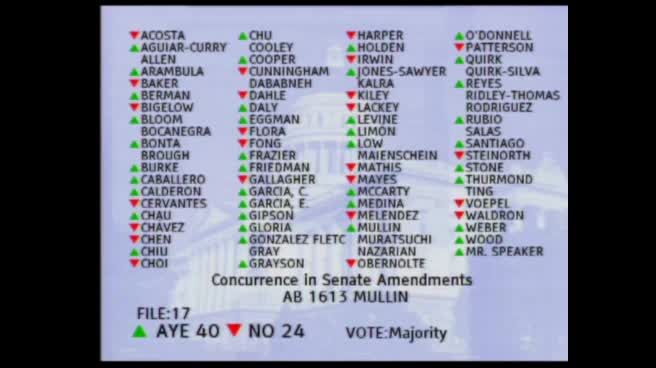
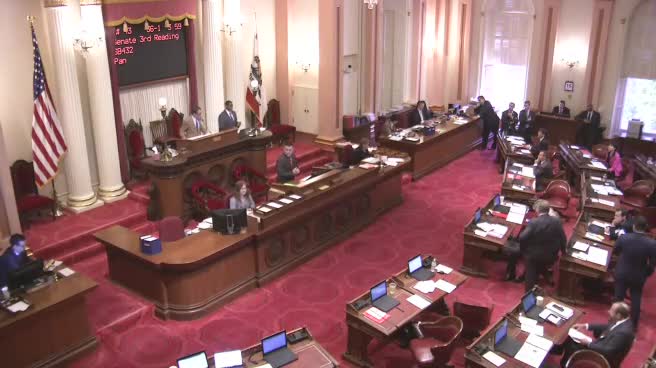
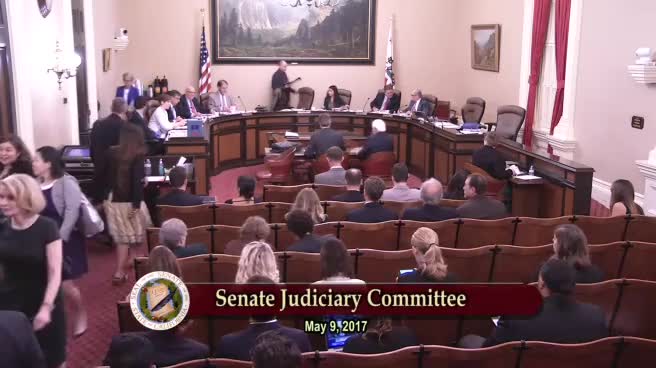
Bill Author

Bill Co-Author(s):