SB 368: Horse racing: fairs: funding.
- Session Year: 2017-2018
- House: Senate
- Latest Version Date: 2017-10-14
(1)The Horse Racing Law provides that any unallocated balance from the total revenue received by the Department of Food and Agriculture pursuant to that law, except as specified, is hereby appropriated without regard to fiscal years for allocation by the Secretary of Food and Agriculture for capital outlay to California fairs for, among other things, fair projects involving public health and safety and projects that are required to protect fair property. That law also provides that a portion of these funds may be allocated to California fairs for general support.
This bill would revise these provisions to include revenue deposited into the Fair and Exposition Fund pursuant to a specified provision and funding appropriated by the Legislature or otherwise designated for California fairs pursuant to the Horse Racing Law or any other law that is to be appropriated without regard to fiscal years for allocation by the secretary for those capital outlay purposes.
(2)Existing law provides that all funds appropriated for California fairs and expositions pursuant to specified provisions of law shall not be utilized for the purposes specified in those provisions but shall instead be utilized for the construction or operation of recreational and cultural facilities of general public interest and may be allocated by the Secretary of Food and Agriculture to all state-designated fairs for those purposes.
This bill would delete these provisions and instead require that all funds appropriated or designated for California fairs and expositions pursuant to specified law or any other law be deposited into the Fair and Exposition Fund and be continuously appropriated as provided in specified provisions of the Horse Racing Law.
(3)By increasing the amounts to be deposited into the Fair and Exposition Fund, which is continuously appropriated, and by appropriating these amounts for new purposes, the bill would make an appropriation.
(a)Any unallocated balance from Sections 19606.1 and 19620.1, revenue deposited into the Fair and Exposition Fund pursuant to Section 19614, and funding appropriated by the Legislature or otherwise designated for California fairs pursuant to this chapter or any other law is hereby appropriated without regard to fiscal years for allocation by the Secretary of Food and Agriculture for capital outlay to California fairs for fair projects involving public health and safety, for fair projects involving major and deferred maintenance, for fair projects necessary due to any emergency, for projects that are required by physical changes to the fair site, for projects that are required to protect the fair property or installation, such as fencing and flood protection, and for the acquisition or improvement of any property or facility that will serve to enhance the operation of the fair.
(b)A portion of the funds subject to allocation pursuant to subdivision (a) may be allocated to California fairs for general operational support. It is the intent of the Legislature that these moneys be used primarily for those fairs whose sources of revenue may be limited for purposes specified in this section.
SEC. 2.Section 3200 of the Food and Agricultural Code is amended to read:3200.All funds appropriated or designated for California fairs and expositions pursuant to this chapter or any other law shall be deposited into the Fair and Exposition Fund and be continuously appropriated as specified in Sections 19606.1 and 19620.2 of the Business and Professions Code.
(a)Any unallocated balance from Sections 19606.1 and 19620.1, revenue deposited into the Fair and Exposition Fund pursuant to Section 19614, and funding appropriated by the Legislature or otherwise designated for California fairs pursuant to this chapter or any other law is hereby appropriated without regard to fiscal years for allocation by the Secretary of Food and Agriculture for capital outlay to California fairs for fair projects involving public health and safety, for fair projects involving major and deferred maintenance, for fair projects necessary due to any emergency, for projects that are required by physical changes to the fair site, for projects that are required to protect the fair property or installation, such as fencing and flood protection, and for the acquisition or improvement of any property or facility that will serve to enhance the operation of the fair.
(b)A portion of the funds subject to allocation pursuant to subdivision (a) may be allocated to California fairs for general operational support. It is the intent of the Legislature that these moneys be used primarily for California those fairs whose sources of revenue may be limited to the for purposes specified in this section.
SEC. 2.Section 3200 of the Food and Agricultural Code is amended to read:3200.All funds appropriated or designated for California fairs and expositions pursuant to this chapter or any other law shall be deposited into the Fair and Exposition Fund and be continuously appropriated as specified in Sections 19606.1 and 19620.2 of the Business and Professions Code.
(a)Any unallocated balance from Sections 19606.1 and 19620.1, revenue deposited into the Fair and Exposition Fund pursuant to Section 19614, and funding appropriated by the Legislature or otherwise designated for California fairs pursuant to this chapter or any other law is hereby appropriated without regard to fiscal years for allocation by the Secretary of Food and Agriculture for capital outlay to California fairs for fair projects involving public health and safety, for fair projects involving major and deferred maintenance, for fair projects necessary due to any emergency, for projects that are required by physical changes to the fair site, for projects that are required to protect the fair property or installation, such as fencing and flood protection, and for the acquisition or improvement of any property or facility that will serve to enhance the operation of the fair.
(b)A portion of the funds subject to allocation pursuant to subdivision (a) may be allocated to California fairs for general operational support. It is the intent of the Legislature that these moneys be used primarily for those California fairs whose sources of revenue may be limited for to the purposes specified in this section.
SEC. 2.Section 3200 of the Food and Agricultural Code is amended to read:3200.All funds appropriated or designated for California fairs and expositions pursuant to this chapter or any other law shall be deposited into the Fair and Exposition Fund and be continuously appropriated as specified in Sections 19606.1 and 19620.2 of the Business and Professions Code.
(a)Any unallocated balance from Section 19620.1 Sections 19606.1 and 19620.1, revenue deposited into the Fair and Exposition Fund pursuant to Section 19614, and funding appropriated by the Legislature or otherwise designated for California fairs pursuant to this chapter or any other law is hereby appropriated without regard to fiscal years for allocation by the Secretary of Food and Agriculture for capital outlay to California fairs for fair projects involving public health and safety, for fair projects involving major and deferred maintenance, for fair projects necessary due to any emergency, for projects that are required by physical changes to the fair site, for projects that are required to protect the fair property or installation, such as fencing and flood protection, and for the acquisition or improvement of any property or facility that will serve to enhance the operation of the fair.
(b)A portion of the funds subject to allocation pursuant to subdivision (a) may be allocated to California fairs for general operational support. It is the intent of the Legislature that these moneys be used primarily for those fairs whose sources of revenue may be limited for purposes specified in this section.
SEC. 2.Section 3200 of the Food and Agricultural Code is amended to read:3200.Notwithstanding any other provision of law, all All funds appropriated or designated for California fairs and expositions pursuant to Sections 19622, 19627, 19627.1, and subdivision (c) of Section 19627.2 of the Business and Professions Code for the 199596 fiscal year shall not be utilized for the purposes specified in those sections but shall, instead, be utilized for the purposes specified in Section 19630 of the Business and Professions Code, and may be allocated by the Secretary of Food and Agriculture to all state designated fairs as defined by Section 19418 of the Business and Professions Code, for the purposes specified in Section 19630. this chapter or any other law shall be deposited into the Fair and Exposition Fund and be continuously appropriated as specified in Sections 19606.1 and 19620.2 of the Business and Professions Code.
|
Date
|
Status
|
|---|---|
| Oct 14, 2017 | Chaptered by Secretary of State. Chapter 808, Statutes of 2017. |
| Oct 14, 2017 | Approved by the Governor. |
| Sep 18, 2017 | Enrolled and presented to the Governor at 3 p.m. |
| Sep 12, 2017 | Assembly amendments concurred in. (Ayes 40. Noes 0.) Ordered to engrossing and enrolling. |
| Aug 31, 2017 | From special consent calendar on motion of Senator McGuire. |
| Aug 29, 2017 | Ordered to special consent calendar. |
| Aug 24, 2017 | In Senate. Concurrence in Assembly amendments pending. |
| Aug 24, 2017 | Read third time. Passed. Ordered to the Senate. |
| Jul 20, 2017 | Read second time. Ordered to consent calendar. |
| Jul 19, 2017 | From committee: Do pass. Ordered to consent calendar. (Ayes 16. Noes 0.) (July 19). |
| Jun 28, 2017 | From committee: Do pass and re-refer to Com. on APPR. with recommendation: To consent calendar. (Ayes 9. Noes 0.) (June 28). Re-referred to Com. on APPR. |
| Jun 22, 2017 | From committee with author's amendments. Read second time and amended. Re-referred to Com. on AGRI. |
| Jun 22, 2017 | From committee: Do pass and re-refer to Com. on AGRI. with recommendation: To consent calendar. (Ayes 17. Noes 0.) (June 21). Re-referred to Com. on AGRI. |
| Jun 12, 2017 | Referred to Coms. on G.O. and AGRI. |
| Jun 1, 2017 | In Assembly. Read first time. Held at Desk. |
| May 31, 2017 | Read third time. Passed. (Ayes 40. Noes 0. Page 1356.) Ordered to the Assembly. |
| May 26, 2017 | Ordered to special consent calendar. |
| May 26, 2017 | Read second time. Ordered to third reading. |
| May 25, 2017 | From committee: Do pass. (Ayes 7. Noes 0. Page 1183.) (May 25). |
| May 19, 2017 | Set for hearing May 25. |
| May 15, 2017 | May 15 hearing: Placed on APPR. suspense file. |
| May 4, 2017 | Set for hearing May 15. |
| May 3, 2017 | May 8 hearing postponed by committee. |
| May 1, 2017 | Set for hearing May 8. |
| Apr 26, 2017 | May 1 hearing postponed by committee. |
| Apr 21, 2017 | Set for hearing May 1. |
| Apr 18, 2017 | From committee: Do pass and re-refer to Com. on APPR. (Ayes 5. Noes 0. Page 726.) (April 18). Re-referred to Com. on APPR. |
| Mar 30, 2017 | Set for hearing April 18. |
| Mar 28, 2017 | From committee: Do pass and re-refer to Com. on AGRI. with recommendation: To consent calendar. (Ayes 11. Noes 0.) (March 28). Re-referred to Com. on AGRI. |
| Mar 21, 2017 | From committee with author's amendments. Read second time and amended. Re-referred to Com. on G.O. |
| Mar 3, 2017 | Set for hearing March 28. |
| Feb 23, 2017 | Referred to Coms. on G.O. and AGRI. |
| Feb 15, 2017 | From printer. May be acted upon on or after March 17. |
| Feb 14, 2017 | Introduced. Read first time. To Com. on RLS. for assignment. To print. |
|
Date
|
Description
|
Location
|
Votes
|
|
|---|---|---|---|---|
| Sep 12, 2017 | Unfinished Business SB368 McGuire et al. Concurrence | Senate Floor |
Passed |
|
| Aug 24, 2017 | SB 368 McGuire Consent Calendar Second Day Regular Session | Assembly Floor |
Passed |
|
| Jul 19, 2017 | Do pass. To Consent Calendar. | Assembly Standing Committee on Appropriations |
Passed |
|
| Jun 28, 2017 | Do pass and be re-referred to the Committee on [Appropriations] with recommendation: To Consent Calendar | Assembly Standing Committee on Agriculture |
Passed |
|
| Jun 21, 2017 | Do pass and be re-referred to the Committee on [Agriculture] with recommendation: To Consent Calendar | Assembly Standing Committee on Governmental Organization |
Passed |
|
| May 31, 2017 | Special Consent Calendar # SB368 | Senate Floor |
Passed |
|
| May 25, 2017 | Do pass | Senate Standing Committee on Appropriations |
Passed |
|
| May 15, 2017 | Placed on suspense file | Senate Standing Committee on Appropriations |
Passed |
|
| Apr 18, 2017 | Do pass, but first be re-referred to the Committee on [Appropriations] | Senate Standing Committee on Agriculture |
Passed |
|
| Mar 28, 2017 | Do pass, but first be re-referred to the Committee on [Agriculture] with the recommendation: To Consent Calendar | Senate Standing Committee on Governmental Organization |
Passed |
This list shows positions taken on this bill by organizations on the date displayed, which is linked to the original source.
Positions by individuals are not included.
|
Organization
|
Position
|
Date
|
|---|---|---|
| California Fairs Alliance | ** Support | Aug 28, 2017 |
| Stanislaus County Fair | ** Support | Aug 28, 2017 |
| Western Fairs Association | ** Support | Aug 28, 2017 |
Office of Senate Floor Analyses (916) 651-1520 Fax: (916) 327-4478 | SB |
UNFINISHED BUSINESS
Bill No: SB 368
:
SENATE GOVERNMENTAL ORG. COMMITTEE: 11-0, 3/28/17
AYES: Glazer, Bradford, Cannella, Dodd, Gaines, Galgiani, Hill, Hueso, Lara, Mendoza, Vidak
NO VOTE RECORDED: Berryhill, Portantino
SENATE AGRICULTURE COMMITTEE: 5-0, 4/18/17
AYES: Galgiani, Wilk, Berryhill, Dodd, Pan
SENATE APPROPRIATIONS COMMITTEE: 7-0, 5/25/17
AYES: Lara, Bates, Beall, Bradford, Hill, Nielsen, Wiener
SENATE FLOOR: 40-0, 5/31/17 (Consent)
AYES: Allen, Anderson, Atkins, Bates, Beall, Berryhill, Bradford, Cannella, De León, Dodd, Fuller, Gaines, Galgiani, Glazer, Hernandez, Hertzberg, Hill, Hueso, Jackson, Lara, Leyva, McGuire, Mendoza, Mitchell, Monning, Moorlach, Morrell, Newman, Nguyen, Nielsen, Pan, Portantino, Roth, Skinner, Stern, Stone, Vidak, Wieckowski, Wiener, Wilk
ASSEMBLY FLOOR: 76-0, 8/24/17 (Consent) - See last page for vote
DIGEST:
This bill provides that any unallocated balance of revenues, derived from specified deposits into the Fair and Exposition (F&E) Fund and other funding appropriated by the Legislature or otherwise designated for fairs, is to be continuously appropriated for allocation by the Secretary of the California Department of Food and Agriculture (CDFA) for capital outlay to fairs.
Assembly Amendments
are technical and add coauthors to the bill.
Existing law:
- Governs fairs and expositions in this state, including the California Exposition and State Fair, county and district fairs, and citrus fruit fairs.
- Provides that CDFA is responsible for ensuring the integrity of the F&E Fund, administering allocations from the fund to the network of California fairs, and providing oversight of activities carried out by each California fair.
- Provides, pursuant to Article IV, Section 19(b) of the Constitution of the State of California, that the Legislature may provide for the regulation of horse races and horse race meetings and wagering on the results.
- Grants the California Horse Racing Board (CHRB) the authority to regulate the various forms of horse racing authorized in this state.
- Requires certain license fees from satellite wagering to be deposited into a separate account in the F&E Fund, and continuously appropriates this revenue for specified purposes, including, among others, the payment of expenses incurred in establishing and operating satellite wagering facilities at fairs and for health and safety repair projects at fairs.
- Requires any fair racing association to deduct an additional 1% from the total amount handled in its daily conventional and exotic pari-mutuel pools, and provides for the deposit of the moneys in the F&E Fund for expenditure for the construction or operation of recreational and cultural facilities of general public interest at fairs throughout the state.
- Provides that any unallocated balance from the total revenue received by CDFA pursuant to Horse Racing Law, except as specified, is appropriated without regard to fiscal years for allocation by the Secretary of CDFA for capital outlay to California fairs for, among other things, fair projects involving public health and safety and projects that are required to protect fair property. Horse Racing Law also provides that a portion of these funds may be allocated to California fairs for general support.
- Provides that all funds appropriated for California fairs and expositions pursuant to specified provisions of law shall not be utilized for the purposes specified in those provisions but shall instead be utilized for the construction or operation of recreational and cultural facilities of general public interest and may be allocated by the Secretary of CDFA to all state designated fairs for those purposes.
This bill:
- Specifies that any unallocated balance of revenues derived from satellite wagering license fees and the distribution of handle from live racing at fairs, as well as other specified fair funding, is continuously appropriated for allocation by the Secretary of CDFA for capital outlay to fairs. This includes fair projects involving public health and safety, fair projects involving major and deferred maintenance, fair projects necessary due to any emergency, projects that are required by physical changes to the fair site, projects that are required to protect the fair property or installation, such as fencing and flood protection, and for the acquisition or improvement of any property or facility that will serve to enhance the operation of the fair.
- Deletes reference to certain obsolete Business and Professions Code sections that appear in Section 3200 of the Food and Agriculture Code relating to the F&E Fund and specifies that all funds appropriated or designated for California fairs and expositions shall be deposited in the F&E Fund and be continuously appropriated, as specified in Horse Racing Law.
Background
Purpose of the bill. The author states that “SB 368 would renew the authority CDFA had over moneys appropriated by the Legislature as they had under previous funding mechanisms when horse racing revenues or the General Fund supported fairs prior to being eliminated. This legislation would expedite the turnaround time for delivering these funds to local fairs to roughly less than three months which would be a huge improvement from the long delays occurring now.”
California’s network of fairs. California fairs have been in existence since 1854. The network of California fairs includes 77 fair organizations divided into four categories: (1) 52 district agricultural associations which are state government entities governed by a board of directors appointed by the Governor; (2) 22 county fairs which are county government or not-for-profit organizations; (3) 2 citrus fruit fairs (Cloverdale and San Bernardino Orange Show) which are not-for-profit organizations; and, (4) the California Exposition and State Fair (Cal Expo), a state entity. California’s 77 fairs are located throughout the state and host fairs from early spring to the fall of each year.
CDFA is responsible for the oversight of California's agricultural industry, including the network of California fairs. The Division of Fairs and Expositions provides fiscal and policy oversight of the network of California fairs and ensures the best use of available funding and services.
Prior to 2009, license fees imposed on horse racing wagers were deposited into the F&E Fund which, in addition to supporting the annual budget of the CHRB, also supplemented the income of the state’s network of fairs. This revenue was continuously appropriated and available to the Secretary of CDFA for allocation to fairs. SBX2 16 (Ashburn, Chapter 12, Statutes of 2009-10 Second Extraordinary Session) shifted the horse racing industry's obligation to fund fairs from license fees imposed on horse racing wagers to the General Fund. Specifically, SBX2 16 provided an annual continuous appropriation of $32 million from the General Fund to support the fairs. This change was included in a package of measures designed to provide economic stimulus for the horse racing industry.
In Fiscal Year 2011-12, fair funding at the state level was eliminated as part of budget cuts designed to address the state's ongoing financial crisis. Additionally, provisions related to specified unallocated revenues derived from horse racing that had been continuously appropriated to the CDFA Secretary for capital outlay to California fairs were repealed. This bill restores CDFA’s authority as it pertains to these funds.
Since 2011, some state funding has been restored to fairs. Over the last two years, $11 million for deferred maintenance was included in the budget to support the fairs. The 2015-16 Budget included a $7 million allocation, and the 2016-2017 Budget included a $4 million allocation. The Department of Finance allocates deferred maintenance funds.
According to CDFA, approximately 8 percent of the 2015-16 deferred maintenance funds have been disbursed and construction on those projects is scheduled to start in early spring of 2017. For the 2016-17 deferred maintenance funds, no monies have been disbursed.
Fair infrastructure needs. The 2016 California Five-Year Infrastructure Plan issued by the Governor’s Office identified an approximate $89 million in deferred maintenance projects for fairs.
The report also noted “infrastructure needs for the network of California fairs is primarily driven by the age of the facilities. The majority of the state’s fair facilities date back to the 1940’s and were constructed through the Federal Works Projects Administration and the California Conservation Corps. Due to the limited availability of funding in recent years, the network of California fairs now faces a backlog of deferred maintenance needs in many of its 3,000 buildings. The most common deferred maintenance issues include the need for sewer and water line replacement, electrical repairs, asphalt repairs, roofing replacement and retrofits for ADA compliance.”
Related/Prior Legislation
AB 2226 (Bigelow, 2016), among other things, would have specified that any unallocated balance of revenues derived from license fees from satellite wagering and distribution of handle from live racing at fairs is continuously appropriated for allocation by CDFA to California fairs. (Held in the Senate Appropriations Committee)
AB 2678 (Gray, 2016) would have required retailers at state-designated fairs to segregate revenue from sales and allocated 30 percent of this revenue to the CDFA Secretary for allocation for specified fair projects. (Held in the Senate Appropriations Committee)
SB 741 (Cannella, 2013), among other things, would have deleted provisions requiring satellite wagering license fees be deposited into a separate account in the F&E Fund for specified purposes and would have instead required certain revenues paid by racing associations and fairs generated by pari-mutuel wagering and certain revenues from live races paid by fair racing associations as license fees be deposited into the F&E Fund for various purposes, including, among others, capital improvements at fairgrounds. (Held in the Assembly Appropriations Committee)
AB 95 (Committee on Budget, Chapter 2, Statutes of 2011) eliminated state support for the network of California fairs including the annual transfer from the General Fund and repealed provisions related to the fairs including reporting, auditing, and program management, as well as technical changes necessary to remove state support for the program.
SBX2 16 (Ashburn, Chapter 12, Statutes of 2009-10 Second Extraordinary Session) eliminated the $40 million floor on the amount the horse racing industry is required to pay annually for support of the network of California fairs, the CHRB, and the Kenneth L. Maddy Equine Analytical Chemistry Laboratory at UC Davis. Other than the supplemental 1 percent assessed against fair meets, it also eliminated the license fee on horse racing wagers and provided that beginning on July 1, 2009, and annually thereafter, $32 million shall be appropriated from the General Fund and paid into the F&E Fund for the financial support of the state’s network of fairs.
SB 1825 (Kelley, Chapter 342, Statutes of 2000) provided a minimum of $40 million per year in license fees paid to the state by racing associations and fairs for support of the network of California fairs, CHRB, and the Kenneth L. Maddy Equine Analytical Chemistry Laboratory at UC Davis.
FISCAL EFFECT: Appropriation: Fiscal Com.: Local:
According to the Assembly Appropriations Committee, no new state costs. SB 368 alters how existing funds are allocated to California fairs and for what purposes these moneys can be spent.
California Fairs Alliance
Stanislaus County Fair
Western Fairs Association
OPPOSITION: (Verified 8/24/17)
None received
ARGUMENTS IN SUPPORT: The Western Fairs Association states that, “this bill will allow CDFA to better manage and oversee important fairground infrastructure funding.”
Additionally, the California Fairs Alliance notes that they were “very pleased when the Legislature approved $7 million dollars in needed funding for infrastructure projects in the 2015-2016 State Budget. Now almost two years later, only 8 percent of the projects are underway. SB 368 seeks to prevent this type of delay for future project funding by allowing CDFA to manage funds using a law-standing existing administrative structure.”
ASSEMBLY FLOOR: 76-0, 8/24/17
AYES: Acosta, Arambula, Baker, Berman, Bigelow, Bloom, Bocanegra, Bonta, Brough, Burke, Caballero, Calderon, Cervantes, Chau, Chávez, Chen, Chiu, Choi, Chu, Cooley, Cooper, Cunningham, Dababneh, Dahle, Daly, Eggman, Flora, Fong, Frazier, Friedman, Gallagher, Cristina Garcia, Eduardo Garcia, Gipson, Gloria, Gonzalez Fletcher, Gray, Grayson, Harper, Holden, Irwin, Jones-Sawyer, Kalra, Kiley, Lackey, Levine, Limón, Low, Maienschein, Mathis, Mayes, Medina, Melendez, Mullin, Muratsuchi, Nazarian, Obernolte, O'Donnell, Patterson, Quirk, Quirk-Silva, Reyes, Ridley-Thomas, Rodriguez, Rubio, Salas, Santiago, Steinorth, Mark Stone, Thurmond, Ting, Voepel, Waldron, Weber, Wood, Rendon
NO VOTE RECORDED: Aguiar-Curry, Travis Allen, McCarty
8/28/17 9:37:23
Date of Hearing: July 19, 2017
ASSEMBLY COMMITTEE ON APPROPRIATIONS
Lorena Gonzalez Fletcher, Chair
SBPCA Bill Id:SB 368
Author:(McGuire) – As Amended Ver:June 22, 2017
Policy Committee: | Governmental Organization | Vote: | 17 - 0 |
Agriculture | 9 - 0 |
Urgency: No State Mandated Local Program: No Reimbursable: No
SUMMARY:
This bill requires that any unallocated balance from the Fair and Exposition Fund (F&E Fund), as well as funding appropriated by the Legislature or otherwise designated for California fairs, is to be continuously appropriated to the California Department of Food and Agriculture (CDFA) for capital outlay to California fairs.
FISCAL EFFECT:
No new state costs. SB 368 alters how existing funds are allocated to California fairs and for what purposes these moneys can be spent.
COMMENTS:
Background and Purpose. CDFA, through the Division of Fairs and Exhibitions, oversees and regulates California’s fairs and manages the F&E Fund. The F&E Fund is the depository for money collected from live horse racing handles, pari-mutuel wagering, advance deposit wagering fees, fair loan principal and interest payments, and the sale of property of county fairs and agricultural associations. The F&E Fund was created to help finance the construction, renovation, and repair of fair infrastructure.
CDFA had full control and flexibility over dollars in the F&E Fund which was allocated to assist fairs with their health, safety, infrastructure and operational needs. However, since 2011, when funding for fairs was overhauled and General Fund support was eliminated, CDFA has lost flexibility in how it can use existing funds in the F&E Fund.
According to the author, SB 368 will renew CDFA’s authority over moneys appropriated by the Legislature as they had under previous funding mechanisms when horse racing revenue or the General Fund supported fairs. The author contends this bill will expedite the turnaround time for delivering these funds to local fairs.
Analysis Prepared by: Luke Reidenbach / APPR. / (916) 319-2081
Date of Hearing: June 28, 2017
ASSEMBLY COMMITTEE ON AGRICULTURE
Anna Caballero, Chair
SBPCA Bill Id:SB 368
Author:(McGuire) – As Amended Ver:June 22, 2017
SENATE VOTE: 40-0
SUBJECT: Horse racing: fairs: funding.
SUMMARY: This bill provides that any unallocated balance of revenues, from specified deposits into the Fair and Exposition (F&E) Fund and other funding appropriated by the Legislature or otherwise designated for California fairs, is to be continuously appropriated for allocation by the Secretary of the California Department of Food and Agriculture (CDFA) for capital outlay to fairs. Specifically, this bill:
- Specifies that any unallocated balance of revenues derived from satellite wagering license fees and the distribution of handle from live racing at fairs, as well as other specified fair funding, is continuously appropriated for allocation by the Secretary of CDFA for capital outlay to California fairs, as specified.
- Deletes reference to certain obsolete Business and Professions Code sections that appear in the Food and Agriculture Code relating to the F&E Fund, as specified.
EXISTING LAW:
- Governs fairs and expositions in this state, including the California Exposition and State Fair, county and district fairs, and citrus fruit fairs.
- Provides that CDFA is responsible for ensuring the integrity of the F&E Fund, administering allocations from the fund to the network of California fairs, and providing oversight of activities carried out by each California fair.
- Provides that the Legislature may provide for the regulation of horse races and horse race meetings and wagering on the results.
- Grants the California Horse Racing Board (CHRB) the authority to regulate the various forms of horse racing authorized in this state.
- Requires certain license fees from satellite wagering to be deposited into a separate account in the F&E Fund, and continuously appropriates this revenue for specified purposes.
- Requires any fair racing association to deduct an additional 1% from the total amount handled in its daily conventional and exotic pari-mutuel pools, and provides for the deposit of the moneys in the F&E Fund for expenditure for the construction or operation of recreational and cultural facilities of general public interest at fairs throughout the state.
- Provides that any unallocated balance from the total revenue received by CDFA pursuant to Horse Racing Law, except as specified, is appropriated without regard to fiscal years for allocation by the Secretary of CDFA for capital outlay to California fairs for, among other things, fair projects involving public health and safety and projects that are required to protect fair property. Horse Racing Law also provides that a portion of these funds may be allocated to California fairs for general support.
- Provides that all funds appropriated for California fairs and expositions pursuant to specified provisions of law shall not be utilized for the purposes specified in those provisions but shall instead be utilized for the construction or operation of recreational and cultural facilities of general public interest and may be allocated by the Secretary of CDFA to all state designated fairs for those purposes.
FISCAL EFFECT: Unknown
COMMENTS: California fairs have been in existence since 1854. California’s 77 fairs are located throughout the state. CDFA is responsible for the oversight of California's agricultural industry, including the network of California fairs. The Division of Fairs and Expositions provides fiscal and policy oversight of the network of California fairs and ensures the best use of available funding and services.
Prior to 2009, license fees imposed on horse racing wagers were deposited into the F&E Fund which, in addition to supporting the annual budget of the CHRB, also supplemented the income of the state’s network of fairs. This revenue was continuously appropriated and available to the Secretary of CDFA for allocation to fairs. SB X2 16 (Ashburn, Chapter 12, Statutes of 2009) shifted the horse racing industry's obligation to fund fairs from license fees imposed on horse racing wagers to the General Fund. Specifically, SB X2 16 provided an annual continuous appropriation of $32 million from the General Fund (GF) to support the fairs. This change was included in a package of measures designed to provide economic stimulus for the horse racing industry.
In Fiscal Year 2011-12, fair funding at the state level was eliminated as part of budget cuts designed to address the state's ongoing financial crisis. Additionally, provisions related to specified unallocated revenues derived from horse racing that had been continuously appropriated to the CDFA Secretary for capital outlay to California fairs were repealed. This bill restores CDFA’s authority as it pertains to these funds.
Since 2011, some state funding has been restored to fairs. Over the last two years, $11 million for deferred maintenance was included in the budget to support the fairs. The 2015-16 Budget included a $7 million allocation, and the 2016-2017 Budget included a $4 million allocation. The Department of Finance allocates deferred maintenance funds.
According to CDFA, approximately 8% of the 2015-16 deferred maintenance funds have been disbursed and construction on those projects is scheduled to start in early spring of 2017. None of the 2016-2017 deferred maintenance funds have been disbursed.
The 2016 California Five-Year Infrastructure Plan issued by the Governor’s Office identified an approximate $89 million in deferred maintenance projects for fairs. The report also noted infrastructure needs for the network of California fairs is primarily driven by the age of the facilities. Due to the limited availability of funding in recent years, the network of California fairs now faces a backlog of deferred maintenance needs in many of its 3,000 buildings. The most common deferred maintenance issues include the need for sewer and water line replacement, electrical repairs, asphalt repairs, roofing replacement and retrofits for ADA compliance.
According to the author this bill would renew the authority CDFA had over moneys appropriated by the Legislature as they had under previous funding mechanisms when horse racing revenues or GF supported fairs prior to being eliminated. This legislation would expedite the turnaround time for delivering these funds to local fairs to roughly less than three months, which would be a huge improvement from the long delays occurring now.
Double-Referral. This bill was heard by the Assembly Governmental Organization Committee on June 21, 2017, where it passed with a 17-0 vote.
REGISTERED SUPPORT / OPPOSITION:
Support
California Fairs Alliance
Stanislaus County Fair
Western Fairs Association
Opposition
None on file.
Analysis Prepared by: Victor Francovich / AGRI. / (916) 319-2084
Date of Hearing: June 21, 2017
ASSEMBLY COMMITTEE ON GOVERNMENTAL ORGANIZATION
Adam Gray, Chair
SBPCA Bill Id:SB 368
Author:(McGuire) – As Amended Ver:March 21, 2017
SENATE VOTE: 40-0
SUBJECT: Horse racing: fairs: funding
SUMMARY: This bill would provide that any unallocated balance, as specified, from the Fair and Exposition (F&E) Fund, as well as funding appropriated by the Legislature or otherwise designated from California fairs, is to be continuously appropriated to the Secretary of the California Department of Food and Agriculture (CDFA) for capital outlay to California fairs. Specifically, this bill:
1) States that any unallocated funds from satellite wagering licensing fees, the distribution of handle from live racing at fairs, and funding appropriated by the Legislature or otherwise designated for California fairs be deposited into the F&E Fund and appropriated, without regard to fiscal years, for allocation by the Secretary of CDFA for capital outlay to California fairs, as specified.
2) Deletes reference to certain obsolete Business and Professions Code sections that appear in Section 3200 of the Food and Agriculture Code relating to the F&E Fund and specifies that all funds appropriated or designated for California fairs and expositions shall be deposited in the F&E Fund and be continuously appropriated, as specified in Horse Racing Law.
EXISTING LAW:
- Defines a state-designated fair as the California Exposition and State Fair in the City of Sacramento and those fairs specified in Business and Professions Code § 19418.1 (district agricultural associations), §19418.2 (county fairs), and §19418.3 (citrus fruit fairs) that may receive financial support or are otherwise governed by §19400 et seq. (governing horse racing). These fairs are also collectively referred to as the "network of California fairs."
- Requires certain license fees from satellite wagering to be deposited into a separate account in the Satellite Wagering Account (SWA). These moneys are continuously appropriated for specified fair-related purposes, including the payment of expenses incurred in establishing and operating satellite-wagering facilities at fairs, as specified.
- Declares in Horse Racing Law that any unallocated balance from the total revenue received by CDFA, except as specified, is hereby appropriated without regard to fiscal years for allocation by the Secretary of Food and Agriculture for capital outlay to California fairs, including state-designated fairs, for among other things, fair projects involving public health and safety, and projects that are required to protect fair property. The statute also provides that a portion of these funds may be allocated to California fairs for general operational support.
- Requires any fair racing association to deduct an additional 1% from the total amount handled in its daily conventional and exotic pari-mutuel pools, and provides for the deposit of the moneys in the F&E Fund for expenditure for the construction or operation of recreational and cultural facilities of general public interest at fairs throughout the state.
- Provides from the total revenue received by CDFA, exclusive of money received pursuant to Business and Professions Code § 19640 and 19641, the Legislature shall annually appropriate to the department those sums as it deems necessary for the following purposes:
- For the oversight of the network of California fairs receiving money from the fund.
- For the auditing of all district agricultural association fairs, county fairs, and citrus fruit fairs.
- States the Legislature finds and declares that CDFA is responsible for ensuring the integrity of the Fair and Exposition Fund, administering allocations from the fund to the network of California fairs, as defined in Business and Professions Code §19418 to 19418.3, inclusive, and providing oversight of activities carried out by each California fair. Oversight shall include, but not be limited to, the following:
- Monitoring the solvency of the F&E Fund.
- Distributing available state resources to the network of California fairs based on criteria for state allocations approved by the Secretary of Food and Agriculture. The criteria for the distribution of available state resources to the network of California fairs shall not include a consideration of the structure that governs the fair.
- Creating a framework for administration of the network of California fairs allowing for maximum autonomy and local decision making authority, and conducting, or causing to be conducted, annual fiscal audits and periodic compliance audits.
- Conducting fiscal and performance audits of county fairs and citrus fruit fairs that are requested by the fair that is the subject of the audit, and that CDFA deems to be necessary.
- Guiding and providing incentives to fairs to seek matching funds and generate new revenue from a variety of sources.
- Supporting continuous improvement of fair programming to ensure that California fairs remain highly relevant community institutions.
FISCAL EFFECT: Unknown
COMMENTS:
Purpose of the bill: According to the author's office, “SB 368 would renew the authority CDFA had over moneys appropriated by the Legislature as they had under previous funding mechanisms when horse racing revenues or the General Fund supported fairs prior to being eliminated. This legislation would expedite the turnaround time for delivering these funds to local fairs to roughly less than three months which would be a huge improvement from the long delays occurring now.”
Background: California fairs have been in existence since 1854 and have since grown to encompass 78 fairs statewide. This network of California fairs is composed of 52 district agricultural associations (DAA), 23 county fairs, 2 citrus fruit fairs, and The California Exposition and State Fair (Cal Expo). DAAs are state government entities that are governed by nine-member gubernatorial appointed boards of directors. In contrast, county fairs are county government or not-for-profit organizations; citrus fruit fairs are not-for-profit organizations; and Cal Expo is a state agency.
The CDFA maintains regulatory oversight over fairs and delegates general authority to its Division of Fairs and Expositions. The vision of this oversight is to enrich the lives of California's citizens by ensuring the network of California fairs continue to exist as viable, recreational and cultural facilities of general public interest. California's fairs serve as world leaders in providing educational and competitive exhibits that highlight California's industry and industrial enterprises, resources and products of every kind & nature. California fairs focus on improvement, promotion, encouragement and reward of excellence in those endeavors.
The Legislature finds and declares that CDFA is responsible for ensuring the integrity of the Fair and Exposition Fund, administering allocations from the fund to the network of California fairs, as defined in Business and Professions Code §19418 to 19418.3, inclusive, and providing oversight of activities carried out by each California fair. Current law requires specific license fees in Horse Racing Law from satellite wagering be deposited into a separate account in the Fair and Exposition Fund, and continuously appropriates those moneys for specified fair-related purposes, including, among others, the payment of expenses incurred in establishing and operating satellite wagering facilities at fairs and for health and safety repair and other projects at fairs.
The source of state funding for fairs has historically been dependent on horse racing license fees, which in recent years have significantly declined. In 2009, the Legislature recognized the need for a new source of funding for the continuation of fairs and, thus, continuously appropriated $32 million from the state's General Fund to be paid into the F&E Fund. However, the 2011-12 state budget eliminated those General Fund contributions, requiring DAAs to be self-sufficient as of January 1, 2012.
Since 2011, CDFA has received $3 million in the FY 2015-16 budget in part to replace allocations to fairs in the F&E Fund. Additionally, CDFA received $7 million in the FY 2015-16 budget and $4 million in the FY 2016-17 budget for deferred maintenance of the fairs. The network of California fairs have an approximate $325 million in deferred maintenance projects.
2016 California Five-Year Infrastructure Plan: The 2016 California Five-Year Infrastructure Plan issued by the Governor’s Office identified an approximate $89 million in deferred maintenance projects for fairs. The report also noted, “infrastructure needs for the network of California fairs is primarily driven by the age of the facilities. The majority of the state’s fair facilities date back to the 1940’s and were constructed through the Federal Works Projects Administration and the California Conservation Corps. Due to the limited availability of funding in recent years, the network of California fairs now faces a backlog of deferred maintenance needs in many of its 3,000 buildings. The most common deferred maintenance issues include the need for sewer and water line replacement, electrical repairs, asphalt repairs, roofing replacement and retrofits for ADA compliance.”
Double-referral: This bill is double-referred to the Assembly Agriculture Committee, where it will be heard if passed by this Committee.
Related legislation:
SB 274 (Glazer of 2017) would authorize the use of funds collected from live racing fees and pari-mutuel pools for payment to a fair conducting a live racing meeting or as a payment to a joint powers authority for the purposes of improving a fair enclosure, racetrack maintenance, safety at fairs, or other similar activities. This bill is pending in the Assembly G.O. Committee.
AB 1499 (Gray of 2017) would require the Board of Equalization (BOE) to report the amount of taxable sales and purchases within a state designated fair area, as defined, to the Department of Finance (DOF). Of this reported amount, 0.75% of it must be included in the Governor’s Budget for allocation to the Fair and Exposition Fund. This bill is pending in Senate Governance and Finance Committee.
Prior legislation: AB 2226 (Bigelow, 2016) would have specified that any unallocated balance of revenues derived from license fees from satellite wagering and distribution of handle from live racing at fairs is continuously appropriated for allocation by CDFA to California fairs. This bill was held in the Assembly Appropriations Committee.
SB 741 (Cannella, 2013), among other things, would have deleted provisions requiring satellite wagering license fees to be deposited into a separate account in the F&E Fund for specified purposes and instead would have required certain revenues to be paid by racing associations and fairs generated by pari-mutuel wagering and certain revenues from live races paid by fair racing associations as license fees to be deposited into the F&E Fund for various purposes, including capital improvements at fairgrounds. This bill was held in the Assembly Appropriations Committee.
AB 95 (Committee on Budget, Chapter 2, Statutes of 2011) among other things, discontinued the $32 million annually appropriated from the General Fund to the F&E Fund.
SBX2 16 (Ashburn, Chapter 12, Statutes of 2009) eliminated the $40 million minimum required for the racing associations and fairs to pay annually to the state. The bill also eliminated the license fee on horse racing wagers and provided that beginning July 1, 2009, and annually thereafter, $32 million shall be appropriated from the General Fund and paid into the F&E Fund for the support of the state’s fairs.
AB 765 (Evans, Chapter 613, Statutes of 2007) provides that a fair, combination of fairs, or an association conducting racing at a fair may, with CHRB approval, deduct an additional 1% from its handle to be used for maintenance and improvements at a fair’s racetrack enclosure.
SB 1825 (Kelley, Chapter 342, Statutes of 2000) requires a $40 million minimum for racing associations and fairs to pay annually to the state.
REGISTERED SUPPORT / OPPOSITION:
Support
California Fairs Alliance
Stanislaus County Fair
Western Fairs Association
Opposition
None on file
Analysis Prepared by: Eric Johnson / G.O. / (916) 319-2531
Office of Senate Floor Analyses (916) 651-1520 Fax: (916) 327-4478 | SB |
THIRD READING
Bill No: SB 368
:
SENATE GOVERNMENTAL ORG. COMMITTEE: 11-0, 3/28/17
AYES: Glazer, Bradford, Cannella, Dodd, Gaines, Galgiani, Hill, Hueso, Lara, Mendoza, Vidak
NO VOTE RECORDED: Berryhill, Portantino
SENATE AGRICULTURE COMMITTEE: 5-0, 4/18/17
AYES: Galgiani, Wilk, Berryhill, Dodd, Pan
SENATE APPROPRIATIONS COMMITTEE: 7-0, 5/25/17
AYES: Lara, Bates, Beall, Bradford, Hill, Nielsen, Wiener
DIGEST: This bill provides that any unallocated balance of revenues, derived from specified deposits into the Fair and Exposition (F&E) Fund and other funding appropriated by the Legislature or otherwise designated for California fairs, is to be continuously appropriated for allocation by the Secretary of the California Department of Food and Agriculture (CDFA) for capital outlay to fairs.
ANALYSIS:
Existing law:
- Governs fairs and expositions in this state, including the California Exposition and State Fair, county and district fairs, and citrus fruit fairs.
- Provides that CDFA is responsible for ensuring the integrity of the F&E Fund, administering allocations from the fund to the network of California fairs, and providing oversight of activities carried out by each California fair.
- Provides, pursuant to Article IV, Section 19(b) of the Constitution of the State of California, that the Legislature may provide for the regulation of horse races and horse race meetings and wagering on the results.
- Grants the California Horse Racing Board (CHRB) the authority to regulate the various forms of horse racing authorized in this state.
- Requires certain license fees from satellite wagering to be deposited into a separate account in the F&E Fund, and continuously appropriates this revenue for specified purposes, including, among others, the payment of expenses incurred in establishing and operating satellite wagering facilities at fairs and for health and safety repair projects at fairs.
- Requires any fair racing association to deduct an additional 1% from the total amount handled in its daily conventional and exotic pari-mutuel pools, and provides for the deposit of the moneys in the F&E Fund for expenditure for the construction or operation of recreational and cultural facilities of general public interest at fairs throughout the state.
- Provides that any unallocated balance from the total revenue received by CDFA pursuant to Horse Racing Law, except as specified, is appropriated without regard to fiscal years for allocation by the Secretary of CDFA for capital outlay to California fairs for, among other things, fair projects involving public health and safety and projects that are required to protect fair property. Horse Racing Law also provides that a portion of these funds may be allocated to California fairs for general support.
- Provides that all funds appropriated for California fairs and expositions pursuant to specified provisions of law shall not be utilized for the purposes specified in those provisions but shall instead be utilized for the construction or operation of recreational and cultural facilities of general public interest and may be allocated by the Secretary of CDFA to all state designated fairs for those purposes.
This bill:
- Specifies that any unallocated balance of revenues derived from satellite wagering license fees and the distribution of handle from live racing at fairs, as well as other specified fair funding, is continuously appropriated for allocation by the Secretary of CDFA for capital outlay to California fairs. This includes fair projects involving public health and safety, fair projects involving major and deferred maintenance, fair projects necessary due to any emergency, projects that are required by physical changes to the fair site, projects that are required to protect the fair property or installation, such as fencing and flood protection, and for the acquisition or improvement of any property or facility that will serve to enhance the operation of the fair.
- Deletes reference to certain obsolete Business and Professions Code sections that appear in Section 3200 of the Food and Agriculture Code relating to the F&E Fund and specifies that all funds appropriated or designated for California fairs and expositions shall be deposited in the F&E Fund and be continuously appropriated, as specified in Horse Racing Law.
Background
Purpose of the bill. The author states that “SB 368 would renew the authority CDFA had over moneys appropriated by the Legislature as they had under previous funding mechanisms when horse racing revenues or the General Fund supported fairs prior to being eliminated. This legislation would expedite the turnaround time for delivering these funds to local fairs to roughly less than three months which would be a huge improvement from the long delays occurring now.”
California’s network of fairs. California fairs have been in existence since 1854. The network of California fairs includes 77 fair organizations divided into four categories: (1) 52 district agricultural associations which are state government entities governed by a board of directors appointed by the Governor; (2) 22 county fairs which are county government or not-for-profit organizations; (3) 2 citrus fruit fairs (Cloverdale and San Bernardino Orange Show) which are not-for-profit organizations; and, (4) the California Exposition and State Fair (Cal Expo), a state entity. California’s 77 fairs are located throughout the state and host fairs from early spring to the fall of each year.
CDFA is responsible for the oversight of California's agricultural industry, including the network of California fairs. The Division of Fairs and Expositions provides fiscal and policy oversight of the network of California fairs and ensures the best use of available funding and services.
Prior to 2009, license fees imposed on horse racing wagers were deposited into the F&E Fund which, in addition to supporting the annual budget of the CHRB, also supplemented the income of the state’s network of fairs. This revenue was continuously appropriated and available to the Secretary of CDFA for allocation to fairs. SBX2 16 (Ashburn, Chapter 12, Statutes of 2009-10 Second Extraordinary Session) shifted the horse racing industry's obligation to fund fairs from license fees imposed on horse racing wagers to the General Fund. Specifically, SBX2 16 provided an annual continuous appropriation of $32 million from the General Fund to support the fairs. This change was included in a package of measures designed to provide economic stimulus for the horse racing industry.
In Fiscal Year 2011-12, fair funding at the state level was eliminated as part of budget cuts designed to address the state's ongoing financial crisis. Additionally, provisions related to specified unallocated revenues derived from horse racing that had been continuously appropriated to the CDFA Secretary for capital outlay to California fairs were repealed. This bill restores CDFA’s authority as it pertains to these funds.
Since 2011, some state funding has been restored to fairs. Over the last two years, $11 million for deferred maintenance was included in the budget to support the fairs. The 2015-16 Budget included a $7 million allocation, and the 2016-2017 Budget included a $4 million allocation. The Department of Finance allocates deferred maintenance funds.
According to CDFA, approximately 8% of the 2015-16 deferred maintenance funds have been disbursed and construction on those projects is scheduled to start in early spring of 2017. For the 2016-17 deferred maintenance funds, no monies have been disbursed.
Fair infrastructure needs. The 2016 California Five-Year Infrastructure Plan issued by the Governor’s Office identified an approximate $89 million in deferred maintenance projects for fairs.
The report also noted “infrastructure needs for the network of California fairs is primarily driven by the age of the facilities. The majority of the state’s fair facilities date back to the 1940’s and were constructed through the Federal Works Projects Administration and the California Conservation Corps. Due to the limited availability of funding in recent years, the network of California fairs now faces a backlog of deferred maintenance needs in many of its 3,000 buildings. The most common deferred maintenance issues include the need for sewer and water line replacement, electrical repairs, asphalt repairs, roofing replacement and retrofits for ADA compliance.”
Related/Prior Legislation
SB 274 (Glazer, 2017) authorizes CDFA to remit funds collected from specified live horse racing handles as license fees, to a fair conducting a live racing meeting or to a joint powers authority involved in conducting a live racing meeting at a fair, for purposes of improving a fair enclosure, racetrack maintenance, safety at fairs, or other similar activities. (Pending in the Assembly Governmental Organization Committee)
AB 2226 (Bigelow, 2016), among other things, would have specified that any unallocated balance of revenues derived from license fees from satellite wagering and distribution of handle from live racing at fairs is continuously appropriated for allocation by CDFA to California fairs. (Held in the Senate Appropriations Committee)
AB 2678 (Gray, 2016) would have required retailers at state-designated fairs to segregate revenue from sales and allocated 30% of this revenue to the CDFA Secretary for allocation for specified fair projects. (Held in the Senate Appropriations Committee)
SB 741 (Cannella, 2013), among other things, would have deleted provisions requiring satellite wagering license fees be deposited into a separate account in the F&E Fund for specified purposes and would have instead required certain revenues paid by racing associations and fairs generated by pari-mutuel wagering and certain revenues from live races paid by fair racing associations as license fees be deposited into the F&E Fund for various purposes, including, among others, capital improvements at fairgrounds. (Held in the Assembly Appropriations Committee)
AB 95 (Committee on Budget, Chapter 2, Statutes of 2011) eliminated state support for the network of California fairs including the annual transfer from the General Fund and repealed provisions related to the fairs including reporting, auditing, and program management, as well as technical changes necessary to remove state support for the program.
SBX2 16 (Ashburn, Chapter 12, Statutes of 2009-10 Second Extraordinary Session) eliminated the $40 million floor on the amount the horse racing industry is required to pay annually for support of the network of California fairs, the CHRB, and the Kenneth L. Maddy Equine Analytical Chemistry Laboratory at UC Davis. Other than the supplemental 1% assessed against fair meets, it also eliminated the license fee on horse racing wagers and provided that beginning on July 1, 2009, and annually thereafter, $32 million shall be appropriated from the General Fund and paid into the F&E Fund for the financial support of the state’s network of fairs.
SB 1825 (Kelley, Chapter 342, Statutes of 2000) provided a minimum of $40 million per year in license fees paid to the state by racing associations and fairs for support of the network of California fairs, CHRB, and the Kenneth L. Maddy Equine Analytical Chemistry Laboratory at UC Davis.
FISCAL EFFECT: Appropriation: Fiscal Com.: Local:
According to the Senate Appropriations Committee, the fiscal impact is unknown, but potentially significant costs to CDFA for additional staff to manage the workload associated with planning, coordinating and overseeing the allocation of funds for the capital outlay projects including performing compliance audits to verify the individual projects and reporting audit findings to fair management, fair boards of directors and Fairs and Exhibitions Branch management.
Senate Appropriations staff notes that this bill appropriates money deposited into the F&E Fund for new purposes and increases the amounts to be deposited into the F&E Fund.
Since 2011, CDFA has lost some flexibility and autonomy in reference to using existing funds in the F&E Fund. Many of the funds deposited into the F&E Fund come from fund sources tied to specific activities. This bill renews some of the authority that CDFA had over monies appropriated by the Legislature under previous funding mechanisms by allowing allocation for capital outlay to California fairs.
California Fairs Alliance
Stanislaus County Fair
Western Fairs Association
OPPOSITION: (Verified 5/26/17)
None received
ARGUMENTS IN SUPPORT: The Western Fairs Association states that, “this bill will allow CDFA to better manage and oversee important fairground infrastructure funding.”
Additionally, the California Fairs Alliance notes that they were “very pleased when the Legislature approved $7 million dollars in needed funding for infrastructure projects in the 2015-2016 State Budget. Now almost two years later, only 8% of the projects are underway. SB 368 seeks to prevent this type of delay for future project funding by allowing CDFA to manage funds using a law-standing existing administrative structure.”
5/27/17 18:06:05
**** END ****
SENATE COMMITTEE ON APPROPRIATIONS
Senator Ricardo Lara, Chair
2017 - 2018 Regular Session
SB 368 (McGuire) - Horse racing: fairs: funding
Version: March 21, 2017 | Policy Vote: G.O. 11 - 0, AGRI. 5 - 0 |
Urgency: No | Mandate: No |
Hearing Date: May 15, 2017 | Consultant: Debra Cooper |
This bill meets the criteria for referral to the Suspense File.
Bill Summary:
SB 368 would provide that any unallocated balance, as specified, from the Fair and Exposition (F&E) Fund, as well as funding appropriated by the Legislature or otherwise designated from California fairs, is to be continuously appropriated to the Secretary of the California Department of Food and Agriculture (CDFA) for capital outlay to California fairs.
Fiscal Impact:
- Unknown, but potentially significant costs to CDFA for additional staff to manage the workload associated with planning, coordinating and overseeing the allocation of funds for the capital outlay projects including performing compliance audits to verify the individual projects and reporting audit findings to fair management, fair boards of directors and Fairs and Exhibitions Branch management. (F&E Fund)
Background:
The California Department of Food and Agriculture (CDFA) holds fiscal and policy regulatory oversight over fairs and delegates this authority to its Division of Fairs and Expositions. The Division of Fairs and Expositions also manages the Fair and Exposition (F&E) Fund, which is the depository for money collected from live horse racing handles, pari-mutuel wagering, advance deposit wagering fees, fair loan principal and interest payments, and the sale of real property of agricultural associations and county fairs. The F&E Fund was established in part to help finance the construction, renovation, and repair of fair facilities, including the racing infrastructure and race track safety.
Prior to 2009, funding for these fairs was supported in part by horse racing license fees. Beginning in 2009, $32 million was continuously appropriated from the General Fund into the F&E Fund to provide funding for the network of fairs. CDFA had full control and flexibility over dollars in the F&E Fund which was allocated to assist fairs with their health, safety, infrastructure and operational needs. However, the General Fund support was eliminated in the 2011-12 budget, thus requiring the fairs to be self-sufficient.
Since 2011, CDFA has received $3 million in the FY 2015-16 budget in part to replace allocations to fairs in the F&E Fund. Additionally, CDFA received $7 million in the FY 2015-16 budget and $4 million in the FY 2016-17 budget for deferred maintenance of the fairs. The California fairs have an approximate $325 million in deferred maintenance projects.
Proposed Law:
This bill would specify that any unallocated funds from satellite wagering licensing fees, the distribution of handle from live racing at fairs, and funding appropriated by the Legislature or otherwise designated for California fairs be deposited into the F&E Fund and appropriated, without regard to fiscal years, for allocation by the Secretary of CDFA for capital outlay to California fairs, as specified. This bill would also delete references to obsolete Business and Professions Code sections that appear in Food and Agricultural Code relating to the Fair and Exposition Fund.
Related Legislation:
SB 274 (Glazer, 2017) would authorize the use of funds collected from live racing fees and pari-mutuel pools for payment to a fair conducting a live racing meeting or as a payment to a joint powers authority for the purposes of improving a fair enclosure, racetrack maintenance, safety at fairs, or other similar activities. This bill is pending in Assembly Rules Committee.
AB 2226 (Bigelow, 2016) would have specified that any unallocated balance of revenues derived from license fees from satellite wagering and distribution of handle from live racing at fairs is continuously appropriated for allocation by CDFA to California fairs. This bill was held in the Assembly Appropriations Committee.
SB 741 (Cannella, 2013), among other things, would have deleted provisions requiring satellite wagering license fees to be deposited into a separate account in the F&E Fund for specified purposes and instead would have required certain revenues to be paid by racing associations and fairs generated by parimutuel wagering and certain revenues from live races paid by fair racing associations as license fees to be deposited into the F&E Fund for various purposes, including capital improvements at fairgrounds. This bill was held in the Assembly Appropriations Committee.
AB 95 (Committee on Budget, Chapter 2, Statutes of 2011) among other things, discontinued the $32 million annually appropriated from the General Fund to the F&E Fund.
SBX2 16 (Ashburn, Chapter 12, Statutes of 2009) eliminated the $40 million minimum required for the racing associations and fairs to pay annually to the state. The bill also eliminated the license fee on horse racing wagers and provided that beginning July 1, 2009, and annually thereafter, $32 million shall be appropriated from the General Fund and paid into the F&E Fund for the support of the state’s fairs.
AB 765 (Evans, Chapter 613, Statutes of 2007) provides that a fair, combination of fairs, or an association conducting racing at a fair may, with CHRB approval, deduct an additional 1% from its handle to be used for maintenance and improvements at a fair’s racetrack enclosure.
SB 1825 (Kelley, Chapter 342, Statutes of 2000) requires a $40 million minimum for racing associations and fairs to pay annually to the state.
Staff Comments:
Staff notes that this bill appropriates money deposited into the F&E Fund for new purposes and increases the amounts to be deposited into the F&E Fund.
Since 2011, CDFA has lost some flexibility and autonomy in reference to using existing funds in the F&E Fund. Many of the funds deposited into the F&E Fund come from fund sources tied to specific activities. This bill would renew some of the authority that CDFA had over monies appropriated by the Legislature under previous funding mechanisms by allowing allocation for capital outlay to California fairs.
-- END --
SENATE COMMITTEE ON AGRICULTURE
Senator Cathleen Galgiani, Chair
2017 - 2018 Regular
Bill No: SB 368 Hearing Date: 4/18/17
Author: | McGuire | ||
Version: | 3/21/17 Amended | ||
Urgency: | No | Fiscal: | Yes |
Consultant: | Anne Megaro | ||
Subject: Horse racing: fairs: funding
SUMMARY
:
This bill would provide that any unallocated balance, as specified, from the Fair and Exposition Fund as well funding appropriated by the legislature or otherwise designated for California fairs, is to be continuously appropriated to the secretary of the California Department of Food and Agriculture for capital outlay to California fairs.
BACKGROUND AND EXISTING LAW
:
California fairs have been in existence since 1854. Currently, the network of California fairs has grown to encompass 78 fairs statewide, which includes 52 district agricultural associations (DAA), 23 county fairs, 2 citrus fruit fairs, and The California Exposition and State Fair (Cal Expo). DAAs are state government entities governed by nine-member gubernatorial appointed boards of directors. In contrast, county fairs are county government or not-for-profit organizations; citrus fruit fairs are not-for-profit organizations; and Cal Expo is a state agency.
In 2009, California fairs generated a $2.85 billion economic impact from consumer sales, $855 million in income for California employees, $127 million in annual state and local tax revenues, and provided 25,000 jobs. Fairs serve the local community by providing a venue for a variety of agricultural and local community events such as livestock shows and competitions, county fairs, trade shows, exhibits, and food, nutrition, and agricultural education. The California Department of Food and Agriculture (CDFA) estimates that in 2012 more than $60 million was raised at fairgrounds by local and regional non-profits, where over $20 million was for junior livestock sales alone.
Fairgrounds also serve the state by assisting in emergency preparedness and response. In the event of a natural disaster, fairgrounds may be transformed into command centers for CalFire, CalEMA, Homeland Security, law enforcement, and FEMA. They also provide shelter for displaced persons and their pets and livestock.
The Division of Fairs and Expositions within CDFA provides fiscal and policy oversight for the network of California fairs, and the Department of General Services provides oversight for use of state property, procurement, and services contracts (Business and Professions Code §19400 et seq.; Food and Agricultural Code §3001 et seq.).
PROPOSED LAW
:
This bill:
- Appropriates unallocated funds from existing satellite wagering licensing fees and the 1% live racing license fee to CDFA for capital outlay to California fairs.
- Appropriates to CDFA, without regard to fiscal year, funding appropriated by the legislature or otherwise designated for California fairs to be used for capital outlay.
- Deletes an obsolete code section.
- Requires all funds appropriated or designated for California fairs and expositions to be deposited in the Fair and Exposition Fund and be continuously appropriated, as specified.
ARGUMENTS IN SUPPORT:
According to the author, “Current law does not provide CDFA the authority it needs to efficiently allocate funds appropriated by the Legislature for the benefit of California’s fairs, costing valuable time in delivering these projects. With the flexibility for CDFA over allocated funds being removed in 2011, any new funds appropriated to CDFA to assist fairs are being unnecessarily delayed. For example, if the $11 million in fair infrastructure funding by the legislature had been placed into the F&E Fund, versus how it was allocated via Control Act language, the distribution of the monies could have been expedited. These additional delays not only hurt the fairs around the state but also put the millions of visitors to California fairs at risk when projects that are funded get unnecessarily delayed.”
“SB 368 would renew the authority that CDFA had over moneys appropriated by the Legislature as was under previous funding mechanisms (i.e. horse racing revenues or General Fund support) prior to elimination. The legislation would provide a funding methodology that can expedite the delivering of funds to local fairs.”
“SB 368 would guarantee that what remains of horse racing revenue and any other revenue generated to the Fair and Exposition Fund, regardless of the source, is available for allocation by the Secretary of CDFA and is expedited to fairs to deal with public health and safety needs, failing infrastructure needs, emergency service related needs and for general operational support as specified.”
COMMENTS
:
Financial state of fairs. The source of state funding for DAAs has historically been dependent on horse racing license fees, which in recent years have significantly declined. In 2009, the legislature recognized the need for a new source of funding for the continuation of fairs and, thus, continuously appropriated $32 million from the state’s General Fund to be paid into the Fairs and Exposition Fund (F&E Fund) [SB 16 X2 (Ashburn)].
However, the 2011-12 state budget eliminated General Fund contributions to the F&E Fund, requiring DAAs to be self-sufficient as of January 1, 2012. Since that time, several bills have been introduced and proposals have been discussed that aim to reduce DAA operating and administrative costs. Given that DAAs are state entities, these proposals have generally focused on reducing state oversight and specified requirements while increasing local decision making and flexibility.
Informational hearing. The Senate Committee on Agriculture held an informational hearing in 2012 titled “The Future of Fairs in California” to examine the financial status of fairs and discuss alternative funding solutions to ensure the vitality of California fairs. Testimony from fair industry representatives acknowledged that many smaller fairs were at risk of closing if alternative funding strategies and/or governance structures were not utilized.
Deferred Maintenance. The 2015-16 state budget appropriated $3.1 million from the General Fund to CDFA to assist fair operations, training, and to improve the financial stability of fairs statewide. The budget also appropriated $7 million to fairs for deferred maintenance as part of the governor’s 2015 Five-Year Infrastructure Plan, which identified that fairs would require $57 million for deferred maintenance projects (later updated to $89 million in the 2016 plan). In FY 2016-17, the budget included an additional $4 million for deferred maintenance projects at fairgrounds. According to CDFA, nearly 8% of the $7 million has been used to prepare work plans and budgets, and more funding will be disbursed when construction begins in the next few months. No funds have yet been distributed from the $4 million appropriation from 2016-17.
According to the governor’s 2016 California Five-Year Infrastructure Plan, “Infrastructure needs for the network of California fairs is primarily driven by the age of the facilities. The majority of the state’s fair facilities date back to the 1940’s, and were constructed through the Federal Works Projects Administration and the California Conservation Corps. Due to the limited availability of funding in recent years, the network of California fairs now faces a backlog of deferred maintenance needs in many of its 3,000 buildings. The most common deferred maintenance issues include the need for sewer and water line replacement, electrical repairs, asphalt repairs, roofing replacement and retrofits for ADA compliance.”
Continuous appropriation. This bill would deposit all funds appropriated or designated for California fairs into the Fair and Exposition Fund at CDFA and be continuously appropriated as specified. This allows CDFA greater flexibility and quicker allocation of funds for fair projects. For example, Governor Brown has appropriated funds for deferred maintenance for several state-owned properties, including fairgrounds. This bill would send deferred maintenance funds designated for fairs directly to CDFA, thus, bypassing the Department of Finance.
Maintenance of the codes. Given the numerous amendments over the past decade that repeal, replace, amend, and change code section numbers, there may be value in cleaning up the code to delete obsolete provisions and update outdated code section references with their new section numbers.
RELATED LEGISLATION
:
AB 2226 (Bigelow) of 2016. Would have provided, notwithstanding any other law, that any unallocated balance, as specified, from the Fair and Exposition Fund as well funding appropriated by the legislature or otherwise designated for California fairs, would be continuously appropriated to the secretary of the California Department of Food and Agriculture for capital outlay to California fairs. Held in the Assembly Appropriations Committee.
AB 2678 (Gray) of 2016. Would have required 30% of all sales tax generated on fairground property to be deposited in the Fair and Exposition Fund and continuously appropriated by CDFA for fair projects, as specified. Held in the Senate Appropriations Committee on Suspense.
AB 1647 (Bigelow) of 2014. Would have repealed the requirement that specified fairs report the number of credential and courtesy passes issued, and would repeal requirements that CDFA expend funds relating to exhibits. This bill was substantially amended and agricultural provision were removed.
AB 2490 (Eggman), Chapter 342, Statutes of 2014. Revises the oversight responsibilities of CDFA and the Department of General Services in regards to district agricultural associations, and makes conforming changes.
SB 741 (Cannella) of 2013. Would have revised the duties, responsibilities, and powers of CDFA, the Department of General Services, and district agricultural associations in regards to the operation, oversight, administration, governance, and funding of the network of California fairs. Held in the Assembly Committee on Appropriations.
AB 95 (Budget), Chapter 2, Statutes of 2011. Among other provisions, repeals the $32 million annual General Fund appropriation for the support of the network of California fairs.
SBX2 16 (Ashburn), Chapter 12, Statutes of 2009-10 Second Extraordinary Session. Among other provisions, provides that horse racing license fees no longer be paid into the Fairs & Exposition Fund, and instead provides that $32 million shall be continuously appropriated from the state General Fund to the Fairs and Exposition Fund for the support of the network of California fairs.
PRIOR ACTIONS
:
Senate Governmental Organization Committee: | 11 - 0 |
SUPPORT
:
California Fairs Alliance
Stanislaus County Fair
Western Fairs Association
OPPOSITION
:
None received
-- END --
SENATE COMMITTEE ON GOVERNMENTAL ORGANIZATION
Senator Steven Glazer
Chair
2017 - 2018 Regular
Bill No: SB Hearing Date: 3/28/2017
Author: | McGuire | ||
Version: | Amended | ||
Urgency: | Fiscal: | ||
Consultant: | |||
SUBJECT:
DIGEST: This bill provides that any unallocated balance of revenues, derived from specified deposits into the Fair and Exposition (F&E) Fund and other funding appropriated by the Legislature or otherwise designated for California fairs, is to be continuously appropriated for allocation by the Secretary of the California Department of Food and Agriculture (CDFA) for capital outlay to fairs.
ANALYSIS:
Existing law:
- Governs fairs and expositions in this state, including the California Exposition and State Fair, county and district fairs, and citrus fruit fairs.
- Provides that CDFA is responsible for ensuring the integrity of the F&E Fund, administering allocations from the fund to the network of California fairs, and providing oversight of activities carried out by each California fair.
- Provides, pursuant to Article IV, Section 19(b) of the Constitution of the State of California, that the Legislature may provide for the regulation of horse races and horse race meetings and wagering on the results.
- Grants the California Horse Racing Board (CHRB) the authority to regulate the various forms of horse racing authorized in this state.
- Requires certain license fees from satellite wagering to be deposited into a separate account in the F&E Fund, and continuously appropriates this revenue for specified purposes, including, among others, the payment of expenses incurred in establishing and operating satellite wagering facilities at fairs and for health and safety repair projects at fairs.
- Requires any fair racing association to deduct an additional 1% from the total amount handled in its daily conventional and exotic pari-mutuel pools, and provides for the deposit of the moneys in the F&E Fund for expenditure for the construction or operation of recreational and cultural facilities of general public interest at fairs throughout the state.
- Provides that any unallocated balance from the total revenue received by CDFA pursuant to Horse Racing Law, except as specified, is appropriated without regard to fiscal years for allocation by the Secretary of CDFA for capital outlay to California fairs for, among other things, fair projects involving public health and safety and projects that are required to protect fair property. Horse Racing Law also provides that a portion of these funds may be allocated to California fairs for general support.
- Provides that all funds appropriated for California fairs and expositions pursuant to specified provisions of law shall not be utilized for the purposes specified in those provisions but shall instead be utilized for the construction or operation of recreational and cultural facilities of general public interest and may be allocated by the Secretary of CDFA to all state designated fairs for those purposes.
This bill:
- Specifies that any unallocated balance of revenues derived from satellite wagering license fees and the distribution of handle from live racing at fairs, as well as other specified fair funding, is continuously appropriated for allocation by the Secretary of CDFA for capital outlay to California fairs. This includes fair projects involving public health and safety, fair projects involving major and deferred maintenance, fair projects necessary due to any emergency, projects that are required by physical changes to the fair site, projects that are required to protect the fair property or installation, such as fencing and flood protection, and for the acquisition or improvement of any property or facility that will serve to enhance the operation of the fair.
- Deletes reference to certain obsolete Business & Professions Code Sections that appear in Section 3200 of the Food and Agriculture Code relating to the F&E Fund and specifies that all funds appropriated or designated for California fairs and expositions shall be deposited in the F&E Fund and be continuously appropriated, as specified in Horse Racing Law.
Background
Purpose of the bill. The author states that “SB 368 would renew the authority CDFA had over moneys appropriated by the Legislature as they had under previous funding mechanisms when horse racing revenues or the General Fund supported fairs prior to being eliminated. This legislation would expedite the turnaround time for delivering these funds to local fairs to roughly less than three months which would be a huge improvement from the long delays occurring now.”
California’s Network of Fairs. California fairs have been in existence since 1854. The network of California fairs includes 77 fair organizations divided into four categories: (1) 52 district agricultural associations (DAAs) which are state government entities governed by a board of directors appointed by the governor; (2) 22 county fairs which are county government or not-for-profit organizations; (3) 2 citrus fruit fairs (Cloverdale and San Bernardino Orange Show) which are not-for-profit organizations; and, (4) the California Exposition and State Fair (Cal Expo), a state entity. California’s 77 fairs are located throughout the state and host fairs from early spring to the fall of each year.
CDFA is responsible for the oversight of California's agricultural industry, including the network of California fairs. The Division of Fairs and Expositions provides fiscal and policy oversight of the network of California fairs and ensures the best use of available funding and services.
Prior to 2009, license fees imposed on horse racing wagers were deposited into the F&E Fund which, in addition to supporting the annual budget of the CHRB, also supplemented the income of the state’s network of fairs. This revenue was continuously appropriated and available to the Secretary of CDFA for allocation to fairs. SBX2 16 (Ashburn, Chapter 12, Statutes of 2009) shifted the horse racing industry's obligation to fund fairs from license fees imposed on horse racing wagers to the General Fund. Specifically, SBX2 16 provided an annual continuous appropriation of $32 million from the General Fund to support the fairs. This change was included in a package of measures designed to provide economic stimulus for the horse racing industry.
In Fiscal Year 2011-12, fair funding at the state level was eliminated as part of budget cuts designed to address the state's ongoing financial crisis. Additionally, provisions related to specified unallocated revenues derived from horse racing that had been continuously appropriated to the CDFA Secretary for capital outlay to California fairs were repealed. This bill would restore CDFA’s authority as it pertains to these funds.
Since 2011, some state funding has been restored to fairs. Over the last two years, $11 million for deferred maintenance was included in the budget to support the fairs. The 2015-16 Budget included a $7 million allocation, and the 2016-2017 Budget included a $4 million allocation. The Department of Finance allocates deferred maintenance funds.
According to CDFA, approximately 8% of the 2015-16 deferred maintenance funds have been disbursed and construction on those projects is scheduled to start in early spring of 2017. For the 2016-17 deferred maintenance funds, no monies have been disbursed.
Fair Infrastructure Needs. The 2016 California Five-Year Infrastructure Plan issued by the Governor’s office identified an approximate $89 million in deferred maintenance projects for fairs.
The report also noted “infrastructure needs for the network of California fairs is primarily driven by the age of the facilities. The majority of the state’s fair facilities date back to the 1940’s and were constructed through the Federal Works Projects Administration and the California Conservation Corps. Due to the limited availability of funding in recent years, the network of California fairs now faces a backlog of deferred maintenance needs in many of its 3,000 buildings. The most common deferred maintenance issues include the need for sewer and water line replacement, electrical repairs, asphalt repairs, roofing replacement and retrofits for ADA compliance.”
Prior/Related Legislation
SB 274 (Glazer, 2017) would authorize CDFA to remit funds collected from specified live horse racing handles as license fees, to a fair conducting a live racing meeting or to a joint powers authority involved in conducting a live racing meeting at a fair, for purposes of improving a fair enclosure, racetrack maintenance, safety at fairs, or other similar activities. (Pending in Senate Appropriations Committee)
AB 2226 (Bigelow, 2016) among other things, would have specified that any unallocated balance of revenues derived from license fees from satellite wagering and distribution of handle from live racing at fairs is continuously appropriated for allocation by CDFA to California fairs. (Held in Senate Appropriations Committee)
AB 2678 (Gray, 2016) would have required retailers at state-designated fairs to segregate revenue from sales and allocated 30% of this revenue to the CDFA Secretary for allocation for specified fair projects. (Held the Senate Appropriations Committee)
SB 741 (Cannella, 2013) among other things, would delete provisions requiring satellite wagering license fees be deposited into a separate account in the F&E Fund for specified purposes and would instead require certain revenues paid by racing associations and fairs generated by pari-mutuel wagering and certain revenues from live races paid by fair racing associations as license fees be deposited into the F&E Fund for various purposes, including, among others, capital improvements at fairgrounds. (Held in the Assembly Appropriations Committee)
AB 95 (Committee on Budget, Chapter 2, Statutes of 2011) eliminated state support for the network of California fairs including the annual transfer from the General Fund and repealed provisions related to the fairs including reporting, auditing, and program management, as well as technical changes necessary to remove state support for the program.
SBX2 16 (Ashburn, Chapter 12, Statutes of 2009) eliminated the $40 million floor on the amount the horse racing industry is required to pay annually for support of the network of California fairs, the CHRB, and the Kenneth L. Maddy Equine Analytical Chemistry Laboratory at UC Davis. Other than the supplemental 1% assessed against fair meets, it also eliminated the license fee on horse racing wagers and provided that beginning on July 1, 2009, and annually thereafter, $32 million shall be appropriated from the General Fund and paid into the F&E Fund for the financial support of the state’s network of fairs.
SB 1825 (Kelley, Chapter 342, Statutes of 2000) provided a minimum of $40 million per year in license fees paid to the state by racing associations and fairs for support of the network of California fairs, CHRB, and the Kenneth L. Maddy Equine Analytical Chemistry Laboratory at UC Davis.
FISCAL EFFECT: Appropriation: Yes Fiscal Com.: Yes Local: No
SUPPORT:
California Fairs Alliance
Western Fairs Association
OPPOSITION:
None received
ARGUMENTS IN SUPPORT: The Western Fairs Association states that, “this bill will allow CDFA to better manage and oversee important fairground infrastructure funding.”
Additionally, the California Fairs Alliance notes that they were “very pleased when the Legislature approved $7 million dollars in needed funding for infrastructure projects in the 2015-2016 State Budget. Now almost two years later, only 8% of the projects are underway. SB 368 seeks to prevent this type of delay for future project funding by allowing CDFA to manage funds using a law-standing existing administrative structure.”
DUAL REFERRAL: Senate Agriculture Committee
Discussed in Hearing
View Older Hearings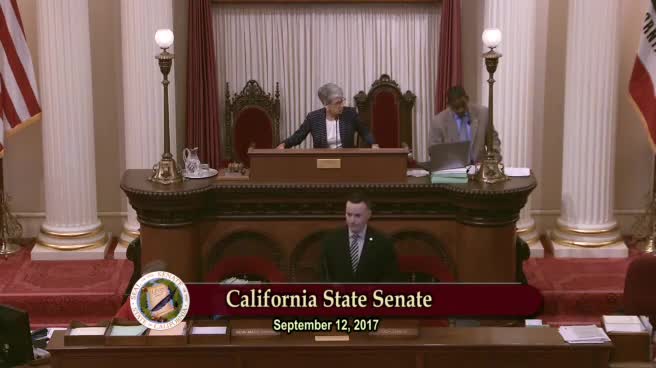

Bill Author