SB 380: CalWORKs: child support.
- Session Year: 2017-2018
- House: Senate
- Latest Version Date: 2017-10-12
(1)Existing federal law provides for allocation of federal funds through the federal Temporary Assistance for Needy Families (TANF) block grant program to eligible states. Existing law provides for the California Work Opportunity and Responsibility to Kids (CalWORKs) program, under which, through a combination of state and county funds and federal funds received through the TANF program, each county provides cash assistance and other benefits to qualified low-income families.
For purposes of determining eligibility under the CalWORKs program, and for computing the amount of aid payment, existing law requires that families be grouped into assistance units, as specified. Existing law requires an assistance unit to include the eligible parents of the eligible child and the eligible siblings of the eligible child when those persons reside in the same home as the eligible child, except as specified.
This bill would, commencing November 1, 2018, prohibit the inclusion of a stepsibling or half-sibling for whom child support payments are received, as specified, in the number of needy persons in the same family for purposes of determining the maximum aid payment under the CalWORKs program and for no other purpose, if certain conditions are met, including, among others, that the parent or caretaker relative for the assistance unit has requested that exclusion in writing. The bill would require each county welfare department to notify CalWORKs applicants and recipients of these provisions, in writing, as specified. The bill would require both the State Department of Social Services and the Department of Child Support Services to each seek all appropriate federal waivers for the implementation of these provisions as necessary. By increasing the duties of counties administering the CalWORKs program, this bill would impose a state-mandated local program.
(2)Under existing law, the income of the natural or adoptive parent, the spouse of the natural or adoptive parent, and the sibling of an eligible child, living in the same home with an eligible child is considered available, in addition to the income of an applicant for or recipient of aid under the CalWORKs program, for purposes of eligibility determination and grant computation under certain social services programs, including the CalWORKs program.
This bill, with respect to the income of the sibling of an eligible child, would, commencing November 1, 2018, instead provide that the income is considered available unless the sibling is not included in the number of needy persons used to calculate the maximum aid payment pursuant to the provisions described in paragraph (1) above. The bill would prohibit income through child support for a child not included in the number of needy persons used to calculate the maximum aid payment from being considered available to any member of the assistance unit. By increasing the duties of counties administering the CalWORKs program, this bill would impose a state-mandated local program.
(3)This bill would authorize the State Department of Social Services to implement and administer the above-described provisions through all-county letters or similar instructions until regulations are adopted, and would require the department to adopt emergency regulations and final regulations, as specified.
(4)Existing law continuously appropriates moneys from the General Fund to defray a portion of county costs under the CalWORKs program.
This bill would instead provide that the continuous appropriation would not be made for purposes of implementing the bill.
(5)The California Constitution requires the state to reimburse local agencies and school districts for certain costs mandated by the state. Statutory provisions establish procedures for making that reimbursement.
This bill would provide that, if the Commission on State Mandates determines that the bill contains costs mandated by the state, reimbursement for those costs shall be made pursuant to the statutory provisions noted above.
(1)Existing federal law provides for allocation of federal funds through the federal Temporary Assistance for Needy Families (TANF) block grant program to eligible states. Existing law provides for the California Work Opportunity and Responsibility to Kids (CalWORKs) program, under which, through a combination of state and county funds and federal funds received through the TANF program, each county provides cash assistance and other benefits to qualified low-income families.
For purposes of determining eligibility under the CalWORKs program, and for computing the amount of aid payment, existing law requires that families be grouped into assistance units, as specified. Existing law requires an assistance unit to include the eligible parents of the eligible child and the eligible siblings of the eligible child when those persons reside in the same home as the eligible child, except as specified.
This bill would would, commencing November 1, 2018, prohibit the inclusion of a stepsibling or half-sibling for whom child support payments are received, as specified, in the number of needy persons in the same family for purposes of determining the maximum aid payment under the CalWORKs program and for no other purpose. purpose, if certain conditions are met, including, among others, that the parent or caretaker relative for the assistance unit has requested that exclusion in writing. The bill would require each county welfare department to notify CalWORKs applicants and recipients of these provisions, in writing, as specified. The bill would require both the State Department of Social Services to and the Department of Child Support Services to each seek all appropriate federal waivers for the implementation of these provisions. provisions as necessary. By increasing the duties of counties administering the CalWORKs program, this bill would impose a state-mandated local program.
(2)Under existing law, the income of the natural or adoptive parent, the spouse of the natural or adoptive parent, and the sibling of an eligible child, living in the same home with an eligible child is considered available, in addition to the income of an applicant for or recipient of aid under the CalWORKs program, for purposes of eligibility determination and grant computation under certain social services programs, including the CalWORKs program.
This bill, with respect to the income of the sibling of an eligible child, would would, commencing November 1, 2018, instead provide that the income is considered available unless the sibling is not included in the number of needy persons used to calculate the maximum aid payment pursuant to the provisions described in paragraph (1) above. The bill would prohibit income through child support for a child not included in the number of needy persons used to calculate the maximum aid payment from being considered available to any member of the assistance unit. By increasing the duties of counties administering the CalWORKs program, this bill would impose a state-mandated local program.
(3)This bill would authorize the State Department of Social Services to implement and administer the above-described provisions through all-county letters or similar instructions until regulations are adopted, and would require the department to adopt emergency regulations and final regulations, as specified.
(3)(4)Existing law continuously appropriates moneys from the General Fund to defray a portion of county costs under the CalWORKs program.
This bill would instead provide that the continuous appropriation would not be made for purposes of implementing the bill.
(4)(5)The California Constitution requires the state to reimburse local agencies and school districts for certain costs mandated by the state. Statutory provisions establish procedures for making that reimbursement.
This bill would provide that, if the Commission on State Mandates determines that the bill contains costs mandated by the state, reimbursement for those costs shall be made pursuant to the statutory provisions noted above.
(1)Existing federal law provides for allocation of federal funds through the federal Temporary Assistance for Needy Families (TANF) block grant program to eligible states. Existing law provides for the California Work Opportunity and Responsibility to Kids (CalWORKs) program, under which, through a combination of state and county funds and federal funds received through the TANF program, each county provides cash assistance and other benefits to qualified low-income families.
For purposes of determining eligibility under the CalWORKs program, and for computing the amount of aid payment, existing law requires that families be grouped into assistance units, as specified. Existing law requires an assistance unit to include the eligible parents of the eligible child and the eligible siblings of the eligible child when those persons reside in the same home as the eligible child, except as specified.
This bill would exclude from the assistance unit a stepsibling, as defined, of an eligible child in the assistance unit, for whom an adult in the assistance unit receives a payment of child support when an adult in the assistance unit has requested in writing that the child not be included in the assistance unit. The bill would require a notification to be made to a CalWORKs applicant or recipient, upon application or redetermination of eligibility under the CalWORKs program, regarding the option to exclude a child from the assistance unit pursuant to these provisions. prohibit the inclusion of a stepsibling or half-sibling for whom child support payments are received, as specified, in the number of needy persons in the same family for purposes of determining the maximum aid payment under the CalWORKs program and for no other purpose. The bill would require each county welfare department to notify CalWORKs applicants and recipients of these provisions, in writing, as specified. The bill would require the department State Department of Social Services to seek all appropriate federal waivers for the implementation of these provisions. By increasing the duties of counties administering the CalWORKs program, this bill would impose a state-mandated local program.
(2)Under existing law, the income of the natural or adoptive parent, the spouse of the natural or adoptive parent, and the sibling of an eligible child, living in the same home with an eligible child is considered available, in addition to the income of an applicant for or recipient of aid under the CalWORKs program, for purposes of eligibility determination and grant computation under certain social services programs, including the CalWORKs program.
This bill would instead provide that the income of the above-described relatives of a child who is not excluded from the assistance unit, pursuant to the provisions described in paragraph (1) above, is considered available for purposes of eligibility determination and grant computation. bill, with respect to the income of the sibling of an eligible child, would instead provide that the income is considered available unless the sibling is not included in the number of needy persons used to calculate the maximum aid payment pursuant to the provisions described in paragraph (1) above. The bill would prohibit income through child support for a child excluded from the assistance unit not included in the number of needy persons used to calculate the maximum aid payment from being considered available to any member of the assistance unit. By increasing the duties of counties administering the CalWORKs program, this bill would impose a state-mandated local program.
(3)Existing law continuously appropriates moneys from the General Fund to defray a portion of county costs under the CalWORKs program.
This bill would instead provide that the continuous appropriation would not be made for purposes of implementing the bill.
(4)The California Constitution requires the state to reimburse local agencies and school districts for certain costs mandated by the state. Statutory provisions establish procedures for making that reimbursement.
This bill would provide that, if the Commission on State Mandates determines that the bill contains costs mandated by the state, reimbursement for those costs shall be made pursuant to the statutory provisions noted above.
(1)Existing federal law provides for allocation of federal funds through the federal Temporary Assistance for Needy Families (TANF) block grant program to eligible states. Existing law provides for the California Work Opportunity and Responsibility to Kids (CalWORKs) program, under which, through a combination of state and county funds and federal funds received through the TANF program, each county provides cash assistance and other benefits to qualified low-income families.
For purposes of determining eligibility under the CalWORKs program, and for computing the amount of aid payment, existing law requires that families be grouped into assistance units, as specified. Existing law requires an assistance unit to include the eligible parents of the eligible child and the eligible siblings of the eligible child when those persons reside in the same home as the eligible child, except as specified.
This bill would exclude from the assistance unit a child stepsibling, as defined, of an eligible child in the assistance unit, for whom an adult in the assistance unit receives a payment of child support when an adult in the assistance unit has requested in writing that the child not be included in the assistance unit. The bill would require a notification to be made to a CalWORKs applicant or recipient, upon application or redetermination of eligibility under the CalWORKs program, regarding the option to exclude a child from the assistance unit pursuant to these provisions. The bill would require the department to seek all appropriate federal waivers for the implementation of these provisions. By increasing the duties of counties administering the CalWORKs program, this bill would impose a state-mandated local program.
(2)Under existing law, the income of the natural or adoptive parent, the spouse of the natural or adoptive parent, and the sibling of an eligible child, living in the same home with an eligible child is considered available, in addition to the income of an applicant for or recipient of aid under the CalWORKs program, for purposes of eligibility determination and grant computation under certain social services programs, including the CalWORKs program.
This bill would instead provide that the income of the above-described relatives of a child who is not excluded from the assistance unit, pursuant to the provisions described in paragraph (1) above, is considered available for purposes of eligibility determination and grant computation. The bill would prohibit income through child support for a child excluded from the assistance unit from being considered available to any member of the assistance unit. By increasing the duties of counties administering the CalWORKs program, this bill would impose a state-mandated local program.
(3)Existing law continuously appropriates moneys from the General Fund to defray a portion of county costs under the CalWORKs program.
This bill would instead provide that the continuous appropriation would not be made for purposes of implementing the bill.
(4)The California Constitution requires the state to reimburse local agencies and school districts for certain costs mandated by the state. Statutory provisions establish procedures for making that reimbursement.
This bill would provide that, if the Commission on State Mandates determines that the bill contains costs mandated by the state, reimbursement for those costs shall be made pursuant to the statutory provisions noted above.
(1)Existing federal law provides for allocation of federal funds through the federal Temporary Assistance for Needy Families (TANF) block grant program to eligible states. Existing law provides for the California Work Opportunity and Responsibility to Kids (CalWORKs) program, under which, through a combination of state and county funds and federal funds received through the TANF program, each county provides cash assistance and other benefits to qualified low-income families.
For purposes of determining eligibility under the CalWORKs program, and for computing the amount of aid payment, existing law requires that families be grouped into assistance units, as specified. Existing law requires an assistance unit to include the eligible parents of the eligible child and the eligible siblings of the eligible child when those persons reside in the same home as the eligible child, except as specified.
This bill would exclude from the assistance unit a child for whom an adult in the assistance unit receives a payment of child support when an adult in the assistance unit has requested in writing that the child not be included in the assistance unit. The bill would require a notification to be made to a CalWORKs applicant or recipient, upon application or redetermination of eligibility under the CalWORKs program, regarding the option to exclude a child from the assistance unit pursuant to these provisions. By increasing the duties of counties administering the CalWORKs program, this bill would impose a state-mandated local program.
(2)Under existing law, the income of the natural or adoptive parent, the spouse of the natural or adoptive parent, and the sibling of an eligible child, living in the same home with an eligible child is considered available, in addition to the income of an applicant for or recipient of aid under the CalWORKs program, for purposes of eligibility determination and grant computation under certain social services programs, including the CalWORKs program.
This bill would instead provide that the income of the above-described relatives of a child who is not excluded from the assistance unit, pursuant to the provisions described in paragraph (1) above, is considered available for purposes of eligibility determination and grant computation. The bill would prohibit income through child support for a child excluded from the assistance unit from being considered available to any member of the assistance unit. By increasing the duties of counties administering the CalWORKs program, this bill would impose a state-mandated local program.
(3)Existing law continuously appropriates moneys from the General Fund to defray a portion of county costs under the CalWORKs program.
This bill would instead provide that the continuous appropriation would not be made for purposes of implementing the bill.
(4)The California Constitution requires the state to reimburse local agencies and school districts for certain costs mandated by the state. Statutory provisions establish procedures for making that reimbursement.
This bill would provide that, if the Commission on State Mandates determines that the bill contains costs mandated by the state, reimbursement for those costs shall be made pursuant to the statutory provisions noted above.
(1)Existing federal law provides for allocation of federal funds through the federal Temporary Assistance for Needy Families (TANF) block grant program to eligible states. Existing law provides for the California Work Opportunity and Responsibility to Kids (CalWORKs) program, under which, through a combination of state and county funds and federal funds received through the TANF program, each county provides cash assistance and other benefits to qualified low-income families.
For purposes of determining eligibility under the CalWORKs program, and for computing the amount of aid payment, existing law requires that families be grouped into assistance units, as specified. Existing law requires an assistance unit to include the eligible parents of the eligible child and the eligible siblings of the eligible child when those persons reside in the same home as the eligible child, except as specified.
This bill would exclude from the assistance unit a child for whom an adult in the assistance unit receives a payment of child support when an adult in the assistance unit has requested in writing that the child not be included in the assistance unit. By increasing the duties of counties administering the CalWORKs program, this bill would impose a state-mandated local program.
(2)Under existing law, the income of the natural or adoptive parent, the spouse of the natural or adoptive parent, and the sibling of an eligible child, living in the same home with an eligible child is considered available, in addition to the income of an applicant for or recipient of aid under the CalWORKs program, for purposes of eligibility determination and grant computation under certain social services programs, including the CalWORKs program.
This bill would instead provide that the income of the above-described relatives of a child who is not excluded from the assistance unit, pursuant to the provisions described in paragraph (1) above, is considered available for purposes of eligibility determination and grant computation. The bill would prohibit income through child support for a child excluded from the assistance unit from being considered available to any member of the assistance unit. By increasing the duties of counties administering the CalWORKs program, this bill would impose a state-mandated local program.
(3)Existing law continuously appropriates moneys from the General Fund to defray a portion of county costs under the CalWORKs program.
This bill would instead provide that the continuous appropriation would not be made for purposes of implementing the bill.
(4)The California Constitution requires the state to reimburse local agencies and school districts for certain costs mandated by the state. Statutory provisions establish procedures for making that reimbursement.
This bill would provide that, if the Commission on State Mandates determines that the bill contains costs mandated by the state, reimbursement for those costs shall be made pursuant to the statutory provisions noted above.
(a)The income of the natural or adoptive parent, and the spouse of the natural or adoptive parent, and the sibling of an eligible child, living in the same home with an eligible child shall be considered available, in addition to the income of an applicant for or recipient of aid under Chapter 2 (commencing with Section 11200), for purposes of eligibility determination and grant computation. Except as otherwise provided in this section, in the case of a parent or legal guardian of a minor who is also the parent of an eligible child, the income of the parent or guardian shall be considered available to the minor parent and eligible child to the same extent that income to a stepparent is considered available to an assistance unit.
(b)This section shall be applied to all applicants for, and recipients of, Aid to Families with Dependent Children provided under Chapter 2 (commencing with Section 11200), except that income of a guardian of an applicant for, or recipient of, foster care benefits provided under Article 5 (commencing with Section 11400) of Chapter 2 shall not be considered available to the ward or to a child of the ward for the purpose of eligibility determination and grant computation under Article 5 (commencing with Section 11400) of Chapter 2. This section shall be applied regardless of whether federal financial participation is available for the family.
(c)This section shall become inoperative on November 1, 2018, and, as of January 1, 2019, is repealed.
SEC. 2.Section 11008.14 is added to the Welfare and Institutions Code, to read:11008.14.(a)The income of the natural or adoptive parent, the spouse of the natural or adoptive parent, and the sibling of an eligible child unless the sibling is not included in the number of needy persons used to calculate the maximum aid payment pursuant to Section 11450.17, living in the same home with an eligible child shall be considered available, in addition to the income of an applicant for or recipient of aid under Chapter 2 (commencing with Section 11200), for purposes of eligibility determination and grant computation. Except as otherwise provided in this section, in the case of a parent or legal guardian of a minor who is also the parent of an eligible child, the income of the parent or guardian shall be considered available to the minor parent and eligible child to the same extent that income to a stepparent is considered available to an assistance unit. Income through child support for a child not included in the number of needy persons used to calculate the maximum aid payment pursuant to Section 11450.17 shall not be considered available to any member of the assistance unit.
(b)This section shall be applied to all applicants for, and recipients of, aid provided through the CalWORKs program under Chapter 2 (commencing with Section 11200), except that income of a guardian of an applicant for, or recipient of, foster care benefits provided under Article 5 (commencing with Section 11400) of Chapter 2 shall not be considered available to the ward or to a child of the ward for the purpose of eligibility determination and grant computation under Article 5 (commencing with Section 11400) of Chapter 2. This section shall be applied regardless of whether federal financial participation is available for the family.
(c)This section shall become operative on November 1, 2018.
SEC. 3.Section 11450.17 is added to the Welfare and Institutions Code, to read:11450.17.(a)(1)For purposes of determining the maximum aid payment specified in subdivision (a) of Section 11450 and for no other purpose, the number of needy persons in the same family shall not include a stepsibling or a half-sibling, as defined in subdivision (d).
(2)One hundred percent of any child support payment received for a child described in subdivision (d) shall be paid to the assistance unit. Any child support payment received for that child shall not be considered as income to the family for the purpose of calculating the amount of aid for which the family is eligible under this article.
(b)Each county welfare department shall notify applicants for assistance under this chapter, in writing, of the provisions of this section. The county welfare department shall also provide the notification to recipients of aid under this chapter, in writing, at the time of redetermination, or sooner.
(c)Both the department and the Department of Child Support Services shall each seek all appropriate federal waivers for the implementation of this section as necessary. If federal waivers are deemed necessary, this section shall be implemented only if federal waivers are granted.
(d)For purposes of this section, stepsibling or half-sibling means a child who meets all of the following conditions:
(1)He or she lives with at least one eligible child.
(2)He or she is a child for whom child support payments are received.
(3)The monthly child support payments received for the child are greater than the monthly amount of aid that the child would receive under Section 11450.
(4)The parent or caretaker relative for the assistance unit has requested in writing that the child not be included in the number of needy persons used to calculate the maximum aid payment.
(e)The designation of whether or not a child is a stepsibling or half-sibling, as defined in subdivision (d), shall only be made or reevaluated at the same time as the annual redetermination of eligibility and the processing of the semiannual report, except when it has been determined by the county that good cause exists for the designation to be made at a different time when the parent or caretaker relative voluntarily reports mid-period pursuant to Section 11265.3 or 11265.47 that the child support payment or payments have decreased or ended.
(f)This section shall become operative on November 1, 2018.
SEC. 4.(a)Notwithstanding the rulemaking provisions of the Administrative Procedure Act (Chapter 3.5 (commencing with Section 11340) of Part 1 of Division 3 of Title 2 of the Government Code), the State Department of Social Services may implement and administer this act through all-county letters or similar instructions until regulations are adopted. The department shall adopt emergency regulations implementing these provisions no later than November 1, 2020. The department may readopt any emergency regulation authorized by this section that is the same as, or substantially equivalent to, emergency regulations previously adopted under this section.
(b)The initial adoption of regulations pursuant to this section and one readoption of emergency regulations shall be deemed to be an emergency and necessary for the immediate preservation of the public peace, health, safety, or general welfare. Initial emergency regulations and the one readoption of emergency regulations authorized by this section shall be exempt from review by the Office of Administrative Law. The initial emergency regulations and the one readoption of emergency regulations authorized by this section shall be submitted to the Office of Administrative Law for filing with the Secretary of State, and each shall remain in effect for no more than 180 days, by which time final regulations shall be adopted.
SEC. 5.No appropriation pursuant to Section 15200 of the Welfare and Institutions Code shall be made for purposes of implementing this act.
SEC. 6.If the Commission on State Mandates determines that this act contains costs mandated by the state, reimbursement to local agencies and school districts for those costs shall be made pursuant to Part 7 (commencing with Section 17500) of Division 4 of Title 2 of the Government Code.
(a)The income of the natural or adoptive parent, and the spouse of the natural or adoptive parent, and the sibling of an eligible child, living in the same home with an eligible child shall be considered available, in addition to the income of an applicant for or recipient of aid under Chapter 2 (commencing with Section 11200), for purposes of eligibility determination and grant computation. Except as otherwise provided in this section, in the case of a parent or legal guardian of a minor who is also the parent of an eligible child, the income of the parent or guardian shall be considered available to the minor parent and eligible child to the same extent that income to a stepparent is considered available to an assistance unit.
This(b)This section shall be applied to all applicants for, and recipients of, Aid to Families with Dependent Children provided under Chapter 2 (commencing with Section 11200), except that income of a guardian of an applicant for, or recipient of, foster care benefits provided under Article 5 (commencing with Section 11400) of Chapter 2 shall not be considered available to the ward or to a child of the ward for the purpose of eligibility determination and grant computation under Article 5 (commencing with Section 11400) of Chapter 2. This section shall be applied regardless of whether federal financial participation is available for the family.
(c)This section shall become inoperative on November 1, 2018, and, as of January 1, 2019, is repealed.
SEC. 2.Section 11008.14 is added to the Welfare and Institutions Code, to read:11008.14.(a)The income of the natural or adoptive parent, the spouse of the natural or adoptive parent, and the sibling of an eligible child unless the sibling is not included in the number of needy persons used to calculate the maximum aid payment pursuant to Section 11450.17, living in the same home with an eligible child shall be considered available, in addition to the income of an applicant for or recipient of aid under Chapter 2 (commencing with Section 11200), for purposes of eligibility determination and grant computation. Except as otherwise provided in this section, in the case of a parent or legal guardian of a minor who is also the parent of an eligible child, the income of the parent or guardian shall be considered available to the minor parent and eligible child to the same extent that income to a stepparent is considered available to an assistance unit. Income through child support for a child not included in the number of needy persons used to calculate the maximum aid payment pursuant to Section 11450.17 shall not be considered available to any member of the assistance unit.
(b)This section shall be applied to all applicants for, and recipients of, aid provided through the CalWORKs program under Chapter 2 (commencing with Section 11200), except that income of a guardian of an applicant for, or recipient of, foster care benefits provided under Article 5 (commencing with Section 11400) of Chapter 2 shall not be considered available to the ward or to a child of the ward for the purpose of eligibility determination and grant computation under Article 5 (commencing with Section 11400) of Chapter 2. This section shall be applied regardless of whether federal financial participation is available for the family.
(c)This section shall become operative on November 1, 2018.
SEC. 2.SEC. 3.Section 11450.17 is added to the Welfare and Institutions Code, to read:11450.17.(a)(1)For purposes of determining the maximum aid payment specified in subdivision (a) of Section 11450 and for no other purpose, the number of needy persons in the same family shall not include a stepsibling or a half-sibling, as defined in subdivision (d).
(2)One hundred percent of any child support payment received for a child born into the family, but for whom the maximum aid payment is not increased pursuant to this section, described in subdivision (d) shall be paid to the assistance unit. Any child support payment received for that child shall not be considered as income to the family for the purpose of calculating the amount of aid for which the family is eligible under this article.
(b)Each county welfare department shall notify applicants for assistance under this chapter, in writing, of the provisions of this section. The county welfare department shall also provide the notification to recipients of aid under this chapter, in writing, at the time of redetermination, or sooner. The notification required by this section shall set forth the provisions of this section and shall state explicitly the impact that these provisions would have on the future aid to the assistance unit.
(c)The department shall Both the department and the Department of Child Support Services shall each seek all appropriate federal waivers for the implementation of this section. section as necessary. If federal waivers are deemed necessary, this section shall be implemented only if federal waivers are granted.
(d)For purposes of this section, stepsibling or half-sibling means a child who meets both all of the following conditions:
(1)He or she lives with at least one eligible child.
(2)He or she is a child for whom child support payments are received and who meets either of the following conditions: received.
(A)His or her child support payments are greater than the amount of aid that the child would receive under Section 11450.(3)The monthly child support payments received for the child are greater than the monthly amount of aid that the child would receive under Section 11450.
(B)(4)The head of household parent or caretaker relative for the assistance unit has requested in writing that the child not be included in the number of needy persons used to calculate the maximum aid payment.
(e)The designation of whether or not a child is a stepsibling or half-sibling, as defined in subdivision (d), shall only be made or reevaluated at the same time as the annual redetermination of eligibility and the processing of the semiannual report, except when it has been determined by the county that good cause exists for the designation to be made at a different time when the parent or caretaker relative voluntarily reports mid-period pursuant to Section 11265.3 or 11265.47 that the child support payment or payments have decreased or ended.
(f)This section shall become operative on November 1, 2018.
SEC. 4.(a)Notwithstanding the rulemaking provisions of the Administrative Procedure Act (Chapter 3.5 (commencing with Section 11340) of Part 1 of Division 3 of Title 2 of the Government Code), the State Department of Social Services may implement and administer this act through all-county letters or similar instructions until regulations are adopted. The department shall adopt emergency regulations implementing these provisions no later than November 1, 2020. The department may readopt any emergency regulation authorized by this section that is the same as, or substantially equivalent to, emergency regulations previously adopted under this section.
(b)The initial adoption of regulations pursuant to this section and one readoption of emergency regulations shall be deemed to be an emergency and necessary for the immediate preservation of the public peace, health, safety, or general welfare. Initial emergency regulations and the one readoption of emergency regulations authorized by this section shall be exempt from review by the Office of Administrative Law. The initial emergency regulations and the one readoption of emergency regulations authorized by this section shall be submitted to the Office of Administrative Law for filing with the Secretary of State, and each shall remain in effect for no more than 180 days, by which time final regulations shall be adopted.
SEC. 3.SEC. 5.No appropriation pursuant to Section 15200 of the Welfare and Institutions Code shall be made for purposes of implementing this act.
SEC. 4.SEC. 6.If the Commission on State Mandates determines that this act contains costs mandated by the state, reimbursement to local agencies and school districts for those costs shall be made pursuant to Part 7 (commencing with Section 17500) of Division 4 of Title 2 of the Government Code.
(a)The income of the natural or adoptive parent, the spouse of the natural or adoptive parent, and the sibling of an eligible child not excluded from the assistance unit unless the sibling is not included in the number of needy persons used to calculate the maximum aid payment pursuant to Section 11450.17, living in the same home with an eligible child shall be considered available, in addition to the income of an applicant for or recipient of aid under Chapter 2 (commencing with Section 11200), for purposes of eligibility determination and grant computation. Except as otherwise provided in this section, in the case of a parent or legal guardian of a minor who is also the parent of an eligible child, the income of the parent or guardian shall be considered available to the minor parent and eligible child to the same extent that income to a stepparent is considered available to an assistance unit. Income through child support for a child excluded from the assistance unit not included in the number of needy persons used to calculate the maximum aid payment pursuant to Section 11450.17 shall not be considered available to any member of the assistance unit.
(b)This section shall be applied to all applicants for, and recipients of, Aid to Families with Dependent Children provided under Chapter 2 (commencing with Section 11200), except that income of a guardian of an applicant for, or recipient of, foster care benefits provided under Article 5 (commencing with Section 11400) of Chapter 2 shall not be considered available to the ward or to a child of the ward for the purpose of eligibility determination and grant computation under Article 5 (commencing with Section 11400) of Chapter 2. This section shall be applied regardless of whether federal financial participation is available for the family.
SEC. 2.Section 11450.17 is added to the Welfare and Institutions Code, to read:11450.17.(a)(1)For purposes of determining the maximum aid payment specified in subdivision (a) of Section 11450 and for no other purpose, the number of needy persons in the same family shall not include a stepsibling, stepsibling or a half-sibling, as defined in subdivision (d).
(2)One hundred percent of any child support payment received for a child born into the family, but for whom the maximum aid payment is not increased pursuant to this section, shall be paid to the assistance unit. Any child support payment received for that child shall not be considered as income to the family for the purpose of calculating the amount of aid for which the family is eligible under this article.
(b)Each county welfare department shall notify applicants for assistance under this chapter, in writing, of the provisions of this section. The notification shall also be provided county welfare department shall also provide the notification to recipients of aid under this chapter, in writing, at the time of redetermination, or sooner. The notification required by this section shall set forth the provisions of this section and shall state explicitly the impact that these provisions would have on the future aid to the assistance unit.
(c)The department shall seek all appropriate federal waivers for the implementation of this section.
(d)For purposes of this section, stepsibling or half-sibling means a child who meets both of the following conditions:
(1)He or she lives with an eligible child for whom child support payment is not received. at least one eligible child.
(2)He or she is a child for whom child support payment is payments are received and who meets either of the following conditions:
(A)His or her child support payment is payments are greater than the amount of aid that the child would receive under Section 11450.
(B)The head of the household in for the assistance unit has requested that the child not be included in the assistance unit for purposes of aid payment under Section 11450. number of needy persons used to calculate the maximum aid payment.
SEC. 3.No appropriation pursuant to Section 15200 of the Welfare and Institutions Code shall be made for purposes of implementing this act.
SEC. 4.If the Commission on State Mandates determines that this act contains costs mandated by the state, reimbursement to local agencies and school districts for those costs shall be made pursuant to Part 7 (commencing with Section 17500) of Division 4 of Title 2 of the Government Code.
(a)The income of the natural or adoptive parent, the spouse of the natural or adoptive parent, and the sibling of an eligible child not excluded from the assistance unit pursuant to subparagraph (B) of paragraph (2) of subdivision (c) of Section 11450.16, Section 11450.17, living in the same home with an eligible child shall be considered available, in addition to the income of an applicant for or recipient of aid under Chapter 2 (commencing with Section 11200), for purposes of eligibility determination and grant computation. Except as otherwise provided in this section, in the case of a parent or legal guardian of a minor who is also the parent of an eligible child, the income of the parent or guardian shall be considered available to the minor parent and eligible child to the same extent that income to a stepparent is considered available to an assistance unit. Income through child support for a child excluded from the assistance unit shall not be considered available to any member of the assistance unit.
(b)This section shall be applied to all applicants for, and recipients of, Aid to Families with Dependent Children provided under Chapter 2 (commencing with Section 11200), except that income of a guardian of an applicant for, or recipient of, foster care benefits provided under Article 5 (commencing with Section 11400) of Chapter 2 shall not be considered available to the ward or to a child of the ward for the purpose of eligibility determination and grant computation under Article 5 (commencing with Section 11400) of Chapter 2. This section shall be applied regardless of whether federal financial participation is available for the family.
SEC. 2.Section 11450.16 of the Welfare and Institutions Code is amended to read:11450.16.(a)For purposes of determining eligibility under this chapter, and for computing the amount of aid payment under Section 11450, families shall be grouped into assistance units.(b)Every assistance unit shall include at least one of the following persons:(1)One of each of the following:(A)An eligible child.(B)The caretaker relative of an otherwise eligible child who is not receiving aid under Section 11250 because that child is receiving benefits under Title XVI of the Social Security Act (Subchapter 16 (commencing with Section 1381) of Chapter 7 of Title 42 of the United States Code), or Kin-GAP payments under Section 11364 or 11387, or foster care payments under Section 11461.(2)A pregnant woman who is eligible for payments under subdivision (c) of Section 11450.(c)(1)Except as provided in paragraph (2), every assistance unit shall, in addition to the requirements of subdivision (b), include the eligible parents of the eligible child and the eligible siblings, including half-siblings, of the eligible child when those persons reside in the same home as the eligible child.(2)(A)This subdivision shall not apply to any convicted offender who is permitted to reside at the home of the eligible child as part of a court-imposed sentence and who is considered an absent parent under Section 11250.(B)This subdivision shall not apply to any child for whom an adult in the assistance unit receives a payment of child support when an adult in the assistance unit has requested in writing that the child not be included in the assistance unit. Upon application or redetermination of eligibility under the CalWORKs program, a CalWORKs applicant or recipient shall be notified of the option to exclude a child from the assistance unit pursuant to this subparagraph.(d)An assistance unit may, at the option of the family comprising the assistance unit, also include the nonparent caretaker relative of the eligible child, the spouse of the parent of the eligible child, otherwise eligible nonsibling children in the care of the caretaker relative of the eligible child, and the alternatively sentenced offender parent exempted under subdivision (c).(e)If two or more assistance units reside in the same home, they shall be combined into one assistance unit when any of the following circumstances occurs:(1)There is a common caretaker relative for the eligible children.(2)One caretaker relative marries another caretaker relative.(3)Two caretaker relatives are the parents of an eligible child.(f)For purposes of this section, caretaker relative means the parent or other relative, as defined by regulations adopted by the department, who exercises responsibility and control of a child.SEC. 2.Section 11450.17 is added to the Welfare and Institutions Code, to read:11450.17.(a)(1)For purposes of determining the maximum aid payment specified in subdivision (a) of Section 11450 and for no other purpose, the number of needy persons in the same family shall not include a stepsibling, as defined in subdivision (d).
(2)One hundred percent of any child support payment received for a child born into the family, but for whom the maximum aid payment is not increased pursuant to this section, shall be paid to the assistance unit. Any child support payment received for that child shall not be considered as income to the family for the purpose of calculating the amount of aid for which the family is eligible under this article.
(b)Each county welfare department shall notify applicants for assistance under this chapter, in writing, of the provisions of this section. The notification shall also be provided to recipients of aid under this chapter, in writing, at the time of redetermination, or sooner. The notification required by this section shall set forth the provisions of this section and shall state explicitly the impact that these provisions would have on the future aid to the assistance unit.
(c)The department shall seek all appropriate federal waivers for the implementation of this section.
(d)For purposes of this section, stepsibling means a child who meets both of the following conditions:
(1)He or she lives with an eligible child for whom child support payment is not received.
(2)He or she is a child for whom child support payment is received and who meets either of the following conditions:
(A)His or her child support payment is greater than the amount of aid that the child would receive under Section 11450.
(B)The head of the household in the assistance unit has requested that the child not be included in the assistance unit for purposes of aid payment under Section 11450.
SEC. 3.No appropriation pursuant to Section 15200 of the Welfare and Institutions Code shall be made for purposes of implementing this act.
SEC. 4.If the Commission on State Mandates determines that this act contains costs mandated by the state, reimbursement to local agencies and school districts for those costs shall be made pursuant to Part 7 (commencing with Section 17500) of Division 4 of Title 2 of the Government Code.
(a)The income of the natural or adoptive parent, the spouse of the natural or adoptive parent, and the sibling of an eligible child not excluded from the assistance unit pursuant to subparagraph (B) of paragraph (2) of subdivision (c) of Section 11450.16, living in the same home with an eligible child shall be considered available, in addition to the income of an applicant for or recipient of aid under Chapter 2 (commencing with Section 11200), for purposes of eligibility determination and grant computation. Except as otherwise provided in this section, in the case of a parent or legal guardian of a minor who is also the parent of an eligible child, the income of the parent or guardian shall be considered available to the minor parent and eligible child to the same extent that income to a stepparent is considered available to an assistance unit. Income through child support for a child excluded from the assistance unit shall not be considered available to any member of the assistance unit.
(b)This section shall be applied to all applicants for, and recipients of, Aid to Families with Dependent Children provided under Chapter 2 (commencing with Section 11200), except that income of a guardian of an applicant for, or recipient of, foster care benefits provided under Article 5 (commencing with Section 11400) of Chapter 2 shall not be considered available to the ward or to a child of the ward for the purpose of eligibility determination and grant computation under Article 5 (commencing with Section 11400) of Chapter 2. This section shall be applied regardless of whether federal financial participation is available for the family.
SEC. 2.Section 11450.16 of the Welfare and Institutions Code is amended to read:11450.16.(a)For purposes of determining eligibility under this chapter, and for computing the amount of aid payment under Section 11450, families shall be grouped into assistance units.
(b)Every assistance unit shall include at least one of the following persons:
(1)One of each of the following:
(A)An eligible child.
(B)The caretaker relative of an otherwise eligible child who is not receiving aid under Section 11250 because that child is receiving benefits under Title XVI of the Social Security Act (Subchapter 16 (commencing with Section 1381) of Chapter 7 of Title 42 of the United States Code), or Kin-GAP payments under Section 11364 or 11387, or foster care payments under Section 11461.
(2)A pregnant woman who is eligible for payments under subdivision (c) of Section 11450.
(c)(1)Except as provided in paragraph (2), every assistance unit shall, in addition to the requirements of subdivision (b), include the eligible parents of the eligible child and the eligible siblings, including half-siblings, of the eligible child when those persons reside in the same home as the eligible child.
(2)(A)This subdivision shall not apply to any convicted offender who is permitted to reside at the home of the eligible child as part of a court-imposed sentence and who is considered an absent parent under Section 11250.
(B)This subdivision shall not apply to any child for whom an adult in the assistance unit receives a payment of child support when an adult in the assistance unit has requested in writing that the child not be included in the assistance unit. Upon application or redetermination of eligibility under the CalWORKs program, a CalWORKs applicant or recipient shall be notified of the option to exclude a child from the assistance unit pursuant to this subparagraph.
(d)An assistance unit may, at the option of the family comprising the assistance unit, also include the nonparent caretaker relative of the eligible child, the spouse of the parent of the eligible child, otherwise eligible nonsibling children in the care of the caretaker relative of the eligible child, and the alternatively sentenced offender parent exempted under subdivision (c).
(e)If two or more assistance units reside in the same home, they shall be combined into one assistance unit when any of the following circumstances occurs:
(1)There is a common caretaker relative for the eligible children.
(2)One caretaker relative marries another caretaker relative.
(3)Two caretaker relatives are the parents of an eligible child.
(f)For purposes of this section, caretaker relative means the parent or other relative, as defined by regulations adopted by the department, who exercises responsibility and control of a child.
SEC. 3.No appropriation pursuant to Section 15200 of the Welfare and Institutions Code shall be made for purposes of implementing this act.
SEC. 4.If the Commission on State Mandates determines that this act contains costs mandated by the state, reimbursement to local agencies and school districts for those costs shall be made pursuant to Part 7 (commencing with Section 17500) of Division 4 of Title 2 of the Government Code.
(a)The income of the natural or adoptive parent, and the spouse of the natural or adoptive parent, and the sibling of an eligible child, child not excluded from the assistance unit pursuant to subparagraph (B) of paragraph (2) of subdivision (c) of Section 11450.16, living in the same home with an eligible child shall be considered available, in addition to the income of an applicant for or recipient of aid under Chapter 2 (commencing with Section 11200), for purposes of eligibility determination and grant computation. Except as otherwise provided in this section, in the case of a parent or legal guardian of a minor who is also the parent of an eligible child, the income of the parent or guardian shall be considered available to the minor parent and eligible child to the same extent that income to a stepparent is considered available to an assistance unit. Income through child support for a child excluded from the assistance unit shall not be considered available to any member of the assistance unit.
(b)This section shall be applied to all applicants for, and recipients of, Aid to Families with Dependent Children provided under Chapter 2 (commencing with Section 11200), except that income of a guardian of an applicant for, or recipient of, foster care benefits provided under Article 5 (commencing with Section 11400) of Chapter 2 shall not be considered available to the ward or to a child of the ward for the purpose of eligibility determination and grant computation under Article 5 (commencing with Section 11400) of Chapter 2. This section shall be applied regardless of whether federal financial participation is available for the family.
SEC. 2.Section 11450.16 of the Welfare and Institutions Code is amended to read:11450.16.(a)For purposes of determining eligibility under this chapter, and for computing the amount of aid payment under Section 11450, families shall be grouped into assistance units.
(b)Every assistance unit shall include at least one of the following persons:
(1)One of each of the following:
(A)An eligible child.
(B)The caretaker relative of an otherwise eligible child who is not receiving aid under Section 11250 because that child is receiving benefits under Title XVI of the Social Security Act (Subchapter 16 (commencing with Section 1381) of Chapter 7 of Title 42 of the United States Code), or Kin-GAP payments under Section 11364 or 11387, or foster care payments under Section 11461.
(2)A pregnant woman who is eligible for payments under subdivision (c) of Section 11450.
(c)Every (1)Except as provided in paragraph (2), every assistance unit shall, in addition to the requirements of subdivision (b), include the eligible parents of the eligible child and the eligible siblings, including half-siblings, of the eligible child when those persons reside in the same home as the eligible child. This
(2)(A)This subdivision shall not apply to any convicted offender who is permitted to reside at the home of the eligible child as part of a court-imposed sentence and who is considered an absent parent under Section 11250.
(B)This subdivision shall not apply to any child for whom an adult in the assistance unit receives a payment of child support when an adult in the assistance unit has requested in writing that the child not be included in the assistance unit.
(d)An assistance unit may, at the option of the family comprising the assistance unit, also include the nonparent caretaker relative of the eligible child, the spouse of the parent of the eligible child, otherwise eligible nonsibling children in the care of the caretaker relative of the eligible child, and the alternatively sentenced offender parent exempted under subdivision (c).
(e)If two or more assistance units reside in the same home, they shall be combined into one assistance unit when any of the following circumstances occurs:
(1)There is a common caretaker relative for the eligible children.
(2)One caretaker relative marries another caretaker relative.
(3)Two caretaker relatives are the parents of an eligible child.
(f)For purposes of this section, caretaker relative means the parent or other relative, as defined by regulations adopted by the department, who exercises responsibility and control of a child.
SEC. 3.No appropriation pursuant to Section 15200 of the Welfare and Institutions Code shall be made for purposes of implementing this act.
SEC. 4.If the Commission on State Mandates determines that this act contains costs mandated by the state, reimbursement to local agencies and school districts for those costs shall be made pursuant to Part 7 (commencing with Section 17500) of Division 4 of Title 2 of the Government Code.
|
Date
|
Status
|
|---|---|
| Oct 12, 2017 | Chaptered by Secretary of State. Chapter 729, Statutes of 2017. |
| Oct 12, 2017 | Approved by the Governor. |
| Sep 20, 2017 | Enrolled and presented to the Governor at 4 p.m. |
| Sep 14, 2017 | Assembly amendments concurred in. (Ayes 40. Noes 0.) Ordered to engrossing and enrolling. |
| Sep 14, 2017 | In Senate. Concurrence in Assembly amendments pending. |
| Sep 13, 2017 | Read third time. Passed. Ordered to the Senate. |
| Sep 6, 2017 | Read second time. Ordered to third reading. |
| Sep 5, 2017 | Read second time and amended. Ordered to second reading. |
| Sep 1, 2017 | From committee: Do pass as amended. (Ayes 11. Noes 0.) (September 1). |
| Aug 23, 2017 | August 23 set for first hearing. Placed on suspense file. |
| Jul 18, 2017 | Read second time and amended. Re-referred to Com. on APPR. |
| Jul 17, 2017 | From committee: Do pass as amended and re-refer to Com. on APPR. with recommendation: To consent calendar. (Ayes 7. Noes 0.) (July 11). |
| Jul 5, 2017 | From committee with author's amendments. Read second time and amended. Re-referred to Com. on HUM. S. |
| Jun 27, 2017 | June 27 hearing postponed by committee. |
| Jun 12, 2017 | Referred to Com. on HUM. S. |
| Jun 1, 2017 | In Assembly. Read first time. Held at Desk. |
| May 31, 2017 | Read third time. Passed. (Ayes 40. Noes 0. Page 1356.) Ordered to the Assembly. |
| May 26, 2017 | Ordered to special consent calendar. |
| May 26, 2017 | Read second time. Ordered to third reading. |
| May 25, 2017 | From committee: Do pass. (Ayes 7. Noes 0. Page 1183.) (May 25). |
| May 19, 2017 | Set for hearing May 25. |
| May 15, 2017 | May 15 hearing: Placed on APPR. suspense file. |
| May 4, 2017 | Set for hearing May 15. |
| Apr 27, 2017 | Read second time and amended. Re-referred to Com. on APPR. |
| Apr 26, 2017 | From committee: Do pass as amended and re-refer to Com. on APPR. (Ayes 4. Noes 0. Page 850.) (April 25). |
| Mar 1, 2017 | Set for hearing April 25. |
| Feb 23, 2017 | Referred to Com. on HUMAN S. |
| Feb 15, 2017 | From printer. May be acted upon on or after March 17. |
| Feb 14, 2017 | Introduced. Read first time. To Com. on RLS. for assignment. To print. |
|
Date
|
Description
|
Location
|
Votes
|
|
|---|---|---|---|---|
| Sep 14, 2017 | Unfinished Business SB380 Bradford Concurrence | Senate Floor |
Passed |
|
| Sep 13, 2017 | SB 380 Bradford Senate Third Reading By THURMOND | Assembly Floor |
Passed |
|
| Sep 1, 2017 | Do pass as amended. | Assembly Standing Committee on Appropriations |
Passed |
|
| Jul 11, 2017 | Do pass as amended, and be re-referred to the Committee on [Appropriations] with recommendation: To Consent Calendar | Assembly Standing Committee on Human Services |
Passed |
|
| May 31, 2017 | Special Consent Calendar # SB380 | Senate Floor |
Passed |
|
| May 25, 2017 | Do pass | Senate Standing Committee on Appropriations |
Passed |
|
| May 15, 2017 | Placed on suspense file | Senate Standing Committee on Appropriations |
Passed |
|
| Apr 25, 2017 | Do pass as amended, but first amend, and re-refer to the Committee on [Appropriations] | Senate Standing Committee on Human Services |
Passed |
This list shows positions taken on this bill by organizations on the date displayed, which is linked to the original source.
Positions by individuals are not included.
|
Organization
|
Position
|
Date
|
|---|---|---|
| California Alternative Payment Program | ** Support | Jul 7, 2017 |
| California Alternative Payment Program Association | ** Support | Sep 14, 2017 |
| Coalition of California Welfare Rights Organizations | ** Support | Sep 14, 2017 |
| Courage Campaign | ** Support | Sep 14, 2017 |
| western center on law and poverty | ** Support | Sep 14, 2017 |
Office of Senate Floor Analyses (916) 651-1520 Fax: (916) 327-4478 | SB |
UNFINISHED BUSINESS
Bill No: SB 380
:
SENATE HUMAN SERVICES COMMITTEE: 4-0, 4/25/17
AYES: Wiener, Berryhill, Glazer, Newman
NO VOTE RECORDED: Nguyen
SENATE APPROPRIATIONS COMMITTEE: 7-0, 5/25/17
AYES: Lara, Bates, Beall, Bradford, Hill, Nielsen, Wiener
SENATE FLOOR: 40-0, 5/31/17 (Consent)
AYES: Allen, Anderson, Atkins, Bates, Beall, Berryhill, Bradford, Cannella, De León, Dodd, Fuller, Gaines, Galgiani, Glazer, Hernandez, Hertzberg, Hill, Hueso, Jackson, Lara, Leyva, McGuire, Mendoza, Mitchell, Monning, Moorlach, Morrell, Newman, Nguyen, Nielsen, Pan, Portantino, Roth, Skinner, Stern, Stone, Vidak, Wieckowski, Wiener, Wilk
ASSEMBLY FLOOR: 78-0, 9/13/17 - See last page for vote
SOURCE: Coalition of California Welfare Rights Organizations
Western Center on Law and Poverty
DIGEST:
This bill allows a California Work Opportunity and Responsibility to Kids (CalWORKs) assistance unit to receive the full child support payments for a stepsibling or half-sibling in that unit, and prohibits those child support payments from impacting CalWORKs eligibility or benefit level determination, as specified.
Assembly Amendments
delete language that would have allowed for a child who is receiving child support to be removed from the CalWORKs assistance unit, which could have negative impact on the child’s other benefits. Amendments instead require that a stepsibling or half-sibling, as defined, for whom child support payments are received shall not be counted when calculating the number of needy persons in the family for purposes of eligibility determination and grant computation, as specified. Further provide that 100% of any such child support payment shall be paid to the assistance unit and that those payments shall not be considered as income for purpose of calculating grant amounts. Amendments make other technical changes and make provisions of the bill operative on November 1, 2018.
Existing federal law:
- Establishes the federal Temporary Assistance for Needy Families (TANF) program, which permits states to implement the program under a state plan. (42 USC 601 et seq.)
- Provides an option in federal law for states to pass through to a custodial parent receiving TANF benefits up to the first $100 in child support collected for one child and up to $200 for two or more children and to disregard those amounts when calculating TANF eligibility and grant amounts. (42 USC 657)
Existing state law:
- Establishes in state law the CalWORKs program to provide cash assistance and other social services for low-income families through the federal TANF program. Under CalWORKs, each county provides assistance through a combination of state, county and federal TANF funds.
- Requires that the income of the natural or adoptive parent, the spouse of the natural or adoptive parent, and the sibling of an eligible child living in the same home with an eligible child is considered available, in addition to the income of an applicant for or recipient of aid under the CalWORKs program, for purposes of eligibility determination and grant computation under the CalWORKs program.
- Establishes income, asset and real property limits used to determine CalWORKs eligibility, including net income below the Maximum Aid Payment (MAP), based on family size and county of residence.
- Requires that families be grouped into assistance units, as specified, for purposes of determining eligibility under the CalWORKs program, and grant computation.
- Requires money from noncustodial parents for child or spousal support that has been assigned to the county, as specified, to be paid directly to the local child support agency and not directly to the family.
- Requires the Department of Child Support Services (DCSS) to, by regulation, work in conjunction with certain other entities and pertinent stakeholders to establish procedures for the collection and distribution of noncustodial parent support payments.
- Requires each CalWORKs applicant and recipient, as a condition of eligibility, to assign to the county any rights to support from any other person that he or she may have on his or her own behalf or on behalf of any other family member for whom the applicant or recipient is applying for or receiving aid, to apply only to support that accrues during the period of time the individual is receiving assistance and not to exceed the total amount of cash assistance provided to the family, as specified.
- Requires each CalWORKs applicant and recipient, as a condition of eligibility, to cooperate with the county welfare department and local child support agency in establishing the paternity of a child, as specified.
- Entitles the state to the amount of CalWORKs aid repaid to the state by means of child support collections, except to the extent that county and federal funds were expended, during which instances the federal government and/or county shall be entitled to a share of the amount received or recovered, as specified.
- Requires that the first $50 of any required monthly amount of child support collected shall be paid to a recipient of aid, as specified, shall not be considered income or resources of the recipient family, and shall not be deducted from the amount of aid to which the family would otherwise be eligible.
This bill
- Provides that the income of an eligible child's sibling who is not included in the number of needy persons used to calculate the MAP pursuant to the provisions of this bill shall not be considered in determination of CalWORKs eligibility and computation of CalWORKs grants, effective November 1, 2018, as specified.
- Prohibits income received in the form of child support payments for a child who is not included in the number of needy persons used to calculate the MAP pursuant to the provisions of this bill from being considered available to any member of the assistance unit.
- Requires 100% of any child support payment received for a stepsibling or half-sibling, as defined by the provisions of this bill, to be paid to the assistance unit and prohibits any child support payment received for that child from being considered income for the purpose of calculating the amount of aid, as specified.
- Requires each county welfare department to notify CalWORKs applicants, and CalWORKs recipients at the time of redetermination or sooner, in writing of the provisions of this bill.
- Requires the California Department of Social Services (CDSS) and DCSS to each seek all appropriate federal waivers for the implementation of the provisions of this bill as necessary and stipulates that, if federal waivers are deemed necessary, the provisions of this bill shall be implemented only if federal waivers are granted.
- Defines a "stepsibling" or "half-sibling" to mean a child who meets all of the following criteria:
- Lives with at least one eligible child;
- Is a child for whom child support payments are received;
- The monthly child support payments received for the child are greater than the amount of aid the child would normally receive, as specified; and
- The parent or caretaker relative for the assistance unit has requested in writing that the child not be included in the number of needy persons used to calculate the MAP.
- Requires that the designation of whether or not a child is a stepsibling or half-sibling, as defined by the provisions of this bill, only be made or reevaluated at the same time as the annual redetermination of CalWORKs eligibility and processing of the semiannual report, except in cases when the county determines that good cause exists for the designation to be made at a different time when the parent or caretaker relative voluntarily reports, as specified, that the child support payments have decreased or ended.
- Prohibits, solely for purposes of determining the MAP, as specified, the number of needy persons in the same family from including a stepsibling or half-sibling, as defined by provisions of this bill.
- Requires CDSS to adopt emergency regulations, with an initial adoption and one readoption allowed, as specified, to implement the provisions of this bill by November 1, 2020, and further, authorizes CDSS to implement and administer the provisions of this bill prior to the adoption of regulations through all-county letters or similar instructions until regulations are adopted.
- Stipulates that no appropriation, as specified, shall be made to implement the provisions of this bill.
- Makes the provisions of this bill operative as of November 1, 2018.
- Makes technical changes.
Comments
According to the author, SB 380 will help reduce poverty among low-income families by allowing them to apply for CalWORKs aid without including half- and/or step-siblings who are already aided by child support payments from non-custodial parents. The author states that this will help those families by allowing them to use the child support money to help pay for daily living needs.
CalWORKs
The CalWORKs program provides monthly income assistance and employment-related services aimed at moving children out of poverty and helping families meet basic needs. CalWORKs program components include education, employment and training programs. CalWORKs is funded with a mix of federal TANF money, state, and county funds. The CDSS is the designated state agency responsible for program supervision at the state level. The counties are responsible for administering the caseloads at the local level.
In order to be eligible for CalWORKs, families must meet income and asset tests, both of which require specified calculations that take into account many factors, including earned income, disability-based unearned income, and other unearned income. Eligibility standards require that a family’s countable income must be less than the “Minimum Basic Standard of Adequate Care,” which varies based on family size and where the family resides (some areas in California are designated high cost of living areas). A family of three living in a high cost of living area must earn less than $1,342 in countable monthly income in order to be eligible for CalWORKs benefits. Additionally, family assets must be no more than $2,250 in savings ($3,250 where the assistance unit includes at least one member who is disabled or aged 60 or older), excluding education and retirement plans, plus one car worth less than $9,500 or that was received as a gift or family transfer or donation.
The average monthly cash grant for a family of three on CalWORKs in Fiscal Year 2016-17 is estimated at $514, and the maximum monthly grant amount for a family of three, if the family has no other income and lives in a high-cost county, is $714. According to recent data from CDSS, approximately 485,850 families rely on CalWORKs. Nearly 60 percent of cases include children under six years old and two-thirds of CalWORKs cases are headed by a single parent.
Adult benefits in the CalWORKs program are contingent upon participation in welfare-to-work activities, which can include job finding, job training, educational pursuits, subsidized employment or unsubsidized employment, as defined and within specific parameters.
CalWORKs Recipients Receiving Child Support
Under federal law, families receiving public assistance via TANF must cooperate with efforts to establish and enforce child support payments. In addition, TANF recipients must assign their rights to child support payments to the state and the state will collect the child support payments on behalf of the custodial parent. The state is permitted to keep the money as reimbursement to the state and federal government for costs associated with TANF assistance provided to custodial parents.
In 2006, states were granted the flexibility to set the amount of child support that could be passed through to a TANF-assisted family and disregarded: Up to $100 for one child and $200 for two or more children. This child support income is disregarded when determining TANF assistance, meaning the amount would not be considered income for purposes of determining TANF eligibility.
California has adopted a $50 disregard for CalWORKs recipients. This means a child who is receiving TANF support through CalWORKs and has a parent making child support payments, receives $50 of the child support and the child support payment is disregarded when determining CalWORKs eligibility and grant amounts. The rest of the child support payment is kept by the government.
Federal law also gives the states broad authority to establish program eligibility and at least eight states have taken advantage of this flexibility by making it optional to exclude step- or half-siblings from the CalWORKs assistance unit, as proposed in this bill.
The sponsor sites a series of studies of the W-2 Child Support Demonstration Project in Wisconsin in which all child support collected by the state was passed through to families receiving TANF cash assistance and disregarded as income. Studies evaluating the demonstration project found that more fathers paid their child support obligations and the amount of support collected increased.
Related/Prior Legislation
AB 371 (Mullin, 2015) proposed to streamline CalWORKs eligibility standards for two-parent families. Among other things, it included removal of the deprivation standard. The bill was vetoed by the Governor.
AB 1502 (Mullin, Statutes of 2014) proposed to streamline CalWORKs eligibility standards for two-parent families. It included removal of the deprivation standard, in addition to changes to work requirements for relative caregivers within the CalWORKs program. The bill did not pass out of Senate Appropriations Committee.
FISCAL EFFECT: Appropriation: Fiscal Com.: Local:
According to the Assembly Appropriations Committee:
- Unknown overall fiscal impact. There are potential cost savings, estimated at $1.3 million ($0.7 million GF) in the first year (net of the $1.2 million automation costs discussed below) and $5.0 million ($1.4 million GF) ongoing, to CDSS for a reduction in the cash grant amount to families who exclude a child from the assistance unit. However, these cost savings will be offset to the extent CDSS no longer collects child support payments they currently collect as reimbursement to the state and federal government for costs associated with providing grant assistance. The amount of this offset is unknown and would be dependent on the number of families that choose to exclude a child from the assistance unit as well as the difference in the amount of child support and the adjustment in the cash grant amount.
- One-time automation costs to DSS, estimated at $1.2 million (GF) to reprogram the Statewide Automated Welfare System to reflect eligibility changes in this bill.
- Unknown, potentially reimbursable, county administrative costs, likely in the high tens of thousands of dollars, to reassess cash assistance for the cases that opt to exclude the child support recipient from an assistance unit, and to notify recipients explaining how this bill would impact the assistance unit 's eligibility.
Coalition of California Welfare Rights Organizations (co-source)
Western Center on Law and Poverty (co-source)
California Alternative Payment Program Association
Courage Campaign
OPPOSITION: (Verified 9/12/17)
None received
ASSEMBLY FLOOR: 78-0, 9/13/17
AYES: Acosta, Aguiar-Curry, Travis Allen, Arambula, Baker, Berman, Bigelow, Bloom, Bocanegra, Bonta, Brough, Burke, Caballero, Calderon, Cervantes, Chau, Chávez, Chen, Chiu, Choi, Chu, Cooley, Cooper, Cunningham, Dababneh, Dahle, Daly, Eggman, Flora, Fong, Frazier, Friedman, Gallagher, Cristina Garcia, Eduardo Garcia, Gipson, Gloria, Gonzalez Fletcher, Gray, Grayson, Harper, Holden, Irwin, Jones-Sawyer, Kalra, Kiley, Lackey, Levine, Limón, Low, Maienschein, Mathis, Mayes, McCarty, Medina, Melendez, Mullin, Muratsuchi, Obernolte, O'Donnell, Patterson, Quirk, Quirk-Silva, Reyes, Ridley-Thomas, Rodriguez, Rubio, Salas, Santiago, Steinorth, Mark Stone, Thurmond, Ting, Voepel, Waldron, Weber, Wood, Rendon
NO VOTE RECORDED: Nazarian
9/14/17 10:07:57
**** END ****
SENATE THIRD READING
STR Bill Id:
Author:(Bradford)
As Amended Ver:September 5, 2017
Majority vote
SENATE VOTE: 40-0
Committee | Votes | Ayes | Noes |
Human Services | 7-0 | Rubio, Choi, Arambula, Maienschein, Reyes, Mark Stone, Thurmond | |
Appropriations | 11-0 | Gonzalez Fletcher, Bloom, Bocanegra, Bonta, Calderon, Chau, Eggman, Friedman, Eduardo Garcia, Jones-Sawyer, Reyes |
|
SUMMARY: Allows, in certain instances, a California Work Opportunity and Responsibility to Kids (CalWORKs) assistance unit to receive the full child support payments for a stepsibling or half-sibling in that unit, and prohibits those child support payments from impacting CalWORKs eligibility or benefit level determination.
Specifically, this bill:
- Clarifies that the income of an eligible child's sibling who is not included in the number of needy persons used to calculate the maximum aid payment pursuant to the provisions of this bill shall not be considered in determination of CalWORKs eligibility and computation of CalWORKs grants, as specified.
- Prohibits income received in the form of child support payments for a child who is not included in the number of needy persons used to calculate the maximum aid payment pursuant to the provisions of this bill from being considered available to any member of the assistance unit.
- Defines a "stepsibling" or "half-sibling" to mean a child who meets all of the following criteria:
- Lives with at least one eligible child;
- Is a child for whom child support payments are received;
- The monthly child support payments received for the child are greater than the amount of aid the child would normally receive, as specified; and
- The parent or caretaker relative for the assistance unit has requested in writing that the child not be included in the number of needy persons used to calculate the maximum aid payment.
- Requires that the designation of whether or not a child is a stepsibling or half-sibling, as defined by the provisions of this bill, only be made or reevaluated at the same time as the annual redetermination of CalWORKs eligibility and processing of the semiannual report, except in cases when the county determines that good cause exists for the designation to be made at a different time when the parent or caretaker relative voluntarily reports, as specified, that the child support payments have decreased or ended.
- Prohibits, solely for purposes of determining the maximum aid payment, as specified, the number of needy persons in the same family from including a stepsibling or half-sibling, as defined by provisions of this bill.
- Requires 100% of any child support payment received for a stepsibling or half-sibling, as defined by the provisions of this bill, to be paid to the assistance unit and prohibits any child support payment received for that child from being considered income for the purpose of calculating the amount of aid, as specified.
- Requires each county welfare department to notify CalWORKs applicants, and CalWORKs recipients at the time of redetermination or sooner, in writing of the provisions of this bill.
- Requires the Department of Social Services (DSS) and the Department of Child Support Services (DCSS) to each seek all appropriate federal waivers for the implementation of the provisions of this bill as necessary and stipulates that, if federal waivers are deemed necessary, the provisions of this bill shall be implemented only if federal waivers are granted.
- Requires DSS to adopt emergency regulations, with an initial adoption and one readoption allowed, as specified, to implement the provisions of this bill by November 1, 2020, and further, authorizes DSS to implement and administer the provisions of this bill prior to the adoption of regulations through all-county letters or similar instructions until regulations are adopted.
- Stipulates that no appropriation, as specified, shall be made to implement the provisions of this bill.
- Makes the provisions of this bill operative as of November 1, 2018.
- Makes technical changes.
EXISTING LAW:
- Establishes under federal law the Temporary Assistance for Needy Families (TANF) program to provide aid and welfare-to-work services to eligible families and, in California, provides that TANF funds for welfare-to-work services are administered through the CalWORKs program. (42 United States Code Section (U.S.C.) 601 et seq., Welfare and Institutions Code Section (WIC) 11200 et seq.)
- Establishes income, asset and real property limits used to determine eligibility for the program, including net income below the Maximum Aid Payment (MAP), based on family size and county of residence. (WIC 11150 to 11160, 11450 et seq.)
- Establishes a 48-month lifetime limit on CalWORKs benefits for eligible adults, including a period beyond the "24 month clock" during which a recipient must meet federal work requirements in order to retain eligibility. (WIC 11454, 11322.85)
- Requires all individuals over 16 years of age, unless they are otherwise exempt, to participate in welfare-to-work activities as a condition of eligibility for CalWORKs. (WIC 11320.3, 11322.6)
- Establishes the number of weekly hours of welfare-to-work participation necessary to remain eligible for aid, as specified. (WIC 11322.8)
- Requires each CalWORKs applicant and recipient, as a condition of eligibility, to cooperate with the county welfare department and local child support agency in establishing the paternity of a child, as specified. (WIC 11477 (b))
- Requires each CalWORKs applicant and recipient, as a condition of eligibility, to assign to the county any rights to support from any other person that he or she may have on his or her own behalf or on behalf of any other family member for whom the applicant or recipient is applying for or receiving aid, to apply only to support that accrues during the period of time the individual is receiving assistance and not to exceed the total amount of cash assistance provided to the family, as specified. (WIC 11477 (a)(1))
- Entitles the state to the amount of CalWORKs aid repaid to the state by means of child support collections, except to the extent that county and federal funds were expended, during which instances the federal government and/or county shall be entitled to a share of the amount received or recovered, as specified. (WIC 11487)
- Requires money from noncustodial parents for child or spousal support that has been assigned to the county, as specified, to be paid directly to the local child support agency and not directly to the family. (WIC 11457 (a))
- Requires the Department of Child Support Services (DCSS) to, by regulation, work in conjunction with certain other entities and pertinent stakeholders to establish procedures for the collection and distribution of noncustodial parent support payments. (WIC 11457 (b))
- Requires the first $50 of any amount of child support collected in a month in payment of the required support obligation for that month to be paid to a CalWORKs recipient and not counted as income or resources for the recipient family or deducted from the amount of aid to which the family would otherwise be eligible. (California Family Code Section 17504)
FISCAL EFFECT: According to the Assembly Appropriations Committee, this bill may result in the following costs:
- Unknown overall fiscal impact. There are potential cost savings, estimated at $3.8 million ($1.0 million General Fund) in the first year (net of the $1.2 million automation costs discussed below) and $5.0 million ($1.4 million General Fund) ongoing, to DSS for a reduction in the cash grant amount to families who exclude a child from the assistance unit. However, these cost savings will be offset to the extent DSS no longer collects child support payments they currently collect as reimbursement to the state and federal government for costs associated with providing grant assistance. The amount of this offset is unknown and would be dependent on the number of families that choose to exclude a child from the assistance unit as well as the difference in the amount of child support and the adjustment in the cash grant amount.
- One-time automation costs to DSS, estimated at $1.2 million (General Fund) to reprogram the Statewide Automated Welfare System (SAWS) to reflect eligibility changes in this bill.
- Unknown, potentially reimbursable, county administrative costs, likely in the high tens of thousands of dollars, to reassess cash assistance for the cases that opt to exclude the child support recipient from an assistance unit, and to notify recipients explaining how this bill would impact the assistance unit's eligibility.
COMMENTS:
CalWORKs: The CalWORKs program provides monthly income assistance and employment-related services aimed at moving children out of poverty and helping families meet basic needs. Federal funding for CalWORKs comes from the TANF block grant. The average 2016-17 monthly CalWORKs cash grant is $533.67 per household, and the maximum monthly grant amount for a family of three, if the family has no other income and lives in a high-cost county, is currently $714, yielding an amount of $8,568 per year. The current federal poverty threshold for a family of three is $20,420 per year.
CalWORKs eligibility and benefits determination: Determination of CalWORKs eligibility and benefit amounts can involve a number of considerations and calculations. Generally, in addition to needing to meet certain asset tests (i.e., limits on the amount and/or value of resources a family can own), a family must have a "countable" monthly income that falls below the needs standard (or "minimum basic standard of adequate care" [MBSAC]) for that family size in order to be eligible for CalWORKs benefits. This countable income is calculated by taking into consideration earned income and unearned income, and by disregarding certain exempted or excluded sources of income (such as Earned Income Tax Credit [EITC] refunds and any earnings of a child under the age of 19 who is attending school under specified terms).
In order to determine the monthly CalWORKs grant amount a family would receive, another set of calculations are necessary, which consider earned income, disability-based unearned income, and other unearned income, and which also, as with eligibility determination, exempt certain sources of income.
CalWORKs and child support: Federal rules require TANF recipients to assign their right to child support to the government in order to receive cash benefits; for the duration of a family's receipt of TANF cash benefits, child support collected on behalf of that family is used to reimburse the government for those benefits. State law has adopted conforming requirements for California's TANF program, CalWORKs. The moneys collected are shared between the county, state, and federal governments, as applicable and according to specified calculations.
Under federal law, states are able to "pass through" a portion of child support payments (up to $100 per month for one child, or $200 a month for two or more children) to families. States must disregard the child support pass-through when calculating a family's TANF cash benefit amount if they want the federal government to share in the cost of the pass-through. Twenty-five states pass at least some child support through to families. California current allows a pass-through of $50 per month, and it is disregarded for purposes of determining CalWORKs eligibility and grant amounts.
The sponsors of this bill, the Western Center on Law and Poverty, state that, "According to the Urban Institute's Welfare Rules Database, eight states have designed their TANF program to allow for a non-needy step or half-sibling of a needy child receiving aid under the program, and the child support payment that the family receives for the care of the step child, to be exempted from the assistance unit. This is an allowable option under federal law."
Need for this bill: According to the author, this bill "would allow a family to apply for aid through the California Work Opportunities and Responsibility to Kids (CalWORKs) program without including a step/half-sibling who is already aided by a child support payment of a non-custodial parent, help these families by allowing them to use the money that is received for the step/half-sibling from child support, to support daily living needs, and will help reduce poverty among low-income families. Families are living day to day with very little means to help pay for food, housing, and other necessities."
The Western Center on Law and Poverty, sponsors of this bill, state that: "Allowing a child-support payment to support a step-child in the home will reduce poverty among low-income families and underscore the integrity of the child-welfare system, which requires non-custodial parents to contribute to the care of the child, not to pay back the state or county general fund for the costs of aid paid to other members in the household. Doing so will likely improve child support compliance and relationships between non-custodial parents and their children."
Analysis Prepared by: Daphne Hunt / HUM. S. / (916) 319-2089 FN: 0001896
Date of Hearing: August 23, 2017
ASSEMBLY COMMITTEE ON APPROPRIATIONS
Lorena Gonzalez Fletcher, Chair
SBPCA Bill Id:SB 380
Author:(Bradford) – As Amended Ver:July 18, 2017
Policy Committee: | Human Services | Vote: | 7 - 0 |
|
| ||
|
|
Urgency: No State Mandated Local Program: Yes Reimbursable: Yes
SUMMARY:
This bill allows, in certain instances, a California Work Opportunity and Responsibility to Kids (CalWORKs) assistance unit to receive the full child support payments for a stepsibling in that unit, and prohibits those child support payments from impacting CalWORKs eligibility or benefit level determination. Specifically, this bill:
- Clarifies that only the income of a sibling of an eligible child who is not excluded from the assistance unit (AU) pursuant to the provisions of this bill will be considered in determination of eligibility and computation of CalWORKs grants, as specified.
- Prohibits income received in the form of child support payments for a child who is excluded from the AU from being considered available to any member of the assistance unit.
- Prohibits, solely for purposes of determining the maximum aid payment, as specified, the number of needy persons in the same family from including a stepsibling, as defined by provisions of this bill.
- Requires 100% of any child support payment received for a child born into the family but for whom the maximum aid payment is not increased to be paid to the AU, and prohibits any child support payment received for that child from being considered income for the purpose of calculating the amount of aid, as specified.
- Requires each county welfare department to notify CalWORKs applicants, and CalWORKs recipients at the time of redetermination or sooner, in writing of the provisions of this bill and to state explicitly the impact that these provisions would have on the future aid of the AU.
FISCAL EFFECT:
- Unknown overall fiscal impact. There are potential cost savings, estimated at $1.3 million ($0.7 million GF) in the first year (net of the $1.2 million automation costs discussed below) and $5.0 million ($1.4 million GF) ongoing, to DSS for a reduction in the cash grant amount to families who exclude a child from the AU. However, these cost savings will be offset to the extent DSS no longer collects child support payments they currently collect as reimbursement to the state and federal government for costs associated with providing grant assistance. The amount of this offset is unknown and would be dependent on the number of families that choose to exclude a child from the AU as well as the difference in the amount of child support and the adjustment in the cash grant amount.
- One-time automation costs to DSS, estimated at $1.2 million (GF) to reprogram the Statewide Automated Welfare System (SAWS) to reflect eligibility changes in this bill.
- Unknown, potentially reimbursable, county administrative costs, likely in the high tens of thousands of dollars, to reassess cash assistance for the cases that opt to exclude the child support recipient from an AU, and to notify recipients explaining how this bill would impact the AU's eligibility.
COMMENTS:
- Purpose. According to the author, this bill “would allow a family to apply for aid through the California Work Opportunities and Responsibility to Kids (CalWORKs) program without including a step/half-sibling who is already aided by a child support payment of a non-custodial parent, help these families by allowing them to use the money that is received for the step/half-sibling from child support, to support daily living needs, and will help reduce poverty among low-income families. Families are living day to day with very little means to help pay for food, housing, and other necessities.”
The Western Center on Law and Poverty, sponsors of this bill, state that: “Allowing a child-support payment to support a step-child in the home will reduce poverty among low-income families and underscore the integrity of the child-welfare system, which requires non-custodial parents to contribute to the care of the child, not to pay back the state or county general fund for the costs of aid paid to other members in the household. Doing so will likely improve child support compliance and relationships between non-custodial parents and their children.”
- Background. Under federal law, TANF recipients must assign their rights to child support payments to the state and the state will collect the child support payments on behalf of the custodial parent. The state is permitted to keep the money as reimbursement to the state and federal government for costs associated with TANF assistance.
Under federal law, states are able to “pass through” a portion of child support payments (up to $100 per month for one child, or $200 a month for two or more children) to families. States must disregard the child support pass-through when calculating a family’s TANF cash benefit amount if they want the federal government to share in the cost of the pass-through. Twenty-five states pass at least some child support through to families. California law allows $50 of child support to be passed through to a TANF-assisted family and be disregarded; the remainder is kept by the government. At least eight states have made it optional to exclude step- or half-siblings from the TANF AU.
Analysis Prepared by: Jennifer Swenson / APPR. / (916) 319-2081
Date of Hearing: July 11, 2017
ASSEMBLY COMMITTEE ON HUMAN SERVICES
Blanca Rubio, Chair
SBPCA Bill Id:SB 380
Author:(Bradford) – As Amended Ver:July 5, 2017
SENATE VOTE: 40-0
SUBJECT: CalWORKs: child support
SUMMARY: Allows, in certain instances, a California Work Opportunity and Responsibility to Kids (CalWORKs) assistance unit to receive the full child support payments for a stepsibling in that unit, and prohibits those child support payments from impacting CalWORKs eligibility or benefit level determination.
Specifically, this bill:
- Clarifies that only the income of a sibling of an eligible child who is not excluded from the assistance unit pursuant to the provisions of this bill shall be considered in determination of eligibility and computation of CalWORKs grants, as specified.
- Prohibits income received in the form of child support payments for a child who is excluded from the assistance unit from being considered available to any member of the assistance unit.
- Defines a “stepsibling” to mean a child who both:
- Lives with an eligible child for whom a child support payment is not received; and
- Is a child for whom child support payment is received and who meets either of the following criteria:
- His or her child support payment is greater than the amount of aid the child would normally receive, as specified; or
- The head of household for the assistance unit has requested that the child not be included in the assistance unit for purposes of aid payment, as specified.
- Prohibits, solely for purposes of determining the maximum aid payment, as specified, the number of needy persons in the same family from including a stepsibling, as defined by provisions of this bill.
- Requires 100% of any child support payment received for a child born into the family but for whom the maximum aid payment is not increased to be paid to the assistance unit and prohibits any child support payment received for that child from being considered income for the purpose of calculating the amount of aid, as specified.
- Requires each county welfare department to notify CalWORKs applicants, and CalWORKs recipients at the time of redetermination or sooner, in writing of the provisions of this bill and further, requires this notification to set forth the provisions of this bill and to state explicitly the impact that these provisions would have on the future aid of the assistance unit.
- Requires the Department of Social Services (DSS) to seek all appropriate federal waivers for the implementation of the provisions of this bill.
- Stipulates that no appropriation, as specified, shall be made to implement the provisions of this bill.
EXISTING LAW:
- Establishes under federal law the Temporary Assistance for Needy Families (TANF) program to provide aid and welfare-to-work services to eligible families and, in California, provides that TANF funds for welfare-to-work services are administered through the CalWORKs program. (42 U.S.C. 601 et seq., WIC 11200 et seq.)
- Establishes income, asset and real property limits used to determine eligibility for the program, including net income below the Maximum Aid Payment (MAP), based on family size and county of residence. (WIC 11150 to 11160, 11450 et seq.)
- Establishes a 48-month lifetime limit on CalWORKs benefits for eligible adults, including a period beyond the “24 month clock” during which a recipient must meet federal work requirements in order to retain eligibility. (WIC 11454, 11322.85)
- Requires all individuals over 16 years of age, unless they are otherwise exempt, to participate in welfare-to-work activities as a condition of eligibility for CalWORKs. (WIC 11320.3, 11322.6)
- Establishes the number of weekly hours of welfare-to-work participation necessary to remain eligible for aid, as specified. (WIC 11322.8)
- Requires each CalWORKs applicant and recipient, as a condition of eligibility, to cooperate with the county welfare department and local child support agency in establishing the paternity of a child, as specified. (WIC 11477 (b))
- Requires each CalWORKs applicant and recipient, as a condition of eligibility, to assign to the county any rights to support from any other person that he or she may have on his or her own behalf or on behalf of any other family member for whom the applicant or recipient is applying for or receiving aid, to apply only to support that accrues during the period of time the individual is receiving assistance and not to exceed the total amount of cash assistance provided to the family, as specified. (WIC 11477 (a)(1))
- Entitles the state to the amount of CalWORKs aid repaid to the state by means of child support collections, except to the extent that county and federal funds were expended, during which instances the federal government and/or county shall be entitled to a share of the amount received or recovered, as specified. (WIC 11487)
- Requires money from noncustodial parents for child or spousal support that has been assigned to the county, as specified, to be paid directly to the local child support agency and not directly to the family. (WIC 11457 (a))
- Requires the Department of Child Support Services (DCSS) to, by regulation, work in conjunction with certain other entities and pertinent stakeholders to establish procedures for the collection and distribution of noncustodial parent support payments. (WIC 11457 (b))
- Requires the first $50 of any amount of child support collected in a month in payment of the required support obligation for that month to be paid to a CalWORKs recipient and not counted as income or resources for the recipient family or deducted from the amount of aid to which the family would otherwise be eligible. (FAM 17504)
FISCAL EFFECT: According to the Senate Appropriations Committee on May 15, 2017, this bill may result in the following:
- Unknown potential cost savings to DSS for a reduction in the cash grant amount to families who exclude a child from the assistance unit. This cost savings could potentially be offset by loss of child support money retained as reimbursement to the state and federal government for costs associated with TANF assistance. The amount of cost savings or loss would be dependent on the number of families that choose to exclude a child from the assistance unit as well as the difference in the amount of child support and the adjustment in the cash grant amount; and
- One-time costs potentially in the hundreds of thousands of dollars for automation changes required to effectuate the eligibility changes imposed under this measure (General Fund).
COMMENTS:
CalWORKs: The CalWORKs program provides monthly income assistance and employment-related services aimed at moving children out of poverty and helping families meet basic needs. Federal funding for CalWORKs comes from the TANF block grant. The average 2016-17 monthly CalWORKs cash grant is $533.67 per household, and the maximum monthly grant amount for a family of three, if the family has no other income and lives in a high-cost county, is currently $714, yielding an amount of $8,568 per year. The current federal poverty threshold for a family of three is $20,420 per year.
CalWORKs eligibility and benefits determination: Determination of CalWORKs eligibility and benefit amounts can involve a number of considerations and calculations. Generally, in addition to needing to meet certain asset tests (i.e., limits on the amount and/or value of resources a family can own), a family must have a “countable” monthly income that falls below the needs standard (or “minimum basic standard of adequate care” [MBSAC]) for that family size in order to be eligible for CalWORKs benefits. This countable income is calculated by taking into consideration earned income and unearned income, and by disregarding certain exempted or excluded sources of income (such as Earned Income Tax Credit [EITC] refunds and any earnings of a child under the age of 19 who is attending school under specified terms).
In order to determine the monthly CalWORKs grant amount a family would receive, another set of calculations are necessary, which consider earned income, disability-based unearned income, and other unearned income, and which also, as with eligibility determination, exempt certain sources of income.
CalWORKs and child support: Federal rules require TANF recipients to assign their right to child support to the government in order to receive cash benefits; for the duration of a family’s receipt of TANF cash benefits, child support collected on behalf of that family is used to reimburse the government for those benefits. State law has adopted conforming requirements for California’s TANF program, CalWORKs. The moneys collected are shared between the county, state, and federal governments, as applicable and according to specified calculations.
Under federal law, states are able to “pass through” a portion of child support payments (up to $100 per month for one child, or $200 a month for two or more children) to families. States must disregard the child support pass-through when calculating a family’s TANF cash benefit amount if they want the federal government to share in the cost of the pass-through. Twenty-five states pass at least some child support through to families. California current allows a pass-through of $50 per month, and it is disregarded for purposes of determining CalWORKs eligibility and grant amounts.
The sponsors of this bill, the Western Center on Law and Poverty, state that, “According to the Urban Institute’s Welfare Rules Database, eight states have designed their TANF program to allow for a non-needy step or half-sibling of a needy child receiving aid under the program, and the child support payment that the family receives for the care of the step child, to be exempted from the assistance unit. This is an allowable option under federal law.”
Need for this bill: According to the author, this bill “would allow a family to apply for aid through the California Work Opportunities and Responsibility to Kids (CalWORKs) program without including a step/half-sibling who is already aided by a child support payment of a non-custodial parent, help these families by allowing them to use the money that is received for the step/half-sibling from child support, to support daily living needs, and will help reduce poverty among low-income families. Families are living day to day with very little means to help pay for food, housing, and other necessities.”
The Western Center on Law and Poverty, sponsors of this bill, state that: “Allowing a child-support payment to support a step-child in the home will reduce poverty among low-income families and underscore the integrity of the child-welfare system, which requires non-custodial parents to contribute to the care of the child, not to pay back the state or county general fund for the costs of aid paid to other members in the household. Doing so will likely improve child support compliance and relationships between non-custodial parents and their children.”
Recommended amendments: Individuals receiving CalWORKs are automatically eligible for, and enrolled in, Medi-Cal (the state’s Medicaid program). Prior to the author’s amendments in print on July 5th, this bill addressed the issue of ensuring that families could receive step- and half-child child support payments in instances where this was more beneficial than the CalWORKs grant amount for the step- or half-child by excluding that child from the CalWORKs assistance unit. However, this approach made it likely that the excluded child might not receive Medi-Cal or CalFresh benefits he or she would otherwise be eligible to receive. The most recent amendments to the bill sought to address this issue, but technical issues (such as continued reference to excluding these children from the assistance unit) remained. In order to fix these technical issues, as well as provide additional clarity (including clarifying that this bill also applies to half-children as well as step-children), committee staff recommends the following amendments:
1) Make the following changes beginning on line 5 of page 3 of the bill:
P3 1
SECTION 1. Section 11008.14 of the Welfare and Institutions
2
Code is amended to read:
3
11008.14. (a) The income of the natural or adoptive parent,
4
the spouse of the natural or adoptive parent, and the sibling of an
5
eligible child, unless he or she is not excluded from the assistance unit included in the number of needy persons used to calculate the maximum aid payment pursuant to
6
subparagraph (B) of paragraph (2) of subdivision (c) of Section
7
11450.16, Section 11450.17, living in the same home with an
8
eligible child shall be considered available, in addition to the
9
income of an applicant for or recipient of aid under Chapter 2
10
(commencing with Section 11200), for purposes of eligibility
11
determination and grant computation. Except as otherwise provided
12
in this section, in the case of a parent or legal guardian of a minor
13
who is also the parent of an eligible child, the income of the parent
14
or guardian shall be considered available to the minor parent and
15
eligible child to the same extent that income to a stepparent is
16
considered available to an assistance unit. Income through child
17
support for a child excluded from the assistance unit not included in the number of needy persons used to calculate the maximum aid payment pursuant to Section 11450.17 shall not be
18
considered available to any member of the assistance unit.
2) Make the following changes beginning on line 9 of page 5 of the bill:
4
SEC. 2. Section 11450.17 is added to the Welfare and
5
Institutions Code, to read:
6
11450.17. (a) (1) For purposes of determining the maximum
7
aid payment specified in subdivision (a) of Section 11450 and for
8
no other purpose, the number of needy persons in the same family
9
shall not include a stepsibling or half-sibling, as defined in subdivision (d).
10
(2) One hundred percent of any child support payment received
11
for a child born into the family, but for whom the maximum aid
12
payment is not increased pursuant to this section, shall be paid to
13
the assistance unit. Any child support payment received for that
14
child shall not be considered as income to the family for the
15
purpose of calculating the amount of aid for which the family is
16
eligible under this article.
17
(b) Each county welfare department shall notify applicants for
18
assistance under this chapter, in writing, of the provisions of this
19
section. The notification shall also be provided to recipients of aid
20
under this chapter, in writing, at the time of redetermination, or
21
sooner. The notification required by this section shall set forth the
22
provisions of this section and shall state explicitly the impact that
23
these provisions would have on the future aid to the assistance
24
unit.
25
(c) The department shall seek all appropriate federal waivers
26
for the implementation of this section.
27
(d) For purposes of this section, “stepsibling” or “half-sibling” means a child
28
who meets both of the following conditions:
29
(1) He or she lives with an at least one eligible child for whom child support
30
payment is not received.
31
(2) He or she is a child for whom child support payment is
32
received and who meets either of the following conditions:
33
(A) His or her child support payment is greater than the amount
34
of aid that the child would receive under Section 11450.
35
(B) The head of the household in for the assistance unit has
36
requested that the child not be included in the assistance unit for
37
purposes of aid payment under Section 11450 number of needy persons used to calculate the maximum aid payment.
REGISTERED SUPPORT / OPPOSITION:
Support
Western Center on Law & Poverty (Sponsor)
California Alternative Payment Program
Coalition of California Welfare Rights Organizations, Inc.
Courage Campaign
Opposition
None on file.
Analysis Prepared by: Daphne Hunt / HUM. S. / (916) 319-2089
Office of Senate Floor Analyses (916) 651-1520 Fax: (916) 327-4478 | SB 380 |
THIRD READING
Bill No: SB 380
Amended: 4/27/17
SENATE HUMAN SERVICES COMMITTEE: 4-0, 4/25/17
AYES: Wiener, Berryhill, Glazer, Newman
NO VOTE RECORDED: Nguyen
SENATE APPROPRIATIONS COMMITTEE: 7-0, 5/25/17
AYES: Lara, Bates, Beall, Bradford, Hill, Nielsen, Wiener
SUBJECT: CalWORKs: child support
SOURCE: Coalition of California Welfare Rights Organizations
Western Center on Law and Poverty
DIGEST: This bill, upon request, excludes from the CalWORKs assistance unit a child for whom an adult in the assistance unit receives a payment of child support, as specified.
Existing federal law:
- Establishes the federal Temporary Assistance for Needy Families (TANF) program, which permits states to implement the program under a state plan. (42 USC 601 et seq.)
- Provides an option in federal law for states to pass through to a custodial parent receiving TANF benefits up to the first $100 in child support collected for one child and up to $200 for two or more children and to disregard those amounts when calculating TANF eligibility and grant amounts. (42 USC 657)
Existing state law:
- Establishes in state law the California Work Opportunity and Responsibility to Kids (CalWORKs) program to provide cash assistance and other social services for low-income families through the federal TANF program. Under CalWORKs, each county provides assistance through a combination of state, county and federal TANF funds. (WIC 10530)
- Requires that the income of the natural or adoptive parent, the spouse of the natural or adoptive parent, and the sibling of an eligible child living in the same home with an eligible child is considered available, in addition to the income of an applicant for or recipient of aid under the CalWORKs program, for purposes of eligibility determination and grant computation under the CalWORKs program. (WIC 11008.14)
- Requires that families be grouped into assistance units, as specified, for purposes of determining eligibility under the CalWORKs program, and grant computation. (WIC 11450.16)
- Requires money from noncustodial parents for child or spousal support with respect to whom an assignment under WIC section 11477 has been made shall be paid directly to the local child support agency and shall not be paid directly to the family. (WIC 11457 (a))
- Requires a CalWORKs applicant or recipient to assign to the local child support agency all rights to child support payments received on behalf of a child in the CalWORKs assistance unit and requires the applicant or recipient to cooperate with the county welfare department and local child support agency in establishing the paternity of that child and in establishing, modifying, or enforcing a support order with respect that child, provided that the applicant or recipient does not qualify for a good cause exception from this requirement, as specified. (WIC 11477)
- Requires that the first $50 of any required monthly amount of child support collected shall be paid to a recipient of aid, as specified, shall not be considered income or resources of the recipient family, and shall not be deducted from the amount of aid to which the family would otherwise be eligible. (FAM 17504)
This bill:
- Provides that income of the sibling of an eligible child not excluded from the assistance unit who is living in the same home with an eligible child shall be considered available to the assistance unit for purposes of eligibility determination and grant computation, as specified.
- Prohibits income received through child support for a child excluded from the assistance unit from being considered available to any member of the assistance unit.
- Excludes from the assistance unit a child for whom an adult in the assistance unit receives a payment of child support, if an adult in the assistance unit makes such a request in writing.
- Requires a notification to be made to a CalWORKs applicant or recipient, upon application or redetermination of eligibility under the CalWORKs program, regarding the option to exclude a child from the assistance unit.
Background
According to the author, SB 380 will help reduce poverty among low-income families by allowing them to apply for CalWORKs aid without including half- and/or step-siblings who are already aided by child support payments from non-custodial parents. The author states that this will help those families by allowing them to use the child support money to help pay for daily living needs.
CalWORKs. The CalWORKs program provides monthly income assistance and employment-related services aimed at moving children out of poverty and helping families meet basic needs. The CalWORKs program is funded with a mix of federal TANF money, state, and county funds. The California Department of Social Services (CDSS) is the designated state agency responsible for program supervision at the state level. The counties are responsible for administering the caseloads at the local level. According to recent data from CDSS, around 485,850 families rely on CalWORKs. Nearly 60 percent of cases include children under 6 years old. Two-thirds of CalWORKs cases are headed by a single parent.
In order to be eligible for CalWORKs, families must meet income and asset tests. A family of three would qualify if their monthly income is no more than $1,282. In addition, children must be deprived of parental support and care due to the incapacity, death or absence of a parent or unemployment of the principal wage-earner.
The average grant of $514 per month for a family of three means the family gets $17.13 per day. This equates to $5.71 per family member, per day to meet basic needs, including rent, clothing, utility bills, food, and anything else a family needs to ensure children can be cared for at home and safely remain with their families. This grant amount puts the annual household income at $6,168 per year. Federal Poverty Guidelines show that 100 percent of poverty for a family of three is more than three times that – at $20,160 per year.
Adult benefits in the CalWORKs program are contingent upon participation in welfare-to-work activities, which can include job finding, job training, educational pursuits, subsidized employment or unsubsidized employment, as defined and within specific parameters.
CalWORKs Recipients Receiving Child Support. Under federal law, families receiving public assistance via TANF must cooperate with efforts to establish and enforce child support payments. In addition, TANF recipients must assign their rights to child support payments to the state and the state will collect the child support payments on behalf of the custodial parent. Additionally, the state is permitted to keep the money as reimbursement to the state and federal government for costs associated with TANF assistance provided to custodial parents.
In 2006, states were granted the flexibility to set the amount of child support that could be passed through to a TANF-assisted family and disregarded: Up to $100 for one child and $200 for two or more children. This child support income is disregarded when determining TANF assistance, meaning the amount would not be considered income for purposes of determining TANF eligibility.
California has adopted a $50 disregard for CalWORKs recipients. This means a child who is receiving TANF support through CalWORKs and has a parent making child support payments, receives $50 of the child support. The rest is kept by the government.
Federal law gives the states broad authority to establish program eligibility and at least eight states have taken advantage of this flexibility by making it optional to exclude step- or half-siblings from the CalWORKs assistance unit. The sponsor sites a series of studies of the W-2 Child Support Demonstration Project in Wisconsin in which all child support collected by the state was passed through to families receiving TANF cash assistance and disregarded as income. Studies evaluating the demonstration project found that more fathers paid their child support obligations and the amount of support collected increased.
Related/Prior Legislation
AB 371 (Mullin, 2015) proposed to streamline CalWORKs eligibility standards for two-parent families. Among other things, it included removal of the deprivation standard. The bill was vetoed by the Governor.
AB 1502 (Mullin, Statutes of 2014) proposed to streamline CalWORKs eligibility standards for two-parent families. It included removal of the deprivation standard, in addition to changes to work requirements for relative caregivers within the CalWORKs program. This bill did not pass out of Senate Appropriations Committee.
FISCAL EFFECT: Appropriation: No Fiscal Com.: Yes Local: Yes
According to the Senate Appropriations Committee:
- Unknown potential cost savings to CDSS for a reduction in the cash grant amount to families who exclude a child from the assistance unit. This cost savings could potentially be offset by loss of child support money retained as reimbursement to the state and federal government for costs associated with TANF assistance. The amount of cost savings or loss would be dependent on the number of families that choose to exclude a child from the assistance unit as well as the difference in the amount of child support and the adjustment in the cash grant amount.
- One-time costs potentially in the hundreds of thousands of dollars for automation changes required to effectuate the eligibility changes imposed under this measure. (GF)
Coalition of California Welfare Rights Organizations (co-source)
Western Center on Law and Poverty (co-source)
California Alternative Payment Program Association
Courage Campaign
OPPOSITION: (Verified 5/25/17)
None received
Prepared by: Taryn Smith / HUMAN S. /
5/27/17 16:23:23
**** END ****
SENATE COMMITTEE ON
Senator Ricardo Lara, Chair
2017 - 2018 Regular Session
SB 380 (Bradford) - CalWORKs: child support
Version: | Policy Vote: |
Urgency: | Mandate: |
Hearing Date: | Consultant: |
This bill meets the criteria for referral to the Suspense File.
Bill Summary:
SB 380 would, upon request, exclude from the California Work Opportunity and Responsibility to Kids (CalWORKs) assistance unit a child for whom an adult in the assistance unit receives a payment of child support. This bill would also provide that the income of specified relatives of a child who is not excluded from the assistance unit is considered available for purposes of eligibility determination and grant computation and would prohibit income through child support for a child excluded from the assistance unit from being considered available to any member of the assistance unit. Additionally, this bill would provide that a continuous appropriation from the General Fund not be made for purposes of implementing the bill.
Fiscal Impact:
- Unknown potential cost savings to CDSS for a reduction in the cash grant amount to families who exclude a child from the assistance unit. This cost savings could potentially be offset by loss of child support money retained as reimbursement to the state and federal government for costs associated with TANF assistance. The amount of cost savings or loss would be dependent on the number of families that choose to exclude a child from the assistance unit as well as the difference in the amount of child support and the adjustment in the cash grant amount.
- One-time costs potentially in the hundreds of thousands of dollars for automation changes required to effectuate the eligibility changes imposed under this measure. (GF)
Background:
The CalWORKs program, which implements the federal Temporary Assistance for Needy Families (TANF) program, is a welfare program that gives cash aid and employment-related services to eligible California families to move them out of poverty and help families meet basic needs. In order to be eligible for CalWORKs, families must meet income and asset tests. In addition, children must be deprived of parental support and care due to the incapacity, death, or absence of a parent or unemployment of the principal wage-earner. The average monthly cash grant for a family of three on CalWORKs in FY 2016-17 was estimated at $514 and the maximum monthly grant amount for a family of three is $714. According to recent data from CDSS, approximately 485,850 families rely on CalWORKs.
Under federal law, TANF recipients must assign their rights to child support payments to the state and the state will collect the child support payments on behalf of the custodial parent. The state is permitted to keep the money as reimbursement to the state and federal government for costs associated with TANF assistance. In California, $50 of child support can be passed through to a TANF-assisted family and disregarded; the remainder is kept by the government. At least eight states have made it optional to exclude step- or half-siblings from the TANF assistance unit.
Proposed Law:
This bill would:
- Provide that income of the sibling of an eligible child not excluded from the assistance unit who is living in the same home with an eligible child shall be considered available to the assistance unit for purposes of eligibility determination and grant computation, as specified;
- Prohibit income received through child support for a child excluded from the assistance unit from being considered available to any member of the assistance unit;
- Exclude from the assistance unit a child for whom an adult in the assistance unit receives a payment of child support, if an adult in the assistance unit makes such a request in writing;
- Require that a CalWORKs applicant or recipient be notified of the option to exclude a child from the assistance unit upon application or redetermination of eligibility.
Staff Comments:
According to the author, this bill will help reduce poverty among low-income families by allowing them to apply for CalWORKs aid without including half- and/or step-siblings who are already aided by child support payments from non-custodial parents. It is difficult to determine the number of families for whom the benefit for child support is greater than the benefit received if the eligible child remains included as part of the assistance unit. Excluding a child from the assistance unit could result in a decrease in the CalWORKs grant for the family which may be offset by increased child support passed through to the family.
-- END --
SENATE COMMITTEE ON HUMAN SERVICES
Senator Wiener, Chair
2017 - 2018 Regular
Bill No: SB 380
Author: | Bradford | ||
Version: | February 14, 2017 | Hearing Date: | April 25, 2017 |
Urgency: | No | Fiscal: | Yes |
Consultant: | Taryn Smith | ||
Subject: CalWORKs: child support
SUMMARY
This bill will, upon request, exclude from the CalWORKs assistance unit a child for whom an adult in the assistance unit receives a payment of child support, as specified. This bill will provide that the income of a child who is not excluded from the assistance unit is considered available for purposes of eligibility determination and grant computation. The bill will prohibit child support income for a child who is excluded from the assistance unit from being considered available to any member of the assistance unit.
ABSTRACT
Existing law:
- Establishes the federal Temporary Assistance for Needy Families (TANF) program, which permits states to implement the program under a state plan. (42 USC 601 et seq.)
- Provides an option in federal law for states to pass through to a custodial parent receiving TANF benefits up to the first $100 in child support collected for one child and up to $200 for two or more children and to disregard those amounts when calculating TANF eligibility and grant amounts. (42 USC 657)
- Establishes in state law the California Work Opportunity and Responsibility to Kids (CalWORKs) program to provide cash assistance and other social services for low-income families through the federal TANF program. Under CalWORKs, each county provides assistance through a combination of state, county and federal TANF funds. (WIC 10530)
- Requires that the income of the natural or adoptive parent, the spouse of the natural or adoptive parent, and the sibling of an eligible child living in the same home with an eligible child is considered available, in addition to the income of an applicant for or recipient of aid under the CalWORKs program, for purposes of eligibility determination and grant computation under the CalWORKs program. (WIC 11008.14)
- Requires that families be grouped into assistance units, as specified, for purposes of determining eligibility under the CalWORKs program, and grant computation. (WIC 11450.16)
- Requires money from noncustodial parents for child or spousal support with respect to whom an assignment under WIC section 11477 has been made shall be paid directly to the local child support agency and shall not be paid directly to the family. (WIC 11457 (a))
- Requires a CalWORKs applicant or recipient to assign to the local child support agency all rights to child support payments received on behalf of a child in the CalWORKs assistance unit and requires the applicant or recipient to cooperate with the county welfare department and local child support agency in establishing the paternity of that child and in establishing, modifying, or enforcing a support order with respect that child, provided that the applicant or recipient does not qualify for a good cause exception from this requirement, as specified. (WIC 11477)
- Requires that the first $50 of any required monthly amount of child support collected shall be paid to a recipient of aid, as specified, shall not be considered income or resources of the recipient family, and shall not be deducted from the amount of aid to which the family would otherwise be eligible. (FAM 17504)
This bill:
- Provides that income of the sibling of an eligible child not excluded from the assistance unit who is living in the same home with an eligible child shall be considered available to the assistance unit for purposes of eligibility determination and grant computation, as specified.
- Prohibits income received through child support for a child excluded from the assistance unit from being considered available to any member of the assistance unit.
- Excludes from the assistance unit a child for whom an adult in the assistance unit receives a payment of child support, if an adult in the assistance unit makes such a request in writing.
FISCAL IMPACT
This bill has not been analyzed by a fiscal committee.
BACKGROUND AND DISCUSSION
Purpose of the bill:
According to the author, SB 380 will help reduce poverty among low-income families by allowing them to apply for CalWORKs aid without including half- and/or step-siblings who are already aided by child support payments from non-custodial parents. The author states that this will help those families by allowing them to use the child support money to help pay for daily living needs.
CalWORKs
The CalWORKs program provides monthly income assistance and employment-related services aimed at moving children out of poverty and helping families meet basic needs. The CalWORKs program is funded with a mix of federal TANF money, state, and county funds. CDSS is the designated state agency responsible for program supervision at the state level. The counties are responsible for administering the caseloads at the local level. According to recent data from CDSS, around 485,850 families rely on CalWORKs. Nearly 60 percent of cases include children under 6 years old. Two-thirds of CalWORKs cases are headed by a single parent.
In order to be eligible for CalWORKs, families must meet income and asset tests. A family of three would qualify if their monthly income is no more than $1,282. In addition, children must be deprived of parental support and care due to the incapacity, death or absence of a parent or unemployment of the principal wage-earner.
The average grant of $514 per month for a family of three means the family gets $17.13 per day. This equates to $5.71 per family member, per day to meet basic needs, including rent, clothing, utility bills, food, and anything else a family needs to ensure children can be cared for at home and safely remain with their families. This grant amount puts the annual household income at $6,168 per year. Federal Poverty Guidelines show that 100 percent of poverty for a family of three is more than three times that – at $20,160 per year.
Adult benefits in the CalWORKs program are contingent upon participation in welfare-to-work activities, which can include job finding, job training, educational pursuits, subsidized employment or unsubsidized employment, as defined and within specific parameters.
CalWORKs Recipients Receiving Child Support
Under federal law, families receiving public assistance via TANF must cooperate with efforts to establish and enforce child support payments. In addition, TANF recipients must assign their rights to child support payments to the state and the state will collect the child support payments on behalf of the custodial parent. Additionally, the state is permitted to keep the money as reimbursement to the state and federal government for costs associated with TANF assistance provided to custodial parents.
In 2006, states were granted the flexibility to set the amount of child support that could be passed through to a TANF-assisted family and disregarded: Up to $100 for one child and $200 for two or more children. This child support income is disregarded when determining TANF assistance, meaning the amount would not be considered income for purposes of determining TANF eligibility.
California has adopted a $50 disregard for CalWORKs recipients. This means a child who is receiving TANF support through CalWORKs and has a parent making child support payments, receives $50 of the child support. The rest is kept by the government.
Federal law gives the states broad authority to establish program eligibility and at least eight states have taken advantage of this flexibility by making it optional to exclude step- or half-siblings from the CalWORKs assistance unit. The sponsor sites a series of studies of the W-2 Child Support Demonstration Project in Wisconsin in which all child support collected by the state was passed through to families receiving TANF cash assistance and disregarded as income. Studies evaluating the demonstration project found that more fathers paid their child support obligations and the amount of support collected increased.[1]
Related legislation:
AB 371 (Mullin, Statutes of 2015) proposed to streamline CalWORKs eligibility standards for two-parent families. Among other things, it included removal of the deprivation standard. The bill was vetoed by the Governor.
AB 1502 (Mullin, Statutes of 2014) proposed to streamline CalWORKs eligibility standards for two-parent families. It included removal of the deprivation standard, in addition to changes to work requirements for relative caregivers within the CalWORKs program. This bill did not pass out of Senate Appropriations Committee.
COMMENTS
Permitting a custodial parent to exclude a child who is receiving child support from the CalWORKs assistance unit may jeopardize other public assistance benefits, including CalFresh and Medi-Cal, for which the child would otherwise be categorically eligible. The author’s office indicates they will work to identify amendments that will protect those benefits while still permitting a child to receive the entirety of his/her child support.
Recommended Committee Amendment:
For purpose of clarification and to provide assurance that CalWORKs applicants and recipients are notified of the option to exclude a child from the assistance unit, committee staff recommends the following amendment.
(c) (1) Except as provided in paragraph (2), every assistance unit shall, in addition to the requirements of subdivision (b), include the eligible parents of the eligible child and the eligible siblings, including half-siblings, of the eligible child when those persons reside in the same home as the eligible child.
(2) (A) This subdivision shall not apply to any convicted offender who is permitted to reside at the home of the eligible child as part of a court-imposed sentence and who is considered an absent parent under Section 11250.
(B) This subdivision shall not apply to any child for whom an adult in the assistance unit receives a payment of child support when an adult in the assistance unit has requested in writing that the child not be included in the assistance unit. Upon application or redetermination of eligibility under the CalWORKs program, a CalWORKs applicant or recipient shall be notified of the option to exclude a child from the assistance unit pursuant to this subparagraph.
POSITIONS
Support:
Western Center on Law and Poverty (Sponsor)
Coalition of California Welfare Rights Organizations (Co-Sponsor)
California Alternative Payment Program Association
Courage Campaign
Oppose:
None.
-- END –
http://www.irp.wisc.edu/research/childsup/csde.htm ↑
Discussed in Hearing
 37SEC
Senate Floor
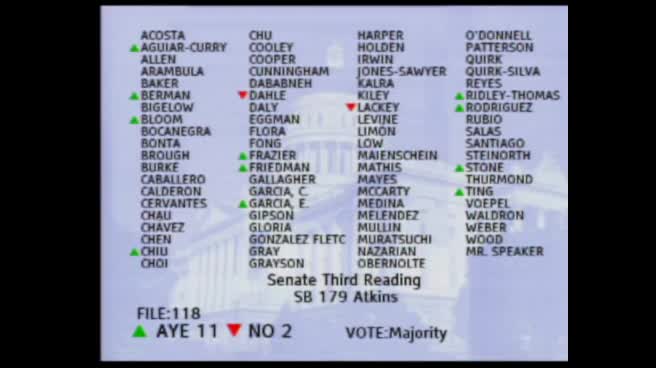 1MIN
Assembly Floor
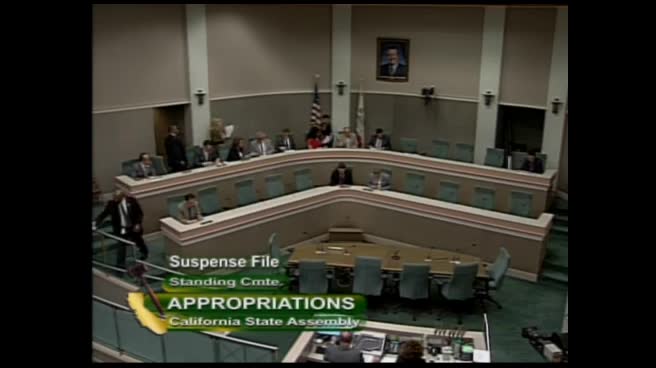 1H
Assembly Standing Committee on Appropriations
 48MIN
Senate Standing Committee on Appropriations
Bill Author

Bill Co-Author(s):