SB 386: State beaches and parks: smoking ban.
- Session Year: 2017-2018
- House: Senate
- Latest Version Date: 2017-09-15
Existing law makes it an infraction punishable by a fine of $250 for a person to smoke a cigarette, cigar, or other tobacco-related product within 25 feet of a playground or tot lot sandbox area.
This bill would make it an infraction punishable by a fine of up to $100 for a person to smoke, as defined, on a state coastal beach or in a unit of the state park system or to dispose of used cigar or cigarette waste on a state coastal beach or in a unit of the state park system. The bill would establish a state-mandated local program by creating a new crime.
This bill would require the Department of Parks and Recreation to develop and post signs at entrances or strategic locations, as determined by the Director of Parks and Recreation, of state coastal beaches and units of the state park system to provide notice of the smoking prohibition. The bill would require the smoking prohibition to be enforced only after signs have been posted. The bill would authorize the Director of Parks and Recreation to designate, by posted order, areas within units of the state park system as exempt from the smoking prohibition, as specified.
The California Constitution requires the state to reimburse local agencies and school districts for certain costs mandated by the state. Statutory provisions establish procedures for making that reimbursement.
This bill would provide that no reimbursement is required by this act for a specified reason.
Existing law makes it an infraction for a person to smoke a cigarette, cigar, or other tobacco-related product within 25 feet of a playground or tot lot sandbox area.
This bill would make it an infraction for a person to smoke, as defined, on a state coastal beach or in a unit of the state park system or to dispose of used cigar or cigarette waste on a state coastal beach or in a unit of the state park system. The bill would establish a state-mandated local program by creating a new crime.
This bill would require the Department of Parks and Recreation to develop and post signs at state coastal beaches and units of the state park system to provide notice of the smoking prohibition. The bill would require the smoking prohibition to be enforced only after signs have been posted. The bill would authorize the Director of Parks and Recreation to designate, by posted order, areas within units of the state park system as exempt from the smoking prohibition, as specified.
The California Constitution requires the state to reimburse local agencies and school districts for certain costs mandated by the state. Statutory provisions establish procedures for making that reimbursement.
This bill would provide that no reimbursement is required by this act for a specified reason.
Existing law makes it an infraction for a person to smoke a cigarette, cigar, or other tobacco-related product within 25 feet of a playground or tot lot sandbox area.
This bill would make it an infraction for a person to smoke, as defined, on a state coastal beach or in a unit of the state park system or to dispose of used cigar or cigarette waste on a state coastal beach or in a unit of the state park system. The bill would establish a state-mandated local program by creating a new crime.
This bill would require the Department of Parks and Recreation to develop and post signs at state coastal beaches and units of the state park system to provide notice of the smoking prohibition. The bill would require the smoking prohibition to be enforced only after signs have been posted.
The California Constitution requires the state to reimburse local agencies and school districts for certain costs mandated by the state. Statutory provisions establish procedures for making that reimbursement.
This bill would provide that no reimbursement is required by this act for a specified reason.
(a)For purposes of this section, the following definitions apply:
(1)Cigar has the same meaning as defined in Section 104550 of the Health and Safety Code and, for purposes of this section, may contain any other weed or plant as an alternative or supplement to tobacco or nicotine.
(2)Cigarette has the same meaning as defined in Section 104556 of the Health and Safety Code and, for purposes of this section, may contain any other weed or plant as an alternative or supplement to tobacco or nicotine.
(3)Smoke or smoking means inhaling, exhaling, burning, or carrying any lighted or heated cigar, cigarette, or pipe, or any other lighted or heated tobacco or plant product intended for inhalation, whether natural or synthetic, in any manner or in any form. Smoke or smoking includes the use of an electronic smoking device that creates an aerosol or vapor, in any manner or in any form, or the use of any oral smoking device for the purpose of circumventing a prohibition on smoking. Smoke or smoking does not include the use of a cigar, cigarette, or pipe, or any other lighted or heated tobacco or plant product used as a prop in a motion picture, television program, or similar filmed audiovisual work, provided filming is properly permitted by the California Film Commission, the active film set is closed to the general public, and any waste is immediately removed from the beach or park. Smoke or smoking does not include the use of a cigar, cigarette, or pipe, or any other lighted or heated tobacco or plant product used for ceremonial purposes by a federally recognized Native American tribe or a nonfederally recognized California Native American tribe listed on the California Tribal Consultation List maintained by the Native American Heritage Commission.
(4)State coastal beach means an area that is owned, operated, or under the jurisdiction of the state, an agency of the state, or a department of the state and that adjoins the ocean, a bay, or an estuary.
(5)Unit of the state park system means an area specified in Section 5002.
(b)A person shall not smoke on a state coastal beach or in a unit of the state park system.
(c)A person shall not dispose of used cigar or cigarette waste on a state coastal beach or in a unit of the state park system.
(d)A person who violates this section is guilty of an infraction and shall be punished by a fine of up to one hundred dollars ($100).
(e)The department shall develop and post signs at entrances or strategic locations, as determined by the director, of state coastal beaches and units of the state park system to provide notice of the smoking prohibition set forth in subdivision (b). Subdivision (b) shall be enforced on state coastal beaches or in units of the state park system only after signs have been posted.
(f)Notwithstanding any other provision of this section, the director may designate, by posted order, areas within units of the state park system, except state coastal beaches, as exempt from the provisions of this section. The director shall consider public health and safety implications and potential fire risk when designating an area as exempt pursuant to this subdivision.
SEC. 2.No reimbursement is required by this act pursuant to Section 6 of Article XIIIB of the California Constitution because the only costs that may be incurred by a local agency or school district will be incurred because this act creates a new crime or infraction, eliminates a crime or infraction, or changes the penalty for a crime or infraction, within the meaning of Section 17556 of the Government Code, or changes the definition of a crime within the meaning of Section 6 of Article XIIIB of the California Constitution.
(a)For purposes of this section, the following definitions apply:
(1)Cigar has the same meaning as defined in Section 104550 of the Health and Safety Code and, for purposes of this section, may contain any other weed or plant as an alternative or supplement to tobacco or nicotine.
(2)Cigarette has the same meaning as defined in Section 104556 of the Health and Safety Code and, for purposes of this section, may contain any other weed or plant as an alternative or supplement to tobacco or nicotine.
(3)Smoke or smoking means inhaling, exhaling, burning, or carrying any lighted or heated cigar, cigarette, or pipe, or any other lighted or heated tobacco or plant product intended for inhalation, whether natural or synthetic, in any manner or in any form. Smoke or smoking includes the use of an electronic smoking device that creates an aerosol or vapor, in any manner or in any form, or the use of any oral smoking device for the purpose of circumventing a prohibition on smoking. Smoke or smoking does not include the use of a cigar, cigarette, or pipe, or any other lighted or heated tobacco or plant product used as a prop in a motion picture, television program, or similar filmed audiovisual work, provided filming is properly permitted by the California Film Commission, the active film set is closed to the general public, and any waste is immediately removed from the beach or park. Smoke or smoking does not include the use of a cigar, cigarette, or pipe, or any other lighted or heated tobacco or plant product used for ceremonial purposes by a federally recognized Native American tribe or a nonfederally recognized California Native American tribe listed on the California Tribal Consultation List maintained by the Native American Heritage Commission.
(4)State coastal beach means an area that is owned, operated, or under the jurisdiction of the state, an agency of the state, or a department of the state and that adjoins the ocean, a bay, or an estuary.
(5)Unit of the state park system means an area specified in Section 5002.
(b)A person shall not smoke on a state coastal beach or in a unit of the state park system.
(c)A person shall not dispose of used cigar or cigarette waste on a state coastal beach or in a unit of the state park system.
(d)A person who violates this section is guilty of an infraction and shall be punished by a fine of up to two hundred fifty dollars ($250). one hundred dollars ($100).
(e)The department shall develop and post signs at entrances or strategic locations, as determined by the director, of state coastal beaches and units of the state park system to provide notice of the smoking prohibition set forth in subdivision (b). Subdivision (b) shall be enforced on state coastal beaches or in units of the state park system only after signs have been posted.
(f)Notwithstanding any other provision of this section, the director may designate, by posted order, areas within units of the state park system, except state coastal beaches, as exempt from the provisions of this section. The director shall consider public health and safety implications and potential fire risk when designating an area as exempt pursuant to this subdivision.
SEC. 2.No reimbursement is required by this act pursuant to Section 6 of Article XIIIB of the California Constitution because the only costs that may be incurred by a local agency or school district will be incurred because this act creates a new crime or infraction, eliminates a crime or infraction, or changes the penalty for a crime or infraction, within the meaning of Section 17556 of the Government Code, or changes the definition of a crime within the meaning of Section 6 of Article XIIIB of the California Constitution.
(a)For purposes of this section, the following definitions apply:
(1)Cigar has the same meaning as defined in Section 104550 of the Health and Safety Code and, for purposes of this section, may contain any other weed or plant as an alternative or supplement to tobacco or nicotine.
(2)Cigarette has the same meaning as defined in Section 104556 of the Health and Safety Code and, for purposes of this section, may contain any other weed or plant as an alternative or supplement to tobacco or nicotine.
(3)Smoke or smoking means inhaling, exhaling, burning, or carrying any lighted or heated cigar, cigarette, or pipe, or any other lighted or heated tobacco or plant product intended for inhalation, whether natural or synthetic, in any manner or in any form. Smoke or smoking includes the use of an electronic smoking device that creates an aerosol or vapor, in any manner or in any form, or the use of any oral smoking device for the purpose of circumventing a prohibition on smoking. Smoke or smoking does not include the use of a cigar, cigarette, or pipe, or any other lighted or heated tobacco or plant product used as a prop in a motion picture, television program, or similar filmed audiovisual work, provided filming is properly permitted by the California Film Commission, the active film set is closed to the general public, and any waste is immediately removed from the beach or park. Smoke or smoking does not include the use of a cigar, cigarette, or pipe, or any other lighted or heated tobacco or plant product used for ceremonial purposes by a federally recognized Native American tribe or a nonfederally recognized California Native American tribe listed on the California Tribal Consultation List maintained by the Native American Heritage Commission.
(4)State coastal beach means an area that is owned, operated, or under the jurisdiction of the state, an agency of the state, or a department of the state and that adjoins the ocean, a bay, or an estuary.
(5)Unit of the state park system means an area specified in Section 5002.
(b)A person shall not smoke on a state coastal beach or in a unit of the state park system.
(c)A person shall not dispose of used cigar or cigarette waste on a state coastal beach or in a unit of the state park system.
(d)A person who violates this section is guilty of an infraction and shall be punished by a fine of up to two hundred fifty dollars ($250).
(e)The department shall develop and post signs at state coastal beaches and units of the state park system to provide notice of the smoking prohibition set forth in subdivision (b). Subdivision (b) shall be enforced on state coastal beaches or in units of the state park system only after signs have been posted.
(f)Notwithstanding any other provision of this section, the director may designate, by posted order, areas within units of the state park system, except state coastal beaches, as exempt from the provisions of this section. The director shall consider public health and safety implications and potential fire risk when designating an area as exempt pursuant to this subdivision.
SEC. 2.No reimbursement is required by this act pursuant to Section 6 of Article XIIIB of the California Constitution because the only costs that may be incurred by a local agency or school district will be incurred because this act creates a new crime or infraction, eliminates a crime or infraction, or changes the penalty for a crime or infraction, within the meaning of Section 17556 of the Government Code, or changes the definition of a crime within the meaning of Section 6 of Article XIIIB of the California Constitution.
REVISIONS: HeadingLine 3.(a)For purposes of this section, the following definitions apply:
(1)Cigar has the same meaning as defined in Section 104550 of the Health and Safety Code and, for purposes of this section, may contain any other weed or plant as an alternative or supplement to tobacco or nicotine.
(2)Cigarette has the same meaning as defined in Section 104556 of the Health and Safety Code and, for purposes of this section, may contain any other weed or plant as an alternative or supplement to tobacco or nicotine.
(3)Smoke or smoking means inhaling, exhaling, burning, or carrying any lighted or heated cigar, cigarette, or pipe, or any other lighted or heated tobacco or plant product intended for inhalation, whether natural or synthetic, in any manner or in any form. Smoke or smoking includes the use of an electronic smoking device that creates an aerosol or vapor, in any manner or in any form, or the use of any oral smoking device for the purpose of circumventing a prohibition on smoking. Smoke or smoking does not include the use of a cigar, cigarette, or pipe, or any other lighted or heated tobacco or plant product used as a prop in a motion picture, television program, or similar filmed audiovisual work, provided filming is properly permitted by the California Film Commission, the active film set is closed to the general public, and any waste is immediately removed from the beach or park.
(4)State coastal beach means an area that is owned, operated, or under the jurisdiction of the state, an agency of the state, or a department of the state and that adjoins the ocean, a bay, or an estuary.
(5)Unit of the state park system means an area specified in Section 5002.
(b)A person shall not smoke on a state coastal beach or in a unit of the state park system.
(c)A person shall not dispose of used cigar or cigarette waste on a state coastal beach or in a unit of the state park system.
(d)A person who violates this section is guilty of an infraction and shall be punished by a fine of up to two hundred fifty dollars ($250).
(e)The department shall develop and post signs at state coastal beaches and units of the state park system to provide notice of the smoking prohibition set forth in subdivision (b). Subdivision (b) shall be enforced on state coastal beaches or in units of the state park system only after signs have been posted.
(f)Notwithstanding any other provision of this section, the director may designate, by posted order, areas within units of the state park system, except state coastal beaches, as exempt from the provisions of this section. The director shall consider public health and safety implications and potential fire risk when designating an area as exempt pursuant to this subdivision.
SEC. 2.No reimbursement is required by this act pursuant to Section 6 of Article XIIIB of the California Constitution because the only costs that may be incurred by a local agency or school district will be incurred because this act creates a new crime or infraction, eliminates a crime or infraction, or changes the penalty for a crime or infraction, within the meaning of Section 17556 of the Government Code, or changes the definition of a crime within the meaning of Section 6 of Article XIIIB of the California Constitution.
(a)For purposes of this section, the following definitions apply:
(1)Cigar has the same meaning as defined in Section 104550 of the Health and Safety Code and, for purposes of this section, may contain any other weed or plant as an alternative or supplement to tobacco or nicotine.
(2)Cigarette has the same meaning as defined in Section 104556 of the Health and Safety Code and, for purposes of this section, may contain any other weed or plant as an alternative or supplement to tobacco or nicotine.
(3)Smoke or smoking means inhaling, exhaling, burning, or carrying any lighted or heated cigar, cigarette, or pipe, or any other lighted or heated tobacco or plant product intended for inhalation, whether natural or synthetic, in any manner or in any form. Smoke or smoking includes the use of an electronic smoking device that creates an aerosol or vapor, in any manner or in any form, or the use of any oral smoking device for the purpose of circumventing a prohibition on smoking. Smoke or smoking does not include the use of a cigar, cigarette, or pipe, or any other lighted or heated tobacco or plant product used as a prop in a motion picture, television program, or similar filmed audiovisual work, provided filming is properly permitted by the California Film Commission, the active film set is closed to the general public, and any waste is immediately removed from the beach or park.
(4)State coastal beach means an area that is owned, operated, or under the jurisdiction of the state, an agency of the state, or a department of the state and that adjoins the ocean, a bay, or an estuary.
(5)Unit of the state park system means an area specified in Section 5002.
(b)A person shall not smoke on a state coastal beach or in a unit of the state park system.
(c)A person shall not dispose of used cigar or cigarette waste on a state coastal beach or in a unit of the state park system.
(d)A person who violates this section is guilty of an infraction and shall be punished by a fine of up to two hundred fifty dollars ($250).
(e)The department shall develop and post signs at state coastal beaches and units of the state park system to provide notice of the smoking prohibition set forth in subdivision (b). Subdivision (b) shall be enforced on state coastal beaches or in units of the state park system only after signs have been posted.
SEC. 2.No reimbursement is required by this act pursuant to Section 6 of Article XIIIB of the California Constitution because the only costs that may be incurred by a local agency or school district will be incurred because this act creates a new crime or infraction, eliminates a crime or infraction, or changes the penalty for a crime or infraction, within the meaning of Section 17556 of the Government Code, or changes the definition of a crime within the meaning of Section 6 of Article XIIIB of the California Constitution.
|
Date
|
Status
|
|---|---|
| Mar 3, 2018 | Last day to consider Governor’s veto pursuant to Joint Rule 58.5. |
| Oct 6, 2017 | In Senate. Consideration of Governor's veto pending. |
| Oct 6, 2017 | Vetoed by the Governor. |
| Sep 19, 2017 | Enrolled and presented to the Governor at 4 p.m. |
| Sep 13, 2017 | Assembly amendments concurred in. (Ayes 28. Noes 12.) Ordered to engrossing and enrolling. |
| Sep 13, 2017 | In Senate. Concurrence in Assembly amendments pending. |
| Sep 12, 2017 | Read third time. Passed. Ordered to the Senate. |
| Sep 7, 2017 | Read third time and amended. |
| Sep 5, 2017 | Read second time. Ordered to third reading. |
| Sep 1, 2017 | From committee: Do pass. (Ayes 11. Noes 5.) (September 1). |
| Jul 19, 2017 | July 19 set for first hearing. Placed on APPR. suspense file. |
| Jul 13, 2017 | From committee with author's amendments. Read second time and amended. Re-referred to Com. on APPR. |
| Jun 28, 2017 | Read second time and amended. Re-referred to Com. on APPR. |
| Jun 27, 2017 | From committee: Do pass as amended and re-refer to Com. on APPR. (Ayes 10. Noes 4.) (June 27). |
| Jun 8, 2017 | Referred to Com. on W.,P., & W. |
| May 31, 2017 | In Assembly. Read first time. Held at Desk. |
| May 30, 2017 | Read third time. Passed. (Ayes 29. Noes 11. Page 1269.) Ordered to the Assembly. |
| May 26, 2017 | Read second time. Ordered to third reading. |
| May 25, 2017 | From committee: Do pass. (Ayes 5. Noes 2. Page 1183.) (May 25). |
| May 19, 2017 | Set for hearing May 25. |
| Apr 17, 2017 | April 17 hearing: Placed on APPR. suspense file. |
| Apr 5, 2017 | Set for hearing April 17. |
| Mar 28, 2017 | From committee: Do pass and re-refer to Com. on APPR. (Ayes 7. Noes 2.) (March 28). Re-referred to Com. on APPR. |
| Mar 7, 2017 | Set for hearing March 28. |
| Feb 23, 2017 | Referred to Com. on N.R. & W. |
| Feb 15, 2017 | From printer. May be acted upon on or after March 17. |
| Feb 14, 2017 | Introduced. Read first time. To Com. on RLS. for assignment. To print. |
|
Date
|
Description
|
Location
|
Votes
|
|
|---|---|---|---|---|
| Sep 13, 2017 | Unfinished Business SB386 Glazer et al. Concurrence | Senate Floor |
Passed |
|
| Sep 12, 2017 | SB 386 Glazer Senate Third Reading By GONZALEZ FLETCHER | Assembly Floor |
Passed |
|
| Sep 1, 2017 | Do pass. | Assembly Standing Committee on Appropriations |
Passed |
|
| Jun 27, 2017 | Do pass as amended and be re-referred to the Committee on [Appropriations] | Assembly Standing Committee on Water, Parks, and Wildlife |
Passed |
|
| May 30, 2017 | Senate 3rd Reading SB386 Glazer et al. | Senate Floor |
Passed |
|
| May 25, 2017 | Do pass | Senate Standing Committee on Appropriations |
Passed |
|
| Apr 17, 2017 | Placed on suspense file | Senate Standing Committee on Appropriations |
Passed |
|
| Mar 28, 2017 | Do pass, but first be re-referred to the Committee on [Appropriations] | Senate Standing Committee on Natural Resources and Water |
Passed |
This list shows positions taken on this bill by organizations on the date displayed, which is linked to the original source.
Positions by individuals are not included.
|
Organization
|
Position
|
Date
|
|---|---|---|
| 1 individual | ** Support | May 27, 2017 |
| American Cancer Society Cancer Action Network | ** Support | Mar 23, 2017 |
| American Heart Association | ** Support | Jan 2, 2018 |
| American Lung Association | ** Support | Jan 2, 2018 |
| American Stroke Association | ** Support | Jan 2, 2018 |
| Association of California Healthcare Districts | ** Support | Jun 23, 2017 |
| California Fire Chiefs Assocation | ** Support | Jan 2, 2018 |
| California Firefighters' Association | ** Support | Jan 2, 2018 |
| California Optometric Association | ** Support | Jan 2, 2018 |
| California Park & Recreation Society | ** Support | Jun 23, 2017 |
| California Statewide Law Enforcement Association | ** Support | Jan 2, 2018 |
| Californians Against Waste | ** Support | Jan 2, 2018 |
| County Health Executives Association Of California | ** Support | Jan 2, 2018 |
| Fire Districts Association Of California | ** Support | Jan 2, 2018 |
| Heal The Bay | ** Support | Jan 2, 2018 |
| March of Dimes | ** Support | Jan 2, 2018 |
| Plastic Pollution Coalition | ** Support | Jan 2, 2018 |
| San Francisco Baykeeper | ** Support | Jan 2, 2018 |
| Save The Bay | ** Support | Jan 2, 2018 |
| Seventh Generation Advisors | ** Support | Jan 2, 2018 |
| Sonoma County Board of Supervisors | ** Support | Jan 2, 2018 |
| State Lands Commission | ** Support | Jan 2, 2018 |
| Surfrider Foundation | ** Support | Jan 2, 2018 |
| The 5 Gyres Institute | ** Support | Jan 2, 2018 |
| The County Health Executives Association of California | ** Support | Mar 23, 2017 |
| Upstream Policy | ** Support | Jan 2, 2018 |
Office of Senate Floor Analyses (916) 651-1520 Fax: (916) 327-4478 | SB |
VETO
Bill No: SB 386
:
SENATE NATURAL RES. & WATER COMMITTEE: 7-2, 3/28/17
AYES: Hertzberg, Allen, Atkins, Hueso, Jackson, Monning, Stern
NOES: Stone, Vidak
SENATE APPROPRIATIONS COMMITTEE: 5-2, 5/25/17
AYES: Lara, Beall, Bradford, Hill, Wiener
NOES: Bates, Nielsen
SENATE FLOOR: 29-11, 5/30/17
AYES: Allen, Atkins, Beall, Bradford, De León, Dodd, Galgiani, Glazer, Hernandez, Hertzberg, Hill, Hueso, Jackson, Lara, Leyva, McGuire, Mendoza, Mitchell, Monning, Newman, Nguyen, Pan, Portantino, Roth, Skinner, Stern, Wieckowski, Wiener, Wilk
NOES: Anderson, Bates, Berryhill, Cannella, Fuller, Gaines, Moorlach, Morrell, Nielsen, Stone, Vidak
SENATE FLOOR: 28-12, 9/13/17
AYES: Allen, Atkins, Beall, Bradford, De León, Dodd, Galgiani, Glazer, Hernandez, Hertzberg, Hill, Hueso, Jackson, Lara, Leyva, McGuire, Mendoza, Mitchell, Monning, Newman, Nguyen, Pan, Portantino, Roth, Skinner, Stern, Wieckowski, Wiener
NOES: Anderson, Bates, Berryhill, Cannella, Fuller, Gaines, Moorlach, Morrell, Nielsen, Stone, Vidak, Wilk
ASSEMBLY FLOOR: 56-22, 9/12/17 - See last page for vote
DIGEST:
This bill prohibits smoking on a state coastal beach or in a unit of the state park system, with some exceptions. Smoking is defined as the use of cigarettes, cigars, pipes, any type of lighted or heated tobacco or plant product intended for inhalation, and electronic smoking devices.
ANALYSIS: Existing law provides (Health and Safety Code Section 104495) smoking is prohibited inside a public building, in a state-owned vehicle, or in an outdoor area within 20 feet of a main entrance, exit, or window. Smoking or disposing of smoking-related waste is prohibited within 25 feet of a playground or sand box area.
This bill:
- Makes it an infraction for a person to smoke or dispose of smoking-related waste on a state coastal beach or in a unit of the state park system.
- Requires the Department of Parks and Recreation (DPR) to develop and post signs to provide notice of the smoking prohibition prior to enforcement. These signs are required to be posted at the entrance or a strategic location at each beach or state park unit.
- Defines the smoking restriction to include cigarettes, cigars, pipes, and any type of lighted or heated tobacco or plant product intended for inhalation, and includes the use of electronic smoking devices.
- Establishes the maximum fine for this infraction at $100.
- Exempts devices that are used as props in a motion picture, television program, or similar filmed audiovisual work, provided that the filming is properly permitted by the California Film Commission, the film set is closed to the general public, and any waste is immediately removed from the beach or park.
- Exempts smoking used for ceremonial purposes by a federally recognized Native American tribe or a nonfederally recognized, California Native American tribe listed on the California Tribal Consultation List maintained by the Native American Heritage Commission.
- Authorizes the Director to designate areas within the units of the state park system, except state coastal beaches, as exempt from the smoking prohibition.
Background
Many cities and counties have adopted ordinances prohibiting smoking, including at public beaches. In 2003, Solana Beach in San Diego County was the first California city to prohibit smoking on a city beach. In addition, the Counties of San Mateo and San Francisco, the Cities of San Diego, Los Angeles, Huntington Beach, Pasadena, Carson, and Davis, among others, have adopted ordinances banning smoking in parks or public beaches. Furthermore, some colleges, including University of California, have prohibited smoking on campus.
The Legislature has considered identical and similar bills over the past 10 years. In 2016, SB 1333 (Block) was vetoed by the Governor. SB 1333 contained similar language to SB 386 at bill introduction, and was amended to include language providing the DPR with greater flexibility than SB 386. The veto message read, “this bill bans smoking at state beaches and parks. The complete prohibition in all parks and beaches is too broad. A more measured – and less punitive – approach might be warranted.” In 2010, SB 4 (Oropeza) was passed by the Legislature with similar language to SB 386, but with exemptions for adjacent parking lots and designated campsites at state beaches and with a lower maximum fine. Governor Schwarzenegger vetoed SB 4, with a veto message that argued SB 4 expanded too much government intrusion in private life, and saying that the bill “crosses an important threshold between state…and local decision-making.”
In California State Parks, which includes nearly 300 individual units, some smoking prohibitions already exist for particular situations. The State Parks system currently prohibits smoking on specific guided walks and trails, as well as when fire danger is high.
According to the California Department of Health, smoking prevalence for adults in California has declined from 23.7% in 1988 to 11.6% in 2014, second lowest in the United States.
Comments
The Governor will determine if this bill is now acceptable or not. SB 386 is similar to previous bills with similar smoking restrictions at state parks. SB 386 does address part of the previous 2016 veto message by authorizing the Director to designate areas where smoking can occur and by including certain exemptions to the smoking prohibition, thereby decreasing the breadth. However, SB 386 has the same maximum fine as previous vetoed bills, and therefore, may be viewed as similarly punitive.
Does discarded smoking waste present a large pollution problem? Outside of the health costs and individual benefits, cigarette filters are a pollution problem on California beaches. Among several beach cleanup studies, cigarettes are clearly the most common litter by number, although volume estimates are less commonly reported. The source of cigarette pollution on beaches is both through direct litter from beach users, as well as cigarette remains that are transported from sidewalks and streets to beaches through storm drains and other stormwater systems. The pollution impact of cigars and electronic cigarettes has not been well studied and is likely far less than cigarette pollution. Finally, the cost of clean-up of all litter to communities can be substantial. A 2012 study estimated that 90 coastal communities in California paid over $520 million to combat litter.
Does smoking waste impact marine life? Cigarette butts can have a lasting presence in the environment and impact marine wildlife. Although small in size, cigarette filters are slow to degrade and can be dangerous to wildlife as a choking or toxic hazard. Specifically, the filters for cigarettes are made from cellulose-acetate, which along with other residual chemicals in smoking waste can be toxic to fish and invertebrates. Birds, fish, and other wildlife can also mistake cigarette butts as food, which can cause choking or disrupted digestion.
Smoking restrictions vs. littering restrictions. Under existing law, littering on public property has been a unlawful in California since the 1970s (California Vehicle Code §42001.7), including on state beaches and in state parks. However, littering as an infraction is difficult to enforce, and even with a dramatic decrease in smoking prevalence in California, cigarette butts have remained the most commonly collected litter in cleanup efforts, and therefore a recalcitrant pollution problem. A smoking restriction would be easier to enforce than litter laws, because littering is fairly inconspicuous while smoking is less so. A smoking restriction would also be more expansive than litter laws because it applies to electronic cigarettes, which have become much more popular in recent years, cigars, and pipes, which are much less likely to pollute state parks and beaches.
How might this impact cannabis use on state beaches and in state parks? SB 386 defines cigarette to include “any other weed or plant as an alternative or supplement to tobacco or nicotine,” and smoking to include “inhaling, exhaling, burning, or carrying any lighted or heated cigar, cigarette, or pipe, or any other lighted or heated tobacco or plant product intended for inhalation, whether natural or synthetic in any manner or form.” Therefore, it could be interpreted to include cannabis.
Have other states passed broad smoking restrictions for state parks and beaches? In 2009, Maine prohibited smoking in state parks and historical sites. In 2016, New Jersey approved a measure that prohibits smoking at any state park or forest, county or municipal park, or state or municipal beach. The fine in New Jersey is $250 for a first offense, with subsequent increases for further offences, and Maine law authorizes fines up to $100.
FISCAL EFFECT: Appropriation: Fiscal Com.: Local:
According to the Assembly Appropriations Committee, the estimated costs of SB 386 include one-time costs between $840,000 and $1.1 million (General Fund) for the purchase and installation of signage. The DPR estimates each sign will cost between $150 and $200. The smoking ban would apply to up to 280 state parks, with an estimated 20 signs per park. This estimate does not include any additional costs associated with the California Environmental Quality Act or Coastal Commission permits, if determined to be applicable.
American Heart Association/American Stroke Association
American Lung Association
California Fire Chiefs Assocation
California Firefighters' Association
California Optometric Association
California Statewide Law Enforcement Association
Californians Against Waste
Cancer Action Network
County Health Executives Association of California
Fire Districts Association of California
Heal the Bay
March of Dimes
Plastic Pollution Coalition
San Francisco Baykeeper
Save the Bay
Seventh Generation Advisors
Sonoma County Board of Supervisors
State Lands Commission
Surfrider Foundation
The 5 Gyres Institute
Upstream Policy
2 Individuals
OPPOSITION: (Verified 10/12/17)
None received
ARGUMENTS IN SUPPORT: One of the main arguments in support of this bill by both the author and supporters is the negative environmental impact of tobacco product waste on beaches. According to the author, “Various nonprofit organizations have found that discarded cigarette butts were the number one waste item found on beaches. According to a study by the California Ocean Protection Council, about 40% of debris collected by the California Coastal Cleanup day in 2010 were trash from smoking-related activities.”
In addition, supporters point out the fire risk posed by smoking in State Parks and health risks. Supporters argue that second-hand smoke can cause asthma in children or trigger asthma problems for children or adults who have asthma, and can cause lung cancer in people who have never smoked.
The American Lung Association argues that “according to the U.S. Surgeon General, there is no risk-free level of exposure to secondhand smoke. In 2006, the California Air Resources Board classified secondhand smoke as a ‘Toxic Air Contaminant’ in the same category as asbestos, cyanide and arsenic – all of which can lead to serious illness and death.
GOVERNOR'S VETO MESSAGE:
I am returning Senate Bill 386 without my signature.
This bill prohibits smoking on state coastal beaches and throughout the State Park System, and requires the Department of Parks and Recreation to post signs to notify the public of the smoking ban.
Last year I vetoed Senate Bill 1333, a similar measure, because I believed that such a far-reaching prohibition in every state park and on every state beach was too broad. In addition, the fine prescribed in this bill for lighting one cigarette is excessive: $485 dollars, after the mandatory assessments.
If people can't smoke even on a deserted beach, where can they? There must be some limit to the coercive power of government.
ASSEMBLY FLOOR: 56-22, 9/12/17
AYES: Aguiar-Curry, Arambula, Baker, Berman, Bloom, Bocanegra, Bonta, Burke, Caballero, Calderon, Cervantes, Chau, Chiu, Choi, Chu, Cooley, Cooper, Dababneh, Daly, Eggman, Friedman, Cristina Garcia, Eduardo Garcia, Gipson, Gloria, Gonzalez Fletcher, Gray, Grayson, Holden, Irwin, Jones-Sawyer, Kalra, Levine, Limón, Low, Maienschein, McCarty, Medina, Mullin, Muratsuchi, Nazarian, O'Donnell, Quirk, Quirk-Silva, Reyes, Ridley-Thomas, Rodriguez, Rubio, Santiago, Steinorth, Mark Stone, Thurmond, Ting, Weber, Wood, Rendon
NOES: Acosta, Travis Allen, Bigelow, Chávez, Chen, Cunningham, Dahle, Flora, Fong, Frazier, Gallagher, Harper, Kiley, Lackey, Mathis, Mayes, Melendez, Obernolte, Patterson, Salas, Voepel, Waldron
NO VOTE RECORDED: Brough
1/2/18 10:09:52
**** END ****
Office of Senate Floor Analyses (916) 651-1520 Fax: (916) 327-4478 | SB |
UNFINISHED BUSINESS
Bill No: SB 386
:
SENATE NATURAL RES. & WATER COMMITTEE: 7-2, 3/28/17
AYES: Hertzberg, Allen, Atkins, Hueso, Jackson, Monning, Stern
NOES: Stone, Vidak
SENATE APPROPRIATIONS COMMITTEE: 5-2, 5/25/17
AYES: Lara, Beall, Bradford, Hill, Wiener
NOES: Bates, Nielsen
SENATE FLOOR: 29-11, 5/30/17
AYES: Allen, Atkins, Beall, Bradford, De León, Dodd, Galgiani, Glazer, Hernandez, Hertzberg, Hill, Hueso, Jackson, Lara, Leyva, McGuire, Mendoza, Mitchell, Monning, Newman, Nguyen, Pan, Portantino, Roth, Skinner, Stern, Wieckowski, Wiener, Wilk
NOES: Anderson, Bates, Berryhill, Cannella, Fuller, Gaines, Moorlach, Morrell, Nielsen, Stone, Vidak
ASSEMBLY FLOOR: 56-22, 9/12/17 - See last page for vote
DIGEST:
This bill prohibits smoking on a state coastal beach or in a unit of the state park system, with some exceptions. Smoking is defined as the use of cigarettes, cigars, pipes, any type of lighted or heated tobacco or plant product intended for inhalation, and electronic smoking devices.
Assembly Amendments:
- Revise the maximum fee in the bill to $100 for a smoking infraction.
- Clarify that the Department of Parks and Recreation (DPR) is required to develop and post signs at entrances or strategic locations of state coastal beaches and units of the state park system, as determined by the Director of DPR (the Director), to provide notice of the smoking prohibition.
- Exempt smoking for ceremonial purposes by state or federally recognized Native American tribes.
- Authorize the Director to designate areas within units of the state park system, except state coastal beaches, as exempt from the smoking prohibition.
ANALYSIS: Existing law provides (Health and Safety Code, Section 104495) smoking is prohibited inside a public building, in a state-owned vehicle, or in an outdoor area within 20 feet of a main entrance, exit, or window. Smoking or disposing of smoking-related waste is prohibited within 25 feet of a playground or sand box area.
This bill:
- Makes it an infraction for a person to smoke or dispose of smoking-related waste on a state coastal beach or in a unit of the state park system.
- Requires the DPR to develop and post signs to provide notice of the smoking prohibition prior to enforcement. These signs are required to be posted at the entrance or a strategic location at each beach or state park unit.
- Defines the smoking restriction to include cigarettes, cigars, pipes, and any type of lighted or heated tobacco or plant product intended for inhalation, and includes the use of electronic smoking devices.
- Establishes the maximum fine for this infraction at $100.
- Exempts devices that are used as props in a motion picture, television program, or similar filmed audiovisual work, provided that the filming is properly permitted by the California Film Commission, the film set is closed to the general public, and any waste is immediately removed from the beach or park.
- Exempts smoking used for ceremonial purposes by a federally recognized Native American tribe or a nonfederally recognized, California Native American tribe listed on the California Tribal Consultation List maintained by the Native American Heritage Commission.
- Authorizes the Director to designate areas within the units of the state park system, except state coastal beaches, as exempt from the smoking prohibition.
Background
Many cities and counties have adopted ordinances prohibiting smoking, including at public beaches. In 2003, Solana Beach in San Diego County was the first California city to prohibit smoking on a city beach. In addition, the Counties of San Mateo and San Francisco, the Cities of San Diego, Los Angeles, Huntington Beach, Pasadena, Carson, and Davis, among others, have adopted ordinances banning smoking in parks or public beaches. Furthermore, some colleges, including University of California, have prohibited smoking on campus.
The Legislature has considered identical and similar bills over the past 10 years. In 2016, SB 1333 (Block) was vetoed by the Governor. SB 1333 contained similar language to SB 386 at bill introduction, and was amended to include language providing the DPR with greater flexibility than SB 386. The veto message read, “this bill bans smoking at state beaches and parks. The complete prohibition in all parks and beaches is too broad. A more measured – and less punitive – approach might be warranted.” In 2010, SB 4 (Oropeza) was passed by the Legislature with similar language to SB 386, but with exemptions for adjacent parking lots and designated campsites at state beaches and with a lower maximum fine. Governor Schwarzenegger vetoed SB 4, with a veto message that argued SB 4 expanded too much government intrusion in private life, and saying that the bill “crosses an important threshold between state…and local decision-making.”
In California State Parks, which includes nearly 300 individual units, some smoking prohibitions already exist for particular situations. The State Parks system currently prohibits smoking on specific guided walks and trails, as well as when fire danger is high.
According to the California Department of Health, smoking prevalence for adults in California has declined from 23.7% in 1988 to 11.6% in 2014, second lowest in the United States.
Comments
The Governor will determine if this bill is now acceptable or not. SB 386 is similar to previous bills with similar smoking restrictions at state parks. SB 386 does address part of the previous 2016 veto message by authorizing the Director to designate areas where smoking can occur and by including certain exemptions to the smoking prohibition, thereby decreasing the breadth. However, SB 386 has the same maximum fine as previous vetoed bills, and therefore, may be viewed as similarly punitive.
Does discarded smoking waste present a large pollution problem? Outside of the health costs and individual benefits, cigarette filters are a pollution problem on California beaches. Among several beach cleanup studies, cigarettes are clearly the most common litter by number, although volume estimates are less commonly reported. The source of cigarette pollution on beaches is both through direct litter from beach users, as well as cigarette remains that are transported from sidewalks and streets to beaches through storm drains and other stormwater systems. The pollution impact of cigars and electronic cigarettes has not been well studied and is likely far less than cigarette pollution. Finally, the cost of clean-up of all litter to communities can be substantial. A 2012 study estimated that 90 coastal communities in California paid over $520 million to combat litter.
Does smoking waste impact marine life? Cigarette butts can have a lasting presence in the environment and impact marine wildlife. Although small in size, cigarette filters are slow to degrade and can be dangerous to wildlife as a choking or toxic hazard. Specifically, the filters for cigarettes are made from cellulose-acetate, which along with other residual chemicals in smoking waste can be toxic to fish and invertebrates. Birds, fish, and other wildlife can also mistake cigarette butts as food, which can cause choking or disrupted digestion.
Smoking restrictions vs. littering restrictions. Under existing law, littering on public property has been a unlawful in California since the 1970s (CA Vehicle Code §42001.7), including on state beaches and in state parks. However, littering as an infraction is difficult to enforce, and even with a dramatic decrease in smoking prevalence in California, cigarette butts have remained the most commonly collected litter in cleanup efforts, and therefore a recalcitrant pollution problem. A smoking restriction would be easier to enforce than litter laws, because littering is fairly inconspicuous while smoking is less so. A smoking restriction would also be more expansive than litter laws because it applies to electronic cigarettes, which have become much more popular in recent years, cigars, and pipes, which are much less likely to pollute state parks and beaches.
How might this impact cannabis use on state beaches and in state parks? SB 386 defines cigarette to include “any other weed or plant as an alternative or supplement to tobacco or nicotine,” and smoking to include “inhaling, exhaling, burning, or carrying any lighted or heated cigar, cigarette, or pipe, or any other lighted or heated tobacco or plant product intended for inhalation, whether natural or synthetic in any manner or form.” Therefore, it could be interpreted to include cannabis.
Have other states passed broad smoking restrictions for state parks and beaches? In 2009, Maine prohibited smoking in state parks and historical sites. In 2016, New Jersey approved a measure that prohibits smoking at any state park or forest, county or municipal park, or state or municipal beach. The fine in New Jersey is $250 for a first offense, with subsequent increases for further offences, and Maine law authorizes fines up to $100.
FISCAL EFFECT: Appropriation: Fiscal Com.: Local:
According to the Assembly Appropriations Committee, the estimated costs of SB 386 include one-time costs between $840,000 and $1.1 million (General Fund) for the purchase and installation of signage. The DPR estimates each sign will cost between $150 and $200. The smoking ban would apply to up to 280 state parks, with an estimated 20 signs per park. This estimate does not include any additional costs associated with the California Environmental Quality Act or Coastal Commission permits, if determined to be applicable.
American Heart Association/American Stroke Association
American Lung Association
California Fire Chiefs Assocation
California Firefighters' Association
California Optometric Association
California Statewide Law Enforcement Association
Californians Against Waste
Cancer Action Network
County Health Executives Association of California
Fire Districts Association of California
Heal the Bay
March of Dimes
Plastic Pollution Coalition
San Francisco Baykeeper
Save the Bay
Seventh Generation Advisors
Sonoma County Board of Supervisors
State Lands Commission
Surfrider Foundation
The 5 Gyres Institute
Upstream Policy
2 Individuals
OPPOSITION: (Verified 9/12/17)
None received
ARGUMENTS IN SUPPORT: One of the main arguments in support of this bill by both the author and supporters is the negative environmental impact of tobacco product waste on beaches. According to the author, “Various nonprofit organizations have found that discarded cigarette butts were the number one waste item found on beaches. According to a study by the California Ocean Protection Council, about 40% of debris collected by the California Coastal Cleanup day in 2010 were trash from smoking-related activities.”
In addition, supporters point out the fire risk posed by smoking in State Parks and health risks. Supporters argue that second-hand smoke can cause asthma in children or trigger asthma problems for children or adults who have asthma, and can cause lung cancer in people who have never smoked.
The American Lung Association argues that “according to the U.S. Surgeon General, there is no risk-free level of exposure to secondhand smoke. In 2006, the California Air Resources Board classified secondhand smoke as a ‘Toxic Air Contaminant’ in the same category as asbestos, cyanide and arsenic – all of which can lead to serious illness and death.
ASSEMBLY FLOOR: 56-22, 9/12/17
AYES: Aguiar-Curry, Arambula, Baker, Berman, Bloom, Bocanegra, Bonta, Burke, Caballero, Calderon, Cervantes, Chau, Chiu, Choi, Chu, Cooley, Cooper, Dababneh, Daly, Eggman, Friedman, Cristina Garcia, Eduardo Garcia, Gipson, Gloria, Gonzalez Fletcher, Gray, Grayson, Holden, Irwin, Jones-Sawyer, Kalra, Levine, Limón, Low, Maienschein, McCarty, Medina, Mullin, Muratsuchi, Nazarian, O'Donnell, Quirk, Quirk-Silva, Reyes, Ridley-Thomas, Rodriguez, Rubio, Santiago, Steinorth, Mark Stone, Thurmond, Ting, Weber, Wood, Rendon
NOES: Acosta, Travis Allen, Bigelow, Chávez, Chen, Cunningham, Dahle, Flora, Fong, Frazier, Gallagher, Harper, Kiley, Lackey, Mathis, Mayes, Melendez, Obernolte, Patterson, Salas, Voepel, Waldron
NO VOTE RECORDED: Brough
9/13/17 10:19:27
SENATE THIRD READING
STR Bill Id:SB 386
Author:(Glazer)
As Amended Ver:September 7, 2017
Majority vote
SENATE VOTE: 29-11
Committee | Votes | Ayes | Noes |
Water | 10-4 | Eduardo Garcia, Choi, Chu, Friedman, Gloria, Bocanegra, Levine, Rubio, Thurmond, Wood | Gallagher, Harper, Mathis, Salas |
Appropriations | 11-5 | Gonzalez Fletcher, Bloom, Bocanegra, Bonta, Calderon, Chau, Eggman, Friedman, Eduardo Garcia, Jones-Sawyer, Reyes | Bigelow, Brough, Fong, Gallagher, Obernolte |
SUMMARY: Prohibits smoking, or disposing of used cigarette waste, on a state beach or in a state park. Specifically, this bill:
- Prohibits a person from smoking on a state coastal beach or in a unit of the state park system. The prohibition applies to cigars or cigarettes containing tobacco or any other weed or plant used as an alternative or supplement to tobacco or nicotine, and also includes electronic and vapor cigarettes.
- Exempts certain tribal uses of tobacco products.
- Prohibits a person from disposing of used cigar or cigarette waste on a state coastal beach or in a state park unit.
- Makes a violation of this bill an infraction, punishable by a fine of up to $100.
- Requires the Department of Parks and Recreation (DPR) to post signs providing notice of the smoking prohibition, including at entrances or strategic locations, as determined by the Director of Parks and Recreation. Provides that the smoking prohibition shall be enforced on state coastal beaches and in state park units only after signs have been posted.
EXISTING LAW:
- Makes it an infraction to smoke a cigarette, cigar or other tobacco-related product within 25 feet of a playground or sandbox, punishable by a fine of $250 per incident.
- Prohibits smoking inside a public building, in a state-owned vehicle, or in an outdoor area within 20 feet of a main entrance, exit or window.
- Allows cities, counties and colleges to adopt more restrictive ordinances prohibiting smoking.
- Requires the DPR to administer and protect state park properties for the use and enjoyment of the public. Prohibits smoking in state parks upon a finding of extreme fire hazard by the DPR, except as allowed in designated areas.
FISCAL EFFECT: According to the Assembly Appropriations Committee:
- Increased one-time costs estimated to be between $840,000 and $1.1 million (GF) for the purchase and installation of signage. The DPR estimates each sign will cost between $150 and $200.
- The smoking ban would apply to up to 280 state parks, with an estimated 20 signs per park. This estimate does not include any additional costs associated with the California Environmental Quality Act or Coastal Commission permits, if determined to be applicable.
COMMENTS:
- Purpose. According to the author, "By prohibiting smoking at state parks and beaches, this bill would promote individual health by diminishing second hand smoke exposure, ensure the health and safety of animals from cigarette butts that would otherwise be consumed by them, and lastly it would help preserve the beauty and safety of our state beaches and parks by removing one of the most commonly discarded items, cigarette butts, which often lead to devastating fires."
- Background. The DPR currently prohibits smoking in state park buildings, on trails, on specific guided walks, and during high fire seasons. The state park system includes 300 miles of state beaches and 280 state park units covering a total of 1.3 million acres.
According to data compiled by the Ocean Conservancy from coastal clean-up collection efforts nationwide, cigarette litter continues to be the most commonly found waste item. In 2015 over 2 million pieces of cigarette butt litter were retrieved from U.S. beaches. Cigarette butts have been the most common type of trash found during coastal cleanup days for the past 30 years. Cigarette litter has been found in the stomachs of fish, birds, whales and other marine animals who mistake them for food. Cigarette filters also contain cellulose acetate, a type of plastic that breaks down slowly and never fully decomposes. According to information provided by the Surfrider Foundation, the toxic chemicals in used cigarette filters also leak out into the aquatic environment when submerged in water. The Surfrider Foundation estimates that Americans discard more than 175 million pounds of cigarette butts every year. In addition to the litter problems associated with cigarettes, smoking poses forest fire hazards and was the cause of four of the 25 worst wildfires in California between 1929 and 1999, causing the state billions of dollars.
- Prior and Related Legislation. AB 725 (Levine) is substantially similar to this bill. AB 725 is currently pending in the Senate Appropriations Committee.
AB 1142 (Bloom) of the 2014 Legislative Session and SB 1333 (Block) of the 2016 Legislative Session were substantially similar to this bill. AB 1142 failed passage in the Assembly Governmental Organization Committee and SB 1333 was vetoed by the Governor. According to the Governor, "The complete prohibition in all parks and beaches is too broad. A more measured – and less punitive – approach might be warranted."
Analysis Prepared by: Catherine Freeman / W., P., & W. / (916) 319-2096 FN: 0001998
SENATE THIRD READING
STR Bill Id:SB 386
Author:(Glazer)
As Amended Ver:July 13, 2017
Majority vote
SENATE VOTE: 29-11
Committee | Votes | Ayes | Noes |
Water | 10-4 | Eduardo Garcia, Choi, Chu, Friedman, Gloria, Bocanegra, Levine, Rubio, Thurmond, Wood | Gallagher, Harper, Mathis, Salas |
Appropriations | 11-5 | Gonzalez Fletcher, Bloom, Bocanegra, Bonta, Calderon, Chau, Eggman, Friedman, Eduardo Garcia, Jones-Sawyer, Reyes | Bigelow, Brough, Fong, Gallagher, Obernolte |
SUMMARY: Prohibits smoking, or disposing of used cigarette waste, on a state beach or in a state park. Specifically, this bill:
- Prohibits a person from smoking on a state coastal beach or in a unit of the state park system. The prohibition applies to cigars or cigarettes containing tobacco or any other weed or plant used as an alternative or supplement to tobacco or nicotine, and also includes electronic and vapor cigarettes.
- Exempts certain tribal uses of tobacco products.
- Prohibits a person from disposing of used cigar or cigarette waste on a state coastal beach or in a state park unit.
- Makes a violation of this bill an infraction, punishable by a fine of up to $250.
- Requires the Department of Parks and Recreation (DPR) to post signs providing notice of the smoking prohibition. Provides that the smoking prohibition shall be enforced on state coastal beaches and in state park units only after signs have been posted.
EXISTING LAW:
- Makes it an infraction to smoke a cigarette, cigar or other tobacco-related product within 25 feet of a playground or sandbox, punishable by a fine of $250 per incident.
- Prohibits smoking inside a public building, in a state-owned vehicle, or in an outdoor area within 20 feet of a main entrance, exit or window.
- Allows cities, counties and colleges to adopt more restrictive ordinances prohibiting smoking.
- Requires the DPR to administer and protect state park properties for the use and enjoyment of the public. Prohibits smoking in state parks upon a finding of extreme fire hazard by the DPR, except as allowed in designated areas.
FISCAL EFFECT: According to the Assembly Appropriations Committee:
- Increased one-time costs estimated to be between $840,000 and $1.1 million (General Fund) for the purchase and installation of signage. The DPR estimates each sign will cost between $150 and $200.
- The smoking ban would apply to up to 280 state parks, with an estimated 20 signs per park. This estimate does not include any additional costs associated with CEQA or Coastal Commission permits, if determined to be applicable.
COMMENTS:
- Purpose. According to the author, "By prohibiting smoking at state parks and beaches, this bill would promote individual health by diminishing second hand smoke exposure, ensure the health and safety of animals from cigarette butts that would otherwise be consumed by them, and lastly it would help preserve the beauty and safety of our state beaches and parks by removing one of the most commonly discarded items, cigarette butts, which often lead to devastating fires."
- Background. The DPR currently prohibits smoking in state park buildings, on trails, on specific guided walks, and during high fire seasons. The state park system includes 300 miles of state beaches and 280 state park units covering a total of 1.3 million acres.
According to data compiled by the Ocean Conservancy from coastal clean-up collection efforts nationwide, cigarette litter continues to be the most commonly found waste item. In 2015 over two million pieces of cigarette butt litter were retrieved from United States beaches. Cigarette butts have been the most common type of trash found during coastal cleanup days for the past 30 years. Cigarette litter has been found in the stomachs of fish, birds, whales and other marine animals who mistake them for food. Cigarette filters also contain cellulose acetate, a type of plastic that breaks down slowly and never fully decomposes. According to information provided by the Surfrider Foundation, the toxic chemicals in used cigarette filters also leak out into the aquatic environment when submerged in water. The Surfrider Foundation estimates that Americans discard more than 175 million pounds of cigarette butts every year. In addition to the litter problems associated with cigarettes, smoking poses forest fire hazards and was the cause of four of the 25 worst wildfires in California between 1929 and 1999, causing the state billions of dollars.
- Prior and Related Legislation. AB 725 (Levine) of the current legislative session is substantially similar to this bill. AB 725 is currently pending in the Senate Appropriations Committee.
AB 1142 (Bloom) of the 2013-2014 Legislative Session and SB 1333 (Block) of the 2015-2016 Legislative Session were substantially similar to this bill. AB 1142 failed passage in the Assembly Governmental Organization Committee and SB 1333 was vetoed by the Governor. According to the Governor, "The complete prohibition in all parks and beaches is too broad. A more measured – and less punitive – approach might be warranted."
Analysis Prepared by: Catherine Freeman / W., P., & W. / (916) 319-2096 FN: 0001710
Date of Hearing: July 19, 2017
ASSEMBLY COMMITTEE ON APPROPRIATIONS
Lorena Gonzalez Fletcher, Chair
SBPCA Bill Id:SB 386
Author:(Glazer) – As Amended Ver:July 13, 2017
Policy Committee: | Water, Parks and Wildlife | Vote: | 10 - 4 |
|
| ||
|
|
Urgency: No State Mandated Local Program: Yes Reimbursable: No
SUMMARY:
This bill prohibits smoking or disposing of used cigar or cigarette waste on a state beach or in a state park. Specifically, this bill:
- Prohibits a person from smoking on a state coastal beach or in a unit of the state park system. The prohibition applies to cigars or cigarettes containing tobacco or any other weed or plant used as an alternative or supplement to tobacco or nicotine, and also includes electronic and vapor cigarettes. Exempts props used for filming under specified conditions.
- Exempts the use of a cigar, cigarette, pipe or other lighted or heated tobacco or plant product used for ceremonial purposes by a federally recognized Native American tribe, or a nonfederally recognized California Native American Tribe on a specified list maintained by the Native American Hertitage Commission, from the definitions of “smoke” or “smoking”.
- Prohibits a person from disposing of used cigar or cigarette waste on a state coastal beach or in a state park unit.
- Allows the Director of Parks and Recreation (DPR) to exempt areas within units of the park system, except state coastal beaches, from the smoking prohibition after considering public health and safety and potential fire risk.
- Requires DPR to post signs providing notice of the smoking prohibition. Provides that the smoking prohibition will be enforced only after signs have been posted.
- Makes a violation of this bill an infraction, punishable by a fine of up to $250.
FISCAL EFFECT:
Increased one-time costs estimated to be between $840,000 and $1.1 million (GF) for the purchase and installation of signage. DPR estimates each sign will cost between $150 and $200.
The smoking ban would apply to up to 280 state parks, with an estimated 20 signs per park. This estimate does not include any additional costs associated with CEQA or Coastal Commission permits, if determined to be applicable.
COMMENTS:
- Purpose. According to the author, “By prohibiting smoking at state parks and beaches, this bill would promote individual health by diminishing second hand smoke exposure, ensure the health and safety of animals from cigarette butts that would otherwise be consumed by them, and lastly it would help preserve the beauty and safety of our state beaches and parks by removing one of the most commonly discarded items, cigarette butts, which often lead to devastating fires.”
- Background. DPR currently prohibits smoking in state park buildings, on trails, on specific guided walks, and during high fire seasons. The state park system includes 300 miles of state beaches and 280 state park units covering a total of 1.3 million acres.
- Prior and Related Legislation. AB 725 (Levine) is substantially similar to this bill. AB 725 is currently pending in the Senate Appropriations Committee.
AB 1142 (Bloom) of the 2013-2014 Legislative Session and SB 1333 (Block) of the 2015-2016 Legislative Session were substantially similar to this bill. AB 1142 failed passage in the Assembly Governmental Organization Committee and SB 1333 was vetoed by the Governor. According to the Governor, “The complete prohibition in all parks and beaches is too broad. A more measured – and less punitive – approach might be warranted.”
Analysis Prepared by: Jennifer Galehouse / APPR. / (916) 319-2081
Date of Hearing: June 27, 2017
ASSEMBLY COMMITTEE ON WATER, PARKS, AND WILDLIFE
Eduardo Garcia, Chair
SBPCA Bill Id:SB 386
Author:(Glazer) – As Introduced Ver:February 14, 2017
SENATE VOTE: 29-11
SUBJECT: State beaches and parks: smoking ban
SUMMARY: Prohibits smoking, or disposing of used cigarette waste, on a state beach or in a state park. Specifically, this bill:
- Prohibits a person from smoking on a state coastal beach or in a unit of the state park system. The prohibition applies to cigars or cigarettes containing tobacco or any other weed or plant used as an alternative or supplement to tobacco or nicotine, and also includes electronic and vapor cigarettes.
- Prohibits a person from disposing of used cigar or cigarette waste on a state coastal beach or in a state park unit.
- Makes a violation of this bill an infraction, punishable by a fine of up to $250.
- Requires the Department of Parks and Recreation (DPR) to post signs providing notice of the smoking prohibition. Provides that the smoking prohibition shall be enforced on state coastal beaches and in state park units only after signs have been posted.
EXISTING LAW:
- Makes it an infraction to smoke a cigarette, cigar or other tobacco-related product within 25 feet of a playground or sandbox, punishable by a fine of $250 per incident.
- Prohibits smoking inside a public building, in a state-owned vehicle, or in an outdoor area within 20 feet of a main entrance, exit or window.
- Allows cities, counties and colleges to adopt more restrictive ordinances prohibiting smoking.
- Requires the DPR to administer and protect state park properties for the use and enjoyment of the public. Prohibits smoking in state parks upon a finding of extreme fire hazard by the DPR, except as allowed in designated areas.
FISCAL EFFECT: According to the Assembly Appropriations Committee, a similar bill, AB 725 (Levine), of this session:
- Would incur increased, one-time costs, estimated to be between $840,000 and $1.1 million (general fund), for the purchase and installation of signage. DPR estimates each sign will cost between $150 and $200.
- The smoking ban would apply to up to 280 state parks, with an estimated 20 signs per park. This estimate does not include any additional costs associated with the California Environmental Quality Act or Coastal Commission permits, if determined to be applicable.
COMMENTS: This bill prohibits smoking on state beaches or in any state park units.
Author’s Statement:
By prohibiting smoking at state parks and beaches, this bill would promote individual health by diminishing second hand smoke exposure, ensure the health and safety of animals from cigarette butts that would otherwise be consumed by them, and lastly it would help preserve the beauty and safety of our state beaches and parks by removing one of the most commonly discarded items, cigarette butts, which often lead to devastating fires.
Background: According to data compiled by the Ocean Conservancy from coastal clean-up collection efforts nationwide, cigarette litter continues to be the most commonly found waste item. In 2015 over 2 million pieces of cigarette butt litter were retrieved from U.S. beaches. Cigarette butts have been the most common type of trash found during coastal cleanup days for the past 30 years. Cigarette litter has been found in the stomachs of fish, birds, whales and other marine animals who mistake them for food. Cigarette filters also contain cellulose acetate, a type of plastic that breaks down slowly and never fully decomposes. According to information provided by the Surfrider Foundation, the toxic chemicals in used cigarette filters also leak out into the aquatic environment when submerged in water. The Surfrider Foundation estimates that Americans discard more than 175 million pounds of cigarette butts every year. In addition to the litter problems associated with cigarettes, smoking poses forest fire hazards and was the cause of four of the 25 worst wildfires in California between 1929 and 1999, causing the state billions of dollars.
In addition to the litter problems and fire hazards created by smoking, the author notes the hazards of second hand smoke. Tobacco smoking causes an estimated 443,000 deaths per year, of which 73,000 are nonsmokers, according to data provided by the Centers for Disease Control. The United States (U.S.) Surgeon General has concluded there is no risk-free level of exposure to second hand smoke, and the California Air Resources Board has categorized second hand smoke as a toxic air contaminant.
Other studies have found that the non-biodegradable plastic in cigarette butt filters can be toxic when consumed by marine wildlife. Toxic chemicals leached from discarded cigarette butts have also been found to present a biohazard to water fleas, which play an important role in aquatic ecosystems by transferring energy and organic matter from primary producers such as algae to higher consumers such as fishes. The Ocean Protection Council's Implementation Strategy on Marine Debris recommends that smoking be prohibited on state beaches.
Some supporters of this bill cite to a study showing the levels of secondhand smoke exposure outdoors can reach levels attained indoors. The study cited in support of these claims was conducted by researchers at Stanford University and published in the Journal of the Air and Waste Management Association in May 2007. The study, which is entitled "Real-Time Measurement of Outdoor Tobacco Smoke Particles," was the first peer reviewed study of systematic measurements of outdoor tobacco smoke concentrations. The main conclusion of the study was that outdoor tobacco smoke levels can be substantial under certain conditions, but are highly dependent on wind conditions and proximity to active smokers. The study found during periods of active smoking, peak and average outdoor tobacco smoke levels near smokers could rival indoor tobacco smoke concentrations, but that outdoor tobacco smoke levels dropped almost instantly after smoking activity ceased.
Unlike indoor levels of second hand smoke, which decay slowly over a period of hours, outdoor tobacco smoke levels dropped abruptly to zero when smoking ended. In addition, outdoor tobacco smoke levels approached zero at distances greater than two meters from a single cigarette, and were nearly zero when in a constant upwind direction from an active cigarette. Nevertheless, the study found outdoor tobacco smoke levels can be high during periods of smoking in locations where persons are near active smokers, especially when downwind. Therefore, it is possible for outdoor tobacco smoke to present a nuisance or hazard under certain conditions. Examples given of scenarios where outdoor tobacco smoke levels might be high include eating dinner with a smoker on an outdoor patio, sitting next to a smoker on a park bench, or standing near a smoker outside a building.
The study also noted children who accompany a smoking parent or guardian may experience substantial exposure, and persons who spend a significant portion of their time within a few feet of active smokers are also likely to receive relatively large total outdoor tobacco smoke exposures over the course of a day, possibly exceeding the EPA 24-hr health standard for fine particles. If one is upwind from a smoker, levels most likely will be negligible. However, if the smoker’s position changes or one spends time downwind from a smoker, then moving to a distance of two meters can reduce the likelihood of experiencing elevated particle exposure from outdoor tobacco smoke.
Prior and Related Legislation:
AB 725 (Levine) of this session is substantially similar to this bill. AB 725 includes an additional provisions to allow the director to exempt certain areas of the park system from this bill and to consider health, safety and fire risk in making that decision. That bill passed the Assembly floor and is in the Senate.
SB 4 (Oropeza) of 2010, AB 1142 (Bloom) of 2013, and SB 1333 (Block) of 2016, were substantially similar to this bill. SB 4 was enrolled but vetoed by the Governor. AB 1142 passed this committee but failed passage in the Assembly Governmental Organization Committee. SB 1333 (Block) of 2016 was vetoed by the Governor. According to the Governor on SB 1333, "The complete prohibition in all parks and beaches is too broad. A more measured – and less punitive – approach might be warranted."
Suggested Amendments: If this bill moves forward, the author should consider, given the Governor’s previous veto messages, amendments that would limit the scope of the bill to just state beaches, estuaries and bays, but allow discretion in other areas of the state.
REGISTERED SUPPORT / OPPOSITION:
Support
5 Gyres Institute, The
American Heart Association
American Stroke Association
American Lung Association in California
Association of California Healthcare Districts
California Park & Recreation Society
California State Firefighters’ Association
California State Lands Commission
California Statewide Law Enforcement Association
Californians Against Waste
Heal the Bay
Plastic Pollution Coalition
Save the Bay
Seventh Generation Advisors
Surfrider Foundation
Upstream Policy
Opposition
None on file
Analysis Prepared by: Catherine Freeman / W., P., & W. /
Office of Senate Floor Analyses (916) 651-1520 Fax: (916) 327-4478 | SB |
THIRD READING
Bill No: SB 386
:
SENATE NATURAL RES. & WATER COMMITTEE: 7-2, 3/28/17
AYES: Hertzberg, Allen, Atkins, Hueso, Jackson, Monning, Stern
NOES: Stone, Vidak
SENATE APPROPRIATIONS COMMITTEE: 5-2, 5/25/17
AYES: Lara, Beall, Bradford, Hill, Wiener
NOES: Bates, Nielsen
DIGEST:
This bill prohibits smoking on a state coastal beach or in a unit of the state park system. Smoking is defined as the use of cigarettes, cigars, pipes, any type of lighted or heated tobacco or plant product intended for inhalation, and electronic smoking devices.
ANALYSIS: Existing law provides (Health and Safety Code, Section 104495) smoking is prohibited inside a public building, in a state-owned vehicle, or in an outdoor area within 20 feet of a main entrance, exit, or window. Smoking or disposing of smoking-related waste is prohibited within 25 feet of a playground or sand box area.
This bill:
- Makes it an infraction for a person to smoke or dispose of smoking-related waste on a state coastal beach or in a unit of the state park system.
- Requires the Department of Parks and Recreation (DPR) to develop and post signs to provide notice of the smoking prohibition prior to enforcement.
- Defines the smoking restriction to include cigarettes, cigars, pipes, and any type of lighted or heated tobacco or plant product intended for inhalation, and includes the use of electronic smoking devices.
- Establishes the maximum fine for this infraction at $250.
- Exempts devices that are used as props in a motion picture, television program, or similar filmed audiovisual work, provided that the filming is properly permitted by the California Film Commission, the film set is closed to the general public, and any waste is immediately removed from the beach or park.
Background
Many cities and counties have adopted ordinances prohibiting smoking, including at public beaches. In 2003, Solana Beach in San Diego County was the first California city to prohibit smoking on a city beach. In addition, the Counties of San Mateo and San Francisco, the Cities of San Diego, Los Angeles, Huntington Beach, Pasadena, Carson, and Davis, among others, have adopted ordinances banning smoking in parks or public beaches. Furthermore, some colleges, including University of California, have prohibited smoking on campus.
The Legislature has considered identical and similar bills over the past 10 years. In 2016, SB 1333 (Block) was vetoed by the Governor. SB 1333 contained similar language to SB 386 at bill introduction, and was amended to include language providing the DPR with greater flexibility than SB 386. The veto message read, “this bill bans smoking at state beaches and parks. The complete prohibition in all parks and beaches is too broad. A more measured – and less punitive – approach might be warranted.” In 2010, SB 4 (Oropeza) was passed by the Legislature with similar language to SB 386, but with exemptions for adjacent parking lots and designated campsites at state beaches and with a lower maximum fine. Governor Schwarzenegger vetoed SB 4, with a veto message that argued SB 4 expanded too much government intrusion in private life, and saying that the bill “crosses an important threshold between state…and local decision-making.”
In California State Parks, which includes nearly 300 individual units, some smoking prohibitions already exist for particular situations. The State Parks system currently prohibits smoking on specific guided walks and trails, as well as when fire danger is high.
According to the California Department of Health, smoking prevalence for adults in California has declined from 23.7% in 1988 to 11.6% in 2014, second lowest in the United States.
Comments
The Governor will determine if this bill is now acceptable or not. SB 386 is similar to previous bills with similar smoking restrictions and does not address the previous 2016 veto message.
Does discarded smoking waste present a large pollution problem? Outside of the health costs and individual benefits, cigarette filters are a pollution problem on California beaches. Among several beach cleanup studies, cigarettes are clearly the most common litter by number, although volume estimates are less commonly reported. The source of cigarette pollution on beaches is both through direct litter from beach users, as well as cigarette remains that are transported from sidewalks and streets to beaches through storm drains and other stormwater systems. The pollution impact of cigars and electronic cigarettes has not been well studied and is likely far less than cigarette pollution. Finally, the cost of clean-up of all litter to communities can be substantial. A 2012 study estimated that 90 coastal communities in California paid over $520 million to combat litter.
Does smoking waste impact marine life? Cigarette butts can have a lasting presence in the environment and impact marine wildlife. Although small in size, cigarette filters are slow to degrade and can be dangerous to wildlife as a choking or toxic hazard. Specifically, the filters for cigarettes are made from cellulose-acetate, which along with other residual chemicals in smoking waste can be toxic to fish and invertebrates. Birds, fish, and other wildlife can also mistake cigarette butts as food, which can cause choking or disrupted digestion.
Smoking restrictions vs. littering restrictions. Under existing law, littering on public property has been a unlawful in California since the 1970s (CA Vehicle Code §42001.7), including on state beaches and in state parks. However, littering as an infraction is difficult to enforce, and even with a dramatic decrease in smoking prevalence in California, cigarette butts have remained the most commonly collected litter in cleanup efforts, and therefore a recalcitrant pollution problem. A smoking restriction would be easier to enforce than litter laws, because littering is fairly inconspicuous while smoking is less so. A smoking restriction would also be more expansive than litter laws because it applies to electronic cigarettes, which have become much more popular in recent years, cigars, and pipes, which are much less likely to pollute state parks and beaches.
How might this impact cannabis use on state beaches and in state parks? SB 386 defines cigarette to include “any other weed or plant as an alternative or supplement to tobacco or nicotine,” and smoking to include “inhaling, exhaling, burning, or carrying any lighted or heated cigar, cigarette, or pipe, or any other lighted or heated tobacco or plant product intended for inhalation, whether natural or synthetic in any manner or form.” Therefore, it could be interpreted to include cannabis.
Have other states passed broad smoking restrictions for state parks and beaches? In 2009, Maine prohibited smoking in state parks and historical sites. In 2016, New Jersey approved a measure that prohibits smoking at any state park or forest, county or municipal park, or state or municipal beach. The fine in New Jersey is $250 for a first offense, with subsequent increases for further offences, and Maine law authorizes fines up to $100.
FISCAL EFFECT: Appropriation: Fiscal Com.: Local:
According to the Senate Appropriations Committee, total costs for the purchase and installation of signage are estimated to be approximately $1.1 million (General Fund). California DPR estimates that each sign will cost between $150 and $200 (excluding any additional costs associated with CEQA or the Coastal Commission, where applicable). The smoking ban would apply to 280 parks, with an estimated 20 signs per park.
American Heart Association/American Stroke Association
American Lung Association
California Firefighters' Association
California Optometric Association
California Statewide Law Enforcement Association
Californians Against Waste
Cancer Action Network
County Health Executives Association of California
Heal the Bay
March of Dimes
Plastic Pollution Coalition
Save the Bay
Sonoma County Board of Supervisors
State Lands Commission
Surfrider Foundation
The 5 Gyres Institute
Upstream Policy
1 Individual
OPPOSITION: (Verified 5/26/17)
None received
ARGUMENTS IN SUPPORT: One of the main arguments in support of this bill by both the author and supporters is the negative environmental impact of tobacco product waste on beaches. According to the author, “Various nonprofit organizations have found that discarded cigarette butts were the number one waste item found on beaches. According to a study by the California Ocean Protection Council, about 40% of debris collected by the California Coastal Cleanup day in 2010 were trash from smoking-related activities.”
In addition, supporters point out the fire risk posed by smoking in State Parks and health risks. Supporters argue that second-hand smoke can cause asthma in children or trigger asthma problems for children or adults who have asthma, and can cause lung cancer in people who have never smoked.
The American Lung Association argues that “according to the U.S. Surgeon General, there is no risk-free level of exposure to secondhand smoke. In 2006, the California Air Resources Board classified secondhand smoke as a ‘Toxic Air Contaminant’ in the same category as asbestos, cyanide and arsenic – all of which can lead to serious illness and death.”
5/27/17 16:23:24
SENATE COMMITTEE ON APPROPRIATIONS
Senator Ricardo Lara, Chair
2017 - 2018 Regular Session
SB 386 (Glazer) - State beaches and parks: smoking ban
Version: February 14, 2017 | Policy Vote: N.R. & W. 7 - 2 |
Urgency: No | Mandate: Yes |
Hearing Date: April 17, 2017 | Consultant: Narisha Bonakdar |
This bill meets the criteria for referral to the Suspense File.
Bill Summary:
SB 386 prohibits smoking or disposing of a used cigar or cigarette waste on a state beach or a state park system. The bill also establishes a maximum fine of $250 for a violation of this law, and requires the Department of Parks and Recreation (CDPR) to post signs indicating that smoking is prohibited.
Fiscal Impact:
Approximately $1.1 million (General Fund) for the purchase and installation of signage. CDPR estimates that each sign will between $150 and $200 (excluding any additional costs associated with CEQA or the Coastal Commission, where applicable). The smoking ban would apply to 280 parks, with an estimated 20 signs per park.
Background:
Under existing law, smoking is prohibited inside a public building, in a state-owned vehicle, or in an outdoor area within 20 feet of a main entrance, exit, or window. Smoking or disposing of smoking related waste within 25 feet of a playground or sandbox area is prohibited and punishable by a $250 fine for each incident (Section 104495 of the Health and Safety Code).
Under state law, there is no prohibition against smoking in an outdoor area of a public building unless otherwise prohibited by state law or local ordinance, and signs describing the prohibition are posted. However, many cities, counties, and colleges have adopted more restrictive ordinances prohibiting smoking. For example, the Counties of San Mateo and San Francisco, the Cities of San Diego, Los Angeles, Huntington Beach, Pasadena, Carson, and Davis, among others, have adopted ordinances banning smoking in parks or public beaches.
The State Parks system currently prohibits smoking in certain situations, such as on specific guided walks, buildings, and trails. Additional smoking restrictions are imposed where there are high fire dangers.
Proposed Law:
This bill:
- Prohibits smoking on a state coastal beach or in a unit of the state park system.
- Prohibits a person from disposing of used cigar or cigarette waste on a state coastal beach or in a unit of the state park system.
- Specifies that a violation of this section is an infraction punishable by a fine of up to two hundred fifty dollars ($250).
- Requires CDPR to develop and post signs at state coastal beaches and units of the state park system to provide notice of the smoking prohibition set, and specifies that the smoking and disposal prohibitions can only be enforced after signs have been posted.
Related Legislation:
SB 1333 (Glazer, 2016) would have prohibited smoking or disposing of a used cigar or cigarette waste on a state beach or a state park system, and would have established a maximum fine of $250 for a violation of this law. The bill would have also required the CDPR to post signs indicating that smoking is prohibited. This bill was vetoed by Governor Brown.
AB 1142 (Bloom, 2013) would have prohibited smoking at state parks and beaches and would have established a fine of $250 for a violation. Died in Assembly Governmental Organization Committee.
SB 4 (Oropeza, 2009) would have prohibited smoking at state parks and beaches and established a fine of $100 for a violation. It also included an exemption for designated campsites at state beaches, and stated that the ban would go into effect after signs were posted. Vetoed by the Governor.
Staff Comments:
Veto Message. This bill includes the same language as SB 1333 (Glazer, 2016), which was vetoed by Governor Brown. In his veto message, the Governor indicated that “the prohibition in all parks and beaches is too broad. A more measured - and less punitive - approach might be warranted.” This bill does not address the concerns expressed.
State Mandate. This bill constitutes a state mandate. However, under the California Constitution, costs associated legislation defining a new crime or changing an existing definition of a crime are not reimbursable.
-- END --
SENATE COMMITTEE ON NATURAL RESOURCES AND WATER
Senator Robert Hertzberg, Chair
2017 - 2018 Regular
Bill No: SB 386 Hearing Date: March 28, 2017
Author: | |||
Version: |
| ||
Urgency: | Fiscal: | ||
Consultant: | |||
Subject: State beaches and parks: smoking ban
BACKGROUND AND EXISTING LAW
- Under existing law (Health and Safety Code, Section 104495) smoking is prohibited inside a public building, in a state-owned vehicle, or in an outdoor area within 20 feet of a main entrance, exit, or window. Smoking or disposing of smoking-related waste is prohibited within 25 feet of a playground or sand box area.
- Many cities and counties have adopted more restrictive ordinances prohibiting smoking, including at public beaches. In 2003, Solana Beach in San Diego County was the first California city to prohibit smoking on a city beach. In addition, the Counties of San Mateo and San Francisco, the Cities of San Diego, Los Angeles, Huntington Beach, Pasadena, Carson, and Davis, among others, have adopted ordinances banning smoking in parks or public beaches. Furthermore, some colleges, including University of California have prohibited smoking on campus.
- The Legislature has considered identical and similar bills over the past 10 years. In 2016, SB 1333 (Block) was vetoed by the Governor.SB 1333 contained similar language to SB 386 at bill introduction, and was amended to include language providing the Department of Parks and Recreation with greater flexibility than SB 386. The veto message read, “this bill bans smoking at state beaches and parks. The complete prohibition in all parks and beaches is too broad. A more measured – and less punitive – approach might be warranted.” In 2010, SB 4 (Oropeza) was passed by the Legislature with similar language to SB 386, but with exemptions for adjacent parking lots and designated campsites at state beaches and with a lower maximum fine. Governor Schwarzenegger vetoed SB 4, with a veto message that argued SB 4 expanded too much government intrusion in private life, and saying that the bill “crosses and important threshold between state…and local decision-making.”
- In California State Parks, which includes nearly 300 individual units, some smoking prohibitions already exist for particular situations. The State Parks system currently prohibits smoking on specific guided walks and trails, as well as when fire danger is high.
- According to the California Department of Health, smoking prevalence for adults in California has declined from 23.7% in 1988 to 11.6% in 2014, second lowest in the United States.
PROPOSED LAW
- This bill would make it an infraction for a person to smoke or dispose of smoking-related waste on a state coastal beach or in a unit of the state park system.
- The Department of Parks and Recreation (DPR) would be required to develop and post signs to provide notice of the smoking prohibition prior to enforcement.
- The smoking restriction is defined to include cigarettes, cigars, pipes, and any type of lighted or heated tobacco or plant product intended for inhalation. The restriction also includes use of electronic smoking devices.
- The maximum fine for this infraction is set at $250.
- Devices that are used as props in a motion picture, television program, or similar filmed audiovisual work, provided that the filming is properly permitted by the California Film Commission, the film set is closed to the general public, and any waste is immediately removed from the beach or park, are exempted.
ARGUMENTS IN SUPPORT
One of the main arguments in support of this bill by both the author and supporters is the negative environmental impact of tobacco product waste on beaches. According to the author, “Cigarette waste has proven to be very detrimental to the environment. Various nonprofit organizations have found that discarded cigarette butts were the number one waste item found on beaches. According to a study by the California Ocean Protection Council, about 40% of debris collected by the California Coastal Cleanup day in 2010 were trash from smoking-related activities.”
Furthermore, the author points out the fire risk posed by smoking, particularly in State Parks. According to the author, “California has been known to be prone to wildfires. Statistics show that there were roughly 68,417 fires that burned about 10,125,149 acres in the 2015 fire season. In 2014, there were 63,417 fires that burned 3,577,620 acres. Ninety percent of those fires are caused by humans and discarded smoldering cigarettes are largely responsible. The prevalence of smoking increases the likelihood of a wildfire and potential destruction in state parks.”
The American Lung Association argues that “according to the U.S. Surgeon General, there is no risk-free level of exposure to secondhand smoke. In 2006, the California Air Resources Board classified secondhand smoke as a ‘Toxic Air Contaminant’ in the same category as asbestos, cyanide and arsenic – all of which can lead to serious illness and death. Currently, 365 communities throughout California have adopted policies that prohibit smoking in their recreation areas. These communities know that adopting policies that restrict smoking in areas frequented by children and families they are protecting their residents from exposure to a toxic air contaminant.”
Furthermore, supporters argue that second-hand smoke can cause asthma in children or trigger asthma problems for children or adults who have asthma, and can cause lung cancer in people who have never smoked.
ARGUMENTS IN OPPOSITION
None received
COMMENTS
- Does this bill address the Governor’s 2016 veto? The committee may wish to ask the author of SB 386 how he plans to address Governor Brown and Governor Schwarzenegger vetoes of similar bills. Does it make sense to give DPR authority to carve out exceptions to this smoking prohibition?
- Does discarded smoking waste present a large pollution problem? Outside of the health costs and individual benefits, cigarette filters are a pollution problem on California beaches. Among several beach cleanup studies, cigarettes are clearly the most common litter by number, although volume estimates are less commonly reported. The source of cigarette pollution on beaches is both through direct litter from beach users, as well as cigarette remains that are transported from sidewalks and streets to beaches through storm drains and other stormwater systems. The pollution impact of cigars and electronic cigarettes has not been well studied and is likely far less than cigarette pollution. Finally, the cost of clean-up of all litter to communities can be substantial. A 2012 study estimated that 90 coastal communities in California paid over $520 million to combat litter.
- Does smoking waste impact marine life? Cigarette butts can have a lasting presence in the environment and impact marine wildlife. Although small in size, cigarette filters are slow to degrade and can be dangerous to wildlife as a choking or toxic hazard. Specifically, the filters for cigarettes are made from cellulose-acetate, which along with other residual chemicals in smoking waste can be toxic to fish and invertebrates. Birds, fish, and other wildlife can also mistake cigarette butts as food, which can cause choking or disrupted digestion.
- Smoking restrictions vs. littering restrictions. Under existing law, littering on public property has been a unlawful in California since the 1970s (CA Vehicle Code §42001.7), including on state beaches and in state parks. However, littering as an infraction is difficult to enforce, and even with a dramatic decrease in smoking prevalence in California, cigarette butts have remained the most commonly collected litter in cleanup efforts, and therefore a recalcitrant pollution problem. A smoking restriction would be easier to enforce than litter laws, because littering is fairly inconspicuous while smoking is less so. A smoking restriction would also be more expansive than litter laws because it applies to electronic cigarettes, which have become much more popular in recent years, cigars, and pipes, which are much less likely to pollute state parks and beaches.
- How might this impact cannabis use on state beaches and in state parks? SB 386 defines cigarette to include “any other weed or plant as an alternative or supplement to tobacco or nicotine,” and smoking to include “inhaling, exhaling, burning, or carrying any lighted or heated cigar, cigarette, or pipe, or any other lighted or heated tobacco or plant product intended for inhalation, whether natural or synthetic in any manner or form.” Therefore, it could be interpreted to include cannabis.
- Have other states passed broad smoking restrictions for state parks and beaches? In 2009, Maine prohibited smoking in state parks and historical sites. In 2016, New Jersey approved a measure that prohibits smoking at any state park or forest, county or municipal park, or state or municipal beach. The fine in New Jersey is $250 for a first offense, with subsequent increases for further offences, and Maine law authorizes fines up to $100.
SUPPORT
5 Gyres
American Cancer Society Cancer Action Network
American Heart Association
American Lung Association
American Stroke Association
California Optometric Association
California State Firefighters’ Association
Californians Against Waste
County Health Executives Association of California
Heal the Bay
Save the Bay
Surfrider Foundation
The County Health Executives Association of California
Upstream Policy
1 Individual
OPPOSITION
None Received
-- END --
Discussed in Hearing
 2MIN
Senate Floor
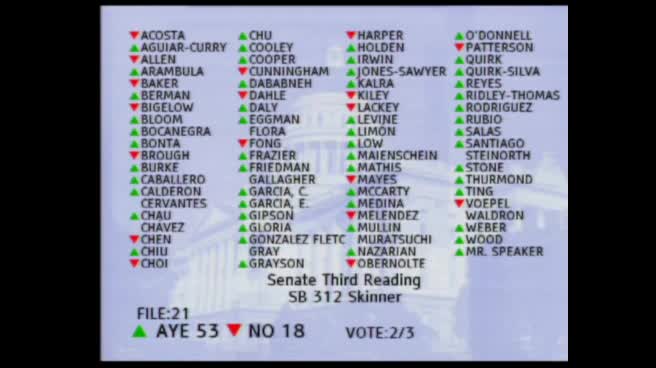 2MIN
Assembly Floor
 52SEC
Assembly Floor
 1H
Assembly Standing Committee on Appropriations
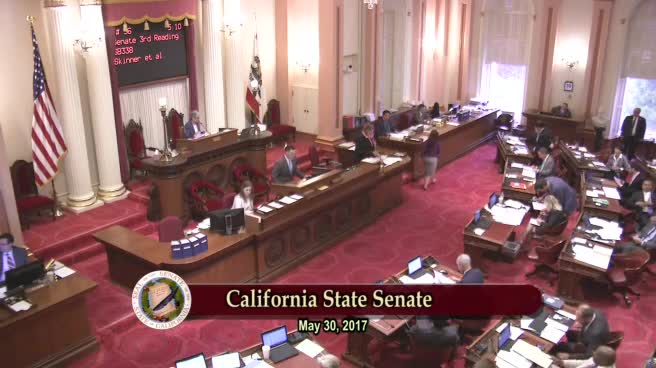 3MIN
Senate Floor
 48MIN
Senate Standing Committee on Appropriations
 1MIN
Senate Standing Committee on Appropriations
Bill Author





