SB 393: Arrests: sealing.
- Session Year: 2017-2018
- House: Senate
- Latest Version Date: 2017-10-11
Existing law authorizes a person who was arrested and has successfully completed a prefiling diversion program, a person who has successfully completed a specified drug diversion program, and a person who has successfully completed a specified deferred entry of judgment program to petition the court to seal his or her arrest records. Existing law also specifies that, with regards to arrests that resulted in the defendant participating in certain other deferred entry of judgment programs, the arrest upon which the judgment was deferred shall be deemed not to have occurred.
This bill would also authorize a person who has suffered an arrest that did not result in a conviction, as specified, to petition the court to have his or her arrest sealed. Under the bill, a person would be ineligible for this relief under specified circumstances, including if he or she may still be charged with any offense upon which the arrest was based. The bill would require the Judicial Council to furnish forms to be utilized by a person applying to have his or her arrest sealed, as specified.
The bill would provide that a person who is eligible to have his or her arrest sealed is entitled, as a matter of right, to that sealing unless the person has been charged with certain crimes, including, among others, domestic violence if the petitioners record demonstrates a pattern of domestic violence arrests, convictions, or both, in which case the person may obtain sealing of his or her arrest only upon a showing that the sealing would serve the interests of justice. The bill would specify that the petitioner has the initial burden of proof to show that he or she is either entitled to have his or her arrest sealed as a matter of right or that sealing would serve the interests of justice and, if the court finds that petitioner has satisfied his or her burden of proof, then the burden of proof would shift to the respondent prosecuting attorney.
The bill would require, if the petition is granted, the court to issue a written ruling and order that, among other things, states that the arrest is deemed not to have occurred and that, except as otherwise provided, the petitioner is released from all penalties and disabilities resulting from the arrest. The bill would also require the court to furnish a disposition report to the Department of Justice, as specified. The bill would prohibit, if an arrest is sealed pursuant to the above provisions or pursuant to the specified provisions of existing law that authorize the sealing of arrest records after successfully completing a prefiling diversion program, a specified drug diversion program, or a specified deferred entry of judgment program, or if an arrest is deemed to have never occurred after a defendant participates in certain other deferred entry of judgment programs, the disclosure of the arrest, or information about the arrest that is contained in other records, from being disclosed to any person or entity, except as specified.
The bill would subject a person or entity to a civil penalty if he or she disseminates information relating to a sealed arrest, unless he or she is specifically authorized to disseminate that information. Because the bill would impose new duties on local agencies, the bill would impose a state-mandated local program.
Existing law requires the Department of Justice to maintain state summary criminal history information, as defined, and requires the Attorney General to furnish state summary criminal history information to specified entities and individuals if needed in the course of their duties.
The bill would prohibit the department from disclosing, as part of the state summary criminal history information furnished to specified entities, that an individual was granted relief pursuant to the provisions above describing having an arrest sealed.
This bill would incorporate additional changes to Section 1000.4 of the Penal Code proposed by AB 208 to be operative only if this bill and AB 208 are enacted and this bill is enacted last.
This bill would also incorporate additional changes to Section 11105 of the Penal Code proposed by SB 420, AB 1418, and this bill to be operative only if this bill, SB 420, and AB 1418 are enacted and this bill is enacted last.
The California Constitution requires the state to reimburse local agencies and school districts for certain costs mandated by the state. Statutory provisions establish procedures for making that reimbursement.
This bill would provide that, if the Commission on State Mandates determines that the bill contains costs mandated by the state, reimbursement for those costs shall be made pursuant to the statutory provisions noted above.
Existing law authorizes a person who was arrested and has successfully completed a prefiling diversion program, a person who has successfully completed a specified drug diversion program, and a person who has successfully completed a specified deferred entry of judgment program to petition the court to seal his or her arrest records. Existing law also specifies that, with regards to arrests that resulted in the defendant participating in certain other deferred entry of judgment programs, the arrest upon which the judgment was deferred shall be deemed not to have occurred.
This bill would also authorize a person who has suffered an arrest that did not result in a conviction conviction, as specified, to petition the court to have his or her arrest sealed. Under the bill, a person would be ineligible for this relief under specified circumstances, including if he or she may still be charged with any offense upon which the arrest was based. The bill would require the Judicial Council to furnish forms to be utilized by a person applying to have his or her arrest sealed, as specified.
The bill would provide that a person who is eligible to have his or her arrest sealed is entitled, as a matter of right, to that sealing unless the person has been charged with certain crimes, including, among others, domestic violence if the petitioners record demonstrates a pattern of domestic violence arrests, convictions, or both, in which case the person may obtain sealing of his or her arrest only upon a showing that the sealing would serve the interests of justice. The bill would specify that the petitioner has the initial burden of proof to show that he or she is either entitled to have his or her arrest sealed as a matter of right or that sealing would serve the interests of justice and, if the court finds that petitioner has satisfied his or her burden of proof, then the burden of proof shall would shift to the respondent prosecuting attorney.
The bill would require, if the petition is granted, the court to issue a written ruling and order that, among other things, states that the arrest is deemed not to have occurred and that, except as otherwise provided, the petitioner is released from all penalties and disabilities resulting from the arrest. The bill would also require the court to furnish a disposition report to the Department of Justice, as specified. The bill would prohibit, if an arrest is sealed pursuant to the above provisions or pursuant to the specified provisions of existing law that authorize the sealing of arrest records after successfully completing a prefiling diversion program, a specified drug diversion program, or a specified deferred entry of judgment program, or if an arrest is deemed to have never occurred after a defendant participates in certain other deferred entry of judgment programs, the disclosure of the arrest, or information about the arrest that is contained in other records, from being disclosed to the public, consumer reporting agencies, or any other any person or entity, except as specified.
The bill would subject a person or entity to a civil penalty if he or she disseminates or fails to destroy information relating to a sealed arrest arrest, unless he or she is specifically authorized to disseminate that information. Because this the bill would impose new duties on local agencies, this the bill would impose a state-mandated local program.
Existing law requires the Department of Justice to maintain state summary criminal history information, as defined, and requires the Attorney General to furnish state summary criminal history information to specified entities and individuals if needed in the course of their duties.
The bill would prohibit the department from disclosing, as part of the state summary criminal history information furnished to specified entities, that an individual was granted relief pursuant to the provisions above describing having an arrest sealed.
The California Constitution requires the state to reimburse local agencies and school districts for certain costs mandated by the state. Statutory provisions establish procedures for making that reimbursement.
This bill would provide that, if the Commission on State Mandates determines that the bill contains costs mandated by the state, reimbursement for those costs shall be made pursuant to the statutory provisions noted above.
Existing law authorizes a person who was arrested and has successfully completed a prefiling diversion program, a person who has successfully completed a specified drug diversion program, and a person who has successfully completed a specified deferred entry of judgment program to petition the court to seal his or her arrest records. Existing law also specifies that, with regards to arrests that resulted in the defendant participating in certain other deferred entry of judgment programs, the arrest upon which the judgment was deferred shall be deemed not to have occurred.
This bill would also authorize a person who has suffered an arrest that did not result in a conviction to petition the court to have his or her arrest sealed. Under the bill, a person would be ineligible for this relief under specified circumstances, including if he or she may still be charged with any offense upon which the arrest was based.
The bill would provide that a person who is eligible to have his or her arrest sealed is entitled, as a matter of right, to that sealing unless the person has been charged with certain crimes, including, among others, domestic violence if the petitioners record demonstrates a pattern of domestic violence arrests, convictions, or both, in which case the person may obtain sealing of his or her arrest only upon a showing that the sealing would serve the interests of justice. The bill would specify that the petitioner has the initial burden of proof to show that he or she is either entitled to have his or her arrest sealed as a matter of right or that sealing would serve the interests of justice and, if the court finds that petitioner has satisfied his or her burden of proof, then the burden of proof shall shift to respondent prosecuting attorney.
The bill would require, if the petition is granted, the court to issue a written ruling and order that, among other things, states that the arrest is deemed not to have occurred and that, except as otherwise provided, the petitioner is released from all penalties and disabilities resulting from the arrest. The bill would prohibit, if an arrest is sealed pursuant to the above provisions or pursuant to the specified provisions of existing law that authorize the sealing of arrest records after successfully completing a prefiling diversion program, a specified drug diversion program, or a specified deferred entry of judgment program, or if an arrest is deemed to have never occurred after a defendant participates in certain other deferred entry of judgment programs, the disclosure of the arrest, or information about the arrest that is contained in other records, from being disclosed to the public, consumer reporting agencies, or any other person or entity, except as specified.
The bill would subject a person to a civil penalty if he or she disseminates or fails to destroy information relating to a sealed arrest unless he or she is specifically authorized to disseminate that information. Because this bill would impose new duties on local agencies, this bill would impose a state-mandated local program.
The California Constitution requires the state to reimburse local agencies and school districts for certain costs mandated by the state. Statutory provisions establish procedures for making that reimbursement.
This bill would provide that, if the Commission on State Mandates determines that the bill contains costs mandated by the state, reimbursement for those costs shall be made pursuant to the statutory provisions noted above.
Existing law authorizes a person who was arrested and has successfully completed a prefiling diversion program, a person who has successfully completed a specified drug diversion program, and a person who has successfully completed a specified deferred entry of judgment program to petition the court to seal his or her arrest records. Existing law also specifies that, with regards to arrests that resulted in the defendant participating in certain other deferred entry of judgment programs, the arrest upon which the judgment was deferred shall be deemed not to have occurred.
This bill would also authorize a person who has suffered an arrest that did not result in a conviction to petition the court to have his or her arrest sealed. Under the bill, a person would be ineligible for this relief under specified circumstances, including if he or she may still be charged with any offense upon which the arrest was based.
The bill would provide that a person who is eligible to have his or her arrest sealed is entitled, as a matter of right, to that sealing unless the person has been charged with certain crimes, including, among others, domestic violence if the petitioners record demonstrates a pattern of domestic violence arrests, convictions, or both, in which case the person may obtain sealing of his or her arrest only upon a showing that the sealing would serve the interests of justice. The bill would specify that the petitioner has the initial burden of proof to show that he or she is either entitled to have his or her arrest sealed as a matter of right or that sealing would serve the interests of justice and, if the court finds that petitioner has satisfied his or her burden of proof, then the burden of proof shall shift to respondent prosecuting attorney.
The bill would require, if the petition is granted, the court to issue a written ruling and order that, among other things, states that the arrest is deemed not to have occurred and that, except as otherwise provided, the petitioner is released from all penalties and disabilities resulting from the arrest. The bill would prohibit, if an arrest is sealed pursuant to the above provisions or pursuant to the specified provisions of existing law that authorize the sealing of arrest records after successfully completing a prefiling diversion program, a specified drug diversion program, or a specified deferred entry of judgment program, or if an arrest is deemed to have never occurred after a defendant participates in certain other deferred entry of judgment programs, the disclosure of the arrest, or information about the arrest that is contained in other records, from being disclosed to the public, consumer reporting agencies, or any other person or entity, except as specified.
The bill would subject a person to a civil penalty if he or she disseminates information relating to a sealed arrest unless he or she is specifically authorized to disseminate that information. Because this bill would impose new duties on local agencies, this bill would impose a state-mandated local program.
The California Constitution requires the state to reimburse local agencies and school districts for certain costs mandated by the state. Statutory provisions establish procedures for making that reimbursement.
This bill would provide that, if the Commission on State Mandates determines that the bill contains costs mandated by the state, reimbursement for those costs shall be made pursuant to the statutory provisions noted above.
Existing law authorizes a person who was arrested and has successfully completed a prefiling diversion program, a person who has successfully completed a specified drug diversion program, and a person who has successfully completed a specified deferred entry of judgment program to petition the court to seal his or her arrest records. Existing law also specifies that, with regards to arrests that resulted in the defendant participating in certain other deferred entry of judgment programs, the arrest upon which the judgment was deferred shall be deemed not to have occurred.
This bill would also authorize a person who has suffered an arrest that did not result in a conviction to petition the court to have his or her arrest sealed. Under the bill, a person would be ineligible for this relief relief under specified circumstances, including if he or she may still be charged with any offense upon which the arrest was based or if any of the arrest charges or charges in the accusatory pleading based on the arrest, if filed, is a charge of murder or any other offense for which there is no statute of limitations, except when the person has been acquitted or found factually innocent of the charge. based.
The bill would provide that a person who is eligible to have his or her arrest sealed is entitled, as a matter of right, to that sealing unless the person has been charged with certain crimes, including, among others, an offense or charge based on physical violence by the petitioner against another person, domestic violence if the petitioners record demonstrates a pattern of domestic violence arrests, convictions, or both, in which case the person may obtain sealing of his or her arrest only upon a showing that the sealing would serve the interests of justice. The bill would specify that the petitioner has the initial burden of proof to show that he or she is either entitled to have his or her arrest sealed as a matter of right or that sealing would serve the interests of justice and, if the court finds that petitioner has satisfied his or her burden of proof, then the burden of proof shall shift to respondent prosecuting attorney.
The bill would require, if the petition is granted, the court to issue a written ruling and order that, among other things, states that the arrest is deemed not to have occurred and that, except as otherwise provided, the petitioner is released from all penalties and disabilities resulting from the arrest. The bill would prohibit, if an arrest is sealed pursuant to the above provisions or pursuant to the specified provisions of existing law that authorize the sealing of arrest records after successfully completing a prefiling diversion program, a specified drug diversion program, or a specified deferred entry of judgment program, or if an arrest is deemed to have never occurred after a defendant participates in certain other deferred entry of judgment programs, the disclosure of the arrest, or information about the arrest that is contained in other records, from being disclosed to the public, consumer reporting agencies, or any other person or entity, except as specified.
The bill would subject a person to a civil penalty if he or she disseminates information relating to a sealed arrest unless he or she is specifically authorized to disseminate that information. Because this bill would impose new duties on local agencies, this bill would impose a state-mandated local program.
The California Constitution requires the state to reimburse local agencies and school districts for certain costs mandated by the state. Statutory provisions establish procedures for making that reimbursement.
This bill would provide that, if the Commission on State Mandates determines that the bill contains costs mandated by the state, reimbursement for those costs shall be made pursuant to the statutory provisions noted above.
Existing law authorizes a person who was arrested and has successfully completed a prefiling diversion program, a person who has successfully completed a specified drug diversion program, and a person who has successfully completed a specified deferred entry of judgment program to petition the court to seal his or her arrest records. Existing law also specifies that, with regards to arrests that resulted in the defendant participating in certain other deferred entry of judgment programs, the arrest upon which the judgment was deferred shall be deemed not to have occurred.
This bill would also authorize a person who has suffered an arrest that did not result in a conviction to petition the court to have his or her arrest expunged. sealed. Under the bill, a person would be ineligible for this relief if he or she may still be charged with any offense upon which the arrest was based or if any of the arrest charges or charges in the accusatory pleading based on the arrest, if filed, is a charge of murder or any other offense for which there is no statute of limitations, except when the person has been acquitted or found factually innocent of the charge.
The bill would provide that a person who is eligible for expungement of to have his or her arrest sealed is entitled, as a matter of right, to that expungement sealing unless the person has been charged with certain crimes, including, among others, an offense or charge based on physical violence by the petitioner against another person, in which case the person may obtain expungement sealing of his or her arrest only upon a showing that the expungement sealing would serve the interests of justice. The bill would specify that the petitioner has the initial burden of proof that he or she is either entitled to expungement of have his or her arrest sealed as a matter of right or that expungement sealing would serve the interests of justice and, if the court finds that petitioner has satisfied his or her burden of proof, then the burden of proof shall shift to respondent prosecuting attorney.
The bill would require, if the petition is granted, the court to issue a written ruling and order that, among other things, states that the arrest is deemed not to have occurred and that, except as otherwise provided, the petitioner is released from all penalties and disabilities resulting from the arrest. The bill would prohibit prohibit, if an arrest is sealed pursuant to the above provisions or pursuant to the specified provisions of existing law that authorize the sealing of arrest records after successfully completing a prefiling diversion program, a specified drug diversion program, or a specified deferred entry of judgment program, or if an arrest is deemed to have never occurred after a defendant participates in certain other deferred entry of judgment programs, the disclosure of the expunged arrest, or information about the expunged arrest that is contained in other records, from being disclosed to the public, consumer reporting agencies, or any other person or entity, except as specified.
The bill would make it a misdemeanor to disclose information relating to an expunged arrest, as specified. The bill would subject a person who is not authorized to have access to information relating to an expunged arrest and who disseminates that information to civil liability for invading the privacy of the petitioner. subject a person to a civil penalty if he or she disseminates information relating to a sealed arrest unless he or she is specifically authorized to disseminate that information. Because this bill would create a new crime and impose new duties on local agencies, this bill would impose a state-mandated local program.
The California Constitution requires the state to reimburse local agencies and school districts for certain costs mandated by the state. Statutory provisions establish procedures for making that reimbursement.This bill would provide that, with regard to certain mandates, no reimbursement is required by this act for a specified reason.With regard to any other mandates, this bill would provide that, if the Commission on State Mandates determines that the bill contains costs so mandated by the state, reimbursement for those costs shall be made pursuant to the statutory provisions noted above.The California Constitution requires the state to reimburse local agencies and school districts for certain costs mandated by the state. Statutory provisions establish procedures for making that reimbursement.
This bill would provide that, if the Commission on State Mandates determines that the bill contains costs mandated by the state, reimbursement for those costs shall be made pursuant to the statutory provisions noted above.
Existing law permits a defendant to withdraw his or her plea of guilty or plea of nolo contendere and enter a plea of not guilty if he or she has fulfilled the conditions of probation for the entire period of probation, has been discharged prior to the termination of the period of probation, has been convicted of a misdemeanor and not granted probation and has fully complied with and performed the sentence of the court, or has been sentenced to a county jail for a felony, or if a court, in its discretion and the interests of justice, determines that a defendant should be granted this or other specified relief. In either case, existing law releases the defendant from all penalties and disabilities resulting from the offense of which he or she has been convicted.
This bill would authorize a person who has suffered an arrest that did not result in a conviction to petition the court to have his or her arrest expunged. Under the bill, a person would be ineligible for this relief if he or she may still be charged with any offense upon which the arrest was based or if any of the arrest charges or charges in the accusatory pleading based on the arrest, if filed, is a charge of murder or any other offense for which there is no statute of limitations, except when the person has been acquitted or found factually innocent of the charge.
The bill would provide that a person who is eligible for expungement of his or her arrest is entitled, as a matter of right, to that expungement unless the person has been charged with certain crimes, including, among others, an offense or charge based on physical violence by the petitioner against another person, in which case the person may obtain expungement of his or her arrest only upon a showing that the expungement would serve the interests of justice. The bill would specify that the petitioner has the initial burden of proof that he or she is either entitled to expungement of his or her arrest as a matter of right or that expungement would serve the interests of justice and, if the court finds that petitioner has satisfied his or her burden of proof, then the burden of proof shall shift to respondent prosecuting attorney.
The bill would require, if the petition is granted, the court to issue a written ruling and order that, among other things, states that the arrest is deemed not to have occurred and that, except as otherwise provided, the petitioner is released from all penalties and disabilities resulting from the arrest. The bill would prohibit the disclosure of the expunged arrest, or information about the expunged arrest that is contained in other records, from being disclosed to the public, consumer reporting agencies, or any other person or entity, except as specified.
The bill would make it a misdemeanor to disclose information relating to an expunged arrest, as specified. The bill would subject a person who is not authorized to have access to information relating to an expunged arrest and who disseminates that information to civil liability for invading the privacy of the petitioner. Because this bill would create a new crime and impose new duties on local agencies, this bill would impose a state-mandated local program.
The California Constitution requires the state to reimburse local agencies and school districts for certain costs mandated by the state. Statutory provisions establish procedures for making that reimbursement.
This bill would provide that, with regard to certain mandates, no reimbursement is required by this act for a specified reason.
With regard to any other mandates, this bill would provide that, if the Commission on State Mandates determines that the bill contains costs so mandated by the state, reimbursement for those costs shall be made pursuant to the statutory provisions noted above.
(a)(1)In any case where a person is arrested and successfully completes a prefiling diversion program administered by a prosecuting attorney in lieu of filing an accusatory pleading, the person may petition the superior court that would have had jurisdiction over the matter to issue an order to seal the records pertaining to an arrest and the court may order those records sealed as described in Section 851.92. A copy of the petition shall be served on the law enforcement agency and the prosecuting attorney of the county or city having jurisdiction over the offense, who may request a hearing within 60 days of receipt of the petition. The court may hear the matter no less than 60 days from the date the law enforcement agency and the prosecuting attorney receive a copy of the petition. The prosecuting attorney and the law enforcement agency, through the prosecuting attorney, may present evidence to the court at the hearing.
(2)If the order is made, the court shall give a copy of the order to the person and inform the person that he or she may thereafter state that he or she was not arrested for the charge.
(3)The person may, except as specified in subdivisions (b) and (c), indicate in response to any question concerning the persons prior criminal record that the person was not arrested.
(4)Subject to subdivisions (b) and (c), a record pertaining to the arrest shall not, without the persons permission, be used in any way that could result in the denial of any employment, benefit, or certificate.
(b)The person shall be advised that, regardless of the persons successful completion of the program, the arrest shall be disclosed by the Department of Justice in response to any peace officer application request, and that, notwithstanding subdivision (a), this section does not relieve the person of the obligation to disclose the arrest in response to any direct question contained in any questionnaire or application for a position as a peace officer, as defined in Section 830.
(c)The person shall be advised that an order to seal records pertaining to an arrest made pursuant to this section has no effect on a criminal justice agencys ability to access and use those sealed records and information regarding sealed arrests, as described in Section 851.92.
(d)As used in this section, prefiling diversion is a diversion from prosecution that is offered to a person by the prosecuting attorney in lieu of, or prior to, the filing of an accusatory pleading in court as set forth in Section 950.
SEC. 2.Section 851.90 of the Penal Code is amended to read:851.90.(a)(1)Whenever a person is diverted pursuant to a drug diversion program administered by a superior court pursuant to Section 1000.5 or is admitted to a deferred entry of judgment program pursuant to Section 1000 or 1000.8, and the person successfully completes the program, the judge may order those records pertaining to the arrest to be sealed as described in Section 851.92, upon the written or oral motion of any party in the case, or upon the courts own motion, and with notice to all parties in the case.
(2)If the order is made, the court shall give a copy of the order to the defendant and inform the defendant that he or she may thereafter state that he or she was not arrested for the charge.
(3)The defendant may, except as specified in subdivisions (b) and (c), indicate in response to any question concerning the defendants prior criminal record that the defendant was not arrested or granted statutorily authorized drug diversion or deferred entry of judgment for the offense.
(4)Subject to subdivisions (b) and (c), a record pertaining to an arrest resulting in the successful completion of a statutorily authorized drug diversion or deferred entry of judgment program shall not, without the defendants permission, be used in any way that could result in the denial of any employment, benefit, or certificate.
(b)The defendant shall be advised that, regardless of the defendants successful completion of a statutorily authorized drug diversion or deferred entry of judgment program, the arrest upon which the case was based shall be disclosed by the Department of Justice in response to any peace officer application request, and that, notwithstanding subdivision (a), this section does not relieve the defendant of the obligation to disclose the arrest in response to any direct question contained in any questionnaire or application for a position as a peace officer, as defined in Section 830.
(c)The defendant shall be advised that, regardless of the defendants successful completion of a statutorily authorized drug diversion or deferred entry of judgment program, an order to seal records pertaining to an arrest made pursuant to this section has no effect on a criminal justice agencys ability to access and use those sealed records and information regarding sealed arrests, as described in Section 851.92.
SEC. 3.Section 851.91 is added to the Penal Code, immediately following Section 851.90, to read:851.91.(a)A person who has suffered an arrest that did not result in a conviction may petition the court to have his or her arrest and related records sealed, as described in Section 851.92.
(1)For purposes of this section, an arrest did not result in a conviction if any of the following are true:
(A)The statute of limitations has run on every offense upon which the arrest was based and the prosecuting attorney of the city or county that would have had jurisdiction over the offense or offenses upon which the arrest was based has not filed an accusatory pleading based on the arrest.
(B)The prosecuting attorney filed an accusatory pleading based on the arrest, but, with respect to all charges, one or more of the following has occurred:
(i)No conviction occurred, the charge has been dismissed, and the charge may not be refiled.
(ii)No conviction occurred and the arrestee has been acquitted of the charges.
(iii)A conviction occurred, but has been vacated or reversed on appeal, all appellate remedies have been exhausted, and the charge may not be refiled.
(2)A person is not eligible for relief under this section in any of the following circumstances:
(A)He or she may still be charged with any of the offenses upon which the arrest was based.
(B)Any of the arrest charges, as specified by the law enforcement agency that conducted the arrest, or any of the charges in the accusatory pleading based on the arrest, if filed, is a charge of murder or any other offense for which there is no statute of limitations, except when the person has been acquitted or found factually innocent of the charge.
(C)The petitioner intentionally evaded law enforcement efforts to prosecute the arrest, including by absconding from the jurisdiction in which the arrest took place. The existence of bench warrants or failures to appear that were adjudicated before the case closed with no conviction do not establish intentional evasion.
(D)The petitioner intentionally evaded law enforcement efforts to prosecute the arrest by engaging in identity fraud and was subsequently charged with a crime for that act of identity fraud.
(b)(1)A petition to seal an arrest shall:
(A)Be verified.
(B)Be filed in the court in which the accusatory pleading based on the arrest was filed or, if no accusatory pleading was filed, in a court with criminal jurisdiction in the city or county in which the arrest occurred.
(C)Be filed at least 15 days prior to the hearing on the petition.
(D)Be served, by copy, upon the prosecuting attorney of the city or county in which the arrest occurred and upon the law enforcement agency that made the arrest at least 15 days prior to the hearing on the petition.
(E)Include all of the following information:
(i)The petitioners name and date of birth.
(ii)The date of the arrest for which sealing is sought.
(iii)The city and county where the arrest took place.
(iv)The law enforcement agency that made the arrest.
(v)Any other information identifying the arrest that is available from the law enforcement agency that conducted the arrest or from the court in which the accusatory pleading, if any, based on the arrest was filed, including, but not limited to, the case number for the police investigative report documenting the arrest, and the court number under which the arrest was reviewed by the prosecuting attorney or under which the prosecuting attorney filed an accusatory pleading.
(vi)The offenses upon which the arrest was based or, if an accusatory pleading was filed based on the arrest, the charges in the accusatory pleading.
(vii)A statement that the petitioner is entitled to have his or her arrest sealed as a matter of right or, if the petitioner is requesting to have his or her arrest sealed in the interests of justice, how the interests of justice would be served by granting the petition, accompanied by declarations made directly and verified by the petitioner, his or her supporting declarants, or both.
(2)The court may deny a petition for failing to meet any of the requirements described in paragraph (1).
(3)The Judicial Council shall furnish forms to be utilized by a person applying to have his or her arrest sealed pursuant to this section. The petition form shall include all of the information required to be included in the petition by paragraph (1) of subdivision (b), shall be available in English, Spanish, Chinese, Vietnamese, and Korean, and shall include a statement that the petition form is available in additional languages and the Internet Web site where the form is available in alternative languages. The forms shall include notice of other means to address arrest records, including a determination of factual innocence under Section 851.8 and deeming an arrest a detention under Section 849.5.
(c)A petition to seal an arrest record pursuant to this section may be granted as a matter of right or in the interests of justice.
(1)A petitioner who is eligible for relief under subdivision (a) is entitled to have his or her arrest sealed as a matter of right unless he or she is subject to paragraph (2).
(2)(A)(i)A petitioner may have his or her arrest sealed only upon a showing that the sealing would serve the interests of justice if any of the offenses upon which the arrest was based, as specified by the law enforcement agency that made the arrest, or, if an accusatory pleading was filed, any of the charges in the accusatory pleading, was one of the following:
(I)Domestic violence, if the petitioners record demonstrates a pattern of domestic violence arrests, convictions, or both.
(II)Child abuse, if the petitioners record demonstrates a pattern of child abuse arrests, convictions, or both.
(III)Elder abuse, if the petitioners record demonstrates a pattern of elder abuse arrests, convictions, or both.
(ii)For purposes of this subparagraph, pattern means two or more convictions, or five or more arrests, for separate offenses occurring on separate occasions within three years from at least one of the other convictions or arrests.
(B)In determining whether the interests of justice would be served by sealing an arrest record pursuant to this section, the court may consider any relevant factors, including, but not limited to, any of the following:
(i)Hardship to the petitioner caused by the arrest that is the subject of the petition.
(ii)Declarations or evidence regarding the petitioners good character.
(iii)Declarations or evidence regarding the arrest.
(iv)The petitioners record of convictions.
(d)(1)At a hearing on a petition under this section, the petitioner, the prosecuting attorney, and, through the prosecuting attorney, the arresting agency may present evidence to the court. Notwithstanding Section 1538.5 or 1539, the hearing may be heard and determined upon declarations, affidavits, police investigative reports, copies of state summary criminal history information and local summary criminal history information, or any other evidence submitted by the parties that is material, relevant, and reliable.
(2)The petitioner has the initial burden of proof to show that he or she is entitled to have his or her arrest sealed as a matter of right or that sealing would serve the interests of justice. If the court finds that petitioner has satisfied his or her burden of proof, then the burden of proof shall shift to the respondent prosecuting attorney.
(e)If the court grants a petition pursuant to this section, the court shall do all of the following:
(1)Furnish a disposition report to the Department of Justice, pursuant to Section 13151, stating that relief was granted under this section.
(2)(A)Issue a written ruling and order to the petitioner, the prosecuting attorney, and to the law enforcement agency that made the arrest that states all of the following:
(B)The record of arrest has been sealed as to petitioner, the arrest is deemed not to have occurred, the petitioner may answer any question relating to the sealed arrest accordingly, and the petitioner is released from all penalties and disabilities resulting from the arrest, except as provided in Section 851.92 and as follows:
(i)The sealed arrest may be pleaded and proved in any subsequent prosecution of the petitioner for any other offense, and shall have the same effect as if it had not been sealed.
(ii)The sealing of an arrest pursuant to this section does not relieve the petitioner of the obligation to disclose the arrest, if otherwise required by law, in response to any direct question contained in a questionnaire or application for public office, for employment as a peace officer, for licensure by any state or local agency, or for contracting with the California State Lottery Commission.
(iii)The sealing of an arrest pursuant to this section does not affect petitioners authorization to own, possess, or have in his or her custody or control any firearm, or his or her susceptibility to conviction under Chapter 2 (commencing with Section 29800) of Division 9 of Title 4 of Part 6, if the arrest would otherwise affect this authorization or susceptibility.
(iv)The sealing of an arrest pursuant to this section does not affect any prohibition from holding public office that would otherwise apply under law as a result of the arrest.
SEC. 4.Section 851.92 is added to the Penal Code, to read:851.92.(a)This section applies when an arrest record is sealed pursuant to Sections 851.87, 851.90, 851.91, 1000.4, and 1001.9.
(b)When the court issues an order to seal an arrest, the sealing shall be accomplished as follows:
(1)The court shall provide copies of the order and a report on the disposition of the arrest, as follows:
(A)Upon issuing the order, the court shall provide a copy to the person whose arrest was sealed and to the prosecuting attorney.
(B)Within 30 days of issuing the order, the court shall forward a copy of the order to the law enforcement agency that made the arrest, to any other law enforcement agency that participated in the arrest, and to the law enforcement agency that administers the master local summary criminal history information that contains the arrest record for the sealed arrest.
(C)Within 30 days of issuing the order, the court shall furnish a disposition report to the Department of Justice indicating that relief has been ordered and providing the section of the Penal Code under which that relief was granted and the date that relief was granted.
(D)A sealing order made pursuant to this subdivision shall not be forwarded to the Department of Justice to be included or notated in the departments manual or electronic fingerprint image or criminal history record systems. Any sealing order made pursuant to this subdivision and received by the Department of Justice shall not be processed by the department.
(2)The arrest record shall be updated, as follows:
(A)The local summary criminal history information shall include, directly next to or below the entry or entries regarding the sealed arrest, a note stating arrest sealed and providing the date that the court issued the order, and the section pursuant to which the arrest was sealed. This note shall be included in all master copies of the arrest record, digital or otherwise.
(B)The state summary criminal history information shall include, directly next to or below the entry or entries regarding the sealed arrest, a note stating arrest relief granted, providing the date that the court issued the order and the section of the Penal Code pursuant to which the relief was granted. This note shall be included in all master copies of the arrest record, digital or otherwise.
(3)A police investigative report related to the sealed arrest shall, only as to the person whose arrest was sealed, be stamped ARREST SEALED: DO NOT RELEASE OUTSIDE THE CRIMINAL JUSTICE SECTOR, and shall note next to the stamp the date the arrest was sealed and the section pursuant to which the arrest was sealed. The responsible local law enforcement agency shall ensure that this note is included in all master copies, digital or otherwise, of the police investigative report related to the arrest that was sealed.
(4)Court records related to the sealed arrest shall, only as to the person whose arrest was sealed, be stamped ARREST SEALED: DO NOT RELEASE OUTSIDE OF THE CRIMINAL JUSTICE SECTOR, and shall note next to the stamp the date of the sealing and the section pursuant to which the arrest was sealed. This stamp and note shall be included on all master court dockets, digital or otherwise, relating to the arrest.
(5)Arrest records, police investigative reports, and court records that are sealed under this section shall not be disclosed to any person or entity except the person whose arrest was sealed or a criminal justice agency. Nothing shall prohibit disclosure of information between criminal history providers.
(6)Notwithstanding the sealing of an arrest, a criminal justice agency may continue, in the regular course of its duties, to access, furnish to other criminal justice agencies, and use, including, but not limited to, by discussing in open court and in unsealed court filings, sealed arrests, sealed arrest records, sealed police investigative reports, sealed court records, and information relating to sealed arrests, to the same extent that would have been permitted for a criminal justice agency if the arrest had not been sealed.
(c)Unless specifically authorized by this section, a person or entity, other than a criminal justice agency or the person whose arrest was sealed, who disseminates information relating to a sealed arrest is subject to a civil penalty of not less than five hundred dollars ($500) and not more than two thousand five hundred dollars ($2,500) per violation. The civil penalty may be enforced by a city attorney, district attorney, or the Attorney General. This subdivision does not limit any existing private right of action. A civil penalty imposed under this section shall be cumulative to civil remedies or penalties imposed under any other law.
(d)As used in this section and Sections 851.87, 851.90, 851.91, 1000.4, and 1001.9, all of the following terms have the following meanings:
(1)Arrest record and record pertaining to an arrest mean information about the arrest or detention that is contained in either of the following:
(A)The master, or a copy of the master, local summary criminal history information, as defined in subdivision (a) of Section 13300.
(B)The master, or a copy of the master, state summary criminal history information as defined in subparagraph (A) of paragraph (2) of subdivision (a) of Section 11105.
(2)Court records means records, files, and materials created, compiled, or maintained by or for the court in relation to court proceedings, and includes, but is not limited to, indexes, registers of actions, court minutes, court orders, court filings, court exhibits, court progress and status reports, court history summaries, copies of state summary criminal history information and local summary criminal history information, and any other criminal history information contained in any of those materials.
(3)Criminal history provider means a person or entity that is not a criminal justice agency and that provides background screening services or criminal history information on identified individuals to the public or to those outside the criminal justice sector upon request, charge, or pursuant to a contractual agreement or that aggregates into databases that are open to the public or to those outside the criminal justice sector upon request or charge, or pursuant to a contractual agreement, that are not created or maintained by a criminal justice agency, criminal history information on identified individuals. For the purposes of this paragraph, a criminal history provider includes an investigative consumer reporting agency, as defined in Section 1786.2 of the Civil Code, a consumer credit reporting agency, as defined in Section 1785.3 of the Civil Code, and a consumer reporting agency, as defined in Section 603(f) of the Fair Credit Reporting Act (15 U.S.C. 1681a(f)).
(4)Criminal justice agency means an agency at any level of government that performs, as its principal function, activities relating to the apprehension, prosecution, defense, adjudication, incarceration, or correction of criminal suspects and criminal offenders. A criminal justice agency includes, but is not limited to, any of the following:
(A)A court of this state.
(B)A peace officer, as defined in Section 830.1, subdivisions (a) and (e) of Section 830.2, subdivision (a) of Section 830.3, subdivision (a) of Section 830.31, and subdivisions (a) and (b) of Section 830.5.
(C)A district attorney.
(D)A prosecuting city attorney.
(E)A city attorney pursuing civil gang injunctions pursuant to Section 186.22a or drug abatement actions pursuant to Section 3479 or 3480 of the Civil Code or Section 11571 of the Health and Safety Code.
(F)A probation officer.
(G)A parole officer.
(H)A public defender or an attorney representing a person, or a person representing himself or herself, in a criminal proceeding, a proceeding to revoke parole, mandatory supervision, or postrelease community supervision, or in proceeding described in Chapter 3.5 (commencing with Section 4852.01) of Title 6 of Part 3.
(I)An expert, investigator, or other specialist contracted by a prosecuting attorney or defense attorney to accomplish the purpose of the prosecution, defense, or representation in the criminal proceeding.
(J)A correctional officer.
(5)Police investigative report means intelligence, analytical, and investigative reports and files created, compiled, and maintained by a law enforcement criminal justice agency and relating to a potential crime, violation of the law, arrest, detention, prosecution, or law enforcement investigation.
SEC. 5.Section 1000.4 of the Penal Code is amended to read:1000.4.(a)Any record filed with the Department of Justice shall indicate the disposition in those cases deferred pursuant to this chapter. Upon successful completion of a deferred entry of judgment program, the arrest upon which the judgment was deferred shall be deemed to have never occurred and the court may issue an order to seal the records pertaining to the arrest as described in Section 851.92. The defendant may indicate in response to any question concerning his or her prior criminal record that he or she was not arrested or granted deferred entry of judgment for the offense, except as specified in subdivision (b). A record pertaining to an arrest resulting in successful completion of a deferred entry of judgment program shall not, without the defendants consent, be used in any way that could result in the denial of any employment, benefit, license, or certificate.
(b)The defendant shall be advised that, regardless of his or her successful completion of the deferred entry of judgment program, the arrest upon which the judgment was deferred may be disclosed by the Department of Justice in response to any peace officer application request and that, notwithstanding subdivision (a), this section does not relieve him or her of the obligation to disclose the arrest in response to any direct question contained in any questionnaire or application for a position as a peace officer, as defined in Section 830.
(c)The defendant shall be advised that, regardless of the defendants successful completion of a deferred entry of judgment program, an order to seal records pertaining to an arrest made pursuant to this section has no effect on a criminal justice agencys ability to access and use those sealed records and information regarding sealed arrests, as described in Section 851.92.
SEC. 5.5.Section 1000.4 of the Penal Code is amended to read:1000.4.(a)Any record filed with the Department of Justice shall indicate the disposition in those cases referred to pretrial diversion pursuant to this chapter. Upon successful completion of a pretrial diversion program, the arrest upon which the defendant was diverted shall be deemed to have never occurred and the court may issue an order to seal the records pertaining to the arrest as described in Section 851.92. The defendant may indicate in response to any question concerning his or her prior criminal record that he or she was not arrested or granted pretrial diversion for the offense, except as specified in subdivision (c). A record pertaining to an arrest resulting in successful completion of a pretrial diversion program shall not, without the defendants consent, be used in any way that could result in the denial of any employment, benefit, license, or certificate, except that, as specified in Section 492 of the Business and Professions Code, successful completion of a pretrial diversion program shall not prohibit any agency established under Division 2 (commencing with Section 500) of the Business and Professions Code, or any initiative act referred to in that division, from taking disciplinary action against a licensee or from denying a license for professional misconduct, notwithstanding that evidence of that misconduct may be recorded in a record pertaining to an arrest leading to successful completion of a pretrial diversion program.
(b)Notwithstanding any other law, any licensing agency listed in Section 144 of the Business and Professions Code may request, and is authorized to receive, from a local or state agency certified records regarding referral to, participation in, successful completion of, and termination from, diversion programs described in this section.
(c)The defendant shall be advised that, regardless of his or her successful completion of the pretrial diversion program, the arrest upon which the pretrial diversion was based may be disclosed by the Department of Justice in response to any peace officer application request and that, notwithstanding subdivision (a), this section does not relieve him or her of the obligation to disclose the arrest in response to any direct question contained in any questionnaire or application for a position as a peace officer, as defined in Section 830.
(d)The defendant shall be advised that, regardless of the defendants successful completion of a pretrial diversion program, an order to seal records pertaining to an arrest made pursuant to this section has no effect on a criminal justice agencys ability to access and use those sealed records and information regarding sealed arrests, as described in Section 851.92.
SEC. 6.Section 1001.9 of the Penal Code is amended to read:1001.9.(a)Any record filed with the Department of Justice shall indicate the disposition in those cases diverted pursuant to this chapter. Upon successful completion of a diversion program, the arrest upon which the diversion was based shall be deemed to have never occurred and the court may issue an order to seal the records pertaining to the arrest as described in Section 851.92. The divertee may indicate in response to any question concerning his or her prior criminal record that he or she was not arrested or diverted for the offense, except as specified in subdivision (b). A record pertaining to an arrest resulting in successful completion of a diversion program shall not, without the divertees consent, be used in any way that could result in the denial of any employment, benefit, license, or certificate.
(b)The divertee shall be advised that, regardless of his or her successful completion of diversion, the arrest upon which the diversion was based may be disclosed by the Department of Justice in response to any peace officer application request and that, notwithstanding subdivision (a), this section does not relieve him or her of the obligation to disclose the arrest in response to any direct question contained in any questionnaire or application for a position as a peace officer, as defined in Section 830.
(c)The divertee shall be advised that, regardless of the defendants successful completion of a deferred entry of judgment program, an order to seal records pertaining to an arrest made pursuant to this section has no effect on a criminal justice agencys ability to access and use those sealed records and information regarding sealed arrests, as described in Section 851.92.
SEC. 7.Section 11105 of the Penal Code is amended to read:11105.(a)(1)The Department of Justice shall maintain state summary criminal history information.
(2)As used in this section:
(A)State summary criminal history information means the master record of information compiled by the Attorney General pertaining to the identification and criminal history of any person, such as name, date of birth, physical description, fingerprints, photographs, dates of arrests, arresting agencies and booking numbers, charges, dispositions, and similar data about the person.
(B)State summary criminal history information does not refer to records and data compiled by criminal justice agencies other than the Attorney General, nor does it refer to records of complaints to or investigations conducted by, or records of intelligence information or security procedures of, the office of the Attorney General and the Department of Justice.
(b)The Attorney General shall furnish state summary criminal history information to any of the following, if needed in the course of their duties, provided that when information is furnished to assist an agency, officer, or official of state or local government, a public utility, or any other entity, in fulfilling employment, certification, or licensing duties, Chapter 1321 of the Statutes of 1974 and Section 432.7 of the Labor Code shall apply:
(1)The courts of the state.
(2)Peace officers of the state, as defined in Section 830.1, subdivisions (a) and (e) of Section 830.2, subdivision (a) of Section 830.3, subdivision (a) of Section 830.31, and subdivisions (a) and (b) of Section 830.5.
(3)District attorneys of the state.
(4)Prosecuting city attorneys of any city within the state.
(5)City attorneys pursuing civil gang injunctions pursuant to Section 186.22a, or drug abatement actions pursuant to Section 3479 or 3480 of the Civil Code, or Section 11571 of the Health and Safety Code.
(6)Probation officers of the state.
(7)Parole officers of the state.
(8)A public defender or attorney of record when representing a person in proceedings upon a petition for a certificate of rehabilitation and pardon pursuant to Section 4852.08.
(9)A public defender or attorney of record when representing a person in a criminal case, or a parole, mandatory supervision pursuant to paragraph (5) of subdivision (h) of Section 1170, or postrelease community supervision revocation or revocation extension proceeding, and if authorized access by statutory or decisional law.
(10)Any agency, officer, or official of the state if the criminal history information is required to implement a statute or regulation that expressly refers to specific criminal conduct applicable to the subject person of the state summary criminal history information, and contains requirements or exclusions, or both, expressly based upon that specified criminal conduct. The agency, officer, or official of the state authorized by this paragraph to receive state summary criminal history information may also transmit fingerprint images and related information to the Department of Justice to be transmitted to the Federal Bureau of Investigation.
(11)Any city or county, city and county, district, or any officer or official thereof if access is needed in order to assist that agency, officer, or official in fulfilling employment, certification, or licensing duties, and if the access is specifically authorized by the city council, board of supervisors, or governing board of the city, county, or district if the criminal history information is required to implement a statute, ordinance, or regulation that expressly refers to specific criminal conduct applicable to the subject person of the state summary criminal history information, and contains requirements or exclusions, or both, expressly based upon that specified criminal conduct. The city or county, city and county, district, or the officer or official thereof authorized by this paragraph may also transmit fingerprint images and related information to the Department of Justice to be transmitted to the Federal Bureau of Investigation.
(12)The subject of the state summary criminal history information under procedures established under Article 5 (commencing with Section 11120).
(13)Any person or entity when access is expressly authorized by statute if the criminal history information is required to implement a statute or regulation that expressly refers to specific criminal conduct applicable to the subject person of the state summary criminal history information, and contains requirements or exclusions, or both, expressly based upon that specified criminal conduct.
(14)Health officers of a city, county, city and county, or district when in the performance of their official duties enforcing Section 120175 of the Health and Safety Code.
(15)Any managing or supervising correctional officer of a county jail or other county correctional facility.
(16)Any humane society, or society for the prevention of cruelty to animals, for the specific purpose of complying with Section 14502 of the Corporations Code for the appointment of humane officers.
(17)Local child support agencies established by Section 17304 of the Family Code. When a local child support agency closes a support enforcement case containing summary criminal history information, the agency shall delete or purge from the file and destroy any documents or information concerning or arising from offenses for or of which the parent has been arrested, charged, or convicted, other than for offenses related to the parents having failed to provide support for minor children, consistent with the requirements of Section 17531 of the Family Code.
(18)County child welfare agency personnel who have been delegated the authority of county probation officers to access state summary criminal history information pursuant to Section 272 of the Welfare and Institutions Code for the purposes specified in Section 16504.5 of the Welfare and Institutions Code. Information from criminal history records provided pursuant to this subdivision shall not be used for any purposes other than those specified in this section and Section 16504.5 of the Welfare and Institutions Code. When an agency obtains records obtained both on the basis of name checks and fingerprint checks, final placement decisions shall be based only on the records obtained pursuant to the fingerprint check.
(19)The court of a tribe, or court of a consortium of tribes, that has entered into an agreement with the state pursuant to Section 10553.1 of the Welfare and Institutions Code. This information may be used only for the purposes specified in Section 16504.5 of the Welfare and Institutions Code and for tribal approval or tribal licensing of foster care or adoptive homes. Article 6 (commencing with Section 11140) shall apply to officers, members, and employees of a tribal court receiving criminal record offender information pursuant to this section.
(20)Child welfare agency personnel of a tribe or consortium of tribes that has entered into an agreement with the state pursuant to Section 10553.1 of the Welfare and Institutions Code and to whom the state has delegated duties under paragraph (2) of subdivision (a) of Section 272 of the Welfare and Institutions Code. The purposes for use of the information shall be for the purposes specified in Section 16504.5 of the Welfare and Institutions Code and for tribal approval or tribal licensing of foster care or adoptive homes. When an agency obtains records on the basis of name checks and fingerprint checks, final placement decisions shall be based only on the records obtained pursuant to the fingerprint check. Article 6 (commencing with Section 11140) shall apply to child welfare agency personnel receiving criminal record offender information pursuant to this section.
(21)An officer providing conservatorship investigations pursuant to Sections 5351, 5354, and 5356 of the Welfare and Institutions Code.
(22)A court investigator providing investigations or reviews in conservatorships pursuant to Section 1826, 1850, 1851, or 2250.6 of the Probate Code.
(23)A person authorized to conduct a guardianship investigation pursuant to Section 1513 of the Probate Code.
(24)A humane officer pursuant to Section 14502 of the Corporations Code for the purposes of performing his or her duties.
(25)A public agency described in subdivision (b) of Section 15975 of the Government Code, for the purpose of oversight and enforcement policies with respect to its contracted providers.
(26)(A)A state entity, or its designee, that receives federal tax information. A state entity or its designee that is authorized by this paragraph to receive state summary criminal history information also may transmit fingerprint images and related information to the Department of Justice to be transmitted to the Federal Bureau of Investigation for the purpose of the state entity or its designee obtaining federal level criminal offender record information from the Department of Justice. This information shall be used only for the purposes set forth in Section 1044 of the Government Code.
(B)For purposes of this paragraph, federal tax information, state entity and designee are as defined in paragraphs (1), (2), and (3), respectively, of subdivision (f) of Section 1044 of the Government Code.
(c)The Attorney General may furnish state summary criminal history information and, when specifically authorized by this subdivision, federal level criminal history information upon a showing of a compelling need to any of the following, provided that when information is furnished to assist an agency, officer, or official of state or local government, a public utility, or any other entity in fulfilling employment, certification, or licensing duties, Chapter 1321 of the Statutes of 1974 and Section 432.7 of the Labor Code shall apply:
(1)Any public utility, as defined in Section 216 of the Public Utilities Code, that operates a nuclear energy facility when access is needed in order to assist in employing persons to work at the facility, provided that, if the Attorney General supplies the data, he or she shall furnish a copy of the data to the person to whom the data relates.
(2)To a peace officer of the state other than those included in subdivision (b).
(3)To an illegal dumping enforcement officer as defined in subdivision (j) of Section 830.7.
(4)To a peace officer of another country.
(5)To public officers, other than peace officers, of the United States, other states, or possessions or territories of the United States, provided that access to records similar to state summary criminal history information is expressly authorized by a statute of the United States, other states, or possessions or territories of the United States if the information is needed for the performance of their official duties.
(6)To any person when disclosure is requested by a probation, parole, or peace officer with the consent of the subject of the state summary criminal history information and for purposes of furthering the rehabilitation of the subject.
(7)The courts of the United States, other states, or territories or possessions of the United States.
(8)Peace officers of the United States, other states, or territories or possessions of the United States.
(9)To any individual who is the subject of the record requested if needed in conjunction with an application to enter the United States or any foreign nation.
(10)(A)(i)Any public utility, as defined in Section 216 of the Public Utilities Code, or any cable corporation as defined in subparagraph (B), if receipt of criminal history information is needed in order to assist in employing current or prospective employees, contract employees, or subcontract employees who, in the course of their employment, may be seeking entrance to private residences or adjacent grounds. The information provided shall be limited to the record of convictions and any arrest for which the person is released on bail or on his or her own recognizance pending trial.
(ii)If the Attorney General supplies the data pursuant to this paragraph, the Attorney General shall furnish a copy of the data to the current or prospective employee to whom the data relates.
(iii)Any information obtained from the state summary criminal history is confidential and the receiving public utility or cable corporation shall not disclose its contents, other than for the purpose for which it was acquired. The state summary criminal history information in the possession of the public utility or cable corporation and all copies made from it shall be destroyed not more than 30 days after employment or promotion or transfer is denied or granted, except for those cases where a current or prospective employee is out on bail or on his or her own recognizance pending trial, in which case the state summary criminal history information and all copies shall be destroyed not more than 30 days after the case is resolved.
(iv)A violation of this paragraph is a misdemeanor, and shall give the current or prospective employee who is injured by the violation a cause of action against the public utility or cable corporation to recover damages proximately caused by the violations. Any public utilitys or cable corporations request for state summary criminal history information for purposes of employing current or prospective employees who may be seeking entrance to private residences or adjacent grounds in the course of their employment shall be deemed a compelling need as required to be shown in this subdivision.
(v)This section shall not be construed as imposing any duty upon public utilities or cable corporations to request state summary criminal history information on any current or prospective employees.
(B)For purposes of this paragraph, cable corporation means any corporation or firm that transmits or provides television, computer, or telephone services by cable, digital, fiber optic, satellite, or comparable technology to subscribers for a fee.
(C)Requests for federal level criminal history information received by the Department of Justice from entities authorized pursuant to subparagraph (A) shall be forwarded to the Federal Bureau of Investigation by the Department of Justice. Federal level criminal history information received or compiled by the Department of Justice may then be disseminated to the entities referenced in subparagraph (A), as authorized by law.
(D)(i)Authority for a cable corporation to request state or federal level criminal history information under this paragraph shall commence July 1, 2005.
(ii)Authority for a public utility to request federal level criminal history information under this paragraph shall commence July 1, 2005.
(11)To any campus of the California State University or the University of California, or any four-year college or university accredited by a regional accreditation organization approved by the United States Department of Education, if needed in conjunction with an application for admission by a convicted felon to any special education program for convicted felons, including, but not limited to, university alternatives and halfway houses. Only conviction information shall be furnished. The college or university may require the convicted felon to be fingerprinted, and any inquiry to the department under this section shall include the convicted felons fingerprints and any other information specified by the department.
(12)To any foreign government, if requested by the individual who is the subject of the record requested, if needed in conjunction with the individuals application to adopt a minor child who is a citizen of that foreign nation. Requests for information pursuant to this paragraph shall be in accordance with the process described in Sections 11122 to 11124, inclusive. The response shall be provided to the foreign government or its designee and to the individual who requested the information.
(d)Whenever an authorized request for state summary criminal history information pertains to a person whose fingerprints are on file with the Department of Justice and the department has no criminal history of that person, and the information is to be used for employment, licensing, or certification purposes, the fingerprint card accompanying the request for information, if any, may be stamped no criminal record and returned to the person or entity making the request.
(e)Whenever state summary criminal history information is furnished as the result of an application and is to be used for employment, licensing, or certification purposes, the Department of Justice may charge the person or entity making the request a fee that it determines to be sufficient to reimburse the department for the cost of furnishing the information. In addition, the Department of Justice may add a surcharge to the fee to fund maintenance and improvements to the systems from which the information is obtained. Notwithstanding any other law, any person or entity required to pay a fee to the department for information received under this section may charge the applicant a fee sufficient to reimburse the person or entity for this expense. All moneys received by the department pursuant to this section, Sections 11105.3 and 26190, and former Section 13588 of the Education Code shall be deposited in a special account in the General Fund to be available for expenditure by the department to offset costs incurred pursuant to those sections and for maintenance and improvements to the systems from which the information is obtained upon appropriation by the Legislature.
(f)Whenever there is a conflict, the processing of criminal fingerprints and fingerprints of applicants for security guard or alarm agent registrations or firearms qualification permits submitted pursuant to Section 7583.9, 7583.23, 7596.3, or 7598.4 of the Business and Professions Code shall take priority over the processing of other applicant fingerprints.
(g)It is not a violation of this section to disseminate statistical or research information obtained from a record, provided that the identity of the subject of the record is not disclosed.
(h)It is not a violation of this section to include information obtained from a record in (1) a transcript or record of a judicial or administrative proceeding or (2) any other public record if the inclusion of the information in the public record is authorized by a court, statute, or decisional law.
(i)Notwithstanding any other law, the Department of Justice or any state or local law enforcement agency may require the submission of fingerprints for the purpose of conducting summary criminal history information checks that are authorized by law.
(j)The state summary criminal history information shall include any finding of mental incompetence pursuant to Chapter 6 (commencing with Section 1367) of Title 10 of Part 2 arising out of a complaint charging a felony offense specified in Section 290.
(k)(1)This subdivision shall apply whenever state or federal summary criminal history information is furnished by the Department of Justice as the result of an application by an authorized agency or organization and the information is to be used for peace officer employment or certification purposes. As used in this subdivision, a peace officer is defined in Chapter 4.5 (commencing with Section 830) of Title 3 of Part 2.
(2)Notwithstanding any other law, whenever state summary criminal history information is initially furnished pursuant to paragraph (1), the Department of Justice shall disseminate the following information:
(A)Every conviction rendered against the applicant.
(B)Every arrest for an offense for which the applicant is presently awaiting trial, whether the applicant is incarcerated or has been released on bail or on his or her own recognizance pending trial.
(C)Every arrest or detention, except for an arrest or detention resulting in an exoneration, provided, however, that where the records of the Department of Justice do not contain a disposition for the arrest, the Department of Justice first makes a genuine effort to determine the disposition of the arrest.
(D)Every successful diversion.
(E)Every date and agency name associated with all retained peace officer or nonsworn law enforcement agency employee preemployment criminal offender record information search requests.
(F)Sex offender registration status of the applicant.
(l)(1)This subdivision shall apply whenever state or federal summary criminal history information is furnished by the Department of Justice as the result of an application by a criminal justice agency or organization as defined in Section 13101, and the information is to be used for criminal justice employment, licensing, or certification purposes.
(2)Notwithstanding any other law, whenever state summary criminal history information is initially furnished pursuant to paragraph (1), the Department of Justice shall disseminate the following information:
(A)Every conviction rendered against the applicant.
(B)Every arrest for an offense for which the applicant is presently awaiting trial, whether the applicant is incarcerated or has been released on bail or on his or her own recognizance pending trial.
(C)Every arrest for an offense for which the records of the Department of Justice do not contain a disposition or did not result in a conviction, provided that the Department of Justice first makes a genuine effort to determine the disposition of the arrest. However, information concerning an arrest shall not be disclosed if the records of the Department of Justice indicate or if the genuine effort reveals that the subject was exonerated, successfully completed a diversion or deferred entry of judgment program, or the arrest was deemed a detention, or the subject was granted relief pursuant to Section 851.91.
(D)Every date and agency name associated with all retained peace officer or nonsworn law enforcement agency employee preemployment criminal offender record information search requests.
(E)Sex offender registration status of the applicant.
(m)(1)This subdivision shall apply whenever state or federal summary criminal history information is furnished by the Department of Justice as the result of an application by an authorized agency or organization pursuant to Section 1522, 1568.09, 1569.17, or 1596.871 of the Health and Safety Code, or any statute that incorporates the criteria of any of those sections or this subdivision by reference, and the information is to be used for employment, licensing, or certification purposes.
(2)Notwithstanding any other provision of law, whenever state summary criminal history information is initially furnished pursuant to paragraph (1), the Department of Justice shall disseminate the following information:
(A)Every conviction of an offense rendered against the applicant, except a conviction for which relief has been granted pursuant to Section 1203.49.
(B)Every arrest for an offense for which the applicant is presently awaiting trial, whether the applicant is incarcerated or has been released on bail or on his or her own recognizance pending trial.
(C)Every arrest for an offense for which the Department of Social Services is required by paragraph (1) of subdivision (a) of Section 1522 of the Health and Safety Code to determine if an applicant has been arrested. However, if the records of the Department of Justice do not contain a disposition for an arrest, the Department of Justice shall first make a genuine effort to determine the disposition of the arrest.
(D)Sex offender registration status of the applicant.
(3)Notwithstanding the requirements of the sections referenced in paragraph (1) of this subdivision, the Department of Justice shall not disseminate information about an arrest subsequently deemed a detention or an arrest that resulted in the successful completion of a diversion program, exoneration, or a grant of relief pursuant to Section 851.91.
(n)(1)This subdivision shall apply whenever state or federal summary criminal history information, to be used for employment, licensing, or certification purposes, is furnished by the Department of Justice as the result of an application by an authorized agency, organization, or individual pursuant to any of the following:
(A)Paragraph (10) of subdivision (c), when the information is to be used by a cable corporation.
(B)Section 11105.3 or 11105.4.
(C)Section 15660 of the Welfare and Institutions Code.
(D)Any statute that incorporates the criteria of any of the statutory provisions listed in subparagraph (A), (B), or (C), or of this subdivision, by reference.
(2)With the exception of applications submitted by transportation companies authorized pursuant to Section 11105.3, and notwithstanding any other law, whenever state summary criminal history information is initially furnished pursuant to paragraph (1), the Department of Justice shall disseminate the following information:
(A)Every conviction, except a conviction for which relief has been granted pursuant to Section 1203.49, rendered against the applicant for a violation or attempted violation of any offense specified in subdivision (a) of Section 15660 of the Welfare and Institutions Code. However, with the exception of those offenses for which registration is required pursuant to Section 290, the Department of Justice shall not disseminate information pursuant to this subdivision unless the conviction occurred within 10 years of the date of the agencys request for information or the conviction is over 10 years old but the subject of the request was incarcerated within 10 years of the agencys request for information.
(B)Every arrest for a violation or attempted violation of an offense specified in subdivision (a) of Section 15660 of the Welfare and Institutions Code for which the applicant is presently awaiting trial, whether the applicant is incarcerated or has been released on bail or on his or her own recognizance pending trial.
(C)Sex offender registration status of the applicant.
(o)(1)This subdivision shall apply whenever state or federal summary criminal history information is furnished by the Department of Justice as the result of an application by an authorized agency or organization pursuant to Section 379 or 550 of the Financial Code, or any statute that incorporates the criteria of either of those sections or this subdivision by reference, and the information is to be used for employment, licensing, or certification purposes.
(2)Notwithstanding any other law, whenever state summary criminal history information is initially furnished pursuant to paragraph (1), the Department of Justice shall disseminate the following information:
(A)Every conviction rendered against the applicant for a violation or attempted violation of any offense specified in Section 550 of the Financial Code, except a conviction for which relief has been granted pursuant to Section 1203.49.
(B)Every arrest for a violation or attempted violation of an offense specified in Section 550 of the Financial Code for which the applicant is presently awaiting trial, whether the applicant is incarcerated or has been released on bail or on his or her own recognizance pending trial.
(p)(1)This subdivision shall apply whenever state or federal criminal history information is furnished by the Department of Justice as the result of an application by an agency, organization, or individual not defined in subdivision (k), (l), (m), (n), or (o), or by a transportation company authorized pursuant to Section 11105.3, or any statute that incorporates the criteria of that section or this subdivision by reference, and the information is to be used for employment, licensing, or certification purposes.
(2)Notwithstanding any other law, whenever state summary criminal history information is initially furnished pursuant to paragraph (1), the Department of Justice shall disseminate the following information:
(A)Every conviction rendered against the applicant, except a conviction for which relief has been granted pursuant to Section 1203.49.
(B)Every arrest for an offense for which the applicant is presently awaiting trial, whether the applicant is incarcerated or has been released on bail or on his or her own recognizance pending trial.
(C)Sex offender registration status of the applicant.
(q)All agencies, organizations, or individuals defined in subdivisions (k), (l), (m), (n), (o), and (p) may contract with the Department of Justice for subsequent notification pursuant to Section 11105.2. This subdivision shall not supersede sections that mandate an agency, organization, or individual to contract with the Department of Justice for subsequent notification pursuant to Section 11105.2.
(r)This section does not require the Department of Justice to cease compliance with any other statutory notification requirements.
(s)The provisions of Section 50.12 of Title 28 of the Code of Federal Regulations are to be followed in processing federal criminal history information.
(t)Whenever state or federal summary criminal history information is furnished by the Department of Justice as the result of an application by an authorized agency, organization, or individual defined in subdivisions (k) to (p), inclusive, and the information is to be used for employment, licensing, or certification purposes, the authorized agency, organization, or individual shall expeditiously furnish a copy of the information to the person to whom the information relates if the information is a basis for an adverse employment, licensing, or certification decision. When furnished other than in person, the copy shall be delivered to the last contact information provided by the applicant.
SEC. 7.1.Section 11105 of the Penal Code is amended to read:11105.(a)(1)The Department of Justice shall maintain state summary criminal history information.
(2)As used in this section:
(A)State summary criminal history information means the master record of information compiled by the Attorney General pertaining to the identification and criminal history of a person, such as name, date of birth, physical description, fingerprints, photographs, dates of arrests, arresting agencies and booking numbers, charges, dispositions, sentencing information, and similar data about the person.
(B)State summary criminal history information does not refer to records and data compiled by criminal justice agencies other than the Attorney General, nor does it refer to records of complaints to or investigations conducted by, or records of intelligence information or security procedures of, the office of the Attorney General and the Department of Justice.
(b)The Attorney General shall furnish state summary criminal history information to the following, if needed in the course of their duties, provided that when information is furnished to assist an agency, officer, or official of state or local government, a public utility, or any other entity, in fulfilling employment, certification, or licensing duties, Chapter 1321 of the Statutes of 1974 and Section 432.7 of the Labor Code shall apply:
(1)The courts of the state.
(2)Peace officers of the state, as defined in Section 830.1, subdivisions (a) and (e) of Section 830.2, subdivision (a) of Section 830.3, subdivision (a) of Section 830.31, and subdivisions (a) and (b) of Section 830.5.
(3)District attorneys of the state.
(4)Prosecuting city attorneys of a city within the state.
(5)City attorneys pursuing civil gang injunctions pursuant to Section 186.22a, or drug abatement actions pursuant to Section 3479 or 3480 of the Civil Code, or Section 11571 of the Health and Safety Code.
(6)Probation officers of the state.
(7)Parole officers of the state.
(8)A public defender or attorney of record when representing a person in proceedings upon a petition for a certificate of rehabilitation and pardon pursuant to Section 4852.08.
(9)A public defender or attorney of record when representing a person in a criminal case, or a parole, mandatory supervision pursuant to paragraph (5) of subdivision (h) of Section 1170, or postrelease community supervision revocation or revocation extension proceeding, and if authorized access by statutory or decisional law.
(10)An agency, officer, or official of the state if the state summary criminal history information is required to implement a statute or regulation that expressly refers to specific criminal conduct applicable to the subject person of the state summary criminal history information, and contains requirements or exclusions, or both, expressly based upon that specified criminal conduct. The agency, officer, or official of the state authorized by this paragraph to receive state summary criminal history information may also transmit fingerprint images and related information to the Department of Justice to be transmitted to the Federal Bureau of Investigation.
(11)A city or county, city and county, district, or an officer or official thereof if access is needed in order to assist that agency, officer, or official in fulfilling employment, certification, or licensing duties, and if the access is specifically authorized by the city council, board of supervisors, or governing board of the city, county, or district if the state summary criminal history information is required to implement a statute, ordinance, or regulation that expressly refers to specific criminal conduct applicable to the subject person of the state summary criminal history information, and contains requirements or exclusions, or both, expressly based upon that specified criminal conduct. The city or county, city and county, district, or the officer or official thereof authorized by this paragraph may also transmit fingerprint images and related information to the Department of Justice to be transmitted to the Federal Bureau of Investigation.
(12)The subject of the state summary criminal history information under procedures established under Article 5 (commencing with Section 11120).
(13)A person or entity when access is expressly authorized by statute if the criminal history information is required to implement a statute or regulation that expressly refers to specific criminal conduct applicable to the subject person of the state summary criminal history information, and contains requirements or exclusions, or both, expressly based upon that specified criminal conduct.
(14)Health officers of a city, county, city and county, or district when in the performance of their official duties enforcing Section 120175 of the Health and Safety Code.
(15)A managing or supervising correctional officer of a county jail or other county correctional facility.
(16)A humane society, or society for the prevention of cruelty to animals, for the specific purpose of complying with Section 14502 of the Corporations Code for the appointment of humane officers.
(17)Local child support agencies established by Section 17304 of the Family Code. When a local child support agency closes a support enforcement case containing state summary criminal history information, the agency shall delete or purge from the file and destroy any documents or information concerning or arising from offenses for or of which the parent has been arrested, charged, or convicted, other than for offenses related to the parents having failed to provide support for minor children, consistent with the requirements of Section 17531 of the Family Code.
(18)County child welfare agency personnel who have been delegated the authority of county probation officers to access state summary criminal history information pursuant to Section 272 of the Welfare and Institutions Code for the purposes specified in Section 16504.5 of the Welfare and Institutions Code. Information from criminal history records provided pursuant to this subdivision shall not be used for a purpose other than those specified in this section and Section 16504.5 of the Welfare and Institutions Code. When an agency obtains records both on the basis of name checks and fingerprint checks, final placement decisions shall be based only on the records obtained pursuant to the fingerprint check.
(19)The court of a tribe, or court of a consortium of tribes, that has entered into an agreement with the state pursuant to Section 10553.1 of the Welfare and Institutions Code. This information may be used only for the purposes specified in Section 16504.5 of the Welfare and Institutions Code and for tribal approval or tribal licensing of foster care or adoptive homes. Article 6 (commencing with Section 11140) shall apply to officers, members, and employees of a tribal court receiving state summary criminal history information pursuant to this section.
(20)Child welfare agency personnel of a tribe or consortium of tribes that has entered into an agreement with the state pursuant to Section 10553.1 of the Welfare and Institutions Code and to whom the state has delegated duties under paragraph (2) of subdivision (a) of Section 272 of the Welfare and Institutions Code. The purposes for use of the information shall be for the purposes specified in Section 16504.5 of the Welfare and Institutions Code and for tribal approval or tribal licensing of foster care or adoptive homes. When an agency obtains records on the basis of name checks and fingerprint checks, final placement decisions shall be based only on the records obtained pursuant to the fingerprint check. Article 6 (commencing with Section 11140) shall apply to child welfare agency personnel receiving criminal record offender information pursuant to this section.
(21)An officer providing conservatorship investigations pursuant to Sections 5351, 5354, and 5356 of the Welfare and Institutions Code.
(22)A court investigator providing investigations or reviews in conservatorships pursuant to Section 1826, 1850, 1851, or 2250.6 of the Probate Code.
(23)A person authorized to conduct a guardianship investigation pursuant to Section 1513 of the Probate Code.
(24)A humane officer pursuant to Section 14502 of the Corporations Code for the purposes of performing his or her duties.
(25)A public agency described in subdivision (b) of Section 15975 of the Government Code, for the purpose of oversight and enforcement policies with respect to its contracted providers.
(26)(A)A state entity, or its designee, that receives federal tax information. A state entity or its designee that is authorized by this paragraph to receive state summary criminal history information also may transmit fingerprint images and related information to the Department of Justice to be transmitted to the Federal Bureau of Investigation for the purpose of the state entity or its designee obtaining federal level criminal offender record information from the Department of Justice. This information shall be used only for the purposes set forth in Section 1044 of the Government Code.
(B)For purposes of this paragraph, federal tax information, state entity and designee are as defined in paragraphs (1), (2), and (3), respectively, of subdivision (f) of Section 1044 of the Government Code.
(c)The Attorney General may furnish state summary criminal history information and, when specifically authorized by this subdivision, federal level criminal history information upon a showing of a compelling need to any of the following, provided that when information is furnished to assist an agency, officer, or official of state or local government, a public utility, or any other entity in fulfilling employment, certification, or licensing duties, Chapter 1321 of the Statutes of 1974 and Section 432.7 of the Labor Code shall apply:
(1)A public utility, as defined in Section 216 of the Public Utilities Code, that operates a nuclear energy facility when access is needed in order to assist in employing persons to work at the facility, provided that, if the Attorney General supplies the data, he or she shall furnish a copy of the data to the person to whom the data relates.
(2)To a peace officer of the state other than those included in subdivision (b).
(3)To an illegal dumping enforcement officer as defined in subdivision (j) of Section 830.7.
(4)To a peace officer of another country.
(5)To public officers, other than peace officers, of the United States, other states, or possessions or territories of the United States, provided that access to records similar to state summary criminal history information is expressly authorized by a statute of the United States, other states, or possessions or territories of the United States if the information is needed for the performance of their official duties.
(6)To a person when disclosure is requested by a probation, parole, or peace officer with the consent of the subject of the state summary criminal history information and for purposes of furthering the rehabilitation of the subject.
(7)The courts of the United States, other states, or territories or possessions of the United States.
(8)Peace officers of the United States, other states, or territories or possessions of the United States.
(9)To an individual who is the subject of the record requested if needed in conjunction with an application to enter the United States or a foreign nation.
(10)(A)(i)A public utility, as defined in Section 216 of the Public Utilities Code, or a cable corporation as defined in subparagraph (B), if receipt of criminal history information is needed in order to assist in employing current or prospective employees, contract employees, or subcontract employees who, in the course of their employment, may be seeking entrance to private residences or adjacent grounds. The information provided shall be limited to the record of convictions and arrests for which the person is released on bail or on his or her own recognizance pending trial.
(ii)If the Attorney General supplies the data pursuant to this paragraph, the Attorney General shall furnish a copy of the data to the current or prospective employee to whom the data relates.
(iii)State summary criminal history information is confidential and the receiving public utility or cable corporation shall not disclose its contents, other than for the purpose for which it was acquired. The state summary criminal history information in the possession of the public utility or cable corporation and all copies made from it shall be destroyed not more than 30 days after employment or promotion or transfer is denied or granted, except for those cases where a current or prospective employee is out on bail or on his or her own recognizance pending trial, in which case the state summary criminal history information and all copies shall be destroyed not more than 30 days after the case is resolved.
(iv)A violation of this paragraph is a misdemeanor, and shall give the current or prospective employee who is injured by the violation a cause of action against the public utility or cable corporation to recover damages proximately caused by the violations. A public utilitys or cable corporations request for state summary criminal history information for purposes of employing current or prospective employees who may be seeking entrance to private residences or adjacent grounds in the course of their employment shall be deemed a compelling need as required to be shown in this subdivision.
(v)This section shall not be construed as imposing a duty upon public utilities or cable corporations to request state summary criminal history information on current or prospective employees.
(B)For purposes of this paragraph, cable corporation means a corporation or firm that transmits or provides television, computer, or telephone services by cable, digital, fiber optic, satellite, or comparable technology to subscribers for a fee.
(C)Requests for federal level criminal history information received by the Department of Justice from entities authorized pursuant to subparagraph (A) shall be forwarded to the Federal Bureau of Investigation by the Department of Justice. Federal level criminal history information received or compiled by the Department of Justice may then be disseminated to the entities referenced in subparagraph (A), as authorized by law.
(11)To a campus of the California State University or the University of California, or a four-year college or university accredited by a regional accreditation organization approved by the United States Department of Education, if needed in conjunction with an application for admission by a convicted felon to a special education program for convicted felons, including, but not limited to, university alternatives and halfway houses. Only conviction information shall be furnished. The college or university may require the convicted felon to be fingerprinted, and any inquiry to the department under this section shall include the convicted felons fingerprints and any other information specified by the department.
(12)To a foreign government, if requested by the individual who is the subject of the record requested, if needed in conjunction with the individuals application to adopt a minor child who is a citizen of that foreign nation. Requests for information pursuant to this paragraph shall be in accordance with the process described in Sections 11122 to 11124, inclusive. The response shall be provided to the foreign government or its designee and to the individual who requested the information.
(d)Whenever an authorized request for state summary criminal history information pertains to a person whose fingerprints are on file with the Department of Justice and the department has no criminal history of that person, and the information is to be used for employment, licensing, or certification purposes, the fingerprint card accompanying the request for information, if any, may be stamped no criminal record and returned to the person or entity making the request.
(e)Whenever state summary criminal history information is furnished as the result of an application and is to be used for employment, licensing, or certification purposes, the Department of Justice may charge the person or entity making the request a fee that it determines to be sufficient to reimburse the department for the cost of furnishing the information. In addition, the Department of Justice may add a surcharge to the fee to fund maintenance and improvements to the systems from which the information is obtained. Notwithstanding any other law, a person or entity required to pay a fee to the department for information received under this section may charge the applicant a fee sufficient to reimburse the person or entity for this expense. All moneys received by the department pursuant to this section, Sections 11105.3 and 26190, and former Section 13588 of the Education Code shall be deposited in a special account in the General Fund to be available for expenditure by the department to offset costs incurred pursuant to those sections and for maintenance and improvements to the systems from which the information is obtained upon appropriation by the Legislature.
(f)Whenever there is a conflict, the processing of criminal fingerprints and fingerprints of applicants for security guard or alarm agent registrations or firearms qualification permits submitted pursuant to Section 7583.9, 7583.23, 7596.3, or 7598.4 of the Business and Professions Code shall take priority over the processing of other applicant fingerprints.
(g)It is not a violation of this section to disseminate statistical or research information obtained from a record, provided that the identity of the subject of the record is not disclosed.
(h)It is not a violation of this section to include information obtained from a record in (1) a transcript or record of a judicial or administrative proceeding or (2) any other public record if the inclusion of the information in the public record is authorized by a court, statute, or decisional law.
(i)Notwithstanding any other law, the Department of Justice or a state or local law enforcement agency may require the submission of fingerprints for the purpose of conducting state summary criminal history information checks that are authorized by law.
(j)The state summary criminal history information shall include any finding of mental incompetence pursuant to Chapter 6 (commencing with Section 1367) of Title 10 of Part 2 arising out of a complaint charging a felony offense specified in Section 290.
(k)(1)This subdivision shall apply whenever state or federal summary criminal history information is furnished by the Department of Justice as the result of an application by an authorized agency or organization and the information is to be used for peace officer employment or certification purposes. As used in this subdivision, a peace officer is defined in Chapter 4.5 (commencing with Section 830) of Title 3 of Part 2.
(2)Notwithstanding any other law, whenever state summary criminal history information is initially furnished pursuant to paragraph (1), the Department of Justice shall disseminate the following information:
(A)Every conviction rendered against the applicant.
(B)Every arrest for an offense for which the applicant is presently awaiting trial, whether the applicant is incarcerated or has been released on bail or on his or her own recognizance pending trial.
(C)Every arrest or detention, except for an arrest or detention resulting in an exoneration, provided, however, that where the records of the Department of Justice do not contain a disposition for the arrest, the Department of Justice first makes a genuine effort to determine the disposition of the arrest.
(D)Every successful diversion.
(E)Every date and agency name associated with all retained peace officer or nonsworn law enforcement agency employee preemployment criminal offender record information search requests.
(F)Sex offender registration status of the applicant.
(G)Sentencing information, if present in the departments records at the time of the response.
(l)(1)This subdivision shall apply whenever state or federal summary criminal history information is furnished by the Department of Justice as the result of an application by a criminal justice agency or organization as defined in Section 13101, and the information is to be used for criminal justice employment, licensing, or certification purposes.
(2)Notwithstanding any other law, whenever state summary criminal history information is initially furnished pursuant to paragraph (1), the Department of Justice shall disseminate the following information:
(A)Every conviction rendered against the applicant.
(B)Every arrest for an offense for which the applicant is presently awaiting trial, whether the applicant is incarcerated or has been released on bail or on his or her own recognizance pending trial.
(C)Every arrest for an offense for which the records of the Department of Justice do not contain a disposition or which did not result in a conviction, provided that the Department of Justice first makes a genuine effort to determine the disposition of the arrest. However, information concerning an arrest shall not be disclosed if the records of the Department of Justice indicate or if the genuine effort reveals that the subject was exonerated, successfully completed a diversion or deferred entry of judgment program, or the arrest was deemed a detention, or the subject was granted relief pursuant to Section 851.91.
(D)Every date and agency name associated with all retained peace officer or nonsworn law enforcement agency employee preemployment criminal offender record information search requests.
(E)Sex offender registration status of the applicant.
(F)Sentencing information, if present in the departments records at the time of the response.
(m)(1)This subdivision shall apply whenever state or federal summary criminal history information is furnished by the Department of Justice as the result of an application by an authorized agency or organization pursuant to Section 1522, 1568.09, 1569.17, or 1596.871 of the Health and Safety Code, or a statute that incorporates the criteria of any of those sections or this subdivision by reference, and the information is to be used for employment, licensing, or certification purposes.
(2)Notwithstanding any other law, whenever state summary criminal history information is initially furnished pursuant to paragraph (1), the Department of Justice shall disseminate the following information:
(A)Every conviction of an offense rendered against the applicant, except a conviction for which relief has been granted pursuant to Section 1203.49.
(B)Every arrest for an offense for which the applicant is presently awaiting trial, whether the applicant is incarcerated or has been released on bail or on his or her own recognizance pending trial.
(C)Every arrest for an offense for which the Department of Social Services is required by paragraph (1) of subdivision (a) of Section 1522 of the Health and Safety Code to determine if an applicant has been arrested. However, if the records of the Department of Justice do not contain a disposition for an arrest, the Department of Justice shall first make a genuine effort to determine the disposition of the arrest.
(D)Sex offender registration status of the applicant.
(E)Sentencing information, if present in the departments records at the time of the response.
(3)Notwithstanding the requirements of the sections referenced in paragraph (1) of this subdivision, the Department of Justice shall not disseminate information about an arrest subsequently deemed a detention or an arrest that resulted in the successful completion of a diversion program, exoneration, or a grant of relief pursuant to Section 851.91.
(n)(1)This subdivision shall apply whenever state or federal summary criminal history information, to be used for employment, licensing, or certification purposes, is furnished by the Department of Justice as the result of an application by an authorized agency, organization, or individual pursuant to any of the following:
(A)Paragraph (10) of subdivision (c), when the information is to be used by a cable corporation.
(B)Section 11105.3 or 11105.4.
(C)Section 15660 of the Welfare and Institutions Code.
(D)A statute that incorporates the criteria of any of the statutory provisions listed in subparagraph (A), (B), or (C), or of this subdivision, by reference.
(2)With the exception of applications submitted by transportation companies authorized pursuant to Section 11105.3, and notwithstanding any other law, whenever state summary criminal history information is initially furnished pursuant to paragraph (1), the Department of Justice shall disseminate the following information:
(A)Every conviction, except a conviction for which relief has been granted pursuant to Section 1203.49, rendered against the applicant for a violation or attempted violation of an offense specified in subdivision (a) of Section 15660 of the Welfare and Institutions Code. However, with the exception of those offenses for which registration is required pursuant to Section 290, the Department of Justice shall not disseminate information pursuant to this subdivision unless the conviction occurred within 10 years of the date of the agencys request for information or the conviction is over 10 years old but the subject of the request was incarcerated within 10 years of the agencys request for information.
(B)Every arrest for a violation or attempted violation of an offense specified in subdivision (a) of Section 15660 of the Welfare and Institutions Code for which the applicant is presently awaiting trial, whether the applicant is incarcerated or has been released on bail or on his or her own recognizance pending trial.
(C)Sex offender registration status of the applicant.
(D)Sentencing information, if present in the departments records at the time of the response.
(o)(1)This subdivision shall apply whenever state or federal summary criminal history information is furnished by the Department of Justice as the result of an application by an authorized agency or organization pursuant to Section 379 or 550 of the Financial Code, or a statute that incorporates the criteria of either of those sections or this subdivision by reference, and the information is to be used for employment, licensing, or certification purposes.
(2)Notwithstanding any other law, whenever state summary criminal history information is initially furnished pursuant to paragraph (1), the Department of Justice shall disseminate the following information:
(A)Every conviction rendered against the applicant for a violation or attempted violation of an offense specified in Section 550 of the Financial Code, except a conviction for which relief has been granted pursuant to Section 1203.49.
(B)Every arrest for a violation or attempted violation of an offense specified in Section 550 of the Financial Code for which the applicant is presently awaiting trial, whether the applicant is incarcerated or has been released on bail or on his or her own recognizance pending trial.
(C)Sentencing information, if present in the departments records at the time of the response.
(p)(1)This subdivision shall apply whenever state or federal criminal history information is furnished by the Department of Justice as the result of an application by an agency, organization, or individual not defined in subdivision (k), (l), (m), (n), or (o), or by a transportation company authorized pursuant to Section 11105.3, or a statute that incorporates the criteria of that section or this subdivision by reference, and the information is to be used for employment, licensing, or certification purposes.
(2)Notwithstanding any other law, whenever state summary criminal history information is initially furnished pursuant to paragraph (1), the Department of Justice shall disseminate the following information:
(A)Every conviction rendered against the applicant, except a conviction for which relief has been granted pursuant to Section 1203.49.
(B)Every arrest for an offense for which the applicant is presently awaiting trial, whether the applicant is incarcerated or has been released on bail or on his or her own recognizance pending trial.
(C)Sex offender registration status of the applicant.
(D)Sentencing information, if present in the departments records at the time of the response.
(q)All agencies, organizations, or individuals defined in subdivisions (k), (l), (m), (n), (o), and (p) may contract with the Department of Justice for subsequent notification pursuant to Section 11105.2. This subdivision shall not supersede sections that mandate an agency, organization, or individual to contract with the Department of Justice for subsequent notification pursuant to Section 11105.2.
(r)This section does not require the Department of Justice to cease compliance with any other statutory notification requirements.
(s)The provisions of Section 50.12 of Title 28 of the Code of Federal Regulations are to be followed in processing federal criminal history information.
(t)Whenever state or federal summary criminal history information is furnished by the Department of Justice as the result of an application by an authorized agency, organization, or individual defined in subdivisions (k) to (p), inclusive, and the information is to be used for employment, licensing, or certification purposes, the authorized agency, organization, or individual shall expeditiously furnish a copy of the information to the person to whom the information relates if the information is a basis for an adverse employment, licensing, or certification decision. When furnished other than in person, the copy shall be delivered to the last contact information provided by the applicant.
SEC. 7.2.Section 11105 of the Penal Code is amended to read:11105.(a)(1)The Department of Justice shall maintain state summary criminal history information.
(2)As used in this section:
(A)State summary criminal history information means the master record of information compiled by the Attorney General pertaining to the identification and criminal history of a person, such as name, date of birth, physical description, fingerprints, photographs, dates of arrests, arresting agencies and booking numbers, charges, dispositions, and similar data about the person.
(B)State summary criminal history information does not refer to records and data compiled by criminal justice agencies other than the Attorney General, nor does it refer to records of complaints to or investigations conducted by, or records of intelligence information or security procedures of, the office of the Attorney General and the Department of Justice.
(b)The Attorney General shall furnish state summary criminal history information to any of the following, if needed in the course of their duties, provided that when information is furnished to assist an agency, officer, or official of state or local government, a public utility, or any other entity, in fulfilling employment, certification, or licensing duties, Chapter 1321 of the Statutes of 1974 and Section 432.7 of the Labor Code shall apply:
(1)The courts of the state.
(2)Peace officers of the state, as defined in Section 830.1, subdivisions (a) and (e) of Section 830.2, subdivision (a) of Section 830.3, subdivision (a) of Section 830.31, and subdivisions (a) and (b) of Section 830.5.
(3)District attorneys of the state.
(4)Prosecuting city attorneys or city prosecutors of any city within the state.
(5)City attorneys pursuing civil gang injunctions pursuant to Section 186.22a, or drug abatement actions pursuant to Section 3479 or 3480 of the Civil Code, or Section 11571 of the Health and Safety Code.
(6)Probation officers of the state.
(7)Parole officers of the state.
(8)A public defender or attorney of record when representing a person in proceedings upon a petition for a certificate of rehabilitation and pardon pursuant to Section 4852.08.
(9)A public defender or attorney of record when representing a person in a criminal case, or a parole, mandatory supervision pursuant to paragraph (5) of subdivision (h) of Section 1170, or postrelease community supervision revocation or revocation extension proceeding, and if authorized access by statutory or decisional law.
(10)An agency, officer, or official of the state if the state summary criminal history information is required to implement a statute or regulation that expressly refers to specific criminal conduct applicable to the subject person of the state summary criminal history information, and contains requirements or exclusions, or both, expressly based upon that specified criminal conduct. The agency, officer, or official of the state authorized by this paragraph to receive state summary criminal history information may also transmit fingerprint images and related information to the Department of Justice to be transmitted to the Federal Bureau of Investigation.
(11)A city or county, city and county, district, or any officer or official thereof if access is needed in order to assist that agency, officer, or official in fulfilling employment, certification, or licensing duties, and if the access is specifically authorized by the city council, board of supervisors, or governing board of the city, county, or district if the state summary criminal history information is required to implement a statute, ordinance, or regulation that expressly refers to specific criminal conduct applicable to the subject person of the state summary criminal history information, and contains requirements or exclusions, or both, expressly based upon that specified criminal conduct. The city or county, city and county, district, or the officer or official thereof authorized by this paragraph may also transmit fingerprint images and related information to the Department of Justice to be transmitted to the Federal Bureau of Investigation.
(12)The subject of the state summary criminal history information under procedures established under Article 5 (commencing with Section 11120).
(13)A person or entity when access is expressly authorized by statute if the criminal history information is required to implement a statute or regulation that expressly refers to specific criminal conduct applicable to the subject person of the state summary criminal history information, and contains requirements or exclusions, or both, expressly based upon that specified criminal conduct.
(14)Health officers of a city, county, city and county, or district when in the performance of their official duties enforcing Section 120175 of the Health and Safety Code.
(15)A managing or supervising correctional officer of a county jail or other county correctional facility.
(16)A humane society, or society for the prevention of cruelty to animals, for the specific purpose of complying with Section 14502 of the Corporations Code for the appointment of humane officers.
(17)Local child support agencies established by Section 17304 of the Family Code. When a local child support agency closes a support enforcement case containing state summary criminal history information, the agency shall delete or purge from the file and destroy any documents or information concerning or arising from offenses for or of which the parent has been arrested, charged, or convicted, other than for offenses related to the parents having failed to provide support for minor children, consistent with the requirements of Section 17531 of the Family Code.
(18)County child welfare agency personnel who have been delegated the authority of county probation officers to access state summary criminal history information pursuant to Section 272 of the Welfare and Institutions Code for the purposes specified in Section 16504.5 of the Welfare and Institutions Code. Information from criminal history records provided pursuant to this subdivision shall not be used for a purpose other than those specified in this section and Section 16504.5 of the Welfare and Institutions Code. When an agency obtains records both on the basis of name checks and fingerprint checks, final placement decisions shall be based only on the records obtained pursuant to the fingerprint check.
(19)The court of a tribe, or court of a consortium of tribes, that has entered into an agreement with the state pursuant to Section 10553.1 of the Welfare and Institutions Code. This information may be used only for the purposes specified in Section 16504.5 of the Welfare and Institutions Code and for tribal approval or tribal licensing of foster care or adoptive homes. Article 6 (commencing with Section 11140) shall apply to officers, members, and employees of a tribal court receiving state summary criminal history information pursuant to this section.
(20)Child welfare agency personnel of a tribe or consortium of tribes that has entered into an agreement with the state pursuant to Section 10553.1 of the Welfare and Institutions Code and to whom the state has delegated duties under paragraph (2) of subdivision (a) of Section 272 of the Welfare and Institutions Code. The purposes for use of the information shall be for the purposes specified in Section 16504.5 of the Welfare and Institutions Code and for tribal approval or tribal licensing of foster care or adoptive homes. When an agency obtains records on the basis of name checks and fingerprint checks, final placement decisions shall be based only on the records obtained pursuant to the fingerprint check. Article 6 (commencing with Section 11140) shall apply to child welfare agency personnel receiving criminal record offender information pursuant to this section.
(21)An officer providing conservatorship investigations pursuant to Sections 5351, 5354, and 5356 of the Welfare and Institutions Code.
(22)A court investigator providing investigations or reviews in conservatorships pursuant to Section 1826, 1850, 1851, or 2250.6 of the Probate Code.
(23)A person authorized to conduct a guardianship investigation pursuant to Section 1513 of the Probate Code.
(24)A humane officer pursuant to Section 14502 of the Corporations Code for the purposes of performing his or her duties.
(25)A public agency described in subdivision (b) of Section 15975 of the Government Code, for the purpose of oversight and enforcement policies with respect to its contracted providers.
(26)(A)A state entity, or its designee, that receives federal tax information. A state entity or its designee that is authorized by this paragraph to receive state summary criminal history information also may transmit fingerprint images and related information to the Department of Justice to be transmitted to the Federal Bureau of Investigation for the purpose of the state entity or its designee obtaining federal level criminal offender record information from the Department of Justice. This information shall be used only for the purposes set forth in Section 1044 of the Government Code.
(B)For purposes of this paragraph, federal tax information, state entity and designee are as defined in paragraphs (1), (2), and (3), respectively, of subdivision (f) of Section 1044 of the Government Code.
(c)The Attorney General may furnish state summary criminal history information and, when specifically authorized by this subdivision, federal level criminal history information upon a showing of a compelling need to any of the following, provided that when information is furnished to assist an agency, officer, or official of state or local government, a public utility, or any other entity in fulfilling employment, certification, or licensing duties, Chapter 1321 of the Statutes of 1974 and Section 432.7 of the Labor Code shall apply:
(1)A public utility, as defined in Section 216 of the Public Utilities Code, that operates a nuclear energy facility when access is needed in order to assist in employing persons to work at the facility, provided that, if the Attorney General supplies the data, he or she shall furnish a copy of the data to the person to whom the data relates.
(2)To a peace officer of the state other than those included in subdivision (b).
(3)To an illegal dumping enforcement officer as defined in subdivision (j) of Section 830.7.
(4)To a peace officer of another country.
(5)To public officers, other than peace officers, of the United States, other states, or possessions or territories of the United States, provided that access to records similar to state summary criminal history information is expressly authorized by a statute of the United States, other states, or possessions or territories of the United States if the information is needed for the performance of their official duties.
(6)To a person when disclosure is requested by a probation, parole, or peace officer with the consent of the subject of the state summary criminal history information and for purposes of furthering the rehabilitation of the subject.
(7)The courts of the United States, other states, or territories or possessions of the United States.
(8)Peace officers of the United States, other states, or territories or possessions of the United States.
(9)To a individual who is the subject of the record requested if needed in conjunction with an application to enter the United States or any foreign nation.
(10)(A)(i)A public utility, as defined in Section 216 of the Public Utilities Code, or a cable corporation as defined in subparagraph (B), if receipt of criminal history information is needed in order to assist in employing current or prospective employees, contract employees, or subcontract employees who, in the course of their employment, may be seeking entrance to private residences or adjacent grounds. The information provided shall be limited to the record of convictions and arrests for which the person is released on bail or on his or her own recognizance pending trial.
(ii)If the Attorney General supplies the data pursuant to this paragraph, the Attorney General shall furnish a copy of the data to the current or prospective employee to whom the data relates.
(iii)State summary criminal history information is confidential and the receiving public utility or cable corporation shall not disclose its contents, other than for the purpose for which it was acquired. The state summary criminal history information in the possession of the public utility or cable corporation and all copies made from it shall be destroyed not more than 30 days after employment or promotion or transfer is denied or granted, except for those cases where a current or prospective employee is out on bail or on his or her own recognizance pending trial, in which case the state summary criminal history information and all copies shall be destroyed not more than 30 days after the case is resolved.
(iv)A violation of this paragraph is a misdemeanor, and shall give the current or prospective employee who is injured by the violation a cause of action against the public utility or cable corporation to recover damages proximately caused by the violations. A public utilitys or cable corporations request for state summary criminal history information for purposes of employing current or prospective employees who may be seeking entrance to private residences or adjacent grounds in the course of their employment shall be deemed a compelling need as required to be shown in this subdivision.
(v)This section shall not be construed as imposing a duty upon public utilities or cable corporations to request state summary criminal history information on current or prospective employees.
(B)For purposes of this paragraph, cable corporation means a corporation or firm that transmits or provides television, computer, or telephone services by cable, digital, fiber optic, satellite, or comparable technology to subscribers for a fee.
(C)Requests for federal level criminal history information received by the Department of Justice from entities authorized pursuant to subparagraph (A) shall be forwarded to the Federal Bureau of Investigation by the Department of Justice. Federal level criminal history information received or compiled by the Department of Justice may then be disseminated to the entities referenced in subparagraph (A), as authorized by law.
(11)To a campus of the California State University or the University of California, or a four-year college or university accredited by a regional accreditation organization approved by the United States Department of Education, if needed in conjunction with an application for admission by a convicted felon to a special education program for convicted felons, including, but not limited to, university alternatives and halfway houses. Only conviction information shall be furnished. The college or university may require the convicted felon to be fingerprinted, and any inquiry to the department under this section shall include the convicted felons fingerprints and any other information specified by the department.
(12)To a foreign government, if requested by the individual who is the subject of the record requested, if needed in conjunction with the individuals application to adopt a minor child who is a citizen of that foreign nation. Requests for information pursuant to this paragraph shall be in accordance with the process described in Sections 11122 to 11124, inclusive. The response shall be provided to the foreign government or its designee and to the individual who requested the information.
(d)Whenever an authorized request for state summary criminal history information pertains to a person whose fingerprints are on file with the Department of Justice and the department has no criminal history of that person, and the information is to be used for employment, licensing, or certification purposes, the fingerprint card accompanying the request for information, if any, may be stamped no criminal record and returned to the person or entity making the request.
(e)Whenever state summary criminal history information is furnished as the result of an application and is to be used for employment, licensing, or certification purposes, the Department of Justice may charge the person or entity making the request a fee that it determines to be sufficient to reimburse the department for the cost of furnishing the information. In addition, the Department of Justice may add a surcharge to the fee to fund maintenance and improvements to the systems from which the information is obtained. Notwithstanding any other law, a person or entity required to pay a fee to the department for information received under this section may charge the applicant a fee sufficient to reimburse the person or entity for this expense. All moneys received by the department pursuant to this section, Sections 11105.3 and 26190, and former Section 13588 of the Education Code shall be deposited in a special account in the General Fund to be available for expenditure by the department to offset costs incurred pursuant to those sections and for maintenance and improvements to the systems from which the information is obtained upon appropriation by the Legislature.
(f)Whenever there is a conflict, the processing of criminal fingerprints and fingerprints of applicants for security guard or alarm agent registrations or firearms qualification permits submitted pursuant to Section 7583.9, 7583.23, 7596.3, or 7598.4 of the Business and Professions Code shall take priority over the processing of other applicant fingerprints.
(g)It is not a violation of this section to disseminate statistical or research information obtained from a record, provided that the identity of the subject of the record is not disclosed.
(h)It is not a violation of this section to include information obtained from a record in (1) a transcript or record of a judicial or administrative proceeding or (2) any other public record if the inclusion of the information in the public record is authorized by a court, statute, or decisional law.
(i)Notwithstanding any other law, the Department of Justice or a state or local law enforcement agency may require the submission of fingerprints for the purpose of conducting state summary criminal history information checks that are authorized by law.
(j)The state summary criminal history information shall include any finding of mental incompetence pursuant to Chapter 6 (commencing with Section 1367) of Title 10 of Part 2 arising out of a complaint charging a felony offense specified in Section 290.
(k)(1)This subdivision shall apply whenever state or federal summary criminal history information is furnished by the Department of Justice as the result of an application by an authorized agency or organization and the information is to be used for peace officer employment or certification purposes. As used in this subdivision, a peace officer is defined in Chapter 4.5 (commencing with Section 830) of Title 3 of Part 2.
(2)Notwithstanding any other law, whenever state summary criminal history information is initially furnished pursuant to paragraph (1), the Department of Justice shall disseminate the following information:
(A)Every conviction rendered against the applicant.
(B)Every arrest for an offense for which the applicant is presently awaiting trial, whether the applicant is incarcerated or has been released on bail or on his or her own recognizance pending trial.
(C)Every arrest or detention, except for an arrest or detention resulting in an exoneration, provided, however, that where the records of the Department of Justice do not contain a disposition for the arrest, the Department of Justice first makes a genuine effort to determine the disposition of the arrest.
(D)Every successful diversion.
(E)Every date and agency name associated with all retained peace officer or nonsworn law enforcement agency employee preemployment criminal offender record information search requests.
(F)Sex offender registration status of the applicant.
(l)(1)This subdivision shall apply whenever state or federal summary criminal history information is furnished by the Department of Justice as the result of an application by a criminal justice agency or organization as defined in Section 13101, and the information is to be used for criminal justice employment, licensing, or certification purposes.
(2)Notwithstanding any other law, whenever state summary criminal history information is initially furnished pursuant to paragraph (1), the Department of Justice shall disseminate the following information:
(A)Every conviction rendered against the applicant.
(B)Every arrest for an offense for which the applicant is presently awaiting trial, whether the applicant is incarcerated or has been released on bail or on his or her own recognizance pending trial.
(C)Every arrest for an offense for which the records of the Department of Justice do not contain a disposition or which did not result in a conviction, provided that the Department of Justice first makes a genuine effort to determine the disposition of the arrest. However, information concerning an arrest shall not be disclosed if the records of the Department of Justice indicate or if the genuine effort reveals that the subject was exonerated, successfully completed a diversion or deferred entry of judgment program, or the arrest was deemed a detention, or the subject was granted relief pursuant to Section 851.91.
(D)Every date and agency name associated with all retained peace officer or nonsworn law enforcement agency employee preemployment criminal offender record information search requests.
(E)Sex offender registration status of the applicant.
(m)(1)This subdivision shall apply whenever state or federal summary criminal history information is furnished by the Department of Justice as the result of an application by an authorized agency or organization pursuant to Section 1522, 1568.09, 1569.17, or 1596.871 of the Health and Safety Code, or a statute that incorporates the criteria of any of those sections or this subdivision by reference, and the information is to be used for employment, licensing, or certification purposes.
(2)Notwithstanding any other law, whenever state summary criminal history information is initially furnished pursuant to paragraph (1), the Department of Justice shall disseminate the following information:
(A)Every conviction of an offense rendered against the applicant, except a conviction for which relief has been granted pursuant to Section 1203.49.
(B)Every arrest for an offense for which the applicant is presently awaiting trial, whether the applicant is incarcerated or has been released on bail or on his or her own recognizance pending trial.
(C)Every arrest for an offense for which the Department of Social Services is required by paragraph (1) of subdivision (a) of Section 1522 of the Health and Safety Code to determine if an applicant has been arrested. However, if the records of the Department of Justice do not contain a disposition for an arrest, the Department of Justice shall first make a genuine effort to determine the disposition of the arrest.
(D)Sex offender registration status of the applicant.
(3)Notwithstanding the requirements of the sections referenced in paragraph (1) of this subdivision, the Department of Justice shall not disseminate information about an arrest subsequently deemed a detention or an arrest that resulted in the successful completion of a diversion program, exoneration, or a grant of relief pursuant to Section 851.91.
(n)(1)This subdivision shall apply whenever state or federal summary criminal history information, to be used for employment, licensing, or certification purposes, is furnished by the Department of Justice as the result of an application by an authorized agency, organization, or individual pursuant to any of the following:
(A)Paragraph (10) of subdivision (c), when the information is to be used by a cable corporation.
(B)Section 11105.3 or 11105.4.
(C)Section 15660 of the Welfare and Institutions Code.
(D)A statute that incorporates the criteria of any of the statutory provisions listed in subparagraph (A), (B), or (C), or of this subdivision, by reference.
(2)With the exception of applications submitted by transportation companies authorized pursuant to Section 11105.3, and notwithstanding any other law, whenever state summary criminal history information is initially furnished pursuant to paragraph (1), the Department of Justice shall disseminate the following information:
(A)Every conviction, except a conviction for which relief has been granted pursuant to Section 1203.49, rendered against the applicant for a violation or attempted violation of an offense specified in subdivision (a) of Section 15660 of the Welfare and Institutions Code. However, with the exception of those offenses for which registration is required pursuant to Section 290, the Department of Justice shall not disseminate information pursuant to this subdivision unless the conviction occurred within 10 years of the date of the agencys request for information or the conviction is over 10 years old but the subject of the request was incarcerated within 10 years of the agencys request for information.
(B)Every arrest for a violation or attempted violation of an offense specified in subdivision (a) of Section 15660 of the Welfare and Institutions Code for which the applicant is presently awaiting trial, whether the applicant is incarcerated or has been released on bail or on his or her own recognizance pending trial.
(C)Sex offender registration status of the applicant.
(o)(1)This subdivision shall apply whenever state or federal summary criminal history information is furnished by the Department of Justice as the result of an application by an authorized agency or organization pursuant to Section 379 or 550 of the Financial Code, or a statute that incorporates the criteria of either of those sections or this subdivision by reference, and the information is to be used for employment, licensing, or certification purposes.
(2)Notwithstanding any other law, whenever state summary criminal history information is initially furnished pursuant to paragraph (1), the Department of Justice shall disseminate the following information:
(A)Every conviction rendered against the applicant for a violation or attempted violation of any offense specified in Section 550 of the Financial Code, except a conviction for which relief has been granted pursuant to Section 1203.49.
(B)Every arrest for a violation or attempted violation of an offense specified in Section 550 of the Financial Code for which the applicant is presently awaiting trial, whether the applicant is incarcerated or has been released on bail or on his or her own recognizance pending trial.
(p)(1)This subdivision shall apply whenever state or federal criminal history information is furnished by the Department of Justice as the result of an application by an agency, organization, or individual not defined in subdivision (k), (l), (m), (n), or (o), or by a transportation company authorized pursuant to Section 11105.3, or a statute that incorporates the criteria of that section or this subdivision by reference, and the information is to be used for employment, licensing, or certification purposes.
(2)Notwithstanding any other law, whenever state summary criminal history information is initially furnished pursuant to paragraph (1), the Department of Justice shall disseminate the following information:
(A)Every conviction rendered against the applicant, except a conviction for which relief has been granted pursuant to Section 1203.49.
(B)Every arrest for an offense for which the applicant is presently awaiting trial, whether the applicant is incarcerated or has been released on bail or on his or her own recognizance pending trial.
(C)Sex offender registration status of the applicant.
(q)All agencies, organizations, or individuals defined in subdivisions (k), (l), (m), (n), (o), and (p) may contract with the Department of Justice for subsequent notification pursuant to Section 11105.2. This subdivision shall not supersede sections that mandate an agency, organization, or individual to contract with the Department of Justice for subsequent notification pursuant to Section 11105.2.
(r)This section does not require the Department of Justice to cease compliance with any other statutory notification requirements.
(s)The provisions of Section 50.12 of Title 28 of the Code of Federal Regulations are to be followed in processing federal criminal history information.
(t)Whenever state or federal summary criminal history information is furnished by the Department of Justice as the result of an application by an authorized agency, organization, or individual defined in subdivisions (k) to (p), inclusive, and the information is to be used for employment, licensing, or certification purposes, the authorized agency, organization, or individual shall expeditiously furnish a copy of the information to the person to whom the information relates if the information is a basis for an adverse employment, licensing, or certification decision. When furnished other than in person, the copy shall be delivered to the last contact information provided by the applicant.
SEC. 7.3.Section 11105 of the Penal Code is amended to read:11105.(a)(1)The Department of Justice shall maintain state summary criminal history information.
(2)As used in this section:
(A)State summary criminal history information means the master record of information compiled by the Attorney General pertaining to the identification and criminal history of a person, such as name, date of birth, physical description, fingerprints, photographs, dates of arrests, arresting agencies and booking numbers, charges, dispositions, sentencing information, and similar data about the person.
(B)State summary criminal history information does not refer to records and data compiled by criminal justice agencies other than the Attorney General, nor does it refer to records of complaints to or investigations conducted by, or records of intelligence information or security procedures of, the office of the Attorney General and the Department of Justice.
(b)The Attorney General shall furnish state summary criminal history information to the following, if needed in the course of their duties, provided that when information is furnished to assist an agency, officer, or official of state or local government, a public utility, or any other entity, in fulfilling employment, certification, or licensing duties, Chapter 1321 of the Statutes of 1974 and Section 432.7 of the Labor Code shall apply:
(1)The courts of the state.
(2)Peace officers of the state, as defined in Section 830.1, subdivisions (a) and (e) of Section 830.2, subdivision (a) of Section 830.3, subdivision (a) of Section 830.31, and subdivisions (a) and (b) of Section 830.5.
(3)District attorneys of the state.
(4)Prosecuting city attorneys or city prosecutors of a city within the state.
(5)City attorneys pursuing civil gang injunctions pursuant to Section 186.22a, or drug abatement actions pursuant to Section 3479 or 3480 of the Civil Code, or Section 11571 of the Health and Safety Code.
(6)Probation officers of the state.
(7)Parole officers of the state.
(8)A public defender or attorney of record when representing a person in proceedings upon a petition for a certificate of rehabilitation and pardon pursuant to Section 4852.08.
(9)A public defender or attorney of record when representing a person in a criminal case, or a parole, mandatory supervision pursuant to paragraph (5) of subdivision (h) of Section 1170, or postrelease community supervision revocation or revocation extension proceeding, and if authorized access by statutory or decisional law.
(10)An agency, officer, or official of the state if the state summary criminal history information is required to implement a statute or regulation that expressly refers to specific criminal conduct applicable to the subject person of the state summary criminal history information, and contains requirements or exclusions, or both, expressly based upon that specified criminal conduct. The agency, officer, or official of the state authorized by this paragraph to receive state summary criminal history information may also transmit fingerprint images and related information to the Department of Justice to be transmitted to the Federal Bureau of Investigation.
(11)A city or county, city and county, district, or an officer or official thereof if access is needed in order to assist that agency, officer, or official in fulfilling employment, certification, or licensing duties, and if the access is specifically authorized by the city council, board of supervisors, or governing board of the city, county, or district if the state summary criminal history information is required to implement a statute, ordinance, or regulation that expressly refers to specific criminal conduct applicable to the subject person of the state summary criminal history information, and contains requirements or exclusions, or both, expressly based upon that specified criminal conduct. The city or county, city and county, district, or the officer or official thereof authorized by this paragraph may also transmit fingerprint images and related information to the Department of Justice to be transmitted to the Federal Bureau of Investigation.
(12)The subject of the state summary criminal history information under procedures established under Article 5 (commencing with Section 11120).
(13)A person or entity when access is expressly authorized by statute if the criminal history information is required to implement a statute or regulation that expressly refers to specific criminal conduct applicable to the subject person of the state summary criminal history information, and contains requirements or exclusions, or both, expressly based upon that specified criminal conduct.
(14)Health officers of a city, county, city and county, or district when in the performance of their official duties enforcing Section 120175 of the Health and Safety Code.
(15)A managing or supervising correctional officer of a county jail or other county correctional facility.
(16)A humane society, or society for the prevention of cruelty to animals, for the specific purpose of complying with Section 14502 of the Corporations Code for the appointment of humane officers.
(17)Local child support agencies established by Section 17304 of the Family Code. When a local child support agency closes a support enforcement case containing state summary criminal history information, the agency shall delete or purge from the file and destroy any documents or information concerning or arising from offenses for or of which the parent has been arrested, charged, or convicted, other than for offenses related to the parents having failed to provide support for minor children, consistent with the requirements of Section 17531 of the Family Code.
(18)County child welfare agency personnel who have been delegated the authority of county probation officers to access state summary criminal history information pursuant to Section 272 of the Welfare and Institutions Code for the purposes specified in Section 16504.5 of the Welfare and Institutions Code. Information from criminal history records provided pursuant to this subdivision shall not be used for a purpose other than those specified in this section and Section 16504.5 of the Welfare and Institutions Code. When an agency obtains records both on the basis of name checks and fingerprint checks, final placement decisions shall be based only on the records obtained pursuant to the fingerprint check.
(19)The court of a tribe, or court of a consortium of tribes, that has entered into an agreement with the state pursuant to Section 10553.1 of the Welfare and Institutions Code. This information may be used only for the purposes specified in Section 16504.5 of the Welfare and Institutions Code and for tribal approval or tribal licensing of foster care or adoptive homes. Article 6 (commencing with Section 11140) shall apply to officers, members, and employees of a tribal court receiving state summary criminal history information pursuant to this section.
(20)Child welfare agency personnel of a tribe or consortium of tribes that has entered into an agreement with the state pursuant to Section 10553.1 of the Welfare and Institutions Code and to whom the state has delegated duties under paragraph (2) of subdivision (a) of Section 272 of the Welfare and Institutions Code. The purposes for use of the information shall be for the purposes specified in Section 16504.5 of the Welfare and Institutions Code and for tribal approval or tribal licensing of foster care or adoptive homes. When an agency obtains records on the basis of name checks and fingerprint checks, final placement decisions shall be based only on the records obtained pursuant to the fingerprint check. Article 6 (commencing with Section 11140) shall apply to child welfare agency personnel receiving criminal record offender information pursuant to this section.
(21)An officer providing conservatorship investigations pursuant to Sections 5351, 5354, and 5356 of the Welfare and Institutions Code.
(22)A court investigator providing investigations or reviews in conservatorships pursuant to Section 1826, 1850, 1851, or 2250.6 of the Probate Code.
(23)A person authorized to conduct a guardianship investigation pursuant to Section 1513 of the Probate Code.
(24)A humane officer pursuant to Section 14502 of the Corporations Code for the purposes of performing his or her duties.
(25)A public agency described in subdivision (b) of Section 15975 of the Government Code, for the purpose of oversight and enforcement policies with respect to its contracted providers.
(26)(A)A state entity, or its designee, that receives federal tax information. A state entity or its designee that is authorized by this paragraph to receive state summary criminal history information also may transmit fingerprint images and related information to the Department of Justice to be transmitted to the Federal Bureau of Investigation for the purpose of the state entity or its designee obtaining federal level criminal offender record information from the Department of Justice. This information shall be used only for the purposes set forth in Section 1044 of the Government Code.
(B)For purposes of this paragraph, federal tax information, state entity and designee are as defined in paragraphs (1), (2), and (3), respectively, of subdivision (f) of Section 1044 of the Government Code.
(c)The Attorney General may furnish state summary criminal history information and, when specifically authorized by this subdivision, federal level criminal history information upon a showing of a compelling need to any of the following, provided that when information is furnished to assist an agency, officer, or official of state or local government, a public utility, or any other entity in fulfilling employment, certification, or licensing duties, Chapter 1321 of the Statutes of 1974 and Section 432.7 of the Labor Code shall apply:
(1)A public utility, as defined in Section 216 of the Public Utilities Code, that operates a nuclear energy facility when access is needed in order to assist in employing persons to work at the facility, provided that, if the Attorney General supplies the data, he or she shall furnish a copy of the data to the person to whom the data relates.
(2)To a peace officer of the state other than those included in subdivision (b).
(3)To an illegal dumping enforcement officer as defined in subdivision (j) of Section 830.7.
(4)To a peace officer of another country.
(5)To public officers, other than peace officers, of the United States, other states, or possessions or territories of the United States, provided that access to records similar to state summary criminal history information is expressly authorized by a statute of the United States, other states, or possessions or territories of the United States if the information is needed for the performance of their official duties.
(6)To a person when disclosure is requested by a probation, parole, or peace officer with the consent of the subject of the state summary criminal history information and for purposes of furthering the rehabilitation of the subject.
(7)The courts of the United States, other states, or territories or possessions of the United States.
(8)Peace officers of the United States, other states, or territories or possessions of the United States.
(9)To an individual who is the subject of the record requested if needed in conjunction with an application to enter the United States or a foreign nation.
(10)(A)(i)A public utility, as defined in Section 216 of the Public Utilities Code, or a cable corporation as defined in subparagraph (B), if receipt of criminal history information is needed in order to assist in employing current or prospective employees, contract employees, or subcontract employees who, in the course of their employment, may be seeking entrance to private residences or adjacent grounds. The information provided shall be limited to the record of convictions and arrests for which the person is released on bail or on his or her own recognizance pending trial.
(ii)If the Attorney General supplies the data pursuant to this paragraph, the Attorney General shall furnish a copy of the data to the current or prospective employee to whom the data relates.
(iii)State summary criminal history information is confidential and the receiving public utility or cable corporation shall not disclose its contents, other than for the purpose for which it was acquired. The state summary criminal history information in the possession of the public utility or cable corporation and all copies made from it shall be destroyed not more than 30 days after employment or promotion or transfer is denied or granted, except for those cases where a current or prospective employee is out on bail or on his or her own recognizance pending trial, in which case the state summary criminal history information and all copies shall be destroyed not more than 30 days after the case is resolved.
(iv)A violation of this paragraph is a misdemeanor, and shall give the current or prospective employee who is injured by the violation a cause of action against the public utility or cable corporation to recover damages proximately caused by the violations. A public utilitys or cable corporations request for state summary criminal history information for purposes of employing current or prospective employees who may be seeking entrance to private residences or adjacent grounds in the course of their employment shall be deemed a compelling need as required to be shown in this subdivision.
(v)This section shall not be construed as imposing a duty upon public utilities or cable corporations to request state summary criminal history information on current or prospective employees.
(B)For purposes of this paragraph, cable corporation means a corporation or firm that transmits or provides television, computer, or telephone services by cable, digital, fiber optic, satellite, or comparable technology to subscribers for a fee.
(C)Requests for federal level criminal history information received by the Department of Justice from entities authorized pursuant to subparagraph (A) shall be forwarded to the Federal Bureau of Investigation by the Department of Justice. Federal level criminal history information received or compiled by the Department of Justice may then be disseminated to the entities referenced in subparagraph (A), as authorized by law.
(11)To a campus of the California State University or the University of California, or a four-year college or university accredited by a regional accreditation organization approved by the United States Department of Education, if needed in conjunction with an application for admission by a convicted felon to a special education program for convicted felons, including, but not limited to, university alternatives and halfway houses. Only conviction information shall be furnished. The college or university may require the convicted felon to be fingerprinted, and any inquiry to the department under this section shall include the convicted felons fingerprints and any other information specified by the department.
(12)To a foreign government, if requested by the individual who is the subject of the record requested, if needed in conjunction with the individuals application to adopt a minor child who is a citizen of that foreign nation. Requests for information pursuant to this paragraph shall be in accordance with the process described in Sections 11122 to 11124, inclusive. The response shall be provided to the foreign government or its designee and to the individual who requested the information.
(d)Whenever an authorized request for state summary criminal history information pertains to a person whose fingerprints are on file with the Department of Justice and the department has no criminal history of that person, and the information is to be used for employment, licensing, or certification purposes, the fingerprint card accompanying the request for information, if any, may be stamped no criminal record and returned to the person or entity making the request.
(e)Whenever state summary criminal history information is furnished as the result of an application and is to be used for employment, licensing, or certification purposes, the Department of Justice may charge the person or entity making the request a fee that it determines to be sufficient to reimburse the department for the cost of furnishing the information. In addition, the Department of Justice may add a surcharge to the fee to fund maintenance and improvements to the systems from which the information is obtained. Notwithstanding any other law, a person or entity required to pay a fee to the department for information received under this section may charge the applicant a fee sufficient to reimburse the person or entity for this expense. All moneys received by the department pursuant to this section, Sections 11105.3 and 26190, and former Section 13588 of the Education Code shall be deposited in a special account in the General Fund to be available for expenditure by the department to offset costs incurred pursuant to those sections and for maintenance and improvements to the systems from which the information is obtained upon appropriation by the Legislature.
(f)Whenever there is a conflict, the processing of criminal fingerprints and fingerprints of applicants for security guard or alarm agent registrations or firearms qualification permits submitted pursuant to Section 7583.9, 7583.23, 7596.3, or 7598.4 of the Business and Professions Code shall take priority over the processing of other applicant fingerprints.
(g)It is not a violation of this section to disseminate statistical or research information obtained from a record, provided that the identity of the subject of the record is not disclosed.
(h)It is not a violation of this section to include information obtained from a record in (1) a transcript or record of a judicial or administrative proceeding or (2) any other public record if the inclusion of the information in the public record is authorized by a court, statute, or decisional law.
(i)Notwithstanding any other law, the Department of Justice or a state or local law enforcement agency may require the submission of fingerprints for the purpose of conducting state summary criminal history information checks that are authorized by law.
(j)The state summary criminal history information shall include any finding of mental incompetence pursuant to Chapter 6 (commencing with Section 1367) of Title 10 of Part 2 arising out of a complaint charging a felony offense specified in Section 290.
(k)(1)This subdivision shall apply whenever state or federal summary criminal history information is furnished by the Department of Justice as the result of an application by an authorized agency or organization and the information is to be used for peace officer employment or certification purposes. As used in this subdivision, a peace officer is defined in Chapter 4.5 (commencing with Section 830) of Title 3 of Part 2.
(2)Notwithstanding any other law, whenever state summary criminal history information is initially furnished pursuant to paragraph (1), the Department of Justice shall disseminate the following information:
(A)Every conviction rendered against the applicant.
(B)Every arrest for an offense for which the applicant is presently awaiting trial, whether the applicant is incarcerated or has been released on bail or on his or her own recognizance pending trial.
(C)Every arrest or detention, except for an arrest or detention resulting in an exoneration, provided, however, that where the records of the Department of Justice do not contain a disposition for the arrest, the Department of Justice first makes a genuine effort to determine the disposition of the arrest.
(D)Every successful diversion.
(E)Every date and agency name associated with all retained peace officer or nonsworn law enforcement agency employee preemployment criminal offender record information search requests.
(F)Sex offender registration status of the applicant.
(G)Sentencing information, if present in the departments records at the time of the response.
(l)(1)This subdivision shall apply whenever state or federal summary criminal history information is furnished by the Department of Justice as the result of an application by a criminal justice agency or organization as defined in Section 13101, and the information is to be used for criminal justice employment, licensing, or certification purposes.
(2)Notwithstanding any other law, whenever state summary criminal history information is initially furnished pursuant to paragraph (1), the Department of Justice shall disseminate the following information:
(A)Every conviction rendered against the applicant.
(B)Every arrest for an offense for which the applicant is presently awaiting trial, whether the applicant is incarcerated or has been released on bail or on his or her own recognizance pending trial.
(C)Every arrest for an offense for which the records of the Department of Justice do not contain a disposition or which did not result in a conviction, provided that the Department of Justice first makes a genuine effort to determine the disposition of the arrest. However, information concerning an arrest shall not be disclosed if the records of the Department of Justice indicate or if the genuine effort reveals that the subject was exonerated, successfully completed a diversion or deferred entry of judgment program, or the arrest was deemed a detention, or the subject was granted relief pursuant to Section 851.91.
(D)Every date and agency name associated with all retained peace officer or nonsworn law enforcement agency employee preemployment criminal offender record information search requests.
(E)Sex offender registration status of the applicant.
(F)Sentencing information, if present in the departments records at the time of the response.
(m)(1)This subdivision shall apply whenever state or federal summary criminal history information is furnished by the Department of Justice as the result of an application by an authorized agency or organization pursuant to Section 1522, 1568.09, 1569.17, or 1596.871 of the Health and Safety Code, or a statute that incorporates the criteria of any of those sections or this subdivision by reference, and the information is to be used for employment, licensing, or certification purposes.
(2)Notwithstanding any other law, whenever state summary criminal history information is initially furnished pursuant to paragraph (1), the Department of Justice shall disseminate the following information:
(A)Every conviction of an offense rendered against the applicant, except a conviction for which relief has been granted pursuant to Section 1203.49.
(B)Every arrest for an offense for which the applicant is presently awaiting trial, whether the applicant is incarcerated or has been released on bail or on his or her own recognizance pending trial.
(C)Every arrest for an offense for which the Department of Social Services is required by paragraph (1) of subdivision (a) of Section 1522 of the Health and Safety Code to determine if an applicant has been arrested. However, if the records of the Department of Justice do not contain a disposition for an arrest, the Department of Justice shall first make a genuine effort to determine the disposition of the arrest.
(D)Sex offender registration status of the applicant.
(E)Sentencing information, if present in the departments records at the time of the response.
(3)Notwithstanding the requirements of the sections referenced in paragraph (1) of this subdivision, the Department of Justice shall not disseminate information about an arrest subsequently deemed a detention or an arrest that resulted in the successful completion of a diversion program, exoneration, or a grant of relief pursuant to Section 851.91.
(n)(1)This subdivision shall apply whenever state or federal summary criminal history information, to be used for employment, licensing, or certification purposes, is furnished by the Department of Justice as the result of an application by an authorized agency, organization, or individual pursuant to any of the following:
(A)Paragraph (10) of subdivision (c), when the information is to be used by a cable corporation.
(B)Section 11105.3 or 11105.4.
(C)Section 15660 of the Welfare and Institutions Code.
(D)A statute that incorporates the criteria of any of the statutory provisions listed in subparagraph (A), (B), or (C), or of this subdivision, by reference.
(2)With the exception of applications submitted by transportation companies authorized pursuant to Section 11105.3, and notwithstanding any other law, whenever state summary criminal history information is initially furnished pursuant to paragraph (1), the Department of Justice shall disseminate the following information:
(A)Every conviction, except a conviction for which relief has been granted pursuant to Section 1203.49, rendered against the applicant for a violation or attempted violation of an offense specified in subdivision (a) of Section 15660 of the Welfare and Institutions Code. However, with the exception of those offenses for which registration is required pursuant to Section 290, the Department of Justice shall not disseminate information pursuant to this subdivision unless the conviction occurred within 10 years of the date of the agencys request for information or the conviction is over 10 years old but the subject of the request was incarcerated within 10 years of the agencys request for information.
(B)Every arrest for a violation or attempted violation of an offense specified in subdivision (a) of Section 15660 of the Welfare and Institutions Code for which the applicant is presently awaiting trial, whether the applicant is incarcerated or has been released on bail or on his or her own recognizance pending trial.
(C)Sex offender registration status of the applicant.
(D)Sentencing information, if present in the departments records at the time of the response.
(o)(1)This subdivision shall apply whenever state or federal summary criminal history information is furnished by the Department of Justice as the result of an application by an authorized agency or organization pursuant to Section 379 or 550 of the Financial Code, or a statute that incorporates the criteria of either of those sections or this subdivision by reference, and the information is to be used for employment, licensing, or certification purposes.
(2)Notwithstanding any other law, whenever state summary criminal history information is initially furnished pursuant to paragraph (1), the Department of Justice shall disseminate the following information:
(A)Every conviction rendered against the applicant for a violation or attempted violation of an offense specified in Section 550 of the Financial Code, except a conviction for which relief has been granted pursuant to Section 1203.49.
(B)Every arrest for a violation or attempted violation of an offense specified in Section 550 of the Financial Code for which the applicant is presently awaiting trial, whether the applicant is incarcerated or has been released on bail or on his or her own recognizance pending trial.
(C)Sentencing information, if present in the departments records at the time of the response.
(p)(1)This subdivision shall apply whenever state or federal criminal history information is furnished by the Department of Justice as the result of an application by an agency, organization, or individual not defined in subdivision (k), (l), (m), (n), or (o), or by a transportation company authorized pursuant to Section 11105.3, or a statute that incorporates the criteria of that section or this subdivision by reference, and the information is to be used for employment, licensing, or certification purposes.
(2)Notwithstanding any other law, whenever state summary criminal history information is initially furnished pursuant to paragraph (1), the Department of Justice shall disseminate the following information:
(A)Every conviction rendered against the applicant, except a conviction for which relief has been granted pursuant to Section 1203.49.
(B)Every arrest for an offense for which the applicant is presently awaiting trial, whether the applicant is incarcerated or has been released on bail or on his or her own recognizance pending trial.
(C)Sex offender registration status of the applicant.
(D)Sentencing information, if present in the departments records at the time of the response.
(q)All agencies, organizations, or individuals defined in subdivisions (k), (l), (m), (n), (o), and (p) may contract with the Department of Justice for subsequent notification pursuant to Section 11105.2. This subdivision shall not supersede sections that mandate an agency, organization, or individual to contract with the Department of Justice for subsequent notification pursuant to Section 11105.2.
(r)This section does not require the Department of Justice to cease compliance with any other statutory notification requirements.
(s)The provisions of Section 50.12 of Title 28 of the Code of Federal Regulations are to be followed in processing federal criminal history information.
(t)Whenever state or federal summary criminal history information is furnished by the Department of Justice as the result of an application by an authorized agency, organization, or individual defined in subdivisions (k) to (p), inclusive, and the information is to be used for employment, licensing, or certification purposes, the authorized agency, organization, or individual shall expeditiously furnish a copy of the information to the person to whom the information relates if the information is a basis for an adverse employment, licensing, or certification decision. When furnished other than in person, the copy shall be delivered to the last contact information provided by the applicant.
SEC. 8.Section 5.5 of this bill incorporates amendments to Section 1000.4 of the Penal Code proposed by both this bill and Assembly Bill 208. That section shall only become operative if (1) both bills are enacted and become effective on or before January 1, 2018, (2) each bill amends Section 1000.4 of the Penal Code, and (3) this bill is enacted after Assembly Bill 208, in which case Section 5 of this bill shall not become operative.
SEC. 9.(a)Section 7.1 of this bill incorporates amendments to Section 11105 of the Penal Code proposed by both this bill and Senate Bill 420. That section shall only become operative if (1) both bills are enacted and become effective on or before January 1, 2018, (2) each bill amends Section 11105 of the Penal Code, and (3) Assembly Bill 1418 is not enacted or as enacted does not amend that section, and (4) this bill is enacted after Senate Bill 420, in which case Sections 7, 7.2 and 7.3 of this bill shall not become operative.
(b)Section 7.2 of this bill incorporates amendments to Section 11105 of the Penal Code proposed by both this bill and Assembly Bill 1418. That section shall only become operative if (1) both bills are enacted and become effective on or before January 1, 2018, (2) each bill amends Section 11105 of the Penal Code, (3) Senate Bill 420 is not enacted or as enacted does not amend that section, and (4) this bill is enacted after Assembly Bill 1418 in which case Sections 7, 7.1 and 7.3 of this bill shall not become operative.
(c)Section 7.3 of this bill incorporates amendments to Section 11105 of the Penal Code proposed by this bill, Senate Bill 420, and Assembly Bill 1418. That section shall only become operative if (1) all three bills are enacted and become effective on or before January 1, 2018, (2) all three bills amend Section 11105 of the Penal Code, and (3) this bill is enacted after Senate Bill 420 and Assembly Bill 1418, in which case Sections 7, 7.1 and 7.2 of this bill shall not become operative.
SEC. 10.If the Commission on State Mandates determines that this act contains costs mandated by the state, reimbursement to local agencies and school districts for those costs shall be made pursuant to Part 7 (commencing with Section 17500) of Division 4 of Title 2 of the Government Code.
(a)(1)In any case where a person is arrested and successfully completes a prefiling diversion program administered by a prosecuting attorney in lieu of filing an accusatory pleading, the person may petition the superior court that would have had jurisdiction over the matter to issue an order to seal the records pertaining to an arrest and the court may order those records sealed as described in Section 851.92. A copy of the petition shall be served on the law enforcement agency and the prosecuting attorney of the county or city having jurisdiction over the offense, who may request a hearing within 60 days of receipt of the petition. The court may hear the matter no less than 60 days from the date the law enforcement agency and the prosecuting attorney receive a copy of the petition. The prosecuting attorney and the law enforcement agency, through the prosecuting attorney, may present evidence to the court at the hearing.
(2)If the order is made, the court shall give a copy of the order to the person and inform the person that he or she may thereafter state that he or she was not arrested for the charge.
(3)The person may, except as specified in subdivisions (b) and (c), indicate in response to any question concerning the persons prior criminal record that the person was not arrested.
(4)Subject to subdivisions (b) and (c), a record pertaining to the arrest shall not, without the persons permission, be used in any way that could result in the denial of any employment, benefit, or certificate.
(b)The person shall be advised that, regardless of the persons successful completion of the program, the arrest shall be disclosed by the Department of Justice in response to any peace officer application request, and that, notwithstanding subdivision (a), this section does not relieve the person of the obligation to disclose the arrest in response to any direct question contained in any questionnaire or application for a position as a peace officer, as defined in Section 830.
(c)The person shall be advised that an order to seal records pertaining to an arrest made pursuant to this section has no effect on a criminal justice agencys ability to access and use those sealed records and information regarding sealed arrests, as described in Section 851.92.
(d)As used in this section, prefiling diversion is a diversion from prosecution that is offered to a person by the prosecuting attorney in lieu of, or prior to, the filing of an accusatory pleading in court as set forth in Section 950.
SEC. 2.Section 851.90 of the Penal Code is amended to read:851.90.(a)(1)Whenever a person is diverted pursuant to a drug diversion program administered by a superior court pursuant to Section 1000.5 or is admitted to a deferred entry of judgment program pursuant to Section 1000 or 1000.8, and the person successfully completes the program, the judge may order those records pertaining to the arrest to be sealed as described in Section 851.92, upon the written or oral motion of any party in the case, or upon the courts own motion, and with notice to all parties in the case.
(2)If the order is made, the court shall give a copy of the order to the defendant and inform the defendant that he or she may thereafter state that he or she was not arrested for the charge.
(3)The defendant may, except as specified in subdivisions (b) and (c), indicate in response to any question concerning the defendants prior criminal record that the defendant was not arrested or granted statutorily authorized drug diversion or deferred entry of judgment for the offense.
(4)Subject to subdivisions (b) and (c), a record pertaining to an arrest resulting in the successful completion of a statutorily authorized drug diversion or deferred entry of judgment program shall not, without the defendants permission, be used in any way that could result in the denial of any employment, benefit, or certificate.
(b)The defendant shall be advised that, regardless of the defendants successful completion of a statutorily authorized drug diversion or deferred entry of judgment program, the arrest upon which the case was based shall be disclosed by the Department of Justice in response to any peace officer application request, and that, notwithstanding subdivision (a), this section does not relieve the defendant of the obligation to disclose the arrest in response to any direct question contained in any questionnaire or application for a position as a peace officer, as defined in Section 830.
(c)The defendant shall be advised that, regardless of the defendants successful completion of a statutorily authorized drug diversion or deferred entry of judgment program, an order to seal records pertaining to an arrest made pursuant to this section has no effect on a criminal justice agencys ability to access and use those sealed records and information regarding sealed arrests, as described in Section 851.92.
SEC. 3.Section 851.91 is added to the Penal Code, immediately following Section 851.90, to read:851.91.(a)A person who has suffered an arrest that did not result in a conviction may petition the court to have his or her arrest and related records sealed, as described in Section 851.92.
(1)For purposes of this section, an arrest did not result in a conviction if any of the following are true:
(A)The statute of limitations has run on every offense upon which the arrest was based and the prosecuting attorney of the city or county that would have had jurisdiction over the offense or offenses upon which the arrest was based has not filed an accusatory pleading based on the arrest.
(B)The prosecuting attorney filed an accusatory pleading based on the arrest, but, with respect to all charges, one or more of the following has occurred:
(i)No conviction occurred, the charge has been dismissed, and the charge may not be refiled.
(ii)No conviction occurred and the arrestee has been acquitted of the charges.
(iii)A conviction occurred, but has been vacated or reversed on appeal, all appellate remedies have been exhausted, and the charge may not be refiled.
(2)A person is not eligible for relief under this section in any of the following circumstances:
(A)He or she may still be charged with any of the offenses upon which the arrest was based.
(B)Any of the arrest charges, as specified by the law enforcement agency that conducted the arrest, or any of the charges in the accusatory pleading based on the arrest, if filed, is a charge of murder or any other offense for which there is no statute of limitations, except when the person has been acquitted or found factually innocent of the charge.
(C)The petitioner intentionally evaded law enforcement efforts to prosecute the arrest, including by absconding from the jurisdiction in which the arrest took place. The existence of bench warrants or failures to appear that were adjudicated before the case closed with no conviction do not establish intentional evasion.
(D)The petitioner intentionally evaded law enforcement efforts to prosecute the arrest by engaging in identity fraud and was subsequently charged with a crime for that act of identity fraud.
(b)(1)A petition to seal an arrest shall:
(A)Be verified.
(B)Be filed in the court in which the accusatory pleading based on the arrest was filed or, if no accusatory pleading was filed, in a court with criminal jurisdiction in the city or county in which the arrest occurred.
(C)Be filed at least 15 days prior to the hearing on the petition.
(D)Be served, by copy, upon the prosecuting attorney of the city or county in which the arrest occurred and upon the law enforcement agency that made the arrest at least 15 days prior to the hearing on the petition.
(E)Include all of the following information:
(i)The petitioners name and date of birth.
(ii)The date of the arrest for which sealing is sought.
(iii)The city and county where the arrest took place.
(iv)The law enforcement agency that made the arrest.
(v)Any other information identifying the arrest that is available from the law enforcement agency that conducted the arrest or from the court in which the accusatory pleading, if any, based on the arrest was filed, including, but not limited to, the case number for the police investigative report documenting the arrest, and the court number under which the arrest was reviewed by the prosecuting attorney or under which the prosecuting attorney filed an accusatory pleading.
(vi)The offenses upon which the arrest was based or, if an accusatory pleading was filed based on the arrest, the charges in the accusatory pleading.
(vii)A statement that the petitioner is entitled to have his or her arrest sealed as a matter of right or, if the petitioner is requesting to have his or her arrest sealed in the interests of justice, how the interests of justice would be served by granting the petition, accompanied by declarations made directly and verified by the petitioner, his or her supporting declarants, or both.
(2)The court may deny a petition for failing to meet any of the requirements described in paragraph (1).
(3)The Judicial Council shall furnish forms to be utilized by a person applying to have his or her arrest sealed pursuant to this section. The petition form shall include all of the information required to be included in the petition by paragraph (1) of subdivision (b), shall be available in English, Spanish, Chinese, Vietnamese, and Korean, and shall include a statement that the petition form is available in additional languages and the Internet Web site where the form is available in alternative languages. The forms shall include notice of other means to address arrest records, including a determination of factual innocence under Section 851.8 and deeming an arrest a detention under Section 849.5.
(c)A petition to seal an arrest record pursuant to this section may be granted as a matter of right or in the interests of justice.
(1)A petitioner who is eligible for relief under subdivision (a) is entitled to have his or her arrest sealed as a matter of right unless he or she is subject to paragraph (2).
(2)(A)(i)A petitioner may have his or her arrest sealed only upon a showing that the sealing would serve the interests of justice if any of the offenses upon which the arrest was based, as specified by the law enforcement agency that made the arrest, or, if an accusatory pleading was filed, any of the charges in the accusatory pleading, was one of the following:
(I)Domestic violence, if the petitioners record demonstrates a pattern of domestic violence arrests, convictions, or both.
(II)Child abuse, if the petitioners record demonstrates a pattern of child abuse arrests, convictions, or both.
(III)Elder abuse, if the petitioners record demonstrates a pattern of elder abuse arrests, convictions, or both.
(ii)For purposes of this subparagraph, pattern means two or more convictions, or five or more arrests, for separate offenses occurring on separate occasions within three years from at least one of the other convictions or arrests.
(B)In determining whether the interests of justice would be served by sealing an arrest record pursuant to this section, the court may consider any relevant factors, including, but not limited to, any of the following:
(i)Hardship to the petitioner caused by the arrest that is the subject of the petition.
(ii)Declarations or evidence regarding the petitioners good character.
(iii)Declarations or evidence regarding the arrest.
(iv)The petitioners record of convictions.
(d)(1)At a hearing on a petition under this section, the petitioner, the prosecuting attorney, and, through the prosecuting attorney, the arresting agency may present evidence to the court. Notwithstanding Section 1538.5 or 1539, the hearing may be heard and determined upon declarations, affidavits, police investigative reports, copies of state summary criminal history information and local summary criminal history information, or any other evidence submitted by the parties that is material, relevant, and reliable.
(2)The petitioner has the initial burden of proof to show that he or she is entitled to have his or her arrest sealed as a matter of right or that sealing would serve the interests of justice. If the court finds that petitioner has satisfied his or her burden of proof, then the burden of proof shall shift to the respondent prosecuting attorney.
(e)If the court grants a petition pursuant to this section, the court shall do all of the following:
(1)Furnish a disposition report to the Department of Justice, pursuant to Section 13151, stating that relief was granted under this section.
(2)(A)Issue a written ruling and order to the petitioner, the prosecuting attorney, and to the law enforcement agency that made the arrest that states all of the following:
(B)The record of arrest has been sealed as to petitioner, the arrest is deemed not to have occurred, the petitioner may answer any question relating to the sealed arrest accordingly, and the petitioner is released from all penalties and disabilities resulting from the arrest, except as provided in Section 851.92 and as follows:
(i)The sealed arrest may be pleaded and proved in any subsequent prosecution of the petitioner for any other offense, and shall have the same effect as if it had not been sealed.
(ii)The sealing of an arrest pursuant to this section does not relieve the petitioner of the obligation to disclose the arrest, if otherwise required by law, in response to any direct question contained in a questionnaire or application for public office, for employment as a peace officer, for licensure by any state or local agency, or for contracting with the California State Lottery Commission.
(iii)The sealing of an arrest pursuant to this section does not affect petitioners authorization to own, possess, or have in his or her custody or control any firearm, or his or her susceptibility to conviction under Chapter 2 (commencing with Section 29800) of Division 9 of Title 4 of Part 6, if the arrest would otherwise affect this authorization or susceptibility.
(iv)The sealing of an arrest pursuant to this section does not affect any prohibition from holding public office that would otherwise apply under law as a result of the arrest.
SEC. 4.Section 851.92 is added to the Penal Code, to read:851.92.(a)This section applies when an arrest record is sealed pursuant to Sections 851.87, 851.90, 851.91, 1000.4, and 1001.9.
(b)When the court issues an order to seal an arrest, the sealing shall be accomplished as follows:
(1)The court shall provide copies of the order and a report on the disposition of the arrest, as follows:
(A)Upon issuing the order, the court shall provide a copy to the person whose arrest was sealed and to the prosecuting attorney.
(B)Within 30 days of issuing the order, the court shall forward a copy of the order to the law enforcement agency that made the arrest, to any other law enforcement agency that participated in the arrest, and to the law enforcement agency that administers the master local summary criminal history information that contains the arrest record for the sealed arrest.
(C)Within 30 days of issuing the order, the court shall furnish a disposition report to the Department of Justice indicating that relief has been ordered and providing the section of the Penal Code under which that relief was granted and the date that relief was granted.
(D)A sealing order made pursuant to this subdivision shall not be forwarded to the Department of Justice to be included or notated in the departments manual or electronic fingerprint image or criminal history record systems. Any sealing order made pursuant to this subdivision and received by the Department of Justice shall not be processed by the department.
(2)The arrest record shall be updated, as follows:
(A)The local summary criminal history information shall include, directly next to or below the entry or entries regarding the sealed arrest, a note stating arrest sealed and providing the date that the court issued the order, and the section pursuant to which the arrest was sealed. This note shall be included in all master copies of the arrest record, digital or otherwise.
(B)The state summary criminal history information shall include, directly next to or below the entry or entries regarding the sealed arrest, a note stating arrest relief granted, providing the date that the court issued the order and the section of the Penal Code pursuant to which the relief was granted. This note shall be included in all master copies of the arrest record, digital or otherwise.
(3)A police investigative report related to the sealed arrest shall, only as to the person whose arrest was sealed, be stamped ARREST SEALED: DO NOT RELEASE OUTSIDE THE CRIMINAL JUSTICE SECTOR, and shall note next to the stamp the date the arrest was sealed and the section pursuant to which the arrest was sealed. The responsible local law enforcement agency shall ensure that this note is included in all master copies, digital or otherwise, of the police investigative report related to the arrest that was sealed.
(4)Court records related to the sealed arrest shall, only as to the person whose arrest was sealed, be stamped ARREST SEALED: DO NOT RELEASE OUTSIDE OF THE CRIMINAL JUSTICE SECTOR, and shall note next to the stamp the date of the sealing and the section pursuant to which the arrest was sealed. This stamp and note shall be included on all master court dockets, digital or otherwise, relating to the arrest.
(5)Arrest records, police investigative reports, and court records that are sealed under this section shall not be disclosed to any person or entity except the person whose arrest was sealed or a criminal justice agency. Nothing shall prohibit disclosure of information between criminal history providers.
(6)Notwithstanding the sealing of an arrest, a criminal justice agency may continue, in the regular course of its duties, to access, furnish to other criminal justice agencies, and use, including, but not limited to, by discussing in open court and in unsealed court filings, sealed arrests, sealed arrest records, sealed police investigative reports, sealed court records, and information relating to sealed arrests, to the same extent that would have been permitted for a criminal justice agency if the arrest had not been sealed.
(c)Unless specifically authorized by this section, a person or entity, other than a criminal justice agency or the person whose arrest was sealed, who disseminates information relating to a sealed arrest is subject to a civil penalty of not less than five hundred dollars ($500) and not more than two thousand five hundred dollars ($2,500) per violation. The civil penalty may be enforced by a city attorney, district attorney, or the Attorney General. This subdivision does not limit any existing private right of action. A civil penalty imposed under this section shall be cumulative to civil remedies or penalties imposed under any other law.
(d)As used in this section and Sections 851.87, 851.90, 851.91, 1000.4, and 1001.9, all of the following terms have the following meanings:
(1)Arrest record and record pertaining to an arrest mean information about the arrest or detention that is contained in either of the following:
(A)The master, or a copy of the master, local summary criminal history information, as defined in subdivision (a) of Section 13300.
(B)The master, or a copy of the master, state summary criminal history information as defined in subparagraph (A) of paragraph (2) of subdivision (a) of Section 11105.
(2)Court records means records, files, and materials created, compiled, or maintained by or for the court in relation to court proceedings, and includes, but is not limited to, indexes, registers of actions, court minutes, court orders, court filings, court exhibits, court progress and status reports, court history summaries, copies of state summary criminal history information and local summary criminal history information, and any other criminal history information contained in any of those materials.
(3)Criminal history provider means a person or entity that is not a criminal justice agency and that provides background screening services or criminal history information on identified individuals to the public or to those outside the criminal justice sector upon request, charge, or pursuant to a contractual agreement or that aggregates into databases that are open to the public or to those outside the criminal justice sector upon request or charge, or pursuant to a contractual agreement, that are not created or maintained by a criminal justice agency, criminal history information on identified individuals. For the purposes of this paragraph, a criminal history provider includes an investigative consumer reporting agency, as defined in Section 1786.2 of the Civil Code, a consumer credit reporting agency, as defined in Section 1785.3 of the Civil Code, and a consumer reporting agency, as defined in Section 603(f) of the Fair Credit Reporting Act (15 U.S.C. 1681a(f)).
(4)Criminal justice agency means an agency at any level of government that performs, as its principal function, activities relating to the apprehension, prosecution, defense, adjudication, incarceration, or correction of criminal suspects and criminal offenders. A criminal justice agency includes, but is not limited to, any of the following:
(A)A court of this state.
(B)A peace officer, as defined in Section 830.1, subdivisions (a) and (e) of Section 830.2, subdivision (a) of Section 830.3, subdivision (a) of Section 830.31, and subdivisions (a) and (b) of Section 830.5.
(C)A district attorney.
(D)A prosecuting city attorney.
(E)A city attorney pursuing civil gang injunctions pursuant to Section 186.22a or drug abatement actions pursuant to Section 3479 or 3480 of the Civil Code or Section 11571 of the Health and Safety Code.
(F)A probation officer.
(G)A parole officer.
(H)A public defender or an attorney representing a person, or a person representing himself or herself, in a criminal proceeding, a proceeding to revoke parole, mandatory supervision, or postrelease community supervision, or in proceeding described in Chapter 3.5 (commencing with Section 4852.01) of Title 6 of Part 3.
(I)An expert, investigator, or other specialist contracted by a prosecuting attorney or defense attorney to accomplish the purpose of the prosecution, defense, or representation in the criminal proceeding.
(J)A correctional officer.
(5)Police investigative report means intelligence, analytical, and investigative reports and files created, compiled, and maintained by a law enforcement criminal justice agency and relating to a potential crime, violation of the law, arrest, detention, prosecution, or law enforcement investigation.
SEC. 5.Section 1000.4 of the Penal Code is amended to read:1000.4.(a)Any record filed with the Department of Justice shall indicate the disposition in those cases deferred pursuant to this chapter. Upon successful completion of a deferred entry of judgment program, the arrest upon which the judgment was deferred shall be deemed to have never occurred and the court may issue an order to seal the records pertaining to the arrest as described in Section 851.92. The defendant may indicate in response to any question concerning his or her prior criminal record that he or she was not arrested or granted deferred entry of judgment for the offense, except as specified in subdivision (b). A record pertaining to an arrest resulting in successful completion of a deferred entry of judgment program shall not, without the defendants consent, be used in any way that could result in the denial of any employment, benefit, license, or certificate.
(b)The defendant shall be advised that, regardless of his or her successful completion of the deferred entry of judgment program, the arrest upon which the judgment was deferred may be disclosed by the Department of Justice in response to any peace officer application request and that, notwithstanding subdivision (a), this section does not relieve him or her of the obligation to disclose the arrest in response to any direct question contained in any questionnaire or application for a position as a peace officer, as defined in Section 830.
(c)The defendant shall be advised that, regardless of the defendants successful completion of a deferred entry of judgment program, an order to seal records pertaining to an arrest made pursuant to this section has no effect on a criminal justice agencys ability to access and use those sealed records and information regarding sealed arrests, as described in Section 851.92.
SEC. 5.5.Section 1000.4 of the Penal Code is amended to read:1000.4.(a)Any record filed with the Department of Justice shall indicate the disposition in those cases deferred referred to pretrial diversion pursuant to this chapter. Upon successful completion of a deferred entry of judgment pretrial diversion program, the arrest upon which the judgment defendant was deferred diverted shall be deemed to have never occurred. occurred and the court may issue an order to seal the records pertaining to the arrest as described in Section 851.92. The defendant may indicate in response to any question concerning his or her prior criminal record that he or she was not arrested or granted deferred entry of judgment pretrial diversion for the offense, except as specified in subdivision (b). (c). A record pertaining to an arrest resulting in successful completion of a deferred entry of judgment pretrial diversion program shall not, without the defendants consent, be used in any way that could result in the denial of any employment, benefit, license, or certificate. certificate, except that, as specified in Section 492 of the Business and Professions Code, successful completion of a pretrial diversion program shall not prohibit any agency established under Division 2 (commencing with Section 500) of the Business and Professions Code, or any initiative act referred to in that division, from taking disciplinary action against a licencee or from denying a license for professional misconduct, notwithstanding that evidence of that misconduct may be recorded in a record pertaining to an arrest leading to successful completion of a pretrial diversion program.
(b)Notwithstanding any other law, any licensing agency listed in Section 144 of the Business and Professions Code may request, and is authorized to receive, from a local or state agency certified records regarding referral to, participation in, successful completion of, and termination from, diversion programs described in this section.
(b)(c)The defendant shall be advised that, regardless of his or her successful completion of the deferred entry of judgment pretrial diversion program, the arrest upon which the judgment pretrial diversion was deferred based may be disclosed by the Department of Justice in response to any peace officer application request and that, notwithstanding subdivision (a), this section does not relieve him or her of the obligation to disclose the arrest in response to any direct question contained in any questionnaire or application for a position as a peace officer, as defined in Section 830.
(d)The defendant shall be advised that, regardless of the defendants successful completion of a pretrial diversion program, an order to seal records pertaining to an arrest made pursuant to this section has no effect on a criminal justice agencys ability to access and use those sealed records and information regarding sealed arrests, as described in Section 851.92.
SEC. 6.Section 1001.9 of the Penal Code is amended to read:1001.9.(a)Any record filed with the Department of Justice shall indicate the disposition in those cases diverted pursuant to this chapter. Upon successful completion of a diversion program, the arrest upon which the diversion was based shall be deemed to have never occurred and the court may issue an order to seal the records pertaining to the arrest as described in Section 851.92. The divertee may indicate in response to any question concerning his or her prior criminal record that he or she was not arrested or diverted for the offense, except as specified in subdivision (b). A record pertaining to an arrest resulting in successful completion of a diversion program shall not, without the divertees consent, be used in any way that could result in the denial of any employment, benefit, license, or certificate.
(b)The divertee shall be advised that, regardless of his or her successful completion of diversion, the arrest upon which the diversion was based may be disclosed by the Department of Justice in response to any peace officer application request and that, notwithstanding subdivision (a), this section does not relieve him or her of the obligation to disclose the arrest in response to any direct question contained in any questionnaire or application for a position as a peace officer, as defined in Section 830.
(c)The divertee shall be advised that, regardless of the defendants successful completion of a deferred entry of judgment program, an order to seal records pertaining to an arrest made pursuant to this section has no effect on a criminal justice agencys ability to access and use those sealed records and information regarding sealed arrests, as described in Section 851.92.
SEC. 7.Section 11105 of the Penal Code is amended to read:11105.(a)(1)The Department of Justice shall maintain state summary criminal history information.
(2)As used in this section:
(A)State summary criminal history information means the master record of information compiled by the Attorney General pertaining to the identification and criminal history of any person, such as name, date of birth, physical description, fingerprints, photographs, dates of arrests, arresting agencies and booking numbers, charges, dispositions, and similar data about the person.
(B)State summary criminal history information does not refer to records and data compiled by criminal justice agencies other than the Attorney General, nor does it refer to records of complaints to or investigations conducted by, or records of intelligence information or security procedures of, the office of the Attorney General and the Department of Justice.
(b)The Attorney General shall furnish state summary criminal history information to any of the following, if needed in the course of their duties, provided that when information is furnished to assist an agency, officer, or official of state or local government, a public utility, or any other entity, in fulfilling employment, certification, or licensing duties, Chapter 1321 of the Statutes of 1974 and Section 432.7 of the Labor Code shall apply:
(1)The courts of the state.
(2)Peace officers of the state, as defined in Section 830.1, subdivisions (a) and (e) of Section 830.2, subdivision (a) of Section 830.3, subdivision (a) of Section 830.31, and subdivisions (a) and (b) of Section 830.5.
(3)District attorneys of the state.
(4)Prosecuting city attorneys of any city within the state.
(5)City attorneys pursuing civil gang injunctions pursuant to Section 186.22a, or drug abatement actions pursuant to Section 3479 or 3480 of the Civil Code, or Section 11571 of the Health and Safety Code.
(6)Probation officers of the state.
(7)Parole officers of the state.
(8)A public defender or attorney of record when representing a person in proceedings upon a petition for a certificate of rehabilitation and pardon pursuant to Section 4852.08.
(9)A public defender or attorney of record when representing a person in a criminal case, or a parole, mandatory supervision pursuant to paragraph (5) of subdivision (h) of Section 1170, or postrelease community supervision revocation or revocation extension proceeding, and if authorized access by statutory or decisional law.
(10)Any agency, officer, or official of the state if the criminal history information is required to implement a statute or regulation that expressly refers to specific criminal conduct applicable to the subject person of the state summary criminal history information, and contains requirements or exclusions, or both, expressly based upon that specified criminal conduct. The agency, officer, or official of the state authorized by this paragraph to receive state summary criminal history information may also transmit fingerprint images and related information to the Department of Justice to be transmitted to the Federal Bureau of Investigation.
(11)Any city or county, city and county, district, or any officer or official thereof if access is needed in order to assist that agency, officer, or official in fulfilling employment, certification, or licensing duties, and if the access is specifically authorized by the city council, board of supervisors, or governing board of the city, county, or district if the criminal history information is required to implement a statute, ordinance, or regulation that expressly refers to specific criminal conduct applicable to the subject person of the state summary criminal history information, and contains requirements or exclusions, or both, expressly based upon that specified criminal conduct. The city or county, city and county, district, or the officer or official thereof authorized by this paragraph may also transmit fingerprint images and related information to the Department of Justice to be transmitted to the Federal Bureau of Investigation.
(12)The subject of the state summary criminal history information under procedures established under Article 5 (commencing with Section 11120).
(13)Any person or entity when access is expressly authorized by statute if the criminal history information is required to implement a statute or regulation that expressly refers to specific criminal conduct applicable to the subject person of the state summary criminal history information, and contains requirements or exclusions, or both, expressly based upon that specified criminal conduct.
(14)Health officers of a city, county, city and county, or district when in the performance of their official duties enforcing Section 120175 of the Health and Safety Code.
(15)Any managing or supervising correctional officer of a county jail or other county correctional facility.
(16)Any humane society, or society for the prevention of cruelty to animals, for the specific purpose of complying with Section 14502 of the Corporations Code for the appointment of humane officers.
(17)Local child support agencies established by Section 17304 of the Family Code. When a local child support agency closes a support enforcement case containing summary criminal history information, the agency shall delete or purge from the file and destroy any documents or information concerning or arising from offenses for or of which the parent has been arrested, charged, or convicted, other than for offenses related to the parents having failed to provide support for minor children, consistent with the requirements of Section 17531 of the Family Code.
(18)County child welfare agency personnel who have been delegated the authority of county probation officers to access state summary criminal history information pursuant to Section 272 of the Welfare and Institutions Code for the purposes specified in Section 16504.5 of the Welfare and Institutions Code. Information from criminal history records provided pursuant to this subdivision shall not be used for any purposes other than those specified in this section and Section 16504.5 of the Welfare and Institutions Code. When an agency obtains records obtained both on the basis of name checks and fingerprint checks, final placement decisions shall be based only on the records obtained pursuant to the fingerprint check.
(19)The court of a tribe, or court of a consortium of tribes, that has entered into an agreement with the state pursuant to Section 10553.1 of the Welfare and Institutions Code. This information may be used only for the purposes specified in Section 16504.5 of the Welfare and Institutions Code and for tribal approval or tribal licensing of foster care or adoptive homes. Article 6 (commencing with Section 11140) shall apply to officers, members, and employees of a tribal court receiving criminal record offender information pursuant to this section.
(20)Child welfare agency personnel of a tribe or consortium of tribes that has entered into an agreement with the state pursuant to Section 10553.1 of the Welfare and Institutions Code and to whom the state has delegated duties under paragraph (2) of subdivision (a) of Section 272 of the Welfare and Institutions Code. The purposes for use of the information shall be for the purposes specified in Section 16504.5 of the Welfare and Institutions Code and for tribal approval or tribal licensing of foster care or adoptive homes. When an agency obtains records on the basis of name checks and fingerprint checks, final placement decisions shall be based only on the records obtained pursuant to the fingerprint check. Article 6 (commencing with Section 11140) shall apply to child welfare agency personnel receiving criminal record offender information pursuant to this section.
(21)An officer providing conservatorship investigations pursuant to Sections 5351, 5354, and 5356 of the Welfare and Institutions Code.
(22)A court investigator providing investigations or reviews in conservatorships pursuant to Section 1826, 1850, 1851, or 2250.6 of the Probate Code.
(23)A person authorized to conduct a guardianship investigation pursuant to Section 1513 of the Probate Code.
(24)A humane officer pursuant to Section 14502 of the Corporations Code for the purposes of performing his or her duties.
(25)A public agency described in subdivision (b) of Section 15975 of the Government Code, for the purpose of oversight and enforcement policies with respect to its contracted providers.
(26)(A)A state entity, or its designee, that receives federal tax information. A state entity or its designee that is authorized by this paragraph to receive state summary criminal history information also may transmit fingerprint images and related information to the Department of Justice to be transmitted to the Federal Bureau of Investigation for the purpose of the state entity or its designee obtaining federal level criminal offender record information from the Department of Justice. This information shall be used only for the purposes set forth in Section 1044 of the Government Code.
(B)For purposes of this paragraph, federal tax information, state entity and designee are as defined in paragraphs (1), (2), and (3), respectively, of subdivision (f) of Section 1044 of the Government Code.
(c)The Attorney General may furnish state summary criminal history information and, when specifically authorized by this subdivision, federal level criminal history information upon a showing of a compelling need to any of the following, provided that when information is furnished to assist an agency, officer, or official of state or local government, a public utility, or any other entity in fulfilling employment, certification, or licensing duties, Chapter 1321 of the Statutes of 1974 and Section 432.7 of the Labor Code shall apply:
(1)Any public utility, as defined in Section 216 of the Public Utilities Code, that operates a nuclear energy facility when access is needed in order to assist in employing persons to work at the facility, provided that, if the Attorney General supplies the data, he or she shall furnish a copy of the data to the person to whom the data relates.
(2)To a peace officer of the state other than those included in subdivision (b).
(3)To an illegal dumping enforcement officer as defined in subdivision (j) of Section 830.7.
(4)To a peace officer of another country.
(5)To public officers, other than peace officers, of the United States, other states, or possessions or territories of the United States, provided that access to records similar to state summary criminal history information is expressly authorized by a statute of the United States, other states, or possessions or territories of the United States if the information is needed for the performance of their official duties.
(6)To any person when disclosure is requested by a probation, parole, or peace officer with the consent of the subject of the state summary criminal history information and for purposes of furthering the rehabilitation of the subject.
(7)The courts of the United States, other states, or territories or possessions of the United States.
(8)Peace officers of the United States, other states, or territories or possessions of the United States.
(9)To any individual who is the subject of the record requested if needed in conjunction with an application to enter the United States or any foreign nation.
(10)(A)(i)Any public utility, as defined in Section 216 of the Public Utilities Code, or any cable corporation as defined in subparagraph (B), if receipt of criminal history information is needed in order to assist in employing current or prospective employees, contract employees, or subcontract employees who, in the course of their employment, may be seeking entrance to private residences or adjacent grounds. The information provided shall be limited to the record of convictions and any arrest for which the person is released on bail or on his or her own recognizance pending trial.
(ii)If the Attorney General supplies the data pursuant to this paragraph, the Attorney General shall furnish a copy of the data to the current or prospective employee to whom the data relates.
(iii)Any information obtained from the state summary criminal history is confidential and the receiving public utility or cable corporation shall not disclose its contents, other than for the purpose for which it was acquired. The state summary criminal history information in the possession of the public utility or cable corporation and all copies made from it shall be destroyed not more than 30 days after employment or promotion or transfer is denied or granted, except for those cases where a current or prospective employee is out on bail or on his or her own recognizance pending trial, in which case the state summary criminal history information and all copies shall be destroyed not more than 30 days after the case is resolved.
(iv)A violation of this paragraph is a misdemeanor, and shall give the current or prospective employee who is injured by the violation a cause of action against the public utility or cable corporation to recover damages proximately caused by the violations. Any public utilitys or cable corporations request for state summary criminal history information for purposes of employing current or prospective employees who may be seeking entrance to private residences or adjacent grounds in the course of their employment shall be deemed a compelling need as required to be shown in this subdivision.
(v)This section shall not be construed as imposing any duty upon public utilities or cable corporations to request state summary criminal history information on any current or prospective employees.
(B)For purposes of this paragraph, cable corporation means any corporation or firm that transmits or provides television, computer, or telephone services by cable, digital, fiber optic, satellite, or comparable technology to subscribers for a fee.
(C)Requests for federal level criminal history information received by the Department of Justice from entities authorized pursuant to subparagraph (A) shall be forwarded to the Federal Bureau of Investigation by the Department of Justice. Federal level criminal history information received or compiled by the Department of Justice may then be disseminated to the entities referenced in subparagraph (A), as authorized by law.
(D)(i)Authority for a cable corporation to request state or federal level criminal history information under this paragraph shall commence July 1, 2005.
(ii)Authority for a public utility to request federal level criminal history information under this paragraph shall commence July 1, 2005.
(11)To any campus of the California State University or the University of California, or any four-year college or university accredited by a regional accreditation organization approved by the United States Department of Education, if needed in conjunction with an application for admission by a convicted felon to any special education program for convicted felons, including, but not limited to, university alternatives and halfway houses. Only conviction information shall be furnished. The college or university may require the convicted felon to be fingerprinted, and any inquiry to the department under this section shall include the convicted felons fingerprints and any other information specified by the department.
(12)To any foreign government, if requested by the individual who is the subject of the record requested, if needed in conjunction with the individuals application to adopt a minor child who is a citizen of that foreign nation. Requests for information pursuant to this paragraph shall be in accordance with the process described in Sections 11122 to 11124, inclusive. The response shall be provided to the foreign government or its designee and to the individual who requested the information.
(d)Whenever an authorized request for state summary criminal history information pertains to a person whose fingerprints are on file with the Department of Justice and the department has no criminal history of that person, and the information is to be used for employment, licensing, or certification purposes, the fingerprint card accompanying the request for information, if any, may be stamped no criminal record and returned to the person or entity making the request.
(e)Whenever state summary criminal history information is furnished as the result of an application and is to be used for employment, licensing, or certification purposes, the Department of Justice may charge the person or entity making the request a fee that it determines to be sufficient to reimburse the department for the cost of furnishing the information. In addition, the Department of Justice may add a surcharge to the fee to fund maintenance and improvements to the systems from which the information is obtained. Notwithstanding any other law, any person or entity required to pay a fee to the department for information received under this section may charge the applicant a fee sufficient to reimburse the person or entity for this expense. All moneys received by the department pursuant to this section, Sections 11105.3 and 26190, and former Section 13588 of the Education Code shall be deposited in a special account in the General Fund to be available for expenditure by the department to offset costs incurred pursuant to those sections and for maintenance and improvements to the systems from which the information is obtained upon appropriation by the Legislature.
(f)Whenever there is a conflict, the processing of criminal fingerprints and fingerprints of applicants for security guard or alarm agent registrations or firearms qualification permits submitted pursuant to Section 7583.9, 7583.23, 7596.3, or 7598.4 of the Business and Professions Code shall take priority over the processing of other applicant fingerprints.
(g)It is not a violation of this section to disseminate statistical or research information obtained from a record, provided that the identity of the subject of the record is not disclosed.
(h)It is not a violation of this section to include information obtained from a record in (1) a transcript or record of a judicial or administrative proceeding or (2) any other public record if the inclusion of the information in the public record is authorized by a court, statute, or decisional law.
(i)Notwithstanding any other law, the Department of Justice or any state or local law enforcement agency may require the submission of fingerprints for the purpose of conducting summary criminal history information checks that are authorized by law.
(j)The state summary criminal history information shall include any finding of mental incompetence pursuant to Chapter 6 (commencing with Section 1367) of Title 10 of Part 2 arising out of a complaint charging a felony offense specified in Section 290.
(k)(1)This subdivision shall apply whenever state or federal summary criminal history information is furnished by the Department of Justice as the result of an application by an authorized agency or organization and the information is to be used for peace officer employment or certification purposes. As used in this subdivision, a peace officer is defined in Chapter 4.5 (commencing with Section 830) of Title 3 of Part 2.
(2)Notwithstanding any other law, whenever state summary criminal history information is initially furnished pursuant to paragraph (1), the Department of Justice shall disseminate the following information:
(A)Every conviction rendered against the applicant.
(B)Every arrest for an offense for which the applicant is presently awaiting trial, whether the applicant is incarcerated or has been released on bail or on his or her own recognizance pending trial.
(C)Every arrest or detention, except for an arrest or detention resulting in an exoneration, provided, however, that where the records of the Department of Justice do not contain a disposition for the arrest, the Department of Justice first makes a genuine effort to determine the disposition of the arrest.
(D)Every successful diversion.
(E)Every date and agency name associated with all retained peace officer or nonsworn law enforcement agency employee preemployment criminal offender record information search requests.
(F)Sex offender registration status of the applicant.
(l)(1)This subdivision shall apply whenever state or federal summary criminal history information is furnished by the Department of Justice as the result of an application by a criminal justice agency or organization as defined in Section 13101, and the information is to be used for criminal justice employment, licensing, or certification purposes.
(2)Notwithstanding any other law, whenever state summary criminal history information is initially furnished pursuant to paragraph (1), the Department of Justice shall disseminate the following information:
(A)Every conviction rendered against the applicant.
(B)Every arrest for an offense for which the applicant is presently awaiting trial, whether the applicant is incarcerated or has been released on bail or on his or her own recognizance pending trial.
(C)Every arrest for an offense for which the records of the Department of Justice do not contain a disposition or did not result in a conviction, provided that the Department of Justice first makes a genuine effort to determine the disposition of the arrest. However, information concerning an arrest shall not be disclosed if the records of the Department of Justice indicate or if the genuine effort reveals that the subject was exonerated, successfully completed a diversion or deferred entry of judgment program, or the arrest was deemed a detention, or the subject was granted relief pursuant to Section 851.91.
(D)Every date and agency name associated with all retained peace officer or nonsworn law enforcement agency employee preemployment criminal offender record information search requests.
(E)Sex offender registration status of the applicant.
(m)(1)This subdivision shall apply whenever state or federal summary criminal history information is furnished by the Department of Justice as the result of an application by an authorized agency or organization pursuant to Section 1522, 1568.09, 1569.17, or 1596.871 of the Health and Safety Code, or any statute that incorporates the criteria of any of those sections or this subdivision by reference, and the information is to be used for employment, licensing, or certification purposes.
(2)Notwithstanding any other provision of law, whenever state summary criminal history information is initially furnished pursuant to paragraph (1), the Department of Justice shall disseminate the following information:
(A)Every conviction of an offense rendered against the applicant, except a conviction for which relief has been granted pursuant to Section 1203.49.
(B)Every arrest for an offense for which the applicant is presently awaiting trial, whether the applicant is incarcerated or has been released on bail or on his or her own recognizance pending trial.
(C)Every arrest for an offense for which the Department of Social Services is required by paragraph (1) of subdivision (a) of Section 1522 of the Health and Safety Code to determine if an applicant has been arrested. However, if the records of the Department of Justice do not contain a disposition for an arrest, the Department of Justice shall first make a genuine effort to determine the disposition of the arrest.
(D)Sex offender registration status of the applicant.
(3)Notwithstanding the requirements of the sections referenced in paragraph (1) of this subdivision, the Department of Justice shall not disseminate information about an arrest subsequently deemed a detention or an arrest that resulted in the successful completion of a diversion program, exoneration, or a grant of relief pursuant to Section 851.91.
(n)(1)This subdivision shall apply whenever state or federal summary criminal history information, to be used for employment, licensing, or certification purposes, is furnished by the Department of Justice as the result of an application by an authorized agency, organization, or individual pursuant to any of the following:
(A)Paragraph (10) of subdivision (c), when the information is to be used by a cable corporation.
(B)Section 11105.3 or 11105.4.
(C)Section 15660 of the Welfare and Institutions Code.
(D)Any statute that incorporates the criteria of any of the statutory provisions listed in subparagraph (A), (B), or (C), or of this subdivision, by reference.
(2)With the exception of applications submitted by transportation companies authorized pursuant to Section 11105.3, and notwithstanding any other law, whenever state summary criminal history information is initially furnished pursuant to paragraph (1), the Department of Justice shall disseminate the following information:
(A)Every conviction, except a conviction for which relief has been granted pursuant to Section 1203.49, rendered against the applicant for a violation or attempted violation of any offense specified in subdivision (a) of Section 15660 of the Welfare and Institutions Code. However, with the exception of those offenses for which registration is required pursuant to Section 290, the Department of Justice shall not disseminate information pursuant to this subdivision unless the conviction occurred within 10 years of the date of the agencys request for information or the conviction is over 10 years old but the subject of the request was incarcerated within 10 years of the agencys request for information.
(B)Every arrest for a violation or attempted violation of an offense specified in subdivision (a) of Section 15660 of the Welfare and Institutions Code for which the applicant is presently awaiting trial, whether the applicant is incarcerated or has been released on bail or on his or her own recognizance pending trial.
(C)Sex offender registration status of the applicant.
(o)(1)This subdivision shall apply whenever state or federal summary criminal history information is furnished by the Department of Justice as the result of an application by an authorized agency or organization pursuant to Section 379 or 550 of the Financial Code, or any statute that incorporates the criteria of either of those sections or this subdivision by reference, and the information is to be used for employment, licensing, or certification purposes.
(2)Notwithstanding any other law, whenever state summary criminal history information is initially furnished pursuant to paragraph (1), the Department of Justice shall disseminate the following information:
(A)Every conviction rendered against the applicant for a violation or attempted violation of any offense specified in Section 550 of the Financial Code, except a conviction for which relief has been granted pursuant to Section 1203.49.
(B)Every arrest for a violation or attempted violation of an offense specified in Section 550 of the Financial Code for which the applicant is presently awaiting trial, whether the applicant is incarcerated or has been released on bail or on his or her own recognizance pending trial.
(p)(1)This subdivision shall apply whenever state or federal criminal history information is furnished by the Department of Justice as the result of an application by an agency, organization, or individual not defined in subdivision (k), (l), (m), (n), or (o), or by a transportation company authorized pursuant to Section 11105.3, or any statute that incorporates the criteria of that section or this subdivision by reference, and the information is to be used for employment, licensing, or certification purposes.
(2)Notwithstanding any other law, whenever state summary criminal history information is initially furnished pursuant to paragraph (1), the Department of Justice shall disseminate the following information:
(A)Every conviction rendered against the applicant, except a conviction for which relief has been granted pursuant to Section 1203.49.
(B)Every arrest for an offense for which the applicant is presently awaiting trial, whether the applicant is incarcerated or has been released on bail or on his or her own recognizance pending trial.
(C)Sex offender registration status of the applicant.
(q)All agencies, organizations, or individuals defined in subdivisions (k), (l), (m), (n), (o), and (p) may contract with the Department of Justice for subsequent notification pursuant to Section 11105.2. This subdivision shall not supersede sections that mandate an agency, organization, or individual to contract with the Department of Justice for subsequent notification pursuant to Section 11105.2.
(r)This section does not require the Department of Justice to cease compliance with any other statutory notification requirements.
(s)The provisions of Section 50.12 of Title 28 of the Code of Federal Regulations are to be followed in processing federal criminal history information.
(t)Whenever state or federal summary criminal history information is furnished by the Department of Justice as the result of an application by an authorized agency, organization, or individual defined in subdivisions (k) to (p), inclusive, and the information is to be used for employment, licensing, or certification purposes, the authorized agency, organization, or individual shall expeditiously furnish a copy of the information to the person to whom the information relates if the information is a basis for an adverse employment, licensing, or certification decision. When furnished other than in person, the copy shall be delivered to the last contact information provided by the applicant.
SEC. 7.1.Section 11105 of the Penal Code is amended to read:11105.(a)(1)The Department of Justice shall maintain state summary criminal history information.
(2)As used in this section:
(A)State summary criminal history information means the master record of information compiled by the Attorney General pertaining to the identification and criminal history of any a person, such as name, date of birth, physical description, fingerprints, photographs, dates of arrests, arresting agencies and booking numbers, charges, dispositions, sentencing information, and similar data about the person.
(B)State summary criminal history information does not refer to records and data compiled by criminal justice agencies other than the Attorney General, nor does it refer to records of complaints to or investigations conducted by, or records of intelligence information or security procedures of, the office of the Attorney General and the Department of Justice.
(b)The Attorney General shall furnish state summary criminal history information to any of the following, if needed in the course of their duties, provided that when information is furnished to assist an agency, officer, or official of state or local government, a public utility, or any other entity, in fulfilling employment, certification, or licensing duties, Chapter 1321 of the Statutes of 1974 and Section 432.7 of the Labor Code shall apply:
(1)The courts of the state.
(2)Peace officers of the state, as defined in Section 830.1, subdivisions (a) and (e) of Section 830.2, subdivision (a) of Section 830.3, subdivision (a) of Section 830.31, and subdivisions (a) and (b) of Section 830.5.
(3)District attorneys of the state.
(4)Prosecuting city attorneys of any a city within the state.
(5)City attorneys pursuing civil gang injunctions pursuant to Section 186.22a, or drug abatement actions pursuant to Section 3479 or 3480 of the Civil Code, or Section 11571 of the Health and Safety Code.
(6)Probation officers of the state.
(7)Parole officers of the state.
(8)A public defender or attorney of record when representing a person in proceedings upon a petition for a certificate of rehabilitation and pardon pursuant to Section 4852.08.
(9)A public defender or attorney of record when representing a person in a criminal case, or a parole, mandatory supervision pursuant to paragraph (5) of subdivision (h) of Section 1170, or postrelease community supervision revocation or revocation extension proceeding, and if authorized access by statutory or decisional law.
(10)Any An agency, officer, or official of the state if the state summary criminal history information is required to implement a statute or regulation that expressly refers to specific criminal conduct applicable to the subject person of the state summary criminal history information, and contains requirements or exclusions, or both, expressly based upon that specified criminal conduct. The agency, officer, or official of the state authorized by this paragraph to receive state summary criminal history information may also transmit fingerprint images and related information to the Department of Justice to be transmitted to the Federal Bureau of Investigation.
(11)Any A city or county, city and county, district, or any an officer or official thereof if access is needed in order to assist that agency, officer, or official in fulfilling employment, certification, or licensing duties, and if the access is specifically authorized by the city council, board of supervisors, or governing board of the city, county, or district if the state summary criminal history information is required to implement a statute, ordinance, or regulation that expressly refers to specific criminal conduct applicable to the subject person of the state summary criminal history information, and contains requirements or exclusions, or both, expressly based upon that specified criminal conduct. The city or county, city and county, district, or the officer or official thereof authorized by this paragraph may also transmit fingerprint images and related information to the Department of Justice to be transmitted to the Federal Bureau of Investigation.
(12)The subject of the state summary criminal history information under procedures established under Article 5 (commencing with Section 11120).
(13)Any A person or entity when access is expressly authorized by statute if the criminal history information is required to implement a statute or regulation that expressly refers to specific criminal conduct applicable to the subject person of the state summary criminal history information, and contains requirements or exclusions, or both, expressly based upon that specified criminal conduct.
(14)Health officers of a city, county, city and county, or district when in the performance of their official duties enforcing Section 120175 of the Health and Safety Code.
(15)Any A managing or supervising correctional officer of a county jail or other county correctional facility.
(16)Any A humane society, or society for the prevention of cruelty to animals, for the specific purpose of complying with Section 14502 of the Corporations Code for the appointment of humane officers.
(17)Local child support agencies established by Section 17304 of the Family Code. When a local child support agency closes a support enforcement case containing state summary criminal history information, the agency shall delete or purge from the file and destroy any documents or information concerning or arising from offenses for or of which the parent has been arrested, charged, or convicted, other than for offenses related to the parents having failed to provide support for minor children, consistent with the requirements of Section 17531 of the Family Code.
(18)County child welfare agency personnel who have been delegated the authority of county probation officers to access state summary criminal history information pursuant to Section 272 of the Welfare and Institutions Code for the purposes specified in Section 16504.5 of the Welfare and Institutions Code. Information from criminal history records provided pursuant to this subdivision shall not be used for any purposes a purpose other than those specified in this section and Section 16504.5 of the Welfare and Institutions Code. When an agency obtains records obtained both on the basis of name checks and fingerprint checks, final placement decisions shall be based only on the records obtained pursuant to the fingerprint check.
(19)The court of a tribe, or court of a consortium of tribes, that has entered into an agreement with the state pursuant to Section 10553.1 of the Welfare and Institutions Code. This information may be used only for the purposes specified in Section 16504.5 of the Welfare and Institutions Code and for tribal approval or tribal licensing of foster care or adoptive homes. Article 6 (commencing with Section 11140) shall apply to officers, members, and employees of a tribal court receiving criminal record offender state summary criminal history information pursuant to this section.
(20)Child welfare agency personnel of a tribe or consortium of tribes that has entered into an agreement with the state pursuant to Section 10553.1 of the Welfare and Institutions Code and to whom the state has delegated duties under paragraph (2) of subdivision (a) of Section 272 of the Welfare and Institutions Code. The purposes for use of the information shall be for the purposes specified in Section 16504.5 of the Welfare and Institutions Code and for tribal approval or tribal licensing of foster care or adoptive homes. When an agency obtains records on the basis of name checks and fingerprint checks, final placement decisions shall be based only on the records obtained pursuant to the fingerprint check. Article 6 (commencing with Section 11140) shall apply to child welfare agency personnel receiving criminal record offender information pursuant to this section.
(21)An officer providing conservatorship investigations pursuant to Sections 5351, 5354, and 5356 of the Welfare and Institutions Code.
(22)A court investigator providing investigations or reviews in conservatorships pursuant to Section 1826, 1850, 1851, or 2250.6 of the Probate Code.
(23)A person authorized to conduct a guardianship investigation pursuant to Section 1513 of the Probate Code.
(24)A humane officer pursuant to Section 14502 of the Corporations Code for the purposes of performing his or her duties.
(25)A public agency described in subdivision (b) of Section 15975 of the Government Code, for the purpose of oversight and enforcement policies with respect to its contracted providers.
(26)(A)A state entity, or its designee, that receives federal tax information. A state entity or its designee that is authorized by this paragraph to receive state summary criminal history information also may transmit fingerprint images and related information to the Department of Justice to be transmitted to the Federal Bureau of Investigation for the purpose of the state entity or its designee obtaining federal level criminal offender record information from the Department of Justice. This information shall be used only for the purposes set forth in Section 1044 of the Government Code.
(B)For purposes of this paragraph, federal tax information, state entity and designee are as defined in paragraphs (1), (2), and (3), respectively, of subdivision (f) of Section 1044 of the Government Code.
(c)The Attorney General may furnish state summary criminal history information and, when specifically authorized by this subdivision, federal level criminal history information upon a showing of a compelling need to any of the following, provided that when information is furnished to assist an agency, officer, or official of state or local government, a public utility, or any other entity in fulfilling employment, certification, or licensing duties, Chapter 1321 of the Statutes of 1974 and Section 432.7 of the Labor Code shall apply:
(1)Any A public utility, as defined in Section 216 of the Public Utilities Code, that operates a nuclear energy facility when access is needed in order to assist in employing persons to work at the facility, provided that, if the Attorney General supplies the data, he or she shall furnish a copy of the data to the person to whom the data relates.
(2)To a peace officer of the state other than those included in subdivision (b).
(3)To an illegal dumping enforcement officer as defined in subdivision (j) of Section 830.7.
(4)To a peace officer of another country.
(5)To public officers, other than peace officers, of the United States, other states, or possessions or territories of the United States, provided that access to records similar to state summary criminal history information is expressly authorized by a statute of the United States, other states, or possessions or territories of the United States if the information is needed for the performance of their official duties.
(6)To any a person when disclosure is requested by a probation, parole, or peace officer with the consent of the subject of the state summary criminal history information and for purposes of furthering the rehabilitation of the subject.
(7)The courts of the United States, other states, or territories or possessions of the United States.
(8)Peace officers of the United States, other states, or territories or possessions of the United States.
(9)To any an individual who is the subject of the record requested if needed in conjunction with an application to enter the United States or any a foreign nation.
(10)(A)(i)Any A public utility, as defined in Section 216 of the Public Utilities Code, or any a cable corporation as defined in subparagraph (B), if receipt of criminal history information is needed in order to assist in employing current or prospective employees, contract employees, or subcontract employees who, in the course of their employment, may be seeking entrance to private residences or adjacent grounds. The information provided shall be limited to the record of convictions and any arrest arrests for which the person is released on bail or on his or her own recognizance pending trial.
(ii)If the Attorney General supplies the data pursuant to this paragraph, the Attorney General shall furnish a copy of the data to the current or prospective employee to whom the data relates.
(iii)Any information obtained from the state State summary criminal history information is confidential and the receiving public utility or cable corporation shall not disclose its contents, other than for the purpose for which it was acquired. The state summary criminal history information in the possession of the public utility or cable corporation and all copies made from it shall be destroyed not more than 30 days after employment or promotion or transfer is denied or granted, except for those cases where a current or prospective employee is out on bail or on his or her own recognizance pending trial, in which case the state summary criminal history information and all copies shall be destroyed not more than 30 days after the case is resolved.
(iv)A violation of this paragraph is a misdemeanor, and shall give the current or prospective employee who is injured by the violation a cause of action against the public utility or cable corporation to recover damages proximately caused by the violations. Any A public utilitys or cable corporations request for state summary criminal history information for purposes of employing current or prospective employees who may be seeking entrance to private residences or adjacent grounds in the course of their employment shall be deemed a compelling need as required to be shown in this subdivision.
(v)This section shall not be construed as imposing any a duty upon public utilities or cable corporations to request state summary criminal history information on any current or prospective employees.
(B)For purposes of this paragraph, cable corporation means any a corporation or firm that transmits or provides television, computer, or telephone services by cable, digital, fiber optic, satellite, or comparable technology to subscribers for a fee.
(C)Requests for federal level criminal history information received by the Department of Justice from entities authorized pursuant to subparagraph (A) shall be forwarded to the Federal Bureau of Investigation by the Department of Justice. Federal level criminal history information received or compiled by the Department of Justice may then be disseminated to the entities referenced in subparagraph (A), as authorized by law.
(D)(i)Authority for a cable corporation to request state or federal level criminal history information under this paragraph shall commence July 1, 2005.(ii)Authority for a public utility to request federal level criminal history information under this paragraph shall commence July 1, 2005.(11)To any a campus of the California State University or the University of California, or any a four-year college or university accredited by a regional accreditation organization approved by the United States Department of Education, if needed in conjunction with an application for admission by a convicted felon to any a special education program for convicted felons, including, but not limited to, university alternatives and halfway houses. Only conviction information shall be furnished. The college or university may require the convicted felon to be fingerprinted, and any inquiry to the department under this section shall include the convicted felons fingerprints and any other information specified by the department.
(12)To any a foreign government, if requested by the individual who is the subject of the record requested, if needed in conjunction with the individuals application to adopt a minor child who is a citizen of that foreign nation. Requests for information pursuant to this paragraph shall be in accordance with the process described in Sections 11122 to 11124, inclusive. The response shall be provided to the foreign government or its designee and to the individual who requested the information.
(d)Whenever an authorized request for state summary criminal history information pertains to a person whose fingerprints are on file with the Department of Justice and the department has no criminal history of that person, and the information is to be used for employment, licensing, or certification purposes, the fingerprint card accompanying the request for information, if any, may be stamped no criminal record and returned to the person or entity making the request.
(e)Whenever state summary criminal history information is furnished as the result of an application and is to be used for employment, licensing, or certification purposes, the Department of Justice may charge the person or entity making the request a fee that it determines to be sufficient to reimburse the department for the cost of furnishing the information. In addition, the Department of Justice may add a surcharge to the fee to fund maintenance and improvements to the systems from which the information is obtained. Notwithstanding any other law, any a person or entity required to pay a fee to the department for information received under this section may charge the applicant a fee sufficient to reimburse the person or entity for this expense. All moneys received by the department pursuant to this section, Sections 11105.3 and 26190, and former Section 13588 of the Education Code shall be deposited in a special account in the General Fund to be available for expenditure by the department to offset costs incurred pursuant to those sections and for maintenance and improvements to the systems from which the information is obtained upon appropriation by the Legislature.
(f)Whenever there is a conflict, the processing of criminal fingerprints and fingerprints of applicants for security guard or alarm agent registrations or firearms qualification permits submitted pursuant to Section 7583.9, 7583.23, 7596.3, or 7598.4 of the Business and Professions Code shall take priority over the processing of other applicant fingerprints.
(g)It is not a violation of this section to disseminate statistical or research information obtained from a record, provided that the identity of the subject of the record is not disclosed.
(h)It is not a violation of this section to include information obtained from a record in (1) a transcript or record of a judicial or administrative proceeding or (2) any other public record if the inclusion of the information in the public record is authorized by a court, statute, or decisional law.
(i)Notwithstanding any other law, the Department of Justice or any a state or local law enforcement agency may require the submission of fingerprints for the purpose of conducting state summary criminal history information checks that are authorized by law.
(j)The state summary criminal history information shall include any finding of mental incompetence pursuant to Chapter 6 (commencing with Section 1367) of Title 10 of Part 2 arising out of a complaint charging a felony offense specified in Section 290.
(k)(1)This subdivision shall apply whenever state or federal summary criminal history information is furnished by the Department of Justice as the result of an application by an authorized agency or organization and the information is to be used for peace officer employment or certification purposes. As used in this subdivision, a peace officer is defined in Chapter 4.5 (commencing with Section 830) of Title 3 of Part 2.
(2)Notwithstanding any other law, whenever state summary criminal history information is initially furnished pursuant to paragraph (1), the Department of Justice shall disseminate the following information:
(A)Every conviction rendered against the applicant.
(B)Every arrest for an offense for which the applicant is presently awaiting trial, whether the applicant is incarcerated or has been released on bail or on his or her own recognizance pending trial.
(C)Every arrest or detention, except for an arrest or detention resulting in an exoneration, provided, however, that where the records of the Department of Justice do not contain a disposition for the arrest, the Department of Justice first makes a genuine effort to determine the disposition of the arrest.
(D)Every successful diversion.
(E)Every date and agency name associated with all retained peace officer or nonsworn law enforcement agency employee preemployment criminal offender record information search requests.
(F)Sex offender registration status of the applicant.
(G)Sentencing information, if present in the departments records at the time of the response.
(l)(1)This subdivision shall apply whenever state or federal summary criminal history information is furnished by the Department of Justice as the result of an application by a criminal justice agency or organization as defined in Section 13101, and the information is to be used for criminal justice employment, licensing, or certification purposes.
(2)Notwithstanding any other law, whenever state summary criminal history information is initially furnished pursuant to paragraph (1), the Department of Justice shall disseminate the following information:
(A)Every conviction rendered against the applicant.
(B)Every arrest for an offense for which the applicant is presently awaiting trial, whether the applicant is incarcerated or has been released on bail or on his or her own recognizance pending trial.
(C)Every arrest for an offense for which the records of the Department of Justice do not contain a disposition or which did not result in a conviction, provided that the Department of Justice first makes a genuine effort to determine the disposition of the arrest. However, information concerning an arrest shall not be disclosed if the records of the Department of Justice indicate or if the genuine effort reveals that the subject was exonerated, successfully completed a diversion or deferred entry of judgment program, or the arrest was deemed a detention. detention, or the subject was granted relief pursuant to Section 851.91.
(D)Every date and agency name associated with all retained peace officer or nonsworn law enforcement agency employee preemployment criminal offender record information search requests.
(E)Sex offender registration status of the applicant.
(F)Sentencing information, if present in the departments records at the time of the response.
(m)(1)This subdivision shall apply whenever state or federal summary criminal history information is furnished by the Department of Justice as the result of an application by an authorized agency or organization pursuant to Section 1522, 1568.09, 1569.17, or 1596.871 of the Health and Safety Code, or any a statute that incorporates the criteria of any of those sections or this subdivision by reference, and the information is to be used for employment, licensing, or certification purposes.
(2)Notwithstanding any other provision of law, whenever state summary criminal history information is initially furnished pursuant to paragraph (1), the Department of Justice shall disseminate the following information:
(A)Every conviction of an offense rendered against the applicant, except a conviction for which relief has been granted pursuant to Section 1203.49.
(B)Every arrest for an offense for which the applicant is presently awaiting trial, whether the applicant is incarcerated or has been released on bail or on his or her own recognizance pending trial.
(C)Every arrest for an offense for which the Department of Social Services is required by paragraph (1) of subdivision (a) of Section 1522 of the Health and Safety Code to determine if an applicant has been arrested. However, if the records of the Department of Justice do not contain a disposition for an arrest, the Department of Justice shall first make a genuine effort to determine the disposition of the arrest.
(D)Sex offender registration status of the applicant.
(E)Sentencing information, if present in the departments records at the time of the response.
(3)Notwithstanding the requirements of the sections referenced in paragraph (1) of this subdivision, the Department of Justice shall not disseminate information about an arrest subsequently deemed a detention or an arrest that resulted in either the successful completion of a diversion program or exoneration. program, exoneration, or a grant of relief pursuant to Section 851.91.
(n)(1)This subdivision shall apply whenever state or federal summary criminal history information, to be used for employment, licensing, or certification purposes, is furnished by the Department of Justice as the result of an application by an authorized agency, organization, or individual pursuant to any of the following:
(A)Paragraph (10) of subdivision (c), when the information is to be used by a cable corporation.
(B)Section 11105.3 or 11105.4.
(C)Section 15660 of the Welfare and Institutions Code.
(D)Any A statute that incorporates the criteria of any of the statutory provisions listed in subparagraph (A), (B), or (C), or of this subdivision, by reference.
(2)With the exception of applications submitted by transportation companies authorized pursuant to Section 11105.3, and notwithstanding any other law, whenever state summary criminal history information is initially furnished pursuant to paragraph (1), the Department of Justice shall disseminate the following information:
(A)Every conviction, except a conviction for which relief has been granted pursuant to Section 1203.49, rendered against the applicant for a violation or attempted violation of any an offense specified in subdivision (a) of Section 15660 of the Welfare and Institutions Code. However, with the exception of those offenses for which registration is required pursuant to Section 290, the Department of Justice shall not disseminate information pursuant to this subdivision unless the conviction occurred within 10 years of the date of the agencys request for information or the conviction is over 10 years old but the subject of the request was incarcerated within 10 years of the agencys request for information.
(B)Every arrest for a violation or attempted violation of an offense specified in subdivision (a) of Section 15660 of the Welfare and Institutions Code for which the applicant is presently awaiting trial, whether the applicant is incarcerated or has been released on bail or on his or her own recognizance pending trial.
(C)Sex offender registration status of the applicant.
(D)Sentencing information, if present in the departments records at the time of the response.
(o)(1)This subdivision shall apply whenever state or federal summary criminal history information is furnished by the Department of Justice as the result of an application by an authorized agency or organization pursuant to Section 379 or 550 of the Financial Code, or any a statute that incorporates the criteria of either of those sections or this subdivision by reference, and the information is to be used for employment, licensing, or certification purposes.
(2)Notwithstanding any other law, whenever state summary criminal history information is initially furnished pursuant to paragraph (1), the Department of Justice shall disseminate the following information:
(A)Every conviction rendered against the applicant for a violation or attempted violation of any an offense specified in Section 550 of the Financial Code, except a conviction for which relief has been granted pursuant to Section 1203.49.
(B)Every arrest for a violation or attempted violation of an offense specified in Section 550 of the Financial Code for which the applicant is presently awaiting trial, whether the applicant is incarcerated or has been released on bail or on his or her own recognizance pending trial.
(C)Sentencing information, if present in the departments records at the time of the response.
(p)(1)This subdivision shall apply whenever state or federal criminal history information is furnished by the Department of Justice as the result of an application by an agency, organization, or individual not defined in subdivision (k), (l), (m), (n), or (o), or by a transportation company authorized pursuant to Section 11105.3, or any a statute that incorporates the criteria of that section or this subdivision by reference, and the information is to be used for employment, licensing, or certification purposes.
(2)Notwithstanding any other law, whenever state summary criminal history information is initially furnished pursuant to paragraph (1), the Department of Justice shall disseminate the following information:
(A)Every conviction rendered against the applicant, except a conviction for which relief has been granted pursuant to Section 1203.49.
(B)Every arrest for an offense for which the applicant is presently awaiting trial, whether the applicant is incarcerated or has been released on bail or on his or her own recognizance pending trial.
(C)Sex offender registration status of the applicant.
(D)Sentencing information, if present in the departments records at the time of the response.
(q)All agencies, organizations, or individuals defined in subdivisions (k), (l), (m), (n), (o), and (p) may contract with the Department of Justice for subsequent notification pursuant to Section 11105.2. This subdivision shall not supersede sections that mandate an agency, organization, or individual to contract with the Department of Justice for subsequent notification pursuant to Section 11105.2.
(r)This section does not require the Department of Justice to cease compliance with any other statutory notification requirements.
(s)The provisions of Section 50.12 of Title 28 of the Code of Federal Regulations are to be followed in processing federal criminal history information.
(t)Whenever state or federal summary criminal history information is furnished by the Department of Justice as the result of an application by an authorized agency, organization, or individual defined in subdivisions (k) to (p), inclusive, and the information is to be used for employment, licensing, or certification purposes, the authorized agency, organization, or individual shall expeditiously furnish a copy of the information to the person to whom the information relates if the information is a basis for an adverse employment, licensing, or certification decision. When furnished other than in person, the copy shall be delivered to the last contact information provided by the applicant.
SEC. 7.2.Section 11105 of the Penal Code is amended to read:11105.(a)(1)The Department of Justice shall maintain state summary criminal history information.
(2)As used in this section:
(A)State summary criminal history information means the master record of information compiled by the Attorney General pertaining to the identification and criminal history of any a person, such as name, date of birth, physical description, fingerprints, photographs, dates of arrests, arresting agencies and booking numbers, charges, dispositions, and similar data about the person.
(B)State summary criminal history information does not refer to records and data compiled by criminal justice agencies other than the Attorney General, nor does it refer to records of complaints to or investigations conducted by, or records of intelligence information or security procedures of, the office of the Attorney General and the Department of Justice.
(b)The Attorney General shall furnish state summary criminal history information to any of the following, if needed in the course of their duties, provided that when information is furnished to assist an agency, officer, or official of state or local government, a public utility, or any other entity, in fulfilling employment, certification, or licensing duties, Chapter 1321 of the Statutes of 1974 and Section 432.7 of the Labor Code shall apply:
(1)The courts of the state.
(2)Peace officers of the state, as defined in Section 830.1, subdivisions (a) and (e) of Section 830.2, subdivision (a) of Section 830.3, subdivision (a) of Section 830.31, and subdivisions (a) and (b) of Section 830.5.
(3)District attorneys of the state.
(4)Prosecuting city attorneys or city prosecutors of any city within the state.
(5)City attorneys pursuing civil gang injunctions pursuant to Section 186.22a, or drug abatement actions pursuant to Section 3479 or 3480 of the Civil Code, or Section 11571 of the Health and Safety Code.
(6)Probation officers of the state.
(7)Parole officers of the state.
(8)A public defender or attorney of record when representing a person in proceedings upon a petition for a certificate of rehabilitation and pardon pursuant to Section 4852.08.
(9)A public defender or attorney of record when representing a person in a criminal case, or a parole, mandatory supervision pursuant to paragraph (5) of subdivision (h) of Section 1170, or postrelease community supervision revocation or revocation extension proceeding, and if authorized access by statutory or decisional law.
(10)Any An agency, officer, or official of the state if the state summary criminal history information is required to implement a statute or regulation that expressly refers to specific criminal conduct applicable to the subject person of the state summary criminal history information, and contains requirements or exclusions, or both, expressly based upon that specified criminal conduct. The agency, officer, or official of the state authorized by this paragraph to receive state summary criminal history information may also transmit fingerprint images and related information to the Department of Justice to be transmitted to the Federal Bureau of Investigation.
(11)Any A city or county, city and county, district, or any officer or official thereof if access is needed in order to assist that agency, officer, or official in fulfilling employment, certification, or licensing duties, and if the access is specifically authorized by the city council, board of supervisors, or governing board of the city, county, or district if the state summary criminal history information is required to implement a statute, ordinance, or regulation that expressly refers to specific criminal conduct applicable to the subject person of the state summary criminal history information, and contains requirements or exclusions, or both, expressly based upon that specified criminal conduct. The city or county, city and county, district, or the officer or official thereof authorized by this paragraph may also transmit fingerprint images and related information to the Department of Justice to be transmitted to the Federal Bureau of Investigation.
(12)The subject of the state summary criminal history information under procedures established under Article 5 (commencing with Section 11120).
(13)Any A person or entity when access is expressly authorized by statute if the criminal history information is required to implement a statute or regulation that expressly refers to specific criminal conduct applicable to the subject person of the state summary criminal history information, and contains requirements or exclusions, or both, expressly based upon that specified criminal conduct.
(14)Health officers of a city, county, city and county, or district when in the performance of their official duties enforcing Section 120175 of the Health and Safety Code.
(15)Any A managing or supervising correctional officer of a county jail or other county correctional facility.
(16)Any A humane society, or society for the prevention of cruelty to animals, for the specific purpose of complying with Section 14502 of the Corporations Code for the appointment of humane officers.
(17)Local child support agencies established by Section 17304 of the Family Code. When a local child support agency closes a support enforcement case containing state summary criminal history information, the agency shall delete or purge from the file and destroy any documents or information concerning or arising from offenses for or of which the parent has been arrested, charged, or convicted, other than for offenses related to the parents having failed to provide support for minor children, consistent with the requirements of Section 17531 of the Family Code.
(18)County child welfare agency personnel who have been delegated the authority of county probation officers to access state summary criminal history information pursuant to Section 272 of the Welfare and Institutions Code for the purposes specified in Section 16504.5 of the Welfare and Institutions Code. Information from criminal history records provided pursuant to this subdivision shall not be used for any purposes a purpose other than those specified in this section and Section 16504.5 of the Welfare and Institutions Code. When an agency obtains records obtained both on the basis of name checks and fingerprint checks, final placement decisions shall be based only on the records obtained pursuant to the fingerprint check.
(19)The court of a tribe, or court of a consortium of tribes, that has entered into an agreement with the state pursuant to Section 10553.1 of the Welfare and Institutions Code. This information may be used only for the purposes specified in Section 16504.5 of the Welfare and Institutions Code and for tribal approval or tribal licensing of foster care or adoptive homes. Article 6 (commencing with Section 11140) shall apply to officers, members, and employees of a tribal court receiving criminal record offender state summary criminal history information pursuant to this section.
(20)Child welfare agency personnel of a tribe or consortium of tribes that has entered into an agreement with the state pursuant to Section 10553.1 of the Welfare and Institutions Code and to whom the state has delegated duties under paragraph (2) of subdivision (a) of Section 272 of the Welfare and Institutions Code. The purposes for use of the information shall be for the purposes specified in Section 16504.5 of the Welfare and Institutions Code and for tribal approval or tribal licensing of foster care or adoptive homes. When an agency obtains records on the basis of name checks and fingerprint checks, final placement decisions shall be based only on the records obtained pursuant to the fingerprint check. Article 6 (commencing with Section 11140) shall apply to child welfare agency personnel receiving criminal record offender information pursuant to this section.
(21)An officer providing conservatorship investigations pursuant to Sections 5351, 5354, and 5356 of the Welfare and Institutions Code.
(22)A court investigator providing investigations or reviews in conservatorships pursuant to Section 1826, 1850, 1851, or 2250.6 of the Probate Code.
(23)A person authorized to conduct a guardianship investigation pursuant to Section 1513 of the Probate Code.
(24)A humane officer pursuant to Section 14502 of the Corporations Code for the purposes of performing his or her duties.
(25)A public agency described in subdivision (b) of Section 15975 of the Government Code, for the purpose of oversight and enforcement policies with respect to its contracted providers.
(26)(A)A state entity, or its designee, that receives federal tax information. A state entity or its designee that is authorized by this paragraph to receive state summary criminal history information also may transmit fingerprint images and related information to the Department of Justice to be transmitted to the Federal Bureau of Investigation for the purpose of the state entity or its designee obtaining federal level criminal offender record information from the Department of Justice. This information shall be used only for the purposes set forth in Section 1044 of the Government Code.
(B)For purposes of this paragraph, federal tax information, state entity and designee are as defined in paragraphs (1), (2), and (3), respectively, of subdivision (f) of Section 1044 of the Government Code.
(c)The Attorney General may furnish state summary criminal history information and, when specifically authorized by this subdivision, federal level criminal history information upon a showing of a compelling need to any of the following, provided that when information is furnished to assist an agency, officer, or official of state or local government, a public utility, or any other entity in fulfilling employment, certification, or licensing duties, Chapter 1321 of the Statutes of 1974 and Section 432.7 of the Labor Code shall apply:
(1)Any A public utility, as defined in Section 216 of the Public Utilities Code, that operates a nuclear energy facility when access is needed in order to assist in employing persons to work at the facility, provided that, if the Attorney General supplies the data, he or she shall furnish a copy of the data to the person to whom the data relates.
(2)To a peace officer of the state other than those included in subdivision (b).
(3)To an illegal dumping enforcement officer as defined in subdivision (j) of Section 830.7.
(4)To a peace officer of another country.
(5)To public officers, other than peace officers, of the United States, other states, or possessions or territories of the United States, provided that access to records similar to state summary criminal history information is expressly authorized by a statute of the United States, other states, or possessions or territories of the United States if the information is needed for the performance of their official duties.
(6)To any a person when disclosure is requested by a probation, parole, or peace officer with the consent of the subject of the state summary criminal history information and for purposes of furthering the rehabilitation of the subject.
(7)The courts of the United States, other states, or territories or possessions of the United States.
(8)Peace officers of the United States, other states, or territories or possessions of the United States.
(9)To any a individual who is the subject of the record requested if needed in conjunction with an application to enter the United States or any foreign nation.
(10)(A)(i)Any A public utility, as defined in Section 216 of the Public Utilities Code, or any a cable corporation as defined in subparagraph (B), if receipt of criminal history information is needed in order to assist in employing current or prospective employees, contract employees, or subcontract employees who, in the course of their employment, may be seeking entrance to private residences or adjacent grounds. The information provided shall be limited to the record of convictions and any arrest arrests for which the person is released on bail or on his or her own recognizance pending trial.
(ii)If the Attorney General supplies the data pursuant to this paragraph, the Attorney General shall furnish a copy of the data to the current or prospective employee to whom the data relates.
(iii)Any information obtained from the state State summary criminal history information is confidential and the receiving public utility or cable corporation shall not disclose its contents, other than for the purpose for which it was acquired. The state summary criminal history information in the possession of the public utility or cable corporation and all copies made from it shall be destroyed not more than 30 days after employment or promotion or transfer is denied or granted, except for those cases where a current or prospective employee is out on bail or on his or her own recognizance pending trial, in which case the state summary criminal history information and all copies shall be destroyed not more than 30 days after the case is resolved.
(iv)A violation of this paragraph is a misdemeanor, and shall give the current or prospective employee who is injured by the violation a cause of action against the public utility or cable corporation to recover damages proximately caused by the violations. Any A public utilitys or cable corporations request for state summary criminal history information for purposes of employing current or prospective employees who may be seeking entrance to private residences or adjacent grounds in the course of their employment shall be deemed a compelling need as required to be shown in this subdivision.
(v)This section shall not be construed as imposing any a duty upon public utilities or cable corporations to request state summary criminal history information on any current or prospective employees.
(B)For purposes of this paragraph, cable corporation means any a corporation or firm that transmits or provides television, computer, or telephone services by cable, digital, fiber optic, satellite, or comparable technology to subscribers for a fee.
(C)Requests for federal level criminal history information received by the Department of Justice from entities authorized pursuant to subparagraph (A) shall be forwarded to the Federal Bureau of Investigation by the Department of Justice. Federal level criminal history information received or compiled by the Department of Justice may then be disseminated to the entities referenced in subparagraph (A), as authorized by law.
(D)(i)Authority for a cable corporation to request state or federal level criminal history information under this paragraph shall commence July 1, 2005.(ii)Authority for a public utility to request federal level criminal history information under this paragraph shall commence July 1, 2005.(11)To any a campus of the California State University or the University of California, or any a four-year college or university accredited by a regional accreditation organization approved by the United States Department of Education, if needed in conjunction with an application for admission by a convicted felon to any a special education program for convicted felons, including, but not limited to, university alternatives and halfway houses. Only conviction information shall be furnished. The college or university may require the convicted felon to be fingerprinted, and any inquiry to the department under this section shall include the convicted felons fingerprints and any other information specified by the department.
(12)To any a foreign government, if requested by the individual who is the subject of the record requested, if needed in conjunction with the individuals application to adopt a minor child who is a citizen of that foreign nation. Requests for information pursuant to this paragraph shall be in accordance with the process described in Sections 11122 to 11124, inclusive. The response shall be provided to the foreign government or its designee and to the individual who requested the information.
(d)Whenever an authorized request for state summary criminal history information pertains to a person whose fingerprints are on file with the Department of Justice and the department has no criminal history of that person, and the information is to be used for employment, licensing, or certification purposes, the fingerprint card accompanying the request for information, if any, may be stamped no criminal record and returned to the person or entity making the request.
(e)Whenever state summary criminal history information is furnished as the result of an application and is to be used for employment, licensing, or certification purposes, the Department of Justice may charge the person or entity making the request a fee that it determines to be sufficient to reimburse the department for the cost of furnishing the information. In addition, the Department of Justice may add a surcharge to the fee to fund maintenance and improvements to the systems from which the information is obtained. Notwithstanding any other law, any a person or entity required to pay a fee to the department for information received under this section may charge the applicant a fee sufficient to reimburse the person or entity for this expense. All moneys received by the department pursuant to this section, Sections 11105.3 and 26190, and former Section 13588 of the Education Code shall be deposited in a special account in the General Fund to be available for expenditure by the department to offset costs incurred pursuant to those sections and for maintenance and improvements to the systems from which the information is obtained upon appropriation by the Legislature.
(f)Whenever there is a conflict, the processing of criminal fingerprints and fingerprints of applicants for security guard or alarm agent registrations or firearms qualification permits submitted pursuant to Section 7583.9, 7583.23, 7596.3, or 7598.4 of the Business and Professions Code shall take priority over the processing of other applicant fingerprints.
(g)It is not a violation of this section to disseminate statistical or research information obtained from a record, provided that the identity of the subject of the record is not disclosed.
(h)It is not a violation of this section to include information obtained from a record in (1) a transcript or record of a judicial or administrative proceeding or (2) any other public record if the inclusion of the information in the public record is authorized by a court, statute, or decisional law.
(i)Notwithstanding any other law, the Department of Justice or any a state or local law enforcement agency may require the submission of fingerprints for the purpose of conducting state summary criminal history information checks that are authorized by law.
(j)The state summary criminal history information shall include any finding of mental incompetence pursuant to Chapter 6 (commencing with Section 1367) of Title 10 of Part 2 arising out of a complaint charging a felony offense specified in Section 290.
(k)(1)This subdivision shall apply whenever state or federal summary criminal history information is furnished by the Department of Justice as the result of an application by an authorized agency or organization and the information is to be used for peace officer employment or certification purposes. As used in this subdivision, a peace officer is defined in Chapter 4.5 (commencing with Section 830) of Title 3 of Part 2.
(2)Notwithstanding any other law, whenever state summary criminal history information is initially furnished pursuant to paragraph (1), the Department of Justice shall disseminate the following information:
(A)Every conviction rendered against the applicant.
(B)Every arrest for an offense for which the applicant is presently awaiting trial, whether the applicant is incarcerated or has been released on bail or on his or her own recognizance pending trial.
(C)Every arrest or detention, except for an arrest or detention resulting in an exoneration, provided, however, that where the records of the Department of Justice do not contain a disposition for the arrest, the Department of Justice first makes a genuine effort to determine the disposition of the arrest.
(D)Every successful diversion.
(E)Every date and agency name associated with all retained peace officer or nonsworn law enforcement agency employee preemployment criminal offender record information search requests.
(F)Sex offender registration status of the applicant.
(l)(1)This subdivision shall apply whenever state or federal summary criminal history information is furnished by the Department of Justice as the result of an application by a criminal justice agency or organization as defined in Section 13101, and the information is to be used for criminal justice employment, licensing, or certification purposes.
(2)Notwithstanding any other law, whenever state summary criminal history information is initially furnished pursuant to paragraph (1), the Department of Justice shall disseminate the following information:
(A)Every conviction rendered against the applicant.
(B)Every arrest for an offense for which the applicant is presently awaiting trial, whether the applicant is incarcerated or has been released on bail or on his or her own recognizance pending trial.
(C)Every arrest for an offense for which the records of the Department of Justice do not contain a disposition or which did not result in a conviction, provided that the Department of Justice first makes a genuine effort to determine the disposition of the arrest. However, information concerning an arrest shall not be disclosed if the records of the Department of Justice indicate or if the genuine effort reveals that the subject was exonerated, successfully completed a diversion or deferred entry of judgment program, or the arrest was deemed a detention. detention, or the subject was granted relief pursuant to Section 851.91.
(D)Every date and agency name associated with all retained peace officer or nonsworn law enforcement agency employee preemployment criminal offender record information search requests.
(E)Sex offender registration status of the applicant.
(m)(1)This subdivision shall apply whenever state or federal summary criminal history information is furnished by the Department of Justice as the result of an application by an authorized agency or organization pursuant to Section 1522, 1568.09, 1569.17, or 1596.871 of the Health and Safety Code, or any a statute that incorporates the criteria of any of those sections or this subdivision by reference, and the information is to be used for employment, licensing, or certification purposes.
(2)Notwithstanding any other provision of law, whenever state summary criminal history information is initially furnished pursuant to paragraph (1), the Department of Justice shall disseminate the following information:
(A)Every conviction of an offense rendered against the applicant, except a conviction for which relief has been granted pursuant to Section 1203.49.
(B)Every arrest for an offense for which the applicant is presently awaiting trial, whether the applicant is incarcerated or has been released on bail or on his or her own recognizance pending trial.
(C)Every arrest for an offense for which the Department of Social Services is required by paragraph (1) of subdivision (a) of Section 1522 of the Health and Safety Code to determine if an applicant has been arrested. However, if the records of the Department of Justice do not contain a disposition for an arrest, the Department of Justice shall first make a genuine effort to determine the disposition of the arrest.
(D)Sex offender registration status of the applicant.
(3)Notwithstanding the requirements of the sections referenced in paragraph (1) of this subdivision, the Department of Justice shall not disseminate information about an arrest subsequently deemed a detention or an arrest that resulted in either the successful completion of a diversion program or exoneration. program, exoneration, or a grant of relief pursuant to Section 851.91.
(n)(1)This subdivision shall apply whenever state or federal summary criminal history information, to be used for employment, licensing, or certification purposes, is furnished by the Department of Justice as the result of an application by an authorized agency, organization, or individual pursuant to any of the following:
(A)Paragraph (10) of subdivision (c), when the information is to be used by a cable corporation.
(B)Section 11105.3 or 11105.4.
(C)Section 15660 of the Welfare and Institutions Code.
(D)Any A statute that incorporates the criteria of any of the statutory provisions listed in subparagraph (A), (B), or (C), or of this subdivision, by reference.
(2)With the exception of applications submitted by transportation companies authorized pursuant to Section 11105.3, and notwithstanding any other law, whenever state summary criminal history information is initially furnished pursuant to paragraph (1), the Department of Justice shall disseminate the following information:
(A)Every conviction, except a conviction for which relief has been granted pursuant to Section 1203.49, rendered against the applicant for a violation or attempted violation of any an offense specified in subdivision (a) of Section 15660 of the Welfare and Institutions Code. However, with the exception of those offenses for which registration is required pursuant to Section 290, the Department of Justice shall not disseminate information pursuant to this subdivision unless the conviction occurred within 10 years of the date of the agencys request for information or the conviction is over 10 years old but the subject of the request was incarcerated within 10 years of the agencys request for information.
(B)Every arrest for a violation or attempted violation of an offense specified in subdivision (a) of Section 15660 of the Welfare and Institutions Code for which the applicant is presently awaiting trial, whether the applicant is incarcerated or has been released on bail or on his or her own recognizance pending trial.
(C)Sex offender registration status of the applicant.
(o)(1)This subdivision shall apply whenever state or federal summary criminal history information is furnished by the Department of Justice as the result of an application by an authorized agency or organization pursuant to Section 379 or 550 of the Financial Code, or any a statute that incorporates the criteria of either of those sections or this subdivision by reference, and the information is to be used for employment, licensing, or certification purposes.
(2)Notwithstanding any other law, whenever state summary criminal history information is initially furnished pursuant to paragraph (1), the Department of Justice shall disseminate the following information:
(A)Every conviction rendered against the applicant for a violation or attempted violation of any offense specified in Section 550 of the Financial Code, except a conviction for which relief has been granted pursuant to Section 1203.49.
(B)Every arrest for a violation or attempted violation of an offense specified in Section 550 of the Financial Code for which the applicant is presently awaiting trial, whether the applicant is incarcerated or has been released on bail or on his or her own recognizance pending trial.
(p)(1)This subdivision shall apply whenever state or federal criminal history information is furnished by the Department of Justice as the result of an application by an agency, organization, or individual not defined in subdivision (k), (l), (m), (n), or (o), or by a transportation company authorized pursuant to Section 11105.3, or any a statute that incorporates the criteria of that section or this subdivision by reference, and the information is to be used for employment, licensing, or certification purposes.
(2)Notwithstanding any other law, whenever state summary criminal history information is initially furnished pursuant to paragraph (1), the Department of Justice shall disseminate the following information:
(A)Every conviction rendered against the applicant, except a conviction for which relief has been granted pursuant to Section 1203.49.
(B)Every arrest for an offense for which the applicant is presently awaiting trial, whether the applicant is incarcerated or has been released on bail or on his or her own recognizance pending trial.
(C)Sex offender registration status of the applicant.
(q)All agencies, organizations, or individuals defined in subdivisions (k), (l), (m), (n), (o), and (p) may contract with the Department of Justice for subsequent notification pursuant to Section 11105.2. This subdivision shall not supersede sections that mandate an agency, organization, or individual to contract with the Department of Justice for subsequent notification pursuant to Section 11105.2.
(r)This section does not require the Department of Justice to cease compliance with any other statutory notification requirements.
(s)The provisions of Section 50.12 of Title 28 of the Code of Federal Regulations are to be followed in processing federal criminal history information.
(t)Whenever state or federal summary criminal history information is furnished by the Department of Justice as the result of an application by an authorized agency, organization, or individual defined in subdivisions (k) to (p), inclusive, and the information is to be used for employment, licensing, or certification purposes, the authorized agency, organization, or individual shall expeditiously furnish a copy of the information to the person to whom the information relates if the information is a basis for an adverse employment, licensing, or certification decision. When furnished other than in person, the copy shall be delivered to the last contact information provided by the applicant.
SEC. 7.3.Section 11105 of the Penal Code is amended to read:11105.(a)(1)The Department of Justice shall maintain state summary criminal history information.
(2)As used in this section:
(A)State summary criminal history information means the master record of information compiled by the Attorney General pertaining to the identification and criminal history of any a person, such as name, date of birth, physical description, fingerprints, photographs, dates of arrests, arresting agencies and booking numbers, charges, dispositions, sentencing information, and similar data about the person.
(B)State summary criminal history information does not refer to records and data compiled by criminal justice agencies other than the Attorney General, nor does it refer to records of complaints to or investigations conducted by, or records of intelligence information or security procedures of, the office of the Attorney General and the Department of Justice.
(b)The Attorney General shall furnish state summary criminal history information to any of the following, if needed in the course of their duties, provided that when information is furnished to assist an agency, officer, or official of state or local government, a public utility, or any other entity, in fulfilling employment, certification, or licensing duties, Chapter 1321 of the Statutes of 1974 and Section 432.7 of the Labor Code shall apply:
(1)The courts of the state.
(2)Peace officers of the state, as defined in Section 830.1, subdivisions (a) and (e) of Section 830.2, subdivision (a) of Section 830.3, subdivision (a) of Section 830.31, and subdivisions (a) and (b) of Section 830.5.
(3)District attorneys of the state.
(4)Prosecuting city attorneys or city prosecutors of any a city within the state.
(5)City attorneys pursuing civil gang injunctions pursuant to Section 186.22a, or drug abatement actions pursuant to Section 3479 or 3480 of the Civil Code, or Section 11571 of the Health and Safety Code.
(6)Probation officers of the state.
(7)Parole officers of the state.
(8)A public defender or attorney of record when representing a person in proceedings upon a petition for a certificate of rehabilitation and pardon pursuant to Section 4852.08.
(9)A public defender or attorney of record when representing a person in a criminal case, or a parole, mandatory supervision pursuant to paragraph (5) of subdivision (h) of Section 1170, or postrelease community supervision revocation or revocation extension proceeding, and if authorized access by statutory or decisional law.
(10)Any An agency, officer, or official of the state if the state summary criminal history information is required to implement a statute or regulation that expressly refers to specific criminal conduct applicable to the subject person of the state summary criminal history information, and contains requirements or exclusions, or both, expressly based upon that specified criminal conduct. The agency, officer, or official of the state authorized by this paragraph to receive state summary criminal history information may also transmit fingerprint images and related information to the Department of Justice to be transmitted to the Federal Bureau of Investigation.
(11)Any A city or county, city and county, district, or any an officer or official thereof if access is needed in order to assist that agency, officer, or official in fulfilling employment, certification, or licensing duties, and if the access is specifically authorized by the city council, board of supervisors, or governing board of the city, county, or district if the state summary criminal history information is required to implement a statute, ordinance, or regulation that expressly refers to specific criminal conduct applicable to the subject person of the state summary criminal history information, and contains requirements or exclusions, or both, expressly based upon that specified criminal conduct. The city or county, city and county, district, or the officer or official thereof authorized by this paragraph may also transmit fingerprint images and related information to the Department of Justice to be transmitted to the Federal Bureau of Investigation.
(12)The subject of the state summary criminal history information under procedures established under Article 5 (commencing with Section 11120).
(13)Any A person or entity when access is expressly authorized by statute if the criminal history information is required to implement a statute or regulation that expressly refers to specific criminal conduct applicable to the subject person of the state summary criminal history information, and contains requirements or exclusions, or both, expressly based upon that specified criminal conduct.
(14)Health officers of a city, county, city and county, or district when in the performance of their official duties enforcing Section 120175 of the Health and Safety Code.
(15)Any A managing or supervising correctional officer of a county jail or other county correctional facility.
(16)Any A humane society, or society for the prevention of cruelty to animals, for the specific purpose of complying with Section 14502 of the Corporations Code for the appointment of humane officers.
(17)Local child support agencies established by Section 17304 of the Family Code. When a local child support agency closes a support enforcement case containing state summary criminal history information, the agency shall delete or purge from the file and destroy any documents or information concerning or arising from offenses for or of which the parent has been arrested, charged, or convicted, other than for offenses related to the parents having failed to provide support for minor children, consistent with the requirements of Section 17531 of the Family Code.
(18)County child welfare agency personnel who have been delegated the authority of county probation officers to access state summary criminal history information pursuant to Section 272 of the Welfare and Institutions Code for the purposes specified in Section 16504.5 of the Welfare and Institutions Code. Information from criminal history records provided pursuant to this subdivision shall not be used for any purposes a purpose other than those specified in this section and Section 16504.5 of the Welfare and Institutions Code. When an agency obtains records obtained both on the basis of name checks and fingerprint checks, final placement decisions shall be based only on the records obtained pursuant to the fingerprint check.
(19)The court of a tribe, or court of a consortium of tribes, that has entered into an agreement with the state pursuant to Section 10553.1 of the Welfare and Institutions Code. This information may be used only for the purposes specified in Section 16504.5 of the Welfare and Institutions Code and for tribal approval or tribal licensing of foster care or adoptive homes. Article 6 (commencing with Section 11140) shall apply to officers, members, and employees of a tribal court receiving criminal record offender state summary criminal history information pursuant to this section.
(20)Child welfare agency personnel of a tribe or consortium of tribes that has entered into an agreement with the state pursuant to Section 10553.1 of the Welfare and Institutions Code and to whom the state has delegated duties under paragraph (2) of subdivision (a) of Section 272 of the Welfare and Institutions Code. The purposes for use of the information shall be for the purposes specified in Section 16504.5 of the Welfare and Institutions Code and for tribal approval or tribal licensing of foster care or adoptive homes. When an agency obtains records on the basis of name checks and fingerprint checks, final placement decisions shall be based only on the records obtained pursuant to the fingerprint check. Article 6 (commencing with Section 11140) shall apply to child welfare agency personnel receiving criminal record offender information pursuant to this section.
(21)An officer providing conservatorship investigations pursuant to Sections 5351, 5354, and 5356 of the Welfare and Institutions Code.
(22)A court investigator providing investigations or reviews in conservatorships pursuant to Section 1826, 1850, 1851, or 2250.6 of the Probate Code.
(23)A person authorized to conduct a guardianship investigation pursuant to Section 1513 of the Probate Code.
(24)A humane officer pursuant to Section 14502 of the Corporations Code for the purposes of performing his or her duties.
(25)A public agency described in subdivision (b) of Section 15975 of the Government Code, for the purpose of oversight and enforcement policies with respect to its contracted providers.
(26)(A)A state entity, or its designee, that receives federal tax information. A state entity or its designee that is authorized by this paragraph to receive state summary criminal history information also may transmit fingerprint images and related information to the Department of Justice to be transmitted to the Federal Bureau of Investigation for the purpose of the state entity or its designee obtaining federal level criminal offender record information from the Department of Justice. This information shall be used only for the purposes set forth in Section 1044 of the Government Code.
(B)For purposes of this paragraph, federal tax information, state entity and designee are as defined in paragraphs (1), (2), and (3), respectively, of subdivision (f) of Section 1044 of the Government Code.
(c)The Attorney General may furnish state summary criminal history information and, when specifically authorized by this subdivision, federal level criminal history information upon a showing of a compelling need to any of the following, provided that when information is furnished to assist an agency, officer, or official of state or local government, a public utility, or any other entity in fulfilling employment, certification, or licensing duties, Chapter 1321 of the Statutes of 1974 and Section 432.7 of the Labor Code shall apply:
(1)Any A public utility, as defined in Section 216 of the Public Utilities Code, that operates a nuclear energy facility when access is needed in order to assist in employing persons to work at the facility, provided that, if the Attorney General supplies the data, he or she shall furnish a copy of the data to the person to whom the data relates.
(2)To a peace officer of the state other than those included in subdivision (b).
(3)To an illegal dumping enforcement officer as defined in subdivision (j) of Section 830.7.
(4)To a peace officer of another country.
(5)To public officers, other than peace officers, of the United States, other states, or possessions or territories of the United States, provided that access to records similar to state summary criminal history information is expressly authorized by a statute of the United States, other states, or possessions or territories of the United States if the information is needed for the performance of their official duties.
(6)To any a person when disclosure is requested by a probation, parole, or peace officer with the consent of the subject of the state summary criminal history information and for purposes of furthering the rehabilitation of the subject.
(7)The courts of the United States, other states, or territories or possessions of the United States.
(8)Peace officers of the United States, other states, or territories or possessions of the United States.
(9)To any an individual who is the subject of the record requested if needed in conjunction with an application to enter the United States or any a foreign nation.
(10)(A)(i)Any A public utility, as defined in Section 216 of the Public Utilities Code, or any a cable corporation as defined in subparagraph (B), if receipt of criminal history information is needed in order to assist in employing current or prospective employees, contract employees, or subcontract employees who, in the course of their employment, may be seeking entrance to private residences or adjacent grounds. The information provided shall be limited to the record of convictions and any arrest arrests for which the person is released on bail or on his or her own recognizance pending trial.
(ii)If the Attorney General supplies the data pursuant to this paragraph, the Attorney General shall furnish a copy of the data to the current or prospective employee to whom the data relates.
(iii)Any information obtained from the state State summary criminal history information is confidential and the receiving public utility or cable corporation shall not disclose its contents, other than for the purpose for which it was acquired. The state summary criminal history information in the possession of the public utility or cable corporation and all copies made from it shall be destroyed not more than 30 days after employment or promotion or transfer is denied or granted, except for those cases where a current or prospective employee is out on bail or on his or her own recognizance pending trial, in which case the state summary criminal history information and all copies shall be destroyed not more than 30 days after the case is resolved.
(iv)A violation of this paragraph is a misdemeanor, and shall give the current or prospective employee who is injured by the violation a cause of action against the public utility or cable corporation to recover damages proximately caused by the violations. Any A public utilitys or cable corporations request for state summary criminal history information for purposes of employing current or prospective employees who may be seeking entrance to private residences or adjacent grounds in the course of their employment shall be deemed a compelling need as required to be shown in this subdivision.
(v)This section shall not be construed as imposing any a duty upon public utilities or cable corporations to request state summary criminal history information on any current or prospective employees.
(B)For purposes of this paragraph, cable corporation means any a corporation or firm that transmits or provides television, computer, or telephone services by cable, digital, fiber optic, satellite, or comparable technology to subscribers for a fee.
(C)Requests for federal level criminal history information received by the Department of Justice from entities authorized pursuant to subparagraph (A) shall be forwarded to the Federal Bureau of Investigation by the Department of Justice. Federal level criminal history information received or compiled by the Department of Justice may then be disseminated to the entities referenced in subparagraph (A), as authorized by law.
(D)(i)Authority for a cable corporation to request state or federal level criminal history information under this paragraph shall commence July 1, 2005.(ii)Authority for a public utility to request federal level criminal history information under this paragraph shall commence July 1, 2005.(11)To any a campus of the California State University or the University of California, or any a four-year college or university accredited by a regional accreditation organization approved by the United States Department of Education, if needed in conjunction with an application for admission by a convicted felon to any a special education program for convicted felons, including, but not limited to, university alternatives and halfway houses. Only conviction information shall be furnished. The college or university may require the convicted felon to be fingerprinted, and any inquiry to the department under this section shall include the convicted felons fingerprints and any other information specified by the department.
(12)To any a foreign government, if requested by the individual who is the subject of the record requested, if needed in conjunction with the individuals application to adopt a minor child who is a citizen of that foreign nation. Requests for information pursuant to this paragraph shall be in accordance with the process described in Sections 11122 to 11124, inclusive. The response shall be provided to the foreign government or its designee and to the individual who requested the information.
(d)Whenever an authorized request for state summary criminal history information pertains to a person whose fingerprints are on file with the Department of Justice and the department has no criminal history of that person, and the information is to be used for employment, licensing, or certification purposes, the fingerprint card accompanying the request for information, if any, may be stamped no criminal record and returned to the person or entity making the request.
(e)Whenever state summary criminal history information is furnished as the result of an application and is to be used for employment, licensing, or certification purposes, the Department of Justice may charge the person or entity making the request a fee that it determines to be sufficient to reimburse the department for the cost of furnishing the information. In addition, the Department of Justice may add a surcharge to the fee to fund maintenance and improvements to the systems from which the information is obtained. Notwithstanding any other law, any a person or entity required to pay a fee to the department for information received under this section may charge the applicant a fee sufficient to reimburse the person or entity for this expense. All moneys received by the department pursuant to this section, Sections 11105.3 and 26190, and former Section 13588 of the Education Code shall be deposited in a special account in the General Fund to be available for expenditure by the department to offset costs incurred pursuant to those sections and for maintenance and improvements to the systems from which the information is obtained upon appropriation by the Legislature.
(f)Whenever there is a conflict, the processing of criminal fingerprints and fingerprints of applicants for security guard or alarm agent registrations or firearms qualification permits submitted pursuant to Section 7583.9, 7583.23, 7596.3, or 7598.4 of the Business and Professions Code shall take priority over the processing of other applicant fingerprints.
(g)It is not a violation of this section to disseminate statistical or research information obtained from a record, provided that the identity of the subject of the record is not disclosed.
(h)It is not a violation of this section to include information obtained from a record in (1) a transcript or record of a judicial or administrative proceeding or (2) any other public record if the inclusion of the information in the public record is authorized by a court, statute, or decisional law.
(i)Notwithstanding any other law, the Department of Justice or any a state or local law enforcement agency may require the submission of fingerprints for the purpose of conducting state summary criminal history information checks that are authorized by law.
(j)The state summary criminal history information shall include any finding of mental incompetence pursuant to Chapter 6 (commencing with Section 1367) of Title 10 of Part 2 arising out of a complaint charging a felony offense specified in Section 290.
(k)(1)This subdivision shall apply whenever state or federal summary criminal history information is furnished by the Department of Justice as the result of an application by an authorized agency or organization and the information is to be used for peace officer employment or certification purposes. As used in this subdivision, a peace officer is defined in Chapter 4.5 (commencing with Section 830) of Title 3 of Part 2.
(2)Notwithstanding any other law, whenever state summary criminal history information is initially furnished pursuant to paragraph (1), the Department of Justice shall disseminate the following information:
(A)Every conviction rendered against the applicant.
(B)Every arrest for an offense for which the applicant is presently awaiting trial, whether the applicant is incarcerated or has been released on bail or on his or her own recognizance pending trial.
(C)Every arrest or detention, except for an arrest or detention resulting in an exoneration, provided, however, that where the records of the Department of Justice do not contain a disposition for the arrest, the Department of Justice first makes a genuine effort to determine the disposition of the arrest.
(D)Every successful diversion.
(E)Every date and agency name associated with all retained peace officer or nonsworn law enforcement agency employee preemployment criminal offender record information search requests.
(F)Sex offender registration status of the applicant.
(G)Sentencing information, if present in the departments records at the time of the response.
(l)(1)This subdivision shall apply whenever state or federal summary criminal history information is furnished by the Department of Justice as the result of an application by a criminal justice agency or organization as defined in Section 13101, and the information is to be used for criminal justice employment, licensing, or certification purposes.
(2)Notwithstanding any other law, whenever state summary criminal history information is initially furnished pursuant to paragraph (1), the Department of Justice shall disseminate the following information:
(A)Every conviction rendered against the applicant.
(B)Every arrest for an offense for which the applicant is presently awaiting trial, whether the applicant is incarcerated or has been released on bail or on his or her own recognizance pending trial.
(C)Every arrest for an offense for which the records of the Department of Justice do not contain a disposition or which did not result in a conviction, provided that the Department of Justice first makes a genuine effort to determine the disposition of the arrest. However, information concerning an arrest shall not be disclosed if the records of the Department of Justice indicate or if the genuine effort reveals that the subject was exonerated, successfully completed a diversion or deferred entry of judgment program, or the arrest was deemed a detention. detention, or the subject was granted relief pursuant to Section 851.91.
(D)Every date and agency name associated with all retained peace officer or nonsworn law enforcement agency employee preemployment criminal offender record information search requests.
(E)Sex offender registration status of the applicant.
(F)Sentencing information, if present in the departments records at the time of the response.
(m)(1)This subdivision shall apply whenever state or federal summary criminal history information is furnished by the Department of Justice as the result of an application by an authorized agency or organization pursuant to Section 1522, 1568.09, 1569.17, or 1596.871 of the Health and Safety Code, or any a statute that incorporates the criteria of any of those sections or this subdivision by reference, and the information is to be used for employment, licensing, or certification purposes.
(2)Notwithstanding any other provision of law, whenever state summary criminal history information is initially furnished pursuant to paragraph (1), the Department of Justice shall disseminate the following information:
(A)Every conviction of an offense rendered against the applicant, except a conviction for which relief has been granted pursuant to Section 1203.49.
(B)Every arrest for an offense for which the applicant is presently awaiting trial, whether the applicant is incarcerated or has been released on bail or on his or her own recognizance pending trial.
(C)Every arrest for an offense for which the Department of Social Services is required by paragraph (1) of subdivision (a) of Section 1522 of the Health and Safety Code to determine if an applicant has been arrested. However, if the records of the Department of Justice do not contain a disposition for an arrest, the Department of Justice shall first make a genuine effort to determine the disposition of the arrest.
(D)Sex offender registration status of the applicant.
(E)Sentencing information, if present in the departments records at the time of the response.
(3)Notwithstanding the requirements of the sections referenced in paragraph (1) of this subdivision, the Department of Justice shall not disseminate information about an arrest subsequently deemed a detention or an arrest that resulted in either the successful completion of a diversion program or exoneration. program, exoneration, or a grant of relief pursuant to Section 851.91.
(n)(1)This subdivision shall apply whenever state or federal summary criminal history information, to be used for employment, licensing, or certification purposes, is furnished by the Department of Justice as the result of an application by an authorized agency, organization, or individual pursuant to any of the following:
(A)Paragraph (10) of subdivision (c), when the information is to be used by a cable corporation.
(B)Section 11105.3 or 11105.4.
(C)Section 15660 of the Welfare and Institutions Code.
(D)Any A statute that incorporates the criteria of any of the statutory provisions listed in subparagraph (A), (B), or (C), or of this subdivision, by reference.
(2)With the exception of applications submitted by transportation companies authorized pursuant to Section 11105.3, and notwithstanding any other law, whenever state summary criminal history information is initially furnished pursuant to paragraph (1), the Department of Justice shall disseminate the following information:
(A)Every conviction, except a conviction for which relief has been granted pursuant to Section 1203.49, rendered against the applicant for a violation or attempted violation of any an offense specified in subdivision (a) of Section 15660 of the Welfare and Institutions Code. However, with the exception of those offenses for which registration is required pursuant to Section 290, the Department of Justice shall not disseminate information pursuant to this subdivision unless the conviction occurred within 10 years of the date of the agencys request for information or the conviction is over 10 years old but the subject of the request was incarcerated within 10 years of the agencys request for information.
(B)Every arrest for a violation or attempted violation of an offense specified in subdivision (a) of Section 15660 of the Welfare and Institutions Code for which the applicant is presently awaiting trial, whether the applicant is incarcerated or has been released on bail or on his or her own recognizance pending trial.
(C)Sex offender registration status of the applicant.
(D)Sentencing information, if present in the departments records at the time of the response.
(o)(1)This subdivision shall apply whenever state or federal summary criminal history information is furnished by the Department of Justice as the result of an application by an authorized agency or organization pursuant to Section 379 or 550 of the Financial Code, or any a statute that incorporates the criteria of either of those sections or this subdivision by reference, and the information is to be used for employment, licensing, or certification purposes.
(2)Notwithstanding any other law, whenever state summary criminal history information is initially furnished pursuant to paragraph (1), the Department of Justice shall disseminate the following information:
(A)Every conviction rendered against the applicant for a violation or attempted violation of any an offense specified in Section 550 of the Financial Code, except a conviction for which relief has been granted pursuant to Section 1203.49.
(B)Every arrest for a violation or attempted violation of an offense specified in Section 550 of the Financial Code for which the applicant is presently awaiting trial, whether the applicant is incarcerated or has been released on bail or on his or her own recognizance pending trial.
(C)Sentencing information, if present in the departments records at the time of the response.
(p)(1)This subdivision shall apply whenever state or federal criminal history information is furnished by the Department of Justice as the result of an application by an agency, organization, or individual not defined in subdivision (k), (l), (m), (n), or (o), or by a transportation company authorized pursuant to Section 11105.3, or any a statute that incorporates the criteria of that section or this subdivision by reference, and the information is to be used for employment, licensing, or certification purposes.
(2)Notwithstanding any other law, whenever state summary criminal history information is initially furnished pursuant to paragraph (1), the Department of Justice shall disseminate the following information:
(A)Every conviction rendered against the applicant, except a conviction for which relief has been granted pursuant to Section 1203.49.
(B)Every arrest for an offense for which the applicant is presently awaiting trial, whether the applicant is incarcerated or has been released on bail or on his or her own recognizance pending trial.
(C)Sex offender registration status of the applicant.
(D)Sentencing information, if present in the departments records at the time of the response.
(q)All agencies, organizations, or individuals defined in subdivisions (k), (l), (m), (n), (o), and (p) may contract with the Department of Justice for subsequent notification pursuant to Section 11105.2. This subdivision shall not supersede sections that mandate an agency, organization, or individual to contract with the Department of Justice for subsequent notification pursuant to Section 11105.2.
(r)This section does not require the Department of Justice to cease compliance with any other statutory notification requirements.
(s)The provisions of Section 50.12 of Title 28 of the Code of Federal Regulations are to be followed in processing federal criminal history information.
(t)Whenever state or federal summary criminal history information is furnished by the Department of Justice as the result of an application by an authorized agency, organization, or individual defined in subdivisions (k) to (p), inclusive, and the information is to be used for employment, licensing, or certification purposes, the authorized agency, organization, or individual shall expeditiously furnish a copy of the information to the person to whom the information relates if the information is a basis for an adverse employment, licensing, or certification decision. When furnished other than in person, the copy shall be delivered to the last contact information provided by the applicant.
SEC. 8.Section 5.5 of this bill incorporates amendments to Section 1000.4 of the Penal Code proposed by both this bill and Assembly Bill 208. That section shall only become operative if (1) both bills are enacted and become effective on or before January 1, 2018, (2) each bill amends Section 1000.4 of the Penal Code, and (3) this bill is enacted after Assembly Bill 208, in which case Section 5 of this bill shall not become operative.
SEC. 9.(a)Section 7.1 of this bill incorporates amendments to Section 11105 of the Penal Code proposed by both this bill and Senate Bill 420. That section shall only become operative if (1) both bills are enacted and become effective on or before January 1, 2018, (2) each bill amends Section 11105 of the Penal Code, and (3) Assembly Bill 1418 is not enacted or as enacted does not amend that section, and (4) this bill is enacted after Senate Bill 420, in which case Sections 7, 7.2 and 7.3 of this bill shall not become operative.
(b)Section 7.2 of this bill incorporates amendments to Section 11105 of the Penal Code proposed by both this bill and Assembly Bill 1418. That section shall only become operative if (1) both bills are enacted and become effective on or before January 1, 2018, (2) each bill amends Section 11105 of the Penal Code, (3) Senate Bill 420 is not enacted or as enacted does not amend that section, and (4) this bill is enacted after Assembly Bill 1418 in which case Sections 7, 7.1 and 7.3 of this bill shall not become operative.
(c)Section 7.3 of this bill incorporates amendments to Section 11105 of the Penal Code proposed by this bill, Senate Bill 420, and Assembly Bill 1418. That section shall only become operative if (1) all three bills are enacted and become effective on or before January 1, 2018, (2) all three bills amend Section 11105 of the Penal Code, and (3) this bill is enacted after Senate Bill 420 and Assembly Bill 1418, in which case Sections 7, 7.1 and 7.2 of this bill shall not become operative.
SEC. 8. SEC. 10.If the Commission on State Mandates determines that this act contains costs mandated by the state, reimbursement to local agencies and school districts for those costs shall be made pursuant to Part 7 (commencing with Section 17500) of Division 4 of Title 2 of the Government Code.
(a)(1)In any case where a person is arrested and successfully completes a prefiling diversion program administered by a prosecuting attorney in lieu of filing an accusatory pleading, the person may petition the superior court that would have had jurisdiction over the matter to issue an order to seal the records pertaining to an arrest and the court may order those records sealed as described in Section 851.92. A copy of the petition shall be served on the law enforcement agency and the prosecuting attorney of the county or city having jurisdiction over the offense, who may request a hearing within 60 days of receipt of the petition. The court may hear the matter no less than 60 days from the date the law enforcement agency and the prosecuting attorney receive a copy of the petition. The prosecuting attorney and the law enforcement agency, through the prosecuting attorney, may present evidence to the court at the hearing.
(2)If the order is made, the court shall give a copy of the order to the person and inform the person that he or she may thereafter state that he or she was not arrested for the charge.
(3)The person may, except as specified in subdivisions (b) and (c), indicate in response to any question concerning the persons prior criminal record that the person was not arrested.
(4)Subject to subdivisions (b) and (c), a record pertaining to the arrest shall not, without the persons permission, be used in any way that could result in the denial of any employment, benefit, or certificate.
(b)The person shall be advised that, regardless of the persons successful completion of the program, the arrest shall be disclosed by the Department of Justice in response to any peace officer application request, and that, notwithstanding subdivision (a), this section does not relieve the person of the obligation to disclose the arrest in response to any direct question contained in any questionnaire or application for a position as a peace officer, as defined in Section 830.
(c)The person shall be advised that an order to seal records pertaining to an arrest made pursuant to this section has no effect on a criminal justice agencys ability to access and use those sealed records and information regarding sealed arrests, as described in Section 851.92.
(d)As used in this section, prefiling diversion is a diversion from prosecution that is offered to a person by the prosecuting attorney in lieu of, or prior to, the filing of an accusatory pleading in court as set forth in Section 950.
SEC. 3.SEC. 2.Section 851.90 of the Penal Code is amended to read:851.90.(a)(1)Whenever a person is diverted pursuant to a drug diversion program administered by a superior court pursuant to Section 1000.5 or is admitted to a deferred entry of judgment program pursuant to Section 1000 or 1000.8, and the person successfully completes the program, the judge may order those records pertaining to the arrest to be sealed as described in Section 851.92, upon the written or oral motion of any party in the case, or upon the courts own motion, and with notice to all parties in the case.
(2)If the order is made, the court shall give a copy of the order to the defendant and inform the defendant that he or she may thereafter state that he or she was not arrested for the charge.
(3)The defendant may, except as specified in subdivisions (b) and (c), indicate in response to any question concerning the defendants prior criminal record that the defendant was not arrested or granted statutorily authorized drug diversion or deferred entry of judgment for the offense.
(4)Subject to subdivisions (b) and (c), a record pertaining to an arrest resulting in the successful completion of a statutorily authorized drug diversion or deferred entry of judgment program shall not, without the defendants permission, be used in any way that could result in the denial of any employment, benefit, or certificate.
(b)The defendant shall be advised that, regardless of the defendants successful completion of a statutorily authorized drug diversion or deferred entry of judgment program, the arrest upon which the case was based shall be disclosed by the Department of Justice in response to any peace officer application request, and that, notwithstanding subdivision (a), this section does not relieve the defendant of the obligation to disclose the arrest in response to any direct question contained in any questionnaire or application for a position as a peace officer, as defined in Section 830.
(c)The defendant shall be advised that, regardless of the defendants successful completion of a statutorily authorized drug diversion or deferred entry of judgment program, an order to seal records pertaining to an arrest made pursuant to this section has no effect on a criminal justice agencys ability to access and use those sealed records and information regarding sealed arrests, as described in Section 851.92.
SEC. 4.SEC. 3.Section 851.91 is added to the Penal Code, immediately following Section 851.90, to read:851.91.(a)(1)(A)A person who has suffered an arrest that did not result in a conviction may petition the court to have his or her arrest and related records sealed, as described in Section 851.92.
(B)(1)For purposes of this section, an arrest did not result in a conviction if any of the following are true:
(i)(A)The statute of limitations has run on every offense upon which the arrest was based and the prosecuting attorney of the city or county that would have had jurisdiction over the offense or offenses upon which the arrest was based has not filed an accusatory pleading based on the arrest.
(ii)(B)The prosecuting attorney filed an accusatory pleading based on the arrest, but, with respect to all charges, one or more of the following has occurred:
(I)(i)No conviction occurred, the charge has been dismissed, and the charge may not be refiled.
(II)(ii)No conviction occurred and the arrestee has been acquitted of the charges.
(III)(iii)A conviction occurred, but has been vacated or reversed on appeal, all appellate remedies have been exhausted, and the charge may not be refiled.
(2)A person is not eligible for relief under this section in any of the following circumstances:
(A)He or she may still be charged with any of the offenses upon which the arrest was based.
(B)Any of the arrest charges, as specified by the law enforcement agency that conducted the arrest, or any of the charges in the accusatory pleading based on the arrest, if filed, is a charge of murder or any other offense for which there is no statute of limitations, except when the person has been acquitted or found factually innocent of the charge.
(C)The petitioner intentionally evaded law enforcement efforts to prosecute the arrest, including by absconding from the jurisdiction in which the arrest took place. The existence of bench warrants or failures to appear that were adjudicated before the case closed with no conviction do not establish intentional evasion.
(D)The petitioner intentionally evaded law enforcement efforts to prosecute the arrest by engaging in identity fraud and was subsequently charged with a crime for that act of identity fraud.
(b)(1)A petition to seal an arrest shall:
(A)Be verified.
(B)Be filed in the court in which the accusatory pleading based on the arrest was filed or, if no accusatory pleading was filed, in a court with criminal jurisdiction in the city or county in which the arrest occurred.
(C)Be filed at least 15 days prior to the hearing on the petition.
(D)Be served, by copy, upon the prosecuting attorney of the city or county in which the arrest occurred and upon the law enforcement agency that made the arrest at least 15 days prior to the hearing on the petition.
(E)Include all of the following information:
(i)The petitioners name and date of birth.
(ii)The date of the arrest for which sealing is sought.
(iii)The city and county where the arrest took place.
(iv)The law enforcement agency that made the arrest.
(v)Any other information identifying the arrest that is available from the law enforcement agency that conducted the arrest or from the court in which the accusatory pleading, if any, based on the arrest was filed, including, but not limited to, the case number for the police investigative report documenting the arrest, and the court number under which the arrest was reviewed by the prosecuting attorney or under which the prosecuting attorney filed an accusatory pleading.
(vi)The offenses upon which the arrest was based or, if an accusatory pleading was filed based on the arrest, the charges in the accusatory pleading.
(vii)A statement that the petitioner is entitled to have his or her arrest sealed as a matter of right or, if the petitioner is requesting to have his or her arrest sealed in the interests of justice, how the interests of justice would be served by granting the petition, accompanied by declarations made directly and verified by the petitioner, his or her supporting declarants, or both.
(2)The court may deny a petition for failing to meet any of the requirements described in paragraph (1).
(3)The Department of Justice Judicial Council shall furnish forms to be utilized by a person applying to have his or her arrest sealed pursuant to this section. The petition form shall include all of the information required to be included in the petition by paragraph (1) of subdivision (b), shall be available in English, Spanish, Chinese, Vietnamese, and Korean, and shall include a statement that the petition form is available in additional languages and the Internet Web site where the form is available in alternative languages. The forms shall include notice of other means to address arrest records, including a determination of factual innocence under Section 851.8 and deeming an arrest a detention under Section 849.5.
(c)A petition to seal an arrest record pursuant to this section may be granted as a matter of right or in the interests of justice.
(1)A petitioner who is eligible for relief under subdivision (a) is entitled to have his or her arrest sealed as a matter of right unless he or she is subject to paragraph (2).
(2)(A)(i)A petitioner may have his or her arrest sealed only upon a showing that the sealing would serve the interests of justice if any of the offenses upon which the arrest was based, as specified by the law enforcement agency that made the arrest, or, if an accusatory pleading was filed, any of the charges in the accusatory pleading, was one of the following:
(I)Domestic violence, if the petitioners record demonstrates a pattern of domestic violence arrests, convictions, or both.
(II)Child abuse, if the petitioners record demonstrates a pattern of child abuse arrests, convictions, or both.
(III)Elder abuse, if the petitioners record demonstrates a pattern of elder abuse arrests, convictions, or both.
(ii)For purposes of this subparagraph, pattern means two or more convictions, or five or more arrests, for separate offenses occurring on separate occasions within three years from at least one of the other convictions or arrests.
(B)In determining whether the interests of justice would be served by sealing an arrest record pursuant to this section, the court may consider any relevant factors, including, but not limited to, any of the following:
(i)Hardship to the petitioner caused by the arrest that is the subject of the petition.
(ii)Declarations or evidence regarding the petitioners good character.
(iii)Declarations or evidence regarding the arrest.
(iv)The petitioners record of convictions.
(d)(1)At a hearing on a petition under this section, the petitioner, the prosecuting attorney, and, through the prosecuting attorney, the arresting agency may present evidence to the court. Notwithstanding Section 1538.5 or 1539, the hearing may be heard and determined upon declarations, affidavits, police investigative reports, copies of state summary criminal history information and local summary criminal history information, or any other evidence submitted by the parties that is material, relevant, and reliable.
(2)The petitioner has the initial burden of proof to show that he or she is entitled to have his or her arrest sealed as a matter of right or that sealing would serve the interests of justice. If the court finds that petitioner has satisfied his or her burden of proof, then the burden of proof shall shift to the respondent prosecuting attorney.
(e)If the court grants a petition pursuant to this section, the court shall do all of the following:
(1)Issue a written ruling and order to the petitioner stating that the record of arrest has been sealed as to petitioner, that the arrest is deemed not to have occurred, that petitioner may answer any question relating to the sealed arrest accordingly, and that, except as provided in paragraph (2) and Section 851.92, the petitioner is released from all penalties and disabilities resulting from the arrest. The court shall give a copy of this written ruling and order to the petitioner, to the prosecuting attorney, to the law enforcement agency that made the arrest, and to the Department of Justice.(2)The written ruling and order shall also state all of the following:(1)Furnish a disposition report to the Department of Justice, pursuant to Section 13151, stating that relief was granted under this section.
(2)(A)Issue a written ruling and order to the petitioner, the prosecuting attorney, and to the law enforcement agency that made the arrest that states all of the following:
(B)The record of arrest has been sealed as to petitioner, the arrest is deemed not to have occurred, the petitioner may answer any question relating to the sealed arrest accordingly, and the petitioner is released from all penalties and disabilities resulting from the arrest, except as provided in Section 851.92 and as follows:
(A)(i)The sealed arrest may be pleaded and proved in any subsequent prosecution of the petitioner for any other offense, and shall have the same effect as if it had not been sealed.
(B)(ii)The sealing of an arrest pursuant to this section does not relieve the petitioner of the obligation to disclose the arrest, if otherwise required by law, in response to any direct question contained in a questionnaire or application for public office, for employment as a peace officer, for licensure by any state or local agency, or for contracting with the California State Lottery Commission.
(C)(iii)The sealing of an arrest pursuant to this section does not affect petitioners authorization to own, possess, or have in his or her custody or control any firearm, or his or her susceptibility to conviction under Chapter 2 (commencing with Section 29800) of Division 9 of Title 4 of Part 6, if the arrest would otherwise affect this authorization or susceptibility.
(D)(iv)The sealing of an arrest pursuant to this section does not affect any prohibition from holding public office that would otherwise apply under law as a result of the arrest.
SEC. 5.SEC. 4.Section 851.92 is added to the Penal Code, to read:851.92.(a)This section applies when an arrest record is sealed pursuant to Sections 851.87, 851.90, 851.91, 1000.4, and 1001.9.
(b)After the court has issued When the court issues an order to seal an arrest, the sealing shall be accomplished as follows:
(1)The court shall provide copies of the order and a report on the disposition of the arrest, as follows:
(A)Upon issuing the order, the court shall provide a copy to the person whose arrest was sealed and to the prosecuting attorney.
(1)(A)(B)Within 30 days of issuing the order, the court shall forward a copy of the order to the Department of Justice, to the law enforcement agency that made the arrest, to any other law enforcement agency that participated in the arrest, and to the law enforcement agency that administers the master local summary criminal history information that contains the arrest record for the arrest that was sealed. The court shall give a copy of this order to the person whose arrest was sealed, to the prosecuting attorney, and to any law enforcement agency to which the order is issued. sealed arrest.
(C)Within 30 days of issuing the order, the court shall furnish a disposition report to the Department of Justice indicating that relief has been ordered and providing the section of the Penal Code under which that relief was granted and the date that relief was granted.
(D)A sealing order made pursuant to this subdivision shall not be forwarded to the Department of Justice to be included or notated in the departments manual or electronic fingerprint image or criminal history record systems. Any sealing order made pursuant to this subdivision and received by the Department of Justice shall not be processed by the department.
(2)The arrest record shall be updated, as follows:
(B)(A)The local summary criminal history information and the state summary criminal history information shall include, directly next to or below the entry or entries regarding the sealed arrest, a note stating arrest sealed and providing the date that the court issued the order, and the section pursuant to which the arrest was sealed. This note shall be included in all master copies of the arrest record, digital or otherwise.
(B)The state summary criminal history information shall include, directly next to or below the entry or entries regarding the sealed arrest, a note stating arrest relief granted, providing the date that the court issued the order and the section of the Penal Code pursuant to which the relief was granted. This note shall be included in all master copies of the arrest record, digital or otherwise.
(2)(3)A police investigative report related to the sealed arrest shall, only as to the person whose arrest was sealed, be stamped ARREST SEALED: DO NOT RELEASE OUTSIDE THE CRIMINAL JUSTICE SECTOR, and shall note next to the stamp the date the arrest was sealed and the section pursuant to which the arrest was sealed. The responsible local law enforcement agency shall ensure that all digital or this note is included in all master copies, digital or otherwise, of the police investigative report related to the arrest that was sealed contain this note. sealed.
(3)(4)Court records related to the sealed arrest shall, only as to the person whose arrest was sealed, be stamped ARREST SEALED: DO NOT RELEASE OUTSIDE OF THE CRIMINAL JUSTICE SECTOR, and shall note next to the stamp the date of the sealing and the section pursuant to which the arrest was sealed. This stamp and note shall be included on all master court dockets, digital or otherwise, relating to the arrest.
(4)(5)Arrest records, police investigative reports, and court records that are sealed under this section shall not be disclosed to the public, consumer reporting agencies, or any other any person or entity except the person whose arrest was sealed or a criminal justice agency, or as otherwise authorized in this section, including subparagraph (B) of paragraph (6). agency. Nothing shall prohibit disclosure of information between criminal history providers.
(5)A criminal justice agency receiving from the public, a consumer reporting agency, or any person or entity except the person whose arrest was sealed or a criminal justice agency, an inquiry regarding the sealed arrest, or a request for arrest records, police investigative reports, or court records, that have been sealed pursuant to this section shall respond in both of the following ways:(A)With a verbal statement that the arrest has been sealed and that no further information is available.(B)By providing a written notice that the arrest has been sealed, is deemed to have never occurred, shall not be used in any way that could result in denial of any employment, benefit, license, or certificate, and that any records of the arrest in the possession of, or obtained from, a consumer reporting agency for the purpose of providing or obtaining background checks on the person whose arrest has been sealed shall be destroyed and that improper dissemination of records relating to a sealed arrest or failure to destroy the records may subject the consumer reporting agency to criminal and civil liability.(6)(A)Notwithstanding the sealing of an arrest, a criminal justice agency may continue, in the regular course of its duties, to access, furnish to other criminal justice agencies, and use, including, but not limited to, by discussing in open court and in unsealed court filings, sealed arrests, sealed arrest records, sealed police investigative reports, sealed court records, and information relating to sealed arrests, to the same extent that would have been permitted for a criminal justice agency if the arrest had not been sealed.
(B)Notwithstanding the sealing of an arrest, a court may, in the regular course of its duties, disclose to a consumer reporting agency information that an arrest has been sealed in order to allow the agency to remove the record of arrest from its files.(7)(A)With regard to any record or information relating to an arrest that is in the possession of a consumer reporting agency, the consumer reporting agency shall, within five business days before disseminating the information in any form to any other person or entity, including another consumer reporting agency, inquire with the criminal court having jurisdiction in the county or city in which the arrest took place, whether the arrest has been sealed.(B)When a consumer reporting agency learns that an arrest upon which it possesses information has been sealed by inquiring with the criminal court in the applicable jurisdiction, because the petitioner sent a copy of the court order to the consumer reporting agency, or in another manner, that an arrest upon which it possesses information has been sealed, the consumer reporting agency shall delete and destroy all records in its possession relating to the sealed arrest, shall cease to pursue, store, or disseminate any information relating to the sealed arrest, except as follows:(i)The consumer reporting agency may retain, for internal recordkeeping purposes only, a copy of a report it previously issued containing information about an arrest that has, since issuance of the report, been sealed, but only if the consumer reporting agency maintains, with the copy, the written notice described in subparagraph (B) of paragraph (5).(ii)The consumer reporting agency may furnish a copy of the records described in clause (i) as required by subpoena, court order, warrant, regulatory order, or similar mandatory governmental request.(iii)Upon request by the person whose arrest was sealed, or that persons attorney, the consumer reporting agency shall provide to the person or attorney a copy of all records relating to the person that the consumer reporting agency retains and is authorized to disseminate, and a copy of the records described in clause (i).(c)Unless specifically authorized by this section, a person or entity, other than a criminal justice agency or the person whose arrest was sealed, who disseminates or fails to destroy information relating to a sealed arrest is subject to a civil penalty of not less than five hundred dollars ($500) and not more than two thousand five hundred dollars ($2,500) per violation. The civil penalty may be enforced by a city attorney, district attorney, or the Attorney General. This subdivision does not limit any existing private right of action. A civil penalty imposed under this section shall be cumulative to civil remedies or penalties imposed under any other law.
(d)As used in this section and Sections 851.87, 851.90, 851.91, 1000.4, and 1001.9, all of the following terms have the following meanings:
(1)Arrest record and record pertaining to an arrest mean information about the arrest or detention that is contained in either of the following:
(A)The master, or a copy of the master, local summary criminal history information, as defined in subdivision (a) of Section 13300.
(B)The master, or a copy of the master, state summary criminal history information as defined in subparagraph (A) of paragraph (2) of subdivision (a) of Section 11105.
(2)Consumer reporting agency means a person or entity that is not a criminal justice agency and that provides background screening services or criminal history information on identified individuals to the public or to those outside the criminal justice sector upon request, charge, or pursuant to a contractual agreement or that aggregates into databases that are open to the public or to those outside the criminal justice sector upon request or charge, or pursuant to a contractual agreement, that are not created or maintained by a criminal justice agency, criminal history information on identified individuals. For the purposes of this paragraph, a consumer reporting agency includes an investigative consumer reporting agency, as defined in Section 1786.2 of the Civil Code, a consumer credit reporting agency, as defined in Section 1785.3 of the Civil Code, and a consumer reporting agency, as defined in Section 603(f) of the Fair Credit Reporting Act (15 U.S.C. 1681a(f)).(3)(2)Court records means records, files, and materials created, compiled, or maintained by or for the court in relation to court proceedings, and includes, but is not limited to, indexes, registers of actions, court minutes, court orders, court filings, court exhibits, court progress and status reports, court history summaries, copies of state summary criminal history information and local summary criminal history information, and any other criminal history information contained in any of those materials.
(3)Criminal history provider means a person or entity that is not a criminal justice agency and that provides background screening services or criminal history information on identified individuals to the public or to those outside the criminal justice sector upon request, charge, or pursuant to a contractual agreement or that aggregates into databases that are open to the public or to those outside the criminal justice sector upon request or charge, or pursuant to a contractual agreement, that are not created or maintained by a criminal justice agency, criminal history information on identified individuals. For the purposes of this paragraph, a criminal history provider includes an investigative consumer reporting agency, as defined in Section 1786.2 of the Civil Code, a consumer credit reporting agency, as defined in Section 1785.3 of the Civil Code, and a consumer reporting agency, as defined in Section 603(f) of the Fair Credit Reporting Act (15 U.S.C. 1681a(f)).
(4)Criminal justice agency means an agency at any level of government that performs, as its principal function, activities relating to the apprehension, prosecution, defense, adjudication, incarceration, or correction of criminal suspects and criminal offenders. A criminal justice agency includes, but is not limited to, any of the following:
(A)A court of this state.
(B)A peace officer, as defined in Section 830.1, subdivisions (a) and (e) of Section 830.2, subdivision (a) of Section 830.3, subdivision (a) of Section 830.31, and subdivisions (a) and (b) of Section 830.5.
(C)A district attorney.
(D)A prosecuting city attorney.
(E)A city attorney pursuing civil gang injunctions pursuant to Section 186.22a or drug abatement actions pursuant to Section 3479 or 3480 of the Civil Code or Section 11571 of the Health and Safety Code.
(F)A probation officer.
(G)A parole officer.
(H)A public defender or an attorney representing a person, or a person representing himself or herself, in a criminal proceeding, a proceeding to revoke parole, mandatory supervision, or postrelease community supervision, or in proceeding described in Chapter 3.5 (commencing with Section 4852.01) of Title 6 of Part 3.
(I)An expert, investigator, or other specialist contracted by a prosecuting attorney or defense attorney to accomplish the purpose of the prosecution, defense, or representation in the criminal proceeding.
(J)A correctional officer.
(5)Police investigative report means intelligence, analytical, and investigative reports and files created, compiled, and maintained by a law enforcement criminal justice agency and relating to a potential crime, violation of the law, arrest, detention, prosecution, or law enforcement investigation.
SEC. 6.SEC. 5.Section 1000.4 of the Penal Code is amended to read:1000.4.(a)Any record filed with the Department of Justice shall indicate the disposition in those cases deferred pursuant to this chapter. Upon successful completion of a deferred entry of judgment program, the arrest upon which the judgment was deferred shall be deemed to have never occurred and the court may issue an order to seal the records pertaining to the arrest as described in Section 851.92. The defendant may indicate in response to any question concerning his or her prior criminal record that he or she was not arrested or granted deferred entry of judgment for the offense, except as specified in subdivision (b). A record pertaining to an arrest resulting in successful completion of a deferred entry of judgment program shall not, without the defendants consent, be used in any way that could result in the denial of any employment, benefit, license, or certificate.
(b)The defendant shall be advised that, regardless of his or her successful completion of the deferred entry of judgment program, the arrest upon which the judgment was deferred may be disclosed by the Department of Justice in response to any peace officer application request and that, notwithstanding subdivision (a), this section does not relieve him or her of the obligation to disclose the arrest in response to any direct question contained in any questionnaire or application for a position as a peace officer, as defined in Section 830.
(c)The defendant shall be advised that, regardless of the defendants successful completion of a deferred entry of judgment program, an order to seal records pertaining to an arrest made pursuant to this section has no effect on a criminal justice agencys ability to access and use those sealed records and information regarding sealed arrests, as described in Section 851.92.
SEC. 7.SEC. 6.Section 1001.9 of the Penal Code is amended to read:1001.9.(a)Any record filed with the Department of Justice shall indicate the disposition in those cases diverted pursuant to this chapter. Upon successful completion of a diversion program, the arrest upon which the diversion was based shall be deemed to have never occurred and the court may issue an order to seal the records pertaining to the arrest as described in Section 851.92. The divertee may indicate in response to any question concerning his or her prior criminal record that he or she was not arrested or diverted for the offense, except as specified in subdivision (b). A record pertaining to an arrest resulting in successful completion of a diversion program shall not, without the divertees consent, be used in any way that could result in the denial of any employment, benefit, license, or certificate.
(b)The divertee shall be advised that, regardless of his or her successful completion of diversion, the arrest upon which the diversion was based may be disclosed by the Department of Justice in response to any peace officer application request and that, notwithstanding subdivision (a), this section does not relieve him or her of the obligation to disclose the arrest in response to any direct question contained in any questionnaire or application for a position as a peace officer, as defined in Section 830.
(c)The divertee shall be advised that, regardless of the defendants successful completion of a deferred entry of judgment program, an order to seal records pertaining to an arrest made pursuant to this section has no effect on a criminal justice agencys ability to access and use those sealed records and information regarding sealed arrests, as described in Section 851.92.
SEC. 7.Section 11105 of the Penal Code is amended to read:11105.(a)(1)The Department of Justice shall maintain state summary criminal history information.
(2)As used in this section:
(A)State summary criminal history information means the master record of information compiled by the Attorney General pertaining to the identification and criminal history of any person, such as name, date of birth, physical description, fingerprints, photographs, dates of arrests, arresting agencies and booking numbers, charges, dispositions, and similar data about the person.
(B)State summary criminal history information does not refer to records and data compiled by criminal justice agencies other than the Attorney General, nor does it refer to records of complaints to or investigations conducted by, or records of intelligence information or security procedures of, the office of the Attorney General and the Department of Justice.
(b)The Attorney General shall furnish state summary criminal history information to any of the following, if needed in the course of their duties, provided that when information is furnished to assist an agency, officer, or official of state or local government, a public utility, or any other entity, in fulfilling employment, certification, or licensing duties, Chapter 1321 of the Statutes of 1974 and Section 432.7 of the Labor Code shall apply:
(1)The courts of the state.
(2)Peace officers of the state, as defined in Section 830.1, subdivisions (a) and (e) of Section 830.2, subdivision (a) of Section 830.3, subdivision (a) of Section 830.31, and subdivisions (a) and (b) of Section 830.5.
(3)District attorneys of the state.
(4)Prosecuting city attorneys of any city within the state.
(5)City attorneys pursuing civil gang injunctions pursuant to Section 186.22a, or drug abatement actions pursuant to Section 3479 or 3480 of the Civil Code, or Section 11571 of the Health and Safety Code.
(6)Probation officers of the state.
(7)Parole officers of the state.
(8)A public defender or attorney of record when representing a person in proceedings upon a petition for a certificate of rehabilitation and pardon pursuant to Section 4852.08.
(9)A public defender or attorney of record when representing a person in a criminal case, or a parole, mandatory supervision pursuant to paragraph (5) of subdivision (h) of Section 1170, or postrelease community supervision revocation or revocation extension proceeding, and if authorized access by statutory or decisional law.
(10)Any agency, officer, or official of the state if the criminal history information is required to implement a statute or regulation that expressly refers to specific criminal conduct applicable to the subject person of the state summary criminal history information, and contains requirements or exclusions, or both, expressly based upon that specified criminal conduct. The agency, officer, or official of the state authorized by this paragraph to receive state summary criminal history information may also transmit fingerprint images and related information to the Department of Justice to be transmitted to the Federal Bureau of Investigation.
(11)Any city or county, city and county, district, or any officer or official thereof if access is needed in order to assist that agency, officer, or official in fulfilling employment, certification, or licensing duties, and if the access is specifically authorized by the city council, board of supervisors, or governing board of the city, county, or district if the criminal history information is required to implement a statute, ordinance, or regulation that expressly refers to specific criminal conduct applicable to the subject person of the state summary criminal history information, and contains requirements or exclusions, or both, expressly based upon that specified criminal conduct. The city or county, city and county, district, or the officer or official thereof authorized by this paragraph may also transmit fingerprint images and related information to the Department of Justice to be transmitted to the Federal Bureau of Investigation.
(12)The subject of the state summary criminal history information under procedures established under Article 5 (commencing with Section 11120).
(13)Any person or entity when access is expressly authorized by statute if the criminal history information is required to implement a statute or regulation that expressly refers to specific criminal conduct applicable to the subject person of the state summary criminal history information, and contains requirements or exclusions, or both, expressly based upon that specified criminal conduct.
(14)Health officers of a city, county, city and county, or district when in the performance of their official duties enforcing Section 120175 of the Health and Safety Code.
(15)Any managing or supervising correctional officer of a county jail or other county correctional facility.
(16)Any humane society, or society for the prevention of cruelty to animals, for the specific purpose of complying with Section 14502 of the Corporations Code for the appointment of humane officers.
(17)Local child support agencies established by Section 17304 of the Family Code. When a local child support agency closes a support enforcement case containing summary criminal history information, the agency shall delete or purge from the file and destroy any documents or information concerning or arising from offenses for or of which the parent has been arrested, charged, or convicted, other than for offenses related to the parents having failed to provide support for minor children, consistent with the requirements of Section 17531 of the Family Code.
(18)County child welfare agency personnel who have been delegated the authority of county probation officers to access state summary criminal history information pursuant to Section 272 of the Welfare and Institutions Code for the purposes specified in Section 16504.5 of the Welfare and Institutions Code. Information from criminal history records provided pursuant to this subdivision shall not be used for any purposes other than those specified in this section and Section 16504.5 of the Welfare and Institutions Code. When an agency obtains records obtained both on the basis of name checks and fingerprint checks, final placement decisions shall be based only on the records obtained pursuant to the fingerprint check.
(19)The court of a tribe, or court of a consortium of tribes, that has entered into an agreement with the state pursuant to Section 10553.1 of the Welfare and Institutions Code. This information may be used only for the purposes specified in Section 16504.5 of the Welfare and Institutions Code and for tribal approval or tribal licensing of foster care or adoptive homes. Article 6 (commencing with Section 11140) shall apply to officers, members, and employees of a tribal court receiving criminal record offender information pursuant to this section.
(20)Child welfare agency personnel of a tribe or consortium of tribes that has entered into an agreement with the state pursuant to Section 10553.1 of the Welfare and Institutions Code and to whom the state has delegated duties under paragraph (2) of subdivision (a) of Section 272 of the Welfare and Institutions Code. The purposes for use of the information shall be for the purposes specified in Section 16504.5 of the Welfare and Institutions Code and for tribal approval or tribal licensing of foster care or adoptive homes. When an agency obtains records on the basis of name checks and fingerprint checks, final placement decisions shall be based only on the records obtained pursuant to the fingerprint check. Article 6 (commencing with Section 11140) shall apply to child welfare agency personnel receiving criminal record offender information pursuant to this section.
(21)An officer providing conservatorship investigations pursuant to Sections 5351, 5354, and 5356 of the Welfare and Institutions Code.
(22)A court investigator providing investigations or reviews in conservatorships pursuant to Section 1826, 1850, 1851, or 2250.6 of the Probate Code.
(23)A person authorized to conduct a guardianship investigation pursuant to Section 1513 of the Probate Code.
(24)A humane officer pursuant to Section 14502 of the Corporations Code for the purposes of performing his or her duties.
(25)A public agency described in subdivision (b) of Section 15975 of the Government Code, for the purpose of oversight and enforcement policies with respect to its contracted providers.
(26)(A)A state entity, or its designee, that receives federal tax information. A state entity or its designee that is authorized by this paragraph to receive state summary criminal history information also may transmit fingerprint images and related information to the Department of Justice to be transmitted to the Federal Bureau of Investigation for the purpose of the state entity or its designee obtaining federal level criminal offender record information from the Department of Justice. This information shall be used only for the purposes set forth in Section 1044 of the Government Code.
(B)For purposes of this paragraph, federal tax information, state entity and designee are as defined in paragraphs (1), (2), and (3), respectively, of subdivision (f) of Section 1044 of the Government Code.
(c)The Attorney General may furnish state summary criminal history information and, when specifically authorized by this subdivision, federal level criminal history information upon a showing of a compelling need to any of the following, provided that when information is furnished to assist an agency, officer, or official of state or local government, a public utility, or any other entity in fulfilling employment, certification, or licensing duties, Chapter 1321 of the Statutes of 1974 and Section 432.7 of the Labor Code shall apply:
(1)Any public utility, as defined in Section 216 of the Public Utilities Code, that operates a nuclear energy facility when access is needed in order to assist in employing persons to work at the facility, provided that, if the Attorney General supplies the data, he or she shall furnish a copy of the data to the person to whom the data relates.
(2)To a peace officer of the state other than those included in subdivision (b).
(3)To an illegal dumping enforcement officer as defined in subdivision (j) of Section 830.7.
(4)To a peace officer of another country.
(5)To public officers, other than peace officers, of the United States, other states, or possessions or territories of the United States, provided that access to records similar to state summary criminal history information is expressly authorized by a statute of the United States, other states, or possessions or territories of the United States if the information is needed for the performance of their official duties.
(6)To any person when disclosure is requested by a probation, parole, or peace officer with the consent of the subject of the state summary criminal history information and for purposes of furthering the rehabilitation of the subject.
(7)The courts of the United States, other states, or territories or possessions of the United States.
(8)Peace officers of the United States, other states, or territories or possessions of the United States.
(9)To any individual who is the subject of the record requested if needed in conjunction with an application to enter the United States or any foreign nation.
(10)(A)(i)Any public utility, as defined in Section 216 of the Public Utilities Code, or any cable corporation as defined in subparagraph (B), if receipt of criminal history information is needed in order to assist in employing current or prospective employees, contract employees, or subcontract employees who, in the course of their employment, may be seeking entrance to private residences or adjacent grounds. The information provided shall be limited to the record of convictions and any arrest for which the person is released on bail or on his or her own recognizance pending trial.
(ii)If the Attorney General supplies the data pursuant to this paragraph, the Attorney General shall furnish a copy of the data to the current or prospective employee to whom the data relates.
(iii)Any information obtained from the state summary criminal history is confidential and the receiving public utility or cable corporation shall not disclose its contents, other than for the purpose for which it was acquired. The state summary criminal history information in the possession of the public utility or cable corporation and all copies made from it shall be destroyed not more than 30 days after employment or promotion or transfer is denied or granted, except for those cases where a current or prospective employee is out on bail or on his or her own recognizance pending trial, in which case the state summary criminal history information and all copies shall be destroyed not more than 30 days after the case is resolved.
(iv)A violation of this paragraph is a misdemeanor, and shall give the current or prospective employee who is injured by the violation a cause of action against the public utility or cable corporation to recover damages proximately caused by the violations. Any public utilitys or cable corporations request for state summary criminal history information for purposes of employing current or prospective employees who may be seeking entrance to private residences or adjacent grounds in the course of their employment shall be deemed a compelling need as required to be shown in this subdivision.
(v)This section shall not be construed as imposing any duty upon public utilities or cable corporations to request state summary criminal history information on any current or prospective employees.
(B)For purposes of this paragraph, cable corporation means any corporation or firm that transmits or provides television, computer, or telephone services by cable, digital, fiber optic, satellite, or comparable technology to subscribers for a fee.
(C)Requests for federal level criminal history information received by the Department of Justice from entities authorized pursuant to subparagraph (A) shall be forwarded to the Federal Bureau of Investigation by the Department of Justice. Federal level criminal history information received or compiled by the Department of Justice may then be disseminated to the entities referenced in subparagraph (A), as authorized by law.
(D)(i)Authority for a cable corporation to request state or federal level criminal history information under this paragraph shall commence July 1, 2005.
(ii)Authority for a public utility to request federal level criminal history information under this paragraph shall commence July 1, 2005.
(11)To any campus of the California State University or the University of California, or any four-year college or university accredited by a regional accreditation organization approved by the United States Department of Education, if needed in conjunction with an application for admission by a convicted felon to any special education program for convicted felons, including, but not limited to, university alternatives and halfway houses. Only conviction information shall be furnished. The college or university may require the convicted felon to be fingerprinted, and any inquiry to the department under this section shall include the convicted felons fingerprints and any other information specified by the department.
(12)To any foreign government, if requested by the individual who is the subject of the record requested, if needed in conjunction with the individuals application to adopt a minor child who is a citizen of that foreign nation. Requests for information pursuant to this paragraph shall be in accordance with the process described in Sections 11122 to 11124, inclusive. The response shall be provided to the foreign government or its designee and to the individual who requested the information.
(d)Whenever an authorized request for state summary criminal history information pertains to a person whose fingerprints are on file with the Department of Justice and the department has no criminal history of that person, and the information is to be used for employment, licensing, or certification purposes, the fingerprint card accompanying the request for information, if any, may be stamped no criminal record and returned to the person or entity making the request.
(e)Whenever state summary criminal history information is furnished as the result of an application and is to be used for employment, licensing, or certification purposes, the Department of Justice may charge the person or entity making the request a fee that it determines to be sufficient to reimburse the department for the cost of furnishing the information. In addition, the Department of Justice may add a surcharge to the fee to fund maintenance and improvements to the systems from which the information is obtained. Notwithstanding any other law, any person or entity required to pay a fee to the department for information received under this section may charge the applicant a fee sufficient to reimburse the person or entity for this expense. All moneys received by the department pursuant to this section, Sections 11105.3 and 26190, and former Section 13588 of the Education Code shall be deposited in a special account in the General Fund to be available for expenditure by the department to offset costs incurred pursuant to those sections and for maintenance and improvements to the systems from which the information is obtained upon appropriation by the Legislature.
(f)Whenever there is a conflict, the processing of criminal fingerprints and fingerprints of applicants for security guard or alarm agent registrations or firearms qualification permits submitted pursuant to Section 7583.9, 7583.23, 7596.3, or 7598.4 of the Business and Professions Code shall take priority over the processing of other applicant fingerprints.
(g)It is not a violation of this section to disseminate statistical or research information obtained from a record, provided that the identity of the subject of the record is not disclosed.
(h)It is not a violation of this section to include information obtained from a record in (1) a transcript or record of a judicial or administrative proceeding or (2) any other public record if the inclusion of the information in the public record is authorized by a court, statute, or decisional law.
(i)Notwithstanding any other law, the Department of Justice or any state or local law enforcement agency may require the submission of fingerprints for the purpose of conducting summary criminal history information checks that are authorized by law.
(j)The state summary criminal history information shall include any finding of mental incompetence pursuant to Chapter 6 (commencing with Section 1367) of Title 10 of Part 2 arising out of a complaint charging a felony offense specified in Section 290.
(k)(1)This subdivision shall apply whenever state or federal summary criminal history information is furnished by the Department of Justice as the result of an application by an authorized agency or organization and the information is to be used for peace officer employment or certification purposes. As used in this subdivision, a peace officer is defined in Chapter 4.5 (commencing with Section 830) of Title 3 of Part 2.
(2)Notwithstanding any other law, whenever state summary criminal history information is initially furnished pursuant to paragraph (1), the Department of Justice shall disseminate the following information:
(A)Every conviction rendered against the applicant.
(B)Every arrest for an offense for which the applicant is presently awaiting trial, whether the applicant is incarcerated or has been released on bail or on his or her own recognizance pending trial.
(C)Every arrest or detention, except for an arrest or detention resulting in an exoneration, provided, however, that where the records of the Department of Justice do not contain a disposition for the arrest, the Department of Justice first makes a genuine effort to determine the disposition of the arrest.
(D)Every successful diversion.
(E)Every date and agency name associated with all retained peace officer or nonsworn law enforcement agency employee preemployment criminal offender record information search requests.
(F)Sex offender registration status of the applicant.
(l)(1)This subdivision shall apply whenever state or federal summary criminal history information is furnished by the Department of Justice as the result of an application by a criminal justice agency or organization as defined in Section 13101, and the information is to be used for criminal justice employment, licensing, or certification purposes.
(2)Notwithstanding any other law, whenever state summary criminal history information is initially furnished pursuant to paragraph (1), the Department of Justice shall disseminate the following information:
(A)Every conviction rendered against the applicant.
(B)Every arrest for an offense for which the applicant is presently awaiting trial, whether the applicant is incarcerated or has been released on bail or on his or her own recognizance pending trial.
(C)Every arrest for an offense for which the records of the Department of Justice do not contain a disposition or did not result in a conviction, provided that the Department of Justice first makes a genuine effort to determine the disposition of the arrest. However, information concerning an arrest shall not be disclosed if the records of the Department of Justice indicate or if the genuine effort reveals that the subject was exonerated, successfully completed a diversion or deferred entry of judgment program, or the arrest was deemed a detention. detention, or the subject was granted relief pursuant to Section 851.91.
(D)Every date and agency name associated with all retained peace officer or nonsworn law enforcement agency employee preemployment criminal offender record information search requests.
(E)Sex offender registration status of the applicant.
(m)(1)This subdivision shall apply whenever state or federal summary criminal history information is furnished by the Department of Justice as the result of an application by an authorized agency or organization pursuant to Section 1522, 1568.09, 1569.17, or 1596.871 of the Health and Safety Code, or any statute that incorporates the criteria of any of those sections or this subdivision by reference, and the information is to be used for employment, licensing, or certification purposes.
(2)Notwithstanding any other provision of law, whenever state summary criminal history information is initially furnished pursuant to paragraph (1), the Department of Justice shall disseminate the following information:
(A)Every conviction of an offense rendered against the applicant, except a conviction for which relief has been granted pursuant to Section 1203.49.
(B)Every arrest for an offense for which the applicant is presently awaiting trial, whether the applicant is incarcerated or has been released on bail or on his or her own recognizance pending trial.
(C)Every arrest for an offense for which the Department of Social Services is required by paragraph (1) of subdivision (a) of Section 1522 of the Health and Safety Code to determine if an applicant has been arrested. However, if the records of the Department of Justice do not contain a disposition for an arrest, the Department of Justice shall first make a genuine effort to determine the disposition of the arrest.
(D)Sex offender registration status of the applicant.
(3)Notwithstanding the requirements of the sections referenced in paragraph (1) of this subdivision, the Department of Justice shall not disseminate information about an arrest subsequently deemed a detention or an arrest that resulted in either the successful completion of a diversion program or exoneration. program, exoneration, or a grant of relief pursuant to Section 851.91.
(n)(1)This subdivision shall apply whenever state or federal summary criminal history information, to be used for employment, licensing, or certification purposes, is furnished by the Department of Justice as the result of an application by an authorized agency, organization, or individual pursuant to any of the following:
(A)Paragraph (10) of subdivision (c), when the information is to be used by a cable corporation.
(B)Section 11105.3 or 11105.4.
(C)Section 15660 of the Welfare and Institutions Code.
(D)Any statute that incorporates the criteria of any of the statutory provisions listed in subparagraph (A), (B), or (C), or of this subdivision, by reference.
(2)With the exception of applications submitted by transportation companies authorized pursuant to Section 11105.3, and notwithstanding any other law, whenever state summary criminal history information is initially furnished pursuant to paragraph (1), the Department of Justice shall disseminate the following information:
(A)Every conviction, except a conviction for which relief has been granted pursuant to Section 1203.49, rendered against the applicant for a violation or attempted violation of any offense specified in subdivision (a) of Section 15660 of the Welfare and Institutions Code. However, with the exception of those offenses for which registration is required pursuant to Section 290, the Department of Justice shall not disseminate information pursuant to this subdivision unless the conviction occurred within 10 years of the date of the agencys request for information or the conviction is over 10 years old but the subject of the request was incarcerated within 10 years of the agencys request for information.
(B)Every arrest for a violation or attempted violation of an offense specified in subdivision (a) of Section 15660 of the Welfare and Institutions Code for which the applicant is presently awaiting trial, whether the applicant is incarcerated or has been released on bail or on his or her own recognizance pending trial.
(C)Sex offender registration status of the applicant.
(o)(1)This subdivision shall apply whenever state or federal summary criminal history information is furnished by the Department of Justice as the result of an application by an authorized agency or organization pursuant to Section 379 or 550 of the Financial Code, or any statute that incorporates the criteria of either of those sections or this subdivision by reference, and the information is to be used for employment, licensing, or certification purposes.
(2)Notwithstanding any other law, whenever state summary criminal history information is initially furnished pursuant to paragraph (1), the Department of Justice shall disseminate the following information:
(A)Every conviction rendered against the applicant for a violation or attempted violation of any offense specified in Section 550 of the Financial Code, except a conviction for which relief has been granted pursuant to Section 1203.49.
(B)Every arrest for a violation or attempted violation of an offense specified in Section 550 of the Financial Code for which the applicant is presently awaiting trial, whether the applicant is incarcerated or has been released on bail or on his or her own recognizance pending trial.
(p)(1)This subdivision shall apply whenever state or federal criminal history information is furnished by the Department of Justice as the result of an application by an agency, organization, or individual not defined in subdivision (k), (l), (m), (n), or (o), or by a transportation company authorized pursuant to Section 11105.3, or any statute that incorporates the criteria of that section or this subdivision by reference, and the information is to be used for employment, licensing, or certification purposes.
(2)Notwithstanding any other law, whenever state summary criminal history information is initially furnished pursuant to paragraph (1), the Department of Justice shall disseminate the following information:
(A)Every conviction rendered against the applicant, except a conviction for which relief has been granted pursuant to Section 1203.49.
(B)Every arrest for an offense for which the applicant is presently awaiting trial, whether the applicant is incarcerated or has been released on bail or on his or her own recognizance pending trial.
(C)Sex offender registration status of the applicant.
(q)All agencies, organizations, or individuals defined in subdivisions (k), (l), (m), (n), (o), and (p) may contract with the Department of Justice for subsequent notification pursuant to Section 11105.2. This subdivision shall not supersede sections that mandate an agency, organization, or individual to contract with the Department of Justice for subsequent notification pursuant to Section 11105.2.
(r)This section does not require the Department of Justice to cease compliance with any other statutory notification requirements.
(s)The provisions of Section 50.12 of Title 28 of the Code of Federal Regulations are to be followed in processing federal criminal history information.
(t)Whenever state or federal summary criminal history information is furnished by the Department of Justice as the result of an application by an authorized agency, organization, or individual defined in subdivisions (k) to (p), inclusive, and the information is to be used for employment, licensing, or certification purposes, the authorized agency, organization, or individual shall expeditiously furnish a copy of the information to the person to whom the information relates if the information is a basis for an adverse employment, licensing, or certification decision. When furnished other than in person, the copy shall be delivered to the last contact information provided by the applicant.
SEC. 8.If the Commission on State Mandates determines that this act contains costs mandated by the state, reimbursement to local agencies and school districts for those costs shall be made pursuant to Part 7 (commencing with Section 17500) of Division 4 of Title 2 of the Government Code.
(a)Except as authorized under subdivision (b), an investigative consumer reporting agency may not make or furnish any investigative consumer report containing any of the following items of information:
(1)Bankruptcies that, from the date of the order for relief, antedate the report by more than 10 years.
(2)Suits that, from the date of filing, and satisfied judgments that, from the date of entry, antedate the report by more than seven years.
(3)Unsatisfied judgments that, from the date of entry, antedate the report by more than seven years.
(4)Unlawful detainer actions where the defendant was the prevailing party or where the action is resolved by settlement agreement.
(5)Paid tax liens that, from the date of payment, antedate the report by more than seven years.
(6)Accounts placed for collection or charged to profit and loss that antedate the report by more than seven years.
(7)Records of arrest, indictment, information, misdemeanor complaint, or conviction of a crime that, from the date of disposition, release, or parole, antedate the report by more than seven years. These items of information shall no longer be reported if at any time it is learned that, in the case of a conviction, a full pardon has been granted or, in the case of an arrest, indictment, information, or misdemeanor complaint, a conviction did not result; except that records of an arrest that resulted in an indictment, information, or misdemeanor complaint may be reported pending pronouncement of judgment on the particular subject matter of those records.
(8)Records of any arrest that did not result in an indictment, information, or misdemeanor complaint.
(9)Any other adverse information that antedates the report by more than seven years.
(b)The provisions of subdivision (a) are not applicable in either of the following circumstances:
(1)If the investigative consumer report is to be used in the underwriting of life insurance involving, or that may reasonably be expected to involve, an amount of two hundred fifty thousand dollars ($250,000) or more.
(2)If the investigative consumer report is to be used by an employer who is explicitly required by a governmental regulatory agency to check for records that are prohibited by subdivision (a) when the employer is reviewing a consumers qualification for employment.
(c)Except as otherwise provided in Section 1786.28, an investigative consumer reporting agency shall not furnish an investigative consumer report that includes information that is a matter of public record and that relates to an arrest, indictment, conviction, civil judicial action, tax lien, or outstanding judgment, unless the agency has verified the accuracy and completeness of the information during the 30-day period ending on the date on which the report is furnished. In the case of information relating to an arrest, the duty to verify the accuracy and completeness of the information includes the duty to inquire with either the trial court in each county or the Department of Justice on a weekly basis to determine which, if any, arrests obtain any file that the relevant county court makes available that lists all records of arrest, records of an indictment, records of an information, or records of a misdemeanor complaint, which are not sealed or expunged, and any file that identifies arrests that have been sealed, as described in paragraph (4) of subdivision (b) of Section 851.92 of the Penal Code or have resulted in a disposition other than conviction. conviction, except when the records are furnished as required by a subpoena, court order, warrant, regulatory order, or similar mandatory governmental request. If the court makes those files available, the consumer reporting agency shall update its database of records to reflect the contents of those files as soon as possible and in no case more than 30 days after the date when the court makes the files available.
(d)An investigative consumer reporting agency shall not prepare or furnish an investigative consumer report on a consumer that contains information that is adverse to the interest of the consumer and that is obtained through a personal interview with a neighbor, friend, or associate of the consumer or with another person with whom the consumer is acquainted or who has knowledge of the item of information, unless either (1) the investigative consumer reporting agency has followed reasonable procedures to obtain confirmation of the information, from an additional source that has independent and direct knowledge of the information, or (2) the person interviewed is the best possible source of the information.
SEC. 2.Section 851.87 of the Penal Code is amended to read:851.87.(a)(1)In any case where a person is arrested and successfully completes a prefiling diversion program administered by a prosecuting attorney in lieu of filing an accusatory pleading, the person may petition the superior court that would have had jurisdiction over the matter to issue an order to seal the records pertaining to an arrest and the court may order those records sealed as described in Section 851.92. A copy of the petition shall be served on the law enforcement agency and the prosecuting attorney of the county or city having jurisdiction over the offense, who may request a hearing within 60 days of receipt of the petition. The court may hear the matter no less than 60 days from the date the law enforcement agency and the prosecuting attorney receive a copy of the petition. The prosecuting attorney and the law enforcement agency, through the prosecuting attorney, may present evidence to the court at the hearing.
(2)If the order is made, the court shall give a copy of the order to the person and inform the person that he or she may thereafter state that he or she was not arrested for the charge.
(3)The person may, except as specified in subdivisions (b) and (c), indicate in response to any question concerning the persons prior criminal record that the person was not arrested.
(4)Subject to subdivisions (b) and (c), a record pertaining to the arrest shall not, without the persons permission, be used in any way that could result in the denial of any employment, benefit, or certificate.
(b)The person shall be advised that, regardless of the persons successful completion of the program, the arrest shall be disclosed by the Department of Justice in response to any peace officer application request, and that, notwithstanding subdivision (a), this section does not relieve the person of the obligation to disclose the arrest in response to any direct question contained in any questionnaire or application for a position as a peace officer, as defined in Section 830.
(c)The person shall be advised that an order to seal records pertaining to an arrest made pursuant to this section has no effect on a criminal justice agencys ability to access and use those sealed records and information regarding sealed arrests, as described in Section 851.92.
(d)As used in this section, prefiling diversion is a diversion from prosecution that is offered to a person by the prosecuting attorney in lieu of, or prior to, the filing of an accusatory pleading in court as set forth in Section 950.
SEC. 3.Section 851.90 of the Penal Code is amended to read:851.90.(a)(1)Whenever a person is diverted pursuant to a drug diversion program administered by a superior court pursuant to Section 1000.5 or is admitted to a deferred entry of judgment program pursuant to Section 1000 or 1000.8, and the person successfully completes the program, the judge may order those records pertaining to the arrest to be sealed as described in Section 851.92, upon the written or oral motion of any party in the case, or upon the courts own motion, and with notice to all parties in the case.
(2)If the order is made, the court shall give a copy of the order to the defendant and inform the defendant that he or she may thereafter state that he or she was not arrested for the charge.
(3)The defendant may, except as specified in subdivisions (b) and (c), indicate in response to any question concerning the defendants prior criminal record that the defendant was not arrested or granted statutorily authorized drug diversion or deferred entry of judgment for the offense.
(4)Subject to subdivisions (b) and (c), a record pertaining to an arrest resulting in the successful completion of a statutorily authorized drug diversion or deferred entry of judgment program shall not, without the defendants permission, be used in any way that could result in the denial of any employment, benefit, or certificate.
(b)The defendant shall be advised that, regardless of the defendants successful completion of a statutorily authorized drug diversion or deferred entry of judgment program, the arrest upon which the case was based shall be disclosed by the Department of Justice in response to any peace officer application request, and that, notwithstanding subdivision (a), this section does not relieve the defendant of the obligation to disclose the arrest in response to any direct question contained in any questionnaire or application for a position as a peace officer, as defined in Section 830.
(c)The defendant shall be advised that, regardless of the defendants successful completion of a statutorily authorized drug diversion or deferred entry of judgment program, an order to seal records pertaining to an arrest made pursuant to this section has no effect on a criminal justice agencys ability to access and use those sealed records and information regarding sealed arrests, as described in Section 851.92.
SEC. 4.Section 851.91 is added to the Penal Code, immediately following Section 851.90, to read:851.91.(a)(1)(A)A person who has suffered an arrest that did not result in a conviction may petition the court to have his or her arrest and related records sealed, as described in Section 851.92.
(B)For purposes of this section, an arrest did not result in a conviction if any of the following are true:
(i)The statute of limitations has run on every offense upon which the arrest was based and the prosecuting attorney of the city or county that would have had jurisdiction over the offense or offenses upon which the arrest was based has not filed an accusatory pleading based on the arrest.
(ii)The prosecuting attorney filed an accusatory pleading based on the arrest, but no conviction occurred, all of the charges have either been dismissed or the arrestee has been acquitted of them, and none of the charges may be refiled. but, with respect to all charges, one or more of the following has occurred:
(iii)The prosecuting attorney filed an accusatory pleading based on the arrest, a conviction or convictions occurred, but all of the convictions have been vacated or reversed on appeal and none of the charges may be refiled.(I)No conviction occurred, the charge has been dismissed, and the charge may not be refiled.
(II)No conviction occurred and the arrestee has been acquitted of the charges.
(III)A conviction occurred, but has been vacated or reversed on appeal, all appellate remedies have been exhausted, and the charge may not be refiled.
(2)A person is not eligible for relief under this section in any of the following circumstances:
(A)He or she may still be charged with any of the offenses upon which the arrest was based.
(B)Any of the arrest charges, as specified by the law enforcement agency that conducted the arrest, or any of the charges in the accusatory pleading based on the arrest, if filed, is a charge of murder or any other offense for which there is no statute of limitations, except when the person has been acquitted or found factually innocent of the charge.
(C)The petitioner avoided prosecution intentionally evaded law enforcement efforts to prosecute the arrest, including by absconding from the jurisdiction in which the arrest took place. The existence of bench warrants or failures to appear that were adjudicated before the case closed with no conviction do not establish intentional evasion.
(D)The petitioner avoided prosecution intentionally evaded law enforcement efforts to prosecute the arrest by engaging in identity fraud. fraud and was subsequently charged with a crime for that act of identity fraud.
(b)(1)A petition to seal an arrest shall:
(A)Be verified.
(B)Be filed in the court in which the accusatory pleading based on the arrest was filed or, if no accusatory pleading was filed, in a court with criminal jurisdiction in the city or county in which the arrest occurred.
(C)Be filed at least 15 days prior to the hearing on the petition.
(D)Be served, by copy, upon the prosecuting attorney of the city or county in which the arrest occurred and upon the law enforcement agency that made the arrest at least 15 days prior to the hearing on the petition.
(E)Include all of the following information:
(i)The petitioners name and date of birth.
(ii)The date of the arrest for which sealing is sought.
(iii)The city and county where the arrest took place.
(iv)The law enforcement agency that made the arrest.
(v)Any other information identifying the arrest that is available from the law enforcement agency that conducted the arrest or from the court in which the accusatory pleading, if any, based on the arrest was filed, including, but not limited to, the case number for the police investigative report documenting the arrest, and the court number under which the arrest was reviewed by the prosecuting attorney or under which the prosecuting attorney filed an accusatory pleading.
(vi)The offenses upon which the arrest was based or, if an accusatory pleading was filed based on the arrest, the charges in the accusatory pleading.
(vii)The basis identified in subparagraph (B) of paragraph (1) of subdivision (a) upon which the petitioner is eligible for relief.(viii)(vii)A statement that the petitioner is entitled to have his or her arrest sealed as a matter of right or, if the petitioner is requesting to have his or her arrest sealed in the interests of justice, how the interests of justice would be served by granting the petition, accompanied by declarations made directly and verified by the petitioner, his or her supporting declarants, or both.
(2)The court may deny a petition for failing to meet any of the requirements described in paragraph (1).
(c)(1)At a hearing on a petition under this section, the petitioner, the prosecuting attorney, and, through the prosecuting attorney, the arresting agency, may present evidence to the court. Notwithstanding Section 1538.5 or 1539, the hearing may be heard and determined upon declarations, affidavits, police investigative reports, copies of state summary criminal history information and local summary criminal history information, or any other evidence submitted by the parties that is material, relevant, and reliable.(2)The petitioner has the initial burden of proof to show that he or she is entitled to have his or her arrest sealed as a matter of right or that sealing would serve the interests of justice. If the court finds that petitioner has satisfied his or her burden of proof, then the burden of proof shall shift to respondent prosecuting attorney.(3)The court shall not grant the petition unless the court finds that petitioner is eligible pursuant to subdivision (a) and the prosecuting attorney does not successfully rebut the petitioners eligibility.(3)The Department of Justice shall furnish forms to be utilized by a person applying to have his or her arrest sealed pursuant to this section. The petition form shall include all of the information required to be included in the petition by paragraph (1) of subdivision (b), shall be available in English, Spanish, Chinese, Vietnamese, and Korean, and shall include a statement that the petition form is available in additional languages and the Internet Web site where the form is available in alternative languages. The forms shall include notice of other means to address arrest records, including a determination of factual innocence under Section 851.8 and deeming an arrest a detention under Section 849.5.
(d)(c)A petition to seal an arrest record pursuant to this section may be granted as a matter of right or in the interests of justice.
(1)A petitioner who is eligible for relief under subdivision (a) is entitled to have his or her arrest sealed as a matter of right unless he or she is subject to paragraph (2).
(2)(A)(i)A petitioner may have his or her arrest sealed only upon a showing that the sealing would serve the interests of justice if any of the offenses upon which the arrest was based, as specified by the law enforcement agency that made the arrest, or, if an accusatory pleading was filed, any of the charges in the accusatory pleading, was one of the following:
(I)Domestic violence, if the petitioners record demonstrates a pattern of domestic violence arrests, convictions, or both.
(II)Child abuse, if the petitioners record demonstrates a pattern of child abuse arrests, convictions, or both.
(III)Elder abuse, if the petitioners record demonstrates a pattern of elder abuse arrests, convictions, or both.
(ii)For purposes of this subparagraph, pattern means two or more convictions, or five or more arrests, for separate offenses occurring on separate occasions within three years from at least one of the other convictions or arrests.
(B)In determining whether the interests of justice would be served by sealing an arrest record pursuant to this section, the court may consider any relevant factors, including, but not limited to, any of the following:
(i)Hardship to the petitioner caused by the arrest that is the subject of the petition.
(ii)Declarations or evidence regarding the petitioners good character.
(iii)Declarations or evidence regarding the arrest.
(iv)The petitioners record of convictions.
(d)(1)At a hearing on a petition under this section, the petitioner, the prosecuting attorney, and, through the prosecuting attorney, the arresting agency may present evidence to the court. Notwithstanding Section 1538.5 or 1539, the hearing may be heard and determined upon declarations, affidavits, police investigative reports, copies of state summary criminal history information and local summary criminal history information, or any other evidence submitted by the parties that is material, relevant, and reliable.
(2)The petitioner has the initial burden of proof to show that he or she is entitled to have his or her arrest sealed as a matter of right or that sealing would serve the interests of justice. If the court finds that petitioner has satisfied his or her burden of proof, then the burden of proof shall shift to the respondent prosecuting attorney.
(e)If the court grants a petition pursuant to this section, the court shall do all of the following:
(1)Issue a written ruling and order to the petitioner stating that the record of arrest has been sealed as to petitioner, that the arrest is deemed not to have occurred, that petitioner may answer any question relating to the sealed arrest accordingly, and that, except as provided in paragraph (2) and Section 851.92, the petitioner is released from all penalties and disabilities resulting from the arrest. The court shall give a copy of this written ruling and order to the petitioner, to the prosecuting attorney, to the law enforcement agency that made the arrest, and to the Department of Justice.
(2)The written ruling and order shall also state all of the following:
(A)The sealed arrest may be pleaded and proved in any subsequent prosecution of the petitioner for any other offense, and shall have the same effect as if it had not been sealed.
(B)The sealing of an arrest pursuant to this section does not relieve the petitioner of the obligation to disclose the arrest, if otherwise required by law, in response to any direct question contained in a questionnaire or application for public office, for employment as a peace officer, for licensure by any state or local agency, or for contracting with the California State Lottery Commission.
(C)The sealing of an arrest pursuant to this section does not affect petitioners authorization to own, possess, or have in his or her custody or control any firearm, or his or her susceptibility to conviction under Chapter 2 (commencing with Section 29800) of Division 9 of Title 4 of Part 6, if the arrest would otherwise affect this authorization or susceptibility.
(D)The sealing of an arrest pursuant to this section does not affect any prohibition from holding public office that would otherwise apply under law as a result of the arrest.
(f)The Department of Justice shall furnish forms to be utilized by a person applying to have his or her arrest sealed pursuant to this section.SEC. 5.Section 851.92 is added to the Penal Code, to read:851.92.(a)This section applies when an arrest record is sealed pursuant to Sections 851.87, 851.90, 851.91, 1000.4, and 1001.9.
(b)After the court has issued an order to seal an arrest, the sealing shall be accomplished as follows:
(1)(A)Within 30 days of issuing the order, the court shall forward the order to the Department of Justice, to the law enforcement agency that made the arrest, to any other law enforcement agency that participated in the arrest, and to the law enforcement agency that administers the master local summary criminal history information that contains the arrest record for the arrest that is the subject of the petition. was sealed. The court shall give a copy of this order to the petitioner, person whose arrest was sealed, to the prosecuting attorney, and to any law enforcement agency to which the order is issued.
(B)The local summary criminal history information and the state summary criminal history information shall include, directly next to or below the entry or entries regarding the sealed arrest, a note stating arrest sealed and providing the date that the court issued the order, and the section pursuant to which the arrest was sealed. This note shall be included in all master copies of the arrest record, digital or otherwise.
(2)A police investigative report related to the sealed arrest shall, only as to the person whose arrest was sealed, be stamped ARREST SEALED: DO NOT RELEASE OUTSIDE THE CRIMINAL JUSTICE SECTOR, and shall note next to the stamp the date the arrest was sealed and the section pursuant to which the arrest was sealed. The responsible local law enforcement agency shall ensure that all digital or master copies of the arrest record for the arrest that was the subject of the petition copies, digital or otherwise, of the police investigative report related to the arrest that was sealed contain this note.
(3)Court records related to the sealed arrest shall, only as to the person whose arrest was sealed, be stamped ARREST SEALED: DO NOT RELEASE OUTSIDE OF THE CRIMINAL JUSTICE SECTOR, and shall note next to the stamp the date of the sealing and the section pursuant to which the arrest was sealed. This stamp and note shall be included on all master court dockets dockets, digital or otherwise, relating to the arrest, digital or otherwise. arrest.
(4)Arrest records, police investigative reports, and court records that are sealed under this section shall not be disclosed to the public, consumer reporting agencies, or any other person or entity except the person whose arrest was sealed or a criminal justice agency, or as otherwise authorized in this section. section, including subparagraph (B) of paragraph (6).
(5)A criminal justice agency receiving from the public, a consumer reporting agency, or any person or entity except the person whose arrest was sealed or a criminal justice agency, an inquiry regarding the sealed arrest, or a request for arrest records, police investigative reports, or court records, that have been sealed pursuant to this section shall respond in both of the following ways:
(A)With a verbal statement that the arrest has been sealed and that no further information is available.
(B)By providing a written notice that the arrest has been sealed, is deemed to have never occurred, shall not be used in any way that could result in denial of any employment, benefit, license, or certificate, and that any records of the arrest in the possession of, or obtained from, a consumer reporting agency for the purpose of providing or obtaining background checks on the person whose arrest has been sealed shall be destroyed and that the improper dissemination of records relating to a sealed arrest or failure to destroy the records may subject the consumer reporting agency to criminal and civil liability.
(6)(A)Notwithstanding the sealing of an arrest, a criminal justice agency may continue, in the regular course of its duties, to access, furnish to other criminal justice agencies, and use, including, but not limited to, by discussing in open court and in unsealed court filings, sealed arrests, sealed arrest records, sealed police investigative reports, sealed court records, and information relating to sealed arrests, to the same extent that would have been permitted for a criminal justice agency if the arrest had not been sealed.
(B)Notwithstanding the sealing of an arrest, a court may, in the regular course of its duties, disclose to a consumer reporting agency information that an arrest has been sealed in order to allow the agency to remove the record of arrest from its files.
(7)(A)With regard to any record or information relating to an arrest that is in the possession of a consumer reporting agency, the consumer reporting agency shall, on a weekly basis, within five business days before disseminating the information in any form to any other person or entity, including another consumer reporting agency, inquire with the criminal court having jurisdiction in the county or city in which the arrest took place, whether the arrest has been sealed. When
(B)When a consumer reporting agency learns that an arrest upon which it possesses information has been sealed by inquiring with the criminal court in the applicable jurisdiction, because the petitioner sent a copy of the court order to the consumer reporting agency, or in another manner, that an arrest upon which it possesses information has been sealed, the consumer reporting agency shall delete and destroy all records in its possession relating to the sealed arrest, shall cease to pursue, store, or disseminate any information relating to the sealed arrest, except that it shall notify any person or entity to which it previously provided information relating to the arrest that the arrest has been sealed, is deemed not to have occurred, and shall not be used in any way that could result in the denial of any employment, benefit, license, or certificate. as follows:
(i)The consumer reporting agency may retain, for internal recordkeeping purposes only, a copy of a report it previously issued containing information about an arrest that has, since issuance of the report, been sealed, but only if the consumer reporting agency maintains, with the copy, the written notice described in subparagraph (B) of paragraph (5).
(ii)The consumer reporting agency may furnish a copy of the records described in clause (i) as required by subpoena, court order, warrant, regulatory order, or similar mandatory governmental request.
(iii)Upon request by the person whose arrest was sealed, or that persons attorney, the consumer reporting agency shall provide to the person or attorney a copy of all records relating to the person that the consumer reporting agency retains and is authorized to disseminate, and a copy of the records described in clause (i).
(c)Unless specifically authorized by this section, a person who disseminates or fails to destroy information relating to a sealed arrest is subject to a civil penalty of not less than five hundred dollars ($500) and not more than two thousand five hundred dollars ($2,500) per violation. The civil penalty may be enforced by a city attorney, district attorney, or the Attorney General. This subdivision does not limit any existing private right of action. A civil penalty imposed under this section shall be cumulative to civil remedies or penalties imposed under any other law.
(d)As used in this section and Sections 851.87, 851.90, 851.91, 1000.4, and 1001.9, all of the following terms have the following meanings:
(1)Arrest record and record pertaining to an arrest mean information about the arrest or detention that is contained in either of the following:
(A)The master, or a copy of the master, local summary criminal history information, as defined in subdivision (a) of Section 13300.
(B)The master, or a copy of the master, state summary criminal history information as defined in subparagraph (A) of paragraph (2) of subdivision (a) of Section 11105.
(2)Consumer reporting agency means a person or entity that is not a criminal justice agency and that provides background screening services or criminal history information on identified individuals to the public or to those outside the criminal justice sector upon request, charge, or pursuant to a contractual agreement or that aggregates into databases that are open to the public or to those outside the criminal justice sector upon request or charge, but which or pursuant to a contractual agreement, that are not created or maintained by a criminal justice agency, criminal history information on identified individuals that are open to the public or to a criminal justice agency. individuals. For the purposes of this paragraph, a consumer reporting agency includes an investigative consumer reporting agency, as defined in Section 1786.2 of the Civil Code, and a consumer credit reporting agency, as defined in Section 1785.3 of the Civil Code. Code, and a consumer reporting agency, as defined in Section 603(f) of the Fair Credit Reporting Act (15 U.S.C. 1681a(f)).
(3)Court records means records, files, and materials created, compiled, or maintained by or for the court in relation to court proceedings, and includes, but is not limited to, indexes, registers of actions, court minutes, court orders, court filings, court exhibits, court progress and status reports, court history summaries, copies of state summary criminal history information and local summary criminal history information, and any other criminal history information contained in any of those materials.
(4)Criminal justice agency means an agency at any level of government that performs, as its principal function, activities relating to the apprehension, prosecution, defense, adjudication, incarceration, or correction of criminal suspects and criminal offenders. A criminal justice agency includes, but is not limited to, any of the following:
(A)A court of this state.
(B)A peace officer, as defined in Section 830.1, subdivisions (a) and (e) of Section 830.2, subdivision (a) of Section 830.3, subdivision (a) of Section 830.31, and subdivisions (a) and (b) of Section 830.5.
(C)A district attorney.
(D)A prosecuting city attorney.
(E)A city attorney pursuing civil gang injunctions pursuant to Section 186.22a or drug abatement actions pursuant to Section 3479 or 3480 of the Civil Code or Section 11571 of the Health and Safety Code.
(F)A probation officer.
(G)A parole officer.
(H)A public defender or an attorney representing a person, or a person representing himself or herself, in a criminal proceeding, a proceeding to revoke parole, mandatory supervision, or postrelease community supervision, or in proceeding described in Chapter 3.5 (commencing with Section 4852.01) of Title 6 of Part 3.
(I)An expert, investigator, or other specialist contracted by a prosecuting attorney or defense attorney to accomplish the purpose of the prosecution, defense, or representation in the criminal proceeding.
(J)A correctional officer.
(5)Police investigative report means intelligence, analytical, and investigative reports and files created, compiled, and maintained by a law enforcement criminal justice agency and relating to a potential crime, violation of the law, arrest, detention, prosecution, or law enforcement investigation.
SEC. 6.Section 1000.4 of the Penal Code is amended to read:1000.4.(a)Any record filed with the Department of Justice shall indicate the disposition in those cases deferred pursuant to this chapter. Upon successful completion of a deferred entry of judgment program, the arrest upon which the judgment was deferred shall be deemed to have never occurred and the court may issue an order to seal the records pertaining to the arrest as described in Section 851.92. The defendant may indicate in response to any question concerning his or her prior criminal record that he or she was not arrested or granted deferred entry of judgment for the offense, except as specified in subdivision (b). A record pertaining to an arrest resulting in successful completion of a deferred entry of judgment program shall not, without the defendants consent, be used in any way that could result in the denial of any employment, benefit, license, or certificate.
(b)The defendant shall be advised that, regardless of his or her successful completion of the deferred entry of judgment program, the arrest upon which the judgment was deferred may be disclosed by the Department of Justice in response to any peace officer application request and that, notwithstanding subdivision (a), this section does not relieve him or her of the obligation to disclose the arrest in response to any direct question contained in any questionnaire or application for a position as a peace officer, as defined in Section 830.
(c)The defendant shall be advised that, regardless of the defendants successful completion of a deferred entry of judgment program, an order to seal records pertaining to an arrest made pursuant to this section has no effect on a criminal justice agencys ability to access and use those sealed records and information regarding sealed arrests, as described in Section 851.92.
SEC. 7.Section 1001.9 of the Penal Code is amended to read:1001.9.(a)Any record filed with the Department of Justice shall indicate the disposition in those cases diverted pursuant to this chapter. Upon successful completion of a diversion program, the arrest upon which the diversion was based shall be deemed to have never occurred and the court may issue an order to seal the records pertaining to the arrest as described in Section 851.92. The divertee may indicate in response to any question concerning his or her prior criminal record that he or she was not arrested or diverted for the offense, except as specified in subdivision (b). A record pertaining to an arrest resulting in successful completion of a diversion program shall not, without the divertees consent, be used in any way that could result in the denial of any employment, benefit, license, or certificate.
(b)The divertee shall be advised that, regardless of his or her successful completion of diversion, the arrest upon which the diversion was based may be disclosed by the Department of Justice in response to any peace officer application request and that, notwithstanding subdivision (a), this section does not relieve him or her of the obligation to disclose the arrest in response to any direct question contained in any questionnaire or application for a position as a peace officer, as defined in Section 830.
(c)The divertee shall be advised that, regardless of the defendants successful completion of a deferred entry of judgment program, an order to seal records pertaining to an arrest made pursuant to this section has no effect on a criminal justice agencys ability to access and use those sealed records and information regarding sealed arrests, as described in Section 851.92.
SEC. 8.If the Commission on State Mandates determines that this act contains costs mandated by the state, reimbursement to local agencies and school districts for those costs shall be made pursuant to Part 7 (commencing with Section 17500) of Division 4 of Title 2 of the Government Code.
(a)Except as authorized under subdivision (b), an investigative consumer reporting agency may not make or furnish any investigative consumer report containing any of the following items of information:
(1)Bankruptcies that, from the date of the order for relief, antedate the report by more than 10 years.
(2)Suits that, from the date of filing, and satisfied judgments that, from the date of entry, antedate the report by more than seven years.
(3)Unsatisfied judgments that, from the date of entry, antedate the report by more than seven years.
(4)Unlawful detainer actions where the defendant was the prevailing party or where the action is resolved by settlement agreement.
(5)Paid tax liens that, from the date of payment, antedate the report by more than seven years.
(6)Accounts placed for collection or charged to profit and loss that antedate the report by more than seven years.
(7)Records of arrest, indictment, information, misdemeanor complaint, or conviction of a crime that, from the date of disposition, release, or parole, antedate the report by more than seven years. These items of information shall no longer be reported if at any time it is learned that, in the case of a conviction, a full pardon has been granted or, in the case of an arrest, indictment, information, or misdemeanor complaint, a conviction did not result; except that records of an arrest that resulted in an indictment, information, or misdemeanor complaint may be reported pending pronouncement of judgment on the particular subject matter of those records.
(8)Records of any arrest that did not result in an indictment, information, or misdemeanor complaint.
(9)Any other adverse information that antedates the report by more than seven years.
(b)The provisions of subdivision (a) are not applicable in either of the following circumstances:
(1)If the investigative consumer report is to be used in the underwriting of life insurance involving, or that may reasonably be expected to involve, an amount of two hundred fifty thousand dollars ($250,000) or more.
(2)If the investigative consumer report is to be used by an employer who is explicitly required by a governmental regulatory agency to check for records that are prohibited by subdivision (a) when the employer is reviewing a consumers qualification for employment.
(c)Except as otherwise provided in Section 1786.28, an investigative consumer reporting agency shall not furnish an investigative consumer report that includes information that is a matter of public record and that relates to an arrest, indictment, conviction, civil judicial action, tax lien, or outstanding judgment, unless the agency has verified the accuracy and completeness of the information during the 30-day period ending on the date on which the report is furnished. In the case of information relating to an arrest, the duty to verify the accuracy and completeness of the information includes the duty to inquire with either the trial court in each county or the Department of Justice on a weekly basis to determine which, if any, arrests have been sealed, as described in paragraph (4) of subdivision (b) of Section 851.92 of the Penal Code or have resulted in a disposition other than conviction.
(d)An investigative consumer reporting agency shall not prepare or furnish an investigative consumer report on a consumer that contains information that is adverse to the interest of the consumer and that is obtained through a personal interview with a neighbor, friend, or associate of the consumer or with another person with whom the consumer is acquainted or who has knowledge of the item of information, unless either (1) the investigative consumer reporting agency has followed reasonable procedures to obtain confirmation of the information, from an additional source that has independent and direct knowledge of the information, or (2) the person interviewed is the best possible source of the information.
SEC. 2.Section 851.87 of the Penal Code is amended to read:851.87.(a)(1)In any case where a person is arrested and successfully completes a prefiling diversion program administered by a prosecuting attorney in lieu of filing an accusatory pleading, the person may petition the superior court that would have had jurisdiction over the matter to issue an order to seal the records pertaining to an arrest and the court may order those records sealed as described in Section 851.92. A copy of the petition shall be served on the law enforcement agency and the prosecuting attorney of the county or city having jurisdiction over the offense, who may request a hearing within 60 days of receipt of the petition. The court may hear the matter no less than 60 days from the date the law enforcement agency and the prosecuting attorney receive a copy of the petition. The prosecuting attorney and the law enforcement agency, through the prosecuting attorney, may present evidence to the court at the hearing.
(2)If the order is made, the court shall give a copy of the order to the person and inform the person that he or she may thereafter state that he or she was not arrested for the charge.
(3)The person may, except as specified in subdivisions (b) and (c), indicate in response to any question concerning the persons prior criminal record that the person was not arrested.
(4)Subject to subdivisions (b) and (c), a record pertaining to the arrest shall not, without the persons permission, be used in any way that could result in the denial of any employment, benefit, or certificate.
(b)The person shall be advised that, regardless of the persons successful completion of the program, the arrest shall be disclosed by the Department of Justice in response to any peace officer application request, and that, notwithstanding subdivision (a), this section does not relieve the person of the obligation to disclose the arrest in response to any direct question contained in any questionnaire or application for a position as a peace officer, as defined in Section 830.
(c)The person shall be advised that an order to seal records pertaining to an arrest made pursuant to this section has no effect on a criminal justice agencys ability to access and use those sealed records and information regarding sealed arrests, as described in Section 851.92.
(d)As used in this section, prefiling diversion is a diversion from prosecution that is offered to a person by the prosecuting attorney in lieu of, or prior to, the filing of an accusatory pleading in court as set forth in Section 950.
SEC. 3.Section 851.90 of the Penal Code is amended to read:851.90.(a)(1)Whenever a person is diverted pursuant to a drug diversion program administered by a superior court pursuant to Section 1000.5 or is admitted to a deferred entry of judgment program pursuant to Section 1000 or 1000.8, and the person successfully completes the program, the judge may order those records pertaining to the arrest to be sealed as described in Section 851.92, upon the written or oral motion of any party in the case, or upon the courts own motion, and with notice to all parties in the case.
(2)If the order is made, the court shall give a copy of the order to the defendant and inform the defendant that he or she may thereafter state that he or she was not arrested for the charge.
(3)The defendant may, except as specified in subdivisions (b) and (c), indicate in response to any question concerning the defendants prior criminal record that the defendant was not arrested or granted statutorily authorized drug diversion or deferred entry of judgment for the offense.
(4)Subject to subdivisions (b) and (c), a record pertaining to an arrest resulting in the successful completion of a statutorily authorized drug diversion or deferred entry of judgment program shall not, without the defendants permission, be used in any way that could result in the denial of any employment, benefit, or certificate.
(b)The defendant shall be advised that, regardless of the defendants successful completion of a statutorily authorized drug diversion or deferred entry of judgment program, the arrest upon which the case was based shall be disclosed by the Department of Justice in response to any peace officer application request, and that, notwithstanding subdivision (a), this section does not relieve the defendant of the obligation to disclose the arrest in response to any direct question contained in any questionnaire or application for a position as a peace officer, as defined in Section 830.
(c)The defendant shall be advised that, regardless of the defendants successful completion of a statutorily authorized drug diversion or deferred entry of judgment program, an order to seal records pertaining to an arrest made pursuant to this section has no effect on a criminal justice agencys ability to access and use those sealed records and information regarding sealed arrests, as described in Section 851.92.
SEC. 4.Section 851.91 is added to the Penal Code, immediately following Section 851.90, to read:851.91.(a)(1)(A)A person who has suffered an arrest that did not result in a conviction may petition the court to have his or her arrest and related records sealed, as described in Section 851.92.
(B)For purposes of this section, an arrest did not result in a conviction if any of the following are true:
(i)The statute of limitations has run on every offense upon which the arrest was based and the prosecuting attorney of the city or county that would have had jurisdiction over the offense or offenses upon which the arrest was based has not filed an accusatory pleading based on the arrest.
(ii)The prosecuting attorney filed an accusatory pleading based on the arrest, but no conviction occurred, all of the charges have either been dismissed, dismissed or the arrestee has been acquitted of them, and none of the charges may be refiled.
(iii)The prosecuting attorney filed an accusatory pleading based on the arrest, but no conviction occurred and the arrestee has been acquitted of all of the charges.(iv)(iii)The prosecuting attorney filed an accusatory pleading based on the arrest, a conviction or convictions occurred, but all of the convictions have been vacated or reversed on appeal and none of the charges may be refiled.
(2)A person is not eligible for relief under this section in any of the following circumstances:
(A)He or she may still be charged with any of the offenses upon which the arrest was based.
(B)Any of the arrest charges, as specified by the law enforcement agency that conducted the arrest, or any of the charges in the accusatory pleading based on the arrest, if filed, is a charge of murder or any other offense for which there is no statute of limitations, except when the person has been acquitted or found factually innocent of the charge.
(C)The petitioner avoided prosecution by absconding from the jurisdiction in which the arrest took place.
(D)The petitioner avoided prosecution by engaging in identity fraud.
(b)(1)A petition to seal an arrest shall:
(A)Be verified.
(B)Be filed in the court in which the accusatory pleading based on the arrest was filed or, if no accusatory pleading was filed, in a court with criminal jurisdiction in the city or county in which the arrest occurred.
(C)Be filed at least 15 days prior to the hearing on the petition.
(D)Be served, by copy, upon the prosecuting attorney of the city or county in which the arrest occurred and upon the law enforcement agency that made the arrest at least 15 days prior to the hearing on the petition.
(E)Include all of the following information:
(i)The petitioners name and date of birth.
(ii)The date of the arrest for which sealing is sought.
(iii)The city and county where the arrest took place.
(iv)The law enforcement agency that made the arrest.
(v)Any other information identifying the arrest that is available from the law enforcement agency that conducted the arrest or from the court in which the accusatory pleading, if any, based on the arrest was filed, including, but not limited to, the case number for the police investigative report documenting the arrest, and the court number under which the arrest was reviewed by the prosecuting attorney or under which the prosecuting attorney filed an accusatory pleading.
(vi)The offenses upon which the arrest was based or, if an accusatory pleading was filed based on the arrest, the charges in the accusatory pleading.
(vii)The basis identified in subparagraph (B) of paragraph (1) of subdivision (a) upon which the petitioner is eligible for relief.
(viii)A statement that the petitioner is entitled to have his or her arrest sealed as a matter of right or, if the petitioner is requesting to have his or her arrest sealed in the interests of justice, how the interests of justice would be served by granting the petition, accompanied by declarations made directly and verified by the petitioner, his or her supporting declarants, or both.
(2)The court may deny a petition for failing to meet any of the requirements described in paragraph (1).
(c)(1)At a hearing on a petition under this section, the petitioner, the prosecuting attorney, and, through the prosecuting attorney, the arresting agency, may present evidence to the court. Notwithstanding Section 1538.5 or 1539, the hearing may be heard and determined upon declarations, affidavits, police investigative reports, copies of state summary criminal history information and local summary criminal history information, or any other evidence submitted by the parties that is material, relevant, and reliable.
(2)The petitioner has the initial burden of proof to show that he or she is entitled to have his or her arrest sealed as a matter of right or that sealing would serve the interests of justice. If the court finds that petitioner has satisfied his or her burden of proof, then the burden of proof shall shift to respondent prosecuting attorney.
(3)The court shall not grant the petition unless the court finds that petitioner is eligible pursuant to subdivision (a) and the prosecuting attorney does not successfully rebut the petitioners eligibility.
(d)A petition to seal an arrest record pursuant to this section may be granted as a matter of right or in the interests of justice.
(1)A petitioner who is eligible for relief under subdivision (a) is entitled to have his or her arrest sealed as a matter of right unless he or she is subject to paragraph (2).
(2)(A)(i)A petitioner may have his or her arrest sealed only upon a showing that the sealing would serve the interests of justice if any of the offenses upon which the arrest was based, as specified by the law enforcement agency that made the arrest, or, if an accusatory pleading was filed, any of the charges in the accusatory pleading, was one of the following:
(I)Domestic violence, if the petitioners record demonstrates a pattern of domestic violence arrests, convictions, or both.
(II)Child abuse, if the petitioners record demonstrates a pattern of child abuse arrests, convictions, or both.
(III)Elder abuse, if the petitioners record demonstrates a pattern of elder abuse arrests, convictions, or both.
(ii)For purposes of this subparagraph, pattern means two or more convictions, or five or more arrests, for separate offenses occurring on separate occasions within three years from at least one of the other convictions or arrests.
(B)In determining whether the interests of justice would be served by sealing an arrest record pursuant to this section, the court may consider any relevant factors, including, but not limited to, any of the following:
(i)Hardship to the petitioner caused by the arrest that is the subject of the petition.
(ii)Declarations or evidence regarding the petitioners good character.
(iii)Declarations or evidence regarding the arrest.
(iv)The petitioners record of convictions.
(e)If the court grants a petition pursuant to this section, the court shall do all of the following:
(1)Issue a written ruling and order to the petitioner stating that the record of arrest has been sealed as to petitioner, that the arrest is deemed not to have occurred, that petitioner may answer any question relating to the sealed arrest accordingly, and that, except as provided in paragraph (2) and Section 851.92, the petitioner is released from all penalties and disabilities resulting from the arrest. The court shall give a copy of this written ruling and order to the petitioner, to the prosecuting attorney, to the law enforcement agency that made the arrest, and to the Department of Justice.
(2)The written ruling and order shall also state all of the following:
(A)The sealed arrest may be pleaded and proved in any subsequent prosecution of the petitioner for any other offense, and shall have the same effect as if it had not been sealed.
(B)The sealing of an arrest pursuant to this section does not relieve the petitioner of the obligation to disclose the arrest, if otherwise required by law, in response to any direct question contained in a questionnaire or application for public office, for employment as a peace officer, for licensure by any state or local agency, or for contracting with the California State Lottery Commission.
(C)The sealing of an arrest pursuant to this section does not affect petitioners authorization to own, possess, or have in his or her custody or control any firearm, or his or her susceptibility to conviction under Chapter 2 (commencing with Section 29800) of Division 9 of Title 4 of Part 6, if the arrest would otherwise affect this authorization or susceptibility.
(D)The sealing of an arrest pursuant to this section does not affect any prohibition from holding public office that would otherwise apply under law as a result of the arrest.
(f)The Department of Justice shall furnish forms to be utilized by a person applying to have his or her arrest sealed pursuant to this section.
SEC. 5.Section 851.92 is added to the Penal Code, to read:851.92.(a)This section applies when an arrest record is sealed pursuant to Sections 851.87, 851.90, 851.91, 1000.4, and 1001.9.
(b)After the court has issued an order to seal an arrest, the sealing shall be accomplished as follows:
(1)(A)Within 30 days of issuing the order, the court shall forward the order to the Department of Justice, to the law enforcement agency that made the arrest, to any other law enforcement agency that participated in the arrest, and to the law enforcement agency that administers the master local summary criminal history information that contains the arrest record for the arrest that is the subject of the petition. The court shall give a copy of this order to the petitioner, to the prosecuting attorney, and to any law enforcement agency to which the order is issued.
(B)The local summary criminal history information and the state summary criminal history information shall include, directly next to or below the entry or entries regarding the sealed arrest, a note stating arrest sealed and providing the date that the court issued the order, and the section pursuant to which the arrest was sealed. This note shall be included in all master copies of the arrest record, digital or otherwise.
(2)A police investigative report related to the sealed arrest shall, only as to the person whose arrest was sealed, be stamped ARREST SEALED: DO NOT RELEASE OUTSIDE THE CRIMINAL JUSTICE SECTOR, and shall note next to the stamp the date the arrest was sealed and the section pursuant to which the arrest was sealed. The responsible local law enforcement agency shall ensure that all digital or master copies of the arrest record for the arrest that was the subject of the petition contain this note.
(3)Court records related to the sealed arrest shall, only as to the person whose arrest was sealed, be stamped ARREST SEALED: DO NOT RELEASE OUTSIDE OF THE CRIMINAL JUSTICE SECTOR, and shall note next to the stamp the date of the sealing and the section pursuant to which the arrest was sealed. This stamp and note shall be included on all master court dockets relating to the arrest, digital or otherwise.
(4)Arrest records, police investigative reports, and court records that are sealed under this section shall not be disclosed to the public, consumer reporting agencies, or any other person or entity except the person whose arrest was sealed or a criminal justice agency, or as otherwise authorized in this section.
(5)A criminal justice agency receiving from the public, a consumer reporting agency, or any person or entity except the person whose arrest was sealed or a criminal justice agency, an inquiry regarding the sealed arrest, or a request for arrest records, police investigative reports, or court records, that have been sealed pursuant to this section shall respond in both of the following ways:
(A)With a verbal statement that the arrest has been sealed and that no further information is available.
(B)By providing a written notice that the arrest has been sealed, is deemed to have never occurred, shall not be used in any way that could result in denial of any employment, benefit, license, or certificate, and that any records of the arrest in the possession of, or obtained from, a consumer reporting agency for the purpose of providing or obtaining background checks on the person whose arrest has been sealed shall be destroyed and that the failure to destroy the records may subject the consumer reporting agency to criminal and civil liability.
(6)Notwithstanding the sealing of an arrest, a criminal justice agency may continue, in the regular course of its duties, to access, furnish to other criminal justice agencies, and use, including, but not limited to, by discussing in open court and in unsealed court filings, sealed arrests, sealed arrest records, sealed police investigative reports, sealed court records, and information relating to sealed arrests, to the same extent that would have been permitted for a criminal justice agency if the arrest had not been sealed.
(7)With regard to any record or information relating to an arrest that is in the possession of a consumer reporting agency, the consumer reporting agency shall, on a weekly basis, inquire with the criminal court having jurisdiction in the county or city in which the arrest took place, whether the arrest has been sealed. When a consumer reporting agency learns that an arrest upon which it possesses information has been sealed by inquiring with the criminal court in the applicable jurisdiction, because the petitioner sent a copy of the court order to the consumer reporting agency, or in another manner, the consumer reporting agency shall delete and destroy all records in its possession relating to the sealed arrest, shall cease to pursue, store, or disseminate any information relating to the sealed arrest, except that it shall notify any person or entity to which it previously provided information relating to the arrest that the arrest has been sealed, is deemed not to have occurred, and shall not be used in any way that could result in the denial of any employment, benefit, license, or certificate.
(c)Unless specifically authorized by this section, a person who disseminates information relating to a sealed arrest is subject to a civil penalty of not less than five hundred dollars ($500) and not more than two thousand five hundred dollars ($2,500) per violation. The civil penalty may be enforced by a city attorney, district attorney, or the Attorney General. This subdivision does not limit any existing private right of action. A civil penalty imposed under this section shall be cumulative to civil remedies or penalties imposed under any other law.
(d)As used in this section and Sections 851.87, 851.90, 851.91, 1000.4, and 1001.9, all of the following terms have the following meanings:
(1)Arrest record and record pertaining to an arrest mean information about the arrest or detention that is contained in either of the following:
(A)The master, or a copy of the master, local summary criminal history information, as defined in subdivision (a) of Section 13300.
(B)The master, or a copy of the master, state summary criminal history information as defined in subparagraph (A) of paragraph (2) of subdivision (a) of Section 11105.
(2)Consumer reporting agency means a person or entity that is not a criminal justice agency that provides background screening services or criminal history information on identified individuals to the public or to those outside the criminal justice sector or that aggregates into databases that are open to the public or those outside the criminal justice sector upon request or charge, but which are not created or maintained by a criminal justice agency, criminal history information on identified individuals that are open to the public or to a criminal justice agency. For the purposes of this paragraph, a consumer reporting agency includes an investigative consumer reporting agency, as defined in Section 1786.2 of the Civil Code, and a consumer credit reporting agency, as defined in Section 1785.3 of the Civil Code.
(3)Court records means records, files, and materials created, compiled, or maintained by or for the court in relation to court proceedings, and includes, but is not limited to, indexes, registers of actions, court minutes, court orders, court filings, court exhibits, court progress and status reports, court history summaries, copies of state summary criminal history information and local summary criminal history information, and any other criminal history information contained in any of those materials.
(4)Criminal justice agency means an agency at any level of government that performs, as its principal function, activities relating to the apprehension, prosecution, defense, adjudication, incarceration, or correction of criminal suspects and criminal offenders. A criminal justice agency includes, but is not limited to, any of the following:
(A)A court of this state.
(B)A peace officer, as defined in Section 830.1, subdivisions (a) and (e) of Section 830.2, subdivision (a) of Section 830.3, subdivision (a) of Section 830.31, and subdivisions (a) and (b) of Section 830.5.
(C)A district attorney.
(D)A prosecuting city attorney.
(E)A city attorney pursuing civil gang injunctions pursuant to Section 186.22a or drug abatement actions pursuant to Section 3479 or 3480 of the Civil Code or Section 11571 of the Health and Safety Code.
(F)A probation officer.
(G)A parole officer.
(H)A public defender or an attorney representing a person, or a person representing himself or herself, in a criminal proceeding, a proceeding to revoke parole, mandatory supervision, or postrelease community supervision, or in proceeding described in Chapter 3.5 (commencing with Section 4852.01) of Title 6 of Part 3.
(I)An expert, investigator, or other specialist contracted by a prosecuting attorney or defense attorney to accomplish the purpose of the prosecution, defense, or representation in the criminal proceeding.
(J)A correctional officer.
(5)Police investigative report means intelligence, analytical, and investigative reports and files created, compiled, and maintained by a law enforcement criminal justice agency and relating to a potential crime, violation of the law, arrest, detention, prosecution, or law enforcement investigation.
SEC. 6.Section 1000.4 of the Penal Code is amended to read:1000.4.(a)Any record filed with the Department of Justice shall indicate the disposition in those cases deferred pursuant to this chapter. Upon successful completion of a deferred entry of judgment program, the arrest upon which the judgment was deferred shall be deemed to have never occurred and the court may issue an order to seal the records pertaining to the arrest as described in Section 851.92. The defendant may indicate in response to any question concerning his or her prior criminal record that he or she was not arrested or granted deferred entry of judgment for the offense, except as specified in subdivision (b). A record pertaining to an arrest resulting in successful completion of a deferred entry of judgment program shall not, without the defendants consent, be used in any way that could result in the denial of any employment, benefit, license, or certificate.
(b)The defendant shall be advised that, regardless of his or her successful completion of the deferred entry of judgment program, the arrest upon which the judgment was deferred may be disclosed by the Department of Justice in response to any peace officer application request and that, notwithstanding subdivision (a), this section does not relieve him or her of the obligation to disclose the arrest in response to any direct question contained in any questionnaire or application for a position as a peace officer, as defined in Section 830.
(c)The defendant shall be advised that, regardless of the defendants successful completion of a deferred entry of judgment program, an order to seal records pertaining to an arrest made pursuant to this section has no effect on a criminal justice agencys ability to access and use those sealed records and information regarding sealed arrests, as described in Section 851.92.
SEC. 7.Section 1001.9 of the Penal Code is amended to read:1001.9.(a)Any record filed with the Department of Justice shall indicate the disposition in those cases diverted pursuant to this chapter. Upon successful completion of a diversion program, the arrest upon which the diversion was based shall be deemed to have never occurred and the court may issue an order to seal the records pertaining to the arrest as described in Section 851.92. The divertee may indicate in response to any question concerning his or her prior criminal record that he or she was not arrested or diverted for the offense, except as specified in subdivision (b). A record pertaining to an arrest resulting in successful completion of a diversion program shall not, without the divertees consent, be used in any way that could result in the denial of any employment, benefit, license, or certificate.
(b)The divertee shall be advised that, regardless of his or her successful completion of diversion, the arrest upon which the diversion was based may be disclosed by the Department of Justice in response to any peace officer application request and that, notwithstanding subdivision (a), this section does not relieve him or her of the obligation to disclose the arrest in response to any direct question contained in any questionnaire or application for a position as a peace officer, as defined in Section 830.
(c)The divertee shall be advised that, regardless of the defendants successful completion of a deferred entry of judgment program, an order to seal records pertaining to an arrest made pursuant to this section has no effect on a criminal justice agencys ability to access and use those sealed records and information regarding sealed arrests, as described in Section 851.92.
SEC. 8.If the Commission on State Mandates determines that this act contains costs mandated by the state, reimbursement to local agencies and school districts for those costs shall be made pursuant to Part 7 (commencing with Section 17500) of Division 4 of Title 2 of the Government Code.
(a)Except as authorized under subdivision (b), an investigative consumer reporting agency may not make or furnish any investigative consumer report containing any of the following items of information:
(1)Bankruptcies that, from the date of the order for relief, antedate the report by more than 10 years.
(2)Suits that, from the date of filing, and satisfied judgments that, from the date of entry, antedate the report by more than seven years.
(3)Unsatisfied judgments that, from the date of entry, antedate the report by more than seven years.
(4)Unlawful detainer actions where the defendant was the prevailing party or where the action is resolved by settlement agreement.
(5)Paid tax liens that, from the date of payment, antedate the report by more than seven years.
(6)Accounts placed for collection or charged to profit and loss that antedate the report by more than seven years.
(7)Records of arrest, indictment, information, misdemeanor complaint, or conviction of a crime that, from the date of disposition, release, or parole, antedate the report by more than seven years. These items of information shall no longer be reported if at any time it is learned that, in the case of a conviction, a full pardon has been granted or, in the case of an arrest, indictment, information, or misdemeanor complaint, a conviction did not result; except that records of arrest, an arrest that resulted in an indictment, information, or misdemeanor complaints complaint may be reported pending pronouncement of judgment on the particular subject matter of those records.
(8)Records of any arrest that did not result in an indictment, information, or misdemeanor complaint.
(9)Any other adverse information that antedates the report by more than seven years.
(b)The provisions of subdivision (a) are not applicable in either of the following circumstances:
(1)If the investigative consumer report is to be used in the underwriting of life insurance involving, or that may reasonably be expected to involve, an amount of two hundred fifty thousand dollars ($250,000) or more.
(2)If the investigative consumer report is to be used by an employer who is explicitly required by a governmental regulatory agency to check for records that are prohibited by subdivision (a) when the employer is reviewing a consumers qualification for employment.
(c)Except as otherwise provided in Section 1786.28, an investigative consumer reporting agency shall not furnish an investigative consumer report that includes information that is a matter of public record and that relates to an arrest, indictment, conviction, civil judicial action, tax lien, or outstanding judgment, unless the agency has verified the accuracy and completeness of the information during the 30-day period ending on the date on which the report is furnished. In the case of information relating to an arrest, the duty to verify the accuracy and completeness of the information includes the duty to inquire with either the trial court in each county or the Department of Justice on a weekly basis to determine which, if any, arrests have been sealed, as described in paragraph (4) of subdivision (b) of Section 851.92 of the Penal Code or have resulted in a disposition other than conviction.
(d)An investigative consumer reporting agency shall not prepare or furnish an investigative consumer report on a consumer that contains information that is adverse to the interest of the consumer and that is obtained through a personal interview with a neighbor, friend, or associate of the consumer or with another person with whom the consumer is acquainted or who has knowledge of the item of information, unless either (1) the investigative consumer reporting agency has followed reasonable procedures to obtain confirmation of the information, from an additional source that has independent and direct knowledge of the information, or (2) the person interviewed is the best possible source of the information.
SEC. 2.Section 851.87 of the Penal Code is amended to read:851.87.(a)(1)In any case where a person is arrested and successfully completes a prefiling diversion program administered by a prosecuting attorney in lieu of filing an accusatory pleading, the person may petition the superior court that would have had jurisdiction over the matter to issue an order to seal the records pertaining to an arrest and the court may order those records sealed as described in Section 851.92. A copy of the petition shall be served on the law enforcement agency and the prosecuting attorney of the county or city having jurisdiction over the offense, who may request a hearing within 60 days of receipt of the petition. The court may hear the matter no less than 60 days from the date the law enforcement agency and the prosecuting attorney receive a copy of the petition. The prosecuting attorney and the law enforcement agency, through the prosecuting attorney, may present evidence to the court at the hearing.
(2)If the order is made, the court shall give a copy of the order to the person and inform the person that he or she may thereafter state that he or she was not arrested for the charge.
(3)The person may, except as specified in subdivisions (b) and (c), indicate in response to any question concerning the persons prior criminal record that the person was not arrested.
(4)Subject to subdivisions (b) and (c), a record pertaining to the arrest shall not, without the persons permission, be used in any way that could result in the denial of any employment, benefit, or certificate.
(b)The person shall be advised that, regardless of the persons successful completion of the program, the arrest shall be disclosed by the Department of Justice in response to any peace officer application request, and that, notwithstanding subdivision (a), this section does not relieve the person of the obligation to disclose the arrest in response to any direct question contained in any questionnaire or application for a position as a peace officer, as defined in Section 830.
(c)The person shall be advised that an order to seal records pertaining to an arrest made pursuant to this section has no effect on a criminal justice agencys ability to access and use those sealed records and information regarding sealed arrests, as described in Section 851.92.
(d)As used in this section, prefiling diversion is a diversion from prosecution that is offered to a person by the prosecuting attorney in lieu of, or prior to, the filing of an accusatory pleading in court as set forth in Section 950.
SEC. 3.Section 851.90 of the Penal Code is amended to read:851.90.(a)(1)Whenever a person is diverted pursuant to a drug diversion program administered by a superior court pursuant to Section 1000.5 or is admitted to a deferred entry of judgment program pursuant to Section 1000 or 1000.8, and the person successfully completes the program, the judge may order those records pertaining to the arrest to be sealed as described in Section 851.92, upon the written or oral motion of any party in the case, or upon the courts own motion, and with notice to all parties in the case.
(2)If the order is made, the court shall give a copy of the order to the defendant and inform the defendant that he or she may thereafter state that he or she was not arrested for the charge.
(3)The defendant may, except as specified in subdivisions (b) and (c), indicate in response to any question concerning the defendants prior criminal record that the defendant was not arrested or granted statutorily authorized drug diversion or deferred entry of judgment for the offense.
(4)Subject to subdivisions (b) and (c), a record pertaining to an arrest resulting in the successful completion of a statutorily authorized drug diversion or deferred entry of judgment program shall not, without the defendants permission, be used in any way that could result in the denial of any employment, benefit, or certificate.
(b)The defendant shall be advised that, regardless of the defendants successful completion of a statutorily authorized drug diversion or deferred entry of judgment program, the arrest upon which the case was based shall be disclosed by the Department of Justice in response to any peace officer application request, and that, notwithstanding subdivision (a), this section does not relieve the defendant of the obligation to disclose the arrest in response to any direct question contained in any questionnaire or application for a position as a peace officer, as defined in Section 830.
(c)The defendant shall be advised that, regardless of the defendants successful completion of a statutorily authorized drug diversion or deferred entry of judgment program, an order to seal records pertaining to an arrest made pursuant to this section has no effect on a criminal justice agencys ability to access and use those sealed records and information regarding sealed arrests, as described in Section 851.92.
SEC. 4.Section 851.91 is added to the Penal Code, immediately following Section 851.90, to read:851.91.(a)(1)(A)A person who has suffered an arrest that did not result in a conviction may petition the court to have his or her arrest and related records sealed, as described in Section 851.92.
(B)For purposes of this section, an arrest did not result in a conviction if any of the following are true:
(i)The statute of limitations has run on every offense upon which the arrest was based and the prosecuting attorney of the city or county that would have had jurisdiction over the offense or offenses upon which the arrest was based has not filed an accusatory pleading based on the arrest.
(ii)The prosecuting attorney filed an accusatory pleading based on the arrest, but no conviction occurred, all of the charges have been dismissed, and none of the charges may be refiled.
(iii)The prosecuting attorney filed an accusatory pleading based on the arrest, but no conviction occurred and the arrestee has been acquitted of all of the charges.
(iv)The prosecuting attorney filed an accusatory pleading based on the arrest, a conviction or convictions occurred, but all of the convictions have been vacated or reversed on appeal and none of the charges may be refiled.
(2)A person is not eligible for relief under this section in any of the following circumstances:
(A)He or she may still be charged with any of the offenses upon which the arrest was based.
(B)Any of the arrest charges, as specified by the law enforcement agency that conducted the arrest, or any of the charges in the accusatory pleading based on the arrest, if filed, is a charge of murder or any other offense for which there is no statute of limitations, except when the person has been acquitted or found factually innocent of the charge.
(C)The petitioner avoided prosecution by absconding from the jurisdiction in which the arrest took place.
(D)The petitioner avoided prosecution by engaging in identity fraud.
(b)(1)A petition to seal an arrest shall:
(A)Be verified.
(B)Be filed in the court in which the accusatory pleading based on the arrest was filed or, if no accusatory pleading was filed, in a court with criminal jurisdiction in the city or county in which the arrest occurred.
(C)Be filed at least 15 days prior to the hearing on the petition.
(D)Be served, by copy, upon the prosecuting attorney of the city or county in which the arrest occurred and upon the law enforcement agency that made the arrest at least 15 days prior to the hearing on the petition.
(E)Include all of the following information:
(i)The petitioners name and date of birth.
(ii)The date of the arrest for which sealing is sought.
(iii)The city and county where the arrest took place.
(iv)The law enforcement agency that made the arrest.
(v)Any other information identifying the arrest that is available from the law enforcement agency that conducted the arrest or from the court in which the accusatory pleading, if any, based on the arrest was filed, including, but not limited to, the case number for the police investigative report documenting the arrest, and the court number under which the arrest was reviewed by the prosecuting attorney or under which the prosecuting attorney filed an accusatory pleading.
(vi)The offenses upon which the arrest was based or, if an accusatory pleading was filed based on the arrest, the charges in the accusatory pleading.
(vii)The basis identified in subparagraph (B) of paragraph (1) of subdivision (a) upon which the petitioner is eligible for relief.
(viii)A statement that the petitioner is entitled to have his or her arrest sealed as a matter of right or, if the petitioner is requesting to have his or her arrest sealed in the interests of justice, how the interests of justice would be served by granting the petition, accompanied by declarations made directly and verified by the petitioner, his or her supporting declarants, or both.
(2)The court may deny a petition for failing to meet any of the requirements described in paragraph (1).
(c)(1)At a hearing on a petition under this section, the petitioner, the prosecuting attorney, and, through the prosecuting attorney, the arresting agency, may present evidence to the court. Notwithstanding Section 1538.5 or 1539, the hearing may be heard and determined upon declarations, affidavits, police investigative reports, copies of state summary criminal history information and local summary criminal history information, or any other evidence submitted by the parties that is material, relevant, and reliable.
(2)The petitioner has the initial burden of proof to show that he or she is entitled to have his or her arrest sealed as a matter of right or that sealing would serve the interests of justice. If the court finds that petitioner has satisfied his or her burden of proof, then the burden of proof shall shift to respondent prosecuting attorney.
(3)The court shall not grant the petition unless the court finds that petitioner is eligible pursuant to subdivision (a) and the prosecuting attorney does not successfully rebut the petitioners eligibility.
(d)A petition to seal an arrest record pursuant to this section may be granted as a matter of right or in the interests of justice.
(1)A petitioner who is eligible for relief under subdivision (a) is entitled to have his or her arrest sealed as a matter of right unless he or she is subject to paragraph (2).
(2)(A)(i)A petitioner may have his or her arrest sealed only upon a showing that the sealing would serve the interests of justice if any of the offenses upon which the arrest was based, as specified by the law enforcement agency that made the arrest, or, if an accusatory pleading was filed, any of the charges in the accusatory pleading, was one of the following:
(I)Domestic violence, if the petitioners record demonstrates a pattern of domestic violence arrests, convictions, or both.
(II)Child abuse, if the petitioners record demonstrates a pattern of child abuse arrests, convictions, or both.
(III)Elder abuse, if the petitioners record demonstrates a pattern of elder abuse arrests, convictions, or both.
(ii)For purposes of this subparagraph, pattern means two or more convictions, or five or more arrests, for separate offenses occurring on separate occasions within three years from at least one of the other convictions or arrests.
(B)In determining whether the interests of justice would be served by sealing an arrest record pursuant to this section, the court may consider any relevant factors, including, but not limited to, any of the following:
(i)Hardship to the petitioner caused by the arrest that is the subject of the petition.
(ii)Declarations or evidence regarding the petitioners good character.
(iii)Declarations or evidence regarding the arrest.
(iv)The petitioners record of convictions.
(e)If the court grants a petition pursuant to this section, the court shall do all of the following:
(1)Issue a written ruling and order to the petitioner stating that the record of arrest has been sealed as to petitioner, that the arrest is deemed not to have occurred, that petitioner may answer any question relating to the sealed arrest accordingly, and that, except as provided in paragraph (2) and Section 851.92, the petitioner is released from all penalties and disabilities resulting from the arrest. The court shall give a copy of this written ruling and order to the petitioner, to the prosecuting attorney, to the law enforcement agency that made the arrest, and to the Department of Justice.
(2)The written ruling and order shall also state all of the following:
(A)The sealed arrest may be pleaded and proved in any subsequent prosecution of the petitioner for any other offense, and shall have the same effect as if it had not been sealed.
(B)The sealing of an arrest pursuant to this section does not relieve the petitioner of the obligation to disclose the arrest, if otherwise required by law, in response to any direct question contained in a questionnaire or application for public office, for employment as a peace officer, for licensure by any state or local agency, or for contracting with the California State Lottery Commission.
(C)The sealing of an arrest pursuant to this section does not affect petitioners authorization to own, possess, or have in his or her custody or control any firearm, or his or her susceptibility to conviction under Chapter 2 (commencing with Section 29800) of Division 9 of Title 4 of Part 6, if the arrest would otherwise affect this authorization or susceptibility.
(D)The sealing of an arrest pursuant to this section does not affect any prohibition from holding public office that would otherwise apply under law as a result of the arrest.
(f)The Department of Justice shall furnish forms to be utilized by a person applying to have his or her arrest sealed pursuant to this section.
SEC. 5.Section 851.92 is added to the Penal Code, to read:851.92.(a)This section applies when an arrest record is sealed pursuant to Sections 851.87, 851.90, 851.91, 1000.4, and 1001.9.
(b)After the court has issued an order to seal an arrest, the sealing shall be accomplished as follows:
(1)(A)Within 30 days of issuing the order, the court shall forward the order to the Department of Justice, to the law enforcement agency that made the arrest, to any other law enforcement agency that participated in the arrest, and to the law enforcement agency that administers the master local summary criminal history information that contains the arrest record for the arrest that is the subject of the petition. The court shall give a copy of this order to the petitioner, to the prosecuting attorney, and to any law enforcement agency to which the order is issued.
(B)The local summary criminal history information and the state summary criminal history information shall include, directly next to or below the entry or entries regarding the sealed arrest, a note stating arrest sealed and providing the date that the court issued the order, and the section pursuant to which the arrest was sealed. This note shall be included in all master copies of the arrest record, digital or otherwise.
(2)A police investigative report related to the sealed arrest shall, only as to the person whose arrest was sealed, be stamped ARREST SEALED: DO NOT RELEASE OUTSIDE THE CRIMINAL JUSTICE SECTOR, and shall note next to the stamp the date the arrest was sealed and the section pursuant to which the arrest was sealed. The responsible local law enforcement agency shall ensure that all digital or master copies of the arrest record for the arrest that was the subject of the petition contain this note.
(3)Court records related to the sealed arrest shall, only as to the person whose arrest was sealed, be stamped ARREST SEALED: DO NOT RELEASE OUTSIDE OF THE CRIMINAL JUSTICE SECTOR, and shall note next to the stamp the date of the sealing and the section pursuant to which the arrest was sealed. This stamp and note shall be included on all master court dockets relating to the arrest, digital or otherwise.
(4)Arrest records, police investigative reports, and court records that are sealed under this section shall not be disclosed to the public, consumer reporting agencies, or any other person or entity except the person whose arrest was sealed or a criminal justice agency, or as otherwise authorized in this section.
(5)A criminal justice agency receiving from the public, a consumer reporting agency, or any person or entity except the person whose arrest was sealed or a criminal justice agency, an inquiry regarding the sealed arrest, or a request for arrest records, police investigative reports, or court records, that have been sealed pursuant to this section shall respond in both of the following ways:
(A)With a verbal statement that the arrest has been sealed and that no further information is available.
(B)By providing a written notice that the arrest has been sealed, is deemed to have never occurred, shall not be used in any way that could result in denial of any employment, benefit, license, or certificate, and that any records of the arrest in the possession of, or obtained from, a consumer reporting agency for the purpose of providing or obtaining background checks on the person whose arrest has been sealed shall be destroyed and that the failure to destroy the records may subject the consumer reporting agency to criminal and civil liability.
(6)Notwithstanding the sealing of an arrest, a criminal justice agency may continue, in the regular course of its duties, to access, furnish to other criminal justice agencies, and use, including, but not limited to, by discussing in open court and in unsealed court filings, sealed arrests, sealed arrest records, sealed police investigative reports, sealed court records, and information relating to sealed arrests, to the same extent that would have been permitted for a criminal justice agency if the arrest had not been sealed.
(7)With regard to any record or information relating to an arrest that is in the possession of a consumer reporting agency, the consumer reporting agency shall, on a weekly basis, inquire with the criminal court having jurisdiction in the county or city in which the arrest took place, whether the arrest has been sealed. When a consumer reporting agency learns that an arrest upon which it possesses information has been sealed by inquiring with the criminal court in the applicable jurisdiction, because the petitioner sent a copy of the court order to the consumer reporting agency, or in another manner, the consumer reporting agency shall delete and destroy all records in its possession relating to the sealed arrest, shall cease to pursue, store, or disseminate any information relating to the sealed arrest, except that it shall notify any person or entity to which it previously provided information relating to the arrest that the arrest has been sealed, is deemed not to have occurred, and shall not be used in any way that could result in the denial of any employment, benefit, license, or certificate.
(c)Unless specifically authorized by this section, a person who disseminates information relating to a sealed arrest is subject to a civil penalty of not less than five hundred dollars ($500) and not more than two thousand five hundred dollars ($2,500) per violation. The civil penalty may be enforced by a city attorney, district attorney, or the Attorney General. This subdivision does not limit any existing private right of action. A civil penalty imposed under this section shall be cumulative to civil remedies or penalties imposed under any other law.
(d)As used in this section and Sections 851.87, 851.90, 851.91, 1000.4, and 1001.9, all of the following terms have the following meanings:
(1)Arrest record and record pertaining to an arrest mean information about the arrest or detention that is contained in either of the following:
(A)The master, or a copy of the master, local summary criminal history information, as defined in subdivision (a) of Section 13300.
(B)The master, or a copy of the master, state summary criminal history information as defined in subparagraph (A) of paragraph (2) of subdivision (a) of Section 11105.
(2)Consumer reporting agency means a person or entity that is not a criminal justice agency that provides background screening services or criminal history information on identified individuals to the public or to those outside the criminal justice sector or that aggregates into databases that are open to the public or those outside the criminal justice sector upon request or charge, but which are not created or maintained by a criminal justice agency, criminal history information on identified individuals that are open to the public or to a criminal justice agency. For the purposes of this paragraph, a consumer reporting agency includes an investigative consumer reporting agency, as defined in Section 1786.2 of the Civil Code, and a consumer credit reporting agency, as defined in Section 1785.3 of the Civil Code.
(3)Court records means records, files, and materials created, compiled, or maintained by or for the court in relation to court proceedings, and includes, but is not limited to, indexes, registers of actions, court minutes, court orders, court filings, court exhibits, court progress and status reports, court history summaries, copies of state summary criminal history information and local summary criminal history information, and any other criminal history information contained in any of those materials.
(4)Criminal justice agency means an agency at any level of government that performs, as its principal function, activities relating to the apprehension, prosecution, defense, adjudication, incarceration, or correction of criminal suspects and criminal offenders. A criminal justice agency includes, but is not limited to, any of the following:
(A)A court of this state.
(B)A peace officer, as defined in Section 830.1, subdivisions (a) and (e) of Section 830.2, subdivision (a) of Section 830.3, subdivision (a) of Section 830.31, and subdivisions (a) and (b) of Section 830.5.
(C)A district attorney.
(D)A prosecuting city attorney.
(E)A city attorney pursuing civil gang injunctions pursuant to Section 186.22a or drug abatement actions pursuant to Section 3479 or 3480 of the Civil Code or Section 11571 of the Health and Safety Code.
(F)A probation officer.
(G)A parole officer.
(H)A public defender or an attorney representing a person, or a person representing himself or herself, in a criminal proceeding, a proceeding to revoke parole, mandatory supervision, or postrelease community supervision, or in proceeding described in Chapter 3.5 (commencing with Section 4852.01) of Title 6 of Part 3.
(I)An expert, investigator, or other specialist contracted by a prosecuting attorney or defense attorney to accomplish the purpose of the prosecution, defense, or representation in the criminal proceeding.
(J)A correctional officer.
(5)Police investigative report means intelligence, analytical, and investigative reports and files created, compiled, and maintained by a law enforcement criminal justice agency and relating to a potential crime, violation of the law, arrest, detention, prosecution, or law enforcement investigation.
SEC. 6.Section 1000.4 of the Penal Code is amended to read:1000.4.(a)Any record filed with the Department of Justice shall indicate the disposition in those cases deferred pursuant to this chapter. Upon successful completion of a deferred entry of judgment program, the arrest upon which the judgment was deferred shall be deemed to have never occurred and the court may issue an order to seal the records pertaining to the arrest as described in Section 851.92. The defendant may indicate in response to any question concerning his or her prior criminal record that he or she was not arrested or granted deferred entry of judgment for the offense, except as specified in subdivision (b). A record pertaining to an arrest resulting in successful completion of a deferred entry of judgment program shall not, without the defendants consent, be used in any way that could result in the denial of any employment, benefit, license, or certificate.
(b)The defendant shall be advised that, regardless of his or her successful completion of the deferred entry of judgment program, the arrest upon which the judgment was deferred may be disclosed by the Department of Justice in response to any peace officer application request and that, notwithstanding subdivision (a), this section does not relieve him or her of the obligation to disclose the arrest in response to any direct question contained in any questionnaire or application for a position as a peace officer, as defined in Section 830.
(c)The defendant shall be advised that, regardless of the defendants successful completion of a deferred entry of judgment program, an order to seal records pertaining to an arrest made pursuant to this section has no effect on a criminal justice agencys ability to access and use those sealed records and information regarding sealed arrests, as described in Section 851.92.
SEC. 7.Section 1001.9 of the Penal Code is amended to read:1001.9.(a)Any record filed with the Department of Justice shall indicate the disposition in those cases diverted pursuant to this chapter. Upon successful completion of a diversion program, the arrest upon which the diversion was based shall be deemed to have never occurred and the court may issue an order to seal the records pertaining to the arrest as described in Section 851.92. The divertee may indicate in response to any question concerning his or her prior criminal record that he or she was not arrested or diverted for the offense, except as specified in subdivision (b). A record pertaining to an arrest resulting in successful completion of a diversion program shall not, without the divertees consent, be used in any way that could result in the denial of any employment, benefit, license, or certificate.
(b)The divertee shall be advised that, regardless of his or her successful completion of diversion, the arrest upon which the diversion was based may be disclosed by the Department of Justice in response to any peace officer application request and that, notwithstanding subdivision (a), this section does not relieve him or her of the obligation to disclose the arrest in response to any direct question contained in any questionnaire or application for a position as a peace officer, as defined in Section 830.
(c)The divertee shall be advised that, regardless of the defendants successful completion of a deferred entry of judgment program, an order to seal records pertaining to an arrest made pursuant to this section has no effect on a criminal justice agencys ability to access and use those sealed records and information regarding sealed arrests, as described in Section 851.92.
SEC. 8.If the Commission on State Mandates determines that this act contains costs mandated by the state, reimbursement to local agencies and school districts for those costs shall be made pursuant to Part 7 (commencing with Section 17500) of Division 4 of Title 2 of the Government Code.
(a)Except as authorized under subdivision (b), an investigative consumer reporting agency may not make or furnish any investigative consumer report containing any of the following items of information:
(1)Bankruptcies that, from the date of the order for relief, antedate the report by more than 10 years.
(2)Suits that, from the date of filing, and satisfied judgments that, from the date of entry, antedate the report by more than seven years.
(3)Unsatisfied judgments that, from the date of entry, antedate the report by more than seven years.
(4)Unlawful detainer actions where the defendant was the prevailing party or where the action is resolved by settlement agreement.
(5)Paid tax liens that, from the date of payment, antedate the report by more than seven years.
(6)Accounts placed for collection or charged to profit and loss that antedate the report by more than seven years.
(7)Records of arrest, indictment, information, misdemeanor complaint, or conviction of a crime that, from the date of disposition, release, or parole, antedate the report by more than seven years. These items of information shall no longer be reported if at any time it is learned that, in the case of a conviction, a full pardon has been granted or, in the case of an arrest, indictment, information, or misdemeanor complaint, a conviction did not result; except that records of arrest, indictment, information, or misdemeanor complaints may be reported pending pronouncement of judgment on the particular subject matter of those records.
(8)Records of any arrest that did not result in an indictment, information, or misdemeanor complaint.
(8)(9)Any other adverse information that antedates the report by more than seven years.
(b)The provisions of subdivision (a) are not applicable in either of the following circumstances:
(1)If the investigative consumer report is to be used in the underwriting of life insurance involving, or that may reasonably be expected to involve, an amount of two hundred fifty thousand dollars ($250,000) or more.
(2)If the investigative consumer report is to be used by an employer who is explicitly required by a governmental regulatory agency to check for records that are prohibited by subdivision (a) when the employer is reviewing a consumers qualification for employment.
(c)Except as otherwise provided in Section 1786.28, an investigative consumer reporting agency shall not furnish an investigative consumer report that includes information that is a matter of public record and that relates to an arrest, indictment, conviction, civil judicial action, tax lien, or outstanding judgment, unless the agency has verified the accuracy and completeness of the information during the 30-day period ending on the date on which the report is furnished. In the case of information relating to an arrest, the duty to verify the accuracy and completeness of the information includes the duty to inquire with either the trial court in each county or the Department of Justice on a weekly basis to determine which, if any, arrests have been sealed, as described in paragraph (4) of subdivision (b) of Section 851.92 of the Penal Code. Code or have resulted in a disposition other than conviction.
(d)An investigative consumer reporting agency shall not prepare or furnish an investigative consumer report on a consumer that contains information that is adverse to the interest of the consumer and that is obtained through a personal interview with a neighbor, friend, or associate of the consumer or with another person with whom the consumer is acquainted or who has knowledge of the item of information, unless either (1) the investigative consumer reporting agency has followed reasonable procedures to obtain confirmation of the information, from an additional source that has independent and direct knowledge of the information, or (2) the person interviewed is the best possible source of the information.
SEC. 2.Section 851.87 of the Penal Code is amended to read:851.87.(a)(1)In any case where a person is arrested and successfully completes a prefiling diversion program administered by a prosecuting attorney in lieu of filing an accusatory pleading, the person may petition the superior court that would have had jurisdiction over the matter to issue an order to seal the records pertaining to an arrest and the court may order those records sealed as described in Section 851.92 if the court finds that doing so will be in furtherance of justice. 851.92. A copy of the petition shall be served on the law enforcement agency and the prosecuting attorney of the county or city having jurisdiction over the offense, who may request a hearing within 60 days of receipt of the petition. The court may hear the matter no less than 60 days from the date the law enforcement agency and the prosecuting attorney receive a copy of the petition. The prosecuting attorney and the law enforcement agency, through the prosecuting attorney, may present evidence to the court at the hearing.
(2)If the order is made, the court shall give a copy of the order to the person and inform the person that he or she may thereafter state that he or she was not arrested for the charge.
(3)The person may, except as specified in subdivisions (b) and (c), indicate in response to any question concerning the persons prior criminal record that the person was not arrested.
(4)Subject to subdivisions (b) and (c), a record pertaining to the arrest shall not, without the persons permission, be used in any way that could result in the denial of any employment, benefit, or certificate.
(b)The person shall be advised that, regardless of the persons successful completion of the program, the arrest shall be disclosed by the Department of Justice in response to any peace officer application request, and that, notwithstanding subdivision (a), this section does not relieve the person of the obligation to disclose the arrest in response to any direct question contained in any questionnaire or application for a position as a peace officer, as defined in Section 830.
(c)The person shall be advised that an order to seal records pertaining to an arrest made pursuant to this section has no effect on a criminal justice agencys ability to access and use those sealed records and information regarding sealed arrests, as described in Section 851.92.
(d)As used in this section, prefiling diversion is a diversion from prosecution that is offered to a person by the prosecuting attorney in lieu of, or prior to, the filing of an accusatory pleading in court as set forth in Section 950.
SEC. 3.Section 851.90 of the Penal Code is amended to read:851.90.(a)(1)Whenever a person is diverted pursuant to a drug diversion program administered by a superior court pursuant to Section 1000.5 or is admitted to a deferred entry of judgment program pursuant to Section 1000 or 1000.8, and the person successfully completes the program, and it appears to the judge presiding at the hearing where the diverted charges are dismissed that the interests of justice would be served by sealing the records pertaining to an arrest, the judge may order those records and files pertaining to the arrest to be sealed as described in Section 851.92, upon the written or oral motion of any party in the case, or upon the courts own motion, and with notice to all parties in the case.
(2)If the order is made, the court shall give a copy of the order to the defendant and inform the defendant that he or she may thereafter state that he or she was not arrested for the charge.
(3)The defendant may, except as specified in subdivisions (b) and (c), indicate in response to any question concerning the defendants prior criminal record that the defendant was not arrested or granted statutorily authorized drug diversion or deferred entry of judgment for the offense.
(4)Subject to subdivisions (b) and (c), a record pertaining to an arrest resulting in the successful completion of a statutorily authorized drug diversion or deferred entry of judgment program shall not, without the defendants permission, be used in any way that could result in the denial of any employment, benefit, or certificate.
(b)The defendant shall be advised that, regardless of the defendants successful completion of a statutorily authorized drug diversion or deferred entry of judgment program, the arrest upon which the case was based shall be disclosed by the Department of Justice in response to any peace officer application request, and that, notwithstanding subdivision (a), this section does not relieve the defendant of the obligation to disclose the arrest in response to any direct question contained in any questionnaire or application for a position as a peace officer, as defined in Section 830.
(c)The defendant shall be advised that, regardless of the defendants successful completion of a statutorily authorized drug diversion or deferred entry of judgment program, an order to seal records pertaining to an arrest made pursuant to this section has no effect on a criminal justice agencys ability to access and use those sealed records and information regarding sealed arrests, as described in Section 851.92.
SEC. 4.Section 851.91 is added to the Penal Code, immediately following Section 851.90, to read:851.91.(a)(1)(A)A person who has suffered an arrest that did not result in a conviction may petition the court to have his or her arrest and related records sealed, as described in Section 851.92.
(B)For purposes of this section, an arrest did not result in a conviction if any of the following are true:
(i)The statute of limitations has run on every offense upon which the arrest was based and the prosecuting attorney of the city or county that would have had jurisdiction over the offense or offenses upon which the arrest was based has not filed an accusatory pleading based on the arrest.
(ii)The prosecuting attorney filed an accusatory pleading based on the arrest, but no conviction occurred, all of the charges have been dismissed, and none of the charges may be refiled.
(iii)The prosecuting attorney filed an accusatory pleading based on the arrest, but no conviction occurred and the arrestee has been acquitted of all of the charges.
(iv)The prosecuting attorney filed an accusatory pleading based on the arrest, a conviction or convictions occurred, but all of the convictions have been vacated or reversed on appeal and none of the charges may be refiled.
(2)A person is not eligible for relief under this section in either any of the following circumstances:
(A)He or she may still be charged with any of the offenses upon which the arrest was based.
(B)Any of the arrest charges, as specified by the law enforcement agency that conducted the arrest, or any of the charges in the accusatory pleading based on the arrest, if filed, is a charge of murder or any other offense for which there is no statute of limitations, except when the person has been acquitted or found factually innocent of the charge.
(C)The petitioner avoided prosecution by absconding from the jurisdiction in which the arrest took place.
(D)The petitioner avoided prosecution by engaging in identity fraud.
(b)(1)A petition to seal an arrest shall:
(A)Be verified.
(B)Be filed in the court in which the accusatory pleading based on the arrest was filed or, if no accusatory pleading was filed, in a court with criminal jurisdiction in the city or county in which the arrest occurred.
(C)Be filed at least 15 days prior to the hearing on the petition.
(D)Be served, by copy, upon the prosecuting attorney of the city or county in which the arrest occurred and upon the law enforcement agency that made the arrest at least 15 days prior to the hearing on the petition.
(E)Include all of the following information:
(i)The petitioners name and date of birth.
(ii)The date of the arrest for which sealing is sought.
(iii)The city and county where the arrest took place.
(iv)The law enforcement agency that made the arrest.
(v)Any other information identifying the arrest that is available from the law enforcement agency that conducted the arrest or from the court in which the accusatory pleading pleading, if any, based on the arrest was filed, including, but not limited to, the case number for the police investigative report documenting the arrest, the name of the arresting officer, and the court number under which the arrest was reviewed by the prosecuting attorney or under which the prosecuting attorney filed an accusatory pleading and court proceedings were initiated. pleading.
(vi)The offenses upon which the arrest was based or, if an accusatory pleading was filed based on the arrest, the charges in the accusatory pleading.
(vii)Upon which The basis identified in subparagraph (B) of paragraph (1) of subdivision (a) upon which the petitioner is eligible for relief.
(viii)A statement that the petitioner is entitled to have his or her arrest sealed as a matter of right or, if the petitioner is requesting to have his or her arrest sealed in the interests of justice, how the interests of justice would be served by granting the petition, accompanied by declarations made directly and verified by the petitioner, his or her supporting declarants, or both.
(2)The court may deny a petition for failing to meet any of the requirements described in paragraph (1).
(c)(1)At a hearing on a petition under this section, the petitioner, the prosecuting attorney, and, through the prosecuting attorney, the law enforcement agency that made the arrest, arresting agency, may present evidence to the court. Notwithstanding Section 1538.5 or 1539, the hearing may be heard and determined upon declarations, affidavits, police investigative reports, copies of state summary criminal history information and local summary criminal history information, or any other evidence submitted by the parties that is material, relevant, and reliable.
(2)The petitioner has the initial burden of proof to show that he or she is entitled to have his or her arrest sealed as a matter of right or that sealing would serve the interests of justice. If the court finds that petitioner has satisfied his or her burden of proof, then the burden of proof shall shift to respondent prosecuting attorney.
(3)The court shall not grant the petition unless the court finds that petitioner is entitled to relief as a matter of right or has proven that the interests of justice would be served by granting the petition. eligible pursuant to subdivision (a) and the prosecuting attorney does not successfully rebut the petitioners eligibility.
(d)A petition to seal an arrest record pursuant to this section may be granted as a matter of right or in the interests of justice.
(1)A petitioner who is eligible for relief under subdivision (a) is entitled to have his or her arrest sealed as a matter of right unless he or she is subject to paragraph (2) or (3). (2).
(2)(A)The (i)A petitioner may have his or her arrest sealed only upon a showing that the sealing would serve the interests of justice if any of the offenses upon which the arrest was based, as specified by the law enforcement agency that made the arrest, or, if an accusatory pleading was filed, any of the charges in the accusatory pleading, was one of the following:
(i)(I)Domestic violence, if the petitioners record demonstrates a pattern of domestic violence arrests, convictions, or both.
(ii)(II)Child abuse, if the petitioners record demonstrates a pattern of child abuse arrests, convictions, or both.
(iii)(III)Elder abuse, if the petitioners record demonstrates a pattern of elder abuse arrests, convictions, or both.
(iv)An offense or charge based on physical violence by petitioner against another person.(v)An offense or charge described in subparagraph (C) of paragraph (2) of subdivision (e) of Section 667, if the petitioner has been convicted, at any time before or after the arrest that is the subject of the petition, of a serious felony in this state or of any offense committed in another jurisdiction which would have been a serious felony if committed in this state.(B)(i)The petitioner may show that the interests of justice would be served by granting his or her petition through the presentation of evidence.(ii)If any of the offenses upon which the arrest was based, as specified by the law enforcement agency that made the arrest, or, if an accusatory pleading was filed, any of the charges in the accusatory pleading, was one of violence by petitioner against another person, the court shall provide meaningful opportunity for the prosecuting attorney to contact the victim and for the victim to respond to the petition. The court shall consider the victims response or, the circumstances surrounding the lack thereof, in determining whether the interests of justice would be served by granting the petition.(3)If the court finds at the hearing that either of the following circumstances is true, the court shall deny the petition:(A)That the arrest did not result in a conviction because the petitioner absconded from the jurisdiction in which the arrest took place.(B)That the arrest did not result in a conviction because the petitioner engaged in identity fraud.(ii)For purposes of this subparagraph, pattern means two or more convictions, or five or more arrests, for separate offenses occurring on separate occasions within three years from at least one of the other convictions or arrests.
(B)In determining whether the interests of justice would be served by sealing an arrest record pursuant to this section, the court may consider any relevant factors, including, but not limited to, any of the following:
(i)Hardship to the petitioner caused by the arrest that is the subject of the petition.
(ii)Declarations or evidence regarding the petitioners good character.
(iii)Declarations or evidence regarding the arrest.
(iv)The petitioners record of convictions.
(e)If the court grants a petition pursuant to this section, the court shall do all of the following:
(1)Issue a written ruling and order to the petitioner stating that the record of arrest has been sealed as to petitioner, that the arrest is deemed not to have occurred, that petitioner may answer any question relating to the sealed arrest accordingly, and that, except as provided in paragraph (3), (2) and Section 851.92, the petitioner is released from all penalties and disabilities resulting from the arrest. The court shall give a copy of this written ruling and order to the petitioner, to the prosecuting attorney, to the law enforcement agency that made the arrest, and to the Department of Justice.
(2)Issue an order to seal the arrest as described in Section 851.92 to the Department of Justice, to the law enforcement agency that made the arrest, to any other law enforcement agency that participated in the arrest, and to the law enforcement agency that administers the master local summary criminal history information that contains the arrest record for the arrest that is the subject of the petition. The court shall give a copy of this order to the petitioner, to the prosecuting attorney, and to any law enforcement agency to which the order is issued.(3)(2)The written ruling and order shall also state all of the following:
(A)The sealed arrest may be pleaded and proved in any subsequent prosecution of the petitioner for any other offense, and shall have the same effect as if it had not been sealed.
(B)The sealing of an arrest pursuant to this section does not relieve the petitioner of the obligation to disclose the arrest, if otherwise required by law, in response to any direct question contained in a questionnaire or application for public office, for employment as a peace officer, for licensure by any state or local agency, or for contracting with the California State Lottery Commission.
(C)The sealing of an arrest pursuant to this section does not affect petitioners authorization to own, possess, or have in his or her custody or control any firearm, or his or her susceptibility to conviction under Chapter 2 (commencing with Section 29800) of Division 9 of Title 4 of Part 6, if the arrest would otherwise affect this authorization or susceptibility.
(D)The sealing of an arrest pursuant to this section does not affect any prohibition from holding public office that would otherwise apply under law as a result of the arrest.
(f)The Department of Justice shall furnish forms to be utilized by a person applying to have his or her arrest sealed pursuant to this section.
SEC. 5.Section 851.92 is added to the Penal Code, to read:851.92.(a)This section applies when an arrest record is sealed pursuant to Sections 851.87, 851.90, 851.91, 1000.4, and 1001.9.
(b)After the court has issued an order to seal an arrest, the sealing shall be accomplished as follows:
(1)(A)Within 30 days of issuing the order, the court shall forward the order to the Department of Justice, to the law enforcement agency that made the arrest, to any other law enforcement agency that participated in the arrest, and to the law enforcement agency that administers the master local summary criminal history information that contains the arrest record for the arrest that is the subject of the petition. The court shall give a copy of this order to the petitioner, to the prosecuting attorney, and to any law enforcement agency to which the order is issued.
(1)(A)(B)The local summary criminal history information and the state summary criminal history information shall include a note in the arrest record for the arrest that was the subject of the petition to seal the arrest, include, directly next to or below the entry or entries regarding the sealed arrest, a note stating arrest sealed and providing the date that the court issued the order, and the section pursuant to which the arrest was sealed. The responsible local law enforcement agency and the Department of Justice shall ensure that all master copies of the arrest record contain this note. This note shall be included in all master copies of the arrest record, digital or otherwise.
(B)The sealed arrest, or information about a sealed arrest that is contained in other records, shall not be disclosed to the public, consumer reporting agencies, or any other person or entity except the petitioner or a criminal justice agency.(C)A criminal justice agency receiving an inquiry regarding the arrest from the public, a consumer reporting agency, or any person or entity except the petitioner or a criminal justice agency shall respond in the following ways:(i)With a verbal statement that the arrest has been sealed and that no further information is available.(ii)By providing a written notice that the arrest has been sealed, the section pursuant to which the arrest was sealed, and that any records of the arrest in the possession of, or obtained from, a consumer reporting agency for the purpose of providing or obtaining background checks on the petitioner shall be destroyed and that the failure to destroy the records may subject the consumer reporting agency to criminal and civil liability.(D)A criminal justice agency may continue to access and use a sealed arrest record and information relating to a sealed arrest, as permitted by law.(2)(A)A police investigative report related to the sealed arrest shall, as to the petitioner only, only as to the person whose arrest was sealed, be stamped ARREST SEALED: DO NOT RELEASE OUTSIDE THE CRIMINAL JUSTICE SECTOR, and shall note next to the stamp the date the arrest was sealed and the section pursuant to which the arrest was sealed. The responsible local law enforcement agency shall ensure that all digital or master copies of the arrest record for the arrest that was the subject of the petition contain this note.
(B)A criminal justice agency may continue to access and use information in a sealed police investigative report.(3)(A)Court records related to the sealed arrest shall, as to the petitioner only, only as to the person whose arrest was sealed, be stamped RECORD ARREST SEALED: DO NOT RELEASE OUTSIDE OF THE CRIMINAL JUSTICE SECTOR, and shall note next to the stamp the date of the sealing and the section pursuant to which the arrest was sealed. This stamp and note shall be included on all master court dockets relating to the arrest, digital or otherwise.
(B)The sealed arrest, or information about a sealed arrest that is contained in other court records, shall not be disclosed to the public, consumer reporting agencies, or any other person or entity except the petitioner or a criminal justice agency.(C)A court receiving an inquiry regarding the sealed arrest from the public, a consumer reporting agency, or any person or entity except the petitioner or a criminal justice agency shall respond in the following ways:(4)Arrest records, police investigative reports, and court records that are sealed under this section shall not be disclosed to the public, consumer reporting agencies, or any other person or entity except the person whose arrest was sealed or a criminal justice agency, or as otherwise authorized in this section.
(5)A criminal justice agency receiving from the public, a consumer reporting agency, or any person or entity except the person whose arrest was sealed or a criminal justice agency, an inquiry regarding the sealed arrest, or a request for arrest records, police investigative reports, or court records, that have been sealed pursuant to this section shall respond in both of the following ways:
(i)(A)With a verbal statement that the arrest has been sealed and that no further information is available.
(ii)(B)By providing a written notice that the arrest has been sealed, the section pursuant to which the arrest was sealed, is deemed to have never occurred, shall not be used in any way that could result in denial of any employment, benefit, license, or certificate, and that any records of the arrest in the possession of, or obtained from, a consumer reporting agency for the purpose of providing or obtaining background checks on the petitioner person whose arrest has been sealed shall be destroyed and that the failure to destroy the records may subject the consumer reporting agency to criminal and civil liability.
(D)A criminal justice agency may continue to access and use court records sealed pursuant to this paragraph, and information in court records related to a sealed arrest as permitted by law.(6)Notwithstanding the sealing of an arrest, a criminal justice agency may continue, in the regular course of its duties, to access, furnish to other criminal justice agencies, and use, including, but not limited to, by discussing in open court and in unsealed court filings, sealed arrests, sealed arrest records, sealed police investigative reports, sealed court records, and information relating to sealed arrests, to the same extent that would have been permitted for a criminal justice agency if the arrest had not been sealed.
(4)(A) A(7)With regard to any record or information relating to an arrest that is in the possession of a consumer reporting agency, the consumer reporting agency shall inquire with either the trial court in each county or the Department of Justice on a weekly basis to determine which, if any, arrests have shall, on a weekly basis, inquire with the criminal court having jurisdiction in the county or city in which the arrest took place, whether the arrest has been sealed. When a consumer reporting agency learns that a consumer for which it has a record has had an arrest sealed, either by inquiring with a trial court or Department of Justice or an arrest upon which it possesses information has been sealed by inquiring with the criminal court in the applicable jurisdiction, because the petitioner sent a copy of the court order to the consumer reporting agency, or in another manner, the consumer reporting agency shall delete and destroy all records in its possession relating to the sealed arrest, shall cease to pursue, store, or disseminate any information relating to the sealed arrest, except that it shall notify any person or entity to which it previously provided information relating to the arrest that the arrest has been sealed and sealed, is deemed not to have occurred. occurred, and shall not be used in any way that could result in the denial of any employment, benefit, license, or certificate.
(B)Notwithstanding paragraphs (1) and (3), the trial court and the Department of Justice shall provide information relating to a sealed arrest to consumer reporting agencies for the purpose of complying with this paragraph.(c)Unless specifically authorized by this section, a person who disseminates information relating to a sealed arrest is subject to a civil penalty of not less than five hundred dollars ($500) and not more than two thousand five hundred dollars ($2,500) per violation. The civil penalty may be enforced by a city attorney, district attorney, or the Attorney General. This subdivision does not limit any existing private right of action. A civil penalty imposed under this section shall be cumulative to civil remedies or penalties imposed under any other law.
(d)The Department of Justice shall furnish forms to be utilized by a person applying to have his or her arrest sealed pursuant to this section.(e)(d)As used in this section and Sections 851.87, 851.90, 851.91, 1000.4, and 1001.9, all of the following terms have the following meanings:
(1)Arrest record and record pertaining to an arrest mean information about the arrest or detention that is contained in either of the following:
(A)The master, or a copy of the master, local summary criminal history information, as defined in subdivision (a) of Section 13300.
(B)The master, or a copy of the master, state summary criminal history information as defined in subparagraph (A) of paragraph (2) of subdivision (a) of Section 11105.
(2)Consumer reporting agency means a person or entity that is not a criminal justice agency that provides background screening services or criminal history information on identified individuals to the public or a criminal justice agency to those outside the criminal justice sector or that aggregates into databases, databases that are open to the public or those outside the criminal justice sector upon request or charge, but which are not created or maintained by a criminal justice agency, criminal history information on identified individuals that are open to the public or to a criminal justice agency. For the purposes of this paragraph, a consumer reporting agency includes an investigative consumer reporting agency, as defined in Section 1786.2 of the Civil Code, and a consumer credit reporting agency, as defined in Section 1785.3 of the Civil Code.
(3)Court records means records, files, and materials created, compiled, or maintained by or for the court in relation to court proceedings, and includes, but is not limited to, indexes, registers of actions, court minutes, court orders, court filings, court exhibits, court progress and status reports, court history summaries, copies of state summary criminal history information and local summary criminal history information, and any other criminal history information contained in any of those materials.
(4)Criminal justice agency means an agency at any level of government that performs, as its principal function, activities relating to the apprehension, prosecution, defense, adjudication, incarceration, or correction of criminal suspects and criminal offenders. A criminal justice agency includes, but is not limited to, any of the following:
(A)A court of this state.
(B)A peace officer, as defined in Section 830.1, subdivisions (a) and (e) of Section 830.2, subdivision (a) of Section 830.3, subdivision (a) of Section 830.31, and subdivisions (a) and (b) of Section 830.5.
(C)A district attorney.
(D)A prosecuting city attorney.
(E)A city attorney pursuing civil gang injunctions pursuant to Section 186.22a or drug abatement actions pursuant to Section 3479 or 3480 of the Civil Code or Section 11571 of the Health and Safety Code.
(F)A probation officer.
(G)A parole officer.
(H)A public defender or an attorney representing a person person, or a person representing himself or herself, in a criminal proceeding, a proceeding to revoke parole, mandatory supervision, or postrelease community supervision, or in proceeding described in Chapter 3.5 (commencing with Section 4852.01) of Title 6 of Part 3.
(I)A public defender or an attorney representing a person in a criminal proceeding or a proceeding to revoke parole, mandatory supervision, or postrelease community supervision.(I)An expert, investigator, or other specialist contracted by a prosecuting attorney or defense attorney to accomplish the purpose of the prosecution, defense, or representation in the criminal proceeding.
(J)A correctional officer.
(5)Police investigative report means intelligence, analytical, and investigative reports and files created, compiled, and maintained by a law enforcement criminal justice agency and relating to a potential crime, violation of the law, arrest, detention, prosecution, or law enforcement investigation.
SEC. 6.Section 1000.4 of the Penal Code is amended to read:1000.4.(a)Any record filed with the Department of Justice shall indicate the disposition in those cases deferred pursuant to this chapter. Upon successful completion of a deferred entry of judgment program, the arrest upon which the judgment was deferred shall be deemed to have never occurred and the court may issue an order to seal the records pertaining to the arrest as described in Section 851.92. The defendant may indicate in response to any question concerning his or her prior criminal record that he or she was not arrested or granted deferred entry of judgment for the offense, except as specified in subdivision (b). A record pertaining to an arrest resulting in successful completion of a deferred entry of judgment program shall not, without the defendants consent, be used in any way that could result in the denial of any employment, benefit, license, or certificate.
(b)The defendant shall be advised that, regardless of his or her successful completion of the deferred entry of judgment program, the arrest upon which the judgment was deferred may be disclosed by the Department of Justice in response to any peace officer application request and that, notwithstanding subdivision (a), this section does not relieve him or her of the obligation to disclose the arrest in response to any direct question contained in any questionnaire or application for a position as a peace officer, as defined in Section 830.
(c)The defendant shall be advised that, regardless of the defendants successful completion of a deferred entry of judgment program, an order to seal records pertaining to an arrest made pursuant to this section has no effect on a criminal justice agencys ability to access and use those sealed records and information regarding sealed arrests, as described in Section 851.92.
SEC. 7.Section 1001.9 of the Penal Code is amended to read:1001.9.(a)Any record filed with the Department of Justice shall indicate the disposition in those cases diverted pursuant to this chapter. Upon successful completion of a diversion program, the arrest upon which the diversion was based shall be deemed to have never occurred and the court may issue an order to seal the records pertaining to the arrest as described in Section 851.92. The divertee may indicate in response to any question concerning his or her prior criminal record that he or she was not arrested or diverted for the offense, except as specified in subdivision (b). A record pertaining to an arrest resulting in successful completion of a diversion program shall not, without the divertees consent, be used in any way that could result in the denial of any employment, benefit, license, or certificate.
(b)The divertee shall be advised that, regardless of his or her successful completion of diversion, the arrest upon which the diversion was based may be disclosed by the Department of Justice in response to any peace officer application request and that, notwithstanding subdivision (a), this section does not relieve him or her of the obligation to disclose the arrest in response to any direct question contained in any questionnaire or application for a position as a peace officer, as defined in Section 830.
(c)The divertee shall be advised that, regardless of the defendants successful completion of a deferred entry of judgment program, an order to seal records pertaining to an arrest made pursuant to this section has no effect on a criminal justice agencys ability to access and use those sealed records and information regarding sealed arrests, as described in Section 851.92.
SEC. 8.If the Commission on State Mandates determines that this act contains costs mandated by the state, reimbursement to local agencies and school districts for those costs shall be made pursuant to Part 7 (commencing with Section 17500) of Division 4 of Title 2 of the Government Code.
(a)Except as authorized under subdivision (b), an investigative consumer reporting agency may not make or furnish any investigative consumer report containing any of the following items of information:
(1)Bankruptcies that, from the date of the order for relief, antedate the report by more than 10 years.
(2)Suits that, from the date of filing, and satisfied judgments that, from the date of entry, antedate the report by more than seven years.
(3)Unsatisfied judgments that, from the date of entry, antedate the report by more than seven years.
(4)Unlawful detainer actions where the defendant was the prevailing party or where the action is resolved by settlement agreement.
(5)Paid tax liens that, from the date of payment, antedate the report by more than seven years.
(6)Accounts placed for collection or charged to profit and loss that antedate the report by more than seven years.
(7)Records of arrest, indictment, information, misdemeanor complaint, or conviction of a crime that, from the date of disposition, release, or parole, antedate the report by more than seven years. These items of information shall no longer be reported if at any time it is learned that, in the case of a conviction, a full pardon has been granted or, in the case of an arrest, indictment, information, or misdemeanor complaint, a conviction did not result; except that records of arrest, indictment, information, or misdemeanor complaints may be reported pending pronouncement of judgment on the particular subject matter of those records.
(8)Any other adverse information that antedates the report by more than seven years.
(b)The provisions of subdivision (a) are not applicable in either of the following circumstances:
(1)If the investigative consumer report is to be used in the underwriting of life insurance involving, or that may reasonably be expected to involve, an amount of two hundred fifty thousand dollars ($250,000) or more.
(2)If the investigative consumer report is to be used by an employer who is explicitly required by a governmental regulatory agency to check for records that are prohibited by subdivision (a) when the employer is reviewing a consumers qualification for employment.
(c)Except as otherwise provided in Section 1786.28, an investigative consumer reporting agency shall not furnish an investigative consumer report that includes information that is a matter of public record and that relates to an arrest, indictment, conviction, civil judicial action, tax lien, or outstanding judgment, unless the agency has verified the accuracy and completeness of the information during the 30-day period ending on the date on which the report is furnished. In the case of information relating to an arrest, the duty to verify the accuracy and completeness of the information includes the duty to inquire with either the trial court in each county or the Department of Justice on a weekly basis to determine which, if any, arrests have been sealed, as described in paragraph (4) of subdivision (b) of Section 851.92 of the Penal Code.
(d)An investigative consumer reporting agency shall not prepare or furnish an investigative consumer report on a consumer that contains information that is adverse to the interest of the consumer and that is obtained through a personal interview with a neighbor, friend, or associate of the consumer or with another person with whom the consumer is acquainted or who has knowledge of the item of information, unless either (1) the investigative consumer reporting agency has followed reasonable procedures to obtain confirmation of the information, from an additional source that has independent and direct knowledge of the information, or (2) the person interviewed is the best possible source of the information.
SEC. 2.Section 851.87 of the Penal Code is amended to read:851.87.(a)(1)In any case where a person is arrested and successfully completes a prefiling diversion program administered by a prosecuting attorney in lieu of filing an accusatory pleading, the person may, two years after successful completion of the program as determined by the prosecuting attorney, may petition the superior court that would have had jurisdiction over the matter to issue an order to seal the records of the arresting agency and related court files and records, records pertaining to an arrest and the court may order those records sealed as described in Section 851.92 if the court finds that doing so will be in furtherance of justice. A copy of the petition shall be served on the law enforcement agency and the prosecuting attorney of the county or city having jurisdiction over the offense, who may request a hearing within 60 days of receipt of the petition. The court may hear the matter no less than 60 days from the date the law enforcement agency and the prosecuting attorney receive a copy of the petition. The prosecuting attorney and the law enforcement agency, through the prosecuting attorney, may present evidence to the court at the hearing.
(2)If the order is made, the clerk of the court shall thereafter not allow access to any records concerning the case, including the court file, index, register of actions, or other similar records.(3)(2)If the order is made, the court shall give a copy of the order to the person and inform the person that he or she may thereafter state that he or she was not arrested for the charge.
(4)(3)The person may, except as specified in subdivisions (b), (c), and (d), (b) and (c), indicate in response to any question concerning the persons prior criminal record that the person was not arrested.
(5)(4)Subject to subdivisions (b), (c), and (d), (b) and (c), a record pertaining to the arrest shall not, without the persons permission, be used in any way that could result in the denial of any employment, benefit, or certificate.
(6)A sealing order made pursuant to this subdivision shall not be forwarded to the Department of Justice to be included or notated in the departments manual or electronic fingerprint image or criminal history record systems. Any sealing order made pursuant to this subdivision and received by the Department of Justice need not be processed by the department.(b)The person shall be advised that, regardless of the persons successful completion of the program, the arrest shall be disclosed by the Department of Justice in response to any peace officer application request, and that, notwithstanding subdivision (a), this section does not relieve the person of the obligation to disclose the arrest in response to any direct question contained in any questionnaire or application for a position as a peace officer, as defined in Section 830.
(c)The person shall be advised that, regardless of the persons successful completion of the program, the arrest shall be disclosed by the Department of Justice or the court in which the matter was heard in response to any subsequent inquiry by the district attorney, court, probation department, or counsel for the person concerning the persons eligibility for any diversion program administered by a prosecuting attorney in the future.(d)A sealing order made pursuant to this section shall not apply to any record or document received or maintained by the Department of Justice. Upon issuing the sealing order, the court shall advise the person that, notwithstanding the issuance of a sealing order pursuant to this section, the Department of Justice shall continue to be able to maintain and disseminate any records or documents received or maintained by the department, as authorized by law.(c)The person shall be advised that an order to seal records pertaining to an arrest made pursuant to this section has no effect on a criminal justice agencys ability to access and use those sealed records and information regarding sealed arrests, as described in Section 851.92.
(e)(d)As used in this section, prefiling diversion is a diversion from prosecution that is offered to a person by the prosecuting attorney in lieu of, or prior to, the filing of an accusatory pleading in court as set forth in Section 950.
SEC. 3.Section 851.90 of the Penal Code is amended to read:851.90.(a)(1)Whenever a person is diverted pursuant to a drug diversion program administered by a superior court pursuant to Section 1000.5 or is admitted to a deferred entry of judgment program pursuant to Section 1000 or 1000.8, the person successfully completes the program, and it appears to the judge presiding at the hearing where the diverted charges are dismissed that the interests of justice would be served by sealing the records of the arresting agency and related court files and records with respect to the diverted person, pertaining to an arrest, the judge may order those records and files to be sealed, including any record of arrest or detention, sealed as described in Section 851.92, upon the written or oral motion of any party in the case, or upon the courts own motion, and with notice to all parties in the case.
(2)If the order is made, the clerk of the court shall thereafter not allow access to any records concerning the case, including the court file, index, register of actions, or other similar records.(3)(2)If the order is made, the court shall give a copy of the order to the defendant and inform the defendant that he or she may thereafter state that he or she was not arrested for the charge.
(4)(3)The defendant may, except as specified in subdivisions (b), (c), and (d), (b) and (c), indicate in response to any question concerning the defendants prior criminal record that the defendant was not arrested or granted statutorily authorized drug diversion or deferred entry of judgment for the offense.
(5)(4)Subject to subdivisions (b), (c), and (d), (b) and (c), a record pertaining to an arrest resulting in the successful completion of a statutorily authorized drug diversion or deferred entry of judgment program shall not, without the defendants permission, be used in any way that could result in the denial of any employment, benefit, or certificate.
(6)Sealing orders made pursuant to this subdivision shall not be forwarded to the Department of Justice to be included or notated in the departments manual or electronic fingerprint image or criminal history record systems. Any sealing order made pursuant to this subdivision and received by the Department of Justice need not be processed by the department.(b)The defendant shall be advised that, regardless of the defendants successful completion of a statutorily authorized drug diversion or deferred entry of judgment program, the arrest upon which the case was based shall be disclosed by the Department of Justice in response to any peace officer application request, and that, notwithstanding subdivision (a), this section does not relieve the defendant of the obligation to disclose the arrest in response to any direct question contained in any questionnaire or application for a position as a peace officer, as defined in Section 830.
(c)The defendant shall be advised that, regardless of the defendants successful completion of a statutorily authorized drug diversion or deferred entry of judgment program, the arrest upon which the case was based shall be disclosed by the Department of Justice or the court in which the matter was heard in response to any subsequent inquiry by the district attorney, court, probation department, or counsel for the defendant concerning the defendants eligibility for any statutorily authorized drug diversion or deferred entry of judgment program in the future. an order to seal records pertaining to an arrest made pursuant to this section has no effect on a criminal justice agencys ability to access and use those sealed records and information regarding sealed arrests, as described in Section 851.92.
(d)A sealing order made pursuant to this section shall not apply to any record or document received or maintained by the Department of Justice; the court shall advise a defendant that, notwithstanding the issuance of a sealing order pursuant to this section, the Department of Justice shall continue to be able to maintain and disseminate any records or documents received or maintained by the department, as authorized by law.SECTION 1.SEC. 4.Section 851.867 851.91 is added to the Penal Code, immediately following Section 851.90, to read:851.867.851.91.(a)(1)(A)A person who has suffered an arrest that did not result in a conviction may petition the court to have his or her arrest expunged. and related records sealed, as described in Section 851.92.
(B)For purposes of this section, an arrest did not result in a conviction if any of the following are true:
(i)The statute of limitations has run on every offense upon which the arrest was based and the prosecuting attorney of the city or county that would have had jurisdiction over the offense or offenses upon which the arrest was based has not filed an accusatory pleading based on the arrest.
(ii)The prosecuting attorney filed an accusatory pleading based on the arrest, but no conviction occurred, all of the charges have been dismissed, and none of the charges may be refiled.
(iii)The prosecuting attorney filed an accusatory pleading based on the arrest, but no conviction occurred and the arrestee has been acquitted of all of the charges.
(iv)The prosecuting attorney filed an accusatory pleading based on the arrest, a conviction or convictions occurred, but all of the convictions have been vacated or reversed on appeal and none of the charges may be refiled.
(v)The prosecuting attorney filed an accusatory pleading based on the arrest, a conviction or convictions occurred, but the arrestee has been found factually innocent of all of the convictions.(2)A person is not eligible for relief under this section in either of the following circumstances:
(A)He or she may still be charged with any of the offenses upon which the arrest was based.
(B)Any of the arrest charges, as specified by the law enforcement agency that conducted the arrest, or any of the charges in the accusatory pleading based on the arrest, if filed, is a charge of murder or any other offense for which there is no statute of limitations, except when the person has been acquitted or found factually innocent of the charge.
(b)(1)A petition for expungement of to seal an arrest shall:
(A)Be verified.
(B)Be filed in the court in which the accusatory pleading based on the arrest was filed or, if no accusatory pleading was filed, in a court with criminal jurisdiction in the city or county in which the arrest occurred.
(C)Be filed at least 15 days prior to the hearing on the petition.
(D)Be served, by copy, upon the prosecuting attorney of the city or county in which the arrest occurred and upon the law enforcement agency that made the arrest at least 15 days prior to the hearing on the petition.
(E)Include all of the following information:
(i)The petitioners name and date of birth.
(ii)The date of the arrest for which expungement sealing is sought.
(iii)The city and county where the arrest took place.
(iv)The law enforcement agency that made the arrest.
(v)Any other information identifying the arrest that is available from the law enforcement agency that conducted the arrest or from the court in which the accusatory pleading based on the arrest was filed, including, but not limited to, the case number for the police investigative report documenting the arrest, the name of the arresting officer, and the court number under which the arrest was reviewed by the prosecuting attorney or under which the prosecuting attorney filed an accusatory pleading and court proceedings were initiated.
(vi)The offenses upon which the arrest was based or, if an accusatory pleading was filed based on the arrest, the charges in the accusatory pleading.
(vii)Upon which basis identified in subparagraph (B) of paragraph (1) of subdivision (a) the petitioner is eligible for relief.
(viii)A statement that the petitioner is entitled to an expungement have his or her arrest sealed as a matter of right or, if the petitioner is requesting expungement to have his or her arrest sealed in the interests of justice, how the interests of justice would be served by granting the petition, accompanied by declarations made directly and verified by petitioner and the petitioner, his or her supporting declarants. declarants, or both.
(2)The court may deny a petition for failing to meet any of the requirements described in paragraph (1).
(c)(1)At a hearing on a petition under this section, the petitioner, the prosecuting attorney, and, through the prosecuting attorney, the law enforcement agency that made the arrest, may present evidence to the court. Notwithstanding Section 1538.5 or 1539, the hearing may be heard and determined upon declarations, affidavits, police investigative reports, copies of state summary criminal history information and local summary criminal history information, or any other evidence submitted by the parties that is material, relevant, and reliable.
(2)The petitioner has the initial burden of proof that he or she is entitled to expungement of have his or her arrest sealed as a matter of right or that expungement sealing would serve the interests of justice. If the court finds that petitioner has satisfied his or her burden of proof, then the burden of proof shall shift to respondent prosecuting attorney.
(3)The court shall not grant the petition unless the court finds that petitioner is entitled to relief as a matter of right or has proven that the interests of justice would be served by granting the petition.
(d)(1)A petitioner who is eligible for relief under subdivision (a) is entitled to expungement of have his or her arrest sealed as a matter of right unless he or she is subject to paragraph (2) or (3).
(2)(A)The petitioner may obtain expungement of have his or her arrest sealed only upon a showing that the expungement sealing would serve the interests of justice if any of the offenses upon which the arrest was based, as specified by the law enforcement agency that made the arrest, or, if an accusatory pleading was filed, any of the charges in the accusatory pleading, was one of the following:
(i)Domestic violence, if the petitioners record demonstrates a pattern of domestic violence arrests, convictions, or both.
(ii)Child abuse, if the petitioners record demonstrates a pattern of child abuse arrests, convictions, or both.
(iii)Elder abuse, if the petitioners record demonstrates a pattern of elder abuse arrests, convictions, or both.
(iv)An offense or charge based on physical violence by petitioner against another person.
(v)An offense or charge described in subparagraph (C) of paragraph (2) of subdivision (e) of Section 667, if the petitioner has been convicted, at any time before or after the arrest that is the subject of the petition, of a serious felony in this state or of any offense committed in another jurisdiction which would have been a serious felony if committed in this state.
(B)(i)The petitioner may show that the interests of justice would be served by granting his or her petition through the presentation of evidence.
(ii)If any of the offenses upon which the arrest was based, as specified by the law enforcement agency that made the arrest, or, if an accusatory pleading was filed, any of the charges in the accusatory pleading, was one of violence by petitioner against another person, the court shall provide meaningful opportunity for the prosecuting attorney to contact the victim and for the victim to respond to the petition. The court shall consider the victims response or, the circumstances surrounding the lack thereof, in determining whether the interests of justice would be served by granting the petition.
(3)If the court finds at the hearing that either of the following circumstances is true, the court shall deny the petition:
(A)That the arrest did not result in a conviction because the petitioner absconded from the jurisdiction in which the arrest took place.
(B)That the arrest did not result in a conviction because the petitioner engaged in identity fraud.
(e)If the court grants a petition pursuant to this section, the court shall do all of the following:
(1)Issue a written ruling to the petitioner stating that the record of arrest is expunged has been sealed as to petitioner, that the arrest is deemed not to have occurred, that petitioner may answer any question relating to the arrest accordingly, and that, except as provided in paragraph (3), the petitioner is released from all penalties and disabilities resulting from the arrest. The court shall give a copy of this written ruling to the petitioner, to the prosecuting attorney, to the law enforcement agency that made the arrest, and to the Department of Justice.
(2)Issue an order of expungement of arrest to seal the arrest as described in Section 851.92 to the Department of Justice, to the law enforcement agency that made the arrest, to any other law enforcement agency that participated in the arrest, and to the law enforcement agency that administers the master local summary criminal history information that contains the arrest record for the arrest that is the subject of the petition. The court shall give a copy of this order to the petitioner, to the prosecuting attorney, and to any law enforcement agency to which the order is issued.
(3)The ruling and order shall state all of the following:
(A)The expunged sealed arrest may be pleaded and proved in any subsequent prosecution of the petitioner for any other offense, and shall have the same effect as if it had not been expunged. sealed.
(B)The expungement sealing of an arrest pursuant to this section does not relieve the petitioner of the obligation to disclose the arrest, if otherwise required by law, in response to any direct question contained in a questionnaire or application for public office, for employment as a peace officer, for licensure by any state or local agency, or for contracting with the California State Lottery Commission.
(C)The expungement sealing of an arrest pursuant to this section does not affect petitioners authorization to own, possess, or have in his or her custody or control any firearm, or his or her susceptibility to conviction under Chapter 2 (commencing with Section 29800) of Division 9 of Title 4 of Part 6, if the arrest would otherwise affect this authorization or susceptibility.
(D)The expungement sealing of an arrest pursuant to this section does not affect any prohibition from holding public office that would otherwise apply under law as a result of the arrest.
(f)(1)(A)After the court has issued the order described in subdivision (e), the local summary criminal history information and the state summary criminal history information shall include a note in the arrest record for the arrest that was the subject of the petition that the arrest was expunged, the date that the court issued the order, and that the arrest was expunged pursuant to the provisions of this section. The responsible local law enforcement agency and the Department of Justice shall ensure that all master copies of the arrest record contain this note.(B)The expunged arrest, or information about an expunged arrest that is contained in other records, shall not be disclosed to the public, consumer reporting agencies, or any other person or entity except the petitioner or a criminal justice agency requiring the information or records in the course of its duties.(C)An agency receiving an inquiry regarding the arrest from the public, a consumer reporting agency, or any person or entity except the petitioner or a criminal justice agency requiring the records in the course of its duties shall respond in one of the following ways:(i)With a verbal statement that the arrest has been expunged and that no further information is available.(ii)By providing a written notice that the arrest has been expunged pursuant to this section and that any records of the arrest in the possession of, or obtained from, a consumer reporting agency for the purpose of providing or obtaining background checks on the petitioner shall be destroyed and that the failure to destroy the records may subject the consumer reporting agency to criminal and civil liability.(D)A criminal justice agency may continue to access and use information relating to an expunged arrest.(2)(A)A law enforcement investigative report related to the arrest that was the subject of the petition shall, as to the petitioner only, be stamped ARREST EXPUNGED: DO NOT RELEASE OUTSIDE THE CRIMINAL JUSTICE SECTOR, and noting next to the stamp the date of the expungement and that the arrest was expunged pursuant to the provisions of this section. The responsible local law enforcement agency shall ensure that all digital or master copies of the arrest record for the arrest that was the subject of the petition contain this note.(B)A criminal justice agency may continue to access and use information in a law enforcement investigative report related to an expunged arrest.(3)(A)A consumer reporting agency shall inquire with either the trial court in each county or the Department of Justice on a weekly basis to determine which, if any, arrests have been expunged. When a consumer reporting agency learns that a consumer for which it has a record has had an arrest expunged, the consumer reporting agency shall delete all records in its possession relating to the arrest, shall cease to pursue, store, or disseminate any information relating to the arrest, except that it shall notify any person to which it previously provided information relating to the arrest that the arrest has been expunged, is deemed not to have occurred, and that the arrestee has been released from all penalties or disabilities arising therefrom, except as otherwise specified in paragraph (3) of subdivision (e).(B)Notwithstanding subparagraphs (B) and (C) of paragraph (1), the trial court and the Department of Justice shall provide information relating to an expunged arrest to consumer reporting agencies for the purpose of complying with this paragraph.(4)For the purposes of this subdivision, a consumer reporting agency includes an investigative consumer reporting agency, as defined in Section 1786.2 of the Civil Code, and a consumer credit reporting agency, as defined in Section 1785.3 of the Civil Code.(g)(1)Every person who is authorized to have access to information relating to an expunged arrest who disseminates information relating to an expunged arrest to a person who is not authorized to receive that information is guilty of a misdemeanor.(2)(A)Every person who is not authorized to have access to information relating to an expunged arrest who disseminates that information is guilty of a misdemeanor.(B)Every person who is not authorized to have access to information relating to an expunged arrest who disseminates that information is subject to civil liability for invading the privacy of the petitioner. In a successful action brought under this subparagraph, the petitioner, in addition to any special or general damages awarded, shall be awarded a minimum of two thousand five hundred dollars ($2,500) in exemplary damages, attorneys fees, and any other litigation costs reasonably incurred in the suit. The right, remedy, and cause of action set forth in this section shall be nonexclusive and is in addition to all other rights, remedies, and causes of action for invasion of privacy.(h)The Department of Justice shall furnish forms to be utilized by a person applying for expungement of an arrest pursuant to this section.SEC. 2.No reimbursement is required by this act pursuant to Section 6 of Article XIIIB of the California Constitution for certain costs that may be incurred by a local agency or school district because, in that regard, this act creates a new crime or infraction, eliminates a crime or infraction, or changes the penalty for a crime or infraction, within the meaning of Section 17556 of the Government Code, or changes the definition of a crime within the meaning of Section 6 of Article XIIIB of the California Constitution.However, if the Commission on State Mandates determines that this act contains other costs mandated by the state, reimbursement to local agencies and school districts for those costs shall be made pursuant to Part 7 (commencing with Section 17500) of Division 4 of Title 2 of the Government Code.SEC. 5.Section 851.92 is added to the Penal Code, to read:851.92.(a)This section applies when an arrest record is sealed pursuant to Sections 851.87, 851.90, 851.91, 1000.4, and 1001.9.
(b)After the court has issued an order to seal an arrest, the sealing shall be accomplished as follows:
(1)(A)The local summary criminal history information and the state summary criminal history information shall include a note in the arrest record for the arrest that was the subject of the petition to seal the arrest, the date that the court issued the order, and the section pursuant to which the arrest was sealed. The responsible local law enforcement agency and the Department of Justice shall ensure that all master copies of the arrest record contain this note.
(B)The sealed arrest, or information about a sealed arrest that is contained in other records, shall not be disclosed to the public, consumer reporting agencies, or any other person or entity except the petitioner or a criminal justice agency.
(C)A criminal justice agency receiving an inquiry regarding the arrest from the public, a consumer reporting agency, or any person or entity except the petitioner or a criminal justice agency shall respond in the following ways:
(i)With a verbal statement that the arrest has been sealed and that no further information is available.
(ii)By providing a written notice that the arrest has been sealed, the section pursuant to which the arrest was sealed, and that any records of the arrest in the possession of, or obtained from, a consumer reporting agency for the purpose of providing or obtaining background checks on the petitioner shall be destroyed and that the failure to destroy the records may subject the consumer reporting agency to criminal and civil liability.
(D)A criminal justice agency may continue to access and use a sealed arrest record and information relating to a sealed arrest, as permitted by law.
(2)(A)A police investigative report related to the sealed arrest shall, as to the petitioner only, be stamped ARREST SEALED: DO NOT RELEASE OUTSIDE THE CRIMINAL JUSTICE SECTOR, and shall note next to the stamp the date the arrest was sealed and the section pursuant to which the arrest was sealed. The responsible local law enforcement agency shall ensure that all digital or master copies of the arrest record for the arrest that was the subject of the petition contain this note.
(B)A criminal justice agency may continue to access and use information in a sealed police investigative report.
(3)(A)Court records related to the sealed arrest shall, as to the petitioner only, be stamped RECORD SEALED: DO NOT RELEASE OUTSIDE OF THE CRIMINAL JUSTICE SECTOR, and shall note next to the stamp the date of the sealing and the section pursuant to which the arrest was sealed.
(B)The sealed arrest, or information about a sealed arrest that is contained in other court records, shall not be disclosed to the public, consumer reporting agencies, or any other person or entity except the petitioner or a criminal justice agency.
(C)A court receiving an inquiry regarding the sealed arrest from the public, a consumer reporting agency, or any person or entity except the petitioner or a criminal justice agency shall respond in the following ways:
(i)With a verbal statement that the arrest has been sealed and that no further information is available.
(ii)By providing a written notice that the arrest has been sealed, the section pursuant to which the arrest was sealed, and that any records of the arrest in the possession of, or obtained from, a consumer reporting agency for the purpose of providing or obtaining background checks on the petitioner shall be destroyed and that the failure to destroy the records may subject the consumer reporting agency to criminal and civil liability.
(D)A criminal justice agency may continue to access and use court records sealed pursuant to this paragraph, and information in court records related to a sealed arrest as permitted by law.
(4)(A)A consumer reporting agency shall inquire with either the trial court in each county or the Department of Justice on a weekly basis to determine which, if any, arrests have been sealed. When a consumer reporting agency learns that a consumer for which it has a record has had an arrest sealed, either by inquiring with a trial court or Department of Justice or because the petitioner sent a copy of the court order to the consumer reporting agency, the consumer reporting agency shall delete all records in its possession relating to the arrest, shall cease to pursue, store, or disseminate any information relating to the arrest, except that it shall notify any person or entity to which it previously provided information relating to the arrest that the arrest has been sealed and is deemed not to have occurred.
(B)Notwithstanding paragraphs (1) and (3), the trial court and the Department of Justice shall provide information relating to a sealed arrest to consumer reporting agencies for the purpose of complying with this paragraph.
(c)Unless specifically authorized by this section, a person who disseminates information relating to a sealed arrest is subject to a civil penalty of not less than five hundred dollars ($500) and not more than two thousand five hundred dollars ($2,500) per violation. The civil penalty may be enforced by a city attorney, district attorney, or the Attorney General. This subdivision does not limit any existing private right of action.
(d)The Department of Justice shall furnish forms to be utilized by a person applying to have his or her arrest sealed pursuant to this section.
(e)As used in this section and Sections 851.87, 851.90, 851.91, 1000.4, and 1001.9, all of the following terms have the following meanings:
(1)Arrest record and record pertaining to an arrest mean information about the arrest or detention that is contained in either of the following:
(A)The master, or a copy of the master, local summary criminal history information, as defined in subdivision (a) of Section 13300.
(B)The master, or a copy of the master, state summary criminal history information as defined in subparagraph (A) of paragraph (2) of subdivision (a) of Section 11105.
(2)Consumer reporting agency means a person or entity that is not a criminal justice agency that provides background screening services or criminal history information on identified individuals to the public or a criminal justice agency or that aggregates into databases, which are not created or maintained by a criminal justice agency, criminal history information on identified individuals that are open to the public or to a criminal justice agency. For the purposes of this paragraph, a consumer reporting agency includes an investigative consumer reporting agency, as defined in Section 1786.2 of the Civil Code, and a consumer credit reporting agency, as defined in Section 1785.3 of the Civil Code.
(3)Court records means records, files, and materials created, compiled, or maintained by or for the court in relation to court proceedings, and includes, but is not limited to, indexes, registers of actions, court minutes, court orders, court filings, court exhibits, court progress and status reports, court history summaries, copies of state summary criminal history information and local summary criminal history information, and any other criminal history information contained in any of those materials.
(4)Criminal justice agency means an agency at any level of government that performs, as its principal function, activities relating to the apprehension, prosecution, defense, adjudication, incarceration, or correction of criminal suspects and criminal offenders. A criminal justice agency includes, but is not limited to, any of the following:
(A)A court of this state.
(B)A peace officer, as defined in Section 830.1, subdivisions (a) and (e) of Section 830.2, subdivision (a) of Section 830.3, subdivision (a) of Section 830.31, and subdivisions (a) and (b) of Section 830.5.
(C)A district attorney.
(D)A prosecuting city attorney.
(E)A city attorney pursuing civil gang injunctions pursuant to Section 186.22a or drug abatement actions pursuant to Section 3479 or 3480 of the Civil Code or Section 11571 of the Health and Safety Code.
(F)A probation officer.
(G)A parole officer.
(H)A public defender or an attorney representing a person in proceeding described in Chapter 3.5 (commencing with Section 4852.01) of Title 6 of Part 3.
(I)A public defender or an attorney representing a person in a criminal proceeding or a proceeding to revoke parole, mandatory supervision, or postrelease community supervision.
(J)A correctional officer.
(5)Police investigative report means intelligence, analytical, and investigative reports and files created, compiled, and maintained by a law enforcement criminal justice agency and relating to a potential crime, violation of the law, arrest, detention, prosecution, or law enforcement investigation.
SEC. 6.Section 1000.4 of the Penal Code is amended to read:1000.4.(a)Any record filed with the Department of Justice shall indicate the disposition in those cases deferred pursuant to this chapter. Upon successful completion of a deferred entry of judgment program, the arrest upon which the judgment was deferred shall be deemed to have never occurred. occurred and the court may issue an order to seal the records pertaining to the arrest as described in Section 851.92. The defendant may indicate in response to any question concerning his or her prior criminal record that he or she was not arrested or granted deferred entry of judgment for the offense, except as specified in subdivision (b). A record pertaining to an arrest resulting in successful completion of a deferred entry of judgment program shall not, without the defendants consent, be used in any way that could result in the denial of any employment, benefit, license, or certificate.
(b)The defendant shall be advised that, regardless of his or her successful completion of the deferred entry of judgment program, the arrest upon which the judgment was deferred may be disclosed by the Department of Justice in response to any peace officer application request and that, notwithstanding subdivision (a), this section does not relieve him or her of the obligation to disclose the arrest in response to any direct question contained in any questionnaire or application for a position as a peace officer, as defined in Section 830.
(c)The defendant shall be advised that, regardless of the defendants successful completion of a deferred entry of judgment program, an order to seal records pertaining to an arrest made pursuant to this section has no effect on a criminal justice agencys ability to access and use those sealed records and information regarding sealed arrests, as described in Section 851.92.
SEC. 7.Section 1001.9 of the Penal Code is amended to read:1001.9.(a)Any record filed with the Department of Justice shall indicate the disposition in those cases diverted pursuant to this chapter. Upon successful completion of a diversion program, the arrest upon which the diversion was based shall be deemed to have never occurred. occurred and the court may issue an order to seal the records pertaining to the arrest as described in Section 851.92. The divertee may indicate in response to any question concerning his or her prior criminal record that he or she was not arrested or diverted for the offense, except as specified in subdivision (b). A record pertaining to an arrest resulting in successful completion of a diversion program shall not, without the divertees consent, be used in any way that could result in the denial of any employment, benefit, license, or certificate.
(b)The divertee shall be advised that, regardless of his or her successful completion of diversion, the arrest upon which the diversion was based may be disclosed by the Department of Justice in response to any peace officer application request and that, notwithstanding subdivision (a), this section does not relieve him or her of the obligation to disclose the arrest in response to any direct question contained in any questionnaire or application for a position as a peace officer, as defined in Section 830.
(c)The divertee shall be advised that, regardless of the defendants successful completion of a deferred entry of judgment program, an order to seal records pertaining to an arrest made pursuant to this section has no effect on a criminal justice agencys ability to access and use those sealed records and information regarding sealed arrests, as described in Section 851.92.
SEC. 8.If the Commission on State Mandates determines that this act contains costs mandated by the state, reimbursement to local agencies and school districts for those costs shall be made pursuant to Part 7 (commencing with Section 17500) of Division 4 of Title 2 of the Government Code.
(a)(1)(A)A person who has suffered an arrest that did not result in a conviction may petition the court to have his or her arrest expunged.
(B)For purposes of this section, an arrest did not result in a conviction if any of the following are true:
(i)The statute of limitations has run on every offense upon which the arrest was based and the prosecuting attorney of the city or county that would have had jurisdiction over the offense or offenses upon which the arrest was based has not filed an accusatory pleading based on the arrest.
(ii)The prosecuting attorney filed an accusatory pleading based on the arrest, but no conviction occurred, all of the charges have been dismissed, and none of the charges may be refiled.
(iii)The prosecuting attorney filed an accusatory pleading based on the arrest, but no conviction occurred and the arrestee has been acquitted of all of the charges.
(iv)The prosecuting attorney filed an accusatory pleading based on the arrest, a conviction or convictions occurred, but all of the convictions have been vacated or reversed on appeal and none of the charges may be refiled.
(v)The prosecuting attorney filed an accusatory pleading based on the arrest, a conviction or convictions occurred, but the arrestee has been found factually innocent of all of the convictions.
(2)A person is not eligible for relief under this section in either of the following circumstances:
(A)He or she may still be charged with any of the offenses upon which the arrest was based.
(B)Any of the arrest charges, as specified by the law enforcement agency that conducted the arrest, or any of the charges in the accusatory pleading based on the arrest, if filed, is a charge of murder or any other offense for which there is no statute of limitations, except when the person has been acquitted or found factually innocent of the charge.
(b)(1)A petition for expungement of an arrest shall:
(A)Be verified.
(B)Be filed in the court in which the accusatory pleading based on the arrest was filed or, if no accusatory pleading was filed, in a court with criminal jurisdiction in the city or county in which the arrest occurred.
(C)Be filed at least 15 days prior to the hearing on the petition.
(D)Be served, by copy, upon the prosecuting attorney of the city or county in which the arrest occurred and upon the law enforcement agency that made the arrest at least 15 days prior to the hearing on the petition.
(E)Include all of the following information:
(i)The petitioners name and date of birth.
(ii)The date of the arrest for which expungement is sought.
(iii)The city and county where the arrest took place.
(iv)The law enforcement agency that made the arrest.
(v)Any other information identifying the arrest that is available from the law enforcement agency that conducted the arrest or from the court in which the accusatory pleading based on the arrest was filed, including, but not limited to, the case number for the police investigative report documenting the arrest, the name of the arresting officer, and the court number under which the arrest was reviewed by the prosecuting attorney or under which the prosecuting attorney filed an accusatory pleading and court proceedings were initiated.
(vi)The offenses upon which the arrest was based or, if an accusatory pleading was filed based on the arrest, the charges in the accusatory pleading.
(vii)Upon which basis identified in subparagraph (B) of paragraph (1) of subdivision (a) the petitioner is eligible for relief.
(viii)A statement that the petitioner is entitled to an expungement as a matter of right or, if the petitioner is requesting expungement in the interests of justice, how the interests of justice would be served by granting the petition, accompanied by declarations made directly and verified by petitioner and his or her supporting declarants.
(2)The court may deny a petition for failing to meet any of the requirements described in paragraph (1).
(c)(1)At a hearing on a petition under this section, the petitioner, the prosecuting attorney, and, through the prosecuting attorney, the law enforcement agency that made the arrest, may present evidence to the court. Notwithstanding Section 1538.5 or 1539, the hearing may be heard and determined upon declarations, affidavits, police investigative reports, copies of state summary criminal history information and local summary criminal history information, or any other evidence submitted by the parties that is material, relevant, and reliable.
(2)The petitioner has the initial burden of proof that he or she is entitled to expungement of his or her arrest as a matter of right or that expungement would serve the interests of justice. If the court finds that petitioner has satisfied his or her burden of proof, then the burden of proof shall shift to respondent prosecuting attorney.
(3)The court shall not grant the petition unless the court finds that petitioner is entitled to relief as a matter of right or has proven that the interests of justice would be served by granting the petition.
(d)(1)A petitioner who is eligible for relief under subdivision (a) is entitled to expungement of his or her arrest as a matter of right unless he or she is subject to paragraph (2) or (3).
(2)(A)The petitioner may obtain expungement of his or her arrest only upon a showing that the expungement would serve the interests of justice if any of the offenses upon which the arrest was based, as specified by the law enforcement agency that made the arrest, or, if an accusatory pleading was filed, any of the charges in the accusatory pleading, was one of the following:
(i)Domestic violence, if the petitioners record demonstrates a pattern of domestic violence arrests, convictions, or both.
(ii)Child abuse, if the petitioners record demonstrates a pattern of child abuse arrests, convictions, or both.
(iii)Elder abuse, if the petitioners record demonstrates a pattern of elder abuse arrests, convictions, or both.
(iv)An offense or charge based on physical violence by petitioner against another person.
(v)An offense or charge described in subparagraph (C) of paragraph (2) of subdivision (e) of Section 667, if the petitioner has been convicted, at any time before or after the arrest that is the subject of the petition, of a serious felony in this state or of any offense committed in another jurisdiction which would have been a serious felony if committed in this state.
(B)(i)The petitioner may show that the interests of justice would be served by granting his or her petition through the presentation of evidence.
(ii)If any of the offenses upon which the arrest was based, as specified by the law enforcement agency that made the arrest, or, if an accusatory pleading was filed, any of the charges in the accusatory pleading, was one of violence by petitioner against another person, the court shall provide meaningful opportunity for the prosecuting attorney to contact the victim and for the victim to respond to the petition. The court shall consider the victims response or, the circumstances surrounding the lack thereof, in determining whether the interests of justice would be served by granting the petition.
(3)If the court finds at the hearing that either of the following circumstances is true, the court shall deny the petition:
(A)That the arrest did not result in a conviction because the petitioner absconded from the jurisdiction in which the arrest took place.
(B)That the arrest did not result in a conviction because the petitioner engaged in identity fraud.
(e)If the court grants a petition pursuant to this section, the court shall do all of the following:
(1)Issue a written ruling to the petitioner stating that the record of arrest is expunged as to petitioner, that the arrest is deemed not to have occurred, that petitioner may answer any question relating to the arrest accordingly, and that, except as provided in paragraph (3), the petitioner is released from all penalties and disabilities resulting from the arrest. The court shall give a copy of this written ruling to the petitioner, to the prosecuting attorney, to the law enforcement agency that made the arrest, and to the Department of Justice.
(2)Issue an order of expungement of arrest to the Department of Justice, to the law enforcement agency that made the arrest, to any other law enforcement agency that participated in the arrest, and to the law enforcement agency that administers the master local summary criminal history information that contains the arrest record for the arrest that is the subject of the petition. The court shall give a copy of this order to the petitioner, to the prosecuting attorney, and to any law enforcement agency to which the order is issued.
(3)The ruling and order shall state all of the following:
(A)The expunged arrest may be pleaded and proved in any subsequent prosecution of the petitioner for any other offense, and shall have the same effect as if it had not been expunged.
(B)The expungement of an arrest pursuant to this section does not relieve the petitioner of the obligation to disclose the arrest, if otherwise required by law, in response to any direct question contained in a questionnaire or application for public office, for employment as a peace officer, for licensure by any state or local agency, or for contracting with the California State Lottery Commission.
(C)The expungement of an arrest pursuant to this section does not affect petitioners authorization to own, possess, or have in his or her custody or control any firearm, or his or her susceptibility to conviction under Chapter 2 (commencing with Section 29800) of Division 9 of Title 4 of Part 6, if the arrest would otherwise affect this authorization or susceptibility.
(D)The expungement of an arrest pursuant to this section does not affect any prohibition from holding public office that would otherwise apply under law as a result of the arrest.
(f)(1)(A)After the court has issued the order described in subdivision (e), the local summary criminal history information and the state summary criminal history information shall include a note in the arrest record for the arrest that was the subject of the petition that the arrest was expunged, the date that the court issued the order, and that the arrest was expunged pursuant to the provisions of this section. The responsible local law enforcement agency and the Department of Justice shall ensure that all master copies of the arrest record contain this note.
(B)The expunged arrest, or information about an expunged arrest that is contained in other records, shall not be disclosed to the public, consumer reporting agencies, or any other person or entity except the petitioner or a criminal justice agency requiring the information or records in the course of its duties.
(C)An agency receiving an inquiry regarding the arrest from the public, a consumer reporting agency, or any person or entity except the petitioner or a criminal justice agency requiring the records in the course of its duties shall respond in one of the following ways:
(i)With a verbal statement that the arrest has been expunged and that no further information is available.
(ii)By providing a written notice that the arrest has been expunged pursuant to this section and that any records of the arrest in the possession of, or obtained from, a consumer reporting agency for the purpose of providing or obtaining background checks on the petitioner shall be destroyed and that the failure to destroy the records may subject the consumer reporting agency to criminal and civil liability.
(D)A criminal justice agency may continue to access and use information relating to an expunged arrest.
(2)(A)A law enforcement investigative report related to the arrest that was the subject of the petition shall, as to the petitioner only, be stamped ARREST EXPUNGED: DO NOT RELEASE OUTSIDE THE CRIMINAL JUSTICE SECTOR, and noting next to the stamp the date of the expungement and that the arrest was expunged pursuant to the provisions of this section. The responsible local law enforcement agency shall ensure that all digital or master copies of the arrest record for the arrest that was the subject of the petition contain this note.
(B)A criminal justice agency may continue to access and use information in a law enforcement investigative report related to an expunged arrest.
(3)(A)A consumer reporting agency shall inquire with either the trial court in each county or the Department of Justice on a weekly basis to determine which, if any, arrests have been expunged. When a consumer reporting agency learns that a consumer for which it has a record has had an arrest expunged, the consumer reporting agency shall delete all records in its possession relating to the arrest, shall cease to pursue, store, or disseminate any information relating to the arrest, except that it shall notify any person to which it previously provided information relating to the arrest that the arrest has been expunged, is deemed not to have occurred, and that the arrestee has been released from all penalties or disabilities arising therefrom, except as otherwise specified in paragraph (3) of subdivision (e).
(B)Notwithstanding subparagraphs (B) and (C) of paragraph (1), the trial court and the Department of Justice shall provide information relating to an expunged arrest to consumer reporting agencies for the purpose of complying with this paragraph.
(4)For the purposes of this subdivision, a consumer reporting agency includes an investigative consumer reporting agency, as defined in Section 1786.2 of the Civil Code, and a consumer credit reporting agency, as defined in Section 1785.3 of the Civil Code.
(g)(1)Every person who is authorized to have access to information relating to an expunged arrest who disseminates information relating to an expunged arrest to a person who is not authorized to receive that information is guilty of a misdemeanor.
(2)(A)Every person who is not authorized to have access to information relating to an expunged arrest who disseminates that information is guilty of a misdemeanor.
(B)Every person who is not authorized to have access to information relating to an expunged arrest who disseminates that information is subject to civil liability for invading the privacy of the petitioner. In a successful action brought under this subparagraph, the petitioner, in addition to any special or general damages awarded, shall be awarded a minimum of two thousand five hundred dollars ($2,500) in exemplary damages, attorneys fees, and any other litigation costs reasonably incurred in the suit. The right, remedy, and cause of action set forth in this section shall be nonexclusive and is in addition to all other rights, remedies, and causes of action for invasion of privacy.
(h)The Department of Justice shall furnish forms to be utilized by a person applying for expungement of an arrest pursuant to this section.
SEC. 2.No reimbursement is required by this act pursuant to Section 6 of Article XIIIB of the California Constitution for certain costs that may be incurred by a local agency or school district because, in that regard, this act creates a new crime or infraction, eliminates a crime or infraction, or changes the penalty for a crime or infraction, within the meaning of Section 17556 of the Government Code, or changes the definition of a crime within the meaning of Section 6 of Article XIIIB of the California Constitution.
However, if the Commission on State Mandates determines that this act contains other costs mandated by the state, reimbursement to local agencies and school districts for those costs shall be made pursuant to Part 7 (commencing with Section 17500) of Division 4 of Title 2 of the Government Code.
|
Date
|
Status
|
|---|---|
| Oct 11, 2017 | Chaptered by Secretary of State. Chapter 680, Statutes of 2017. |
| Oct 11, 2017 | Approved by the Governor. |
| Sep 21, 2017 | Enrolled and presented to the Governor at 5:30 p.m. |
| Sep 14, 2017 | Assembly amendments concurred in. (Ayes 35. Noes 4.) Ordered to engrossing and enrolling. |
| Sep 14, 2017 | In Senate. Concurrence in Assembly amendments pending. |
| Sep 13, 2017 | Read third time. Passed. Ordered to the Senate. |
| Sep 8, 2017 | Read third time and amended. |
| Sep 6, 2017 | Read second time. Ordered to third reading. |
| Sep 5, 2017 | Read second time and amended. Ordered to second reading. |
| Sep 1, 2017 | From committee: Do pass as amended. (Ayes 13. Noes 3.) (September 1). |
| Aug 23, 2017 | August 23 set for first hearing. Placed on suspense file. |
| Jul 17, 2017 | Read second time and amended. Re-referred to Com. on APPR. |
| Jul 13, 2017 | From committee: Do pass as amended and re-refer to Com. on APPR. (Ayes 11. Noes 0.) (July 11). |
| Jun 28, 2017 | Read second time and amended. Re-referred to Com. on JUD. |
| Jun 27, 2017 | From committee: Do pass as amended and re-refer to Com. on JUD. (Ayes 6. Noes 0.) (June 27). |
| Jun 8, 2017 | Referred to Coms. on PUB. S. and JUD. |
| May 31, 2017 | In Assembly. Read first time. Held at Desk. |
| May 30, 2017 | Read third time. Passed. (Ayes 33. Noes 6. Page 1276.) Ordered to the Assembly. |
| May 26, 2017 | Read second time. Ordered to third reading. |
| May 25, 2017 | From committee: Do pass. (Ayes 5. Noes 2. Page 1183.) (May 25). |
| May 19, 2017 | Set for hearing May 25. |
| May 15, 2017 | May 15 hearing: Placed on APPR. suspense file. |
| May 5, 2017 | Set for hearing May 15. |
| May 3, 2017 | Read second time and amended. Re-referred to Com. on APPR. |
| May 2, 2017 | From committee: Do pass as amended and re-refer to Com. on APPR. (Ayes 7. Noes 0. Page 852.) (April 25). |
| Apr 17, 2017 | From committee with author's amendments. Read second time and amended. Re-referred to Com. on JUD. |
| Apr 13, 2017 | Set for hearing April 25. |
| Apr 3, 2017 | From committee: Do pass and re-refer to Com. on JUD. (Ayes 6. Noes 1. Page 514.) (March 28). Re-referred to Com. on JUD. |
| Mar 20, 2017 | From committee with author's amendments. Read second time and amended. Re-referred to Com. on PUB. S. |
| Mar 15, 2017 | Set for hearing March 28. |
| Feb 23, 2017 | Referred to Coms. on PUB. S. and JUD. |
| Feb 16, 2017 | From printer. May be acted upon on or after March 18. |
| Feb 15, 2017 | Introduced. Read first time. To Com. on RLS. for assignment. To print. |
|
Date
|
Description
|
Location
|
Votes
|
|
|---|---|---|---|---|
| Sep 14, 2017 | Unfinished Business SB393 Lara et al. Concurrence | Senate Floor |
Passed |
|
| Sep 13, 2017 | SB 393 Lara Senate Third Reading By WEBER | Assembly Floor |
Passed |
|
| Sep 1, 2017 | Do pass as amended. | Assembly Standing Committee on Appropriations |
Passed |
|
| Jul 11, 2017 | Do pass as amended and be re-referred to the Committee on [Appropriations] | Assembly Standing Committee on Judiciary |
Passed |
|
| Jun 27, 2017 | Do pass as amended and be re-referred to the Committee on [Judiciary] | Assembly Standing Committee on Public Safety |
Passed |
|
| May 30, 2017 | Senate 3rd Reading SB393 Lara et al. | Senate Floor |
Passed |
|
| May 25, 2017 | Do pass | Senate Standing Committee on Appropriations |
Passed |
|
| May 15, 2017 | Placed on suspense file | Senate Standing Committee on Appropriations |
Passed |
|
| Apr 25, 2017 | Do pass as amended, but first amend, and re-refer to the Committee on [Appropriations] | Senate Standing Committee on Judiciary |
Passed |
|
| Mar 28, 2017 | Do pass as amended, but first amend, and re-refer to the Committee on [Judiciary] | Senate Standing Committee on Public Safety |
Passed |
|
| Mar 28, 2017 | Do pass, but first be re-referred to the Committee on [Judiciary] | Senate Standing Committee on Public Safety |
Passed |
This list shows positions taken on this bill by organizations on the date displayed, which is linked to the original source.
Positions by individuals are not included.
|
Organization
|
Position
|
Date
|
|---|---|---|
| ACLU | ** Support | Sep 14, 2017 |
| Alliance for Boys and Men of Color | ** Support | Sep 14, 2017 |
| Americans for Safe Access | ** Support | Sep 14, 2017 |
| Amity Foundation | ** Support | Sep 14, 2017 |
| California Attorneys For Criminal Justice | ** Support | Sep 14, 2017 |
| California Catholic Conference | ** Support | Sep 14, 2017 |
| California Civil Liberties Advocacy | * Support | Jun 27, 2017 |
| California District Attorneys Association | ** Against | May 27, 2017 |
| California Public Defenders Association | ** Support | Sep 14, 2017 |
| Californians for Safety and Justice | ** Support | Sep 14, 2017 |
| Center on Juvenile and Criminal Justice | ** Support | Sep 14, 2017 |
| City and County of San Francisco | ** Support | Sep 14, 2017 |
| City of San Francisco, Mayor Edwin Lee | * Support | Jun 27, 2017 |
| Compton Unified School District | ** Support | Sep 14, 2017 |
| Consumer Data Industry Association | * Against | Jul 11, 2017 |
| Electronic Frontier Foundation | ** Against | Jul 10, 2017 |
| Ella Baker Center for Human Rights and Drug Policy Alliance | * Support | Jun 27, 2017 |
| Experian | ** Against | Jul 10, 2017 |
| Farmers Policy Coalition | * Support | May 15, 2017 |
| Firearms Policy Coalition | * Support | Jul 11, 2017 |
| Hernandez Strategy Group | * Support | Jun 27, 2017 |
| lawyer's committee | ** Support | Sep 14, 2017 |
| Lawyers Committee for Civil Rights | * Support | Jun 27, 2017 |
| Los Angeles Alliance for a New Economy | ** Support | Sep 14, 2017 |
| marin county public defender | ** Support | Jun 26, 2017 |
| Marin County Public Defender Jose H. Varela | ** Support | Sep 14, 2017 |
| marin county public defender jose varela | ** Support | Jul 10, 2017 |
| monterey county public defender | ** Support | Jun 26, 2017 |
| monterey county public defender susan chapman | ** Support | Jul 10, 2017 |
| Monterey County Public Defender Susan E. Chapman | ** Support | Sep 14, 2017 |
| National Association Of Social Workers, California Chapter | ** Support | Sep 14, 2017 |
| National Center for Youth Law | * Support | Jun 27, 2017 |
| National Employment Law Center | ** Support | Sep 14, 2017 |
| National Employment Law Project | ** Support | Jul 10, 2017 |
| Office of San Francisco District Attorney | * Support | Apr 25, 2017 |
| Opposition: | ** Support | Jun 26, 2017 |
| Orange County Re-Entry Partnership | ** Support | Sep 14, 2017 |
| PolicyLink | * Support | Jun 27, 2017 |
| Prior Legislation: Registered Support | ** Support | Jun 26, 2017 |
| PURPOSE | ** Against | Mar 27, 2017 |
| Related legislation: | ** Support | Jun 26, 2017 |
| Root and Rebound | ** Support | Sep 14, 2017 |
| san francisco district attorney george gascon | ** Support | Sep 14, 2017 |
| San Francisco Public Defender | ** Support | Jun 26, 2017 |
| San Francisco Public Defender Jeff Adachi | ** Support | Sep 14, 2017 |
| Youth Justice Coalition | * Support | Jun 27, 2017 |
Office of Senate Floor Analyses (916) 651-1520 Fax: (916) 327-4478 | SB |
UNFINISHED BUSINESS
Bill No: SB 393
:
SENATE PUBLIC SAFETY COMMITTEE: 6-1, 3/28/17
AYES: Skinner, Anderson, Bradford, Jackson, Mitchell, Wiener
NOES: Stone
SENATE JUDICIARY COMMITTEE: 7-0, 4/25/17
AYES: Jackson, Moorlach, Anderson, Hertzberg, Monning, Stern, Wieckowski
SENATE APPROPRIATIONS COMMITTEE: 5-2, 5/25/17
AYES: Lara, Beall, Bradford, Hill, Wiener
NOES: Bates, Nielsen
SENATE FLOOR: 33-6, 5/30/17
AYES: Allen, Anderson, Atkins, Beall, Berryhill, Bradford, Cannella, De León, Dodd, Gaines, Galgiani, Glazer, Hernandez, Hill, Hueso, Jackson, Lara, Leyva, McGuire, Mendoza, Mitchell, Monning, Moorlach, Newman, Pan, Portantino, Roth, Skinner, Stern, Vidak, Wieckowski, Wiener, Wilk
NOES: Bates, Fuller, Morrell, Nguyen, Nielsen, Stone
NO VOTE RECORDED: Hertzberg
ASSEMBLY FLOOR: 69-8, 9/13/17 - See last page for vote
SOURCE: San Francisco District Attorney George Gascón
DIGEST:
This bill provides a process for a person to petition a court to seal records of an arrest that did not result in a conviction, as defined, with specified exceptions.
Assembly Amendments:
- Clarify the sealing process does not apply if a person intentionally evaded law enforcement efforts to prosecute.
- Provide that Judicial Council shall create the forms to be used by a person to have his or record sealed and specifies that the directions shall be available in specified languages.
- Provide that the prosecuting agency or law enforcement agency may present evidence at the hearing.
- Clarify that the petitioner has the initial burden of proof that the record should be sealed.
- Make changes to how the order shall be delivered and what the order shall contain.
- Change the term to “consumer reporting agency” to “criminal history provider” and make technical changes to the definition.
- Make a number of technical changes.
- Include double-jointing amendments.
:
- Clarify the sealing process does not apply if a person intentionally evaded law enforcement efforts to prosecute.
- Provide that Judicial Council shall create the forms to be used by a person to have his or record sealed and specifies that the directions shall be available in specified languages.
- Provide that the prosecuting agency or law enforcement agency may present evidence at the hearing.
- Clarify that the petitioner has the initial burden of proof that the record should be sealed.
- Made changes to how the order shall be delivered and what the order shall contain.
- Changes the term to “consumer reporting agency” to “criminal history provider” and makes technical changes to the definition.
- Made a number of technical changes.
- Include double-jointing amendments.
Existing law:
- Provides that a court may order arrest records and related court files to be sealed when:
- A person successfully completes a prefiling diversion program administered by a prosecuting attorney in lieu of filing an accusatory pleading;
- Two years have passed since successful completion of the program; and,
- The court finds that doing so will be in furtherance of justice.
- Requires a copy of the person's petition for sealing the arrest and associated files to be served on the law enforcement agency and the prosecuting attorney of the county or city having jurisdiction over the offense, and that prosecuting attorney and law enforcement agency may request a hearing on the petition at which they are permitted to present evidence to the court.
- Provides that if arrest records are sealed following a prefiling diversion program, the person may state that he or she was not arrested for the charge, except the arrest must still be disclosed with regard to an application or questionnaire for a peace officer position. The record pertaining to the sealed arrest shall not be used in any way that could result in the denial of any employment, benefit, or certificate.
- States that if a person's arrest records are sealed following a prefiling diversion program, the court shall not forward the sealing order to the DOJ. DOJ shall disclose the arrest to the prosecutor, the court, the probation officer, and counsel for the person, in response to an inquiry concerning the person's eligibility for any diversion program administered by the prosecuting attorney in the future.
- Provides that a court may order arrest records and related court files to be sealed whenever a person is diverted to a drug diversion program or is admitted to a deferred entry of judgment program (DEJ); the person successfully completes the program; and the judge finds the interests of justice would be served by so sealing the records.
- Provides that if arrest records are sealed following a drug diversion or a DEJ program, the person may state that he or she was not arrested for the charge, except the arrest must still be disclosed with regard to an application or questionnaire for a peace officer position. The record pertaining to the sealed arrest shall not be used in any way that could result in the denial of any employment, benefit, or certificate.
- States that if a person's arrest records are sealed following a drug diversion or a DEJ program, the court shall not forward the sealing order to the DOJ. DOJ shall disclose the arrest to the prosecutor, the court, the probation officer, and counsel for the person, in response to an inquiry concerning the person's eligibility for any statutorily authorized drug diversion or DEJ program in the future.
- Prohibits an investigative consumer reporting agency from making or furnishing any investigate consumer report with certain items of information, including records of arrests and convictions for crimes that are more than seven years old or such records if it is learned that no conviction resulted or a full pardon has been granted. An investigative consumer reporting agency is also restricted from furnishing an investigative consumer report that includes information that is a matter of public record and that relates to an arrest, indictment, or conviction, unless the agency has verified the accuracy of the information during the 30-day period ending on the date on which the report is furnished.
- Prohibits employers, with specified exceptions, from asking an applicant to disclose, or seeking information about, or using as a factor in an employment decision or condition, an arrest or detention that did not result in a conviction or that was dismissed or ordered sealed, or any information regarding any pretrial or posttrial diversion programs.
- Provides that the summary criminal history information furnished by DOJ as the result of an application by a criminal justice agency, as defined, for criminal justice employment, licensing or certification purposes, shall include every arrest for an offense for which DOJ records do not contain a disposition or did not result in a conviction, provided that DOJ first makes a genuine effort to determine the disposition of the arrest. However, information concerning an arrest shall not be disclosed if DOJ records indicate or if the genuine effort reveals that the subject was exonerated, successfully completed a diversion or deferred entry of judgment program, or the arrest was deemed a detention. (Penal Code Section 11105(l).)
- Provides that the summary criminal history information furnished by DOJ as the result of an application by an authorized care facility, as described, for employment, licensing or certification purposes, shall include every arrest for an offense for which the Department of Social Services is required, as specified, to determine if an applicant has been arrested. However, if DOJ records do not indicate a disposition, DOJ must first make a genuine effort to determine the disposition of the arrest. Information concerning an arrest shall not be disclosed if the arrest was subsequently deemed a detention or the arrest resulted in the successful completion of a diversion program or exoneration. (Penal Code Section 11105(m))
This bill:
- Allows a person who has suffered an arrest that did not result in a conviction to petition the court to have his or her arrest and related records sealed.
- Provides that for purposes of sealing, an arrest did not result in a conviction under any of the following circumstances:
- The statute of limitations has run on every offense upon which the arrest was based and the prosecuting attorney of the city or county that would have had jurisdiction over the offense or offenses upon which the arrest was based has not filed an accusatory pleading based on the arrest; or,
- The prosecuting attorney filed an accusatory pleading based on the arrest, but, with respect to all charges, one or more of the following has occurred:
- No conviction occurred, the charge has been dismissed, and the charge may not be refiled;
- No conviction occurred and the arrestee has been acquitted of the charges; or,
- A conviction occurred, but has been vacated or reversed on appeal, all appellate remedies have been exhausted, and the charge may not be refiled.
- Provides that a person is not eligible to have their records sealed in any of the following circumstances:
- He or she may still be charged with any of the offenses upon which the arrest was based;
- Any of the arrest charges or any of the charges in the accusatory pleading based on the arrest is a charge of murder or any other offense for which there is no statute of limitations, except when the person has been acquitted or found factually innocent of the charges; or,
- The petitioner intentionally evaded law enforcement efforts to prosecute the arrest, including by absconding from the jurisdiction in which the arrest took place, or, by engaging in identity fraud for which he or she was subsequently charged. The existence of bench warrants or failures to appear that were adjudicated before the case was closed with no conviction do not establish intentional evasion.
- Sets forth what a petition to seal an arrest must contain and provides that the court may deny a petition for failing to meet those requirements.
- Provides that the Judicial Counsel shall furnish forms to be used by a person to have his or her arrest sealed and sets forth what the form shall include and languages in which the form shall be made available.
- Provides that the petitioner, the prosecuting attorney, and the arresting agency may submit evidence to the court at a hearing on the petition and that the petitioner would have the initial burden of proof to establish eligibility.
- Entitles a petitioner to have such an arrest sealed as a matter of right with specified exceptions. A petitioner must establish that sealing the arrest would serve the interests of justice when the offense upon which the arrest is based or any of the resulting charges is one of the following:
- Domestic violence, if the petitioner's record demonstrates a pattern of domestic violence arrests, convictions, or both;
- Child abuse, if the petitioner's record demonstrates a pattern of child abuse arrests, convictions, or both; or,
- Elder abuse, if the petitioner's record demonstrates a pattern of elder abuse arrests, convictions, or both.
- Provides that a court could consider any relevant factors in determining whether the interests of justice would be served by sealing an arrest including: hardship to the petitioner, evidence of the petitioner's good character, evidence regarding the arrest, and the petitioner's record of convictions.
- Specifies the actions the court shall take if it grants a petition to seal an arrest that did not result in a conviction.
- Creates a uniform process to be followed when arrest records are sealed under any of several specified statutes.
- Specifies that a criminal justice agency may continue to access and use, in the regular course of its duties, a sealed arrest record and information relating to a sealed arrest.
- Provides that unless specifically authorized, a person or entity, other than a criminal justice agency or the person whose arrest was sealed, who disseminates information relating to a sealed arrest is subject to a civil penalty of not less than $500 and not more than $2,500 per violation. The civil penalty may be enforced by a city attorney, deputy district attorney, or the Attorney General. This provision would not limit any existing private right of action that exists under the current law.
- Deletes the two-year wait period for filing a petition to seal arrest records after completing a pretrial diversion program.
- Prohibits DOJ from disclosing, as part of state summary criminal history information furnished to specified entities, information concerning an arrest that did not result in a conviction and was sealed under this provision.
Background
According to the author, "SB 393 will provide a clear legal pathway to sealing an arrest record from public view if the arrest did not result in a conviction, removing a serious barrier to employment and housing opportunities. Current record sealing procedures are ineffective and do not provide a mechanism to properly seal arrests from people's records. Some penal code sections provide for the sealing of local records, but do not affect state-level records, which are usually referenced in background checks. Records used for background checks can be outdated. Consumer reporting companies fail to update their databases to reflect court-ordered record sealing, which means that individuals are deprived of the very benefit that the court order is intended to provide."
FISCAL EFFECT: Appropriation: Fiscal Com.: Local:
According to the Assembly Appropriations Committee:
- Moderate costs to DOJ, in the half-million range (General Fund) to create a system to track "sealed records" pursuant to this bill since the current practice at DOJ is to destroy sealed records.
- Unknown, but minor, local reimbursable state-mandated costs for local law enforcement agencies to seal arrest records and for District Attorney's to be present at evidentiary hearings.
- Minor costs to the Judicial Council to develop the required forms.
San Francisco District Attorney George Gascón (source)
ACLU
Alliance for Boys and Men of Color
Americans For Safe Access
Amity Foundation
California Attorneys for Criminal Justice
California Catholic Conference
California Public Defenders Association
Californians For Safety and Justice
Center on Juvenile and Criminal Justice
City and County of San Francisco
Compton Unified School District
Lawyer’s Committee
Los Angeles Alliance for a New Economy
Marin County Public Defender Jose H. Varela
Monterey County Public Defender Susan E. Chapman
National Association of Social Workers, California Chapter
National Employment Law Center
Orange County Re-Entry Partnership
Root and Rebound
San Francisco Public Defender Jeff Adachi
OPPOSITION: (Verified 9/13/17)
None received
ASSEMBLY FLOOR: 69-8, 9/13/17
AYES: Acosta, Aguiar-Curry, Arambula, Baker, Berman, Bloom, Bocanegra, Bonta, Burke, Caballero, Calderon, Cervantes, Chau, Chávez, Chiu, Chu, Cooley, Cooper, Cunningham, Dababneh, Dahle, Daly, Eggman, Flora, Fong, Frazier, Friedman, Gallagher, Cristina Garcia, Eduardo Garcia, Gipson, Gloria, Gonzalez Fletcher, Gray, Grayson, Holden, Irwin, Jones-Sawyer, Kalra, Kiley, Lackey, Levine, Limón, Low, Maienschein, Mathis, Mayes, McCarty, Medina, Melendez, Mullin, Muratsuchi, O'Donnell, Patterson, Quirk, Reyes, Ridley-Thomas, Rodriguez, Rubio, Salas, Santiago, Steinorth, Mark Stone, Thurmond, Ting, Waldron, Weber, Wood, Rendon
NOES: Bigelow, Brough, Chen, Choi, Harper, Obernolte, Quirk-Silva, Voepel
NO VOTE RECORDED: Travis Allen, Nazarian
Prepared by: Mary Kennedy / PUB. S. /
9/14/17 10:07:58
**** END ****
SENATE THIRD READING
STR Bill Id:SB 393
Author:(Lara and Mitchell)
As Amended Ver:September 8, 2017
Majority vote
SENATE VOTE: 33-6
Committee | Votes | Ayes | Noes |
Public Safety | 6-0 | Jones-Sawyer, Lackey, Flora, Gonzalez Fletcher, Rubio, Santiago | |
Judiciary | 11-0 | Mark Stone, Cunningham, Chau, Chiu, Cristina Garcia, Holden, Kalra, Kiley, Maienschein, Reyes, Ting | |
Appropriations | 13-3 | Gonzalez Fletcher, Bloom, Bocanegra, Bonta, Calderon, Chau, Eggman, Fong, Friedman, Gallagher, Eduardo Garcia, Jones-Sawyer, Reyes | Bigelow, Brough, Obernolte |
SUMMARY: Provides a process for a person to petition a court to seal records of an arrest that did not result in a conviction, as defined, with specified exceptions. Specifically, this bill:
- Allows a person who has suffered an arrest that did not result in a conviction to petition the court to have his or her arrest and related records sealed.
- Provides that for purposes of sealing, an arrest did not result in a conviction under any of the following circumstances:
- The statute of limitations has run on every offense upon which the arrest was based and the prosecuting attorney of the city or county that would have had jurisdiction over the offense or offenses upon which the arrest was based has not filed an accusatory pleading based on the arrest; or,
- The prosecuting attorney filed an accusatory pleading based on the arrest, but, with respect to all charges, one or more of the following has occurred:
- No conviction occurred, the charge has been dismissed, and the charge may not be refiled;
- No conviction occurred and the arrestee has been acquitted of the charges; or,
- A conviction occurred, but has been vacated or reversed on appeal, all appellate remedies have been exhausted, and the charge may not be refiled.
- Provides that a person is not eligible to have their records sealed in any of the following circumstances:
- He or she may still be charged with any of the offenses upon which the arrest was based;
- Any of the arrest charges or any of the charges in the accusatory pleading based on the arrest is a charge of murder or any other offense for which there is no statute of limitations, except when the person has been acquitted or found factually innocent of the charges; or,
- The petitioner intentionally evaded law enforcement efforts to prosecute the arrest, including by absconding from the jurisdiction in which the arrest took place, or, by engaging in identity fraud for which he or she was subsequently charged. The existence of bench warrants or failures to appear that were adjudicated before the case was closed with no conviction do not establish intentional evasion.
- Sets forth what a petition to seal an arrest must contain and provides that the court may deny a petition for failing to meet those requirements.
- Provides that the Judicial Counsel shall furnish forms to be used by a person to have his or her arrest sealed and sets forth what the form shall include and languages in which the form shall be made available.
- Provides that the petitioner, the prosecuting attorney, and the arresting agency may submit evidence to the court at a hearing on the petition and that the petitioner would have the initial burden of proof to establish eligibility.
- Entitles a petitioner to have such an arrest sealed as a matter of right with specified exceptions. A petitioner must establish that sealing the arrest would serve the interests of justice when the offense upon which the arrest is based or any of the resulting charges is one of the following:
- Domestic violence, if the petitioner's record demonstrates a pattern of domestic violence arrests, convictions, or both;
- Child abuse, if the petitioner's record demonstrates a pattern of child abuse arrests, convictions, or both; or,
- Elder abuse, if the petitioner's record demonstrates a pattern of elder abuse arrests, convictions, or both.
- Provides that a court could consider any relevant factors in determining whether the interests of justice would be served by sealing an arrest including: hardship to the petitioner, evidence of the petitioner's good character, evidence regarding the arrest, and the petitioner's record of convictions.
- Specifies the actions the court shall take if it grants a petition to seal an arrest that did not result in a conviction, which includes issuing a written ruling and order and providing it to the person whose arrest was sealed, the prosecuting attorney, and the law enforcement agency that made the arrest. The order shall state implications and limitations of the sealing, as specified, including that the arrest is deemed not to have occurred and the petitioner is released from all penalties and disabilities resulting from the arrest. However, a criminal justice agency may still access and use the arrest record under the uniform sealing process, as stated below. An arrest sealed under this provision may also be pleaded and proved in any subsequent prosecution of the petitioner as if it had not been sealed. The sealing does not relieve the petitioner of the obligation to disclose the arrest, if otherwise required by law, in response to a direct question contained in a questionnaire or application for public office, for employment as a peace officer, for licensure by any state or local agency, or for contracting with the California State Lottery Commission. The sealing does not affect specified prohibitions on firearm access. The court must furnish a disposition report to the Department of Justice (DOJ), as specified, stating that relief was granted under this provision.
- Creates a uniform process to be followed when arrest records are sealed under any of several specified statutes:
- Upon issuing the sealing order, the court shall provide a copy of the order to the person whose arrest was sealed and the prosecuting attorney;
- The court shall, within 30 days of issuing the sealing order, forward a copy of the order to the appropriate law enforcement agencies, and forward a disposition report to DOJ indicating that relief has been ordered, the provision under which relief was granted, and the date relief was granted;
- The sealing order shall not be forwarded to the DOJ to be included or noted in the department's manual or electronic fingerprint image or criminal history records system;
- The local summary criminal history information must include a note next to the sealed arrest stating that the arrest was sealed, the date it was sealed, and the provision pursuant to which it was sealed;
- The state summary criminal history information shall include a note next to or below the sealed arrest stating "arrest relief granted," and providing the date that the court issued the order and the provision pursuant to which the relief was granted;
- Police investigative reports or court records related to the sealed arrest shall be stamped with a message that the arrest was sealed, and the documents should not be released outside of the criminal justice sector; and,
- All arrest records, police investigative reports, and court records that are sealed must not be disclosed to any person or entity except the person whose arrest was sealed and criminal justice agencies, as defined. Nothing prohibits disclosure of information between criminal history providers, as defined.
- Specifies that a criminal justice agency may continue to access and use, in the regular course of its duties, a sealed arrest record and information relating to a sealed arrest.
- Provides that unless specifically authorized, a person or entity, other than a criminal justice agency or the person whose arrest was sealed, who disseminates information relating to a sealed arrest is subject to a civil penalty of not less than $500 and not more than $2,500 per violation. The civil penalty may be enforced by a city attorney, deputy district attorney, or the Attorney General. This provision would not limit any existing private right of action that exists under the current law.
- Deletes the two-year wait period for filing a petition to seal arrest records after completing a pretrial diversion program.
- Prohibits DOJ from disclosing, as part of state summary criminal history information furnished to specified entities, information concerning an arrest that did not result in a conviction and was sealed under this provision.
EXISTING LAW:
- Provides that a court may order arrest records and related court files to be sealed when:
- A person successfully completes a prefiling diversion program administered by a prosecuting attorney in lieu of filing an accusatory pleading;
- Two years have passed since successful completion of the program; and,
- The court finds that doing so will be in furtherance of justice.
- Requires a copy of the person's petition for sealing the arrest and associated files to be served on the law enforcement agency and the prosecuting attorney of the county or city having jurisdiction over the offense, and that prosecuting attorney and law enforcement agency may request a hearing on the petition at which they are permitted to present evidence to the court.
- Provides that if arrest records are sealed following a prefiling diversion program, the person may state that he or she was not arrested for the charge, except the arrest must still be disclosed with regard to an application or questionnaire for a peace officer position. The record pertaining to the sealed arrest shall not be used in any way that could result in the denial of any employment, benefit, or certificate.
- States that if a person's arrest records are sealed following a prefiling diversion program, the court shall not forward the sealing order to the DOJ. DOJ shall disclose the arrest to the prosecutor, the court, the probation officer, and counsel for the person, in response to an inquiry concerning the person's eligibility for any diversion program administered by the prosecuting attorney in the future.
- Provides that a court may order arrest records and related court files to be sealed whenever a person is diverted to a drug diversion program or is admitted to a deferred entry of judgment program (DEJ); the person successfully completes the program; and the judge finds the interests of justice would be served by so sealing the records.
- Provides that if arrest records are sealed following a drug diversion or a DEJ program, the person may state that he or she was not arrested for the charge, except the arrest must still be disclosed with regard to an application or questionnaire for a peace officer position. The record pertaining to the sealed arrest shall not be used in any way that could result in the denial of any employment, benefit, or certificate.
- States that if a person's arrest records are sealed following a drug diversion or a DEJ program, the court shall not forward the sealing order to the DOJ. DOJ shall disclose the arrest to the prosecutor, the court, the probation officer, and counsel for the person, in response to an inquiry concerning the person's eligibility for any statutorily authorized drug diversion or DEJ program in the future.
- Prohibits an investigative consumer reporting agency from making or furnishing any investigate consumer report with certain items of information, including records of arrests and convictions for crimes that are more than seven years old or such records if it is learned that no conviction resulted or a full pardon has been granted. An investigative consumer reporting agency is also restricted from furnishing an investigative consumer report that includes information that is a matter of public record and that relates to an arrest, indictment, or conviction, unless the agency has verified the accuracy of the information during the 30-day period ending on the date on which the report is furnished.
- Prohibits employers, with specified exceptions, from asking an applicant to disclose, or seeking information about, or using as a factor in an employment decision or condition, an arrest or detention that did not result in a conviction or that was dismissed or ordered sealed, or any information regarding any pretrial or posttrial diversion programs.
- Provides that the summary criminal history information furnished by DOJ as the result of an application by a criminal justice agency, as defined, for criminal justice employment, licensing or certification purposes, shall include every arrest for an offense for which DOJ records do not contain a disposition or did not result in a conviction, provided that DOJ first makes a genuine effort to determine the disposition of the arrest. However, information concerning an arrest shall not be disclosed if DOJ records indicate or if the genuine effort reveals that the subject was exonerated, successfully completed a diversion or deferred entry of judgment program, or the arrest was deemed a detention. (Penal Code Section 11105(l).)
- Provides that the summary criminal history information furnished by DOJ as the result of an application by an authorized care facility, as described, for employment, licensing or certification purposes, shall include every arrest for an offense for which the Department of Social Services is required, as specified, to determine if an applicant has been arrested. However, if DOJ records do not indicate a disposition, DOJ must first make a genuine effort to determine the disposition of the arrest. Information concerning an arrest shall not be disclosed if the arrest was subsequently deemed a detention or the arrest resulted in the successful completion of a diversion program or exoneration. (Penal Code Section 11105(m))
FISCAL EFFECT: According to the Assembly Appropriations Committee:
- Moderate costs to the Department of Justice (DOJ), in the half-million range (General Fund) to create a system to track "sealed records" pursuant to this bill since the current practice at DOJ is to destroy sealed records;
- Unknown, but minor, local reimbursable state-mandated costs for local law enforcement agencies to seal arrest records and for District Attorney's to be present at evidentiary hearings.
- Minor costs to the Judicial Council to develop the required forms.
COMMENTS: According to the author, "SB 393 will provide a clear legal pathway to sealing an arrest record from public view if the arrest did not result in a conviction, removing a serious barrier to employment and housing opportunities. Current record sealing procedures are ineffective and do not provide a mechanism to properly seal arrests from people's records. Some penal code sections provide for the sealing of local records, but do not affect state-level records, which are usually referenced in background checks. Records used for background checks can be outdated. Consumer reporting companies fail to update their databases to reflect court-ordered record sealing, which means that individuals are deprived of the very benefit that the court order is intended to provide."
Analysis Prepared by: Cheryl Anderson / PUB. S. / (916) 319-3744 FN: 0002109
SENATE THIRD READING
STR Bill Id:SB 393
Author:(Lara and Mitchell)
As Amended Ver:September 5, 2017
Majority vote
SENATE VOTE: 33-6
Committee | Votes | Ayes | Noes |
Public Safety | 6-0 | Jones-Sawyer, Lackey, Flora, Gonzalez Fletcher, Rubio, Santiago | |
Judiciary | 11-0 | Mark Stone, Cunningham, Chau, Chiu, Cristina Garcia, Holden, Kalra, Kiley, Maienschein, Reyes, Ting |
|
Appropriations | 13-3 | Gonzalez Fletcher, Bloom, Bocanegra, Bonta, Calderon, Chau, Eggman, Fong, Friedman, Gallagher, Eduardo Garcia, Jones-Sawyer, Reyes | Bigelow, Brough, Obernolte |
SUMMARY: Provides a process for a person to petition a court to seal records of an arrest that did not result in a conviction, as defined, with specified exceptions. Specifically, this bill:
- Allows a person who has suffered an arrest that did not result in a conviction to petition the court to have his or her arrest and related records sealed.
- Provides that for purposes of sealing, an arrest did not result in a conviction under any of the following circumstances:
- The statute of limitations has run on every offense upon which the arrest was based and the prosecuting attorney of the city or county that would have had jurisdiction over the offense or offenses upon which the arrest was based has not filed an accusatory pleading based on the arrest; or,
- The prosecuting attorney filed an accusatory pleading based on the arrest, but, with respect to all charges, one or more of the following has occurred:
- No conviction occurred, the charge has been dismissed, and the charge may not be refiled;
- No conviction occurred and the arrestee has been acquitted of the charges; or,
- A conviction occurred, but has been vacated or reversed on appeal, all appellate remedies have been exhausted, and the charge may not be refiled.
- Provides that a person is not eligible to have their records sealed in any of the following circumstances:
- He or she may still be charged with any of the offenses upon which the arrest was based;
- Any of the arrest charges or any of the charges in the accusatory pleading based on the arrest is a charge of murder or any other offense for which there is no statute of limitations, except when the person has been acquitted or found factually innocent of the charges; or,
- The petitioner intentionally evaded law enforcement efforts to prosecute the arrest, including by absconding from the jurisdiction in which the arrest took place, or, by engaging in identity fraud for which he or she was subsequently charged. The existence of bench warrants or failures to appear that were adjudicated before the case was closed with no conviction do not establish intentional evasion.
- Sets forth what a petition to seal an arrest must contain and provides that the court may deny a petition for failing to meet those requirements.
- Provides that the Judicial Counsel shall furnish forms to be used by a person to have his or her arrest sealed and sets forth what the form shall include and languages in which the form shall be made available.
- Provides that the petitioner, the prosecuting attorney, and the arresting agency may submit evidence to the court at a hearing on the petition and that the petitioner would have the initial burden of proof to establish eligibility.
- Entitles a petitioner to have such an arrest sealed as a matter of right with specified exceptions. A petitioner must establish that sealing the arrest would serve the interests of justice when the offense upon which the arrest is based or any of the resulting charges is one of the following:
- Domestic violence, if the petitioner's record demonstrates a pattern of domestic violence arrests, convictions, or both;
- Child abuse, if the petitioner's record demonstrates a pattern of child abuse arrests, convictions, or both; or,
- Elder abuse, if the petitioner's record demonstrates a pattern of elder abuse arrests, convictions, or both.
- Provides that a court could consider any relevant factors in determining whether the interests of justice would be served by sealing an arrest including: hardship to the petitioner, evidence of the petitioner's good character, evidence regarding the arrest, and the petitioner's record of convictions.
- Specifies the actions the court shall take if it grants a petition to seal an arrest that did not result in a conviction, which includes issuing a written ruling and order and providing it to the person whose arrest was sealed, the prosecuting attorney, and the law enforcement agency that made the arrest. The order shall state implications and limitations of the sealing, as specified, including that the arrest is deemed not to have occurred and the petitioner is released from all penalties and disabilities resulting from the arrest. However, a criminal justice agency may still access and use the arrest record under the uniform sealing process, as stated below. An arrest sealed under this provision may also be pleaded and proved in any subsequent prosecution of the petitioner as if it had not been sealed. The sealing does not relieve the petitioner of the obligation to disclose the arrest, if otherwise required by law, in response to a direct question contained in a questionnaire or application for public office, for employment as a peace officer, for licensure by any state or local agency, or for contracting with the California State Lottery Commission. The sealing does not affect specified prohibitions on firearm access. The court must furnish a disposition report to the Department of Justice (DOJ), as specified, stating that relief was granted under this provision.
- Creates a uniform process to be followed when arrest records are sealed under any of several specified statutes:
- Upon issuing the sealing order, the court shall provide a copy of the order to the person whose arrest was sealed and the prosecuting attorney;
- The court shall, within 30 days of issuing the sealing order, forward a copy of the order to the appropriate law enforcement agencies, and forward a disposition report to DOJ indicating that relief has been ordered, the provision under which relief was granted, and the date relief was granted;
- The sealing order shall not be forwarded to the DOJ to be included or noted in the department's manual or electronic fingerprint image or criminal history records system;
- The local summary criminal history information must include a note next to the sealed arrest stating that the arrest was sealed, the date it was sealed, and the provision pursuant to which it was sealed;
- The state summary criminal history information shall include a note next to or below the sealed arrest stating "arrest relief granted," and providing the date that the court issued the order and the provision pursuant to which the relief was granted;
- Police investigative reports or court records related to the sealed arrest shall be stamped with a message that the arrest was sealed, and the documents should not be released outside of the criminal justice sector; and,
- All arrest records, police investigative reports, and court records that are sealed must not be disclosed to any person or entity except the person whose arrest was sealed and criminal justice agencies, as defined. Nothing prohibits disclosure of information between criminal history providers, as defined.
- Specifies that a criminal justice agency may continue to access and use, in the regular course of its duties, a sealed arrest record and information relating to a sealed arrest.
- Provides that unless specifically authorized, a person or entity, other than a criminal justice agency or the person whose arrest was sealed, who disseminates information relating to a sealed arrest is subject to a civil penalty of not less than $500 and not more than $2,500 per violation. The civil penalty may be enforced by a city attorney, deputy district attorney, or the Attorney General. This provision would not limit any existing private right of action that exists under the current law.
- Deletes the two-year wait period for filing a petition to seal arrest records after completing a pretrial diversion program.
- Prohibits DOJ from disclosing, as part of state summary criminal history information furnished to specified entities, information concerning an arrest that did not result in a conviction and was sealed under this provision.
EXISTING LAW:
- Provides that a court may order arrest records and related court files to be sealed when:
- A person successfully completes a prefiling diversion program administered by a prosecuting attorney in lieu of filing an accusatory pleading;
- Two years have passed since successful completion of the program; and,
- The court finds that doing so will be in furtherance of justice.
- Requires a copy of the person's petition for sealing the arrest and associated files to be served on the law enforcement agency and the prosecuting attorney of the county or city having jurisdiction over the offense, and that prosecuting attorney and law enforcement agency may request a hearing on the petition at which they are permitted to present evidence to the court.
- Provides that if arrest records are sealed following a prefiling diversion program, the person may state that he or she was not arrested for the charge, except the arrest must still be disclosed with regard to an application or questionnaire for a peace officer position. The record pertaining to the sealed arrest shall not be used in any way that could result in the denial of any employment, benefit, or certificate.
- States that if a person's arrest records are sealed following a prefiling diversion program, the court shall not forward the sealing order to the DOJ. DOJ shall disclose the arrest to the prosecutor, the court, the probation officer, and counsel for the person, in response to an inquiry concerning the person's eligibility for any diversion program administered by the prosecuting attorney in the future.
- Provides that a court may order arrest records and related court files to be sealed whenever a person is diverted to a drug diversion program or is admitted to a deferred entry of judgment program (DEJ); the person successfully completes the program; and the judge finds the interests of justice would be served by so sealing the records.
- Provides that if arrest records are sealed following a drug diversion or a DEJ program, the person may state that he or she was not arrested for the charge, except the arrest must still be disclosed with regard to an application or questionnaire for a peace officer position. The record pertaining to the sealed arrest shall not be used in any way that could result in the denial of any employment, benefit, or certificate.
- States that if a person's arrest records are sealed following a drug diversion or a DEJ program, the court shall not forward the sealing order to the DOJ. DOJ shall disclose the arrest to the prosecutor, the court, the probation officer, and counsel for the person, in response to an inquiry concerning the person's eligibility for any statutorily authorized drug diversion or DEJ program in the future.
- Prohibits an investigative consumer reporting agency from making or furnishing any investigate consumer report with certain items of information, including records of arrests and convictions for crimes that are more than seven years old or such records if it is learned that no conviction resulted or a full pardon has been granted. An investigative consumer reporting agency is also restricted from furnishing an investigative consumer report that includes information that is a matter of public record and that relates to an arrest, indictment, or conviction, unless the agency has verified the accuracy of the information during the 30-day period ending on the date on which the report is furnished.
- Prohibits employers, with specified exceptions, from asking an applicant to disclose, or seeking information about, or using as a factor in an employment decision or condition, an arrest or detention that did not result in a conviction or that was dismissed or ordered sealed, or any information regarding any pretrial or post trial diversion programs.
- Provides that the summary criminal history information furnished by DOJ as the result of an application by a criminal justice agency, as defined, for criminal justice employment, licensing or certification purposes, shall include every arrest for an offense for which DOJ records do not contain a disposition or did not result in a conviction, provided that DOJ first makes a genuine effort to determine the disposition of the arrest. However, information concerning an arrest shall not be disclosed if DOJ records indicate or if the genuine effort reveals that the subject was exonerated, successfully completed a diversion or deferred entry of judgment program, or the arrest was deemed a detention. (Penal Code Section 11105(l))
- Provides that the summary criminal history information furnished by DOJ as the result of an application by an authorized care facility, as described, for employment, licensing or certification purposes, shall include every arrest for an offense for which the Department of Social Services is required, as specified, to determine if an applicant has been arrested. However, if DOJ records do not indicate a disposition, DOJ must first make a genuine effort to determine the disposition of the arrest. Information concerning an arrest shall not be disclosed if the arrest was subsequently deemed a detention or the arrest resulted in the successful completion of a diversion program or exoneration. (Penal Code Section 11105(m))
FISCAL EFFECT: According to the Assembly Appropriations Committee:
- Moderate costs to the Department of Justice (DOJ), in the half-million range (General Fund) to create a system to track "sealed records" pursuant to this bill since the current practice at DOJ is to destroy sealed records;
- Unknown, but minor, local reimbursable state-mandated costs for local law enforcement agencies to seal arrest records and for District Attorney's to be present at evidentiary hearings.
- Minor costs to the Judicial Council to develop the required forms.
COMMENTS: According to the author, "SB 393 will provide a clear legal pathway to sealing an arrest record from public view if the arrest did not result in a conviction, removing a serious barrier to employment and housing opportunities. Current record sealing procedures are ineffective and do not provide a mechanism to properly seal arrests from people's records. Some penal code sections provide for the sealing of local records, but do not affect state-level records, which are usually referenced in background checks. Records used for background checks can be outdated. Consumer reporting companies fail to update their databases to reflect court-ordered record sealing, which means that individuals are deprived of the very benefit that the court order is intended to provide."
Analysis Prepared by: Cheryl Anderson / PUB. S. / (916) 319-3744 FN: 0001652
Date of Hearing: August 23, 2017
ASSEMBLY COMMITTEE ON APPROPRIATIONS
Lorena Gonzalez Fletcher, Chair
SBPCA Bill Id:SB 393
Author:(Lara) – As Amended Ver:July 17, 2017
Policy Committee: | Public Safety | Vote: | 6 - 0 |
Judiciary | 11 - 0 | ||
|
|
Urgency: No State Mandated Local Program: Yes Reimbursable: Yes
SUMMARY:
This bill creates a process for a person to petition to have his or her records sealed when he or she was arrested but one of the following is true: 1) no conviction occurred, the charge has been dismissed, and the charge may not be refiled; 2) no conviction occurred and the arrestee has been acquitted of the charges; or 3) a conviction occurred but has been vacated or reversed on appeal, all appellate remedies have been exhausted, and the charges may not be refiled. This bill also provides that anyone who distributes information about a sealed arrest, unless as specified, is liable for a civil penalty of $500 to $2,500 per violation.
FISCAL EFFECT:
- Moderate costs (GF/Trial Court Trust Fund) to the trial courts, in the hundreds of thousands of dollars to: a) hold evidentiary hearings in those cases where the District Attorney opposes the sealing of records, or the petition is not granted “as a matter of right,” b) process the increased request to seal records, and c) comply with increased requests from consumer reporting agencies that must continually update their records.
- Moderate costs to the Department of Justice (DOJ) to: a) create a system to track “sealed records” pursuant to this bill since the current practice at DOJ is to destroy sealed records, b) furnish the forms to petition to have arrest record sealed in at least five languages, and c) provide the form in additional languages through the DOJ Internet Web site.
- Unknown local reimbursable state-mandated costs for local law enforcement agencies to seal arrest records and for District Attorney’s to be present at evidentiary hearings.
COMMENTS:
- Background and Purpose. Under current law, a factually innocent person arrested for or charged with a crime may be able to have the records sealed by obtaining a declaration of factual innocence. Also, when a person successfully completes a prefiling diversion program or a pretrial drug diversion or deferred entry of judgment (DEJ) program in which criminal charges are suspended pending the defendant’s successful completion of a rehabilitative program, the judge may order the sealing of the arrest and related court records. There is no similar relief under existing law, however, for a person who is arrested but against whom charges are never filed, or are ultimately dismissed.
According to the author, the existing law provides for the sealing of local records, but does not affect state-level records, which are usually referenced in background checks. Records used for background checks can be outdated. Consumer reporting companies fail to update their databases to reflect court-ordered record sealing, which means that individuals are deprived of the very benefit that the court order is intended to provide. The author also indicates SB 393 creates a process for a person to petition to have his or her arrest records sealed when no conviction occurred, the charge has been dismissed, and the charge may not be refiled.
SB 393 makes several types of arrests ineligible for relief because of the circumstances of the arrestee or the offense, including a person who may still be charged with any of the offenses upon which the arrest was based, or the arrest was for an offense for which there is no statute of limitations (such as murder). SB 393 also clarifies the steps that a prosecutor, law enforcement agency, and the courts must take after an arrest record is sealed.
The current practice for DOJ is to destroy records that are ordered sealed. Since SB 393 effectively makes DOJ the statewide depository for sealed records, DOJ will need to create a new system to track these sealed records in order to be able to respond to inquiries from law enforcement agencies.
- Support. The San Francisco District Attorney, George Gascon, the sponsor of this bill, states, "The fact that those merely arrested can have a more difficult time finding employment and housing opportunities than those convicted is unjust, and California needs to right this wrong to ensure individuals never convicted of a crime don’t live their lives in a paper prison."
- Opposition. The California Law Enforcement Association of Records Supervisors (CLEARS) concurs that the current sealing procedures are outdated and can be ineffective. However, CLEARS is concerned regarding the additional workload on local agencies that currently lack staff and funding.
- Prior Legislation. SB 513 (Hancock), Chapter 798, Statutes of 2013, provides for the sealing of records upon completion of a prefiling diversion program administered by a prosecuting attorney.
SB 599 (Perata), Chapter 792, Statutes of 2003, provides for the sealing of records upon completion of a drug diversion program administered by a superior court or a deferred entry of judgment program.
Analysis Prepared by: Pedro Reyes / APPR. / (916) 319-2081
Date of Hearing: July 11, 2017
ASSEMBLY COMMITTEE ON JUDICIARY
Mark Stone, Chair
SBPCA Bill Id:SB 393
Author:(Lara) – As Amended Ver:June 28, 2017
As Proposed to be Amended
SENATE VOTE: 33-6
SUBJECT: ARRESTS: SEALING
KEY ISSUE: should california, like a number of other states, create a process for a person to petition a court to seal and destroy records of an arrest that did not result in a conviction in order to give arrestees a clean slate and ensure the accuracy of arrest records that are often used for important purposes, including employment and housing?
SYNOPSIS
Under current law, a factually innocent person arrested for or charged with a crime may be able to have the records sealed by obtaining a declaration of factual innocence. If granted, all records related to the arrest and charges, if any, must be sealed for three years and then destroyed, including by law enforcement agencies. However, the petitioner must prove that no reasonable person would entertain even a strong suspicion of the petitioner’s guilt. This process is difficult to even attempt and is rarely successful. In contrast to the onerous process of establishing factual innocence, when a person successfully completes a prefiling diversion program or a pretrial drug diversion or deferred entry of judgment (DEJ) program in which criminal charges are suspended pending the defendant’s successful completion of a rehabilitative program, the judge may order the sealing of the arrest and related court records. There is no similar relief, under existing law, however, for a person who is arrested but against whom charges are never filed, or are ultimately dismissed.
There are serious consequences of an arrest record. According to the author, “Current record sealing procedures are ineffective and do not provide a mechanism to properly seal arrests from people’s records. Some [provisions of existing law] provide for the sealing of local records, but do not affect state-level records, which are usually referenced in background checks.” The author and supporters also express concerns that despite the fact that California law prohibits employers from asking an applicant about prior arrests that did not lead to convictions, many employers still do so. Individuals with records of arrest may also face housing discrimination. Faced with these negative effects of being arrested, individuals who experience difficulty in obtaining housing and employment have limited options to address the underlying records of arrest.
This bill creates a process for a person to petition to have his or her records sealed when he or she was arrested but one of the following is true: 1) no conviction occurred, the charge has been dismissed, and the charge may not be refiled; 2) no conviction occurred and the arrestee has been acquitted of the charges; or 3) a conviction occurred but has been vacated or reversed on appeal, all appellate remedies have been exhausted, and the charges may not be refiled. The process is similar to ones that are already in place in a number of other states, including Hawaii, Illinois, Indiana, Kansas, Kentucky, Louisiana, and Texas. The bill makes several types of arrests ineligible for relief because of the circumstances of the arrestee or the offense, including a person who may still be charged with any of the offenses upon which the arrest was based, or the arrest was for an offense for which there is no statute of limitations (such as murder). If relief is granted under the bill, the arrest is sealed and deemed not to have occurred. The person is released from penalties and disabilities resulting from the arrest. The bill provides that anyone who distributes information about a sealed arrest, unless authorized under the bill, is liable for a civil penalty of not less than five hundred dollars ($500) and not more than two thousand five hundred dollars ($2,500) per violation subject to enforcement by a city attorney, district attorney, or the Attorney General.
Although the Consumer Data Industry Association (CDIA) is in opposition to the bill as now in print for a number of reasons, including the fact that—in CDIA’s words—it ignores “long-standing, time-tested regulation of [consumer reporting agencies]” under the federal Fair Credit Reporting Act (FCRA) and the fact that some provisions are preempted by the FCRA. The analysis explains that the FCRA seeks to promote accuracy, fairness, and privacy regarding information contained in consumer files and explicitly allows states to adopt rules regarding consumer credit reports, as long as the rules can be harmonized with the FCRA and do not directly conflict with its provisions. The analysis reviews a number of the bill’s provisions and concludes that they are likely not preempted by the FCRA.
The author proposes a number of clarifying amendments that do the following: (1) omit the requirement that consumer reporting agencies must inquire with either the trial court in each county or the Department of Justice on a weekly basis to determine which, if any, arrests have been sealed in order to verify the accuracy of arrest information; (2) correct a drafting error that unnecessarily and illogically limited the types of arrests that would qualify as “an arrest that did not result in a conviction”; (3) add specificity to the conditions under which a petitioner is deemed to be ineligible to have his or her arrest sealed; (4) add additional requirements for the petition form to be furnished (and presumably developed) by the Department of Justice (DOJ); (5) omit the requirement for consumer reporting agencies to notify any person or entity to which it previously provided information relating to the arrest because such information may not be helpful to consumers; and (6) specify the conditions under which a consumer reporting agency may retain or disclose a record of a sealed arrest. It is unknown how and if these proposed amendments will affect the support or opposition to the bill.
The bill is sponsored by San Francisco District Attorney George Gascón and supported by a long list of civil rights organizations, criminal justice advocacy organizations; re-entry organizations; employment rights organizations; elected officials, including county district attorneys and public defenders.
SUMMARY: Seeks to ensure the accuracy of arrest records before those records are relied upon and reported to end users by investigative consumer reporting agencies by creating a process for a person to petition a court to seal records of an arrest that did not result in a conviction, as defined, with specified exceptions. Specifically, this bill:
- Allows a person who has suffered an arrest that did not result in a conviction to petition the court to have his or her arrest and related records sealed.
- Provides that for purposes of sealing, an arrest did not result in a conviction under any of the following circumstances:
- The statute of limitations has run on every offense upon which the arrest was based and the prosecuting attorney that would have had jurisdiction of the offense or offenses upon which the arrest was based has not filed an accusatory pleading based on arrest.
- The prosecuting attorney filed an accusatory pleading based on the arrest, but with respect to all charges, one or more of the following has occurred:
- No conviction occurred, the charge has been dismissed, and the charge may not be refiled.
- No conviction occurred and the arrestee has been acquitted of the charge
s. - A conviction occurred but has been vacated or reversed on appeal, all appellate remedies have been exhausted, and the charges may not be refiled.
- Provides that a person is not eligible to have their records sealed in any of the following circumstances:
- He or she may still be charged with any of the offenses upon which the arrest was based;
- Any of the arrest charges or any of the charges in the accusatory pleading based on the arrest is a charge of murder or any other offense for which there is no statute of limitations, except when the person has been acquitted or found factually innocent of the charges;
- He or she intentionally evaded law enforcement efforts to prosecute the arrest, including by absconding from the jurisdiction in which the arrest took place. The existence of bench warrants or failures to appear that were adjudicated before the case closed with no conviction do not establish intentional evasion; or,
- He or she intentionally evaded law enforcement efforts to prosecute the arrest by engaging in identity fraud and was subsequently charged with a crime for that act of identity fraud.
- Requires a petition to seal an arrest be submitted on a form developed by the Attorney General (AG) and sets forth what information a petitioner must include on the form, and provides that the court may deny a petition for failing to meet those requirements, which are as follows:
- Be verified;
- Be filed in the appropriate court;
- Be filed at least 15 days prior to the hearing on the petition;
- Be served upon the specified prosecuting attorney and law enforcement agency at least 15 days prior to the hearing;
- Include the person's name, date of birth, date of arrest, city and county where the arrest took place, the law enforcement agency that made the arrest, and other identifying information relating to the arrest, the offenses upon which the arrest was based or the charges that resulted;
- Identify the basis upon which the person is eligible for relief; and,
- Include a statement that the person is entitled to have the arrest sealed either as a matter of right or if the request is based on the interests of justice, how the interest of justice would be served by granting the petition accompanied by supporting declarations.
- Provides that the petitioner, the prosecuting attorney, and the arresting agency may submit evidence to the court at a hearing on the petition.
- Provides that the petitioner has the initial burden of proof to show that he or she is entitled to have his or her arrest sealed as a matter of right or that sealing would serve the interests of justice.
- Provides that if the court finds that petitioner has satisfied his or her burden of proof, then the burden of proof shall shift to respondent prosecuting attorney.
- Defines “pattern” as used in this exception as “two or more convictions, or five or more arrests, for separate offenses occurring on separate occasions within three years from at least one of the other convictions or arrests.”
- Provides that a court could consider any relevant factors in determining whether the interests of justice would be served by sealing an arrest including: hardship to the petitioner, evidence of the petitioner’s good character, evidence regarding the arrest, and the petitioner’s record of convictions.
- Specifies the actions the court shall take if it grants a petition to seal an arrest that did not result in a conviction, which includes issuing a written ruling and order and providing it to the relevant parties. The order shall state implications and limitations of the statute, as specified, including that the arrest is deemed not to have occurred and the petitioner is released from all penalties and disabilities resulting from the arrest. However, a sealed arrest may be pleaded and proved in any subsequent prosecution of the petition as if it had not been sealed. The sealing does not relieve the petitioner of the obligation to disclose the arrest, if otherwise required by law, in response to a direct question contained in a questionnaire or application for public office, for employment as a peace officer, for licensure by any state or local agency, or for contracting with the California State Lottery Commission.
- Creates a uniform process to be followed when arrest records are sealed under any of several specified statutes:
- The court must, within 30 days of issuing the sealing order, forward the order to the Department of Justice and the appropriate law enforcement agencies, and copies must be given to the petitioner and the prosecuting attorney;
- The local summary criminal history information and the state summary criminal information must include a note next to the sealed arrest stating that the arrest was sealed, the date it was sealed, and the provision pursuant to which it was sealed;
- Police investigative reports or court records related to the sealed arrest shall be stamped with a message that the arrest was sealed, and the documents should not be released outside of the criminal justice sector;
- All arrest records, police investigative reports, and court records that are sealed must not be disclosed to the public, consumer reporting agencies, or any other person or entity except the person whose arrest was sealed and criminal justice agencies, as defined, or as otherwise authorized under this process; and,
- Allows a court to disclose to a consumer reporting agency information that an arrest has been sealed or that court records associated with a sealed arrest in order for the agency to correct arrest information in its files.
- Specifies that a criminal justice agency may continue to access and use a sealed arrest record and information relating to a sealed arrest as permitted by law.
- Requires a criminal justice agency to respond to any inquiry regarding the sealed arrest, or a request for associated, sealed records, received from the public, a consumer reporting agency, or any person or entity (except the person whose arrest was sealed or another criminal justice agency) with a verbal statement that the arrest has been sealed and that no further information is available; and written notice that the arrest has been sealed, is deemed to have never occurred, shall not be used in any way that could result in denial of any employment, benefit, license, or certificate, and that any records of the arrest in the possession of, or obtained from, a consumer reporting agency for the purpose of providing or obtaining background checks on the person whose arrest has been sealed must be destroyed and that improper dissemination of the record, or failure to so destroy the record may subject the consumer reporting agency to criminal and civil liability.
- Requires a consumer reporting agency to inquire with the relevant county court that makes available lists of records of arrest, indictment, information, or misdemeanor complaint which are not sealed or expunged and any file that identifies arrests which have been sealed, or have resulted in a disposition other than conviction within five business days before disseminating the information in any form to any other person or entity.
- Requires the consumer reporting agency to update its database of records to reflect the contents of such a file obtained from a court as soon as possible and in no case more than 30 days after the date when the court makes the file available.
- Provides that unless specifically authorized, a person who fails to destroy a sealed record, or disseminates information relating to a sealed arrest is subject to a civil penalty of not less than $500 and not more than $2,500 per violation. The civil penalty may be enforced by a city attorney, deputy district attorney, or the Attorney General. This provision would not limit any existing private right of action that exists under the current law.
- Allows a consumer reporting agency to retain for internal record-keeping purposes only a copy of a report it previously issued containing information about an arrest that has, since issuance of the report, been sealed, but only if the consumer reporting agency maintains along with this copy of a historical report the written notice from a criminal justice agency that the arrest has been sealed.
- Allows a consumer reporting agency to furnish a copy of the records as required by subpoena, court order, warrant, regulatory order or similar mandatory governmental information request.
- Requires, upon request of the person whose arrest was sealed, or that person’s attorney, the consumer reporting agency to provide to that person or attorney a copy of all records relating to that person which the consumer reporting agency retains and may be disseminated under the law, and any records of the sealing of the arrest.
- Defines “consumer reporting agency” to mean a person or entity that is not a criminal justice agency and that provides background screening services or criminal history information on identified individuals to the public or to those outside the criminal justice sector upon request, charge, or pursuant to a contractual agreement or that aggregates into databases that are open to the public or to those outside the criminal justice sector upon request, charge, or pursuant to a contractual agreement which are not created or maintained by a criminal justice agency, criminal history information on identified individuals. Includes an investigative consumer reporting agency, as defined in Section 1786.2 of the Civil Code, a consumer credit reporting agency, as defined in Section 1785.3 of the Civil Code, and a consumer reporting agency, as defined in subdivision (f) of section 603 or 15 U.S.C. 1681a in the definition.
EXISTING LAW:
- Provides that a court may order arrest records and related court files to be sealed when:
- A person successfully completes a prefiling diversion program administered by a prosecuting attorney in lieu of filing an accusatory pleading;
- Two years have passed since successful completion of the program; and,
- The court finds that doing so will be in furtherance of justice. (Penal Code Section 851.87 (a)(1).)
- Requires a copy of the person’s petition for sealing the arrest and associated files to be served on the law enforcement agency and the prosecuting attorney of the county or city having jurisdiction over the offense, and that prosecuting attorney and law enforcement agency may request a hearing on the petition at which they are permitted to present evidence to the court. (Penal Code Section 851.87 (a)(1).)
- Allows a person to apply for a finding of factual innocence, in circumstances where an accusatory pleading has been filed and when no such pleading has been filed. If granted, all records of the arrest are required to be destroyed, including by all law enforcement agencies, and the arrest is deemed to have never occurred. (Penal Code Section 851.8.)
- Provides that in any case in which a person is arrested and released and no accusatory pleading is filed, any record of arrest of the person shall include a record of release and thereafter, the arrest shall not be deemed an arrest, but a detention only. (Penal Code Section 849.5.)
- Prohibits an investigative consumer reporting agency from making or furnishing any investigative consumer report with the following items of information:
- Bankruptcies that, from the date of the order for relief, antedate the report by more than 10 years.
- Suits that, from the date of filing, and satisfied judgments that, from the date of entry, antedate the report by more than seven years.
- Unsatisfied judgments that, from the date of entry, antedate the report by more than seven years.
- Unlawful detainer actions where the defendant was the prevailing party or where the action is resolved by settlement agreement.
- Paid tax liens that, from the date of payment, antedate the report by more than seven years.
- Accounts placed for collection or charged to profit and loss that antedate the report by more than seven years.
- Records of arrest, indictment, information, misdemeanor complaint, or conviction of a crime that, from the date of disposition, release, or parole, antedate the report by more than seven years. These items of information shall no longer be reported if at any time it is learned that, in the case of a conviction, a full pardon has been granted or, in the case of an arrest, indictment, information, or misdemeanor complaint, a conviction did not result; except that records of arrest, indictment, information, or misdemeanor complaints may be reported pending pronouncement of judgment on the particular subject matter of those records.
- Any other adverse information that antedates the report by more than seven years. (Civil Code Section 1786.18 (a).)
- Makes the prohibition in 5), above, inapplicable in the following circumstances:
- If the investigative consumer report is to be used in the underwriting of life insurance involving, or that may reasonably be expected to involve, an amount of two hundred fifty thousand dollars ($250,000) or more.
- If the investigative consumer report is to be used by an employer who is explicitly required by a governmental regulatory agency to check for records that are prohibited by subdivision (a) when the employer is reviewing a consumer’s qualification for employment. (Civil Code Section 1786.18 (b).)
- Generally prohibits an investigative consumer reporting agency from furnishing an investigative consumer report that includes information that is a matter of public record and that relates to an arrest, indictment, conviction, civil judicial action, tax lien, or outstanding judgment, unless the agency has verified the accuracy of the information during the 30-day period ending on the date on which the report is furnished. (Civil Code Section 1786.18 (c).)
- Prohibits an investigative consumer reporting agency from preparing or furnishing an investigative consumer report on a consumer that contains information that is adverse to the interest of the consumer and that is obtained through a personal interview with a neighbor, friend, or associate of the consumer or with another person with whom the consumer is acquainted or who has knowledge of the item of information, unless either (a) the investigative consumer reporting agency has followed reasonable procedures to obtain confirmation of the information, from an additional source that has independent and direct knowledge of the information, or (b) the person interviewed is the best possible source of the information. (Civil Code Section 1786.18 (d).)
- Prohibits employers, with specified exceptions, from asking an applicant to disclose, or seeking information about, or using as a factor in an employment decision or condition, an arrest or detention that did not result in a conviction or that was dismissed or ordered sealed, or any information regarding any pretrial or post-trial diversion programs. (Labor Code Section 432.7.)
FISCAL EFFECT: As currently in print this bill is keyed fiscal.
COMMENTS: Under current law, a factually innocent person arrested for or charged with a crime may be able to have the records sealed by obtaining a declaration of factual innocence pursuant to Penal Code section 851.8, subdivision (b). But the petitioner’s burden of proof is very high. He or she must show that “facts exist which would lead no person of ordinary care and prudence to believe and conscientiously entertain any honest and strong suspicion that the person arrested [or acquitted] is guilty.” (People v. Adair (2003) 29 Cal.4th 895, 907 [citation and quotations omitted].) The record must completely exonerate the petitioner. (People v. Adair, supra, 29 Cal.4th at p. 907.) Evidence suppressed at trial can be presented at the hearing. (People v. Medlin (2009) 178 Cal.App.4th 1092, 1101.) However, if the applicant prevails and proves his or her innocence (i.e. in the case of mistaken identity or fabricated evidence), then the court issues a certificate of factual innocence. As a result, all records related to the arrest and charges, if any, must be sealed for three years and then destroyed, including by law enforcement agencies. (Penal Code Section 851.8 (b).) This process is difficult to even attempt and is rarely successful.
In contrast to the onerous process of establishing factual innocence, when a person successfully completes a prefiling diversion program or a pretrial drug diversion or deferred entry of judgment (DEJ) program in which criminal charges are suspended pending the defendant’s successful completion of a rehabilitative program, the judge may order the sealing of the arrest and related court records. (Penal Code Sections 851.87, 851.90 (a).) With certain exceptions, after completing diversion or DEJ, the person may then state that he or she was not arrested (or granted diversion or DEJ). (Penal Code Section 851.90 (a)(4).) Similar relief is available to seal the arrest record of a person who completes a prefiling diversion program. (Penal Code Section 851.87.)
There is no similar relief, under existing law, however, for a person who is arrested but against whom charges are never filed, or are ultimately dismissed. Even a person who is acquitted of a crime at trial is not released from all of the consequences of an arrest. An acquittal is not the same thing as factual innocence (ibid.) and doesn’t necessarily require a finding of factual innocence (see e.g., People v. Bleich (2009) 178 Cal.App.4th 292, 300; Penal Code Section 851.85). Relevant, similar “bad acts” evidence is admissible under Evidence Code section 1101, subdivision (b), even if the person was acquitted of any charges for those “bad acts,” in a subsequent criminal case. “Bad acts” are only required to be established by a preponderance of the evidence in order to be introduced, subject to a finding by the court, of course, that they are relevant to a matter in dispute and that the probative value is not substantially outweighed by the probability that its admission will create a substantial danger of undue prejudice on the part of the jury. (See Evidence Code Sections 352, 1101.)
Serious consequences of arrest records and shortcomings of existing law in addressing those consequences. According to the author:
Current record sealing procedures are ineffective and do not provide a mechanism to properly seal arrests from people’s records. Some [provisions of existing law] provide for the sealing of local records, but do not affect state-level records, which are usually referenced in background checks. Records used for background checks can be outdated. Consumer reporting companies fail to update their databases to reflect court-ordered record sealing, which means that individuals are deprived of the very benefit that the court order is intended to provide.
The author and supporters also express concerns that despite the fact that California law prohibits employers from asking an applicant about prior arrests that did not lead to convictions, many employers still do so. And when current or prospective employers obtain information about criminal history from an applicant or a private background check company, they often refuse to consider any applicant who has a criminal record or to retain an employee with such a history, even when the record in question is merely a record of arrest.
Individuals with records of arrest may also face housing discrimination. Housing providers generally may inquire about and consider a wide array of information pertaining to an applicant's criminal record, subject to fair housing laws. There are no statewide "ban the box" laws in relation to when a housing provider may consider a potential tenant's criminal record. In the tenant screening process, landlords may use a variety of methods to inquire about an applicant's criminal record. For example, landlords may choose to provide rental applications that include an inquiry about an applicant's criminal record, obtain tenant screening reports, or verbally inquire about an applicant's criminal record.
Federally subsidized housing providers are only required to consider an applicant's criminal history in narrow circumstances, such as when the applicant is a sex-offender with a lifetime registration requirement. HUD has provided informal guidance encouraging HUD-assisted owners to develop policies to allow formerly incarcerated individuals to rejoin their families. In 2011 and 2012, former HUD Secretary Shaun Donovan sent two letters to HUD-assisted housing providers recognizing the pressing housing needs of individuals who have been incarcerated and urging the adoption of flexible admissions policies that enable these individuals to secure housing and rejoin their families.
Individuals who experience difficulty in obtaining housing and employment have limited options to address the underlying records of arrest. Although California has a comprehensive statutory process to expunge convictions, it has inconsistent standards for sealing arrest records for individuals not convicted. Many individuals who are arrested are never charged, sometimes their cases are charged but later dismissed, or an individual can even take their case to trial and be acquitted by a jury. In each of these examples the record of arrest is still available publicly despite the fact that the individual was never convicted of a crime.
New process for sealing records of arrest that do not result in criminal charges. This bill creates a process for a person to petition to have his or her records sealed when he or she was arrested but one of the following is true:
- No conviction occurred, the charge has been dismissed, and the charge may not be refiled.
- No conviction occurred and the arrestee has been acquitted of the charges.
- A conviction occurred but has been vacated or reversed on appeal, all appellate remedies have been exhausted, and the charges may not be refiled.
The bill makes several types of arrests ineligible for relief because of the circumstances of the arrestee or the offense, including a person who may still be charged with any of the offenses upon which the arrest was based, or the arrest was for an offense for which there is no statute of limitations (such as murder).
If relief is granted under the bill, the arrest is sealed and deemed not to have occurred. The person is released from penalties and disabilities resulting from the arrest. This new relief is not without exception, however. The sealed arrest can still be pleaded and proved in a subsequent prosecution and would have the same effects as if it had not been sealed. The petitioner is still obligated to disclose the arrest, if otherwise required by law, in response to any direct question contained in a questionnaire or application for a peace officer position, for licensing by a state or local agency, or for contracting with the state lottery. The sealing would also not affect the person’s authorization to own a firearm or any prohibition from holding public office that would otherwise apply.
The bill also clarifies the steps that a prosecutor, law enforcement agency, and the courts must take after an arrest record is sealed. The record can be used in the criminal justice system but not outside of it. It may not be used in any way that could result in denial of any employment, benefit, or license. If a member of the public or a consumer agency asks about a specific arrest they shall be informed the record has been sealed and no other information is available. The bill makes this process uniform by cross-referencing it with existing statutes for sealing arrest records after satisfactory completion of a prefiling diversion program or a drug diversion or DEJ program.
The bill requires a consumer agency to destroy any records of an arrest once they learn it is sealed. However, the author’s proposed amendments modify the requirement in several circumstances:
- The consumer reporting agency may retain for internal record-keeping purposes only a copy of a report it previously issued containing information about an arrest that has, since issuance of the report, been sealed, but only if the consumer reporting agency maintains along with this copy of a historical report the written notice from a criminal justice agency that the arrest has been sealed.
- The consumer reporting agency may furnish a copy of the records as required by subpoena, court order, warrant, regulatory order or similar mandatory governmental information request.
- Upon request by the person whose arrest was sealed, or that person’s attorney, the consumer reporting agency shall provide to that person or attorney a copy of all records relating to that person which the consumer reporting agency retains.
This bill also provides that in a case of information relating to an arrest, the duty of an investigative consumer reporting agency to verify the accuracy and completeness of the information includes the duty to inquire with the trial court within five days before disseminating the record. The author’s proposed amendments delete the requirement that a consumer reporting agency verify the accuracy and completeness of the information by checking court records on a weekly basis to determine which, if any, arrests have been sealed, which seemed unnecessary (unless the records were further disseminated) and unduly burdensome (because a weekly check would not be current relative to the time period when the record was ultimately disseminated).
According to the author and sponsors, many other states already have laws, allowing for the sealing of arrest records, like the one proposed by this bill. Those states, according to the author, include the following:
- Hawaii – Hawaii Revised Statutes, §831-3.2
- Illinois – Illinois Statutes Chapter 20. Executive Branch § 2630/5.2
- Indiana - 2012 Indiana Code, TITLE 35, Chapter 5. Expungement of Arrest Records.
- Kansas – Kansas Code of Criminal Procedure, K.S.A. Chapter 22 - Article 24, 22-2410.
- Kentucky – Kentucky revised Statutes 431.076.
- Louisiana – Louisiana Code of Criminal Procedure Tit. XXXVI, Art. 973.
- Texas – CODE OF CRIMINAL PROCEDURE, TITLE 1, CHAPTER 55, Art. 55.01. RIGHT TO EXPUNCTION.
New civil penalty for distribution of information about a sealed arrest. The bill in print provides that anyone who distributes information about a sealed arrest, unless authorized under the bill, is liable for a civil penalty of not less than five hundred dollars ($500) and not more than two thousand five hundred dollars ($2,500) per violation. It also authorizes a city attorney, district attorney, or the Attorney General to bring a civil action for improper distribution of sealed arrest information. However, the bill does not impose a penalty on the failure of a party to destroy a sealed arrest record, although it specifically requires parties to do so. As proposed to be amended, the bill would authorize a civil penalty for either improper dissemination or failure to destroy a record of a sealed arrest.
The bill also appropriately clarifies that its provisions do not limit any existing private right of action. A civil penalty imposed under this section shall be cumulative to civil remedies or penalties imposed under any other law.
The federal Fair Credit Reporting Act and preemption of conflicting state or local laws. The Consumer Data Industry Association (CDIA) is in opposition to the bill as now in print for a number of reasons, including the fact that—in CDIA’s words—it ignores “long-standing, time-tested regulation of [consumer reporting agencies]. The federal Fair Credit Reporting Act (“FCRA”), governs consumer reports, regulates consumer reporting agencies, and protects consumers. Consumer reporting agencies are required to maintain reasonable procedures to assure maximum possible accuracy. There are many consumer protections as well.” The CDIA also asserts that some provisions in the bill are preempted by the FCRA.
The Supremacy Clause is part of article VI of the Constitution. (U.S. Const. art. VI, cl. 2.) It provides that federal law is the supreme law of the land and states are bound thereby. (Ibid.) When Congress acts under its constitutional powers, it may preempt state law by any one of the following: (1) by express preemption provision that “withdraw[s] specified powers from the States; (2) by precluding States from regulating conduct in a field that Congress “has determined must be regulated by its exclusive governance”; or (3) through conflict preemption when either “compliance with both federal and state regulations is a physical impossibility,” or “state law stands as an obstacle to the accomplishment and execution of the full purposes and objectives of Congress.” (Arizona v. United States (2012) 567 U.S. ___, 132 S. Ct. 2492, 2500-01 [internal quotation marks and citations omitted].)
The FCRA, found at 15 U.S.C. 1681, is federal legislation that aims to promote accuracy, fairness, and privacy regarding information contained in the files of and disseminated by consumer reporting agencies. (15 U.S.C. 1681(a)-(b).) The FCRA provides that as a general rule, it “does not annul, alter, affect, or exempt any person subject to its provisions from complying with the laws of any state with respect to the collection, distribution, or use of any information on consumers, or for the prevention or mitigation of identity theft, except to the extent that those laws are inconsistent with any provision of [the FCRA]., and then only to the extent of the inconsistency” and as specified. (15 U.S.C. 1681 (t).) In other words, states are free to enact laws that are more protective to consumers in terms of the accuracy of information in their credit reports, as long as those laws can be harmonized--and do not conflict--with the FCRA.
The FCRA provides that, except as provided, “a consumer reporting agency shall not furnish an investigative consumer report that includes information that is a matter of public record and that relates to an arrest, indictment, [or] conviction . . . unless the agency has verified the accuracy of the information during the 30-day period ending on the date on which the report is furnished.” (15 U.S.C. 1681d(d)(3) [italics added].)
Here, the bill provides a process for sealing certain records, including those regarding arrests that did not result in an indictment, information, or misdemeanor complaint, to make them non-public records as a result. It also imposes additional requirements on consumer reporting agencies to verify the accuracy of arrest information by verifying information about the arrest with the court no more than five business days before disseminating it to a third party, which is clearly in the 30-day period provided by the FCRA. Given that these requirements compliment the goals of the FCRA to “promote accuracy, fairness, and privacy” of records in consumer files, they are consistent with the FCRA. They do not conflict and can be harmonized, so they appear to not be preempted by the FCRA.
The FCRA also provides that no requirement or prohibition may be imposed under the laws of any state with respect to any subject matter regulated under 15 U.S.C. 1681c, relating to information contained in consumer reports. This exception does not apply to any state law in effect on the date the Consumer Credit Reporting Reform Act of 1996 was enacted. (15 U.S.C. 1681t (b)(1)(E).) The FCRA, 15 U.S.C. 1681c, states that except as authorized, no consumer reporting agency may make any consumer report containing information of “records of arrest that from date of entry, antedate the report by more than seven years or until the governing statute of limitations has expired, whichever is the longer period.” (15 U.S.C. 1681c(a)(2).)
Here, the bill provides a process for sealing records of arrest, which makes them no longer public records that could otherwise be included in a consumer’s credit report. The bill’s provision limiting the arrest records which may be reported by a consumer reporting agency to those which are records of “arrest that resulted in an indictment, information, or misdemeanor complaint” is just another way to make records that do not meet those criteria non-public and to further the FCRA’s goals to “promote accuracy, fairness, and privacy” of records in consumer files. This provision, although more protective of consumers than the FCRA, can be harmonized with the FCRA, does not conflict with FCRA, and therefore does not appear to be preempted by the FCRA.
The FCRA, 15 U.S.C. 1681b, sets forth an exclusive list of permissible purposes for which a consumer credit report may be obtained. For example, a report may be furnished to a person who intends to use the information for employment purposes. (15 U.S.C. 1681b(a)(3)(B).) “The term ‘employment purposes’ when used in connection with a consumer report means a report used for the purpose of evaluating a consumer for employment, promotion, reassignment or retention as an employee.” (15 U.S.C. 1681b(h).)
Here, the bill provides that after a record of arrest has been sealed, it “is deemed to have never occurred, shall not be used in any way that could result in denial of any employment, benefit, license, or certificate, and that any records of the arrest in the possession of, or obtained from, a consumer reporting agency for the purpose of providing or obtaining background checks on the person whose arrest has been sealed shall be destroyed.” This provision appears to be entirely consistent with the FCRA. Nothing in the bill prevents an employer from requesting a background check for employment purposes. But such a check would not include information about a sealed record, if this bill were to become law, because it would not exist and any arrest that was sealed would be “deemed to have never occurred.” As such, it would be inaccurate for a consumer reporting agency to include information about a sealed arrest in a report about a consumer. This provision, like the others discussed above, furthers the FCRA’s goals to “promote accuracy, fairness, and privacy” of records in consumer files. Although more protective of consumers than the FCRA, it can be harmonized with the FCRA, does not conflict with the FCRA, and therefore does not appear to be preempted by the FCRA.
According to the author and sponsors, many of the laws in other states (see above), include prohibitions on the reporting of sealed records and records of arrests that do not result in criminal charges, similar to the ones proposed in this bill and have not been found to be preempted by the FCRA. Therefore, the author reasonably concludes, this bill is also unlikely to be preempted by the FCRA.
Author’s proposed amendments. In order to strengthen and clarify the bill, the author proposes a number of amendments. The amendments do the following:
- Omit the requirement that consumer reporting agencies must inquire with either the trial court in each county or the Department of Justice on a weekly basis to determine which, if any, arrests have been sealed in order to verify the accuracy of arrest information. As explained above, such a requirement seems both unduly burdensome, but also somewhat ineffective.
As proposed to be amended, the bill would require a consumer reporting agency, prior to furnishing an investigative consumer report, to obtain any file that the relevant county court makes available that lists all records of arrest, indictment, information, or misdemeanor complaint which are not sealed or expunged and any file that identifies arrests which have been sealed or have resulted in a disposition other than conviction.
- Correct a drafting error that unnecessarily and illogically limited the types of arrests that would qualify as “an arrest that did not result in a conviction.” As currently drafted, an arrest would not qualify as “an arrest that did not result in a conviction” under the bill if multiple charges were dismissed in different ways. For example, if a prosecuting attorney filed an accusatory pleading with two charges and the first charge was dismissed and could not be refiled, and on the other charge, the arrestee was acquitted, the arrest would not meet the criteria of one in which no conviction occurred because not all of the charges were dismissed and could not be refiled and, at the same time, not all the charges resulted in an acquittal.
- Add specificity to the conditions under which a petitioner is deemed to be ineligible to have his or her arrest sealed. As in print, the bill makes a petitioner ineligible for relief when the petitioner “avoided prosecution” by either “absconding from the jurisdiction in which the arrest took place” or “engaging in identity fraud.” However, the bill fails to specify what proof is required of such “absconding” or “fraud.” As a result, the bill would potentially exclude from eligibility a person who missed a court appearance, or presented another person’s identification at the time of arrest. In order to clarify the circumstances under which an effort to avoid prosecution should make a person ineligible to have his or her arrest sealed, specifically that the petitioner must have been at least charged with an act that shows such an effort to avoid prosecution, the author proposes the following:
(C) The petitioner avoided prosecution intentionally evaded law enforcement efforts to prosecute the arrest, including by absconding from the jurisdiction in which the arrest took place. The existence of bench warrants or failures to appear that were adjudicated before the case closed with no conviction do not establish intentional evasion.
(D) The petitioner avoided prosecution intentionally evaded law enforcement efforts to prosecute the arrest by engaging in identity fraud and was subsequently charged with a crime for that act of identity fraud.
- Add additional requirements for the petition form to be furnished (and presumably developed) by the Department of Justice (DOJ). The bill in print merely provides that DOJ “shall furnish forms to be utilized by a person applying to have his or her arrest sealed pursuant to this section.” As proposed to be amended, the bill specifies that the petition form must be available in English, Spanish, Chinese, Vietnamese, and Korean; must include a statement that the petition form is available in additional languages, and must include the Internet Web site address where the different versions of the form are located. Finally, the amendments require that such forms must include notice of other means to address arrest records, including a determination of factual innocence.
- Omit the requirement for consumer reporting agencies to notify any person or entity to which it previously provided information relating to the arrest because such information may not be helpful to consumers.
- Specify reasons why a consumer reporting agency may retain or disclose a record of a sealed arrest:
- The consumer reporting agency may retain for internal record-keeping purposes only a copy of a report it previously issued containing information about an arrest that has, since issuance of the report, been sealed, but only if the consumer reporting agency maintains along with this copy of a historical report the written notice from a criminal justice agency that the arrest has been sealed.
- The consumer reporting agency may furnish a copy of the records as required by subpoena, court order, warrant, regulatory order or similar mandatory governmental information request.
- Upon request by the person whose arrest was sealed, or that person’s attorney, the consumer reporting agency shall provide to that person or attorney a copy of all records relating to that person.
Questions and additional clarifying amendments that the author may wish to consider.
- Should the bill use a term other than “consumer reporting agency” to describe the type of persons and entities that collect and distribute information about consumers?
The bill uses the same term, “consumer reporting agency,” that is used in the FCRA to apply to a more narrow group of entities that gather and report information about consumers. Credit reporting agencies that are subject to the FCRA, according to the Consumer Financial Protection Bureau that regulates the largest reporting agencies (those 30 or so firms that have more than $7 million in annual receipts and cover approximately 94 percent of industry receipts), do all of the following:
[S]ell comprehensive consumer reports; consumer report resellers that buy consumer information from the largest agencies then typically provide further input to the report by, for example, merging files from multiple agencies, to resell them; specialty consumer reporting companies that primarily collect and provide specific types of information like on payday loans or checking accounts; and companies that analyze consumer report data.
This bill, on the other hand, seeks to cover not only these types of businesses, but also those persons and entities that “provide background screening services or criminal history information on identified individuals to the public” which could include private investigators and websites that collect public information and sell it to the public.
The author may wish to consider whether another term, perhaps such as “criminal history provider” would be more appropriate and less confusing to use for at least some purposes of the bill.
- Is the Department of Justice the appropriate entity to develop the form used to petition a court to seal records and should more details about the form be spelled out in the bill?
The bill in print requires the Department of Justice to “furnish” (and presumably also develop) the forms to be used by persons who wish to have their arrests sealed. The bill as now in print offers very little detail for the content of the form and does not specify when the form must be completed and presumably made available to the public and furnished to the courts. It is unclear whether the Department of Justice has the resources and experience to develop such forms, which are typically promulgated by the Judicial Council.
The bill in print offers little clarity in terms of what evidence must be presented by the petitioner in order to meet his or her initial burden of proof, and what evidence must be presented by the prosecuting attorney in order to rebut that showing. Such information would be helpful, not only to petitioners who are likely not represented by attorneys in the arrest sealing process, but also to the AG (or Judicial Council) in order to provide guidance for the development of the petition form.
The author may wish to consider these issues about the development of the petition form as the bill moves forward.
ARGUMENTS IN SUPPORT: According to San Francisco District Attorney, George Gascon, the sponsor of this bill:
While convictions can often be expunged, those who are arrested but never convicted continue to have a record of arrest that is often reported to employers and housing providers. . . The fact that those merely arrested can have a more difficult time finding employment and housing opportunities than those convicted is unjust, and California needs to right this wrong to ensure individuals never convicted of a crime don’t live their lives in a paper prison.
. . .
Current California law prohibits employers from asking an applicant about prior arrests that did not lead to convictions, yet many employers simply refuse to consider any applicant who has a criminal record. Although California has a comprehensive statutory scheme to expunge convictions, it has inconsistent standards for sealing arrest records for individuals not convicted. . . .SB 393 provides uniform legal standards for sealing arrest records from public if the arrest did not result in a conviction. By removing records of arrest for those who were never convicted of a crime, we can remove barriers that are holding back Californians from employment and housing opportunities.
ARGUMENTS IN OPPOSITION: The Consumer Data Industry Association opposes the bill because it “would make it more difficult for employers, nonprofits, and landlords in the state to conduct criminal background checks on employees, volunteers, and renters. The unnecessary difficult in criminal background checks under the bill could make for less safe workplaces and apartment buildings, and more dangerous places for volunteers and communities in need.”
According to the Electronic Frontier Foundation, “SB 393 would lower the number of person who can apply for expungement relief and resurrect charging capabilities against those who successfully expunge or seal their arrest records. At a minimum, EFF believes the bill should be amended to: ensure destruction of arrest records upon expungement or sealing; prohibit prosecutors from using expunged or sealed arrests in any subsequent prosecution for any purpose whatsoever; and remove summary denial of expungement when the lack of conviction can be attributed to ‘absconding’ or identity theft.”
Past Similar Legislation: SB 396 (Jones-Sawyer, 2015) would have made specified changes to when a landlord may inquire about a prospective tenant's criminal record, including making it an unlawful housing practice under FEHA for the owner of a rental housing accommodation to inquire about, or to require an applicant for rental housing accommodation to disclose, a criminal record during the initial application assessment phase, unless otherwise required by state or federal law. SB 396 died without a hearing in the Assembly Appropriations Committee.
SB 513 (Hancock, Ch. 798, Stats. 2013) added Section 851.87 to the Penal Code, providing for the sealing of records upon completion of a prefiling diversion program administered by a prosecuting attorney.
SB 599 (Perata, Ch. 792, Stats. 2003) added Section 851.90 to the Penal Code, providing for the sealing of records upon completion of a drug diversion program administered by a superior court or a deferred entry of judgment program.
REGISTERED SUPPORT / OPPOSITION:
Support
San Francisco District Attorney George Gascón (sponsor)
Alliance for Boys and Men of Color
American Civil Liberties Union of Northern California
Americans for Safe Access
Amity Foundation
California Attorneys for Criminal Justice
California Catholic Conference, Inc.
Californians for Safety and Justice
Center on Juvenile and Criminal Justice
Compton Unified School District
Lawyers’ Committee for Civil Rights of the San Francisco Bay Area
Los Angeles Alliance for a New Economy
Marin County Public Defender Jose Varela
Monterey County Public Defender Susan Chapman
National Association of Social Workers – CA Chapter
National Employment Law Project
Orange County Re-Entry Partnership
Root and Rebound
San Francisco Public Defender Jeff Adachi
Los Angeles Alliance for a New Economy
Opposition
Electronic Frontier Foundation
Experian
Consumer Data Industry Association (CDIA)
Analysis Prepared by: Alison Merrilees / JUD. / (916) 319-2334
Date of Hearing: June 27, 2017
Counsel: Cheryl Anderson
ASSEMBLY COMMITTEE ON PUBLIC SAFETY
Reginald Byron Jones-Sawyer, Sr., Chair
SBPCA Bill Id:SB 393
Author:(Lara) – As Amended Ver:May 3, 2017
As Proposed to be Amended in Assembly
SUMMARY: Provides a process for a person to petition a court to seal records of an arrest that did not result in a conviction, as defined, with specified exceptions. Specifically, this bill:
- Allows a person who has suffered an arrest that did not result in a conviction to petition the court to have his or her arrest and related records sealed.
- Provides that for purposes of sealing, an arrest did not result in a conviction under any of the following circumstances:
- The statute of limitations has run on every offense upon which the arrest was based and the prosecuting attorney of the city or county that would have had jurisdiction over the offense or offenses upon which the arrest was based has not filed an accusatory pleading based on the arrest;
- The prosecuting attorney filed an accusatory pleading based on the arrest, but no conviction occurred, all of the charges either have been dismissed or the arrestee has been acquitted of them, and none of the charges may be refiled; or,
- The prosecuting attorney filed an accusatory pleading based on the arrest, a conviction or convictions occurred, but all of the convictions have been vacated or reversed on appeal and none of the charges may be refiled.
- The statute of limitations has run on every offense upon which the arrest was based and the prosecuting attorney of the city or county that would have had jurisdiction over the offense or offenses upon which the arrest was based has not filed an accusatory pleading based on the arrest;
- Provides that a person is not eligible to have their records sealed in any of the following circumstances:
- He or she may still be charged with any of the offenses upon which the arrest was based;
- Any of the arrest charges or any of the charges in the accusatory pleading based on the arrest is a charge of murder or any other offense for which there is no statute of limitations, except when the person has been acquitted or found factually innocent of the charges; or,
- He or she avoided prosecution by either absconding from the jurisdiction in which the arrest took place or by engaging in identity fraud.
- He or she may still be charged with any of the offenses upon which the arrest was based;
- Sets forth what a petition to seal an arrest must contain and provides that the court may deny a petition for failing to meet those requirements, which are as follows:
- Be verified;
- Be filed in the appropriate court;
- Be filed at least 15 days prior to the hearing on the petition;
- Be served upon the specified prosecuting attorney and law enforcement agency at least 15 days prior to the hearing;
- Include the person's name, date of birth, date of arrest, city and county where the arrest took place, the law enforcement agency that made the arrest, and other identifying information relating to the arrest, the offenses upon which the arrest was based or the charges that resulted;
- Identify the basis upon which the person is eligible for relief; and,
- Include a statement that the person is entitled to have the arrest sealed either as a matter of right or if the request is based on the interests of justice, how the interest of justice would be served by granting the petition accompanied by supporting declarations.
- Be verified;
- Provides that the petitioner, the prosecuting attorney, and the arresting agency may submit evidence to the court at a hearing on the petition and that the petitioner would have the initial burden of proof to establish eligibility.
- Entitles a petitioner to have such an arrest sealed as a matter of right with specified exceptions. A petitioner must establish that sealing the arrest would serve the interests of justice when the offense upon which the arrest is based or any of the resulting charges is one of the following:
- Domestic violence, if the petitioner’s record demonstrates a pattern of domestic violence arrests, convictions, or both;
- Child abuse, if the petitioner’s record demonstrates a pattern of child abuse arrests, convictions, or both; or,
- Elder abuse, if the petitioner’s record demonstrates a pattern of elder abuse arrests, convictions, or both.
- Defines “pattern” as used in this exception as “two or more convictions, or five or more arrests, for separate offenses occurring on separate occasions within three years from at least one of the other convictions or arrests.”
- Provides that a court could consider any relevant factors in determining whether the interests of justice would be served by sealing an arrest including: hardship to the petitioner, evidence of the petitioner’s good character, evidence regarding the arrest, and the petitioner’s record of convictions.
- Specifies the actions the court shall take if it grants a petition to seal an arrest that did not result in a conviction, which includes issuing a written ruling and order and providing it to the relevant parties. The order shall state implications and limitations of the statute, as specified, including that the arrest is deemed not to have occurred and the petitioner is released from all penalties and disabilities resulting from the arrest. However, a sealed arrest may be pleaded and proved in any subsequent prosecution of the petition as if it had not been sealed. The sealing does not relieve the petitioner of the obligation to disclose the arrest, if otherwise required by law, in response to a direct question contained in a questionnaire or application for public office, for employment as a peace officer, for licensure by any state or local agency, or for contracting with the California State Lottery Commission.
- Creates a uniform process to be followed when arrest records are sealed under any of several specified statutes:
- The court must, within 30 days of issuing the sealing order, forward the order to the Department of Justice and the appropriate law enforcement agencies, and copies must be given to the petitioner and the prosecuting attorney;
- The local summary criminal history information and the state summary criminal information must include a note next to the sealed arrest stating that the arrest was sealed, the date it was sealed, and the provision pursuant to which it was sealed;
- Police investigative reports or court records related to the sealed arrest shall be stamped with a message that the arrest was sealed, and the documents should not be released outside of the criminal justice sector; and,
- All arrest records, police investigative reports, and court records that are sealed must not be disclosed to the public, consumer reporting agencies, or any other person or entity except the person whose arrest was sealed and criminal justice agencies, as defined, or as otherwise authorized under this process.
- The court must, within 30 days of issuing the sealing order, forward the order to the Department of Justice and the appropriate law enforcement agencies, and copies must be given to the petitioner and the prosecuting attorney;
- Specifies that a criminal justice agency may continue to access and use a sealed arrest record and information relating to a sealed arrest as permitted by law.
- Requires a criminal justice agency to respond to any inquiry regarding the sealed arrest, or a request for associated, sealed records, received from the public, a consumer reporting agency, or any person or entity (except the person whose arrest was sealed or another criminal justice agency) with a verbal statement that the arrest has been sealed and that no further information is available; and written notice that the arrest has been sealed, is deemed to have never occurred, shall not be used in any way that could result in denial of any employment, benefit, license, or certificate, and that any records of the arrest in the possession of, or obtained from, a consumer reporting agency for the purpose of providing or obtaining background checks on the person whose arrest has been sealed must be destroyed and that a failure to so destroy them may subject the consumer reporting agency to criminal and civil liability.
- Requires a consumer reporting agency to inquire, on a weekly basis, with the criminal court having jurisdiction as to whether the arrest has been sealed. When a consumer reporting agency learns that any such arrest has been sealed, it must delete and destroy all records in its possession relating to the sealed arrest and cease to pursue, store, or disseminate any information related to the sealed arrest with one exception. The consumer reporting agency would be required to notify any person or entity to which it previously provided information relating to the arrest that the arrest has been sealed, is deemed not to have occurred, and shall not be used in any way that could result in the denial of any employment, benefit, license, or certificate.
- Provides that unless specifically authorized, a person who disseminates information relating to a sealed arrest is subject to a civil penalty of not less than $500 and not more than $2,500 per violation. The civil penalty may be enforced by a city attorney, deputy district attorney, or the Attorney General. This provision would not limit any existing private right of action that exists under the current law.
- Deletes the two-year wait period for filing a petition to seal arrest records after completing a pretrial diversion program.
EXISTING LAW:
- Provides that a court may order arrest records and related court files to be sealed when:
- A person successfully completes a prefiling diversion program administered by a prosecuting attorney in lieu of filing an accusatory pleading;
- Two years have passed since successful completion of the program; and,
- The court finds that doing so will be in furtherance of justice. (Pen. Code, § 851.87, subd. (a)(1).)
- A person successfully completes a prefiling diversion program administered by a prosecuting attorney in lieu of filing an accusatory pleading;
- Requires a copy of the person’s petition for sealing the arrest and associated files to be served on the law enforcement agency and the prosecuting attorney of the county or city having jurisdiction over the offense, and that prosecuting attorney and law enforcement agency may request a hearing on the petition at which they are permitted to present evidence to the court. (Pen. Code, § 851.87, subd. (a)(1).)
- Provides that if arrest records are sealed following a prefiling diversion program, the person may state that he or she was not arrested for the charge, except the arrest must still be disclosed with regard to an application or questionnaire for a peace officer position. The record pertaining to the sealed arrest shall not be used in any way that could result in the denial of any employment, benefit, or certificate. (Pen. Code, § 851.87, subds. (a) & (b).)
- States that if a person’s arrest records are sealed following a prefiling diversion program, the court shall not forward the sealing order to the Department of Justice (DOJ). DOJ shall disclose the arrest to the prosecutor, the court, the probation officer, and counsel for the person, in response to an inquiry concerning the person’s eligibility for any diversion program administered by the prosecuting attorney in the future. The person shall be advised that notwithstanding the sealing order, the DOJ shall continue to be able to maintain and disseminate any records or documents received or maintained by the department, as authorized by law. (Pen. Code, § 851.87, subds. (a)(6), (c) & (d).)
- Provides that a court may order arrest records and related court files to be sealed whenever a person is diverted to a drug diversion program or is admitted to a deferred entry of judgment program (DEJ); the person successfully completes the program; and the judge finds the interests of justice would be served by so sealing the records. (Pen. Code, § 851.90.)
- Provides that if arrest records are sealed following a drug diversion or a deferred entry of judgment (DEJ) program, the person may state that he or she was not arrested for the charge, except the arrest must still be disclosed with regard to an application or questionnaire for a peace officer position. The record pertaining to the sealed arrest shall not be used in any way that could result in the denial of any employment, benefit, or certificate. (Pen. Code, § 851.90, subds. (a) & (b).)
- States that if a person’s arrest records are sealed following a drug diversion or a DEJ program, the court shall not forward the sealing order to the DOJ. DOJ shall disclose the arrest to the prosecutor, the court, the probation officer, and counsel for the person, in response to an inquiry concerning the person’s eligibility for any statutorily authorized drug diversion or DEJ program in the future. The person shall be advised that notwithstanding the sealing order, the DOJ shall continue to be able to maintain and disseminate any records or documents received or maintained by the department, as authorized by law. (Pen. Code, § 851.90, subds. (a)(6), (c), (d).)
- Prohibits an investigative consumer reporting agency from making or furnishing any investigate consumer report with certain items of information, including records of arrests and convictions for crimes that are more than seven years old or such records if it is learned that no conviction resulted or a full pardon has been granted. An investigative consumer reporting agency is also restricted from furnishing an investigative consumer report that includes information that is a matter of public record and that relates to an arrest, indictment, or conviction, unless the agency has verified the accuracy of the information during the 30-day period ending on the date on which the report is furnished. (Civ. Code, § 1786.18.)
- Prohibits employers, with specified exceptions, from asking an applicant to disclose, or seeking information about, or using as a factor in an employment decision or condition, an arrest or detention that did not result in a conviction or that was dismissed or ordered sealed, or any information regarding any pretrial or posttrial diversion programs. (Lab. Code, § 432.7.)
- Provides that in any case where the defendant has fulfilled the conditions of probation, or in any other case in which a court, in its discretion and the interests of justice, determines that a defendant should be granted the prescribed relief, and where the defendant is not serving a sentence on probation or charged with any offense, the court shall set aside the verdict or plea of guilty. The court shall then dismiss the accusation against the defendant, and, except as noted, the defendant shall be released from all penalties and disabilities. (Pen. Code § 1203.4, subd. (a).)
FISCAL EFFECT: Unknown
COMMENTS:
- Author's Statement: According to the author, “SB 393 will provide a clear legal pathway to sealing an arrest record from public view if the arrest did not result in a conviction, removing a serious barrier to employment and housing opportunities. Current record sealing procedures are ineffective and do not provide a mechanism to properly seal arrests from people’s records. Some penal code sections provide for the sealing of local records, but do not affect state-level records, which are usually referenced in background checks. Records used for background checks can be outdated. Consumer reporting companies fail to update their databases to reflect court-ordered record sealing, which means that individuals are deprived of the very benefit that the court order is intended to provide.”
- Relief from the Consequences of Arrest: Under current law, a factually innocent person arrested for or charged with a crime may be able to have the records sealed by obtaining a declaration of factual innocence pursuant to Penal Code section 851.8, subdivision (b). The petitioner’s burden of proof is quite high. He or she must show that “facts exist which would lead no person of ordinary care and prudence to believe and conscientiously entertain any honest and strong suspicion that the person arrested [or acquitted] is guilty.” (People v. Adair (2003) 29 Cal.4th 895, 907 [citation and quotations omitted].) An acquittal is not the same thing as factual innocence (ibid.) and doesn’t necessarily require a finding of factual innocence (see e.g., People v. Bleich (2009) 178 Cal.App.4th 292, 300; Pen. Code, § 851.85). For a finding of factual innocence, the record must exonerate the petitioner. (People v. Adair, supra, 29 Cal.4th at p. 907.) Evidence suppressed at trial can be presented at the hearing. (People v. Medlin (2009) 178 Cal.App.4th 1092, 1101.) If a certificate of factual innocence is granted, all records related to the arrest and charges, if any, must be sealed for three years and then destroyed. (Pen. Code, § 851.8, subd. (b).)
In contrast to the onerous process of establishing factual innocence, when a person successfully completes a prefiling diversion program or a pretrial drug diversion or DEJ program, the judge may order the sealing of the arrest and related court records. (Pen. Code, §§ 851.87, 851.90, subd. (a).) With certain exceptions, the person may then state that he or she was not arrested or granted diversion or DEJ. (Pen. Code, § 851.90, subd. (a)(4).) Similar relief is available to seal the arrest record of a person who completes a prefiling diversion program. (Pen. Code, § 851.87.) There is no similar relief for a person who is arrested and the charges are never filed or are dismissed.
- Sealing Records of an Arrest that Didn’t Result in a Conviction: SB 393 creates a process for a person to petition to have his or her records sealed when he or she was arrested but one of the following is true:
- The statute of limitations has run on every offense upon which the arrest was based and the prosecuting attorney that would have had jurisdiction of the offense or offenses upon which the arrest was based has not filed an accusatory pleading based on arrest.
- The prosecuting attorney filed an accusatory pleading based on the arrest, but no conviction occurred, all of the charges either have been dismissed or the arrestee has been acquitted of them, and none of the charges may be refiled.
- The prosecuting attorney filed an accusatory pleading based on the arrest, but no conviction occurred and the arrestee has been acquitted of all the charges.
A person is not eligible for relief if the person avoided prosecution by absconding or identity theft. The person also is not eligible for relief if charged with murder or another offense with no statute of limitations, unless he or she has been acquitted or found factually innocent of the charge.
A person has a right to the sealing of his or her records unless the accusatory pleading was based on one of the following:
- Domestic violence, if there is a pattern of domestic violence.
- Child abuse, if there is a pattern of abuse.
- Elder abuse, if there is a pattern of elder abuse.
In those circumstances a court may order the sealing upon a showing that it would serve the interests of justice.
If relief is granted, the arrest is sealed and deemed not to have occurred. The person is released from penalties and disabilities resulting from the arrest.
This new relief is not without exception, however. The sealed arrest can still be pleaded and proved in a subsequent prosecution and would have the same effects as if it had not been sealed. The petitioner is still obligated to disclose the arrest, if otherwise required by law, in response to any direct question contained in a questionnaire or application for a peace officer position, for licensing by a state or local agency, or for contracting with the state lottery. The sealing would also not affect the person’s authorization to own a firearm or any prohibition from holding public office that would otherwise apply.
- Process After the Arrest Record is Sealed: SB 393 also clarifies the steps that a prosecutor, law enforcement agency, and the courts must take after an arrest record is sealed. The record can be used in the criminal justice system but not outside of it. It may not be used in any way that could result in denial of any employment, benefit, or license. If a member of the public or a consumer agency asks about a specific arrest they shall be informed the record has been sealed and no other information is available. SB 393 makes this process uniform by cross-referencing it with existing statutes for sealing arrest records after satisfactory completion of a prefiling diversion program or a drug diversion or DEJ program.
SB 393 requires a consumer agency to destroy any records of an arrest once they learn it is sealed. This bill also provides that in a case of information relating to an arrest, the duty of an investigative consumer reporting agency to verify the accuracy and completeness of the information includes the duty to inquire with the trial court on a weekly basis to determine which, if any, arrests have been sealed
- Civil Liability for Disclosure of Sealed Arrest Records: SB 393 provides that anyone who distributes information about a sealed arrest is liable for a civil penalty of $500-$2,500 which can be enforced by any prosecutor.
- Federal Law Considerations: The Supremacy Clause is part of article VI of the Constitution. (U.S. Const. art. VI, cl. 2.) It provides that federal law is the supreme law of the land and states are bound thereby. (Ibid.) In the absence of an express preemption provision, federal law may prevail over a state or local law under at least two circumstances: preemption by field or conflict. (Arizona v. Inter Tribal Council of Arizona, Inc. (2013) 567 U.S. 387, 399-400 [133 S.Ct. 2247].)
First, states and localities may not regulate conduct in a field that Congress, acting within its proper authority, has determined must be regulated by its exclusive governance. “The intent to displace state law altogether can be inferred from a framework of regulation so pervasive . . . that Congress left no room for the States to supplement it or where there is a federal interest . . . so dominant that the federal system will be assumed to preclude enforcement of state laws on the same subject.” (Arizona v. Inter Tribal Council of Arizona, Inc., supra, 567 U.S. at p. 399, citations and quotations omitted.)
Second, state and local laws are preempted when they conflict with federal law. This includes “cases where compliance with both federal and state regulations is a physical impossibility,” and “those instances where the challenged state law stands as an obstacle to the accomplishment and execution of the full purposes and objectives of Congress.” (Arizona v. Inter Tribal Council of Arizona, Inc., supra, 567 U.S. at p. 399, citations and quotations omitted.) What qualifies as an obstacle is a matter of judgment, “to be informed by examining the federal statute as a whole and identifying its purpose and intended effects.” (Id. at p. 400, citations and quotations omitted.) “[C]ourts should assume that the historic police powers of the States are not superseded unless that was the clear and manifest purpose of Congress.” (Ibid., citations and quotations omitted.)
“The Fair Credit Reporting Act, 15 U.S.C. § 1681 (“FCRA”) is federal legislation directed at promoting accuracy, fairness, and privacy with regard to information contained in the files of and disseminated by consumer reporting agencies. (15 U.S.C. § 1681(a) & (b).) The FCRA provides that except for specified exceptions, 15 U.S.C. §§ 1681 et seq. does not annul, alter, affect, or exempt any person subject to its provisions from complying with the laws of any state with respect to the collection, distribution, or use of any information on consumers, or for the prevention or mitigation of identity theft, except to the extent that those laws are inconsistent with any provision of 15 U.S.C. §§ 1681 et seq., and then only to the extent of the inconsistency. (15 U.S.C. § 1681t.)
The FCRA provides that except as provided, “a consumer reporting agency shall not furnish an investigative consumer report that includes information that is a matter of public record and that relates to an arrest, indictment, conviction, civil judicial action, tax lien, or outstanding judgment, unless the agency has verified the accuracy of the information during the 30-day period ending on the date on which the report is furnished.” (15 U.S.C. § 1681d(d)(3) [italics added].)
SB 393 provides that an investigative consumer reporting agency may not make or furnish any investigative report containing records of an arrest that did not result in an indictment, information, or misdemeanor complaint. An arrest that resulted in an indictment, information, or misdemeanor complaint may be reported pending pronouncement of judgment on the particular subject matter of the records.
Does SB 393 conflict with the FCRA? Or can SB 393, which appears to provide broader consumer protection than the FCRA, be harmonized with it?
The FCRA also specifically provides that no requirement or prohibition may be imposed under the laws of any state with respect to any subject matter regulated under 15 U.S.C. § 1681c, relating to information contained in consumer reports. This exception does not apply to any state law in effect on the date the Consumer Credit Reporting Reform Act of 1996 was enacted. (15 U.S.C. § 1681t(b)(1)(E).)
The FCRA, 15 U.S.C. § 1681c, states that except as authorized, no consumer reporting agency may make any consumer report containing information of “[c]ivil suits, civil judgments, and records of arrest that from date of entry, antedate the report by more than seven years or until the governing statute of limitations has expired, whichever is the longer period.” (15 U.S.C. § 1681c(a)(2).) The FCRA exempts cases “of any consumer credit report to be used in connection with (1) a credit transaction involving, or which may reasonably be expected to involve, a principal amount of $150,000 or more; (2) the underwriting of life insurance involving, or which may reasonably be expected to involve, a face amount of $150,000 or more; or (3) the employment of any individual at an annual salary which equals, or which may reasonably be expected to equal $75,000, or more.” (15 U.S.C. § 1681c(b).)
Do the provisions of SB 393 requiring a consumer reporting agency to delete and destroy arrest records upon learning they have been sealed impinge on subject matter regulated under 15 U.S.C. § 1681c(b) of the FCRA?
The FCRA, 15 U.S.C. § 1681b, sets forth an exclusive list of permissible purposes for which a consumer credit report may be obtained. For example, a report may be furnished to a person who intends to use the information for employment purposes. (15 U.S.C. § 1681b(a)(3)(B).) “The term ‘employment purposes’ when used in connection with a consumer report means a report used for the purpose of evaluating a consumer for employment, promotion, reassignment or retention as an employee.” (15 U.S.C. § 1681b(h).)
SB 393 requires a consumer reporting agency to notify any person or entity to which it previously provided information relating to the arrest that the arrest has been sealed, is deemed not to have occurred, and shall not be used in any way that could result in the denial of any employment, benefit, license, or certificate. Can this language be reconciled with the FCRA in circumstances where the subject of the report was not hired for the position or is not currently being reviewed for a position?
- Argument in Support: According to the San Francisco District Attorney, George Gascon, the Sponsor of this bill, “While convictions can often be expunged, those who are arrested but never convicted continue to have a record of arrest that is often reported to employers and housing providers.
“The state’s reporting of arrest records that did not lead to a conviction undermines the goals of pretrial diversion and other court mandated programs. Prosecutors and defense attorneys rely upon these programs heavily to reduce factors that often lead to recidivism, such as a lack of employment or housing opportunities. A hallmark of many of these programs is that the charges against the defendant are dropped if they complete the programming, yet for thousands of Californians, the record of arrest continues to linger and be reported to consumer reporting and other agencies. The fact that those merely arrested can have a more difficult time finding employment and housing opportunities than those convicted is unjust, and California needs to right this wrong to ensure individuals never convicted of a crime don’t live their lives in a paper prison.
“Studies have found that around 40% of men and 20% of women are arrested before the age
of 23, but 47% are never convicted. In the 75 largest U.S. counties, an analysis of felony filings showed that around a third of all felony arrests did not result in a conviction. The technological era has compounded the impact of this dynamic by increasing access to arrest records, with a 2012 study conducted by the Society for Human Resource Management finding that nearly 70% of organizations used criminal background checks on job applications.
“Current California law prohibits employers from asking an applicant about prior arrests that did not lead to convictions, yet many employers simply refuse to consider any applicant who has a criminal record. Although California has a comprehensive statutory scheme to expunge convictions, it has inconsistent standards for sealing arrest records for individuals not convicted. Many individuals who are arrested are never charged, sometimes their cases are charged but later dismissed, or an individual can even take their case to trial and be acquitted by the jury. There are also an increasing number of diversion programs that do not result in conviction. In each of these examples the record of arrest is still available publicly despite the fact that the individual was never convicted of a crime.
“SB 393 provides uniform legal standards for sealing arrest records from public if the arrest did not result in a conviction. By removing records of arrest for those who were never convicted of a crime, we can remove barriers that are holding back Californians from employment and housing opportunities.”
- Argument in Opposition: According to the Electronic Frontier Foundation, “SB 393 would threaten Californians’ privacy by expanding the retention and use of prior arrest records, which under existing law must be purged. Moreover, SB 393 would lower the number of person who can apply for expungement relief and resurrect charging capabilities against those who successfully expunge or seal their arrest records.
“At a minimum, EFF believes the bill should be amended to: ensure destruction of arrest records upon expungement or sealing; prohibit prosecutors from using expunged or sealed arrests in any subsequent prosecution for any purpose whatsoever; and remove summary denial of expungement when the lack of conviction can be attributed to ‘absconding’ or identity theft.” - Related Legislation:
- SB 312 (Skinner) would authorize the court to order the sealing of records for certain serious or violent offenses committed when a juvenile was 14 years of age, as specified. SB 312 is being heard in this committee on June 27, 2017.
- AB 208 (Eggman) would convert the existing deferred entry of judgment (DEJ) program for specified drug-possession offenses into a pretrial drug diversion program. AB 208 has been referred to the Senate Committee on Public Safety.
- SB 312 (Skinner) would authorize the court to order the sealing of records for certain serious or violent offenses committed when a juvenile was 14 years of age, as specified. SB 312 is being heard in this committee on June 27, 2017.
- Prior Legislation:
- SB 513 (Hancock, Ch. 798, Stats. 2013) added Section 851.87 to the Penal Code, providing for the sealing of records upon completion of a prefiling diversion program administered by a prosecuting attorney.
- SB 599 (Perata, Ch. 792, Stats. 2003) added Section 851.90 to the Penal Code, providing for the sealing of records upon completion of a drug diversion program administered by a superior court or a deferred entry of judgment program.
REGISTERED SUPPORT / OPPOSITION:
Support
San Francisco District Attorney, George Gascon (Sponsor)
Alliance for Boys and Men of Color
American Civil Liberties Union of California
Americans for Safe Access
Amity Foundation
California Attorneys for Criminal Justice
California Catholic Conference, Inc.
California Public Defenders Association
Californians for Safety and Justice
Center on Juvenile and Criminal Justice
Compton Unified School District
Firearms Policy Coalition
Lawyers’ Committee on Civil Rights
Los Angeles Alliance for a New Economy
Marin County Public Defender
Monterey County Public Defender
National Association of Social Workers, California Chapter
National Employment Law Project
Orange County Re-Entry Partnership
Root and Rebound
San Francisco Public Defender
Opposition
Electronic Frontier Foundation
Analysis Prepared by: Cheryl Anderson / PUB. S. / (916) 319-3744
Office of Senate Floor Analyses (916) 651-1520 Fax: (916) 327-4478 | SB |
THIRD READING
Bill No: SB 393
:
SENATE PUBLIC SAFETY COMMITTEE: 6-1, 3/28/17
AYES: Skinner, Anderson, Bradford, Jackson, Mitchell, Wiener
NOES: Stone
SENATE JUDICIARY COMMITTEE: 7-0, 4/25/17
AYES: Jackson, Moorlach, Anderson, Hertzberg, Monning, Stern, Wieckowski
SENATE APPROPRIATIONS COMMITTEE: 5-2, 5/25/17
AYES: Lara, Beall, Bradford, Hill, Wiener
NOES: Bates, Nielsen
SOURCE: San Francisco District Attorney George Gascón
DIGEST:
This bill allows a person who has suffered an arrest that did not result in a conviction to petition the court to have his or her arrest sealed.
Existing law:
- Provides for the sealing of arrest records when a person has successfully completed a prefiling diversion program. (Penal Code § 851.87)
- Provides for the sealing of arrest records when a person successfully completes a drug diversion program and the charges are dismissed. (Penal Code § 815.90)
- Provides that the if records are sealed pursuant to the above, it will be deemed to not have occurred in the records of the Department of Justice but will be available to any peace officer application request.
- Provides that a consumer reporting agency make or furnish any investigative report containing specified items of information and requires them to verify the accuracy of information regarding criminal and civil actions during the 30 day period on which the report is furnished. (Civil Code § 1786.18)
This bill:
- Sets up a process for the sealing of the records of a person who successfully completed diversion or drug diversion.
- Provides that a person who has his or her records sealed shall be advised that an order to seal records pertaining to an arrest has no effect on a criminal justice agency’s ability to access and use those seal records and information regarding sealed arrests.
- Provides that a person who suffered an arrest that did not result in conviction may petition the court to have his or her arrest and related records sealed.
- Provides that for the purposes of sealing an arrest did not result in a conviction if any of the following are true:
- The statute of limitations has run on every offense upon which the arrest was based and the prosecuting attorney that would have had jurisdiction of the offense or offenses upon which the arrest was based has not filed an accusatory pleading based on arrest.
- The prosecuting attorney filed an accusatory pleading based on the arrest, but no conviction occurred, all of the charges have been dismissed, and none of the charges may be refiled.
- The prosecuting attorney filed an accusatory pleading based on the arrest, but no conviction occurred, all of the charges have been dismissed, and none of the charges may be refiled.
- The prosecuting attorney filed an accusatory pleading based on the arrest, but no conviction occurred and the arrestee has been acquitted of all the charges.
- Provides that a person is not eligible to have their records sealed in either of the following circumstances:
- He or she may still be charged with any of the offenses upon which the arrest was based.
- Any of the arrest charges, or any of the charges in the accusatory pleading based on the arrest is a charge of murder or any other offense for which there is no statute of limitations, except when the person has been acquitted or found factually innocent of the charge.
- Sets forth what a petition to seal an arrest must contain and provides that the court may deny a petition for failing to meet those requirements.
- Provides that the petitioner has the burden of proof that he or she is entitled to have his or her arrest sealed as a matter of right or that sealing would serve the interests of justice and allows the prosecuting attorney and law enforcement to present evidence to the court at a hearing on the petition.
- Provides that a petitioner who meets the criteria shall have his or her arrest records sealed as a matter of right. However if he or she was charged with one of the following offenses it shall only be upon a showing that the sealing would serve the interests of justice:
- Domestic violence, if there is a pattern of domestic violence.
- Child abuse, if there is a pattern of abuse.
- Elder abuse, if there is a pattern of elder abuse.
- An offense or charged based on physical violence on another person.
- If a person has a prior serious felony.
- Provides that if any of the offenses was a violent act against a person the court shall provide a meaningful opportunity for the prosecuting attorney to contact the victim and the victim to respond to the petition.
- Specifies the actions the court shall take if it issues an order sealing the record.
- Sets for what will occur after an arrest record is ordered sealed including:
- A notation that the record is sealed in all criminal history.
- The sealed record shall not be disclosed to the public, a consumer reporting agency or anyone else.
- How a criminal justice agency or the courts shall respond to a request about a specific arrest from the public, a consumer reporting agency or anyone else.
- Specifies that a criminal justice agency may continue to access and use a sealed arrest record and information relating to a sealed arrest as permitted by law.
- Specifies that if law enforcement or the court uses a sealed record it shall be marked so that is it’s not released outside of the criminal justice sector.
- Requires a consumer agency to delete all record of a sealed arrest once the agency learns that it has been sealed and shall not store or disseminate the information.
- Provides that unless specifically authorized, a person who disseminates information relating to a sealed arrest is subject to a civil penalty of not less than $500 and not more than $2,500 per violation. The civil penalty may be enforced by a city attorney, deputy district attorney or the Attorney General.
- Provides that the above penalty does not limit a private right of action.
- Provides that a in the case of information relating to an arrest, the duty of a consumer reporting agency to verify the accuracy and completeness of the information includes the duty to inquire with either the trial court in each county or the Department of Justice on a weekly basis to determine which if any of the arrests have been sealed.
Background
Under existing law a person who is arrested and successfully completes a prefiling diversion program or a drug diversion program may petition to have his or her records sealed. A person who is arrested and the charges are never filed or they are dropped or the person is acquitted does not have the ability to get his or her record sealed. This can give access to the arrest records by people doing an employment background check, even if legally they cannot ask about arrests not leading to conviction.
This bill sets up a process for a person to petition to have his or her records sealed when he or she was arrested but one of the following are true:
- The statute of limitations has run on every offense upon which the arrest was based and the prosecuting attorney that would have had jurisdiction of the offense or offenses upon which the arrest was based has not filed an accusatory pleading based on arrest.
- The prosecuting attorney filed an accusatory pleading based on the arrest, but no conviction occurred, all of the charges have been dismissed, and none of the charges may be refiled.
- The prosecuting attorney filed an accusatory pleading based on the arrest, but no conviction occurred, all of the charges have been dismissed, and none of the charges may be refiled.
- The prosecuting attorney filed an accusatory pleading based on the arrest, but no conviction occurred and the arrestee has been acquitted of all the charges.
A person has a right to the sealing of his or her records unless the accusatory pleading was one of the following:
- Domestic violence, if there is a pattern of domestic violence.
- Child abuse, if there is a pattern of abuse.
- Elder abuse, if there is a pattern of elder abuse.
- An offense or charged based on physical violence on another person.
- For a serious felony if a person has a prior serious felony.
In those circumstances a court may order the sealing upon a showing that it would serve the interests of justice.
FISCAL EFFECT: Appropriation: Fiscal Com.: Local:
According to the Senate Appropriations Committee:
- Local sealing: Unknown, potentially-reimbursable workload costs possibly in the hundreds of thousands of dollars (local funds/General Fund) for law enforcement agencies to make notations to seal the physical and electronic arrest records, as applicable. The workload is dependent on the number of successful petitions granted by the court, which itself is dependent on the number of people who choose to pursue this remedy.
- Courts: Unknown, potentially-significant workload costs (General Fund*) to review and verify all new petitions to seal arrest records and conduct hearings when contested, as specified,
- DOJ: Minor and absorbable costs to furnish forms.
*Trial Court Trust Fund
San Francisco District Attorney George Gascón (source)
ACLU
Alliance for Boys and Men of Color
Americans For Safe Access
Amity Foundation
California Attorneys for Criminal Justice
California Catholic Conference
California Public Defenders Association
Californians For Safety and Justice
Center on Juvenile and Criminal Justice
Compton Unified School District
Lawyer’s Committee
Los Angeles Alliance for a New Economy
Marin County Public Defender, Jose H. Varela
Monterey County Public Defender, Susan E. Chapman
National Association of Social Workers, California Chapter
National Employment Law Center
Orange County Re-Entry Partnership
Root and Rebound
San Francisco Public Defender, Jeff Adachi
OPPOSITION: (Verified 5/25/17)
California District Attorneys Association
ARGUMENTS IN SUPPORT: California Attorneys for Criminal Justice supports this bill stating:
Many individuals who are arrested are not charged; however their arrest record still follows them throughout life. This affects employment and housing opportunities when prospective employers or landlords run background checks online as part of an application process and see an arrest record. This “red flag” can serve as a serious barrier for housing and employment opportunities. Although California has a comprehensive statutory process to expunge convictions, it has inconsistent standards for sealing arrest records for individuals not convicted.
Reports show that 1 in 3 adults are listed to have an arrest record, and approximately one-third of felony arrests in the 75 largest US counties did not lead to conviction. Additional reports conclude that people with unsealed arrest records have a significantly increased chance of earning glower wages, living in poverty and having fewer educational opportunities.
SB 393 will create a clear pathway to sealing an arrest record from public view when the arrest did not lead to a conviction. This will ensure individuals are not discriminated upon or that there are unnecessary barriers due to outdated records.
ARGUMENTS IN OPPOSITION: The California District Attorneys Association opposes this bill stating:
Protecting those who were never convicted of a crime against negative employment consequences is certainly a worthwhile cause. It could be argued that expunging an arrest is sufficiently covered through the factual innocence petition process found in Penal Code section 851.8. If an arrestee is factually innocent and deserving of the records being sealed, the current provisions provide adequate relief.
SB 393 would create a process whereby someone is effectively entitled to a judicial declaration that an arrest never took place. This would apply to someone who was factually guilty of a crime, was convicted at trial, and had their conviction set aside or reversed for instructional error or voir dire issues, and for whatever reason, the People are unable to retry the case. We would be judicially declaring that someone who committed a crime, but for some reason cannot be held accountable, had no business being arrested in the first place. While we are sympathetic to those who are truly innocent, we are concerned that SB 393 extends this relief a bit too far.
We ask that you consider excluding from this, relief situations in which the petitioner was convicted at trial but had their conviction reversed or set aside for reasons other than factual innocence. This would seemingly preserve the goal of protecting innocent people from the negative consequences of an arrest that did not result in a conviction, while at the same time ensuring that we do not reward petitioners for success on appellate grounds that do not reflect actual innocence of the crime.
5/27/17 18:06:05
SENATE COMMITTEE ON APPROPRIATIONS
Senator Ricardo Lara, Chair
2017 - 2018 Regular Session
SB 393 (Lara) - Arrests: sealing
Version: May 3, 2017 | Policy Vote: PUB. S. 6 - 1, JUD. 7 - 0 |
Urgency: No | Mandate: Yes |
Hearing Date: May 15, 2017 | Consultant: Shaun Naidu |
This bill meets the criteria for referral to the Suspense File.
Bill Summary:
SB 393 would allow a person to petition the court to seal a record of an arrest that did not lead to a conviction, as specified.
Fiscal Impact:
- Local sealing: Unknown, potentially-reimbursable workload costs possibly in the hundreds of thousands of dollars (local funds/General Fund) for law enforcement agencies to make notations to seal the physical and electronic arrest records, as applicable. The workload is dependent on the number of successful petitions granted by the court, which itself is dependent on the number of people who choose to pursue this remedy.
- Courts: Unknown, potentially-significant workload costs (General Fund*) to review and verify all new petitions to seal arrest records and conduct hearings when contested, as specified,
- DOJ: Minor and absorbable costs to furnish forms.
*Trial Court Trust Fund
Background:
Existing law authorizes a person who was arrested and has successfully completed a prefiling diversion program, a person who has successfully completed a specified drug diversion program, and a person who has successfully completed a specified deferred entry of judgment program to petition the court to seal his or her arrest records. With regards to arrests that resulted in the defendant participating in certain other deferred entry of judgment programs, the arrest upon which the judgment was deferred shall be deemed not to have occurred.
Existing law also prohibits, except in certain limited situations, an investigative consumer reporting agency from making or furnishing any investigate consumer report with certain items of information, including records of arrests and convictions for crimes that are more than seven years old or such records if it is learned that no conviction resulted or a full pardon has been granted. An investigative consumer reporting agency also is restricted from furnishing an investigative consumer report that includes information that is a matter of public record and that relates to an arrest, indictment, or conviction, unless the agency has verified the accuracy of the information during the 30-day period ending on the date on which the report is furnished.
Additionally, a public agency or private individual or corporation is prohibited from asking an applicant for employment to disclose information regarding an arrest or detention that did not result in a conviction or that was dismissed or ordered sealed or any information regarding any pretrial or post-trial diversion programs.
Proposed Law:
This bill would:
- Allow a person who has suffered an arrest that did not result in a conviction to petition the court to have his or her arrest sealed. A person would be ineligible for this relief under specified circumstances, including if he or she may still be charged with any offense upon which the arrest was based.
- Provide that a person who is eligible to have his or her arrest sealed is entitled, as a matter of right, to that sealing unless the person has been charged with certain crimes, including, among others, domestic violence if the petitioner’s record demonstrates a pattern of domestic violence arrests, convictions, or both, in which case the person may obtain sealing of his or her arrest only upon a showing that the sealing would serve the interests of justice.
- Specify that the petitioner has the initial burden of proof to show that he or she is either entitled to have his or her arrest sealed as a matter of right or that sealing would serve the interests of justice and, if the court finds that petitioner has satisfied his or her burden of proof, then the burden of proof shifts to the prosecuting attorney.
- Require, if the petition is granted, the court to issue a written ruling and order that, among other things, states that the arrest is deemed not to have occurred and that, except as otherwise provided, the petitioner is released from all penalties and disabilities resulting from the arrest.
- Require the court to give a copy of the written ruling and order to the petitioner, the prosecuting attorney, and the law enforcement agency that made of the arrest.
- Requires DOJ to furnish forms to be utilized by a person applying to have his or her arrest sealed pursuant to this measure.
- Require law enforcement agencies, as specified, to notate the sealing of the arrest on the physical and electronic records of the arrest in their possession.
- Prohibit, if an arrest is sealed pursuant to this measure or pursuant to the specified provisions of existing law that authorize the sealing of arrest records after successfully completing a prefiling diversion program, a specified drug diversion program, or a specified deferred entry of judgment program, or if an arrest is deemed to have never occurred after a defendant participates in certain other deferred entry of judgment programs, the disclosure of the arrest, or information about the arrest that is contained in other records, from being disclosed to the public, consumer reporting agencies, or any other person or entity, except as specified.
- Subject a person to a civil penalty if he or she disseminates information relating to a sealed arrest unless he or she is specifically authorized to disseminate that information.
Prior Legislation:
SB 513 (Hancock, Ch. 798, Stats. 2013) providing for the sealing of records upon completion of a prefiling diversion program administered by a prosecuting attorney.
SB 599 (Perata, Ch. 792, Stats. 2003) provided for the sealing of records upon completion of a drug diversion program administered by a superior court or a deferred entry of judgment program.
Staff Comments:
According to information from the California Law Enforcement Association of Records Supervisors, record sealing takes an average of 30 minutes. Staff must search all agency systems to determine what records are in the agency’s possession, and then once located, must delete them. In the case with this bill, the agency would have to notate that the record was sealed and that it is not to be released outside of the criminal justice sector. This would have to be done with all physical (by stamp) and electronic (by notation) records.
While it is unknown how many individuals would make use of the arrest sealing remedy in this measure, there is a potential for a significant increase in workload for local law enforcement agencies given the number of arrests that could meet the criteria for sealing under this bill.
Recommended Amendments: This bill would require that DOJ furnish arrest sealing forms to people looking to submit a petition to the court. The Judicial Council usually develops forms such as these. The bill, however, does not indicate who shall develop that form. Is the intention that DOJ should develop the form also or should the Judicial Council? The author may wish to clarify who should develop these forms.
-- END --
Senator Hannah-Beth Jackson, Chair
2017-2018 Regular Session
Bill No: SB 393 (Author:Lara)
Version: April 17, 2017
Hearing Date: April 25, 2017
Fiscal: Yes
Urgency: No
Consultant: CK
SUBJECT
Arrests: sealing
DESCRIPTION
This bill would provide a mechanism for a person to petition a court to seal records of arrests that did not result in a conviction, as defined, with certain exceptions. This bill would also provide for a universal process for accomplishing the sealing of records after such records are ordered sealed pursuant to a host of existing statutes. This bill would also restrict consumer reporting agencies from sharing information regarding certain arrests, require them to more thoroughly vet arrest information for accuracy and completeness, and provide for civil penalties against such agencies for violations of these provisions.
BACKGROUND
Consumer reporting agencies collect information and provide reports about individuals for clients. The Consumer Financial Protection Bureau recently released an index of the multitude of companies that have flooded this market. The clients often seek this background information in order to make decisions about whether to hire certain individuals, to extend them credit, to rent them a home, or to grant them a license or certificate. Much of the data used in these reports are gathered from public records or large databases based on such records. With rapid technological advancements, such information has become increasingly accessible over the last few decades, and often decision makers gather this data directly from the public records. In combination with how inexpensive they have become, these records have become incredibly attractive screening tools for these decision makers.
These reports and public records often contain information about a person’s criminal background, including records of arrests. The issue is that often previous arrests that never resulted in a conviction will be included in these reports and records. Although not evidence of having committed any crime, this information can result in an applicant being denied by an employer or landlord, leading to devastating consequences for individuals who can be effectively shut out of employment or housing.
Forbes reports that 69 percent of employers run criminal background checks on all of their potential employees while the EEOC indicates that 87 percent of companies use background checks for at least some hiring decisions. The practice is also common for landlords, including subsidized housing providers. Importantly, this is an issue that can be faced by many Americans. Statistics from the Brennan Center indicate that by age 23 nearly one in three Americans will have been arrested. However, these issues disproportionately affect communities of color. Nearly half of black males are arrested by age 23, and although representing only 14 percent of the population, African Americans account for 28 percent of all arrests. Studies cited by the National Institute for Justice reveal that the “penalties” created by criminal records in the labor market disproportionately impact Latinos and African Americans. The Justice Department has confirmed that many individuals’ criminal records include arrests that never lead to a conviction, but are nevertheless included in overbroad background checks that then exclude applicants from jobs or housing.
Current law restricts the ability of employers and housing providers from using certain arrest information to deny applicants. In addition, consumer reporting agencies are restricted on what information they can provide about arrests that do not result in conviction. However, such information continues to get into the hands of these decision makers both through consumer reporting agencies and directly through public records.
This bill seeks to address these issues. It would provide a mechanism for a person to seal arrests that did not result in a conviction as a matter of right with specified exceptions and safeguards. This bill would also create a universal, thorough process for accomplishing the sealing of arrests pursuant to court orders. This includes prohibitions on the dissemination of records that have been sealed and penalties for doing so. This bill creates an obligation on consumer reporting agencies to destroy arrest records after discovering that such records have been sealed. Investigative consumer reporting agencies would also have to verify, on a weekly basis, whether arrests for which they have information have been sealed or did not result in a conviction.
CHANGES TO EXISTING LAW
Existing law prohibits an investigative consumer reporting agency from making or furnishing any investigate consumer report with certain items of information, including records of arrests and convictions for crimes that are more than seven years old or such records if it is learned that no conviction resulted or a full pardon has been granted. Relevant here, an investigative consumer reporting agency is also restricted from furnishing an investigative consumer report that includes information that is a matter of public record and that relates to an arrest, indictment, or conviction, unless the agency has verified the accuracy of the information during the 30-day period ending on the date on which the report is furnished. (Civ. Code Sec. 1786.18.)
Existing law prohibits a public agency or private individual or corporation from asking an applicant for employment to disclose information regarding an arrest or detention that did not result in a conviction or that was dismissed or ordered sealed, or any information regarding any pretrial or posttrial diversion programs. (Lab. Code Sec. 432.7.)
Existing law provides that a court may order arrest records and related court files to be sealed when (1) a person successfully completes a prefiling diversion program administered by a prosecuting attorney in lieu of filing an accusatory pleading; (2) two years have passed since successful completion of the program; and (3) the court finds that doing so will be in furtherance of justice. A copy of the person’s petition for sealing the arrest and associated files must be served on the law enforcement agency and the prosecuting attorney of the county or city having jurisdiction over the offense, and that prosecuting attorney and law enforcement agency may request a hearing on the petition at which they are permitted to present evidence to the court. (Pen. Code Sec. 851.87.)
Existing law provides that a court may order arrest records and related court files to be sealed whenever (1) a person is diverted to a drug diversion program administered by a superior court or is admitted to a deferred entry of judgment program; (2) the person successfully completes the program; and (3) the judge finds the interests of justice would be served by so sealing the records. (Pen. Code Sec. 851.90.)
Existing law provides that a court may order the records of an arrest to be sealed when a person has successfully completed a pretrial diversion program for a misdemeanor offense or a deferred entry of judgment program relating to a narcotics or drug abuse case. (Pen. Code Secs. 1000, 1000.4, 1001.1, 1001.9.)
This bill would additionally prohibit an investigative consumer reporting agency from making or furnishing any investigative consumer report that includes records of any arrest that did not result in an indictment, information, or misdemeanor complaint.
This bill would require an investigative consumer reporting agency to verify the completeness of any information regarding an arrest, indictment, conviction, civil judicial action, tax lien, or outstanding judgment. It would also provide that the duty to verify the accuracy and completeness of information relating to an arrest includes the duty to inquire with either the trial court in each county or the Department of Justice on a weekly basis to determine which, if any, arrests have been sealed or have resulted in a disposition other than a conviction.
This bill would allow a person who has suffered an arrest that did not result in a conviction to petition the court to have the person’s arrest and related records sealed. This bill would provide that an arrest did not result in a conviction under any of the following circumstances:
- the statute of limitations has run on every offense upon which the arrest was based and the prosecuting attorney of the city or county that would have had jurisdiction over the offense or offenses upon which the arrest was based has not filed an accusatory pleading based on the arrest;
- the prosecuting attorney filed an accusatory pleading based on the arrest, but no conviction occurred, all of the charges have been dismissed, and none of the charges may be refiled;
- the prosecuting attorney filed an accusatory pleading based on the arrest, but no conviction occurred and the arrestee has been acquitted of all of the charges; or
- the prosecuting attorney filed an accusatory pleading based on the arrest, a conviction or convictions occurred, but all of the convictions have been vacated or reversed on appeal and none of the charges may be refiled.
This bill would provide that a petition to seal an arrest that did not result in a conviction would need to meet all of the following requirements and such a petition could be denied by the court for failing to meet any of them:
- be verified;
- be filed in the appropriate court;
- be filed at least 15 days prior to the hearing on the petition;
- be served upon the specified prosecuting attorney and law enforcement agency at least 15 days prior to the hearing;
- include the person’s name, date of birth, date of arrest, city and county where the arrest took place, the law enforcement agency that made the arrest, and other identifying information relating to the arrest, the offenses upon which the arrest was based or the charges that resulted;
- identify the basis upon which the person is eligible for relief; and
- include a statement that the person is entitled to have the arrest sealed either as a matter of right or if the request is based on the interests of justice, how the interest of justice would be served accompanied by supporting declarations.
This bill would provide that the petitioner, the prosecuting attorney, and the arresting agency may submit evidence to the court at a hearing on the petition and that the petitioner would have the initial burden of proof to establish eligibility.
This bill would entitle a petitioner to have such arrests sealed as a matter of right with certain exceptions. A petitioner would have to meet a higher standard by establishing that sealing the arrest would serve the interests of justice when the offense upon which the arrest is based or any of the resulting charges is one of the following:
- domestic violence, if the petitioner’s record demonstrates a pattern of domestic violence arrests, convictions, or both;
- child abuse, if the petitioner’s record demonstrates a pattern of child abuse arrests, convictions, or both; or
- elder abuse, if the petitioner’s record demonstrates a pattern of elder abuse arrests, convictions, or both.
This bill would define “pattern” as used in this exception as two or more convictions, or five or more arrests, for separate offenses occurring on separate occasions within three years from at least one of the other convictions or arrests.
This bill would provide that a court could consider any relevant factors in determining whether the interests of justice would be served by sealing an arrest including: (1) hardship to the petitioner, (2) evidence of the petitioner’s good character, (3) evidence regarding the arrest, and (4) the petitioner’s record of convictions.
This bill would provide a process for the court to follow when it grants a petition to seal an arrest that did not result in a conviction, which would include issuing a written ruling and order and provide it to the relevant parties. Such order would detail the implications and limitations of the sealing.
This bill would provide that a person is not eligible for the above relief if the person may still be charged with any of the offenses upon which the arrest was based or if any of the arrest charges or charges in the accusatory pleading is a charge of murder or any other crime without a statute of limitations, except when the person has been acquitted or found factually innocent of the charge. A person would also be ineligible for this relief if the person avoided prosecution by either absconding from the jurisdiction in which the arrest took place or by engaging in identity fraud.
This bill would create a new statute that provides the procedures for accomplishing the sealing of arrest records after a court has issued an order to seal an arrest pursuant to Sections 851.87, 851.90, 851.91, 1000.4, or 1001.9 of the Penal Code. Each of the specified sections will cross-reference this new section for the appropriate sealing process. The process and certain other requirements found in these other existing code sections would be supplanted in part.
This bill would provide that a sealing shall be accomplished as follows:
- the court must forward the sealing order to the Department of Justice and the appropriate law enforcement agencies, and copies must be given to the petitioner and the prosecuting attorney;
- the local summary criminal history information and the state summary criminal information must include a note next to the sealed arrest stating that the arrest was sealed, the date it was sealed, and the provision pursuant to which it was sealed;
- all police investigative reports or court records related to the sealed arrest shall be stamped with a message that the arrest was sealed, and the documents should not be released outside of the criminal justice sector; and
- all arrest records, police investigative reports, and court records that are sealed must not be disclosed to the public, consumer reporting agencies, or any other person or entity except the person whose arrest was sealed and criminal justice agencies, as defined.
This bill would require a criminal justice agency to respond to any inquiry regarding the sealed arrest, or a request for associated, sealed records, received from the public, a consumer reporting agency, or any person or entity (except the person whose arrest was sealed or another criminal justice agency) with (1) a verbal statement that the arrest has been sealed and that no further information is available; and (2) written notice that the arrest has been sealed, is deemed to have never occurred, shall not be used in any way that could result in denial of any employment, benefit, license, or certificate, and that any records of the arrest in the possession of, or obtained from, a consumer reporting agency for the purpose of providing or obtaining background checks on the person whose arrest has been sealed must be destroyed and that a failure to so destroy them may subject the consumer reporting agency to criminal and civil liability.
This bill would require a consumer reporting agency, as defined, to inquire with the relevant criminal court whether any arrests with regard to which the agency possesses any record or information have been sealed. When a consumer reporting agency discovers that any such arrest has been sealed, it would have to delete and destroy all records relating to the sealed arrest and shall cease to pursue, store, or disseminate any information relating to the sealed arrest with one exception. The consumer reporting agency would be required to notify any person or entity to which it previously provided information relating to the arrest that the arrest has been sealed, is deemed not to have occurred, and shall not be used in any way that could result in the denial of any employment, benefit, license, or certificate.
This bill would subject consumer reporting agencies to civil penalties between $500 and $2,500, cumulative to other civil remedies and penalties, for each violation of these provisions to be enforced by the Attorney General, a city attorney, or a district attorney. This provision would not limit any existing private right of action that exists under current law.
This bill would not restrict a criminal justice agency’s access to records of arrest.
COMMENT
1. Stated need for the bill
According to the author:
Current record sealing procedures are ineffective and do not provide a mechanism to properly seal arrests from people’s records. Some penal code sections provide for the sealing of local records, but do not affect state-level records, which are usually referenced in background checks. Records used for background checks can be outdated. Consumer reporting companies fail to update their databases to reflect court-ordered record sealing, which means that individuals are deprived of the very benefit that the court order is intended to provide.
SB 393 will:
- Establish a uniform legal process for sealing records relating to arrests that did not result in a conviction.
- Update criminal records at the California Department of Justice, by doing so consumer reporting agencies will provide updated background reports.
- By sealing records of arrest for those who have not been convicted of a crime, SB 393 will remove barriers that are holding back Californians from employment and housing opportunities.
2. Providing an efficient, streamlined process for accomplishing a sealing
Currently, Sections 851.87, 851.90, 1000.4, and 1001.9 of the Penal Code provide for the sealing of records in certain conditions. This bill would streamline the process for sealing arrest records by including a cross-reference in each of these sections to a new section, Section 851.92 of the Penal Code, that would detail one universal, thorough system. Section 851.92 would also govern the sealing of arrests under the newly created Section 851.91, which allows for the sealing of arrests that did not result in a conviction.
Currently, each relevant statute provides its own process in a silo, and each of these processes works independent of the others. This bill would resolve understandable confusion on how a sealing should be accomplished by providing a definitive and universal process. It will also ensure that information about the sealing of arrests gets to the Department of Justice, which is a main source for criminal record information for many consumer reporting agencies. This eliminates inefficiencies in the system and ensures the proper flow of information, hallmarks of effective legislation.
3. Providing an equitable opportunity to seal certain arrests
Evidence of previous arrests can jeopardize a person’s ability to secure housing, employment, or other necessities in life. However, our criminal justice system is based on the principle that one is innocent until proven guilty. Therefore, as a matter of public policy, arrests that do not result in convictions should not hang over individuals, essentially inflicting collateral punishment on them for crimes for which they were never convicted.
This bill would add Section 851.91 to the Penal Code to provide these individuals with a way out from under this burden. This new section would enable an individual to seal arrests where the statute of limitations has run, the charges have been dismissed, the individual was acquitted, or a conviction occurred but was vacated or reversed on appeal. A person would be entitled as a matter of right to seal all qualifying arrests upon a properly verified and supported petition. A court granting such a request would be required to issue a written ruling and order stating that the record of arrest has been sealed and that the arrest is deemed not to have occurred. This would enable the person to answer any question relating to the arrest accordingly, and would release the person from all penalties and disabilities resulting from the arrest.
The court would then provide a copy of this written ruling to the petitioner, to the prosecuting attorney, to the law enforcement agency that made the arrest, and to the Department of Justice and otherwise comply with the newly created Section 851.92, which would govern the process for effectuating a sealing. By mandating the information be circulated in this manner, public records and investigative consumer reports will be updated in a more efficient and timely manner. This ensures that information regarding arrests that have been sealed are not making it into the hands of employers and housing providers who should not be basing their decisions on such information.
This new entitlement to relief would also come with a number of safeguards on the system and a number of exceptions would apply to assuage concerns about public safety. The sealed arrest could still be pleaded and proved in a subsequent prosecution and would have the same effect as if it had not been sealed. Furthermore, the sealing would not relieve the petitioner of the obligation to disclose the arrest, if otherwise required by law, in response to any direct question contained in a questionnaire or application for public office, for employment as a peace officer, for licensure by any state or local agency, or for contracting with the California State Lottery Commission. This maintains access to the arrest information for a host of entities where safety concerns might otherwise arise. The sealing would also not affect the person’s authorization to own a firearm or any prohibition from holding public office that would otherwise apply as a result of the arrest.
Additionally, a number of exceptions would apply. For instance, any arrests where charges may still be filed or where there is no statute of limitations are not eligible to be sealed. Additionally, if the reason a person was not convicted was due to their evasion of authorities, the person would similarly not be eligible for relief.
This bill would create a higher burden to seal arrests for certain offenses where the person has shown a pattern of arrests or convictions. If a person wishes to seal arrests based on domestic violence, child abuse, or elder abuse, and where the person’s record demonstrates a pattern of arrests or convictions for such offenses, the person would have to prove to the court that sealing such arrests serves the interests of justice.
4. Providing restraints on consumer reporting agencies
The way information of arrests generally finds its way into the hands of potential employers, housing providers, and other decision makers is through background checks conducted by consumer reporting agencies. Therefore, ensuring that the sealing of an arrest is reflected in these reports, or keeping the information from entering into the reports in the first place, is vital for the effectiveness of this legislation and the protection of individuals whose arrests are sealed.
This bill would prohibit consumer reporting agencies from sharing information regarding arrests when it learns that such arrests and related records have been sealed. It would require the agencies to delete and destroy such records immediately after discovering such information. This bill would also require the consumer reporting agencies to notify those persons and entities to which they had already shared such information that the records have been subsequently sealed and cannot be used to deny employment, benefits, licenses, or certificates. It would subject any person that disseminates sealed information in violation of these provisions to civil penalties of $500 to $2,500. These provisions work towards ensuring the purpose of this bill is properly effectuated. However, this bill does not provide individuals harmed by violations of these provisions a right to bring their own action. It does make clear though that it does not limit any existing private right of action and that any civil penalties imposed would be cumulative to civil remedies or penalties imposed under any other law.
Furthermore, this bill would place the responsibility for verifying the accuracy and completeness of arrest information, including whether such arrests have been sealed, on investigative consumer reporting agencies, a subset of consumer reporting agencies, before sharing arrest information. Such agencies would be required to inquire with either the relevant trial court or the Department of Justice on a weekly basis as to whether any arrests have been sealed or have resulted in a disposition other than conviction.
This bill would also prohibit these investigative consumer reporting agencies from making and furnishing reports containing information regarding arrests for which charges were never pursued through an indictment, information, or misdemeanor complaint. However, the current language of the bill may lead to some confusion over exactly when arrest information can be provided by these agencies. The clarifying amendment below will make clear that a record of arrest cannot be included in an investigative report unless and until an indictment, information, or misdemeanor complaint results. Such an arrest could be reported pending pronouncement of judgment on any resulting indictment, information, or misdemeanor complaint.
Clarifying Amendment
On page 3, line 20, delete “arrest,” and insert “an arrest that has resulted in an”
Support: Alliance for Boys and Men of Color; American Civil Liberties Union of California; California Attorneys for Criminal Justice; California Catholic Conference; Californians for Safety and Justice; Firearms Policy Coalition; National Association of Social Workers
Opposition: None Known
HISTORY
Source: San Francisco District Attorney George Gascón
Related Pending Legislation: None Known
Prior Legislation:
SB 513 (Hancock, Ch. 798, Stats. 2013) added Section 851.87 to the Penal Code, providing for the sealing of records upon completion of a prefiling diversion program administered by a prosecuting attorney.
SB 599 (Perata, Ch. 792, Stats. 2003) added Section 851.90 to the Penal Code, providing for the sealing of records upon completion of a drug diversion program administered by a superior court or a deferred entry of judgment program.
Prior Vote: Senate Public Safety Committee (Ayes 6, Noes 1)
**************
SENATE COMMITTEE ON PUBLIC SAFETY
Senator Nancy Skinner, Chair
2017 - 2018 Regular
Bill No: SB 393 Hearing Date: March 28, 2017
Author: | Lara | ||
Version: | March 20, 2017 | ||
Urgency: | No | Fiscal: | Yes |
Consultant: | MK | ||
Subject: Arrests: Sealing
HISTORY
Source: San Francisco District Attorney George Gascón
Prior Legislation: SB 513 (Hancock) Chapter 798, Stats. 2013
SB 599 (Perata) Chapter 792, Stats. 2003
Support: California Attorneys for Criminal Justice; California Catholic Conference; California Public Defenders Association
Opposition: California District Attorneys Association (Oppose unless amended)
PURPOSE
The purpose of this bill is to allow a person who has suffered an arrest that did not result in a conviction to petition the court to have his or her arrest sealed.
Existing law provides for the sealing of arrest records when a person has successfully completed a prefiling diversion program. (Penal Code § 851.87)
Existing law provides for the sealing of arrest records when a person successfully completes a drug diversion program and the charges are dismissed. (Penal Code § 815.90)
Existing law provides that the if records are sealed pursuant to the above, it will be deemed to not have occurred in the records of the Department of Justice but will be available to any peace officer application request.
This bill sets up a process for the sealing of the records of a person who successfully completed diversion or drug diversion.
This bill provides that a person who has his or her records sealed shall be advised that an order to seal records pertaining to an arrest has no effect on a criminal justice agency’s ability to access and use those seal records and information regarding sealed arrests.
This bill provides that a person who suffered an arrest that did not result in conviction may petition the court to have his or her arrest and related records sealed.
This bill provides that for the purposes of sealing an arrest did not result in a conviction if any of the following are true:
- The statute of limitations has run on every offense upon which the arrest was based and the prosecuting attorney that would have had jurisdiction of the offense or offenses upon which the arrest was based has not filed an accusatory pleading based on arrest.
- The prosecuting attorney filed an accusatory pleading based on the arrest, but no conviction occurred, all of the charges have been dismissed, and none of the charges may be refiled.
- The prosecuting attorney filed an accusatory pleading based on the arrest, but no conviction occurred, all of the charges have been dismissed, and none of the charges may be refiled.
- The prosecuting attorney filed an accusatory pleading based on the arrest, but no conviction occurred and the arrestee has been acquitted of all the charges.
This bill provides that a person is not eligible to have their records sealed in either of the following circumstances:
- He or she may still be charged with any of the offenses upon which the arrest was based.
- Any of the arrest charges, or any of the charges in the accusatory pleading based on the arrest is a charge of murder or any other offense for which there is no statute of limitations, except when the person has been acquitted or found factually innocent of the charge.
This bill sets forth what a petition to seal an arrest must contain and provides that the court may deny a petition for failing to meet those requirements.
This bill provides that the petitioner has the burden of proof that he or she is entitled to have his or her arrest sealed as a matter of right or that sealing would serve the interests of justice and allows the prosecuting attorney and law enforcement to present evidence to the court at a hearing on the petition.
This bill provides that a petitioner who meets the criteria shall have his or her arrest records sealed as a matter of right. However if he or she was charged with one of the following offenses it shall only be upon a showing that the sealing would serve the interests of justice:
- Domestic violence, if there is a pattern of domestic violence.
- Child abuse, if there is a pattern of abuse.
- Elder abuse, if there is a pattern of elder abuse.
- An offense or charged based on physical violence on another person.
- If a person has a prior serious felony.
This bill provides that if any of the offenses was a violent act against a person the court shall provide a meaningful opportunity for the prosecuting attorney to contact the victim and the victim to respond to the petition.
This bill specifies the actions the court shall take if it issues an order sealing the record.
This bill sets for what will occur after an arrest record is ordered sealed including:
- A notation that the record is sealed in all criminal history.
- The sealed record shall not be disclosed to the public, a consumer reporting agency or anyone else.
- How a criminal justice agency or the courts shall respond to a request about a specific arrest from the public, a consumer reporting agency or anyone else.
This bill specifies that a criminal justice agency may continue to access and use a sealed arrest record and information relating to a sealed arrest as permitted by law.
This bill specifies that if law enforcement or the court uses a sealed record it shall be marked so that is it’s not released outside of the criminal justice sector.
This bill requires a consumer agency to delete all record of a sealed arrest once the agency learns that it has been sealed and shall not store or disseminate the information.
This bill provides that unless specifically authorized, a person who disseminates information relating to a sealed arrest is subject to a civil penalty of not less than $500 and not more than $2,500 per violation. The civil penalty may be enforced by a city attorney, deputy district attorney or the Attorney General.
This bill provides that the above penalty does not limit a private right of action.
Existing law provides that a consumer reporting agency make or furnish any investigative report containing specified items of information and requires them to verify the accuracy of information regarding criminal and civil actions during the 30 day period on which the report is furnished. (Civil Code § 1786.18)
This bill provides that a in the case of information relating to an arrest, the duty to verify the accuracy and completeness of the information includes the duty to inquire with either the trial court in each county or the Department of Justice eon a weekly basis to determine which if any of the arrests have been sealed.
COMMENTS
1. Need for This Bill
According to the author:
Current record sealing procedures are ineffective and do not provide a mechanism to properly seal arrests from people’s records. Some penal code sections provide for the sealing of local records, but do not affect state-level records, which are usually referenced in background checks. Records used for background checks can be outdated. Consumer reporting companies fail to update their databases to reflect court-ordered record sealing, which means that individuals are deprived of the very benefit that the court order is intended to provide.
Currently, California law prohibits employers from asking an applicant about prior arrests that did not lead to convictions, yet many employers simply refuse to consider any applicant who has a criminal record. Although California has a comprehensive statutory process to expunge convictions, it has inconsistent standards for sealing arrest records for individuals not convicted. Many individuals who are arrested are never charged, sometimes their cases are charged but later dismissed, or an individual can even take their case to trial and be acquitted by a jury. In each of these examples the record of arrest is still available publicly despite the fact that the individual was never convicted of a crime.
2. Sealing of Arrest Records
Under existing law a person who is arrested and successfully completes a prefiling diversion program or a drug diversion program may petition to have his or her records sealed. A person who is arrested and the charges are never filed or they are dropped or the person is acquitted does not have the ability to get his or her record sealed. This can give access to the arrest records by people doing an employment background check, even if legally they cannot ask about arrests not leading to conviction.
This bill sets up a process for a person to petition to have his or her records sealed when he or she was arrested but one of the following are true:
- The statute of limitations has run on every offense upon which the arrest was based and the prosecuting attorney that would have had jurisdiction of the offense or offenses upon which the arrest was based has not filed an accusatory pleading based on arrest.
- The prosecuting attorney filed an accusatory pleading based on the arrest, but no conviction occurred, all of the charges have been dismissed, and none of the charges may be refiled.
- The prosecuting attorney filed an accusatory pleading based on the arrest, but no conviction occurred, all of the charges have been dismissed, and none of the charges may be refiled.
- The prosecuting attorney filed an accusatory pleading based on the arrest, but no conviction occurred and the arrestee has been acquitted of all the charges.
A person has a right to the sealing of his or her records unless the accusatory pleading was one of the following:
- Domestic violence, if there is a pattern of domestic violence.
- Child abuse, if there is a pattern of abuse.
- Elder abuse, if there is a pattern of elder abuse.
- An offense or charged based on physical violence on another person.
- For a serious felony if a person has a prior serious felony.
In those circumstances a court may order the sealing upon a showing that it would serve the interests of justice.
3. After the Record is Sealed
This bill also clarifies the steps that prosecutor, law enforcement agency and the courts must take after a record is sealed. It can be used in the criminal justice system but not outside of it. If a member of the public or a consumer agency asks about a specific arrest they shall be informed the record has been sealed and no other information is available.
A consumer agency is required to destroy any records of an arrest once they learn it is sealed.
4. Civil Liability for Disclosure
Anyone who distributes information about a sealed arrest is liable for a civil penalty of $500-$2,500 which can be enforced by any prosecutor.
5. Support
California Attorneys for Criminal Justice supports this bill stating:
May individuals who are arrested are not charged; however their arrest record still follows them throughout life. This affects employment and housing opportunities when prospective employers or landlords run background checks online as part of an application process and see an arrest record. This “red flag” can serve as a serious barrier for housing and employment opportunities. Although California has a comprehensive statutory process to expunge convictions, it has inconsistent standards for sealing arrest records for individuals not convicted.
Reports show that 1 in 3 adults are listed to have an arrest record, and approximately one-third of felony arrests in the 75 largest US counties did not lead to conviction. Additional reports conclude that people with unsealed arrest records have a significantly increased chance of earning glower wages, living in poverty and having fewer educational opportunities.
SB 393 will create a clear pathway to sealing an arrest record from public view when the arrest did not lead to a conviction. This will ensure individuals are not discriminated upon or that there are unnecessary barriers due to outdated records.
6. Opposition
The California District Attorneys Association opposes this bill stating:
Protecting those who were never convicted of a crime against negative employment consequences is certainly a worthwhile cause. It could be argued that expunging an arrest is sufficiently covered through the factual innocence petition process found in Penal Code section 851.8. If an arrestee is factually innocent and deserving of the records being sealed, the current provisions provide adequate relief.
SB 393 would create a process whereby someone is effectively entitled to a judicial declaration that an arrest never took place. This would apply to someone who was factually guilty of a crime, was convicted at trial, and had their conviction set aside or reversed for instructional error or voir dire issues, and for whatever reason, the People are unable to retry the case. We would be judicially declaring that someone who committed a crime, but for some reason cannot be held accountable, had no business being arrested in the first place. While we are sympathetic to those who are truly innocent, we are concerned that SB 393 extends this relief a bit too far.
We ask that you consider excluding from this, relief situations in which the petitioner was convicted at trial but had their conviction reversed or set aside for reasons other than factual innocence. This would seemingly preserve the goal of protecting innocent people from the negative consequences of an arrest that did not result in a conviction, while at the same time ensuring that we do not reward petitioners for success on appellate grounds that do not reflect actual innocence of the crime.
-- END –
Discussed in Hearing
 2MIN
Senate Floor
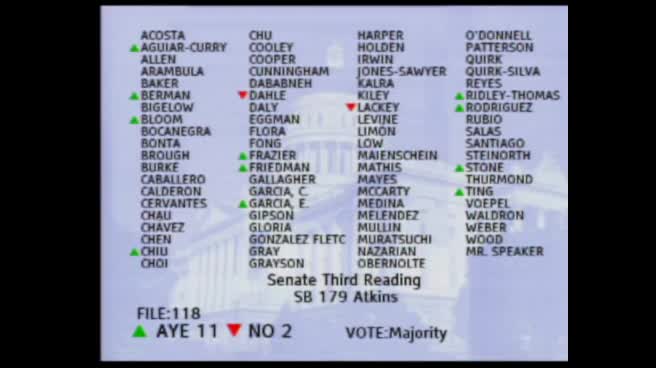 2MIN
Assembly Floor
 1H
Assembly Standing Committee on Appropriations
 7MIN
Assembly Standing Committee on Judiciary
 8MIN
Assembly Standing Committee on Public Safety
 2MIN
Senate Floor
 48MIN
Senate Standing Committee on Appropriations
 41SEC
Senate Standing Committee on Appropriations


Bill Co-Author(s):
