SB 4: Medi-Cal: county organized health system: County of Orange.
- Session Year: 2017-2018
- House: Senate
- Latest Version Date: 2017-10-04
Existing law establishes the Medi-Cal program, administered by the State Department of Health Care Services, under which health care services are provided to qualified, low-income persons. The Medi-Cal program is, in part, governed and funded by federal Medicaid program provisions. Existing law authorizes a county board of supervisors, by ordinance, to establish a commission to negotiate an exclusive contract with the department to provide, or arrange for the provision of, health care services under the Medi-Cal program. This system of services provided by or through a county under these provisions is known as a county organized health system. Existing law requires the enabling ordinance to, among other things, specify the membership of the county commission, the qualifications for individual members, the manner of appointment, and how long they will serve. Pursuant to this authority, the County of Orange, by ordinance, established a commission to provide health care services under the Medi-Cal program.
This bill would codify those provisions of the enabling ordinance that prescribe the membership composition, the qualifications for individual members, tenure of the members, and the procedure for removing a member of the governing body of the commission established in the County of Orange, known as the Orange County Health Authority. The bill would authorize the governing body of the commission established in the County of Orange, subject to a 2/3 vote of the full membership of the governing body, to increase the number of public members, or the number of current CalOptima members or family members of current CalOptima members who may serve as a member of the governing body, subject to an affirmative vote by a majority of the Board of Supervisors of the County of Orange. The bill would prescribe the duties and responsibilities of the governing body, including to serve the public interest of the CalOptima members and to ensure the operational well-being and fiscal solvency of the Orange County Health Authority, and would require the Orange County Health Authority to work to earn the publics trust through its commitment to accountability, responsiveness, transparency, reliability, and cooperation.
These provisions would remain in effect until January 1, 2023, and as of that date would be repealed.
This bill would make legislative findings and declarations as to the necessity of a special statute for the County of Orange.
This bill would declare that it is to take effect immediately as an urgency statute.
Existing law establishes the Medi-Cal program, administered by the State Department of Health Care Services, under which health care services are provided to qualified, low-income persons. The Medi-Cal program is, in part, governed and funded by federal Medicaid program provisions. Existing law authorizes a county board of supervisors, by ordinance, to establish a commission to negotiate an exclusive contract with the department to provide, or arrange for the provision of, health care services under the Medi-Cal program. This system of services provided by or through a county under these provisions is known as a county organized health system. Existing law requires the enabling ordinance to, among other things, specify the membership of the county commission, the qualifications for individual members, the manner of appointment, and how long they will serve. Pursuant to this authority, the County of Orange, by ordinance, established a commission to provide health care services under the Medi-Cal program.
This bill would codify those provisions of the enabling ordinance that prescribe the membership composition, the qualifications for individual members, tenure of the members, and the procedure for removing a member of the governing body of the commission established in the County of Orange. Orange, known as the Orange County Health Authority. The bill would authorize the governing body of the commission established in the County of Orange, subject to a 2/3 vote of the full membership of the governing body, to increase the number of public members, or the number of current CalOptima members or family members of current CalOptima members who may serve as a member of the governing body, subject to an affirmative vote by a majority of the Board of Supervisors of the County of Orange. The bill would prescribe the duties and responsibilities of the governing body, including to serve the public interest of the CalOptima members and to ensure the operational well-being and fiscal solvency of the Orange County Health Authority, and would require the Orange County Health Authority to work to earn the publics trust through its commitment to accountability, responsiveness, transparency, reliability, and cooperation.
These provisions would remain in effect until January 1, 2023, and as of that date would be repealed.
This bill would make legislative findings and declarations as to the necessity of a special statute for the County of Orange.
Existing law establishes the Medi-Cal program, administered by the State Department of Health Care Services, under which health care services are provided to qualified, low-income persons. The Medi-Cal program is, in part, governed and funded by federal Medicaid program provisions. Existing law authorizes a county board of supervisors, by ordinance, to establish a commission to negotiate an exclusive contract with the department to provide, or arrange for the provision of, health care services under the Medi-Cal program. This system of services provided by or through a county under these provisions is known as a county organized health system. Existing law requires the enabling ordinance to, among other things, specify the membership of the county commission, the qualifications for individual members, the manner of appointment, and how long they will serve. Pursuant to this authority, the County of Orange, by ordinance, established a commission to provide health care services under the Medi-Cal program.
This bill would codify those provisions of the enabling ordinance that prescribe the membership composition, the qualifications for individual members, and tenure of the members members, and the procedure for removing a member of the governing body of the commission established in the County of Orange.
This bill would make legislative findings and declarations as to the necessity of a special statute for the County of Orange.
Existing law establishes the Medi-Cal program, administered by the State Department of Health Care Services, under which health care services are provided to qualified, low-income persons. The Medi-Cal program is, in part, governed and funded by federal Medicaid program provisions. Existing law authorizes a county board of supervisors, by ordinance, to establish a commission to negotiate an exclusive contract with the department to provide, or arrange for the provision of, health care services under the Medi-Cal program. This system of services provided by or through a county under these provisions is known as a county organized health system. Existing law requires the enabling ordinance to, among other things, specify the membership of the county commission, the qualifications for individual members, the manner of appointment, and how long they will serve. Pursuant to this authority, the County of Orange, by ordinance, established a commission to provide health care services under the Medi-Cal program.
This bill would codify those provisions of the enabling ordinance that prescribe the membership composition, the qualifications for individual members, and tenure of the members of the governing body of the commission established in the County of Orange.
This bill would make legislative findings and declarations as to the necessity of a special statute for the County of Orange.
The Highway Safety, Traffic Reduction, Air Quality, and Port Security Bond Act of 2006 (Proposition 1B) created the Trade Corridors Improvement Fund and provided for allocation by the California Transportation Commission of $2 billion in bond funds for infrastructure improvements on highway and rail corridors that have a high volume of freight movement, and specified categories of projects eligible to receive these funds. Existing law continues the Trade Corridors Improvement Fund in existence in order to receive revenues from sources other than the bond act for these purposes. Proposition 1B also provided for the allocation of $1 billion in bond funds to the State Air Resources Board for emission reductions, not otherwise required by law or regulation, from activities related to the movement of freight along Californias trade corridors, which was allocated by the state board pursuant to the Goods Movement Emission Reduction Program.This bill, subject to voter approval at the June 5, 2018, statewide primary election, would enact the Goods Movement and Clean Trucks Bond Act to authorize $500,000,000 of state general obligation bonds as follows: $200,000,000 to the State Air Resources Board for projects and programs consistent with the Goods Movement Emission Reduction Program; and $300,000,000 to the State Air Resources Board for projects and programs to expand the use of zero- and near-zero-emission trucks in specified areas of the state.The Highway Safety, Traffic Reduction, Air Quality, and Port Security Bond Act of 2006 (Proposition 1B) created the Trade Corridors Improvement Fund and provided for allocation by the California Transportation Commission of $2 billion in bond funds for infrastructure improvements on highway and rail corridors that have a high volume of freight movement, and specified categories of projects eligible to receive these funds. Existing law continues the Trade Corridors Improvement Fund in existence in order to receive revenues from sources other than the bond act for these purposes. Proposition 1B also provided for the allocation of $1 billion in bond funds to the State Air Resources Board for emission reductions, not otherwise required by law or regulation, from activities related to the movement of freight along Californias trade corridors, which was allocated by the state board pursuant to the Goods Movement Emission Reduction Program.
This bill, subject to voter approval at the June 5, 2018, statewide primary election, would enact the Goods Movement and Clean Trucks Bond Act to authorize $500,000,000 of state general obligation bonds as follows: $200,000,000 to the State Air Resources Board for projects and programs consistent with the Goods Movement Emission Reduction Program; and $300,000,000 to the State Air Resources Board for projects and programs to expand the use of zero- and near-zero emission near-zero-emission trucks in specified areas of the state that are designated as severe or extreme nonattainment areas for ozone and particulate matter. state.
The Highway Safety, Traffic Reduction, Air Quality, and Port Security Bond Act of 2006 (Proposition 1B) created the Trade Corridors Improvement Fund and provided for allocation by the California Transportation Commission of $2 billion in bond funds for infrastructure improvements on highway and rail corridors that have a high volume of freight movement, and specified categories of projects eligible to receive these funds. Existing law continues the Trade Corridors Improvement Fund in existence in order to receive revenues from sources other than the bond act for these purposes. Proposition 1B also provided for the allocation of $1 billion in bond funds to the State Air Resources Board for emission reductions, not otherwise required by law or regulation, from activities related to the movement of freight along Californias trade corridors, which was allocated by the state board pursuant to the Goods Movement Emission Reduction Program.
This bill, subject to voter approval at the June 5, 2018, statewide primary election, would enact the Goods Movement and Clean Trucks Bond Act to authorize $600,000,000 $500,000,000 of state general obligation bonds as follows: $200,000,000 to the California Transportation Commission for projects and programs eligible for funding from the Trade Corridors Improvement Fund; $200,000,000 to the State Air Resources Board for projects and programs consistent with the Goods Movement Emission Reduction Program; and $200,000,000 $300,000,000 to the State Air Resources Board for projects and programs to expand the use of zero- and near-zero emission trucks in areas of the state that are designated as severe or extreme nonattainment areas for ozone and particulate matter.
(2)Existing law requires the California Transportation Commission, in determining projects eligible for funding from the Trade Corridors Improvement Fund, to consult various state freight and regional infrastructure and goods movement plans and the statewide port master plan.This bill would revise the list of plans to be consulted by the commission in prioritizing projects for funding. The bill would expand eligible projects to include, among others, rail landside access improvements, landside freight access improvements to airports, and certain capital and operational improvements. The bill would also identify specific amounts to be allocated from federal goods movement funds made available by the federal Fixing Americas Surface Transportation Act to certain categories of projects.(1)The Highway Safety, Traffic Reduction, Air Quality, and Port Security Bond Act of 2006 (Proposition 1B) created the Trade Corridors Improvement Fund and provided for allocation by the California Transportation Commission of $2 billion in bond funds for infrastructure improvements on highway and rail corridors that have a high volume of freight movement, and specified categories of projects eligible to receive these funds. Existing law continues the Trade Corridors Improvement Fund in existence in order to receive revenues from sources other than the bond act for these purposes. Proposition 1B also provided for the allocation of $1 billion in bond funds to the State Air Resources Board for emission reductions, not otherwise required by law or regulation, from activities related to the movement of freight along Californias trade corridors, which was allocated by the state board pursuant to the Goods Movement Emission Reduction Program.
This bill, subject to voter approval at the June 5, 2018, statewide primary election, would enact the Goods Movement and Clean Trucks Bond Act to authorize $600,000,000 of state general obligation bonds as follows: $200,000,000 to the California Transportation Commission for projects and programs eligible for funding from the Trade Corridors Improvement Fund; $200,000,000 to the State Air Resources Board for projects and programs consistent with the Goods Movement Emission Reduction Program; and $200,000,000 to the State Air Resources Board for projects and programs to expand the use of zero- and near-zero emission trucks in areas of the state that are designated as severe or extreme nonattainment areas for ozone and particulate matter.
(2)Existing law requires the California Transportation Commission, in determining projects eligible for funding from the Trade Corridors Improvement Fund, to consult various state freight and regional infrastructure and goods movement plans and the statewide port master plan.
This bill would revise the list of plans to be consulted by the commission in prioritizing projects for funding. The bill would expand eligible projects to include, among others, rail landside access improvements, landside freight access improvements to airports, and certain capital and operational improvements. The bill would also identify specific amounts to be allocated from federal goods movement funds made available by the federal Fixing Americas Surface Transportation Act to certain categories of projects.
(1) The Highway Safety, Traffic Reduction, Air Quality, and Port Security Bond Act of 2006 (Proposition 1B) created the Trade Corridors Improvement Fund and provided for allocation by the California Transportation Commission of $2 billion in bond funds for infrastructure improvements on highway and rail corridors that have a high volume of freight movement, and specified categories of projects eligible to receive these funds. Existing law continues the Trade Corridors Improvement Fund in existence in order to receive revenues from sources other than the bond act for these purposes. Proposition 1B also provided for the allocation of $1 billion in bond funds to the State Air Resources Board for emission reductions, not otherwise required by law or regulation, from activities related to the movement of freight along Californias trade corridors, which was allocated by the state board pursuant to the Goods Movement Emission Reduction Program.
This bill, subject to voter approval at the June 5, 2018, statewide primary election, would enact the Goods Movement and Clean Trucks Bond Act to authorize $600,000,000 of state general obligation bonds as follows: $200,000,000 to the California Transportation Commission for projects and programs eligible for funding from the Trade Corridors Improvement Fund; $200,000,000 to the State Air Resources Board for projects and programs consistent with the Goods Movement Emission Reduction Program; and $200,000,000 to the State Air Resources Board for projects and programs to expand the use of zero- and near-zero emission trucks in areas of the state that are designated as severe or extreme nonattainment areas for ozone and particulate matter.
(2) Existing law requires the California Transportation Commission, in determining projects eligible for funding from the Trade Corridors Improvement Fund, to consult various state freight and regional infrastructure and goods movement plans and the statewide port master plan.
This bill would revise the list of plans to be consulted by the commission in prioritizing projects for funding. The bill would expand eligible projects to include, among others, rail landside access improvements, landside freight access improvements to airports, and certain capital and operational improvements. The bill would also identify specific amounts to be allocated from federal goods movement funds made available by the federal Fixing Americas Surface Transportation Act to certain categories of projects.
The Legislature finds and declares all of the following:
(a)The Orange County Health Authority, also known as CalOptima, operates with a budget of $3.4 billion and serves as a critical lifeline providing health care to almost 800,000 residents of the County of Orange.
(b)The Board of Supervisors of the County of Orange has a duty to appoint a governing body of the Orange County Health Authority that reflects the needs and interests of the residents of the County of Orange and CalOptima members.
(c)The Legislature encourages the Board of Supervisors of the County of Orange to consider each community served by CalOptima and take steps to ensure that those communities are adequately represented on the governing body and in the programs administered by the Orange County Health Authority.
(d)The Legislature will carefully examine all of the following factors when considering legislation to extend or modify the operation of Section 14087.59 of the Welfare and Institutions Code as added by this act:
(1)The efforts of the Board of Supervisors of the County of Orange to appoint a governing body that reflects the diverse backgrounds, interest, and demography of the persons residing in the County of Orange.
(2)Whether decisions by the governing body reflect concerns, values, and interests at the city, regional, and community levels.
(3)Whether decisions by the governing body reflect the needs of CalOptima members who require long-term care services and behavioral health treatment.
SEC. 2.It is the intent of the Legislature to codify certain provisions of the enabling ordinance enacted by the Board of Supervisors of the County of Orange that prescribe the composition of the governing body of the Orange County Health Authority, which is a county organized health system, known as CalOptima, that arranges for the provision of health care services under the Medi-Cal program. The Legislature does not intend that the codification in statute of the composition of the governing body of the Orange County Health Authority by Section 3 of this act result in a new board but is instead a continuation of the prior board, and therefore the Board of Supervisors of the County of Orange is not required to appoint a new governing body or to change the composition of the governing body, except as authorized to add additional public members, or CalOptima members or family members of CalOptima members to the board.
SEC. 3.Section 14087.59 is added to the Welfare and Institutions Code, to read:14087.59.(a)Notwithstanding subdivision (d) of Section 14087.54, governance of the commission in the County of Orange established pursuant to Section 14087.54, known as the Orange County Health Authority, shall be vested in a governing body consisting of 10 members: nine voting members and one nonvoting member. The nonvoting member shall be the Director of the Orange County Health Care Agency. The nine voting members shall be nominated by the Orange County Health Care Agency and appointed by a majority vote of the Board of Supervisors of the County of Orange and shall consist of the following:
(1)Two members shall each be a member of the Board of Supervisors of the County of Orange, with one additional member of the Board of Supervisors of the County of Orange to serve as an alternate.
(2)One member shall be a current or former hospital administrator.
(3)One member shall be a representative of a community clinic, which may include, but is not limited to, a representative of a federally qualified health center, as defined in Section 1396d(l)(2)(B) of Title 42 of the United States Code.
(4)One member shall be a member of the public who is a legal resident of the County of Orange.
(5)One member shall be a practicing licensed medical provider who is not an owner or officer, or a member of the board of directors, of a contracted independent physicians association or provider network.
(6)One member shall be a current CalOptima member or a family member of a current CalOptima member.
(7)One member shall be an accounting or public finance professional, or an attorney who is an active member of the State Bar.
(8)One member shall be a practicing licensed physician who is a representative of a contracted independent physicians association or provider network.
(b)Each member of the governing body shall reside in, or be employed in, the County of Orange and shall be generally representative of the diverse backgrounds, interests, and demography of persons residing in the County of Orange. Each member of the governing body shall have a commitment to a health care system that seeks to improve access to high-quality health care for persons served by the commission and that in fact delivers high-quality care and is financially viable. Each member shall possess the requisite skills and knowledge necessary to design and operate a quality publicly assisted health care delivery system.
(c)(1)Members of the governing body of the commission shall serve four-year terms, except for those members who are members of the Board of Supervisors of the County of Orange who shall serve a one-year term.
(2)A member of the governing body described in any of paragraphs (2) to (8), inclusive, of subdivision (a) shall serve no more than two consecutive terms. This limitation shall apply only to service for consecutive terms. No other limitation on the number of terms a person may serve is intended.
(3)A member of the governing body of the commission may be removed from the governing body by a vote in favor of that removal of at least two-thirds of the full membership of the Board of Supervisors of the County of Orange.
(d)The governing body of the commission, subject to a two-thirds vote of the full membership, may increase the number of public members, or the number of members who are current CalOptima members or family members of current CalOptima members who may serve as a member of the governing body, subject to an affirmative vote by a majority of the Board of Supervisors of the County of Orange, provided, however, that a change in the composition of the governing body under this subdivision shall not result in the elimination of any member described in subdivision (a).
(e)Each member of the governing body shall have the responsibility and duty to follow the requirements of applicable federal and state laws and regulations, to serve the public interest of the members of CalOptima, and to ensure the operational well-being and fiscal solvency of the Orange County Health Authority. Members of the governing body shall further strive to improve health care quality, promote prevention and wellness, ensure the provision of cost-effective health and mental health care services, and reduce health disparities. The Orange County Health Authority shall work to earn the publics trust through its commitment to accountability, responsiveness, transparency, reliability, and cooperation.
(f)This section shall remain in effect only until January 1, 2023, and as of that date is repealed, unless a later enacted statute that is enacted before January 1, 2023, deletes or extends that date.
SEC. 4.The Legislature finds and declares that a special statute is necessary and that a general statute cannot be made applicable within the meaning of Section 16 of Article IV of the California Constitution because of the unique circumstances applicable to the County of Orange with respect to the operation and governance of the Orange County Health Authority, which is a county organized health system known as CalOptima.
SEC. 5.This act is an urgency statute necessary for the immediate preservation of the public peace, health, or safety within the meaning of Article IV of the California Constitution and shall go into immediate effect. The facts constituting the necessity are:
In order to ensure, at the earliest possible time, that the membership of the governing board of the Orange County Health Authority retains the experience and expertise necessary to coordinate and provide care effectively to a large and diverse population and to adapt to potential challenges posed by proposed changes, if enacted, in federal law to Medicaid and Medi-Cal, it is necessary that this bill take effect immediately.
The Legislature finds and declares all of the following:
(a)The Orange County Health Authority, also known as CalOptima, operates with a budget of $3.4 billion and serves as a critical lifeline providing health care to almost 800,000 residents of the County of Orange.
(b)The Board of Supervisors of the County of Orange has a duty to appoint a governing body of the Orange County Health Authority that reflects the needs and interests of the residents of the County of Orange and CalOptima members.
(c)The Legislature encourages the Board of Supervisors of the County of Orange to consider each community served by CalOptima and take steps to ensure that those communities are adequately represented on the governing body and in the programs administered by the Orange County Health Authority.
(d)The Legislature will carefully examine all of the following factors when considering legislation to extend or modify the operation of Section 14087.59 of the Welfare and Institutions Code as added by this act:
(1)The efforts of the Board of Supervisors of the County of Orange to appoint a governing body that reflects the diverse backgrounds, interest, and demography of the persons residing in the County of Orange.
(2)Whether decisions by the governing body reflect concerns, values, and interests at the city, regional, and community levels.
(3)Whether decisions by the governing body reflect the needs of CalOptima members who require long-term care services and behavioral health treatment.
SECTION 1.SEC. 2.It is the intent of the Legislature to codify certain provisions of the enabling ordinance enacted by the Board of Supervisors of the County of Orange that prescribe the composition of the governing body of the Orange County Health Authority, which is a county organized health system, known as CalOptima, that arranges for the provision of health care services under the Medi-Cal program. The Legislature does not intend that the codification in statute of the composition of the governing body of the Orange County Health Authority by Section 2 3 of this act result in a new board but is instead a continuation of the prior board, and therefore the Board of Supervisors of the County of Orange is not required to appoint a new governing body or to change the composition of the governing body, except as authorized to add additional public members, or CalOptima members or family members of CalOptima members to the board.
SEC. 2.SEC. 3.Section 14087.59 is added to the Welfare and Institutions Code, to read:14087.59.(a)Notwithstanding subdivision (d) of Section 14087.54, governance of the commission in the County of Orange established pursuant to Section 14087.54, known as the Orange County Health Authority, shall be vested in a governing body consisting of 10 members: nine voting members and one nonvoting member. The nonvoting member shall be the Director of the Orange County Health Care Agency. The nine voting members shall be nominated by the Orange County Health Care Agency and appointed by a majority vote of the Board of Supervisors of the County of Orange and shall consist of the following:
(1)Two members shall each be a member of the Board of Supervisors of the County of Orange, with one additional member of the Board of Supervisors of the County of Orange to serve as an alternate.
(2)One member shall be a current or former hospital administrator.
(3)One member shall be a representative of a community clinic. clinic, which may include, but is not limited to, a representative of a federally qualified health center, as defined in Section 1396d(l)(2)(B) of Title 42 of the United States Code.
(4)One member shall be a member of the public who is a legal resident of the County of Orange.
(5)One member shall be a practicing licensed medical provider who is not an owner or officer, or a member of the board of directors, of a contracted independent physicians association or provider network.
(6)One member shall be a current CalOptima member or a family member of a current CalOptima member.
(7)One member shall be an accounting or public finance professional, or an attorney who is an active member of the State Bar.
(8)One member shall be a practicing licensed physician who is a representative of a contracted independent physicians association or provider network.
(b)Each member of the governing body shall reside in, or be employed in, the County of Orange and shall be generally representative of the diverse backgrounds, interests, and demography of persons residing in the County of Orange. Each member of the governing body shall have a commitment to a health care system that seeks to improve access to high-quality health care for persons served by the commission and that in fact delivers high-quality care and is financially viable. Each member shall possess the requisite skills and knowledge necessary to design and operate a quality publicly assisted health care delivery system.
(c)(1)Members of the governing body of the commission shall serve four-year terms, except for those members who are members of the Board of Supervisors of the County of Orange who shall serve a one-year term.
(2)A member of the governing body described in any of paragraphs (2) to (8), inclusive, of subdivision (a) shall serve no more than two consecutive terms. This limitation shall apply only to service for consecutive terms. No other limitation on the number of terms a person may serve is intended.
(3)A member of the governing body of the commission may be removed from the governing body by a vote in favor of that removal of at least two-thirds of the full membership of the Board of Supervisors of the County of Orange.
(d)The governing body of the commission, subject to a two-thirds vote of the full membership, may increase the number of public members, or the number of members who are current CalOptima members or family members of current CalOptima members who may serve as a member of the governing body, subject to an affirmative vote by a majority of the Board of Supervisors of the County of Orange, provided, however, that a change in the composition of the governing body under this subdivision shall not result in the elimination of any member described in subdivision (a).
(e)Each member of the governing body shall have the responsibility and duty to follow the requirements of applicable federal and state laws and regulations, to serve the public interest of the members of CalOptima, and to ensure the operational well-being and fiscal solvency of the Orange County Health Authority. Members of the governing body shall further strive to improve health care quality, promote prevention and wellness, ensure the provision of cost-effective health and mental health care services, and reduce health disparities. The Orange County Health Authority shall work to earn the publics trust through its commitment to accountability, responsiveness, transparency, reliability, and cooperation.
(f)This section shall remain in effect only until January 1, 2023, and as of that date is repealed, unless a later enacted statute that is enacted before January 1, 2023, deletes or extends that date.
SEC. 3.SEC. 4.The Legislature finds and declares that a special statute is necessary and that a general statute cannot be made applicable within the meaning of Section 16 of Article IV of the California Constitution because of the unique circumstances applicable to the County of Orange with respect to the operation and governance of the Orange County Health Authority, which is a county organized health system known as CalOptima.
SEC. 5.This act is an urgency statute necessary for the immediate preservation of the public peace, health, or safety within the meaning of Article IV of the California Constitution and shall go into immediate effect. The facts constituting the necessity are:
In order to ensure, at the earliest possible time, that the membership of the governing board of the Orange County Health Authority retains the experience and expertise necessary to coordinate and provide care effectively to a large and diverse population and to adapt to potential challenges posed by proposed changes, if enacted, in federal law to Medicaid and Medi-Cal, it is necessary that this bill take effect immediately.
It is the intent of the Legislature to codify certain provisions of the enabling ordinance enacted by the Board of Supervisors of the County of Orange that prescribe the composition of the governing body of the Orange County Health Authority, which is a county organized health system, known as CalOptima, that arranges for the provision of health care services under the Medi-Cal program. The Legislature does not intend that the codification in statute of the composition of the governing body of the Orange County Health Authority by this section Section 2 of this act result in a new board but is instead a continuation of the prior board, and therefore the Board of Supervisors of the County of Orange is not required to appoint a new governing body or to change the composition of the governing body. body, except as authorized to add additional public members, or CalOptima members or family members of CalOptima members to the board.
SEC. 2.Section 14087.59 is added to the Welfare and Institutions Code, to read:14087.59.(a)Notwithstanding subdivision (d) of Section 14087.54, governance of the commission in the County of Orange established pursuant to Section 14087.54 14087.54, known as the Orange County Health Authority, shall be vested in a governing body consisting of 10 members: nine voting members and one nonvoting member. The nonvoting member shall be the Director of the Orange County Health Care Agency. The nine voting members shall be nominated by the Orange County Health Care Agency and appointed by a majority vote of the Board of Supervisors of the County of Orange and shall consist of the following:
(1)Two members shall each be a member of the Board of Supervisors of the County of Orange, with one additional member of the Board of Supervisors of the County of Orange to serve as an alternate.
(2)One member shall be a current or former hospital administrator.
(3)One member shall be a representative of a community clinic.
(4)One member shall be a member of the public who is a legal resident of the County of Orange.
(5)One member shall be a practicing licensed medical provider who is not an owner or officer, or a member of the board of directors, of a contracted independent physicians association or provider network.
(6)One member shall be a current CalOptima member or a family member of a current CalOptima member.
(7)One member shall be an accounting or public finance professional, or an attorney who is an active member of the State Bar.
(8)One member shall be a practicing licensed physician who is a representative of a contracted independent physicians association or provider network.
(b)Each member of the governing body shall reside in, or be employed in, the County of Orange and shall be generally representative of the diverse backgrounds, interests, and demography of persons residing in the County of Orange. Each member of the governing body shall have a commitment to a health care system that seeks to improve access to high-quality health care for persons served by the commission and that in fact delivers high-quality care and is financially viable. Each member shall possess the requisite skills and knowledge necessary to design and operate a quality publicly assisted health care delivery system.
(c)(1)Members of the governing body of the commission shall serve four-year terms, except for those members who are members of the Board of Supervisors of the County of Orange who shall serve a one-year term.
(2)A member of the governing body described in any of paragraphs (2) to (8), inclusive, of subdivision (a) shall serve no more than two consecutive terms. This limitation shall apply only to service for consecutive terms. No other limitation on the number of terms a person may serve is intended.
(3)A member of the governing body of the commission may be removed from the governing body by a vote in favor of that removal of at least two-thirds of the full membership of the Board of Supervisors of the County of Orange.
(d)The governing body of the commission, subject to a two-thirds vote of the full membership, may increase the number of public members, or the number of members who are current CalOptima members or family members of current CalOptima members who may serve as a member of the governing body, subject to an affirmative vote by a majority of the Board of Supervisors of the County of Orange, provided, however, that a change in the composition of the governing body under this subdivision shall not result in the elimination of any member described in subdivision (a).
(e)Each member of the governing body shall have the responsibility and duty to follow the requirements of applicable federal and state laws and regulations, to serve the public interest of the members of CalOptima, and to ensure the operational well-being and fiscal solvency of the Orange County Health Authority. Members of the governing body shall further strive to improve health care quality, promote prevention and wellness, ensure the provision of cost-effective health and mental health care services, and reduce health disparities. The Orange County Health Authority shall work to earn the publics trust through its commitment to accountability, responsiveness, transparency, reliability, and cooperation.
(f)This section shall remain in effect only until January 1, 2023, and as of that date is repealed, unless a later enacted statute that is enacted before January 1, 2023, deletes or extends that date.
SEC. 3.The Legislature finds and declares that a special statute is necessary and that a general statute cannot be made applicable within the meaning of Section 16 of Article IV of the California Constitution because of the unique circumstances applicable to the County of Orange with respect to the operation and governance of the Orange County Health Authority, which is a county organized health system known as CalOptima.
It is the intent of the Legislature to codify certain provisions of the enabling ordinance enacted by the Board of Supervisors of the County of Orange that prescribe the composition of the governing body of the Orange County Health Authority, which is a county organized health system, known as CalOptima, that arranges for the provision of health care services under the Medi-Cal program. The Legislature does not intend that the codification in statute of the composition of the governing body of the Orange County Health Authority by this section result in a new board but is instead a continuation of the prior board, and therefore the Board of Supervisors of the County of Orange is not required to appoint a new governing body or to change the composition of the governing body.
SEC. 2.Section 14087.59 is added to the Welfare and Institutions Code, to read:14087.59.(a)Notwithstanding subdivision (d) of Section 14087.54, governance of the commission in the County of Orange established pursuant to Section 14087.54 shall be vested in a governing body consisting of 10 members: nine voting members and one nonvoting member. The nonvoting member shall be the Director of the Orange County Health Care Agency. The nine voting members shall be nominated by the Orange County Health Care Agency and appointed by a majority vote of the Board of Supervisors of the County of Orange and shall consist of the following:
(1)Two members shall each be a member of the Board of Supervisors of the County of Orange, with one additional member of the Board of Supervisors of the County of Orange to serve as an alternate.
(2)One member shall be a current or former hospital administrator.
(3)One member shall be a representative of a community clinic.
(4)One member shall be a member of the public who is a legal resident of the County of Orange.
(5)One member shall be a practicing licensed medical provider who is not an owner or officer, or a member of the board of directors, of a contracted independent physicians association or provider network.
(6)One member shall be a current CalOptima member or a family member of a current CalOptima member.
(7)One member shall be an accounting or public finance professional, or an attorney who is an active member of the State Bar.
(8)One member shall be a practicing licensed physician who is a representative of a contracted independent physicians association or provider network.
(b)Each member of the governing body shall reside in, or be employed in, the County of Orange and shall be generally representative of the diverse backgrounds, interests, and demography of persons residing in the County of Orange. Each member of the governing body shall have a commitment to a health care system that seeks to improve access to high-quality health care for persons served by the commission and that in fact delivers high-quality care and is financially viable. Each member shall possess the requisite skills and knowledge necessary to design and operate a quality publicly assisted health care delivery system.
(c)(1)Members of the governing body of the commission shall serve four-year terms, except for those members who are members of the Board of Supervisors of the County of Orange who shall serve a one-year term.
(2)A member of the governing body described in any of paragraphs (2) to (8), inclusive, of subdivision (a) shall serve no more than two consecutive terms. This limitation shall apply only to service for consecutive terms. No other limitation on the number of terms a person may serve is intended.
(3)A member of the governing body of the commission may be removed from the governing body by a vote in favor of that removal of at least two-thirds of the full membership of the Board of Supervisors of the County of Orange.
SEC. 3.The Legislature finds and declares that a special statute is necessary and that a general statute cannot be made applicable within the meaning of Section 16 of Article IV of the California Constitution because of the unique circumstances applicable to the County of Orange with respect to the operation and governance of the Orange County Health Authority, which is a county organized health system known as CalOptima.
It is the intent of the Legislature to codify certain provisions of the enabling ordinance enacted by the Board of Supervisors of the County of Orange that prescribe the composition of the governing body of the Orange County Health Authority, which is a county organized health system, known as CalOptima, that arranges for the provision of health care services under the Medi-Cal program. The Legislature does not intend that the codification in statute of the composition of the governing body of the Orange County Health Authority by this section result in a new board but is instead a continuation of the prior board, and therefore the Board of Supervisors of the County of Orange is not required to appoint a new governing body or to change the composition of the governing body.
SEC. 2.Section 14087.59 is added to the Welfare and Institutions Code, to read:14087.59.(a)Notwithstanding subdivision (d) of Section 14087.54, governance of the commission in the County of Orange established pursuant to Section 14087.54 shall be vested in a governing body consisting of 10 members: nine voting members and one nonvoting member. The nonvoting member shall be the Director of the Orange County Health Care Agency. The nine voting members shall be nominated by the Orange County Health Care Agency and appointed by a majority vote of the Board of Supervisors of the County of Orange and shall consist of the following:
(1)Two members shall each be a member of the Board of Supervisors of the County of Orange, with one additional member of the Board of Supervisors of the County of Orange to serve as an alternate.
(2)One member shall be a current or former hospital administrator.
(3)One member shall be a representative of a community clinic.
(4)One member shall be a member of the public who is a legal resident of the County of Orange.
(5)One member shall be a practicing licensed medical provider who is not an owner or officer, or a member of the board of directors, of a contracted independent physicians association or provider network.
(6)One member shall be a current CalOptima member or a family member of a current CalOptima member.
(7)One member shall be an accounting or public finance professional, or an attorney who is an active member of the State Bar.
(8)One member shall be a practicing licensed physician who is a representative of a contracted independent physicians association or provider network.
(b)Each member of the governing body shall reside in, or be employed in, the County of Orange and shall be generally representative of the diverse backgrounds, interests, and demography of persons residing in the County of Orange. Each member of the governing body shall have a commitment to a health care system that seeks to improve access to high-quality health care for persons served by the commission and that in fact delivers high-quality care and is financially viable. Each member shall possess the requisite skills and knowledge necessary to design and operate a quality publicly assisted health care delivery system.
(c)(1)Members of the governing body of the commission shall serve four-year terms, except for those members who are members of the Board of Supervisors of the County of Orange who shall serve a one-year term.
(2)A member of the governing body described in any of paragraphs (2) to (8), inclusive, of subdivision (a) shall serve no more than two consecutive terms. This limitation shall apply only to service for consecutive terms. No other limitation on the number of terms a person may serve is intended.
SEC. 3.The Legislature finds and declares that a special statute is necessary and that a general statute cannot be made applicable within the meaning of Section 16 of Article IV of the California Constitution because of the unique circumstances applicable to the County of Orange with respect to the operation and governance of the Orange County Health Authority, which is a county organized health system known as CalOptima.
SECTION 1.Chapter 12.495 (commencing with Section 8879.80) is added to Division 1 of Title 2 of the Government Code, to read:12.495.The Goods Movement and Clean Trucks Bond Act1.General Provisions8879.80.This chapter shall be known as the Goods Movement and Clean Trucks Bond Act.8879.82.As used in this chapter, the following terms have the following meanings:(a)Board has the meaning as described in Section 8879.87.(b)Committee means the Goods Movement and Clean Trucks Bond Committee created pursuant to Section 8879.87.(c)Fund means the Goods Movement and Clean Trucks Bond Fund created pursuant to Section 8879.83.2.Goods Movement and Clean Trucks Bond Fund and Program8879.83.(a)The Goods Movement and Clean Trucks Bond Fund is hereby created in the State Treasury.(b)The proceeds of bonds deposited in the fund shall be used, upon appropriation by the Legislature, to fund goods movement and clean trucks improvements as follows:(1)Two hundred million dollars ($200,000,000) to the State Air Resources Board for projects and programs consistent with the Goods Movement Emission Reduction Program (Chapter 3.2 (commencing with Section 39625) of Part 2 of Division 26 of the Health and Safety Code). Priority shall be given to projects and programs identified under the Sustainable Freight Action Plan released in July 2016 pursuant to Executive Order B-32-15.(2)Three hundred million dollars ($300,000,000) to the State Air Resources Board for projects and programs to expand the use of zero- and near-zero-emission trucks according to the following:(A)Areas of the state that are designated as severe or extreme nonattainment areas for ozone and designated as nonattainment areas for particulate matter.(B)Air basins that have a port located in a coastal zone or the San Francisco Bay area.3.Fiscal Provisions8879.85.Bonds in the total amount of five hundred million dollars ($500,000,000), or so much thereof as is necessary, not including the amount of any refunding bonds, or so much thereof as is necessary, may be issued and sold to provide a fund to be used for carrying out the purposes expressed in this chapter and to reimburse the General Obligation Bond Expense Revolving Fund pursuant to Section 16724.5. The bonds, when sold, issued, and delivered, shall be and constitute a valid and binding obligation of the State of California, and the full faith and credit of the State of California is hereby pledged for the punctual payment of both principal of, and interest on, the bonds as the principal and interest become due and payable.8879.86.The bonds authorized by this chapter shall be prepared, executed, issued, sold, paid, and redeemed as provided in the State General Obligation Bond Law (Chapter 4 (commencing with Section 16720) of Part 3 of Division 4), except Section 16727, and all of the other provisions of that law as amended from time to time apply to the bonds and to this chapter and are hereby incorporated in this chapter as though set forth in full in this chapter.8879.87.(a)Solely for the purpose of authorizing the issuance and sale, pursuant to the State General Obligation Bond Law, of the bonds authorized by this chapter, the Goods Movement and Clean Trucks Bond Committee is hereby created. For the purposes of this chapter, the Goods Movement and Clean Trucks Bond Committee is the committee as that term is used in the State General Obligation Bond Law. The committee consists of the Treasurer, the Controller, the Director of Finance, and the Secretary of Transportation, or a designated representative of each of those officials. The Treasurer shall serve as the chairperson of the committee. A majority of the committee may act for the committee.(b)For the purposes of the State General Obligation Bond Law, the State Air Resources Board, with respect to paragraphs (1) and (2) of subdivision (b) of Section 8879.83, is designated to be the board.8879.88.The committee shall determine whether or not it is necessary or desirable to issue bonds authorized pursuant to this chapter in order to carry out the actions specified in Section 8879.83, and, if so, the amount of bonds to be issued and sold. Successive issues of bonds may be authorized and sold to carry out those actions progressively, and are not required to be sold at any one time. Bonds may bear interest subject to federal income tax.8879.89.There shall be collected each year and in the same manner and at the same time as other state revenue is collected, in addition to the ordinary revenues of the state, a sum in an amount required to pay the principal of, and interest on, the bonds each year. It is the duty of all officers charged by law with any duty in regard to the collection of the revenue to do and perform each and every act that is necessary to collect that additional sum.8879.90.Notwithstanding Section 13340, there is hereby appropriated from the General Fund in the State Treasury, for the purposes of this chapter, an amount that will equal the total of the following:(a)The sum annually necessary to pay the principal of, and interest on, bonds issued and sold pursuant to this chapter, as the principal and interest become due and payable.(b)The sum necessary to carry out Section 8879.91, appropriated without regard to fiscal years.8879.91.For the purposes of carrying out this chapter, the Director of Finance may authorize the withdrawal from the General Fund of an amount not to exceed the amount of the unsold bonds that have been authorized by the committee to be sold for the purpose of carrying out this chapter, less any amount withdrawn pursuant to this section and Section 8879.92. Any amounts withdrawn shall be deposited in the fund to be allocated in accordance with this chapter. Any moneys made available under this section shall be returned to the General Fund from proceeds received from the sale of bonds for the purpose of carrying out this chapter.8879.92.The board may request the Pooled Money Investment Board to make a loan from the Pooled Money Investment Account, including other authorized forms of interim financing that include, but are not limited to, commercial paper, in accordance with Section 16312, for purposes of carrying out this chapter. The amount of the request shall not exceed the amount of the unsold bonds that the committee, by resolution, has authorized to be sold for the purpose of carrying out this chapter, excluding refunding bonds authorized pursuant to Section 8879.96. The board shall execute any documents required by the Pooled Money Investment Board to obtain and repay the loan. Any amounts loaned shall be deposited in the fund to be allocated by the board in accordance with this chapter.8879.93.Notwithstanding any other provision of this chapter, or of the State General Obligation Bond Law, if the Treasurer sells bonds pursuant to this chapter that include a bond counsel opinion to the effect that the interest on the bonds is excluded from gross income for federal tax purposes, subject to designated conditions, the Treasurer may maintain separate accounts for the investment of bond proceeds and for the investment of earnings on those proceeds. The Treasurer may use or direct the use of those proceeds or earnings to pay any rebate, penalty, or other payment required under federal law or take any other action with respect to the investment and use of those bond proceeds required or desirable under federal law to maintain the tax-exempt status of those bonds and to obtain any other advantage under federal law on behalf of the funds of this state.8879.94.All moneys deposited in the fund that are derived from premium and accrued interest on bonds sold pursuant to this chapter shall be reserved in the fund and shall be available for transfer to the General Fund as a credit to expenditures for bond interest, except that amounts derived from premium may be reserved and used to pay the cost of bond issuance prior to any transfer to the General Fund.8879.95.Pursuant to Chapter 4 (commencing with Section 16720) of Part 3 of Division 4, the cost of bond issuance shall be paid or reimbursed out of the bond proceeds, including premium, if any. To the extent the cost of bond issuance is not paid from premiums received from the sale of bonds, these costs shall be allocated proportionately to each program funded through this chapter by the applicable bond sale. Any bond refunded with the proceeds of refunding bonds as authorized by this section may be legally defeased to the extent permitted by law in the manner and to the extent set forth in the resolution, as amended from time to time, authorizing the refunded bond.8879.96.The bonds may be refunded in accordance with Article 6 (commencing with Section 16780) of Chapter 4 of Part 3 of Division 4, which is a part of the State General Obligation Bond Law. Approval by the voters of the state for the issuance of the bonds described in this chapter includes the approval of the issuance of any bonds issued to refund any bonds originally issued under this chapter or any previously issued refunding bonds.8879.97.The Legislature hereby finds and declares that, inasmuch as the proceeds from the sale of bonds authorized by this chapter are not proceeds of taxes as that term is used in Article XIIIB of the California Constitution, the disbursement of these proceeds is not subject to the limitations imposed by that article.SEC. 2.Section 1 of this act shall take effect upon the adoption by the voters of the Goods Movement and Clean Trucks Bond Act, as set forth in Section 1 of this act.SEC. 3.The Secretary of State shall submit the Goods Movement and Clean Trucks Bond Act, as set forth in Section 1 of this act, to the voters at the June 5, 2018, statewide primary election.This chapter shall be known as the Goods Movement and Clean Trucks Bond Act.
8879.82.As used in this chapter, the following terms have the following meanings:
(a)Board has the meaning as described in Section 8879.87.
(b)Committee means the Goods Movement and Clean Trucks Bond Committee created pursuant to Section 8879.87.
(c)Fund means the Goods Movement and Clean Trucks Bond Fund created pursuant to Section 8879.83.
2.Goods Movement and Clean Trucks Bond Fund and Program8879.83.(a)The Goods Movement and Clean Trucks Bond Fund is hereby created in the State Treasury.
(b)The proceeds of bonds deposited in the fund shall be used, upon appropriation by the Legislature, to fund goods movement and clean trucks improvements as follows:
(1)Two hundred million dollars ($200,000,000) to the State Air Resources Board for projects and programs consistent with the Goods Movement Emission Reduction Program (Chapter 3.2 (commencing with Section 39625) of Part 2 of Division 26 of the Health and Safety Code). Priority shall be given to projects and programs identified under the Sustainable Freight Action Plan released in July 2016 pursuant to Executive Order B-32-15.
(2)Three hundred million dollars ($300,000,000) to the State Air Resources Board for projects and programs to expand the use of zero- and near-zero emission near-zero-emission trucks in areas of the state that are designated as severe or extreme nonattainment areas for ozone and particulate matter. according to the following:
(A)Areas of the state that are designated as severe or extreme nonattainment areas for ozone and designated as nonattainment areas for particulate matter.
(B)Air basins that have a port located in a coastal zone or the San Francisco Bay area.
3.Fiscal Provisions8879.85.Bonds in the total amount of five hundred million dollars ($500,000,000), or so much thereof as is necessary, not including the amount of any refunding bonds, or so much thereof as is necessary, may be issued and sold to provide a fund to be used for carrying out the purposes expressed in this chapter and to reimburse the General Obligation Bond Expense Revolving Fund pursuant to Section 16724.5. The bonds, when sold, issued, and delivered, shall be and constitute a valid and binding obligation of the State of California, and the full faith and credit of the State of California is hereby pledged for the punctual payment of both principal of, and interest on, the bonds as the principal and interest become due and payable.
8879.86.The bonds authorized by this chapter shall be prepared, executed, issued, sold, paid, and redeemed as provided in the State General Obligation Bond Law (Chapter 4 (commencing with Section 16720) of Part 3 of Division 4), except Section 16727, and all of the other provisions of that law as amended from time to time apply to the bonds and to this chapter and are hereby incorporated in this chapter as though set forth in full in this chapter.
8879.87.(a)Solely for the purpose of authorizing the issuance and sale, pursuant to the State General Obligation Bond Law, of the bonds authorized by this chapter, the Goods Movement and Clean Trucks Bond Committee is hereby created. For the purposes of this chapter, the Goods Movement and Clean Trucks Bond Committee is the committee as that term is used in the State General Obligation Bond Law. The committee consists of the Treasurer, the Controller, the Director of Finance, and the Secretary of Transportation, or a designated representative of each of those officials. The Treasurer shall serve as the chairperson of the committee. A majority of the committee may act for the committee.
(b)For the purposes of the State General Obligation Bond Law, the State Air Resources Board, with respect to paragraphs (1) and (2) of subdivision (b) of Section 8879.83, is designated to be the board.
8879.88.The committee shall determine whether or not it is necessary or desirable to issue bonds authorized pursuant to this chapter in order to carry out the actions specified in Section 8879.83, and, if so, the amount of bonds to be issued and sold. Successive issues of bonds may be authorized and sold to carry out those actions progressively, and are not required to be sold at any one time. Bonds may bear interest subject to federal income tax.
8879.89.There shall be collected each year and in the same manner and at the same time as other state revenue is collected, in addition to the ordinary revenues of the state, a sum in an amount required to pay the principal of, and interest on, the bonds each year. It is the duty of all officers charged by law with any duty in regard to the collection of the revenue to do and perform each and every act that is necessary to collect that additional sum.
8879.90.Notwithstanding Section 13340, there is hereby appropriated from the General Fund in the State Treasury, for the purposes of this chapter, an amount that will equal the total of the following:
(a)The sum annually necessary to pay the principal of, and interest on, bonds issued and sold pursuant to this chapter, as the principal and interest become due and payable.
(b)The sum necessary to carry out Section 8879.91, appropriated without regard to fiscal years.
8879.91.For the purposes of carrying out this chapter, the Director of Finance may authorize the withdrawal from the General Fund of an amount not to exceed the amount of the unsold bonds that have been authorized by the committee to be sold for the purpose of carrying out this chapter, less any amount withdrawn pursuant to this section and Section 8879.92. Any amounts withdrawn shall be deposited in the fund to be allocated in accordance with this chapter. Any moneys made available under this section shall be returned to the General Fund from proceeds received from the sale of bonds for the purpose of carrying out this chapter.
8879.92.The board may request the Pooled Money Investment Board to make a loan from the Pooled Money Investment Account, including other authorized forms of interim financing that include, but are not limited to, commercial paper, in accordance with Section 16312, for purposes of carrying out this chapter. The amount of the request shall not exceed the amount of the unsold bonds that the committee, by resolution, has authorized to be sold for the purpose of carrying out this chapter, excluding refunding bonds authorized pursuant to Section 8879.96. The board shall execute any documents required by the Pooled Money Investment Board to obtain and repay the loan. Any amounts loaned shall be deposited in the fund to be allocated by the board in accordance with this chapter.
8879.93.Notwithstanding any other provision of this chapter, or of the State General Obligation Bond Law, if the Treasurer sells bonds pursuant to this chapter that include a bond counsel opinion to the effect that the interest on the bonds is excluded from gross income for federal tax purposes, subject to designated conditions, the Treasurer may maintain separate accounts for the investment of bond proceeds and for the investment of earnings on those proceeds. The Treasurer may use or direct the use of those proceeds or earnings to pay any rebate, penalty, or other payment required under federal law or take any other action with respect to the investment and use of those bond proceeds required or desirable under federal law to maintain the tax-exempt status of those bonds and to obtain any other advantage under federal law on behalf of the funds of this state.
8879.94.All moneys deposited in the fund that are derived from premium and accrued interest on bonds sold pursuant to this chapter shall be reserved in the fund and shall be available for transfer to the General Fund as a credit to expenditures for bond interest, except that amounts derived from premium may be reserved and used to pay the cost of bond issuance prior to any transfer to the General Fund.
8879.95.Pursuant to Chapter 4 (commencing with Section 16720) of Part 3 of Division 4, the cost of bond issuance shall be paid or reimbursed out of the bond proceeds, including premium, if any. To the extent the cost of bond issuance is not paid from premiums received from the sale of bonds, these costs shall be allocated proportionately to each program funded through this chapter by the applicable bond sale. Any bond refunded with the proceeds of refunding bonds as authorized by this section may be legally defeased to the extent permitted by law in the manner and to the extent set forth in the resolution, as amended from time to time, authorizing the refunded bond.
8879.96.The bonds may be refunded in accordance with Article 6 (commencing with Section 16780) of Chapter 4 of Part 3 of Division 4, which is a part of the State General Obligation Bond Law. Approval by the voters of the state for the issuance of the bonds described in this chapter includes the approval of the issuance of any bonds issued to refund any bonds originally issued under this chapter or any previously issued refunding bonds.
8879.97.The Legislature hereby finds and declares that, inasmuch as the proceeds from the sale of bonds authorized by this chapter are not proceeds of taxes as that term is used in Article XIIIB of the California Constitution, the disbursement of these proceeds is not subject to the limitations imposed by that article.
SEC. 2.Section 1 of this act shall take effect upon the adoption by the voters of the Goods Movement and Clean Trucks Bond Act, as set forth in Section 1 of this act.
SEC. 3.The Secretary of State shall submit the Goods Movement and Clean Trucks Bond Act, as set forth in Section 1 of this act, to the voters at the June 5, 2018, statewide primary election.
This chapter shall be known as the Goods Movement and Clean Trucks Bond Act.
8879.82.As used in this chapter, the following terms have the following meanings:
(a)Board has the meaning as described in Section 8879.87.
(b)Committee means the Goods Movement and Clean Trucks Bond Committee created pursuant to Section 8879.87.
(c)Fund means the Goods Movement and Clean Trucks Bond Fund created pursuant to Section 8879.83.
2.Goods Movement and Clean Trucks Bond Fund and Program8879.83.(a)The Goods Movement and Clean Trucks Bond Fund is hereby created in the State Treasury.
(b)The proceeds of bonds deposited in the fund shall be used, upon appropriation by the Legislature, to fund goods movement and clean trucks improvements as follows:
(1)Two hundred million dollars ($200,000,000) to the California Transportation Commission for projects and programs eligible for funding from the Trade Corridors Improvement Fund (TCIF) under Section 2192 of the Streets and Highways Code and, to the extent practicable, pursuant to the existing TCIF guidelines of the commission. Priority shall be given to projects and programs identified under the California Sustainable Freight Action Plan released in July 2016 pursuant to Executive Order B-32-15.(2)(1)Two hundred million dollars ($200,000,000) to the State Air Resources Board for projects and programs consistent with the Goods Movement Emission Reduction Program (Chapter 3.2 (commencing with Section 39625) of Part 2 of Division 26 of the Health and Safety Code). Priority shall be given to projects and programs identified under the Sustainable Freight Action Plan released in July 2016 pursuant to Executive Order B-32-15.
(3)Two(2)Three hundred million dollars ($200,000,000) ($300,000,000) to the State Air Resources Board for projects and programs to expand the use of zero- and near-zero emission trucks in areas of the state that are designated as severe or extreme nonattainment areas for ozone and particulate matter.
3.Fiscal Provisions8879.85.Bonds in the total amount of six five hundred million dollars ($600,000,000), ($500,000,000), or so much thereof as is necessary, not including the amount of any refunding bonds, or so much thereof as is necessary, may be issued and sold to provide a fund to be used for carrying out the purposes expressed in this chapter and to reimburse the General Obligation Bond Expense Revolving Fund pursuant to Section 16724.5. The bonds, when sold, issued, and delivered, shall be and constitute a valid and binding obligation of the State of California, and the full faith and credit of the State of California is hereby pledged for the punctual payment of both principal of, and interest on, the bonds as the principal and interest become due and payable.
8879.86.The bonds authorized by this chapter shall be prepared, executed, issued, sold, paid, and redeemed as provided in the State General Obligation Bond Law (Chapter 4 (commencing with Section 16720) of Part 3 of Division 4), except Section 16727, and all of the other provisions of that law as amended from time to time apply to the bonds and to this chapter and are hereby incorporated in this chapter as though set forth in full in this chapter.
8879.87.(a)Solely for the purpose of authorizing the issuance and sale, pursuant to the State General Obligation Bond Law, of the bonds authorized by this chapter, the Goods Movement and Clean Trucks Bond Committee is hereby created. For the purposes of this chapter, the Goods Movement and Clean Trucks Bond Committee is the committee as that term is used in the State General Obligation Bond Law. The committee consists of the Treasurer, the Controller, the Director of Finance, and the Secretary of Transportation, or a designated representative of each of those officials. The Treasurer shall serve as the chairperson of the committee. A majority of the committee may act for the committee.
(b)For the purposes of the State General Obligation Bond Law, the California Transportation Commission, with respect to paragraph (1) of subdivision (b) of Section 8879.83, and the State Air Resources Board, with respect to paragraphs (2) and (3) (1) and (2) of subdivision (b) of Section 8879.83, is designated to be the board.
8879.88.The committee shall determine whether or not it is necessary or desirable to issue bonds authorized pursuant to this chapter in order to carry out the actions specified in Section 8879.83, and, if so, the amount of bonds to be issued and sold. Successive issues of bonds may be authorized and sold to carry out those actions progressively, and are not required to be sold at any one time. Bonds may bear interest subject to federal income tax.
8879.89.There shall be collected each year and in the same manner and at the same time as other state revenue is collected, in addition to the ordinary revenues of the state, a sum in an amount required to pay the principal of, and interest on, the bonds each year. It is the duty of all officers charged by law with any duty in regard to the collection of the revenue to do and perform each and every act that is necessary to collect that additional sum.
8879.90.Notwithstanding Section 13340, there is hereby appropriated from the General Fund in the State Treasury, for the purposes of this chapter, an amount that will equal the total of the following:
(a)The sum annually necessary to pay the principal of, and interest on, bonds issued and sold pursuant to this chapter, as the principal and interest become due and payable.
(b)The sum necessary to carry out Section 8879.91, appropriated without regard to fiscal years.
8879.91.For the purposes of carrying out this chapter, the Director of Finance may authorize the withdrawal from the General Fund of an amount not to exceed the amount of the unsold bonds that have been authorized by the committee to be sold for the purpose of carrying out this chapter, less any amount withdrawn pursuant to this section and Section 8879.92. Any amounts withdrawn shall be deposited in the fund to be allocated in accordance with this chapter. Any moneys made available under this section shall be returned to the General Fund from proceeds received from the sale of bonds for the purpose of carrying out this chapter.
8879.92.The board may request the Pooled Money Investment Board to make a loan from the Pooled Money Investment Account, including other authorized forms of interim financing that include, but are not limited to, commercial paper, in accordance with Section 16312, for purposes of carrying out this chapter. The amount of the request shall not exceed the amount of the unsold bonds that the committee, by resolution, has authorized to be sold for the purpose of carrying out this chapter, excluding refunding bonds authorized pursuant to Section 8879.96. The board shall execute any documents required by the Pooled Money Investment Board to obtain and repay the loan. Any amounts loaned shall be deposited in the fund to be allocated by the board in accordance with this chapter.
8879.93.Notwithstanding any other provision of this chapter, or of the State General Obligation Bond Law, if the Treasurer sells bonds pursuant to this chapter that include a bond counsel opinion to the effect that the interest on the bonds is excluded from gross income for federal tax purposes, subject to designated conditions, the Treasurer may maintain separate accounts for the investment of bond proceeds and for the investment of earnings on those proceeds. The Treasurer may use or direct the use of those proceeds or earnings to pay any rebate, penalty, or other payment required under federal law or take any other action with respect to the investment and use of those bond proceeds required or desirable under federal law to maintain the tax-exempt status of those bonds and to obtain any other advantage under federal law on behalf of the funds of this state.
8879.94.All moneys deposited in the fund that are derived from premium and accrued interest on bonds sold pursuant to this chapter shall be reserved in the fund and shall be available for transfer to the General Fund as a credit to expenditures for bond interest, except that amounts derived from premium may be reserved and used to pay the cost of bond issuance prior to any transfer to the General Fund.
8879.95.Pursuant to Chapter 4 (commencing with Section 16720) of Part 3 of Division 4, the cost of bond issuance shall be paid or reimbursed out of the bond proceeds, including premium, if any. To the extent the cost of bond issuance is not paid from premiums received from the sale of bonds, these costs shall be allocated proportionately to each program funded through this chapter by the applicable bond sale. Any bond refunded with the proceeds of refunding bonds as authorized by this section may be legally defeased to the extent permitted by law in the manner and to the extent set forth in the resolution, as amended from time to time, authorizing the refunded bond.
8879.96.The bonds may be refunded in accordance with Article 6 (commencing with Section 16780) of Chapter 4 of Part 3 of Division 4, which is a part of the State General Obligation Bond Law. Approval by the voters of the state for the issuance of the bonds described in this chapter includes the approval of the issuance of any bonds issued to refund any bonds originally issued under this chapter or any previously issued refunding bonds.
8879.97.The Legislature hereby finds and declares that, inasmuch as the proceeds from the sale of bonds authorized by this chapter are not proceeds of taxes as that term is used in Article XIIIB of the California Constitution, the disbursement of these proceeds is not subject to the limitations imposed by that article.
SEC. 2.Section 2192 of the Streets and Highways Code is amended to read:2192.(a)(1)The Trade Corridors Improvement Fund, created pursuant to subdivision (c) of Section 8879.23 of the Government Code, is hereby continued in existence to receive revenues from state sources other than the Highway Safety, Traffic Reduction, Air Quality, and Port Security Bond Act of 2006.(2)Revenues apportioned to the state under Section 167 of Title 23 of the United States Code from the national highway freight program, pursuant to the federal Fixing Americas Surface Transportation Act (FAST Act, Public Law 114-94) shall be allocated for projects approved pursuant to this chapter.(b)This chapter shall govern the expenditure of those state and federal revenues described in subdivision (a).(c)The funding described in subdivision (a) shall be available upon appropriation for allocation by the California Transportation Commission for infrastructure improvements in this state on federally designated Trade Corridors of National and Regional Significance, on the Primary Freight Network, and along other corridors that have a high volume of freight movement, as determined by the commission and as identified in the state freight plan developed and adopted pursuant to Section 13978.8 of the Government Code. In prioritizing the projects for funding, the commission shall consult the California Sustainable Freight Action Plan released in July 2016 pursuant to Executive Order B-32-15, trade infrastructure and goods movement plans adopted by regional transportation planning agencies, adopted regional transportation plans required by state and federal law, and the applicable port master plan. Eligible projects for the funding described in subdivision (a) shall further the states economic, environmental, and public health objectives and goals for freight policy, as articulated in the plans to be consulted pursuant to this subdivision. Eligible projects are as follows:(1)Highway, local road, and rail capital and capacity improvements, rail landside access improvements, landside freight access improvements to airports, seaports, and land ports, and operational improvements to more efficiently accommodate the movement of freight, particularly for ingress and egress to and from the states land ports of entry, rail terminals, and seaports, including navigable inland waterways used to transport freight between seaports, land ports of entry, and airports, and to relieve traffic congestion along major trade or goods movement corridors.(2)Freight rail system improvements to enhance the ability to move goods from seaports, land ports of entry, and airports to warehousing and distribution centers throughout California, including projects that separate rail lines from highway or local road traffic, improve freight rail mobility through mountainous regions, relocate rail switching yards, and other projects that improve the efficiency and capacity of the rail freight system.(3)Infrastructure improvement projects to enhance the capacity and efficiency of ports without having the effect of displacing workers in port operations.(4)Truck corridor and capital and operational improvements, including, but not limited to, dedicated truck facilities or truck toll facilities.(5)Border capital and operational improvements that enhance goods movement between California and Mexico and that maximize the states ability to access funds made available to the state by federal law.(6)Surface transportation and connector road capital and operational improvements to effectively facilitate the movement of goods, particularly for ingress and egress to and from the states land ports of entry, airports, and seaports, to relieve traffic congestion along major trade or goods movement corridors.(d)(1)In evaluating the program of projects to be funded with funds described in paragraph (2) of subdivision (a), the commission shall evaluate the total potential economic and noneconomic benefits of the program of projects to Californias economy, environment, and public health. The commission shall consult with the agencies identified in Executive Order B-32-15 and metropolitan planning organizations in order to utilize the appropriate models, techniques, and methods to develop the parameters for evaluating the program of projects. The commission shall allocate the funding described in paragraph (2) of subdivision (a) for trade infrastructure improvements as follows:(A)One hundred fifty million dollars ($150,000,000) shall be dedicated exclusively to fund improvements to Californias existing or planned land ports of entry on the border with Mexico. The department, in consultation with the San Diego Association of Governments and the Imperial County Transportation Commission, shall nominate a program of projects for funding allocations that make border capital and operational improvements to enhance goods movement between California and Mexico and contribute to the reduction of emissions.(B)Seventy million dollars ($70,000,000) shall be dedicated exclusively to fund projects for the elimination, alteration, or improvement of hazardous railroad-highway grade crossings. Projects shall be jointly nominated by the department and a regional transportation agency.(C)Three hundred sixty million dollars ($360,000,000) shall be available for projects nominated by regional transportation agencies and other public agencies, including counties, cities, and port authorities, in consultation with the department, and consistent with corridor-based programming targets contained in the Trade Corridors Improvement Fund (TCIF) Guidelines adopted by the commission on November 27, 2007, or as amended by the commission, to provide reasonable geographic targets for funding allocations without constraining what an agency may propose or what the commission may approve. However, the San Diego Association of Governments, the Imperial County Transportation Commission, and other public agencies in San Diego and Imperial Counties shall be excluded from nominating projects under this subparagraph.(2)The commission shall proportionately adjust the amounts in subparagraphs (A), (B), and (C) of paragraph (1) if the amount of funds described in paragraph (2) of subdivision (a) is less than or greater than five hundred eighty million dollars ($580,000,000).(3)The commission shall adopt guidelines to allocate the funding described in subdivision (a) for trade infrastructure improvements in a manner that (A) addresses the states most urgent needs, (B) balances the demands of various land ports of entry, seaports, and airports, (C) provides reasonable geographic balance between the states regions, (D) places emphasis on projects that improve trade corridor mobility and safety while reducing emissions of diesel particulates, greenhouse gases, and other pollutants and reducing other negative community impacts, and (E) makes a significant contribution to the states economy. The commission shall adopt any amendments to the 2007 guidelines no later than April 1, 2018.(4)In adopting amended guidelines, and developing and adopting the program of projects, the commission shall do all of the following: (A)Accept nominations for projects to be included in the program of projects from regional and local transportation agencies and the department.(B)Recognize the key role of the state in project identification and support integrating statewide goods movement priorities into the corridor approach.(C)Give the highest priority for funding allocations to projects jointly nominated by the department and a regional or other public agency. (5)In addition, the commission shall also consider the following factors when allocating funds under this section:(A)Velocity, which means the speed by which large cargo would travel from the land port of entry or seaport through the distribution system.(B)Throughput, which means the volume of cargo that would move from the land port of entry or seaport through the distribution system.(C)Reliability, which means a reasonably consistent and predictable amount of time for cargo to travel from one point to another on any given day or at any given time in California.(D)Congestion reduction, which means the reduction in recurrent daily hours of delay to be achieved.SEC. 3.SEC. 2.Section 1 of this act shall take effect upon the adoption by the voters of the Goods Movement and Clean Trucks Bond Act, as set forth in Section 1 of this act.
SEC. 4.SEC. 3.The Secretary of State shall submit the Goods Movement and Clean Trucks Bond Act, as set forth in Section 1 of this act, to the voters at the June 5, 2018, statewide primary election.
(a)This chapter shall be known as the Goods Movement and Clean Trucks Bond Act.
(b)This chapter shall only become operative upon adoption by the voters at the June 5, 2018, statewide primary election.8879.82.As used in this chapter, the following terms have the following meanings:
(a)Board has the meaning as described in Section 8879.87.
(b)Committee means the Goods Movement and Clean Trucks Bond Committee created pursuant to Section 8879.87.
(c)Fund means the Goods Movement and Clean Trucks Bond Fund created pursuant to Section 8879.83.
2.Goods Movement and Clean Trucks Bond Fund and Program8879.83.(a)The Goods Movement and Clean Trucks Bond Fund is hereby created in the State Treasury.
(b)The proceeds of bonds deposited in the fund shall be used, upon appropriation by the Legislature, to fund goods movement and clean trucks improvements as follows:
(1)Two hundred million dollars ($200,000,000) to the California Transportation Commission for projects and programs eligible for funding from the Trade Corridors Improvement Fund (TCIF) under Section 2192 of the Streets and Highways Code and, to the extent practicable, pursuant to the existing TCIF guidelines of the commission. Priority shall be given to projects and programs identified under the California Sustainable Freight Action Plan released in July 2016 pursuant to Executive Order B-32-15.
(2)Two hundred million dollars ($200,000,000) to the State Air Resources Board for projects and programs consistent with the Goods Movement Emission Reduction Program (Chapter 3.2 (commencing with Section 39625) of Part 2 of Division 26 of the Health and Safety Code). Priority shall be given to projects and programs identified under the Sustainable Freight Action Plan released in July 2016 pursuant to Executive Order B-32-15.
(3)Two hundred million dollars ($200,000,000) to the State Air Resources Board for projects and programs to expand the use of zero- and near-zero emission trucks in areas of the state that are designated as severe or extreme nonattainment areas for ozone and particulate matter.
3.Fiscal Provisions8879.85.Bonds in the total amount of six hundred million dollars ($600,000,000), or so much thereof as is necessary, not including the amount of any refunding bonds, or so much thereof as is necessary, may be issued and sold to provide a fund to be used for carrying out the purposes expressed in this chapter and to reimburse the General Obligation Bond Expense Revolving Fund pursuant to Section 16724.5. The bonds, when sold, issued, and delivered, shall be and constitute a valid and binding obligation of the State of California, and the full faith and credit of the State of California is hereby pledged for the punctual payment of both principal of, and interest on, the bonds as the principal and interest become due and payable.
8879.86.The bonds authorized by this chapter shall be prepared, executed, issued, sold, paid, and redeemed as provided in the State General Obligation Bond Law (Chapter 4 (commencing with Section 16720) of Part 3 of Division 4), except Section 16727, and all of the other provisions of that law as amended from time to time apply to the bonds and to this chapter and are hereby incorporated in this chapter as though set forth in full in this chapter.
8879.87.(a)Solely for the purpose of authorizing the issuance and sale, pursuant to the State General Obligation Bond Law, of the bonds authorized by this chapter, the Goods Movement and Clean Trucks Bond Committee is hereby created. For the purposes of this chapter, the Goods Movement and Clean Trucks Bond Committee is the committee as that term is used in the State General Obligation Bond Law. The committee consists of the Treasurer, the Controller, the Director of Finance, and the Secretary of Transportation, or a designated representative of each of those officials. The Treasurer shall serve as the chairperson of the committee. A majority of the committee may act for the committee.
(b)For the purposes of the State General Obligation Bond Law, the California Transportation Commission, with respect to paragraph (1) of subdivision (b) of Section 8879.83, and the State Air Resources Board, with respect to paragraphs (2) and (3) of subdivision (b) of Section 8879.83, is designated to be the board.
8879.88.The committee shall determine whether or not it is necessary or desirable to issue bonds authorized pursuant to this chapter in order to carry out the actions specified in Section 8879.83, and, if so, the amount of bonds to be issued and sold. Successive issues of bonds may be authorized and sold to carry out those actions progressively, and are not required to be sold at any one time. Bonds may bear interest subject to federal income tax.
8879.89.There shall be collected each year and in the same manner and at the same time as other state revenue is collected, in addition to the ordinary revenues of the state, a sum in an amount required to pay the principal of, and interest on, the bonds each year. It is the duty of all officers charged by law with any duty in regard to the collection of the revenue to do and perform each and every act that is necessary to collect that additional sum.
8879.90.Notwithstanding Section 13340, there is hereby appropriated from the General Fund in the State Treasury, for the purposes of this chapter, an amount that will equal the total of the following:
(a)The sum annually necessary to pay the principal of, and interest on, bonds issued and sold pursuant to this chapter, as the principal and interest become due and payable.
(b)The sum necessary to carry out Section 8879.91, appropriated without regard to fiscal years.
8879.91.For the purposes of carrying out this chapter, the Director of Finance may authorize the withdrawal from the General Fund of an amount not to exceed the amount of the unsold bonds that have been authorized by the committee to be sold for the purpose of carrying out this chapter. chapter, less any amount withdrawn pursuant to this section and Section 8879.92. Any amounts withdrawn shall be deposited in the fund. fund to be allocated in accordance with this chapter. Any moneys made available under this section shall be returned to the General Fund from proceeds received from the sale of bonds for the purpose of carrying out this chapter.
8879.92.The board may request the Pooled Money Investment Board to make a loan from the Pooled Money Investment Account, including other authorized forms of interim financing that include, but are not limited to, commercial paper, in accordance with Section 16312, for purposes of carrying out this chapter. The amount of the request shall not exceed the amount of the unsold bonds that the committee, by resolution, has authorized to be sold for the purpose of carrying out this chapter. chapter, excluding refunding bonds authorized pursuant to Section 8879.96. The board shall execute any documents required by the Pooled Money Investment Board to obtain and repay the loan. Any amounts loaned shall be deposited in the fund to be allocated by the board in accordance with this chapter.
8879.93.Notwithstanding any other provision of this chapter, or of the State General Obligation Bond Law, if the Treasurer sells bonds pursuant to this chapter that include a bond counsel opinion to the effect that the interest on the bonds is excluded from gross income for federal tax purposes, subject to designated conditions, the Treasurer may maintain separate accounts for the investment of bond proceeds and for the investment of earnings on those proceeds. The Treasurer may use or direct the use of those proceeds or earnings to pay any rebate, penalty, or other payment required under federal law or take any other action with respect to the investment and use of those bond proceeds required or desirable under federal law to maintain the tax-exempt status of those bonds and to obtain any other advantage under federal law on behalf of the funds of this state.
8879.94.All moneys deposited in the fund that are derived from premium and accrued interest on bonds sold pursuant to this chapter shall be reserved in the fund and shall be available for transfer to the General Fund as a credit to expenditures for bond interest, except that amounts derived from premium may be reserved and used to pay the cost of bond issuance prior to any transfer to the General Fund.
8879.95.Pursuant to Chapter 4 (commencing with Section 16720) of Part 3 of Division 4, the cost of bond issuance shall be paid or reimbursed out of the bond proceeds, including premium, if any. To the extent the cost of bond issuance is not paid from premiums received from the sale of bonds, these costs shall be shared allocated proportionately by to each program funded through this chapter by the applicable bond sale. Any bond refunded with the proceeds of refunding bonds as authorized by this section may be legally defeased to the extent permitted by law in the manner and to the extent set forth in the resolution, as amended from time to time, authorizing the refunded bond.
8879.96.The bonds may be refunded in accordance with Article 6 (commencing with Section 16780) of Chapter 4 of Part 3 of Division 4, which is a part of the State General Obligation Bond Law. Approval by the voters of the state for the issuance of the bonds described in this chapter includes the approval of the issuance of any bonds issued to refund any bonds originally issued under this chapter or any previously issued refunding bonds.
8879.97.The Legislature hereby finds and declares that, inasmuch as the proceeds from the sale of bonds authorized by this chapter are not proceeds of taxes as that term is used in Article XIIIB of the California Constitution, the disbursement of these proceeds is not subject to the limitations imposed by that article.
SEC. 2.Section 2192 of the Streets and Highways Code is amended to read:2192.(a)(1)The Trade Corridors Improvement Fund, created pursuant to subdivision (c) of Section 8879.23 of the Government Code, is hereby continued in existence to receive revenues from state sources other than the Highway Safety, Traffic Reduction, Air Quality, and Port Security Bond Act of 2006.
(2)Revenues apportioned to the state under Section 167 of Title 23 of the United States Code from the national highway freight program, pursuant to the federal Fixing Americas Surface Transportation Act (FAST Act, Public Law 114-94) shall be allocated for projects approved pursuant to this chapter.
(b)This chapter shall govern the expenditure of those state and federal revenues described in subdivision (a).
(c)The funding described in subdivision (a) shall be available upon appropriation for allocation by the California Transportation Commission for infrastructure improvements in this state on federally designated Trade Corridors of National and Regional Significance, on the Primary Freight Network, and along other corridors that have a high volume of freight movement, as determined by the commission and as identified in the state freight plan developed and adopted pursuant to Section 13978.8 of the Government Code. In prioritizing the projects for funding, the commission shall consult the California Sustainable Freight Action Plan released in July 2016 pursuant to Executive Order B-32-15, trade infrastructure and goods movement plans adopted by regional transportation planning agencies, adopted regional transportation plans required by state and federal law, and the applicable port master plan. Eligible projects for the funding described in subdivision (a) shall further the states economic, environmental, and public health objectives and goals for freight policy, as articulated in the plans to be consulted pursuant to this subdivision. Eligible projects are as follows:
(1)Highway, local road, and rail capital and capacity improvements, rail landside access improvements, landside freight access improvements to airports, seaports, and land ports, and operational improvements to more efficiently accommodate the movement of freight, particularly for ingress and egress to and from the states land ports of entry, rail terminals, and seaports, including navigable inland waterways used to transport freight between seaports, land ports of entry, and airports, and to relieve traffic congestion along major trade or goods movement corridors.
(2)Freight rail system improvements to enhance the ability to move goods from seaports, land ports of entry, and airports to warehousing and distribution centers throughout California, including projects that separate rail lines from highway or local road traffic, improve freight rail mobility through mountainous regions, relocate rail switching yards, and other projects that improve the efficiency and capacity of the rail freight system.
(3)Infrastructure improvement projects to enhance the capacity and efficiency of ports without having the effect of displacing workers in port operations.
(4)Truck corridor and capital and operational improvements, including, but not limited to, dedicated truck facilities or truck toll facilities.
(5)Border capital and operational improvements that enhance goods movement between California and Mexico and that maximize the states ability to access funds made available to the state by federal law.
(6)Surface transportation and connector road capital and operational improvements to effectively facilitate the movement of goods, particularly for ingress and egress to and from the states land ports of entry, airports, and seaports, to relieve traffic congestion along major trade or goods movement corridors.
(d)(1)In evaluating the program of projects to be funded with funds described in paragraph (2) of subdivision (a), the commission shall evaluate the total potential economic and noneconomic benefits of the program of projects to Californias economy, environment, and public health. The commission shall consult with the agencies identified in Executive Order B-32-15 and metropolitan planning organizations in order to utilize the appropriate models, techniques, and methods to develop the parameters for evaluating the program of projects. The commission shall allocate the funding described in paragraph (2) of subdivision (a) for trade infrastructure improvements as follows:
(A)One hundred fifty million dollars ($150,000,000) shall be dedicated exclusively to fund improvements to Californias existing or planned land ports of entry on the border with Mexico. The department, in consultation with the San Diego Association of Governments and the Imperial County Transportation Commission, shall nominate a program of projects for funding allocations that make border capital and operational improvements to enhance goods movement between California and Mexico and contribute to the reduction of emissions.
(B)Seventy million dollars ($70,000,000) shall be dedicated exclusively to fund projects for the elimination, alteration, or improvement of hazardous railroad-highway grade crossings. Projects shall be jointly nominated by the department and a regional transportation agency.
(C)Three hundred sixty million dollars ($360,000,000) shall be available for projects nominated by regional transportation agencies and other public agencies, including counties, cities, and port authorities, in consultation with the department, and consistent with corridor-based programming targets contained in the Trade Corridors Investment Improvement Fund (TCIF) Guidelines adopted by the commission on November 27, 2007, or as amended by the commission, to provide reasonable geographic targets for funding allocations without constraining what an agency may propose or what the commission may approve. However, the San Diego Association of Governments, the Imperial County Transportation Commission, and other public agencies in San Diego and Imperial Counties shall be excluded from nominating projects under this subparagraph.
(2)The commission shall proportionately adjust the amounts in subparagraphs (A), (B), and (C) of paragraph (1) if the amount of funds described in paragraph (2) of subdivision (a) is less than or greater than five hundred eighty million dollars ($580,000,000).
(3)The commission shall adopt guidelines to allocate the funding described in subdivision (a) for trade infrastructure improvements in a manner that (A) addresses the states most urgent needs, (B) balances the demands of various land ports of entry, seaports, and airports, (C) provides reasonable geographic balance between the states regions, (D) places emphasis on projects that improve trade corridor mobility and safety while reducing emissions of diesel particulates, greenhouse gases, and other pollutants and reducing other negative community impacts, and (E) makes a significant contribution to the states economy. The commission shall adopt any amendments to the 2007 guidelines no later than 90 days after the effective date of the act adding this paragraph in the 201718 Regular Session. April 1, 2018.
(4)In adopting amended guidelines, and developing and adopting the program of projects, the commission shall do all of the following:
(A)Accept nominations for projects to be included in the program of projects from regional and local transportation agencies and the department.
(B)Recognize the key role of the state in project identification and support integrating statewide goods movement priorities into the corridor approach.
(C)Give the highest priority for funding allocations to projects jointly nominated by the department and a regional or other public agency.
(5)In addition, the commission shall also consider the following factors when allocating funds under this section:
(A)Velocity, which means the speed by which large cargo would travel from the land port of entry or seaport through the distribution system.
(B)Throughput, which means the volume of cargo that would move from the land port of entry or seaport through the distribution system.
(C)Reliability, which means a reasonably consistent and predictable amount of time for cargo to travel from one point to another on any given day or at any given time in California.
(D)Congestion reduction, which means the reduction in recurrent daily hours of delay to be achieved.
SEC. 3.Section 1 of this act shall become operative take effect upon the adoption by the voters of the Goods Movement and Clean Trucks Bond Act, as set forth in Section 1 of this act.
SEC. 4.The Secretary of State shall submit the Goods Movement and Clean Trucks Bond Act, as set forth in Section 1 of this act, to the voters at the June 5, 2018, statewide primary election.
(a)This chapter shall be known as the Goods Movement and Clean Trucks Bond Act.
(b)This chapter shall only become operative upon adoption by the voters at the June 5, 2018, statewide primary election.
8879.82.As used in this chapter, the following terms have the following meanings:
(a)Board has the meaning as described in Section 8879.87.
(b)Committee means the Goods Movement and Clean Trucks Bond Committee created pursuant to Section 8879.87.
(c)Fund means the Goods Movement and Clean Trucks Bond Fund created pursuant to Section 8879.83.
2.Goods Movement and Clean Trucks Bond Fund and Program8879.83.(a)The Goods Movement and Clean Trucks Bond Fund is hereby created in the State Treasury.
(b)The proceeds of bonds deposited in the fund shall be used, upon appropriation by the Legislature, to fund goods movement and clean trucks improvements as follows:
(1)Two hundred million dollars ($200,000,000) to the California Transportation Commission for projects and programs eligible for funding from the Trade Corridors Improvement Fund (TCIF) under Section 2192 of the Streets and Highways Code and, to the extent practicable, pursuant to the existing TCIF guidelines of the commission. Priority shall be given to projects and programs identified under the Sustainable Freight Action Plan released in July 2016 pursuant to Executive Order B-32-15.
(2)Two hundred million dollars ($200,000,000) to the State Air Resources Board for projects and programs consistent with the Goods Movement Emission Reduction Program (Chapter 3.2 (commencing with Section 39625) of Part 2 of Division 26 of the Health and Safety Code). Priority shall be given to projects and programs identified under the Sustainable Freight Action Plan released in July 2016 pursuant to Executive Order B-32-15.
(3)Two hundred million dollars ($200,000,000) to the State Air Resources Board for projects and programs to expand the use of zero- and near-zero emission trucks in areas of the state that are designated as severe or extreme nonattainment areas for ozone and particulate matter.
3.Fiscal Provisions8879.85.Bonds in the total amount of six hundred million dollars ($600,000,000), or so much thereof as is necessary, not including the amount of any refunding bonds, or so much thereof as is necessary, may be issued and sold to provide a fund to be used for carrying out the purposes expressed in this chapter and to reimburse the General Obligation Bond Expense Revolving Fund pursuant to Section 16724.5. The bonds, when sold, shall be and constitute a valid and binding obligation of the State of California, and the full faith and credit of the State of California is hereby pledged for the punctual payment of both principal of, and interest on, the bonds as the principal and interest become due and payable.
8879.86.The bonds authorized by this chapter shall be prepared, executed, issued, sold, paid, and redeemed as provided in the State General Obligation Bond Law (Chapter 4 (commencing with Section 16720) of Part 3 of Division 4), and all of the other provisions of that law as amended from time to time apply to the bonds and to this chapter and are hereby incorporated in this chapter as though set forth in full in this chapter.
8879.87.(a)Solely for the purpose of authorizing the issuance and sale, pursuant to the State General Obligation Bond Law, of the bonds authorized by this chapter, the Goods Movement and Clean Trucks Bond Committee is hereby created. For the purposes of this chapter, the Goods Movement and Clean Trucks Bond Committee is the committee as that term is used in the State General Obligation Bond Law. The committee consists of the Treasurer, the Controller, the Director of Finance, and the Secretary of Transportation, or a designated representative of each of those officials. The Treasurer shall serve as the chairperson of the committee. A majority of the committee may act for the committee.
(b)For the purposes of the State General Obligation Bond Law, the California Transportation Commission, with respect to paragraph (1) of subdivision (b) of Section 8879.83, and the State Air Resources Board, with respect to paragraphs (2) and (3) of subdivision (b) of Section 8879.83, is designated to be the board.
8879.88.The committee shall determine whether or not it is necessary or desirable to issue bonds authorized pursuant to this chapter in order to carry out the actions specified in Section 8879.83, and, if so, the amount of bonds to be issued and sold. Successive issues of bonds may be authorized and sold to carry out those actions progressively, and are not required to be sold at any one time.
8879.89.There shall be collected each year and in the same manner and at the same time as other state revenue is collected, in addition to the ordinary revenues of the state, a sum in an amount required to pay the principal of, and interest on, the bonds each year. It is the duty of all officers charged by law with any duty in regard to the collection of the revenue to do and perform each and every act that is necessary to collect that additional sum.
8879.90.Notwithstanding Section 13340, there is hereby appropriated from the General Fund in the State Treasury, for the purposes of this chapter, an amount that will equal the total of the following:
(a)The sum annually necessary to pay the principal of, and interest on, bonds issued and sold pursuant to this chapter, as the principal and interest become due and payable.
(b)The sum necessary to carry out Section 8879.91, appropriated without regard to fiscal years.
8879.91.For the purposes of carrying out this chapter, the Director of Finance may authorize the withdrawal from the General Fund of an amount not to exceed the amount of the unsold bonds that have been authorized by the committee to be sold for the purpose of carrying out this chapter. Any amounts withdrawn shall be deposited in the fund. Any moneys made available under this section shall be returned to the General Fund from proceeds received from the sale of bonds for the purpose of carrying out this chapter.
8879.92.The board may request the Pooled Money Investment Board to make a loan from the Pooled Money Investment Account, including other authorized forms of interim financing that include, but are not limited to, commercial paper, in accordance with Section 16312, for purposes of carrying out this chapter. The amount of the request shall not exceed the amount of the unsold bonds that the committee, by resolution, has authorized to be sold for the purpose of carrying out this chapter. The board shall execute any documents required by the Pooled Money Investment Board to obtain and repay the loan. Any amounts loaned shall be deposited in the fund to be allocated by the board in accordance with this chapter.
8879.93.Notwithstanding any other provision of this chapter, or of the State General Obligation Bond Law, if the Treasurer sells bonds pursuant to this chapter that include a bond counsel opinion to the effect that the interest on the bonds is excluded from gross income for federal tax purposes, subject to designated conditions, the Treasurer may maintain separate accounts for the investment of bond proceeds and for the investment of earnings on those proceeds. The Treasurer may use or direct the use of those proceeds or earnings to pay any rebate, penalty, or other payment required under federal law or take any other action with respect to the investment and use of those bond proceeds required or desirable under federal law to maintain the tax-exempt status of those bonds and to obtain any other advantage under federal law on behalf of the funds of this state.
8879.94.All moneys deposited in the fund that are derived from premium and accrued interest on bonds sold pursuant to this chapter shall be reserved in the fund and shall be available for transfer to the General Fund as a credit to expenditures for bond interest, except that amounts derived from premium may be reserved and used to pay the cost of bond issuance prior to any transfer to the General Fund.
8879.95.Pursuant to Chapter 4 (commencing with Section 16720) of Part 3 of Division 4, the cost of bond issuance shall be paid out of the bond proceeds, including premium, if any. To the extent the cost of bond issuance is not paid from premiums received from the sale of bonds, these costs shall be shared proportionately by each program funded through this chapter by the applicable bond sale.
8879.96.The bonds may be refunded in accordance with Article 6 (commencing with Section 16780) of Chapter 4 of Part 3 of Division 4, which is a part of the State General Obligation Bond Law. Approval by the voters of the state for the issuance of the bonds described in this chapter includes the approval of the issuance of any bonds issued to refund any bonds originally issued under this chapter or any previously issued refunding bonds.
8879.97.The Legislature hereby finds and declares that, inasmuch as the proceeds from the sale of bonds authorized by this chapter are not proceeds of taxes as that term is used in Article XIIIB of the California Constitution, the disbursement of these proceeds is not subject to the limitations imposed by that article.
SEC. 2.Section 2192 of the Streets and Highways Code is amended to read:2192.(a)(1)The Trade Corridors Improvement Fund, created pursuant to subdivision (c) of Section 8879.23 of the Government Code, is hereby continued in existence to receive revenues from state sources other than the Highway Safety, Traffic Reduction, Air Quality, and Port Security Bond Act of 2006. This chapter shall govern expenditure of those other revenues.
(2)Revenues apportioned to the state under Section 167 of Title 23 of the United States Code from the national highway freight program, pursuant to the federal Fixing Americas Surface Transportation Act (FAST Act, Public Law 114-94) shall be allocated for projects approved pursuant to this chapter.
(b)This chapter shall govern the expenditure of those state and federal revenues described in subdivision (a).
(b)The moneys in the fund from these other sources(c)The funding described in subdivision (a) shall be available upon appropriation for allocation by the California Transportation Commission for infrastructure improvements in this state on federally designated Trade Corridors of National and Regional Significance, on the Primary Freight Network, and along other corridors that have a high volume of freight movement, as determined by the commission. commission and as identified in the state freight plan developed and adopted pursuant to Section 13978.8 of the Government Code. In determining prioritizing the projects eligible for funding, the commission shall consult the Transportation Agencys state freight plan as described in Section 13978.8 of the Government Code, the State Air Resources Boards Sustainable Freight Strategy adopted by Resolution 14-2, and the trade infrastructure and goods movement plan submitted to the commission by the Secretary of Transportation and the Secretary for Environmental Protection. The commission shall also consult California Sustainable Freight Action Plan released in July 2016 pursuant to Executive Order B-32-15, trade infrastructure and goods movement plans adopted by regional transportation planning agencies, adopted regional transportation plans required by state and federal law, and the statewide applicable port master plan when determining eligible projects for funding. plan. Eligible projects for the funding described in subdivision (a) shall further the states economic, environmental, and public health objectives and goals for freight policy, as articulated in the plans to be consulted pursuant to this subdivision. Eligible projects for these funds include, but are not limited to, all of the following: are as follows:
(1)Highway Highway, local road, and rail capital and capacity improvements, rail landside access improvements, landside freight access improvements to airports, seaports, and land ports, and operational improvements to more efficiently accommodate the movement of freight, particularly for ingress and egress to and from the states land ports of entry entry, rail terminals, and seaports, including navigable inland waterways used to transport freight between seaports, land ports of entry, and airports, and to relieve traffic congestion along major trade or goods movement corridors.
(2)Freight rail system improvements to enhance the ability to move goods from seaports, land ports of entry, and airports to warehousing and distribution centers throughout California, including projects that separate rail lines from highway or local road traffic, improve freight rail mobility through mountainous regions, relocate rail switching yards, and other projects that improve the efficiency and capacity of the rail freight system.
(3)Projects to enhance the capacity and efficiency of ports.(3)Infrastructure improvement projects to enhance the capacity and efficiency of ports without having the effect of displacing workers in port operations.
(4)Truck corridor and capital and operational improvements, including including, but not limited to, dedicated truck facilities or truck toll facilities.
(5)Border access capital and operational improvements that enhance goods movement between California and Mexico and that maximize the states ability to access coordinated border infrastructure funds made available to the state by federal law.
(6)Surface transportation and connector road capital and operational improvements to effectively facilitate the movement of goods, particularly for ingress and egress to and from the states land ports of entry, airports, and seaports, to relieve traffic congestion along major trade or goods movement corridors.
(c)(1)the commission shall allocate funds for trade infrastructure improvements from the fund consistent with Section 8879.52 of the Government Code and the Trade Corridors Improvement Fund (TCIF) Guidelines adopted by the commission on November 27, 2007, or as amended by the commission, and in a manner that (A) addresses the states most urgent needs, (B) balances the demands of various land ports of entry, seaports, and airports, (C) provides reasonable geographic balance between the states regions, and (D) places emphasis on projects that improve trade corridor mobility while reducing emissions of diesel particulate and other pollutant emissions.
(d)(1)In evaluating the program of projects to be funded with funds described in paragraph (2) of subdivision (a), the commission shall evaluate the total potential economic and noneconomic benefits of the program of projects to Californias economy, environment, and public health. The commission shall consult with the agencies identified in Executive Order B-32-15 and metropolitan planning organizations in order to utilize the appropriate models, techniques, and methods to develop the parameters for evaluating the program of projects. The commission shall allocate the funding described in paragraph (2) of subdivision (a) for trade infrastructure improvements as follows:
(A)One hundred fifty million dollars ($150,000,000) shall be dedicated exclusively to fund improvements to Californias existing or planned land ports of entry on the border with Mexico. The department, in consultation with the San Diego Association of Governments and the Imperial County Transportation Commission, shall nominate a program of projects for funding allocations that make border capital and operational improvements to enhance goods movement between California and Mexico and contribute to the reduction of emissions.
(B)Seventy million dollars ($70,000,000) shall be dedicated exclusively to fund projects for the elimination, alteration, or improvement of hazardous railroad-highway grade crossings. Projects shall be jointly nominated by the department and a regional transportation agency.
(C)Three hundred sixty million dollars ($360,000,000) shall be available for projects nominated by regional transportation agencies and other public agencies, including counties, cities, and port authorities, in consultation with the department, and consistent with corridor-based programming targets contained in the Trade Corridors Investment Fund (TCIF) Guidelines adopted by the commission on November 27, 2007, or as amended by the commission, to provide reasonable geographic targets for funding allocations without constraining what an agency may propose or what the commission may approve. However, the San Diego Association of Governments, the Imperial County Transportation Commission, and other public agencies in San Diego and Imperial Counties shall be excluded from nominating projects under this subparagraph.
(2)The commission shall proportionately adjust the amounts in subparagraphs (A), (B), and (C) of paragraph (1) if the amount of funds described in paragraph (2) of subdivision (a) is less than or greater than five hundred eighty million dollars ($580,000,000).
(3)The commission shall adopt guidelines to allocate the funding described in subdivision (a) for trade infrastructure improvements in a manner that (A) addresses the states most urgent needs, (B) balances the demands of various land ports of entry, seaports, and airports, (C) provides reasonable geographic balance between the states regions, (D) places emphasis on projects that improve trade corridor mobility and safety while reducing emissions of diesel particulates, greenhouse gases, and other pollutants and reducing other negative community impacts, and (E) makes a significant contribution to the states economy. The commission shall adopt any amendments to the 2007 guidelines no later than 90 days after the effective date of the act adding this paragraph in the 201718 Regular Session.
(4)In adopting amended guidelines, and developing and adopting the program of projects, the commission shall do all of the following:
(A)Accept nominations for projects to be included in the program of projects from regional and local transportation agencies and the department.
(B)Recognize the key role of the state in project identification and support integrating statewide goods movement priorities into the corridor approach.
(C)Give the highest priority for funding allocations to projects jointly nominated by the department and a regional or other public agency.
(2)(5)In addition, the commission shall also consider the following factors when allocating these funds: funds under this section:
(A)Velocity, which means the speed by which large cargo would travel from the land port of entry or seaport through the distribution system.
(B)Throughput, which means the volume of cargo that would move from the land port of entry or seaport through the distribution system.
(C)Reliability, which means a reasonably consistent and predictable amount of time for cargo to travel from one point to another on any given day or at any given time in California.
(D)Congestion reduction, which means the reduction in recurrent daily hours of delay to be achieved.
SEC. 3.Section 1 of this act shall become operative upon the adoption by the voters of the Goods Movement and Clean Trucks Bond Act, as set forth in Section 1 of this act.
SEC. 4.The Secretary of State shall submit the Goods Movement and Clean Trucks Bond Act, as set forth in Section 1 of this act, to the voters at the June 5, 2018, statewide primary election.
|
Date
|
Status
|
|---|---|
| Oct 4, 2017 | Chaptered by Secretary of State. Chapter 479, Statutes of 2017. |
| Oct 4, 2017 | Approved by the Governor. |
| Sep 20, 2017 | Enrolled and presented to the Governor at 4 p.m. |
| Sep 14, 2017 | Urgency clause adopted. |
| Sep 13, 2017 | From committee: That the Assembly amendments be concurred in. (Ayes 9. Noes 0.) |
| Sep 12, 2017 | From committee: Be re-referred to Com. on HEALTH pursuant to Senate Rule 29.10(d). (Ayes 5. Noes 0.) Re-referred to Com. on HEALTH. |
| Sep 12, 2017 | Re-referred to Com. on RLS. pursuant to Senate Rule 29.10(d). |
| Sep 11, 2017 | In Senate. Concurrence in Assembly amendments pending. |
| Sep 11, 2017 | Read third time. Urgency clause adopted. Passed. Ordered to the Senate. |
| Sep 5, 2017 | Read third time and amended. |
| Jul 18, 2017 | Read second time. Ordered to third reading. |
| Jul 17, 2017 | Read second time and amended. Ordered to second reading. |
| Jul 13, 2017 | From committee: Do pass as amended. (Ayes 9. Noes 0.) (July 12). |
| Jul 11, 2017 | From committee: Do pass and re-refer to Com. on L. GOV. (Ayes 15. Noes 0.) (July 11). Re-referred to Com. on L. GOV. |
| Jun 29, 2017 | Assembly Rule 56 suspended. |
| Jun 28, 2017 | From committee with author's amendments. Read second time and amended. Re-referred to Com. on HEALTH. |
| Jun 22, 2017 | From committee with author's amendments. Read second time and amended. Re-referred to Com. on HEALTH. |
| Jun 22, 2017 | Referred to Coms. on HEALTH and L. GOV. |
| Jun 1, 2017 | In Assembly. Read first time. Held at Desk. |
| Jun 1, 2017 | Read third time. Passed. (Ayes 27. Noes 13. Page 1400.) Ordered to the Assembly. |
| May 26, 2017 | Read second time and amended. Ordered to third reading. |
| May 25, 2017 | From committee: Do pass as amended. (Ayes 5. Noes 2. Page 1175.) (May 25). |
| May 19, 2017 | Set for hearing May 25. |
| May 15, 2017 | May 15 hearing: Placed on APPR. suspense file. |
| May 10, 2017 | From committee with author's amendments. Read second time and amended. Re-referred to Com. on APPR. |
| May 4, 2017 | Set for hearing May 15. |
| May 2, 2017 | May 8 hearing postponed by committee. |
| May 1, 2017 | Set for hearing May 8. |
| Apr 26, 2017 | Read second time and amended. Re-referred to Com. on APPR. |
| Apr 25, 2017 | From committee: Do pass as amended and re-refer to Com. on APPR. (Ayes 5. Noes 1. Page 744.) (April 19). |
| Apr 5, 2017 | Set for hearing April 19. |
| Mar 29, 2017 | From committee: Do pass and re-refer to Com. on GOV. & F. (Ayes 4. Noes 2. Page 536.) (March 29). Re-referred to Com. on GOV. & F. |
| Mar 9, 2017 | Set for hearing March 29. |
| Mar 8, 2017 | From committee: Do pass and re-refer to Com. on EQ. (Ayes 8. Noes 4. Page 327.) (March 7). Re-referred to Com. on EQ. |
| Mar 1, 2017 | Set for hearing March 7. |
| Jan 12, 2017 | Referred to Coms. on T. & H., EQ., and GOV. & F. |
| Dec 6, 2016 | From printer. May be acted upon on or after January 5. |
| Dec 5, 2016 | Introduced. Read first time. To Com. on RLS. for assignment. To print. |
|
Date
|
Description
|
Location
|
Votes
|
|
|---|---|---|---|---|
| Sep 14, 2017 | Unfinished Business SB4 Mendoza Urgency Clause Concurrence | Senate Floor |
Passed |
|
| Sep 13, 2017 | That the Assembly amendments be concurred in | Senate Standing Committee on Health |
Passed |
|
| Sep 11, 2017 | SB 4 Mendoza Third Reading Urgency By QUIRK-SILVA | Assembly Floor |
Passed |
|
| Jul 12, 2017 | Do pass as amended. | Assembly Standing Committee on Local Government |
Passed |
|
| Jul 11, 2017 | Do pass and be re-referred to the Committee on [Local Government] | Assembly Standing Committee on Health |
Passed |
|
| Jun 1, 2017 | Senate 3rd Reading SB4 Mendoza | Senate Floor |
Passed |
|
| May 25, 2017 | Do pass as amended | Senate Standing Committee on Appropriations |
Passed |
|
| May 15, 2017 | Placed on suspense file | Senate Standing Committee on Appropriations |
Passed |
|
| Apr 19, 2017 | Do pass as amended, but first amend, and re-refer to the Committee on [Appropriations] | Senate Standing Committee on Governance and Finance |
Passed |
|
| Mar 29, 2017 | Do pass, but first be re-referred to the Committee on [Governance and Finance] | Senate Standing Committee on Environmental Quality |
Passed |
|
| Mar 7, 2017 | Do pass, but first be re-referred to the Committee on [Environmental Quality] | Senate Standing Committee on Transportation and Housing |
Passed |
This list shows positions taken on this bill by organizations on the date displayed, which is linked to the original source.
Positions by individuals are not included.
|
Organization
|
Position
|
Date
|
|---|---|---|
| Air Quality Management District | * Support | Mar 7, 2017 |
| Altamed Health Services Corporation | ** Support | Sep 13, 2017 |
| alzheimer's orange county | ** Support | Sep 13, 2017 |
| American Academy of Pediatrics - California | ** Support | Sep 13, 2017 |
| Autism Spectrum Interventions | ** Against | Sep 13, 2017 |
| Behavior Frontiers | ** Against | Sep 13, 2017 |
| Behavioral Concept | ** Against | Sep 13, 2017 |
| Behavioral Support Partnership | ** Against | Sep 13, 2017 |
| California Bicycle Coalition | ** Support | May 30, 2017 |
| California Health Plus Advocates | * Support | Sep 13, 2017 |
| California Medical Association | ** Support | Sep 13, 2017 |
| California Psychcare | ** Against | Sep 13, 2017 |
| California Teamsters Public Affairs Council | ** Support | May 30, 2017 |
| Cerritos Regional Chamber of Commerce | ** Support | May 27, 2017 |
| Children's Hospital of Orange County | ** Support | Sep 13, 2017 |
| Children'S Learning Connection | ** Against | Sep 13, 2017 |
| choc children's | ** Support | Jul 11, 2017 |
| City of Artesia | ** Support | May 27, 2017 |
| City of Artesia Mayor Ali Sajjad Taj | ** Support | May 30, 2017 |
| City Of Commerce | ** Support | May 27, 2017 |
| City of Commerce Mayor Ivan Altamirano | ** Support | May 30, 2017 |
| City of Lakewood | ** Support | May 27, 2017 |
| City of Lakewood Mayor Ron Piazza | ** Support | May 30, 2017 |
| City of Montebello | ** Support | May 27, 2017 |
| City of Norwalk Mayor Michael Mendez | ** Support | May 30, 2017 |
| City of Pico Rivera | ** Support | May 30, 2017 |
| City of Santa Ana | ** Support | Sep 13, 2017 |
| City of Whittier | ** Support | May 27, 2017 |
| Coalition For Clean Air | ** Support | May 30, 2017 |
| Coalition of Orange County Community Health Centers | ** Support | Sep 13, 2017 |
| compton chamber of commerce | ** Support | May 27, 2017 |
| Creative Behavior Interventions | ** Against | Sep 13, 2017 |
| downey chamber of commerce | ** Support | May 27, 2017 |
| Gateway Chambers Alliance | ** Support | May 27, 2017 |
| Gateway Cities Council of Governments | ** Support | May 27, 2017 |
| Hope Autism Therapies Llc | ** Against | Sep 13, 2017 |
| International Longshore and Warehouse Union | ** Support | May 30, 2017 |
| Kaiser Permanente | ** Support | Sep 13, 2017 |
| kpc health inc. | ** Support | Sep 13, 2017 |
| Love 2 Learn Consulting LLC | ** Against | Sep 13, 2017 |
| MemorialCare Health System | ** Support | Sep 13, 2017 |
| Morning Star Aba Therapy Llc | ** Against | Sep 13, 2017 |
| Orange County Board of Supervisors | ** Against | Sep 13, 2017 |
| Orange County Business Council | ** Support | Sep 13, 2017 |
| Orange County Medical Association | ** Support | Sep 13, 2017 |
| Orange County Supervisor Andrew Do | ** Against | Jul 11, 2017 |
| Orange County Supervisor Michelle Steel | ** Against | Jul 11, 2017 |
| Orange County Supervisors Michelle Steel And Andrew Do | ** Against | Sep 13, 2017 |
| Orange County Taxpayers Association | ** Support | Sep 13, 2017 |
| Pacific and Shipping Association | * Support | Mar 7, 2017 |
| Pacific Merchant Shipping Association | ** Against | May 30, 2017 |
| Prime Healthcare | ** Support | Sep 13, 2017 |
| Regional Chamber of Commerce - San Gabriel Valley | ** Support | May 27, 2017 |
| South Coast Air Quality Management District | ** Support | May 30, 2017 |
| St. Joseph Hoag Health | ** Support | Sep 13, 2017 |
| State Buildings and Construction Trades Council | * Support | Mar 7, 2017 |
| Stillpoint Counseling Associates | ** Against | Sep 13, 2017 |
| supervisor andrew do, orange county | ** Against | Jul 11, 2017 |
| supervisor michelle steel, orange county | ** Against | Jul 11, 2017 |
| Tenet Healthcare | ** Support | Sep 13, 2017 |
| Transportation Agency For Monterey County | ** Support | May 27, 2017 |
| Truck And Engine Manufacturers Association | ** Support | May 30, 2017 |
| Ultimate Health Care Services | * Support | Sep 13, 2017 |
| Vietnamese Mental Health Provider Association | ** Against | Sep 13, 2017 |
Office of Senate Floor Analyses (916) 651-1520 Fax: (916) 327-4478 | SB |
UNFINISHED BUSINESS
Bill No: SB 4
:
PRIOR SENATE VOTES NOT RELEVANT
SENATE HEALTH COMMITTEE: 9-0, 9/13/17 (Pursuant to Senate Rule 29.10)
AYES: Hernandez, Nguyen, Atkins, Leyva, Mitchell, Monning, Newman, Nielsen, Roth
ASSEMBLY FLOOR: 73-1, 9/11/17 - See last page for vote
SOURCE: Orange County Taxpayers Association
DIGEST:
- This bill requires governance of CalOptima (the county organized health system serving Orange County) to be vested in a governing body consisting of nine voting members and one nonvoting member. This bill specifies the membership categories of the CalOptima board and specifies the duties of board members, and their terms. This bill sunsets these provisions January 1, 2023. This bill contains an urgency clause that will make this bill effective upon enactment.
Assembly Amendments delete the Senate-approved version of this bill, which would have established a Good Movement and Clean Truck Bond Act, and instead insert the above described provisions dealing with the governing board of CalOptima.
Existing law:
- Establishes the Medi-Cal program, administered by the Department of Health Care Services (DHCS), under which health care services are provided to qualified, low-income persons.
- Authorizes a county board of supervisors, by ordinance, to establish a commission to negotiate an exclusive contract with DHCS to provide, or arrange for the provision of, health care services under the Medi-Cal program. This system of services provided by or through a county under these provisions is known as a county organized health system (COHS).
- Requires the enabling ordinance to, among other things, specify the membership of the county commission, the qualifications for individual members, the manner of appointment, and how long they will serve.
This bill:
- Requires governance of CalOptima to be vested in a governing body consisting of 10 members, of whom nine are voting members and one is a nonvoting member.
- Requires the nine voting members to be nominated by the Orange County Health Care Agency and to be appointed by a majority vote of the Orange County Board of Supervisors, consisting of the following:
- Two members who are on the Orange County Board of Supervisors, with one additional county supervisor to serve as an alternate;
- One member who is a current or former hospital administrator;
- One member who is a representative of a community clinic, which may include, but is not limited to, a representative of a federally qualified health center;
- One member is a member of the public who is a legal resident of the Orange County;
- One member is a practicing licensed medical provider who is not an owner or officer, or a member of the board of directors, of a contracted independent physician’s association (IPA) or provider network;
- One member who is a current CalOptima member or a family member of a current CalOptima member;
- One member who is an accounting or public finance professional, or an attorney who is an active member of the State Bar; and,
- One member who is a practicing licensed physician who is a representative of a contracted IPA or provider network.
- Requires the nonvoting member to be the Director of the Orange County Health Care Agency.
- Requires each member of the CalOptima governing body to reside in, or be employed in, Orange County and to be generally representative of the diverse backgrounds, interests, and demography of persons residing in Orange County.
- Requires each member of the CalOptima governing body to have a commitment to a health care system that seeks to improve access to high-quality health care for persons served by the commission and that in fact delivers high-quality care and is financially viable.
- Requires each member to possess the requisite skills and knowledge necessary to design and operate a quality publicly assisted health care delivery system.
- Requires members of the CalOptima governing body to serve four-year terms, except for those members who are members of the Orange County Board of Supervisors, who serve a one-year term.
- Requires a non-Orange County supervisor member of the CalOptima governing body to serve no more than two consecutive terms. Requires this to apply only to service for consecutive terms, and prohibits no other limitation on the number of terms a person may serve from being intended.
- Permits a member of the CalOptima governing body to be removed from the governing body by a vote in favor of that removal of at least two-thirds of the full membership of the Orange County Board of Supervisors.
- Permits the governing body of CalOptima, subject to a two-thirds vote of the full membership, to increase the number of public members, or the number of members who are current CalOptima members or family members of current CalOptima members who may serve as a member of the governing body, subject to an affirmative vote by a majority of the Orange County Board of Supervisors, provided, however, provided that a change in the composition of the governing body not result in the elimination of any member.
- Requires each member of the CalOptima governing body to have the responsibility and duty to follow the requirements of applicable federal and state laws and regulations, to serve the public interest of the members of CalOptima, and to ensure the operational well-being and fiscal solvency of the Orange County Health Authority.
- Requires members of the CalOptima governing body to further strive to improve health care quality, promote prevention and wellness, ensure the provision of cost-effective health and mental health care services, and reduce health disparities.
- Requires the Orange County Health Authority to work to earn the public’s trust through its commitment to accountability, responsiveness, transparency, reliability, and cooperation.
- Makes legislative findings and declarations, including that a special statute is necessary and that a general statute cannot be made applicable because of the unique circumstances applicable to the Orange County with respect to the operation and governance of CalOptima.
- Sunsets this bill January 1, 2023.
- Takes effect immediately as an urgency statute.
Comments
- Author’s statement. According to the author, CalOptima is the critical lifeline for almost 800,000 Orange County residents who receive health care and related services through California’s Medi-Cal program. In providing these services, CalOptima works with about 7,573 doctors, 517 pharmacies, 96 long-term care facilities, 36 community health centers, 30 acute care and rehab hospitals, and a pediatric healthcare network. In order to ensure that CalOptima leadership has the experience and know-how needed to coordinate and provide care effectively to so many people with such diverse needs, it is critical that its board of directors includes experts in these types of care. This bill codifies minimum standards for the CalOptima board to make sure it includes experts in these fields. By requiring one additional vote by the Board of Supervisors to remove a CalOptima member, this bill protects CalOptima from undue influences during trying times. Given the potential serious challenges to the Medi-Cal program, this bill offers modest reforms to ensure that CalOptima board remains stable and consistent and has the necessary experience and expertise to get the job done.
- CalOptima. CalOptima is the COHS in Orange County. There are six COHS in California operating in 22 counties, and serving approximately 2.2 million Medi-Cal beneficiaries. Almost all Medi-Cal-eligible beneficiaries in COHS counties, including those enrolled in both Medi-Cal and Medicare (referred to as "dual-eligibles") and individuals with a share of cost, are mandatorily enrolled into the COHS plan. CalOptima was created in 1993 by a county ordinance and began operations in 1995. According to its 2017 Report to the Community, as of October 2016, it has 800,170 members with an operating budget of $3.4 billion. CalOptima is Orange County’s largest health insurer, providing coverage through four major programs:
- Medi-Cal;
- OneCare, which is Special Needs Plan (a Medicare Advantage Special Needs Plan) for low-income seniors and people with disabilities who qualify for both Medicare and Medi-Cal;
- PACE (Program of All-Inclusive Care for the Elderly) for older adults, providing comprehensive health services through the CalOptima PACE center; and,
- OneCare Connect Cal MediConnect Plan (Medicare-Medicaid Plan) for people who qualify for both Medicare and Medi-Cal, combining Medicare and Medi-Cal benefits, adding supplemental benefits for vision, transportation and dental services, and providing comprehensive care coordination.
The membership categories of the CalOptima governing board are not specified in state law. The Orange County Board of Supervisors appoints members to the CalOptima governing board under its authority established through a county ordinance. There are currently 10 CalOptima Board members, with one nonvoting member. Except for the Board of Supervisor members (who serve a one-year term), CalOptima Board members can serve up to four years, allowing for two consecutive terms. Under the county ordinance, board members are appointed and may be removed by a majority vote of the Board of Supervisors. In 2011, 2014, 2016 and 2017, the Board of Supervisors revised the county ordinance to change the CalOptima board membership.
This bill codifies the composition of the board as it existed in 2016. This bill also changes the vote threshold which is in the County ordinance to remove a CalOptima board member from a majority (as specified in the county ordinance) to a statutory standard of a 2/3 vote by the Board of Supervisors, which effectively requires four of the five members of the county board to remove a CalOptima board member.
FISCAL EFFECT: Appropriation: Fiscal Com.: Local:
Orange County Taxpayers Association (source)
AltaMed Health Services Corporation
Alzheimer’s Orange County
American Academy of Pediatrics – California
California Medical Association
Children’s Hospital of Orange County
City of Santa Ana
Coalition of Orange County Community Health Centers
Kaiser Permanente
KPC Health Inc.
MemorialCare Health System
Orange County Business Council
Orange County Medical Association
Prime Healthcare
St. Joseph Hoag Health
Tenet Healthcare
OPPOSITION: (Verified 9/11/17)
Autism Spectrum Interventions
Behavior Frontiers
Behavioral Concept
Behavioral Support Partnership
California Psychcare
Children’s Learning Connection
Creative Behavior Interventions
Hope Autism Therapies LLC
Love 2 Learn Consulting LLC
Morning Star ABA Therapy LLC
Orange County Board of Supervisors
Orange County Supervisors Michelle Steel and Andrew Do
Stillpoint Counseling Associates
Vietnamese Mental Health Provider Association
ARGUMENTS IN SUPPORT: This bill is sponsored by the Orange County Taxpayers Association, which states that CalOptima’s $3.4 billion revenue comes directly from taxpayers through state and federal sources, and the large number of Orange County residents that are served, it is important to make sure that the current board composition as currently prescribed in the Orange County ordinance is codified by the state to insure the continued stability of this vital oversight by a balance of public, consumer, and provider representatives.
The Children’s Hospital of Orange County state that this bill is vital to safeguard stakeholder representation on the CalOptima Board and as the state prepares to respond to anticipated financing reductions to Medi-Cal, individuals and organizations providing care to CalOptima’s members are best positioned to understand the impacts of proposed changes to eligibility, benefits, and funding for the program.
ARGUMENTS IN OPPOSITION: Orange County Supervisors Michelle Steel and Andrew Do write in opposition that this bill strips local control from the COHS serving Orange County residents and fixes what is not broken. They argue that COHS were created to provide local management of Medi-Cal benefits to California’s most vulnerable residents because local control has proven to provide beneficiaries higher-quality care that is specific to the local community.
The Vietnamese Mental Health Provider Association writes in opposition that this bill will prevent the ability of its community to be appropriately represented on the CalOptima Board.
Various providers of services to individuals with autism and mental health providers write in opposition that this bill hurts their agencies ability to serve individuals with autism and mental health issues and to be appropriately represented on the CalOptima board. These opponents argue the decision on who is on the CalOptima board should be a local decision.
ASSEMBLY FLOOR: 73-1, 9/11/17
AYES: Aguiar-Curry, Arambula, Baker, Berman, Bigelow, Bloom, Bocanegra, Bonta, Brough, Burke, Caballero, Calderon, Cervantes, Chau, Chen, Chiu, Choi, Chu, Cooley, Cooper, Cunningham, Dababneh, Dahle, Daly, Eggman, Flora, Friedman, Gallagher, Cristina Garcia, Eduardo Garcia, Gipson, Gloria, Gonzalez Fletcher, Gray, Grayson, Harper, Holden, Irwin, Jones-Sawyer, Kalra, Lackey, Levine, Limón, Low, Maienschein, Mathis, Mayes, McCarty, Medina, Melendez, Mullin, Muratsuchi, Nazarian, Obernolte, O'Donnell, Patterson, Quirk, Quirk-Silva, Reyes, Ridley-Thomas, Rodriguez, Rubio, Salas, Santiago, Steinorth, Mark Stone, Thurmond, Ting, Voepel, Waldron, Weber, Wood, Rendon
NOES: Travis Allen
NO VOTE RECORDED: Acosta, Chávez, Fong, Frazier, Kiley
9/13/17 18:32:43
**** END ****
SENATE COMMITTEE ON HEALTH
Senator Ed Hernandez, O.D., Chair
BILL NO: SB 4
AUTHOR: | Mendoza | ||
VERSION: | September 5, 2017 | ||
HEARING DATE: | September 13, 2017 | ||
CONSULTANT: | Scott Bain | ||
PURSUANT TO SENATE RULE 29.10
SUBJECT: Medi-Cal: county organized health system: County of Orange
SUMMARY:
- Requires governance of CalOptima (the county organized health system serving
Orange County) to be vested in a governing body consisting of nine voting members and one nonvoting member. Specifies the membership categories of the CalOptima board, specifies the duties of board members, and their terms. Sunsets these provisions January 1, 2023. Contains an urgency clause that will make this bill effective upon enactment.
Existing law:
- Establishes the Medi-Cal program, administered by the Department of Health Care Services (DHCS), under which health care services are provided to qualified, low-income persons.
- Authorizes a county board of supervisors, by ordinance, to establish a commission to negotiate an exclusive contract with DHCS to provide, or arrange for the provision of, health care services under the Medi-Cal program. This system of services provided by or through a county under these provisions is known as a county organized health system (COHS).
- Requires the enabling ordinance to, among other things, specify the membership of the county commission, the qualifications for individual members, the manner of appointment, and how long they will serve.
This bill:
- Requires governance of CalOptima to be vested in a governing body consisting of 10 members, of whom nine are voting members and one is a nonvoting member.
- Requires the nine voting members to be nominated by the Orange County Health Care Agency and to be appointed by a majority vote of the Orange County Board of Supervisors, consisting of the following:
- Two members who are on the Orange County Board of Supervisors, with one additional county supervisor to serve as an alternate;
- One member who is a current or former hospital administrator;
- One member who is a representative of a community clinic, which may include, but is not limited to, a representative of a federally qualified health center;
- One member is a member of the public who is a legal resident of the Orange County;
- One member is a practicing licensed medical provider who is not an owner or officer, or a member of the board of directors, of a contracted independent physician’s association (IPA) or provider network;
- One member who is a current CalOptima member or a family member of a current CalOptima member;
- One member who is an accounting or public finance professional, or an attorney who is an active member of the State Bar; and,
- One member who is a practicing licensed physician who is a representative of a contracted IPA or provider network.
- Requires the nonvoting member to be the Director of the Orange County Health Care Agency.
- Requires each member of the CalOptima governing body to reside in, or be employed in, Orange County and to be generally representative of the diverse backgrounds, interests, and demography of persons residing in Orange County.
- Requires each member of the CalOptima governing body to have a commitment to a health care system that seeks to improve access to high-quality health care for persons served by the commission and that in fact delivers high-quality care and is financially viable.
- Requires each member to possess the requisite skills and knowledge necessary to design and operate a quality publicly assisted health care delivery system.
- Requires members of the CalOptima governing body to serve four-year terms, except for those members who are members of the Orange County Board of Supervisors, who serve a one-year term.
- Requires a non-Orange County supervisor member of the CalOptima governing body to serve no more than two consecutive terms. Requires this to apply only to service for consecutive terms, and prohibits no other limitation on the number of terms a person may serve from being intended.
- Permits a member of the CalOptima governing body to be removed from the governing body by a vote in favor of that removal of at least two-thirds of the full membership of the Orange County Board of Supervisors.
- Permits the governing body of CalOptima, subject to a two-thirds vote of the full membership, to increase the number of public members, or the number of members who are current CalOptima members or family members of current CalOptima members who may serve as a member of the governing body, subject to an affirmative vote by a majority of the Orange County Board of Supervisors, provided, however, provided that a change in the composition of the governing body not result in the elimination of any member.
- Requires each member of the CalOptima governing body to have the responsibility and duty to follow the requirements of applicable federal and state laws and regulations, to serve the public interest of the members of CalOptima, and to ensure the operational well-being and fiscal solvency of the Orange County Health Authority.
- Requires members of the CalOptima governing body to further strive to improve health care quality, promote prevention and wellness, ensure the provision of cost-effective health and mental health care services, and reduce health disparities.
- Requires the Orange County Health Authority to work to earn the public’s trust through its commitment to accountability, responsiveness, transparency, reliability, and cooperation.
- Makes legislative findings and declarations, including that a special statute is necessary and that a general statute cannot be made applicable because of the unique circumstances applicable to the Orange County with respect to the operation and governance of CalOptima.
- Sunsets this bill January 1, 2023.
- Would take effect immediately as an urgency statute.
FISCAL EFFECT:
This bill is keyed non-fiscal.
PRIOR VOTES:
Assembly Floor: | 73 - 1 |
Assembly Health Committee: | 15 - 0 |
COMMENTS:
- Author’s statement. According to the author, CalOptima is the critical lifeline for almost 800,000 Orange County residents who receive health care and related services through California’s Medi-Cal program. In providing these services, CalOptima works with about 7,573 doctors, 517 pharmacies, 96 long-term care facilities, 36 community health centers, 30 acute care and rehab hospitals, and a pediatric healthcare network. In order to ensure that CalOptima leadership has the experience and know-how needed to coordinate and provide care effectively to so many people with such diverse needs, it is critical that its board of directors includes experts in these types of care. This bill codifies minimum standards for the CalOptima board to make sure it includes experts in these fields. By requiring one additional vote by the Board of Supervisors to remove a CalOptima member, this bill protects CalOptima from undue influences during trying times. Given the potential serious challenges to the Medi-Cal program, this bill offers modest reforms to ensure that CalOptima board remains stable and consistent and has the necessary experience and expertise to get the job done.
- CalOptima. CalOptima is the COHS in Orange County. There are six COHS in California operating in 22 counties, and serving approximately 2.2 million Medi-Cal beneficiaries. Almost all Medi-Cal-eligible beneficiaries in COHS counties, including those enrolled in both Medi-Cal and Medicare (referred to as "dual-eligibles") and individuals with a share of cost, are mandatorily enrolled into the COHS plan. CalOptima was created in 1993 by a county ordinance and began operations in 1995. According to its 2017 Report to the Community, as of October 2016, it has 800,170 members with an operating budget of $3.4 billion. CalOptima is Orange County’s largest health insurer, providing coverage through four major programs:
- Medi-Cal;
- OneCare, which is Special Needs Plan (a Medicare Advantage Special Needs Plan) for low-income seniors and people with disabilities who qualify for both Medicare and Medi-Cal;
- PACE (Program of All-Inclusive Care for the Elderly) for older adults, providing comprehensive health services through the CalOptima PACE center; and,
- OneCare Connect Cal MediConnect Plan (Medicare-Medicaid Plan) for people who qualify for both Medicare and Medi-Cal, combining Medicare and Medi-Cal benefits, adding supplemental benefits for vision, transportation and dental services, and providing comprehensive care coordination.
The membership categories of the CalOptima governing board are not specified in state law. The Orange County Board of Supervisors appoints members to the CalOptima governing board under its authority established through a county ordinance. There are currently 10 CalOptima Board members, with one nonvoting member. Except for the Board of Supervisor members (who serve a one-year term), CalOptima Board members can serve up to four years, allowing for two consecutive terms. Under the county ordinance, board members are appointed and may be removed by a majority vote of the Board of Supervisors. In 2011, 2014, 2016 and 2017, the Board of Supervisors revised the county ordinance to change the CalOptima board membership.
This bill codifies the composition of the board as it existed in 2016. This bill also changes the vote threshold which is in the County ordinance to remove a CalOptima board member from a majority (as specified in the county ordinance) to a statutory standard of a 2/3 vote by the Board of Supervisors, which effectively requires four of the five members of the county board to remove a CalOptima board member.
- Support. This bill is sponsored by the Orange County Taxpayers Association, which states that CalOptima’s $3.4 billion revenue comes directly from taxpayers through state and federal sources, and the large number of Orange County residents that are served, it is important to make sure that the current board composition as currently prescribed in the Orange County ordinance is codified by the state to insure the continued stability of this vital oversight by a balance of public, consumer, and provider representatives.
The Children’s Hospital of Orange County state that this bill is vital to safeguard stakeholder representation on the CalOptima Board and as the state prepares to respond to anticipated financing reductions to Medi-Cal, individuals and organizations providing care to CalOptima’s members are best positioned to understand the impacts of proposed changes to eligibility, benefits, and funding for the program. - Opposition. Orange County Supervisors Michelle Steel and Andrew Do write in opposition that this bill strips local control from the COHS serving Orange County residents and fixes what is not broken. They argue that COHS were created to provide local management of Medi-Cal benefits to California’s most vulnerable residents because local control has proven to provide beneficiaries higher-quality care that is specific to the local community.
The Vietnamese Mental Health Provider Association writes in opposition that this bill will prevent the ability of its community to be appropriately represented on the CalOptima Board.
Various providers of services to individuals with autism and mental health providers write in opposition that this bill hurts their agencies ability to serve individuals with autism and mental health issues and to be appropriately represented on the CalOptima board. These opponents argue the decision on who is on the CalOptima board should be a local decision.
SUPPORT AND OPPOSITION:
Support: Orange County Taxpayers Association (sponsor)
AltaMed Health Services Corporation
Alzheimer’s Orange County
American Academy of Pediatrics – California
CaliforniaHealth+ Advocates
California Medical Association
Children’s Hospital of Orange County
City of Santa Ana
Coalition of Orange County Community Health Centers
Kaiser Permanente
KPC Health Inc.
MemorialCare Health System
Orange County Business Council
Orange County Medical Association
Prime Healthcare
St. Joseph Hoag Health
Tenet Healthcare
Oppose: Autism Spectrum Interventions
Behavior Frontiers
Behavioral Concept
Behavioral Support Partnership
California Psychcare
Children’s Learning Connection
Creative Behavior Interventions
Hope Autism Therapies LLC
Love 2 Learn Consulting LLC
Morning Star ABA Therapy LLC
Orange County Board of Supervisors
Orange County Supervisors Michelle Steel and Andrew Do
Stillpoint Counseling Associates
Vietnamese Mental Health Provider Association
-- END --
SENATE THIRD READING
STR Bill Id:SB 4
Author:(Mendoza)
As Amended Ver:September 5, 2017
2/3 vote. Urgency
SENATE VOTE: 27-13
Committee | Votes | Ayes | Noes |
Health | 15-0 | Wood, Maienschein, Bonta, Burke, Gallagher, Limón, McCarty, Nazarian, Patterson, Ridley-Thomas, Rodriguez, Santiago, Thurmond, Waldron, Gloria | |
Local Government | 9-0 | Aguiar-Curry, Waldron, Bloom, Caballero, Gonzalez Fletcher, Grayson, Lackey, Ridley-Thomas, Voepel |
SUMMARY: Codifies the enabling ordinance adopted by the Board of Supervisors (BoS) of the County of Orange (OC) that prescribes the composition of the governing body of the Orange County Health Authority (OCHA), a county organized health system (COHS), known as CalOptima. Contains an urgency clause to ensure that the provisions of this bill go into immediate effect upon enactment. Specifically, this bill:
- Requires that the governance of OCHA to vest in a governing body consisting of 10 members: nine voting members and one nonvoting member who is the Director of the Orange County Health Care Agency (OCHCA);
- Requires the nine voting members to be nominated by the OCHCA and appointed by a majority vote of the BoS of OC and to consist of the following:
- Two members who are members of the BoS, with one additional member to serve as an alternate;
- One member who is a current or former hospital administrator;
- One member who is a representative of a community clinic, which may include, but is not limited to, a representative of a federally qualified health center.
- One member who is a member of the public and who is a legal resident of OC;
- One member who is a practicing licensed medical provider who is not an owner or officer, or a member of the board of directors, of a contracted independent physician's association (IPA) or provider network;
- One member who is a current CalOptima member or a family member of a current CalOptima member;
- One member who is an accounting or public finance professional, or an attorney who is an active member of the California State Bar; and,
- One member who is a practicing licensed physician who is a representative of a contracted IPA or provider network.
- Requires each member of the governing body to reside in, or be employed in, OC and be generally representative of the diverse background, interests, and demography of persons residing in OC.
- Requires each member to have a commitment to a health care system that seeks to improve access to high-quality health care for persons served by CalOptima and that in fact delivers high-quality care and is financially viable. Requires each member to possess the requisite skills and knowledge necessary to design and operate a quality publicly assisted health care delivery system.
- Requires that members serve four-year terms, except for those members who are members of the BoS who serve a one-year term.
- Requires members who are appointed under 2) above (except the BoS members) to serve no more than two consecutive terms. Applies this limitation only to service for consecutive terms. Provides that no other limitation on the number of terms a person may serve is intended.
- Permits the removal of a member of the governing body of CalOptima by a vote in favor of removal by at least two-thirds of the full membership of the BoS.
- Authorizes the governing body of CalOptima, subject to a two-thirds vote of the full membership, to increase the number of public members, or the number of members who are current CalOptima members or family members of current CalOptima members who may serve as a member of the governing body, subject to an affirmative vote by a majority of the BoS, provided that a change in the composition of the governing body will not result in the elimination of any member described in 2) above.
- Requires each member of the governing body to have the responsibility and duty to follow the applicable requirements of applicable federal and state laws and regulations, to serve the public interest of the members of CalOptima, and to ensure the operational well-being and fiscal solvency of OCHA. Requires members of the governing body to strive to improve the health care quality, promote prevention and wellness, ensure the provision of cost-effective health and mental health care services, and reduce health disparities. Requires OCHA to work to earn the public trust through its commitment to accountability, responsiveness, transparency, reliability and cooperation.
- Sunsets the provisions of this bill on January 1, 2023.
- Specifies intent of the Legislature to codify certain provisions of the enabling ordinance enacted by the BoS that prescribe the composition of the governing body of the OCHA, as specified. States that the Legislature does not intend that the codification in statute of the composition of the governing body by this bill to result in a new board but is instead a continuation of the prior board, and the BoS is not required to appoint a new governing body or to change the composition of the governing body.
- Adds findings and declarations, including the duty of the BoS of OC to appoint a governing body of the OCHA that reflects the needs and interests of the residents of the OC and CalOptima members, and that reflects the diverse backgrounds, interest, and demography of the persons residing in OC.
FISCAL EFFECT: None
COMMENTS: According to the author, CalOptima is the critical lifeline for almost 800,000 OC residents who receive health care and related services through California's Medi-Cal program. In providing these services, CalOptima works with about 7,468 doctors, 517 pharmacies, 96 long-term care facilities, 35 community health centers, 31 acute care and rehab hospitals, and a pediatric healthcare network. In order to ensure that CalOptima leadership has the experience and know-how needed to coordinate and provide care effectively to so many people with such diverse needs, it is critical that its board of directors include experts in these types of care. This bill codifies minimum standards for the CalOptima board to make sure it includes experts in these fields. And, by requiring one additional vote by the BoS to remove a CalOptima member, it protects CalOptima from undue influences during trying times. Given the potential serious challenges to the Medi-Cal program, this bill offers modest reforms to ensure that the CalOptima board remains stable and consistent and has the necessary experience and expertise to get the job done.
The Orange County Taxpayers Association, the sponsor of this bill, states that, given that CalOptima's $3.4 billion revenue comes directly from taxpayers through state and federal sources, and the large number of OC residents that are served, it is important to make sure that the current board composition as currently prescribed in the OC County ordinance is codified by the state to insure the continued stability of this vital oversight by a balance of public, consumer, and provider representatives. The Children's Hospital of Orange County states that this bill is vital to safeguard stakeholder representation on the CalOptima Board and as the state prepares to respond to anticipated financing reductions to Medi-Cal, individuals and organizations providing care to CalOptima's members are best positioned to understand the impacts of proposed changes to eligibility, benefits, and funding for the program.
Orange County Supervisors Michelle Steel and Andrew Do state in opposition that this bill strips local control from the COHS serving OC residents and fixes what is not broken. They state that COHS was created to provide local management of Medi-Cal benefits to California's most vulnerable residents because local control has proven to provide beneficiaries higher-quality care that is specific to the local community.
Analysis Prepared by: Rosielyn Pulmano / HEALTH / (916) 319-2097 FN: 0001879
SENATE THIRD READING
STR Bill Id:SB 4
Author:(Mendoza)
As Amended Ver:July 13, 2017
Majority vote
SENATE VOTE: 27-13
Committee | Votes | Ayes | Noes |
Health | 15-0 | Wood, Maienschein, Bonta, Burke, Gallagher, Limón, McCarty, Nazarian, Patterson, Ridley-Thomas, Rodriguez, Santiago, Thurmond, Waldron, Gloria | |
Local Government | 9-0 | Aguiar-Curry, Waldron, Bloom, Caballero, Gonzalez Fletcher, Grayson, Lackey, Ridley-Thomas, Voepel |
SUMMARY: Codifies the enabling ordinance adopted by the Board of Supervisors (BoS) of the County of Orange (OC) that prescribes the composition of the governing body of the Orange County Health Authority (OCHA), a county organized health system (COHS), known as CalOptima. Specifically, this bill:
- Requires that the governance of OCHA to vest in a governing body consisting of 10 members: nine voting members and one nonvoting member who is the Director of the Orange County Health Care Agency (OCHCA);
- Requires the nine voting members to be nominated by the OCHCA and appointed by a majority vote of the BoS of OC and to consist of the following:
- Two members who are members of the BoS, with one additional member to serve as an alternate;
- One member who is a current or former hospital administrator;
- One member who is a representative of a community clinic;
- One member who is a member of the public and who is a legal resident of OC;
- One member who is a practicing licensed medical provider who is not an owner or officer, or a member of the board of directors, of a contracted independent physician's association (IPA) or provider network;
- One member who is a current CalOptima member or a family member of a current CalOptima member;
- One member who is an accounting or public finance professional, or an attorney who is an active member of the California State Bar; and,
- One member who is a practicing licensed physician who is a representative of a contracted IPA or provider network.
- Requires each member of the governing body to reside in, or be employed in, OC and be generally representative of the diverse background, interests, and demography of persons residing in OC.
- Requires each member to have a commitment to a health care system that seeks to improve access to high-quality health care for persons served by CalOptima and that in fact delivers high-quality care and is financially viable. Requires each member to possess the requisite skills and knowledge necessary to design and operate a quality publicly assisted health care delivery system.
- Requires that members serve four-year terms, except for those members who are members of the BoS who serve a one-year term.
- Requires members who are appointed under 2) above (except the BoS members) to serve no more than two consecutive terms. Applies this limitation only to service for consecutive terms. Provides that no other limitation on the number of terms a person may serve is intended.
- Permits the removal of a member of the governing body of CalOptima by a vote in favor of removal by at least two-thirds of the full membership of the BoS.
- Authorizes the governing body of CalOptima, subject to a two-thirds vote of the full membership, to increase the number of public members, or the number of members who are current CalOptima members or family members of current CalOptima members who may serve as a member of the governing body, subject to an affirmative vote by a majority of the BoS, provided that a change in the composition of the governing body will not result in the elimination of any member described in 2) above.
- Requires each member of the governing body to have the responsibility and duty to follow the applicable requirements of applicable federal and state laws and regulations, to serve the public interest of the members of CalOptima, and to ensure the operational well-being and fiscal solvency of OCHA. Requires members of the governing body to strive to improve the health care quality, promote prevention and wellness, ensure the provision of cost-effective health and mental health care services, and reduce health disparities. Requires OCHA to work to earn the public trust through its commitment to accountability, responsiveness, transparency, reliability and cooperation.
- Sunsets the provisions of this bill on January 1, 2023.
- Specifies intent of the Legislature to codify certain provisions of the enabling ordinance enacted by the BoS that prescribe the composition of the governing body of the OCHA, as specified. States that the Legislature does not intend that the codification in statute of the composition of the governing body by this bill to result in a new board but is instead a continuation of the prior board, and the BoS is not required to appoint a new governing body or to change the composition of the governing body.
FISCAL EFFECT: None
COMMENTS: According to the author, CalOptima is the critical lifeline for almost 800,000 OC residents who receive health care and related services through California's Medi-Cal program. In providing these services, CalOptima works with about 7,468 doctors, 517 pharmacies, 96 long-term care facilities, 35 community health centers, 31 acute care and rehab hospitals, and a pediatric healthcare network. In order to ensure that CalOptima leadership has the experience and know-how needed to coordinate and provide care effectively to so many people with such diverse needs, it is critical that its board of directors include experts in these types of care. This bill codifies minimum standards for the CalOptima board to make sure it includes experts in these fields. And, by requiring one additional vote by the BoS to remove a CalOptima member, it protects CalOptima from undue influences during trying times. Given the potential serious challenges to the Medi-Cal program, this bill offers modest reforms to ensure that the CalOptima board remains stable and consistent and has the necessary experience and expertise to get the job done.
The Orange County Taxpayers Association, the sponsor of this bill, states that, given that CalOptima's $3.4 billion revenue comes directly from taxpayers through state and federal sources, and the large number of OC residents that are served, it is important to make sure that the current board composition as currently prescribed in the OC County ordinance is codified by the state to insure the continued stability of this vital oversight by a balance of public, consumer, and provider representatives. The Children's Hospital of Orange County states that this bill is vital to safeguard stakeholder representation on the CalOptima Board and as the state prepares to respond to anticipated financing reductions to Medi-Cal, individuals and organizations providing care to CalOptima's members are best positioned to understand the impacts of proposed changes to eligibility, benefits, and funding for the program.
Orange County Supervisors Michelle Steel and Andrew Do state in opposition that this bill strips local control from the COHS serving OC residents and fixes what is not broken. They state that COHS was created to provide local management of Medi-Cal benefits to California's most vulnerable residents because local control has proven to provide beneficiaries higher-quality care that is specific to the local community.
Analysis Prepared by: Rosielyn Pulmano / HEALTH / (916) 319-2097 FN: 0001189
Date of Hearing: July 11, 2017
ASSEMBLY COMMITTEE ON HEALTH
Jim Wood, Chair
SBPCA Bill Id:SB 4
Author:(Mendoza) – As Amended Ver:June 28, 2017
SENATE VOTE: Not relevant.
SUBJECT: Medi-Cal: county organized health system: County of Orange.
SUMMARY: Codifies the enabling ordinance adopted by the Board of Supervisors (BoS) of the County of Orange (OC) that prescribes the composition of the governing body of the Orange County Health Authority (OCHA), a county organized health system (COHS), known as CalOptima. Specifically, this bill:
- Requires that the governance of OCHA to vest in a governing body consisting of 10 members: nine voting members and one nonvoting member who is the Director of the Orange County Health Care Agency (OCHCA);
- Requires the nine voting members to be nominated by the OCHCA and appointed by a majority vote of the BoS of OC and to consist of the following:
- Two members who are members of the BoS, with one additional member to serve as an alternate;
- One member who is a current or former hospital administrator;
- One member who is a representative of a community clinic;
- One member who is a member of the public and who is a legal resident of OC;
- One member who is a practicing licensed medical provider who is not an owner or officer, or a member of the board of directors, of a contracted independent physician’s association (IPA) or provider network;
- One member who is a current CalOptima member or a family member of a current CalOptima member;
- One member who is an accounting or public finance professional, or an attorney who is an active member of the California State Bar; and,
- One member who is a practicing licensed physician who is a representative of a contracted IPA or provider network.
- Requires each member of the governing body to reside in, or be employed in, OC and be generally representative of the diverse background, interests, and demography of persons residing in OC.
- Requires each member to have a commitment to a health care system that seeks to improve access to high-quality health care for persons served by CalOptima and that in fact delivers high-quality care and is financially viable. Requires each member to possess the requisite skills and knowledge necessary to design and operate a quality publicly assisted health care delivery system.
- Requires that members serve four-year terms, except for those members who are members of the BoS who serve a one-year term.
- Requires members who are appointed under 2) above (except the BoS members) to serve no more than two consecutive terms. Applies this limitation only to service for consecutive terms. Provides that no other limitation on the number of terms a person may serve is intended.
- Permits the removal of a member of the governing body of CalOptima by a vote in favor of removal by at least 2/3 of the full membership of the BoS.
- Specifies intent of the Legislature to codify certain provisions of the enabling ordinance enacted by the BoS that prescribe the composition of the governing body of the OCHA, as specified. States that the Legislature does not intend that the codification in statute of the composition of the governing body by this bill to result in a new board but is instead a continuation of the prior board, and the BoS is not required to appoint a new governing body or to change the composition of the governing body.
EXISTING LAW:
- Establishes the Medi-Cal program, administered by the Department of Health Care Services (DHCS), which provides health care services to qualified low-income persons.
- Permits any county or counties to establish a special commission in order to meet the problems of the delivery of publicly assisted medical care in the county or counties and to demonstrate ways of promoting quality care and cost efficiency.
- Permits a county BoS, by ordinance, to establish a commission to negotiate the exclusive contract to arrange for the provision of health care services. Authorizes the BoS of more than one county to establish a single commission with the authority to negotiate an exclusive contract and to arrange for the provision of services in those counties. If a BoS elects to enact this ordinance, all rights, powers, duties, privileges, and immunities vested in a county are required to be vested in the county commission.
- Authorizes DHCS to negotiate exclusive contracts with any county which seeks to establish a COHS to provide, or arrange for the provision of health care services, to Medi-Cal beneficiaries, and to negotiate the rates, terms, and conditions of COHS contracts and contract amendments.
- Requires DHCS, through a method independent of any agency of the county, to monitor the level and quality of services provided in a COHS county, as well as the county's expenditures pursuant to the contract, and to ensure conformity with federal law.
- Exempts COHS from the Knox-Keene Health Care Service Act of 1975 for the purposes of carrying out contracts to provide, or arrange for, services to Medi-Cal beneficiaries.
FISCAL EFFECT: None
COMMENTS:
- PURPOSE OF THIS BILL. According to the author, CalOptima is the critical lifeline for almost 800,000 OC residents who receive health care and related services through California’s Medi-Cal program. In providing these services, CalOptima works with about 7,468 doctors, 517 pharmacies, 96 long-term care facilities, 35 community health centers, 31 acute care and rehab hospitals, and a pediatric healthcare network. In order to ensure that CalOptima leadership has the experience and know-how needed to coordinate and provide care effectively to so many people with such diverse needs, it is critical that its board of directors includes experts in these types of care. This bill codifies minimum standards for the CalOptima board to make sure it includes experts in these fields. And, by requiring one additional vote by the BoS to remove a CalOptima member, it protects CalOptima from undue influences during trying times. Given the potential serious challenges to the Medi-Cal program, this bill offers modest reforms to ensure that the CalOptima board remains stable and consistent and has the necessary experience and expertise to get the job done.
- BACKGROUND.
- COHS. According to the National Health Law Program, in 1981, Congress passed a federal law aimed at encouraging the proliferation of Medicaid managed care programs by allowing states to waive certain Medicaid requirements if they contracted with government-run prepaid plans that did not federally qualify as HMOs. Under federal law, only a limited number of such plans may operate, and enrollment is capped. In 1982, California legislation authorized the first COHS to deliver managed care services to Medi-Cal beneficiaries. A COHS is a local agency created by a county BoS to contract with the Medi-Cal program.
Today, there are six COHS operating in 22 counties, and serving approximately 2.2 million Medi-Cal beneficiaries. Almost all Medi-Cal-eligible beneficiaries in COHS counties, including those enrolled in both Medi-Cal and Medicare (referred to as "dual-eligibles") and individuals with a share of cost, are mandatorily enrolled into the COHS plan. Below is a list of the COHS, and the counties they serve:- CalOptima - OC;
- Central California Alliance for Health - Merced, Monterey, and Santa Cruz;
- Health Plan of San Mateo - San Mateo County;
- Partnership HealthPlan of California - Del Norte, Humboldt, Lake, Lassen, Marin, Mendocino, Modoc, Napa, Shasta, Siskiyou, Solano, Sonoma, Trinity, and Yolo;
- CenCal Health - San Luis Obispo and Santa Barbara; and,
- Gold Coast Health Plan - Ventura.
- CalOptima. CalOptima, also known as OCHA, was created in 1993 by a County ordinance and began operations in 1995. According to its 2017 Report to the Community, as of October 2016, it has 800,170 members with an operating budget of
$3.4 billion. It is OC’s largest health insurer, providing coverage through four major programs:- Medi-Cal;
- OneCare (HMO SNP) (a Medicare Advantage Special Needs Plan) for low-income seniors and people with disabilities who qualify for both Medicare and Medi-Cal;
- PACE (Program of All-Inclusive Care for the Elderly) for older adults, providing comprehensive health services through the CalOptima PACE center; and,
- OneCare Connect Cal MediConnect Plan (Medicare-Medicaid Plan) for people who qualify for both Medicare and Medi-Cal, combining Medicare and Medi-Cal benefits, adding supplemental benefits for vision, transportation and dental services, and providing comprehensive care coordination.
- Board Membership. Currently, there are 10 CalOptima Board members, with one nonvoting member. Except for the BoS members who serve a one-year term, CalOptima Board members can serve up to four years, allowing for two consecutive terms. Board members are appointed and may be removed by a majority vote of the BoS. This bill changes the vote threshold which is in the County ordinance to remove a CalOptima board member from a majority to a statutory standard of a 2/3 vote by the BoS.
The county ordinance also states that each member of the board must have a commitment to a health care system that seeks to improve access to high-quality health care for persons served by the OCHA and which in fact delivers high-quality care and is financially viable. Members of the CalOptima Board must possess the requisite skills and knowledge necessary to design and operate a quality publicly assisted health care delivery system. In 2011, 2014, and 2016, the BoS revised the OC ordinance to change the CalOptima Board membership. This bill codifies the composition of the board as it existed in 2016. Below is a chart provided by the author on the history of the composition of the CalOptima Board.
- COHS. According to the National Health Law Program, in 1981, Congress passed a federal law aimed at encouraging the proliferation of Medicaid managed care programs by allowing states to waive certain Medicaid requirements if they contracted with government-run prepaid plans that did not federally qualify as HMOs. Under federal law, only a limited number of such plans may operate, and enrollment is capped. In 1982, California legislation authorized the first COHS to deliver managed care services to Medi-Cal beneficiaries. A COHS is a local agency created by a county BoS to contract with the Medi-Cal program.
Changing Make-up of CalOptima Board (changes in bold/italic)
2011 | 2014 | 2016 | SB 4 |
11 Voting Members Plus 1 NV Member | 11 Voting Members Plus 1 NV Member | 9 Voting Members Plus 1 NV Member | 9 Voting Members Plus 1 NV Member |
4-year Terms (OC BoS 2-year) 2 consecutive terms | 4-year Terms (OC BoS 1-year) 2 consecutive terms | 4-year Terms (OC BoS 1-year) 2 consecutive terms | 4-year Terms (OC BoS 1-year) 2 consecutive terms |
MEMBERSHIP | |||
1 OC BoS (1 alternate) | 2 OC BoS (1 alternate) | 2 OC BoS (1 alternate) | 2 OC BoS (1 alternate) |
Public OC legal resident | Public OC legal resident | Public OC legal resident | Public OC legal resident |
Hospital Administrator | Hospital Administrator | Hospital Administrator | Hospital Administrator |
Consumer/ Rep Clinic | Consumer/ Rep Clinic | Community Clinic (Eliminated Consumer) | Community Clinic |
Consumer/ CalOptima Member | Consumer/ CalOptima Member | Consumer or Family of / CalOptima Member | Consumer or Family of / CalOptima Member |
Physician | Physician | Medical Provider (not IPA or Network) | Medical Provider (not IPA or Network) |
Cont. Ind. Phys (IPA or Network) | Cont. Ind. Phys. (IPA or Network) | Physician (IPA or Network) | Physician (IPA or Network) |
For Profit Business Sector | For Profit Business Sector | Eliminated | |
Consumer/ 501(c)(3) rep | Consumer/ 501(c)(3) rep | Eliminated | |
Health Agency Director | Health Agency Director | Health Agency Director (NV) | Health Agency Director (NV) |
Social Services Director | Social Services Director (NV) | Eliminated | |
Accountant/Attorney | Accountant/Attorney | ||
- Challenges at CalOptima. According to various newspaper articles, in 2011, the County BoS revised the county ordinance to change the composition of the governing body of CalOptima, which some critics claim was done to pack the board with medical industry insiders. Subsequently, a 2013 county grand jury report entitled “CalOptima Burns While Majority of Supervisors Fiddle” concludes that “political turmoil threatens the organization, jeopardizing its membership’s access to quality healthcare and potentially putting the entire entity at risk. CalOptima’s leadership team has been decimated by the departure of 16 senior level executives, including the Chief Executive Officer (CEO), Chief Operations Officer, Chief Medical Officer and Chief Financial Officer. Its Board of Directors have experienced unprecedented turnover to the point that the most tenured Board member has only 20 months experience. The organization has been riddled by internal allegations of misconduct and inappropriate actions. Multiple Board members have been publicly accused of conflict of interest or other misdeeds. In all, the organization has spent more than $520,000 on outside law firms and consumed countless hours of staff time investigating these allegations.” The grand jury presented multiple recommendations, including increasing the number of County Supervisors on the governing body, and removing County employees from the Board of Directors since they report to the CEO of OC, who is selected by the BoS.
On January 24, 2014, the federal Centers for Medicare and Medicaid Services (CMS) informed CalOptima that it was imposing sanctions, which included suspension of enrollment of Medicare beneficiaries into CalOptima plans, and the suspension of all marketing activities to Medicare beneficiaries. According to CMS, the sanctions were necessary because it has determined that CalOptima failed to provide its enrollees with services and benefits in accordance with CMS requirements for Part C (medical services) and Part D (drug benefits), including violations of appeals and grievances requirements, organization/coverage determinations, and formulary and benefit administration. CalOptima was given the opportunity to correct the deficiencies and was authorized a limited enrollment period beginning on November 1, 2014. A validation audit was subsequently conducted by CMS to evaluate whether the deficiencies that were the basis for sanctions were corrected and not likely to reoccur. Effective February 5, 2015, CalOptima returned to normal marketing and enrollment status.
- Challenges at CalOptima. According to various newspaper articles, in 2011, the County BoS revised the county ordinance to change the composition of the governing body of CalOptima, which some critics claim was done to pack the board with medical industry insiders. Subsequently, a 2013 county grand jury report entitled “CalOptima Burns While Majority of Supervisors Fiddle” concludes that “political turmoil threatens the organization, jeopardizing its membership’s access to quality healthcare and potentially putting the entire entity at risk. CalOptima’s leadership team has been decimated by the departure of 16 senior level executives, including the Chief Executive Officer (CEO), Chief Operations Officer, Chief Medical Officer and Chief Financial Officer. Its Board of Directors have experienced unprecedented turnover to the point that the most tenured Board member has only 20 months experience. The organization has been riddled by internal allegations of misconduct and inappropriate actions. Multiple Board members have been publicly accused of conflict of interest or other misdeeds. In all, the organization has spent more than $520,000 on outside law firms and consumed countless hours of staff time investigating these allegations.” The grand jury presented multiple recommendations, including increasing the number of County Supervisors on the governing body, and removing County employees from the Board of Directors since they report to the CEO of OC, who is selected by the BoS.
- SUPPORT. The Orange County Taxpayers Association, the sponsor of this bill, states that CalOptima’s $3.4 billion revenue comes directly from taxpayers through state and federal sources, and the large number of OC residents that are served, it is important to make sure that the current board composition as currently prescribed in the OC County ordinance is codified by the state to insure the continued stability of this vital oversight by a balance of public, consumer, and provider representatives. The Children’s Hospital of Orange County state that this bill is vital to safeguard stakeholder representation on the CalOptima Board and as the state prepares to respond to anticipated financing reductions to Medi-Cal, individuals and organizations providing care to CalOptima’s members are best positioned to understand the impacts of proposed changes to eligibility, benefits, and funding for the program.
- OPPOSITION. Orange County Supervisors Michelle Steel and Andrew Do state in opposition that this bill strips local control from the COHS serving OC residents and fixes what is not broken. They state that COHS were created to provide local management of Medi-Cal benefits to California’s most vulnerable residents because local control has proven to provide beneficiaries higher-quality care that is specific to the local community.
- COMMITTEE COMMENTS.
- Sunset. This bill codifies specific membership categories of a locally appointed entity. To assess the continued necessity, and review the effectiveness of the composition of the membership in meeting the needs of low-income Orange County residents and the goals of CalOptima, the Committee recommends adding a five year sunset.
- Membership. The current membership of the CalOptima Board only includes two public members, one who is a legal resident of OC and another person who is a current CalOptima member or a family member of a current CalOptima member. The Committee may wish to recommend authorizing the CalOptima Board to expand its membership to increase public or consumer representation, as follows:
The governing body of CalOptima, subject to a two-thirds vote of the full membership, may increase the number of public members including a consumer or family member of a consumer, subject to an affirmative vote by a majority of the BoS; provided, however, that no change in the composition of the governing board shall result in the elimination of the members codified by this bill.
- Purpose of the CalOptima Board. To ensure that CalOptima’s Board shares the common goal of acting in the public interest and protecting the fragile and vulnerable low-income population that is its membership; informs potential Board members what will be expected of them; and, reassures the public and the state and federal Medicaid and Medicare agencies that the board members are aware of their responsibilities, the Committee recommends adding the following provision:
Each member of the board shall have the responsibility and duty to follow the requirements of applicable federal and state law and regulations, to serve the public interest of the members and to ensure the operational well-being and fiscal solvency of the OCHA. Board members shall further strive to improve health care quality, promote prevention and wellness, ensure the provision of cost-effective health and mental health care services, and reduce health disparities. The Authority shall work to earn the public's trust through its commitment to accountability, responsiveness, transparency, reliability, and cooperation.
- DOUBLE REFERRAL. This bill is double referred; upon passage from this Committee, it will be referred to the Assembly Committee on Local Government.
REGISTERED SUPPORT / OPPOSITION:
Support
Orange County Taxpayers Association (sponsor)
American Academy of Pediatrics – California
California Medical Association
Prime Healthcare
Orange County Medical Association
Coalition of Orange County Community Health Centers
CHOC Children’s
KPC Healthcare, Inc.
MemorialCare Health System
St. Joseph Hoag Health
Tenet Healthcare
Opposition
Orange County Supervisor Andrew Do
Orange County Supervisor Michelle Steel
Analysis Prepared by: Rosielyn Pulmano / HEALTH / (916) 319-2097
Date of Hearing: July 12, 2017
ASSEMBLY COMMITTEE ON LOCAL GOVERNMENT
Cecilia Aguiar-Curry, Chair
SBPCA Bill Id:SB 4
Author:(Mendoza) – As Amended Ver:June 28, 2017
SENATE VOTE: 27-13
SUBJECT: Medi-Cal: county organized health system: County of Orange.
SUMMARY: Prescribes the composition of the governing body of the Orange County Health Authority in state law. Specifically, this bill:
- Declares the following:
- That the intent of the Legislature is to codify certain provisions of the enabling ordinance enacted by the Board of Supervisors of the County of Orange that prescribe the composition of the governing body of the Orange County Health Authority (CalOptima), which is a county organized health system, that arranges for the provision of health care services under the Medi-Cal program; and,
- That the Legislature does not intend that the codification in statute of the composition of the governing body of the CalOptima by this section result in a new board but is instead a continuation of the prior board, and therefore the Board of Supervisors of the County of Orange is not required to appoint a new governing body or to change the composition of the governing body.
- Prescribes the governance of CalOptima to be vested in a governing body consisting of 10 members, as follows:
- Nine voting members shall be nominated by the Orange County Health Care Agency and appointed by a majority vote of the Board of Supervisors of the County of Orange and shall consist of the following:
- Two members shall each be a member of the Board of Supervisors of the County of Orange, with one additional member of the Board of Supervisors of the County to serve as an alternate;
- One member shall be a current or former hospital administrator;
- One member shall be a representative of a community clinic;
- One member shall be a member of the public who is a legal resident of the County of Orange;
- One member shall be a practicing licensed medical provider who is not an owner or officer, or a member of the board of directors, of a contracted independent physician’s association or provider network;
- One member shall be a current CalOptima member of a family member of a current CalOptima member;
- One member shall be an accounting or public finance professional, or an attorney who is an active member of the State Bar;
- One member shall be a practicing licensed physician who is a representative of a contracted independent physician’s association or provider network; and,
- One nonvoting member, who shall be the Director of the Orange County Health Care Agency.
- Nine voting members shall be nominated by the Orange County Health Care Agency and appointed by a majority vote of the Board of Supervisors of the County of Orange and shall consist of the following:
- Requires members of the governing body to reside in, or be employed in, the County of Orange and to be generally representative of the diverse backgrounds, interests, and demography of persons residing in the County. Requires each member to have a commitment to a health care system that seeks to improve access to high-quality health care for persons served by the commission and that in fact delivers high-quality care and is financially viable. Requires each member to possess the requisite skills and knowledge necessary to design and operate a quality publicly assisted health care delivery system.
- Requires members of the governing body to serve four-year terms, except for those members who are members of the Board of Supervisors of the County of Orange who shall serve a one-year term.
- Prohibits a member of the governing body described in any of 2)a)ii) – 2)a)viii, above, from serving no more than two consecutive terms. Provides that this limitation applies only to service for consecutive terms, and that no other limitation on the number of terms a person may serve is intended.
- Provides that a member of the governing body may be removed from the governing body by a vote in favor of that removal of at least two-thirds of the full membership of the Board of Supervisors of the County of Orange.
- States that a special statute is necessary and that a general statute cannot be made applicable within the meaning of Section 16 of Article IV of the California Constitution because of the unique circumstances applicable to the County of Orange with respect to the operation and governing of the Orange County Health Authority, which is a county organized health system known as CalOptima.
EXISTING LAW:
- Top of FormAllows any county or counties to establish a special commission in order to meet the problems of the delivery of publicly assisted medical care in the county or counties and to demonstrate ways of promoting quality care and cost efficiency.
- Allows a county board of supervisors to, by ordinance, establish a commission to arrange for the provision of health care services, as specified. Allows the boards of supervisors of more than one county to also establish a single commission with the authority to negotiate an exclusive contract and to arrange for the provision of services in those counties. Specifies, if a board of supervisors elects to enact this ordinance, all rights, powers, duties, privileges, and immunities vested in a county by this article shall be vested in the county commission.
- Allows a commission to enter into contracts for the provision of health care services to persons who are eligible to receive medical benefits under any publicly supported program, if the commission and participating providers acting pursuant to subcontracts with the commission agree to hold harmless the beneficiaries of the publicly supported programs if the contract between the sponsoring government agency and the commission does not ensure sufficient funding to cover program costs.
- Provides that the enabling ordinance shall specify the membership of the county commission, the qualifications for individual members, the manner of appointment, selection, or removal of commissioners, and how long they shall serve, and any other matters as a board of supervisors deems necessary or convenient for the conduct of the county commission’s activities. Provides that a commission so established shall be considered an entity separate from the county or counties.
- Provides that upon creation, a commission may borrow from the county or counties, and the county or counties may lend the commission funds, or issue revenue anticipation notes to obtain those funds necessary to commence operations.
- Allows, in the event a commission may no longer function for the purposes for which it was established, at the time that the commission’s then existing obligations have been satisfied or the commission’s assets have been exhausted, the board or boards of supervisors to, by ordinance, terminate the commission.
FISCAL EFFECT: None.
COMMENTS:
- Background. A county organized health system (COHS) is a local agency created by a county board of supervisors to contract with the Medi-Cal program. There are several COHS around the state, covering 22 counties, including CalOPTIMA in Orange County, Central California Alliance for Health in Merced, Monterey, and Santa Cruz Counties, Health Plan of San Mateo in San Mateo County, Partnership Health Plan of California, which covers a large number of counties, CenCal health in San Luis Obispo and Santa Barbara Counties, and Gold Coast Health Plan in Ventura County. The six COHS plans serve over 1.25 million patients through California’s very urban and very rural areas, and in general COHS members are the most vulnerable in communities, suffering from poverty, disproportionate rates of chronic health conditions, and severe social, cultural and linguistic barriers.
CalOptima is the largest COHS in the State of California, responsible for coordination of benefits to 800,000 Medi-Cal members, and has been in existence since 1995.
- Bill Summary. This bill prescribes the governance structure of CalOptima in statute, thereby codifying the existing governance structure. With the exception of requiring a two-thirds vote of the Board of Supervisors to remove a member of the governing body (the current county ordinance says majority vote), all of the other provisions of the bill specifying the governance, terms, and qualifications of the governing body are consistent with what is in the County’s ordinance.
This bill is sponsored by the Orange County Taxpayers Association.
- Author’s Statement. According to the author, “CalOptima is the critical lifeline for almost 800,000 Orange County residents who receive health care and related services through California’s Medi-Cal program. In providing these services, CalOptima works with about 7,425 doctors, 521 pharmacies, 96 long-term care facilities, 35 community health centers, 31 acute care and rehab hospitals, and a pediatric healthcare network. In order to ensure that CalOptima leadership has the experience and know-how needed to coordinate and provide care effectively to so many people with such diverse needs, it is critical that its board of directors includes experts in these types of care. SB 4 codifies minimum standards for the CalOptima board to make sure it includes experts in these fields. And, by requiring one additional vote by the Board of Supervisors to remove a CalOptima member, it reinforces the independence of the CalOptima board during trying times. Given the potential serious challenges to the Medi-Cal program, SB 4 offers modest reforms to ensure that CalOptima board remains stable and consistent and has the necessary experience and expertise to get the job done.
“Despite the substantial responsibility of local providers to care for Orange County’s most vulnerable population, the local Board of Supervisors has the authority to change stakeholder representation at any time by simple majority which undermines the consistency and stability needed for an enterprise of this size and complexity.
“Since 2011, the CalOptima board membership criteria have gone through numerous alterations. Prior to 2011, the CalOptima board lacked defined stakeholder seats for providers. In 2011, the Board of Supervisors adopted an ordinance that required that certain categories of stakeholders be represented on the CalOptima Board. In 2016, the ordinance was amended again to decrease the number of members and slightly revise the makeup of the board.”
- Prior Legislation. SB 2092 (Watson), Chapter 632, Statutes of 1994, authorized the Board of Supervisors of Los Angeles County to establish a commission for governance of the county’s managed care “local initiative” to provide Medi-Cal services. The bill specified the membership, powers, and duties of the commission.
- Arguments in Support. Supporters argue that the existing ordinance that this bill codifies reflects a balance of public, consumer and provider representatives and will ensure that current and future Boards may continue their leadership to expand access to high-quality care and extend transparency between CalOptima, its members, providers, and the public at large.
- Arguments in Opposition. Opponents argue that this bill strips Orange County residents of their control over their own health system, and that the bill fixes what is not broken.
- Double-Referral and Health Committee Amendments. This bill is double-referred to the Health Committee and is scheduled to be heard on July 11, 2017. Health Committee has suggested amendments to address the following issues, which, due to timing, will be adopted in Local Government Committee, should the bill pass out of Health Committee:
- Sunset. This bill codifies specific membership categories of a locally appointed entity. To assess the continued necessity, and review the effectiveness of the membership in meeting the needs of Orange County residents and the goals of CalOptima, the Committee recommends adding a five-year sunset.
- Membership. The current membership of the CalOptima Board only includes two public members, one who is a legal resident of OC and another person who is a current CalOptima member or a family member of a current CalOptima member. The Committee may wish to recommend authorizing the CalOptima Board to expand its membership to increase public or consumer representation, as follows:
The governing body of CalOptima, subject to a two-thirds vote of the full membership, may increase the number of public members or consumer or family member of a consumer, subject to an affirmative vote by a majority of the BoS; provided, however, that no change in the composition of the governing board shall result in the elimination of the members codified by this bill.
- Purpose of the CalOptima Board. To ensure that CalOptima’s Board shares the common goal of acting in the public interest and protecting the fragile and vulnerable low-income population that is its membership; inform potential Board members what will be expected of them; and, reassure the public and the state and federal Medicaid agencies that the board members are aware of their responsibilities, the Committee recommends adding the following provisions:
Each member of the board shall have the responsibility and duty to follow the requirements of applicable federal and state law and regulations, to serve the public interest of the members and to ensure the operational well-being and fiscal solvency of the OCHA. Board members shall further strive to improve health care quality, promote prevention and wellness, ensure the provision of cost-effective health and mental health care services, and reduce health disparities. The Authority shall work to earn the public's trust through its commitment to accountability, responsiveness, transparency, reliability, and cooperation.
REGISTERED SUPPORT / OPPOSITION:
Support
Orange County Taxpayers Association [SPONSOR]
American Academy of Pediatrics, California
California Medical Association
CHOC Children’s
Coalition of Orange County Community Health Centers
KPC Health Inc.
Memorial Care Health System
Orange County Medical Association
Prime Healthcare
St. Joseph Hoag Health
Tenet Healthcare
Opposition
Supervisor Michelle Steel, Orange County
Supervisor Andrew Do, Orange County
Analysis Prepared by: Debbie Michel / L. GOV. / (916) 319-3958
SENATE COMMITTEE ON ENVIRONMENTAL QUALITY
Senator Wieckowski, Chair
2017 - 2018 Regular
Bill No: SB 4
Author: | Mendoza | ||
Version: | 12/5/2016 | Hearing Date: | 3/29/2017 |
Urgency: | No | Fiscal: | Yes |
Consultant: | David Ernest García | ||
SUBJECT: Goods Movement: allocation of federal funds: Goods Movement and Clean Trucks Bond Act.
ANALYSIS:
Existing federal law:
- The Federal Clean Air Act (FCAA) and its implementing regulations set National Ambient Air Quality Standards (NAAQS) for six criteria pollutants and designate air basins that do not achieve NAAQS as nonattainment, with extreme and severe nonattainment being the worst designations for air quality. (42 U.S.C. §7401 et seq.)
- The Fixing America’s Surface Transportation (FAST) Act (Public Law 114-94):
- Authorizes $305 billion over fiscal years 2016 through 2020 for highway, highway and motor vehicle safety, public transportation, motor carrier safety, hazardous materials safety, rail, and research, technology, and statistics programs.
- Establishes competitive grants, known as FASTLANE grants, and credit assistance for projects such as highway freight projects on the National Highway Freight Network, highway or bridge projects on the National Highway System, railway-highway grade crossings or grade separation projects, and freight intermodal projects.
- Requires states receiving FASTLANE funds to develop a freight plan.
- Stipulates that projects are only eligible for freight funds if they are included in the freight plan.
- Authorizes $305 billion over fiscal years 2016 through 2020 for highway, highway and motor vehicle safety, public transportation, motor carrier safety, hazardous materials safety, rail, and research, technology, and statistics programs.
Existing state law:
- Requires, except under certain circumstances, a two-thirds vote of the Legislature, and a majority vote of the people at an election, before the state may issue a general obligation bond. (California Constitution §1 et seq.)
- Prescribes the state’s responsibilities regarding the issuance and sale of general obligation bonds. (Government Code (GOV) §16720 et seq.)
- Establishes the Air Resources Board (ARB) as the air pollution control agency in California and requires the ARB, among other things, to enforce the NAAQS established under the FCAA. (Health and Safety Code (HSC) §39500 et seq.)
- Authorizes, pursuant to the Highway Safety, Traffic Reduction, Air Quality, and Port Security Bond Act of 2006 (Proposition 1B) the issuance of $19.9 billion in general obligation bonds to fund a variety of transportation projects.
- Establishes, pursuant to Proposition 1B, the Trade Corridors Improvement Fund (TCIF) program and allocates $2 billion for infrastructure improvements along federally designated “Trade Corridors of National Significance” or other high-volume freight corridors.
- Requires the California Transportation Commission (CTC), in determining project eligibility under TCIF, to consult various plans, including the California State Transportation Agency’s (CalSTA) state freight plan (GOV §13978.8), the ARB’s Sustainable Freight Strategy, and the statewide port master plan, among others.
- Authorizes the continuation of TCIF so it could receive funds in the future. (Streets and Highways Code (SHC) §2192 et seq.).
- Allocates, pursuant to Proposition 1B, $1 billion to the ARB for emission reductions from freight movement along California’s trade corridors not otherwise required by law or regulation.
- Establishes the Goods Movement Emission Reduction Program (GMERP) and requires ARB to establish guidelines to reduce air pollution emissions and health risk from freight movement along trade corridors. (HSC §39625 et seq.)
This bill:
- Authorizes $600 million in general obligation bonds to be issued, subject to voter approval at the June 5, 2018 statewide primary election, as follows:
- $200 million to the CTC for projects and programs eligible under TCIF. Prioritizes projects and programs identified under the Sustainable Freight Action Plan (SFAP).
- $200 million to the ARB for projects and programs consistent with the GMERP and prioritizes projects and programs identified under the SFAP.
- $200 million to ARB for projects and programs to expand the use of zero- and near-zero-emission trucks in areas of the state that are designated as severe or extreme nonattainment areas for ozone and particulate matter.
- $200 million to the CTC for projects and programs eligible under TCIF. Prioritizes projects and programs identified under the Sustainable Freight Action Plan (SFAP).
- Requires the CTC to allocate federal freight funds under the FAST Act through the TCIF program, and makes a number of revisions to the TCIF including:
- Requires the CTC, in determining projects for TCIF funding, to consult the SFAP, as well as regional trade infrastructure and goods movement plans, regional transportation plans, and port master plans.
- Requires that eligible projects must further the state’s economic, environmental, and public health objectives and goals for freight policy, as articulated in the plans to be consulted pursuant to this bill.
- Requires, among other things, the CTC to allocate $150 million of the FAST Act funds for improvements to land ports of entry on the California border with Mexico and further requires Caltrans, in consultation with the San Diego Association of Governments (SANDAG) and the Imperial County Transportation Commission (ICTC), to nominate projects that enhance goods movement across the border and contribute to emissions reductions.
- Adds reduction of greenhouse gas emissions to the criteria for project funding allocation.
- Requires the CTC, in determining projects for TCIF funding, to consult the SFAP, as well as regional trade infrastructure and goods movement plans, regional transportation plans, and port master plans.
Background
- Air Quality Standards.
The Federal Clean Air Act (FCAA) - first passed in 1963 and revised many times thereafter - and its implementing regulations are intended to protect public health and environmental quality by limiting and reducing pollution from various sources. Under the FCAA, the US EPA establishes National Ambient Air Quality Standards (NAAQS) that apply to outdoor air throughout the country.
In 1969 and 1971, ARB set the first air quality standards for ozone, Particulate Matter (PM), oxides of nitrogen (NOx), oxides of sulfur (SOx), and carbon monoxide due to their negative impacts on public health above specified concentrations.
The federal government followed suit and set NAAQS for six “criteria pollutants.” These included ground-level ozone, PM, NOx, SOx, and carbon monoxide, and added lead. Now, the US EPA reviews each NAAQS at five-year intervals to ensure that the standards are based on the most recent scientific information.
Regions that do not meet the national standards for any one of the standards are designated “nonattainment areas.” The FCAA sets deadlines for attainment based on the severity of nonattainment and requires states to develop comprehensive plans, known as the state implementation plan (SIP), to attain and maintain air-quality standards for each area designated nonattainment for an NAAQS.
The Los Angeles-South Coast and San Joaquin Valley Air Basins are designated as extreme nonattainment for ozone. The Los Angeles-San Bernardino Counties (West Mojave Desert), Riverside County (Coachella Valley), and Sacramento Metro Air Basins are designated as severe nonattainment for ozone.
No California air basins have an extreme or severe designation for particulate matter. Imperial County, Los Angeles-South Coast, Plumas County, and San Joaquin Valley have designations of moderate nonattainment, in whole or in part. - Goods Movement Emission Reduction Program (GMERP).
GMERP is funded through Proposition 1B approved in 2006 and is a partnership between ARB and local agencies (like air districts and seaports) in order to reduce air pollution emissions and health risk from freight movement along the state’s trade corridors. Local agencies apply to ARB for funding, and then those agencies offer financial incentives to owners of equipment used in freight movement to upgrade to cleaner technologies. Projects funded under this Program must achieve early or extra emission reductions not otherwise required by law or regulation.
GMERP is now fully programmed, with ARB having allocated approximately $980 million to local agencies. Approximately $20 million has been set aside by the control agencies to cover bond issuance and oversight costs. - California Freight Mobility Plan (CFMP).
The federal transportation funding authorization of 2012, the Moving Ahead for Progress in the 21st Century (MAP-21), required the US Department of Transportation to develop a national freight strategic plan and encouraged states to develop their own freight plans. AB 14 (Lowenthal, Chapter 223, Statutes of 2013) required CalSTA to develop a state freight plan and to establish a freight advisory committee made up of federal, state, local, and regional representatives, as well as private sector and other interest groups, to guide the development of the plan. The CFMP was adopted in December 2015. - Sustainable Freight Action Plan (SFAP).
Through Executive Order B-32-15 in July 2015, Governor Brown directed CalSTA, the California Environmental Protection Agency, the Natural Resources Agency, ARB, Caltrans, the Energy Commission, and the Governor’s Office of Business and Economic Development to develop an integrated action plan that establishes targets to improve freight efficiency, transition to zero-emission technologies, and increase the competitiveness of California’s freight system. This plan is to be informed by existing state strategies such as the CFMP. The Executive Order also directed departments to initiate work on specified freight pilot projects within the state’s primary freight corridors. The plan was released in July 2016. - Sustainable Freight Strategy.
In April of 2015, ARB released their own draft plan, Sustainable Freight: Pathways to Zero and Near-Zero Emissions (commonly referred to as the sustainable freight strategy), to inform the SFAP. The plan “sets out ARB’s vision of a clean freight system, together with the immediate and near-term steps that ARB will take to support use of zero and near-zero emission technology.” - Fixing America’s Surface Transportation (FAST) Act.
On December 4, 2015, President Obama signed the FAST Act (Pub. L. No. 114-94) into law. It was the first federal law in over a decade to provide long-term funding certainty for surface transportation infrastructure planning and investment.
The FAST Act authorizes $305 billion over fiscal years 2016 through 2020 for highway, highway and motor vehicle safety, public transportation, motor carrier safety, hazardous materials safety, rail, and research, technology, and statistics programs.
Competitive grants, known as FASTLANE grants, and credit assistance are available under the FAST Act for projects such as highway freight projects on the National Highway Freight Network, highway or bridge projects on the National Highway System, railway-highway grade crossings or grade separation projects, and freight intermodal projects.
Under its provisions, in order to receive FAST Act Funds California must prepare a freight plan with specific, eligible projects.
California expects to receive approximately $116 million per year under the FAST Act through 2020. - Other ARB Initiatives.
- Hybrid and Zero-Emission Truck and Bus Voucher Incentive Project (HVIP). HVIP is administered by ARB and its contractor, CALSTART. HVIP provides vouchers to California fleet owners to help purchase hybrid and zero-emission trucks and buses.
- Public Fleet Pilot Project. The Public Fleet Pilot Project, administered by the Center for Sustainable Energy for ARB, offers up to $15,000 in rebates for the purchase of new, eligible zero-emission and plug-in hybrid light-duty vehicles. The project replaces standard Clean Vehicle Rebate Project (CVRP) rebates with increased incentives for public agencies operating in the state’s disadvantaged communities.
- Truck Loan Assistance Program. Creates financing opportunities for small-business truck owners affected by the Truck and Bus Regulation to upgrade with new trucks or retrofit with diesel exhaust control devices. As of December 31, 2015, about $71 million in program funding has been expended to provide about $575 million in financing for the purchase of nearly 9,500 cleaner trucks, exhaust retrofits, and trailers.
- Low Carbon Transportation: Heavy-Duty Truck and Bus Pilot Projects. SB 1204 (Lara, Pavley, Chapter 524, Statutes of 2014) requires ARB to develop a new program, the California Clean Truck, Bus, and Off-Road Vehicle and Equipment Technology Program. This program, known as Zero-Emission Truck and Bus Pilot Projects, will fund development, demonstration, pre-commercial pilot, and early commercial deployment of zero- and near-zero-emission truck, bus, and off-road vehicle technologies, with prioritization of projects located in disadvantaged communities.
- Hybrid and Zero-Emission Truck and Bus Voucher Incentive Project (HVIP). HVIP is administered by ARB and its contractor, CALSTART. HVIP provides vouchers to California fleet owners to help purchase hybrid and zero-emission trucks and buses.
Comments
- Purpose of Bill.
According to the author, “the Ports of Los Angeles and Long Beach comprise the largest port complex in the United States, handling a quarter of all container cargo traffic in the nation. Furthermore, as the 6th-largest economy in the world, California and its 11 public ports are a robust and intricate freight transportation system that supports significant international trade and domestic goods movement demands.
“While the movement of goods continues to be a major economic force for California and the State continues to receive funding through various state and federal programs for the improvement of its goods movement network, the issue still remains critical to relieve congestion on freeways and increase mobility for all Californians. Additionally, it is important to decrease health risks for Californians living in trade corridors by reducing air pollution emissions from freight movement.
“To that end, SB 4 addresses these issues by providing $1.18 billion in funding to reduce emissions and health risks and also to improve the infrastructure of California’s goods movement network.” - Allocation Consideration.
The bill allocates $200 million to the ARB for projects and programs consistent with the GMERP and prioritizes projects and programs identified under the SFAP.
The bill also allocates $200 million to the ARB for projects and programs to expand the use of zero- and near-zero-emission trucks.
As the bill moves forward, the author may wish to consider allocating the funds directly to the GMERP or other programs noted in the background (i.e., Hybrid and Zero-Emission Truck and Bus Voucher Incentive Project, Public Fleet Pilot Project, Truck Loan Assistance Program, Low Carbon Transportation Heavy-Duty Truck and Bus Pilot Projects) that already exist at the ARB since it will get the fund out in a more time-efficient manner, reduce administrative and overhead costs, and ensure spending is aligned with previously expressed environmental legislative priorities. - Displacing Workers.
Language in the bill limits eligible infrastructure improvement projects that enhance the capacity and efficiency of ports to those that do not have “the effect of displacing workers in port operations.”
It is unclear what “displace” means. If a greenhouse gas or an air pollution emissions-reducing improvement at a port requires a worker to attain new skills or train for a new job, does it count as the worker being displaced? Or does being displaced only apply to a loss in employment at the ports?
The author should clarify what is meant by “displaced” to ensure valuable green economy projects do not become ineligible because workers will be trained in new positions. - FAST Act Funding.
The language allocating the FAST Act funds is virtually identical to the language in SB 1 (Beall, 2017), which passed the Senate Environmental Quality Committee on February 22 on a 4-2 vote. This language is also similar to the language in AB 2170 (Frazier, 2016), which was vetoed by the Governor. In his veto message, the Governor wrote:
“I am returning Assembly Bill 2170 without my signature.
“This bill allocates federal funds through the California Transportation Commission to improve trade corridors in the state.
“Unfortunately, the bill does not include key amendments agreed to by the author to ensure urgent state priorities are addressed, including improvements to California’s border with Mexico and important rail safety projects.
“I direct the Transportation Agency to work with the Commission and the author to ensure these funds are allocated to high-priority trade projects as soon as practicable.”
This bill includes the priorities mentioned in the Governor’s veto message. - Nonattainment Designations.
The bill currently allocates “Two hundred million dollars ($200,000,000) to the State Air Resources Board for projects and programs to expand the use of zero- and near-zero emission trucks in areas of the state that are designated as severe or extreme nonattainment areas for ozone and particulate matter.”
As noted in the background, the Los Angeles-South Coast and San Joaquin Valley Air Basins are designated as extreme nonattainment for ozone. The Los Angeles-San Bernardino Counties (West Mojave Desert), Riverside County (Coachella Valley), and Sacramento Metro Air Basins are designated as severe nonattainment for ozone.
However, there are no California air basins that have an extreme or severe nonattainment designation for particulate matter.
Imperial County, Los Angeles-South Coast, Plumas County, and San Joaquin Valley have designations of moderate nonattainment for particulate, in whole or in part.
There are at least two possible fixes.
By changing the wording to “… in areas of the state that are designated as severe or extreme nonattainment areas for ozone and nonattainment for particulate matter” the funds could be spent in the Los Angeles-South Coast and San Joaquin Valley Air Basins.
By changing the wording to “… in areas of the state that are designated as severe or extreme nonattainment areas for ozoneandor nonattainment for particulate matter” the funds could be spent in every air basin mentioned in this comment.
As the bill moves forward, the author should amend the bill so that there are areas in California that the money being raised for expanding the use of zero- and near-zero emissions trucks can be spent.
TRIPLE REFERRAL:
This measure was heard in the Senate Transportation and Housing Committee on March 7, 2017, and passed out of committee with a vote of 8-4-1. If this measure is approved by the Senate Environmental Quality Committee, the do pass motion must include the action to re-refer the bill to the Senate Governance and Finance Committee.
Related/Prior Legislation
SB 1 (Beall, 2017) would, among other things, establish procedures for the allocation of freight funding under the FAST Act through the TCIF. The language in this provision of SB 1 is virtually identical to the language in this bill. SB 1 passed the Senate Environmental Quality Committee on February 22, 2017, was referred to the Senate Governance and Finance Committee, and is now in the Senate Appropriations Committee.
AB 1 (Frazier, 2017) would, among other things, establish procedures for the allocation of freight funding under the FAST Act through the TCIF. The language in this provision of AB 1 is virtually identical to the language in AB 2170 of 2016 (see below). This bill is in the Assembly Transportation Committee.
AB 2170 (Frazier, 2016) would have established procedures for the allocation of freight funding under the FAST Act through the TCIF. The language in AB 2170 differs in several aspects from the language in this bill; most notably, AB 2170 does not include the requirement for CTC to refer to SFAP in determining project eligibility and it does not include the specific allocations for FAST Act funds. AB 2170 was vetoed by the Governor.
SB 1228 (Hueso, Chapter 878, Statutes of 2014) continued the existence of TCIF in order to receive revenues from new funding sources, and governed the expenditure of those funds.
AB 14 (Lowenthal, Chapter 223, Statutes of 2013) required CalSTA to develop a state freight plan and to establish a freight advisory committee.
SOURCE:
None
SUPPORT:
California Bicycle Coalition
California Teamsters Public Affairs Council
City of Artesia Mayor Ali Sajjad Taj
City of Commerce Mayor Ivan Altamirano
City of Lakewood Mayor Ron Piazza
City of Norwalk Mayor Michael Mendez
City of Pico Rivera
Coalition for Clean Air
International Longshore and Warehouse Union
International Longshore and Warehouse Union Locals 13, 63, 94
South Coast Air Quality Management District
Truck and Engine Manufacturers Association
OPPOSITION:
Pacific Merchant Shipping Association
ARGUMENTS IN SUPPORT: According to the South Coast Air Quality Management District, “this bill is aligned with SCAQMD’s priorities regarding reducing criteria pollutant and toxic emissions within the South Coast region, especially those related to goods movement. Heavy duty trucks are one of the largest sources of NOx emissions in the South Coast Basin, which greatly impact the health of communities located near ports, railyards, distribution centers, and roads with high track activity. This bill would provide needed funding to facilitate the development and deployment of low- and zero-emission technologies and reduce air pollution from goods movement operations to help protect the health of South Coast residents.”
ARGUMENTS IN OPPOSITION: According to the Pacific Merchant Shipping Association, “adding the unrealistic restriction to current law that no port projects can ever result in any port worker displacement will ultimately result in no state investments in multiple types of port investments from TCIF, and cut off funding to support the introduction zero-emissions equipment to port operations in California … SB 4 will effectively prevent public resources and financial assistance for traditional freight corridor projects as well as GHG-emissions reduction projects and other potential air quality improvement projects … this is antithetical to our industry’s goals and the State’s efforts to improve local air quality and reduce GHG emissions in the long-term.”
-- END --
Office of Senate Floor Analyses (916) 651-1520 Fax: (916) 327-4478 | SB |
THIRD READING
Bill No: SB 4
:
SENATE TRANS. & HOUSING COMMITTEE: 8-4, 3/7/17
AYES: Beall, Allen, Atkins, McGuire, Mendoza, Roth, Skinner, Wiener
NOES: Cannella, Bates, Gaines, Morrell
NO VOTE RECORDED: Wieckowski
SENATE ENVIRONMENTAL QUALITY COMMITTEE: 4-2, 3/29/17
AYES: Wieckowski, Hill, Lara, Skinner
NOES: Stone, Bates
NO VOTE RECORDED: Stern
SENATE GOVERNANCE & FIN. COMMITTEE: 5-1, 4/19/17
AYES: McGuire, Beall, Hernandez, Hertzberg, Lara
NOES: Moorlach
NO VOTE RECORDED: Nguyen
SENATE APPROPRIATIONS COMMITTEE: 5-2, 5/25/17
AYES: Lara, Beall, Bradford, Hill, Wiener
NOES: Bates, Nielsen
SUBJECT: Goods Movement and Clean Trucks Bond Act
DIGEST:
This bill authorizes, upon voter approval, the issuance of $500 million in general obligation bonds for goods movement and clean trucks programs and projects under the state Air Resources Board (ARB).
Existing law:
- Authorizes, pursuant to Proposition 1B, the Highway Safety, Traffic Reduction, Air Quality, and Port Security Bond Act of 2006, which was approved by California voters in November 2006, the issuance of $19.9 billion in general obligation bonds to fund a variety of transportation projects.
- Allocates, pursuant to Proposition 1B, $1 billion to the ARB for emission reductions, not otherwise required by law or regulation, from freight movement along California’s trade corridors. Establishes, pursuant to SB 88 (Senate Budget and Fiscal Review Committee, Chapter 181, Statutes of 2007) the Goods Movement Emission Reduction Program (GMERP) and requires ARB to establish guidelines to reduce air pollution emissions and health risk from freight movement along trade corridors. Under the GMERP, owners of goods movement equipment can obtain incentives to upgrade to cleaner technologies. GMERP funds have been fully programmed.
This bill authorizes $500 million in general obligation bonds to be issued, subject to voter approval at the June 5, 2018, statewide primary election, as follows:
- $200 million to the ARB for projects and programs consistent with the GMERP. Prioritizes projects and programs identified under the Sustainable Freight Action Plan (SFAP).
- $300 million to the ARB for projects and programs to expand the use of zero- and near-zero-emission trucks in specified areas of the state.
Background
- California Freight Mobility Plan (CFMP)
The federal transportation funding authorization of 2012, the Moving Ahead for Progress in the 21st Century (MAP-21), required the U.S. Department of Transportation to develop a national freight strategic plan and encouraged states to develop their own freight plans. AB 14 (Lowenthal, Chapter 223, Statutes of 2013) required the California State Transportation Agency (CalSTA) to develop a state freight plan and to establish a freight advisory committee made up of federal, state, local, and regional representatives, as well as private sector and other interest groups, to guide the development of the plan. The CFMP was adopted in December 2015.
- Sustainable Freight Action Plan (SFAP)
Through Executive Order B-32-15 in July 2015, Governor Brown directed CalSTA, the California Environmental Protection Agency, the Natural Resources Agency, ARB, Caltrans, the Energy Commission, and the Governor’s Office of Business and Economic Development to develop an integrated action plan that establishes targets to improve freight efficiency, transition to zero-emission technologies, and increase the competitiveness of California’s freight system. This plan is to be informed by existing state strategies such as the CFMP. The Executive Order also directed departments to initiate work on specified freight pilot projects within the state’s primary freight corridors. The plan was released in July 2016.
- Sustainable Freight Strategy
In April of 2015, ARB released their own draft plan, Sustainable Freight: Pathways to Zero and Near-Zero Emissions (commonly referred to as the sustainable freight strategy), to inform the SFAP. The plan “sets out ARB’s vision of a clean freight system, together with the immediate and near-term steps that ARB will take to support use of zero and near-zero emission technology.”
Comments
- Purpose. The author states that the Ports of Los Angeles and Long Beach comprise the largest port complex in the United States, handling a quarter of all container cargo traffic in the nation. Furthermore, as the sixth largest economy in the world, California and its 11 public ports comprise a robust and intricate freight transportation system that supports significant international trade and domestic goods movement demands. While goods movement continues to be a major economic force for California and the state continues to receive funding through various federal and state programs for the improvement of its goods movement network, there is still a critical need to relieve congestion on freeways and increase mobility for all Californians. Additionally, it is important to decrease health risks for Californians living in trade corridors by reducing air pollution emissions from freight movement. This bill addresses these issues by providing $1.18 billion to reduce emissions and health risks, and to improve the infrastructure, of California’s goods movement network.
- Making Choices. As with all general obligation bonds, the bond repayment comes from the general fund. Therefore, approving this bond means there will be less general fund monies available for other state purposes.
Related/Prior Legislation
SB 3 (Beall) enacts the Affordable Housing Bond Act of 2018, which authorizes $3 billion in general obligation bonds for affordable housing programs upon voter approval at the November 6, 2018, statewide general election. The bill is on the Senate Floor.
SB 5 (De Leon) enacts the California Drought, Water, Parks, Climate, Coastal Protection, and Outdoor Access for All Act of 2018, which authorizes $3.5 billion in general obligation bonds for a variety of parks and natural resources programs upon voter approval at the November 6, 2018, statewide general election. The bill is on the Senate Floor.
SB 483 (Glazer) enacts the Higher Education Facilities Bond Act of 2018, which authorizes $2 billion in general obligation bonds for construction, reconstruction, and remodeling of existing or new facilities at the University of California, the California State University, and the Hastings College of the Law, upon voter approval at the November 6, 2018 statewide general election. The bill is on the Senate Floor.
SB 701 (Hueso) enacts the Salton Sea Obligations Bond Act of 2018, which authorizes $500 million in general obligation bonds for Salton Sea restoration projects, upon voter approval at the November 6, 2018, statewide general election. This bill is on the Senate Floor.
AB 18 (E. Garcia) enacts the California Parks, Water, Climate, and Coastal Protection and Outdoor Access for All Act of 2016, which authorizes $3.1 billion in general obligation bonds for parks, water, climate adaptation, coastal protection, and outdoor access programs, upon voter approval at the June 5, 2018 statewide primary election. The bill is pending committee assignment in the Senate.
AB 668 (Gonzalez Fletcher) enacts the Voting Modernization Bond Act of 2018, which authorizes $450 million in general obligation bonds for the purchase of specified voting equipment and related technology, upon voter approval at the June 6, 2018 statewide primary election. The bill is in the Assembly Appropriations Committee.
FISCAL EFFECT: Appropriation: Fiscal Com.: Local:
According to the Senate Appropriations Committee:
- Bond costs: Total principal and interest costs of approximately $857 million to pay off the bonds ($500 million in principal and $357 million in interest), with average annual debt service payments of $29 million (General Fund), when all bonds are sold, and assuming a 30-year maturity and an interest rate of 3.9% (the rate secured by the Treasurer for new 30-year bonds at the most recent sale). If interest rates increase to 5% in the near future, annual debt service would be approximately $33 million (General Fund) and total principal and interest costs over the repayment period would be approximately $976 million.
- Administrative costs: The ARB estimates costs of approximately $1.28 million for eight PY of staff in 2018-19, $2.1 million for 13 PY of staff in 2019-20, and $2 million for 12 PY of staff and contracts in 2020-21 and ongoing to implement and administer specified programs receiving fund allocations (Goods Movement and Clean Trucks Bond Fund). The ARB will need to update existing program guidelines, develop grant solicitations and agreements, provide liaison support and oversight, conduct outreach, develop annual funding plans, and monitor and track projects.
- Ballot costs: One-time costs in the range of $414,000 to $552,000 to the Secretary of State in 2017-18 for printing and mailing costs to place the measure on the ballot in the November 2018 statewide election. (General Fund)
California Bicycle Coalition
Cerritos Regional Chamber of Commerce
City of Artesia
City of Commerce
City of Lakewood
City of Montebello
City of Pico Rivera
City of Whittier
Coalition for Clean Air
Compton Chamber of Commerce
Downey Chamber of Commerce
Gateway Chambers Alliance
Gateway Cities Council of Governments
Regional Chamber of Commerce – San Gabriel Valley
South Coast Air Quality Management District
Transportation Agency for Monterey County
Truck and Engine Manufacturers Association
OPPOSITION: (Verified 5/25/17)
None received
ARGUMENTS IN SUPPORT: Writing in support of the bill, the Coalition for Clean Air and the California Bicycle Coalition state that this bill will provide dedicated funding that is needed to create a more sustainable freight transportation system in California.
5/27/17 18:27:30
**** END ****
SENATE COMMITTEE ON APPROPRIATIONS
Senator Ricardo Lara, Chair
2017 - 2018 Regular Session
SB 4 (Mendoza) - Goods movement: allocation of federal funds: Goods Movement and Clean Trucks Bond Act
Version: May 10, 2017 | Policy Vote: T. & H. 8 - 4, E.Q. 4 - 2, GOV. & F. 5 - 1 |
Urgency: No | Mandate: No |
Hearing Date: May 25, 2017 | Consultant: Mark McKenzie |
Bill Summary:
SB 4, an urgency measure, would enact the Goods Movement and Clean Trucks Bond Act, which authorizes the sale of $500 million in general obligation bonds, upon approval by voters at the June 5, 2018 statewide primary election.
*********** ANALYSIS ADDENDUM – SUSPENSE FILE ***********
The following information is revised to reflect amendments
adopted by the committee on May 25, 2017
Fiscal Impact:
- Bond costs: Total principal and interest costs of approximately $857 million to pay off the bonds ($500 million in principal and $357 million in interest), with average annual debt service payments of $29 million (General Fund), when all bonds are sold, and assuming a 30-year maturity and an interest rate of 3.9% (the rate secured by the Treasurer for new 30-year bonds at the most recent sale). If interest rates increase to 5% in the near future, annual debt service would be approximately $33 million (General Fund) and total principal and interest costs over the repayment period would be approximately $976 million.
- Administrative costs: The California Air Resources Board (CARB) estimates costs of approximately $1.28 million for 8 PY of staff in 2018-19, $2.1 million for 13 PY of staff in 2019-20, and $2 million for 12 PY of staff and contracts in 2020-21 and ongoing to implement and administer specified programs receiving fund allocations (Goods Movement and Clean Trucks Bond Fund). CARB will need to update existing program guidelines, develop grant solicitations and agreements, provide liaison support and oversight, conduct outreach, develop annual funding plans, and monitor and track projects.
- Ballot costs: One-time costs in the range of $414,000 to $552,000 to the Secretary of State in 2017-18 for printing and mailing costs to place the measure on the ballot in the November, 2018 statewide election. (General Fund)
Author Amendments:
Authorize the expenditure of bond funds for projects and programs to expand the use of zero- and near-zero emission trucks in air basins that have a port located in a coastal zone or the San Francisco Bay Area.
-- END --
SENATE COMMITTEE ON APPROPRIATIONS
Senator Ricardo Lara, Chair
2017 - 2018 Regular Session
SB 4 (Mendoza) - Goods movement: allocation of federal funds: Goods Movement and Clean Trucks Bond Act
Version: May 10, 2017 | Policy Vote: T. & H. 8 - 4, E.Q. 4 - 2, GOV. & F. 5 - 1 |
Urgency: No | Mandate: No |
Hearing Date: May 15, 2017 | Consultant: Mark McKenzie |
This bill meets the criteria for referral to the Suspense File.
Bill Summary:
SB 4, an urgency measure, would enact the Goods Movement and Clean Trucks Bond Act, which authorizes the sale of $500 million in general obligation bonds, upon approval by voters at the June 5, 2018 statewide primary election.
Fiscal Impact:
- Bond costs: Total principal and interest costs of approximately $857 million to pay off the bonds ($500 million in principal and $357 million in interest), with average annual debt service payments of $29 million (General Fund), when all bonds are sold, and assuming a 30-year maturity and an interest rate of 3.9% (the rate secured by the Treasurer for new 30-year bonds at the most recent sale). If interest rates increase to 5% in the near future, annual debt service would be approximately $33 million (General Fund) and total principal and interest costs over the repayment period would be approximately $976 million.
- Administrative costs: The California Air Resources Board (CARB) estimates costs of approximately $1.12 million for 7 PY of staff in 2018-19, $1.94 million for 12 PY of staff in 2019-20, and $1.84 million for 11 PY of staff and contracts in 2020-21 and ongoing to implement and administer specified programs receiving fund allocations (Goods Movement and Clean Trucks Bond Fund). CARB will need to update existing program guidelines, develop grant solicitations and agreements, provide liaison support and oversight, conduct outreach, develop annual funding plans, and monitor and track projects.
- Ballot costs: One-time costs in the range of $414,000 to $552,000 to the Secretary of State in 2017-18 for printing and mailing costs to place the measure on the ballot in the November, 2018 statewide election. (General Fund)
Background:
Existing law, as enacted by SB 1266 (Perata), Chap. 25/2006, establishes the Highway Safety, Traffic Reduction, Air Quality, and Port Security Bond Act of 2006, authorizing the sale of $19.9 billion in general obligation bonds for various transportation programs and projects, upon approval by the voters. Subsequently, the 2006 Act was approved by the voters as Proposition 1B at the November, 2006 general election. Proposition 1B included $1 billion for allocation to CARB for emission reductions from activities related to the movement of freight along California’s trade corridors commencing at airports, seaports, and land ports of entry.
Existing law, as enacted by SB 88 (Budget and Fiscal Review Committee), Chap. 181/2007, established the Goods Movement and Emissions Reduction Program (GMERP) for the expenditure of Proposition 1B’s $1 billion allocation to CARB. The bill required CARB to establish guidelines to reduce air pollution emissions and health risks from freight movement along the corridors. Under GMERP, local agencies (such as air districts and seaports) apply to CARB for funding that is used for financial incentives to owners of equipment used in freight movement to upgrade to cleaner technologies. CARB allocated all of the funds over five cycles through a competitive process, providing incentives in the following categories: heavy duty diesel trucks that haul goods and truck electrification infrastructure; freight locomotives and railyards; cargo ships at berth and cargo handling equipment used at a port or intermodal railyard; and commercial harbor craft.
Executive Order B-32-15 directs the California Transportation Agency, the California Environmental Protection Agency, the Natural Resources Agency, CARB, the Department of Transportation, the Energy Commission, and the Governor’s Office of Business and Economic Development to develop an integrated action plan that establishes targets to improve freight efficiency, transition to zero-emission technologies, and increase the competitiveness of California’s freight system. The Sustainable Freight Action Plan was released in July 2016.
CARB currently administers the following programs related to zero- and near-zero emission trucks:
- Hybrid and Zero-Emission Truck and Bus Voucher Incentive Project (HVIP). HVIP is administered by ARB and its contractor, CALSTART. HVIP provides vouchers to California fleet owners to help purchase hybrid and zero-emission trucks and buses.
- Public Fleet Pilot Project. The Public Fleet Pilot Project, administered by the Center for Sustainable Energy for ARB, offers up to $15,000 in rebates for the purchase of new, eligible zero-emission and plug-in hybrid light-duty vehicles. The project replaces standard Clean Vehicle Rebate Project (CVRP) rebates with increased incentives for public agencies operating in the state’s disadvantaged communities.
- Truck Loan Assistance Program. Creates financing opportunities for small-business truck owners affected by the Truck and Bus Regulation to upgrade with new trucks or retrofit with diesel exhaust control devices. As of December 31, 2015, about $71 million in program funding has been expended to provide about $575 million in financing for the purchase of nearly 9,500 cleaner trucks, exhaust retrofits, and trailers.
- Low Carbon Transportation: Heavy-Duty Truck and Bus Pilot Projects. SB 1204 (Lara/Pavley), Chap. 524/2014, requires ARB to develop a new program, the California Clean Truck, Bus, and Off-Road Vehicle and Equipment Technology Program. This program, known as Zero-Emission Truck and Bus Pilot Projects, will fund development, demonstration, pre-commercial pilot, and early commercial deployment of zero- and near-zero-emission truck, bus, and off-road vehicle technologies, with prioritization of projects located in disadvantaged communities.
Proposed Law:
SB 4, an urgency measure, would enact the Goods Movement and Clean Trucks Bond Act, which authorizes the sale of $500 million in general obligation bonds, upon approval by voters at the June 5, 2018 statewide primary election. The bill would establish the Goods Movement and Clean Trucks Bond Fund, and specify that funds would be available, upon appropriation by the Legislature, to fund goods movement and clean trucks improvements as follows:
- $200 million to the California Air Resources Board (ARB) for projects and programs consistent with the Goods Movement Emissions Reduction Plan. ARB must give priority to projects and programs identified under the Sustainable Freight Action Plan.
- $300 million to ARB for projects and programs to expand the use of zero or near-zero emissions trucks in areas of the state that are designated as severe or extreme nonattainment areas for ozone and particulate manner.
The measure also incorporates standard provisions in general obligation bond law, either explicitly or by reference, with some modifications, such as creating the Act’s finance committee, which is charged with authorizing the bond issuance. The bill defines several of its terms, and states findings and declaration made by the people of California supporting its purposes.
Related Legislation:
Four other general obligation bond proposals have been introduced in the Senate this year:
- SB 3 (Beall), The Affordable Housing Bond Act of 2018, which is currently on this committee’s Suspense File.
- SB 5 (De Leon), The California Drought, Water, Parks, Climate, Coastal Protection, and Outdoor Access for All Act of 2018, which is also being heard in this committee today.
- SB 483 (Glazer), The Higher Education Facilities Bond Act of 2018, which is also being heard in this committee today.
- SB 701 (Hueso), The Salton Sea Restoration Act of 2018, which is in the process of being referred to this committee.
Staff Comments:
The State Treasurer recently sold nearly $2.8 billion in general obligation bonds (including refinancing $2.28 billion in existing bond debt), and indicated that the sale was a success, considering recent interest rate increases. The yield on new 30-year bonds sold on March 9, 2017 was 3.9%. The estimates noted above assume equivalent rates, but also note the difference in debt service costs if the rate rose to historical averages of 5%.
The Secretary of State indicates that printing and mailing costs associated with placing a measure on the statewide ballot are approximately $69,000 per page, depending on the length of the ballot. The fiscal estimates noted above reflect the addition of 6-8 pages in the Voter Information Guide. Actual costs would depend upon the length of the title and summary, analysis by the Legislative Analyst’s Office, proponent and opponent arguments, and text of the proposal.
-- END --
SENATE COMMITTEE ON GOVERNANCE AND FINANCE
Senator Mike McGuire, Chair
2017 - 2018 Regular
Bill No: | SB 4 | Hearing Date: | 4/19/17 |
Author: | Mendoza | Tax Levy: | No |
Version: | 12/5/16 | Fiscal: | Yes |
Consultant: | Grinnell | ||
Goods Movement: allocation of federal funds: Goods Movement and Clean Trucks Bond Act
Enacts the Good Movement and Clean Trucks Bond Act, which places a $600 million bond before voters on the June 5, 2018, statewide primary election.
Background
When public agencies issue bonds, they borrow money from investors, who provide cash in exchange for the agencies’ commitment to repay the principal amount of the bond plus interest. Bonds are usually either revenue bonds, which repay investors out of revenue generated from the project the agency buys with bond proceeds, or general obligation bonds, which the public agency pays out of general revenues and are guaranteed by its full faith and credit.
Section One of Article XVI of the California Constitution and the state’s General Obligation Bond Law guide the issuance of the state’s general obligation debt. The Constitution allows the Legislature to place general obligation bonds on the ballot for specific purposes with a two-thirds vote of the Assembly and Senate. Voters also can place bonds on the ballot by initiative, as they have for parks, water projects, high-speed rail, and stem cell research, among others. Either way, general obligation bonds must be ratified by majority vote of the state’s electorate. Unlike local general obligation bonds, approval by the state’s electorate doesn’t automatically trigger an increased tax to repay the bond. The Constitution commits the state to repay investors from general revenues above all other claims, except payments to public education. California voters approved $38.4 billion of general obligation bonds between 1974 and 1999, and approximately $112 billion since 2000.
Bond acts have standard provisions that authorize the State Treasurer to sell a specified amount of bonds, and generally include several uniform provisions that:
- Establish the state’s obligation to repay them, and pledge its full faith and credit to repayment,
- Set forth issuance procedures, and link the bond act to the state’s General Obligation Bond Law,
- Create a finance committee with specified membership, chaired by the State Treasurer,
- Charge the committee to determine whether it is “necessary or desirable” to issue the bonds, and
- Add other mechanisms necessary for the State Treasurer and the Department of Finance to implement the bond act, including allowing the board to request a loan from the Pooled Money Investment Board to advance funds for bond-funded programs prior to the bond sale, among others.
In bond acts, the Legislature generally:
- Sets forth categories of projects eligible for bond funds, such as library construction or school facility modernization,
- Chooses an administrative agency to award the funds, such as the State Librarian or the State Allocation Board,
- Details the criteria to guide the administrative agency’s funding in each category,
- Enacts enforcement and audit provisions, and
- Provides for an election to approve the bond act.
Should the voters approve the bond act, the Legislature then appropriates funds to the chosen agencies to fund projects consistent with the criteria, generally as part of the Budget Act. The Department of Finance then surveys agencies to determine the need for bond funds based on a project’s readiness, and then asks the State Treasurer to sell bonds in a specified amount. After the bond sale, the Department of Finance determines which bond acts and agencies receive bond proceeds.
While the state has not authorized a bond specifically for goods movement and freight purposes, Proposition 1B of 2006 allocated $2 billion to the Trade Corridors Improvement Fund and Goods Movement Emission Reduction Program. The Governor’s bond accountability website (www.bondaccountability.ca.gov) indicates that all of these funds have been committed. Seeking funding to supplement these programs as well as the Governor’s Sustainable Freight Action Plan, the author wants to place a $600 million bond before voters in the June, 2018 primary election.
Proposed Law
Senate Bill 4 enacts the Good Movement and Clean Trucks Bond Act, which places a $600 million bond before voters on the June 5, 2018, statewide primary election. The bill creates the Goods Movement and Clean Trucks Bond Fund in the State Treasury, which the Legislature can appropriate to fund goods movement and clean trucks improvement as follows:
- $200 million to the California Transportation Commission (CTC) to fund projects and programs eligible for funding from the Trade Corridors Improvement Fund (TCIF) pursuant to existing guidelines. CTC must give priority to projects and programs identified under the Sustainable Freight Action Plan.
- $200 million to the California Air Resources Board (ARB) for projects and programs consistent with the Goods Movement Emissions Reduction Plan. ARB must give priority to projects and programs identified under the Sustainable Freight Action Plan.
- $200 million to ARB for projects and programs to expand the use of zero or near-zero emissions trucks in areas of the state that are designated as severe or extreme nonattainment areas for ozone and particulate manner.
SB 4 also directs CTC to allocate federal freight funds pursuant to the Fixing America’s Surface Transportation (FAST) Act, enacted by Congress and signed by President Obama in December, 2015. The measure revises the current TCIF statute to require projects be included in the California Freight Management Plan to be eligible for FAST funding, direct CTC to consult the plan as well as other similar plans when determining projects, requires eligible projects to further the state’s environmental and economic goals, adds specified project types to the eligibility list, and sets forth specific funding categories for FAST Act funds, among other changes.
The measure also incorporates standard provisions in general obligation bond law, either explicitly or by reference, with some modifications, such as creating the Act’s finance committee comprised of the Treasurer as Chair, the Controller, the Director of Finance, and the Secretary for Transportation, or their representatives. The Committee is charged with authorizing the bond issuance. The bill defines several of its terms, and states findings and declaration made by the people of California supporting its purposes.
State Revenue Impact
No estimate.
Comments
1. Purpose of the bill. According to the author, “the Ports of Los Angeles and Long Beach comprise the largest port complex in the United States, handling a quarter of all container cargo traffic in the nation. Furthermore, as the 6th-largest economy in the world, California and its 11 public ports are a robust and intricate freight transportation system that supports significant international trade and domestic goods movement demands. While the movement of goods continues to be a major economic force for California and the State continues to receive funding through various state and federal programs for the improvement of its goods movement network, the issue still remains critical to relieve congestion on freeways and increase mobility for all Californians. Additionally, it is important to decrease health risks for Californians living in trade corridors by reducing air pollution emissions from freight movement. To that end, SB 4 addresses these issues by providing $1.18 billion in funding to reduce emissions and health risks and also to improve the infrastructure of California’s goods movement network.”
2. Sixteen tons. Setting the right amount of state general obligation debt is difficult; both the State Treasurer and the Legislative Analyst’s Office state that there’s no correct amount. Instead, experts suggest that states should look at three criteria: affordability, comparability, and optimality:[1]
California currently has $73.4 billion of general obligation and $9.6 billion of lease revenue debt outstanding, which is affordable. The Governor’s 2017 Five-Year Infrastructure Plan states that the Debt Service Ratio, or the ratio between debt service and general fund revenues, as 6.48% in 2016-17 and 6.54% in 2017-18. The State Treasurer calculates a debt service ratio of 5.24% in 2016-17 and 5.01% in 2017-18; the percentages differ because the State Treasurer accounts for offsets of federal government subsidies or transfers from special funds. Annual expenditures on debt service have grown from $2.9 billion in 2000-01 to $7.7 billion in 2016-17. Additionally, 95% of outstanding debt is fixed rate, and the state holds no interest rate swaps or other derivatives. While debt service percentages are reasonable, every dollar spent on debt service reduces the funding that is available for other priorities, and debt service is one of the fastest growing state costs in recent years, according to the Plan. The Plan proposes only $338 million in new general obligation bonds.
California’s comparability to other states is less favorable, but improving. The State Treasurer’s 2016 Debt Affordability Report, issued last October, contains the following chart:
Debt Ratios Of 10 Most Populous States, Ranked By Ratio Of Debt To Personal Income | ||||
State | Moody’s/ S&P/ | Debt to personal income(b) | Debt per capita(b) | Debt as a % |
Texas | Aaa/AAA/AAA | 0.9% | $383 | .54% |
North Carolina | Aaa/AAA/AAA | 1.8% | $721 | 1.5% |
Michigan | Aa1/AA-/AA | 1.8% | $719 | 1.8% |
Florida | Aa1/AAA/AAA | 2.5% | $1,038 | 2.51% |
Pennsylvania | Aa3/AA-/AA- | 2.5% | $1,172 | 2.28% |
Ohio | Aa1/AA+/AA+ | 2.6% | $1,091 | 2.20% |
Georgia | Aaa/AAA/AAA | 2.7% | $1,029 | 2.21% |
California | Aa3/AA-/AA- | 4.7% | $2,323 | 3.94% |
Illinois | Baa2/BBB+/BBB+ | 5.2% | $2,522 | 4.41% |
New York | Aa1/AA+/AA+ | 5.4% | $3,021 | 4.29% |
Moody’s Median All States | 2.5% | $1,025 | 2.21% | |
Median For The 10 Most Populous States | 2.55% | $1,065 | 2.5% | |
(a) Moody’s, Standard & Poor’s, and Fitch Ratings as of August, 2016 (b) Figures as reported by Moody’s in its 2016 State Debt Medians Report released June 2016. As of calendar year end 2014. (c) State GDP numbers have a one-year lag. | ||||
Determining optimality or whether government is investing in the quantity and quality of public capital desired by residents, and financing the appropriate share with debt, is more difficult. LAO recommends that the Legislature consider the Five-Year Infrastructure Plan as a starting point to developing a coordinated approach to infrastructure funding, and establish a committee to focus on statewide infrastructure.
3. The good news. Ratings issued from the three major credit ratings agencies often inform investors and the public regarding the state’s creditworthiness, and assess any investment risk from investing in California general obligation bonds. Ratings agencies Fitch, Standard and Poor’s, and Moody’s praise California’s deep and diverse economy, recent balanced and on-time budgets, reduced budget deficits, and improving reserves and liquidity. However, the agencies also state that California faces challenges: a highly volatile revenue system, constitutionally-imposed governance restrictions, lack of significant reserves, high housing costs that threaten economic growth, minimal prefunding of retiree health care benefits, and a large backlog of maintenance and infrastructure needs, among others. Once considered an outlier, the difference between California bonds and other states as measured by the benchmark 30-year Municipal Market Data Index has tightened from a high of more than 150 basis points at the end of 2009 to around 10 basis points at the end of June 2016. State Treasurer John Chiang states that this improvement reflects investors’ increasing confidence in the state’s credit relative to other highly-rated states and the reduced supply of the state’s bonds offered in the market. On March 9th, the State Treasurer sold almost $2.8 billion in bonds: new borrowing accounted for $513.2 million, while refunding of existing bonds at lower interest rates totaled $2.279 billion, creating about $295 million in present value savings to taxpayers and $406 million in debt service nominal savings over the remaining lives of the bonds. With interest rates climbing recently, the State Treasurer stated that the sale was a success, with an overall true interest cost was 3.56 percent, and yields ranging from 0.6 percent for the 2017 bonds to 3.9 percent for the 2046 bonds.
4. The bad news. California has a distinct problem: of the $144 billion in general obligation bonds that voters have authorized, more than $39 billion hasn’t been issued yet. The state still hasn’t issued more than $14 billion in transportation and resources bonds, almost $9 billion to fund high speed rail, plus $7.3 billion from AB 1471’s water bond, and $7.5 billion more education facility bonds (Proposition 51, 2016). While the state has made great progress reducing the amount of unauthorized bonds in recent years, many bond-funded projects have not yet received required approvals. While the state issued $7.3 billion in general obligation bonds in 2015-16, $4.9 billion refunded existing bonds to achieve interest rate savings. As a result, even if the Legislature enacts and the voters approve this measure, many of its purposes may have to compete for bond funds with projects funded by previously authorized bonds, and possibly wait as they get up and running.
5. Tax exemption. Ever since the inception of the federal income tax, the federal government has subsidized the cost of state and local agency-issued debt by excluding interest income from tax; the State does the same (Article XIII, Section 26). The tax exemption lowers the cost of capital for government agencies seeking to finance public improvements. However, federal law requires bond proceeds to be used for a public purpose for the tax exemption to apply, namely that less than 10% of the proceeds are used directly or indirectly by a non-governmental entity; or less than 10% of the bond proceeds are secured directly or indirectly by property used in a trade or business. States may still issue tax-exempt bonds not meeting these requirements, known as “qualified private activity bonds,” under specified circumstances. The Internal Revenue Service applies additional rules: issuers must file informational returns, use proceeds within a specified period following the sale, and comply with arbitrage restrictions, among others. However, municipal bond experts warn that the federal government may be reconsidering allowing this interest exemption: former President Obama proposed limiting the exclusion for higher-income individuals, and most observers believe that the current Congress may pursue broad tax reform which may include ending the exemption.
6. Related Legislation. In addition to SB 4, four other general obligation bond proposals have been introduced in the Senate:
- The Affordable Housing Bond Act of 2018, which the Committee approved by a vote of five to two at its 3/22 hearing (SB 3, Beall),
- The California Drought, Water, Parks, Climate, Coastal Protection, and Outdoor Access for All Act of 2018, which the Committee approved by a vote of five to one at its 3/22 hearing (SB 5, De Leon).
- The Higher Education Facilities Bond Act of 2018 (SB 483, Glazer), set for the Committee’s 4/26 hearing.
- The State Resources Obligations Act of 2018 (SB 701, Hueso), currently awaiting hearing.
7. Incoming! On March 8th, the Committee on Transportation and Housing approved SB 4 by a vote of eight to four. The Committee on Environmental Quality also approved the measure by a vote of four to two on March 29th. The Committee is hearing the bill as the Committee of third reference.
8. Technicals. Committee staff recommends the following technical amendments:
- Add “issued and delivered” next to “sold” on P. 4, L. 9
- Disconnect GC 16727(a) and (b) to allow bond proceeds to be used for non-capital purposes at the end of L. 21 on P. 4.
- Add authority for the sale of taxable bonds at the end of L. 4 on P. 5.
- Add “excluding refunding bonds authorized pursuant to 8879.96, less any amount withdrawn pursuant to this section and section 8879.92” on P. 5, L. 25 after “chapter”
- Add “excluding refunding bonds authorized pursuant to 8879.96” on P. 5, L. 37 after “chapter”
- Add “to be allocated in accordance with this division” after “fund” on P. 5, L. 26.
- Add “or reimbursed” after “paid” on P. 6, L. 26
- Swap “allocated proportionately to” for “shared proportionately by” on P. 6, L. 28.
- Add defeasement language to the end of 8879.96 on P. 6, L. 37.
Support and Opposition
(4/15/17)
Support: California Bicycle Coalition; California Teamsters Public Affairs Council; City of Artesia; City of Commerce; City of Lakewood; City of Montebello; City of Norwalk; City of Pico Rivera; Compton Chamber of Commerce; Downey Chamber of Commerce; Gateway Chamber Alliance; Coalition for Clean Air; International Longshore and Warehouse Union; Norwalk Chamber of Commerce; Regional Chamber of Commerce – San Gabriel Valley; South Coast Air Quality Management District; Transportation Agency for Monterey County.
Opposition: Pacific Merchant Shipping Association.
-- END --
Robert Wassmer and Ronald Fisher “Debt Burdens of California State and Local Governments: Past, Present and Future.” As requested and supported by the California Debt and Investment Advisory Commission. July 2011. ↑
SENATE COMMITTEE ON TRANSPORTATION AND HOUSING
Senator Jim Beall, Chair
2017 - 2018 Regular
Bill No: SB 4 Hearing Date: 3/7/2017
Author: | Mendoza | ||
Version: | 12/5/2016 | ||
Urgency: | No | Fiscal: | Yes |
Consultant: | Erin Riches | ||
SUBJECT: Goods Movement: allocation of federal funds: Goods Movement and Clean Trucks Bond Act
DIGEST: This bill authorizes, upon voter approval, the issuance of $600 million in general obligation bonds for goods movement, as specified, as well as establishing procedures for the allocation of freight funding under the federal Fixing America’s Surface Transportation (FAST) Act through the Trade Corridors Improvement Fund (TCIF) program.
ANALYSIS:
Existing federal law:
The FAST Act, was signed into law in December 2015. The FAST Act establishes a new Nationally Significant Freight and Highway Projects Program — the first time a federal transportation authorization has included a dedicated source of funding for freight projects. This program will provide competitive grants, known as FASTLANE grants, or credit assistance to projects such as highway freight projects on the National Highway Freight Network, highway or bridge projects on the National Highway System, railway-highway grade crossings or grade separation projects, and freight intermodal projects. The FAST Act requires a state receiving FASTLANE funds to develop a freight plan, and deems that in order to be eligible for freight funds; a project must be included in the freight plan. California expects to receive approximately $116 million per year under the FAST Act through 2020.
Existing state law:
- Authorizes, pursuant to Proposition 1B, the Highway Safety, Traffic Reduction, Air Quality, and Port Security Bond Act of 2006, which was approved by California voters in November 2006, the issuance of $19.9 billion in general obligation bonds to fund a variety of transportation projects.
- Establishes, pursuant to Proposition 1B, the TCIF program and allocates $2 billion for infrastructure improvements along federally designated “Trade Corridors of National Significance” or other high-volume freight corridors.
- Requires the California Transportation Commission (CTC), in determining project eligibility under TCIF, to consult various plans, including the California State Transportation Agency’s (CalSTA) state freight plan (See “Background” below), the state Air Resources Board’s (ARB) Sustainable Freight Strategy, and the statewide port master plan, among others. Eligible projects include, but are not limited to, improvements in highway capacity and operations, the freight rail system, ports, truck corridors, and border access, as well as improvements to surface transportation to facilitate goods movement to and from airports. TCIF applicants must provide at least a 50% match from local, federal, or private sources. TCIF funds have been fully programmed, but SB 1228 (Hueso, 2014) (see “Related Legislation” below) authorized continuation of the program so it could receive funds in the future.
- Also allocates, pursuant to Proposition 1B, $1 billion to the ARB for emission reductions, not otherwise required by law or regulation, from freight movement along California’s trade corridors. Establishes, pursuant to SB 88 (Senate Budget and Fiscal Review Committee, Chapter 181, Statutes of 2007) the Goods Movement Emission Reduction Program (GMERP) and requires ARB to establish guidelines to reduce air pollution emissions and health risk from freight movement along trade corridors. Under the GMERP, owners of goods movement equipment can obtain incentives to upgrade to cleaner technologies. GMERP funds have been fully programmed.
This bill:
- Authorizes $600 million in general obligation bonds to be issued, subject to voter approval at the June 5, 2018 statewide primary election, as follows:
- $200 million to the CTC for projects and programs eligible under TCIF. Prioritizes projects and programs identified under the Sustainable Freight Action Plan (SFAP).
- $200 million to the ARB for projects and programs consistent with the GMERP. Prioritizes projects and programs identified under the SFAP.
- $200 million to ARB for projects and programs to expand the use of zero- and near-zero-emission trucks in areas of the state that are designated as severe or extreme nonattainment areas for ozone and particulate matter.
- Requires the CTC to allocate federal freight funds under the FAST Act through the TCIF program, and revises the TCIF program as follows:
- Requires projects to be included in the California Freight Management Plan in order to be eligible for funding.
- Requires the CTC, in determining projects for TCIF funding, to consult the SFAP, as well as regional trade infrastructure and goods movement plans, regional transportation plans, and port master plans.
- Requires that eligible projects must further the state’s economic, environmental, and public health objectives and goals for freight policy, as articulated in the plans to be consulted pursuant to this bill.
- Adds to the list of projects eligible for funding: local road and rail capital capacity improvements; rail landside access improvements (e.g., rail access to ports); landside freight access improvements to airports, seaports, and land ports; capital and operational improvements to truck corridors and borders; rail terminals; and infrastructure improvement projects to enhance the capacity and efficiency of ports without having the effect of displacing workers in port operations.
- Requires the CTC, in evaluating projects for funding, to evaluate the total potential costs and total potential economic and non-economic benefits of the projects to the state’s economy, environment, and public health. Requires the CTC to consult with CalSTA, ARB, state Department of Transportation (Caltrans), Energy Commission, and the Governor’s Office of Business and Economic Development, as well as metropolitan planning organizations.
- Requires the CTC to allocate the FAST Act funds as follows:
- $150 million to fund improvements to land ports of entry on the California border with Mexico. Requires Caltrans, in consultation with the San Diego Association of Governments (SANDAG) and the Imperial County Transportation Commission (ICTC), to nominate projects to enhance goods movement across the border and to contribute to emissions reductions.
- $70 million to fund projects for the elimination, alteration, or improvement of hazardous rail crossings. Requires Caltrans to nominate projects jointly with a regional transportation agency.
- $360 million to projects nominated by regional and other public agencies, in consultation with Caltrans, consistent with corridor-based programming targets pursuant to the TCIF guidelines, to provide reasonable geographic targets for funding allocations. Provides that SANDAG, ICTC, and other public agencies in those two counties shall be excluded from nominating projects for this portion of funding.
- Requires the CTC to adjust the distribution amounts in (i), (ii), and (iii) proportionately if the funding received is less or more than $580 million.
- Adds reduction of greenhouse gas emissions to the criteria for project funding allocation.
- Requires the CTC to adopt any amendments to the 2007 TCIF guidelines no later than 90 days after the effective date of this bill.
- Requires the CTC, in adopting amended guidelines and in developing and adopting the program of projects, to accept nominations for projects from regional and local transportation agencies and Caltrans; recognize the key role of the state in project identification, and support integrating statewide goods movement priorities into the corridor approach; and place the highest priority for funding allocations to projects jointly nominated by Caltrans and a regional or other public entity.
Background:
- California Freight Mobility Plan (CFMP)
The federal transportation funding authorization of 2012, the Moving Ahead for Progress in the 21st Century (MAP-21), required the US Department of Transportation to develop a national freight strategic plan and encouraged states to develop their own freight plans. AB 14 (Lowenthal, 2013) (See “Related Legislation” below) required CalSTA to develop a state freight plan and to establish a freight advisory committee made up of federal, state, local, and regional representatives, as well as private sector and other interest groups, to guide the development of the plan. The CFMP was adopted in December 2015.
- Sustainable Freight Action Plan (SFAP)
Through Executive Order B-32-15 in July 2015, Governor Brown directed CalSTA, the California Environmental Protection Agency, the Natural Resources Agency, ARB, Caltrans, the Energy Commission, and the Governor’s Office of Business and Economic Development to develop an integrated action plan that establishes targets to improve freight efficiency, transition to zero-emission technologies, and increase the competitiveness of California’s freight system. This plan is to be informed by existing state strategies such as the CFMP. The Executive Order also directed departments to initiate work on specified freight pilot projects within the state’s primary freight corridors. The plan was released in July 2016.
- Sustainable Freight Strategy
In April of 2015, ARB released their own draft plan, Sustainable Freight: Pathways to Zero and Near-Zero Emissions (commonly referred to as the sustainable freight strategy), to inform the SFAP. The plan “sets out ARB’s vision of a clean freight system, together with the immediate and near-term steps that ARB will take to support use of zero and near-zero emission technology.”
COMMENTS:
- Purpose. The author states that the Ports of Los Angeles and Long Beach comprise the largest port complex in the United States, handling a quarter of all container cargo traffic in the nation. Furthermore, as the sixth largest economy in the world, California and its 11 public ports comprise a robust and intricate freight transportation system that supports significant international trade and domestic goods movement demands. While goods movement continues to be a major economic force for California and the state continues to receive funding through various federal and state programs for the improvement of its goods movement network, there is still a critical need to relieve congestion on freeways and increase mobility for all Californians. Additionally, it is important to decrease health risks for Californians living in trade corridors by reducing air pollution emissions from freight movement. This bill addresses these issues by providing $1.18 billion to reduce emissions and health risks, and to improve the infrastructure, of California’s goods movement network.
- Clarifying the GMERP allocation. As noted above, although Proposition 1B funds for TCIF have been fully programmed, the Legislature has authorized continued existence of the program to receive future funding. Similar authorization, however, has not occurred for GMERP although those Proposition 1B funds have also been fully programmed. This bill directs $200 million to “projects and programs consistent with” GMERP. To ensure funds are allocated on a timely basis the author may wish to consider, going forward, amending this bill to explicitly reauthorize the program and explicitly allocate the funds to it.
- Clarifying the ‘clean trucks’ allocation. This bill also allocates $200 million for “projects and programs to expand the use of zero- and near-zero emission trucks in areas of the state that are designated as severe or extreme nonattainment areas for ozone and particulate matter.” Again, to ensure funds are allocated on a timely basis, the author may wish to consider, going forward, amending this bill to allocate the funds to an existing program or programs.
- FAST Act funding. The language allocating the FAST Act funds is virtually identical to the language in SB 1 (Beall ) (see “Related Legislation” below) and reflects an agreement that was reached on the last night of the 2015-16 legislative session in relation to AB 2170 (Frazier), which ultimately was vetoed by the Governor.
- Making Choices. As with all general obligation bonds, the bond repayment comes from the general fund. Therefore, approving this bond means there will be less general fund monies available for other state purposes.
- Triple referral. This bill has also been referred to the Environmental Quality Committee and the Governance and Finance Committee.
Related Legislation:
SB 1 (Beall, 2017) — is a transportation funding bill that, among other things, establishes procedures for the allocation of freight funding under the FAST Act through the TCIF. The language in this provision of SB 1 is virtually identical to that in this bill. This bill is set to be heard in the Senate Committee on Governance and Finance Committee on March 8, 2017.
AB 1 (Frazier, 2017) — is a transportation funding bill that, among other things, establishes procedures for the allocation of freight funding under the FAST Act through the TCIF. The language in this provision of AB 1 is virtually identical to the language in AB 2170 of 2016 (see below). This bill is in the Assembly Natural Resources Committee.
AB 2170 (Frazier, 2016) — would have established procedures for the allocation of freight funding under the FAST Act through the TCIF. The language in AB 2170 differs in several aspects from the language in this bill; most notably, AB 2170 does not include the requirement for CTC to refer to SFAP in determining project eligibility and it does not include the specific allocations for FAST Act funds. This bill was vetoed by the Governor.
SB 1228 (Hueso, Chapter 878, Statutes of 2014) — continued the existence of TCIF in order to receive revenues from new funding sources, and governed the expenditure of those funds.
AB 14 (Lowenthal, Chapter 223, Statutes of 2013) — required CalSTA to develop a state freight plan and to establish a freight advisory committee.
FISCAL EFFECT: Appropriation: Fiscal Com.: Local:
POSITIONS: (Communicated to the committee before noon on Wednesday,
March 1, 2017.)
SUPPORT:
City of Lakewood
South Coast Air Quality Management District
OPPOSITION:
None received.
-- END --
Discussed in Hearing
 7MIN
Senate Floor
 9MIN
Senate Standing Committee on Health
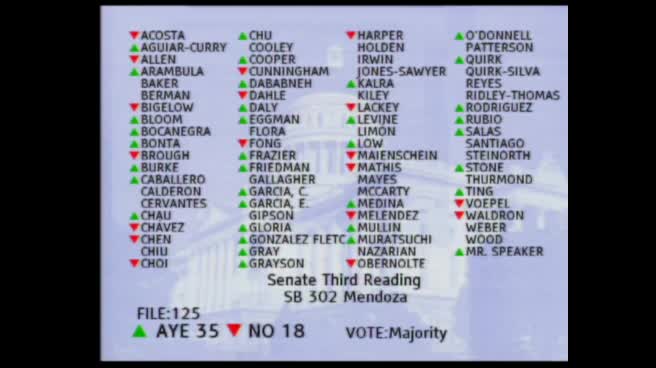 3MIN
Assembly Floor
 1MIN
Assembly Floor
 12MIN
Assembly Standing Committee on Local Government
 8MIN
Assembly Standing Committee on Health
 3MIN
Senate Floor
 48MIN
Senate Standing Committee on Appropriations
Bill Author
Bill Co-Author(s):