SB 432: Emergency medical services.
- Session Year: 2017-2018
- House: Senate
- Latest Version Date: 2017-10-02
Existing law, the Emergency Medical Services System and the Prehospital Emergency Medical Care Personnel Act, establishes the Emergency Medical Services Authority. The authority is responsible for the coordination and integration of all statewide activities concerning emergency medical services. The act requires all health facilities to notify prehospital emergency medical care personnel who have provided emergency medical or rescue services and have been exposed to a person afflicted with a reportable disease or condition that they have been exposed and should contact the county health officer under specified conditions. The act also requires a county health officer to immediately notify prehospital emergency medical care personnel that they have been exposed to a reportable disease or condition that the county health officer determines can be transmitted through oral contact or bodily secretions.
This bill would require the health facility infection control officer to give that notice immediately to a designated officer, as defined, upon determining, among other things, that the person to whom the prehospital emergency medical care personnel provided emergency medical or rescue services is diagnosed as being afflicted with a reportable communicable disease or condition, as specified, and to give notice to the county health officer with the name and telephone number of the prehospital emergency medical care personnel. The bill would then require the designated officer to notify the prehospital emergency medical care personnel of the exposure immediately or as otherwise specified. The bill would alternatively require the health facility infection control officer, if the names and telephone numbers of the prehospital emergency care personnel have not been provided to the facility, as specified, to notify the designated officer, as defined, of the employer of the prehospital emergency care personnel and the county health officer, and would require the designated officer to notify the prehospital emergency care personnel, if specified criteria are met. The bill would require a county health officer to notify prehospital emergency care personnel immediately if, in addition to existing requirements, the disease or condition has an urgency reporting requirement or the exposure may have included direct contact, as specified, with an infected persons blood.
Under certain circumstances, the bill would require specified information about the acts provisions to be posted on the Internet Web sites of those entities and provided during training to personnel, as specified. The bill would require a health facility infection control officer, as defined, and designated officer, as defined, to be available 24 hours per day, as specified.
Existing law, the Emergency Medical Services System and the Prehospital Emergency Medical Care Personnel Act, establishes the Emergency Medical Services Authority. The authority is responsible for the coordination and integration of all statewide activities concerning emergency medical services. The act requires all health facilities to notify prehospital emergency medical care personnel who have provided emergency medical or rescue services and have been exposed to a person afflicted with a reportable disease or condition that they have been exposed and should contact the county health officer under specified conditions. The act also requires a county health officer to immediately notify prehospital emergency medical care personnel that they have been exposed to a reportable disease or condition that the county health officer determines can be transmitted through oral contact or bodily secretions.
This bill would require the health facility infection control officer to give that notice immediately to a designated officer, as defined, upon determining, among other things, that the person to whom the prehospital emergency medical care personnel provided emergency medical or rescue services is diagnosed as being afflicted with a reportable communicable disease or condition, as specified, and to give notice to the county health officer with the name and telephone number of the prehospital emergency medical care personnel. The bill would then require the designated officer to notify the prehospital emergency medical care personnel of the exposure. exposure immediately or as otherwise specified. The bill would alternatively require the health facility, facility infection control officer, if they do not notify the prehospital emergency care personnel under circumstances in which the names and telephone numbers of the prehospital emergency care personnel have not been provided to the facility, as specified, to notify the designated officer, as defined, of the employer of the prehospital emergency care personnel and the county health officer, and would require the designated officer to notify the prehospital emergency care personnel, if a determination is made that notification is necessary. Under specified criteria are met. The bill would require a county health officer to notify prehospital emergency care personnel immediately if, in addition to existing requirements, the disease or condition has an urgency reporting requirement or the exposure may have included direct contact, as specified, with an infected persons blood.
Under certain circumstances, the bill would require specified information about these the acts provisions to be posted on the Internet Web sites of those entities and provided during training to personnel, as specified. The bill would require a health facility infection control officer, as defined, and designated officer, as defined, to be available 24 hours per day, as specified.
Existing law, the Emergency Medical Services System and the Prehospital Emergency Medical Care Personnel Act, establishes the Emergency Medical Services Authority. The authority is responsible for the coordination and integration of all statewide activities concerning emergency medical services. The act requires all health facilities to notify prehospital emergency medical care personnel who have provided emergency medical or rescue services and have been exposed to a person afflicted with a reportable disease or condition that they have been exposed and should contact the county health officer under specified conditions.
This bill would require the health facility to give that notice immediately to a designated officer, as defined, upon determining determining, among other things, that the person to whom the prehospital emergency medical care personnel provided emergency medical or rescue services is diagnosed as being afflicted with a reportable disease or condition, as specified, and to give notice to the county health officer with the name and telephone number of the prehospital emergency medical care personnel. The bill would then require the designated officer to notify the prehospital emergency medical care personnel of the exposure. The bill would alternatively require the health facility, if they do not notify the prehospital emergency care personnel under circumstances in which the names and telephone numbers of the personnel have not been provided to the facility, as specified, to notify the designated officer, as defined, of the employer of the prehospital emergency care personnel and the county health officer, and would require the designated officer to notify the prehospital emergency care personnel, if a determination is made that notification is necessary. Under certain circumstances, the bill would require specified information about these provisions to be posted on the Internet of those entities and provided during training to personnel, as specified.
Existing law, the Emergency Medical Services System and the Prehospital Emergency Medical Care Personnel Act, establishes the Emergency Medical Services Authority. The authority is responsible for the coordination and integration of all statewide activities concerning emergency medical services. The act requires all health facilities to notify prehospital emergency medical care personnel who have provided emergency medical or rescue services and have been exposed to a person afflicted with a reportable disease or condition that they have been exposed and should contact the county health officer under specified conditions.
This bill would require the health facility to give that notice immediately to a designated officer, as defined, upon determining that the person to whom the prehospital emergency medical care personnel provided emergency medical or rescue services is diagnosed as being afflicted with a reportable disease or condition, as specified, and to give notice to the county health officer with the name and telephone number of the prehospital emergency medical care personnel. The bill would then require the designated officer to notify the prehospital emergency medical care personnel of the exposure. The bill would alternatively require the health facility, if they do not notify the prehospital emergency care personnel under circumstances in which the names and telephone numbers of the personnel have not been provided to the facility, as specified, to notify the designated officer, as defined, of the employer of the prehospital emergency care personnel and the county health officer, and would require the designated officer to notify the prehospital emergency care personnel, if a determination is made that notification is necessary. Under certain circumstances, the bill would require specified information about these provisions to be posted on the Internet of those entities and provided during training to personnel, as specified.
Existing law, the Emergency Medical Services System and the Prehospital Emergency Medical Care Personnel Act, establishes the Emergency Medical Services Authority. The authority is responsible for the coordination and integration of all statewide activities concerning emergency medical services. The act requires all health facilities to notify prehospital emergency medical care personnel who have provided emergency medical or rescue services and have been exposed to a person afflicted with a disease or condition that they have been exposed and should contact the county health officer under specified conditions.
This bill would require the health facility to give that notice immediately upon determining that the person to whom the prehospital emergency medical care personnel provided emergency medical or rescue services is diagnosed as being afflicted with a disease or condition, as specified, and to give notice to the county health officer. officer with the name and telephone number of the prehospital emergency medical care personnel. The bill would alternatively require the health facility, if they do not notify the prehospital emergency care personnel under these conditions, circumstances in which the names and telephone numbers of the personnel have not been provided to the facility, as specified, to notify the designated officer, as defined, of the employer of the prehospital emergency care personnel and the county health officer, and would require the designated officer to notify the prehospital emergency care personnel. personnel, if a determination is made that notification is necessary.
Existing law, the Emergency Medical Services System and the Prehospital Emergency Medical Care Personnel Act, establishes the Emergency Medical Services Authority. The authority is responsible for the coordination and integration of all statewide activities concerning emergency medical services. The act requires all health facilities to notify prehospital emergency care personnel who have provided emergency medical or rescue services and have been exposed to a person afflicted with a disease or condition that they have been exposed and should contact the county health officer under specified conditions.
This bill would require that notice to be given immediately.This bill would require the health facility to give that notice immediately upon determining that the person to whom the prehospital emergency care personnel provided emergency medical or rescue services is diagnosed as being afflicted with a disease or condition, as specified, and to give notice to the county health officer. The bill would alternatively require the health facility, if they do not notify the prehospital emergency care personnel under these conditions, to notify the designated officer, as defined, of the employer of the prehospital emergency care personnel and the county health officer, and would require the designated officer to notify the prehospital emergency care personnel.
Existing law, the Emergency Medical Services System and the Prehospital Emergency Medical Care Personnel Act, establishes the Emergency Medical Services Authority. The authority is responsible for the coordination and integration of all statewide activities concerning emergency medical services. The act requires all health facilities to notify prehospital emergency care personnel who have provided emergency medical or rescue services and have been exposed to a person afflicted with a disease or condition that they have been exposed and should contact the county health officer under specified conditions.
This bill would require that notice to be given immediately.
(a)As used in this section:
(1)Prehospital emergency medical care person or personnel means any of the following: an authorized registered nurse or mobile intensive care nurse, emergency medical technician-I, emergency medical technician-II, emergency medical technician-paramedic, lifeguard, firefighter, or peace officer, as defined or described by Sections 1797.56, 1797.80, 1797.82, 1797.84, 1797.182, and 1797.183, respectively, or a physician and surgeon who provides prehospital emergency medical care or rescue services.
(2)Reportable communicable disease or condition or a communicable disease or condition listed as reportable means those diseases prescribed by Subchapter 1 (commencing with Section 2500) of Chapter 4 of Title 17 of the California Code of Regulations, as may be amended from time to time.
(3)Exposed means at risk for contracting the disease, as defined by regulations of the state department.
(4)Health facility means a health facility, as defined in Section 1250, including a publicly operated facility.
(5)Health facility infection control officer means the official or officer who has been designated by the health facility to communicate with a designated officer, or his or her designee.
(6)Designated officer means the official or officer of an employer of a prehospital emergency medical care person or personnel who has been designated by the states public health officer or the employer.
(7)Urgency reporting requirement means a disease required to be reported immediately by telephone or reported by telephone within one working day pursuant to subdivisions (h) and (i) of Section 2500 of Title 17 of the California Code of Regulations.
(b)In addition to the communicable disease testing and notification procedures applicable under Chapter 3.5 (commencing with Section 120260) of Part 1 of Division 105, all prehospital emergency medical care personnel, whether volunteers, partly paid, or fully paid, who have provided emergency medical or rescue services and have been exposed to a person afflicted with a communicable disease or condition listed as reportable, which can, as determined by the county health officer, be transmitted through physical or oral contact or secretions of the body, including blood, shall be notified that they have been exposed to the disease or condition in accordance with the following:
(1)If the prehospital emergency medical care person, who has rendered emergency medical or rescue services and believes that he or she may have been exposed to a person afflicted with a reportable communicable disease or condition in a manner that could result in transmission of a reportable communicable disease or condition, and provides the health facility infection control officer with his or her name and telephone number at the time the patient is transferred from that prehospital emergency medical care person to the admitting health facility; or the party transporting the person afflicted with the reportable communicable disease or condition provides that health facility with the name and telephone number of the prehospital emergency medical care person who provided the emergency medical or rescue services and believes he or she may have been exposed to a person afflicted with a reportable communicable disease or condition in a manner that could result in transmission of a communicable disease or condition, the health facility infection control officer, upon determining that the person to whom the prehospital emergency medical care person provided the emergency medical or rescue services is diagnosed as being afflicted with a reportable communicable disease or condition, and that the reportable communicable disease or condition may have been transmitted during the provision of emergency medical or rescue services, shall immediately notify the designated officer of the prehospital emergency medical care person if the reportable communicable disease or condition has an urgency reporting requirement on the list of reportable diseases or conditions, or if the conditions of the exposure may have included direct contact between the unprotected skin, eyes, or mucous membranes of the prehospital emergency medical care person and the blood of the person afflicted with the reportable communicable disease or condition. Otherwise, the health facility infection control officer shall notify the designated officer consistent with Section 2500 of Title 17 of the California Code of Regulations. The health facility infection control officer shall also report the name and telephone number of the prehospital emergency medical care person to the county health officer. The designated officer shall immediately notify the prehospital emergency medical care person if the reportable communicable disease or condition has an urgency reporting requirement on the list of reportable diseases or conditions, or if the conditions of the exposure may have included direct contact between the unprotected skin, eyes, or mucous membranes of the prehospital emergency medical care person and the blood of the person afflicted with the reportable communicable disease or condition. Otherwise, the designated officer shall notify the prehospital emergency medical care person consistent with Section 2500 of Title 17 of the California Code of Regulations.
(2)If the prehospital emergency medical care person who has rendered emergency medical or rescue services and has been exposed to a person afflicted with a reportable communicable disease or condition, but has not provided the health facility infection control officer with his or her name and telephone number pursuant to paragraph (1), the health facility infection control officer, upon determining that the person to whom the prehospital emergency medical care person provided the emergency medical or rescue services is diagnosed as being afflicted with a reportable communicable disease or condition that may have been transmitted during provision of emergency medical or rescue services, shall immediately notify the designated officer of the employer of the prehospital emergency medical care person and the county health officer if the reportable communicable disease or condition has an urgency reporting requirement on the list of reportable diseases or conditions, or if the conditions of the exposure may have included direct contact between the unprotected skin, eyes, or mucous membranes of the prehospital emergency medical care person and the blood of the person afflicted with the reportable communicable disease or condition. Otherwise, the health facility infection control officer shall notify the prehospital emergency medical care person consistent with Section 2500 of Title 17 of the California Code of Regulations. The designated officer shall immediately notify the prehospital emergency medical care person if the reportable communicable disease or condition has an urgency reporting requirement on the list of reportable diseases or conditions, or if the conditions of the exposure may have included direct contact between the unprotected skin, eyes, or mucous membranes of the prehospital emergency medical care person and the blood of the person afflicted with the reportable communicable disease or condition. Otherwise, the designated officer shall notify the prehospital emergency medical care person consistent with Section 2500 of Title 17 of the California Code of Regulations.
(c)The county health officer shall immediately notify the prehospital emergency medical care person who has provided emergency medical or rescue services and has been exposed to a person afflicted with a communicable disease or condition listed as reportable, which can, as determined by the county health officer, be transmitted through oral contact or secretions of the body, including blood, if the reportable communicable disease or condition has an urgency reporting requirement on the list of reportable diseases or conditions, or if the conditions of the exposure may have included direct contact between the unprotected skin, eyes, or mucous membranes of the prehospital emergency medical care person and the blood of the person afflicted with the reportable communicable disease or condition, upon receiving the report from a health facility pursuant to paragraph (1) of subdivision (b). Otherwise, the county health officer shall notify the prehospital emergency medical care person consistent with Section 2500 of Title 17 of the California Code of Regulations. The county health officer shall not disclose the name of the patient or other identifying characteristics to the prehospital emergency medical care person.
(d)An employer of a prehospital emergency medical care person or personnel that maintains an Internet Web site shall post the title and telephone number of the designated officer in a conspicuous location on its Internet Web site accessible from the home page. A health facility that maintains an Internet Web site shall post the title and telephone number of the health facility infection control officer in a conspicuous location on its Internet Web site accessible from the home page.
(e)(1)The health facility infection control officer, or his or her designee, shall be available either onsite or on call 24 hours per day.
(2)The designated officer, or his or her designee, shall be available either onsite or on call 24 hours per day.
(f)An employer of a health facility infection control officer and an employer of a prehospital emergency medical care person or personnel shall inform those employees of this law as part of the Cal-OSHA Injury and Illness Prevention Program training required by paragraph (7) of subdivision (a) of Section 3203 of Title 8 of the California Code of Regulations.
(g)Nothing in this section shall be construed to authorize the further disclosure of confidential medical information by the health facility, the designated officer, or any prehospital emergency medical care personnel described in this section except as otherwise authorized by law.
(h)In the event of the demise of the person afflicted with the reportable communicable disease or condition, the health facility or county health officer shall notify the funeral director, charged with removing the decedent from the health facility, of the reportable communicable disease or condition prior to the release of the decedent from the health facility to the funeral director.
(i)Notwithstanding Section 1798.206, a violation of this section is not a misdemeanor.
(a)As used in this section:
(1)Prehospital emergency medical care person or personnel means any of the following: an authorized registered nurse or mobile intensive care nurse, emergency medical technician-I, emergency medical technician-II, emergency medical technician-paramedic, lifeguard, firefighter, or peace officer, as defined or described by Sections 1797.56, 1797.80, 1797.82, 1797.84, 1797.182, and 1797.183, respectively, or a physician and surgeon who provides prehospital emergency medical care or rescue services.
(2)Reportable communicable disease or condition or a communicable disease or condition listed as reportable means those diseases prescribed by Subchapter 1 (commencing with Section 2500) of Chapter 4 of Title 17 of the California Administrative Code, Code of Regulations, as may be amended from time to time.
(3)Exposed means at risk for contracting the disease, as defined by regulations of the state department.
(4)Health facility means a health facility, as defined in Section 1250, including a publicly operated facility.
(5)Health facility infection preventionist control officer means the official or officer who has been designated by the health facility to communicate with a designated officers. officer, or his or her designee.
(6)Designated officer means the official or officer of an employer of a prehospital emergency medical care person or personnel who has been designated by the states public health officer or the employer.
(7)Urgency reporting requirement means a disease required to be reported immediately by telephone or reported by telephone within one working day pursuant to subdivisions (h) and (i) of Section 2500 of Title 17 of the California Code of Regulations.
(b)In addition to the communicable disease testing and notification procedures applicable under Chapter 3.5 (commencing with Section 120260) of Part 1 of Division 105, all prehospital emergency medical care personnel, whether volunteers, partly paid, or fully paid, who have provided emergency medical or rescue services and have been exposed to a person afflicted with a communicable disease or condition listed as reportable, which can, as determined by the county health officer, be transmitted through physical or oral contact or secretions of the body, including blood, shall be notified that they have been exposed to the disease and should contact the county health officer or condition in accordance with the following:
(1)If the prehospital emergency medical care person, who has rendered emergency medical or rescue services and believes that he or she may have been exposed to a person afflicted with a reportable communicable disease or condition in a manner that could result in transmission of a reportable communicable disease, disease or condition, and provides the health facilitys facility infection preventionist control officer with his or her name and telephone number at the time the patient is transferred from that prehospital emergency medical care person to the admitting health facility; or the party transporting the person afflicted with the reportable communicable disease or condition provides that health facility with the name and telephone number of the prehospital emergency medical care person who provided the emergency medical or rescue services and believes he or she may have been exposed to a person afflicted with a reportable communicable disease or condition in a manner that could result in transmission of a communicable disease, disease or condition, the health facility, facility infection control officer, upon determining that the person to whom the prehospital emergency medical care person provided the emergency medical or rescue services is diagnosed as being afflicted with a reportable communicable disease or condition, and that the reportable communicable disease or condition may have been transmitted during the provision of emergency medical or rescue services, shall immediately notify the designated officer of the prehospital emergency medical care person and if the reportable communicable disease or condition has an urgency reporting requirement on the list of reportable diseases or conditions, or if the conditions of the exposure may have included direct contact between the unprotected skin, eyes, or mucous membranes of the prehospital emergency medical care person and the blood of the person afflicted with the reportable communicable disease or condition. Otherwise, the health facility infection control officer shall notify the designated officer consistent with Section 2500 of Title 17 of the California Code of Regulations. The health facility infection control officer shall also report the name and telephone number of the prehospital emergency medical care person to the county health officer. The designated officer shall immediately notify the prehospital emergency medical care person. person if the reportable communicable disease or condition has an urgency reporting requirement on the list of reportable diseases or conditions, or if the conditions of the exposure may have included direct contact between the unprotected skin, eyes, or mucous membranes of the prehospital emergency medical care person and the blood of the person afflicted with the reportable communicable disease or condition. Otherwise, the designated officer shall notify the prehospital emergency medical care person consistent with Section 2500 of Title 17 of the California Code of Regulations.
(2)If the prehospital emergency medical care person who has rendered emergency medical or rescue services and has been exposed to a person afflicted with a reportable communicable disease or condition, but has not provided the health facility infection control officer with his or her name and telephone number pursuant to paragraph (1), the health facility, facility infection control officer, upon determining that the person to whom the prehospital emergency medical care person provided the emergency medical or rescue services is diagnosed as being afflicted with a reportable communicable disease or condition that may have been transmitted during provision of emergency medical or rescue services, shall immediately notify the designated officer of the employer of the prehospital emergency medical care person and the county health officer. officer if the reportable communicable disease or condition has an urgency reporting requirement on the list of reportable diseases or conditions, or if the conditions of the exposure may have included direct contact between the unprotected skin, eyes, or mucous membranes of the prehospital emergency medical care person and the blood of the person afflicted with the reportable communicable disease or condition. Otherwise, the health facility infection control officer shall notify the prehospital emergency medical care person consistent with Section 2500 of Title 17 of the California Code of Regulations. The designated officer shall make a determination if a notification to the prehospital emergency medical care person is necessary, and if so, shall immediately notify the prehospital emergency medical care person. person if the reportable communicable disease or condition has an urgency reporting requirement on the list of reportable diseases or conditions, or if the conditions of the exposure may have included direct contact between the unprotected skin, eyes, or mucous membranes of the prehospital emergency medical care person and the blood of the person afflicted with the reportable communicable disease or condition. Otherwise, the designated officer shall notify the prehospital emergency medical care person consistent with Section 2500 of Title 17 of the California Code of Regulations.
(c)The county health officer shall immediately notify the prehospital emergency medical care person who has provided emergency medical or rescue services and has been exposed to a person afflicted with a communicable disease or condition listed as reportable, which can, as determined by the county health officer, be transmitted through oral contact or secretions of the body, including blood, if the reportable communicable disease or condition has an urgency reporting requirement on the list of reportable diseases or conditions, or if the conditions of the exposure may have included direct contact between the unprotected skin, eyes, or mucous membranes of the prehospital emergency medical care person and the blood of the person afflicted with the reportable communicable disease or condition, upon receiving the report from a health facility pursuant to paragraph (1) of subdivision (b). Otherwise, the county health officer shall notify the prehospital emergency medical care person consistent with Section 2500 of Title 17 of the California Code of Regulations. The county health officer shall not disclose the name of the patient or other identifying characteristics to the prehospital emergency medical care person.
(d)An employer of a prehospital emergency medical care person or personnel that maintains an Internet Web site shall post the title and telephone number of the designated officer in a conspicuous location on its Internet Web site accessible from the home page. A health facility that maintains an Internet Web site shall post the title and telephone number of the infection preventionist health facility infection control officer in a conspicuous location on its Internet Web site accessible from the home page.
(e)(1)The health facility infection control officer, or his or her designee, shall be available either onsite or on call 24 hours per day.
(2)The designated officer, or his or her designee, shall be available either onsite or on call 24 hours per day.
(e)(f)An employer of a health facility infection preventionist control officer and an employer of a prehospital emergency medical care person or personnel shall inform those employees of this law as part of the Cal-OSHA Injury and Illness Prevention Program training required by paragraph (7) of subdivision (a) of Section 3203 of Title 8 of the California Code of Regulations.
(f)(g)Nothing in this section shall be construed to authorize the further disclosure of confidential medical information by the health facility, the designated officer, or any prehospital emergency medical care personnel described in this section except as otherwise authorized by law.
(g)(h)In the event of the demise of the person afflicted with the reportable communicable disease or condition, the health facility or county health officer shall notify the funeral director, charged with removing the decedent from the health facility, of the reportable communicable disease or condition prior to the release of the decedent from the health facility to the funeral director.
(h)(i)Notwithstanding Section 1798.206, a violation of this section is not a misdemeanor.
(a)As used in this section:
(1)Prehospital emergency medical care person or personnel means any of the following: an authorized registered nurse or mobile intensive care nurse, emergency medical technician-I, emergency medical technician-II, emergency medical technician-paramedic, lifeguard, firefighter, or peace officer, as defined or described by Sections 1797.56, 1797.80, 1797.82, 1797.84, 1797.182, and 1797.183, respectively, or a physician and surgeon who provides prehospital emergency medical care or rescue services.
(2)Reportable disease or condition or a disease or condition listed as reportable means those diseases prescribed by Subchapter 1 (commencing with Section 2500) of Chapter 4 of Title 17 of the California Administrative Code, as may be amended from time to time.
(3)Exposed means at risk for contracting the disease, as defined by regulations of the state department.
(4)Health facility means a health facility, as defined in Section 1250, including a publicly operated facility.
(5)Health facility infection preventionist means the official or officer who has been designated by the health facility to communicate with designated officers.
(6)Designated officer means the official or officer of an employer of a prehospital emergency medical care person or personnel who has been designated by the states public health officer or the employer.
(b)In addition to the communicable disease testing and notification procedures applicable under Chapter 3.5 (commencing with Section 120260) of Part 1 of Division 105, all prehospital emergency medical care personnel, whether volunteers, partly paid, or fully paid, who have provided emergency medical or rescue services and have been exposed to a person afflicted with a disease or condition listed as reportable, which can, as determined by the county health officer, be transmitted through oral contact or secretions of the body, including blood, shall be notified that they have been exposed to the disease and should contact the county health officer in accordance with the following:
(1)If the prehospital emergency medical care person, who has rendered emergency medical or rescue services and believes that he or she may have been exposed to a person afflicted with a reportable disease or condition in a manner that could result in transmission of a communicable disease, and provides the health facilitys infection preventionist with his or her name and telephone number at the time the patient is transferred from that prehospital emergency medical care person to the admitting health facility; or the party transporting the person afflicted with the reportable disease or condition provides that health facility with the name and telephone number of the prehospital emergency medical care person who provided the emergency medical or rescue services and believes he or she may have been exposed to a person afflicted with a reportable disease or condition in a manner that could result in transmission of a communicable disease, the health facility, upon determining that the person to whom the prehospital emergency medical care person provided the emergency medical or rescue services is diagnosed as being afflicted with a reportable disease or condition condition, and that the reportable disease or condition may have been transmitted during the provision of emergency medical or rescue services, shall immediately notify the designated officer of the prehospital emergency medical care person and report the name and telephone number of the prehospital emergency medical care person to the county health officer. The designated officer shall immediately notify the prehospital emergency medical care person.
(2)If the prehospital emergency medical care person who has rendered emergency medical or rescue services and has been exposed to a person afflicted with a reportable disease or condition, but has not provided the health facility with his or her name and telephone number pursuant to paragraph (1), the health facility, upon determining that the person to whom the prehospital emergency medical care person provided the emergency medical or rescue services is diagnosed as being afflicted with a reportable disease or condition that may have been transmitted during provision of emergency medical or rescue services, shall immediately notify the designated officer of the employer of the prehospital emergency medical care person and the county health officer. The designated officer shall make a determination if a notification to the prehospital emergency medical care person is necessary, and if so, shall immediately notify the prehospital emergency medical care person.
(c)The county health officer shall immediately notify the prehospital emergency medical care person who has provided emergency medical or rescue services and has been exposed to a person afflicted with a disease or condition listed as reportable, which can, as determined by the county health officer, be transmitted through oral contact or secretions of the body, including blood, upon receiving the report from a health facility pursuant to paragraph (1) of subdivision (b). The county health officer shall not disclose the name of the patient or other identifying characteristics to the prehospital emergency medical care person.
(d)An employer of a prehospital emergency medical care person or personnel that maintains an Internet Web site shall post the name title and telephone number of the designated officer in a conspicuous location on its Internet Web site accessible from the home page. A health facility that maintains an Internet Web site shall post the name title and telephone number of the infection preventionist in a conspicuous location on its Internet Web site accessible from the home page.
(e)An employer of a health facility infection preventionist and an employer of a prehospital emergency medical care person or personnel shall inform those employees of this law as part of the Cal-OSHA Injury and Illness Prevention Program training required by paragraph (7) of subdivision (a) of Section 3203 of Title 8 of the California Code of Regulations.
(f)Nothing in this section shall be construed to authorize the further disclosure of confidential medical information by the health facility, the designated officer, or any prehospital emergency medical care personnel described in this section except as otherwise authorized by law.
(g)In the event of the demise of the person afflicted with the reportable disease or condition, the health facility or county health officer shall notify the funeral director, charged with removing the decedent from the health facility, of the reportable disease prior to the release of the decedent from the health facility to the funeral director.
(h)Notwithstanding Section 1798.206, a violation of this section is not a misdemeanor.
(a)As used in this section:
(1)Prehospital emergency medical care person or personnel means any of the following: an authorized registered nurse or mobile intensive care nurse, emergency medical technician-I, emergency medical technician-II, emergency medical technician-paramedic, lifeguard, firefighter, or peace officer, as defined or described by Sections 1797.56, 1797.80, 1797.82, 1797.84, 1797.182, and 1797.183, respectively, or a physician and surgeon who provides prehospital emergency medical care or rescue services.
(2)Reportable disease or condition or a disease or condition listed as reportable means those diseases prescribed by Subchapter 1 (commencing with Section 2500) of Chapter 4 of Title 17 of the California Administrative Code, as may be amended from time to time.
(3)Exposed means at risk for contracting the disease, as defined by regulations of the state department.
(4)Health facility means a health facility, as defined in Section 1250, including a publicly operated facility.
(5)Designated officer has the same meaning as used in the Ryan White Comprehensive AIDS Resources Emergency Act of 1990 (Public Law 101-381).(5)Health facility infection preventionist means the official or officer who has been designated by the health facility to communicate with designated officers.
(6)Designated officer means the official or officer of an employer of a prehospital emergency medical care person or personnel who has been designated by the states public health officer or the employer.
(b)In addition to the communicable disease testing and notification procedures applicable under Chapter 3.5 (commencing with Section 120260) of Part 1 of Division 105, all prehospital emergency medical care personnel, whether volunteers, partly paid, or fully paid, who have provided emergency medical or rescue services and have been exposed to a person afflicted with a disease or condition listed as reportable, which can, as determined by the county health officer, be transmitted through oral contact or secretions of the body, including blood, shall be notified that they have been exposed to the disease and should contact the county health officer in accordance with the following:
(1)If the prehospital emergency medical care person, who has rendered emergency medical or rescue services and believes that he or she may have been exposed to a person afflicted with a reportable disease or condition, condition in a manner that could result in transmission of a communicable disease, and provides the health facility facilitys infection preventionist with his or her name and telephone number at the time the patient is transferred from that prehospital emergency medical care person to the admitting health facility; or the party transporting the person afflicted with the reportable disease or condition provides that health facility with the name and telephone number of the prehospital emergency medical care person who provided the emergency medical or rescue services, services and believes he or she may have been exposed to a person afflicted with a reportable disease or condition in a manner that could result in transmission of a communicable disease, the health facility, upon determining that the person to whom the prehospital emergency medical care person provided the emergency medical or rescue services is diagnosed as being afflicted with a reportable disease or condition shall immediately notify the designated officer of the prehospital emergency medical care person and report the name and telephone number of the prehospital emergency medical care person to the county health officer. The designated officer shall immediately notify the prehospital emergency medical care person.
(2)If the prehospital emergency medical care person who has rendered emergency medical or rescue services and has been exposed to a person afflicted with a reportable disease or condition, but has not provided the health facility with his or her name and telephone number pursuant to paragraph (1), the health facility, upon determining that the person to whom the prehospital emergency medical care person provided the emergency medical or rescue services is diagnosed as being afflicted with a reportable disease or condition, condition that may have been transmitted during provision of emergency medical or rescue services, shall immediately notify the designated officer of the employer of the prehospital emergency medical care person and the county health officer. The designated officer shall make a determination if a notification to the prehospital emergency medical care person is necessary, and if so, shall immediately notify the prehospital emergency medical care person.
(c)The county health officer shall immediately notify the prehospital emergency medical care person who has provided emergency medical or rescue services and has been exposed to a person afflicted with a disease or condition listed as reportable, which can, as determined by the county health officer, be transmitted through oral contact or secretions of the body, including blood, upon receiving the report from a health facility pursuant to paragraph (1) of subdivision (b). The county health officer shall not disclose the name of the patient or other identifying characteristics to the prehospital emergency medical care person.
(d)An employer of a prehospital emergency medical care person or personnel that maintains an Internet Web site shall post the name and telephone number of the designated officer in a conspicuous location on its Internet Web site accessible from the home page. A health facility that maintains an Internet Web site shall post the name and telephone number of the infection preventionist in a conspicuous location on its Internet Web site accessible from the home page.
(e)An employer of a health facility infection preventionist and an employer of a prehospital emergency medical care person or personnel shall inform those employees of this law as part of the Cal-OSHA Injury and Illness Prevention Program training required by paragraph (7) of subdivision (a) of Section 3203 of Title 8 of the California Code of Regulations.
Nothing(f)Nothing in this section shall be construed to authorize the further disclosure of confidential medical information by the health facility, the designated officer, or any prehospital emergency medical care personnel described in this section except as otherwise authorized by law.
In(g)In the event of the demise of the person afflicted with the reportable disease or condition, the health facility or county health officer shall notify the funeral director, charged with removing the decedent from the health facility, of the reportable disease prior to the release of the decedent from the health facility to the funeral director.
Notwithstanding(h)Notwithstanding Section 1798.206, a violation of this section is not a misdemeanor.
(a)As used in this section:
(1)Prehospital emergency medical care person or personnel means any of the following: an authorized registered nurse or mobile intensive care nurse, emergency medical technician-I, emergency medical technician-II, emergency medical technician-paramedic, lifeguard, firefighter, or peace officer, as defined or described by Sections 1797.56, 1797.80, 1797.82, 1797.84, 1797.182, and 1797.183, respectively, or a physician and surgeon who provides prehospital emergency medical care or rescue services.
(2)Reportable disease or condition or a disease or condition listed as reportable means those diseases prescribed by Subchapter 1 (commencing with Section 2500) of Chapter 4 of Title 17 of the California Administrative Code, as may be amended from time to time.
(3)Exposed means at risk for contracting the disease, as defined by regulations of the state department.
(4)Health facility means a health facility, as defined in Section 1250, including a publicly operated facility.
(5)Designated officer has the same meaning as used in the Ryan White Comprehensive AIDS Resources Emergency Act of 1990 (Public Law 101-381).
(b)In addition to the communicable disease testing and notification procedures applicable under Chapter 3.5 (commencing with Section 120260) of Part 1 of Division 105, all prehospital emergency medical care personnel, whether volunteers, partly paid, or fully paid, who have provided emergency medical or rescue services and have been exposed to a person afflicted with a disease or condition listed as reportable, which can, as determined by the county health officer, be transmitted through oral contact or secretions of the body, including blood, shall be notified that they have been exposed to the disease and should contact the county health officer in accordance with the following:
(1)If the prehospital emergency medical care person, who has rendered emergency medical or rescue services and has believes that he or she may have been exposed to a person afflicted with a reportable disease or condition, and provides the health facility with his or her name and telephone number at the time the patient is transferred from that prehospital emergency medical care person to the admitting health facility; or the party transporting the person afflicted with the reportable disease or condition provides that health facility with the name and telephone number of the prehospital emergency medical care person who provided the emergency medical or rescue services, the health facility, upon determining that the person to whom the prehospital emergency medical care person provided the emergency medical or rescue services is diagnosed as being afflicted with a reportable disease or condition shall immediately notify the prehospital emergency medical care person and report the name and telephone number of the prehospital emergency medical care person to the county health officer.
(2)If the prehospital emergency medical care person who has rendered emergency medical or rescue services and has been exposed to a person afflicted with a reportable disease or condition does not provide condition, but has not provided the health facility with his or her name and telephone number pursuant to paragraph (1), the health facility, upon determining that the person to whom the prehospital emergency medical care person provided the emergency medical or rescue services is diagnosed as being afflicted with a reportable disease or condition, shall immediately notify the designated officer of the employer of the prehospital emergency medical care person and the county health officer. The designated officer shall make a determination if a notification to the prehospital emergency medical care person is necessary, and if so, shall immediately notify the prehospital emergency medical care person.
(c)The county health officer shall immediately notify the prehospital emergency medical care person who has provided emergency medical or rescue services and has been exposed to a person afflicted with a disease or condition listed as reportable, which can, as determined by the county health officer, be transmitted through oral contact or secretions of the body, including blood, upon receiving the report from a health facility pursuant to paragraph (1) of subdivision (b). The county health officer shall not disclose the name of the patient or other identifying characteristics to the prehospital emergency medical care person.
Nothing in this section shall be construed to authorize the further disclosure of confidential medical information by the health facility, the designated officer, or any prehospital emergency medical care personnel described in this section except as otherwise authorized by law.
In the event of the demise of the person afflicted with the reportable disease or condition, the health facility or county health officer shall notify the funeral director, charged with removing the decedent from the health facility, of the reportable disease prior to the release of the decedent from the health facility to the funeral director.
Notwithstanding Section 1798.206, violation of this section is not a misdemeanor.
(a)As used in this section:
(1)Prehospital emergency medical care person or personnel means any of the following: an authorized registered nurse or mobile intensive care nurse, emergency medical technician-I, emergency medical technician-II, emergency medical technician-paramedic, lifeguard, firefighter, or peace officer, as defined or described by Sections 1797.56, 1797.80, 1797.82, 1797.84, 1797.182, and 1797.183, respectively, or a physician and surgeon who provides prehospital emergency medical care or rescue services.
(2)Reportable disease or condition or a disease or condition listed as reportable means those diseases prescribed by Subchapter 1 (commencing with Section 2500) of Chapter 4 of Title 17 of the California Administrative Code, as may be amended from time to time.
(3)Exposed means at risk for contracting the disease, as defined by regulations of the state department.
(4)Health facility means a health facility, as defined in Section 1250, including a publicly operated facility.
(5)Designated officer has the same meaning as used in the Ryan White Comprehensive AIDS Resources Emergency Act of 1990 (Public Law 101-381).
(b)In addition to the communicable disease testing and notification procedures applicable under Chapter 3.5 (commencing with Section 120260) of Part 1 of Division 105, all prehospital emergency medical care personnel, whether volunteers, partly paid, or fully paid, who have provided emergency medical or rescue services and have been exposed to a person afflicted with a disease or condition listed as reportable, which can, as determined by the county health officer, be transmitted through oral contact or secretions of the body, including blood, shall be notified immediately that they have been exposed to the disease and should contact the county health officer if all the following are satisfied: in accordance with the following:
(1)The If the prehospital emergency medical care person, who has rendered emergency medical or rescue services and has been exposed to a person afflicted with a reportable disease or condition, provides the health facility with his or her name and telephone number at the time the patient is transferred from that prehospital emergency medical care person to the admitting health facility; or the party transporting the person afflicted with the reportable disease or condition provides that health facility with the name and telephone number of the prehospital emergency medical care person who provided the emergency medical or rescue services. services, the health facility, upon determining that the person to whom the prehospital emergency medical care person provided the emergency medical or rescue services is diagnosed as being afflicted with a reportable disease or condition shall immediately notify the prehospital emergency medical care person and report the name and telephone number of the prehospital emergency medical care person to the county health officer.
(2)The health facility reports the name and telephone number of the prehospital emergency medical care person to the county health officer If the prehospital emergency medical care person who has rendered emergency medical or rescue services and has been exposed to a person afflicted with a reportable disease or condition does not provide the health facility with his or her name and telephone number pursuant to paragraph (1), the health facility, upon determining that the person to whom the prehospital emergency medical care person provided the emergency medical or rescue services is diagnosed as being afflicted with a reportable disease or condition. condition, shall immediately notify the designated officer of the employer of the prehospital emergency medical care person and the county health officer. The designated officer shall immediately notify the prehospital emergency medical care person.
(c)The county health officer shall immediately notify the prehospital emergency medical care person who has provided emergency medical or rescue services and has been exposed to a person afflicted with a disease or condition listed as reportable, which can, as determined by the county health officer, be transmitted through oral contact or secretions of the body, including blood, upon receiving the report from a health facility pursuant to paragraph (1) of subdivision (b). The county health officer shall not disclose the name of the patient or other identifying characteristics to the prehospital emergency medical care person.
Nothing in this section shall be construed to authorize the further disclosure of confidential medical information by the health facility facility, the designated officer, or any prehospital emergency medical care personnel described in this section except as otherwise authorized by law.
In the event of the demise of the person afflicted with the reportable disease or condition, the health facility or county health officer shall notify the funeral director, charged with removing the decedent from the health facility, of the reportable disease prior to the release of the decedent from the health facility to the funeral director.
Notwithstanding Section 1798.206, violation of this section is not a misdemeanor.
(a)As used in this section:
(1)Prehospital emergency medical care person or personnel means any of the following: an authorized registered nurse or mobile intensive care nurse, emergency medical technician-I, emergency medical technician-II, emergency medical technician-paramedic, lifeguard, firefighter, or peace officer, as defined or described by Sections 1797.56, 1797.80, 1797.82, 1797.84, 1797.182, and 1797.183, respectively, or a physician and surgeon who provides prehospital emergency medical care or rescue services.
(2)Reportable disease or condition or a disease or condition listed as reportable means those diseases prescribed by Subchapter 1 (commencing with Section 2500) of Chapter 4 of Title 17 of the California Administrative Code, as may be amended from time to time.
(3)Exposed means at risk for contracting the disease, as defined by regulations of the state department.
(4)Health facility means a health facility, as defined in Section 1250, including a publicly operated facility.
(b)In addition to the communicable disease testing and notification procedures applicable under Chapter 3.5 (commencing with Section 120260) of Part 1 of Division 105, all prehospital emergency medical care personnel, whether volunteers, partly paid, or fully paid, who have provided emergency medical or rescue services and have been exposed to a person afflicted with a disease or condition listed as reportable, which can, as determined by the county health officer, be transmitted through oral contact or secretions of the body, including blood, shall be notified immediately that they have been exposed to the disease and should contact the county health officer if all the following are satisfied:
(1)The prehospital emergency medical care person, who has rendered emergency medical or rescue services and has been exposed to a person afflicted with a reportable disease or condition, provides the health facility with his or her name and telephone number at the time the patient is transferred from that prehospital emergency medical care person to the admitting health facility; or the party transporting the person afflicted with the reportable disease or condition provides that health facility with the name and telephone number of the prehospital emergency medical care person who provided the emergency medical or rescue services.
(2)The health facility reports the name and telephone number of the prehospital emergency medical care person to the county health officer upon determining that the person to whom the prehospital emergency medical care person provided the emergency medical or rescue services is diagnosed as being afflicted with a reportable disease or condition.
(c)The county health officer shall immediately notify the prehospital emergency medical care person who has provided emergency medical or rescue services and has been exposed to a person afflicted with a disease or condition listed as reportable, which can, as determined by the county health officer, be transmitted through oral contact or secretions of the body, including blood, upon receiving the report from a health facility pursuant to paragraph (1) of subdivision (b). The county health officer shall not disclose the name of the patient or other identifying characteristics to the prehospital emergency medical care person.
Nothing in this section shall be construed to authorize the further disclosure of confidential medical information by the health facility or any prehospital emergency medical care personnel described in this section except as otherwise authorized by law.
In the event of the demise of the person afflicted with the reportable disease or condition, the health facility or county health officer shall notify the funeral director, charged with removing the decedent from the health facility, of the reportable disease prior to the release of the decedent from the health facility to the funeral director.
Notwithstanding Section 1798.206, violation of this section is not a misdemeanor.
|
Date
|
Status
|
|---|---|
| Oct 2, 2017 | Chaptered by Secretary of State. Chapter 426, Statutes of 2017. |
| Oct 2, 2017 | Approved by the Governor. |
| Sep 22, 2017 | Enrolled and presented to the Governor at 3 p.m. |
| Sep 15, 2017 | Assembly amendments concurred in. (Ayes 37. Noes 0.) Ordered to engrossing and enrolling. |
| Sep 15, 2017 | In Senate. Concurrence in Assembly amendments pending. |
| Sep 14, 2017 | Read third time. Passed. Ordered to the Senate. |
| Sep 8, 2017 | Read third time and amended. |
| Sep 7, 2017 | Action rescinded whereby the bill was read a third time, passed, and ordered to the Senate. |
| Sep 5, 2017 | In Assembly. Held at Desk. |
| Sep 5, 2017 | Ordered to the Assembly. |
| Aug 24, 2017 | In Senate. Concurrence in Assembly amendments pending. |
| Aug 24, 2017 | Read third time. Passed. Ordered to the Senate. |
| Jul 20, 2017 | Read second time. Ordered to consent calendar. |
| Jul 19, 2017 | From committee: Do pass. Ordered to consent calendar. (Ayes 16. Noes 0.) (July 19). |
| Jul 12, 2017 | From committee with author's amendments. Read second time and amended. Re-referred to Com. on APPR. |
| Jul 11, 2017 | From committee with author's amendments. Read second time and amended. Re-referred to Com. on APPR. |
| Jun 22, 2017 | Read second time and amended. Re-referred to Com. on APPR. |
| Jun 21, 2017 | From committee: Do pass as amended and re-refer to Com. on APPR. (Ayes 13. Noes 0.) (June 20). |
| May 26, 2017 | Referred to Com. on HEALTH. |
| May 16, 2017 | In Assembly. Read first time. Held at Desk. |
| May 15, 2017 | Read third time. Passed. (Ayes 37. Noes 1. Page 1067.) Ordered to the Assembly. |
| May 9, 2017 | Read second time. Ordered to third reading. |
| May 8, 2017 | From committee: Be ordered to second reading pursuant to Senate Rule 28.8. |
| May 4, 2017 | Set for hearing May 15. |
| May 3, 2017 | May 8 hearing postponed by committee. |
| May 1, 2017 | Set for hearing May 8. |
| Apr 24, 2017 | Read second time and amended. Re-referred to Com. on APPR. |
| Apr 20, 2017 | From committee: Do pass as amended and re-refer to Com. on APPR. (Ayes 9. Noes 0. Page 808.) (April 19). |
| Apr 4, 2017 | Set for hearing April 19. |
| Mar 20, 2017 | From committee with author's amendments. Read second time and amended. Re-referred to Com. on HEALTH. |
| Feb 23, 2017 | Referred to Com. on HEALTH. |
| Feb 16, 2017 | From printer. May be acted upon on or after March 18. |
| Feb 15, 2017 | Introduced. Read first time. To Com. on RLS. for assignment. To print. |
|
Date
|
Description
|
Location
|
Votes
|
|
|---|---|---|---|---|
| Sep 15, 2017 | Unfinished Business SB432 Pan et al. Concurrence | Senate Floor |
Passed |
|
| Sep 14, 2017 | SB 432 Pan Senate Third Reading By RODRIGUEZ | Assembly Floor |
Passed |
|
| Aug 24, 2017 | SB 432 Pan Consent Calendar Second Day Regular Session | Assembly Floor |
Passed |
|
| Jul 19, 2017 | Do pass. To Consent Calendar. | Assembly Standing Committee on Appropriations |
Passed |
|
| Jun 20, 2017 | Do pass as amended and be re-referred to the Committee on [Appropriations] | Assembly Standing Committee on Health |
Passed |
|
| May 15, 2017 | Senate 3rd Reading SB432 Pan | Senate Floor |
Passed |
|
| Apr 19, 2017 | Do pass as amended, but first amend, and re-refer to the Committee on [Appropriations] | Senate Standing Committee on Health |
Passed |
This list shows positions taken on this bill by organizations on the date displayed, which is linked to the original source.
Positions by individuals are not included.
|
Organization
|
Position
|
Date
|
|---|---|---|
| Aaron Reed and Associates | * Support | Jun 20, 2017 |
| Cal Fire Local 2881 | ** Support | Sep 15, 2017 |
| CalFire | * Support | Apr 19, 2017 |
| California Fire Chiefs Association | ** Support | Sep 15, 2017 |
| california fire districts association of california | ** Support | Jun 15, 2017 |
| California Hospital Association | ** Support | Sep 15, 2017 |
| California Labor Federation | ** Support | Sep 15, 2017 |
| California Professional Firefighters | ** Support | Sep 15, 2017 |
| Fire Districts Association Of California | ** Support | Sep 15, 2017 |
| Los Angeles County Professional Peace Officers Association | ** Support | Sep 15, 2017 |
Office of Senate Floor Analyses (916) 651-1520 Fax: (916) 327-4478 | SB |
UNFINISHED BUSINESS
Bill No: SB 432
Amended: 9/8/17
SENATE HEALTH COMMITTEE: 9-0, 4/19/17
AYES: Hernandez, Nguyen, Atkins, Leyva, Mitchell, Monning, Newman, Nielsen, Roth
SENATE APPROPRIATIONS COMMITTEE: Senate Rule 28.8
SENATE FLOOR: 37-1, 5/15/17
AYES: Allen, Atkins, Bates, Beall, Berryhill, Bradford, Cannella, De León, Dodd, Fuller, Gaines, Galgiani, Glazer, Hernandez, Hertzberg, Hill, Hueso, Jackson, Lara, Leyva, McGuire, Mendoza, Mitchell, Monning, Morrell, Newman, Nguyen, Nielsen, Pan, Portantino, Roth, Skinner, Stern, Stone, Wieckowski, Wiener, Wilk
NOES: Anderson
NO VOTE RECORDED: Moorlach, Vidak
ASSEMBLY FLOOR: 79-0, 9/14/17 - See last page for vote
SOURCE: California Professional Firefighters
DIGEST:
This bill revises the required communicable disease exposure notification procedure for emergency medical services (EMS) providers by requiring a health facility to immediately notify an EMS provider’s designated officer upon determining that a person to whom emergency medical services were provided is diagnosed with a reportable disease, in addition to the existing requirement that provides notification to the county health officer who in turn notifies the EMS provider.
Assembly Amendments
revise the bill to make clear that the health facility, by way of a health facility infection control officer, is required to notified the designated officer of the EMS provider rather than the EMS provider directly; limit the requirement to notify the EMS person immediately to only exposures to reportable diseases that have an urgency reporting requirement, as defined, or when there has been direct contact with the blood of the infected person; require EMS employers to post the title and telephone number of the designated officer on their Web site, and health facilities to post the title and telephone number of their infection preventionist on their Web site; require the provisions of this bill to be incorporated into the Cal-OSHA Injury and Illness Prevention Program training so that employees of both EMS providers and health facilities are informed of the requirements of this bill; and, made other clarifying changes.
Existing law:
- Requires the Department of Public Health (DPH) to establish a list of reportable diseases and conditions, and to specify the timeliness requirements related to the reporting of each disease and condition, and permits the list to be updated at any time, and exempts modification of the list from the administrative procedures requirements.
- Requires all prehospital EMS personnel, as defined, who have provided emergency services and have been exposed to a person with a reportable communicable disease, to be notified that they have been exposed to the disease and should contact the county health officer if both of the following are satisfied:
- The EMS person provides the health facility with his or her name and telephone number at the time the patient is transferred to the admitting health facility; and
- The health facility reports the name and telephone number of the EMS person to the county health officer, upon determining that the person who was provided EMS is diagnosed with a reportable disease.
- Requires the county health officer to immediately notify the EMS person who has provided EMS and has been exposed to a person with a reportable disease, upon receiving the report from the health facility described in b) above.
This bill:
- Requires a health facility infection control officer, if an EMS person who has rendered EMS believes that he or she may have been exposed to a person with a reportable disease in a manner that could result in transmission of a communicable disease, and has provided the health facility’s infection control officer with his or her name and telephone number at the time the patient is transferred to the admitting health facility, upon determining that a person to whom EMS were provided is diagnosed with a reportable disease, to immediately notify the designated officer of the EMS person if the disease has an urgency reporting requirement, as defined, or if the conditions of exposure included direct contact with the blood of the afflicted person. Otherwise, requires the infection control officer to notify the designated officer. Additionally requires the infection control officer to report the name and telephone number of the EMS person to the county health officer.
- Requires a health facility infection control officer, if the EMS person does not provide his or her name and telephone number, upon determining that a person to whom EMS were provided is diagnosed with a reportable disease that may have been transmitted during the provision of EMS, to immediately notify the designated officer of the employer of the EMS person and the county health officer if the reportable condition has an urgency reporting requirement or if the conditions of exposure included direct contact with the blood of the afflicted person, otherwise, requires notification consistent with existing regulations.
- Requires the designated officer, when notified by an infection control officer about a possible exposure to an EMS person, to immediately notify the EMS person if the reportable disease has an urgency reporting requirement, or if the conditions of exposure included direct contact with the blood of the afflicted person. Otherwise, requires the designated officer to notify the EMS person consistent with existing regulations, as specified.
- Requires an employer of an EMS person that maintains an Internet Web site to post the title and telephone number of the designated officer in a conspicuous location on its Internet Web site, accessible from the home page, and requires a health facility that maintains an Internet Web site to post the title and telephone number of the injection control officer in a conspicuous location on its Internet Web site accessible from the home page.
- Requires a health facility infection control officer, or his or her designee, and the designated officer of an EMS employer, or his or her designee, to be available either onsite or on call 24 hours per day.
- Requires an employer of a health facility infection preventionist and an employer of an EMS person to inform those employees of the provisions of this bill as part of the Cal-OSHA Injury and Illness Prevention Program training required under specified provisions of existing law.
- Defines “designated officer” of the employer of the EMS person as the official or officer of an employer of a prehospital EMS person who has been designated by the state’s public health officer or the employer.
- Defines “health facility infection control officer” as the official or officer who has been designated by the health facility to communicate with a designated officer.
- Defines “urgency reporting requirement” as a disease required to be reported immediately by telephone or reported by telephone within one working day pursuant to specified regulations.
Comments
- Author’s statement. According to the author, this bill seeks to streamline the existing notification process to EMS personnel when they are exposed to a communicable disease in the process of rendering care to the public. It is imperative that firefighters and other EMS personnel are notified in a timely manner that, while performing the duties of the job and rendering emergency medical aid to a patient, they have been exposed to a reportable disease or condition.
- Current exposure notification requirements for emergency personnel. There are several overlapping requirements related to exposure notification for EMS personnel:
- State law on exposure notification during prehospital emergency care. As described in existing law, this bill is amending a section of law that requires EMS personnel to be notified when they have been exposed to a person with a disease or condition listed as reportable, which can be transmitted through oral contact or secretions of the body. However, this notification, which also states that they should contact the county health officer, is triggered only if (a) they have provided the health facility with their name and telephone number at the time the patient is transferred to the health facility, and (b) the health facility reports that name and telephone number to the county health officer upon determining that the person to whom the EMS person provided services is diagnosed with a reportable disease. Once the county health officer receives the report from the health facility, the county health officer is required to immediately notify the EMS person.
- Communicable Diseases Exposure Notification Act. In addition to the notification for EMS personnel described above, state law also provides a notification mechanism that permits individual health care providers, and employees or contracted agents of health care facilities, and first responders, who have experienced a significant exposure to the blood or other potentially infectious material of a patient, to learn of the communicable disease infection status of the patient. Under these provisions of law, if a health care provider, or any other person who is exposed within the scope of his or her employment to the blood or other infectious material of a source patient, the exposed individual may request an evaluation of the exposure by a physician to determine if it is a significant exposure, as defined. If it is determined that a significant exposure occurred, the certifying physician is required to request information on whether the source patient has tested positive for a communicable disease. If no test has been done, the law establishes a process to attempt to obtain voluntary informed consent to test for communicable diseases. If voluntary informed consent is unable to be obtained, there is a process by which any already available samples of blood or tissue can be tested without consent, and the exposed individual is informed of the status of the source patient with regard to a communicable disease.
- Federal Ryan White Act. The Ryan White Act established a federal funding program to assist people living with HIV/AIDS. However, part of the law required notification of emergency response employees who may have been exposed by victims of emergencies to potentially life-threatening infectious diseases. Under the Ryan White Act, the public health officer of each state is required to designate a “designated officer” of EMS employees for each employer of EMS personnel. There are two notification processes under the Ryan White Act: one specifically for airborne infectious diseases, and another for whenever an EMS employee believes that he or she may have been exposed to an infectious disease. For airborne infectious diseases, if a patient is transported to a medical facility and the medical facility makes a determination that the patient has an airborne infectious disease, the medical facility is required to notify the designated officer of the employees who transported the patient. This notification is required to be made as soon as possible, but not later than 48 hours after the determination is made. Apart from this airborne infectious disease process, whenever an EMS employee believes he or she may have been exposed to an infectious disease while providing emergency services, the designated officer (upon request from employee) is required to investigate the circumstances involved in the possible exposure and make a determination if an exposure may have occurred, and submit a request to the health facility about whether the patient had an infectious disease. The health facility is required to respond to the request in writing as soon as practicable, but not later than 48 hours after receiving the request.
- County public health officers. Each county is required to appoint a county health officer, who is a graduate of a medical college, and provide county health officers with broad authority to protect the public health in their county. Among the responsibilities of county health officers is preventing the spread of communicable diseases, including by tracking and reporting the number and character of reportable communicable diseases.
- List of reportable diseases. Existing law requires DPH to maintain a list of reportable diseases. The current “reportable communicable diseases” list, last updated in July of 2016, includes 84 diseases, such as botulism, chickenpox, foodborne disease, giardiasis, HIV, measles, rabies, streptococcal infections, syphilis, and many more. Every health care provider, knowing of a case or suspected case of any of the listed diseases or conditions are required to report to the local health officer of the county where the patient resides. Additionally, the administrator of each health facility, clinic, or other setting where there is more than one health care provider is required to establish and be responsible for administrative procedures to assure that reports are made to the local health officer. The diseases are coded as to when a report must be made:
- Immediately by telephone (such as measles, meningococcal infections, and zika);
- Within one working day of identification by telephone (HIV);
- Within one working day of identification by email, fax or telephone (such as chickenpox or tuberculosis); or,
- Within seven calendar days of identification by email, fax or telephone (all diseases that don’t fall into one of the above more timely requirements).
FISCAL EFFECT: Appropriation: Fiscal Com.: Local:
According to the Assembly Committee on Appropriations there is negligible state fiscal effect.
California Professional Firefighters (source)
American Federation of State, County and Municipal Employees, AFL-CIO
California Fire Chiefs Association
CAL FIRE Local 2881
California Labor Federation
California Hospital Association
Fire Districts Association of California
Los Angeles County Professional Peace Officers Association
OPPOSITION: (Verified 9/12/17)
ARGUMENTS IN SUPPORT: This bill is sponsored by the California Professional Firefighters (CPF), which states that both federal and state law establish requirements for reporting exposures of prehospital EMS personnel to certain infectious diseases. However, CPF notes that under current law, the chain of notification can take multiple days and by the time the firefighter, paramedic or emergency medical technician finds out that he or she may have been exposed to a communicable disease they likely have been in contact with other patients, colleagues at the firehouse and their families. CPF states that this bill seeks to allow direct and timely communication between the health facility, the EMS personnel, and the county health officer, which will keep firefighters and other prehospital EMS personnel safe and prevent the communicable disease from spreading further. The Los Angeles County Professional Peace Officers Association (LACPPOA) supports this bill, and cites an example of a police officer in Oakland in 2009 responding to a 911 call, finding an unconscious person, and attempting to clear their airway while calling for emergency medical assistance. The following morning, the hospital where the patient was transported was found to have meningitis, but the county health department was not notified until 78 hours after the meningitis was first suspected. According to LACPPOA, the police officer contracted meningitis and spent five days in the hospital. The California Labor Federation supports this bill to protect worker health and safety by streamlining the existing notification process to EMS personnel when they are exposed to a communicable disease while carrying out their job duties.
ASSEMBLY FLOOR: 79-0, 9/14/17
AYES: Acosta, Aguiar-Curry, Travis Allen, Arambula, Baker, Berman, Bigelow, Bloom, Bocanegra, Bonta, Brough, Burke, Caballero, Calderon, Cervantes, Chau, Chávez, Chen, Chiu, Choi, Chu, Cooley, Cooper, Cunningham, Dababneh, Dahle, Daly, Eggman, Flora, Fong, Frazier, Friedman, Gallagher, Cristina Garcia, Eduardo Garcia, Gipson, Gloria, Gonzalez Fletcher, Gray, Grayson, Harper, Holden, Irwin, Jones-Sawyer, Kalra, Kiley, Lackey, Levine, Limón, Low, Maienschein, Mathis, Mayes, McCarty, Medina, Melendez, Mullin, Muratsuchi, Nazarian, Obernolte, O'Donnell, Patterson, Quirk, Quirk-Silva, Reyes, Ridley-Thomas, Rodriguez, Rubio, Salas, Santiago, Steinorth, Mark Stone, Thurmond, Ting, Voepel, Waldron, Weber, Wood, Rendon
9/15/17 8:55:24
**** END ****
SENATE THIRD READING
STR Bill Id:SB 432
Author:(Pan)
As Amended Ver:September 8, 2017
Majority vote
SENATE VOTE: 37-1
Committee | Votes | Ayes | Noes |
Health | 13-0 | Wood, Maienschein, Bonta, Burke, Limón, Nazarian, Patterson, Quirk-Silva, Ridley-Thomas, Rodriguez, Santiago, Thurmond, Waldron |
|
Appropriations | 16-0 | Gonzalez Fletcher, Bigelow, Bloom, Bocanegra, Bonta, Brough, Quirk, Chau, Eggman, Fong, Friedman, Eduardo Garcia, McCarty, Muratsuchi, Obernolte, Reyes |
|
SUMMARY: Revises the required communicable disease exposure notification procedure for emergency medical care providers by requiring a health facility to immediately notify a prehospital emergency medical care provider upon determining that a person who received emergency medical services (EMS) is diagnosed with a reportable communicable disease or condition, in addition to the existing requirement that provides notification to the county health officer, who in turn notifies the emergency medical care provider. Specifically, this bill:
- Requires a health facility infection control officer, if a prehospital EMS provider who has rendered medical services provides the health facility with his or her name and telephone number at the time the patient is transferred to the admitting health facility, upon determining that a person who received prehospital EMS is diagnosed with a reportable communicable disease, to immediately notify the designated officer of the EMS providers, if the reportable communicable disease or condition has an urgency reporting requirement on the list of reportable diseases or conditions, or if the conditions of the exposure may have included direct contact between the unprotected skin, eyes, or mucous membranes of the prehospital EMS provider and the blood of the person afflicted with the reportable communicable disease or condition.
- Requires, if the conditions of exposure in 1) above do not apply, the health facility infection control officer to notify the designated officer consistent with current regulations, and report the name and telephone number of the EMS provider to the county health officer.
- Requires a health facility infection control officer, if the EMS provider does not provide his or her name and telephone number, upon determining that a person to whom EMS were provided is diagnosed with a reportable communicable disease, to immediately notify the designated officer of the employer of the EMS person and the county health officer, and requires the designated officer, and county health officer, under the exposure conditions described in 1) above, to immediately notify the EMS provider.
- Defines "designated officer" of the employer of the EMS person (as designated by the state public health officer) as having the same meaning as used in the federal Ryan White Comprehensive AIDS Resources Emergency Act of 1990 (Ryan White Act).
- Defines "urgency reporting requirement" as a disease required to be reported immediately by telephone or reported by telephone within one working day pursuant to existing regulations.
- Requires the health facility infection control officer and the designated officer of the employer of the EMS person, or their designees, to be available either onsite or on call 24 hours a day.
FISCAL EFFECT: According to the Assembly Appropriations Committee this bill has negligible state fiscal effect.
COMMENTS: According to the author, this bill seeks to streamline the existing notification process to EMS personnel when they are exposed to a communicable disease in the process of rendering care to the public. The author states that it is imperative that firefighters and other EMS personnel are notified in a timely manner that, while performing the duties of the job and rendering emergency medical aid to a patient, they have been exposed to a reportable disease or condition.
- Additional state law regarding exposure to blood or infectious material. In addition to the notification for EMS personnel, which this bill is amending, state law also provides a notification mechanism that permits individual health care providers, and employees or contracted agents of health care facilities, and first responders, who have experienced a significant exposure to the blood or other potentially infectious material of a patient, to learn of the communicable disease infection status of the patient. Under these provisions of law, if a health care provider, or any other person who is exposed within the scope of his or her employment to the blood or other infectious material of a source patient, the exposed individual may request an evaluation of the exposure by a physician to determine if it is a significant exposure, as defined. If it is determined that a significant exposure occurred, the certifying physician is required to request information on whether the source patient has tested positive for a communicable disease. If no test has been done, the law establishes a process to attempt to obtain voluntary informed consent to test for communicable diseases. If voluntary informed consent is unable to be obtained, there is a process by which any already available samples of blood or tissue can be tested without consent, and the exposed individual is informed of the status of the source patient with regard to a communicable disease.
- Reportable diseases. The current list of reportable communicable diseases, last updated in July 2016, includes 84 diseases, such as botulism, chickenpox, foodborne disease, HIV, measles, rabies, streptococcal infections, syphilis, and many more. Every health care provider, knowing of a case or suspected case of any of the listed diseases or conditions are required to report to the local health officer of the county where the patient resides. Additionally, the administrator of each health facility, clinic, or other setting where there is more than one health care provider is required to establish and be responsible for administrative procedures to assure that reports are made to the local health officer. The diseases are broken in to several categories as to when a report must be made:
- Immediately by telephone (such as measles, meningococcal infections, and zika);
- Within one working day of identification by telephone (HIV);
- Within one working day of identification by email, fax, or telephone (such as chickenpox or tuberculosis); or,
- Within seven calendar days of identification by email, fax, or telephone (all diseases that don't fall into one of the above more timely requirements).
- Ryan White Act. The Ryan White Act established a federal funding program to assist people living with HIV/AIDS. Part of the law required notification of emergency response employees who may have been exposed by victims of emergencies to potentially life-threatening infectious diseases. Under the Ryan White Act, the public health officer of each state is required to designate a "designated officer" of EMS employees for each employer of EMS personnel. There are two notification processes under the Ryan White Act: one specifically for airborne infectious diseases; and, another for whenever an EMS employee believes that he or she may have been exposed to an infectious disease. For airborne infectious diseases, if a patient is transported to a medical facility and the medical facility makes a determination that the patient has an airborne infectious disease, the medical facility is required to notify the designated officer of the employees who transported the patient. This notification is required to be made as soon as possible, but not later than 48 hours after the determination is made. Apart from this airborne infectious disease process, whenever an EMS employee believes he or she may have been exposed to an infectious disease while providing emergency services, the designated officer (upon request from employee) is required to investigate the circumstances involved in the possible exposure and make a determination if an exposure may have occurred, and submit a request to the health facility about whether the patient had an infectious disease. The health facility is required to respond to the request in writing as soon as practicable, but not later than 48 hours after receiving the request.
The California Professional Firefighters (CPF) are the sponsors of this bill and state in support that, under current law, the chain of notification can take multiple days and by the time the firefighter, paramedic, or Emergency Medical Technician finds out that he or she may have been exposed to a communicable disease they likely have been in contact with other patients, colleagues at the firehouse, and their families. CPF notes that it is imperative that firefighters and other prehospital emergency medical care personnel are notified in a timely manner that, while performing the duties of the job and rendering emergency medical aid to a patient, that they have been exposed to a reportable disease or condition. The California Hospital Association (CHA) supports this bill stating that it will clarify how and to whom health facilities and EMS providers communicate, and require both facilities and employers to provide additional training on the requirements of this bill. CHA notes that keeping communication between hospitals and prehospital employers is key to public safety and this bill will improve the process.
Analysis Prepared by: Lara Flynn / HEALTH / (916) 319-2097 FN: 0002027
SENATE THIRD READING
STR Bill Id:SB 432
Author:(Pan)
As Amended Ver:July 12, 2017
Majority vote
SENATE VOTE: 37-1
Committee | Votes | Ayes | Noes |
Health | 13-0 | Wood, Maienschein, Bonta, Burke, Limón, Nazarian, Patterson, Quirk-Silva, Ridley-Thomas, Rodriguez, Santiago, Thurmond, Waldron | |
Appropriations | 16-0 | Gonzalez Fletcher, Bigelow, Bloom, Bocanegra, Bonta, Brough, Quirk, Chau, Eggman, Fong, Friedman, Eduardo Garcia, McCarty, Muratsuchi, Obernolte, Reyes |
|
SUMMARY: Revises the required communicable disease exposure notification procedure for emergency medical care providers by requiring a health facility to immediately notify a prehospital emergency medical care provider's employer upon determining that a person who received emergency medical services (EMS) is diagnosed with a reportable disease or condition, in addition to the existing requirement that provides notification to the county health officer who in turn notifies the emergency medical care provider. Specifically, this bill:
- Requires a health facility, if a prehospital EMS provider who has rendered medical services provides the health facility with his or her name and telephone number at the time the patient is transferred to the admitting health facility, upon determining that a person who received prehospital EMS is diagnosed with a reportable disease, and that the reportable disease or condition may have been transmitted during the provision of EMS, to immediately notify the EMS provider and report the name and telephone number of the EMS provider to the county health officer.
- Requires a health facility, if the EMS provider does not provide his or her name and telephone number, upon determining that a person to whom EMS were provided is diagnosed with a reportable disease, to immediately notify the designated officers of the employer of the EMS person and the county health officer, and requires the designated officer to immediately notify the EMS provider.
- Defines "designated officer" of the employer of the EMS person (as designated by the state public health officer) as having the same meaning as used in the federal Ryan White Comprehensive AIDS Resources Emergency Act of 1990 (Ryan White Act).
- Requires an employer of an EMS provider that maintains an Internet Web site to post the title and telephone number of the designated officer in a conspicuous location on its Internet Web site, and a health facility that maintains an Internet Website to post the title and telephone number of the infection preventionist in a conspicuous location on its Internet Web site accessible from the home page.
- Requires employers of a health facility infection preventionist and an employer of a prehospital EMS person or personnel to inform those employees of the provision of this bill as part of their the Division of Occupational Safety and Health (better known as Cal/OSHA) Injury and Illness Prevention Program.
FISCAL EFFECT: According to the Assembly Appropriations Committee, negligible state costs.
COMMENTS: According to the author, this bill seeks to streamline the existing notification process to EMS personnel when they are exposed to a communicable disease in the process of rendering care to the public. The author states that it is imperative that firefighters and other EMS personnel are notified in a timely manner that, while performing the duties of the job and rendering emergency medical aid to a patient, they have been exposed to a reportable disease or condition.
- Additional state law regarding exposure to blood or infectious material. In addition to the notification for EMS personnel, which this bill is amending, state law also provides a notification mechanism that permits individual health care providers, and employees or contracted agents of health care facilities, and first responders, who have experienced a significant exposure to the blood or other potentially infectious material of a patient, to learn of the communicable disease infection status of the patient. Under these provisions of law, if a health care provider, or any other person who is exposed within the scope of his or her employment to the blood or other infectious material of a source patient, the exposed individual may request an evaluation of the exposure by a physician to determine if it is a significant exposure, as defined. If it is determined that a significant exposure occurred, the certifying physician is required to request information on whether the source patient has tested positive for a communicable disease. If no test has been done, the law establishes a process to attempt to obtain voluntary informed consent to test for communicable diseases. If voluntary informed consent is unable to be obtained, there is a process by which any already available samples of blood or tissue can be tested without consent, and the exposed individual is informed of the status of the source patient with regard to a communicable disease.
- Reportable diseases. The current list of reportable communicable diseases, last updated in July 2016, includes 84 diseases, such as botulism, chickenpox, foodborne disease, HIV, measles, rabies, streptococcal infections, syphilis, and many more. Every health care provider, knowing of a case or suspected case of any of the listed diseases or conditions are required to report to the local health officer of the county where the patient resides. Additionally, the administrator of each health facility, clinic, or other setting where there is more than one health care provider is required to establish and be responsible for administrative procedures to assure that reports are made to the local health officer. The diseases are broken in to several categories as to when a report must be made:
- Immediately by telephone (such as measles, meningococcal infections, and zika);
- Within one working day of identification by telephone (HIV);
- Within one working day of identification by email, fax, or telephone (such as chickenpox or tuberculosis); or,
- Within seven calendar days of identification by email, fax, or telephone (all diseases that don’t fall into one of the above more timely requirements).
- Ryan White Act. The Ryan White Act established a federal funding program to assist people living with HIV/AIDS. Part of the law required notification of emergency response employees who may have been exposed by victims of emergencies to potentially life-threatening infectious diseases. Under the Ryan White Act, the public health officer of each state is required to designate a "designated officer" of EMS employees for each employer of EMS personnel. There are two notification processes under the Ryan White Act: one specifically for airborne infectious diseases; and, another for whenever an EMS employee believes that he or she may have been exposed to an infectious disease. For airborne infectious diseases, if a patient is transported to a medical facility and the medical facility makes a determination that the patient has an airborne infectious disease, the medical facility is required to notify the designated officer of the employees who transported the patient. This notification is required to be made as soon as possible, but not later than 48 hours after the determination is made. Apart from this airborne infectious disease process, whenever an EMS employee believes he or she may have been exposed to an infectious disease while providing emergency services, the designated officer (upon request from employee) is required to investigate the circumstances involved in the possible exposure and make a determination if an exposure may have occurred, and submit a request to the health facility about whether the patient had an infectious disease. The health facility is required to respond to the request in writing as soon as practicable, but not later than 48 hours after receiving the request.
The California Professional Firefighters (CPF) are the sponsors of this bill and state in support that, under current law, the chain of notification can take multiple days and by the time the firefighter, paramedic, or EMT finds out that he or she may have been exposed to a communicable disease they likely have been in contact with other patients, colleagues at the firehouse, and their families. CPF notes that it is imperative that firefighters and other prehospital emergency medical care personnel are notified in a timely manner that, while performing the duties of the job and rendering emergency medical aid to a patient, that they have been exposed to a reportable disease or condition.
The California Hospital Association (CHA) supports this bill stating that it will clarify how and to whom health facilities and EMS providers communicate, and require both facilities and employers to provide additional training on the requirements of this bill. CHA notes that keeping communication between hospitals and prehospital employers is key to public safety and this bill will improve the process.
Analysis Prepared by: Lara Flynn / HEALTH / (916) 319-2097 FN: 0002067
Office of Senate Floor Analyses (916) 651-1520 Fax: (916) 327-4478 | SB |
UNFINISHED BUSINESS
Bill No: SB 432
:
SENATE HEALTH COMMITTEE: 9-0, 4/19/17
AYES: Hernandez, Nguyen, Atkins, Leyva, Mitchell, Monning, Newman, Nielsen, Roth
SENATE APPROPRIATIONS COMMITTEE: Senate Rule 28.8
SENATE FLOOR: 37-1, 5/15/17
AYES: Allen, Atkins, Bates, Beall, Berryhill, Bradford, Cannella, De León, Dodd, Fuller, Gaines, Galgiani, Glazer, Hernandez, Hertzberg, Hill, Hueso, Jackson, Lara, Leyva, McGuire, Mendoza, Mitchell, Monning, Morrell, Newman, Nguyen, Nielsen, Pan, Portantino, Roth, Skinner, Stern, Stone, Wieckowski, Wiener, Wilk
NOES: Anderson
NO VOTE RECORDED: Moorlach, Vidak
ASSEMBLY FLOOR: 76-0, 8/24/17 (Consent) - See last page for vote
SOURCE: California Professional Firefighters
DIGEST:
This bill revises the required communicable disease exposure notification procedure for emergency medical services (EMS) providers by requiring a health facility to immediately notify an EMS provider’s designated officer upon determining that a person to whom emergency medical services were provided is diagnosed with a reportable disease, in addition to the existing requirement that provides notification to the county health officer who in turn notifies the EMS provider.
Assembly Amendments
revise the bill to make clear that the health facility is required to notified the designated officer of the EMS provider rather than the EMS provider directly; require EMS employers to post the title and telephone number of the designated officer on their Web site, and health facilities to post the title and telephone number of their infection preventionist on their Web site; and, require the provisions of this bill to be incorporated into the Cal-OSHA Injury and Illness Prevention Program training so that employees of both EMS providers and health facilities are informed of the requirements of this bill.
Existing law:
- Requires the Department of Public Health (DPH) to establish a list of reportable diseases and conditions, and to specify the timeliness requirements related to the reporting of each disease and condition, and permits the list to be updated at any time, and exempts modification of the list from the administrative procedures requirements.
- Requires all prehospital EMS personnel, as defined, who have provided emergency services and have been exposed to a person with a reportable communicable disease, to be notified that they have been exposed to the disease and should contact the county health officer if both of the following are satisfied:
- The EMS person provides the health facility with his or her name and telephone number at the time the patient is transferred to the admitting health facility; and
- The health facility reports the name and telephone number of the EMS person to the county health officer, upon determining that the person who was provided EMS is diagnosed with a reportable disease.
- Requires the county health officer to immediately notify the EMS person who has provided EMS and has been exposed to a person with a reportable disease, upon receiving the report from the health facility described in b) above.
This bill:
- Requires a health facility, if an EMS person who has rendered EMS believes that he or she may have been exposed to a person with a reportable disease in a manner that could result in transmission of a communicable disease, and has provided the health facility’s infection preventionist with his or her name and telephone number at the time the patient is transferred to the admitting health facility, upon determining that a person to whom EMS were provided is diagnosed with a reportable disease, to immediately notify the designated officer of the EMS person and report the name and telephone number of the EMS person to the county health officer. Requires the designated officer to immediately notify the EMS person.
- Requires a health facility, if the EMS person does not provide his or her name and telephone number, upon determining that a person to whom EMS were provided is diagnosed with a reportable disease that may have been transmitted during the provision of EMS, to immediately notify the designated officer of the employer of the EMS person and the county health officer, and requires the designated officer to make a determination if a notification to the EMS person is necessary, and if so, to immediately notify the EMS person.
- Requires an employer of an EMS person that maintains an Internet Web site to post the title and telephone number of the designated officer in a conspicuous location on its Internet Web site, accessible from the home page, and requires a health facility that maintains an Internet Web site to post the title and telephone number of the injection preventionist in a conspicuous location on its Internet Web site accessible from the home page.
- Requires an employer of a health facility infection preventionist and an employer of an EMS person to inform those employees of the provisions of this bill as part of the Cal-OSHA Injury and Illness Prevention Program training required under specified provisions of existing law.
- Defines “designated officer” of the employer of the EMS person as the official or officer of an employer of a prehospital EMS person who has been designated by the state’s public health officer or the employer.
- Defines “health facility infection preventionist” as the official or officer who has been designated by the health facility to communicate with designated officers.
Comments
- Author’s statement. According to the author, this bill seeks to streamline the existing notification process to EMS personnel when they are exposed to a communicable disease in the process of rendering care to the public. It is imperative that firefighters and other EMS personnel are notified in a timely manner that, while performing the duties of the job and rendering emergency medical aid to a patient, they have been exposed to a reportable disease or condition.
- Current exposure notification requirements for emergency personnel. There are several overlapping requirements related to exposure notification for EMS personnel:
- State law on exposure notification during prehospital emergency care. As described in existing law, this bill is amending a section of law that requires EMS personnel to be notified when they have been exposed to a person with a disease or condition listed as reportable, which can be transmitted through oral contact or secretions of the body. However, this notification, which also states that they should contact the county health officer, is triggered only if (a) they have provided the health facility with their name and telephone number at the time the patient is transferred to the health facility, and (b) the health facility reports that name and telephone number to the county health officer upon determining that the person to whom the EMS person provided services is diagnosed with a reportable disease. Once the county health officer receives the report from the health facility, the county health officer is required to immediately notify the EMS person.
- Communicable Diseases Exposure Notification Act. In addition to the notification for EMS personnel described above, state law also provides a notification mechanism that permits individual health care providers, and employees or contracted agents of health care facilities, and first responders, who have experienced a significant exposure to the blood or other potentially infectious material of a patient, to learn of the communicable disease infection status of the patient. Under these provisions of law, if a health care provider, or any other person who is exposed within the scope of his or her employment to the blood or other infectious material of a source patient, the exposed individual may request an evaluation of the exposure by a physician to determine if it is a significant exposure, as defined. If it is determined that a significant exposure occurred, the certifying physician is required to request information on whether the source patient has tested positive for a communicable disease. If no test has been done, the law establishes a process to attempt to obtain voluntary informed consent to test for communicable diseases. If voluntary informed consent is unable to be obtained, there is a process by which any already available samples of blood or tissue can be tested without consent, and the exposed individual is informed of the status of the source patient with regard to a communicable disease.
Federal Ryan White Act. The Ryan White Act established a federal funding program to assist people living with HIV/AIDS. However, part of the law required notification of emergency response employees who may have been exposed by victims of emergencies to potentially life-threatening infectious diseases. Under the Ryan White Act, the public health officer of each state is required to designate a “designated officer” of EMS employees for each employer of EMS personnel. There are two notification processes under the Ryan White Act: one specifically for airborne infectious diseases, and another for whenever an EMS employee believes that he or she may have been exposed to an infectious disease. For airborne infectious diseases, if a patient is transported to a medical facility and the medical facility makes a determination that the patient has an airborne infectious disease, the medical facility is required to notify the designated officer of the employees who transported the patient. This notification is required to be made as soon as possible, but not later than 48 hours after the determination is made. Apart from this airborne infectious disease process, whenever an EMS employee believes he or she may have been exposed to an infectious disease while providing emergency services, the designated officer (upon request from employee) is required to investigate the circumstances involved in the possible exposure and make a determination if an exposure may have occurred, and submit a request to the health facility about whether the patient had an infectious disease. The health facility is required to respond to the request in writing as soon as practicable, but not later than 48 hours after receiving the request.
- County public health officers. Each county is required to appoint a county health officer, who is a graduate of a medical college, and provide county health officers with broad authority to protect the public health in their county. Among the responsibilities of county health officers is preventing the spread of communicable diseases, including by tracking and reporting the number and character of reportable communicable diseases.
- List of reportable diseases. Existing law requires DPH to maintain a list of reportable diseases. The current “reportable communicable diseases” list, last updated in July of 2016, includes 84 diseases, such as botulism, chickenpox, foodborne disease, giardiasis, HIV, measles, rabies, streptococcal infections, syphilis, and many more. Every health care provider, knowing of a case or suspected case of any of the listed diseases or conditions are required to report to the local health officer of the county where the patient resides. Additionally, the administrator of each health facility, clinic, or other setting where there is more than one health care provider is required to establish and be responsible for administrative procedures to assure that reports are made to the local health officer. The diseases are coded as to when a report must be made:
- Immediately by telephone (such as measles, meningococcal infections, and zika);
- Within one working day of identification by telephone (HIV);
- Within one working day of identification by email, fax or telephone (such as chickenpox or tuberculosis); or,
- Within seven calendar days of identification by email, fax or telephone (all diseases that don’t fall into one of the above more timely requirements).
FISCAL EFFECT: Appropriation: Fiscal Com.: Local:
According to the Assembly Committee on Appropriations there is negligible state fiscal effect.
California Professional Firefighters (source)
American Federation of State, County and Municipal Employees, AFL-CIO
California Fire Chiefs Association
CAL FIRE Local 2881
California Labor Federation
California Hospital Association
Fire Districts Association of California
Los Angeles County Professional Peace Officers Association
OPPOSITION: (Verified 8/24/17)
ARGUMENTS IN SUPPORT: This bill is sponsored by the California Professional Firefighters (CPF), which states that both federal and state law establish requirements for reporting exposures of prehospital EMS personnel to certain infectious diseases. However, CPF notes that under current law, the chain of notification can take multiple days and by the time the firefighter, paramedic or emergency medical technician finds out that he or she may have been exposed to a communicable disease they likely have been in contact with other patients, colleagues at the firehouse and their families. CPF states that this bill seeks to allow direct and timely communication between the health facility, the EMS personnel, and the county health officer, which will keep firefighters and other prehospital EMS personnel safe and prevent the communicable disease from spreading further. The Los Angeles County Professional Peace Officers Association (LACPPOA) supports this bill, and cites an example of a police officer in Oakland in 2009 responding to a 911 call, finding an unconscious person, and attempting to clear their airway while calling for emergency medical assistance. The following morning, the hospital where the patient was transported was found to have meningitis, but the county health department was not notified until 78 hours after the meningitis was first suspected. According to LACPPOA, the police officer contracted meningitis and spent five days in the hospital. The California Labor Federation supports this bill to protect worker health and safety by streamlining the existing notification process to EMS personnel when they are exposed to a communicable disease while carrying out their job duties.
ASSEMBLY FLOOR: 76-0, 8/24/17
AYES: Acosta, Arambula, Baker, Berman, Bigelow, Bloom, Bocanegra, Bonta, Brough, Burke, Caballero, Calderon, Cervantes, Chau, Chávez, Chen, Chiu, Choi, Chu, Cooley, Cooper, Cunningham, Dababneh, Dahle, Daly, Eggman, Flora, Fong, Frazier, Friedman, Gallagher, Cristina Garcia, Eduardo Garcia, Gipson, Gloria, Gonzalez Fletcher, Gray, Grayson, Harper, Holden, Irwin, Jones-Sawyer, Kalra, Kiley, Lackey, Levine, Limón, Low, Maienschein, Mathis, Mayes, Medina, Melendez, Mullin, Muratsuchi, Nazarian, Obernolte, O'Donnell, Patterson, Quirk, Quirk-Silva, Reyes, Ridley-Thomas, Rodriguez, Rubio, Salas, Santiago, Steinorth, Mark Stone, Thurmond, Ting, Voepel, Waldron, Weber, Wood, Rendon
NO VOTE RECORDED: Aguiar-Curry, Travis Allen, McCarty
8/25/17 10:09:02
**** END ****
Date of Hearing: July 19, 2017
ASSEMBLY COMMITTEE ON APPROPRIATIONS
Lorena Gonzalez Fletcher, Chair
SBPCA Bill Id:SB 432
Author:(Pan) – As Amended Ver:July 12, 2017
Policy Committee: | Health | Vote: | 13 - 0 |
Urgency: No State Mandated Local Program: No Reimbursable: No
SUMMARY:
This bill revises notification procedures in cases where prehospital emergency medical services (EMS) personnel may have been exposed to communicable diseases.
Specifically, this bill requires health facilities to immediately notify a prehospital emergency medical care personnel or a designated officer of the person's employer, as specified, upon determining a person who received emergency medical services is diagnosed with a reportable disease or condition that may have been transmitted in the delivery of such services.
FISCAL EFFECT:
Negligible state fiscal effect.
COMMENTS:
- Purpose. According to the author, this bill seeks to streamline the existing notification process to emergency medical personnel when they are exposed to a communicable disease in the process of rendering care to the public. It complements current-law requirements to notify the county health officer of such exposure. Co-sponsors of this bill, CAL FIRE Local 2881 and California Professional Firefighters, say it takes too long for providers who are exposed to communicable diseases to be notified under current law. This bill is supported by labor organizations and has no opposition.
- Background. Current law specifies procedures for health facilities to report to county health officers when emergency medical personnel have been exposed to "reportable conditions," a defined list of over 80 communicable diseases established by the California Department of Public Health. Health officers are then required to notify the EMS personnel. Federal law also establishes some notification procedures for EMS personnel related to communicable disease exposure. This bill establishes direct notification from the facility to the EMS personnel, which supporters believe will result in more timely notification.
Analysis Prepared by: Lisa Murawski / APPR. / (916) 319-2081
Date of Hearing: June 20, 2017
ASSEMBLY COMMITTEE ON HEALTH
Jim Wood, Chair
SBPCA Bill Id:SB 432
Author:(Pan) – As Amended Ver:April 24, 2017
SENATE VOTE: 37-1
SUBJECT: Emergency medical services.
SUMMARY: Revises the required communicable disease exposure notification procedure for emergency medical care providers by requiring a health facility to immediately notify a prehospital emergency medical care provider upon determining that a person who received emergency medical services (EMS) is diagnosed with a reportable disease or condition, in addition to the existing requirement that provides notification to the county health officer who in turn notifies the emergency medical care provider. Specifically, this bill:
- Requires a health facility, if a prehospital EMS provider who has rendered medical services provides the health facility with his or her name and telephone number at the time the patient is transferred to the admitting health facility, upon determining that a person who received prehospital EMS is diagnosed with a reportable disease, to immediately notify the EMS provider and report the name and telephone number of the EMS provider to the county health officer.
- Requires a health facility, if the EMS provider does not provide his or her name and telephone number, upon determining that a person to whom EMS were provided is diagnosed with a reportable disease, to immediately notify the designated officers of the employer of the EMS person and the county health officer, and requires the designated officer to immediately notify the EMS provider.
- Defines "designated officer" of the employer of the EMS person (as designated by the state public health officer) as having the same meaning as used in the federal Ryan White Comprehensive AIDS Resources Emergency Act of 1990 (Ryan White Act).
EXISTING LAW:
- Requires the Department of Public Health (DPH) to establish a list of reportable diseases and conditions and to specify timeliness requirements related to the reporting of each disease and condition. Allows the list to be modified at any time by DPH after consultation with the California Conference of Local Health Officers.
- Requires all prehospital emergency medical care persons, who have rendered emergency medical or rescue services and have been exposed to a person afflicted with a reportable disease or condition, which can, as determined by the county health officer, be transmitted through oral contact or secretions of the body, including blood, to be notified that they have been exposed to the disease and should contact the county health officer, if all of the following are satisfied:
- The prehospital emergency medical care person who has rendered emergency medical or rescue services and has been exposed to a person with a reportable disease or condition, provides the facility with his or her name and telephone number; and;
- The health facility reports the name and telephone number of the prehospital emergency medical care person to the county health officer upon determining that the person to whom the prehospital emergency medical care person provided the emergency medical or rescue services is diagnosed as being afflicted with a reportable disease or condition.
- Requires the county health officer to immediately notify the prehospital emergency medical care person who has provided emergency medical or rescue services and has been exposed to a person afflicted with a reportable disease or condition, which can be transmitted through oral contact or secretions of the body, including blood, upon receiving the report from a health facility pursuant to 2) b) above.
- Prohibits the county health officer from disclosing the name of the patient or other identifying characteristics to the prehospital emergency medical care person; prohibits disclosure of confidential medical information by the health facility or an prehospital emergency medical care personnel; and, requires, in the event of the demise of the person afflicted with the reportable disease or condition, the health facility or county health officer to notify the funeral director charged with removing the decedent from the health facility of the reportable disease.
- Defines a health facility as all of the following:
- A General Acute Care Hospital, as defined;
- Acute Psychiatric Hospital, as defined;
c) Skilled Nursing Facility, as defined;
d) Intermediate Care Facility (ICF), as defined, including ICF-Developmentally Disabled, habilitative, nursing, and continuous nursing;
e) Special Hospital, as defined;
f) Congregate living health facility, as defined; and,
g) Correctional treatment center, as defined.
- Defines prehospital emergency medical care person or personnel as any of the following: an authorized registered nurse or mobile intensive care nurse, emergency medical technician (EMT) – I, EMT - 2, EMT – paramedic, lifeguard, firefighter, or peace officer, as defined, or a physician and surgeon who provides prehospital emergency medical care or rescue services.
FISCAL EFFECT: According to the Senate Appropriations Committee, pursuant to Senate Rule 28.8, negligible state costs.
COMMENTS:
- PURPOSE OF THIS BILL. According to the author, this bill seeks to streamline the existing notification process to EMS personnel when they are exposed to a communicable disease in the process of rendering care to the public. The author states that it is imperative that firefighters and other EMS personnel are notified in a timely manner that, while performing the duties of the job and rendering emergency medical aid to a patient, they have been exposed to a reportable disease or condition.
- BACKGROUND.
- Additional state law regarding exposure to blood or infectious material. In addition to the notification for EMS personnel, which this bill is amending, state law also provides a notification mechanism that permits individual health care providers, and employees or contracted agents of health care facilities, and first responders, who have experienced a significant exposure to the blood or other potentially infectious material of a patient, to learn of the communicable disease infection status of the patient. Under these provisions of law, if a health care provider, or any other person who is exposed within the scope of his or her employment to the blood or other infectious material of a source patient, the exposed individual may request an evaluation of the exposure by a physician to determine if it is a significant exposure, as defined. If it is determined that a significant exposure occurred, the certifying physician is required to request information on whether the source patient has tested positive for a communicable disease. If no test has been done, the law establishes a process to attempt to obtain voluntary informed consent to test for communicable diseases. If voluntary informed consent is unable to be obtained, there is a process by which any already available samples of blood or tissue can be tested without consent, and the exposed individual is informed of the status of the source patient with regard to a communicable disease.
- Reportable diseases. The current list of reportable communicable diseases, last updated in July 2016, includes 84 diseases, such as botulism, chickenpox, foodborne disease, HIV, measles, rabies, streptococcal infections, syphilis, and many more. Every health care provider, knowing of a case or suspected case of any of the listed diseases or conditions are required to report to the local health officer of the county where the patient resides. Additionally, the administrator of each health facility, clinic, or other setting where there is more than one health care provider is required to establish and be responsible for administrative procedures to assure that reports are made to the local health officer. The diseases are broken in to several categories as to when a report must be made:
- Immediately by telephone (such as measles, meningococcal infections, and zika);
- Within one working day of identification by telephone (HIV);
- Within one working day of identification by email, fax, or telephone (such as chickenpox or tuberculosis); or,
- Within seven calendar days of identification by email, fax, or telephone (all diseases that don’t fall into one of the above more timely requirements).
- Ryan White Act. The Ryan White Act established a federal funding program to assist people living with HIV/AIDS. Part of the law required notification of emergency response employees who may have been exposed by victims of emergencies to potentially life-threatening infectious diseases. Under the Ryan White Act, the public health officer of each state is required to designate a “designated officer” of EMS employees for each employer of EMS personnel. There are two notification processes under the Ryan White Act: one specifically for airborne infectious diseases; and, another for whenever an EMS employee believes that he or she may have been exposed to an infectious disease. For airborne infectious diseases, if a patient is transported to a medical facility and the medical facility makes a determination that the patient has an airborne infectious disease, the medical facility is required to notify the designated officer of the employees who transported the patient. This notification is required to be made as soon as possible, but not later than 48 hours after the determination is made. Apart from this airborne infectious disease process, whenever an EMS employee believes he or she may have been exposed to an infectious disease while providing emergency services, the designated officer (upon request from employee) is required to investigate the circumstances involved in the possible exposure and make a determination if an exposure may have occurred, and submit a request to the health facility about whether the patient had an infectious disease. The health facility is required to respond to the request in writing as soon as practicable, but not later than 48 hours after receiving the request.
- SUPPORT. The California Professional Firefighters (CPF) are the sponsors of this bill and state in support that, under current law, the chain of notification can take multiple days and by the time the firefighter, paramedic, or EMT finds out that he or she may have been exposed to a communicable disease they likely have been in contact with other patients, colleagues at the firehouse, and their families. CPF notes that it is imperative that firefighters and other prehospital emergency medical care personnel are notified in a timely manner that, while performing the duties of the job and rendering emergency medical aid to a patient, that they have been exposed to a reportable disease or condition.
The California Hospital Association (CHA) supports this bill with the proposed amendments which will clarify how and to whom health facilities and EMS providers communicate, and require both facilities and employers to provide additional training on the requirements of this bill. CHA notes that keeping communication between hospitals and prehospital employers is key to public safety and this bill will improve the process. - RELATED LEGISLATION. AB 263 (Rodriguez) mandates new requirements related to meal and rest periods of certain EMS employees and requires the Emergency Medical Services Authority, to post an annual report on its website regarding violent incidents involving EMS providers as specified. AB 263 is pending in the Senate Rules Committee.
- PREVIOUS LEGISLATION. SB 1239 (Russell), Chapter 708, Statutes of 1994, authorizes the blood or other tissue or material of a source patient, as defined, to be tested for HIV pursuant to a prescribed procedure, either with or without the consent of the source patient and authorizes an individual who experienced a significant exposure to the blood or other potentially infectious materials of the source patient to be informed of the HIV status of the patient.
- SUGGESTED AMENDMENTS. As noted in the background, there are currently two different processes in existing law for EMS personnel to receive notification regarding exposures to communicable diseases. As currently drafted this bill proposes a third process. In order to eliminate duplicative and unnecessary reporting; to ensure more timely and accurate reporting; and, ensure both EMS personnel and health facilities know to whom they are reporting, the Committee may wish to amend the bill as follows:
- To require health facilities to designate a "health facility infection preventionist" to communicate with designated officers;
- To define a "designated officer" as the official or officer of an employer of a prehospital EMS person who has been designated by the state's public health officer or the employer.
- To clarify that the reporting is required when EMS personnel believe he or she may have been exposed to a person afflicted with a reportable disease or condition "in a manner that could result in transmission of a communicable disease;"
- To require both EMS employers and health facilities that maintain Websites to post the name and telephone number of the designated officer or the infection preventionist on their respective Websites; and,
- To require an employer of a health facility infection preventionist and an employer of a prehospital EMS person to inform those employees of the requirements of this bill as part of the Division of Occupational Safety and Health (better known as Cal/OSHA) Injury and Illness Prevention Program training required under current law.
REGISTERED SUPPORT / OPPOSITION:
Support
CAL FIRE Local 2881 (cosponsor)
California Professional Firefighters (sponsor)
American Federation of State, County and Municipal Employees, AFL-CIO
California Fire Chiefs Association
California Fire Districts Association of California
California Labor Federation
Los Angeles County Professional Peace Officers Association
Opposition
None on file.
Analysis Prepared by: Lara Flynn / HEALTH / (916) 319-2097
Office of Senate Floor Analyses (916) 651-1520 Fax: (916) 327-4478 | SB 432 |
THIRD READING
Bill No: SB 432
Amended: 4/24/17
SENATE HEALTH COMMITTEE: 9-0, 4/19/17
AYES: Hernandez, Nguyen, Atkins, Leyva, Mitchell, Monning, Newman, Nielsen, Roth
SENATE APPROPRIATIONS COMMITTEE: Senate Rule 28.8
SUBJECT: Emergency medical services
SOURCE: California Professional Firefighters
DIGEST:
This bill revises the required communicable disease exposure notification procedure for emergency medical care providers by requiring a health facility to immediately notify an emergency medical care provider upon determining that a person to whom emergency medical services were provided is diagnosed with a reportable disease, in addition to the existing requirement that provides notification to the county health officer who in turn notifies the emergency provider.
Existing law:
- Requires the Department of Public Health (DPH) to establish a list of reportable diseases and conditions, and to specify the timeliness requirements related to the reporting of each disease and condition, and permits the list to be updated at any time, and exempts modification of the list from the administrative procedures requirements.
- Requires all prehospital emergency medical services (EMS) personnel, as defined, who have provided emergency services and have been exposed to a person with a reportable communicable disease, to be notified that they have been exposed to the disease and should contact the county health officer if both of the following are satisfied:
- The EMS person provides the health facility with his or her name and telephone number at the time the patient is transferred to the admitting health facility; and
- The health facility reports the name and telephone number of the EMS person to the county health officer, upon determining that the person who was provided EMS is diagnosed with a reportable disease.
- Requires the county health officer to immediately notify the EMS person who has provided EMS and has been exposed to a person with a reportable disease, upon receiving the report from the health facility described in b) above.
This bill:
- Requires a health facility, if an EMS person who has rendered EMS believes that he or she may have been exposed to a person with a reportable disease and has provided the health facility with his or her name and telephone number at the time the patient is transferred to the admitting health facility, upon determining that a person to whom EMS were provided is diagnosed with a reportable disease, to immediately notify the EMS person and report the name and telephone number of the EMS person to the county health officer.
- Requires a health facility, if the EMS person does not provide his or her name and telephone number, upon determining that a person to whom EMS were provided is diagnosed with a reportable disease, to immediately notify the designated officer of the employer of the EMS person and the county health officer, and requires the designated officer to make a determination if a notification to the EMS person is necessary, and if so, to immediately notify the EMS person.
- Defines “designated officer” of the employer of the EMS person as having the same meaning as used in the Ryan White Comprehensive AIDS Resources Emergency Act of 1990 (Ryan White Act).
Comments
- Author’s statement. According to the author, this bill seeks to streamline the existing notification process to EMS personnel when they are exposed to a communicable disease in the process of rendering care to the public. It is imperative that firefighters and other EMS personnel are notified in a timely manner that, while performing the duties of the job and rendering emergency medical aid to a patient, they have been exposed to a reportable disease or condition.
- Current exposure notification requirements for emergency personnel. There are several overlapping requirements related to exposure notification for EMS personnel:
State law on exposure notification during prehospital emergency care. As described in existing law, this bill is amending a section of law that requires EMS personnel to be notified when they have been exposed to a person with a disease or condition listed as reportable, which can be transmitted through oral contact or secretions of the body. However, this notification, which also states that they should contact the county health officer, is triggered only if (a) they have provided the health facility with their name and telephone number at the time the patient is transferred to the health facility, and (b) the health facility reports that name and telephone number to the county health officer upon determining that the person to whom the EMS person provided services is diagnosed with a reportable disease. Once the county health officer receives the report from the health facility, the county health officer is required to immediately notify the EMS person.
Communicable Diseases Exposure Notification Act. In addition to the notification for EMS personnel described above, state law also provides a notification mechanism that permits individual health care providers, and employees or contracted agents of health care facilities, and first responders, who have experienced a significant exposure to the blood or other potentially infectious material of a patient, to learn of the communicable disease infection status of the patient. Under these provisions of law, if a health care provider, or any other person who is exposed within the scope of his or her employment to the blood or other infectious material of a source patient, the exposed individual may request an evaluation of the exposure by a physician to determine if it is a significant exposure, as defined. If it is determined that a significant exposure occurred, the certifying physician is required to request information on whether the source patient has tested positive for a communicable disease. If no test has been done, the law establishes a process to attempt to obtain voluntary informed consent to test for communicable diseases. If voluntary informed consent is unable to be obtained, there is a process by which any already available samples of blood or tissue can be tested without consent, and the exposed individual is informed of the status of the source patient with regard to a communicable disease.
Federal Ryan White Act. The Ryan White Act established a federal funding program to assist people living with HIV/AIDS. However, part of the law required notification of emergency response employees who may have been exposed by victims of emergencies to potentially life-threatening infectious diseases. Under the Ryan White Act, the public health officer of each state is required to designate a “designated officer” of EMS employees for each employer of EMS personnel. There are two notification processes under the Ryan White Act: one specifically for airborne infectious diseases, and another for whenever an EMS employee believes that he or she may have been exposed to an infectious disease. For airborne infectious diseases, if a patient is transported to a medical facility and the medical facility makes a determination that the patient has an airborne infectious disease, the medical facility is required to notify the designated officer of the employees who transported the patient. This notification is required to be made as soon as possible, but not later than 48 hours after the determination is made. Apart from this airborne infectious disease process, whenever an EMS employee believes he or she may have been exposed to an infectious disease while providing emergency services, the designated officer (upon request from employee) is required to investigate the circumstances involved in the possible exposure and make a determination if an exposure may have occurred, and submit a request to the health facility about whether the patient had an infectious disease. The health facility is required to respond to the request in writing as soon as practicable, but not later than 48 hours after receiving the request.
- County public health officers. Each county is required to appoint a county health officer, who is a graduate of a medical college, and provide county health officers with broad authority to protect the public health in their county. Among the responsibilities of county health officers is preventing the spread of communicable diseases, including by tracking and reporting the number and character of reportable communicable diseases.
- List of reportable diseases. Existing law requires DPH to maintain a list of reportable diseases. The current “reportable communicable diseases” list, last updated in July of 2016, includes 84 diseases, such as botulism, chickenpox, foodborne disease, giardiasis, HIV, measles, rabies, streptococcal infections, syphilis, and many more. Every health care provider, knowing of a case or suspected case of any of the listed diseases or conditions are required to report to the local health officer of the county where the patient resides. Additionally, the administrator of each health facility, clinic, or other setting where there is more than one health care provider is required to establish and be responsible for administrative procedures to assure that reports are made to the local health officer. The diseases are coded as to when a report must be made:
- Immediately by telephone (such as measles, meningococcal infections, and zika);
- Within one working day of identification by telephone (HIV);
- Within one working day of identification by email, fax or telephone (such as chickenpox or tuberculosis); or,
- Within seven calendar days of identification by email, fax or telephone (all diseases that don’t fall into one of the above more timely requirements).
FISCAL EFFECT: Appropriation: No Fiscal Com.: Yes Local: No
California Professional Firefighters (source)
American Federation of State, County and Municipal Employees, AFL-CIO
California Fire Chiefs Association
CAL FIRE Local 2881
California Labor Federation
Fire Districts Association of California
Los Angeles County Professional Peace Officers Association
OPPOSITION: (Verified 05/10/17)
California Hospital Association
ARGUMENTS IN SUPPORT: This bill is sponsored by the California Professional Firefighters (CPF), which states that both federal and state law establish requirements for reporting exposures of prehospital EMS personnel to certain infectious diseases. However, CPF notes that under current law, the chain of notification can take multiple days and by the time the firefighter, paramedic or emergency medical technician finds out that he or she may have been exposed to a communicable disease they likely have been in contact with other patients, colleagues at the firehouse and their families. CPF states that this bill seeks to allow direct and timely communication between the health facility, the EMS personnel, and the county health officer, which will keep firefighters and other prehospital EMS personnel safe and prevent the communicable disease from spreading further. The Los Angeles County Professional Peace Officers Association (LACPPOA) supports this bill, and cites an example of a police officer in Oakland in 2009 responding to a 911 call, finding an unconscious person, and attempting to clear their airway while calling for emergency medical assistance. The following morning, the hospital where the patient was transported was found to have meningitis, but the county health department was not notified until 78 hours after the meningitis was first suspected. According to LACPPOA , the police officer contracted meningitis and spent five days in the hospital. The California Labor Federation supports this bill to protect worker health and safety by streamlining the existing notification process to EMS personnel when they are exposed to a communicable disease while carrying out their job duties.
ARGUMENTS IN OPPOSITION: The California Hospital Association (CHA) opposes this bill unless amended to establish a procedure to ensure that first responders are notified, as appropriate, when they transport infected patients. According to CHA, existing law already contains two different procedures for hospital, local health officers, and employers of first responders to follow if a first responder is potentially exposed to a communicable disease: the state procedure, where the hospital is required to notify the local public health officer, who then is required to notify the first responder as well as any other potentially infected person; and the federal Ryan White Act procedure, which requires the hospital to notify the first responder’s “designated officer,” who then notifies the first responders. CHA states that these laws are duplicative, and that if followed properly, first responders would be notified twice. According to CHA, this bill seeks to add a third notification requirement, while doing nothing to address the real problem: a lack of knowledge of existing laws by hospitals and first responders. CHA also states that this bill eliminates the role of the local health officer and the designated officer, resulting in the absurd requirement that hospitals notify each first responder if he or she transported a patient with diseases they could not have caught from the patient, such as chlamydia and gonorrhea. According to CHA, the solution to this problem is to require hospitals and employers of first responders to adopt written policies and procedures to implement existing state and federal law; train their employees about their responsibilities; and identify the names and contact information of the hospital’s infection control officer and the first responder employer’s designated officer.
Prepared by: Vince Marchand / HEALTH /
5/10/17 14:21:28
SENATE COMMITTEE ON HEALTH
Senator Ed Hernandez, O.D., Chair
BILL NO: SB 432
AUTHOR: | Pan | ||
VERSION: | March 20, 2017 | ||
HEARING DATE: | April 19, 2017 | ||
CONSULTANT: | Vince Marchand | ||
SUBJECT: Emergency medical services
SUMMARY:
Revises the required communicable disease exposure notification procedure for emergency medical care providers by requiring a health facility to immediately notify an emergency medical care provider upon determining that a person to whom emergency medical services were provided is diagnosed with a reportable disease, in addition to the existing requirement that provides notification to the county health officer who in turn notifies the emergency provider.
Existing law:
- Requires the Department of Public Health (DPH) to establish a list of reportable diseases and conditions, and to specify the timeliness requirements related to the reporting of each disease and condition, and permits the list to be updated at any time, and exempts modification of the list from the administrative procedures requirements.
- Requires all prehospital emergency medical services (EMS) personnel, as defined, who have provided emergency services and have been exposed to a person with a reportable communicable disease, to be notified that they have been exposed to the disease and should contact the county health officer if both of the following are satisfied:
- The EMS person provides the health facility with his or her name and telephone number at the time the patient is transferred to the admitting health facility;
- The health facility reports the name and telephone number of the EMS person to the county health officer, upon determining that the person who was provided emergency medical services is diagnosed with a reportable disease.
- Requires the county health officer to immediately notify the EMS person who has provided emergency medical services and has been exposed to a person with a reportable disease, upon receiving the report from the health facility described in b) above.
This bill:
- Requires a health facility, if an EMS person who has rendered emergency medical services provides the health facility with his or her name and telephone number at the time the patient is transferred to the admitting health facility, upon determining that a person to whom emergency medical services were provided is diagnosed with a reportable disease, to immediately notify the EMS person and report the name and telephone number of the EMS person to the county health officer.
- Requires a health facility, if the EMS person does not provide his or her name and telephone number, upon determining that a person to whom emergency medical services were provided is diagnosed with a reportable disease, to immediately notify the designated officers of the employer of the EMS person and the county health officer, and requires the designated officer to immediately notify the EMS person.
- Defines “designated officer” of the employer of the EMS person as having the same meaning as used in the Ryan White Comprehensive AIDS Resources Emergency Act of 1990 (Ryan White Act).
FISCAL EFFECT:
This bill has not been analyzed by a fiscal committee.
COMMENTS:
- Author’s statement. According to the author, this bill seeks to streamline the existing notification process to EMS personnel when they are exposed to a communicable disease in the process of rendering care to the public. It is imperative that firefighters and other EMS personnel are notified in a timely manner that, while performing the duties of the job and rendering emergency medical aid to a patient, they have been exposed to a reportable disease or condition.
- Current exposure notification requirements for emergency personnel. There are several overlapping requirements related to exposure notification for EMS personnel:
State law on exposure notification during prehospital emergency care. As described in existing law, this bill is amending a section of law that requires EMS personnel to be notified when they have been exposed to a person with a disease or condition listed as reportable, which can be transmitted through oral contact or secretions of the body. However, this notification, which also states that they should contact the county health officer, is triggered only if (1) they have provided the health facility with their name and telephone number at the time the patient is transferred to the health facility, and (2) the health facility reports that name and telephone number to the county health officer upon determining that the person to whom the EMS person provided services is diagnosed with a reportable disease. Once the county health officer receives the report from the health facility, the county health officer is required to immediately notify the EMS person.
Communicable Diseases Exposure Notification Act. In addition to the notification for EMS personnel described above, state law also provides a notification mechanism that permits individual health care providers, and employees or contracted agents of health care facilities, and first responders, who have experienced a significant exposure to the blood or other potentially infectious material of a patient, to learn of the communicable disease infection status of the patient. Under these provisions of law, if a health care provider, or any other person who is exposed within the scope of his or her employment to the blood or other infectious material of a source patient, the exposed individual may request an evaluation of the exposure by a physician to determine if it is a significant exposure, as defined. If it is determined that a significant exposure occurred, the certifying physician is required to request information on whether the source patient has tested positive for a communicable disease. If no test has been done, the law establishes a process to attempt to obtain voluntary informed consent to test for communicable diseases. If voluntary informed consent is unable to be obtained, there is a process by which any already available samples of blood or tissue can be tested without consent, and the exposed individual is informed of the status of the source patient with regard to a communicable disease.
Federal Ryan White Act. The Ryan White Act established a federal funding program to assist people living with HIV/AIDS. However, part of the law required notification of emergency response employees who may have been exposed by victims of emergencies to potentially life-threatening infectious diseases. Under the Ryan White Act, the public health officer of each state is required to designate a “designated officer” of EMS employees for each employer of EMS personnel. There are two notification processes under the Ryan White Act: one specifically for airborne infectious diseases, and another for whenever an EMS employee believes that he or she may have been exposed to an infectious disease. For airborne infectious diseases, if a patient is transported to a medical facility and the medical facility makes a determination that the patient has an airborne infectious disease, the medical facility is required to notify the designated officer of the employees who transported the patient. This notification is required to be made as soon as possible, but not later than 48 hours after the determination is made. Apart from this airborne infectious disease process, whenever an EMS employee believes he or she may have been exposed to an infectious disease while providing emergency services, the designated officer (upon request from employee) is required to investigate the circumstances involved in the possible exposure and make a determination if an exposure may have occurred, and submit a request to the health facility about whether the patient had an infectious disease. The health facility is required to respond to the request in writing as soon as practicable, but not later than 48 hours after receiving the request.
- County public health officers. Each county is required to appoint a county health officer, who is a graduate of a medical college, and provides county health officers with broad authority to protect the public health in their county. Among the responsibilities of county health officers is preventing the spread of communicable diseases, including by tracking and reporting the number and character of reportable communicable diseases.
- List of reportable diseases. Existing law requires DPH to maintain a list of reportable diseases. The current “reportable communicable diseases” list, last updated in July of 2016, includes 84 diseases, such as botulism, chickenpox, foodborne disease, giardiasis, HIV, measles, rabies, streptococcal infections, syphilis, and many more. Every health care provider, knowing of a case or suspected case of any of the listed diseases or conditions are required to report to the local health officer of the county where the patient resides. Additionally, the administrator of each health facility, clinic, or other setting where there is more than one health care provider is required to establish and be responsible for administrative procedures to assure that reports are made to the local health officer. The diseases are coded as to when a report must be made:
- Immediately by telephone (such as measles, meningococcal infections, and zika);
- Within one working day of identification by telephone (HIV);
- Within one working day of identification by email, fax or telephone (such as chickenpox or tuberculosis); or,
- Within seven calendar days of identification by email, fax or telephone (all diseases that don’t fall into one of the above more timely requirements).
- Support. This bill is sponsored by the California Professional Firefighters (CPF), which states that both federal and state law establish requirements for reporting exposures of prehospital EMS personnel to certain infectious diseases. However, CPF notes that under current law, the chain of notification can take multiple days and by the time the firefighter, paramedic or emergency medical technician finds out that he or she may have been exposed to a communicable disease they likely have been in contact with other patients, colleagues at the firehouse and their families. CPF states that this bill seeks to allow direct and timely communication between the health facility, the EMS personnel, and the county health officer, which will keep firefighters and other prehospital EMS personnel safe and prevent the communicable disease from spreading further. The Los Angeles County Professional Peace Officers Association (LACPPOA) supports this bill, and cites an example of a police officer in Oakland in 2009 responding to a 911 call, finding an unconscious person, and attempting clear their airway while calling for emergency medical assistance. The following morning, the hospital where the patient was transported was found to have meningitis, but the county health department was not notified until 78 hours after the meningitis was first suspected. According to LACPPOA , the police officer contracted meningitis and spent five days in the hospital. The California Labor Federation supports this bill to protect worker health and safety by streamlining the existing notification process to EMS personnel when they are exposed to a communicable disease while carrying out their job duties.
- Oppose unless amended. The California Hospital Association (CHA) opposes this bill unless amended to establish a procedure to ensure that first responders are notified, as appropriate, when they transport infected patients. According to CHA, existing law already contains two different procedures for hospital, local health officers, and employers of first responders to follow if a first responder is potentially exposed to a communicable disease: the state procedure, where the hospital is required to notify the local public health officer, who then is required to notify the first responder as well as any other potentially infected person; and the federal Ryan White Act procedure, which requires the hospital to notify the first responder’s “designated officer,” who then notifies the first responders. CHA states that these laws are duplicative, and that if followed properly, first responders would be notified twice. According to CHA, this bill seeks to add a third notification requirement, while doing nothing to address the real problem: a lack of knowledge of existing laws by hospitals and first responders. CHA also states that this bill eliminates the role of the local health officer and the designated officer, resulting in the absurd requirement that hospitals notify each first responder if he or she transported a patient with diseases they could not have caught from the patient, such as chlamydia and gonorrhea. According to CHA, the solution to this problem is to require hospitals and employers of first responders to adopt written policies and procedures to implement existing state and federal law; train their employees about their responsibilities; and identify the names and contact information of the hospital’s infection control officer and the first responder employer’s designated officer.
- Policy comment. Both existing notification processes utilize an intermediary: the state process requires hospitals to notify the local health officer (who is responsible for communicable disease control in their jurisdiction) who then notifies the EMS person, while the federal process utilizes a “designated officer” of each EMS employer to be the person who interacts with the hospitals and reports back to the EMS person. This bill dispenses with the intermediary, and requires hospitals to report directly to the EMS person (if the EMS person provided contact information) or to report directly to the EMS designated officer if no contact information was provided. With 84 diseases currently on the reportable communicable disease list, some of which are primarily sexually transmitted, does it make sense for hospitals to directly contact individual first responders whenever they have transported a patient with any communicable disease? While EMS personnel need to know as soon as possible when they have had an exposure that may threaten their health, it isn’t clear that current law is being followed. The author and sponsor may wish to seek a solution that would not require duplicative and unnecessary reporting, perhaps by codifying in state law something similar to the federal requirement that utilizes a point person at each EMS employer to serve as point of contact for both the hospital and the individual EMS provider.
SUPPORT AND OPPOSITION:
Support: California Professional Firefighters (sponsor)
American Federation of State, County and Municipal Employees, AFL-CIO
California Fire Chiefs Association
CAL FIRE Local 2881
California Labor Federation
Fire Districts Association of California
Los Angeles County Professional Peace Officers Association
Oppose: California Hospital Association (unless amended)
-- END --

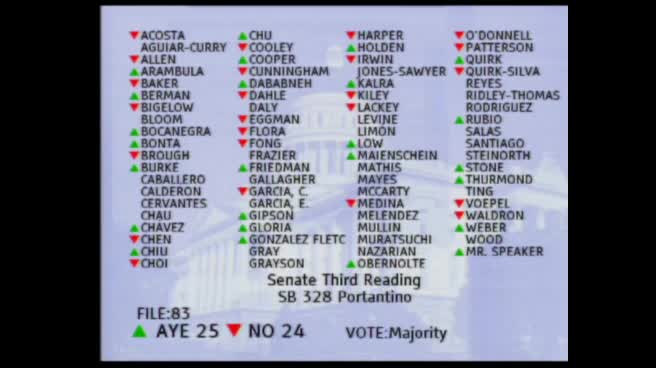


Bill Author


