SB 447: Property taxes: equalization: multicounty assessment appeals boards.
- Session Year: 2017-2018
- House: Senate
- Latest Version Date: 2017-07-24
The California Constitution and existing property tax law generally provide for the equalization of valuations of a county assessor by a county board of equalization or an assessment appeals board. The California Constitution additionally authorizes counties to establish a joint assessment appeals board, and requires the Legislature to provide a procedure for 2 or more county boards of supervisors to jointly create one or more assessment appeals boards.
This bill would authorize the boards of supervisors of 2 or more counties to establish a multijurisdictional assessment appeals board to equalize the valuation of taxable property within each participating county by enactment of an ordinance in each participating county, as defined, for a period of not less than 4 years. The bill would require the board to comply with rules and regulations as may be adopted by the participating counties or the State Board of Equalization, and with existing statutory provisions governing equalization proceedings before a multijurisdictional board.
The bill would require that the board include a minimum of 3 members, comprised of at least one appointed representative from each participating county, to serve for a term to be determined by the participating counties, as provided. The bill would require members of the board to meet specified eligibility and training requirements. The bill would also provide for the admission of new participating counties and the withdrawal of existing participating counties.
The bill would repeal its provisions on January 1, 2028.
The California Constitution and existing property tax law generally provide for the equalization of valuations of a county assessor by a county board of equalization or an assessment appeals board. The California Constitution additionally authorizes counties to establish a joint assessment appeals board, and requires the Legislature to provide a procedure for 2 or more county boards of supervisors to jointly create one or more assessment appeals boards.
This bill would authorize the boards of supervisors of 2 or more counties to establish a multijurisdictional assessment appeals board to equalize the valuation of taxable property within each participating county by enactment of an ordinance in each participating county, as defined, for a period of not less than 4 years. The bill would require the board to comply with rules and regulations as may be adopted by the participating counties or the State Board of Equalization, and with existing statutory provisions governing equalization proceedings before a multijurisdictional board.
The bill would require that the board include a minimum of 3 members, comprised of at least one appointed representative from each participating county, to serve for a term to be determined by the participating counties, as provided. The bill would require members of the board to meet specified eligibility and training requirements. The bill would also provide for the admission of new participating counties and the withdrawal of existing participating counties.
The bill would repeal its provisions on January 1, 2028.
The California Constitution and existing property tax law generally provide for the equalization of valuations of a county assessor by a county board of equalization or an assessment appeals board. The California Constitution additionally authorizes counties to establish a joint assessment appeals board, and requires the Legislature to provide a procedure for 2 or more county boards of supervisors to jointly create one or more assessment appeals boards.
This bill would authorize the boards of supervisors of 2 or more counties to establish a multijurisdictional assessment appeals board to equalize the valuation of taxable property within each participating county by enactment of an ordinance in each participating county, as defined, for a period of not less than 4 years. The bill would require the board to comply with rules and regulations as may be adopted by the participating counties or the State Board of Equalization, and with existing statutory provisions governing equalization proceedings before a multijurisdictional board.
The bill would require that the board include a minimum of 3 members, comprised of at least one appointed representative from each participating county, to serve for a term to be determined by the participating counties, as provided. The bill would require members of the board to meet specified eligibility and training requirements. The bill would also provide for the admission of new participating counties and the withdrawal of existing participating counties.
The bill would repeal its provisions on January 1, 2028.
The California Constitution and existing property tax law generally provide for the equalization of valuations of a county assessor by a county board of equalization or an assessment appeals board. The California Constitution additionally authorizes counties to establish a joint assessment appeals board, and requires the Legislature to provide a procedure for 2 or more county boards of supervisors to jointly create one or more assessment appeals boards.
This bill would authorize the boards of supervisors of 2 or more counties to establish a multijurisdictional assessment appeals board to equalize the valuation of taxable property within each participating county by enactment of an ordinance in each participating county, as defined, for a period of not less than 4 years. The bill would require the board to comply with rules and regulations as may be adopted by the participating counties or the State Board of Equalization, with existing statutory provisions governing equalization proceedings before a multijurisdictional board.
The bill would require that the board include a minimum of 3 members, comprised of at least one appointed representative from each participating county, to serve for a term to be determined by the participating counties, as provided. The bill would require members of the board to meet specified eligibility and training requirements. The bill would also provide for the admission of new participating counties and the withdrawal of existing participating counties.
The California Constitution and existing property tax law generally provide for the equalization of valuations of a county assessor by a county board of equalization or an assessment appeals board. The California Constitution additionally authorizes counties to establish a joint assessment appeals board, and requires the Legislature to provide a procedure for 2 or more county boards of supervisors to jointly create one or more assessment appeals boards.
This bill would authorize the boards of supervisors of 2 or more counties to establish a multijurisdictional assessment appeals board to equalize the valuation of taxable property within each participating county by enactment of an ordinance in each participating county, as defined, for a period of not less than 4 years. The bill would require the board to comply with rules and regulations as may be adopted by the participating counties or the State Board of Equalization, with existing statutory provisions governing equalization proceedings before a multijurisdictional board.
The bill would require that the board include a minimum of 3 members, comprised of at least one appointed representative from each participating county, to serve for a term to be determined by the participating counties, as provided. The bill would require members of the board to meet specified eligibility and training requirements. The bill would also provide for the admission of new participating counties and the withdrawal of existing participating counties.
The Legislature finds and declares all of the following:
(a)Section 16 of Article XIII of the California Constitution provides that the county board of supervisors, or one or more assessment appeals boards created by the county board of supervisors, constitutes the county board of equalization for a county.
(b)However, two or more county boards of supervisors may, under Section 16, jointly create one or more assessment appeals boards to serve as the county board of equalization for each of the participating counties.
(c)Section 16 additionally requires the Legislature to provide for the procedure by which two or more county boards of supervisors may jointly create one or more assessment appeals boards.
2.Definitions1751.For the purposes of this chapter, the following definitions shall apply:
(a)Multijurisdictional assessment appeals board or board means a board established by two or more counties pursuant to this chapter meeting as an assessment appeals board on behalf of the participating counties.
(b)Participating county means a county that has entered into an agreement, by enactment of an ordinance pursuant to Section 1752.1, to create a multijurisdictional assessment appeals board for the purpose of equalizing the valuation of assessed property.
3.Establishment and Procedure1752.(a)The boards of supervisors of two or more counties may establish a multijurisdictional assessment appeals board pursuant to this chapter to equalize the valuation of taxable property within each participating county.
(b)A board of supervisors of a participating county, or any assessment appeals board created by a board of supervisors of a participating county, shall not constitute the county board of equalization during the period in which a multijurisdictional assessment appeals board exists pursuant to this chapter.
1752.1.A multijurisdictional assessment appeals board shall be established by enactment of an ordinance, which shall be operative for not less than four years, by each participating county.
1752.2.The participating counties may adopt a set of rules and regulations for the multijurisdictional assessment appeals board. If the participating counties do not adopt a set of rules and regulations, the board shall operate pursuant to Article 1 (commencing with Section 301) of Chapter 3 of Division 1 of Title 18 of the California Code of Regulations, as those provisions read on January 1, 2017.
1752.3.Unless otherwise specified in this chapter, the multijurisdictional assessment appeals board shall operate in accordance with Article 1 (commencing with Section 1601), Article 1.5 (commencing with Section 1620), Article 1.7 (commencing with Section 1636), and Article 1.9 (commencing with Section 1642) of Chapter 1, as those provisions relate to the functions of assessment appeals boards.
4.Organization1753.The multijurisdictional assessment appeals board shall include a minimum of three members, comprised of at least one appointed representative from each participating county. The board of supervisors of each participating county shall appoint one or more representatives to serve on the multijurisdictional assessment appeals board as either members or alternates.
1753.1.(a)A member of the multijurisdictional assessment appeals board shall serve for a term determined by the participating counties, subject to subdivision (b).
(b)The lengths of the terms of members of the multijurisdictional assessment appeals board shall be structured so that not more than two members terms expire concurrently.
(c)Members of the multijurisdictional assessment appeals board shall meet all eligibility requirements set forth in Section 1624 and all training requirements set forth in Sections 1624.01 and 1624.02, as those sections read on January 1, 2017.
(d)A participating county may remove its appointed representative for cause by enactment of a resolution, adopted by a majority vote of the board of supervisors.
1753.2.Members of the board of supervisors are ineligible to serve as members or alternates to the multijurisdictional assessment appeals board.
1753.3.Any legal action filed by the county assessor or an assessee challenging the boards determination shall be filed in the superior court with jurisdiction where the property that is the subject of the appeal is located.
5.Lead Clerk1754.(a)The county clerk of the county where the appeal originated shall be designated as the lead clerk for the purposes of scheduling a hearing on an appeal before the board and coordinating with the county clerks of each participating county, unless the participating counties appoint a single county clerk to serve as the lead clerk for the multijurisdictional assessment appeals board.
(b)If the participating counties appoint a single county clerk to serve as the lead clerk for the multijurisdictional assessment appeals board, the agreement between the participating counties shall provide for the allocation of costs and reimbursements associated with the activities of the board among the participating counties.
6.Admission and Withdrawal1755.A county may be added as a participating county by enactment of a resolution by a majority of the current participating counties and subsequent enactment of an ordinance by the new participating county.
1755.1.(a)A participating county may withdraw from the multijurisdictional assessment appeals board by enactment of an ordinance terminating its membership.
(b)A participating county seeking to withdraw from the multijurisdictional assessment appeals board shall, by resolution, provide two years advance notice to the participating counties prior to withdrawal to allow for the disposal of all matters scheduled or pending before the board. Any matters filed before the two-year notice period ends that have not been heard and decided on the effective date of the termination shall automatically be referred to and be heard for final determination by the local board of equalization or successor board in the county from which the appeal was filed.
7.Repeal Date1756.This chapter shall remain in effect only until January 1, 2028, and as of that date is repealed.
The Legislature finds and declares all of the following:
(a)Section 16 of Article XIII of the California Constitution provides that the county board of supervisors, or one or more assessment appeals boards created by the county board of supervisors, constitutes the county board of equalization for a county.
(b)However, two or more county boards of supervisors may, under Section 16, jointly create one or more assessment appeals boards to serve as the county board of equalization for each of the participating counties.
(c)Section 16 additionally requires the Legislature to provide for the procedure by which two or more county boards of supervisors may jointly create one or more assessment appeals boards.
2.Definitions1751.For the purposes of this chapter, the following definitions shall apply:
(a)Multijurisdictional assessment appeals board or board means a board established by two or more counties pursuant to this chapter meeting as an assessment appeals board on behalf of the participating counties.
(b)Participating county means a county that has entered into an agreement, by enactment of an ordinance pursuant to Section 1752.1, to create a multijurisdictional assessment appeals board for the purpose of equalizing the valuation of assessed property.
3.Establishment and Procedure1752.(a)The boards of supervisors of two or more counties may establish a multijurisdictional assessment appeals board pursuant to this chapter to equalize the valuation of taxable property within each participating county.
(b)A board of supervisors of a participating county, or any assessment appeals board created by a board of supervisors of a participating county, shall not constitute the county board of equalization during the period in which a multijurisdictional assessment appeals board exists pursuant to this chapter.
1752.1.A multijurisdictional assessment appeals board shall be established by enactment of an ordinance, which shall be operative for not less than four years, by each participating county.
1752.2.The participating counties may adopt a set of rules and regulations for the multijurisdictional assessment appeals board. If the participating counties do not adopt a set of rules and regulations, the board shall operate pursuant to Article 1 (commencing with Section 301) of Chapter 3 of Division 1 of Title 18 of the California Code of Regulations, as those provisions read on January 1, 2017.
1752.3.Unless otherwise specified in this chapter, the multijurisdictional assessment appeals board shall operate in accordance with Article 1 (commencing with Section 1601), Article 1.5 (commencing with Section 1620), Article 1.7 (commencing with Section 1636), and Article 1.9 (commencing with Section 1642) of Chapter 1, as those provisions relate to the functions of assessment appeals boards.
4.Organization1753.The multijurisdictional assessment appeals board shall include a minimum of three members, comprised of at least one appointed representative from each participating county. The board of supervisors of each participating county shall appoint one or more representatives to serve on the multijurisdictional assessment appeals board as either members or alternates.
1753.1.(a)A member of the multijurisdictional assessment appeals board shall serve for a term determined by the participating counties, subject to subdivision (b).
(b)The lengths of the terms of members of the multijurisdictional assessment appeals board shall be structured so that not more than two members terms expire concurrently.
(c)Members of the multijurisdictional assessment appeals board shall meet all eligibility requirements set forth in Section 1624 and all training requirements set forth in Sections 1624.01 and 1624.02, as those sections read on January 1, 2017.
(d)A participating county may remove its appointed representative for cause by enactment of a resolution, adopted by a majority vote of the board of supervisors.
1753.2.Members of the board of supervisors are ineligible to serve as members or alternates to the multijurisdictional assessment appeals board.
1753.3.Any legal action filed by the county assessor or an assessee challenging the boards determination shall be filed in the superior court with jurisdiction where the property that is the subject of the appeal is located.
5.Lead Clerk1754.(a)The county clerk of the county where the appeal originated shall be designated as the lead clerk for the purposes of scheduling a hearing on an appeal before the board and coordinating with the county clerks of each participating county, unless the participating counties appoint a single county clerk to serve as the lead clerk for the multijurisdictional assessment appeals board.
(b)If the participating counties appoint a single county clerk to serve as the lead clerk for the multijurisdictional assessment appeals board, the agreement between the participating counties shall provide for the allocation of costs and reimbursements associated with the activities of the board among the participating counties.
6.Admission and Withdrawal1755.A county may be added as a participating county by enactment of a resolution by a majority of the current participating counties and subsequent enactment of an ordinance by the new participating county.
1755.1.(a)A participating county may withdraw from the multijurisdictional assessment appeals board by enactment of an ordinance terminating its membership.
(b)A participating county seeking to withdraw from the multijurisdictional assessment appeals board shall, by resolution, provide two years advance notice to the participating counties prior to withdrawal to allow for the disposal of all matters scheduled or pending before the board. Any matters filed before the two-year notice period ends that have not been heard and decided on the effective date of the termination shall automatically be referred to and be heard for final determination by the local board of equalization or successor board in the county from which the appeal was filed.
7.Repeal Date1756.This chapter shall remain in effect only until January 1, 2028, and as of that date is repealed.
The Legislature finds and declares all of the following:
(a)Section 16 of Article XIII of the California Constitution provides that the county board of supervisors, or one or more assessment appeals boards created by the county board of supervisors, constitutes the county board of equalization for a county.
(b)However, two or more county boards of supervisors may, under Section 16, jointly create one or more assessment appeals boards to serve as the county board of equalization for each of the participating counties.
(c)Section 16 additionally requires the Legislature to provide for the procedure by which two or more county boards of supervisors may jointly create one or more assessment appeals boards.
2.Definitions1751.For the purposes of this chapter, the following definitions shall apply:
(a)Multijurisdictional assessment appeals board or board means a board established by two or more counties pursuant to this chapter meeting as an assessment appeals board on behalf of the participating counties.
(b)Participating county means a county that has entered into an agreement, by enactment of an ordinance pursuant to Section 1752.1, to create a multijurisdictional assessment appeals board for the purpose of equalizing the valuation of assessed property.
3.Establishment and Procedure1752.(a)The boards of supervisors of two or more counties may establish a multijurisdictional assessment appeals board pursuant to this chapter to equalize the valuation of taxable property within each participating county.
(b)A board of supervisors of a participating county, or any assessment appeals board created by a board of supervisors of a participating county, shall not constitute the county board of equalization during the period in which a multijurisdictional assessment appeals board exists pursuant to this chapter.
1752.1.A multijurisdictional assessment appeals board shall be established by enactment of an ordinance, which shall be operative for not less than four years, by each participating county.
1752.2.The participating counties may adopt a set of rules and regulations for the multijurisdictional assessment appeals board. If the participating counties do not adopt a set of rules and regulations, the board shall operate pursuant to Article 1 (commencing with Section 301) of Chapter 3 of Division 1 of Title 18 of the California Code of Regulations, as those provisions read on January 1, 2017.
1752.3.Unless otherwise specified in this chapter, the multijurisdictional assessment appeals board shall operate in accordance with Article 1 (commencing with Section 1601), Article 1.5 (commencing with Section 1620), Article 1.7 (commencing with Section 1636), and Article 1.9 (commencing with Section 1642) of Chapter 1, as those provisions relate to the functions of assessment appeals boards.
4.Organization1753.The multijurisdictional assessment appeals board shall include a minimum of three members, comprised of at least one appointed representative from each participating county. The board of supervisors of each participating county shall appoint one or more representatives to serve on the multijurisdictional assessment appeals board as either members or alternates.
1753.1.(a)A member of the multijurisdictional assessment appeals board shall serve for a term determined by the participating counties, subject to subdivision (b).
(b)The lengths of the terms of members of the multijurisdictional assessment appeals board shall be structured so that not more than two members terms expire concurrently.
(c)Members of the multijurisdictional assessment appeals board shall meet all eligibility requirements set forth in Section 1624 and all training requirements set forth in Sections 1624.01 and 1624.02, as those sections read on January 1, 2017.
(d)A participating county may remove its appointed representative for cause by enactment of a resolution, adopted by a majority vote of the board of supervisors.
1753.2.Members of the board of supervisors are ineligible to serve as members or alternates to the multijurisdictional assessment appeals board.
1753.3.Any legal action filed by the county assessor or an assessee challenging the boards determination shall be filed in the superior court with jurisdiction where the property that is the subject of the appeal is located.
5.Lead Clerk1754.(a)The county clerk of the county where the appeal originated shall be designated as the lead clerk for the purposes of scheduling a hearing on an appeal before the board and coordinating with the county clerks of each participating county, unless the participating counties appoint a single county clerk to serve as the lead clerk for the multijurisdictional assessment appeals board.
(b)If the participating counties appoint a single county clerk to serve as the lead clerk for the multijurisdictional assessment appeals board, the agreement between the participating counties shall provide for the allocation of costs and reimbursements associated with the activities of the board among the participating counties.
6.Admission and Withdrawal1755.A county may be added as a participating county by enactment of a resolution by a majority of the current participating counties and subsequent enactment of an ordinance by the new participating county.
1755.1.(a)A participating county may withdraw from the multijurisdictional assessment appeals board by enactment of an ordinance terminating its membership.
(b)A participating county seeking to withdraw from the multijurisdictional assessment appeals board shall, by resolution, provide two years advance notice to the participating counties prior to withdrawal to allow for the disposal of all matters scheduled or pending before the board. Any matters filed before the two-year notice period ends that have not been heard and decided on the effective date of the termination shall automatically be referred to and be heard for final determination by the local board of equalization or successor board in the county from which the appeal was filed.
7.Repeal Date1756.This chapter shall remain in effect only until January 1, 2028, and as of that date is repealed.
The Legislature finds and declares all of the following:
(a)Section 16 of Article XIII of the California Constitution provides that the county board of supervisors, or one or more assessment appeals boards created by the county board of supervisors, constitutes the county board of equalization for a county.
(b)However, two or more county boards of supervisors may, under Section 16, jointly create one or more assessment appeals boards to serve as the county board of equalization for each of the participating counties.
(c)Section 16 additionally requires the Legislature to provide for the procedure by which two or more county boards of supervisors may jointly create one or more assessment appeals boards.
2.Definitions1751.For the purposes of this chapter, the following definitions shall apply:
(a)Multijurisdictional assessment appeals board or board means a board established by two or more counties pursuant to this chapter meeting as an assessment appeals board on behalf of the participating counties.
(b)Participating county means a county that has entered into an agreement, by enactment of an ordinance pursuant to Section 1752.1, to create a multijurisdictional assessment appeals board for the purpose of equalizing the valuation of assessed property.
3.Establishment and Procedure1752.(a)The boards of supervisors of two or more counties may establish a multijurisdictional assessment appeals board pursuant to this chapter to equalize the valuation of taxable property within each participating county.
(b)A board of supervisors of a participating county, or any assessment appeals board created by a board of supervisors of a participating county, shall not constitute the county board of equalization during the period in which a multijurisdictional assessment appeals board exists pursuant to this chapter.
1752.1.A multijurisdictional assessment appeals board shall be established by enactment of an ordinance, which shall be operative for not less than four years, by each participating county.
1752.2.The participating counties may adopt a set of rules and regulations for the multijurisdictional assessment appeals board. If the participating counties do not adopt a set of rules and regulations, the board shall operate pursuant to Article 1 (commencing with Section 301) of Chapter 3 of Division 1 of Title 18 of the California Code of Regulations, as those provisions read on January 1, 2017.
1752.3.Unless otherwise specified in this chapter, the multijurisdictional assessment appeals board shall operate in accordance with Article 1 (commencing with Section 1601), Article 1.5 (commencing with Section 1620), Article 1.7 (commencing with Section 1636), and Article 1.9 (commencing with Section 1642) of Chapter 1, as those provisions relate to the functions of assessment appeals boards.
4.Organization1753.The multijurisdictional assessment appeals board shall include a minimum of three members, comprised of at least one appointed representative from each participating county. The board of supervisors of each participating county shall appoint one or more representatives to serve on the multijurisdictional assessment appeals board as either members or alternates.
1753.1.(a)A member of the multijurisdictional assessment appeals board shall serve for a term determined by the participating counties, subject to subdivision (b).
(b)The lengths of the terms of members of the multijurisdictional assessment appeals board shall be structured so that not more than two members terms expire concurrently.
(c)Members of the multijurisdictional assessment appeals board shall meet all eligibility requirements set forth in Section 1624 and all training requirements set forth in Sections 1624.01 and 1624.02, as that section those sections read on January 1, 2017.
(d)A participating county may remove its appointed representative for cause by enactment of a resolution, adopted by a majority vote of the board of supervisors.
1753.2.Members of the board of supervisors are ineligible to serve as members or alternates to the multijurisdictional assessment appeals board.
1753.3.Any legal action filed by the county assessor or an assessee challenging the boards determination shall be filed in the superior court with jurisdiction where the property that is the subject of the appeal is located.
5.Lead Clerk1754.(a)The county clerk of the county where the appeal originated shall be designated as the lead clerk for the purposes of scheduling a hearing on an appeal before the board and coordinating with the county clerks of each participating county, unless the participating counties appoint a single county clerk to serve as the lead clerk for the multijurisdictional assessment appeals board.
(b)If the participating counties appoint a single county clerk to serve as the lead clerk for the multijurisdictional assessment appeals board, the agreement between the participating counties shall provide for the allocation of costs and reimbursements associated with the activities of the board among the participating counties.
6.Admission and Withdrawal1755.A county may be added as a participating county by enactment of a resolution by a majority of the current participating counties and subsequent enactment of an ordinance by the new participating county.
1755.1.(a)A participating county may withdraw from the multijurisdictional assessment appeals board by enactment of an ordinance terminating its membership.
(b)A participating county seeking to withdraw from the multijurisdictional assessment appeals board shall, by resolution, provide two years years advance notice to the participating counties prior to withdrawal to allow for the disposal of all matters scheduled or pending before the board. Any matters filed before two year the two-year notice period ends that have not been heard and decided on the effective date of the termination shall automatically be referred to and be heard for final determination by the local board of equalization or successor board in the county from which the appeal was filed.
The Legislature finds and declares all of the following:
(a)Section 16 of Article XIII of the California Constitution provides that the county board of supervisors, or one or more assessment appeals boards created by the county board of supervisors, constitutes the county board of equalization for a county.
(b)However, two or more county boards of supervisors may, under Section 16, jointly create one or more assessment appeals boards to serve as the county board of equalization for each of the participating counties.
(c)Section 16 additionally requires the Legislature to provide for the procedure by which two or more county boards of supervisors may jointly create one or more assessment appeals boards.
2.Definitions1751.For the purposes of this chapter, the following definitions shall apply:
(a)Multijurisdictional assessment appeals board or board means a board established by two or more counties pursuant to this chapter meeting as an assessment appeals board on behalf of the participating counties.
(b)Participating county means a county that has entered into an agreement, by enactment of an ordinance pursuant to Section 1752.1, to create a multijurisdictional assessment appeals board for the purpose of equalizing the valuation of assessed property.
3.Establishment and Procedure1752.The boards of supervisors of two or more counties may establish a multijurisdictional assessment appeals board pursuant to this chapter to equalize the valuation of taxable property within each participating county.
1752.1.A multijurisdictional assessment appeals board shall be established by enactment of an ordinance, which shall be operative for not less than four years, by each participating county.
1752.2.The participating counties may adopt a set of rules and regulations for the multijurisdictional assessment appeals board. If the participating counties do not adopt a set of rules and regulations, the board shall operate pursuant to Article 1 (commencing with Section 301) of Chapter 3 of Division 1 of Title 18 of the California Code of Regulations, as those provisions read on January 1, 2017.
1752.3.Unless otherwise specified in this chapter, the multijurisdictional assessment appeals board shall operate in accordance with Article 1 (commencing with Section 1601), Article 1.5 (commencing with Section 1620), Article 1.7 (commencing with Section 1636), and Article 1.9 (commencing with Section 1642) of Chapter 1, as those provisions relate to the functions of assessment appeals boards.
4.Organization1753.The multijurisdictional assessment appeals board shall include a minimum of three members, comprised of at least one appointed representative from each participating county. The board of supervisors of each participating county shall appoint one or more representatives to serve on the multijurisdictional assessment appeals board as either members or alternates.
1753.1.(a)A member of the multijurisdictional assessment appeals board shall serve for a term determined by the participating counties, subject to subdivision (b).
(b)The lengths of the terms of members of the multijurisdictional assessment appeals board shall be structured so that not more than two members terms expire concurrently.
(c)Members of the multijurisdictional assessment appeals board shall meet all eligibility requirements set forth in Section 1624 and all training requirements set forth in Sections 1624.01 and 1624.02, as that section read on January 1, 2017.
(d)A participating county may remove its appointed representative for cause by enactment of a resolution, adopted by a majority vote of the board of supervisors.
1753.2.Members of the board of supervisors are ineligible to serve as members or alternates to the multijurisdictional assessment appeals board.
1753.3.Any legal action filed by the county assessor or an assessee challenging the boards determination shall be filed in the superior court with jurisdiction where the subject of the appeal is located.
5.Lead Clerk1754.(a)The county clerk of the county where the appeal originated shall be designated as the lead clerk for the purposes of scheduling a hearing on an appeal before the board and coordinating with the county clerks of each participating county, unless the participating counties appoint a single county clerk to serve as the lead clerk for the multijurisdictional assessment appeals board.
(b)If the participating counties appoint a single county clerk to serve as the lead clerk for the multijurisdictional assessment appeals board, the agreement between the participating counties shall provide for the allocation of costs and reimbursements associated with the activities of the board among the participating counties.
6.Admission and Withdrawal1755.A county may be added as a participating county by enactment of a resolution by a majority of the current participating counties and subsequent enactment of an ordinance by the new participating county.
1755.1.(a)A participating county may withdraw from the multijurisdictional assessment appeals board by enactment of an ordinance terminating its membership.
(b)A participating county seeking to withdraw from the multijurisdictional assessment appeals board shall, by resolution, provide two years advance notice to the participating counties prior to withdrawal to allow for the disposal of all matters scheduled or pending before the board. Any matters filed before two year notice period ends that have not been heard and decided on the effective date of the termination shall automatically be referred to and be heard for final determination by the local board of equalization or successor board in the county from which the appeal was filed.
|
Date
|
Status
|
|---|---|
| Jul 24, 2017 | Chaptered by Secretary of State. Chapter 132, Statutes of 2017. |
| Jul 24, 2017 | Approved by the Governor. |
| Jul 13, 2017 | Enrolled and presented to the Governor at 10 a.m. |
| Jul 10, 2017 | Assembly amendments concurred in. (Ayes 38. Noes 0.) Ordered to engrossing and enrolling. |
| Jul 6, 2017 | In Senate. Concurrence in Assembly amendments pending. |
| Jul 6, 2017 | Read third time. Passed. Ordered to the Senate. |
| Jul 3, 2017 | Read second time. Ordered to third reading. |
| Jun 29, 2017 | Assembly Rule 56 suspended. |
| Jun 29, 2017 | Read second time and amended. Ordered to second reading. |
| Jun 28, 2017 | From committee: Do pass as amended. (Ayes 9. Noes 0.) (June 19). |
| May 22, 2017 | Referred to Com. on REV. & TAX. |
| Apr 24, 2017 | In Assembly. Read first time. Held at Desk. |
| Apr 24, 2017 | Read third time. Passed. (Ayes 37. Noes 0. Page 803.) Ordered to the Assembly. |
| Apr 20, 2017 | Read second time. Ordered to third reading. |
| Apr 19, 2017 | Withdrawn from committee. |
| Apr 18, 2017 | Read second time and amended. Re-referred to Com. on APPR. |
| Apr 17, 2017 | From committee: Do pass as amended and re-refer to Com. on APPR. (Ayes 7. Noes 0. Page 623.) (April 5). |
| Mar 8, 2017 | Set for hearing April 5. |
| Feb 23, 2017 | Referred to Com. on GOV. & F. |
| Feb 16, 2017 | From printer. May be acted upon on or after March 18. |
| Feb 15, 2017 | Introduced. Read first time. To Com. on RLS. for assignment. To print. |
|
Date
|
Description
|
Location
|
Votes
|
|
|---|---|---|---|---|
| Jul 10, 2017 | Unfinished Business SB447 Nielsen et al. Concurrence | Senate Floor |
Passed |
|
| Jul 6, 2017 | SB 447 Nielsen Senate Third Reading By BIGELOW | Assembly Floor |
Passed |
|
| Jun 19, 2017 | Do pass as amended. | Assembly Standing Committee on Revenue and Taxation |
Passed |
|
| Apr 24, 2017 | Senate 3rd Reading SB447 Nielsen et al. | Senate Floor |
Passed |
|
| Apr 5, 2017 | Do pass as amended, but first amend, and re-refer to the Committee on [Appropriations] | Senate Standing Committee on Governance and Finance |
Passed |
This list shows positions taken on this bill by organizations on the date displayed, which is linked to the original source.
Positions by individuals are not included.
|
Organization
|
Position
|
Date
|
|---|---|---|
| Board of Equalization Member George Runner | ** Support | Jul 7, 2017 |
| Board of Equalization Member, 1st District | ** Support | Jun 16, 2017 |
| California State Association Of Counties | ** Support | Jun 16, 2017 |
| County of Alpine | ** Support | Jul 7, 2017 |
| county of alpine, board of supervisors | ** Support | Jun 16, 2017 |
| County of Sierra | ** Support | Jul 7, 2017 |
| county of sierra, board of supervisors | ** Support | Jun 16, 2017 |
| Rural County Representatives of California | ** Support | Jul 7, 2017 |
Office of Senate Floor Analyses (916) 651-1520 Fax: (916) 327-4478 | SB |
UNFINISHED BUSINESS
Bill No: SB 447
:
SENATE GOVERNANCE & FIN. COMMITTEE: 7-0, 4/5/17
AYES: McGuire, Nguyen, Beall, Hernandez, Hertzberg, Lara, Moorlach
SENATE FLOOR: 37-0, 4/24/17
AYES: Allen, Anderson, Atkins, Bates, Beall, Berryhill, Bradford, Cannella, Fuller, Gaines, Galgiani, Glazer, Hernandez, Hertzberg, Hill, Hueso, Jackson, Lara, Leyva, McGuire, Mendoza, Mitchell, Monning, Moorlach, Morrell, Newman, Nguyen, Nielsen, Pan, Roth, Skinner, Stern, Stone, Vidak, Wieckowski, Wiener, Wilk
NO VOTE RECORDED: De León, Dodd, Portantino
ASSEMBLY FLOOR: 76-0, 7/6/17 - See last page for vote
DIGEST:
This bill implements a process for two or more county board of supervisors to create a multicounty assessment appeals board.
Assembly Amendments
sunset the bill on January 1, 2028.
ANALYSIS:
Existing law:
- Provides that all property is taxable and shall be assessed at the same percentage of fair market value, unless explicitly exempted by the Constitution or federal law, and requires that all property taxed by a local government be assessed in the county, city, and district in which it’s situated (California Constitution, Article XIII).
- Allows counties to jointly create one or more assessment appeals board to constitute the board of equalization for each participating county. However, the Constitution requires the Legislature to provide for the procedure by which two or more county boards of supervisors can create a multicounty assessment appeals board. (Article XIII, Section 16)
- Limits the maximum amount of any ad valorem tax on real property at 1% of full cash value, and precludes reassessment unless the property is newly constructed or changes ownership (Article XIIIA).
- Directs taxpayers seeking to appeal an assessor’s valuation of locally-assessed property to contact the assessor to request a change in value, but if unsuccessful, can file an appeal (which can include a claim for refund) with the county.
- Places the appellate authority for locally-assessed property taxes with the county board of supervisors sitting as the county board of equalization, and requires the board to equalize the value of all property by adjusting individual assessments. In 17 California counties, boards hear appeals directly, while all the others have created one or more assessment appeals boards to perform the quasi-judicial role to hold a hearing to determine value of the taxpayer’s property.
- Requires assessment appeals board members to complete a training program, and possess five years of professional experience in California as a certified public accountant or public accountant, licensed real estate broker, attorney, or property appraiser. However, in counties with a population of less than 200,000, someone “possessed of competent knowledge of property appraisal and taxation,” can be appointed without professional experience.
- Requires assessment appeals board to hear and decide appeal applications within two years of the filing of the application. If the two-year time period is not met, then the taxpayer’s opinion of value will be enrolled for the tax year covered by the appeal, and can remain in effect until the appeals board makes a final determination. Should the taxpayer continue to disagree with the county’s value after the appellate process, he or she can file suit in superior court within six months of the board’s final determination.
This bill:
- Enacts a process for two or more county board of supervisors to create a multicounty assessment appeals board, including:
- Requires each county seeking to participate in the multicounty board to enact an ordinance operative for not less than four years.
- States that any multicounty board must function in accordance with current requirements on single-county assessment appeals boards.
- Allows a multicounty board may adopt its own rules and regulations, but if not, current regulations adopted by the board of equalization as of January 1, 2017 apply.
- Requires any multicounty board to have at least three members, of which at least one must come from each participating county.
- Directs the county board of supervisors of each participating county to nominate one or more representatives as either members or alternates for terms determined by their county; however, terms must be structured to preclude two members’ terms from expiring concurrently.
- Requires multicounty board members to meet the general eligibility requirements in current law that apply based on the size of the county, as well as its training requirements.
- Provides that any board of supervisors may remove its appointed member for cause by enacting an ordinance.
- Prohibits current members of any board of supervisors are ineligible to serve as members or alternates on a multicounty board.
- Clarifies that a board of supervisors of a participating county, or any assessment appeals board created by a board of supervisors of a participating county, shall not constitute the county board of equalization during the period in which a multijurisdictional assessment appeals board exists pursuant to this bill.
- Provides that any legal action filed by the assessor or the taxpayer challenging the multicounty board’s determination must be filed in the superior court with jurisdiction where the property that is the subject of the appeal is located.
- States that the county clerk of the county where the appeal originated shall be designated as the lead clerk for scheduling a hearing before the multicounty board and coordinating with each participating county’s clerk; however, participating counties may appoint a single clerk to serve as the lead clerk. If participating counties appoint a lead clerk, then the agreement between the counties must specify for the allocation of costs and reimbursements among the participating counties for the multicounty board’s activities.
- Allows counties to be added to the multicounty board by ordinance of both the multicounty board and the newly participating county.
- Permits a participating county to withdraw by enacting its own ordinance terminating membership; however, any county doing so must provide two years advance notice to the other counties. Any matters filed before the expiration of the two-year advance that have not been adjudicated by the multicounty board are automatically referred to and be heard for final determination by the local board of equalization or successor board in the county from which the appeal is filed.
- Defines several terms, and makes legislative findings and declarations supporting its provisions.
FISCAL EFFECT: Appropriation: Fiscal Com.: Local:
SUPPORT: (Verified 7/7/17)
Board of Equalization Member George Runner
County of Alpine
County of Sierra
Rural County Representatives of California
OPPOSITION: (Verified 7/7/17)
None received
ARGUMENTS IN SUPPORT: According to the author, “Assessment appeals boards [AABs] are quasi-judicial boards that oversee the due process a taxpayer may initiate if he or she disagrees with the assessed value of his or her property. AABs hear evidence from both parties before deciding upon the value of the property in question. The assessment appeal process provides for the ‘equalization,’ or fairness of a property's assessed value. In nearly a dozen low-population counties, the function of hearing assessment appeals falls upon members of the county board of supervisors. The constitution, Article XIII, Section 16 allows the Legislature to authorize the creation of a joint AAB by two or more counties. Some counties, even despite more lax eligibility requirements, have difficulty recruiting qualified applicants to serve on the appeals boards. SB 447 will allow boards of supervisors of two or more counties to establish a multijurisdictional AAB to equalize the valuation of taxable property within each participating county. The agreement must last for at least four years.”
ASSEMBLY FLOOR: 76-0, 7/6/17
AYES: Acosta, Aguiar-Curry, Travis Allen, Arambula, Baker, Berman, Bigelow, Bloom, Bonta, Brough, Burke, Caballero, Cervantes, Chau, Chávez, Chen, Chiu, Choi, Chu, Cooley, Cooper, Cunningham, Dahle, Daly, Eggman, Flora, Fong, Frazier, Friedman, Gallagher, Cristina Garcia, Eduardo Garcia, Gipson, Gloria, Gomez, Gonzalez Fletcher, Gray, Grayson, Harper, Holden, Irwin, Jones-Sawyer, Kalra, Kiley, Levine, Limón, Low, Maienschein, Mathis, Mayes, McCarty, Medina, Melendez, Mullin, Muratsuchi, Nazarian, Obernolte, O'Donnell, Patterson, Quirk, Quirk-Silva, Reyes, Ridley-Thomas, Rodriguez, Rubio, Salas, Santiago, Steinorth, Mark Stone, Thurmond, Ting, Voepel, Waldron, Weber, Wood, Rendon
NO VOTE RECORDED: Bocanegra, Calderon, Dababneh, Lackey
7/7/17 14:25:35
**** END ****
SENATE THIRD READING
STR Bill Id:SB 447
Author:(Nielsen)
As Amended Ver:June 29, 2017
Majority vote
SENATE VOTE: 37-0
Committee | Votes | Ayes | Noes |
Revenue & Taxation | 9-0 | Ridley-Thomas, Brough, Bocanegra, Burke, Chen, Dababneh, Gipson, Mullin, Quirk |
SUMMARY: Allows participating counties to create a multi-jurisdictional assessment appeals board (MAAB). Specifically, this bill:
- Allows the board of supervisors of two or more counties to establish a MAAB to equalize the valuation of taxable property within each participating county.
- Prohibits a board of supervisors or any assessment appeals board created by a board of supervisors of a participating county from constituting the county board of equalization during the period in which a MAAB exists.
- Provides that a MAAB shall be established by enactment of an ordinance, which shall be operative for not less than four years, by each participating county.
- Allows a participating county to adopt a set of rules and regulations for the MAAB. If rules are not adopted, the assessment appeals board shall operate under the California Code of Regulations, Title 18, Division 1, Chapter 3, Article 1, as these provisions read on January 1, 2017.
- Provides that the MAAB shall include a minimum of three members, comprised of at least one appointed representative from each participating county. The board of supervisors of each participating county shall appoint one or more representatives to serve on the MAAB as either members or alternates.
- Provides that members of a MAAB shall serve a term determined by the participating counties. However, the terms shall be structured so that no more than two members' terms expire concurrently. A member of the MAAB must meet the eligibility requirements set forth in Revenue and Taxation Code Section 1624, and all training requirements in Section 1624.01 and 1624.02, as these sections read on January 1, 2017.
- Provides that a participating county may remove its appointed representative for cause by enactment of a resolution, adopted by a majority vote of the board of supervisors.
- Provides that a board supervisor is ineligible to serve as a member or alternate to the MAAB.
- Requires the county assessor or an assessee challenging the board's determination to file a legal action in the superior court where the property is located.
- Provides that the county clerk of the county where the appeal originated shall be designated as the lead clerk for the purposes of scheduling a hearing on an appeal before the board and coordinating with the county clerks of each participating county, unless the participating counties appoint a single county clerk to serve as the lead clerk for the MAAB. If the participating counties appoint a single county clerk to serve as the lead clerk for the MAAB, the agreement between the participating counties shall provide for the allocation of costs and reimbursements associated with the activities of the MAAB among the participating counties.
- Allows a county to be added as a participating county by enactment of a resolution by a majority of the current participating counties and subsequent enactment of an ordinance by the new participating county.
- Allows a participating county to withdraw from the MAAB by enactment of an ordinance terminating its membership.
- Provides that a participating county seeking to withdraw from the MAAB shall provide a two year notice to the participating counties prior to withdrawal. Any matters filed before the two-year notice period ends that have not been heard and decided on the effective date of the termination shall automatically be referred to and be heard for final determination by the local board of equalization or successor board in the county from which the appeal was filed.
- Defines "multijurisdictional assessment appeals board" or "board" as a board established by two or more counties pursuant to this bill meeting as an assessment appeals board on behalf of the participating counties.
- Defines a "participating county" as a county that has entered into an agreement, by enactment of an ordinance, to create a MAAB for the purpose of equalizing the valuation of assessed property.
- Provides that the provisions of this bill shall remain in effect until January 1, 2028, and as of that date is repealed.
- Makes findings and declarations.
EXISTING LAW allows two or more county boards of supervisors to create a MAAB to serve as the appeals board for each participating county. Requires the Legislature to provide for the procedure by which two or more counties may jointly create one or more MAABs (California Constitution, Article XIII, Section 16). The Legislature has not enacted legislation to allow for the creations of MAABs.
FISCAL EFFECT: Unknown. This bill has been keyed non-fiscal by the Legislative Counsel.
COMMENTS:
- The author has provided the following statement in support of this bill:
State taxation code requires that in the most populous counties – those with a population of 200,000 or more – a person is not eligible to serve on an [assessment appeals board (AAB)] unless he or she has a minimum of five years professional experience in this state in one of the following areas: certified public accountant or public accountant; licensed real estate broker; attorney; or property appraiser accredited by a nationally recognized professional organization, the Office of Real Estate Appraisers, or the Board of Equalization.
For smaller counties, those with a population of less than 200,000, statute expands eligibility requirements to allow "a person who the nominating member of the board of supervisors has reason to believe is possessed of competent knowledge of property appraisal and taxation." Some counties, even despite more lax eligibility requirements, have difficulty recruiting qualified applicants to serve on the appeals boards.
The California Constitution under Article XIII, Section 16 allows the Legislature to authorize the creation of a joint AAB by two or more counties, but the Legislature has not yet enacted the necessary statutory provisions to allow multi-county appeals boards. SB 447 resolves this. The bill will allow boards of supervisors of two or more counties to establish a multijurisdictional AAB to equalize the valuation of taxable property within each participating county, and the agreement must last for at least four years.
- Proponents state that "[i]n most California counties, property tax assessment disputes are heard by assessment appeals boards; appointees to these boards are required by law to meet certain financial qualifications in order to hear contested assessments. In nearly a dozen low-population counties, the function of hearing assessment appeals falls upon members of the county board of supervisors sitting as a local board of equalization. The primary reason these low-population counties do not appoint assessment appeals boards is that finding qualified applicants to serve is a challenge. And while most county supervisors can fulfill their obligations as members of a local board of equalization, [Rural County Representatives of California] believes it is wise to maximize the use of assessment appeals boards given the complex nature of developing the county's property tax roll." As such, this bill offers the opportunity for increased expertise in hearing taxpayer appeals by allowing counties to elect to participate in a multi-county assessment appeals board.
- Committee Staff Comments:
- Background: In general, the California Constitution states that the county board of supervisors, or an assessment appeals board created by the county board of supervisors, will serve as the county board of equalization for a county. The Constitution also allows for multiple county boards of supervisors to jointly create one or more MAABs to serve as the county board of equalization for each of the participating counties. Assessment appeals boards enjoy quasi-legislative authority and function as a trial court with the Superior Court reviewing their decisions.
According to the BOE, the boards of supervisors serve as the assessment appeals board in 17 counties. All other counties appoint members to the assessment appeals board. In order for a person to serve on an assessment appeals board, the person must either have five years of professional experience as a Certified Public Accountant or public accountant, licensed real estate broker, attorney, or accredited property appraiser. However, these requirements do not apply if the county has a population of less than 200,000 and the nominating member deems that person to have competent knowledge of property appraisal and taxation.
- What does this bill do? Although the California Constitution specifically allows multiple county boards of supervisors to create a MAAB, the Constitution also requires the Legislature to enact authorizing legislation. This bill provides county boards of supervisors with that authority. According to the author and supporters of this bill, the change is needed because low-population counties often have a difficult time finding qualified individuals to serve on an assessment appeals board. Allowing for the creation of MAABs would potentially allow counties to pool resources together and increase expertise in hearing taxpayer appeals.
- Tradeoffs: Although creating a MAAB may provide counties with certain benefits, MAABs may also dramatically increase the distance needed to travel to adjudicate a case, which can be made worse if several non-contiguous counties decide to form a MAAB. It is also unclear if greater expertise is needed for all types of cases. Instead of requiring that all assessment appeals be heard by a single MAAB, it may be appropriate to have the MAAB limited to more complicated legal and valuation issues, relieving most individuals from potentially having to travel great distances for an appeal that could have easily been handled by the board of supervisors. Finally, because it is difficult to ascertain how counties will utilize this authorizing legislation, a 10-year sunset has been added to monitor the performance of this new authority if enacted.
Analysis Prepared by: Carlos Anguiano / REV. & TAX. / (916) 319-2098 FN: 0001053
Date of Hearing: June 19, 2017
ASSEMBLY COMMITTEE ON REVENUE AND TAXATION
Sebastian Ridley-Thomas, Chair
SBPCA Bill Id:SB 447
Author:(Nielsen) – As Amended Ver:April 18, 2017
Majority vote.
SENATE VOTE: 37-0
SUBJECT: Property taxes: equalization: multicounty assessment appeals boards
SUMMARY: Allows participating counties to create a multi-jurisdictional assessment appeals board (MAAB). Specifically, this bill:
- Allows the board of supervisors of two or more counties to establish a MAAB to equalize the valuation of taxable property within each participating county.
- Prohibits a board of supervisors or any assessment appeals board created by a board of supervisors of a participating county from constituting the county board of equalization during the period in which a MAAB exists.
- Provides that a MAAB shall be established by enactment of an ordinance, which shall be operative for not less than four years, by each participating county.
- Allows a participating county to adopt a set of rules and regulations for the MAAB. If rules are not adopted, the assessment appeals board shall operate under the California Code of Regulations, Title 18, Division 1, Chapter 3, Article 1, as these provisions read on January 1, 2017.
- Provides that the MAAB shall include a minimum of three members, comprised of at least one appointed representative from each participating county. The board of supervisors of each participating county shall appoint one or more representatives to serve on the MAAB as either members or alternates.
- Provides that members of a MAAB shall serve a term determined by the participating counties. However, the terms shall be structured so that no more than two members' terms expire concurrently. A member of the MAAB must meet the eligibility requirements set forth in Revenue and Taxation Code Section 1624, and all training requirements in Section 1624.01 and 1624.02, as these sections read on January 1, 2017.
- Provides that a participating county may remove its appointed representative for cause by enactment of a resolution, adopted by a majority vote of the board of supervisors.
- Provides that a board supervisor is ineligible to serve as a member or alternate to the MAAB.
- Requires the county assessor or an assessee challenging the board's determination to file a legal action in the superior court where the property is located.
- Provides that the county clerk of the county where the appeal originated shall be designated as the lead clerk for the purposes of scheduling a hearing on an appeal before the board and coordinating with the county clerks of each participating county, unless the participating counties appoint a single county clerk to serve as the lead clerk for the MAAB. If the participating counties appoint a single county clerk to serve as the lead clerk for the MAAB, the agreement between the participating counties shall provide for the allocation of costs and reimbursements associated with the activities of the MAAB among the participating counties.
- Allows a county to be added as a participating county by enactment of a resolution by a majority of the current participating counties and subsequent enactment of an ordinance by the new participating county.
- Allows a participating county to withdraw from the MAAB by enactment of an ordinance terminating its membership.
- Provides that a participating county seeking to withdraw from the MAAB shall provide a two year notice to the participating counties prior to withdrawal. Any matters filed before the two-year notice period ends that have not been heard and decided on the effective date of the termination shall automatically be referred to and be heard for final determination by the local board of equalization or successor board in the county from which the appeal was filed.
- Defines "multijurisdictional assessment appeals board" or "board" as a board established by two or more counties pursuant to this bill meeting as an assessment appeals board on behalf of the participating counties.
- Defines a "participating county" as a county that has entered into an agreement, by enactment of an ordinance, to create a MAAB for the purpose of equalizing the valuation of assessed property.
- Makes findings and declarations.
EXISTING LAW allows two or more county boards of supervisors to create a MAAB to serve as the appeals board for each participating county. Requires the Legislature to provide for the procedure by which two or more counties may jointly create one or more MAABs (California Constitution, Article XIII, Section 16). The Legislature has not enacted legislation to allow for the creations of MAABs.
FISCAL EFFECT: The State Board of Equalization (BOE) states that "[t]his bill has no direct revenue impact on state revenue."
COMMENTS:
- The author has provided the following statement in support of this bill:
State taxation code requires that in the most populous counties—those with a population of 200,000 or more—a person is not eligible to serve on an [assessment appeals board (AAB)] unless he or she has a minimum of five years professional experience in this state in one of the following areas: certified public accountant or public accountant; licensed real estate broker; attorney; or property appraiser accredited by a nationally recognized professional organization, the Office of Real Estate Appraisers, or the Board of Equalization.
For smaller counties, those with a population of less than 200,000, statute expands eligibility requirements to allow "a person who the nominating member of the board of supervisors has reason to believe is possessed of competent knowledge of property appraisal and taxation." Some counties, even despite more lax eligibility requirements, have difficulty recruiting qualified applicants to serve on the appeals boards.
The California Constitution under Article XIII, Section 16 allows the Legislature to authorize the creation of a joint AAB by two or more counties, but the Legislature has not yet enacted the necessary statutory provisions to allow multi-county appeals boards. SB 447 resolves this. The bill will allow boards of supervisors of two or more counties to establish a multijurisdictional AAB to equalize the valuation of taxable property within each participating county, and the agreement must last for at least four years.
- Proponents state that "[i]n most California counties, property tax assessment disputes are heard by assessment appeals boards; appointees to these boards are required by law to meet certain financial qualifications in order to hear contested assessments. In nearly a dozen low-population counties, the function of hearing assessment appeals falls upon members of the county board of supervisors sitting as a local board of equalization. The primary reason these low-population counties do not appoint assessment appeals boards is that finding qualified applicants to serve is a challenge. And while most county supervisors can fulfill their obligations as members of a local board of equalization, [Rural County Representatives of California] believes it is wise to maximize the use of assessment appeals boards given the complex nature of developing the county's property tax roll." As such, this bill offers the opportunity for increased expertise in hearing taxpayer appeals by allowing counties to elect to participate in a multi-county assessment appeals board.
- Committee Staff Comments:
- Background: In general, the California Constitution states that the county board of supervisors, or an assessment appeals board created by the county board of supervisors, will serve as the county board of equalization for a county. The Constitution also allows for multiple county boards of supervisors to jointly create one or more MAABs to serve as the county board of equalization for each of the participating counties. Assessment appeals boards enjoy quasi-legislative authority and function as a trial court with the Superior Court reviewing their decisions.
According to the BOE, the boards of supervisors serve as the assessment appeals board in 17 counties. All other counties appoint members to the assessment appeals board. In order for a person to serve on an assessment appeals board, the person must either have five years of professional experience as a Certified Public Accountant or public accountant, licensed real estate broker, attorney, or accredited property appraiser. However, these requirements do not apply if the county has a population of less than 200,000 and the nominating member deems that person to have competent knowledge of property appraisal and taxation.
- What does this bill do? Although the California Constitution specifically allows multiple county boards of supervisors to create a MAAB, the Constitution also requires the Legislature to enact authorizing legislation. This bill provides county boards of supervisors with that authority. According to the author and supporters of this bill, the change is needed because low-population counties often have a difficult time finding qualified individuals to serve on an assessment appeals board. Allowing for the creation of MAABs would potentially allow counties to pool resources together and increase expertise in hearing taxpayer appeals.
- Tradeoffs: Although creating a MAAB may provide counties with certain benefits, MAABs may also dramatically increase the distance needed to travel to adjudicate a case, which can be made worse if several non-contiguous counties decide to form a MAAB. It is also unclear if greater expertise is needed for all types of cases. Instead of requiring that all assessment appeals be heard by a single MAAB, it may be appropriate to have the MAAB limited to more complicated legal and valuation issues, relieving most individuals from potentially having to travel great distances for an appeal that could have easily been handled by the board of supervisors. Finally, because it is difficult to ascertain how counties will utilize this authorizing legislation, the Committee may wish to add a ten-year sunset to monitor the performance of this new authority if enacted.
REGISTERED SUPPORT / OPPOSITION:
Support
Rural County Representatives of California (Sponsor)
Board of Equalization Member, 1st District
California State Association of Counties
County of Alpine, Board of Supervisors
County of Sierra, Board of Supervisors
Opposition
None on file
Analysis Prepared by: Carlos Anguiano / REV. & TAX. / (916) 319-2098
Office of Senate Floor Analyses (916) 651-1520 Fax: (916) 327-4478 | SB |
THIRD READING
Bill No: SB 447
:
SENATE GOVERNANCE & FIN. COMMITTEE: 7-0, 4/5/17
AYES: McGuire, Nguyen, Beall, Hernandez, Hertzberg, Lara, Moorlach
DIGEST: This bill implements a process for two or more county board of supervisors to create a multicounty assessment appeals board.
Existing law:
- Provides that all property is taxable and shall be assessed at the same percentage of fair market value, unless explicitly exempted by the Constitution or federal law, and requires that all property taxed by a local government be assessed in the county, city, and district in which it’s situated (California Constitution, Article XIII).
- Allows counties to jointly create one or more assessment appeals board to constitute the board of equalization for each participating county. However, the Constitution requires the Legislature to provide for the procedure by which two or more county boards of supervisors can create a multicounty assessment appeals board. (Article XIII, Section 16)
- Limits the maximum amount of any ad valorem tax on real property at 1% of full cash value, and precludes reassessment unless the property is newly constructed or changes ownership (Article XIIIA).
- Directs taxpayers seeking to appeal an assessor’s valuation of locally-assessed property to contact the assessor to request a change in value, but if unsuccessful, can file an appeal (which can include a claim for refund) with the county.
- Places the appellate authority for locally-assessed property taxes with the county board of supervisors sitting as the county board of equalization, and requires the board to equalize the value of all property by adjusting individual assessments. In 17 California counties, boards hear appeals directly, while all the others have created one or more assessment appeals boards to perform the quasi-judicial role to hold a hearing to determine value of the taxpayer’s property.
- Requires assessment appeals board members to complete a training program, and possess five years of professional experience in California as a certified public accountant or public accountant, licensed real estate broker, attorney, or property appraiser. However, in counties with a population of less than 200,000, someone “possessed of competent knowledge of property appraisal and taxation,” can be appointed without professional experience.
- Requires assessment appeals board to hear and decide appeal applications within two years of the filing of the application. If the two-year time period is not met, then the taxpayer’s opinion of value will be enrolled for the tax year covered by the appeal, and can remain in effect until the appeals board makes a final determination. Should the taxpayer continue to disagree with the county’s value after the appellate process, he or she can file suit in superior court within six months of the board’s final determination.
This bill:
- Enacts a process for two or more county board of supervisors to create a multicounty assessment appeals board, including:
- Requires each county seeking to participate in the multicounty board to enact an ordinance operative for not less than four years.
- States that any multicounty board must function in accordance with current requirements on single-county assessment appeals boards.
- Allows a multicounty board may adopt its own rules and regulations, but if not, current regulations adopted by the board of equalization as of January 1, 2017 apply.
- Requires any multicounty board to have at least three members, of which at least one must come from each participating county.
- Directs the county board of supervisors of each participating county to nominate one or more representatives as either members or alternates for terms determined by their county; however, terms must be structured to preclude two members’ terms from expiring concurrently.
- Requires multicounty board members to meet the general eligibility requirements in current law that apply based on the size of the county, as well as its training requirements.
- Provides that any board of supervisors may remove its appointed member for cause by enacting an ordinance.
- Prohibits current members of any board of supervisors are ineligible to serve as members or alternates on a multicounty board.
- Clarifies that a board of supervisors of a participating county, or any assessment appeals board created by a board of supervisors of a participating county, shall not constitute the county board of equalization during the period in which a multijurisdictional assessment appeals board exists pursuant to the bill.
- Provides that any legal action filed by the assessor or the taxpayer challenging the multicounty board’s determination must be filed in the superior court with jurisdiction where the property that is the subject of the appeal is located.
- States that the county clerk of the county where the appeal originated shall be designated as the lead clerk for scheduling a hearing before the multicounty board and coordinating with each participating county’s clerk; however, participating counties may appoint a single clerk to serve as the lead clerk. If participating counties appoint a lead clerk, then the agreement between the counties must specify for the allocation of costs and reimbursements among the participating counties for the multicounty board’s activities.
- Allows counties to be added to the multicounty board by ordinance of both the multicounty board and the newly participating county.
- Permits a participating county to withdraw by enacting its own ordinance terminating membership; however, any county doing so must provide two years advance notice to the other counties. Any matters filed before the expiration of the two-year advance that have not been adjudicated by the multicounty board are automatically referred to and be heard for final determination by the local board of equalization or successor board in the county from which the appeal is filed.
- Defines several terms, and makes legislative findings and declarations supporting its provisions.
FISCAL EFFECT: Appropriation: Fiscal Com.: Local:
Board of Equalization Member George Runner
County of Alpine
County of Sierra
Rural County Representatives of California
OPPOSITION: (Verified 4/21/17)
None received
ARGUMENTS IN SUPPORT: According to the author, “Assessment appeals boards [AABs] are quasi-judicial boards that oversee the due process a taxpayer may initiate if he or she disagrees with the assessed value of his or her property. AABs hear evidence from both parties before deciding upon the value of the property in question. The assessment appeal process provides for the ‘equalization,’ or fairness of a property's assessed value. In nearly a dozen low-population counties, the function of hearing assessment appeals falls upon members of the county board of supervisors. The constitution, Article XIII, Section 16 allows the Legislature to authorize the creation of a joint AAB by two or more counties. Some counties, even despite more lax eligibility requirements, have difficulty recruiting qualified applicants to serve on the appeals boards. SB 447 will allow boards of supervisors of two or more counties to establish a multijurisdictional AAB to equalize the valuation of taxable property within each participating county. The agreement must last for at least four years.”
4/21/17 12:50:36
SENATE COMMITTEE ON GOVERNANCE AND FINANCE
Senator Mike McGuire, Chair
2017 - 2018 Regular
Bill No: | SB 447 | Hearing Date: | 4/5/17 |
Author: | Nielsen | Tax Levy: | No |
Version: | 2/15/17 | Fiscal: | No |
Consultant: | Grinnell | ||
Property taxes: equalization: multicounty assessment appeals boards
Implements a process for two or more county board of supervisors to create a multicounty assessment appeals board.
Background
Section One of Article XIII of the California Constitution provides that all property is taxable and shall be assessed at the same percentage of fair market value, unless explicitly exempted by the Constitution or federal law. The Constitution limits the maximum amount of any ad valorem tax on real property at 1% of full cash value, and precludes reassessment unless the property is newly constructed or changes ownership. Section 14 additionally requires that all property taxed by a local government be assessed in the county, city, and district in which it’s situated.
Taxpayers seeking to appeal an assessor’s valuation of locally-assessed property generally contact the assessor to request a change in value, but if unsuccessful, can file an appeal (which can include a claim for refund) with the county. For taxes on locally-assessed property, the Constitution places the appellate authority for locally-assessed property taxes with the county board of supervisors sitting as the county board of equalization, and requires the board to equalize the value of all property by adjusting individual assessments. In 17 California counties, boards hear appeals directly, while all the others have created one or more assessment appeals boards to perform the quasi-judicial role to hold a hearing to determine value of the taxpayer’s property.
Assessment appeals board members must complete a training program, and possess five years of professional experience in California as a certified public accountant or public accountant, licensed real estate broker, attorney, or property appraiser. However, in counties with a population of less than 200,000, someone “possessed of competent knowledge of property appraisal and taxation,” can be appointed without professional experience. Instead of assessment appeals boards, other counties appoint hearing officers, who hold less formal hearings to review evidence presented by both the assessor and the taxpayer. In some counties, a hearing officer’s decision is final, while in others, he or she recommends a value that taxpayers can subsequently dispute in a proceeding before the board. Assessment appeals boards must hear and decide appeal applications within two years of the filing of the application. If the two-year time period is not met, then the taxpayer’s opinion of value will be enrolled for the tax year covered by the appeal, and can remain in effect until the appeals board makes a final determination. Should the taxpayer continue to disagree with the county’s value after the appellate process, he or she can file suit in Superior Court within six months of the board’s final determination; however, for suits that aren’t posing a question of law, the court can only review the existing administrative record to determine whether substantial evidence supports the appeals board’s decision, and cannot substitute its own independent judgment. In these cases, the trial court generally acts as the appellate court, and only grants review for "arbitrariness, abuse of discretion, or failure to follow the standards prescribed by the Legislature," as they see the county assessment appeals process as performing the same fact-finding functions as trial courts.
Added in 1974, Section 16 of Article XIII of the California Constitution allows counties to jointly create one or more assessment appeals board to constitute the board of equalization for each participating county. However, the Constitution requires the Legislature to provide for the procedure by which two or more county boards of supervisors can create a multicounty assessment appeals board. Advocates for rural counties want the Legislature to create this process.
Proposed Law
Senate Bill 447 enacts a process for two or more county board of supervisors to create a multicounty assessment appeals board. Each county seeking to participate in the multicounty board must enact an ordinance operative for not less than four years. Any multicounty board must function in accordance with current requirements on single-county assessment appeals boards. A multicounty board may adopt its own rules and regulations, but if not, current regulations adopted by the Board of Equalization as of January 1, 2017 apply.
The bill requires any multicounty board to have at least three members, of which at least one must come from each participating county. Each board of supervisors must nominate one or more representatives as either members or alternates. Multicounty board members serve for terms determined by their county; however, terms must be structured to preclude two members’ terms from expiring concurrently. Members must meet the general eligibility requirements in current law that apply based on the size of the county, as well as its training requirements. A Board of Supervisors may remove its appointed member for cause by enacting an ordinance. Current members of any board of supervisors are ineligible to serve as members or alternates on a multicounty board.
Any legal action filed by the assessor or the taxpayer challenging the multicounty board’s determination must be filed in the superior court with jurisdiction where the subject of the appeal is located. The county clerk of the county where the appeal originated shall be designated as the lead clerk for scheduling a hearing before the multicounty board and coordinating with each participating county’s clerk; however, participating counties may appoint a single clerk to serve as the lead clerk. If participating counties appoint a lead clerk, then the agreement between the counties must specify for the allocation of costs and reimbursements among the participating counties for the multicounty board’s activities.
Counties may be added to the multicounty board by ordinance of both the multicounty board and the newly participating county. A participating county may withdraw by enacting its own ordinance terminating membership; however, any county doing so must provide two years advance notice to the other counties. In such a case, any matters filed before the expiration of the two-year advance that have not been adjudicated by the multicounty board are automatically referred to and be heard for final determination by the local board of equalization or successor board in the county from which the appeal is filed.
The measure defines several terms, and makes legislative findings and declarations supporting its provisions.
State Revenue Impact
The State Board of Equalization (BOE) states that SB 447 has no direct impact on state revenue.
Comments
1. Purpose of the bill. According to the author, “Assessment appeals boards are quasi-judicial boards that oversee the due process a taxpayer may initiate if he or she disagrees with the assessed value of his or her property. AABs hear evidence from both parties before deciding upon the value of the property in question. The assessment appeal process provides for the ‘equalization,’ or fairness of a property's assessed value. In nearly a dozen low-population counties, the function of hearing assessment appeals falls upon members of the county board of supervisors. The constitution, Article XIII, Section 16 allows the Legislature to authorize the creation of a joint AAB by two or more counties. Some counties, even despite more lax eligibility requirements, have difficulty recruiting qualified applicants to serve on the appeals boards. SB 447 will allow boards of supervisors of two or more counties to establish a multijurisdictional AAB to equalize the valuation of taxable property within each participating county. The agreement must last for at least four years.”
2. Tradeoffs. SB 447’s authorization for counties to form multicounty boards is flexible: any county, even noncontiguous ones, can participate via ordinance; the less stringent experience qualifications for smaller counties apply, and the board can meet and consider appeals wherever it wishes. Instead of setting explicit standards, the bill defers many of the larger decisions to the counties forming the multicounty board: whether a taxpayer file an appeal in any participating county or only in the one where her property is located, requiring the Board to meet in the County in which the property is situated, specifying the number of members who sit on the board, weighting representation of more populous counties, providing for situations in which property overlaps the boundaries of two counties, or designating the individual who serves as counsel to the Board. Presumably, counties would resolve the questions themselves in a manner that serves the public interest when forming the agreement creating the multicounty board. However, some goals that could be important for state policymakers, such as taxpayer convenience, may be compromised if taxpayers have to travel long distances to file appeals or appear at hearings when the multicounty board isn’t required to do business in the county in which the taxpayer’s property is situated, among others. The measure could be amended to instead delay its effective date and direct BOE to convene an interested parties’ process to consider implementation details, or add a sunset provision to allow a future Legislature to review the performance of multicounty boards. The Committee may wish to consider the measure’s tradeoffs between state and local control.
3. Getting there. SB 447 is the first effort in 25 years to implement the Constitution’s authority to create multicounty assessment appeals boards. In 1992, SB 1831 (Thompson) allowed counties to refer select appeals to a multicounty board, arising from one cable company’s appeal of a change in ownership assessment in ten counties which presented the same issue. The bill was not enacted. Instead, the Legislature has allowed appeals related to mining property that crosses county lines to be considered by a panel of hearing officers in each counties for a non-binding decision (SB 2295, Garamendi, 1988), and one county’s assessment appeals board to consider appeals from another county when specified conflicts of interest exist (AB 824, Harkey, 2009).
4. Technicals. BOE and Committee Staff recommend the following technical amendments:
- Add language clarifying that the current county board of supervisors, or any assessment appeals board it creates, shall not constitute the county board of equalization during the period in which the county participates in the multicounty board on P.3, L.13.
- Replace “that section” with “those sections” on P. 4, L.10
- Insert “property that is” on P.4, L. 19, before “subject”
Support and Opposition
(3/30/17)
Support: BOE Member George Runner, County of Alpine, Rural County Representatives of California.
Opposition: None received.
-- END --
Discussed in Hearing
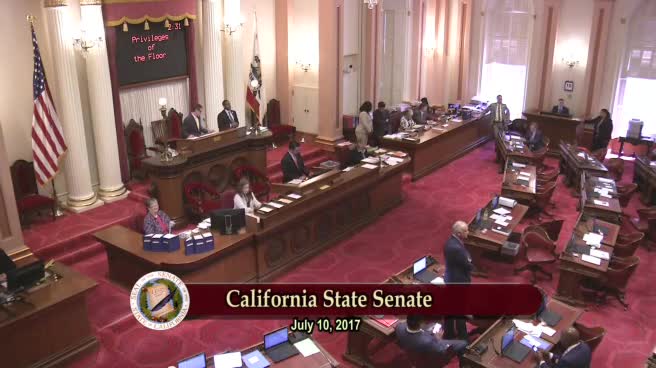 4MIN
Senate Floor
 2MIN
Assembly Floor
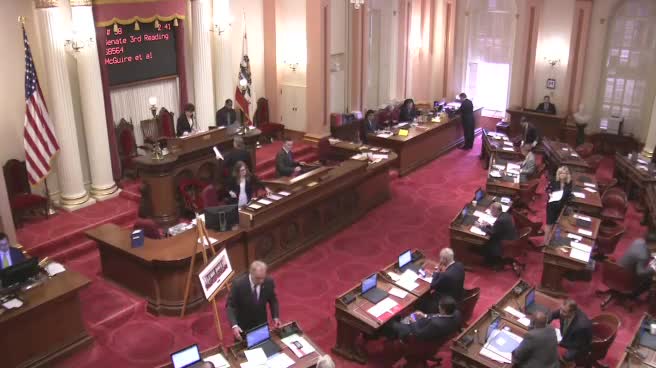 2MIN
Senate Floor
 3MIN
Senate Standing Committee on Governance and Finance
Bill Author