SB 45: Political Reform Act of 1974: mass mailing prohibition.
- Session Year: 2017-2018
- House: Senate
- Latest Version Date: 2017-10-15
The Political Reform Act of 1974 prohibits sending mass mailings at public expense. The act defines mass mailing as over 200 substantially similar pieces of mail not including form letters or other mail that is sent in response to an unsolicited request, letter, or other inquiry. An existing regulation adopted by the Fair Political Practices Commission prescribes criteria for mass mailings that are prohibited by the act and for mass mailings that are permissible under the act.
This bill would codify this regulation. The bill would additionally prohibit a mass mailing from being sent within the 60 days preceding an election by or on behalf of a candidate whose name will appear on the ballot, except as specified.
A willful violation of the acts provisions is punishable as a misdemeanor. By expanding the scope of an existing crime, this bill would impose a state-mandated local program.
The California Constitution requires the state to reimburse local agencies and school districts for certain costs mandated by the state. Statutory provisions establish procedures for making that reimbursement.
This bill would provide that no reimbursement is required by this act for a specified reason.
The Political Reform Act of 1974, an initiative measure, provides that the Legislature may amend the act to further the acts purposes upon a 2/3 vote of each house of the Legislature and compliance with specified procedural requirements.
This bill would declare that it furthers the purposes of the act.
The Political Reform Act of 1974 prohibits sending mass mailings at public expense. The act defines mass mailing as over 200 substantially similar pieces of mail not including form letters or other mail that is sent in response to an unsolicited request, letter, or other inquiry. An existing regulation adopted by the Fair Political Practices Commission prescribes criteria for mass mailings that are prohibited by the act and for mass mailings that are permissible under the act.
This bill would codify this regulation. The bill would additionally prohibit a mass mailing from being sent within the 90 60 days preceding an election by or on behalf of a candidate whose name will appear on the ballot, except as specified.
A willful violation of the acts provisions is punishable as a misdemeanor. By expanding the scope of an existing crime, this bill would impose a state-mandated local program.
The California Constitution requires the state to reimburse local agencies and school districts for certain costs mandated by the state. Statutory provisions establish procedures for making that reimbursement.
This bill would provide that no reimbursement is required by this act for a specified reason.
The Political Reform Act of 1974, an initiative measure, provides that the Legislature may amend the act to further the acts purposes upon a 2/3 vote of each house of the Legislature and compliance with specified procedural requirements.
This bill would declare that it furthers the purposes of the act.
The Political Reform Act of 1974 prohibits sending mass mailings at public expense. The act defines mass mailing as over 200 substantially similar pieces of mail not including form letters or other mail that is sent in response to an unsolicited request, letter, or other inquiry. An existing regulation adopted by the Fair Political Practices Commission prescribes criteria for mass mailings that are prohibited by the act and for mass mailings that are permissible under the act.
This bill would codify this regulation. The bill would additionally prohibit a mass mailing from being sent within the 90 days preceding an election by or on behalf of a candidate whose name will appear on the ballot, except as specified.
A willful violation of the acts provisions is punishable as a misdemeanor. By expanding the scope of an existing crime, this bill would impose a state-mandated local program.
The California Constitution requires the state to reimburse local agencies and school districts for certain costs mandated by the state. Statutory provisions establish procedures for making that reimbursement.
This bill would provide that no reimbursement is required by this act for a specified reason.
The Political Reform Act of 1974, an initiative measure, provides that the Legislature may amend the act to further the acts purposes upon a 2/3 vote of each house of the Legislature and compliance with specified procedural requirements.
This bill would declare that it furthers the purposes of the act.
The Political Reform Act of 1974 prohibits sending mass mailings at public expense. The act defines mass mailing as over 200 substantially similar pieces of mail not including form letters or other mail that is sent in response to an unsolicited request, letter, or other inquiry. An existing regulation adopted by the Fair Political Practices Commission prescribes criteria for mass mailings that are prohibited by the act and for mass mailings that are permissible under the act.
This bill would codify this regulation. The bill would additionally prohibit a mass mailing from being sent within the 90 days preceding an election by or on behalf of a candidate whose name will appear on the ballot, except as otherwise required by law. specified.
A willful violation of the acts provisions is punishable as a misdemeanor. By expanding the scope of an existing crime, this bill would impose a state-mandated local program.
The California Constitution requires the state to reimburse local agencies and school districts for certain costs mandated by the state. Statutory provisions establish procedures for making that reimbursement.
This bill would provide that no reimbursement is required by this act for a specified reason.
The Political Reform Act of 1974, an initiative measure, provides that the Legislature may amend the act to further the acts purposes upon a 2/3 vote of each house of the Legislature and compliance with specified procedural requirements.
This bill would declare that it furthers the purposes of the act.
The Political Reform Act of 1974 prohibits sending mass mailings at public expense. The act defines mass mailing as over 200 substantially similar pieces of mail not including form letters or other mail that is sent in response to an unsolicited request, letter, or other inquiry. Existing regulations of An existing regulation adopted by the Fair Political Practices Commission add further definitional prescribes criteria for mass mailings and specify certain forms of mass mailing that are not subject to the acts prohibition against mass mailings. that are prohibited by the act and for mass mailings that are permissible under the act.
This bill would codify this regulation. The bill would additionally prohibit a mass mailing that complies with the Commissions regulatory criteria from being sent within the 90 days preceding an election by or on behalf of a candidate whose name will appear on the ballot. ballot, except as otherwise required by law.
A willful violation of the acts provisions is punishable as a misdemeanor. By expanding the scope of an existing crime, this bill would impose a state-mandated local program.
The California Constitution requires the state to reimburse local agencies and school districts for certain costs mandated by the state. Statutory provisions establish procedures for making that reimbursement.
This bill would provide that no reimbursement is required by this act for a specified reason.
The Political Reform Act of 1974, an initiative measure, provides that the Legislature may amend the act to further the acts purposes upon a 2/3 vote of each house of the Legislature and compliance with specified procedural requirements.
This bill would declare that it furthers the purposes of the act.
The Political Reform Act of 1974 prohibits sending mass mailings at public expense. The act defines mass mailing as over 200 substantially similar pieces of mail not including form letters or other mail that is sent in response to an unsolicited request, letter, or other inquiry. Existing regulations of the Fair Political Practices Commission add further definitional criteria for mass mailings and specify certain forms of mass mailing that are not subject to the acts prohibition against mass mailings.
This bill would prohibit a mass mailing that complies with the Commissions regulatory criteria from being sent within the 90 days preceding an election by or on behalf of a candidate whose name will appear on the ballot.
A willful violation of the acts provisions is punishable as a misdemeanor. By expanding the scope of an existing crime, this bill would impose a state-mandated local program.
The California Constitution requires the state to reimburse local agencies and school districts for certain costs mandated by the state. Statutory provisions establish procedures for making that reimbursement.
This bill would provide that no reimbursement is required by this act for a specified reason.
The Political Reform Act of 1974, an initiative measure, provides that the Legislature may amend the act to further the acts purposes upon a 2/3 vote of each house of the Legislature and compliance with specified procedural requirements.
This bill would declare that it furthers the purposes of the act.
(a)Except as provided in subdivision (b), a mailing is prohibited by Section 89001 if all of the following criteria are met:
(1)An item sent is delivered, by any means, to the recipient at his or her residence, place of employment or business, or post office box. The item delivered to the recipient must be a tangible item, such as a videotape, record, or button, or a written document.
(2)The item sent either:
(A)Features an elected officer affiliated with the agency that produces or sends the mailing.
(B)Includes the name, office, photograph, or other reference to an elected officer affiliated with the agency that produces or sends the mailing, and is prepared or sent in cooperation, consultation, coordination, or concert with the elected officer.
(3)Any of the costs of distribution are paid for with public money or the costs of design, production, and printing exceeding fifty dollars ($50) are paid with public moneys, and the design, production, or printing is done with the intent of sending the item other than as permitted by this section.
(4)More than 200 substantially similar items are sent in a single calendar month, excluding any item sent in response to an unsolicited request and any item described in subdivision (b).
(b)Notwithstanding subdivision (a), a mass mailing of the following items is not prohibited by Section 89001:
(1)An item in which the elected officers name appears only in the letterhead or logotype of the stationery, forms, including For Your Information or Compliments of cards or stamps, and envelopes of the agency sending the mailing, or of a committee of the agency, or of the elected officer, or in a roster listing containing the names of all elected officers of the agency. For purposes of this section, the return address portion of a self-mailer is considered the envelope. In any such item, the names of all elected officers must appear in the same type size, typeface, type color, and location. The item shall not include the elected officers photograph, signature, or any other reference to the elected officer, except as specifically permitted by this section. The item may, however, include the elected officers office or district number and the elected officers name or district number in his or her Internet Web site address or electronic mail address.
(2)A press release sent to members of the media.
(3)An item sent in the normal course of business from one governmental entity or officer to another governmental entity or officer, including all local, state, and federal officers or entities.
(4)An intra-agency communication sent in the normal course of business to employees, officers, deputies, and other staff.
(5)An item sent in connection with the payment or collection of funds by the agency sending the mailing, including tax bills, checks, and similar documents, in any instance in which use of the elected officers name, office, title, or signature is necessary to the payment or collection of the funds. The item shall not include the elected officers photograph, signature, or any other reference to the elected officer, except as specifically permitted by this section.
(6)Any item sent by an agency responsible for administering a government program, to persons subject to that program, in any instance in which the mailing of the item is essential to the functioning of the program, the item does not include the elected officers photograph, and use of the elected officers name, office, title, or signature is necessary to the functioning of the program.
(7)Any legal notice or other item sent as required by law, court order, or order adopted by an administrative agency pursuant to the Administrative Procedure Act (Chapter 3.5 (commencing with Section 11340) of Part 1 of Division 3 of Title 2), and in which use of the elected officers name, office, title, or signature is necessary in the notice or other mailing. For purposes of this paragraph, inclusion of an elected officers name on a ballot as a candidate for elective office, and inclusion of an elected officers name and signature on a ballot argument, shall be considered necessary to that notice or other item.
(8)A telephone directory, organization chart, or similar listing or roster which includes the names of elected officers as well as other individuals in the agency sending the mailing, in which the name of each elected officer and individual listed appears in the same type size, typeface, and type color. The item shall not include an elected officers photograph, name, signature, or any other reference to an elected officer, except as specifically permitted by this section.
(9)(A) An announcement of any meeting or event of either of the following:
(i)An announcement sent to an elected officers constituents concerning a public meeting that is directly related to the elected officers incumbent governmental duties, is to be held by the elected officer, and that the elected officer intends to attend.
(ii)An announcement of any official agency event or events for which the agency is providing the use of its facilities or staff or other financial support.
(B)Any announcement provided for in this paragraph shall not include the elected officers photograph or signature and may include only a single mention of the elected officers name except as permitted elsewhere in this section.
(10)An agenda or other writing that is required to be made available pursuant to Sections 11125.1 and 54957.5, or a bill, file, history, journal, committee analysis, floor analysis, agenda of an interim or special hearing of a committee of the Legislature, or index of legislation, published by the Legislature.
(11)A business card that does not contain the elected officers photograph or more than one mention of the elected officers name.
(c)For purposes of this section, the following terms have the following meanings:
(1)Elected officer affiliated with the agency means an elected officer who is a member, officer, or employee of the agency, or of a subunit thereof such as a committee, or who has supervisory control over the agency or appoints one or more members of the agency.
(2)Features an elected officer means that the item mailed includes the elected officers photograph or signature or singles out the elected officer by the manner of display of his or her name or office in the layout of the document, such as by headlines, captions, type size, typeface, or type color.
(3)Substantially similar is defined as follows:
(A)Two items are substantially similar if any of the following applies:
(i)The items are identical, except for changes necessary to identify the recipient and his or her address.
(ii)The items are intended to honor, commend, congratulate, or recognize an individual or group, or individuals or groups, for the same event or occasion, are intended to celebrate or recognize the same holiday, or are intended to congratulate an individual or group, or individuals or groups, on the same type of event, such as birthdays or anniversaries.
(iii)Both of the following apply to the items mailed:
(I)Most of the bills, legislation, governmental action, activities, events, or issues of public concern mentioned in one item are mentioned in the other.
(II)Most of the information contained in one item is contained in the other.
(B)Enclosure of the same informational materials in two items mailed, such as copies of the same bill, public document, or report, shall not, by itself, mean that the two items are substantially similar. The informational materials shall not include the elected officers name, photograph, signature, or any other reference to the elected officer except as permitted elsewhere in this section.
(C)An item is only considered substantially similar to other items sent by the same official, not to items sent by other officials in the same agency.
(4)Unsolicited request is defined as follows:
(A)A written or oral communication, including a petition, that specifically requests a response and is not requested or induced by the recipient elected officer or by any third person acting at his or her behest. However, an unsolicited oral or written communication, including a petition, that does not contain a specific request for a response shall be deemed to constitute an unsolicited request for a single written response.
(B)An unsolicited request for continuing information on a subject shall be deemed an unsolicited request for multiple responses directly related to that subject for a period of time not to exceed 24 months. An unsolicited request to receive a regularly published agency newsletter shall be deemed an unsolicited request for each issue of that newsletter.
(C)A previously unsolicited request to receive an agency newsletter or mass mailing on an ongoing basis shall not be deemed to have become solicited by the sole fact that the requestor responds to an agency notice indicating that, in the absence of a response, his or her name will be purged from the mailing list for that newsletter or mass mailing. A notice in the following language shall be deemed to meet this standard:
The law does not permit this office to use public funds to keep you updated on items of interest unless you specifically request that it do so.
Inclusion of a similar notice in other items does not constitute a solicitation under this section.
(D)A communication sent in response to an elected officers participation at a public forum or press conference, or to his or her issuance of a press release, shall be deemed an unsolicited request.
(E)A person who subscribes to newspapers or other periodicals published by persons other than elected officers shall be deemed to have made unsolicited requests for materials published in those subscription publications.
SEC. 2.Section 89003 is added to the Government Code, to read:89003.Notwithstanding subdivision (b) of Section 89002, a mass mailing, as defined in Section 82041.5, that meets the criteria of subdivision (a) of Section 89002 shall not be sent within the 60 days preceding an election by or on behalf of a candidate whose name will appear on the ballot at that election, except as provided in paragraphs (2) to (8), inclusive, and paragraph (10) of subdivision (b) of Section 89002.
SEC. 3.No reimbursement is required by this act pursuant to Section 6 of Article XIIIB of the California Constitution because the only costs that may be incurred by a local agency or school district will be incurred because this act creates a new crime or infraction, eliminates a crime or infraction, or changes the penalty for a crime or infraction, within the meaning of Section 17556 of the Government Code, or changes the definition of a crime within the meaning of Section 6 of Article XIIIB of the California Constitution.
SEC. 4.The Legislature finds and declares that this bill furthers the purposes of the Political Reform Act of 1974 within the meaning of subdivision (a) of Section 81012 of the Government Code.
(a)Except as provided in subdivision (b), a mailing is prohibited by Section 89001 if all of the following criteria are met:
(1)An item sent is delivered, by any means, to the recipient at his or her residence, place of employment or business, or post office box. The item delivered to the recipient must be a tangible item, such as a videotape, record, or button, or a written document.
(2)The item sent either:
(A)Features an elected officer affiliated with the agency that produces or sends the mailing.
(B)Includes the name, office, photograph, or other reference to an elected officer affiliated with the agency that produces or sends the mailing, and is prepared or sent in cooperation, consultation, coordination, or concert with the elected officer.
(3)Any of the costs of distribution are paid for with public money or the costs of design, production, and printing exceeding fifty dollars ($50.00) ($50) are paid with public moneys, and the design, production, or printing is done with the intent of sending the item other than as permitted by this section.
(4)More than 200 substantially similar items are sent in a single calendar month, excluding any item sent in response to an unsolicited request and any item described in subdivision (b).
(b)Notwithstanding subdivision (a), a mass mailing of the following items is not prohibited by Section 89001:
(1)An item in which the elected officers name appears only in the letterhead or logotype of the stationery, forms, including For Your Information or Compliments of cards or stamps, and envelopes of the agency sending the mailing, or of a committee of the agency, or of the elected officer, or in a roster listing containing the names of all elected officers of the agency. For purposes of this section, the return address portion of a self-mailer is considered the envelope. In any such item, the names of all elected officers must appear in the same type size, typeface, type color, and location. Such The item may shall not include the elected officers photograph, signature, or any other reference to the elected officer, except as specifically permitted by this section. Such The item may, however, include the elected officers office or district number and the elected officers name or district number in his or her Internet Web site address or electronic mail address.
(2)A press release sent to members of the media.
(3)An item sent in the normal course of business from one governmental entity or officer to another governmental entity or officer, including all local, state, and federal officers or entities.
(4)An intra-agency communication sent in the normal course of business to employees, officers, deputies, and other staff.
(5)An item sent in connection with the payment or collection of funds by the agency sending the mailing, including tax bills, checks, and similar documents, in any instance where in which use of the elected officers name, office, title, or signature is necessary to the payment or collection of the funds. The item may shall not include the elected officers photograph, signature, or any other reference to the elected officer, except as specifically permitted by this section.
(6)Any item sent by an agency responsible for administering a government program, to persons subject to that program, in any instance in which the mailing of the item is essential to the functioning of the program, the item does not include the elected officers photograph, and use of the elected officers name, office, title, or signature is necessary to the functioning of the program.
(7)Any legal notice or other item sent as required by law, court order, or order adopted by an administrative agency pursuant to the Administrative Procedure Act (Chapter 3.5 (commencing with Section 11340) of Part 1 of Division 3 of Title 2), and in which use of the elected officers name, office, title, or signature is necessary in the notice or other mailing. For purposes of this paragraph, inclusion of an elected officers name on a ballot as a candidate for elective office, and inclusion of an elected officers name and signature on a ballot argument, shall be considered necessary to that notice or other item.
(8)A telephone directory, organization chart, or similar listing or roster which includes the names of elected officers as well as other individuals in the agency sending the mailing, in which the name of each elected officer and individual listed appears in the same type size, typeface, and type color. The item shall not include an elected officers photograph, name, signature, or any other reference to an elected officer, except as specifically permitted by this section.
(9)(A) An announcement of any meeting or event of either of the following:
(i)An announcement sent to an elected officers constituents concerning a public meeting that is directly related to the elected officers incumbent governmental duties, is to be held by the elected officer, and that the elected officer intends to attend.
(ii)An announcement of any official agency event or events for which the agency is providing the use of its facilities or staff or other financial support.
(B)Any announcement provided for in this paragraph shall not include the elected officers photograph or signature and may include only a single mention of the elected officers name except as permitted elsewhere in this section.
(10)An agenda or other writing that is required to be made available pursuant to Sections 11125.1 and 54957.5, or a bill, file, history, journal, committee analysis, floor analysis, agenda of an interim or special hearing of a committee of the Legislature, or index of legislation, published by the Legislature.
(11)A business card which that does not contain the elected officers photograph or more than one mention of the elected officers name.
(c)For purposes of this section, the following terms have the following meanings:
(1)Elected officer affiliated with the agency means an elected officer who is a member, officer, or employee of the agency, or of a subunit thereof such as a committee, or who has supervisory control over the agency or appoints one or more members of the agency.
(2)Features an elected officer means that the item mailed includes the elected officers photograph or signature or singles out the elected officer by the manner of display of his or her name or office in the layout of the document, such as by headlines, captions, type size, typeface, or type color.
(3)Substantially similar is defined as follows:
(A)Two items are substantially similar if any of the following applies:
(i)The items are identical, except for changes necessary to identify the recipient and his or her address.
(ii)The items are intended to honor, commend, congratulate, or recognize an individual or group, or individuals or groups, for the same event or occasion, are intended to celebrate or recognize the same holiday, or are intended to congratulate an individual or group, or individuals or groups, on the same type of event, such as birthdays or anniversaries.
(iii)Both of the following apply to the items mailed:
(I)Most of the bills, legislation, governmental action, activities, events, or issues of public concern mentioned in one item are mentioned in the other.
(II)Most of the information contained in one item is contained in the other.
(B)Enclosure of the same informational materials in two items mailed, such as copies of the same bill, public document, or report, shall not, by itself, mean that the two items are substantially similar. Such The informational materials shall not include the elected officers name, photograph, signature, or any other reference to the elected officer except as permitted elsewhere in this regulation. section.
(C)An item is only considered substantially similar to other items sent by the same official, not to items sent by other officials in the same agency.
(4)Unsolicited request is defined as follows:
(A)A written or oral communication, including a petition, that specifically requests a response and is not requested or induced by the recipient elected officer or by any third person acting at his or her behest. However, an unsolicited oral or written communication, including a petition, that does not contain a specific request for a response shall be deemed to constitute an unsolicited request for a single written response.
(B)An unsolicited request for continuing information on a subject shall be deemed an unsolicited request for multiple responses directly related to that subject for a period of time not to exceed 24 months. An unsolicited request to receive a regularly published agency newsletter shall be deemed an unsolicited request for each issue of that newsletter.
(C)A previously unsolicited request to receive an agency newsletter or mass mailing on an ongoing basis shall not be deemed to have become solicited by the sole fact that the requestor responds to an agency notice indicating that, in the absence of a response, his or her name will be purged from the mailing list for that newsletter or mass mailing. A notice in the following language shall be deemed to meet this standard:
The law does not permit this office to use public funds to keep you updated on items of interest unless you specifically request that it do so.
Inclusion of a similar notice in other items does not constitute a solicitation under this section.
(D)A communication sent in response to an elected officers participation at a public forum or press conference, or to his or her issuance of a press release, shall be deemed an unsolicited request.
(E)A person who subscribes to newspapers or other periodicals published by persons other than elected officers shall be deemed to have made unsolicited requests for materials published in those subscription publications.
SEC. 2.Section 89003 is added to the Government Code, to read:89003.Notwithstanding subdivision (b) of Section 89002, a mass mailing, as defined in Section 82041.5, that meets the criteria of subdivision (a) of Section 89002 shall not be sent within the 90 60 days preceding an election by or on behalf of a candidate whose name will appear on the ballot at that election, except as provided in paragraphs (2) to (8), inclusive, and paragraph (10) of subdivision (b) of Section 89002.
SEC. 3.No reimbursement is required by this act pursuant to Section 6 of Article XIIIB of the California Constitution because the only costs that may be incurred by a local agency or school district will be incurred because this act creates a new crime or infraction, eliminates a crime or infraction, or changes the penalty for a crime or infraction, within the meaning of Section 17556 of the Government Code, or changes the definition of a crime within the meaning of Section 6 of Article XIIIB of the California Constitution.
SEC. 4.The Legislature finds and declares that this bill furthers the purposes of the Political Reform Act of 1974 within the meaning of subdivision (a) of Section 81012 of the Government Code.
(a)Except as provided in subdivision (b), a mailing is prohibited by Section 89001 if all of the following criteria are met:
(1)An item sent is delivered, by any means, to the recipient at his or her residence, place of employment or business, or post office box. The item delivered to the recipient must be a tangible item, such as a videotape, record, or button, or a written document.
(2)The item sent either:
(A)Features an elected officer affiliated with the agency that produces or sends the mailing.
(B)Includes the name, office, photograph, or other reference to an elected officer affiliated with the agency that produces or sends the mailing, and is prepared or sent in cooperation, consultation, coordination, or concert with the elected officer.
(3)Any of the costs of distribution are paid for with public money or the costs of design, production, and printing exceeding fifty dollars ($50.00) are paid with public moneys, and the design, production, or printing is done with the intent of sending the item other than as permitted by this section.
(4)More than two hundred substantially similar items are sent in a single calendar month, excluding any item sent in response to an unsolicited request and any item described in subdivision (b).
(b)Notwithstanding subdivision (a), a mass mailing of the following items is not prohibited by Section 89001:
(1)An item in which the elected officer's name appears only in the letterhead or logotype of the stationery, forms, including For Your Information or Compliments of cards or stamps, and envelopes of the agency sending the mailing, or of a committee of the agency, or of the elected officer, or in a roster listing containing the names of all elected officers of the agency. For purposes of this section, the return address portion of a self-mailer is considered the envelope. In any such item, the names of all elected officers must appear in the same type size, typeface, type color, and location. Such item may not include the elected officer's photograph, signature, or any other reference to the elected officer, except as specifically permitted by this section. Such item may, however, include the elected officers office or district number and the elected officers name or district number in his or her Internet Web site address or electronic mail address.
(2)A press release sent to members of the media.
(3)An item sent in the normal course of business from one governmental entity or officer to another governmental entity or officer, including all local, state, and federal officers or entities.
(4)An intra-agency communication sent in the normal course of business to employees, officers, deputies, and other staff.
(5)An item sent in connection with the payment or collection of funds by the agency sending the mailing, including tax bills, checks, and similar documents, in any instance where use of the elected officer's name, office, title, or signature is necessary to the payment or collection of the funds. The item may not include the elected officer's photograph, signature, or any other reference to the elected officer, except as specifically permitted by this section.
(6)Any item sent by an agency responsible for administering a government program, to persons subject to that program, in any instance in which the mailing of the item is essential to the functioning of the program, the item does not include the elected officer's photograph, and use of the elected officer's name, office, title, or signature is necessary to the functioning of the program.
(7)Any legal notice or other item sent as required by law, court order, or order adopted by an administrative agency pursuant to the Administrative Procedure Act (Chapter 3.5 (commencing with Section 11340) of Part 1 of Division 3 of Title 2), and in which use of the elected officer's name, office, title, or signature is necessary in the notice or other mailing. For purposes of this paragraph, inclusion of an elected officer's name on a ballot as a candidate for elective office, and inclusion of an elected officer's name and signature on a ballot argument, shall be considered necessary to that notice or other item.
(8)A telephone directory, organization chart, or similar listing or roster which includes the names of elected officers as well as other individuals in the agency sending the mailing, in which the name of each elected officer and individual listed appears in the same type size, typeface, and type color. The item shall not include an elected officer's photograph, name, signature, or any other reference to an elected officer, except as specifically permitted by this section.
(9)(A) An announcement of any meeting or event of either of the following:
(i)An announcement sent to an elected officer's constituents concerning a public meeting that is directly related to the elected officer's incumbent governmental duties, is to be held by the elected officer, and that the elected officer intends to attend.
(ii)An announcement of any official agency event or events for which the agency is providing the use of its facilities or staff or other financial support.
(B)Any announcement provided for in this paragraph shall not include the elected officer's photograph or signature and may include only a single mention of the elected officer's name except as permitted elsewhere in this section.
(10)An agenda or other writing that is required to be made available pursuant to Sections 11125.1 and 54957.5, or a bill, file, history, journal, committee analysis, floor analysis, agenda of an interim or special hearing of a committee of the Legislature, or index of legislation, published by the Legislature.
(11)A business card which does not contain the elected officer's photograph or more than one mention of the elected officer's name.
(c)For purposes of this section, the following terms have the following meanings:
(1)Elected officer affiliated with the agency means an elected officer who is a member, officer, or employee of the agency, or of a subunit thereof such as a committee, or who has supervisory control over the agency or appoints one or more members of the agency.
(2)Features an elected officer means that the item mailed includes the elected officer's photograph or signature or singles out the elected officer by the manner of display of his or her name or office in the layout of the document, such as by headlines, captions, type size, typeface, or type color.
(3)Substantially similar is defined as follows:
(A)Two items are substantially similar if any of the following applies:
(i)The items are identical, except for changes necessary to identify the recipient and his or her address.
(ii)The items are intended to honor, commend, congratulate, or recognize an individual or group, or individuals or groups, for the same event or occasion, are intended to celebrate or recognize the same holiday, or are intended to congratulate an individual or group, or individuals or groups, on the same type of event, such as birthdays or anniversaries.
(iii)Both of the following apply to the items mailed:
(I)Most of the bills, legislation, governmental action, activities, events, or issues of public concern mentioned in one item are mentioned in the other.
(II)Most of the information contained in one item is contained in the other.
(B)Enclosure of the same informational materials in two items mailed, such as copies of the same bill, public document, or report, shall not, by itself, mean that the two items are substantially similar. Such informational materials shall not include the elected officer's name, photograph, signature, or any other reference to the elected officer except as permitted elsewhere in this regulation.
(C)An item is only considered substantially similar to other items sent by the same official, not to items sent by other officials in the same agency.
(4)Unsolicited request is defined as follows:
(A)A written or oral communication, including a petition, that specifically requests a response and is not requested or induced by the recipient elected officer or by any third person acting at his or her behest. However, an unsolicited oral or written communication, including a petition, that does not contain a specific request for a response shall be deemed to constitute an unsolicited request for a single written response.
(B)An unsolicited request for continuing information on a subject shall be deemed an unsolicited request for multiple responses directly related to that subject for a period of time not to exceed 24 months. An unsolicited request to receive a regularly published agency newsletter shall be deemed an unsolicited request for each issue of that newsletter.
(C)A previously unsolicited request to receive an agency newsletter or mass mailing on an ongoing basis shall not be deemed to have become solicited by the sole fact that the requestor responds to an agency notice indicating that, in the absence of a response, his or her name will be purged from the mailing list for that newsletter or mass mailing. A notice in the following language shall be deemed to meet this standard:
The law does not permit this office to use public funds to keep you updated on items of interest unless you specifically request that it do so.
Inclusion of a similar notice in other items does not constitute a solicitation under this section.
(D)A communication sent in response to an elected officer's participation at a public forum or press conference, or to his or her issuance of a press release, shall be deemed an unsolicited request.
(E)A person who subscribes to newspapers or other periodicals published by persons other than elected officers shall be deemed to have made unsolicited requests for materials published in those subscription publications.
SEC. 2.Section 89003 is added to the Government Code, to read:89003.Notwithstanding subdivision (b) of Section 89002, a mass mailing, as defined in Section 82041.5, that meets the criteria of subdivision (a) of Section 89002 shall not be sent within the 90 days preceding an election by or on behalf of a candidate whose name will appear on the ballot at that election, except as provided in paragraphs (3) (2) to (8), inclusive, and paragraph (10) of subdivision (b) of Section 89002.
SEC. 3.No reimbursement is required by this act pursuant to Section 6 of Article XIIIB of the California Constitution because the only costs that may be incurred by a local agency or school district will be incurred because this act creates a new crime or infraction, eliminates a crime or infraction, or changes the penalty for a crime or infraction, within the meaning of Section 17556 of the Government Code, or changes the definition of a crime within the meaning of Section 6 of Article XIIIB of the California Constitution.
SEC. 4.The Legislature finds and declares that this bill furthers the purposes of the Political Reform Act of 1974 within the meaning of subdivision (a) of Section 81012 of the Government Code.
(a)Except as provided in subdivision (b), a mailing is prohibited by Section 89001 if all of the following criteria are met:
(1)An item sent is delivered, by any means, to the recipient at his or her residence, place of employment or business, or post office box. The item delivered to the recipient must be a tangible item, such as a videotape, record, or button, or a written document.
(2)The item sent either:
(A)Features an elected officer affiliated with the agency that produces or sends the mailing.
(B)Includes the name, office, photograph, or other reference to an elected officer affiliated with the agency that produces or sends the mailing, and is prepared or sent in cooperation, consultation, coordination, or concert with the elected officer.
(3)Any of the costs of distribution are paid for with public money or the costs of design, production, and printing exceeding fifty dollars ($50.00) are paid with public moneys, and the design, production, or printing is done with the intent of sending the item other than as permitted by this section.
(4)More than two hundred substantially similar items are sent in a single calendar month, excluding any item sent in response to an unsolicited request and any item described in subdivision (b).
(b)Notwithstanding subdivision (a), a mass mailing of the following items is not prohibited by Section 89001:
(1)An item in which the elected officer's name appears only in the letterhead or logotype of the stationery, forms, including For Your Information or Compliments of cards, cards or stamps, and envelopes of the agency sending the mailing, or of a committee of the agency, or of the elected officer, or in a roster listing containing the names of all elected officers of the agency. For purposes of this section, the return address portion of a self-mailer is considered the envelope. In any such item, the names of all elected officers must appear in the same type size, typeface, type color, and location. Such item may not include the elected officer's photograph, signature, or any other reference to the elected officer, except as specifically permitted by this section. Such item may, however, include the elected officers office or district number and the elected officers name or district number in his or her Internet Web site address or electronic mail address.
(2)A press release sent to members of the media.
(3)An item sent in the normal course of business from one governmental entity or officer to another governmental entity or officer. officer, including all local, state, and federal officers or entities.
(4)An intra-agency communication sent in the normal course of business to employees, officers, deputies, and other staff.
(5)An item sent in connection with the payment or collection of funds by the agency sending the mailing, including tax bills, checks, and similar documents, in any instance where use of the elected officer's name, office, title, or signature is necessary to the payment or collection of the funds. The item may not include the elected officer's photograph, signature, or any other reference to the elected officer, except as specifically permitted by this section.
(6)Any item sent by an agency responsible for administering a government program, to persons subject to that program, in any instance in which the mailing of the item is essential to the functioning of the program, the item does not include the elected officer's photograph, and use of the elected officer's name, office, title, or signature is necessary to the functioning of the program.
(7)Any legal notice or other item sent as required by law, court order, or order adopted by an administrative agency pursuant to the Administrative Procedure Act (Chapter 3.5 (commencing with Section 11340) of Part 1 of Division 3 of Title 2), and in which use of the elected officer's name, office, title, or signature is necessary in the notice or other mailing. For purposes of this paragraph, inclusion of an elected officer's name on a ballot as a candidate for elective office, and inclusion of an elected officer's name and signature on a ballot argument, shall be considered necessary to that notice or other item.
(8)A telephone directory, organization chart, or similar listing or roster which includes the names of elected officers as well as other individuals in the agency sending the mailing, in which the name of each elected officer and individual listed appears in the same type size, typeface, and type color. The item shall not include an elected officer's photograph, name, signature, or any other reference to an elected officer, except as specifically permitted by this section.
(9)(A) An announcement of any meeting or event of either of the following:
(i)An announcement sent to an elected officer's constituents concerning a public meeting that is directly related to the elected officer's incumbent governmental duties, is to be held by the elected officer, and that the elected officer intends to attend.
(ii)An announcement of any official agency event or events for which the agency is providing the use of its facilities or staff or other financial support.
(B)Any announcement provided for in this paragraph shall not include the elected officer's photograph or signature and may include only a single mention of the elected officer's name except as permitted elsewhere in this section.
(10)An agenda or other writing that is required to be made available pursuant to Sections 11125.1 and 54957.5, or a bill, file, history, journal, committee analysis, floor analysis, agenda of an interim or special hearing of a committee of the Legislature, or index of legislation, published by the Legislature.
(11)A business card which does not contain the elected officer's photograph or more than one mention of the elected officer's name.
(c)For purposes of this section, the following terms have the following meanings:
(1)Elected officer affiliated with the agency means an elected officer who is a member, officer, or employee of the agency, or of a subunit thereof such as a committee, or who has supervisory control over the agency or appoints one or more members of the agency.
(2)Features an elected officer means that the item mailed includes the elected officer's photograph or signature or singles out the elected officer by the manner of display of his or her name or office in the layout of the document, such as by headlines, captions, type size, typeface, or type color.
(3)Substantially similar is defined as follows:
(A)Two items are substantially similar if any of the following applies:
(i)The items are identical, except for changes necessary to identify the recipient and his or her address.
(ii)The items are intended to honor, commend, congratulate, or recognize an individual or group, or individuals or groups, for the same event or occasion, are intended to celebrate or recognize the same holiday, or are intended to congratulate an individual or group, or individuals or groups, on the same type of event, such as birthdays or anniversaries.
(iii)Both of the following apply to the items mailed:
(aa)(I)Most of the bills, legislation, governmental action, activities, events, or issues of public concern mentioned in one item are mentioned in the other.
(bb)(II)Most of the information contained in one item is contained in the other.
(B)Enclosure of the same informational materials in two items mailed, such as copies of the same bill, public document, or report, shall not, by itself, mean that the two items are substantially similar. Such informational materials shall not include the elected officer's name, photograph, signature, or any other reference to the elected officer except as permitted elsewhere in this regulation.
(C)An item is only considered substantially similar to other items sent by the same official, not to items sent by other officials in the same agency.
(4)Unsolicited request is defined as follows:
(A)A written or oral communication, including a petition, that specifically requests a response and is not requested or induced by the recipient elected officer or by any third person acting at his or her behest. However, an unsolicited oral or written communication, including a petition, that does not contain a specific request for a response shall be deemed to constitute an unsolicited request for a single written response.
(B)An unsolicited request for continuing information on a subject shall be deemed an unsolicited request for multiple responses directly related to that subject for a period of time not to exceed 24 months. An unsolicited request to receive a regularly published agency newsletter shall be deemed an unsolicited request for each issue of that newsletter.
(C)A previously unsolicited request to receive an agency newsletter or mass mailing on an ongoing basis shall not be deemed to have become solicited by the sole fact that the requestor responds to an agency notice indicating that, in the absence of a response, his or her name will be purged from the mailing list for that newsletter or mass mailing. A notice in the following language shall be deemed to meet this standard:
The law does not permit this office to use public funds to keep you updated on items of interest unless you specifically request that it do so.
Inclusion of a similar notice in other items does not constitute a solicitation under this section.
(D)A communication sent in response to an elected officer's participation at a public forum or press conference, or to his or her issuance of a press release, shall be deemed an unsolicited request.
(E)A person who subscribes to newspapers or other periodicals published by persons other than elected officers shall be deemed to have made unsolicited requests for materials published in those subscription publications.
SEC. 2.Section 89003 is added to the Government Code, to read:89003.Notwithstanding subdivision (b) of Section 89002, a mass mailing mailing, as defined in Section 82041.5, that meets the criteria of subdivision (a) of Section 89002 shall not be sent within the 90 days preceding an election by or on behalf of a candidate whose name will appear on the ballot at that election, except as otherwise required by law. provided in paragraphs (3) to (8), inclusive, of subdivision (b) of Section 89002.
SEC. 3.No reimbursement is required by this act pursuant to Section 6 of Article XIIIB of the California Constitution because the only costs that may be incurred by a local agency or school district will be incurred because this act creates a new crime or infraction, eliminates a crime or infraction, or changes the penalty for a crime or infraction, within the meaning of Section 17556 of the Government Code, or changes the definition of a crime within the meaning of Section 6 of Article XIIIB of the California Constitution.
SEC. 4.The Legislature finds and declares that this bill furthers the purposes of the Political Reform Act of 1974 within the meaning of subdivision (a) of Section 81012 of the Government Code.
(a)Except as provided in subdivision (b), a mailing is prohibited by Section 89001 if all of the following criteria are met:
(1)An item sent is delivered, by any means, to the recipient at his or her residence, place of employment or business, or post office box. The item delivered to the recipient must be a tangible item, such as a videotape, record, or button, or a written document.
(2)The item sent either:
(A)Features an elected officer affiliated with the agency that produces or sends the mailing.
(B)Includes the name, office, photograph, or other reference to an elected officer affiliated with the agency that produces or sends the mailing, and is prepared or sent in cooperation, consultation, coordination, or concert with the elected officer.
(3)Any of the costs of distribution are paid for with public money or the costs of design, production, and printing exceeding fifty dollars ($50.00) are paid with public moneys, and the design, production, or printing is done with the intent of sending the item other than as permitted by this section.
(4)More than two hundred substantially similar items are sent in a single calendar month, excluding any item sent in response to an unsolicited request and any item described in subdivision (b).
(b)Notwithstanding subdivision (a), a mass mailing of the following items is not prohibited by Section 89001:
(1)An item in which the elected officer's name appears only in the letterhead or logotype of the stationery, forms, including For Your Information or Compliments of cards, and envelopes of the agency sending the mailing, or of a committee of the agency, or of the elected officer, or in a roster listing containing the names of all elected officers of the agency. In any such item, the names of all elected officers must appear in the same type size, typeface, type color, and location. Such item may not include the elected officer's photograph, signature, or any other reference to the elected officer, except as specifically permitted by this section.
(2)A press release sent to members of the media.
(3)An item sent in the normal course of business from one governmental entity or officer to another governmental entity or officer.
(4)An intra-agency communication sent in the normal course of business to employees, officers, deputies, and other staff.
(5)An item sent in connection with the payment or collection of funds by the agency sending the mailing, including tax bills, checks, and similar documents, in any instance where use of the elected officer's name, office, title, or signature is necessary to the payment or collection of the funds. The item may not include the elected officer's photograph, signature, or any other reference to the elected officer, except as specifically permitted by this section.
(6)Any item sent by an agency responsible for administering a government program, to persons subject to that program, in any instance in which the mailing of the item is essential to the functioning of the program, the item does not include the elected officer's photograph, and use of the elected officer's name, office, title, or signature is necessary to the functioning of the program.
(7)Any legal notice or other item sent as required by law, court order, or order adopted by an administrative agency pursuant to the Administrative Procedure Act (Chapter 3.5 (commencing with Section 11340) of Part 1 of Division 3 of Title 2), and in which use of the elected officer's name, office, title, or signature is necessary in the notice or other mailing. For purposes of this paragraph, inclusion of an elected officer's name on a ballot as a candidate for elective office, and inclusion of an elected officer's name and signature on a ballot argument, shall be considered necessary to that notice or other item.
(8)A telephone directory, organization chart, or similar listing or roster which includes the names of elected officers as well as other individuals in the agency sending the mailing, in which the name of each elected officer and individual listed appears in the same type size, typeface, and type color. The item shall not include an elected officer's photograph, name, signature, or any other reference to an elected officer, except as specifically permitted by this section.
(9)(A) An announcement of any meeting or event of either of the following:
(i)An announcement sent to an elected officer's constituents concerning a public meeting that is directly related to the elected officer's incumbent governmental duties, is to be held by the elected officer, and that the elected officer intends to attend.
(ii)An announcement of any official agency event or events for which the agency is providing the use of its facilities or staff or other financial support.
(B)Any announcement provided for in this paragraph shall not include the elected officer's photograph or signature and may include only a single mention of the elected officer's name except as permitted elsewhere in this section.
(10)An agenda or other writing that is required to be made available pursuant to Sections 11125.1 and 54957.5, or a bill, file, history, journal, committee analysis, floor analysis, agenda of an interim or special hearing of a committee of the Legislature, or index of legislation, published by the Legislature.
(11)A business card which does not contain the elected officer's photograph or more than one mention of the elected officer's name.
(c)For purposes of this section, the following terms have the following meanings:
(1)Elected officer affiliated with the agency means an elected officer who is a member, officer, or employee of the agency, or of a subunit thereof such as a committee, or who has supervisory control over the agency or appoints one or more members of the agency.
(2)Features an elected officer means that the item mailed includes the elected officer's photograph or signature or singles out the elected officer by the manner of display of his or her name or office in the layout of the document, such as by headlines, captions, type size, typeface, or type color.
(3)Substantially similar is defined as follows:
(A)Two items are substantially similar if any of the following applies:
(i)The items are identical, except for changes necessary to identify the recipient and his or her address.
(ii)The items are intended to honor, commend, congratulate, or recognize an individual or group, or individuals or groups, for the same event or occasion, are intended to celebrate or recognize the same holiday, or are intended to congratulate an individual or group, or individuals or groups, on the same type of event, such as birthdays or anniversaries.
(iii)Both of the following apply to the items mailed:
(aa)Most of the bills, legislation, governmental action, activities, events, or issues of public concern mentioned in one item are mentioned in the other.
(bb)Most of the information contained in one item is contained in the other.
(B)Enclosure of the same informational materials in two items mailed, such as copies of the same bill, public document, or report, shall not, by itself, mean that the two items are substantially similar. Such informational materials shall not include the elected officer's name, photograph, signature, or any other reference to the elected officer except as permitted elsewhere in this regulation.
(4)Unsolicited request is defined as follows:
(A)A written or oral communication, including a petition, that specifically requests a response and is not requested or induced by the recipient elected officer or by any third person acting at his or her behest. However, an unsolicited oral or written communication, including a petition, that does not contain a specific request for a response shall be deemed to constitute an unsolicited request for a single written response.
(B)An unsolicited request for continuing information on a subject shall be deemed an unsolicited request for multiple responses directly related to that subject for a period of time not to exceed 24 months. An unsolicited request to receive a regularly published agency newsletter shall be deemed an unsolicited request for each issue of that newsletter.
(C)A previously unsolicited request to receive an agency newsletter or mass mailing on an ongoing basis shall not be deemed to have become solicited by the sole fact that the requestor responds to an agency notice indicating that, in the absence of a response, his or her name will be purged from the mailing list for that newsletter or mass mailing. A notice in the following language shall be deemed to meet this standard:
The law does not permit this office to use public funds to keep you updated on items of interest unless you specifically request that it do so.
Inclusion of a similar notice in other items does not constitute a solicitation under this section.
(D)A communication sent in response to an elected officer's participation at a public forum or press conference, or to his or her issuance of a press release, shall be deemed an unsolicited request.
(E)A person who subscribes to newspapers or other periodicals published by persons other than elected officers shall be deemed to have made unsolicited requests for materials published in those subscription publications.
SECTION 1.SEC. 2.Section 89003 is added to the Government Code, to read:89003.(a)A Notwithstanding subdivision (b) of Section 89002, a mass mailing shall not be sent within the 90 days preceding an election by or on behalf of a candidate whose name will appear on the ballot at that election. election, except as otherwise required by law.
(b)For purposes of this section, mass mailing means a mass mailing, as defined by Section 82041.5, that meets the criteria of subdivision (a) of Section 18901 of Title 2 of the California Code of Regulations and, pursuant to subdivision (b) of Section 18901 of Title 2 of the California Code of Regulations, is not prohibited by Section 89001.SEC. 2.SEC. 3.No reimbursement is required by this act pursuant to Section 6 of Article XIIIB of the California Constitution because the only costs that may be incurred by a local agency or school district will be incurred because this act creates a new crime or infraction, eliminates a crime or infraction, or changes the penalty for a crime or infraction, within the meaning of Section 17556 of the Government Code, or changes the definition of a crime within the meaning of Section 6 of Article XIIIB of the California Constitution.
SEC. 3.SEC. 4.The Legislature finds and declares that this bill furthers the purposes of the Political Reform Act of 1974 within the meaning of subdivision (a) of Section 81012 of the Government Code.
(a)A mass mailing shall not be sent within the 90 days preceding an election by or on behalf of a candidate whose name will appear on the ballot at that election.
(b)For purposes of this section, mass mailing means a mass mailing, as defined by Section 82041.5, that meets the criteria of subdivision (a) of Section 18901 of Title 2 of the California Code of Regulations and, pursuant to subdivision (b) of Section 18901 of Title 2 of the California Code of Regulations, is not prohibited by Section 89001.
SEC. 2.No reimbursement is required by this act pursuant to Section 6 of Article XIIIB of the California Constitution because the only costs that may be incurred by a local agency or school district will be incurred because this act creates a new crime or infraction, eliminates a crime or infraction, or changes the penalty for a crime or infraction, within the meaning of Section 17556 of the Government Code, or changes the definition of a crime within the meaning of Section 6 of Article XIIIB of the California Constitution.
SEC. 3.The Legislature finds and declares that this bill furthers the purposes of the Political Reform Act of 1974 within the meaning of subdivision (a) of Section 81012 of the Government Code.
HeadingLine 2. Digest TextPage 1.|
Date
|
Status
|
|---|---|
| Oct 15, 2017 | Chaptered by Secretary of State. Chapter 827, Statutes of 2017. |
| Oct 15, 2017 | Approved by the Governor. |
| Sep 11, 2017 | Enrolled and presented to the Governor at 4 p.m. |
| Sep 5, 2017 | Assembly amendments concurred in. (Ayes 40. Noes 0.) Ordered to engrossing and enrolling. |
| Sep 1, 2017 | Ordered to special consent calendar. |
| Aug 31, 2017 | In Senate. Concurrence in Assembly amendments pending. |
| Aug 31, 2017 | Read third time. Passed. Ordered to the Senate. |
| Aug 24, 2017 | Read second time. Ordered to consent calendar. |
| Aug 23, 2017 | From committee: Do pass. Ordered to consent calendar. (Ayes 15. Noes 0.) (August 23). |
| Jul 17, 2017 | Read second time and amended. Re-referred to Com. on APPR. |
| Jul 13, 2017 | From committee: Do pass as amended and re-refer to Com. on APPR. with recommendation: To consent calendar. (Ayes 6. Noes 0.) (July 12). |
| Jun 15, 2017 | Referred to Com. on E. & R. |
| May 31, 2017 | In Assembly. Read first time. Held at Desk. |
| May 30, 2017 | Read third time. Passed. (Ayes 40. Noes 0. Page 1263.) Ordered to the Assembly. |
| May 26, 2017 | Read second time. Ordered to third reading. |
| May 25, 2017 | From committee: Do pass. (Ayes 7. Noes 0. Page 1176.) (May 25). |
| May 19, 2017 | Set for hearing May 25. |
| May 15, 2017 | May 15 hearing: Placed on APPR. suspense file. |
| May 4, 2017 | Set for hearing May 15. |
| May 3, 2017 | May 8 hearing postponed by committee. |
| May 1, 2017 | Set for hearing May 8. |
| Apr 24, 2017 | Read second time and amended. Re-referred to Com. on APPR. |
| Apr 20, 2017 | From committee: Do pass as amended and re-refer to Com. on APPR. (Ayes 5. Noes 0. Page 743.) (April 18). |
| Apr 17, 2017 | From committee with author's amendments. Read second time and amended. Re-referred to Com. on E. & C.A. |
| Apr 6, 2017 | From committee with author's amendments. Read second time and amended. Re-referred to Com. on E. & C.A. |
| Apr 4, 2017 | Set for hearing April 18. |
| Jan 12, 2017 | Referred to Com. on E. & C.A. |
| Dec 6, 2016 | From printer. May be acted upon on or after January 5. |
| Dec 5, 2016 | Introduced. Read first time. To Com. on RLS. for assignment. To print. |
|
Date
|
Description
|
Location
|
Votes
|
|
|---|---|---|---|---|
| Sep 5, 2017 | Special Consent SB45 Mendoza et al. | Senate Floor |
Passed |
|
| Aug 31, 2017 | SB 45 Mendoza Consent Calendar Second Day Regular Session | Assembly Floor |
Passed |
|
| Aug 23, 2017 | Do pass. To Consent Calendar. | Assembly Standing Committee on Appropriations |
Passed |
|
| Jul 12, 2017 | Do pass as amended, and be re-referred to the Committee on [Appropriations] with recommendation: To Consent Calendar | Assembly Standing Committee on Elections and Redistricting |
Passed |
|
| May 30, 2017 | Senate 3rd Reading SB45 Mendoza et al. | Senate Floor |
Passed |
|
| May 25, 2017 | Do pass | Senate Standing Committee on Appropriations |
Passed |
|
| May 15, 2017 | Placed on suspense file | Senate Standing Committee on Appropriations |
Passed |
|
| Apr 18, 2017 | Do pass as amended, but first amend, and re-refer to the Committee on [Appropriations] | Senate Standing Committee on Elections and Constitutional Amendments |
Passed |
This list shows positions taken on this bill by organizations on the date displayed, which is linked to the original source.
Positions by individuals are not included.
|
Organization
|
Position
|
Date
|
|---|---|---|
| California Common Cause | ** Support | Aug 31, 2017 |
| Courage Campaign | ** Support | Aug 31, 2017 |
| Letters From Individuals | ** Support | Apr 14, 2017 |
| Two individuals | ** Support | Aug 31, 2017 |
Office of Senate Floor Analyses (916) 651-1520 Fax: (916) 327-4478 | SB |
UNFINISHED BUSINESS
Bill No: SB 45
:
SENATE ELECTIONS & C.A. COMMITTEE: 5-0, 4/18/17
AYES: Stern, Anderson, Allen, Hertzberg, Leyva
SENATE APPROPRIATIONS COMMITTEE: 7-0, 5/25/17
AYES: Lara, Bates, Beall, Bradford, Hill, Nielsen, Wiener
SENATE FLOOR: 40-0, 5/30/17
AYES: Allen, Anderson, Atkins, Bates, Beall, Berryhill, Bradford, Cannella, De León, Dodd, Fuller, Gaines, Galgiani, Glazer, Hernandez, Hertzberg, Hill, Hueso, Jackson, Lara, Leyva, McGuire, Mendoza, Mitchell, Monning, Moorlach, Morrell, Newman, Nguyen, Nielsen, Pan, Portantino, Roth, Skinner, Stern, Stone, Vidak, Wieckowski, Wiener, Wilk
ASSEMBLY FLOOR: 73-0, 8/31/17 (Consent) - See last page for vote
DIGEST:
This bill codifies the Fair Political Practices Commission (FPPC) regulation regarding mass mailings sent at public expense and prohibits these mass mailings from being sent within the 60 days preceding an election by or on behalf of a state or local candidate whose name will appear on the ballot, as specified.
Assembly Amendments
change the aforementioned “blackout” period from 90 days preceding an election to 60 days preceding an election.
ANALYSIS: Existing law provides, pursuant to the Political Reform Act (PRA), that no newsletter or other mass mailing shall be sent at public expense. The PRA defines “mass mailing” as over 200 substantially similar pieces of mail not including mail that is sent in response to an unsolicited request, letter, or other inquiry. An existing FPPC regulation prescribes criteria for mass mailings that are both prohibited and permissible under the PRA. For a more detailed description of that regulation, see the “Background” section, below.
This bill:
- Codifies the FPPC regulation regarding mass mailings sent at public expense and includes therein additional clarifications based on formal and informal FPPC advice regarding the regulation.
- Prohibits an otherwise permissible mass mailing from being sent within the 60 days preceding an election by or on behalf of a state or local candidate (usually an officeholder) whose name will appear on the ballot, except as specified.
- Provides that mass mailings not subject to the pre-election blackout period would include the following:
- A press release sent to members of the media.
- An item sent in the normal course of business from one governmental entity or officer to another governmental entity or officer, including all local, state, and federal officers or entities.
- An intra-agency communication sent in the normal course of business to employees, officers, deputies, and other staff.
- An item sent in connection with the payment or collection of funds by the agency sending the mailing, including tax bills, checks, and similar documents, in any instance where use of the elected officer's name, office, title, or signature is necessary to the payment or collection of the funds. The item may not include the elected officer's photograph, signature, or any other reference to the elected officer, except as specifically permitted under this bill.
- Any item sent by an agency responsible for administering a government program, to persons subject to that program, in any instance in which the mailing of the item is essential to the functioning of the program, the item does not include the elected officer's photograph, and use of the elected officer's name, office, title, or signature is necessary to the functioning of the program.
- Any legal notice or other item sent as required by law, court order, or order adopted by an administrative agency pursuant to the Administrative Procedure Act, and in which use of the elected officer's name, office, title, or signature is necessary in the notice or other mailing. Inclusion of an elected officer's name on a ballot as a candidate for elective office, and inclusion of an elected officer's name and signature on a ballot argument, shall be considered necessary to that notice or other item.
- A telephone directory, organization chart, or similar listing or roster which includes the names of elected officers as well as other individuals in the agency sending the mailing, in which the name of each elected officer and individual listed appears in the same type size, typeface, and type color. The item may not include an elected officer's photograph, name, signature, or any other reference to an elected officer, except as specifically permitted under this bill.
- An agenda or other writing that is required to be made available pursuant to current law, or a bill, file, history, journal, committee analysis, floor analysis, agenda of an interim or special hearing of a committee of the Legislature, or index of legislation, published by the Legislature.
Background
The FPPC Mass Mailing Regulation. California voters passed Proposition 73 in 1988 which, among many other things, prohibited sending mass mailings at public expense. In an effort to make sense out of and apply context to that extremely broad prohibition, the FPPC enacted the regulation that this bill seeks to codify. The FPPC Web site describes the regulation as follows:
Which Mailings are Prohibited?
A mailing is prohibited under the Act if each of the following criteria is met, unless the item meets one or more exceptions.
- Delivery. A tangible item, such as a newsletter or brochure, is delivered, by any means, including by transmission of a fax, to a person’s residence, place of employment or business, or post office box. Note: Emails, Web site postings, text messages, and recorded telephone messages/robocalls are not considered tangible items and therefore, not subject to the Act’s mass mailing at public expense restrictions.
- Item Features an Elected Officer. The item sent either features an elected officer affiliated with the agency (by including the officer’s photo or signature, or singling out the officer by the manner his or her name or office is displayed), or the item includes a reference to an elected officer affiliated with the agency and the item is prepared or sent in cooperation with the elected officer.
- Public Moneys. Any of the costs of distribution are paid for with public moneys, or if public funds are not used for the actual distribution, in excess of $50 in public moneys is used to design, produce, or print the item and the design, production, or printing is done with the intent of sending the item other than as permitted by Regulation 18901.
- Mass Mailing. More than 200 substantially similar items are sent in a calendar month, excluding any item sent in response to an unsolicited request.
Exceptions - Permissible Mailings
Letterhead - A mailing in which an elected officer’s name appears only in the letterhead or logotype of the stationery, forms, and envelopes of the agency, or in a roster listing containing the names of all elected officers of the agency is permissible. The names of all elected officers must appear in the same size, font type, color, and location. The item may not contain an elected officer’s photo, signature, or any other reference to the officer.
Meeting Announcement - A "public meeting" announcement sent only to an elected officer's constituents is permitted so long as the meeting is directly related to the elected officer’s governmental duties and he or she intends to attend. The item may not contain the elected officer’s photo or signature and may include only a single mention of the elected officer.
Event Announcement - An announcement of any official agency event or events for which the agency is providing the use of its facilities or staff, or other financial support is permitted. The item may not contain the elected officer’s photo or signature and may include only a single mention of the elected officer.
Normal Agency Business Practices
The following items are not restricted by the Act’s mass mailing prohibition.
- Press releases sent to members of the media.
- Any item sent in the normal course of business from one governmental entity or officer to another governmental entity or officer.
- Any intra-agency communication sent in the normal course of business to employees, officers, deputies, and other staff.
- Tax bills, checks, and similar documents, in any instance where use of the elected officer's name, office, title, or signature is necessary to the payment or collection of the funds.
- A telephone directory, organization chart, or similar listing or roster that includes the names of elected officers as well as other individuals in the agency sending the mailing.
- Business cards that do not contain an elected officer’s photo or more than one mention of the elected officer’s name.
Constituent Requests
Responses to unsolicited requests are not subject to the Act’s mass mailing restrictions. “Unsolicited request” means a written or oral communication that specifically requests a response and that is not requested or induced by the elected officer or any third person acting at the officer’s behest. If a person requests continuing information, an elected officer may send multiple responses directly related to that subject for up to 24 months.
Example:
A city councilmember received calls from 50 constituents with questions related to a nearby retail shopping center project. The councilmember may send a response (e.g., flyer), which directly addresses their questions, to those 50 people. The 50 flyers would not be subject to the Act’s mass mailing restrictions and therefore, could contain the councilmember’s photo and/or signature. In addition, the 50 flyers would not count toward the 200 item per calendar month limit, so the councilmember could send the flyer (or a substantially similar item) to up to 200 other constituents.
Senate and Assembly Blackout Periods. With limited exceptions such as press releases and responses to unsolicited requests, both the Senate and Assembly voluntarily prohibit members from sending mass mail that is permissible under the FPPC regulation during the 90-day (Senate) or 60-day (Assembly) period prior to an election in which the member’s name appears on that election ballot. This bill imposes a similar, albeit statutory, blackout period that would apply to all state and local government agencies.
Comments
- According to the author, the PRA prohibits a public officer or candidate from using taxpayer funds to seek office, which includes sending mass mailings of more than 200 considerably similar pieces. These laws were meant to prevent elected officials from using taxpayer funds for campaign purposes.
However, recent events have highlighted the need for more clarity regarding mass mailings. Last year, Orange County Supervisor Andrew Do sent out nearly half a million taxpayer-funded mass mailers in the late months of his re-election campaign. The mailers, which promoted community events, often included Do’s name and exceeded the communications sent by other county board members.
California’s FPPC is investigating various allegations against Supervisor Do, including the accusation that Do’s mailers constituted as campaign materials because his name was featured too many times. Unfortunately, the FPPC is often challenged by this very issue.
Government Code Section 89001 states, “No newsletter or other mass mailing shall be sent at public expense.” Current law is vague and unclear. Even with the regulations set in place by the FPPC, a lot of it is open to interpretation. There is a lack of clarity in currently law regarding mass mailings. This bill will provide the clarity needed to prohibit elected officials from abusing their position to influence the democratic process at the expense of taxpayers. This bill will affect local elected officials who are trying to use taxpayer funds to gain an unfair advantage.
Related/Prior Legislation
SB 45 (Mendoza, 2016), which was similar to this bill, was referred to the Assembly Elections and Redistricting Committee after the relevant deadlines had passed and was therefore never heard.
FISCAL EFFECT: Appropriation: Fiscal Com.: Local:
According to the Senate Appropriations Committee, FPPC indicates that it would incur first-year costs of $141,000, and ongoing costs of $134,000 (General Fund) to implement the provisions of the bill.
California Common Cause
Courage Campaign
Two individuals
OPPOSITION: (Verified 8/31/17)
None received
ASSEMBLY FLOOR: 73-0, 8/31/17
AYES: Acosta, Aguiar-Curry, Travis Allen, Arambula, Baker, Berman, Bigelow, Bocanegra, Bonta, Brough, Caballero, Calderon, Cervantes, Chau, Chávez, Chen, Chiu, Choi, Chu, Cooley, Cooper, Cunningham, Dababneh, Dahle, Daly, Eggman, Flora, Fong, Frazier, Friedman, Gallagher, Gipson, Gloria, Gonzalez Fletcher, Gray, Grayson, Harper, Holden, Irwin, Jones-Sawyer, Kalra, Kiley, Lackey, Levine, Limón, Low, Maienschein, Mathis, Mayes, McCarty, Medina, Melendez, Mullin, Muratsuchi, Nazarian, Obernolte, O'Donnell, Patterson, Quirk, Reyes, Rodriguez, Rubio, Salas, Santiago, Steinorth, Mark Stone, Thurmond, Ting, Voepel, Waldron, Weber, Wood, Rendon
NO VOTE RECORDED: Bloom, Burke, Cristina Garcia, Eduardo Garcia, Quirk-Silva, Ridley-Thomas
8/31/17 18:16:13
**** END ****
Date of Hearing: August 23, 2017
ASSEMBLY COMMITTEE ON APPROPRIATIONS
Lorena Gonzalez Fletcher, Chair
SBPCA Bill Id:SB 45
Author:(Mendoza) – As Amended Ver:July 17, 2017
Policy Committee: | Elections and Redistricting | Vote: | 6 - 0 |
|
| ||
|
|
Urgency: No State Mandated Local Program: Yes Reimbursable: No
SUMMARY:
This bill restricts mass mailings sent at public expense. Specifically, this bill:
- Codifies a Fair Political Practices Commission (FPPC) regulation regarding mass mailings sent at public expense.
- Prohibits an otherwise permissible mass mailing from being sent at public expense by, or on behalf of, a candidate whose name will appear on the ballot at an election, if the election is within 60 days, except as specified.
FISCAL EFFECT:
GF Costs to the FPPC of $141,000 in the first year, and $134,000 ongoing to enforce the provisions of this bill.
COMMENTS:
- Background. Existing law defines "mass mailing," for the purposes of the Political Reform Act (PRA), as over 200 substantially similar pieces of mail, not including mail that is sent in response to an unsolicited request, letter, or other inquiry. Regulations adopted by the FPPC further define this provision of the PRA, including describing specific criteria for what constitutes a prohibited or an allowable mailing.
- Purpose. The author notes that the mass mailing provisions of the PRA were meant to prevent elected officials from using government-funded communications for campaign purposes. In describing the need for this bill, the author states “events during the past several years have underscored the need for more clarity regarding mass mailings by public officials. This bill will provide the clarity needed to prohibit elected officials from abusing their position to influence the democratic process at the expense of taxpayers.”
Analysis Prepared by: Jessica Peters / APPR. / (916) 319-2081
Date of Hearing: July 12, 2017
ASSEMBLY COMMITTEE ON ELECTIONS AND REDISTRICTING
Marc Berman, Chair
SBPCA Bill Id:SB 45
Author:(Mendoza) – As Amended Ver:April 24, 2017
SENATE VOTE: 40-0
SUBJECT: Political Reform Act of 1974: mass mailing prohibition.
SUMMARY: Prohibits a mass mailing from being sent at public expense by or on behalf of a candidate within 90 days preceding an election at which the candidate will appear on the ballot, as specified. Codifies a regulation that implements a statutory ban on mass mailings sent at public expense. Specifically, this bill:
- Codifies a Fair Political Practices Commission (FPPC) regulation regarding mass mailings sent at public expense.
- Prohibits an otherwise permissible mass mailing from being sent at public expense within the 90 days preceding an election by or on behalf of a candidate whose name will appear on the ballot at that election, except as specified.
EXISTING LAW:
- Creates the FPPC, and makes it responsible for the impartial, effective administration and implementation of the Political Reform Act (PRA).
- Prohibits, pursuant to the PRA, any newsletter or other mass mailing from being sent at public expense. Defines "mass mailing," for the purposes of the PRA, as over 200 substantially similar pieces of mail not including mail that is sent in response to an unsolicited request, letter, or other inquiry. Provides, pursuant to regulations adopted by the FPPC, that a mailing is prohibited by this provision of the PRA if all of the following criteria are met:
- A tangible item is delivered to a recipient at his or her residence, place of business, or post office box, as specified;
- The item either features an elected officer affiliated with the agency or includes specified identifying information about an elected officer affiliated with the agency and the officer is involved in preparing or sending the item, as specified;
- Any distribution costs are paid for with public moneys, or more than $50 in design, production, and printing costs are paid with public moneys with the intent of sending the item other than as permitted; and,
- More than 200 substantially similar items are sent in a calendar month, excluding items sent in response to an unsolicited request, or items that are otherwise explicitly permitted by another specified FPPC regulation.
- Provides that a mass mailing is not prohibited pursuant to the provisions detailed above if it is any of the following:
- An item in which the elected officer's name appears only in the letterhead, logotype, and envelopes of the agency, or in a roster listing containing the names of all elected officers of the agency, as specified (the "letterhead exception");
- A press release sent to members of the media;
- Any item sent in the normal course of business from one governmental entity or officer to another governmental entity or officer;
- Any intra-agency communication sent in the normal course of business to employees, officers, deputies, and other staff;
- Any item sent in connection with the payment or collection of funds by the agency sending the mailing, if the use of the elected officer's name, office, title, or signature is necessary to the payment or collection of the funds, as specified;
- Any item sent by an agency responsible for administering a government program, to persons subject to that program, in any instance where the mailing of such item is essential to the functioning of the program, if the elected officer's name, office, title, or signature is necessary to the functioning of the program, as specified;
- Any legal notice or other item sent as required in which use of the elected officer's name, office, title, or signature is necessary in the notice or other mailing, as specified;
- A telephone directory, organization chart, or similar listing or roster which includes the names of elected officers as well as other individuals in the agency sending the mailing, as specified;
- An announcement of an official agency meeting or event, as specified (the "meeting or event exception");
- An agenda or other writing that is required to be made available as specified, or a bill, file, history, journal, committee analysis, floor analysis, agenda of an interim or special hearing of a committee of the Legislature, or index of legislation, published by the Legislature; or,
- A business card which does not contain the elected officer's photograph or more than one mention of the elected officer's name (the "business card exception").
- An item in which the elected officer's name appears only in the letterhead, logotype, and envelopes of the agency, or in a roster listing containing the names of all elected officers of the agency, as specified (the "letterhead exception");
- Prohibits any elected state or local officer from using or permitting others to use public resources for a campaign activity. Provides that "campaign activity" means an activity constituting a contribution or expenditure as defined under the PRA.
FISCAL EFFECT: According to the Senate Appropriations Committee, the FPPC indicates that it would incur first-year costs of $141,000, and ongoing costs of $134,000 (General Fund) to implement the provisions of the bill.
COMMENTS:
- Purpose of the Bill: According to the author:
In California, the Political Reform Act of 1974 prohibits a public officer or candidate from using taxpayer money for the purpose of seeking elected office. This includes sending mass mailings of more than 200 substantially similar pieces. These laws were meant to prevent elected officials from using government-funded communications for campaign purposes or to gain an unfair advantage over their opponents.
However, events during the past several years have underscored the need for more clarity regarding mass mailings by public officials. This bill will provide the clarity needed to prohibit elected officials from abusing their position to influence the democratic process at the expense of taxpayers.
SB 45 will create fairness and transparency by amending the PRA to prevent local and state elected officials, whose names appear on a ballot, from using taxpayer funds to send a mass mailing 90 days before an election.
- Mass Mailings and the FPPC: California voters passed Proposition 73 in 1988 which, among other things, prohibited sending mass mailings at public expense. The broad nature of this prohibition had the potential to prevent governmental bodies from performing essential functions. For example, if interpreted strictly, the ban on mass mailings could prohibit county elections officials from mailing vote by mail ballots to voters, or could prohibit income tax refunds from being mailed. In an effort to implement this mass mailing restriction in a workable manner, the FPPC enacted the regulation that this bill proposes to codify. The FPPC website describes the regulation as follows:
Which Mailings are Prohibited?
A mailing is prohibited under the [PRA] if each of the following criteria is met, unless the item meets one or more exceptions.
(1) Delivery. A tangible item, such as a newsletter or brochure, is delivered, by any means, including by transmission of a fax, to a person's residence, place of employment or business, or post office box. Note: Emails, website postings, text messages, and recorded telephone messages/robocalls are not considered tangible items and therefore, not subject to the [PRA's] mass mailing at public expense restrictions.
(2) Item Features an Elected Officer. The item sent either features an elected officer affiliated with the agency (by including the officer's photo or signature, or singling out the officer by the manner his or her name or office is displayed), or the item includes a reference to an elected officer affiliated with the agency and the item is prepared or sent in cooperation with the elected officer.
(3) Public Moneys. Any of the costs of distribution are paid for with public moneys, or if public funds are not used for the actual distribution, in excess of $50 in public moneys is used to design, produce, or print the item and the design, production, or printing is done with the intent of sending the item other than as permitted…
(4) Mass Mailing. More than 200 substantially similar items are sent in a calendar month, excluding any item sent in response to an unsolicited request.
Exceptions - Permissible Mailings
Letterhead - A mailing in which an elected officer's name appears only in the letterhead or logotype of the stationery, forms, and envelopes of the agency, or in a roster listing containing the names of all elected officers of the agency is permissible. The names of all elected officers must appear in the same size, font type, color, and location. The item may not contain an elected officer's photo, signature, or any other reference to the officer.
Meeting Announcement - A "public meeting" announcement sent only to an elected officer's constituents is permitted so long as the meeting is directly related to the elected officer's governmental duties and he or she intends to attend. The item may not contain the elected officer's photo or signature and may include only a single mention of the elected officer.
Event Announcement - An announcement of any official agency event or events for which the agency is providing the use of its facilities or staff, or other financial support is permitted. The item may not contain the elected officer's photo or signature and may include only a single mention of the elected officer.
Normal Agency Business Practices
The following items are not restricted by the [PRA's] mass mailing prohibition.
- Press releases sent to members of the media
- Any item sent in the normal course of business from one governmental entity or officer to another governmental entity or officer
- Any intra-agency communication sent in the normal course of business to employees, officers, deputies, and other staff
- Tax bills, checks, and similar documents, in any instance where use of the elected officer's name, office, title, or signature is necessary to the payment or collection of the funds
- A telephone directory, organization chart, or similar listing or roster that includes the names of elected officers as well as other individuals in the agency sending the mailing
- Business cards that do not contain an elected officer's photo or more than one mention of the elected officer's name
Constituent Requests
Responses to unsolicited requests are not subject to the [PRA's] mass mailing restrictions. "Unsolicited request" means a written or oral communication that specifically requests a response and that is not requested or induced by the elected officer or any third person acting at the officer's behest. If a person requests continuing information, an elected officer may send multiple responses directly related to that subject for up to 24 months.
Example:
A city councilmember received calls from 50 constituents with questions related to a nearby retail shopping center project. The councilmember may send a response (e.g., flyer), which directly addresses their questions, to those 50 people. The 50 flyers would not be subject to the [PRA's] mass mailing restrictions and therefore, could contain the councilmember's photo and/or signature. In addition, the 50 flyers would not count toward the 200 item per calendar month limit, so the councilmember could send the flyer (or a substantially similar item) to up to 200 other constituents.
- Assembly and Senate Pre-Election Mail Blackout Periods and Potential Amendment: While not required by law, the Assembly and Senate both voluntarily have adopted policies that restrict the ability of members to send mail at public expense in the days prior to elections. These policies restrict mailings that would otherwise be permitted under the FPPC regulation. This bill imposes a similar mass mailing blackout period that would apply to all state and local government agencies.
The Assembly's policy prohibits Assembly resources from being used by or on behalf of an Assemblymember to mail or deliver any document, with limited exceptions, to any person during the 60-day period prior to an election. For statewide primary and general elections, this restriction applies to all Assemblymembers, regardless of whether their names will appear on the ballot at the statewide election. For any other election, this restriction applies to any Assemblymember who is on the ballot for that election. Furthermore, the Assembly policy applies even to mailings that are not mass mailings (i.e., mailings of 200 or fewer substantially similar items per calendar month).
The Senate's pre-election mail policy prohibits any Senate mass mailing from being sent by or on behalf of a Senator in the 90-day period prior to an election at which that Senator's name appears on the ballot, with limited exceptions.
Because the Assembly's blackout period applies to situations that are not covered under the Senate's policy, members of the Assembly actually face greater constraints on their ability to communicate with constituents about official meetings and events than members of the Senate do, notwithstanding the fact that the Senate's blackout period is longer. For example, in a four year period, all members of the Assembly are prohibited from sending mailings about official meetings for a period of at least 240 days (four separate blackout periods of 60 days each—one period for each of the four regularly scheduled statewide elections held during that time). By contrast, over a four year period, a typical Senator is prohibited from sending mass mailings for between zero days (if, for instance, the Senator was termed out and not running for another office) and 180 days (in the case of a Senator who runs for reelection during his or her term). (A member of the Assembly or the Senate who runs for an office other than for reelection may face restrictions on mailings for a longer period of time during the course of a four year period.)
By creating a statutory, 90-day mass mailing blackout period that applies to both the Assembly and the Senate (as well as to other state and local government agencies), this bill would disproportionately affect the Assembly. In light of that fact, the author and the committee may wish to consider amending this bill to impose a 60-day blackout period, instead of a 90-day period. - Pre-Election Mass Mailings Prohibited by This Bill: As detailed above in item #3 of Existing Law, the FPPC's regulation includes 11 identified exceptions to the general ban on mass mailings at public expense. The pre-election mass mailing restriction imposed by this bill applies to mailings that could otherwise be sent pursuant to three of those exceptions: the "letterhead exception"; "the meeting or event exception"; and the "business card exception." This bill does not, however, limit the ability of a public entity to send a mass mailing pursuant to one of the other eight exceptions included in the FPPC's regulation.
- Technical Amendment: In order to correct a drafting error, committee staff recommends the following technical amendment:
On page 5, line 28, strike out "regulation" and insert "section". - Arguments in Support: In support of this bill, California Common Cause writes, "Under current law, local elected officials have abused the mass mailing prohibitions to engage in thinly veiled, end-of-campaign electioneering using public money. Incumbents should not be able to use government resources to unfairly bolster their campaigns. SB 45’s blackout period has been effective at the state level and provides a straightforward solution to this problem."
- Related Legislation: AB 1524 (Brough), which is pending in this committee, prohibits a mass mailing that is permitted to be sent under existing regulations adopted by the FPPC from being sent at public expense within 90 days preceding an election under specified conditions. While testimony was taken on AB 1524, it was not voted on in this committee, and the author made it a two-year bill.
- Political Reform Act of 1974: California voters passed an initiative, Proposition 9, in 1974 that created the FPPC and codified significant restrictions and prohibitions on candidates, officeholders and lobbyists. That initiative is commonly known as the PRA. Amendments to the PRA that are not submitted to the voters, such as those contained in this bill, must further the purposes of the initiative and require a two-thirds vote of both houses of the Legislature.
REGISTERED SUPPORT / OPPOSITION:
Support
California Common Cause
Opposition
None on file.
Analysis Prepared by: Ethan Jones / E. & R. / (916) 319-2094
Office of Senate Floor Analyses (916) 651-1520 Fax: (916) 327-4478 | SB |
THIRD READING
Bill No: SB 45
:
SENATE ELECTIONS & C.A. COMMITTEE: 5-0, 4/18/17
AYES: Stern, Anderson, Allen, Hertzberg, Leyva
SENATE APPROPRIATIONS COMMITTEE: 7-0, 5/25/17
AYES: Lara, Bates, Beall, Bradford, Hill, Nielsen, Wiener
DIGEST:
This bill codifies the Fair Political Practices Commission (FPPC) regulation regarding mass mailings sent at public expense and prohibits these mass mailings from being sent within the 90 days preceding an election by or on behalf of a state or local candidate whose name will appear on the ballot, as specified.
ANALYSIS: Existing law provides, pursuant to the Political Reform Act (PRA), that no newsletter or other mass mailing shall be sent at public expense. The PRA defines “mass mailing” as over 200 substantially similar pieces of mail not including mail that is sent in response to an unsolicited request, letter, or other inquiry. An existing FPPC regulation prescribes criteria for mass mailings that are both prohibited and permissible under the PRA. For a more detailed description of that regulation, see the “Background” section, below.
This bill:
- Codifies the FPPC regulation regarding mass mailings sent at public expense and includes therein additional clarifications based on formal and informal FPPC advice regarding the regulation.
- Prohibits an otherwise permissible mass mailing from being sent within the 90 days preceding an election by or on behalf of a state or local candidate (usually an officeholder) whose name will appear on the ballot, except as specified.
- Provides that mass mailings not subject to the pre-election blackout period would include the following:
- A press release sent to members of the media.
- An item sent in the normal course of business from one governmental entity or officer to another governmental entity or officer, including all local, state, and federal officers or entities.
- An intra-agency communication sent in the normal course of business to employees, officers, deputies, and other staff.
- An item sent in connection with the payment or collection of funds by the agency sending the mailing, including tax bills, checks, and similar documents, in any instance where use of the elected officer's name, office, title, or signature is necessary to the payment or collection of the funds. The item may not include the elected officer's photograph, signature, or any other reference to the elected officer, except as specifically permitted under this bill.
- Any item sent by an agency responsible for administering a government program, to persons subject to that program, in any instance in which the mailing of the item is essential to the functioning of the program, the item does not include the elected officer's photograph, and use of the elected officer's name, office, title, or signature is necessary to the functioning of the program.
- Any legal notice or other item sent as required by law, court order, or order adopted by an administrative agency pursuant to the Administrative Procedure Act, and in which use of the elected officer's name, office, title, or signature is necessary in the notice or other mailing. Inclusion of an elected officer's name on a ballot as a candidate for elective office, and inclusion of an elected officer's name and signature on a ballot argument, shall be considered necessary to that notice or other item.
- A telephone directory, organization chart, or similar listing or roster which includes the names of elected officers as well as other individuals in the agency sending the mailing, in which the name of each elected officer and individual listed appears in the same type size, typeface, and type color. The item may not include an elected officer's photograph, name, signature, or any other reference to an elected officer, except as specifically permitted under this bill.
- An agenda or other writing that is required to be made available pursuant to current law, or a bill, file, history, journal, committee analysis, floor analysis, agenda of an interim or special hearing of a committee of the Legislature, or index of legislation, published by the Legislature.
Background
The FPPC Mass Mailing Regulation. California voters passed Proposition 73 in 1988 which, among many other things, prohibited sending mass mailings at public expense. In an effort to make sense out of and apply context to that extremely broad prohibition, the FPPC enacted the regulation that this bill seeks to codify. The FPPC Web site describes the regulation as follows:
Which Mailings are Prohibited?
A mailing is prohibited under the Act if each of the following criteria is met, unless the item meets one or more exceptions.
- Delivery. A tangible item, such as a newsletter or brochure, is delivered, by any means, including by transmission of a fax, to a person’s residence, place of employment or business, or post office box. Note: Emails, Web site postings, text messages, and recorded telephone messages/robocalls are not considered tangible items and therefore, not subject to the Act’s mass mailing at public expense restrictions.
- Item Features an Elected Officer. The item sent either features an elected officer affiliated with the agency (by including the officer’s photo or signature, or singling out the officer by the manner his or her name or office is displayed), or the item includes a reference to an elected officer affiliated with the agency and the item is prepared or sent in cooperation with the elected officer.
- Public Moneys. Any of the costs of distribution are paid for with public moneys, or if public funds are not used for the actual distribution, in excess of $50 in public moneys is used to design, produce, or print the item and the design, production, or printing is done with the intent of sending the item other than as permitted by Regulation 18901.
- Mass Mailing. More than 200 substantially similar items are sent in a calendar month, excluding any item sent in response to an unsolicited request.
Exceptions - Permissible Mailings
Letterhead - A mailing in which an elected officer’s name appears only in the letterhead or logotype of the stationery, forms, and envelopes of the agency, or in a roster listing containing the names of all elected officers of the agency is permissible. The names of all elected officers must appear in the same size, font type, color, and location. The item may not contain an elected officer’s photo, signature, or any other reference to the officer.
Meeting Announcement - A "public meeting" announcement sent only to an elected officer's constituents is permitted so long as the meeting is directly related to the elected officer’s governmental duties and he or she intends to attend. The item may not contain the elected officer’s photo or signature and may include only a single mention of the elected officer.
Event Announcement - An announcement of any official agency event or events for which the agency is providing the use of its facilities or staff, or other financial support is permitted. The item may not contain the elected officer’s photo or signature and may include only a single mention of the elected officer.
Normal Agency Business Practices
The following items are not restricted by the Act’s mass mailing prohibition.
- Press releases sent to members of the media.
- Any item sent in the normal course of business from one governmental entity or officer to another governmental entity or officer.
- Any intra-agency communication sent in the normal course of business to employees, officers, deputies, and other staff.
- Tax bills, checks, and similar documents, in any instance where use of the elected officer's name, office, title, or signature is necessary to the payment or collection of the funds.
- A telephone directory, organization chart, or similar listing or roster that includes the names of elected officers as well as other individuals in the agency sending the mailing.
- Business cards that do not contain an elected officer’s photo or more than one mention of the elected officer’s name.
Constituent Requests
Responses to unsolicited requests are not subject to the Act’s mass mailing restrictions. “Unsolicited request” means a written or oral communication that specifically requests a response and that is not requested or induced by the elected officer or any third person acting at the officer’s behest. If a person requests continuing information, an elected officer may send multiple responses directly related to that subject for up to 24 months.
Example:
A city councilmember received calls from 50 constituents with questions related to a nearby retail shopping center project. The councilmember may send a response (e.g., flyer), which directly addresses their questions, to those 50 people. The 50 flyers would not be subject to the Act’s mass mailing restrictions and therefore, could contain the councilmember’s photo and/or signature. In addition, the 50 flyers would not count toward the 200 item per calendar month limit, so the councilmember could send the flyer (or a substantially similar item) to up to 200 other constituents.
Senate and Assembly Blackout Periods. With limited exceptions such as press releases and responses to unsolicited requests, both the Senate and Assembly voluntarily prohibit members from sending mass mail that is permissible under the FPPC regulation during the 90-day (Senate) or 60-day (Assembly) period prior to an election in which the member’s name appears on that election ballot. This bill imposes a similar, albeit statutory, blackout period that would apply to all state and local government agencies.
Comments
- According to the author, the PRA prohibits a public officer or candidate from using taxpayer funds to seek office, which includes sending mass mailings of more than 200 considerably similar pieces. These laws were meant to prevent elected officials from using taxpayer funds for campaign purposes.
However, recent events have highlighted the need for more clarity regarding mass mailings. Last year, Orange County Supervisor Andrew Do sent out nearly half a million taxpayer-funded mass mailers in the late months of his re-election campaign. The mailers, which promoted community events, often included Do’s name and exceeded the communications sent by other county board members.
California’s FPPC is investigating various allegations against Supervisor Do, including the accusation that Do’s mailers constituted as campaign materials because his name was featured too many times. Unfortunately, the FPPC is often challenged by this very issue.
Government Code Section 89001 states, “No newsletter or other mass mailing shall be sent at public expense.” Current law is vague and unclear. Even with the regulations set in place by the FPPC, a lot of it is open to interpretation. There is a lack of clarity in currently law regarding mass mailings. This bill will provide the clarity needed to prohibit elected officials from abusing their position to influence the democratic process at the expense of taxpayers. This bill will affect local elected officials who are trying to use taxpayer funds to gain an unfair advantage.
Related/Prior Legislation
SB 45 (Mendoza, 2016), which was similar to this bill, was referred to the Assembly Elections and Redistricting Committee after the relevant deadlines had passed and was therefore never heard.
FISCAL EFFECT: Appropriation: Fiscal Com.: Local:
According to the Senate Appropriations Committee, FPPC indicates that it would incur first-year costs of $141,000, and ongoing costs of $134,000 (General Fund) to implement the provisions of the bill.
Two individuals
OPPOSITION: (Verified 5/24/17)
None received
5/27/17 18:32:29
**** END ****
SENATE COMMITTEE ON
Senator Ricardo Lara, Chair
2017 - 2018 Regular Session
SB 45 (Mendoza) - Political Reform Act of 1974: mass mailing prohibition
Version: | Policy Vote: |
Urgency: | Mandate: |
Hearing Date: | Consultant: |
This bill meets the criteria for referral to the Suspense File.
Bill Summary:
SB 45 would (1) codify the Fair Political Practices Commission (FPPC) regulation regarding mass mailings sent at public expense, and (2) prohibit these mass mailings from being sent within the 90 days preceding an election by or on behalf of a state or local candidate whose name will appear on the ballot, as specified.
Fiscal Impact:
FPPC indicates that it would incur first-year costs of $141,000, and ongoing costs of $134,000 (General Fund) to implement the provisions of the bill.
Background:
Current law provides, pursuant to the Political Reform Act (PRA), that no newsletter or other mass mailing shall be sent at public expense. The PRA defines “mass mailing” as over 200 substantially similar pieces of mail, excluding that sent in response to an unsolicited request, letter, or other inquiry. An existing FPPC regulation prescribes criteria for mass mailings that are both prohibited and permissible under the PRA.
Under that FPPC regulation, a mailing is prohibited if each of the following criteria is met, unless the item meets specified exceptions.
- A tangible item, such as a newsletter or brochure, is delivered, by any means, including by transmission of a fax, to a person’s residence, place of employment or business, or post office box. However, electronic mail, postings to internet sites, text messages, and recorded telephone messages/robocalls are not considered tangible items. Consequently, they are not subject to the PRA’s mass mailing at public expense restrictions.
- The item sent either (1) features an elected officer affiliated with the agency (by including the officer’s photo or signature, or singling out the officer by the manner his or her name or office is displayed), or (2) the item includes a reference to an elected officer affiliated with the agency and the item is prepared or sent in cooperation with the elected officer.
- Any of the costs of distribution are paid for with public moneys, or if public funds are not used for the actual distribution, in excess of $50 in public moneys is used to design, produce, or print the item and the design, production, or printing is done with the intent of sending the item other than as permitted by Regulation 18901.
- More than 200 substantially similar items are sent in a calendar month, excluding any item sent in response to an unsolicited request.
Exceptions (Permissible Mailings) include the following:
- Letterhead - A mailing in which an elected officer’s name appears only in the letterhead or logotype of the stationery, forms, and envelopes of the agency, or in a roster listing containing the names of all elected officers of the agency is permissible. The names of all elected officers must appear in the same size, font type, color, and location. The item may not contain an elected officer’s photo, signature, or any other reference to the officer.
- Meeting Announcement - A "public meeting" announcement sent only to an elected officer's constituents is permitted so long as the meeting is directly related to the elected officer’s governmental duties and he or she intends to attend. The item may not contain the elected officer’s photo or signature and may include only a single mention of the elected officer.
- Event Announcement - An announcement of any official agency event or events for which the agency is providing the use of its facilities or staff, or other financial support is permitted. The item may not contain the elected officer’s photo or signature and may include only a single mention of the elected officer.
The following items are considered normal agency business practices and thus are not restricted by the Act’s mass mailing prohibition: (1) press releases sent to members of the media, (2) any item sent in the normal course of business from one governmental entity or officer to another governmental entity or officer, (3) any intra-agency communication sent in the normal course of business to employees, officers, deputies, and other staff, (4) tax bills, checks, and similar documents, in any instance where use of the elected officer's name, office, title, or signature is necessary to the payment or collection of the funds, (5) a telephone directory, organization chart, or similar listing or roster that includes the names of elected officers as well as other individuals in the agency sending the mailing, (6) business cards that do not contain an elected officer’s photo or more than one mention of the elected officer’s name
Finally, responses to unsolicited requests are not subject to the Act’s mass mailing restrictions. “Unsolicited request” means a written or oral communication that specifically requests a response and that is not requested or induced by the elected officer or any third person acting at the officer’s behest. If a person requests continuing information, an elected officer may send multiple responses directly related to that subject for up to 24 months.
With limited exceptions, such as press releases and responses to unsolicited requests, both the Senate and Assembly voluntarily prohibit members from sending mass mail that is permissible under the FPPC regulation during the 90-day (Senate) or 60-day (Assembly) period prior to an election in which the member’s name appears on that election ballot. This bill would impose a similar, albeit statutory, blackout period that would apply to all state and local government agencies.
Proposed Law: This bill would (1) codify FPPC regulations regarding mass mailings sent at public expense and includes therein additional clarifications based on formal and informal FPPC advice regarding the regulation, and (2) generally prohibit an otherwise permissible mass mailing from being sent within the 90 days preceding an election by or on behalf of a state or local candidate (usually an officeholder) whose name will appear on the ballot, except as specified.
Related Legislation:
SB 45 (Mendoza of 2016), which was similar to this bill, was referred to the Assembly Elections and Redistricting Committee after the relevant deadlines had passed and was thus never heard.
Staff Comments:
FPPC anticipates an ongoing increase in advice requests from local officials and agencies related to compliance with the proposed blackout periods. Additionally FPPC would need to draft new rules related to mass mailing at public expense, and the agency would likely experience an increase in pre-election workload to minimize the damage done by mailers being sent during the blackout period. Overall, FPPC would require one additional position to administer the bill, with a first-year cost of $141,000, and $134,000 ongoing.
Any local government costs resulting from the mandate in this measure are not state-reimbursable because the mandate only involves the definition of a crime or the penalty for conviction of a crime.
-- END --
SENATE COMMITTEE ON
ELECTIONS AND CONSTITUTIONAL AMENDMENTS
Senator Henry Stern, Chair
2017 - 2018 Regular
Bill No: SB Hearing Date: 4/18/17
Author: | |||
Version: | 4/17/17 | ||
Urgency: | No | Fiscal: | Yes |
Consultant: | Darren Chesin | ||
Subject: Political Reform Act of 1974: mass mailing prohibition
DIGEST
This bill would codify the Fair Political Practices Commission (FPPC) regulation regarding mass mailings sent at public expense and prohibit these mass mailings from being sent within the 90 days preceding an election by or on behalf of a state or local candidate whose name will appear on the ballot, as specified.
ANALYSIS
Existing law:
- Provides, pursuant to the Political Reform Act (PRA), that no newsletter or other mass mailing shall be sent at public expense. The PRA defines “mass mailing” as over 200 substantially similar pieces of mail not including mail that is sent in response to an unsolicited request, letter, or other inquiry. An existing FPPC regulation prescribes criteria for mass mailings that are both prohibited and permissible under the PRA. For a more detailed description of that regulation, see the BACKGROUND section, below.
This bill:
- Codifies the FPPC regulation regarding mass mailings sent at public expense and includes therein additional clarifications based on formal and informal FPPC advice regarding the regulation.
- Prohibits an otherwise permissible mass mailing from being sent within the 90 days preceding an election by or on behalf of a state or local candidate (usually an officeholder) whose name will appear on the ballot, except as specified.
BACKGROUND
The FPPC Mass Mailing Regulation. California voters passed Proposition 73 in 1988 which, among many other things, prohibited sending mass mailings at public expense. In an effort to make sense out of and apply context to that extremely broad prohibition, the FPPC enacted the regulation that this bill seeks to codify. The FPPC website describes the regulation as follows:
Which Mailings are Prohibited?
A mailing is prohibited under the Act if each of the following criteria is met, unless the item meets one or more exceptions.
(1) Delivery. A tangible item, such as a newsletter or brochure, is delivered, by any means, including by transmission of a fax, to a person’s residence, place of employment or business, or post office box. Note: Emails, website postings, text messages, and recorded telephone messages/robocalls are not considered tangible items and therefore, not subject to the Act’s mass mailing at public expense restrictions.
(2) Item Features an Elected Officer. The item sent either features an elected officer affiliated with the agency (by including the officer’s photo or signature, or singling out the officer by the manner his or her name or office is displayed), or the item includes a reference to an elected officer affiliated with the agency and the item is prepared or sent in cooperation with the elected officer.
(3) Public Moneys. Any of the costs of distribution are paid for with public moneys, or if public funds are not used for the actual distribution, in excess of $50 in public moneys is used to design, produce, or print the item and the design, production, or printing is done with the intent of sending the item other than as permitted by Regulation 18901.
(4) Mass Mailing. More than 200 substantially similar items are sent in a calendar month, excluding any item sent in response to an unsolicited request.
Exceptions - Permissible Mailings
Letterhead - A mailing in which an elected officer’s name appears only in the letterhead or logotype of the stationery, forms, and envelopes of the agency, or in a roster listing containing the names of all elected officers of the agency is permissible. The names of all elected officers must appear in the same size, font type, color, and location. The item may not contain an elected officer’s photo, signature, or any other reference to the officer.
Meeting Announcement - A "public meeting" announcement sent only to an elected officer's constituents is permitted so long as the meeting is directly related to the elected officer’s governmental duties and he or she intends to attend. The item may not contain the elected officer’s photo or signature and may include only a single mention of the elected officer.
Event Announcement - An announcement of any official agency event or events for which the agency is providing the use of its facilities or staff, or other financial support is permitted. The item may not contain the elected officer’s photo or signature and may include only a single mention of the elected officer.
Normal Agency Business Practices
The following items are not restricted by the Act’s mass mailing prohibition.
- Press releases sent to members of the media
- Any item sent in the normal course of business from one governmental entity or officer to another governmental entity or officer
- Any intra-agency communication sent in the normal course of business to employees, officers, deputies, and other staff
- Tax bills, checks, and similar documents, in any instance where use of the elected officer's name, office, title, or signature is necessary to the payment or collection of the funds
- A telephone directory, organization chart, or similar listing or roster that includes the names of elected officers as well as other individuals in the agency sending the mailing
- Business cards that do not contain an elected officer’s photo or more than one mention of the elected officer’s name
Constituent Requests
Responses to unsolicited requests are not subject to the Act’s mass mailing restrictions. “Unsolicited request” means a written or oral communication that specifically requests a response and that is not requested or induced by the elected officer or any third person acting at the officer’s behest. If a person requests continuing information, an elected officer may send multiple responses directly related to that subject for up to 24 months.
Example:
A city councilmember received calls from 50 constituents with questions related to a nearby retail shopping center project. The councilmember may send a response (e.g., flyer), which directly addresses their questions, to those 50 people. The 50 flyers would not be subject to the Act’s mass mailing restrictions and therefore, could contain the councilmember’s photo and/or signature. In addition, the 50 flyers would not count toward the 200 item per calendar month limit, so the councilmember could send the flyer (or a substantially similar item) to up to 200 other constituents.
Senate and Assembly Blackout Periods. With limited exceptions such as press releases and responses to unsolicited requests, both the Senate and Assembly voluntarily prohibit members from sending mass mail that is permissible under the FPPC regulation during the 90 day (Senate) or 60 day (Assembly) period prior to an election in which the member’s name appears on that election ballot. This bill would impose a similar, albeit statutory, blackout period that would apply to all state and local government agencies.
COMMENTS
- According to the author: The Political Reform Act of 1974 prohibits a public officer or candidate from using taxpayer funds to seek office, which includes sending mass mailings of more than 200 considerably similar pieces. These laws were meant to prevent elected officials from using taxpayer funds for campaign purposes.
However, recent events have highlighted the need for more clarity regarding mass mailings. Last year, Orange County Supervisor Andrew Do sent out nearly half a million taxpayer-funded mass mailers in the late months of this re-election campaign. The mailers, which promoted community events, often included Do’s name and exceeded the communications sent by other county board members.
California’s Fair Political Practices Commission is investigating various allegations against Supervisor Do, including the accusation that Do’s mailers constituted as campaign materials because his name was featured too many times. Unfortunately, the FPPC is often challenged by this very issue.
Government Code Section 89001 states, “No newsletter or other mass mailing shall be sent at public expense.” Current law is vague and unclear. Even with the regulations set in place by the FPPC, a lot of it is open to interpretation. There is a lack of clarity in currently law regarding mass mailings. This bill will provide the clarity needed to prohibit elected officials from abusing their position to influence the democratic process at the expense of taxpayers. This bill will affect local elected officials who are trying to use taxpayer funds to gain an unfair advantage.
RELATED/PRIOR LEGISLATION
SB 45 (Mendoza of 2016), which was similar to this bill, was referred to the Assembly Elections and Redistricting Committee after the relevant deadlines had passed and was therefore never heard.
POSITIONS
Sponsor: Author
Support: Letters from individuals
Oppose: None received
-- END –
Discussed in Hearing
View Older Hearings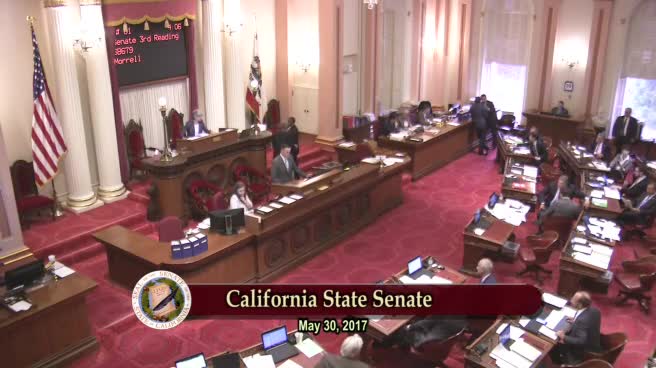

Bill Author