SB 466: Rental passenger vehicle transactions: electronic surveillance technology: AMBER Alert.
- Session Year: 2017-2018
- House: Senate
- Latest Version Date: 2017-07-31
Existing law generally governs the transactions between a rental company, also referred to as a rental car company, and its customers, including, among other provisions, restrictions on a rental companys use of electronic surveillance technology. Existing law, as part of those restrictions, prohibits a rental company from using, accessing, or obtaining any information relating to the renters use of the rental vehicle that was obtained using electronic surveillance technology, except under specified circumstances.
This bill would additionally authorize that electronic surveillance technology to be used, accessed, or obtained by a rental company in circumstances in which the rental vehicle is the subject of an AMBER Alert. The bill would require a rental company, if it uses the equipment in this manner, to notify law enforcement that one of the rental companys vehicles is the subject of an AMBER Alert upon becoming aware of the situation, except as specified.
Existing law generally governs the transactions between a rental company, also referred to as a rental car company, and its customers, including, among other provisions, restrictions on a rental companys use of electronic surveillance technology. Existing law, as part of those restrictions, prohibits a rental company from using, accessing, or obtaining any information relating to the renters use of the rental vehicle that was obtained using electronic surveillance technology, except under specified circumstances.
This bill would additionally authorize that electronic surveillance technology to be used, accessed, or obtained by a rental company in circumstances in which the rental vehicle is the subject of an AMBER Alert.
(a)A rental company shall not use, access, or obtain any information relating to the renters use of the rental vehicle that was obtained using electronic surveillance technology, except in the following circumstances:
(1)(A)When the equipment is used by the rental company only for the purpose of locating a stolen, abandoned, or missing rental vehicle after one of the following:
(i)The renter or law enforcement has informed the rental company that the vehicle is missing or has been stolen or abandoned.
(ii)The rental vehicle has not been returned following one week after the contracted return date or by one week following the end of an extension of that return date.
(iii)The rental company discovers the rental vehicle has been stolen or abandoned, and, if stolen, the rental company shall report the vehicle stolen to law enforcement by filing a stolen vehicle report, unless law enforcement has already informed the rental company that the vehicle is missing or has been stolen or abandoned.
(iv)The rental vehicle is the subject of an AMBER Alert issued pursuant to Section 8594 of the Government Code. If the rental company uses the equipment in connection with this provision relating to an AMBER Alert, the rental company shall notify law enforcement that one of the rental companys vehicles is the subject of an AMBER Alert upon becoming aware of the situation, unless law enforcement has already informed the rental company that the vehicle was the subject of an AMBER Alert.
(B)If electronic surveillance technology is activated pursuant to subparagraph (A), a rental company shall maintain a record, in either electronic or written form, of information relevant to the activation of that technology. That information shall include the rental agreement, including the return date, and the date and time the electronic surveillance technology was activated. The record shall also include, if relevant, a record of written or other communication with the renter, including communications regarding extensions of the rental, police reports, or other written communication with law enforcement officials. The record shall be maintained for a period of at least 12 months from the time the record is created and shall be made available upon the renters request. The rental company shall maintain and furnish explanatory codes necessary to read the record. A rental company shall not be required to maintain a record if electronic surveillance technology is activated to recover a rental vehicle that is stolen or missing at a time other than during a rental period.
(2)In response to a specific request from law enforcement pursuant to a subpoena or search warrant.
(b)Subdivision (a) does not prohibit a rental company from equipping rental vehicles with any of the following:
(1)GPS-based technology that provides navigation assistance to the occupants of the rental vehicle, if the rental company does not use, access, or obtain information relating to the renters use of the rental vehicle that was obtained using that technology, except for the purposes of discovering or repairing a defect in the technology and the information may then be used only for that purpose.
(2)Electronic surveillance technology that allows for the remote locking or unlocking of the vehicle at the request of the renter, if the rental company does not use, access, or obtain information relating to the renters use of the rental vehicle that was obtained using that technology, except as necessary to lock or unlock the vehicle.
(3)Electronic surveillance technology that allows the company to provide roadside assistance, such as towing, flat tire, or fuel services, at the request of the renter, if the rental company does not use, access, or obtain information relating to the renters use of the rental vehicle that was obtained using that technology except as necessary to provide the requested roadside assistance.
(c)Subdivision (a) does not prohibit a rental company from obtaining, accessing, or using information from electronic surveillance technology for the sole purpose of determining the date and time the vehicle departs from and is returned to the rental company, and the total mileage driven and the vehicle fuel level of the returned vehicle. The information obtained or accessed from this electronic surveillance technology shall only be used for the purpose described in this subdivision.
(d)A rental company shall not use electronic surveillance technology to track a renter in order to impose fines or surcharges relating to the renters use of the rental vehicle.
(a)A rental company shall not use, access, or obtain any information relating to the renters use of the rental vehicle that was obtained using electronic surveillance technology, except in the following circumstances:
(1)(A)When the equipment is used by the rental company only for the purpose of locating a stolen, abandoned, or missing rental vehicle after one of the following:
(i)The renter or law enforcement has informed the rental company that the vehicle is missing or has been stolen or abandoned.
(ii)The rental vehicle has not been returned following one week after the contracted return date or by one week following the end of an extension of that return date.
(iii)The rental company discovers the rental vehicle has been stolen or abandoned, and, if stolen, the rental company shall report the vehicle stolen to law enforcement by filing a stolen vehicle report, unless law enforcement has already informed the rental company that the vehicle is missing or has been stolen or abandoned.
(iv)The rental vehicle is the subject of an AMBER Alert issued pursuant to Section 8594 of the Government Code.
(B)If electronic surveillance technology is activated pursuant to subparagraph (A), a rental company shall maintain a record, in either electronic or written form, of information relevant to the activation of that technology. That information shall include the rental agreement, including the return date, and the date and time the electronic surveillance technology was activated. The record shall also include, if relevant, a record of written or other communication with the renter, including communications regarding extensions of the rental, police reports, or other written communication with law enforcement officials. The record shall be maintained for a period of at least 12 months from the time the record is created and shall be made available upon the renters request. The rental company shall maintain and furnish explanatory codes necessary to read the record. A rental company shall not be required to maintain a record if electronic surveillance technology is activated to recover a rental vehicle that is stolen or missing at a time other than during a rental period.
(2)In response to a specific request from law enforcement pursuant to a subpoena or search warrant.
(b)Subdivision (a) does not prohibit a rental company from equipping rental vehicles with any of the following:
(1)GPS-based technology that provides navigation assistance to the occupants of the rental vehicle, if the rental company does not use, access, or obtain information relating to the renters use of the rental vehicle that was obtained using that technology, except for the purposes of discovering or repairing a defect in the technology and the information may then be used only for that purpose.
(2)Electronic surveillance technology that allows for the remote locking or unlocking of the vehicle at the request of the renter, if the rental company does not use, access, or obtain information relating to the renters use of the rental vehicle that was obtained using that technology, except as necessary to lock or unlock the vehicle.
(3)Electronic surveillance technology that allows the company to provide roadside assistance, such as towing, flat tire, or fuel services, at the request of the renter, if the rental company does not use, access, or obtain information relating to the renters use of the rental vehicle that was obtained using that technology except as necessary to provide the requested roadside assistance.
(c)Subdivision (a) does not prohibit a rental company from obtaining, accessing, or using information from electronic surveillance technology for the sole purpose of determining the date and time the vehicle departs from and is returned to the rental company, and the total mileage driven and the vehicle fuel level of the returned vehicle. The information obtained or accessed from this electronic surveillance technology shall only be used for the purpose described in this subdivision.
(d)A rental company shall not use electronic surveillance technology to track a renter in order to impose fines or surcharges relating to the renters use of the rental vehicle.
|
Date
|
Status
|
|---|---|
| Jul 31, 2017 | Chaptered by Secretary of State. Chapter 163, Statutes of 2017. |
| Jul 31, 2017 | Approved by the Governor. |
| Jul 21, 2017 | Enrolled and presented to the Governor at 3 p.m. |
| Jul 18, 2017 | In Senate. Ordered to engrossing and enrolling. |
| Jul 17, 2017 | Read third time. Passed. Ordered to the Senate. |
| Jul 12, 2017 | Read second time. Ordered to consent calendar. |
| Jul 11, 2017 | From committee: Do pass. Ordered to consent calendar. (Ayes 10. Noes 0.) (July 11). |
| Jun 13, 2017 | From committee: Do pass and re-refer to Com. on P. & C.P. with recommendation: To consent calendar. (Ayes 11. Noes 0.) (June 13). Re-referred to Com. on P. & C.P. |
| Jun 5, 2017 | Referred to Coms. on JUD. and P. & C.P. |
| May 23, 2017 | In Assembly. Read first time. Held at Desk. |
| May 22, 2017 | Read third time. Passed. (Ayes 37. Noes 0. Page 1143.) Ordered to the Assembly. |
| May 9, 2017 | Read second time and amended. Ordered to third reading. |
| May 8, 2017 | From committee: Do pass as amended. (Ayes 7. Noes 0. Page 945.) (May 2). |
| Apr 13, 2017 | Set for hearing May 2. |
| Mar 2, 2017 | Referred to Com. on JUD. |
| Feb 17, 2017 | From printer. May be acted upon on or after March 19. |
| Feb 16, 2017 | Introduced. Read first time. To Com. on RLS. for assignment. To print. |
|
Date
|
Description
|
Location
|
Votes
|
|
|---|---|---|---|---|
| Jul 17, 2017 | SB 466 Bates Consent Calendar Second Day | Assembly Floor |
Passed |
|
| Jul 11, 2017 | Do pass. To Consent Calendar. | Assembly Standing Committee on Privacy and Consumer Protection |
Passed |
|
| Jun 13, 2017 | Do pass and be re-referred to the Committee on [Privacy and Consumer Protection] with recommendation: To Consent Calendar | Assembly Standing Committee on Judiciary |
Passed |
|
| May 22, 2017 | Senate 3rd Reading SB466 Bates et al. | Senate Floor |
Passed |
|
| May 2, 2017 | Do pass as amended | Senate Standing Committee on Judiciary |
Passed |
This list shows positions taken on this bill by organizations on the date displayed, which is linked to the original source.
Positions by individuals are not included.
|
Organization
|
Position
|
Date
|
|---|---|---|
| Avis | ** Support | May 10, 2017 |
| Avis Budget Group | ** Support | Jul 10, 2017 |
| California Chamber Of Commerce | ** Support | Jul 10, 2017 |
| California State Sheriffs' Association | ** Support | Jul 10, 2017 |
| California Travel Association | ** Support | Jul 10, 2017 |
| Enterprise | ** Support | May 10, 2017 |
| Enterprise Holdings | ** Support | Jul 10, 2017 |
| Hertz | ** Support | Jul 10, 2017 |
Date of Hearing: July 11, 2017
ASSEMBLY COMMITTEE ON PRIVACY AND CONSUMER PROTECTION
Ed Chau, Chair
SBPCA Bill Id:SB 466
Author:(Bates) – As Amended Ver:May 9, 2017
SENATE VOTE: 37-0
SUBJECT: Rental passenger vehicle transactions: electronic surveillance technology: AMBER Alert
SUMMARY: Authorizes rental car companies to use electronic surveillance technology to locate a rental vehicle in order to assist law enforcement with finding missing or abducted children. Specifically, this bill:
- Authorizes rental car companies to use, access or obtain rental vehicle information using GPS technology to locate a rental vehicle that is the subject of an AMBER Alert.
- Authorizes rental car companies to notify law enforcement that one of the company’s vehicles is the subject of an AMBER Alert upon learning of the situation.
EXISTING LAW:
- Prohibits a rental company from using, accessing, or obtaining any information relating to the renter's use of the rental vehicle that was obtained using electronic surveillance technology, unless the technology is used to locate a stolen, abandoned, or missing rental vehicle after one of the following:
- The renter or law enforcement has informed the rental car company that the vehicle is missing or has been stolen or abandoned.
- The rental vehicle has not been returned following one week after the contracted return date, or one week following the end of an extension of that return date.
- The rental car company discovers that the vehicle has been stolen or abandoned and, if stolen, reports the vehicle stolen to law enforcement by filing a stolen vehicle report. (Civil Code (CC) Section 1939.23)
- Prohibits a rental company from using, accessing, or obtaining any information relating to the renter's use of the rental vehicle that was obtained using electronic surveillance technology except in response to a specific request from law enforcement pursuant to a subpoena or search warrant, or if the customer requests assistance, or to determine the date, time, and total mileage and vehicle fuel level upon return. (CC 1939.23)
- Requires a law enforcement agency to request activation of the Emergency Alert System (EAS) within the appropriate local area if the agency receives a report that an abduction has occurred or that a child has been taken, and certain conditions are met, including that the victim is in imminent danger of serious bodily injury or death, and there is information available that, if disseminated to the general public, could assist in the safe recovery of the victim. The activation of the EAS shall only be made if the specified conditions are met, and requires the California Highway Patrol to activate the system if so requested by a law enforcement agency. (Government Code Section 8594)
FISCAL EFFECT: None. This bill has been keyed nonfiscal by the Legislative Counsel.
COMMENTS:
- Purpose of the bill: The purpose of this bill is to allow rental car companies to use GPS technology to locate vehicles that are the subject of an AMBER Alert. SB 466 is sponsored by Enterprise Holdings.
- Author’s statement: According to the author, “Rental car companies are limited in their ability to use GPS technology to locate their vehicles. Under these limited circumstances, rental car companies are not allowed to use GPS to locate their vehicle if the car becomes the subject of an AMBER Alert. If rental car companies are concerned about the liability that comes from using GPS to locate one of their vehicles, it may slow down the search for a missing child. SB 466 addresses concerns of potential liability and ensures that rental car companies may lawfully aid in the search for a missing child if it becomes apparent one of their cars is the subject of an AMBER Alert.”
- AMBER Alerts: The America’s Missing: Broadcast Emergency Response (AMBER) Alert System was developed in Texas in 1996 when broadcasters joined with local police to create an early warning system to help find abducted children. The AMBER Alert program is a voluntary partnership between law enforcement agencies, broadcasters, transportation agencies and the wireless industry to activate an urgent bulletin for child abduction cases. AMBER Alert Plans have been established in all 50 states and multi-state AMBER alerts can be issued if the abducted child is believed to have crossed state lines. In California, regional AMBER Alert programs began in 1999, and statewide implementation of AMBER Alert plans became state law in 2002.
According to the Department of Justice, as of February 23, 2017, the AMBER Alert system has helped rescue and return 868 children across the country. The National Center for Missing and Exploited Children’s 2015 AMBER Alert Report stated that 52% of children that were successfully recovered were found within three hours of the alert being issued. Since time is a critical factor in child abduction cases, expedited ways to find children could result in increased recovery rates. SB 466 would allow rental car companies to cooperate with police in AMBER Alert situations.
- Rental car companies and GPS information: In California, rental vehicle companies are allowed to equip cars with GPS technology, but there are many restrictions to accessing customer information. There are some exceptions which allow companies to use GPS technology, including locating missing or stolen vehicles. However, there are no exceptions under current law for using GPS to locate a vehicle that is the subject of an AMBER Alert. Therefore if a company were to assist law enforcement to find an abducted child by using GPS to locate a vehicle, it could conceivably face civil liability.
Since expediency is an important factor in locating and recovering missing children, allowing rental companies to use GPS technology to locate vehicles that are subject to AMBER Alerts appears to be a reasonable exception to the current restriction that would not unduly impact a renter's reasonable expectation of privacy.
Furthermore, AMBER Alerts are only issued in limited circumstances after law enforcement has determined that the victim is in imminent danger of serious bodily injury or death and information given to the public could assist in recovery of the victim. Expanding the statute to permit this limited use of the technology furthers the public interest by encouraging rental car companies to assist law enforcement in locating missing children without fear of civil liability for this use of the technology.
- Arguments in support: According to a coalition of supporters, “[SB 466] seeks to ensure that rental car companies can access the GPS information in a vehicle that is subject to an AMBER Alert. Under existing law, a rental car company is prohibited from accessing GPS information to locate a missing rental car until seven days after it was scheduled to be returned. By creating an exception for vehicles subject to an AMBER Alert, SB 466 ensures that rental companies are able to assist law enforcement in finding missing children without being subject to civil liability for helping locate a child.”
- Related legislation: AB 1185 (O’Donnell) would allow rental car companies to track down overdue cars faster by shortening, from seven days to three, the amount of time the company must wait to locate the rental car with GPS technology. AB 1185 is currently pending in the Senate Judiciary Committee.
- Previous legislation: AB 535 (Quirk), Chapter 328, Statutes of 2013, permitted the activation of the Emergency Alert System (EAS) where a law enforcement agency receives a report that an abduction has occurred or that a child has been taken by anyone, including, but not limited to, a custodial parent or guardian, and additional existing circumstances exist.
AB 415 (Runner), Chapter 517, Statutes of 2002, required law enforcement to activate the EAS and issue an "AMBER Alert" to assist recovery efforts in child abduction cases by disseminating information to the general public.
- Chaptering issues: This bill is currently in conflict with AB 1185 (O’Donnell), which amends the same code sections as this bill.
- Double-referral: This bill was double-referred to Assembly Judiciary, where it passed on June 13, 2017, on a 11 to 0 vote.
REGISTERED SUPPORT / OPPOSITION:
Support
Enterprise Holdings (sponsor)
Avis Budget Group
California Chamber of Commerce
California State Sheriffs’ Association
California Travel Association
Hertz
Opposition
None on file.
Analysis Prepared by: Jennifer Chase / P. & C.P. / (916) 319-2200
Date of Hearing: June 13, 2017
ASSEMBLY COMMITTEE ON JUDICIARY
Mark Stone, Chair
SBPCA Bill Id:SB 466
Author:(Bates) – As Amended Ver:May 9, 2017
PROPOSED CONSENT
SENATE VOTE: 37-0
SUBJECT: RENTAL PASSENGER VEHICLE TRANSACTIONS: ELECTRONIC SURVEILLANCE TECHNOLOGY: AMBER ALERT
KEY ISSUE: IN ORDER TO HELP LAW ENFORCEMENT SEARCH FOR CHILDREN WHO HAVE REPORTEDLY BEEN ABDUCTED, should rental car companies be authorized to use GPS or electronic surveillance technology for the purpose of locating one of THEIR vehicleS IF that VEHICLE is the subject of an "amber alert"?
SYNOPSIS
Existing law protects the privacy rights of customers of rental car companies by prohibiting such companies from using or accessing information collected through GPS technology or electronic surveillance technology except in certain limited circumstances, as specified. Current law does not explicitly allow the use of GPS technology to locate a rental car if the car becomes the subject of an AMBER Alert (unless the car was already reported stolen), while at the same time the law authorizes rental customers to sue for unauthorized use of such technology. According to the author, concern about being sued for unauthorized use of GPS technology in such situations is an unfortunate obstacle for some rental car companies who otherwise would be willing to use the technology to provide greater assistance to law enforcement in the search of missing or abducted children.
Accordingly, this bill specifically authorizes rental car companies to use GPS or electronic surveillance technology for the limited purpose of locating a rental vehicle that is subject to an AMBER Alert. Proponents of the bill, including industry members Enterprise, Hertz, and Avis, as well as the state sheriffs' association, contend that this bill is needed to allow rental car companies to assist law enforcement find missing or abducted children in AMBER Alert situations, where a rental car may be involved, without being subject to civil liability. The bill also ensures that law enforcement is notified when the technology is used to locate the rental vehicle at issue in the AMBER Alert, if that fact is not already known to law enforcement. There is no known opposition to this bill, and it previously was approved by the Senate without receiving a single "No" vote. This bill will be referred next to the Assembly Privacy and Consumer Protection Committee should it be approved by this Committee.
SUMMARY: Authorizes rental car companies to use GPS or electronic surveillance technology for the limited purpose of locating a vehicle that is subject to an AMBER Alert, in order to assist law enforcement find missing or abducted children. Specifically, this bill:
- Permits a rental company to use, access, or obtain information regarding a rental vehicle using electronic surveillance technology for the purpose of locating a rental vehicle that is the subject of an “AMBER Alert” issued pursuant to Section 8594 of the Government Code.
- Provides that if the rental company uses the technology pursuant to 1), the rental company shall notify law enforcement that one of its vehicles is the subject of an AMBER Alert upon becoming aware of the situation, unless law enforcement has already informed the rental company that the vehicle is the subject of an AMBER Alert.
- Protects a company from civil liability for damages and attorney's fees for using electronic surveillance technology to help locate a missing child when the vehicle is subject to an AMBER Alert, as long as the use of the technology follows the provisions of this bill.
EXISTING LAW:
- Regulates the use and sharing of information collected through recording devices that are installed by the manufacturer of a vehicle, for the purpose of retrieving data after an accident, for all vehicles manufactured on or after July 1, 2004. (Vehicle Code Section 9951.)
- Prohibits a rental car company from using, accessing, or obtaining any information relating to the renter's use of the rental vehicle that was obtained using electronic surveillance technology except in specified circumstances, as follows:
- In response to a specific request from law enforcement pursuant to a subpoena or search warrant.
- When the equipment is used by the rental company only for the purpose of locating a stolen, abandoned, or missing rental vehicle after one of the following: (i) the renter or law enforcement has informed the rental company that the vehicle is missing or has been stolen or abandoned; (ii) the rental vehicle has not been returned following one week after the contracted return date or by one week following the end of an extension of that return date; or (iii) the rental company discovers the rental vehicle has been stolen or abandoned, and, if stolen, files a stolen vehicle report with law enforcement. (Civil Code Section 1939.23 (a)(1)(A).)
- Requires a rental car company to maintain a record of information relevant to the activation of electronic surveillance technology, including information regarding communications with the renter and law enforcement. Further specifies that this information shall include the return date, the date and time the electronic surveillance technology was activated, and, if relevant, records of written or other communication with the renter or law enforcement officials. (Civil Code Section 1939.23 (a)(1)(B).)
- Authorizes a rental company to equip its rental vehicles with GPS-based or electronic surveillance technology, but prohibits the company from using, accessing, or obtaining any information relating to the renter's use of the vehicle that was obtained using the technology, except as specified below:
- GPS-based technology that provides navigation assistance to the occupants may be used solely for the purpose of discovering or repairing a defect in the technology.
- Electronic surveillance technology that allows for the remote locking or unlocking of the vehicle at the request of the renter may be used as necessary to lock or unlock the vehicle.
- Electronic surveillance technology that allows the company to provide roadside assistance, such as towing, flat tire, or fuel services, at the request of the renter, may be used as necessary to provide the requested roadside assistance.
- Electronic surveillance technology may be used for the sole purpose of determining the date and time the vehicle departs from or is returned to the rental company, and the total mileage driven and the vehicle fuel level of the returned vehicle. (Civil Code Section 1939.23 (b) and (c).)
- Prohibits a rental car company from using electronic surveillance technology to track a renter in order to impose fines or surcharges relating to the renter’s use of the rental vehicle. (Civil Code Section 1939.23 (d).)
- Permits a renter to bring an action against a rental car company for the recovery of damages and appropriate equitable relief for a violation of Chapter 1.5 of Title 5 of Part 4 of Division 3 of the Civil Code, except as specified, and entitles the prevailing party to recover reasonable attorney’s fees and costs. (Civil Code Section 1939.25.)
- Requires a law enforcement agency, absent extenuating investigative needs, to request activation of the Emergency Alert System within the appropriate local area if the agency receives a report that an abduction has occurred or that a child has been taken, and certain conditions are met, including, among others, that the victim is in imminent danger of serious bodily injury or death, and there is information available that, if disseminated to the general public, could assist in the safe recovery of the victim. Further provides that activation of the Emergency Alert System only be made if the specified conditions are met, and requires the California Highway Patrol to activate the system if so requested by a law enforcement agency. (Government Code Section 8594.)
FISCAL EFFECT: As currently in print this bill is keyed non-fiscal.
COMMENTS: Existing law protects the privacy rights of customers of rental car companies by prohibiting such companies from using or accessing information collected through GPS technology or electronic surveillance technology except in limited circumstances, as specified. These protections, enacted by AB 2840 (Ch. 317, Stats. 2004), were intended to curtail certain practices by rental car companies reportedly used at the time to monitor the driving behaviors of their customers—and in many cases, subsequently used to impose fees and penalties.
The limited circumstances which allow a rental car company to use or access information from such technology include, among other things: (1) locating a vehicle, when it has been considered missing, stolen, or abandoned; (2) responding to a renter's specific request for navigation assistance or remote access to a vehicle; or (3) aiding law enforcement in response to a specific law enforcement request pursuant to a subpoena or search warrant.
According to the author, however:
Under these limited provisions, current law does not explicitly allow GPS location of a rental car if the car becomes the subject of an AMBER Alert, unless the car was already reported stolen. If rental car companies are concerned about the potential liability of using GPS to locate a vehicle in an AMBER Alert situation, it may slow down the search for a missing child.
SB 466 would allow a rental company to use GPS technology to locate a rental vehicle if that vehicle becomes the subject of an AMBER Alert issued pursuant to Section 8594 of the Government Code . . . and ensures that rental car companies may lawfully aid in the search for a missing child if it becomes apparent one of their cars is the subject of the search.
Accordingly, this bill seeks to codify an additional set of circumstances that would allow rental car companies to use GPS or electronic surveillance technology—namely, when the rental vehicle is the subject of an AMBER Alert issued pursuant to Section 8594 of the Government Code.
Background on AMBER Alerts. The “AMBER Alert” is part of the nationwide AMBER Plan, a voluntary partnership between law enforcement agencies and broadcasters. The plan utilizes the Emergency Alert System and other means to communicate with the public. The policies and procedures specifying how a law enforcement agency may institute activation of the Emergency Alert System are developed by the California Highway Patrol, in consultation with the Department of Justice, as well as representatives from the California State Sheriffs’ Association, the California Police Chiefs’ Association, and the California Peace Officers’ Association.
Government Code Section 8594 outlines the various criteria that must be met before an AMBER Alert is issued. Upon receiving a report that an abduction has occurred or that a child has been taken, a law enforcement agency must determine that: (1) a child 17 years of age or younger, or an individual with a proven mental or physical disability, has been abducted or taken; (2) the victim is in imminent danger of serious bodily injury or death; and (3) law enforcement has information available that, if disseminated to the general public, could assist in the safe recovery of the victim. Under Section 8594, a law enforcement agency shall only request activation of the Emergency Alert System if these requirements are met, and the law further clarifies that the system is not intended to be used for abductions resulting from custody disputes that are not reasonably believed to endanger the life or physical health of a child.
Liability provisions. Existing law, Civil Code Section 1939.2, allows a renter to bring an action against a rental car company for the recovery of damages and appropriate equitable relief for any violation of Chapter 1.5 of Title 5 of Part 4 of Division 3 of the Civil Code (excepting violations of Sections 1939.21, 1939.35, and 1939.37) and entitles the prevailing party in such a lawsuit to recover reasonable attorney’s fees and costs. If a rental car company were to assist law enforcement to find an abducted child by using GPS or electronic surveillance technology to locate one of its rental vehicle in such a case, the company would face potential civil liability in a suit brought by the renter because such action—worthy as it may seem-- is not an approved use of the technology under current law. This bill would help alleviate these civil liability concerns by eliminating any violation of the law when a rental car company follows the guidelines for use of the technology in AMBER Alert situations, as specified by the bill.
Exception allowing use of GPS and electronic surveillance information in AMBER Alert situations. Accordingly, this bill specifically authorizes rental car companies to use GPS or electronic surveillance technology for the limited purpose of locating a rental vehicle that is subject to an AMBER Alert. Proponents of the bill, including industry members Enterprise, Hertz, and Avis, as well as the state sheriffs' association, contend that this bill is needed to allow rental car companies to assist law enforcement find missing or abducted children in AMBER Alert situations, where a rental car may be involved, without being subject to civil liability. The bill also ensures that law enforcement is notified when the technology is used to locate the rental vehicle at issue in the AMBER Alert, if that fact is not already known to law enforcement.
Because AMBER Alerts are only issued in limited circumstances—namely, after law enforcement officials have determined that the victim is in imminent danger of serious bodily injury or death, and that there is information that can lead to the safe recovery of the victim—it is a reasonable use of this technology to help locate a rental vehicle that may be involved in the case. Expanding the statute to permit this limited use of the technology furthers the public interest by encouraging rental car companies to assist law enforcement in locating missing children without fear of civil liability for this use of the technology.
Related Pending Legislation. AB 1185 (O’Donnell) would allow rental car companies to use, access, or obtain information relating to a renter’s use of a rental vehicle obtained using electronic surveillance technology when the vehicle has not been returned following three calendar days (rather than seven days) after the contracted return date or the end of any extension. This bill is awaiting hearing by the Senate Judiciary Committee.
REGISTERED SUPPORT / OPPOSITION:
Support
Avis Budget Group
California Chamber of Commerce
California State Sheriffs' Association
California Travel Association
Enterprise Holdings
Hertz
Opposition
None on file
Analysis Prepared by: Anthony Lew / JUD. / (916) 319-2334
Office of Senate Floor Analyses (916) 651-1520 Fax: (916) 327-4478 | SB |
THIRD READING
Bill No: SB 466
Amended: 5/9/17
SENATE JUDICIARY COMMITTEE: 7-0, 5/2/17
AYES: Jackson, Moorlach, Anderson, Hertzberg, Monning, Stern, Wieckowski
SUBJECT: Rental passenger vehicle transactions: electronic surveillance technology: AMBER Alert
Enterprise
Hertz
DIGEST:
This bill allows a rental company to use and obtain information from electronic surveillance technology regarding one of its rental vehicles when that vehicle is the subject of an AMBER Alert. If the rental company so uses the technology, it is required to notify law enforcement that one of its vehicles is the subject of an AMBER Alert.
Existing law:
- Provides, through the California Constitution, that all people are by nature free and independent and have inalienable rights. Among these are enjoying and defending life and liberty, acquiring, possessing, and protecting property, and pursuing and obtaining safety, happiness, and privacy. (Cal. Const, Art. I, Sec. 1.)
- Regulates the use and sharing of information collected through recording devices that are installed by the manufacturer of the vehicle for the purpose of retrieving data after an accident. (Veh. Code Sec. 9951.)
- Provides that if a law enforcement agency receives a report that an abduction has occurred or that a child has been taken by anyone, including, but not limited to, a custodial parent or guardian, and the agency determines that a child 17 years of age or younger, or an individual with a proven mental or physical disability, has been abducted or taken and the victim is in imminent danger of serious bodily injury or death, and there is information available that, if disseminated to the general public, could assist in the safe recovery of the victim, the agency, through a person authorized to activate the Emergency Alert System, shall, absent extenuating investigative needs, request activation of the Emergency Alert System within the appropriate local area. A law enforcement agency shall only request activation of the Emergency Alert System if these requirements are met. The California Highway Patrol, if requested by a law enforcement agency, shall activate the system. (Gov. Code Sec. 8594.)
- Prohibits a rental car company from using, accessing, or obtaining any information relating to the renter's use of the rental vehicle that was obtained using electronic surveillance technology except in limited circumstances. (Civ. Code Sec. 1939.23(a).)
- Provides that rental car companies are permitted to use electronic surveillance technology in response to a specific request from law enforcement pursuant to a subpoena or search warrant or for the purpose of locating a stolen, abandoned, or missing rental vehicle after one of the following:
- the renter or law enforcement has informed the rental car company that the vehicle is missing or has been stolen or abandoned;
- the rental vehicle has not been returned following one week after the contracted return date or one week after the end of an extension of that return date; or
- the rental car company discovers that the vehicle has been stolen or abandoned and, if stolen, reports the vehicle stolen to law enforcement by filing a stolen vehicle report. (Civ. Code Sec. 1939.23(a).)
- Requires a rental car company to maintain a record of information relevant to the activation of electronic surveillance technology, including information regarding communications with the renter and law enforcement. Existing law specifies that this information shall include the return date, the date and time the electronic surveillance technology was activated, and, if relevant, a record of written or other communication with the renter, including communications regarding extensions of the rental, police reports, or other written communication with law enforcement officials. (Civ. Code Sec. 1939.23 (a)(1)(B).)
- Permits a rental company to equip its rental vehicles with certain electronic surveillance technology, but prohibits the rental company from using, accessing, or obtaining any information relating to the renter's use of the rental vehicle that was obtained using the electronic surveillance technology, except: to discover or repair a defect in GPS-based technology that provides navigation assistance to the occupants of the rental vehicle; to allow for the remote locking or unlocking of a vehicle at the request of the renter; to provide roadside assistance, such as towing, flat tire, or fuel services at the request of the renter; and for the sole purpose of determining the date and time the vehicle departs from or is returned to the rental company, and the total mileage driven and the vehicle fuel level of the returned vehicle. (Civ. Code Sec. 1939.23(b)-(c).)
- Prohibits a rental car company from using electronic surveillance technology to track a renter in order to impose fines or surcharges relating to the renter’s use of the rental vehicle. (Civ. Code Sec. 1939.23(d).)
This bill:
- Allows a rental company to obtain information regarding a rental vehicle using electronic surveillance technology for the purpose of locating a rental vehicle that is the subject of an “AMBER Alert” issued pursuant to Section 8594 of the Government Code.
- Requires a rental company to notify law enforcement that one of their vehicles is the subject of an AMBER Alert if they access the information.
Background
AB 2840 (Corbett, Chapter 317, Statutes of 2004) was enacted into law in response to press accounts of rental car companies using electronic surveillance technology, such as global positioning systems (GPS), to monitor the driving habits of renters and thereby violate their privacy rights in the process. Companies used the systems to track renters’ routes and speeds, imposing fees and penalties. The bill created protections for renters’ privacy by prohibiting a rental company's access to or use of information gathered using electronic surveillance technology except in certain limited situations, such as when the vehicle is missing or stolen; in response to a renter's specific request for navigation assistance or remote access to a vehicle; or in response to a specific request from law enforcement pursuant to a subpoena or search warrant. It was supported by rental car companies, civil liberties organizations, consumer groups, and the Attorney General. These provisions were later reorganized and are currently found in Section 1939.23 of the Civil Code.
This bill adds a new exception for the use of electronic surveillance technology when a rental vehicle becomes the subject of an AMBER Alert issued pursuant to Section 8594 of the Government Code.
Comments
The author writes:
Civil Code § 1939.23 allows rental companies to use GPS to locate a rental car in limited circumstances . . . .
Under these limited provisions, current law does not explicitly allow GPS tracking of a rental car if the car becomes the subject of an AMBER Alert situation, unless the car was already reported stolen. SB 466 would add a simple clause to this list in order to allow rental car agencies to track a car’s location if it becomes the subject of an AMBER Alert.
SB 466 adds section (iv) to Civil Code Section § 1939.23 (a)(1)(A). Section (iv) would allow a rental company to use electronic surveillance technology (GPS) to locate a rental vehicle if that vehicle becomes the subject of an AMBER Alert issued pursuant to Section 8594 of the Government Code.
AMBER Alerts are a reasonable exception to the prohibition on surveillance technology
The “AMBER Alert” is part of the nationwide AMBER Plan, a voluntary partnership between law enforcement agencies and broadcasters. The plan utilizes the Emergency Alert System and other means to communicate with the public. Instances when an AMBER Alert is issued begin when a law enforcement agency receives a report that an abduction has occurred or that a child has been taken, and the agency determines that a child 17 years of age or younger, or an individual with a proven mental or physical disability, has been abducted or taken and the victim is in imminent danger of serious bodily injury or death. When law enforcement has information available that, if disseminated to the general public, could assist in the safe recovery of such a victim, it must request activation of the Emergency Alert System within the appropriate local area. The California Highway Patrol, if requested by a law enforcement agency, shall activate the system.
Although the use of electronic surveillance technology by rental companies to obtain information about or track their vehicles can have serious privacy implications, this additional exception to the general prohibition is a reasonable extension of such technology’s use. AMBER Alerts are only issued in narrow circumstances when information about a vehicle and its occupants can be vital to protecting the health and safety of vulnerable victims. Rental companies should be given the legal ability to utilize this technology in these circumstances.
Ensuring law enforcement benefits from the information
Section 1939.23(a)(1)(A)(iii) of the Civil Code allows a rental company to use electronic surveillance technology to locate a stolen vehicle when it discovers the vehicle has been stolen. However, it also requires the rental company to report the vehicle stolen to law enforcement. The ultimate goal in allowing rental companies to obtain information about vehicles through electronic surveillance technology when such vehicles are the subject of AMBER Alerts is to ensure the safety of the abducted or missing victim. This bill requires a rental company to notify law enforcement if the rental company uses the equipment in connection with this provision relating to an AMBER Alert upon becoming aware of the situation, unless law enforcement has already informed the rental company that the vehicle was the subject of an AMBER Alert.
Related/Prior Legislation
AB 1185 (O’Donnell, 2017) allows rental car companies to use, access, or obtain information relating to a renter’s use of a rental vehicle obtained using electronic surveillance technology when the vehicle has not been returned following three calendar days after the contracted return date or the end of any extension. It also allows a rental company to use an electronic sign to comply with various signage requirements. The bill is in the Assembly Privacy and Consumer Protection Committee.
AB 2051 (O’Donnell, Chapter 183, Statutes of 2016) revised provisions relating to rental company membership programs, advertising, and disclosures.
AB 2840 (Corbett, Chapter 317, Statutes of 2004). See Background.
FISCAL EFFECT: Appropriation: Fiscal Com.: Local:
Avis (co-source)
Enterprise (co-source)
Hertz (co-source)
California Chamber of Commerce
California Travel Association
None received
ARGUMENTS IN SUPPORT: Writing in support, the California Chamber of Commerce states that this bill “ensures that rental companies are able to assist law enforcement in finding missing children without being subject to civil liability for helping to locate a child.”
5/10/17 14:24:03
**** END ****
Senator Hannah-Beth Jackson, Chair
2017-2018 Regular Session
Bill No: SB 466 (Author:Bates)
Version: February 16, 2017
Hearing Date: May 2, 2017
Fiscal: No
Urgency: No
Consultant: CK
SUBJECT
Rental passenger vehicle transactions: electronic surveillance technology: AMBER alert
DESCRIPTION
This bill would allow a rental company to use and obtain information from electronic surveillance technology regarding one of its rental vehicles when that vehicle is the subject of an AMBER Alert.
BACKGROUND
AB 2840 (Corbett, Chapter 317, Statutes 2004) was enacted into law in response to press accounts of rental car companies using electronic surveillance technology, such as global positioning systems (GPS), to monitor the driving habits of renters and thereby violate their privacy rights in the process. Companies used the systems to track renters’ routes and speeds, imposing fees and penalties. The bill created protections for renters’ privacy by prohibiting a rental company's access to or use of information gathered using electronic surveillance technology except in certain limited situations, such as when the vehicle is missing or stolen; in response to a renter's specific request for navigation assistance or remote access to a vehicle; or in response to a specific request from law enforcement pursuant to a subpoena or search warrant. It was supported by rental car companies, civil liberties organizations, consumer groups, and the Attorney General. These provisions were later reorganized and are currently found in Section 1939.23 of the Civil Code.
This bill seeks to add a new exception for the use of electronic surveillance technology when a rental vehicle becomes the subject of an AMBER Alert issued pursuant to Section 8594 of the Government Code.
CHANGES TO EXISTING LAW
Existing law, the California Constitution, provides that all people are by nature free and independent and have inalienable rights. Among these are enjoying and defending life and liberty, acquiring, possessing, and protecting property, and pursuing and obtaining safety, happiness, and privacy. (Cal. Const, art. I, Sec. 1.)
Existing law regulates the use and sharing of information collected through recording devices that are installed by the manufacturer of the vehicle for the purpose of retrieving data after an accident. (Veh. Code Sec. 9951.)
Existing law provides that if a law enforcement agency receives a report that an abduction has occurred or that a child has been taken by anyone, including, but not limited to, a custodial parent or guardian, and the agency determines that a child 17 years of age or younger, or an individual with a proven mental or physical disability, has been abducted or taken and the victim is in imminent danger of serious bodily injury or death, and there is information available that, if disseminated to the general public, could assist in the safe recovery of the victim, the agency, through a person authorized to activate the Emergency Alert System, shall, absent extenuating investigative needs, request activation of the Emergency Alert System within the appropriate local area. A law enforcement agency shall only request activation of the Emergency Alert System if these requirements are met. The California Highway Patrol, if requested by a law enforcement agency, shall activate the system. (Gov. Code Sec. 8594.)
Existing law prohibits a rental car company from using, accessing, or obtaining any information relating to the renter's use of the rental vehicle that was obtained using electronic surveillance technology except in limited circumstances. (Civ. Code Sec. 1939.23(a).)
Existing law provides that rental car companies are permitted to use electronic surveillance technology in response to a specific request from law enforcement pursuant to a subpoena or search warrant or for the purpose of locating a stolen, abandoned, or missing rental vehicle after one of the following:
- the renter or law enforcement has informed the rental car company that the vehicle is missing or has been stolen or abandoned;
- the rental vehicle has not been returned following one week after the contracted return date or one week after the end of an extension of that return date; or
- the rental car company discovers that the vehicle has been stolen or abandoned and, if stolen, reports the vehicle stolen to law enforcement by filing a stolen vehicle report.
(Civ. Code Sec. 1939.23(a).)
Existing law requires a rental car company to maintain a record of information relevant to the activation of electronic surveillance technology, including information regarding communications with the renter and law enforcement. Existing law specifies that this information shall include the return date, the date and time the electronic surveillance technology was activated, and, if relevant, a record of written or other communication with the renter, including communications regarding extensions of the rental, police reports, or other written communication with law enforcement officials. (Civ. Code Sec. 1939.23 (a)(1)(B).)
Existing law permits a rental company to equip its rental vehicles with certain electronic surveillance technology, but prohibits the rental company from using, accessing, or obtaining any information relating to the renter's use of the rental vehicle that was obtained using the electronic surveillance technology, except: (1) to discover or repair a defect in GPS-based technology that provides navigation assistance to the occupants of the rental vehicle; to allow for the remote locking or unlocking of a vehicle at the request of the renter; to provide roadside assistance, such as towing, flat tire, or fuel services at the request of the renter; and for the sole purpose of determining the date and time the vehicle departs from or is returned to the rental company, and the total mileage driven and the vehicle fuel level of the returned vehicle. (Civ. Code Sec. 1939.23(b)-(c).)
Existing law prohibits a rental car company from using electronic surveillance technology to track a renter in order to impose fines or surcharges relating to the renter’s use of the rental vehicle. (Civ. Code Sec. 1939.23(d).)
This bill would allow a rental company to obtain information regarding a rental vehicle using electronic surveillance technology for the purpose of locating a rental vehicle that is the subject of an “AMBER Alert” issued pursuant to Section 8594 of the Government Code.
COMMENT
1. Stated need for the bill
According to the author:
Civil Code § 1939.23 allows rental companies to use GPS to locate a rental car in limited circumstances . . . .
Under these limited provisions, current law does not explicitly allow GPS tracking of a rental car if the car becomes the subject of an AMBER Alert situation, unless the car was already reported stolen. SB 466 would add a simple clause to this list in order to allow rental car agencies to track a car’s location if it becomes the subject of an AMBER Alert.
SB 466 adds section (iv) to Civil Code Section § 1939.23 (a)(1)(A). Section (iv) would allow a rental company to use electronic surveillance technology (GPS) to locate a rental vehicle if that vehicle becomes the subject of an AMBER Alert issued pursuant to Section 8594 of the Government Code.
2. AMBER Alerts are a reasonable exception to the prohibition on surveillance technology
The “AMBER Alert” is part of the nationwide AMBER Plan, a voluntary partnership between law enforcement agencies and broadcasters. The plan utilizes the Emergency Alert System and other means to communicate with the public. Instances when an AMBER Alert is issued begin when a law enforcement agency receives a report that an abduction has occurred or that a child has been taken, and the agency determines that a child 17 years of age or younger, or an individual with a proven mental or physical disability, has been abducted or taken and the victim is in imminent danger of serious bodily injury or death. When law enforcement has information available that, if disseminated to the general public, could assist in the safe recovery of such a victim, it must request activation of the Emergency Alert System within the appropriate local area. The California Highway Patrol, if requested by a law enforcement agency, shall activate the system.
Although the use of electronic surveillance technology by rental companies to obtain information about or track their vehicles can have serious privacy implications, this additional exception to the general prohibition is a reasonable extension of such technology’s use. AMBER Alerts are only issued in narrow circumstances when information about a vehicle and its occupants can be vital to protecting the health and safety of vulnerable victims. Rental companies should be given the legal ability to utilize this technology in these circumstances.
Writing in support, the California Chamber of Commerce states that this bill “ensures that rental companies are able to assist law enforcement in finding missing children without being subject to civil liability for helping to locate a child.”
3. Ensuring law enforcement benefits from the information
Section 1939.23(a)(1)(A)(iii) of the Civil Code allows a rental company to use electronic surveillance technology to locate a stolen vehicle when it discovers the vehicle has been stolen. However, it also requires the rental company to report the vehicle stolen to law enforcement. The ultimate goal in allowing rental companies to obtain information about vehicles through electronic surveillance technology when such vehicles are the subject of AMBER Alerts would be to ensure the safety of the abducted or missing victim. This bill as currently drafted would simply allow a rental company to obtain the information; it does not require any involvement with law enforcement. Adding a requirement similar to that in Section 1939.23(a)(1)(A)(iii) to this new exception would ensure this bill’s ultimate goal is properly met.
To address this issue, the author may wish to consider the following amendment:
Committee Amendment
On page 2, line 21, after “Code.” insert:
“If the rental company uses the equipment in connection with this provision relating to an AMBER Alert, the rental company shall notify law enforcement that one of the rental company’s vehicles is the subject of an AMBER Alert upon becoming aware of the situation, unless law enforcement has already informed the rental company that the vehicle was the subject of an AMBER Alert.”
Support: California Chamber of Commerce; California Travel Association
Opposition: None Known
HISTORY
Source: Avis; Enterprise; Hertz
Related Pending Legislation: AB 1185 (O’Donnell, 2017) would allow rental car companies to use, access, or obtain information relating to a renter’s use of a rental vehicle obtained using electronic surveillance technology when the vehicle has not been returned following three calendar days after the contracted return date or the end of any extension. It also allows a rental company to use an electronic sign to comply with various signage requirements. The bill is in the Assembly Privacy and Consumer Protection Committee.
Prior Legislation:
AB 2051 (O’Donnell, Chapter 183, Statutes 2016) revised provisions relating to rental company membership programs, advertising, and disclosures.
AB 2840 (Corbett, Chapter 317, Statutes 2004) See Background.
**************
Discussed in Hearing
View Older Hearings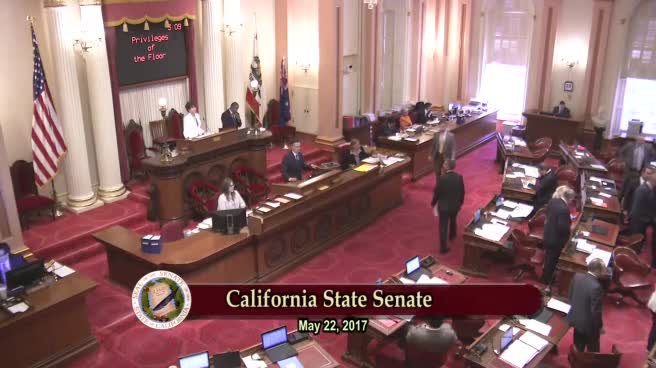
Bill Author


