SB 497: Firearms.
- Session Year: 2017-2018
- House: Senate
- Latest Version Date: 2017-10-14
Existing law requires a person leaving a handgun in an unattended vehicle to secure the handgun in the trunk, in a locked container that is out of plain sight, or in a locked container, as defined, which is permanently affixed to the interior of the vehicle and not in plain view. Existing law makes the failure to comply with this requirement an infraction punishable by a fine.
This bill would permit a peace officer, as defined, to store a handgun in the locked center utility console of a vehicle that does not have a trunk, under specified circumstances. The bill would also define the terms trunk and plain view for purposes of these provisions.
By changing the definition of an existing crime, this bill would impose a state-mandated local program.
The California Constitution requires the state to reimburse local agencies and school districts for certain costs mandated by the state. Statutory provisions establish procedures for making that reimbursement.
This bill would provide that no reimbursement is required by this act for a specified reason.
Existing law requires a person leaving a handgun in an unattended vehicle to secure the handgun in the trunk, in a locked container that is out of plain sight, or in a locked container, as defined, which is permanently affixed to the interior of the vehicle and not in plain view. Existing law makes the failure to comply with this requirement an infraction punishable by a fine.
This bill would make the 30-day prohibition and the dealer delivery prohibition described above applicable to all types of firearms. The bill would also except from that prohibition the purchase of a firearm, other than a handgun, by a person who possesses a valid, unexpired hunting license, and the acquisition of a firearm, other than a handgun, at specified charity fundraising events. The bill would make additional conforming changes and technical, nonsubstantive changes.This bill would permit a peace officer, as defined, to store a handgun in the locked center utility console of a vehicle that does not have a trunk, under specified circumstances. The bill would also define the terms trunk and plain view for purposes of these provisions.
By expanding the scope of existing crimes, changing the definition of an existing crime, this bill would impose a state-mandated local program.
The California Constitution requires the state to reimburse local agencies and school districts for certain costs mandated by the state. Statutory provisions establish procedures for making that reimbursement.
This bill would provide that no reimbursement is required by this act for a specified reason.
Existing law, subject to exceptions, prohibits a person from making more than one application to purchase a handgun within any 30-day period. Violation of that prohibition is a crime. Existing law prohibits a firearms dealer from delivering a handgun to a person whenever the dealer is notified by the Department of Justice that within the preceding 30-day period the purchaser has made another application to purchase a handgun that does not fall within an exception to the 30-day prohibition. A violation of that delivery prohibition by the dealer is a crime.
Existing law requires a person leaving a handgun in an unattended vehicle to secure the handgun in the trunk, in a locked container that is out of plain sight, or in a locked container, as defined, which is permanently affixed to the interior of the vehicle and not in plain view.
This bill would make the 30-day prohibition and the dealer delivery prohibition described above applicable to all types of firearms. The bill would also except from that prohibition the purchase of a firearm, other than a handgun, by a person who possesses a valid, unexpired hunting license, and the acquisition of a firearm, other than a handgun, at specified charity fundraising events. The bill would make additional conforming changes and technical, nonsubstantive changes.
This bill would permit a peace officer, as defined, to store a handgun in the locked center utility console of a vehicle that does not have a trunk, under specified circumstances. The bill would also define the terms trunk and plain view for purposes of these provisions.
By expanding the scope of existing crimes, this bill would impose a state-mandated local program.
The California Constitution requires the state to reimburse local agencies and school districts for certain costs mandated by the state. Statutory provisions establish procedures for making that reimbursement.
This bill would provide that no reimbursement is required by this act for a specified reason.
Existing law, subject to exceptions, prohibits a person from making more than one application to purchase a handgun within any 30-day period. Violation of that prohibition is a crime. Existing law prohibits a firearms dealer from delivering a handgun to a person whenever the dealer is notified by the Department of Justice that within the preceding 30-day period the purchaser has made another application to purchase a handgun that does not fall within an exception to the 30-day prohibition. A violation of that delivery prohibition by the dealer is a crime.
This bill would make the 30-day prohibition and the dealer delivery prohibition described above applicable to all types of firearms. The bill would also except from that prohibition the purchase of a firearm, other than a handgun, by a person who possesses a valid, unexpired hunting license, and the acquisition of a firearm, other than a handgun, at specified charity fundraising events. The bill would make additional conforming changes and technical, nonsubstantive changes.
By expanding the scope of existing crimes, this bill would impose a state-mandated local program.
The California Constitution requires the state to reimburse local agencies and school districts for certain costs mandated by the state. Statutory provisions establish procedures for making that reimbursement.
This bill would provide that no reimbursement is required by this act for a specified reason.
(a)Except as otherwise provided in subdivision (b), a person shall, when leaving a handgun in an unattended vehicle, lock the handgun in the vehicles trunk, lock the handgun in a locked container and place the container out of plain view, or lock the handgun in a locked container that is permanently affixed to the vehicles interior and not in plain view.
(b)A peace officer, when leaving a handgun in an unattended vehicle not equipped with a trunk, may, if unable to otherwise comply with subdivision (a), lock the handgun out of plain view within the center utility console of that motor vehicle with a padlock, keylock, combination lock, or other similar locking device.
(c)A violation of subdivision (a) is an infraction punishable by a fine not exceeding one thousand dollars ($1,000).
(d)(1)As used in this section, the following definitions shall apply:
(A)Locked container means a secure container that is fully enclosed and locked by a padlock, keylock, combination lock, or similar locking device. The term locked container does not include the utility or glove compartment of a motor vehicle.
(B)Peace officer means a sworn officer described in Chapter 4.5 (commencing with Section 830) of Title 3 of Part 2, or a sworn federal law enforcement officer, who is authorized to carry a firearm in the course and scope of that officers duties, while that officer is on duty or off duty.
(C)Trunk means the fully enclosed and locked main storage or luggage compartment of a vehicle that is not accessible from the passenger compartment. A trunk does not include the rear of a hatchback, station wagon, or sport utility vehicle, any compartment which has a window, or a toolbox or utility box attached to the bed of a pickup truck.
(D)Vehicle has the same meaning as specified in Section 670 of the Vehicle Code.
(2)For purposes of this section, a vehicle is unattended when a person who is lawfully carrying or transporting a handgun in a vehicle is not within close enough proximity to the vehicle to reasonably prevent unauthorized access to the vehicle or its contents.
(3)For purposes of this section, plain view includes any area of the vehicle that is visible by peering through the windows of the vehicle, including windows that are tinted, with or without illumination.
(e)This section does not apply to a peace officer during circumstances requiring immediate aid or action that are within the course of his or her official duties.
(f)This section does not supersede any local ordinance that regulates the storage of handguns in unattended vehicles if the ordinance was in effect before September 26, 2016.
SEC. 2.No reimbursement is required by this act pursuant to Section 6 of Article XIIIB of the California Constitution because the only costs that may be incurred by a local agency or school district will be incurred because this act creates a new crime or infraction, eliminates a crime or infraction, or changes the penalty for a crime or infraction, within the meaning of Section 17556 of the Government Code, or changes the definition of a crime within the meaning of Section 6 of Article XIIIB of the California Constitution.
(a)Except as otherwise provided in subdivision (b), a person shall, when leaving a handgun in an unattended vehicle, lock the handgun in the vehicles trunk, lock the handgun in a locked container and place the container out of plain view, or lock the handgun in a locked container that is permanently affixed to the vehicles interior and not in plain view.
(b)A peace officer, when leaving a handgun in an unattended vehicle not equipped with a trunk, may, if unable to otherwise comply with subdivision (a), lock the handgun out of plain view within the center utility console of that motor vehicle with a padlock, keylock, combination lock, or other similar locking device.
(c)A violation of subdivision (a) is an infraction punishable by a fine not exceeding one thousand dollars ($1,000).
(d)(1)As used in this section, the following definitions shall apply:
(A)Locked container means a secure container that is fully enclosed and locked by a padlock, keylock, combination lock, or similar locking device. The term locked container does not include the utility or glove compartment of a motor vehicle.
(B)Peace officer means a sworn officer described in Chapter 4.5 (commencing with Section 830) of Title 3 of Part 2, or a sworn federal law enforcement officer, who is authorized to carry a firearm in the course and scope of that officers duties, while that officer is on duty or off duty.
(C)Trunk means the fully enclosed and locked main storage or luggage compartment of a vehicle that is not accessible from the passenger compartment. A trunk does not include the rear of a hatchback, station wagon, or sport utility vehicle, any compartment which has a window, or a toolbox or utility box attached to the bed of a pickup truck.
(D)Vehicle has the same meaning as specified in Section 670 of the Vehicle Code.
(2)For purposes of this section, a vehicle is unattended when a person who is lawfully carrying or transporting a handgun in a vehicle is not within close enough proximity to the vehicle to reasonably prevent unauthorized access to the vehicle or its contents.
(3)For purposes of this section, plain view includes any area of the vehicle that is visible by peering through the windows of the vehicle, including windows that are tinted, with or without illumination.
(e)This section does not apply to a peace officer during circumstances requiring immediate aid or action that are within the course of his or her official duties.
(f)This section does not supersede any local ordinance that regulates the storage of handguns in unattended vehicles if the ordinance was in effect before September 26, 2016.
SEC. 2.Section 26835 of the Penal Code is amended to read:26835.A licensee shall conspicuously post within the licensed premises the following warnings in block letters not less than one inch in height:(a)IF YOU KEEP A LOADED FIREARM WITHIN ANY PREMISES UNDER YOUR CUSTODY OR CONTROL, AND A PERSON UNDER 18 YEARS OF AGE OBTAINS IT AND USES IT, RESULTING IN INJURY OR DEATH, OR CARRIES IT TO A PUBLIC PLACE, YOU MAY BE GUILTY OF A MISDEMEANOR OR A FELONY UNLESS YOU STORED THE FIREARM IN A LOCKED CONTAINER OR LOCKED THE FIREARM WITH A LOCKING DEVICE, TO KEEP IT FROM TEMPORARILY FUNCTIONING.(b)IF YOU KEEP A PISTOL, REVOLVER, OR OTHER FIREARM CAPABLE OF BEING CONCEALED UPON THE PERSON, WITHIN ANY PREMISES UNDER YOUR CUSTODY OR CONTROL, AND A PERSON UNDER 18 YEARS OF AGE GAINS ACCESS TO THE FIREARM, AND CARRIES IT OFF-PREMISES, YOU MAY BE GUILTY OF A MISDEMEANOR, UNLESS YOU STORED THE FIREARM IN A LOCKED CONTAINER, OR LOCKED THE FIREARM WITH A LOCKING DEVICE, TO KEEP IT FROM TEMPORARILY FUNCTIONING.(c)IF YOU KEEP ANY FIREARM WITHIN ANY PREMISES UNDER YOUR CUSTODY OR CONTROL, AND A PERSON UNDER 18 YEARS OF AGE GAINS ACCESS TO THE FIREARM, AND CARRIES IT OFF-PREMISES TO A SCHOOL OR SCHOOL-SPONSORED EVENT, YOU MAY BE GUILTY OF A MISDEMEANOR, INCLUDING A FINE OF UP TO FIVE THOUSAND DOLLARS ($5,000), UNLESS YOU STORED THE FIREARM IN A LOCKED CONTAINER, OR LOCKED THE FIREARM WITH A LOCKING DEVICE.(d)IF YOU NEGLIGENTLY STORE OR LEAVE A LOADED FIREARM WITHIN ANY PREMISES UNDER YOUR CUSTODY OR CONTROL, WHERE A PERSON UNDER 18 YEARS OF AGE IS LIKELY TO ACCESS IT, YOU MAY BE GUILTY OF A MISDEMEANOR, INCLUDING A FINE OF UP TO ONE THOUSAND DOLLARS ($1,000), UNLESS YOU STORED THE FIREARM IN A LOCKED CONTAINER, OR LOCKED THE FIREARM WITH A LOCKING DEVICE.(e)DISCHARGING FIREARMS IN POORLY VENTILATED AREAS, CLEANING FIREARMS, OR HANDLING AMMUNITION MAY RESULT IN EXPOSURE TO LEAD, A SUBSTANCE KNOWN TO CAUSE BIRTH DEFECTS, REPRODUCTIVE HARM, AND OTHER SERIOUS PHYSICAL INJURY. HAVE ADEQUATE VENTILATION AT ALL TIMES. WASH HANDS THOROUGHLY AFTER EXPOSURE.(f)FEDERAL REGULATIONS PROVIDE THAT IF YOU DO NOT TAKE PHYSICAL POSSESSION OF THE FIREARM THAT YOU ARE ACQUIRING OWNERSHIP OF WITHIN 30 DAYS AFTER YOU COMPLETE THE INITIAL BACKGROUND CHECK PAPERWORK, THEN YOU HAVE TO GO THROUGH THE BACKGROUND CHECK PROCESS A SECOND TIME IN ORDER TO TAKE PHYSICAL POSSESSION OF THAT FIREARM.(g)NO PERSON SHALL MAKE AN APPLICATION TO PURCHASE MORE THAN ONE FIREARM WITHIN ANY 30-DAY PERIOD AND NO DELIVERY SHALL BE MADE TO ANY PERSON WHO HAS MADE AN APPLICATION TO PURCHASE MORE THAN ONE FIREARM WITHIN ANY 30-DAY PERIOD.(h)IF A FIREARM YOU OWN OR POSSESS IS LOST OR STOLEN, YOU MUST REPORT THE LOSS OR THEFT TO A LOCAL LAW ENFORCEMENT AGENCY WHERE THE LOSS OR THEFT OCCURRED WITHIN FIVE DAYS OF THE TIME YOU KNEW OR REASONABLY SHOULD HAVE KNOWN THAT THE FIREARM HAD BEEN LOST OR STOLEN.SEC. 3.Section 27535 of the Penal Code is amended to read:27535.(a)A person shall not make an application to purchase more than one firearm within any 30-day period.(b)Subdivision (a) does not apply to any of the following:(1)Any law enforcement agency.(2)Any agency duly authorized to perform law enforcement duties.(3)Any state or local correctional facility.(4)Any private security company licensed to do business in California.(5)Any person who is properly identified as a full-time paid peace officer, as defined in Chapter 4.5 (commencing with Section 830) of Title 3 of Part 2, and who is authorized to, and does carry a firearm during the course and scope of employment as a peace officer.(6)Any motion picture, television, or video production company or entertainment or theatrical company whose production by its nature involves the use of a firearm.(7)Any person who may, pursuant to Article 2 (commencing with Section 27600), Article 3 (commencing with Section 27650), or Article 4 (commencing with Section 27700), claim an exemption from the waiting period set forth in Section 27540.(8)Any transaction conducted through a licensed firearms dealer pursuant to Chapter 5 (commencing with Section 28050).(9)Any person who is licensed as a collector pursuant to Chapter 44 (commencing with Section 921) of Title 18 of the United States Code and the regulations issued pursuant thereto, and has a current certificate of eligibility issued by the Department of Justice pursuant to Article 1 (commencing with Section 26700) of Chapter 2.(10)The exchange of a firearm where the dealer purchased that firearm from the person seeking the exchange within the 30-day period immediately preceding the date of exchange or replacement.(11)The replacement of a firearm when the persons firearm was lost or stolen, and the person reported that firearm lost or stolen prior to the completion of the application to purchase to any local law enforcement agency of the city, county, or city and county in which the person resides.(12)The return of any firearm to its owner.(13)A community college that is certified by the Commission on Peace Officer Standards and Training to present the law enforcement academy basic course or other commission-certified law enforcement training.(14)The purchase of a firearm, other than a handgun, by a person who possesses a valid, unexpired hunting license issued by the Department of Fish and Wildlife.(15)The acquisition of a firearm, other than a handgun, at an auction or similar event conducted by a nonprofit public benefit or mutual benefit corporation to fund the activities of that corporation or local chapters of that corporation.(c)Paragraphs (14) and (15) of subdivision (b) do not apply to the purchase of a frame or receiver of a firearm unless the frame or receiver listed in the application to purchase, and delivered to the recipient is equipped with, is attached to, or is concurrently accompanied by, a barrel of 16 inches or greater in length.SEC. 4.Section 27540 of the Penal Code is amended to read:27540.A dealer, whether or not acting pursuant to Chapter 5 (commencing with Section 28050), shall not deliver a firearm to a person, as follows:(a)Within 10 days of the application to purchase, or, after notice by the department pursuant to Section 28220, within 10 days of the submission to the department of any correction to the application, or within 10 days of the submission to the department of any fee required pursuant to Section 28225, whichever is later.(b)Unless unloaded and securely wrapped or unloaded and in a locked container.(c)Unless the purchaser, transferee, or person being loaned the firearm presents clear evidence of the persons identity and age to the dealer.(d)Whenever the dealer is notified by the Department of Justice that the person is prohibited by state or federal law from possessing, receiving, owning, or purchasing a firearm.(e)A firearm, including a handgun, shall not be delivered unless the purchaser, transferee, or person being loaned the firearm presents a firearm safety certificate to the dealer, except that in the case of a handgun, an unexpired handgun safety certificate may be presented.(f)A firearm shall not be delivered whenever the dealer is notified by the Department of Justice that within the preceding 30-day period the purchaser has made another application to purchase a firearm and that the previous application to purchase did not involve any of the entities or circumstances specified in subdivision (b) of Section 27535.SEC. 5.Section 27590 of the Penal Code is amended to read:27590.(a)Except as provided in subdivision (b), (c), or (e), a violation of this article is a misdemeanor.(b)If any of the following circumstances apply, a violation of this article is punishable by imprisonment pursuant to subdivision (h) of Section 1170 for two, three, or four years:(1)If the violation is of subdivision (a) of Section 27500.(2)If the defendant has a prior conviction of violating the provisions, other than Section 27535, Section 27560 involving a firearm that is not a handgun, or Section 27565 involving a firearm that is not a handgun, of this article or former Section 12100 of this code, as Section 12100 read at any time from when it was enacted by Section 3 of Chapter 1386 of the Statutes of 1988 to when it was repealed by Section 18 of Chapter 23 of the Statutes of 1994, or Section 8101 of the Welfare and Institutions Code.(3)If the defendant has a prior conviction of violating any offense specified in Section 29905 or of a violation of Section 32625 or 33410, or of former Section 12560, as that section read at any time from when it was enacted by Section 4 of Chapter 931 of the Statutes of 1965 to when it was repealed by Section 14 of Chapter 9 of the Statutes of 1990, or of any provision listed in Section 16590.(4)If the defendant is in a prohibited class described in Chapter 2 (commencing with Section 29800) or Chapter 3 (commencing with Section 29900) of Division 9 of this title, or Section 8100 or 8103 of the Welfare and Institutions Code.(5)A violation of this article by a person who actively participates in a criminal street gang as defined in Section 186.22.(6)A violation of Section 27510 involving the delivery of any firearm to a person who the dealer knows, or should know, is a minor.(c)If any of the following circumstances apply, a violation of this article shall be punished by imprisonment in a county jail not exceeding one year or pursuant to subdivision (h) of Section 1170, or by a fine not to exceed one thousand dollars ($1,000), or by both that fine and imprisonment:(1)A violation of Section 27515, 27520, or subdivision (b) of Section 27500.(2)A violation of Section 27505 involving the sale, loan, or transfer of a handgun to a minor.(3)A violation of Section 27510 involving the delivery of a handgun.(4)A violation of subdivision (a), (c), (d), (e), or (f) of Section 27540 involving a handgun.(5)A violation of Section 27545 involving a handgun.(6)A violation of Section 27550.(7)A violation of Section 27585 involving a handgun.(d)If both of the following circumstances apply, an additional term of imprisonment pursuant to subdivision (h) of Section 1170 for one, two, or three years shall be imposed in addition and consecutive to the sentence prescribed:(1)A violation of Section 27510 or subdivision (b) of Section 27500.(2)The firearm transferred in violation of Section 27510 or subdivision (b) of Section 27500 is used in the subsequent commission of a felony for which a conviction is obtained and the prescribed sentence is imposed.(e)(1)A first violation of Section 27535 is an infraction punishable by a fine of fifty dollars ($50).(2)A second violation of Section 27535 is an infraction punishable by a fine of one hundred dollars ($100).(3)A third or subsequent violation of Section 27535 is a misdemeanor.(4)For purposes of this subdivision each application to purchase a firearm in violation of Section 27535 shall be deemed a separate offense.SEC. 6.SEC. 2.No reimbursement is required by this act pursuant to Section 6 of Article XIIIB of the California Constitution because the only costs that may be incurred by a local agency or school district will be incurred because this act creates a new crime or infraction, eliminates a crime or infraction, or changes the penalty for a crime or infraction, within the meaning of Section 17556 of the Government Code, or changes the definition of a crime within the meaning of Section 6 of Article XIIIB of the California Constitution.
(a)A Except as otherwise provided in subdivision (b), a person shall, when leaving a handgun in an unattended vehicle, lock the handgun in the vehicles trunk, lock the handgun in a locked container and place the container out of plain view, or lock the handgun in a locked container that is permanently affixed to the vehicles interior and not in plain view.
(b)A peace officer, when leaving a handgun in an unattended vehicle not equipped with a trunk, may, if unable to otherwise comply with subdivision (a), lock the handgun out of plain view within the center utility console of that motor vehicle with a padlock, keylock, combination lock, or other similar locking device.
(b)(c)A violation of subdivision (a) is an infraction punishable by a fine not exceeding one thousand dollars ($1,000).
(c)(d)(1)As used in this section,vehicle the following definitions shall apply:
(A)Locked container means a secure container that is fully enclosed and locked by a padlock, keylock, combination lock, or similar locking device. The term locked container does not include the utility or glove compartment of a motor vehicle.
(B)Peace officer means a sworn officer described in Chapter 4.5 (commencing with Section 830) of Title 3 of Part 2, or a sworn federal law enforcement officer, who is authorized to carry a firearm in the course and scope of that officers duties, while that officer is on duty or off duty.
(C)Trunk means the fully enclosed and locked main storage or luggage compartment of a vehicle that is not accessible from the passenger compartment. A trunk does not include the rear of a hatchback, station wagon, or sport utility vehicle, any compartment which has a window, or a toolbox or utility box attached to the bed of a pickup truck.
(D)Vehicle has the same meaning as specified in Section 670 of the Vehicle Code.
(2)As used in this section, locked container has the same meaning as specified in Section 16850.(3)(2)For purposes of this section, a vehicle is unattended when a person who is lawfully carrying or transporting a handgun in a vehicle is not within close enough proximity to the vehicle to reasonably prevent unauthorized access to the vehicle or its contents.
(3)For purposes of this section, plain view includes any area of the vehicle that is visible by peering through the windows of the vehicle, including windows that are tinted, with or without illumination.
(d)(e)This section does not apply to a peace officer during circumstances requiring immediate aid or action that are within the course of his or her official duties.
(e)(f)This section does not supersede any local ordinance that regulates the storage of handguns in unattended vehicles if the ordinance was in effect before the date of enactment of the act that added this section. September 26, 2016.
SECTION 1.SEC. 2.Section 26835 of the Penal Code is amended to read:26835.A licensee shall conspicuously post within the licensed premises the following warnings in block letters not less than one inch in height:
(a)IF YOU KEEP A LOADED FIREARM WITHIN ANY PREMISES UNDER YOUR CUSTODY OR CONTROL, AND A PERSON UNDER 18 YEARS OF AGE OBTAINS IT AND USES IT, RESULTING IN INJURY OR DEATH, OR CARRIES IT TO A PUBLIC PLACE, YOU MAY BE GUILTY OF A MISDEMEANOR OR A FELONY UNLESS YOU STORED THE FIREARM IN A LOCKED CONTAINER OR LOCKED THE FIREARM WITH A LOCKING DEVICE, TO KEEP IT FROM TEMPORARILY FUNCTIONING.
(b)IF YOU KEEP A PISTOL, REVOLVER, OR OTHER FIREARM CAPABLE OF BEING CONCEALED UPON THE PERSON, WITHIN ANY PREMISES UNDER YOUR CUSTODY OR CONTROL, AND A PERSON UNDER 18 YEARS OF AGE GAINS ACCESS TO THE FIREARM, AND CARRIES IT OFF-PREMISES, YOU MAY BE GUILTY OF A MISDEMEANOR, UNLESS YOU STORED THE FIREARM IN A LOCKED CONTAINER, OR LOCKED THE FIREARM WITH A LOCKING DEVICE, TO KEEP IT FROM TEMPORARILY FUNCTIONING.
(c)IF YOU KEEP ANY FIREARM WITHIN ANY PREMISES UNDER YOUR CUSTODY OR CONTROL, AND A PERSON UNDER 18 YEARS OF AGE GAINS ACCESS TO THE FIREARM, AND CARRIES IT OFF-PREMISES TO A SCHOOL OR SCHOOL-SPONSORED EVENT, YOU MAY BE GUILTY OF A MISDEMEANOR, INCLUDING A FINE OF UP TO FIVE THOUSAND DOLLARS ($5,000), UNLESS YOU STORED THE FIREARM IN A LOCKED CONTAINER, OR LOCKED THE FIREARM WITH A LOCKING DEVICE.
(d)IF YOU NEGLIGENTLY STORE OR LEAVE A LOADED FIREARM WITHIN ANY PREMISES UNDER YOUR CUSTODY OR CONTROL, WHERE A PERSON UNDER 18 YEARS OF AGE IS LIKELY TO ACCESS IT, YOU MAY BE GUILTY OF A MISDEMEANOR, INCLUDING A FINE OF UP TO ONE THOUSAND DOLLARS ($1,000), UNLESS YOU STORED THE FIREARM IN A LOCKED CONTAINER, OR LOCKED THE FIREARM WITH A LOCKING DEVICE.
(e)DISCHARGING FIREARMS IN POORLY VENTILATED AREAS, CLEANING FIREARMS, OR HANDLING AMMUNITION MAY RESULT IN EXPOSURE TO LEAD, A SUBSTANCE KNOWN TO CAUSE BIRTH DEFECTS, REPRODUCTIVE HARM, AND OTHER SERIOUS PHYSICAL INJURY. HAVE ADEQUATE VENTILATION AT ALL TIMES. WASH HANDS THOROUGHLY AFTER EXPOSURE.
(f)FEDERAL REGULATIONS PROVIDE THAT IF YOU DO NOT TAKE PHYSICAL POSSESSION OF THE FIREARM THAT YOU ARE ACQUIRING OWNERSHIP OF WITHIN 30 DAYS AFTER YOU COMPLETE THE INITIAL BACKGROUND CHECK PAPERWORK, THEN YOU HAVE TO GO THROUGH THE BACKGROUND CHECK PROCESS A SECOND TIME IN ORDER TO TAKE PHYSICAL POSSESSION OF THAT FIREARM.
(g)NO PERSON SHALL MAKE AN APPLICATION TO PURCHASE MORE THAN ONE FIREARM WITHIN ANY 30-DAY PERIOD AND NO DELIVERY SHALL BE MADE TO ANY PERSON WHO HAS MADE AN APPLICATION TO PURCHASE MORE THAN ONE FIREARM WITHIN ANY 30-DAY PERIOD.
(h)IF A FIREARM YOU OWN OR POSSESS IS LOST OR STOLEN, YOU MUST REPORT THE LOSS OR THEFT TO A LOCAL LAW ENFORCEMENT AGENCY WHERE THE LOSS OR THEFT OCCURRED WITHIN FIVE DAYS OF THE TIME YOU KNEW OR REASONABLY SHOULD HAVE KNOWN THAT THE FIREARM HAD BEEN LOST OR STOLEN.
SEC. 2.SEC. 3.Section 27535 of the Penal Code is amended to read:27535.
(a)A person shall not make an application to purchase more than one firearm within any 30-day period.
(b)Subdivision (a) does not apply to any of the following:
(1)Any law enforcement agency.
(2)Any agency duly authorized to perform law enforcement duties.
(3)Any state or local correctional facility.
(4)Any private security company licensed to do business in California.
(5)Any person who is properly identified as a full-time paid peace officer, as defined in Chapter 4.5 (commencing with Section 830) of Title 3 of Part 2, and who is authorized to, and does carry a firearm during the course and scope of employment as a peace officer.
(6)Any motion picture, television, or video production company or entertainment or theatrical company whose production by its nature involves the use of a firearm.
(7)Any person who may, pursuant to Article 2 (commencing with Section 27600), Article 3 (commencing with Section 27650), or Article 4 (commencing with Section 27700), claim an exemption from the waiting period set forth in Section 27540.
(8)Any transaction conducted through a licensed firearms dealer pursuant to Chapter 5 (commencing with Section 28050).
(9)Any person who is licensed as a collector pursuant to Chapter 44 (commencing with Section 921) of Title 18 of the United States Code and the regulations issued pursuant thereto, and has a current certificate of eligibility issued by the Department of Justice pursuant to Article 1 (commencing with Section 26700) of Chapter 2.
(10)The exchange of a firearm where the dealer purchased that firearm from the person seeking the exchange within the 30-day period immediately preceding the date of exchange or replacement.
(11)The replacement of a firearm when the persons firearm was lost or stolen, and the person reported that firearm lost or stolen prior to the completion of the application to purchase to any local law enforcement agency of the city, county, or city and county in which the person resides.
(12)The return of any firearm to its owner.
(13)A community college that is certified by the Commission on Peace Officer Standards and Training to present the law enforcement academy basic course or other commission-certified law enforcement training.
(14)The purchase of a firearm, other than a handgun, by a person who possesses a valid, unexpired hunting license issued by the Department of Fish and Wildlife.
(15)The acquisition of a firearm, other than a handgun, at an auction or similar event conducted by a nonprofit public benefit or mutual benefit corporation to fund the activities of that corporation or local chapters of that corporation.
(c)Paragraphs (14) and (15) of subdivision (b), (b) do not apply to the purchase of a frame or receiver of a firearm unless the frame or receiver listed in the application to purchase purchase, and delivered to the recipient is equipped with, is attached to, or is concurrently accompanied by, a barrel of 16 inches or greater in length.
SEC. 3.SEC. 4.Section 27540 of the Penal Code is amended to read:27540.A dealer, whether or not acting pursuant to Chapter 5 (commencing with Section 28050), shall not deliver a firearm to a person, as follows:
(a)Within 10 days of the application to purchase, or, after notice by the department pursuant to Section 28220, within 10 days of the submission to the department of any correction to the application, or within 10 days of the submission to the department of any fee required pursuant to Section 28225, whichever is later.
(b)Unless unloaded and securely wrapped or unloaded and in a locked container.
(c)Unless the purchaser, transferee, or person being loaned the firearm presents clear evidence of the persons identity and age to the dealer.
(d)Whenever the dealer is notified by the Department of Justice that the person is prohibited by state or federal law from possessing, receiving, owning, or purchasing a firearm.
(e)A firearm, including a handgun, shall not be delivered unless the purchaser, transferee, or person being loaned the firearm presents a firearm safety certificate to the dealer, except that in the case of a handgun, an unexpired handgun safety certificate may be presented.
(f)A firearm shall not be delivered whenever the dealer is notified by the Department of Justice that within the preceding 30-day period the purchaser has made another application to purchase a firearm and that the previous application to purchase did not involve any of the entities or circumstances specified in subdivision (b) of Section 27535.
SEC. 4.SEC. 5.Section 27590 of the Penal Code is amended to read:27590.(a)Except as provided in subdivision (b), (c), or (e), a violation of this article is a misdemeanor.
(b)If any of the following circumstances apply, a violation of this article is punishable by imprisonment pursuant to subdivision (h) of Section 1170 for two, three, or four years:
(1)If the violation is of subdivision (a) of Section 27500.
(2)If the defendant has a prior conviction of violating the provisions, other than Section 27535, Section 27560 involving a firearm that is not a handgun, or Section 27565 involving a firearm that is not a handgun, of this article or former Section 12100 of this code, as Section 12100 read at any time from when it was enacted by Section 3 of Chapter 1386 of the Statutes of 1988 to when it was repealed by Section 18 of Chapter 23 of the Statutes of 1994, or Section 8101 of the Welfare and Institutions Code.
(3)If the defendant has a prior conviction of violating any offense specified in Section 29905 or of a violation of Section 32625 or 33410, or of former Section 12560, as that section read at any time from when it was enacted by Section 4 of Chapter 931 of the Statutes of 1965 to when it was repealed by Section 14 of Chapter 9 of the Statutes of 1990, or of any provision listed in Section 16590.
(4)If the defendant is in a prohibited class described in Chapter 2 (commencing with Section 29800) or Chapter 3 (commencing with Section 29900) of Division 9 of this title, or Section 8100 or 8103 of the Welfare and Institutions Code.
(5)A violation of this article by a person who actively participates in a criminal street gang as defined in Section 186.22.
(6)A violation of Section 27510 involving the delivery of any firearm to a person who the dealer knows, or should know, is a minor.
(c)If any of the following circumstances apply, a violation of this article shall be punished by imprisonment in a county jail not exceeding one year or pursuant to subdivision (h) of Section 1170, or by a fine not to exceed one thousand dollars ($1,000), or by both that fine and imprisonment:
(1)A violation of Section 27515, 27520, or subdivision (b) of Section 27500.
(2)A violation of Section 27505 involving the sale, loan, or transfer of a handgun to a minor.
(3)A violation of Section 27510 involving the delivery of a handgun.
(4)A violation of subdivision (a), (c), (d), (e), or (f) of Section 27540 involving a handgun.
(5)A violation of Section 27545 involving a handgun.
(6)A violation of Section 27550.
(7)A violation of Section 27585 involving a handgun.
(d)If both of the following circumstances apply, an additional term of imprisonment pursuant to subdivision (h) of Section 1170 for one, two, or three years shall be imposed in addition and consecutive to the sentence prescribed:
(1)A violation of Section 27510 or subdivision (b) of Section 27500.
(2)The firearm transferred in violation of Section 27510 or subdivision (b) of Section 27500 is used in the subsequent commission of a felony for which a conviction is obtained and the prescribed sentence is imposed.
(e)(1)A first violation of Section 27535 is an infraction punishable by a fine of fifty dollars ($50).
(2)A second violation of Section 27535 is an infraction punishable by a fine of one hundred dollars ($100).
(3)A third or subsequent violation of Section 27535 is a misdemeanor.
(4)For purposes of this subdivision each application to purchase a firearm in violation of Section 27535 shall be deemed a separate offense.
SEC. 5.SEC. 6.No reimbursement is required by this act pursuant to Section 6 of Article XIIIB of the California Constitution because the only costs that may be incurred by a local agency or school district will be incurred because this act creates a new crime or infraction, eliminates a crime or infraction, or changes the penalty for a crime or infraction, within the meaning of Section 17556 of the Government Code, or changes the definition of a crime within the meaning of Section 6 of Article XIIIB of the California Constitution.
A licensee shall conspicuously post within the licensed premises the following warnings in block letters not less than one inch in height:
(a)IF YOU KEEP A LOADED FIREARM WITHIN ANY PREMISES UNDER YOUR CUSTODY OR CONTROL, AND A PERSON UNDER 18 YEARS OF AGE OBTAINS IT AND USES IT, RESULTING IN INJURY OR DEATH, OR CARRIES IT TO A PUBLIC PLACE, YOU MAY BE GUILTY OF A MISDEMEANOR OR A FELONY UNLESS YOU STORED THE FIREARM IN A LOCKED CONTAINER OR LOCKED THE FIREARM WITH A LOCKING DEVICE, TO KEEP IT FROM TEMPORARILY FUNCTIONING.
(b)IF YOU KEEP A PISTOL, REVOLVER, OR OTHER FIREARM CAPABLE OF BEING CONCEALED UPON THE PERSON, WITHIN ANY PREMISES UNDER YOUR CUSTODY OR CONTROL, AND A PERSON UNDER 18 YEARS OF AGE GAINS ACCESS TO THE FIREARM, AND CARRIES IT OFF-PREMISES, YOU MAY BE GUILTY OF A MISDEMEANOR, UNLESS YOU STORED THE FIREARM IN A LOCKED CONTAINER, OR LOCKED THE FIREARM WITH A LOCKING DEVICE, TO KEEP IT FROM TEMPORARILY FUNCTIONING.
(c)IF YOU KEEP ANY FIREARM WITHIN ANY PREMISES UNDER YOUR CUSTODY OR CONTROL, AND A PERSON UNDER 18 YEARS OF AGE GAINS ACCESS TO THE FIREARM, AND CARRIES IT OFF-PREMISES TO A SCHOOL OR SCHOOL-SPONSORED EVENT, YOU MAY BE GUILTY OF A MISDEMEANOR, INCLUDING A FINE OF UP TO FIVE THOUSAND DOLLARS ($5,000), UNLESS YOU STORED THE FIREARM IN A LOCKED CONTAINER, OR LOCKED THE FIREARM WITH A LOCKING DEVICE.
(d)IF YOU NEGLIGENTLY STORE OR LEAVE A LOADED FIREARM WITHIN ANY PREMISES UNDER YOUR CUSTODY OR CONTROL, WHERE A PERSON UNDER 18 YEARS OF AGE IS LIKELY TO ACCESS IT, YOU MAY BE GUILTY OF A MISDEMEANOR, INCLUDING A FINE OF UP TO ONE THOUSAND DOLLARS ($1,000), UNLESS YOU STORED THE FIREARM IN A LOCKED CONTAINER, OR LOCKED THE FIREARM WITH A LOCKING DEVICE.
(e)DISCHARGING FIREARMS IN POORLY VENTILATED AREAS, CLEANING FIREARMS, OR HANDLING AMMUNITION MAY RESULT IN EXPOSURE TO LEAD, A SUBSTANCE KNOWN TO CAUSE BIRTH DEFECTS, REPRODUCTIVE HARM, AND OTHER SERIOUS PHYSICAL INJURY. HAVE ADEQUATE VENTILATION AT ALL TIMES. WASH HANDS THOROUGHLY AFTER EXPOSURE.
(f)FEDERAL REGULATIONS PROVIDE THAT IF YOU DO NOT TAKE PHYSICAL POSSESSION OF THE FIREARM THAT YOU ARE ACQUIRING OWNERSHIP OF WITHIN 30 DAYS AFTER YOU COMPLETE THE INITIAL BACKGROUND CHECK PAPERWORK, THEN YOU HAVE TO GO THROUGH THE BACKGROUND CHECK PROCESS A SECOND TIME IN ORDER TO TAKE PHYSICAL POSSESSION OF THAT FIREARM.
(g)NO PERSON SHALL MAKE AN APPLICATION TO PURCHASE MORE THAN ONE FIREARM WITHIN ANY 30-DAY PERIOD AND NO DELIVERY SHALL BE MADE TO ANY PERSON WHO HAS MADE AN APPLICATION TO PURCHASE MORE THAN ONE FIREARM WITHIN ANY 30-DAY PERIOD.
(h)IF A FIREARM YOU OWN OR POSSESS IS LOST OR STOLEN, YOU MUST REPORT THE LOSS OR THEFT TO A LOCAL LAW ENFORCEMENT AGENCY WHERE THE LOSS OR THEFT OCCURRED WITHIN FIVE DAYS OF THE TIME YOU KNEW OR REASONABLY SHOULD HAVE KNOWN THAT THE FIREARM HAD BEEN LOST OR STOLEN.
SEC. 2.Section 27535 of the Penal Code is amended to read:27535.
(a)A person shall not make an application to purchase more than one firearm within any 30-day period.
(b)Subdivision (a) does not apply to any of the following:
(1)Any law enforcement agency.
(2)Any agency duly authorized to perform law enforcement duties.
(3)Any state or local correctional facility.
(4)Any private security company licensed to do business in California.
(5)Any person who is properly identified as a full-time paid peace officer, as defined in Chapter 4.5 (commencing with Section 830) of Title 3 of Part 2, and who is authorized to, and does carry a firearm during the course and scope of employment as a peace officer.
(6)Any motion picture, television, or video production company or entertainment or theatrical company whose production by its nature involves the use of a firearm.
(7)Any person who may, pursuant to Article 2 (commencing with Section 27600), Article 3 (commencing with Section 27650), or Article 4 (commencing with Section 27700), claim an exemption from the waiting period set forth in Section 27540.
(8)Any transaction conducted through a licensed firearms dealer pursuant to Chapter 5 (commencing with Section 28050).
(9)Any person who is licensed as a collector pursuant to Chapter 44 (commencing with Section 921) of Title 18 of the United States Code and the regulations issued pursuant thereto, and has a current certificate of eligibility issued by the Department of Justice pursuant to Article 1 (commencing with Section 26700) of Chapter 2.
(10)The exchange of a firearm where the dealer purchased that firearm from the person seeking the exchange within the 30-day period immediately preceding the date of exchange or replacement.
(11)The replacement of a firearm when the persons firearm was lost or stolen, and the person reported that firearm lost or stolen prior to the completion of the application to purchase to any local law enforcement agency of the city, county, or city and county in which the person resides.
(12)The return of any firearm to its owner.
(13)A community college that is certified by the Commission on Peace Officer Standards and Training to present the law enforcement academy basic course or other commission-certified law enforcement training.
(14)The purchase of a firearm, other than a handgun, by a person who possesses a valid, unexpired hunting license issued by the Department of Fish and Wildlife.
(15)The acquisition of a firearm, other than a handgun, at an auction or similar event conducted by a nonprofit public benefit or mutual benefit corporation to fund the activities of that corporation or local chapters of that corporation.
(c)For the purposes of paragraphs Paragraphs (14) and (15) of subdivision (b), the do not apply to the purchase of a frame or receiver of a firearm is a handgun unless the frame or receiver listed in the application to purchase and delivered to the recipient is equipped with, is attached to, or is concurrently accompanied by, a barrel of 16 inches or greater in length.
SEC. 3.Section 27540 of the Penal Code is amended to read:27540.A dealer, whether or not acting pursuant to Chapter 5 (commencing with Section 28050), shall not deliver a firearm to a person, as follows:
(a)Within 10 days of the application to purchase, or, after notice by the department pursuant to Section 28220, within 10 days of the submission to the department of any correction to the application, or within 10 days of the submission to the department of any fee required pursuant to Section 28225, whichever is later.
(b)Unless unloaded and securely wrapped or unloaded and in a locked container.
(c)Unless the purchaser, transferee, or person being loaned the firearm presents clear evidence of the persons identity and age to the dealer.
(d)Whenever the dealer is notified by the Department of Justice that the person is prohibited by state or federal law from possessing, receiving, owning, or purchasing a firearm.
(e)A firearm, including a handgun, shall not be delivered unless the purchaser, transferee, or person being loaned the firearm presents a firearm safety certificate to the dealer, except that in the case of a handgun, an unexpired handgun safety certificate may be presented.
(f)A firearm shall not be delivered whenever the dealer is notified by the Department of Justice that within the preceding 30-day period the purchaser has made another application to purchase a firearm and that the previous application to purchase did not involve any of the entities or circumstances specified in subdivision (b) of Section 27535.
SEC. 4.Section 27590 of the Penal Code is amended to read:27590.(a)Except as provided in subdivision (b), (c), or (e), a violation of this article is a misdemeanor.
(b)If any of the following circumstances apply, a violation of this article is punishable by imprisonment pursuant to subdivision (h) of Section 1170 for two, three, or four years:
(1)If the violation is of subdivision (a) of Section 27500.
(2)If the defendant has a prior conviction of violating the provisions, other than Section 27535, Section 27560 involving a firearm that is not a handgun, or Section 27565 involving a firearm that is not a handgun, of this article or former Section 12100 of this code, as Section 12100 read at any time from when it was enacted by Section 3 of Chapter 1386 of the Statutes of 1988 to when it was repealed by Section 18 of Chapter 23 of the Statutes of 1994, or Section 8101 of the Welfare and Institutions Code.
(3)If the defendant has a prior conviction of violating any offense specified in Section 29905 or of a violation of Section 32625 or 33410, or of former Section 12560, as that section read at any time from when it was enacted by Section 4 of Chapter 931 of the Statutes of 1965 to when it was repealed by Section 14 of Chapter 9 of the Statutes of 1990, or of any provision listed in Section 16590.
(4)If the defendant is in a prohibited class described in Chapter 2 (commencing with Section 29800) or Chapter 3 (commencing with Section 29900) of Division 9 of this title, or Section 8100 or 8103 of the Welfare and Institutions Code.
(5)A violation of this article by a person who actively participates in a criminal street gang as defined in Section 186.22.
(6)A violation of Section 27510 involving the delivery of any firearm to a person who the dealer knows, or should know, is a minor.
(c)If any of the following circumstances apply, a violation of this article shall be punished by imprisonment in a county jail not exceeding one year or pursuant to subdivision (h) of Section 1170, or by a fine not to exceed one thousand dollars ($1,000), or by both that fine and imprisonment:
(1)A violation of Section 27515, 27520, or subdivision (b) of Section 27500.
(2)A violation of Section 27505 involving the sale, loan, or transfer of a handgun to a minor.
(3)A violation of Section 27510 involving the delivery of a handgun.
(4)A violation of subdivision (a), (c), (d), (e), or (f) of Section 27540 involving a handgun.
(5)A violation of Section 27545 involving a handgun.
(6)A violation of Section 27550.
(7)A violation of Section 27585 involving a handgun.
(d)If both of the following circumstances apply, an additional term of imprisonment pursuant to subdivision (h) of Section 1170 for one, two, or three years shall be imposed in addition and consecutive to the sentence prescribed:
(1)A violation of Section 27510 or subdivision (b) of Section 27500.
(2)The firearm transferred in violation of Section 27510 or subdivision (b) of Section 27500 is used in the subsequent commission of a felony for which a conviction is obtained and the prescribed sentence is imposed.
(e)(1)A first violation of Section 27535 is an infraction punishable by a fine of fifty dollars ($50).
(2)A second violation of Section 27535 is an infraction punishable by a fine of one hundred dollars ($100).
(3)A third or subsequent violation of Section 27535 is a misdemeanor.
(4)For purposes of this subdivision each application to purchase a firearm in violation of Section 27535 shall be deemed a separate offense.
SEC. 5.No reimbursement is required by this act pursuant to Section 6 of Article XIIIB of the California Constitution because the only costs that may be incurred by a local agency or school district will be incurred because this act creates a new crime or infraction, eliminates a crime or infraction, or changes the penalty for a crime or infraction, within the meaning of Section 17556 of the Government Code, or changes the definition of a crime within the meaning of Section 6 of Article XIIIB of the California Constitution.
A licensee shall conspicuously post within the licensed premises the following warnings in block letters not less than one inch in height:
(a)IF YOU KEEP A LOADED FIREARM WITHIN ANY PREMISES UNDER YOUR CUSTODY OR CONTROL, AND A PERSON UNDER 18 YEARS OF AGE OBTAINS IT AND USES IT, RESULTING IN INJURY OR DEATH, OR CARRIES IT TO A PUBLIC PLACE, YOU MAY BE GUILTY OF A MISDEMEANOR OR A FELONY UNLESS YOU STORED THE FIREARM IN A LOCKED CONTAINER OR LOCKED THE FIREARM WITH A LOCKING DEVICE, TO KEEP IT FROM TEMPORARILY FUNCTIONING.
(b)IF YOU KEEP A PISTOL, REVOLVER, OR OTHER FIREARM CAPABLE OF BEING CONCEALED UPON THE PERSON, WITHIN ANY PREMISES UNDER YOUR CUSTODY OR CONTROL, AND A PERSON UNDER 18 YEARS OF AGE GAINS ACCESS TO THE FIREARM, AND CARRIES IT OFF-PREMISES, YOU MAY BE GUILTY OF A MISDEMEANOR, UNLESS YOU STORED THE FIREARM IN A LOCKED CONTAINER, OR LOCKED THE FIREARM WITH A LOCKING DEVICE, TO KEEP IT FROM TEMPORARILY FUNCTIONING.
(c)IF YOU KEEP ANY FIREARM WITHIN ANY PREMISES UNDER YOUR CUSTODY OR CONTROL, AND A PERSON UNDER 18 YEARS OF AGE GAINS ACCESS TO THE FIREARM, AND CARRIES IT OFF-PREMISES TO A SCHOOL OR SCHOOL-SPONSORED EVENT, YOU MAY BE GUILTY OF A MISDEMEANOR, INCLUDING A FINE OF UP TO FIVE THOUSAND DOLLARS ($5,000), UNLESS YOU STORED THE FIREARM IN A LOCKED CONTAINER, OR LOCKED THE FIREARM WITH A LOCKING DEVICE.
(d)IF YOU NEGLIGENTLY STORE OR LEAVE A LOADED FIREARM WITHIN ANY PREMISES UNDER YOUR CUSTODY OR CONTROL, WHERE A PERSON UNDER 18 YEARS OF AGE IS LIKELY TO ACCESS IT, YOU MAY BE GUILTY OF A MISDEMEANOR, INCLUDING A FINE OF UP TO ONE THOUSAND DOLLARS ($1,000), UNLESS YOU STORED THE FIREARM IN A LOCKED CONTAINER, OR LOCKED THE FIREARM WITH A LOCKING DEVICE.
(e)DISCHARGING FIREARMS IN POORLY VENTILATED AREAS, CLEANING FIREARMS, OR HANDLING AMMUNITION MAY RESULT IN EXPOSURE TO LEAD, A SUBSTANCE KNOWN TO CAUSE BIRTH DEFECTS, REPRODUCTIVE HARM, AND OTHER SERIOUS PHYSICAL INJURY. HAVE ADEQUATE VENTILATION AT ALL TIMES. WASH HANDS THOROUGHLY AFTER EXPOSURE.
(f)FEDERAL REGULATIONS PROVIDE THAT IF YOU DO NOT TAKE PHYSICAL POSSESSION OF THE FIREARM THAT YOU ARE ACQUIRING OWNERSHIP OF WITHIN 30 DAYS AFTER YOU COMPLETE THE INITIAL BACKGROUND CHECK PAPERWORK, THEN YOU HAVE TO GO THROUGH THE BACKGROUND CHECK PROCESS A SECOND TIME IN ORDER TO TAKE PHYSICAL POSSESSION OF THAT FIREARM.
(g)NO PERSON SHALL MAKE AN APPLICATION TO PURCHASE MORE THAN ONE FIREARM WITHIN ANY 30-DAY PERIOD AND NO DELIVERY SHALL BE MADE TO ANY PERSON WHO HAS MADE AN APPLICATION TO PURCHASE MORE THAN ONE FIREARM WITHIN ANY 30-DAY PERIOD.
(h)IF A FIREARM YOU OWN OR POSSESS IS LOST OR STOLEN, YOU MUST REPORT THE LOSS OR THEFT TO A LOCAL LAW ENFORCEMENT AGENCY WHERE THE LOSS OR THEFT OCCURRED WITHIN FIVE DAYS OF THE TIME YOU KNEW OR REASONABLY SHOULD HAVE KNOWN THAT THE FIREARM HAD BEEN LOST OR STOLEN.
SEC. 2.Section 27535 of the Penal Code is amended to read:27535.
(a)A person shall not make an application to purchase more than one firearm within any 30-day period.
(b)Subdivision (a) does not apply to any of the following:
(1)Any law enforcement agency.
(2)Any agency duly authorized to perform law enforcement duties.
(3)Any state or local correctional facility.
(4)Any private security company licensed to do business in California.
(5)Any person who is properly identified as a full-time paid peace officer, as defined in Chapter 4.5 (commencing with Section 830) of Title 3 of Part 2, and who is authorized to, and does carry a firearm during the course and scope of employment as a peace officer.
(6)Any motion picture, television, or video production company or entertainment or theatrical company whose production by its nature involves the use of a firearm.
(7)Any person who may, pursuant to Article 2 (commencing with Section 27600), Article 3 (commencing with Section 27650), or Article 4 (commencing with Section 27700), claim an exemption from the waiting period set forth in Section 27540.
(8)Any transaction conducted through a licensed firearms dealer pursuant to Chapter 5 (commencing with Section 28050).
(9)Any person who is licensed as a collector pursuant to Chapter 44 (commencing with Section 921) of Title 18 of the United States Code and the regulations issued pursuant thereto, and has a current certificate of eligibility issued by the Department of Justice pursuant to Article 1 (commencing with Section 26700) of Chapter 2.
(10)The exchange of a firearm where the dealer purchased that firearm from the person seeking the exchange within the 30-day period immediately preceding the date of exchange or replacement.
(11)The replacement of a firearm when the persons firearm was lost or stolen, and the person reported that firearm lost or stolen prior to the completion of the application to purchase to any local law enforcement agency of the city, county, or city and county in which the person resides.
(12)The return of any firearm to its owner.
(13)A community college that is certified by the Commission on Peace Officer Standards and Training to present the law enforcement academy basic course or other commission-certified law enforcement training.
(14)The purchase of a firearm, other than a handgun, by a person who possesses a valid, unexpired hunting license issued by the Department of Fish and Wildlife.
(15)The acquisition of a firearm, other than a handgun, at an auction or similar event conducted by a nonprofit public benefit or mutual benefit corporation to fund the activities of that corporation or local chapters of that corporation.
(c)For the purposes of paragraphs (14) and (15) of subdivision (b), the frame or receiver of a firearm is a handgun unless the frame or receiver listed in the application to purchase and delivered to the recipient is equipped with, is attached to, or is concurrently accompanied by, a barrel of 16 inches or greater in length.
SEC. 3.Section 27540 of the Penal Code is amended to read:27540.A dealer, whether or not acting pursuant to Chapter 5 (commencing with Section 28050), shall not deliver a firearm to a person, as follows:
(a)Within 10 days of the application to purchase, or, after notice by the department pursuant to Section 28220, within 10 days of the submission to the department of any correction to the application, or within 10 days of the submission to the department of any fee required pursuant to Section 28225, whichever is later.
(b)Unless unloaded and securely wrapped or unloaded and in a locked container.
(c)Unless the purchaser, transferee, or person being loaned the firearm presents clear evidence of the persons identity and age to the dealer.
(d)Whenever the dealer is notified by the Department of Justice that the person is prohibited by state or federal law from possessing, receiving, owning, or purchasing a firearm.
(e)A firearm, including a handgun, shall not be delivered unless the purchaser, transferee, or person being loaned the firearm presents a firearm safety certificate to the dealer, except that in the case of a handgun, an unexpired handgun safety certificate may be presented.
(f)A firearm shall not be delivered whenever the dealer is notified by the Department of Justice that within the preceding 30-day period the purchaser has made another application to purchase a firearm and that the previous application to purchase did not involve any of the entities or circumstances specified in subdivision (b) of Section 27535.
SEC. 4.Section 27590 of the Penal Code is amended to read:27590.(a)Except as provided in subdivision (b), (c), or (e), a violation of this article is a misdemeanor.
(b)If any of the following circumstances apply, a violation of this article is punishable by imprisonment pursuant to subdivision (h) of Section 1170 for two, three, or four years:
(1)If the violation is of subdivision (a) of Section 27500.
(2)If the defendant has a prior conviction of violating the provisions, other than Section 27535, Section 27560 involving a firearm that is not a handgun, or Section 27565 involving a firearm that is not a handgun, of this article or former Section 12100 of this code, as Section 12100 read at any time from when it was enacted by Section 3 of Chapter 1386 of the Statutes of 1988 to when it was repealed by Section 18 of Chapter 23 of the Statutes of 1994, or Section 8101 of the Welfare and Institutions Code.
(3)If the defendant has a prior conviction of violating any offense specified in Section 29905 or of a violation of Section 32625 or 33410, or of former Section 12560, as that section read at any time from when it was enacted by Section 4 of Chapter 931 of the Statutes of 1965 to when it was repealed by Section 14 of Chapter 9 of the Statutes of 1990, or of any provision listed in Section 16590.
(4)If the defendant is in a prohibited class described in Chapter 2 (commencing with Section 29800) or Chapter 3 (commencing with Section 29900) of Division 9 of this title, or Section 8100 or 8103 of the Welfare and Institutions Code.
(5)A violation of this article by a person who actively participates in a criminal street gang as defined in Section 186.22.
(6)A violation of Section 27510 involving the delivery of any firearm to a person who the dealer knows, or should know, is a minor.
(c)If any of the following circumstances apply, a violation of this article shall be punished by imprisonment in a county jail not exceeding one year or pursuant to subdivision (h) of Section 1170, or by a fine not to exceed one thousand dollars ($1,000), or by both that fine and imprisonment:
(1)A violation of Section 27515, 27520, or subdivision (b) of Section 27500.
(2)A violation of Section 27505 involving the sale, loan, or transfer of a handgun to a minor.
(3)A violation of Section 27510 involving the delivery of a handgun.
(4)A violation of subdivision (a), (c), (d), (e), or (f) of Section 27540 involving a handgun.
(5)A violation of Section 27545 involving a handgun.
(6)A violation of Section 27550.
(7)A violation of Section 27585 involving a handgun.
(d)If both of the following circumstances apply, an additional term of imprisonment pursuant to subdivision (h) of Section 1170 for one, two, or three years shall be imposed in addition and consecutive to the sentence prescribed:
(1)A violation of Section 27510 or subdivision (b) of Section 27500.
(2)The firearm transferred in violation of Section 27510 or subdivision (b) of Section 27500 is used in the subsequent commission of a felony for which a conviction is obtained and the prescribed sentence is imposed.
(e)(1)A first violation of Section 27535 is an infraction punishable by a fine of fifty dollars ($50).
(2)A second violation of Section 27535 is an infraction punishable by a fine of one hundred dollars ($100).
(3)A third or subsequent violation of Section 27535 is a misdemeanor.
(4)For purposes of this subdivision each application to purchase a firearm in violation of Section 27535 shall be deemed a separate offense.
SEC. 5.No reimbursement is required by this act pursuant to Section 6 of Article XIIIB of the California Constitution because the only costs that may be incurred by a local agency or school district will be incurred because this act creates a new crime or infraction, eliminates a crime or infraction, or changes the penalty for a crime or infraction, within the meaning of Section 17556 of the Government Code, or changes the definition of a crime within the meaning of Section 6 of Article XIIIB of the California Constitution.
A licensee shall post conspicuously post within the licensed premises the following warnings in block letters not less than one inch in height:
(a)IF YOU KEEP A LOADED FIREARM WITHIN ANY PREMISES UNDER YOUR CUSTODY OR CONTROL, AND A PERSON UNDER 18 YEARS OF AGE OBTAINS IT AND USES IT, RESULTING IN INJURY OR DEATH, OR CARRIES IT TO A PUBLIC PLACE, YOU MAY BE GUILTY OF A MISDEMEANOR OR A FELONY UNLESS YOU STORED THE FIREARM IN A LOCKED CONTAINER OR LOCKED THE FIREARM WITH A LOCKING DEVICE, TO KEEP IT FROM TEMPORARILY FUNCTIONING.
(b)IF YOU KEEP A PISTOL, REVOLVER, OR OTHER FIREARM CAPABLE OF BEING CONCEALED UPON THE PERSON, WITHIN ANY PREMISES UNDER YOUR CUSTODY OR CONTROL, AND A PERSON UNDER 18 YEARS OF AGE GAINS ACCESS TO THE FIREARM, AND CARRIES IT OFF-PREMISES, YOU MAY BE GUILTY OF A MISDEMEANOR, UNLESS YOU STORED THE FIREARM IN A LOCKED CONTAINER, OR LOCKED THE FIREARM WITH A LOCKING DEVICE, TO KEEP IT FROM TEMPORARILY FUNCTIONING.
(c)IF YOU KEEP ANY FIREARM WITHIN ANY PREMISES UNDER YOUR CUSTODY OR CONTROL, AND A PERSON UNDER 18 YEARS OF AGE GAINS ACCESS TO THE FIREARM, AND CARRIES IT OFF-PREMISES TO A SCHOOL OR SCHOOL-SPONSORED EVENT, YOU MAY BE GUILTY OF A MISDEMEANOR, INCLUDING A FINE OF UP TO FIVE THOUSAND DOLLARS ($5,000), UNLESS YOU STORED THE FIREARM IN A LOCKED CONTAINER, OR LOCKED THE FIREARM WITH A LOCKING DEVICE.
(d)IF YOU NEGLIGENTLY STORE OR LEAVE A LOADED FIREARM WITHIN ANY PREMISES UNDER YOUR CUSTODY OR CONTROL, WHERE A PERSON UNDER 18 YEARS OF AGE IS LIKELY TO ACCESS IT, YOU MAY BE GUILTY OF A MISDEMEANOR, INCLUDING A FINE OF UP TO ONE THOUSAND DOLLARS ($1,000), UNLESS YOU STORED THE FIREARM IN A LOCKED CONTAINER, OR LOCKED THE FIREARM WITH A LOCKING DEVICE.
(e)DISCHARGING FIREARMS IN POORLY VENTILATED AREAS, CLEANING FIREARMS, OR HANDLING AMMUNITION MAY RESULT IN EXPOSURE TO LEAD, A SUBSTANCE KNOWN TO CAUSE BIRTH DEFECTS, REPRODUCTIVE HARM, AND OTHER SERIOUS PHYSICAL INJURY. HAVE ADEQUATE VENTILATION AT ALL TIMES. WASH HANDS THOROUGHLY AFTER EXPOSURE.
(f)FEDERAL REGULATIONS PROVIDE THAT IF YOU DO NOT TAKE PHYSICAL POSSESSION OF THE FIREARM THAT YOU ARE ACQUIRING OWNERSHIP OF WITHIN 30 DAYS AFTER YOU COMPLETE THE INITIAL BACKGROUND CHECK PAPERWORK, THEN YOU HAVE TO GO THROUGH THE BACKGROUND CHECK PROCESS A SECOND TIME IN ORDER TO TAKE PHYSICAL POSSESSION OF THAT FIREARM.
(g)NO PERSON SHALL MAKE AN APPLICATION TO PURCHASE MORE THAN ONE PISTOL, REVOLVER, OR OTHER FIREARM CAPABLE OF BEING CONCEALED UPON THE PERSON WITHIN ANY 30-DAY PERIOD AND NO DELIVERY SHALL BE MADE TO ANY PERSON WHO HAS MADE AN APPLICATION TO PURCHASE MORE THAN ONE PISTOL, REVOLVER, OR OTHER FIREARM CAPABLE OF BEING CONCEALED UPON THE PERSON WITHIN ANY 30-DAY PERIOD.
(h)IF A FIREARM YOU OWN OR POSSESS IS LOST OR STOLEN, YOU MUST REPORT THE LOSS OR THEFT TO A LOCAL LAW ENFORCEMENT AGENCY WHERE THE LOSS OR THEFT OCCURRED WITHIN FIVE DAYS OF THE TIME YOU KNEW OR REASONABLY SHOULD HAVE KNOWN THAT THE FIREARM HAD BEEN LOST OR STOLEN.
SEC. 2.Section 27535 of the Penal Code is amended to read:27535.(a)No A person shall not make an application to purchase more than one handgun firearm within any 30-day period.
(b)Subdivision (a) shall does not apply to any of the following:
(1)Any law enforcement agency.
(2)Any agency duly authorized to perform law enforcement duties.
(3)Any state or local correctional facility.
(4)Any private security company licensed to do business in California.
(5)Any person who is properly identified as a full-time paid peace officer, as defined in Chapter 4.5 (commencing with Section 830) of Title 3 of Part 2, and who is authorized to, and does carry a firearm during the course and scope of employment as a peace officer.
(6)Any motion picture, television, or video production company or entertainment or theatrical company whose production by its nature involves the use of a firearm.
(7)Any person who may, pursuant to Article 2 (commencing with Section 27600), Article 3 (commencing with Section 27650), or Article 4 (commencing with Section 27700), claim an exemption from the waiting period set forth in Section 27540.
(8)Any transaction conducted through a licensed firearms dealer pursuant to Chapter 5 (commencing with Section 28050).
(9)Any person who is licensed as a collector pursuant to Chapter 44 (commencing with Section 921) of Title 18 of the United States Code and the regulations issued pursuant thereto, and has a current certificate of eligibility issued by the Department of Justice pursuant to Article 1 (commencing with Section 26700) of Chapter 2.
(10)The exchange of a handgun firearm where the dealer purchased that firearm from the person seeking the exchange within the 30-day period immediately preceding the date of exchange or replacement.
(11)The replacement of a handgun firearm when the persons handgun firearm was lost or stolen, and the person reported that firearm lost or stolen prior to the completion of the application to purchase to any local law enforcement agency of the city, county, or city and county in which the person resides.
(12)The return of any handgun firearm to its owner.
(13)A community college that is certified by the Commission on Peace Officer Standards and Training to present the law enforcement academy basic course or other commission-certified law enforcement training.
(14)The purchase of a firearm, other than a handgun, by a person who possesses a valid, unexpired hunting license issued by the Department of Fish and Wildlife.
(15)The acquisition of a firearm, other than a handgun, at an auction or similar event conducted by a nonprofit public benefit or mutual benefit corporation to fund the activities of that corporation or local chapters of that corporation.
SEC. 3.Section 27540 of the Penal Code is amended to read:27540.A dealer, whether or not acting pursuant to Chapter 5 (commencing with Section 28050), shall not deliver a firearm to a person, as follows:
(a)Within 10 days of the application to purchase, or, after notice by the department pursuant to Section 28220, within 10 days of the submission to the department of any correction to the application, or within 10 days of the submission to the department of any fee required pursuant to Section 28225, whichever is later.
(b)Unless unloaded and securely wrapped or unloaded and in a locked container.
(c)Unless the purchaser, transferee, or person being loaned the firearm presents clear evidence of the persons identity and age to the dealer.
(d)Whenever the dealer is notified by the Department of Justice that the person is prohibited by state or federal law from possessing, receiving, owning, or purchasing a firearm.
(e)A handgun shall not be delivered unless the purchaser, transferee, or person being loaned the handgun presents a handgun safety certificate. Commencing January 1, 2015, any firearm, including a handgun, shall not be delivered unless the purchaser, transferee, or person being loaned the firearm presents a firearm safety certificate to the dealer, except that in the case of a handgun, an unexpired handgun safety certificate may be presented.
(f)A handgun firearm shall not be delivered whenever the dealer is notified by the Department of Justice that within the preceding 30-day period the purchaser has made another application to purchase a handgun firearm and that the previous application to purchase involved none did not involve any of the entities or circumstances specified in subdivision (b) of Section 27535.
SEC. 4.Section 27590 of the Penal Code is amended to read:27590.(a)Except as provided in subdivision (b), (c), or (e), a violation of this article is a misdemeanor.
(b)If any of the following circumstances apply, a violation of this article is punishable by imprisonment pursuant to subdivision (h) of Section 1170 for two, three, or four years. years:
(1)If the violation is of subdivision (a) of Section 27500.
(2)If the defendant has a prior conviction of violating the provisions, other than Section 27535, Section 27560 involving a firearm that is not a handgun, or Section 27565 involving a firearm that is not a handgun, of this article or former Section 12100 of this code, as Section 12100 read at any time from when it was enacted by Section 3 of Chapter 1386 of the Statutes of 1988 to when it was repealed by Section 18 of Chapter 23 of the Statutes of 1994, or Section 8101 of the Welfare and Institutions Code.
(3)If the defendant has a prior conviction of violating any offense specified in Section 29905 or of a violation of Section 32625 or 33410, or of former Section 12560, as that section read at any time from when it was enacted by Section 4 of Chapter 931 of the Statutes of 1965 to when it was repealed by Section 14 of Chapter 9 of the Statutes of 1990, or of any provision listed in Section 16590.
(4)If the defendant is in a prohibited class described in Chapter 2 (commencing with Section 29800) or Chapter 3 (commencing with Section 29900) of Division 9 of this title, or Section 8100 or 8103 of the Welfare and Institutions Code.
(5)A violation of this article by a person who actively participates in a criminal street gang as defined in Section 186.22.
(6)A violation of Section 27510 involving the delivery of any firearm to a person who the dealer knows, or should know, is a minor.
(c)If any of the following circumstances apply, a violation of this article shall be punished by imprisonment in a county jail not exceeding one year or pursuant to subdivision (h) of Section 1170, or by a fine not to exceed one thousand dollars ($1,000), or by both that fine and imprisonment. imprisonment:
(1)A violation of Section 27515, 27520, or subdivision (b) of Section 27500.
(2)A violation of Section 27505 involving the sale, loan, or transfer of a handgun to a minor.
(3)A violation of Section 27510 involving the delivery of a handgun.
(4)A violation of subdivision (a), (c), (d), (e), or (f) of Section 27540 involving a handgun.
(5)A violation of Section 27545 involving a handgun.
(6)A violation of Section 27550.
(7)A violation of Section 27585 involving a handgun.
(d)If both of the following circumstances apply, an additional term of imprisonment pursuant to subdivision (h) of Section 1170 for one, two, or three years shall be imposed in addition and consecutive to the sentence prescribed. prescribed:
(1)A violation of Section 27510 or subdivision (b) of Section 27500.
(2)The firearm transferred in violation of Section 27510 or subdivision (b) of Section 27500 is used in the subsequent commission of a felony for which a conviction is obtained and the prescribed sentence is imposed.
(e)(1)A first violation of Section 27535 is an infraction punishable by a fine of fifty dollars ($50).
(2)A second violation of Section 27535 is an infraction punishable by a fine of one hundred dollars ($100).
(3)A third or subsequent violation of Section 27535 is a misdemeanor.
(4)For purposes of this subdivision each application to purchase a handgun firearm in violation of Section 27535 shall be deemed a separate offense.
SEC. 5.No reimbursement is required by this act pursuant to Section 6 of Article XIIIB of the California Constitution because the only costs that may be incurred by a local agency or school district will be incurred because this act creates a new crime or infraction, eliminates a crime or infraction, or changes the penalty for a crime or infraction, within the meaning of Section 17556 of the Government Code, or changes the definition of a crime within the meaning of Section 6 of Article XIIIB of the California Constitution.
|
Date
|
Status
|
|---|---|
| Oct 14, 2017 | Chaptered by Secretary of State. Chapter 809, Statutes of 2017. |
| Oct 14, 2017 | Approved by the Governor. |
| Sep 22, 2017 | Enrolled and presented to the Governor at 3 p.m. |
| Sep 15, 2017 | Assembly amendments concurred in. (Ayes 33. Noes 4.) Ordered to engrossing and enrolling. |
| Sep 14, 2017 | From committee: That the Assembly amendments be concurred in. (Ayes 7. Noes 0.) |
| Sep 14, 2017 | From committee: Be re-referred to Com. on PUB. S. pursuant to Senate Rule 29.10(d). (Ayes 5. Noes 0.) Re-referred to Com. on PUB. S. |
| Sep 14, 2017 | Re-referred to Com. on RLS. pursuant to Senate Rule 29.10(d). |
| Sep 14, 2017 | In Senate. Concurrence in Assembly amendments pending. |
| Sep 13, 2017 | Read third time. Passed. Ordered to the Senate. |
| Sep 6, 2017 | Read second time. Ordered to third reading. |
| Sep 5, 2017 | Read second time and amended. Ordered to second reading. |
| Sep 1, 2017 | From committee: Do pass as amended. (Ayes 11. Noes 5.) (September 1). |
| Jul 19, 2017 | July 19 set for first hearing. Placed on APPR. suspense file. |
| Jun 27, 2017 | From committee: Do pass and re-refer to Com. on APPR. (Ayes 4. Noes 2.) (June 27). Re-referred to Com. on APPR. |
| Jun 19, 2017 | From committee with author's amendments. Read second time and amended. Re-referred to Com. on PUB. S. |
| Jun 8, 2017 | Referred to Com. on PUB. S. |
| May 31, 2017 | In Assembly. Read first time. Held at Desk. |
| May 30, 2017 | Read third time. Passed. (Ayes 25. Noes 13. Page 1271.) Ordered to the Assembly. |
| May 26, 2017 | Read second time. Ordered to third reading. |
| May 25, 2017 | From committee: Do pass. (Ayes 5. Noes 2. Page 1185.) (May 25). |
| May 19, 2017 | Set for hearing May 25. |
| May 15, 2017 | May 15 hearing: Placed on APPR. suspense file. |
| May 4, 2017 | Set for hearing May 15. |
| May 3, 2017 | May 8 hearing postponed by committee. |
| May 1, 2017 | Set for hearing May 8. |
| Apr 24, 2017 | Read second time and amended. Re-referred to Com. on APPR. |
| Apr 20, 2017 | From committee: Do pass as amended and re-refer to Com. on APPR. (Ayes 5. Noes 2. Page 748.) (April 18). |
| Mar 29, 2017 | Set for hearing April 18. |
| Mar 28, 2017 | March 28 set for first hearing canceled at the request of author. |
| Mar 20, 2017 | From committee with author's amendments. Read second time and amended. Re-referred to Com. on PUB. S. |
| Mar 8, 2017 | Set for hearing March 28. |
| Mar 2, 2017 | Referred to Com. on PUB. S. |
| Feb 17, 2017 | From printer. May be acted upon on or after March 19. |
| Feb 16, 2017 | Introduced. Read first time. To Com. on RLS. for assignment. To print. |
|
Date
|
Description
|
Location
|
Votes
|
|
|---|---|---|---|---|
| Sep 15, 2017 | Unfinished Business SB497 Portantino et al. Concurrence | Senate Floor |
Passed |
|
| Sep 14, 2017 | That the Assembly amendments be concurred in | Senate Standing Committee on Public Safety |
Passed |
|
| Sep 13, 2017 | SB 497 Portantino Senate Third Reading By GIPSON | Assembly Floor |
Passed |
|
| Sep 1, 2017 | Do pass as amended. | Assembly Standing Committee on Appropriations |
Passed |
|
| Jun 27, 2017 | Do pass and be re-referred to the Committee on [Appropriations] | Assembly Standing Committee on Public Safety |
Passed |
|
| May 30, 2017 | Senate 3rd Reading SB497 Portantino et al. | Senate Floor |
Passed |
|
| May 25, 2017 | Do pass | Senate Standing Committee on Appropriations |
Passed |
|
| May 15, 2017 | Placed on suspense file | Senate Standing Committee on Appropriations |
Passed |
|
| Apr 18, 2017 | Do pass as amended, but first amend, and re-refer to the Committee on [Appropriations] | Senate Standing Committee on Public Safety |
Passed |
This list shows positions taken on this bill by organizations on the date displayed, which is linked to the original source.
Positions by individuals are not included.
|
Organization
|
Position
|
Date
|
|---|---|---|
| all saints pasadena gun violence prevention task force | ** Support | Jun 26, 2017 |
| brady teen chapters of california | ** Support | Jun 26, 2017 |
| California Rifle and Pistol Association | * Against | May 15, 2017 |
| California Sportsman's Lobby | ** Against | Jun 26, 2017 |
| Coalition Against Gun Violence | ** Support | Jun 26, 2017 |
| Courage Campaign | ** Support | Jun 26, 2017 |
| Eastern Sierra Law Enforcement Coalition | ** Against | May 27, 2017 |
| Firearms Policy Coalition | ** Against | Jun 26, 2017 |
| Gun Owners of California | ** Against | Jun 26, 2017 |
| Law Center to Prevent Gun Violence | ** Support | Jun 26, 2017 |
| National Rifle Association | ** Against | Jun 26, 2017 |
| National Shooting Sports Foundation | ** Against | Jun 26, 2017 |
| Numerous individuals | ** Against | May 27, 2017 |
| Outdoor Sportsmen'S Coalition Of California | ** Against | Jun 26, 2017 |
| Safari Club International | ** Against | Jun 26, 2017 |
| San Francisco Bay Area Physicians for Social Responsibility | ** Support | Jun 26, 2017 |
| Women Against Gun Violence | ** Support | Jun 26, 2017 |
Office of Senate Floor Analyses (916) 651-1520 Fax: (916) 327-4478 | SB |
UNFINISHED BUSINESS
Bill No: SB 497
:
PRIOR SENATE VOTES NOT RELEVANT
SENATE PUBLIC SAFETY COMMITTEE: 7-0, 9/14/17 (Pursuant to Senate Rule 29.10)
AYES: Skinner, Anderson, Bradford, Jackson, Mitchell, Stone, Wiener
ASSEMBLY FLOOR: 53-21, 9/13/17 - See last page for vote
DIGEST:
This bill allows a peace officer when leaving a handgun in an unattended vehicle to lock the handgun in the center console, as specified.
Assembly Amendments:
- Add the provisions related to permitting peace officers to leave a handgun in an unattended vehicle.
- Delete the provisions of the bill related to firearm transfers.
Existing law:
- Requires every person who is leaving a handgun in an unattended vehicle, lock the handgun in the vehicle's trunk, lock the handgun in a locked container and place the container out of plain view, or lock the handgun in a locked container that is permanently affixed to the vehicle's interior, and a violation of this provision is an infraction punishable by a fine not to exceed $1,000. (Pen. Code, § 25140, subds. (a) & (b).)
- Defines "vehicle" as "a device by which any person or property may be propelled, moved, or drawn upon a highway, excepting a device moved exclusively by human power or used exclusively upon stationary rails or tracks." (Pen. Code, § 25140.)
- Defines "locked container" as "a secure container that is fully enclosed and locked by a padlock, keylock, combination lock, or similar locking device." A locked container "does not include the utility or glove compartment of a motor vehicle." (Pen. Code, § 25140.)
- Provides that a vehicle is unattended when a person who is lawfully carrying or transporting a handgun in a vehicle is not within close enough proximity to the vehicle to reasonably prevent unauthorized access to the vehicle or its contents. (Pen. Code, § 25140.)
- Exempts a peace officer from this requirement during circumstances requiring immediate aid or action that are within the course of his or her official duties. (Pen. Code, § 25140.)
- States that local ordinances pertaining to handgun storage in unattended cars supersede this section if the jurisdiction had enacted the ordinance before the effective date of this statute. (Pen. Code, § 25140.)
This bill:
- Provides that a peace officer when leaving a handgun in an unattended vehicle not equipped with a trunk, may lock the handgun out of plain view within the center utility console of that motor vehicle with a padlock, keylock, combination lock, or other similar locking device.
- Defines "peace officer" to mean "a sworn California peace officer or a sworn federal law enforcement officer, who is authorized to carry a firearm in eh course and scope of that officer's duties, while that officer is on duty or off duty."
- Defines "trunk" to mean "the fully enclosed and locked main storage or luggage compartment of a vehicle that is not accessible from the passenger compartment. A trunk does not include the rear of a hatchback, station wagon, or sport utility vehicle, any compartment that has a window, or a toolbox or utility box attached to the bed of a pickup truck."
- Defines "plain view" to include "any area of a vehicle that is visible by peering through the windows of the vehicle, including windows that are tinted, or without illumination.”
Background
Last year SB 869 (Hill, Chapter 651, Statutes of 2016) required a person, when leaving a handgun in a vehicle, to secure the handgun by locking it in the trunk of the vehicle or locking it in a locked container and placing the container out of plain view.
A U.S. citizen over 18 years of age who is not prohibited from possessing a firearm, and who is a California resident or temporarily in the state, may transport by motor vehicle any handgun provided it is unloaded and locked in the trunk or in a locked container. Furthermore, the handgun must be carried directly to or from any motor vehicle for any lawful purpose and, while being carried must be contained within a locked container.
The term "locked container" means a secure container that is fully enclosed and locked by a padlock, key lock, combination lock, or similar locking device. This includes the trunk of a motor vehicle, but does not include the utility or glove compartment. (Pen. Code, § 16850.)
Shotguns and rifles are not generally covered by concealed-carry provisions (because they are considered non-concealable) and therefore are not required to be transported in a locked container. They must be unloaded while they are being transported.
Registered assault weapons may be transported only between specified locations and must also be unloaded and stored in a locked container when transported. (See California Department of Justice Web site.)
The background for SB 869 stated that in recent years there has been an increase in incidents of handguns stolen from cars. This includes handguns stolen from law enforcement vehicles. Tragically, many stolen guns end up being used in violent crimes.
As the background provided by the author notes, in the latter half of 2015, four people were killed with guns stolen from cars; two of the weapons were taken from law enforcement officers’ vehicles. For example, in July 2015, a gun stolen from the car of a federal Bureau of Land Management ranger was used to kill a 32-year-old woman at San Francisco’s Pier 14. In September 2015, a gun stolen from the car of a federal Immigration and Customs Enforcement officer was used in the killing of a muralist in Oakland. A weapon was stolen from a civilian’s vehicle was used to kill a backpacker in Golden Gate Park and a hiker in Marin County.
One factor to consider is that weapons can be lost or stolen from law enforcement. On July 1, 2015, a federal ranger's stolen gun was used in the high-profile killing of Kate Steinle as she walked with her father on San Francisco Pier. A June 26, 2016 article published by the San Jose Mercury News highlighted the issue of lost or stolen guns from law enforcement.
944 Lost Guns, A Bay Area New Group Watchdog Report[1]
Nine-hundred and forty-four guns. From Glocks, Sig Sauers and Remingtons to sniper and assault rifles, some equipped with grenade launchers.
They used to belong to law enforcement officers across California, but a new Bay Area News Group investigation found hundreds of police-issued weapons have been either stolen, lost or can’t be accounted for since 2010, often disappearing onto the streets without a trace.
A year after a bullet from a federal agent’s stolen gun killed 32-year-old Kate Steinle on a San Francisco pier, this news organization surveyed more than 240 local, state and federal law enforcement agencies and discovered an alarming disregard for the way many officers — from police chiefs to cadets to FBI agents — safeguard their weapons.
Their guns have been stolen from behind car seats and glove boxes, swiped from gym bags, dresser drawers and under beds. They have been left on tailgates, car roofs and even atop a toilet paper dispenser in a car dealership’s bathroom. One officer forgot a high-powered assault rifle in the trunk of a taxi.
The tally includes Colts, Rugers, Smith & Wessons, a Derringer, a .44-caliber Dirty Harry hand cannon and a small snub-nosed revolver called a 'Detective Special.'
In all, since 2010, at least 944 guns have disappeared from police in the Bay Area and state and federal agents across California — an average of one almost every other day — and fewer than 20 percent have been recovered.
Little attention had been paid to the issue before Steinle’s highly publicized death. But at least 86 weapons were snatched from officers’ vehicles between January 2010 and last June’s smash-and-grab burglary of a U.S. Bureau of Land Management ranger’s gun recovered after Steinle’s shooting. Police have not determined who stole it, but an illegal immigrant is charged in her killing…
…Even after Steinle’s death, law enforcement agents have continued to leave guns available in their cars: Four FBI guns have been stolen from vehicles in the Bay Area this year, including three in Benicia; Salinas police had three stolen from cars in a six-week period in April and May. And a San Jose Police cadet resigned on the eve of becoming an officer after his gun was stolen from his car in late October while he was in the Benihana restaurant at Cupertino’s Vallco Shopping Mall…
…Discipline appears rare
Strong discipline would help curb thefts, experts say, but it isn’t clear whether such discipline happens; California’s secretive police personnel laws often make it difficult to find out what happened to cops who left guns unsecured.
A few cases show punishment is far from severe.
When an unidentified Napa police officer left an assault weapon in the trunk of a taxi — the driver later turned it in — the discipline was a written reprimand, Chief Steven Potter said. When another cop had a weapon stolen from his home, he received a lecture and was told to buy a gun safe.
A cop leaving a gun unsecured in a vehicle can be “gross negligence,” Stephanie Wheaton, a senior DMV investigator, wrote in a January memo after investigating an underling whose gun was stolen in Los Angeles County last year.
Wheaton found the investigator 'changed his story,' first claiming he left a bag containing the gun in the car, then saying he took the gun in his house.
She wrote that, at a minimum, the investigator’s punishment should be to pay the state the cost of the weapon — more than $700. A DMV spokesman would not say if or how the investigator was disciplined.
Alameda Sheriff Ahern said that none of the guns stolen from his deputies’ personal vehicles resulted in the kind of internal affairs investigations that can lead to serious discipline. Rather, he said, the department took administrative measures, such as 'an informal counseling session' and what he called a 'formal record of conversation.’
Most missing guns unaccounted for
Far more guns are listed as lost, missing or unaccounted for than stolen — designations that can seem charitable, with police saying they sometimes use that listing when they suspect but aren’t sure that the weapon might have been stolen.
Stockton police list two Colt assault rifles as lost, although Lt. Rodney Rego said they were probably stolen when a police building being closed was burglarized.
‘We just don’t really know what happened to them,' he said. The department also listed 15 12-gauge Remington shotguns and two Bushmaster assault rifles as unaccounted for in 2014. Two of the shotguns have been found. Some of the others 'might have been cannibalized for parts,' lost, traded in for newer weapons, or stolen, Rego said.
San Jose lost track of 324 guns, with records showing the city’s lax controls failed to track whether officers took their weapons with them when they retired. The city recovered 14 of the missing weapons, records show. Like Oakland, San Jose’s numbers are eye-popping, but experts argue that other large departments would likely show similar numbers of missing weapons if they conducted similar audits. San Francisco, the region’s other large department, keeps documented track of rifles and shotguns, a spokesman said, but not pistols.
Oakland police have historically 'done a very poor job' of keeping track of weapons, working with 'a system that is really lousy,' said Lt. Sekou Millington, commander of the department’s training office.
A 2011 report showed 305 missing weapons, and follow-ups have added to the total. Forty-seven have turned up, but most are gone, Millington said, sold, perhaps, but not documented. The department has little idea where they might be and in whose hands. Millington said he hopes the city will buy software to track when guns enter or leave the station and signal alerts when one is gone too long.
'As bad as this is,' Millington said, 'I hope it is going to get us the technology we need to fix it.'
Comments
The current contents of this bill were added in the Assembly, and the provisions that were previously heard by the Senate were later amended out of the bill in the Assembly Appropriations Committee.
FISCAL EFFECT: Appropriation: Fiscal Com.: Local:
Unknown with the latest amendments.
None received
OPPOSITION: (Verified 9/13/17)
None received
ASSEMBLY FLOOR: 53-21, 9/13/17
AYES: Aguiar-Curry, Baker, Berman, Bloom, Bocanegra, Bonta, Burke, Caballero, Calderon, Cervantes, Chau, Chiu, Chu, Cooley, Dababneh, Daly, Eggman, Frazier, Friedman, Cristina Garcia, Eduardo Garcia, Gipson, Gloria, Gonzalez Fletcher, Gray, Grayson, Holden, Irwin, Jones-Sawyer, Kalra, Levine, Limón, Low, Maienschein, McCarty, Melendez, Mullin, Muratsuchi, O'Donnell, Quirk, Quirk-Silva, Reyes, Ridley-Thomas, Rodriguez, Rubio, Salas, Santiago, Mark Stone, Thurmond, Ting, Weber, Wood, Rendon
NOES: Travis Allen, Arambula, Bigelow, Brough, Chávez, Chen, Cunningham, Dahle, Flora, Fong, Gallagher, Harper, Kiley, Lackey, Mathis, Mayes, Obernolte, Patterson, Steinorth, Voepel, Waldron
NO VOTE RECORDED: Acosta, Choi, Cooper, Medina, Nazarian
9/14/17 19:32:52
San Jose Mercury News, Bay Area News Group Watchdog Report, 944 Lost Guns, by Thomas Peele, June 26, 2016. ↑
SENATE THIRD READING
STR Bill Id:SB 497
Author:(Portantino)
As Amended Ver:September 5, 2017
Majority vote
SENATE VOTE: 25-13
Committee | Votes | Ayes | Noes |
Public Safety | 4-2 | Jones-Sawyer, Gonzalez Fletcher, Rubio, Santiago | Lackey, Flora |
Appropriations | 11-5 | Gonzalez Fletcher, Bloom, Bocanegra, Bonta, Calderon, Chau, Eggman, Friedman, Eduardo Garcia, Jones-Sawyer, Reyes | Bigelow, Brough, Fong, Gallagher, Obernolte |
SUMMARY: Allows a peace officer when leaving a handgun in an unattended vehicle to lock the handgun in the center console, as specified. Specifically, this bill:
- Provides that a peace officer when leaving a handgun in an unattended vehicle not equipped with a trunk, may lock the handgun out of plain view within the center utility console of that motor vehicle with a padlock, keylock, combination lock, or other similar locking device.
- Defines "peace officer" to mean "a sworn California peace officer or a sworn federal law enforcement officer, who is authorized to carry a firearm in eh course and scope of that officer's duties, while that officer is on duty or off duty."
- Defines "trunk" to mean "the fully enclosed and locked main storage or luggage compartment of a vehicle that is not accessible from the passenger compartment. A trunk does not include the rear of a hatchback, station wagon, or sport utility vehicle, any compartment that has a window, or a toolbox or utility box attached to the bed of a pickup truck."
- Defines "plain view" to include "any area of a vehicle that is visible by peering through the windows of the vehicle, including windows that are tinted, or without illumination.
EXISTING LAW:
- Requires every person who is leaving a handgun in an unattended vehicle, lock the handgun in the vehicle's trunk, lock the handgun in a locked container and place the container out of plain view, or lock the handgun in a locked container that is permanently affixed to the vehicle's interior and not in plain view, and a violation of this provision is an infraction punishable by a fine not to exceed $1,000.
- Defines "vehicle" as "a device by which any person or property may be propelled, moved, or drawn upon a highway, excepting a device moved exclusively by human power or used exclusively upon stationary rails or tracks."
- Defines "locked container" as "a secure container that is fully enclosed and locked by a padlock, keylock, combination lock, or similar locking device." A locked container "does not include the utility or glove compartment of a motor vehicle."
- Provides that a vehicle is unattended when a person who is lawfully carrying or transporting a handgun in a vehicle is not within close enough proximity to the vehicle to reasonably prevent unauthorized access to the vehicle or its contents.
- Exempts a peace officer from this requirement during circumstances requiring immediate aid or action that are within the course of his or her official duties.
- States that local ordinances pertaining to handgun storage in unattended cars supersede this section if the jurisdiction had enacted the ordinance before the effective date of this statute.
FISCAL EFFECT: According to the Assembly Appropriations Committee implementation costs of approximately $190,000 (Dealers' Record of Sale Account) to the Department of Justice (DOJ) in the first year, and minor annual costs of less than $5,000 every year thereafter.
COMMENTS: According to the author, "Under existing law, every person that leaves a handgun in a vehicle must lock the handgun in a locked container and place the container out of plain view, or lock the handgun in a locked container that is permanently affixed to the vehicle's interior and not in plain view. This bill allows a peace officer to lock a handgun in the center console of the vehicle.
Analysis Prepared by: Gregory Pagan / PUB. S. / (916) 319-3744 FN: 0002046
Date of Hearing: July 19, 2017
ASSEMBLY COMMITTEE ON APPROPRIATIONS
Lorena Gonzalez Fletcher, Chair
SBPCA Bill Id:SB 497
Author:(Portantino) – As Amended Ver:June 19, 2017
Policy Committee: | Public Safety | Vote: | 4 - 2 |
|
| ||
|
|
Urgency: No State Mandated Local Program: Yes Reimbursable: No
SUMMARY:
This bill prohibits any person from making an application to purchase more than one firearm within any 30-day period, as specified; and adds additional exemptions to the 30-day prohibition, as specified. This bill also contains provisions related to the safe storage of a firearm in a vehicle that does not have a trunk.
FISCAL EFFECT:
Implementation costs of approximately $190,000 (Dealers’ Record of Sale Account) to the Department of Justice (DOJ) in the first year, and minor annual costs of less than $5,000 every year thereafter.
COMMENTS:
- Background and Purpose. According to the author, "In California, existing law prohibits applying to purchase more than one handgun within a 30-day period and prohibits a firearms dealer from delivering a handgun to a person who has submitted more than one purchase application within a 30-day period. Unfortunately, when this became law it failed to include long guns. This is a simple fix to existing law that creates a safer process for the purchasing and delivering of all types of firearms in California."
AB 202 (Knox), Chapter 128, Statures of 1999, prohibited any person from purchasing more than one handgun within any 30-day period. In addition, a licensed firearms dealer may not deliver a handgun to any person following notification from the California Department of Justice that the purchaser has applied to acquire a handgun within the preceding 30-day period. Finally, firearms dealers must conspicuously post in their licensed premises a warning, in block letters at least one inch in height, notifying purchasers of these restrictions.
Private party transactions will continue to be exempt under this bill. Additionally, long gun purchasers with a valid hunting license issued by the Department of Fish and Wildlife and the acquisition of a long gun at an auction or similar event conducted by a nonprofit will be exempt.
- Governor's Veto Message. AB 1674 (Santiago), of the 2015-16 Legislative Session, was substantially similar to this bill in that it prohibited the purchase of more than one firearm in any 30-day period. AB 1674 was vetoed by the Governor. In his veto message, the Governor stated,
"I am returning this bill without my signature.”
"This bill generally prohibits the purchase of more than one firearm within any 30-day period. It should be noted that California already bans the purchase of more than one handgun per month.”
"While well-intentioned, I believe this bill would have the effect of burdening lawful citizens who wish to sell certain firearms that they no longer need.”
"Given California's stringent laws restricting gun ownership. I do not believe this additional restriction is necessary."
- Support. The California Chapters of the Brady Campaign to Prevent Gun Violence believe purpose of AB 202 was to curb the illegal flow of handguns by taking the profit out of selling guns from bulk purchases on the black market. This bill applies existing law under AB 202 to all firearms, including rifles, shotguns, and lower receivers. They believe limiting firearms sales to one firearm per month is a recognized strategy to reduce gun trafficking and keep firearms out of dangerous hands.
- Opposition. According to the Gun Owners of California, "Gun Owners has always supported efforts to prevent the flow of illegal firearms, but there is simply no evidence that someone who purchases two guns a month – or three guns for that matter – is a danger to society or engaging in illicit activity.”
Analysis Prepared by: Pedro Reyes / APPR. / (916) 319-2081
Date of Hearing: June 27, 2017
Chief Counsel: Gregory Pagan
ASSEMBLY COMMITTEE ON PUBLIC SAFETY
Reginald Byron Jones-Sawyer, Sr., Chair
SBPCA Bill Id:SB 497
Author:(Portantino) – As Amended Ver:June 19, 2017
As Proposed to be Amended in Committee
SUMMARY: Prohibits any person from making an application to purchase more than one firearm within any 30-day period, as specified; and adds additional exemptions to the 30-day prohibition, as specified, and contains provision related to the safe storage of a firearm in a vehicle that does not have a trunk. Specifically, this bill:
- Provides that a person shall not make any application to purchase more than one firearm in any 30-day period.
- Exempts the purchase of a firearm, other than a handgun, by a person who possesses a valid, unexpired hunting license issued by the Department of Fish and Wildlife.
- Exempts the acquisition of a firearm, other than a handgun, at an auction or similar event conducted by a nonprofit public benefit or mutual benefit corporation to fund the activities of that corporation or local chapters of that corporation.
- Clarifies that the exemptions for licensed hunters and firearm acquisitions at a fundraising auction do not apply to a frame or receiver of a firearm unless the frame or receiver listed in the application to purchase and delivered to the recipient is equipped with, attached to, or is concurrently accompanied by, a barrel of 16 inches or greater in length.
- Provides that a peace officer when leaving a handgun in an unattended vehicle not equipped with a trunk, may lock the handgun out of plain view within the center utility console of that motor vehicle with a padlock, keylock, combination lock, or other similar locking device.
- Defines "peace officer" to mean “a sworn California peace officer or a sworn federal law enforcement officer, who is authorized to carry a firearm in eh course and scope of that officer's duties, while that officer is on duty or off duty.”
- Defines "trunk" to mean “the fully enclosed and locked main storage or luggage compartment of a vehicle that is not accessible from the passenger compartment. A trunk does not include the rear of a hatchback, station wagon, or sport utility vehicle, any compartment that has a window, or a toolbox or utility box attached to the bed of a pickup truck.”
- Defines "plain view" to include “any area of a vehicle that is visible by peering through the windows of the vehicle, including windows that are tinted, or without illumination.”
EXISTING LAW:
- Prohibits any person from making an application to purchase more than one handgun within any 30-day period. (Pen. Code, § 27535, subd. (a).)
- Exempts from the above 30-day prohibition any of the following:
- Any law enforcement agency;
- Any agency duly authorized to perform law enforcement duties;
- Any state or local correctional facility;
- Any private security company licensed to do business in California;
- Any person who is a peace officer, as specified, and is authorized to carry a firearm in the course and scope of employment;
- Any motion picture, television, video production company or entertainment or theatrical company whose production by its nature involves a firearm;
- Any authorized representative of a law enforcement agency, or a federally licensed firearms importer or manufacturer;
- Any private party transaction conducted through a licensed firearms dealer;
- Any person who is a licensed collector and has a current certificate of eligibility issued by the Department of Justice (DOJ);
- The exchange, replacement, or return of a handgun to a licensed dealer within the 30-day period; and,
- A community college that is certified by the Commission on Peace Officer Standards and Training (POST) to present law enforcement academy basic course or other commission- certified training. (Pen. Code, § 27535, subd. (b).)
- Any law enforcement agency;
- Prohibits a handgun from being delivered when a licensed firearms dealer is notified by the DOJ that within the preceding 30-day period the purchaser has made another application to purchase a handgun and the purchase was not exempted, as specified. (Pen. Code, § 27540, subd. (f).
- Provides that the penalties for making more than one application to purchase a handgun within any 30-day period is as follows:
- A first violation is an infraction punishable by a fine of fifty dollars ($50);
- A second violation is an infraction punishable by a fine of one hundred ($100); and,
- A third violation is a misdemeanor. (Pen. Code, § 27590, subd. (e)(1)-(3).)
- A first violation is an infraction punishable by a fine of fifty dollars ($50);
- Requires every person who is leaving a handgun in an unattended vehicle, lock the handgun in the vehicle's trunk, lock the handgun in a locked container and place the container out of plain view, or lock the handgun in a locked container that is permanently affixed to the vehicle's interior, and a violation of this provision is an infraction punishable by a fine not to exceed $1,000. (Pen. Code, § 25140, subds. (a) & (b).)
FISCAL EFFECT: Unknown
COMMENTS:
- Author's Statement: According to the author, "In California, existing law prohibits applying to purchase more than one handgun within a 30-day period and prohibits a firearms dealer from delivering a handgun to a person who has submitted more than one purchase application within a 30-day period. Unfortunately, when this became law it failed to include long guns. This is a simple fix to existing law that creates a safer process for the purchasing and delivering of all types of firearms in California."
- History of One Gun a Month:
Virginia: The State of Virginia enacted a “one-handgun-a-month” law in 1993 (before the Federal Brady Bill, which required at least a five day waiting period plus a background check for states without such requirements). That state had weak restrictions on handgun sales and it has been stated that gun traffickers from New York City routinely traveled to Virginia to purchase quantities of weapons to take back for illegal sale in other states. Purchases of more than one handgun per 30-day period in Virginia is allowed upon completion of an "enhanced" background check when the purchase is for lawful business or personal use, for purposes of collectors, bulk sales and purchases from estates, to replace a lost or stolen weapon, and similar situations. Virginia repealed this law in 2012.
California: AB 202(Knox), Chapter 128, Statures of 1999, prohibited any person from purchasing more than one handgun within any 30-day period. In addition, a licensed firearms dealer may not deliver a handgun to any person following notification from the California Department of Justice that the purchaser has applied to acquire a handgun within the preceding 30-day period. Finally, firearms dealers must conspicuously post in their licensed premises a warning, in block letters at least one inch in height, notifying purchasers of these restrictions.
District of Columbia: A person may not register more than one handgun in the District during any 30-day period. Since every handgun must be registered, this amounts to a purchase and sale limitation of one handgun per 30-day period. . .
Maryland: Maryland prohibits any person from purchasing more than one handgun or assault weapon within a 30-day period. Under limited circumstances, a person may be approved by the Secretary of the Maryland State Police to purchase multiple handguns or assault weapons in a 30-day period. Maryland also penalizes any dealer or other seller who knowingly participates in an illegal purchase of a handgun or assault weapon. . .
New Jersey: New Jersey prohibits licensed firearms dealers from knowingly delivering more than one handgun to any person within any 30-day period. With limited exceptions, no person may purchase more than one handgun within any 30-day period. New Jersey requires a handgun purchaser to obtain a separate permit for each handgun purchased, and present the permit to the seller. The seller must keep a copy of each permit presented.
- Governor's Veto Message: AB 1674 (Santiago) of the 2016 Legislative Session was substantially similar to this bill in that it prohibited the purchase of more than one firearm in any 30-day period. AB 1674 was vetoed by the Governor. In his veto message, the Governor stated, "I am returning this bill without my signature.
"This bill generally prohibits the purchase of more than one firearm within any 30-day period. It should be noted that California already bans the purchase of more than one handgun per month.
"While well-intentioned, I believe this bill would have the effect of burdening lawful citizens who wish to sell certain firearms that they no longer need.
"Given California's stringent laws restricting gun ownership. I do not believe this additional restriction is necessary."
AB 1674 would have deleted from the prohibition against purchasing more than one firearm in any 30-day the exemption for private party transactions conducted through a licensed firearms dealer. SB 457 has left the existing private party transaction exemption intact; will this satisfy the concerns of the Governor? - Argument in Support: The California Chapters of the Brady Campaign to Prevent Gun Violence, " In 1999, legislation (AB 202) was enacted that limits purchases of handguns from licensed firearms dealers in California to no more than one per person per month. AB 202 provided a number of exemptions, including private party transactions. The purpose of the bill was to curb the illegal flow of handguns by taking the profit out of selling guns from bulk purchases on the black market. SB 497 applies existing law under AB 202 to all firearms, including rifles, shotguns, and lower receivers. Under SB 497, firearms (handguns and long guns) will not be delivered whenever the dealer is notified by the Department of Justice that within the preceding 30-day period the purchaser had made another application to purchase a firearm. Private party transactions will continue to be exempt. Additionally, long gun purchasers with a valid hunting license issued by the Department of Fish and Wildlife and the acquisition of a long gun at an auction or similar event conducted by a nonprofit will be exempt.
“It stands to reason that a person buying large quantities of guns at one time may be acting as a straw purchaser or gun trafficker. Moreover, firearms acquired this way are frequently used in crime. In fact, an ATF study of tracing data demonstrated that 22% of all handguns recovered in crime in 1999 were originally purchased as part of a multiple sale. A similar study found that 20% of all handguns recovered in crime in 2000 were originally purchased as part of a multiple sale Additionally, a University of Pennsylvania report found that a quarter of all guns used in crime were purchased as part of a multiple-gun sale and that guns purchased in bulk were up to 64% more likely to be used for illegal purposes than guns purchased individually.
“The California Brady Campaign believes that handguns and long guns should be subject to the same laws. Eighteen years ago, it was thought that handguns made up an overwhelming share of crime guns, but the data shows that this is no longer the case. Of the 26,682 crime guns entered into the Department of Justice’s Automated Firearms Systems database in 2009, 11,500 were long guns. Additionally, DOJ has found that over the last three fiscal years, nearly half the illegal firearms recovered from prohibited persons through the Armed Prohibited Persons System are long guns.
“Since 1999, Californians have typically purchased more long guns than handguns every year. Currently, these long guns include legal weapons that have military style features, featureless weapons with exchangeable magazines that enable rapid reload and lower receivers, which may be assembled into military-style weapons. Limiting multiple-gun sales within a short period of time for such weapons, which are more lethal than handguns, is clearly in the interest of public safety.
“The Department of Justice began to retain records of long gun purchases on January 1, 2014. An analysis of the transaction data from the period January 2014 through June 2015 shows that 81.9% of long guns were sold as a single long gun purchase within a 30-day period. Clearly, the vast majority of long gun purchasers will not be impacted by SB 497. However at the opposite end of the spectrum, an individual purchased 177 long guns in two transactions within a one month period (April 2014). Furthermore, sales to single individuals ranging from 5 to 54 long guns per month occurred on 1,787 occasions, totaling 12,090 guns.
Department data also shows that when multiple long guns ae transferred in a sale, it is more likely that lower receivers are included. The largest bulk sale of long guns in one month to an individual (177 long guns) was composed entirely of lower receivers which can be built into assault weapons and sold on the black market.
“Preventing the flow of illegal guns is important to public safety regardless of whether the firearm is a handgun or long gun, or purchased new from a dealer or through a private party transaction. Limiting firearms sales to one gun per month is a recognized strategy to reduce gun trafficking and keep firearms out of dangerous hands. The California Brady Campaign Chapters stand in strong support of SB 497 and thank you for introducing this important measure.”
- Argument in Opposition: According to the Gun Owners of California, "Gun Owners has always supported efforts to prevent the flow of illegal firearms, but there is simply no evidence that someone who purchases two guns a month – or three guns for that matter – is a danger to society or engaging in illicit activity. In fact, in spite of the fact that long gun purchases in California have literally explode to over a million per year, a 2015 report by the Department of Justice 2015 (Firearms Used In Crimes) reveals that they are minimally used in crimes – Roughly 12%. What's more, there is no 'recognized strategy' that limiting firearms purchases reduces gun trafficking or keeps firearms out of dangerous hands.
"Our organization has a 40-year history of fighting for effective crime control and ineffective gun control. The safety of Californians is at the very foundation of our mission, and there is no indication that SB 497 will further protect the citizens of our state. That said, it has been our consistent goa; to work toward common sense solutions regarding the issue of crime; this can be done, however, without sacrificing our Constitutional rights and the ability of the law abiding to protect their home and families." - Prior Legislation:
- AB 1674 (Santiago), of the 2015-2016 Legislative Session was substantially similar to this bill in that it prohibited the purchase of more than one firearm in any 30-day period. AB 1674 was vetoed by the Governor.
- AB 202 (Knox), Chapter 128, Statutes of 1999, prohibited any person from applying for more than one concealable firearm within a 30-day period, and prohibits the delivery to any person who has made an application to purchase more than one concealable firearm within 30 days.
- AB 532 (Knox), of the 1997-1998 Legislative Session, would have made it a misdemeanor to take title to more than one concealable firearm in a 30-day period. In addition, AB 532 would have made it an alternate felony/misdemeanor for a dealer to deliver a handgun after being notified that a person was attempting to take title to more than one handgun in a 30-day period. AB 532 failed passage on the Assembly floor.
- AB 1674 (Santiago), of the 2015-2016 Legislative Session was substantially similar to this bill in that it prohibited the purchase of more than one firearm in any 30-day period. AB 1674 was vetoed by the Governor.
REGISTERED SUPPORT / OPPOSITION:
Support
California Chapters of the Brady Campaign to Prevent Gun Violence
Brady Teen Chapters of California
Law Center to Prevent Gun Violence
Women Against Gun Violence
Coalition Against Gun Violence
Courage Campaign
San Francisco Bay Area Physicians for Social Responsibility
All Saints Pasadena Gun Violence Prevention Task Force
Opposition
Firearms Policy Coalition
National Rifle Association
Gun Owners of California
Outdoor Sportsmen's Coalition of California
California Sportsman's Lobby
National Shooting Sports Foundation
Safari Club International
Analysis Prepared by: Gregory Pagan / PUB. S. / (916) 319-3744
Office of Senate Floor Analyses (916) 651-1520 Fax: (916) 327-4478 | SB |
THIRD READING
Bill No: SB 497
:
SENATE PUBLIC SAFETY COMMITTEE: 5-2, 4/18/17
AYES: Skinner, Bradford, Jackson, Mitchell, Wiener
NOES: Anderson, Stone
SENATE APPROPRIATIONS COMMITTEE: 5-2, 5/25/17
AYES: Lara, Beall, Bradford, Hill, Wiener
NOES: Bates, Nielsen
SOURCE: California Chapters of the Brady Campaign to Prevent Gun Violence
DIGEST:
This bill prohibits any person from making an application to purchase more than one firearm within any 30-day period, as specified; and adds additional exemptions to the 30-day prohibition, as specified.
Existing law:
- Prohibits any person from making an application to purchase more than one handgun within any 30-day period. (Penal Code § 27535(a).)
- Exempts from the above 30-day prohibition any of the following:
- Any law enforcement agency;
- Any agency duly authorized to perform law enforcement duties;
- Any state or local correctional facility;
- Any private security company licensed to do business in California;
- Any person who is a peace officer, as specified, and is authorized to carry a firearm in the course and scope of employment;
- Any motion picture, television, video production company or entertainment or theatrical company whose production by its nature involves a firearm;
- Any authorized representative of a law enforcement agency, or a federally licensed firearms importer or manufacturer;
- Any private party transaction conducted through a licensed firearms dealer;
- Any person who is a licensed collector and has a current certificate of eligibility issued by the Department of Justice (DOJ);
- The exchange, replacement, or return of a handgun to a licensed dealer within the 30-day period; and,
- A community college that is certified by the Commission on Peace Officer Standards and Training to present law enforcement academy basic course or other commission- certified training. (Penal Code § 27535(b).)
- Prohibits a handgun from being delivered when a licensed firearms dealer is notified by the DOJ that within the preceding 30-day period the purchaser has made another application to purchase a handgun and the purchase was not exempted, as specified. (Penal Code § 27540(f).)
- Provides that the penalties for making more than one application to purchase a handgun within any 30-day period is as follows:
- A first violation is an infraction punishable by a fine of $50;
- A second violation is an infraction punishable by a fine of $100; and,
- A third violation is a misdemeanor. (Penal Code § 27590(e)(1)-(3).)
This bill:
- Prohibits any person from making an application to purchase more than one firearm within any 30-day period.
- Adds the following exemptions to the 30-day prohibition:
- The purchase of a firearm, other than a handgun, by a person who possesses a valid, unexpired hunting license issued by the Department of Fish and Wildlife.
- The acquisition of a firearm, other than a handgun, at an auction or similar event conducted by a nonprofit public benefit or mutual benefit corporation to fund the activities of that corporation or local chapters of that corporation.
- Specifies that the newly added exemptions do not apply to a frame or receiver, unless the frame or receiver listed in the application to purchase and delivered to the recipient is equipped with, is attached to, or is concurrently accompanied by, a barrel of 16 inches or greater.
Background
According to the Senate Public Safety Committee analysis of AB 202 (Knox, Chapter 128, Statutes of 1999), which created the one-handgun-a-month law in California:
The State of Virginia enacted a “one-handgun-a-month” law in 1993 (before the Federal Brady Bill, which required at least a five day waiting period plus a background check for states without such requirements). That state had weak restrictions on handgun sales and it has been stated that gun traffickers from New York City routinely traveled to Virginia to purchase quantities of weapons to take back for illegal sale in other states. Purchases of more than one handgun per 30-day period in Virginia is allowed upon completion of an "enhanced" background check when the purchase is for lawful business or personal use, for purposes of collectors, bulk sales and purchases from estates, to replace a lost or stolen weapon, and similar situations.
Supporters of limits on purchases of handguns assume that the Virginia limits and the limits in this bill would only affect a very small proportion of legitimate handgun purchasers. A family of two adults could still purchase 24 handguns a year under the provisions of both this bill and the Virginia law.
Virginia repealed this law in 2012. But, according to the Law Center to Prevent Gun Violence:
Virginia’s one-gun-a-month law – which was in effect from 1993 to 2012 and prohibited the purchase of more than one handgun per person in any 30-day period – significantly reduced the number of crime guns traced to Virginia dealers. Virginia initially adopted its law after the state became recognized as a primary source of crime guns recovered in states in the northeastern U.S. After the law’s adoption, the odds of tracing a gun originally acquired in the Southeast to a Virginia gun dealer (as opposed to a dealer in a different southeastern state) dropped by:
- 71% for guns recovered in New York;
- 72% for guns recovered in Massachusetts; and
- 66% for guns recovered in New Jersey, New York, Connecticut, Rhode Island and Massachusetts combined.
(http://smartgunlaws.org/multiple-purchases-sales-of-firearms-policy-summary/ [footnotes omitted].)
Other states that have limits on the number of firearms that can be sold in one month include:
California: California law prohibits any person from purchasing more than one handgun within any 30-day period. In addition, a licensed firearms dealer may not deliver a handgun to any person following notification from the California DOJ that the purchaser has applied to acquire a handgun within the preceding 30-day period. Finally, firearms dealers must conspicuously post in their licensed premises a warning, in block letters at least one inch in height, notifying purchasers of these restrictions.
District of Columbia: A person may not register more than one handgun in the District during any 30-day period. Since every handgun must be registered, this amounts to a purchase and sale limitation of one handgun per 30-day period. . .
Maryland: Maryland prohibits any person from purchasing more than one handgun or assault weapon within a 30-day period. Under limited circumstances, a person may be approved by the Secretary of the Maryland State Police to purchase multiple handguns or assault weapons in a 30-day period. Maryland also penalizes any dealer or other seller who knowingly participates in an illegal purchase of a handgun or assault weapon. . .
New Jersey: New Jersey prohibits licensed firearms dealers from knowingly delivering more than one handgun to any person within any 30-day period. With limited exceptions, no person may purchase more than one handgun within any 30-day period. New Jersey requires a handgun purchaser to obtain a separate permit for each handgun purchased, and present the permit to the seller. The seller must keep a copy of each permit presented.
(http://smartgunlaws.org/multiple-purchases-sales-of-firearms-policy-summary/[footnotes omitted].)
FISCAL EFFECT: Appropriation: Fiscal Com.: Local:
According to the Senate Appropriations Committee:
- DOJ: One-time costs of about $188,000 (special fund*) to modify the various firearm databases impacted by this measure. Ongoing costs are estimated to be less than $5,000 (special fund*) annually.
- Firearm purchase violations: Potential non-reimbursable local costs (local funds) for enforcement and incarceration offset to a degree by fine revenue for infraction and misdemeanor violations of the prohibition on purchasing more than one firearm within any 30-day period.
- Tax revenue and fee loss: Unknown, potentially-significant loss of sales tax revenue (General Fund) and fees (special fund*) due to the expansion of the 30-day single purchase restriction to all firearms.
*Dealers’ Record of Sale Special Account
California Chapters of the Brady Campaign to Prevent Gun Violence (source)
Law Center to Prevent Gun Violence
OPPOSITION: (Verified 5/26/17)
California Sportsman’s Lobby
Eastern Sierra Law Enforcement Coalition
Firearms Policy Coalition
Gun Owners of California
National Rifle Association of America
National Shooting Sports Foundation
Outdoor Sportsmen’s Coalition of California
Safari Club International
Numerous individuals
ARGUMENTS IN SUPPORT: The California Chapters of the Brady Campaign to Prevent Gun Violence state:
SB 497 applies existing law under AB 202 to long guns, including rifles, shotguns, and lower receivers. Under SB 497, firearms (handguns and long guns) will not be delivered whenever the dealer is notified by the Department of Justice that within the preceding 30-day period the purchaser had made another application to purchase a firearm. Private party transactions will continue to be exempt. Additionally, long gun purchasers with a valid hunting license issued by the Department of Fish and Wildlife and the acquisition of a long gun at an auction or similar event conducted by a nonprofit will be exempt.
It stands to reason that a person buying large quantities of guns at one time may be acting as a straw purchaser or gun trafficker. Moreover, firearms acquired this way are frequently used in crime. In fact, an ATF study of tracing data demonstrated that 22% of all handguns recovered in crime in 1999 were originally purchased as part of a multiple sale. [FN omitted.] A similar study found that 20% of all handguns recovered in crime in 2000 were originally purchased as part of a multiple sale. [FN omitted.] Additionally, a University of Pennsylvania report found that a quarter of all guns used in crime were purchased as part of a multiple-gun sale and that guns purchased in bulk were up to 64% more likely to be used for illegal purposes than guns purchased individually. [FN omitted.]
The California Brady Campaign believes that handguns and long guns should be subject to the same laws. Eighteen years ago, it was thought that handguns made up an overwhelming share of crime guns, but the data shows that this is no longer the case. Of the 26,682 crime guns entered into the Department of Justice’s Automated Firearms Systems database in 2009, 11,500 were long guns. [FN omitted.] Additionally, the Department has found that over the last three fiscal years, nearly half the illegal firearms recovered from prohibited persons through the Armed Prohibited Persons System are long guns. [FN omitted.]
Since 1999, Californians have typically purchased more long guns than handguns every year. [FN omitted.] Currently, these long guns include legal weapons that have military-style features, featureless weapons with exchangeable magazines that enable rapid reload, and lower receivers, which may be assembled into military-style weapons. Limiting multiple-gun sales within a short period of time for such weapons, which are more lethal than handguns, is clearly in the interest of public safety.
The Department of Justice began to retain records of long gun purchases on January 1, 2014. An analysis of the transaction data from the period January 2014 through June 2015 shows that 81.9% of long guns were sold as a single long gun purchase within a 30-day period. [FN omitted.] Clearly, the vast majority of long gun purchasers will not be impacted by SB 497. However at the opposite end of the spectrum, an individual purchased 177 long guns in two transactions within a one month period (April 2014). [FN omitted.] Furthermore, sales to single individuals ranging from 5 to 54 long guns per month occurred on 1,787 occasions, totaling 12,090 guns. [FN omitted.] Department data also shows that when multiple long guns are transferred in a sale, it is more than twice as likely that lower receivers are included. [FN omitted.] The largest bulk sale of long guns in one month to an individual (177 long guns) was composed entirely of lower receivers, [FN omitted] which can be built into illegal assault weapons and sold on the black market.
Preventing the flow of illegal guns is important to public safety regardless of whether the firearm is a handgun or long gun. Limiting firearms sales to one gun per 30-day period is a recognized strategy to reduce gun trafficking and keep firearms out of dangerous hands. The California Brady Campaign Chapters stand in strong support of SB 497 and thank you for carrying this important measure.
ARGUMENTS IN OPPOSITION: According to the Firearms Policy Coalition:
SB 497 seeks to limit, chill, and ration a fundamental, individual right by making it a crime to even apply for the otherwise lawful purchase of a constitutionally-protected firearm more than once every thirty days.
As the shooting sports experience historic growth from participation by more and more law-abiding people across all social, racial, gender, and financial lines, Senator Portantino would respond by creating an artificial market cap on the very instruments protected by the Second Amendment to the United States Constitution.
This type of legislation will only fuel the underground economy as people seek to dispose of a collection—or build one, no longer feeling bound by the constantly moving goal-posts masquerading as laws in California.
The Second Amendment is not a second-class right and California’s law-abiding residents are not second-class people.
SB 497 must be rejected for its moral and policy flaws if not for its blatant constitutional infirmities.
Prepared by: Mary Kennedy / PUB. S. /
5/27/17 17:21:32
**** END ****
SENATE COMMITTEE ON
Senator Ricardo Lara, Chair
2017 - 2018 Regular Session
SB 497 (Portantino) - Firearms: transfers
Version: | Policy Vote: |
Urgency: | Mandate: |
Hearing Date: | Consultant: |
This bill meets the criteria for referral to the Suspense File.
Bill Summary:
SB 497 would prohibit a person from purchasing more than one firearm within any 30-day period, except as specified.
Fiscal Impact:
- Department of Justice (DOJ): One-time costs of about $188,000 (special fund*) to modify the various firearm databases impacted by this measure. Ongoing costs are estimated to be less than $5,000 (special fund*) annually.
- Firearm purchase violations: Potential non-reimbursable local costs (local funds) for enforcement and incarceration offset to a degree by fine revenue for infraction and misdemeanor violations of the prohibition on purchasing more than one firearm within any 30-day period.
- Tax revenue and fee loss: Unknown, potentially-significant loss of sales tax revenue (General Fund) and fees (special fund*) due to the expansion of the 30-day single purchase restriction to all firearms.
*Dealers’ Record of Sale (DROS) Special Account
Background:
Existing law prohibits a person from applying to purchase more than one handgun within any 30-day period. There are, however, numerous exemptions from the 30-day purchase prohibition, including for the following:
- Any law enforcement agency.
- Any agency duly authorized to perform law enforcement duties.
- Any state or local correctional facility.
- Any private security company licensed to do business in California.
- Any person who is properly identified as a full-time paid peace officer, as defined, and who is authorized to, and does, carry a firearm during the course and scope of employment as a peace officer.
- Any motion picture, television, or video production company or entertainment or theatrical company whose production by its nature involves the use of a firearm.
- Any person who may claim an exemption from the waiting period set forth in Penal Code section 27540.
- Any transaction conducted through a licensed firearms dealer.
- Any person who is licensed as a collector and the regulations issued pursuant thereto, and has a current certificate of eligibility issued by DOJ.
- The exchange of a handgun where the dealer purchased that firearm from the person seeking the exchange within the 30-day period immediately preceding the date of exchange or replacement.
- The replacement of a handgun when the person’s handgun was lost or stolen, and the person reported that firearm lost or stolen prior to the completion of the application to purchase to any local law enforcement agency of the city, county, or city and county in which the person resides.
- The return of any handgun to its owner.
- A community college that is certified by the Commission on Peace Officer Standards and Training to present the law enforcement academy basic course or other commission-certified law enforcement training.
Existing law provides for the following penalties for applying for more than one handgun within a 30-day period:
- A first violation is an infraction punishable by a fine of $50.
- A second violation is an infraction punishable by a fine of $100.
- A third or subsequent violation is a misdemeanor.
Each application to purchase a handgun in violation of the 30-day purchase prohibition is deemed a separate offense. Additionally, it is a crime for a dealer who delivers a handgun to a person without getting notice from DOJ that the person has not made another application to purchase a handgun punishable by an alternate misdemeanor-felony.
Proposed Law:
This bill would extend the existing prohibition on the application to purchase more than one handgun within any 30-day period to the purchase of any firearm (handgun or long gun) within a 30-day period. Additionally, it creates an exemption this one-firearm, 30-day period requirement for long guns if the person possesses a valid hunting license or the long gun was acquired at an auction or similar event conducted by a nonprofit entity to fund the activities of that organization.
Related Legislation:
AB 1674 (Santiago, 2016) was largely similar to this bill. AB 1674 was vetoed by the Governor with the following message:
While well-intentioned, I believe this bill would have the effect of burdening lawful citizens who wish to sell certain firearms that they no longer need.
Given California's stringent laws restricting gun ownership, I do not believe this additional restriction is needed.
Staff Comments:
The Department of Justice has indicated one-time costs of about $188,000 to modify the various firearm databases impacted by this measure. Ongoing costs are estimated to be less than $5,000 annually. All costs would be funded through the DROS Special Account.
To the extent the provisions of this bill have the effect of reducing the number of firearms sold due to the purchase restriction of no more than one firearm (handgun or long gun) within a 30-day period, there would be an impact to both local and state sales tax revenues and the DROS fees deposited into the Special Account. The impact cannot be estimated with certainty and would be dependent on numerous factors including but not limited to the purchasing decisions of consumers and the potential marketing response by retailers.
-- END --
SENATE COMMITTEE ON PUBLIC SAFETY
Senator Nancy Skinner, Chair
2017 - 2018 Regular
Bill No: SB 497 Hearing Date: April 18, 2017
Author: | Portantino | ||
Version: | March 20, 2017 | ||
Urgency: | No | Fiscal: | Yes |
Consultant: | JRD | ||
Subject: Firearms: Transfers
HISTORY
Source: Brady Campaign to Prevent Gun Violence
Prior Legislation: AB 202 (Knox) Chapter 128, Stats. of 1999
AB 532 (Knox) Failed passage on Assembly Floor, 1997-98
AB 1674 (Santiago) Vetoed, 2016
Support: Law Center to Prevent Gun Violence
Opposition: California Sportsmen’s Lobby; Eastern Sierra Law Enforcement Coalition; Firearms Policy Coalition; Gun Owners of California; National Shooting Sports Foundation; Outdoor Sportsmen’s Coalition of California; Safari Club International; One Individual
The purpose of this bill is to: (1) prohibit any person from making an application to purchase more than one firearm within any 30-day period, as specified; and, (2) add additional exemptions to the 30-day prohibition, as specified.
Existing law prohibits any person from making an application to purchase more than one handgun within any 30-day period. (Penal Code § 27535(a).)
Existing law exempts from the above 30-day prohibition any of the following:
- Any law enforcement agency;
- Any agency duly authorized to perform law enforcement duties;
- Any state or local correctional facility;
- Any private security company licensed to do business in California;
- Any person who is a peace officer, as specified, and is authorized to carry a firearm in the course and scope of employment;
- Any motion picture, television, video production company or entertainment or theatrical company whose production by its nature involves a firearm;
- Any authorized representative of a law enforcement agency, or a federally licensed firearms importer or manufacturer;
- Any private party transaction conducted through a licensed firearms dealer;
- Any person who is a licensed collector and has a current certificate of eligibility issued by the Department of Justice (DOJ);
- The exchange, replacement, or return of a handgun to a licensed dealer within the 30-day period; and,
- A community college that is certified by the Commission on POST to present law enforcement academy basic course or other commission- certified training. (Penal Code § 27535(b).)
- Any law enforcement agency;
Existing law prohibits a handgun from being delivered when a licensed firearms dealer is notified by the DOJ that within the preceding 30-day period the purchaser has made another application to purchase a handgun and the purchase was not exempted, as specified. (Penal Code § 27540(f).)
Existing law provides that the penalties for making more than one application to purchase a handgun within any 30-day period is as follows:
- A first violation is an infraction punishable by a fine of fifty dollars ($50);
- A second violation is an infraction punishable by a fine of one hundred ($100); and,
- A third violation is a misdemeanor. (Penal Code § 27590(e)(1)-(3).)
- A first violation is an infraction punishable by a fine of fifty dollars ($50);
This bill prohibits any person from making an application to purchase more than one firearm within any 30-day period.
This bill adds the following exemptions to the 30-day prohibition:
- The purchase of a firearm, other than a handgun, by a person who possesses a valid, unexpired hunting license issued by the Department of Fish and Wildlife.
- The acquisition of a firearm, other than a handgun, at an auction or similar event conducted by a nonprofit public benefit or mutual benefit corporation to fund the activities of that corporation or local chapters of that corporation.
This bill specifies that the newly added exemptions do not apply to a frame or receiver, unless the frame or receiver listed in the application to purchase and delivered to the recipient is equipped with, is attaches to, or is concurrently accompanied by, a barrel of 16 inches or greater.
COMMENTS
1. Need for This Bill
According to the author:
Last year the Legislature passed AB 1674 (Santiago) to extend the bulk purchase law to all firearms in recognition of the fact that a person acquiring large quantities of guns at one time may be acting as a straw purchaser or gun trafficker but it was vetoed by the Governor because of an exemption repealer in that bill. In fact, a University of Pennsylvania report found that a quarter of all guns used in crime were purchased as part of a multiple-gun sale and that guns purchased in bulk were up to 64% more likely to be used for illegal purposes than guns purchased individually.
In terms of impact, the Department of Justice began to retain records of long gun purchases on January 1, 2014. An analysis of the transaction data from the period January 2014 through June 2015 shows that 81.9% of long guns were sold as a single long gun purchase within a 30-day period. In addition, the likelihood is that a large percentage were also purchased by licensed hunters and at charity events which are not affected by the bill.
However at the opposite end of the spectrum, an individual purchased 177 long guns in two transactions within a one month period (April 2014). Furthermore, sales to single individuals ranging from 5 to 54 long guns per month occurred on 1,787 occasions, totaling 12,090 guns. Department data also shows that when multiple long guns are transferred in a sale, it is more than twice as likely that lower receivers are included which is not covered by the current law but is addressed with the additional amendments in this bill.
The largest bulk sale of long guns in one month to an individual (177 long guns) was composed entirely of lower receivers, which can be built into illegal assault weapons and sold on the black market.
Preventing the flow of illegal guns is important to public safety. A targeted approach limiting firearms sales to one gun per month is a recognized strategy to reduce gun trafficking and keep firearms out of dangerous hands.
AB 1674 deleted the through dealer processing exemption for private party transfers from the bulk purchase law while adding long gun specific exemptions for hunters and charity events. The Governor vetoed AB 1674 because of the repeal of the private party exemption provision but he appeared amenable to signing legislation on this assuming that that exemption and the other exemption in AB 1674 stayed in place. SB 497 meets the Governor’s concern by not touching that exemption while including the AB 1674 exemptions.
In addition, as to be amended SB 497 provides that the frame or receiver [the gun minus the barrel – People v. Arnold, (2006) 145 Cal.App.4th 1408] of a firearm will be deemed to be a handgun unless the unless the frame or receiver listed in the application to purchase and delivered to the recipient is equipped with, is
attached to, or is concurrently accompanied by, a barrel of 16 inches or greater in length. Any firearm with a barrel 16 inches or greater in length is not considered a handgun under California law. Conversely, under federal law a rifle is a firearm with a barrel of 16 inches in length or greater and a shotgun is any firearm that fires ball shot with a barrel of 18 inches in length or greater.
Because of the interplay of state and federal law, many frames or receivers of firearms are not considered handguns for purposes of the bulk purchase law if they do not come with barrels thus allowing many defacto concealable weapons to be outside the law. To address this, SB 497 treats as a handgun a firearm’s frame or receiver unless the frame or receiver listed in the application to purchase and delivered to the recipient is equipped with, is attached to, or is concurrently accompanied by, a barrel of 16 inches or greater in length.
2. History of One-Handgun-a-Month Law
According to the Senate Public Safety Analysis of Assembly Bill 202 (Knox) – 1999, which created the one-handgun-a-month law in California:
The State of Virginia enacted a “one-handgun-a-month” law in 1993 (before the Federal Brady Bill, which required at least a five day waiting period plus a background check for states without such requirements). That state had weak restrictions on handgun sales and it has been stated that gun traffickers from New York City routinely traveled to Virginia to purchase quantities of weapons to take back for illegal sale in other states. Purchases of more than one handgun per 30-day period in Virginia is allowed upon completion of an "enhanced" background check when the purchase is for lawful business or personal use, for purposes of collectors, bulk sales and purchases from estates, to replace a lost or stolen weapon, and similar situations.
Supporters of limits on purchases of handguns assume that the Virginia limits and the limits in this bill would only affect a very small proportion of legitimate handgun purchasers. A family of two adults could still purchase 24 handguns a year under the provisions of both this bill and the Virginia law.
Virginia repealed this law in 2012. But, according to the Law Center to Prevent Gun Violence:
Virginia’s one-gun-a-month law – which was in effect from 1993 to 2012 and prohibited the purchase of more than one handgun per person in any 30-day period – significantly reduced the number of crime guns traced to Virginia dealers. Virginia initially adopted its law after the state became recognized as a primary source of crime guns recovered in states in the northeastern U.S. After the law’s adoption, the odds of tracing a gun originally acquired in the Southeast to a Virginia gun dealer (as opposed to a dealer in a different southeastern state) dropped by:
- 71% for guns recovered in New York;
- 72% for guns recovered in Massachusetts; and
- 66% for guns recovered in New Jersey, New York, Connecticut, Rhode Island and Massachusetts combined.
(http://smartgunlaws.org/multiple-purchases-sales-of-firearms-policy-summary/ [footnotes omitted].)
Other states that have limits on the number of firearms that can be sold in one month include:
California: California law prohibits any person from purchasing more than one handgun within any 30-day period. In addition, a licensed firearms dealer may not deliver a handgun to any person following notification from the California Department of Justice that the purchaser has applied to acquire a handgun within the preceding 30-day period. Finally, firearms dealers must conspicuously post in their licensed premises a warning, in block letters at least one inch in height, notifying purchasers of these restrictions.
District of Columbia: A person may not register more than one handgun in the District during any 30-day period. Since every handgun must be registered, this amounts to a purchase and sale limitation of one handgun per 30-day period. . .
Maryland: Maryland prohibits any person from purchasing more than one handgun or assault weapon within a 30-day period. Under limited circumstances, a person may be approved by the Secretary of the Maryland State Police to purchase multiple handguns or assault weapons in a 30-day period. Maryland also penalizes any dealer or other seller who knowingly participates in an illegal purchase of a handgun or assault weapon. . .
New Jersey: New Jersey prohibits licensed firearms dealers from knowingly delivering more than one handgun to any person within any 30-day period. With limited exceptions, no person may purchase more than one handgun within any 30-day period. New Jersey requires a handgun purchaser to obtain a separate permit for each handgun purchased, and present the permit to the seller. The seller must keep a copy of each permit presented.
(http://smartgunlaws.org/multiple-purchases-sales-of-firearms-policy-summary/[footnotes omitted].)
3. Senate Bill 1674 (Santiago): Veto Message
The Governor stated in his veto message of Senate Bill 1674, which would have prohibited any person from making an application to purchase more than one firearm within any 30-day period:
This bill generally prohibits the purchase of more than one firearm within any 30-day period. It should be noted that California already bans the purchase of more than one handgun per month.
While well-intentioned, I believe this bill would have the effect of burdening lawful citizens who wish to sell certain firearms that they no longer need.
Given California's stringent laws restricting gun ownership, I do not believe this additional restriction is needed.
4. Author’s Amendments
Penal Code section 27535(c) will be amended as follows:
(c) For the purposes of Paragraphs (14) and (15) of subdivision (b) do not apply to the purchase of a frame or receiver of a firearm is a handgun unless the frame or receiver listed in the application to purchase and delivered to the recipient is equipped with, is attached to, or is concurrently accompanied by, a barrel of 16 inches or greater in length.
5. Argument in Support
The California Chapters of the Brady Campaign to Prevent Gun Violence state:
SB 497 applies existing law under AB 202 to long guns, including rifles, shotguns, and lower receivers. Under SB 497, firearms (handguns and long guns) will not be delivered whenever the dealer is notified by the Department of Justice that within the preceding 30-day period the purchaser had made another application to purchase a firearm. Private party transactions will continue to be exempt. Additionally, long gun purchasers with a valid hunting license issued by the Department of Fish and Wildlife and the acquisition of a long gun at an auction or similar event conducted by a nonprofit will be exempt.
It stands to reason that a person buying large quantities of guns at one time may be acting as a straw purchaser or gun trafficker. Moreover, firearms acquired this way are frequently used in crime. In fact, an ATF study of tracing data demonstrated that 22% of all handguns recovered in crime in 1999 were originally purchased as part of a multiple sale. [FN omitted.] A similar study found that 20% of all handguns recovered in crime in 2000 were originally purchased as part of a multiple sale. [FN omitted.] Additionally, a University of Pennsylvania report found that a quarter of all guns used in crime were purchased as part of a multiple-gun sale and that guns purchased in bulk were up to 64% more likely to be used for illegal purposes than guns purchased individually. [FN omitted.]
The California Brady Campaign believes that handguns and long guns should be subject to the same laws. Eighteen years ago, it was thought that handguns made up an overwhelming share of crime guns, but the data shows that this is no longer the case. Of the 26,682 crime guns entered into the Department of Justice’s Automated Firearms Systems database in 2009, 11,500 were long guns. [FN omitted.] Additionally, the Department has found that over the last three fiscal years, nearly half the illegal firearms recovered from prohibited persons through the Armed Prohibited Persons System are long guns. [FN omitted.]
Since 1999, Californians have typically purchased more long guns than handguns every year. [FN omitted.] Currently, these long guns include legal weapons that have military-style features, featureless weapons with exchangeable magazines that enable rapid reload, and lower receivers, which may be assembled into military-style weapons. Limiting multiple-gun sales within a short period of time for such weapons, which are more lethal than handguns, is clearly in the interest of public safety.
The Department of Justice began to retain records of long gun purchases on January 1, 2014. An analysis of the transaction data from the period January 2014 through June 2015 shows that 81.9% of long guns were sold as a single long gun purchase within a 30-day period. [FN omitted.] Clearly, the vast majority of long gun purchasers will not be impacted by SB 497. However at the opposite end of the spectrum, an individual purchased 177 long guns in two transactions within a one month period (April 2014). [FN omitted.] Furthermore, sales to single individuals ranging from 5 to 54 long guns per month occurred on 1,787 occasions, totaling 12,090 guns. [FN omitted.] Department data also shows that when multiple long guns are transferred in a sale, it is more than twice as likely that lower receivers are included. [FN omitted.] The largest bulk sale of long guns in one month to an individual (177 long guns) was composed entirely of lower receivers, [FN omitted] which can be built into illegal assault weapons and sold on the black market.
Preventing the flow of illegal guns is important to public safety regardless of whether the firearm is a handgun or long gun. Limiting firearms sales to one gun per 30-day period is a recognized strategy to reduce gun trafficking and keep firearms out of dangerous hands. The California Brady Campaign Chapters stand in strong support of SB 497 and thank you for carrying this important measure.
6. Argument in Opposition
According to the Firearms Policy Coalition:
SB 497 seeks to limit, chill, and ration a fundamental, individual right by making it a crime to even apply for the otherwise lawful purchase of a constitutionally-protected firearm more than once every thirty days.
As the shooting sports experience historic growth from participation by more and more law-abiding people across all social, racial, gender, and financial lines, Senator Portantino would respond by creating an artificial market cap on the very instruments protected by the Second Amendment to the United States Constitution.
This type of legislation will only fuel the underground economy as people seek to dispose of a collection—or build one, no longer feeling bound by the constantly moving goal-posts masquerading as laws in California.
The Second Amendment is not a second-class right and California’s law-abiding residents are not second-class people.
SB 497 must be rejected for its moral and policy flaws if not for its blatant constitutional infirmities.
-- END –
SENATE COMMITTEE ON PUBLIC SAFETY
Senator Nancy Skinner, Chair
2017 - 2018 Regular
Bill No: SB 497 Hearing Date: March 28, 2017
Author: | Portantino | ||
Version: | March 20, 2017 | ||
Urgency: | No | Fiscal: | Yes |
Consultant: | JRD | ||
Subject: Firearms: Transfers
HISTORY
Source: Brady Campaign to Prevent Gun Violence
Prior Legislation: AB 202 (Knox) – Chap. 128, Stats. of 1999
AB 532 (Knox) – Failed passage on Assembly Floor, 1997-98
AB 1674 (Santiago) – Vetoed, 2016
Support: Law Center to Prevent Gun Violence
Opposition: California Sportsmen’s Lobby; Firearms Policy Coalition; Gun Owners of California; National Shooting Sports Foundation; Outdoor Sportsmen’s Coalition of California; Safari Club International
The purpose of this bill is to: (1) prohibit any person from making an application to purchase more than one firearm within any 30-day period, as specified; and, (2) add additional exemptions to the 30-day prohibition, as specified.
Existing law prohibits any person from making an application to purchase more than one handgun within any 30-day period. (Penal Code § 27535(a).)
Existing law exempts from the above 30-day prohibition any of the following:
- Any law enforcement agency;
- Any agency duly authorized to perform law enforcement duties;
- Any state or local correctional facility;
- Any private security company licensed to do business in California;
- Any person who is a peace officer, as specified, and is authorized to carry a firearm in the course and scope of employment;
- Any motion picture, television, video production company or entertainment or theatrical company whose production by its nature involves a firearm;
- Any authorized representative of a law enforcement agency, or a federally licensed firearms importer or manufacturer;
- Any private party transaction conducted through a licensed firearms dealer;
- Any person who is a licensed collector and has a current certificate of eligibility issued by the Department of Justice (DOJ);
- The exchange, replacement, or return of a handgun to a licensed dealer within the 30-day period; and,
- A community college that is certified by the Commission on POST to present law enforcement academy basic course or other commission- certified training. (Penal Code § 27535(b).)
- Any law enforcement agency;
Existing law prohibits a handgun from being delivered when a licensed firearms dealer is notified by the DOJ that within the preceding 30-day period the purchaser has made another application to purchase a handgun and the purchase was not exempted, as specified. (Penal Code § 27540(f).)
Existing law provides that the penalties for making more than one application to purchase a handgun within any 30-day period is as follows:
- A first violation is an infraction punishable by a fine of fifty dollars ($50);
- A second violation is an infraction punishable by a fine of one hundred ($100); and,
- A third violation is a misdemeanor. (Penal Code § 27590(e)(1)-(3).)
- A first violation is an infraction punishable by a fine of fifty dollars ($50);
This bill prohibits any person from making an application to purchase more than one firearm within any 30-day period.
This bill adds the following exemptions to the 30-day prohibition:
- The purchase of a firearm, other than a handgun, by a person who possesses a valid, unexpired hunting license issued by the Department of Fish and Wildlife.
- The acquisition of a firearm, other than a handgun, at an auction or similar event conducted by a nonprofit public benefit or mutual benefit corporation to fund the activities of that corporation or local chapters of that corporation.
This bill specifies that the newly added exemptions do not apply to a frame or receiver, unless the frame or receiver listed in the application to purchase and delivered to the recipient is equipped with, is attaches to, or is concurrently accompanied by, a barrel of 16 inches or greater.
COMMENTS
1. Need for This Bill
According to the author:
Last year the Legislature passed AB 1674 (Santiago) to extend the bulk purchase law to all firearms in recognition of the fact that a person acquiring large quantities of guns at one time may be acting as a straw purchaser or gun trafficker but it was vetoed by the Governor because of an exemption repealer in that bill. In fact, a University of Pennsylvania report found that a quarter of all guns used in crime were purchased as part of a multiple-gun sale and that guns purchased in bulk were up to 64% more likely to be used for illegal purposes than guns purchased individually.
In terms of impact, the Department of Justice began to retain records of long gun purchases on January 1, 2014. An analysis of the transaction data from the period January 2014 through June 2015 shows that 81.9% of long guns were sold as a single long gun purchase within a 30-day period. In addition, the likelihood is that a large percentage were also purchased by licensed hunters and at charity events which are not affected by the bill.
However at the opposite end of the spectrum, an individual purchased 177 long guns in two transactions within a one month period (April 2014). Furthermore, sales to single individuals ranging from 5 to 54 long guns per month occurred on 1,787 occasions, totaling 12,090 guns. Department data also shows that when multiple long guns are transferred in a sale, it is more than twice as likely that lower receivers are included which is not covered by the current law but is addressed with the additional amendments in this bill.
The largest bulk sale of long guns in one month to an individual (177 long guns) was composed entirely of lower receivers, which can be built into illegal assault weapons and sold on the black market.
Preventing the flow of illegal guns is important to public safety. A targeted approach limiting firearms sales to one gun per month is a recognized strategy to reduce gun trafficking and keep firearms out of dangerous hands.
AB1674 deleted the through dealer processing exemption for private party transfers from the bulk purchase law while adding long gun specific exemptions for hunters and charity events. The Governor vetoed AB 1674 because of the repeal of the private party exemption provision but he appeared amenable to signing legislation on this assuming that that exemption and the other exemption in AB 1674 stayed in place. SB 497 meets the Governor’s concern by not touching that exemption while including the AB 1674 exemptions.
In addition, as to be amended SB 497 provides that the frame or receiver [the gun minus the barrel – People v. Arnold, (2006) 145 Cal.App.4th 1408] of a firearm will be deemed to be a handgun unless the unless the frame or receiver listed in the application to purchase and delivered to the recipient is equipped with, is
attached to, or is concurrently accompanied by, a barrel of 16 inches or greater in length. Any firearm with a barrel 16 inches or greater in length is not considered a handgun under California law. Conversely, under federal law a rifle is a firearm with a barrel of 16 inches in length or greater and a shotgun is any firearm that fires ball shot with a barrel of 18 inches in length or greater.
Because of the interplay of state and federal law, many frames or receivers of firearms are not considered handguns for purposes of the bulk purchase law if they do not come with barrels thus allowing many defacto concealable weapons to be outside the law. To address this, SB 497 treats as a handgun a firearm’s frame or receiver unless the frame or receiver listed in the application to purchase and delivered to the recipient is equipped with, is attached to, or is concurrently accompanied by, a barrel of 16 inches or greater in length.
2. History of One-Handgun-a-Month Law
According to the Senate Public Safety Analysis of Assembly Bill 202 (Knox, of 1999), which created the one-handgun-a-month law in California:
The State of Virginia enacted a “one-handgun-a-month” law in 1993 (before the Federal Brady Bill, which required at least a five day waiting period plus a background check for states without such requirements). That state had weak restrictions on handgun sales and it has been stated that gun traffickers from New York City routinely traveled to Virginia to purchase quantities of weapons to take back for illegal sale in other states. Purchases of more than one handgun per 30-day period in Virginia is allowed upon completion of an "enhanced" background check when the purchase is for lawful business or personal use, for purposes of collectors, bulk sales and purchases from estates, to replace a lost or stolen weapon, and similar situations.
Supporters of limits on purchases of handguns assume that the Virginia limits and the limits in this bill would only affect a very small proportion of legitimate handgun purchasers. A family of two adults could still purchase 24 handguns a year under the provisions of both this bill and the Virginia law.
Virginia repealed this law in 2012. But, according to the Law Center to Prevent Gun Violence:
Virginia’s one-gun-a-month law – which was in effect from 1993 to 2012 and prohibited the purchase of more than one handgun per person in any 30-day period – significantly reduced the number of crime guns traced to Virginia dealers. Virginia initially adopted its law after the state became recognized as a primary source of crime guns recovered in states in the northeastern U.S. After the law’s adoption, the odds of tracing a gun originally acquired in the Southeast to a Virginia gun dealer (as opposed to a dealer in a different southeastern state) dropped by:
- 71% for guns recovered in New York;
- 72% for guns recovered in Massachusetts; and
- 66% for guns recovered in New Jersey, New York, Connecticut, Rhode Island and Massachusetts combined.
(http://smartgunlaws.org/multiple-purchases-sales-of-firearms-policy-summary/ [footnotes omitted].)
Other states that have limits on the number of firearms that can be sold in one month include:
California: California law prohibits any person from purchasing more than one handgun within any 30-day period. In addition, a licensed firearms dealer may not deliver a handgun to any person following notification from the California Department of Justice that the purchaser has applied to acquire a handgun within the preceding 30-day period. Finally, firearms dealers must conspicuously post in their licensed premises a warning, in block letters at least one inch in height, notifying purchasers of these restrictions.
District of Columbia: A person may not register more than one handgun in the District during any 30-day period. Since every handgun must be registered, this amounts to a purchase and sale limitation of one handgun per 30-day period. . .
Maryland: Maryland prohibits any person from purchasing more than one handgun or assault weapon within a 30-day period. Under limited circumstances, a person may be approved by the Secretary of the Maryland State Police to purchase multiple handguns or assault weapons in a 30-day period. Maryland also penalizes any dealer or other seller who knowingly participates in an illegal purchase of a handgun or assault weapon. . .
New Jersey: New Jersey prohibits licensed firearms dealers from knowingly delivering more than one handgun to any person within any 30-day period. With limited exceptions, no person may purchase more than one handgun within any 30-day period. New Jersey requires a handgun purchaser to obtain a separate permit for each handgun purchased, and present the permit to the seller. The seller must keep a copy of each permit presented.
(http://smartgunlaws.org/multiple-purchases-sales-of-firearms-policy-summary/[footnotes omitted].)
3. Senate Bill 1674 (Santiago): Veto Message
The Governor stated in his veto message of Senate Bill 1674, which would have prohibited any person from making an application to purchase more than one firearm within any 30-day period:
This bill generally prohibits the purchase of more than one firearm within any 30-day period. It should be noted that California already bans the purchase of more than one handgun per month.
While well-intentioned, I believe this bill would have the effect of burdening lawful citizens who wish to sell certain firearms that they no longer need.
Given California's stringent laws restricting gun ownership, I do not believe this additional restriction is needed.
4. Author’s Amendments
Penal Code section 27535(c) will be amended as follows:
(c) For the purposes of Paragraphs (14) and (15) of subdivision (b) do not apply to the purchase of a frame or receiver of a firearm is a handgun unless the frame or receiver listed in the application to purchase and delivered to the recipient is equipped with, is attached to, or is concurrently accompanied by, a barrel of 16 inches or greater in length.
5. Argument in Support
The California Chapters of the Brady Campaign to Prevent Gun Violence state:
SB 497 applies existing law under AB 202 to long guns, including rifles, shotguns, and lower receivers. Under SB 497, firearms (handguns and long guns) will not be delivered whenever the dealer is notified by the Department of Justice that within the preceding 30-day period the purchaser had made another application to purchase a firearm. Private party transactions will continue to be exempt. Additionally, long gun purchasers with a valid hunting license issued by the Department of Fish and Wildlife and the acquisition of a long gun at an auction or similar event conducted by a nonprofit will be exempt.
It stands to reason that a person buying large quantities of guns at one time may be acting as a straw purchaser or gun trafficker. Moreover, firearms acquired this way are frequently used in crime. In fact, an ATF study of tracing data demonstrated that 22% of all handguns recovered in crime in 1999 were originally purchased as part of a multiple sale. [FN omitted.] A similar study found that 20% of all handguns recovered in crime in 2000 were originally purchased as part of a multiple sale. [FN omitted.] Additionally, a University of Pennsylvania report found that a quarter of all guns used in crime were purchased as part of a multiple-gun sale and that guns purchased in bulk were up to 64% more likely to be used for illegal purposes than guns purchased individually. [FN omitted.]
The California Brady Campaign believes that handguns and long guns should be subject to the same laws. Eighteen years ago, it was thought that handguns made up an overwhelming share of crime guns, but the data shows that this is no longer the case. Of the 26,682 crime guns entered into the Department of Justice’s Automated Firearms Systems database in 2009, 11,500 were long guns. [FN omitted.] Additionally, the Department has found that over the last three fiscal years, nearly half the illegal firearms recovered from prohibited persons through the Armed Prohibited Persons System are long guns. [FN omitted.]
Since 1999, Californians have typically purchased more long guns than handguns every year. [FN omitted.] Currently, these long guns include legal weapons that have military-style features, featureless weapons with exchangeable magazines that enable rapid reload, and lower receivers, which may be assembled into military-style weapons. Limiting multiple-gun sales within a short period of time for such weapons, which are more lethal than handguns, is clearly in the interest of public safety.
The Department of Justice began to retain records of long gun purchases on January 1, 2014. An analysis of the transaction data from the period January 2014 through June 2015 shows that 81.9% of long guns were sold as a single long gun purchase within a 30-day period. [FN omitted.] Clearly, the vast majority of long gun purchasers will not be impacted by SB 497. However at the opposite end of the spectrum, an individual purchased 177 long guns in two transactions within a one month period (April 2014). [FN omitted.] Furthermore, sales to single individuals ranging from 5 to 54 long guns per month occurred on 1,787 occasions, totaling 12,090 guns. [FN omitted.] Department data also shows that when multiple long guns are transferred in a sale, it is more than twice as likely that lower receivers are included. [FN omitted.] The largest bulk sale of long guns in one month to an individual (177 long guns) was composed entirely of lower receivers, [FN omitted] which can be built into illegal assault weapons and sold on the black market.
Preventing the flow of illegal guns is important to public safety regardless of whether the firearm is a handgun or long gun. Limiting firearms sales to one gun per 30-day period is a recognized strategy to reduce gun trafficking and keep firearms out of dangerous hands. The California Brady Campaign Chapters stand in strong support of SB 497 and thank you for carrying this important measure.
6. Argument in Opposition
According to the Firearms Policy Coalition:
SB 497 seeks to limit, chill, and ration a fundamental, individual right by making it a crime to even apply for the otherwise lawful purchase of a constitutionally-protected firearm more than once every thirty days.
As the shooting sports experience historic growth from participation by more and more law-abiding people across all social, racial, gender, and financial lines, Senator Portantino would respond by creating an artificial market cap on the very instruments protected by the Second Amendment to the United States Constitution.
This type of legislation will only fuel the underground economy as people seek to dispose of a collection—or build one, no longer feeling bound by the constantly moving goal-posts masquerading as laws in California.
The Second Amendment is not a second-class right and California’s law-abiding residents are not second-class people.
SB 497 must be rejected for its moral and policy flaws if not for its blatant constitutional infirmities.
-- END –
Discussed in Hearing
 2MIN
Senate Floor
 7MIN
Senate Standing Committee on Public Safety
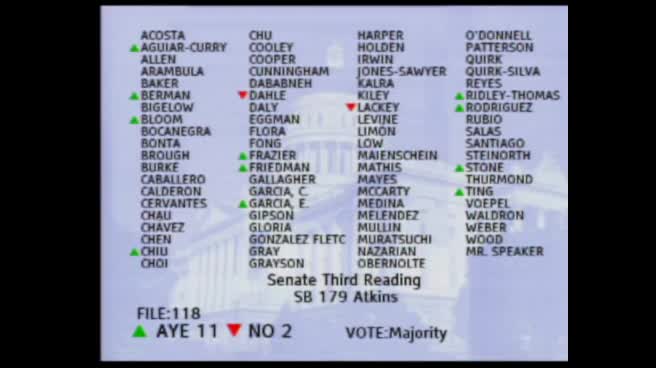 2MIN
Assembly Floor
 1H
Assembly Standing Committee on Appropriations
 18MIN
Assembly Standing Committee on Public Safety
 7MIN
Senate Floor
 48MIN
Senate Standing Committee on Appropriations
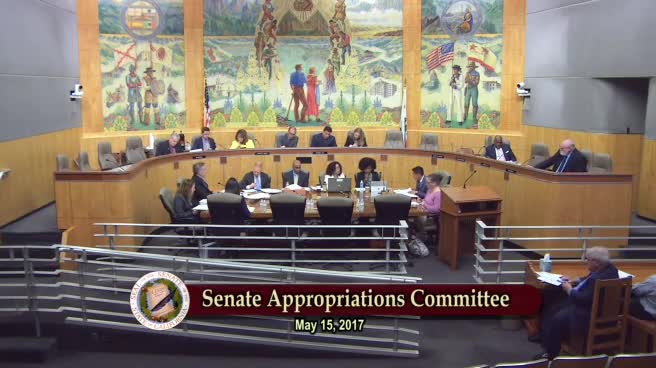 2MIN
Senate Standing Committee on Appropriations
Bill Author

Bill Co-Author(s):
