SB 498: Vehicle fleets: zero-emission vehicles.
- Session Year: 2017-2018
- House: Senate
- Latest Version Date: 2017-10-10
(1)Existing law generally designates the State Air Resources Board as the state agency with the primary responsibility for the control of vehicular air pollution. The Charge Ahead California Initiative, administered by the state board, includes goals of, among other things, placing in service at least 1,000,000 zero-emission and near-zero-emission vehicles by January 1, 2023, and increasing access for disadvantaged, low-income, and moderate-income communities and consumers to zero-emission and near-zero-emission vehicles.
Existing law establishes the Air Quality Improvement Program, administered by the state board, to fund projects related to, among other things, the reduction of criteria air pollutants and improvement of air quality. Pursuant to the Air Quality Improvement Program, the state board has established the Clean Vehicle Rebate Project to promote the production and use of zero-emission vehicles and the Hybrid and Zero-Emission Truck and Bus Voucher Incentive Project to provide vouchers to help California fleets purchase hybrid and zero-emission trucks and buses.
This bill would require the state board, in consultation with stakeholders, to review all programs affecting the adoption of light-duty, medium-duty, and heavy-duty zero-emission vehicles in the state and report to the Legislature no later than July 1, 2019, recommendations for increasing the use of those vehicles for vehicle fleet use and on a general-use basis in the state, as specified.
(2)Existing law requires the Secretary of Government Operations, in consultation with the Department of General Services and other specified state agencies, to develop, implement, and submit to the Legislature and the Governor a plan to improve the overall state vehicle fleets use of alternative fuels, synthetic lubricants, and fuel-efficient vehicles by reducing or displacing the consumption of petroleum products by the state fleet when compared to the 2003 consumption level, based on a specified schedule.
This bill would require the Department of General Services, beginning no later than the 202425 fiscal year, to ensure at least 50% of the light-duty vehicles purchased for the state vehicle fleet each fiscal year are zero-emission vehicles, except as specified.
(1)Existing law generally designates the State Air Resources Board as the state agency with the primary responsibility for the control of vehicular air pollution. The Charge Ahead California Initiative, administered by the state board, includes goals of, among other things, placing in service at least 1,000,000 zero-emission and near-zero-emission vehicles by January 1, 2023, and increasing access for disadvantaged, low-income, and moderate-income communities and consumers to zero-emission and near-zero-emission vehicles.
Existing law establishes the Air Quality Improvement Program, administered by the state board, to fund projects related to, among other things, the reduction of criteria air pollutants and improvement of air quality. Pursuant to the Air Quality Improvement Program, the state board has established the Clean Vehicle Rebate Project to promote the production and use of zero-emission vehicles and the Hybrid and Zero-Emission Truck and Bus Voucher Incentive Project to provide vouchers to help California fleets purchase hybrid and zero-emission trucks and buses.
This bill would require the state board, in consultation with stakeholders, to review all programs affecting the adoption of light-duty and medium-duty light-duty, medium-duty, and heavy-duty zero-emission vehicles in the state and report to the Legislature no later than July 1, 2019, recommendations for increasing the use of those vehicles for vehicle fleet use and on a general-use basis in the state, as specified.
(2)Existing law requires the Secretary of Government Operations, in consultation with the Department of General Services and other specified state agencies, to develop, implement, and submit to the Legislature and the Governor a plan to improve the overall state vehicle fleets use of alternative fuels, synthetic lubricants, and fuel-efficient vehicles by reducing or displacing the consumption of petroleum products by the state fleet when compared to the 2003 consumption level, based on a specified schedule.
This bill would require the Department of General Services, beginning no later than the 202425 fiscal year, to ensure at least 50% of the light-duty vehicles purchased for the state vehicle fleet each fiscal year are zero-emission vehicles, except as specified.
(1)Existing law generally designates the State Air Resources Board as the state agency with the primary responsibility for the control of vehicular air pollution. The Charge Ahead California Initiative, administered by the state board, includes goals of, among other things, placing in service at least 1,000,000 zero-emission and near-zero-emission vehicles by January 1, 2023, and increasing access for disadvantaged, low-income, and moderate-income communities and consumers to zero-emission and near-zero-emission vehicles.
Existing law establishes the Air Quality Improvement Program, administered by the state board, to fund projects related to, among other things, the reduction of criteria air pollutants and improvement of air quality. Pursuant to the Air Quality Improvement Program, the state board has established the Clean Vehicle Rebate Project to promote the production and use of zero-emission vehicles and the Hybrid and Zero-Emission Truck and Bus Voucher Incentive Project to provide vouchers to help California fleets purchase hybrid and zero-emission trucks and buses.
This bill would require the state board, in consultation with stakeholders, to review all programs affecting the adoption of light-duty and medium-duty zero-emission vehicles in the state and report to the Legislature no later than July 1, 2019, recommendations for increasing the use of those vehicles for vehicle fleet use and on a general-use basis in the state, as specified.
(2)Existing law requires the Secretary of Government Operations, in consultation with the Department of General Services and other specified state agencies, to develop, implement, and submit to the Legislature and the Governor a plan to improve the overall state vehicle fleets use of alternative fuels, synthetic lubricants, and fuel-efficient vehicles by reducing or displacing the consumption of petroleum products by the state fleet when compared to the 2003 consumption level, based on a specified schedule.
This bill would require the Department of General Services, beginning no later than the 202425 fiscal year, to ensure at least 50% of the light-duty vehicles purchased for the state vehicle fleet each fiscal year are zero-emission vehicles, except as specified.
(1)Existing law generally designates the State Air Resources Board as the state agency with the primary responsibility for the control of vehicular air pollution. The Charge Ahead California Initiative, administered by the state board, includes goals of, among other things, placing in service at least 1,000,000 zero-emission and near-zero-emission vehicles by January 1, 2023, and increasing access for disadvantaged, low-income, and moderate-income communities and consumers to zero-emission and near-zero-emission vehicles.
Existing law establishes the Air Quality Improvement Program, administered by the state board, to fund projects related to, among other things, the reduction of criteria air pollutants and improvement of air quality. Pursuant to the Air Quality Improvement Program, the state board has established the Clean Vehicle Rebate Project to promote the production and use of zero-emission vehicles and the Hybrid and Zero-Emission Truck and Bus Voucher Incentive Project to provide vouchers to help California fleets purchase hybrid and zero-emission trucks and buses.
This bill would require the state board, in consultation with stakeholders, to review all programs affecting the adoption of light-duty and medium-duty zero-emission vehicles in the state and report to the Legislature no later than January July 1, 2019, policy recommendations for increasing the use of zero-emission those vehicles for vehicle fleet use and on a general-use basis in the state, as specified.
(2)Existing law requires the Secretary of Government Operations, in consultation with the Department of General Services and other specified state agencies, to develop, implement, and submit to the Legislature and the Governor a plan to improve the overall state vehicle fleets use of alternative fuels, synthetic lubricants, and fuel-efficient vehicles by reducing or displacing the consumption of petroleum products by the state fleet when compared to the 2003 consumption level, based on a specified schedule.
This bill would require the Department of General Services, beginning no later than the 202425 fiscal year, to ensure at least 50% of the light-duty vehicles purchased for the state vehicle fleet each fiscal year are zero-emission vehicles, except as specified.
(1)Existing law generally designates the State Air Resources Board as the state agency with the primary responsibility for the control of vehicular air pollution. The Charge Ahead California Initiative, administered by the state board, includes goals of, among other things, placing in service at least 1,000,000 zero-emission and near-zero-emission vehicles by January 1, 2023, and increasing access for disadvantaged, low-income, and moderate-income communities and consumers to zero-emission and near-zero-emission vehicles.
Existing law establishes the Air Quality Improvement Program that is Program, administered by the State Air Resources Board for the purposes of funding state board, to fund projects related to, among other things, the reduction of criteria air pollutants and improvement of air quality. Pursuant to the Air Quality Improvement Program, the state board has established the Clean Vehicle Rebate Project to promote the production and use of zero-emission vehicles and the Hybrid and Zero-Emission Truck and Bus Voucher Incentive Project to provide vouchers to help California fleets purchase hybrid and zero-emission trucks and buses.
This bill would require the state board, in consultation with stakeholders, to review all programs affecting the adoption of zero-emission vehicles in the state and report to the Legislature no later than January 1, 2019, policy recommendations for increasing the use of zero-emission vehicles in the state, as specified.
(2)Existing law requires the Secretary of Government Operations, in consultation with the Department of General Services and other specified state agencies, to develop, implement, and submit to the Legislature and the Governor a plan to improve the overall state vehicle fleets use of alternative fuels, synthetic lubricants, and fuel-efficient vehicles by reducing or displacing the consumption of petroleum products by the state fleet when compared to the 2003 consumption level, based on a specified schedule.
This bill would require the Department of General Services, beginning no later than the 202425 fiscal year, to ensure at least 50% of the light-duty vehicles purchased for the state vehicle fleet each fiscal year are zero-emission vehicles, except as specified.
(1)Existing law generally designates the State Air Resources Board as the state agency with the primary responsibility for the control of vehicular air pollution. The Charge Ahead California Initiative, administered by the state board, includes goals of, among other things, placing in service at least 1,000,000 zero-emission and near-zero-emission vehicles by January 1, 2023, and increasing access for disadvantaged, low-income, and moderate-income communities and consumers to zero-emission and near-zero-emission vehicles.
Existing law establishes the Air Quality Improvement Program that is administered by the State Air Resources Board for the purposes of funding projects related to, among other things, reduction of criteria air pollutants and improvement of air quality. Pursuant to the Air Quality Improvement Program, the state board has established the Clean Vehicle Rebate Project to promote the production and use of zero-emission vehicles and the Hybrid and Zero-Emission Truck and Bus Voucher Incentive Project to provide vouchers to help California fleets purchase hybrid and zero-emission trucks and buses.
This bill would require the state board, for the purposes of public and private sector vehicle fleets, to develop zero-emission vehicle adoption targets for 2021 and subsequent years, as specified, and make available to the owners of vehicle fleets research and support in order to facilitate the adoption of zero-emission vehicles, as specified.This bill would require the state board, in consultation with stakeholders, to review all programs affecting the adoption of zero-emission vehicles in the state and report to the Legislature no later than January 1, 2019, policy recommendations for increasing the use of zero-emission vehicles in the state, as specified.
(2)Existing law requires the Secretary of Government Operations, in consultation with the Department of General Services and other specified state agencies, to develop, implement, and submit to the Legislature and the Governor a plan to improve the overall state vehicle fleets use of alternative fuels, synthetic lubricants, and fuel-efficient vehicles by reducing or displacing the consumption of petroleum products by the state fleet when compared to the 2003 consumption level, based on a specified schedule.
This bill would require the Department of General Services, beginning no later than the 202425 fiscal year, to ensure at least 50% of the passenger vehicles and light-duty vehicles purchased for the state vehicle fleet each fiscal year are zero-emission vehicles. vehicles, except as specified.
(1)Existing law generally designates the State Air Resources Board as the state agency with the primary responsibility for the control of vehicular air pollution. The Charge Ahead California Initiative, administered by the state board, includes goals of, among other things, placing in service at least 1,000,000 zero-emission and near-zero-emission vehicles by January 1, 2023, and increasing access for disadvantaged, low-income, and moderate-income communities and consumers to zero-emission and near-zero-emission vehicles.
Existing law establishes the Air Quality Improvement Program that is administered by the State Air Resources Board for the purposes of funding projects related to, among other things, reduction of criteria air pollutants and improvement of air quality. Pursuant to the Air Quality Improvement Program, the state board has established the Clean Vehicle Rebate Project to promote the production and use of zero-emission vehicles and the Hybrid and Zero-Emission Truck and Bus Voucher Incentive Project to provide vouchers to help California fleets purchase hybrid and zero-emission trucks and buses.
This bill would require the state board, for the purposes of public and private sector vehicle fleets, to develop electric zero-emission vehicle adoption targets for 2021 and subsequent years, as specified, and make available to the owners of vehicle fleets research and support in order to facilitate the adoption of electric zero-emission vehicles, as specified.
(2)Existing law requires the Secretary of Government Operations, in consultation with the Department of General Services and other specified state agencies, to develop, implement, and submit to the Legislature and the Governor a plan to improve the overall state vehicle fleets use of alternative fuels, synthetic lubricants, and fuel-efficient vehicles by reducing or displacing the consumption of petroleum products by the state fleet when compared to the 2003 consumption level, based on a specified schedule.
This bill would require the Department of General Services, beginning no later than the 202425 fiscal year, to ensure at least 50% of the passenger vehicles and light-duty vehicles purchased for the state vehicle fleet each fiscal year are zero-emission vehicles.
Existing law generally designates the State Air Resources Board as the state agency with the primary responsibility for the control of vehicular air pollution. The Charge Ahead California Initiative, administered by the state board, includes goals of, among other things, placing in service at least 1,000,000 zero-emission and near-zero-emission vehicles by January 1, 2023, and increasing access for disadvantaged, low-income, and moderate-income communities and consumers to zero-emission and near-zero-emission vehicles.
Existing law establishes the Air Quality Improvement Program that is administered by the State Air Resources Board for the purposes of funding projects related to, among other things, reduction of criteria air pollutants and improvement of air quality. Pursuant to the Air Quality Improvement Program, the state board has established the Clean Vehicle Rebate Project to promote the production and use of zero-emission vehicles and the Hybrid and Zero-Emission Truck and Bus Voucher Incentive Project to provide vouchers to help California fleets purchase hybrid and zero-emission trucks and buses.
This bill would require the state board, for the purposes of public and private sector vehicle fleets, to develop electric vehicle adoption targets for 2021 and make available to the owners of vehicle fleets research and support in order to facilitate the adoption of electric vehicles, as specified.
The Legislature finds and declares all of the following:
(a)Governor Edmund G. Brown in Executive Order B-16-2012 stated a goal of having 1.5 million zero-emission vehicles on the road by 2025.
(b)The low adoption rate of zero-emission vehicles can be attributed, in part, to the lack of charging and fueling infrastructure for those vehicles.
(c)Zero-emission vehicle charging and fueling infrastructure will expand as more of those vehicles are sold.
(d)Fleets represent a large number of motor vehicles owned and operated in the state.
(e)Fleet vehicles are replaced more frequently than single-owner passenger vehicles.
(f)Owners of fleet vehicles are more likely to have access to vehicle charging and fueling infrastructure.
(g)Demand from fleet owners can help expand the vehicle charging and fueling infrastructure available to the general public.
(h)The Legislature has established the Charge Ahead California Initiative at the State Air Resources Board (Chapter 8.5 (commencing with Section 44258) of Part 5 of Division 26 of the Health and Safety Code) to provide incentives that increase the availability of zero-emission vehicles and set a target for placing one million of these vehicles on Californias roadways by January 1, 2023.
(i)A number of programs have been established at the State Air Resources Board to address transportation sector emissions, including programs designed to encourage the adoption and deployment of zero-emission vehicles.
(j)In order to achieve Californias climate change goals, the state board must maximize efforts to increase fleet deployment of zero-emission vehicles.
(k)In order to make informed policy decisions with regard to increasing fleet deployment of zero-emission vehicles, the Legislature requires detailed information regarding the effectiveness of existing zero-emission vehicle programs.
SEC. 2.Section 43018.8 is added to the Health and Safety Code, to read:43018.8.(a)For purposes of this section, vehicle fleet means 10 or more vehicles under common ownership or operation.
(b)The state board, in consultation with stakeholders, including, but not limited to, the Institutes of Transportation Studies of the University of California, shall review all state board programs affecting the adoption of light-duty, medium-duty, and heavy-duty zero-emission vehicles in the state and report to the Legislature no later than July 1, 2019, with policy recommendations for increasing the use of those vehicles for vehicle fleet use and on a general-use basis in the state. Specifically, the report shall include a review of the state boards zero-emission vehicle programs, including the specific greenhouse gas or air quality improvement goal for each program; the status of each program with respect to meeting the respective goals for each program; a cost-benefit analysis of each program; and, to the extent feasible, a comparison of the state boards zero-emission vehicle programs with other states and countries zero-emission vehicle programs. Based on this information, the report shall also make recommendations on how to maximize the effectiveness of existing programs to expand the use of these vehicles in vehicle fleet use and on a general-use basis in the most cost-effective manner possible that achieves the greatest reduction in greenhouse gas emissions and maximizes improvements to air quality.
(c)The state board shall consider public comments on a draft report of its policy recommendations prepared pursuant to subdivision (b) at a public hearing held at least 30 days before the state board submits the report to the Legislature. The state board may modify the draft report in response to comments received at the public hearing and any other feedback on the draft report provided to the state board.
(d)The state board shall also include in the report recommendations as to how vehicle fleet operators can increase the number of zero-emission vehicles in vehicle fleet use.
(e)The state board, in preparing the report, shall take into account the results of the study required by Section 48 of Chapter 5 of the Statutes of 2017.
(f)A report to be submitted pursuant to this section shall be submitted in compliance with Section 9795 of the Government Code.
SEC. 3.Section 25724 is added to the Public Resources Code, to read:25724.(a)Beginning no later than the 202425 fiscal year, the Department of General Services shall ensure that at least 50 percent of the light-duty vehicles purchased for the state vehicle fleet each fiscal year are zero-emission vehicles.
(b)This section shall not apply to vehicles that have special performance requirements necessary for the protection of public safety, as defined by the Department of General Services.
(c)(1)If the Department of General Services determines that it cannot meet the needs of the state while fulfilling the requirements of this section, the department shall hold a public hearing to make that finding, notify the Secretary of State of the finding, and cease to implement this section.
(2)The Department of General Services may base the finding required pursuant to paragraph (1) on a determination that fulfilling the requirements of this section would result in costs that are not substantially absorbable by the department when purchasing those light-duty vehicles.
The Legislature finds and declares all of the following:
(a)Governor Edmund G. Brown in Executive Order B-16-2012 stated a goal of having 1.5 million zero-emission vehicles on the road by 2025.
(b)The low adoption rate of zero-emission vehicles can be attributed, in part, to the lack of charging and fueling infrastructure for those vehicles.
(c)Zero-emission vehicle charging and fueling infrastructure will expand as more of those vehicles are sold.
(d)Fleets represent a large number of motor vehicles owned and operated in the state.
(e)Fleet vehicles are replaced more frequently than single-owner passenger vehicles.
(f)Owners of fleet vehicles are more likely to have access to vehicle charging and fueling infrastructure.
(g)Demand from fleet owners can help expand the vehicle charging and fueling infrastructure available to the general public.
(h)The Legislature has established the Charge Ahead California Initiative at the State Air Resources Board (Chapter 8.5 (commencing with Section 44258) of Part 5 of Division 26 of the Health and Safety Code) to provide incentives that increase the availability of zero-emission vehicles and set a target for placing one million of these vehicles on Californias roadways by January 1, 2023.
(i)A number of programs have been established at the State Air Resources Board to address transportation sector emissions, including programs designed to encourage the adoption and deployment of zero-emission vehicles.
(j)In order to achieve Californias climate change goals, the state board must maximize efforts to increase fleet deployment of zero-emission vehicles.
(k)In order to make informed policy decisions with regard to increasing fleet deployment of zero-emission vehicles, the Legislature requires detailed information regarding the effectiveness of existing zero-emission vehicle programs.
SEC. 2.Section 43018.8 is added to the Health and Safety Code, to read:43018.8.(a)For purposes of this section, vehicle fleet means 10 or more vehicles under common ownership or operation.
(b)The state board, in consultation with stakeholders, including, but not limited to, the Institutes of Transportation Studies of the University of California, shall review all state board programs affecting the adoption of light-duty and medium-duty light-duty, medium-duty, and heavy-duty zero-emission vehicles in the state and report to the Legislature no later than July 1, 2019, with policy recommendations for increasing the use of those vehicles for vehicle fleet use and on a general-use basis in the state. Specifically, the report shall include a review of the state boards zero-emission vehicle programs, including the specific greenhouse gas or air quality improvement goal for each program, program; the status of each program with respect to meeting the respective goals for each program, and program; a cost-benefit analysis of each program. program; and, to the extent feasible, a comparison of the state boards zero-emission vehicle programs with other states and countries zero-emission vehicle programs. Based on this information, the report shall also make recommendations on how to maximize the effectiveness of existing programs to expand the use of these vehicles in vehicle fleet use and on a general-use basis in the most cost-effective manner possible that achieves the greatest reduction in greenhouse gas emissions and maximizes improvements to air quality.
(c)The state board shall consider public comments on a draft report of its policy recommendations prepared pursuant to subdivision (b) at a public hearing held at least 30 days before the state board submits the report to the Legislature. The state board may modify the draft report in response to comments received at the public hearing and any other feedback on the draft report provided to the state board.
(d)The state board shall also include in the report recommendations as to how vehicle fleet operators can increase the number of zero-emission vehicles in vehicle fleet use.
(e)The state board, in preparing the report, shall take into account the results of the study required by Section 48 of Chapter 5 of the Statutes of 2017.
(f)A report to be submitted pursuant to this section shall be submitted in compliance with Section 9795 of the Government Code.
SEC. 3.Section 25724 is added to the Public Resources Code, to read:25724.(a)Beginning no later than the 202425 fiscal year, the Department of General Services shall ensure that at least 50 percent of the light-duty vehicles purchased for the state vehicle fleet each fiscal year are zero-emission vehicles.
(b)This section shall not apply to vehicles that have special performance requirements necessary for the protection of public safety, as defined by the Department of General Services.
(c)(1)If the Department of General Services determines that it cannot meet the needs of the state while fulfilling the requirements of this section, the department shall hold a public hearing to make that finding, notify the Secretary of State of the finding, and cease to implement this section.
(2)The Department of General Services may base the finding required pursuant to paragraph (1) on a determination that fulfilling the requirements of this section would result in costs that are not substantially absorbable by the department when purchasing those light-duty vehicles.
The Legislature finds and declares all of the following:
(a)Governor Edmund G. Brown in Executive Order B-16-2012 stated a goal of having 1.5 million zero-emission vehicles on the road by 2025.
(b)The low adoption rate of zero-emission vehicles can be attributed, in part, to the lack of charging and fueling infrastructure for those vehicles.
(c)Zero-emission vehicle charging and fueling infrastructure will expand as more of those vehicles are sold.
(d)Fleets represent a large number of motor vehicles owned and operated in the state.
(e)Fleet vehicles are replaced more frequently than single-owner passenger vehicles.
(f)Owners of fleet vehicles are more likely to have access to vehicle charging and fueling infrastructure.
(g)Demand from fleet owners can help expand the vehicle charging and fueling infrastructure available to the general public.
(h)The Legislature has established the Charge Ahead California Initiative at the State Air Resources Board (Chapter 8.5 (commencing with Section 44258) of Part 5 of Division 26 of the Health and Safety Code) to provide incentives that increase the availability of zero-emission vehicles and set a target for placing one million of these vehicles on Californias roadways by January 1, 2023.
(i)A number of programs have been established at the State Air Resources Board to address transportation sector emissions, including programs designed to encourage the adoption and deployment of zero-emission vehicles.
(j)In order to achieve Californias climate change goals, the state board must maximize efforts to increase fleet deployment of zero-emission vehicles.
(k)In order to make informed policy decisions with regard to increasing fleet deployment of zero-emission vehicles, the Legislature requires detailed information regarding the effectiveness of existing zero-emission vehicle programs.
SEC. 2.Section 43018.8 is added to the Health and Safety Code, to read:43018.8.(a)For purposes of this section, vehicle fleet means 10 or more vehicles under common ownership or operation.
(b)The state board, in consultation with stakeholders, including, but not limited to, the Institutes of Transportation Studies of the University of California, shall review all state board programs affecting the adoption of light-duty and medium-duty zero-emission vehicles in the state and report to the Legislature no later than July 1, 2019, with policy recommendations for increasing the use of those vehicles for vehicle fleet use and on a general-use basis in the state. Specifically, the report shall include a review of the state boards zero-emission vehicle programs, including the specific greenhouse gas or air quality improvement goal for each program, the status of each program with respect to meeting the respective goals for each program, and a cost-benefit analysis of each program. Based on this information, the report shall also make recommendations on how to maximize the effectiveness of existing programs to expand the use of these vehicles in vehicle fleet use and on a general-use basis in the most cost-effective manner possible that achieves the greatest reduction in greenhouse gas emissions and maximizes improvements to air quality.
(c)The state board shall consider public comments on a draft report of its policy recommendations prepared pursuant to subdivision (b) at a public hearing held at least 30 days before the state board submits the report to the Legislature. The state board may modify the draft report in response to comments received at the public hearing and any other feedback on the draft report provided to the state board.
(d)The state board shall also include in the report recommendations as to how vehicle fleet operators can increase the number of zero-emission vehicles in vehicle fleet use.
(e)The state board, in preparing the report, shall take into account the results of the study required by Section 48 of Chapter 5 of the Statutes of 2017.
(e)(f)A report to be submitted pursuant to this section shall be submitted in compliance with Section 9795 of the Government Code.
SEC. 3.Section 25724 is added to the Public Resources Code, to read:25724.(a)Beginning no later than the 202425 fiscal year, the Department of General Services shall ensure that at least 50 percent of the light-duty vehicles purchased for the state vehicle fleet each fiscal year are zero-emission vehicles.
(b)This section shall not apply to vehicles that have special performance requirements necessary for the protection of public safety, as defined by the Department of General Services.
(c)(1)If the Department of General Services determines that it cannot meet the needs of the state while fulfilling the requirements of this section, the department shall hold a public hearing to make that finding, notify the Secretary of State of the finding, and cease to implement this section.
(2)The Department of General Services may base the finding required pursuant to paragraph (1) on a determination that fulfilling the requirements of this section would result in costs that are not substantially absorbable by the department when purchasing those light-duty vehicles.
The Legislature finds and declares all of the following:
(a)Governor Jerry Edmund G. Brown in Executive Order B-16-2012 stated a goal of having 1.5 million zero-emission vehicles on the road by 2025.
(b)The low adoption rate of zero-emission vehicles can be attributed, in part, to the lack of charging and fueling infrastructure for those vehicles.
(c)Zero-emission vehicle charging and fueling infrastructure will expand as more of those vehicles are sold.
(d)Fleets represent a large number of motor vehicles owned and operated in the state.
(e)Fleet vehicles are replaced more frequently than single-owner passenger vehicles.
(f)Owners of fleet vehicles are more likely to have access to vehicle charging and fueling infrastructure.
(g)Demand from fleet owners can help expand the vehicle charging and fueling infrastructure available to the general public.
(h)The Legislature has established the Charge Ahead California Initiative at the State Air Resources Board (Chapter 8.5 (commencing with Section 44258) of Part 5 of Division 26 of the Health and Safety Code) to provide incentives that increase the availability of zero-emission vehicles and set a target for placing one million of these vehicles on Californias roadways by January 1, 2023.
(i)A number of programs have been established at the State Air Resources Board to address transportation sector emissions, including programs designed to encourage the adoption and deployment of zero-emission vehicles.
(j)In order to achieve Californias climate change goals, the state board must maximize efforts to increase fleet deployment of zero-emission vehicles.
(k)In order to make informed policy decisions with regard to increasing fleet deployment of zero-emission vehicles, the Legislature requires detailed information regarding the effectiveness of existing zero-emission vehicle programs.
SEC. 2.Section 43018.8 is added to the Health and Safety Code, to read:43018.8.(a)For purposes of this section, vehicle fleet means 10 or more vehicles under common ownership or operation.
(b)The state board, in consultation with stakeholders, including, but not limited to, the Institutes of Transportation Studies of the University of California, shall review all state board programs affecting the adoption of light-duty and medium-duty zero-emission vehicles in the state and report to the Legislature no later than January July 1, 2019, with policy recommendations for increasing the use of zero-emission those vehicles for vehicle fleet use and on a general-use basis in the state. Specifically, the report shall include a review of the state boards zero-emission vehicle programs, including the specific greenhouse gas or air quality improvement goal for each program, the status of each program with respect to meeting the respective goals for each program, and a cost-benefit analysis of each program. Based on this information, the report shall also make recommendations on how to maximize the effectiveness of existing programs to expand the use of these vehicles in vehicle fleet use and on a general-use basis in the most cost-effective manner possible that achieves the greatest reduction in greenhouse gas emissions and maximizes improvements to air quality.
(c)The state board shall consider public comments on a draft report of its policy recommendations prepared pursuant to subdivision (b) at a public hearing held at least 30 days before the state board submits the report to the Legislature. The state board may modify the draft report in response to comments received at the public hearing and any other feedback on the draft report provided to the state board.
(d)The state board shall also include in the report policy recommendations for as to how both public and private vehicle fleets may be utilized in increasing the use of zero-emission vehicles in the state, including, but not limited to, zero-emission vehicle target adoption rates for vehicle fleets. vehicle fleet operators can increase the number of zero-emission vehicles in vehicle fleet use.
(e)A report to be submitted pursuant to this section shall be submitted in compliance with Section 9795 of the Government Code.
SEC. 3.Section 25724 is added to the Public Resources Code, to read:25724.(a)Beginning no later than the 202425 fiscal year, the Department of General Services shall ensure that at least 50 percent of the light-duty vehicles purchased for the state vehicle fleet each fiscal year are zero-emission vehicles.
(b)This section shall not apply to vehicles that have special performance requirements necessary for the protection of public safety, as defined by the Department of General Services.
(c)(1)If the Department of General Services determines that it cannot meet the needs of the state while fulfilling the requirements of this section, the department shall hold a public hearing to make that finding, notify the Secretary of State of the finding, and cease to implement this section.
(2)The Department of General Services may base the finding required pursuant to paragraph (1) on a determination that fulfilling the requirements of this section would result in costs that are not substantially absorbable by the department when purchasing those light-duty vehicles.
The Legislature finds and declares all of the following:
(a)Governor Jerry Brown in Executive Order B-16-2012 stated a goal of having 1.5 million zero-emission vehicles on the road by 2025.
(b)The low adoption rate of zero-emission vehicles can be attributed, in part, to the lack of charging and fueling infrastructure for those vehicles.
(c)Zero-emission vehicle charging and fueling infrastructure will expand as more of those vehicles are sold.
(d)Fleets represent a large number of motor vehicles owned and operated in the state.
(e)Fleet vehicles are replaced more frequently than single-owner passenger vehicles.
(f)Owners of fleet vehicles are more likely to have access to vehicle charging and fueling infrastructure.
(g)Demand from fleet owners can help expand the vehicle charging and fueling infrastructure available to the general public.
SEC. 2.Section 43018.8 is added to the Health and Safety Code, to read:43018.8.(a)For the purposes of this section, vehicle fleet means 10 or more vehicles under common ownership or operation.
(b)The state board, in consultation with stakeholders, shall review all programs affecting the adoption of zero-emission vehicles in the state and report to the Legislature no later than January 1, 2019, policy recommendations for increasing the use of zero-emission vehicles in the state.
(c)The state board shall consider public comments on a draft report of its policy recommendations prepared pursuant to subdivision (b) at a public hearing held at least 30 days before the state board submits the report to the Legislature. The state board may modify the draft report in response to comments received at the public hearing and any other feedback on the draft report provided to the state board.
(d)The state board shall include in the report policy recommendations for how both public and private vehicle fleets may be utilized in increasing the use of zero-emission vehicles in the state, including, but not limited to, zero-emission vehicle target adoption rates for vehicle fleets.
(e)A report to be submitted pursuant to this section shall be submitted in compliance with Section 9795 of the Government Code.
SEC. 3.Section 25724 is added to the Public Resources Code, to read:25724.(a)Beginning no later than the 202425 fiscal year, the Department of General Services shall ensure that at least 50 percent of the light-duty vehicles purchased for the state vehicle fleet each fiscal year are zero-emission vehicles.
(b)This section shall not apply to vehicles that have special performance requirements necessary for the protection of public safety, as defined by the Department of General Services.
(c)(1)If the Department of General Services determines that it cannot meet the needs of the state while fulfilling the requirements of this section, the department shall hold a public hearing to make that finding, notify the Secretary of State of the finding, and cease to implement this section.
(2)The Department of General Services may base the finding required pursuant to paragraph (1) on a determination that fulfilling the requirements of this section would result in costs that are not substantially absorbable by the department when purchasing those light-duty vehicles.
The Legislature finds and declares all of the following:
(a)Governor Jerry Brown in Executive Order B-16-2012 stated a goal of having 1.5 million zero-emission vehicles on the road by 2025.
(b)The low adoption rate of zero-emission vehicles can be attributed, in part, to the lack of charging and fueling infrastructure for those vehicles.
(c)Zero-emission vehicle charging and fueling infrastructure will expand as more of those vehicles are sold.
(a)(d)Fleets represent a large number of motor vehicles owned and operated in the state.
(b)(e)Fleet vehicles are replaced more frequently than single-owner passenger vehicles.
(c)(f)Owners of fleet vehicles are more likely to have access to centralized electric vehicle charging and fueling infrastructure.
(g)Demand from fleet owners can help expand the vehicle charging and fueling infrastructure available to the general public.
SEC. 2.Section 43018.8 is added to the Health and Safety Code, to read:43018.8.(a)For the purposes of vehicle fleets, the state board shall do both of the following:(1)(A)Develop, in consultation with stakeholders, zero-emission vehicle adoption targets for 2021 and subsequent years.(B)The state board shall approve the targets developed pursuant to this paragraph in their final form no later than January 1, 2020, at a public hearing held not less than 30 days after a public hearing where the state board considers public comments on the targets.(2)Make available to the owners of vehicle fleets research and support in order to facilitate the adoption of zero-emission vehicles. This may include, but need not be limited to, offering coordination among various state, local, and federal government incentive programs.(b)This section shall apply to public sector and private sector motor vehicle fleets, including, but not limited to, schoolbuses, transit motor vehicles, and delivery motor vehicles.SEC. 2.Section 43018.8 is added to the Health and Safety Code, to read:43018.8.(a)For the purposes of this section, vehicle fleet means 10 or more vehicles under common ownership or operation.
(b)The state board, in consultation with stakeholders, shall review all programs affecting the adoption of zero-emission vehicles in the state and report to the Legislature no later than January 1, 2019, policy recommendations for increasing the use of zero-emission vehicles in the state.
(c)The state board shall consider public comments on a draft report of its policy recommendations prepared pursuant to subdivision (b) at a public hearing held at least 30 days before the state board submits the report to the Legislature. The state board may modify the draft report in response to comments received at the public hearing and any other feedback on the draft report provided to the state board.
(d)The state board shall include in the report policy recommendations for how both public and private vehicle fleets may be utilized in increasing the use of zero-emission vehicles in the state, including, but not limited to, zero-emission vehicle target adoption rates for vehicle fleets.
(e)A report to be submitted pursuant to this section shall be submitted in compliance with Section 9795 of the Government Code.
SEC. 3.Section 25724 is added to the Public Resources Code, to read:25724.(a)Beginning no later than the 202425 fiscal year, the Department of General Services shall ensure that at least 50 percent of the passenger vehicles and light-duty vehicles purchased for the state vehicle fleet each fiscal year are zero-emission vehicles.
(b)This section shall not apply to vehicles that have special performance requirements necessary for the protection of public safety, as defined by the Department of General Services, including, but not limited to, vehicles that meet the criteria established in Section 4121.4 of the State Administrative Manual. Services.
(c)If the Department of General Services determines that it cannot meet the needs of the state while fulfilling the requirements of this section, the department shall hold a public hearing to make that finding, notify the Secretary of State of the finding, and cease to implement this section.
The Legislature finds and declares all of the following:
(a)Fleets represent a large number of motor vehicles owned and operated in the state.
(b)Fleet vehicles are replaced more frequently than single-owner passenger vehicles.
(c)Owners of fleet vehicles are more likely to have access to centralized electric vehicle charging infrastructure.
SEC. 2.Section 43018.8 is added to the Health and Safety Code, to read:43018.8.(a)For the purposes of vehicle fleets, the state board shall do both of the following:
(1)Develop electric vehicle adoption targets for 2021.(1)(A)Develop, in consultation with stakeholders, zero-emission vehicle adoption targets for 2021 and subsequent years.
(B)The state board shall approve the targets developed pursuant to this paragraph in their final form no later than January 1, 2020, at a public hearing held not less than 30 days after a public hearing where the state board considers public comments on the targets.
(2)Make available to the owners of vehicle fleets research and support in order to facilitate the adoption of electric zero-emission vehicles. This may include, but need not be limited to, offering coordination among various state, local, and federal government incentive programs.
(b)This section shall apply to public sector and private sector motor vehicle fleets, including, but not limited to, schoolbuses, transit motor vehicles, and delivery motor vehicles.
SEC. 3.Section 25724 is added to the Public Resources Code, to read:25724.(a)Beginning no later than the 202425 fiscal year, the Department of General Services shall ensure that at least 50 percent of the passenger vehicles and light-duty vehicles purchased for the state vehicle fleet each fiscal year are zero-emission vehicles.
(b)This section shall not apply to vehicles that have special performance requirements necessary for the protection of public safety, as defined by the Department of General Services, including, but not limited to, vehicles that meet the criteria established in Section 4121.4 of the State Administrative Manual.
The Legislature finds and declares all of the following:
(a)Fleets represent a large number of motor vehicles owned and operated in the state.
(b)Fleet vehicles are replaced more frequently than single-owner passenger vehicles.
(c)Owners of fleet vehicles are more likely to have access to centralized electric vehicle charging infrastructure.
SEC. 2.Section 43018.8 is added to the Health and Safety Code, to read:43018.8.(a)For the purposes of vehicle fleets, the state board shall do both of the following:
(1)Develop electric vehicle adoption targets for 2021.
(2)Make available to the owners of vehicle fleets research and support in order to facilitate the adoption of electric vehicles. This may include, but need not be limited to, offering coordination among various state, local, and federal government incentive programs.
(b)This section shall apply to public sector and private sector motor vehicle fleets, including, but not limited to, schoolbuses, transit motor vehicles, and delivery motor vehicles.
|
Date
|
Status
|
|---|---|
| Oct 10, 2017 | Chaptered by Secretary of State. Chapter 628, Statutes of 2017. |
| Oct 10, 2017 | Approved by the Governor. |
| Sep 21, 2017 | Enrolled and presented to the Governor at 5:30 p.m. |
| Sep 14, 2017 | Assembly amendments concurred in. (Ayes 27. Noes 13.) Ordered to engrossing and enrolling. |
| Sep 14, 2017 | In Senate. Concurrence in Assembly amendments pending. |
| Sep 13, 2017 | Read third time. Passed. Ordered to the Senate. |
| Sep 6, 2017 | Read second time. Ordered to third reading. |
| Sep 5, 2017 | Read second time and amended. Ordered to second reading. |
| Sep 1, 2017 | From committee: Do pass as amended. (Ayes 11. Noes 5.) (September 1). |
| Jul 19, 2017 | July 19 set for first hearing. Placed on APPR. suspense file. |
| Jul 12, 2017 | From committee: Do pass and re-refer to Com. on APPR. (Ayes 5. Noes 2.) (July 12). Re-referred to Com. on APPR. |
| Jul 6, 2017 | From committee with author's amendments. Read second time and amended. Re-referred to Com. on A. & A.R. |
| Jun 27, 2017 | From committee: Do pass and re-refer to Com. on A. & A.R. (Ayes 11. Noes 3.) (June 26). Re-referred to Com. on A. & A.R. |
| Jun 22, 2017 | From committee with author's amendments. Read second time and amended. Re-referred to Com. on TRANS. |
| Jun 12, 2017 | Referred to Coms. on TRANS. and A. & A.R. |
| Jun 1, 2017 | In Assembly. Read first time. Held at Desk. |
| May 31, 2017 | Read third time. Passed. (Ayes 27. Noes 13. Page 1329.) Ordered to the Assembly. |
| May 26, 2017 | Read second time and amended. Ordered to third reading. |
| May 25, 2017 | From committee: Do pass as amended. (Ayes 5. Noes 2. Page 1185.) (May 25). |
| May 19, 2017 | Set for hearing May 25. |
| May 1, 2017 | May 1 hearing: Placed on APPR. suspense file. |
| Apr 21, 2017 | Set for hearing May 1. |
| Apr 20, 2017 | From committee: Do pass and re-refer to Com. on APPR. (Ayes 5. Noes 2. Page 784.) (April 19). Re-referred to Com. on APPR. |
| Apr 6, 2017 | From committee with author's amendments. Read second time and amended. Re-referred to Com. on EQ. |
| Apr 6, 2017 | Set for hearing April 19. |
| Apr 5, 2017 | From committee: Do pass and re-refer to Com. on EQ. (Ayes 8. Noes 3. Page 627.) (April 4). Re-referred to Com. on EQ. |
| Mar 28, 2017 | From committee with author's amendments. Read second time and amended. Re-referred to Com. on T. & H. |
| Mar 21, 2017 | Set for hearing April 4. |
| Mar 20, 2017 | March 28 set for first hearing canceled at the request of author. |
| Mar 14, 2017 | Set for hearing March 28. |
| Mar 2, 2017 | Referred to Coms. on T. & H. and EQ. |
| Feb 17, 2017 | From printer. May be acted upon on or after March 19. |
| Feb 16, 2017 | Introduced. Read first time. To Com. on RLS. for assignment. To print. |
|
Date
|
Description
|
Location
|
Votes
|
|
|---|---|---|---|---|
| Sep 14, 2017 | Unfinished Business SB498 Skinner Concurrence | Senate Floor |
Passed |
|
| Sep 13, 2017 | SB 498 Skinner Senate Third Reading By CALDERON | Assembly Floor |
Passed |
|
| Sep 1, 2017 | Do pass as amended. | Assembly Standing Committee on Appropriations |
Passed |
|
| Jul 12, 2017 | Do pass and be re-referred to the Committee on [Appropriations] | Assembly Standing Committee on Accountability and Administrative Review |
Passed |
|
| Jun 26, 2017 | Do pass and be re-referred to the Committee on [Accountability and Administrative Review] | Assembly Standing Committee on Transportation |
Passed |
|
| May 31, 2017 | Senate 3rd Reading SB498 Skinner | Senate Floor |
Passed |
|
| May 25, 2017 | Do pass as amended | Senate Standing Committee on Appropriations |
Passed |
|
| May 1, 2017 | Placed on suspense file | Senate Standing Committee on Appropriations |
Passed |
|
| Apr 19, 2017 | Do pass, but first be re-referred to the Committee on [Appropriations] | Senate Standing Committee on Environmental Quality |
Passed |
|
| Apr 4, 2017 | Do pass, but first be re-referred to the Committee on [Environmental Quality] | Senate Standing Committee on Transportation and Housing |
Passed |
This list shows positions taken on this bill by organizations on the date displayed, which is linked to the original source.
Positions by individuals are not included.
|
Organization
|
Position
|
Date
|
|---|---|---|
| American Lung Association in California | ** Support | Jul 10, 2017 |
| Breathe California | ** Support | Jun 23, 2017 |
| Calstart | ** Support | Jul 10, 2017 |
| Coalition For Clean Air | ** Support | Jul 10, 2017 |
| Environment California | ** Support | Jul 10, 2017 |
| Lutheran Office of Public Policy, California | ** Support | Jul 10, 2017 |
| Natural Resources Defense Council | ** Support | Jul 10, 2017 |
| nextgen | ** Support | Jul 10, 2017 |
| NextGen California | ** Support | Sep 14, 2017 |
| Plug In America | ** Support | Sep 14, 2017 |
| plug-in america | ** Support | Jun 23, 2017 |
| Sierra Club | * Support | Apr 19, 2017 |
| Southern California Edison | ** Support | Sep 14, 2017 |
| Voices for Progress | ** Support | Jul 10, 2017 |
Office of Senate Floor Analyses (916) 651-1520 Fax: (916) 327-4478 | SB |
UNFINISHED BUSINESS
Bill No: SB 498
:
SENATE TRANS. & HOUSING COMMITTEE: 8-3, 4/4/17
AYES: Beall, Allen, Atkins, McGuire, Mendoza, Roth, Skinner, Wiener
NOES: Cannella, Bates, Gaines
NO VOTE RECORDED: Morrell, Wieckowski
SENATE ENVIRONMENTAL QUALITY COMMITTEE: 5-2, 4/19/17
AYES: Wieckowski, Hill, Lara, Skinner, Stern
NOES: Stone, Bates
SENATE APPROPRIATIONS COMMITTEE: 5-2, 5/25/17
AYES: Lara, Beall, Bradford, Hill, Wiener
NOES: Bates, Nielsen
SENATE FLOOR: 27-13, 5/31/17
AYES: Allen, Atkins, Beall, Bradford, De León, Dodd, Galgiani, Glazer, Hernandez, Hertzberg, Hill, Hueso, Jackson, Lara, Leyva, McGuire, Mendoza, Mitchell, Monning, Newman, Pan, Portantino, Roth, Skinner, Stern, Wieckowski, Wiener
NOES: Anderson, Bates, Berryhill, Cannella, Fuller, Gaines, Moorlach, Morrell, Nguyen, Nielsen, Stone, Vidak, Wilk
ASSEMBLY FLOOR: 54-24, 9/13/17 - See last page for vote
DIGEST:
This bill requires the State Air Resources Board (ARB) to review all state programs related to the adoption of zero-emission vehicles (ZEVs) and make recommendations to the Legislature and requires the Department of General Services (DGS) to meet a 50% ZEV target for the state vehicle fleet by 2024-25.
Assembly Amendments
require ARB to consult a specified report by the Institute for Transportation Studies at the University of California, Davis when compiling its review of ZEV programs; require ARB to look at programs affecting the adoption of light-duty, medium-duty, and heavy-duty ZEVs; impose additional requirements on the report ARB must submit to the Legislature; and require ARB to hold a public hearing on the draft report prior to submitting it to the Legislature.
Existing law:
- Establishes, pursuant to SB 1275 (De Leon, Chapter 530, Statutes of 2014), the Charge Ahead Initiative at the ARB to provide incentives that increase the availability of ZEVs and near-ZEVs, particularly in disadvantaged low- and moderate-income communities. SB 1275 also set a target of one million ZEVs and near-ZEVs by January 1, 2023.
- Establishes, pursuant to SB 350 (De Leon, Chapter 547, Statutes of 2016), a statewide policy of widespread electrification of the transportation sector. Among other provisions, SB 350 charges ARB with publishing a study by January 1, 2017, outlining the barriers faced by low-income consumers, including those in disadvantaged communities, to accessing ZEVs and near-ZEVs. The study will also include recommendations on how to reduce those barriers and increase access.
This bill:
- Requires ARB, in consultation with stakeholders, including but not limited to the Institute for Transportation Studies at the University of California, to review all programs affecting the adoption of light-duty, medium-duty, and heavy-duty ZEVs and make recommendations to the Legislature by January 1, 2019, for increasing the use of those vehicles for fleet use and on a general-use basis throughout the state.
- Requires the report to include a review of the ARB’s ZEV programs, including the specific greenhouse gas (GHG) or air quality improvement goal for each program; the status of each program with respect to meeting its goals; a cost-benefit analysis of each program; and, to the extent feasible, a comparison of ARB’s ZEV programs with other states’ and countries’ ZEV programs. Requires the report to make recommendations on how to expand the use of ZEVs on both a fleet use and general-use basis, in the most cost-effective manner possible, that achieves the greatest GHG emission reductions and maximizes air quality improvements.
- Requires ARB, in preparing the report, to take into account the result of a study required by SB 1 (Beall, Chapter 5, Statutes of 2017), which requests the Institute for Transportation Studies at the University of California, Davis to make recommendations on potential methodologies to raise revenue from ZEVs and low-emission vehicles to help achieve climate targets while ensuring these vehicle owners pay their fair share of costs borne by motorists to fund improvements to the transportation system.
- Requires ARB to include in the report recommendations as to how vehicle fleet operators can increase the number of ZEVs in fleet use.
- Requires ARB to consider public comments on a draft report of its recommendations at a public hearing held at least 30 days before ARB submits the report to the Legislature. Authorizes ARB to modify the draft report based on any public comments or feedback it receives.
- Defines a vehicle fleet as 10 or more vehicles under common ownership or operation.
- Requires DGS to ensure that at least 50% of the light-duty vehicles purchased for the state vehicle fleet each year are ZEVs, starting no later than the 2024-25 fiscal year.
- Allows DGS to opt out of the 50% purchase requirement if it makes findings as specified.
Background
Executive Order B-16-2012, issued by Governor Brown in March 2012, sets a target of one million ZEVs on California’s roads by 2020 and 1.5 million by 2025. The order also directs that at least 10% of state vehicle fleet purchases be zero-emission by 2015, increasing to at least 25% by 2020.
The ZEV Regulation (commonly known as the ZEV mandate) requires large volume and intermediate volume vehicle manufacturers that sell cars in California to produce ZEVS (such as battery electric and fuel cell vehicles), clean plug-in hybrids, clean hybrids, and clean gasoline engine vehicles with near-zero tailpipe emissions. In general, the ZEV regulation requires that ZEVs comprise 15% of new car sales by 2025. This target is intended to achieve the goal set by Executive Order B-16-2012.
The ZEV Action Plan, updated in October 2016, highlights priorities for ZEVs as well as actions to meet those priorities and build the state’s ZEV market.
Comments
- Purpose. The author states that automobiles are responsible for over one-third of all pollution in California. Vehicles in fleets turn over much frequently than vehicles owned by individuals, so public and private fleets are an easy place to start cleaning up our transportation sector. This bill will encourage fleet owners to buy more ZEVs by helping them access funding and setting state goals for fleet turnover into cleaner technologies.
- Statewide ZEV goal progress. According to the October 2016 update of the ZEV Action Plan, over 20 plug-in electric vehicles (PEVs) are now available in California; PEV sales are highest in the Los Angeles, San Diego, and San Francisco Bay Area regions. Hundreds of fuel cell electric vehicles are also now driving on California roads.
- Mandatory target for state vehicle fleet. For 2014-15, ZEVs accounted for 11.74% of the state’s light-duty fleet purchases, exceeding the 10% goal, and agencies are on pace to meet the 25% goal for 2020. This bill requires DGS to reach a 50% goal by 2024-25, a dramatic increase over the existing 2020 goal. The modeling performed by DGS suggests that unless new technology becomes available in the near term, DGS will likely not be able to meet the goal established in this bill. This bill does not include any extra funding to help DGS attain the goal, nor does it include any penalties for failing to achieve it. This bill does, however, allow DGS to opt out if it makes specified findings.
Related/Prior Legislation
AB 739 (Chau, 2017) requires at least 15% of heavy-duty vehicles purchased by the state to be zero-emission by December 31, 2025, and at least 30% by December 31, 2030.
AB 1710 (Calderon, 2016) would have required ARB to establish a comprehensive incentive program for the purchase of ZEVs or near-ZEVs and would have provided specified sales tax and personal income tax exemptions for such purchases. The bill was held on the Assembly Appropriations Committee suspense file.
FISCAL EFFECT: Appropriation: Fiscal Com.: Local:
NextGen California (source)
Plug In America
Southern California Edison
OPPOSITION: (Verified 9/13/17)
None received
ARGUMENTS IN SUPPORT: NextGen California states that this bill will allow California to lead by example in reducing GHG emissions through the procurement of ZEVs, protect public health through improved air quality, reduce the use of fossil fuels, and generate continued economic growth by expanding the clean energy economy.
ASSEMBLY FLOOR: 54-24, 9/13/17
AYES: Aguiar-Curry, Arambula, Baker, Berman, Bloom, Bocanegra, Bonta, Burke, Calderon, Cervantes, Chau, Chiu, Chu, Cooley, Cooper, Dababneh, Daly, Eggman, Frazier, Friedman, Cristina Garcia, Eduardo Garcia, Gipson, Gloria, Gonzalez Fletcher, Gray, Grayson, Holden, Irwin, Jones-Sawyer, Kalra, Levine, Limón, Low, Maienschein, McCarty, Medina, Mullin, Muratsuchi, O'Donnell, Quirk, Quirk-Silva, Reyes, Ridley-Thomas, Rodriguez, Rubio, Salas, Santiago, Mark Stone, Thurmond, Ting, Weber, Wood, Rendon
NOES: Acosta, Travis Allen, Bigelow, Brough, Caballero, Chávez, Chen, Choi, Cunningham, Dahle, Flora, Fong, Gallagher, Harper, Kiley, Lackey, Mathis, Mayes, Melendez, Obernolte, Patterson, Steinorth, Voepel, Waldron
NO VOTE RECORDED: Nazarian
9/14/17 10:08:00
**** END ****
SENATE THIRD READING
STR Bill Id:SB 498
Author:(Skinner)
As Amended Ver:September 5, 2017
Majority vote
SENATE VOTE: 27-13
Committee | Votes | Ayes | Noes |
Transportation | 11-3 | Frazier, Aguiar-Curry, Baker, Berman, Bocanegra, Chu, Daly, Friedman, Medina, Nazarian, O'Donnell | Fong, Harper, Mathis |
Accountability | 5-2 | Reyes, Burke, Frazier, Medina, Quirk-Silva | Lackey, Flora |
Appropriations | 11-5 | Gonzalez Fletcher, Bloom, Bocanegra, Bonta, Calderon, Chau, Eggman, Friedman, Eduardo Garcia, Jones-Sawyer, Reyes | Bigelow, Brough, Fong, Gallagher, Obernolte |
SUMMARY: Requires the California Air Resources Board (ARB), after reviewing its zero-emission vehicle (ZEV) programs, to make recommendations to the Legislature, no later than January 1, 2019, on how to increase ZEV use in the state in the most cost-efficient manner that results in the greatest air quality and emissions reduction benefits. Additionally, requires the Department of General Services (DGS) to ensure that ZEVs comprise at least 50% of the state's light-duty vehicle fleet purchases by the 2024-25 fiscal year (FY). Specifically, this bill:
- Makes findings and declarations regarding ZEVs.
- Defines a "vehicle fleet" as 10 or more vehicles under common ownership or operation.
- Requires ARB, in consultation with the University of California (UC) Institute of Transportation Studies and other stakeholders, to review all of ARB's ZEV programs and, no later than July 1, 2019, provide policy recommendations to the Legislature for increasing use of ZEVs in the state in the most cost-effective manner possible that achieves the greatest greenhouse gas (GHG) emissions reductions and air quality improvements.
- Requires that the report include a review of ARB's ZEV programs, including the specific GHG emissions reductions and/or air quality improvement goals for each program, the status of each program with respect to meeting the respective goals, a cost-benefit analysis, and, a comparison of ARB's ZEV programs with other states' and countries' ZEV programs.
- Requires that ARB hold a public hearing at least 30 days before the policy recommendations are submitted to the Legislature and authorizes ARB to modify its policy recommendations in response to comments received.
- Requires DGS to ensure that 50% of the light-duty vehicles purchased for the state vehicle fleet each FY are ZEVs excluding vehicles with special performance requirements needed for the protection of public safety.
- Requires ARB to take into account the results of a related ZEV study as required by SB 1 (Beall), Chapter 5, Statutes of 2017.
- Authorizes DGS to cease implementing the requirement that ZEVs comprise 50% of light-duty vehicles purchases after holding a public hearing and making a finding that implementing the requirement prevents them from meeting the needs of the state.
EXISTING LAW:
- Authorizes the ARB, among other things, to control emissions from a wide variety of mobile sources.
- Establishes the ZEV Mandate that requires large and intermediate volume vehicle manufacturers that sell cars in California to produce ZEVs.
- Establishes the Charge Ahead Initiative pursuant to SB 1275 (de León), Chapter 530, Statutes of 2014, that set the target of placing one million ZEVs and near-zero-emission vehicles (NZEVs) on California roadways by January 1, 2023.
- Directs DGS, pursuant to Executive Order (EO) B-16-2012, issued by Governor Brown in March 2012, to ensure that ZEVs comprise at least 10% of state vehicle fleet purchases by 2015 and at least 25% by 2020.
FISCAL EFFECT: According to the Assembly Appropriations Committee:
- Significant General Fund and various special fund cost pressures of approximately
$10 million annually. DGS indicates that costs to comply with the bill's ZEV fleet vehicle purchase requirements would be approximately $51.7 million over the next five years, including both vehicle (approximately $21.7 million) and charging infrastructure purchases (approximately $30 million). (Although DGS can suspend this requirement under specified circumstances after a public hearing.)
- Increased ARB costs of approximately $164,000 in both Fiscal Years 2017-18 and 2018-19 to establish a stakeholder process, review ZEV-related programs, develop specified policy recommendations, solicit public comments, and report to the Legislature.
COMMENTS: It is well known that air pollution has dire consequences for public health and the environment and that vehicles are one of the primary sources of air pollution. To help control vehicle emissions and improve air quality, the Federal Clean Air Act authorized the United States Environmental Protection Agency to establish emissions standards and regulate emissions for mobile source. In California, state law assigns ARB with the primary responsibly for controlling mobile-source air pollution, including adopting rules for reducing vehicle emissions, creating fuel specifications, regulating emission control devices, and establishing engine standards. In addition to addressing air pollution, ARB has also been tasked with meeting GHG emissions reduction targets set forth by the Legislature first in AB 32 (Núñez), Chapter 488, Statutes of 2006, and later in SB 32 (Pavley), Chapter 249, Statutes of 2016.
In an effort to address emissions caused by vehicles, California has looked to expand the sale and use of ZEVs. In 2012, Governor Brown issued EO B-16-2012 which established the milestone of placing 1.5 million ZEVs on California roadways by 2025. The EO also established ZEV purchase targets for state agencies. To continue the momentum initiated by the EO, the Governor's Office convened an interagency working group, led by ARB and others, that culminated in the release of the 2012 ZEV Action Plan. The ZEV Action Plan, which was updated in 2016, established goals for the advancement of ZEVs and outlined strategies to achieve those goals.
Legislation along with regulations promulgated by ARB have led to the establishment of a number of ZEV-related programs at ARB, including the ZEV Mandate (that set the requirement that manufactures make and sell a certain number of ZEVs bases on a specified credit requirement). To help encourage consumer acceptance and deployment of ZEVs, ARB also created a number of incentive programs to encourage consumers to purchase and use these vehicles. Examples of these incentive programs include the Clean Vehicle Rebate Program (CVRP) that provides rebates (ranging from $1,500-$7,000, depending on the purchasers' income status) on the purchase of new ZEVs. There is also a component of CVRP that includes a set aside program to provide rebates for public fleets purchasing ZEVs. In addition, programs such as the Enhanced Fleet Modernization Program (EFMP) and EFMP-Plus Up, while not exclusively a ZEV program, offers incentives for individuals to retire their old, high-polluting vehicles with additional incentives for those individuals who replace their vehicles with ZEVs. There are also other ZEV-related incentive programs at ARB that encourage the use of ZEVs such as the Car Sharing and Mobility Options Pilot Project and the Financing Assistance Pilot (which is scheduled to become a statewide program later this year).
In early 2016, the Assembly Transportation Committee and the Senate Transportation and Housing Committee held a joint oversight hearing to learn more about the over 50 transportation-related regulatory and incentive programs overseen by ARB. The committees requested that ARB provide specific information about these programs, including the authority (or mandate) that the program addresses, the functions and/or requirements of the program, the overall program goal, funding sources and how much is spent, and the status toward achieving over program goals. The information was requested to not only allow the Committee's to better understand ARB's programs, but more specifically, to help members evaluate legislation coming before them with increasing frequency with regard to program investments. To more thoroughly consider these legislative proposals, the committees looked to ARB to provide information on which programs provided the greatest "added value" and at what cost, in order to achieve the greatest air quality improvement and GHG emissions reduction benefits in the most cost efficient way possible.
The committees held several hearings and engaged directly with ARB over many months to obtain the requested information. The outcome of this effort was a draft analysis, completed by ARB, that described each of their transportation-related programs and included information with regard to funding, the goal of each program, and the status of each program with respect to achieving the program goal. The information provided by ARB has proven to be an invaluable resource that has, and will continue to serve as the foundation for informing strategic investments in programs to help California achieve its emissions reduction and air quality improvement goals. ARB has committed to continue to collect the requested data and inform the Committees with regard to their transportation-related programs.
By introducing this bill, the author seeks to increase the use of ZEVs in California. This bill calls upon ARB to review their ZEV-related programs, in consultation with the UC Institutes of Transportation Studies and other stakeholders, and from this effort, make policy recommendations to the Legislature on how California can increase ZEV use in the state in the most cost-effective way possible and that maximizes emissions reductions and improves air quality. This bill calls upon ARB to build on the data provided to the committees to evaluate programs and make the recommendations.
For example, in the data submitted to the committees, ARB indicated that EFMP and EFMP Plus-Up resulted in the replacement of over 840 old, high-polluting cars in areas of the state with the worst air quality at a cost of approximately $15 million ($4.8 million of EFMP funds and $10 million in Plus-Up funds, respectively). Using this information, the program can be contrasted with ARB's CVRP that resulted in the placement of approximately 100,000 ZEVs and NZEVs on California's roadways over a six-year period at a cost of $349 million. In short, the recommendations made by ARB pursuant to this bill should include, but not necessarily be limited to, consideration of factors such as overall program costs, how well the program improves ZEV adoption rates, as well as program emissions reduction and air quality improvement benefits and benefits provided to disadvantaged communities who tend to experience some of the worst air quality in the state.
With respect to the requirement that DGS ensure that ZEVs comprise at least 50% of the state's light-duty fleet purchases by FY 2024-25, DGS reports that while they are on track to meet the existing goal of 25% ZEV purchases for the state fleet by 2020, doubling that goal and asking that it be achieved in a five-year period (between 2020 and 2025) indeed raises the "bar." It is important to note that modeling performed by DGS suggests that unless new technology becomes available in the near term, they will likely not be able to meet the goal established by this bill. To address this concern, yet keep the "pressure on" DGS to continue to increase the numbers of ZEVs it purchases for state fleets, the author amended this bill to provide relief to DGS should they make a determination that the goal cannot be met.
Analysis Prepared by: Victoria Alvarez & Janet Dawson / TRANS. / (916) 319-2093 FN: 0001791
Date of Hearing: July 19, 2017
ASSEMBLY COMMITTEE ON APPROPRIATIONS
Lorena Gonzalez Fletcher, Chair
SBPCA Bill Id:SB 498
Author:(Skinner) – As Amended Ver:July 6, 2017
Policy Committee: | Transportation | Vote: | 11 - 3 |
Accountability and Administrative Review | 5 - 2 | ||
|
|
Urgency: No State Mandated Local Program: No Reimbursable: No
SUMMARY:
This bill requires the California Air Resources Board (ARB), after reviewing its zero-emission vehicle (ZEV) programs, to make recommendations on how to increase ZEV use in the state in the most cost-efficient manner that results in the greatest air quality and emissions reduction benefits. Additionally, this bill requires the Department of General Services (DGS) to ensure that ZEVs comprise at least 50% of the state's light-duty vehicle fleet purchases by the 2024-25 fiscal year (FY). Specifically, this bill:
- Requires ARB, in consultation with the University of California (UC) Institute of Transportation Studies and other stakeholders, to review all of ARB's ZEV programs and, by July 1, 2019, provide policy recommendations to the Legislature for increasing use of ZEVs in the state in the most cost-effective manner possible that achieves the greatest greenhouse gas (GHG) emissions reductions and air quality improvements.
- Requires the report include a review of ARB's ZEV programs, including the specific GHG emissions reductions and/or air quality improvement goals for each program, the status of each program with respect to meeting the respective goals, and a cost-benefit analysis. Requires ARB to include consideration of the results of a report required by SB 1 (Beall), Chapter 5, Statutes of 2017, in the preparation of this report.
- Requires ARB to hold a public hearing at least 30 days before the policy recommendations are submitted to the Legislature and authorizes ARB to modify its policy recommendations in response to comments received.
- Requires DGS to ensure that 50% of the light-duty vehicles purchased for the state vehicle fleet each fiscal year are ZEVs excluding vehicles with special performance requirements needed for the protection of public safety. Authorizes DGS to suspend this requirement if it determines it cannot meet the needs of the state while fulfilling this requirement.
FISCAL EFFECT:
- Significant GF and various special fund cost pressures of approximately $10 million annually. DGS indicates that costs to comply with the bill’s ZEV fleet vehicle purchase requirements would be approximately $51.7 million over the next five years, including both vehicle (approximately $21.7 million) and charging infrastructure purchases (approximately $30 million). Although DGS can suspend this requirement under specified circumstances after a public hearing.
- Increased ARB costs of approximately $164,000 in both 2017-18 and 2018-19 to establish a stakeholder process, review ZEV-related programs, develop specified policy recommendations, solicit public comments, and report to the Legislature Air Pollution Control Fund, Motor Vehicle Account).
COMMENTS:
Background and Purpose. Executive Order B-16-12, issued by Governor Brown on March 23, 2012, set a target of over 1.5 million ZEVs on California roads by 2025. It also ordered that “California’s state vehicle fleet increase the number of its zero emissions vehicles through the normal course of fleet replacement so that at least 10 percent of fleet purchases of light-duty vehicles be zero-emission by 2015 and at least 25 percent by 2020.” DGS reports that ZEVs accounted for 14.86% of light-duty fleet vehicle purchases in 2014-15, and 21.17% of purchases in 2015-16, exceeding the Executive Order’s targets to date.
Existing state regulations, commonly known as the “ZEV mandate,” requires large and intermediate volume manufacturers that sell vehicles in California to produce ZEVs (battery electric, plug-in electric, and fuel cell vehicles), clean plug-in hybrids, clean plugin hybrids, and clean gasoline vehicles with near-zero tailpipe emissions. In general, the ZEV mandate requires that 15 percent of new car sales be ZEVs by 2025.
The ZEV Action Plan establishes milestones for state agencies to achieve the targets established by the Executive Order. The 2016 update to the ZEV Action Plan notes progress achieved in meeting those benchmarks, and establishes new priorities and goals. Specifically, the 2016 update establishes a new goal for state fleet purchases so that 50% of annual light-duty fleet purchases are ZEVs by 2025, promotes the development of necessary charging infrastructure to support anticipated ZEV fleet purchases, and requires state agencies to develop and implement workplace charging plans that will result in electric vehicle charging availability in at least 5% of workplace parking spaces at state-owned facilities. Following the publication of the 2016 ZEV Plan update, DGS issued guidance to require state agencies, beginning in 2017-18, to increase their annual ZEV purchasing requirements by 5% each year to align with the goal of 50% light-duty fleet vehicle purchases by 2024-25. This bill is consistent with the ZEV Action Plan.
Additionally, this bill requires ARB to review the state’s ZEV programs to ensure we increase ZEV use in the most cost-effective way that maximizes emissions reductions and improves air quality.
Analysis Prepared by: Jennifer Galehouse / APPR. / (916) 319-2081
Date of Hearing: July 12, 2017
ASSEMBLY COMMITTEE ON ACCOUNTABILITY AND ADMINISTRATIVE REVIEW
Susan Talamantes Eggman, Chair
SBPCA Bill Id:SB 498
Author:(Skinner) – As Amended Ver:July 6, 2017
SENATE VOTE: 27-13
SUBJECT: Vehicle fleets: zero-emission vehicles
SUMMARY: Directs the Department of General Services (DGS) to ensure that at least 50% of the state's light-duty (LD) vehicle fleet purchases each fiscal year (FY) are zero-emission vehicles (ZEVs), beginning no later than the 2024-25 FY, and requires the Air Resources Board (ARB) to review its ZEV programs and make specified recommendations to the Legislature by July 1, 2019. Specifically, this bill:
- Requires DGS to ensure, by the 2024-25 FY, that 50% of the LD vehicles purchased for the state fleet each FY consist of ZEVs, excluding vehicles with special performance requirements needed for the protection of public safety.
- Allows DGS to cease implementing the 50% ZEV purchase mandate in this bill after holding a public hearing and making a finding that implementing the mandate prevents DGS from meeting the needs of the state.
- Authorizes the finding required above to be based upon a determination by DGS that compliance would result in costs that are not substantially absorbable when purchasing LD ZEV vehicles.
- Directs ARB, in consultation with specified transportation-related stakeholders, to review all of ARB's ZEV programs for certain information and provide policy recommendations to the Legislature by July 1, 2019, for increasing use of ZEVs in the state.
- Requires ARB to hold a public hearing at least 30 days before the policy recommendations are submitted to the Legislature and permits ARB to modify the recommendations in response to comments received.
- Defines a "vehicle fleet" as 10 or more vehicles under common ownership or operation for purposes of this bill.
- Makes various findings and declarations relating to ZEVs.
EXISTING LAW:
- Requires, through Executive Order B-16-2012, 10% of state LD fleet purchases to be ZEVs by 2015 and 25% to be ZEVs by 2020.
- Establishes the Charge Ahead Initiative pursuant to SB 1275 (de León), Chapter 530, Statutes of 2014, that sets a target of placing one million ZEVs and near-ZEVs on California roadways by January 1, 2023.
FISCAL EFFECT: According to the Senate Appropriations Committee:
- ARB staff costs of approximately $164,000 in both 2017-18 and 2018-19 to establish a stakeholder process, review ZEV-related programs, develop specified policy recommendations, solicit public comments, and report to the Legislature. There could be additional one-time costs of up to $250,000 to contract with state, local, federal, and private entities to obtain data and conduct a full review of all programs in the state. (Air Pollution Control Fund, Motor Vehicle Account)
- Significant cost pressures of approximately $10 million annually. DGS indicates that costs to comply with this bill’s ZEV fleet vehicle purchase requirements would be approximately $51.7 million over the next five years, including both vehicle (approximately $21.7 million) and charging infrastructure (approximately $30 million) purchases, to the extent state agencies would not have otherwise absorbed these costs in the absence of the bill, and DGS does not “opt-out” of the requirement, as specified. (General Fund and various Special Funds, depending on the agency) There would be additional cost pressures beyond the projected five-year period, potentially over $10 million annually, to the extent the 50% ZEV purchase mandate could be achieved.
COMMENTS: This bill establishes a 50% ZEV purchasing goal for the state's LD fleet by FY 2024-25 and requires ARB to review its ZEV programs and provide recommendations related to increasing statewide ZEV usage to the Legislature by July 1, 2019. According to the author, this bill is intended to "set state goals for fleet turnover into cleaner technologies."
Current ZEV mandates for the state's LD fleet were established through executive order. Specifically, Executive Order B-16-2012 requires DGS to ensure that ZEVs comprise at least 10% of state LD fleet purchases by 2015 and at least 25% by 2020. DGS reports that the state has met the ZEV purchasing goal in both the 2014-15 and 2015-16 FYs at about 15% and 21%, respectively.
In October 2016, DGS took action to increase the ZEV LD purchasing mandate by 5% beginning in 2017-18. The implementation of this policy is intended to allow departments to slowly ramp up to the 25% goal by 2020. DGS indicates that, with this incremental ramp up approach and the anticipated availability of plug-in electric SUVs and vans in 2017 or 2018, the state is expected to be able to meet the 25% ZEV goal in 2020.
Based on its projections, DGS notes that it most likely will not be able to meet the 50% ZEV purchasing mandate set in this bill by FY 2024-25 unless new technology and products come on the market for LD trucks, vans, and SUVs, which make up 60% of the state fleet. To address these concerns, this bill provides DGS with flexibility to cease implementation if it determines that fulfilling the mandate would result in costs that are not substantially absorbable by DGS when purchasing these vehicles.
RELATED LEGISLATION: AB 739 (Chau) requires at least 15% of specified heavy-duty vehicles purchased by state agencies to be ZEV by 2025 and at least 30% of those vehicles to be ZEV by 2030. AB 739 is pending in the Senate Governmental Organization Committee.
DOUBLE REFERRAL: This measure was previously heard in the Assembly Transportation Committee on June 27, 2017, with a vote of 11-3.
REGISTERED SUPPORT / OPPOSITION:
Support
NextGen (sponsor)
American Lung Association in California
CALSTART
Coalition for Clean Air
Environment California
Lutheran Office of Public Policy, California
Natural Resources Defense Council
Plug In America
Southern California Edison
Voices for Progress
Opposition
None on file.
Analysis Prepared by: Cassie Royce / A. & A.R. / (916) 319-3600
Date of Hearing: June 26, 2017
ASSEMBLY COMMITTEE ON TRANSPORTATION
Jim Frazier, Chair
SBPCA Bill Id:SB 498
Author:(Skinner) – As Amended Ver:June 22, 2017
SENATE VOTE: 27-13
SUBJECT: Vehicle fleets: zero-emission vehicles
SUMMARY: Requires the California Air Resources Board (ARB), after reviewing its zero-emission vehicle (ZEV) programs, to make recommendations to the Legislature, no later than January 1, 2019, on how to increase ZEV use in the state in the most cost-efficient manner that results in the greatest air quality and emissions reduction benefits. Additionally, requires the Department of General Services (DGS) to ensure that ZEVs comprise at least 50% of the state's light-duty vehicle fleet purchases by the 2024-25 fiscal year (FY). Specifically, this bill:
- Makes findings and declarations regarding ZEVs.
- Defines a "vehicle fleet" as 10 or more vehicles under common ownership or operation.
- Requires ARB, in consultation with the University of California (UC) Institute of Transportation Studies and other stakeholders, to review all of ARB's ZEV programs and, no later than July 1, 2019, provide policy recommendations to the Legislature for increasing use of ZEVs in the state in the most cost-effective manner possible that achieves the greatest greenhouse gas (GHG) emissions reductions and air quality improvements.
- Requires that the report include a review of ARB's ZEV programs, including the specific GHG emissions reductions and/or air quality improvement goals for each program, the status of each program with respect to meeting the respective goals, and a cost-benefit analysis.
- Requires that ARB hold a public hearing at least 30 days before the policy recommendations are submitted to the Legislature and authorizes ARB to modify its policy recommendations in response to comments received.
- Requires DGS to ensure that 50% of the light-duty vehicles purchased for the state vehicle fleet each FY are ZEVs excluding vehicles with special performance requirements needed for the protection of public safety.
- Authorizes DGS to cease implementing the requirement that ZEVs comprise 50% of light-duty vehicles purchases after holding a public hearing and making a finding that implementing the requirement prevents them from meeting the needs of the state.
EXISTING LAW:
- Authorizes the ARB, among other things, to control emissions from a wide variety of mobile sources.
- Establishes the ZEV Mandate that requires large and intermediate volume vehicle manufacturers that sell cars in California to produce ZEVs.
- Establishes the Charge Ahead Initiative pursuant to SB 1275 (de León), Chapter 530, Statutes of 2014, that set the target of placing one million ZEVs and near-zero-emission vehicles (NZEVs) on California roadways by January 1, 2023.
- Directs DGS, pursuant to Executive Order (EO) B-16-2012, issued by Governor Brown in March 2012, to ensure that ZEVs comprise at least 10% of state vehicle fleet purchases by 2015 and at least 25% by 2020.
FISCAL EFFECT: According to the Senate Appropriations Committee the bill would result in costs in excess of $400,000 to the Air Pollution Control Fund and Motor Vehicle Account for ARB to review ZEV-related programs, conduct public hearings, and report to the Legislature. Additionally, the Senate Appropriations Committee reports that the bill would result in significant cost pressures (approximately $10 million annually) with additional costs to DGS for complying with ZEV purchase and charging infrastructure requirements (approximately $52 million over the next five years).
COMMENTS: It is well known that air pollution has dire consequences for public health and the environment and that vehicles are one of the primary sources of air pollution. To help control vehicle emissions and improve air quality, the Federal Clean Air Act authorized the United States Environmental Protection Agency to establish emissions standards and regulate emissions for mobile source. In California, state law assigns ARB with the primary responsibly for controlling mobile-source air pollution, including adopting rules for reducing vehicle emissions, creating fuel specifications, regulating emission control devices, and establishing engine standards. In addition to addressing air pollution, ARB has also been tasked with meeting GHG emissions reduction targets set forth by the Legislature first in AB 32 (Núñez), Chapter 488, Statutes of 2006, and later in SB 32 (Pavley), Chapter 249, Statutes of 2016.
In an effort to address emissions caused by vehicles, California has looked to expand the sale and use of ZEVs. In 2012, Governor Brown issued EO B-16-2012 which established the milestone of placing 1.5 million ZEVs on California roadways by 2025. The EO also established ZEV purchase targets for state agencies. To continue the momentum initiated by the EO, the Governor's Office convened an interagency working group, led by ARB and others, that culminated in the release of the 2012 ZEV Action Plan. The ZEV Action Plan, which was updated in 2016, established goals for the advancement of ZEVs and outlined strategies to achieve those goals.
Legislation along with regulations promulgated by ARB have led to the establishment of a number of ZEV-related programs at ARB, including the ZEV Mandate (that set the requirement that manufactures make and sell a certain number of ZEVs bases on a specified credit requirement). To help encourage consumer acceptance and deployment of ZEVs, ARB also created a number of incentive programs to encourage consumers to purchase and use these vehicles. Examples of these incentive programs include the Clean Vehicle Rebate Program (CVRP) that provides rebates (ranging from $1,500-$7,000, depending on the purchasers' income status) on the purchase of new ZEVs. There is also a component of CVRP that includes a set aside program to provide rebates for public fleets purchasing ZEVs. In addition, programs such as the Enhanced Fleet Modernization Program (EFMP) and EFMP-Plus Up, while not exclusively a ZEV program, offers incentives for individuals to retire their old, high-polluting vehicles with additional incentives for those individuals who replace their vehicles with ZEVs. There are also other ZEV-related incentive programs at ARB that encourage the use of ZEVs such as the Car Sharing and Mobility Options Pilot Project and the Financing Assistance Pilot (which is scheduled to become a statewide program later this year).
In early 2016, the Assembly Transportation Committee and the Senate Transportation and Housing Committee held a joint oversight hearing to learn more about the over 50 transportation-related regulatory and incentive programs overseen by ARB. The committees requested that ARB provide specific information about these programs, including the authority (or mandate) that the program addresses, the functions and/or requirements of the program, the overall program goal, funding sources and how much is spent, and the status toward achieving over program goals. The information was requested to not only allow the Committee's to better understand ARB's programs, but more specifically, to help members evaluate legislation coming before them with increasing frequency with regard to program investments. To more thoroughly consider these legislative proposals, the committees looked to ARB to provide information on which programs provided the greatest "added value" and at what cost, in order to achieve the greatest air quality improvement and GHG emissions reduction benefits in the most cost efficient way possible.
The committees held several hearings and engaged directly with ARB over many months to obtain the requested information. The outcome of this effort was a draft analysis, completed by ARB, that described each of their transportation-related programs and included information with regard to funding, the goal of each program, and the status of each program with respect to achieving the program goal. The information provided by ARB has proven to be an invaluable resource that has, and will continue to serve as the foundation for informing strategic investments in programs to help California achieve its emissions reduction and air quality improvement goals. ARB has committed to continue to collect the requested data and inform the Committees with regard to their transportation-related programs.
By introducing this bill, the author seeks to increase the use of ZEVs in California. This bill calls upon ARB to review their ZEV-related programs, in consultation with the UC Institutes of Transportation Studies and other stakeholders, and from this effort, make policy recommendations to the Legislature on how California can increase ZEV use in the state in the most cost-effective way possible and that maximizes emissions reductions and improves air quality. This bill calls upon ARB to build on the data provided to the committees to evaluate programs and make the recommendations.
For example, in the data submitted to the committees, ARB indicated that EFMP and EFMP Plus-Up resulted in the replacement of over 840 old, high-polluting cars in areas of the state with the worst air quality at a cost of approximately $15 million ($4.8 million of EFMP funds and $10 million in Plus-Up funds, respectively). Using this information, the program can be contrasted with ARB's CVRP that resulted in the placement of approximately 100,000 ZEVs and NZEVs on California's roadways over a six-year period at a cost of $349 million. In short, the recommendations made by ARB pursuant to this bill should include, but not necessarily be limited to, consideration of factors such as overall program costs, how well the program improves ZEV adoption rates, as well as program emissions reduction and air quality improvement benefits and benefits provided to disadvantaged communities who tend to experience some of the worst air quality in the state.
With respect to the requirement that DGS ensure that ZEVs comprise at least 50% of the state's light-duty fleet purchases by FY 2024-25, DGS reports that while they are on track to meet the existing goal of 25% ZEV purchases for the state fleet by 2020, doubling that goal and asking that it be achieved in a five-year period (between 2020 and 2025) indeed raises the "bar." It is important to note that modeling performed by DGS suggests that unless new technology becomes available in the near term, they will likely not be able to meet the goal established by this bill. To address this concern, yet keep the "pressure on" DGS to continue to increase the numbers of ZEVs it purchases for state fleets, the author amended this bill to provide relief to DGS should they make a determination that the goal cannot be met.
Double referral: This bill will be referred to the Assembly Accountability and Review Committee should it pass out of this committee.
Previous legislation: SB 32 (Pavley), Chapter 249, Statutes of 2016, required ARB to ensure that statewide GHG emission are reduced to at least 40% below the 1990 level by 2030.
SB 1275 (de León), Chapter 530, Statutes of 2014, establishes the Charge Ahead California Initiative to provide incentives that increase the availability of ZEV and NZEVs, particularly in disadvantaged and low-and-moderate-income communities.
AB 32 (Núñez), Chapter 488, Statutes of 2006, required ARB to develop and implement regulations necessary to reduce emissions to 1990 levels by the year 2020.
REGISTERED SUPPORT / OPPOSITION:
Support
NextGen (Sponsor)
American Lung Association in California
Breathe California
CALSTART
Coalition for Clean Air
Environment California
Lutheran Office of Public Policy, California
Natural Resources Defense Council
Plug-In America
Southern California Edison
Voices for Progress
Opposition
None on file
Analysis Prepared by: Victoria Alvarez / TRANS. / (916) 319-2093
Office of Senate Floor Analyses (916) 651-1520 Fax: (916) 327-4478 | SB |
THIRD READING
Bill No: SB 498
: 5/26/17
SENATE TRANS. & HOUSING COMMITTEE: 8-3, 4/4/17
AYES: Beall, Allen, Atkins, McGuire, Mendoza, Roth, Skinner, Wiener
NOES: Cannella, Bates, Gaines
NO VOTE RECORDED: Morrell, Wieckowski
SENATE ENVIRONMENTAL QUALITY COMMITTEE: 5-2, 4/19/17
AYES: Wieckowski, Hill, Lara, Skinner, Stern
NOES: Stone, Bates
SENATE APPROPRIATIONS COMMITTEE: 5-2, 5/25/17
AYES: Lara, Beall, Bradford, Hill, Wiener
NOES: Bates, Nielsen
DIGEST:
This bill requires the state Air Resources Board (ARB) to review all state programs related to the adoption of zero-emission vehicles (ZEVs) and make recommendations to the Legislature and requires the Department of General Services (DGS) to meet a 50% ZEV target for the state vehicle fleet by 2024-25.
Existing law:
- Establishes, pursuant to SB 1275 (De Leon, Chapter 530, Statutes of 2014), the Charge Ahead Initiative at the ARB to provide incentives that increase the availability of ZEVs and near-ZEVs, particularly in disadvantaged low- and moderate-income communities. SB 1275 also set a target of one million ZEVs and near-ZEVs by January 1, 2023.
- Establishes, pursuant to SB 350 (De Leon, Chapter 547, Statutes of 2016), a statewide policy of widespread electrification of the transportation sector. Among other provisions, SB 350 charges ARB with publishing a study by January 1, 2017, outlining the barriers faced by low-income consumers, including those in disadvantaged communities, to accessing ZEVs and near-ZEVs. The study will also include recommendations on how to reduce those barriers and increase access.
This bill:
- Requires ARB, in consultation with stakeholders, to review all programs affecting the adoption of ZEVs and make recommendations to the Legislature for increasing ZEVs in the state by January 1, 2019, including how public and private sector fleets may be utilized toward that goal.
- Defines a vehicle fleet as 10 or more vehicles under common ownership or operation.
- Requires DGS to ensure that at least 50% of the light-duty vehicles purchased for the state vehicle fleet each year are ZEVs starting no later than the 2024-25 fiscal year.
- Allows DGS to opt out of the 50% purchase requirement if it makes findings as specified.
Background
Executive Order B-16-2012, issued by Governor Brown in March 2012, sets a target of one million ZEVs on California’s roads by 2020 and 1.5 million by 2025. The order also directs that at least 10% of state vehicle fleet purchases be zero-emission by 2015, increasing to at least 25% by 2020.
The ZEV Regulation (commonly known as the ZEV mandate) requires large volume and intermediate volume vehicle manufacturers that sell cars in California to produce ZEVS (such as battery electric and fuel cell vehicles), clean plug-in hybrids, clean hybrids, and clean gasoline engine vehicles with near-zero tailpipe emissions. In general, the ZEV regulation requires that ZEVs comprise 15% of new car sales by 2025. This target is intended to achieve the goal set by Executive Order B-16-2012.
The ZEV Action Plan, updated in October 2016, highlights priorities for ZEVs as well as actions to meet those priorities and build the state’s ZEV market.
Comments
- Purpose. The author states that automobiles are responsible for over one-third of all pollution in California. Vehicles in fleets turn over much frequently than vehicles owned by individuals, so public and private fleets are an easy place to start cleaning up our transportation sector. This bill will encourage fleet owners to buy more ZEVs by helping them access funding and setting state goals for fleet turnover into cleaner technologies.
- Statewide ZEV goal progress. According to the October 2016 update of the ZEV Action Plan, over 20 plug-in electric vehicles (PEVs) are now available in California; PEV sales are highest in the Los Angeles, San Diego, and San Francisco Bay Area regions. Hundreds of fuel cell electric vehicles are also now driving on California roads.
- Mandatory target for state vehicle fleet. According to the October 2016 update of the ZEV Action Plan, state agencies fulfilled the directive in Executive Order B-16-2012 that 10% of state light-duty fleet purchases be ZEVs by 2015. For 2014-15, ZEVs accounted for 11.74% of the state’s light-duty fleet purchases, exceeding the 10% goal, and agencies are on pace to meet the 25% goal for 2020. This bill requires DGS to reach a 50% goal by 2024-25, a dramatic increase over the existing 2020 goal. This bill does not include any extra funding to help DGS attain the goal, nor does it include any penalties for failing to achieve it; it does allow DGS to opt out if it makes specified findings.
Related/Prior Legislation
AB 739 (Chau, 2017) requires at least 15% of heavy-duty vehicles purchased by the state to be zero-emission by December 31, 2025, and at least 30% by December 31, 2030. The bill is on the Assembly Appropriations Committee suspense file.
AB 1710 (Calderon, 2016) would have required ARB to establish a comprehensive incentive program for the purchase of ZEVs or near-ZEVs and would have provided specified sales tax and personal income tax exemptions for such purchases. The bill was held on the Assembly Appropriations Committee suspense file.
FISCAL EFFECT: Appropriation: Fiscal Com.: Local:
According to the Senate Appropriations Committee:
- ARB staff costs of approximately $164,000 in both 2017-18 and 2018-19 to establish a stakeholder process, review ZEV-related programs, develop specified policy recommendations, solicit public comments, and report to the Legislature. There could be additional one-time costs of up to $250,000 to contract with state, local, federal, and private entities to obtain data and conduct a full review of all programs in the state. (Air Pollution Control Fund, Motor Vehicle Account)
- Significant cost pressures of approximately $10 million annually. DGS indicates that costs to comply with the bill’s ZEV fleet vehicle purchase requirements would be approximately $51.7 million over the next five years, including both vehicle (approximately $21.7 million) and charging infrastructure (approximately $30 million) purchases, to the extent state agencies would not have otherwise absorbed these costs in the absence of the bill, and DGS does not “opt-out” of the requirement, as specified. (General Fund and various Special Funds, depending on the agency). Staff notes that there would be additional cost pressures beyond the projected five-year period, potentially over $10 million annually, to the extent the 50 percent ZEV purchase mandate could be achieved.
NextGen (source)
Southern California Edison
OPPOSITION: (Verified 5/25/17)
None received
ARGUMENTS IN SUPPORT: Writing in support of this bill, NextGen, the sponsor, states that this bill places the ZEV Action Plans’ 50% benchmark for fleet purchases into state law, and helps encourage other public and private fleet operators to follow suit.
5/27/17 17:21:33
**** END ****
SENATE COMMITTEE ON
Senator Ricardo Lara, Chair
2017 - 2018 Regular Session
SB 498 (Skinner) - Vehicle fleets: zero-emission vehicles
Version: | Policy Vote: |
Urgency: | Mandate: |
Hearing Date: | Consultant: |
Bill Summary:
SB 498 would require the California Air Resources Board (ARB) to review all programs regarding the adoption of zero-emission vehicles (ZEVs) in the state and report recommendations to the Legislature for increasing the statewide use of ZEVs by January 1, 2019. The bill would also require the Department of General Services (DGS) to ensure that at least 50 percent of the light-duty vehicles purchased for the state vehicle fleet are ZEVs by the 2024-25 fiscal year, as specified.
*********** ANALYSIS ADDENDUM – SUSPENSE FILE ***********
The following information is revised to reflect amendments
adopted by the committee on May 25, 2017
Fiscal Impact:
- ARB staff costs of approximately $164,000 in both 2017-18 and 2018-19 to establish a stakeholder process, review ZEV-related programs, develop specified policy recommendations, solicit public comments, and report to the Legislature. There could be additional one-time costs of up to $250,000 to contract with state, local, federal, and private entities to obtain data and conduct a full review of all programs in the state. (Air Pollution Control Fund, Motor Vehicle Account)
- Significant cost pressures of approximately $10 million annually. DGS indicates that costs to comply with the bill’s ZEV fleet vehicle purchase requirements would be approximately $51.7 million over the next five years, including both vehicle (approximately $21.7 million) and charging infrastructure (approximately $30 million) purchases, to the extent state agencies would not have otherwise absorbed these costs in the absence of the bill, and DGS does not “opt-out” of the requirement, as specified. (General Fund and various Special Funds, depending on the agency)
Staff notes that there would be additional cost pressures beyond the projected five-year period, potentially over $10 million annually, to the extent the 50 percent ZEV purchase mandate could be achieved.
Author Amendments:
Authorize DGS to suspend the requirement to ensure that at least 50 percent of light-duty fleet vehicle purchases are ZEVs if it determines that compliance would result in costs that are not substantially absorbable when purchasing those vehicles.
-- END --
SENATE COMMITTEE ON APPROPRIATIONS
Senator Ricardo Lara, Chair
2017 - 2018 Regular Session
SB 498 (Skinner) - Vehicle fleets: zero-emission vehicles
Version: April 6, 2017 | Policy Vote: T. & H. 8 - 3, E.Q. 5 - 2 |
Urgency: No | Mandate: No |
Hearing Date: May 1, 2017 | Consultant: Mark McKenzie |
This bill meets the criteria for referral to the Suspense File.
Bill Summary:
SB 498 would require the California Air Resources Board (ARB) to review all programs regarding the adoption of zero-emission vehicles (ZEVs) in the state and report recommendations to the Legislature for increasing the statewide use of ZEVs by January 1, 2019. The bill would also require the Department of General Services (DGS) to ensure that at least 50 percent of the light-duty vehicles purchased for the state vehicle fleet are ZEVs by the 2024-25 fiscal year, as specified.
Fiscal Impact:
- ARB staff costs of approximately $164,000 in both 2017-18 and 2018-19 to establish a stakeholder process, review ZEV-related programs, develop specified policy recommendations, solicit public comments, and report to the Legislature. There could be additional one-time costs of up to $250,000 to contract with state, local, federal, and private entities to obtain data and conduct a full review of all programs in the state. (Air Pollution Control Fund, Motor Vehicle Account)
- DGS indicates that costs to comply with the bill’s ZEV fleet vehicle purchase requirements would be approximately $51.7 million over the next five years, including both vehicle (approximately $21.7 million) and charging infrastructure (approximately $30 million) purchases, to the extent state agencies would not have otherwise absorbed these costs in the absence of the bill. (General Fund and various Special Funds, depending on the agency)
Staff notes that there would be additional costs beyond the projected five-year period, potentially over $10 million annually, to the extent the 50 percent ZEV purchase mandate could be achieved. (see staff comments)
Background:
Executive Order B-16-12, issued by Governor Brown on March 23, 2012, set a target of over 1.5 million ZEVs on California roads by 2025. It also ordered that “California’s state vehicle fleet increase the number of its zero emissions vehicles through the normal course of fleet replacement so that at least 10 percent of fleet purchases of light-duty vehicles be zero-emission by 2015 and at least 25 percent by 2020.” The directive does not apply to vehicles that have special performance requirements necessary for the protection of the public safety and welfare. DGS reports that ZEVs accounted for 14.86 percent of light-duty fleet vehicle purchases in 2014-15, and 21.17 percent of purchases in 2015-16, exceeding the Executive Order’s targets to date.
Existing state regulations, commonly known as the “ZEV mandate,” requires large and intermediate volume manufacturers that sell vehicles in California to produce ZEVs (battery electric, plug-in electric, and fuel cell vehicles), clean plug-in hybrids, clean plugin hybrids, and clean gasoline vehicles with near-zero tailpipe emissions. In general, the ZEV mandate requires that 15 percent of new car sales be ZEVs by 2025.
The ZEV Action Plan establishes milestones for state agencies to achieve the targets established by the Executive Order. The 2016 update to the ZEV Action Plan notes progress achieved in meeting those benchmarks, and establishes new priorities and goals. Specifically, the 2016 update establishes a new goal for state fleet purchases so that 50 percent of annual light-duty fleet purchases are ZEVs by 2025, promotes the development of necessary charging infrastructure to support anticipated ZEV fleet purchases, and requires state agencies to develop and implement workplace charging plans that will result in electric vehicle charging availability in at least 5 percent of workplace parking spaces at state-owned facilities. Following the publication of the 2016 ZEV Plan update, DGS issued guidance to require state agencies, beginning in 2017-18, to increase their annual ZEV purchasing requirements by 5 percent each year to align with the goal of 50 percent light-duty fleet vehicle purchases by 2024-25.
Proposed Law:
SB 498 would do the following:
- Define “vehicle fleet” to be 10 or more vehicles under common ownership or operation.
- Require ARB, in consultation with stakeholders, to review all programs affecting the adoption of ZEVs in the state and make policy recommendations to the Legislature for increasing ZEVs in the state by January 1, 2019., including how public and private sector fleets may be utilized toward that goal.
- Require ARB to consider public comments on the draft recommendations at a public hearing at least 30 days prior to submitting the report to the Legislature, and authorize ARB to incorporate feedback into the final report.
- Require ARB’s report to include recommendations for how public and private sector fleets may be utilized to increase the use of ZEVs in the state, including ZEV target adoption rates for vehicle fleets.
- Require DGS to ensure that at least 50% of the light-duty vehicles purchased for the state vehicle fleet each year are ZEVs by the 2024-25 fiscal year. Vehicles that have special performance requirements necessary for the protection of public safety are exempt from this calculation.
- Authorize DGS, after holding a public meeting to make a finding that it cannot meet the needs of the state while fulfilling the 50% purchase requirement, to notify the Secretary of State of the adopted finding, which renders the purchasing requirement inoperable.
Related Legislation:
AB 739 (Chau), which is currently pending in the Assembly Appropriations Committee, would require at least 30% of heavy-duty vehicles purchased by the state to be ZEVs by December 21, 2030.
Staff Comments:
Based on a comparison of the seven-year costs of ownership of ZEVs and internal combustion engine vehicles, DGS estimates that the differential costs to increase annual ZEV fleet vehicle purchases by five percent each year (as specified in the 2016 ZEV Plan update) would be $21.67 million over the next five years as follows: $3.25 million in 2017-18, $3.08 million in 2018-19, $4.53 million in 2019-20, $5.13 million in 2020-21, and $5.68 million in 2021-22. In addition, DGS indicates that charging infrastructure necessary to meet the needs of increased ZEV vehicle purchases would be about $30 million over the same period as follows: $4.06 million in 2017-18, $4.11 million in 2018-19, $5.78 million in 2019-20, $7.2 million in 2020-21, and $8.82 million in 2021-22. State agencies would incur additional costs, potentially over $10 million annually thereafter in both vehicle and infrastructure costs, to fully achieve the goals specified in this bill.
DGS anticipates that reaching the goal of 35 percent ZEV light-duty fleet vehicle purchases by 2021-22 is achievable, but notes that reaching 50 percent by 2024-25 is uncertain at this time unless advanced technologies and products become available on the market for trucks, vans, and SUVs (which represent about 60 percent of the state fleet). SB 498 specifies that DGS can cease to implement the requirement to ensure that at least 50 percent of light-duty fleet vehicles purchased are ZEVs, if it holds a public hearing and makes a finding that it cannot meet the needs of the state while fulfilling that requirement, and notifies the Secretary of State.
Staff notes that DGS has submitted a Budget Change Proposal for the 2017-18 fiscal year to request an augmentation of $6.7 million (including $3.3 million General Fund) to begin the installation of electric vehicle service equipment (charging infrastructure) in state facilities. These funds would be used to design and install approximately 230 charging stations throughout the state.
-- END --
SENATE COMMITTEE ON ENVIRONMENTAL QUALITY
Senator Wieckowski, Chair
2017 - 2018 Regular
Bill No: SB 498
Author: | Skinner | ||
Version: | 4/6/2017 | Hearing Date: | 4/19/2017 |
Urgency: | No | Fiscal: | Yes |
Consultant: | David Ernest García | ||
SUBJECT: Vehicle fleets: zero-emission vehicles
ANALYSIS:
Existing law:
- Establishes the Air Resources Board (ARB) as the air pollution control agency in California and requires the ARB, among other things, to control emissions from a wide array of mobile sources and coordinate, encourage, and review the efforts of all levels of government as they affect air quality. (Health and Safety Code (HSC) §39500 et seq.)
- Requires the ARB to promulgate and enforce rules and regulations necessary for the proper execution of its statutory mandates. (HSC § 39601 et seq.)
- Establishes Sections 1962.1, 1962.2, and 1962.3 of Title 13 of the California Code of Regulations (Zero-Emission Vehicle (ZEV) Mandate) that requires large volume and intermediate volume vehicle manufacturers that sell cars in California to produce ZEVs, as specified.
- Establishes the Department of General Services (DGS) to provide centralized services including, but not limited to, planning, acquisition, construction, and maintenance of state buildings and property, purchasing, printing, architectural services, administrative hearings, government claims; and accounting services. (Government Code (GOV) §14600 et seq.)
This bill:
- Makes findings and declarations.
- Requires ARB, in consultation with stakeholders, to review all programs affecting the adoption of ZEVs and make policy recommendations to the Legislature for increasing ZEVs in the state by January 1, 2019, including how public and private sector fleets may be utilized toward that goal.
- Defines vehicle fleet to be 10 or more vehicles under common ownership or operation.
- Requires DGS to ensure that at least 50% of the light-duty vehicles purchased for the state vehicle fleet each year are ZEVs starting no later than the 2024-25 fiscal year.
- Exempts vehicles that have special performance requirements necessary for the protection of public safety, as defined by DGS.
- Allows DGS, after holding a public meeting to make a finding that it cannot meet the needs of the state while fulfilling the 50% purchase requirement, to notify the Secretary of State of the finding adopted, which renders the purchasing requirement inoperable.
Background
- Health Impacts of Air Pollution.
When not adequately controlled, air pollution has dire consequences on the health and safety of both people and the environment. Poor air quality causes the lungs to constrict, resulting in wheezing, shortness of breath and chest tightness, especially during exercise or physical activity.
It is well known that air pollution causes asthma. According to the Centers for Disease Control and Prevention, nationwide 7.4% of adults and 8.6% of children have been diagnosed with asthma. In California, the numbers are significantly higher: 13.1% of adults and 12.5% of children have been diagnosed with asthma. Lower income and minority groups are disproportionately affected by asthma due to their increased exposure to air pollution.
Depending on exposure, air pollution alone can cause an increased risk of cardiovascular and respiratory illness, lung disease, cancerous tumors, birth defects, premature births, developmental disorders, central nervous system damage, intellectual disability, persistent memory impairments, epilepsy, dementia, and premature death. - Vehicles and Air Pollution.
Vehicles are one of the primary sources of air pollution nationally. As such, the Federal Clean Air Act (FCAA) authorizes the United States Environmental Protection Agency (US EPA) to establish and regulate emissions standards for mobile sources.
California, due to its preexisting vehicle-emission standards and severe motor vehicle air pollution problems, is authorized under the FCAA to implement separate mobile emission standards from the federal government. Other states may choose to follow either the national standard or the stricter California standards.
State law assigns the ARB with primary responsibility for control of mobile-source air pollution, including adoption of rules for reducing vehicle emissions, the specification of vehicular fuel composition, emissions control devices, and engine standards. - Zero Emission Vehicle (ZEV) Regulation.
The Zero Emission Vehicle (ZEV) Regulation requires large volume and intermediate volume vehicle manufacturers that sell cars in California to produce ZEVs (such as battery electric and fuel cell vehicles), clean plug-in hybrids, clean hybrids and clean gasoline vehicles with near-zero tail pipe emissions. In general, the ZEV regulation requires that 15% of new car sales be ZEVs by 2025. This target is intended to achieve 1.5 million ZEVs on the road by 2025 as directed under Governor Brown’s Executive Order B-16-2012.
Under the FCAA, other states may choose to adopt California’s air quality standards. Currently, 10 states (including California) follow California’s rules, which include the ZEV regulation. - California’s 2016 ZEV Action Plan Update.
According to the 2016 update to California’s ZEV Action Plan, California is one of the world’s largest markets for light-duty ZEVs, with Plug-In Electric Vehicle (PEV) ownership in the state exceeding 230,000 vehicles. As of last year, Californians drive 47% of all ZEVs on the road in the United States; the United States as a whole accounts for approximately one-third of the world ZEV market. Battery Electric Vehicles (BEV) and Plug-in Hybrid Electric Vehicles (PHEV) comprise the majority of ZEVs on California’s roads today.
The metropolitan regions of Los Angeles, San Diego and the San Francisco Bay Area lead the state in PEV sales. ZEV adoption has been greatest in Los Angeles County and Santa Clara County, followed by Alameda, Orange, and San Diego Counties. Statewide, nearly 60% of issued rebates have been for BEVs, while 40% have been for PHEVs.
Comments
- Purpose of Bill.
According to the author, “Private and public sector fleet owners turnover the vehicles in their fleets much more frequently than individuals, so what better place to jumpstart transportation electrification than fleet vehicles! SB 498 will increase the number of zero-emission vehicles (ZEV) in public and private vehicle fleets by establishing a statewide goal for fleet turnover into ZEVs. This bill will also provide information and funding opportunities to private fleet owners looking to purchase clean vehicles.” - Targets for DGS Fleets.
According to the October 2016 update of the ZEV Action Plan, state agencies fulfilled the directive in Executive Order B-16-2012 that 10% of state light-duty fleet purchases be ZEVs by 2015. For 2014-15, ZEVs accounted for 14.86% of the state’s light-duty fleet purchases, exceeding the 10% goal. In 2015-16, ZEVs accounted for 21.17% of the state’s light-duty fleet purchases. Ultimately, the Executive Order requires ZEVs to account for 25% of the state’s light-duty fleet purchases by 2020.
Beyond the Executive Order, the ZEV Action Plan sets the following goal:
“Establish new goals for state fleet ZEV purchases so that 50% of annual light-duty fleet purchases are ZEVs by 2025.”
This bill seems to attempt to codify that goal, but has conflicting language concerning deadlines:
“Beginning no later than the 2024–25 fiscal year, the Department of General Services shall ensure that at least 50 percent of the light-duty vehicles purchased for the state vehicle fleet each fiscal year are zero-emission vehicles.”
These two goals are off by six months to one year. As the bill moves forward the author should harmonize the language in the bill with the ZEV Action Plan.
Modeling by DGS suggests that unless new technology becomes available they will be unable to meet this lofty purchasing requirement. Therefore, recent amendments to the bill that provide a so-called “off-ramp” for DGS provide an important assurance that DGS can comply with the requirements of the statute.
Related/Prior Legislation
AB 739 (Chau, 2017) would require, by December 31, 2030, at least 30% of heavy-duty vehicles purchased by the state to be ZEVs. This bill is scheduled to be heard on April 26,, 2017 in the Assembly Committee on Accountability and Administrative Review.
AB 1710 (Calderon, 2016) would have required ARB to establish a comprehensive incentive program for the purchase of ZEVs or near-ZEVs and would have provided specified sales tax and personal income tax exemptions for such purchases. AB 1710 died in the Assembly Appropriations Committee.
DOUBLE REFERRAL:
This measure was heard in Senate Transportation and Housing Committee on April 4, 2017, and passed out of committee with a vote of 8-3.
SOURCE:
NextGen California
SUPPORT:
None received
OPPOSITION: None received
-- END --
SENATE COMMITTEE ON TRANSPORTATION AND HOUSING
Senator Jim Beall, Chair
2017 - 2018 Regular
Bill No: SB 498 Hearing Date: 4/4/2017
Author: | Skinner | ||
Version: | 3/28/2017 Amended | ||
Urgency: | No | Fiscal: | Yes |
Consultant: | Erin Riches | ||
SUBJECT: Vehicle fleets: zero-emission vehicles
DIGEST: This bill requires the state Air Resources Board (ARB) to adopt zero-emission vehicle (ZEV) targets for vehicle fleets and requires the Department of General Services (DGS) to meet a 50% ZEV target for the state vehicle fleet by 2024-25.
ANALYSIS:
Executive Order B-16-2012, issued by Governor Brown in March 2012, sets a target of one million ZEVs on California’s roads by 2020 and 1.5 million by 2025. The order also directs that at least 10% of state vehicle fleet purchases be zero-emission by 2015, increasing to at least 25% by 2020.
The ZEV Regulation (commonly known as the ZEV mandate) requires large volume and intermediate volume vehicle manufacturers that sell cars in California to produce ZEVS (such as battery electric and fuel cell vehicles), clean plug-in hybrids, clean hybrids, and clean gasoline engine vehicles with near-zero tailpipe emissions. In general, the ZEV regulation requires that ZEVs comprise 15% of new car sales by 2025. This target is intended to achieve the goal set by Executive Order B-16-2012.
The ZEV Action Plan, updated in October 2016, highlights priorities for ZEVs as well as actions to meet those priorities and build the state’s ZEV market.
Existing law (SB 1275, De Leon, Chapter 530 of 2014) establishes the Charge Ahead Initiative at the state Air Resources Board (ARB) to provide incentives that increase the availability of ZEVs and near-ZEVs, particularly in disadvantaged low- and moderate-income communities. SB 1275 also sets a target of one million ZEVs and near-ZEVs by January 1, 2023.
Existing law (SB 350, De Leon, Chapter 547 of 2016) establishes a statewide policy of widespread electrification of the transportation sector. Among other provisions, SB 350 charges ARB with publishing a study by January 1, 2017, outlining the barriers faced by low-income consumers, including those in disadvantaged communities, to accessing ZEVs and near-ZEVs. The study will also include recommendations on how to reduce those barriers and increase access.
This bill:
- Requires ARB, in consultation with stakeholders, to develop ZEV targets for vehicle fleets for 2021 and subsequent years. Provides that these targets apply to public sector and private sector motor vehicle fleets, including but not limited to school buses, transit motor vehicles, and delivery motor vehicles.
- Requires ARB to approve the targets no later than January 1, 2020, at a public hearing held not less than 30 days after a hearing at which the board considers public testimony relating to the targets.
- Requires ARB to make available to vehicle fleet owners, research and support to facilitate ZEV adoption, including but not limited to coordination among state, local, and federal government incentive programs.
- Requires DGS, no later than fiscal year 2024-25, to ensure that at least 50% of light-duty vehicles purchased for the state vehicle fleet each fiscal year are ZEVs. Provides that this requirement does not include specified public safety vehicles.
COMMENTS:
- Purpose. The author states that automobiles are responsible for over one-third of all pollution in California. Vehicles in fleets turn over much frequently than vehicles owned by individuals, so public and private fleets are an easy place to start cleaning up our transportation sector. This bill will encourage fleet owners to buy more ZEVs by helping them access funding and setting state goals for fleet turnover into cleaner technologies.
- Statewide ZEV goal progress. According to the October 2016 update of the ZEV Action Plan, over 20 plug-in electric vehicles (PEVs) are now available in California; PEV sales are highest in the Los Angeles, San Diego, and San Francisco Bay Area regions. Hundreds of fuel cell electric vehicles are also now driving on California roads.
- Mandatory target for state vehicle fleet. According to the October 2016 update of the ZEV Action Plan, state agencies fulfilled the directive in Executive Order B-16-2012 that 10% of state light-duty fleet purchases be ZEVs by 2015. For 2014-15, ZEVs accounted for 11.74% of the state’s light-duty fleet purchases, exceeding the 10% goal, and agencies are on pace to meet the 25% goal for 2020. This bill would require DGS to reach a 50% goal by 2024-25, a dramatic increase over the existing 2020 goal. This bill does not include any extra funding to help DGS attain the goal, nor does it include any penalties for failing to achieve it.
- Voluntary targets for non-DGS fleets. This bill requires ARB to develop targets for all public and private sector vehicle fleets. These targets appear to be voluntary on the part of fleet owners. This bill does not include any extra resources for ARB, does not direct ARB to monitor fleet owner compliance, and does not include any penalties for fleet owners who fail to achieve the targets. The author indicates that this bill is intended to help encourage fleet owners to accelerate ZEV adoption and to direct ARB to assist fleet owners in their efforts.
- Every fleet in California? This bill applies to “public sector and private sector vehicle fleets, including, but not limited to, schoolbuses, transit motor vehicles, and delivery motor vehicles.” Moving forward, the author may wish to consider more explicitly defining “vehicle fleets;” for example, whether this includes heavy-duty truck fleets.
- Double referral. This bill has also been referred to the Environmental Quality Committee.
Related Legislation:
AB 739 (Chau, 2017) — would require, by December 31, 2030, at least 30% of heavy-duty vehicles purchased by the state to be zero-emission. This bill is scheduled to be heard on April 5th in the Assembly Committee on Accountability and Administrative Review.
AB 1710 (Calderon, 2016) — would have required ARB to establish a comprehensive incentive program for the purchase of ZEVs or near-ZEVs and would have provided specified sales tax and personal income tax exemptions for such purchases. This bill was held on the Assembly Appropriations Committee suspense file.
FISCAL EFFECT: Appropriation: Fiscal Com.: Local:
POSITIONS: (Communicated to the committee before noon on Wednesday,
March 29, 2017.)
SUPPORT:
NextGen California (sponsor)
OPPOSITION:
None received.
-- END --
Discussed in Hearing
 2MIN
Senate Floor
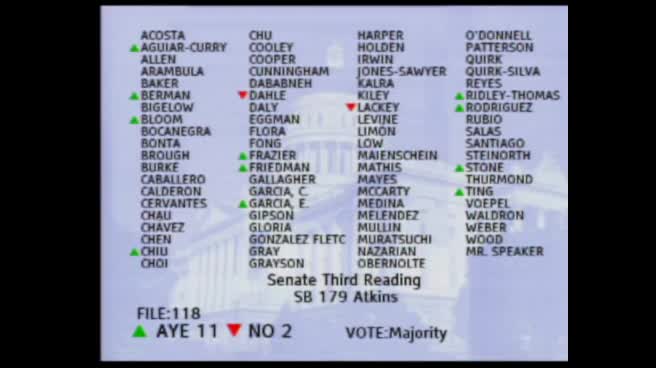 1MIN
Assembly Floor
 1H
Assembly Standing Committee on Appropriations
 6MIN
Assembly Standing Committee on Accountability and Administrative Review
 7MIN
Assembly Standing Committee on Transportation
 3MIN
Senate Floor
 48MIN
Senate Standing Committee on Appropriations
 6MIN
Senate Standing Committee on Environmental Quality
Bill Author

Bill Co-Author(s):