SB 52: State Route 39.
- Session Year: 2017-2018
- House: Senate
- Latest Version Date: 2017-10-02
Existing law provides for the California Transportation Commission to adopt locations for state highways on routes authorized by law, and provides for the relinquishment of certain segments of state highways from the state to local agencies. Existing law specifies the former portions of State Route 39 that have been relinquished.
This bill would additionally authorize the commission to relinquish to the City of Anaheim the portion of State Route 39 within the city limits of that city if the city and the Department of Transportation enter into an agreement providing for the relinquishment, as specified.
Existing law authorizes the governing board of any school district to accept interdistrict transfers of pupils in accordance with a policy adopted by resolution, and sets forth various requirements in that regard, including, among other things, requirements relating to attendance priorities, applications for transfer, and the calculation of average daily attendance. Existing law requires certain information in connection with interdistrict transfers to be reported to the Superintendent of Public Instruction and the Department of Finance, and requires the Department of Finance to report specified information to the Legislative Analyst, upon request. Existing law makes those provisions inoperative on July 1, 2017, and repeals them on January 1, 2018.This bill would extend those inoperative and repeal dates to July 1, 2022, and January 1, 2023, respectively.Existing law authorizes the governing board of any school district to accept interdistrict transfers of pupils in accordance with a policy adopted by resolution, and sets forth various requirements in that regard, including, among other things, requirements relating to attendance priorities, applications for transfer, and the calculation of average daily attendance. Existing law requires certain information in connection with interdistrict transfers to be reported to the Superintendent of Public Instruction and the Department of Finance, and requires the Department of Finance to report specified information to the Legislative Analyst, upon request. Existing law makes those provisions inoperative on July 1, 2017, and repeals them on January 1, 2018.
This bill would extend those inoperative and repeal dates to July 1, 2022, and January 1, 2023, respectively.
Route 39 is from:
(a)Route 1 near Huntington Beach to the southern city limit of Buena Park.
(b)Route 5 in Buena Park to Route 72 in La Habra via Beach Boulevard.
(c)Beach Boulevard to Harbor Boulevard in La Habra via Whittier Boulevard.
(d)Whittier Boulevard in La Habra to Route 2 via Harbor Boulevard to the vicinity of Fullerton Road, then to Azusa Avenue, Azusa Avenue to San Gabriel Canyon Road, San Gabriel Avenue southbound between Azusa Avenue and San Gabriel Canyon Road, and San Gabriel Canyon Road, other than the portion of the segment described by this subdivision that is within the city limits of Azusa, Covina, and West Covina.
(e)The relinquished former portions of Route 39 within the city limits of Azusa, Buena Park, Covina, and West Covina are not state highways and are not eligible for adoption under Section 81. For the relinquished former portions of Route 39, the Cities of Azusa, Buena Park, Covina, and West Covina shall maintain within their respective jurisdictions signs directing motorists to the continuation of Route 39.
(f)Upon a determination by the commission that it is in the best interests of the state to do so, the commission may, upon terms and conditions approved by it, relinquish to the City of Anaheim the portion of Route 39 that is located within the city limits of Anaheim from the Anaheim/Stanton city limit north of Starr Street to the Anaheim/Buena Park city limit at North Stanton Avenue, if the city and the department enter into an agreement providing for the relinquishment. The following conditions shall apply upon relinquishment:
(1)The relinquishment shall become effective on the date following the county recorders recordation of the relinquishment resolution containing the commissions approval of the terms and conditions of the relinquishment.
(2)On and after the effective date of the relinquishment, the relinquished portion of Route 39 shall cease to be a state highway.
(3)The portion of Route 39 relinquished under this subdivision shall be ineligible for future adoption under Section 81.
(4)For the relinquished former portion of Route 39, the City of Anaheim shall maintain within its jurisdiction signs directing motorists to the continuation of Route 39.
Route 39 is from:
(a)Route 1 near Huntington Beach to the southern city limit of Buena Park.
(b)Route 5 in Buena Park to Route 72 in La Habra via Beach Boulevard.
(c)Beach Boulevard to Harbor Boulevard in La Habra via Whittier Boulevard.
(d)Whittier Boulevard in La Habra to Route 2 via Harbor Boulevard to the vicinity of Fullerton Road, then to Azusa Avenue, Azusa Avenue to San Gabriel Canyon Road, San Gabriel Avenue southbound between Azusa Avenue and San Gabriel Canyon Road, and San Gabriel Canyon Road, other than the portion of the segment described by this subdivision that is within the city limits of Azusa, Covina, and West Covina.
(The)(e)The relinquished former portions of Route 39 within the city limits of Azusa, Buena Park, Covina, and West Covina are not state highways and are not eligible for adoption under Section 81. For the relinquished former portions of Route 39, the Cities of Azusa, Buena Park, Covina, and West Covina shall maintain within their respective jurisdictions signs directing motorists to the continuation of Route 39.
(f)Upon a determination by the commission that it is in the best interests of the state to do so, the commission may, upon terms and conditions approved by it, relinquish to the City of Anaheim the portion of Route 39 that is located within the city limits of Anaheim from the Anaheim/Stanton city limit north of Starr Street to the Anaheim/Buena Park city limit at North Stanton Avenue, if the city and the department enter into an agreement providing for the relinquishment. The following conditions shall apply upon relinquishment:
(1)The relinquishment shall become effective on the date following the county recorders recordation of the relinquishment resolution containing the commissions approval of the terms and conditions of the relinquishment.
(2)On and after the effective date of the relinquishment, the relinquished portion of Route 39 shall cease to be a state highway.
(3)The portion of Route 39 relinquished under this subdivision shall be ineligible for future adoption under Section 81.
(4)For the relinquished former portion of Route 39, the City of Anaheim shall maintain within its jurisdiction signs directing motorists to the continuation of Route 39.
SECTION 1.Section 48315 of the Education Code is amended to read:48315.This article shall become inoperative on July 1, 2022, and, as of January 1, 2023, is repealed, unless a later enacted statute, which becomes effective on or before January 1, 2023, deletes or extends the dates on which it becomes inoperative and is repealed.This article shall become inoperative on July 1, 2017, 2022, and, as of January 1, 2018, 2023, is repealed, unless a later enacted statute, which becomes effective on or before January 1, 2018, 2023, deletes or extends the dates on which it becomes inoperative and is repealed.
|
Date
|
Status
|
|---|---|
| Oct 2, 2017 | Chaptered by Secretary of State. Chapter 423, Statutes of 2017. |
| Oct 2, 2017 | Approved by the Governor. |
| Sep 19, 2017 | Enrolled and presented to the Governor at 4 p.m. |
| Sep 13, 2017 | Assembly amendments concurred in. (Ayes 39. Noes 0.) Ordered to engrossing and enrolling. |
| Sep 12, 2017 | From committee: That the Assembly amendments be concurred in. (Ayes 10. Noes 0.) |
| Sep 11, 2017 | Re-referred to Com. on RLS. pursuant to Senate Rule 29.10(d). |
| Sep 8, 2017 | In Senate. Concurrence in Assembly amendments pending. |
| Sep 7, 2017 | Read third time. Passed. Ordered to the Senate. |
| Sep 5, 2017 | Read second time. Ordered to third reading. |
| Sep 1, 2017 | From committee: Do pass. (Ayes 16. Noes 0.) (September 1). |
| Jul 19, 2017 | July 19 set for first hearing. Placed on APPR. suspense file. |
| Jul 12, 2017 | July 12 set for first hearing canceled at the request of author. |
| Jul 11, 2017 | From committee: Do pass and re-refer to Com. on APPR. with recommendation: To consent calendar. (Ayes 14. Noes 0.) (July 10). Re-referred to Com. on APPR. |
| Jul 3, 2017 | From committee: Be re-referred to Com. on TRANS. (Ayes 11. Noes 0.) (July 3). Re-referred to Com. on TRANS. |
| Jun 29, 2017 | Re-referred to Com. on RLS. pursuant to Assembly Rule 96. |
| Jun 22, 2017 | From committee with author's amendments. Read second time and amended. Re-referred to Com. on ED. |
| Jun 21, 2017 | From committee with author's amendments. Read second time and amended. Re-referred to Com. on ED. |
| Jun 12, 2017 | Referred to Com. on ED. |
| Jun 1, 2017 | In Assembly. Read first time. Held at Desk. |
| May 31, 2017 | Read third time. Passed. (Ayes 39. Noes 1. Page 1343.) Ordered to the Assembly. |
| May 30, 2017 | Ordered to third reading. |
| May 26, 2017 | Ordered to special consent calendar. |
| May 26, 2017 | Read second time. Ordered to third reading. |
| May 25, 2017 | From committee: Do pass. (Ayes 7. Noes 0. Page 1177.) (May 25). |
| May 19, 2017 | Set for hearing May 25. |
| Apr 3, 2017 | April 3 hearing: Placed on APPR. suspense file. |
| Mar 24, 2017 | Set for hearing April 3. |
| Mar 22, 2017 | From committee: Do pass and re-refer to Com. on APPR. (Ayes 6. Noes 0. Page 443.) (March 22). Re-referred to Com. on APPR. |
| Mar 7, 2017 | Set for hearing March 22. |
| Jan 12, 2017 | Referred to Com. on ED. |
| Dec 6, 2016 | From printer. May be acted upon on or after January 5. |
| Dec 5, 2016 | Introduced. Read first time. To Com. on RLS. for assignment. To print. |
|
Date
|
Description
|
Location
|
Votes
|
|
|---|---|---|---|---|
| Sep 13, 2017 | Unfinished Business SB52 Newman Concurrence | Senate Floor |
Passed |
|
| Sep 12, 2017 | That the Assembly amendments be concurred in | Senate Standing Committee on Transportation and Housing |
Passed |
|
| Sep 7, 2017 | SB 52 Newman Senate Third Reading By DALY | Assembly Floor |
Passed |
|
| Sep 1, 2017 | Do pass. | Assembly Standing Committee on Appropriations |
Passed |
|
| Jul 10, 2017 | Do pass and be re-referred to the Committee on [Appropriations] with recommendation: To Consent Calendar | Assembly Standing Committee on Transportation |
Passed |
|
| Jul 3, 2017 | Be re-referred to the Committee on [Transportation] | Assembly Standing Committee on Rules |
Passed |
|
| May 31, 2017 | Senate 3rd Reading SB52 Newman | Senate Floor |
Passed |
|
| May 25, 2017 | Do pass | Senate Standing Committee on Appropriations |
Passed |
|
| Apr 3, 2017 | Placed on suspense file | Senate Standing Committee on Appropriations |
Passed |
|
| Mar 22, 2017 | Do pass, but first be re-referred to the Committee on [Appropriations] | Senate Standing Committee on Education |
Passed |
This list shows positions taken on this bill by organizations on the date displayed, which is linked to the original source.
Positions by individuals are not included.
|
Organization
|
Position
|
Date
|
|---|---|---|
| associated pomona teachers | ** Against | May 27, 2017 |
| Association of Rowland Educators | ** Against | May 27, 2017 |
| Azusa Educators Association | ** Against | May 27, 2017 |
| City Of Anaheim | ** Support | Sep 12, 2017 |
| City of Buena Park | ** Support | Sep 12, 2017 |
| City of Stanton | ** Support | Sep 12, 2017 |
| Districts of Residents Coalition | * Indeterminate | Apr 3, 2017 |
| Edvoice | ** Support | May 27, 2017 |
| Glendora Unified School District | ** Support | May 27, 2017 |
| Oak Park Unified School District | ** Support | May 27, 2017 |
| Orange County Business Council | ** Support | Sep 12, 2017 |
| Riverside Unified School District | * Support | Apr 3, 2017 |
| Semi Educators Association | ** Against | May 27, 2017 |
| Simi Valley Unified School District | ** Against | May 27, 2017 |
| Walnut Valley Unified School District | ** Support | May 27, 2017 |
| West Anaheim Neighborhood Development Council | ** Support | Sep 12, 2017 |
| West Covina Unified School District | ** Support | May 27, 2017 |
Office of Senate Floor Analyses (916) 651-1520 Fax: (916) 327-4478 | SB |
UNFINISHED BUSINESS
Bill No: SB 52
:
PRIOR SENATE VOTES NOT RELEVANT
SENATE TRANS. & HOUSING COMMITTEE: 10-0, 9/12/17 (Pursuant to Senate Rule 29.10)
AYES: Beall, Cannella, Allen, Atkins, McGuire, Morrell, Roth, Skinner, Wieckowski, Wiener
NO VOTE RECORDED: Gaines, Mendoza, Vidak
ASSEMBLY FLOOR: 77-0, 9/7/17 - See last page for vote
DIGEST:
This bill allows the California Transportation Commission (CTC) to relinquish a segment of State Route (SR) 39 to the City of Anaheim.
Assembly Amendments
delete the prior version of the bill and replace it with the SR 39 relinquishment.
Existing law:
- Defines a "state highway" as any roadway that is acquired, laid out, constructed, improved, or maintained as a state highway pursuant to constitutional or legislative authorization.
- Identifies, statutorily, state highway system routes.
- Specifies that it is the intent of the Legislature that the prescribed routes of the state highway system connect communities and regions of the state and that they serve the state's economy by connecting centers of commerce, industry, agriculture, mineral wealth, and recreation.
- Authorizes CTC to relinquish portions of SR 39 within the city limits of the Cities of Azusa, Buena Park, Covina, and West Covina upon terms and conditions CTC finds to be in the best interest of the state and if the California Department of Transportation (Caltrans) and the respective cities agree to the terms of the relinquishment.
This bill:
- Authorizes CTC, upon a determination that it is in the best interest of the state to do so and upon an agreement between Caltrans and the City of Anaheim, to relinquish the portion of SR 39 that lies within city limits, between the Anaheim/Stanton city limit north of Starr Street and the Anaheim/Buena Park city limit at North Stanton Avenue.
- Requires the City of Anaheim to install and maintain signs directing motorists to the continuation of SR 39, to the extent that Caltrans determines such signage is necessary.
Comments
- Author’s statement. SB 52 will relinquish the portion of SR 39/Beach Boulevard located in Anaheim, thereby allowing the City of Anaheim to make necessary safety and other improvements which will aid in the revitalization of this historically significant but blighted stretch of Beach Boulevard. The City is committed to making these improvements to foster broad-based economic development and to better the lives of the residents in west Anaheim and the surrounding region.
- Relinquishments. Each session, bills authorizing CTC to relinquish segments of the state highway to local jurisdictions are passed by the Legislature and signed by the Governor. Relinquishment transactions are generally preceded by a negotiation of terms and conditions between the local jurisdiction and Caltrans. Once an agreement has been established, the Legislature authorizes CTC to relinquish the segment and CTC then approves the relinquishment and verifies its approval via resolution.
This bill is consistent with Caltrans' policies that encourage the relinquishment of state highways that do not serve regional or statewide transportation needs. Recipient agencies often seek relinquishment of state highways so that they can have greater control over the facility, which often serves as a local street.
- Local improvements. This bill authorizes the CTC to relinquish SR 39 in western Anaheim to the City of Anaheim upon an agreement between the City and Caltrans. The City has developed a specific plan to improve this area, known as the Beach Boulevard Initiative, which is intended to bring in new shopping, restaurants, housing and community gather places. SR 39 in Buena Park, the neighboring city north of Anaheim, is authorized to be relinquished to the City.
FISCAL EFFECT: Appropriation: Fiscal Com.: Local:
According to the Assembly Appropriations Committee:
- Potentially significant one-time State Highway Account costs depending on the outcome of negotiations between Caltrans and the City. For example, according to Caltrans recent highway relinquishments have ranged from no initial cost to the low tens of millions of dollars.
- Moderate long-term maintenance and repair savings to Caltrans, if the CTC exercises its authority to relinquish the highway segment.
City of Anaheim (source)
City of Buena Park
City of Stanton
Orange County Business Council
West Anaheim Neighborhood Development Council
One individual
OPPOSITION: (Verified 9/11/17)
None received
ASSEMBLY FLOOR: 77-0, 9/7/17
AYES: Acosta, Aguiar-Curry, Travis Allen, Arambula, Baker, Berman, Bigelow, Bloom, Bocanegra, Bonta, Brough, Burke, Caballero, Calderon, Cervantes, Chau, Chávez, Chen, Chiu, Choi, Chu, Cooper, Cunningham, Dababneh, Dahle, Daly, Eggman, Flora, Fong, Frazier, Friedman, Gallagher, Cristina Garcia, Eduardo Garcia, Gipson, Gloria, Gonzalez Fletcher, Gray, Grayson, Harper, Holden, Irwin, Jones-Sawyer, Kalra, Kiley, Lackey, Levine, Limón, Low, Maienschein, Mathis, Mayes, McCarty, Medina, Melendez, Mullin, Muratsuchi, Nazarian, Obernolte, O'Donnell, Patterson, Quirk, Quirk-Silva, Reyes, Ridley-Thomas, Rodriguez, Rubio, Salas, Santiago, Steinorth, Mark Stone, Thurmond, Ting, Voepel, Waldron, Weber, Rendon
NO VOTE RECORDED: Cooley, Wood
9/12/17 21:21:29
**** END ****
SENATE THIRD READING
STR Bill Id:SB 52
Author:(Newman)
As Amended Ver:June 22, 2017
Majority vote
SENATE VOTE: 39-1
Committee | Votes | Ayes | Noes |
Rules | 11-0 | Cooley, Brough, Cervantes, Chen, Fong, Friedman, Grayson, Levine, Nazarian, Salas, Waldron | |
Transportation | 14-0 | Frazier, Fong, Aguiar-Curry, Baker, Berman, Bocanegra, Chu, Daly, Friedman, Harper, Mathis, Medina, Nazarian, O'Donnell | |
Appropriations | 16-0 | Gonzalez Fletcher, Bigelow, Bloom, Bocanegra, Bonta, Brough, Calderon, Chau, Eggman, Fong, Friedman, Gallagher, Eduardo Garcia, Jones-Sawyer, Obernolte, Reyes |
|
SUMMARY: Allows the California Transportation Commission (CTC) to relinquish a segment of State Route (SR) 39 to the City of Anaheim. Specifically, this bill:
- Authorizes CTC, upon a determination that it is in the best interest of the state to do so and upon an agreement between the California Department of Transportation (Caltrans) and the City of Anaheim, to relinquish the portion of State Route (SR) 39 that lies within city limits, between the Anaheim/Stanton city limit north of Starr Street and the Anaheim/Buena Park city limit at North Stanton Avenue.
- Requires the city to install and maintain signs directing motorists to the continuation of SR 39, to the extent that Caltrans determines such signage is necessary.
EXISTING LAW:
- Defines a "state highway" as any roadway that is acquired, laid out, constructed, improved, or maintained as a state highway pursuant to constitutional or legislative authorization.
- Statutorily identifies state highway system routes.
- Specifies that it is the intent of the Legislature that the prescribed routes of the state highway system connect communities and regions of the state and that they serve the state's economy by connecting centers of commerce, industry, agriculture, mineral wealth, and recreation.
- Authorizes CTC to relinquish portions of SR 39 within the city limits of the cities of Azusa, Buena Park, Covina, and West Covina upon terms and conditions CTC finds to be in the best interest of the state and if Caltrans and the respective cities agree to the terms of the relinquishment.
FISCAL EFFECT: According to the Assembly Appropriations Committee:
- Potentially significant one-time State Highway Account (SHA) costs depending on the outcome of negotiations between Caltrans and the City. For example, according to Caltrans recent highway relinquishments have ranged from no initial cost to the low tens of millions of dollars.
- Moderate long-term maintenance and repair savings to Caltrans, if the CTC exercises its authority to relinquish the highway segment.
COMMENTS: Each session, numerous bills authorizing CTC to relinquish segments of the state highway to local jurisdictions are passed by the Legislature and signed by the Governor. Relinquishment transactions are generally preceded by a negotiation of terms and conditions between the local jurisdiction and Caltrans. Once an agreement has been established, the Legislature authorizes CTC to relinquish the segment and CTC then approves the relinquishment and verifies its approval via resolution. The final step is for the Legislature to delete these segments from current law.
This bill is consistent with Caltrans' policies that encourage the relinquishment of state highways that do not serve regional or statewide transportation needs. Recipient agencies often seek relinquishment of state highways so that they can have greater control over the facility, which often serves as a local street.
This bill facilitates the relinquishment of SR 39 within the City of Anaheim, a roughly two-mile stretch of Beach Boulevard. Last year, Anaheim's city council voted to accelerate revitalization of this stretch of Beach Boulevard by clearing the way for new shopping, dining, homes, and community gathering places. The city is seeking control of SR 39 within the city limits so that it can make the needed safety and other improvements related to its Beach Boulevard initiative.
Analysis Prepared by: Janet Dawson / TRANS. / (916) 319-2093 FN: 0001641
Date of Hearing: July 19, 2017
ASSEMBLY COMMITTEE ON APPROPRIATIONS
Lorena Gonzalez Fletcher, Chair
SBPCA Bill Id:SB 52
Author:(Newman) – As Amended Ver:June 22, 2017
Policy Committee: | Rules | Vote: | 11 - 0 |
Transportation | 14 - 0 | ||
|
|
Urgency: No State Mandated Local Program: No Reimbursable: No
SUMMARY:
This bill allows the California Transportation Commission (CTC) to relinquish a segment of State Route (SR) 39 to the City of Anaheim. Specifically, this bill:
- Authorizes CTC, upon a determination that it is in the best interest of the state to do so and upon an agreement between the California Department of Transportation (Caltrans) and the City of Anaheim, to relinquish the portion of SR 39 that lies within city limits, between the Anaheim/Stanton city limit north of Starr Street and the Anaheim/Buena Park city limit at North Stanton Avenue.
- Requires the city to install and maintain signs directing motorists to the continuation of
SR 39, to the extent that Caltrans determines such signage is necessary.
FISCAL EFFECT:
- Potentially significant one-time State Highway Account (SHA) costs depending on the outcome of negotiations between Caltrans and the City. For example, according to Caltrans recent highway relinquishments have ranged from no initial cost to the low tens of millions of dollars.
- Moderate long-term maintenance and repair savings to Caltrans, if the CTC exercises its authority to relinquish the highway segment.
COMMENTS:
- Background. Legislation is required before any segment of state highway can be relinquished to another governmental entity. Relinquishment provides the recipient agency with more control over a local transportation project and relieves Caltrans of further responsibility to improve, maintain, or repair infrastructure related to the relinquished state highway segment.
- Purpose. This bill facilitates the relinquishment of SR 39 within the City of Anaheim, a roughly two-mile stretch of Beach Boulevard. Last year, Anaheim's city council voted to accelerate revitalization of this stretch of Beach Boulevard by clearing the way for new shopping, dining, homes, and community gathering places. The city is seeking control of SR 39 within the city limits so that it can make the needed safety and other improvements related to its Beach Boulevard initiative.
- Costs Depend on Agreement Between Caltrans and County. According to Caltrans, in recent years the initial cost of relinquishments has ranged from no cost to over $14 million. These costs are driven by a number of factors, including the size of the roadway, the condition, projected maintenance costs and any planned capital projects. The actual cost of a particular relinquishment is negotiated directly with the local agency, but must be based on a cost-benefit analysis using a 10-year analysis period.
- Related Legislation. AB 333 (Quirk), of the current Legislative Session, will authorize the CTC to relinquish a portion of SR 185 in Alameda County. AB 1172 (Acosta), of the current Legislative Session, will authorize the CTC to relinquish a portion of SR 14U in the City of Santa Clarita. Both bills are in the Senate Appropriations Committee on suspense.
Analysis Prepared by: Jessica Peters / APPR. / (916) 319-2081
Date of Hearing: July 10, 2017
ASSEMBLY COMMITTEE ON TRANSPORTATION
Jim Frazier, Chair
SBPCA Bill Id:SB 52
Author:(Newman) – As Amended Ver:June 22, 2017
SENATE VOTE: 39-1
SUBJECT: State Route 39
SUMMARY: Allows the California Transportation Commission (CTC) to relinquish a segment of State Route (SR) 39 to the City of Anaheim. Specifically, this bill:
- Authorizes CTC, upon a determination that it is in the best interest of the state to do so and upon an agreement between the California Department of Transportation (Caltrans) and the City of Anaheim, to relinquish the portion of SR 39 that lies within city limits, between the Anaheim/Stanton city limit north of Starr Street and the Anaheim/Buena Park city limit at North Stanton Avenue.
- Requires the city to install and maintain signs directing motorists to the continuation of
SR 39, to the extent that Caltrans determines such signage is necessary.
EXISTING LAW:
- Defines a "state highway" as any roadway that is acquired, laid out, constructed, improved, or maintained as a state highway pursuant to constitutional or legislative authorization.
- Statutorily identifies state highway system routes.
- Specifies that it is the intent of the Legislature that the prescribed routes of the state highway system connect communities and regions of the state and that they serve the state's economy by connecting centers of commerce, industry, agriculture, mineral wealth, and recreation.
- Authorizes CTC to relinquish portions of SR 39 within the city limits of the cities of Azusa, Buena Park, Covina, and West Covina upon terms and conditions CTC finds to be in the best interest of the state and if Caltrans and the respective cities agree to the terms of the relinquishment.
FISCAL EFFECT: Unknown
COMMENTS: Each session, numerous bills authorizing CTC to relinquish segments of the state highway to local jurisdictions are passed by the Legislature and signed by the Governor. Relinquishment transactions are generally preceded by a negotiation of terms and conditions between the local jurisdiction and Caltrans. Once an agreement has been established, the Legislature authorizes CTC to relinquish the segment and CTC then approves the relinquishment and verifies its approval via resolution. The final step is for the Legislature to delete these segments from current law.
This bill is consistent with Caltrans' policies that encourage the relinquishment of state highways that do not serve regional or statewide transportation needs. Recipient agencies often seek relinquishment of state highways so that they can have greater control over the facility, which often serves as a local street.
This bill facilitates the relinquishment of SR 39 within the City of Anaheim, a roughly two-mile stretch of Beach Boulevard. Last year, Anaheim's city council voted to accelerate revitalization of this stretch of Beach Boulevard by clearing the way for new shopping, dining, homes, and community gathering places. The city is seeking control of SR 39 within the city limits so that it can make the needed safety and other improvements related to its Beach Boulevard initiative.
Previous legislation: AB 957 (Assembly Transportation Committee), Chapter 536, Statutes of 2011, authorized CTC to relinquish a portion of SR 39 to the City of Buena Park.
SB 1578 (Romero), Chapter 399, Statutes of 2004, authorized CTC to relinquish a portion of SR 39 to the City of West Covina.
AB 2909 (Assembly Transportation Committee), Chapter 596, Statutes of 2000, authorized CTC to relinquish to the City of Covina a portion of SR 39.
REGISTERED SUPPORT / OPPOSITION:
Support
City of Anaheim (Sponsor)
Orange County Business Council
Opposition
None on file
Analysis Prepared by: Janet Dawson / TRANS. / (916) 319-2093
Office of Senate Floor Analyses (916) 651-1520 Fax: (916) 327-4478 | SB |
THIRD READING
Bill No: SB 52
:
SENATE EDUCATION COMMITTEE: 6-0, 3/22/17
AYES: Allen, Wilk, Galgiani, Mendoza, Pan, Vidak
NO VOTE RECORDED: Leyva
SENATE APPROPRIATIONS COMMITTEE: 7-0, 5/25/17
AYES: Lara, Bates, Beall, Bradford, Hill, Nielsen, Wiener
DIGEST:
This bill extends the sunset by five years on the District of Choice (DOC) program.
Existing law:
- Requires students to attend the public full-time day school or continuation school or classes in which the residency of either the parent or legal guardian is located. (Education Code § 48200)
- Authorizes the governing board of a school board to declare themselves a school DOC willing to accept a specified number of inter-district transfers. As a condition of participating in the program, either the district of residence or DOC may prevent a transfer if the transfer would exacerbate racial segregation. (EC § 48300, et seq.)
- Requires a DOC to select students through a random and unbiased process that prohibits enrollment based upon academic or athletic talent. It is incumbent upon the DOC to ensure that the auditor who conducts its annual financial audit also reviews compliance with the specified selection requirements. (EC § 48301)
- Authorizes a school district of residence with an average daily attendance (ADA) of less than 50,000 to cap outbound transfers each year to three percent of its ADA for that year and to cap the maximum number at 10 percent of its ADA for the duration of the program. A school district of residence is also authorized to limit transfers if it has a negative or qualified status on the most recent budget certification or if a determination is made by the county superintendent determines that the school district will not meet standards for fiscal stability due to the impact of additional transfers, as specified. (EC § 48307)
- Requires each DOC to keep records of:
- The number of requests granted, denied, or withdrawn as well as the reasons for the denials;
- The number of pupils transferred out of the district, as specified; and
- The number of pupils transferred into the district, as specified.
- (EC § 48313)
- Requires DOC to annually report this information to neighboring school districts, their county office of education, the Superintendent of Public Instruction and Department of Finance (DOF), as specified. The DOF is required to make the information available to the Legislative Analyst. The Legislative Analyst is required to conduct a comprehensive evaluation of the DOC program, as specified, and submit the evaluation, along with recommendations, to the appropriate legislative education policy committees, and the Governor, by January 31, 2016. (EC § 48313)
- Sunsets the DOC provisions on July 1, 2017. (EC § 48315)
This bill extends the sunset by five years, from July 1, 2017, to July 1, 2022, on the DOC program.
Comments
Existing transfer options. State law provides for four interdistrict transfer options:
- The DOC program allows a student to transfer to any district that has deemed itself a DOC and agreed to accept a specified number of transfers. DOC may not use a selective admissions process. Transfer students generally do not need the consent of their home districts.
- Interdistrict permits allow a student to transfer from one district to another district provided both districts consent to the transfer and the student meets any locally determined conditions. Districts receiving these transfer students may require students to meet certain attendance and/or academic standards.
- Parental employment transfers allow a student to transfer into a district if at least one parent is employed within the boundaries of that district and that district has chosen to accept parental employment transfers. Transfer students generally do not need the consent of their home districts.
- The Open Enrollment Act (for low-performing schools) allows a student attending a school with low performance on state tests to transfer to another school inside or outside the district that has a higher level of performance and space available. Transfer students generally do not need the consent of their home districts.
Legislative Analyst’s Office report. Existing law requires the Legislative Analyst’s Office (LAO) to submit a comprehensive report and make recommendations regarding the extension of the DOC program, by January 31, 2016. The report, Evaluation of the School District of Choice Program, was released on January 27, 2016, and highlighted several points: there are 47 DOC schools serving 10,000 transfer students; transfer students have varied by demographic backgrounds (i.e. race/ethnicity and income); the program provides transfer students with additional educational options; almost all students transfer to districts with higher test scores; districts of residence often respond by improving instructional offerings, and; program oversight has been limited by a lack of data and flaws in the audit procedure. [http://www.lao.ca.gov/reports/2016/3331/district-of-choice-012716.pdf]
Demographics. The LAO found evidence of higher rates of student transfers among certain populations. The LAO report states, “Based on information provided by districts, we estimate that 27 percent of participating transfer students are from families with incomes low enough to qualify for the federal free or reduced-price meals program. Overall, the share of participating transfer students qualifying as low income is similar to the average for Districts of Choice (30 percent). It is, however, much smaller than the share for home districts (66 percent) and students statewide (59 percent). When we examined transfer patterns, we found that nearly all students (94 percent) transfer to districts with smaller shares of low-income students than their home districts. We found that participating transfer students are 35 percent white, 32 percent Hispanic or Latino, 24 percent Asian, and 9 percent other groups. Overall, participating transfer students tend to mirror the profile of the Districts of Choice they attend. Some differences emerged when we compared these students with their home districts. Hispanic students transfer at relatively low rates compared with their share of home district enrollment. These students account for 66 percent of the students attending home districts but only 32 percent of participating transfer students. Conversely, white students and Asian students transfer at relatively high rates.”
The Assembly Education Committee analysis of related legislation (AB 185, O’Donnell, 2017) cites data collected from numerous school districts of residence showing significant differences in the demographics of students who utilize the DOC program, based on socio-economic and ethnic characteristics. That analysis points out that conversely, a DOC that provides transportation enrolls a higher percentage of students who are low-income and from underrepresented groups.
LAO recommendations. The 2016 LAO report made several recommendations, including:
- Reauthorize program for a minimum of five years. The LAO suggests that the strengths of the program justify its extension, in addition to allowing more time to collect better data and assess the effects of LAO’s other recommendations.
- Repeal the 10 percent cumulative cap. The LAO report notes that this cap currently makes the program unavailable in certain districts regardless of student interest or program quality. In addition, the state modified the program in 2009 to allow districts to prohibit transfers that would notably worsen their fiscal condition. The LAO believes the cumulative cap is no longer necessary with this provision in place.
LAO staff notes that a school district of residence would need to approach dire financial conditions in order to impose such a cap.
- Assign the California Department of Education (CDE) specific administrative responsibilities. The LAO recommends that the CDE be required to (a) maintain a list of the DOC in the state, (b) ensure all districts submit their annual reports in a complete and consistent format, (c) post these annual reports and other program information in one location on its Web site, (d) provide information to districts about the program, and (e) explore the possibility of collecting statutorily required program data using the state’s existing student-level data system.
- Implement a new oversight mechanism that replaces the existing audit requirement with a new system of oversight administered by county offices of education. Under the new system, a home district that was concerned a DOC was not following the law could bring its concern to its county office of education. If the county office of education determined that the DOC was out of compliance, the DOC would be required to correct the problem before accepting additional transfer students.
- Improve local communication by requiring districts of choice to provide nearby districts of residence with timely notification of the students accepted through the program. The LAO believes that this information would reduce some home districts’ uncertainty regarding the number of transfer students. The LAO also recommends the state require DOC to post application information on their Web sites to increase transparency and help the program reach students who might otherwise be unaware of their transfer options.
FISCAL EFFECT: Appropriation: Fiscal Com.: Local:
According to the Senate Appropriations Committee, this bill can increase or decrease a school district’s eligibility for supplemental or concentration grant funding under the Local Control Funding Formula and the amounts will vary depending on the type of participating district and the number of students that transfer.
EdVoice
Glendora Unified School District
Oak Park Unified School District
Walnut Valley Unified School District
West Covina Unified School District
OPPOSITION: (Verified 5/25/17)
Associated Pomona Teachers
Association of Rowland Educators
Azusa Educators Association
Semi Educators Association
Simi Valley Unified School District
5/27/17 17:44:41
**** END ****
SENATE COMMITTEE ON APPROPRIATIONS
Senator Ricardo Lara, Chair
2017 - 2018 Regular Session
SB 52 (Newman) - Pupil attendance: interdistrict transfers
Version: December 5, 2016 | Policy Vote: ED. 6 - 0 |
Urgency: No | Mandate: No |
Hearing Date: April 3, 2017 | Consultant: Lenin Del Castillo |
This bill may meet the criteria for referral to the Suspense File.
Bill Summary:
This bill extends the sunset of the “school district of choice” program to July 1, 2023.
Fiscal Impact:
By extending the district of choice program, this bill can increase or decrease a school district’s eligibility for supplemental or concentration grant funding under the Local Control Funding Formula and the amounts will vary depending on the type of participating district and the number of students that transfer.
Background:
Existing law:
- Requires students to attend the public full-time day school or continuation school or classes in which the residency of either the parent or legal guardian is located. (Education Code § 48200)
- Authorizes the governing board of a school board to declare themselves a school district of choice willing to accept a specified number of inter-district transfers. As a condition of participating in the program, either the district of residence or district of choice may prevent a transfer if the transfer would exacerbate racial segregation. (EC § 48300, et seq.)
- Requires a school district of choice to select students through a random and unbiased process that prohibits enrollment based upon academic or athletic talent. It is incumbent upon the school district of choice to ensure that the auditor who conducts its annual financial audit also reviews compliance with the specified selection requirements. (EC § 48301)
- Authorizes a school district of residence with an average daily attendance (ADA) of less than 50,000 to cap outbound transfers each year to 3% of its ADA for that year and to cap the maximum number at 10% of its ADA for the duration of the program. A school district of residence is also authorized to limit transfers if it has a negative or qualified status on the most recent budget certification or if a determination is made by the county superintendent determines that the school district will not meet standards for fiscal stability due to the impact of additional transfers, as specified. (EC § 48307)
- Authorizes a school district of residence with an average daily attendance greater than 50,000 limit the number of pupils transferring out each year to 1 percent of its current year estimated ADA.
- Requires each school district of choice to keep records of:
- The number of requests granted, denied, or withdrawn as well as the reasons for the denials;
- The number of pupils transferred out of the district, as specified; and
- The number of pupils transferred into the district, as specified.
(EC § 48301)
- Requires, school districts of choice to annually report this information to neighboring school districts, their county office of education, the Superintendent of Public Instruction (SPI) and Department of Finance (DOF), as specified. The DOF is required to make the information available to the Legislative Analyst. The Legislative Analyst is required to conduct a comprehensive evaluation of the district of choice program, as specified, and submit the evaluation, along with recommendations, to the appropriate legislative education policy committees, and the Governor, by January 31, 2016. This section is scheduled to sunset July 1, 2017. (EC § 48300, et seq.)
Proposed Law:
This bill extends the sunset of the school district of choice program to July 1, 2023.
Related Legislation:
AB 185 (O’Donnell) revises provisions of the district of choice program and extends the program through July 1, 2023. AB 185 is pending in the Assembly Appropriations Committee.
AB 396 (Chen) is identical to this bill, and is pending in the Assembly Education Committee.
AB 1087 (Irwin) makes numerous changes to the district of choice program, including modifications to caps on transfers, requiring transportation to be provided upon request, and extending the sunset by five years. AB 1087 is pending in the Assembly Education Committee.
SB 1432 (Huff, 2016) revised provisions of the DOC program and extended the program through January 1, 2022. SB 1432 was held in the Assembly Appropriations Committee.
SB 597 (Huff, Chapter 421, Statutes of 2015) extended, for one year, the sunset and repeal dates of statute that allows the governing board of a school district to permit the enrollment of pupils who reside in another district by declaring to be a district of choice.
Staff Comments:
The school district of choice program is an option available to school districts, whereby the governing board of any district is authorized to declare the district to be a “district of choice” that is willing to accept a specified number of inter-district transfers. A district of choice is not required to admit students, but is required to select those students that it does elect to admit through a random process. Districts of choice are also prohibited from choosing students based upon academic or athletic talent. Because the district of choice program is permissive, any requirement as a condition of operating the program would not be eligible for reimbursement under state mandate law.
By extending the sunset date, there may continue to be a local impact on school districts which will vary depending on the type of district, the number of students that transfer, and whether those students qualify for supplemental or concentration grant funding (unduplicated students) under the Local Control Funding Formula (LCFF). For example, to the extent that unduplicated students transfer from a school district currently receiving concentration grant funding and the transfer of these students makes the district no longer eligible for a concentration grant, this could generate Proposition 98 savings to the state. Conversely, a district may generate additional LCFF funds if additional eligible students transfer to that district, which would create additional Proposition 98 costs. If a single student transfer from one large district to another large district, that student is unlikely to change the LCFF amount at either district, regardless of his or her eligibility.
-- END --
SENATE COMMITTEE ON EDUCATION
Senator Benjamin Allen, Chair
2017 - 2018 Regular
Bill No: SB 52 Hearing Date: March 22, 2017
Author: | |||
Version: | December 5, 2016 | ||
Urgency: | No | Fiscal: | Yes |
Consultant: | Lynn Lorber | ||
Subject: Pupil attendance: interdistrict transfers
SUMMARY
This bill extends the sunset by five years on the District of Choice program.
BACKGROUND
Existing law:
- Requires students to attend the public full-time day school or continuation school or classes in which the residency of either the parent or legal guardian is located. (Education Code § 48200)
- Authorizes the governing board of a school board to declare themselves a school district of choice willing to accept a specified number of inter-district transfers. As a condition of participating in the program, either the district of residence or district of choice may prevent a transfer if the transfer would exacerbate racial segregation. (EC § 48300, et seq.)
- Requires a school district of choice to select students through a random and unbiased process that prohibits enrollment based upon academic or athletic talent. It is incumbent upon the school district of choice to ensure that the auditor who conducts its annual financial audit also reviews compliance with the specified selection requirements. (EC § 48301)
- Authorizes a school district of residence with an average daily attendance (ADA) of less than 50,000 to cap outbound transfers each year to 3% of its ADA for that year and to cap the maximum number at 10% of its ADA for the duration of the program. A school district of residence is also authorized to limit transfers if it has a negative or qualified status on the most recent budget certification or if a determination is made by the county superintendent determines that the school district will not meet standards for fiscal stability due to the impact of additional transfers, as specified. (EC § 48307)
- Requires each school district of choice to keep records of:
- The number of requests granted, denied, or withdrawn as well as the reasons for the denials;
- The number of pupils transferred out of the district, as specified; and
- The number of pupils transferred into the district, as specified.
(EC § 48313)
- Requires school districts of choice to annually report this information to neighboring school districts, their county office of education, the Superintendent of Public Instruction and Department of Finance (DOF), as specified. The DOF is required to make the information available to the Legislative Analyst. The Legislative Analyst is required to conduct a comprehensive evaluation of the district of choice program, as specified, and submit the evaluation, along with recommendations, to the appropriate legislative education policy committees, and the Governor, by January 31, 2016. (EC § 48313)
- Sunsets the district of choice provisions on July 1, 2017. (EC § 48315)
ANALYSIS
This bill extends the sunset by five years, from July 1, 2017, to July 1, 2022, on the District of Choice program.
STAFF COMMENTS
- Need for the bill. According to the author, “The School District of Choice (DOC) program, enacted in 1993, allows parents to choose the public school best suited for the needs of their children while also encouraging schools to be more responsive to their community. Approximately 10,000 students from 47 school districts around the state participate in the program and since its authorization, the DOC program has been reauthorized five times by the legislature. The DOC program is set to become inoperative on July 1, 2017, forcing students who have chosen to transfer to another district to return to their home district, resulting in personal, social and educational disruption. Additionally, DOC school districts would see an immediate decline in enrollment which would detrimentally affect the educational services and outcomes in their district. This bill will ensure that thousands of transfer students will remain in the school district of their choice as they and their parents determined was best for their educational needs.”
- Existing transfer options. State law provides for four interdistrict transfer options:
- The DOC program allows a student to transfer to any district that has deemed itself a DOC and agreed to accept a specified number of transfers. DOC may not use a selective admissions process. Transfer students generally do not need the consent of their home districts.
- Interdistrict permits allow a student to transfer from one district to another district provided both districts consent to the transfer and the student meets any locally determined conditions. Districts receiving these transfer students may require students to meet certain attendance and/or academic standards.
- Parental employment transfers allow a student to transfer into a district if at least one parent is employed within the boundaries of that district and that district has chosen to accept parental employment transfers. Transfer students generally do not need the consent of their home districts.
- The Open Enrollment Act (for low-performing schools) allows a student attending a school with low performance on state tests to transfer to another school inside or outside the district that has a higher level of performance and space available. Transfer students generally do not need the consent of their home districts.
- The DOC program allows a student to transfer to any district that has deemed itself a DOC and agreed to accept a specified number of transfers. DOC may not use a selective admissions process. Transfer students generally do not need the consent of their home districts.
- Legislative Analyst’s Office report. Existing law requires the Legislative Analyst’s Office (LAO) to submit a comprehensive report and make recommendations regarding the extension of the District of Choice program, by January 31, 2016. The report, Evaluation of the School District of Choice Program, was released on January 27, 2016, and highlighted several points: there are 47 DOC schools serving 10,000 transfer students; transfer students have varied by demographic backgrounds (i.e. race/ethnicity and income); the program provides transfer students with additional educational options; almost all students transfer to districts with higher test scores; districts of residence often respond by improving instructional offerings, and; program oversight has been limited by a lack of data and flaws in the audit procedure. [http://www.lao.ca.gov/reports/2016/3331/district-of-choice-012716.pdf]
- Demographics. The LAO found evidence of higher rates of student transfers among certain populations. The LAO report states, "Based on information provided by districts, we estimate that 27 percent of participating transfer students are from families with incomes low enough to qualify for the federal free or reduced-price meals program. Overall, the share of participating transfer students qualifying as low income is similar to the average for Districts of Choice (30 percent). It is, however, much smaller than the share for home districts (66 percent) and students statewide (59 percent). When we examined transfer patterns, we found that nearly all students (94 percent) transfer to districts with smaller shares of low-income students than their home districts. We found that participating transfer students are 35 percent white, 32 percent Hispanic or Latino, 24 percent Asian, and 9 percent other groups. Overall, participating transfer students tend to mirror the profile of the Districts of Choice they attend. Some differences emerged when we compared these students with their home districts. Hispanic students transfer at relatively low rates compared with their share of home district enrollment. These students account for 66 percent of the students attending home districts but only 32 percent of participating transfer students. Conversely, white students and Asian students transfer at relatively high rates.”
The Assembly Education Committee analysis of related legislation (AB 185, O’Donnell, 2017) cites data collected from numerous school districts of residence showing significant differences in the demographics of students who utilize the District of Choice program, based on socio-economic and ethnic characteristics. That analysis points out that conversely, a district of choice that provides transportation enrolls a higher percentage of students who are low-income and from underrepresented groups. - Legislative Analyst’s Office recommendations. The 2016 Legislative Analyst’s Office (LAO) report made several recommendations, including:
- Reauthorize program for a minimum of five years. The LAO suggests that the strengths of the program justify its extension, in addition to allowing more time to collect better data and assess the effects of LAO’s other recommendations.
- Repeal the 10% cumulative cap. The LAO report notes that this cap currently makes the program unavailable in certain districts regardless of student interest or program quality. In addition, the state modified the program in 2009 to allow districts to prohibit transfers that would notably worsen their fiscal condition. The LAO believes the cumulative cap is no longer necessary with this provision in place. Staff notes that a school district of residence would need to approach dire financial conditions in order to impose such a cap.
- Assign the California Department of Education (CDE) specific administrative responsibilities. The LAO recommends that the CDE be required to (1) maintain a list of the Districts of Choice in the state, (2) ensure all districts submit their annual reports in a complete and consistent format, (3) post these annual reports and other program information in one location on its website, (4) provide information to districts about the program, and (5) explore the possibility of collecting statutorily required program data using the state’s existing student-level data system.
- Implement a new oversight mechanism that replaces the existing audit requirement with a new system of oversight administered by county offices of education. Under the new system, a home district that was concerned a District of Choice was not following the law could bring its concern to its county office of education. If the county office of education determined that the District of Choice was out of compliance, the District of Choice would be required to correct the problem before accepting additional transfer students.
- Improve local communication by requiring districts of choice to provide nearby districts of residence with timely notification of the students accepted through the program. The LAO believes that this information would reduce some home districts’ uncertainty regarding the number of transfer students. The LAO also recommends the state require Districts of Choice to post application information on their websites to increase transparency and help the program reach students who might otherwise be unaware of their transfer options
- Reauthorize program for a minimum of five years. The LAO suggests that the strengths of the program justify its extension, in addition to allowing more time to collect better data and assess the effects of LAO’s other recommendations.
- Related legislation. AB 185 (O’Donnell) revises provisions of the District of Choice program and extends the program through July 1, 2023. AB 185 is pending in the Assembly Appropriations Committee.
AB 396 (Chen) is identical to this bill, and is pending in the Assembly Education Committee.
AB 1087 (Irwin) makes numerous changes to the District of Choice (DOC) program, including modifications to caps on transfers, requiring transportation to be provided upon request, and extending the sunset by five years. AB 1087 is pending in the Assembly Education Committee. - Prior legislation. SB 1432 (Huff, 2016) revised and recast provisions of the DOC program and extended the program through January 1, 2022. SB 1432 was held in the Assembly Appropriations Committee.
AB 1771 (O’Donnell) was gutted and amended at the end of the 2016 legislative session to allow students who attended a DOC school on or before July 1, 2017, to continue to attend that school if the school district of choice authorizes the student to do so. This version of AB 1771 was never heard.
SB 597 (Huff, Chapter 421, Statutes of 2015) extended, for one year, the sunset and repeal dates of statute that allows the governing board of a school district to permit the enrollment of pupils who reside in another district by declaring to be a District of Choice (DOC).
SB 680 (Romero and Huff, Chapter 198, Statute of 2009) extended the inoperative and repeal dates for which school districts are permitted to enroll pupils who reside in another school district by declaring to be a “school district of choice,” and repealed the prohibition on new districts electing to become a DOC.
AB 1407 (Huff, 2009) would have extended the sunset and repeal dates for the DOC programs for 5 years and required a census report on DOC by California Department of Education by November 2010. The bill was held on the Assembly Appropriations Committee suspense file.
AB 270 (Huff, 2007) would have extended the authority for DOC inter-district transfers from July 1, 2007 to July 1, 2009, prohibited additional districts from becoming DOCs, and required school districts (electing to accept transfers) to maintain records on the number of requests it receives and annually report the number of requests it receives to the Superintendent of Public Instruction. The language of this bill was incorporated into SB 80 (Budget Bill, 2007).
AB 97 (Nation, Chapter 21, Statutes of 2004) extended the sunset date for one year for the DOC authorization and required the Superintendent of Public Instruction to continue the calculation for the Special Disabilities Adjustment using the current incidence multiplier to allow special education local plan areas to continue to receive funds provided through 2003-04 until a new multiplier is calculated.
AB 19 (Quackenbush, Chapter 160, Statutes of 1993) established school DOC and allowed the governing board of any school district to declare the district to be a DOC willing to accept a specified number of inter-district transfers.
SUPPORT
EdVoice
Glendora Unified School District
Oak Park Unified School District
Walnut Valley Unified School District
West Covina Unified School District
OPPOSITION
None received
-- END --
Discussed in Hearing
 2MIN
Senate Floor
 5MIN
Senate Standing Committee on Transportation and Housing
 1MIN
Assembly Floor
 1H
Assembly Standing Committee on Appropriations
 5MIN
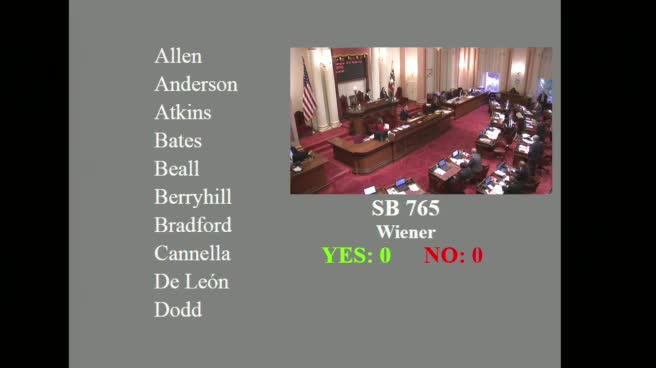
Senate Floor
 48MIN
Senate Standing Committee on Appropriations
 5MIN
Senate Standing Committee on Appropriations
 18MIN
Senate Standing Committee on Education
Bill Author

Bill Co-Author(s):