SB 531: Local emergencies: districts.
- Session Year: 2017-2018
- House: Senate
- Latest Version Date: 2018-08-23
Existing law authorizes the governing body of a city, county, or city and county, or a designated official, to declare a local emergency, as defined, when specified conditions of disaster or extreme peril to the safety of persons and property exist within the territorial limits of a city, county, or city and county. Existing law establishes various types of districts charged with specified duties within the Harbors and Navigation Code, including harbor improvement districts, harbor districts, port districts, river port districts, and small craft harbor districts.
This bill would revise the definition of a local emergency to include conditions of disaster or extreme peril to the safety of persons and property within the territorial limits of a district established under the Harbors and Navigation Code and would authorize a port district to declare a local emergency on the same basis as a city, county, or city and county. The bill would also provide legislative findings in support of these provisions.
This bill would incorporate additional changes to Section 8558 of the Government Code proposed by SB 532 to be operative only if this bill and SB 532 are enacted and this bill is enacted last.
This bill would incorporate additional changes to Section 8630 of the Government Code proposed by AB 2898 to be operative only if this bill and AB 2898 are enacted and this bill is enacted last.
Existing law authorizes the governing body of a city, county, or city and county, or a designated official, to declare a local emergency, as defined, when specified conditions of disaster or extreme peril to the safety of persons and property exist within the territorial limits of a city, county, or city and county. Existing law establishes various types of districts charged with specified duties within the Harbors and Navigation Code, including harbor improvement districts, harbor districts, port districts, river port districts, and small craft harbor districts.
This bill would revise the definition of a local emergency to include conditions of disaster or extreme peril to the safety of persons and property within the territorial limits of a district established under the Harbors and Navigation Code. Code and would authorize a port district to declare a local emergency on the same basis as a city, county, or city and county. The bill would also provide legislative findings in support of these provisions.
Existing law authorizes the local officials and local governments the governing body of a city, county, or city and county, or a designated official, to declare a local emergency, as defined, when specified conditions of disaster or extreme peril to the safety of persons and property exist within the territorial limits of a county, city and county, or city. city, county, or city and county. Existing law establishes various types of districts charged with specified duties within the Harbors and Navigation Code, including harbor improvement districts, harbor districts, port districts, river port districts, and small craft harbor districts.
This bill would authorize a district established under the Harbors and Navigation Code or by an official designated by ordinance adopted by that governing body to proclaim a local emergency. The bill would also revise the definition of a local emergency to include conditions of disaster or extreme peril to the safety of persons and property within the territorial limits of that district. a district established under the Harbors and Navigation Code.
Existing law authorizes the local officials and local governments to declare a local emergency, when specified conditions of disaster or extreme peril to the safety of persons and property exist within the territorial limits of a county, city and county, or city.
This bill would authorize a district established under the Harbors and Navigation Code or by an official designated by ordinance adopted by that governing body to proclaim a local emergency. The bill would also revise the definition of a local emergency to include conditions of disaster or extreme peril to the safety of persons and property within the territorial limits of that district.
(a)The Legislature finds and declares a vast majority of public ports are departments of cities, counties, or cities and counties having a statutory right to proclaim a local emergency.
(b)The Legislature finds that several public ports are independent public agencies lacking the statutory power to proclaim a local emergency and therefore must rely on the prompt actions of unrelated third-party public agencies whenever a maritime-oriented local emergency condition exists.
(c)It is the intent of the Legislature to provide these independent public agencies with powers equal to the vast majority of ports that currently have the direct statutory power by and through their city, county, or city and county to proclaim an emergency.
SEC. 2.Section 8557 of the Government Code is amended to read:8557.(a)State agency means any department, division, independent establishment, or agency of the executive branch of the state government.
(b)Political subdivision includes any city, city and county, county, district, or other local governmental agency or public agency authorized by law.
(c)Governing body means the legislative body, trustees, or directors of a political subdivision.
(d)Chief executive means that individual authorized by law to act for the governing body of a political subdivision.
(e)Disaster council and disaster service worker have the meaning prescribed in Chapter 1 (commencing with Section 3201) of Part 1 of Division 4 of the Labor Code.
(f)Port district means a special district formed under the Harbors and Navigation Code or formed under the Harbors and Navigation Code Appendix 1 that is not a department, division, or a subdivision of a city or county or a city and county, and which receives and exports commodities on oceangoing vessels that have a commercial capacity of 15,000 deadweight tonnage or more.
(g)Public facility means any facility of the state or a political subdivision, which facility is owned, operated, or maintained, or any combination thereof, through moneys derived by taxation or assessment.
(h)Sudden and severe energy shortage means a rapid, unforeseen shortage of energy, resulting from, but not limited to, events such as an embargo, sabotage, or natural disasters, and which has statewide, regional, or local impact.
SEC. 3.Section 8558 of the Government Code is amended to read:8558.Three conditions or degrees of emergency are established by this chapter:
(a)State of war emergency means the condition which exists immediately, with or without a proclamation thereof by the Governor, whenever this state or nation is attacked by an enemy of the United States, or upon receipt by the state of a warning from the federal government indicating that such an enemy attack is probable or imminent.
(b)State of emergency means the duly proclaimed existence of conditions of disaster or of extreme peril to the safety of persons and property within the state caused by such conditions as air pollution, fire, flood, storm, epidemic, riot, drought, sudden and severe energy shortage, plant or animal infestation or disease, the Governors warning of an earthquake or volcanic prediction, or an earthquake, or other conditions, other than conditions resulting from a labor controversy or conditions causing a state of war emergency, which, by reason of their magnitude, are or are likely to be beyond the control of the services, personnel, equipment, and facilities of any single county, city and county, or city and require the combined forces of a mutual aid region or regions to combat, or with respect to regulated energy utilities, a sudden and severe energy shortage requires extraordinary measures beyond the authority vested in the Public Utilities Commission.
(c)Local emergency means the duly proclaimed existence of conditions of disaster or of extreme peril to the safety of persons and property within the territorial limits of a county, city and county, city, or port district established under the Harbors and Navigation Code, caused by such conditions as air pollution, fire, flood, storm, epidemic, riot, drought, sudden and severe energy shortage, plant or animal infestation or disease, the Governors warning of an earthquake or volcanic prediction, or an earthquake, or other conditions, other than conditions resulting from a labor controversy, which are or are likely to be beyond the control of the services, personnel, equipment, and facilities of that political subdivision and require the combined forces of other political subdivisions to combat, or with respect to regulated energy utilities, a sudden and severe energy shortage requires extraordinary measures beyond the authority vested in the Public Utilities Commission.
SEC. 3.5.Section 8558 of the Government Code is amended to read:8558.Three conditions or degrees of emergency are established by this chapter:
(a)State of war emergency means the condition that exists immediately, with or without a proclamation thereof by the Governor, whenever this state or nation is attacked by an enemy of the United States, or upon receipt by the state of a warning from the federal government indicating that such an enemy attack is probable or imminent.
(b)State of emergency means the duly proclaimed existence of conditions of disaster or of extreme peril to the safety of persons and property within the state caused by conditions such as air pollution, fire, flood, storm, epidemic, riot, drought, cyberterrorism, sudden and severe energy shortage, plant or animal infestation or disease, the Governors warning of an earthquake or volcanic prediction, or an earthquake, or other conditions, other than conditions resulting from a labor controversy or conditions causing a state of war emergency, which, by reason of their magnitude, are or are likely to be beyond the control of the services, personnel, equipment, and facilities of any single county, city and county, or city and require the combined forces of a mutual aid region or regions to combat, or with respect to regulated energy utilities, a sudden and severe energy shortage requires extraordinary measures beyond the authority vested in the Public Utilities Commission.
(c)Local emergency means the duly proclaimed existence of conditions of disaster or of extreme peril to the safety of persons and property within the territorial limits of a county, city and county, city, or port district established under the Harbors and Navigation Code, caused by conditions such as air pollution, fire, flood, storm, epidemic, riot, drought, cyberterrorism, sudden and severe energy shortage, plant or animal infestation or disease, the Governors warning of an earthquake or volcanic prediction, or an earthquake, or other conditions, other than conditions resulting from a labor controversy, which are or are likely to be beyond the control of the services, personnel, equipment, and facilities of that political subdivision and require the combined forces of other political subdivisions to combat, or with respect to regulated energy utilities, a sudden and severe energy shortage requires extraordinary measures beyond the authority vested in the Public Utilities Commission.
SEC. 4.Section 8610 of the Government Code is amended to read:8610.Counties, cities and counties, cities, and port districts may create disaster councils by ordinance. A disaster council shall develop plans for meeting any condition constituting a local emergency or state of emergency, including, but not limited to, earthquakes, natural or manmade disasters specific to that jurisdiction, or state of war emergency; those plans shall provide for the effective mobilization of all of the resources within the political subdivision, both public and private. The disaster council shall supply a copy of any plans developed pursuant to this section to the Office of Emergency Services. The governing body of a county, city and county, city, or port district may, in the ordinance or by resolution adopted pursuant to the ordinance, provide for the organization, powers and duties, divisions, services, and staff of the emergency organization. The governing body of a county, city and county, city, or port district may, by ordinance or resolution, authorize public officers, employees, and registered volunteers to command the aid of citizens when necessary in the execution of their duties during a state of war emergency, a state of emergency, or a local emergency.
Counties, cities and counties, and cities may enact ordinances and resolutions and either establish rules and regulations or authorize disaster councils to recommend to the director of the local emergency organization rules and regulations for dealing with local emergencies that can be adequately dealt with locally; and further may act to carry out mutual aid on a voluntary basis and, to this end, may enter into agreements.
SEC. 5.Section 8611 of the Government Code is amended to read:8611.Counties, cities and counties, cities, and port districts may provide for the calling of test exercises, either singularly or jointly, whenever, in the opinion of such political subdivisions, such test exercises are needed; provided, however, that with respect to any such test exercise no one shall have the power to command the assistance of any private citizen, and the failure of a citizen to obey any order or regulation pertaining to a test exercise shall not constitute a violation of any law.
SEC. 6.Section 8616 of the Government Code is amended to read:8616.During any state of war emergency or state of emergency when the need arises for outside aid in any county, city and county, city, or port district, such aid shall be rendered in accordance with approved emergency plans.
It shall be the duty of public officials to cooperate to the fullest possible extent in carrying out such plans.
SEC. 7.Section 8625 of the Government Code is amended to read:8625.The Governor is hereby empowered to proclaim a state of emergency in an area affected or likely to be affected thereby when:
(a)The governor finds that circumstances described in subdivision (b) of Section 8558 exist; and either
(b)The governor is requested to do so (1) in the case of a city by the mayor or chief executive, (2) in the case of a county by the chairman of the board of supervisors or the county administrative officer, (3) in the case of a port district by the chair of the board or the port administrative officer; or
(c)The governor finds that local authority is inadequate to cope with the emergency.
SEC. 8.Section 8630 of the Government Code is amended to read:8630.(a)A local emergency may be proclaimed only by the governing body of a county, city and county, city, or port district or by an official designated by ordinance adopted by that governing body.
(b)Whenever a local emergency is proclaimed by an official designated by ordinance, the local emergency shall not remain in effect for a period in excess of seven days unless it has been ratified by the governing body.
(c)The governing body shall review the need for continuing the local emergency at least once every 30 days until the governing body terminates the local emergency.
(d)The governing body shall proclaim the termination of the local emergency at the earliest possible date that conditions warrant.
SEC. 8.5.Section 8630 of the Government Code is amended to read:8630.(a)A local emergency may be proclaimed only by the governing body of a county, city and county, city, or port district or by an official designated by ordinance adopted by that governing body.
(b)Whenever a local emergency is proclaimed by an official designated by ordinance, the local emergency shall not remain in effect for a period in excess of seven days unless it has been ratified by the governing body.
(c)The governing body shall review the need for continuing the local emergency at least once every 60 days until the governing body terminates the local emergency.
(d)The governing body shall proclaim the termination of the local emergency at the earliest possible date that conditions warrant.
SEC. 9.Section 8634 of the Government Code is amended to read:8634.During a local emergency the governing body of a political subdivision, or officials designated thereby, may promulgate orders and regulations necessary to provide for the protection of life and property, including orders or regulations imposing a curfew within designated boundaries where necessary to preserve the public order and safety. Such orders and regulations and amendments and rescissions thereof shall be in writing and shall be given widespread publicity and notice.
The authorization granted by this chapter to impose a curfew shall not be construed as restricting in any manner the existing authority of counties, cities, any city and county, or port district to impose pursuant to the police power a curfew for any other lawful purpose.
SEC. 10.Section 8657.5 of the Government Code is amended to read:8657.5.(a)(1)A private business included on the statewide registry pursuant to Section 8588.2 that voluntarily and without expectation and receipt of compensation donates services, goods, labor, equipment, resources, or dispensaries or other facilities, in compliance with Section 8588.2, during a declared state of war, state of emergency, or state of local emergency shall not be civilly liable for a death, injury, illness, or other damage to a person or property caused by the private businesss donation of services, goods, labor, equipment, resources, or dispensaries or other facilities.
(2)A private business included on the statewide registry that voluntarily and without expectation and receipt of compensation donates services, goods, labor, equipment, resources, or dispensaries or other facilities, in compliance with Section 8588.2, during an emergency medical services training program conducted by the Office of Emergency Services and a city, a county, a city and county, or port district shall not be civilly liable for damages alleged to have resulted from those training programs, as described in Section 1799.100 of the Health and Safety Code.
(b)(1)A nonprofit organization included on the statewide registry pursuant to Section 8588.2 that voluntarily and without expectation and receipt of compensation from victims of emergencies and disasters donates services, goods, labor, equipment, resources, or dispensaries or other facilities, in compliance with Section 8588.2, during a declared state of war, state of emergency, or state of local emergency shall not be civilly liable for a death, injury, illness, or other damage to a person or property caused by the nonprofit organizations donation of services, goods, labor, equipment, resources, or dispensaries or other facilities.
(2)A nonprofit organization included on the statewide registry that voluntarily and without expectation and receipt of compensation donates services, goods, labor, equipment, resources, or dispensaries or other facilities, in compliance with Section 8588.2, during an emergency medical services training program conducted by the Office of Emergency Services and a city, a county, a city and county, or port district, shall not be civilly liable for damages alleged to have resulted from those training programs, as described in Section 1799.100 of the Health and Safety Code.
(c)A private business or nonprofit organization that discriminates against a victim of an emergency or disaster based on a protected classification under federal or state law shall not be entitled to the protections in subdivision (a) or (b).
(d)This section shall not relieve a private business or nonprofit organization from liability caused by its grossly negligent act or omission, or willful or wanton misconduct.
SEC. 11.Section 8685.9 of the Government Code is amended to read:8685.9.Notwithstanding any other provision of law, including Section 8686, for any eligible project, the state share shall not exceed 75 percent of total state eligible costs unless the local agency is located within a city, county, city and county, or port district that has adopted a local hazard mitigation plan in accordance with the federal Disaster Mitigation Act of 2000 (P.L. 106-390) as part of the safety element of its general plan adopted pursuant to subdivision (g) of Section 65302. In that situation, the Legislature may provide for a state share of local costs that exceeds 75 percent of total state eligible costs.
SEC. 12.(a)Section 3.5 of this bill incorporates amendments to Section 8558 of the Government Code proposed by both this bill and Senate Bill 532. That section of this bill shall only become operative if (1) both bills are enacted and become effective on or before January 1, 2019, (2) each bill amends Section 8558 of the Government Code, and (3) this bill is enacted after Senate Bill 532, in which case Section 3 of this bill shall not become operative.
(b)Section 8.5 of this bill incorporates amendments to Section 8630 of the Government Code proposed by both this bill and Assembly Bill 2898. That section of this bill shall only become operative if (1) both bills are enacted and become effective on or before January 1, 2019, (2) each bill amends Section 8630 of the Government Code, and (3) this bill is enacted after Assembly Bill 2898, in which case Section 8 of this bill shall not become operative.
(a)The Legislature finds and declares a vast majority of public ports are departments of cities, counties, or cities and counties having a statutory right to proclaim a local emergency.
(b)The Legislature finds that several public ports are independent public agencies lacking the statutory power to proclaim a local emergency and therefore must rely on the prompt actions of unrelated third-party public agencies whenever a maritime-oriented local emergency condition exists.
(c)It is the intent of the Legislature to provide these independent public agencies with powers equal to the vast majority of ports that currently have the direct statutory power by and through their city, county, or city and county to proclaim an emergency.
SEC. 2.Section 8557 of the Government Code is amended to read:8557.(a)State agency means any department, division, independent establishment, or agency of the executive branch of the state government.
(b)Political subdivision includes any city, city and county, county, district, or other local governmental agency or public agency authorized by law.
(c)Governing body means the legislative body, trustees, or directors of a political subdivision.
(d)Chief executive means that individual authorized by law to act for the governing body of a political subdivision.
(e)Disaster council and disaster service worker have the meaning prescribed in Chapter 1 (commencing with Section 3201) of Part 1 of Division 4 of the Labor Code.
(f)Port district means a special district formed under the Harbors and Navigation Code or formed under the Harbors and Navigation Code Appendix 1 that is not a department, division, or a subdivision of a city or county or a city and county, and which receives and exports commodities on oceangoing vessels that have a commercial capacity of 15,000 deadweight tonnage or more.
(g)Public facility means any facility of the state or a political subdivision, which facility is owned, operated, or maintained, or any combination thereof, through moneys derived by taxation or assessment.
(h)Sudden and severe energy shortage means a rapid, unforeseen shortage of energy, resulting from, but not limited to, events such as an embargo, sabotage, or natural disasters, and which has statewide, regional, or local impact.
SEC. 3.Section 8558 of the Government Code is amended to read:8558.Three conditions or degrees of emergency are established by this chapter:
(a)State of war emergency means the condition which exists immediately, with or without a proclamation thereof by the Governor, whenever this state or nation is attacked by an enemy of the United States, or upon receipt by the state of a warning from the federal government indicating that such an enemy attack is probable or imminent.
(b)State of emergency means the duly proclaimed existence of conditions of disaster or of extreme peril to the safety of persons and property within the state caused by such conditions as air pollution, fire, flood, storm, epidemic, riot, drought, sudden and severe energy shortage, plant or animal infestation or disease, the Governors warning of an earthquake or volcanic prediction, or an earthquake, or other conditions, other than conditions resulting from a labor controversy or conditions causing a state of war emergency, which, by reason of their magnitude, are or are likely to be beyond the control of the services, personnel, equipment, and facilities of any single county, city and county, or city and require the combined forces of a mutual aid region or regions to combat, or with respect to regulated energy utilities, a sudden and severe energy shortage requires extraordinary measures beyond the authority vested in the Public Utilities Commission.
(c)Local emergency means the duly proclaimed existence of conditions of disaster or of extreme peril to the safety of persons and property within the territorial limits of a county, city and county, city, or port district established under the Harbors and Navigation Code, caused by such conditions as air pollution, fire, flood, storm, epidemic, riot, drought, sudden and severe energy shortage, plant or animal infestation or disease, the Governors warning of an earthquake or volcanic prediction, or an earthquake, or other conditions, other than conditions resulting from a labor controversy, which are or are likely to be beyond the control of the services, personnel, equipment, and facilities of that political subdivision and require the combined forces of other political subdivisions to combat, or with respect to regulated energy utilities, a sudden and severe energy shortage requires extraordinary measures beyond the authority vested in the Public Utilities Commission.
SEC. 3.5.Section 8558 of the Government Code is amended to read:8558.Three conditions or degrees of emergency are established by this chapter:
(a)State of war emergency means the condition which that exists immediately, with or without a proclamation thereof by the Governor, whenever this state or nation is attacked by an enemy of the United States, or upon receipt by the state of a warning from the federal government indicating that such an enemy attack is probable or imminent.
(b)State of emergency means the duly proclaimed existence of conditions of disaster or of extreme peril to the safety of persons and property within the state caused by such conditions such as air pollution, fire, flood, storm, epidemic, riot, drought, cyberterrorism, sudden and severe energy shortage, plant or animal infestation or disease, the Governors warning of an earthquake or volcanic prediction, or an earthquake, or other conditions, other than conditions resulting from a labor controversy or conditions causing a state of war emergency, which, by reason of their magnitude, are or are likely to be beyond the control of the services, personnel, equipment, and facilities of any single county, city and county, or city and require the combined forces of a mutual aid region or regions to combat, or with respect to regulated energy utilities, a sudden and severe energy shortage requires extraordinary measures beyond the authority vested in the California Public Utilities Commission.
(c)Local emergency means the duly proclaimed existence of conditions of disaster or of extreme peril to the safety of persons and property within the territorial limits of a county, city and county, or city, city, or port district established under the Harbors and Navigation Code, caused by such conditions such as air pollution, fire, flood, storm, epidemic, riot, drought, cyberterrorism, sudden and severe energy shortage, plant or animal infestation or disease, the Governors warning of an earthquake or volcanic prediction, or an earthquake, or other conditions, other than conditions resulting from a labor controversy, which are or are likely to be beyond the control of the services, personnel, equipment, and facilities of that political subdivision and require the combined forces of other political subdivisions to combat, or with respect to regulated energy utilities, a sudden and severe energy shortage requires extraordinary measures beyond the authority vested in the California Public Utilities Commission.
SEC. 4.Section 8610 of the Government Code is amended to read:8610.Counties, cities and counties, cities, and port districts may create disaster councils by ordinance. A disaster council shall develop plans for meeting any condition constituting a local emergency or state of emergency, including, but not limited to, earthquakes, natural or manmade disasters specific to that jurisdiction, or state of war emergency; those plans shall provide for the effective mobilization of all of the resources within the political subdivision, both public and private. The disaster council shall supply a copy of any plans developed pursuant to this section to the Office of Emergency Services. The governing body of a county, city and county, city, or port district may, in the ordinance or by resolution adopted pursuant to the ordinance, provide for the organization, powers and duties, divisions, services, and staff of the emergency organization. The governing body of a county, city and county, city, or port district may, by ordinance or resolution, authorize public officers, employees, and registered volunteers to command the aid of citizens when necessary in the execution of their duties during a state of war emergency, a state of emergency, or a local emergency.
Counties, cities and counties, and cities may enact ordinances and resolutions and either establish rules and regulations or authorize disaster councils to recommend to the director of the local emergency organization rules and regulations for dealing with local emergencies that can be adequately dealt with locally; and further may act to carry out mutual aid on a voluntary basis and, to this end, may enter into agreements.
SEC. 5.Section 8611 of the Government Code is amended to read:8611.Counties, cities and counties, cities, and port districts may provide for the calling of test exercises, either singularly or jointly, whenever, in the opinion of such political subdivisions, such test exercises are needed; provided, however, that with respect to any such test exercise no one shall have the power to command the assistance of any private citizen, and the failure of a citizen to obey any order or regulation pertaining to a test exercise shall not constitute a violation of any law.
SEC. 6.Section 8616 of the Government Code is amended to read:8616.During any state of war emergency or state of emergency when the need arises for outside aid in any county, city and county, city, or port district, such aid shall be rendered in accordance with approved emergency plans.
It shall be the duty of public officials to cooperate to the fullest possible extent in carrying out such plans.
SEC. 7.Section 8625 of the Government Code is amended to read:8625.The Governor is hereby empowered to proclaim a state of emergency in an area affected or likely to be affected thereby when:
(a)The governor finds that circumstances described in subdivision (b) of Section 8558 exist; and either
(b)The governor is requested to do so (1) in the case of a city by the mayor or chief executive, (2) in the case of a county by the chairman of the board of supervisors or the county administrative officer, (3) in the case of a port district by the chair of the board or the port administrative officer; or
(c)The governor finds that local authority is inadequate to cope with the emergency.
SEC. 8.Section 8630 of the Government Code is amended to read:8630.(a)A local emergency may be proclaimed only by the governing body of a county, city and county, city, or port district or by an official designated by ordinance adopted by that governing body.
(b)Whenever a local emergency is proclaimed by an official designated by ordinance, the local emergency shall not remain in effect for a period in excess of seven days unless it has been ratified by the governing body.
(c)The governing body shall review the need for continuing the local emergency at least once every 30 days until the governing body terminates the local emergency.
(d)The governing body shall proclaim the termination of the local emergency at the earliest possible date that conditions warrant.
SEC. 8.5.Section 8630 of the Government Code is amended to read:8630.(a)A local emergency may be proclaimed only by the governing body of a city, county, or city and county, city, or port district or by an official designated by ordinance adopted by that governing body.
(b)Whenever a local emergency is proclaimed by an official designated by ordinance, the local emergency shall not remain in effect for a period in excess of seven days unless it has been ratified by the governing body.
(c)The governing body shall review the need for continuing the local emergency at least once every 30 60 days until the governing body terminates the local emergency.
(d)The governing body shall proclaim the termination of the local emergency at the earliest possible date that conditions warrant.
SEC. 9.Section 8634 of the Government Code is amended to read:8634.During a local emergency the governing body of a political subdivision, or officials designated thereby, may promulgate orders and regulations necessary to provide for the protection of life and property, including orders or regulations imposing a curfew within designated boundaries where necessary to preserve the public order and safety. Such orders and regulations and amendments and rescissions thereof shall be in writing and shall be given widespread publicity and notice.
The authorization granted by this chapter to impose a curfew shall not be construed as restricting in any manner the existing authority of counties, cities, any city and county, or port district to impose pursuant to the police power a curfew for any other lawful purpose.
SEC. 10.Section 8657.5 of the Government Code is amended to read:8657.5.(a)(1)A private business included on the statewide registry pursuant to Section 8588.2 that voluntarily and without expectation and receipt of compensation donates services, goods, labor, equipment, resources, or dispensaries or other facilities, in compliance with Section 8588.2, during a declared state of war, state of emergency, or state of local emergency shall not be civilly liable for a death, injury, illness, or other damage to a person or property caused by the private businesss donation of services, goods, labor, equipment, resources, or dispensaries or other facilities.
(2)A private business included on the statewide registry that voluntarily and without expectation and receipt of compensation donates services, goods, labor, equipment, resources, or dispensaries or other facilities, in compliance with Section 8588.2, during an emergency medical services training program conducted by the Office of Emergency Services and a city, a county, a city and county, or port district shall not be civilly liable for damages alleged to have resulted from those training programs, as described in Section 1799.100 of the Health and Safety Code.
(b)(1)A nonprofit organization included on the statewide registry pursuant to Section 8588.2 that voluntarily and without expectation and receipt of compensation from victims of emergencies and disasters donates services, goods, labor, equipment, resources, or dispensaries or other facilities, in compliance with Section 8588.2, during a declared state of war, state of emergency, or state of local emergency shall not be civilly liable for a death, injury, illness, or other damage to a person or property caused by the nonprofit organizations donation of services, goods, labor, equipment, resources, or dispensaries or other facilities.
(2)A nonprofit organization included on the statewide registry that voluntarily and without expectation and receipt of compensation donates services, goods, labor, equipment, resources, or dispensaries or other facilities, in compliance with Section 8588.2, during an emergency medical services training program conducted by the Office of Emergency Services and a city, a county, a city and county, or port district, shall not be civilly liable for damages alleged to have resulted from those training programs, as described in Section 1799.100 of the Health and Safety Code.
(c)A private business or nonprofit organization that discriminates against a victim of an emergency or disaster based on a protected classification under federal or state law shall not be entitled to the protections in subdivision (a) or (b).
(d)This section shall not relieve a private business or nonprofit organization from liability caused by its grossly negligent act or omission, or willful or wanton misconduct.
SEC. 11.Section 8685.9 of the Government Code is amended to read:8685.9.Notwithstanding any other provision of law, including Section 8686, for any eligible project, the state share shall not exceed 75 percent of total state eligible costs unless the local agency is located within a city, county, city and county, or port district that has adopted a local hazard mitigation plan in accordance with the federal Disaster Mitigation Act of 2000 (P.L. 106-390) as part of the safety element of its general plan adopted pursuant to subdivision (g) of Section 65302. In that situation, the Legislature may provide for a state share of local costs that exceeds 75 percent of total state eligible costs.
SEC. 12.(a)Section 3.5 of this bill incorporates amendments to Section 8558 of the Government Code proposed by both this bill and Senate Bill 532. That section of this bill shall only become operative if (1) both bills are enacted and become effective on or before January 1, 2019, (2) each bill amends Section 8558 of the Government Code, and (3) this bill is enacted after Senate Bill 532, in which case Section 3 of this bill shall not become operative.
(b)Section 8.5 of this bill incorporates amendments to Section 8630 of the Government Code proposed by both this bill and Assembly Bill 2898. That section of this bill shall only become operative if (1) both bills are enacted and become effective on or before January 1, 2019, (2) each bill amends Section 8630 of the Government Code, and (3) this bill is enacted after Assembly Bill 2898, in which case Section 8 of this bill shall not become operative.
(a)The Legislature finds and declares a vast majority of public ports are departments of cities, counties, or cities and counties having a statutory right to proclaim a local emergency.
(b)The Legislature finds that several public ports are independent public agencies lacking the statutory power to proclaim a local emergency and therefore must rely on the prompt actions of unrelated third-party public agencies whenever a maritime-oriented local emergency condition exists.
(c)It is the intent of the Legislature to provide these independent public agencies with powers equal to the vast majority of ports that currently have the direct statutory power by and through their city, county, or city and county to proclaim an emergency.
SEC. 2.Section 8557 of the Government Code is amended to read:8557.(a)State agency means any department, division, independent establishment, or agency of the executive branch of the state government.
(b)Political subdivision includes any city, city and county, county, district, or other local governmental agency or public agency authorized by law.
(c)Governing body means the legislative body, trustees, or directors of a political subdivision.
(d)Chief executive means that individual authorized by law to act for the governing body of a political subdivision.
(e)Disaster council and disaster service worker have the meaning prescribed in Chapter 1 (commencing with Section 3201) of Part 1 of Division 4 of the Labor Code.
(f)Port district means a special district formed under the Harbors and Navigation Code or formed under the Harbors and Navigation Code Appendix 1 that is not a department, division, or a subdivision of a city or county or a city and county, and which receives and exports commodities on oceangoing vessels that have a commercial capacity of 15,000 deadweight tonnage or more.
(f)(g)Public facility means any facility of the state or a political subdivision, which facility is owned, operated, or maintained, or any combination thereof, through moneys derived by taxation or assessment.
(g)(h)Sudden and severe energy shortage means a rapid, unforeseen shortage of energy, resulting from, but not limited to, events such as an embargo, sabotage, or natural disasters, and which has statewide, regional, or local impact.
SECTION 1. SEC. 3.Section 8558 of the Government Code is amended to read:8558.Three conditions or degrees of emergency are established by this chapter:
(a)State of war emergency means the condition which exists immediately, with or without a proclamation thereof by the Governor, whenever this state or nation is attacked by an enemy of the United States, or upon receipt by the state of a warning from the federal government indicating that such an enemy attack is probable or imminent.
(b)State of emergency means the duly proclaimed existence of conditions of disaster or of extreme peril to the safety of persons and property within the state caused by such conditions as air pollution, fire, flood, storm, epidemic, riot, drought, sudden and severe energy shortage, plant or animal infestation or disease, the Governors warning of an earthquake or volcanic prediction, or an earthquake, or other conditions, other than conditions resulting from a labor controversy or conditions causing a state of war emergency, which, by reason of their magnitude, are or are likely to be beyond the control of the services, personnel, equipment, and facilities of any single county, city and county, or city and require the combined forces of a mutual aid region or regions to combat, or with respect to regulated energy utilities, a sudden and severe energy shortage requires extraordinary measures beyond the authority vested in the Public Utilities Commission.
(c)Local emergency means the duly proclaimed existence of conditions of disaster or of extreme peril to the safety of persons and property within the territorial limits of a county, city and county, city, or port district established under the Harbors and Navigation Code, caused by such conditions as air pollution, fire, flood, storm, epidemic, riot, drought, sudden and severe energy shortage, plant or animal infestation or disease, the Governors warning of an earthquake or volcanic prediction, or an earthquake, or other conditions, other than conditions resulting from a labor controversy, which are or are likely to be beyond the control of the services, personnel, equipment, and facilities of that political subdivision and require the combined forces of other political subdivisions to combat, or with respect to regulated energy utilities, a sudden and severe energy shortage requires extraordinary measures beyond the authority vested in the Public Utilities Commission.
SEC. 4.Section 8610 of the Government Code is amended to read:8610.Counties, cities and counties, and cities cities, and port districts may create disaster councils by ordinance. A disaster council shall develop plans for meeting any condition constituting a local emergency or state of emergency, including, but not limited to, earthquakes, natural or manmade disasters specific to that jurisdiction, or state of war emergency; those plans shall provide for the effective mobilization of all of the resources within the political subdivision, both public and private. The disaster council shall supply a copy of any plans developed pursuant to this section to the Office of Emergency Services. The governing body of a county, city and county, or city city, or port district may, in the ordinance or by resolution adopted pursuant to the ordinance, provide for the organization, powers and duties, divisions, services, and staff of the emergency organization. The governing body of a county, city and county, or city city, or port district may, by ordinance or resolution, authorize public officers, employees, and registered volunteers to command the aid of citizens when necessary in the execution of their duties during a state of war emergency, a state of emergency, or a local emergency.
Counties, cities and counties, and cities may enact ordinances and resolutions and either establish rules and regulations or authorize disaster councils to recommend to the director of the local emergency organization rules and regulations for dealing with local emergencies that can be adequately dealt with locally; and further may act to carry out mutual aid on a voluntary basis and, to this end, may enter into agreements.
SEC. 5.Section 8611 of the Government Code is amended to read:8611.Counties, cities and counties, and cities cities, and port districts may provide for the calling of test exercises, either singularly or jointly, whenever, in the opinion of such political subdivisions, such test exercises are needed; provided, however, that with respect to any such test exercise no one shall have the power to command the assistance of any private citizen, and the failure of a citizen to obey any order or regulation pertaining to a test exercise shall not constitute a violation of any law.
SEC. 6.Section 8616 of the Government Code is amended to read:8616.During any state of war emergency or state of emergency when the need arises for outside aid in any county, city and county, or city, or port district, such aid shall be rendered in accordance with approved emergency plans.
It shall be the duty of public officials to cooperate to the fullest possible extent in carrying out such plans.
SEC. 7.Section 8625 of the Government Code is amended to read:8625.The Governor is hereby empowered to proclaim a state of emergency in an area affected or likely to be affected thereby when:
(a)He The governor finds that circumstances described in subdivision (b) of Section 8558 exist; and either
(b)He The governor is requested to do so (1) in the case of a city by the mayor or chief executive, (2) in the case of a county by the chairman of the board of supervisors or the county administrative officer; officer, (3) in the case of a port district by the chair of the board or the port administrative officer; or
(c)He The governor finds that local authority is inadequate to cope with the emergency.
SEC. 8.Section 8630 of the Government Code is amended to read:8630.(a)A local emergency may be proclaimed only by the governing body of a city, county, or city and county, city, or port district or by an official designated by ordinance adopted by that governing body.
(b)Whenever a local emergency is proclaimed by an official designated by ordinance, the local emergency shall not remain in effect for a period in excess of seven days unless it has been ratified by the governing body.
(c)The governing body shall review the need for continuing the local emergency at least once every 30 days until the governing body terminates the local emergency.
(d)The governing body shall proclaim the termination of the local emergency at the earliest possible date that conditions warrant.
SEC. 9.Section 8634 of the Government Code is amended to read:8634.During a local emergency the governing body of a political subdivision, or officials designated thereby, may promulgate orders and regulations necessary to provide for the protection of life and property, including orders or regulations imposing a curfew within designated boundaries where necessary to preserve the public order and safety. Such orders and regulations and amendments and rescissions thereof shall be in writing and shall be given widespread publicity and notice.
The authorization granted by this chapter to impose a curfew shall not be construed as restricting in any manner the existing authority of counties and cities and counties, cities, any city and county county, or port district to impose pursuant to the police power a curfew for any other lawful purpose.
SEC. 10.Section 8657.5 of the Government Code is amended to read:8657.5.(a)(1)A private business included on the statewide registry pursuant to Section 8588.2 that voluntarily and without expectation and receipt of compensation donates services, goods, labor, equipment, resources, or dispensaries or other facilities, in compliance with Section 8588.2, during a declared state of war, state of emergency, or state of local emergency shall not be civilly liable for a death, injury, illness, or other damage to a person or property caused by the private businesss donation of services, goods, labor, equipment, resources, or dispensaries or other facilities.
(2)A private business included on the statewide registry that voluntarily and without expectation and receipt of compensation donates services, goods, labor, equipment, resources, or dispensaries or other facilities, in compliance with Section 8588.2, during an emergency medical services training program conducted by the Office of Emergency Services and a city, a county, or a city and county county, or port district shall not be civilly liable for damages alleged to have resulted from those training programs, as described in Section 1799.100 of the Health and Safety Code.
(b)(1)A nonprofit organization included on the statewide registry pursuant to Section 8588.2 that voluntarily and without expectation and receipt of compensation from victims of emergencies and disasters donates services, goods, labor, equipment, resources, or dispensaries or other facilities, in compliance with Section 8588.2, during a declared state of war, state of emergency, or state of local emergency shall not be civilly liable for a death, injury, illness, or other damage to a person or property caused by the nonprofit organizations donation of services, goods, labor, equipment, resources, or dispensaries or other facilities.
(2)A nonprofit organization included on the statewide registry that voluntarily and without expectation and receipt of compensation donates services, goods, labor, equipment, resources, or dispensaries or other facilities, in compliance with Section 8588.2, during an emergency medical services training program conducted by the Office of Emergency Services and a city, a county, or a city and county, or port district, shall not be civilly liable for damages alleged to have resulted from those training programs, as described in Section 1799.100 of the Health and Safety Code.
(c)A private business or nonprofit organization that discriminates against a victim of an emergency or disaster based on a protected classification under federal or state law shall not be entitled to the protections in subdivision (a) or (b).
(d)This section shall not relieve a private business or nonprofit organization from liability caused by its grossly negligent act or omission, or willful or wanton misconduct.
SEC. 11.Section 8685.9 of the Government Code is amended to read:8685.9.Notwithstanding any other provision of law, including Section 8686, for any eligible project, the state share shall not exceed 75 percent of total state eligible costs unless the local agency is located within a city, county, or city and county county, or port district that has adopted a local hazard mitigation plan in accordance with the federal Disaster Mitigation Act of 2000 (P.L. 106-390) as part of the safety element of its general plan adopted pursuant to subdivision (g) of Section 65302. In that situation, the Legislature may provide for a state share of local costs that exceeds 75 percent of total state eligible costs.
Three conditions or degrees of emergency are established by this chapter:
(a)State of war emergency means the condition which exists immediately, with or without a proclamation thereof by the Governor, whenever this state or nation is attacked by an enemy of the United States, or upon receipt by the state of a warning from the federal government indicating that such an enemy attack is probable or imminent.
(b)State of emergency means the duly proclaimed existence of conditions of disaster or of extreme peril to the safety of persons and property within the state caused by such conditions as air pollution, fire, flood, storm, epidemic, riot, drought, sudden and severe energy shortage, plant or animal infestation or disease, the Governors warning of an earthquake or volcanic prediction, or an earthquake, or other conditions, other than conditions resulting from a labor controversy or conditions causing a state of war emergency, which, by reason of their magnitude, are or are likely to be beyond the control of the services, personnel, equipment, and facilities of any single county, city and county, or city and require the combined forces of a mutual aid region or regions to combat, or with respect to regulated energy utilities, a sudden and severe energy shortage requires extraordinary measures beyond the authority vested in the California Public Utilities Commission.
(c)Local emergency means the duly proclaimed existence of conditions of disaster or of extreme peril to the safety of persons and property within the territorial limits of a county, city and county, city, or district established under the Harbors and Navigation Code, caused by such conditions as air pollution, fire, flood, storm, epidemic, riot, drought, sudden and severe energy shortage, plant or animal infestation or disease, the Governors warning of an earthquake or volcanic prediction, or an earthquake, or other conditions, other than conditions resulting from a labor controversy, which are or are likely to be beyond the control of the services, personnel, equipment, and facilities of that political subdivision and require the combined forces of other political subdivisions to combat, or with respect to regulated energy utilities, a sudden and severe energy shortage requires extraordinary measures beyond the authority vested in the California Public Utilities Commission.
SEC. 2.Section 8630 of the Government Code is amended to read:8630.(a)A local emergency may be proclaimed only by the governing body of a city, county, city and county, or district established under the Harbors and Navigation Code, or by an official designated by ordinance adopted by that governing body.(b)Whenever a local emergency is proclaimed by an official designated by ordinance, the local emergency shall not remain in effect for a period in excess of seven days unless it has been ratified by the governing body.(c)The governing body shall review the need for continuing the local emergency at least once every 30 days until the governing body terminates the local emergency.(d)The governing body shall proclaim the termination of the local emergency at the earliest possible date that conditions warrant.Three conditions or degrees of emergency are established by this chapter:
(a)State of war emergency means the condition which exists immediately, with or without a proclamation thereof by the Governor, whenever this state or nation is attacked by an enemy of the United States, or upon receipt by the state of a warning from the federal government indicating that such an enemy attack is probable or imminent.
(b)State of emergency means the duly proclaimed existence of conditions of disaster or of extreme peril to the safety of persons and property within the state caused by such conditions as air pollution, fire, flood, storm, epidemic, riot, drought, sudden and severe energy shortage, plant or animal infestation or disease, the Governors warning of an earthquake or volcanic prediction, or an earthquake, or other conditions, other than conditions resulting from a labor controversy or conditions causing a state of war emergency, which, by reason of their magnitude, are or are likely to be beyond the control of the services, personnel, equipment, and facilities of any single county, city and county, or city and require the combined forces of a mutual aid region or regions to combat, or with respect to regulated energy utilities, a sudden and severe energy shortage requires extraordinary measures beyond the authority vested in the California Public Utilities Commission.
(c)Local emergency means the duly proclaimed existence of conditions of disaster or of extreme peril to the safety of persons and property within the territorial limits of a county, city and county, or city, or district established under the Harbors and Navigation Code, caused by such conditions as air pollution, fire, flood, storm, epidemic, riot, drought, sudden and severe energy shortage, plant or animal infestation or disease, the Governors warning of an earthquake or volcanic prediction, or an earthquake, or other conditions, other than conditions resulting from a labor controversy, which are or are likely to be beyond the control of the services, personnel, equipment, and facilities of that political subdivision and require the combined forces of other political subdivisions to combat, or with respect to regulated energy utilities, a sudden and severe energy shortage requires extraordinary measures beyond the authority vested in the California Public Utilities Commission.
SEC. 2.Section 8630 of the Government Code is amended to read:8630.(a)A local emergency may be proclaimed only by the governing body of a city, county, or city and county, or district established under the Harbors and Navigation Code, or by an official designated by ordinance adopted by that governing body.
(b)Whenever a local emergency is proclaimed by an official designated by ordinance, the local emergency shall not remain in effect for a period in excess of seven days unless it has been ratified by the governing body.
(c)The governing body shall review the need for continuing the local emergency at least once every 30 days until the governing body terminates the local emergency.
(d)The governing body shall proclaim the termination of the local emergency at the earliest possible date that conditions warrant.
|
Date
|
Status
|
|---|---|
| Sep 14, 2018 | In Senate. Consideration of Governor's item veto pending. |
| Sep 14, 2018 | Vetoed by the Governor. |
| Aug 28, 2018 | Enrolled and presented to the Governor at 3:30 p.m. |
| Aug 21, 2018 | Assembly amendments concurred in. (Ayes 39. Noes 0.) Ordered to engrossing and enrolling. |
| Aug 21, 2018 | In Senate. Concurrence in Assembly amendments pending. |
| Aug 20, 2018 | Read third time. Passed. Ordered to the Senate. |
| Aug 13, 2018 | Read third time and amended. |
| Jun 25, 2018 | Read second time. Ordered to third reading. |
| Jun 21, 2018 | From committee: Do pass. (Ayes 18. Noes 0.) (June 20). |
| Jul 5, 2017 | July 5 set for second hearing canceled at the request of author. |
| Jun 21, 2017 | June 21 set for first hearing canceled at the request of author. |
| Jun 19, 2017 | From committee with author's amendments. Read second time and amended. Re-referred to Com. on G.O. |
| Jun 1, 2017 | Referred to Com. on G.O. |
| May 23, 2017 | In Assembly. Read first time. Held at Desk. |
| May 22, 2017 | Read third time. Passed. (Ayes 37. Noes 0. Page 1147.) Ordered to the Assembly. |
| May 16, 2017 | Read second time and amended. Ordered to third reading. |
| May 15, 2017 | From committee: Do pass as amended. (Ayes 11. Noes 0. Page 1006.) (May 9). |
| May 4, 2017 | Set for hearing May 9. |
| Mar 2, 2017 | Referred to Com. on G.O. |
| Feb 17, 2017 | From printer. May be acted upon on or after March 19. |
| Feb 16, 2017 | Introduced. Read first time. To Com. on RLS. for assignment. To print. |
|
Date
|
Description
|
Location
|
Votes
|
|
|---|---|---|---|---|
| Aug 21, 2018 | Unfinished Business SB531 Galgiani Concurrence | Senate Floor |
Passed |
|
| Aug 20, 2018 | SB 531 Galgiani Senate Third Reading By EGGMAN | Assembly Floor |
Passed |
|
| Aug 13, 2018 | SB 531 Galgiani Senate Third Reading By EGGMAN Amendment Set #1 | Assembly Floor |
Passed |
|
| Jun 20, 2018 | Do pass. | Assembly Standing Committee on Governmental Organization |
Passed |
|
| May 22, 2017 | Senate 3rd Reading SB531 Galgiani | Senate Floor |
Passed |
|
| May 9, 2017 | Do pass as amended | Senate Standing Committee on Governmental Organization |
Passed |
This list shows positions taken on this bill by organizations on the date displayed, which is linked to the original source.
Positions by individuals are not included.
|
Organization
|
Position
|
Date
|
|---|---|---|
| Port of Stockton | ** Support | Jun 19, 2018 |
| San Diego Unified Port District | ** Support | Oct 2, 2018 |
| Unified Port of San Diego | ** Support | Jun 19, 2018 |
Office of Senate Floor Analyses (916) 651-1520 Fax: (916) 327-4478 | SB |
VETO
Bill No: SB 531
:
SENATE GOVERNMENTAL ORG. COMMITTEE: 11-0, 5/9/17
AYES: Glazer, Berryhill, Bradford, Cannella, Dodd, Gaines, Hill, Hueso, Mendoza, Portantino, Vidak
NO VOTE RECORDED: Galgiani, Lara
SENATE FLOOR: 37-0, 5/22/17
AYES: Allen, Atkins, Bates, Beall, Berryhill, Bradford, Cannella, De León, Dodd, Gaines, Galgiani, Glazer, Hernandez, Hertzberg, Hill, Hueso, Jackson, Lara, Leyva, McGuire, Mendoza, Mitchell, Monning, Moorlach, Morrell, Newman, Nguyen, Nielsen, Portantino, Roth, Skinner, Stern, Stone, Vidak, Wieckowski, Wiener, Wilk
NO VOTE RECORDED: Anderson, Fuller, Pan
SENATE FLOOR: 39-0, 8/21/18
AYES: Allen, Anderson, Atkins, Bates, Beall, Bradford, Cannella, Chang, De León, Delgado, Dodd, Fuller, Gaines, Galgiani, Glazer, Hernandez, Hertzberg, Hill, Hueso, Jackson, Lara, Leyva, McGuire, Mitchell, Monning, Moorlach, Morrell, Nguyen, Nielsen, Pan, Portantino, Roth, Skinner, Stern, Stone, Vidak, Wieckowski, Wiener, Wilk
NO VOTE RECORDED: Berryhill
ASSEMBLY FLOOR: 79-0, 8/20/18 - See last page for vote
SUBJECT: Local emergencies: districts
DIGEST:
The bill revises the definition of a "local emergency" to include conditions of disaster or extreme peril to the safety of persons and property within the territorial limits of a district established under the Harbors and Navigation Code and authorizes a port district to declare a local emergency on the same basis as a city, county, or city and county.
Existing law:
- Specifies those events constituting a state or local emergency for purposes of the California Emergency Services Act (Act) and provides for specified activities in preparation for, or response to, those events.
- Defines “local emergency” to mean a duly proclaimed existence of conditions of disaster or of extreme peril to the safety or persons and property within the territorial limits of a county, city and county, or city caused by such conditions as air pollution, fire, flood, storm, epidemic, riot, drought, sudden and severe energy shortage, plant or animal infestation or disease, the Governor’s warning of an earthquake or volcanic prediction, or an earthquake, or other conditions, other than conditions resulting from a labor controversy, which are or are likely to be beyond the control of services, personnel, equipment, and facilities of that political subdivision and require the combined forces of other political subdivisions to combat, or with respect to regulated energy utilities, a sudden and severe energy shortage requires extraordinary measures beyond the authority vested in the California Public Utilities Commission.
- Provides that a local emergency may be called by the governing body of a city, county, or city and county, or by an official designated by ordinance adopted by that governing body.
- Specifies that in periods of a local emergency, political subdivisions shall have full power to provide mutual aid to any affected area in accordance with local ordinances, resolutions, emergency plans, or agreements.
- Authorizes state agencies to provide mutual aid, including personnel, equipment, and or available resources, to assist political subdivisions during a local emergency or in accordance with mutual aid agreements or at the direction of the Governor.
- Authorizes, during a local emergency, the governing body of a political subdivision, or officials designated thereby, may promulgate orders and regulations necessary to provide for the protection of life and property, including order of regulations imposing a curfew within a designated boundary where necessary to preserve the public order and safety.
- Establishes, under the Harbors and Navigation Code, harbor improvement districts, harbor districts, port districts, river port district and small craft harbor districts.
- Authorizes the Governor to proclaim a state of emergency in an area affected or likely to be affected when conditions of disaster or extreme peril exists, he or she is requested to do so upon request from a designated local government official, or when he or she finds that the local authority is inadequate to cope with the emergency.
- Provides the Governor, during a state of emergency, to have complete authority over all agencies of the state government and the right to exercise within the area designated all police power vested in the state by the Constitution and laws of the State of California in order to effectuate the purposes of the Act.
This bill:
- Revises the definition of a “local emergency” to include conditions of disaster or extreme peril to the safety of persons and property within the territorial limits of a district established under the Harbors and Navigation Code.
- Authorizes a port district to declare a local emergency on the same basis as a city, county, or city and county.
- Provides legislative findings in support of this bill.
- Includes chaptering out language to SB 532 (Dodd, 2017).
Comments
Purpose of the bill. The author’s office argues that these types of districts face unique challenges. In addition, this bill simply clarifies that local cities and counties can declare a local emergency in certain types of district that are within their territorial limits. These districts include harbor improvement districts, harbor districts, port districts, river port districts, and small craft harbor districts.
This bill gives local governments the necessary tools to appropriately respond to solve these challenges.
Local emergency proclamations. Local emergency proclamations are issued by the governing body of a city, county, or city and county, or by an official designated by and adopted by a local ordinance. This official designee is usually a police/fire chief, or the director of emergency services. The ability to designate an individual occurs in case a local emergency needs to be proclaimed before the local governing body is able to meet.
A local emergency proclamation authorizes the undertaking of extraordinary policy power and provides limited immunity for emergency actions of public employees and governing bodies. For example, the proclamation might allow for the establishments of curfews in order to protect life and property. In addition, a local proclamation activates pre-established local emergency procedures.
A local emergency proclamation is also a prerequisite for requesting a Governor’s Proclamation of a State of Emergency and/or a Presidential Declaration of an Emergency or Major Disaster. A local emergency proclamation is not a prerequisite for mutual aid assistance.
Mutual aid. California’s emergency assistance is based on a statewide mutual aid system that is designed to ensure that additional resources are provided to the state’s political subdivisions whenever their own resources are overwhelmed or inadequate. Agreements are entered by various state departments and agencies and the various political subdivisions, municipal corporations and public agencies to assist each other by providing resources during a declared emergency. The agreement obligates each signatory entity to provide aid to each other during an emergency without expectation of reimbursement.
Under specific conditions, federal and state monies may be appropriated to reimburse public agencies who aid other jurisdictions. For mutual aid coordination purposes, California is divided into six mutual aid regions. The purpose of a mutual aid region is to provide for a more effective application and coordination of mutual aid and other emergency related activities.
Related/Prior Legislation
SB 532 (Dodd, 2017) adds “cyberterrorism” to the list of conditions that are named in the Act that constitute a state of emergency or local emergency. (Enrolled and presented to the Governor 9/11/18)
AB 220 (Ridley-Thomas, 2017) would have added “acute homelessness” to the list of conditions constituting a state of emergency and a local emergency. (Never heard in the Assembly Governmental Organization Committee)
AB 2306 (Donnelly, 2012) would have added “border security” to the list of conditions constituting a state of emergency and a local emergency. (Failed passage in Assembly Governmental Organization Committee)
FISCAL EFFECT: Appropriation: Fiscal Com.: Local:
San Diego Unified Port District
OPPOSITION: (Verified 9/17/18)
None received
ARGUMENTS IN SUPPORT: According to the San Diego Unified Port District, “this legislation would give the Port of San Diego the authority and flexibility to reach as necessary when emergencies arise.”
GOVERNOR'S VETO MESSAGE:
I am returning Senate Bill 531 without my signature.
This bill adds port districts that are not a department, division, or a subdivision of a city or county to the list of political subdivisions permitted to declare a local emergency under the California Emergency Services Act.
Allowing port districts to declare a local emergency without involving their neighboring cities and counties runs counter to the system of mutual aid which is dependent upon local cooperation. By facilitating the efficient flow of resources and information, local cooperation during an emergency allows the state to determine the proper allocation of emergency support. This bill will disrupt the state's ability to evaluate such resource requests - to the possible detriment of those who need help.
ASSEMBLY FLOOR: 79-0, 8/20/18
AYES: Acosta, Aguiar-Curry, Travis Allen, Arambula, Baker, Berman, Bigelow, Bloom, Bonta, Brough, Burke, Caballero, Calderon, Carrillo, Cervantes, Chau, Chávez, Chen, Chiu, Choi, Chu, Cooley, Cooper, Cunningham, Dahle, Daly, Flora, Fong, Frazier, Friedman, Gabriel, Gallagher, Cristina Garcia, Eduardo Garcia, Gipson, Gloria, Gonzalez Fletcher, Gray, Grayson, Harper, Holden, Irwin, Jones-Sawyer, Kalra, Kamlager-Dove, Kiley, Lackey, Levine, Limón, Low, Maienschein, Mathis, Mayes, McCarty, Medina, Melendez, Mullin, Muratsuchi, Nazarian, Obernolte, O'Donnell, Patterson, Quirk, Quirk-Silva, Reyes, Rivas, Rodriguez, Rubio, Salas, Santiago, Steinorth, Mark Stone, Thurmond, Ting, Voepel, Waldron, Weber, Wood, Rendon
NO VOTE RECORDED: Eggman
10/2/18 14:32:22
**** END ****
Office of Senate Floor Analyses (916) 651-1520 Fax: (916) 327-4478 | SB |
UNFINISHED BUSINESS
Bill No: SB 531
:
SENATE GOVERNMENTAL ORG. COMMITTEE: 11-0, 5/9/17
AYES: Glazer, Berryhill, Bradford, Cannella, Dodd, Gaines, Hill, Hueso, Mendoza, Portantino, Vidak
NO VOTE RECORDED: Galgiani, Lara
SENATE FLOOR: 37-0, 5/22/17
AYES: Allen, Atkins, Bates, Beall, Berryhill, Bradford, Cannella, De León, Dodd, Gaines, Galgiani, Glazer, Hernandez, Hertzberg, Hill, Hueso, Jackson, Lara, Leyva, McGuire, Mendoza, Mitchell, Monning, Moorlach, Morrell, Newman, Nguyen, Nielsen, Portantino, Roth, Skinner, Stern, Stone, Vidak, Wieckowski, Wiener, Wilk
NO VOTE RECORDED: Anderson, Fuller, Pan
ASSEMBLY FLOOR: 76-0, 8/13/18 - See last page for vote
SUBJECT: Local emergencies: districts
DIGEST:
The bill revises the definition of a "local emergency" to include conditions of disaster or extreme peril to the safety of persons and property within the territorial limits of a district established under the Harbors and Navigation Code and would authorize a port district to declare a local emergency on the same basis as a city, county, or city and county.
Assembly Amendments
(1) authorize a port district to declare a local emergency on the same basis as a city, county, or city and county; (2) add legislative findings in support of that provision; and (3) add chaptering out language.
ANALYSIS:
Existing law:
- Specifies those events constituting a state or local emergency for purposes of the California Emergency Services Act (Act) and provides for specified activities in preparation for, or response to, those events.
- Defines “local emergency” to mean a duly proclaimed existence of conditions of disaster or of extreme peril to the safety or persons and property within the territorial limits of a county, city and county, or city caused by such conditions as air pollution, fire, flood, storm, epidemic, riot, drought, sudden and severe energy shortage, plant or animal infestation or disease, the Governor’s warning of an earthquake or volcanic prediction, or an earthquake, or other conditions, other than conditions resulting from a labor controversy, which are or are likely to be beyond the control of services, personnel, equipment, and facilities of that political subdivision and require the combined forces of other political subdivisions to combat, or with respect to regulated energy utilities, a sudden and severe energy shortage requires extraordinary measures beyond the authority vested in the California Public Utilities Commission.
- Provides that a local emergency may be called by the governing body of a city, county, or city and county, or by an official designated by ordinance adopted by that governing body.
- Specifies that in periods of a local emergency, political subdivisions shall have full power to provide mutual aid to any affected area in accordance with local ordinances, resolutions, emergency plans, or agreements.
- Authorizes state agencies to provide mutual aid, including personnel, equipment, and or available resources, to assist political subdivisions during a local emergency or in accordance with mutual aid agreements or at the direction of the Governor.
- Authorizes, during a local emergency, the governing body of a political subdivision, or officials designated thereby, may promulgate orders and regulations necessary to provide for the protection of life and property, including order of regulations imposing a curfew within a designated boundary where necessary to preserve the public order and safety.
- Establishes, under the Harbors and Navigation Code, harbor improvement districts, harbor districts, port districts, river port district and small craft harbor districts.
- Authorizes the Governor to proclaim a state of emergency in an area affected or likely to be affected when conditions of disaster or extreme peril exists, he or she is requested to do so upon request from a designated local government official, or when he or she finds that the local authority is inadequate to cope with the emergency.
- Provides the Governor, during a state of emergency, to have complete authority over all agencies of the state government and the right to exercise within the area designated all police power vested in the state by the Constitution and laws of the State of California in order to effectuate the purposes of the Act.
This bill:
- Revises the definition of a “local emergency” to include conditions of disaster or extreme peril to the safety of persons and property within the territorial limits of a district established under the Harbors and Navigation Code.
- Authorizes a port district to declare a local emergency on the same basis as a city, county, or city and county.
- Provides legislative findings in support of this bill.
- Includes chaptering out language to SB 532 (Dodd, 2017).
Comments
Purpose of the bill. The author’s office argues that these types of districts face unique challenges. In addition, this bill simply clarifies that local cities and counties can declare a local emergency in certain types of district that are within their territorial limits. These districts include harbor improvement districts, harbor districts, port districts, river port districts, and small craft harbor districts.
This bill gives local governments the necessary tools to appropriately respond to solve these challenges.
Local emergency proclamations. Local emergency proclamations are issued by the governing body of a city, county, or city and county, or by an official designated by and adopted by a local ordinance. This official designee is usually a police/fire chief, or the director of emergency services. The ability to designate an individual occurs in case a local emergency needs to be proclaimed before the local governing body is able to meet.
A local emergency proclamation authorizes the undertaking of extraordinary policy power and provides limited immunity for emergency actions of public employees and governing bodies. For example, the proclamation might allow for the establishments of curfews in order to protect life and property. In addition, a local proclamation activates pre-established local emergency procedures.
A local emergency proclamation is also a prerequisite for requesting a Governor’s Proclamation of a State of Emergency and/or a Presidential Declaration of an Emergency or Major Disaster. A local emergency proclamation is not a prerequisite for mutual aid assistance.
Mutual aid. California’s emergency assistance is based on a statewide mutual aid system that is designed to ensure that additional resources are provided to the state’s political subdivisions whenever their own resources are overwhelmed or inadequate. Agreements are entered by various state departments and agencies and the various political subdivisions, municipal corporations and public agencies to assist each other by providing resources during a declared emergency. The agreement obligates each signatory entity to provide aid to each other during an emergency without expectation of reimbursement.
Under specific conditions, federal and state monies may be appropriated to reimburse public agencies who aid other jurisdictions. For mutual aid coordination purposes, California is divided into six mutual aid regions. The purpose of a mutual aid region is to provide for a more effective application and coordination of mutual aid and other emergency related activities.
Related/Prior Legislation
SB 532 (Dodd, 2017) adds “cyberterrorism” to the list of conditions that are named in the California Emergency Services Act that constitute a state of emergency or local emergency.
AB 220 (Ridley-Thomas, 2017) would have added “acute homelessness” to the list of conditions constituting a state of emergency and a local emergency. (Never heard in the Assembly Governmental Organization Committee)
AB 2306 (Donnelly, 2012) would have added “border security” to the list of conditions constituting a state of emergency and a local emergency. (Failed passage in Assembly Governmental Organization Committee)
FISCAL EFFECT: Appropriation: Fiscal Com.: Local:
San Diego Unified Port District
OPPOSITION: (Verified 8/20/18)
None received
ARGUMENTS IN SUPPORT: According to the San Diego Port District, “this legislation would give the Port of San Diego the authority and flexibility to reach as necessary when emergencies arise.”
ASSEMBLY FLOOR: 76-0, 8/13/18
AYES: Acosta, Aguiar-Curry, Travis Allen, Arambula, Baker, Berman, Bigelow, Bloom, Bonta, Brough, Burke, Caballero, Calderon, Carrillo, Cervantes, Chau, Chávez, Chen, Chiu, Choi, Chu, Cooley, Cunningham, Daly, Eggman, Flora, Fong, Frazier, Friedman, Gabriel, Gallagher, Cristina Garcia, Eduardo Garcia, Gipson, Gloria, Gonzalez Fletcher, Gray, Grayson, Harper, Holden, Irwin, Jones-Sawyer, Kalra, Kamlager-Dove, Kiley, Lackey, Levine, Limón, Low, Maienschein, Mathis, Mayes, McCarty, Medina, Melendez, Mullin, Muratsuchi, Nazarian, Obernolte, O'Donnell, Patterson, Quirk, Quirk-Silva, Reyes, Rivas, Rodriguez, Rubio, Salas, Steinorth, Mark Stone, Thurmond, Ting, Waldron, Weber, Wood, Rendon
NO VOTE RECORDED: Cooper, Dahle, Santiago, Voepel
8/21/18 13:33:02
**** END ****
SENATE THIRD READING
STR Bill Id:SB 531
Author:(Galgiani)
As Amended Ver:August 13, 2017
Majority vote
SENATE VOTE: 37-0
Committee | Votes | Ayes | Noes |
Governmental Organization | 18-0 | Gray, Bigelow, Acosta, Aguiar-Curry, Bonta, Cooley, Cooper, Daly, Gallagher, Eduardo Garcia, Gipson, Gloria, Jones-Sawyer, Kiley, Levine, Low, Salas, Waldron |
SUMMARY: Would revise the definition of a "local emergency" to include conditions of disaster or extreme peril to the safety of persons and property within the territorial limits of a district established under the Harbors and Navigation Code caused by certain conditions, including "cyberterrorism" and would authorize a port district to declare a local emergency on the same basis as a city, county, or city and county. The bill would also provide legislative findings in support of these provisions.
EXISTING LAW:
- Specifies those events constituting a state or local emergency for purposes of the California Emergency Services Act (Act) and provides for specified activities in preparation for, or response to, those events.
- Defines "local emergency" to mean a duly proclaimed existence of conditions of disaster or of extreme peril to the safety or persons and property within the territorial limits of a county, city and county, or city caused by such conditions as air pollution, fire, flood, storm, epidemic, riot, drought, sudden and severe energy shortage, plant or animal infestation or disease, the Governor's warning of an earthquake or volcanic prediction, or an earthquake, or other conditions, other than conditions resulting from a labor controversy, which are or are likely to be beyond the control of services, personnel, equipment, and facilities of that political subdivision and require the combined forces of other political subdivisions to combat, or with respect to regulated energy utilities, a sudden and severe energy shortage requires extraordinary measures beyond the authority vested in the California Public Utilities Commission.
- Provides that a local emergency may be called by the governing body of a city, county, or city and county, or by an official designated by ordinance adopted by that governing body.
- Specifies that in periods of a local emergency, political subdivisions shall have full power to provide mutual aid to any affected area in accordance with local ordinances, resolutions, emergency plans, or agreements.
- Authorizes state agencies to provide mutual aid, including personnel, equipment, and or available resources, to assist political subdivisions during a local emergency or in accordance with mutual aid agreements or at the direction of the Governor.
- Authorizes, during a local emergency, the governing body of a political subdivision, or officials designated thereby, may promulgate orders and regulations necessary to provide for the protection of life and property, including order of regulations imposing a curfew within a designated boundary where necessary to preserve the public order and safety.
- Establishes, under the Harbors and Navigation Code, harbor improvement districts, harbor districts, port districts, river port district and small craft harbor districts.
- Authorizes the Governor to proclaim a state of emergency in an area affected or likely to be affected when conditions of disaster or extreme peril exists, he or she is requested to do so upon request from a designated local government official, or when he or she finds that the local authority is inadequate to cope with the emergency.
- Provides the Governor, during a state of emergency, to have complete authority over all agencies of the state government and the right to exercise within the area designated all police power vested in the state by the Constitution and laws of the State of California in order to effectuate the purposes of the Act.
- Establishes the California Disaster Assistance Act (CDAA), which generally provides that the state must pay 75% of the non-federal share of eligible costs for any state declared emergency. For some statutorily specified disasters, the state is required to pay 100% of the non-federal cost.
- Limits reimbursements of disaster relief funds to local governments for debris removal, emergency work, and repair or replacement of public facilities.
FISCAL EFFECT: None. This bill is keyed non-fiscal by the Legislative Counsel.
COMMENTS:
Purpose of the bill: According to the Author, "This bill is necessary to ensure the State's 4 independent special district Ports have the authority to proclaim a local emergency consistent with the powers provided to cities and counties. SB 531 recognizes the unique governing structure of independent port district operations, which often times encompass several cities and/or counties and are responsible for their own public safety operations."
Background: The California Disaster Act was enacted by the State Legislature in 1945. The Act combined responsibility for planning and preparing for emergencies, whether natural, technological and human-caused into a single state agency. The California Emergency Services Act (CESA) was enacted in 1970 to supersede the California Disaster Act. The new Act established the Governor's Office Emergency Services with a Director reporting to the Governor. The office was given responsibility to coordinate statewide emergency preparedness, post emergency recovery and mitigation efforts, and the development, review, approval, and integration of emergency plans.
CESA gives the Governor the authority to proclaim a state of emergency in an area affected or likely to be affected when: a) conditions of disaster or extreme peril exist; b) he or she is requested to do so upon request from a designated local government official: or c) he or she finds that local authority is inadequate to cope with the emergency. Local governments may also issue local emergency proclamations, which is a prerequisite for requesting Governor's Proclamation of a State of Emergency.
Local Emergency Proclamations: Local emergency proclamations are issued by the governing body of a city, county, or city and county, or by an official designated by and adopted by a local ordinance. This official designee is usually a police/fire chief, or the director of emergency services. The ability to designate an individual occurs in case a local emergency needs to be proclaimed before the local governing body is able to meet.
A local emergency proclamation authorizes the undertaking of extraordinary policy power and provides limited immunity for emergency actions of public employees and governing bodies. For example, the proclamation might allow for the establishments of curfews in order to protect life and property. In addition, a local proclamation activates pre-established local emergency procedures.
A local emergency proclamation is also a prerequisite for requesting a Governor's Proclamation of a State of Emergency and/or a Presidential Declaration of an Emergency or Major Disaster. A local emergency proclamation is not a prerequisite for mutual aid assistance.
CDAA: The California Disaster Assistance Act is California's state disaster assistance program. The Act reimburses local governments for debris removal, emergency work, and repair or replacement of public facilities damaged by a disaster upon a Governor's proclamation. The state share of eligible expenses is 75%, and local jurisdictions are responsible for the remaining 25%. When there is a federal declaration, the Federal Emergency Management Agency (FEMA) pays 75% and the state pays 75% of the remaining 25%. In recent federally declared disasters, it has been the Legislature's practice to increase the CDAA funding to 100% so that the state would pay the entire remaining 25% nonfederal share of eligible costs. The Legislature usually has not increased the CDAA funding to 100% for state-only disasters that are not federally declared. For some statutorily specified disasters, the state has paid 100% of the non-federal eligible disaster mitigation costs. It is important to note that the enactment of this bill would not guarantee a harbor or port district CDAA funding, which is not eligible until a Governor's proclamation.
Special Districts: Under current law, only a city or county is authorized to declare a local emergency. Special districts lack sufficient statutory power to declare an emergency and rely on the city/county government in which they reside to issue an emergency proclamation.
This bill would expand the authority to issue a local emergency proclamation to specified port districts under the Harbors and Navigation Code that are not a department, division, or a subdivision of a city or county or a city and county, and which receives and exports commodities on oceangoing vessels that have a commercial capacity of 15,000 deadweight tonnage or more. The definition of port districts in the bill would narrowly apply to four port districts independent from another local government. These port districts include: Humboldt Bay Harbor, Recreation and Conservation District; Port of Hueneme; Port of San Diego; and Port of Stockton. According to the Author, it is critical these four independent port districts have the authority to declare a local emergency within their district because of their "unique governing structure …which often times encompass several cities and/or counties and are responsible for their own public safety operations."
Prior/Related Legislation: SB 532 (Dodd) of the current legislative session. Would add "cyberattacks" to the list of conditions that are named in the Act that may be cited to support the proclamation of a state of emergency or local emergency. (Pending in Assembly Governmental Organization Committee)
SB 452 (Glazer) of the current legislative session. Would have added "cyberattacks" to the list of conditions that are named in the Act that may be cited to support the proclamation of a state of emergency or local emergency. (Substantially amended)
AB 220 (Ridley-Thomas) of 2017. Would have added "acute homelessness" to the list of conditions constituting a state of emergency and a local emergency. (Failed passage Assembly Governmental Organization Committee)
AB 2306 (Donnelly) of 2012. Would have added "border security" to the list of conditions constituting a state of emergency and a local emergency. (Failed passage in Assembly Governmental Organization Committee)
Analysis Prepared by: Kenton Stanhope / G.O. / (916) 319-2531 FN: 0003923
SENATE THIRD READING
STR Bill Id:SB 531
Author:(Galgiani)
As Amended Ver:June 19, 2017
Majority vote
SENATE VOTE: 37-0
Committee | Votes | Ayes | Noes |
Governmental Organization | 18-0 | Gray, Bigelow, Acosta, Aguiar-Curry, Bonta, Cooley, Cooper, Daly, Gallagher, Eduardo Garcia, Gipson, Gloria, Jones-Sawyer, Kiley, Levine, Low, Salas, Waldron |
SUMMARY: Revises the definition of a "local emergency" to include conditions of disaster or extreme peril to the safety of persons and property within the territorial limits of districts established under the Harbors and Navigation Code.
EXISTING LAW:
- Specifies those events constituting a state or local emergency for purposes of the California Emergency Services Act (Act) and provides for specified activities in preparation for, or response to, those events.
- Defines "local emergency" to mean a duly proclaimed existence of conditions of disaster or of extreme peril to the safety or persons and property within the territorial limits of a county, city and county, or city caused by such conditions as air pollution, fire, flood, storm, epidemic, riot, drought, sudden and severe energy shortage, plant or animal infestation or disease, the Governor's warning of an earthquake or volcanic prediction, or an earthquake, or other conditions, other than conditions resulting from a labor controversy, which are or are likely to be beyond the control of services, personnel, equipment, and facilities of that political subdivision and require the combined forces of other political subdivisions to combat, or with respect to regulated energy utilities, a sudden and severe energy shortage requires extraordinary measures beyond the authority vested in the California Public Utilities Commission.
- Provides that a local emergency may be called by the governing body of a city, county, or city and county, or by an official designated by ordinance adopted by that governing body.
- Specifies that in periods of a local emergency, political subdivisions shall have full power to provide mutual aid to any affected area in accordance with local ordinances, resolutions, emergency plans, or agreements.
- Authorizes state agencies to provide mutual aid, including personnel, equipment, and or available resources, to assist political subdivisions during a local emergency or in accordance with mutual aid agreements or at the direction of the Governor.
- Authorizes, during a local emergency, the governing body of a political subdivision, or officials designated thereby, may promulgate orders and regulations necessary to provide for the protection of life and property, including order of regulations imposing a curfew within a designated boundary where necessary to preserve the public order and safety.
- Establishes, under the Harbors and Navigation Code, harbor improvement districts, harbor districts, port districts, river port district and small craft harbor districts.
- Authorizes the Governor to proclaim a state of emergency in an area affected or likely to be affected when conditions of disaster or extreme peril exists, he or she is requested to do so upon request from a designated local government official, or when he or she finds that the local authority is inadequate to cope with the emergency.
- Provides the Governor, during a state of emergency, to have complete authority over all agencies of the state government and the right to exercise within the area designated all police power vested in the state by the Constitution and laws of the State of California in order to effectuate the purposes of the Act.
- Establishes the California Disaster Assistance Act (CDAA) which generally provides that the state must pay 75% of the non-federal share of eligible costs for any state declared emergency. For some statutorily specified disasters the state is required to pay 100% of the non-federal cost.
- Limits reimbursements of disaster relief funds to local governments for debris removal, emergency work, and repair or replacement of public facilities.
FISCAL EFFECT: This bill is keyed non-fiscal by the Legislative Counsel.
COMMENTS:
Purpose of the bill: According to the Author, "This bill is necessary to ensure the State's 4 independent special district Ports have the authority to proclaim a local emergency consistent with the powers provided to cities and counties. SB 531 recognizes the unique governing structure of independent port district operations, which often times encompass several cities and/or counties and are responsible for their own public safety operations."
Background: The California Disaster Act was enacted by the State Legislature in 1945. The Act combined responsibility for planning and preparing for emergencies, whether natural, technological and human-caused into a single state agency. The California Emergency Services Act (CESA) was enacted in 1970 to supersede the California Disaster Act. The new Act established the Governor's Office Emergency Services with a Director reporting to the Governor. The office was given responsibility to coordinate statewide emergency preparedness, post emergency recovery and mitigation efforts, and the development, review, approval, and integration of emergency plans.
CESA gives the Governor the authority to proclaim a state of emergency in an area affected or likely to be affected when: a) conditions of disaster or extreme peril exist; b) he or she is requested to do so upon request from a designated local government official: or c) he or she finds that local authority is inadequate to cope with the emergency. Local governments may also issue local emergency proclamations, which is a prerequisite for requesting Governor's Proclamation of a State of Emergency.
Local Emergency Proclamations: Local emergency proclamations are issued by the governing body of a city, county, or city and county, or by an official designated by and adopted by a local ordinance. This official designee is usually a police/fire chief, or the director of emergency services. The ability to designate an individual occurs in case a local emergency needs to be proclaimed before the local governing body is able to meet.
A local emergency proclamation authorizes the undertaking of extraordinary policy power and provides limited immunity for emergency actions of public employees and governing bodies. For example, the proclamation might allow for the establishments of curfews in order to protect life and property. In addition, a local proclamation activates pre-established local emergency procedures.
A local emergency proclamation is also a prerequisite for requesting a Governor's Proclamation of a State of Emergency and/or a Presidential Declaration of an Emergency or Major Disaster. A local emergency proclamation is not a prerequisite for mutual aid assistance.
CDAA: The California Disaster Assistance Act (Act) is California's state disaster assistance program. The Act reimburses local governments for debris removal, emergency work, and repair or replacement of public facilities damaged by a disaster upon a Governor's proclamation. The state share of eligible expenses is 75%, and local jurisdictions are responsible for the remaining 25%. When there is a federal declaration, the Federal Emergency Management Agency (FEMA) pays 75% and the state pays 75% of the remaining 25%. In recent federally declared disasters, it has been the Legislature's practice to increase the Act funding to 100% so that the state would pay the entire remaining 25% nonfederal share of eligible costs. The Legislature usually has not increased the Act funding to 100% for state-only disasters that are not federally declared. For some statutorily specified disasters, the state has paid 100% of the non-federal eligible disaster mitigation costs. It is important to note that the enactment of SB 531 would not guarantee a harbor or port district CDAA funding, which is not eligible until a Governor's proclamation.
Special Districts: Under current law, only a city or county is authorized to declare a local emergency. Special districts lack sufficient statutory power to declare an emergency and rely on the city/county government in which they reside to issue an emergency proclamation.
This bill would expand the authority to issue a local emergency proclamation to specified port districts under the Harbors and Navigation Code that are not a department, division, or a subdivision of a city or county or a city and county, and which receives and exports commodities on oceangoing vessels that have a commercial capacity of 15,000 deadweight tonnage or more. The definition of port districts in the bill would narrowly apply to four port districts independent from another local government. These port districts include: Humboldt Bay Harbor, Recreation and Conservation District; Port of Hueneme; Port of San Diego; and Port of Stockton. According to the Author, it is critical these four independent port districts have the authority to declare a local emergency within their district because of their "unique governing structure …which often times encompass several cities and/or counties and are responsible for their own public safety operations."
Prior/Related Legislation: SB 532 (Dodd) of the current legislative session. Would add "cyberattacks" to the list of conditions that are named in the Act that may be cited to support the proclamation of a state of emergency or local emergency. (Pending in Assembly Governmental Organization Committee)
SB 452 (Glazer) of the current legislative session. Would have added "cyberattacks" to the list of conditions that are named in the Act that may be cited to support the proclamation of a state of emergency or local emergency. (Substantially amended)
AB 220 (Ridley-Thomas) of 2017. Would have added "acute homelessness" to the list of conditions constituting a state of emergency and a local emergency. (Died Assembly Governmental Organization Committee)
AB 2306 (Donnelly) of 2012. Would have added "border security" to the list of conditions constituting a state of emergency and a local emergency. (Failed passage in Assembly Governmental Organization Committee)
Analysis Prepared by: Kenton Stanhope / G.O. / (916) 319-2531 FN: 0003591
Date of Hearing: June 20, 2018
ASSEMBLY COMMITTEE ON GOVERNMENTAL ORGANIZATION
Adam Gray, Chair
SBPCA Bill Id:SB 531
Author:(Galgiani) – As Amended Ver:June 19, 2017
SENATE VOTE: 37-0
SUBJECT: Local emergencies: districts
SUMMARY: Revises the definition of a “local emergency” to include conditions of disaster or extreme peril to the safety of persons and property within the territorial limits of districts established under the Harbors and Navigation Code.
EXISTING LAW:
- Specifies those events constituting a state or local emergency for purposes of the California Emergency Services Act (Act) and provides for specified activities in preparation for, or response to, those events.
- Defines “local emergency” to mean a duly proclaimed existence of conditions of disaster or of extreme peril to the safety or persons and property within the territorial limits of a county, city and county, or city caused by such conditions as air pollution, fire, flood, storm, epidemic, riot, drought, sudden and severe energy shortage, plant or animal infestation or disease, the Governor’s warning of an earthquake or volcanic prediction, or an earthquake, or other conditions, other than conditions resulting from a labor controversy, which are or are likely to be beyond the control of services, personnel, equipment, and facilities of that political subdivision and require the combined forces of other political subdivisions to combat, or with respect to regulated energy utilities, a sudden and severe energy shortage requires extraordinary measures beyond the authority vested in the California Public Utilities Commission.
- Provides that a local emergency may be called by the governing body of a city, county, or city and county, or by an official designated by ordinance adopted by that governing body.
- Specifies that in periods of a local emergency, political subdivisions shall have full power to provide mutual aid to any affected area in accordance with local ordinances, resolutions, emergency plans, or agreements.
- Authorizes state agencies to provide mutual aid, including personnel, equipment, and or available resources, to assist political subdivisions during a local emergency or in accordance with mutual aid agreements or at the direction of the Governor.
- Authorizes, during a local emergency, the governing body of a political subdivision, or officials designated thereby, may promulgate orders and regulations necessary to provide for the protection of life and property, including order of regulations imposing a curfew within a designated boundary where necessary to preserve the public order and safety.
- Establishes, under the Harbors and Navigation Code, harbor improvement districts, harbor districts, port districts, river port district and small craft harbor districts.
- Authorizes the Governor to proclaim a state of emergency in an area affected or likely to be affected when conditions of disaster or extreme peril exists, he or she is requested to do so upon request from a designated local government official, or when he or she finds that the local authority is inadequate to cope with the emergency.
- Provides the Governor, during a state of emergency, to have complete authority over all agencies of the state government and the right to exercise within the area designated all police power vested in the state by the Constitution and laws of the State of California in order to effectuate the purposes of the Act.
- Establishes the California Disaster Assistance Act (CDAA) which generally provides that the state must pay 75% of the non-federal share of eligible costs for any state declared emergency. For some statutorily specified disasters the state is required to pay 100% of the non-federal cost.
- Limits reimbursements of disaster relief funds to local governments for debris removal, emergency work, and repair or replacement of public facilities.
FISCAL EFFECT: This bill is keyed non-fiscal by Legislative Counsel.
COMMENTS:
Purpose of the bill: According to the Author, “This bill is necessary to ensure the State’s 4 independent special district Ports have the authority to proclaim a local emergency consistent with the powers provided to cities and counties. SB 531 recognizes the unique governing structure of independent port district operations, which often times encompass several cities and/or counties and are responsible for their own public safety operations.”
Background: The California Disaster Act was enacted by the State Legislature in 1945. The Act combined responsibility for planning and preparing for emergencies, whether natural, technological and human-caused into a single state agency. The California Emergency Services Act (CESA) was enacted in 1970 to supersede the California Disaster Act. The new Act established the Governor's Office Emergency Services with a Director reporting to the Governor. The office was given responsibility to coordinate statewide emergency preparedness, post emergency recovery and mitigation efforts, and the development, review, approval, and integration of emergency plans.
CESA gives the Governor the authority to proclaim a state of emergency in an area affected or likely to be affected when: a) conditions of disaster or extreme peril exist; b) he or she is requested to do so upon request from a designated local government official: or c) he or she finds that local authority is inadequate to cope with the emergency. Local governments may also issue local emergency proclamations, which is a prerequisite for requesting Governor’s Proclamation of a State of Emergency.
Local Emergency Proclamations: Local emergency proclamations are issued by the governing body of a city, county, or city and county, or by an official designated by and adopted by a local ordinance. This official designee is usually a police/fire chief, or the director of emergency services. The ability to designate an individual occurs in case a local emergency needs to be proclaimed before the local governing body is able to meet.
A local emergency proclamation authorizes the undertaking of extraordinary policy power and provides limited immunity for emergency actions of public employees and governing bodies. For example, the proclamation might allow for the establishments of curfews in order to protect life and property. In addition, a local proclamation activates pre-established local emergency procedures.
A local emergency proclamation is also a prerequisite for requesting a Governor’s Proclamation of a State of Emergency and/or a Presidential Declaration of an Emergency or Major Disaster. A local emergency proclamation is not a prerequisite for mutual aid assistance.
CDAA: The California Disaster Assistance Act (Act) is California's state disaster assistance program. The Act reimburses local governments for debris removal, emergency work, and repair or replacement of public facilities damaged by a disaster upon a Governor's proclamation. The state share of eligible expenses is 75%, and local jurisdictions are responsible for the remaining 25%. When there is a federal declaration, the Federal Emergency Management Agency (FEMA) pays 75% and the state pays 75% of the remaining 25%. In recent federally declared disasters, it has been the Legislature's practice to increase the Act funding to 100% so that the state would pay the entire remaining 25% nonfederal share of eligible costs. The Legislature usually has not increased the Act funding to 100% for state-only disasters that are not federally declared. For some statutorily specified disasters, the state has paid 100% of the non-federal eligible disaster mitigation costs. It is important to note that the enactment of SB 531 would not guarantee a harbor or port district CDAA funding, which is not eligible until a Governor’s proclamation.
Special Districts: Under current law, only a city or county is authorized to declare a local emergency. Special districts lack sufficient statutory power to declare an emergency and rely on the city/county government in which they reside to issue an emergency proclamation.
This bill would expand the authority to issue a local emergency proclamation to specified port districts under the Harbors and Navigation Code that are not a department, division, or a subdivision of a city or county or a city and county, and which receives and exports commodities on oceangoing vessels that have a commercial capacity of 15,000 deadweight tonnage or more. The definition of port districts in the bill would narrowly apply to four port districts independent from another local government. These port districts include: Humboldt Bay Harbor, Recreation and Conservation District; Port of Hueneme; Port of San Diego; and Port of Stockton. According to the Author, it is critical these four independent port districts have the authority to declare a local emergency within their district because of their “unique governing structure …which often times encompass several cities and/or counties and are responsible for their own public safety operations.”
Support: The Port of Stockton writes in support, “Ports are unique governmental entities with special powers and deal with such unique problems that it is worthwhile to allow them to apply their specialized expertise to determine when a port centric emergency exists. For this reason, the Board of Port Commissioners support legislative language allowing special districts formed under the Harbors and Navigation Code to proclaim an emergency.”
Prior/Related Legislation: SB 532 (Dodd) of 2017-2018 Legislative Session. Would add “cyberattacks” to the list of conditions that are named in the Act that may be cited to support the proclamation of a state of emergency or local emergency. (Pending in Assembly Governmental Organization Committee)
SB 452 (Glazer) of 2017-2018 Legislative Session. Would have added “cyberattacks” to the list of conditions that are named in the Act that may be cited to support the proclamation of a state of emergency or local emergency. (Gut and Amended)
AB 220 (Ridley-Thomas) of 2017-2018 Legislative Session. Would have added “acute homelessness” to the list of conditions constituting a state of emergency and a local emergency. (Died Assembly Governmental Organization Committee)
AB 2306 (Donnelly) of 2011-2012 Legislative Session. Would have added “border security” to the list of conditions constituting a state of emergency and a local emergency. (Died in Assembly Governmental Organization Committee)
REGISTERED SUPPORT / OPPOSITION:
Support
Port of Stockton
Unified Port of San Diego
Opposition
None on file.
Analysis Prepared by: Kenton Stanhope / G.O. / (916) 319-2531
Office of Senate Floor Analyses (916) 651-1520 Fax: (916) 327-4478 | SB |
THIRD READING
Bill No: SB 531
Amended:
SENATE GOVERNMENTAL ORG. COMMITTEE: 11-0, 5/9/17
AYES: Glazer, Berryhill, Bradford, Cannella, Dodd, Gaines, Hill, Hueso, Mendoza, Portantino, Vidak
NO VOTE RECORDED: Galgiani, Lara
SUBJECT: Local emergencies: districts
DIGEST: This bill revises the definition of a local emergency to include conditions of disaster or extreme peril to the safety of persons and property within the territorial limits of a district established under the Harbor and Navigation Code. These districts include harbor improvement districts, harbor districts, port districts, river port districts, and small craft harbor districts.
ANALYSIS:
Existing law:
- Specifies those events constituting a state or local emergency for purposes of the California Emergency Services Act (Act) and provides for specified activities in preparation for, or response to, those events.
- Defines “local emergency” to mean a duly proclaimed existence of conditions of disaster or of extreme peril to the safety or persons and property within the territorial limits of a county, city and county, or city caused by such conditions as air pollution, fire, flood, storm, epidemic, riot, drought, sudden and severe energy shortage, plant or animal infestation or disease, the Governor’s warning of an earthquake or volcanic prediction, or an earthquake, or other conditions, other than conditions resulting from a labor controversy, which are or are likely to be beyond the control of services, personnel, equipment, and facilities of that political subdivision and require the combined forces of other political subdivisions to combat, or with respect to regulated energy utilities, a sudden and severe energy shortage requires extraordinary measures beyond the authority vested in the California Public Utilities Commission.
- Provides that a local emergency may be called by the governing body of a city, county, or city and county, or by an official designated by ordinance adopted by that governing body.
- Specifies that in periods of a local emergency, political subdivisions shall have full power to provide mutual aid to any affected area in accordance with local ordinances, resolutions, emergency plans, or agreements.
- Authorizes state agencies to provide mutual aid, including personnel, equipment, and or available resources, to assist political subdivisions during a local emergency or in accordance with mutual aid agreements or at the direction of the Governor.
- Authorizes, during a local emergency, the governing body of a political subdivision, or officials designated thereby, may promulgate orders and regulations necessary to provide for the protection of life and property, including order of regulations imposing a curfew within a designated boundary where necessary to preserve the public order and safety.
- Establishes, under the Harbors and Navigation Code, harbor improvement districts, harbor districts, port districts, river port district and small craft harbor districts.
- Authorizes the Governor to proclaim a state of emergency in an area affected or likely to be affected when conditions of disaster or extreme peril exists, he or she is requested to do so upon request from a designated local government official, or when he or she finds that the local authority is inadequate to cope with the emergency.
- Provides the Governor, during a state of emergency, to have complete authority over all agencies of the state government and the right to exercise within the area designated all police power vested in the state by the Constitution and laws of the State of California in order to effectuate the purposes of the Act.
This bill revises the definition of a local emergency to include conditions of disaster or extreme peril to the safety of persons and property within the territorial limits of districts established under the Harbors and Navigation Code.
Background
Purpose of the bill. The author’s office argues that these types of districts face unique challenges. In addition, the bill simply clarifies that local cities and counties can declare a local emergency in certain types of district that are within their territorial limits. These districts include harbor improvement districts, harbor districts, port districts, river port districts, and small craft harbor districts.
This bill gives local governments the necessary tools to appropriately respond to solve these challenges.
Local emergency proclamations. Local emergency proclamations are issued by the governing body of a city, county, or city and county, or by an official designated by and adopted by a local ordinance. This official designee is usually a police/fire chief, or the director of emergency services. The ability to designate an individual occurs in case a local emergency needs to be proclaimed before the local governing body is able to meet.
A local emergency proclamation authorizes the undertaking of extraordinary policy power and provides limited immunity for emergency actions of public employees and governing bodies. For example, the proclamation might allow for the establishments of curfews in order to protect life and property. In addition, a local proclamation activates pre-established local emergency procedures.
A local emergency proclamation is also a prerequisite for requesting a Governor’s Proclamation of a State of Emergency and/or a Presidential Declaration of an Emergency or Major Disaster. A local emergency proclamation is not a prerequisite for mutual aid assistance.
Mutual aid. California’s emergency assistance is based on a statewide mutual aid system that is designed to ensure that additional resources are provided to the state’s political subdivisions whenever their own resources are overwhelmed or inadequate. Agreements are entered by various state departments and agencies and the various political subdivisions, municipal corporations and public agencies to assist each other by providing resources during a declared emergency. The agreement obligates each signatory entity to provide aid to each other during an emergency without expectation of reimbursement.
Under specific conditions, federal and state monies may be appropriated to reimburse public agencies who aid other jurisdictions. For mutual aid coordination purposes, California is divided into six mutual aid regions. The purpose of a mutual aid region is to provide for a more effective application and coordination of mutual aid and other emergency related activities.
Related/Prior Legislation
SB 452 (Glazer, 2017) adds “cyberattacks” to the list of conditions that are named in the Act that may be cited to support the proclamation of a state of emergency or local emergency. (Pending on the Senate floor)
AB 220 (Ridley-Thomas, 2017) adds “acute homelessness” to the list of conditions constituting a state of emergency and a local emergency. (Pending in the Assembly Governmental Organization Committee)
AB 2306 (Donnelly, 2012) would have added “border security” to the list of conditions constituting a state of emergency and a local emergency. (Failed passage in the Assembly Governmental Organization Committee)
FISCAL EFFECT: Appropriation: No Fiscal Com.: No Local: No
San Diego Unified Port District
OPPOSITION: (Verified 5/17/17)
None received
ARGUMENTS IN SUPPORT: The San Diego Unified Port District states that whether natural or man-made, the ability of the Port of San Diego to respond and assess an emergency is crucial to national defense, as well as their regional and national economy.
5/17/17 16:00:11
SENATE COMMITTEE ON GOVERNMENTAL ORGANIZATION
Senator Steven Glazer
Chair
2017 - 2018 Regular
Bill No: 531 Hearing Date: 5/9/17
Author: | |||
Version: | 2/16/2017 (Introduced) | ||
Urgency: | No | Fiscal: | No |
Consultant: | Felipe Lopez | ||
SUBJECT: Local emergencies
DIGEST: This bill authorizes a district established under the Harbors and Navigation Code or by an official designated by ordinance adopted by that governing body to proclaim a local emergency. In addition, the bill revises the definition of a local emergency to include conditions of disaster or extreme peril to the safety of persons and property within the territorial limits of those districts. These districts include harbor improvement districts, harbor districts, port districts, river port districts, and small craft harbor districts.
ANALYSIS:
Existing law:
- Specifies those events constituting a state or local emergency for purposes of the California Emergency Services Act (Act) and provides for specified activities in preparation for, or response to, those events.
- Defines “local emergency” to mean a duly proclaimed existence of conditions of disaster or of extreme peril to the safety or persons and property within the territorial limits of a county, city and county, or city caused by such conditions as air pollution, fire, flood, storm, epidemic, riot, drought, sudden and severe energy shortage, plant or animal infestation or disease, the Governor’s warning of an earthquake or volcanic prediction, or an earthquake, or other conditions, other than conditions resulting from a labor controversy, which are or are likely to be beyond the control of services, personnel, equipment, and facilities of that political subdivision and require the combined forces of other political subdivisions to combat, or with respect to regulated energy utilities, a sudden and severe energy shortage requires extraordinary measures beyond the authority vested in the California Public Utilities Commission.
- Provides that a local emergency may be called by the governing body of a city, county, or city and county, or by an official designated by ordinance adopted by that governing body.
- Specifies that in periods of a local emergency, political subdivisions shall have full power to provide mutual aid to any affected area in accordance with local ordinances, resolutions, emergency plans, or agreements.
- Authorizes state agencies to provide mutual aid, including personnel, equipment, and or available resources, to assist political subdivisions during a local emergency or in accordance with mutual aid agreements or at the direction of the Governor.
- Authorizes, during a local emergency, the governing body of a political subdivision, or officials designated thereby, may promulgate orders and regulations necessary to provide for the protection of life and property, including order of regulations imposing a curfew within a designated boundary where necessary to preserve the public order and safety.
- Establishes, under the Harbors and Navigation Code, harbor improvement districts, harbor districts, port districts, river port district and small craft harbor districts.
- Authorizes the Governor to proclaim a state of emergency in an area affected or likely to be affected when conditions of disaster or extreme peril exists, he or she is requested to do so upon request from a designated local government official, or when he or she finds that the local authority is inadequate to cope with the emergency.
- Provides the Governor, during a state of emergency, to have complete authority over all agencies of the state government and the right to exercise within the area designated all police power vested in the state by the Constitution and laws of the State of California in order to effectuate the purposes of the Act.
This bill:
- Authorizes a district established under the Harbors and Navigation Code or by an official designated by ordinance adopted by that governing body to proclaim a local emergency.
- Revises the definition of a local emergency to include conditions of disaster or extreme peril to the safety of persons and property within the territorial limits of districts established under the Harbors and Navigation Code.
Background
Purpose of the bill. The author’s office argues that these types of districts face unique challenges. In addition, the bill simply clarifies that local cities and counties can declare a local emergency in certain types of district that are within their territorial limits. These districts include harbor improvement districts, harbor districts, port districts, river port districts, and small craft harbor districts.
This bill would give local governments the necessary tools to appropriately respond to solve these challenges.
Local emergency proclamations. Local emergency proclamations are issued by the governing body of a city, county, or city and county, or by an official designated by and adopted by a local ordinance. This official designee is usually a police/fire chief, or the director of emergency services. The ability to designate an individual occurs in case a local emergency needs to be proclaimed before the local governing body is able to meet.
A local emergency proclamation authorizes the undertaking of extraordinary policy power and provides limited immunity for emergency actions of public employees and governing bodies. For example, the proclamation might allow for the establishments of curfews in order to protect life and property. In addition, a local proclamation activates pre-established local emergency procedures.
A local emergency proclamation is also a prerequisite for requesting a Governor’s Proclamation of a State of Emergency and/or a Presidential Declaration of an Emergency or Major Disaster. A local emergency proclamation is not a prerequisite for mutual aid assistance.
Mutual aid. California’s emergency assistance is based on a statewide mutual aid system that is designed to ensure that additional resources are provided to the state’s political subdivisions whenever their own resources are overwhelmed or inadequate. Agreements are entered by various state departments and agencies and the various political subdivisions, municipal corporations and public agencies to assist each other by providing resources during a declared emergency. The agreement obligates each signatory entity to provide aid to each other during an emergency without expectation of reimbursement.
Under specific conditions, federal and state monies may be appropriated to reimburse public agencies who aid other jurisdictions. For mutual aid coordination purposes, California is divided into six mutual aid regions. The purpose of a mutual aid region is to provide for a more effective application and coordination of mutual aid and other emergency related activities.
Suggested amendment. As previously described, the current system of mutual aid is dependent on cooperation between local cities and counties and the various stakeholders involved in the mutual aid process. Allowing certain types of special districts the authority to declare a local emergency without the involvement of local cities and counties would be a dramatic change to this process.
In addition, the current system already allows local cities and counties to designate an individual, through a local ordinance, to issue a local emergency proclamation. This individual has this authority in order to ensure that a local emergency proclamation can be issued quickly. However, if a local emergency is proclaimed by an official designated by ordinance, the local emergency must be ratified by the local governing body.
Therefore, the author might wish to delete the language in the bill that authorizes a district established by the Harbors and Navigations Code and retain the language that clarifies that local cities and counties can declare a local emergency in those types of districts that are within their territorial limits.
Prior/Related Legislation
SB 452 (Glazer, 2017) would add “cyberattacks” to the list of conditions that are named in the Act that may be cited to support the proclamation of a state of emergency or local emergency. (Pending in Senate Appropriations Committee)
AB 220 (Ridley-Thomas, 2017) would add “acute homelessness” to the list of conditions constituting a state of emergency and a local emergency. (Pending in Assembly Governmental Organization Committee)
AB 2306 (Donnelly, 2012) would have added “border security” to the list of conditions constituting a state of emergency and a local emergency. (Failed passage in Assembly Governmental Organization Committee)
FISCAL EFFECT: Appropriation: Fiscal Com.: Local:
SUPPORT:
None received
OPPOSITION:
None received
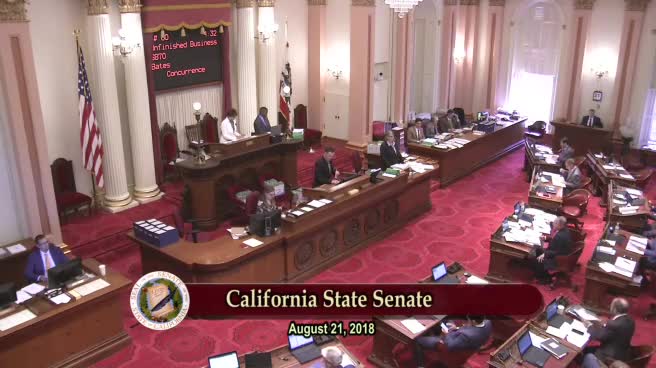
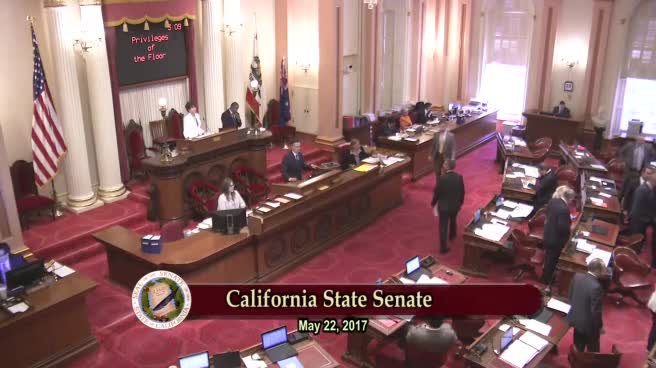
Bill Author

Bill Co-Author(s):