SB 541: Water: school facility water capture practices.
- Session Year: 2017-2018
- House: Senate
- Latest Version Date: 2017-10-14
Existing law requires the State Energy Resources Conservation and Development Commission, in consultation with the State Department of Education and the Division of the State Architect and the Office of Public School Construction within the Department of General Services, to recommend best design practices that include energy efficiency measures for all new public schools, and to report the recommendations to the Governor and the Legislature by October 1, 2003.
Existing law establishes in the California Environmental Protection Agency, the State Water Resources Control Board, which exercises the adjudicatory and regulatory functions of the state in the field of water resources.
This bill would require the board, in consultation with the regional water quality control boards, and the Division of the State Architect within the Department of General Services to recommend best design and use practices for stormwater and dry weather runoff capture practices, as defined, that can generally be applied to all new, reconstructed, or altered public schools, including school grounds. The bill would require the board to submit these recommendations to the Governor and the Legislature on or before January 1, 2019, and would require the board and the State Department of Education to post the recommendations on their respective Internet Web sites.
Existing law requires the State Energy Resources Conservation and Development Commission, in consultation with the State Department of Education and the Division of the State Architect and the Office of Public School Construction within the Department of General Services, to recommend best design practices that include energy efficiency measures for all new public schools, and to report the recommendations to the Governor and the Legislature by October 1, 2003.
Existing law establishes in the California Environmental Protection Agency, the State Water Resources Control Board, which exercises the adjudicatory and regulatory functions of the state in the field of water resources.
This bill would require the State Department of Education, the State Water Resources Control Board, board, in consultation with the regional water quality control boards, and the Division of the State Architect within the Department of General Services, Services to consult and recommend best design and use practices that include school facility for storm water and dry weather runoff capture practices, as defined, that can generally be applied to all new, reconstructed, or altered public schools, including school grounds. The bill would require the board to submit these recommendations to be reported to the Governor and the Legislature on or before January 1, 2019. The bill would define school facility water capture practices for these purposes. 2019, and would require the board and the State Department of Education to post the recommendations on their respective Internet Web sites.
Existing law requires the State Energy Resources Conservation and Development Commission, in consultation with the State Department of Education and the Division of the State Architect and the Office of Public School Construction within the Department of General Services, to recommend best design practices that include energy efficiency measures for all new public schools, and to report the recommendations to the Governor and the Legislature by October 1, 2003.
This bill would require the State Department of Education, the State Water Resources Control Board, the regional water quality control boards, and the Division of the State Architect within the Department of General Services, to consult and recommend best design and use practices that include school facility water capture practices storm water and dry weather runoff capture practices, as defined, that can generally be applied to all new, reconstructed, or altered public schools, including school grounds. The bill would require these recommendations to be reported to the Governor and the Legislature on or before January 1, 2019. The bill would define school facility water capture practices for these purposes.
Existing law requires the Energy Resources Conservation and Development Commission, in consultation with the State Department of Education and the Division of the State Architect and the Office of Public School Construction within the Department of General Services, to recommend best design practices that include energy efficiency measures for all new public schools, and to report the recommendations to the Governor and the Legislature by October 1, 2003.
This bill would require the State Department of Education, the State Water Resources Control Board, the regional water quality control boards, and the Division of the State Architect and the Office of Public School Construction within the Department of General Services, to consult and recommend best design and use practices that include school facility water capture practices for that can generally be applied to all new, reconstructed, or altered public schools, including school grounds. The bill would require these recommendations to be reported to the Governor and the Legislature on or before January 1, 2019. The bill would define school facility water capture practices for these purposes.
Existing law requires the Energy Resources Conservation and Development Commission, in consultation with the State Department of Education and the Division of the State Architect and the Office of Public School Construction within the Department of General Services, to recommend best design practices that include energy efficiency measures for all new public schools, and to report the recommendations to the Governor and the Legislature by October 1, 2003.
This bill would require the State Department of Education, the State Water Resources Control Board, the regional water quality control boards, and the Division of the State Architect and the Office of Public School Construction within in the Department of General Services, to consult and recommend best design and use practices that include school facility water capture design standards practices for all new, reconstructed, or altered public schools, including school grounds. The bill would require these recommendations to be reported to the Governor and the Legislature on or before January 1, 2019. The bill would define water capture school facility water capture practices for these purposes.
Existing law requires the Energy Resources Conservation and Development Commission, in consultation with the State Department of Education and the Division of the State Architect and the Office of Public School Construction within the Department of General Services, to recommend best design practices that include energy efficiency measures for all new public schools, and to report the recommendations to the Governor and the Legislature by October 1, 2003.
This bill would require the State Department of Education, the State Water Resources Control Board, and the Division of the State Architect and the Office of Public School Construction within in the Department of General Services, to consult and recommend best design practices that include water capture design standards for all new, reconstructed, or altered public schools, including school grounds. The bill would require these recommendations to be reported to the Governor and the Legislature on or before January 1, 2019. The bill would define water capture for these purposes.
(a)The board, in consultation with the regional water quality control boards, and the Division of the State Architect within the Department of General Services shall recommend best design and use practices for storm water and dry weather runoff capture practices that can generally be applied to all new, reconstructed, or altered public schools, including school grounds.
(b)The board shall submit the recommendations to the Governor and the Legislature on or before January 1, 2019.
(c)The board and the State Department of Education shall post the recommendations on their respective Internet Web sites on or before March 1, 2019.
(d)For purposes of this section, school facility storm water and dry weather runoff capture practices means practices to control water pollutants, pollutant loads, and water runoff volume exiting a site to the maximum extent feasible by minimizing impervious surface area and controlling runoff from impervious surfaces through infiltration, evapotranspiration, bioretention, treatment, and rainfall harvest.
(e)(1)The reporting requirement pursuant to subdivision (b) shall be inoperative on January 1, 2023, pursuant to Section 10231.5 of the Government Code.
(2)A report submitted to the Legislature pursuant to subdivision (b) shall be submitted in compliance with Section 9795 of the Government Code.
(a)The State Department of Education, the State Water Resources Control Board, board, in consultation with the regional water quality control boards, and the Division of the State Architect within the Department of General services Services shall consult and recommend best design and use practices that include school facility for storm water and dry weather runoff capture practices that can generally be applied to all new, reconstructed, or altered public schools, including school grounds.
(b)These recommendations shall be reported The board shall submit the recommendations to the Governor and the Legislature on or before January 1, 2019.
(c)The board and the State Department of Education shall post the recommendations on their respective Internet Web sites on or before March 1, 2019.
(c)(d)For purposes of this section, school facility storm water and dry weather runoff capture practices means practices to control water pollutants, pollutant loads, and water runoff volume exiting a site to the maximum extent feasible by minimizing impervious surface area and controlling runoff from impervious surfaces through infiltration, evapotranspiration, bioretention, treatment, and rainfall harvest.
(d)(e)(1)The reporting requirement pursuant to subdivision (b) shall be inoperative on January 1, 2023, pursuant to Section 10231.5 of the Government Code.
(2)A report submitted to the Legislature pursuant to subdivision (b) shall be submitted in compliance with Section 9795 of the Government Code.
(a)The State Department of Education, the State Water Resources Control Board, the regional water quality control boards, and the Division of the State Architect within the Department of General Services, services shall consult and recommend best design and use practices that include school facility storm water and dry weather runoff capture practices that can generally be applied to all new, reconstructed, or altered public schools, including school grounds.
(b)These recommendations shall be reported to the Governor and the Legislature on or before January 1, 2019.
(c)For purposes of this section section, school facility storm water and dry weather runoff capture practices means practices to control water pollutants, pollutant loads, and water runoff volume exiting a site to the maximum extent feasible by minimizing impervious surface area and controlling runoff from impervious surfaces through infiltration, evapotranspiration, bio-retention, bioretention, treatment, and rainfall harvest.
(d)(1)The reporting requirement pursuant to subdivision (b) shall be inoperative on January 1, 2023, pursuant to Section 10231.5 of the Government Code.
(2)A report submitted to the Legislature pursuant to subdivision (b) shall be submitted in compliance with Section 9795 of the Government Code.
(a)The State Department of Education, the State Water Resources Control Board, the regional water quality control boards, and the Division of the State Architect and the Office of Public School Construction within the Department of General Services, shall consult and recommend best design and use practices that include school facility water capture practices for that can generally be applied to all new, reconstructed, or altered public schools, including school grounds.
(b)These recommendations shall be reported to the Governor and the Legislature on or before January 1, 2019.
(c)For purposes of this section school facility water capture practices means practices to control water pollutants, pollutant loads, and water runoff volume to the maximum extent feasible by minimizing impervious surface area and controlling runoff from impervious surfaces through infiltration, evapotranspiration, bio-retention, and rainfall harvest.
(d)(1)The reporting requirement pursuant to subdivision (b) shall be inoperative on January 1, 2023, pursuant to Section 10231.5 of the Government Code.
(2)A report submitted to the Legislature pursuant to subdivision (b) shall be submitted in compliance with Section 9795 of the Government Code.
(a)The State Department of Education, the State Water Resources Control Board, the regional water quality control boards, and the Division of the State Architect and the Office of Public School Construction within the Department of General Services, shall consult and recommend best design and use practices that include school facility water capture design standards practices for all new, reconstructed, or altered public schools, including school grounds.
(b)These recommendations shall be reported to the Governor and the Legislature on or before January 1, 2019.
(c)For purposes of this section water capture school facility water capture practices means practices to control water pollutants, pollutant loads, and water runoff volume to the maximum extent feasible by minimizing impervious surface area and controlling runoff from impervious surfaces through infiltration, evapotranspiration, bio-retention, and rainfall harvest and use. Water capture may be used in open space, parks, fields, rooftops, streetscapes, parking lots, sidewalks, and medians. harvest.
(d)(1)The reporting requirement pursuant to subdivision (b) shall be inoperative on January 1, 2023, pursuant to Section 10231.5 of the Government Code.
(2)A report submitted by to the Legislature pursuant to subdivision (b) shall be submitted in compliance with Section 9795 of the Government Code.
(a)The State Department of Education, the State Water Resources Control Board, and the Division of the State Architect and the Office of Public School Construction within the Department of General Services, shall consult and recommend best design practices that include water capture design standards for all new, reconstructed, or altered public schools, including school grounds.
(b)These recommendations shall be reported to the Governor and the Legislature on or before January 1, 2019.
(c)For purposes of this section water capture means to control water pollutants, pollutant loads, and water runoff volume to the maximum extent feasible by minimizing impervious surface area and controlling runoff from impervious surfaces through infiltration, evapotranspiration, bio-retention, and rainfall harvest and use. Water capture may be used in open space, parks, fields, rooftops, streetscapes, parking lots, sidewalks, and medians.
(d)(1)The reporting requirement pursuant to subdivision (b) shall be inoperative on January 1, 2023, pursuant to Section 10231.5 of the Government Code.
(2)A report submitted by the Legislature pursuant to subdivision (b) shall be submitted in compliance with Section 9795 of the Government Code.
|
Date
|
Status
|
|---|---|
| Oct 14, 2017 | Chaptered by Secretary of State. Chapter 811, Statutes of 2017. |
| Oct 14, 2017 | Approved by the Governor. |
| Sep 15, 2017 | Enrolled and presented to the Governor at 3:30 p.m. |
| Sep 11, 2017 | Assembly amendments concurred in. (Ayes 40. Noes 0.) Ordered to engrossing and enrolling. |
| Sep 8, 2017 | In Senate. Concurrence in Assembly amendments pending. |
| Sep 7, 2017 | Read third time. Passed. Ordered to the Senate. |
| Sep 5, 2017 | Read second time. Ordered to third reading. |
| Sep 1, 2017 | From committee: Do pass. (Ayes 16. Noes 0.) (September 1). |
| Aug 23, 2017 | August 23 set for first hearing. Placed on suspense file. |
| Jul 20, 2017 | From committee with author's amendments. Read second time and amended. Re-referred to Com. on APPR. |
| Jul 13, 2017 | From committee: Do pass and re-refer to Com. on APPR. (Ayes 7. Noes 0.) (July 12). Re-referred to Com. on APPR. |
| Jun 28, 2017 | From committee: Do pass and re-refer to Com. on ED. (Ayes 6. Noes 0.) (June 27). Re-referred to Com. on ED. |
| Jun 19, 2017 | From committee with author's amendments. Read second time and amended. Re-referred to Com. on E.S. & T.M. |
| Jun 19, 2017 | Re-referred to Coms. on E.S. & T.M. and ED. pursuant to Assembly Rule 96. |
| Jun 15, 2017 | Referred to Coms. on ED. and E.S. & T.M. |
| Jun 1, 2017 | In Assembly. Read first time. Held at Desk. |
| May 31, 2017 | Read third time. Passed. (Ayes 37. Noes 2. Page 1330.) Ordered to the Assembly. |
| May 26, 2017 | Read second time and amended. Ordered to third reading. |
| May 25, 2017 | From committee: Do pass as amended. (Ayes 5. Noes 1. Page 1186.) (May 25). |
| May 19, 2017 | Set for hearing May 25. |
| May 1, 2017 | May 1 hearing: Placed on APPR. suspense file. |
| Apr 21, 2017 | Set for hearing May 1. |
| Apr 20, 2017 | From committee: Do pass and re-refer to Com. on APPR. (Ayes 7. Noes 0. Page 784.) (April 19). Re-referred to Com. on APPR. |
| Apr 4, 2017 | From committee with author's amendments. Read second time and amended. Re-referred to Com. on EQ. |
| Mar 30, 2017 | Set for hearing April 19. |
| Mar 29, 2017 | From committee: Do pass and re-refer to Com. on EQ. (Ayes 6. Noes 1. Page 536.) (March 29). Re-referred to Com. on EQ. |
| Mar 14, 2017 | Set for hearing March 29. |
| Mar 2, 2017 | Referred to Coms. on ED. and EQ. |
| Feb 17, 2017 | From printer. May be acted upon on or after March 19. |
| Feb 16, 2017 | Introduced. Read first time. To Com. on RLS. for assignment. To print. |
|
Date
|
Description
|
Location
|
Votes
|
|
|---|---|---|---|---|
| Sep 11, 2017 | Unfinished Business SB541 Allen et al. Concurrence | Senate Floor |
Passed |
|
| Sep 7, 2017 | SB 541 Allen Senate Third Reading By FRIEDMAN | Assembly Floor |
Passed |
|
| Sep 1, 2017 | Do pass. | Assembly Standing Committee on Appropriations |
Passed |
|
| Jul 12, 2017 | Do pass and be re-referred to the Committee on [Appropriations] | Assembly Standing Committee on Education |
Passed |
|
| Jun 27, 2017 | Do pass and be re-referred to the Committee on [Education] | Assembly Standing Committee on Environmental Safety and Toxic Materials |
Passed |
|
| May 31, 2017 | Senate 3rd Reading SB541 Allen | Senate Floor |
Passed |
|
| May 25, 2017 | Do pass as amended | Senate Standing Committee on Appropriations |
Passed |
|
| May 1, 2017 | Placed on suspense file | Senate Standing Committee on Appropriations |
Passed |
|
| Apr 19, 2017 | Do pass, but first be re-referred to the Committee on [Appropriations] | Senate Standing Committee on Environmental Quality |
Passed |
|
| Mar 29, 2017 | Do pass, but first be re-referred to the Committee on [Environmental Quality] | Senate Standing Committee on Education |
Passed |
This list shows positions taken on this bill by organizations on the date displayed, which is linked to the original source.
Positions by individuals are not included.
|
Organization
|
Position
|
Date
|
|---|---|---|
| California Contract Cities Association | ** Support | Sep 8, 2017 |
| City of Arcadia | ** Support | Sep 8, 2017 |
| City Of Azusa | ** Support | Apr 17, 2017 |
| city of bradbury | ** Support | Sep 8, 2017 |
| City Of Burbank | ** Support | Sep 8, 2017 |
| City of Carson | ** Support | Sep 8, 2017 |
| City of Covina | ** Support | Sep 8, 2017 |
| City of Glendora | ** Support | Sep 8, 2017 |
| City of Hermosa Beach | ** Support | Sep 8, 2017 |
| City Of Inglewood | ** Support | Sep 8, 2017 |
| City of La Mirada | ** Support | Sep 8, 2017 |
| City of La Verne | ** Support | Sep 8, 2017 |
| City of Lakewood | ** Support | Sep 8, 2017 |
| City of Monrovia | ** Support | Sep 8, 2017 |
| City of Palos Verdes Estates | ** Support | Sep 8, 2017 |
| City of Pasadena | ** Support | Sep 8, 2017 |
| City of Rolling Hills Estates | ** Support | Sep 8, 2017 |
| City of Rosemead | ** Support | Sep 8, 2017 |
| City Of Signal Hill | ** Support | Sep 8, 2017 |
| City of South Pasadena | ** Support | Jul 10, 2017 |
| City of South Pasadena | ** Support | Jul 10, 2017 |
| Coalition For Adequate School Housing | ** Support | Sep 8, 2017 |
| Hildebay | * Support | Jun 27, 2017 |
| League Of California Cities | ** Support | Sep 8, 2017 |
| Los Angeles County Business Federation | ** Support | Sep 8, 2017 |
| Tree People | ** Support | Sep 8, 2017 |
Office of Senate Floor Analyses (916) 651-1520 Fax: (916) 327-4478 | SB |
UNFINISHED BUSINESS
Bill No: SB 541
:
SENATE EDUCATION COMMITTEE: 6-1, 3/29/17
AYES: Allen, Wilk, Galgiani, Leyva, Mendoza, Pan
NOES: Vidak
SENATE ENVIRONMENTAL QUALITY COMMITTEE: 7-0, 4/19/17
AYES: Wieckowski, Stone, Bates, Hill, Lara, Skinner, Stern
SENATE APPROPRIATIONS COMMITTEE: 5-1, 5/25/17
AYES: Lara, Beall, Bradford, Hill, Wiener
NOES: Nielsen
NO VOTE RECORDED: Bates
SENATE FLOOR: 37-2, 5/31/17
AYES: Allen, Anderson, Atkins, Bates, Beall, Berryhill, Bradford, Cannella, De León, Dodd, Gaines, Galgiani, Glazer, Hernandez, Hertzberg, Hill, Hueso, Jackson, Lara, Leyva, McGuire, Mendoza, Mitchell, Monning, Moorlach, Morrell, Newman, Nguyen, Pan, Portantino, Roth, Skinner, Stern, Stone, Wieckowski, Wiener, Wilk
NOES: Nielsen, Vidak
NO VOTE RECORDED: Fuller
ASSEMBLY FLOOR: 77-0, 9/7/17 - See last page for vote
SOURCE: Los Angeles County Division of the League of California Cities
DIGEST:
This bill requires the State Water Resources Control Board (SWRCB), in consultation with the regional water quality control boards, and the Division of the State Architect (within the Department of General Services), to recommend best design and use practices for storm water and dry weather runoff capture practices that can generally be applied to all new, reconstructed, or altered public schools, including school grounds.
Assembly Amendments (1) delete the requirement that the California Department of Education (CDE) participate in the recommendation for best design and use practices; (2) delete the requirement that specified entities consult (in addition to making recommendations); (3) require the SWRCB and the CDE to post the recommendations on their respective Web sites by March 1, 2019; (4) expand the capture practices to include dry weather runoff; (5) add runoff treatment to the definition of “school facility storm water and dry weather runoff capture practices;” and (6) move this bill’s provisions from the Education Code to the Water Code.
Existing federal law, the Clean Water Act:
- Establishes the structure for regulating discharges of pollutants into the waters of the United States and regulating quality standards for surface waters.
- Makes it unlawful to discharge any pollutant from a point source into navigable waters, unless a permit was obtained.
- Provides that the National Pollutant Discharge Elimination System (NPDES) permit program controls discharges. Point sources are discrete conveyances such as pipes or man-made ditches. Municipal governments (as well as other facilities) are required to obtain NPDES permits to control their discharges go directly to surface waters, including stormwater.
- Authorizes states to implement and enforce the NPDES permit program as long as the state’s provisions are as stringent as the federal requirements. In California, the SWRCB is the delegate agency responsible for the NPDES permit program. (United States Code, Title 33 §1251 et seq)
Existing state law requires SWRCB to develop a comprehensive guidance document for evaluating and measuring the effectiveness of municipal stormwater management programs undertaken, and permits issued, in accordance with the federal Clean Water Act. (Water Code § 13383.7)
This bill requires several entities to recommend best design and use practices for storm water and dry weather runoff capture practices for public schools. Specifically, this bill:
- Requires the SWRCB, in consultation with the regional water quality control boards, and the Division of the State Architect (within the Department of General Services), to recommend best design and use practices for storm water and dry weather runoff capture practices that can generally be applied to all new, reconstructed, or altered public schools, including school grounds.
- Defines “school facility storm water and dry weather runoff capture practices” as practices to control water pollutants, pollutant loads, and water runoff volume exiting a site to the maximum extent feasible by minimizing impervious surface areas and controlling runoff from impervious surfaces through infiltration, evapotranspiration, bioretention, treatment, and rainfall harvest.
- Requires SWRCB to submit the recommendations to the Governor and Legislature by January 1, 2019, and sunsets the reporting requirement on January 1, 2023.
- Requires the SWRCB and the CDE to post the recommendations on their respective websites by March 1, 2019.
Comments
No guidance for schools. According to SWRCB, they have not traditionally issued guidance for stormwater capture systems. The SWRCB’s Storm Water Resource Plan Guidelines include methods for identification and prioritization of stormwater capture projects, including integrated metrics-based analysis. The analysis helps to determine if stormwater systems achieve standards, but the specific designs are determined by the permitted entity. [http://www.waterboards.ca.gov/water_issues/ programs/grants_loans/swgp/docs/prop1/swrp_finalguidelines_dec2015.pdf]
The City of Los Angeles Department of Water and Power utilizes a Stormwater Capture Master Plan, but that plan does not include guidance to schools on water capture design standards. [https://www.ladwp.com/ladwp/faces/wcnav_externalId/ a-w-stormwatercapturemp;jsessionid=bRbrYVgMh7vrX3Dyp0NvqJwtVy5YWhF bvJsnY252kLLHFrmpWFDn!-168235981?_afrLoop=23187576910085&_afr WindowMode=0&_afrWindowId=null#%40%3F_afrWindowId%3Dnull%26_afrLoop%3D23187576910085%26_afrWindowMode%3D0%26_adf.ctrl-state%3 Dxucs5pzx3_4]
The California Stormwater Quality Association has a Best Management Practices handbook, but the handbook does not include guidance to schools on water capture design standards. [https://www.casqa.org/asca/los-angeles-stormwater-capture-master-plan-harvesting-local-stormwater-municipal-supply]
FISCAL EFFECT: Appropriation: Fiscal Com.: Local:
According to the Assembly Appropriations Committee, enactment of this bill could result in one-time costs of $150,000 (Waste Discharge Permit Fund) for the SWRCB to work with the other agencies to research and compile best design and use practices. In addition to the activities being undertaken by the SWRCB to coordinate and develop recommendations, the nine Regional Water Boards may incur minor and absorbable costs to consult on the recommendations; one-time absorbable costs of approximately $50,000 for the State Architect to participate in the workgroup; and, minor, likely absorbable costs for the SWRCB and the CDE to post the recommendations on their Web sites.
Los Angeles County Division of the League of California Cities (source)
California Contract Cities Association
City of Arcadia
City of Bradbury
City of Burbank
City of Carson
City of Covina
City of Glendora
City of Hermosa Beach
City of Inglewood
City of Lakewood
City of La Mirada
City of La Verne
City of Monrovia
City of Palos Verdes Estates
City of Pasadena
City of Rolling Hills Estates
City of Rosemead
City of Signal Hill
Coalition for Adequate School Housing
League of California Cities
Los Angeles County Business Federation
Tree People
None received
ASSEMBLY FLOOR: 77-0, 9/7/17
AYES: Acosta, Aguiar-Curry, Travis Allen, Arambula, Baker, Berman, Bigelow, Bloom, Bocanegra, Bonta, Brough, Burke, Caballero, Calderon, Cervantes, Chau, Chávez, Chen, Chiu, Chu, Cooley, Cooper, Cunningham, Dababneh, Dahle, Daly, Eggman, Flora, Fong, Frazier, Friedman, Gallagher, Cristina Garcia, Eduardo Garcia, Gipson, Gloria, Gonzalez Fletcher, Gray, Grayson, Harper, Holden, Irwin, Jones-Sawyer, Kalra, Kiley, Lackey, Levine, Limón, Low, Maienschein, Mathis, Mayes, McCarty, Medina, Melendez, Mullin, Muratsuchi, Nazarian, Obernolte, O'Donnell, Patterson, Quirk, Quirk-Silva, Reyes, Ridley-Thomas, Rodriguez, Rubio, Salas, Santiago, Steinorth, Mark Stone, Thurmond, Ting, Voepel, Waldron, Weber, Rendon
NO VOTE RECORDED: Choi, Wood
9/8/17 15:28:11
**** END ****
SENATE THIRD READING
STR Bill Id:SB 541
Author:(Allen)
As Amended Ver:July 20, 2017
Majority vote
SENATE VOTE: 37-2
Committee | Votes | Ayes | Noes |
Environmental Safety | 6-0 | Quirk, Dahle, Chen, Cristina Garcia, Friedman, Holden | |
Education | 7-0 | O'Donnell, Chávez, Gloria, Kiley, McCarty, Thurmond, Weber | |
Appropriations | 16-0 | Gonzalez Fletcher, Bigelow, Bloom, Bocanegra, Bonta, Brough, Calderon, Chau, Eggman, Fong, Friedman, Gallagher, Eduardo Garcia, Jones-Sawyer, Obernolte, Reyes |
|
SUMMARY: Requires the State Water Resources Control Board (State Water Board), in consultation with specified state and regional entities, to recommend best design and use practices for storm water and dry weather runoff capture that can generally be applied to all new, reconstructed, or altered public schools. Specifically, this bill:
- Requires the State Water Board, in consultation with the regional water quality control boards (Regional Water Boards), and the Division of the State Architect within the Department of General Services, to recommend best design and use practices for storm water and dry weather runoff capture that can generally be applied to all new, reconstructed, or altered public schools, including school grounds.
- Requires the State Water Board to submit the recommendations to the Governor and the Legislature on or before January 1, 2019.
- Requires the State Water Board and the State Department of Education to post the recommendations on their respective Internet Web sites on or before March 1, 2019.
- Defines "school facility storm water and dry weather runoff capture practices" as practices to control water pollutants, pollutant loads, and water runoff volume exiting a site to the maximum extent feasible by minimizing impervious surface area and controlling runoff from impervious surfaces through infiltration, evapotranspiration, bioretention, treatment, and rainfall harvest.
- Sunsets the reporting requirement on January 1, 2023.
EXISTING LAW:
- Establishes the federal Clean Water Act (CWA) to regulate discharges of pollutants into the waters of the United States (US) and to regulate quality standards for surface waters. Establishes the National Pollutant Discharge Elimination System (NPDES) permit program to regulate the discharge of pollutants in storm water, including municipal storm water systems.
- Authorizes one or more public agencies to develop and implement storm water resources plans that meet specified standards to address the capture, treatment, and storage of storm water and dry weather runoff.
- Requires, by July 1, 2016, the State Water Board to establish guidance for developing a storm water resources plan, as specified.
FISCAL EFFECT: According to the Assembly Appropriations Committee, enactment of this bill could result in one-time costs of $150,000 (Waste Discharge Permit Fund) for the State Water Board to work with the other agencies to research and compile best design and use practices. In addition to the activities being undertaken by the State Water Board to coordinate and develop recommendations, the nine Regional Water Boards may incur minor and absorbable costs to consult on the recommendations; one-time absorbable costs of approximately $50,000 for the State Architect to participate in the workgroup; and, minor, likely absorbable costs for the State Water Board and the State Department of Education to post the recommendations on their Internet Web sites.
COMMENTS:
Need for the bill: According to the author, "Cities and counties are required to ensure storm water discharges meet water quality standards, but many struggle to find adequate funding and open space sites needed to clean up the pollution, particularly in Los Angeles County. Cities are working with their local park districts to find suitable open space sites to capture and begin to treat storm water, but in many urban areas, school sites are among the largest parcels in otherwise fully built-out municipalities. However, because schools are not currently subject to a storm water permit, there are no standards or best practices for schools to follow to encourage their partnership. This has made partnership between municipalities and school districts harder. Therefore, this bill requires several entities to consult and recommend best design practices that include school facility water capture practices for all new, reconstructed, or altered public schools, including school grounds."
Storm water: As described by the United States Environmental Protection Agency (US EPA), storm water is the runoff generated when precipitation from rain and snowmelt events flows over land or impervious surfaces without percolating into the ground. Storm water is often considered a nuisance because it mobilizes pollutants such as trash, chemicals, oils, dirt, and sediment. In most cases, storm water flows directly to water bodies through sewer systems, contributing a major source of pollution to rivers, lakes, and the ocean.
Storm water management: The US EPA posits that storm water management is a major and growing challenge nationwide, with storm water pollution, flooding, and other impacts affecting water quality, public health, and local economies. However, while communities face technical and financial challenges in appropriately addressing storm water pollution, managing storm water over the long-term can create opportunities for communities to use rainwater as a resource, invest in resilient infrastructure, revitalize urban waterways, and introduce green space that makes communities more livable.
Storm water regulation: According to the State Water Board, the federal CWA provides the State and Regional Water Boards in California with the authority and framework for regulating storm water discharges under the NPDES Permitting Program. Cities and local jurisdictions that operate municipal storm water systems must obtain NPDES permits for discharges of municipal storm water to waters of the US.
Municipal separate storm sewer systems (MS4s): Polluted storm water runoff is commonly transported through MS4s, and then is often discharged, untreated, into local water bodies. An MS4 is a conveyance or system of conveyances that is owned by a state, city, town, village, or other public entity that discharges to waters of the US; is designed or used to collect or convey storm water (e.g., storm drains, pipes, ditches); is not a combined sewer; and, is not part of a sewage treatment plant or publicly owned treatment works. To prevent harmful pollutants from being washed or dumped into MS4s, operators are generally required to obtain NPDES permits, known as MS4 permits, and develop storm water management programs.
MS4 permits: The State Water Board and the Regional Water Boards implement and enforce the Municipal Storm Water Program and the MS4 permit program. MS4 permits typically require the discharger to develop and implement a Storm Water Management Plan/Program with the goal of reducing the discharge of pollutants to the maximum extent practicable (MEP). The management programs specify what best management practices (BMPs) will be used to address certain program areas, such as public education and outreach; illicit discharge detection and elimination; construction and post-construction; and, good housekeeping for municipal operations.
Storm water regulation and schools: While universities are currently designated as regulated non-traditional small MS4s, elementary schools, middle schools, high schools, and community colleges are not. This means that K – 12 school districts and community colleges are not subject to the requirements of the current MS4 permit, which expires in June 2018. However, the State Water Board indicates that at the next reissuance of the statewide Phase II MS4 permit, K – 12 school districts and community colleges will be considered and likely regulated under the permit. While it has already been informally communicating directly with schools and school districts about this potential upcoming change, the State Water Board will conduct additional outreach, public hearings, and workshops on the reissuance, and projects that it will adopt the next Phase II MS4 permit by the end of 2019.
Many California cities wrote in support of this bill to say that in many cases, in order to comply with their current MS4 permits, cities are working with their local park districts to find suitable open space sites to capture and treat storm water, but, in many urban areas, particularly in Los Angeles County and in the Bay Area, school sites, and not necessarily parks, are among the largest parcels in otherwise fully built-out cities. The problem that these cities are facing is that because schools are currently not subject to an MS4 permit, there are no water capture standards or best practices for schools to follow, hampering these potential partnerships.
This bill will require the State Water Board to develop recommendations for best design and use practices for storm water and dry weather runoff capture that can generally be applied to all new, reconstructed, or altered public schools.
Analysis Prepared by: Shannon McKinney / E.S. & T.M. / (916) 319-3965 FN: 0001762
Date of Hearing: August 23, 2017
ASSEMBLY COMMITTEE ON APPROPRIATIONS
Lorena Gonzalez Fletcher, Chair
SBPCA Bill Id:SB 541
Author:(Allen) – As Amended Ver:July 20, 2017
Policy Committee: | Environmental Safety and Toxic Materials | Vote: | 6 - 0 |
Education | 7 - 0 | ||
|
|
Urgency: No State Mandated Local Program: No Reimbursable: No
SUMMARY:
This bill requires the State Water Resources Control Board (SWRCB), in consultation with the regional water quality control boards (regional water boards) and the Division of the State Architect, to recommend best design and use practices for storm water and dry weather runoff capture practices that can generally be applied to all new, reconstructed, or altered public schools, including school grounds.
Additionally, this bill requires SWRCB to submit the recommendations to Governor and Legislature by January 1, 2019, and requires SWRCB and the Department of Education (DOE) to post the recommendations on their Internet Web sites by March 1, 2019.
FISCAL EFFECT:
- One-time costs of $150,000 (Waste Discharge Permit Fund) for SWRCB to work with the other agencies to research and compile best design and use practices. In addition to the activities being undertaken by the SWRCB to coordinate and develop recommendations, the nine Regional Water Quality Control Boards may incur minor and absorbable costs to consult on the recommendations.
- One-time absorbable costs of approximately $50,000 for the State Architect to participate in the workgroup.
- Minor, likely absorbable costs for SWRCB and DOE to post the recommendations on their internet websites.
COMMENTS:
- Purpose. According to the author, "Cities and counties are required to ensure storm water discharges meet water quality standards, but many struggle to find adequate funding and open space sites needed to clean up the pollution, particularly in Los Angeles County. Cities are working with their local park districts to find suitable open space sites to capture and begin to treat storm water, but in many urban areas, school sites are among the largest parcels in otherwise fully built-out municipalities. However, because schools are not currently subject to a storm water permit, there are no standards or best practices for schools to follow to encourage their partnership. This has made partnership between municipalities and school districts harder. Therefore, this bill requires several entities to consult and recommend best design practices that include school facility water capture practices for all new, reconstructed, or altered public schools, including school grounds."
Background.
The federal law Clean Water Act establishes the structure for regulating discharges of pollutants into the waters of the United States and regulating quality standards for surface waters. The Clean Water Act makes it unlawful to discharge any pollutant from a point source into navigable waters, unless a permit was obtained, and also provides that the National Pollutant Discharge Elimination System (NPDES) permit program controls discharges. Point sources are discrete conveyances such as pipes or man-made ditches. Municipal governments (as well as other facilities) are required to obtain NPDES permits to control their discharges that go directly to surface waters, including stormwater. Further, the Clean Water Act authorizes states to implement and enforce the NPDES permit program as long as the state’s provisions are as stringent as the federal requirements. In California, the State Water Resources Control Board is the delegate agency responsible for the NPDES permit program.
Existing state law requires the SWRCB to develop a comprehensive guidance document for evaluating and measuring the effectiveness of municipal stormwater management programs undertaken, and permits issued, in accordance with the federal Clean Water Act.
Analysis Prepared by: Jennifer Galehouse / APPR. / (916) 319-2081
Date of Hearing: July 12, 2017
ASSEMBLY COMMITTEE ON EDUCATION
Patrick O'Donnell, Chair
SBPCA Bill Id:SB 541
Author:(Allen) – As Amended Ver:June 19, 2017
[Note: This bill was doubled referred to the Assembly Environmental Safety and Toxic Materials Committee and was heard by that Committee as it relates to issues under its jurisdiction.]
SENATE VOTE: 37-2
SUBJECT: School facilities: school facility water capture practices
SUMMARY: Requires the California Department of Education (CDE), the State Water Resources Control Board (State Water Board), the regional water quality control boards, and the Division of State Architect (DSA) within the Department of General Services to consult and recommend best design and use practices that include school facility storm water and dry weather runoff capture practices that can generally be applied to all new, reconstructed, or altered public schools, including school grounds. Specifically, this bill:
- Requires these recommendations to be reported to the Governor and the Legislature on or before January 1, 2019.
- Defines “school facility storm water and dry weather runoff capture practices” as practices to control water pollutants, pollutant loads, and water runoff volume exiting a site to the maximum extent feasible by impervious surfaces through infiltration, evapotranspiration, bioretention, treatment, and rainfall harvest.
- Makes the provisions of the bill inoperative on January 1, 2023.
- Requires the report to be submitted to the Legislature pursuant to the process established in Government Code Section 9795.
EXISTING LAW:
- Requires, under the Leroy F. Greene School Facilities Act of 1998, the State Allocation board (SAB) to allocate to applicant school districts, prescribed per-unhoused-pupil state funding for construction and modernization of school facilities, including hardship funding, and supplemental funding for site development and acquisition.
- Prohibits the SAB from apportioning funds to any school district unless the applicant school district has certified to the SAB that it has obtained the written approval of the CDE that the site selection, and the building plans and specifications, comply with the standards adopted by the CDE.
- Requires the CDE to establish standards for use by a school district in the selection of schoolsites and standards to ensure that the design and construction of school facilities are educationally appropriate and promote school safety.
- Prohibits the SAB from apportioning funds to any school district that has not received approval from the DSA that the project meets Field Act requirements.
- Requires the DSA, under the police power of the state, to supervise the design and construction of any school building or the reconstruction or alteration of or addition to any school building to ensure that plans and specifications comply with existing law and Title 24 regulations.
FISCAL EFFECT: According to the Senate Appropriations Committee:
- The State Water Board estimates a cost of one position and $140,000 General Fund to comply with the measure, while the CDE indicates a cost of 0.5 positions and $45,000 General Fund. Workload for the DSA should be minor and absorbable within existing resources.
- Unknown cost pressure on existing school facility bond funds to fund new water capture practices.
COMMENTS: Background. The construction and modernization of public kindergarten through grade 12 (K-12) facilities are funded by a combination of state and local general obligation (GO) bonds, developer's fees and local assessments such as Mello Roos community facilities districts. California voters have approved $42.4 billion in state GO bonds since 1998 for K-12 school facilities, including $7 billion from Proposition 51 passed last November.
The SAB, a ten member body, oversees state bond funds. In order to be eligible for funding, local educational agencies must receive approval from several state agencies, including the CDE, DSA and the Office of Public School Construction, and work with local governmental agencies.
The CDE reviews plans to ensure that the proposed site and facility are safe and meet the educational program of the school. All K-14 proposed public school construction and modernization projects must also receive approval from the DSA, which reviews architectural plans for compliance with the Field Act (seismic safety); fire, life and safety requirements; and access requirements under the Americans with Disability Act. DSA grants approvals based on the requirements specified by Title 24 regulations, also known as the California Building Standards Code, with some exemptions based on the cost of a project.
This bill deals with the role of school facilities in capturing storm water and dry weather runoff. The author states, “School sites offer a unique opportunity to help municipalities capture and treat stormwater. A campus can be retrofitted and managed to capture, treat, store, and use rainwater that falls on school grounds and on the surrounding neighborhood. These retrofits, which could include the addition of rain gardens, bioswales infiltration galleries, cisterns, and planting native plants, will also help to improve the environmental quality of the school sites. Adding more greenspace, shade trees, gardens, and natural features will also offer students more healthy environments that have been shown to improve concentration, reduce stress, and stimulate creativity. However, absent standards and best management practices, school districts are often hesitant to partner with cities and counties to locate stormwater projects.”
Storm water. The United States Environmental Protection Agency describes storm water as the runoff generated when precipitation from rain and snowmelt events flows over land or impervious surfaces without percolating into the ground. Storm water is often considered a nuisance because it mobilizes pollutants such as trash, chemicals, oils, dirt, and sediment. In most cases, storm water flows directly to water bodies through sewer systems, contributing a major source of pollution to rivers, lakes, and the ocean.
Storm water regulation. The federal Clean Water Act provides the state and regional water boards in California with the authority and framework for regulating storm water discharges under the National Pollutant Discharge Elimination System (NPDES) Permitting Program.
Municipal separate storm sewer systems (MS4s). Polluted storm water runoff is commonly transported through MS4s, and then is often discharged, untreated, into local water bodies. An MS4 is a conveyance or system of conveyances that is owned by a state, city, town, village, or other public entity that discharges to waters of the United States; is designed or used to collect or convey storm water (e.g., storm drains, pipes, ditches); is not a combined sewer; and, is not part of a sewage treatment plant or publicly owned treatment works. To prevent harmful pollutants from being washed or dumped into MS4s, operators are generally required to obtain NPDES permits, known as MS4 permits, and develop storm water management programs.
Larger municipalities (serving between 100,000 to 250,000) are under the jurisdiction of nine regional water control boards. Smaller municipalities (serving under 100,000) and small nontraditional systems, such as military bases, public campuses, prisons, universities and hospital complexes, are under the jurisdiction of the State Water Board. The discharger is required to develop and implement a Storm Water Management Plan/Program with the goal of reducing the discharge of pollutants to the maximum extent practicable. The management programs specify what best management practices will be used to address certain program areas, such as public education and outreach, illicit discharge detection and elimination, construction and post-construction, and good housekeeping for municipal operations.
School districts are currently not required to seek a permit from the State Water Board. However, according to the State Water Board, school districts and community college districts will likely be added to the requirements during the update of regulations, anticipated to be adopted late 2019.
This bill requires the CDE, the State Water Board, regional water quality control boards, and DSA to develop best design and use practices that include school facility storm water and dry weather runoff capture practices that can generally be applied to new, reconstructed, or altered public schools.
Are best practices already developed? Do best practices need to be specific to school sites? The State Water Board has focused on storm water quality management and regulation for more than 20 years. According to a Water Boards fact sheet, “while early regulatory efforts focused on controlling pollutants and implementing best management practices, current regulatory decisions also emphasize holistic strategies that will result in multiple community benefits while concurrently managing pollution. With the focus on storm water as a resource, newer low impact development and green infrastructure techniques are now capitalizing on opportunities to capture storm water runoff and use it for local landscape and agricultural irrigation, and groundwater recharge.” This includes Low Impact Development practices, which the State Water Board identifies as strategies such as bioretention and rain gardens, rooftop gardens, rain barrels and cisterns, permeable pavers, and sidewalk storage. These are strategies that can be incorporated in any type of development. The California Stormwater Quality Association has also developed best management practices guidebooks that may apply to school facilities.
Is CDE an appropriate entity to make recommendations? While CDE approves proposed school sites and school plans, it does not have expertise in storm water or other design issues. Staff recommends removing CDE from the bill.
Author’s amendments. The author has proposed amendments to identify the State Water Board as the lead agency to develop and recommend best design and use practices, in consultation with the regional water quality control boards and DSA, and make other clarifying amendments. Staff recommends adopting the amendments.
Sharing the recommendations. In order to inform school districts of the recommendations, staff recommends requiring the State Water Board and the CDE to post the recommendations on each agency’s Internet Web site.
REGISTERED SUPPORT / OPPOSITION:
Support
Los Angeles County Division of the League of California Cities (Sponsor)
California Contract Cities Association
City of Arcadia
City of Bradbury
City of Burbank
City of Carson
City of Covina
City of Glendora
City of Hermosa Beach
City of Inglewood
City of Lakewood
City of La Mirada
City of La Verne
City of Monrovia
City of Palos Verdes Estates
City of Pasadena
City of Rolling Hills Estates
City of Rosemead
City of Signal Hill
City of South Pasadena
Los Angeles County Business Federation
League of California Cities
TreePeople
Opposition
None received
Analysis Prepared by: Sophia Kwong Kim / ED. / (916) 319-2087
Date of Hearing: June 27, 2017
ASSEMBLY COMMITTEE ON ENVIRONMENTAL SAFETY AND TOXIC MATERIALS
Bill Quirk, Chair
SBPCA Bill Id:SB 541
Author:(Allen) – As Amended Ver:June 19, 2017
SENATE VOTE: 37-2
SUBJECT: School facilities: school facility water capture practices
SUMMARY: Requires specified state and regional entities to consult on and recommend best design and use practices for storm water and dry weather runoff capture that can generally be applied to all new, reconstructed, or altered public schools. Specifically, this bill:
- Requires the State Department of Education, the State Water Resources Control Board (State Water Board), the regional water quality control boards (regional water boards), and the Division of the State Architect within the Department of General Services to consult and recommend best design and use practices that include school facility storm water and dry weather runoff capture practices that can generally be applied to all new, reconstructed, or altered public schools, including school grounds.
- Requires that these recommendations are reported to the Governor and the Legislature on or before January 1, 2019.
- Defines "school facility storm water and dry weather runoff capture practices"as practices to control water pollutants, pollutant loads, and water runoff volume exiting a site to the maximum extent feasible by minimizing impervious surface area and controlling runoff from impervious surfaces through infiltration, evapotranspiration, bioretention, treatment, and rainfall harvest.
- Sunsets the reporting requirement on January 1, 2023.
EXISTING LAW:
- Establishes the federal Clean Water Act (CWA) to regulate discharges of pollutants into the waters of the United States (US) and to regulate quality standards for surface waters. Establishes the National Pollutant Discharge Elimination System (NPDES) permit program to regulate the discharge of pollutants in storm water, including municipal storm water systems. (33 Unites States Code §1251 et seq.)
- Requires the State Water Board to formulate and adopt state policy for water quality control. (Water Code (WC) §13020 et seq.)
- Authorizes one or more public agencies to develop and implement storm water resources plans that meet specified standards to address the capture, treatment, and storage of storm water and dry weather runoff. (WC §10562 (a))
- Provides that a storm water resource plan must be designed to augment local water supply through groundwater recharge or storage for beneficial reuse of storm water; prioritize source control, onsite and local infiltration, and reuse of storm water; reestablish natural water drainage treatment and infiltration systems; and, include requirements for new and upgraded infrastructure and development to meet design criteria and best management practices to prevent storm water pollution and increase effective storm water management. (WC §10562 (b))
- Requires, by July 1, 2016, the State Water Board to establish guidance for developing a storm water resources plan that shall include, but is not limited to, identifying types of local agencies and nongovernmental organizations that need to be consulted in developing a storm water resource plan; defining appropriate quantitative methods for identifying and prioritizing opportunities for storm water and dry weather runoff capture projects; defining the appropriate geographic scale of watersheds for storm water resource planning; and, other guidance the State Water Board deems appropriate. (WC §10565)
- Requires the State Water Board to develop a comprehensive guidance document for evaluating and measuring the effectiveness of municipal storm water management programs undertaken, and permits issued, in accordance with the CWA. (WC §13383.7)
- Establishes siting and construction requirements for school facilities. (Education Code §17210 et seq.).
- Directs the Energy Resources Conservation and Development Commission, in consultation with the State Department of Education and the Division of the State Architect and the Office of Public School Construction, to recommend best design practices that include energy efficiency measures for all new public schools. (Education Code §17255)
FISCAL EFFECT: Unknown.
COMMENTS:
Need for the bill: According to the author, "Cities and counties are required to ensure storm water discharges meet water quality standards, but many struggle to find adequate funding and open space sites needed to clean up the pollution, particularly in Los Angeles County. Cities are working with their local park districts to find suitable open space sites to capture and begin to treat storm water, but in many urban areas, school sites are among the largest parcels in otherwise fully built-out municipalities. However, because schools are not currently subject to a storm water permit, there are no standards or best practices for schools to follow to encourage their partnership. This has made partnership between municipalities and school districts harder. Therefore, this bill requires several entities to consult and recommend best design practices that include school facility water capture practices for all new, reconstructed, or altered public schools, including school grounds."
Storm water: As described by the United States Environmental Protection Agency (US EPA), storm water is the runoff generated when precipitation from rain and snowmelt events flows over land or impervious surfaces without percolating into the ground. Storm water is often considered a nuisance because it mobilizes pollutants such as trash, chemicals, oils, dirt, and sediment. In most cases, storm water flows directly to water bodies through sewer systems, contributing a major source of pollution to rivers, lakes, and the ocean.
Population growth and the development of urban and urbanized areas are chief contributors to the amount of pollutants in runoff, as well as the volume and rate of runoff from impervious surfaces. These factors can cause changes in hydrology and water quality that result in habitat modification and loss, increased flooding, decreased aquatic biological diversity, and increased sedimentation and erosion.
Storm water management: The US EPA posits that storm water management is a major and growing challenge nationwide, with storm water pollution, flooding and other impacts affecting water quality, public health, and local economies. However, while communities face technical and financial challenges in appropriately addressing storm water pollution, managing storm water over the long-term can create opportunities for communities to use rainwater as a resource, invest in resilient infrastructure, revitalize urban waterways, and introduce green space that makes communities more livable.
In the face of climate change and potentially strained water supplies, it is increasingly important that communities treat rain and storm water as a resource. A new generation of management practices has emerged to manage storm water while simultaneously building vibrant, attractive communities. Green infrastructure, such as green roofs, permeable pavement, bioswales, rainwater harvesting, green streets, storm water parks, and conservation areas can address storm water pollution and mitigate flooding, while at the same time provide open space for recreation, habitat, improved air quality, climate resiliency, and aesthetic benefits. When used in conjunction with gray infrastructure, these approaches can help revitalize community economies, particularly communities in need, by supporting sustainable local jobs, improving community assets, and reducing blight. Effective storm water runoff management can protect wetlands and aquatic ecosystems, improve the quality of receiving waterbodies, conserve water resources, protect public health, and provide flood control.
Storm water regulation: According to the State Water Board, the federal CWA provides the state and regional water boards in California with the authority and framework for regulating storm water discharges under the NPDES Permitting Program. Cities and local jurisdictions that operate municipal storm water systems must obtain NPDES permits for discharges of municipal storm water to waters of the US. Similarly, industrial sites or activities must have NPDES permits for storm water from their industrial sites, and construction contractors must have NPDES permits for storm water from construction sites that disturb more than an acre of land.
Municipal separate storm sewer systems (MS4s): Polluted storm water runoff is commonly transported through MS4s, and then is often discharged, untreated, into local water bodies. An MS4 is a conveyance or system of conveyances that is owned by a state, city, town, village, or other public entity that discharges to waters of the US; is designed or used to collect or convey storm water (e.g., storm drains, pipes, ditches); is not a combined sewer; and, is not part of a sewage treatment plant or publicly owned treatment works. To prevent harmful pollutants from being washed or dumped into MS4s, operators are generally required to obtain NPDES permits, known as MS4 permits, and develop storm water management programs.
MS4 permits: The State Water Board and the regional water boards implement and enforce the Municipal Storm Water Program and the MS4 permit program. MS4 permits are issued in two phases. Under Phase I, MS4 storm water permits are issued for medium (serving between 100,000 and 250,000 people) and large (serving 250,000 people) municipalities. Most of these permits are issued to a group of co-permittees encompassing an entire metropolitan area.
Phase I MS4 permits require the discharger to develop and implement a Storm Water Management Plan/Program with the goal of reducing the discharge of pollutants to the maximum extent practicable (MEP). The management programs specify what best management practices (BMPs) will be used to address certain program areas, such as public education and outreach, illicit discharge detection and elimination, construction and post-construction, and good housekeeping for municipal operations. In general, medium and large municipalities are required to conduct monitoring.
Under Phase II, the State Water Board issues a statewide general permit for the discharge of storm water from small MS4s to provide permit coverage for smaller municipalities (serving less than 100,000 people), including non-traditional small MS4s, which are facilities such as military bases, public campuses, prisons, and hospital complexes that are not jointly regulated under a Phase I MS4 permit. The components and program areas of Phase II MS4 permits are similar to those of Phase I MS4 permits.
Storm water regulation and schools: While universities are currently designated as regulated non-traditional small MS4s, elementary schools, middle schools, high schools, and community colleges are not. This means that K – 12 school districts and community colleges are not subject to the requirements of the current MS4 permit, which expires in June 2018. However, the State Water Board indicates that at the next reissuance of the statewide Phase II MS4 permit, K – 12 school districts and community colleges will be considered and likely regulated under the permit. While it has already been informally communicating directly with schools and school districts about this potential upcoming change, the State Water Board will conduct additional outreach, public hearings, and workshops on the reissuance, and projects that it will adopt the next Phase II MS4 permit by the end of 2019.
Many California cities wrote in support of SB 541 that, with the open space (fields) that each school has for potentially capturing and filtering storm water, there is a valuable opportunity for schools and municipalities to partner to both manage storm water and to educate students about the importance of doing so. They say that in many cases, in order to comply with their current MS4 permits, cities are working with their local park districts to find suitable open space sites to capture and treat storm water, but, in many urban areas, particularly in Los Angeles County and in the Bay Area, school sites, and not necessarily parks, are among the largest parcels in otherwise fully built-out cities. The cities assert that during construction or reconstruction of a school, a campus can be retrofitted to capture, treat, store, and use rainwater with rain gardens, bioswales, cisterns, and native plants. They maintain that adding these natural features will also offer students a healthier environment, which has been shown to improve concentration, reduce stress, and stimulate creativity. The problem that these cities are facing is that because schools are currently not subject to an MS4 permit, there are no water capture standards or best practices for schools to follow, hampering these potential partnerships.
This bill will require state and regional entities to develop recommendations for best design and use for storm water and dry weather runoff capture practices that can generally be applied to all new, reconstructed, or altered public schools.
Related legislation:
- SB 633 (Portantino, 2017). Would have required regional water boards to consider, when establishing water quality objectives, opportunities to convey storm water to a regional site within the watershed in which the storm water originated for capture and infiltration for the purpose of improving water quality and enhancing local water supply in multi-objective projects. This bill was held on the suspense file in the Senate Appropriations Committee.
- AB 1471 (Rendon, Chapter 188, Statutes of 2014). Reauthorized $425 million in unissued bonds, in addition to authorizing $7.120 billion in new general obligation bonds, all to fund water resources-related programs and projects, including storm water and rain water capture.
- AB 1750 (Solorio, Chapter 537, Statutes of 2012). Authorized the use of rainwater collected from rooftops without a water right permit.
- SB 790 (Pavley, Chapter 620, Statutes of 2009). Authorized one or more public agencies to develop and implement storm water resources plans that meet specified standards to address the capture, treatment, and storage of storm water and dry weather runoff.
- SB 284 (Polanco, Chapter 498, Statutes of 2002). Directed the Energy Resources Conservation and Development Commission, in consultation with the State Department of Education and the Division of the State Architect and the Office of Public School Construction, to report to the Legislature and the Governor their recommendations on best design practices for energy efficiency measures in new public schools.
Double referral: This bill has been double-referred to the Assembly Committee on Education.
REGISTERED SUPPORT / OPPOSITION:
Support
Los Angeles County Division of the League of California Cities (Sponsor)
California Contract Cities Association
City of Arcadia
City of Bradbury
City of Burbank
City of Carson
City of Covina
City of Glendora
City of Hermosa Beach
City of Inglewood
City of Lakewood
City of La Mirada
City of La Verne
City of Monrovia
City of Palos Verdes Estates
City of Pasadena
City of Rolling Hills Estates
City of Rosemead
City of Signal Hill
City of South Pasadena
Coalition for Adequate School Housing
Los Angeles County Business Federation
League of California Cities
TreePeople
Opposition
None on file.
Analysis Prepared by: Shannon McKinney / E.S. & T.M. /
Office of Senate Floor Analyses (916) 651-1520 Fax: (916) 327-4478 | SB |
THIRD READING
Bill No: SB 541
:
SENATE EDUCATION COMMITTEE: 6-1, 3/29/17
AYES: Allen, Wilk, Galgiani, Leyva, Mendoza, Pan
NOES: Vidak
SENATE ENVIRONMENTAL QUALITY COMMITTEE: 7-0, 4/19/17
AYES: Wieckowski, Stone, Bates, Hill, Lara, Skinner, Stern
SENATE APPROPRIATIONS COMMITTEE: 5-1, 5/25/17
AYES: Lara, Beall, Bradford, Hill, Wiener
NOES: Nielsen
NO VOTE RECORDED: Bates
SOURCE: Los Angeles County Division of the League of California Cities
DIGEST:
This bill requires the California Department of Education, the State Water Resources Control Board, regional water quality control boards, and the Division of the State Architect (within the Department of General Services), to consult and recommend best design and use practices that include school facility water capture practices that can generally be applied to all new, reconstructed, or altered public schools, including school grounds.
Existing federal law, the Clean Water Act:
- Establishes the structure for regulating discharges of pollutants into the waters of the United States and regulating quality standards for surface waters.
- Makes it unlawful to discharge any pollutant from a point source into navigable waters, unless a permit was obtained.
- Provides that the National Pollutant Discharge Elimination System (NPDES) permit program controls discharges. Point sources are discrete conveyances such as pipes or man-made ditches. Municipal governments (as well as other facilities) are required to obtain NPDES permits to control their discharges go directly to surface waters, including stormwater.
- Authorizes states to implement and enforce the NPDES permit program as long as the state’s provisions are as stringent as the federal requirements. In California, the State Water Resources Control Board (SWRCB) is the delegate agency responsible for the NPDES permit program. (United States Code, Title 33 §1251 et seq)
Existing state law requires SWRCB to develop a comprehensive guidance document for evaluating and measuring the effectiveness of municipal stormwater management programs undertaken, and permits issued, in accordance with the federal Clean Water Act. (Water Code § 13383.7)
This bill requires several entities to consult and recommend best design practices that include school facility water capture practices for all new, reconstructed, or altered public schools, including school grounds. Specifically, this bill:
- Requires the California Department of Education, SWRCB, regional water quality control boards, and the Division of the State Architect (within the Department of General Services), to consult and recommend best design and use practices that include school facility water capture practices that can generally be applied to all new, reconstructed, or altered public schools, including school grounds.
- Defines “school facility water capture practices” as practices to control water pollutants, pollutant loads, and water runoff volume to the maximum extent feasible by minimizing impervious surface areas and controlling runoff from impervious surfaces through infiltration, evapotranspiration, bio-retention, and rainfall harvest.
- Requires the recommendations to be reported to the Governor and Legislature by January 1, 2019, and sunsets the reporting requirement on January 1, 2023.
No guidance for schools. According to SWRCB, they have not traditionally issued guidance for stormwater capture systems. The SWRCB’s Storm Water Resource Plan Guidelines include methods for identification and prioritization of stormwater capture projects, including integrated metrics-based analysis. The analysis helps to determine if stormwater systems achieve standards, but the specific designs are determined by the permitted entity. [http://www.waterboards.ca.gov/water_issues/programs/grants_loans/swgp/docs/prop1/swrp_finalguidelines_dec2015.pdf]
The City of Los Angeles Department of Water and Power utilizes a Stormwater Capture Master Plan, but that plan does not include guidance to schools on water capture design standards. [https://www.ladwp.com/ladwp/faces/wcnav_externalId/a-w-stormwatercapturemp;jsessionid=bRbrYVgMh7vrX3Dyp0NvqJwtVy5YWhFbvJsnY252kLLHFrmpWFDn!-168235981?_afrLoop=23187576910085&_afrWindowMode=0&_afrWindowId=null#%40%3F_afrWindowId%3Dnull%26_afrLoop%3D23187576910085%26_afrWindowMode%3D0%26_adf.ctrl-state%3Dxucs5pzx3_4]
The California Stormwater Quality Association has a Best Management Practices handbook, but the handbook does not include guidance to schools on water capture design standards. [https://www.casqa.org/asca/los-angeles-stormwater-capture-master-plan-harvesting-local-stormwater-municipal-supply]
FISCAL EFFECT: Appropriation: Fiscal Com.: Local:
According to the Senate Appropriations Committee:
- SWRCB estimates a cost of one position and $140,000 General Fund to comply with the measure, while the California Department of Education indicates a cost of 0.5 positions and $45,000 General Fund. Workload for the Division of the State Architect should be minor and absorbable within existing resources.
- Unknown cost pressure on existing school facility bond funds to fund new water capture practices.
Los Angeles County Division of the League of California Cities (source)
California Contract Cities Association
City of Arcadia
City of Bradbury
City of Burbank
City of Carson
City of Covina
City of Glendora
City of Hermosa Beach
City of Inglewood
City of Lakewood
City of La Mirada
City of La Verne
City of Monrovia
City of Palos Verdes Estates
City of Pasadena
City of Rosemead
City of Signal Hill
League of California Cities
Tree People
OPPOSITION: (Verified 5/25/17)
None received
5/27/17 18:17:18
**** END ****
SENATE COMMITTEE ON APPROPRIATIONS
Senator Ricardo Lara, Chair
2017 - 2018 Regular Session
SB 541 (Allen) - School facilities: school facility water capture practices
Version: April 4, 2017 | Policy Vote: ED. 6 - 1, E.Q. 7 - 0 |
Urgency: No | Mandate: No |
Hearing Date: May 25, 2017 | Consultant: Lenin Del Castillo |
*********** ANALYSIS ADDENDUM – SUSPENSE FILE ***********
The following information is revised to reflect amendments
adopted by the committee on May 25, 2017
Bill Summary:
This bill requires the California Department of Education (CDE), the State Water Resources Control Board, the regional water quality control boards, and the Division of the State Architect (DSA) to consult and recommend best design and use practices that include school facility water capture practices that can be applied to all new, reconstructed, or altered public schools, including school grounds.
Fiscal Impact:
- The State Water Board estimates a cost of 1.0 PY’s and $140,000 General Fund to comply with this measure, while the CDE indicates a cost of 0.5 PY’s and $45,000 General Fund. Workload for the DSA should be minor and absorbable within existing resources.
- Unknown cost pressure on existing school facility bond funds to fund new water capture practices.
Author Amendments:
Remove the Office of Public School Construction from the agencies that would be required to consult and recommend best use practices and make other technical, clarifying changes.
-- END --
SENATE COMMITTEE ON
Senator Ricardo Lara, Chair
2017 - 2018 Regular Session
SB 541 (Allen) - School facilities: school facility water capture practices
Version: | Policy Vote: |
Urgency: | Mandate: |
Hearing Date: | Consultant: |
This bill meets the criteria for referral to the Suspense File.
Bill Summary:
This bill requires the California Department of Education (CDE), the State Water Resources Control Board, the regional water quality control boards, the Division of the State Architect (DSA) and Office of Public School Construction (OPSC), to consult and recommend best design and use practices that include school facility water capture practices for all new, reconstructed, or altered public schools, including school grounds.
Fiscal Impact:
- The State Water Board estimates a cost of 1.0 PYs and $140,000 General Fund to comply with this measure, while the CDE indicates a cost of 0.5 PYs and $45,000 General Fund. Workload for the DSA and OPSC should be minor and absorbable within existing resources.
- Unknown cost pressure on existing school facility bond funds to fund new water capture practices.
Background:
The federal law Clean Water Act establishes the structure for regulating discharges of pollutants into the waters of the United States and regulating quality standards for surface waters. The Clean Water Act makes it unlawful to discharge any pollutant from a point source into navigable waters, unless a permit was obtained, and also provides that the National Pollutant Discharge Elimination System (NPDES) permit program controls discharges. Point sources are discrete conveyances such as pipes or man-made ditches. Municipal governments (as well as other facilities) are required to obtain NPDES permits to control their discharges go directly to surface waters, including stormwater. Further, the Clean Water Act authorizes states to implement and enforce the NPDES permit program as long as the state’s provisions are as stringent as the federal requirements. In California, the State Water Resources Control Board is the delegate agency responsible for the NPDES permit program.
Existing state law requires the State Water Resources Control Board to develop a comprehensive guidance document for evaluating and measuring the effectiveness of municipal stormwater management programs undertaken, and permits issued, in accordance with the federal Clean Water Act.
Proposed Law:
This bill requires the CDE, the State Water Resources Control Board, and the DSA and OPSC (within the Department of General Services), to consult and recommend best design and use practices that include water capture practices for all new, reconstructed, or altered public schools, including school grounds.
The bill defines “school facility water capture practices” as practices to control water pollutants, pollutant loads, and water runoff volume to the maximum extent feasible by minimizing impervious surface areas and controlling runoff from impervious surfaces through infiltration, evapotranspiration, bio-retention, and rainfall harvest.
The bill requires the recommendations to be reported to the Governor and Legislature by January 1, 2019.
Staff Comments:
Staff notes that Proposition 51, a $9 billion state bond measure for community college and K-12 school construction, was approved by voters in November 2016. Funding for K-12 new construction and modernization projects will be distributed pursuant to the existing School Facilities Program, which among other things, allows offsite and service site development costs as eligible expenditures. These costs include storm drains, erosion control, and soil compaction. To the extent this measure leads to the use of more costly water design practices for school facility projects, it could result in unknown cost pressure on existing school facility bond funds. However, it is also possible that the measure can lead to more efficient and cheaper water capture practices, resulting in overall project savings when compared to the use of conventional methods.
The bill requires the CDE, the State Water Resources Control Board, the regional quality control board, the DSA and the OPSC to consult and recommend best design and use of school facility water capture practices. To perform this workload, the State Water Board estimates a cost of 1.0 PYs and $140,000 General Fund while the CDE indicates a cost of 0.5 PYs and $45,000 General Fund. The costs and workload for the DSA and OPSC should be minor and absorbable within existing resources.
-- END --
SENATE COMMITTEE ON ENVIRONMENTAL QUALITY
Senator Wieckowski, Chair
2017 - 2018 Regular
Bill No: SB 541
Author: | Allen | ||
Version: | 4/4/2017 | Hearing Date: | 4/19/2017 |
Urgency: | No | Fiscal: | Yes |
Consultant: | Anna Reade | ||
SUBJECT: School facilities: school facility water capture practices.
ANALYSIS:
Existing federal law:
- The federal Clean Water Act (CWA) establishes the structure for regulating discharges of pollutants into the waters of the United States and regulating quality standards for surface waters (33 U.S.C. §1251 et seq.).
- Prohibits the discharge of pollutants into a water of the United States from a point source without a National Pollutant Discharge Elimination System (NPDES) permit.
- Point sources are discrete conveyances such as pipes or man-made ditches.
- Permits contain limits on what can be discharged, monitoring and reporting requirements, and other provisions to ensure that the discharge does not hurt water quality or people’s health.
- Prohibits the discharge of pollutants into a water of the United States from a point source without a National Pollutant Discharge Elimination System (NPDES) permit.
Existing state law:
- The California Porter-Cologne Water Quality Control Act (Porter-Cologne) provides the State Water Resources Control Board (SWRCB) authority over state water rights and water quality policy. Porter-Cologne also establishes eight regional water quality control boards (regional boards) to oversee water quality at the local/regional level. (Water Code §13020 et seq.).
- Under the auspices of the United States Environmental Protection Agency (US EPA), SWRCB and nine regional boards, the state also has responsibility for granting NPDES permits, for certain point-source discharges.
- The Stormwater Resources Planning Act (SRA) of 2009 authorizes one or more public agencies to develop and implement stormwater resources plans that meet specified standards to address the capture, treatment, and storage of stormwater and dry weather runoff. (Water Code §10560 et seq.).
- Provides that a stormwater resource plan must be designed to augment local water supply through groundwater recharge or storage for beneficial reuse of stormwater; prioritize source control, onsite and local infiltration, and reuse of stormwater; reestablish natural water drainage treatment and infiltration systems; and include requirements for new and upgraded infrastructure and development to meet design criteria and best management practices to prevent stormwater pollution and increase effective stormwater management.
- The Rainwater Capture Act of 2012 authorizes the use of rainwater collected from rooftops without a water right permit. (Water Code §10570 et seq.).
- Declares the policy of the state to use available resources at state facilities that can substitute for traditional energy and water supplies, or produce electricity or water at its facilities when use or production will reduce long-term energy or water expenditures. (Public Resources Code §25008).
- Authorizes the Public Works Board to develop energy and water conservation and cogeneration and alternative energy and water supply sources at state facilities, including public schools. (Government Code §15814.10 et seq.).
- Establishes siting and construction requirements for school facilities. (Education Code §17210 et seq.).
- Directs the Energy Resources Conservation and Development Commission, in consultation with the State Department of Education and the Division of the State Architect and the Office of Public School Construction, to recommend best design practices that include energy efficiency measures for all new public schools. (Education Code §17255).
This bill:
- Requires the California Department of Education (CDE), the SWRCB, the regional water quality control boards, and the Division of the State Architect and the Office of Public School Construction to consult and recommend best design and use practices that include school facility water capture practices standards for all new, reconstructed, or altered public schools, including school grounds.
- Recommendations shall be reported to the Governor and the Legislature on or before January 1, 2019.
- Recommendations shall be reported to the Governor and the Legislature on or before January 1, 2019.
- Defines “school facility water capture practices” to mean practices to control water pollutants, pollutant loads, and water runoff volume to the maximum extent feasible by minimizing impervious surface area and controlling runoff from impervious surfaces through infiltration, evapotranspiration, bio-retention, and rainfall harvest.
Background
- Stormwater pollution. Stormwater is water from rain or melting snow that does not soak into the ground. It flows from rooftops, over streets, paved areas, construction sites, bare soil, lawns, and land into storm sewers and ditches. Some common pollutants found in storm sewers and creeks include: animal waste, litter, motor oil, yard clippings, fertilizers and pesticides, detergent and other chemicals in car wash water and eroded sediment from construction projects. Eventually, the polluted stormwater flows directly to nearby creeks, streams, rivers, lakes and the ocean degrading drinking water supplies, fish and wildlife habitats, and downstream recreational areas.
Numerous studies have shown urban runoff to be a major source of water pollution. Urban runoff includes all flows discharged from urban land uses into stormwater conveyance systems and receiving waters and consists of both dry weather non-stormwater sources (e.g., runoff from landscape irrigation, etc.) and wet weather stormwater runoff.
- Stormwater regulation. In 1987, the federal CWA was amended to require the US EPA to address stormwater impacts to water quality. Under the federal CWA, California Water Boards have the authority and framework for regulating stormwater discharges under the NPDES Permitting System. NPDES permits contain limits on what can be discharged, monitoring and reporting requirements, and other provisions to ensure that the discharge does not hurt water quality or people’s health.
Cities and local jurisdictions that operate municipal stormwater systems must obtain NPDES permit coverages for discharges from municipal stormwater to waters of the U.S. Similarly, industry owners and construction contractors must have NPDES permit coverage for stormwater from their industrial activity and construction sites, respectively.
- NPDES - MS4 permit compliance. Thirty years after the federal CWA was amended to address stormwater pollution, stormwater runoff from municipal sewer systems, construction sites and industrial facilities continues to be a source of pollutants and has contributed to water quality impairments in California.
In urban areas, polluted stormwater runoff is commonly transported through municipal separate storm sewer systems (MS4s) and local municipalities are required to meet MS4 permit water quality standards for these discharges. However, some cities and counties, especially in urban areas, are struggling to find adequate funding and open space sites to capture and treat stormwater.
For a municipality out of compliance with their MS4 permit standards, the SWRCB works closely with them to develop a process for reaching compliance. The city or county is given a schedule to comply, based off of various technical, infrastructure and funding factors. According to SWRCB, the percentage of MS4 permitted entities found out of compliance ranged from 6-11% (of ~725 permits in total) over the last five years; of which 0-7% of recorded violations have formal enforcement action brought on them.
- Stormwater management strategies. Water management in California has historically been divided and compartmentalized into water quality, water supply, and flood control interests across a variety of state, county, and local agencies. With the impacts of population growth, climate change, and drought, stormwater management is evolving into a more collaborative approach that recognizes the value of stormwater as a resource that can be managed more effectively to improve both water quality and water supply.
The primary approaches to improving stormwater management are through reduced runoff, increased storm water retention, and pollution prevention. Well-conceived storm water management actions provide multiple benefits for California communities, including improved water quality, increased water supply, increased space for public recreation, increased tree canopy, enhanced stream and riparian habitat area, as well as many other benefits.
- Statewide efforts. The California water boards have been focused for more than 20 years in the area of stormwater quality management and regulation, and their Storm Water Program continually revises and updates policies and plans to guide storm water regulation. Accordingly, SWRCB recently developed the Strategy to Optimize Resource Management of Storm Water (STORMS) to identify the goals, objectives, and actions needed to improve the regulation, management, and utilization of California’s stormwater resources.
STORMS’ mission is to lead the evolution of stormwater management in California by advancing the perspective that stormwater is a valuable resource, supporting policies for collaborative watershed-level stormwater management and pollution prevention, removing obstacles to funding, developing resources, and integrating regulatory and non-regulatory interests.
Comments
- Purpose of Bill. Author states: “Cities and counties are required to ensure stormwater discharges meet water quality standards, but many struggle to find adequate funding and open space sites needed to clean up the pollution, particularly in Los Angeles County. Cities are working with their local park districts to find suitable open space sites to capture and begin to treat stormwater, but in many urban areas, particularly in places like Los Angeles or the Bay Area, school sites are among the largest parcels in otherwise fully built-out municipalities. However, because schools are not currently subject to an MS4 permit, there are no standards or best practices for schools to follow to encourage their partnership.
“SB 541 corrects this by calling on the State Water Quality Control Board, the State Department of Education and the Office of the State Architect to develop best practices for water capture design standards for all new school construction and for reconstruction of existing schools. By partnering with local governments to capture and treat stormwater, schools can also improve their facilities for the benefit of their students. Stormwater capture and treatment projects, which could include the addition of rain gardens, bio-swales, infiltration galleries, cisterns, and planting native plants, will help to improve the environmental quality of the school sites by adding more greenspace, shade trees, gardens, and natural features.
“This will offer students a healthier environment, which has been shown to improve concentration, reduce stress, and stimulate creativity. Establishing guidelines and best practices now will also give schools a head start once they are required to address their stormwater runoff, which we expect to happen in the coming years.”
- Existing best practices guidelines. According to the SWRCB, they have not traditionally issued guidance for the design of stormwater capture systems. SWRCB’s existing stormwater capture permits include several outcome based metrics for what stormwater systems need to achieve, but leave specific designs up to the permitted entity, in part, because each project is unique and circumstances vary across the state. Furthermore, the STORMS program currently does not have a project to develop guidelines for best design practices for water capture design standards for school sites. STORMS’ projects are intended to support implementation of capture and use projects by identifying funding options, and identifying barriers to overcome them.
However, several associations and local governments have created guidebooks on stormwater capture design. These include the California Stormwater Quality Association’s Best Management Practices handbooks, stormwater design standards for the cities of Roseville and San Diego, the Central Coast Low Impact Development Initiative, and Sacramento County Storm Water laws.
Currently, there are no guidelines for stormwater capture practices specific to school sites in California. However, the Philadelphia Water Department’s Green City, Clean Waters program to reduce stormwater pollution has created, in collaboration with the Partnership for the Delaware Estuary Inc. and Schuylkill Action Network, “A Guide to Stormwater Management on School Campuses.” Stormwater capture projects in Philadelphia schools has contributed to the establishment of over 800 “greened” acres in Philadelphia since the start of their Green City, Clean Waters program in 2011.
Within California, some schools, often with the help of local municipalities or outreach programs, have already or are working on incorporating stormwater capture practices into their school sites. For example, Russian Riverkeeper is working with Sonoma schools to construct rain gardens to capture runoff from the property and infiltrate the stormwater into local groundwater aquifers through their Clean Campus Clean Creeks program. TreePeople is another organization in southern California that provides schools interested in creating a greener campus support through a comprehensive program of sample landscape plans, how-to guides, student-teacher toolkits, plant lists and videos.
- Unique school site environment. In urban areas, school sites are among the largest parcels in otherwise fully built-out municipalities. Because of this, school sites could provide suitable open areas for municipalities to capture and treat stormwater. However, school sites are not currently subject to stormwater permits and therefore are not required to help municipalities meet MS4 permit water quality standards.
In addition, there are special health and safety considerations for water capture practices at school sites. If not designed, maintained and used properly, water capture practices could bring onto school sites contaminated stormwater that may have adverse effects on students, teachers, staff and the community. Accordingly, some schools have expressed concern regarding liability for environmental contamination, personal injury and subsidence effects.
Best design and use practices recommended by the California Water Boards, State Department of Education and the Office of the State Architect would provide additional, school site-specific information for municipalities and schools to design water capture practices that are safe, effective and beneficial to both. Furthermore, some schools may feel more secure in working with local governments to enact water capture efforts to control stormwater pollution.
The water boards are optimally suited to provide statewide and regional recommendations for water capture practices at school sites; which they can coordinate with output requirements for stormwater capture permits and statewide efforts and goals to improve the regulation, management, and utilization of California’s stormwater resources.
Related/Prior Legislation
- SB 633 (Portantino, 2017) would have regional water boards consider, when establishing water quality objectives, opportunities to convey stormwater to a regional site within the watershed in which the stormwater originated for capture and infiltration for the purpose of improving water quality and enhancing local water supply in multi-objective projects. The bill would have regional water boards consider and balance the opportunity to cost-effectively enhance local water supply through stormwater capture when determining past and probable future beneficial uses of water. Senate – in committee process – Environmental Quality.
- AB 1530 (Gonzalez Fletcher, 2017) would authorize the Department of Forestry and Fire Prevention to implement a program in urban forestry to encourage better tree management and planting in urban areas. The bill would also, among other things, require the department to provide technical assistance to urban areas with respect to the optimization of local water capture for urban forest maintenance. The bill defines “local water” as rainwater, stormwater, and urban runoff captured by urban forest sites through curb cuts, cisterns, tree wells, and other best management practices that offset reliance on potable water use. Assembly – in committee process – Natural Resources.
- SB 780 (Wiener, 2017) would, among other things, require state and local agencies to promote landscaping that implements a watershed approach, which reduces water inputs, increases water retention in the soil, improves stormwater capture, improves drought preparedness and adaptation, increases green spaces and tree canopy in low-income communities, improves park and recreation facilities and schools, and helps California communities address the effects of climate change. The bill would also require the Department of Water Resources to develop watershed approach-focused landscaping policies and incentives that promote, among other things, improved water capture and filtration. Senate – in committee process – Natural Resources and Water.
- AB 1471 (Rendon, Chapter 188, Statutes of 2014) the Water Quality, Supply, and Infrastructure Improvement Act of 2014, reauthorized $425 million in unissued bonds, in addition to authorizing $7.120 billion in new general obligation bonds, all to fund water resources related programs and projects, including stormwater and rainwater capture.
- AB 1750 (Solorio, Chapter 537, Statutes of 2012) the Rainwater Capture Act of 2012, authorized the use of rainwater collected from rooftops without a water right permit.
- SB 790 (Pavley, Chapter 620, Statutes of 2009) the Stormwater Resources Planning Act (SRA) of 2009 authorized one or more public agencies to develop and implement stormwater resources plans that meet specified standards to address the capture, treatment, and storage of stormwater and dry weather runoff.
- SB 284 (Polanco, Chapter 498, Statutes of 2002) directed the Energy Resources Conservation and Development Commission, in consultation with the State Department of Education and the Division of the State Architect and the Office of Public School Construction, to report to the Legislature and the Governor their recommendations on best design practices for energy efficiency measures in new public schools.
DOUBLE REFERRAL:
This measure was heard in Senate Education Committee on March 29, 2017, and passed out of committee with a vote of 6-1.
SOURCE:
Los Angeles County Division of the League of California Cities
SUPPORT:
City of Arcadia
City of Azusa
City of Carson
City of Glendora
City of Hermosa Beach
City of Lakewood
City of Monrovia
City of Rosemead
City of Signal Hill
Los Angeles County Division of the League of California Cities
TreePeople
OPPOSITION:
None received
-- END –
SENATE COMMITTEE ON EDUCATION
Senator Benjamin Allen, Chair
2017 - 2018 Regular
Bill No: SB 541 Hearing Date: March 29, 2017
Author: | |||
Version: | February 16, 2017 | ||
Urgency: | No | Fiscal: | Yes |
Consultant: | Lynn Lorber | ||
Subject: School facilities: water capture design standards
NOTE: This bill has been referred to the Committees on Education and Environmental Quality. A "do pass" motion should include referral to the Committee on Environmental Quality.
SUMMARY
This bill requires the California Department of Education, the State Water Resources Control Board, and the Division of the State Architect and Office of Public School Construction (within the Department of General Services), to consult and recommend best design practices that include water capture design standards for all new, reconstructed, or altered public schools, including school grounds.
BACKGROUND
Existing federal law, the Clean Water Act:
- Establishes the structure for regulating discharges of pollutants into the waters of the United States and regulating quality standards for surface waters.
- Makes it unlawful to discharge any pollutant from a point source into navigable waters, unless a permit was obtained.
- Provides that the National Pollutant Discharge Elimination System (NPDES) permit program controls discharges. Point sources are discrete conveyances such as pipes or man-made ditches. Municipal governments (as well as other facilities) are required to obtain NPDES permits to control their discharges go directly to surface waters, including stormwater.
- Authorizes states to implement and enforce the NPDES permit program as long as the state’s provisions are as stringent as the federal requirements. In California, the State Water Resources Control Board is the delegate agency responsible for the NPDES permit program. (United States Code, Title 33 §1251 et seq)
Existing state law requires the State Water Resources Control Board to develop a comprehensive guidance document for evaluating and measuring the effectiveness of municipal stormwater management programs undertaken, and permits issued, in accordance with the federal Clean Water Act. (Water Code § 13383.7)
ANALYSIS
This bill requires several state entities to consult and recommend best design practices that include water capture design standards for all new, reconstructed, or altered public schools, including school grounds. Specifically, this bill:
- Requires the California Department of Education, the State Water Resources Control Board, and the Division of the State Architect and Office of Public School Construction (within the Department of General Services), to consult and recommend best design practices that include water capture design standards for all new, reconstructed, or altered public schools, including school grounds.
- Defines “water capture” to control water pollutants, pollutant loads, and water runoff volume to the maximum extent feasible by minimizing impervious surface areas and controlling runoff from impervious surfaces through infiltration, evapotranspiration, bio-retention, and rainfall harvest and use. This bill authorizes water capture to be used in open space, parks, fields, rooftops, streetscapes, parking lots, sidewalks, and medians.
- Requires the recommendations to be reported to the Governor and Legislature by January 1, 2019, and sunsets the reporting requirement on January 1, 2023.
STAFF COMMENTS
- Need for the bill. According to the author, “Cities and counties are required to ensure stormwater discharges meet water quality standards, but many struggle to find adequate funding and open space sites needed to clean up the pollution, particularly in Los Angeles County. Cities are working with their local park districts to find suitable open space sites to capture and begin to treat stormwater, but in many urban areas, school sites are among the largest parcels in otherwise fully built-out municipalities. However, because schools are not currently subject to a stormwater permit, there are no standards or best practices for schools to follow to encourage their partnership. This has made partnership between municipalities and school districts harder.”
- Stormwater. Stormwater is defined as the runoff generated when precipitation from rain and snowmelt events flows over land or impervious surfaces without percolating into the ground. Stormwater is often considered a nuisance because it mobilizes pollutants such as motor oil and trash. In most cases, stormwater flows directly to water bodies through sewer systems, contributing a major source of pollution to rivers, lakes, and the ocean.
The Municipal Storm Water Permitting Program, through the State Water Resources Control Board (a division of the California Environmental Protection Agency) regulates storm water discharges from municipal separate storm sewer systems (MS4s). - No guidance for schools. According to the State Water Resources Control Board, they have not traditionally issued guidance for stormwater capture systems. The State Water Resources Control Board’s Storm Water Resource Plan Guidelines include methods for identification and prioritization of stormwater capture projects, including integrated metrics-based analysis. The analysis helps to determine if stormwater systems achieve standards, but the specific designs are determined by the permitted entity. [http://www.waterboards.ca.gov/water_issues/programs/grants_loans/swgp/docs/prop1/swrp_finalguidelines_dec2015.pdf]
The City of Los Angeles Department of Water and Power utilizes a Stormwater Capture Master Plan, but that plan does not include guidance to schools on water capture design standards. [https://www.ladwp.com/ladwp/faces/wcnav_externalId/a-w-stormwatercapturemp;jsessionid=bRbrYVgMh7vrX3Dyp0NvqJwtVy5YWhFbvJsnY252kLLHFrmpWFDn!-168235981?_afrLoop=23187576910085&_afrWindowMode=0&_afrWindowId=null#%40%3F_afrWindowId%3Dnull%26_afrLoop%3D23187576910085%26_afrWindowMode%3D0%26_adf.ctrl-state%3Dxucs5pzx3_4]
The California Stormwater Quality Association has a Best Management Practices handbook, but the handbook does not include guidance to schools on water capture design standards. [https://www.casqa.org/asca/los-angeles-stormwater-capture-master-plan-harvesting-local-stormwater-municipal-supply] - Senate Environmental Quality Committee. This bill has been double-referred to the Environmental Quality Committee. The main policy considerations of this bill are within that committee’s jurisdiction.
SUPPORT
City of Glendora
OPPOSITION
None received
-- END --
Discussed in Hearing
 2MIN
Senate Floor
 2MIN
Assembly Floor
 1H
Assembly Standing Committee on Appropriations
 3MIN
Assembly Standing Committee on Education
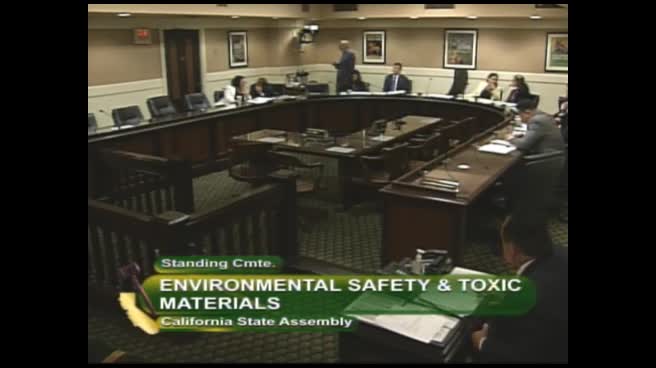 5MIN
Assembly Standing Committee on Environmental Safety and Toxic Materials
 4MIN
Senate Floor
 48MIN
Senate Standing Committee on Appropriations
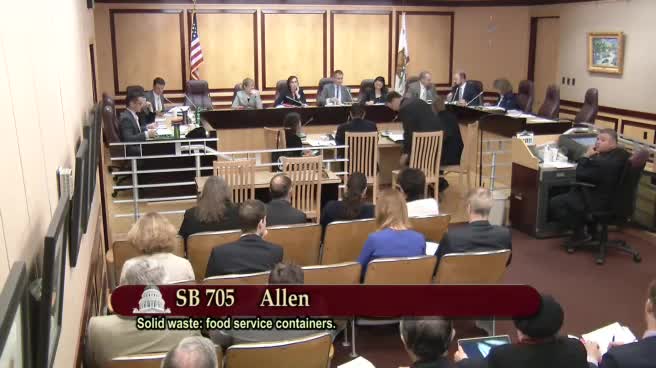 15MIN
Senate Standing Committee on Environmental Quality
Bill Author

Bill Co-Author(s):
