SB 554: Nurse practitioners: physician assistants: buprenorphine.
- Session Year: 2017-2018
- House: Senate
- Latest Version Date: 2017-09-11
Existing federal law requires practitioners, as defined, who dispense narcotic drugs to individuals for maintenance treatment or detoxification treatment to obtain annually a separate registration with the United States Attorney General for that purpose. Existing federal law authorizes waiver of the registration requirement for a qualifying practitioner who submits specified information to the United States Secretary of Health and Human Services. Existing federal law, the Comprehensive Addiction Recovery Act of 2016, defines a qualifying practitioner for these purposes to include, among other practitioners, a nurse practitioner or physician assistant who, among other requirements, has completed not fewer than 24 hours of prescribed initial training, or has other training or experience as specified, and is supervised by, or works in collaboration with, a qualifying physician, if the nurse practitioner or physician assistant is required by state law to prescribe medications for the treatment of opioid use disorder in collaboration with or under the supervision of a physician.
Existing state law, the Nursing Practice Act, establishes the Board of Registered Nursing in the Department of Consumer Affairs for the licensure and regulation of nurse practitioners. The act authorizes a nurse practitioner to furnish or order drugs or devices under specified circumstances subject to physician and surgeon supervision.
This bill would prohibit construing the Nursing Practice Act or any provision of state law from prohibiting a nurse practitioner from furnishing or ordering buprenorphine when done in compliance with the provisions of the Comprehensive Addiction Recovery Act, as specified.
Existing state law, the Physician Assistant Practice Act, establishes the Physician Assistant Board within the jurisdiction of the Medical Board of California for the licensure and regulation of physician assistants. The act authorizes a physician assistant, while under the supervision of a licensed physician authorized to supervise a physician assistant, to administer or provide medication to a patient, or transmit orally, or in writing on a patients record or in a drug order, an order to a person who may lawfully furnish the medication, as specified.
This bill would prohibit construing the Physician Assistant Practice Act or any provision of state law from prohibiting a physician assistant from administering or providing buprenorphine to a patient, or transmit orally, or in writing on a patients record or in a drug order, an order for buprenorphine to a person who may lawfully furnish buprenorphine when done in compliance with the provisions of the Comprehensive Addiction Recovery Act, as specified.
Existing federal law requires practitioners, as defined, who dispense narcotic drugs to individuals for maintenance treatment or detoxification treatment to obtain annually a separate registration with the United States Attorney General for that purpose. Existing federal law authorizes waiver of the registration requirement for a qualifying practitioner who submits specified information to the United States Secretary of Health and Human Services. Existing federal law, the Comprehensive Addiction Recovery Act of 2016, defines a qualifying practitioner for these purposes to include, among other practitioners, a nurse practitioner or physician assistant who, among other requirements, has completed not fewer than 24 hours of initial training, as specified, and is supervised by, or works in collaboration with, a qualifying physician, if the nurse practitioner or physician assistant is required by state law to prescribe medications for the treatment of opioid use disorder in collaboration with or under the supervision of a physician.
Existing state law, the Nursing Practice Act, establishes the Board of Registered Nursing in the Department of Consumer Affairs for the licensure and regulation of nurse practitioners. The act authorizes a nurse practitioner to furnish or order drugs or devices under specified circumstances subject to physician and surgeon supervision.
This bill would prohibit construing the Nursing Practice Act or any provision of state law from prohibiting a nurse practitioner from furnishing or ordering buprenorphine when done in compliance with the provisions of the Comprehensive Addiction Recovery Act, as specified.
Existing state law, the Physician Assistant Practice Act, establishes the Physician Assistant Board within the jurisdiction of the Medical Board of California for the licensure and regulation of physician assistants. The act authorizes a physician assistant, while under the supervision of a licensed physician authorized to supervise a physician assistant, to administer or provide medication to a patient, or transmit orally, or in writing on a patients record or in a drug order, an order to a person who may lawfully furnish the medication, as specified.
This bill would prohibit construing the Physician Assistant Practice Act or any provision of state law from prohibiting a physician assistant from administering or providing buprenorphine to a patient, or transmit orally, or in writing on a patients record or in a drug order, an order for buprenorphine to a person who may lawfully furnish buprenorphine when done in compliance with the provisions of the Comprehensive Addiction Recovery Act, as specified.
Existing law, the Nursing Practice Act, provides for the licensure and regulation of nurse practitioners by the Board of Registered Nursing. Existing law authorizes the implementation of standardized procedures that authorize a nurse practitioner to perform certain acts, including ordering durable medical equipment in accordance with standardized procedures, certifying disability for purposes of unemployment insurance after physical examination and collaboration with a physician and surgeon, and, for an individual receiving home health services or personal care services, approving, signing, modifying, or adding to a plan of treatment or plan of care after consultation with a physician and surgeon. A violation of these provisions is a crime.This bill would authorize a nurse practitioner who holds a certification from a national certifying body, recognized by the board, to be certified by the board as an independent nurse practitioner and to perform certain nursing functions without the supervision of a physician and surgeon, if the independent nurse practitioner meets specified requirements and practices in medically underserved areas or with medically underserved populations, as defined by the federal Health Resources and Services Administration.The bill would prohibit a person from advertizing or hold himself or herself out as an independent nurse practitioner unless the person is certified by the board as an independent nurse practitioner pursuant to this bill. By expanding the scope of an existing crime, this bill would impose a state-mandated local program.The California Constitution requires the state to reimburse local agencies and school districts for certain costs mandated by the state. Statutory provisions establish procedures for making that reimbursement.This bill would provide that no reimbursement is required by this act for a specified reason.Existing law, the Nursing Practice Act, provides for the licensure and regulation of nurse practitioners by the Board of Registered Nursing. Existing law authorizes the implementation of standardized procedures that authorize a nurse practitioner to perform certain acts, including ordering durable medical equipment in accordance with standardized procedures, certifying disability for purposes of unemployment insurance after physical examination and collaboration with a physician and surgeon, and, for an individual receiving home health services or personal care services, approving, signing, modifying, or adding to a plan of treatment or plan of care after consultation with a physician and surgeon. A violation of these provisions is a crime.
This bill would authorize a nurse practitioner who holds a certification from a national certifying body, recognized by the board, to be certified by the board as an independent nurse practitioner and to perform certain nursing functions without the supervision of a physician and surgeon, if the independent nurse practitioner meets specified requirements and practices in underserved geographic areas, medically underserved areas or with medically underserved populations, as determined defined by the board. federal Health Resources and Services Administration.
The bill would prohibit a person from advertizing or hold himself or herself out as an independent nurse practitioner unless the person is certified by the board as an independent nurse practitioner pursuant to this bill. By expanding the scope of an existing crime, this bill would impose a state-mandated local program.
The California Constitution requires the state to reimburse local agencies and school districts for certain costs mandated by the state. Statutory provisions establish procedures for making that reimbursement.
This bill would provide that no reimbursement is required by this act for a specified reason.
Existing law, the Nursing Practice Act, provides for the licensure and regulation of nurse practitioners by the Board of Registered Nursing. Existing law authorizes the implementation of standardized procedures that authorize a nurse practitioner to perform certain acts, including ordering durable medical equipment in accordance with standardized procedures, certifying disability for purposes of unemployment insurance after physical examination and collaboration with a physician and surgeon, and, for an individual receiving home health services or personal care services, approving, signing, modifying, or adding to a plan of treatment or plan of care after consultation with a physician and surgeon. A violation of these provisions is a crime.
This bill would authorize a nurse practitioner who holds a certification from a national certifying body, recognized by the board, to be certified by the board as an independent nurse practitioner and to perform certain nursing functions without the supervision of a physician and surgeon, if the independent nurse practitioner meets specified requirements and practices in underserved geographic areas, as determined by the board.
The bill would prohibit a person from advertizing or hold himself or herself out as an independent nurse practitioner unless the person is certified by the board as an independent nurse practitioner pursuant to this bill. By expanding the scope of an existing crime, this bill would impose a state-mandated local program.
The California Constitution requires the state to reimburse local agencies and school districts for certain costs mandated by the state. Statutory provisions establish procedures for making that reimbursement.
This bill would provide that no reimbursement is required by this act for a specified reason.
Neither this chapter nor any other provision of law shall be construed to prohibit a nurse practitioner from furnishing or ordering buprenorphine when done in compliance with the provisions of the Comprehensive Addiction Recovery Act (Public Law 114-198), as enacted on July 22, 2016, including the following:
(a)The requirement that the nurse practitioner complete not fewer than 24 hours of initial training provided by an organization listed in sub-subclause (aa) of subclause (II) of clause (iv) of subparagraph (G) of paragraph (2) of subdivision (g) of Section 823 of Title 21 of the United States Code, or any other organization that the United States Secretary of Health and Human Services determines is appropriate for the purposes of that sub-subclause, that addresses the following:
(1)Opioid maintenance and detoxification.
(2)Appropriate clinical use of all drugs approved by the Food and Drug Administration for the treatment of opioid use disorder.
(3)Initial and periodic patient assessments, including substance use monitoring.
(4)Individualized treatment planning, overdose reversal, and relapse prevention.
(5)Counseling and recovery support services.
(6)Staffing roles and considerations.
(7)Diversion control.
(8)Other best practices, as identified by the United States Secretary of Health and Human Services.
(b)The alternative requirement that the nurse practitioner have other training or experience that the United States Secretary of Health and Human Services determines will demonstrate the ability of the nurse practitioner to treat and manage opiate-dependent patients.
(c)The requirement that the nurse practitioner be supervised by, or work in collaboration with, a licensed physician and surgeon.
SEC. 2.Section 3502.1.5 is added to the Business and Professions Code, to read:3502.1.5.Neither this chapter nor any other provision of law shall be construed to prohibit a physician assistant from administering or providing buprenorphine to a patient, or transmitting orally, or in writing on a patients record or in a drug order, an order to a person who may lawfully furnish buprenorphine when done in compliance with the provisions of the Comprehensive Addiction Recovery Act (Public Law 114-198), as enacted on July 22, 2016, including the following:
(a)The requirement that the physician assistant complete not fewer than 24 hours of initial training provided by an organization listed in sub-subclause (aa) of subclause (II) of clause (iv) of subparagraph (G) of paragraph (2) of subdivision (g) of Section 823 of Title 21 of the United States Code, or any other organization that the United States Secretary of Health and Human Services determines is appropriate for the purposes of that sub-subclause, that addresses the following:
(1)Opioid maintenance and detoxification.
(2)Appropriate clinical use of all drugs approved by the Food and Drug Administration for the treatment of opioid use disorder.
(3)Initial and periodic patient assessments, including substance use monitoring.
(4)Individualized treatment planning, overdose reversal, and relapse prevention.
(5)Counseling and recovery support services.
(6)Staffing roles and considerations.
(7)Diversion control.
(8)Other best practices, as identified by the United States Secretary of Health and Human Services.
(b)The alternative requirement that the physician assistant have other training or experience that the United States Secretary of Health and Human Services determines will demonstrate the ability of the nurse practitioner to treat and manage opiate-dependent patients.
(c)The requirement that the physician assistant be supervised by, or work in collaboration with, a licensed physician and surgeon.
Neither this chapter nor any other provision of law shall be construed to prohibit a nurse practitioner from furnishing or ordering buprenorphine when done in compliance with the provisions of the Comprehensive Addiction Recovery Act (P.L. (Public Law 114-198), as enacted on July 22, 2016, including the following:
(a)The requirement that the nurse practitioner complete not fewer than 24 hours of initial training provided by the American Society of Addiction Medicine, the American Academy of Addiction Psychiatry, the American Medical Association, the American Osteopathic Association, the American Nurses Credentialing Center, the American Psychiatric Association, the American Association of Nurse Practitioners, the American Academy of Physician Assistants, an organization listed in sub-subclause (aa) of subclause (II) of clause (iv) of subparagraph (G) of paragraph (2) of subdivision (g) of Section 823 of Title 21 of the United States Code, or any other organization that the United States Secretary of Health and Human Services determines is appropriate for the purposes of that sub-subclause, that addresses the following:
(1)Opioid maintenance and detoxification.
(2)Appropriate clinical use of all drugs approved by the Food and Drug Administration for the treatment of opioid use disorder.
(3)Initial and periodic patient assessments, including substance use monitoring.
(4)Individualized treatment planning, overdose reversal, and relapse prevention.
(5)Counseling and recovery support services.
(6)Staffing roles and considerations.
(7)Diversion control.
(8)Other best practices, as identified by the United States Secretary of Health and Human Services.
(b)The alternative requirement that the nurse practitioner have other training or experience that the United States Secretary of Health and Human Services determines will demonstrate the ability of the nurse practitioner to treat and manage opiate-dependent patients.
(c)The requirement that the nurse practitioner be supervised by, or work in collaboration with, a licensed physician and surgeon.
SEC. 2.Section 3502.1.5 is added to the Business and Professions Code, to read:3502.1.5.Neither this chapter nor any other provision of law shall be construed to prohibit a physician assistant from administering or providing buprenorphine to a patient, or transmitting orally, or in writing on a patients record or in a drug order, an order to a person who may lawfully furnish buprenorphine when done in compliance with the provisions of the Comprehensive Addiction Recovery Act (P.L. (Public Law 114-198), as enacted on July 22, 2016, including the following:
(a)The requirement that the physician assistant complete not fewer than 24 hours of initial training provided by the American Society of Addiction Medicine, the American Academy of Addiction Psychiatry, the American Medical Association, the American Osteopathic Association, the American Nurses Credentialing Center, the American Psychiatric Association, the American Association of Nurse Practitioners, the American Academy of Physician Assistants, an organization listed in sub-subclause (aa) of subclause (II) of clause (iv) of subparagraph (G) of paragraph (2) of subdivision (g) of Section 823 of Title 21 of the United States Code, or any other organization that the United States Secretary of Health and Human Services determines is appropriate for the purposes of that sub-subclause, that addresses the following:
(1)Opioid maintenance and detoxification.
(2)Appropriate clinical use of all drugs approved by the Food and Drug Administration for the treatment of opioid use disorder.
(3)Initial and periodic patient assessments, including substance use monitoring.
(4)Individualized treatment planning, overdose reversal, and relapse prevention.
(5)Counseling and recovery support services.
(6)Staffing roles and considerations.
(7)Diversion control.
(8)Other best practices, as identified by the United States Secretary of Health and Human Services.
(b)The alternative requirement that the physician assistant have other training or experience that the United States Secretary of Health and Human Services determines will demonstrate the ability of the nurse practitioner to treat and manage opiate-dependent patients.
(c)The requirement that the physician assistant be supervised by, or work in collaboration with, a licensed physician and surgeon.
Neither this chapter nor any other provision of law shall be construed to prohibit a nurse practitioner from furnishing or ordering buprenorphine when done in compliance with the provisions of the Comprehensive Addiction Recovery Act (P.L. 114-198), as enacted on July 22, 2016, including the following:
(a)The requirement that the nurse practitioner complete not fewer than 24 hours of initial training provided by the American Society of Addiction Medicine, the American Academy of Addiction Psychiatry, the American Medical Association, the American Osteopathic Association, the American Nurses Credentialing Center, the American Psychiatric Association, the American Association of Nurse Practitioners, the American Academy of Physician Assistants, or any other organization that addresses the following:
(1)Opioid maintenance and detoxification.
(2)Appropriate clinical use of all drugs approved by the Food and Drug Administration for the treatment of opioid use disorder.
(3)Initial and periodic patient assessments, including substance use monitoring.
(4)Individualized treatment planning, overdose reversal, and relapse prevention.
(5)Counseling and recovery support services.
(6)Staffing roles and considerations.
(7)Diversion control.
(8)Other best practices, as identified by the United States Secretary of Health and Human Services.
(b)The requirement that the nurse practitioner have other training or experience that the United States Secretary of Health and Human Services determines will demonstrate the ability of the nurse practitioner to treat and manage opiate-dependent patients.
(c)The requirement that the nurse practitioner be supervised by, or work in collaboration with, a licensed physician and surgeon.
SEC. 2.Section 3502.1.5 is added to the Business and Professions Code, to read:3502.1.5.Neither this chapter nor any other provision of law shall be construed to prohibit a physician assistant from administering or providing buprenorphine to a patient, or transmitting orally, or in writing on a patients record or in a drug order, an order to a person who may lawfully furnish buprenorphine when done in compliance with the provisions of the Comprehensive Addiction Recovery Act (P.L. 114-198), as enacted on July 22, 2016, including the following:
(a)The requirement that the physician assistant complete not fewer than 24 hours of initial training provided by the American Society of Addiction Medicine, the American Academy of Addiction Psychiatry, the American Medical Association, the American Osteopathic Association, the American Nurses Credentialing Center, the American Psychiatric Association, the American Association of Nurse Practitioners, the American Academy of Physician Assistants, or any other organization that addresses the following:
(1)Opioid maintenance and detoxification.
(2)Appropriate clinical use of all drugs approved by the Food and Drug Administration for the treatment of opioid use disorder.
(3)Initial and periodic patient assessments, including substance use monitoring.
(4)Individualized treatment planning, overdose reversal, and relapse prevention.
(5)Counseling and recovery support services.
(6)Staffing roles and considerations.
(7)Diversion control.
(8)Other best practices, as identified by the United States Secretary of Health and Human Services.
(b)The requirement that the physician assistant have other training or experience that the United States Secretary of Health and Human Services determines will demonstrate the ability of the nurse practitioner to treat and manage opiate-dependent patients.
(c)The requirement that the physician assistant be supervised by, or work in collaboration with, a licensed physician and surgeon.
SECTION 1.Article 8.5 (commencing with Section 2837.50) is added to Chapter 6 of Division 2 of the Business and Professions Code, to read:8.5.Independent Nurse Practitioners2837.50.(a)The board shall establish the category of independent nurse practitioner and shall establish the qualifications and the scope of independent practice as set forth in this article.(b)The qualifications for a certification by the board as an independent nurse practitioner shall include compliance with all of the following:(1)Meeting all of the licensing requirements of Article 8 (commencing with Section 2834).(2)Holding a certificate of independent nurse practitioner issued by a national certifying agency recognized by the board.(c)Notwithstanding any law, the board shall specify the scope of practice of an independent nurse practitioner to include all of the following:(1)The nursing practice of a nurse practitioner as set forth in Article 8 (commencing with Section 2834) performed under the supervision of a supervising physician and surgeon as set forth in that article.(2)Specific aspects of the nursing practice of a nurse practitioner as set forth in Article 8 (commencing with Section 2834), including, but not limited to, standardized procedures, as set forth in Section 2725, that may be independently performed by an independent nurse practitioner. Functions identified by the board pursuant to this paragraph may be performed by an independent nurse practitioner, certified pursuant to this article, without the supervision of a physician and surgeon. An independent nurse practitioner shall be authorized to practice independently pursuant to this paragraph only in medically underserved areas or with medically underserved populations, as defined by the federal Health Resources and Services Administration.(d)No person shall advertise or hold himself or herself out as an independent nurse practitioner unless the person is certified by the board as an independent nurse practitioner pursuant to this article.SEC. 2.No reimbursement is required by this act pursuant to Section 6 of Article XIIIB of the California Constitution because the only costs that may be incurred by a local agency or school district will be incurred because this act creates a new crime or infraction, eliminates a crime or infraction, or changes the penalty for a crime or infraction, within the meaning of Section 17556 of the Government Code, or changes the definition of a crime within the meaning of Section 6 of Article XIIIB of the California Constitution.(a)The board shall establish the category of independent nurse practitioner and shall establish the qualifications and the scope of independent practice as set forth in this article.
(b)The qualifications for a certification by the board as an independent nurse practitioner shall include compliance with all of the following:
(1)Meeting all of the licensing requirements of Article 8 (commencing with Section 2834).
(2)Holding a certificate of independent nurse practitioner issued by a national certifying agency recognized by the board.
(c)Notwithstanding any law, the board shall specify the scope of practice of an independent nurse practitioner to include all of the following:
(1)The nursing practice of a nurse practitioner as set forth in Article 8 (commencing with Section 2834) performed under the supervision of a supervising physician and surgeon as set forth in that article.
(2)Specific aspects of the nursing practice of a nurse practitioner as set forth in Article 8 (commencing with Section 2834), including, but not limited to, standardized procedures, as set forth in Section 2725, that may be independently performed by an independent nurse practitioner. Functions identified by the board pursuant to this paragraph may be performed by an independent nurse practitioner, certified pursuant to this article, without the supervision of a physician and surgeon. An independent nurse practitioner shall be authorized to practice independently pursuant to this paragraph only in underserved geographic areas, medically underserved areas or with medically underserved populations, as determined defined by the board. federal Health Resources and Services Administration.
(d)No person shall advertise or hold himself or herself out as an independent nurse practitioner unless the person is certified by the board as an independent nurse practitioner pursuant to this article.
SEC. 2.No reimbursement is required by this act pursuant to Section 6 of Article XIIIB of the California Constitution because the only costs that may be incurred by a local agency or school district will be incurred because this act creates a new crime or infraction, eliminates a crime or infraction, or changes the penalty for a crime or infraction, within the meaning of Section 17556 of the Government Code, or changes the definition of a crime within the meaning of Section 6 of Article XIIIB of the California Constitution.
(a)The board shall establish the category of independent nurse practitioner and shall establish the qualifications and the scope of independent practice as set forth in this article.
(b)The qualifications for a certification by the board as an independent nurse practitioner shall include compliance with all of the following:
(1)Meeting all of the licensing requirements of Article 8 (commencing with Section 2834).
(2)Holding a certificate of independent nurse practitioner issued by a national certifying agency recognized by the board.
(c)Notwithstanding any law, the board shall specify the scope of practice of an independent nurse practitioner to include all of the following:
(1)The nursing practice of a nurse practitioner as set forth in Article 8 (commencing with Section 2834) performed under the supervision of a supervising physician and surgeon as set forth in that article.
(2)Specific aspects of the nursing practice of a nurse practitioner as set forth in Article 8 (commencing with Section 2834), including, but not limited to, standardized procedures, as set forth in Section 2725, that may be independently performed by an independent nurse practitioner. Functions identified by the board pursuant to this paragraph may be performed by an independent nurse practitioner, certified pursuant to this article, without the supervision of a physician and surgeon. An independent nurse practitioner shall be authorized to practice independently pursuant to this paragraph only in underserved geographic areas, as determined by the board.
(d)No person shall advertise or hold himself or herself out as an independent nurse practitioner unless the person is certified by the board as an independent nurse practitioner pursuant to this article.
SEC. 2.No reimbursement is required by this act pursuant to Section 6 of Article XIIIB of the California Constitution because the only costs that may be incurred by a local agency or school district will be incurred because this act creates a new crime or infraction, eliminates a crime or infraction, or changes the penalty for a crime or infraction, within the meaning of Section 17556 of the Government Code, or changes the definition of a crime within the meaning of Section 6 of Article XIIIB of the California Constitution.
|
Date
|
Status
|
|---|---|
| Sep 11, 2017 | Chaptered by Secretary of State. Chapter 242, Statutes of 2017. |
| Sep 11, 2017 | Approved by the Governor. |
| Aug 30, 2017 | Enrolled and presented to the Governor at 3 p.m. |
| Aug 24, 2017 | Assembly amendments concurred in. (Ayes 38. Noes 0.) Ordered to engrossing and enrolling. |
| Aug 22, 2017 | Ordered to special consent calendar. |
| Jul 18, 2017 | In Senate. Concurrence in Assembly amendments pending. |
| Jul 17, 2017 | Read third time. Passed. Ordered to the Senate. |
| Jun 26, 2017 | Read second time. Ordered to third reading. |
| Jun 22, 2017 | Withdrawn from committee. |
| Jun 20, 2017 | From committee: Do pass and re-refer to Com. on APPR. (Ayes 15. Noes 0.) (June 20). Re-referred to Com. on APPR. |
| Jun 14, 2017 | From committee with author's amendments. Read second time and amended. Re-referred to Com. on B. & P. |
| May 26, 2017 | Referred to Com. on B. & P. |
| May 1, 2017 | In Assembly. Read first time. Held at Desk. |
| May 1, 2017 | Read third time. Passed. (Ayes 36. Noes 0. Page 909.) Ordered to the Assembly. |
| Apr 26, 2017 | Read second time. Ordered to consent calendar. |
| Apr 25, 2017 | From committee: Do pass. Ordered to consent calendar. (Ayes 9. Noes 0. Page 825.) (April 24). |
| Apr 17, 2017 | From committee with author's amendments. Read second time and amended. Re-referred to Com. on B., P. & E.D. |
| Apr 13, 2017 | Set for hearing April 24. |
| Apr 13, 2017 | April 17 hearing postponed by committee. |
| Mar 28, 2017 | Set for hearing April 17. |
| Mar 27, 2017 | From committee with author's amendments. Read second time and amended. Re-referred to Com. on B., P. & E.D. |
| Mar 2, 2017 | Referred to Com. on B., P. & E.D. |
| Feb 17, 2017 | From printer. May be acted upon on or after March 19. |
| Feb 16, 2017 | Introduced. Read first time. To Com. on RLS. for assignment. To print. |
|
Date
|
Description
|
Location
|
Votes
|
|
|---|---|---|---|---|
| Aug 24, 2017 | Special Consent Calendar # SB554 | Senate Floor |
Passed |
|
| Jul 17, 2017 | SB 554 Stone Senate Third Reading By GALLAGHER | Assembly Floor |
Passed |
|
| Jun 20, 2017 | Do pass and be re-referred to the Committee on [Appropriations] | Assembly Standing Committee on Business and Professions |
Passed |
|
| May 1, 2017 | Consent Calendar 2nd SB554 Stone | Senate Floor |
Passed |
|
| Apr 24, 2017 | Do pass and be ordered to the Consent Calendar | Senate Standing Committee on Business, Professions and Economic Development |
Passed |
This list shows positions taken on this bill by organizations on the date displayed, which is linked to the original source.
Positions by individuals are not included.
|
Organization
|
Position
|
Date
|
|---|---|---|
| Board of Registered Nursing | ** Support | Jul 19, 2017 |
| California Academy of PAs | ** Support | Jul 19, 2017 |
| California Association for Nurse Practitioners | ** Support | Jul 19, 2017 |
| California Hospital Association | ** Support | Jul 19, 2017 |
| Medical Board of California | ** Support | Jul 19, 2017 |
Office of Senate Floor Analyses (916) 651-1520 Fax: (916) 327-4478 | SB |
UNFINISHED BUSINESS
Bill No: SB 554
:
SENATE BUS., PROF. & ECON. DEV. COMMITTEE: 9-0, 4/24/17
AYES: Hill, Fuller, Dodd, Galgiani, Glazer, Hernandez, Newman, Pan, Wilk
SENATE FLOOR: 36-0, 5/1/17 (Consent)
AYES: Allen, Anderson, Atkins, Bates, Beall, Bradford, Cannella, De León, Dodd, Fuller, Gaines, Galgiani, Glazer, Hernandez, Hertzberg, Hill, Hueso, Jackson, Lara, McGuire, Mendoza, Mitchell, Monning, Moorlach, Morrell, Newman, Nguyen, Nielsen, Pan, Portantino, Skinner, Stern, Stone, Vidak, Wiener, Wilk
NO VOTE RECORDED: Berryhill, Leyva, Roth, Wieckowski
ASSEMBLY FLOOR: 78-0, 7/17/17 - See last page for vote
DIGEST:
This bill establishes the buprenorphine prescribing privileges of the federal Comprehensive Addiction and Recovery Act of 2016 in the nurse practitioner and physician assistant practice acts.
Assembly Amendments make technical and conforming changes.
Existing law:
- Establishes a nurse practitioner (NP) license, which may be issued to an individual with an active registered nursing license and a master’s degree who has completed a NP program approved by the Board of Registered Nursing. (BPC §§ 2835.5)
- Defines “standardized procedures” as either policies and protocols developed by a health facility through collaboration among administration and health professionals or policies and protocols developed through collaboration among administrators and health professionals by an organized health care system which is not a health care facility. (BPC § 2725 (c))
- Permits NPs to furnish and order Schedule II – V drugs pursuant to standardized procedures developed by the NP and the supervising physician and surgeon when the drugs or devices are consistent with the practitioner's educational preparation or for which clinical competency has been established and maintained. (BPC § 2836.1)
- Establishes the Physician Assistant Board to administer the Physician Assistant Act. (BPC §§ 3504, 3509)
- Authorizes a physician assistant (PA) to perform those medical services set forth in regulations and by protocol when supervised by a physician and surgeon. (BPC § 3502)
- Authorizes a PA to issue a drug order for a Schedule II – V drug as determined by the supervising physician and surgeon, as specified.
(BPC § 3502.1 (a)) - Provides that the Comprehensive Addiction and Recovery Act of 2016 (CARA), expanded buprenorphine prescribing privileges to NPs and PAs until October 1, 2021. (Public Law (P.L.) 114-198)
- Requires, pursuant to CARA, NPs and PAs to complete 24 hours of training to be eligible for a waiver to prescribe buprenorphine and must be supervised by or work in collaboration with a qualifying physician, as specified. (P.L. 114-198)
- Allows, pursuant to CARA, the United States Secretary of Health and Human Services (HHS) 18 months to issue updated regulations governing office-based opioid addiction treatment to include NPs and PAs. (P.L. 114-198)
This bill:
- Allows a NP or PA to furnish or order buprenorphine when done in compliance with the provisions of the CARA.
- Requires an NP or PA to complete at least 24 hours of initial training provided by entities that address the following:
- Opioid maintenance and detoxification.
- Appropriate clinical use of all drugs approved by the Food and Drug Administration for the treatment of opioid use disorder.
- Initial and periodic patient assessments, including substance use monitoring.
- Individualized treatment planning, overdose reversal, and relapse prevention.
- Counseling and recovery support services.
- Staffing roles and considerations.
- Diversion Control.
- Other best practices, as identified by the United States Secretary of HHS.
- Authorizes the NP or PA to have other training or experience that the HHS Secretary determines will demonstrate the ability of the NP or PA to treat and manage opiate-dependent patients.
- States that this bill shall not be construed to prohibit the requirement that the NP or PA be supervised by, or work in collaboration with, a licensed physician and surgeon.
Background
According to the author’s office, “Many NPs and PAs may not be aware of the process needed to gain the authority to prescribe buprenorphine to treat opioid addiction. Opioid addiction is a growing problem that must be medically addressed during recovery. The more professionals that have the ability to treat this addiction the better we can bring access to those in need.”
CARA. Prior to passage of CARA, prescribing narcotic drugs for treating narcotic dependent individuals was limited by the Drug Addiction Treatment Act of 2000 (DATA) to only physicians under certain circumstances. DATA authorized qualified physicians to dispense or prescribe specifically approved Schedule III, IV, and V narcotic medications (like buprenorphine) in settings other than an opioid treatment program, such as a methadone clinic.
According to the American Society of Addiction Medicine, “CARA came together over the course of several years with input from hundreds of addiction advocates. Its provisions address the full continuum of care from primary prevention to recovery support, including significant changes to expand access to addiction treatment services and overdose reversal medications. It also includes criminal justice and law enforcement-related provisions.”
In addition to allowing NPs and PAs to prescribe buprenorphine as according to the provisions of this bill, CARA also:
- Improved access to overdose treatment by authorizing the HHS Secretary to award grants to federally qualified health centers, opioid treatment programs, or any practitioner waivered to prescribe buprenorphine to establish a naloxone co-prescription program, train health care providers on naloxone co-prescribing, purchase naloxone, offset co-payments for naloxone, or establish protocols to connect patients who have experienced an overdose with appropriate treatment.
- Authorized the HHS Secretary to award grants to states to implement strategies for pharmacists to dispense naloxone.
- Authorized the HHS Secretary to award grants to state substance abuse agencies, local governments, or nonprofit organizations in areas with high rates of or rapid increases in heroin or other opioid use to expand the availability of medication-assisted treatment.
- Directs the HHS Secretary to review the provision of opioid addiction treatment services in the U.S. and submit a report to Congress, including an assessment of whether there is need to change the patient limit, every three years.
- Allows states to lower the patient limit and allows states to require practitioners to comply with additional practice setting, education or reporting requirements. States may not lower the patient limit below 30.
This bill restates provisions of CARA in state law.
FISCAL EFFECT: Appropriation: Fiscal Com.: Local:
Board of Registered Nursing
California Academy of PAs
California Association for Nurse Practitioners
California Hospital Association
Medical Board of California
OPPOSITION: (Verified 7/19/17)
None received
ARGUMENTS IN SUPPORT: The California Academy of PAs state, “This bill is an important step toward increasing access to addiction treatment as it aligns state and federal law permitting PAs and NPs to order/furnish buprenorphine in compliance with the Comprehensive Addiction Recovery Act (CARA). A 2015 study published in the American Journal of Public Health found that almost every state had opioid use disorder rates that exceeded their buprenorphine treatment capacity, and concluded that strategies to increase the number of medication-assisted treatment providers are needed. Significant progress has been made related to increasing awareness about opioid abuse and addiction and strategies to address this public health crisis. Including PAs and NPs as eligible prescribers has been recognized at the federal level as an important strategy for closing the addiction treatment gap.”
ASSEMBLY FLOOR: 78-0, 7/17/17
AYES: Acosta, Aguiar-Curry, Travis Allen, Arambula, Baker, Berman, Bigelow, Bloom, Bocanegra, Bonta, Brough, Burke, Caballero, Calderon, Cervantes, Chau, Chávez, Chen, Chiu, Choi, Chu, Cooley, Cooper, Cunningham, Dababneh, Dahle, Daly, Eggman, Flora, Fong, Frazier, Friedman, Gallagher, Cristina Garcia, Eduardo Garcia, Gipson, Gloria, Gonzalez Fletcher, Gray, Grayson, Harper, Holden, Jones-Sawyer, Kalra, Kiley, Lackey, Levine, Limón, Low, Maienschein, Mathis, Mayes, McCarty, Medina, Melendez, Mullin, Muratsuchi, Nazarian, Obernolte, O'Donnell, Patterson, Quirk, Quirk-Silva, Reyes, Ridley-Thomas, Rodriguez, Rubio, Salas, Santiago, Steinorth, Mark Stone, Thurmond, Ting, Voepel, Waldron, Weber, Wood, Rendon
NO VOTE RECORDED: Irwin
7/19/17 16:26:59
**** END ****
SENATE THIRD READING
STR Bill Id:SB 554
Author:(Stone)
As Amended Ver:June 14, 2017
Majority vote
SENATE VOTE: 36-0
Committee | Votes | Ayes | Noes |
Business & Professions | 15-0 | Low, Brough, Arambula, Baker, Bloom, Chiu, Cunningham, Dahle, Eggman, Gipson, Grayson, Holden, Irwin, Berman, Ting |
SUMMARY: Clarifies that nurses may furnish or order buprenorphine when done in compliance with the provisions of the Comprehensive Addiction Recovery Act (CARA). This bill also clarifies that physician assistants may administer or provide buprenorphine to a patient, or transmit orally, or in writing on a patient's record or in a drug order, an order for buprenorphine to a person who may lawfully furnish buprenorphine when done in compliance with the provisions of the CARA. Specifically, this bill:
- Declares that the Nursing Practice Act nor any other provision of law shall be construed to prohibit a nurse practitioner from furnishing or ordering buprenorphine when done in compliance with the provisions of the CARA, as enacted on July 22, 2016, including the following:
- The requirement that the nurse practitioner complete not fewer than 24 hours of initial training provided by an organization listed in the specified provision of the United States Code (USC), or any other organization that the United States Secretary of Health and Human Services determines is appropriate for the purposes of that provision that addresses the following:
- Opioid maintenance and detoxification.
- Appropriate clinical use of all drugs approved by the Food and Drug Administration for the treatment of opioid use disorder.
- Initial and periodic patient assessments, including substance use monitoring.
- Individualized treatment planning, overdose reversal, and relapse prevention.
- Counseling and recovery support services.
- Staffing roles and considerations.
- Diversion control.
- Other best practices, as identified by the United States Secretary of Health and Human Services.
- The alternative requirement that the nurse practitioner have other training or experience that the United States Secretary of Health and Human Services determines will demonstrate the ability of the nurse practitioner to treat and manage opiate-dependent patients.
- The requirement that the nurse practitioner be supervised by, or work in collaboration with, a licensed physician and surgeon.
- The requirement that the nurse practitioner complete not fewer than 24 hours of initial training provided by an organization listed in the specified provision of the United States Code (USC), or any other organization that the United States Secretary of Health and Human Services determines is appropriate for the purposes of that provision that addresses the following:
- Declares that the Physician Assistant Act nor any other provision of law shall be construed to prohibit a physician assistant from administering or providing buprenorphine to a patient, or transmitting orally, or in writing on a patient's record or in a drug order, an order to a person who may lawfully furnish buprenorphine when done in compliance with the provisions of the CARA, including the following:
- The requirement that the physician assistant complete not fewer than 24 hours of initial training provided by an organization listed in the specified provision of the USC, or any other organization that that the United States Secretary of Health and Human Services determines is appropriate for the purposes of that provision that addresses the following:
- Opioid maintenance and detoxification.
- Appropriate clinical use of all drugs approved by the Federal Drug Administration for the treatment of opioid use disorder.
- Initial and periodic patient assessments, including substance use monitoring.
- Individualized treatment planning, overdose reversal, and relapse prevention.
- Counseling and recovery support services.
- Staffing roles and considerations.
- Diversion control.
- Other best practices, as identified by the United States Secretary of Health and Human Services.
- The alternative requirement that the physician assistant to have other training or experience that the United States Secretary of Health and Human Services determines will demonstrate the ability of the nurse practitioner to treat and manage opiate-dependent patients.
- The requirement that the physician assistant be supervised by, or work in collaboration with, a licensed physician and surgeon.
- The requirement that the physician assistant complete not fewer than 24 hours of initial training provided by an organization listed in the specified provision of the USC, or any other organization that that the United States Secretary of Health and Human Services determines is appropriate for the purposes of that provision that addresses the following:
FISCAL EFFECT: According to the Senate Appropriations Committee, pursuant to Senate Rule 28.8, this bill will result in negligible state costs.
COMMENTS:
Purpose. This bill is sponsored by the author. According to the author, "opioid addiction is a growing problem that must be medically addressed during recovery. The more professionals that have the ability to treat this addiction the better we can bring access to those in need. The Comprehensive Addiction and Recovery Act (CARA) passed by the federal government that allows Nurse Practitioners (NPs) and Physician Assistants (PAs) to prescribe opioid addiction treatment with buprenorphine. Many NPs and PAs may not be aware of the process and opportunity that is needed to gain authority to prescribe buprenorphine to treat opioid addiction. SB 554 looks to codify this federal law in state law under the Nurse Practitioners Act which will bring awareness of the availability and process for NPs and PAs interested in gaining this privilege."
Background. The Opioid Epidemic. Opioids are a class of narcotic drugs that include medications such as hydrocodone (e.g. Vicodin), oxycodone (e.g., OxyContin, Percocet), morphine (e.g., Kadian, Avinza) codeine, and other related drugs. Through the Controlled Substances Act of 1970 (CSA), the Drug Enforcement Administration (DEA) regulates the manufacture, distribution, and dispensing of controlled substances. The CSA ranks into five schedules those drugs known to have potential for physical or psychological harm based on three considerations: 1) their potential for abuse, 2) their accepted medical use, and 3) their accepted safety under medical supervision. Presently, the abuse deterrent formulations on the market and pending United States Food and Drug Administration (FDA) approval are Schedule II drugs.
Schedule I controlled substances have a high potential for abuse and have no generally accepted medical use such as heroin, ecstasy, and LSD.
Schedule II controlled substances have a currently accepted medical use in treatment, or a currently accepted medical use with severe restrictions, and have a high potential for abuse and psychological or physical dependence. Schedule II drugs can be narcotics or non-narcotic. Examples of Schedule II controlled substances include morphine, methadone, Ritalin, Demerol, Dilaudid, Percocet, Adderall, and Oxycontin. In October of 2014, the DEA as a response to the rising prescription drug abuse epidemic promulgated a rule rescheduling hydrocodone containing prescriptions (e.g., Vicodin) into this more tightly controlled category (21 Code of Federal Regulations 1308).
Schedule III and IV controlled substances have a currently accepted medical use in treatment, less potential for abuse but are known to be mixed in specific ways to achieve a narcotic-like end product. Examples include drugs include Tylenol with Codeine, Ambien, Xanax, and other anti-anxiety drugs.
Schedule V drugs have a low potential for abuse relative to substances listed in Schedule IV and consist primarily of preparations containing limited quantities of certain narcotics. Examples include Robitussin with Codeine and Lomotil.
Prescription Drug Abuse. According the Drug Abuse Warning Network, a division of the Substance Abuse and Mental Health Services Agency (SAMHSA), prescription drug misuse and abuse is the intentional or unintentional use of medication without a prescription, in a way other than prescribed, or for the experience or feeling it causes. Abuse can stem from the fact that prescription drugs are legal and potentially more easily accessible, as they can be found at home in a medicine cabinet. Data shows that individuals who misuse prescription drugs, particularly teens, believe these substances are safer than illicit drugs because they are prescribed by a health care professional and thus are safe to take under any circumstances.
According to the Centers for Disease Control and Prevention, drug overdoses are the top cause of accidental deaths in the United States. Overdose deaths involving prescription opioids have quadrupled since 1999, as well as sales of these prescription drugs. Additionally, approximately 20% of prescribers prescribe 80% of all prescription painkillers.
In the years spanning 1999 to 2014, over 165,000 people died in the United States from overdoses related to prescription opioids. During this time period, overdose rates were highest among people age 25 to 54 years. Overdose rates were higher among non-Hispanic whites and American Indian or Alaskan Natives, compared to non-Hispanic blacks and Hispanics. In addition, men were more likely to die from overdose, but the mortality gap between men and women is closing.
Buprenorphine. According to the SAMHSA, buprenorphine is a drug utilized in medication assisted treatment to assist individuals who desire to reduce of quit their use of opiates. Buprenorphine is an opioid partial agonist that produces euphoria and respiratory depression. As a result of the Drug Addiction treatment Act of 2000, buprenorphine is permitted to be prescribed or dispensed in various settings such as a physician’s office, hospital, health department or correctional facility.
Use of buprenorphine may result in psychological and or physical dependence. Its onset is slow, the drug has a mild effect, and is very long acting with a half-life of 24 to 60 hours. Once a patient has stabilized on the drug, treatment options include continual use/maintenance, or medically supervised withdrawal from the physical dependence to the drug (SAMHSA, About Buprenorphine Therapy, 2014).
CARA. On July 22, 2016, President Obama signed into law the CARA which has been lauded as the first major federal addiction legislation in 40 years and the most comprehensive effort undertaken to address the opioid epidemic. The CARA utilizes grant funding to increase prevention and education efforts by expanding:
- Prevention and educational efforts for teens, parents and other caretakers, and aging populations in an effort to address the abuse of methamphetamines, opioids and heroin, and promote treatment and recovery.
- Availability of naloxone to law enforcement agencies and other first responders to help in the reversal of overdoses.
- Resources to identify and treat incarcerated individuals suffering from addiction disorders promptly.
- Disposal sites for unwanted prescription medications.
- An evidence-based opioid and heroin treatment and intervention program to expand best practices throughout the country.
- Launching a medication-assisted treatment and intervention demonstration program.
- Strengthening prescription drug monitoring programs to help states monitor and track prescription drug diversion and to help at-risk individuals access services.
This measure will codify the provisions of CARA relating to NPs and PAs into state law.
Prior Related Legislation. AB 1535 (Bloom) Chapter 326, Statutes of 2014, permitted a pharmacist to furnish naloxone hydrochloride pursuant to standardized procedures or protocols developed and approved by the California Board of Pharmacy and the Medical Board of California.
Analysis Prepared by: Le Ondra Clark Harvey, Ph.D. / B. & P. / (916) 319-3301 FN: 0001037
lkDate of Hearing:
ASSEMBLY COMMITTEE ON BUSINESS AND PROFESSIONS
Evan Low, Chair
SBPCA Bill Id:
Author:() – As Ver:
SENATE VOTE:
SUBJECT:
SUMMARY: Clarifies that nurses may furnish or order buprenorphine when done in compliance with the provisions of the Comprehensive Addiction Recovery Act (CARA). This bill also clarifies that physician assistants may administer or provide buprenorphine to a patient, or transmit orally, or in writing on a patient’s record or in a drug order, an order for buprenorphine to a person who may lawfully furnish buprenorphine when done in compliance with the provisions of the CARA.
EXISTING LAW:
Business and Professions Code (BPC):
- Establishes the Board of Registered Nursing (BRN) within the Department of Consumer Affairs (DCA) to administer and enforce the Nursing Practice Act. (BPC § 2701)
- Establishes a nurse practitioner (NP) certificate, which may be issued to an individual with an active registered nursing license and a master’s degree who has completed a NP program approved by the BRN. (BPC § 2835.5)
- Defines "standardized procedures" as either policies and protocols developed by a health facility through collaboration among administration and health professionals or policies and protocols developed through collaboration among administrators and health professionals by an organized health care system which is not a health care facility. (BPC § 2725 (c))
- Permits NPs to furnish and order Schedule II – V drugs pursuant to standardized procedures developed by the NP and the supervising physician and surgeon when the drugs or devices are consistent with the practitioner's educational preparation or for which clinical competency has been established and maintained. (BPC § 2836.1)
- Requires physician and surgeon supervision of prescribing NPs, but no more than four NPs at a time.
(BPC §§ 2836.1(d)-(e)) - Establishes the Physician Assistant Board (PAB) to administer the Physician Assistant Act. (BPC §§ 3504, 3509)
- Authorizes a physician assistant (PA) to perform those medical services set forth in regulations and when supervised by a physician and surgeon and operating under written guidelines, such as the delegation of services agreement or protocols. (BPC § 3502)
- Requires a PA's supervising physician available to the PA for consultation in person or by electronic communication. (California Code of Regulations, tit. 16, §1399.545)
- Authorizes a PA to issue a drug order for a Schedule II – V drug as determined by the supervising physician and surgeon, as specified.
(BPC § 3502.1 (a))
Federal law:
- Expands prescribing privileges to NPs and PAs for all drugs approved by the Food and Drug Administration for the treatment of opioid use disorder, including for maintenance, detoxification, overdose reversal, and relapse prevention until October 1, 2021.
(Public Law (P.L.) 114-198, §303) - Requires NPs and PAs to complete 24 hours of training to be eligible for a waiver to prescribe buprenorphine and must be supervised by or work in collaboration with a qualifying physician, as specified. (P.L. 114-198, §303)
- Allows the United States Secretary of Health and Human Services (HHS) 18 months to issue updated regulations governing office-based opioid addiction treatment to include NPs and PAs. (P.L. 114-198, §303)
THIS BILL:
- Declares that the Nursing Practice Act nor any other provision of law shall be construed to prohibit a nurse practitioner from furnishing or ordering buprenorphine when done in compliance with the provisions of the CARA, as enacted on July 22, 2016, including the following:
- The requirement that the nurse practitioner complete not fewer than 24 hours of initial training provided by an organization listed in the specified provision of the USC, or any other organization that the United States Secretary of Health and Human Services determines is appropriate for the purposes of that provision that addresses the following:
- Opioid maintenance and detoxification.
- Appropriate clinical use of all drugs approved by the Food and Drug Administration for the treatment of opioid use disorder.
- Initial and periodic patient assessments, including substance use monitoring.
- Individualized treatment planning, overdose reversal, and relapse prevention.
- Counseling and recovery support services.
- Staffing roles and considerations.
- Diversion control.
- Other best practices, as identified by the United States Secretary of Health and Human Services.
- The alternative requirement that the nurse practitioner have other training or experience that the United States Secretary of Health and Human Services determines will demonstrate the ability of the nurse practitioner to treat and manage opiate-dependent patients.
- The requirement that the nurse practitioner be supervised by, or work in collaboration with, a licensed physician and surgeon.
- The requirement that the nurse practitioner complete not fewer than 24 hours of initial training provided by an organization listed in the specified provision of the USC, or any other organization that the United States Secretary of Health and Human Services determines is appropriate for the purposes of that provision that addresses the following:
- Declares that the Physician Assistant Act nor any other provision of law shall be construed to prohibit a physician assistant from administering or providing buprenorphine to a patient, or transmitting orally, or in writing on a patient’s record or in a drug order, an order to a person who may lawfully furnish buprenorphine when done in compliance with the provisions of the CARA, including the following:
- The requirement that the physician assistant complete not fewer than 24 hours of initial training provided by an organization listed in the specified provision of the USC, or any other organization that that the United States Secretary of Health and Human Services determines is appropriate for the purposes of that provision that addresses the following:
- Opioid maintenance and detoxification.
- Appropriate clinical use of all drugs approved by the Federal Drug Administration for the treatment of opioid use disorder.
- Initial and periodic patient assessments, including substance use monitoring.
- Individualized treatment planning, overdose reversal, and relapse prevention.
- Counseling and recovery support services.
- Staffing roles and considerations.
- Diversion control.
- Other best practices, as identified by the United States Secretary of Health and Human Services.
- The alternative requirement that the physician assistant to have other training or experience that the United States Secretary of Health and Human Services determines will demonstrate the ability of the nurse practitioner to treat and manage opiate-dependent patients.
- The requirement that the physician assistant be supervised by, or work in collaboration with, a licensed physician and surgeon.
- The requirement that the physician assistant complete not fewer than 24 hours of initial training provided by an organization listed in the specified provision of the USC, or any other organization that that the United States Secretary of Health and Human Services determines is appropriate for the purposes of that provision that addresses the following:
FISCAL EFFECT: According to the Senate Appropriations Committee, pursuant to Senate rule 28.8, this bill will result in negligible state costs.
COMMENTS:
Purpose. This bill is sponsored by the author. According to the author, “opioid addiction is a growing problem that must be medically addressed during recovery. The more professionals that have the ability to treat this addiction the better we can bring access to those in need. The Comprehensive Addiction and Recovery Act (CARA) passed by the federal government that allows NPs and PAs to prescribe opioid addiction treatment with buprenorphine. Many NPs and PAs may not be aware of the process and opportunity that is needed to gain authority to prescribe buprenorphine to treat opioid addiction. SB 554 looks to codify this federal law in state law under the Nurse Practitioners Act which will bring awareness of the availability and process for NPs and PAs interested in gaining this privilege.”
Background. The Opioid Epidemic. Opioids are a class of narcotic drugs that include medications such as hydrocodone (e.g. Vicodin), oxycodone (e.g., OxyContin, Percocet), morphine (e.g., Kadian, Avinza) codeine, and other related drugs. Through the Controlled Substances Act of 1970 (CSA), the Drug Enforcement Administration (DEA) regulates the manufacture, distribution, and dispensing of controlled substances. The CSA ranks into five schedules those drugs known to have potential for physical or psychological harm based on three considerations: 1) their potential for abuse, 2) their accepted medical use, and 3) their accepted safety under medical supervision. Presently, the abuse deterrent formulations on the market and pending FDA approval are Schedule II drugs.
Schedule I controlled substances have a high potential for abuse and have no generally accepted medical use such as heroin, ecstasy, and LSD.
Schedule II controlled substances have a currently accepted medical use in treatment, or a currently accepted medical use with severe restrictions, and have a high potential for abuse and psychological or physical dependence. Schedule II drugs can be narcotics or non-narcotic. Examples of Schedule II controlled substances include morphine, methadone, Ritalin, Demerol, Dilaudid, Percocet, Adderall, and Oxycontin. In October of 2014, the DEA as a response to the rising prescription drug abuse epidemic promulgated a rule rescheduling hydrocodone containing prescriptions (e.g., Vicodin) into this more tightly controlled category (21 Code of Federal Regulations 1308).
Schedule III and IV controlled substances have a currently accepted medical use in treatment, less potential for abuse but are known to be mixed in specific ways to achieve a narcotic-like end product. Examples include drugs include Tylenol with Codeine, Ambien, Xanax, and other anti-anxiety drugs.
Schedule V drugs have a low potential for abuse relative to substances listed in Schedule IV and consist primarily of preparations containing limited quantities of certain narcotics. Examples include Robitussin with Codeine and Lomotil.
Prescription Drug Abuse. According the Drug Abuse Warning Network, a division of the Substance Abuse and Mental Health Services Agency (SAMHSA), prescription drug misuse and abuse is the intentional or unintentional use of medication without a prescription, in a way other than prescribed, or for the experience or feeling it causes. Abuse can stem from the fact that prescription drugs are legal and potentially more easily accessible, as they can be found at home in a medicine cabinet. Data shows that individuals who misuse prescription drugs, particularly teens, believe these substances are safer than illicit drugs because they are prescribed by a health care professional and thus are safe to take under any circumstances.
According to the Centers for Disease Control and Prevention, drug overdoses are the top cause of accidental deaths in the United States. Overdose deaths involving prescription opioids have quadrupled since 1999, as well as sales of these prescription drugs. Additionally, approximately 20 percent of prescribers prescribe 80 percent of all prescription painkillers.
In the years spanning 1999 to 2014, over 165,000 people died in the United States from overdoses related to prescription opioids. During this time period, overdose rates were highest among people age 25 to 54 years. Overdose rates were higher among non-Hispanic whites and American Indian or Alaskan Natives, compared to non-Hispanic blacks and Hispanics. In addition, men were more likely to die from overdose, but the mortality gap between men and women is closing.
Buprenorphine. According to the SAMHSA, buprenorphine is a drug utilized in medication assisted treatment to assist individuals who desire to reduce of quit their use of opiates. Buprenorphine is an opioid partial agonist that produces euphoria and respiratory depression. As a result of the Drug Addiction treatment Act of 2000, buprenorphine is permitted to be prescribed or dispensed in various settings such as a physician’s office, hospital, health department or correctional facility.
Use of buprenorphine may result in psychological and or physical dependence. Its onset is slow, the drug has a mild effect, and is very long acting with a half-life of 24 to 60 hours. Once a patient has stabilized on the drug, treatment options include continual use/maintenance, or medically supervised withdrawal from the physical dependence to the drug (SAMHSA, About Buprenorphine Therapy, 2014).
CARA. On July 22, 2016, President Obama signed into law the CARA which has been lauded as the first major federal addiction legislation in 40 years and the most comprehensive effort undertaken to address the opioid epidemic. The CARA utilizes grant funding to increase prevention and education efforts by expanding:
- Prevention and educational efforts for teens, parents and other caretakers, and aging populations in an effort to address the abuse of methamphetamines, opioids and heroin, and promote treatment and recovery.
- Availability of naloxone to law enforcement agencies and other first responders to help in the reversal of overdoses.
- Resources to identify and treat incarcerated individuals suffering from addiction disorders promptly.
- Disposal sites for unwanted prescription medications.
- An evidence-based opioid and heroin treatment and intervention program to expand best practices throughout the country.
- Launching a medication-assisted treatment and intervention demonstration program.
- Strengthening prescription drug monitoring programs to help states monitor and track prescription drug diversion and to help at-risk individuals access services.
This measure will codify the provisions of CARA relating to NPs and PAs into state law.
Prior Related Legislation. AB 1535 (Bloom) Chapter 326, Statutes of 2014 permitted a pharmacist to furnish naloxone hydrochloride pursuant to standardized procedures or protocols developed and approved by the California Board of Pharmacy and the Medical Board of California.
ARGUMENTS IN SUPPORT:
The California Association for Nurse Practitioners writes, “SB 554 will aid the fight against opioid abuse by prohibiting the state from preventing NPs and PAs from prescribing buprenorphine to patients…. As the state grapples with the challenges associated with the insufficient supply of physicians and the worsening opioid epidemic, NPs are trained, able and ready to treat those suffering from opioid use disorders, especially in underserved communities.”
The California Hospital Association writes in support, “This bill would allow improved access to overdose treatment by authorizing NPs and PAs to prescribe buprenorphine to help combat the opioid-related overdose abuse and death epidemic in California. NPs and PAs must be allowed to prescribe buprenorphine consistent with CARA to comprehensively combat opioid abuse.”
The Medical Board of California also writes in support, “The growing opioid abuse epidemic remains a matter of concern for the Board and it is a priority for the Board to help prevent inappropriate prescribing and misuse and abuse of opioids. This bill would conform California law to federal law… and allow NPs and PAs to administer of provide buprenorphine… This expansion seems reasonable and is in line with federal law.”
ARGUMENTS IN OPPOSITION:
None on file.
REGISTERED SUPPORT:
California Association for Nurse Practitioners
California Hospital Association
Medical Board of California
REGISTERED OPPOSITION:
None on file.
Analysis Prepared by: Le Ondra Clark Harvey, Ph.D. / B. & P. / (916) 319-3301
Office of Senate Floor Analyses (916) 651-1520 Fax: (916) 327-4478 | SB |
CONSENT
Bill No: SB 554
:
SENATE BUS., PROF. & ECON. DEV. COMMITTEE: 9-0, 4/24/17
AYES: Hill, Fuller, Dodd, Galgiani, Glazer, Hernandez, Newman, Pan, Wilk
This bill establishes the buprenorphine prescribing privileges of the federal Comprehensive Addiction and Recovery Act of 2016 in the nurse practitioner and physician assistant practice acts.
Existing federal law:
- Expands, under the Comprehensive Addiction and Recovery Act of 2016 (CARA), buprenorphine prescribing privileges to nurse practitioners (NPs) and physician assistants (PAs) until October 1, 2021. (Public Law (P.L.) 114-198)
- Requires NPs and PAs to complete 24 hours of training to be eligible for a waiver to prescribe buprenorphine and must be supervised by or work in collaboration with a qualifying physician, as specified. (P.L. 114-198)
- Allows the United States Secretary of Health and Human Services (HHS) 18 months to issue updated regulations governing office-based opioid addiction treatment to include NPs and PAs. (P.L. 114-198)
Existing state law:
- Establishes the Board of Registered Nursing (BRN) within the Department of Consumer Affairs to administer and enforce the Nursing Practice Act. (Business and Professions Code (BPC) § 2701)
- Establishes a NP license, which may be issued to an individual with an active registered nursing license and a master’s degree who has completed a NP program approved by the BRN. (BPC § 2835.5)
- Defines "standardized procedures" as either policies and protocols developed by a health facility through collaboration among administration and health professionals or policies and protocols developed through collaboration among administrators and health professionals by an organized health care system which is not a health care facility. (BPC § 2725 (c))
- Permits NPs to furnish and order Schedule II – V drugs pursuant to standardized procedures developed by the NP and the supervising physician and surgeon when the drugs or devices are consistent with the practitioner's educational preparation or for which clinical competency has been established and maintained. (BPC § 2836.1)
- Requires one physician to supervise every four prescribing NPs. (BPC § 2836.1)
- Establishes the Physician Assistant Board to administer the Physician Assistant Act. (BPC §§ 3504, 3509)
- Authorizes a PA to perform those medical services set forth in regulations and by protocol when supervised by a physician and surgeon. (BPC § 3502)
- Requires a PAs supervising physician to be physically available to the PA for consultation. (BPC § 3502(b)(2))
- Authorizes a PA to issue a drug order for a Schedule II – V drug as determined by the supervising physician and surgeon, as specified. (BPC § 3502.1 (a))
This bill:
- Allows a NP or PA to furnish or order buprenorphine when done in compliance with the provisions of the CARA.
- Requires an NP or PA to complete at least 24 hours of initial training provided by entities that address the following:
- Opioid maintenance and detoxification.
- Appropriate clinical use of all drugs approved by the Food and Drug Administration for the treatment of opioid use disorder.
- Initial and periodic patient assessments, including substance use monitoring.
- Individualized treatment planning, overdose reversal, and relapse prevention.
- Counseling and recovery support services.
- Staffing roles and considerations.
- Diversion Control.
- Other best practices, as identified by the United States Secretary of HHS.
- Specifies that the NP or PA have other training or experience that the HHS Secretary determines will demonstrate the ability of the NP or PA to treat and manage opiate-dependent patients.
- States that this bill shall not be construed to prohibit the requirement that the NP or PA be supervised by, or work in collaboration with, a licensed physician and surgeon.
Background
Prior to passage of CARA, prescribing narcotic drugs for treating narcotic dependent individuals was limited by the Drug Addiction Treatment Act of 2000 (DATA) to only physicians under certain circumstances.
DATA authorized qualified physicians to dispense or prescribe specifically approved Schedule III, IV, and V narcotic medications (like buprenorphine) in settings other than an opioid treatment program, such as a methadone clinic.
According to the American Society of Addiction Medicine, “CARA came together over the course of several years with input from hundreds of addiction advocates. Its provisions address the full continuum of care from primary prevention to recovery support, including significant changes to expand access to addiction treatment services and overdose reversal medications. It also includes criminal justice and law enforcement-related provisions.”
In addition to allowing NPs and PAs to prescribe buprenorphine as according to the provisions of this bill, CARA also:
- Improved access to overdose treatment by authorizing the HHS Secretary to award grants to federally qualified health centers, opioid treatment programs, or any practitioner waivered to prescribe buprenorphine to establish a naloxone co-prescription program, train health care providers on naloxone co-prescribing, purchase naloxone, offset co-payments for naloxone, or establish protocols to connect patients who have experienced an overdose with appropriate treatment.
- Authorized the HHS Secretary to award grants to states to implement strategies for pharmacists to dispense naloxone.
- Authorized the HHS Secretary to award grants to state substance abuse agencies, local governments, or nonprofit organizations in areas with high rates of or rapid increases in heroin or other opioid use to expand the availability of medication-assisted treatment.
- Directs the HHS Secretary to review the provision of opioid addiction treatment services in the U.S. and submit a report to Congress, including an assessment of whether there is need to change the patient limit, every three years.
- Allows states to lower the patient limit and allows states to require practitioners to comply with additional practice setting, education or reporting requirements. States may not lower the patient limit below 30.
This bill restates provisions of CARA in state law.
FISCAL EFFECT: Appropriation: Fiscal Com.: Local:
California Association for Nurse Practitioners
OPPOSITION: (Verified 4/26/17)
None received
ARGUMENTS IN SUPPORT: The California Association for Nurse Practitioners writes, “The opioid epidemic in the United States continues to worsen. According to the federal Department of Health and Human Services,
78 people die every day from opioid-related overdoses, and prescription opioid abuse results in approximately $55 billion in health and social costs annually. To help combat the epidemic, NPs and PAs must be able to prescribe buprenorphine consistent with CARA, which was signed by President Obama in 2016 to comprehensively combat opioid abuse.”
4/28/17 13:03:41
**** END ****
SENATE COMMITTEE ON
BUSINESS, PROFESSIONS AND ECONOMIC DEVELOPMENT
Senator Jerry Hill, Chair
2017 - 2018 Regular
Bill No: Hearing Date: April 24, 2017
Author: | |||
Version: | April 17, 2017 | ||
Urgency: | No | Fiscal: | No |
Consultant: | Sarah Huchel | ||
Subject:
SUMMARY:
Establishes the buprenorphine prescribing privileges of the federal Comprehensive Addiction and Recovery Act of 2016 in the nurse practitioner and physician assistant practice acts.
Existing state law:
- Establishes the Board of Registered Nursing (BRN) within the Department of Consumer Affairs (DCA) to administer and enforce the Nursing Practice Act. (Business and Professions Code (BPC) § 2701)
- Establishes a nurse practitioner (NP) license, which may be issued to an individual with an active registered nursing license and a master’s degree who has completed a NP program approved by the BRN. (BPC §§ 2835.5)
- Defines "standardized procedures" as either policies and protocols developed by a health facility through collaboration among administration and health professionals or policies and protocols developed through collaboration among administrators and health professionals by an organized health care system which is not a health care facility. (BPC § 2725 (c))
- Permits NPs to furnish and order Schedule II – V drugs pursuant to standardized procedures developed by the NP and the supervising physician and surgeon when the drugs or devices are consistent with the practitioner's educational preparation or for which clinical competency has been established and maintained. (BPC § 2836.1)
- Requires one physician to supervise every four prescribing NPs.
(BPC § 2836.1) - Establishes the Physician Assistant Board (PAB) to administer the Physician Assistant Act. (BPC §§ 3504, 3509)
- Authorizes a physician assistant (PA) to perform those medical services set forth in regulations and by protocol when supervised by a physician and surgeon. (BPC § 3502)
- Requires a PAs supervising physician to be physically available to the PA for consultation. (BPC § 3502(b)(2))
- Authorizes a PA to issue a drug order for a Schedule II – V drug as determined by the supervising physician and surgeon, as specified.
(BPC § 3502.1 (a))
Existing federal law:
- The Comprehensive Addiction and Recovery Act of 2016 (CARA), expanded buprenorphine prescribing privileges to NPs and PAs until October 1, 2021.
(Public Law (P.L.) 114-198) - Requires NPs and PAs to complete 24 hours of training to be eligible for a waiver to prescribe buprenorphine and must be supervised by or work in collaboration with a qualifying physician, as specified. (P.L. 114-198)
- Allows the United States Secretary of Health and Human Services (HHS) 18 months to issue updated regulations governing office-based opioid addiction treatment to include NPs and PAs. (P.L. 114-198)
This bill:
- Allows a NP or PA to furnish or order buprenorphine when done in compliance with the provisions of the CARA.
- Requires an NP or PA to complete at least 24 hours of initial training provided by entities that address the following:
- Opioid maintenance and detoxification.
- Appropriate clinical use of all drugs approved by the Food and Drug Administration for the treatment of opioid use disorder.
- Initial and periodic patient assessments, including substance use monitoring.
- Individualized treatment planning, overdose reversal, and relapse prevention.
- Counseling and recovery support services.
- Staffing roles and considerations.
- Diversion Control.
- Other best practices, as identified by the United States Secretary of HHS.
- Specifies that the NP or PA have other training or experience that the HHS Secretary determines will demonstrate the ability of the NP or PA to treat and manage opiate-dependent patients.
- States that this bill shall not be construed to prohibit the requirement that the NP or PA be supervised by, or work in collaboration with, a licensed physician and surgeon.
FISCAL EFFECT:
This bill is not keyed fiscal by the Legislative Counsel.
COMMENTS:
- Purpose. This bill is Author sponsored. According to the Author’s office, “Many NPs and PAs may not be aware of the process needed to gain the authority to prescribe buprenorphine to treat opioid addiction.
“Opioid addiction is a growing problem that must be medically addressed during recovery. The more professionals that have the ability to treat this addiction the better we can bring access to those in need.”
- Background. Prior to passage of CARA, prescribing narcotic drugs for treating narcotic dependent individuals was limited by the Drug Addiction Treatment Act of 2000 (DATA) to only physicians under certain circumstances.
DATA authorized qualified physicians to dispense or prescribe specifically approved Schedule III, IV, and V narcotic medications (like buprenorphine) in settings other than an opioid treatment program, such as a methadone clinic.
According to the American Society of Addiction Medicine, “CARA came together over the course of several years with input from hundreds of addiction advocates. Its provisions address the full continuum of care from primary prevention to recovery support, including significant changes to expand access to addiction treatment services and overdose reversal medications. It also includes criminal justice and law enforcement-related provisions.”
In addition to allowing NPs and PAs to prescribe buprenorphine as according to the provisions of this bill, CARA also:
- Improved access to overdose treatment by authorizing the HHS Secretary to award grants to federally qualified health centers, opioid treatment programs, or any practitioner waivered to prescribe buprenorphine to establish a naloxone co-prescription program, train health care providers on naloxone co-prescribing, purchase naloxone, offset co-payments for naloxone, or establish protocols to connect patients who have experienced an overdose with appropriate treatment.
- Authorized the HHS Secretary to award grants to states to implement strategies for pharmacists to dispense naloxone.
- Authorized the HHS Secretary to award grants to state substance abuse agencies, local governments, or nonprofit organizations in areas with high rates of or rapid increases in heroin or other opioid use to expand the availability of medication-assisted treatment.
- Directs the HHS Secretary to review the provision of opioid addiction treatment services in the U.S. and submit a report to Congress, including an assessment of whether there is need to change the patient limit, every three years.
- Allows states to lower the patient limit and allows states to require practitioners to comply with additional practice setting, education or reporting requirements. States may not lower the patient limit below 30.
This bill restates provisions of CARA in state law.
- Prior Related Legislation. AB 1535 (Bloom, Chapter 326, Statutes of 2014) permitted a pharmacist to furnish naloxone hydrochloride pursuant to standardized procedures or protocols developed and approved by the California Board of Pharmacy and the Medical Board of California.
SUPPORT AND OPPOSITION:
Support:
None on file as of April 18, 2017
Opposition:
None on file as of April 18, 2017
-- END --
Discussed in Hearing
 1MIN
Assembly Floor
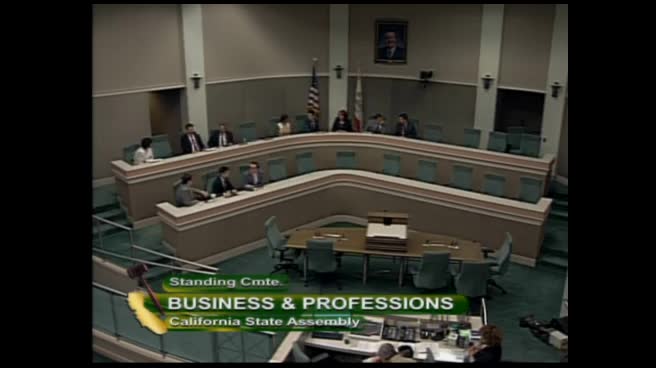 4MIN
Assembly Standing Committee on Business and Professions
Bill Author

Bill Co-Author(s):