SB 558: Property taxation: new construction exclusion: rain water capture system.
- Session Year: 2017-2018
- House: Senate
- Latest Version Date: 2018-01-31
The California Constitution generally limits ad valorem taxes on real property to 1% of the full cash value of that property. For purposes of this limitation, full cash value is defined as the assessors valuation of real property as shown on the 197576 tax bill under full cash value or, thereafter, the appraised value of that real property when purchased, newly constructed, or a change in ownership has occurred.
This bill, until January 1, 2029, would exclude from classification as newly constructed and new construction the construction or addition, on or after January 1, 2019, of a rain water capture system, as provided.
By imposing new duties upon county assessors, this bill would impose a state-mandated local program.
The California Constitution requires the state to reimburse local agencies and school districts for certain costs mandated by the state. Statutory provisions establish procedures for making that reimbursement.
This bill would provide that, if the Commission on State Mandates determines that the bill contains costs mandated by the state, reimbursement for those costs shall be made pursuant to the statutory provisions noted above.
Existing law requires the state to reimburse local agencies annually for certain property tax revenues lost as a result of any exemption or classification of property for purposes of ad valorem property taxation.
This bill would provide that, notwithstanding those provisions, no appropriation is made and the state shall not reimburse local agencies for property tax revenues lost by them pursuant to the bill.
This bill would take effect immediately as a tax levy, but its operative date would depend on voter approval of Senate Constitutional Amendment 9 of the 201718 Regular Session.
Existing law contains provisions related to elections and voting, including a requirement that a constitutional amendment submitted to the people by the Legislature shall appear on the ballot of the first statewide election occurring at least 131 days after the adoption of the proposal by the Legislature and that the Secretary of State mail state voter information guides to voters.
This bill would require the Secretary of State, notwithstanding specified provisions of existing law relating to elections and voting, to submit Senate Constitutional Amendment 9 of the 201718 Regular Session to the voters for their approval at the June 5, 2018, statewide primary election.
The California Constitution generally limits ad valorem taxes on real property to 1% of the full cash value of that property. For purposes of this limitation, full cash value is defined as the assessors valuation of real property as shown on the 197576 tax bill under full cash value or, thereafter, the appraised value of that real property when purchased, newly constructed, or a change in ownership has occurred.
This bill bill, until January 1, 2029, would exclude from classification as newly constructed and new construction the construction or addition, on or after January 1, 2019, of a rain water capture system, as provided.
By imposing new duties upon county assessors, this bill would impose a state-mandated local program.
The California Constitution requires the state to reimburse local agencies and school districts for certain costs mandated by the state. Statutory provisions establish procedures for making that reimbursement.
This bill would provide that, if the Commission on State Mandates determines that the bill contains costs mandated by the state, reimbursement for those costs shall be made pursuant to the statutory provisions noted above.
Existing law requires the state to reimburse local agencies annually for certain property tax revenues lost as a result of any exemption or classification of property for purposes of ad valorem property taxation.
This bill would provide that, notwithstanding those provisions, no appropriation is made and the state shall not reimburse local agencies for property tax revenues lost by them pursuant to the bill.
This bill would take effect immediately as a tax levy, but its operative date would depend on voter approval of Senate Constitutional Amendment 9 of the 201718 Regular Session.
The California Constitution generally limits ad valorem taxes on real property to 1% of the full cash value of that property. For purposes of this limitation, full cash value is defined as the assessors valuation of real property as shown on the 197576 tax bill under full cash value or, thereafter, the appraised value of that real property when purchased, newly constructed, or a change in ownership has occurred.
This bill would exclude from classification as newly constructed and new construction the construction or addition, on or after January 1, 2018, 2019, of a rain water capture system, as provided.
By imposing new duties upon county assessors, this bill would impose a state-mandated local program.
The California Constitution requires the state to reimburse local agencies and school districts for certain costs mandated by the state. Statutory provisions establish procedures for making that reimbursement.
This bill would provide that, if the Commission on State Mandates determines that the bill contains costs mandated by the state, reimbursement for those costs shall be made pursuant to the statutory provisions noted above.
Existing law requires the state to reimburse local agencies annually for certain property tax revenues lost as a result of any exemption or classification of property for purposes of ad valorem property taxation.
This bill would provide that, notwithstanding those provisions, no appropriation is made and the state shall not reimburse local agencies for property tax revenues lost by them pursuant to the bill.
This bill would take effect immediately as a tax levy, but its operative date would depend on voter approval of Senate Constitutional Amendment ____ 9 of the 201718 Regular Session.
The California Constitution generally limits ad valorem taxes on real property to 1% of the full cash value of that property. For purposes of this limitation, full cash value is defined as the assessors valuation of real property as shown on the 197576 tax bill under full cash value or, thereafter, the appraised value of that real property when purchased, newly constructed, or a change in ownership has occurred.
This bill would exclude from classification as newly constructed and new construction the construction or addition, on or after January 1, 2018, of a rain water capture system, as provided.
By imposing new duties upon county assessors, this bill would impose a state-mandated local program.
The California Constitution requires the state to reimburse local agencies and school districts for certain costs mandated by the state. Statutory provisions establish procedures for making that reimbursement.
This bill would provide that, if the Commission on State Mandates determines that the bill contains costs mandated by the state, reimbursement for those costs shall be made pursuant to the statutory provisions noted above.
Existing law requires the state to reimburse local agencies annually for certain property tax revenues lost as a result of any exemption or classification of property for purposes of ad valorem property taxation.
This bill would provide that, notwithstanding those provisions, no appropriation is made and the state shall not reimburse local agencies for property tax revenues lost by them pursuant to the bill.
This bill would take effect immediately as a tax levy, but its operative date would depend on voter approval of Senate Constitutional Amendment ____ of the 201718 Regular Session.
(a)Newly constructed and new construction do not include the construction or addition of a rain water capture system.
(b)For purposes of this section, rain water capture system means a facility designed to capture, retain, and store rain water flowing off a building rooftop or other manmade aboveground hard surface for subsequent onsite use.
(c)(1)Notwithstanding any other law, for purposes of this section, the construction or addition of a rain water capture system includes the construction of a rain water capture system incorporated by the owner-builder in the initial construction of a new building that the owner-builder does not intend to occupy or use.
(2)The exclusion provided by this section applies to the initial purchaser who purchased the new building from the owner-builder only if the owner-builder did not receive an exclusion pursuant to this section for the same rain water capture system and only if the initial purchaser purchased the new building prior to that building become subject to reassessment to the owner-builder, as described in subdivision (d) of Section 75.12.
(d)This section shall be administered as follows:
(1)The initial purchaser of the new building shall file a claim with the assessor and provide to the assessor any documents necessary to identify the value attributable to the rain water capture system included in the purchase price of the new building. The claim shall also identify the amount of any rebate for the rain water capture system provided to either the owner-builder or the initial purchaser.
(2)The assessor shall evaluate the claim and determine the portion of the purchase price that is attributable to the rain water capture system. The assessor shall then reduce the new base year value established as a result of the change in ownership of the new building by an amount equal to the difference between the following two amounts:
(A)That portion of the value of the new building attributable to the rain water capture system.
(B)The total amount of all rebates, if any, described in paragraph (1) that were provided to either the owner-builder or the initial purchaser.
(3)The extension of the new construction exclusion to the initial purchaser of a new constructed new building shall remain in effect only until there is a subsequent change in ownership of the new building.
(e)This section applies to new construction completed on or after January 1, 2019.
(f)This section shall remain in effect only until January 1, 2029, and as of that date is repealed.
SEC. 2.If the Commission on State Mandates determines that this act contains costs mandated by the state, reimbursement to local agencies and school districts for those costs shall be made pursuant to Part 7 (commencing with Section 17500) of Division 4 of Title 2 of the Government Code.
SEC. 3.Notwithstanding Section 2229 of the Revenue and Taxation Code, no appropriation is made by this act and the state shall not reimburse any local agency for any property tax revenues lost by it pursuant to this act.
SEC. 4.Notwithstanding the requirements of Sections 9040, 9043, 9044, 9061, 9082, and 9094 of the Elections Code, or any other law, the Secretary of State shall submit Senate Constitutional Amendment 9 of the 201718 Regular Session to the voters for their approval at the June 5, 2018, statewide primary election.
SEC. 5.This act provides for a tax levy within the meaning of Article IV of the California Constitution and shall go into immediate effect. However, Sections 1 to 3, inclusive, shall become operative only if Senate Constitutional Amendment 9 of the 201718 Regular Session is approved by the voters and, in that event, shall become operative on January 1, 2019.
(a)Newly constructed and new construction do not include the construction or addition of a rain water capture system.
(b)For purposes of this section, rain water capture system means a facility designed to capture, retain, and store rain water flowing off a building rooftop or other manmade aboveground hard surface for subsequent onsite use.
(c)(1)Notwithstanding any other law, for purposes of this section, the construction or addition of a rain water capture system includes the construction of a rain water capture system incorporated by the owner-builder in the initial construction of a new building that the owner-builder does not intend to occupy or use.
(2)The exclusion provided by this section applies to the initial purchaser who purchased the new building from the owner-builder only if the owner-builder did not receive an exclusion pursuant to this section for the same rain water capture system and only if the initial purchaser purchased the new building prior to that building become subject to reassessment to the owner-builder, as described in subdivision (d) of Section 75.12.
(d)This section shall be administered as follows:
(1)The initial purchaser of the new building shall file a claim with the assessor and provide to the assessor any documents necessary to identify the value attributable to the rain water capture system included in the purchase price of the new building. The claim shall also identify the amount of any rebate for the rain water capture system provided to either the owner-builder or the initial purchaser.
(2)The assessor shall evaluate the claim and determine the portion of the purchase price that is attributable to the rain water capture system. The assessor shall then reduce the new base year value established as a result of the change in ownership of the new building by an amount equal to the difference between the following two amounts:
(A)That portion of the value of the new building attributable to the rain water capture system.
(B)The total amount of all rebates, if any, described in paragraph (1) that were provided to either the owner-builder or the initial purchaser.
(3)The extension of the new construction exclusion to the initial purchaser of a new constructed new building shall remain in effect only until there is a subsequent change in ownership of the new building.
(e)This section applies to new construction completed on or after January 1, 2019.
(f)This section shall remain in effect only until January 1, 2029, and as of that date is repealed.
SEC. 2.If the Commission on State Mandates determines that this act contains costs mandated by the state, reimbursement to local agencies and school districts for those costs shall be made pursuant to Part 7 (commencing with Section 17500) of Division 4 of Title 2 of the Government Code.
SEC. 3.Notwithstanding Section 2229 of the Revenue and Taxation Code, no appropriation is made by this act and the state shall not reimburse any local agency for any property tax revenues lost by it pursuant to this act.
SEC. 4.Notwithstanding the requirements of Sections 9040, 9043, 9044, 9061, 9082, and 9094 of the Elections Code, or any other law, the Secretary of State shall submit Senate Constitutional Amendment 9 of the 201718 Regular Session to the voters for their approval at the June 5, 2018, statewide primary election.
SEC. 4.SEC. 5.This act provides for a tax levy within the meaning of Article IV of the California Constitution and shall go into immediate effect. However, the provisions of this act Sections 1 to 3, inclusive, shall become operative only if Senate Constitutional Amendment 9 of the 201718 Regular Session is approved by the voters and, in that event, shall become operative on January 1, 2019.
(a)Newly constructed and new construction do not include the construction or addition of a rain water capture system.
(b)For purposes of this section, rain water capture system means a facility designed to capture, retain, and store rain water flowing off a building rooftop or other manmade aboveground hard surface for subsequent onsite use.
(b)(c)(1)Notwithstanding any other law, for purposes of this section, the construction or addition of a rain water capture system includes the construction of a rain water capture system incorporated by the owner-builder in the initial construction of a new building that the owner-builder does not intend to occupy or use.
(2)The exclusion provided by this section applies to the initial purchaser who purchased the new building from the owner-builder only if the owner-builder did not receive an exclusion pursuant to this section for the same rain water capture system and only if the initial purchaser purchased the new building prior to that building become subject to reassessment to the owner-builder, as described in subdivision (d) of Section 75.12.
(c)(d)This section shall be administered as follows:
(1)The initial purchaser of the new building shall file a claim with the assessor and provide to the assessor any documents necessary to identify the value attributable to the rain water capture system included in the purchase price of the new building. The claim shall also identify the amount of any rebate for the rain water capture system provided to either the owner-builder or the initial purchaser.
(2)The assessor shall evaluate the claim and determine the portion of the purchase price that is attributable to the rain water capture system. The assessor shall then reduce the new base year value established as a result of the change in ownership of the new building by an amount equal to the difference between the following two amounts:
(A)That portion of the value of the new building attributable to the rain water capture system.
(B)The total amount of all rebates, if any, described in paragraph (1) that were provided to either the owner-builder or the initial purchaser.
(3)The extension of the new construction exclusion to the initial purchaser of a new constructed new building shall remain in effect only until there is a subsequent change in ownership of the new building.
(d)(e)This section applies to new construction completed on or after January 1, 2019.
(f)This section shall remain in effect only until January 1, 2029, and as of that date is repealed.
SEC. 2.If the Commission on State Mandates determines that this act contains costs mandated by the state, reimbursement to local agencies and school districts for those costs shall be made pursuant to Part 7 (commencing with Section 17500) of Division 4 of Title 2 of the Government Code.
SEC. 3.Notwithstanding Section 2229 of the Revenue and Taxation Code, no appropriation is made by this act and the state shall not reimburse any local agency for any property tax revenues lost by it pursuant to this act.
SEC. 4.This act provides for a tax levy within the meaning of Article IV of the California Constitution and shall go into immediate effect. However, the provisions of this act shall become operative only if Senate Constitutional Amendment 9 of the 201718 Regular Session is approved by the voters and, in that event, shall become operative on January 1, 2019.
(a)Newly constructed and new construction do not include the construction or addition of a rain water capture system.
(b)(1)Notwithstanding any other law, for purposes of this section, the construction or addition of a rain water capture system includes the construction of a rain water capture system incorporated by the owner-builder in the initial construction of a new building that the owner-builder does not intend to occupy or use.
(2)The exclusion provided by this section applies to the initial purchaser who purchased the new building from the owner-builder only if the owner-builder did not receive an exclusion pursuant to this section for the same rain water capture system and only if the initial purchaser purchased the new building prior to that building become subject to reassessment to the owner-builder, as described in subdivision (d) of Section 75.12.
(c)This section shall be administered as follows:
(1)The initial purchaser of the new building shall file a claim with the assessor and provide to the assessor any documents necessary to identify the value attributable to the rain water capture system included in the purchase price of the new building. The claim shall also identify the amount of any rebate for the rain water capture system provided to either the owner-builder of or the initial purchaser by the Public Utilities Commission, the State Energy Resources Conservation and Development Commission, an electrical corporation, a local publicly owned electric utility, or any other agency of the State of California. purchaser.
(2)The assessor shall evaluate the claim and determine the portion of the purchase price that is attributable to the rain water capture system. The assessor shall then reduce the new base year value established as a result of the change in ownership of the new building by an amount equal to the difference between the following two amounts:
(A)That portion of the value of the new building attributable to the rain water capture system.
(B)The total amount of all rebates, if any, described in paragraph (1) that were provided to either the owner-builder or the initial purchaser.
(3)The extension of the new construction exclusion to the initial purchaser of a new constructed new building shall remain in effect only until there is a subsequent change in ownership of the new building.
(d)This section applies to new construction completed on or after January 1, 2018. 2019.
SEC. 2.If the Commission on State Mandates determines that this act contains costs mandated by the state, reimbursement to local agencies and school districts for those costs shall be made pursuant to Part 7 (commencing with Section 17500) of Division 4 of Title 2 of the Government Code.
SEC. 3.Notwithstanding Section 2229 of the Revenue and Taxation Code, no appropriation is made by this act and the state shall not reimburse any local agency for any property tax revenues lost by it pursuant to this act.
SEC. 4.This act provides for a tax levy within the meaning of Article IV of the California Constitution and shall go into immediate effect. However, the provisions of this act shall become operative only if Senate Constitutional Amendment ____ 9 of the 201718 Regular Session is approved by the voters and, in that event, shall become operative on January 1, 2018. 2019.
(a)Newly constructed and new construction do not include the construction or addition of a rain water capture system.
(b)(1)Notwithstanding any other law, for purposes of this section, the construction or addition of a rain water capture system includes the construction of a rain water capture system incorporated by the owner-builder in the initial construction of a new building that the owner-builder does not intend to occupy or use.
(2)The exclusion provided by this section applies to the initial purchaser who purchased the new building from the owner-builder only if the owner-builder did not receive an exclusion pursuant to this section for the same rain water capture system and only if the initial purchaser purchased the new building prior to that building become subject to reassessment to the owner-builder, as described in subdivision (d) of Section 75.12.
(c)This section shall be administered as follows:
(1)The initial purchaser of the new building shall file a claim with the assessor and provide to the assessor any documents necessary to identify the value attributable to the rain water capture system included in the purchase price of the new building. The claim shall also identify the amount of any rebate for the rain water capture system provided to either the owner-builder of the initial purchaser by the Public Utilities Commission, the State Energy Resources Conservation and Development Commission, an electrical corporation, a local publicly owned electric utility, or any other agency of the State of California.
(2)The assessor shall evaluate the claim and determine the portion of the purchase price that is attributable to the rain water capture system. The assessor shall then reduce the new base year value established as a result of the change in ownership of the new building by an amount equal to the difference between the following two amounts:
(A)That portion of the value of the new building attributable to the rain water capture system.
(B)The total amount of all rebates, if any, described in paragraph (1) that were provided to either the owner-builder or the initial purchaser.
(3)The extension of the new construction exclusion to the initial purchaser of a new constructed new building shall remain in effect only until there is a subsequent change in ownership of the new building.
(d)This section applies to new construction completed on or after January 1, 2018.
SEC. 2.If the Commission on State Mandates determines that this act contains costs mandated by the state, reimbursement to local agencies and school districts for those costs shall be made pursuant to Part 7 (commencing with Section 17500) of Division 4 of Title 2 of the Government Code.
SEC. 3.Notwithstanding Section 2229 of the Revenue and Taxation Code, no appropriation is made by this act and the state shall not reimburse any local agency for any property tax revenues lost by it pursuant to this act.
SEC. 4.This act provides for a tax levy within the meaning of Article IV of the California Constitution and shall go into immediate effect. However, the provisions of this act shall become operative only if Senate Constitutional Amendment ____ of the 201718 Regular Session is approved by the voters and, in that event, shall become operative on January 1, 2018.
|
Date
|
Status
|
|---|---|
| Jan 31, 2018 | Chaptered by Secretary of State. Chapter 1, Statutes of 2018. |
| Jan 31, 2018 | Approved by the Governor. |
| Jan 29, 2018 | Enrolled and presented to the Governor at 5:30 p.m. |
| Jan 29, 2018 | Assembly amendments concurred in. (Ayes 39. Noes 0.) Ordered to engrossing and enrolling. |
| Jan 29, 2018 | In Senate. Concurrence in Assembly amendments pending. |
| Jan 29, 2018 | Read third time. Passed. Ordered to the Senate. |
| Jan 25, 2018 | Read third time and amended. |
| Jan 22, 2018 | Read second time. Ordered to third reading. |
| Jan 18, 2018 | January 18 set for first hearing. Placed on APPR. suspense file. |
| Jan 16, 2018 | From committee with author's amendments. Read second time and amended. Re-referred to Com. on APPR. |
| Jan 16, 2018 | From committee: Do pass and re-refer to Com. on APPR. (Ayes 7. Noes 0.) (January 16). Re-referred to Com. on APPR. |
| Jan 16, 2018 | Joint Rule 62(a) suspended. |
| Jan 8, 2018 | January 8 hearing postponed by committee. |
| Jul 20, 2017 | Referred to Com. on REV. & TAX. |
| Jul 17, 2017 | In Assembly. Read first time. Held at Desk. |
| Jul 17, 2017 | Read third time. Passed. (Ayes 39. Noes 0.) Ordered to the Senate. |
| Jun 27, 2017 | Read second time. Ordered to third reading. |
| Jun 26, 2017 | From committee: Be ordered to second reading pursuant to Senate Rule 28.8. |
| Jun 22, 2017 | From committee: Be ordered to second reading pursuant to Senate Rule 28.8. |
| Jun 19, 2017 | Set for hearing June 26. |
| May 4, 2017 | May 15 hearing postponed by committee. |
| May 4, 2017 | Set for hearing May 15. |
| May 3, 2017 | May 8 hearing postponed by committee. |
| May 1, 2017 | Set for hearing May 8. |
| Apr 26, 2017 | Read second time and amended. Re-referred to Com. on APPR. |
| Apr 25, 2017 | From committee: Do pass as amended and re-refer to Com. on APPR. (Ayes 7. Noes 0. Page 745.) (April 19). |
| Apr 5, 2017 | Set for hearing April 19. |
| Mar 2, 2017 | Referred to Com. on GOV. & F. |
| Feb 17, 2017 | From printer. May be acted upon on or after March 19. |
| Feb 16, 2017 | Introduced. Read first time. To Com. on RLS. for assignment. To print. |
|
Date
|
Description
|
Location
|
Votes
|
|
|---|---|---|---|---|
| Jan 29, 2018 | SB 558 Glazer Senate Third Reading By GONZALEZ FLETCHER | Assembly Floor |
Passed |
|
| Jan 29, 2018 | W/O REF. TO FILE SB558 Glazer Concurrence | Senate Floor |
Passed |
|
| Jan 18, 2018 | Do pass. | Assembly Standing Committee on Appropriations |
Passed |
|
| Jan 16, 2018 | Do pass and be re-referred to the Committee on [Appropriations] | Assembly Standing Committee on Revenue and Taxation |
Passed |
|
| Jul 17, 2017 | Returning Messages, Motion | Senate Floor |
Passed |
|
| Apr 19, 2017 | Do pass as amended, but first amend, and re-refer to the Committee on [Appropriations] | Senate Standing Committee on Governance and Finance |
Passed |
This list shows positions taken on this bill by organizations on the date displayed, which is linked to the original source.
Positions by individuals are not included.
|
Organization
|
Position
|
Date
|
|---|---|---|
| American Rainwater Catchment Systems Association | ** Support | Jan 29, 2018 |
| Amigos de los Rios | ** Support | Jan 29, 2018 |
| California Building Industry Association | ** Support | Jan 29, 2018 |
| California Department of Finance | ** Against | Jan 12, 2018 |
| California Trout | ** Support | Jun 28, 2017 |
| City of Santa Monica | ** Support | Jan 29, 2018 |
| Emerald Necklace | ** Support | Jan 29, 2018 |
| Heal The Bay | ** Support | Jan 29, 2018 |
| Howard Jarvis Taxpayers Association | ** Support | Jan 29, 2018 |
| Kiss the Ground | ** Support | Jan 29, 2018 |
| League Of California Cities | ** Support | Jan 29, 2018 |
| Los Angeles Waterkeeper | ** Support | Jan 29, 2018 |
| Surfrider Foundation | ** Support | Jan 29, 2018 |
| the River Project | ** Support | Jan 29, 2018 |
| Treepeople | ** Support | Jan 29, 2018 |
| Trout Unlimited | ** Support | Jan 29, 2018 |
| Unknown. | ** Against | Apr 17, 2017 |
Office of Senate Floor Analyses (916) 651-1520 Fax: (916) 327-4478 | SB |
UNFINISHED BUSINESS
Bill No: SB 558
:
SENATE GOVERNANCE & FIN. COMMITTEE: 7-0, 4/19/17
AYES: McGuire, Nguyen, Beall, Hernandez, Hertzberg, Lara, Moorlach
SENATE APPROPRIATIONS COMMITTEE: Senate Rule 28.8
SENATE FLOOR: 39-0, 7/17/17
AYES: Allen, Anderson, Atkins, Bates, Beall, Berryhill, Bradford, Cannella, De León, Dodd, Fuller, Gaines, Galgiani, Glazer, Hernandez, Hertzberg, Hill, Hueso, Jackson, Lara, Leyva, McGuire, Mendoza, Mitchell, Monning, Moorlach, Morrell, Newman, Nguyen, Pan, Portantino, Roth, Skinner, Stern, Stone, Vidak, Wieckowski, Wiener, Wilk
NO VOTE RECORDED: Nielsen
ASSEMBLY FLOOR: 69-0, 1/29/18
(ROLL CALL NOT AVAILABLE)
DIGEST:
This bill sets forth the statutory framework necessary to implement SCA 9 (Glazer, 2017), which enacts a new construction exclusion for the construction or addition of rainwater capture systems.
Assembly Amendments
require the Secretary of State to place SCA 9 on the ballot for voter approval at the June 2018 statewide direct primary election, notwithstanding other law; define “rain water capture system;” and sunset the bill’s provisions on January 1, 2029.
Existing law:
- Provides that all property is taxable at the same percentage of fair market value unless explicitly exempted by the Constitution or federal law.
- Limits the maximum amount of any ad valorem tax on real property at 1% of full cash value, and directs assessors to only reappraise property when newly constructed, or ownership changes (Proposition 13, 1978).
- Allows the Legislature to exclude from the definition of “new construction” constructing or adding any of the following property improvements:
- Any active solar energy system (Proposition 7, 1980).
- Any fire sprinkler system, as defined (Proposition 31, 1984).
- Any portion or structural component that makes the dwelling more accessible for a disabled or severely disable person (Proposition 110, 1990 and Proposition 177, 1994).
- Seismic retrofit components (Proposition 23, 1984 and Proposition 127, 1990).
This bill:
- States that “new construction” does not include the construction or installation of a rain water capture system completed on or after January 1, 2018.
- Provides that the first purchaser of a home with a rainwater capture system can also claim the exclusion when an owner-builder incorporates the system, so long as the owner-builder does not intend to occupy or use the building and did not claim the exclusion, and the purchaser buys the building before it’s assessed to the owner-builder.
- Requires taxpayers to file a claim with assessors to obtain the exemption, and provide any documentation necessary to identify the value attributable to the rain water capture system, including any rebates.
- Requires the assessor to evaluate the claim, and subtract the value of the system, system, less rebates, from the purchase price when determining its new value.
- Provides that the exclusion applies only until the building changes ownership.
- Applies to new construction completed on or after January 1, 2019.
- Sunsets on January 1, 2029.
- States that if the bill is determined to contain costs mandated by the state, reimbursement must be made pursuant to existing statutory provisions.
- Takes effect only if voters approved SCA 9 (Glazer).
FISCAL EFFECT: Appropriation: Fiscal Com.: Local:
According to the Assembly Appropriations Committee, SB 558 results in unknown but potentially significant property tax revenue losses. Every $1 million in cost of a rain water capture system would equate to a local revenue loss of 1%, or $10,000. Because of Proposition 98, approximately one-half of property tax losses would result in a corresponding increase in annual Proposition 98 General Fund costs.
American Rainwater Catchment Systems Association
Amigos de los Rios
California Building Industry Association
City of Santa Monica
Emerald Necklace
Heal the Bay
Howard Jarvis Taxpayers Association
Kiss the Ground
League of California Cities
Los Angeles Waterkeeper
The River Project
Surfrider Foundation
TreePeople
Trout Unlimited
One individual
OPPOSITION: (Verified 1/29/18)
None received
ARGUMENTS IN SUPPORT: According to the author, “The reality in California is that we live in constant state of extremes. Historical weather patterns have shown that we go back and forth between times of heavy precipitation followed by times of intense drought. Californians need to expect this and do all we can to conserve water during times of heavy precipitation. Rainwater capture systems are a great way to accomplish this goal of water conservation. Rainwater capture systems collect, store and use rain water for landscape irrigation and other uses. Moreover, everyone benefits from the increased use of rainwater capture systems; when a business or individual employs captured rain water, water from conventional sources is freed for consumption by others. That is why I feel it is necessary to incentivize the proliferation of rainwater capture systems. A property tax exclusion created by this measure would do precisely that and lead to a significant expansion of rainwater capture systems throughout the state, all while contributing to the State’s conservation efforts.”
1/29/18 13:40:32
**** END ****
SENATE THIRD READING
STR Bill Id:SB 558
Author:(Glazer)
As Amended Ver:January 25, 2018
Majority vote. Tax Levy
SENATE VOTE: 39-0
Committee | Votes | Ayes | Noes |
Revenue & Taxation | 7-0 | Burke, Travis Allen, Low, Chu, Aguiar-Curry, Melendez, Mark Stone | |
Appropriations | 17-0 | Gonzalez Fletcher, Bigelow, Bloom, Bonta, Brough, Calderon, Carrillo, Chau, Eggman, Fong, Friedman, Gallagher, Eduardo Garcia, Jones-Sawyer, Obernolte, Quirk, Reyes |
SUMMARY: Excludes the construction or addition of a rain water capture system from the definition of "newly constructed" and "new construction" for property tax assessment purposes. Specifically, this bill:
- Excludes a rain water capture system that is completed on or after January 1, 2019 and before January 1, 2029 from the definition of "newly constructed" and "new construction."
- Defines "rain water capture system" as a facility designed to capture, retain, and store rain water flowing off a building rooftop or other manmade aboveground hard surface for subsequent onsite use.
- Provides that "the construction or addition of a rain water capture system" includes the construction of a rain water capture system incorporated by the owner-builder in the initial construction of a new building that the owner-builder does not intend to occupy or use.
- Provides that the exclusion applies to the initial purchaser who purchased the new building from the owner-builder if the owner-builder did not already receive an exclusion for the rain water capture system, and the initial purchaser purchased the new building prior to that building becoming subject to reassessment to the owner-builder.
- Requires the initial purchaser of a new building to file a claim with the assessor and provide documents necessary to identify the value of the rain water capture system. The claim shall identify the amount of any rebate for the rain water capture system provided to either the owner-builder or the initial purchaser.
- Requires the assessor to evaluate the claim and determine the portion of the purchase price that is attributable to the rain water capture system, and reduce the new base year value by an amount equal to the difference between the following:
- The portion of the value of the new building attributable to the rain water capture system; and,
- The total amount of rebates, if any, that were provided to either the owner-builder or the initial purchaser.
- Requires the extension of the new construction exclusion to the initial purchaser of a new constructed new building to remain in place until a subsequent change in ownership of the new building.
- Provides that this exclusion shall remain in effect until January 1, 2029, and as of that date is repealed.
- Requires the Secretary of State to submit SCA 9 (Glazer), currently on the Assembly Floor, to the voters for approval at the June 5, 2018, statewide primary election.
- Waives various deadlines of the Elections Code to meet the June 5, 2018, deadline.
- Provides that local governments shall be reimbursed if the Commission on State Mandates determines that this bill contains costs mandated by the state.
- Provides that the state shall not reimburse local agencies for lost property tax revenue.
- Takes effect immediately as a tax levy, but provides that this bill's provisions are only operative if SCA 9 is approved by the voters and, in that event, is operative on January 1, 2019.
EXISTING LAW:
- Provides that all property is taxable unless explicitly exempted by the California Constitution or federal law. Ad valorem taxes on real property are generally limited to 1% of the full cash value of that property as set forth in the California Constitution, based on the property's assessed value as determined by the county assessor when purchased, newly constructed, or a change in ownership has occurred. The full cash value base may reflect the yearly inflation rate, not to exceed 2% for any given year.
- Requires the assessor to increase the assessment to reflect the value of "new construction" when substantial additions or alterations occur. New construction is assigned its own distinct base year value, and the remainder of the property's base year value is unaffected.
- Provides that "newly constructed" does not include real property that is reconstructed after a disaster declared by the Governor if the fair market value (FMV) of the real property, as reconstructed, is comparable to its FMV prior to the disaster, and does not include that portion of an existing structure that consists of the construction or reconstruction of seismic retrofitting components.
- Allows the Legislature to provide that the term "newly constructed" does not include any of the following:
- The construction or addition of any active solar energy system;
- The construction or installation of any fire sprinkler system, other fire extinguishing system, fire detection system, or fire-related egress improvement, as specified;
- The construction, installation, or modification of any portion or structural component of a single- or multiple-family dwelling to make it more accessible to a severely disabled person, as specified; and,
- The construction, installation, removal, or modification of any portion or structural component of an existing building or structure to make it more accessible to a disabled person, as specified.
FISCAL EFFECT: According to the Assembly Appropriations Committee, unknown but potentially significant property tax revenue losses. Every $1 million in cost of a rain water capture system would equate to a local revenue loss of 1%, or $10,000. Because of Proposition 98, approximately one-half of property tax losses would result in a corresponding increase in annual Proposition 98 General Fund costs.
COMMENTS:
- The author has provided the following statement in support of this bill:
The reality in California is that we live in constant state of extremes. Historical weather patterns have shown that we go back and forth between times of heavy precipitation followed by times of intense drought. Californians need to expect this and do all we can to conserve water during times of heavy precipitation. Rainwater capture systems are a great way to accomplish this goal of water conservation. Rainwater capture systems collect, store and use rain water for landscape irrigation and other uses. Moreover, everyone benefits from the increased use of rainwater capture systems; when a business or individual employs captured rain water, water from conventional sources is freed for consumption by others. That is why I feel it is necessary to incentivize the proliferation of rainwater capture systems. A property tax exclusion created by this measure would do precisely that and lead to a significant expansion of rainwater capture systems throughout the state, all while contributing to the State's conservation efforts.
- Supporters of this bill state that "[o]ffering a property tax exclusion from the definition of 'new construction' for purposes of assessing property, can be an incentive for a property owner to add a specific feature as part of new construction." Additionally, supporters state that "California has been susceptible to severe drought; other countries facing such conditions have been much more aggressive in incorporating rainwater capture into their water use and conservation strategies."
- Revenue and Taxation Committee Staff Comments:
- Assessing New Construction under Proposition 13: Much of the law pertaining to property taxation is prescribed by California Constitution Articles XIII and XIII A (commonly known as "Proposition 13"). Proposition 13 was added to the California Constitution in June 1978 and was designed to provide real property tax relief by imposing a set of interlocking limitations upon the assessment and taxing powers of state and local governments.
As a general rule, the maximum amount of any ad valorem tax on real property may not exceed 1% of the property's full cash value, as adjusted for the lesser of inflation or 2% per year. The term "full cash value" is defined as the "county assessor's valuation of real property as shown on the 1975-1976 tax bill" or, thereafter, "the appraised value of real property when purchased, newly constructed, or a change in ownership has occurred after the 1975 assessment." (California Constitution, Article XIII A, Sections 1 and 2.) In other words, the California Constitution requires that real property's base year value be reassessed to its current FMV whenever a "change in ownership" occurs and requires additional assessments to reflect certain construction activities that qualify as "new construction." When substantial additions or alterations occur, the assessor assigns the assessable new construction with its own distinct base year value and the remainder of the property's assessment is unaffected and retains its own base year value.
- What Does This Bill Do? If SCA 9 is approved by the voters, this bill grants a new construction exclusion for the construction or addition of a rain water capture system. SCA 9 amends the California Constitution to authorize the Legislature to provide that "newly constructed" does not include the construction or addition, completed on or after January 1, 2019, of a rain water capture system, as defined by the Legislature.
- Qualifying for the Exclusion: New construction exclusions associated with a property generally end when a subsequent change in ownership occurs and triggers reassessment of the property at its current FMV, meaning the proposed new construction exclusion for rain water capture systems added to a property would cease when the property is sold to a purchaser. This bill includes administrative provisions that would allow the initial purchaser of a new building with a rain water capture system to qualify for the exclusion (after the property is sold to the initial purchaser) if specified conditions are met. These provisions are modeled after existing law that allows the solar new construction exclusion to be "passed down" to the initial purchaser of a new building when the owner-builder incorporates a solar system into the building it does not intend to occupy or use. However, as noted in the BOE's analysis of this bill, such complex administrative provisions for the solar new construction exclusion are only necessary because the original constitutional amendment authorizing the exclusion did not specifically extend to this "built-for-sale" scenario. A simpler approach to crafting a "built-for-sale" provision may be to explicitly authorize the exclusion for initial purchasers in the constitutional amendment instead having the provision in this bill.
- What is a "Tax Expenditures"? Existing law provides various credits, deductions, exclusions, and exemptions for particular taxpayer groups. In the late 1960s, United States Treasury officials began arguing that these features of the tax law should be referred to as "expenditures" since they are generally enacted to accomplish some governmental purpose and there is a determinable cost associated with each of them (in the form of forgone revenues). This bill would create a new tax expenditure program by allowing a new construction exclusion from property tax for rain water capture systems.
- Incentive or Reward: Tax expenditures are typically provided as a matter of legislative grace to encourage taxpayers to engage in socially beneficial behavior that may not occur absent a financial incentive. This bill attempts to encourage the construction of additional rain water capture systems by excluding their value for property tax purposes. The 1% savings that this bill effectively provides is a relatively small amount of the total cost of a rain water capture system and the benefit is only realized when property taxes become due. Although some will take the subsidy into consideration, it is inevitable that some of the benefits that this bill provides will fall on individuals who would have purchased a rain water capture system irrespective of the subsidy.
- Costs, Benefits, and Alternatives: Excluding the construction of rain water capture systems from the assessed value of property may require the state to backfill local governments as a result of Proposition 98's minimum funding guarantee for public education. To meet previous levels of education funding, California may have to either raise taxes or shift funds from other existing programs. Ideally, this tax expenditure would increase the number of total rain water capture systems built beyond the total number of systems that the market would produce on its own; even if the tax expenditure works as expected, it is not clear that encouraging these types of rain water capture systems is the best use of state funds. If the goal is to capture additional rain water, California could instead create or expand existing reservoirs. Doing so may render more water per dollar spent.
- Tax Expenditure vs. Direct Expenditure: As the Department of Finance notes in its annual Tax Expenditure Report, there are several key differences between tax expenditures and direct expenditures. First, tax expenditures are reviewed less frequently than direct expenditures once they are put in place, and can offer taxpayers greater certainty, but it can also result in tax expenditures remaining part of the tax code without demonstrating any public benefit. Second, there is generally no control over the amount of revenue losses associated with any given tax expenditure. Finally, it should also be noted that, once enacted, it takes a two-thirds vote to rescind an existing tax expenditure absent a sunset date. To address some of these issues, the author has added a 10-year sunset to this property tax exclusion.
Analysis Prepared by: Carlos Anguiano / REV. & TAX. / (916) 319-2098 FN: 0002564
SENATE THIRD READING
STR Bill Id:SB 558
Author:(Glazer)
As Amended Ver:January 16, 2018
Majority vote
SENATE VOTE: 39-0
Committee | Votes | Ayes | Noes |
Revenue & Taxation | 7-0 | Burke, Travis Allen, Low, Chu, Aguiar-Curry, Melendez, Mark Stone | |
Appropriations | 17-0 | Gonzalez Fletcher, Bigelow, Bloom, Bonta, Brough, Calderon, Carrillo, Chau, Eggman, Fong, Friedman, Gallagher, Eduardo Garcia, Jones-Sawyer, Obernolte, Quirk, Reyes |
SUMMARY: Excludes the construction or addition of a rain water capture system from the definition of "newly constructed" and "new construction" for property tax assessment purposes. Specifically, this bill:
- Excludes a rain water capture system that is completed on or after January 1, 2019 and before January 1, 2029 from the definition of "newly constructed" and "new construction."
- Defines "rain water capture system" as a facility designed to capture, retain, and store rain water flowing off a building rooftop or other manmade aboveground hard surface for subsequent onsite use.
- Provides that "the construction or addition of a rain water capture system" includes the construction of a rain water capture system incorporated by the owner-builder in the initial construction of a new building that the owner-builder does not intend to occupy or use.
- Provides that the exclusion applies to the initial purchaser who purchased the new building from the owner-builder if the owner-builder did not already receive an exclusion for the rain water capture system, and the initial purchaser purchased the new building prior to that building becoming subject to reassessment to the owner-builder.
- Requires the initial purchaser of a new building to file a claim with the assessor and provide documents necessary to identify the value of the rain water capture system. The claim shall identify the amount of any rebate for the rain water capture system provided to either the owner-builder or the initial purchaser.
- Requires the assessor to evaluate the claim and determine the portion of the purchase price that is attributable to the rain water capture system, and reduce the new base year value by an amount equal to the difference between the following:
- The portion of the value of the new building attributable to the rain water capture system; and,
- The total amount of rebates, if any, that were provided to either the owner-builder or the initial purchaser.
- Requires the extension of the new construction exclusion to the initial purchaser of a new constructed new building to remain in place until a subsequent change in ownership of the new building.
- Provides that this exclusion shall remain in effect until January 1, 2029, and as of that date is repealed.
- Provides that local governments shall be reimbursed if the Commission on State Mandates determines that this bill contains costs mandated by the state.
- Provides that the state shall not reimburse local agencies for lost property tax revenue.
- Takes effect immediately as a tax levy, but provides that this bill's provisions are only operative if Senate Constitutional Amendment (SCA) 9 of the current legislative session, is approved by the voters, and in that event, is operative on January 1, 2019.
EXISTING LAW:
- Provides that all property is taxable unless explicitly exempted by the California Constitution or federal law. Ad valorem taxes on real property are generally limited to 1% of the full cash value of that property as set forth in the California Constitution, based on the property's assessed value as determined by the county assessor when purchased, newly constructed, or a change in ownership has occurred. The full cash value base may reflect the yearly inflation rate, not to exceed 2% for any given year.
- Requires the assessor to increase the assessment to reflect the value of "new construction" when substantial additions or alterations occur. New construction is assigned its own distinct base year value, and the remainder of the property's base year value is unaffected.
- Provides that "newly constructed" does not include real property that is reconstructed after a disaster declared by the Governor if the fair market value (FMV) of the real property, as reconstructed, is comparable to its FMV prior to the disaster, and does not include that portion of an existing structure that consists of the construction or reconstruction of seismic retrofitting components.
- Allows the Legislature to provide that the term "newly constructed" does not include any of the following:
- The construction or addition of any active solar energy system;
- The construction or installation of any fire sprinkler system, other fire extinguishing system, fire detection system, or fire-related egress improvement, as specified;
- The construction, installation, or modification of any portion or structural component of a single- or multiple-family dwelling to make it more accessible to a severely disabled person, as specified; and,
- The construction, installation, removal, or modification of any portion or structural component of an existing building or structure to make it more accessible to a disabled person, as specified.
FISCAL EFFECT: According to the Assembly Appropriations Committee, unknown but potentially significant property tax revenue losses. Every $1 million in cost of a rain water capture system would equate to a local revenue loss of 1%, or $10,000. Because of Proposition 98, approximately one-half of property tax losses would result in a corresponding increase in annual Proposition 98 General Fund costs.
COMMENTS:
- The author has provided the following statement in support of this bill:
The reality in California is that we live in constant state of extremes. Historical weather patterns have shown that we go back and forth between times of heavy precipitation followed by times of intense drought. Californians need to expect this and do all we can to conserve water during times of heavy precipitation. Rainwater capture systems are a great way to accomplish this goal of water conservation. Rainwater capture systems collect, store and use rain water for landscape irrigation and other uses. Moreover, everyone benefits from the increased use of rainwater capture systems; when a business or individual employs captured rain water, water from conventional sources is freed for consumption by others. That is why I feel it is necessary to incentivize the proliferation of rainwater capture systems. A property tax exclusion created by this measure would do precisely that and lead to a significant expansion of rainwater capture systems throughout the state, all while contributing to the State's conservation efforts.
- Supporters of this bill state that "[o]ffering a property tax exclusion from the definition of 'new construction' for purposes of assessing property, can be an incentive for a property owner to add a specific feature as part of new construction." Additionally, supporters state that "California has been susceptible to severe drought; other countries facing such conditions have been much more aggressive in incorporating rainwater capture into their water use and conservation strategies."
- Revenue and Taxation Committee Staff Comments:
- Assessing New Construction under Proposition 13: Much of the law pertaining to property taxation is prescribed by California Constitution Articles XIII and XIII A (commonly known as "Proposition 13"). Proposition 13 was added to the California Constitution in June 1978 and was designed to provide real property tax relief by imposing a set of interlocking limitations upon the assessment and taxing powers of state and local governments.
As a general rule, the maximum amount of any ad valorem tax on real property may not exceed 1% of the property's full cash value, as adjusted for the lesser of inflation or 2% per year. The term "full cash value" is defined as the "county assessor's valuation of real property as shown on the 1975-1976 tax bill" or, thereafter, "the appraised value of real property when purchased, newly constructed, or a change in ownership has occurred after the 1975 assessment." (California Constitution, Article XIII A, Sections 1 and 2.) In other words, the California Constitution requires that real property's base year value be reassessed to its current FMV whenever a "change in ownership" occurs and requires additional assessments to reflect certain construction activities that qualify as "new construction." When substantial additions or alterations occur, the assessor assigns the assessable new construction with its own distinct base year value and the remainder of the property's assessment is unaffected and retains its own base year value.
- What Does This Bill Do? If SCA 9 is approved by the voters, this bill grants a new construction exclusion for the construction or addition of a rain water capture system. SCA 9 amends the California Constitution to authorize the Legislature to provide that "newly constructed" does not include the construction or addition, completed on or after January 1, 2019, of a rain water capture system, as defined by the Legislature.
- Qualifying for the Exclusion: New construction exclusions associated with a property generally end when a subsequent change in ownership occurs and triggers reassessment of the property at its current FMV, meaning the proposed new construction exclusion for rain water capture systems added to a property would cease when the property is sold to a purchaser. This bill includes administrative provisions that would allow the initial purchaser of a new building with a rain water capture system to qualify for the exclusion (after the property is sold to the initial purchaser) if specified conditions are met. These provisions are modeled after existing law that allows the solar new construction exclusion to be "passed down" to the initial purchaser of a new building when the owner-builder incorporates a solar system into the building it does not intend to occupy or use. However, as noted in the BOE's analysis of this bill, such complex administrative provisions for the solar new construction exclusion are only necessary because the original constitutional amendment authorizing the exclusion did not specifically extend to this "built-for-sale" scenario. A simpler approach to crafting a "built-for-sale" provision may be to explicitly authorize the exclusion for initial purchasers in the constitutional amendment instead having the provision in this bill.
- What is a "Tax Expenditures"? Existing law provides various credits, deductions, exclusions, and exemptions for particular taxpayer groups. In the late 1960s, United States Treasury officials began arguing that these features of the tax law should be referred to as "expenditures" since they are generally enacted to accomplish some governmental purpose and there is a determinable cost associated with each of them (in the form of forgone revenues). This bill would create a new tax expenditure program by allowing a new construction exclusion from property tax for rain water capture systems.
- Incentive or Reward: Tax expenditures are typically provided as a matter of legislative grace to encourage taxpayers to engage in socially beneficial behavior that may not occur absent a financial incentive. This bill attempts to encourage the construction of additional rain water capture systems by excluding their value for property tax purposes. The 1% savings that this bill effectively provides is a relatively small amount of the total cost of a rain water capture system and the benefit is only realized when property taxes become due. Although some will take the subsidy into consideration, it is inevitable that some of the benefits that this bill provides will fall on individuals who would have purchased a rain water capture system irrespective of the subsidy.
- Costs, Benefits, and Alternatives: Excluding the construction of rain water capture systems from the assessed value of property may require the state to backfill local governments as a result of Proposition 98's minimum funding guarantee for public education. To meet previous levels of education funding, California may have to either raise taxes or shift funds from other existing programs. Ideally, this tax expenditure would increase the number of total rain water capture systems built beyond the total number of systems that the market would produce on its own; even if the tax expenditure works as expected, it is not clear that encouraging these types of rain water capture systems is the best use of state funds. If the goal is to capture additional rain water, California could instead create or expand existing reservoirs. Doing so may render more water per dollar spent.
- Tax Expenditure vs. Direct Expenditure: As the Department of Finance notes in its annual Tax Expenditure Report, there are several key differences between tax expenditures and direct expenditures. First, tax expenditures are reviewed less frequently than direct expenditures once they are put in place, and can offer taxpayers greater certainty, but it can also result in tax expenditures remaining part of the tax code without demonstrating any public benefit. Second, there is generally no control over the amount of revenue losses associated with any given tax expenditure. Finally, it should also be noted that, once enacted, it takes a two-thirds vote to rescind an existing tax expenditure absent a sunset date. To address some of these issues, the author has added a 10-year sunset to this property tax exclusion.
Analysis Prepared by: Carlos Anguiano / REV. & TAX. / (916) 319-2098 FN: 0002547
Date of Hearing: January 18, 2018
ASSEMBLY COMMITTEE ON APPROPRIATIONS
Lorena Gonzalez Fletcher, Chair
SBPCA Bill Id:SB 558
Author:(Glazer) – As Amended Ver:January 16, 2017
Policy Committee: | Revenue and Taxation | Vote: | 7 - 0 |
|
| ||
|
|
Urgency: No State Mandated Local Program: Yes Reimbursable: Yes
SUMMARY:
This bill excludes the construction or addition of rain water capture systems from the definition of “newly constructed” and “new construction” for property tax assessment purposes for construction completed between January 1, 2019 and January 1, 2029. This bill takes effect immediately as a tax levy, but provides that this bill's provisions are only operative if Senate Constitutional Amendment (SCA) 9 of the 2017-18 Regular Session is approved by the voters, and in that event, is operative on January 1, 2019
FISCAL EFFECT:
Unknown but potentially significant property tax revenue losses. Every $1 million in cost of a rain water capture system would equate to a local revenue loss of 1%, or $10,000. Because of Proposition 98, approximately half of property tax losses would result in a corresponding increase in annual Proposition 98 General Fund costs.
COMMENTS:
- Background. Adopted in June 1978, Proposition 13 was designed to provide property tax relief by limiting the assessment and taxing powers of state and local governments. As a general rule, Proposition 13 limits any tax on real property to 1% of its assessed value, measured as the appraisal value when the home is purchased, constructed, or undergoes a change in ownership. “Construction” includes when substantial additions or alterations occur, and the assessor assigns the assessable new construction with its own distinct base year value and the remainder of the property's assessment is unaffected and retains its own base year value.
Some types of construction are excluded from the definition of construction for property tax assessment purposes. For example, the construction of any active solar energy system or fire sprinkler system is not considered new construction and is not included in an updated property tax assessment.
- Purpose. SB 558 grants a new construction property tax exclusion for the construction or addition of rain water capture systems. According to the author, historical weather patterns in California suggest that there will be periods of intense drought and Californians need to do everything they can to conserve water. This bill is intended to expand theuse of rainwater capture systems through the creation of a property tax exclusion.
- Related legislation. SCA 9 (Glazer) is a companion piece of legislation that allows SB 558 to take effect. SCA 9 places a measure on the state ballot that amends the California Constitution to exclude rain water capture systems from the definition of “newly constructed.” SCA 9 is also being heard by this Committee today.
Analysis Prepared by: Luke Reidenbach / APPR. / (916) 319-2081
Date of Hearing: January 16, 2018
ASSEMBLY COMMITTEE ON REVENUE AND TAXATION
Autumn Burke, Chair
SBPCA Bill Id:SB 558
Author:(Glazer) – As Amended Ver:April 26, 2017
Majority vote. Tax levy. Fiscal committee.
SENATE VOTE: 39-0
SUBJECT: Property taxation: new construction exclusion: rain water capture system
SUMMARY: Excludes the construction or addition of a rain water capture system from the definition of "newly constructed" and "new construction" for property tax assessment purposes. Specifically, this bill:
- Excludes a rain water capture system that is completed on or after January 1, 2019 from the definition of "newly constructed" and "new construction."
- Provides that "the construction or addition of a rain water capture system" includes the construction of a rain water capture system incorporated by the owner-builder in the initial construction of a new building that the owner-builder does not intend to occupy or use.
- Provides that the exclusion applies to the initial purchaser who purchased the new building from the owner-builder if the owner-builder did not already receive an exclusion for the rain water capture system, and the initial purchaser purchased the new building prior to that building becoming subject to reassessment to the owner-builder.
- Requires the initial purchaser of a new building to file a claim with the assessor and provide documents necessary to identify the value of the rain water capture system. The claim shall identify the amount of any rebate for the rain water capture system provided to either the owner-builder or the initial purchaser.
- Requires the assessor to evaluate the claim and determine the portion of the purchase price that is attributable to the rain water capture system, and reduce the new base year value by an amount equal to the difference between the following:
- The portion of the value of the new building attributable to the rain water capture system; and,
- The total amount of rebates, if any, that were provided to either the owner-builder or the initial purchaser.
- Requires the extension of the new construction exclusion to the initial purchaser of a new constructed new building to remain in place until a subsequent change in ownership of the new building.
- Provides that local governments shall be reimbursed if the Commission on State Mandates determines that this bill contains costs mandated by the state.
- Provides that the state shall not reimburse local agencies for lost property tax revenue.
- Takes effect immediately as a tax levy, but provides that this bill's provisions are only operative if Senate Constitutional Amendment (SCA) 9 of the 2017-18 Regular Session is approved by the voters, and in that event, is operative on January 1, 2019.
EXISTING LAW:
- Provides that all property is taxable unless explicitly exempted by the California Constitution or federal law. Ad valorem taxes on real property are generally limited to 1% of the full cash value of that property as set forth in the California Constitution, based on the property's assessed value as determined by the county assessor when purchased, newly constructed, or a change in ownership has occurred. The full cash value base may reflect the yearly inflation rate, not to exceed 2% for any given year.
- Requires the assessor to increase the assessment to reflect the value of "new construction" when substantial additions or alterations occur. New construction is assigned its own distinct base year value, and the remainder of the property's base year value is unaffected.
- Provides that "newly constructed" does not include real property that is reconstructed after a disaster declared by the Governor if the fair market value (FMV) of the real property, as reconstructed, is comparable to its FMV prior to the disaster, and does not include that portion of an existing structure that consists of the construction or reconstruction of seismic retrofitting components.
- Allows the Legislature to provide that the term "newly constructed" does not include any of the following:
- The construction or addition of any active solar energy system;
- The construction or installation of any fire sprinkler system, other fire extinguishing system, fire detection system, or fire-related egress improvement, as specified;
- The construction, installation, or modification of any portion or structural component of a single- or multiple-family dwelling to make it more accessible to a severely disabled person, as specified; and,
- The construction, installation, removal, or modification of any portion or structural component of an existing building or structure to make it more accessible to a disabled person, as specified.
FISCAL EFFECT: The State Board of Equalization (BOE) states that the revenue impact is unknown, as costs associated with rain water capture systems can vary widely. Assuming cost equates to market value, every $1 million in cost of a rain water capture system equates to $10,000 in local revenue loss.
COMMENTS:
- The author has provided the following statement in support of this bill:
The reality in California is that we live in constant state of extremes. Historical weather patterns have shown that we go back and forth between times of heavy precipitation followed by times of intense drought. Californians need to expect this and do all we can to conserve water during times of heavy precipitation. Rainwater capture systems are a great way to accomplish this goal of water conservation. Rainwater capture systems collect, store and use rain water for landscape irrigation and other uses. Moreover, everyone benefits from the increased use of rainwater capture systems; when a business or individual employs captured rain water, water from conventional sources is freed for consumption by others. That is why I feel it is necessary to incentivize the proliferation of rainwater capture systems. A property tax exclusion created by this measure would do precisely that and lead to a significant expansion of rainwater capture systems throughout the state, all while contributing to the State's conservation efforts.
- Supporters of this bill state that "[o]ffering a property tax exclusion from the definition of 'new construction' for purposes of assessing property, can be an incentive for a property owner to add a specific feature as part of new construction." Additionally, supporters state that "California has been susceptible to severe drought; other countries facing such conditions have been much more aggressive in incorporating rainwater capture into their water use and conservation strategies."
- Committee Staff Comments:
- Assessing New Construction under Proposition 13: Much of the law pertaining to property taxation is prescribed by Articles XIII and XIII A (commonly known as "Proposition 13") of the California Constitution. Proposition 13 was added to the California Constitution in June 1978 and was designed to provide real property tax relief by imposing a set of interlocking limitations upon the assessment and taxing powers of state and local governments.
As a general rule, the maximum amount of any ad valorem tax on real property may not exceed one percent of the property's full cash value, as adjusted for the lesser of inflation or 2% per year. The term "full cash value" is defined as the "county assessor's valuation of real property as shown on the 1975-1976 tax bill" or, thereafter, "the appraised value of real property when purchased, newly constructed, or a change in ownership has occurred after the 1975 assessment." (California Constitution, Article XIII A, Sections 1 and 2.) In other words, the California Constitution requires that real property's base year value be reassessed to its current FMV whenever a "change in ownership" occurs and requires additional assessments to reflect certain construction activities that qualify as "new construction." When substantial additions or alterations occur, the assessor assigns the assessable new construction with its own distinct base year value and the remainder of the property's assessment is unaffected and retains its own base year value.
- What Does This Bill Do? If SCA 9 is approved by the voters, this bill grants a new construction exclusion for the construction or addition of a rain water capture system. SCA 9 amends the California Constitution to authorize the Legislature to provide that "newly constructed" does not include the construction or addition, completed on or after January 1, 2019, of a rain water capture system, as defined by the Legislature.
However, this bill does not provide any further definition for what constitutes a "rain water capture system." As noted in the BOE's analysis of this bill, rain water capture systems could range from a single rain barrel connected to a home gutter to a computerized system in a manufacturing facility for indoor plumbing. The BOE further notes that "[d]efinitions help agencies efficiently administer the exclusion" and could "help denote what a 'system' includes, how to treat a dual rainwater/graywater system, how to handle other dual use parts in the system, or how to treat a system that is part of a larger scale remodel, whether in a home or a large commercial/industrial property."
The author is proposing amendments to SB 558 that define the term "rain water capture systems" to include a facility designed to capture, retain, and store rainwater flowing off a building rooftop or other man-made aboveground hard surfaces for subsequent onsite use. This definition is similar to other definitions of "rain water capture systems" provided under the Rainwater Capture Act of 2012, and helps address the concern raised by the BOE.
- Qualifying for the Exclusion: New construction exclusions associated with a property generally end when a subsequent change in ownership occurs and triggers reassessment of the property at its current FMV, meaning the proposed new construction exclusion for rain water capture systems added to a property would cease when the property is sold to a purchaser. This bill includes administrative provisions that would allow the initial purchaser of a new building with a rain water capture system to qualify for the exclusion (after the property is sold to the initial purchaser) if specified conditions are met. These provisions are modeled after existing law that allows the solar new construction exclusion to be "passed down" to the initial purchaser of a new building when the owner-builder incorporates a solar system into the building it does not intend to occupy or use. However, as noted in the BOE's analysis of this bill, such complex administrative provisions for the solar new construction exclusion are only necessary because the original constitutional amendment authorizing the exclusion did not specifically extend to this "built-for-sale" scenario. A simpler approach to crafting a "built-for-sale" provision may be to explicitly authorize the exclusion for initial purchasers in the constitutional amendment instead having the provision in this bill.
- What is a "Tax Expenditures"? Existing law provides various credits, deductions, exclusions, and exemptions for particular taxpayer groups. In the late 1960s, United States Treasury officials began arguing that these features of the tax law should be referred to as "expenditures" since they are generally enacted to accomplish some governmental purpose and there is a determinable cost associated with each of them (in the form of forgone revenues). This bill would create a new tax expenditure program by allowing a new construction exclusion from property tax for rain water capture systems.
- Incentive or Reward: Tax expenditures are typically provided as a matter of legislative grace to encourage taxpayers to engage in socially beneficial behavior that may not occur absent a financial incentive. This bill attempts to encourage the construction of additional rain water capture systems by excluding their value for property tax purposes. The 1% savings that this bill effectively provides is a relatively small amount of the total cost of a rain water capture system and the benefit is only realized when property taxes become due. Although some will take the subsidy into consideration, it is inevitable that some of the benefits that this bill provides will fall on individuals who would have purchased a rain water capture system irrespective of the subsidy.
- Costs, Benefits, and Alternatives: Excluding the construction of rain water capture systems from the assessed value of property may require the state to backfill local governments as a result of Proposition 98's minimum funding guarantee for public education. To meet previous levels of education funding, California may have to either raise taxes or shift funds from other existing programs. Ideally, this tax expenditure would increase the number of total rain water capture systems built beyond the total number of systems that the market would produce on its own; even if the tax expenditure works as expected, it is not clear that encouraging these types of rain water capture systems is the best use of state funds. If the goal is to capture additional rain water, California could instead create or expand existing reservoirs. Doing so may render more water per dollar spent.
- Tax Expenditure vs. Direct Expenditure: As the Department of Finance notes in its annual Tax Expenditure Report, there are several key differences between tax expenditures and direct expenditures. First, tax expenditures are reviewed less frequently than direct expenditures once they are put in place, and can offer taxpayers greater certainty, but it can also result in tax expenditures remaining part of the tax code without demonstrating any public benefit. Second, there is generally no control over the amount of revenue losses associated with any given tax expenditure. Finally, it should also be noted that, once enacted, it takes a two-thirds vote to rescind an existing tax expenditure absent a sunset date.
This bill does not include a sunset date. The Committee may wish to consider including a sunset date for the rain water capture exclusion, similar to that for the solar exclusion, to allow for proper legislative review of the benefits and costs of this tax expenditure in the future.
- Related Legislation: SCA 9 (Glazer), a companion measure to this bill, would amend the California Constitution by excluding rain water capture systems from the definition of "newly constructed." SCA 9 is being heard by this Committee today.
REGISTERED SUPPORT / OPPOSITION:
Support
American Rainwater Catchment Systems Association
California Building Industry Association
City of Santa Monica
Howard Jarvis Taxpayers Association
League of California Cities
Trout Unlimited
One individual
Opposition
California Department of Finance
Analysis Prepared by: Carlos Anguiano - Irene Ho / REV. & TAX. / (916) 319-2098
Office of Senate Floor Analyses (916) 651-1520 Fax: (916) 327-4478 | SB |
THIRD READING
Bill No: SB 558
:
SENATE GOVERNANCE & FIN. COMMITTEE: 7-0, 4/19/17
AYES: McGuire, Nguyen, Beall, Hernandez, Hertzberg, Lara, Moorlach
SENATE APPROPRIATIONS COMMITTEE: Senate Rule 28.8
DIGEST:
This bill sets forth the statutory framework necessary to implement SCA 9 (Glazer), which enacts a new construction exclusion for the construction or addition of rainwater capture systems.
Existing law:
- Provides that all property is taxable at the same percentage of fair market value unless explicitly exempted by the Constitution or federal law.
- Limits the maximum amount of any ad valorem tax on real property at 1% of full cash value, and directs assessors to only reappraise property when newly constructed, or ownership changes (Proposition 13, 1978).
- Allows the Legislature to exclude from the definition of “new construction” constructing or adding any of the following property improvements:
- Any active solar energy system (Proposition 7, 1980).
- Any fire sprinkler system, as defined (Proposition 31, 1984).
- Any portion or structural component that makes the dwelling more accessible for a disabled or severely disable person (Proposition 110, 1990 and Proposition 177, 1994).
- Seismic retrofit components (Proposition 23, 1984 and Proposition 127, 1990).
This bill:
- States that “new construction” does not include the construction or installation of a rain water capture system completed on or after January 1, 2018.
- Provides that the first purchaser of a home with a rainwater capture system can also claim the exclusion when an owner-builder incorporates the system, so long as the owner-builder does not intend to occupy or use the building and did not claim the exclusion, and the purchaser buys the building before it’s assessed to the owner-builder.
- Requires taxpayers to file a claim with assessors to obtain the exemption, and provide any documentation necessary to identify the value attributable to the rain water capture system, including any rebates.
- Requires the assessor to evaluate the claim, and subtract the value of the system, system, less rebates, from the purchase price when determining its new value.
- Provides that the exclusion applies only until the building changes ownership.
- Takes effect only if voters approved SCA 9 (Glazer).
FISCAL EFFECT: Appropriation: Fiscal Com.: Local:
Amigos de los Rios
California Building Industry Association
California Trout
City of Santa Monica
Heal the Bay
Howard Jarvis Taxpayers Association
Kiss The Ground
League of California Cities
Los Angeles Waterkeeper
Surfrider Foundation
The River Project
TreePeople
Trout Unlimited
OPPOSITION: (Verified 6/28/17)
None received
ARGUMENTS IN SUPPORT: According to the author, “The reality in California is that we live in constant state of extremes. Historical weather patterns have shown that we go back and forth between times of heavy precipitation followed by times of intense drought. Californians need to expect this and do all we can to conserve water during times of heavy precipitation. Rainwater capture systems are a great way to accomplish this goal of water conservation. Rainwater capture systems collect, store and use rain water for landscape irrigation and other uses. Moreover, everyone benefits from the increased use of rainwater capture systems; when a business or individual employs captured rain water, water from conventional sources is freed for consumption by others. That is why I feel it is necessary to incentivize the proliferation of rainwater capture systems. A property tax exclusion created by this measure would do precisely that and lead to a significant expansion of rainwater capture systems throughout the state, all while contributing to the State’s conservation efforts.”
6/28/17 15:16:19
**** END ****
SENATE COMMITTEE ON GOVERNANCE AND FINANCE
Senator Mike McGuire, Chair
2017 - 2018 Regular
Bill No: | SB 558 | Hearing Date: | 4/19/17 |
Author: | Glazer | Tax Levy: | Yes |
Version: | 2/16/17 | Fiscal: | Yes |
Consultant: | Grinnell | ||
Property taxation: new construction exclusion: rain water capture system
Sets forth the statutory framework necessary to implement SCA 9 (Glazer), which enacts a new construction exclusion for the construction or addition of rainwater capture systems.
Background
Article XIII of the California Constitution provides that all property is taxable unless explicitly exempted by the Constitution or federal law. The Constitution limits the maximum amount of any ad valorem tax on real property at 1% of full cash value. Assessors reappraise property whenever it is purchased, newly constructed, or when ownership changes, terms defined in statute
The Constitution allows the Legislature to exclude from the definition of “new construction” constructing or adding any of the following property improvements:
- Any active solar energy system (Proposition 7, 1980).
- Any fire sprinkler system, as defined (Proposition 31, 1984).
- Any portion or structural component that makes the dwelling more accessible for a disabled or severely disable person (Proposition 110, 1990 and Proposition 177, 1994).
- Seismic retrofit components (Proposition 23, 1984 and Proposition 127, 1990).
Seeking a tax incentive to enhance the state’s water conservation goals, the author wants to enact a new construction exclusion from reassessment for property tax purposes for the construction or addition of a rain water capture system.
Proposed Law
Senate Bill 558 enacts the statutory framework necessary to implement Senate Constitutional Amendment 9. Specifically, SB 558 states that “new construction” does not include the construction or installation of a rain water capture system completed on or after January 1, 2018.
The measure provides that the first purchaser of a home with a rainwater capture system can also claim the exclusion when an owner-builder incorporates the system, so long as the owner-builder does not intend to occupy or use the building and did not claim the exclusion, and the purchaser buys the building before it’s assessed to the owner-builder.
To obtain the exclusion, taxpayers must file a claim with assessors, and provide any documentation necessary to identify the value attributable to the rain water capture system, including any rebates. The assessor must evaluate the claim, and subtract the value of the system, system, less rebates, from the purchase price when determining its new value. The exclusion only applies until the building changes ownership.
State Revenue Impact
According to BOE, SB 558 has an unknown revenue impact, but states that for every $1 million in rainwater capture system installed equates to $10,000 in local revenue loss.
Comments
1. Purpose of the bill. According to the author, “The reality in California is that we live in constant state of extremes. Historical weather patterns have shown that we go back and forth between times of heavy precipitation followed by times of intense drought. Californians need to expect this and do all we can to conserve water during times of heavy precipitation. Rainwater capture systems are a great way to accomplish this goal of water conservation. Rainwater capture systems collect, store and use rain water for landscape irrigation and other uses. Moreover, everyone benefits from the increased use of rainwater capture systems; when a business or individual employs captured rain water, water from conventional sources is freed for consumption by others. That is why I feel it is necessary to incentivize the proliferation of rainwater capture systems. A property tax exclusion created by this measure would do precisely that and lead to a significant expansion of rainwater capture systems throughout the state, all while contributing to the State’s conservation efforts.”
2. Tax expenditures. California law allows various income property tax exclusions, tax credits, deductions, and sales and use tax exemptions for taxpayers that incur certain expenses, such as child adoption, or to influence behavior, including business practices and decisions. The Legislature typically enacts such tax incentives to encourage taxpayers to do something that but for the tax incentive, they would otherwise not do. The Department of Finance is required to annually publish a list of tax expenditures, currently totaling around $57 billion in 2016-17. SB 558 would exclude rain water capture systems from value for property tax purposes. As such, local agencies and the state as a result of Proposition 98’s minimum funding guarantee for public education will have to either reduce spending or increase taxes to match the amount of revenue foregone as a result of the measure.
3. Costs and benefits. Tax benefits directed at specific industries or items, such as rain water capture, do two things: First, they reward behavior that would have occurred without the subsidy, providing a windfall benefit for taxpayers who would’ve purchased the system without the bill’s expanded benefit. In these instances, the state receives no marginal benefit, and transfers wealth from purposes it would otherwise spend money on for government purposes to the taxpayer. Second, the bill may lead to more purchases of rainwater capture systems in California that wouldn’t have occurred without the exemption, increasing the public benefits of water conservation, and reducing demand on other sources of water. Successful tax expenditures’ benefits exceed its losses, but no tax credit has yet conclusively demonstrated that its aggregate gains exceed its fiscal losses. The Committee may wish to consider SB 558’s impact on taxpayer decision-making.
4. Companionship. SB 558 details the statute necessary to successfully implement SCA 9 (Glazer), which amends the California Constitution to enact a new construction exclusion for rainwater capture systems. The Committee will also hear SCA 9 at its April 19, 2017 hearing.
5. Technicals. Committee staff recommends the following technical amendment:
- Strike out “the Public Utilities Commission, the State Energy” on P.2, L.25, and strike out lines 26 through 28, inclusive.
Support and Opposition
(4/14/17)
Support: California Building Industry Association, City of Santa Monica.
Opposition: Unknown.
-- END --
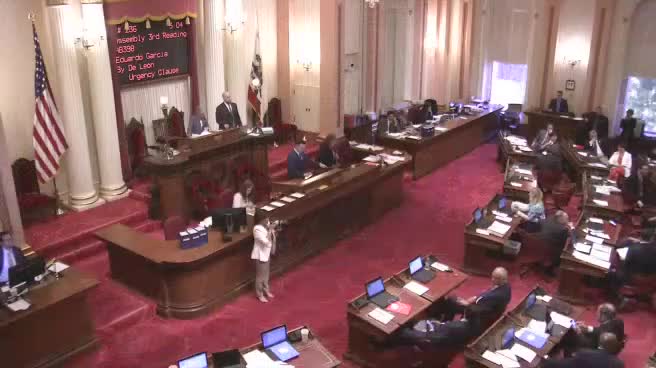
Bill Author

Bill Co-Author(s):