SB 568: Primary elections: election date.
- Session Year: 2017-2018
- House: Senate
- Latest Version Date: 2017-09-27
Existing law requires that the statewide direct primary be held on the first Tuesday after the first Monday in June in each even-numbered year. Existing law requires that the presidential primary be held on the first Tuesday after the first Monday in June in any year that is evenly divisible by the number 4, and requires that the presidential primary be consolidated with the statewide direct primary held in that year.
This bill would, beginning in 2019, change the date of the statewide direct primary and the presidential primary to the first Tuesday after the first Monday in March and would continue the requirement that those elections be consolidated.
Existing law requires that the statewide direct primary be held on the first Tuesday after the first Monday in June in each even-numbered year. Existing law requires that the presidential primary be held on the first Tuesday after the first Monday in June in any year that is evenly divisible by the number 4, and requires that the presidential primary be consolidated with the statewide direct primary held in that year.
This bill would, beginning in 2019, change the date of the statewide direct primary and the presidential primary to the 3rd first Tuesday after the first Monday in March and would continue the requirement that those elections be consolidated. However, in presidential election years, the bill would enable the Governor to select a date for the consolidated primary that is before the 3rd Tuesday in March, provided that (1) at least 3 states are scheduled to hold their primaries before the date that the Governor selects and (2) the Governor issues a proclamation calling the election at least 240 days before the date that he or she selects. The bill would also make conforming changes.
Existing law requires that the statewide direct primary be held on the first Tuesday after the first Monday in June in each even-numbered year. Existing law requires that the presidential primary be held on the first Tuesday after the first Monday in June in any year that is evenly divisible by the number 4, and requires that the presidential primary be consolidated with the statewide direct primary held in that year.
This bill would, beginning in 2019, change the date of the statewide direct primary and the presidential primary to the 3rd Tuesday in March and would continue the requirement that those elections be consolidated. However, in presidential election years, the bill would enable the Governor to select a date for the consolidated primary that is before the 3rd Tuesday in March, provided that (1) at least one state is 3 states are scheduled to hold its primary their primaries before the date that the Governor selects and (2) the Governor issues a proclamation calling the election at least 240 days before the date that he or she selects. The bill would also make conforming changes.
Existing law requires that the statewide direct primary be held on the first Tuesday after the first Monday in June in each even-numbered year. Existing law requires that the presidential primary be held on the first Tuesday after the first Monday in June in any year that is evenly divisible by the number 4, and requires that the presidential primary be consolidated with the statewide direct primary held in that year.
This bill would would, beginning in 2019, change the date of the statewide direct primary and the presidential primary to either (1) the 3rd Tuesday in March, or (2) a date selected by March and would continue the requirement that those elections be consolidated. However, in presidential election years, the bill would enable the Governor to select a date for the consolidated primary that is before the 3rd Tuesday in March, provided that (1) at least one state is scheduled to hold its primary before the date that the Governor selects and (2) the Governor issues a proclamation calling the election at least 240 days before the date the Governor selects. the date that he or she selects. The bill would also make conforming changes.
Existing law requires that the presidential primary be held on the first Tuesday after the first Monday in June in any year that is evenly divisible by the number 4, and requires that the presidential primary be consolidated with the statewide direct primary held in that year.
This bill would change the date of the presidential primary to either (1) the 3rd Tuesday in March, or (2) a date selected by the Governor that is before the 3rd Tuesday in March, provided that the Governor issues a proclamation calling the election at least 240 days before the date the Governor selects. The bill would also make conforming changes.
Existing law permits an elector, when registering to vote, to disclose the name of the political party he or she prefers. Existing law also permits an elector to decline to disclose a political party preference, but prohibits him or her from voting the ballot of a political party at a primary election for President of the United States or for a party committee, unless such an elector is permitted to do so by the political party, as specified. Existing law permits an elector to change his or her political preference by filing a new affidavit of registration.This bill would make technical, nonsubstantive changes to these provisions.Existing law permits an elector, when registering to vote, to disclose the name of the political party he or she prefers. Existing law also permits an elector to decline to disclose a political party preference, but prohibits him or her from voting the ballot of a political party at a primary election for President of the United States or for a party committee, unless such an elector is permitted to do so by the political party, as specified. Existing law permits an elector to change his or her political preference by filing a new affidavit of registration.
This bill would make technical, nonsubstantive changes to these provisions.
(a)Direct primary is the primary election held on the first Tuesday after the first Monday in June in each even-numbered year, to nominate candidates to be voted for at the ensuing general election or to elect members of a party central committee.
(b)This section shall remain in effect only until January 1, 2019, and as of that date is repealed.
SEC. 2.Section 316 is added to the Elections Code, to read:316.(a)Direct primary is the primary election held on the first Tuesday after the first Monday in March in each even-numbered year.
(b)This section shall become operative January 1, 2019.
SEC. 3.Section 340 of the Elections Code is amended to read:340.(a)Presidential primary is the primary election that is held on the first Tuesday after the first Monday in June in any year that is evenly divisible by the number four, and at which delegations to national party conventions are to be chosen.
(b)This section shall remain in effect only until January 1, 2019, and as of that date is repealed.
SEC. 4.Section 340 is added to the Elections Code, to read:340.(a)Presidential primary is the primary election that is held on the first Tuesday after the first Monday in March of any year that is evenly divisible by four.
(b)This section shall become operative January 1, 2019.
SEC. 5.Section 1000 of the Elections Code is amended to read:1000.The established election dates are as follows:
(a)The second Tuesday of April in each even-numbered year.
(b)The first Tuesday after the first Monday in March of each odd-numbered year.
(c)The first Tuesday after the first Monday in June in each year.
(d)The first Tuesday after the first Monday in November of each year.
(e)This section shall remain in effect only until January 1, 2019, and as of that date is repealed.
SEC. 6.Section 1000 is added to the Elections Code, to read:1000.The established election dates are as follows:
(a)The second Tuesday of April in each even-numbered year.
(b)The first Tuesday after the first Monday in March of each odd-numbered year.
(c)The first Tuesday after the first Monday in November of each year.
(d)The first Tuesday after the first Monday in March in each even-numbered year.
(e)This section shall become operative January 1, 2019.
SEC. 7.Section 1001 of the Elections Code is amended to read:1001.(a)Elections held in June and November of each even-numbered year are statewide elections and the dates of those elections are statewide election dates.
(b)This section shall remain in effect only until January 1, 2019, and as of that date is repealed.
SEC. 8.Section 1001 is added to the Elections Code, to read:1001.The following are statewide elections and their dates are statewide election dates:
(a)An election held in November of an even-numbered year.
(b)An election held in March of an even-numbered year.
(c)This section shall become operative January 1, 2019.
SEC. 9.Section 1201 of the Elections Code is amended to read:1201.(a)The statewide direct primary shall be held on the first Tuesday after the first Monday in June of each even-numbered year.
(b)This section shall remain in effect only until January 1, 2019, and as of that date is repealed.
SEC. 10.Section 1201 is added to the Elections Code, to read:1201.(a)The statewide direct primary shall be held on the first Tuesday after the first Monday in March of each even-numbered year.
(b)This section shall become operative January 1, 2019.
SEC. 11.Section 1202 of the Elections Code is amended to read:1202.(a)The presidential primary shall be held on the first Tuesday after the first Monday in June in any year that is evenly divisible by the number four, and shall be consolidated with the statewide direct primary held in that year.
(b)This section shall remain in effect only until January 1, 2019, and as of that date is repealed.
SEC. 12.Section 1202 is added to the Elections Code, to read:1202.(a)The presidential primary shall be consolidated with the statewide direct primary in any year that is evenly divisible by four, and the consolidated primary shall be held on the first Tuesday after the first Monday in March.
(b)This section shall become operative January 1, 2019.
(a)Direct primary is the primary election held on the first Tuesday after the first Monday in June in each even-numbered year, to nominate candidates to be voted for at the ensuing general election or to elect members of a party central committee.
(b)This section shall remain in effect only until January 1, 2019, and as of that date is repealed.
SEC. 2.Section 316 is added to the Elections Code, to read:316.(a)Direct primary is the primary election held on the third first Tuesday after the first Monday in March in each even-numbered year, or, as applicable in years evenly divisible by four, an earlier date selected by the Governor pursuant to subdivision (b) of Section 1202. year.
(b)This section shall become operative January 1, 2019.
SEC. 3.Section 340 of the Elections Code is amended to read:340.(a)Presidential primary is the primary election that is held on the first Tuesday after the first Monday in June in any year that is evenly divisible by the number four, and at which delegations to national party conventions are to be chosen.
(b)This section shall remain in effect only until January 1, 2019, and as of that date is repealed.
SEC. 4.Section 340 is added to the Elections Code, to read:340.(a)Presidential primary is the primary election that is held on the third first Tuesday after the first Monday in March of any year that is evenly divisible by four or, as applicable, an earlier date selected by the Governor pursuant to subdivision (b) of Section 1202. four.
(b)This section shall become operative January 1, 2019.
SEC. 5.Section 1000 of the Elections Code is amended to read:1000.The established election dates are as follows:
(a)The second Tuesday of April in each even-numbered year.
(b)The first Tuesday after the first Monday in March of each odd-numbered year.
(c)The first Tuesday after the first Monday in June in each year.
(d)The first Tuesday after the first Monday in November of each year.
(e)This section shall remain in effect only until January 1, 2019, and as of that date is repealed.
SEC. 6.Section 1000 is added to the Elections Code, to read:1000.The established election dates are as follows:
(a)The second Tuesday of April in each even-numbered year.
(b)The first Tuesday after the first Monday in March of each odd-numbered year.
(c)The first Tuesday after the first Monday in November of each year.
(d)The third first Tuesday after the first Monday in March in each even-numbered year, or, as applicable in years evenly divisible by four, an earlier date selected by the Governor pursuant to subdivision (b) of Section 1202. year.
(e)This section shall become operative January 1, 2019.
SEC. 7.Section 1001 of the Elections Code is amended to read:1001.(a)Elections held in June and November of each even-numbered year are statewide elections and the dates of those elections are statewide election dates.
(b)This section shall remain in effect only until January 1, 2019, and as of that date is repealed.
SEC. 8.Section 1001 is added to the Elections Code, to read:1001.The following are statewide elections and their dates are statewide election dates:
(a)An election held in November of an even-numbered year.
(b)An election held in March of an even-numbered year.
(c)An election held on a date set pursuant to subdivision (b) of Section 1202.(d)(c)This section shall become operative January 1, 2019.
SEC. 9.Section 1201 of the Elections Code is amended to read:1201.(a)The statewide direct primary shall be held on the first Tuesday after the first Monday in June of each even-numbered year.
(b)This section shall remain in effect only until January 1, 2019, and as of that date is repealed.
SEC. 10.Section 1201 is added to the Elections Code, to read:1201.(a)The statewide direct primary shall be held on the third first Tuesday after the first Monday in March of each even-numbered year, or, as applicable in years evenly divisible by four, an earlier date selected by the Governor pursuant to subdivision (b) of Section 1202. year.
(b)This section shall become operative January 1, 2019.
SEC. 11.Section 1202 of the Elections Code is amended to read:1202.(a)The presidential primary shall be held on the first Tuesday after the first Monday in June in any year that is evenly divisible by the number four, and shall be consolidated with the statewide direct primary held in that year.
(b)This section shall remain in effect only until January 1, 2019, and as of that date is repealed.
SEC. 12.Section 1202 is added to the Elections Code, to read:1202.(a)The presidential primary shall be consolidated with the statewide direct primary in any year that is evenly divisible by four, and the consolidated primary shall be held on the third first Tuesday after the first Monday in March or an earlier date selected by the Governor pursuant to subdivision (b). March.
(b)Notwithstanding subdivision (a), the Governor may schedule the consolidated primary for a Tuesday that is before the third Tuesday in March, provided that both of the following occur:(1)At least three states are scheduled to hold their primaries before the date that the Governor selects.(2)The Governor issues a proclamation calling the election for the consolidated primary at least 240 days before the date that the Governor selects.(c)(b)This section shall become operative January 1, 2019.
(a)Direct primary is the primary election held on the first Tuesday after the first Monday in June in each even-numbered year, to nominate candidates to be voted for at the ensuing general election or to elect members of a party central committee.
(b)This section shall remain in effect only until January 1, 2019, and as of that date is repealed.
SEC. 2.Section 316 is added to the Elections Code, to read:316.(a)Direct primary is the primary election held on the third Tuesday in March in each even-numbered year, or, as applicable in years evenly divisible by four, an earlier date selected by the Governor pursuant to subdivision (b) of Section 1202.
(b)This section shall become operative January 1, 2019.
SEC. 3.Section 340 of the Elections Code is amended to read:340.(a)Presidential primary is the primary election that is held on the first Tuesday after the first Monday in June in any year that is evenly divisible by the number four, and at which delegations to national party conventions are to be chosen.
(b)This section shall remain in effect only until January 1, 2019, and as of that date is repealed.
SEC. 4.Section 340 is added to the Elections Code, to read:340.(a)Presidential primary is the primary election that is held on the third Tuesday in March of any year that is evenly divisible by four or, as applicable, an earlier date selected by the Governor pursuant to subdivision (b) of Section 1202.
(b)This section shall become operative January 1, 2019.
SEC. 5.Section 1000 of the Elections Code is amended to read:1000.The established election dates are as follows:
(a)The second Tuesday of April in each even-numbered year.
(b)The first Tuesday after the first Monday in March of each odd-numbered year.
(c)The first Tuesday after the first Monday in June in each year.
(d)The first Tuesday after the first Monday in November of each year.
(e)This section shall remain in effect only until January 1, 2019, and as of that date is repealed.
SEC. 6.Section 1000 is added to the Elections Code, to read:1000.The established election dates are as follows:
(a)The second Tuesday of April in each even-numbered year.
(b)The first Tuesday after the first Monday in March of each odd-numbered year.
(c)The first Tuesday after the first Monday in November of each year.
(d)The third Tuesday in March in each even-numbered year, or, as applicable in years evenly divisible by four, an earlier date selected by the Governor pursuant to subdivision (b) of Section 1202.
(e)This section shall become operative January 1, 2019.
SEC. 7.Section 1001 of the Elections Code is amended to read:1001.(a)Elections held in June and November of each even-numbered year are statewide elections and the dates of those elections are statewide election dates.
(b)This section shall remain in effect only until January 1, 2019, and as of that date is repealed.
SEC. 8.Section 1001 is added to the Elections Code, to read:1001.The following are statewide elections and their dates are statewide election dates:
(a)An election held in November of an even-numbered year.
(b)An election held in March of an even-numbered year.
(c)An election held on a date set pursuant to subdivision (b) of Section 1202.
(d)This section shall become operative January 1, 2019.
SEC. 9.Section 1201 of the Elections Code is amended to read:1201.(a)The statewide direct primary shall be held on the first Tuesday after the first Monday in June of each even-numbered year.
(b)This section shall remain in effect only until January 1, 2019, and as of that date is repealed.
SEC. 10.Section 1201 is added to the Elections Code, to read:1201.(a)The statewide direct primary shall be held on the third Tuesday in March of each even-numbered year, or, as applicable in years evenly divisible by four, an earlier date selected by the Governor pursuant to subdivision (b) of Section 1202.
(b)This section shall become operative January 1, 2019.
SEC. 11.Section 1202 of the Elections Code is amended to read:1202.(a)The presidential primary shall be held on the first Tuesday after the first Monday in June in any year that is evenly divisible by the number four, and shall be consolidated with the statewide direct primary held in that year.
(b)This section shall remain in effect only until January 1, 2019, and as of that date is repealed.
SEC. 12.Section 1202 is added to the Elections Code, to read:1202.(a)The presidential primary shall be consolidated with the statewide direct primary in any year that is evenly divisible by four, and the consolidated primary shall be held on the third Tuesday in March or an earlier date selected by the Governor pursuant to subdivision (b).
(b)Notwithstanding subdivision (a), the Governor may schedule the consolidated primary for a Tuesday that is before the third Tuesday in March, provided that both of the following occur:
(1)At least one state is three states are scheduled to hold its primary their primaries before the date that the Governor selects.
(2)The Governor issues a proclamation calling the election for the consolidated primary at least 240 days before the date that the Governor selects.
(c)This section shall become operative January 1, 2019.
(a)Direct primary is the primary election held on the first Tuesday after the first Monday in June in each even-numbered year, to nominate candidates to be voted for at the ensuing general election or to elect members of a party central committee.
(b)This section shall remain in effect only until January 1, 2019, and as of that date is repealed.
SEC. 2.Section 316 is added to the Elections Code, to read:316.(a)Direct primary is the primary election held on the third Tuesday in March in each even-numbered year, or, as applicable in years evenly divisible by four, an earlier date selected by the Governor pursuant to subdivision (b) of Section 1202.
(b)This section shall become operative January 1, 2019.
SEC. 3.Section 340 of the Elections Code is amended to read:340.(a)Presidential primary is the primary election that is held on the first Tuesday after the first Monday in June in any year that is evenly divisible by the number four, and at which delegations to national party conventions are to be chosen.
(b)This section shall remain in effect only until January 1, 2019, and as of that date is repealed.
SEC. 4.Section 340 is added to the Elections Code, to read:340.(a)Presidential primary is the primary election that is held on the third Tuesday in March of any year that is evenly divisible by four or, as applicable, an earlier date selected by the Governor pursuant to subdivision (b) of Section 1202.
(b)This section shall become operative January 1, 2019.
SEC. 5.Section 1000 of the Elections Code is amended to read:1000.The established election dates are as follows:
(a)The second Tuesday of April in each even-numbered year.
(b)The first Tuesday after the first Monday in March of each odd-numbered year.
(c)The first Tuesday after the first Monday in June in each year.
(d)The first Tuesday after the first Monday in November of each year.
(e)This section shall remain in effect only until January 1, 2019, and as of that date is repealed.
SEC. 6.Section 1000 is added to the Elections Code, to read:1000.The established election dates are as follows:
(a)The second Tuesday of April in each even-numbered year.
(b)The first Tuesday after the first Monday in March of each odd-numbered year.
(c)The first Tuesday after the first Monday in November of each year.
(d)The third Tuesday in March in each even-numbered year, or, as applicable in years evenly divisible by four, an earlier date selected by the Governor pursuant to subdivision (b) of Section 1202.
(e)This section shall become operative January 1, 2019.
SEC. 7.Section 1001 of the Elections Code is amended to read:1001.(a)Elections held in June and November of each even-numbered year are statewide elections and the dates of those elections are statewide election dates.
(b)This section shall remain in effect only until January 1, 2019, and as of that date is repealed.
SEC. 8.Section 1001 is added to the Elections Code, to read:1001.The following are statewide elections and their dates are statewide election dates:
(a)An election held in November of an even-numbered year.
(b)An election held in March of an even-numbered year.
(c)An election held on a date set pursuant to subdivision (b) of Section 1202.
(d)This section shall become operative January 1, 2019.
SEC. 9.Section 1201 of the Elections Code is amended to read:1201.(a)The statewide direct primary shall be held on the first Tuesday after the first Monday in June of each even-numbered year.
(b)This section shall remain in effect only until January 1, 2019, and as of that date is repealed.
SEC. 10.Section 1201 is added to the Elections Code, to read:1201.(a)The statewide direct primary shall be held on the third Tuesday in March of each even-numbered year, or, as applicable in years evenly divisible by four, an earlier date selected by the Governor pursuant to subdivision (b) of Section 1202.
(b)This section shall become operative January 1, 2019.
SEC. 11.Section 1202 of the Elections Code is amended to read:1202.(a)The presidential primary shall be held on the first Tuesday after the first Monday in June in any year that is evenly divisible by the number four, and shall be consolidated with the statewide direct primary held in that year.
(b)This section shall remain in effect only until January 1, 2019, and as of that date is repealed.
SEC. 12.Section 1202 is added to the Elections Code, to read:1202.(a)The presidential primary shall be consolidated with the statewide direct primary in any year that is evenly divisible by four, and the consolidated primary shall be held on the third Tuesday in March or an earlier date selected by the Governor pursuant to subdivision (b).
(b)Notwithstanding subdivision (a), the Governor may schedule the consolidated primary for a Tuesday that is before the third Tuesday in March, provided that both of the following occur:
(1)At least one state is scheduled to hold its primary before the date that the Governor selects.
(2)The Governor issues a proclamation calling the election for the consolidated primary at least 240 days before the date that the Governor selects.
(c)This section shall become operative January 1, 2019.
SECTION 1.Section 316 of the Elections Code is amended to read:316.Direct primary is the primary election held on either the first Tuesday after the first Monday in June in an even-numbered year that is not evenly divisible by the number four, or on a date described in Section 340 in a year that is evenly divisible by the number four, to nominate candidates to be voted for at the ensuing general election or to elect members of a party central committee.SEC. 2.Section 340 of the Elections Code is amended to read:340.Presidential primary is the primary election that is held in any year that is evenly divisible by the number four, and at which delegations to national party conventions are to be chosen. The presidential primary shall be held on either of the following dates:(a)The third Tuesday in March.(b)A date selected by the Governor that is before the third Tuesday in March, provided that the Governor issues a proclamation calling the election at least 240 days before the date the Governor selects.SEC. 3.Section 1000 of the Elections Code is amended to read:1000.The established election dates are as follows:(a)The second Tuesday of April in each even-numbered year.(b)The first Tuesday after the first Monday in March of each odd-numbered year.(c)The first Tuesday after the first Monday in June in each year.(d)The first Tuesday after the first Monday in November of each year.(e)In a year that is evenly divisible by the number four, either of the following dates:(1)The third Tuesday in March.(2)A date selected by the Governor that is before the third Tuesday in March, provided that the Governor issues a proclamation calling the election at least 240 days before the date the Governor selects.SEC. 4.Section 1001 of the Elections Code is amended to read:1001.The following are statewide elections and their dates are statewide election dates:(a)An election held in November of an even-numbered year.(b)An election held in June of an even-numbered year that is not evenly divisible by the number four.(c)An election held on a date set pursuant to Section 1202.SEC. 5.Section 1201 of the Elections Code is amended to read:1201.The statewide direct primary shall be held on either the first Tuesday after the first Monday in June of an even-numbered year that is not evenly divisible by the number four, or on a date set pursuant to Section 1202 in a year that is evenly divisible by the number four.SEC. 6.Section 1202 of the Elections Code is amended to read:1202.The presidential primary shall be consolidated with the statewide direct primary held in that year, and shall be held in any year that is evenly divisible by the number four on either of the following dates:(a)The third Tuesday in March.(b)A date selected by the Governor that is before the third Tuesday in March, provided that the Governor issues a proclamation calling the election at least 240 days before the date the Governor selects.Direct primary is the primary election held on either the first Tuesday after the first Monday in June in each an even-numbered year, year that is not evenly divisible by the number four, or on a date described in Section 340 in a year that is evenly divisible by the number four, to nominate candidates to be voted for at the ensuing general election or to elect members of a party central committee.
SEC. 2.Section 340 of the Elections Code is amended to read:340.Presidential primary is the primary election that is held on the first Tuesday after the first Monday in June in any year that is evenly divisible by the number four, and at which delegations to national party conventions are to be chosen. The presidential primary shall be held on either of the following dates:
(a)The third Tuesday in March.
(b)A date selected by the Governor that is before the third Tuesday in March, provided that the Governor issues a proclamation calling the election at least 240 days before the date the Governor selects.
SEC. 3.Section 1000 of the Elections Code is amended to read:1000.The established election dates are as follows:
(a)The second Tuesday of April in each even-numbered year.
(b)The first Tuesday after the first Monday in March of each odd-numbered year.
(c)The first Tuesday after the first Monday in June in each year.
(d)The first Tuesday after the first Monday in November of each year.
(e)In a year that is evenly divisible by the number four, either of the following dates:
(1)The third Tuesday in March.
(2)A date selected by the Governor that is before the third Tuesday in March, provided that the Governor issues a proclamation calling the election at least 240 days before the date the Governor selects.
SEC. 4.Section 1001 of the Elections Code is amended to read:1001.Elections held in June and November of each even-numbered year The following are statewide elections and the their dates of those elections are statewide election dates. dates:
(a)An election held in November of an even-numbered year.
(b)An election held in June of an even-numbered year that is not evenly divisible by the number four.
(c)An election held on a date set pursuant to Section 1202.
SEC. 5.Section 1201 of the Elections Code is amended to read:1201.The statewide direct primary shall be held on either the first Tuesday after the first Monday in June of each an even-numbered year. year that is not evenly divisible by the number four, or on a date set pursuant to Section 1202 in a year that is evenly divisible by the number four.
SEC. 6.Section 1202 of the Elections Code is amended to read:1202.The presidential primary shall be held on the first Tuesday after the first Monday in June in any year that is evenly divisible by the number four, and shall be consolidated with the statewide direct primary held in that year. year, and shall be held in any year that is evenly divisible by the number four on either of the following dates:
(a)The third Tuesday in March.
(b)A date selected by the Governor that is before the third Tuesday in March, provided that the Governor issues a proclamation calling the election at least 240 days before the date the Governor selects.
SECTION 1.Section 2151 of the Elections Code is amended to read:2151.(a)At the time of registering and of transferring registration, an elector may disclose the name of the political party that he or she prefers. The name of that political party shall be stated in the affidavit of registration and the index.(b)(1)The voter registration card shall inform the affiant that an elector may decline to disclose a political party preference, but a person shall not be entitled to vote the ballot of a political party at a primary election for President of the United States or for a party committee unless he or she has disclosed the name of the party that he or she prefers or unless he or she has declined to disclose a party preference and the political party, by party rule duly noticed to the Secretary of State, authorizes a person who has declined to disclose a party preference to vote the ballot of that political party. The voter registration card shall further inform the affiant that a registered voter may vote for any candidate at a primary election for state elective office or congressional office, regardless of the disclosed party preference of the registrant or the candidate seeking that office or the refusal of the registrant or candidate to disclose a party preference.(2)The voter registration card shall include a listing of all qualified political parties. As part of that listing, the voter registration card shall also contain an option that permits the affiant to decline to disclose a party preference. This option shall be placed at the end of the listing of qualified political parties.(c)A person shall not be permitted to vote the ballot of a party or for delegates to the convention of a party other than the party disclosed as preferred in his or her registration, except as provided by Section 2152 or unless he or she has declined to disclose a party preference and the party, by party rule duly noticed to the Secretary of State, authorizes a person who has declined to disclose a party preference to vote the party ballot or for delegates to the party convention.(d)As of the effective date of the statute that added this subdivision, a voter who previously stated a political party affiliation when registering to vote shall be deemed to have disclosed that same party as his or her political party preference unless the voter files a new affidavit of registration disclosing a different political party preference or no political party preference. A voter who previously declined to state a party affiliation shall be deemed to have declined to disclose a party preference unless the voter files a new affidavit of registration disclosing a different political party preference.(e)The Secretary of State may continue to supply existing affidavits of registration prior to printing new or revised forms that reflect the changes required pursuant to any amendment made to this section.(a)At the time of registering and of transferring registration, an elector may disclose the name of the political party that he or she prefers. The name of that political party shall be stated in the affidavit of registration and the index.
(b)(1)The voter registration card shall inform the affiant that an elector may decline to disclose a political party preference, but a person shall not be entitled to vote the ballot of a political party at a primary election for President of the United States or for a party committee unless he or she has disclosed the name of the party that he or she prefers or unless he or she has declined to disclose a party preference and the political party, by party rule duly noticed to the Secretary of State, authorizes a person who has declined to disclose a party preference to vote the ballot of that political party. The voter registration card shall further inform the affiant that a registered voter may vote for any candidate at a primary election for state elective office or congressional office, regardless of the disclosed party preference of the registrant or the candidate seeking that office or the refusal of the registrant or candidate to disclose a party preference.
(2)The voter registration card shall include a listing of all qualified political parties. As part of that listing, the voter registration card shall also contain an option that permits the affiant to decline to disclose a party preference. This option shall be placed at the end of the listing of qualified political parties.
(c)A person shall not be permitted to vote the ballot of a party or for delegates to the convention of a party other than the party disclosed as preferred in his or her registration, except as provided by Section 2152 or unless he or she has declined to disclose a party preference and the party, by party rule duly noticed to the Secretary of State, authorizes a person who has declined to disclose a party preference to vote the party ballot or for delegates to the party convention.
(d)As of the effective date of the statute that added this subdivision, any a voter who previously stated a political party affiliation when registering to vote shall be deemed to have disclosed that same party as his or her political party preference unless the voter files a new affidavit of registration disclosing a different political party preference or no political party preference. Any A voter who previously declined to state a party affiliation shall be deemed to have declined to disclose a party preference unless the voter files a new affidavit of registration disclosing a different political party preference.
(e)The Secretary of State may continue to supply existing affidavits of registration prior to printing new or revised forms that reflect the changes required pursuant to any amendment made to this section.
|
Date
|
Status
|
|---|---|
| Sep 27, 2017 | Chaptered by Secretary of State. Chapter 335, Statutes of 2017. |
| Sep 27, 2017 | Approved by the Governor. |
| Sep 22, 2017 | Enrolled and presented to the Governor at 3 p.m. |
| Sep 16, 2017 | Assembly amendments concurred in. (Ayes 26. Noes 10.) Ordered to engrossing and enrolling. |
| Sep 15, 2017 | In Senate. Concurrence in Assembly amendments pending. |
| Sep 15, 2017 | Read third time. Passed. Ordered to the Senate. |
| Aug 31, 2017 | Read third time and amended. |
| Jul 20, 2017 | Read second time. Ordered to third reading. |
| Jul 19, 2017 | From committee: Do pass. (Ayes 12. Noes 4.) (July 19). |
| Jun 21, 2017 | Read second time and amended. Re-referred to Com. on APPR. |
| Jun 20, 2017 | From committee: Do pass as amended and re-refer to Com. on APPR. (Ayes 4. Noes 1.) (June 14). |
| Jun 6, 2017 | From committee with author's amendments. Read second time and amended. Re-referred to Com. on E. & R. |
| May 22, 2017 | Referred to Com. on E. & R. |
| May 4, 2017 | In Assembly. Read first time. Held at Desk. |
| May 4, 2017 | Read third time. Passed. (Ayes 32. Noes 6. Page 953.) Ordered to the Assembly. |
| May 2, 2017 | Read second time. Ordered to third reading. |
| May 1, 2017 | From committee: Be ordered to second reading pursuant to Senate Rule 28.8. |
| Apr 21, 2017 | Set for hearing May 1. |
| Apr 19, 2017 | From committee: Do pass and re-refer to Com. on APPR. (Ayes 5. Noes 0. Page 743.) (April 18). Re-referred to Com. on APPR. |
| Apr 7, 2017 | Set for hearing April 18. |
| Apr 5, 2017 | Re-referred to Com. on E. & C.A. |
| Mar 28, 2017 | From committee with author's amendments. Read second time and amended. Re-referred to Com. on RLS. |
| Mar 2, 2017 | Referred to Com. on RLS. |
| Feb 21, 2017 | From printer. May be acted upon on or after March 23. |
| Feb 17, 2017 | Introduced. Read first time. To Com. on RLS. for assignment. To print. |
|
Date
|
Description
|
Location
|
Votes
|
|
|---|---|---|---|---|
| Sep 16, 2017 | Unfinished Business SB568 Lara et al. Concurrence | Senate Floor |
Passed |
|
| Sep 15, 2017 | SB 568 Lara Senate Third Reading By MULLIN | Assembly Floor |
Passed |
|
| Jul 19, 2017 | Do pass. | Assembly Standing Committee on Appropriations |
Passed |
|
| Jun 14, 2017 | Do pass as amended and be re-referred to the Committee on [Appropriations] | Assembly Standing Committee on Elections and Redistricting |
Passed |
|
| May 4, 2017 | Senate 3rd Reading SB568 Lara | Senate Floor |
Passed |
|
| Apr 18, 2017 | Do pass, but first be re-referred to the Committee on [Appropriations] | Senate Standing Committee on Elections and Constitutional Amendments |
Passed |
This list shows positions taken on this bill by organizations on the date displayed, which is linked to the original source.
Positions by individuals are not included.
|
Organization
|
Position
|
Date
|
|---|---|---|
| California Association of Clerks and Election Officials | ** Against | Jun 12, 2017 |
| California Voter Foundation | ** Support | Sep 15, 2017 |
| California's Secretary of State | * Support | Jul 19, 2017 |
| City Of Beverly Hills | ** Support | Sep 15, 2017 |
| City Of La Miranda | ** Support | Sep 15, 2017 |
| City of Lakewood | ** Support | Sep 15, 2017 |
| City of Norwalk | ** Support | Sep 15, 2017 |
| One individual | ** Against | Jun 12, 2017 |
| Peace & Freedom Party Of California | ** Against | Sep 15, 2017 |
| rooted in resistance political action group | ** Support | Jun 12, 2017 |
| Rural County Representatives of California | ** Against | Sep 15, 2017 |
| Secretary of State Alex Padilla | ** Support | Jun 12, 2017 |
Office of Senate Floor Analyses (916) 651-1520 Fax: (916) 327-4478 | SB |
UNFINISHED BUSINESS
Bill No: SB 568
:
SENATE ELECTIONS & C.A. COMMITTEE: 5-0, 4/18/17
AYES: Stern, Anderson, Allen, Hertzberg, Leyva
SENATE APPROPRIATIONS COMMITTEE: Senate Rule 28.8
SENATE FLOOR: 32-6, 5/4/17
AYES: Allen, Anderson, Atkins, Beall, Berryhill, Bradford, Cannella, De León, Dodd, Gaines, Galgiani, Hernandez, Hill, Hueso, Jackson, Lara, Leyva, McGuire, Mendoza, Mitchell, Monning, Newman, Nielsen, Pan, Portantino, Roth, Skinner, Stern, Stone, Wieckowski, Wiener, Wilk
NOES: Bates, Fuller, Moorlach, Morrell, Nguyen, Vidak
NO VOTE RECORDED: Glazer, Hertzberg
ASSEMBLY FLOOR: 47-14, 9/15/17
(ROLL CALL NOT AVAILABLE)
SOURCE: Secretary of State, Alex Padilla
DIGEST:
This bill changes the date of the statewide direct primary and the presidential primary to the first Tuesday after the first Monday in March and continues the requirement that those elections be consolidated.
Assembly Amendments
change, beginning in 2019, the date of the statewide direct primary and the presidential primary to the first Tuesday after the first Monday in March and continue the requirement that those elections be consolidated.
ANALYSIS: Existing law requires that the presidential primary election be held on the first Tuesday after the first Monday in June in presidential election years and requires that it be consolidated with the statewide direct primary election held in that year.
This bill:
- Moves the primary election in non-Presidential years from the first Tuesday after the first Monday in June to the first Tuesday after the first Monday in March.
- Moves the primary election in Presidential years from the first Tuesday after the first Monday in June to the first Tuesday after the first Monday in March.
- Makes corresponding changes.
- Becomes operative on January 1, 2019.
Background
A Brief History of California's Primary Elections. From 1946 to 1994, California's primary elections were held in June of every even-numbered year. Frustrated, however, with the perceived lack impact that California had on the presidential nominating process, the state passed several bills to move up the presidential primary election. In 1996, California's presidential primary was held on the fourth Tuesday in March. In 2000, the presidential primary was held on the first Tuesday in March.
Regardless of the earlier primary dates, California struggled to gain influence on the selection of presidential nominees as other states also moved up their primaries. In 2000, California's March 7th Presidential Primary came after nine other states held their primaries or caucuses and was held on the same day as 13 other state contests.
The legislation that permanently moved the primary to the first Tuesday in March, SB 1999 (Costa, Chapter 913, Statutes of 1998), did so for all future primary elections - not just presidential primary elections. Discouraged from the perceived lack of clout California was having in the presidential primary process, even with the earlier primary date, and concerned that the earlier primary for legislative, congressional, and statewide offices was increasing the costs of campaigning by lengthening the campaign season, the Legislature and Governor chose to move California's primary election, including presidential primaries, back to June. SB 1730 (Johnson, Chapter 817, Statutes of 2005) required California's primary election to be held on the first Tuesday after the first Monday in June in every even-numbered year.
For 2008, the Legislature and Governor again attempted to increase California's influence in the presidential campaign and encourage candidates to discuss and debate issues relevant to this state. SB 113 (Calderon, Chapter 2, Statutes of 2007) moved California's presidential primary to February 5th - the earliest vote in state history. In addition to moving up the presidential primary, SB 113 required a separate primary election for legislative and congressional offices to be held in June. By the time California voters went to the polls on Election Day, 33 other states had also moved up their presidential primaries and 15 states held their primary on the same day as California.
The presidential primary election in 2008 marked the first time in recent history that California did not consolidate its presidential primary with the statewide direct primary election, and as a result California held three separate statewide elections that year. According to information provided by the State Controller's Office and the Secretary of State's (SOS) Office, California spent approximately $96,980,195 on the stand-alone presidential primary election in 2008.
AB 80 (Fong, Chapter 138, Statutes of 2011) changed the date of the presidential primary election back to the first Tuesday after the first Monday in June of presidential election years from the first Tuesday in February of those years. During 2012 and 2016, both the presidential primary and state primary were held in June.
Party Rules. When a state holds a presidential primary or caucus, it is actually selecting delegates who are pledged to support a specified presidential candidate to represent the state at the political party national conventions. Those delegates then vote at the party convention to choose the party's presidential nominee. While a state is free to schedule its presidential primary election or caucus whenever it wants, it may face sanctions at the national convention if its primary election or caucus is held at a time or in a manner that violates the national party rules.
The national Democratic and Republican party rules establish a time period during which state parties are permitted to select delegates to the national convention. That time period is commonly referred to as the "window." Historically, the parties have allowed certain states to schedule their presidential contests prior to the designated window without penalty. For 2016, both major parties enacted rules providing that only Iowa, New Hampshire, South Carolina and Nevada could schedule primaries or caucuses prior to February 1.
Comments
- Is Earlier Always Better? Since no one can accurately predict the dynamics of future presidential election campaigns, it is impossible to know in advance whether or not a given state would have more influence on the nomination of a parties’ candidate by holding their primary or caucus earlier or later. The longer a contest remains competitive between two or more candidates the more influence later primaries will have.
- All Season Long. Changing the statewide primary to early March will once again create an eight-month campaign period between the date of the primary and the November general elections for legislative candidates, congressional candidates, and any local candidates whose elections are consolidated with the two statewide elections. To put that into perspective, the primary election will occur before the start of the Major League Baseball season and the general election will likely not occur after the last game of the World Series. A longer campaign season may also result in more expensive campaigns.
Related/Prior Legislation
AB 84 (Mullin), which is pending in the Assembly Elections and Redistricting Committee, changes the date of the presidential primary election to first Tuesday after the first Monday in March.
AB 80, (Fong, Chapter 138, Statutes of 2011), changed the date of the presidential primary election back to the first Tuesday after the first Monday in June of presidential election years from the first Tuesday in February of those years.
SB 113 (Calderon, Chapter 2, Statutes of 2007) moved California's presidential primary election from June to February in presidential election years and prohibited it from being consolidated with the statewide direct primary.
AB 2949 (Umberg of 2006) would have required the SOS to schedule California's presidential primary election before, or on the same day as, the earliest presidential primary election held in any other state. AB 2949 was held on the Assembly Appropriations Committee's suspense file.
AB 1730 (Johnson, Chapter 817, Statutes of 2004) moved California's statewide direct primary election to the first Tuesday after the first Monday in June and required it to be consolidated with the presidential primary election in presidential election years.
(See the Background section, above, for a more complete discussion of prior legislation.)
FISCAL EFFECT: Appropriation: Fiscal Com.: Local:
According to the Assembly Appropriations Committee, this bill has negligible fiscal effect.
California Voter Foundation
City of Beverly Hills
City of La Miranda
City of Lakewood
City of Norwalk
Peace & Freedom Party of California
Rural County Representatives of California
ARGUMENT IN SUPPORT: According to the author, California is the largest, most diverse state in the nation with one of the world’s largest economies. The state makes up 12 percent of the nation’s population, yet Californians voices have all but been silenced when it comes to choosing a presidential nominee. The state is one of the very last to hold primary elections in June. California voters have not played a decisive role in the presidential nomination process since 1980. Over the past 25 years, all of the presidential primaries for both the Republican and Democratic parties were effectively decided by June. The first three states to hold primary elections, Iowa, New Hampshire, and South Carolina are among the least diverse and have significantly older electorates than the rest of the country.
In 2008 California moved up its presidential primary and saw a dramatic increase in voter engagement, when 2.4 million more voters came out than the 2004 election, the highest participation rate (57.7% of registered voters) since 1980, when turnout reached 63%. Late primaries also contribute to voter suppression. Despite record-high voter registration in 2016, only 47.7% of registered voters turned out, the lowest percentage since 1928 for a year with no incumbent president. Additionally, with the state’s primary so late in the year, candidates do not have to respond to California’s unique issues and challenges. The current primary election system stifles California’s voice in the most important elections. SB 568 will ensure our most populous and diverse state’s voice is heard.
ARGUMENT IN OPPOSITION: In a letter opposing this bill the Peace and Freedom Party of California stated the following:
This bill would seriously lengthen the already-too-long election cycle, with the likely result of fewer voters participating in a primary election, especially a gubernatorial primary, and possibly the general election as well.
All candidates would have to begin the nomination process of their election campaign the year prior to the primary and general election. Some issues may not be known at the time of such an early start date and as such some would be candidates may not become candidates.
Candidates seeking to qualify for the primary ballot by gathering signatures in lieu of filing fees would have to collect those signatures 14 months before the general election. This is a time when voters are not thinking about the upcoming elections. As a result, this would hamper signature gathering.
9/15/17 19:09:42
**** END ****
SENATE THIRD READING
STR Bill Id:SB 568
Author:(Lara)
As Amended Ver:August 31, 2017
Majority vote
SENATE VOTE: 32-6
Committee | Votes | Ayes | Noes |
Elections | 4-1 | Berman, Low, Mullin, Weber | Harper |
Appropriations | 12-4 | Gonzalez Fletcher, Bloom, Bocanegra, Bonta, Quirk, Chau, Eggman, Friedman, Eduardo Garcia, McCarty, Muratsuchi, Reyes | Bigelow, Brough, Fong, Obernolte |
SUMMARY: Moves California's primary elections from June to March, beginning with the 2020 election. Specifically, this bill:
- Moves the primary election in non-Presidential years from the first Tuesday after the first Monday in June to the first Tuesday after the first Monday in March.
- Moves the primary election in Presidential years from the first Tuesday after the first Monday in June to the first Tuesday after the first Monday in March.
- Makes corresponding changes.
- Becomes operative on January 1, 2019.
FISCAL EFFECT: According to the Assembly Appropriations Committee, negligible fiscal effect.
COMMENTS: According to the author, "California is the largest, most diverse state in the nation with one of the world's largest economies. The state makes up 12% of the nation's population, yet Californians voices have all but been silenced when it comes to choosing a presidential nominee. The state is one of the very last to hold primary elections in June. California voters have not played a decisive role in the presidential nomination process since 1980. Over the past 25 years, all of the presidential primaries for both the Republican and Democratic parties were effectively decided by June. The first three states to hold primary elections, Iowa, New Hampshire, and South Carolina are among the least diverse and have significantly older electorates than the rest of the country. In 2008 California moved up its presidential primary and saw a dramatic increase in voter engagement, when 2.4 million more voters came out than the 2004 election, the highest participation rate (57.7% of registered voters) since 1980, when turnout reached 63%.... Despite record-high voter registration in 2016, only 47.7% of registered voters turned out, the lowest percentage since 1928 for a year with no incumbent president. Additionally, with the state's primary so late in the year, candidates do not have to respond to California's unique issues and challenges. The current primary election system stifles California's voice in the most important elections. SB 568 will ensure our most populous and diverse state's voice is heard."
California has moved the date of its presidential primary elections several times in the past in order to move ahead of other states' primaries, in an effort to have more impact in the presidential nominating process. However, past efforts at moving up the dates of the presidential primary have not necessarily resulted in California having a larger role in deciding the presidential nominations.
From 1946 to 1994, California's primary election was held in June of every even-numbered year. AB 2196 (Costa), Chapter 828, Statutes of 1993, moved the presidential primary to the fourth Tuesday in March for the 1996 election cycle. After AB 2196 was enacted, however, several states moved their primaries or caucuses ahead, and by the time that California voters cast their ballots on March 26, 1996, 27 states had already held presidential primaries or caucuses.
SB 1999 (Costa), Chapter 913, Statutes of 1998, moved the date for all future primary elections – not just presidential primary elections – to the first Tuesday in March. When voters went to the polls on March 7, 2000, California's presidential primary came after nine other states had held their primaries or caucuses, and was held on the same day as 13 other state contests. In California's primary election in 2004, many states leapfrogged ahead of California, and by the time the polls opened in California on March 2, 2004, twenty other states had already apportioned their delegates in primaries or caucuses. Furthermore, California shared its March 2nd primary date with nine other states.
SB 113 (Calderon), Chapter 2, Statutes of 2007, sought to correct California's lack of influence in presidential primaries by moving the state's primary to an even earlier date: February 5 in 2008 – the earliest vote in state history. By the time California voters went to the polls on election day, 33 other states had also moved up their presidential primaries and 15 states held their primary on the same day as California – giving February 5th the title of 'Super Tuesday.'
When a state holds a presidential primary or caucus, it is actually selecting delegates who are pledged to support a specified presidential candidate to represent the state at the political party national conventions. Those delegates then vote at the party convention to choose the party's presidential nominee. While a state is free to schedule its presidential primary election or caucus whenever it wants, the state may face sanctions at the national convention if its primary election or caucus is held at a time or in a manner that violates the national party rules. AB 84 (Mullin) of the current legislative session, which is pending in the Senate, moves California's primary election from June to the first Tuesday after the first Monday in March, in presidential election years only.
Analysis Prepared by: Bish Paul / E. & R. / (916) 319-2094 FN: 0001431
SENATE THIRD READING
STR Bill Id:SB 568
Author:(Lara)
As Amended Ver:June 21, 2017
Majority vote
SENATE VOTE: 32-6
Committee | Votes | Ayes | Noes |
Elections | 4-1 | Berman, Low, Mullin, Weber | Harper |
Appropriations | 12-4 | Gonzalez Fletcher, Bloom, Bocanegra, Bonta, Quirk, Chau, Eggman, Friedman, Eduardo Garcia, McCarty, Muratsuchi, Reyes | Bigelow, Brough, Fong, Obernolte |
SUMMARY: Moves California's primary elections from June to March, beginning with the 2020 election. Specifically, this bill:
- Moves the primary election in non-Presidential years from the first Tuesday after the first Monday in June to the third Tuesday in March.
- Moves the primary election in Presidential years from the first Tuesday after the first Monday in June to the third Tuesday in March, or to an earlier date selected by the Governor, as specified.
- Gives the Governor the authority to move the presidential primary election to a Tuesday before the third Tuesday in March by issuing a proclamation calling for the election at least 240 days in advance of the date that the Governor selects if at least three states are scheduled to hold their primaries before the date that the Governor selects.
- Makes corresponding changes.
- Becomes operative on January 1, 2019.
EXISTING LAW:
- Requires the presidential primary to be held on the first Tuesday after the first Monday in June in any year evenly divisible by the number four, and requires that the presidential primary be consolidated with the statewide direct primary held on that date.
- Requires the statewide direct primary to be held on the first Tuesday after the first Monday in June in any year evenly divisible by the number two, to nominate candidates to be voted for at the ensuing general election.
FISCAL EFFECT: According to the Assembly Appropriations Committee, negligible fiscal effect.
COMMENTS: According to the author, "California is the largest, most diverse state in the nation with one of the world's largest economies. The state makes up 12% of the nation's population, yet Californians voices have all but been silenced when it comes to choosing a presidential nominee. The state is one of the very last to hold primary elections in June. California voters have not played a decisive role in the presidential nomination process since 1980. Over the past 25 years, all of the presidential primaries for both the Republican and Democratic parties were effectively decided by June. The first three states to hold primary elections, Iowa, New Hampshire, and South Carolina are among the least diverse and have significantly older electorates than the rest of the country. In 2008 California moved up its presidential primary and saw a dramatic increase in voter engagement, when 2.4 million more voters came out than the 2004 election, the highest participation rate (57.7% of registered voters) since 1980, when turnout reached 63%.... Despite record-high voter registration in 2016, only 47.7% of registered voters turned out, the lowest percentage since 1928 for a year with no incumbent president. Additionally, with the state's primary so late in the year, candidates do not have to respond to California's unique issues and challenges. The current primary election system stifles California's voice in the most important elections. SB 568 will ensure our most populous and diverse state's voice is heard."
California has moved the date of its presidential primary elections several times in the past in order to move ahead of other states' primaries, in an effort to have more impact in the presidential nominating process. However, past efforts at moving up the dates of the presidential primary have not necessarily resulted in California having a larger role in deciding the presidential nominations.
From 1946 to 1994, California's primary election was held in June of every even-numbered year. AB 2196 (Costa), Chapter 828, Statutes of 1993, moved the presidential primary to the fourth Tuesday in March for the 1996 election cycle. After AB 2196 was enacted, however, several states moved their primaries or caucuses ahead, and by the time that California voters cast their ballots on March 26, 1996, 27 states had already held presidential primaries or caucuses.
SB 1999 (Costa), Chapter 913, Statutes of 1998, moved the date for all future primary elections – not just presidential primary elections – to the first Tuesday in March. When voters went to the polls on March 7, 2000, California's presidential primary came after nine other states had held their primaries or caucuses, and was held on the same day as 13 other state contests. In California's primary election in 2004, many states leapfrogged ahead of California, and by the time the polls opened in California on March 2, 2004, twenty other states had already apportioned their delegates in primaries or caucuses. Furthermore, California shared its March 2nd primary date with nine other states.
SB 113 (Calderon), Chapter 2, Statutes of 2007, sought to correct California's lack of influence in presidential primaries by moving the state's primary to an even earlier date: February 5 in 2008 – the earliest vote in state history. By the time California voters went to the polls on election day, 33 other states had also moved up their presidential primaries and 15 states held their primary on the same day as California – giving February 5th the title of 'Super Tuesday.'
When a state holds a presidential primary or caucus, it is actually selecting delegates who are pledged to support a specified presidential candidate to represent the state at the political party national conventions. Those delegates then vote at the party convention to choose the party's presidential nominee. While a state is free to schedule its presidential primary election or caucus whenever it wants, the state may face sanctions at the national convention if its primary election or caucus is held at a time or in a manner that violates the national party rules. AB 84 (Mullin), which is pending on the Senate Floor, moves California's primary election from June to the first Tuesday after the first Monday in March, in presidential election years only.
Analysis Prepared by: Bish Paul / E. & R. / (916) 319-2094 FN: 0001292
Date of Hearing: July 19, 2017
ASSEMBLY COMMITTEE ON APPROPRIATIONS
Lorena Gonzalez Fletcher, Chair
SBPCA Bill Id:SB 568
Author:(Lara) – As Amended Ver:June 21, 2017
Policy Committee: | Elections and Redistricting | Vote: | 4 - 1 |
|
| ||
|
|
Urgency: No State Mandated Local Program: No Reimbursable: No
SUMMARY:
This bill moves California's primary elections from June to March, beginning with the 2020 election. Specifically, this bill:
- Moves the primary election in non-Presidential years from the first Tuesday after the first Monday in June to the third Tuesday in March.
- Moves the primary election in Presidential years from the first Tuesday after the first Monday in June to the third Tuesday in March, or to an earlier date selected by the Governor, as specified.
- Gives the Governor the authority to move the presidential primary election to a Tuesday before the third Tuesday in March by issuing a proclamation calling for the election at least 240 days in advance of the date that the Governor selects if at least three states are scheduled to hold their primaries before the date that the Governor selects.
FISCAL EFFECT:
Negligible fiscal effect.
COMMENTS:
- Background. Existing law requires the presidential primary to be held on the first Tuesday after the first Monday in June in any year evenly divisible by the number four, and requires that the presidential primary be consolidated with the statewide direct primary held on that date. Existing law also requires the statewide direct primary to be held on the first Tuesday after the first Monday in June in any year evenly divisible by the number two, to nominate candidates to be voted for at the ensuing general election.
- Purpose. According to the author, “California voters have not played a decisive role in the presidential nomination process since 1980. Over the past 25 years, all of the presidential primaries for both the Republican and Democratic parties were effectively decided by June.” In addition, the author states, “In 2008 California moved up its presidential primary and saw a dramatic increase in voter engagement, when 2.4 million more voters came out than the 2004 election, the highest participation rate (57.7% of registered voters) since 1980, when turnout reached 63%.”
- Related Legislation: AB 84 (Mullin) of the current Legislative Session, which is pending in the Senate, will move California's primary election from June to the first Tuesday after the first Monday in March, in presidential election years only.
- Prior Legislation. AB 2196 (Costa), Chapter 828, Statutes of 1993, required the statewide direct primary election to be moved to the fourth Tuesday in March, and to remain consolidated with the presidential primary election, but only for the 1996 election.
SB 1999 (Costa), Chapter 913, Statutes of 1998, required the statewide direct primary election to be held on the first Tuesday in March, and to be consolidated with the presidential primary in presidential election years.
SB 1730 (Johnson), Chapter 817, Statutes of 2004, moved California's statewide direct primary election to the first Tuesday after the first Monday in June and required it to be consolidated with the presidential primary election in presidential election years.
SB 113 (Calderon), Chapter 2, Statutes of 2007, moved California's presidential primary election to the first Tuesday in February of any year evenly divisible by the number four while maintaining the statewide direct primary election in June. It also required that the two elections be held separately during presidential election years.
AB 80 (Fong), Chapter 138, Statutes of 2011, moved the presidential primary election from February back to June in presidential election years, and consolidated it with the statewide direct primary election.
Analysis Prepared by: Jessica Peters / APPR. / (916) 319-2081
Date of Hearing: June 14, 2017
ASSEMBLY COMMITTEE ON ELECTIONS AND REDISTRICTING
Marc Berman, Chair
SBPCA Bill Id:SB 568
Author:(Lara) – As Amended Ver:June 6, 2017
AS PROPOSED TO BE AMENDED
SENATE VOTE: 32-6
SUBJECT: Primary elections: election date.
SUMMARY: Moves California's primary elections from June to March, beginning with the 2020 election. Specifically, this bill:
- Moves the primary election in non-Presidential years from the first Tuesday after the first Monday in June to the third Tuesday in March.
- Moves the primary election in Presidential years from the first Tuesday after the first Monday in June to the third Tuesday in March, or to an earlier date selected by the Governor, as specified.
- Gives the Governor the authority to move the presidential primary election to a Tuesday before the third Tuesday in March by issuing a proclamation calling for the election at least 240 days in advance of the date that the Governor selects if at least three states are scheduled to hold their primaries before the date that the Governor selects.
- Makes the provisions of this bill operative on January 1, 2019.
- Makes corresponding changes.
EXISTING LAW:
- Requires the presidential primary to be held on the first Tuesday after the first Monday in June in any year evenly divisible by the number four, and requires that the presidential primary be consolidated with the statewide direct primary held on that date.
- Requires the statewide direct primary to be held on the first Tuesday after the first Monday in June in any year evenly divisible by the number two, to nominate candidates to be voted for at the ensuing general election.
FISCAL EFFECT: Unknown
COMMENTS:
- Author’s Amendments: After the committee's deadline for pre-committee author's amendments, the author proposed amendments to increase the number of states that have to schedule their primary before California from one, as proposed by the introduced version of this bill, to three. This analysis reflects those proposed author's amendments.
- Purpose of the Bill: According to the author:
California is the largest, most diverse state in the nation with one of the world’s largest economies. The state makes up 12 percent of the nation’s population, yet Californians voices have all but been silenced when it comes to choosing a presidential nominee. The state is one of the very last to hold primary elections in June. California voters have not played a decisive role in the presidential nomination process since 1980. Over the past 25 years, all of the presidential primaries for both the Republican and Democratic parties were effectively decided by June. The first three states to hold primary elections, Iowa, New Hampshire, and South Carolina are among the least diverse and have significantly older electorates than the rest of the country.
In 2008 California moved up its presidential primary and saw a dramatic increase in voter engagement, when 2.4 million more voters came out than the 2004 election, the highest participation rate (57.7% of registered voters) since 1980, when turnout reached 63%.... Despite record-high voter registration in 2016, only 47.7% of registered voters turned out, the lowest percentage since 1928 for a year with no incumbent president. Additionally, with the state’s primary so late in the year, candidates do not have to respond to California’s unique issues and challenges. The current primary election system stifles California’s voice in the most important elections. SB 568 will ensure our most populous and diverse state’s voice is heard.
- Other States: California has moved the date of its presidential primary elections several times in the past in order to move ahead of other states’ primaries, in an effort to have more impact in the presidential nominating process. However, past efforts at moving up the dates of the presidential primary have not necessarily resulted in California having a larger role in deciding the presidential nominations.
From 1946 to 1994, California's primary election was held in June of every even-numbered year. AB 2196 (Costa), Chapter 828, Statutes of 1993, moved the presidential primary to the fourth Tuesday in March for the 1996 election cycle. After AB 2196 was enacted, however, several states moved their primaries or caucuses ahead, and by the time that California voters cast their ballots on March 26, 1996, 27 states had already held presidential primaries or caucuses.
SB 1999 (Costa), Chapter 913, Statutes of 1998, moved the date for all future primary elections—not just presidential primary elections—to the first Tuesday in March. When voters went to the polls on March 7, 2000, California's presidential primary came after nine other states had held their primaries or caucuses, and was held on the same day as 13 other state contests. In California's primary election in 2004, many states leapfrogged ahead of California, and by the time the polls opened in California on March 2, 2004, twenty other states had already apportioned their delegates in primaries or caucuses. Furthermore, California shared its March 2nd primary date with nine other states.
SB 113 (Calderon), Chapter 2, Statutes of 2007, sought to correct California’s lack of influence in presidential primaries by moving the state's primary to an even earlier date: February 5 in 2008 – the earliest vote in state history. By the time California voters went to the polls on election day, 33 other states had also moved up their presidential primaries and 15 states held their primary on the same day as California – giving February 5th the title of 'Super Tuesday.' - Effect on Campaigns: Changing the statewide primary to March will create an eight-month gap between the primary and general election for congressional candidates, legislative candidates, and local candidates whose elections are consolidated with the statewide elections. That eight-month gap could increase campaign costs and may impose a burden on candidates who may need to maintain campaign infrastructure (offices, staff, consultants, etc.) between the March primary and the November general election.
- Party Rules: When a state holds a presidential primary or caucus, it is actually selecting delegates who are pledged to support a specified presidential candidate to represent the state at the political party national conventions. Those delegates then vote at the party convention to choose the party's presidential nominee. While a state is free to schedule its presidential primary election or caucus whenever it wants, it is prudent to keep in mind that the state may face sanctions at the national convention if its primary election or caucus is held at a time or in a manner that violates the national party rules.
- Arguments in Support: In a letter sent in support of a prior version of this bill, the sponsor of this bill, Secretary of State Alex Padilla, wrote:
Unfortunately with a June presidential primary, California runs the risk of being irrelevant in the nominating process. California's June primary ensures that our voters rarely have a say in who will be a political party's choice for President. Over the last 25 years, all of the presidential primaries for both the Republican and Democratic parties were effectively decided by June. The winning candidate had either accumulated enough delegates to secure the nomination, the competition dropped out or the candidate was an incumbent.
SB 568 is similar to New Hampshire state law that ensures that their primary is held early in the nomination process. New Hampshire, by statute sets the date of their election to the second Tuesday in March, with flexibility to move it earlier. California is the world's 6th largest economy and is the nation's largest, most diverse state. People of color comprise 61.5% of California's 39 million residents. Los Angeles County is home to more Latinos, Asian-Americans, and American Indians than any other county in the nation. California's immense economy is also diverse and thriving in many sectors. Four of the largest companies in the world are based in California. California is the top state for agriculture, forestry and hunting as well as manufacturing. California produces over half of the United States' technology revenue. As the most populous and diverse state, California represents the ever changing face of our nation. With a June presidential primary, however, our state is too often an afterthought in the presidential nominating process. SB 568 will establish an earlier presidential primary to ensure that the issues important to Californians are prioritized by presidential candidates from all political parties.
- Arguments in Opposition: The Rural County Representatives of California (RCRC) and the California Association of Clerks and Election Officials (CACEO) have both submitted letters of opposition to a prior version of this bill. While recent amendments to the bill have addressed many of the concerns raised in their letters of opposition, RCRC and CACEO both expressed concern about the increasing length of time between the primary and the general election if the primary is moved to March. They write that candidates who are elected outright in March (those candidates for nonpartisan office who receive more than 50% of the vote and do not need a run-off) will have to wait till December or early January to assume office. Furthermore, incumbent candidates who were defeated in March would have nearly a year in office where they would serve as a lame-duck.
- Related Legislation: AB 84 (Mullin), which is pending in the Senate Elections & Constitutional Amendments Committee, moves California's primary election from June to the first Tuesday after the first Monday in March, in presidential election years only. AB 84 was approved by this Committee by a 6-1 vote.
- Previous Legislation: AB 2196 (Costa), Chapter 828, Statutes of 1993, required the statewide direct primary election to be moved to the fourth Tuesday in March, and to remain consolidated with the presidential primary election, but only for the 1996 election. SB 1999 (Costa), Chapter 913, Statutes of 1998, required the statewide direct primary election to be held on the first Tuesday in March, and to be consolidated with the presidential primary in presidential election years.
SB 1730 (Johnson), Chapter 817, Statutes of 2004, moved California's statewide direct primary election to the first Tuesday after the first Monday in June and required it to be consolidated with the presidential primary election in presidential election years.
AB 2949 (Umberg) of 2006, would have required the Secretary of State to schedule California's presidential primary election before, or on the same day as, the earliest presidential primary election held in any other state. AB 2949 was held on the Assembly Appropriations Committee's suspense file.
SB 113 (Calderon), Chapter 2, Statutes of 2007, moved California's presidential primary election to the first Tuesday in February of any year evenly divisible by the number four while maintaining the statewide direct primary election in June. It also required that the two elections be held separately during presidential election years.
AB 80 (Fong), Chapter 138, Statutes of 2011, moved the presidential primary election from February back to June in presidential election years, and consolidated it with the statewide direct primary election.
REGISTERED SUPPORT / OPPOSITION:
Support
Secretary of State Alex Padilla (sponsor) (prior version)
California Voter Foundation (prior version)
Rooted in Resistance Political Action Group (prior version)
Opposition
California Association of Clerks and Election Officials (prior version)
Rural County Representatives of California (prior version)
One individual (prior version)
Analysis Prepared by: Bish Paul / E. & R. / (916) 319-2094
Office of Senate Floor Analyses (916) 651-1520 Fax: (916) 327-4478 | SB |
THIRD READING
Bill No: SB 568
:
SENATE ELECTIONS & C.A. COMMITTEE: 5-0, 4/18/17
AYES: Stern, Anderson, Allen, Hertzberg, Leyva
SENATE APPROPRIATIONS COMMITTEE: Senate Rule 28.8
SOURCE: Secretary of State Alex Padilla
DIGEST: This bill changes the date of the presidential primary election to either the third Tuesday in March or a prior date selected by the Governor, as specified.
ANALYSIS: Existing law requires that the presidential primary election be held on the first Tuesday after the first Monday in June in presidential election years and requires that it be consolidated with the statewide direct primary election held in that year.
This bill:
- Changes the date of the presidential primary election to either:
- The third Tuesday in March, or
- A date selected by the Governor that is before the third Tuesday in March, provided that the Governor issues a proclamation calling the election at least 240 days before the date the Governor selects.
- Provides that the statewide direct primary election be consolidated with the March (or earlier) presidential primary election in presidential election years.
- Makes other conforming changes.
Background
A Brief History of California's Primary Elections. From 1946 to 1994, California's primary elections were held in June of every even-numbered year. Frustrated, however, with the perceived lack impact that California had on the presidential nominating process, the state passed several bills to move up the presidential primary election. In 1996, California's presidential primary was held on the fourth Tuesday in March. In 2000, the presidential primary was held on the first Tuesday in March.
Regardless of the earlier primary dates, California struggled to gain influence on the selection of presidential nominees as other states also moved up their primaries. In 2000, California's March 7th Presidential Primary came after nine other states held their primaries or caucuses and was held on the same day as 13 other state contests.
The legislation that permanently moved the primary to the first Tuesday in March, SB 1999 (Costa, Chapter 913, Statutes of 1998), did so for all future primary elections - not just presidential primary elections. Discouraged from the perceived lack of clout California was having in the presidential primary process, even with the earlier primary date, and concerned that the earlier primary for legislative, congressional, and statewide offices was increasing the costs of campaigning by lengthening the campaign season, the Legislature and Governor chose to move California's primary election, including presidential primaries, back to June. SB 1730 (Johnson, Chapter 817, Statutes of 2005) required California's primary election to be held on the first Tuesday after the first Monday in June in every even-numbered year.
For 2008, the Legislature and Governor again attempted to increase California's influence in the presidential campaign and encourage candidates to discuss and debate issues relevant to this state. SB 113 (Calderon, Chapter 2, Statutes of 2007) moved California's presidential primary to February 5th - the earliest vote in state history. In addition to moving up the presidential primary, SB 113 required a separate primary election for legislative and congressional offices to be held in June. By the time California voters went to the polls on Election Day, 33 other states had also moved up their presidential primaries and 15 states held their primary on the same day as California.
The presidential primary election in 2008 marked the first time in recent history that California did not consolidate its presidential primary with the statewide direct primary election, and as a result California held three separate statewide elections that year. According to information provided by the State Controller's Office and the Secretary of State's (SOS) Office, California spent approximately $96,980,195 on the stand-alone presidential primary election in 2008.
AB 80 (Fong, Chapter 138, Statutes of 2011) changed the date of the presidential primary election back to the first Tuesday after the first Monday in June of presidential election years from the first Tuesday in February of those years. During 2012 and 2016, both the presidential primary and state primary were held in June.
Party Rules. When a state holds a presidential primary or caucus, it is actually selecting delegates who are pledged to support a specified presidential candidate to represent the state at the political party national conventions. Those delegates then vote at the party convention to choose the party's presidential nominee. While a state is free to schedule its presidential primary election or caucus whenever it wants, it may face sanctions at the national convention if its primary election or caucus is held at a time or in a manner that violates the national party rules.
The national Democratic and Republican party rules establish a time period during which state parties are permitted to select delegates to the national convention. That time period is commonly referred to as the "window." Historically, the parties have allowed certain states to schedule their presidential contests prior to the designated window without penalty. For 2016, both major parties enacted rules providing that only Iowa, New Hampshire, South Carolina and Nevada could schedule primaries or caucuses prior to February 1.
Comments
- According to the author, California is the largest, most diverse state in the nation with one of the world’s largest economies. The state makes up 12 percent of the nation’s population, yet Californians voices have all but been silenced when it comes to choosing a presidential nominee. The state is one of the very last to hold primary elections in June. California voters have not played a decisive role in the presidential nomination process since 1980. Over the past 25 years, all of the presidential primaries for both the Republican and Democratic parties were effectively decided by June. The first three states to hold primary elections, Iowa, New Hampshire, and South Carolina are among the least diverse and have significantly older electorates than the rest of the country.
In 2008 California moved up its presidential primary and saw a dramatic increase in voter engagement, when 2.4 million more voters came out than the 2004 election, the highest participation rate (57.7% of registered voters) since 1980, when turnout reached 63%. Late primaries also contribute to voter suppression. Despite record-high voter registration in 2016, only 47.7% of registered voters turned out, the lowest percentage since 1928 for a year with no incumbent president. Additionally, with the state’s primary so late in the year, candidates do not have to respond to California’s unique issues and challenges. The current primary election system stifles California’s voice in the most important elections. SB 568 will ensure our most populous and diverse state’s voice is heard.
In the past when California has moved up its presidential primary elections, other states have followed suit. In 1996, 2000, and 2004, California chose to move its primary elections earlier, but other states did the same, limiting the impact of an earlier primary. SB 568 ensures California’s voters of all parties have the opportunity for their vote to count and influence the national election of a presidential nominee. The bill also grants the Governor to call an election early in the event other states also move up their primary elections, thereby ensuring California’s voters will be heard and hold influence in the national presidential elections.
- Is Earlier Always Better? Since no one can accurately predict the dynamics of future presidential election campaigns, it is impossible to know in advance whether or not a given state would have more influence on the nomination of a parties’ candidate by holding their primary or caucus earlier or later. The longer a contest remains competitive between two or more candidates the more influence later primaries will have.
- All Season Long. Changing the statewide primary to March or earlier will once again create an eight-month campaign period between the date of the primary and the November general elections for legislative candidates, congressional candidates, and any local candidates whose elections are consolidated with the two statewide elections. To put that into perspective, the primary election will occur before the start of the Major League Baseball season and the general election will likely not occur until after the last game of the World Series. A longer campaign season may also result in more expensive campaigns.
Related/Prior Legislation
AB 84 (Mullin, 2017), which is pending in the Assembly Elections and Redistricting Committee, changes the date of the presidential primary election to the first Tuesday after the first Monday in March.
AB 80 (Fong, Chapter 138, Statutes of 2011) changed the date of the presidential primary election back to the first Tuesday after the first Monday in June of presidential election years from the first Tuesday in February of those years.
SB 113 (Calderon, Chapter 2, Statutes of 2007) moved California's presidential primary election from June to February in presidential election years and prohibited it from being consolidated with the statewide direct primary.
AB 2949 (Umberg, 2006) would have required the SOS to schedule California's presidential primary election before, or on the same day as, the earliest presidential primary election held in any other state. AB 2949 was held on the Assembly Appropriations Committee's suspense file.
AB 1730 (Johnson, Chapter 817, Statutes of 2004) moved California's statewide direct primary election to the first Tuesday after the first Monday in June and required it to be consolidated with the presidential primary election in presidential election years.
NOTE: See the Background section, above, for a more complete discussion of prior legislation.
FISCAL EFFECT: Appropriation: Fiscal Com.: Local:
Secretary of State Alex Padilla (source)
None received
5/3/17 12:24:36
**** END ****
SENATE COMMITTEE ON
ELECTIONS AND CONSTITUTIONAL AMENDMENTS
Senator Henry Stern, Chair
2017 - 2018 Regular
Bill No: 568 Hearing Date: 4/18/17
Author: | Lara | ||
Version: |
| ||
Urgency: | Fiscal: | ||
Consultant: | |||
Subject:
DIGEST
This bill changes the date of the presidential primary election to either the third Tuesday in March or a prior date selected by the Governor, as specified.
ANALYSIS
Existing law:
- Requires that the presidential primary election be held on the first Tuesday after the first Monday in June in presidential election years and requires that it be consolidated with the statewide direct primary election held in that year.
This bill:
- Changes the date of the presidential primary election to either:
- The third Tuesday in March, or
- A date selected by the Governor that is before the third Tuesday in March, provided that the Governor issues a proclamation calling the election at least 240 days before the date the Governor selects.
- Provides that the statewide direct primary election be consolidated with the March (or earlier) presidential primary election in presidential election years.
- Makes other conforming changes.
BACKGROUND
A Brief History of California's Primary Elections. From 1946 to 1994, California's primary elections were held in June of every even-numbered year. Frustrated, however, with the perceived lack impact that California had on the presidential nominating process, the state passed several bills to move up the presidential primary election. In 1996, California's presidential primary was held on the fourth Tuesday in March. In 2000, the presidential primary was held on the first Tuesday in March.
Regardless of the earlier primary dates, California struggled to gain influence on the selection of presidential nominees as other states also moved up their primaries. In 2000, California's March 7th Presidential Primary came after nine other states held their primaries or caucuses and was held on the same day as 13 other state contests.
The legislation that permanently moved the primary to the first Tuesday in March, SB 1999 (Costa, Chapter 913, Statutes of 1998), did so for all future primary elections - not just presidential primary elections. Discouraged from the perceived lack of clout California was having in the presidential primary process, even with the earlier primary date, and concerned that the earlier primary for legislative, congressional, and statewide offices was increasing the costs of campaigning by lengthening the campaign season, the Legislature and Governor chose to move California's primary election, including presidential primaries, back to June. SB 1730 (Johnson, Chapter 817, Statutes of 2005), required California's primary election to be held on the first Tuesday after the first Monday in June in every even-numbered year.
For 2008, the Legislature and Governor again attempted to increase California's influence in the presidential campaign and encourage candidates to discuss and debate issues relevant to this state. SB 113 (Calderon, Chapter 2, Statutes of 2007), moved California's presidential primary to February 5th - the earliest vote in state history. In addition to moving up the presidential primary, SB 113 required a separate primary election for legislative and congressional offices to be held in June. By the time California voters went to the polls on Election Day, 33 other states had also moved up their presidential primaries and 15 states held their primary on the same day as California.
The presidential primary election in 2008 marked the first time in recent history that California did not consolidate its presidential primary with the statewide direct primary election, and as a result California held three separate statewide elections that year. According to information provided by the State Controller's Office and the Secretary of State's (SOS) Office, California spent approximately $96,980,195 on the stand-alone presidential primary election in 2008.
AB 80, (Fong, Chapter 138, Statutes of 2011), changed the date of the presidential primary election back to the first Tuesday after the first Monday in June of presidential election years from the first Tuesday in February of those years. During 2012 and 2016, both the presidential primary and state primary were held in June.
Party Rules. When a state holds a presidential primary or caucus, it is actually selecting delegates who are pledged to support a specified presidential candidate to represent the state at the political party national conventions. Those delegates then vote at the party convention to choose the party's presidential nominee. While a state is free to schedule its presidential primary election or caucus whenever it wants, it may face sanctions at the national convention if its primary election or caucus is held at a time or in a manner that violates the national party rules.
The national Democratic and Republican party rules establish a time period during which state parties are permitted to select delegates to the national convention. That time period is commonly referred to as the "window." Historically, the parties have allowed certain states to schedule their presidential contests prior to the designated window without penalty. For 2016, both major parties enacted rules providing that only Iowa, New Hampshire, South Carolina and Nevada could schedule primaries or caucuses prior to February 1.
COMMENTS
- According to the author: California is the largest, most diverse state in the nation with one of the world’s largest economies. The state makes up 12 percent of the nation’s population, yet Californians voices have all but been silenced when it comes to choosing a presidential nominee. The state is one of the very last to hold primary elections in June. California voters have not played a decisive role in the presidential nomination process since 1980. Over the past 25 years, all of the presidential primaries for both the Republican and Democratic parties were effectively decided by June. The first three states to hold primary elections, Iowa, New Hampshire, and South Carolina are among the least diverse and have significantly older electorates than the rest of the country.
In 2008 California moved up its presidential primary and saw a dramatic increase in voter engagement, when 2.4 million more voters came out than the 2004 election, the highest participation rate (57.7% of registered voters) since 1980, when turnout reached 63%. Late primaries also contribute to voter suppression. Despite record-high voter registration in 2016, only 47.7% of registered voters turned out, the lowest percentage since 1928 for a year with no incumbent president. Additionally, with the state’s primary so late in the year, candidates do not have to respond to California’s unique issues and challenges. The current primary election system stifles California’s voice in the most important elections. SB 568 will ensure our most populous and diverse state’s voice is heard.
In the past when California has moved up its presidential primary elections, other states have followed suit. In 1996, 2000, and 2004, California chose to move its primary elections earlier, but other states did the same, limiting the impact of an earlier primary. SB 568 would ensure California’s voters of all parties have the opportunity for their vote to count and influence the national election of a presidential nominee. The bill also grants the Governor to call an election early in the event other states also move up their primary elections, thereby ensuring California’s voters will be heard and hold influence in the national presidential elections. - Is Earlier Always Better? Since no one can accurately predict the dynamics of future presidential election campaigns, it is impossible to know in advance whether or not a given state would have more influence on the nomination of a parties’ candidate by holding their primary or caucus earlier or later. The longer a contest remains competitive between two or more candidates the more influence later primaries will have.
- All Season Long. Changing the statewide primary to March or earlier will once again create an eight-month campaign period between the date of the primary and the November general elections for legislative candidates, congressional candidates, and any local candidates whose elections are consolidated with the two statewide elections. To put that into perspective, the primary election will occur before the start of the Major League Baseball season and the general election will likely not occur after the last game of the World Series. A longer campaign season may also result in more expensive campaigns.
RELATED/PRIOR LEGISLATION
AB 84 (Mullin), which is pending in the Assembly Elections and Redistricting Committee, would change the date of the presidential primary election to first Tuesday after the first Monday in March.
AB 80, (Fong, Chapter 138, Statutes of 2011), changed the date of the presidential primary election back to the first Tuesday after the first Monday in June of presidential election years from the first Tuesday in February of those years.
SB 113 (Calderon, Chapter 2, Statutes of 2007) moved California's presidential primary election from June to February in presidential election years and prohibited it from being consolidated with the statewide direct primary.
AB 2949 (Umberg of 2006) would have required the SOS to schedule California's presidential primary election before, or on the same day as, the earliest presidential primary election held in any other state. AB 2949 was held on the Assembly Appropriations Committee's suspense file.
AB 1730 (Johnson, Chapter 817, Statutes of 2004) moved California's statewide direct primary election to the first Tuesday after the first Monday in June and required it to be consolidated with the presidential primary election in presidential election years.
(See the BACKGROUND section, above, for a more complete discussion of prior legislation.)
POSITIONS
Sponsor: Secretary of State
Support: None received
Oppose: None received
-- END --
Discussed in Hearing
 12MIN
Assembly Floor
 2MIN
Senate Floor
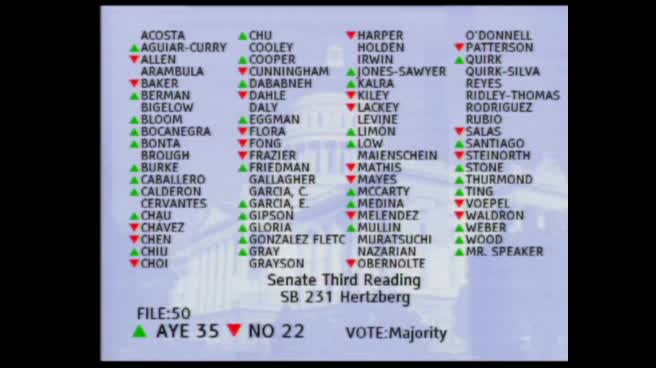 2MIN
Assembly Floor
 10SEC
Assembly Floor
 1MIN
Assembly Standing Committee on Appropriations
 19MIN
Assembly Standing Committee on Elections and Redistricting
 5MIN
Senate Floor
Bill Author

Bill Co-Author(s):
