SB 605: Small Business Procurement and Contract Act: small business.
- Session Year: 2017-2018
- House: Senate
- Latest Version Date: 2017-10-11
The Small Business Procurement and Contract Act requires the Director of General Services and the heads of other state agencies that enter into contracts for the acquisition of goods, services, and information technology and for the construction of state facilities to establish goals for the participation of small businesses and microbusinesses in these contracts, to provide for a small business preference in the award of these contracts, to give special consideration and special assistance to small businesses, and, whenever possible, to make awards to small businesses, as specified. Existing law defines a small business for these purposes as, among other things, an independently owned and operated business that is not dominant in its field of operation that has average annual gross receipts of $10 million, as may be adjusted to reflect changes in the California Consumer Price Index, or less over the previous 3 years. Existing law defines a microbusiness as a small business which, together with affiliates, has average annual gross receipts of $2.5 million, as may be adjusted to reflect changes in the California Consumer Price Index, or less over the previous 3 years. Existing law requires the director to conduct a biennial review of those average annual gross receipt levels and authorizes the director to adjust the average annual gross receipts threshold to reflect changes in the California Consumer Price Index for all items. Existing law requires a contractor requesting a small business or microbusiness preference to do so under penalty of perjury.
This bill would revise those definitions to increase, commencing January 1, 2019, the dollar amount threshold for a small business to $15 million and for a microbusiness to $5 million and commencing on that date would require those dollar amounts to be adjusted to reflect changes in the California Consumer Price Index biennially. The bill would establish a new definition of small business for the purposes of public works contracts and engineering contracts for public works projects, as specified, with alternate thresholds for number of employees and average annual gross receipts, operative January 1, 2019. The bill would allow directors of the department and other state agencies to count contractors that would be considered a small business or microbusiness in 2019, if the directors are unable to make the small business participation goals under existing law. The bill, by revising those definitions, would allow additional contractors to qualify as a small business or microbusiness, thus expanding the contractors authorized to request a preference filed under penalty of perjury. By expanding the crime of perjury, this bill would impose a state-mandated local program.
The California Constitution requires the state to reimburse local agencies and school districts for certain costs mandated by the state. Statutory provisions establish procedures for making that reimbursement.
This bill would provide that no reimbursement is required by this act for a specified reason.
The Small Business Procurement and Contract Act requires the Director of General Services and the heads of other state agencies that enter into contracts for the acquisition of goods, services, and information technology and for the construction of state facilities to establish goals for the participation of small businesses and microbusinesses in these contracts, to provide for a small business preference in the award of these contracts, to give special consideration and special assistance to small businesses, and, whenever possible, to make awards to small businesses, as specified. Existing law defines a small business for these purposes as, among other things, an independently owned and operated business that is not dominant in its field of operation that has average annual gross receipts of $10 million, as may be adjusted to reflect changes in the California Consumer Price Index, or less over the previous 3 years. Existing law defines a microbusiness as a small business which, together with affiliates, has average annual gross receipts of $2.5 million, as may be adjusted to reflect changes in the California Consumer Price Index, or less over the previous 3 years. Existing law requires the director to conduct a biennial review of those average annual gross receipt levels and authorizes the director to adjust the average annual gross receipts threshold to reflect changes in the California Consumer Price Index for all items. Existing law requires a contractor requesting a small business or microbusiness preference to do so under penalty of perjury.
This bill would revise those definitions to increase, commencing January 1, 2019, the dollar amount threshold for a small business to $15 million and for a microbusiness to $5 million and commencing on that date would require those dollar amounts to be adjusted to reflect changes in the California Consumer Price Index biennially. The bill would establish a new definition of small business for the purposes of public works contracts, contracts and engineering contracts for public works projects, as specified, with alternate thresholds for number of employees and average annual gross receipts, operative January 1, 2019. The bill would allow directors of the department and other state agencies to count contractors that would be considered a small business or microbusiness in 2019, if the directors are unable to make the small business participation goals under existing law. The bill, by revising those definitions, would allow additional contractors to qualify as a small business or microbusiness, thus expanding the contractors authorized to request a preference filed under penalty of perjury. By expanding the crime of perjury, this bill would impose a state-mandated local program.
The California Constitution requires the state to reimburse local agencies and school districts for certain costs mandated by the state. Statutory provisions establish procedures for making that reimbursement.
This bill would provide that no reimbursement is required by this act for a specified reason.
The Small Business Procurement and Contract Act requires the Director of General Services and the heads of other state agencies that enter into contracts for the acquisition of goods, services, and information technology and for the construction of state facilities to establish goals for the participation of small businesses and microbusinesses in these contracts, to provide for a small business preference in the award of these contracts, to give special consideration and special assistance to small businesses, and, whenever possible, to make awards to small businesses, as specified. Existing law defines a small business for these purposes as, among other things, an independently owned and operated business that is not dominant in its field of operation that has average annual gross receipts of $10 million, as may be adjusted to reflect changes in the California Consumer Price Index, or less over the previous 3 years. Existing law defines a microbusiness as a small business which, together with affiliates, has average annual gross receipts of $2.5 million, as may be adjusted to reflect changes in the California Consumer Price Index, or less over the previous 3 years. Existing law requires the director to conduct a biennial review of those average annual gross receipt levels and authorizes the director to adjust the average annual gross receipts threshold to reflect changes in the California Consumer Price Index for all items. Existing law requires a contractor requesting a small business or microbusiness preference to do so under penalty of perjury.
This bill would revise those definitions by increasing to increase, commencing January 1, 2019, the dollar amount threshold for a small business to $15 million and for a microbusiness to $5 million and commencing on that date would require those dollar amounts to be adjusted to reflect changes in the California Consumer Price Index biennially. The bill would further revise the establish a new definition of small business by specifying that, for the purposes of public works contracts, small business means a business with 200 or fewer employees and average annual gross receipts of $36 million or less. with alternate thresholds for number of employees and average annual gross receipts, operative January 1, 2019. The bill would allow directors of the department and other state agencies to count contractors that would be considered a small business or microbusiness under the changes made by this bill for the year this bill is enacted in 2019, if the directors are unable to make the small business participation goals under the existing laws. law. The bill bill, by revising those definitions, would allow more additional contractors to qualify as a small business or microbusiness, thus expanding the group of contractors authorized to request a preference filed under penalty of perjury. By expanding the crime of perjury, this bill would impose a state-mandated local program.
The California Constitution requires the state to reimburse local agencies and school districts for certain costs mandated by the state. Statutory provisions establish procedures for making that reimbursement.
This bill would provide that no reimbursement is required by this act for a specified reason.
The Small Business Procurement and Contract Act requires the Director of General Services and the heads of other state agencies that enter into contracts for the acquisition of goods, services, and information technology and for the construction of state facilities to establish goals for the participation of small businesses and microbusinesses in these contracts, to provide for a small business preference in the award of these contracts, to give special consideration and special assistance to small businesses, and, whenever possible, to make awards to small businesses, as specified. Existing law defines a small business for these purposes as, among other things, an independently owned and operated business that is not dominant in its field of operation that has average annual gross receipts of $10 million, as may be adjusted to reflect changes in the California Consumer Price Index, or less over the previous 3 years. Existing law defines a microbusiness as a small business which, together with affiliates, has average annual gross receipts of $2.5 million, as may be adjusted to reflect changes in the California Consumer Price Index, or less over the previous 3 years. Existing law requires the director to conduct a biennial review of those average annual gross receipt levels and authorizes the director to adjust the average annual gross receipts threshold to reflect changes in the California Consumer Price Index for all items. Existing law requires a contractor requesting a small business or microbusiness preference to do so under penalty of perjury.
This bill would revise those definitions by increasing the dollar amount threshold for a small business to $15 million and for a microbusiness to $5 million and would require those dollar amounts to be adjusted to reflect changes in the California Consumer Price Index biennially. The bill would further revise the definition of small business by specifying that, for the purposes of public works contracts, small business means a business with 200 or fewer employees and average annual gross receipts of $36 million or less. The bill would allow directors of the department and other state agencies to count contractors that would be considered a small business or microbusiness under the changes made by this bill for the year this bill is enacted if the directors are unable to make the small business participation goals under the existing laws. The bill would allow more contractors to qualify as a small business or microbusiness, thus expanding the group of contractors authorized to request a preference filed under penalty of perjury. By expanding the crime of perjury, this bill would impose a state-mandated local program.
The California Constitution requires the state to reimburse local agencies and school districts for certain costs mandated by the state. Statutory provisions establish procedures for making that reimbursement.
This bill would provide that no reimbursement is required by this act for a specified reason.
The Legislature hereby finds and declares all of the following:
(a)The essence of the American economic system of private enterprise is to be free, open, and to have transparent competition. Only through free, open, and transparent competition can free markets, reasonable and just prices, free entry into business, and opportunities for the expression and growth of personal initiative and individual judgment be ensured. The preservation and expansion of that competition are basic to the economic well-being of this state, and that well-being cannot be realized unless the actual and potential capacity of small business enterprises is encouraged and developed.
(b)It is the policy of the state to aid the interests of small business enterprises in order to preserve reasonable and just prices and free competitive enterprise, to ensure that a fair proportion of the total purchases and contracts or subcontracts for commodities, supplies, technology, property, and services, including, but not limited to, renewable energy, wireless telecommunications, broadband, smart grid, rail, and other mega infrastructure projects, for regulated state departments are awarded to small business enterprises, and to maintain and strengthen the overall economy of the state.
(c)The opportunity for full participation in our free enterprise system by small business enterprises is essential if this state is to attain social and economic equality for those businesses and improve the functioning of the state economy.
(d)State agencies that have established small business contracting goals are awarding less than 25 percent of their mandated goals.
(e)Small business enterprises have traditionally received less than their proportional share of public entity procurement contracts, especially in renewable energy, wireless telecommunications, broadband, smart grid, rail, and other mega infrastructure projects.
(f)It is in the interest of the state to expeditiously improve the economically disadvantaged position of small business owners and employees.
(g)The position of small business enterprises can be substantially improved by expanding the definition of a small business that would allow these businesses to amass the capital and expertise necessary to compete for state procurement of technology, equipment, supplies, services, materials, and construction work, especially in renewable energy, wireless telecommunications, broadband, smart grid, rail, and other mega infrastructure projects. This expansion also benefits the state departments and consumers of the state by encouraging the expansion of the number of small business enterprise suppliers for procurements, thereby encouraging competition among the suppliers and promoting economic efficiency in the process.
(h)The long-term economic viability of this state depends substantially upon the ability of small businesses to be successful.
SEC. 2.It is the intent of the Legislature by enacting this legislation to do all of the following:
(a)Encourage greater economic opportunity for small businesses.
(b)Promote competition among state departments that issue contracts in order to enhance economic efficiency in the procurement of state services.
(c)Clarify and expand the program for the procurement by state departments for small business enterprises.
SEC. 3.Section 14837 of the Government Code is amended to read:14837.As used in this chapter:
(a)Department means the Department of General Services.
(b)Director means the Director of General Services.
(c)Manufacturer means a business that meets both of the following requirements:
(1)It is primarily engaged in the chemical or mechanical transformation of raw materials or processed substances into new products.
(2)It is classified between Codes 31 to 33, inclusive, of the North American Industry Classification System.
(d)(1)(A)Small business means an independently owned and operated business that is not dominant in its field of operation, the principal office of which is located in California, the officers of which are domiciled in California, and which, together with affiliates, has 100 or fewer employees, and average annual gross receipts of ten million dollars ($10,000,000) or less over the previous three years, or is a manufacturer, as defined in subdivision (c), with 100 or fewer employees. Commencing January 1, 2019, the average annual gross receipts threshold shall be fifteen million dollars ($15,000,000).
(B)For the purposes of public works contracts, as defined in Section 1101 of the Public Contract Code, and engineering contracts, as described in Section 4525, for public works projects, awarded through competitive bids or otherwise, small business means an independently owned and operated business that is not dominant in its field of operation, the principal office of which is located in California, the officers of which are domiciled in California, and which, together with affiliates, has 200 or fewer employees, and average annual gross receipts of thirty-six million dollars ($36,000,000) or less over the previous three years. This subparagraph shall become operative on January 1, 2019.
(2)Microbusiness is a small business which, together with affiliates, has average annual gross receipts of two million five hundred thousand dollars ($2,500,000) or less over the previous three years, or is a manufacturer, as defined in subdivision (c), with 25 or fewer employees. Commencing January 1, 2019, the average annual gross receipts threshold shall be five million dollars ($5,000,000).
(3)(A)The director shall conduct a biennial review of the average annual gross receipt levels specified in this subdivision and may adjust that level to reflect changes in the California Consumer Price Index for all items.
(B)Commencing January 1, 2019, the director shall conduct the biennial review and make that adjustment. To reflect unique variations or characteristics of different industries, the director may establish, to the extent necessary, either higher or lower qualifying standards than those specified in this subdivision, or alternative standards based on other applicable criteria.
(4)Standards applied under this subdivision shall be established by regulation, in accordance with Chapter 3.5 (commencing with Section 11340) of Part 1 of Division 3 of Title 2, and shall preclude the qualification of businesses that are dominant in their industry. In addition, the standards shall provide that the certified small business or microbusiness shall provide goods or services that contribute to the fulfillment of the contract requirements by performing a commercially useful function, as defined below:
(A)A certified small business or microbusiness is deemed to perform a commercially useful function if the business does all of the following:
(i)Is responsible for the execution of a distinct element of the work of the contract.
(ii)Carries out its obligation by actually performing, managing, or supervising the work involved.
(iii)Performs work that is normal for its business services and functions.
(iv)Is responsible, with respect to products, inventories, materials, and supplies required for the contract, for negotiating price, determining quality and quantity, ordering, installing, if applicable, and making payment.
(v)Is not further subcontracting a portion of the work that is greater than that expected to be subcontracted by normal industry practices.
(B)A contractor, subcontractor, or supplier will not be considered to perform a commercially useful function if the contractors, subcontractors, or suppliers role is limited to that of an extra participant in a transaction, contract, or project through which funds are passed in order to obtain the appearance of small business or microbusiness participation.
(e)Disabled veteran business enterprise means an enterprise that has been certified as meeting the qualifications established by paragraph (7) of subdivision (b) of Section 999 of the Military and Veterans Code.
SEC. 4.Section 14838 of the Government Code is amended to read:14838.In order to facilitate the participation of small business, including microbusiness, in the provision of goods, information technology, and services to the state, and in the construction (including alteration, demolition, repair, or improvement) of state facilities, the directors of the department and other state agencies that enter those contracts, each within their respective areas of responsibility, shall do all of the following:
(a)Establish goals, consistent with those established by the Office of Small Business Certification and Resources, for the extent of participation of small businesses, including microbusinesses, in the provision of goods, information technology, and services to the state, and in the construction of state facilities.
(b)Provide for small business preference, or nonsmall business preference for bidders that provide for small business and microbusiness subcontractor participation, in the award of contracts for goods, information technology, services, and construction, as follows:
(1)In solicitations where an award is to be made to the lowest responsible bidder meeting specifications, the preference to small business and microbusiness shall be 5 percent of the lowest responsible bidder meeting specifications. The preference to nonsmall business bidders that provide for small business or microbusiness subcontractor participation shall be, up to a maximum of 5 percent of the lowest responsible bidder meeting specifications, determined according to rules and regulations established by the Department of General Services.
(2)In solicitations where an award is to be made to the highest scored bidder based on evaluation factors in addition to price, the preference to small business or microbusiness shall be 5 percent of the highest responsible bidders total score. The preference to nonsmall business bidders that provide for small business or microbusiness subcontractor participation shall be up to a maximum 5 percent of the highest responsible bidders total score, determined according to rules and regulations established by the Department of General Services.
(3)The preferences under paragraphs (1) and (2) shall not be awarded to a noncompliant bidder and shall not be used to achieve any applicable minimum requirements.
(4)The preference under paragraph (1) shall not exceed fifty thousand dollars ($50,000) for any bid, and the combined cost of preferences granted pursuant to paragraph (1) and any other provision of law shall not exceed one hundred thousand dollars ($100,000). In bids in which the state has reserved the right to make multiple awards, this fifty thousand dollar ($50,000) maximum preference cost shall be applied, to the extent possible, so as to maximize the dollar participation of small businesses, including microbusinesses, in the contract award.
(c)Give special consideration to small businesses and microbusinesses by both:
(1)Reducing the experience required.
(2)Reducing the level of inventory normally required.
(d)Give special assistance to small businesses and microbusinesses in the preparation and submission of the information requested in Section 14310.
(e)Under the authorization granted in Section 10163 of the Public Contract Code, make awards, whenever feasible, to small business and microbusiness bidders for each project bid upon within their prequalification rating. This may be accomplished by dividing major projects into subprojects so as to allow a small business or microbusiness contractor to qualify to bid on these subprojects.
(f)Small business and microbusiness bidders qualified in accordance with this chapter shall have precedence over nonsmall business bidders in that the application of a bidder preference for which nonsmall business bidders may be eligible under this section or any other provision of law shall not result in the denial of the award to a small business or microbusiness bidder. In the event of a precise tie between the low responsible bid of a bidder meeting specifications of a small business or microbusiness, and the low responsible bid of a bidder meeting the specifications of a disabled veteran-owned small business or microbusiness, the contract shall be awarded to the disabled veteran-owned small business or microbusiness. This provision applies if the small business or microbusiness bidder is the lowest responsible bidder, as well as if the small business or microbusiness bidder is eligible for award as the result of application of the small business and microbusiness bidder preference granted by subdivision (b).
(g)If the directors of the department and other state agencies that enter into those contracts are unable to reach the goals established under subdivision (a) in the year in which the changes made by the act that added this subdivision become operative, the directors of the department and other state agencies may count towards that goal, contracts with firms that would be considered a small business or microbusiness under the amendments made to Section 14837 by the act adding this subdivision. This subdivision shall become operative on January 1, 2019.
SEC. 5.No reimbursement is required by this act pursuant to Section 6 of Article XIIIB of the California Constitution because the only costs that may be incurred by a local agency or school district will be incurred because this act creates a new crime or infraction, eliminates a crime or infraction, or changes the penalty for a crime or infraction, within the meaning of Section 17556 of the Government Code, or changes the definition of a crime within the meaning of Section 6 of Article XIIIB of the California Constitution.
The Legislature hereby finds and declares all of the following:
(a)The essence of the American economic system of private enterprise is to be free, open, and to have transparent competition. Only through free, open, and transparent competition can free markets, reasonable and just prices, free entry into business, and opportunities for the expression and growth of personal initiative and individual judgment be ensured. The preservation and expansion of that competition are basic to the economic well-being of this state, and that well-being cannot be realized unless the actual and potential capacity of small business enterprises is encouraged and developed.
(b)It is the policy of the state to aid the interests of small business enterprises in order to preserve reasonable and just prices and free competitive enterprise, to ensure that a fair proportion of the total purchases and contracts or subcontracts for commodities, supplies, technology, property, and services, including, but not limited to, renewable energy, wireless telecommunications, broadband, smart grid, rail, and other mega infrastructure projects, for regulated state departments are awarded to small business enterprises, and to maintain and strengthen the overall economy of the state.
(c)The opportunity for full participation in our free enterprise system by small business enterprises is essential if this state is to attain social and economic equality for those businesses and improve the functioning of the state economy.
(d)State agencies that have established small business contracting goals are awarding less than 25 percent of their mandated goals.
(e)Small business enterprises have traditionally received less than their proportional share of public entity procurement contracts, especially in renewable energy, wireless telecommunications, broadband, smart grid, rail, and other mega infrastructure projects.
(f)It is in the interest of the state to expeditiously improve the economically disadvantaged position of small business owners and employees.
(g)The position of small business enterprises can be substantially improved by expanding the definition of a small business that would allow these businesses to amass the capital and expertise necessary to compete for state procurement of technology, equipment, supplies, services, materials, and construction work, especially in renewable energy, wireless telecommunications, broadband, smart grid, rail, and other mega infrastructure projects. This expansion also benefits the state departments and consumers of the state by encouraging the expansion of the number of small business enterprise suppliers for procurements, thereby encouraging competition among the suppliers and promoting economic efficiency in the process.
(h)The long-term economic viability of this state depends substantially upon the ability of small businesses to be successful.
SEC. 2.It is the intent of the Legislature by enacting this legislation to do all of the following:
(a)Encourage greater economic opportunity for small businesses.
(b)Promote competition among state departments that issue contracts in order to enhance economic efficiency in the procurement of state services.
(c)Clarify and expand the program for the procurement by state departments for small business enterprises.
SEC. 3.Section 14837 of the Government Code is amended to read:14837.As used in this chapter:
(a)Department means the Department of General Services.
(b)Director means the Director of General Services.
(c)Manufacturer means a business that meets both of the following requirements:
(1)It is primarily engaged in the chemical or mechanical transformation of raw materials or processed substances into new products.
(2)It is classified between Codes 31 to 33, inclusive, of the North American Industry Classification System.
(d)(1)(A)Small business means an independently owned and operated business that is not dominant in its field of operation, the principal office of which is located in California, the officers of which are domiciled in California, and which, together with affiliates, has 100 or fewer employees, and average annual gross receipts of ten million dollars ($10,000,000) or less over the previous three years, or is a manufacturer, as defined in subdivision (c), with 100 or fewer employees. Commencing January 1, 2019, the average annual gross receipts threshold shall be fifteen million dollars ($15,000,000).
(B)For the purposes of public works contracts, contracts as defined in Section 1101 of the Public Contract Code, and engineering contracts, as described in Section 4525, for public works projects, awarded through competitive bids or otherwise for the erection, construction, alteration, repair, or improvement of any kind upon real property, otherwise, small business means an independently owned and operated business that is not dominant in its field of operation, the principal office of which is located in California, the officers of which are domiciled in California, and which, together with affiliates, has 200 or fewer employees, and average annual gross receipts of thirty-six million dollars ($36,000,000) or less over the previous three years. This subparagraph shall become operative on January 1, 2019.
(2)Microbusiness is a small business which, together with affiliates, has average annual gross receipts of two million five hundred thousand dollars ($2,500,000) or less over the previous three years, or is a manufacturer, as defined in subdivision (c), with 25 or fewer employees. Commencing January 1, 2019, the average annual gross receipts threshold shall be five million dollars ($5,000,000).
(3)(A)The director may shall conduct a biennial review of the average annual gross receipt levels specified in this subdivision and shall may adjust that level to reflect changes in the California Consumer Price Index for all items. Commencing
(B)Commencing January 1, 2019, the director shall conduct the biennial review and make that adjustment. To reflect unique variations or characteristics of different industries, the director may establish, to the extent necessary, either higher or lower qualifying standards than those specified in this subdivision, or alternative standards based on other applicable criteria.
(4)Standards applied under this subdivision shall be established by regulation, in accordance with Chapter 3.5 (commencing with Section 11340) of Part 1 of Division 3 of Title 2, and shall preclude the qualification of businesses that are dominant in their industry. In addition, the standards shall provide that the certified small business or microbusiness shall provide goods or services that contribute to the fulfillment of the contract requirements by performing a commercially useful function, as defined below:
(A)A certified small business or microbusiness is deemed to perform a commercially useful function if the business does all of the following:
(i)Is responsible for the execution of a distinct element of the work of the contract.
(ii)Carries out its obligation by actually performing, managing, or supervising the work involved.
(iii)Performs work that is normal for its business services and functions.
(iv)Is responsible, with respect to products, inventories, materials, and supplies required for the contract, for negotiating price, determining quality and quantity, ordering, installing, if applicable, and making payment.
(v)Is not further subcontracting a portion of the work that is greater than that expected to be subcontracted by normal industry practices.
(B)A contractor, subcontractor, or supplier will not be considered to perform a commercially useful function if the contractors, subcontractors, or suppliers role is limited to that of an extra participant in a transaction, contract, or project through which funds are passed in order to obtain the appearance of small business or microbusiness participation.
(e)Disabled veteran business enterprise means an enterprise that has been certified as meeting the qualifications established by paragraph (7) of subdivision (b) of Section 999 of the Military and Veterans Code.
SEC. 4.Section 14838 of the Government Code is amended to read:14838.In order to facilitate the participation of small business, including microbusiness, in the provision of goods, information technology, and services to the state, and in the construction (including alteration, demolition, repair, or improvement) of state facilities, the directors of the department and other state agencies that enter those contracts, each within their respective areas of responsibility, shall do all of the following:
(a)Establish goals, consistent with those established by the Office of Small Business Certification and Resources, for the extent of participation of small businesses, including microbusinesses, in the provision of goods, information technology, and services to the state, and in the construction of state facilities.
(b)Provide for small business preference, or nonsmall business preference for bidders that provide for small business and microbusiness subcontractor participation, in the award of contracts for goods, information technology, services, and construction, as follows:
(1)In solicitations where an award is to be made to the lowest responsible bidder meeting specifications, the preference to small business and microbusiness shall be 5 percent of the lowest responsible bidder meeting specifications. The preference to nonsmall business bidders that provide for small business or microbusiness subcontractor participation shall be, up to a maximum of 5 percent of the lowest responsible bidder meeting specifications, determined according to rules and regulations established by the Department of General Services.
(2)In solicitations where an award is to be made to the highest scored bidder based on evaluation factors in addition to price, the preference to small business or microbusiness shall be 5 percent of the highest responsible bidders total score. The preference to nonsmall business bidders that provide for small business or microbusiness subcontractor participation shall be up to a maximum 5 percent of the highest responsible bidders total score, determined according to rules and regulations established by the Department of General Services.
(3)The preferences under paragraphs (1) and (2) shall not be awarded to a noncompliant bidder and shall not be used to achieve any applicable minimum requirements.
(4)The preference under paragraph (1) shall not exceed fifty thousand dollars ($50,000) for any bid, and the combined cost of preferences granted pursuant to paragraph (1) and any other provision of law shall not exceed one hundred thousand dollars ($100,000). In bids in which the state has reserved the right to make multiple awards, this fifty thousand dollar ($50,000) maximum preference cost shall be applied, to the extent possible, so as to maximize the dollar participation of small businesses, including microbusinesses, in the contract award.
(c)Give special consideration to small businesses and microbusinesses by both:
(1)Reducing the experience required.
(2)Reducing the level of inventory normally required.
(d)Give special assistance to small businesses and microbusinesses in the preparation and submission of the information requested in Section 14310.
(e)Under the authorization granted in Section 10163 of the Public Contract Code, make awards, whenever feasible, to small business and microbusiness bidders for each project bid upon within their prequalification rating. This may be accomplished by dividing major projects into subprojects so as to allow a small business or microbusiness contractor to qualify to bid on these subprojects.
(f)Small business and microbusiness bidders qualified in accordance with this chapter shall have precedence over nonsmall business bidders in that the application of a bidder preference for which nonsmall business bidders may be eligible under this section or any other provision of law shall not result in the denial of the award to a small business or microbusiness bidder. In the event of a precise tie between the low responsible bid of a bidder meeting specifications of a small business or microbusiness, and the low responsible bid of a bidder meeting the specifications of a disabled veteran-owned small business or microbusiness, the contract shall be awarded to the disabled veteran-owned small business or microbusiness. This provision applies if the small business or microbusiness bidder is the lowest responsible bidder, as well as if the small business or microbusiness bidder is eligible for award as the result of application of the small business and microbusiness bidder preference granted by subdivision (b).
(g)If the directors of the department and other state agencies that enter into those contracts are unable to reach the goals established under subdivision (a) in the year in which the changes made by the act that added this subdivision become operative, the directors of the department and other state agencies may count towards that goal, contracts with firms that would be considered a small business or microbusiness under the amendments made to Section 14837 by the act adding this subdivision. This subdivision shall become operative on January 1, 2019.
SEC. 5.No reimbursement is required by this act pursuant to Section 6 of Article XIIIB of the California Constitution because the only costs that may be incurred by a local agency or school district will be incurred because this act creates a new crime or infraction, eliminates a crime or infraction, or changes the penalty for a crime or infraction, within the meaning of Section 17556 of the Government Code, or changes the definition of a crime within the meaning of Section 6 of Article XIIIB of the California Constitution.
The Legislature hereby finds and declares all of the following:
(a)The essence of the American economic system of private enterprise is to be free, open, and to have transparent competition. Only through free, open, and transparent competition can free markets, reasonable and just prices, free entry into business, and opportunities for the expression and growth of personal initiative and individual judgment be ensured. The preservation and expansion of that competition are basic to the economic well-being of this state, and that well-being cannot be realized unless the actual and potential capacity of small business enterprises is encouraged and developed.
(b)It is the policy of the state to aid the interests of small business enterprises in order to preserve reasonable and just prices and free competitive enterprise, to ensure that a fair proportion of the total purchases and contracts or subcontracts for commodities, supplies, technology, property, and services, including, but not limited to, renewable energy, wireless telecommunications, broadband, smart grid, rail, and other mega infrastructure projects, for regulated state departments are awarded to small business enterprises, and to maintain and strengthen the overall economy of the state.
(c)The opportunity for full participation in our free enterprise system by small business enterprises is essential if this state is to attain social and economic equality for those businesses and improve the functioning of the state economy.
(d)State agencies that have established small business contracting goals are awarding less than 25 percent of their mandated goals.
(e)Small business enterprises have traditionally received less than their proportional share of public entity procurement contracts, especially in renewable energy, wireless telecommunications, broadband, smart grid, rail, and other mega infrastructure projects.
(f)It is in the interest of the state to expeditiously improve the economically disadvantaged position of small business owners and employees.
(g)The position of small business enterprises can be substantially improved by expanding the definition of a small business that would allow these businesses to amass the capital and expertise necessary to compete for state procurement of technology, equipment, supplies, services, materials, and construction work, especially in renewable energy, wireless telecommunications, broadband, smart grid, rail, and other mega infrastructure projects. This expansion also benefits the state departments and consumers of the state by encouraging the expansion of the number of small business enterprise suppliers for procurements, thereby encouraging competition among the suppliers and promoting economic efficiency in the process.
(h)The long-term economic viability of this state depends substantially upon the ability of small businesses to be successful.
SEC. 2.It is the intent of the Legislature by enacting this legislation to do all of the following:
(a)Encourage greater economic opportunity for small businesses.
(b)Promote competition among state departments that issue contracts in order to enhance economic efficiency in the procurement of state services.
(c)Clarify and expand the program for the procurement by state departments for small business enterprises.
SEC. 3.Section 14837 of the Government Code is amended to read:14837.As used in this chapter:
(a)Department means the Department of General Services.
(b)Director means the Director of General Services.
(c)Manufacturer means a business that meets both of the following requirements:
(1)It is primarily engaged in the chemical or mechanical transformation of raw materials or processed substances into new products.
(2)It is classified between Codes 31 to 33, inclusive, of the North American Industry Classification System.
(d)(1)(A)Small business means an independently owned and operated business that is not dominant in its field of operation, the principal office of which is located in California, the officers of which are domiciled in California, and which, together with affiliates, has 100 or fewer employees, and average annual gross receipts of fifteen million dollars ($15,000,000) ten million dollars ($10,000,000) or less over the previous three years, or is a manufacturer, as defined in subdivision (c), with 100 or fewer employees. Commencing January 1, 2019, the average annual gross receipts threshold shall be fifteen million dollars ($15,000,000).
(B)For the purposes of public works contracts, contracts awarded through competitive bids or otherwise for the erection, construction, alteration, repair, or improvement of any kind upon real property, small business means an independently owned and operated business that is not dominant in its field of operation, the principal office of which is located in California, the officers of which are domiciled in California, and which, together with affiliates, has 200 or fewer employees, and average annual gross receipts of thirty-six million dollars ($36,000,000) or less over the previous three years. This subparagraph shall become operative on January 1, 2019.
(2)Microbusiness is a small business which, together with affiliates, has average annual gross receipts of five million dollars ($5,000,000) two million five hundred thousand dollars ($2,500,000) or less over the previous three years, or is a manufacturer, as defined in subdivision (c), with 25 or fewer employees. Commencing January 1, 2019, the average annual gross receipts threshold shall be five million dollars ($5,000,000).
(3)The director shall may conduct a biennial review of the average annual gross receipt levels specified in this subdivision and shall adjust that level to reflect changes in the California Consumer Price Index for all items. Commencing January 1, 2019, the director shall conduct the biennial review and make that adjustment. To reflect unique variations or characteristics of different industries, the director may establish, to the extent necessary, either higher or lower qualifying standards than those specified in this subdivision, or alternative standards based on other applicable criteria.
(4)Standards applied under this subdivision shall be established by regulation, in accordance with Chapter 3.5 (commencing with Section 11340) of Part 1 of Division 3 of Title 2, and shall preclude the qualification of businesses that are dominant in their industry. In addition, the standards shall provide that the certified small business or microbusiness shall provide goods or services that contribute to the fulfillment of the contract requirements by performing a commercially useful function, as defined below:
(A)A certified small business or microbusiness is deemed to perform a commercially useful function if the business does all of the following:
(i)Is responsible for the execution of a distinct element of the work of the contract.
(ii)Carries out its obligation by actually performing, managing, or supervising the work involved.
(iii)Performs work that is normal for its business services and functions.
(iv)Is responsible, with respect to products, inventories, materials, and supplies required for the contract, for negotiating price, determining quality and quantity, ordering, installing, if applicable, and making payment.
(v)Is not further subcontracting a portion of the work that is greater than that expected to be subcontracted by normal industry practices.
(B)A contractor, subcontractor, or supplier will not be considered to perform a commercially useful function if the contractors, subcontractors, or suppliers role is limited to that of an extra participant in a transaction, contract, or project through which funds are passed in order to obtain the appearance of small business or microbusiness participation.
(e)Disabled veteran business enterprise means an enterprise that has been certified as meeting the qualifications established by paragraph (7) of subdivision (b) of Section 999 of the Military and Veterans Code.
SEC. 4.Section 14838 of the Government Code is amended to read:14838.In order to facilitate the participation of small business, including microbusiness, in the provision of goods, information technology, and services to the state, and in the construction (including alteration, demolition, repair, or improvement) of state facilities, the directors of the department and other state agencies that enter those contracts, each within their respective areas of responsibility, shall do all of the following:
(a)Establish goals, consistent with those established by the Office of Small Business Certification and Resources, for the extent of participation of small businesses, including microbusinesses, in the provision of goods, information technology, and services to the state, and in the construction of state facilities.
(b)Provide for small business preference, or nonsmall business preference for bidders that provide for small business and microbusiness subcontractor participation, in the award of contracts for goods, information technology, services, and construction, as follows:
(1)In solicitations where an award is to be made to the lowest responsible bidder meeting specifications, the preference to small business and microbusiness shall be 5 percent of the lowest responsible bidder meeting specifications. The preference to nonsmall business bidders that provide for small business or microbusiness subcontractor participation shall be, up to a maximum of 5 percent of the lowest responsible bidder meeting specifications, determined according to rules and regulations established by the Department of General Services.
(2)In solicitations where an award is to be made to the highest scored bidder based on evaluation factors in addition to price, the preference to small business or microbusiness shall be 5 percent of the highest responsible bidders total score. The preference to nonsmall business bidders that provide for small business or microbusiness subcontractor participation shall be up to a maximum 5 percent of the highest responsible bidders total score, determined according to rules and regulations established by the Department of General Services.
(3)The preferences under paragraphs (1) and (2) shall not be awarded to a noncompliant bidder and shall not be used to achieve any applicable minimum requirements.
(4)The preference under paragraph (1) shall not exceed fifty thousand dollars ($50,000) for any bid, and the combined cost of preferences granted pursuant to paragraph (1) and any other provision of law shall not exceed one hundred thousand dollars ($100,000). In bids in which the state has reserved the right to make multiple awards, this fifty thousand dollar ($50,000) maximum preference cost shall be applied, to the extent possible, so as to maximize the dollar participation of small businesses, including microbusinesses, in the contract award.
(c)Give special consideration to small businesses and microbusinesses by both:
(1)Reducing the experience required.
(2)Reducing the level of inventory normally required.
(d)Give special assistance to small businesses and microbusinesses in the preparation and submission of the information requested in Section 14310.
(e)Under the authorization granted in Section 10163 of the Public Contract Code, make awards, whenever feasible, to small business and microbusiness bidders for each project bid upon within their prequalification rating. This may be accomplished by dividing major projects into subprojects so as to allow a small business or microbusiness contractor to qualify to bid on these subprojects.
(f)Small business and microbusiness bidders qualified in accordance with this chapter shall have precedence over nonsmall business bidders in that the application of a bidder preference for which nonsmall business bidders may be eligible under this section or any other provision of law shall not result in the denial of the award to a small business or microbusiness bidder. In the event of a precise tie between the low responsible bid of a bidder meeting specifications of a small business or microbusiness, and the low responsible bid of a bidder meeting the specifications of a disabled veteran-owned small business or microbusiness, the contract shall be awarded to the disabled veteran-owned small business or microbusiness. This provision applies if the small business or microbusiness bidder is the lowest responsible bidder, as well as if the small business or microbusiness bidder is eligible for award as the result of application of the small business and microbusiness bidder preference granted by subdivision (b).
(g)If the directors of the department and other state agencies that enter into those contracts are unable to reach the goals established under subdivision (a) in the year in which the changes made by the act that added this subdivision takes effect, become operative, the directors of the department and other state agencies may count towards that goal, contracts with firms that would be considered a small business or microbusiness under the amendments made to Section 14837 by the act adding this subdivision. This subdivision shall become operative on January 1, 2019.
SEC. 5.No reimbursement is required by this act pursuant to Section 6 of Article XIIIB of the California Constitution because the only costs that may be incurred by a local agency or school district will be incurred because this act creates a new crime or infraction, eliminates a crime or infraction, or changes the penalty for a crime or infraction, within the meaning of Section 17556 of the Government Code, or changes the definition of a crime within the meaning of Section 6 of Article XIIIB of the California Constitution.
The Legislature hereby finds and declares all of the following:
(a)The essence of the American economic system of private enterprise is to be free, open, and to have transparent competition. Only through free, open, and transparent competition can free markets, reasonable and just prices, free entry into business, and opportunities for the expression and growth of personal initiative and individual judgment be ensured. The preservation and expansion of that competition are basic to the economic well-being of this state, and that well-being cannot be realized unless the actual and potential capacity of small business enterprises is encouraged and developed.
(b)It is the policy of the state to aid the interests of small business enterprises in order to preserve reasonable and just prices and free competitive enterprise, to ensure that a fair proportion of the total purchases and contracts or subcontracts for commodities, supplies, technology, property, and services, including, but not limited to, renewable energy, wireless telecommunications, broadband, smart grid, rail, and other mega infrastructure projects, for regulated state departments are awarded to small business enterprises, and to maintain and strengthen the overall economy of the state.
(c)The opportunity for full participation in our free enterprise system by small business enterprises is essential if this state is to attain social and economic equality for those businesses and improve the functioning of the state economy.
(d)State agencies that have established small business contracting goals are awarding less than 25 percent of their mandated goals.
(e)Small business enterprises have traditionally received less than their proportional share of public entity procurement contracts, especially in renewable energy, wireless telecommunications, broadband, smart grid, rail, and other mega infrastructure projects.
(f)It is in the interest of the state to expeditiously improve the economically disadvantaged position of small business owners and employees.
(g)The position of small business enterprises can be substantially improved by expanding the definition of a small business that would allow these businesses to amass the capital and expertise necessary to compete for state procurement of technology, equipment, supplies, services, materials, and construction work, especially in renewable energy, wireless telecommunications, broadband, smart grid, rail, and other mega infrastructure projects. This expansion also benefits the state departments and consumers of the state by encouraging the expansion of the number of small business enterprise suppliers for procurements, thereby encouraging competition among the suppliers and promoting economic efficiency in the process.
(h)The long-term economic viability of this state depends substantially upon the ability of small businesses to be successful.
SEC. 2.It is the intent of the Legislature by enacting this legislation to do all of the following:
(a)Encourage greater economic opportunity for small businesses.
(b)Promote competition among state departments that issue contracts in order to enhance economic efficiency in the procurement of state services.
(c)Clarify and expand the program for the procurement by state departments for small business enterprises.
SEC. 3.Section 14837 of the Government Code is amended to read:14837.As used in this chapter:
(a)Department means the Department of General Services.
(b)Director means the Director of General Services.
(c)Manufacturer means a business that meets both of the following requirements:
(1)It is primarily engaged in the chemical or mechanical transformation of raw materials or processed substances into new products.
(2)It is classified between Codes 31 to 33, inclusive, of the North American Industry Classification System.
(d)(1) (A) Small business means an independently owned and operated business that is not dominant in its field of operation, the principal office of which is located in California, the officers of which are domiciled in California, and which, together with affiliates, has 100 or fewer employees, and average annual gross receipts of ten fifteen million dollars ($10,000,000) ($15,000,000) or less over the previous three years, or is a manufacturer, as defined in subdivision (c), with 100 or fewer employees.
(B)For the purposes of public works contracts, contracts awarded through competitive bids or otherwise for the erection, construction, alteration, repair, or improvement of any kind upon real property, small business means an independently owned and operated business that is not dominant in its field of operation, the principal office of which is located in California, the officers of which are domiciled in California, and which, together with affiliates, has 200 or fewer employees, and average annual gross receipts of thirty-six million dollars ($36,000,000) or less over the previous three years.
(2)Microbusiness is a small business which, together with affiliates, has average annual gross receipts of two million five hundred thousand million dollars ($2,500,000) ($5,000,000) or less over the previous three years, or is a manufacturer, as defined in subdivision (c), with 25 or fewer employees.
(3)The director shall conduct a biennial review of the average annual gross receipt levels specified in this subdivision and may shall adjust that level to reflect changes in the California Consumer Price Index for all items. To reflect unique variations or characteristics of different industries, the director may establish, to the extent necessary, either higher or lower qualifying standards than those specified in this subdivision, or alternative standards based on other applicable criteria.
(4)Standards applied under this subdivision shall be established by regulation, in accordance with Chapter 3.5 (commencing with Section 11340) of Part 1 of Division 3 of Title 2, and shall preclude the qualification of businesses that are dominant in their industry. In addition, the standards shall provide that the certified small business or microbusiness shall provide goods or services that contribute to the fulfillment of the contract requirements by performing a commercially useful function, as defined below:
(A)A certified small business or microbusiness is deemed to perform a commercially useful function if the business does all of the following:
(i)Is responsible for the execution of a distinct element of the work of the contract.
(ii)Carries out its obligation by actually performing, managing, or supervising the work involved.
(iii)Performs work that is normal for its business services and functions.
(iv)Is responsible, with respect to products, inventories, materials, and supplies required for the contract, for negotiating price, determining quality and quantity, ordering, installing, if applicable, and making payment.
(v)Is not further subcontracting a portion of the work that is greater than that expected to be subcontracted by normal industry practices.
(B)A contractor, subcontractor, or supplier will not be considered to perform a commercially useful function if the contractors, subcontractors, or suppliers role is limited to that of an extra participant in a transaction, contract, or project through which funds are passed in order to obtain the appearance of small business or microbusiness participation.
(e)Disabled veteran business enterprise means an enterprise that has been certified as meeting the qualifications established by paragraph (7) of subdivision (b) of Section 999 of the Military and Veterans Code.
SEC. 4.Section 14838 of the Government Code is amended to read:14838.In order to facilitate the participation of small business, including microbusiness, in the provision of goods, information technology, and services to the state, and in the construction (including alteration, demolition, repair, or improvement) of state facilities, the directors of the department and other state agencies that enter those contracts, each within their respective areas of responsibility, shall do all of the following:
(a)Establish goals, consistent with those established by the Office of Small Business Certification and Resources, for the extent of participation of small businesses, including microbusinesses, in the provision of goods, information technology, and services to the state, and in the construction of state facilities.
(b)Provide for small business preference, or nonsmall business preference for bidders that provide for small business and microbusiness subcontractor participation, in the award of contracts for goods, information technology, services, and construction, as follows:
(1)In solicitations where an award is to be made to the lowest responsible bidder meeting specifications, the preference to small business and microbusiness shall be 5 percent of the lowest responsible bidder meeting specifications. The preference to nonsmall business bidders that provide for small business or microbusiness subcontractor participation shall be, up to a maximum of 5 percent of the lowest responsible bidder meeting specifications, determined according to rules and regulations established by the Department of General Services.
(2)In solicitations where an award is to be made to the highest scored bidder based on evaluation factors in addition to price, the preference to small business or microbusiness shall be 5 percent of the highest responsible bidders total score. The preference to nonsmall business bidders that provide for small business or microbusiness subcontractor participation shall be up to a maximum 5 percent of the highest responsible bidders total score, determined according to rules and regulations established by the Department of General Services.
(3)The preferences under paragraphs (1) and (2) shall not be awarded to a noncompliant bidder and shall not be used to achieve any applicable minimum requirements.
(4)The preference under paragraph (1) shall not exceed fifty thousand dollars ($50,000) for any bid, and the combined cost of preferences granted pursuant to paragraph (1) and any other provision of law shall not exceed one hundred thousand dollars ($100,000). In bids in which the state has reserved the right to make multiple awards, this fifty thousand dollar ($50,000) maximum preference cost shall be applied, to the extent possible, so as to maximize the dollar participation of small businesses, including microbusinesses, in the contract award.
(c)Give special consideration to small businesses and microbusinesses by both:
(1)Reducing the experience required.
(2)Reducing the level of inventory normally required.
(d)Give special assistance to small businesses and microbusinesses in the preparation and submission of the information requested in Section 14310.
(e)Under the authorization granted in Section 10163 of the Public Contract Code, make awards, whenever feasible, to small business and microbusiness bidders for each project bid upon within their prequalification rating. This may be accomplished by dividing major projects into subprojects so as to allow a small business or microbusiness contractor to qualify to bid on these subprojects.
(f)Small business and microbusiness bidders qualified in accordance with this chapter shall have precedence over nonsmall business bidders in that the application of a bidder preference for which nonsmall business bidders may be eligible under this section or any other provision of law shall not result in the denial of the award to a small business or microbusiness bidder. In the event of a precise tie between the low responsible bid of a bidder meeting specifications of a small business or microbusiness, and the low responsible bid of a bidder meeting the specifications of a disabled veteran-owned small business or microbusiness, the contract shall be awarded to the disabled veteran-owned small business or microbusiness. This provision applies if the small business or microbusiness bidder is the lowest responsible bidder, as well as if the small business or microbusiness bidder is eligible for award as the result of application of the small business and microbusiness bidder preference granted by subdivision (b).
(g)If the directors of the department and other state agencies that enter into those contracts are unable to reach the goals established under subdivision (a) in the year in which the act that added this subdivision takes effect, the directors of the department and other state agencies may count towards that goal, contracts with firms that would be considered a small business or microbusiness under the amendments made to Section 14837 by the act adding this subdivision.
SEC. 5.No reimbursement is required by this act pursuant to Section 6 of Article XIIIB of the California Constitution because the only costs that may be incurred by a local agency or school district will be incurred because this act creates a new crime or infraction, eliminates a crime or infraction, or changes the penalty for a crime or infraction, within the meaning of Section 17556 of the Government Code, or changes the definition of a crime within the meaning of Section 6 of Article XIIIB of the California Constitution.
|
Date
|
Status
|
|---|---|
| Oct 11, 2017 | Chaptered by Secretary of State. Chapter 673, Statutes of 2017. |
| Oct 11, 2017 | Approved by the Governor. |
| Sep 19, 2017 | Enrolled and presented to the Governor at 4 p.m. |
| Sep 13, 2017 | Assembly amendments concurred in. (Ayes 40. Noes 0.) Ordered to engrossing and enrolling. |
| Sep 13, 2017 | In Senate. Concurrence in Assembly amendments pending. |
| Sep 12, 2017 | Read third time. Passed. Ordered to the Senate. |
| Sep 5, 2017 | Read second time. Ordered to third reading. |
| Sep 1, 2017 | From committee: Do pass. (Ayes 16. Noes 0.) (September 1). |
| Aug 23, 2017 | August 23 set for first hearing. Placed on suspense file. |
| Jul 18, 2017 | Read second time and amended. Re-referred to Com. on APPR. |
| Jul 17, 2017 | From committee: Do pass as amended and re-refer to Com. on APPR. (Ayes 6. Noes 0.) (July 11). |
| Jun 15, 2017 | Referred to Com. on J., E.D., & E. |
| Jun 1, 2017 | In Assembly. Read first time. Held at Desk. |
| May 31, 2017 | Read third time. Passed. (Ayes 39. Noes 0. Page 1340.) Ordered to the Assembly. |
| May 26, 2017 | From committee: Do pass as amended. (Ayes 7. Noes 0.) (May 25). |
| May 19, 2017 | Set for hearing May 25. |
| May 15, 2017 | May 15 hearing: Placed on APPR. suspense file. |
| May 4, 2017 | Set for hearing May 15. |
| May 3, 2017 | May 8 hearing postponed by committee. |
| May 1, 2017 | Set for hearing May 8. |
| Apr 25, 2017 | From committee: Do pass and re-refer to Com. on APPR. (Ayes 13. Noes 0. Page 827.) (April 25). Re-referred to Com. on APPR. |
| Mar 30, 2017 | Set for hearing April 25. |
| Mar 15, 2017 | March 28 set for first hearing canceled at the request of author. |
| Mar 7, 2017 | Set for hearing March 28. |
| Mar 2, 2017 | Referred to Com. on G.O. |
| Feb 21, 2017 | From printer. May be acted upon on or after March 23. |
| Feb 17, 2017 | Introduced. Read first time. To Com. on RLS. for assignment. To print. |
|
Date
|
Description
|
Location
|
Votes
|
|
|---|---|---|---|---|
| Sep 13, 2017 | Unfinished Business SB605 Galgiani Concurrence | Senate Floor |
Passed |
|
| Sep 12, 2017 | SB 605 Galgiani Senate Third Reading By GARCIA, E. | Assembly Floor |
Passed |
|
| Sep 1, 2017 | Do pass. | Assembly Standing Committee on Appropriations |
Passed |
|
| Jul 11, 2017 | Do pass as amended and be re-referred to the Committee on [Appropriations] | Assembly Standing Committee on Jobs, Economic Development, and the Economy |
Passed |
|
| May 31, 2017 | Senate 3rd Reading SB605 Galgiani | Senate Floor |
Passed |
|
| May 25, 2017 | Do pass as amended | Senate Standing Committee on Appropriations |
Passed |
|
| May 15, 2017 | Placed on suspense file | Senate Standing Committee on Appropriations |
Passed |
|
| Apr 25, 2017 | Do pass, but first be re-referred to the Committee on [Appropriations] | Senate Standing Committee on Governmental Organization |
Passed |
This list shows positions taken on this bill by organizations on the date displayed, which is linked to the original source.
Positions by individuals are not included.
|
Organization
|
Position
|
Date
|
|---|---|---|
| Greater Los Angeles African American Chamber of Commerce | ** Support | Sep 13, 2017 |
Office of Senate Floor Analyses (916) 651-1520 Fax: (916) 327-4478 | SB |
UNFINISHED BUSINESS
Bill No: SB 605
:
SENATE GOVERNMENTAL ORG. COMMITTEE: 13-0, 4/25/17
AYES: Glazer, Berryhill, Bradford, Cannella, Dodd, Gaines, Galgiani, Hill, Hueso, Lara, Mendoza, Portantino, Vidak
SENATE APPROPRIATIONS COMMITTEE: 7-0, 5/25/17
AYES: Lara, Bates, Beall, Bradford, Hill, Nielsen, Wiener
SENATE FLOOR: 39-0, 5/31/17
AYES: Allen, Anderson, Atkins, Bates, Beall, Berryhill, Bradford, Cannella, De León, Dodd, Fuller, Galgiani, Glazer, Hernandez, Hertzberg, Hill, Hueso, Jackson, Lara, Leyva, McGuire, Mendoza, Mitchell, Monning, Moorlach, Morrell, Newman, Nguyen, Nielsen, Pan, Portantino, Roth, Skinner, Stern, Stone, Vidak, Wieckowski, Wiener, Wilk
NO VOTE RECORDED: Gaines
ASSEMBLY FLOOR: 78-0, 9/12/17 - See last page for vote
DIGEST:
This bill revises, beginning January 1, 2019, the definition of “small business” and “microbusiness” for purposes of the Small Business Procurement and Contract Act (Act) by increasing the dollar amount threshold for a small business to $15 million and for a microbusiness to $5 million and requires those dollar amounts to be adjusted to reflect changes in the California Consumer Price Index (CPI) biennially. In addition, this bill revises, beginning January 1, 2019, the definition of small business by specifying that, for the purposes of public works contracts and engineering contracts for public works projects, a “small business” means a business with 200 or fewer employees and average annual gross receipts of $36 million or less over the previous three years.
Assembly Amendments
add engineering contracts to the types of contracts that may be considered a “small business.” The amendments also delete the requirement in the bill that would have required the Director of the Department of General Services (DGS) to biennially adjust the average annual gross receipts threshold to reflect changes in the CPI.
ANALYSIS:
Existing law:
- Grants, through the Act, preference for small businesses and microbusinesses in the award of a contract for goods, services, or information technology to the state and in the construction of state facilities.
- Provides that in solicitations where an award is to be made to the lowest responsible bidder meeting specifications, the preference to small businesses and microbusinesses shall be 5% of the lowest responsible bidder meeting specifications.
- Permits a state agency and the California State University to award specified types of contracts with a value of between $5,000 and $250,000 to a certified small business, including a microbusiness and a disabled veteran business enterprise, without complying with certain competitive bidding requirements, provided the agency obtains price quotations from at least two small businesses, including microbusinesses, or two disabled veteran business enterprises, as defined.
- Prescribes penalties for small businesses or microbusinesses that provide incorrect information or withhold information that leads to its incorrect classification as such an entity and is awarded a contract because of that classification.
- Defines a “small business” to mean an independently owned and operated business that is not dominant in its field of operation, the principal office of which is located in California, the officers of which are domiciled in California, and which, together with affiliates, has 100 or fewer employees, and average annual gross receipts of $10 million or less over the previous three years, or is a manufacturer, as defined, and has 100 or fewer employees.
- Defines a “microbusiness” as a small business which, together with affiliates, has average annual gross receipts of $2.5 million or less over the previous three years, or is a manufacturer, as defined, with 25 or fewer employees.
- Requires the Director of the DGS to conduct a biennial review of the average annual gross receipt levels and authorizes the Director to adjust the average annual gross receipts threshold to reflect changes in the CPI.
This bill:
- Revises, beginning January 1, 2019, the definition of “small business” and “microbusiness” for purposes of the Act by increasing the dollar amount threshold for a small business to $15 million and for a microbusiness to $5 million and requires, beginning January 1, 2019, those dollar amounts to be adjusted to reflect changes in the CPI.
- Revises, beginning January 1, 2019, the definition of “small business” by specifying that, for the purposes of public works contracts and engineering contracts for public works projects, small business means a business with 200 or fewer employees and average annual gross receipts for $36 million or less over the previous three years.
- Defines “public works contracts” to mean contracts awarded through competitive bids or otherwise for the erection, construction, alteration, repairs, or improvement of any kind upon real property.
- Allows, beginning January 1, 2019, DGS and other state agencies to count contracts that would be considered a small business or microbusiness under the changes made by this bill for the year in which this subdivision becomes operative if the directors of the department and other state agencies are unable to meet the small business participation goals under existing laws.
- Makes various findings and declarations pertaining to the importance of small businesses in the State of California.
Background
Purpose of the bill. The author argues that, “given the type and complexity of projects the state is currently building, or will build in the near future – dams, water systems, rail, roads, highways, bridges - the technical expertise many construction businesses must maintain has increased, requiring companies to invest in greater amounts of human and technical capital, thus limiting relatively small businesses in the construction industry from being considered a small business for state contracting purposes. For these relatively small construction companies, not only is the gross receipt limit raised to $36 million in this measure, but so is the limit on the number of employees from 100 to 200 total employees.”
Furthermore, the author argues that this bill, “also recognizes that the state, with billions in unissued general obligation bonds for infrastructure projects, and now with the passage of SB 1 (Beall, 2017) and an estimated $54 billion in proposed road and transportation construction, is on the verge of a construction boom that will likely effect its ability to meet the 25% small business participation goal in the construction sector.”
Small business eligibility requirements. In order for a small business to be eligible for certification, the small business must be independently owned and operated; not dominant in field of operation; and, its principal office must be located in California. In addition, the business must be either a business with 100 or fewer employees and an average annual gross receipts of $15 million or less, over the last three tax years; a manufacturer, as defined, with 100 or fewer employees; or, a microbusiness. A small business will automatically be designated as microbusiness, if gross annual receipts are less than $3.5 million; or the small business is a manufacturer with 25 or fewer employees.
Benefits. Upon meeting eligibility requirements, certified small businesses and microbusinesses are entitled, to among other things, a 5% bid preference. The goal of the preference is to help small and micro businesses to be more competitive in the bid process, thereby enhancing state contract awards directly or indirectly to these types of businesses. The preference is only used for computation purposes to determine the winning bidder, the contract is awarded at the actual bid amount.
In addition, certified small businesses are eligible for the State’s Business Participation Program, which sets a goal for the use of small businesses in at least 25% of the state’s overall annual contract dollars.
Current thresholds. Current law defines a small business as, among other things, an independently owned and operated business with average annual gross receipts of $10 million or less over the previous three years. It defines a microbusiness as, among other things, a small business with average annual gross receipts of $2.5 million or less over the previous three years.
However because current law allows the Director of DGS to adjust the average annual gross receipts threshold to reflect changes in the CPI, the actual current threshold for a small business is $15 million and $3.5 million for microbusinesses. Therefore, this bill will align the current threshold for small businesses in statute with the current actual threshold of $15 million and increase the microbusiness threshold by $1.5 million to $5 million. In addition, even though the Director of DGS is currently authorized to adjust the thresholds for both small businesses and microbusiness after every biennial review, this bill would require the Director of DGS to adjust the threshold.
California law does not distinguish a small business that performs public works from all other types of small businesses. Therefore, this bill will increase that threshold for small businesses that perform public works projects from $15 million to $36 million.
It should be noted that the federal government does differentiate and apply different thresholds for the various types of small businesses for purposes of government contracts. In fact, it is so specific that even within public works the threshold differs. However, for most types of public works contract, the federal government has a current threshold of $36.5 million.
As of December 2015, there were 26,404 businesses in California which DGS had certified as small businesses for purposes of the Act. It is unclear how many more businesses would qualify as small businesses under the provisions of this bill. However, it should be expected that businesses, which currently qualify as small businesses would face additional competition from businesses that would now qualify under the provisions of this bill.
Related/Prior Legislation
SB 1176 (Galgiani, 2016) would have revised the definition of “small business” and “microbusiness” for purposes of the Act by increasing the dollar amount threshold for a small business to $15 million and for a microbusiness to $5 million and requires those dollar amounts to be adjusted to reflect changes in the CPI. In addition, the bill would have revised the definition of small business by specifying that, for the purposes of public works contracts, a small business means a business with 200 or fewer employees and average annual gross receipts of $25 million or less over the previous three years. (Vetoed by Governor Brown)
SB 1219 (Hancock, 2016) would have included “employment social enterprise,” which are businesses that provide jobs for individuals who have experienced significant barriers to employment, within the Act for the purpose of allowing them to participate in state contracting bid preferences provided to certified small business enterprises. (Vetoed by Governor Brown)
FISCAL EFFECT: Appropriation: Fiscal Com.: Local:
According to the Assembly Appropriations Committee, one-time costs of $100,000 to DGS to develop new regulations, policies and procedures; and ongoing administrative costs of approximately $274,000 to support two positions to handle additional workload associated with the new category of contractors on public works projects. DGS indicates the costs of raising the threshold for small businesses and microbusinesses are minor and absorbable. In addition, minor and absorbable costs to the Financial Information System for California to create a new certification type.
Greater Los Angeles African American Chamber of Commerce
OPPOSITION: (Verified 9/12/17)
None received
ARGUMENTS IN SUPPORT: According to the Greater Los Angeles African American Chamber of Commerce, “given the growth of state government contracting projects, there are significant opportunities for small businesses across California, but there are restrictive hurdles that are now stifling them and making them unable to take advantage of these contracting opportunities because of the capital necessary to compete. SB 605 will update the California size standards for small businesses to assist the state in meeting mandated business participation goals and help boost the economic vitality of local companies.”
ASSEMBLY FLOOR: 78-0, 9/12/17
AYES: Acosta, Aguiar-Curry, Travis Allen, Arambula, Baker, Berman, Bigelow, Bloom, Bocanegra, Bonta, Brough, Burke, Caballero, Calderon, Cervantes, Chau, Chávez, Chen, Chiu, Choi, Chu, Cooley, Cooper, Cunningham, Dababneh, Dahle, Daly, Eggman, Flora, Fong, Frazier, Friedman, Gallagher, Cristina Garcia, Eduardo Garcia, Gipson, Gloria, Gonzalez Fletcher, Gray, Grayson, Harper, Holden, Irwin, Jones-Sawyer, Kalra, Kiley, Lackey, Levine, Limón, Low, Maienschein, Mathis, Mayes, Medina, Melendez, Mullin, Muratsuchi, Nazarian, Obernolte, O'Donnell, Patterson, Quirk, Quirk-Silva, Reyes, Ridley-Thomas, Rodriguez, Rubio, Salas, Santiago, Steinorth, Mark Stone, Thurmond, Ting, Voepel, Waldron, Weber, Wood, Rendon
NO VOTE RECORDED: McCarty
9/13/17 10:19:29
**** END ****
SENATE THIRD READING
STR Bill Id:SB 605
Author:(Galgiani)
As Amended Ver:July 18, 2017
Majority vote
SENATE VOTE: 39-0
Committee | Votes | Ayes | Noes |
Jobs | 6-0 | Quirk-Silva, Berman, Cervantes, Grayson, Rodriguez, Steinorth | |
Appropriations | 16-0 | Gonzalez Fletcher, Bigelow, Bloom, Bocanegra, Bonta, Brough, Calderon, Chau, Eggman, Fong, Friedman, Gallagher, Eduardo Garcia, Jones-Sawyer, Obernolte, Reyes |
|
SUMMARY: Expands the number of businesses which can utilize the special provisions in the Small Business Procurement and Contract Act when bidding on a state contract. The bill creates a new category of certified small business for public works contracts, and increases the maximum revenue limits on the existing definition of certified small business and microbusiness. Specifically, this bill:
- Makes Legislative findings and declarations, including, but not limited to, that the position of small business enterprises can be substantially improved by expanding the definition of a small business that would allow these businesses to amass the capital and expertise necessary to compete for state procurement of technology, equipment, supplies, services, materials, and construction work, especially in renewable energy, wireless telecommunications, broadband, smart grid, rail, and other mega infrastructure projects.
- Commencing with January 1, 2019, increases the average annual gross revenue limit for businesses eligible for state small business procurement benefits and incentives, as follows:
- The revenue cap for small businesses is increased from $10 million to $15 million; and
- The revenue cap for microbusinesses is increased from $2.5 million to $5 million.
- Commencing January 1, 2019, establishes a new category of small business for the purpose of state public works contracts and related engineering contracts, as specified. The new category is identical to the existing category, except that the business may employ up to 200 employees and have average annual gross receipts of up to $36 million, as specified.
- Effective January 1, 2018, through December 31, 2018, mandates the Department of General Services (DGS) to conduct a biennial review of the average annual gross receipts of small businesses undertaking state contracting activities, as specified. DGS is then authorized to adjust the average annual gross receipt levels to reflect the changes in the California Consumer Price Index (CPI).
- Commencing January 1, 2019, requires DGS to conduct a biennial review and make necessary adjustments to the maximum gross receipts based on the CPI.
EXISTING LAW:
- Designates DGS as the administrator of the state Small Business Procurement and Contract Act (Small Business Procurement Act), which includes certifying and implementing targeted preference programs for certified small businesses, microbusinesses, and disabled veteran owned business enterprises.
- Authorizes a 5% preference for state contract bidders that are either a certified small business, microbusiness, or a noncertified business that commits to using a certified small business or microbusiness in undertaking the contract. This 5% is calculated based on the bid of the lowest responsible bidder.
- Authorizes a streamlined small business procurement option for state contracts over $50,000 and under $250,000. Under this process, the contract is not put out to public bid, instead the contracting agency is allowed to award the contract to a certified small business after obtaining two price quotes from two certified small businesses.
- Provides the following definitions:
- A "small business" as independently owned, not dominant in its field of operation, domiciled in California, having a principle office in California, employing 100 or fewer employees, and having average annual gross receipts of $10 million or less over the previous three years.
- A small business "manufacturer" as a small business (refer to definition above) that is also primarily engaged in the chemical or mechanical transformation of raw materials or processed substances into new products and is classified within the 31000 to 33000 codes of the North American Industry Classification System.
- A "microbusiness" as a small business (refer to definition above) that has average annual gross receipts of $3.5 million or less during the previous three years or is a manufacturer with 25 or fewer employees.
- Requires DGS to conduct a biennial review of the average annual gross receipt levels of small businesses engaged in state bidding practices and authorizes the department to adjust these levels to reflect changes in the California Consumer Price Index (CPI). To reflect unique variations or characteristics of different industries, the director may establish, to the extent necessary, either higher or lower qualifying standards than those specified in statute (described in number 5 above), or alternative standards based on other applicable criteria.
FISCAL EFFECT:
- One-time costs of $100,000 to DGS to develop new regulations, policies and procedures; and ongoing administrative costs of approximately $274,000 (special funds) to support two positions to handle additional workload associated with the new category of contractors on public works projects. DGS indicates the costs of raising the threshold for small businesses and microbusinesses are minor and absorbable.
- Minor and absorbable costs to the Financial Information System for California (FI$Cal) to create a new certification type.
COMMENTS: Over the next five years, the state is anticipated to initiate over $50 billion in construction projects related to transportation and community services including health care, water, education, courts, and recreation. To the extent that they can qualify, these public works projects represent excellent business opportunities for small businesses.
This bill expands the number of businesses which would be able to compete for state contracts under the Small Business Procurement and Contract Act rules. In proposing this change, the author notes that these large and complex projects require a wider range of skills and services, which necessitates increasing the statutory confines of the current definition of a small business.
The policy question is whether the definition change disadvantages currently certified small businesses that may choose to participate in procurement activities related to the development of public works projects. In assessing this policy question, staff notes that this is the second bill introduced by the author to expand the size of businesses who qualify as a small businesses for state contracting purposes. Neither this bill nor the prior bill received letters of opposition nor were concerns raised during the development of the current bill analysis.
State Small Business Contracting Program: The chart below shows small business and microbusiness aggregate procurement participation rates for the approximately 80% of mandatory reporting agencies that chose to report in the 2011-12 through 2015-16 fiscal years.
Small Business and Microbusiness Contracting Activity Mandated Reporters (dollars in millions) | ||||
Fiscal year | Total Contract Dollars | Total Small Business and Microbusiness Contract Dollars | Total Percent | Total Number of Contracts |
2015-16 | $5,855 | $2,112 | 36.08% | 116,169 |
2014-15 | $8,117 | $2,079 | 25.61% | 482,707 |
DGS Statewide Consolidated Annual Report 2013-14 to 2015-16 | ||||
Small business participation rates have been improving under Governor Brown's Administration with state agencies meeting the 25% small business goal in three out of the last five report periods, including each of the last three report periods.
The policy committee analysis includes further background on the role small businesses play within the overall economy, current small business procurement activities, and related legislation.
Veto on Prior Legislation: This bill is substantially similar to SB 1176 (Galgiani) of 2016, which was vetoed by the Governor. In his veto message, the Governor noted concerns with the bill's impact on FI$CAL, which would necessitate an "expensive modification" to the platform. Amendments have been made to this bill to delay implementation to January 1, 2019, in order to align with FI$CAL's buildout. According to the May 25, 2017, analysis by the Department of Finance, the extended implementation date will result in absorbable costs to FI$CAL.
Analysis Prepared by: Toni Symonds / J., E.D., & E. / (916) 319-2090 FN: 0001639
Date of Hearing: August 23, 2017
ASSEMBLY COMMITTEE ON APPROPRIATIONS
Lorena Gonzalez Fletcher, Chair
SBPCA Bill Id:SB 605
Author:(Galgiani) – As Amended Ver:July 18, 2017
Policy Committee: | Jobs, Economic Development, and the Economy | Vote: | 6 - 0 |
Urgency: No State Mandated Local Program: Yes Reimbursable: No
SUMMARY:
The bill creates a new category of certified small business for public works contracts, and increases the maximum revenue limits on the existing definition of certified small business and microbusiness. Specifically, this bill:
- Increases the average annual gross revenue limit for small businesses from $10 million to $15 million and for microbusinesses from $2.5 million to $5 million, for the purpose of state public works contracts, including the erection, construction, alteration, repair, or improvement of any kind, upon real property. The new small business category allows small business to employ up to 200 employees and have average annual gross receipts of up to $36 million over the preceding three years.
- Requires the Department of General Services (DGS) to conduct a biennial review of the average annual gross receipts of small businesses undertaking state contracting activities and to conduct a biennial review and make necessary adjustments to the maximum gross receipts based on the California Consumer Price Index (CPI).
FISCAL EFFECT:
- One-time costs of $100,000 to DGS to develop new regulations, policies and procedures; and ongoing administrative costs of approximately $274,000 (special funds) to support two positions to handle additional workload associated with the new category of contractors on public works projects. DGS indicates the costs of raising the threshold for small businesses and microbusinesses are minor and absorbable.
- Minor and absorbable costs to the Financial Information System for California (FI$Cal) to create a new certification type.
COMMENTS:
- Background. State law designates DGS as the administrator of the state Small Business Procurement and Contract Act (Small Business Procurement Act), which includes certifying and implementing targeted preference programs for certified small businesses, microbusinesses, and disabled veteran owned business enterprises. The revenue cap for a small business is capped at $10 million and $2.5 million for microbusinesses. Existing law authorizes a 5% preference for state contract bidders that are either a certified small business, microbusiness, or a noncertified business that commits to using a certified small business or microbusiness in undertaking the contract. This 5% is calculated based on the bid of the lowest responsible bidder. Under this process, the contract is not put out for public bid, instead the contracting agency is allowed to award the contract to a certified small business after obtaining two price quotes from two certified small businesses.
- Purpose. According to the author, "SB 605 updates the average annual gross receipts limit California small and micro businesses must adhere to as a condition for certification to participate in certain state procurement programs…Given the type and complexity of projects the state is currently building, or will build in the near future – dams, water systems, rail - the technical expertise many construction businesses must maintain has increased requiring companies to invest in greater amounts of human and technical capital, thus limiting the entry of relative small construction companies from being considered a small business for state contracting purposes.”
- Related Legislation. SB 1176 (Galgiani), from 2015-16 Legislative Session, is identical to SB 605 (Galgiani) and was vetoed by the Governor. In his veto message, the Governor noted concerns with the bill's impact on FI$CAL, which would necessitate an "expensive modification" to the platform.
Analysis Prepared by: Daisy Gonzales / APPR. / (916) 319-2081
Date of Hearing: July 11, 2017
ASSEMBLY COMMITTEE ON JOBS, ECONOMIC DEVELOPMENT, AND THE ECONOMY
Sharon Quirk-Silva, Chair
SBPCA Bill Id:SB 605
Author:(Galgiani) – As Amended Ver:May 26, 2017
SENATE VOTE: 39-0
SUBJECT: Small Business Procurement and Contract Act: small business
SUMMARY: Expands the number of businesses which can utilize the special provisions in the Small Business Procurement and Contract Act when bidding on a state contract. The bill creates a new category of certified small business for public works contracts, and increases the maximum revenue limits on the existing definition of certified small business and microbusiness. Specifically, this bill:
- Makes Legislative findings and declarations, including, but not limited to:
- It is the policy of the state to aid the interests of small business enterprises in order to preserve reasonable and just prices and free competitive enterprise, to ensure that a fair proportion of the total purchases and contracts or subcontracts for commodities, supplies, technology, property, and services, including, but not limited to, renewable energy, wireless telecommunications, broadband, smart grid, rail, and other mega infrastructure projects, for regulated state departments are awarded to small business enterprises, and to maintain and strengthen the overall economy of the state.
- The opportunity for full participation in our free enterprise system by small business enterprises is essential if this state is to attain social and economic equality for those businesses and improve the functioning of the state economy.
- State agencies that have established small business contracting goals are awarding less than 25 percent of their mandated goals. Small business enterprises have traditionally received less than their proportional share of public entity procurement contracts, especially in renewable energy, wireless telecommunications, broadband, smart grid, rail, and other mega infrastructure projects.
- It is in the interest of the state to expeditiously improve the economically disadvantaged position of small business owners and employees.
- The position of small business enterprises can be substantially improved by expanding the definition of a small business that would allow these businesses to amass the capital and expertise necessary to compete for state procurement of technology, equipment, supplies, services, materials, and construction work, especially in renewable energy, wireless telecommunications, broadband, smart grid, rail, and other mega infrastructure projects.
- This expansion also benefits the state departments and consumers of the state by encouraging the expansion of the number of small business enterprise suppliers for procurements, thereby encouraging competition among suppliers and promoting economic efficiency in the process.
- Commencing with January 1, 2019, increases the average annual gross revenue limit for businesses eligible for state small business procurement benefits and incentives, as follows:
- The revenue cap for small businesses is increased from $10 million to $15 million; and
- The revenue cap for microbusinesses is increased from $2.5 million to $5 million.
- Commencing on January 1, 2019, establishes a new category of small business for the purpose of state public works contracts, including the erection, construction, alteration, repair, or improvement of any kind, upon real property, as specified. The new category of small business is identical to the existing category, except that the business may employ up to 200 employees and have average annual gross receipts of up to $36 million over the preceding three years.
- Effective January 1, 2018, through December 31, 2018, mandates the Department of General Services (DGS) to conduct a biennial review of the average annual gross receipts of small businesses undertaking state contracting activities, as specified. DGS is then authorized to adjust the average annual gross receipt levels to reflect the changes in the California Consumer Price Index (CPI).
- Commencing January 1, 2019, requires DGS to conduct a biennial review and make necessary adjustments to the maximum gross receipts based on the CPI.
EXISTING LAW:
- Designates DGS as the administrator of the state Small Business Procurement and Contract Act (Small Business Procurement Act), which includes certifying and implementing targeted preference programs for certified small businesses, microbusinesses, and disabled veteran owned business enterprises (DVBE).
- Authorizes a 5% preference for state contract bidders that are either a certified small business, microbusiness, or a noncertified business that commits to using a certified small business or microbusiness in undertaking the contract. This 5% is calculated based on the bid of the lowest responsible bidder.
- Authorizes a streamlined small business procurement option for state contracts over $50,000 and under $250,000. Under this process, the contract is not put out to public bid, instead the contracting agency is allowed to award the contract to a certified small business after obtaining two price quotes from two certified small businesses. Similar provisions may be used for contracting with a certified DVBE and obtaining two price quotes from certified DVBEs.
- Sets a 30% small business participation goal for state contract dollars used to complete the state's High Speed Rail project, including certified small businesses, DVBEs, and disadvantaged business enterprises (federal target category).
- Provides the following definitions:
- A "small business" as independently owned, not dominant in its field of operation, domiciled in California, having a principle office in California, employing 100 or fewer employees, and having average annual gross receipts of $10 million or less over the previous three years.
- A small business "manufacturer" as a small business (refer to definition above) that is also primarily engaged in the chemical or mechanical transformation of raw materials or processed substances into new products and is classified within the 31000 to 33000 codes of the North American Industry Classification System.
- A "microbusiness" as a small business (refer to definition above) that has average annual gross receipts of $3.5 million or less during the previous three years or is a manufacturer with 25 or fewer employees.
- A "DVBE" as an enterprise that is at least 51% owned by one or more disabled veterans and the daily business operations are managed and controlled by one or more disabled veterans. For certification purposes a “disabled veteran” is a veteran of the U.S. military, naval, or air service who resides in California and has a service-connected disability of at least 10% or more.
- Requires DGS to conduct a biennial review of the average annual gross receipt levels of small businesses engaged in state bidding practices and authorizes the department to adjust these levels to reflect changes in the California Consumer Price Index (CPI). To reflect unique variations or characteristics of different industries, the director may establish, to the extent necessary, either higher or lower qualifying standards than those specified in statute (described in number 5 above), or alternative standards based on other applicable criteria.
FISCAL EFFECT: Unknown
POLICY FRAME:
Over the next five years, the state is anticipated to initiate over $50 billion in construction projects related to transportation and community services including health care, water, education, courts, and recreation. To the extent that they can qualify, these public works projects represent excellent business opportunities for small businesses.
This bill expands the number of businesses which would be able to compete for state contracts under the Small Business Procurement and Contract Act rules. In proposing this change, the author notes that these large and complex projects require a wider range of skills and services, which necessitates increasing the statutory confines of the current definition of a small business.
The policy question is whether the definition change disadvantages currently certified small businesses that may choose to participate in procurement activities related to the development of public works projects. In assessing this policy question, staff notes that this is the second bill introduced by the author to expand the size of businesses who qualify as a small businesses for state contracting purposes. Neither this bill nor the prior bill received letters of opposition nor were concerns raised during the development of the current bill analysis.
The analysis includes background on the role small businesses play within the overall economy, current small business procurement activities, and related legislation. Technical amendments are described in Comment 8.
COMMENTS:
- Author's Purpose: According to the author, "SB 605 updates the average annual gross receipts limit California small and micro businesses must adhere to as a condition for certification to participate in certain state procurement programs. The measure proposes to statutorily increase the three-year average annual gross receipts limit requirement from $10 million to 15 million for small businesses and $2.5 million to $5 million for micro businesses.
For businesses involved in public works projects, the limit is raised to $36 million and up to 200 employees. Given the type and complexity of projects the state is currently building, or will build in the near future – dams, water systems, rail - the technical expertise many construction businesses must maintain has increased requiring companies to invest in greater amounts of human and technical capital, thus limiting the entry of relative small construction companies from being considered a small business for state contracting purposes.
And, lastly the proposed measure also requires the Director of General Services to biennially adjust the revenue limits based on the California Consumer Price Index. This proposed adjustment to the small business definition takes into consideration inflation, the benefits of increased competition as more small businesses become eligible for state contracting preferences."
- The Role of Small Businesses within the California Economy: California's dominance in many economic areas is based, in part, on the significant role small businesses play in the state's $2.4 trillion economy. Two separate studies, one by the U.S. Census Bureau and another by the Kaufman Foundation, found that net job growth was strongest among businesses with less than 20 employees. Among other advantages, small businesses are crucial in the state's international competitiveness and are an important means for dispersing the positive economic impacts of trade within the California economy.
Sole proprietorships comprise the single largest component of businesses in California, 3.1 million out of an estimated 4 million firms in 2014, representing over $162 billion in revenues with the highest number of businesses (over 539,000) in the professional, scientific, and technical services industry sector. As these non-employer businesses grow, they continue to serve as an important component of California's dynamic economy.
Excluding sole proprietorships, businesses with less than 20 employees comprise over 86% of all businesses and employ approximately 24% of all workers. Businesses with less than 100 employees represent 97% of all businesses. These non-employer and small employer firms create jobs, generate taxes, support important industry sectors, and revitalize communities. Since the recession, these businesses have become increasingly important because of their ability to be more flexible and suited to niche foreign and domestic market needs.
However, their small size also results in certain market challenges, including having difficulty in meeting the procedural requirements of the state's complex regulatory structure and the traditional credit and collateral requirements of mainstream financial institutions. Specialized technical assistance, access to credit enhancements, and targeting of state procurement activities help many small businesses overcome or at least minimize these difficulties.
- Small Business Procurement Act: The Small Business Procurement Act, administered through DGS, was implemented more than 30 years ago to establish a small business preference within the state's procurement process for the purpose of increasing the number of contracts between the state and small businesses. A DBVE component was added in 1989. Today, approximately 85% of DVBEs have dual certification as a small business or microbusiness.
While statute sets an annual 3% DVBE participation goal, the 25% small business goal is provided through two executive orders, EO D-43-01 issue by Governor Gray Davis in 2001 and EO S-02-06 issue by Governor Arnold Schwarzenegger in 2006. In the last 10 report periods, the 25% small business procurement participation goal has been met six times.
The chart below shows small business and microbusiness aggregate procurement participation rates for the approximately 80% of mandatory reporting agencies that chose to report in the 2011-12 through 2015-16 fiscal years.
Small Business and Microbusiness Contracting Activity Mandated Reporters (dollars in millions) | ||||
Fiscal year | Total Contract Dollars | Total Small Business and Microbusiness Contract Dollars | Total Percent | Total Number of Contracts |
2015-16 | $5,855 | $2,112 | 36.08% | 116,169 |
2014-15 | $8,117 | $2,079 | 25.61% | 482,707 |
2013-14 | $7,101 | $2,013 | 28.35% | 90,784 |
2012-13 | $7,616 | $1,801 | 23.66% | 105,617 |
2011-12 | $7,399 | $1,796 | 24.28% | 165,523 |
Average | $7,217 | $1,960 | 27.66% | 192,160 |
DGS Statewide Consolidated Annual Report 2013-14 to 2015-16 | ||||
Small business participation rates have been improving under Governor Brown's Administration with state agencies meeting the 25% small business goal in 3 out of the last 5 report periods, including each of the last three report periods.
The current practice by DGS is to have each of the state entities that failed to meet their goal to submit a remediation plan that outlines ways in which the state entities would improve small business and DVBE participation. In addition, DGS holds meetings with underperforming state agencies. In 2015-16, DGS, in collaboration with the California Department of Veterans Affairs, met with 13 departments that did not achieve one or both of their targeted procurement goals, including:
- High spend state entities with over $20 million in annual contracting: California High Speed Rail Authority; California Public Utilities Commission, and the Office of Systems Integration.
- Small and medium-spend state entities with under $20 million in annual contracts: Agricultural Labor Relations Board; California Housing Finance Agency; California Arts Council; California Human Resources/State Personnel Board; California Science Center; Delta Stewardship Council; Department of Managed Health Care; Governor's Office of Business and Economic Development; Office of Environmental Health Hazard Assessment; and the California Coastal Conservancy.
- High Spend State Agencies: According to the 2015-16 Statewide Consolidated Annual Report, the top five contracting agencies awarded more than 63% of all state contract dollars.
In 2015-16, three-out-of-five of the top five contracting entities met the small business procurement goal. However, both the Water Resources Agency and CalRecycle had targeted small business procurements below 20%. The chart below shows information on the contracting activities of the top five contracting departments for 2015-16.
Top 5 Contracting Agencies in 2015-16 (dollars in millions) | ||||
Departments | Total Contact Dollars | Percentage of Statewide Spending | Small Business and Microbusiness Participation Percentage | DVBE Participation Percentage |
All Mandatory Reporters | $5,855 | 100% | 36.08% | 4.67% |
Corrections and Rehabilitation | $1,502 | 25.65% | 34.22% | 4.85 % |
Transportation | $1,129 | 19.28% | 46.05% | 5.07% |
State Hospitals | $389 | 6.64% | 60.23% | 2.78% |
Water Resources | $349 | 5.96% | 19.31% | 3.23% |
CalRecycle | $308 | 5.26% | 14.82% | 0.79% |
Top Five Total | $3,677 | 62.80% | 39.42% | 3.34% |
Source: 2015-16 Statewide Consolidated Annual Report prepared by DGS | ||||
SB 605 could make it easier for several of the high spend state entities to meet the 25% goal by opening up a larger number of businesses and expertise to state contracting opportunities, including the California High Speed Rail Authority and the Department of Water Resources.
- Existing Law and Small Business Revenue Limits: Existing law requires DGS to biennially review state CPI and make a determination as to whether the state should adjust the small business revenue limits for certified small businesses. As of January 2017, the maximum revenue limit for a certified small business is $15 million, meaning that the statutory change proposed in this measure conforms statute to the current regulatory practice. The bill would, however, effectively increase the maximum for microbusinesses $5 million.
DGS refers to this calculation as determining the escalation factor, which is the relationship between the current CPI to the base year CPI in 1999 of 168.5. DGS describes the process as follows:
- To determine the small business “escalation factor,” the most recent annual CPI (as posted on the Department of Industrial Relations Website) is divided by 168.5.
- The escalation factor is then multiplied by $10 million (the threshold set in statute) to determine the “escalation amount.”
- The Director compares the escalation amount to the current small business threshold to determine whether or not it should be adjusted.
- The Director compares the escalation amount to the current small business threshold to determine whether or not it should be adjusted.
Below is a summary of the CPI reviews and DGS discretionary actions for 2005 to 2017.
- In 2006, based on an escalation analysis performed in November 2005, DGS pursued regulatory changes to increase the small business threshold from $10 million to $12 million. The increase went into effect in January 2007.
- In 2009, based on an escalation analysis performed in September 2008, DGS pursued regulatory changes to increase the small business threshold from $12 million to $14 million. The increase went into effect in January 2010.
- In December 2014, based on an escalation analysis completed in May 2013, DGS pursued regulatory changes to increase the small business threshold from $14 million to $15 million. Through the regulatory process, DGS solicited feedback throughout 2015. This feedback was incorporated into a new regulatory package submitted in May 2016. The increase went into effect in January 2017.
Under the provisions of SB 605, DGS would be mandated rather than authorized to adjust both certified small business and the certified microbusiness revenue limits, based on CPI. The author believes that it is appropriate to remove the discretion from DGS in order to ensure that there is a robust field of small businesses in which to compete for state contracts, including public works contracts.
- Public Works Projects: This bill would create a split system of small business certification. Firms with less than 100 employees and $15 million in revenue would continue to qualify as small businesses for all contracts. Other firms (with 101-200 employees and/or up to $36 million in revenue) would qualify as small businesses only for the purposes of public works contracts. This second category of small business requires DGS to establish a separate certification this second category of small business firms.
As of December 2015, there were 26,404 businesses in California which DGS had certified as small businesses. According to DGS it is difficult to determine the actual impact of the second small business category on procurement participation. In 2016, DGS had a contract with Dunn and Bradstreet, which allowed them to obtain an estimate of 25,000 businesses, becoming eligible under SB 1167 (Galgiani), which increased maximum revenues from $10 million to $25 million. SB 605 increases maximum revenues to $36 million making the likely estimate larger.
Based solely on the proposed increase in employment, a maximum of 7,543 firms would become eligible for certification. Looking at firms in the construction industry only, the increase in employment adds approximately 800 businesses.
- Veto on Prior Legislation: SB 605 is substantially similar to SB 1167 (Galgiani) from 2015-16, which was vetoed by the Governor. In his veto message, the Governor noted concerns with the bill's impact on FI$CAL, which would necessitate an "expensive modification" to the platform. Amendments have been made to SB 605 to delay implementation to January 1, 2019, in order to align with FI$CAL's buildout. According to the May 25, 2017, analysis by the Department of Finance, the extended implementation date will result in absorbable costs to FI$CAL.
- Technical Amendments: Staff recommends two technical amendments, which clarify the author's purposes. These amendments have been shared with the author's office.
- Replace the definition of public works project in the bill with a cross reference to the definition of a public works contract, Section 1101 of the Public Contract Code, and contracts for engineering, Section 4525 of the Government Code.
- A prior set of amendments delayed implementation of the bill to January 1, 2019. The amendments, however, did not correctly return the January 1, 2018 to December 31, 2018, to existing law.
- Related Legislation: Below is a list of the related bills.
- AB 31 (Price) Public Contracts: Small Business Procurement and Contract Act: This bill increased the maximum contract threshold amount for awards to small businesses (SME), including microbusiness, and DVBE under the states streamlined procurement process, from $100,000 to $250,000, as specified. It required contractors to report the contract amount allocated to SMEs and DVBEs with which they made contract commitments. Status: Signed by the Governor, Chapter 212, Statutes of 2009.
- AB 172 (Weber) State Contracting Microbusiness: This bill would have increased the microbusiness procurement preference from 5% to 7% for state contracts to purchase goods, services, information technology, and construction of state facilities, and allowed the preference to be awarded to either a microbusiness bidder or a non-microbusiness bidder that uses a microbusiness subcontractor. Status: Held on the Suspense File of the Assembly Committee on Appropriations, 2013.
- AB 351 (Jones-Sawyer) 25% Small Business Goal: This bill would have required each state agency to establish and achieve a 25% small business participation goal. Status: Held on Suspense in the Assembly Committee on Appropriations, 2015.
- AB 550 (Brown) State Procurement Procedures for Small Businesses: This bill would have made key changes to state procurement procedures for the purpose of increasing small business, including microbusiness, and disabled veteran-owned business enterprise participation rates. Status: Held on the Suspense File of the Assembly Committee on Appropriations, 2013.
- AB 1125 (Weber) State Agency Small Business Contracts: This bill would have increased the maximum financial value of an individual small business bid preference on specified state contracts from $50,000 to $100,000. Status: Held on Suspense in the Assembly Committee on Appropriations, 2015.
- AB 1734 (Jones-Sawyer) Public Contracts and Small Business and DVBE Participation: This bill would have required each state agency to establish and achieve a 25% small business participation goal and increases the annual procurement participation goal for DVBEs from 3% to 5% of the value of state contracts: Status: Held in the Assembly Committee on Appropriations, 2014.
- AB 1783 (Perea) Streamlining Small Business Certification: This bill required the Department of General Services to publish on the department’s website, and make available to local agencies, a list of small businesses and microbusinesses that have been certified as such by the department. Status: Signed by the Governor, Chapter 114, Statutes of 2012.
- AB 2278 (Weber) Small Business Procurement Preferences: This bill would have revised the maximum small business bid preference amount and made related changes to the maximum value of all procurement preferences. Status: Held in the Assembly Committee on Appropriations, 2014.
- SB 67 (Price) Small Business Participation in Public Contracts: This bill would have authorized the Department of General Services to direct all state entities to establish an annual goal of achieving no less than 25% small business participation in state procurement contracts, as specified. Status: Held in the Assembly Committee on Appropriations, 2011.
- SB 733 (Price) High Speed Rail: This bill would have required the California High-Speed Rail Authority (HSRA) to include in its January 1, 2012 business plan a strategy for ensuring California-certified small business participation in contracts awarded with state and federal funds during all phases of the high-speed rail project. It also required the HSRA to have a strategy for working with the Employment Development Department to ensure that at least 25% of the project workforce at each worksite is from the local workforce. Status: Held in Senate Committee on Appropriations, 2011.
- SB 1167 (Galgiani) Increase Size of Small Businesses: This bill would have expanded the number of businesses which can utilize the special provisions in the Small Business Procurement and Contract Act when bidding on a state contract. The bill would have modified the definition of a small business and microbusiness by increasing the maximum revenue limits and the number of employees, as specified. Status: Vetoed by the Governor, 2016. His message stated: “While the goal of these bills are well-intentioned, the implementation of these bills require an expensive modification to FI$Cal at a time when the state must focus its resources on the project's successful deployment.”
REGISTERED SUPPORT / OPPOSITION:
Support
Greater Los Angeles African American Chamber of Commerce
Opposition
None on File
Analysis Prepared by: Toni Symonds / J., E.D., & E. / (916) 319-2090
Office of Senate Floor Analyses (916) 651-1520 Fax: (916) 327-4478 | SB |
THIRD READING
Bill No: SB 605
Amended:
SENATE GOVERNMENTAL ORG. COMMITTEE: 13-0, 4/25/17
AYES: Glazer, Berryhill, Bradford, Cannella, Dodd, Gaines, Galgiani, Hill, Hueso, Lara, Mendoza, Portantino, Vidak
SENATE APPROPRIATIONS COMMITTEE: 7-0, 5/25/17
AYES: Lara, Bates, Beall, Bradford, Hill, Nielsen, Wiener
DIGEST: This bill revises, beginning January 1, 2019, the definition of “small business” and “microbusiness” for purposes of the Small Business Procurement and Contract Act (Act) by increasing the dollar amount threshold for a small business to $15 million and for a microbusiness to $5 million and requires those dollar amounts to be adjusted to reflect changes in the California Consumer Price Index (CPI) biennially. In addition, this bill revises, beginning January 1, 2019, the definition of small business by specifying that, for the purposes of public works contracts, a “small business” means a business with 200 or fewer employees and average annual gross receipts of $36 million or less over the previous three years.
ANALYSIS:
Existing law:
- Grants, through the Act, preference for small businesses and microbusinesses in the award of a contract for goods, services, or information technology to the state and in the construction of state facilities.
- Provides that in solicitations where an award is to be made to the lowest responsible bidder meeting specifications, the preference to small businesses and microbusinesses shall be 5% of the lowest responsible bidder meeting specifications.
- Permits a state agency and the California State University to award specified types of contracts with a value of between $5,000 and $250,000 to a certified small business, including a microbusiness and a disabled veteran business enterprise, without complying with certain competitive bidding requirements, provided the agency obtains price quotations from at least two small businesses, including microbusinesses, or two disabled veteran business enterprises, as defined.
- Prescribes penalties for small businesses or microbusinesses that provide incorrect information or withhold information that leads to its incorrect classification as such an entity and is awarded a contract because of that classification.
- Defines a “small business” to mean an independently owned and operated business that is not dominant in its field of operation, the principal office of which is located in California, the officers of which are domiciled in California, and which, together with affiliates, has 100 or fewer employees, and average annual gross receipts of $10 million or less over the previous three years, or is a manufacturer, as defined, and has 100 or fewer employees.
- Defines a “microbusiness” as a small business which, together with affiliates, has average annual gross receipts of $2.5 million or less over the previous three years, or is a manufacturer, as defined, with 25 or fewer employees.
- Requires the Director of the Department of General Services (DGS) to conduct a biennial review of the average annual gross receipt levels and authorizes the Director to adjust the average annual gross receipts threshold to reflect changes in the CPI.
This bill:
- Revises, beginning January 1, 2019, the definition of “small business” and “microbusiness” for purposes of the Act by increasing the dollar amount threshold for a small business to $15 million and for a microbusiness to $5 million and requires, beginning January 1, 2019, those dollar amounts to be adjusted to reflect changes in the CPI.
- Revises, beginning January 1, 2019, the definition of “small business” by specifying that, for the purposes of public works contracts, small business means a business with 200 or fewer employees and average annual gross receipts for $36 million or less over the previous three years.
- Defines “public works contracts” to mean contracts awarded through competitive bids or otherwise for the erection, construction, alteration, repairs, or improvement of any kind upon real property.
- Allows, beginning January 1, 2019, DGS and other state agencies to count contracts that would be considered a small business or microbusiness under the changes made by this bill for the year in which this subdivision becomes operative if the directors of the department and other state agencies are unable to meet the small business participation goals under existing laws.
- Makes various findings and declarations pertaining to the importance of small businesses in the State of California.
Background
Purpose of the bill. The author argues that, “given the type and complexity of projects the state is currently building, or will build in the near future – dams, water systems, rail, roads, highways, bridges - the technical expertise many construction businesses must maintain has increased, requiring companies to invest in greater amounts of human and technical capital, thus limiting relatively small businesses in the construction industry from being considered a small business for state contracting purposes. For these relatively small construction companies, not only is the gross receipt limit raised to $36 million in this measure, but so is the limit on the number of employees from 100 to 200 total employees.”
Furthermore, the author argues that this bill, “also recognizes that the state, with billions in unissued general obligation bonds for infrastructure projects, and now with the passage of SB 1 (Beall, 2017) and an estimated $54 billion in proposed road and transportation construction, is on the verge of a construction boom that will likely effect its ability to meet the 25% small business participation goal in the construction sector.”
Small business eligibility requirements. In order for a small business to be eligible for certification, the small business must be independently owned and operated; not dominant in field of operation; and, its principal office must be located in California. In addition, the business must be either a business with 100 or fewer employees and an average annual gross receipts of $15 million or less, over the last three tax years; a manufacturer, as defined, with 100 or fewer employees; or, a microbusiness. A small business will automatically be designated as microbusiness, if gross annual receipts are less than $3.5 million; or the small business is a manufacturer with 25 or fewer employees.
Benefits. Upon meeting eligibility requirements, certified small businesses and microbusinesses are entitled, to among other things, a 5% bid preference. The goal of the preference is to help small and micro businesses to be more competitive in the bid process, thereby enhancing state contract awards directly or indirectly to these types of businesses. The preference is only used for computation purposes to determine the winning bidder, the contract is awarded at the actual bid amount.
In addition, certified small businesses are eligible for the State’s Business Participation Program, which sets a goal for the use of small businesses in at least 25% of the state’s overall annual contract dollars.
Current thresholds. Current law defines a small business as, among other things, an independently owned and operated business with average annual gross receipts of $10 million or less over the previous three years. It defines a microbusiness as, among other things, a small business with average annual gross receipts of $2.5 million or less over the previous three years.
However because current law allows the Director of DGS to adjust the average annual gross receipts threshold to reflect changes in the CPI, the actual current threshold for a small business is $15 million and $3.5 million for microbusinesses. Therefore, this bill will align the current threshold for small businesses in statute with the current actual threshold of $15 million and increase the microbusiness threshold by $1.5 million to $5 million. In addition, even though the Director of DGS is currently authorized to adjust the thresholds for both small businesses and microbusiness after every biennial review, this bill would require the Director of DGS to adjust the threshold.
California law does not distinguish a small business that performs public works from all other types of small businesses. Therefore, this bill will increase that threshold for small businesses that perform public works projects from $15 million to $36 million.
It should be noted that the federal government does differentiate and apply different thresholds for the various types of small businesses for purposes of government contracts. In fact, it is so specific that even within public works the threshold differs. However, for most types of public works contract, the federal government has a current threshold of $36.5 million.
As of December 2015, there were 26,404 businesses in California which DGS had certified as small businesses for purposes of the Act. It is unclear how many more businesses would qualify as small businesses under the provisions of this bill. However, it should be expected that businesses, which currently qualify as small businesses would face additional competition from businesses that would now qualify under the provisions of this bill.
Participation goals. On March 29, 2006, Executive Order S-02-06 by Governor Schwarzenegger, established a minimum participation goal of 25% for small businesses/microbusinesses and directed DGS to monitor the progress of all agencies, departments, boards and commissions towards meeting the 25% small business participation goal. It should be noted that there is currently no microbusiness participation goal; rather the 25% participation goal for small businesses is a combination of small businesses and microbusinesses. Also, though DGS implements various strategies to aid departments’ achievement of their participation goals, there is no statutory penalty for not meeting the goal.
Every year, DGS releases a Consolidated Annual Report (CAR) on contracting dollars that state departments award to small businesses. There are 154 mandatory reporting departments, those that are under DGS’ statutory purchasing authority, that are required to report and another 31 state departments that report voluntarily, departments that are not under DGS’ statutory purchasing authority.
According to the 2015-16 CAR, mandatory reporting departments exceeded the statewide goal; reporting 36.08% participation by small businesses/ microbusinesses. It should be noted that the report does not give a detailed breakdown of small businesses/microbusinesses, but rather the 36.08% is a combination of both small businesses/microbusinesses for mandatory reporting departments. Over the last six fiscal years, the average for all mandatory state departments has been 26.67% with a high of 36.08% in fiscal year 2015-16 and a low of 22.12% in fiscal year 2010-2011.
Related/Prior Legislation
SB 1176 (Galgiani, 2016) would have revised the definition of “small business” and “microbusiness” for purposes of the Act by increasing the dollar amount threshold for a small business to $15 million and for a microbusiness to $5 million and requires those dollar amounts to be adjusted to reflect changes in the CPI. In addition, the bill would have revised the definition of small business by specifying that, for the purposes of public works contracts, a small business means a business with 200 or fewer employees and average annual gross receipts of $25 million or less over the previous three years. (Vetoed by Governor Brown)
SB 1219 (Hancock, 2016) would have included “employment social enterprise,” which are businesses that provide jobs for individuals who have experienced significant barriers to employment, within the Act for the purpose of allowing them to participate in state contracting bid preferences provided to certified small business enterprises. (Vetoed by Governor Brown)
AB 1218 (Weber, 2015) would have made significant adjustments to contracting performance goals and program participation reporting associated with the Disabled Veteran Business Enterprise (DVBE) Program. (Held on the Senate Suspense File)
SB 297 (Roth, 2014) would have increased the annual statewide participation goal for DVBE state contracts from 3% to 5%. (Held in Assembly Jobs, Economic Development and the Economy Committee)
FISCAL EFFECT: Appropriation: Fiscal Com.: Local:
According to the Senate Appropriations Committee:
- Significant costs to the DGS for additional staff for creating a new and separate business certification for public works contracts. (Service Revolving Fund)
- Ongoing workload costs to DGS for processing additional certification applications from newly eligible firms. (Service Revolving Fund)
- One-time costs, up to $100,000 for DGS to develop the necessary regulations, policies, and procedures to administer the new certification. (Service Revolving Fund)
- Minor and absorbable costs to DGS for increasing the maximum average annual gross receipts for microbusinesses to $5 million. No cost would be associated with increasing the maximum average annual gross receipts for small businesses as this has already been accomplished through regulations. (Service Revolving Fund)
Greater Los Angeles African American Chamber of Commerce
OPPOSITION: (Verified 5/26/17)
None received
ARGUMENTS IN SUPPORT: According to the Greater Los Angeles African American Chamber of Commerce, “given the growth of state government contracting projects, there are significant opportunities for small businesses across California, but there are restrictive hurdles that are now stifling them and making them unable to take advantage of these contracting opportunities because of the capital necessary to compete. SB 605 will update the California size standards for small businesses to assist the state in meeting mandated business participation goals and help boost the economic vitality of local companies.”
5/27/17 17:21:35
**** END ****
SENATE COMMITTEE ON
Senator Ricardo Lara, Chair
2017 - 2018 Regular Session
SB 605 (Galgiani) - Small Business Procurement and Contract Act: small business
Version: | Policy Vote: |
Urgency: | Mandate: |
Hearing Date: | Consultant: |
*********** ANALYSIS ADDENDUM – SUSPENSE FILE ***********
The following information is revised to reflect amendments
adopted by the committee on May 25, 2017
Bill Summary:
SB 605 would by January 1, 2019, revise the definition of “small business” and “microbusiness” for purposes of the Small Business Procurement and Contract Act (Act) by increasing the dollar amount threshold to $15 million and $5 million, respectively, and would require those dollar amounts to be adjusted biennially to reflect changes in the California Consumer Price Index (CPI). This bill would also revise the definition of small business by specifying that, for the purposes of public works contracts, a “small business” means a business with 200 or fewer employees and average annual gross receipts of $36 million or less over the previous three years.
Fiscal Impact:
- Significant costs to the Department of General Services (DGS) for additional staff for creating a new and separate business certification for public works contracts. (Service Revolving Fund)
- Ongoing workload costs to DGS for processing additional certification applications from newly eligible firms. (Service Revolving Fund)
- One-time costs, up to $100,000 for DGS to develop the necessary regulations, policies, and procedures to administer the new certification. (Service Revolving Fund)
- Minor and absorbable costs to DGS for increasing the maximum average annual gross receipts for microbusinesses to $5 million. No cost would be associated with increasing the maximum average annual gross receipts for small businesses as this has already been accomplished through regulations. (Service Revolving Fund)
Committee Amendments:
Delay implementation of the provisions of this bill until January 1, 2019.
-- END --
SENATE COMMITTEE ON APPROPRIATIONS
Senator Ricardo Lara, Chair
2017 - 2018 Regular Session
SB 605 (Galgiani) - Small Business Procurement and Contract Act: small business
Version: February 17, 2017 | Policy Vote: G.O. 13 - 0 |
Urgency: No | Mandate: Yes |
Hearing Date: May 15, 2017 | Consultant: Debra Cooper |
This bill meets the criteria for referral to the Suspense File.
Bill Summary:
SB 605 would revise the definition of “small business” and “microbusiness” for purposes of the Small Business Procurement and Contract Act (Act) by increasing the dollar amount threshold to $15 million and $5 million, respectively, and would require those dollar amounts to be adjusted biennially to reflect changes in the California Consumer Price Index (CPI). This bill would also revise the definition of small business by specifying that, for the purposes of public works contracts, a “small business” means a business with 200 or fewer employees and average annual gross receipts of $36 million or less over the previous three years.
Fiscal Impact:
- Significant costs to the Department of General Services (DGS) for additional staff for creating a new and separate business certification for public works contracts.
- Ongoing workload costs to DGS for processing additional certification applications from newly eligible firms.
- One-time costs, up to $100,000 for DGS to develop the necessary regulations, policies, and procedures to administer the new certification.
- Minor and absorbable costs to DGS for increasing the maximum average annual gross receipts for microbusinesses to $5 million. No cost would be associated with increasing the maximum average annual gross receipts for small businesses as this has already been accomplished through regulations.
- One-time Financial Information System for California (FI$Cal) programming costs ranging from $200,000 to $500,000 for modifying the IT system’s small business certification system.
Background:
Under current law, a “small business” is defined as an independently owned and operated business that is not dominant in its field of operation, has its principal office located in California, has officers domiciled in California, has 100 or fewer employees, and has average annual gross receipts of $14 million or less over the previous three years; or is a manufacturer, as defined, and has 100 or fewer employees. Current law defines a “microbusiness” as a small business which, together with affiliates, has average annual gross receipts of $3.5 million or less over the previous three years, or is a manufacturer, as defined, with 25 or fewer employees. Current law allows DGS to raise the dollar threshold through administrative action to reflect inflation, and DGS has an active rulemaking proceeding to, among other things, raise the threshold to $15 million.
Once certified as a small or micro business, the businesses are entitled to a 5% preference for sole bids and team bids under certain conditions, eligibility for the small/micro business participation program that sets a 25% goal for the use of small/micro business in the state’s overall contract dollars, higher interest penalties for later payment by the state, and a streamlined process for direct purchasing from the state for goods, services, information technology, and public works projects.
According to the author, “California’s economy is predominantly driven by small businesses, representing about 99% of all employers in the state.”
Proposed Law:
This bill would:
- Revise the definition of small business and microbusiness by increasing the dollar amount threshold for a small business to $15 million and for a microbusiness to $5 million. It would require those dollar amounts to be adjusted biennially to reflect changes in the CPI;
- Revise the definition of “small business” by specifying that, for the purposes of public works contracts, small business means a business with 200 or fewer employees and average annual gross receipts for $36 million or less over the previous three years;
- Define ”public works contracts” as contracts awarded through competitive bids or otherwise for the erection, construction, alteration, repair, or improvement of any kind upon real property;
- Permit the directors of DGS and other state agencies to count contracts that would be considered a small business or microbusiness under the changes made by this bill for the year in which this subdivision takes effect if the directors of DGS and other state agencies are unable to meet the small business participation goals under existing laws.
Related Legislation:
SB 1176 (Galgiani, 2016) would have revised the definition of “small business” and “microbusiness” for purposes of the Act by increasing the dollar amount threshold for a small business to $15 million and for a microbusiness to $5 million and require those dollar amounts to be adjusted to reflect changes in the CPI. In addition, this bill would have revised the definition of small business by specifying that, for the purposes of public works contracts, a small business means a business with 200 or fewer employees and average annual gross receipts of $25 million or less over the previous three years. This bill was vetoed by Governor Brown.*
SB 1219 (Hancock, 2016) would have included “employment social enterprise,” which are businesses that provide jobs for individuals who have experienced significant barriers to employment, within the Act for the purpose of allowing them to participate in state contracting bid preferences provided to certified small business enterprises. This bill was vetoed by Governor Brown.*
*Governor Brown’s veto message for SB 1176 and SB 1219 stated that “while the goal of these bills are well-intentioned, the implementation of these bills require an expensive modification to FI$Cal at a time when the state must focus its resources on the project's successful deployment.”
Staff Comments:
As of December 2015, there were 26,404 businesses in California which DGS had certified as small businesses, which would likely increase under this bill.
This bill would create a split system of small business certification. Firms with less than 100 employees and $15 million in revenue would continue to qualify as small businesses for all contracts. Other firms (with 101-200 employees and/or $15-36 million in revenue) would qualify as small businesses only for the purposes of public works contracts. DGS would ultimately need to establish a separate certification for firms with 101-200 employees and/or $15-36 million in revenue which would lead to increased programming costs for FI$Cal. As Governor Brown stated in his veto message for SB 1176 and SB 1219, the state was focusing on the successful deployment of FI$Cal. The additional workload, and subsequent costs needed for FI$Cal programming for the provisions of this bill would be dependent on when the system is expected to be implemented and whether FI$Cal is fully successfully deployed at that time.
SB 1176 (Galgiani) would have set the maximum average gross annual receipt threshold for public works small businesses at $25 million. At the time, DGS estimated that approximately 500 California construction firms could potentially meet the revenue and employee criteria. Raising the average annual gross receipts threshold to $36 million will likely result in an increase in firms that meet the criteria and could potentially apply for the new certification.
-- END --
SENATE COMMITTEE ON GOVERNMENTAL ORGANIZATION
Senator Steven Glazer
Chair
2017 - 2018 Regular
Bill No: SB Hearing Date: 4/25/2017
Author: | Galgiani | ||
Version: | Introduced | ||
Urgency: | Fiscal: | ||
Consultant: | |||
SUBJECT:
DIGEST: This bill revises the definition of “small business” and “microbusiness” for purposes of the Small Business Procurement and Contract Act (Act) by increasing the dollar amount threshold for a small business to $15 million and for a microbusiness to $5 million and requires those dollar amounts to be adjusted to reflect changes in the California Consumer Price Index (CPI) biennially. In addition, this bill revises the definition of small business by specifying that, for the purposes of public works contracts, a “small business” means a business with 200 or fewer employees and average annual gross receipts of $36 million or less over the previous three years.
ANALYSIS:
Existing law:
- Grants, through the Act, preference for small businesses and microbusinesses in the award of a contract for goods, services, or information technology to the state and in the construction of state facilities.
- Provides that in solicitations where an award is to be made to the lowest responsible bidder meeting specifications, the preference to small businesses and microbusinesses shall be 5% of the lowest responsible bidder meeting specifications.
- Permits a state agency and the California State University to award specified types of contracts with a value of between $5,000 and $250,000 to a certified small business, including a microbusiness and a disabled veteran business enterprise, without complying with certain competitive bidding requirements, provided the agency obtains price quotations from at least two small businesses, including microbusinesses, or two disabled veteran business enterprises, as defined.
- Establishes the Office of Small Business and Disabled Veteran Business Enterprise (DVBE) Services and prescribes duties for the office, which include maintaining a bidders list of small businesses and disabled veteran businesses and identifying which small businesses also qualify as microbusinesses.
- Prescribes penalties for small businesses or microbusinesses that provide incorrect information or withhold information that leads to its incorrect classification as such an entity and is awarded a contract because of that classification.
- Defines a “small business” to mean an independently owned and operated business that is not dominant in its field of operation, the principal office of which is located in California, the officers of which are domiciled in California, and which, together with affiliates, has 100 or fewer employees, and average annual gross receipts of $10 million or less over the previous three years, or is a manufacturer, as defined, and has 100 or fewer employees.
- Defines a “microbusiness” as a small business which, together with affiliates, has average annual gross receipts of $2.5 million or less over the previous three years, or is a manufacturer, as defined, with 25 or fewer employees.
- Requires the Director of General Services (DGS) to conduct a biennial review of the average annual gross receipt levels and authorizes the Director to adjust the average annual gross receipts threshold to reflect changes in the CPI.
- Requires a contractor requesting a small business or microbusiness preference to do so under penalty of perjury.
This bill:
- Revises the definition of “small business” and “microbusiness” for purposes of the Act by increasing the dollar amount threshold for a small business to $15 million and for a microbusiness to $5 million and requires those dollar amounts to be adjusted to reflect changes in the CPI.
- Revises the definition of “small business” by specifying that, for the purposes of public works contracts, small business means a business with 200 or fewer employees and average annual gross receipts for $36 million or less over the previous three years.
- Defines “public works contracts” to mean contracts awarded through competitive bids or otherwise for the erection, construction, alteration, repairs, or improvement of any kind upon real property.
- Allows DGS and other state agencies to count contracts that would be considered a small business or microbusiness under the changes made by this bill for the year in which this subdivision takes effect if the directors of the department and other state agencies are unable to meet the small business participation goals under existing laws.
- Makes various findings and declarations pertaining to the importance of small businesses in the State of California.
Background
Purpose of the bill. The author argues that, “given the type and complexity of projects the state is currently building, or will build in the near future – dams, water systems, rail, roads, highways, bridges - the technical expertise many construction businesses must maintain has increased, requiring companies to invest in greater amounts of human and technical capital, thus limiting relatively small businesses in the construction industry from being considered a small business for state contracting purposes. For these relatively small construction companies, not only is the gross receipt limit raised to $36 million in this measure, but so is the limit on the number of employees from 100 to 200 total employees.”
Furthermore, the author argues that this bill, “also recognizes that the state, with billions in unissued general obligation bonds for infrastructure projects, and now with the passage of SB 1 (Beall, 2017) and an estimated $54 billion in proposed road and transportation construction, is on the verge of a construction boom that will likely effect its ability to meet the 25% small business participation goal in the construction sector.”
Small business eligibility requirements. In order for a small business to be eligible for certification, the small business must be independently owned and operated; not dominant in field of operation; and, its principal office must be located in California. In addition, the business must be either a business with 100 or fewer employees and an average annual gross receipts of $15 million or less, over the last three tax years; a manufacturer, as defined, with 100 or fewer employees; or, a microbusiness. A small business will automatically be designated as microbusiness, if gross annual receipts are less than $3.5 million; or the small business is a manufacturer with 25 or fewer employees.
Benefits. Upon meeting eligibility requirements, certified small businesses and microbusinesses are entitled, to among other things, a 5% bid preference. The goal of the preference is to help small and micro businesses to be more competitive in the bid process, thereby enhancing state contract awards directly or indirectly to these types of businesses. The preference is only used for computation purposes to determine the winning bidder, the contract is awarded at the actual bid amount.
In addition, certified small businesses are eligible for the State’s Business Participation Program, which sets a goal for the use of small businesses in at least 25% of the state’s overall annual contract dollars.
Current thresholds. Current law defines a small business as, among other things, an independently owned and operated business with average annual gross receipts of $10 million or less over the previous three years. It defines a microbusiness as, among other things, a small business with average annual gross receipts of $2.5 million or less over the previous three years.
However because current law allows the Director of DGS to adjust the average annual gross receipts threshold to reflect changes in the CPI, the actual current threshold for a small business is $15 million and $3.5 million for microbusinesses. Therefore, this bill will align the current threshold for small businesses in statute with the current actual threshold of $15 million and increase the microbusiness threshold by $1.5 million to $5 million. In addition, even though the Director of DGS is currently authorized to adjust the thresholds for both small businesses and microbusiness after every biennial review, this bill would require the Director of DGS to adjust the threshold.
California law does not distinguish a small business that performs public works from all other types of small businesses. Therefore, this bill will increase that threshold for small businesses that perform public works projects from $15 million to $36 million.
It should be noted that the federal government does differentiate and apply different thresholds for the various types of small businesses for purposes of government contracts. In fact, it is so specific that even within public works the threshold differs. However, for most types of public works contract, the federal government has a current threshold of $36.5 million.
As of December 2015, there were 26,404 businesses in California which DGS had certified as small businesses for purposes of the Act. It is unclear how many more businesses would qualify as small businesses under the provisions of this bill. However, it should be expected that businesses, which currently qualify as small businesses would face additional competition from businesses that would now qualify under the provisions of this bill.
Participation goals. On March 29, 2006, Executive Order S-02-06 by Governor Schwarzenegger, established a minimum participation goal of 25% for small businesses/microbusinesses and directed DGS to monitor the progress of all agencies, departments, boards and commissions towards meeting the 25% small business participation goal. It should be noted that there is currently no microbusiness participation goal; rather the 25% participation goal for small businesses is a combination of small businesses and microbusinesses. Also, though DGS implements various strategies to aid departments’ achievement of their participation goals, there is no statutory penalty for not meeting the goal.
Every year, DGS releases a Consolidated Annual Report (CAR) on contracting dollars that state departments award to small businesses. There are 154 mandatory reporting departments, those that are under DGS’ statutory purchasing authority, that are required to report and another 31 state departments that report voluntarily, departments that are not under DGS’ statutory purchasing authority.
According to the 2015-16 CAR, mandatory reporting departments exceeded the statewide goal; reporting 36.08% participation by small businesses/ microbusinesses. It should be noted that the report does not give a detailed breakdown of small businesses/microbusinesses, but rather the 36.08% is a combination of both small businesses/microbusinesses for mandatory reporting departments. Over the last six fiscal years, the average for all mandatory state departments has been 26.67% with a high of 36.08% in fiscal year 2015-16 and a low of 22.12% in fiscal year 2010-2011.
Governor’s veto. Last year Governor Brown vetoed SB 1176 (Galgiani, 2016), which was similar to this bill and SB 1219 (Hancock, 2016), which would have included “employment social enterprise,” which are businesses that provide jobs for individuals who have experienced significant barriers to employment, within the Act for the purpose of allowing them to participate in state contracting bid preferences provided to certified small business enterprises.
In his veto message, Governor Brown stated that, “while the goal of these bills are well-intentioned, the implementation of these bills require expensive modification to Fi$Cal at a time when the state must focus its resources on the project’s successful deployment.”
Prior/Related Legislation
SB 1176 (Galgiani, 2016) would have revised the definition of “small business” and “microbusiness” for purposes of the Act by increasing the dollar amount threshold for a small business to $15 million and for a microbusiness to $5 million and requires those dollar amounts to be adjusted to reflect changes in the CPI. In addition, this bill would have revised the definition of small business by specifying that, for the purposes of public works contracts, a small business means a business with 200 or fewer employees and average annual gross receipts of $25 million or less over the previous three years. (Vetoed by Governor Brown)
SB 1219 (Hancock, 2016) would have included “employment social enterprise,” which are businesses that provide jobs for individuals who have experienced significant barriers to employment, within the Act for the purpose of allowing them to participate in state contracting bid preferences provided to certified small business enterprises. (Vetoed by Governor Brown)
AB 1218 (Weber, 2015) would have made significant adjustments to contracting performance goals and program participation reporting associated with the DVBE Program. (Held on the Senate Suspense File)
AB 1568 (Grove, 2014) would have required state agencies that opt to acquire goods, services, or information technology through a specified small business /DVBE contracting option to solicit at least three quotes, and obtain at least two quotes before awarding the contracts. (Held in the Senate Appropriations Suspense File)
SB 297 (Roth, 2014) would have increased the annual statewide participation goal for DVBE state contracts from 3% to 5%. (Held in Assembly Jobs, Economic Development and the Economy Committee)
FISCAL EFFECT: Appropriation: No Fiscal Com.: Yes Local: Yes
SUPPORT:
None received
OPPOSITION:
None received
Discussed in Hearing
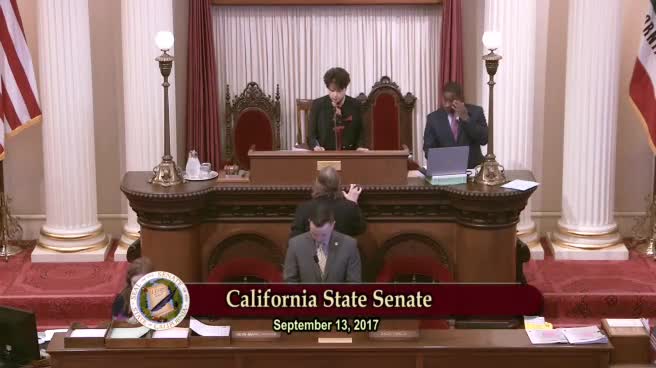 1MIN
Senate Floor
 52SEC
Assembly Floor
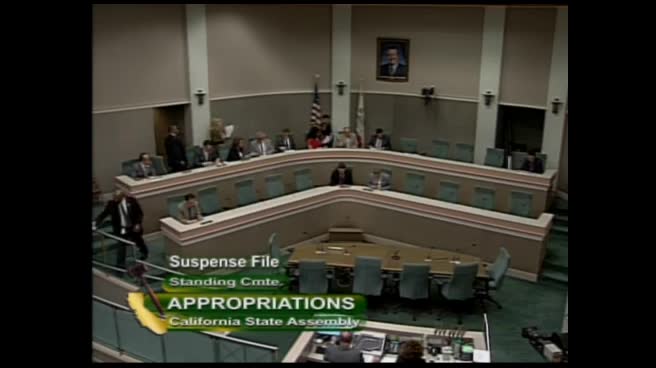 1H
Assembly Standing Committee on Appropriations
 3MIN
Assembly Standing Committee on Jobs, Economic Development, and the Economy
 55SEC
Senate Floor
 48MIN
Senate Standing Committee on Appropriations
 1MIN
Senate Standing Committee on Appropriations
Bill Author

Bill Co-Author(s):