SB 613: Immigration status.
- Session Year: 2017-2018
- House: Senate
- Latest Version Date: 2017-10-13
(1)Existing law requires the Division of Juvenile Justice to cooperate with the United States Bureau of Immigration in arranging for the deportation of all aliens who are committed to it.
This bill would repeal that provision.
(2)Existing law requires the State Department of State Hospitals to cooperate with the United States Bureau of Immigration in arranging for the deportation of all aliens who are confined in, admitted to, or committed to any state hospital.
This bill would repeal that provision.
(3)Existing law requires the State Department of Developmental Services to cooperate with the United States Bureau of Immigration in arranging for the deportation of all aliens who are confined in, admitted to, or committed to any state hospital.
This bill would repeal that provision.
|
Date
|
Status
|
|---|---|
| Oct 13, 2017 | Chaptered by Secretary of State. Chapter 774, Statutes of 2017. |
| Oct 13, 2017 | Approved by the Governor. |
| Sep 22, 2017 | Enrolled and presented to the Governor at 3 p.m. |
| Sep 15, 2017 | In Senate. Ordered to engrossing and enrolling. |
| Sep 15, 2017 | Read third time. Passed. Ordered to the Senate. |
| Sep 13, 2017 | From inactive file. |
| Sep 12, 2017 | Notice of intention to remove from inactive file given by Assembly Member Calderon. |
| Aug 21, 2017 | Ordered to inactive file on request of Assembly Member Calderon. |
| Jul 19, 2017 | Read second time. Ordered to third reading. |
| Jul 18, 2017 | From committee: Do pass. (Ayes 8. Noes 2.) (July 18). |
| Jul 5, 2017 | July 11 hearing postponed by committee. |
| Jun 15, 2017 | Referred to Com. on JUD. |
| Jun 1, 2017 | In Assembly. Read first time. Held at Desk. |
| May 31, 2017 | Read third time. Passed. (Ayes 26. Noes 13. Page 1312.) Ordered to the Assembly. |
| Apr 27, 2017 | Read second time. Ordered to third reading. |
| Apr 26, 2017 | From committee: Do pass. (Ayes 5. Noes 2. Page 855.) (April 25). |
| Apr 7, 2017 | Set for hearing April 25. |
| Apr 5, 2017 | From committee: Do pass and re-refer to Com. on PUB. S. (Ayes 3. Noes 1. Page 625.) (April 4). Re-referred to Com. on PUB. S. |
| Mar 3, 2017 | Set for hearing April 4. |
| Mar 2, 2017 | Referred to Coms. on HUMAN S. and PUB. S. |
| Feb 21, 2017 | From printer. May be acted upon on or after March 23. |
| Feb 17, 2017 | Introduced. Read first time. To Com. on RLS. for assignment. To print. |
|
Date
|
Description
|
Location
|
Votes
|
|
|---|---|---|---|---|
| Sep 15, 2017 | SB 613 De León Senate Third Reading By KALRA | Assembly Floor |
Passed |
|
| Jul 18, 2017 | Do pass. | Assembly Standing Committee on Judiciary |
Passed |
|
| May 31, 2017 | Senate 3rd Reading SB613 De León | Senate Floor |
Passed |
|
| Apr 25, 2017 | Do pass | Senate Standing Committee on Public Safety |
Passed |
|
| Apr 4, 2017 | Do pass, but first be re-referred to the Committee on [Public Safety] | Senate Standing Committee on Human Services |
Passed |
This list shows positions taken on this bill by organizations on the date displayed, which is linked to the original source.
Positions by individuals are not included.
|
Organization
|
Position
|
Date
|
|---|---|---|
| California Federation Of Teachers | ** Support | Jul 16, 2017 |
| California Health+ Advocates | ** Support | Jul 16, 2017 |
| California Immigrant Policy Center | ** Support | Jul 16, 2017 |
| National Association of Social Work | * Support | Jul 18, 2017 |
| national association of social workers , ca chapter | ** Support | Jul 16, 2017 |
| The Arc and United Cerebral Palsy California Collaboration | ** Support | Jul 16, 2017 |
SENATE THIRD READING
STR Bill Id:SB 613
Author:(De León)
As Introduced Ver:February 17, 2017
Majority vote
SENATE VOTE: 26-13
Committee | Votes | Ayes | Noes |
Judiciary | 8-2 | Mark Stone, Chau, Chiu, Cristina Garcia, Kalra, Maienschein, Reyes, Ting | Cunningham, Kiley |
SUMMARY: Repeals longstanding requirements in the Welfare and Institutions Code that require the Division of Juvenile Justice (DJJ), Department of State Hospitals (DSH), and Department of Developmental Services (DDS) to "cooperate with" federal immigration authorities in "arranging for the deportation of all aliens" who are confined in their respective institutions.
FISCAL EFFECT: None
COMMENTS: On January 25, 2017, President Trump issued Executive Order (EO) 13767 (82 FR 8793), titled "Border Security and Immigration Enforcement Improvements," which among other things, calls for the immediate detainment and deportation of illegal immigrants and directs the United States (U.S.) Customs and Border Protection to hire 5,000 additional border patrol agents. On the same date, Executive Order 13768, titled "Enhancing Public Safety in the Interior of the United States," was issued, which, among other things, directs the Secretary of the Department of Homeland Security (DHS) to: 1) hire 10,000 additional immigration officers and to empower state and local law enforcement to perform functions of immigration officers; and 2) prioritize certain persons for removal, especially any person charged with or convicted of a criminal offense, any person who has committed acts that constitute a criminal offense, or any person who has "abused" a public benefit program. EO 13768 also would designate as a "sanctuary jurisdiction" any jurisdiction that refuses to exchange information, as required by 8 United States Code (U.S.C.) Section 1373, and would make such jurisdictions ineligible for federal grants, except as deemed necessary for law enforcement purposes.
Taken together, these Executive Orders and other statements by the Trump administration potentially threaten to place an increasing number of California residents at risk of being deported, with very little certainty about how such measures will likely be implemented, or to what extent such efforts will rely on the cooperation of state officials with federal immigration authorities. In the face of such uncertainty, the author states:
A relationship of trust between California's immigrant residents and our state and local agencies, including police, schools, and hospitals, is essential to carrying out basic state and local functions. That trust is threatened when state and local agencies are involved in immigration enforcement. This measure will ensure that DSH, DJJ, and DDS are carrying out their duties consistent with broader state policies on immigrant integration. Rather than proactively facilitating deportation of clients they are serving, these agencies should focus on their central responsibilities—providing treatment for juveniles, the developmentally disabled and mental health patients.
Accordingly, this bill would repeal certain provisions in the California Welfare and Institutions Code (including one enacted in 1943) that require the Division of Juvenile Justice (DJJ), Department of State Hospitals (DSH), and Department of Developmental Services (DDS) to cooperate with federal immigration authorities in arranging for the deportation of individuals who are confined in their respective institutions.
Background on affected departments and extent of current cooperation.
- Department of State Hospitals. The DSH operates five state hospitals, and treats inmates at three California Department of Corrections and Rehabilitation (CDCR) prisons, providing inpatient mental health treatment beds within the broader CDCR mental health care system. The total capacity of these facilities is approximately 7,000 beds. When a patient is scheduled to be released from a state hospital and there is an Immigration and Customs Enforcement (ICE) detainer in his or her file, DSH notifies ICE officials, as required by Section 4118. According to DSH officials contacted by the Senate Public Safety Committee, the department does not keep detailed information on detainers placed on patients, but estimates that about 20 patients were released to immigration officials over the past five years.
- Division of Juvenile Justice, CDCR. The DJJ houses youths within CDCR in three institutions and one forestry camp. The average daily population of all facilities was 679 in February 2017, and it has averaged between 650 and 700 in recent months. DJJ houses youths between the ages of 12 and 25. Additionally, DJJ also provides housing for youths under the age of 18 who have been sentenced to state prison. Youths sentenced to state prison may remain at DJJ until age 18, or if the youth can complete his or her sentence prior to age 21, the DJJ may house him or her until released. When a youth is scheduled to be released from DJJ and there is an ICE detainer in his or her file, DJJ notifies ICE officials, as required by Section 1008. According to DJJ officials contacted by the Senate Human Services Committee, there were 41 undocumented persons committed to DJJ between March 2014 and April 2017. Only three had ICE detainers in their files, but it is unknown whether any of the three individuals with ICE detainers were ultimately transferred to ICE custody.
- Department of Developmental Services. DDS operates three state developmental centers (located in Sonoma, Fairview and Porterville) and one smaller facility (in Cathedral City) that is often used as a step-down placement for individuals with developmental disabilities and challenging behavioral needs. As of March 29, 2017, the four state-run facilities collectively served 846 individuals with significant physical or behavioral developmental disabilities. According to DDS officials contacted by the Senate Human Services Committee, if an individual at a developmental center has an ICE detainer in his or her file, then pursuant to Section 4458, facility staff will notify DHS. The department reported that this has happened only three times in the past five years, and in each case the individual was confined to Porterville Developmental Center's forensic secure treatment program. DDS stated that it was unclear how DHS became aware of the clients' identity and immigration status in these cases.
This bill does not appear to violate federal law or any legal obligation with respect to California's role in immigration enforcement. According to the Assembly Judiciary Committee analysis, this bill does not obstruct federal enforcement of immigration laws or otherwise conflict with federal law, for the reasons below.
- This bill does not interfere with or obstruct the enforcement of federal immigration programs by federal law enforcement officers.
Section 1373 of Title 8 of the United States Code provides that a state law "may not prohibit, or in any way restrict, any government entity or official from sending to, or receiving from, the Immigration and Naturalization Service information regarding the citizenship or immigration status, lawful or unlawful, of any individual." Section 1373 does not require an agency to voluntarily share information about anyone's citizenship or immigration status with federal authorities. Nor does it prohibit laws of general application that protect personal information, which could include information about immigration status and nationality, from public disclosure. Most importantly, it does not prohibit a state from determining that state and local law enforcement engagement in such acts is not in the best interests of the state.
This bill does not prohibit or restrict DJJ, DSH, or DDS from sending information about an individual's immigration or citizenship status to federal immigration authorities in violation of Section 1373. Instead it simply repeals provisions of state law that require these state agencies to cooperate with federal immigration authorities to arrange for the deportation of all aliens. The repealed provisions are state laws previously enacted by the Legislature, even though Section 1373 does not require California, or any state, to collect information about an individual's immigration status, to arrest individuals who are present in violation of immigration laws, or to hold individuals in custody based on requests from federal immigration officials.
It is a fundamental principle of federalism that state governments — as partners with the federal government in the system of dual sovereignty created by the U.S. Constitution--may allocate their public resources as they see fit. As a result, states are allowed to prioritize the use of such resources on activities which serve the greatest need and further the most pressing interests of the state and its residents. Here, this bill reflects California allocating its own departmental resources as it sees fit, just as it did many years ago when it enacted these requirements in the first place. These requirements are the Legislature's prerogative to enact, and also to repeal — which is entirely consistent with principles of federalism.
Following the President's Executive Order 13768 denouncing sanctuary cities, the Department of Justice (DOJ) recently announced that jurisdictions applying for DOJ grants would have to certify compliance with Section 1373, prohibiting state and local restrictions on voluntarily exchanging information with federal authorities regarding a person's immigration status. Case law is clear that the federal government cannot force states to further federal priorities in place of the state's priorities, and specifically cannot force participation in a federal program by threatening to cut off federal funds unless the funds are directly earmarked for that program. (NFIB v. Sibelius (2012) 132 S. Ct. 2566 (federal government cannot cut off all Medicaid funding for refusal to participate in Medicaid expansion under the Affordable Care Act).)
This bill is not a state restriction on voluntarily exchanging information with federal authorities regarding a person's immigration status. It simply repeals provisions of state law that require these state agencies to cooperate with federal immigration authorities to arrange for deportation of all aliens. Should this bill become law, the affected departments are no longer directed by state law to cooperate with federal authorities, but they are also not restricted from voluntarily exchanging information upon request of federal immigration authorities. In short, the ability to certify compliance with Section 1373 is not sacrificed by this bill.
- Nothing in federal law requires state and local law enforcement officials to assist federal immigration enforcement efforts, or prohibits state and local officials from refusing to do so.
Section 1357 of Title 8 of the United States Code addresses the "performance of immigration officer functions by state officers and employees" and authorizes state and local officials to perform such functions, subject to a host of restrictions, upon approval of federal authorities. (8 U.S.C. Section 1357(g).) For example, Section 1357(g)(1) authorizes the Attorney General to "enter into a written agreement with a State" or political subdivision, under which its employees "may carry out [the] function" of "an immigration officer in relation to the investigation, apprehension, or detention of aliens in the United States," if the Attorney General determines that the particular employee is qualified. (8 U.S.C. Section 1357(g)(1).) Furthermore, such authority may only be exercised "to the extent consistent with State and local law," implying that state and local laws can prohibit such conduct and reiterating that the authority is purely voluntary on the part of the state or local entity and under the ultimate control and authority of the federal government. (Ibid.)
It is well established that immigration enforcement is the sole province of the federal government, and case law makes it clear that the federal government cannot "commandeer" local officials by making them enforce federal laws (Printz v. U.S. (1997) 521 U.S. 898). While Section 1357 authorizes states to perform immigration officer functions upon approval of federal authorities, it does not require state officers to perform such functions. Section 1357(g)(9) states that, "Nothing shall be construed to require any State . . . to enter into an agreement" with the federal government to have its officers perform immigration officer functions. Nor are states or local governments required by federal law to perform immigration enforcement functions, such as detaining immigrants upon the request of federal authorities, collecting immigration information, or affirmatively sharing immigration information with federal authorities.
Given that Section 1357 only authorizes, but does not require, state and local officers to act as immigration officers, this bill cannot be said to conflict with federal law merely because it eliminates requirements of cooperation — requirements that only exist in the first place because the state Legislature previously chose to enact them. Here, the bill simply reflects the current Legislature's exercise of authority to determine that such cooperation is not in the state's best interests. It should also be noted that this bill does not direct DSS, DJJ, or DSH to refuse to cooperate with federal immigration officials in any circumstances; it merely repeals existing requirements and does not enact any new requirements. Even if it did, of course, nothing in federal law prohibits state and local officials from refusing to do so (except for matters involving a judicial warrant and other limited circumstances.) In short, officials in these departments will be neither required to, nor prohibited from, cooperating with ICE detainer requests. Under this bill, they apparently will once again have discretion to voluntarily cooperate with federal immigration authorities, to the extent consistent with other state or local law.
Analysis Prepared by: Anthony Lew / JUD. / (916) 319-2334 FN: 0001204
Date of Hearing: July 18, 2017
ASSEMBLY COMMITTEE ON JUDICIARY
Mark Stone, Chair
SBPCA Bill Id:SB 613
Author:(De León) – As Introduced Ver:February 17, 2017
SENATE VOTE: 26-13
SUBJECT: IMMIGRATION ENFORCEMENT: STATE AGENCIES
KEY ISSUE: should THE LEGISLATURE REPEAL DUBIOUS PROVISIONS OF EXISTING LAW that require STATE AGENCIES which provide services to JUVENILES, MENTAL HEALTH PATIENTS, AND DEVELOPMENTALLY DISABLED PERSONS TO COOPERATE WITH FEDERAL IMMIGRATION AUTHORITIES IN ARRANGING FOR THEIR DEPORTATION?
SYNOPSIS
This bill would repeal certain provisions in the California Welfare and Institutions Code that require the Division of Juvenile Justice (DJJ), Department of State Hospitals (DSH), and Department of Developmental Services (DDS) to cooperate with federal immigration authorities in arranging for the deportation of individuals who are confined in their respective institutions. All three of these statutory requirements were enacted at least 40 years ago, with the oldest of them dating back to 1943. Nevertheless, evidence shows that a small number of individuals are turned over to federal authorities each year pursuant to these statutory requirements. The author quite reasonably questions why California agencies charged with providing services to juveniles, mental health patients, and the developmentally disabled should be actively engaging and facilitating the deportation of persons in their care or custody, and accordingly, this bill repeals those provisions.
Federal law, 8 U.S.C. 1373, provides that a state law “may not prohibit, or in any way restrict, any government entity or official from sending to, or receiving from, the Immigration and Naturalization Service information regarding the citizenship or immigration status, lawful or unlawful, of any individual.” Section 1373 does not prohibit a state from determining that state and local law enforcement engagement in such acts is not in the best interests of the state. Nothing in federal law requires state and local law enforcement officials to assist federal immigration enforcement efforts, or prohibits state and local officials from refusing to do so.
Given that federal law only authorizes, but does not require, state and local officers to act as immigration officers (8 U.S.C. 1357), this bill cannot be said to conflict with federal law merely because it eliminates self-imposed requirements of cooperation from many years ago. By repealing these provisions, the bill simply reflects the Legislature's determination that such cooperation is not in the state’s best interests, and a corresponding allocation of state departmental resources to address current state priorities. It should also be noted that this bill does not direct DSS, DJJ, or DSH to refuse to cooperate with federal immigration officials in any circumstances; it merely repeals existing requirements and does not enact any new requirements. Under this bill, officials in these departments will be neither required to, nor prohibited from, cooperating with ICE detainer requests; they may voluntarily cooperate with federal immigration authorities to the extent consistent with other state or local law.
For these reasons, this analysis concludes, this bill does not impermissibly obstruct the enforcement of federal immigration programs by federal law enforcement officers, nor appear to otherwise conflict with or be pre-empted by federal immigration law. The bill is supported by immigrant advocates, social workers, and teachers, among others, and has no registered opposition.
SUMMARY: Repeals longstanding requirements that require the Division of Juvenile Justice (DJJ), Department of State Hospitals (DSH), and Department of Developmental Services (DDS) to cooperate with the U.S. Department of Homeland Security in arranging for the deportation of individuals who are confined in their respective institutions.
EXISTING STATE LAW:
- Establishes the Division of Juvenile Justice (DJJ) (until 2005, known as the "California Youth Authority") within the Department of Corrections and Rehabilitation. (Welfare & Institutions Code Section 1700 et seq. All further references are to this code unless otherwise stated.)
- States that the purpose of DJJ is to protect society from the consequences of criminal activity by providing for the secure custody of wards, and to effectively and efficiently operate and manage facilities housing youthful offenders under the jurisdiction of the department, as specified. (Section 1710 (b)(1).)
- Requires DJJ to cooperate with the United States Bureau of Immigration in arranging for the deportation of all aliens who are committed to it. (Section 1008.)
- Establishes the jurisdiction of the Department of State Hospitals (DSH) over Atascadero, Coalinga, Metropolitan, Napa, Patton and other state hospitals, to provide for the treatment and care of individuals with mental disorders. (Section 4100 et seq.)
- Declares that the provisions of the code governing state hospitals reflects the concern of the Legislature that persons with mental health disorders are to be regarded as patients to be provided care and treatment, and not as inmates of institutions for the purposes of secluding them from the rest of the public. (Section 4132.)
- Requires DSH to cooperate with the United States Bureau of Immigration in arranging for the deportation of all aliens who are confined in, admitted, or committed to any state hospital. (Section 4118.)
- Establishes the jurisdiction of the Department of Developmental Services (DDS) over Fairview, Lanterman, Porterville and Sonoma state hospitals, also known as developmental centers, to provide for the care and treatment of individuals with developmental disabilities. (Section 4440 et seq.)
- Establishes as a mission of DDS to ensure and uphold the rights of persons with developmental disabilities and an obligation to ensure that laws, regulations, and policies on the rights of persons with developmental disabilities are observed and protected. (Section 4433.)
- Requires DDS to cooperate with the United States Bureau of Immigration in arranging for the deportation of all aliens who are confined in, admitted, or committed to any state hospital. (Section 4458.)
EXISTING FEDERAL LAW:
- Provides that, notwithstanding any other provision of federal, state, or local law, a federal, state, or local government entity or official may not prohibit, or in any way restrict, any government entity or official from sending to, or receiving from, the Immigration and Naturalization Service information regarding the citizenship or immigration status, lawful or unlawful, of any individual. (8 U.S.C. 1373 (a).)
- Provides that, notwithstanding any other provision of federal, state, or local law, no person or agency may prohibit, or in any way restrict, a federal, state, or local government entity from doing any of the following with respect to information regarding the immigration status, lawful or unlawful, of any individual: (a) sending such information to, or requesting or receiving such information from, the Immigration and Naturalization Service; (b) maintaining such information; and (c) exchanging such information with any other federal, state, or local government entity. (8 U.S.C. 1373 (b).)
- Pursuant to the Tenth Amendment, limits the power of Congress to regulate by directly compelling states to enact and enforce a federal regulatory program. (New York v. United States (1992) 505 U.S. 144, 161.)
FISCAL EFFECT: As currently in print this bill is keyed non-fiscal.
COMMENTS: In one of his first interviews after being elected President, Donald Trump echoed his campaign promises and told "60 Minutes" he intended to deport "millions and millions of undocumented immigrants" after his inauguration in January, focusing on those "who have criminal records" and promising to later "make a determination" on possible deportation of remaining undocumented immigrants. (Amy Wang, "Donald Trump plans to immediately deport 2 million to 3 million undocumented immigrants." Washington Post, Nov. 14, 2016. Available at: https://www.washingtonpost.com/news/the-fix/wp/2016/11/13/donald-trump-plans-to-immediately-deport-2-to-3-million-undocumented-immigrants). According to the Washington Post writer: "What would be new is the speed and scale with which Trump has vowed to remove undocumented immigrants with criminal records. His proposal to deport '2 to 3 million' people would be roughly equivalent to the number of people removed over the course of about six years under Obama's presidency. It is unclear how Trump would feasibly implement such a plan immediately after inauguration, as promised, without monumental expense and potentially exposing Americans to all kinds of disruptions." (Id.)
On January 25, 2017, President Trump issued Executive Order 13767 (82 FR 8793), titled "Border Security and Immigration Enforcement Improvements," which is perhaps best known for proclaiming U.S. policy to secure the southern border of the United States through the immediate construction of a physical wall on the southern border and directing the Secretary of the Department of Homeland Security (DHS) to "immediately" take steps to plan, design, and construct a physical wall, as well as to construct and operate detention facilities to detain aliens at or near the border with Mexico. Among other things, EO 13767 also calls for the immediate detainment and deportation of illegal immigrants and directs the U.S. Customs and Border Protection to hire 5,000 additional border patrol agents.
On the same date, January 25, 2017, Executive Order 13768, titled “Enhancing Public Safety in the Interior of the United States,” was issued, which, among other things, directs the Secretary of Homeland Security to: (1) hire 10,000 additional immigration officers and to empower state and local law enforcement to perform functions of immigration officers; and (2) prioritize certain persons for removal, especially any person charged with or convicted of a criminal offense, any person who has committed acts that constitute a criminal offense, or any person who has "abused" a public benefit program. EO 13768 also seeks to designate as a "sanctuary jurisdiction" any jurisdiction that refuses to exchange information, as required by 8 U.S.C. § 1373, and would make such jurisdictions ineligible for federal grants, except as deemed necessary for law enforcement purposes.
In addition, on March 27, 2017, Attorney General Jeff Sessions condemned so-called "sanctuary cities" that refuse to honor detainer requests and warned that such jurisdictions are “at risk of losing valuable federal dollars.” Furthermore, he threatened that “The Department of Justice will also take all lawful steps to claw-back any funds awarded to a jurisdiction that willfully violates Section 1373.” (Attorney General Jeff Sessions Delivers Remarks on Sanctuary Jurisdictions, Washington, DC (March 27, 2017); Available at https://www.justice.gov/opa/speech/ attorney-general-jeff-sessions-delivers-remarks-sanctuary-jurisdictions.)
Need for the bill. Taken together, these Executive Orders and other statements by the Trump administration potentially threaten to place an increasing number of California residents at risk of being deported, with very little certainty about how such measures will likely be implemented, or to what extent such efforts will rely on the cooperation of state officials with federal immigration authorities. In the face of such uncertainty, the author states:
A relationship of trust between California’s immigrant residents and our state and local agencies, including police, schools, and hospitals, is essential to carrying out basic state and local functions. That trust is threatened when state and local agencies are involved in immigration enforcement. According to the President Obama’s Taskforce on 21st Century Policing, “immigrants often fear approaching police officers when they are victims of and witnesses to crimes and when local police are entangled with federal immigration enforcement. At all levels of government, it is important that laws, policies, and practices not hinder the ability of local law enforcement to build the strong relationships necessary to public safety and community well-being. It is the view of this task force that whenever possible, state and local law enforcement should not be involved in immigration enforcement.”
This measure will ensure that the Department of State Hospitals, Department of Juvenile Justice, and the Department of Developmental Services are carrying out their duties consistent with broader state policies on immigrant integration. Rather than proactively facilitating deportation of clients they are serving, these agencies should focus on their central responsibilities—providing treatment for juveniles, the developmentally disabled and mental health patients.
Accordingly, this bill would repeal certain provisions in the California Welfare and Institutions Code (including one enacted in 1943) that require the Division of Juvenile Justice (DJJ), Department of State Hospitals (DSH), and Department of Developmental Services (DDS) to cooperate with federal immigration authorities in arranging for the deportation of individuals who are confined in their respective institutions.
Background on affected departments and extent of current cooperation with ICE/DHS.
A. Department of State Hospitals. The DSH operates five state hospitals, and treats inmates at three California Department of Corrections and Rehabilitation (CDCR) prisons, providing inpatient mental health treatment beds within the broader CDCR mental health care system. The total capacity of these facilities is approximately 7,000 beds. Patients admitted to DSH are mandated for treatment by a criminal or civil court. More than 90 percent of DSH’s patients are forensic commitments. DSH also treats patients who have been classified by a judge or jury as Sexually Violent Predators.
When a patient is scheduled to be released from a state hospital and there is an ICE detainer in his or her file, DSH notifies ICE officials, as required by Section 4118. According to DSH officials contacted by the Senate Public Safety Committee, the department does not keep detailed information on detainers placed on patients, but estimates that about 20 patients were released to immigration officials over the past five years.
B. Division of Juvenile Justice, CDCR. The DJJ houses youths within CDCR in three institutions and one forestry camp. The average daily population of all facilities was 679 in February 2017, and it has averaged between 650 and 700 in recent months. DJJ houses youths between the ages of 12 and 25. Additionally, DJJ also provides housing for youths under the age of 18 who have been sentenced to state prison. Youths sentenced to state prison may remain at DJJ until age 18, or if the youth can complete his or her sentence prior to age 21, the DJJ may house him or her until released. All youths at DJJ are required to attend school full-time, and those who complete their high school education may participate in a college program, vocational training, or a combination of both. A portion of the earnings from a youth’s job within the facility must go to pay court-ordered restitution. Youth may also be assigned to special programs, including sexual behavior treatment, substance abuse treatment, anger management, and victim’s awareness activities.
When a youth is scheduled to be released from DJJ and there is an ICE detainer in his or her file, DJJ notifies ICE officials, as required by Section 1008. According to DJJ officials contacted by the Senate Human Services Committee, there were 41 undocumented persons committed to DJJ between March 2014 and April 2017. Only three had ICE detainers in their files, but it is unknown whether any of the three individuals with ICE detainers were ultimately transferred to ICE custody.
C. Department of Developmental Services. DDS operates three state developmental centers (located in Sonoma, Fairview and Porterville) and one smaller facility (in Cathedral City) that is often used as a step-down placement for individuals with developmental disabilities and challenging behavioral needs. Developmental disabilities originate before the age of 18, and include intellectual disabilities, autism spectrum disorder, cerebral palsy, epilepsy and other related conditions. (See Section 4512.) Each developmental center has three levels of care: a skilled nursing facility, an intermediate care facility for individuals with intellectual disabilities (ICF/IID), and a small, acute care hospital. Over the past several decades, the state has shifted from providing services in its institutions to providing services to individuals with developmental disabilities within their communities. As of March 29, 2017, the four state-run facilities collectively served 846 individuals with significant physical or behavioral developmental disabilities. This is a notable decrease from the total population in March 2012 of 1,749.
According to DDS officials contacted by the Senate Human Services Committee, if an individual at a developmental center has an ICE detainer in his or her file, then pursuant to Section 4458, facility staff will notify DHS. The department reported that this has happened only three times in the past five years, and in each case the individual was confined to Porterville Developmental Center’s forensic secure treatment program. DDS stated that it was unclear how DHS became aware of the clients' identity and immigration status in these cases.
This bill does not appear to violate federal law or any legal obligation with respect to California's role in immigration enforcement. Following recent actions on immigration by the current presidential administration, the California Legislature has introduced a number of bills seeking to clearly define responsibilities and boundaries for various state agencies and actors in response to federal immigration authorities seeking cooperation in enforcing immigration laws. For example, so far this session this Committee has analyzed a number of such bills, including SB 54 (De Leon) on sharing of law enforcement resources; AB 21 (Kalra) on immigration enforcement in higher education institutions; and AB 699 (O'Donnell) on immigration enforcement in K-12 schools, and considered whether any of those bills conflicted with federal law. Although there is no registered opposition to this bill, a similar analysis should be applied to examine whether these provisions may impermissibly obstruct federal enforcement of immigration laws, or otherwise conflict with federal law.
A. This bill does not interfere with or obstruct the enforcement of federal immigration programs by federal law enforcement officers. Section 1373 of Title 8 of the United States Code provides that a state law “may not prohibit, or in any way restrict, any government entity or official from sending to, or receiving from, the Immigration and Naturalization Service information regarding the citizenship or immigration status, lawful or unlawful, of any individual.” Section 1373 does not require an agency to voluntarily share information about anyone’s citizenship or immigration status with federal authorities. Nor does it prohibit laws of general application that protect personal information, which could include information about immigration status and nationality, from public disclosure. Most importantly, it does not prohibit a state from determining that state and local law enforcement engagement in such acts is not in the best interests of the state.
This bill does not prohibit or restrict DJJ, DSH, or DDS from sending information about an individual's immigration or citizenship status to federal immigration authorities in violation of Section 1373. Instead it simply repeals provisions of state law that require these state agencies to cooperate with federal immigration authorities to arrange for the deportation of all aliens. The repealed provisions are state laws previously enacted by the Legislature, even though Section 1373 does not require California, or any state, to collect information about an individual’s immigration status, to arrest individuals who are present in violation of immigration laws, or to hold individuals in custody based on requests from federal immigration officials.
It is a fundamental principle of federalism that state governments—as partners with the federal government in the system of dual sovereignty created by the U.S. Constitution--may allocate their public resources as they see fit. As a result, states are allowed to prioritize the use of such resources on activities which serve the greatest need and further the most pressing interests of the state and its residents. Here, this bill reflects California allocating its own departmental resources as it sees fit, just as it did many years ago when it enacted these requirements in the first place. These requirements are the Legislature's prerogative to enact, and also to repeal—which is entirely consistent with principles of federalism.
Following the President's Executive Order 13768 denouncing sanctuary cities, the Department of Justice (DOJ) recently announced that jurisdictions applying for DOJ grants would have to certify compliance with Section 1373, prohibiting state and local restrictions on voluntarily exchanging information with federal authorities regarding a person’s immigration status. Case law is clear that the federal government cannot force states to further federal priorities in place of the state’s priorities, and specifically cannot force participation in a federal program by threatening to cut off federal funds unless the funds are directly earmarked for that program. (NFIB v. Sibelius (2012) 132 S. Ct. 2566 (federal government cannot cut off all Medicaid funding for refusal to participate in Medicaid expansion under the Affordable Care Act).)
This bill is not a state restriction on voluntarily exchanging information with federal authorities regarding a person's immigration status. It simply repeals provisions of state law that require these state agencies to cooperate with federal immigration authorities to arrange for deportation of all aliens. Should this bill become law, the affected departments are no longer directed by state law to cooperate with federal authorities, but they are also not restricted from voluntarily exchanging information upon request of federal immigration authorities. In short, the ability to certify compliance with Section 1373 is not sacrificed by this bill.
B. Nothing in federal law requires state and local law enforcement officials to assist federal immigration enforcement efforts, or prohibits state and local officials from refusing to do so.
Section 1357 of Title 8 of the United States Code addresses the “performance of immigration officer functions by state officers and employees” and authorizes state and local officials to perform such functions, subject to a host of restrictions, upon approval of federal authorities. (8 U.S.C. Section 1357(g).) For example, Section 1357(g)(1) authorizes the Attorney General to “enter into a written agreement with a State” or political subdivision, under which its employees “may carry out [the] function” of “an immigration officer in relation to the investigation, apprehension, or detention of aliens in the United States,” if the Attorney General determines that the particular employee is qualified. (8 U.S.C. Section 1357(g)(1).) Furthermore, such authority may only be exercised “to the extent consistent with State and local law,” implying that state and local laws can prohibit such conduct and reiterating that the authority is purely voluntary on the part of the state or local entity and under the ultimate control and authority of the federal government. (Ibid.)
It is well established that immigration enforcement is the sole province of the federal government, and case law makes it clear that the federal government cannot "commandeer" local officials by making them enforce federal laws (Printz v. U.S. (1997) 521 U.S. 898). While Section 1357 authorizes states to perform immigration officer functions upon approval of federal authorities, it does not require state officers to perform such functions. Section 1357(g)(9) states that, “Nothing shall be construed to require any State . . . to enter into an agreement” with the federal government to have its officers perform immigration officer functions. Nor are states or local governments required by federal law to perform immigration enforcement functions, such as detaining immigrants upon the request of federal immigration authorities, collecting immigration information, or affirmatively sharing immigration information with federal authorities. A recent guidance from the United States Department of Justice explained to state and local government recipients of Department of Justice funding that “Section 1373 does not impose on states and localities the affirmative obligation to collect information from private individuals regarding their immigration status, nor does it require that states and localities take specific actions upon obtaining such information.” (Dept. of Justice, Office of Justice Programs, Guidance Regarding Compliance with 8 U.S.C. § 1373; Available at https://www.bja.gov/funding/8uscsection1373.pdf.)
Given that Section 1357 only authorizes, but does not require, state and local officers to act as immigration officers, this bill cannot be said to conflict with federal law merely because it eliminates requirements of cooperation—requirements that only exist in the first place because the state Legislature previously chose to enact them. Here, the bill simply reflects the current Legislature's exercise of authority to determine that such cooperation is not in the state’s best interests. It should also be noted that this bill does not direct DSS, DJJ, or DSH to refuse to cooperate with federal immigration officials in any circumstances; it merely repeals existing requirements and does not enact any new requirements. Even if it did, of course, nothing in federal law prohibits state and local officials from refusing to do so (except for matters involving a judicial warrant and other limited circumstances.) In short, officials in these departments will be neither required to, nor prohibited from, cooperating with ICE detainer requests. Under this bill, they apparently will once again have discretion to voluntarily cooperate with federal immigration authorities, to the extent consistent with other state or local law.
ARGUMENTS IN SUPPORT: In support of the bill, the California Immigrant Policy Center (CIPC) writes:
CIPC supports SB 613 as it addresses concerns around state agencies entanglement with ICE, which would negatively impact public trust and immigrants that may potentially access these services if the agencies choose to actively facilitate deportations. Entanglement between ICE and state agencies that are entrusted with the well-being of the public undermines immigrant youth rights, placing them at serious risk of deportation.
In addition to addressing the impact of DDS, DSH and the Division of Juvenile Justice complying with ICE, this bill protects individuals with developmental disabilities or mental illness, who may be confined to a state institution because they do not have the competency to understand the charges against them, from being deported to a place they do not know. SB 613 will ensure that state agencies charged with caring for juveniles, mental health patients and the developmentally disabled do not deliberately share information with federal officials, including immigration officials.
The National Association of Social Workers (NASW), California Chapter, writes in support:
Existing law raises questions as to why state agencies charged with caring for juveniles, mental health patients, and the developmentally disabled are to be engaging directly and proactively in immigration enforcement, which is the sole responsibility of the federal government. It is detrimental to the well-being of immigrants that may potentially access theses services if the agencies actively facilitate deportation because of the potential distrust such collaboration would foment. This bill would safeguard immigrants' rights to live as productive members of society, without fear of deportation initiated by these various entities.
Related Pending Legislation. SB 54 (De Leon) would prioritize the use of public resources by law enforcement agencies in California for the enforcement of state laws by limiting the use of those resources for purposes of immigration enforcement. The bill is currently in the Assembly Appropriations Committee.
AB 699 (O'Donnell) would prohibit school officials from collecting immigration status information about students and their family members, and establishes procedures that school officials should follow when federal immigration enforcement is attempted on school grounds. The bill is currently in the Senate Appropriations Committee.
AB 21 (Kalra) would establish various policies and procedures to be implemented by public institutions of higher education in California that safeguard against immigration enforcement activities on campuses. The bill is currently in the Senate Appropriations Committee.
SB 31 (Lara) would prohibit state and local agencies from providing information to the federal government regarding a person’s religious beliefs, practices, or affiliation, as specified, when the information is sought for compiling a database of individuals based on these characteristics for law enforcement or immigration enforcement purposes. The bill would also prohibit a state agency from using agency resources to assist with any government program compiling such a database, or from making state databases available in connection with an investigation or enforcement under such a program. SB 31 is on suspense in the Assembly Appropriations Committee.
REGISTERED SUPPORT / OPPOSITION:
Support
The Arc and United Cerebral Palsy California Collaboration
California Federation of Teachers
California Health+ Advocates
California Immigrant Policy Center (CIPC)
National Association of Social Workers (NASW), CA Chapter
Opposition
None on file
Analysis Prepared by: Anthony Lew / JUD. / (916) 319-2334
Office of Senate Floor Analyses (916) 651-1520 Fax: (916) 327-4478 | SB |
THIRD READING
Bill No: SB 613
:
SENATE HUMAN SERVICES COMMITTEE: 3-1, 4/4/17
AYES: Wiener, Glazer, Newman
NOES: Nguyen
NO VOTE RECORDED: Berryhill
SENATE PUBLIC SAFETY COMMITTEE: 5-2, 4/25/17
AYES: Skinner, Bradford, Jackson, Mitchell, Wiener
NOES: Anderson, Stone
This bill repeals the requirement for the state departments of Developmental Services and State Hospitals and the Division of Juvenile Justice to cooperate with the United States Department of Homeland Security in arranging for the deportation of individuals who are confined in their institutions.
Existing law:
- Establishes the Department of Developmental Services (DDS) and its jurisdiction over Fairview, Lanterman, Porterville and Sonoma developmental centers to provide for the care and treatment of individuals with developmental disabilities. (WIC 4440, et seq.)
- Establishes as a mission of DDS to ensure and uphold the rights of persons with developmental disabilities and an obligation to ensure that laws, regulations, and policies on the rights of persons with developmental disabilities are observed and protected. (WIC 4433)
- Requires DDS to cooperate with the United States Bureau of Immigration in arranging for the deportation of all aliens who are confined in, admitted, or committed to any state hospital. (WIC 4458)
- Establishes the Department of State Hospitals (DSH) and its jurisdiction over Atascadaro, Coalinga, Metropolitan, Napa, Patton and other state hospitals to provide for the treatment and care of individuals with mental disorders. (WIC 4100, et seq.)
- Makes a legislative declaration that the provisions of the code governing state hospitals reflects the concern of the Legislature that persons with mental health disorders are to be regarded as patients to be provided care and treatment and not as inmates of institutions for the purposes of secluding them from the rest of the public. (WIC 4132)
- Requires DSH to cooperate with the United States Bureau of Immigration in arranging for the deportation of all aliens who are confined in, admitted, or committed to any state hospital. (WIC 4118)
- Establishes the Division of Juvenile Justice (DJJ), formerly the California Youth Authority, to protect society from the consequences of criminal activity and to correct and rehabilitate young persons who have committed public offenses. (WIC 1700, et seq.)
- Establishes as the purpose of the Division of Juvenile Programs to provide comprehensive education, training, treatment, and rehabilitative services to youthful offenders under the jurisdiction of the department, that are designed to promote community restoration, family ties, and accountability to victims, and to produce youth who become law-abiding and productive members of society. (WIC 1710)
- Requires the Youth Authority to cooperate with the United States Bureau of Immigration in arranging for the deportation of all aliens who are committed to it. (WIC 1008)
This bill deletes the requirements for DDS, DSH and DJJ to cooperate with the United States Bureau of Immigration in arranging for the deportation of all aliens who are committed to it.
Background
According to the author, these laws raise questions as to whether it is appropriate for state agencies charged with caring for juveniles, mental health patients and the developmentally disabled to be engaging directly and proactively in immigration enforcement, a sole responsibility of the federal government.
The author states that it is “detrimental to the well-being of immigrants that may potentially access these services if the agencies choose to actively facilitate deportations because of the potential distrust such collaboration would foment.”
The author further states that existing laws require collaboration on the arrangement of deportation for all clients, regardless of the actual immigration status, which are in violation of due process rights of individuals, especially valid visa holders and legal permanent residents who may not be subject to deportation.
In response to President Trump’s statements that his administration would prioritize the deportation of a broad spectrum of immigrants, California legislative leaders introduced a package of bills intended to protect the state’s residents, specifically its immigrant populations. Following the issuance of two Executive Orders pertaining to immigration practices, legislative leaders filed a Freedom of Information Act request on February 27, 2017, for information on how the Department of Homeland Security (DHS) was targeting immigrants. The request seeks records related to the policies, including enforcement priorities, of Immigration and Customs Enforcement (ICE) national and California field offices. It also seeks records regarding the planning and execution of enforcement actions.
Developmental centers. A developmental disability is defined as one that originates before the age of 18, continues, or can be expected to continue, indefinitely, and constitutes a substantial disability. Developmental disabilities include intellectual disability, formerly called retardation, autism spectrum disorder, cerebral palsy, epilepsy and other related conditions.
DDS operates three state developmental centers – Sonoma, Fairview and Porterville – and one smaller facility in Cathedral City that is often used as a step-down placement for individuals with developmental disabilities and challenging behavioral needs. Each developmental center has three levels of care – a skilled nursing facility, an intermediate care facility for individuals with intellectual disabilities, and a small, acute care hospital.
The state’s developmental centers once were considered the placement of preference for individuals with significant needs. At its peak in 1968, the developmental center system housed more than 13,400 individuals in seven facilities. Since then a series of federal and state legal decisions began the movement to provide services for individuals with developmental disabilities in their communities. The state is currently in the process of shutting down Sonoma and Fairview developmental centers and the general treatment portion of Porterville. As of April 26, 2017, the four state-run facilities collectively served 831 individuals with significant physical or behavioral developmental disabilities.
State Hospitals. DSH operates eight inpatient state hospitals with a population that is expected to reach 6,369 in 2017‑18. As of December 2016, the hospitals’ Incompetent To Stand Trial assessment and training program had a waiting list of 600 people, who were pending transfer from local jails. The vast majority of patients DSH have been involved with the criminal justice system. DSH also operates 1,100 inpatient mental health treatment beds at three California Department of Corrections and Rehabilitation (CDCR) prisons: California Health Care Facility in Stockton, Salinas Valley State Prison in Soledad, and California Medical Facility in Vacaville. State Hospitals provides the inpatient services as part of a broader system of mental health care within Corrections. These programs will be transferred to Corrections effective July 1, 2017.
Division of Juvenile Justice. DJJ operates three institutions and one forestry camp to house youthful offenders within the CDCR. The average daily population of all facilities was 678 in December 2016 and averaged between 650 and 700 in other recent months. The DJJ houses youths between the ages of 12-25. Additionally, youths that have been committed to the adult prison system as minors may be housed at a DJJ facility until they turn 18 and then transferred an adult facility.
All youths at DJJ are required to attend school full-time. Those that complete their high school education may participate in a college program, vocational training, or a combination of both. Many are assigned paid jobs within the facility, such as landscaping, food preparation or janitorial work. If they earn a salary, a portion of their earnings must go to pay court-ordered restitution fines. Youth also may be assigned to special programs, including Successfully Dressed classes, sexual behavior treatment, substance abuse treatment, anger management, victim’s awareness activities and others.
Deportation from DJJ, DSH, and DDS. According to DJJ, there were 41 aliens committed to DJJ between March 2014 and April 2017. Three had ICE detainers in their files. When a youth is scheduled to be released from DJJ and there is an ICE detainer in his or her file, DJJ notifies ICE officials, as required under existing law. It is unclear whether any of the three individuals with ICE detainers were released to ICE.
DSH does not keep detailed information on detainers placed on patients, but estimated that about 20 patients were released to immigration officials over the past five years. When a patient is scheduled to be released from a state hospital and there is an ICE detainer in his or her file, DSH notifies ICE officials, as required under existing law.
According to DDS, if a consumer at a developmental center has an ICE detainer in his or her file, the staff at the facility will comply with the order to notify DHS. The department reported that this has happened three times in the past five years. DDS stated that it was unclear how DHS became aware of the clients or the immigration status of the clients.
In November 2016, an adult in his early 30s, who had been a client of the regional center system since the age of seven was charged with a second-degree robbery and alleged to be a gang member. He was declared incompetent to stand trial by a judge, and sent to Porterville for competency training. After spending 2½ years at the Porterville Developmental Center, the individual was found to be competent to stand trial, and returned to court. The consumer had a detainer notice in his file from DHS and when the case was discharged, DHS asked DDS to bring the consumer to them. DDS complied. It is assumed the consumer was deported.
FISCAL EFFECT: Appropriation: Fiscal Com.: Local:
CaliforniaHealth+ Advocates
National Association of Social Workers – California Chapter
The Arc and United Cerebral Palsy California Collaboration
OPPOSITION: (Verified 4/26/17)
None received
ARGUMENTS IN SUPPORT: The National Association of Social Workers writes that the requirement to collaborate on arranging deportation for all clients, regardless of actual immigration status; which is a violation of due process rights of individuals.
The Arc and United Cerebral Palsy California Collaboration writes in support, “Incredibly, currently law mandates that the Department of Developmental Services actively seek the deportation of people with developmental disabilities for the ‘crime’ of being noncitizens (including fully documented noncitizens) who are confined to developmental centers. (This) bill will end this glaring, obvious injustice.”
4/28/17 13:14:35
**** END ****
SENATE COMMITTEE ON PUBLIC SAFETY
Senator Nancy Skinner, Chair
2017 - 2018 Regular
Bill No: SB 613 Hearing Date: April 25, 2017
Author: | De León | ||
Version: | February 17, 2017 | ||
Urgency: | No | Fiscal: | No |
Consultant: | SJ | ||
Subject: Immigration Status
HISTORY
Source: Author
Prior Legislation: SB 396 (De León) Ch. 318, Stats. 2014
AB 4 (Ammiano) Ch. 570, Stats. 2013
Support: California Health + Advocates; California Public Defenders Association; Community Clinic Association of Los Angeles; National Association of Social Workers- California Chapter; The Arc & United Cerebral Palsy California Collaboration
Opposition: None known
PURPOSE
The purpose of this bill is to repeal the requirement for the Division of Juvenile Justice, Department of State Hospitals, and Department of Developmental Services to cooperate with the U.S. Department of Homeland Security in arranging for the deportation of individuals confined in their institutions.
Existing law establishes the Division of Juvenile Justice (DJJ), formerly the California Youth Authority, to protect society from the consequences of criminal activity and to correct and rehabilitate young persons who have committed public offenses. (Welf. & Inst. Code § 1700.)
Existing law establishes as the purpose of the Division of Juvenile Programs to provide comprehensive education, training, treatment, and rehabilitative services to youthful offenders under the jurisdiction of the department, that are designed to promote community restoration, family ties, and accountability to victims, and to produce youth who become law-abiding and productive members of society. (Welf. & Inst. Code § 1710.)
Existing law requires the Youth Authority to cooperate with the United States Bureau of Immigration in arranging for the deportation of all aliens who are committed to it. (Welf. & Inst. Code § 1008.)
Existing law establishes the Department of State Hospitals (DSH). (Welf. & Inst. Code § 4000.)
Existing law establishes the jurisdiction of DSH over Atascadero, Coalinga, Metropolitan, Napa, Patton and other state hospitals to provide for the treatment and care of individuals with mental disorders. (Welf. & Inst. Code § 4100, et seq.)
Existing law makes a legislative declaration that the provisions of the code governing state hospitals reflects the concern of the Legislature that persons with mental health disorders are to be regarded as patients to be provided care and treatment and not as inmates of institutions for the purposes of secluding them from the rest of the public. (Welf. & Inst. Code § 4132.)
Existing law requires DSH to cooperate with the United States Bureau of Immigration in arranging for the deportation of all aliens who are confined in, admitted, or committed to any state hospital. (Welf. & Inst. Code § 4118.)
Existing law establishes the Department of Developmental Services (DDS). (Welf. & Inst. Code § 4400.)
Existing law establishes the jurisdiction of DDS over Fairview, Lanterman, Porterville and Sonoma state hospitals, also known as developmental centers, to provide for the care and treatment of individuals with developmental disabilities. (Welf. & Inst. Code § 4440, et seq.)
Existing law establishes as a mission of DDS to ensure and uphold the rights of persons with developmental disabilities and an obligation to ensure that laws, regulations, and policies on the rights of persons with developmental disabilities are observed and protected. (Welf. & Inst. Code § 4433.)
Existing law requires DDS to cooperate with the United States Bureau of Immigration in arranging for the deportation of all aliens who are confined in, admitted, or committed to any state hospital. (Welf. & Inst. Code § 4458.)
This bill repeals the requirements that the Division of Juvenile Justice, Department of State Hospitals, and Department of Developmental Services cooperate with the U.S. Department of Homeland Security in arranging for the deportation of individuals who are confined in their institutions.
COMMENTS
1. Need for This Bill
According to the author:
A relationship of trust between California’s immigrant residents and our state and local agencies, including police, schools, and hospitals, is essential to carrying out basic state and local functions. That trust is threatened when state and local agencies are involved in immigration enforcement. According to the President Obama’s Taskforce on 21st Century Policing, “immigrants often fear approaching police officers when they are victims of and witnesses to crimes and when local police are entangled with federal immigration enforcement. At all levels of government, it is important that laws, policies, and practices not hinder the ability of local law enforcement to build the strong relationships necessary to public safety and community well-being. It is the view of this task force that whenever possible, state and local law enforcement should not be involved in immigration enforcement.”[1]
This measure will ensure that the Department of State Hospitals, Division of Juvenile Justice, and Department of Developmental Services are carrying out their duties consistent with broader state policies on immigrant integration. Rather than proactively facilitating deportation of clients they are serving, these agencies should focus on their central responsibilities—providing treatment for juveniles, the developmentally disabled and mental health patients.
2. Background
In response to President Trump’s statements that his administration would prioritize the deportation of a broad spectrum of immigrants, California Legislative leaders introduced a package of bills intended to protect the state’s residents, specifically its immigrant populations. Following the issuance of two Executive Orders[2] pertaining to immigration practices, Legislative leaders filed a Freedom of Information Act request on February 27, 2017 for information on how the Department of Homeland Security (DHS) was targeting immigrants.[3] The request seeks records related to the policies, including enforcement priorities, of Immigration and Customs Enforcement (ICE) national and California field offices. It also seeks records regarding the planning and execution of enforcement actions.
- Division of Juvenile Justice
The DJJ houses youths within the California Department of Corrections and Rehabilitation (CDCR) in three institutions and one forestry camp. The average daily population of all facilities was 679 in February 2017, and it has averaged between 650 and 700 in recent months. DJJ houses youths between the ages of 12 and 25. Additionally, DJJ also provides housing for youths under the age of 18 who have been sentenced to state prison. Youths sentenced to state prison may remain at DJJ until age 18, or if the youth can complete his or her sentence prior to age 21, the DJJ may house him or her until released.
All youths at DJJ are required to attend school full-time, and those who complete their high school education may participate in a college program, vocational training, or a combination of both. A portion of the earnings from a youth’s job within the facility must go to pay court-ordered restitution. Youth may also be assigned to special programs, including sexual behavior treatment, substance abuse treatment, anger management, and victim’s awareness activities.
- State Hospitals
The DSH operates five state hospitals, and treats inmates at three CDCR prisons, providing inpatient mental health treatment beds within the broader CDCR mental health care system. The total capacity of DSH’s eight inpatient state hospitals is approximately 7,000 beds. Patients admitted to DSH are mandated for treatment by a criminal or civil court. More than 90 percent of DSH’s patients are forensic commitments. DSH also treats patients who have been classified by a judge or jury as Sexually Violent Predators.
- Developmental Centers
A developmental disability is defined as one that originates before the age of 18, continues, or can be expected to continue, indefinitely, and constitutes a substantial disability. Developmental disabilities include intellectual disability, autism spectrum disorder, cerebral palsy, epilepsy and other related conditions. (Welf. & Inst. Code § 4512.) The DDS operates three state developmental centers—Sonoma, Fairview and Porterville—and one smaller facility in Cathedral City that is often used as a step-down placement for individuals with developmental disabilities and challenging behavioral needs. Each developmental center has three levels of care: a skilled nursing facility, an intermediate care facility for individuals with intellectual disabilities (ICF/IID), and a small, acute care hospital.
Over the past several decades, the state has shifted from providing services in its institutions to providing services to individuals with developmental disabilities within their communities. As of March 29, 2017, the four state-run facilities collectively served 846 individuals with significant physical or behavioral developmental disabilities. This is a notable decrease from the total population in March 2012 of 1,749.
- Deportation from DJJ, DSH, and DDS
According to DJJ, there were 41 aliens committed to DJJ between March 2014 and April 2017. Three had ICE detainers in their files. When a youth is scheduled to be released from DJJ and there is an ICE detainer in his or her file, DJJ notifies ICE officials, as required under existing law. It is unclear whether any of the three individuals with ICE detainers were released to ICE.
DSH does not keep detailed information on detainers placed on patients, but estimated that about 20 patients were released to immigration officials over the past five years. When a patient is scheduled to be released from a state hospital and there is an ICE detainer in his or her file, DSH notifies ICE officials, as required under existing law.
According to DDS, if a consumer at a developmental center has an ICE detainer in his or her file, the staff at the facility will comply with the order to notify DHS. The department reported that this has happened only three times in the past five years, and in each case the individual was confined to Porterville Developmental Center’s forensic secure treatment program. DDS stated that it was unclear how DHS became aware of the clients and the immigration status of the clients.
3. Related Legislation
Several bills have been introduced this year to address the current presidential administration’s prioritization of immigration enforcement. SB 6 (Hueso) would appropriate $12 million from the General Fund to nonprofit legal services organizations to provide legal representation to individuals in removal proceedings who do not have representation. SB 31 (Lara) would prohibit state and local agencies from providing information to the federal government regarding a person’s religious beliefs, practices, or affiliation. SB 54 (De León) would prohibit state and local law enforcement agencies, including school police and security departments, from using resources to investigate, interrogate, detain, detect, or arrest persons for immigration enforcement purposes, as specified. All three bills passed out of the Senate and are currently in the Assembly.
4. Arguments in Support
The National Association of Social Workers, California Chapter supports this bill stating:
Considering the current political climate at the federal level, California is committed to defending and protecting its inhabitants. The existing law raises questions as to why state agencies charged with caring for juveniles, mental health patients, and the developmentally disabled are to be engaging directly and proactively in immigration enforcement, which is a sole responsibility of the federal government. Existing law also requires collaboration on the arrangement of deportation for all clients, regardless of actual immigration status which is a violation of due process rights of individuals.
It is detrimental to the well-being of immigrants that may potentially access these services if the agencies choose to actively facilitate deportations because of the potential distrust such collaborations would foment. This bill would safeguard immigrants’ rights to live as productive members of society, without fear of deportation initiated by these various entities.
According to the California Public Defenders Association:
SB 613 upholds California’s core values of equal treatment, community, family unity, and common humanity by ensuring that California’s children are not indiscriminately turned over to the United States Bureau of Immigration. Presently, Welfare and Institution Code section 1008 require the Division of Juvenile Justice (hereinafter “DJJ”) to cooperate with federal immigration authorities to arrange for the deportation of all youth and children committed to DJJ. Additionally, Welfare and Institutions Code sections 4118 and 4458 respectively mandate that the Department of State Hospitals and Department of Developmental Services cooperate with the U.S. Bureau of Immigration’s efforts to deport all non-citizens who are confined in, admitted, or committed to any state hospital. At this time of rising national division and scapegoating of immigrant communities, SB 613 reaffirms California’s commitment to valuing and protecting its most vulnerable and marginalized residents and sends a powerful national message of California’s commitment to treat all individuals with compassion and humanity. California must continue to fight the indiscriminate
mass deportation of its most vulnerable residents. The entanglement of state and local public safety resources with the dirty business of deportations threatens the civil rights and safety of all who reside in California. Such actions foster racial profiling, police mistreatment, and wrongful arrests, which further undermine trust between local communities and law enforcement.
-- END –
1 Final Report of the President’s Taskforce on 21st Century Policing (May 2015). [https://cops.usdoj.gov/pdf/taskforce/taskforce_finalreport.pdf] ↑
Exec. Order No. 13768, 82 Fed. Reg. 8799 (Jan. 25, 2017) [https://www.federalregister.gov/documents/2017/01/30/2017-02102/enhancing-public-safety-in-the-interior-of-the-united-states]; Exec. Order No. 13769, 82 Fed. Reg. 8977 (Jan. 27, 2017) [https://www.federalregister.gov/documents/2017/02/01/2017-02281/protecting-the-nation-from-foreign-terrorist-entry-into-the-united-states]. Executive Order No. 13768 prioritizes the removal of removable aliens who “have been convicted of any criminal offense; have been charged with any criminal offense, where such charge has not been resolved; have committed acts that constitute a chargeable criminal offense; have engaged in fraud or willful misrepresentation in connection with any official matter or application before a governmental agency; have abused any program related to receipt of public benefits; are subject to a final order of removal, but who have not complied with their legal obligation to depart the United States; or in the judgment of an immigration officer, otherwise pose a risk to public safety or national security.” ↑
http://www.sfchronicle.com/file/197/8/1978-CA%20Leg%20Letter%20to%20DHS%20FOIA.pdf ↑
SENATE COMMITTEE ON HUMAN SERVICES
Senator Wiener, Chair
2017 - 2018 Regular
Bill No: SB 613
Author: | De León | ||
Version: | February 17, 2017 | Hearing Date: | April 4, 2017 |
Urgency: | No | Fiscal: | No |
Consultant: | Mareva Brown | ||
Subject: Immigration status
SUMMARY
This bill repeals the requirement for the state departments of Developmental Services and State Hospitals and the Division of Juvenile Justice to cooperate with the United States Department of Homeland Security in arranging for the deportation of individuals who are confined in their institutions.
ABSTRACT
Existing law:
- Establishes the Department of Developmental Services (DDS) and its jurisdiction over Fairview, Lanterman, Porterville and Sonoma developmental centers to provide for the care and treatment of individuals with developmental disabilities. (WIC 4440, et seq.)
- Establishes as a mission of DDS to ensure and uphold the rights of persons with developmental disabilities and an obligation to ensure that laws, regulations, and policies on the rights of persons with developmental disabilities are observed and protected. (WIC 4433)
- Requires DDS to cooperate with the United States Bureau of Immigration in arranging for the deportation of all aliens who are confined in, admitted, or committed to any state hospital. (WIC 4458)
- Establishes the Department of State Hospitals (DSH) and its jurisdiction over Atascadaro, Coalinga, Metropolitan, Napa, Patton and other state hospitals to provide for the treatment and care of individuals with mental disorders. (WIC 4100, et seq.)
- Makes a Legislative declaration that the provisions of the code governing state hospitals reflects the concern of the Legislature that persons with mental health disorders are to be regarded as patients to be provided care and treatment and not as inmates of institutions for the purposes of secluding them from the rest of the public. (WIC 4132)
- Requires DSH to cooperate with the United States Bureau of Immigration in arranging for the deportation of all aliens who are confined in, admitted, or committed to any state hospital. (WIC 4118)
- Establishes the Division of Juvenile Justice, formerly the California Youth Authority, to protect society from the consequences of criminal activity and to correct and rehabilitate young persons who have committed public offenses. (WIC 1700, et seq.)
- Establishes as the purpose of the Division of Juvenile Programs to provide comprehensive education, training, treatment, and rehabilitative services to youthful offenders under the jurisdiction of the department, that are designed to promote community restoration, family ties, and accountability to victims, and to produce youth who become law-abiding and productive members of society. (WIC 1710)
- Requires the Youth Authority to cooperate with the United States Bureau of Immigration in arranging for the deportation of all aliens who are committed to it. (WIC 1008)
This bill:
- Deletes the requirements for DDS, DSH and the Division of Juvenile Justice to cooperate with the United States Bureau of Immigration in arranging for the deportation of all aliens who are committed to it.
FISCAL IMPACT
This bill has been identified as non-fiscal by Legislative Counsel.
BACKGROUND AND DISCUSSION
Purpose of the bill:
According to the author, these laws raise questions as to whether it is appropriate for state agencies charged with caring for juveniles, mental health patients and the developmentally disabled to be engaging directly and proactively in immigration enforcement, a sole responsibility of the federal government.
The author states that it is “detrimental to the well-being of immigrants that may potentially access these services if the agencies choose to actively facilitate deportations because of the potential distrust such collaboration would foment.”
The author further states that existing laws require collaboration on the arrangement of deportation for all clients, regardless of the actual immigration status, which are in violation of due process rights of individuals, especially valid visa holders and legal permanent residents who may not be subject to deportation.
Background:
President Trump has stated that he plans to order the increased deportation of a broad spectrum of immigrants, and that doing so will be a top priority. His January 25, an Executive Order entitled “Enhancing Public Safety in the Interior of the United States,” targets “removable aliens who:
- Have been convicted of any criminal offense;
- Have been charged with any criminal offense, where such charge has not been resolved;
- Have committed acts that constitute a chargeable criminal offense;
- Have engaged in fraud or willful misrepresentation in connection with any official matter or application before a governmental agency;
- Have abused any program related to receipt of public benefits;
- Are subject to a final order of removal, but who have not complied with their legal obligation to depart the United States; or
- In the judgment of an immigration officer, otherwise pose a risk to public safety or national security.
California Legislative leaders responded with a package of bills intended to protect the state’s residents, amid concerns that most people who are targeted were not criminals. They filed a federal freedom of information act request for information on how the Department of Homeland Security was targeting immigrants. The request seeks records on Immigration and Customs Enforcement national or California field office policies, including enforcement priorities. It also seeks records about the planning and execution of enforcement actions.
Developmental Centers
A developmental disability is defined as one that originates before the age of 18, continues, or can be expected to continue, indefinitely, and constitutes a substantial disability. Developmental disabilities include intellectual disability, formerly called retardation, autism spectrum disorder, cerebral palsy, epilepsy and other related conditions.
DDS operates three state developmental centers – Sonoma, Fairview and Porterville – and one smaller facility in Cathedral City that is often used as a step-down placement for individuals with developmental disabilities and challenging behavioral needs. Each developmental center has three levels of care – a skilled nursing facility, an intermediate care facility for individuals with intellectual disabilities (ICF/IID), and a small, acute care hospital.
The state’s developmental centers once were considered the placement of preference for individuals with significant needs. At its peak in 1968, the developmental center system housed more than 13,400 individuals in seven facilities. Since then a series of federal and state legal decisions began the movement to provide services for individuals with developmental disabilities in their communities. The state is currently in the process of shutting down Sonoma and Fairview developmental centers and the general treatment portion of Porterville. As of March 22, 2017, the four state-run facilities collectively served 849 individuals with significant physical or behavioral developmental disabilities.
State Hospitals
DSH operates eight inpatient state hospitals with a population that is expected to reach 6,369 in 2017‑18. As of December 2016, the hospitals’ Incompetent To Stand Trial assessment and training program had a waiting list of 600 people, who were pending transfer from local jails. The vast majority of patients DSH have been involved with the criminal justice system. DSH also operates 1,100 inpatient mental health treatment beds at three California Department of Corrections and Rehabilitation (CDCR) prisons: California Health Care Facility in Stockton, Salinas Valley State Prison in Soledad, and California Medical Facility in Vacaville. State Hospitals provides the inpatient services as part of a broader system of mental health care within Corrections. These programs will be transferred to Corrections effective July 1, 2017.
Division of Juvenile Justice
DJJ operates three institutions and one forestry camp to house youthful offenders within the CDCR. The average daily population of all facilities was 678 in December 2016 and averaged between 650 and 700 in other recent months. The DJJ houses youths between the ages of 12-25. Additionally, youths that have been committed to the adult prison system as minors may be housed at a DJJ facility until they turn 18 and then transferred an adult facility.
All youths at DJJ are required to attend school full-time. Those that complete their high school education may participate in a college program, vocational training, or a combination of both. Many are assigned paid jobs within the facility, such as landscaping, food preparation or janitorial work. If they earn a salary, a portion of their earnings must go to pay court-ordered restitution fines. Youth also may be assigned to special programs, including Successfully Dressed classes, sexual behavior treatment, substance abuse treatment, anger management, victim’s awareness activities and others.
Deportation from an Institution
According to DDS, if a consumer at a developmental center has a detainer notice from Immigration and Customs Enforcement officials in his or her file, the staff at the facility will comply with the order to notify Homeland Security. This has happened only three times in the past five years, and in each case the individual was confined to Porterville Developmental Center’s forensic secure treatment program. DDS said it was unclear how Homeland Security became aware of the clients, and the clients’ immigration status.
In November 2016, an adult in his early 30s, who had been a client of the regional center system since the age of 7 was charged with a second-degree robbery and alleged to be a gang member. He was declared incompetent to stand trial by a judge, and sent to Porterville for competency training. After spending 2½ years at the Porterville Developmental Center, the individual was found to be competent to stand trial, and returned to court. The consumer had a detainer notice in his file from Homeland Security and when the case was discharged, Homeland Security asked DDS to bring the consumer to them. DDS complied. It is assumed the consumer was deported.
In another case from 2014, a consumer was involved with the criminal justice system and a detainer notice was placed on his file with the specific requirement to notify Homeland Security if the consumer moved out of Porterville Developmental Center. After several years, the team transferred the consumer to the state-run Canyon Springs facility, and Homeland Security was notified, but no action was taken. Later, the consumer was moved to a community home, and Homeland Security again declined to take action.
The Department of State Hospitals does not keep detailed information on detainers placed on patients, but estimated that about 20 patients were released to immigration officials over the past five years. When a patient is scheduled to be released from a state hospital and an immigration hold has been attached to his or her file, the department notifies Immigrations and Customs Enforcement officials, as required under existing law. Transfers to Homeland Security from DJJ may be addressed in the Public Safety Committee, when the bill is heard there.
Related legislation:
SB 6 (Hueso, 2017) would appropriate $12 million from the General Fund to provide funding to nonprofit legal services organizations to provide legal representation to individuals in removal proceedings who do not have representation.
SB 31 (Lara, 2017) would prohibit state or local agencies from providing information to the federal government regarding a person’s religious beliefs, practices, or affiliation.
SB 54 (De Leon, 2017) would prohibit state and local law enforcement agencies and agencies, including school police and security departments, from using resources to investigate, interrogate, detain, detect, or arrest persons for immigration enforcement purposes, as specified.
COMMENTS
Individuals with developmental disabilities are especially vulnerable to suggestion. According to a research brief published by the Arc, as suspects, individuals with this disability are frequently used by other criminals to assist in law-breaking activities without understanding their involvement in a crime or the consequences of their involvement.[1] “They may also have a strong need to be accepted and may agree to help with criminal activities in order to gain friendship. Many individuals unintentionally give misunderstood responses to officers, which increase their vulnerability to arrest, incarceration and possibly execution, even if they committed no crime,” according to researchers.
This bill seeks to protect individuals with developmental disabilities or mental illness, who may be confined to a state institution because they do not have the competency to understand the charges against them, from being deported to a place they do not know.
POSITIONS
Support:
California Health + Advocates
Oppose:
None.
-- END --
Davis, Leigh Ann, “People with Intellectual Disabilities in the Criminal Justice Systems: Victims & Suspects,” The Arc, Washington DC, 2000. ↑
Discussed in Hearing
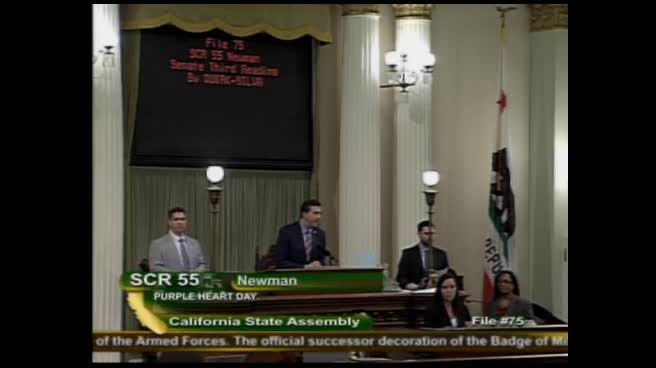 4MIN
Assembly Floor
 7MIN
Assembly Standing Committee on Judiciary
 3MIN
Senate Floor
 4MIN
Senate Standing Committee on Public Safety
Bill Author
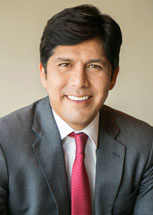
Bill Co-Author(s):