SB 615: Salton Sea restoration.
- Session Year: 2017-2018
- House: Senate
- Latest Version Date: 2017-10-15
The Salton Sea Restoration Act requires the Secretary of the Natural Resources Agency, in consultation and coordination with the Salton Sea Authority, to lead Salton Sea restoration efforts. The act, to the extent that funding is appropriated to the Department of Fish and Wildlife for Salton Sea restoration activities, authorizes the Department of Water Resources, in coordination and under agreement with the Department of Fish and Wildlife, to undertake certain restoration efforts.
This bill would specify that any barrier in the Salton Sea within or below a certain elevation would not be considered a dam and would provide that the construction of facilities to separate fresh water from highly saline water for the purposes of implementing restoration activities pursuant to the act shall not be subject to review, approval, inspection, or fees associated with certain laws relating to dams and reservoirs. The bill would state various legislative findings and declarations relating to the Salton Sea, would name the states comprehensive management plan for the Salton Sea the John J. Benoit Salton Sea Restoration Plan, and would recognize the State Water Resources Control Boards role in the restoration of the Salton Sea, as specified.
The Salton Sea Restoration Act requires the Secretary of the Natural Resources Agency, in consultation and coordination with the Salton Sea Authority, to lead Salton Sea restoration efforts. The act, to the extent that funding is appropriated to the Department of Fish and Wildlife for Salton Sea restoration activities, authorizes the Department of Water Resources, in coordination and under agreement with the Department of Fish and Wildlife, to undertake certain restoration efforts.
This bill would specify that any barrier in the Salton Sea within or below a certain elevation would not be considered a dam and would provide that the construction of facilities to separate fresh water from highly saline water for the purposes of implementing restoration activities pursuant to the act shall not be subject to review, approval, inspection, or fees associated with certain laws relating to dams and reservoirs. The bill would state various legislative findings and declarations relating to the Salton Sea, would rename name the states comprehensive management plan for the Salton Sea Restoration Act as the John J. Benoit Salton Sea Restoration Act, Plan, and would recognize the State Water Resources Control Boards role in the restoration of the Salton Sea, as specified.
The Salton Sea Restoration Act requires the Secretary of the Natural Resources Agency, in consultation and coordination with the Salton Sea Authority, to lead Salton Sea restoration efforts. The act, to the extent that funding is appropriated to the Department of Fish and Wildlife for Salton Sea restoration activities, authorizes the Department of Water Resources, in coordination and under agreement with the Department of Fish and Wildlife, to undertake certain restoration efforts. The act authorizes the Salton Sea Authority to lead a feasibility study, in coordination and under contract with the Secretary of the Natural Resources Agency, as prescribed.
This bill would require the Natural Resources Agency, by January 1, 2018, to develop a 10-year plan to implement the memorandum of understanding between the agency and the United States Department of the Interior entered into on August 31, 2016, and its addendum, entered into on January 18, 2017, and would require the agency to address certain issues in the plan. specify that any barrier in the Salton Sea within or below a certain elevation would not be considered a dam and would provide that the construction of facilities to separate fresh water from highly saline water for the purposes of implementing restoration activities pursuant to the act shall not be subject to review, approval, inspection, or fees associated with certain laws relating to dams and reservoirs. The bill would state various legislative findings and declarations relating to the Salton Sea, would rename the Salton Sea Restoration Act as the John J. Benoit Salton Sea Restoration Act. Act, and would recognize the State Water Resources Control Boards role in the restoration of the Salton Sea, as specified.
This bill would declare that it is to take effect immediately as an urgency statute.The Salton Sea Restoration Act requires the Secretary of the Natural Resources Agency, in consultation and coordination with the Salton Sea Authority, to lead Salton Sea restoration efforts. The act, to the extent that funding is appropriated to the Department of Fish and Wildlife for Salton Sea restoration activities, authorizes the Department of Water Resources, in coordination and under agreement with the Department of Fish and Wildlife, to undertake certain restoration efforts. The act authorizes the Salton Sea Authority to lead a feasibility study, in coordination and under contract with the Secretary of the Natural Resources Agency, as prescribed.
This bill would require the Natural Resources Agency, by January 1, 2018, to develop a 10-year plan to implement the memorandum of understanding between the agency and the United States Department of the Interior entered into on August 31, 2016, and its addendum, entered into on January 18, 2017, and would require the agency to address certain issues in the plan. The bill would rename the Salton Sea Restoration Act as the John J. Benoit Salton Sea Restoration Act.
This bill would declare that it is to take effect immediately as an urgency statute.
The Salton Sea Restoration Act requires the Secretary of the Natural Resources Agency, in consultation and coordination with the Salton Sea Authority, to lead Salton Sea restoration efforts. The act, to the extent that funding is appropriated to the Department of Fish and Wildlife for Salton Sea restoration activities, authorizes the Department of Water Resources, in coordination and under agreement with the Department of Fish and Wildlife, to undertake certain restoration efforts. The act authorizes the Salton Sea Authority to lead a feasibility study, in coordination and under contract with the Secretary of the Natural Resources Agency, as prescribed.
This bill would require the Natural Resources Agency, by January 1, 2018, to develop a 10-year plan to implement the memorandum of understanding between the agency and the United States Department of the Interior entered into on August 31, 2016, and its addendum, entered into on January 18, 2017, and would require the agency to address certain issues in the plan. The bill would rename the Salton Sea Restoration Act as the John J. Benoit Salton Sea Restoration Act.
This bill would declare that it is to take effect immediately as an urgency statute.
The Legislature finds and declares all of the following:
(a)The Salton Sea, located in the Counties of Imperial and Riverside, is Californias largest lake. Once an intermittent freshwater sea that formed and evaporated several times over thousands of years, the modern-day sea formed in 1905 when the Colorado River breached an inadequate diversion structure and flowed into the basin for two years.
(b)The Salton Sea is a terminal lake, with inflows from the New River, the Alamo River, and the Whitewater River, and no natural outflows. The New River, which has primarily been used to convey agricultural runoff as well as treated and raw sewage, is considered one of the most polluted rivers in the United States.
(c)The Salton Sea loses approximately one million acre-feet per year to evaporation, and, as a result, is becoming increasingly saline and exposing more playa. This presents a variety of environmental and public health concerns.
(d)More than 95 percent of Californias historical wetlands have been converted to other land uses, making the Salton Sea a critical wetland area in California for migratory waterfowl and shorebirds. The Salton Sea supports more than 400 species of birds and is an internationally significant stopover site for hundreds of thousands of birds migrating along the Pacific Flyway. Fishery resources in the Salton Sea have also declined significantly due to increasing salinity and evaporation and declining water quality. Absent remediation efforts, health conditions at the Salton Sea will rapidly deteriorate for both humans and wildlife, especially with a future decrease in runoff flows to the Salton Sea.
(e)The shrinking Salton Sea also poses significant air quality concerns for residents in the region as more playa is exposed. According to the Pacific Institute, more than 100 square miles of dusty lake bed could be exposed to the desert winds. That would cause fine particles to blow over the Coachella and Imperial Valleys, with the latter already suffering from the highest childhood asthma hospitalization rate in the state and both areas containing high numbers of seniors who are especially susceptible to poor air quality.
(f)Signed in 2003, the Quantification Settlement Agreement (QSA) is a historic water agreement that limited Californias Colorado River water usage to 4.4 million acre-feet annually. Key elements of the QSA include water conservation measures, water transfers from the Imperial Irrigation District to the San Diego County Water Authority and to the Coachella Valley Water District, environmental mitigation obligations, regulatory provisions, and funding agreements.
(g)The Salton Sea Restoration Act (Chapter 13 (commencing with Section 2930) of Division 3 of the Fish and Game Code) includes numerous provisions for habitat and species protection, air quality, and the eventual restoration of the Salton Sea by the state. Specifically, the Salton Sea Restoration Act commits the state to undertake the restoration of the Salton Sea ecosystem and the permanent protection of the wildlife dependent on that ecosystem.
(h)Section 2081.7 of the Fish and Game Code required the Secretary of the Natural Resources Agency, in consultation with the Department of Fish and Wildlife, the Department of Water Resources, the Salton Sea Authority, air quality districts, and the Salton Sea Advisory Committee, to undertake a restoration study to determine a preferred alternative for Salton Sea restoration, to prepare a programmatic environmental impact report (PEIR) analyzing the alternatives, and to submit a preferred alternative to the Legislature on or before December 31, 2006. The resulting report indicated that the preferred alternative would cost nearly $9 billion.
(i)The Legislature has not acted on the preferred alternative, but has taken steps to restore the Salton Sea. The Legislature appropriated funds for the Salton Sea Species Conservation Habitat Project, which is similar to the early start habitat projects described as Phase 1 in the 2006 PEIR. In the Budget Act of 2013, the Legislature appropriated funds available from the Safe Drinking Water, Water Quality and Supply, Flood Control, River and Coastal Protection Bond Act of 2006 (Proposition 84) for initial restoration projects at the Salton Sea. In the Budget Act of 2016, the Legislature appropriated $80,000,000 from funds available from the Water Quality, Supply, and Infrastructure Improvement Act of 2014 (Proposition 1) to restore habitat and suppress dust at the Salton Sea in the near term.
(j)In 2015, the Governor created the Salton Sea Task Force and directed agencies to develop a comprehensive management plan for the Salton Sea that will meet a short-term goal of 9,000 to 12,000 acres of habitat and dust suppression projects. The Governor also set a medium-term plan to construct 18,000 to 25,000 acres of habitat and dust suppression projects.
(k)On March 16, 2017, the Governors administration released its draft 10-year plan. Funding for the first four years of the plan has been secured with the $80,000,000 in Proposition 1 funding. The last six years of the plan are unfunded, with an estimated cost of upwards of $300,000,000.
(l)All viable proposals for restoration of habitat at the Salton Sea involve separating highly saline effluent from fresh water more able to support fish and wildlife.
(m)Berms, levees, or other barriers to separate fresh water from effluent would hold fresh water along the exterior of the Salton Sea, preventing it from draining inward to the center of the Salton Sea.
(n)Since any seepage or other drainage from berms, levees, or barriers would flow inward, there is no risk to lives or property from the seepage or drainage.
SEC. 2.Section 2930 of the Fish and Game Code is amended to read:2930.(a)This chapter shall be known, and may be cited, as the Salton Sea Restoration Act.(b)The states comprehensive management plan for the Salton Sea, established pursuant to the Governors directive of May 2015, shall be known, and may be cited, as the John J. Benoit Salton Sea Restoration Plan.SEC. 3.Section 2931.5 is added to the Fish and Game Code, to read:2931.5.(a)The construction of facilities to separate fresh water from highly saline water for the purposes of implementing restoration activities pursuant to this chapter shall not be subject to review, approval, inspection, or any fees associated with implementing Division 3 (commencing with Section 6000) of the Water Code.
(b)No barrier in the Salton Sea within or below the minus 220 foot contour based on the North American Vertical Datum of 1988 shall be considered a dam.
SEC. 4.Section 2940 of the Fish and Game Code is amended to read:2940.The Legislature finds and declares all of the following:
(a)The Salton Sea is Californias largest inland water body with beneficial uses that include fisheries and wildlife habitat and preservation of endangered species, and is a repository for agricultural drainage.
(b)The Salton Sea ecosystem is a critical link on the international Pacific Flyway and supports over 400 species of birds.
(c)The Salton Sea is threatened by increasing salinity and reduced inflows. Mitigation water inflows ordered by the State Water Resources Control Board in 2002 will expire at the end of 2017. Combined, these changes increasingly threaten the unparalleled wildlife resources at the sea, as well as air quality in the region.
(d)In cooperation with local governments, nonprofit organizations, private businesses, and the public, the State of California can help protect wildlife habitats and endangered species, improve water and air quality, and enhance recreational opportunities in the region.
(e)The State of California and the United States Department of the Interior committed through a memorandum of understanding signed on August 31, 2016, to protect the ecological values of the Salton Sea and to prevent dust emissions from at least 25,000 acres of lakebed exposed by reduced agricultural inflows resulting from the implementation of the Quantification Settlement Agreement.
(f)In restoring the Salton Sea, it is the intent of the Legislature to do all of the following:
(1)Protect and provide long-term conservation of fish and wildlife that are dependent on the Salton Sea ecosystem.
(2)Restore the long-term stable aquatic and shoreline habitat for fish and wildlife that depend on the Salton Sea.
(3)Mitigate air quality impacts from restoration projects using the best available technology or best available control measures, as determined by the South Coast Air Quality Management District and the Imperial County Air Pollution Control District.
(4)Protect water quality.
(5)Maintain the Salton Sea as a vital link along the Pacific Flyway.
(6)Preserve local tribal heritage and cultural values associated with the Salton Sea.
(7)Minimize noxious odors and other water and air quality problems.
(8)Coordinate with local, state, and federal agencies that are responsible for air quality, endangered species, and other environmental mitigation implementation requirements of the Quantification Settlement Agreement.
(9)Enhance economic development opportunities that will provide sustainable financial improvements benefiting the local environment and the economic quality of life for communities around the Salton Sea.
SEC. 5.Owing to the critical importance of a viable roadmap for the future of the Salton Sea, the Legislature recognizes the essential role of the State Water Resources Control Board in the exercise of its original jurisdiction with regard to the restoration of the Salton Sea. To this end, the Legislature further recognizes that timely implementation of a 10-year plan for a smaller but sustainable Salton Sea is best served and effectuated through the State Water Resources Control Boards continuing jurisdiction over this evolving subject matter and its attendant restoration efforts.
The Legislature finds and declares all of the following:
(a)The Salton Sea, located in the Counties of Imperial and Riverside, is Californias largest lake. Once an intermittent freshwater sea that formed and evaporated several times over thousands of years, the modern-day sea formed in 1905 when the Colorado River breached an inadequate diversion structure and flowed into the basin for two years.
(b)The Salton Sea is a terminal lake, with inflows from the New River, the Alamo River, and the Whitewater River, and no natural outflows. The New River, which has primarily been used to convey agricultural runoff as well as treated and raw sewage, is considered one of the most polluted rivers in the United States.
(c)The Salton Sea loses approximately one million acre-feet per year to evaporation, and, as a result, is becoming increasingly saline and exposing more playa. This presents a variety of environmental and public health concerns.
(d)More than 95 percent of Californias historical wetlands have been converted to other land uses, making the Salton Sea a critical wetland area in California for migratory waterfowl and shorebirds. The Salton Sea supports more than 400 species of birds and is an internationally significant stopover site for hundreds of thousands of birds migrating along the Pacific Flyway. Fishery resources in the Salton Sea have also declined significantly due to increasing salinity and evaporation and declining water quality. Absent remediation efforts, health conditions at the Salton Sea will rapidly deteriorate for both humans and wildlife, especially with a future decrease in runoff flows to the Salton Sea.
(e)The shrinking Salton Sea also poses significant air quality concerns for residents in the region as more playa is exposed. According to the Pacific Institute, more than 100 square miles of dusty lake bed could be exposed to the desert winds. That would cause fine particles to blow over the Coachella and Imperial Valleys, with the latter already suffering from the highest childhood asthma hospitalization rate in the state and both areas containing high numbers of seniors who are especially susceptible to poor air quality.
(f)Signed in 2003, the Quantification Settlement Agreement (QSA) is a historic water agreement that limited Californias Colorado River water usage to 4.4 million acre-feet annually. Key elements of the QSA include water conservation measures, water transfers from the Imperial Irrigation District to the San Diego County Water Authority and to the Coachella Valley Water District, environmental mitigation obligations, regulatory provisions, and funding agreements.
(g)The Salton Sea Restoration Act (Chapter 13 (commencing with Section 2930) of Division 3 of the Fish and Game Code) includes numerous provisions for habitat and species protection, air quality, and the eventual restoration of the Salton Sea by the state. Specifically, the Salton Sea Restoration Act commits the state to undertake the restoration of the Salton Sea ecosystem and the permanent protection of the wildlife dependent on that ecosystem.
(h)Section 2081.7 of the Fish and Game Code required the Secretary of the Natural Resources Agency, in consultation with the Department of Fish and Wildlife, the Department of Water Resources, the Salton Sea Authority, air quality districts, and the Salton Sea Advisory Committee, to undertake a restoration study to determine a preferred alternative for Salton Sea restoration, to prepare a programmatic environmental impact report (PEIR) analyzing the alternatives, and to submit a preferred alternative to the Legislature on or before December 31, 2006. The resulting report indicated that the preferred alternative would cost nearly $9 billion.
(i)The Legislature has not acted on the preferred alternative, but has taken steps to restore the Salton Sea. The Legislature appropriated funds for the Salton Sea Species Conservation Habitat Project, which is similar to the early start habitat projects described as Phase 1 in the 2006 PEIR. In the Budget Act of 2013, the Legislature appropriated funds available from the Safe Drinking Water, Water Quality and Supply, Flood Control, River and Coastal Protection Bond Act of 2006 (Proposition 84) for initial restoration projects at the Salton Sea. In the Budget Act of 2016, the Legislature appropriated $80,000,000 from funds available from the Water Quality, Supply, and Infrastructure Improvement Act of 2014 (Proposition 1) to restore habitat and suppress dust at the Salton Sea in the near term.
(j)In 2015, the Governor created the Salton Sea Task Force and directed agencies to develop a comprehensive management plan for the Salton Sea that will meet a short-term goal of 9,000 to 12,000 acres of habitat and dust suppression projects. The Governor also set a medium-term plan to construct 18,000 to 25,000 acres of habitat and dust suppression projects.
(k)On March 16, 2017, the Governors administration released its draft 10-year plan. Funding for the first four years of the plan has been secured with the $80,000,000 in Proposition 1 funding. The last six years of the plan are unfunded, with an estimated cost of upwards of $300,000,000.
(l)All viable proposals for restoration of habitat at the Salton Sea involve separating highly saline effluent from fresh water more able to support fish and wildlife.
(m)Berms, levees, or other barriers to separate fresh water from effluent would hold fresh water along the exterior of the Salton Sea, preventing it from draining inward to the center of the Salton Sea.
(n)Since any seepage or other drainage from berms, levees, or barriers would flow inward, there is no risk to lives or property from the seepage or drainage.
SEC. 2.The heading of Chapter 13 (commencing with Section 2930) of Division 3 of the Fish and Game Code is amended to read:13.John J. Benoit Salton Sea Restoration ActSEC. 3.SEC. 2.Section 2930 of the Fish and Game Code is amended to read:2930.(a)This chapter shall be known, and may be cited, as the John J. Benoit Salton Sea Restoration Act.(b)The states comprehensive management plan for the Salton Sea, established pursuant to the Governors directive of May 2015, shall be known, and may be cited, as the John J. Benoit Salton Sea Restoration Plan.SEC. 4.SEC. 3.Section 2931.5 is added to the Fish and Game Code, to read:2931.5.(a)The construction of facilities to separate fresh water from highly saline water for the purposes of implementing restoration activities pursuant to this chapter shall not be subject to review, approval, inspection, or any fees associated with implementing Division 3 (commencing with Section 6000) of the Water Code.
(b)No barrier in the Salton Sea within or below the minus 220 foot contour based on the North American Vertical Datum of 1988 shall be considered a dam.
SEC. 5.SEC. 4.Section 2940 of the Fish and Game Code is amended to read:2940.The Legislature finds and declares all of the following:
(a)The Salton Sea is Californias largest inland water body with beneficial uses that include fisheries and wildlife habitat and preservation of endangered species, and is a repository for agricultural drainage.
(b)The Salton Sea ecosystem is a critical link on the international Pacific Flyway and supports over 400 species of birds.
(c)The Salton Sea is threatened by increasing salinity and reduced inflows. Mitigation water inflows ordered by the State Water Resources Control Board in 2002 will expire at the end of 2017. Combined, these changes increasingly threaten the unparalleled wildlife resources at the sea, as well as air quality in the region.
(d)In cooperation with local governments, nonprofit organizations, private businesses, and the public, the State of California can help protect wildlife habitats and endangered species, improve water and air quality, and enhance recreational opportunities in the region.
(e)The State of California and the United States Department of the Interior committed through a memorandum of understanding signed on August 31, 2016, to protect the ecological values of the Salton Sea and to prevent dust emissions from at least 25,000 acres of lakebed exposed by reduced agricultural inflows resulting from the implementation of the Quantification Settlement Agreement.
(f)In restoring the Salton Sea, it is the intent of the Legislature to do all of the following:
(1)Protect and provide long-term conservation of fish and wildlife that are dependent on the Salton Sea ecosystem.
(2)Restore the long-term stable aquatic and shoreline habitat for fish and wildlife that depend on the Salton Sea.
(3)Mitigate air quality impacts from restoration projects using the best available technology or best available control measures, as determined by the South Coast Air Quality Management District and the Imperial County Air Pollution Control District.
(4)Protect water quality.
(5)Maintain the Salton Sea as a vital link along the Pacific Flyway.
(6)Preserve local tribal heritage and cultural values associated with the Salton Sea.
(7)Minimize noxious odors and other water and air quality problems.
(8)Coordinate with local, state, and federal agencies that are responsible for air quality, endangered species, and other environmental mitigation implementation requirements of the Quantification Settlement Agreement.
(9)Enhance economic development opportunities that will provide sustainable financial improvements benefiting the local environment and the economic quality of life for communities around the Salton Sea.
SEC. 6.SEC. 5.Owing to the critical importance of a viable roadmap for the future of the Salton Sea, the Legislature recognizes the essential role of the State Water Resources Control Board in the exercise of its original jurisdiction with regard to the restoration of the Salton Sea. To this end, the Legislature further recognizes that timely implementation of a 10-year plan for a smaller but sustainable Salton Sea is best served and effectuated through the State Water Resources Control Boards continuing jurisdiction over this evolving subject matter and its attendant restoration efforts.
The Legislature finds and declares all of the following:
(a)The Salton Sea, located in the Counties of Imperial and Riverside, is Californias largest lake. Once an intermittent freshwater sea that formed and evaporated several times over thousands of years, the modern-day sea formed in 1905 when the Colorado River breached an inadequate diversion structure and flowed into the basin for two years.
(b)The Salton Sea is a terminal lake, with inflows from the New River, the Alamo River, and the Whitewater River, and no natural outflows. The New River, which has primarily been used to convey agricultural runoff as well as treated and raw sewage, is considered one of the most polluted rivers in the United States.
(c)The Salton Sea loses approximately one million acre-feet per year to evaporation, and, as a result, is becoming increasingly saline and exposing more playa. This presents a variety of environmental and public health concerns.
(d)More than 95 percent of Californias historical wetlands have been converted to other land uses, making the Salton Sea a critical wetland area in California for migratory waterfowl and shorebirds. The Salton Sea supports more than 400 species of birds and is an internationally significant stopover site for hundreds of thousands of birds migrating along the Pacific Flyway. Fishery resources in the Salton Sea have also declined significantly due to increasing salinity and evaporation and declining water quality. Absent remediation efforts, health conditions at the Salton Sea will rapidly deteriorate for both humans and wildlife, especially with a future decrease in runoff flows to the Salton Sea.
(e)The shrinking Salton Sea also poses significant air quality concerns for residents in the region as more playa is exposed. According to the Pacific Institute, more than 100 square miles of dusty lake bed could be exposed to the desert winds. That would cause fine particles to blow over the Coachella and Imperial Valleys, with the latter already suffering from the highest childhood asthma hospitalization rate in the state and both areas containing high numbers of seniors who are especially susceptible to poor air quality.
(f)Signed in 2003, the Quantification Settlement Agreement (QSA) is a historic water agreement that limited Californias Colorado River water usage to 4.4 million acre-feet annually. Key elements of the QSA include water conservation measures, water transfers from the Imperial Irrigation District to the San Diego County Water Authority and to the Coachella Valley Water District, environmental mitigation obligations, regulatory provisions, and funding agreements.
(g)The Salton Sea Restoration Act (Chapter 13 (commencing with Section 2930) of Division 3 of the Fish and Game Code) includes numerous provisions for habitat and species protection, air quality, and the eventual restoration of the Salton Sea by the state. Specifically, the Salton Sea Restoration Act commits the state to undertake the restoration of the Salton Sea ecosystem and the permanent protection of the wildlife dependent on that ecosystem.
(h)Section 2081.7 of the Fish and Game Code required the Secretary of the Natural Resources Agency, in consultation with the Department of Fish and Wildlife, the Department of Water Resources, the Salton Sea Authority, air quality districts, and the Salton Sea Advisory Committee, to undertake a restoration study to determine a preferred alternative for Salton Sea restoration, to prepare a programmatic environmental impact report (PEIR) analyzing the alternatives, and to submit a preferred alternative to the Legislature on or before December 31, 2006. The resulting report indicated that the preferred alternative would cost nearly $9 billion.
(i)The Legislature has not acted on the preferred alternative, but has taken steps to restore the Salton Sea. The Legislature appropriated funds for the Salton Sea Species Conservation Habitat Project, which is similar to the early start habitat projects described as Phase 1 in the 2006 PEIR. In the Budget Act of 2013, the Legislature appropriated funds available from the Safe Drinking Water, Water Quality and Supply, Flood Control, River and Coastal Protection Bond Act of 2006 (Proposition 84) for initial restoration projects at the Salton Sea. In the Budget Act of 2016, the Legislature appropriated $80,000,000 from funds available from the Water Quality, Supply, and Infrastructure Improvement Act of 2014 (Proposition 1) to restore habitat and suppress dust at the Salton Sea in the near term.
(j)In 2015, the Governor created the Salton Sea Task Force and directed agencies to develop a comprehensive management plan for the Salton Sea that will meet a short-term goal of 9,000 to 12,000 acres of habitat and dust suppression projects. The Governor also set a medium-term plan to construct 18,000 to 25,000 acres of habitat and dust suppression projects.
(k)On March 16, 2017, the Governors administration released its draft 10-year plan. Funding for the first four years of the plan has been secured with the $80,000,000 in Proposition 1 funding. The last six years of the plan are unfunded, with an estimated cost of upwards of $300,000,000.
(l)All viable proposals for restoration of habitat at the Salton Sea involve separating highly saline effluent from fresh water more able to support fish and wildlife.
(m)Berms, levees, or other barriers to separate fresh water from effluent would hold fresh water along the exterior of the Salton Sea, preventing it from draining inward to the center of the Salton Sea.
(n)Since any seepage or other drainage from berms, levees, or barriers would flow inward, there is no risk to lives or property from the seepage or drainage.
SECTION 1.SEC. 2.The heading of Chapter 13 (commencing with Section 2930) of Division 3 of the Fish and Game Code is amended to read:13.John J. Benoit Salton Sea Restoration ActSEC. 2.SEC. 3.Section 2930 of the Fish and Game Code is amended to read:2930.This chapter shall be known, and may be cited, as the John J. Benoit Salton Sea Restoration Act.
SEC. 4.Section 2931.5 is added to the Fish and Game Code, to read:2931.5.(a)The construction of facilities to separate fresh water from highly saline water for the purposes of implementing restoration activities pursuant to this chapter shall not be subject to review, approval, inspection, or any fees associated with implementing Division 3 (commencing with Section 6000) of the Water Code.
(b)No barrier in the Salton Sea within or below the minus 220 foot contour based on the North American Vertical Datum of 1988 shall be considered a dam.
SEC. 3.SEC. 5.Section 2940 of the Fish and Game Code is amended to read:2940.The Legislature finds and declares all of the following:
(a)The Salton Sea is Californias largest inland water body with beneficial uses that include fisheries and wildlife habitat and preservation of endangered species, and is a repository for agricultural drainage.
(b)The Salton Sea ecosystem is a critical link on the international Pacific Flyway and supports over 400 species of birds.
(c)The Salton Sea is threatened by increasing salinity and reduced inflows. Mitigation water inflows ordered by the State Water Resources Control Board in 2002 will expire at the end of 2017. Combined, these changes increasingly threaten the unparalleled wildlife resources at the sea, as well as air quality in the region.
(d)In cooperation with local governments, nonprofit organizations, private businesses, and the public, the State of California can help protect wildlife habitats and endangered species, improve water and air quality, and enhance recreational opportunities in the region.
(e)The State of California and the United States Department of the Interior committed through a memorandum of understanding signed on August 31, 2016, to protect the ecological values of the Salton Sea and to prevent dust emissions from at least 25,000 acres of lakebed exposed by reduced agricultural inflows resulting from the implementation of the Quantification Settlement Agreement.
(f)In restoring the Salton Sea, it is the intent of the Legislature to do all of the following:
(1)Protect and provide long-term conservation of fish and wildlife that are dependent on the Salton Sea ecosystem.
(2)Restore the long-term stable aquatic and shoreline habitat for fish and wildlife that depend on the Salton Sea.
(3)Mitigate air quality impacts from restoration projects using the best available technology or best available control measures, as determined by the South Coast Air Quality Management District and the Imperial County Air Pollution Control District.
(4)Protect water quality.
(5)Maintain the Salton Sea as a vital link along the Pacific Flyway.
(6)Preserve local tribal heritage and cultural values associated with the Salton Sea.
(7)Minimize noxious odors and other water and air quality problems.
(8)Coordinate with local, state, and federal agencies that are responsible for air quality, endangered species, and other environmental mitigation implementation requirements of the Quantification Settlement Agreement.
(9)Enhance economic development opportunities that will provide sustainable financial improvements benefiting the local environment and the economic quality of life for communities around the Salton Sea.
SEC. 4.Section 2942.1 is added to the Fish and Game Code, to read:2942.1.By January 1, 2018, the agency shall develop a 10-year plan to implement the memorandum of understanding between the agency and the United States Department of the Interior entered into on August 31, 2016, and its addendum, entered into on January 18, 2017. The agency shall address all of the following in the plan:(a)Expected lakebed exposure during the 10-year period of the memorandum of understanding.(b)Habitat or air quality projects that will be used to cover the exposed lakebed.(c)Funding needs and availability to implement the plan.SEC. 5.SEC. 6.Owing to the critical importance of a viable roadmap for the future of the Salton Sea, the Legislature recognizes the essential role of the State Water Resources Control Board in the exercise of its original jurisdiction with regard to the restoration of the Salton Sea. To this end, the Legislature further recognizes that timely implementation of a 10-year plan for a smaller but sustainable Salton Sea is best served and effectuated through the State Water Resources Control Boards continuing jurisdiction over this evolving subject matter and its attendant restoration efforts.
SEC. 6.This act is an urgency statute necessary for the immediate preservation of the public peace, health, or safety within the meaning of Article IV of the California Constitution and shall go into immediate effect. The facts constituting the necessity are:In order to begin implementing the memorandum of understanding between the State of California and the United States Department of the Interior, which would address environmental and health impacts relating to the Salton Sea, at the earliest possible date, it is necessary for this act to take immediate effect.This chapter shall be known known, and may be cited cited, as the John J. Benoit Salton Sea Restoration Act.
SEC. 3.Section 2940 of the Fish and Game Code is amended to read:2940.The Legislature finds and declares all of the following:
(a)The Salton Sea is Californias largest inland water body with beneficial uses that include fisheries and wildlife habitat and preservation of endangered species, and is a repository for agricultural drainage.
(b)The Salton Sea ecosystem is a critical link on the international Pacific Flyway and supports over 400 species of birds.
(c)The Salton Sea is threatened by increasing salinity and reduced inflows. These Mitigation water inflows ordered by the State Water Resources Control Board in 2002 will expire at the end of 2017. Combined, these changes increasingly threaten the unparalleled wildlife resources at the sea, as well as air quality in the region.
(d)In cooperation with local governments, nonprofit organizations, private businesses, and the public, the Salton Sea Authority State of California can help protect wildlife habitats and endangered species, improve water and air quality, and enhance recreational opportunities in the region.
(e)The state State of California and the United States Department of the Interior committed through a memorandum of understanding signed on August 31, 2016, to protect the ecological values of the Salton Sea and to prevent dust emissions from at least 25,000 acres of lakebed exposed by reduced agricultural inflows resulting from the implementation of the Quantification Settlement Agreement.
(f)In restoring the Salton Sea, it is the intent of the Legislature to do all of the following:
(1)Protect and provide long-term conservation of fish and wildlife that are dependent on the Salton Sea ecosystem.
(2)Restore the long-term stable aquatic and shoreline habitat for fish and wildlife that depend on the Salton Sea.
(3)Mitigate air quality impacts from restoration projects using the best available technology or best available control measures, as determined by the South Coast Air Quality Management District and the Imperial County Air Pollution Control District.
(4)Protect water quality.
(5)Maintain the Salton Sea as a vital link along the Pacific Flyway.
(6)Preserve local tribal heritage and cultural values associated with the Salton Sea.
(7)Minimize noxious odors and other water and air quality problems.
(8)Coordinate with local, state, and federal agencies that are responsible for air quality, endangered species, and other environmental mitigation implementation requirements of the Quantification Settlement Agreement.
(9)Enhance economic development opportunities that will provide sustainable financial improvements benefiting the local environment and the economic quality of life for communities around the Salton Sea.
SEC. 4.Section 2942.1 is added to the Fish and Game Code, to read:2942.1.By January 1, 2018, the agency shall develop a 10-year plan to implement the memorandum of understanding between the agency and the United States Department of the Interior entered into on August 31, 2016, and its addendum, entered into on January 18, 2017. The agency shall address all of the following in the plan:
(a)Expected lakebed exposure during the 10-year period of the memorandum of understanding.
(b)Habitat or air quality projects that will be used to cover the exposed lakebed.
(c)Funding needs and availability to implement the plan.
SEC. 5.Owing to the critical importance of a viable roadmap for the future of the Salton Sea, the Legislature recognizes the essential role of the State Water Resources Control Board in the exercise of its original jurisdiction with regard to the restoration of the Salton Sea. To this end, the Legislature further recognizes that timely implementation of a 10-year plan for a smaller but sustainable Salton Sea is best served and effectuated through the State Water Resources Control Boards continuing jurisdiction over this evolving subject matter and its attendant restoration efforts.
SEC. 5.SEC. 6.This act is an urgency statute necessary for the immediate preservation of the public peace, health, or safety within the meaning of Article IV of the California Constitution and shall go into immediate effect. The facts constituting the necessity are:
In order to begin implementing the memorandum of understanding between the state State of California and the United States Department of the Interior, which would address environmental and health impacts relating to the Salton Sea, at the earliest possible date, it is necessary for this act to take immediate effect.
This chapter shall be known and may be cited as the John J. Benoit Salton Sea Restoration Act.
SEC. 3.Section 2940 of the Fish and Game Code is amended to read:2940.The Legislature finds and declares all of the following:
(a)The Salton Sea is Californias largest inland water body with beneficial uses that include fisheries and wildlife habitat and preservation of endangered species, and is a repository for agricultural drainage.
(b)The Salton Sea ecosystem is a critical link on the international Pacific Flyway and supports over 400 species of birds.
(c)The Salton Sea is threatened by increasing salinity and reduced inflows. These changes increasingly threaten the unparalleled wildlife resources at the sea, as well as air quality in the region.
(d)In cooperation with local governments, nonprofit organizations, private businesses, and the public, the Salton Sea Authority can help protect wildlife habitats and endangered species, improve water and air quality, and enhance recreational opportunities in the region.
(e)The state of California and the United States Department of the Interior committed through a memorandum of understanding signed on August 31, 2016, to protect the ecological values of the Salton Sea and to prevent dust emissions from at least 25,000 acres of lakebed exposed by reduced agricultural inflows resulting from the implementation of the Quantification Settlement Agreement.
(e)(f)In restoring the Salton Sea, it is the intent of the Legislature to do all of the following:
(1)Protect and provide long-term conservation of fish and wildlife that are dependent on the Salton Sea ecosystem.
(2)Restore the long-term stable aquatic and shoreline habitat for fish and wildlife that depend on the Salton Sea.
(3)Mitigate air quality impacts from restoration projects using the best available technology or best available control measures, as determined by the South Coast Air Quality Management District and the Imperial County Air Pollution Control District.
(4)Protect water quality.
(5)Maintain the Salton Sea as a vital link along the Pacific Flyway.
(6)Preserve local tribal heritage and cultural values associated with the Salton Sea.
(7)Minimize noxious odors and other water and air quality problems.
(8)Coordinate with local, state, and federal agencies that are responsible for air quality, endangered species, and other environmental mitigation implementation requirements of the Quantification Settlement Agreement.
(9)Enhance economic development opportunities that will provide sustainable financial improvements benefiting the local environment and the economic quality of life for communities around the Salton Sea.
SEC. 4.Section 2942.1 is added to the Fish and Game Code, to read:2942.1.By January 1, 2018, the agency shall develop a 10-year plan to implement the memorandum of understanding between the agency and the United States Department of the Interior entered into on August 31, 2016, and its addendum, entered into on January 18, 2017. The agency shall address all of the following in the plan:
(a)Expected lakebed exposure during the 10-year period of the memorandum of understanding.
(b)Habitat or air quality projects that will be used to cover the exposed lakebed.
(c)Funding needs and availability to implement the plan.
SEC. 5.This act is an urgency statute necessary for the immediate preservation of the public peace, health, or safety within the meaning of Article IV of the California Constitution and shall go into immediate effect. The facts constituting the necessity are:
In order to begin implementing the memorandum of understanding between the state of California and the United States Department of the Interior, which would address environmental and health impacts relating to the Salton Sea, at the earliest possible date, it is necessary for this act to take immediate effect.
|
Date
|
Status
|
|---|---|
| Oct 15, 2017 | Chaptered by Secretary of State. Chapter 859, Statutes of 2017. |
| Oct 15, 2017 | Approved by the Governor. |
| Sep 19, 2017 | Enrolled and presented to the Governor at 4 p.m. |
| Sep 13, 2017 | Assembly amendments concurred in. (Ayes 38. Noes 1.) Ordered to engrossing and enrolling. |
| Sep 13, 2017 | In Senate. Concurrence in Assembly amendments pending. |
| Sep 12, 2017 | Read third time. Passed. Ordered to the Senate. |
| Sep 8, 2017 | Read third time and amended. |
| Sep 6, 2017 | Read second time. Ordered to third reading. |
| Sep 5, 2017 | Read second time and amended. Ordered to second reading. |
| Sep 1, 2017 | From committee: Do pass as amended. (Ayes 11. Noes 0.) (September 1). |
| Aug 23, 2017 | August 23 set for first hearing. Placed on suspense file. |
| Jun 27, 2017 | From committee: Do pass and re-refer to Com. on APPR. (Ayes 14. Noes 1.) (June 27). Re-referred to Com. on APPR. |
| Jun 6, 2017 | June 13 set for first hearing canceled at the request of author. |
| May 26, 2017 | Referred to Com. on W.,P., & W. |
| May 9, 2017 | In Assembly. Read first time. Held at Desk. |
| May 8, 2017 | Read third time. Urgency clause adopted. Passed. (Ayes 37. Noes 0. Page 986.) Ordered to the Assembly. |
| May 2, 2017 | Read second time. Ordered to third reading. |
| May 1, 2017 | Read third time and amended. |
| Apr 18, 2017 | Read second time. Ordered to third reading. |
| Apr 17, 2017 | From committee: Do pass. (Ayes 7. Noes 0. Page 708.) (April 17). |
| Apr 5, 2017 | Set for hearing April 17. |
| Mar 28, 2017 | From committee: Do pass and re-refer to Com. on APPR. (Ayes 8. Noes 0.) (March 28). Re-referred to Com. on APPR. |
| Mar 7, 2017 | Set for hearing March 28. |
| Mar 2, 2017 | Referred to Com. on N.R. & W. |
| Feb 21, 2017 | From printer. May be acted upon on or after March 23. |
| Feb 17, 2017 | Introduced. Read first time. To Com. on RLS. for assignment. To print. |
|
Date
|
Description
|
Location
|
Votes
|
|
|---|---|---|---|---|
| Sep 13, 2017 | Unfinished Business SB615 Hueso et al. Concurrence | Senate Floor |
Passed |
|
| Sep 12, 2017 | SB 615 Hueso Senate Third Reading By GARCIA, E. | Assembly Floor |
Passed |
|
| Sep 1, 2017 | Do pass as amended. | Assembly Standing Committee on Appropriations |
Passed |
|
| Jun 27, 2017 | Do pass and be re-referred to the Committee on [Appropriations] | Assembly Standing Committee on Water, Parks, and Wildlife |
Passed |
|
| May 8, 2017 | Senate 3rd Reading SB615 Hueso et al. Urgency Clause | Senate Floor |
Passed |
|
| Apr 17, 2017 | Do pass | Senate Standing Committee on Appropriations |
Passed |
|
| Mar 28, 2017 | Do pass, but first be re-referred to the Committee on [Appropriations] | Senate Standing Committee on Natural Resources and Water |
Passed |
This list shows positions taken on this bill by organizations on the date displayed, which is linked to the original source.
Positions by individuals are not included.
|
Organization
|
Position
|
Date
|
|---|---|---|
| Association Of California Water Agencies | * Support | Jun 27, 2017 |
| Audubon California | ** Support | Sep 13, 2017 |
| California League Of Conservation Voters | ** Support | Sep 13, 2017 |
| County of Imperial | ** Support | Sep 13, 2017 |
| Environmental Defense Fund | * Support | Jun 27, 2017 |
| Gualco Group | * Support | Apr 17, 2017 |
| Imperial Irrigation District | * Support | Jun 27, 2017 |
| Salton Sea Authority | ** Support | Sep 13, 2017 |
| San Diego County Water Agency | * Support | Apr 17, 2017 |
| San Diego County Water Authority | * Support | Jun 27, 2017 |
| Sierra Club California | ** Support | Sep 13, 2017 |
| The Nature Conservancy | * Support | Jun 27, 2017 |
| Trust For Public Land, The | * Support | Apr 17, 2017 |
Office of Senate Floor Analyses (916) 651-1520 Fax: (916) 327-4478 | SB |
UNFINISHED BUSINESS
Bill No: SB 615
:
SENATE NATURAL RES. & WATER COMMITTEE: 8-0, 3/28/17
AYES: Hertzberg, Stone, Allen, Atkins, Hueso, Jackson, Monning, Stern
NO VOTE RECORDED: Vidak
SENATE APPROPRIATIONS COMMITTEE: 7-0, 4/17/17
AYES: Lara, Bates, Beall, Bradford, Hill, Nielsen, Wiener
SENATE FLOOR: 37-0, 5/8/17
AYES: Allen, Anderson, Atkins, Beall, Berryhill, Bradford, Cannella, De León, Dodd, Gaines, Galgiani, Glazer, Hernandez, Hertzberg, Hill, Hueso, Jackson, Leyva, McGuire, Mendoza, Mitchell, Monning, Moorlach, Morrell, Newman, Nguyen, Nielsen, Pan, Portantino, Roth, Skinner, Stern, Stone, Vidak, Wieckowski, Wiener, Wilk
NO VOTE RECORDED: Bates, Fuller, Lara
ASSEMBLY FLOOR: 59-15, 9/12/17 - See last page for vote
DIGEST:
This bill contains a series of findings regarding the environmental, public health, and economic importance of the Salton Sea, renames the Salton Sea Restoration Plan in honor of John J. Benoit, and exempts certain structures to separate fresh from saline water shall not be considered dams. This bill also notes the continuing jurisdiction of the State Water Resources Control Board and observes that the Salton Sea in the future will be smaller, but more sustainable.
Assembly Amendments
re-name the Salton Sea Restoration Plan in honor of John Benoit, delete the urgency clause, and exempt certain structures that will be developed as part of the restoration plan from being considered as dams.
ANALYSIS:
Existing law:
- Codifies the Quantification Settlement Agreement (QSA), a 2003 collection of agreements between the Imperial Irrigation District (IID), Metropolitan Water District, San Diego County Water Authority, the Coachella Valley Water District, and the State, that included approval of water transfers from IID to San Diego, settled a number of claims to the Colorado River, and provided a transition period for the State to reduce its consumption of Colorado River water to its 4.4 million acre feet entitlement. Under the QSA, the amount of water flowing into the Salton Sea will be significantly reduced after 2017.
- Includes the Salton Sea Restoration Act, also passed in 2003 concurrently with the QSA, which contained findings and legislative intent that the state undertake the restoration of the Salton Sea ecosystem and the permanent protection of the wildlife dependent on that ecosystem and that restoration be based on the preferred alternative developed as a result of a restoration study and alternative selection process. That law also provided that the preferred alternative provide the maximum feasible attainment of specified environmental objectives, including restoration of long-term stable aquatic and shoreline habitat to historic levels and diversity of fish and wildlife dependent on the Salton Sea, elimination of air quality impacts from restoration projects, and protection of water quality. The Salton Sea Restoration Act also required the Secretary of the Resources Agency (now the Natural Resources Agency), in consultation with the Department of Fish and Game (now DFW), Department of Water Resources, the Salton Sea Authority, air quality districts, and the Salton Sea Advisory Committee to undertake a restoration study to determine a preferred alternative for restoration of the Salton Sea, to prepare a Programmatic Environmental Impact Report (PEIR) analyzing the alternatives, and to submit a preferred alternative to the Legislature on or before December 31, 2006.
- Establishes, in separate laws, the process of Salton Sea restoration and other aspects of the QSA that provided for the transfer of Colorado River water from IID to San Diego as part of an effort to contain California’s overall water use from that river to an amount set by federal law.
- Recognizes significant air quality concerns for residents in the region since more playa will be exposed of the previously covered lake bed. As the Pacific Institute, an independent research and policy analysis think tank stated in one of its reports, more than 100 miles of dusty lakebed could be exposed to the desert winds. That would cause fine particles to blow over the Coachella and Imperial Valleys with the latter already suffering from the highest childhood asthma hospitalization rate in the State and both areas containing high numbers of seniors who are especially susceptible to poor air quality.
- Documents, in a final environmental impact report from 2007, a preferred alternative for restoration with an estimated cost of nearly $9 billion. The Legislature has not acted on the preferred alternative proposed by the Resources Agency but has appropriated funding for the Species Conservation Habitat Project, which is similar to the early start habitat projects described as Phase 1 in the 2007 PEIR.
- Establishes, in SB 51 (Ducheny, Chapter 303, Statutes of 2010), which became effective in 2010, the Salton Sea Restoration Council to serve as the state agency responsible for overseeing restoration of the Salton Sea. SB 51 required the Council to evaluate Salton Sea restoration plans, including the $9 billion 2007 preferred alternative, and to report to the Governor and the Legislature by June 30, 2013 with a recommended restoration plan. The Governor's 2012 Reorganization Plan, as modified by budget trailer bill SB 1018 (Leno, Chapter 39, Statutes of 2012), eliminated the Council, effective December 31, 2012, before the Council ever actually met.
- Requires, in AB 71 (Perez), that the Secretary of the Natural Resources Agency, in consultation and coordination with the Salton Sea Authority (SSA), lead Salton Sea restoration efforts, and authorized the SSA to lead a funding and feasibility study in consultation with the Natural Resources Agency. AB 71 filled the governance void created by elimination of the Salton Sea Restoration Council in the 2012 Budget Act.
- Appropriated, in the 2013-14 Budget, Proposition 84 funds to the Salton Sea for initial restoration projects. Last year’s budget appropriated $80 million from Proposition 1 to restore habitat and suppress dust at the lake in the near term.
- Created, by the Governor, in 2015, the Salton Sea Task Force and directed agencies to develop a comprehensive management plan for the sea that will meet a short-term goal of 9,000-12,000 acres of habitat and dust suppression projects. Governor Brown also set a medium-term plan to construct 18000-25000 of habitat and dust suppression projects. In August, 2016, the California Natural Resources Agency and the federal government entered into a Memorandum of Understanding (MOU) to coordinate habitat and air quality work.
- Released, on March 16, 2017, the administration’s 10-year plan for various actions at the Salton Sea. Its Phase 1 plan closely tracks the 2015 requirements of AB 1095 (Garcia, Chapter 722, Statutes of 2015) by including specified “shovel ready” projects and including cost estimates. These include a series of water management ponds, followed by habitat and dust suppression projects. Many of these projects also were identified by the IID and Imperial County. Funding for the first four years of the plan has been secured with the $80 million in Proposition 1 funding referenced earlier. The last six years of the plan are unfunded, with an estimated cost of $303 million. Additional funding for habitat projects has been provided by the Wildlife Conservation Board, but it is clear that additional funding will be necessary. In a related measure, the author has proposed SB 701 (Hueso, 2017) which is a general obligation bond measure for funding state resource obligations including the Salton Sea, among other such state resource obligations.
This bill:
- Proposes to rename the Salton Sea Restoration Plan the “John J. Benoit Salton Sea Restoration Act.”
- Contains a series of findings and declarations regarding the deteriorating physical condition of the Salton Sea, the importance of the habitat restoration projects, and the importance of the efforts to control dust emissions.
- Exempts certain structures designed to separate saline from fresh water from being categorized as dams.
FISCAL EFFECT: Appropriation: Fiscal Com.: Local:
According to the Assembly Appropriations Committee, unknown cost pressures, likely up to $300 million, to fund the last six years of the 10-year plan and implement the MOU. However, the 10-year plan is already developed and this bill only codifies existing obligations in the MOU.
SUPPORT: (Verified 9/12/17)
Audubon California
California League of Conservation Voters
County of Imperial
Salton Sea Authority
Sierra Club California
OPPOSITION: (Verified 9/12/17)
None received
ARGUMENTS IN SUPPORT: According to the author, the Salton Sea is California’s largest inland water body with beneficial uses that include fisheries and wildlife habitat and preservation of endangered species. Moreover, the Salton Sea ecosystem is a critical link on the international Pacific Flyway and supports over 400 species of birds. However, it is also a short distance from many communities that live downwind of the sea and are impacted by the harmful dust emissions coming from the exposed playa areas. This has contributed directly to increased asthma rates in the children of these communities.
The Salton Sea is threatened by increasing salinity and reduced flows. These changes threaten the unparalleled wildlife resources at the sea, as well as air quality in the region. The state made a commitment almost 20 years ago to undertake the restoration of the sea and has spent millions on studies and plans which have yielded few results. These issues have greatly elevated the concerns at the sea and have made this a statewide matter that requires everyone’s cooperation.
ASSEMBLY FLOOR: 59-15, 9/12/17
AYES: Aguiar-Curry, Arambula, Baker, Bloom, Bocanegra, Bonta, Burke, Caballero, Calderon, Cervantes, Chau, Chiu, Choi, Chu, Cooley, Cooper, Dababneh, Daly, Eggman, Frazier, Friedman, Cristina Garcia, Eduardo Garcia, Gipson, Gloria, Gonzalez Fletcher, Gray, Grayson, Holden, Irwin, Jones-Sawyer, Kalra, Lackey, Levine, Limón, Low, Maienschein, Mayes, McCarty, Medina, Mullin, Muratsuchi, Nazarian, Obernolte, O'Donnell, Quirk, Quirk-Silva, Reyes, Ridley-Thomas, Rodriguez, Rubio, Salas, Santiago, Mark Stone, Thurmond, Ting, Waldron, Weber, Rendon
NOES: Acosta, Bigelow, Brough, Chávez, Chen, Cunningham, Dahle, Fong, Harper, Kiley, Mathis, Melendez, Patterson, Steinorth, Voepel
NO VOTE RECORDED: Travis Allen, Berman, Flora, Gallagher, Wood
9/13/17 10:19:30
**** END ****
SENATE THIRD READING
STR Bill Id:SB 615
Author:(Hueso)
As Amended Ver:September 8, 2017
Majority vote
SENATE VOTE: 37-0
Committee | Votes | Ayes | Noes |
Water | 14-1 | Eduardo Garcia, Gallagher, Bigelow, Choi, Chu, Friedman, Gloria, Bocanegra, Levine, Mathis, Rubio, Salas, Thurmond, Wood | Harper |
Appropriations | 11-0 | Gonzalez Fletcher, Bloom, Bocanegra, Bonta, Calderon, Chau, Eggman, Friedman, Eduardo Garcia, Jones-Sawyer, Reyes |
SUMMARY: Requires the California Natural Resources Agency (CNRA) to, by January 1, 2018, develop a 10-year plan to implement the memorandum of understanding (MOU) between the CNRA and the United States Department of the Interior. Specifically, this bill:
- Requires the CNRA to address expected lakebed exposure, habitat or air quality projects that will be used to cover the exposed lakebed, and funding needs to implement the 10-year plan.
- Recognizes the essential role of the State Water Resources Control Board in the exercise of its jurisdiction with regard to the restoration of the Salton Sea.
- Provides that no barrier in the Salton Sea within or below the minus 220 foot contour shall be considered a dam. Specifies that the construction of facilities to separate fresh water from highly saline water for the purposes of implementing restoration activities for the 10-year plan shall not be subject to review, approval, inspection, or any fees associated with existing law regulating dams and reservoirs.
- Proposes to rename the state's comprehensive management plan, established pursuant to the Governor's directive of May 2015, the "John J. Benoit Salton Sea Restoration Plan."
- Contains a series of findings and declarations regarding the deteriorating physical condition of the Salton Sea, the importance of the habitat restoration projects, and the importance of the efforts to control dust emissions.
EXISTING LAW:
- Provides, since 2003, in the Quantification Settlement Agreement (QSA) and related state laws, for water transfers among southern California agricultural and water agencies and calling for restoration of the Salton Sea.
- Establishes that the QSA is a collection of agreements between the Imperial Irrigation District (IID), Metropolitan Water District, San Diego County Water Authority, the Coachella Valley Water District, and the state, that included approval of water transfers from IID to San Diego, settled a number of claims to the Colorado River, and provided a transition period for the state to reduce its consumption of Colorado River water to its 4.4 million acre feet entitlement. Under the QSA, the amount of water flowing into the Salton Sea will be significantly reduced after 2017.
- Establishes, in the original Salton Sea Restoration Act adopted as part of the package of QSA bills, findings and statements of legislative intent that the state undertake the restoration of the Salton Sea ecosystem and the permanent protection of the wildlife dependent on that ecosystem, and that restoration be based on the preferred alternative developed as a result of a restoration study and alternative selection process. That law also provided that the preferred alternative provide the maximum feasible attainment of specified environmental objectives, including restoration of long-term stable aquatic and shoreline habitat to historic levels and diversity of fish and wildlife dependent on the Salton Sea, elimination of air quality impacts from restoration projects, and protection of water quality.
- Authorizes $7.545 billion in general obligation funding for water-related projects and programs in Proposition 1, the Safe Drinking Water, Quality, and Infrastructure Act of 2014. Under Proposition 1, authorizes $475 million in order to fulfill state obligations related to: the Klamath Agreements, Tahoe Compact, San Joaquin River Restoration Agreement, Salton Sea Restoration, and Central Valley Project Improvement Act refuge water supplies. $80.5 million of the $475 million were appropriated for the Salton Sea in the 2016-17 budget.
- Establishes the Salton Sea Restoration Act (SSRA) with the legislative intent of providing that the state undertakes restoration of the Salton Sea ecosystem and the permanent protection of the wildlife dependent on that ecosystem.
- Requires the SSRA to provide the maximum feasible attainment of specified environmental objectives, including restoration of long-term stable aquatic and shoreline habitat to historic levels and diversity of fish and wildlife dependent on the Salton Sea, elimination of air quality impacts from restoration projects, and protection of water quality.
- Provides that for purposes of the SSRA restoration plan, the Salton Sea ecosystem includes the Salton Sea, agricultural lands surrounding the sea, and the tributaries and drains within Imperial and Coachella Valleys that deliver water to the sea.
- Establishes the Salton Sea Restoration Fund (SSRF), which is administered by the DFW director. Authorizes moneys deposited in the SSRF to be expended, upon appropriation by the Legislature.
- Creates, in 2015, the Salton Sea Task Force by the administration and directed agencies to develop a comprehensive management plan for the sea that will meet a short-term goal of 9,000-12,000 acres of habitat and dust suppression projects. Governor Brown also set a medium-term plan to construct 18,000-25,000 acres of habitat and dust suppression projects. In August 2016, the California Natural Resources Agency and the federal government entered into a Memorandum of Understanding to coordinate habitat and air quality work.
FISCAL EFFECT: According to the Assembly Appropriations Committee, unknown cost pressures, likely up to $300 million, to fund the last six years of the 10-year plan and implement the MOU. However, the 10-year plan is already developed and this bill only codifies existing obligations in the MOU.
COMMENTS: The Salton Sea, California's largest lake, is located in a desert sink in the Southern California counties of Imperial and Riverside. The Salton Sea is 35 miles long and 15 miles wide. The Salton Sea has been shrinking since 2004, and will be shrinking at a greater rate beginning in 2018. If unmitigated, the impacts of the Salton Sea shrinking are both an environmental and public health disaster that has been estimated to cost between $29 billion and $70 billion.
The current Salton Sea was formed in 1905 when the Colorado River flooded its banks at a faulty construction site during the building of the All-American Canal. Since that time the Salton Sea has largely been supported by Colorado River water agricultural runoff. The Salton Sea has no outlets and because of its location in an area of high evaporation, has been accumulating soluble salts and insoluble constituents in its bottom sediment for more than 100 years.
The Salton Sea is a shallow body of water which causes large areas of lake bed (playa) to quickly be exposed as the sea recedes. The current estimate is that there will be 50,000 acres of playa exposed in the next 10 years. The playa contains particulate matter that is easily airborne and once airborne the particulate matter is a serious public health threat. The more playa exposed, the greater the public health threat. As the Salton Sea shrinks it also becomes saltier, this causes a domino of negative ecological effects.
The Salton Sea recession will accelerate in 2018 and beyond as a result of the Quantification Settlement Agreement (QSA). The QSA was a negotiated settlement among the Imperial Irrigation District, the Metropolitan District of Southern California, the Coachella Water District, the San Diego Water Authority, and the state to settle claims to Colorado River water and provide a path for the state to reduce its consumption of Colorado River water to its 4.4 million acre foot entitlement. In 2003, the Legislature enacted a package of QSA implementation bills, including a mechanism to allocate environmental mitigation responsibility. Under the QSA, the amount of water flowing into the sea will be significantly reduced in 2018. Without mitigation efforts, the consequences of the reduced flows will be significant to fish, wildlife, habitat, and air quality.
Existing law caps the financial responsibility of the participating water districts for mitigation at $133 million, thereby obligating the state to pay the remaining costs for mitigation and sea restoration.
The Legislature appropriated Proposition 84 funds for initial Salton Sea restoration projects in the 2013-14 Budget, and added $80 million from Proposition 1 last year to restore habitat and suppress dust at the lake in the near term. Additionally, the CNRA entered into a memorandum of understanding (MOU) with the federal government in August 2016, to coordinate habitat and air quality work. In furtherance of the objectives in the MOU, the federal government among other things, agreed to pursue $30 million of funding in support of the Salton Sea Management Plan (SSMP).
On March 16, 2017, the administration released its 10-year plan for various actions at the Salton Sea. The $80 million in Proposition 1 monies referenced above will fund the first four years of the plan implementation. However, the final six years (an estimated cost of $303 million) are unfunded.
Analysis Prepared by: Ryan Ojakian / W., P., & W. / (916) 319-2096 FN: 0002134
SENATE THIRD READING
STR Bill Id:SB 615
Author:(Hueso)
As Amended Ver:September 5, 2017
Majority vote
SENATE VOTE: 37-0
Committee | Votes | Ayes | Noes |
Water | 14-1 | Eduardo Garcia, Gallagher, Bigelow, Choi, Chu, Friedman, Gloria, Bocanegra, Levine, Mathis, Rubio, Salas, Thurmond, Wood | Harper |
Appropriations | 11-0 | Gonzalez Fletcher, Bloom, Bocanegra, Bonta, Calderon, Chau, Eggman, Friedman, Eduardo Garcia, Jones-Sawyer, Reyes |
|
SUMMARY: Requires the California Natural Resources Agency (CNRA) to, by January 1, 2018, develop a 10-year plan to implement the memorandum of understanding (MOU) between the CNRA and the United States Department of the Interior. Specifically, this bill:
- Requires the CNRA to address expected lakebed exposure, habitat or air quality projects that will be used to cover the exposed lakebed, and funding needs to implement the 10-year plan.
- Recognizes the essential role of the State Water Resources Control Board in the exercise of its jurisdiction with regard to the restoration of the Salton Sea.
- Provides that no barrier in the Salton Sea within or below the minus 220 foot contour shall be considered a dam. Specifies that the construction of facilities to separate fresh water from highly saline water for the purposes of implementing restoration activities for the 10-year plan shall not be subject to review, approval, inspection, or any fees associated with existing law regulating dams and reservoirs.
- Proposes to rename the Salton Sea Restoration Act the "John J. Benoit Salton Sea Restoration Act."
- Contains a series of findings and declarations regarding the deteriorating physical condition of the Salton Sea, the importance of the habitat restoration projects, and the importance of the efforts to control dust emissions.
EXISTING LAW:
- Provides, since 2003, in the Quantification Settlement Agreement (QSA) and related state laws, for water transfers among southern California agricultural and water agencies and calling for restoration of the Salton Sea.
- Establishes that the QSA is a collection of agreements between the Imperial Irrigation District (IID), Metropolitan Water District, San Diego County Water Authority, the Coachella Valley Water District, and the state, that included approval of water transfers from IID to San Diego, settled a number of claims to the Colorado River, and provided a transition period for the state to reduce its consumption of Colorado River water to its 4.4 million acre feet entitlement. Under the QSA, the amount of water flowing into the Salton Sea will be significantly reduced after 2017.
- Establishes, in the original Salton Sea Restoration Act adopted as part of the package of QSA bills, findings and statements of legislative intent that the state undertake the restoration of the Salton Sea ecosystem and the permanent protection of the wildlife dependent on that ecosystem, and that restoration be based on the preferred alternative developed as a result of a restoration study and alternative selection process. That law also provided that the preferred alternative provide the maximum feasible attainment of specified environmental objectives, including restoration of long-term stable aquatic and shoreline habitat to historic levels and diversity of fish and wildlife dependent on the Salton Sea, elimination of air quality impacts from restoration projects, and protection of water quality.
- Authorizes $7.545 billion in general obligation funding for water-related projects and programs in Proposition 1, the Safe Drinking Water, Quality, and Infrastructure Act of 2014. Under Proposition 1, authorizes $475 million in order to fulfill state obligations related to: the Klamath Agreements, Tahoe Compact, San Joaquin River Restoration Agreement, Salton Sea Restoration, and Central Valley Project Improvement Act refuge water supplies. $80.5 million of the $475 million were appropriated for the Salton Sea in the 2016-17 budget.
- Establishes the Salton Sea Restoration Act (SSRA) with the legislative intent of providing that the state undertakes restoration of the Salton Sea ecosystem and the permanent protection of the wildlife dependent on that ecosystem.
- Requires the SSRA to provide the maximum feasible attainment of specified environmental objectives, including restoration of long-term stable aquatic and shoreline habitat to historic levels and diversity of fish and wildlife dependent on the Salton Sea, elimination of air quality impacts from restoration projects, and protection of water quality.
- Provides that for purposes of the SSRA restoration plan, the Salton Sea ecosystem includes the Salton Sea, agricultural lands surrounding the sea, and the tributaries and drains within Imperial and Coachella Valleys that deliver water to the sea.
- Establishes the Salton Sea Restoration Fund (SSRF), which is administered by the DFW director. Authorizes moneys deposited in the SSRF to be expended, upon appropriation by the Legislature.
- Creates, in 2015, the Salton Sea Task Force by the administration and directed agencies to develop a comprehensive management plan for the sea that will meet a short-term goal of 9,000-12,000 acres of habitat and dust suppression projects. Governor Brown also set a medium-term plan to construct 18,000-25,000 acres of habitat and dust suppression projects. In August 2016, the California Natural Resources Agency and the federal government entered into a Memorandum of Understanding to coordinate habitat and air quality work.
FISCAL EFFECT: According to the Assembly Appropriations Committee, unknown cost pressures, likely up to $300 million, to fund the last six years of the 10-year plan and implement the MOU. However, the 10-year plan is already developed and this bill only codifies existing obligations in the MOU.
COMMENTS: The Salton Sea, California's largest lake, is located in a desert sink in the Southern California counties of Imperial and Riverside. The Salton Sea is 35 miles long and 15 miles wide. The Salton Sea has been shrinking since 2004, and will be shrinking at a greater rate beginning in 2018. If unmitigated, the impacts of the Salton Sea shrinking are both an environmental and public health disaster that has been estimated to cost between $29 billion and $70 billion.
The current Salton Sea was formed in 1905 when the Colorado River flooded its banks at a faulty construction site during the building of the All-American Canal. Since that time the Salton Sea has largely been supported by Colorado River water agricultural runoff. The Salton Sea has no outlets and because of its location in an area of high evaporation, has been accumulating soluble salts and insoluble constituents in its bottom sediment for more than 100 years.
The Salton Sea is a shallow body of water which causes large areas of lake bed (playa) to quickly be exposed as the sea recedes. The current estimate is that there will be 50,000 acres of playa exposed in the next 10 years. The playa contains particulate matter that is easily airborne and once airborne the particulate matter is a serious public health threat. The more playa exposed, the greater the public health threat. As the Salton Sea shrinks it also becomes saltier, this causes a domino of negative ecological effects.
The Salton Sea recession will accelerate in 2018 and beyond as a result of the Quantification Settlement Agreement (QSA). The QSA was a negotiated settlement among the Imperial Irrigation District, the Metropolitan District of Southern California, the Coachella Water District, the San Diego Water Authority, and the state to settle claims to Colorado River water and provide a path for the state to reduce its consumption of Colorado River water to its 4.4 million acre foot entitlement. In 2003, the Legislature enacted a package of QSA implementation bills, including a mechanism to allocate environmental mitigation responsibility. Under the QSA, the amount of water flowing into the sea will be significantly reduced in 2018. Without mitigation efforts, the consequences of the reduced flows will be significant to fish, wildlife, habitat, and air quality.
Existing law caps the financial responsibility of the participating water districts for mitigation at $133 million, thereby obligating the state to pay the remaining costs for mitigation and sea restoration.
The Legislature appropriated Proposition 84 funds for initial Salton Sea restoration projects in the 2013-14 Budget, and added $80 million from Proposition 1 last year to restore habitat and suppress dust at the lake in the near term. Additionally, the CNRA entered into a memorandum of understanding (MOU) with the federal government in August 2016, to coordinate habitat and air quality work. In furtherance of the objectives in the MOU, the federal government among other things, agreed to pursue $30 million of funding in support of the Salton Sea Management Plan (SSMP).
On March 16, 2017, the administration released its 10-year plan for various actions at the Salton Sea. The $80 million in Proposition 1 monies referenced above will fund the first four years of the plan implementation. However, the final six years (an estimated cost of $303 million) are unfunded.
Analysis Prepared by: Ryan Ojakian / W., P., & W. / (916) 319-2096 FN: 0001723
Date of Hearing: August 23, 2017
ASSEMBLY COMMITTEE ON APPROPRIATIONS
Lorena Gonzalez Fletcher, Chair
SBPCA Bill Id:SB 615
Author:(Hueso) – As Amended Ver:May 1, 2017
Policy Committee: | Water, Parks and Wildlife | Vote: | 14 - 1 |
|
| ||
|
|
Urgency: Yes State Mandated Local Program: No Reimbursable: No
SUMMARY:
This urgency bill requires, by January 1, 2018, the Natural Resources Agency (NRA) to develop a 10-year plan to implement the memorandum of understanding (MOU) with the U. S Department of the Interior. Specifically, this bill:
- Requires the NRA to address expected lakebed exposure, habitat or air quality projects that will be used to cover the exposed lakebed, and funding needs to implement the 10-year plan.
- Recognizes the essential role of the State Water Resources Control Board (SWRCB) in the exercise of its jurisdiction with regard to the restoration of the Salton Sea.
- Renames the Salton Sea Restoration Act the “John J. Benoit Salton Sea Restoration Act.”
FISCAL EFFECT:
Unknown cost pressures, likely up to $300 million, to fund the last six years of the 10-year plan and implement the MOU. However, the 10-year plan is already developed and this bill only codifies existing obligations in the MOU.
COMMENTS:
- Rationale. On August 31, 2016, the U. S. Department of Interior and the NRA entered into an MOU to coordinate Salton Sea management. The MOU delineated a number of objectives including the acknowledgement that a mid-term goal on restoration projects is a critical and common target to reasonably work toward. In furtherance of the objectives in the MOU, the federal government agreed to pursue $30 million in support of the Salton Sea Management Plan (SSMP).
This bill requires the NRA to develop and implement a 10-year plan based on the MOU. This bill reinforces moving forward with the SSMP and codifies the states’ commitment to the MOU.
- Background. The Salton Sea, California's largest lake, was formed in 1905 when the Colorado River flooded its banks at a faulty irrigation diversion site. Restoration is necessary to protect fish and wildlife habitat, preserve endangered species and remediate the salinity caused by agricultural runoff. Restoring the sea will help prevent future significant air quality problems resulting from the shrinking sea.
The Salton Sea is one of the most important wetland areas in the world for shorebirds migrating along the Pacific Flyway.
- The Quantification Settlement Agreement (QSA). The QSA was a negotiated settlement among the Imperial Irrigation District, the Metropolitan District of Southern California, the Coachella Water District, the San Diego Water Authority, and the state to settle claims to Colorado River water and provide a path for the state to reduce its consumption of Colorado River water to its 4.4 million acre foot entitlement. In 2003, the Legislature enacted a package of QSA implementing bills including a requirement to restore the Salton Sea. Under the QSA, the amount of water flowing into the Sea will be significantly reduced in 2018. Without restoration efforts, the environmental consequences of the reduced flows will be significant to fish, wildlife, habitat, and air quality.
Existing law caps the financial responsibility of the participating water districts for mitigation at $133 million, thereby obligating the state to pay the remaining costs for mitigation and sea restoration.
- Prior Efforts. The Legislature appropriated Proposition 84 funds for initial Salton Sea restoration projects in the 2013-14 Budget, and added $80 million from Proposition 1 last year to restore habitat and suppress dust at the lake in the near term. Additionally, the NRA entered into a memorandum of understanding (MOU) with the federal government in August, 2016, to coordinate habitat and air quality work. In furtherance of the objectives in the MOU, the federal government among other things, agreed to pursue $30 million of funding in support of the SSMP.
On March 16, 2017, the administration released its 10-year plan for various actions at the Salton Sea. The $80 million in Proposition 1 monies reference above will fund the first four years of the plan implementation. However, the final six years (an estimated cost of $303 million) are unfunded.
- Related Legislation. SB 701 (Hueso) enacts the Salton Sea Obligations Act of 2018, to place a $500 million general obligation bond before voters for approval on the November 8, 2018 general election ballot. This bill allocates $500 million to the Natural Resources Agency (NRA) for compliance with the QSA, including ecosystem restoration projects at the Salton Sea. This bill will be heard today in this Committee.
Analysis Prepared by: Jennifer Galehouse / APPR. / (916) 319-2081
Date of Hearing: June 27, 2017
ASSEMBLY COMMITTEE ON WATER, PARKS, AND WILDLIFE
Eduardo Garcia, Chair
SBPCA Bill Id:SB 615
Author:(Hueso) – As Amended Ver:May 1, 2017
SENATE VOTE: 37-0
SUBJECT: Salton Sea restoration
SUMMARY: Requires the California Natural Resources Agency (CNRA) to, by January 1, 2018, develop a 10-year plan to implement the memorandum of understanding (MOU) between the CNRA and the United States Department of the Interior. Specifically, this bill:
- Requires the CNRA to address expected lakebed exposure during the 10-year period. Requires the CNRA to address habitat or air quality projects that will be used to cover the exposed lakebed. Requires the CNRA to address funding needs to implement the plan.
- Recognizes the essential role of the State Water Resources Control Board in the exercise of its jurisdiction with regard to the restoration of the Salton Sea.
- Proposes to rename the Salton Sea Restoration Act the “John J. Benoit Salton Sea Restoration Act.”
- Contains a series of findings and declarations regarding the deteriorating physical condition of the Salton Sea, the importance of the habitat restoration projects, and the importance of the efforts to control dust emissions.
- Is an urgency statute necessary in order to begin implementing the MOU to address environmental and health impact relating to the Salton Sea.
EXISTING LAW:
- Provides, since 2003, in the Quantification Settlement Agreement (QSA) and related state laws, for water transfers among southern California agricultural and water agencies and calling for restoration of the Salton Sea.
- Establishes that the QSA is a collection of agreements between the Imperial Irrigation District (IID), Metropolitan Water District, San Diego County Water Authority, the Coachella Valley Water District, and the state, that included approval of water transfers from IID to San Diego, settled a number of claims to the Colorado River, and provided a transition period for the state to reduce its consumption of Colorado River water to its 4.4 million acre feet entitlement. Under the QSA, the amount of water flowing into the Salton Sea will be significantly reduced after 2017.
- Establishes, in the original Salton Sea Restoration Act adopted as part of the package of QSA bills, findings and statements of legislative intent that the state undertake the restoration of the Salton Sea ecosystem and the permanent protection of the wildlife dependent on that ecosystem, and that restoration be based on the preferred alternative developed as a result of a restoration study and alternative selection process. That law also provided that the preferred alternative provide the maximum feasible attainment of specified environmental objectives, including restoration of long-term stable aquatic and shoreline habitat to historic levels and diversity of fish and wildlife dependent on the Salton Sea, elimination of air quality impacts from restoration projects, and protection of water quality.
- Authorizes $7.545 billion in general obligation funding for water-related projects and programs in Proposition 1, the Safe Drinking Water, Quality, and Infrastructure Act of 2014. Under Proposition 1, authorizes $475 million in order to fulfill state obligations related to: the Klamath Agreements, Tahoe Compact, San Joaquin River Restoration Agreement, Salton Sea Restoration, and Central Valley Project Improvement Act refuge water supplies. $80.5 million of the $475 million were appropriated for the Salton Sea in the 2016-17 budget.
- Establishes the Salton Sea Restoration Act (SSRA) with the legislative intent of providing that the state undertakes restoration of the Salton Sea ecosystem and the permanent protection of the wildlife dependent on that ecosystem.
- Requires the SSRA to provide the maximum feasible attainment of specified environmental objectives, including restoration of long-term stable aquatic and shoreline habitat to historic levels and diversity of fish and wildlife dependent on the Salton Sea, elimination of air quality impacts from restoration projects, and protection of water quality.
- Provides that for purposes of the SSRA restoration plan, the Salton Sea ecosystem includes the Salton Sea, agricultural lands surrounding the sea, and the tributaries and drains within Imperial and Coachella Valleys that deliver water to the sea.
- Establishes the Salton Sea Restoration Fund (SSRF), which is administered by the DFW director. Authorizes moneys deposited in the SSRF to be expended, upon appropriation by the Legislature.
- Creates, in 2015, the Salton Sea Task Force by the administration and directed agencies to develop a comprehensive management plan for the sea that will meet a short-term goal of 9,000-12,000 acres of habitat and dust suppression projects. Governor Brown also set a medium-term plan to construct 18,000-25,000 acres of habitat and dust suppression projects. In August 2016, the California Natural Resources Agency and the federal government entered into a Memorandum of Understanding to coordinate habitat and air quality work.
FISCAL EFFECT: According to the Senate Appropriations Committee, unknown costs, likely under $150,000, to the California Natural Resources Agency for any obligations resulting from the codification of the plan.
COMMENTS: Requires the CNRA to, by January 1, 2018, develop a 10-year plan to implement the MOU between the CNRA and the United States Department of the Interior.
Author’s Statement:
The Salton Sea is California’s largest inland water body with beneficial uses that include fisheries and wildlife habitat and preservation of endangered species. Moreover, the Salton Sea ecosystem is a critical link on the international Pacific Flyway and supports over 400 species of birds. However, it is also a short distance from many communities that live downwind of the sea and are impacted by the harmful dust emissions coming from the exposed playa areas. This has contributed directly to increased asthma rates in the children of these communities.
The Salton Sea is threatened by increasing salinity and reduced flows. These changes threaten the unparalleled wildlife resources at the sea, as well as air quality in the region. The state made a commitment almost 20 years ago to undertake the restoration of the sea and has spent millions on studies and plans which have yielded few results. These issues have greatly elevated the concerns at the sea and have made this a statewide matter that requires everyone’s cooperation. The author is hopeful that the state Natural Resources agency, together with local stakeholders can form a partnership to move forward on the first phase of the ten year plan at the sea – one which not only prioritizes the habitat and restoration of the sea but takes into account the health and safety of its surrounding residents.
Background: Salton Sea. The Salton Sea, California's largest lake, is located in a desert sink in the Southern California counties of Imperial and Riverside. The Salton Sea is 35 miles long and 15 miles wide. The Salton Sea has been shrinking since 2004, and will be shrinking at a greater rate beginning in 2018. If unmitigated, the impacts of the Salton Sea shrinking are both an environmental and public health disaster that has been estimated to cost between $29 billion and $70 billion.
The current Salton Sea was formed in 1905 when the Colorado River flooded its banks at a faulty construction site during the building of the All-American Canal. Since that time the Salton Sea has largely been supported by Colorado River water agricultural runoff. The Salton Sea has no outlets and because of its location in an area of high evaporation, has been accumulating soluble salts and insoluble constituents in its bottom sediment for more than 100 years.
The Salton Sea is a shallow body of water which causes large areas of lake bed (playa) to quickly be exposed as the sea recedes. The current estimate is that there will be 50,000 acres of playa exposed in the next 10 years. The playa contains particulate matter that is easily airborne and once airborne the particulate matter is a serious public health threat. The more playa exposed, the greater the public health threat. As the Salton Sea shrinks it also becomes saltier, this causes a domino of negative ecological effects.
The Salton Sea recession will accelerate in 2018 and beyond as a result of the Quantification Settlement Agreement (QSA). The QSA was a negotiated settlement among the Imperial Irrigation District, the Metropolitan District of Southern California, the Coachella Water District, the San Diego Water Authority, and the state to settle claims to Colorado River water and provide a path for the state to reduce its consumption of Colorado River water to its 4.4 million acre foot entitlement. In 2003, the Legislature enacted a package of QSA implementation bills, including a mechanism to allocate environmental mitigation responsibility. Under the QSA, the amount of water flowing into the sea will be significantly reduced in 2018. Without mitigation efforts, the consequences of the reduced flows will be significant to fish, wildlife, habitat, and air quality.
Reasons for Salton Sea Restoration. The drying up of the sea will have human health impacts. The Pacific Institute, an independent research and policy analysis think tank writes in Hazard, the Future of the Salton Sea With No Restoration Project (May 2006), more than 100 square miles of dusty lakebed could be exposed to the desert winds. That would cause fine particles to blow over the Coachella and Imperial Valleys with the latter already suffering from the highest childhood asthma hospitalization rate in the state, and both areas containing high numbers of seniors who are especially susceptible to poor air quality.
The Salton Sea is also one of the most important wetland areas in California for migratory waterfowl and shorebirds, since over 95% of California's historical wetlands have been converted to other land uses. The Salton Sea supports over 400 species of birds, and is an internationally significant stopover site for hundreds of thousands of birds migrating along the Pacific Flyway. Recently, fishery resources in the sea have declined significantly due to increasing salinity, evaporation and declining water quality. Once the QSA water transfers are fully implemented, it is generally recognized that without restoration efforts the ecosystem of the Salton Sea will collapse over the next decade or two.
Mitigation efforts. There have been numerous mitigation proposals for the Salton Sea over the years since the QSA. Those proposals have had limited success largely because they have not been funded. The question around Salton Sea restoration has not been one of, what is necessary; it has been one of, what is feasible mitigation given the funds available. To some extent, this has prevented first attainable steps from being taken because it has not been clear that necessary subsequent steps would follow.
On March 16, 2017, the CNRA released a 10-year $383 million Salton Sea Management Program (SSMP) designed to achieve a smaller but sustainable Salton Sea. The plan proposes to, over the next 10 years, cover approximately 60% of the would-be exposed playa with various habitat projects. There is $80 million available for funding the first four years of the plan, after that, the annual funding needs range from the low $30 millions to the mid $40 millions. In essence, the current plan provides clear habitat and public health benefits over the next four years and then defines the funding needs on an annual basis to continue to meet future needs. The plan identifies some funding options, but falls short of identifying the entire funding gap.
On August 31, 2016, and subsequently updated January 18, 2017, the United States Department of Interior and the CNRA entered into an MOU to coordinate Salton Sea management. The purpose of the MOU is to ensure long-term coordination between the federal and state governments be a priority and facilitate decision making on specific projects in a timely manner that improve the conditions at the Salton Sea. The MOU laid out a number of objectives including acknowledgement that a mid-term goal on restoration projects is critical and a common target to reasonably work toward. In furtherance of the objectives in the MOU, the United States agreed to, among other things, pursue $30 million of funding in support of the SSMP.
This bill requires the CNRA to develop and implement a 10-year plan based on the MOU. The SSMP contains major elements of the MOU. The bill would reinforce moving forward with the SSMP and confirm the states commitment to the MOU.
Prior and Related Legislation:
AB 798 (E. Garcia), 2017, requires the CNRA, on or before June 30, 2018, to establish a timeline for the completion of 25,000 acres of projects to avoid and minimize human health and ecosystem impacts at the Salton Sea. It was amended to a different subject matter in the Senate.
SB 701 (Hueso), 2017, would place a $500 million general obligation bond on the November 6, 2018, statewide general election for compliance with the QSA.
AB 1095 (E. Garcia), Chapter 722, Statutes of 2015, required the CNRA to submit to the Legislature a list of shovel-ready restoration projects for the sea, including information regarding project costs and project completion timelines on or by March 31, 2016.
AB 71 (V. Manuel Pérez), Chapter 402, Statutes of 2013, required the CNRA secretary, in consultation with the Salton Sea Authority, to lead Salton Sea restoration efforts.
AB 939 (V. Manuel Pérez), 2012, proposed to eliminate the Salton Sea Restoration Council and assigned most of the authorities for restoring the Salton Sea to the Salton Sea Authority (Authority). The bill would have required the Authority to develop a Salton Sea restoration plan by June of 2014. The bill died in Senate Appropriations Committee.
SB 51 (Ducheny), Chapter 303, Statutes of 2010, established the Salton Sea Restoration Council to evaluate Salton Sea restoration plans and report to the Governor and Legislature with a recommended restoration plan.
SB 317 (Kuehl), Chapter 612, Statutes of 2003, authorized the CDFW to authorize the "take" of fully protected species in connection with projects undertaken to implement the Quantification Settlement Agreement (QSA) if the QSA is executed on or before October 12, 2003, and specified conditions are met.
SB 277 (Ducheny), Chapter 611, Statutes of 2003, provided for the restoration of the Salton Sea ecosystem and the permanent protection of the wildlife dependent on that ecosystem.
SB 654 (Machado), Chapter 613, Statutes of 2003, among other things, authorized the Department of Fish and Game to enter into a joint powers agreement for the purpose of providing for the payment of costs for environmental mitigation requirements.
Supporting Arguments: This bill is a step in the right direction that will help protect and provide for the long-term conservation of fish and wildlife that are dependent on the Salton Sea ecosystem while also helping to protect water and air quality for residents of the region. The bill sets an appropriate deadline for the CNRA to develop a 10-year plan, as well as honors a stalwart of Salton Sea revitalization, John J. Benoit. The Salton Sea is at a pivotal juncture in which cooperation among all levels of government is necessary in order to save the sea.
REGISTERED SUPPORT / OPPOSITION:
Support
Association of California Water Agencies
Audubon California
California League of Conservation Voters
Imperial County Board of Supervisors
Salton Sea Authority
Sierra Club California
Opposition
None on File.
Analysis Prepared by: Ryan Ojakian / W., P., & W. /
Office of Senate Floor Analyses (916) 651-1520 Fax: (916) 327-4478 | SB |
THIRD READING
Bill No: SB 615
Amended: 5/1/17
SENATE NATURAL RES. & WATER COMMITTEE: 8-0, 3/28/17
AYES: Hertzberg, Stone, Allen, Atkins, Hueso, Jackson, Monning, Stern
NO VOTE RECORDED: Vidak
SENATE APPROPRIATIONS COMMITTEE: 7-0, 4/17/17
AYES: Lara, Bates, Beall, Bradford, Hill, Nielsen, Wiener
DIGEST: This bill contains a series of findings regarding the environmental, public health, and economic importance of the Salton Sea, renames the Salton Sea Restoration Act in honor of John J. Benoit, and requires the California Natural Resources Agency to develop a 10-year plan. It also notes the continuing jurisdiction of the State Water Resources Control Board and observes that the Salton Sea in the future will be smaller, but more sustainable.
Senate Floor Amendments of 5/1/17 reflect the continuing jurisdiction of the State Water Resources Control Board, recognize that because of reduced inflows that the Salton Sea will be smaller in the future, and make other technical changes.
Existing law:
- Codifies the Quantification Settlement Agreement (QSA), a 2003 collection of agreements between the Imperial Irrigation District (IID), Metropolitan Water District, San Diego County Water Authority, the Coachella Valley Water District, and the State, that included approval of water transfers from IID to San Diego, settled a number of claims to the Colorado River, and provided a transition period for the State to reduce its consumption of Colorado River water to its 4.4 million acre feet entitlement. Under the QSA, the amount of water flowing into the Salton Sea will be significantly reduced after 2017.
- Includes the Salton Sea Restoration Act, also passed in 2003 concurrently with the QSA, which contained findings and legislative intent that the state undertake the restoration of the Salton Sea ecosystem and the permanent protection of the wildlife dependent on that ecosystem and that restoration be based on the preferred alternative developed as a result of a restoration study and alternative selection process. That law also provided that the preferred alternative provide the maximum feasible attainment of specified environmental objectives, including restoration of long-term stable aquatic and shoreline habitat to historic levels and diversity of fish and wildlife dependent on the Salton Sea, elimination of air quality impacts from restoration projects, and protection of water quality. The Salton Sea Restoration Act also required the Secretary of the Resources Agency (now the Natural Resources Agency), in consultation with the Department of Fish and Game (now DFW), Department of Water Resources, the Salton Sea Authority, air quality districts, and the Salton Sea Advisory Committee to undertake a restoration study to determine a preferred alternative for restoration of the Salton Sea, to prepare a Programmatic Environmental Impact Report (PEIR) analyzing the alternatives, and to submit a preferred alternative to the Legislature on or before December 31, 2006.
- Establishes, in separate laws, the process of Salton Sea restoration and other aspects of the QSA that provided for the transfer of Colorado River water from IID to San Diego as part of an effort to contain California’s overall water use from that river to an amount set by federal law.
- Recognizes significant air quality concerns for residents in the region since more playa will be exposed of the previously covered lake bed. As the Pacific Institute, an independent research and policy analysis think tank stated in one of its reports, more than 100 miles of dusty lakebed could be exposed to the desert winds. That would cause fine particles to blow over the Coachella and Imperial Valleys with the latter already suffering from the highest childhood asthma hospitalization rate in the State and both areas containing high numbers of seniors who are especially susceptible to poor air quality.
- Documents, in a final environmental impact report from 2007, a preferred alternative for restoration with an estimated cost of nearly $9 billion. The Legislature has not acted on the preferred alternative proposed by the Resources Agency but has appropriated funding for the Species Conservation Habitat Project, which is similar to the early start habitat projects described as Phase 1 in the 2007 PEIR.
- Establishes, in SB 51 (Ducheny, Chapter 303, Statutes of 2010), which became effective in 2010, the Salton Sea Restoration Council to serve as the state agency responsible for overseeing restoration of the Salton Sea. SB 51 required the Council to evaluate Salton Sea restoration plans, including the $9 billion 2007 preferred alternative, and to report to the Governor and the Legislature by June 30, 2013 with a recommended restoration plan. The Governor's 2012 Reorganization Plan, as modified by budget trailer bill SB 1018 (Leno, Chapter 39, Statutes of 2012), eliminated the Council, effective December 31, 2012, before the Council ever actually met.
- Requires, in AB 71 (Perez), that the Secretary of the Natural Resources Agency, in consultation and coordination with the Salton Sea Authority (SSA), lead Salton Sea restoration efforts, and authorized the SSA to lead a funding and feasibility study in consultation with the Natural Resources Agency. AB 71 filled the governance void created by elimination of the Salton Sea Restoration Council in the 2012 Budget Act.
- Appropriated, in the 2013-14 Budget, Proposition 84 funds to the Salton Sea for initial restoration projects. Last year’s budget appropriated $80 million from Proposition 1 to restore habitat and suppress dust at the lake in the near term.
- Created, by the Governor, in 2015, the Salton Sea Task Force and directed agencies to develop a comprehensive management plan for the sea that will meet a short-term goal of 9000-12000 acres of habitat and dust suppression projects. Governor Brown also set a medium-term plan to construct 18000-25000 of habitat and dust suppression projects. In August, 2016, the California Natural Resources Agency and the federal government entered into a Memorandum of Understanding (MOU) to coordinate habitat and air quality work.
- Released, on March 16, 2017, the administration’s 10-year plan for various actions at the Salton Sea. Its Phase 1 plan closely tracks the 2015 requirements of AB 1095 (Garcia, Chapter 722, Statutes of 2015) by including specified “shovel ready” projects and including cost estimates. These include a series of water management ponds, followed by habitat and dust suppression projects. Many of these projects also were identified by the IID and Imperial County. Funding for the first four years of the plan has been secured with the $80 million in Proposition 1 funding referenced earlier. The last six years of the plan are unfunded, with an estimated cost of $303 million. Additional funding for habitat projects has been provided by the Wildlife Conservation Board, but it is clear that additional funding will be necessary. In a related measure, the author has proposed SB 701 (Hueso, 2017) which is a general obligation bond measure for funding state resource obligations including the Salton Sea, among other such state resource obligations.
This bill:
- Proposes to rename the Salton Sea Restoration Act the “John J. Benoit Salton Sea Restoration Act.”
- Contains a series of findings and declarations regarding the deteriorating physical condition of the Salton Sea, the importance of the habitat restoration projects, and the importance of the efforts to control dust emissions.
- Requires the California Natural Resources Agency to develop a 10-year plan to implement the recent MOU with the U.S. Department of the Interior that addresses expected lakebed exposure, habitat or air quality projects that will be implemented, and funding needs to implement the plan
FISCAL EFFECT: Appropriation: Fiscal Com.: Local:
According to the Senate Appropriations Committee, unknown costs, likely under $150,000, to the California Natural Resources Agency for any obligations resulting from the codification of the plan.
Audubon California
California League of Conservation Voters
County of Imperial
Salton Sea Authority
Sierra Club California
None received
ARGUMENTS IN SUPPORT: According to the author, the Salton Sea is California’s largest inland water body with beneficial uses that include fisheries and wildlife habitat and preservation of endangered species. Moreover, the Salton Sea ecosystem is a critical link on the international Pacific Flyway and supports over 400 species of birds. However, it is also a short distance from many communities that live downwind of the sea and are impacted by the harmful dust emissions coming from the exposed playa areas. This has contributed directly to increased asthma rates in the children of these communities.
The Salton Sea is threatened by increasing salinity and reduced flows. These changes threaten the unparalleled wildlife resources at the sea, as well as air quality in the region. The state made a commitment almost 20 years ago to undertake the restoration of the sea and has spent millions on studies and plans which have yielded few results. These issues have greatly elevated the concerns at the sea and have made this a statewide matter that requires everyone’s cooperation. The author is hopeful that the state Natural Resources agency, together with local stakeholders can form a partnership to move forward on the first phase of the ten year plan at the sea – one which not only prioritizes the habitat and restoration of the sea but takes into account the health and safety of its surrounding residents.
5/3/17 14:47:08
**** END ****
Office of Senate Floor Analyses (916) 651-1520 Fax: (916) 327-4478 | SB |
THIRD READING
Bill No: SB 615
:
SENATE NATURAL RES. & WATER COMMITTEE: 8-0, 3/28/17
AYES: Hertzberg, Stone, Allen, Atkins, Hueso, Jackson, Monning, Stern
NO VOTE RECORDED: Vidak
SENATE APPROPRIATIONS COMMITTEE: 7-0, 4/17/17
AYES: Lara, Bates, Beall, Bradford, Hill, Nielsen, Wiener
DIGEST: This urgency bill contains a series of findings and declarations regarding the deteriorating physical condition of the Salton Sea, the importance of the habitat restoration projects, and the importance of the efforts to control dust emissions. It requires the California Natural Resources Agency to develop a 10-year plan to implement the recent Memorandum of Understanding with the U.S. Department of the Interior that addresses expected lakebed exposure, habitat or air quality projects that will be implemented, and funding needs to implement the plan.
Existing law:
- Includes the Quantification Settlement Agreement (QSA) which is recognized in state law as a collection of 2003 agreements between the Imperial Irrigation District (IID), Metropolitan Water District, San Diego County Water Authority, the Coachella Valley Water District, and California, that included approval of water transfers from IID to San Diego, settled a number of claims to the Colorado River, and provided a transition period for the State to reduce its consumption of Colorado River water to its 4.4 million acre feet entitlement. Under the QSA, the amount of water flowing into the Salton Sea will be significantly reduced after 2017.
- Includes the original 2003 Salton Sea Restoration Act, adopted as part of the package of QSA bills which contained findings and statements of legislative intent that the state undertake the restoration of the Salton Sea ecosystem and the permanent protection of the wildlife dependent on that ecosystem and that restoration be based on the preferred alternative developed as a result of a restoration study and alternative selection process. That law also provided that the preferred alternative provide the maximum feasible attainment of specified environmental objectives, including restoration of long-term stable aquatic and shoreline habitat to historic levels and diversity of fish and wildlife dependent on the Salton Sea, elimination of air quality impacts from restoration projects, and protection of water quality.
- Includes other laws passed in 2003 that dealt with the process of Salton Sea restoration and other aspects of the QSA that provided for the transfer of Colorado River water from Imperial Irrigation District to San Diego as part of an effort to contain California’s overall water use from that river to an amount set by federal law.
- Requires, in the Salton Sea Restoration Act, that the Secretary of the Resources Agency (now the Natural Resources Agency), in consultation with the Department of Fish and Game (now the Department of Fish and Wildlife), Department of Water Resources, the Salton Sea Authority, air quality districts, and the Salton Sea Advisory Committee to undertake a restoration study to determine a preferred alternative for restoration of the Salton Sea, to prepare a Programmatic Environmental Impact Report (PEIR) analyzing the alternatives, and to submit a preferred alternative to the Legislature on or before December 31, 2006.
- Develops, pursuant to state law, by the California Natural Resources Agency, a final PEIR and a preferred alternative, with an estimated cost of nearly $9 billion, to the Legislature in May 2007. The Legislature has not acted on the preferred alternative proposed by the Resources Agency but has appropriated funding for the Species Conservation Habitat Project, which is similar to the early start habitat projects described as Phase 1 in the 2007 PEIR.
- Establishes the Salton Sea Restoration Council to serve as the state agency responsible for overseeing restoration of the Salton Sea (adopted, in 2010 SB 51 (Ducheny, Chapter 303). SB 51 required the Council to evaluate Salton Sea restoration plans, including the $9 billion 2007 preferred alternative, and to report to the Governor and the Legislature by June 30, 2013, with a recommended restoration plan. The Governor's 2012 Reorganization Plan, as modified by budget trailer bill SB 1018 (Leno, Chapter 39, Statutes of 2012), eliminated the Council, effective December 31, 2012, before the Council ever actually met.
- Provides, as adopted in AB 71 (Perez, Chapter 402, Statutes of 2013), a requirement that the Secretary of the Natural Resources Agency, in consultation and coordination with the Salton Sea Authority (SSA), lead Salton Sea restoration efforts, and authorized the SSA to lead a funding and feasibility study in consultation with the Natural Resources Agency. AB 71 filled the governance void created by elimination of the Salton Sea Restoration Council in the 2012 Budget Act.
- Appropriates, in the 2013-14 Budget, Proposition 84 funds for initial restoration projects. Last year’s budget appropriated $80 million from Proposition 1 to restore habitat and suppress dust at the lake in the near term.
- Creates, in 2015, the Salton Sea Task Force and directs agencies to develop a comprehensive management plan for the sea that will meet a short-term goal of 9000-12000 acres of habitat and dust suppression projects. Governor Brown also set a medium-term plan to construct 18000-25000 of habitat and dust suppression projects.
- Provides a Memorandum of Understanding (MOU), as entered into, in August 2016, between the California Natural Resources Agency and the federal government to coordinate habitat and air quality work.
- Releases, on March 16, 2017, the 10-year plan of the administration for various actions at the Salton Sea. Its Phase 1 plan closely tracks the 2015 requirements of AB 1095 (Garcia, Chapter 722, Statutes of 2015) by including specified “shovel ready” projects and including cost estimates. These include a series of water management ponds, followed by habitat and dust suppression projects. Many of these projects also were identified by the IID and Imperial County. Funding for the first four years of the plan has been secured with the $80 million in Proposition 1 funding referenced earlier. The last six years of the plan are unfunded, with an estimated cost of $303 million. Additional funding for habitat projects has been provided by the Wildlife Conservation Board, but it is clear that additional funding will be necessary. In a related measure, the author has proposed SB 701 which is a general obligation bond measure for funding state resource obligations including the Salton Sea, among other such state resource obligations.
This bill:
- Proposes to rename the Salton Sea Restoration Act the “John J. Benoit Salton Sea Restoration Act.”
- Contains a series of findings and declarations regarding the deteriorating physical condition of the Salton Sea, the importance of the habitat restoration projects, and the importance of the efforts to control dust emissions.
- Requires the California Natural Resources Agency to develop a 10-year plan to implement the recent MOU with the U.S. Department of the Interior that addresses expected lakebed exposure, habitat or air quality projects that will be implemented, and funding needs to implement the plan.
FISCAL EFFECT: Appropriation: Fiscal Com.: Local:
According to the Senate Appropriations Committee, the fiscal effect is unknown, likely under $150,000, in costs to the California Natural Resources Agency for any obligations resulting from the codification of the plan component of the MOU.
Audubon California
California League of Conservation Voters
Imperial County Board of Supervisors
Salton Sea Authority
Sierra Club California
OPPOSITION: (Verified 4/19/17)
None received
ARGUMENTS IN SUPPORT: The author believes that codifying the MOU is an important step in light of the comparatively small amount of progress that has been made since 2003 combined with the numerous outstanding concerns regarding the future of the wildlife at the Sea as well as the emerging threats to public health
from the exposed lake bed that has resulted in a spike in asthma rates in recent years with an especially troubling rise in children’s respiratory health issues.
4/28/17 13:07:33
**** END ****
SENATE COMMITTEE ON
Senator Ricardo Lara, Chair
2017 - 2018 Regular Session
SB 615 (Hueso) - Salton Sea restoration
Version: | Policy Vote: |
Urgency: | Mandate: |
Hearing Date: | Consultant: |
This bill does not meet the criteria for referral to the Suspense File.
Bill Summary:
- SB 615 requires the California Natural Resources Agency (Agency) to develop a 10-year plan to implement the recent Memorandum of Understanding (MOU) with the U.S. Department of the Interior that addresses expected lakebed exposure, habitat or air quality projects that will be implemented, and funding needs to implement the plan.
Fiscal Impact:
- Unknown, likely under $150,000, costs to the CNRA for any obligations resulting from the codification of the plan component of the MOU. (See staff comments)
Background:
The Salton Sea (Sea), located in Imperial and Riverside Counties, is California's largest lake. Once an intermittent freshwater sea that formed and evaporated several times over thousands of years, the modern-day Sea formed in 1905 when the Colorado River
breached an inadequate diversion structure and flowed into the basin for two years.
The Sea is a terminal lake, with inflows from the New River, the Alamo River, and the Whitewater River, and no natural outflows. The New River, which has primarily been used to convey agricultural run-off as well as treated and raw sewage, is considered one of the most polluted rivers in the United States.
The Sea loses approximately one million acre-feet per year to evaporation, and, as a result, is becoming increasingly saline and exposing more playa. This presents a variety of environmental and public health concerns.
More than 95% of California's historical wetlands have been converted to other land uses, making the Sea a critical wetland area in California for migratory waterfowl and shorebirds. The Salton Sea supports more than 400 species of birds, and is an internationally significant stopover site for hundreds of thousands of birds migrating along the Pacific Flyway. Fishery resources in the sea have also declined significantly due to increasing salinity, evaporation, and declining water quality. It is generally recognized that without restoration efforts the ecosystem of the Salton Sea will collapse in a matter of years.
The shrinking Sea also poses significant air quality concerns for residents in the region as more playa is exposed. According to the Pacific Institute, an independent research and policy analysis think tank, more than 100 miles of dusty lakebed could be exposed to the desert winds. That would cause fine particles to blow over the Coachella and Imperial Valleys with the latter already suffering from the highest childhood asthma hospitalization rate in the State and both areas containing high numbers of seniors who are especially susceptible to poor air quality.
A series of laws (discussed in the Legislative History) have been enacted attempting to address the impending environmental devastation. The most notable, the Qualitative Settlement Agreement, was a negotiated settlement among the Imperial Irrigation District, The Metropolitan District of Southern California, the Coachella Water District, the San Diego Water Authority and the State to settle claims to Colorado River water and provided a path for the State to reduce its consumption of Colorado River water to its 4.4 million acre foot entitlement. In 2003, the Legislature enacted a package of QSA implementing bills including a requirement to restore the Salton Sea. Under the QSA, the amount of water flowing into the Sea will be significantly reduced in 2017. Without restoration efforts, the reduced flows will result in be significant impacts to fish, wildlife, habitat, and air quality.
Another, the Salton Sea Restoration Act, required the Secretary of the Resources Agency (now the Natural Resources Agency), in consultation with the Department of Fish and Game (now CDFW), Department of Water Resources, the Salton Sea Authority, air quality districts, and the Salton Sea Advisory Committee to undertake a restoration study to determine a preferred alternative for Sea restoration, to prepare a Programmatic Environmental Impact Report (PEIR) analyzing the alternatives, and to submit a preferred alternative to the Legislature on or before December 31, 2006. The resulting report indicated that the preferred alternative would cost nearly $9 billion.
The Legislature has not acted on the preferred alternative, but has taken steps to restore the Sea. Funding was appropriated for the Species Conservation Habitat Project, which is similar to the early start habitat projects described as Phase 1 in the 2007 PEIR. In the 2013-14 budget, Proposition 84 funds were appropriated to the Salton Sea for initial restoration projects, and last year’s budget appropriated $80 million from Proposition 1 to restore habitat and suppress dust at the lake in the near term.
In 2015, the administration created the Salton Sea Task Force and directed agencies to develop a comprehensive management plan for the Sea that will meet a short-term goal of 9,000-12,000 acres of habitat and dust suppression projects. Governor Brown also set a medium-term plan to construct 18,000-25,000 acres of habitat and dust suppression projects.
In August, 2016, the California Natural Resources Agency and the federal government entered into a Memorandum of Understanding to coordinate habitat and air quality work.
On March 16, 2017, the administration released its 10-year plan. Its Phase 1 plan is similar to the requirements of AB 1095 (Garcia, 2015) by including specified “shovel ready” projects and cost estimates. Funding for the first 4 years of the plan has been secured with the $80 million in Prop 1 funding referenced earlier. The last 6 years of the plan are unfunded, with an estimated cost of $303 million. The Wildlife Conservation Board has provided additional funding for habitat projects, but it is clear that additional funding will be necessary.
Proposed Law:
This bill:
- Requires the Agency to develop a 10-year plan to implement the recent MOU with the U.S. Department of the Interior that addresses expected lakebed exposure, habitat or air quality projects that will be implemented, and funding needs to implement the plan.
- Proposes to rename the Salton Sea Restoration Act the “John J. Benoit Salton Sea Restoration Act.”
- Contains a series of findings and declarations regarding the deteriorating physical condition of the Salton Sea, the importance of the habitat restoration projects, and the importance of the efforts to control dust emissions.
Related Legislation:
AB 1095 (E. Garcia, Chapter 722, Statutes of 2015) required the agency to submit to the Legislature a list of shovel-ready restoration projects for the sea, including information regarding project costs and project completion timelines on or by March 31, 2016.
AB 71 (V. Manuel Pérez, Chapter 402, Statutes of 2013) required the agency secretary, in consultation with the Salton Sea Authority, to lead Salton Sea restoration efforts.
AB 939 (V. Manuel Perez, 2012) proposed to eliminate the Salton Sea Restoration Council and assigned most of the authorities for restoring the Salton Sea to the Salton Sea Authority. The bill would have required the Authority to develop a Salton Sea restoration plan by June of 2014. The bill died in Senate Appropriations Committee.
SB 51 (Ducheny, Chapter 303, Statutes of 2010) established the Salton Sea Restoration Council to evaluate Salton Sea restoration plans and report to the Governor and Legislature with a recommended restoration plan.
SB 317 (Kuehl, Chapter 612, Statutes of 2003) authorized the CDFW to authorize the "take" of fully protected species in connection with projects undertaken to implement the Quantification Settlement Agreement (QSA) if the QSA is executed on or before October 12, 2003, and specified conditions are met.
SB 277 (Ducheny, Chapter 611, Statutes of 2003) provided for the restoration of the Salton Sea ecosystem and the permanent protection of the wildlife dependent on that ecosystem.
SB 654 (Machado, Chapter 613, Statutes of 2003), among other things, authorized the Department of Fish and Game to enter into a joint powers agreement for the purpose of providing for the payment of costs for environmental mitigation requirements.
Staff Comments: The 10-year plan required under this bill has already been developed pursuant to the MOU. The MOU referenced in the bill is only enforceable by the parties to the contract. This bill will codify that MOU, making any violations, a violation of statute and enforceable through civil suit from any member of the public.
-- END --
SENATE COMMITTEE ON NATURAL RESOURCES AND WATER
Senator Robert Hertzberg, Chair
2017 - 2018 Regular
Bill No: SB 615 Hearing Date: March 28, 2017
Author: | |||
Version: |
| ||
Urgency: | Fiscal: | ||
Consultant: | |||
Subject: Salton Sea restoration
BACKGROUND AND EXISTING LAW
The Salton Sea, California's largest lake, is located in a low-lying trough or desert sink in Southern California, much of which is below sea level. The current sea was formed in 1905 when the Colorado River flooded its banks at a faulty irrigation diversion site.
However, the sea bed has periodically filled and receded numerous times, from prehistoric times through the 1800s.
The present sea is fed primarily by agricultural runoff. Since it has no natural outlet, it is becoming increasingly saline and is considerably saltier than the ocean. The Salton Sea is one of the most important wetland areas in California for migratory waterfowl and shorebirds, since over 95% of California's historical wetlands have been converted to other land uses. The Salton Sea supports over 400 species of birds, and is an internationally significant stopover site for hundreds of thousands of birds migrating along the Pacific Flyway.
Recently, fishery resources in the sea have declined significantly due to increasing salinity, evaporation and declining water quality.
It is generally recognized that without restoration efforts the ecosystem of the Salton Sea will collapse in a matter of years.
The shrinking Sea also poses significant air quality concerns for residents in the region since more playa will be exposed that consists of the previously covered lake bed. As the Pacific Institute, an independent research and policy analysis think tank stated in one of its reports, more than 100 miles of dusty lakebed could be exposed to the desert winds. That would cause fine particles to blow over the Coachella and Imperial Valleys with the latter already suffering from the highest childhood asthma hospitalization rate in the State and both areas containing high numbers of seniors who are especially susceptible to poor air quality.
Most recently, the state has begun moving forward with some habitat restoration projects around the Salton Sea called for in a state and federal Salton Sea Species Conservation Habitat Project EIR/EIS. The Imperial Irrigation District, among others, has released a report on the potential for renewable energy development around the Sea to help fund restoration efforts. The report notes significant revenue generation potential, particularly for geothermal and mineral recovery, but also notes there are significant challenges in realizing that potential, including the need for financing and construction of an energy transmission line to deliver energy generated at the Sea to buyers in other regions.
Since 2003, several laws have been passed that focus on the restoration of the Salton Sea and the governance of any such effort. These laws have been subsequently amended in an effort to achieve an elusive agreement among numerous parties concerning funding, governance, and the overall objectives of restoration. The effort began in 2003 when the Legislature approved several measures related to the Quantification Settlement Agreement (QSA) and calling for restoration of the Salton Sea.
The (QSA) is a collection of agreements between the Imperial Irrigation District (IID), Metropolitan Water District, San Diego County Water Authority, the Coachella Valley Water District, and the State, that included approval of water transfers from IID to San Diego, settled a number of claims to the Colorado River, and provided a transition period for the State to reduce its consumption of Colorado River water to its 4.4 million acre feet entitlement. Under the QSA, the amount of water flowing into the Salton Sea will be significantly reduced after 2017.
The original Salton Sea Restoration Act, adopted as part of the package of QSA bills, contained findings and legislative intent that the state undertake the restoration of the Salton Sea ecosystem and the permanent protection of the wildlife dependent on that ecosystem and that restoration be based on the preferred alternative developed as a result of a restoration study and alternative selection process. That law also provided that the preferred alternative provide the maximum feasible attainment of specified environmental objectives, including restoration of long-term stable aquatic and shoreline habitat to historic levels and diversity of fish and wildlife dependent on the Salton Sea, elimination of air quality impacts from restoration projects, and protection of water quality.
Other laws passed in 2003 dealt with the process of Salton Sea restoration and other aspects of the Quantification Settlement Agreement that provided for the transfer of Colorado River water from Imperial Irrigation District to San Diego as part of an effort to contain California’s overall water use from that river to an amount set by federal law.
The Salton Sea Restoration Act also required the Secretary of the Resources Agency (now the Natural Resources Agency), in consultation with the Department of Fish and Game (now DFW), DWR, the Salton Sea Authority, air quality districts, and the Salton Sea Advisory Committee to undertake a restoration study to determine a preferred alternative for restoration of the Salton Sea, to prepare a Programmatic Environmental Impact Report (PEIR) analyzing the alternatives, and to submit a preferred alternative to the Legislature on or before December 31, 2006.
The Resources Agency published a final PEIR and submitted a preferred alternative, with an estimated cost of nearly $9 billion, to the Legislature in May 2007. The Legislature has not acted on the preferred alternative proposed by the Resources Agency in 2007 but has appropriated funding for the Species Conservation Habitat (SCH) Project, which is similar to the early start habitat projects described as Phase 1 in the 2007 PEIR.
In 2010 the Legislature passed and the Governor signed SB 51 (Ducheny) which, among other things, established the Salton Sea Restoration Council to serve as the state agency responsible for overseeing restoration of the Salton Sea. SB 51 required the Council to evaluate Salton Sea restoration plans, including the $9 billion 2007 preferred alternative, and to report to the Governor and the Legislature by June 30, 2013 with a recommended restoration plan. The Governor's 2012 Reorganization Plan, as modified by budget trailer bill SB 1018 (Leno) of 2012, eliminated the Council, effective December 31, 2012, before the Council ever actually met.
AB 71 (Perez) in 2013 required the Secretary of the Natural Resources Agency (Secretary), in consultation and coordination with the Salton Sea Authority (SSA), to lead Salton Sea restoration efforts, and authorized the SSA to lead a funding and feasibility study in consultation with the Natural Resources Agency. AB 71 filled the governance void created by elimination of the Salton Sea Restoration Council in the 2012 Budget Act.
In the 2013-14 budget, Proposition 84 funds were appropriated to the Salton Sea for initial restoration projects. Last year’s budget appropriated $80 million from Proposition 1 to restore habitat and suppress dust at the lake in the near term.
In 2015, the administration created the Salton Sea Task Force and directed agencies to develop a comprehensive management plan for the sea that will meet a short-term goal of 9000-12000 acres of habitat and dust suppression projects. Governor Brown also set a medium-term plan to construct 18000-25000 of habitat and dust suppression projects.
In August, 2016, the California Natural Resources Agency and the federal government entered into a Memorandum of Understanding to coordinate habitat and air quality work.
On March 16, 2017, the administration released its 10-year plan for various actions at the Salton Sea. Its Phase 1 plan closely tracks the 2015 requirements of AB 1095 (Garcia) by including specified “shovel ready” projects and including cost estimates. These include a series of water management ponds, followed by habitat and dust suppression projects. Many of these projects also were identified by the Imperial Irrigation District and Imperial County. Funding for the first 4 years of the plan has been secured with the $80 million in Prop 1 funding referenced earlier. The last 6 years of the plan are unfunded, with an estimated cost of $303 million. Additional funding for habitat projects has been provided by the Wildlife Conservation Board, but it is clear that additional funding will be necessary. In a related measure, the author has proposed SB 701 which is a general obligation bond measure for funding state resource obligations including the Salton Sea, among other such state resource obligations.
PROPOSED LAW
This urgency bill:
- Proposes to rename the Salton Sea Restoration Act the “John J. Benoit Salton Sea Restoration Act.”
- Contains a series of findings and declarations regarding the deteriorating physical condition of the Salton Sea, the importance of the habitat restoration projects, and the importance of the efforts to control dust emissions.
- Requires the California Natural Resources Agency to develop a 10 year plan to implement the recent Memorandum of Understanding with the U.S. Department of the Interior that addresses expected lakebed exposure, habitat or air quality projects that will be implemented, and funding needs to implement the plan.
ARGUMENTS IN SUPPORT
According to the author, the Salton Sea is California’s largest inland water body with beneficial uses that include fisheries and wildlife habitat and preservation of endangered species. Moreover, the Salton Sea ecosystem is a critical link on the international Pacific Flyway and supports over 400 species of birds. However, it is also a short distance from many communities that live downwind of the sea and are impacted by the harmful dust emissions coming from the exposed playa areas. This has contributed directly to increased asthma rates in the children of these communities.
The Salton Sea is threatened by increasing salinity and reduced flows. These changes threaten the unparalleled wildlife resources at the sea, as well as air quality in the region. The state made a commitment almost 20 years ago to undertake the restoration of the sea and has spent millions on studies and plans which have yielded few results. These issues have greatly elevated the concerns at the sea and have made this a statewide matter that requires everyone’s cooperation. The author is hopeful that the state Natural Resources agency, together with local stakeholders can form a partnership to move forward on the first phase of the ten year plan at the sea – one which not only prioritizes the habitat and restoration of the sea but takes into account the health and safety of its surrounding residents.
ARGUMENTS IN OPPOSITION
None received.
COMMENTS
- As the bill moves forward, the author may want to consider the best way to address the emerging new reality that the Salton Sea will be smaller than when the QSA and the Salton Sea Restoration Act was adopted in 2003. At the time, the Salton Sea Restoration Act contemplated restoration of the lake which is 35 miles long and 15 miles wide. For many reasons, that is not going to happen. Instead, the state and other stakeholders are shifting into the mode of downsizing the lake, creating replacement habitat, and dust suppression. In addition, there are stakeholder groups who wish to consider geothermal or other alternative energy development, desalination plants, and other investments that could be synchronized with the ongoing restoration activities. However, unless there is a way to create a new and substantial source of freshwater flows into the Salton Sea, it is clear that restoration of the nature and scope that was contemplated in 2003 is unlikely.
- The author may want to consider some additional provisions in case there is slippage again by the state agencies charged with restoration and public health protections in and around the Salton Sea. While the plan has been released, the author may want to supplement it with actual project goals, governance, estimates of annual operations and maintenance costs, and a more definite project schedule.
- The administration did release its 10-year plan and the author should respond by re-framing that provision so that, at a minimum, the bill codifies the projects for which funding has been secured.
SUPPORT: Salton Sea Authority
OPPOSITION: None Received
Discussed in Hearing
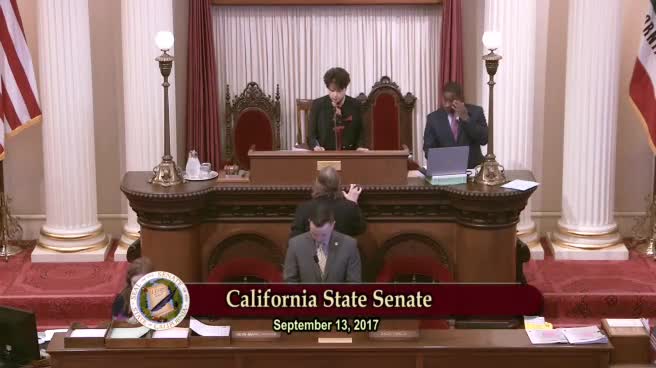 2MIN
Senate Floor
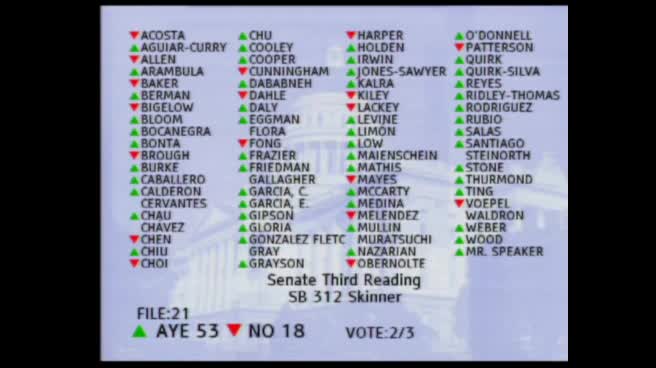 4MIN
Assembly Floor
 1H
Assembly Standing Committee on Appropriations
 26MIN
Assembly Standing Committee on Water, Parks, and Wildlife
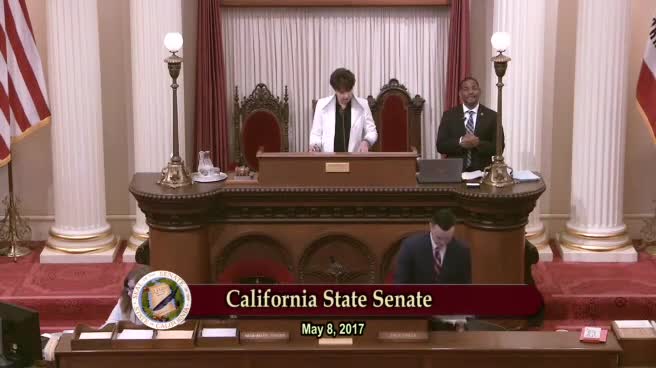 12MIN
Senate Floor
 5MIN
Senate Standing Committee on Appropriations
Bill Author

Bill Co-Author(s):
