SB 635: Governor’s Office of Business and Economic Development: local economic development liaison services.
- Session Year: 2017-2018
- House: Senate
- Latest Version Date: 2018-09-28
Existing law establishes the Governors Office of Business and Economic Development in state government. Existing law requires that the office serve the Governor as the lead entity for economic strategy and the marketing of California on issues relating to business development, private sector investment, and economic growth. Existing state regulation defines a Federal Promise Zone as any area with a continuous boundary and a population of not more than 200,000 that is nominated by a local government or Indian tribe and designated by the United States Department of Housing and Urban Development to receive priority for federal funding on the basis of its unemployment, poverty, vacancy, and crime rates. Existing federal law allows for the designation of certain census tracts as opportunity zones, and provides that specified investments in these zones receive beneficial tax treatment.
This bill would authorize the Governors Office of Business and Economic Development to develop content on its Internet Web site or through other mediums to be used for public dissemination, through outreach activities, in order to provide information and resources to inform the general public about place-based and other geographically targeted economic development programs, including, but not limited to, California Promise Zones and California Opportunity Zones, as defined. The bill would require the Governors Office of Business and Economic Development to convene, at least annually, representatives from various programs and agencies across the state and from various federal programs and agencies for the purpose of discussing how California can leverage Promise Zones and Opportunity Zones to meet state and local community and economic development needs, as provided.
Existing law establishes the Governors Office of Business and Economic Development in state government. Existing law requires that the office serve the Governor as the lead entity for economic strategy and the marketing of California on issues relating to business development, private sector investment, and economic growth. Existing state regulation defines a Federal Promise Zone as any area with a continuous boundary and a population of not more than 200,000 that is nominated by a local government or Indian tribe and designated by the United States Department of Housing and Urban Development to receive priority for federal funding on the basis of its unemployment, poverty, vacancy, and crime rates. Existing federal law allows for the designation of certain census tracts as opportunity zones, and provides that specified investments in these zones receive beneficial tax treatment.
This bill would authorize the Governors Office of Business and Economic Development to create the Office of Geographically Targeted Economic Development within its office for the purpose of supporting develop content on its Internet Web site or through other mediums to be used for public dissemination, through outreach activities, in order to provide information and resources to inform the general public about place-based and other geographically targeted economic development programs, including, but not limited to, California Promise Zones and California Opportunity Zones, as defined. The bill would authorize the office coordinator to provide state liaison services to California Promise Zone lead agencies and other place-based and geographically targeted economic development areas in their efforts to receive state assistance, as specified. The bill would require designated state programs to provide preferences to entities or projects located within, or for the direct benefit of residents within, a California Promise Zone or any community in California that applied to be designated a Promise Zone and a California Opportunity Zone. The bill would limit its application to a Promise Zone or Opportunity Zone for the 10-year duration of its designation by the federal government or to a community in California that applied to be designated a Promise Zone for 10 years from the date the designations were made for the competition round in which the community applied. The bill also would apply to any Promise Zone designated after its enactment and any community that applies to be a Promise Zone after its enactment. require the Governors Office of Business and Economic Development to convene, at least annually, representatives from various programs and agencies across the state and from various federal programs and agencies for the purpose of discussing how California can leverage Promise Zones and Opportunity Zones to meet state and local community and economic development needs, as provided.
Existing law establishes the Governors Office of Business and Economic Development in state government. Existing law requires that the office serve the Governor as the lead entity for economic strategy and the marketing of California on issues relating to business development, private sector investment, and economic growth. Existing state regulation defines a Federal Promise Zone as any area with a continuous boundary and a population of not more than 200,000 that is nominated by a local government or Indian tribe and designated by the United States Department of Housing and Urban Development to receive priority for federal funding on the basis of its unemployment, poverty, vacancy, and crime rates. Existing federal law allows for the designation of certain census tracts as opportunity zones, and provides that specified investments in these zones receive beneficial tax treatment.
This bill would authorize the Governors Office of Business and Economic Development to create the Office of the Promise Zone Coordinator Geographically Targeted Economic Development within its office to provide state assistance to for the purpose of supporting place-based and other geographically targeted economic development programs, including, but not limited to, California Promise Zones. This bill would define a California Promise Zone as a community in this state that has been designated by the United States Department of Housing and Urban Development as a Promise Zone. Zones and California Opportunity Zones, as defined. The bill would authorize the Promise Zone Coordinator office coordinator to provide state liaison services to California Promise Zone lead agencies and other place-based and geographically targeted economic development areas in their efforts to receive state assistance, as specified. The bill would require designated state programs to provide preferences to entities or projects located within, or for the direct benefit of residents within, a California Promise Zone or any community in California that applied to be designated a Promise Zone and a California Opportunity Zone. The bill would limit its application to a Promise Zone or Opportunity Zone for the 10-year duration of its designation by the federal government or to a community in California that applied to be designated a Promise Zone for 10 years from the date the designations were made for the competition round in which the community applied. The bill also would apply to any Promise Zone designated after its enactment and any community that applies to be a Promise Zone after its enactment.
Existing law establishes the Governors Office of Business and Economic Development in state government. Existing law requires that the office serve the Governor as the lead entity for economic strategy and the marketing of California on issues relating to business development, private sector investment, and economic growth. Existing state regulation defines a Federal Promise Zone as any area with a continuous boundary and a population of not more than 200,000 that is nominated by a local government or Indian tribe and designated by the United States Department of Housing and Urban Development to receive priority for federal funding on the basis of its unemployment, poverty, vacancy, and crime rates.
This bill would authorize the Governors Office of Business and Economic Development to create the Office of the Promise Zone Coordinator within its office to provide state assistance to California Promise Zones. This bill would define a California Promise Zone as a community in this state that has been designated by the United States Department of Housing and Urban Development as a Promise Zone. The bill would authorize the Promise Zone Coordinator to provide state liaison services to California Promise Zone lead agencies in their efforts to receive state assistance, as specified. The bill would require designated state programs to provide preferences to entities or projects located within, or for the benefit of residents within, a California Promise Zone or any community in California that applied to be designated a Promise Zone. The bill would limit its application to a Promise Zone for the 10-year duration of its designation by the federal government or to a community in California that applied to be designated a Promise Zone for 10 years from the date the designations were made for the competition round in which the community applied. The bill also would apply to any Promise Zone designated after its enactment and any community that applies to be a Promise Zone after its enactment.
Existing law establishes the Governors Office of Business and Economic Development in state government. Existing law requires that the office serve the Governor as the lead entity for economic strategy and the marketing of California on issues relating to business development, private sector investment, and economic growth. Existing federal and state regulation defines a Federal Promise Zone as any area with a continuous boundary and a population of not more than 200,000 that is nominated by a local government or Indian tribe and designated by the United States Department of Housing and Urban Development to receive priority for federal funding on the basis of its unemployment, poverty, vacancy, and crime rates.
This bill would establish, within authorize the Governors Office of Business and Economic Development, Development to create the Office of the Promise Zone Coordinator within its office to provide state assistance to California Promise Zones. This bill would define a California Promise Zone as a community in this state that has been designated by the United States Department of Housing and Urban Development as a Promise Zone. The bill would require authorize the Promise Zone Coordinator to provide state liaison services to California Promise Zone lead agencies in their efforts to receive state assistance, as specified. The bill would require designated state programs to provide preferences to entities or projects located within, or for the benefit of residents within, California Promise Zones. a California Promise Zone or any community in California that applied to be designated a Promise Zone. The bill would limit its application to a Promise Zone for the 10-year duration of its designation by the federal government or to a community in California that applied to be designated a Promise Zone for 10 years from the date the designations were made for the competition round in which the community applied. The bill also would apply to any Promise Zone designated after its enactment and any community that applies to be a Promise Zone after its enactment.
Existing law establishes the Governors Office of Business and Economic Development in state government. Existing law requires that the office serve the Governor as the lead entity for economic strategy and the marketing of California on issues relating to business development, private sector investment, and economic growth. Existing federal and state regulation defines a Federal Promise Zone as any area with a continuous boundary and a population of not more than 200,000 that is nominated by a local government or Indian tribe and designated by the United States Department of Housing and Urban Development to receive priority for federal funding on the basis of its unemployment, poverty, vacancy, and crime rates.
This bill would establish, within the Governors Office of Business and Economic Development, the Office of the Promise Zone Coordinator to provide state assistance to California Promise Zones. This bill would define a California Promise Zone as a community in this state that has been designated by the United States Department of Housing and Urban Development as a Promise Zone. The bill would require the Promise Zone Coordinator to provide state liaison services to California Promise Zone lead agencies in their efforts to receive state assistance, as specified. The bill would require designated state programs to provide preferences to entities or projects located in, within, or for the benefit of, of residents within, California Promise Zones.
Existing law establishes the Governors Office of Business and Economic Development in state government. Existing law requires that the office serve the Governor as the lead entity for economic strategy and the marketing of California on issues relating to business development, private sector investment, and economic growth. Existing federal and state regulation defines a Federal Promise Zone as any area with a continuous boundary and a population of not more than 200,000 that is nominated by a local government or Indian tribe and designated by the United States Department of Housing and Urban Development to receive priority for federal funding on the basis of its unemployment, poverty, vacancy, and crime rates.
This bill would state the intent of the Legislature to enact legislation to create a program within the Governors Office of Business and Economic Development that uses criteria adopted by the federal Promise Zone program.This bill would establish, within the Governors Office of Business and Economic Development, the Office of the Promise Zone Coordinator to provide state assistance to California Promise Zones. This bill would define a California Promise Zone as a community in this state that has been designated by the United States Department of Housing and Urban Development as a Promise Zone. The bill would require the Promise Zone Coordinator to provide state liaison services to California Promise Zone lead agencies in their efforts to receive state assistance, as specified. The bill would require designated state programs to provide preferences to entities or projects located in, or for the benefit of, California Promise Zones.
Existing law establishes the Governors Office of Business and Economic Development in state government. Existing law requires that the office serve the Governor as the lead entity for economic strategy and the marketing of California on issues relating to business development, private sector investment, and economic growth.
This bill would state the intent of the Legislature to enact legislation to create a program within the Governors Office of Business and Economic Development that uses criteria adopted by the federal Promise Zone program.
The Legislature hereby finds and declares the following:
(a)Despite overall statewide economic improvement in recent years, there remain pockets of significant unemployment and economic distress in certain areas of the state.
(b)The federal Department of Housing and Urban Development recently designated Promise Zones throughout the country, including four in California, which are intended to boost economic activity and job growth, improve educational opportunities, reduce crime, and leverage private investment to improve the quality of life in these vulnerable areas.
(c)The Secretary of the United States Treasury certified 879 Opportunity Zones within California which are designed to create incentives for investments and job creation in distressed communities and is currently developing guidelines outlining how the program will work.
SEC. 2.Article 4.6 (commencing with Section 12097.5) is added to Chapter 1.6 of Part 2 of Division 3 of Title 2 of the Government Code, to read:4.6.Local Economic Development Liaison Services12097.5.(a)(1)The Governors Office of Business and Economic Development is hereby authorized to develop content on its Internet Web site or through other mediums to be used for public dissemination, through outreach activities, in order to provide information and resources to inform the general public about place-based and other geographically targeted economic development programs, including, but not limited to, federal Promise Zones within California that are designated by the United States Department of Housing and Urban Development; and Opportunity Zones designated by the United States Treasury, pursuant to Sections 1400Z-1 and 1400Z-2 of the Internal Revenue Code.
(2)The information and resources shall include, but not be limited to, how the local jurisdictions or census tracts were created, where locals and investors may get additional information, and updates regarding federal programs as that information becomes available.
(b)The Governors Office of Business and Economic Development shall convene, at least annually, representatives from various programs and agencies across the state and from various federal programs and agencies for the purpose of discussing how California can leverage Promise Zones and Opportunity Zones to meet state and local community and economic development needs. The convention topics shall include, but not be limited to, discussions on enhanced engagement opportunities and targeted outreach to assist designated areas in their efforts to access state resources and services.
(c)As used in this section:
(1)California Opportunity Zone means a census tract in this state that has been designated by the United States Treasury as an Opportunity Zone, pursuant to Sections 1400Z-1 and 1400Z-2 of the Internal Revenue Code.
(2)California Promise Zone means a community in this state that has been designated by the United States Department of Housing and Urban Development as a Promise Zone.
The Legislature hereby finds and declares the following:
(a)Despite overall statewide economic improvement in recent years, there remain pockets of significant unemployment and economic distress in certain areas of the state.
(b)The federal Department of Housing and Urban Development recently designated Promise Zones throughout the country, including four in California, which are intended to boost economic activity and job growth, improve educational opportunities, reduce crime, and leverage private investment to improve the quality of life in these vulnerable areas.
(c)The success of Promise Zones is based on the creation of strategic relationships among all levels of government, community organizations, and the private sector.(d)The Promise Zone designation commits the federal government to partner with local leaders who are addressing multiple community revitalization challenges with on-the-ground technical assistance to help navigate federal programs and regulations. This intensive engagement will help communities make the most of funding already available.(e)Currently, the state does not offer any targeted assistance to California Promise Zones. By folding in the focused attention of state programs to the California Promise Zones, we will be able to further strengthen and revitalize areas of our state where most needed. Additionally, by including state programmatic assistance in accordance with this act, it is hoped that other California communities, both rural and urban, would be well suited to compete in any future round of designations the federal government may authorize.(c)The Secretary of the United States Treasury certified 879 Opportunity Zones within California which are designed to create incentives for investments and job creation in distressed communities and is currently developing guidelines outlining how the program will work.
SEC. 2.Article 4.6 (commencing with Section 12097.5) is added to Chapter 1.6 of Part 2 of Division 3 of Title 2 of the Government Code, to read:4.6.Office of Geographically Targeted Economic Development Local Economic Development Liaison Services12097.5.(a)(1)The Governors Office of Business and Economic Development is hereby authorized to create the Office of Geographically Targeted Economic Development for the purpose of supporting develop content on its Internet Web site or through other mediums to be used for public dissemination, through outreach activities, in order to provide information and resources to inform the general public about place-based and other geographically targeted economic development programs, including, but not limited to, federal Promise Zones within California that are designated by the United States Department of Housing and Urban Development; and Opportunity Zones designated by the United States Treasury, pursuant to Sections 1400Z-1 and 1400Z-2 of the Internal Revenue Code.
The Coordinator may provide state liaison services to California Promise Zone lead agencies and other place-based and geographically targeted economic development areas in their efforts to access state resources and services, including, but not limited to, those programs listed in subdivision (c).(2)The information and resources shall include, but not be limited to, how the local jurisdictions or census tracts were created, where locals and investors may get additional information, and updates regarding federal programs as that information becomes available.
(b)The Governors Office of Business and Economic Development shall convene, at least annually, representatives from various programs and agencies across the state and from various federal programs and agencies for the purpose of discussing how California can leverage Promise Zones and Opportunity Zones to meet state and local community and economic development needs. The convention topics shall include, but not be limited to, discussions on enhanced engagement opportunities and targeted outreach to assist designated areas in their efforts to access state resources and services.
(b)(c)As used in this section:
(1)California Opportunity Zone means a census tract in this state that has been designated by the United States Treasury as an Opportunity Zone, pursuant to Sections 1400Z-1 and 1400Z-2 of the Internal Revenue Code.
(2)California Promise Zone means a community in this state that has been designated by the United States Department of Housing and Urban Development as a Promise Zone.
(3)Coordinator means the person who leads and is responsible for the activities of the Office of Geographically Targeted Economic Development, if that office is created.(c)The following programs shall provide preference or priority points to entities, projects, or both, located within, or for the direct benefit of residents within a California Promise Zone, or any community in California that applied to be designated a Promise Zone, and a California Opportunity Zone:(1)California Competes tax credit, pursuant to Sections 17059.2 and 23689 of the Revenue and Taxation Code, or the successor program. Any amount of the credit awarded to a taxpayer receiving preference or priority points pursuant to this subdivision shall not be counted against any aggregate limit on the amount of the credit that may be allowed for any year. In no case shall the preference provide more than a 5-percentage point preference. (2)All programs administered by the Board of State and Community Corrections.(3)No Place Like Home as set forth in Part 3.9 (commencing with Section 5849.1) of Division 5 of the Welfare and Institutions Code.(4)All programs administered by the California Workforce Development Board.(5)The Employment Training Fund as set forth in Article 6 (commencing with Section 1610) of Chapter 6 of Part 1 of Division 1 of the Unemployment Insurance Code.(6)Any programs administered by the Department of Parks and Recreation or the Department of Housing and Community Development that provide grants to local agencies for local park creation, rehabilitation, or improvement.(e)(1)For a project to be eligible for preference or priority points pursuant to this act, the California Promise Zone lead agency shall certify that the project is consistent with and in furtherance of one or more of the goals of the Promise Zone.(2)For a project not meeting the requirements of subparagraph (1) to be eligible for a preference or priority pursuant to this act, the Opportunity Zone shall provide evidence that the project or facility will be located in an Opportunity Zone.(f)The degree and amount of preference or priority points established pursuant to this act shall be determined by each implementing agency and may be developed in collaboration with the Coordinator, should that office be established.(g)(1)The provisions of this act shall only apply to a Promise Zone or Opportunity Zone for the 10-year duration of its designation by the federal government or to a community in California that applied to be designated a Promise Zone for 10 years from the date the designations were made for the competition round in which the community applied.(2)Any Promise Zone designated after the enactment of this act, and any community in California that applies to be a designated Promise Zone after the enactment of this act, shall receive the benefit of the provisions of this act.(h)Any amount of the low-income housing tax credit awarded pursuant to Sections 12206, 17058, and 23610.5 of the Revenue and Taxation Code to a taxpayer for a project located within a California Promise Zone shall not be counted against any aggregate limit on the amount of the credit that may be allowed for any year.The Legislature hereby finds and declares the following:
(a)Despite overall statewide economic improvement in recent years, there remain pockets of significant unemployment and economic distress in certain areas of the state.
(b)The federal Department of Housing and Urban Development recently designated Promise Zones throughout the country, including in California, which are intended to boost economic activity and job growth, improve educational opportunities, reduce crime, and leverage private investment to improve the quality of life in these vulnerable areas.
(c)The success of Promise Zones is based on the creation of strategic relationships among all levels of government, community organizations, and the private sector.
(d)The Promise Zone designation commits the federal government to partner with local leaders who are addressing multiple community revitalization challenges with on-the-ground technical assistance to help navigate federal programs and regulations. This intensive engagement will help communities make the most of funding already available.
(e)Currently, the state does not offer any targeted assistance to California Promise Zones. By folding in the focused attention of state programs to the California Promise Zones, we will be able to further strengthen and revitalize areas of our state where most needed. Additionally, by including state programmatic assistance in accordance with this act, it is hoped that other California communities, both rural and urban, would be well suited to compete in any future round of designations the federal government may authorize.
SEC. 2.Article 4.6 (commencing with Section 12097.5) is added to Chapter 1.6 of Part 2 of Division 3 of Title 2 of the Government Code, to read:4.6.Office of the Promise Zone Coordinator Geographically Targeted Economic Development12097.5.(a)The Governors Office of Business and Economic Development is hereby authorized to create the Office of the Promise Zone Coordinator within its office to provide state assistance to Geographically Targeted Economic Development for the purpose of supporting place-based and other geographically targeted economic development programs, including, but not limited to, federal Promise Zones within California that are designated by the United States Department of Housing and Urban Development. The Promise Zone
Development; and Opportunity Zones designated by the United States Treasury, pursuant to Sections 1400Z-1 and 1400Z-2 of the Internal Revenue Code.
The Coordinator may provide state liaison services to California Promise Zone lead agencies and other place-based and geographically targeted economic development areas in their efforts to receive state assistance, access state resources and services, including, but not limited to, those programs listed in subdivision (c).
(b)As used in this section, California section:
(1)California Opportunity Zone means a census tract in this state that has been designated by the United States Treasury as an Opportunity Zone, pursuant to Sections 1400Z-1 and 1400Z-2 of the Internal Revenue Code.
(2)California Promise Zone means a community in this state that has been designated by the United States Department of Housing and Urban Development as a Promise Zone.
(3)Coordinator means the person who leads and is responsible for the activities of the Office of Geographically Targeted Economic Development, if that office is created.
(c)The following programs shall provide preference or priority points to entities, projects, or both, located within, or for the direct benefit of residents within, within a California Promise Zone Zone, or any community in California that applied to be designated a Promise Zone: Zone, and a California Opportunity Zone:
(1)California Competes tax credit, pursuant to Sections 17059.2 and 23689 of the Revenue and Taxation Code, or the successor program. Any amount of the credit awarded to a taxpayer receiving preference or priority points pursuant to this subdivision shall not be counted against any aggregate limit on the amount of the credit that may be allowed for any year. In no case shall the preference provide more than a 5-percentage point preference.
(2)All programs administered by the Board of State and Community Corrections.
(3)No Place Like Home as set forth in Part 3.9 (commencing with Section 5849.1) of Division 5 of the Welfare and Institutions Code.
(4)All programs administered by the California Workforce Development Board.
(5)The Employment Training Fund as set forth in Article 6 (commencing with Section 1610) of Chapter 6 of Part 1 of Division 1 of the Unemployment Insurance Code.
(6)Any programs administered by the Department of Parks and Recreation or the Department of Housing and Community Development that provide grants to local agencies for local park creation, rehabilitation, or improvement.
(d)(e)(1)For a project to be eligible for preference or priority points pursuant to this act, the California Promise Zone lead agency shall certify that the project is consistent with and in furtherance of one or more of the goals of the Promise Zone.
(2)For a project not meeting the requirements of subparagraph (1) to be eligible for a preference or priority pursuant to this act, the Opportunity Zone shall provide evidence that the project or facility will be located in an Opportunity Zone.
(e)(f)The degree and amount of preference or priority points established pursuant to this act shall be determined by each implementing agency and may be developed in collaboration with the Office of the Promise Zone Coordinator, should that office be established.
(f)(g)(1)The provisions of this act shall only apply to a Promise Zone or Opportunity Zone for the 10-year duration of its designation by the federal government or to a community in California that applied to be designated a Promise Zone for 10 years from the date the designations were made for the competition round in which the community applied.
(2)Any Promise Zone designated after the enactment of this act, and any community in California that applies to be a designated Promise Zone after the enactment of this act, shall receive the benefit of the provisions of this act.
(g)(h)Any amount of the low-income housing tax credit awarded pursuant to Sections 12206, 17058, and 23610.5 of the Revenue and Taxation Code to a taxpayer for a project located within a California Promise Zone shall not be counted against any aggregate limit on the amount of the credit that may be allowed for any year.
REVISIONS: HeadingLine 2.The Legislature hereby finds and declares the following:
(a)Despite overall statewide economic improvement in recent years, there remain pockets of significant unemployment and economic distress in certain areas of the state.
(b)The federal Department of Housing and Urban Development recently designated Promise Zones throughout the country, including in California, which are intended to boost economic activity and job growth, improve educational opportunities, reduce crime, and leverage private investment to improve the quality of life in these vulnerable areas.
(c)The success of Promise Zones is based on the creation of strategic relationships among all levels of government, community organizations, and the private sector.
(d)The Promise Zone designation commits the federal government to partner with local leaders who are addressing multiple community revitalization challenges with on-the-ground technical assistance to help navigate federal programs and regulations. This intensive engagement will help communities make the most of funding already available.
(e)Currently, the state does not offer any targeted assistance to California Promise Zones. By folding in the focused attention of state programs to the California Promise Zones, we will be able to further strengthen and revitalize areas of our state where most needed. Additionally, by including state programmatic assistance in accordance with this act, it is hoped that other California communities, both rural and urban, would be well suited to compete in any future round of designations the federal government may authorize.
SEC. 2.Article 4.6 (commencing with Section 12097.5) is added to Chapter 1.6 of Part 2 of Division 3 of Title 2 of the Government Code, to read:4.6.Office of the Promise Zone Coordinator12097.5.(a)The Governors Office of Business and Economic Development is hereby authorized to create the Office of the Promise Zone Coordinator within its office to provide state assistance to federal Promise Zones within California that are designated by the United States Department of Housing and Urban Development. The Promise Zone Coordinator may provide state liaison services to California Promise Zone lead agencies in their efforts to receive state assistance, including, but not limited to, those programs listed in subdivision (c).
(b)As used in this section, California Promise Zone means a community in this state that has been designated by the United States Department of Housing and Urban Development as a Promise Zone.
(c)The following programs shall provide preference or priority points to entities, projects, or both, located within, or for the benefit of residents within, a California Promise Zone or any community in California that applied to be designated a Promise Zone:
(1)California Competes tax credit, pursuant to Sections 17059.2 and 23689 of the Revenue and Taxation Code, or the successor program. Any amount of the credit awarded to a taxpayer receiving preference or priority points pursuant to this subdivision shall not be counted against any aggregate limit on the amount of the credit that may be allowed for any year. In no case shall the preference provide more than a 5-percentage point preference.
(2)Low-Income Housing Tax Credit, pursuant to Section 17058 of the Revenue and Taxation Code. Any amount of the credit awarded to a taxpayer receiving preference or priority points pursuant to this subdivision shall not be counted against any aggregate limit on the amount of the credit that may be allowed for any year. In no case shall the preference provide more than a 5-percentage point preference. (3)(2)All programs administered by the Board of State and Community Corrections.
(4)(3)No Place Like Home as set forth in Part 3.9 (commencing with Section 5849.1) of Division 5 of the Welfare and Institutions Code.
(5)(4)All programs administered by the California Workforce Development Board.
(6)(5)The Employment Training Fund as set forth in Article 6 (commencing with Section 1610) of Chapter 6 of Part 1 of Division 1 of the Unemployment Insurance Code.
(7)(6)Any programs administered by the Department of Parks and Recreation or the Department of Housing and Community Development that provide grants to local agencies for local park creation, rehabilitation, or improvement.
(d)For a project to be eligible for preference or priority points pursuant to this act, the California Promise Zone lead agency must shall certify that the project is consistent with and in furtherance of one or more of the goals of the Promise Zone.
(e)The degree and amount of preference or priority points established pursuant to this act shall be determined by each implementing agency and may be developed in collaboration with the Office of the Promise Zone Coordinator, should that office be established.
(f)(1)The provisions of this act shall only apply to a Promise Zone for the 10-year duration of its designation by the federal government or to a community in California that applied to be designated a Promise Zone for 10 years from the date the designations were made for the competition round in which the community applied.
(2)Any Promise Zone designated after the enactment of this act, and any community in California that applies to be a designated Promise Zone after the enactment of this act, shall receive the benefit of the provisions of this act.
(g)Any amount of the low-income housing tax credit awarded pursuant to Sections 12206, 17058, and 23610.5 of the Revenue and Taxation Code to a taxpayer for a project located within a California Promise Zone shall not be counted against any aggregate limit on the amount of the credit that may be allowed for any year.
The Legislature hereby finds and declares the following:
(a)Despite overall statewide economic improvement in recent years, there remain pockets of significant unemployment and economic distress in certain areas of the state.
(b)The federal Department of Housing and Urban Development recently designated Promise Zones throughout the country, including in California, which are intended to boost economic activity and job growth, improve educational opportunities, reduce crime, and leverage private investment to improve the quality of life in these vulnerable areas.
(c)The success of Promise Zones is based on the creation of strategic relationships among all levels of government, community organizations, and the private sector.
(d)The Promise Zone designation commits the federal government to partner with local leaders who are addressing multiple community revitalization challenges with on-the-ground technical assistance to help navigate federal programs and regulations. This intensive engagement will help communities make the most of funding already available.
(e)Currently, the state does not offer any targeted assistance to California Promise Zones. By folding in the focused attention of state programs to the California Promise Zones, we will be able to further strengthen and revitalize areas of our state where most needed. Additionally, by including state programmatic assistance in accordance with this act, it is hoped that other California communities, both rural and urban, would be well suited to compete in any future round of designations the federal government may authorize.
SEC. 2.Article 4.6 (commencing with Section 12097.5) is added to Chapter 1.6 of Part 2 of Division 3 of Title 2 of the Government Code, to read:4.6.Office of the Promise Zone Coordinator12097.5.(a)There is hereby established within the The Governors Office of Business and Economic Development is hereby authorized to create the Office of the Promise Zone Coordinator within its office to provide state assistance to federal Promise Zones within California that are designated by the United States Department of Housing and Urban Development. The Promise Zone Coordinator shall may provide state liaison services to California Promise Zone lead agencies in their efforts to receive state assistance, including, but not limited to, those programs listed in subdivision (c).
(b)As used in this section, California Promise Zone means a community in this state that has been designated by the United States Department of Housing and Urban Development as a Promise Zone.
(c)The following programs shall provide preference or priority points to entities, projects, or both, located within, or for the benefit of residents within, California Promise Zones: a California Promise Zone or any community in California that applied to be designated a Promise Zone:
(1)California Competes tax credit, pursuant to Sections 17059.2 and 23689 of the Revenue and Taxation Code, or the successor program. Any amount of the credit awarded to a taxpayer receiving preference or priority points pursuant to this subdivision shall not be counted against any aggregate limit on the amount of the credit that may be allowed for any year. In no case shall the preference provide more than a 5-percentage point preference.
(2)Low-Income Housing Tax Credit, pursuant to Section 17058 of the Revenue and Taxation Code. Any amount of the credit awarded to a taxpayer receiving preference or priority points pursuant to this subdivision shall not be counted against any aggregate limit on the amount of the credit that may be allowed for any year. In no case shall the preference provide more than a 5-percentage point preference.
(3)All programs administered by the Board of State and Community Corrections.
(4)No Place Like Home as set forth in Part 3.9 (commencing with Section 5849.1) of Division 5 of the Welfare and Institutions Code.
(5)All programs administered by the California Workforce Development Board.
(6)The Employment Training Fund as set forth in Article 6 (commencing with Section 1610) of Chapter 6 of Part 1 of Division 1 of the Unemployment Insurance Code.
(7)Any programs administered by the Department of Parks and Recreation or the Department of Housing and Community Development that provide grants to local agencies for local park creation, rehabilitation, or improvement.
(8)Any program established or funded by the Road Repair and Accountability Act of 2017.(d)For a project to be eligible for preference or priority points pursuant to this act, the California Promise Zone lead agency must certify that the project is consistent with and in furtherance of one or more of the goals of the Promise Zone.
(e)The degree and amount of preference or priority points established pursuant to this act shall be determined by each implementing agency and may be developed in collaboration with the Office of the Promise Zone Coordinator. Coordinator, should that office be established.
(f)(1)The provisions of this act shall only apply to a Promise Zone for the 10-year duration of its designation by the federal government or to a community in California that applied to be designated a Promise Zone for 10 years from the date the designations were made for the competition round in which the community applied.
(2)Any Promise Zone designated after the enactment of this act, and any community in California that applies to be a designated Promise Zone after the enactment of this act, shall receive the benefit of the provisions of this act.
The Legislature hereby finds and declares the following:
(a)Despite overall statewide economic improvement in recent years, there remain pockets of significant unemployment and economic distress in certain areas of the state.
(b)The federal Department of Housing and Urban Development recently designated Promise Zones throughout the country, including in California, which are intended to boost economic activity and job growth, improve educational opportunities, reduce crime, and leverage private investment to improve the quality of life in these vulnerable areas.
(c)The success of Promise Zones is based on the creation of strategic relationships among all levels of government, community organizations, and the private sector.
(d)The Promise Zone designation commits the federal government to partner with local leaders who are addressing multiple community revitalization challenges with on-the-ground technical assistance to help navigate federal programs and regulations. This intensive engagement will help communities make the most of funding already available.
(e)Currently, the state does not offer any targeted assistance to California Promise Zones. By folding in the focused attention of state programs to the California Promise Zones, we will be able to further strengthen and revitalize areas of our state where most needed.
SEC. 2.Article 4.6 (commencing with Section 12097.5) is added to Chapter 1.6 of Part 2 of Division 3 of Title 2 of the Government Code, to read:4.6.Office of the Promise Zone Coordinator12097.5.(a)There is hereby established within the Governors Office of Business and Economic Development the Office of the Promise Zone Coordinator to provide state assistance to federal Promise Zones within California that are designated by the United States Department of Housing and Urban Development. The Promise Zone Coordinator shall provide state liaison services to California Promise Zone lead agencies in their efforts to receive state assistance, including, but not limited to, those programs listed in subdivision (c).
(b)As used in this section, California Promise Zone means a community in this state that has been designated by the United States Department of Housing and Urban Development as a Promise Zone.
(c)The following programs shall provide preference or priority points to entities, projects, or both, located within within, or for the benefit of residents within, California Promise Zones:
(1)California Competes tax credit, pursuant to Sections 17059.2 and 23689 of the Revenue and Taxation Code. Code, or the successor program. Any amount of the credit awarded to a taxpayer receiving preference or priority points pursuant to this subdivision shall not be counted against any aggregate limit on the amount of the credit that may be allowed for any year. In no case shall the preference provide more than a 5-percentage point preference.
(2)Low-Income Housing Tax Credit, pursuant to Section 17058 of the Revenue and Taxation Code. Any amount of the credit awarded to a taxpayer receiving preference or priority points pursuant to this subdivision shall not be counted against any aggregate limit on the amount of the credit that may be allowed for any year. In no case shall the preference provide more than a 5-percentage point preference.
(3)All programs administered by the Board of State and Community Corrections.
(4)No Place Like Home as set forth in Part 3.9 (commencing with Section 5849.1) of Division 5 of the Welfare and Institutions Code.
(5)All programs administered by the California Workforce Development Board.
(6)The Employment Training Fund as set forth in Article 6 (commencing with Section 1610) of Chapter 6 of Part 1 of Division 1 of the Unemployment Insurance Code.
(7)Any programs administered by the Department of Parks and Recreation or the Department of Housing and Community Development that provide grants to local agencies for local park creation, rehabilitation, or improvement.
(8)Any program established or funded by the Road Repair and Accountability Act of 2017.
(d)For a project to be eligible for preference or priority points pursuant to this act, the California Promise Zone lead agency must certify that the project is consistent with and in furtherance of one or more of the goals of the Promise Zone.
(e)The degree and amount of preference or priority points established pursuant to this act shall be determined by each implementing agency and developed in collaboration with the Office of the Promise Zone Coordinator.
The Legislature hereby finds and declares the following:
(a)Despite overall statewide economic improvement in recent years, there remain pockets of significant unemployment and economic distress in certain areas of the state.
(b)The federal Department of Housing and Urban Development recently designated Promise Zones throughout the country, including in California, which are intended to boost economic activity and job growth, improve educational opportunities, reduce crime, and leverage private investment to improve the quality of life in these vulnerable areas.
(c)The success of Promise Zones is based on the creation of strategic relationships among all levels of government, community organizations, and the private sector.
(d)The Promise Zone designation commits the federal government to partner with local leaders who are addressing multiple community revitalization challenges with on-the-ground technical assistance to help navigate federal programs and regulations. This intensive engagement will help communities make the most of funding already available.
(e)Currently, the state does not offer any targeted assistance to California Promise Zones. By folding in the focused attention of state programs to the California Promise Zones, we will be able to further strengthen and revitalize areas of our state where most needed.
SEC. 2.Article 4.6 (commencing with Section 12097.5) is added to Chapter 1.6 of Part 2 of Division 3 of Title 2 of the Government Code, to read:4.6.Office of the Promise Zone Coordinator12097.5.(a)There is hereby established within the Governors Office of Business and Economic Development the Office of the Promise Zone Coordinator to provide state assistance to federal Promise Zones within California that are designated by the United States Department of Housing and Urban Development. The Promise Zone Coordinator shall provide state liaison services to California Promise Zone lead agencies in their efforts to receive state assistance, including, but not limited to, those programs listed in subdivision (c).
(b)As used in this section, California Promise Zone means a community in this state that has been designated by the United States Department of Housing and Urban Development as a Promise Zone.
(c)The following programs shall provide preference or priority points to entities, projects, or both, located within or for the benefit of California Promise Zones:
(1)California Competes tax credit, pursuant to Sections 17059.2 and 23689 of the Revenue and Taxation Code. Any amount of the credit awarded to a taxpayer receiving preference or priority points pursuant to this subdivision shall not be counted against any aggregate limit on the amount of the credit that may be allowed for any year.
(2)Low-Income Housing Tax Credit, pursuant to Section 17058 of the Revenue and Taxation Code. Any amount of the credit awarded to a taxpayer receiving preference or priority points pursuant to this subdivision shall not be counted against any aggregate limit on the amount of the credit that may be allowed for any year.
(3)All programs administered by the Board of State and Community Corrections.
(4)No Place Like Home as set forth in Part 3.9 (commencing with Section 5849.1) of Division 5 of the Welfare and Institutions Code.
(5)All programs administered by the California Workforce Development Board.
(6)The Employment Training Fund as set forth in Article 6 (commencing with Section 1610) of Chapter 6 of Part 1 of Division 1 of the Unemployment Insurance Code.
(7)Any programs administered by the Department of Parks and Recreation or the Department of Housing and Community Development that provide grants to local agencies for local park creation, rehabilitation, or improvement.
(d)For a project to be eligible for preference or priority points pursuant to this act, the California Promise Zone lead agency must certify that the project is consistent with and in furtherance of one or more of the goals of the Promise Zone.
(e)The degree and amount of preference or priority points established pursuant to this act shall be determined by each implementing agency and developed in collaboration with the Office of the Promise Zone Coordinator.
SECTION 1.It is the intent of the Legislature to enact legislation to create a program within the Governors Office of Business and Economic Development that uses criteria adopted by the federal Promise Zone program.It is the intent of the Legislature to enact legislation to create a program within the Governors Office of Business and Economic Development that uses criteria adopted by the federal Promise Zone program.
|
Date
|
Status
|
|---|---|
| Sep 28, 2018 | Chaptered by Secretary of State. Chapter 888, Statutes of 2018. |
| Sep 28, 2018 | Approved by the Governor. |
| Sep 12, 2018 | Enrolled and presented to the Governor at 5 p.m. |
| Aug 31, 2018 | Assembly amendments concurred in. (Ayes 38. Noes 0.) Ordered to engrossing and enrolling. |
| Aug 31, 2018 | In Senate. Concurrence in Assembly amendments pending. |
| Aug 31, 2018 | Read third time. Passed. Ordered to the Senate. |
| Aug 24, 2018 | Read third time and amended. |
| Aug 20, 2018 | Read second time. Ordered to third reading. |
| Aug 16, 2018 | From committee: Do pass. (Ayes 14. Noes 2.) (August 16). |
| Aug 8, 2018 | August 8 set for first hearing. Placed on suspense file. |
| Jun 27, 2018 | Read second time and amended. Re-referred to Com. on APPR. |
| Jun 26, 2018 | From committee: Do pass as amended and re-refer to Com. on APPR. (Ayes 6. Noes 0.) (June 19). |
| Jun 12, 2018 | From committee with author's amendments. Read second time and amended. Re-referred to Com. on J., E.D., & E. |
| Apr 19, 2018 | Referred to Com. on J., E.D., & E. |
| Jan 30, 2018 | In Assembly. Read first time. Held at Desk. |
| Jan 29, 2018 | Read third time. Passed. (Ayes 34. Noes 1.) Ordered to the Assembly. |
| Jan 23, 2018 | Read second time and amended. Ordered to third reading. |
| Jan 22, 2018 | From committee: Do pass as amended. (Ayes 5. Noes 0.) (January 18). |
| Jan 17, 2018 | Set for hearing January 18. |
| Jan 16, 2018 | January 16 hearing: Placed on APPR. suspense file. |
| Jan 10, 2018 | Set for hearing January 16. |
| Jan 8, 2018 | From committee: Do pass and re-refer to Com. on APPR. (Ayes 8. Noes 1.) (January 8). Re-referred to Com. on APPR. |
| Jan 3, 2018 | From committee with author's amendments. Read second time and amended. Re-referred to Com. on B., P. & E.D. |
| Dec 21, 2017 | Set for hearing January 8. |
| Apr 18, 2017 | April 24 set for first hearing canceled at the request of author. |
| Apr 7, 2017 | Set for hearing April 24. |
| Apr 6, 2017 | Re-referred to Com. on B., P. & E.D. |
| Apr 3, 2017 | From committee with author's amendments. Read second time and amended. Re-referred to Com. on RLS. |
| Mar 2, 2017 | Referred to Com. on RLS. |
| Feb 21, 2017 | From printer. May be acted upon on or after March 23. |
| Feb 17, 2017 | Introduced. Read first time. To Com. on RLS. for assignment. To print. |
|
Date
|
Description
|
Location
|
Votes
|
|
|---|---|---|---|---|
| Aug 31, 2018 | SB 635 Hueso Senate Third Reading By GONZALEZ FLETCHER | Assembly Floor |
Passed |
|
| Aug 31, 2018 | Unfinished Business SB635 Hueso et al. Concurrence | Senate Floor |
Passed |
|
| Aug 16, 2018 | Do pass. | Assembly Standing Committee on Appropriations |
Passed |
|
| Jun 19, 2018 | Do pass as amended and be re-referred to the Committee on [Appropriations] | Assembly Standing Committee on Jobs, Economic Development, and the Economy |
Passed |
|
| Jan 29, 2018 | Senate 3rd Reading SB635 Hueso | Senate Floor |
Passed |
|
| Jan 18, 2018 | Do pass as amended | Senate Standing Committee on Appropriations |
Passed |
|
| Jan 16, 2018 | Placed on suspense file | Senate Standing Committee on Appropriations |
Passed |
|
| Jan 8, 2018 | Do pass, but first be re-referred to the Committee on [Appropriations] | Senate Standing Committee on Business, Professions and Economic Development |
Passed |
This list shows positions taken on this bill by organizations on the date displayed, which is linked to the original source.
Positions by individuals are not included.
|
Organization
|
Position
|
Date
|
|---|---|---|
| Cal Asian Chamber of Commerce | ** Support | Aug 31, 2018 |
| California Asian Pacific Chamber Of Commerce | ** Support | Jun 17, 2018 |
| City Of Chula Vista | ** Support | Aug 31, 2018 |
| City Of Chula Vista, Mayor Mary Casillas Salas | ** Support | Jun 17, 2018 |
| City Of Los Angeles | ** Support | Aug 31, 2018 |
| City Of Sacramento | ** Support | Aug 31, 2018 |
| City Of Sacramento, Mayor Darrell Steinberg | ** Support | Jun 17, 2018 |
| City Of San Diego | ** Support | Aug 31, 2018 |
| Jacobs Center For Neighborhood Innovation | ** Support | Aug 31, 2018 |
| Mothers & Men Against Gangs Coalition | ** Support | Aug 31, 2018 |
| Sacramento Housing And Redevelopment Agency | ** Support | Jun 17, 2018 |
| Sacramento Promise Zone | ** Support | Aug 31, 2018 |
| Urban Corps of San Diego County | ** Support | Aug 31, 2018 |
| urban league of san diego county | ** Support | Aug 31, 2018 |
Office of Senate Floor Analyses (916) 651-1520 Fax: (916) 327-4478 | SB |
UNFINISHED BUSINESS
Bill No: SB 635
:
SENATE BUS., PROF. & ECON. DEV. COMMITTEE: 8-1, 1/8/18
AYES: Hill, Dodd, Galgiani, Glazer, Hernandez, Newman, Pan, Wilk
NOES: Fuller
SENATE APPROPRIATIONS COMMITTEE: 5-0, 1/18/18
AYES: Lara, Beall, Bradford, Hill, Wiener
NO VOTE RECORDED: Bates, Nielsen
SENATE FLOOR: 34-1, 1/29/18
AYES: Allen, Anderson, Atkins, Beall, Berryhill, Bradford, De León, Dodd, Fuller, Gaines, Galgiani, Glazer, Hernandez, Hertzberg, Hill, Hueso, Jackson, Lara, Leyva, McGuire, Mitchell, Monning, Newman, Nguyen, Nielsen, Pan, Portantino, Roth, Skinner, Stern, Vidak, Wieckowski, Wiener, Wilk
NOES: Moorlach
NO VOTE RECORDED: Bates, Cannella, Mendoza, Morrell, Stone
ASSEMBLY FLOOR: Not available
DIGEST:
This bill authorizes the Governor’s Office of Economic Development (GO-Biz) to develop content for public dissemination to provide information and resources informing the general public about place-based and other geographically targeted economic development programs, including, but not limited to, California Promise Zones (PZs) and California Opportunity Zones (OZs) and requires GO-Biz to convene representatives from various programs and agencies across the state and from various federal programs and agencies to discuss how California can leverage PZs and OZs to meet state and local community and economic development needs.
Assembly Amendments delete the prior version of the bill which authorized GO-Biz to create the Office of the PZ Coordinator and directed preference and/or priority points to be given for certain programs, grants, and funding to entities and projects located within, or for the benefit of residents within, California PZs or any community in California that applied to be designated as a PZ. The amendments also add a coauthor.
Existing law establishes GO-Biz within the Governor’s Office for the purpose of serving as the lead state entity for economic strategy and marketing of California on issues relating to business development, private sector investment, and economic growth. (Government Code §§12096-12098.5)
This bill:
- Makes findings and declarations that despite overall statewide economic improvement in recent years, there remain pockets of significant unemployment and economic distress in certain areas of the state and that the PZ designation is intended to boost economic activity and job growth, improve educational opportunities, reduce crime and leverage private investment to improve the quality of life in these vulnerable areas.
- Authorizes GO-Biz to develop content on its Web site or through other mediums to be used for public dissemination, through outreach activities, in order to provide information and resources to inform the general public about place-based and other geographically targeted economic development programs, including, but not limited to, federal PZs within California.
- Requires GO-Biz to convene, at least annually, representatives from various programs and agencies across the state and from various federal programs and agencies for the purpose of discussing how California can leverage PZs and OZs to meet state and local community and economic development needs.
- Defines “California OZ” as a census tract in this state that has been designated by the United States Treasury as an OZ, pursuant to Sections 1400Z-1 and 1400Z-2 of the Internal Revenue Code.
- Defines “California PZ” as a community in California that has been designated by the Department of Housing and Urban Development (HUD) as a PZ.
Background
Federal Promise Zone Initiative. In his 2013 State of the Union Address, former President Obama laid out an initiative to designate a number of urban, rural and tribal communities as federal PZs. PZs are high poverty communities where the federal government partners with local leaders to increase economic activity, improve educational opportunities, leverage private investment, reduce violent crime, enhance public health, and address other priorities identified by the community.
To qualify to apply for the PZ designation, a region must have (1) one contiguous boundary and cannot include separate geographical areas, (2) a rate of overall poverty or an Extremely Low Income rate at or above 32 percent for residents within the region, (3) a population of at least 10,000 and no more than 200,000 residents, and (4) affirmatively demonstrate support from all mayors or chief executives of units of general local government of any geographical area within the proposed PZ boundary.
There are currently a total of 22 PZs throughout the nation that were selected through three rounds of an application process, with four located in California. A portion of Los Angeles was announced during the first round in 2014 as part of the program’s original five designations. Sacramento was announced in the second round in 2015, and South Los Angeles and San Diego were announced in the third and final round in 2016. The PZ designation is for a term of 10 years and may be extended as necessary. There are currently no plans to name additional PZs.
Unlike federal Promise Neighborhoods, which received planning and implementation grants as part of the designation, federal PZs do not receive direct funding. Instead, PZs receive preference or priority points for specified programs administered by the various federal agencies outlined above. Specific benefits available to PZs may vary due to changes in policy, appropriations, and authorizations for relevant federal programs. Each PZ is also assigned five AmeriCorps VISTA members per year to help build local partners’ capacity. HUD field staff for urban sites and United States Department of Agriculture field staff for rural and tribal sites offer additional support to communities and help PZs navigate the federal system.
FISCAL EFFECT: Appropriation: Fiscal Com.: Local:
According to the Assembly Appropriations Committee, the following costs were identified:
- According to GO-Biz, $145k in ongoing General Fund for 1 PY at GO-Biz to track federal rules, develop and post information on GO-Biz's Web site, and plan and execute an annual convening.
- Unknown ongoing costs, likely General Fund, for GO-Biz to host the convening and various agencies (at least six) to send representatives to the annual convening. Costs likely would range in the tens-of-thousands of dollars annually depending on several factors, including the location and length of the convening.
City of San Diego (source)
CAL Asian Chamber of Commerce
City of Chula Vista
City of Los Angeles
City of Sacramento
Jacobs Center for Neighborhood Innovation
Mothers & Men Against Gangs Coalition
Sacramento Promise Zone
Urban Corps of San Diego County
Urban League of San Diego County
OPPOSITION: (Verified 8/28/18)
None received
ARGUMENTS IN SUPPORT: Supporters believe that this bill will further the goals of the federal PZ designation by strengthening partnerships between federal, state, and local agencies and giving local leaders proven tools to improve the quality of life in some of the state’s most vulnerable area. According to supporters, the success of PZs is based on the creation of strategic relationships between all levels of government, community organizations, and the private sector, but the state currently does not offer any targeted assistance to California’s PZs. Supporters believe that by folding in the focused attention of state programs and providing additional assistance when seeking such resources to the California PZs,
California can further strengthen and revitalized the most needed areas of our state without creating any new state programs.
8/31/18 13:29:29
**** END ****
SENATE THIRD READING
STR Bill Id:SB 635
Author:(Hueso)
As Amended Ver:August 24, 2018
Majority vote
SENATE VOTE: 34-1
Committee | Votes | Ayes | Noes |
Jobs | 6-0 | Quirk-Silva, Berman, Cervantes, Gonzalez Fletcher, Rodriguez, Steinorth |
|
Appropriations | 14-2 | Gonzalez Fletcher, Bloom, Bonta, Calderon, Carrillo, Chau, Eggman, Fong, Friedman, Gallagher, Eduardo Garcia, Nazarian, Quirk, Reyes | Bigelow, Obernolte |
SUMMARY: Authorizes the Governor's Office of Business and Economic Development (GO-Biz) to develop and post information on its website, as well as undertake other outreach activities, that support Promise Zones and Opportunity Zones, as specified.
This bill also requires GO-Biz to convene representatives from various state and federal programs to discuss how California can leverage the federal Promise Zones or Opportunity Zones to meet state and local community and economic development needs, as specified.
FISCAL EFFECT: The Assembly Appropriations Committee identified the following costs:
- According to GO-Biz, $145k in ongoing General Fund for 1 PY at GO-Biz to track federal rules, develop and post information on GO-Biz's website, and plan and execute an annual convening.
- Unknown ongoing costs, likely General Fund, for GO-Biz to host the convening and various agencies (at least six) to send representatives to the annual convening. Costs likely would range in the tens-of-thousands of dollars annually depending on several factors, including the location and length of the convening.
COMMENTS: While California is currently ranked as having the 5th largest economy in the world, there remain certain areas of the state for which economic security remains out of reach. Addressing the systemic and complex challenges faced by these neighborhoods requires deep economic and community development work over a sustained period of time. Most importantly, change must come from within or reinvestment will simply result in gentrification and the likely dislocation of lower income residents and small businesses.
This bill calls for the establishment of the GTED Office for the purpose of assisting communities who are implementing place-based economic development strategies, including those communities federally designated as a Promise Zone or an Opportunity Zone. This bill also identifies a number of state programs, including the California Competes Tax Credit and No Place Like Home program, which are specifically directed to implement Promise Zone and Opportunity Zone preferences or other special consideration when awarding funds.
This bill is a follow-up to SCR 158 (Pan and De León) of 2016, which called on the California Department of Education, the Department of Housing and Community Development, the Department of Justice, and the Department of Food and Agriculture to give a federally designated Promise Zone priority consideration for, preferred access to, and competitive preferences for state funding, resources, and programs. The resolution also urged California to explore implementation models used by the federal government in offering preferences to Promise Zones. Unfortunately, there does not seem to be any identifiable state actions to implement this 2016 resolution.
The policy analysis includes additional information on the growing income inequality in California, the role place-based strategies can play in supporting inclusive economic growth, as well as information on Promise Zones and Opportunity Zones.
Examples of State Programs: Below is a list of state programs and agencies which may be participating in the Promise Zone and Opportunity Zone discussion with GO-Biz.
- California Competes Tax Credit;
- Low-Income Housing Tax Credit;
- Programs administered by the Board of State and Community Corrections;
- No Place Like Home Program;
- Programs administered by the California Workforce Development Board;
- The Employment Training Fund;
- Programs administered by the Department of Parks and Recreation; and
- Programs administered by the Department of Housing and Community Development.
Analysis Prepared by: Toni Symonds / J., E.D., & E. / (916) 319-2090 FN: 0004840
SENATE THIRD READING
STR Bill Id:SB 635
Author:(Hueso)
As Amended Ver:June 27, 2018
Majority vote
SENATE VOTE: 34-1
Committee | Votes | Ayes | Noes |
Jobs | 6-0 | Quirk-Silva, Berman, Cervantes, Gonzalez Fletcher, Rodriguez, Steinorth | |
Appropriations | 14-2 | Gonzalez Fletcher, Bloom, Bonta, Calderon, Carrillo, Chau, Eggman, Fong, Friedman, Gallagher, Eduardo Garcia, Nazarian, Quirk, Reyes | Bigelow, Obernolte |
SUMMARY: Authorizes the Governor's Office of Business and Economic Development (GO-Biz) to establish an office for the purpose of supporting local and regional place-based economic development programs. For applications from a California Promise Zone or Opportunity Zone, the bill mandates certain state programs to offer a preference when awarding funds. Specifically, the bill:
- Authorizes GO-Biz to establish an the Office of Geographically Targeted Economic Development (GTED Office), which can serve as a state liaison to California Promise Zones and other place-based and geographically targeted economic development areas in their efforts to access state resources and services.
- Requires the following state agencies and programs to offer a preference or priority points to applications from entities located within a Promise Zone or Opportunity Zone, as specified:
- California Competes Tax Credit, within certain limitations;
- Low-Income Housing Tax Credit, within certain limitations;
- All programs administered by the Board of State and Community Corrections;
- No Place Like Home Program;
- All programs administered by the California Workforce Development Board;
- Employment Training Fund, as specified; and
- Any programs administered by the Department of Parks and Recreation or the Department of Housing and Community Development that provide grants to local agencies for local park creation, rehabilitation, or improvement.
- Provides that the degree and amount of preference or priority points awarded to the applicant from a Promise Zone or Opportunity Zones is to be determined by each implementing agency and may, but is not required to, be developed in collaboration with the GTED Office, as specified.
- Includes within the preference and priority provisions applications from those communities which have or will in the future apply for a Promise Zone designation.
EXISTING LAW:
- Establishes GO-Biz within the Governor's Office for the purpose of serving as the lead state entity for economic strategy and marketing of California on issues relating to business development, private sector investment, and economic growth.
- Establishes the California Competes Tax Credit for the purpose of awarding individually negotiated tax credits to businesses that operate in California based on the total number of jobs created or retained, amount of new capital investments made, and the amount of tax credits requested. GO-Biz administers the California Competes Tax Credit and is authorized to award $180 million in credits annually.
- Establishes the Low-Income Housing Tax Credit for the purpose of awarding credits to affordable housing developers who use those credits to exchange for housing development dollars. The California Tax Credit Allocation Committee (CTCAC) administers the federal and state Low-Income Housing Tax Credit Programs. In 2017, over $100 billion in state credits were awarded.
- Establishes the No Place Like Home Program, administered through the California Housing and Community Development Program. Funding is provided through the issuance of $2 billion in revenue bonds, the proceeds of which can be used to invest in the development of permanent supportive housing for persons who are in need of mental health services and are experiencing homelessness, chronic homelessness, or are at risk of chronic homelessness. The bonds are repaid by funding from the Mental Health Services Act (MHSA).
- Establishes the California Workforce Development Board (CWDB) for the purpose of assisting the state in meeting the requirements of the federal Workforce Innovation and Opportunity Act of 2014, as well as assisting the Governor in the development, oversight, and continuous improvement of California's workforce investment system. In addition to serving as a policy-making body, the CWDB administers several grant programs, including, but not limited to:
- ForwardFocus: AB 2060 Supervised Population Workforce Training;
- Proposition 39 Pre-Apprenticeship Support, Training, and Placement Grant 2.0;
- Regional Clusters of Opportunity Grants;
- Slingshot Accelerating Income Mobility Through Regional Collaboration;
- Equity, Climate, and Jobs: Model High Road Training Partnerships; and
- The Workforce Accelerator Fund.
- Establishes the Employment Training Panel for the purpose of providing funding to employers to assist in upgrading the skills of their workers through training that leads to well-paying and long-term jobs. Program funding is provided through a special payroll tax paid by California employers. Eligible "employers" under its core program include:
- Single employers subject to the unemployment insurance tax;
- Groups of employers, including chambers of commerce, joint apprenticeship training committees, trade associations, and economic development corporations;
- Training agencies, including community colleges and community college districts; universities and university foundations; adult schools; regional occupation programs; and private training agencies, as specified;
- Workforce development boards; and
- Workforce Innovation and Opportunity Act recipients, including one-stop career centers now called America's Job Centers.
- Establishes the Department of Parks and Recreation for the purpose of managing more than 280 park units, which possess a diverse collection of natural, cultural, and recreational resources. The Office of Grants and Local Services administers grant programs, offers technical assistance, and supports activities which build local, state, and federal partnerships. Examples of grant programs include:
- Habitat Conservation Fund;
- Land and Water Conservation Fund;
- Recreational Trails Program;
- California Youth Soccer and Recreation Development Program Two;
- Outdoor Environmental Education Facilities Grant Program; and
- Outdoor Recreation Legacy Partnership Program.
- Establishes the Department of Housing and Community Development for the purpose of preserving and expanding safe and affordable housing opportunities and promoting strong communities for all Californians. Among other activities, HCD administers housing finance, economic development, and community development programs and provides technical and financial assistance to local agencies to support community development. Examples of programs include:
- Affordable Housing and Sustainable Communities Program, which funds land use, housing, transportation, and land preservation projects that support infill and compact development and reduce greenhouse gas (GHG) emissions;
- CalHome, which makes grants to local public agencies and nonprofit corporations to assist first-time homebuyers to become or remain homeowners through deferred-payment loans. Funds can also be used to assist in the development of multiple-unit ownership projects;
- Community Development Block Grant (CDBG), which makes grants available to small cities which do not receive CDBG funds directly from HUD. Funding is available for activities related to community development, economic development, and community services, as well as housing activities;
- Emergency Solutions Grant Program (ESG), which makes grant funds available for projects serving homeless individuals and families through eligible non-profit organizations or local governments. ESG funds can be used for supportive services, emergency shelter/transitional housing, homelessness prevention assistance, and providing permanent housing. Funds are available in California communities that do not receive ESG funding directly from the U.S. Department of Housing and Urban Development; and
- Home Investment Partnerships Program (HOME), which assists cities, counties, and non-profit community housing development organizations to create and retain affordable housing for lower-income renters or owners. HOME funds are available as loans for housing rehabilitation, new construction, and acquisition and rehabilitation of single- and multifamily projects and as grants for tenant-based rental assistance.
FISCAL EFFECT: The Assembly Appropriations committee identified the following costs:
- Ongoing General Fund costs of $450,000 to support three staff at GO-Biz to work at the new GTED Office.
- Unknown, potentially significant costs to six state entities currently administering state programs or tax credits affected by this bill to modify their funding distribution processes to comply with the bill’s requirements and interface with the GTED Office.
COMMENTS: While California is currently ranked as having the 5th largest economy in the world, there remain certain areas of the state for which economic security remains out of reach. Addressing the systemic and complex challenges faced by these neighborhoods requires deep economic and community development work over a sustained period of time. Most importantly, change must come from within or reinvestment will simply result in gentrification and the likely dislocation of lower income residents and small businesses.
This bill calls for the establishment of the GTED Office for the purpose of assisting communities who are implementing place-based economic development strategies, including those communities federally designated as a Promise Zone or an Opportunity Zone. This bill also identifies a number of state programs, including the California Competes Tax Credit and No Place Like Home program, which are specifically directed to implement Promise Zone and Opportunity Zone preferences or other special consideration when awarding funds.
This bill is a follow-up to SCR 158 (Pan and De León) of 2016, which called on the California Department of Education, the Department of Housing and Community Development, the Department of Justice, and the Department of Food and Agriculture to give a federally designated Promise Zone priority consideration for, preferred access to, and competitive preferences for state funding, resources, and programs. The resolution also urged California to explore implementation models used by the federal government in offering preferences to Promise Zones. Unfortunately, there does not seem to be any identifiable state actions to implement this 2016 resolution.
The policy analysis includes additional information on the growing income inequality in California, the role place-based strategies can play in supporting inclusive economic growth, as well as information on Promise Zones and Opportunity Zones.
Analysis Prepared by: Toni Symonds / J., E.D., & E. / (916) 319-2090 FN: 0004174
Date of Hearing: August 8, 2018
ASSEMBLY COMMITTEE ON APPROPRIATIONS
Lorena Gonzalez Fletcher, Chair
SBPCA Bill Id:SB 635
Author:(Hueso) – As Amended Ver:June 27, 2018
Policy Committee: | Jobs, Economic Development, and the Economy | Vote: | 6 - 0 |
Urgency: No State Mandated Local Program: No Reimbursable: No
SUMMARY:
This bill authorizes the Governor’s Office of Business and Economic Development (GO-Biz) to create the Office of Geographically Targeted Economic Development to support certain designated areas of the state, including California Promise Zones and California Opportunity Zones, in accessing state assistance. The bill also mandates certain state agencies provide preference or priority points to these designated areas of the state for various state tax credits and programs.
FISCAL EFFECT:
- Ongoing General Fund costs of $450,000 to support three staff at GO-Biz to work at the new Office of Geographically Targeted Economic Development.
- Unknown, potentially significant costs to six state entities currently administering state programs or tax credits affected by this bill to modify their funding distribution processes to comply with the bill’s requirements and interface with the Office of Geographically Targeted Economic Development.
COMMENTS:
- Purpose. According to the author:
A child's zip code should never determine that individual’s destiny; however today, the community that a child grows up in impacts their odds of graduating high school, health outcomes, and lifetime economic opportunities…in San Diego, more than 77,000 San Diegans live in the San Diego Promise Zone. In this region unemployment is high (15%) and poverty is concentrated (39%). The area struggles with low educational attainment, insufficient access to healthcare and healthy foods, rising crime rates and the least affordable housing in the country.
- Governor's Office of Business and Economic Development. GO-Biz is intended to serve as California’s single point of contact for the state’s economic development and job creation efforts. Its various programs offer a range of services to business owners.
- Federal Promise Zones and Opportunity Zones. Promise Zones (PZ) are high poverty communities where the federal government partners with local leaders to increase economic activity, improve educational opportunities, enhance public health, and address other priorities identified by the community. To qualify to apply for a federal PZ designation, a region must meet certain criteria, including a high poverty rate. There are currently a total of 22 PZs throughout the country, with four in California. A portion of Los Angeles was announced as a PZ during the first round in 2001, Sacramento was announced in the second round in 2015, and South Los Angeles and San Diego were announced in the third and final round in 2016. Federal PZs do not receive direct funding but receive preference or priority points for specified programs administered by various federal entities.
The federal tax bill passed at the end of December 2017 allowed the governor to designate certain census tracts as Opportunity Zones (OZ). Like PZs, the areas must have a high poverty rate and meet other criteria. Also like PZs, OZs do not receive direct funding, but receive certain federal tax advantages. In early 2018 the governor designated and the federal government approved 879 tracts in 57 California counties.
- Affected Entities and Programs. This bill would require various entities to modify how they distribute program funding and tax credits to applicants to give preference to certain areas of the state. Collectively, these entities annually administer billions of dollars in grants and tax credits.
Specific programs and tax credits that would be affected by this bill are: the California Competes tax credit (administered by GO-Biz), programs administered by the Board of State and Community Corrections, programs administered by the California Workforce Development Board, the Employment Training Fund (administered by the Employment Development Department), and programs administered by the Department of Parks and Recreation or the Department of Housing and Community Development that provide grants to local agencies for local park creation, rehabilitation, or improvement.
Analysis Prepared by: Natasha Collins / APPR. / (916) 319-2081
Date of Hearing: June 19, 2018
ASSEMBLY COMMITTEE ON JOBS, ECONOMIC DEVELOPMENT, AND THE ECONOMY
Sharon Quirk-Silva, Chair
SBPCA Bill Id:SB 635
Author:(Hueso) – As Amended Ver:June 12, 2018
SENATE VOTE: 34-1
SUBJECT: Governor’s Office of Business and Economic Development: Office of the Promise Zone Coordinator
SUMMARY: Authorizes the Governor's Office of Business and Economic Development (GO-Biz) to establish an Office of the Promise Zone Coordinator (PZ Office) for the purpose of providing state assistance to federal Promise Zones within California. Specifically, this bill:
- Makes the following legislative findings and declarations:
- Despite overall statewide economic improvement in recent years, there remain pockets of significant unemployment and economic distress in certain areas of the state;
- The federal Department of Housing and Urban Development (HUD) recently designated Promise Zones throughout the country, including in California, which are intended to boost economic activity and job growth, improve educational opportunities, reduce crime, and leverage private investment to improve the quality of life in these vulnerable areas;
- The success of Promise Zones is based on the creation of strategic relationships among all levels of government, community organizations, and the private sector;
- The Promise Zone designation commits the federal government to partner with local leaders who are addressing multiple community revitalization challenges with on-the-ground technical assistance to help navigate federal programs and regulations. This intensive engagement will help communities make the most of funding already available; and
- Currently, the state does not offer any targeted assistance to California Promise Zones. By folding in the focused attention of state programs to the California Promise Zones, we will be able to further strengthen and revitalize areas of our state that are in most need. Additionally, by including state programmatic assistance in accordance with this act, it is hoped that other California communities, both rural and urban, would be well suited to compete in any future round of designations the federal government may authorize.
- Authorizes GO-Biz to establish an Office of the Promise Zone Coordinator.
- Authorizes the Promise Zone Coordinator to serve as a state liaison to California Promise Zone lead agencies in their efforts to receive state assistance, including, but not limited to:
- California Competes Tax Credit;
- Low-Income Housing Tax Credit;
- All programs administered by the Board of State and Community Corrections;
- No Place Like Home Program;
- All programs administered by the California Workforce Development Board;
- Employment Training Fund, as specified; and
- Any programs administered by the Department of Parks and Recreation or the Department of Housing and Community Development that provide grants to local agencies for local park creation, rehabilitation, or improvement.
- Provides that if a preference or priority is applied to a successful California Competes or Low-Income Housing tax credit application, that the amount of that credit award not be counted against the aggregate annual credit award limit, as specified.
- Prohibits the total value of a California Competes Tax Credit preference from exceeding five percentage points.
- Requires that the California Promise Zone lead agency certify a project to be consistent with and be in furtherance of the federally designed Promise Zone in order for it to receive preference or priority points.
- Provides that the degree and amount of preference or priority points is to be determined by each implementing agency and may, but is not required to, be developed in collaboration with the Office of the Promise Zone Coordinator.
- Limits the provisions of this bill to either:
- A Promise Zone for the 10-year duration of its designation by the federal government; or
- A community in California that applied to be federally designated as a Promise Zone for 10 years from the date the designations were made for the competition round in which the community applied.
- Specifies that any federal Promise Zone designated after the enactment of this bill, and any community in California that applies to be a federally designated Promise Zone after the enactment of this act, shall receive the benefit of the provisions of this act.
- Defines a “California Promise Zone” as a community in this state that has been designated by the US Department of Housing and Urban Development (HUD) as a Promise Zone.
EXISTING LAW:
- Establishes GO-Biz within the Governor's Office for the purpose of serving as the lead state entity for economic strategy and marketing of California on issues relating to business development, private sector investment, and economic growth.
- Establishes the California Competes Tax Credit for the purpose of awarding individually negotiated tax credits to businesses that operate in California based on the total number of jobs created or retained, amount of new capital investments made, and the amount of tax credits requested. GO-Biz administers the California Competes Tax Credit and is authorized to award $180 million in credits annually.
- Establishes the Low-Income Housing Tax Credit for the purpose of awarding credits to affordable housing developers who use those credits to exchange for housing development dollars. The California Tax Credit Allocation Committee (CTCAC) administers the federal and state Low-Income Housing Tax Credit Programs. In 2017, over $100 billion in state credits were awarded.
- Establishes the No Place Like Home Program, administered through the California Housing and Community Development Program. Funding is provided through the issuance of $2 billion in revenue bonds, the proceeds of which can be used to invest in the development of permanent supportive housing for persons who are in need of mental health services and are experiencing homelessness, chronic homelessness, or are at risk of chronic homelessness. The bonds are repaid by funding from the Mental Health Services Act (MHSA).
- Establishes the California Workforce Development Board (CWDB) for the purpose of assisting the state in meeting the requirements of the federal Workforce Innovation and Opportunity Act of 2014, as well as assisting the Governor in the development, oversight, and continuous improvement of California’s workforce investment system. In addition to serving as a policy-making body, the CWDB administers several grant programs, including, but not limited to:
- ForwardFocus: AB 2060 Supervised Population Workforce Training;
- Proposition 39 Pre-Apprenticeship Support, Training, and Placement Grant 2.0;
- Regional Clusters of Opportunity Grants;
- Slingshot Accelerating Income Mobility Through Regional Collaboration;
- Equity, Climate, and Jobs: Model High Road Training Partnerships; and
- The Workforce Accelerator Fund.
- Establishes the Employment Training Panel for the purpose of providing funding to employers to assist in upgrading the skills of their workers through training that leads to well-paying and long-term jobs. Program funding is provided through a special payroll tax paid by California employers. Eligible "employers" under its core program include:
- Single employers subject to the unemployment insurance tax;
- Groups of employers, including chambers of commerce, joint apprenticeship training committees, trade associations, and economic development corporations;
- Training agencies, including community colleges and community college districts; universities or university foundations; adult schools; regional occupation programs; and private training agencies, as specified;
- Workforce development boards; and
- Workforce Innovation and Opportunity Act recipients, including one-stop career centers now called America's Job Centers.
- Establishes the Department of Parks and Recreation for the purpose of managing more than 280 park units, which possess a diverse collection of natural, cultural, and recreational resources. The Office of Grants and Local Services administers grant programs, offers technical assistance, and supports activities which build local, state, and federal partnerships. Examples of grant programs include:
- Habitat Conservation Fund;
- Land and Water Conservation Fund;
- Recreational Trails Program;
- California Youth Soccer and Recreation Development Program Two;
- Outdoor Environmental Education Facilities Grant Program; and
- Outdoor Recreation Legacy Partnership Program.
- Establishes the Department of Housing and Community Development for the purpose of preserving and expanding safe and affordable housing opportunities and promoting strong communities for all Californians. Among other activities, HCD administers housing finance, economic development, and community development programs and provides technical and financial assistance to local agencies to support community development. Examples of programs include:
- Affordable Housing and Sustainable Communities Program, which funds land use, housing, transportation, and land preservation projects that support infill and compact development and reduce greenhouse gas (GHG) emissions;
- CalHome, which makes grants to local public agencies and nonprofit corporations to assist first-time homebuyers to become or remain homeowners through deferred-payment loans. Funds can also be used to assist in the development of multiple-unit ownership projects;
- Community Development Block Grant (CDBG), which makes grants available to small cities which do not receive CDBG funds directly from HUD. Funding is available for activities related to community development, economic development, and community services, as well as housing activities;
- Emergency Solutions Grant Program (ESG), which makes grant funds available for projects serving homeless individuals and families through eligible non-profit organizations or local governments. ESG funds can be used for supportive services, emergency shelter/transitional housing, homelessness prevention assistance, and providing permanent housing. Funds are available in California communities that do not receive ESG funding directly from the U.S. Department of Housing and Urban Development; and
- Home Investment Partnerships Program (HOME), which assists cities, counties, and non-profit community housing development organizations to create and retain affordable housing for lower-income renters or owners. HOME funds are available as loans for housing rehabilitation, new construction, and acquisition and rehabilitation of single- and multifamily projects and as grants for tenant-based rental assistance.
FISCAL EFFECT: Unknown
POLICY FRAME: While California is currently ranked as having the 5th largest economy in the world, there remain certain areas of the state for which economic security remains out of reach. Addressing the systemic and complex challenges faced by these neighborhoods requires deep economic and community development work over a sustained period of time. Most importantly, change must come from within or reinvestment will simply result in gentrification and the likely dislocation of lower income residents and small businesses.
SB 635 calls for the establishment of the PZ Office at GO-Biz for the purpose of assisting communities who have been federally designated as a Promise Zone in accessing state resources to help implement their locally developed and supported economic and community development strategies. The bill also identifies a number of state programs, including the California Competes Tax Credit and No Place Like Home program, which are specifically directed to implement Promise Zone preferences or other special consideration when awarding funds.
The analysis includes information on the growing income inequality in California, the role place-based strategies can play in supporting inclusive economic growth, as well as information on Promise Zones and Opportunity Zones. Suggested amendments are included in Comment 8, which would expand the role of this office within GO-Biz to include the facilitation of state services to other geographically targeted economic development areas.
COMMENTS:
- Growing Income Inequality: California's overall economic growth and increase in jobs has outpaced the US in general, often ranking the state within the top five states in terms of its economic condition. Most recently, the Department of Finance has announced that California has the fifth largest economy in the world. This success, however, has not been consistent throughout the state with many regions and certain population groups still experiencing recession-related poor economic conditions.
According to the US Census Bureau, California's poverty rate is 14.3% as compared to a national rate of 12.7%. It is estimated that nearly a quarter of California’s children are living in households with annual incomes near or below the federal poverty line. Using the federal Supplemental Poverty Measure, which accounts for geographic differences, transfer payments, and out-of-pocket expenses, 20.4% of California residents live in poverty, as compared to 14.7% nationally averaged from 2014 to 2016. Significant contributing factors to these poverty rates are education and basic skill deficits experienced by many Californians from rural and inner city areas, other historically underserved population groups, and those who are more recently encountering employment challenges, including returning veterans.
A review of the 2017 annualized and the April 2018 (12 month rolling average) unemployment numbers illustrates this expanding pattern of economic disparity between regions and population groups in California.
Unemployment (not seasonally adjusted) | ||||
Unemployment Rate (2017 Annual Average) | Unemployment Rate (April 2018 – 12 month moving averages) | |||
California | 4.8% | California | 4.5% | |
Colusa County | 14.3% | Blacks | 7.0% | |
Imperial County | 19.1% | Hispanics | 5.4% | |
Los Angeles County | 4.7% | Whites | 4.5% | |
Orange County | 3.5% |
|
| |
Riverside County | 5.2% | 16 to 19 year olds | 15.8% | |
Sacramento | 4.6% | 20 to 24 year olds | 7.2% | |
San Bernardino County | 4.9% | 25 to 34 year olds | 5.1% | |
San Mateo County | 2.7% | Source: California Employment Development Department | ||
Tulare County | 10.4% | |||
While the state's 2017 unemployment annualized rate (not seasonally adjusted) was 4.8%, some areas of the state had lower rates, while others were considerably higher. San Mateo County recorded the lowest at 2.7% while Imperial County experienced the highest unemployment rate at 19.1% and Colusa County the second highest at 14.3%. Under the provisions of the federal Workforce Innovation and Opportunity Act, an area of substantial unemployment is considered any contiguous area within a state with an unemployment rate above 6.5%. California had 17 counties which experienced unemployment rates above 6.5% in 2017.
Looking more specifically at different population groups, the data also shows the great discrepancies between the statewide rate and the rates of key subgroups, including unemployment among Blacks and Hispanics being 7.0% and 5.4% respectively. For the youngest members of the workforce, obtaining quality jobs remains a significant issue, with unemployment among 16 to 19 year olds and 20 to 24 year olds being well above the state average, ranging from 15.8% to 7.2% respectively. According to the April 2018 figures, 11.7 million people in California are not participating in the labor force, an increase of 55,000 individuals during a 12-month period.
SB 635 is designed to increase the likelihood that California's lowest income areas are more competitive in state programs and receive additional assistance in accessing state resources.
- Place-Based Models: Promise Zones are one of many initiatives that use placed-based models to support economic and community development activities. Place-based models encourage collaborative and integrated approaches to make holistic improvements to the physical and civic/social environment. In contrast to traditional bottom-down program delivery models, place-based models use local facilitation to identify and bring resources to the entire community consistent with neighborhood-level priorities. While both models are useful, for individuals who live in lower income areas and need to address complex issues, such as business development, jobs creation, and affordable housing, place-based approaches have demonstrated to have certain advantages.
Another key component of a place-based model is that it builds upon the unique features of a community and existing physical and social assets. By strengthening an area's local identity and reinforcing cross-sector relationships, the capacity of the community to tackle the inevitable challenges to reaching goals is also improved.
Federal, state, and local governments have used place-based strategies for targeted resources for decades. In addition to federal Promise Zones, these include: federal Empowerment Zones and Enterprise Communities; federal Strong Cities, Strong Communities (SC2); Strike Force for Rural Growth and Opportunity Initiative; and the private sector All-In Cities initiative.
- Origin of Promise Zones: The federal Promise Zone Program was established in 2014 as a strategy for communities impacted by high poverty to access public and private resources that could be used to increase economic activity, improve educational opportunities, leverage private investment, reduce violent crime, enhance public health, and address other priorities identified by the community.
To qualify to apply for federal Promise Zone designation, the proposed Promise Zone must be comprised of one contiguous area with a population between 10,000 and 200,000 and have a poverty rate or an "extremely low income" rate of at least 32%. Promise Zones were selected through three rounds of national competition, in which applicants demonstrated a consensus vision for their community and its residents, the capacity to carry out that vision, and a shared commitment to specific, measurable results.
There are 22 urban, rural, and tribal Promise Zones in the US, including four in California: Los Angeles, South Los Angeles, San Diego, and Sacramento. The Promise Zone program is administered through HUD for urban communities and the US Department of Agriculture (USDA) for rural and tribal communities. Designations are for 10 years and during this time, AmeriCorps VISTA members are annually assigned to assist stakeholders and community leaders in accomplishing their locally developed goals.
In addition to the AmeriCorps VISTA members, federal agencies have been directed to establish special preferences and services to support Promise Zones. Once a federal agency determines what incentives a Promise Zone applicant will receive, national Promise Zone Coordinators at HUD and USDA begin outreaching to Promise Zones across the country.
As an example, in 2017, HUD and USDA announced that a Promise Zone Preference was going to be provided to applicants of a $17.2 million Community Economic Development discretionary grant for well-planned, financially viable, and innovative projects that were designed to enhance job creation and business development for individuals with low income.
In a 2018 example, the National Institute for Food and Agriculture gave bonus points to Promise Zone applicants who applied to an $8.6 million Community Food Projects grant for projects which, among other things, meet the food needs of low-income individuals through improving food distribution networks and increasing the longer term capacity of communities to meet food access needs in the future.
When these types of preferences and special considerations are being offered by federal agencies, the local Promise Zone administrator uses their network of community partners to help disburse information to potential applicants quickly, initiate strategic alliances, and sometimes host technical assistance workshops and trainings to help Promise Zone applicants be more competitive.
- Promise Zone Accomplishments: Developing a community-up plan that expresses shared local priorities and then using that plan to track and report success is fundamental to place-based strategies. The plan and reporting form the foundation for community trust, as well as allowing funding partners and investors to observe progress in real time. Below are examples of goals, activities, and accomplishments from three of California's four federally designated Promise Zones.
Los Angeles Promise Zone - The Los Angeles Promise Zone is led by the Mayor's Office of Economic Development, Youth Policy Institute (the lead implementation partner), and the 49 key partners who are working to implement the Promise Zone plan. The Promise Zone has five AmeriCorps VISTA members who, according to the Promise Zone, have been instrumental in supporting the Promise Zone's organizational structure and capacity and leading resident engagement and community outreach efforts. The Promise Zone highlights the activities and impact of one of their AmeriCorps VISTA members as follows:
"Vanessa De La Rosa is an AmeriCorps VISTA member serving through the Youth Policy Institute in the Los Angeles Promise Zone. Vanessa created a Safe Pathways to School program to improve student safety. Working with parent volunteers, Vanessa launched the Safe Passages program at Joseph Le Conte Middle School in the Promise Zone. The Safe Passages program engages parents, students, school teachers and administrators, law enforcement, and other stakeholders to improve public safety in the surrounding areas of the schools. More than providing public safety, this program strengthens the overall fabric of the community by building the civic infrastructure and engaging local elected officials and nonprofit organizations."
Sacramento Promise Zone: The Sacramento Promise Zone is led by the Sacramento Housing and Redevelopment Agency, in partnership with 150 partners, and works to coordinate resources, build capacity, and create public-private partnerships to drive area revitalization. The Sacramento Promise Zone encompasses some of the economically hardest-hit neighborhoods in the city – from Del Paso Heights in the North Area to The Avenues in the South County. The Promise Zone reports that more than 30% of residents in the Promise Zone have yet to achieve a high school diploma or GED and nearly a quarter of the residents are foreign born with limited English proficiency. Below are several examples of Sacramento Promise Zone projects related to economic empowerment and entrepreneurship.
"June 2018 - An example of the Promise Zone’s success in making connections and developing community partnerships is the Financial Institution Partnership Opportunity (FIPO). This opportunity, now in its second year, brought together 10 banks from across the region to combine funds, align priorities, and maximize impact through concentrating support around a single community initiative. Local community-based organizations had the chance to present a ready-made project and compete for this funding opportunity.
"This year’s winner of $137,500 is Alchemist Community Development Corporation’s Alchemist Kitchen, a food business incubator. This project will provide a pathway to self-sufficiency for low-income entrepreneurs, a pipeline for local products from small to mid-size farmers, and help improve the health of residents in the Sacramento Promise Zone.
"FIPO also benefited participants in unexpected ways. Bank members of FIPO expressed that collaborating with other financial institutions was a positive experience which could serve as an inspiration for other collaborative efforts…. Participating banks this year include: First Foundation Bank, Five Star Bank, JPMorgan Chase, Mechanics Bank, Oak Valley Community Bank, Rabobank, Tri Counties Bank, Umpqua Bank, United Business Bank, and Wells Fargo."
San Diego Promise Zone: The San Diego Promise Zone is led by the City of San Diego and many key partners, including Civic San Diego, County of San Diego, Health and Human Services Agency, Jacobs Center for Neighborhood Innovation, San Diego Housing Commission (SDHC), San Diego Unified School District, and the San Diego Workforce Partnership.
Similar to the other Promise Zones, the San Diego Promise Zone is characterized by high unemployment, low educational attainment, insufficient access to healthy foods, concentrated poverty, rising crime, and experiencing a significant lack of affordable housing. Youth unemployment is a severe problem with 40.1% of San Diego Promise Zone Youth (aged 16-24) being unemployed compared to 20.5% of youth across the city.
A key project for the San Diego Promise Zone is to strengthen the business base within the Promise Zone by attracting new businesses to vacant land; improving infrastructure; offering support for small businesses, entrepreneurs, and self-employed residents; and rebranding the San Diego Promise Zone neighborhoods. In selecting this project, the city studied retail spending habits of Promise Zone residents and found that in 2014, residents spent more than $1.9 billion on retail purchases, but less than $900 million of that was spent within the Promise Zone. Impacts and Outcomes include:
- CivicSD, a New Markets Tax Credit syndicator, has allocated 35% of moneys raised to be allocated to Promise Zone businesses or businesses that serve Promise Zone residents;
- $200,000 is committed from the City of San Diego, 2016-2021, from their City Fee Incentive Program to Promise Zone Businesses;
- $500,000 is committed from the Civic San Diego collaboration, 2016-2025, for the City Storefront Improvement Program (SIP) which will fund businesses to revitalize building facades including new windows, signage, awnings, and tile; and
- The Mayor's Office has provided a dedicated staffer to coach developers with projects within the 66.5 acres of Promise Zone and the City Economic Development Department has also committed a half-time staffer to support this effort.
- Promise Zone Applicants: SB 635 proposes to assist both Promise Zone federal designees and applicants on the basis that applicant communities have also committed to a comprehensive place-based economic and community development strategy. Below is a chart of prior applicants from Promise Zone designation rounds two and three. Applicants from round one were not available online, but the list would likely be easy to obtain through HUD and USDA. The bill would also include future Promise Zone applicants.
Promise Zone Applicants from Second and Third Rounds of Federal Designations | |
Lead Applicant | Lead Applicant City (not necessarily Zone location) |
City of Compton | Compton |
City of Desert Hot Springs | Desert Hot Spring |
City of Hayward | Hayward |
City of Long Beach | Long Beach |
City of Oakland | Oakland |
City of Pomona | Pomona |
City of Salinas | Salinas |
City of Santa Ana | Santa Ana |
City of Stockton | Stockton |
Los Angeles Trade Technical College | Los Angeles |
Reading and Beyond | Fresno |
Riverside County Economic Development Agency | Riverside |
San Bernardino County | San Bernardino |
South Bay Community Services | Chula Vista |
Torres Martinez Desert Cahuilla Indians | Thermal |
Tulare County Economic Development Corporation | Tulare |
*No information available through website as to which California communities applied in first round. | |
www.hudexchange.info/programs/promise-zones/third-round-promise-zones-applicants | |
- State Support for Promise Zone: In 2016, the Senate passed SCR 158 (Pan and De León), which encouraged the California Department of Education, the Department of Housing and Community Development, the Department of Justice, and the Department of Food and Agriculture to give federally designated Promise Zones priority consideration for state funding, resources, and programs.
A review of state websites, including news releases, found no tangible actions were taken by these agencies.
- Opportunity Zones: Provisions in the federal Tax Cuts and Jobs Act of 2017 authorized the establishment of Opportunity Zones (OZ) in low-income areas of a state for the purpose of attracting private investment capital. Governors were authorized to nominate up to 25% of their respective states’ eligible low-income census tracts for designation. Up to 5% of the 25% of the nominated census tracts could be from census tracts adjacent to the eligible low-income census tracts. Once approved by the US Treasury, census tracts remain designated for a term of 10 years.
- Eligible Census Tracts: An Opportunity Zone is defined as any census tract that has either: (1) a poverty rate of at least 20%, or (2) a median family income that does not exceed 80% of statewide median income.
- California Eligible Areas: Based on guidance from the US Treasury, California had 3,516 eligible low-income census tracts, meaning California was able to nominate up to 879 census tracts. As census tracts are designed to capture geographic areas of approximately 4,000 people, more than 3 million Californians are potentially living within an Opportunity Zone. Link to online resources related to designated census tracts: http://www.dof.ca.gov/Forecasting/Demographics/opportunity_zones/index.html
Federal law authorizes a broad range of business investments, including investments in stock, partnership interest, and business property. A qualified OZ business property investment may include new and substantially improved tangible property, including commercial buildings, equipment, and multifamily housing complexes. The essential eligibility requirement of the tax incentive is that the investment must be made through a qualified Opportunity Fund. For investors who place their money in a qualified Opportunity Fund, they will receive:
- A temporary deferral of inclusion in taxable income for capital gains reinvested in an Opportunity Fund. The deferred gain must be recognized on December 31, 2026, or earlier if the opportunity zone investment is disposed;
- A step-up in basis for capital gains reinvested in an Opportunity Fund. The basis is increased by 10% if the investment in the Opportunity Fund is held by the taxpayer for at least five years and by an additional 5% if held for at least seven years, thereby excluding up to 15% of the original gain from taxation; and
- A permanent exclusion from taxable income of capital gains from the sale or exchange of an investment in an Opportunity Fund if the investment is held for at least 10 years. This exclusion only applies to gains accrued after an investment in an Opportunity Fund.
Many communities are looking at how they can leverage Opportunity Zones to bring new investments to often overlooked neighborhoods. However, development in these low-income areas is difficult. Communities will need to identify and remove, where possible, development impediments if they are to become investment ready and competitive with the nearly 8,000 census tracts outside of California which have been federally designated as an Opportunity Zone. Proposed amendments suggest expanding the scope of this office within GO-Biz to include Opportunity Zones and other geographically targeted economic development areas.
- Proposed Amendments: Below is a list of amendments the committee members may wish to review when considering the bill.
- Add specificity to the role of the Office of the Promise Zones;
- Expand the Office to include areas designated and eligible for designation under the federal Opportunity Zone Program, as well as other place-based initiatives; and
- Make other technical and conforming changes.
- Related Legislation: Below is a list of bills from the current and prior sessions.
- AB 358 (Greyson) Regional Economic Development Areas: This bill enacts the Regional Economic Development Area Act for the purpose of certifying regional economic development areas that include, but are not limited to, active and inactive military bases. Status: Died without action in Assembly Committee on Jobs, Economic Development, and the Economy, 2018.
- AB 1178 (Bocanegra) Promise Neighborhoods: This bill would have established the California Promise Neighborhood Initiative to develop a system of 40 promise neighborhoods throughout California to support children's development from cradle to career. California Promise Neighborhoods were intended to foster a community focused on revitalization through the establishment of a cradle-to-career network of services aimed at improving the health, safety, education, and economic development of the defined area. Status: Held on the Suspense File of the Assembly Committee on Appropriations, 2014.
- AB 1445 (Reyes) Opportunity Zone Reporting: Requires a qualified Opportunity Fund to provide specified information when engaging in any transaction for the sale or lease of a qualified Opportunity Zone business property which is owned by the city or county that is located within a designated qualified Opportunity Zone. This information includes:
- A timeline for completion of the investment activity on the property;
- An estimation of the number of jobs that will be created as a result of the investment activity on the property; and
- A summary of local workforce utilization strategies that will be employed as part of the investment activity on the property.
- AB 3030 (Caballero) CEQA Exemption for Opportunity Fund Investment: This bill exempts from the California Environmental Quality Act residential and mixed-use projects with 50% affordable housing that are financed by a "qualified Opportunity Fund" and meet other specified criteria. Status: Pending in Senate Rules.
- SCR 158 (Pan and De León) Promise Zone Preferences: This resolution encourages the California Department of Education, the Department of Housing and Community Development, the Department of Justice, and the Department of Food and Agriculture to give a federally designated Promise Zone priority consideration for, preferred access to, and competitive preferences for state funding, resources, and programs. The resolution also urged California to explore implementation of models developed by federal programs that give preferences to Promise Zones. Status: Adopted by the Senate, 2016.
REGISTERED SUPPORT / OPPOSITION:
Support
City of San Diego (sponsor)
California Asian Pacific Chamber of Commerce (CalAsian)
City of Chula Vista, Mayor Mary Casillas Salas
City of Sacramento, Mayor Darrell Steinberg
City of Sacramento City Council and Councilmember Jay Schenirer
Jacobs Center for Neighborhood Innovation
Sacramento Housing and Redevelopment Agency
Urban Corps of San Diego County
Urban League of San Diego County
Opposition
None on File
Analysis Prepared by: Toni Symonds / J., E.D., & E. / (916) 319-2090
Office of Senate Floor Analyses (916) 651-1520 Fax: (916) 327-4478 | SB |
THIRD READING
Bill No: SB 635
Amended: 1/23/18
SENATE BUS., PROF. & ECON. DEV. COMMITTEE: 8-1, 1/8/18
AYES: Hill, Dodd, Galgiani, Glazer, Hernandez, Newman, Pan, Wilk
NOES: Fuller
SENATE APPROPRIATIONS COMMITTEE: 5-0, 1/18/18
AYES: Lara, Beall, Bradford, Hill, Wiener
NO VOTE RECORDED: Bates, Nielsen
DIGEST:
This bill authorizes the Governor’s Office of Economic Development (GO-Biz) to create the Office of the Promise Zone Coordinator (Office) with the purpose of providing aid to federal Promise Zones (PZs) in California in their efforts to receive state assistance. This bill also directs preference and/or priority points to be given for certain programs, grants, and funding to entities and projects located within, or for the benefit of residents within, California PZs or any community in California that applied to be designated as a PZ.
Existing law:
- Establishes GO-Biz within the Governor’s Office for the purpose of serving as the lead state entity for economic strategy and marketing of California on issues relating to business development, private sector investment, and economic growth. (Government Code §§12096-12098.5)
- Establishes the California Competes Tax Credit administered by the California Competes Tax Credit Committee under GO-Biz to provide an income tax credit to taxpayers based on factors including the number of jobs the taxpayer creates or retains in California, the compensation paid by the taxpayer to its employees, the amount of investment in California made by the taxpayer, and the extent of unemployment or poverty in the area the taxpayer’s project or business is located. (Revenue and Taxation Code (RTC) §17059.2 and §23689)
- Establishes the Low-Income Housing Tax Credit administered by the California Tax Credit Allocation Committee under the California State Treasurer to facilitate the investment of private capital into the development of affordable rental housing for low-income Californians. (RTC § 17085)
- Establishes the Board of the State and Community Corrections (BSCC) to provide statewide leadership, coordination, and technical assistance to promote effective state and local efforts and partnerships in California’s adult and juvenile criminal justice system. (Penal Code § 6024-6025)
- Establishes the No Place Like Home Program administered by the Department of Housing and Community Development (HCD) to provide funding, personnel, and other resources to support county mental health programs and monitor progress towards statewide goals for children, transition age youth, adults, older adults, and families that is consistent with and furthers the purpose of the Mental Health Service Act enacted by Proposition 63 (November 2, 2004) (Welfare and Institutions Code §5849.1).
- Establishes the California Workforce Development Board (CWDB) through Executive Order in response to the federal Workforce Investment Act of 1988 (Public Law §105-220). The CWDB is responsible for assisting the Governor in performing the duties and responsibilities required by the federal Workforce Innovation and Opportunity Act of 2014 (Public Law §113-128). (Unemployment Insurance Code (UIC) § 14010)
- Establishes the Employment Training Fund to help California invest in a skilled and productive workforce to increase California’s economic competitiveness with other states and countries. (UIC §1610)
- Establishes the Department of Parks and Recreation.
This bill:
- Makes findings and declarations that the PZ designation is intended to boost economic activity and job growth, improve educational opportunities, reduce crime and leverage private investment to improve the quality of life in these vulnerable areas and that California currently does not offer targeted assistance to California PZs, but by doing so, California can strengthen and revitalize areas of the state that are most at need and help other California communities, both rural and urban, compete in any future rounds of PZ designations by the federal government.
- Authorizes GO-Biz to create the Office of the PZ Coordinator to provide liaison service to California PZ lead agencies in their efforts to receive state assistance.
- Defines “California PZ” as a community in California that has been designated by the Department of Housing and Urban Development (HUD) as a PZ.
- Requires the following programs to provide preference or priority points to entities and/or projects within or for the benefit of residents within California PZs, or any community in California that applied to be designated a PZ:
- California Competes Tax Credit;
- Low-Income Housing Tax Credit;
- All programs administered by the BSCC;
- No Place Like Home Program;
- All programs administered by the CWDB;
- Employment Training Fund;
- All programs administered by the Department of Parks and Recreation or the HCD that provide grants to local agencies for local park creation, rehabilitation, and improvement.
- Establishes that the provisions of this act shall only apply to PZs for the 10-year duration of the PZ designation.
Background
Federal Promise Zone Initiative. In his 2013 State of the Union Address, former President Obama laid out an initiative to designate a number of urban, rural and tribal communities as federal PZs. PZs are high poverty communities where the federal government partners with local leaders to increase economic activity, improve educational opportunities, leverage private investment, reduce violent crime, enhance public health, and address other priorities identified by the community.
To qualify to apply for the PZ designation, a region must have (1) one contiguous boundary and cannot include separate geographical areas, (2) a rate of overall poverty or an Extremely Low Income rate at or above 32 percent for residents within the region, (3) a population of at least 10,000 and no more than 200,000 residents, and (4) affirmatively demonstrate support from all mayors or chief executives of units of general local government of any geographical area within the proposed PZ boundary.
There are currently a total of 22 PZs throughout the nation that were selected through three rounds of an application process, with four located in California. A portion of Los Angeles was announced during the first round in 2014 as part of the program’s original five designations. Sacramento was announced in the second round in 2015, and South Los Angeles and San Diego were announced in the third and final round in 2016. The PZ designation is for a term of 10 years and may be extended as necessary. There are currently no plans to name additional PZs.
Unlike federal Promise Neighborhoods, which received planning and implementation grants as part of the designation, federal PZs do not receive direct funding. Instead, PZs receive preference or priority points for specified programs administered by the various federal agencies outlined above. Specific benefits available to PZs may vary due to changes in policy, appropriations, and authorizations for relevant federal programs. Each PZ is also assigned five AmeriCorps VISTA members per year to help build local partners’ capacity. HUD field staff for urban sites and United States Department of Agriculture field staff for rural and tribal sites offer additional support to communities and help PZs navigate the federal system.
This bill provides California PZs, as well as any community in California that applied to become a PZ, with priority and preference points for the above mentioned state programs. Based on the requirements for the designation, PZ are disadvantaged communities and therefore the agencies and businesses within PZs may already be benefiting from the programs and grants specified under this measure. Furthermore, by giving preference to communities solely on the basis of having submitted an application for the designation, this bill may unintentionally disadvantage other California communities that have a similar level of poverty simply because those communities did not fill out an application for a federal program.
Governor's Office of Business and Economic Development. GO-Biz was established to serve as California’s single point of contact for economic development and job creation efforts. There are now nine programs or units within GO-Biz and three additional affiliated programs through which it offers a range of services to business owners including: attraction, retention and expansion services, site selection, permit streamlining, clearing of regulatory hurdles, small business assistance, international trade development, assistance with state government, and more. GO-Biz also administers the California Competes Tax Credit, which this bill seeks to impact. Under the California Competes Tax Credit, “businesses who want to come, stay, or grow in California”, as noted on the GO-Biz website, can receive income tax credit. The programs and grants this measure proposes to give California PZs preference or priority points for are related to a wide variety of issues typically not handled by GO-Biz, including low-income housing, public safety, homelessness, mental health, and transportation infrastructure. Aside from the California Competes Tax Credit, many of the programs and grants for which PZs would be given priority under this bill, are intended for agencies, programs that contract to provide services on behalf of agencies and other entities that are not necessarily private businesses like those GO-Biz typically acts on behalf of and works to assist.
FISCAL EFFECT: Appropriation: Fiscal Com.: Local:
According to the Senate Appropriations Committee, GO-Biz indicates that it would require $405,000 annually (General Fund) to staff the office of the Promise Zone. In addition, impacted state departments would likely incur costs to interface with GO-Biz and modify their funding distribution processes to comply with the bill’s requirements. The aggregate amount is unknown, but potentially significant (General Fund and special funds).
Finally, by providing priority consideration with respect to eight state tax credits and programs that distribute state funding to local areas, this bill would likely impact the geographic distribution of state funds to localities; the total amount of funding for these programs, however, would not be impacted by the bill.
City of San Diego (source)
City of Sacramento
OPPOSITION: (Verified 1/23/18)
None received
ARGUMENTS IN SUPPORT: Supporters believe that this bill will further the goals of the federal PZ designation by strengthening partnerships between federal, state, and local agencies and giving local leaders proven tools to improve the quality of life in some of the state’s most vulnerable area. According to supporters, the success of PZs is based on the creation of strategic relationships between all levels of government, community organizations, and the private sector, but the state currently does not offer any targeted assistance to California’s PZs. Supporters believe that by folding in the focused attention of state programs and providing additional assistance when seeking such resources to the California PZs, California can further strengthen and revitalized the most needed areas of our state without creating any new state programs.
1/24/18 15:57:25
**** END ****
SENATE COMMITTEE ON
Senator Ricardo Lara, Chair
2017 - 2018 Regular Session
SB 635 (Hueso) - Governor’s Office of Business and Economic Development: Office of the Promise Zone Coordinator
Version: | Policy Vote: |
Urgency: | Mandate: |
Hearing Date: | Consultant: |
*********** ANALYSIS ADDENDUM – SUSPENSE FILE ***********
The following information is revised to reflect amendments
adopted by the committee on January 18, 2018
Bill Summary:
SB 635 would establish the Office of the Promise Zone Coordinator within the Governor’s Office of Economic Development (GO-Biz), as specified.
Fiscal Impact:
GO-Biz indicates that it would require $405,000 annually (General Fund) to staff the office of the Promise Zone. In addition, impacted state departments would likely incur costs to interface with GO-Biz and modify their funding distribution processes to comply with the bill’s requirements. The aggregate amount is unknown, but potentially significant (General Fund and special funds).
Finally, by providing priority consideration with respect to eight state tax credits and programs that distribute state funding to local areas, this bill would likely impact the geographic distribution of state funds to localities; the total amount of funding for these programs, however, would not be impacted by the bill.
Author Amendments:
Add a sunset, remove transportation funding from the bill, and make the duties of GO-Biz permissive.
Committee Amendments:
Expand preferential consideration to local entities that applied to be Promise Zones but were not selected.
-- END --
SENATE COMMITTEE ON
Senator Ricardo Lara, Chair
2017 - 2018 Regular Session
SB 635 (Hueso) - Governor’s Office of Business and Economic Development: Office of the Promise Zone Coordinator
Version: | Policy Vote: |
Urgency: | Mandate: |
Hearing Date: | Consultant: |
This bill meets the criteria for referral to the Suspense File.
Bill Summary:
SB 635 would establish the Office of the Promise Zone Coordinator within the Governor’s Office of Economic Development (GO-Biz), as specified.
Fiscal Impact:
GO-Biz indicates that it would require $405,000 annually (General Fund) to implement its provisions of the bill. In addition, impacted state departments would likely incur costs to interface with GO-Biz and modify their funding distribution processes to comply with the bill’s requirements. The aggregate amount is unknown, but potentially significant (General Fund and special funds).
Finally, by providing priority consideration with respect to eight state tax credits and programs that distribute state funding to local areas, this bill would likely impact the geographic distribution of state funds to localities; the total amount of funding for these programs, however, would not be impacted by the bill (See Staff Comments).
Background:
In 2013, the federal government created an initiative to designate a number of urban, rural and tribal communities as federal promise zones (PZs). PZs are high poverty communities where the federal government partners with local leaders to increase economic activity, improve educational opportunities, leverage private investment, reduce violent crime, enhance public health, and address other priorities identified by the community.
Currently, there are a total of 22 PZs nationwide that have been selected through three application rounds. To qualify to apply for the PZ designation, a region must (1) have one contiguous boundary and cannot include separate geographical areas, (2) have a rate of overall poverty or an Extremely Low Income rate at or above 32 percent for residents within the region, (3) have a population of at least 10,000 and no more than 200,000 residents, and (4) affirmatively demonstrate support from all mayors or chief executives of units of general local government of any geographical area within the proposed PZ boundary.
Four of the 22 current PZs are located in California. A portion of Los Angeles was announced during the first round in 2014 as part of the program’s original three designations. Sacramento was announced during the second round in 2015, and a second portion of Los Angeles and San Diego were announced during the third round in 2016. The PZ designation is for a term of 10 years and may be extended as necessary.
Unlike federal Promise Neighborhoods, which receive planning and implementation grants as part of the designation, federal PZs do not receive direct funding. Instead, PZs receive preference or priority points for specified programs administered by the various federal agencies outlined above. Specific benefits available to PZs may vary due to changes in policy, appropriations, and authorizations for relevant federal programs. Each PZ is also assigned five AmeriCorps VISTA members annually to help build local partners’ capacity. U.S. Department of Housing and Urban Development (HUD) field staff for urban sites and U.S. Department of Agriculture (USDA) field staff for rural and tribal sites offer additional support to communities and help PZs navigate the federal system. Currently, PZ designation does not factor into funding formulas at the state level.
GO-Biz provides a single point of contact for economic development, business assistance and job creation efforts. GO-Biz works with companies and organizations across the nation to market the benefits of doing business in California, recruit new businesses, retain businesses, and support private sector job growth. GO-Biz serves as the Governor's lead entity for economic strategy and the marketing of California on issues relating to business development, private sector investment, economic growth, export promotion, permit assistance, innovation and entrepreneurship.
Proposed Law: This bill would establish the Office of the Promise Zone Coordinator within GO-Biz, with the purpose of providing aid to PZs in California in their efforts to receive state assistance. The bill would require that preference or priority points be given for certain programs, grants, and funding to entities and projects located within, or for the benefit of residents within, California PZs. Specifically, the bill would, among other things, do the following:
- Establish the Office of PZ Coordinator in GO-Biz and state that the purpose of the Office is to provide liaison services to California PZ lead agencies in their efforts to receive state assistance.
- Define “California PZ” as a community in California that has been designated by HUD as a PZ.
- Require the following programs to provide preference or priority points to entities and/or projects within or for the benefit of residents within California PZs: (1) California Competes Tax Credit; (2) Low-Income Housing Tax Credit; (3) all programs administered by the Board of State and Community Corrections; (4) the No Place Like Home Program; (5) all programs administered by the California Workforce Development Board; (6) the Employment Training Fund; (7) all programs administered by the Department of Parks and Recreations or the Department of Housing and Community Development that provide grants to local agencies for local park creation, rehabilitation, and improvement; (8) any program established or funded by the Road Repair and Accountability Act of 2017.
- Require California PZs to certify that a project is consistent with federal PZ goals to be eligible for preference or priority.
- Require each implementing agency, in collaboration with the Office, to determine the degree or amount of priority points allocated based upon the PZ designation.
Related Legislation:
AB 2 (Alejo, Chapter 319, Statutes of 2015) authorized local governments to create Community Revitalization and Investment Authorities to use increment revenue to improve the infrastructure, assist business, and support affordable housing in disadvantaged communities.
Staff Comments:
GO-Biz indicates that, to implement the bill as currently drafted, it would require about $405,000 annually to fund three positions to staff the Office of the Promise Zone. To the extent that additional promise zones were created in the State, the size of the Office could need to be increased in the out years.
Staff notes that this bill would potentially result in the allocation of state funds away from the geographic region to where they would have gone under current law. By their designation, promise zones clearly represent disadvantaged, high-poverty regions. However, these regions were designated PZs (1) by a federal agency, and (2) because they elected to submit an application and had the resources to do so. Other areas of the state may be of similar high-poverty, but because they have not been designated a PZ, they would be disadvantaged with respect to the allocation of each of the eight state funding sources impacted by the bill. To the extent that additional areas of the State are designated PZs in the future, the impact would be amplified.
-- END --
SENATE COMMITTEE ON
BUSINESS, PROFESSIONS AND ECONOMIC DEVELOPMENT
Senator Jerry Hill, Chair
2017 - 2018 Regular
Bill No: SB 635 Hearing Date: January 8, 2018
Author: | Hueso | ||
Version: | January 3, 2018 | ||
Urgency: | Fiscal: | ||
Consultant: | Anissa Badea and | ||
Subject: Governor’s Office of Business and Economic Development: Office of the Promise Zone Coordinator
SUMMARY: Establishes the Office of the Promise Zone Coordinator (Office) within the Governor’s Office of Economic Development (GO-Biz), with the purpose of providing aid to federal Promise Zones (PZs) in California in their efforts to receive state assistance. Directs preference or priority points to be given for certain programs, grants, and funding to entities and projects located within, or for the benefit of residents within, California PZs.
Existing federal law:
- Establishes the Promise Zone Initiative under the direction of the Department of Housing and Urban Development (HUD). HUD also oversees the Choice Neighborhoods Planning Grant, the Choice Neighborhoods Implementation Grant, the Community Development Block Grant Program for Indian Tribes and Alaska Native Villages, Jobs Plus, the Juvenile Reentry Assistance Program, the Lead-Based Paint Hazards Control Grant Program, and the Lead Hazard Reduction Demonstration Grant Program.
- Establishes the Department of Agriculture (USDA) which oversees the Community Connect Grant Program, the Community Facilities Grant Program, the Community Food Projects Program, the Distance Learning and Telemedicine Grant Program, the Farm to School Grant Program, the Farmers Market and Local Food Promotion Program, the Farmer’s Market Supplemental Nutrition Assistance Program Support Grant, the Food Distribution Program on Indian Reservations Grant Program, the Food Insecurity Nutrition Incentives Grant Program, the Housing Preservation Grants, the Rural Community Development Initiative, the Self-Help Section 523 Technical Assistance Grants, and the Supplemental Nutrition Assistance Program Process and Technology Improvement Grants.
- Establishes the Department of Commerce (DOC) which oversees the Economic Development Assistance Program that provides economically distressed communities and regions with comprehensive and flexible resources to address a wide variety of economic needs, including the creation and retention of jobs and increased private investment.
- Establishes the Corporation for National and Community Service (CNCS) which oversees the AmeriCorps VISTA program, Operation AmeriCorps, and the Social Innovation Fund.
- Establishes the Department of Education (USDE) which oversees the Charter School Program Replication and Expansion Grants, Native Youth Community Projects Grant, the Performance Partnership for Disconnected Youth Grant, and the Promise Neighborhood Implementation Grants.
- Establishes the Environmental Protection Agency (USEPA) which oversees the Local Foods, Local Places program that provides assistance to cities and towns for projects to protect the environment and human health and reinvest in existing neighborhoods as they develop local food systems.
- Establishes the Department of Health and Human Services (HHS) which oversees the Assets for Independence, the Community Economic Development Program, the Community Development – Healthy Food Financing Initiative Program, the Community Service Block Grant, the Early Childhood Comprehensive System Impact, Health Centers, Healthy Start, and the Teen Pregnancy Prevention Program.
- Establishes the Department of Justice (USDOJ) which oversees the Byrne Criminal Justice Innovation Project, COPS Hiring Program, and the Diagnostic Center Technical Assistance.
- Establishes the Department of Labor (DOL) which oversees the Face Forward Grant Program, Training to Work 3, Reentry Employment Opportunities, Reentry Employment Opportunities: Pathways to Justice Careers for Youth, Reentry Employment Opportunities: Reentry Demonstration for Youth Adults, Summer Jobs and Beyond: Career Pathways for Youth, and YouthBuild.
- Establishes the National Endowment for the Arts (NEA) which oversees the Our Town Grant Program.
- Establishes the Small Business Administration (SBA) which oversees the Clusters Initiative, the Community Advantage Program, the HUBZone Program, the Office of Native American Affair Technical Assistance, the Office of Entrepreneurship Education, the Program for Investment in Micro entrepreneurs, and the Women’s Business Center.
- Establishes the Department of the Treasury (TREAS) which oversees the New Market Tax Credit Program that provides tax credits to individual and corporate investors who invest in community development entities in low-income communities.
Existing state law:
- Establishes GO-Biz within the Governor’s Office for the purpose of serving as the lead state entity for economic strategy and marketing of California on issues relating to business development, private sector investment, and economic growth. (Government Code §§12096-12098.5)
- Establishes the California Competes Tax Credit administered by the California Competes Tax Credit Committee under GO-Biz to provide an income tax credit to taxpayers based on factors including the number of jobs the taxpayer creates or retains in California, the compensation paid by the taxpayer to its employees, the amount of investment in California made by the taxpayer, and the extent of unemployment or poverty in the area the taxpayer’s project or business is located. (Revenue and Tax Code (RTC) §17059.2 and §23689)
- Establishes the Low-Income Housing Tax Credit administered by the California Tax Credit Allocation Committee under the California State Treasurer to facilitate the investment of private capital into the development of affordable rental housing for low-income Californians. (RTC § 17085)
- Establishes the Board of the State and Community Corrections (BSCC) to provide statewide leadership, coordination, and technical assistance to promote effective state and local efforts and partnerships in California’s adult and juvenile criminal justice system. (Penal Code § 6024-6025)
- Establishes the No Place Like Home Program administered by the Department of Housing and Community Development (HCD) to provide funding, personnel, and other resources to support county mental health programs and monitor progress towards statewide goals for children, transition age youth, adults, older adults, and families that is consistent with and furthers the purpose of the Mental Health Service Act enacted by Proposition 63 (November 2, 2004) (Welfare and Institutions Code §5849.1).
- Establishes the California Workforce Development Board (CWDB) through Executive Order in response to the federal Workforce Investment Act (WIA) of 1988 (Public Law §105-220). The CWDB is responsible for assisting the Governor in performing the duties and responsibilities required by the federal Workforce Innovation and Opportunity Act (WIOA) of 2014 (Public Law §113-128). (Unemployment Insurance Code (UIC) § 14010)
- Establishes the Employment Training Fund to help California invest in a skilled and productive workforce to increase California’s economic competitiveness with other states and countries. (Unemployment Insurance Code (UIC) §1610)
- Establishes the Department of Parks and Recreation.
- Establishes the Road Repair and Accountability Act of 2017 to address deferred maintenance on the state highway system and the local street and road system.
This bill:
- Makes findings and declarations stating that: (1) there are areas of the state facing significant unemployment and economic distress; (2) the Promise Zones designation is intended to boost economic activity and job growth, improve educational opportunities, reduce crime and leverage private investment to improve the quality of life in these vulnerable areas; (3) the success of Promise Zones depends on the creation of relationships between all levels of government, community organizations, and the private sector; (4) the Promise Zone designations partners the federal government with local leaders to provide assistance in navigating federal programs and regulations; (5) California currently does not offer targeted assistance to California Promise Zones, but by doings so we can strengthen and revitalize areas of our state that are most at need.
- Establishes the Office of PZ Coordinator in GO-Biz and states that the purpose of the Office is to provide liaison services to California PZ lead agencies in their efforts to receive state assistance.
- Defines “California PZ” as a community in California that has been designated by HUD as a PZ.
- Establishes that the following programs shall provide preference or priority points to entities and/or projects within or for the benefit of residents within California Promise Zones:
- California Competes Tax Credit;
- Low-Income Housing Tax Credit;
- All programs administered by the Board of State and Community Corrections;
- No Place Like Home Program;
- All programs administered by the CWDB;
- Employment Training Fund;
- All programs administered by the Department of Parks and Recreations or the HCD that provide grants to local agencies for local park creation, rehabilitation, and improvement;
- Any program established or funded by the Road Repair and Accountability Act of 2017.
- Requires California PZs to certify that a project is consistent with federal PZ goals to be eligible for preference or priority. Requires each implementing agency, in collaboration with the Office, to determine the degree or amount of priority points allocated based upon the PZ designation.
FISCAL EFFECT:
Unknown. This measure is keyed “fiscal” by Legislative Counsel.
COMMENTS:
- Purpose. This measure is sponsored by the City of San Diego. According to the Author, “A child's zip code should never determine that individual’s destiny; however today, the community that a child grows up in impacts their odds of graduating high school, health outcomes, and lifetime economic opportunities. For kids who don't get an equal start in life, President Obama created the Promise Zone program which committed to partnering with local leaders to give them proven tools to rebuild and put people back to work in their communities.” According to the Author, “in San Diego, more than 77,000 San Diegans live in the San Diego Promise Zone. In this region unemployment is high (15 percent) and poverty is concentrated (39 percent). The area struggles with low educational attainment, insufficient access to healthcare and healthy foods, rising crime rates and the least affordable housing in the country.”
The Author states that the Office proposed by this bill is “needed to provide strategic planning, coordination and state assistance to the federally designated Promise Zones within California, in their efforts to receive critical federal revitalization resources for their communities.”
- Federal Promise Zone Initiative. In his 2013 State of the Union Address, former President Obama laid out an initiative to designate a number of urban, rural and tribal communities as federal PZs. PZs are high poverty communities where the federal government partners with local leaders to increase economic activity, improve educational opportunities, leverage private investment, reduce violent crime, enhance public health, and address other priorities identified by the community.
The federal PZ Initiative was modeled, in part, after other place-based efforts, including the Strong Cities, Strong Communities (SC2) and Strike Force for Rural Growth and Opportunity Initiatives. A central component of each initiative was a partnership between local stakeholders and the federal government to help each region implement their goals.
There are a total of 22 PZs throughout the nation that were selected through three rounds of an application process. To qualify to apply for the PZ designation, a region must have one contiguous boundary and cannot include separate geographical areas, have a rate of overall poverty or an Extremely Low Income rate at or above 32 percent for residents within the region, have a population of at least 10,000 and no more than 200,000 residents, and affirmatively demonstrate support from all mayors or chief executives of units of general local government of any geographical area within the proposed PZ boundary.
There are four PZs in California. Los Angeles was announced during the first round in 2014 as part of the program’s original 5 designations. Sacramento was announced in the second round in 2015, and South Los Angeles and San Diego were announced in the third and final round in 2016. The PZ designation is for a term of 10 years and may be extended as necessary.
Unlike federal Promise Neighborhoods, which received planning and implementation grants as part of the designation, federal PZs do not receive direct funding. Instead, PZs receive preference or priority points for specified programs administered by the various federal agencies outlined above. Specific benefits available to PZs may vary due to changes in policy, appropriations, and authorizations for relevant federal programs. Each PZ is also assigned five AmeriCorps VISTA members per year to help build local partners’ capacity. HUD field staff for urban sites and USDA field staff for rural and tribal sites offer additional support to communities and help PZs navigate the federal system.
Former President Obama called for tax cuts for hiring and investment in areas designated as PZs, based upon the model of federal Empowerment Zones (EZ) tax credits, a 1993 initiative created under former President Clinton. EZs are designated urban and rural areas of high poverty and unemployment that benefit from tax incentives and grants provided to businesses in the boundaries of the EZ. Four California communities were designated as EZs: Fresno, Los Angeles, Santa Ana, and Desert Communities. The initiative ended on December 31, 2009 but was extended until 2014 through legislative acts. Congress has not yet passed a bill to provide tax cuts to federal PZs. However, there have been several attempts by Congress to do so, including S. 2598 (Casey Jr.) the “Promise Zone Job Creation Act of 2014”, H.R. 4870 (Larson) the “Promise Zone Job Creation Act of 2016”, and S. 144 (Casey Jr.) the “Promise Zone Creation Act of 2017”.
- Governor’s Office of Economic Development (GO-Biz). In February 2010, the Little Hoover Commission undertook a review of the state's economic and workforce development programs. In its final report, Making up for Lost Ground: Creating a Governor's Office of Economic Development, it analyzed the status and effectiveness of current programs since the 2003 demise of the Technology, Trade and Commerce Agency (TTCA) and recommended the creation of a new governmental entity to fill the void left by the dismantled agency.
The report called for a single entity that would promote greater economic development, foster job creation, serve as a policy advisor, and deliver specific services directly to the California business community. In April 2010, Governor Schwarzenegger issued Executive Order S-05-10 as a means to operationalize the report recommendations, which included the creation of the Governor's Office of Economic Development (GOED).
In October 2011, the Governor signed AB 29 (Pérez, Chapter 475, Statutes of 2011), which effectively codified GOED and changed its name to GO-Biz. Since its inception, the office has served thousands of businesses, 95 percent of which are small businesses. The most frequent types of assistance include help with permit streamlining, starting a business, relocation and expansion of businesses, and regulatory challenges.
In March 2012, Governor Brown initiated a reorganization process to realign the state's administrative structure. Key changes include dismantling of the Business, Transportation and Housing Agency and the shifting of a number of key programs to GO-Biz including the Small Business Loan Guarantee Program, the California Travel and Tourism Commission, the California Film Commission, the Film California First Program, and the Infrastructure and Economic Development Bank (I-Bank). GO-Biz administers the “Made In California” program for the purpose of encouraging consumer product awareness and to foster the purchases of products manufactured in California. A key initiative of GO-Biz is the "strike teams" which can be mobilized to help attract and/or retain specific businesses. Among these other programs, GO-Biz also administers the Innovation Hub (iHub) program, an effort to harness and enhance California's innovative spirit. The iHubs aim to improve the state's national and global competitiveness by stimulating partnerships, economic development, and job creation around specific research clusters through state-designated iHubs.
GO-Biz also has authority for undertaking international trade and foreign investment activities, including establishing any international trade and investment office. GO-Biz has partnered with the Bay Area Council to open a California-China Trade and Investment office (CCTO) in Shanghai's downtown Yangpu district. GO-Biz has a Permit Assistance Unit (Unit) established based on the agency’s statutory authority to provide assistance to businesses in obtaining state and local permits and support small businesses in complying with regulatory requirements, which may include permitting. Under GO-Biz, the Office of Small Business Advocate hosts a variety of summits, forums and interagency meetings designed to provide information and assistance to small businesses to help them succeed in the California marketplace.
GO-Biz also administers the California Competes Tax Credit, which this bill seeks to impact. Under the California Competes Tax Credit, “businesses who want to come, stay, or grow in California”, as noted on the GO-Biz website, can receive income tax credit. Tax credit agreements are negotiated between GO-Biz and the taxpayer, and approved by a committee, consisting of the State Treasurer, the Director of the Department of Finance, the Director of GO-Biz, and one appointee each by the Speaker of the Assembly and Senate Committee on Rules. Allocations are based on certain specified factors, but mainly focus on the amount of investment, the impact of a project, and the number of jobs the taxpayer will create or retain in California. The program is open to taxpayers of all sizes but creates preferential treatment for “small businesses”, defined as those making less than $2 million in revenue per year.
- Related Legislation. SCR 158 (Pan) of 2016, would have encouraged the California Department of Education, the HCD, the Department of Justice, and the Department of Food and Agriculture to give the four federal PZs in California priority consideration and preference for state programs that support job creation and economic security, expand education opportunities, increase access to affordable quality housing, and improve public safety. (Status: The bill died at the Assembly desk.)
AB 2 (Alejo, Chapter 319, Statutes of 2015) authorized local governments to create Community Revitalization and Investment Authorities to use increment revenue to improve the infrastructure, assist business, and support affordable housing in disadvantaged communities.
AB 93 (Committee on Budget, Chapter 69, Statutes of 2013) phased-out and ended certain tax provisions related to Enterprise Zones and similar tax incentive areas, and ended the New Jobs Credit tax incentive program.
AB 1072 (Fuentes) of 2011, would have established the California Promise Neighborhood Initiative in Go-Biz to develop a system of promise neighborhoods throughout the state, modeled after the federal Promise Neighborhood. AB 1072 would have required Go-Biz to work with several state agencies to provide preference and support for relevant grants and programs for California Promise Neighborhoods. (Status: The bill was held under submission in the Senate Committee on Appropriations.)
- Arguments in Support. Supporters of this measure write that this bill will help boost economic activity and job growth, improve educational opportunities, reduce crime and leverage private investment to improve the quality of life in California’s economically vulnerable areas. Supporters also state that by creating the Office of the Promise Zone Coordinator, California will be able to strengthen the program by offering targeted assistance to Promise Zone communities.
- Comments and Policy Questions.
- Is GO-Biz the most appropriate state entity for the Office of the Promise Zone Coordinator? While Go-Biz is intended to serve as California’s “single point of contact” for economic development and job creation efforts, the primary focus of GO-Biz has been services for businesses. The programs and grants this measure proposes to give California PZs preference or priority points for are related to a wide variety of issues typically not handled by GO-Biz, including low-income housing, public safety, homelessness, mental health, and transportation infrastructure. Aside from the California Competes Tax Credit, many of the programs and grants for which PZs would be given priority under this bill, are intended for agencies, programs that contract to provide services on behalf of agencies and other entities that are not necessarily private businesses like those GO-Biz typically acts on behalf of and works to assist.
GO-Biz also administers the California Competes Tax Credit and is responsible for negotiating the tax credit agreements with taxpayers. Since one of the main roles of the Office would be to work with implementing agencies to “determine the degree or amount of priority points allocated for the Promise Zone designation”, placing the Office under GO-Biz may be redundant. On the federal level, the PZ Initiative is under HUD. In California, HCD has overseen similar location-based economic development programs as the PZ, including California Enterprise Zones.
- Should the Office have a sunset date that mirrors the length of a PZ designation? The federal Promise Zone designation lasts for 10 years. The Los Angeles designation will expire in 2024, the Sacramento designation will expire in 2025, and the South Los Angeles and San Diego designation will expire in 2026. Should this measure include a sunset date to ensure the Office of the Promise Zone Coordinator and the preference or priority point requirement do not become obsolete and to allow for a review of the effectiveness of the program?
- Does California need a separate PZ Office? Agencies and businesses within PZs may already be benefitting from the programs and grants specified under this measure. One of the four criteria to qualify to become a Promise Zone is to “have a rate of overall poverty or an Extremely Low Income rate at or above 32 percent for residents within the region”. Several of the programs mentioned in this bill already include poverty level as part of the selection criteria for grants and programs or provide preference for the communities designated as federal PZs. For example, the California State Treasurer provided 2 points out of a maximum of 20 priority points on the application for the 2017 9 percent Low-Income Housing Tax Credit for projects located within a Revitalization Area, including “a QCT, a census tract in which at least 50% of the households have an income of less than 60% AMI, or a federal Promise Zone.” Providing preference or priority points for the select programs and grants may be duplicative because agencies and businesses within these communities already receive preference. The goal of this bill to increase state assistance for California Promise Zones could potentially be accomplished by educating California agencies about the Promise Zone designation so they can incorporate Promise Zones into their method of administering grants and programs, such as in the case of the Low-Income Housing Credit.
SUPPORT AND OPPOSITION:
Support:
The City of San Diego (Sponsor)
Opposition:
None received as of January 3, 2017.
-- END --
Discussed in Hearing
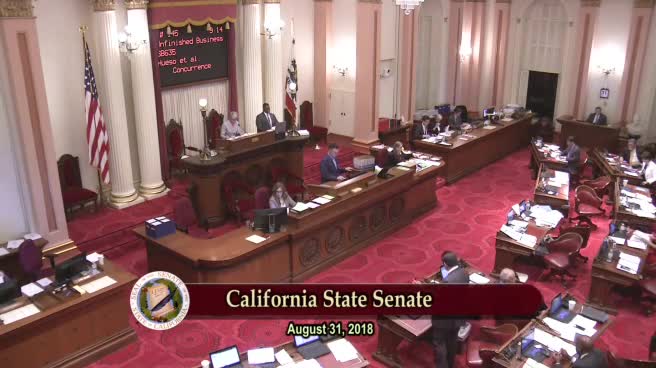 2MIN
Senate Floor
 5MIN
Assembly Floor
 1H
Assembly Standing Committee on Appropriations
 16MIN
Assembly Standing Committee on Jobs, Economic Development, and the Economy
 9MIN
Senate Floor
 12MIN
Senate Standing Committee on Appropriations
 16SEC
Senate Standing Committee on Appropriations
 17MIN
Senate Standing Committee on Business, Professions and Economic Development
Bill Author

Bill Co-Author(s):
