SB 658: Jury selection.
- Session Year: 2017-2018
- House: Senate
- Latest Version Date: 2017-09-27
The Trial Jury Selection and Management Act, among other things, requires a trial judge to examine the prospective jurors in civil jury trials. The act gives the counsel for each party, after this initial examination, the right to examine any of the prospective jurors, as specified, in order to enable counsel to intelligently exercise both peremptory challenges and challenges for cause. The act prohibits a court from arbitrarily or unreasonably refusing to submit a reasonable written questionnaire to the jury if requested by counsel and states that the parties should be provided reasonable time to evaluate the responses to the questionnaire, if utilized, before oral questioning commences. The act states that the trial judge should consider, among other criteria, any unique or complex elements in the case when exercising his or her discretion as to the form and subject matter of voir dire questions.
This bill would require that the parties be provided reasonable time to evaluate the responses to a questionnaire, if utilized, before oral questioning commences. The bill would authorize the parties to submit questions to the trial judge before he or she conducts voir dire and authorize the judge to include these questions if he or she deems them proper. The bill would modify the scope of questioning allowed by the parties, require a trial judge to consider specific factors in conducting voir dire, and prohibit the judge from establishing an inflexible time limit policy for voir dire. The bill would also require a judge in civil trials to, at the earliest practical time, provide the parties with both the alphabetical list and the list of prospective jurors in the order in which they will be called.
The Trial Jury Selection and Management Act, among other things, requires a trial judge to examine the prospective jurors in civil jury trials. The act gives the counsel for each party, after this initial examination, the right to examine any of the prospective jurors, as specified, in order to enable counsel to intelligently exercise both peremptory challenges and challenges for cause. The act prohibits a court from arbitrarily or unreasonably refusing to submit a reasonable written questionnaire to the jury if requested by counsel and states that the parties should be provided reasonable time to evaluate the responses to the questionnaire, if utilized, before oral questioning commences. The act states that the trial judge should consider, among other criteria, any unique or complex elements in the case when exercising his or her discretion as to the form and subject matter of voir dire questions.
This bill would require that the parties be provided reasonable time to evaluate the responses to a questionnaire, if utilized, before oral questioning commences. The bill would authorize the parties to submit questions to the trial judge before he or she conducts voir dire and authorize the judge to include these questions if he or she deems them proper. The bill would modify the scope of questioning allowed by the parties, require a trial judge to consider specific factors in conducting voir dire, and prohibit the judge from establishing an inflexible time limit policy for voir dire. The bill would also require a judge in civil trials to to, at the earliest practical time, provide the parties with both the alphabetical list and the list of prospective jurors in the order in which they will be called.
The Trial Jury Selection and Management Act, among other things, requires a trial judge to examine the prospective jurors in civil jury trials. The act gives the counsel for each party, after this initial examination, the right to examine any of the prospective jurors, as specified, in order to enable counsel to intelligently exercise both peremptory challenges and challenges for cause. The act prohibits a court from arbitrarily or unreasonably refusing to submit a reasonable written questionnaire to the jury if requested by counsel and states that the parties should be provided reasonable time to evaluate the responses to the questionnaire, if utilized, before oral questioning commences. The act states that the trial judge should consider, among other criteria, any unique or complex elements in the case when exercising his or her discretion as to the form and subject matter of voir dire questions.
This bill would require that the parties to be provided reasonable time to evaluate the responses to a questionnaire, if utilized, before oral questioning commences. The bill would modify the scope of questioning allowed by the parties and parties, require a trial judge to consider specific factors in conducting voir dire. dire, and prohibit the judge from establishing an inflexible time limit policy for voir dire. The bill would also require a judge in civil trials to provide the parties with both the alphabetical list and the list of prospective jurors in the order in which they will be called.
The Trial Jury Selection and Management Act, among other things, requires a trial judge to examine the prospective jurors in civil jury trials. Existing law The act gives the counsel for each party, after this initial examination, the right to examine any of the prospective jurors, as specified, in order to enable counsel to intelligently exercise both peremptory challenges and challenges for cause. Existing law The act prohibits a court from arbitrarily or unreasonably refusing to submit a reasonable written questionnaire to the jury if requested by counsel. Existing law counsel and states that the parties should be provided reasonable time to evaluate the responses to the questionnaire, if utilized, before oral questioning commences. Existing law The act states that the trial judge should consider, among other criteria, any unique or complex elements in the case when exercising his or her discretion as to the form and subject matter of voir dire questions.
This bill would require the parties to be provided reasonable time to evaluate the responses to a questionnaire, if utilized, before oral questioning commences. This bill would state that the trial judge should also consider the amount of time requested by trial counsel when exercising his or her discretion as to the form and subject matter of voir dire questions. The bill would modify the scope of questioning allowed by the parties and require a trial judge to consider specific factors in conducting voir dire.
Existing law requires a trial judge to examine the prospective jurors in civil jury trials. Existing law gives the counsel for each party, after this initial examination, the right to examine any of the prospective jurors, as specified, in order to enable counsel to intelligently exercise both peremptory challenges and challenges for cause. Existing law prohibits a court from arbitrarily or unreasonably refusing to submit a reasonable written questionnaire to the jury if requested by counsel. Existing law suggests states that the parties should be provided reasonable time to evaluate the responses to the questionnaire, if utilized, before oral questioning commences. Existing law states that the trial judge should consider, among other criteria, any unique or complex elements in the case when exercising his or her discretion as to the form and subject matter of voir dire questions.
This bill would require the parties to be provided reasonable time to evaluate the responses to a questionnaire, if utilized, before oral questioning commences. This bill would state that the trial judge should also consider the amount of time requested by trial counsel when exercising his or her discretion as to the form and subject matter of voir dire questions.
Existing law requires a trial judge to examine the prospective jurors in civil jury trials. Existing law gives the counsel for each party, after this initial examination, the right to examine any of the prospective jurors, as specified, in order to enable counsel to intelligently exercise both peremptory challenges and challenges for cause. Existing law prohibits a court from arbitrarily or unreasonably refusing to submit a reasonable written questionnaire to the jury if requested by counsel. Existing law suggests that the parties be provided reasonable time to evaluate the responses to the questionnaire, if utilized, before oral questioning commences.
This bill would require the parties to be provided reasonable time to evaluate the responses to a questionnaire, if utilized, before oral questioning commences.
(a)To select a fair and impartial jury in a civil jury trial, the trial judge shall conduct an initial examination of prospective jurors. At the final status conference or at the first practical opportunity prior to voir dire, whichever comes first, the trial judge shall consider and discuss with counsel the form and subject matter of voir dire questions. Before voir dire by the trial judge, the parties may submit questions to the trial judge. The trial judge may include additional questions requested by the parties as the trial judge deems proper.
(b)(1)Upon completion of the trial judges initial examination, counsel for each party shall have the right to examine, by oral and direct questioning, any of the prospective jurors in order to enable counsel to intelligently exercise both peremptory challenges and challenges for cause. The scope of the examination conducted by counsel shall be within reasonable limits prescribed by the trial judge in the judges sound discretion subject to the provisions of this chapter. During any examination conducted by counsel for the parties, the trial judge shall permit liberal and probing examination calculated to discover bias or prejudice with regard to the circumstances of the particular case before the court. The fact that a topic has been included in the trial judges examination shall not preclude appropriate followup questioning in the same area by counsel. The trial judge shall permit counsel to conduct voir dire examination without requiring prior submission of the questions unless a particular counsel engages in improper questioning.
(2)The trial judge shall not impose specific unreasonable or arbitrary time limits or establish an inflexible time limit policy for voir dire.
(3)For purposes of this section, an improper question is any question that, as its dominant purpose, attempts to precondition the prospective jurors to a particular result, indoctrinate the jury, or question the prospective jurors concerning the pleadings or the applicable law.
(c)(1)In exercising the judges sound discretion, the trial judge shall give due consideration to all of the following:
(A)The amount of time requested by trial counsel.
(B)Any unique or complex elements, legal or factual, in the case.(C)Length of the trial.(D)Number of parties.(E)Number of witnesses.(F)Whether the case is designated as a complex or long cause.(2)As voir dire proceeds, the judge shall permit supplemental time for questioning based on any of the following:(A)Individual responses or conduct of jurors that may evince attitudes inconsistent with suitability to serve as a fair and impartial juror in the particular case.(B)Composition of the jury panel.(C)An unusual number of for cause challenges.(d)Upon the request of a party, the trial judge shall allow a brief opening statement by counsel for each party prior to the commencement of the oral questioning phase of the voir dire process.
(e)In civil cases, the trial judge may, upon stipulation by counsel for all the parties appearing in the action, permit counsel to examine the prospective jurors outside a judges presence.(f)A trial judge shall not arbitrarily or unreasonably refuse to submit reasonable written questionnaires, the contents of which are determined by the court in its sound discretion, when requested by counsel. If a questionnaire is utilized, the parties shall be given reasonable time to evaluate the responses to the questionnaires before oral questioning commences.
(g)To help facilitate the jury selection process, at the earliest practical time, the judge in a civil trial shall provide the parties with both the alphabetical list and the list of prospective jurors in the order in which they will be called.
(a)To select a fair and impartial jury in a civil jury trials, trial, the trial judge shall examine the prospective jurors. Upon completion of the judges initial examination, counsel for each party shall have the right to examine, by oral and direct questioning, any of the prospective jurors in order to enable counsel to intelligently exercise both peremptory challenges and challenges for cause. During any examination conducted by counsel for the parties, the trial judge shall permit liberal and probing examination calculated to discover bias or prejudice with regard to the circumstances of the particular case. The fact that a topic has been included in the judges examination shall not preclude appropriate questioning in the same area by counsel. conduct an initial examination of prospective jurors. At the final status conference or at the first practical opportunity prior to voir dire, whichever comes first, the trial judge shall consider and discuss with counsel the form and subject matter of voir dire questions. Before voir dire by the trial judge, the parties may submit questions to the trial judge. The trial judge may include additional questions requested by the parties as the trial judge deems proper.
(b)Upon the request of the parties, the trial judge should allow a brief opening statement by counsel for each party prior to the commencement of the oral questioning phase of the voir dire process.(c)(1)The scope of the examination conducted by counsel shall be within reasonable limits prescribed by the trial judge in the judges sound discretion subject to the provisions of this chapter. At the final status conference or at the first practical opportunity prior to voir dire, whichever comes first, the trial judge shall consider the form and subject matter of voir dire questions. The trial judge shall not impose specific unreasonable or arbitrary time limits or establish an inflexible time limit policy for voir dire. In exercising his or her sound discretion, the trial judge shall give due consideration to all the following:(b)(1)Upon completion of the trial judges initial examination, counsel for each party shall have the right to examine, by oral and direct questioning, any of the prospective jurors in order to enable counsel to intelligently exercise both peremptory challenges and challenges for cause. The scope of the examination conducted by counsel shall be within reasonable limits prescribed by the trial judge in the judges sound discretion subject to the provisions of this chapter. During any examination conducted by counsel for the parties, the trial judge shall permit liberal and probing examination calculated to discover bias or prejudice with regard to the circumstances of the particular case before the court. The fact that a topic has been included in the trial judges examination shall not preclude appropriate followup questioning in the same area by counsel. The trial judge shall permit counsel to conduct voir dire examination without requiring prior submission of the questions unless a particular counsel engages in improper questioning.
(2)The trial judge shall not impose specific unreasonable or arbitrary time limits or establish an inflexible time limit policy for voir dire.
(3)For purposes of this section, an improper question is any question that, as its dominant purpose, attempts to precondition the prospective jurors to a particular result, indoctrinate the jury, or question the prospective jurors concerning the pleadings or the applicable law.
(c)(1)In exercising the judges sound discretion, the trial judge shall give due consideration to all of the following:
(A)The amount of time requested by trial counsel.
(B)Any unique or complex elements, legal or factual, in the case.(C)Length of the trial.(D)Number of parties.(E)Number of witnesses.(F)Whether the case is designated as a complex or long cause.(2)As voir dire proceeds, the judge shall permit supplemental time for questioning based on any of the following:(A)Individual responses or conduct of jurors that may evince attitudes inconsistent with suitability to serve as a fair and impartial juror in the particular case.(B)Composition of the jury panel.(C)An unusual number of for cause challenges.(d)The trial judge should permit counsel to conduct voir dire examination without requiring prior submission of the questions unless a particular counsel engages in improper questioning. For purposes of this section, an improper question is any question that, as its dominant purpose, attempts to precondition the prospective jurors to a particular result, indoctrinate the jury, or question the prospective jurors concerning the pleadings or the applicable law. A court shall not arbitrarily or unreasonably refuse to submit reasonable written questionnaires, the contents of which are determined by the court in its sound discretion, when requested by counsel. If a questionnaire is utilized, the parties shall be given reasonable time to evaluate the responses to the questionnaires before oral questioning commences. To help facilitate the jury selection process, the judge in civil trials shall provide the parties with both the alphabetical list and the list of prospective jurors in the order in which they will be called.(d)Upon the request of a party, the trial judge shall allow a brief opening statement by counsel for each party prior to the commencement of the oral questioning phase of the voir dire process.
(e)In civil cases, the court trial judge may, upon stipulation by counsel for all the parties appearing in the action, permit counsel to examine the prospective jurors outside a judges presence.(f)A trial judge shall not arbitrarily or unreasonably refuse to submit reasonable written questionnaires, the contents of which are determined by the court in its sound discretion, when requested by counsel. If a questionnaire is utilized, the parties shall be given reasonable time to evaluate the responses to the questionnaires before oral questioning commences.
(g)To help facilitate the jury selection process, at the earliest practical time, the judge in a civil trial shall provide the parties with both the alphabetical list and the list of prospective jurors in the order in which they will be called.
(a)To select a fair and impartial jury in civil jury trials, the trial judge shall examine the prospective jurors. Upon completion of the judges initial examination, counsel for each party shall have the right to examine, by oral and direct questioning, any of the prospective jurors in order to enable counsel to intelligently exercise both peremptory challenges and challenges for cause. During any examination conducted by counsel for the parties, the trial judge shall permit liberal and probing examination calculated to discover bias or prejudice with regard to the circumstances of the particular case. The fact that a topic has been included in the judges examination shall not preclude appropriate questioning in the same area by counsel.
(b)Upon the request of the parties, the trial judge should allow a brief opening statement by counsel for each party prior to the commencement of the oral questioning phase of the voir dire process.
(c)(1)The scope of the examination conducted by counsel shall be within reasonable limits prescribed by the trial judge in the judges sound discretion subject to the provisions of this chapter. At the final status conference or at the first practical opportunity prior to voir dire, whichever comes first, the trial judge shall consider the form and subject matter of voir dire questions. The trial judge shall not impose specific unreasonable or arbitrary time limits or establish a blanket policy of a an inflexible time limit policy for voir dire. In exercising his or her sound discretion, the trial judge shall give due consideration to all the following:
(A)The amount of time requested by trial counsel.
(A)(B)Any unique or complex elements, legal or factual, in the case.
(B)(C)Length of the trial.
(C)(D)Number of parties.
(D)(E)Number of witnesses.
(E)(F)Whether the case is designated as a complex or long cause.
(2)As voir dire proceeds, the judge shall permit supplemental time for questioning based on any of the following:
(A)Individual responses or conduct of jurors that may evince attitudes inconsistent with suitability to serve as a fair and impartial juror in the particular case.
(B)Composition of the jury. jury panel.
(C)An unusual number of for cause challenges.
(d)The trial judge should permit counsel to conduct voir dire examination without requiring prior submission of the questions unless a particular counsel engages in improper questioning. For purposes of this section, an improper question is any question that, as its dominant purpose, attempts to precondition the prospective jurors to a particular result, indoctrinate the jury, or question the prospective jurors concerning the pleadings or the applicable law. A court shall not arbitrarily or unreasonably refuse to submit reasonable written questionnaires, the contents of which are determined by the court in its sound discretion, when requested by counsel. If a questionnaire is utilized, the parties shall be given reasonable time to evaluate the responses to the questionnaires before oral questioning commences. To help facilitate the jury selection process, the judge in civil trials should shall provide the parties with both the alphabetical list and the list of prospective jurors in the order in which they will be called.
(e)In civil cases, the court may, upon stipulation by counsel for all the parties appearing in the action, permit counsel to examine the prospective jurors outside a judges presence.
(a)To select a fair and impartial jury in civil jury trials, the trial judge shall examine the prospective jurors. Upon completion of the judges initial examination, counsel for each party shall have the right to examine, by oral and direct questioning, any of the prospective jurors in order to enable counsel to intelligently exercise both peremptory challenges and challenges for cause. During any examination conducted by counsel for the parties, the trial judge should shall permit liberal and probing examination calculated to discover bias or prejudice with regard to the circumstances of the particular case. The fact that a topic has been included in the judges examination should shall not preclude additional nonrepetitive or nonduplicative appropriate questioning in the same area by counsel.
The(b)Upon the request of the parties, the trial judge should allow a brief opening statement by counsel for each party prior to the commencement of the oral questioning phase of the voir dire process.
The scope of the examination conducted by counsel shall be within reasonable limits prescribed by the trial judge in the judges sound discretion. In exercising his or her sound discretion as to the form and subject matter of voir dire questions, the trial judge should consider, among other criteria, the amount of time requested by trial counsel, any unique or complex elements, legal or factual, in the case, and the individual responses or conduct of jurors which may evince attitudes inconsistent with suitability to serve as a fair and impartial juror in the particular case. Specific unreasonable or arbitrary time limits shall not be imposed in any case. The trial judge shall not establish a blanket policy of a time limit for voir dire.(c)(1)At the final status conference or at the first practical opportunity prior to voir dire, whichever comes first, the trial judge shall consider the form and subject matter of voir dire questions. The trial judge shall not impose specific unreasonable or arbitrary time limits or establish a blanket policy of a time limit for voir dire. In exercising his or her sound discretion, the trial judge shall give due consideration to all the following:
(A)Any unique or complex elements, legal or factual, in the case.
(B)Length of the trial.
(C)Number of parties.
(D)Number of witnesses.
(E)Whether the case is designated as a complex or long cause.
(2)As voir dire proceeds, the judge shall permit supplemental time for questioning based on any of the following:
(A)Individual responses or conduct of jurors that may evince attitudes inconsistent with suitability to serve as a fair and impartial juror in the particular case.
(B)Composition of the jury.
(C)An unusual number of for cause challenges.
The(d)The trial judge should permit counsel to conduct voir dire examination without requiring prior submission of the questions unless a particular counsel engages in improper questioning. For purposes of this section, an improper question is any question that, as its dominant purpose, attempts to precondition the prospective jurors to a particular result, indoctrinate the jury, or question the prospective jurors concerning the pleadings or the applicable law. A court shall not arbitrarily or unreasonably refuse to submit reasonable written questionnaires, the contents of which are determined by the court in its sound discretion, when requested by counsel. If a questionnaire is utilized, the parties shall be given reasonable time to evaluate the responses to the questionnaires before oral questioning commences. To help facilitate the jury selection process, the judge in civil trials should provide the parties with both the alphabetical list and the list of prospective jurors in the order in which they will be called.
In(e)In civil cases, the court may, upon stipulation by counsel for all the parties appearing in the action, permit counsel to examine the prospective jurors outside a judges presence.
To select a fair and impartial jury in civil jury trials, the trial judge shall examine the prospective jurors. Upon completion of the judges initial examination, counsel for each party shall have the right to examine, by oral and direct questioning, any of the prospective jurors in order to enable counsel to intelligently exercise both peremptory challenges and challenges for cause. During any examination conducted by counsel for the parties, the trial judge should permit liberal and probing examination calculated to discover bias or prejudice with regard to the circumstances of the particular case. The fact that a topic has been included in the judges examination should not preclude additional nonrepetitive or nonduplicative questioning in the same area by counsel.
The trial judge should allow a brief opening statement by counsel for each party prior to the commencement of the oral questioning phase of the voir dire process.
The scope of the examination conducted by counsel shall be within reasonable limits prescribed by the trial judge in the judges sound discretion. In exercising his or her sound discretion as to the form and subject matter of voir dire questions, the trial judge should consider, among other criteria, the amount of time requested by trial counsel, any unique or complex elements, legal or factual, in the case case, and the individual responses or conduct of jurors which may evince attitudes inconsistent with suitability to serve as a fair and impartial juror in the particular case. Specific unreasonable or arbitrary time limits shall not be imposed in any case. The trial judge shall not establish a blanket policy of a time limit for voir dire.
The trial judge should permit counsel to conduct voir dire examination without requiring prior submission of the questions unless a particular counsel engages in improper questioning. For purposes of this section, an improper question is any question that, as its dominant purpose, attempts to precondition the prospective jurors to a particular result, indoctrinate the jury, or question the prospective jurors concerning the pleadings or the applicable law. A court shall not arbitrarily or unreasonably refuse to submit reasonable written questionnaires, the contents of which are determined by the court in its sound discretion, when requested by counsel. If a questionnaire is utilized, the parties shall be given reasonable time to evaluate the responses to the questionnaires before oral questioning commences. To help facilitate the jury selection process, the judge in civil trials should provide the parties with both the alphabetical list and the list of prospective jurors in the order in which they will be called.
In civil cases, the court may, upon stipulation by counsel for all the parties appearing in the action, permit counsel to examine the prospective jurors outside a judges presence.
To select a fair and impartial jury in civil jury trials, the trial judge shall examine the prospective jurors. Upon completion of the judges initial examination, counsel for each party shall have the right to examine, by oral and direct questioning, any of the prospective jurors in order to enable counsel to intelligently exercise both peremptory challenges and challenges for cause. During any examination conducted by counsel for the parties, the trial judge should permit liberal and probing examination calculated to discover bias or prejudice with regard to the circumstances of the particular case. The fact that a topic has been included in the judges examination should not preclude additional nonrepetitive or nonduplicative questioning in the same area by counsel.
The trial judge should allow a brief opening statement by counsel for each party prior to the commencement of the oral questioning phase of the voir dire process.
The scope of the examination conducted by counsel shall be within reasonable limits prescribed by the trial judge in the judges sound discretion. In exercising his or her sound discretion as to the form and subject matter of voir dire questions, the trial judge should consider, among other criteria, any unique or complex elements, legal or factual, in the case and the individual responses or conduct of jurors which may evince attitudes inconsistent with suitability to serve as a fair and impartial juror in the particular case. Specific unreasonable or arbitrary time limits shall not be imposed in any case. The trial judge shall not establish a blanket policy of a time limit for voir dire.
The trial judge should permit counsel to conduct voir dire examination without requiring prior submission of the questions unless a particular counsel engages in improper questioning. For purposes of this section, an improper question is any question that, as its dominant purpose, attempts to precondition the prospective jurors to a particular result, indoctrinate the jury, or question the prospective jurors concerning the pleadings or the applicable law. A court shall not arbitrarily or unreasonably refuse to submit reasonable written questionnaires, the contents of which are determined by the court in its sound discretion, when requested by counsel. If a questionnaire is utilized, the parties should shall be given reasonable time to evaluate the responses to the questionnaires before oral questioning commences. To help facilitate the jury selection process, the judge in civil trials should provide the parties with both the alphabetical list and the list of prospective jurors in the order in which they will be called.
In civil cases, the court may, upon stipulation by counsel for all the parties appearing in the action, permit counsel to examine the prospective jurors outside a judges presence.
|
Date
|
Status
|
|---|---|
| Sep 27, 2017 | Chaptered by Secretary of State. Chapter 337, Statutes of 2017. |
| Sep 27, 2017 | Approved by the Governor. |
| Sep 11, 2017 | Enrolled and presented to the Governor at 4 p.m. |
| Sep 5, 2017 | Assembly amendments concurred in. (Ayes 40. Noes 0.) Ordered to engrossing and enrolling. |
| Sep 1, 2017 | Ordered to special consent calendar. |
| Aug 31, 2017 | In Senate. Concurrence in Assembly amendments pending. |
| Aug 31, 2017 | Read third time. Passed. Ordered to the Senate. |
| Aug 23, 2017 | Read second time. Ordered to third reading. |
| Aug 22, 2017 | Read second time and amended. Ordered to second reading. |
| Aug 21, 2017 | From committee: Do pass as amended. (Ayes 10. Noes 0.) (July 18). |
| Jun 5, 2017 | June 13 set for first hearing canceled at the request of author. |
| Jun 1, 2017 | Referred to Com. on JUD. |
| May 16, 2017 | In Assembly. Read first time. Held at Desk. |
| May 15, 2017 | Read third time. Passed. (Ayes 39. Noes 0. Page 1070.) Ordered to the Assembly. |
| May 9, 2017 | Read second time and amended. Ordered to third reading. |
| May 8, 2017 | From committee: Do pass as amended. (Ayes 7. Noes 0. Page 946.) (May 2). |
| Apr 24, 2017 | From committee with author's amendments. Read second time and amended. Re-referred to Com. on JUD. |
| Apr 18, 2017 | Set for hearing May 2. |
| Apr 17, 2017 | April 25 set for first hearing canceled at the request of author. |
| Apr 13, 2017 | Set for hearing April 25. |
| Mar 29, 2017 | Re-referred to Com. on JUD. |
| Mar 23, 2017 | From committee with author's amendments. Read second time and amended. Re-referred to Com. on RLS. |
| Mar 9, 2017 | Referred to Com. on RLS. |
| Feb 21, 2017 | From printer. May be acted upon on or after March 23. |
| Feb 17, 2017 | Introduced. Read first time. To Com. on RLS. for assignment. To print. |
|
Date
|
Description
|
Location
|
Votes
|
|
|---|---|---|---|---|
| Sep 5, 2017 | Special Consent SB658 | Senate Floor |
Passed |
|
| Aug 31, 2017 | SB 658 Wiener Senate Third Reading By BAKER | Assembly Floor |
Passed |
|
| Jul 18, 2017 | Do pass as amended. | Assembly Standing Committee on Judiciary |
Passed |
|
| May 15, 2017 | Senate 3rd Reading SB658 Wiener | Senate Floor |
Passed |
|
| May 2, 2017 | Do pass as amended | Senate Standing Committee on Judiciary |
Passed |
This list shows positions taken on this bill by organizations on the date displayed, which is linked to the original source.
Positions by individuals are not included.
|
Organization
|
Position
|
Date
|
|---|---|---|
| American Civil Liberties Union of California | ** Support | Aug 31, 2017 |
| California Defense Counsel | * Indeterminate | Jul 18, 2017 |
| California Judicial Council | * Indeterminate | Jul 18, 2017 |
| Consumer Attorneys Of California | ** Support | Aug 31, 2017 |
Office of Senate Floor Analyses (916) 651-1520 Fax: (916) 327-4478 | SB |
UNFINISHED BUSINESS
Bill No: SB 658
:
SENATE JUDICIARY COMMITTEE: 7-0, 5/2/17
AYES: Jackson, Moorlach, Anderson, Hertzberg, Monning, Stern, Wieckowski
SENATE FLOOR: 39-0, 5/15/17
AYES: Allen, Anderson, Atkins, Bates, Beall, Berryhill, Bradford, Cannella, De León, Dodd, Fuller, Gaines, Galgiani, Glazer, Hernandez, Hertzberg, Hill, Hueso, Jackson, Lara, Leyva, McGuire, Mendoza, Mitchell, Monning, Moorlach, Morrell, Newman, Nguyen, Nielsen, Pan, Portantino, Roth, Skinner, Stern, Stone, Wieckowski, Wiener, Wilk
NO VOTE RECORDED: Vidak
ASSEMBLY FLOOR: 72-0, 8/31/17 - See last page for vote
SOURCE: Consumer Attorneys of California
DIGEST:
This bill removes some discretion from trial judges in conducting voir dire in civil cases. This bill also restructures the provisions governing such voir dire and provides certain factors that a court must consider in exercising its discretion.
Assembly Amendments clarify that the court must consider and discuss the form and subject matter of voir dire questions with counsel, require the court to provide the specified juror lists to counsel at the earliest practical time, and make other technical amendments.
ANALYSIS:
Existing law:
- Requires a trial judge to examine prospective jurors in order to select a fair and impartial jury in civil jury trials. Upon completion of the judge’s initial examination, counsel for each party have the right to examine, by oral and direct questioning, any of the prospective jurors in order to enable counsel to intelligently exercise both peremptory challenges and challenges for cause. (Code Civ. Proc. Sec. 222.5.)
- Provides that during any examination conducted by counsel for the parties, the trial judge should permit liberal and probing examination calculated to discover bias or prejudice with regard to the circumstances of the particular case. The fact that a topic has been included in the judge's examination should not preclude additional nonrepetitive or nonduplicative questioning in the same area by counsel. (Code Civ. Proc. Sec. 222.5.)
- Provides that the trial judge should allow a brief opening statement by counsel for each party prior to the commencement of the oral questioning phase of the voir dire process. (Code Civ. Proc. Sec. 222.5.)
- Requires the scope of the examination conducted by counsel to be within reasonable limits prescribed by the trial judge in the judge's sound discretion. In exercising his or her sound discretion as to the form and subject matter of voir dire questions, the trial judge should consider, among other criteria, any unique or complex elements, legal or factual, in the case and the individual responses or conduct of jurors which may evince attitudes inconsistent with suitability to serve as a fair and impartial juror in the particular case. Specific unreasonable or arbitrary time limits shall not be imposed in any case. The trial judge is prohibited from establishing a blanket policy of a time limit for voir dire. (Code Civ. Proc. Sec. 222.5.)
- Provides that the trial judge should permit counsel to conduct voir dire examination without requiring prior submission of the questions unless a particular counsel engages in improper questioning. “Improper question" is any question that, as its dominant purpose, attempts to precondition the prospective jurors to a particular result, indoctrinate the jury, or question the prospective jurors concerning the pleadings or the applicable law. (Code Civ. Proc. Sec. 222.5.)
- Prohibits a court from arbitrarily or unreasonably refusing to submit reasonable written questionnaires, the contents of which are determined by the court in its sound discretion, when requested by counsel. If a questionnaire is utilized, the parties should be given reasonable time to evaluate the responses to the questionnaires before oral questioning commences. To help facilitate the jury selection process, the judge in civil trials should provide the parties with both the alphabetical list and the list of prospective jurors in the order in which they will be called. (Code Civ. Proc. Sec. 222.5.)
- Provides that in civil cases, the court may, upon stipulation by counsel for all the parties appearing in the action, permit counsel to examine the prospective jurors outside a judge’s presence. (Code Civ. Proc. Sec. 222.5.)
- Provides, through the Rules of Court, that the trial judge is required to permit counsel for each party that so requests to submit additional questions that the judge will put to the jurors. The judge should consider the policies and recommendations in Standard 3.25 of the Standards of Judicial Administration in its examining of prospective jurors in civil cases. (Cal. Rule Ct. Rule 3.1540.)
This bill:
- Requires the court to permit liberal and probing examination calculated to discover bias or prejudice with regard to the circumstances of the particular case; provides the parties reasonable time to evaluate the responses to the questionnaires before oral questioning commences if a questionnaire is utilized; and provides the parties with both the alphabetical list and the list of prospective jurors in the order in which they will be called. Furthermore, this bill provides that the fact a topic is included in the judge’s examination shall not preclude appropriate questioning in the same area by counsel.
- Continues to provide that the scope of the examination conducted by the parties’ counsel must be within reasonable limits prescribed by the trial judge in the judge’s sound discretion, except now this requirement is subject to the provisions of the Trial Jury Selection and Management Act.
- Requires the court to consider the form and subject matter of voir dire questions at the final status conference or at the first practical opportunity prior to voir dire, whichever comes first. The trial judge shall discuss with counsel the form and subject matter of voir dire questions. The trial judge is prohibited from imposing specific unreasonable or arbitrary time limits or establishing an inflexible time limit policy for voir dire.
- Reorganizes the provisions outlining the court’s exercise of its discretion and provides additional factors the court must consider. This bill provides that in exercising the trial judge’s sound discretion, the trial judge shall give due consideration to all of the following factors:
- The amount of time requested by trial counsel;
- Any unique or complex elements, legal or factual, in the case;
- Length of the trial;
- Number of parties and witnesses; and
- Whether the case is designated as a complex or long cause.
- Requires the judge to permit supplemental time for questioning based on any of the following:
- Individual responses or conduct of jurors that may evince attitudes inconsistent with suitability to serve as a fair and impartial juror in the particular case;
- Composition of the jury panel; or
- An unusual number of for-cause challenges.
Background
Both the U.S. and California constitutions guarantee the right to trial by jury in civil actions, under specified circumstances. (See U.S. Const. amend VII; Cal. Const. art. 1, sec. 16. California also provides for the right to trial by jury in specified circumstances in statute; see Code Civ. Proc. Sec. 592.) In 1988, California enacted the Trial Jury Selection and Management Act, which governs the formation of trial juries for both civil and criminal cases in California trial courts. (Code Civ. Proc. Sec. 190 et seq.) In 1990, California enacted AB 3820 (Brown, Chapter 1232, Statutes 1990), creating Section 222.5 of the California Code of Civil Procedure, which included procedures governing the selection of a fair and impartial jury in civil jury trials. The enactment of the voir dire provisions contained in that bill were extremely controversial but were the result of compromises made by the Judicial Council and representatives of the State Bar, California Defense Bar, and the plaintiffs’ bar, as noted in the Senate Judiciary Committee analysis. (See Sen. Judiciary Com. (1989-1990 (Reg. Session) August 27, 1990, pgs. 2-5.).)
Voir dire is critical to the selection of a jury of one’s peers, devoid of bias and prejudice. The ability of counsel to properly conduct voir dire, within permissible parameters, is in turn integral to a fair trial and just verdict. Under Section 222.5 of the Civil Procedure Code, as well as California Rules of Court, Rule 3.1540(b), the trial judge begins voir dire with an initial examination to disclose grounds for excuses for cause. Upon completion of the trial judge’s examination, counsel for both parties has the right to conduct questioning. This questioning has the purpose of “enabling counsel to intelligently exercise both preemptory challenges and challenges for cause.” (See also J. Clark Kelso, Final Report of the Blue Ribbon Commission on Jury System Improvement (1996) 47 Hastings L.J. 1433, 1476-1477.)
Code of Civil Procedure Section 222.5 explicitly provides that each party has the right, in a civil case, to directly question any of the prospective jurors after the trial judge’s initial voir dire and that the trial judge should permit liberal and probing examination calculated to discover bias or prejudice with regard to the circumstances of a particular case. In exercising that “sound discretion as to the form and subject matter of voir dire questions, the trial judge should consider, among other criteria, any unique or complex elements, legal or factual, in the case and the individual responses or conduct of jurors that may evince attitudes inconsistent with suitability to serve as a fair and impartial juror in the particular case.” The court is prohibited from imposing “[s]pecific unreasonable or arbitrary time limits.”
In 2011, AB 1403 (Committee on Judiciary, Chapter 409, Statutes 2011) was enacted into law. It further amended Section 222.5 to provide that a trial judge should allow for a brief opening statement by the parties prior to the oral questioning phase of voir dire. The bill also amended the law to prohibit the trial judge from establishing “a blanket policy of a time limit for voir dire.” As a result of the bill, the court is prohibited from arbitrarily or unreasonably refusing to submit reasonable written questionnaires and when a questionnaire is utilized, the parties should be given reasonable time to evaluate the responses to the questionnaire before oral questioning commences. The court in civil trials should also provide the parties with both the alphabetical list and the list of prospective jurors in the order in which they will be called.
This bill again amends Section 222.5 by adjusting a handful of advisory (“should”) provisions and making them mandatory. For instance, this bill now requires the trial judge to permit liberal and probing examination calculated to discover bias or prejudice with regard to the circumstances of the particular case; prohibits the trial judge from precluding questioning in the same area as the judge covered in the judge’s examination; and requires the trial judge to give the parties reasonable time to evaluate responses before oral questioning commences if a questionnaire is utilized.
This bill also provides that at a specified time before voir dire, the trial judge shall consider the form and subject matter of voir dire questions. This bill reformulates the statute to guide the court’s discretion. In exercising the trial judge’s sound discretion, the trial judge is required to give due consideration to all the following: the amount of time requested by counsel; any unique or complex elements, legal or factual, in the case; the length of the trial; the number of parties and witnesses; and whether the case is designated as a complex or long cause.
This bill also requires the court to permit supplemental time for questioning based on the individual responses or conduct of the jurors that may evince bias, the composition of the jury panel, or an unusual number of for-cause challenges.
This bill also makes other subtle changes. For instance, the trial judge is now prohibited from imposing “an inflexible time limit policy,” rather than “a blanket policy of a time limit for voir dire” as previously provided.
Despite these changes, this bill continues to provide that the scope of the examination conducted by the parties’ counsel must be within reasonable limits prescribed by the trial judge in the judge’s sound discretion.
Comments
The author states:
The selection of an unbiased jury serves all parties and is crucial to maintaining the integrity of our courts. Currently judges are setting blanket, arbitrary, and unreasonable time limits for voir dire. Judges use their discretion to set these limits even though CCP §222.5 specifically states not to set blanket time limits.
SB 658 would address the issue of unreasonable and arbitrary restrictions on attorney examination of potential members of a jury. Liberal and probing voir dire is necessary to ensure that the Seventh Amendment right to a jury trial is meaningful. The current statute was intended to prohibit these limitations, but its enforcement has eroded in the quarter century since its passage. Attorneys have reported that in some courts there are arbitrary limits of 20 or 30 minutes for voir dire in unlimited civil jurisdiction cases. Such limits contradict the original intent of the statute.
Finding the proper balance in the courtroom
As indicated, voir dire is critical to the selection of a jury of one’s peers, devoid of bias and prejudice. Similar to the previous legislation discussed in the background above, this bill seeks to find the proper balance in the courtroom for ideal voir dire practices. On one side of the balance, the court must be granted a certain level of discretion in guiding the proper questioning of prospective jurors in a civil trial and in controlling the judge’s courtroom. On the other hand, counsel for the parties must be given the appropriate leeway to conduct thorough and meaningful voir dire. The ability of counsel to properly conduct voir dire, within permissible parameters, is integral to a fair trial and just verdict.
This bill addresses what the sponsors have identified as a growing problem in courtrooms, where trial judges are severely curtailing counsel’s participation in voir dire and failing to cater their policies to the circumstances of the unique case before them. This bill cuts back on the discretion vested in trial judges by switching provisions that previously indicated what a judge “should” do to provide what a judge “shall” do. Furthermore, this bill provides a structure for approaching voir dire and lays out additional considerations that a judge is required to consider in exercising its discretion. The Consumer Attorneys of California, the sponsor, has indicated that it has worked with stakeholders, including representatives of the judges and defense counsel, to come to the language now found in this most recent version of this bill.
FISCAL EFFECT: Appropriation: Fiscal Com.: Local:
SUPPORT: (Verified 8/31/17)
Consumer Attorneys of California (source)
American Civil Liberties Union of California
OPPOSITION: (Verified 8/31/17)
ASSEMBLY FLOOR: 72-0, 8/31/17
AYES: Acosta, Aguiar-Curry, Arambula, Baker, Berman, Bigelow, Bloom, Bocanegra, Bonta, Brough, Caballero, Calderon, Cervantes, Chau, Chávez, Chen, Chiu, Choi, Chu, Cooley, Cooper, Cunningham, Dababneh, Dahle, Daly, Flora, Fong, Frazier, Friedman, Gallagher, Eduardo Garcia, Gipson, Gloria, Gonzalez Fletcher, Gray, Grayson, Harper, Holden, Irwin, Jones-Sawyer, Kalra, Kiley, Lackey, Levine, Limón, Low, Maienschein, Mathis, Mayes, McCarty, Medina, Mullin, Muratsuchi, Nazarian, Obernolte, O'Donnell, Patterson, Quirk, Reyes, Rodriguez, Rubio, Salas, Santiago, Steinorth, Mark Stone, Thurmond, Ting, Voepel, Waldron, Weber, Wood, Rendon
NO VOTE RECORDED: Travis Allen, Burke, Eggman, Cristina Garcia, Melendez, Quirk-Silva, Ridley-Thomas
8/31/17 16:29:46
**** END ****
SENATE THIRD READING
STR Bill Id:SB 658
Author:(Wiener)
As Amended Ver:August 21, 2017
Majority vote
SENATE VOTE: 39-0
Committee | Votes | Ayes | Noes |
Judiciary | 10-0 | Mark Stone, Cunningham, Chau, Chiu, Cristina Garcia, Kalra, Kiley, Maienschein, Reyes, Ting |
|
SUMMARY: Requires a judge to consider several factors in the exercise of the judge's discretion in determining the scope and time limits of voir dire. Clarifies certain procedures about how voir dire should be conducted in the early stages of voir dire. Establishes several responsibilities that a judge must perform during voir dire, which have been advisory under state law. Specifically, this bill:
- Requires a judge, in the exercise of his or her sound discretion over the scope of voir dire, to give due consideration to all of the following:
- The amount of time requested by trial counsel.
- Any unique or complex elements, legal or factual, in the case.
- Length of the trial.
- Number of parties.
- Number of witnesses.
- Whether the case is designated as a complex or long cause.
- Requires a judge, as voir dire proceeds, to permit supplemental time for questioning based on any of the following:
- Individual responses or conduct of jurors that may evince attitudes inconsistent with suitability to serve as a fair and impartial juror in the particular case.
- Composition of the jury panel.
- An unusual number of for cause challenges.
- Requires the judge to consider and discuss with counsel the form and subject matter of voir dire questions at the final status conference or at the first practical opportunity prior to voir dire, whichever comes first.
- Requires a trial judge, during any examination conducted by counsel, to permit liberal and probing examination calculated to discover bias or prejudice with regard to the circumstances of the particular case. The fact that a topic has been included in the trial judge's examination shall not preclude appropriate follow-up questioning in the same area by counsel.
- Provides that if a questionnaire is utilized, the parties shall be given reasonable time to evaluate the responses to the questionnaires before oral questioning commences.
- Requires a judge, at the earliest practical time, to provide the parties with both the alphabetical list and the list of prospective jurors in the order in which they will be called.
- Prohibits a judge from precluding appropriate questioning by counsel for a topic that has been included in the judge's examination.
- Clarifies that a judge shall not impose specific unreasonable or arbitrary time limits, or establish an inflexible time limit policy for voir dire.
- Clarifies that before voir dire by the trial judge, the parties may submit questions to the trial judge. The trial judge may include additional questions requested by the parties as the trial judge deems proper.
- Clarifies that a fact that a topic has been included in the trial judge's examination shall not preclude appropriate followup questioning in the same area by counsel.
- Clarifies that a trial judge should allow a brief opening statement by counsel for each party prior to the commencement of the oral questioning phase of the voir dire process upon the request of a party.
- Makes other technical and clarifying changes.
FISCAL EFFECT: None
COMMENTS: Juries are selected by a court process known as voir dire where prospective jurors are asked a series of questions to determine their competence and fitness to serve as jurors. It is hoped that during voir dire – through various questions posed by the court and attorneys – prospective jurors will provide verbal and non-verbal cues that will reveal information about a prospective juror's life, background, and experiences. Not surprisingly, the best jury is one that consists of persons who have a wealth of experiences and varying perspectives of the world. A jury that includes a wide spectrum of the community helps to ensure that the jury's deliberation (and verdict) ultimately reflects that community.
Every prospective juror has some type of bias because of his or her individual life experience. For example, a juror who has had a life-threatening experience with a hit-and-run driver probably would not be the best juror to sit on a jury for a case involving a hit-and-run accident. However, that same prospective juror might be very suitable for a case involving an alleged burglary, white collar crime, or another type of crime. A person who had a bad experience with an employee of a local police department might have a bias against that employee or even that entire department, but that same person might be perfectly capable of being unbiased on a tax evasion case or a child endangerment matter. Bias depends on the past experiences of each individual. Accordingly, procedures are in place to screen out bias during jury selection. A juror who is incompetent, incapacitated, or biased may be excused for cause. For example, a prospective juror who does not possess sufficient knowledge of the English language would likely be excused for cause. Additionally, a juror with a familial or employment relationship with one of the parties or witnesses is considered to have an implied bias, and could be excused for cause. Furthermore, a juror who reveals during questioning that he or she has already pre-judged the matter may also be excused for cause on grounds of actual bias. Additionally, parties may rely on peremptory challenges to excuse jurors suspected of being incompetent, incapacitated, or biased. Generally, a juror who testifies that he or she can fairly apply the jury instructions will meet the legal standard of being unbiased. However, if such a juror is nevertheless suspected of being biased or not suitable to serve, a party or attorney can use a peremptory challenge to remove that juror.
Obviously, ferreting out bias is not an easy task especially if parties are not given ample time to conduct voir dire. Jurors who act with the best intentions may not immediately reveal to the court their opinions or feelings that might expose some form of inherent bias. Accordingly, parties and their attorneys rely on robust questioning and peremptory challenges to excuse jurors suspected of being potentially biased. However, given that judicial resources are limited, courts try to balance the goal of providing sufficient voir dire against the goal of maintaining efficient resolution of justice. Accordingly, judges are provided discretion to properly manage and balance these interests.
According to the author, "judges are setting blanket, arbitrary, and unreasonable time limits for voir dire. Judges use their discretion to set these limits even though [existing law] specifically states not to set blanket time limits. Attorneys have reported that in some courts there are arbitrary limits of 30 minutes for voir dire in unlimited civil jurisdiction cases. Such limits contradict the original intent of the statute."
SB 658 seeks to improve civil voir dire by requiring a judge to consider several factors in the exercise of the judge's discretion in determining the scope and time limits of voir dire. This bill also clarifies certain procedures about how voir dire should be conducted in the early stages of voir dire. Additionally, this bill establishes several responsibilities that a judge must do during voir dire – responsibilities that have been advisory under state law.
This bill creates additional factors that the court must consider when it exercises discretion in managing voir dire. When a judge is managing the form and subject matter of voir dire questions, existing law advises a judge to consider two factors: the elements of a case (unique or complex; legal or factual) and the juror responses or conduct (that reveal whether the juror can be fair or impartial). As for the scope of the examination, existing law requires counsel's examination to be within reasonable limits, subject to the court's discretion. As stated, the author believes that judges are creating arbitrary time limits in civil cases without fully considering all of the factors of a particular case. This bill creates several factors that a court must consider in managing voir dire. Specifically, this bill requires judges – when exercising their discretion – to consider: 1) the amount of time requested by trial counsel; 2) any unique or complex elements, legal or factual, in the case; 3) the length of the trial; 4) the number of parties; 5) the number of witnesses; and 6) whether the case is designated as a complex or long cause. By specifying several factors that the court should consider – factors that tend to illustrate the complexity of a case and the potential need for additional voir dire time – but at the same time, giving a judge the discretion to determine the scope or limits of voir dire, this bill appears to balance both the interests of judicial economy and the interests of a party to ensure that there is sufficient time to select a fair and impartial jury.
This bill prohibits a judge from imposing inflexible time limits, and calls for additional time in specific scenarios where time may be needed to assess prospective jurors. It's not surprising that things discovered during the course of litigation often require parties and the court to change their tactics or their plans. This is certainly true for voir dire as well. To ensure that any time limit imposed by a judge is flexible to changing circumstances in a particular case, this bill requires a judge to allow additional time during voir dire if certain specific situations arise. Specifically, the court must grant more time if 1) a juror's responses or conduct reveal that a juror won't be fair and impartial, 2) something unanticipated happens relating to the composition of the jury, or 3) there is an unusual number of for cause challenges.
This bill clarifies additional rules on how voir dire should be conducted in the early stages of voir dire. Even before voir dire begins, existing rules of court advises a judge to confer with counsel about the specific questions or areas of inquiry that will be asked during voir dire. Once in voir dire, the court will kick-off the initial examination. During this initial phase, a judge will ask standard preliminary questions (e.g., If the trial takes two weeks, will you be able to participate? Do you know any of the parties or attorneys? Have you ever served on a jury?). After that, counsel for each party may provide a brief opening statement (if allowed by the judge). Once counsel questions begin, existing law prohibits counsel from asking repetitive or duplicative questions from the judge's examination. To ensure that this early phase of voir dire runs smoothly, this bill first requires judges to consider the procedure for voir dire at the final status conference before trial, or at the first practical opportunity, whichever comes first. This bill also clarifies that parties may submit questions to the trial judge, and those questions may be included as the trial judge deems is proper. To maintain judicial discretion, this bill does not limit a court from determining what questions are appropriate.
This bill requires judges to perform certain duties during voir dire that have generally been advisory. Existing law provides that when counsel is examining a party, the judge should permit liberal probing and examination calculated to discover bias or prejudice. Additionally, if a jury questionnaire is used, the parties should be given time to evaluate the responses before questioning begins. The law also states that a judge should provide the parties with both the alphabetical list and the list of prospective jurors in the order in which they will be called. This bill, instead of advising a judge to perform these duties, requires them to do so by changing should to shall.
Analysis Prepared by: Eric Dang / JUD. / (916) 319-2334 FN: 0001290
Date of Hearing: July 18, 2017
ASSEMBLY COMMITTEE ON JUDICIARY
Mark Stone, Chair
SBPCA Bill Id:SB 658
Author:(Wiener) – As Amended Ver:May 9, 2017
As Proposed to be Amended
SENATE VOTE: 39-0
SUBJECT: CIVIL JURY SELECTION
KEY ISSUE: IN ORDER TO IMPROVE the JURY SELECTION process (VOIR DIRE) IN CIVIL CASES AND ENSURE THAT JUDGES RETAIN DISCRETION IN MANAGING THEIR COURTROOMS, SHOULD A JUDGE BE REQUIRED TO CONSIDER SEVERAL FACTORS WHEN DECIDING ABOUT THE SCOPE OF VOIR DIRE in A PARTICULAR CASE AND PERFORM OTHER SENSIBLE DUTIES THAT WILL STREAMLINE THE MANAGEMENT OF VOIR DIRE and PROMOTE A PARTY’s ABILITY TO HAVE A FAIR AND IMPARTIAL JURY?
SYNOPSIS
A hallmark of the American legal system is the right to a jury trial provided under both the United States and California Constitution. To ensure that juries are impartial, prospective jurors are selected by a court process known as voir dire that ferrets out bias and helps to determine the qualification and suitability of a potential juror to serve on a specific case. During voir dire, various procedures, like challenges for cause and peremptory challenges, allow the parties to ensure their juries are fair and impartial. Additionally, there are other procedures in place to ensure that attorneys are not engaging in improper questioning and that there is an efficient resolution of cases. To that end, judges are provided discretion to balance all of the different goals of voir dire so that parties have adequate time to examine jurors but not so much time that it becomes inefficient and causes delay. Of course, it is not always easy to strike the proper balance.
According to the author, judges are setting blanket and unreasonable time limits for voir dire even though it is prohibited under the law. For example, attorneys have reported that in some courts, there are arbitrary limits of 30 minutes for voir dire in unlimited civil jurisdiction cases, contravening the original intent of the statute to ensure that parties are able to adequately pursue their case.
To ensure that there is a proper balance between the various interests of the parties and the court, SB 658 seeks to improve civil voir dire by requiring a judge to consider several factors in the exercise of the judge’s discretion in determining the scope and time limits of voir dire. This bill also clarifies certain procedures about how voir dire should be conducted in the early stages of voir dire. Additionally, this bill establishes several responsibilities that a judge must do during voir dire—responsibilities that have been advisory under state law. This bill is sponsored by the Consumer Attorneys of California, and is supported by the American Civil Liberties Union. There is no opposition. The author plans to accept proposed Committee amendments reflected in this analysis.
SUMMARY: Requires a judge to consider several factors in the exercise of the judge’s discretion in determining the scope and time limits of voir dire. Clarifies certain procedures about how voir dire should be conducted in the early stages of voir dire. Establishes several responsibilities that a judge must perform during voir dire, which have been advisory under state law. Specifically, this bill:
- Requires a judge, in the exercise of his or her sound discretion over the scope of voir dire, to give due consideration to all of the following:
- The amount of time requested by trial counsel.
- Any unique or complex elements, legal or factual, in the case.
- Length of the trial.
- Number of parties.
- Number of witnesses.
- Whether the case is designated as a complex or long cause.
- Requires a judge, as voir dire proceeds, to permit supplemental time for questioning based on any of the following:
- Individual responses or conduct of jurors that may evince attitudes inconsistent with suitability to serve as a fair and impartial juror in the particular case.
- Composition of the jury panel.
- An unusual number of for cause challenges.
- Requires the judge to consider the form and subject matter of voir dire questions at the final status conference or at the first practical opportunity prior to voir dire, whichever comes first.
- Requires a trial judge, during any examination conducted by counsel, to permit liberal and probing examination calculated to discover bias or prejudice with regard to the circumstances of the particular case. The fact that a topic has been included in the trial judge’s examination shall not preclude appropriate follow-up questioning in the same area by counsel.
- Provides that if a questionnaire is utilized, the parties shall be given reasonable time to evaluate the responses to the questionnaires before oral questioning commences.
- Requires a judge to provide the parties with both the alphabetical list and the list of prospective jurors in the order in which they will be called.
- Prohibits a judge from precluding appropriate questioning by counsel for a topic that has been included in the judge’s examination.
- Clarifies that a judge shall not impose specific unreasonable or arbitrary time limits, or establish an inflexible time limit policy for voir dire.
- Clarifies that before voir dire by the trial judge, the parties may submit questions to the trial judge. The trial judge may include additional questions requested by the parties as the trial judge deems proper.
- Clarifies that a fact that a topic has been included in the trial judge’s examination shall not preclude appropriate followup questioning in the same area by counsel.
- Clarifies that a trial judge should allow a brief opening statement by counsel for each party prior to the commencement of the oral questioning phase of the voir dire process upon the request of a party.
- Makes other technical and clarifying changes.
EXISTING LAW:
- Establishes that in suits at common law, where the value in controversy shall exceed twenty dollars, the right of trial by jury shall be preserved, and no fact tried by a jury, shall be otherwise re-examined in any Court of the United States, than according to the rules of the common law. (U.S. Const., 7th Amend.)
- Establishes that trial by jury is an inviolate right and shall be secured to all, but in a civil cause three-fourths of the jury may render a verdict. A jury may be waived in a criminal cause by the consent of both parties expressed in open court by the defendant and the defendant’s counsel. In a civil cause a jury may be waived by the consent of the parties expressed as prescribed by statute. (Cal. Const., art. I, Section 16.)
- Establishes the Trial Jury Selection and Management Act, which sets forth the rules and procedures for the selection of jurors, and the formation of trial juries for both civil and criminal cases in all trial courts of the state. (Code of Civil Procedure Section 190 et seq. Unless otherwise stated, all further statutory references are to the Code of Civil Procedure.)
- States that all persons are eligible and qualified to be prospective trial jurors, except the following:
- Persons who are not citizens of the United States.
- Persons who are less than 18 years of age.
- Persons who are not domiciliaries of the State of California, as defined.
- Persons who are not residents of the jurisdiction wherein they are summoned to serve.
- Persons who have been convicted of malfeasance in office or a felony, and whose civil rights have not been restored.
- Persons who are not possessed of sufficient knowledge of the English language, provided that no person shall be deemed incompetent solely because of the loss of sight or hearing in any degree or other disability which impedes the person’s ability to communicate or which impairs or interferes with the person’s mobility.
- Persons who are serving as grand or trial jurors in any court of this state.
- Persons who are the subject of conservatorship. (Section 203 (a).)
- Provides that no person shall be excluded from eligibility for jury service in the State of California for any reason other than those reasons provided in 4) above. (Section 203 (b).)
- Requires a trial jury to consist of 12 persons, except that in civil actions and misdemeanor cases, the trial jury may consist of 12 or any number less than 12, upon which the parties may agree. (Section 220.)
- Provides that to select a fair and impartial jury in civil jury trials, the trial judge shall examine the prospective jurors. Upon completion of the judge’s initial examination, counsel for each party shall have the right to examine, by oral and direct questioning, any of the prospective jurors in order to enable counsel to intelligently exercise both peremptory challenges and challenges for cause. (Section 222.5.)
- Provides that during jury selection in civil trials, during any examination conducted by counsel for the parties, the trial judge should permit liberal and probing examination calculated to discover bias or prejudice with regard to the circumstances of the particular case. The fact that a topic has been included in the judge’s examination should not preclude additional nonrepetitive or nonduplicative questioning in the same area by counsel. (Ibid.)
- States that a trial judge should allow a brief opening statement by counsel for each party prior to the commencement of the oral questioning phase of the voir dire process. (Ibid.)
- Requires that the scope of the examination conducted by counsel be within reasonable limits prescribed by the trial judge in the judge’s sound discretion. (Ibid.)
- Provides that in exercising his or her sound discretion as to the form and subject matter of voir dire questions, the trial judge should consider, among other criteria, any unique or complex elements, legal or factual, in the case and the individual responses or conduct of jurors which may evince attitudes inconsistent with suitability to serve as a fair and impartial juror in the particular case. (Ibid.)
- Prohibits specific unreasonable or arbitrary time limits from being imposed in any case and prohibits a trial judge from establishing a blanket policy of a time limit for voir dire. (Ibid.)
- Provides that a trial judge should permit counsel to conduct voir dire examination without requiring prior submission of the questions unless a particular counsel engages in improper questioning. An “improper question” means any question that, as its dominant purpose, attempts to precondition the prospective jurors to a particular result, indoctrinate the jury, or question the prospective jurors concerning the pleadings or the applicable law. (Ibid.)
- A court shall not arbitrarily or unreasonably refuse to submit reasonable written questionnaires, the contents of which are determined by the court in its sound discretion, when requested by counsel. If a questionnaire is utilized, the parties should be given reasonable time to evaluate the responses to the questionnaires before oral questioning commences. To help facilitate the jury selection process, the judge in civil trials should provide the parties with both the alphabetical list and the list of prospective jurors in the order in which they will be called. (Ibid.)
- In civil cases, the court may, upon stipulation by counsel for all the parties appearing in the action, permit counsel to examine the prospective jurors outside a judge’s presence. (Ibid.)
- Provides that a challenge to a prospective juror may be for cause (general disqualification, implied bias, or actual bias) or for a peremptory challenge, as provided. (Section 225.)
- Provides that in civil cases, each party shall be entitled to six peremptory challenges. If there are more than two parties, the court shall, for the purpose of allotting peremptory challenges, divide the parties into two or more sides according to their respective interests in the issues. Each side shall be entitled to eight peremptory challenges. If there are several parties on a side, the court shall divide the challenges among them as nearly equally as possible. If there are more than two sides, the court shall grant such additional peremptory challenges to a side as the interests of justice may require, provided that the peremptory challenges of one side shall not exceed the aggregate number of peremptory challenges of all other sides. If any party on a side does not use his or her full share of peremptory challenges, the unused challenges may be used by the other party or parties on the same side. (Section 231.)
- Provides that on completion of the initial examination, the trial judge must permit counsel for each party to submit additional questions to the judge to put to the jurors. (Cal. Rules of Court, rule 3.1540 (c).)
- States that in examining prospective jurors in civil cases, the judge should consider the policies and recommendations in standard 3.25 of Standards of Judicial Administration. (Cal. Rules of Court, rule 3.1540 (b).)
- Provides that when counsel requests to be allowed to conduct a supplemental voir dire examination, the trial judge should permit counsel to conduct such examination without requiring prior submission of the questions to the judge unless a particular counsel has demonstrated unwillingness to avoid improper questions, as provided. (Cal. Stds. Jud. Admin., Std. 3.25 (a).)
- States that before the examination, the trial judge should, outside the prospective jurors’ hearing and with a court reporter present, confer with counsel, at which time specific questions or areas of inquiry may be proposed that the judge in his or her discretion may inquire of the jurors. Thereafter, the judge should advise counsel of the questions or areas to be inquired into during the examination and voir dire procedure, as provided. (Cal. Stds. Jud. Admin., Std. 3.25 (b).)
- Provides examples of questions that might be inquired during a trial judge’s examination of prospective jurors. (Cal. Stds. Jud. Admin., Std. 3.25 (c).)
- Provides that on completion of the initial examination and on request of counsel for any party that the trial judge put additional questions to the jurors, the judge should, outside the jurors’ hearing and with a court reporter present, confer with counsel, at which time additional questions or areas of inquiry may be proposed that the judge may inquire of the jurors. (Cal. Stds. Jud. Admin., Std. 3.25 (e).)
FISCAL EFFECT: As currently in print this bill is keyed non-fiscal.
COMMENTS: A hallmark of the American legal system is the right to a jury trial provided under both the United States and California Constitution. As Chief Justice John Marshall has described, “[t]he great value of the trial by jury certainly consists in its fairness and impartiality. Those who most prize the institution, prize it because it furnishes a tribunal which may be expected to be uninfluenced by an undue bias of the mind…The jury should enter upon the trial with minds open to those impressions which the testimony and the law of the case ought to make, not with those [preconceived] opinions which will resist those impressions.” (United States v. Burr (1807) 25 F.Cas. 49, 50.)
To ferret out bias, the court engages in voir dire, a formal, pre-trial examination process that helps to determine the qualification and suitability of a potential juror to serve on a specific case. Juries are selected by a court process known as voir dire. During voir dire, prospective jurors are seated in the jury box and asked—in front of other prospective jurors and the public—a series of questions to determine their competence and fitness to serve as jurors. During voir dire, parties (and their attorneys) will consider the facts and evidence involved in the particular case and compare and contrast those with the background and experience of a prospective juror. It is hoped that during voir dire—through various questions posed by the court and attorneys—prospective jurors will provide verbal and non-verbal cues that will reveal information about a prospective juror’s life, background, and experiences, demonstrating whether a prospective juror is biased or suitable to serve. Not surprisingly, the best jury is one that consists of persons who have a wealth of experiences and varying perspectives of the world. A jury that includes a wide spectrum of the community helps to ensure that the jury’s deliberation (and verdict) ultimately reflects that community.
Every prospective juror has some type of bias because of his or her individual life experience. Accordingly, procedures are in place to screen out bias during jury selection: challenges for cause and peremptory challenges. Certainly, it is impossible to imagine a prospective juror without some kind of bias. For example, a juror who has had a life-threatening experience with a hit-and-run driver probably would not be the best juror to sit on a jury for a case involving a hit-and-run accident. However, that same prospective juror might be very suitable for a case involving an alleged burglary, white collar crime, or another type of crime. A person who had a bad experience with an employee of a local police department might have a bias against that employee or even that entire department, but that same person might be perfectly capable of being unbiased on a tax evasion case or a child endangerment matter. Bias depends on the past experiences of each individual. Procedures are in place to screen out bias during jury selection: challenges for cause and peremptory challenges. A juror who is incompetent, incapacitated, or biased may be excused for cause. For example, a prospective juror who does not possess sufficient knowledge of the English language would likely be excused for cause. Additionally, a juror with a familial or employment relationship with one of the parties or witnesses is considered to have an implied bias, and could be excused for cause. Furthermore, a juror who reveals during questioning that he or she has already pre-judged the matter may also be excused for cause on grounds of actual bias. Additionally, parties may rely on peremptory challenges to excuse jurors suspected of being incompetent, incapacitated, or biased. Generally, a juror who testifies that he or she can fairly apply the jury instructions will meet the legal standard of being unbiased. However, if such a juror is nevertheless suspected of being biased or not suitable to serve, a party or attorney can use a peremptory challenge to remove that juror.
Obviously, ferreting out bias is not an easy task especially if parties are not given ample time to conduct voir dire. Indeed, “[f]or voir dire to serve its purpose of exposing the biases of prospective jurors, it is obviously necessary that prospective jurors give truthful answers to the questions they are asked.” (Brief of Petitioner at 12, Warger v. Shauers (2014) 135 S. Ct. 521 (No. 13-517).) But even jurors who act with the best intentions may not immediately reveal to the court their opinions or feelings that might expose some form of inherent bias. Accordingly, parties and their attorneys rely on robust questioning and peremptory challenges to excuse jurors suspected of being potentially biased. Indeed, without adequate voir dire, “the trial judge's responsibility to remove prospective jurors who will not be able impartially to follow the court's instructions and evaluate the evidence cannot be fulfilled. Similarly, lack of adequate voir dire impairs the defendant's right to exercise peremptory challenges where provided by statute or rule.” (Rosales-Lopez v. United States (1981) 451 U.S. 182, 188. [citations omitted]; see also Comment: Limited Voir Dire: An Inadequate Safeguard of the Constitutional Right to an Impartial Jury, Mich. J. Race & L.)
Given that judicial resources are limited, courts strive to balance the goals of providing sufficient voir dire and maintaining efficient resolution of justice. While it is critically important for parties to have adequate time to examine jurors during voir dire to ensure fair administrative of justice, these interests are balanced against the court’s ability to resolve cases efficiently. Accordingly, judges are provided discretion to properly manage and balance these interests. Of course, it is not always easy to strike the proper balance.
Problem that this bill seeks to address. According to the author, “judges are setting blanket, arbitrary, and unreasonable time limits for voir dire. Judges use their discretion to set these limits even though [existing law] specifically states not to set blanket time limits. Attorneys have reported that in some courts there are arbitrary limits of 30 minutes for voir dire in unlimited civil jurisdiction cases. Such limits contradict the original intent of the statute.”
This bill. SB 658 seeks to improve civil voir dire by requiring a judge to consider several factors in the exercise of the judge’s discretion in determining the scope and time limits of voir dire. This bill also clarifies certain procedures about how voir dire should be conducted in the early stages of voir dire. Additionally, this bill establishes several responsibilities that a judge must do during voir dire—responsibilities that have been advisory under state law.
This bill creates additional factors that the court must consider when it exercises discretion in managing voir dire. When a judge is managing the form and subject matter of voir dire questions, existing law advises a judge to consider two factors: the elements of a case (unique or complex; legal or factual) and the juror responses or conduct (that reveal whether the juror can be fair or impartial). As for the scope of the examination, existing law requires counsel’s examination to be within reasonable limits, subject to the court’s discretion. As stated, the author believes that judges are creating arbitrary time limits in civil cases without fully considering all of the factors of a particular case. SB 658 creates several factors that a court must consider in managing voir dire. Specifically, this bill requires judges—when exercising their discretion—to consider: (1) the amount of time requested by trial counsel; (2) any unique or complex elements, legal or factual, in the case; (3) the length of the trial; (4) the number of parties; (5) the number of witnesses; and (6) whether the case is designated as a complex or long cause. By specifying several factors that the court should consider—factors that tend to illustrate the complexity of a case and the potential need for additional voir dire time—but at the same time, giving a judge the discretion to determine the scope or limits of voir dire, this bill appears to balance both the interests of judicial economy and the interests of a party to ensure that there is sufficient time to select a fair and impartial jury.
This bill prohibits a judge from imposing inflexible time limits, and calls for additional time in specific scenarios where time may be needed to assess prospective jurors. It’s not surprising that things discovered during the course of litigation often require parties and the court to change their tactics or their plans. This is certainly true for voir dire as well. To ensure that any time limit imposed by a judge is flexible to changing circumstances in a particular case, this bill requires a judge to allow additional time during voir dire if certain specific situations arise. Specifically, the court must grant more time if (1) a juror’s responses or conduct reveal that a juror won’t be fair and impartial: (2) something unanticipated happens relating to the composition of the jury, or (3) there is an unusual number of for cause challenges. An example of something unanticipated with the composition of the jury could be if all the jurors in an intellectual property case turn out to be patent attorneys. Clearly, in this example, the parties might need additional time to assess prospective jurors. Consistent with that end, this bill also changes the firm rule prohibiting a “blanket policy,” to a more relaxed rule prohibiting “inflexible time limits”—a sensible change that provides more discretion to judges to impose a time limit as long as that time limit allows for some movement to be extended if necessary.
This bill clarifies additional rules on how voir dire should be conducted in the early stages of voir dire. Even before voir dire begins, existing rules of court advises a judge to confer with counsel about the specific questions or areas of inquiry that will be asked during voir dire. Once in voir dire, the court will kick-off the initial examination. During this initial phase, a judge will ask standard preliminary questions (e.g., If the trial takes two weeks, will you be able to participate? Do you know any of the parties or attorneys? Have you ever served on a jury?). After that, counsel for each party may provide a brief opening statement (if allowed by the judge). Once counsel questions begin, existing law prohibits counsel from asking repetitive or duplicative questions from the judge’s examination. To ensure that this early phase of voir dire runs smoothly, SB 658 first requires judges to consider the procedure for voir dire at the final status conference before trial, or at the first practical opportunity, whichever comes first. As proposed to be amended, this bill also clarifies that parties may submit questions to the trial judge, and those questions may be included as the trial judge deems is proper. Additionally, this bill clarifies that counsel has an affirmative duty to request the option of making an opening statement before a court will determine whether the opening statement will be allowed or not. Furthermore, this bill ensures that parties can ask questions similar to those during the judge’s examination, provided that the questions being asked are “appropriate”—rather than not simply “non-repetitive” or “non-duplicative.” To maintain judicial discretion, this bill does not limit a court from determining what questions are appropriate. To clarify that the trial judge’s consideration of the form and subject matter of voir dire that is done prior to voir dire should be done with counsel, the author may wish to provide a clarifying amendment that the consideration be discussed with counsel.
SB 658 requires judges to perform certain duties during voir dire that have generally been advisory. Existing law provides that when counsel is examining a party, the judge should permit liberal probing and examination calculated to discover bias or prejudice. Additionally, if a jury questionnaire is used, the parties should be given time to evaluate the responses before questioning begins. The law also states that a judge should provide the parties with both the alphabetical list and the list of prospective jurors in the order in which they will be called. This bill, instead of advising a judge to perform these duties, requires them to do so by changing should to shall. As to the first duty aforementioned, it is unclear how many judges are not permitting liberal and probing examination. Generally, there is a recognition that although the court has the general authority to manage voir dire, the court must ensure that voir dire “is meaningful and sufficient to its purpose of ferreting out bias and prejudice on the part of prospective jurors.” (People v. Wilborn (1999) 70 Cal.App.4th 339, 343.) Accordingly, it seems consistent with existing law to make this a requirement. As to the second duty aforementioned, it is unclear how many courts are not providing an alphabetical list of prospective jurors. Generally, it would seem that providing these lists promote judicial efficiency by assisting counsel during voir dire. To the extent that this isn’t already happening in our courts, it appears that this new duty would only be imposed on a limited number of courts. As to the third duty aforementioned, to the extent that a court grants permission to use questionnaires in a case, it seems sensible to allow counsel to have some time to review these questionnaires. Otherwise, granting the use of the questionnaire may result in a waste of time for the court and the parties. To provide clarity about when the court should provide the alphabetical list and the list of prospective jurors, the author may wish to consider an amendment that the list should be provided at the earliest practical time.
Related Legislation: AB 1541 (Kalra, 2017) requires the court in a criminal case to permit liberal and probing examination calculated to discovery bias or prejudice with regard to the circumstances of a particular case. The bill is pending on the Senate Floor.
REGISTERED SUPPORT / OPPOSITION:
Support
Consumer Attorneys of California (sponsor)
American Civil Liberties Union
Opposition
None on file
Analysis Prepared by: Eric Dang / JUD. / (916) 319-2334
Office of Senate Floor Analyses (916) 651-1520 Fax: (916) 327-4478 | SB |
THIRD READING
Bill No: SB 658
:
SENATE JUDICIARY COMMITTEE: 7-0, 5/2/17
AYES: Jackson, Moorlach, Anderson, Hertzberg, Monning, Stern, Wieckowski
SOURCE: Consumer Attorneys of California
DIGEST:
This bill removes some discretion from trial judges in conducting voir dire in civil cases. It also restructures the provisions governing such voir dire and provides certain factors that a court must consider in exercising its discretion.
Existing law:
- Requires a trial judge to examine prospective jurors in order to select a fair and impartial jury in civil jury trials. Upon completion of the judge’s initial examination, counsel for each party have the right to examine, by oral and direct questioning, any of the prospective jurors in order to enable counsel to intelligently exercise both peremptory challenges and challenges for cause. (Code Civ. Proc. Sec. 222.5.)
- Provides that during any examination conducted by counsel for the parties, the trial judge should permit liberal and probing examination calculated to discover bias or prejudice with regard to the circumstances of the particular case. The fact that a topic has been included in the judge's examination should not preclude additional nonrepetitive or nonduplicative questioning in the same area by counsel. (Code Civ. Proc. Sec. 222.5.)
- Provides that the trial judge should allow a brief opening statement by counsel for each party prior to the commencement of the oral questioning phase of the voir dire process. (Code Civ. Proc. Sec. 222.5.)
- Requires the scope of the examination conducted by counsel to be within reasonable limits prescribed by the trial judge in the judge's sound discretion. In exercising his or her sound discretion as to the form and subject matter of voir dire questions, the trial judge should consider, among other criteria, any unique or complex elements, legal or factual, in the case and the individual responses or conduct of jurors which may evince attitudes inconsistent with suitability to serve as a fair and impartial juror in the particular case. Specific unreasonable or arbitrary time limits shall not be imposed in any case. The trial judge is prohibited from establishing a blanket policy of a time limit for voir dire. (Code Civ. Proc. Sec. 222.5.)
- Provides that the trial judge should permit counsel to conduct voir dire examination without requiring prior submission of the questions unless a particular counsel engages in improper questioning. “Improper question" is any question that, as its dominant purpose, attempts to precondition the prospective jurors to a particular result, indoctrinate the jury, or question the prospective jurors concerning the pleadings or the applicable law. (Code Civ. Proc. Sec. 222.5.)
- Prohibits a court from arbitrarily or unreasonably refusing to submit reasonable written questionnaires, the contents of which are determined by the court in its sound discretion, when requested by counsel. If a questionnaire is utilized, the parties should be given reasonable time to evaluate the responses to the questionnaires before oral questioning commences. To help facilitate the jury selection process, the judge in civil trials should provide the parties with both the alphabetical list and the list of prospective jurors in the order in which they will be called. (Code Civ. Proc. Sec. 222.5.)
- Provides that in civil cases, the court may, upon stipulation by counsel for all the parties appearing in the action, permit counsel to examine the prospective jurors outside a judge’s presence. (Code Civ. Proc. Sec. 222.5.)
- Provides, through the Rules of Court, that the trial judge is required to permit counsel for each party that so requests to submit additional questions that the judge will put to the jurors. The judge should consider the policies and recommendations in Standard 3.25 of the Standards of Judicial Administration in its examining of prospective jurors in civil cases. (Cal. Rule Ct. Rule 3.1540.)
This bill:
- Requires the court to permit liberal and probing examination calculated to discover bias or prejudice with regard to the circumstances of the particular case; provides the parties reasonable time to evaluate the responses to the questionnaires before oral questioning commences if a questionnaire is utilized; and provides the parties with both the alphabetical list and the list of prospective jurors in the order in which they will be called. Furthermore, this bill provides that the fact a topic is included in the judge’s examination shall not preclude appropriate questioning in the same area by counsel.
- Continues to provide that the scope of the examination conducted by the parties’ counsel must be within reasonable limits prescribed by the trial judge in the judge’s sound discretion, except now this requirement is subject to the provisions of the Trial Jury Selection and Management Act.
- Requires the court to consider the form and subject matter of voir dire questions at the final status conference or at the first practical opportunity prior to voir dire, whichever comes first. The trial judge is prohibited from imposing specific unreasonable or arbitrary time limits or establishing an inflexible time limit policy for voir dire.
- Reorganizes the provisions outlining the court’s exercise of its discretion and provides additional factors the court must consider. This bill provides that in exercising the trial judge’s sound discretion, the trial judge shall give due consideration to all of the following factors:
- The amount of time requested by trial counsel;
- Any unique or complex elements, legal or factual, in the case;
- Length of the trial;
- Number of parties and witnesses; and
- Whether the case is designated as a complex or long cause.
- Requires the judge to permit supplemental time for questioning based on any of the following:
- Individual responses or conduct of jurors that may evince attitudes inconsistent with suitability to serve as a fair and impartial juror in the particular case;
- Composition of the jury panel; or
- An unusual number of for-cause challenges.
Background
Both the U.S. and California constitutions guarantee the right to trial by jury in civil actions, under specified circumstances. (See U.S. Const. amend VII; Cal. Const. art. 1, sec. 16. California also provides for the right to trial by jury in specified circumstances in statute; see Code Civ. Proc. Sec. 592.) In 1988, California enacted the Trial Jury Selection and Management Act, which governs the formation of trial juries for both civil and criminal cases in California trial courts. (Code Civ. Proc. Sec. 190 et seq.) In 1990, California enacted AB 3820 (Brown, Chapter 1232, Statutes 1990), creating Section 222.5 of the California Code of Civil Procedure, which included procedures governing the selection of a fair and impartial jury in civil jury trials. The enactment of the voir dire provisions contained in that bill were extremely controversial but were the result of compromises made by the Judicial Council and representatives of the State Bar, California Defense Bar, and the plaintiffs’ bar, as noted in the Senate Judiciary Committee analysis. (See Sen. Judiciary Com. (1989-1990 (Reg. Session) August 27, 1990, pgs. 2-5.).)
Voir dire is critical to the selection of a jury of one’s peers, devoid of bias and prejudice. The ability of counsel to properly conduct voir dire, within permissible parameters, is in turn integral to a fair trial and just verdict. Under Section 222.5 of the Civil Procedure Code, as well as California Rules of Court, Rule 3.1540(b), the trial judge begins voir dire with an initial examination to disclose grounds for excuses for cause. Upon completion of the trial judge’s examination, counsel for both parties has the right to conduct questioning. This questioning has the purpose of “enabling counsel to intelligently exercise both preemptory challenges and challenges for cause.” (See also J. Clark Kelso, Final Report of the Blue Ribbon Commission on Jury System Improvement (1996) 47 Hastings L.J. 1433, 1476-1477.)
Code of Civil Procedure Section 222.5 explicitly provides that each party has the right, in a civil case, to directly question any of the prospective jurors after the trial judge’s initial voir dire and that the trial judge should permit liberal and probing examination calculated to discover bias or prejudice with regard to the circumstances of a particular case. In exercising that “sound discretion as to the form and subject matter of voir dire questions, the trial judge should consider, among other criteria, any unique or complex elements, legal or factual, in the case and the individual responses or conduct of jurors that may evince attitudes inconsistent with suitability to serve as a fair and impartial juror in the particular case.” The court is prohibited from imposing “[s]pecific unreasonable or arbitrary time limits.”
In 2011, AB 1403 (Committee on Judiciary, Chapter 409, Statutes 2011) was enacted into law. It further amended Section 222.5 to provide that a trial judge should allow for a brief opening statement by the parties prior to the oral questioning phase of voir dire. The bill also amended the law to prohibit the trial judge from establishing “a blanket policy of a time limit for voir dire.” As a result of the bill, the court is prohibited from arbitrarily or unreasonably refusing to submit reasonable written questionnaires and when a questionnaire is utilized, the parties should be given reasonable time to evaluate the responses to the questionnaire before oral questioning commences. The court in civil trials should also provide the parties with both the alphabetical list and the list of prospective jurors in the order in which they will be called.
This bill again amends Section 222.5 by adjusting a handful of advisory (“should”) provisions and making them mandatory. For instance, this bill now requires the trial judge to permit liberal and probing examination calculated to discover bias or prejudice with regard to the circumstances of the particular case; prohibits the trial judge from precluding questioning in the same area as the judge covered in the judge’s examination; and requires the trial judge to give the parties reasonable time to evaluate responses before oral questioning commences if a questionnaire is utilized.
This bill also provides that at a specified time before voir dire, the trial judge shall consider the form and subject matter of voir dire questions. This bill reformulates the statute to guide the court’s discretion. In exercising the trial judge’s sound discretion, the trial judge is required to give due consideration to all the following: the amount of time requested by counsel; any unique or complex elements, legal or factual, in the case; the length of the trial; the number of parties and witnesses; and whether the case is designated as a complex or long cause.
This bill also requires the court to permit supplemental time for questioning based on the individual responses or conduct of the jurors that may evince bias, the composition of the jury panel, or an unusual number of for-cause challenges.
This bill also makes other subtle changes. For instance, the trial judge is now prohibited from imposing “an inflexible time limit policy,” rather than “a blanket policy of a time limit for voir dire” as previously provided.
Despite these changes, this bill continues to provide that the scope of the examination conducted by the parties’ counsel must be within reasonable limits prescribed by the trial judge in the judge’s sound discretion.
Comments
The author states:
The selection of an unbiased jury serves all parties and is crucial to maintaining the integrity of our courts. Currently judges are setting blanket, arbitrary, and unreasonable time limits for voir dire. Judges use their discretion to set these limits even though CCP §222.5 specifically states not to set blanket time limits.
SB 658 would address the issue of unreasonable and arbitrary restrictions on attorney examination of potential members of a jury. Liberal and probing voir dire is necessary to ensure that the Seventh Amendment right to a jury trial is meaningful. The current statute was intended to prohibit these limitations, but its enforcement has eroded in the quarter century since its passage. Attorneys have reported that in some courts there are arbitrary limits of 20 or 30 minutes for voir dire in unlimited civil jurisdiction cases. Such limits contradict the original intent of the statute.
Finding the proper balance in the courtroom
As indicated, voir dire is critical to the selection of a jury of one’s peers, devoid of bias and prejudice. Similar to the previous legislation discussed in the background above, this bill seeks to find the proper balance in the courtroom for ideal voir dire practices. On one side of the balance, the court must be granted a certain level of discretion in guiding the proper questioning of prospective jurors in a civil trial and in controlling the judge’s courtroom. On the other hand, counsel for the parties must be given the appropriate leeway to conduct thorough and meaningful voir dire. The ability of counsel to properly conduct voir dire, within permissible parameters, is integral to a fair trial and just verdict.
This bill addresses what the sponsors have identified as a growing problem in courtrooms, where trial judges are severely curtailing counsel’s participation in voir dire and failing to cater their policies to the circumstances of the unique case before them. This bill cuts back on the discretion vested in trial judges by switching provisions that previously indicated what a judge “should” do to provide what a judge “shall” do. Furthermore, this bill provides a structure for approaching voir dire and lays out additional considerations that a judge is required to consider in exercising its discretion. The Consumer Attorneys of California, the sponsor, has indicated that it has worked with stakeholders, including representatives of the judges and defense counsel, to come to the language now found in this most recent version of this bill.
FISCAL EFFECT: Appropriation: Fiscal Com.: Local:
Consumer Attorneys of California (source)
OPPOSITION: (Verified 5/10/17)
None received
5/10/17 14:29:28
**** END ****
Senator Hannah-Beth Jackson, Chair
2017-2018 Regular Session
Bill No: SB 658 (Author:Wiener)
Version: April 24, 2017
Hearing Date: May 2, 2017
Fiscal: No
Urgency: No
Consultant: CK
SUBJECT
Jury selection
DESCRIPTION
This bill would remove some discretion from trial judges in conducting voir dire in civil cases. It would also restructure the provisions governing such voir dire and provide certain factors that a court must consider in exercising its discretion.
BACKGROUND
Both the U.S. and California constitutions guarantee the right to trial by jury in civil actions, under specified circumstances. (See U.S. Const. amend VII; Cal. Const. art. 1, sec. 16. California also provides for the right to trial by jury in specified circumstances in statute; see Code Civ. Proc. Sec. 592.) In 1988, California enacted the Trial Jury Selection and Management Act, which governs the formation of trial juries for both civil and criminal cases in California trial courts. (Code Civ. Proc. Sec. 190 et seq.) In 1990, California enacted AB 3820 (Brown, Chapter 1232, Statutes 1990), creating Section 222.5 of the California Code of Civil Procedure, which included procedures governing the selection of a fair and impartial jury in civil jury trials. The enactment of the voir dire provisions contained in that bill were extremely controversial but were the result of compromises made by the Judicial Council and representatives of the State Bar, California Defense Bar, and the plaintiffs’ bar, as noted in the Senate Judiciary Committee analysis. (See Sen. Judiciary Com. (1989-1990 (Reg. Session) August 27, 1990, pgs. 2-5.).)
Voir dire is critical to the selection of a jury of one’s peers, devoid of bias and prejudice. The ability of counsel to properly conduct voir dire, within permissible parameters, is in turn integral to a fair trial and just verdict. Under Section 222.5 of the Civil Procedure Code, as well as California Rules of Court, Rule 3.1540(b), the trial judge begins voir dire with an initial examination to disclose grounds for excuses for cause. Upon completion of the trial judge’s examination, counsel for both parties has the right to conduct questioning. This questioning has the purpose of “enabling counsel to intelligently exercise both preemptory challenges and challenges for cause.” (See also J. Clark Kelso, Final Report of the Blue Ribbon Commission on Jury System Improvement (1996) 47 Hastings L.J. 1433, 1476-1477.)
Code of Civil Procedure Section 222.5 explicitly provides that each party has the right, in a civil case, to directly question any of the prospective jurors after the trial judge’s initial voir dire and that the trial judge should permit liberal and probing examination calculated to discover bias or prejudice with regard to the circumstances of a particular case. In exercising that “sound discretion as to the form and subject matter of voir dire questions, the trial judge should consider, among other criteria, any unique or complex elements, legal or factual, in the case and the individual responses or conduct of jurors that may evince attitudes inconsistent with suitability to serve as a fair and impartial juror in the particular case.” The court is prohibited from imposing “[s]pecific unreasonable or arbitrary time limits.”
In 2011, AB 1403 (Assembly Committee on Judiciary, Chapter 409, Statutes 2011) was enacted into law. It further amended Section 222.5 to provide that a trial judge should allow for a brief opening statement by the parties prior to the oral questioning phase of voir dire. The bill also amended the law to prohibit the trial judge from establishing “a blanket policy of a time limit for voir dire.” As a result of the bill, the court is prohibited from arbitrarily or unreasonably refusing to submit reasonable written questionnaires and when a questionnaire is utilized, the parties should be given reasonable time to evaluate the responses to the questionnaire before oral questioning commences. The court in civil trials should also provide the parties with both the alphabetical list and the list of prospective jurors in the order in which they will be called.
This bill would again amend Section 222.5 by adjusting a handful of advisory (“should”) provisions and making them mandatory. For instance, this bill would now require the trial judge to permit liberal and probing examination calculated to discover bias or prejudice with regard to the circumstances of the particular case; prohibit the trial judge from precluding questioning in the same area as the judge covered in the judge’s examination; and require the trial judge to give the parties reasonable time to evaluate responses before oral questioning commences if a questionnaire is utilized.
This bill would also provide that at a specified time before voir dire, the trial judge shall consider the form and subject matter of voir dire questions. This bill would also reformulate the statute to guide the court’s discretion. In exercising the trial judge’s sound discretion, the trial judge would be required to give due consideration to all the following: the amount of time requested by counsel; any unique or complex elements, legal or factual, in the case; the length of the trial; the number of parties and witnesses; and whether the case is designated as a complex or long cause.
This bill would also require the court to permit supplemental time for questioning based on the individual responses or conduct of the jurors that may evince bias, the composition of the jury panel, or an unusual number of for-cause challenges.
This bill would also make other subtle changes. For instance, the trial judge would now be prohibited from imposing “an inflexible policy of a time limit,” rather than “a blanket policy of a time limit for voir dire” as previously provided.
Despite these changes, this bill would continue to provide that the scope of the examination conducted by the parties’ counsel must be within reasonable limits prescribed by the trial judge in the judge’s sound discretion.
CHANGES TO EXISTING LAW
Existing law requires a trial judge to examine prospective jurors in order to select a fair and impartial jury in civil jury trials. Upon completion of the judge’s initial examination, counsel for each party have the right to examine, by oral and direct questioning, any of the prospective jurors in order to enable counsel to intelligently exercise both peremptory challenges and challenges for cause. (Code Civ. Proc. Sec. 222.5.)
Existing law provides that during any examination conducted by counsel for the parties, the trial judge should permit liberal and probing examination calculated to discover bias or prejudice with regard to the circumstances of the particular case. The fact that a topic has been included in the judge's examination should not preclude additional nonrepetitive or nonduplicative questioning in the same area by counsel. (Code Civ. Proc. Sec. 222.5.)
Existing law provides that the trial judge should allow a brief opening statement by counsel for each party prior to the commencement of the oral questioning phase of the voir dire process. (Code Civ. Proc. Sec. 222.5.)
Existing law requires the scope of the examination conducted by counsel to be within reasonable limits prescribed by the trial judge in the judge's sound discretion. In exercising his or her sound discretion as to the form and subject matter of voir dire questions, the trial judge should consider, among other criteria, any unique or complex elements, legal or factual, in the case and the individual responses or conduct of jurors which may evince attitudes inconsistent with suitability to serve as a fair and impartial juror in the particular case. Specific unreasonable or arbitrary time limits shall not be imposed in any case. The trial judge is prohibited from establishing a blanket policy of a time limit for voir dire. (Code Civ. Proc. Sec. 222.5.)
Existing law provides that the trial judge should permit counsel to conduct voir dire examination without requiring prior submission of the questions unless a particular counsel engages in improper questioning. “Improper question" is any question that, as its dominant purpose, attempts to precondition the prospective jurors to a particular result, indoctrinate the jury, or question the prospective jurors concerning the pleadings or the applicable law. (Code Civ. Proc. Sec. 222.5.)
Existing law prohibits a court from arbitrarily or unreasonably refusing to submit reasonable written questionnaires, the contents of which are determined by the court in its sound discretion, when requested by counsel. If a questionnaire is utilized, the parties should be given reasonable time to evaluate the responses to the questionnaires before oral questioning commences. To help facilitate the jury selection process, the judge in civil trials should provide the parties with both the alphabetical list and the list of prospective jurors in the order in which they will be called. (Code Civ. Proc. Sec. 222.5.)
Existing law provides that in civil cases, the court may, upon stipulation by counsel for all the parties appearing in the action, permit counsel to examine the prospective jurors outside a judge’s presence. (Code Civ. Proc. Sec. 222.5.)
Existing Rule of Court provides that the trial judge is required to permit counsel for each party that so requests to submit additional questions that the judge will put to the jurors. The judge should consider the policies and recommendations in Standard 3.25 of the Standards of Judicial Administration in its examining of prospective jurors in civil cases. (Cal. Rule Ct. Rule 3.1540.)
This bill would now require the court to permit liberal and probing examination calculated to discover bias or prejudice with regard to the circumstances of the particular case; provide the parties reasonable time to evaluate the responses to the questionnaires before oral questioning commences if a questionnaire is utilized; and provide the parties with both the alphabetical list and the list of prospective jurors in the order in which they will be called. Furthermore, this bill would provide that the fact a topic is included in the judge’s examination shall not preclude appropriate questioning in the same area by counsel.
This bill would continue to provide that the scope of the examination conducted by the parties’ counsel must be within reasonable limits prescribed by the trial judge in the judge’s sound discretion, except now this requirement is subject to the provisions of the Trial Jury Selection and Management Act.
This bill would require the court to consider the form and subject matter of voir dire questions at the final status conference or at the first practical opportunity prior to voir dire, whichever comes first. The trial judge would be prohibited from imposing specific unreasonable or arbitrary time limits or establishing an inflexible policy of a time limit for voir dire.
This bill would also reorganize the provisions outlining the court’s exercise of its discretion and provide additional factors the court must consider. This bill would provide that in exercising the trial judge’s sound discretion, the trial judge shall give due consideration to all of the following factors:
- the amount of time requested by trial counsel;
- any unique or complex elements, legal or factual, in the case;
- length of the trial;
- number of parties and witnesses; and
- whether the case is designated as a complex or long cause.
This bill would require the judge to permit supplemental time for questioning based on any of the following:
- individual responses or conduct of jurors that may evince attitudes inconsistent with suitability to serve as a fair and impartial juror in the particular case;
- composition of the jury panel; or
- an unusual number of for-cause challenges.
COMMENT
1. Stated need for the bill
According to the author:
The selection of an unbiased jury serves all parties and is crucial to maintaining the integrity of our courts. Currently judges are setting blanket, arbitrary, and unreasonable time limits for voir dire. Judges use their discretion to set these limits even though CCP §222.5 specifically states not to set blanket time limits.
SB 658 would address the issue of unreasonable and arbitrary restrictions on attorney examination of potential members of a jury. Liberal and probing voir dire is necessary to ensure that the Seventh Amendment right to a jury trial is meaningful. The current statute was intended to prohibit these limitations, but its enforcement has eroded in the quarter century since its passage. Attorneys have reported that in some courts there are arbitrary limits of 20 or 30 minutes for voir dire in unlimited civil jurisdiction cases. Such limits contradict the original intent of the statute.
2. Finding the proper balance in the courtroom
As indicated, voir dire is critical to the selection of a jury of one’s peers, devoid of bias and prejudice. Similar to the previous legislation discussed in the background above, this bill seeks to find the proper balance in the courtroom for ideal voir dire practices. On one side of the balance, the court must be granted a certain level of discretion in guiding the proper questioning of prospective jurors in a civil trial and in controlling the judge’s courtroom. On the other hand, counsel for the parties must be given the appropriate leeway to conduct thorough and meaningful voir dire. The ability of counsel to properly conduct voir dire, within permissible parameters, is integral to a fair trial and just verdict.
This bill addresses what the sponsors have identified as a growing problem in courtrooms, where trial judges are severely curtailing counsel’s participation in voir dire and failing to cater their policies to the circumstances of the unique case before them. This bill cuts back on the discretion vested in trial judges by switching provisions that previously indicated what a judge “should” do to provide what a judge “shall” do. Furthermore, this bill provides a structure for approaching voir dire and lays out additional considerations that a judge is required to consider in exercising its discretion. The Consumer Attorneys of California, the sponsor, has indicated that it has worked with stakeholders, including representatives of the judges and defense counsel, to come to the language now found in this amended version of this bill. Currently, there are no organizations in opposition to the bill. It should be noted that the sides indicate conversations are ongoing, especially with regard to more controversial provisions not included herein, such as changes regarding the rehabilitation of jurors.
One provision in the amended bill provides: “The trial judge shall not impose specific unreasonable or arbitrary time limits or establish an inflexible policy of a time limit for voir dire.” As written, the language is slightly ambiguous and could create unnecessary litigation over its proper interpretation. The author may wish to consider the following amendment that would replace this provision, making it cleaner and clearer:
Suggested Amendment
“The trial judge shall not impose a specific, unreasonable time limit on the exercise of attorney voir dire examination.”
3. Author’s Amendments
The author has requested the following amendments that arise from ongoing conversations with other interested parties and stakeholders. These amendments would reinsert the provision regarding the scope of the examination that was struck from existing law by the previous version of this bill. These amendments would also make some changes to the phrasing of the statute’s provisions and include an additional factor for the court to consider.
Author’s amendments:
On page 3, line 3, after (c)(1) insert “The scope of the examination conducted by counsel shall be within reasonable limits prescribed by the trial judge in the judge’s sound discretion subject to the provisions of this Chapter.”
On page 3, line 7, strike “a blanket” and insert “an inflexible”
On page 3, line 10, after “(A)” insert “the amount of time requested by trial counsel”
Make conforming changes on page 3.
On page 3, line 21, strike “jury.” and insert “jury panel.”
On page 3, line 37, strike “should” and insert “shall”
Support: None Known
Opposition: None Known
HISTORY
Source: Consumer Attorneys of California
Related Pending Legislation: SB 576 (Wiener, 2017) would require jury commissioners to collect and maintain demographic data from all prospective jurors who appear for jury service. The data would be aggregated and included in biannual reports. This bill is currently in the Senate Appropriations Committee.
Prior Legislation:
AB 1403 (Assembly Committee on Judiciary, Chapter 409, Statutes 2011) See Background.
AB 3820 (Brown, Chapter 1232, Statutes 1990) See Background.
**************
Discussed in Hearing
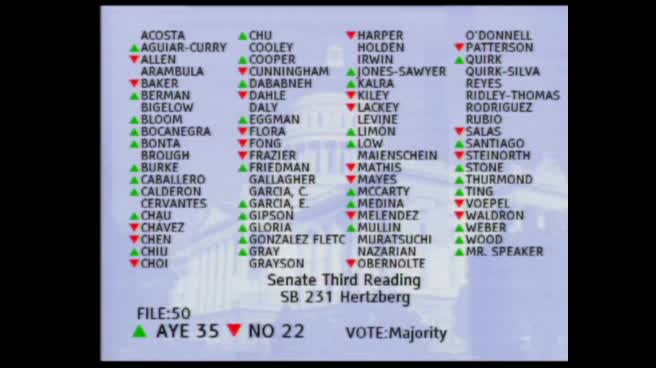 1MIN
Assembly Floor
 6MIN
Assembly Standing Committee on Judiciary
 3MIN
Senate Floor
 14MIN
Senate Standing Committee on Judiciary
Bill Author

Bill Co-Author(s):
