SB 703: Transactions and use taxes: Counties of Alameda and Santa Clara and City of Santa Fe Springs.
- Session Year: 2017-2018
- House: Senate
- Latest Version Date: 2017-10-10
Existing law authorizes cities and counties, subject to certain limitations and approval requirements, to levy a transactions and use tax for general or specific purposes, in accordance with the procedures and requirements set forth in the Transactions and Use Tax Law, including a requirement that the combined rate of all taxes that may be imposed in accordance with that law in the county not exceed 2%.
This bill would authorize the Counties of Alameda and Santa Clara to impose a transactions and use tax for general or specific purposes at a rate of no more than 0.5% or 0.625%, respectively, and the City of Santa Fe Springs to impose a transactions and use tax for general or specific purposes at a rate of no more than 1% that, in combination with other transactions and use taxes, would exceed the above-described combined rate limit of 2%, if either county or the city adopts an ordinance proposing the tax and the ordinance proposing the tax is approved by the voters, subject to applicable voter approval requirements, as specified. The bill would repeal this authorization on December 31, 2022, for either county or the city if an ordinance proposing the tax has not been approved by that date in that county or city. The bill would also make a technical conforming correction.
This bill would make legislative findings and declarations as to the necessity of a special statute for the Counties of Alameda and Santa Clara and the City of Santa Fe Springs.
Existing law authorizes cities and counties, subject to certain limitations and approval requirements, to levy a transactions and use tax for general or specific purposes, in accordance with the procedures and requirements set forth in the Transactions and Use Tax Law, including a requirement that the combined rate of all taxes that may be imposed in accordance with that law in the county not exceed 2%.
This bill would authorize the Counties of Alameda and Santa Clara to impose a transactions and use tax for general or specific purposes at a rate of no more than 0.5% or 0.625%, respectively, and the City of Santa Fe Springs to impose a transactions and use tax for general or specific purposes at a rate of no more than 1% that, in combination with other transactions and use taxes, would exceed the above-described combined rate limit of 2%, if either county or the city adopts an ordinance proposing the tax and the ordinance proposing the tax is approved by the voters, subject to applicable voter approval requirements, as specified. The bill would repeal this authorization on December 31, 2022, for either county or the city if an ordinance proposing the tax has not been approved by that date in that county or city. The bill would also make a technical conforming correction.
This bill would make legislative findings and declarations as to the necessity of a special statute for the Counties of Alameda and Santa Clara and the City of Santa Fe Springs.
Existing law authorizes cities and counties, subject to certain limitations and approval requirements, to levy a transactions and use tax for general or specific purposes, in accordance with the procedures and requirements set forth in the Transactions and Use Tax Law, including a requirement that the combined rate of all taxes that may be imposed in accordance with that law in the county not exceed 2%.
This bill would authorize the County Counties of Alameda and Santa Clara to impose a transactions and use tax for general or specific purposes at a rate of no more than 0.5% or 0.625%, respectively, and the City of Santa Fe Springs to impose a transactions and use tax for general or specific purposes at a rate of no more than 1% that, in combination with other transactions and use taxes, would exceed the above-described combined rate limit of 2%, if the either county or the city adopts an ordinance proposing the tax and the ordinance proposing the tax is approved by the voters, subject to applicable voter approval requirements, as specified. The bill would repeal this authorization on December 31, 2022, for either county or the city if an ordinance proposing the tax has not been approved by that date in the that county or the city. The bill would also make a technical conforming correction.
This bill would make legislative findings and declarations as to the necessity of a special statute for the County Counties of Alameda and Santa Clara and the City of Santa Fe Springs.
Existing law authorizes cities and counties, subject to certain limitations and approval requirements, to levy a transactions and use tax for general or specific purposes, in accordance with the procedures and requirements set forth in the Transactions and Use Tax Law, including a requirement that the combined rate of all taxes that may be imposed in accordance with that law in the county not exceed 2%.
This bill would authorize the County of Alameda and the Cities of La Puente and Santa Fe Springs to each impose a transactions and use tax for general or specific purposes at a rate of no more than 0.5% and the City of Santa Fe Springs to impose a transactions and use tax for general or specific purposes at a rate of no more than 1% that, in combination with other transactions and use taxes, would exceed the above-described combined rate limit of 2%, if the county or the city adopts an ordinance proposing the tax and the ordinance proposing the tax is approved by the voters, subject to applicable voter approval requirements, as specified. The bill would repeal this authorization on December 31, 2022, if an ordinance proposing the tax has not been approved by that date in the county or either the city. The bill would also make a technical conforming correction.
This bill would make legislative findings and declarations as to the necessity of a special statute for the County of Alameda and the Cities of La Puente and City of Santa Fe Springs.
Existing law authorizes cities and counties, subject to certain limitations and approval requirements, to levy a transactions and use tax for general or specific purposes, in accordance with the procedures and requirements set forth in the Transactions and Use Tax Law, including a requirement that the combined rate of all taxes that may be imposed in accordance with that law in the county not exceed 2%.
This bill would authorize the County of Alameda and the Cities of La Puente and Santa Fe Springs to each impose a transactions and use tax for general or specific purposes at a rate of no more than 0.5% that, in combination with other transactions and use taxes, would exceed the above-described combined rate limit of 2%, if the county or the city adopts an ordinance proposing the tax and the ordinance proposing the tax is approved by the voters, subject to applicable voter approval requirements, as specified. The bill would repeal this authorization on December 31, 2022, if an ordinance proposing the tax has not been approved by that date in the county. county or either city. The bill would also make a technical conforming correction.
This bill would make legislative findings and declarations as to the necessity of a special statute for the County of Alameda. Alameda and the Cities of La Puente and Santa Fe Springs.
Existing law authorizes cities and counties, subject to certain limitations and approval requirements, to levy a transactions and use tax for general or specific purposes, in accordance with the procedures and requirements set forth in the Transactions and Use Tax Law, including a requirement that the combined rate of all taxes that may be imposed in accordance with that law in the county not exceed 2%.
This bill would authorize the County of Alameda to impose a transactions and use tax for general or specific purposes at a rate of no more than 0.5% that, in combination with other transactions and use taxes, would exceed the above-described combined rate limit of 2%, if the county adopts an ordinance proposing the tax and the ordinance proposing the tax is approved by the voters, subject to applicable voter approval requirements, as specified. The bill would repeal this authorization on December 31, 2022, if an ordinance proposing the tax has not been approved by that date in the county. The bill would also make a technical conforming correction.
This bill would make legislative findings and declarations as to the necessity of a special statute for the County of Alameda.
Existing property tax law prescribes the mediums of payment for property taxes. Existing property tax law authorizes the tax collector for any city, county, or city and county, in his or her discretion, to require any taxpayer, who makes an aggregate payment of $50,000 or more on the 2 most recent regular installments on the secured roll or on the one installment of the most recent unsecured tax roll, to make subsequent payments by electronic funds transfer.This bill would eliminate the $50,000 or more amount requirement described above, thereby authorizing the tax collector to require any taxpayer to make payments through an electronic payment process. The bill would define electronic payment process as any transfer of funds which is initiated through an online, Internet Web-based, or other electronic system. The bill would also make conforming changes.Existing property tax law prescribes the mediums of payment for property taxes. Existing property tax law authorizes the tax collector for any city, county, or city and county, in his or her discretion, to require any taxpayer, who makes an aggregate payment of $50,000 or more on the 2 most recent regular installments on the secured roll or on the one installment of the most recent unsecured tax roll, to make subsequent payments by electronic funds transfer.
This bill would eliminate the $50,000 or more amount requirement described above, thereby authorizing the tax collector to require any taxpayer to make payments through an electronic payment process. The bill would define electronic payment process as any transfer of funds which is initiated through an online, Internet Web-based, or other electronic system. The bill would also make conforming changes.
Notwithstanding any other law, the City of Santa Fe Springs may impose a transactions and use tax for general or specific purposes to support citywide programs at a rate of no more than 1 percent that would, in combination with all taxes imposed in accordance with the Transactions and Use Tax Law (Part 1.6 (commencing with Section 7251)), exceed the limit established in Section 7251.1, if all of the following requirements are met:
(a)The city adopts an ordinance proposing the transactions and use tax by any applicable voting approval requirement.
(b)The ordinance proposing the transactions and use tax is submitted to the electorate and is approved by the voters voting on the ordinance pursuant to Article XIIIC of the California Constitution.
(c)The transactions and use tax conforms to the Transactions and Use Tax Law (Part 1.6 (commencing with Section 7251)), other than Section 7251.1.
7286.28.If, as of December 31, 2022, an ordinance proposing a transactions and use tax has not been approved in the City of Santa Fe Springs as required by subdivision (b) of Section 7286.27, this chapter shall be repealed as of that same date.
SEC. 2.The heading of Chapter 3.7 (commencing with Section 7291) of Part 1.7 of Division 2 of the Revenue and Taxation Code is amended to read:3.7.Contra Costa Transportation Authority Transactions and Use TaxSEC. 3.Chapter 3.73 (commencing with Section 7292.2) is added to Part 1.7 of Division 2 of the Revenue and Taxation Code, to read:3.73.Local Government Finance in the County of Alameda7292.2.Notwithstanding any other law, the County of Alameda may impose a transactions and use tax for general or specific purposes to support countywide programs at a rate of no more than 0.5 percent that would, in combination with all taxes imposed in accordance with the Transactions and Use Tax Law (Part 1.6 (commencing with Section 7251)), exceed the limit established in Section 7251.1, if all of the following requirements are met:
(a)The county adopts an ordinance proposing the transactions and use tax by any applicable voting approval requirement.
(b)The ordinance proposing the transactions and use tax is submitted to the electorate and is approved by the voters voting on the ordinance pursuant to Article XIIIC of the California Constitution.
(c)The transactions and use tax conforms to the Transactions and Use Tax Law (Part 1.6 (commencing with Section 7251)), other than Section 7251.1.
7292.3.If, as of December 31, 2022, an ordinance proposing a transactions and use tax has not been approved in the County of Alameda as required by subdivision (b) of Section 7292.2, this chapter shall be repealed as of that same date.
SEC. 4.Chapter 3.74 (commencing with Section 7292.4) is added to Part 1.7 of Division 2 of the Revenue and Taxation Code, to read:3.74.Local Government Finance in the County of Santa Clara7292.4.Notwithstanding any other law, the County of Santa Clara may impose a transactions and use tax for general or specific purposes to support countywide programs at a rate of no more than 0.625 percent that would, in combination with all taxes imposed in accordance with the Transactions and Use Tax Law (Part 1.6 (commencing with Section 7251)), exceed the limit established in Section 7251.1, if all of the following requirements are met:
(a)The county adopts an ordinance proposing the transactions and use tax by any applicable voting approval requirement.
(b)The ordinance proposing the transactions and use tax is submitted to the electorate and is approved by the voters voting on the ordinance pursuant to Article XIIIC of the California Constitution.
(c)The transactions and use tax conforms to the Transactions and Use Tax Law (Part 1.6 (commencing with Section 7251)), other than Section 7251.1.
7292.41.If, as of December 31, 2022, an ordinance proposing a transactions and use tax has not been approved in the County of Santa Clara as required by subdivision (b) of Section 7292.4, this chapter shall be repealed as of that same date.
SEC. 5.The Legislature finds and declares that a special statute is necessary and that a general statute cannot be made applicable within the meaning of Section 16 of Article IV of the California Constitution because of the unique fiscal pressures being experienced in the Counties of Alameda and Santa Clara and the City of Santa Fe Springs in providing essential programs.
Notwithstanding any other law, the City of Santa Fe Springs may impose a transactions and use tax for general or specific purposes to support citywide programs at a rate of no more than 1 percent that would, in combination with all taxes imposed in accordance with the Transactions and Use Tax Law (Part 1.6 (commencing with Section 7251)), exceed the limit established in Section 7251.1, if all of the following requirements are met:
(a)The city adopts an ordinance proposing the transactions and use tax by any applicable voting approval requirement.
(b)The ordinance proposing the transactions and use tax is submitted to the electorate and is approved by the voters voting on the ordinance pursuant to Article XIIIC of the California Constitution.
(c)The transactions and use tax conforms to the Transactions and Use Tax Law (Part 1.6 (commencing with Section 7251)), other than Section 7251.1.
7286.28.If, as of December 31, 2022, an ordinance proposing a transactions and use tax has not been approved in the City of Santa Fe Springs as required by subdivision (b) of Section 7286.27, this chapter shall be repealed as of that same date.
SEC. 2.The heading of Chapter 3.7 (commencing with Section 7291) of Part 1.7 of Division 2 of the Revenue and Taxation Code is amended to read:3.7.Contra Costa Transportation Authority Transactions and Use TaxSEC. 3.Chapter 3.73 (commencing with Section 7292.2) is added to Part 1.7 of Division 2 of the Revenue and Taxation Code, to read:3.73.Local Government Finance in the County of Alameda7292.2.Notwithstanding any other law, the County of Alameda may impose a transactions and use tax for general or specific purposes to support countywide programs at a rate of no more than 0.5 percent that would, in combination with all taxes imposed in accordance with the Transactions and Use Tax Law (Part 1.6 (commencing with Section 7251)), exceed the limit established in Section 7251.1, if all of the following requirements are met:
(a)The county adopts an ordinance proposing the transactions and use tax by any applicable voting approval requirement.
(b)The ordinance proposing the transactions and use tax is submitted to the electorate and is approved by the voters voting on the ordinance pursuant to Article XIIIC of the California Constitution.
(c)The transactions and use tax conforms to the Transactions and Use Tax Law (Part 1.6 (commencing with Section 7251)), other than Section 7251.1.
7292.3.If, as of December 31, 2022, an ordinance proposing a transactions and use tax has not been approved in the County of Alameda as required by subdivision (b) of Section 7292.2, this chapter shall be repealed as of that same date.
SEC. 4.Chapter 3.74 (commencing with Section 7292.4) is added to Part 1.7 of Division 2 of the Revenue and Taxation Code, to read:3.74.Local Government Finance in the County of Santa Clara7292.4.Notwithstanding any other law, the County of Santa Clara may impose a transactions and use tax for general or specific purposes to support countywide programs at a rate of no more than 0.625 percent that would, in combination with all taxes imposed in accordance with the Transactions and Use Tax Law (Part 1.6 (commencing with Section 7251)), exceed the limit established in Section 7251.1, if all of the following requirements are met:
(a)The county adopts an ordinance proposing the transactions and use tax by any applicable voting approval requirement.
(b)The ordinance proposing the transactions and use tax is submitted to the electorate and is approved by the voters voting on the ordinance pursuant to Article XIIIC of the California Constitution.
(c)The transactions and use tax conforms to the Transactions and Use Tax Law (Part 1.6 (commencing with Section 7251)), other than Section 7251.1.
7292.41.If, as of December 31, 2022, an ordinance proposing a transactions and use tax has not been approved in the County of Santa Clara as required by subdivision (b) of Section 7292.4, this chapter shall be repealed as of that same date.
SEC. 5.The Legislature finds and declares that a special statute is necessary and that a general statute cannot be made applicable within the meaning of Section 16 of Article IV of the California Constitution because of the unique fiscal pressures being experienced in the Counties of Alameda and Santa Clara and the City of Santa Fe Springs in providing essential programs.
Notwithstanding any other law, the City of Santa Fe Springs may impose a transactions and use tax for general or specific purposes to support citywide programs at a rate of no more than 1 percent that would, in combination with all taxes imposed in accordance with the Transactions and Use Tax Law (Part 1.6 (commencing with Section 7251)), exceed the limit established in Section 7251.1, if all of the following requirements are met:
(a)The city adopts an ordinance proposing the transactions and use tax by any applicable voting approval requirement.
(b)The ordinance proposing the transactions and use tax is submitted to the electorate and is approved by the voters voting on the ordinance pursuant to Article XIIIC of the California Constitution.
(c)The transactions and use tax conforms to the Transactions and Use Tax Law (Part 1.6 (commencing with Section 7251)), other than Section 7251.1.
7286.28.If, as of December 31, 2022, an ordinance proposing a transactions and use tax has not been approved in the City of Santa Fe Springs as required by subdivision (b) of Section 7286.27, this chapter shall be repealed as of that same date.
SEC. 2.The heading of Chapter 3.7 (commencing with Section 7291) of Part 1.7 of Division 2 of the Revenue and Taxation Code is amended to read:3.7.Contra Costa Transportation Authority Transactions and Use TaxSEC. 3.Chapter 3.73 (commencing with Section 7292.2) is added to Part 1.7 of Division 2 of the Revenue and Taxation Code, to read:3.73.Local Government Finance in the County of Alameda7292.2.Notwithstanding any other law, the County of Alameda may impose a transactions and use tax for general or specific purposes to support countywide programs at a rate of no more than 0.5 percent that would, in combination with all taxes imposed in accordance with the Transactions and Use Tax Law (Part 1.6 (commencing with Section 7251)), exceed the limit established in Section 7251.1, if all of the following requirements are met:
(a)The county adopts an ordinance proposing the transactions and use tax by any applicable voting approval requirement.
(b)The ordinance proposing the transactions and use tax is submitted to the electorate and is approved by the voters voting on the ordinance pursuant to Article XIIIC of the California Constitution.
(c)The transactions and use tax conforms to the Transactions and Use Tax Law (Part 1.6 (commencing with Section 7251)), other than Section 7251.1.
7292.3.If, as of December 31, 2022, an ordinance proposing a transactions and use tax has not been approved in the County of Alameda as required by subdivision (b) of Section 7292.2, this chapter shall be repealed as of that same date.
SEC. 4.Chapter 3.74 (commencing with Section 7292.4) is added to Part 1.7 of Division 2 of the Revenue and Taxation Code, to read:3.74.Local Government Finance in the County of Santa Clara7292.4.Notwithstanding any other law, the County of Santa Clara may impose a transactions and use tax for general or specific purposes to support countywide programs at a rate of no more than 0.625 percent that would, in combination with all taxes imposed in accordance with the Transactions and Use Tax Law (Part 1.6 (commencing with Section 7251)), exceed the limit established in Section 7251.1, if all of the following requirements are met:
(a)The county adopts an ordinance proposing the transactions and use tax by any applicable voting approval requirement.
(b)The ordinance proposing the transactions and use tax is submitted to the electorate and is approved by the voters voting on the ordinance pursuant to Article XIIIC of the California Constitution.
(c)The transactions and use tax conforms to the Transactions and Use Tax Law (Part 1.6 (commencing with Section 7251)), other than Section 7251.1.
7292.41.If, as of December 31, 2022, an ordinance proposing a transactions and use tax has not been approved in the County of Santa Clara as required by subdivision (b) of Section 7292.4, this chapter shall be repealed as of that same date.
SEC. 4.SEC. 5.The Legislature finds and declares that a special statute is necessary and that a general statute cannot be made applicable within the meaning of Section 16 of Article IV of the California Constitution because of the unique fiscal pressures being experienced in the County Counties of Alameda and Santa Clara and the City of Santa Fe Springs in providing essential programs.
Notwithstanding any other law, the Cities of La Puente and City of Santa Fe Springs may each impose a transactions and use tax for general or specific purposes to support citywide programs at a rate of no more than 0.5 1 percent that would, in combination with all taxes imposed in accordance with the Transactions and Use Tax Law (Part 1.6 (commencing with Section 7251)), exceed the limit established in Section 7251.1, if all of the following requirements are met:
(a)The city adopts an ordinance proposing the transactions and use tax by any applicable voting approval requirement.
(b)The ordinance proposing the transactions and use tax is submitted to the electorate and is approved by the voters voting on the ordinance pursuant to Article XIIIC of the California Constitution.
(c)The transactions and use tax conforms to the Transactions and Use Tax Law (Part 1.6 (commencing with Section 7251)), other than Section 7251.1.
7286.28.If, as of December 31, 2022, an ordinance proposing a transactions and use tax has not been approved in either the City of La Puente or the City of Santa Fe Springs as required by subdivision (b) of Section 7286.27, this chapter shall be repealed as of that same date.
SEC. 2.The heading of Chapter 3.7 (commencing with Section 7291) of Part 1.7 of Division 2 of the Revenue and Taxation Code is amended to read:3.7.Contra Costa Transportation Authority Transactions and Use TaxSEC. 3.Chapter 3.73 (commencing with Section 7292.2) is added to Part 1.7 of Division 2 of the Revenue and Taxation Code, to read:3.73.Local Government Finance in the County of Alameda7292.2.Notwithstanding any other law, the County of Alameda may impose a transactions and use tax for general or specific purposes to support countywide programs at a rate of no more than 0.5 percent that would, in combination with all taxes imposed in accordance with the Transactions and Use Tax Law (Part 1.6 (commencing with Section 7251)), exceed the limit established in Section 7251.1, if all of the following requirements are met:
(a)The county adopts an ordinance proposing the transactions and use tax by an any applicable voting approval requirement.
(b)The ordinance proposing the transactions and use tax is submitted to the electorate and is approved by the voters voting on the ordinance pursuant to Article XIIIC of the California Constitution.
(c)The transactions and use tax conforms to the Transactions and Use Tax Law (Part 1.6 (commencing with Section 7251)), other than Section 7251.1.
7292.3.If, as of December 31, 2022, an ordinance proposing a transactions and use tax has not been approved in the County of Alameda as required by subdivision (b) of Section 7292.2, this chapter shall be repealed as of that same date.
SEC. 4.The Legislature finds and declares that a special statute is necessary and that a general statute cannot be made applicable within the meaning of Section 16 of Article IV of the California Constitution because of the unique fiscal pressures being experienced in the County of Alameda and the Cities of La Puente and City of Santa Fe Springs in providing essential programs.
Notwithstanding any other law, the Cities of La Puente and Santa Fe Springs may each impose a transactions and use tax for general or specific purposes to support citywide programs at a rate of no more than 0.5 percent that would, in combination with all taxes imposed in accordance with the Transactions and Use Tax Law (Part 1.6 (commencing with Section 7251)), exceed the limit established in Section 7251.1, if all of the following requirements are met:
(a)The city adopts an ordinance proposing the transactions and use tax by any applicable voting approval requirement.
(b)The ordinance proposing the transactions and use tax is submitted to the electorate and is approved by the voters voting on the ordinance pursuant to Article XIIIC of the California Constitution.
(c)The transactions and use tax conforms to the Transactions and Use Tax Law (Part 1.6 (commencing with Section 7251)), other than Section 7251.1.
7286.28.If, as of December 31, 2022, an ordinance proposing a transactions and use tax has not been approved in either the City of La Puente or the City of Santa Fe Springs as required by subdivision (b) of Section 7286.27, this chapter shall be repealed as of that same date.
SECTION 1.SEC. 2.The heading of Chapter 3.7 (commencing with Section 7291) of Part 1.7 of Division 2 of the Revenue and Taxation Code is amended to read:3.7.Contra Costa Transportation Authority Transactions and Use TaxSEC. 2.SEC. 3.Chapter 3.73 (commencing with Section 7292.2) is added to Part 1.7 of Division 2 of the Revenue and Taxation Code, to read:3.73.Local Government Finance in the County of Alameda7292.2.Notwithstanding any other law, the County of Alameda may impose a transactions and use tax for general or specific purposes to support countywide programs at a rate of no more than 0.5 percent that would, in combination with all taxes imposed in accordance with the Transactions and Use Tax Law (Part 1.6 (commencing with Section 7251)), exceed the limit established in Section 7251.1, if all of the following requirements are met:
(a)The county adopts an ordinance proposing the transactions and use tax by an applicable voting approval requirement.
(b)The ordinance proposing the transactions and use tax is submitted to the electorate and is approved by the voters voting on the ordinance pursuant to Article XIIIC of the California Constitution.
(c)The transactions and use tax conforms to the Transactions and Use Tax Law (Part 1.6 (commencing with Section 7251)), other than Section 7251.1.
7292.3.If, as of December 31, 2022, an ordinance proposing a transactions and use tax has not been approved in the County of Alameda as required by subdivision (b) of Section 7292.2, this chapter shall be repealed as of that same date.
SEC. 3.SEC. 4.The Legislature finds and declares that a special statute is necessary and that a general statute cannot be made applicable within the meaning of Section 16 of Article IV of the California Constitution because of the unique fiscal pressures being experienced in the County of Alameda and the Cities of La Puente and Santa Fe Springs in providing essential programs.
Notwithstanding any other law, the County of Alameda may impose a transactions and use tax for general or specific purposes to support countywide programs at a rate of no more than 0.5 percent that would, in combination with all taxes imposed in accordance with the Transactions and Use Tax Law (Part 1.6 (commencing with Section 7251)), exceed the limit established in Section 7251.1, if all of the following requirements are met:
(a)The county adopts an ordinance proposing the transactions and use tax by an applicable voting approval requirement.
(b)The ordinance proposing the transactions and use tax is submitted to the electorate and is approved by the voters voting on the ordinance pursuant to Article XIIIC of the California Constitution.
(c)The transactions and use tax conforms to the Transactions and Use Tax Law (Part 1.6 (commencing with Section 7251)), other than Section 7251.1.
7292.3.If, as of December 31, 2022, an ordinance proposing a transactions and use tax has not been approved in the County of Alameda as required by subdivision (b) of Section 7292.2, this chapter shall be repealed as of that same date.
SEC. 3.The Legislature finds and declares that a special statute is necessary and that a general statute cannot be made applicable within the meaning of Section 16 of Article IV of the California Constitution because of the unique fiscal pressures being experienced in the County of Alameda in providing essential programs.
SECTION 1.Section 2503.1 of the Revenue and Taxation Code is amended to read:2503.1.As used in this division, the following definitions shall apply:(a)Electronic funds transfer means any transfer of funds, other than a transaction originated by check, draft, or similar paper instrument, which is initiated through an electronic terminal, telephonic instrument, or computer or magnetic tape so as to order, instruct, or authorize a financial institution to credit or debit an account.(b)Electronic payment process means any transfer of funds which is initiated through an online, Internet Web-based, or other electronic system.SEC. 2.Section 2503.2 of the Revenue and Taxation Code is amended to read:2503.2.(a)The tax collector for any city, county, or city and county may, in his or her discretion, accept electronic funds transfers in payment for a purchase at a tax sale, of any tax, assessment, or on a redemption.(b)The tax collector for any city, county, or city and county may, in his or her discretion, require any taxpayer, or any paying agent of a taxpayer or taxpayers, to make payments through an electronic payment process.(c)Any taxpayer or paying agent making payment by electronic funds transfer or other electronic payment process shall provide any supporting documentation and electronic information as requested by the tax collector. An electronic funds transfer made pursuant to this section shall be made to the bank account designated by the tax collector.(d)Any costs incurred by the tax collector as a result of the acceptance of electronic funds transfers or other electronic payment process pursuant to this section shall be considered administrative costs of tax collection, except that if for any reason the electronic funds transfer or other electronic payment process is not completed, those costs shall be recovered as provided in subdivision (g).(e)The acceptance of an electronic funds transfer or other electronic payment process shall constitute payment of a tax, assessment, or redemption as of the date of acceptance when, but not before, the transfer has been completed. An electronic funds transfer or other electronic payment process is completed by acceptance by the bank designated by the tax collector of the payment specified by the originators payment order.(f)If an electronic funds transfer or other electronic payment process is not accepted for any reason, any record of payment entered on any official record indicating the acceptance of that transfer shall be canceled, and the tax or assessment shall be a lien as if no payment has been attempted. When a cancellation of a record of payment or other electronic payment process is made, the canceling officer shall record the cancellation on the record that contained the notation of payment, and immediately shall cause a written notice of cancellation to be sent to the person attempting the electronic funds transfer or other electronic payment process.(g)Upon notice of nonacceptance of an electronic funds transfer or other electronic payment process, the tax collector may charge the person who attempted the electronic funds transfer or other electronic payment process a fee not to exceed the costs of processing the transfer, providing notice of nonacceptance to that person, and making required cancellations on the tax roll. The amount of any fee charged pursuant to this subdivision shall be set by the governing body of the relevant city, county, or city and county, and may be added to the tax bill and collected in the same manner as costs recovered pursuant to Section 2621.SEC. 3.Section 2512 of the Revenue and Taxation Code is amended to read:2512.(a)If a remittance to cover a payment required by law to be made to a taxing agency prior to a specified date and hour is (1) deposited in the United States mail in a sealed envelope, properly addressed with the required postage prepaid, or (2) deposited for shipment with an independent delivery service that is an Internal Revenue Service designated delivery service or has been approved by the tax collector, in a sealed envelope or package, properly addressed with the required fee prepaid, delivery of which shall not be later than 5 p.m. on the next business day after the effective delinquent date, the remittance shall be deemed received on the date shown by the post office cancellation mark stamped upon the envelope containing the remittance, or the independent delivery service shipment date shown on the packing slip or air bill attached to the outside of the envelope or package containing the remittance, or on the date it was mailed if proof satisfactory to the tax collector establishes that the mailing occurred on an earlier date. The taxing agency is not required to accept a payment actually received in the mail if it is received more than 30 days after the date and time set by law for the payment.(b)If a remittance to cover a payment, required by law to be made to a taxing agency prior to a specified date and hour, is made by an electronic payment option, such as wire transfer, telephoned credit card, or electronic Internet means, the remittance shall be deemed received on the date the transaction was completed by the taxpayer, if the remittance was made on the taxing agencys authorized Internet Web site or via the taxing agencys authorized telephone number. Proof of completion of the transaction in the form of a confirmation number or other convincing evidence shall be presented by the taxpayer to the satisfaction of the tax collector. This subdivision does not apply to payments by electronic funds transfer or other electronic payment process as provided in Sections 2503.1 and 2503.2.(c)This section does not, for purposes of applying subdivision (a) of Section 3707, apply to a remittance sent by mail, by independent delivery service, or by electronic payment option for the redemption of tax-defaulted property.As used in this division, electronic the following definitions shall apply:
(a)Electronic funds transfer means any transfer of funds, other than a transaction originated by check, draft, or similar paper instrument, which is initiated through an electronic terminal, telephonic instrument, or computer or magnetic tape so as to order, instruct, or authorize a financial institution to credit or debit an account.
(b)Electronic payment process means any transfer of funds which is initiated through an online, Internet Web-based, or other electronic system.
SEC. 2.Section 2503.2 of the Revenue and Taxation Code is amended to read:2503.2.(a)The tax collector for any city, county, or city and county may, in his or her discretion, accept electronic funds transfers in payment for a purchase at a tax sale, of any tax, assessment, or on a redemption.
(b)The tax collector for any city, county, or city and county may, in his or her discretion, require any taxpayer, or any paying agent of a taxpayer or taxpayers, who makes an aggregate payment of fifty thousand dollars ($50,000) or more on the two most recent regular installments on the secured roll or on the one installment of the most recent unsecured tax roll, to make subsequent payments by through an electronic funds transfer. payment process.
(c)Any taxpayer or paying agent making payment by electronic funds transfer or other electronic payment process shall provide any supporting documentation and electronic information as requested by the tax collector. An electronic funds transfer made pursuant to this section shall be made to the bank account designated by the tax collector.
(d)Any costs incurred by the tax collector as a result of the acceptance of electronic funds transfers or other electronic payment process pursuant to this section shall be considered administrative costs of tax collection, except that if for any reason the electronic funds transfer or other electronic payment process is not completed, those costs shall be recovered as provided in subdivision (g).
(e)The acceptance of an electronic funds transfer or other electronic payment process shall constitute payment of a tax, assessment, or redemption as of the date of acceptance when, but not before, the transfer has been completed. An electronic funds transfer or other electronic payment process is completed by acceptance by the bank designated by the tax collector of the payment specified by the originators payment order.
(f)If an electronic funds transfer or other electronic payment process is not accepted for any reason, any record of payment entered on any official record indicating the acceptance of that transfer shall be canceled, and the tax or assessment shall be a lien as if no payment has been attempted. When a cancellation of a record of payment or other electronic payment process is made, the canceling officer shall record the cancellation on the record that contained the notation of payment, and immediately shall cause a written notice of cancellation to be sent to the person attempting the electronic funds transfer. transfer or other electronic payment process.
(g)Upon notice of nonacceptance of an electronic funds transfer, transfer or other electronic payment process, the tax collector may charge the person who attempted the electronic funds transfer or other electronic payment process a fee not to exceed the costs of processing the transfer, providing notice of nonacceptance to that person, and making required cancellations on the tax roll. The amount of any fee charged pursuant to this subdivision shall be set by the governing body of the relevant city, county, or city and county, and may be added to the tax bill and collected in the same manner as costs recovered pursuant to Section 2621.
SEC. 3.Section 2512 of the Revenue and Taxation Code is amended to read:2512.(a)If a remittance to cover a payment required by law to be made to a taxing agency prior to a specified date and hour is (a) (1) deposited in the United States mail in a sealed envelope, properly addressed with the required postage prepaid, or (b) (2) deposited for shipment with an independent delivery service that is an Internal Revenue Service designated delivery service or has been approved by the tax collector, in a sealed envelope or package, properly addressed with the required fee prepaid, delivery of which shall not be later than 5 p.m. on the next business day after the effective delinquent date, the remittance shall be deemed received on the date shown by the post office cancellation mark stamped upon the envelope containing the remittance, or the independent delivery service shipment date shown on the packing slip or air bill attached to the outside of the envelope or package containing the remittance, or on the date it was mailed if proof satisfactory to the tax collector establishes that the mailing occurred on an earlier date. The taxing agency is not required to accept a payment actually received in the mail if it is received more than 30 days after the date and time set by law for the payment.
(b)If a remittance to cover a payment, required by law to be made to a taxing agency prior to a specified date and hour, is made by an electronic payment option, such as wire transfer, telephoned credit card, or electronic Internet means, the remittance shall be deemed received on the date the transaction was completed by the taxpayer, if the remittance was made on the taxing agencys authorized Internet Web site or via the taxing agencys authorized telephone number. Proof of completion of the transaction in the form of a confirmation number or other convincing evidence shall be presented by the taxpayer to the satisfaction of the tax collector. This subdivision does not apply to payments by electronic fund funds transfer or other electronic payment process as provided in Sections 2503.1 and 2503.2.
(c)This section does not, for purposes of applying subdivision (a) of Section 3707, apply to a remittance sent by mail, by independent delivery service, or by electronic payment option for the redemption of tax-defaulted property.
|
Date
|
Status
|
|---|---|
| Oct 10, 2017 | Chaptered by Secretary of State. Chapter 651, Statutes of 2017. |
| Oct 10, 2017 | Approved by the Governor. |
| Sep 18, 2017 | Enrolled and presented to the Governor at 3 p.m. |
| Sep 12, 2017 | Assembly amendments concurred in. (Ayes 26. Noes 13.) Ordered to engrossing and enrolling. |
| Sep 11, 2017 | In Senate. Concurrence in Assembly amendments pending. |
| Sep 11, 2017 | Read third time. Passed. Ordered to the Senate. |
| Sep 7, 2017 | Read third time and amended. |
| Jul 19, 2017 | Read second time. Ordered to third reading. |
| Jul 18, 2017 | Read second time and amended. Ordered to second reading. |
| Jul 17, 2017 | From committee: Do pass as amended. (Ayes 7. Noes 3.) (July 10). |
| Jun 29, 2017 | From committee: Do pass and re-refer to Com. on REV. & TAX. (Ayes 6. Noes 3.) (June 28). Re-referred to Com. on REV. & TAX. |
| Jun 20, 2017 | From committee with author's amendments. Read second time and amended. Re-referred to Com. on L. GOV. |
| Jun 13, 2017 | June 14 set for first hearing canceled at the request of author. |
| Jun 1, 2017 | Referred to Coms. on L. GOV. and REV. & TAX. |
| May 18, 2017 | In Assembly. Read first time. Held at Desk. |
| May 18, 2017 | Read third time. Passed. (Ayes 23. Noes 13. Page 1108.) Ordered to the Assembly. |
| May 11, 2017 | Read second time. Ordered to third reading. |
| May 10, 2017 | From committee: Do pass. (Ayes 4. Noes 2. Page 1020.) (May 10). |
| May 3, 2017 | From committee with author's amendments. Read second time and amended. Re-referred to Com. on GOV. & F. |
| Apr 25, 2017 | Set for hearing May 10. |
| Apr 24, 2017 | May 3 set for second hearing canceled at the request of author. |
| Apr 19, 2017 | Set for hearing May 3. |
| Apr 13, 2017 | April 19 set for first hearing canceled at the request of author. |
| Mar 21, 2017 | Set for hearing April 19. |
| Mar 9, 2017 | Referred to Com. on GOV. & F. |
| Feb 21, 2017 | From printer. May be acted upon on or after March 23. |
| Feb 17, 2017 | Introduced. Read first time. To Com. on RLS. for assignment. To print. |
|
Date
|
Description
|
Location
|
Votes
|
|
|---|---|---|---|---|
| Sep 12, 2017 | Unfinished Business SB703 Skinner et al. Concurrence | Senate Floor |
Passed |
|
| Sep 11, 2017 | SB 703 Skinner Senate Third Reading By CALDERON | Assembly Floor |
Passed |
|
| Sep 7, 2017 | SB 703 Skinner Senate Third Reading By CALDERON Amendment Set #1 | Assembly Floor |
Passed |
|
| Jul 10, 2017 | Do pass as amended. | Assembly Standing Committee on Revenue and Taxation |
Passed |
|
| Jun 28, 2017 | Do pass and be re-referred to the Committee on [Revenue and Taxation] | Assembly Standing Committee on Local Government |
Passed |
|
| May 18, 2017 | Senate 3rd Reading SB703 Skinner | Senate Floor |
Passed |
|
| May 10, 2017 | Do pass | Senate Standing Committee on Governance and Finance |
Passed |
This list shows positions taken on this bill by organizations on the date displayed, which is linked to the original source.
Positions by individuals are not included.
|
Organization
|
Position
|
Date
|
|---|---|---|
| Alameda County Board of Supervisors | ** Support | Sep 11, 2017 |
| California State Council Of Service Employees | ** Support | Sep 11, 2017 |
| California Taxpayers Association | ** Against | Sep 11, 2017 |
| City of La Puente | ** Support | Jul 7, 2017 |
| City of Santa Fe Springs | ** Support | Sep 11, 2017 |
| County Of Alameda | ** Support | Jul 7, 2017 |
| Howard Jarvis Taxpayers Association | ** Against | Sep 11, 2017 |
| Santa Clara County Board of Supervisors | ** Support | Sep 11, 2017 |
Office of Senate Floor Analyses (916) 651-1520 Fax: (916) 327-4478 | SB |
UNFINISHED BUSINESS
Bill No: SB 703
Amended: 9/7/17
SENATE GOVERNANCE & FIN. COMMITTEE: 4-2, 5/10/17
AYES: McGuire, Beall, Hernandez, Hertzberg
NOES: Nguyen, Moorlach
NO VOTE RECORDED: Lara
SENATE FLOOR: 24-13, 5/18/17
AYES: Allen, Atkins, Beall, Bradford, De León, Dodd, Glazer, Hernandez, Hertzberg, Hill, Jackson, Lara, Leyva, McGuire, Mendoza, Mitchell, Monning, Newman, Pan, Portantino, Skinner, Stern, Wieckowski, Wiener
NOES: Anderson, Bates, Berryhill, Cannella, Fuller, Gaines, Moorlach, Morrell, Nguyen, Nielsen, Stone, Vidak, Wilk
NO VOTE RECORDED: Galgiani, Hueso, Roth
ASSEMBLY FLOOR: 49-28, 9/11/17 - See last page for vote
SUBJECT: Transactions and use taxes: Counties of Alameda and Santa Clara and City of Santa Fe Springs
DIGEST:
This bill allows the Counties of Alameda and Santa Clara, as well as the City of Santa Fe Springs, to impose transactions and use taxes outside the current 2% countywide cap.
Assembly Amendments
add authority for the City of Santa Fe Springs to also impose a transactions and use tax at a rate of no more than 1%, as well as the County of Santa Clara to impose a tax of no more than 0.625%, both outside the 2% cap.
Existing law:
- Imposes the sales tax on every retailer engaged in business in this state that sells tangible personal property, and requires them to collect the appropriate tax from the purchase and remit the amount to the Board of Equalization.
- Applies whenever a retail sale is made, which is basically any sale other than one for resale in the regular course of business.
- Provides that unless the person pays the sales tax to the retailer, he or she is liable for the use tax, which is imposed on any person consuming tangible personal property in the state. The use tax rate is the same rate as the sales tax rate, and must be remitted on or before the last day of the month following the quarterly period in which the person made the purchase.
- Levies the sales and use tax at a current rate of 7.25%.
- States that taxes levied by local governments are either general taxes, subject to majority approval of its voters, or special taxes, subject to 2/3 vote (California Constitution, Article XIII C).
- Allows cities and counties to increase the sales and use tax applied within their jurisdictions, also known as district or transactions and use taxes (TUTs), in increments of 0.125% for either specific or general purposes pursuant to the California Constitution’s voter approval requirements.
- Caps the maximum TUT rate at 2% within the county; however, allows exceptions from the cap for the City of El Cerrito, Contra Costa County, San Mateo County, Transportation Agency for Monterey County, and the Los Angeles Metropolitan Transportation Authority.
This bill:
- Allows the following to impose a TUT outside the 2% cap:
- Alameda County at a rate of no more than 0.5%.
- Santa Clara County at a rate of no more than 0.625%.
- City of Santa Fe Springs up to 1%.
- Requires each jurisdiction to adopt an ordinance placing any tax before voters, who can impose the tax according to the relevant constitutional requirements. The tax must also conform with the general TUT law.
- Repeals this authority for each entity authorized by the bill to impose the tax on December 31, 2022, if voters do not approve the tax.
- Contains legislative findings and declarations justifying the need for a special statute that applies only to the Counties of Alameda and Santa Clara, and the City of Santa Fe Springs.
Background
In 2010, voters in Union City in Alameda County approved a TUT of 0.5%, which in addition to three other county 0.5% taxes, crowded out the county from imposing any additional taxes under the 2% combined rate. In response, the Legislature allowed Alameda and Contra Costa Counties one-time authority to impose a TUT in 0.5% increments that would exceed the 2% cap (AB 1086, Wieckowski, Chapter 327, Statutes of 2012). However, while 66.53% of Alameda County voters approved the tax, it was not enacted as it fell short of the 2/3 vote required (Measure B1). In 2013, the Legislature again authorized Alameda County to impose a TUT outside the cap by deleting the one-time authority, instead repealing the authorization on December 31, 2020 (AB 210, Wieckowski, Chapter 194, Statutes of 2013). Last year, the Legislature removed this authority from Alameda County, and placed it instead with the Contra Costa County Transportation Authority (AB 1665, Bonilla, Chapter 45, Statutes of 2016). That tax also fell short, garnering 63.45% (Measure X). Alameda County wants the Legislature to revive this authority. Additionally, Santa Clara County has three transportation taxes totaling 1.5%, plus two 0.125% TUTs, leaving it little to no room under the 2% cap. Lastly, the City of Santa Fe Springs is almost crowded out by the cap too, as Los Angeles County imposes 1.5% in TUTs.
FISCAL EFFECT: Appropriation: Fiscal Com.: Local:
Alameda County Board of Supervisors
California State Council of Service Employees
City of Santa Fe Springs
Santa Clara County Board of Supervisors
OPPOSITION: (Verified 9/11/17)
California Taxpayers Association
Howard Jarvis Taxpayers Association
ARGUMENTS IN SUPPORT: According to the Alameda County Board of Supervisors, “Alameda County’s current tax rate is set at 9.25% - exactly 2% above the current statewide rate of 7.25%. By allowing the county to impose an incremental rate of no more than .5% above the current cap, approved by voters, bring the countywide rate to 9.75%, the county will be able to alleviate some of its fiscal pressures and direct the newly generated revenues to much needed community support. SB 703 will create a statutory waiver of the current limit imposed on Alameda County, providing the county with the flexibility to bring a conservative tax increase before voters that will support essential county programs. Additionally, this measure will generate funding that will improve access, quality, and wages for child care providers serving low income families.”
ARGUMENTS IN OPPOSITION: According to the Howard Jarvis Taxpayers Association, “SB 703 would allow the Legislature to authorize a higher sales and use tax of .5% for Alameda County, thus potentially allowing the county to increase the tax beyond what is currently permissible in statute. While the measure appears to abide by all local voting requirements, it sets a dangerous precedent to begin to allow counties to increase taxes beyond existing law. Counties need to learn to balance their budgets and control pension excesses. We simply cannot justify increased regressive taxation upon hard working families. The existing two percent Bradley-Burns threshold for local sales taxes has been in place for decades with good reason. It promotes uniformity and keeps taxes reasonable. Tax compliance is already a concern with multiple tax rates across a county already in place, and many municipalities already have a double-digit sales tax rate.”
ASSEMBLY FLOOR: 49-28, 9/11/17
AYES: Aguiar-Curry, Arambula, Berman, Bloom, Bocanegra, Bonta, Burke, Caballero, Calderon, Chau, Chiu, Chu, Cooley, Cooper, Dababneh, Daly, Eggman, Frazier, Friedman, Cristina Garcia, Eduardo Garcia, Gipson, Gloria, Gonzalez Fletcher, Gray, Grayson, Holden, Jones-Sawyer, Kalra, Levine, Limón, Low, McCarty, Medina, Mullin, Nazarian, O'Donnell, Quirk, Reyes, Rodriguez, Rubio, Salas, Santiago, Mark Stone, Thurmond, Ting, Weber, Wood, Rendon
NOES: Acosta, Travis Allen, Baker, Bigelow, Brough, Cervantes, Chávez, Chen, Choi, Cunningham, Dahle, Flora, Fong, Gallagher, Harper, Irwin, Kiley, Lackey, Maienschein, Mathis, Mayes, Melendez, Obernolte, Patterson, Quirk-Silva, Steinorth, Voepel, Waldron
NO VOTE RECORDED: Muratsuchi, Ridley-Thomas
9/11/17 21:51:25
**** END ****
SENATE THIRD READING
STR Bill Id:SB 703
Author:(Skinner)
As Amended Ver:September 7, 2017
Majority vote
SENATE VOTE: 24-13
Committee | Votes | Ayes | Noes |
Local Government | 6-3 | Aguiar-Curry, Bloom, Caballero, Gonzalez Fletcher, Grayson, Ridley-Thomas | Waldron, Lackey, Voepel |
Revenue & Taxation | 7-3 | Ridley-Thomas, Bocanegra, Burke, Dababneh, Gipson, Mullin, Quirk | Brough, Travis Allen, Chen |
SUMMARY: Authorizes the counties of Alameda and Santa Clara and the City of Santa Fe Springs to adopt an ordinance proposing the imposition of a transactions and use tax that exceeds the 2% statutory limitation. Specifically, this bill:
- Authorizes Alameda County to impose a transactions and use tax for general or specific purposes to support countywide programs, at a rate of no more than 0.5% that would, in combination with all other transactions and use taxes, exceed the 2% cap established by existing law, if all of the following conditions are met:
- The ordinance proposing the transactions and use tax by any applicable voting requirements is adopted;
- The ordinance proposing the transactions and use tax is approved by the voters voting on the ordinance in accordance with California Constitution Article XIII C; and,
- The transactions and use tax conforms to the Transactions and Use Tax Law, as specified.
- Authorizes Santa Clara County to impose a transactions and use tax for general or specific purposes, at a rate of no more than 0.625% that would, in combination with all other transactions and use taxes, exceed the 2% cap established by existing law, if all of the conditions in 1), above, are met.
- Authorizes the City of Santa Fe Springs to impose a transactions and use tax for general or specific purposes to support citywide programs at a rate of no more than 1% that would, in combination with all other transactions and use taxes, exceed the 2% cap established by existing law, if all of the conditions in 1), above, are met.
- Repeals the provisions of this bill if the counties of Alameda and Santa Clara and the City of Santa Fe Springs, as applicable, do not approve an ordinance proposing the transactions and use tax by December 31, 2022.
- Finds and declares that a special law is necessary because of the unique fiscal pressures being experienced in the counties of Alameda and Santa Clara and in the City of Santa Fe Springs in providing essential services.
FISCAL EFFECT: None
COMMENTS:
- Transactions and Use Taxes. Existing law authorizes cities and counties to impose transactions and use taxes in 0.125% increments in addition to the state's 7.5% sales tax provided that the combined rate in the county does not exceed 2%. Transactions and use taxes are taxes imposed on the total retail price of any tangible personal property and the use or storage of such property when sales tax is not paid. Prior to 2003, cities lacked the ability to place transactions and use taxes before their voters without first obtaining approval by the Legislature to bring an ordinance before the city council, and, if approved at the council level, to the voters. This was remedied by SB 566 (Scott), Chapter 709, Statutes of 2003. SB 566 also contained provisions to increase a county's transactions and use tax cap because of the possibility that certain counties were going to run out of room under their caps, if cities within those counties approved transactions and use taxes.
Because of the interaction between city-imposed and county-imposed transactions and use taxes, the concern that counties will run into the 2% cap still applies today. The Legislature has granted several exemptions to the 2% cap, including to several counties to allow an additional countywide transactions and use tax for transportation purposes. According to the State Board of Equalization, as of April 1, 2017, 257 local agencies impose their own transactions and use taxes: six of 54 county-imposed taxes are general purpose taxes and
48 are special purpose taxes with 35 dedicated for transportation purposes. Of the 203 city-imposed taxes, 163 are general purpose and 40 are special purpose.
- Bill Summary. This bill provides an exemption to the counties of Alameda and Santa Clara and the City of Santa Fe Springs, from the 2% transactions and use tax combined rate cap that is currently in statute. This bill authorizes the counties and the City to adopt an ordinance to propose the imposition of a transactions and use tax for general or specific purposes and with the appropriate voter approval pursuant to the California Constitution, which requires a majority vote for transactions and use taxes for general purposes and a two-thirds vote for specific purposes. If the ordinance proposing the transactions and use tax is not approved by voters by December 31, 2022, the respective authority granted to each county and the City would be repealed as of that same date. This bill is sponsored by Alameda County.
- Exemptions to the 2% Cap. The Legislature has previously granted exemptions to the
2% statutory cap in Alameda, Contra Costa, Los Angeles, Monterey, and San Mateo counties.
Alameda County. In 2010, voters in Union City in Alameda County approved a transactions and use tax of 0.5%, which in addition to three other county 0.5% taxes, crowded out the county from imposing any additional taxes under the 2% combined rate. In 2011, the Legislature provided a one-time exemption for Alameda County from the 2% transactions and use tax combined rate cap [AB 1086 (Wieckowski), Chapter 327, Statutes of 2011]. However, while 66.53% of Alameda County voters approved the tax, it was not enacted as it fell short of the two-thirds vote required (Measure B1). The Legislature extended the authority for Alameda County to adopt an ordinance imposing a transactions and use tax from January 1, 2014, to December 31, 2020, and authorized Contra Costa County to adopt an ordinance imposing a transactions and use tax in the same manner as Alameda County [AB 210 (Wieckowski), Chapter 194, Statutes of 2013].
In November of 2014, voters in Alameda County passed Measure BB, a transactions and
use tax at 0.5% to fund transportation improvements for 30 years. AB 1665 (Bonilla), Chapter 45, Statutes of 2016, removed the existing authority granted to the counties of Alameda and Contra Costa to impose an additional transactions and use tax, subject to voter approval, and instead, granted Contra Costa County's existing authority to the Contra Costa Transportation Authority. That tax also fell short, garnering 63.45% (Measure X). Most recently, AB 366 (Bonta), Chapter 502, Statutes of 2016, provided an exemption to the City of Alameda from the 2% combined rate cap, until January 1, 2025.
Los Angeles County. SB 314 (Murray), Chapter 785, Statutes of 2003, originally enacted provisions that authorized the Los Angeles County Metropolitan Transportation Authority (MTA) to impose a 0.5% transactions and use tax, not subject to the 2% cap for no more than six and one-half years, for specific transportation projects and programs. The authority to put a tax measure on the ballot was never used. AB 2321 (Feuer), Chapter 302, Statutes of 2008, modified those provisions to allow MTA to impose a transactions and use tax for 30 years. In November 2008, more than 67% of Los Angeles County voters approved this tax in a ballot measure known as Measure R.
AB 1446 (Feuer), Chapter 806, Statutes of 2012, authorized MTA, subject to voter approval, to extend the existing transactions and use tax (Measure R) for an unlimited amount of time, allowing MTA to determine a sunset date, if any. However, Measure J put before Los Angeles County voters in November 2012 narrowly failed to achieve the two-thirds threshold necessary for passage. SB 767 (De León), Chapter 580, Statutes of 2015, authorized MTA to impose an additional countywide 0.5% transactions and use tax. In November of 2016, Los Angeles County voters passed Measure M with 71.15% of the vote.
Statewide. AB 464 (Mullin) of 2015 would have increased the countywide transactions and use tax combined cap from 2% to 3%, but was vetoed by the Governor.
- Arguments in Support. Alameda County argues that this bill will provide the County with, "…the flexibility to bring a conservative tax increase before the voters that will help support essential countywide programs. Additionally, this measure will generate funding that will improve access, quality and wages for child care providers serving low income families."
- Arguments in Opposition. California Taxpayers Association states, "The sales and use tax is a regressive tax that impacts California's most vulnerable residents, making it more difficult for them to budget and purchase everyday necessities. California has the highest state-level sales and use tax rate in the county, and many Alameda County residents already face a sales tax rate over 9 percent, which puts a significant strain on the family budget."
Analysis Prepared by: Misa Lennox / L. GOV. / (916) 319-3958 FN: 0001806
SENATE THIRD READING
STR Bill Id:SB 703
Author:(Skinner)
As Amended Ver:July 18, 2017
Majority vote
SENATE VOTE: 24-13
Committee | Votes | Ayes | Noes |
Local Government | 6-3 | Aguiar-Curry, Bloom, Caballero, Gonzalez Fletcher, Grayson, Ridley-Thomas | Waldron, Lackey, Voepel |
Revenue & Taxation | 7-3 | Ridley-Thomas, Bocanegra, Burke, Dababneh, Gipson, Mullin, Quirk | Brough, Travis Allen, Chen |
SUMMARY: Authorizes Alameda County and the City of Santa Fe Springs to adopt an ordinance proposing the imposition of a transactions and use tax that exceeds the 2% statutory limitation. Specifically, this bill:
- Allows Alameda County and the City of Santa Fe Springs to impose a transactions and use tax for general or specific purposes to support countywide or citywide programs, as applicable, at a rate of no more than 0.5% that would, in combination with all other transactions and use taxes, exceed the 2% cap established by existing law, if all of the following conditions are met:
- The county or city adopts an ordinance proposing the transactions and use tax by any applicable voting requirements;
- The ordinance proposing the transactions and use tax is approved by the voters voting on the ordinance in accordance with California Constitution Article XIII C; and,
- The transactions and use tax conforms to the Transactions and Use Tax Law, as specified.
- Repeals the provisions of this bill if the county and cities, as applicable, do not approve an ordinance proposing the transactions and use tax by December 31, 2022.
- Finds and declares that a special law is necessary because of the unique fiscal pressures being experienced in Alameda County and in the City of Santa Fe Springs in providing essential services.
FISCAL EFFECT: None.
COMMENTS:
- Transactions and Use Taxes. Existing law authorizes cities and counties to impose transactions and use taxes in 0.125% increments in addition to the state's 7.5% sales tax provided that the combined rate in the county does not exceed 2%. Transactions and use taxes are taxes imposed on the total retail price of any tangible personal property and the use or storage of such property when sales tax is not paid. These types of taxes may be levied as general taxes (majority vote required), which are unrestricted, or special taxes (two-thirds vote required), which are restricted for a specified use.
Prior to 2003, cities lacked the ability to place transactions and use taxes before their voters without first obtaining approval by the Legislature to bring an ordinance before the city council, and, if approved at the council level, to the voters. This was remedied by SB 566 (Scott), Chapter 709, Statutes of 2003. SB 566 also contained provisions to increase a county's transactions and use tax cap because of the possibility that certain counties were going to run out of room under their caps, if cities within those counties approved transactions and use taxes.
Because of the interaction between city-imposed and county-imposed transactions and use taxes, the concern that counties will run into the 2% cap still applies today. The Legislature has granted several exemptions to the 2% cap, including to several counties to allow an additional countywide transactions and use tax for transportation purposes. According to the State Board of Equalization, as of April 1, 2017, 257 local agencies impose their own transactions and use taxes: six of 54 county-imposed taxes are general purpose taxes and 48 are special purpose taxes with 35 dedicated for transportation purposes. Of the 203 city-imposed taxes, 163 are general purpose and 40 are special purpose.
- Bill Summary. This bill provides an exemption to Alameda County and the City of Santa Fe Springs, from the 2% transactions and use tax combined rate cap that is currently in statute. This bill authorizes the County and the City to adopt an ordinance to propose the imposition of a transactions and use tax for general or specific purposes at a rate of no more than 0.5%, and with the appropriate voter approval pursuant to the California Constitution, which requires a majority vote for transactions and use taxes for general purposes and a two-thirds vote for specific purposes. If the ordinance proposing the transactions and use tax is not approved by voters by December 31, 2022, the provisions of the bill would be repealed as of that same date. This bill is sponsored by Alameda County.
- Author's Statement. According to the author, "SB 703 would allow Alameda County the ability to put a measure before the voters to approve an increase [of] sales tax up to a [0.5] cent to fund public services. The funding generated will improve childcare access and increase wages for child care providers who serve low-income families throughout Alameda County. The additional revenue will enable the local agencies to provide much-needed general purpose local government services – public safety, road repairs, and park maintenance."
- Exemptions to the 2% Cap. The Legislature has previously granted exemptions to the 2% statutory cap in Alameda, Contra Costa, Los Angeles, Monterey, and San Mateo counties.
- Alameda County. In 2010, voters in Union City in Alameda County approved a transactions and use tax of 0.5%, which in addition to three other county 0.5% taxes, crowded out the county from imposing any additional taxes under the 2% combined rate. In 2011, the Legislature provided a one-time exemption for Alameda County from the 2% transactions and use tax combined rate cap [AB 1086 (Wieckowski), Chapter 327, Statutes of 2011]. However, while 66.53% of Alameda County voters approved the tax, it was not enacted as it fell short of the two-thirds vote required (Measure B1). The Legislature extended the authority for Alameda County to adopt an ordinance imposing a transactions and use tax from January 1, 2014, to December 31, 2020, and authorized Contra Costa County to adopt an ordinance imposing a transactions and use tax in the same manner as Alameda County [AB 210 (Wieckowski), Chapter 194, Statutes of 2013].
In November of 2014, voters in Alameda County passed Measure BB, a transactions and use tax at 0.5% to fund transportation improvements for 30 years. AB 1665 (Bonilla), Chapter 45, Statutes of 2016, removed the existing authority granted to Alameda County and Contra Costa County to impose an additional transactions and use tax, subject to voter approval, and instead, granted Contra Costa County's existing authority to the Contra Costa Transportation Authority. That tax also fell short, garnering 63.45% (Measure X). Most recently, AB 366 (Bonta), Chapter 502, Statutes of 2016, provided an exemption to the City of Alameda from the 2% combined rate cap, until January 1, 2025.
- Los Angeles County. SB 314 (Murray), Chapter 785, Statutes of 2003, originally enacted provisions that authorized the Los Angeles County Metropolitan Transportation Authority (MTA) to impose a 0.5% transactions and use tax, not subject to the 2% cap for no more than six and one-half years, for specific transportation projects and programs. The authority to put a tax measure on the ballot was never used. AB 2321 (Feuer), Chapter 302, Statutes of 2008, modified those provisions to allow MTA to impose a transactions and use tax for 30 years. In November 2008, more than 67% of Los Angeles County voters approved this tax in a ballot measure known as Measure R.
AB 1446 (Feuer), Chapter 806, Statutes of 2012, authorized MTA, subject to voter approval, to extend the existing transactions and use tax (Measure R) for an unlimited amount of time, allowing MTA to determine a sunset date, if any. However, Measure J put before Los Angeles County voters in November 2012 narrowly failed to achieve the two-thirds threshold necessary for passage. SB 767 (De León), Chapter 580, Statutes of 2015, authorized MTA to impose an additional countywide 0.5% transactions and use tax. In November of 2016, Los Angeles County voters passed Measure M with 71.15% of the vote.
- Statewide. AB 464 (Mullin) of 2015 would have increased the countywide transactions and use tax combined cap from 2% to 3%, but was vetoed by the Governor.
- Arguments in Support. Alameda County argues that this bill will provide the County with, "…the flexibility to bring a conservative tax increase before the voters that will help support essential countywide programs. Additionally, this measure will generate funding that will improve access, quality and wages for child care providers serving low income families."
- Arguments in Opposition. California Taxpayers Association states, "The sales and use tax is a regressive tax that impacts California's most vulnerable residents, making it more difficult for them to budget and purchase everyday necessities. California has the highest state-level sales and use tax rate in the county, and many Alameda County residents already face a sales tax rate over 9 percent, which puts a significant strain on the family budget."
Analysis Prepared by: Misa Lennox / L. GOV. / (916) 319-3958 FN: 0001239
Date of Hearing: July 10, 2017
ASSEMBLY COMMITTEE ON REVENUE AND TAXATION
Sebastian Ridley-Thomas, Chair
SBPCA Bill Id:SB 703
Author:(Skinner) – As Amended Ver:June 20, 2017
Majority vote.
SENATE VOTE: 24-13
SUBJECT: Transactions and use taxes: County of Alameda and Cities of La Puente and Santa Fe Springs
SUMMARY: Authorizes the County of Alameda and the Cities of La Puente and Santa Fe Springs each to impose a transactions and use tax (TUT) for general or specific purposes at a rate of no more than 0.5% that, in combination with other TUTs, would exceed the combined rate limit of 2%, as specified. Specifically, this bill:
- Authorizes the Cities of La Puente and Santa Fe Springs each to impose a TUT for general or specific purposes to support citywide programs at a rate of no more than 0.5% that would, in combination with all taxes imposed in accordance with the Transactions and Use Tax Law (TUT Law), exceed the combined rate limit of 2%, if all the following requirements are met:
- The city adopts an ordinance proposing the TUT by any applicable voting approval requirement;
- The ordinance proposing the TUT is submitted to the electorate and is approved by the voters pursuant to Article XIII C of the California Constitution; and,
- The TUT conforms to the TUT Law.
- Provides that if, as of December 31, 2022, an ordinance proposing a TUT has not been approved in either the City of La Puente or the City of Santa Fe Springs, this statutory authorization shall be repealed as of that date.
- Authorizes the County of Alameda to impose a TUT for general or specific purposes to support countywide programs at a rate of no more than 0.5% that would, in combination with all taxes imposed in accordance with the TUT Law, exceed the combined rate limit of 2%, if all the following requirements are met:
- The county adopts an ordinance proposing the TUT by any applicable voting approval requirement;
- The ordinance proposing the TUT is submitted to the electorate and is approved by the voters pursuant to Article XIII C of the California Constitution; and,
- The TUT conforms to the TUT Law.
- Provides that if, as of December 31, 2022, an ordinance proposing a TUT has not been approved in the County of Alameda, this statutory authorization shall be repealed as of that date.
- Contains legislative findings that a special statute is necessary and that a general statute cannot be made applicable within the meaning of Section 16 of Article IV of the California Constitution because of the unique fiscal pressures being experienced in the County of Alameda and the Cities of La Puente and Santa Fe Springs in providing essential programs.
EXISTING LAW:
- Authorizes cities and counties, subject to certain limitations and approval requirements, to levy a TUT for general or specific purposes, in accordance with the TUT Law.
- Limits the combined rate of all taxes that may be imposed in accordance with the TUT Law in the county to 2%.
FISCAL EFFECT: The State Board of Equalization (BOE) estimates that this bill could generate up to $148.9 million annually for Alameda County, up to $1.3 million annually for the City of La Puente, and up to $11.2 million for the City of Santa Fe Springs.
COMMENTS:
- The author has provided the following statement in support of this bill:
SB 703 would allow Alameda County the ability to put a measure before the voters to approve an increase[d] sales tax up to a ½ cent to fund public services. The funding generated will improve childcare access and increase wages for child care providers who serve low-income families throughout Alameda County.
The cities of La Puente and Santa Fe Springs (both in Los Angeles County) intend to seek voter approval for a ½ cent sales tax increase. If approved by the voters, the measure would generate approximately $1.5 million dollars per city per year.
The additional revenue will enable the local agencies to provide much-needed general purpose local government services – public safety, road repairs, and park maintenance.
- This bill is sponsored by the County of Alameda, which notes the following:
Alameda County's current tax rate is set at 9.25% - exactly 2% above the current statewide tax rate of 7.25%. By allowing the County to impose an incremental tax increase of no more than 0.5% above the current cap, approved by the voters, bringing the countywide tax rate to 9.75%, the County will be able to alleviate some of its fiscal pressures and direct the newly generated revenue to much needed community support.
SB 703 will create a statutory waiver of the current tax limit imposed on Alameda County, providing the county with the flexibility to bring a conservative tax increase before the voters that will help support essential countywide programs. Additionally, this measure will generate funding that will improve access, quality and wages for child care providers serving low income families.
- This bill is opposed by the California Taxpayers Association, which notes the following:
The sales and use tax is a regressive tax that impacts California's most vulnerable residents, making it more difficult for them to budget and purchase everyday necessities. California has the highest state-level sales and use tax rate in the country, and many Alameda County residents already face a sales tax rate over 9 percent, which puts a significant strain on the family budget. California's economy is improving, resulting in improved revenue collections, and the state recently passed a $52 billion tax package to fund transportation. Now is the wrong time to ask taxpayers, especially those who can least afford it, to spend more of their income to pay taxes.
- The BOE notes the following in its staff analysis of this bill:
As of April 1, 2017, 257 local jurisdictions (city, county, and special purpose authority) impose a district tax for general or special purposes. Of the 257 district taxes, 54 are county-imposed and 203 [are] city-imposed taxes. Of the 54 county-wide taxes, six are general purpose taxes and 48 are special purpose taxes (35 of which are for transportation purposes). Of the 203 city-imposed taxes, 163 are general purpose taxes and 40 are special purpose taxes.
Currently, the individual district tax rates vary from 0.1% to 1%. Some cities and counties have more than one district tax in effect, while others have none. Accordingly, combined state, local and district tax rates generally range from 7.25% to 9.25%, with the exception of the cities of Albany, Hayward, Newark, San Leandro, and Union City in Alameda County, the City of El Cerrito in Contra Costa County, and the cities of Compton, La Mirada, Long Beach, Lynwood, Pico Rivera, Santa Monica, and South Gate in Los Angeles County, which, subject to . . . specific 2% cap exemptions . . . each have a tax rate of 9.75%.
- Committee Staff Comments:
- Alameda County: The BOE notes that Alameda County currently has nine TUTs within its borders – four county-wide taxes and five city-wide taxes. The Alameda County Transportation Commission received specific statutory authority to impose a 0.5% TUT, operative April 1, 2015 through March 31, 2045, that is not subject to the 2% rate limitation. This, in turn, caused the combined rate in the five cities that already imposed a tax to exceed 2%.
Because Alameda County currently imposes four 0.5% TUTs, the county is already at the 2% limit. Consequently, Alameda County cannot enact a new district tax without specific authority because the combined rate of district taxes imposed is already at the 2% limit.
- Los Angeles County: While the Cities of La Puente and Santa Fe Springs do not currently impose a TUT, there are four TUTs imposed within Los Angeles County for transportation purposes. A fifth countywide tax, designed to address homelessness, will go into effect October 1, 2017. The BOE notes:
Three of the five Los Angeles County taxes remain subject to the 2% rate limitation, while, the two 0.50% Los Angeles County Metro (MTA) taxes are exempt. Thus, Los Angeles County's total county-wide rate is 1.25%[1]. Since Los Angeles County's total county-wide rate is 1.25%, the Cities of La Puente and Santa Fe Springs, may, under current law, impose a district tax up to 0.75% before reaching the 2% limit.
Given that the Cities of La Puente and Santa Fe Springs may currently impose a TUT of up to 0.75% before reaching the combined rate limit, it is not entirely clear to Committee staff why the statutory authority provided by this bill is needed. Statutory authority would only be required if the cities intended to impose a TUT above 0.75%. If one or both cities plans to impose a TUT of 1%, for example, amendments to this bill would be necessary to grant that authority.
- What would this bill do? This bill would authorize both Alameda County and the Cities of La Puente and Santa Fe Springs each to impose a TUT for general or specific purposes at a rate of no more than 0.5% that, in combination with other TUTs, would exceed the combined rate limit of 2%. The County or applicable city would first have to adopt an ordinance proposing the tax and the ordinance would need to be approved by the voters, subject to applicable voter approval requirements. Finally, this bill would repeal this authorization on December 31, 2022, if an ordinance proposing the tax has not been approved by that date in the county or either city.
- A less than perfect tax: The sales tax has been widely criticized as a regressive exaction that most heavily impacts those least able to pay. For example, a survey by the Nevada Legislative Counsel Bureau long ago concluded that in the case of a retail sales tax with food exempt, "the lowest income group would experience the highest ratio of tax to income . . . ." [Survey of Sales Taxes Applicable to Nevada 59 (Bull. No. 3, May, 1948).] Others, however, contend that a degree of progressivity is provided via the various exemptions built into most state sales tax laws (i.e., for certain necessities of life such as food, housing, and medical care). California already has a relatively high sales tax rate. High rates arguably promote non-compliance and encourage out-of-state purchases, placing California retailers at a competitive disadvantage. High rates also risk impacting consumer decision-making, which runs counter to widely accepted principles of sound tax policy.
- Suggested technical amendment: On page 3, line 25, strike "an" and insert "any".
- Late breaking amendments: The author's office has indicated that the City of La Puente would like to be removed from this bill, given that the city already possesses the authority to impose a TUT of up to 0.75% without additional statutory authorization.
REGISTERED SUPPORT / OPPOSITION:
Support
County of Alameda (Sponsor)
City of La Puente
City of Santa Fe Springs
Opposition
California Taxpayers Association
Analysis Prepared by: M. David Ruff / REV. & TAX. / (916) 319-2098
For purposes of the aggregate rate limit only. ↑
Date of Hearing: June 28, 2017
ASSEMBLY COMMITTEE ON LOCAL GOVERNMENT
Cecilia Aguiar-Curry, Chair
SBPCA Bill Id:SB 703
Author:(Skinner and Hernandez) – As Amended Ver:June 20, 2017
SENATE VOTE: 24-13
SUBJECT: Transactions and use taxes: County of Alameda and Citites of La Puente and Santa Fe Springs.
SUMMARY: Authorizes Alameda County and the Cities of La Puente and Santa Fe Springs to adopt an ordinance proposing the imposition of a transactions and use tax that exceeds the 2% statutory limitation. Specifically, this bill:
- Allows Alameda County, the City of La Puente, and the City of Santa Fe Springs, to impose a transactions and use tax for general or specific purposes to support countywide or citywide programs, as applicable, at a rate of no more than 0.5% that would, in combination with all other transactions and use taxes, exceed the 2% cap established by existing law, if all of the following conditions are met:
- The county or city adopts an ordinance proposing the transactions and use tax by any applicable voting requirements;
- The ordinance proposing the transactions and use tax is approved by the voters voting on the ordinance in accordance with California Constitution Article XIII C; and,
- The transactions and use tax conforms to the Transactions and Use Tax Law, as specified.
- Repeals the provisions of this bill if the county and cities, as applicable, do not approve an ordinance proposing the transactions and use tax by December 31, 2022.
- Finds and declares that a special law is necessary because of the unique fiscal pressures being experienced in Alameda County and in the Cities of La Puente and Santa Fe Springs in providing essential services.
FISCAL EFFECT: None
COMMENTS:
- Transactions and Use Taxes. Existing law authorizes cities and counties to impose transactions and use taxes in 0.125% increments in addition to the state's 7.5% sales tax provided that the combined rate in the county does not exceed 2%. Transactions and use taxes are taxes imposed on the total retail price of any tangible personal property and the use or storage of such property when sales tax is not paid. These types of taxes may be levied as general taxes (majority vote required), which are unrestricted, or special taxes (two-thirds vote required), which are restricted for a specified use.
Prior to 2003, cities lacked the ability to place transactions and use taxes before their voters without first obtaining approval by the Legislature to bring an ordinance before the city council, and, if approved at the council level, to the voters. This was remedied by SB 566 (Scott), Chapter 709, Statutes of 2003. SB 566 also contained provisions to increase a county's transactions and use tax cap because of the possibility that certain counties were going to run out of room under their caps, if cities within those counties approved transactions and use taxes.
Because of the interaction between city-imposed and county-imposed transactions and use taxes, the concern that counties will run into the 2% cap still applies today. Currently, the Counties of Alameda, Contra Costa, Los Angeles, Santa Clara, and San Mateo have reached the 2% limit, and the Counties of Marin, Santa Cruz, and Sonoma are near the 2% limit. The Legislature has granted several exemptions to the 2% cap, including to several counties to allow an additional countywide transactions and use tax for transportation purposes.
According to the State Board of Equalization, as of April 1, 2017, 257 local agencies impose their own transactions and use taxes: six of 54 county-imposed taxes are general purpose taxes and 48 are special purpose taxes with 35 dedicated for transportation purposes. Of the 203 city-imposed taxes, 163 are general purpose and 40 are special purpose.
- Bill Summary. This bill provides an exemption to Alameda County, the City of La Puente, and the City of Santa Fe Springs, from the 2% transactions and use tax combined rate cap that is currently in statute. This bill authorizes the county and both cities to adopt an ordinance to propose the imposition of a transactions and use tax for general or specific purposes at a rate of no more than 0.5%, and with the appropriate voter approval pursuant to the California Constitution, which requires a majority vote for transaction and use taxes for general purposes and a two-thirds vote for specific purposes. If the ordinance proposing the transactions and use tax is not approved by voters by December 31, 2022, the provisions of the bill would be repealed as of that same date.
This bill is sponsored by Alameda County.
- Author's Statement. According to the author, "SB 703 would allow Alameda County the ability to put a measure before the voters to approve an increase [of] sales tax up to a ½ cent to fund public services. The funding generated will improve childcare access and increase wages for child care providers who serve low-income families throughout Alameda County. The cities of La Puente and Santa Fe Springs (both in Los Angeles County) intend to seek voter approval for a ½ cent sales tax increase. If approved by the voters, the measure would generate approximately $1.5 million dollars per city per year. The additional revenue will enable the local agencies to provide much-needed general purpose local government services – public safety, road repairs, and park maintenance."
- Exemptions to the 2% Cap. The Legislature has previously granted exemptions to the
2% statutory cap in Alameda, Contra Costa, Los Angeles, Monterey, and San Mateo counties.
- Alameda County. In 2010, voters in Union City in Alameda County approved a transactions and use tax of 0.5%, which in addition to three other county 0.5% taxes, crowded out the county from imposing any additional taxes under the 2% combined rate. In 2011, the Legislature provided a one-time exemption for Alameda County from the 2% transactions and use tax combined rate cap [AB 1086 (Wieckowski), Chapter 327, Statutes of 2011]. However, while 66.53% of Alameda County voters approved the tax, it was not enacted as it fell short of the two-thirds vote required (Measure B1). The Legislature extended the authority for Alameda County to adopt an ordinance imposing a transactions and use tax from January 1, 2014, to December 31, 2020, and authorized Contra Costa County to adopt an ordinance imposing a transactions and use tax in the same manner as Alameda County [AB 210 (Wieckowski), Chapter 194, Statutes of 2013].
In November of 2014, voters in Alameda County passed Measure BB, a transactions and use tax at 0.5% to fund transportation improvements for 30 years. AB 1665 (Bonilla), Chapter 45, Statutes of 2016, removed the existing authority granted to Alameda County and Contra Costa County to impose an additional transactions and use tax, subject to voter approval, and instead, granted Contra Costa County's existing authority to the Contra Costa Transportation Authority. That tax also fell short, garnering 63.45% (Measure X). Most recently, AB 366 (Bonta), Chapter 502, Statutes of 2016, provided an exemption to the City of Alameda from the 2% combined rate cap, until January 1, 2025.
- Los Angeles County. SB 314 (Murray), Chapter 785, Statutes of 2003, originally enacted provisions that authorized the Los Angeles County Metropolitan Transportation Authority (MTA) to impose a 0.5% transactions and use tax, not subject to the 2% cap for no more than six and one-half years, for specific transportation projects and programs. The authority to put a tax measure on the ballot was never used. AB 2321 (Feuer), Chapter 302, Statutes of 2008, modified those provisions to allow MTA to impose a transactions and use tax for 30 years. In November 2008, more than 67% of Los Angeles County voters approved this tax in a ballot measure known as Measure R.
AB 1446 (Feuer), Chapter 806, Statutes of 2012, authorized MTA, subject to voter approval, to extend the existing transactions and use tax (Measure R) for an unlimited amount of time, allowing MTA to determine a sunset date, if any. However, Measure J put before Los Angeles County voters in November 2012 narrowly failed to achieve the two-thirds threshold necessary for passage. SB 767 (De León), Chapter 580, Statutes of 2015, authorized MTA to impose an additional countywide 0.5% transactions and use tax. In November of 2016, Los Angeles County voters passed Measure M with 71.15% of the vote.
- Statewide. AB 464 (Mullin) of 2015 would have increased the countywide transactions and use tax combined cap from 2% to 3%, but was vetoed by the Governor.
- Arguments in Support. Alameda County argues that this bill will provide the County with, "…the flexibility to bring a conservative tax increase before the voters that will help support essential countywide programs. Additionally, this measure will generate funding that will improve access, quality and wages for child care providers serving low income families."
- Arguments in Opposition. California Taxpayers Association states, "The sales and use tax is a regressive tax that impacts California's most vulnerable residents, making it more difficult for them to budget and purchase everyday necessities. California has the highest state-level sales and use tax rate in the county, and many Alameda County residents already face a sales tax rate over 9 percent, which puts a significant strain on the family budget."
- Double-Referral. This bill is double-referred to the Revenue and Taxation Committee.
REGISTERED SUPPORT / OPPOSITION:
Support
Alameda County [SPONSOR]
California State Council of Service Employees (SEIU)
Cities of La Puente and Santa Fe Springs
Opposition
California Taxpayers Association (CalTax)
Howard Jarvis Taxpayers Association
Analysis Prepared by: Misa Lennox / L. GOV. / (916) 319-3958
Office of Senate Floor Analyses (916) 651-1520 Fax: (916) 327-4478 | SB |
THIRD READING
Bill No: SB 703
:
SENATE GOVERNANCE & FIN. COMMITTEE: 4-2, 5/10/17
AYES: McGuire, Beall, Hernandez, Hertzberg
NOES: Nguyen, Moorlach
NO VOTE RECORDED: Lara
SOURCE: Alameda County Board of Supervisors
DIGEST:
This bill allows Alameda County to impose a transactions and use tax in increments of 0.5% outside the 2% cap.
Existing law:
- Imposes the sales tax on every retailer engaged in business in this state that sells tangible personal property, and requires them to collect the appropriate tax from the purchase and remit the amount to the Board of Equalization.
- Applies whenever a retail sale is made, which is basically any sale other than one for resale in the regular course of business.
- Provides that unless the person pays the sales tax to the retailer, he or she is liable for the use tax, which is imposed on any person consuming tangible personal property in the state. The use tax rate is the same rate as the sales tax rate, and must be remitted on or before the last day of the month following the quarterly period in which the person made the purchase.
- Levies the sales and use tax at a current rate of 7.25%.
- States that taxes levied by local governments are either general taxes, subject to majority approval of its voters, or special taxes, subject to 2/3 vote (California Constitution, Article XIII C).
- Allows cities and counties to increase the sales and use tax applied within their jurisdictions, also known as district or transactions and use taxes (TUTs), in increments of 0.125% for either specific or general purposes pursuant to the California Constitution’s voter approval requirements.
- Caps the maximum TUT rate at 2% within the county; however, allows exceptions from the cap for the City of El Cerrito, Contra Costa County, San Mateo County, Transportation Agency for Monterey County, and the Los Angeles Metropolitan Transportation Authority.
This bill:
- Allows Alameda County to impose a TUT for general or special purposes at a rate of no more than 0.5%, outside the 2% cap.
- Requires Alameda County to adopt an ordinance placing any tax before voters, who can impose the tax according to the relevant constitutional requirements. The tax must also conform with the general TUT law.
- Repeals this authority on December 31, 2022, if voters do not approve the tax.
Background
In 2010, voters in Union City in Alameda County approved a TUT of 0.5%, which in addition to three other county 0.5% taxes, crowded out the county from imposing any additional taxes under the 2% combined rate. In response, the Legislature allowed Alameda and Contra Costa Counties one-time authority to impose a TUT in 0.5% increments that would exceed the 2% cap (AB 1086, Wieckowski, Chapter 327, Statutes of 2012). However, while 66.53% of Alameda County voters approved the tax, it was not enacted as it fell short of the 2/3 vote required (Measure B1). In 2013, the Legislature again authorized Alameda County to impose a TUT outside the cap by deleting the one-time authority, instead repealing the authorization on December 31, 2020 (AB 210, Wieckowski, Chapter 194, Statutes of 2013). Last year, the Legislature removed this authority from Alameda County, and placed it instead with the Contra Costa County Transportation Authority (AB 1665, Bonilla, Chapter 45, Statutes of 2016). That tax also fell short, garnering 63.45% (Measure X). Alameda County wants the Legislature to revive this authority.
FISCAL EFFECT: Appropriation: Fiscal Com.: Local:
Alameda County Board of Supervisors (source)
California State Council of Service Employees
OPPOSITION: (Verified 5/12/17)
California Taxpayers Association
Howard Jarvis Taxpayers Association
ARGUMENTS IN SUPPORT: According to Alameda County Board of Supervisors, “Alameda County’s current tax rate is set at 9.25% - exactly 2% above the current statewide rate of 7.25%. By allowing the county to impose an incremental rate of no more than .5% above the current cap, approved by voters, bring the countywide rate to 9.75%, the county will be able to alleviate some of its fiscal pressures and direct the newly generated revenues to much needed community support. SB 703 will create a statutory waiver of the current limit imposed on Alameda County, providing the county with the flexibility to bring a conservative tax increase before voters that will support essential county programs. Additionally, this measure will generate funding that will improve access, quality, and wages for child care providers serving low income families.”
ARGUMENTS IN OPPOSITION: According to the Howard Jarvis Taxpayers Association, “SB 703 would allow the Legislature to authorize a higher sales and use tax of .5% for Alameda County, thus potentially allowing the county to increase the tax beyond what is currently permissible in statute. While the measure appears to abide by all local voting requirements, it sets a dangerous precedent to begin to allow counties to increase taxes beyond existing law. Counties need to learn to balance their budgets and control pension excesses. We simply cannot justify increased regressive taxation upon hard working families. The existing two percent Bradley-Burns threshold for local sales taxes has been in place for decades with good reason. It promotes uniformity and keeps taxes reasonable. Tax compliance is already a concern with multiple tax rates across a county already in place, and many municipalities already have a double-digit sales tax rate.
5/17/17 16:50:30
**** END ****
SENATE COMMITTEE ON GOVERNANCE AND FINANCE
Senator Mike McGuire, Chair
2017 - 2018 Regular
Bill No: | SB 703 | Hearing Date: | 5/10/17 |
Author: | Skinner | Tax Levy: | No |
Version: | 5/3/17 | Fiscal: | No |
Consultant: | Grinnell | ||
TRANACTIONS AND USE TAXEs: COUNTY OF ALAMEDA
Allows Alameda County to impose a transactions and use tax in increments of .5% outside the 2% cap.
Background
State law imposes the sales tax on every retailer engaged in business in this state that sells tangible personal property, and requires them to collect the appropriate tax from the purchase and remit the amount to the Board of Equalization (BOE). Sales tax applies whenever a retail sale is made, which is basically any sale other than one for resale in the regular course of business. Unless the person pays the sales tax to the retailer, he or she is liable for the use tax, which is imposed on any person consuming tangible personal property in the state. The use tax rate is the same rate as the sales tax rate, and must be remitted on or before the last day of the month following the quarterly period in which the person made the purchase. The current rate is 7.25% as shown in the table below.
Rate | Jurisdiction | Purpose/Authority | |
|---|---|---|---|
3.9375% | State (General Fund) | State general purposes | |
1.0625% |
| Realignment of local public safety services | |
0.50% | State (Local Revenue Fund) | Local governments to fund health and welfare programs | |
0.50% | State (Local Public Safety Fund) | Local governments to fund public safety services | |
1.25% | Local (City/County) 1.00% City and County | City and county general operations. Dedicated to county transportation purposes | |
7.25% | Total Statewide Rate |
Additionally, cities and counties may increase the sales and use tax, also known as district or transactions and use taxes (TUTs), rates up to 2% for either specific or general purposes pursuant to the California Constitution, which states that taxes levied by local governments are either general taxes, subject to majority approval of its voters, or special taxes, subject to 2/3 vote (Article XIII C). Proposition 13 (1978) required a 2/3 vote of each house of the Legislature for state tax increases, and 2/3 vote of local voters for local special taxes. Proposition 62 (1986) prohibited local agencies from imposing general taxes without majority approval of local voters, and a 2/3 vote for special taxes. Proposition 218 (1996) extended those vote thresholds to charter cities and limited local agencies’ powers to levy new assessments, fees, and taxes. Local agencies generally propose to increase taxes by adopting an ordinance or a resolution at a public hearing.
According to the State Board of Equalization (BOE), as of April 1, 2017, 257 local agencies impose their own transactions and use taxes: 6 of 54 county-imposed taxes are general purpose taxes and 48 are special purpose taxes with 35 dedicated for transportation purposes. Of the 203 city-imposed taxes, 163 are general purpose and 40 are special purpose.
Generally, TUT may be imposed in 0.125% increments, up to a total of 2% within the county. However, the Legislature has granted several exemptions to the 2% cap, subject to voter approval, as local jurisdictions where both the county and cities within the county impose TUT may otherwise easily exceed the cap. These jurisdictions include the City of El Cerrito, Contra Costa County, San Mateo County, Transportation Agency for Monterey County, and the Los Angeles Metropolitan Transportation Authority (MTA).
In 2010, voters in Union City in Alameda County approved a transactions and use tax of 0.5%, which in addition to three other county 0.5% taxes, crowded out the county from imposing any additional taxes under the 2% combined rate. In response, the Legislature allowed Alameda and Contra Costa Counties one-time authority to impose a transactions and use tax in .5% increments that would exceed the 2% cap (AB 1086, Wieckowski, 2012). However, while 66.53% of Alameda County voters approved the tax, it was not enacted as it fell short of the 2/3 vote required (Measure B1). In 2013, the Legislature again authorized Alameda County to impose a transactions and use tax outside the cap by deleting the one-time authority, instead repealing the authorization on December 31, 2020 (AB 210, Wieckowski). Last year, the Legislature removed this authority from Alameda County, and placed it instead with the Contra Costa County Transportation Authority (AB 1665, Bonilla). That tax also fell short, garnering 63.45% (Measure X). Seeking to again ask voters to impose an additional transactions and use tax outside the 2% cap, Alameda County wants the Legislature to revive this authority.
Proposed Law
Senate Bill 703 allows Alameda County to impose a TUT for general or special purposes at a rate of no more than 0.5%, outside the 2% cap. The County must adopt an ordinance placing the tax before voters, who can impose the tax according to the relevant constitutional requirements. The tax must also conform with the general TUT law. SB 703 terminates this authority on December 31, 2022, if voters do not approve the tax.
State Revenue Impact
No estimate.
Comments
1. Purpose of the bill. According to the author, “SB 703 will give Alameda County voters the right to impose a sales tax of up to a ½ cent. Funding generated will improve access, quality and wages for child care providers serving low income working families throughout the county.”
2. Too high? While the state sales and use tax rate decreased from 7.5% to 7.25% on January 1, 2017, the rate is high compared to other states, especially when adding on locally-imposed TUTs. Tax experts argue that sales and use taxes are regressive, meaning that the tax incidence falls more on low-income individuals than high-income individuals because they would be spending a greater percentage of their income on taxable sales. SB 703 would allow Alameda County to add an additional .5% rate on top of its three currently imposed transactions and use taxes, for a total rate of 9.25%, which increases to 9.75% in the Cities of Albany, Hayward, Newark, San Leandro, Union City which have imposed their own .5% rates. The Committee may wish to consider whether SB 703 allows for a rate which is too high.
3. Existing cap. SB 566 (Scott, 2003) imposed the uniform 2% cap for both cities and counties, in response to a multitude of jurisdiction-specific bills seeking to authorize TUTs. The cap set an upper limit on the local rate, as California’s sales and use tax rate is very high as noted above. In 2015, AB 464 (Mullin) attempted to raise the cap to 3%, however, Governor Brown vetoed the bill, stating:
“This bill would raise, on a blanket basis, the limit on local transactions and use tax for all counties and cities from two percent to three percent. Although I have approved raising the limit for individual counties, I am reluctant to approve this measure in view of all the taxes being discussed and proposed for the 2016 ballot.”
4. Special legislation. The California Constitution prohibits special legislation when a general law can apply (Article IV, §16). SB 703 contains findings and declarations explaining the need for legislation that applies only to the County of Alameda.
Support and Opposition
(5/4/17)
Support: California State Council of Service Employees (SEIU CA).
Opposition: California Taxpayers Association, Howard Jarvis Taxpayers Association.
-- END --
Discussed in Hearing
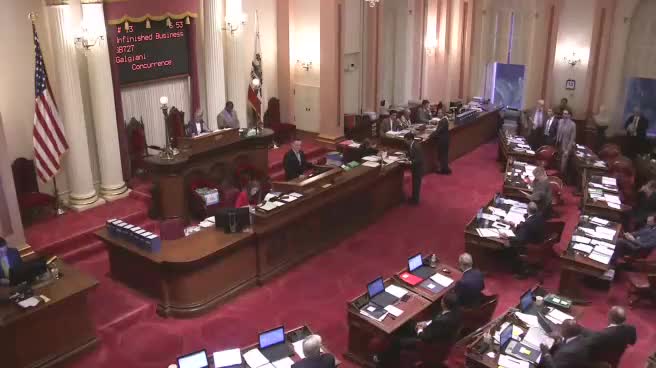 2MIN
Senate Floor
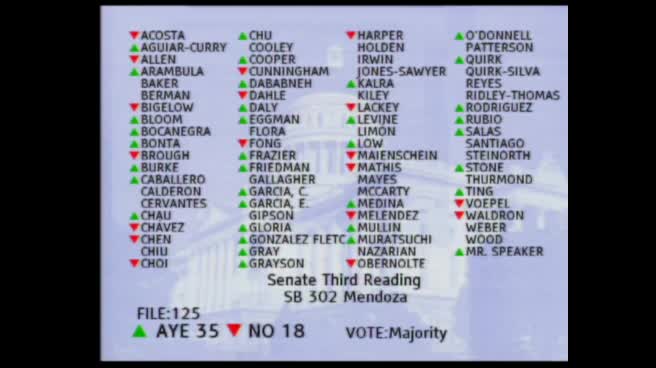 2MIN
Assembly Floor
 1MIN
Assembly Floor
 8MIN
Assembly Standing Committee on Revenue and Taxation
 2MIN
Assembly Standing Committee on Local Government
 2MIN
Senate Floor
 9MIN