SB 755: Civil discovery: mental examination.
- Session Year: 2017-2018
- House: Senate
- Latest Version Date: 2017-07-24
Existing law authorizes any party to obtain discovery by means of a physical or mental examination of a party to the action, an agent of any party, or a natural person in the custody of or under the legal control of a party, in any action in which the mental or physical condition of that party or other person is in controversy. Existing law requires a party to obtain leave of court to conduct a mental examination of a party, and requires a court to grant a motion for a mental examination only for good cause shown. Existing law also requires a mental examination to be performed by a licensed physician or licensed clinical psychologist with specified training.
This bill would, in any action involving allegations of sexual abuse of a minor, further require that a mental examination of a child less than 15 years of age be conducted by a licensed physician or clinical psychologist with expertise in child abuse and trauma and limit the examination to no more than 3 hours, including any breaks, unless the court grants an extension for good cause.
Existing law authorizes any party to obtain discovery by means of a physical or mental examination of a party to the action, an agent of any party, or a natural person in the custody of or under the legal control of a party, in any action in which the mental of or physical condition of that party or other person is in controversy. Existing law requires a party to obtain leave of court to conduct a mental examination of a party, and requires a court to grant a motion for a mental examination only for good cause shown. Existing law also requires a mental examination to be performed by a licensed physician or licensed clinical psychologist with specified training.
This bill would, in any action in which there is credible evidence that a child less than 15 years of age has been sexually abused, involving allegations of sexual abuse of a minor, further require that a mental examination of a child less than 15 years of age be conducted by a licensed physician or clinical psychologist with expertise in child abuse and trauma and limit a mental the examination of that child to psychological testing of to no more than 3 hours, including any breaks, unless the court grants an extension for good cause. This bill would also require the examination to be conducted by a licensed psychotherapist, as defined.
Existing law authorizes any party to obtain discovery by means of a physical or mental examination of a party to the action, an agent of any party, or a natural person in the custody of or under the legal control of a party, in any action in which the mental of physical condition of that party or other person is in controversy. Existing law requires a party to obtain leave of court to conduct a mental examination of a party, and requires a court to grant a motion for a mental examination only for good cause shown.
This bill would, in any action in which there is credible evidence that a child less than 15 years of age has been sexually abused, limit a mental examination of that child to psychological testing of no more than 3 hours, including any breaks, unless the court grants an extension for good cause. This bill would also require the examination to be conducted by a licensed psychotherapist, as defined.
Existing law authorizes any party to obtain discovery by means of a physical or mental examination of a party to the action, an agent of any party, or a natural person in the custody of or under the legal control of a party, in any action in which the mental of physical condition of that party or other person is in controversy. Existing law requires a party to obtain leave of court to conduct a mental examination of a party, and requires a court to grant a motion for a mental examination only for good cause shown.
This bill would, in any action in which there is credible evidence that a child less than 15 years of age has been sexually abused, limit a mental examination of that child to psychological testing of no more than 3 hours, including any breaks. breaks, unless the court grants an extension for good cause. This bill would also require the examination to be conducted by a licensed psychotherapist, as defined.
Existing law authorizes any party to obtain discovery by means of a physical or mental examination of a party to the action, an agent of any party, or a natural person in the custody of or under the legal control of a party, in any action in which the mental of physical condition of that party or other person is in controversy. Existing law requires a party to obtain leave of court to conduct a mental examination of a party, and requires a court to grant a motion for a mental examination only for good cause shown.
This bill would, in any action in which there is credible evidence that a child less than 15 years of age has been sexually abused, limit a mental examination of that child to psychological testing of no more than 3 hours, including any breaks.
(a)Any party may obtain discovery, subject to the restrictions set forth in Chapter 5 (commencing with Section 2019.010), by means of a physical or mental examination of (1) a party to the action, (2) an agent of any party, or (3) a natural person in the custody or under the legal control of a party, in any action in which the mental or physical condition (including the blood group) of that party or other person is in controversy in the action.
(b)A physical examination conducted under this chapter shall be performed only by a licensed physician or other appropriate licensed health care practitioner.
(c)(1)A mental examination conducted under this chapter shall be performed only by a licensed physician, or by a licensed clinical psychologist who holds a doctoral degree in psychology and has had at least five years of postgraduate experience in the diagnosis of emotional and mental disorders.
(2)If an action involves allegations of sexual abuse of a minor, including any act listed in paragraphs (1) to (3), inclusive, of subdivision (a) of Section 1002, and the examinee is less than 15 years of age, the licensed physician or clinical psychologist shall have expertise in child abuse and trauma.
SEC. 2.Section 2032.340 is added to the Code of Civil Procedure, to read:2032.340.(a)If any action involving allegations of sexual abuse of a minor, including any act listed in paragraphs (1) to (3), inclusive, of subdivision (a) of Section 1002, the mental examination of a child less than 15 years of age shall not exceed three hours, inclusive of breaks.
(b)Notwithstanding subdivision (a), the court may grant an extension of the three-hour limit for good cause.
(a)Any party may obtain discovery, subject to the restrictions set forth in Chapter 5 (commencing with Section 2019.010), by means of a physical or mental examination of (1) a party to the action, (2) an agent of any party, or (3) a natural person in the custody or under the legal control of a party, in any action in which the mental or physical condition (including the blood group) of that party or other person is in controversy in the action.
(b)A physical examination conducted under this chapter shall be performed only by a licensed physician or other appropriate licensed health care practitioner.
(c)(1)A mental examination conducted under this chapter shall be performed only by a licensed physician, or by a licensed clinical psychologist who holds a doctoral degree in psychology and has had at least five years of postgraduate experience in the diagnosis of emotional and mental disorders.
(2)If an action involves allegations of sexual abuse of a minor, including any act listed in paragraphs (1) to (3), inclusive, of subdivision (a) of Section 1002, and the examinee is less than 15 years of age, the licensed physician or clinical psychologist shall have expertise in child abuse and trauma.
SECTION 1.SEC. 2.Section 2032.340 is added to the Code of Civil Procedure, to read:2032.340.(a)In any action in which there is credible evidence that a child less than 15 years of age has been sexually abused, as defined in Section 11165.1 of the Penal Code, any If any action involving allegations of sexual abuse of a minor, including any act listed in paragraphs (1) to (3), inclusive, of subdivision (a) of Section 1002, the mental examination of that a child is limited to psychological testing of no more than less than 15 years of age shall not exceed three hours, inclusive of breaks, and shall be conducted by a licensed psychotherapist, as defined in Section 1010 of the Evidence Code, who has expertise in child abuse and trauma. breaks.
(b)Notwithstanding subdivision (a), the court may grant an extension of the three-hour limit for good cause.
(c)For purposes of this section, credible evidence includes, but is not limited to, sworn testimony or a guilty plea by the perpetrator.(a)In any action in which there is credible evidence that a child less than 15 years of age has been sexually abused, as defined in Section 11165.1 of the Penal Code, any mental examination of that child is limited to psychological testing of no more than three hours, inclusive of breaks, and shall be conducted by a licensed psychotherapist, as defined in Section 1010 of the Evidence Code, who has expertise in child abuse and trauma.
(b)Notwithstanding subdivision (a), the court may grant an extension of the three-hour limit for good cause.
(c)For purposes of this section, credible evidence includes includes, but is not limited to, sworn testimony and or a guilty plea by the perpetrator.
(a)In any action in which there is credible evidence, such as a guilty plea by the perpetrator, evidence that a child less than 15 years of age has been sexually abused, as defined in Section 11165.1 of the Penal Code, any mental examination of that child is limited to psychological testing of no more than 3 three hours, inclusive of breaks. breaks, and shall be conducted by a licensed psychotherapist, as defined in Section 1010 of the Evidence Code, who has expertise in child abuse and trauma.
(b)Notwithstanding subdivision (a), the court may grant an extension of the three-hour limit for good cause.
(c)For purposes of this section, credible evidence includes sworn testimony and a guilty plea by the perpetrator.
In any action in which there is credible evidence, such as a guilty plea by the perpetrator, that a child less than 15 years of age has been sexually abused, as defined in Section 11165.1 of the Penal Code, any mental examination of that child is limited to psychological testing of no more than 3 hours, inclusive of breaks.
|
Date
|
Status
|
|---|---|
| Jul 24, 2017 | Chaptered by Secretary of State. Chapter 133, Statutes of 2017. |
| Jul 24, 2017 | Approved by the Governor. |
| Jul 13, 2017 | Enrolled and presented to the Governor at 10 a.m. |
| Jul 10, 2017 | Assembly amendments concurred in. (Ayes 38. Noes 0.) Ordered to engrossing and enrolling. |
| Jul 6, 2017 | In Senate. Concurrence in Assembly amendments pending. |
| Jul 6, 2017 | Read third time. Passed. Ordered to the Senate. |
| Jun 15, 2017 | Read second time. Ordered to third reading. |
| Jun 14, 2017 | Read second time and amended. Ordered to second reading. |
| Jun 13, 2017 | From committee: Do pass as amended. (Ayes 11. Noes 0.) (June 13). |
| Jun 1, 2017 | Referred to Com. on JUD. |
| May 23, 2017 | In Assembly. Read first time. Held at Desk. |
| May 22, 2017 | Read third time. Passed. (Ayes 37. Noes 0. Page 1138.) Ordered to the Assembly. |
| May 16, 2017 | Read second time. Ordered to third reading. |
| May 15, 2017 | Read third time and amended. |
| May 9, 2017 | Read second time and amended. Ordered to third reading. |
| May 8, 2017 | From committee: Do pass as amended. (Ayes 6. Noes 0. Page 946.) (May 2). |
| Apr 25, 2017 | Set for hearing May 2. |
| Mar 9, 2017 | Referred to Com. on JUD. |
| Feb 21, 2017 | From printer. May be acted upon on or after March 23. |
| Feb 17, 2017 | Introduced. Read first time. To Com. on RLS. for assignment. To print. |
|
Date
|
Description
|
Location
|
Votes
|
|
|---|---|---|---|---|
| Jul 10, 2017 | Unfinished Business SB755 Beall Concurrence | Senate Floor |
Passed |
|
| Jul 6, 2017 | SB 755 Beall Senate Third Reading By REYES | Assembly Floor |
Passed |
|
| Jun 13, 2017 | Do pass as amended. | Assembly Standing Committee on Judiciary |
Passed |
|
| May 22, 2017 | Senate 3rd Reading SB755 Beall et al. | Senate Floor |
Passed |
|
| May 2, 2017 | Do pass as amended | Senate Standing Committee on Judiciary |
Passed |
This list shows positions taken on this bill by organizations on the date displayed, which is linked to the original source.
Positions by individuals are not included.
|
Organization
|
Position
|
Date
|
|---|---|---|
| An individual | ** Support | Jul 7, 2017 |
| Bay Area Women Against Rape | ** Support | Jul 7, 2017 |
| California Psychiatric Association | ** Support | Jul 7, 2017 |
| California Women's Law Center | ** Support | Jul 7, 2017 |
| Children Now | ** Support | Jul 7, 2017 |
| Children's Advocacy Institute | ** Support | Jun 9, 2017 |
| City of San Jose | ** Support | Jun 9, 2017 |
| Consumer Attorneys Of California | ** Support | Jul 7, 2017 |
| Crime Victims United Of California | ** Support | Jul 7, 2017 |
| Disability Rights California | ** Support | Jul 7, 2017 |
| Keep Kids Safe | ** Support | Jul 7, 2017 |
| SF Special Investigations | ** Support | Jul 7, 2017 |
Office of Senate Floor Analyses (916) 651-1520 Fax: (916) 327-4478 | SB 755 |
UNFINISHED BUSINESS
Bill No: SB 755
Amended: 6/14/17
SENATE JUDICIARY COMMITTEE: 6-0, 5/2/17
AYES: Jackson, Moorlach, Anderson, Monning, Stern, Wieckowski
NO VOTE RECORDED: Hertzberg
SENATE FLOOR: 37-0, 5/22/17
AYES: Allen, Atkins, Bates, Beall, Berryhill, Bradford, Cannella, De León, Dodd, Gaines, Galgiani, Glazer, Hernandez, Hertzberg, Hill, Hueso, Jackson, Lara, Leyva, McGuire, Mendoza, Mitchell, Monning, Moorlach, Morrell, Newman, Nguyen, Nielsen, Portantino, Roth, Skinner, Stern, Stone, Vidak, Wieckowski, Wiener, Wilk
NO VOTE RECORDED: Anderson, Fuller, Pan
ASSEMBLY FLOOR: 75-0, 7/6/17 - See last page for vote
SUBJECT: Civil discovery: mental examination
SOURCE: Consumer Attorneys of California
DIGEST:
This bill limits a mental examination of a child, in any civil action where there is credible evidence that the child has been sexually abused, to psychological testing of no more than three hours, including any breaks. This bill only allows the examination to extend beyond three hours if the court decides to grant an extension for good cause. Additionally, this bill requires the examiner to have expertise in child abuse and trauma.
Assembly Amendments restructure the provisions of this bill to better align with existing law. This bill continues to make the same changes in terms of limiting the civil discovery mental examination of a child victim of sexual abuse to three hours, inclusive of breaks, unless the court grants an extension for good cause and requires the examiner to have expertise in child abuse and trauma.
ANALYSIS:
Existing law:
- Provides that any party may obtain discovery by means of a physical or mental examination of (a) a party to the action, (b) an agent of any party, or (c) a natural person in the custody or under the legal control of a party in any action in which the mental or physical condition of that party or other person is in controversy in the action. (Code Civ. Proc. Sec. 2032.020(a).)
- Provides that a physical examination conducted for discovery purposes shall be performed only by a licensed physician or other appropriate licensed health care practitioner, while a mental examination shall be performed only by a licensed physician or by a licensed clinical psychologist who holds a doctoral degree in psychology and has had at least five years of postgraduate experience in the diagnosis of emotional and mental disorders. (Code Civ. Proc. Sec. 2032.020(b)-(c).)
- Provides that in any case in which a plaintiff is seeking recovery for personal injuries, any defendant may demand one physical examination of the plaintiff, if both of the following conditions are satisfied:
- The examination does not include any diagnostic test or procedure that is painful, protracted, or intrusive; and
- The examination is conducted at a location within 75 miles of the residence of the examinee. (Code Civ. Proc. Sec. 2032.220(a).)
- Provides that a defendant may make a demand for a physical examination of the plaintiff, without leave of court, after the defendant has been served or has appeared in court, whichever occurs first. (Code Civ. Proc. Sec. 2032.220(b).)
- Provides that a demand for a physical examination shall specify the time, place, manner, conditions, scope, and nature of the examination. As well as the identity and the specialty of the physician who will perform the examination. (Code Civ. Proc. Sec. 2032.220(c).)
- Provides for the physical examination to be scheduled for a date that is at least 30 days after the service of the demand. On motion of the party demanding the examination, the court may shorten this time. (Code Civ. Proc. Sec. 2032.220(d).)
- Provides that if any party desires to obtain discovery by a physical examination other than that described above or by a mental examination, the party shall obtain leave of court. A motion for such an examination shall specify the time, place, manner, conditions, scope and nature of the examination, as well as the identity and specialty of the person or persons who will perform the examination. (Code Civ. Proc. Sec. 2032.310.)
- Provides that the court shall grant a motion for a physical or mental examination, when leave of court is required, only for good cause shown. If the party stipulates that no claim is being made for mental and emotional distress and that no expert testimony regarding this usual mental and emotional distress will be presented at trial, the court shall not order a mental examination except on a showing of exceptional circumstances. (Code Civ. Proc. Sec. 2032.320.)
This bill:
- Provides that in addition to other licensing requirements, if an action involves allegations of sexual abuse of a minor, as provided, and the examinee is a child less than 15 years of age, the licensed physician or clinical psychologist conducting the examination shall have expertise in child abuse and trauma.
- Limits the duration of the mental examination to no more than three hours, inclusive of breaks, in actions described in 1).
- Allows the court to grant an extension to the three-hour limit for good cause.
Comments
Purpose of the bill. The current law has no restrictions or guidelines on these “psych exams.” Neither a parent nor a guardian is allowed in during an exam. Oftentimes a child is not even allowed to take a bathroom break, and there are no qualifications for the examiners under the law.
SB 755 limits the time allowed for an assessment that potentially can turn traumatic for a child who already has been victimized by an adult. This bill, in any action in which there is credible evidence that a child less than 15 years of age has been sexually abused, limits a mental examination of that child to psychological testing of no more than three hours, including any breaks. The court may grant an extension of the three-hour limit only for good cause. Additionally, as amended this bill requires the licensed physician or clinical psychologist conducting the examination have expertise in child abuse and trauma.
Lack of protections within existing law. Existing law allows for physical examination in a case where a plaintiff is seeking recovery for personal injuries, providing set limitations on the location of the examination and prohibition of painful, protracted, and intrusive diagnostic tests are met. (Code Civ. Proc. Sec. 2032.220.) Additionally, the court may grant a motion for mental examination if good cause is shown. The party requesting such examination is required to obtain leave of court by providing a motion for examination that specifies the time, place, manner, conditions, scope, and nature of the examination, as well as the identity and the specialty, if any, of the person or persons who will perform the examination. (Code Civ. Proc. Secs. 2023.310, 2023.320.)
Though the motion is required to provide information regarding the examination and who will perform it, there are currently few limitations on the time, place, manner, conditions, scope, and nature of the examination. Existing law merely requires a mental examination be performed by a licensed physician or a licensed clinical psychologist who holds a doctoral degree in psychology and has had at least five years of postgraduate experience in the diagnosis of emotional and mental disorders. (Code Civ. Proc. Sec. 2032.020(c).) Additionally, should the examination require the examinee travel more than 75 miles away from their home, the court requires there be good cause for the travel and the moving party must pay in advance to the examinee reasonable expenses and costs for their travel. (Code Civ. Proc. Sec. 2032.320(e).)
The proponents of this bill believe the lack of limitations on the examination process result in an interview situation that is ripe for abuse. Consumer Attorneys of California, the sponsor of this bill, reports multiple cases where the children are subjected to interviews lasting for four or more hours, despite prior interviews by specially trained law enforcement that resulted in videotape depositions being available for review. Additionally, they report these interviews occurring despite the children having been previously diagnosed with PTSD and the defense’s psychiatrist knowing such examination may retraumatize the children.
According to the Children’s Legal Rights Journal, fewer interviews are better for both the child and the integrity of the interview. The Children’s Legal Rights Journal further reports:
Repeating traumatizing events, multiple times, over a series of months, constantly reminds children of their victimization and increases the chances of long-term emotional trauma, self-blame, and feelings of guilt … Children who are asked the same questions multiple times are more likely to change their responses in an attempt to please the adult interviewer. This can result in inaccurate information being given during several interviews and the reinforcement of false memories. (36 Child. Legal Rts. J. 1 (12).)
SB 755 begins providing these needed protections by making needed first steps. By limiting the length of these evaluations and requiring they be conducted by a licensed psychotherapist, who has expertise in child abuse and trauma children will be better protected from traumatization during the examination process.
FISCAL EFFECT: Appropriation: No Fiscal Com.: No Local: No
Consumer Attorneys of California (source)
Bay Area Women Against Rape
California Psychiatric Association
California Women’s Law Center
Children Now
Children’s Advocacy Institute, University of San Diego School of Law California
Crime Victims United of California
Disability Rights California
Keep Kids Safe
SF Special Investigations
The Honorable Sam Liccardo, Mayor, City of San Jose
An individual
None received
ASSEMBLY FLOOR: 75-0, 7/6/17
AYES: Acosta, Aguiar-Curry, Travis Allen, Arambula, Baker, Berman, Bigelow, Bloom, Bonta, Brough, Burke, Caballero, Cervantes, Chau, Chávez, Chen, Chiu, Choi, Chu, Cooley, Cooper, Cunningham, Dahle, Daly, Eggman, Flora, Fong, Frazier, Friedman, Gallagher, Cristina Garcia, Eduardo Garcia, Gipson, Gloria, Gomez, Gonzalez Fletcher, Gray, Grayson, Harper, Holden, Irwin, Jones-Sawyer, Kalra, Kiley, Levine, Limón, Low, Maienschein, Mathis, Mayes, Medina, Melendez, Mullin, Muratsuchi, Nazarian, Obernolte, O'Donnell, Patterson, Quirk, Quirk-Silva, Reyes, Ridley-Thomas, Rodriguez, Rubio, Salas, Santiago, Steinorth, Mark Stone, Thurmond, Ting, Voepel, Waldron, Weber, Wood, Rendon
NO VOTE RECORDED: Bocanegra, Calderon, Dababneh, Lackey, McCarty
7/7/17 15:08:43
SENATE THIRD READING
STR Bill Id:SB 755
Author:(Beall)
As Amended Ver:June 14, 2017
Majority vote
SENATE VOTE: 37-0
Committee | Votes | Ayes | Noes |
Judiciary | 11-0 | Mark Stone, Cunningham, Chau, Chiu, Cristina Garcia, Holden, Kalra, Kiley, Maienschein, Reyes, Ting |
|
SUMMARY: Limits the civil discovery mental examination of a child victim of sexual abuse to three hours, inclusive of breaks, unless the court grants an extension for good cause and requires the examiner to have expertise in child abuse and trauma. Specifically, this bill:
- Provides that in addition to other licensing requirements, if an action involves allegations of sexual abuse of a minor, as provided, and the examinee is a child less than 15 years of age, the licensed physician or clinical psychologist conducting the examination shall have expertise in child abuse and trauma.
- Limits the duration of the mental examination to no more than three hours, inclusive of breaks, in actions described in 1).
- Allows the court to grant an extension to the three-hour limit for good cause.
FISCAL EFFECT: None
COMMENTS: The Civil Discovery Act (the Act) provides the manner in which a party to a civil action may engage in discovery. The Act authorizes parties to use depositions, interrogatories, inspection of documents, physical and mental examinations, request for admissions, and exchange of expert witness information during discovery.
Physical or mental examination during civil discovery. Unlike other discovery methods, before a party may require another party to submit to a physical or mental examination, the requesting party must file a discovery motion with the court. The motion must specify the time, place, manner, conditions, scope, and nature of the examination, and identify the examiner (and the specialty of the examiner) who will perform the examination. Additionally, the mental examination is authorized only if the mental condition of the party is "in controversy." For example, the mental condition of the party would be at issue if a party was making a claim for emotional distress.
Problem this bill seeks to address. Currently, the statute does not limit the maximum duration of a mental examination. Generally, the duration is evaluated by the court when it makes an initial determination of whether to grant or deny the mental examination. It appears that there has been a disturbing practice where a defendant's paid mental health examiner will conduct unnecessarily long and abusive psychological examinations of the victim. In one example, the author cites a civil lawsuit brought against the YMCA by the parents of a three year-old girl sexually molested by a summer camp employee. In that suit, the YMCA's mental examiner questioned the victim for five hours with inappropriate and demeaning questions about defecation, smoking, and the sexual abuse.
Summary of this bill. In order to protect child victims of sexual abuse from potential re-victimization as the result of unnecessarily prolonged examinations, this bill limits the civil discovery mental examination of a child victim of sexual abuse to three hours, including breaks, unless the court grants an extension for good cause. This bill also requires the examiner, in addition to existing licensing requirements, to have expertise in child abuse and trauma.
Although civil discovery rules are not generally limited so that truth and efficient information sharing can be promoted, the limits under this bill are narrow and maintain judicial discretion, and promote the laudable goal of protecting children from potential repeated trauma in cases where similar information could be ascertained from other sources. As stated, this bill limits a civil discovery mental examination to three hours in cases where the examinee is a minor under 15 years of age, and the action involves allegations of sexual abuse defined under current law. Given that a party must first demonstrate good cause and show that the mental condition of the party is in controversy before a court requires the submission of a mental examination, the scope of this bill appears to be narrow – particularly given that the three-hour limit applies only to minors in cases where there are allegations of child sexual abuse. Moreover, it appears that these cases are likely to involve interviews conducted by specially trained law enforcement that may be accessible for review.
There is a general consensus that three hours is a sufficient amount of time to conduct the examination. As stated, this bill limits the mental examination of a minor to three hours in specified sexual abuse cases. Although it is difficult to assess the average amount of time it takes for an examiner to conduct a mental examination – which may also be dependent on factors like age of the examinee and timing of the alleged trauma – experts believe three hours is a sufficient amount of time to conduct an examination. Indeed, the author notes that in discussions with child advocates, there was a general consensus around three hours as well.
In the event that three hours is insufficient, this bill ensures that the court has discretion to extend the examination upon a showing of good cause. While the scope of this bill is narrow, the limit still allows for judicial discretion by allowing the court to extend the duration of the examination upon a showing of good cause. Since the initial mental examination requires a showing of good cause, presumably, the extension would require a stronger showing of good cause, especially since many courts agree that multiple examinations should not be routinely ordered. (See Shapira v. Superior Court (1990) 224 Cal.App.3d 1249, 1255.) Accordingly, an extension beyond three hours under this bill would likely require the moving party to demonstrate additional facts (beyond the facts originally presented to obtain the initial examination) or sufficiently new facts as to why three hours is not enough or why additional time is needed.
To ensure that the licensed professional has experience in examining child victims, this bill requires the examiner to have expertise in child abuse and trauma. Under existing law, a mental examination may only be conducted by either a licensed physician or a licensed clinical psychologist. The law also requires the licensed clinical psychologist to hold a doctoral degree in psychology and have at least five years of postgraduate experience in the diagnosis of emotional and mental disorders. This bill additionally requires the licensed physician or licensed clinical psychologist to have expertise in child abuse and trauma. According to the author, this additional requirement is important to ensure that the licensed professional has pediatric background.
Analysis Prepared by: Eric Dang / JUD. / (916) 319-2334 FN: 0000996
Date of Hearing: June 13, 2017
ASSEMBLY COMMITTEE ON JUDICIARY
Mark Stone, Chair
SBPCA Bill Id:SB 755
Author:(Beall) – As Amended Ver:May 15, 2017
As Proposed to be Amended
SENATE VOTE: 37-0
SUBJECT: CIVIL DISCOVERY: MENTAL EXAMINATION
KEY ISSUE: IN ORDER TO PROTECT A CHILD VICTIM OF SEXUAL ABUSE AGAINST POTENTIAL RE-TRAUMATIZATION DURING CIVIL LITIGATION, SHOULD A MENTAL EXAMINATION ORDERED DURING CIVIL DISCOVERY BE LIMITED TO THREE HOURS UNLESS THERE IS GOOD CAUSE FOR AN EXTENSION?
SYNOPSIS
The Civil Discovery Act provides the manner in which a party to a civil action may engage in discovery. Generally, California’s discovery rules are liberally construed in favor of disclosure in order to promote truth and efficiency throughout litigation. Accordingly, a court will only restrict or limit discovery in very specific circumstances. One discovery method used in civil litigation is the mental examination. Unlike other discovery methods, a party must file a discovery motion with the court in order to require another party to submit to a mental examination. The mental examination is authorized only if the mental condition of a party is in controversy and the moving party demonstrates there is good cause for the examination.
Currently, the statute does not limit the maximum duration of a mental examination. Generally, the duration is evaluated by the court when it makes an initial determination of whether to grant or deny the mental examination. According to the Consumer Attorneys of California, the sponsor of the bill, there has been a disturbing practice where a defendant’s paid mental health examiner will conduct unnecessarily long and abusive psychological examinations of a plaintiff victim. Additionally, there appears to be a general consensus that the court process can be especially upsetting and stressful for children—particularly those who are victims of abuse.
In order to protect child victims of sexual abuse from potential re-victimization as the result of unnecessarily prolonged examinations, this bill limits the civil discovery mental examination of a child victim of sexual abuse to three hours, inclusive of breaks, unless the court grants an extension for good cause. This bill also requires the mental examiner to have expertise in child abuse and trauma. To harmonize the bill’s provisions with existing law, the author plans to adopt several clarifying amendments in this Committee as reflected in this analysis. This bill is supported by child advocates, crime victims, psychiatrists, women’s groups, and the disability community. This bill has no opposition on file.
SUMMARY: Limits the civil discovery mental examination of a child victim of sexual abuse to three hours, inclusive of breaks, unless the court grants an extension for good cause and requires the examiner to have expertise in child abuse and trauma. Specifically, this bill:
- Provides that in addition to other licensing requirements, if an action involves allegations of sexual abuse of a minor, as provided, and the examinee is a child less than 15 years of age, the licensed physician or clinical psychologist conducting the examination shall have expertise in child abuse and trauma.
- Limits the duration of the mental examination to no more than three hours, inclusive of breaks, in actions described in 1).
- Allows the court to grant an extension to the three-hour limit for good cause.
EXISTING LAW:
- Establishes the Civil Discovery Act, which provides the manner in which parties may engage in discovery. (Code of Civil Procedure Section 2016.010 et seq. Unless provided otherwise, all further statutory references are to this Code.)
- Allows a party to a civil action to obtain discovery by, among other methods, physical and mental examinations. (Section 2019.010.)
- Sets forth the procedures to obtain a physical or mental examination during civil discovery, including the requirements for a motion, the rules for failure to submit to a physical or mental examination, the rights of the parties during the conduct of the examination, and the reporting requirements. (Section 2032.010 et seq.)
- Requires a party who desires to obtain discovery by a mental examination to obtain leave of court. The motion for the examination shall specify the time, place, manner, conditions, scope, and nature of the examination, as well as the identity and the specialty, if any, of the person or persons who will perform the examination. The motion shall be accompanied by a meet and confer declaration, as provided. (Section 2032.310 (a).)
- Provides that a mental examination shall be performed only by a licensed physician, or by a licensed clinical psychologist who holds a doctoral degree in psychology and has had at least five years of postgraduate experience in the diagnosis of emotional and mental disorders. (Section 2032.020 (c).)
- Requires the court to grant a motion for a mental examination only for good cause shown. The order granting the mental examination shall specify the person or persons who may perform the examination, as well as the time, place, manner, diagnostic tests and procedures, conditions, scope, and nature of the examination. (Section 2032.320 (a) and (d).)
- Requires the court to restrict the frequency or extent of use of a discovery method if it determines that either (1) the discovery sought is unreasonably cumulative or duplicative, or is obtainable from some other source that is more convenient, less burdensome, or less expensive, or (2) the selected method of discovery is unduly burdensome or expensive, taking into account the needs of the case, the amount in controversy, and the importance of the issues at stake in the litigation. (Section 2019.030.)
- Pursuant to Federal Rules of Civil Procedure, the court where the action is pending may order a party whose mental or physical condition—including blood group—is in controversy to submit to a physical or mental examination by a suitably licensed or certified examiner. The court has the same authority to order a party to produce for examination a person who is in its custody or under its legal control. The order may be made only on motion for good cause and on notice to all parties and the person to be examined and must specify the time, place, manner, conditions, and scope of the examination, as well as the person or persons who will perform it. (Fed. Rules Civ. Proc., rule 35(a), 28 U.S.C.)
FISCAL EFFECT: As currently in print this bill is keyed non-fiscal.
COMMENTS: The Civil Discovery Act (the Act) provides the manner in which a party to a civil action may engage in discovery. Generally, California’s discovery rules are liberally construed in favor of disclosure in order to promote the following policy goals: “(1) to give greater assistance to the parties in ascertaining the truth and in checking and preventing perjury; (2) to provide an effective means of detecting and exposing false, fraudulent and sham claims and defenses; (3) to make available, in a simple, convenient and inexpensive way, facts which otherwise could not be proved except with great difficulty; (4) to educate the parties in advance of trial as to the real value of their claims and defenses, thereby encouraging settlements; (5) to expedite litigation; (6) to safeguard against surprise; (7) to prevent delay; (8) to simplify and narrow the issues; and, (9) to expedite and facilitate both preparation and trial.” (Greyhound Corp v. Superior Court (1961) 56 Cal.2d 355, 376.) To that end, the Act authorizes parties to use depositions, interrogatories, inspection of documents, physical and mental examinations, request for admissions, and exchange of expert witness information during discovery.
Limits on discovery. Generally, a court will only restrict or limit discovery in specific circumstances. For example, a court is required to limit discovery if it determines that the discovery being sought is “unreasonably cumulative or duplicative” or “is obtainable from some other source that is more convenient, less burdensome, or less expensive.” (Section 2019.030.) The court may also limit discovery after balancing the needs of the case against the importance of the issues in the case. (Ibid.)
Physical or mental examination during civil discovery. As stated, California law establishes the requirements for parties to obtain a physical or mental examination during civil discovery. Unlike other discovery methods, a party must file a discovery motion with the court in order to require another party to submit to a mental examination. Similar to Federal Rules of Civil Procedure Rule 35, the motion must specify the time, place, manner, conditions, scope, and nature of the examination, and identify the examiner (and the specialty of the examiner) who will perform the examination. Additionally, the mental examination is authorized only if the mental condition of the party is “in controversy.” For example, the mental condition of the party would be at issue if a party was making a claim for emotional distress.
The court may grant the motion only upon a showing of good cause. Although good cause is fact dependent, the standard is “designed to protect an examinee’s privacy interest by preventing an examination from becoming an annoying fishing expedition.” (Vinson v. Superior Court (1987) 463 Cal.3d 833, 840.) Indeed, good cause “serves as a barrier to excessive and unwarranted intrusions.” (Sporich v. Superior Court (2000) 77 Cal.App.4th 422, 428.)
Problem this bill seeks to address. Currently, the statute does not limit the maximum duration of a mental examination. Generally, the duration is evaluated by the court when it makes an initial determination of whether to grant or deny the mental examination. According to the Consumer Attorneys of California, the sponsor of the bill, there has been a disturbing practice where a defendant’s paid mental health examiner will conduct unnecessarily long and abusive psychological examinations of the victim. In one example, the sponsor cites a civil lawsuit brought against the YMCA by the parents of a three year-old girl sexually molested by a summer camp employee. In that suit, the YMCA’s mental examiner questioned the victim for five hours with inappropriate and demeaning questions about defecation, smoking, and the sexual abuse.
There is a general agreement among child advocates that children find the court process upsetting and stressful. According to the Children’s Legal Rights Journal:
Research suggests that the number of interviews a child witness is subjected to, or the number of times they are asked to testify, can lead to greater distress to children….Repeating traumatizing events, multiple times, over a series of months, constantly reminds children of their victimization and increases the chances of long-term emotional trauma, self-blame, and feelings of guilt. (Fansher, The Child As Witness: Evaluating State Statutes on the Court’s Most Vulnerable Population (2016) 36 Child. Legal Rts. J. 1, 2-3; 21.)
Summary of this bill. In order to protect child victims of sexual abuse from potential re-victimization as the result of unnecessarily prolonged examinations, this bill limits the civil discovery mental examination of a child victim of sexual abuse to three hours, including breaks, unless the court grants an extension for good cause. This bill also requires the examiner, in addition to existing licensing requirements, to have expertise in child abuse and trauma.
Although civil discovery rules are not generally limited so that truth and efficient information sharing can be promoted, the limits under this bill are narrow and maintain judicial discretion, and promote the laudable goal of protecting children from potential repeated trauma in cases where similar information could be ascertained from other sources. As stated, this bill limits a civil discovery mental examination to three hours in cases where the examinee is a minor under 15 years of age, and the action involves allegations of sexual abuse defined under current law. Given that a party must first demonstrate good cause and show that the mental condition of the party is in controversy before a court requires the submission of a mental examination, the scope of this bill appears to be narrow—particularly given that the three-hour limit applies only to minors in cases where there are allegations of child sexual abuse. Moreover, it appears that these cases are likely to involve interviews conducted by specially trained law enforcement that may be accessible for review.
According to the sponsor, there is a general consensus that three hours is a sufficient amount of time to conduct the examination. As stated, this bill limits the mental examination of a minor to three hours in specified sexual abuse cases. Although it is difficult to assess the average amount of time it takes for an examiner to conduct a mental examination—which may also be dependent on factors like age of the examinee and timing of the alleged trauma—experts have informed Committee staff that three hours is a sufficient amount of time to conduct an examination. Indeed, the sponsor notes that in its discussions with child advocates, there was a general consensus of about three hours as well.
In the event that three hours is insufficient, this bill ensures that the court has discretion to extend the examination upon a showing of good cause. While the scope of this bill is narrow, the limit still allows for judicial discretion by allowing the court to extend the duration of the examination upon a showing of good cause. Since the initial mental examination requires a showing of good cause, presumably, the extension would require a stronger showing of good cause, especially since many courts agree that multiple examinations should not be routinely ordered. (See Shapira v. Superior Court (1990) 224 Cal.App.3d 1249, 1255.) Accordingly, an extension beyond three hours under this bill would likely require the moving party to demonstrate additional facts (beyond the facts originally presented to obtain the initial examination) or sufficiently new facts as to why three hours is not enough or why additional time is needed.
To ensure that the licensed professional has experience in examining child victims, this bill requires the examiner to have expertise in child abuse and trauma. Under existing law, a mental examination may only be conducted by either a licensed physician or a licensed clinical psychologist. The law also requires the licensed clinical psychologist to hold a doctoral degree in psychology and have at least five years of postgraduate experience in the diagnosis of emotional and mental disorders. This bill additionally requires the licensed physician or licensed clinical psychologist to have expertise in child abuse and trauma. According to the author, this additional requirement is important to ensure that the licensed professional has pediatric background. The California Psychiatric Association, in support of this bill, believes that this additional expertise will help prevent the alleged victim from being re-traumatized during the mental examination.
Author’s statement. In support of this bill, the author writes:
Current law has no parameters on the medical examinations conducted on victims of sexual assault. This bill seeks to protect child victims of sexual assault by setting parameters to the examination in order to prevent victims from added trauma caused by the examinations.
Proposed amendments. In order to harmonize the bill’s provisions with existing law, the author plans to accept the following amendments in Committee:
On page 2, delete lines 3 through 14, inclusive and insert:
2032.340. (a) If the examinee of a mental examination is a child less than 15 years of age and the action involves allegations of sexual abuse of a minor, including any act listed in paragraphs (1) to (3) of subdivision (a) of Section 1002, the duration of the mental examination shall not exceed three hours, inclusive of breaks.
(b) Notwithstanding subdivision (a), the court may grant an extension to the three-hour examination for good cause.
Section 2032.020 of the Code of Civil Procedure, is amended, to read:
2032.020. (a) Any party may obtain discovery, subject to the restrictions set forth in Chapter 5 (commencing with Section 2019.010), by means of a physical or mental examination of (1) a party to the action, (2) an agent of any party, or (3) a natural person in the custody or under the legal control of a party, in any action in which the mental or physical condition (including the blood group) of that party or other person is in controversy in the action.
(b) A physical examination conducted under this chapter shall be performed only by a licensed physician or other appropriate licensed health care practitioner.
(c)(1) A mental examination conducted under this chapter shall be performed only by a licensed physician, or by a licensed clinical psychologist who holds a doctoral degree in psychology and has had at least five years of postgraduate experience in the diagnosis of emotional and mental disorders.
(2) If the action involves allegations of sexual abuse of a minor, including any act listed in paragraphs (1) to (3) of subdivision (a) of Section 1002, and the examinee is a child less than 15 years of age, the licensed physician or clinical psychologist shall have expertise in child abuse and trauma.
REGISTERED SUPPORT / OPPOSITION:
Support
Consumer Attorneys of California (sponsor)
Bay Area Women Against Rape
California Psychiatric Association
California Women’s Law Center
Children’s Advocacy Institute
Children Now
City of San Jose
Crime Victims United of California
Disability Rights California
Keep Kids Safe
SF Special Investigations
An individual
Opposition
None on file
Analysis Prepared by: Eric Dang / JUD. / (916) 319-2334
Office of Senate Floor Analyses (916) 651-1520 Fax: (916) 327-4478 | SB |
THIRD READING
Bill No: SB 755
Amended: 5/15/17
SENATE JUDICIARY COMMITTEE: 6-0, 5/2/17
AYES: Jackson, Moorlach, Anderson, Monning, Stern, Wieckowski
NO VOTE RECORDED: Hertzberg
SOURCE: Consumer Attorneys of California
DIGEST:
This bill limits a mental examination of a child, in any civil action where there is credible evidence that the child has been sexually abused, to psychological testing of no more than three hours, including any breaks. This bill only allows the examination to extend beyond three hours if the court decides to grant an extension for good cause. Additionally, it requires the examination be conducted by a licensed psychotherapist who has expertise in child abuse and trauma.
Senate Floor Amendments of 5/15/17 correct a drafting error to the meaning of “credible evidence” for the purposes of this bill.
Existing law:
- Provides that any party may obtain discovery by means of a physical or mental examination of (a) a party to the action, (b) an agent of any party, or (c) a natural person in the custody or under the legal control of a party in any action in which the mental or physical condition of that party or other person is in controversy in the action. (Code Civ. Proc. Sec. 2032.020(a).)
- Provides that a physical examination conducted for discovery purposes shall be performed only by a licensed physician or other appropriate licensed health care practitioner, while a mental examination shall be performed only by a licensed physician or by a licensed clinical psychologist who holds a doctoral degree in psychology and has had at least five years of postgraduate experience in the diagnosis of emotional and mental disorders. (Code Civ. Proc. Sec. 2032.020(b)-(c).)
- Provides that in any case in which a plaintiff is seeking recovery for personal injuries, any defendant may demand one physical examination of the plaintiff, if both of the following conditions are satisfied:
- The examination does not include any diagnostic test or procedure that is painful, protracted, or intrusive; and
- The examination is conducted at a location within 75 miles of the residence of the examinee. (Code Civ. Proc. Sec. 2032.220(a).)
- Provides that a defendant may make a demand for a physical examination of the plaintiff, without leave of court, after the defendant has been served or has appeared in court, whichever occurs first. (Code Civ. Proc. Sec. 2032.220(b).)
- Provides that a demand for a physical examination shall specify the time, place, manner, conditions, scope, and nature of the examination. As well as the identity and the specialty of the physician who will perform the examination. (Code Civ. Proc. Sec. 2032.220(c).)
- Provides for the physical examination to be scheduled for a date that is at least 30 days after the service of the demand. On motion of the party demanding the examination, the court may shorten this time. (Code Civ. Proc. Sec. 2032.220(d).)
- Provides that if any party desires to obtain discovery by a physical examination other than that described above or by a mental examination, the party shall obtain leave of court. A motion for such an examination shall specify the time, place, manner, conditions, scope and nature of the examination, as well as the identity and specialty of the person or persons who will perform the examination. (Code Civ. Proc. Sec. 2032.310.)
- Provides that the court shall grant a motion for a physical or mental examination, when leave of court is required, only for good cause shown. If the party stipulates that no claim is being made for mental and emotional distress and that no expert testimony regarding this usual mental and emotional distress will be presented at trial, the court shall not order a mental examination except on a showing of exceptional circumstances. (Code Civ. Proc. Sec. 2032.320.)
This bill:
- Provides that in any civil action in which there is credible evidence that a child less than 15 years of age has been sexually abused, any mental examination of that child is limited to psychological testing of no more than three hours, inclusive of breaks.
- Provides that the court may grant an extension of the three-hour limit for good cause.
- Provides that the mental examination shall be conducted by a licensed psychotherapist who has expertise in child abuse and trauma.
- Provides that credible evidence includes, but is not limited to, sworn testimony or a guilty plea by the perpetrator.
Comments
Purpose of the bill. The current law has no restrictions or guidelines on these “psych exams.” Neither a parent nor a guardian is allowed in during an exam. Oftentimes a child is not even allowed to take a bathroom break, and there are no qualifications for the examiners under the law.
SB 755 limits the time allowed for an assessment that potentially can turn traumatic for a child who already has been victimized by an adult. This bill, in any action in which there is credible evidence that a child less than 15 years of age has been sexually abused, limits a mental examination of that child to psychological testing of no more than three hours, including any breaks. The court may grant an extension of the three-hour limit only for good cause. Additionally, as amended this bill requires the examination to be conducted by licensed psychotherapist, who has expertise in child abuse and trauma.
Lack of protections within existing law. Existing law allows for physical examination in a case where a plaintiff is seeking recovery for personal injuries, providing set limitations on the location of the examination and prohibition of painful, protracted, and intrusive diagnostic tests are met. (Code Civ. Proc. Sec. 2032.220.) Additionally, the court may grant a motion for mental examination if good cause is shown. The party requesting such examination is required to obtain leave of court by providing a motion for examination that specifies the time, place, manner, conditions, scope, and nature of the examination, as well as the identity and the specialty, if any, of the person or persons who will perform the examination. (Code Civ. Proc. Secs. 2023.310, 2023.320.)
Though the motion is required to provide information regarding the examination and who will perform it, there are currently few limitations on the time, place, manner, conditions, scope, and nature of the examination. Existing law merely requires a mental examination be performed by a licensed physician or a licensed clinical psychologist who holds a doctoral degree in psychology and has had at least five years of postgraduate experience in the diagnosis of emotional and mental disorders. (Code Civ. Proc. Sec. 2032.020(c).) Additionally, should the examination require the examinee travel more than 75 miles away from their home, the court requires there be good cause for the travel and the moving party must pay in advance to the examinee reasonable expenses and costs for their travel. (Code Civ. Proc. Sec. 2032.320(e).)
The proponents of this bill believe the lack of limitations on the examination process result in an interview situation that is ripe for abuse. Consumer Attorneys of California, sponsor, reports multiple cases where the children are subjected to interviews lasting for four or more hours, despite prior interviews by specially trained law enforcement that resulted in videotape depositions being available for review. Additionally, they report these interviews occurring despite the children having been previously diagnosed with PTSD and the defense’s psychiatrist knowing such examination may retraumatize the children.
According to the Children’s Legal Rights Journal, fewer interviews are better for both the child and the integrity of the interview. The Children’s Legal Rights Journal further reports:
Repeating traumatizing events, multiple times, over a series of months, constantly reminds children of their victimization and increases the chances of long-term emotional trauma, self-blame, and feelings of guilt … Children who are asked the same questions multiple times are more likely to change their responses in an attempt to please the adult interviewer. This can result in inaccurate information being given during several interviews and the reinforcement of false memories. (36 Child. Legal Rts. J. 1 (12).)
SB 755 begins providing these needed protections by making needed first steps. By limiting the length of these evaluations and requiring they be conducted by a licensed psychotherapist, who has expertise in child abuse and trauma children will be better protected from traumatization during the examination process.
FISCAL EFFECT: Appropriation: Fiscal Com.: Local:
Consumer Attorneys of California (source)
California Psychiatric Association
California Women’s Law Center
Children’s Advocacy Institute, University of San Diego School of Law California
Keep Kids Safe
SF Special Investigations
The Honorable Sam Liccardo, Mayor, City of San Jose
OPPOSITION: (Verified 5/16/17)
None received
5/16/17 16:15:56
**** END ****
Office of Senate Floor Analyses (916) 651-1520 Fax: (916) 327-4478 | SB |
THIRD READING
Bill No: SB 755
:
SENATE JUDICIARY COMMITTEE: 6-0, 5/2/17
AYES: Jackson, Moorlach, Anderson, Monning, Stern, Wieckowski
NO VOTE RECORDED: Hertzberg
SOURCE: Consumer Attorneys of California
This bill limits a mental examination of a child, in any civil action where there is credible evidence that the child has been sexually abused, to psychological testing of no more than three hours, including any breaks. This bill only allows the examination to extend beyond three hours if the court decides to grant an extension for good cause. Additionally, it requires the examination be conducted by a licensed psychotherapist who has expertise in child abuse and trauma.
Existing law:
- Provides that any party may obtain discovery by means of a physical or mental examination of (a) a party to the action, (b) an agent of any party, or (c) a natural person in the custody or under the legal control of a party in any action in which the mental or physical condition of that party or other person is in controversy in the action. (Code Civ. Proc. Sec. 2032.020(a).)
- Provides that a physical examination conducted for discovery purposes shall be performed only by a licensed physician or other appropriate licensed health care practitioner, while a mental examination shall be performed only by a licensed physician or by a licensed clinical psychologist who holds a doctoral degree in psychology and has had at least five years of postgraduate experience in the diagnosis of emotional and mental disorders. (Code Civ. Proc. Sec. 2032.020(b)-(c).)
- Provides that in any case in which a plaintiff is seeking recovery for personal injuries, any defendant may demand one physical examination of the plaintiff, if both of the following conditions are satisfied:
- The examination does not include any diagnostic test or procedure that is painful, protracted, or intrusive; and
- The examination is conducted at a location within 75 miles of the residence of the examinee. (Code Civ. Proc. Sec. 2032.220(a).)
- Provides that a defendant may make a demand for a physical examination of the plaintiff, without leave of court, after the defendant has been served or has appeared in court, whichever occurs first. (Code Civ. Proc. Sec. 2032.220(b).)
- Provides that a demand for a physical examination shall specify the time, place, manner, conditions, scope, and nature of the examination. As well as the identity and the specialty of the physician who will perform the examination. (Code Civ. Proc. Sec. 2032.220(c).)
- Provides for the physical examination to be scheduled for a date that is at least 30 days after the service of the demand. On motion of the party demanding the examination, the court may shorten this time. (Code Civ. Proc. Sec. 2032.220(d).)
- Provides that if any party desires to obtain discovery by a physical examination other than that described above or by a mental examination, the party shall obtain leave of court. A motion for such an examination shall specify the time, place, manner, conditions, scope and nature of the examination, as well as the identity and specialty of the person or persons who will perform the examination. (Code Civ. Proc. Sec. 2032.310.)
- Provides that the court shall grant a motion for a physical or mental examination, when leave of court is required, only for good cause shown. If the party stipulates that no claim is being made for mental and emotional distress and that no expert testimony regarding this usual mental and emotional distress will be presented at trial, the court shall not order a mental examination except on a showing of exceptional circumstances. (Code Civ. Proc. Sec. 2032.320.)
This bill:
- Provides that in any civil action in which there is credible evidence that a child less than 15 years of age has been sexually abused, any mental examination of that child is limited to psychological testing of no more than three hours, inclusive of breaks.
- Provides that the court may grant an extension of the three-hour limit for good cause.
- Provides that the mental examination shall be conducted by a licensed psychotherapist who has expertise in child abuse and trauma.
- Provides that credible evidence includes, but is not limited to, sworn testimony or a guilty plea by the perpetrator.
Comments
Purpose of the bill. The current law has no restrictions or guidelines on these “psych exams.” Neither a parent nor a guardian is allowed in during an exam. Oftentimes a child is not even allowed to take a bathroom break, and there are no qualifications for the examiners under the law.
SB 755 limits the time allowed for an assessment that potentially can turn traumatic for a child who already has been victimized by an adult. This bill, in any action in which there is credible evidence that a child less than 15 years of age has been sexually abused, limits a mental examination of that child to psychological testing of no more than three hours, including any breaks. The court may grant an extension of the three-hour limit only for good cause. Additionally, as amended this bill requires the examination to be conducted by licensed psychotherapist, who has expertise in child abuse and trauma.
Lack of protections within existing law. Existing law allows for physical examination in a case where a plaintiff is seeking recovery for personal injuries, providing set limitations on the location of the examination and prohibition of painful, protracted, and intrusive diagnostic tests are met. (Code Civ. Proc. Sec. 2032.220.) Additionally, the court may grant a motion for mental examination if good cause is shown. The party requesting such examination is required to obtain leave of court by providing a motion for examination that specifies the time, place, manner, conditions, scope, and nature of the examination, as well as the identity and the specialty, if any, of the person or persons who will perform the examination. (Code Civ. Proc. Secs. 2023.310, 2023.320.)
Though the motion is required to provide information regarding the examination and who will perform it, there are currently few limitations on the time, place, manner, conditions, scope, and nature of the examination. Existing law merely requires a mental examination be performed by a licensed physician or a licensed clinical psychologist who holds a doctoral degree in psychology and has had at least five years of postgraduate experience in the diagnosis of emotional and mental disorders. (Code Civ. Proc. Sec. 2032.020(c).) Additionally, should the examination require the examinee travel more than 75 miles away from their home, the court requires there be good cause for the travel and the moving party must pay in advance to the examinee reasonable expenses and costs for their travel. (Code Civ. Proc. Sec. 2032.320(e).)
The proponents of this bill believe the lack of limitations on the examination process result in an interview situation that is ripe for abuse. Consumer Attorneys of California, sponsor, reports multiple cases where the children are subjected to interviews lasting for four or more hours, despite prior interviews by specially trained law enforcement that resulted in videotape depositions being available for review. Additionally, they report these interviews occurring despite the children having been previously diagnosed with PTSD and the defense’s psychiatrist knowing such examination may retraumatize the children.
According to the Children’s Legal Rights Journal, fewer interviews are better for both the child and the integrity of the interview. The Children’s Legal Rights Journal further reports:
Repeating traumatizing events, multiple times, over a series of months, constantly reminds children of their victimization and increases the chances of long-term emotional trauma, self-blame, and feelings of guilt … Children who are asked the same questions multiple times are more likely to change their responses in an attempt to please the adult interviewer. This can result in inaccurate information being given during several interviews and the reinforcement of false memories. (36 Child. Legal Rts. J. 1 (12).)
SB 755 begins providing these needed protections by making needed first steps. By limiting the length of these evaluations and requiring they be conducted by a licensed psychotherapist, who has expertise in child abuse and trauma children will be better protected from traumatization during the examination process.
FISCAL EFFECT: Appropriation: Fiscal Com.: Local:
Consumer Attorneys of California (source)
California Psychiatric Association
California Women’s Law Center
Children’s Advocacy Institute, University of San Diego School of Law California
Keep Kids Safe
SF Special Investigations
The Honorable Sam Liccardo, Mayor, City of San Jose
None received
5/9/17 16:48:42
**** END ****
Senator Hannah-Beth Jackson, Chair
2017-2018 Regular Session
Bill No: SB 755 (Author:Beall)
Version: February 17, 2017
Hearing Date: May 2, 2017
Fiscal: No
Urgency: No
Consultant: MS
SUBJECT
Civil discovery: mental examination
DESCRIPTION
Existing law authorizes any party to obtain discovery by means of a physical or mental examination of a party to the action, an agent of any party, or a natural person in the custody of or under the legal control of a party, in any action in which the mental or physical condition of that party or other person is in controversy. Existing law requires a party to obtain leave of court to conduct a mental examination of a party, and requires a court to grant a motion for a mental examination only for good cause shown.
This bill would, in any action in which there is credible evidence that a child less than 15 years of age has been sexually abused, limit a mental examination of that child to psychological testing of no more than three hours, including any breaks.
BACKGROUND
Existing law provides that any party may obtain discovery by means of a physical or mental examination of (1) a party to the action, (2) an agent of any party, or (3) a natural person in the custody or under the legal control of a party in any action in which the mental or physical condition of that party or other person is in controversy in the action. (Code Civ. Pro. Sec. 2032.020(a).) Existing law places very few limitations on these physical or mental examinations. Though it does require leave of court for a mental examination, it does not place limitations on the length of the examination or what expertise the examiner must have. (Code Civ. Proc. Sec. 2032.310.)
As a result, there have been reported abuses of this discovery tool. Including instances where child victims of sexual abuse have been subjected to traumatizing mental examinations, where they may be subjected to inappropriate lines of questioning for hours on end without breaks. This bill seeks to curb these abuses by limiting such interviews to three hours.
CHANGES TO EXISTING LAW
Existing law provides that any party may obtain discovery by means of a physical or mental examination of (1) a party to the action, (2) an agent of any party, or (3) a natural person in the custody or under the legal control of a party in any action in which the mental or physical condition of that party or other person is in controversy in the action. (Code Civ. Proc. Sec. 2032.020(a).)
Existing law provides that a physical examination conducted for discovery purposes shall be performed only by a licensed physician or other appropriate licensed health care practitioner, while a mental examination shall be performed only by a licensed physician or by a licensed clinical psychologist who holds a doctoral degree in psychology and has had at least five years of postgraduate experience in the diagnosis of emotional and mental disorders. (Code Civ. Proc. Sec. 2032.020(b)-(c).)
Existing law provides that in any case in which a plaintiff is seeking recovery for personal injuries, any defendant may demand one physical examination of the plaintiff, if both of the following conditions are satisfied:
- the examination does not include any diagnostic test or procedure that is painful, protracted, or intrusive; and
- the examination is conducted at a location within 75 miles of the residence of the examinee. (Code Civ. Proc. Sec. 2032.220(a).)
Existing law provides that a defendant may make a demand for a physical examination of the plaintiff, without leave of court, after the defendant has been served or has appeared in court, whichever occurs first. (Code Civ. Proc. Sec. 2032.220(b).)
Existing law provides that a demand for a physical examination shall specify the time, place, manner, conditions, scope, and nature of the examination. As well as the identity and the specialty of the physician who will perform the examination. (Code Civ. Proc. Sec. 2032.220(c).)
Existing law provides for the physical examination to be scheduled for a date that is at least 30 days after the service of the demand. On motion of the party demanding the examination, the court may shorten this time. (Code Civ. Proc. Sec. 2032.220(d).)
Existing law provides that if any party desires to obtain discovery by a physical examination other than that described above or by a mental examination, the party shall obtain leave of court. A motion for such an examination shall specify the time, place, manner, conditions, scope and nature of the examination, as well as the identity and specialty of the person or persons who will perform the examination. (Code Civ. Proc. Sec. 2032.310.)
Existing law provides that the court shall grant a motion for a physical or mental examination, when leave of court is required, only for good cause shown. If the party stipulates that no claim is being made for mental and emotional distress and that no expert testimony regarding this usual mental and emotional distress will be presented at trial, the court shall not order a mental examination except on a showing of exceptional circumstances. (Code Civ. Proc. Sec. 2032.320.)
Existing law defines a “psychotherapist” as a person who is, or is reasonably believed by the patient to be:
- a person authorized to practice medicine in any state or nation who devotes, or is reasonably believed by the patient to devote, a substantial portion of his or her time to the practice of psychiatry;
- a person licensed as a psychologist;
- a person licensed as a clinical social worker, when they are engaged in applied psychotherapy of a nonmedical nature;
- a person licensed as a marriage and family therapist;
- a person registered as a psychological assistant who is under the supervision of a licensed psychologist or board certified psychiatrist, or a person registered as a marriage and family therapist intern who is under the supervision of a licensed marriage and family therapist, a licensed clinical social worker, a licensed psychologist, or a licensed physician and surgeon certified in psychiatry;
- a person registered as an associate clinical social worker who is under supervision of a licensed clinical social worker;
- a psychological intern who is under the supervision of a licensed psychologist or board certified psychiatrist;
- a person registered with the Board of Psychology as a registered psychologist who is under the supervision of a licensed psychologist or board certified psychiatrist;
- a trainee who is fulfilling his or her supervised practicum and is supervised by a licensed psychologist, a board certified psychiatrist, a licensed clinical social worker, a licensed marriage and family therapist, or a licensed professional clinical counselor;
- a person licensed as a registered nurse who possesses a master’s degree in psychiatric-mental health nursing and is listed as a psychiatric-mental health nurse by the Board of Registered Nursing;
- an advanced practice registered nurse who is certified as a clinical nurse specialist and who participates in expert clinical practice in the specialty of psychiatric-mental health nursing;
- a person rendering mental health treatment or counseling services as authorized by the Family Code;
- a person licensed as a professional clinical counselor;
- a person registered as a clinical counselor intern who is under the supervision of a licensed professional clinical counselor, a licensed marriage and family therapist, a licensed clinical social worker, a licensed psychologist, or a licensed physician and surgeon certified in psychiatry; and
- a clinical counselor trainee, who is fulfilling his or her supervised practicum and is supervised by a licensed psychologist, a board-certified psychiatrist, a licensed clinical social worker, a licensed marriage and family therapist, or a licensed professional clinical counselor. (Evid. Code Sec. 1010.)
This bill would provide that in any civil action in which there is credible evidence that a child less than 15 years of age has been sexually abused, any mental examination of that child is limited to psychological testing of no more than 3 hours, inclusive of breaks.
This bill would provide that the court may grant an extension of the three-hour limit for good cause.
This bill would provide that the mental examination shall be conducted by a licensed psychotherapist who has expertise in child abuse and trauma.
This bill would provide that credible evidence includes, but is not limited to, sworn testimony or a guilty plea by the perpetrator.
COMMENT
- Stated need for this bill
According to the Author:
The current law has no restrictions or guidelines on these “psych exams.” Neither a parent nor a guardian is allowed in during an exam. Oftentimes a child is not even allowed to take a bathroom break, and there are no qualifications for the examiners under the law.
SB 755 addresses one key facet in this process: limiting the time allowed for an assessment that potentially can turn traumatic for a child who already has been victimized by an adult. This bill would, in any action in which there is credible evidence that a child less than 15 years of age has been sexually abused, limit a mental examination of that child to psychological testing of no more than 3 hours, including any breaks.
The Consumer Attorneys of California, sponsor writes:
SB 755 is intended to help children who have already gone through the trauma of sexual abuse avoid further emotional injury and will reduce the chances that the child will go through any additional, unnecessary emotional and psychological distress.
Although the prevalence of child sexual abuse is difficult to determine because it often goes unreported, experts agree that the incidence is far greater than what comes to the attention of law enforcement authorities. According to a 2003 National Institute of Justice report, 3 out of 4 adolescents who have been sexually assaulted were victimized by someone they knew well. A child who is the victim of prolonged sexual abuse usually develops low self-esteem, a feeling of worthlessness and an abnormal or distorted view of sex. The child may become withdrawn and mistrustful of adults, and can become suicidal.
Unfortunately, civil suits are often the only way that the victim and family can seek justice and the compensation to offset the costs of psychological and physical treatment caused by abuse. Attorneys who represent children in this area of the law, however, report a disturbing practice by the team representing defendants: unnecessarily long and abusive psychological exams of the children by the defendant’s paid mental health examiners.
SB 755 is a bill that will remedy one abusive portion of psychological examinations of children who have already been sexually abused.
- Existing law lacks protections
Existing law allows for physical examination in a case where a plaintiff is seeking recovery for personal injuries, providing set limitations on the location of the examination and prohibition of painful, protracted, and intrusive diagnostic tests are met. (Code Civ. Proc. Sec. 2032.220.) Additionally, the court may grant a motion for mental examination if good cause is shown. The party requesting such examination is required to obtain leave of court by providing a motion for examination that specifies the time, place, manner, conditions, scope, and nature of the examination, as well as the identity and the specialty, if any, of the person or persons who will perform the examination. (Code Civ. Proc. Secs. 2023.310, 2023.320.)
Though the motion is required to provide information regarding the examination and who will perform it, there are currently few limitations on the time, place, manner, conditions, scope, and nature of the examination. Existing law merely requires a mental examination be performed by a licensed physician or a licensed clinical psychologist who holds a doctoral degree in psychology and has had at least five years of postgraduate experience in the diagnosis of emotional and mental disorders. (Code Civ. Proc. Sec. 2032.020(c).) Additionally, should the examination require the examinee travel more than 75 miles away from their home, the court requires there be good cause for the travel and the moving party must pay in advance to the examinee reasonable expenses and costs for their travel. (Code Civ. Proc. Sec. 2032.320(e).)
The proponents of this legislation believe the lack of limitations on the examination process result in an interview situation that is ripe for abuse. Consumer Attorneys of California, sponsor, reports multiple cases where the children are subjected to interviews lasting for four or more hours, despite prior interviews by specially trained law enforcement that resulted in videotape depositions being available for review. Additionally, they report these interviews occurring despite the children having been previously diagnosed with PTSD and the defense’s psychiatrist knowing such examination may retraumatize the children.
According to the Children’s Legal Rights Journal, fewer interviews are better for both the child and the integrity of the interview. The Children’s Legal Rights Journal further reports:
Repeating traumatizing events, multiple times, over a series of months, constantly reminds children of their victimization and increases the chances of long-term emotional trauma, self-blame, and feelings of guilt … Children who are asked the same questions multiple times are more likely to change their responses in an attempt to please the adult interviewer. This can result in inaccurate information being given during several interviews and the reinforcement of false memories. (36 Child. Legal Rts. J. 1 (12).)
- Protections added by this bill
This bill would limit the time these psychological exams may last, limiting it to three hours for children under the age of 15. The Author’s proposed amendments would allow an extension of the three-hour interview limit only for “good cause.” “Good cause” may be any reason the court, in its discretion, determines is sufficient for extending the length of the examination.
Additionally, amendments proposed by the Author would add the additional protection of requiring the interview be conducted by a licensed psychotherapist, who has expertise in child abuse and trauma. This would hopefully help prevent examination’s that retraumatize the child.
Proposed amendments:
On page 1, in line 3, after “2032.340.” insert:
(a)
On page 1, in lines 3 and 4, strike out “evidence, such as a guilty plea by the perpetrator,” and insert:
evidence
On page 2, in line 3, strike out “breaks.” and insert:
breaks shall be conducted by a licensed psychotherapist, as defined in Section 1010 of the Evidence Code, who has expertise in child abuse and trauma.
(b)Notwithstanding subdivision (a), the court may grant an extension of the three-hour limit for good cause.
(c) For purposes of this section, “credible evidence” includes, but is not limited to, sworn testimony or a guilty plea by the perpetrator.
In support, the California Psychiatric Associations writes:
With proposed amendments to require that examinations may only be conducted by licensed psychotherapists who have expertise in dealing with abused and traumatized children and with further amendments to the effect that judges may extend 3-hour examinations for cause, the CPA is very happy to support SB 755. These two expedients [sic] will allow examinations by experts, which is very important, and would also serve to prevent abuse of the process of the examination in ways that may be further traumatizing to the alleged victim.
Support: Children’s Advocacy Institute, University of San Diego School of Law; California Psychiatric Association; SF Special Investigations
Opposition: None Known
HISTORY
Source: Consumer Attorneys of California
Related Pending Legislation: None Known
Prior Legislation: AB 3081 (Assembly Committee on Judiciary, Ch. 182, Stats. 2004) revised and recast the provisions enacting the Civil Discovery Act, to better organize and clarify these provisions.
**************
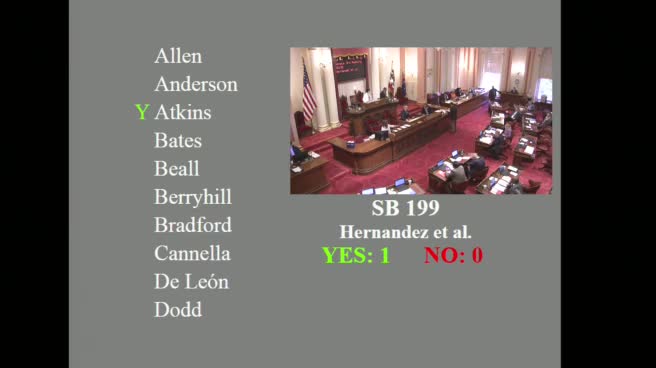
Bill Author

Bill Co-Author(s):