SB 764: Real estate trust fund accounts: fidelity insurance.
- Session Year: 2017-2018
- House: Senate
- Latest Version Date: 2017-09-11
Existing law, the Real Estate Law, provides for the licensure and regulation of real estate brokers by the Real Estate Commissioner. Existing law requires a real estate broker who accepts funds belonging to others in connection with a transaction to deposit all those funds in either a neutral escrow depository, into the hands of the brokers principal, or into a trust fund account, as specified.
Existing law authorizes certain persons, including, among others, a real estate salesperson licensed to the broker to withdraw funds from a trust fund account of the broker if specifically authorized in writing. Existing law authorizes an unlicensed employee of the broker to withdraw funds from the brokers trust fund account if the broker has fidelity bond coverage equal to the maximum amount of the trust funds to which the unlicensed employee has access to at any time. Existing law authorizes this bond to have a deductible of up to 5% of the coverage amount, if the employing broker has evidence of financial responsibility and requires financial responsibility to be a separate fidelity bond coverage or a cash deposit adequate to cover the amount of the fidelity bond deductible, as specified, or any other evidence of financial responsibility approved by the commissioner.
This bill would also authorize an unlicensed employee of the broker to withdraw funds if the broker has insurance coverage equal to the maximum amount of the trust funds to which the unlicensed employee has access to at any time. The bill would require, in this context, that bonds and insurance protect the broker from intentional wrongful acts committed by an employee of that business, including theft, dishonest acts, or forgery. The bill would make conforming changes.
Existing law, the Real Estate Law, provides for the licensure and regulation of real estate brokers by the Real Estate Commissioner. Existing law requires a real estate broker who accepts funds belonging to others in connection with a transaction to deposit all those funds in either a neutral escrow depository, into the hands of the brokers principal, or into a trust fund account, as specified.
Existing law authorizes certain persons, including, among others, a real estate salesperson licensed to the broker to withdraw funds from a trust fund account of the broker if specifically authorized in writing. Existing law authorizes an unlicensed employee of the broker to withdraw funds from the brokers trust fund account if the broker has fidelity bond coverage equal to the maximum amount of the trust funds to which the unlicensed employee has access to at any time. Existing law authorizes this bond to have a deductible of up to 5% of the coverage amount, if the employing broker has evidence of financial responsibility and requires financial responsibility to be a separate fidelity bond coverage or a cash deposit adequate to cover the amount of the fidelity bond deductible, as specified, or any other evidence of financial responsibility approved by the commissioner.
This bill would also authorize an unlicensed employee of the broker to withdraw funds if the broker has insurance coverage equal to the maximum amount of the trust funds to which the unlicensed employee has access to at any time. The bill would require, in this context, that bonds and insurance protect the broker from intentional wrongful acts committed by an employee of that business, including theft, dishonest acts, or forgery. The bill would make conforming changes.
Existing law, the Real Estate Law, provides for the licensure and regulation of real estate brokers by the Real Estate Commissioner. Existing law requires a real estate broker who accepts funds belonging to others in connection with a transaction to deposit all those funds in either a neutral escrow depository, into the hands of the brokers principal, or into a trust fund account, as specified.
Existing law authorizes certain persons, including, among others, a real estate salesperson licensed to the broker to withdraw funds from a trust fund account of the broker if specifically authorized in writing. Existing law authorizes an unlicensed employee of the broker to withdraw funds from the brokers trust fund account if the broker has fidelity bond coverage equal to the maximum amount of the trust funds to which the unlicensed employee has access to at any time. Existing law authorizes this bond to have a deductible of up to 5% of the coverage amount, if the employing broker has evidence of financial responsibility and requires financial responsibility to be a separate fidelity bond coverage or a cash deposit adequate to cover the amount of the fidelity bond deductible, as specified, or any other evidence of financial responsibility approved by the commissioner.
This bill would also authorize an unlicensed employee of the broker to withdraw funds if the broker has fidelity insurance coverage equal to the maximum amount of the trust funds to which the unlicensed employee has access to at any time. The bill would require, in this context, that bonds and insurance protect the broker from intentional wrongful acts committed by an employee of that business, including theft, dishonest acts, or forgery. The bill would make conforming changes.
Existing law, the Real Estate Law, provides for the licensure and regulation of real estate brokers by the Real Estate Commissioner. Existing law requires a real estate broker who accepts funds belonging to others in connection with a transaction to deposit all those funds in either a neutral escrow depository, into the hands of the brokers principal, or into a trust fund account, as specified.
Existing law authorizes certain persons, including, among others, a real estate salesperson licensed to the broker to withdraw funds from a trust fund account of the broker if specifically authorized in writing. Existing law authorizes an unlicensed employee of the broker to withdraw funds from the brokers trust fund account if the broker has fidelity bond coverage equal to the maximum amount of the trust funds to which the unlicensed employee has access to at any time. Existing law authorizes this bond to have a deductible of up to 5% of the coverage amount, if the employing broker has evidence of financial responsibility and requires financial responsibility to be a separate fidelity bond coverage or a cash deposit adequate to cover the amount of the fidelity bond deductible, as specified, or any other evidence of financial responsibility approved by the commissioner.
This bill would also authorize an unlicensed employee of the broker to withdraw funds if the broker has fidelity insurance coverage equal to the maximum amount of the trust funds to which the unlicensed employee has access to at any time.
(a)(1)A real estate broker who accepts funds belonging to others in connection with a transaction subject to this part shall deposit all those funds that are not immediately placed into a neutral escrow depository or into the hands of the brokers principal, into a trust fund account maintained by the broker in a bank or recognized depository in this state. All funds deposited by the broker in a trust fund account shall be maintained there until disbursed by the broker in accordance with instructions from the person entitled to the funds.
(2)Withdrawals may be made from a trust fund account of an individual broker only upon the signature of that broker, or in the case of a corporate broker, only upon the signature of an officer through whom the corporation is licensed pursuant to Section 10158 or 10211, or one, or more, of the following persons if specifically authorized in writing by the individual broker or officer:
(A)A real estate salesperson licensed to the broker.
(B)Another broker acting pursuant to a written agreement with the individual broker that conforms to the requirements of this part and any regulations promulgated pursuant to this part.
(C)An unlicensed employee of the individual broker, if the broker has fidelity bond or insurance coverage equal to at least the maximum amount of the trust funds to which the unlicensed employee has access at any time. For purposes of this section, bonds or insurance providing coverage must protect the broker from intentional wrongful acts committed by an employee of that business, including theft, dishonest acts, or forgery. Bonds and insurance providing coverage may be written with a deductible of up to 5 percent of the coverage amount. For bonds and insurance with a deductible, the employing broker shall have evidence of financial responsibility that is sufficient to protect members of the public against a loss subject to the deductible amount.
Evidence of financial responsibility shall include one or more of the following:
(i)Separate bond or insurance coverage adequate to cover the amount of the deductible.
(ii)A cash deposit held in a separate account, apart from other funds of the broker, the brokers employees, or the brokers principals, in a bank or recognized depository in this state adequate to cover the amount of the fidelity bond deductible and held exclusively and solely for the purpose of paying the fidelity bond deductible amount.
(iii)Any other evidence of financial responsibility approved by the commissioner.
(3)An arrangement under which a person enumerated in subparagraph (A), (B), or (C) of paragraph (2) is authorized to make withdrawals from a trust fund account of a broker shall not relieve an individual broker, nor the broker-officer of a corporate broker licensee, from responsibility or liability as provided by law in handling trust funds in the brokers custody.
(4)Notwithstanding the provisions of paragraphs (1), (2), and (3), a real estate broker collecting payments or performing services for investors or note owners in connection with loans secured by a first lien on real property may deposit funds received in trust in an out-of-state depository institution insured by the Federal Deposit Insurance Corporation, if the investor or note owner is any one of the following:
(A)The Federal National Mortgage Association, the Government National Mortgage Association, the Federal Home Loan Mortgage Corporation, the Federal Housing Administration, or the United States Department of Veterans Affairs.
(B)A bank or subsidiary thereof, bank holding company or subsidiary thereof, trust company, savings bank or savings and loan association or subsidiary thereof, savings bank or savings association holding company or subsidiary thereof, credit union, industrial bank or industrial loan company, or insurance company doing business under the authority of, and in accordance with, the laws of this state, another state, or the United States relating to banks, trust companies, savings banks or savings associations, credit unions, industrial banks or industrial loan companies, or insurance companies, as evidenced by a license, certificate, or charter issued by the United States or a state, district, territory, or commonwealth of the United States.
(C)Trustees of a pension, profit-sharing, or welfare fund, if the pension, profit-sharing, or welfare fund has a net worth of not less than fifteen million dollars ($15,000,000).
(D)A corporation with outstanding securities registered under Section 12 of the Securities Exchange Act of 1934 or a wholly owned subsidiary of that corporation.
(E)A syndication or other combination of any of the entities specified in subparagraph (A), (B), (C), or (D) that is organized to purchase the promissory note.
(F)The California Housing Finance Agency or a local housing finance agency organized under the Health and Safety Code.
(G)A licensed residential mortgage lender or servicer acting under the authority of that license.
(H)A licensed real estate broker selling all or part of the loan, note, or contract to a lender or purchaser specified in subparagraphs (A) to (G), inclusive.
(5)A real estate broker who deposits funds held in trust in an out-of-state depository institution in accordance with paragraph (3) shall make available, in this state, the books, records, and files pertaining to the trust accounts to the commissioner or the commissioners representatives or pay the reasonable expenses for travel and lodging incurred by the commissioner or the commissioners representatives in order to conduct an examination at an out-of-state location.
(b)A real estate broker acting as a principal pursuant to Section 10131.1 shall place all funds received from others for the purchase of real property sales contracts or promissory notes secured directly or collaterally by liens on real property in a neutral escrow depository unless delivery of the contract or note is made simultaneously with the receipt of the purchase funds.
(c)A real estate sales person who accepts trust funds from others on behalf of the broker under whom he or she is licensed shall immediately deliver the funds to the broker or, if so directed by the broker, shall deliver the funds into the custody of the brokers principal or a neutral escrow depository or shall deposit the funds into the brokers trust fund account.
(d)If not otherwise expressly prohibited by this part, a real estate broker may, at the request of the owner of trust funds or of the principals to a transaction or series of transactions from whom the broker has received trust funds, deposit the funds into an interest-bearing account in a bank, savings and loan association, credit union, or industrial loan company, the accounts of which are insured by the Federal Deposit Insurance Corporation, if all of the following requirements are met:
(1)The account is in the name of the broker as trustee for the designated beneficiary or principal of a transaction or series of transactions.
(2)All of the funds in the account are covered by insurance provided by an agency of the United States.
(3)The funds in the account are kept separate, distinct, and apart from funds belonging to the broker or to any other person for whom the broker holds funds in trust.
(4)The broker discloses to the person from whom the trust funds are received, and to a beneficiary whose identity is known to the broker at the time of establishing the account, the nature of the account, how interest will be calculated and paid under various circumstances, whether service charges will be paid to the depository and by whom, and possible notice requirements or penalties for withdrawal of funds from the account.
(5)Interest earned on funds in the account may not inure directly or indirectly to the benefit of the broker or a person licensed to the broker.
(6)In an executory sale, lease, or loan transaction in which the broker accepts funds in trust to be applied to the purchase, lease, or loan, the parties to the contract shall have specified in the contract or by collateral written agreement the person to whom interest earned on the funds is to be paid or credited.
(e)The broker shall have no obligation to place trust funds into an interest-bearing account unless requested to do so and unless all of the conditions in subdivision (d) are met, nor, in any event, if he or she advises the party making the request that the funds will not be placed in an interest-bearing account.
(f)Nothing in subdivision (d) shall preclude the commissioner from prescribing, by regulation, circumstances in which, and conditions under which, a real estate broker is authorized to deposit funds received in trust into an interest-bearing trust fund account.
(g)The broker shall maintain a separate record of the receipt and disposition of all funds described in subdivisions (a) and (b), including any interest earned on the funds.
(h)Upon request of the commissioner, a broker shall furnish to the commissioner an authorization for examination of financial records of those trust fund accounts maintained in a financial institution, in accordance with the procedures set forth in Section 7473 of the Government Code.
(i)As used in this section, neutral escrow means an escrow business conducted by a person licensed under Division 6 (commencing with Section 17000) of the Financial Code or by a person described in paragraph (1) or (3) of subdivision (a) of Section 17006 of that code.
(a)(1)A real estate broker who accepts funds belonging to others in connection with a transaction subject to this part shall deposit all those funds that are not immediately placed into a neutral escrow depository or into the hands of the brokers principal, into a trust fund account maintained by the broker in a bank or recognized depository in this state. All funds deposited by the broker in a trust fund account shall be maintained there until disbursed by the broker in accordance with instructions from the person entitled to the funds.
(2)Withdrawals may be made from a trust fund account of an individual broker only upon the signature of that broker, or in the case of a corporate broker, only upon the signature of an officer through whom the corporation is licensed pursuant to Section 10158 or 10211, or one, or more, of the following persons if specifically authorized in writing by the individual broker or officer:
(A)A real estate salesperson licensed to the broker.
(B)Another broker acting pursuant to a written agreement with the individual broker that conforms to the requirements of this part and any regulations promulgated pursuant to this part.
(C)An unlicensed employee of the individual broker, if the broker has fidelity bond or insurance coverage equal to at least the maximum amount of the trust funds to which the unlicensed employee has access at any time. For purposes of this section, bonds or insurance providing coverage must protect the broker from intentional wrongful acts committed by an employee of that business, including theft, dishonest acts, or forgery. Bonds and insurance providing coverage may be written with a deductible of up to 5 percent of the coverage amount. For bonds and insurance with a deductible, the employing broker shall have evidence of financial responsibility that is sufficient to protect members of the public against a loss subject to the deductible amount.
Evidence of financial responsibility shall include one or more of the following:
(i)Separate bond or insurance coverage adequate to cover the amount of the deductible.
(ii)A cash deposit held in a separate account, apart from other funds of the broker, the brokers employees, or the brokers principals, in a bank or recognized depository in this state adequate to cover the amount of the fidelity bond deductible and held exclusively and solely for the purpose of paying the fidelity bond deductible amount.
(iii)Any other evidence of financial responsibility approved by the commissioner.
(3)An arrangement under which a person enumerated in subparagraph (A), (B), or (C) of paragraph (2) is authorized to make withdrawals from a trust fund account of a broker shall not relieve an individual broker, nor the broker-officer of a corporate broker licensee, from responsibility or liability as provided by law in handling trust funds in the brokers custody.
(4)Notwithstanding the provisions of paragraphs (1), (2), and (3), a real estate broker collecting payments or performing services for investors or note owners in connection with loans secured by a first lien on real property may deposit funds received in trust in an out-of-state depository institution insured by the Federal Deposit Insurance Corporation, if the investor or note owner is any one of the following:
(A)The Federal National Mortgage Association, the Government National Mortgage Association, the Federal Home Loan Mortgage Corporation, the Federal Housing Administration, or the United States Department of Veterans Affairs.
(B)A bank or subsidiary thereof, bank holding company or subsidiary thereof, trust company, savings bank or savings and loan association or subsidiary thereof, savings bank or savings association holding company or subsidiary thereof, credit union, industrial bank or industrial loan company, or insurance company doing business under the authority of, and in accordance with, the laws of this state, another state, or the United States relating to banks, trust companies, savings banks or savings associations, credit unions, industrial banks or industrial loan companies, or insurance companies, as evidenced by a license, certificate, or charter issued by the United States or a state, district, territory, or commonwealth of the United States.
(C)Trustees of a pension, profit-sharing, or welfare fund, if the pension, profit-sharing, or welfare fund has a net worth of not less than fifteen million dollars ($15,000,000).
(D)A corporation with outstanding securities registered under Section 12 of the Securities Exchange Act of 1934 or a wholly owned subsidiary of that corporation.
(E)A syndication or other combination of any of the entities specified in subparagraph (A), (B), (C), or (D) that is organized to purchase the promissory note.
(F)The California Housing Finance Agency or a local housing finance agency organized under the Health and Safety Code.
(G)A licensed residential mortgage lender or servicer acting under the authority of that license.
(H)A licensed real estate broker selling all or part of the loan, note, or contract to a lender or purchaser specified in subparagraphs (A) to (G), inclusive.
(5)A real estate broker who deposits funds held in trust in an out-of-state depository institution in accordance with paragraph (3) shall make available, in this state, the books, records, and files pertaining to the trust accounts to the commissioner or the commissioners representatives or pay the reasonable expenses for travel and lodging incurred by the commissioner or the commissioners representatives in order to conduct an examination at an out-of-state location.
(b)A real estate broker acting as a principal pursuant to Section 10131.1 shall place all funds received from others for the purchase of real property sales contracts or promissory notes secured directly or collaterally by liens on real property in a neutral escrow depository unless delivery of the contract or note is made simultaneously with the receipt of the purchase funds.
(c)A real estate sales person who accepts trust funds from others on behalf of the broker under whom he or she is licensed shall immediately deliver the funds to the broker or, if so directed by the broker, shall deliver the funds into the custody of the brokers principal or a neutral escrow depository or shall deposit the funds into the brokers trust fund account.
(d)If not otherwise expressly prohibited by this part, a real estate broker may, at the request of the owner of trust funds or of the principals to a transaction or series of transactions from whom the broker has received trust funds, deposit the funds into an interest-bearing account in a bank, savings and loan association, credit union, or industrial loan company, the accounts of which are insured by the Federal Deposit Insurance Corporation, if all of the following requirements are met:
(1)The account is in the name of the broker as trustee for the designated beneficiary or principal of a transaction or series of transactions.
(2)All of the funds in the account are covered by insurance provided by an agency of the United States.
(3)The funds in the account are kept separate, distinct, and apart from funds belonging to the broker or to any other person for whom the broker holds funds in trust.
(4)The broker discloses to the person from whom the trust funds are received, and to a beneficiary whose identity is known to the broker at the time of establishing the account, the nature of the account, how interest will be calculated and paid under various circumstances, whether service charges will be paid to the depository and by whom, and possible notice requirements or penalties for withdrawal of funds from the account.
(5)Interest earned on funds in the account may not inure directly or indirectly to the benefit of the broker or a person licensed to the broker.
(6)In an executory sale, lease, or loan transaction in which the broker accepts funds in trust to be applied to the purchase, lease, or loan, the parties to the contract shall have specified in the contract or by collateral written agreement the person to whom interest earned on the funds is to be paid or credited.
(e)The broker shall have no obligation to place trust funds into an interest-bearing account unless requested to do so and unless all of the conditions in subdivision (d) are met, nor, in any event, if he or she advises the party making the request that the funds will not be placed in an interest-bearing account.
(f)Nothing in subdivision (d) shall preclude the commissioner from prescribing, by regulation, circumstances in which, and conditions under which, a real estate broker is authorized to deposit funds received in trust into an interest-bearing trust fund account.
(g)The broker shall maintain a separate record of the receipt and disposition of all funds described in subdivisions (a) and (b), including any interest earned on the funds.
(h)Upon request of the commissioner, a broker shall furnish to the commissioner an authorization for examination of financial records of those trust fund accounts maintained in a financial institution, in accordance with the procedures set forth in Section 7473 of the Government Code.
(i)As used in this section, neutral escrow means an escrow business conducted by a person licensed under Division 6 (commencing with Section 17000) of the Financial Code or by a person described in paragraph (1) or (3) of subdivision (a) of Section 17006 of that code.
(a)(1)A real estate broker who accepts funds belonging to others in connection with a transaction subject to this part shall deposit all those funds that are not immediately placed into a neutral escrow depository or into the hands of the brokers principal, into a trust fund account maintained by the broker in a bank or recognized depository in this state. All funds deposited by the broker in a trust fund account shall be maintained there until disbursed by the broker in accordance with instructions from the person entitled to the funds.
(2)Withdrawals may be made from a trust fund account of an individual broker only upon the signature of that broker, or in the case of a corporate broker, only upon the signature of an officer through whom the corporation is licensed pursuant to Section 10158 or 10211, or one, or more, of the following persons if specifically authorized in writing by the individual broker or officer:
(A)A real estate salesperson licensed to the broker.
(B)Another broker acting pursuant to a written agreement with the individual broker that conforms to the requirements of this part and any regulations promulgated pursuant to this part.
(C)An unlicensed employee of the individual broker, if the broker has fidelity bond or fidelity insurance coverage equal to at least the maximum amount of the trust funds to which the unlicensed employee has access at any time. For purposes of this section, bonds or insurance providing coverage must protect the broker from intentional wrongful acts committed by an employee of that business, including theft, dishonest acts, or forgery. Bonds and insurance providing coverage may be written with a deductible of up to 5 percent of the coverage amount. For bonds and insurance with a deductible, the employing broker shall have evidence of financial responsibility that is sufficient to protect members of the public against a loss subject to the deductible amount.
Evidence of financial responsibility shall include one or more of the following:
(i)Separate fidelity bond or insurance coverage adequate to cover the amount of the fidelity bond deductible.
(ii)A cash deposit held in a separate account, apart from other funds of the broker, the brokers employees, or the brokers principals, in a bank or recognized depository in this state adequate to cover the amount of the fidelity bond deductible and held exclusively and solely for the purpose of paying the fidelity bond deductible amount.
(iii)Any other evidence of financial responsibility approved by the commissioner.
(3)An arrangement under which a person enumerated in subparagraph (A), (B), or (C) of paragraph (2) is authorized to make withdrawals from a trust fund account of a broker shall not relieve an individual broker, nor the broker-officer of a corporate broker licensee, from responsibility or liability as provided by law in handling trust funds in the brokers custody.
(4)Notwithstanding the provisions of paragraphs (1), (2), and (3), a real estate broker collecting payments or performing services for investors or note owners in connection with loans secured by a first lien on real property may deposit funds received in trust in an out-of-state depository institution insured by the Federal Deposit Insurance Corporation, if the investor or note owner is any one of the following:
(A)The Federal National Mortgage Association, the Government National Mortgage Association, the Federal Home Loan Mortgage Corporation, the Federal Housing Administration, or the United States Department of Veterans Affairs.
(B)A bank or subsidiary thereof, bank holding company or subsidiary thereof, trust company, savings bank or savings and loan association or subsidiary thereof, savings bank or savings association holding company or subsidiary thereof, credit union, industrial bank or industrial loan company, or insurance company doing business under the authority of, and in accordance with, the laws of this state, another state, or the United States relating to banks, trust companies, savings banks or savings associations, credit unions, industrial banks or industrial loan companies, or insurance companies, as evidenced by a license, certificate, or charter issued by the United States or a state, district, territory, or commonwealth of the United States.
(C)Trustees of a pension, profit-sharing, or welfare fund, if the pension, profit-sharing, or welfare fund has a net worth of not less than fifteen million dollars ($15,000,000).
(D)A corporation with outstanding securities registered under Section 12 of the Securities Exchange Act of 1934 or a wholly owned subsidiary of that corporation.
(E)A syndication or other combination of any of the entities specified in subparagraph (A), (B), (C), or (D) that is organized to purchase the promissory note.
(F)The California Housing Finance Agency or a local housing finance agency organized under the Health and Safety Code.
(G)A licensed residential mortgage lender or servicer acting under the authority of that license.
(H)A licensed real estate broker selling all or part of the loan, note, or contract to a lender or purchaser specified in subparagraphs (A) to (G), inclusive.
(5)A real estate broker who deposits funds held in trust in an out-of-state depository institution in accordance with paragraph (3) shall make available, in this state, the books, records, and files pertaining to the trust accounts to the commissioner or the commissioners representatives or pay the reasonable expenses for travel and lodging incurred by the commissioner or the commissioners representatives in order to conduct an examination at an out-of-state location.
(b)A real estate broker acting as a principal pursuant to Section 10131.1 shall place all funds received from others for the purchase of real property sales contracts or promissory notes secured directly or collaterally by liens on real property in a neutral escrow depository unless delivery of the contract or note is made simultaneously with the receipt of the purchase funds.
(c)A real estate sales person who accepts trust funds from others on behalf of the broker under whom he or she is licensed shall immediately deliver the funds to the broker or, if so directed by the broker, shall deliver the funds into the custody of the brokers principal or a neutral escrow depository or shall deposit the funds into the brokers trust fund account.
(d)If not otherwise expressly prohibited by this part, a real estate broker may, at the request of the owner of trust funds or of the principals to a transaction or series of transactions from whom the broker has received trust funds, deposit the funds into an interest-bearing account in a bank, savings and loan association, credit union, or industrial loan company, the accounts of which are insured by the Federal Deposit Insurance Corporation, if all of the following requirements are met:
(1)The account is in the name of the broker as trustee for the designated beneficiary or principal of a transaction or series of transactions.
(2)All of the funds in the account are covered by insurance provided by an agency of the United States.
(3)The funds in the account are kept separate, distinct, and apart from funds belonging to the broker or to any other person for whom the broker holds funds in trust.
(4)The broker discloses to the person from whom the trust funds are received, and to a beneficiary whose identity is known to the broker at the time of establishing the account, the nature of the account, how interest will be calculated and paid under various circumstances, whether service charges will be paid to the depository and by whom, and possible notice requirements or penalties for withdrawal of funds from the account.
(5)Interest earned on funds in the account may not inure directly or indirectly to the benefit of the broker or a person licensed to the broker.
(6)In an executory sale, lease, or loan transaction in which the broker accepts funds in trust to be applied to the purchase, lease, or loan, the parties to the contract shall have specified in the contract or by collateral written agreement the person to whom interest earned on the funds is to be paid or credited.
(e)The broker shall have no obligation to place trust funds into an interest-bearing account unless requested to do so and unless all of the conditions in subdivision (d) are met, nor, in any event, if he or she advises the party making the request that the funds will not be placed in an interest-bearing account.
(f)Nothing in subdivision (d) shall preclude the commissioner from prescribing, by regulation, circumstances in which, and conditions under which, a real estate broker is authorized to deposit funds received in trust into an interest-bearing trust fund account.
(g)The broker shall maintain a separate record of the receipt and disposition of all funds described in subdivisions (a) and (b), including any interest earned on the funds.
(h)Upon request of the commissioner, a broker shall furnish to the commissioner an authorization for examination of financial records of those trust fund accounts maintained in a financial institution, in accordance with the procedures set forth in Section 7473 of the Government Code.
(i)As used in this section, neutral escrow means an escrow business conducted by a person licensed under Division 6 (commencing with Section 17000) of the Financial Code or by a person described in paragraph (1) or (3) of subdivision (a) of Section 17006 of that code.
(a)(1)A real estate broker who accepts funds belonging to others in connection with a transaction subject to this part shall deposit all those funds that are not immediately placed into a neutral escrow depository or into the hands of the brokers principal, into a trust fund account maintained by the broker in a bank or recognized depository in this state. All funds deposited by the broker in a trust fund account shall be maintained there until disbursed by the broker in accordance with instructions from the person entitled to the funds.
(2)Withdrawals may be made from a trust fund account of an individual broker only upon the signature of that broker, or in the case of a corporate broker, only upon the signature of an officer through whom the corporation is licensed pursuant to Section 10158 or 10211, or one, or more, of the following persons if specifically authorized in writing by the individual broker or officer:
(A)A real estate salesperson licensed to the broker.
(B)Another broker acting pursuant to a written agreement with the individual broker that conforms to the requirements of this part and any regulations promulgated pursuant to this part.
(C)An unlicensed employee of the individual broker, if the broker has fidelity bond or fidelity insurance coverage equal to at least the maximum amount of the trust funds to which the unlicensed employee has access at any time. For purposes of this section, bonds providing coverage may be written with a deductible of up to 5 percent of the coverage amount. For bonds with a deductible, the employing broker shall have evidence of financial responsibility that is sufficient to protect members of the public against a loss subject to the deductible amount.
Evidence of financial responsibility shall include one or more of the following:
(i)Separate fidelity bond coverage adequate to cover the amount of the fidelity bond deductible.
(ii)A cash deposit held in a separate account, apart from other funds of the broker, the brokers employees, or the brokers principals, in a bank or recognized depository in this state adequate to cover the amount of the fidelity bond deductible and held exclusively and solely for the purpose of paying the fidelity bond deductible amount.
(iii)Any other evidence of financial responsibility approved by the commissioner.
(3)An arrangement under which a person enumerated in subparagraph (A), (B), or (C) of paragraph (2) is authorized to make withdrawals from a trust fund account of a broker shall not relieve an individual broker, nor the broker-officer of a corporate broker licensee, from responsibility or liability as provided by law in handling trust funds in the brokers custody.
(4)Notwithstanding the provisions of paragraphs (1), (2), and (3), a real estate broker collecting payments or performing services for investors or note owners in connection with loans secured by a first lien on real property may deposit funds received in trust in an out-of-state depository institution insured by the Federal Deposit Insurance Corporation, if the investor or note owner is any one of the following:
(A)The Federal National Mortgage Association, the Government National Mortgage Association, the Federal Home Loan Mortgage Corporation, the Federal Housing Administration, or the United States Department of Veterans Affairs.
(B)A bank or subsidiary thereof, bank holding company or subsidiary thereof, trust company, savings bank or savings and loan association or subsidiary thereof, savings bank or savings association holding company or subsidiary thereof, credit union, industrial bank or industrial loan company, or insurance company doing business under the authority of, and in accordance with, the laws of this state, another state, or the United States relating to banks, trust companies, savings banks or savings associations, credit unions, industrial banks or industrial loan companies, or insurance companies, as evidenced by a license, certificate, or charter issued by the United States or a state, district, territory, or commonwealth of the United States.
(C)Trustees of a pension, profit-sharing, or welfare fund, if the pension, profit-sharing, or welfare fund has a net worth of not less than fifteen million dollars ($15,000,000).
(D)A corporation with outstanding securities registered under Section 12 of the Securities Exchange Act of 1934 or a wholly owned subsidiary of that corporation.
(E)A syndication or other combination of any of the entities specified in subparagraph (A), (B), (C), or (D) that is organized to purchase the promissory note.
(F)The California Housing Finance Agency or a local housing finance agency organized under the Health and Safety Code.
(G)A licensed residential mortgage lender or servicer acting under the authority of that license.
(H)A licensed real estate broker selling all or part of the loan, note, or contract to a lender or purchaser specified in subparagraphs (A) to (G), inclusive.
(5)A real estate broker who deposits funds held in trust in an out-of-state depository institution in accordance with paragraph (3) shall make available, in this state, the books, records, and files pertaining to the trust accounts to the commissioner or the commissioners representatives or pay the reasonable expenses for travel and lodging incurred by the commissioner or the commissioners representatives in order to conduct an examination at an out-of-state location.
(b)A real estate broker acting as a principal pursuant to Section 10131.1 shall place all funds received from others for the purchase of real property sales contracts or promissory notes secured directly or collaterally by liens on real property in a neutral escrow depository unless delivery of the contract or note is made simultaneously with the receipt of the purchase funds.
(c)A real estate sales person who accepts trust funds from others on behalf of the broker under whom he or she is licensed shall immediately deliver the funds to the broker or, if so directed by the broker, shall deliver the funds into the custody of the brokers principal or a neutral escrow depository or shall deposit the funds into the brokers trust fund account.
(d)If not otherwise expressly prohibited by this part, a real estate broker may, at the request of the owner of trust funds or of the principals to a transaction or series of transactions from whom the broker has received trust funds, deposit the funds into an interest-bearing account in a bank, savings and loan association, credit union, or industrial loan company, the accounts of which are insured by the Federal Deposit Insurance Corporation, if all of the following requirements are met:
(1)The account is in the name of the broker as trustee for the designated beneficiary or principal of a transaction or series of transactions.
(2)All of the funds in the account are covered by insurance provided by an agency of the United States.
(3)The funds in the account are kept separate, distinct, and apart from funds belonging to the broker or to any other person for whom the broker holds funds in trust.
(4)The broker discloses to the person from whom the trust funds are received, and to a beneficiary whose identity is known to the broker at the time of establishing the account, the nature of the account, how interest will be calculated and paid under various circumstances, whether service charges will be paid to the depository and by whom, and possible notice requirements or penalties for withdrawal of funds from the account.
(5)Interest earned on funds in the account may not inure directly or indirectly to the benefit of the broker or a person licensed to the broker.
(6)In an executory sale, lease, or loan transaction in which the broker accepts funds in trust to be applied to the purchase, lease, or loan, the parties to the contract shall have specified in the contract or by collateral written agreement the person to whom interest earned on the funds is to be paid or credited.
(e)The broker shall have no obligation to place trust funds into an interest-bearing account unless requested to do so and unless all of the conditions in subdivision (d) are met, nor, in any event, if he or she advises the party making the request that the funds will not be placed in an interest-bearing account.
(f)Nothing in subdivision (d) shall preclude the commissioner from prescribing, by regulation, circumstances in which, and conditions under which, a real estate broker is authorized to deposit funds received in trust into an interest-bearing trust fund account.
(g)The broker shall maintain a separate record of the receipt and disposition of all funds described in subdivisions (a) and (b), including any interest earned on the funds.
(h)Upon request of the commissioner, a broker shall furnish to the commissioner an authorization for examination of financial records of those trust fund accounts maintained in a financial institution, in accordance with the procedures set forth in Section 7473 of the Government Code.
(i)As used in this section, neutral escrow means an escrow business conducted by a person licensed under Division 6 (commencing with Section 17000) of the Financial Code or by a person described in paragraph (1) or (3) of subdivision (a) of Section 17006 of that code.
|
Date
|
Status
|
|---|---|
| Sep 11, 2017 | Chaptered by Secretary of State. Chapter 248, Statutes of 2017. |
| Sep 11, 2017 | Approved by the Governor. |
| Aug 30, 2017 | Enrolled and presented to the Governor at 3 p.m. |
| Aug 24, 2017 | In Senate. Ordered to engrossing and enrolling. |
| Aug 24, 2017 | Read third time. Passed. Ordered to the Senate. |
| Jul 20, 2017 | Read second time. Ordered to consent calendar. |
| Jul 19, 2017 | From committee: Do pass. Ordered to consent calendar. (Ayes 16. Noes 0.) (July 19). |
| Jun 27, 2017 | From committee: Do pass and re-refer to Com. on APPR. (Ayes 15. Noes 0.) (June 27). Re-referred to Com. on APPR. |
| Jun 5, 2017 | Referred to Com. on B. & P. |
| May 16, 2017 | In Assembly. Read first time. Held at Desk. |
| May 15, 2017 | Read third time. Passed. (Ayes 39. Noes 0. Page 1069.) Ordered to the Assembly. |
| May 9, 2017 | Read second time. Ordered to third reading. |
| May 8, 2017 | From committee: Be ordered to second reading pursuant to Senate Rule 28.8. |
| May 4, 2017 | Set for hearing May 15. |
| May 3, 2017 | May 8 hearing postponed by committee. |
| May 1, 2017 | Set for hearing May 8. |
| Apr 25, 2017 | Withdrawn from committee. |
| Apr 24, 2017 | Read second time and amended. Re-referred to Com. on B., P. & E.D. |
| Apr 20, 2017 | From committee: Do pass as amended and re-refer to Com. on B., P. & E.D. (Ayes 7. Noes 0. Page 781.) (April 19). |
| Mar 31, 2017 | Set for hearing April 19. |
| Mar 30, 2017 | April 5 set for first hearing canceled at the request of author. |
| Mar 10, 2017 | Set for hearing April 5. |
| Mar 9, 2017 | Referred to Coms. on B. & F.I. and B., P. & E.D. |
| Feb 21, 2017 | From printer. May be acted upon on or after March 23. |
| Feb 17, 2017 | Introduced. Read first time. To Com. on RLS. for assignment. To print. |
|
Date
|
Description
|
Location
|
Votes
|
|
|---|---|---|---|---|
| Aug 24, 2017 | SB 764 Moorlach Consent Calendar Second Day Regular Session | Assembly Floor |
Passed |
|
| Jul 19, 2017 | Do pass. To Consent Calendar. | Assembly Standing Committee on Appropriations |
Passed |
|
| Jun 27, 2017 | Do pass and be re-referred to the Committee on [Appropriations] | Assembly Standing Committee on Business and Professions |
Passed |
|
| May 15, 2017 | Senate 3rd Reading SB764 Moorlach | Senate Floor |
Passed |
|
| Apr 19, 2017 | Do pass as amended, but first amend, and re-refer to the Committee on [Business, Professions and Economic Development] | Senate Standing Committee on Banking and Financial Institutions |
Passed |
This list shows positions taken on this bill by organizations on the date displayed, which is linked to the original source.
Positions by individuals are not included.
|
Organization
|
Position
|
Date
|
|---|---|---|
| California Association Of Realtors | ** Support | May 9, 2017 |
| California Business Properties Association | ** Support | May 9, 2017 |
| Institute of Real Estate Management, Orange County Chapter | ** Support | May 9, 2017 |
Date of Hearing: July 19, 2017
ASSEMBLY COMMITTEE ON APPROPRIATIONS
Lorena Gonzalez Fletcher, Chair
SBPCA Bill Id:SB 764
Author:(Moorlach) – As Amended Ver:April 24, 2017
Policy Committee: | Business and Professions | Vote: | 15 - 0 |
|
|
Urgency: No State Mandated Local Program: No Reimbursable: No
SUMMARY:
This bill authorizes a real estate broker to use insurance in lieu of fidelity bonds to cover an unlicensed employee who is authorized to withdraw money from that broker's trust fund account. The bill specifies that the bond or insurance coverage must protect the broker from intentional wrongful acts committed by his or her employee, including theft, dishonest acts, or forgery.
FISCAL EFFECT:
Minor and absorbable costs to the Bureau of Real Estate to update audit and investigation manuals as well as any law material, such as the Real Estate Law Book.
COMMENTS:
- Purpose. According to the author, this bill "expands options available to real estate brokers to protect their clients’ money. SB 764 allows brokers to utilize an insurance policy to protect money being held in a client trust fund account. This is an expansion of current law which restricts protective options to only fidelity bonds. By allowing more options, brokers are given greater flexibility in organizing their businesses, while still providing important consumer protections."
- Background. In 2015, California codified a real estate regulation that authorized unlicensed employees of real estate brokers to withdraw money from brokers’ trust fund accounts, if the employing broker had fidelity bond coverage equal to or greater than the maximum amount of trust funds to which the unlicensed employee had access at any one time
Some real estate brokers have package insurance policies that include several different types of insurance coverage. Brokers with package policies that include fidelity or crime insurance would like to be able to use this insurance to cover their unlicensed employees, rather than having to obtain a separate fidelity bond for this purpose.
- Prior Legislation. AB 607 (Dodd), Chapter 216, Statutes of 2015, codified former Real Estate Regulation 2834 to allow unlicensed employees of real estate brokers to withdraw money from brokers’ trust fund accounts, under certain conditions. The bill also allowed fidelity bonds to contain deductibles of up to 5 percent, as long as the employing broker had evidence of financial responsibility sufficient to protect members of the public against a loss subject to the deductible amount.
Analysis Prepared by: Jennifer Swenson / APPR. / (916) 319-2081
Date of Hearing: June 27, 2017
ASSEMBLY COMMITTEE ON BUSINESS AND PROFESSIONS
Evan Low, Chair
SBPCA Bill Id:
Author:() – As Ver:
SENATE VOTE:
SUBJECT:
SUMMARY: Allows real estate brokers to use an insurance policy in addition to the currently required fidelity bond to protect money being held in a client trust fund account.
EXISTING LAW:
- Requires a real estate broker who accepts funds belonging to others in connection with a transaction regulated under the Real Estate Law to deposit all of those funds that are not immediately placed into a neutral escrow depository or into the hands of the broker’s principal (i.e., client), into a trust fund account maintained by the broker in a bank or recognized depository in this state (Business and Professions Code Section 10145).
- Requires all funds deposited by the broker in a trust fund account to be maintained there until disbursed by the broker in accordance with instructions from the person entitled to the funds (Business and Professions Code Section 10145).
- Provides that withdrawals from a real estate broker’s trust fund account may be made only upon the signature of that broker (or, in the case of a corporate broker, only upon the signature of an officer through whom the corporation is licensed), or one or more of the following persons, if specifically authorized in writing by the individual broker or officer (Business and Professions Code Section 10145):
- A real estate salesperson licensed to the broker.
- Another broker acting pursuant to a written agreement with the broker that controls the trust fund account.
- An unlicensed employee of the broker, if the broker has fidelity bond coverage equal to or greater than the maximum amount of the trust funds to which the unlicensed employee has access at any time. Bonds providing coverage may be written with a deductible of up to 5 percent of the coverage amount, but for bonds with a deductible, the employing broker must have evidence of financial responsibility that is sufficient to protect members of the public against a loss subject to the deductible amount.
- Provides that an arrangement under which a person other than the broker or corporate officer is authorized to make withdrawals from a trust fund account does not relieve an individual broker, nor the broker-officer of a corporate broker licensee, from responsibility or liability as provided by law in handling trust funds in the broker’s custody (Business and Professions Code Section 10145).
THIS BILL:
- Allows real estate brokers to use an insurance policy in addition to the currently required fidelity bond to protect money being held in a client trust fund account that an unlicensed employee has access to.
- Specifies that the bond or insurance coverage must protect the broker from intentional wrongful acts committed by an employee of the business, including theft, dishonest acts, or forgery.
FISCAL EFFECT: According to the Senate Appropriations Committee, pursuant to Senate Rule 28.8, negligible state costs.
COMMENTS:
Purpose. This bill is author sponsored. According to the author, “Senate Bill 764 expands options available to real estate brokers to protect their clients’ money. SB 764 allows brokers to utilize an insurance policy to protect money being held in a client trust fund account. This is an expansion of current law which restricts protective options to only fidelity bonds. By allowing more options, brokers are given greater flexibility in organizing their businesses, while still providing important consumer protections.”
Background. Under current law, real estate brokers must deposit all funds they receive from others in regard to a transaction, that are not placed directly into a neutral escrow or to the principal, into a trust fund account. The funds may only been withdrawn by the broker, a real estate salesperson licensed by the broker, or if the broker has fidelity bond coverage equal to at least the maximum amount of the trust fund, an unlicensed employee of the individual broker may make withdrawals.
This legislation would provide brokers with additional options to protect client funds by permitting brokers to maintain insurance equal to the maximum amount of the trust funds to which an unlicensed employee has access to at any time. It requires that bonds and insurance protect the broker from intentional wrongful acts committed by an employee.
Consumer Protections. A fidelity bond is a form of insurance that protects policyholders from losses that result from fraud, theft, or other dishonest acts of employees. The intention of the requirement for fidelity bond coverage is to protect the large sums of money that a consumer provides to a broker as part of a transaction.
Some brokers already maintain separate insurance to protect themselves and their clients from fraud, but may still face discipline from the Bureau of Real Estate if they do not also maintain fidelity bond coverage. Brokers wishing to grant unlicensed employees permission to withdraw funds from their trust fund accounts are required to obtain fidelity bonds greater than $100,000. However, according to the California Association of Realtors, many brokers are unable to obtain fidelity bond coverage in amounts greater than $100,000 without a deductible. Deductibles on fidelity bonds greater than $100,000 range from 1percent to 5 percent. Adding insurance as an acceptable alternative to fidelity bond coverage could potentially decrease cost and inconvenience associated with real estate transactions, as duplicative coverage would not be required.
Prior Related Legislation. AB 607 (Dodd, Chapter 216, Statutes of 2015), authorized certain persons, a real estate salesperson licensed to the broker, an unlicensed employee of the broker if the broker has fidelity bond insurance equal to the maximum amount of the trust funds, to withdraw funds from a trust fund account of the broker. Also prohibited relieving the persons authorized by the broker to carry out these duties from responsibility or liability while handling trust funds in the broker’s custody.
REGISTERED SUPPORT:
None on file
REGISTERED OPPOSITION:
None on file
Analysis Prepared by: Jimmy Fremgen / B. & P. / (916) 319-3301
Office of Senate Floor Analyses (916) 651-1520 Fax: (916) 327-4478 | SB |
THIRD READING
Bill No: SB 764
:
SENATE BANKING & F.I. COMMITTEE: 7-0, 4/19/17
AYES: Dodd, Vidak, Galgiani, Hueso, Lara, Morrell, Portantino
SENATE APPROPRIATIONS COMMITTEE: Senate Rule 28.8
DIGEST:
This bill authorizes a real estate broker to use insurance in lieu of a fidelity bond to cover an unlicensed employee who is authorized to withdraw money from that broker’s trust fund account, as specified.
Existing law:
- Requires a real estate broker who accepts funds belonging to others in connection with a transaction regulated under the Real Estate Law to deposit all of those funds that are not immediately placed into a neutral escrow depository or into the hands of the broker’s principal (i.e., client), into a trust fund account maintained by the broker in a bank or recognized depository in this state (Business and Professions Code Section 10145).
- Requires all funds deposited by the broker in a trust fund account to be maintained there until disbursed by the broker in accordance with instructions from the person entitled to the funds (Business and Professions Code Section 10145).
- Provides that withdrawals from a real estate broker’s trust fund account may be made only upon the signature of that broker (or, in the case of a corporate broker, only upon the signature of an officer through whom the corporation is licensed), or one or more of the following persons, if specifically authorized in writing by the individual broker or officer (Business and Professions Code Section 10145):
- A real estate salesperson licensed to the broker.
- Another broker acting pursuant to a written agreement with the broker that controls the trust fund account.
- An unlicensed employee of the broker, if the broker has fidelity bond coverage equal to or greater than the maximum amount of the trust funds to which the unlicensed employee has access at any time. Bonds providing coverage may be written with a deductible of up to five percent of the coverage amount, but for bonds with a deductible, the employing broker must have evidence of financial responsibility that is sufficient to protect members of the public against a loss subject to the deductible amount.
- A real estate salesperson licensed to the broker.
- Provides that an arrangement under which a person other than the broker or corporate officer is authorized to make withdrawals from a trust fund account does not relieve an individual broker, nor the broker-officer of a corporate broker licensee, from responsibility or liability as provided by law in handling trust funds in the broker’s custody (Business and Professions Code Section 10145).
This bill:
- Authorizes a real estate broker to use insurance in lieu of a fidelity bond to cover an unlicensed employee of that broker, who is authorized to withdraw money from the broker’s trust fund account.
- Provides that, regardless of whether a fidelity bond or insurance is used, the broker must be covered for intentional wrongful acts committed by his or her employee, including theft, dishonest acts, or forgery.
- Clarifies that the fidelity bond or insurance may be written with a deductible of up to five percent of the coverage amount, but that, for bonds and insurance with a deductible, the employing broker must have evidence of financial responsibility that is sufficient to protect members of the public against a loss subject to the deductible amount.
This bill is intended to give real estate brokers a choice of whether to use a fidelity bond or insurance to cover those of their unlicensed employees who are authorized to withdraw money from the brokers’ trust fund accounts.
In 2015, California codified a real estate regulation that authorized unlicensed employees of real estate brokers to withdraw money from brokers’ trust fund accounts, if the employing broker had fidelity bond coverage equal to or greater than the maximum amount of trust funds to which the unlicensed employee had access at any one time (former Regulation 2834; AB 607, Dodd, Chapter 216, Statutes of 2015). AB 607 also clarified that fidelity bonds could be written with deductibles of up to five percent, as long as the employing broker had evidence of financial responsibility sufficient to protect members of the public against a loss subject to the deductible amount.
SB 764 seeks to expand on AB 607 by authorizing the use of insurance in lieu of fidelity bonds. The proposed change is intended to give real estate brokers greater flexibility. Some real estate brokers have package insurance policies that include several different types of insurance coverage. Brokers with package policies that include fidelity or crime insurance would like to be able to use this insurance to cover their unlicensed employees, rather than having to obtain a separate fidelity bond for this purpose.
Comments
Existing law fails to clarify what acts by an unlicensed employee a fidelity bond must cover; the law simply requires brokers to have bond coverage equal to or greater than the maximum amount of the trust funds to which the unlicensed employee has access at any time. According to experts consulted by the Senate Banking and Financial Institutions Committee staff, fidelity bonds generally cover intentional breaches of the faithfulness of an employee for the employee’s benefit. Examples of wrongful acts covered by fidelity bonds include theft, fraud, embezzlement, and forgery.
The insurance coverage whose use is authorized by SB 764 in lieu of a fidelity bond is intended to provide equivalent or greater protection than coverage provided by the fidelity bond whose use is authorized under existing law. However, because existing law is silent regarding what wrongful acts fidelity bonds must cover, this bill adds a minimum standard of coverage and requires both the fidelity bond or the insurance used in lieu of that bond to meet at least this minimum standard.
FISCAL EFFECT: Appropriation: Fiscal Com.: Local:
California Association of Realtors
California Business Properties Association
Institute of Real Estate Management, Orange County Chapter
None received
ARGUMENTS IN SUPPORT: The California Business Properties Association writes, “Real estate companies already use insurance policies for their businesses and most often have a fidelity policy that covers crime such as employee theft, fraud, etc. These fidelity policies would restore stolen or lost funds from a client’s account, in the same manner as a bond. Under this bill, companies can choose to use either a bond or insurance.” The California Association of Realtors and the Orange County Chapter of the Institute of Real Estate Management is in support for similar reasons.
5/9/17 16:48:45
**** END ****
SENATE COMMITTEE ON
BANKING AND FINANCIAL INSTITUTIONS
Senator Bill Dodd, Chair
2017 - 2018 Regular
Bill No: SB 764 Hearing Date: April 19, 2017
Author: | Moorlach | ||
Version: | February 17, 2017 Introduced | ||
Urgency: | No | Fiscal: | Yes |
Consultant: | Eileen Newhall | ||
Subject: Real estate trust fund accounts: fidelity insurance
SUMMARY
Authorizes real estate brokers to use fidelity insurance to cover unlicensed employees who are authorized to withdraw money from the brokers’ trust fund accounts.
DESCRIPTION
- Provides that an unlicensed employee of a real estate broker may withdraw money from a trust fund account of that broker if the broker has fidelity bond or fidelity insurance coverage equal to at least the maximum amount of the trust funds to which the unlicensed employee has access at any time (this bill adds the option of using fidelity insurance).
EXISTING LAW
- Requires a real estate broker who accepts funds belonging to others in connection with a transaction regulated under the Real Estate Law to deposit all of those funds that are not immediately placed into a neutral escrow depository or into the hands of the broker’s principal (i.e., client), into a trust fund account maintained by the broker in a bank or recognized depository in this state (Business and Professions Code Section 10145).
- Requires all funds deposited by the broker in a trust fund account to be maintained there until disbursed by the broker in accordance with instructions from the person entitled to the funds (Business and Professions Code Section 10145).
- Provides that withdrawals from a real estate broker’s trust fund account may be made only upon the signature of that broker (or, in the case of a corporate broker, only upon the signature of an officer through whom the corporation is licensed), or one or more of the following persons, if specifically authorized in writing by the individual broker or officer (Business and Professions Code Section 10145):
- A real estate salesperson licensed to the broker.
- Another broker acting pursuant to a written agreement with the broker that controls the trust fund account.
- An unlicensed employee of the broker, if the broker has fidelity bond coverage equal to or greater than the maximum amount of the trust funds to which the unlicensed employee has access at any time. Bonds providing coverage may be written with a deductible of up to 5 percent of the coverage amount, but for bonds with a deductible, the employing broker must have evidence of financial responsibility that is sufficient to protect members of the public against a loss subject to the deductible amount.
- Provides that an arrangement under which a person other than the broker or corporate officer is authorized to make withdrawals from a trust fund account does not relieve an individual broker, nor the broker-officer of a corporate broker licensee, from responsibility or liability as provided by law in handling trust funds in the broker’s custody (Business and Professions Code Section 10145).
COMMENTS
- Purpose: This bill is intended to give real estate brokers a choice of whether to use a fidelity bond or fidelity insurance to cover those of their unlicensed employees who are authorized to withdraw money from the brokers’ trust fund accounts.
- Background: In 2015, California codified a real estate regulation that authorized unlicensed employees of real estate brokers to withdraw money from brokers’ trust fund accounts, if the employing broker had fidelity bond coverage equal to or greater than the maximum amount of trust funds to which the unlicensed employee had access at any one time (former Regulation 2834; AB 607, Dodd, Chapter 216, Statutes of 2015). AB 607 also clarified that fidelity bonds could be written with deductibles of up to 5 percent, as long as the employing broker had evidence of financial responsibility sufficient to protect members of the public against a loss subject to the deductible amount.
SB 764 seeks to expand on AB 607 by authorizing the use of fidelity insurance in lieu of fidelity bonds. The proposed change is intended to give real estate brokers greater flexibility. Some real estate brokers have package insurance policies that include several different types of insurance coverage. Brokers with package policies that include fidelity or crime insurance would like to be able to use this insurance to cover their unlicensed employees, rather than having to obtain a separate fidelity bond for this purpose. - Discussion: Existing law fails to clarify what acts by an unlicensed employee a fidelity bond must cover; the law simply requires brokers to have bond coverage equal to or greater than the maximum amount of the trust funds to which the unlicensed employee has access at any time. According to experts consulted by Committee staff, fidelity bonds generally cover intentional breaches of the faithfulness of an employee for the employee’s benefit. Examples of wrongful acts covered by fidelity bonds include theft, fraud, embezzlement, and forgery.
Existing law also fails to define the term fidelity insurance, and references to fidelity insurance within California law are scarce; only one section (Government Code Section 25361, added in 1947 to authorize counties to insure buildings they own) specifies what fidelity insurance must cover. In the case of Government Code 25361, the fidelity insurance must protect “against loss or liability on account of burglary, forgery, embezzlement, defalcation, or other insurable hazards.” Thus, fidelity insurance coverage is not identical to bond coverage, but the two cover similar types of wrongdoing.
The fidelity insurance whose use is authorized by SB 764 is intended to provide equivalent or greater protection than the coverage provided by bonds authorized under existing law. However, because existing law is silent regarding what wrongful acts fidelity bonds must cover, it is impossible to hold the fidelity insurance this bill would authorize to the same or a higher standard without clarifying what minimum standard is required under existing law. Amendments are suggested to add a standard for fidelity bonds that is consistent with what fidelity bonds typically cover, and to require that the fidelity insurance authorized by this bill provide equal or greater protection.
- Summary of Arguments in Support: The California Business Properties Association writes, “Real estate companies already use insurance policies for their businesses and most often have a fidelity policy that covers crime such as employee theft, fraud, etc. These fidelity policies would restore stolen or lost funds from a client’s account, in the same manner as a bond. Under this bill, companies can choose to use either a bond or insurance.” The Orange County Chapter of the Institute of Real Estate Management is in support for similar reasons.
- Summary of Arguments in Opposition: None received.
- Amendments: The following amendments have been agreed to by the author to ensure that the protection afforded by the insurance policies authorized by this bill is at least as great as the protection afforded by the fidelity bonds authorized under existing law. References to “fidelity” insurance are struck on the recommendation of insurance experts to reflect the fact that the type of insurance authorized by this bill can go by multiple names. References to “theft, dishonest acts, or forgery” reflect input from bond experts regarding the coverage typically provided by fidelity bonds.
- Page 2, lines 23 through 31:
(C) An unlicensed employee of the individual broker, if the broker has fidelity bond orfidelityinsurance coverage equal to at least the maximum amount of the trust funds to which the unlicensed employee has access at any time. For purposes of this section, bonds and insurance providing coverage must protect the broker from intentional wrongful acts committed by an employee of that business, including theft, dishonest acts, or forgery. Bonds and insurance providing coverage may be written with a deductible of up to 5 percent of the coverage amount. For bonds and insurance with a deductible, the employing broker shall have evidence of financial responsibility that is sufficient to protect members of the public against a loss subject to the deductible amount. - Page 3, lines 1 and 2:
(i) Separatefidelitybond or insurance coverage adequate to cover the amount of thefidelity bonddeductible.
- Page 2, lines 23 through 31:
- Prior and Related Legislation:
- AB 607 (Dodd), Chapter 216, Statutes of 2015: Codified former Real Estate Regulation 2834 by clarifying that authorized unlicensed employees of real estate brokers could withdraw money from brokers’ trust fund accounts, if the employing broker had fidelity bond coverage equal to or greater than the maximum amount of trust funds to which the unlicensed employee has access at any one time. Provided that fidelity bonds could be written with deductibles of up to 5 percent, as long as the employing broker had evidence of financial responsibility sufficient to protect members of the public against a loss subject to the deductible amount.
LIST OF REGISTERED SUPPORT/OPPOSITION
Support
California Business Properties Association
Institute of Real Estate Management, Orange County Chapter
Opposition
None received
-- END --
Discussed in Hearing
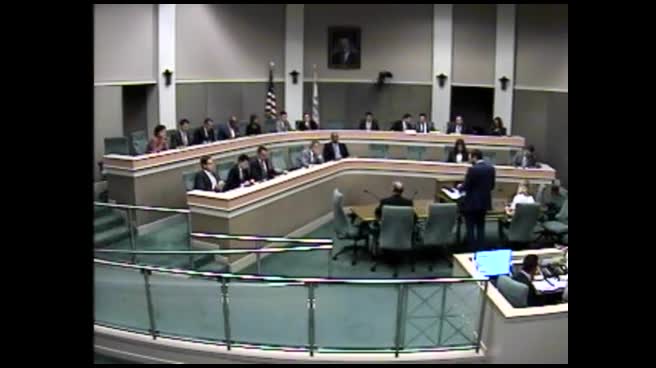 6MIN
Assembly Standing Committee on Business and Professions
 1MIN
Senate Floor
Bill Author

Bill Co-Author(s):