SB 782: Energy data transparency.
- Session Year: 2017-2018
- House: Senate
- Latest Version Date: 2018-09-22
Existing law requires each utility to maintain records of the energy usage data of all buildings to which it provides service for at least the most recent 12 complete calendar months and, upon the request and written authorization or secure electronic authorization of the owner, owners agent, or operator of a covered building, to deliver or otherwise provide aggregated energy usage data for a covered building to the owner, owners agent, building operator, or to the owners account in the ENERGY STAR Portfolio Manager. Existing law defines a covered building to be a building with certain numbers and types of utility accounts.
This bill would additionally require an electrical, natural gas, steam, or fuel oil utility to provide to the owner, owners agent, or operator of a property with 2 or more buildings located on a single parcel or adjacent parcels, with same owner of record and with 5 or more active utility accounts, in aggregate, upon request, aggregate energy usage data for those buildings. Because this bill would impose additional duties on local publicly owned electric utilities, this bill would impose a state-mandated local program.
Existing law prohibits an electrical corporation or a gas corporation from sharing, disclosing, or otherwise making accessible to a 3rd party a customers electrical or gas consumption data with certain exceptions. One of these exceptions is when the customer consents.
This bill would authorize the verification of customer consent through an electronic signature authorization process, and would specify the types of data eligible for release.
The California Constitution requires the state to reimburse local agencies and school districts for certain costs mandated by the state. Statutory provisions establish procedures for making that reimbursement.
This bill would provide that no reimbursement is required by this act for a specified reason.
Under existing law, the Public Utilities Commission (PUC) has regulatory authority over public utilities, including electrical corporations. Existing law requires the PUC to make certain information regarding electric service and electrical corporations available on its Internet Web site.
This bill would require the State Energy Resources Conservation and Development Commission to develop a system for assigning a global unique identifier for each building within the state. The bill would require electrical corporations, electric service providers, and local publicly owned electric utilities, within one year after the commission discloses the addresses and global unique identifier of each building, to assign the global unique identifier of each building to the aggregated electricity usage data of all customers in the same building for those buildings within their respective service territories. Because this bill would impose additional duties on local publicly owned electric utilities, this bill would impose a state-mandated local program.Existing law requires each utility to maintain records of the energy usage data of all buildings to which it provides service for at least the most recent 12 complete calendar months and, upon the request and written authorization or secure electronic authorization of the owner, owners agent, or operator of a covered building, to deliver or otherwise provide aggregated energy usage data for a covered building to the owner, owners agent, building operator, or to the owners account in the ENERGY STAR Portfolio Manager. Existing law defines a covered building to be a building with certain numbers and types of utility accounts.
This bill would additionally require an electrical or gas utility to provide to the owner, owners agent, or operator of a property with 2 or more buildings located on a single parcel or adjacent parcels, with same owner of record and with 5 or more active utility accounts, in aggregate, upon request, aggregate energy usage data for those buildings. Because this bill would impose additional duties on local publicly owned electric utilities, this bill would impose a state-mandated local program.
Existing law prohibits an electrical corporation or a gas corporation from sharing, disclosing, or otherwise making accessible to a 3rd party a customers electrical or gas consumption data with certain exceptions. One of these exceptions is when the customer consents.
This bill would authorize the verification of customer consent through an electronic signature authorization process, and would specify the types of data eligible for release.
Existing law requires each utility to maintain records of the energy usage data of all buildings to which it provides service for at least the most recent 12 complete calendar months and, upon the request and written authorization or secure electronic authorization of the owner, owners agent, or operator of a covered building, to deliver or otherwise provide aggregated energy usage data for a covered building to the owner, owners agent, building operator, or to the owners account in the ENERGY STAR Portfolio Manager. Existing law defines a covered building to be a building with certain numbers and types of utility accounts.This bill would additionally require an electrical or gas utility to provide to the owner, owners agent, or operator of a property with 2 or more buildings located on a single parcel or adjacent parcels, with same owner of record and with 5 or more active utility accounts, in aggregate, upon request, aggregate energy usage data for those buildings. Because this bill would impose additional duties on local publicly owned electric utilities, this bill would impose a state-mandated local program.The California Constitution requires the state to reimburse local agencies and school districts for certain costs mandated by the state. Statutory provisions establish procedures for making that reimbursement.
This bill would provide that no reimbursement is required by this act for a specified reason.
Under existing law, the Public Utilities Commission (PUC) has regulatory authority over public utilities, including electrical corporations. Existing law requires the PUC to make certain information regarding electric service and electrical corporations available on its Internet Web site.
This bill would require the State Energy Resources Conservation and Development Commission to develop a system for assigning a global unique identifier for each building within the state. The bill would require electrical corporations, electric service providers, community choice aggregators, and local publicly owned electric utilities, within one year after the commission discloses the addresses and global unique identifier of each building, to assign the global unique identifier of each building to the aggregated electricity usage data of all customers in the same building for those buildings within their respective service territories. Because this bill would impose additional duties on community choice aggregators and local publicly owned electric utilities, this bill would impose a state-mandated local program.
Existing law prohibits an electrical corporation or a gas corporation from sharing, disclosing, or otherwise making accessible to a 3rd party a customers electrical or gas consumption data with certain exceptions. One of these exceptions is when the customer consents.
This bill would authorize the verification of customer consent through an electronic signature authorization process, and would specify the types of data eligible for release.
Existing law requires each utility to maintain records of the energy usage data of all buildings to which it provides service for at least the most recent 12 complete calendar months and, upon the request and written authorization or secure electronic authorization of the owner, owners agent, or operator of a covered building, to deliver or otherwise provide aggregated energy usage data for a covered building to the owner, owners agent, building operator, or to the owners account in the ENERGY STAR Portfolio Manager. Existing law defines a covered building to be a building with certain numbers and types of utility accounts.
This bill would additionally require an electrical or gas utility to provide to the owner, owners agent, or operator of a property with 2 or more buildings located on a single parcel or adjacent parcels, with same owner of record and with 5 or more active utility accounts, in aggregate, upon request, aggregate energy usage data for those buildings. Because this bill would impose additional duties on local publicly owned electric utilities, this bill would impose a state-mandated local program.
The California Constitution requires the state to reimburse local agencies and school districts for certain costs mandated by the state. Statutory provisions establish procedures for making that reimbursement.
This bill would provide that no reimbursement is required by this act for a specified reason.
Under existing law, the Public Utilities Commission (PUC) has regulatory authority over public utilities, including electrical corporations. Existing law requires the PUC to make certain information regarding electric service and electrical corporations available on its Internet Web site.
This bill would require the State Energy Resources Conservation and Development Commission to develop a system for assigning a global unique identifier for each building within the state. The bill would require electrical corporations, electric service providers, community choice aggregators, and local publicly owned electric utilities, within one year after the commission discloses the addresses and global unique identifier of each building, to assign the global unique identifier of each building to the aggregated electricity usage data of all customers in the same building for those buildings within their respective service territories. Because this bill would impose additional duties on community choice aggregators and local publicly owned electric utilities, this bill would impose a state-mandated local program.
Existing law prohibits an electrical corporation or a gas corporation from sharing, disclosing, or otherwise making accessible to a 3rd party a customers electrical or gas consumption data with certain exceptions. One of these exceptions is when the customer consents.
This bill would authorize the verification of customer consent through an electronic signature authorization process, and would specify the types of data eligible for release.
Existing law requires each utility to maintain records of the energy usage data of all buildings to which it provides service for at least the most recent 12 complete calendar months and, upon the request and written authorization or secure electronic authorization of the owner, owners agent, or operator of a covered building, to deliver or otherwise provide aggregated energy usage data for a covered building to the owner, owners agent, building operator, or to the owners account in the ENERGY STAR Portfolio Manager. Existing law defines a covered building to be a building with certain numbers and types of utility accounts.
This bill would additionally require an electrical or gas utility to provide to the owner, owners agent, or operator of a property with 2 or more buildings located on a single parcel or adjacent parcels, with same owner of record and with 5 or more active utility accounts, in aggregate, upon request, aggregate energy usage data for those buildings. Because this bill would impose additional duties on local publicly owned electric utilities, this bill would impose a state-mandated local program.
The California Constitution requires the state to reimburse local agencies and school districts for certain costs mandated by the state. Statutory provisions establish procedures for making that reimbursement.
This bill would provide that no reimbursement is required by this act for a specified reason.
Existing law creates the Office of Farm to Fork in the Department of Food and Agriculture, and requires the office, to the extent resources are available, to work with the agricultural industry and various other entities to increase the amount of agricultural products available to underserved communities and schools in the state. This bill would require the Department of Food and Agriculture and the State Department of Education to annually meet to discuss the intersection of state agriculture and school meals policy.Existing law creates the Office of Farm to Fork in the Department of Food and Agriculture, and requires the office, to the extent resources are available, to work with the agricultural industry and various other entities to increase the amount of agricultural products available to underserved communities and schools in the state.
This bill would require the Department of Food and Agriculture and the State Department of Education to annually meet to discuss the intersection of state agriculture and school meals policy.
Existing law requires the State Department of Education to ensure that the nutrition levels of meals served to schoolage children pursuant to the federal National School Lunch Act be of the highest quality and greatest nutritional value possible.This bill would establish the California-Grown Fresh School Meals Grant Program in the Department of Food and Agriculture for purposes of encouraging the purchase of California-grown food by schools and expanding the number of freshly prepared school meals offered within the state that use California-grown ingredients. The bill would require the Department of Food and Agriculture, in consultation with the State Department of Education, the State Department of Public Health, and key stakeholders relevant to school meals, agriculture, or health, to establish minimum standards, funding schedules, and procedures for awarding grants under the program to qualified entities, defined to include a school district, charter school, county office of education, or other entity approved by the State Department of Education that participates in the federal National School Lunch Program or the federal School Breakfast Program. The bill would establish the California-Grown Fresh School Meals Account in the Department of Food and Agriculture Fund for the deposit of matching funds from public and private sources. The bill would make available, upon appropriation by the Legislature, the moneys in the account to the Department of Food and Agriculture to provide grants under the grant program, as specified. The bill would repeal the provisions related to the account as of January 1, 2025.Existing law requires the State Department of Education to ensure that the nutrition levels of meals served to schoolage children pursuant to the federal National School Lunch Act be of the highest quality and greatest nutritional value possible.
This bill would establish the California-Grown Fresh School Meals Grant Program in the Department of Food and Agriculture for purposes of encouraging the purchase of California-grown food by schools and expanding the number of freshly prepared school meals offered within the state that use California-grown ingredients. The bill would require the Department of Food and Agriculture, in consultation with the State Department of Education, the State Department of Public Health, and key stakeholders relevant to school meals, agriculture, or health, to establish minimum standards, funding schedules, and procedures for awarding grants under the program to qualified entities, defined to include a school district, charter school, county office of education, or other entity approved by the State Department of Education that participates in the federal National School Lunch Program or the federal School Breakfast Program.
The bill would establish the California-Grown Fresh School Meals Account in the Department of Food and Agriculture Fund for the deposit of matching funds from public and private sources. The bill would continuously appropriate make available, upon appropriation by the Legislature, the moneys in the account to the Department of Food and Agriculture to provide grants under the grant program, as specified. The bill would repeal the provisions related to the account as of January 1, 2025.
Existing law requires the State Department of Education to ensure that the nutrition levels of meals served to schoolage children pursuant to the federal National School Lunch Act be of the highest quality and greatest nutritional value possible.
This bill would establish the California-Grown Fresh School Meals Grant Program in the Department of Food and Agriculture for purposes of encouraging the purchase of California-grown food by schools and expanding the number of freshly prepared school meals offered within the state that use California-grown ingredients. The bill would require the Department of Food and Agriculture, in consultation with the State Department of Education, the State Department of Public Health, and key stakeholders relevant to school meals, agriculture, or health, to establish minimum standards, funding schedules, and procedures for awarding grants under the program to qualified entities, defined to include a school district, charter school, county office of education, or other entity approved by the State Department of Food and Agriculture Education that participates in the federal National School Lunch Program or the federal School Breakfast Program.
The bill would establish the California-Grown Fresh School Meals Account in the Department of Food and Agriculture Fund for the deposit of matching funds from public and private sources. The bill would continuously appropriate the moneys in the account to the Department of Food and Agriculture to provide grants under the grant program, as specified.
Existing law requires the State Department of Education to ensure that the nutrition levels of meals served to schoolage children pursuant to the federal National School Lunch Act be of the highest quality and greatest nutritional value possible.
This bill would establish the California Grown California-Grown Fresh School Meals Grant Program, to be administered by Program in the Department of Food and Agriculture. Agriculture for purposes of encouraging the purchase of California-grown food by schools and expanding the number of freshly prepared school meals offered within the state that use California-grown ingredients. The bill would require the department, Department of Food and Agriculture, in consultation with the State Department of Education, the State Department of Public Health, and other key stakeholders relevant to school meals, agriculture, or health, to establish and develop grant application criteria for the grant program. The bill would authorize a school district or a charter school to apply to the department for a grant and would require the school district or charter school to use this money to buy California grown food, as defined. minimum standards, funding schedules, and procedures for awarding grants under the program to qualified entities, defined to include a school district, charter school, county office of education, or other entity approved by the Department of Food and Agriculture that participates in the federal National School Lunch Program or the federal School Breakfast Program.
Existing law requires the State Department of Education to ensure that the nutrition levels of meals served to schoolage children pursuant to the federal National School Lunch Act be of the highest quality and greatest nutritional value possible.
This bill would establish the California Grown Fresh School Meals Grant Program, to be administered by the Department of Food and Agriculture. The bill would require the department, in consultation with the State Department of Education, the State Department of Public Health, and other key stakeholders relevant to school meals, agriculture, or health, to establish and develop grant application criteria for the grant program. The bill would authorize a school district or a charter school to apply to the department for a grant and would require the school district or charter school to use this money to buy California grown food, as defined.
Existing law provides that the Legislature finds and declares certain things about the federal Head Start program, including that the Congress has recognized the importance of the transfer from preschool to primary school.This bill would make nonsubstantive changes to this law.Existing law provides that the Legislature finds and declares certain things about the federal Head Start program, including that the Congress has recognized the importance of the transfer from preschool to primary school.
This bill would make nonsubstantive changes to this law.
(a)The Legislature finds and declares all of the following:
(1)California has set a goal of generation at 33 percent of total retail sales of electricity in the state from eligible renewable energy resources by December 31, 2020, and 50 percent by December 31, 2030.
(2)California has also set a goal of doubling the energy efficiency of the states buildings by 2030.
(3)Data about the needs and constraints of the electricity grid and on energy use in different regions and grid-specific locations of California can help inform policies in support of these energy goals and help producers and users of energy serve the needs of the grid at the least cost to consumers.
(4)Data access improves customers ability to make informed decisions about their energy management.
(5)Transparency increases accountability for all industry participants and helps all parties in the market make informed decisions about when, where, and how to provide electricity in a way that reduces the need to build additional powerplants and transmission lines, resulting in lower costs for the ratepayer.
(6)Data transparency increases the pace and degree of innovation, economic development, and job growth resulting in new technologies that can lower the cost of renewable energy integration into the grid and lower costs for ratepayers in meeting the states energy goals.
(7)Expanding access to building-specific energy use data will aid the state in meeting its energy efficiency, renewable energy, and other goals.
(b)It is the intent of the Legislature to require, consistent with state and federal regulations protecting security and sensitive information, maximum transparency and public review of technical data and analysis surrounding state regulations and the operation of the electric distribution grid.
(c)It is further the intent of the Legislature to obtain project-specific data on proposed utility investments in the distribution grid pertaining to distribution capacity, voltage support, and reliability or resilience.
SEC. 2.Section 25402.10 of the Public Resources Code is amended to read:25402.10.(a)For the purposes of this section, the following terms have the following meanings:
(1)Benchmark means to obtain information on the energy use in an entire building for a specific period to enable that usage to be tracked or compared against other buildings.
(2)Covered building for purposes of this section means either or both of the following:
(A)Any building with no residential utility accounts.
(B)Any building with five or more active utility accounts, residential or nonresidential.
(3)Energy means electricity, natural gas, steam, or fuel oil sold by a utility to a customer for end uses addressed by the ENERGY STAR Portfolio Manager system.
(4)ENERGY STAR Portfolio Manager means the tool developed and maintained by the United States Environmental Protection Agency to track and assess the energy performance of buildings.
(b)On and after January 1, 2016, each utility shall maintain records of the energy usage data of all buildings to which they provide service for at least the most recent 12 complete calendar months.
(c)(1)Subject to the requirements of paragraph (2), beginning no later than January 1, 2017, each utility shall, upon the request and written authorization or secure electronic authorization of the owner, owners agent, or operator of a covered building, deliver or otherwise provide aggregated energy usage data for a covered building to the owner, owners agent, building operator, or to the owners account in the ENERGY STAR Portfolio Manager. The commission may specify additional information to be delivered by utilities to enable building owners to complete benchmarking of the energy use in their buildings and in other systems or formats for information delivery and automation.
(2)The delivery of information by utilities pursuant to this section shall be subject to the following requirements:
(A)For covered buildings with three or more active utility accounts, each utility shall deliver information showing the aggregated energy usage data of all utility customers in the same building for each of the 12 prior months. Notwithstanding any other law, energy usage data aggregated in this manner shall not be deemed customer utility usage information or confidential information by the utility for purposes of delivery to the owner, owners agent, or operator of a building. The building owner and utility shall not have any liability for any use or disclosure of aggregated energy usage data delivered as required by this section.
(B)For covered buildings not subject to subparagraph (A), each utility shall deliver the information showing the aggregated energy usage data of all utility customers in each covered building for each of the prior 12 months if the accountholder provides written or electronic consent for the delivery of the accountholders energy usage data to the owner, owners agent, operator, or utility.
(C)Each utility shall deliver, upload, or otherwise provide aggregated energy usage data within four weeks of receiving a request from an owner, owners agent, or operator of a covered building.
(D)Each utility shall make available the covered building energy usage data aggregated at a monthly level unless otherwise specified by the commission.
(E)The building owner and utility shall not have any liability for any use or disclosure by others of usage information delivered as required by this section.
(d)The commission shall adopt regulations providing for the delivery to the commission and public disclosure of benchmarking of energy use for covered buildings, as follows:
(1)This subdivision shall not require the owner of a building with 16 or fewer residential utility accounts to collect or deliver energy usage information to the commission.
(2)The commission may do, but is not limited to doing, all of the following in regulations adopted pursuant to this subdivision:
(A)Identify and provide for the collection of the energy usage data for calculations for purpose of benchmarking of energy use.
(B)Identify and provide for the collection of the covered building characteristic information deemed necessary by the commission for the calculation of benchmarking of energy use.
(C)Specify the manner in which certain benchmarking of energy use shall be publicly disclosed.
(D)Determine which covered buildings, in addition to those described in paragraph (1), are not subject to the public disclosure requirement.
(E)Set a schedule to implement the requirements for public disclosure adopted by the commission.
(F)Determine if compliance with a local or county benchmarking program fulfills the commissions requirements adopted pursuant to this subdivision.
(G)Identify categories of information it receives pursuant to this section that are protected from release under either the California Public Records Act (Chapter 3.5 (commencing with Section 6250) of Division 7 of Title 1 of the Government Code) or the Information Practices Act of 1977 (Chapter 1 (commencing with Section 1798) of Title 1.8 of Part 4 of Division 3 of the Civil Code).
(3)The commission shall determine who will deliver the energy usage data and related information for any covered building to the commission.
(e)The commission may ensure timely and accurate compliance with the data submission requirements of this section by using the enforcement measures identified in Section 25321. An owner of a covered building, or its agents or operators, shall not be liable for any noncompliance due to the failure of a utility to provide the information required for compliance.
(f)For buildings that are not covered buildings, and for customer information that is not aggregated pursuant to subparagraph (A) of paragraph (2) of subdivision (c), the commission may adopt regulations prescribing how utilities shall either obtain the customers permission or determine that a building owner has obtained the customers permission, for the owner to receive aggregated energy usage data or, where applicable, individual customer usage information, including by use of electronic authorization and in a lease agreement between the owner and the customer.
(g)The reasonable costs of an electrical or gas corporation in delivering electrical or gas usage data pursuant to this section or other information as required under state or federal law or by an order of the commission shall be recoverable in rates evaluated and approved by the Public Utilities Commission.
(h)The reasonable costs of local publicly owned electric utilities in disclosing electrical usage data pursuant to this section may be considered cost-effective demand-side management services to promote energy efficiency and energy conservation and thereby reimbursable by their general fund.
(i)(1)For purposes of adopting or revising regulations pursuant to subdivision (d), the commission may include two or more buildings located on a single parcel or adjacent parcels with the same owner of record and with five or more active utility accounts, in aggregate, residential or nonresidential, as a single covered building, as defined in subparagraph (B) of paragraph (2) of subdivision (a).
(2)An electrical or gas utility shall provide to the owner, owners agent, or operator of a property containing two or more buildings on a single parcel or adjacent parcels with five or more active utility accounts, in aggregate, residential or nonresidential, upon request of the owner, agent, or operator, aggregate energy usage data on all such buildings in a manner provided pursuant to subdivision (c) as if those buildings are a single covered building as defined in subparagraph (B) of paragraph (2) of subdivision (a).
(j)Nothing in this section shall prevent a city or county from establishing its own benchmarking program requiring collection, delivery, and disclosure of building information.
SEC. 3.Section 8380 of the Public Utilities Code is amended to read:8380.(a)For purposes of this section, electrical or gas consumption data means data about a customers electrical or natural gas usage that is made available as part of an advanced metering infrastructure, and includes incremental and monthly meter-specific electricity data, to the extent produced by that infrastructure, and the name, account number, and address of the customer.
(b)(1)An electrical corporation or gas corporation shall not share, disclose, or otherwise make accessible to any third party a customers electrical or gas consumption data, except as provided in subdivision (e) or upon the consent of the customer. Customer consent may be verified through an electronic signature authorization process pursuant to the Uniform Electronic Transactions Act (Title 2.5 (commencing with Section 1633.1) of Part 2 of Division 3 of the Civil Code).
(2)An electrical corporation or gas corporation shall not sell a customers electrical or gas consumption data or any other personally identifiable information for any purpose.
(3)The electrical corporation or gas corporation or its contractors shall not provide an incentive or discount to the customer for accessing the customers electrical or gas consumption data without the prior consent of the customer.
(4)An electrical or gas corporation that utilizes an advanced metering infrastructure that allows a customer to access the customers electrical and gas consumption data shall ensure that the customer has an option to access that data without being required to agree to the sharing of his or her personally identifiable information, including electrical or gas consumption data, with a third party.
(c)If an electrical corporation or gas corporation contracts with a third party for a service that allows a customer to monitor his or her electricity or gas usage, and that third party uses the data for a secondary commercial purpose, the contract between the electrical corporation or gas corporation and the third party shall provide that the third party prominently discloses that secondary commercial purpose to the customer and secures the customers consent to the use of his or her data for that secondary commercial purpose prior to the use of the data.
(d)An electrical corporation or gas corporation shall use reasonable security procedures and practices to protect a customers unencrypted electrical or gas consumption data from unauthorized access, destruction, use, modification, or disclosure.
(e)(1)This section shall not preclude an electrical corporation or gas corporation from using customer aggregate electrical or gas consumption data for analysis, reporting, or program management if all information has been removed regarding the individual identity of a customer.
(2)This section shall not preclude an electrical corporation or gas corporation from disclosing a customers electrical or gas consumption data to a third party for system, grid, or operational needs, or the implementation of demand response, energy management, or energy efficiency programs, provided that, for contracts entered into after January 1, 2011, the utility has required by contract that the third party implement and maintain reasonable security procedures and practices appropriate to the nature of the information, to protect the personal information from unauthorized access, destruction, use, modification, or disclosure, and prohibits the use of the data for a secondary commercial purpose not related to the primary purpose of the contract without the customers prior consent to that use.
(3)This section shall not preclude an electrical corporation or gas corporation from disclosing electrical or gas consumption data as required or permitted under state or federal law or by an order of the commission.
(f)If a customer chooses to disclose his or her electrical or gas consumption data to a third party that is unaffiliated with, and has no other business relationship with, the electrical or gas corporation, the electrical or gas corporation shall not be responsible for the security of that data, or its use or misuse.
SEC. 4.No reimbursement is required by this act pursuant to Section 6 of Article XIIIB of the California Constitution because a local agency or school district has the authority to levy service charges, fees, or assessments sufficient to pay for the program or level of service mandated by this act, within the meaning of Section 17556 of the Government Code.
(a)The Legislature finds and declares all of the following:
(1)California has set a goal of generation at 33 percent of total retail sales of electricity in the state from eligible renewable energy resources by December 31, 2020, and 50 percent by December 31, 2030.
(2)California has also set a goal of doubling the energy efficiency of the states buildings by 2030.
(3)Data about the needs and constraints of the electricity grid and on energy use in different regions and grid-specific locations of California can help inform policies in support of these energy goals and help producers and users of energy serve the needs of the grid at the least cost to consumers.
(4)Data access improves customers ability to make informed decisions about their energy management.
(5)Transparency increases accountability for all industry participants and helps all parties in the market make informed decisions about when, where, and how to provide electricity in a way that reduces the need to build additional powerplants and transmission lines, resulting in lower costs for the ratepayer.
(6)Data transparency increases the pace and degree of innovation, economic development, and job growth resulting in new technologies that can lower the cost of renewable energy integration into the grid and lower costs for ratepayers in meeting the states energy goals.
(7)Expanding access to building-specific energy use data will aid the state in meeting its energy efficiency, renewable energy, and other goals.
(b)It is the intent of the Legislature to require, consistent with state and federal regulations protecting security and sensitive information, maximum transparency and public review of technical data and analysis surrounding state regulations and the operation of the electric distribution grid.
(c)It is further the intent of the Legislature to obtain project-specific data on proposed utility investments in the distribution grid pertaining to distribution capacity, voltage support, and reliability or resilience.
SEC. 2.Section 25402.10 of the Public Resources Code is amended to read:25402.10.(a)For the purposes of this section, the following terms have the following meanings:
(1)Benchmark means to obtain information on the energy use in an entire building for a specific period to enable that usage to be tracked or compared against other buildings.
(2)Covered building for purposes of this section means either or both of the following:
(A)Any building with no residential utility accounts.
(B)Any building with five or more active utility accounts, residential or nonresidential.
(3)Energy means electricity, natural gas, steam, or fuel oil sold by a utility to a customer for end uses addressed by the ENERGY STAR Portfolio Manager system.
(4)ENERGY STAR Portfolio Manager means the tool developed and maintained by the United States Environmental Protection Agency to track and assess the energy performance of buildings.
(b)On and after January 1, 2016, each utility shall maintain records of the energy usage data of all buildings to which they provide service for at least the most recent 12 complete calendar months.
(c)(1)Subject to the requirements of paragraph (2), beginning no later than January 1, 2017, each utility shall, upon the request and written authorization or secure electronic authorization of the owner, owners agent, or operator of a covered building, deliver or otherwise provide aggregated energy usage data for a covered building to the owner, owners agent, building operator, or to the owners account in the ENERGY STAR Portfolio Manager. The commission may specify additional information to be delivered by utilities to enable building owners to complete benchmarking of the energy use in their buildings and in other systems or formats for information delivery and automation.
(2)The delivery of information by utilities pursuant to this section shall be subject to the following requirements:
(A)For covered buildings with three or more active utility accounts, each utility shall deliver information showing the aggregated energy usage data of all utility customers in the same building for each of the 12 prior months. Notwithstanding any other law, energy usage data aggregated in this manner shall not be deemed customer utility usage information or confidential information by the utility for purposes of delivery to the owner, owners agent, or operator of a building. The building owner and utility shall not have any liability for any use or disclosure of aggregated energy usage data delivered as required by this section.
(B)For covered buildings not subject to subparagraph (A), each utility shall deliver the information showing the aggregated energy usage data of all utility customers in each covered building for each of the prior 12 months if the accountholder provides written or electronic consent for the delivery of the accountholders energy usage data to the owner, owners agent, operator, or utility.
(C)Each utility shall deliver, upload, or otherwise provide aggregated energy usage data within four weeks of receiving a request from an owner, owners agent, or operator of a covered building.
(D)Each utility shall make available the covered building energy usage data aggregated at a monthly level unless otherwise specified by the commission.
(E)The building owner and utility shall not have any liability for any use or disclosure by others of usage information delivered as required by this section.
(d)The commission shall adopt regulations providing for the delivery to the commission and public disclosure of benchmarking of energy use for covered buildings, as follows:
(1)This subdivision shall not require the owner of a building with 16 or fewer residential utility accounts to collect or deliver energy usage information to the commission.
(2)The commission may do, but is not limited to doing, all of the following in regulations adopted pursuant to this subdivision:
(A)Identify and provide for the collection of the energy usage data for the calculation calculations for purpose of benchmarking of energy use.
(B)Identify and provide for the collection of the covered building characteristic information deemed necessary by the commission for the calculation of benchmarking of energy use.
(C)Specify the manner in which certain benchmarking of energy use shall be publicly disclosed.
(D)Determine which covered buildings, in addition to those described in paragraph (1), are not subject to the public disclosure requirement.
(E)Set a schedule to implement the requirements for public disclosure adopted by the commission.
(F)Determine if compliance with a local or county benchmarking program fulfills the commissions requirements adopted pursuant to this subdivision.
(G)Identify categories of information it receives pursuant to this section that are protected from release under either the California Public Records Act (Chapter 3.5 (commencing with Section 6250) of Division 7 of Title 1 of the Government Code) or the Information Practices Act of 1977 (Chapter 1 (commencing with Section 1798) of Title 1.8 of Part 4 of Division 3 of the Civil Code).
(3)The commission shall determine who will deliver the energy usage data and related information for any covered building to the commission.
(e)The commission may ensure timely and accurate compliance with the data submission requirements of this section by using the enforcement measures identified in Section 25321. An owner of a covered building, or its agents or operators, shall not be liable for any noncompliance due to the failure of a utility to provide the information required for compliance.
(f)For buildings that are not covered buildings, and for customer information that is not aggregated pursuant to subparagraph (A) of paragraph (2) of subdivision (c), the commission may adopt regulations prescribing how utilities shall either obtain the customers permission or determine that a building owner has obtained the customers permission, for the owner to receive aggregated energy usage data or, where applicable, individual customer usage information, including by use of electronic authorization and in a lease agreement between the owner and the customer.
(g)The reasonable costs of an electrical or gas corporation in delivering electrical or gas usage data pursuant to this section or other information as required under state or federal law or by an order of the commission shall be recoverable in rates evaluated and approved by the Public Utilities Commission.
(h)The reasonable costs of local publicly owned electric utilities in disclosing electrical usage data pursuant to this section may be considered cost-effective demand-side management services to promote energy efficiency and energy conservation and thereby reimbursable by their general fund.
(i)(1)For purposes of adopting or revising regulations pursuant to subdivision (d), the commission may include two or more buildings located on a single parcel or adjacent parcels with the same owner of record and with five or more active utility accounts, in aggregate, residential or nonresidential, as a single covered building, as defined in subparagraph (B) of paragraph (2) of subdivision (a).
(2)An electrical or gas utility shall provide to the owner, owners agent, or operator of a property containing two or more buildings on a single parcel or adjacent parcels with five or more active utility accounts, in aggregate, residential or nonresidential, upon request of the owner, agent, or operator, aggregate energy usage data on all such buildings in a manner provided pursuant to subdivision (c) as if those buildings are a single covered building as defined in subparagraph (B) of paragraph (2) of subdivision (a).
(j)Nothing in this section shall prevent a city or county from establishing its own benchmarking program requiring collection, delivery, and disclosure of building information.
SEC. 3.Section 25402.14 is added to the Public Resources Code, to read:25402.14.(a)To facilitate the tracking of electricity usage data of buildings in the state, the commission shall, to the extent resources are available, by rulemaking after notice and opportunity for comment, establish a system for assigning a global unique identifier for each building in the state based on the buildings footprint using geographic information systems.(b)Within one year after the commission has disclosed to the electrical corporations, as defined in Section 218 of the Public Utilities Code, electric service providers, as defined in Section 218.3 of the Public Utilities Code, and local publicly owned electric utilities, as defined in Section 224.3 of the Public Utilities Code, the addresses and global unique identifier of each building assigned a global unique identifier pursuant to subdivision (a), each electrical corporation, electric service provider, and local publicly owned electric utility shall assign the global unique identifier of the building to the aggregated electricity usage data of all customers in the same building for buildings within its service territory to the extent that the address of the building disclosed by the commission matches the address of the customer or customers served by the electrical corporation, electric service provider, or local publicly owned electric utility.SEC. 4.SEC. 3.Section 8380 of the Public Utilities Code is amended to read:8380.(a)For purposes of this section, electrical or gas consumption data means data about a customers electrical or natural gas usage that is made available as part of an advanced metering infrastructure, and includes incremental and monthly meter-specific electricity data, to the extent produced by that infrastructure, and the name, account number, and address of the customer.
(b)(1)An electrical corporation or gas corporation shall not share, disclose, or otherwise make accessible to any third party a customers electrical or gas consumption data, except as provided in subdivision (e) or upon the consent of the customer. Customer consent may be verified through an electronic signature authorization process pursuant to the Uniform Electronic Transactions Act (Title 2.5 (commencing with Section 1633.1) of Part 2 of Division 3 of the Civil Code).
(2)An electrical corporation or gas corporation shall not sell a customers electrical or gas consumption data or any other personally identifiable information for any purpose.
(3)The electrical corporation or gas corporation or its contractors shall not provide an incentive or discount to the customer for accessing the customers electrical or gas consumption data without the prior consent of the customer.
(4)An electrical or gas corporation that utilizes an advanced metering infrastructure that allows a customer to access the customers electrical and gas consumption data shall ensure that the customer has an option to access that data without being required to agree to the sharing of his or her personally identifiable information, including electrical or gas consumption data, with a third party.
(c)If an electrical corporation or gas corporation contracts with a third party for a service that allows a customer to monitor his or her electricity or gas usage, and that third party uses the data for a secondary commercial purpose, the contract between the electrical corporation or gas corporation and the third party shall provide that the third party prominently discloses that secondary commercial purpose to the customer and secures the customers consent to the use of his or her data for that secondary commercial purpose prior to the use of the data.
(d)An electrical corporation or gas corporation shall use reasonable security procedures and practices to protect a customers unencrypted electrical or gas consumption data from unauthorized access, destruction, use, modification, or disclosure.
(e)(1)This section shall not preclude an electrical corporation or gas corporation from using customer aggregate electrical or gas consumption data for analysis, reporting, or program management if all information has been removed regarding the individual identity of a customer.
(2)This section shall not preclude an electrical corporation or gas corporation from disclosing a customers electrical or gas consumption data to a third party for system, grid, or operational needs, or the implementation of demand response, energy management, or energy efficiency programs, provided that, for contracts entered into after January 1, 2011, the utility has required by contract that the third party implement and maintain reasonable security procedures and practices appropriate to the nature of the information, to protect the personal information from unauthorized access, destruction, use, modification, or disclosure, and prohibits the use of the data for a secondary commercial purpose not related to the primary purpose of the contract without the customers prior consent to that use.
(3)This section shall not preclude an electrical corporation or gas corporation from disclosing electrical or gas consumption data as required or permitted under state or federal law or by an order of the commission.
(f)If a customer chooses to disclose his or her electrical or gas consumption data to a third party that is unaffiliated with, and has no other business relationship with, the electrical or gas corporation, the electrical or gas corporation shall not be responsible for the security of that data, or its use or misuse.
SEC. 5.SEC. 4.No reimbursement is required by this act pursuant to Section 6 of Article XIIIB of the California Constitution because a local agency or school district has the authority to levy service charges, fees, or assessments sufficient to pay for the program or level of service mandated by this act, within the meaning of Section 17556 of the Government Code.
(a)The Legislature finds and declares all of the following:
(1)California has set a goal of generation at 33 percent of total retail sales of electricity in the state from eligible renewable energy resources by December 31, 2020, and 50 percent by December 31, 2030.
(2)California has also set a goal of doubling the energy efficiency of the states buildings by 2030.
(3)Data about the needs and constraints of the electricity grid and on energy use in different regions and grid-specific locations of California can help inform policies in support of these energy goals and help producers and users of energy serve the needs of the grid at the least cost to consumers.
(4)Data access improves customers ability to make informed decisions about their energy management.
(5)Transparency increases accountability for all industry participants and helps all parties in the market make informed decisions about when, where, and how to provide electricity in a way that reduces the need to build additional powerplants and transmission lines, resulting in lower costs for the ratepayer.
(6)Data transparency increases the pace and degree of innovation, economic development, and job growth resulting in new technologies that can lower the cost of renewable energy integration into the grid and lower costs for ratepayers in meeting the states energy goals.
(7)Expanding access to building-specific energy use data will aid the state in meeting its energy efficiency, renewable energy, and other goals.
(b)It is the intent of the Legislature to require, consistent with state and federal regulations protecting security and sensitive information, maximum transparency and public review of technical data and analysis surrounding state regulations and the operation of the electric distribution grid.
(c)It is further the intent of the Legislature to obtain project-specific data on proposed utility investments in the distribution grid pertaining to distribution capacity, voltage support, and reliability or resilience.
SEC. 2.Section 25402.10 of the Public Resources Code is amended to read:25402.10.(a)For the purposes of this section, the following terms have the following meanings:
(1)Benchmark means to obtain information on the energy use in an entire building for a specific period to enable that usage to be tracked or compared against other buildings.
(2)Covered building for purposes of this section means either or both of the following:
(A)Any building with no residential utility accounts.
(B)Any building with five or more active utility accounts, residential or nonresidential.
(3)Energy means electricity, natural gas, steam, or fuel oil sold by a utility to a customer for end uses addressed by the ENERGY STAR Portfolio Manager system.
(4)ENERGY STAR Portfolio Manager means the tool developed and maintained by the United States Environmental Protection Agency to track and assess the energy performance of buildings.
(b)On and after January 1, 2016, each utility shall maintain records of the energy usage data of all buildings to which they provide service for at least the most recent 12 complete calendar months.
(c)(1)Subject to the requirements of paragraph (2), beginning no later than January 1, 2017, each utility shall, upon the request and written authorization or secure electronic authorization of the owner, owners agent, or operator of a covered building, deliver or otherwise provide aggregated energy usage data for a covered building to the owner, owners agent, building operator, or to the owners account in the ENERGY STAR Portfolio Manager. The commission may specify additional information to be delivered by utilities to enable building owners to complete benchmarking of the energy use in their buildings and in other systems or formats for information delivery and automation.
(2)The delivery of information by utilities pursuant to this section shall be subject to the following requirements:
(A)For covered buildings with three or more active utility accounts, each utility shall deliver information showing the aggregated energy usage data of all utility customers in the same building for each of the 12 prior months. Notwithstanding any other law, energy usage data aggregated in this manner shall not be deemed customer utility usage information or confidential information by the utility for purposes of delivery to the owner, owners agent, or operator of a building. The building owner and utility shall not have any liability for any use or disclosure of aggregated energy usage data delivered as required by this section.
(B)For covered buildings not subject to subparagraph (A), each utility shall deliver the information showing the aggregated energy usage data of all utility customers in each covered building for each of the prior 12 months if the accountholder provides written or electronic consent for the delivery of the accountholders energy usage data to the owner, owners agent, operator, or utility.
(C)Each utility shall deliver, upload, or otherwise provide aggregated energy usage data within four weeks of receiving a request from an owner, owners agent, or operator of a covered building.
(D)Each utility shall make available the covered building energy usage data aggregated at a monthly level unless otherwise specified by the commission.
(E)The building owner and utility shall not have any liability for any use or disclosure by others of usage information delivered as required by this section.
(d)The commission shall adopt regulations providing for the delivery to the commission and public disclosure of benchmarking of energy use for covered buildings, as follows:
(1)This subdivision shall not require the owner of a building with 16 or fewer residential utility accounts to collect or deliver energy usage information to the commission.
(2)The commission may do, but is not limited to doing, all of the following in regulations adopted pursuant to this subdivision:
(A)Identify and provide for the collection of the energy usage data for the calculation of benchmarking of energy use.
(B)Identify and provide for the collection of the covered building characteristic information deemed necessary by the commission for the calculation of benchmarking of energy use.
(C)Specify the manner in which certain benchmarking of energy use shall be publicly disclosed.
(D)Determine which covered buildings, in addition to those described in paragraph (1), are not subject to the public disclosure requirement.
(E)Set a schedule to implement the requirements for public disclosure adopted by the commission.
(F)Determine if compliance with a local or county benchmarking program fulfills the commissions requirements adopted pursuant to this subdivision.
(G)Identify categories of information it receives pursuant to this section that are protected from release under either the California Public Records Act (Chapter 3.5 (commencing with Section 6250) of Division 7 of Title 1 of the Government Code) or the Information Practices Act of 1977 (Chapter 1 (commencing with Section 1798) of Title 1.8 of Part 4 of Division 3 of the Civil Code).
(3)The commission shall determine who will deliver the energy usage data and related information for any covered building to the commission.
(e)The commission may ensure timely and accurate compliance with the data submission requirements of this section by using the enforcement measures identified in Section 25321. An owner of a covered building, or its agents or operators, shall not be liable for any noncompliance due to the failure of a utility to provide the information required for compliance.
(f)For buildings that are not covered buildings, and for customer information that is not aggregated pursuant to subparagraph (A) of paragraph (2) of subdivision (c), the commission may adopt regulations prescribing how utilities shall either obtain the customers permission or determine that a building owner has obtained the customers permission, for the owner to receive aggregated energy usage data or, where applicable, individual customer usage information, including by use of electronic authorization and in a lease agreement between the owner and the customer.
(g)The reasonable costs of an electrical or gas corporation in delivering electrical or gas usage data pursuant to this section or other information as required under state or federal law or by an order of the commission shall be recoverable in rates evaluated and approved by the Public Utilities Commission.
(h)The reasonable costs of local publicly owned electric utilities in disclosing electrical usage data pursuant to this section may be considered cost-effective demand-side management services to promote energy efficiency and energy conservation and thereby reimbursable by their general fund.
(i)(1)For purposes of adopting or revising regulations pursuant to subdivision (d), the commission may include two or more buildings located on a single parcel or adjacent parcels with the same owner of record and with five or more active utility accounts, in aggregate, residential or nonresidential, as a single covered building, as defined in subparagraph (B) of paragraph (2) of subdivision (a).
(2)An electrical or gas utility shall provide to the owner, owners agent, or operator of a property containing two or more buildings on a single parcel or adjacent parcels with five or more active utility accounts, in aggregate, residential or nonresidential, upon request of the owner, agent, or operator, aggregate energy usage data on all such buildings in a manner provided pursuant to subdivision (c) as if those buildings are a single covered building as defined in subparagraph (B) of paragraph (2) of subdivision (a).
(j)Nothing in this section shall prevent a city or county from establishing its own benchmarking program requiring collection, delivery, and disclosure of building information.
SEC. 3.Section 25402.14 is added to the Public Resources Code, to read:25402.14.(a)To facilitate the tracking of electricity usage data of buildings in the state, the commission shall, to the extent resources are available, by rulemaking after notice and opportunity for comment, establish a system for assigning a global unique identifier for each building in the state based on the buildings footprint using geographic information systems.
(b)Within one year after the commission has disclosed to the electrical corporations, as defined in Section 218 of the Public Utilities Code, community choice aggregators, as defined in Section 366.2 of the Public Utilities Code, electric service providers, as defined in Section 218.3 of the Public Utilities Code, and local publicly owned electric utilities, as defined in Section 224.3 of the Public Utilities Code, the addresses and global unique identifier of each building assigned a global unique identifier pursuant to subdivision (a), each electrical corporation, community choice aggregator, electric service provider, and local publicly owned electric utility shall assign the global unique identifier of the building to the aggregated electricity usage data of all customers in the same building for buildings within its service territory to the extent that the address of the building disclosed by the commission matches the address of the customer or customers served by the electrical corporation, community choice aggregator, electric service provider, or local publicly owned electric utility.
SEC. 4.Section 8380 of the Public Utilities Code is amended to read:8380.(a)For purposes of this section, electrical or gas consumption data means data about a customers electrical or natural gas usage that is made available as part of an advanced metering infrastructure, and includes incremental and monthly meter-specific electricity data, to the extent produced by that infrastructure, and the name, account number, and address of the customer.
(b)(1)An electrical corporation or gas corporation shall not share, disclose, or otherwise make accessible to any third party a customers electrical or gas consumption data, except as provided in subdivision (e) or upon the consent of the customer. Customer consent may be verified through an electronic signature authorization process pursuant to the Uniform Electronic Transaction Transactions Act (Title 2.5 (commencing with Section 1633.1) of Part 2 of Division 3 of the Civil Code).
(2)An electrical corporation or gas corporation shall not sell a customers electrical or gas consumption data or any other personally identifiable information for any purpose.
(3)The electrical corporation or gas corporation or its contractors shall not provide an incentive or discount to the customer for accessing the customers electrical or gas consumption data without the prior consent of the customer.
(4)An electrical or gas corporation that utilizes an advanced metering infrastructure that allows a customer to access the customers electrical and gas consumption data shall ensure that the customer has an option to access that data without being required to agree to the sharing of his or her personally identifiable information, including electrical or gas consumption data, with a third party.
(c)If an electrical corporation or gas corporation contracts with a third party for a service that allows a customer to monitor his or her electricity or gas usage, and that third party uses the data for a secondary commercial purpose, the contract between the electrical corporation or gas corporation and the third party shall provide that the third party prominently discloses that secondary commercial purpose to the customer and secures the customers consent to the use of his or her data for that secondary commercial purpose prior to the use of the data.
(d)An electrical corporation or gas corporation shall use reasonable security procedures and practices to protect a customers unencrypted electrical or gas consumption data from unauthorized access, destruction, use, modification, or disclosure.
(e)(1)This section shall not preclude an electrical corporation or gas corporation from using customer aggregate electrical or gas consumption data for analysis, reporting, or program management if all information has been removed regarding the individual identity of a customer.
(2)This section shall not preclude an electrical corporation or gas corporation from disclosing a customers electrical or gas consumption data to a third party for system, grid, or operational needs, or the implementation of demand response, energy management, or energy efficiency programs, provided that, for contracts entered into after January 1, 2011, the utility has required by contract that the third party implement and maintain reasonable security procedures and practices appropriate to the nature of the information, to protect the personal information from unauthorized access, destruction, use, modification, or disclosure, and prohibits the use of the data for a secondary commercial purpose not related to the primary purpose of the contract without the customers prior consent to that use.
(3)This section shall not preclude an electrical corporation or gas corporation from disclosing electrical or gas consumption data as required or permitted under state or federal law or by an order of the commission.
(f)If a customer chooses to disclose his or her electrical or gas consumption data to a third party that is unaffiliated with, and has no other business relationship with, the electrical or gas corporation, the electrical or gas corporation shall not be responsible for the security of that data, or its use or misuse.
SEC. 5.No reimbursement is required by this act pursuant to Section 6 of Article XIIIB of the California Constitution because a local agency or school district has the authority to levy service charges, fees, or assessments sufficient to pay for the program or level of service mandated by this act, within the meaning of Section 17556 of the Government Code.
(a)The Legislature finds and declares all of the following:
(1)California has set a goal of generation at 33 percent of total retail sales of electricity in the state from eligible renewable energy resources by December 31, 2020, and 50 percent by December 31, 2030.
(2)California has also set a goal of doubling the energy efficiency of the states buildings by 2030.
(3)Data about the needs and constraints of the electricity grid and on energy use in different regions and grid-specific locations of California can help inform policies in support of these energy goals and help producers and users of energy serve the needs of the grid at the least cost to consumers.
(4)Data access improves customers ability to make informed decisions about their energy management.
(5)Transparency increases accountability for all industry participants and helps all parties in the market make informed decisions about when, where, and how to provide electricity in a way that reduces the need to build additional powerplants and transmission lines, resulting in lower costs for the ratepayer.
(6)Data transparency increases the pace and degree of innovation, economic development, and job growth resulting in new technologies that can lower the cost of renewable energy integration into the grid and lower costs for ratepayers in meeting the states energy goals.
(7)Expanding access to building-specific energy use data will aid the state in meeting its energy efficiency, renewable energy, and other goals.
(b)It is the intent of the Legislature to require, consistent with state and federal regulations protecting security and sensitive information, maximum transparency and public review of technical data and analysis surrounding state regulations and the operation of the electric distribution grid.
(c)It is further the intent of the Legislature to obtain project-specific data on proposed utility investments in the distribution grid pertaining to distribution capacity, voltage support, and reliability or resilience.
SEC. 2.Section 25402.10 of the Public Resources Code is amended to read:25402.10.(a)For the purposes of this section, the following terms have the following meanings:
(1)Benchmark means to obtain information on the energy use in an entire building for a specific period to enable that usage to be tracked or compared against other buildings.
(2)Covered building for purposes of this section means either or both of the following:
(A)Any building with no residential utility accounts.
(B)Any building with five or more active utility accounts, residential or nonresidential.
(3)Energy means electricity, natural gas, steam, or fuel oil sold by a utility to a customer for end uses addressed by the ENERGY STAR Portfolio Manager system.
(4)ENERGY STAR Portfolio Manager means the tool developed and maintained by the United States Environmental Protection Agency to track and assess the energy performance of buildings.
(b)On and after January 1, 2016, each utility shall maintain records of the energy usage data of all buildings to which they provide service for at least the most recent 12 complete calendar months.
(c)(1)Subject to the requirements of paragraph (2), beginning no later than January 1, 2017, each utility shall, upon the request and written authorization or secure electronic authorization of the owner, owners agent, or operator of a covered building, deliver or otherwise provide aggregated energy usage data for a covered building to the owner, owners agent, building operator, or to the owners account in the ENERGY STAR Portfolio Manager. The commission may specify additional information to be delivered by utilities to enable building owners to complete benchmarking of the energy use in their buildings and in other systems or formats for information delivery and automation.
(2)The delivery of information by utilities pursuant to this section shall be subject to the following requirements:
(A)For covered buildings with three or more active utility accounts, each utility shall deliver information showing the aggregated energy usage data of all utility customers in the same building for each of the 12 prior months. Notwithstanding any other law, energy usage data aggregated in this manner shall not be deemed customer utility usage information or confidential information by the utility for purposes of delivery to the owner, owners agent, or operator of a building. The building owner and utility shall not have any liability for any use or disclosure of aggregated energy usage data delivered as required by this section.
(B)For covered buildings not subject to subparagraph (A), each utility shall deliver the information showing the aggregated energy usage data of all utility customers in the same each covered building for each of the prior 12 months if the accountholder provides written or electronic consent for the delivery of the accountholders energy usage data to the owner, owners agent, operator, or utility.
(C)Each utility shall deliver, upload, or otherwise provide aggregated energy usage data within four weeks of receiving a request from an owner, owners agent, or operator of a covered building.
(D)Each utility shall make available the covered building energy usage data aggregated at a monthly level unless otherwise specified by the commission.
(E)The building owner and utility shall not have any liability for any use or disclosure by others of usage information delivered as required by this section.
(d)The commission shall adopt regulations providing for the delivery to the commission and public disclosure of benchmarking of energy use for covered buildings, as follows:
(1)This subdivision shall not require the owner of a building with 16 or fewer residential utility accounts to collect or deliver energy usage information to the commission.
(2)The commission may do, but is not limited to doing, all of the following in regulations adopted pursuant to this subdivision:
(A)Identify and provide for the collection of the energy usage data for the calculation of benchmarking of energy use.
(B)Identify and provide for the collection of the covered building characteristic information deemed necessary by the commission for the calculation of benchmarking of energy use.
(C)Specify the manner in which certain benchmarking of energy use shall be publicly disclosed.
(D)Determine which covered buildings, in addition to those described in paragraph (1), are not subject to the public disclosure requirement.
(E)Set a schedule to implement the requirements for public disclosure adopted by the commission.
(F)Determine if compliance with a local or county benchmarking program fulfills the commissions requirements adopted pursuant to this subdivision.
(G)Identify categories of information it receives pursuant to this section that are protected from release under either the California Public Records Act (Chapter 3.5 (commencing with Section 6250) of Division 7 of Title 1 of the Government Code) or the Information Practices Act of 1977 (Chapter 1 (commencing with Section 1798) of Title 1.8 of Part 4 of Division 3 of the Civil Code).
(3)The commission shall determine who will deliver the energy usage data and related information for any covered building to the commission.
(e)The commission may ensure timely and accurate compliance with the data submission requirements of this section by using the enforcement measures identified in Section 25321. An owner of a covered building, or its agents or operators, shall not be liable for any noncompliance due to the failure of a utility to provide the information required for compliance.
(f)For buildings that are not covered buildings, and for customer information that is not aggregated pursuant to subparagraph (A) of paragraph (2) of subdivision (c), the commission may adopt regulations prescribing how utilities shall either obtain the customers permission or determine that a building owner has obtained the customers permission, for the owner to receive aggregated energy usage data or, where applicable, individual customer usage information, including by use of electronic authorization and in a lease agreement between the owner and the customer.
(g)The reasonable costs of an electrical or gas corporation in delivering electrical or gas usage data pursuant to this section or other information as required under state or federal law or by an order of the commission shall be recoverable in rates evaluated and approved by the Public Utilities Commission.
(h)The reasonable costs of local publicly owned electric utilities in disclosing electrical usage data pursuant to this section may be considered cost-effective demand-side management services to promote energy efficiency and energy conservation and thereby reimbursable by their general fund.
(i)(1)For purposes of adopting or revising regulations pursuant to subdivision (d), the commission may include two or more buildings located on a single parcel or adjacent parcels with the same owner of record and with five or more active utility accounts, in aggregate, residential or nonresidential, as a single covered building, as defined in subparagraph (B) of paragraph (2) of subdivision (a).
(2)An electrical or gas utility shall provide to the owner, owners agent, or operator of a property containing two or more buildings on a single parcel or adjacent parcels with five or more active utility accounts, in aggregate, residential or nonresidential, upon request of the owner, agent, or operator, aggregate energy usage data on all such buildings in a manner provided pursuant to subdivision (c) as if those buildings are a single covered building as defined in subparagraph (B) of paragraph (2) of subdivision (a).
(i)(j)Nothing in this section shall prevent a city or county from establishing its own benchmarking program requiring collection, delivery, and disclosure of building information.
SEC. 3.Section 25402.14 is added to the Public Resources Code, to read:25402.14.(a)To facilitate the tracking of electricity usage data of buildings in the state, the commission shall, to the extent resources are available, by rulemaking after notice and opportunity for comment, establish a system for assigning a global unique identifier for each building in the state based on the buildings footprint using geographic information systems.
(b)Within one year after the commission has disclosed to the electrical corporations, as defined in Section 218 of the Public Utilities Code, community choice aggregators, as defined in Section 366.2 of the Public Utilities Code, electric service providers, as defined in Section 218.3 of the Public Utilities Code, and local publicly owned electric utilities, as defined in Section 224.3 of the Public Utilities Code, the addresses and global unique identifier of each building assigned a global unique identifier pursuant to subdivision (a), each electrical corporation, community choice aggregator, electric service provider, and local publicly owned electric utility shall assign the global unique identifier of the building to the aggregated electricity usage data of all customers in the same building for buildings within its service territory to the extent that the address of the building disclosed by the commission matches the address of the customer or customers served by the electrical corporation, community choice aggregator, electric service provider, or local publicly owned electric utility.
SEC. 4.Section 8380 of the Public Utilities Code is amended to read:8380.(a)For purposes of this section, electrical or gas consumption data means data about a customers electrical or natural gas usage that is made available as part of an advanced metering infrastructure, and includes incremental and monthly meter-specific electricity data, to the extent produced by that infrastructure, and the name, account number, or residence and address of the customer.
(b)(1)An electrical corporation or gas corporation shall not share, disclose, or otherwise make accessible to any third party a customers electrical or gas consumption data, except as provided in subdivision (e) or upon the consent of the customer. Customer consent may be verified through an electronic signature authorization process pursuant to the Uniform Electronic Transaction Act (Title 2.5 (commencing with Section 1633.1) of Part 2 of Division 3 of the Civil Code).
(2)An electrical corporation or gas corporation shall not sell a customers electrical or gas consumption data or any other personally identifiable information for any purpose.
(3)The electrical corporation or gas corporation or its contractors shall not provide an incentive or discount to the customer for accessing the customers electrical or gas consumption data without the prior consent of the customer.
(4)An electrical or gas corporation that utilizes an advanced metering infrastructure that allows a customer to access the customers electrical and gas consumption data shall ensure that the customer has an option to access that data without being required to agree to the sharing of his or her personally identifiable information, including electrical or gas consumption data, with a third party.
(c)If an electrical corporation or gas corporation contracts with a third party for a service that allows a customer to monitor his or her electricity or gas usage, and that third party uses the data for a secondary commercial purpose, the contract between the electrical corporation or gas corporation and the third party shall provide that the third party prominently discloses that secondary commercial purpose to the customer and secures the customers consent to the use of his or her data for that secondary commercial purpose prior to the use of the data.
(d)An electrical corporation or gas corporation shall use reasonable security procedures and practices to protect a customers unencrypted electrical or gas consumption data from unauthorized access, destruction, use, modification, or disclosure.
(e)(1)This section shall not preclude an electrical corporation or gas corporation from using customer aggregate electrical or gas consumption data for analysis, reporting, or program management if all information has been removed regarding the individual identity of a customer.
(2)This section shall not preclude an electrical corporation or gas corporation from disclosing a customers electrical or gas consumption data to a third party for system, grid, or operational needs, or the implementation of demand response, energy management, or energy efficiency programs, provided that, for contracts entered into after January 1, 2011, the utility has required by contract that the third party implement and maintain reasonable security procedures and practices appropriate to the nature of the information, to protect the personal information from unauthorized access, destruction, use, modification, or disclosure, and prohibits the use of the data for a secondary commercial purpose not related to the primary purpose of the contract without the customers prior consent to that use.
(3)This section shall not preclude an electrical corporation or gas corporation from disclosing electrical or gas consumption data as required or permitted under state or federal law or by an order of the commission.
(f)If a customer chooses to disclose his or her electrical or gas consumption data to a third party that is unaffiliated with, and has no other business relationship with, the electrical or gas corporation, the electrical or gas corporation shall not be responsible for the security of that data, or its use or misuse.
SEC. 5.No reimbursement is required by this act pursuant to Section 6 of Article XIIIB of the California Constitution because a local agency or school district has the authority to levy service charges, fees, or assessments sufficient to pay for the program or level of service mandated by this act, within the meaning of Section 17556 of the Government Code.
SECTION 1.Article 10 (commencing with Section 590) is added to Chapter 3 of Part 1 of Division 1 of the Food and Agricultural Code, to read:10.The Intersection of State Agriculture and School Meals Policy590.The Department of Food and Agriculture and the State Department of Education shall annually meet to discuss the intersection of state agriculture and school meals policy.The Department of Food and Agriculture and the State Department of Education shall annually meet to discuss the intersection of state agriculture and school meals policy.
SECTION 1.The Legislature finds and declares all of the following:(a)The State of California should advance programs that promote a safe and healthy food supply, enhance the state agricultural economy, and ensure the health and well-being of all children. It is therefore of the utmost importance that school districts provide healthy and freshly prepared meals from food grown in California to public school children.(b)The State of California participates in the federal National School Lunch Program (NSLP) and the federal School Breakfast Program (SBP), which are federal and state assisted meal programs that provide reimbursements to school districts for meals that meet nutrition standards served to eligible pupils for free or at a reduced price (FRP). The NSLP and SBP are administered by the State Department of Education, and recent data shows all of the following:(1)Out of the six million pupils enrolled in California schools, more than one-half qualify for FRP meals.(2)Seven hundred million breakfasts and lunches were prepared and served to pupils who qualify for FRP meals, with an average of 2.5 million meals served each day.(3)The State Department of Education received a total of $2 billion in public funding as reimbursement for school breakfasts and lunches, including about $155,000,000 from the state.(c)Various studies, including in the Journal of Health Economics, Journal of School Health, and Archives of Pediatric and Adolescent Medicine, show that fresh and nutritious school meals increase the health and academic achievement of pupils, improve attendance rates, and have positive behavioral impacts that result in better classroom environments.(d)Increasing the local and regional sourcing of agricultural products in school meals can benefit the environment by reducing greenhouse gas emissions associated with the extra transportation and packaging required for products procured out of state and from abroad.(e)According to a California State University, Fresno, Center for Agricultural Business study, every $1 spent in the agriculture sector adds $2.56 to the states economy.(f)It is in the best interest of the state to increase the amount of funding for school meals directed to the procurement of California-grown food, which will have positive impacts on the states agricultural economy, the health and academic achievement of schoolchildren, and the environment.(g)The California-Grown Fresh School Meals Grant Program will improve the quality of school meals throughout the state.SEC. 2.Article 10 (commencing with Section 590) is added to Chapter 3 of Part 1 of Division 1 of the Food and Agricultural Code, to read:10.The California-Grown Fresh School Meals Grant Program590.For purposes of this article, the following definitions apply:(a)California-grown food or California-grown ingredients means food or an agricultural product that has been produced in the state or harvested in the states surface waters or coastal waters.(b)Department means the Department of Food and Agriculture.(c)Grant program means the California-Grown Fresh School Meals Grant Program.(d)Qualified entity means a school district, charter school, county office of education, or other entity approved by the State Department of Education that participates in the federal National School Lunch Program or the federal School Breakfast Program.591.(a)The California-Grown Fresh School Meals Grant Program is hereby established within the department for purposes of encouraging the purchase of California-grown food by schools and expanding the number of freshly prepared school meals offered within the state that use California-grown ingredients.(b)The department shall coordinate with the State Department of Education and the State Department of Public Health to implement the grant program.592.The department shall administer the grant program in accordance with all of the following:(a)The department shall establish minimum standards, funding schedules, and procedures for awarding grants in consultation with the State Department of Education, the State Department of Public Health, and key stakeholders relevant to school meals, agriculture, or health.(b)The grant program shall provide grants to qualified entities for both of the following:(1)The purchase of California-grown food to be used for school meals.(2)Expanding the number of freshly prepared school meals offered by a qualified entity, including, but not limited to, the purchase of equipment or training for the offering of freshly prepared meals.(c)The department may give priority in awarding grants to a qualified entity based on, but not limited to, any of the following:(1)The rate or number of schoolchildren eligible for free or reduced-price meals served by the qualified entity.(2)The degree to which the qualified entity does or will implement guidelines and professional development relating to food service.(3)The degree to which the qualified entity proposes activities to encourage pupils to eat freshly prepared school meals, including, but not limited to, through taste testing or promotion. (d)The department shall provide technical assistance to qualified entities as needed.(e)The department shall promote opportunities for the establishment of public and private partnerships for resource and program partnering opportunities.593.(a)The California-Grown Fresh School Meals Account is hereby established in the Department of Food and Agriculture Fund for the deposit of matching funds from public and private sources. (b)The moneys in the California-Grown Fresh School Meals Account shall be made available, upon appropriation by the Legislature, to the department to provide grants under the grant program.(c)The department shall only provide grants from the California-Grown Fresh School Meals Account upon the deposit of sufficient matching funds, as determined by the secretary of the department, into the account.(d)This section shall remain in effect only until January 1, 2025, and as of that date is repealed, unless a later enacted statute that is enacted before January 1, 2025, deletes or extends that date.The Legislature finds and declares all of the following:
(a)The State of California should advance programs that promote a safe and healthy food supply, enhance the state agricultural economy, and ensure the health and well-being of all children. It is therefore of the utmost importance that school districts provide healthy and freshly prepared meals from food grown in California to public school children.
(b)The State of California participates in the federal National School Lunch Program (NSLP) and the federal School Breakfast Program (SBP), which are federal and state assisted meal programs that provide reimbursements to school districts for meals that meet nutrition standards served to eligible pupils for free or at a reduced price (FRP). The NSLP and SBP are administered by the State Department of Education, and recent data shows all of the following:
(1)Out of the six million pupils enrolled in California schools, more than one-half qualify for FRP meals.
(2)Seven hundred million breakfasts and lunches were prepared and served to pupils who qualify for FRP meals, with an average of 2.5 million meals served each day.
(3)The State Department of Education received a total of $2 billion in public funding as reimbursement for school breakfasts and lunches, including about $155,000,000 from the state.
(c)Various studies, including in the Journal of Health Economics, Journal of School Health, and Archives of Pediatric and Adolescent Medicine, show that fresh and nutritious school meals increase the health and academic achievement of pupils, improve attendance rates, and have positive behavioral impacts that result in better classroom environments.
(d)Increasing the local and regional sourcing of agricultural products in school meals can benefit the environment by reducing greenhouse gas emissions associated with the extra transportation and packaging required for products procured out of state and from abroad.
(e)According to a California State University, Fresno, Center for Agricultural Business study, every $1 spent in the agriculture sector adds $2.56 to the states economy.
(f)It is in the best interest of the state to increase the amount of funding for school meals directed to the procurement of California-grown food, which will have positive impacts on the states agricultural economy, the health and academic achievement of schoolchildren, and the environment.
(g)The California-Grown Fresh School Meals Grant Program will improve the quality of school meals throughout the state.
SEC. 2.Article 10 (commencing with Section 590) is added to Chapter 3 of Part 1 of Division 1 of the Food and Agricultural Code, to read:10.The California-Grown Fresh School Meals Grant Program590.For purposes of this article, the following definitions apply:
(a)California-grown food or California-grown ingredients means food or an agricultural product that has been produced in the state or harvested in the states surface waters or coastal waters.
(b)Department means the Department of Food and Agriculture.
(c)Grant program means the California-Grown Fresh School Meals Grant Program.
(d)Qualified entity means a school district, charter school, county office of education, or other entity approved by the State Department of Education that participates in the federal National School Lunch Program or the federal School Breakfast Program.
591.(a)The California-Grown Fresh School Meals Grant Program is hereby established within the department for purposes of encouraging the purchase of California-grown food by schools and expanding the number of freshly prepared school meals offered within the state that use California-grown ingredients.
(b)The department shall coordinate with the State Department of Education and the State Department of Public Health to implement the grant program.
592.The department shall administer the grant program in accordance with all of the following:
(a)The department shall establish minimum standards, funding schedules, and procedures for awarding grants in consultation with the State Department of Education, the State Department of Public Health, and key stakeholders relevant to school meals, agriculture, or health.
(b)The grant program shall provide grants to qualified entities for both of the following:
(1)The purchase of California-grown food to be used for school meals.
(2)Expanding the number of freshly prepared school meals offered by a qualified entity, including, but not limited to, the purchase of equipment or training for the offering of freshly prepared meals.
(c)The department may give priority in awarding grants to a qualified entity based on, but not limited to, any of the following:
(1)The rate or number of schoolchildren eligible for free or reduced-price meals served by the qualified entity.
(2)The degree to which the qualified entity does or will implement guidelines and professional development relating to food service.
(3)The degree to which the qualified entity proposes activities to encourage pupils to eat freshly prepared school meals, including, but not limited to, through taste testing or promotion.
(d)The department shall provide technical assistance to qualified entities as needed.
(e)The department shall promote opportunities for the establishment of public and private partnerships for resource and program partnering opportunities.
593.(a)The California-Grown Fresh School Meals Account is hereby established in the Department of Food and Agriculture Fund for the deposit of matching funds from public and private sources.
(b)The moneys in the California-Grown Fresh School Meals Account are continuously appropriated shall be made available, upon appropriation by the Legislature, to the department to provide grants under the grant program.
(c)The department shall only provide grants from the California-Grown Fresh School Meals Accounts Account upon the deposit of sufficient matching funds, as determined by the secretary, secretary of the department, into the account.
(d)This section shall remain in effect only until January 1, 2025, and as of that date is repealed, unless a later enacted statute that is enacted before January 1, 2025, deletes or extends that date.
The Legislature finds and declares all of the following:
(a)The State of California should advance programs that promote a safe and healthy food supply, enhance the state agricultural economy, and ensure the health and well-being of all children. It is therefore of the utmost importance that school districts provide healthy and freshly prepared meals from food grown in California to public school children.
(b)The State of California participates in the federal National School Lunch Program (NSLP) and the federal School Breakfast Program (SBP), which are federal and state assisted meal programs that provide reimbursements to school districts for meals that meet nutrition standards served to eligible pupils for free or at a reduced price (FRP). The NSLP and SBP are administered by the State Department of Education Education, and recent data shows all of the following:
(1)Out of the six million pupils enrolled in California schools, more than half one-half qualify for FRP meals.
(2)Seven hundred million breakfasts and lunches were prepared and served to pupils who qualify for FRP meals, with an average of 2.5 million meals served each day.
(3)The State Department of Education received a total of $2 billion in public funding as reimbursement for school breakfasts and lunches, including about $155,000,000 from the state.
(c)Various studies, including in the Journal of Health Economics, Journal of School Health, and Archives of Pediatric and Adolescent Medicine, show that fresh and nutritious school meals increase the health and academic achievement of pupils, improve attendance rates, and have positive behavioral impacts that result in better classroom environments.
(d)Increasing the local and regional sourcing of agricultural products in school meals can benefit the environment by reducing greenhouse gas emissions associated with the extra transportation and packaging required for products procured out of state and from abroad.
(e)According to a California State University, Fresno, Center for Agricultural Business study, every $1 spent in the agriculture sector adds $2.56 to the states economy.
(f)It is in the best interest of the state to increase the amount of funding for school meals directed to the procurement of California-grown food, which will have positive impacts on the states agricultural economy, the health and academic achievement of school children, schoolchildren, and the environment.
(g)The California-Grown Fresh School Meals Grant Program will improve the quality of school meals throughout the state.
SEC. 2.Article 10 (commencing with Section 590) is added to Chapter 3 of Part 1 of Division 1 of the Food and Agricultural Code, to read:10.The California-Grown Fresh School Meals Grant Program590.For purposes of this article, the following definitions apply:
(a)California-grown food or California-grown ingredients means food or an agricultural product that has been produced in the state or harvested in the states surface waters or coastal waters.
(b)Department means the Department of Food and Agriculture.
(c)Grant program means the California-Grown Fresh School Meals Grant Program.
(d)Qualified entity means a school district, charter school, county office of education, or other entity approved by the department State Department of Education that participates in the federal National School Lunch Program or the federal School Breakfast Program.
591.(a)The California-Grown Fresh School Meals Grant Program is hereby established within the department for purposes of encouraging the purchase of California-grown food by schools and expanding the number of freshly prepared school meals offered within the state that use California-grown ingredients.
(b)The department shall coordinate with the State Department of Education and the State Department of Public Health to implement the grant program.
592.The department shall administer the grant program in accordance with all of the following:
(a)The department shall establish minimum standards, funding schedules, and procedures for awarding grants in consultation with the State Department of Education, the State Department of Public Health, and key stakeholders relevant to school meals, agriculture, or health.
(b)The grant program shall provide grants to qualified entities for both of the following:
(1)The purchase of California-grown food to be used for school meals.
(2)Expanding the number of freshly prepared school meals offered by a qualified entity, including, but not limited to, the purchase of equipment or training for the offering of freshly prepared meals.
(c)The department may give priority in awarding grants to a qualified entity based on, but not limited to, any of the following:
(1)The rate or number of school children schoolchildren eligible for free or reduced-price meals served by the qualified entity.
(2)The degree to which the qualified entity does or will implement guidelines and professional development relating to food service.
(3)The amount of proposed matching funds or in-kind service specified in the application.(3)The degree to which the qualified entity proposes activities to encourage pupils to eat freshly prepared school meals, including, but not limited to, through taste testing or promotion.
(d)The department shall provide technical assistance to qualified entities as needed.
(e)The department shall promote opportunities for the establishment of public and private partnerships for resource and program partnering opportunities.
593.(a)The California-Grown Fresh School Meals Account is hereby established in the Department of Food and Agriculture Fund for the deposit of matching funds from public and private sources.
(b)The moneys in the California-Grown Fresh School Meals Account are continuously appropriated to the department to provide grants under the grant program.
(c)The department shall only provide grants from the California-Grown Fresh School Meals Accounts upon the deposit of sufficient matching funds, as determined by the secretary, into the account.
The Legislature finds and declares all of the following:
(a)The State of California should advance programs that promote a safe and healthy food supply, enhance the state agricultural economy, and ensure the health and well-being of all children. It is therefore of the utmost importance that school districts provide healthy and freshly prepared meals from food grown in California to public school children.
(b)The State of California participates in the federal National School Lunch Program (NSLP) and the federal School Breakfast Program (SBP), which are federal and state assisted meal programs that provide reimbursements to school districts for meals that meet nutrition standards served to eligible pupils for free or at a reduced price (FRP). NSLP and SBP are administered by the State Department of Education and recent data shows all of the following:
(1)Out of the six million pupils enrolled in California schools, more than half qualify for FRP meals.
(2)Seven hundred million breakfasts and lunches were prepared and served to pupils who qualify for FRP meals, with an average of 2.5 million meals served each day.
(3)The State Department of Education received a total of $2 billion in public funding as reimbursement for school breakfasts and lunches, including about $155,000,000 from the state.
(c)Various studies, including in the Journal of Health Economics, Journal of School Health, and Archives of Pediatric and Adolescent Medicine, show that fresh and nutritious school meals increase the health and academic achievement of pupils, improve attendance rates, and have positive behavioral impacts that result in better classroom environments.
(d)Increasing the local and regional sourcing of agricultural products in school meals can benefit the environment by reducing greenhouse gas emissions associated with the extra transportation and packaging required for products procured out of state and from abroad.
(e)According to a California State University, Fresno, Center for Agricultural Business study, every $1 spent in the agriculture sector adds $2.56 to the states economy.
(f)It is in the best interest of the state to increase the amount of funding for school meals directed to the procurement of California-grown food, which will have positive impacts on the states agricultural economy, the health and academic achievement of school children, and the environment.
(g)The Californian Grown California-Grown Fresh School Meals Grant Program will improve the quality of school meals throughout the state.
SEC. 2.Article 10 (commencing with Section 590) is added to Chapter 3 of Part 1 of Division 1 of the Food and Agricultural Code, to read:10.The California Grown Fresh School Meals Grant Program590.For purposes of this article California grown means any food product grown or produced within the state, including in any inland waterway in the state.591.The purpose of this article is to establish the California Grown Fresh School Meals Grant Program to provide grants for public schools to buy California grown food and to expand the number of freshly prepared school meals that use California grown ingredients throughout the school districts within the state.592.(a)(1)The department, in cooperation with the State Department of Education, the State Department of Public Health, and other key stakeholders relevant to school meals, agriculture, or health, shall establish and develop grant application criteria for the California Grown Fresh School Meals Grant Program.(2)It is the intent of the Legislature that guidelines and professional development relating to food service be included in the grant application criteria established by the department.(b)The grant program established pursuant to this article shall be administered by the department.593.It is the intent of the Legislature that the grant program established pursuant to this article create opportunities for public and private partnerships. The department and other public entities and stakeholders described in subdivision (a) of Section 592 are encouraged to reach out to public and private entities for resource and program partnering opportunities.594.(a)A school district or a charter school may apply to the department for a grant pursuant to this article.(b)(1)A school district and a charter school that receives a grant pursuant to this article may only use the money to purchase California grown food.(2)Meals provided to pupils with California grown food, procured using grant money pursuant to this article, shall be provided at the same cost, no cost, or reduced cost, that the pupil pays for meals prepared with food not purchased with grant money provided pursuant to this article.SEC. 2.Article 10 (commencing with Section 590) is added to Chapter 3 of Part 1 of Division 1 of the Food and Agricultural Code, to read:10.The California-Grown Fresh School Meals Grant Program590.For purposes of this article, the following definitions apply:
(a)California-grown food or California-grown ingredients means food or an agricultural product that has been produced in the state or harvested in the states surface waters or coastal waters.
(b)Department means the Department of Food and Agriculture.
(c)Grant program means the California-Grown Fresh School Meals Grant Program.
(d)Qualified entity means a school district, charter school, county office of education, or other entity approved by the department that participates in the federal National School Lunch Program or the federal School Breakfast Program.
591.(a)The California-Grown Fresh School Meals Grant Program is hereby established within the department for purposes of encouraging the purchase of California-grown food by schools and expanding the number of freshly prepared school meals offered within the state that use California-grown ingredients.
(b)The department shall coordinate with the State Department of Education and the State Department of Public Health to implement the grant program.
592.The department shall administer the grant program in accordance with all of the following:
(a)The department shall establish minimum standards, funding schedules, and procedures for awarding grants in consultation with the State Department of Education, the State Department of Public Health, and key stakeholders relevant to school meals, agriculture, or health.
(b)The grant program shall provide grants to qualified entities for both of the following:
(1)The purchase of California-grown food to be used for school meals.
(2)Expanding the number of freshly prepared school meals offered by a qualified entity, including, but not limited to, the purchase of equipment or training for the offering of freshly prepared meals.
(c)The department may give priority in awarding grants to a qualified entity based on, but not limited to, any of the following:
(1)The number of school children eligible for free or reduced-price meals served by the qualified entity.
(2)The degree to which the qualified entity does or will implement guidelines and professional development relating to food service.
(3)The amount of proposed matching funds or in-kind service specified in the application.
(d)The department shall provide technical assistance to qualified entities as needed.
The Legislature finds and declares all of the following:
(a)The State of California should advance programs that promote a safe and healthy food supply, enhance the state agricultural economy, and ensure the health and well-being of all children. It is therefore of the utmost importance that school districts provide healthy and freshly prepared meals from food grown in California to public school children.
(b)The State of California participates in the federal National School Lunch Program (NSLP) and the federal School Breakfast Program (SBP), which are federal and state assisted meal programs that provide reimbursements to school districts for meals that meet nutrition standards served to eligible pupils for free or at a reduced price (FRP). NSLP and SBP are administered by the State Department of Education and recent data shows all of the following:
(1)Out of the six million pupils enrolled in California schools, more than half qualify for FRP meals.
(2)Seven hundred million breakfasts and lunches were prepared and served to pupils who qualify for FRP meals, with an average of 2.5 million meals served each day.
(3)The State Department of Education received a total of $2 billion in public funding as reimbursement for school breakfasts and lunches, including about $155,000,000 from the state.
(c)Various studies, including in the Journal of Health Economics, Journal of School Health, and Archives of Pediatric and Adolescent Medicine, show that fresh and nutritious school meals increase the health and academic achievement of pupils, improve attendance rates, and have positive behavioral impacts that result in better classroom environments.
(d)Increasing the local and regional sourcing of agricultural products in school meals can benefit the environment by reducing greenhouse gas emissions associated with the extra transportation and packaging required for products procured out of state and from abroad.
(e)According to a California State University, Fresno, Center for Agricultural Business study, every $1 spent in the agriculture sector adds $2.56 to the states economy.
(f)It is in the best interest of the state to increase the amount of funding for school meals directed to the procurement of California-grown food, which will have positive impacts on the states agricultural economy, the health and academic achievement of school children, and the environment.
(g)The Californian Grown Fresh School Meals Grant Program will improve the quality of school meals throughout the state.
SEC. 2.Article 10 (commencing with Section 590) is added to Chapter 3 of Part 1 of Division 1 of the Food and Agricultural Code, to read:10.The California Grown Fresh School Meals Grant Program590.For purposes of this article California grown means any food product grown or produced within the state, including in any inland waterway in the state.
591.The purpose of this article is to establish the California Grown Fresh School Meals Grant Program to provide grants for public schools to buy California grown food and to expand the number of freshly prepared school meals that use California grown ingredients throughout the school districts within the state.
592.(a)(1)The department, in cooperation with the State Department of Education, the State Department of Public Health, and other key stakeholders relevant to school meals, agriculture, or health, shall establish and develop grant application criteria for the California Grown Fresh School Meals Grant Program.
(2)It is the intent of the Legislature that guidelines and professional development relating to food service be included in the grant application criteria established by the department.
(b)The grant program established pursuant to this article shall be administered by the department.
593.It is the intent of the Legislature that the grant program established pursuant to this article create opportunities for public and private partnerships. The department and other public entities and stakeholders described in subdivision (a) of Section 592 are encouraged to reach out to public and private entities for resource and program partnering opportunities.
594.(a)A school district or a charter school may apply to the department for a grant pursuant to this article.
(b)(1)A school district and a charter school that receives a grant pursuant to this article may only use the money to purchase California grown food.
(2)Meals provided to pupils with California grown food, procured using grant money pursuant to this article, shall be provided at the same cost, no cost, or reduced cost, that the pupil pays for meals prepared with food not purchased with grant money provided pursuant to this article.
SECTION 1.Section 8499.10 of the Education Code is amended to read:8499.10.The Legislature finds and declares all of the following:(a)The Congress has recognized the importance of the transfer from preschool to primary school. Section 642A of Title VI of Subtitle A of Chapter 8 of Subchapter B of the federal Omnibus Budget Reconciliation Act of 1981 (Public Law 97-35) was enacted to require federal Head Start funds grantees to take steps to coordinate with and involve the local educational agency serving the community, including, but not limited to, all of the following:(1)Developing and implementing a systematic procedure for transferring, with parental consent, Head Start program records for each participating child to the school in which the child will enroll.(2)Establishing channels of communication between Head Start staff and their counterparts in the schools, including, but not limited to, teachers, social workers, and health staff, to facilitate the coordination of programs.(3)Conducting meetings involving parents, kindergarten or elementary school teachers, and Head Start program teachers to discuss the educational, developmental, and other needs of individual children.(4)Organizing and participating in joint transition-related training of school staff and Head Start staff.(5)Developing and implementing a family outreach and support program in cooperation with entities carrying out parental involvement efforts under Title I of the federal Elementary and Secondary Education Act of 1965 (20 U.S.C. Sec. 6301 et seq.).(6)Assisting families, administrators, and teachers in enhancing educational and developmental continuity between Head Start services and elementary school classes.(7)Linking the services provided in the Head Start program with the education services provided by the local educational agency.(b)The Superintendent shall advise local educational agencies of these federal requirements.The Legislature finds and declares all of the following:
(a)The Congress has recognized the importance of the transfer from preschool to primary school. Section 642A of Title VI of Subtitle A of Chapter 8 of Subchapter B of the federal Omnibus Budget Reconciliation Act of 1981 (P.L. 97-35) (Public Law 97-35) was enacted to require grantees of federal Head Start funds grantees to take steps to coordinate with and involve the local educational agency serving the community, including, but not limited to, all of the following:
(1)Developing and implementing a systematic procedure for transferring, with parental consent, Head Start program records for each participating child to the school in which the child will enroll.
(2)Establishing channels of communication between Head Start staff and their counterparts in the schools, including, but not limited to, teachers, social workers, and health staff, to facilitate the coordination of programs.
(3)Conducting meetings involving parents, kindergarten or elementary school teachers, and Head Start program teachers to discuss the educational, developmental, and other needs of individual children.
(4)Organizing and participating in joint transition-related training of school staff and Head Start staff.
(5)Developing and implementing a family outreach and support program in cooperation with entities carrying out parental involvement efforts under Title I of the federal Elementary and Secondary Education Act of 1965 (20 U.S.C. Sec. 6301 et seq.).
(6)Assisting families, administrators, and teachers in enhancing educational and developmental continuity between Head Start services and elementary school classes.
(7)Linking the services provided in the Head Start program with the education services provided by the local educational agency.
(b)The superintendent Superintendent shall advise local education educational agencies of these federal requirements.
|
Date
|
Status
|
|---|---|
| Sep 22, 2018 | Chaptered by Secretary of State. Chapter 684, Statutes of 2018. |
| Sep 22, 2018 | Approved by the Governor. |
| Sep 11, 2018 | Enrolled and presented to the Governor at 4 p.m. |
| Aug 31, 2018 | Assembly amendments concurred in. (Ayes 39. Noes 0.) Ordered to engrossing and enrolling. |
| Aug 31, 2018 | From committee: That the Assembly amendments be concurred in. (Ayes 11. Noes 0.) |
| Aug 31, 2018 | From committee: Be re-referred to Com. on E., U. & C. pursuant to Senate Rule 29.10(d) . (Ayes 5. Noes 0.) Re-referred to Com. on E., U. & C. |
| Aug 31, 2018 | Re-referred to Com. on RLS. pursuant to Senate Rule 29.10(d). |
| Aug 30, 2018 | In Senate. Concurrence in Assembly amendments pending. |
| Aug 30, 2018 | Read third time. Passed. Ordered to the Senate. |
| Aug 21, 2018 | Read second time. Ordered to third reading. |
| Aug 20, 2018 | Read second time and amended. Ordered to second reading. |
| Aug 16, 2018 | From committee: Do pass as amended. (Ayes 12. Noes 0.) (August 16). |
| Aug 8, 2018 | August 8 set for first hearing. Placed on suspense file. |
| Jul 2, 2018 | Read second time and amended. Re-referred to Com. on APPR. |
| Jun 28, 2018 | From committee: Do pass as amended and re-refer to Com. on APPR. (Ayes 10. Noes 5.) (June 27). |
| Jun 14, 2018 | From committee: Be re-referred to Com. on U. & E. (Ayes 7. Noes 0.) (June 14). Re-referred to Com. on U. & E. |
| May 30, 2018 | Re-referred to Com. on RLS. pursuant to Assembly Rule 96. |
| May 29, 2018 | From committee with author's amendments. Read second time and amended. Re-referred to Com. on AGRI. |
| Jun 28, 2017 | June 28 set for first hearing canceled at the request of author. |
| Jun 21, 2017 | From committee with author's amendments. Read second time and amended. Re-referred to Com. on AGRI. |
| Jun 15, 2017 | Referred to Coms. on AGRI. and ED. |
| Jun 1, 2017 | In Assembly. Read first time. Held at Desk. |
| May 31, 2017 | Read third time. Passed. (Ayes 39. Noes 0. Page 1341.) Ordered to the Assembly. |
| May 26, 2017 | From committee: Do pass as amended. (Ayes 7. Noes 0.) (May 25). |
| May 19, 2017 | Set for hearing May 25. |
| May 15, 2017 | May 15 hearing: Placed on APPR. suspense file. |
| May 8, 2017 | From committee with author's amendments. Read second time and amended. Re-referred to Com. on APPR. |
| May 4, 2017 | Set for hearing May 15. |
| May 1, 2017 | Read second time and amended. Re-referred to Com. on APPR. |
| Apr 27, 2017 | From committee: Do pass as amended and re-refer to Com. on APPR. (Ayes 7. Noes 0. Page 849.) (April 26). |
| Apr 20, 2017 | Set for hearing April 26. |
| Apr 18, 2017 | From committee: Do pass and re-refer to Com. on ED. (Ayes 5. Noes 0. Page 726.) (April 18). Re-referred to Com. on ED. |
| Apr 7, 2017 | Set for hearing April 18. |
| Apr 5, 2017 | Re-referred to Coms. on AGRI. and ED. |
| Mar 29, 2017 | From committee with author's amendments. Read second time and amended. Re-referred to Com. on RLS. |
| Mar 9, 2017 | Referred to Com. on RLS. |
| Feb 21, 2017 | From printer. May be acted upon on or after March 23. |
| Feb 17, 2017 | Introduced. Read first time. To Com. on RLS. for assignment. To print. |
|
Date
|
Description
|
Location
|
Votes
|
|
|---|---|---|---|---|
| Aug 31, 2018 | Unfinished Business SB782 Skinner Concurrence | Senate Floor |
Passed |
|
| Aug 31, 2018 | That the Assembly amendments be concurred in | Senate Standing Committee on Energy, Utilities and Communications |
Passed |
|
| Aug 30, 2018 | SB 782 Skinner Senate Third Reading By IRWIN | Assembly Floor |
Passed |
|
| Aug 16, 2018 | Do pass as amended. | Assembly Standing Committee on Appropriations |
Passed |
|
| Jun 27, 2018 | Do pass as amended and be re-referred to the Committee on [Appropriations] | Assembly Standing Committee on Utilities and Energy |
Passed |
|
| Jun 14, 2018 | Be re-referred to the Committee on [Utilities and Energy] | Assembly Standing Committee on Rules |
Passed |
|
| May 31, 2017 | Senate 3rd Reading SB782 Skinner et al. | Senate Floor |
Passed |
|
| May 25, 2017 | Do pass as amended | Senate Standing Committee on Appropriations |
Passed |
|
| May 15, 2017 | Placed on suspense file | Senate Standing Committee on Appropriations |
Passed |
|
| Apr 26, 2017 | Do pass as amended, but first amend, and re-refer to the Committee on [Appropriations] | Senate Standing Committee on Education |
Passed |
|
| Apr 18, 2017 | Do pass, but first be re-referred to the Committee on [Education] | Senate Standing Committee on Agriculture |
Passed |
This list shows positions taken on this bill by organizations on the date displayed, which is linked to the original source.
Positions by individuals are not included.
|
Organization
|
Position
|
Date
|
|---|---|---|
| American Academy of Pediatrics | ** Support | May 27, 2017 |
| Bakersfield City School District Department of Nutrition Services | ** Support | May 27, 2017 |
| California Alliance with Family Farmers | ** Support | Apr 25, 2017 |
| california efficiency + demand management council | ** Support | Jun 26, 2018 |
| California Food Policy Advocates | ** Support | May 27, 2017 |
| Center for Ecoliteracy | ** Support | May 27, 2017 |
| Center for Sustainable Energy | ** Support | Jun 26, 2018 |
| Common Sense Kids Action | ** Support | Jun 26, 2018 |
| Community Alliance With Family Farmers | * Support | May 15, 2017 |
| Elk Grove Unified School District | ** Support | May 27, 2017 |
| Environmental Working Group | ** Support | May 27, 2017 |
| Fresh Approach | ** Support | May 27, 2017 |
| Fresno Economic Opportunities Commission | ** Support | May 27, 2017 |
| Lodi Unified School District | ** Support | May 27, 2017 |
| Los Angeles Food Policy Council | ** Support | May 27, 2017 |
| Los Angeles Trust for Children's Health | ** Support | May 27, 2017 |
| Manteca Unified School District | ** Support | May 27, 2017 |
| Natomas Unified School District | ** Support | May 27, 2017 |
| NextGen California | ** Support | May 27, 2017 |
| Public Health Advocates | ** Support | May 27, 2017 |
| Sacramento City Unified School District | ** Support | May 27, 2017 |
| San Diego Hunger Coalition | ** Support | May 27, 2017 |
| School Energy Coalition | ** Support | Jun 26, 2018 |
| Sierra Harvest | ** Support | May 27, 2017 |
| Slow Food California | ** Support | May 27, 2017 |
| Sustainable Economic Enterprises of Los Angeles | ** Support | May 27, 2017 |
| Techna | * Support | Aug 31, 2018 |
| Technet | ** Support | Aug 31, 2018 |
| Turlock Unified School District | ** Support | May 27, 2017 |
| U.S. Green Building Council | ** Support | Aug 31, 2018 |
| United Way California Capitol Region | ** Support | May 27, 2017 |
| urban and environmental policy institute at occidental college | ** Support | May 27, 2017 |
SENATE COMMITTEE ON ENERGY, UTILITIES AND COMMUNICATIONS
Senator Ben Hueso, Chair
2017 - 2018 Regular
Bill No: Hearing Date: 8/31/2018
Author: | |||
Version: | As Amended | ||
Urgency: | Fiscal: | ||
Consultant: | |||
SUBJECT:
DIGEST: This bill expands the types of buildings covered by the California Energy Commission’s (CEC) Building Energy Benchmarking Program to include cottage-style buildings and requires utilities to accept a customer’s electronic signature as consent to obtain access to the customer’s energy use data.
ANALYSIS:
Existing law:
- Establishes a goal of doubling of energy efficiency savings in electricity and natural gas end uses by 2030. (Public Resources Code §25310)
- Requires the CEC to establish an energy use benchmarking program for buildings and disclose certain building energy consumption data publicly. (Public Resources Code §25402.10)
- Defines a covered building as a building with no residential utility accounts or any building with five or more active utility accounts and requires utilities to provide energy consumption data for covered buildings to building owners upon request. (Public Resources Code §25402.10(a-c))
- Defines “electrical or gas consumption data” as a customer’s electrical or natural gas usage that is made available as part of an advanced metering infrastructure. This data includes the customer’s name, account number, or residence. (Public Utilities Code §8380(a))
- Prohibits an electrical or gas corporation from sharing or providing access to a customer’s electrical or gas consumption data, with limited exceptions, unless the utility obtain the customer’s consent. (Public Utilities Code §8380(b))
- Defines an “electronic signature” as an electronic sound, symbol, or process attached to or logically associated with an electronic record and adopted by a person with the intent to sign the electronic record. Existing law also establishes requirements for electronic transactions. (Uniform Electronic Transactions Act/ Civil Code §1633.1 et. seq.)
This bill:
- Expands the types of buildings that may be included in CEC’s regulations regarding building energy use benchmarking and disclosure to include cottage-style buildings that have multiple buildings on a single parcel with the same owner of record and with five or more active utility accounts, in aggregate. The CEC may classify these buildings as a single building for the purposes of benchmarking and disclosure.
- Modifies the definition of electrical or gas consumption data to include a customer’s incremental and monthly meter-specific electricity data and replaces the term “residence” with “address.”
- Specifies that customer consent for disclosing the customer’s energy consumption data can be provided through an electronic signature authorization process that complies with requirements in existing law.
Background
Energy efficiency doubling. Existing law establishes a goal of doubling energy efficiency from electricity and natural gas end uses by 2030 and requires the CEC to establish targets to achieve this goal and report regularly on the state’s progress towards the goal. In November 2017, the CEC adopted targets and reported on efforts to achieve the doubling goal. This report acknowledges that much of the potential energy efficiency savings can be obtained by improving the energy efficiency of existing buildings, including appliances in those buildings. While a number of incentive programs exist to support energy efficiency upgrades to existing buildings, owners of these buildings may not have sufficient information to identify opportunities for investing in retrofits and upgrades. Additionally, organizations seeking to establish new energy efficiency incentives may lack sufficient data to effectively design incentive programs.
The role of benchmarking and disclosure. Prior legislation (AB 802, Williams, Chapter 590, Statutes of 2015) required the CEC to create an energy use benchmarking and public disclosure program for buildings to improve access to energy consumption information. The CEC established its Building Energy Benchmarking Program pursuant to this statute. Energy efficiency benchmarking helps measure progress towards efficiency goals and helps determine the extent to which efficiency measures meaningfully result in energy savings. Energy efficiency disclosure helps building owners and the public understand energy use in buildings and compare energy consumption between buildings. AB 802 emphasized the need for more granular data on buildings’ energy consumption that would enable building owners to better manage their buildings’ energy use and identify opportunities for energy conservation investments. This bill expands the types of buildings covered by the CEC’s Building Energy Benchmarking Program to include cottage-style buildings, which are multiple buildings on a single parcel of land with one owner and at least five different utility accounts. This bill would enable owners of these buildings to obtain aggregate energy use data for their properties.
Increasing public disclosure can also engage academic, nonprofit, and private researchers in efforts to analyze energy demand trends, identify opportunities to optimize distributed resources for grid operations, and better design energy efficiency measures for local needs. Several other states have adopted or are in the process of adopting regulations to increase access to energy consumption data. In 2017, the Illinois Commerce Commission approved a data sharing program that allows companies and researchers to access anonymous energy use data from meters across the Commonwealth Edison utility service territory. In April 2018, the New York State Public Service Commission approved the New York State Energy Research and Development Authority’s Utility Energy Registry, which is aimed at providing aggregated customer load data.
Balancing data access with consumer protection. Energy benchmarking and disclosure programs must necessarily balance the desire to increase access to energy data with a need to safeguard consumer’s personal information. This bill modifies the definition of electrical or gas consumption data to include a customer’s incremental and monthly meter-specific electricity data. This definition change clarifies that a customer’s incremental and monthly meter-specific data is specifically covered by existing data protection requirements. This bill also replaces the term “residence” with “address” in the definition of consumption data. This change reflects a need to protect commercial energy use data in addition to personal energy use data while conducting benchmarking and disclosure activities. This protection ensures that confidential and proprietary information about business’s operations are protected while enabling a greater number of building owners to obtain data about their properties. This bill also enables customers to consent to the disclosure of their energy use data through an electronic signature authorization process consistent with the Uniform Electronic Transactions Act.
Prior/Related Legislation
SB 356 (Skinner, 2017) contained provisions substantially similar to the building energy data transparency requirements created by this bill. The bill would have required the CEC to develop a global unique identifier for buildings, including cottage-style buildings, to enable greater access to aggregated energy consumption data. The bill also contained provisions regarding grid infrastructure data that are not contained in this legislation. The bill was held on the Assembly Committee on Appropriations Suspense File.
AB 802 (Williams, Chapter 590, Statutes of 2015) required the CEC to establish an energy use benchmarking and public disclosure program for buildings to increase access to energy consumption information.
SB 350 (De León, Chapter 547, Statutes of 2015) the Clean Energy and Pollution Reduction Act of 2015, established new clean energy, clean air and GHG reduction goals. Specifically, the bill established a goal to double energy efficiency in existing buildings by 2030.
SB 674 (Padilla, Chapter 255, Statutes of 2011) established data protection requirements for consumer energy use data, including the requirement that utilities obtain customer’s consent as a pre-requisite for providing access to a customer’s energy use data.
FISCAL EFFECT: Appropriation: Fiscal Com.: Local:
SUPPORT:
TechNet
U.S. Green Building Council
OPPOSITION:
None received
ARGUMENTS IN SUPPORT: According to the author, “California’s energy sector is undergoing a transformation. By broadening access to energy information, SB 782 is designed to spur public and private innovation so that technology developers, entrepreneurs, researchers and others can assist California in meeting the state’s renewable energy, energy efficiency and energy reliability goals.”
-- END --
Office of Senate Floor Analyses (916) 651-1520 Fax: (916) 327-4478 | SB |
UNFINISHED BUSINESS
Bill No: SB 782
:
PRIOR SENATE VOTES NOT RELEVANT
SENATE ENERGY, U. & C. COMMITTEE: 11-0, 8/31/18 (Pursuant to Senate Rule 29.10)
AYES: Hueso, Morrell, Bradford, Cannella, Hertzberg, Hill, McGuire, Skinner, Stern, Vidak, Wiener
ASSEMBLY FLOOR: 78-0, 8/30/18 - See last page for vote
DIGEST:
This bill expands the types of buildings covered by the California Energy Commission’s (CEC) Building Energy Benchmarking Program to include cottage-style buildings and requires utilities to accept a customer’s electronic signature as consent to obtain access to the customer’s energy use data.
Assembly Amendments
delete the prior contents of the bill and add language enabling the CEC to include cottage-style buildings in its Building Energy Benchmarking Program and clarifies requirements for gaining a customer’s consent to disclose energy consumption data.
Existing law:
- Establishes a goal of doubling of energy efficiency savings in electricity and natural gas end uses by 2030. (Public Resources Code §25310)
- Requires the CEC to establish an energy use benchmarking program for buildings and disclose certain building energy consumption data publicly. (Public Resources Code §25402.10)
- Defines a covered building as a building with no residential utility accounts or any building with five or more active utility accounts and requires utilities to provide energy consumption data for covered buildings to building owners upon request. (Public Resources Code §25402.10(a-c))
- Defines “electrical or gas consumption data” as a customer’s electrical or natural gas usage that is made available as part of an advanced metering infrastructure. This data includes the customer’s name, account number, or residence. (Public Utilities Code §8380(a))
- Prohibits an electrical or gas corporation from sharing or providing access to a customer’s electrical or gas consumption data, with limited exceptions, unless the utility obtain the customer’s consent. (Public Utilities Code §8380(b))
- Defines an “electronic signature” as an electronic sound, symbol, or process attached to or logically associated with an electronic record and adopted by a person with the intent to sign the electronic record. Existing law also establishes requirements for electronic transactions. (Uniform Electronic Transactions Act/ Civil Code §1633.1 et. seq.)
This bill:
- Expands the types of buildings that may be included in CEC’s regulations regarding building energy use benchmarking and disclosure to include cottage-style buildings that have multiple buildings on a single parcel with the same owner of record and with five or more active utility accounts, in aggregate. The CEC may classify these buildings as a single building for the purposes of benchmarking and disclosure.
- Modifies the definition of electrical or gas consumption data to include a customer’s incremental and monthly meter-specific electricity data and replaces the term “residence” with “address.”
- Specifies that customer consent for disclosing the customer’s energy consumption data can be provided through an electronic signature authorization process that complies with requirements in existing law.
Background
Energy efficiency doubling. Existing law establishes a goal of doubling energy efficiency from electricity and natural gas end uses by 2030 and requires the CEC to establish targets to achieve this goal and report regularly on the state’s progress towards the goal. In November 2017, the CEC adopted targets and reported on efforts to achieve the doubling goal. This report acknowledges that much of the potential energy efficiency savings can be obtained by improving the energy efficiency of existing buildings, including appliances in those buildings. While a number of incentive programs exist to support energy efficiency upgrades to existing buildings, owners of these buildings may not have sufficient information to identify opportunities for investing in retrofits and upgrades. Additionally, organizations seeking to establish new energy efficiency incentives may lack sufficient data to effectively design incentive programs.
The role of benchmarking and disclosure. Prior legislation (AB 802, Williams, Chapter 590, Statutes of 2015) required the CEC to create an energy use benchmarking and public disclosure program for buildings to improve access to energy consumption information. The CEC established its Building Energy Benchmarking Program pursuant to this statute. Energy efficiency benchmarking helps measure progress towards efficiency goals and helps determine the extent to which efficiency measures meaningfully result in energy savings. Energy efficiency disclosure helps building owners and the public understand energy use in buildings and compare energy consumption between buildings. AB 802 emphasized the need for more granular data on buildings’ energy consumption that would enable building owners to better manage their buildings’ energy use and identify opportunities for energy conservation investments. This bill expands the types of buildings covered by the CEC’s Building Energy Benchmarking Program to include cottage-style buildings, which are multiple buildings on a single parcel of land with one owner and at least five different utility accounts. This bill enables owners of these buildings to obtain aggregate energy use data for their properties.
Increasing public disclosure can also engage academic, nonprofit, and private researchers in efforts to analyze energy demand trends, identify opportunities to optimize distributed resources for grid operations, and better design energy efficiency measures for local needs. Several other states have adopted or are in the process of adopting regulations to increase access to energy consumption data. In 2017, the Illinois Commerce Commission approved a data sharing program that allows companies and researchers to access anonymous energy use data from meters across the Commonwealth Edison utility service territory. In April 2018, the New York State Public Service Commission approved the New York State Energy Research and Development Authority’s Utility Energy Registry, which is aimed at providing aggregated customer load data.
Balancing data access with consumer protection. Energy benchmarking and disclosure programs must necessarily balance the desire to increase access to energy data with a need to safeguard consumer’s personal information. This bill modifies the definition of electrical or gas consumption data to include a customer’s incremental and monthly meter-specific electricity data. This definition change clarifies that a customer’s incremental and monthly meter-specific data is specifically covered by existing data protection requirements. This bill also replaces the term “residence” with “address” in the definition of consumption data. This change reflects a need to protect commercial energy use data in addition to personal energy use data while conducting benchmarking and disclosure activities. This protection ensures that confidential and proprietary information about business’s operations are protected while enabling a greater number of building owners to obtain data about their properties. This bill also enables customers to consent to the disclosure of their energy use data through an electronic signature authorization process consistent with the Uniform Electronic Transactions Act.
Related/Prior Legislation
SB 356 (Skinner, 2017) contained provisions substantially similar to the building energy data transparency requirements created by this bill. The bill would have required the CEC to develop a global unique identifier (GUI) for buildings, including cottage-style buildings, to enable greater access to aggregated energy consumption data. The bill also contained provisions regarding grid infrastructure data that are not contained in this legislation. The bill was held on the Assembly Committee on Appropriations Suspense File.
AB 802 (Williams, Chapter 590, Statutes of 2015) required the CEC to establish an energy use benchmarking and public disclosure program for buildings to increase access to energy consumption information.
SB 350 (De León, Chapter 547, Statutes of 2015) the Clean Energy and Pollution Reduction Act of 2015, established new clean energy, clean air and greenhouse gas reduction goals. Specifically, the bill established a goal to double energy efficiency in existing buildings by 2030.
SB 674 (Padilla, Chapter 255, Statutes of 2011) established data protection requirements for consumer energy use data, including the requirement that utilities obtain customer’s consent as a pre-requisite for providing access to a customer’s energy use data.
FISCAL EFFECT: Appropriation: Fiscal Com.: Local:
According to the Assembly Appropriations Committee:
The CEC estimates this bill costs approximately $950,000 (special fund) per year annually to implement—$450,000 in personnel costs for three staff positions and $500,000 for contracting. According to CEC, this bill requires personnel to establish and maintain a building inventory, create and assign global unique identifiers, lead associated rulemakings, and generally implement and administer the GUI program. Relatedly, the CEC concludes it needs outside contracts to develop the computer database, assign global unique identifiers, and maintain and enhance the system.
It would not be unreasonable to conclude that CEC’s ongoing cost estimate is inflated. After all, the one-time start-up costs to conduct rulemakings, develop a computer database, develop a building inventory, and assign building identifiers are likely greater than the ongoing costs to administer the program and maintain and enhance computer systems. However, the CEC cautions that its cost estimate might be low. This is because the CEC indicates it intends to a use methodology, developed by the U.S. Department of Energy, to automate the assignment of identifiers to buildings. The CEC warns costs could be substantially greater, should it be revealed through rulemaking and implementation that a less automated method is needed.
TechNet
U.S. Green Building Council
OPPOSITION: (Verified 8/29/18)
None received
ARGUMENTS IN SUPPORT: According to the author, “California’s energy sector is undergoing a transformation. By broadening access to energy information, SB 782 is designed to spur public and private innovation so that technology developers, entrepreneurs, researchers and others can assist California in meeting the state’s renewable energy, energy efficiency and energy reliability goals.”
ASSEMBLY FLOOR: 78-0, 8/30/18
AYES: Acosta, Aguiar-Curry, Travis Allen, Arambula, Baker, Berman, Bigelow, Bloom, Bonta, Brough, Burke, Caballero, Calderon, Carrillo, Cervantes, Chau, Chávez, Chen, Chiu, Choi, Chu, Cooley, Cunningham, Dahle, Daly, Eggman, Flora, Fong, Frazier, Friedman, Gabriel, Gallagher, Cristina Garcia, Eduardo Garcia, Gipson, Gloria, Gonzalez Fletcher, Gray, Grayson, Harper, Holden, Irwin, Jones-Sawyer, Kalra, Kamlager-Dove, Kiley, Lackey, Levine, Limón, Low, Maienschein, Mathis, Mayes, McCarty, Medina, Melendez, Mullin, Muratsuchi, Nazarian, Obernolte, O'Donnell, Patterson, Quirk, Quirk-Silva, Reyes, Rivas, Rodriguez, Salas, Santiago, Steinorth, Mark Stone, Thurmond, Ting, Voepel, Waldron, Weber, Wood, Rendon
NO VOTE RECORDED: Cooper, Rubio
8/31/18 14:08:44
**** END ****
SENATE THIRD READING
STR Bill Id:
Author:(Skinner)
As Amended Ver:
Majority vote
SENATE VOTE: 39-0
Committee | Votes | Ayes | Noes |
Utilities | 10-5 | Holden, Burke, Eggman, Eduardo Garcia, Muratsuchi, Quirk, Reyes, Santiago, Ting, Friedman | Patterson, Chen, Cunningham, Gallagher, Mayes |
Appropriations | 12-0 | Gonzalez Fletcher, Bloom, Bonta, Calderon, Carrillo, Chau, Eggman, Friedman, Eduardo Garcia, Nazarian, Quirk, Reyes | Patterson, Chen, Cunningham, Gallagher, Mayes |
SUMMARY: This bill includes measures to facilitate and expand access to building-specific energy use data. Specifically, this bill:
- Requires an electrical or gas corporation (IOU) to provide aggregated energy usage data to owners or owners agents of properties that include a single building, multiple buildings located on a single adjacent parcel with the same owner and five or more active utility accounts.
- Allows an IOU to use an electronic signature to verify it has a customer's permission to share with a third party a customer's energy consumption data.
- Expands the meaning of "electrical or gas consumption data," found in existing law, to include incremental monthly meter-specific electricity data.
FISCAL EFFECT: According to the Assembly Appropriations Committee, this bill has negligible cost to the California Energy Commission (CEC).
COMMENTS:
The state has established ambitious goals for the energy sector. Among those goals: an RPS of 50% by 2030, a doubling of energy efficiency of existing building by that same year, and a decentralization of energy generation to empower customers and achieve the state's environmental goals. The state has taken a number of actions in support of those goals that, generally, make energy data more widely available and useful to enable third parties to offer innovative energy solutions. For example, the Legislature passed AB 802 (Williams) Chapter 590, Statutes of 2015, which requires, among other things, utilities to provide energy consumption data for covered buildings to the building owners upon request, and requires the CEC to establish a building energy use benchmarking and public disclosure program for certain buildings. The CEC is working to implement the disclosure program.
This bill is much scaled back from its original form. The CEC describes current law as hindering its ability to accurately identify certain buildings, such as "garden apartments," that are located on a single parcel with the same owner and five or more active utility accounts. This bill requires IOUs to provide aggregated energy usage data for these properties. Additionally, this bill permits that consent of the customer, to share or disclose electrical or gas consumption data, may be verified through an electronic signature authorization process, in hopes of sharing and disclosing customer data in a more streamlined fashion.
Analysis Prepared by: Elle Hoxworth / U. & E. / (916) 319-2083 FN: 0004400
Date of Hearing: August 8, 2018
ASSEMBLY COMMITTEE ON APPROPRIATIONS
Lorena Gonzalez Fletcher, Chair
SBPCA Bill Id:SB 782
Author:(Skinner) – As Amended Ver:July 2, 2018
Policy Committee: | Utilities and Energy | Vote: | 10 - 5 |
Urgency: No State Mandated Local Program: Yes Reimbursable: No
SUMMARY:
This bill includes related-but-distinct measures to facilitate and expand access to building-specific energy use data. Specifically, this bill:
- Requires the California Energy Commission (CEC), to the extent resources are available, to establish a system for assigning a global unique identifier (GUI) for each building in the state.
- Requires electric utilities—both publicly owned and privately owned—and electric service providers, within one year of CEC disclosing the address and GUI of each building assigned a GUI, to assign the GUI to the aggregated electricity usage data of all customers in the same building.
- Authorizes the CEC, in adopting or revising regulations for delivery and public disclosure of building energy use data, to include as a single building, multiple buildings located on a single adjacent parcel with the same owner and five or more active utility accounts.
- Allows an electrical or gas corporation (IOU) to use an electronic signature to verify it has a customer’s permission to share with a third party a customer’s energy consumption data.
- Expands the meaning of “electrical or gas consumption data,” found in existing law, to include incremental monthly meter-specific electricity data.
FISCAL EFFECT:
The CEC estimates this bill costs approximately $950,000 (special fund) per year annually to implement—$450,000 in personnel costs for three staff positions and $500,000 for contracting. According to CEC, the bill requires personnel to establish and maintain a building inventory, create and assign global unique identifiers, lead associated rulemakings, and generally implement and administer the GUI program. Relatedly, the CEC concludes it needs outside contracts to develop the computer database, assign global unique identifiers, and maintain and enhance the system.
It would not be unreasonable to conclude that CEC’s ongoing cost estimate is inflated. After all, the one-time start-up costs to conduct rulemakings, develop a computer database, develop a building inventory, and assign building identifiers are likely greater than the ongoing costs to administer the program and maintain and enhance computer systems. However, the CEC cautions that its cost estimate might be low. This is because the CEC indicates it intends to a use methodology, developed by the U.S. Department of Energy, to automate the assignment of identifiers to buildings. The CEC warns costs could be substantially greater, should it be revealed through rulemaking and implementation that a less automated method is needed.
COMMENTS:
- Purpose. According to the author:
California’s energy sector is undergoing a transformation. By broadening access to energy information, SB 782 is designed to spur public and private innovation so that technology developers, entrepreneurs, researchers and others can assist California in meeting the state’s renewable energy, energy efficiency and energy reliability goals.
- Background. The state has established ambitious goals for the energy sector. Among those goals: an RPS of 50% by 2030, a doubling of energy efficiency of existing building by that same year, and a decentralization of energy generation to empower customers and achieve the state’s environmental goals. The state has taken a number of actions in support of those goals that, generally, make energy data more widely available and useful to enable third parties to offer innovative energy solutions. For example, the Legislature passed AB 802 (Williams) Chapter 590, Statutes of 2015, which requires, among other things, utilities to provide energy consumption data for covered buildings to the building owners upon request, and requires the CEC to establish a building energy use benchmarking and public disclosure program for certain buildings. The CEC is working to implement the disclosure program.
According to the CEC, this bill addresses two main problems. The first is that, despite the existence of parcel data, addresses, and utility meters, the state is able to uniquely identify only about 75% of the state’s buildings. This lack of data of data makes it difficult or impossible for CEC to establish building energy use benchmarking. Second, the CEC describes current law as hindering its ability to accurately identify certain buildings, such as “garden apartments,” that are located on a single parcel with the same owner and five or more active utility accounts.
- Recent Legislation. SB 356 (Skinner, 2017) would have required numerous data-disclosure-related requirements, including those included in the provisions of this bill. SB 356 was held by this committee.
Analysis Prepared by: Jay Dickenson / APPR. / (916) 319-2081
Date of Hearing: June 27, 2018
ASSEMBLY COMMITTEE ON UTILITIES AND ENERGY
Chris Holden, Chair
SBPCA Bill Id:SB 782
Author:(Skinner) – As Amended Ver:May 29, 2018
SENATE VOTE: 39-0
SUBJECT: Energy data transparency
SUMMARY: Requires the California Energy Commission (CEC) to establish a system for assigning global unique identifiers for each building in the state and requires the electrical service provider to assign the global unique identifier to the aggregated electricity usage of all the customers within the building. Specifically, this bill:
- Requires the CEC, to the extent resources are available, to establish a system for assigning a “global unique identifier” for each building in the state.
- Requires each electrical service provider, electrical corporation (IOUs), community choice aggregator (CCAs) or locally publically owned electric utility (POUs) to assign the “global unique identifier” of the building to the aggregated electricity usage of all customers within the same building, within a year of the commission disclosing the addresses and global unique identifier of each building to the utilities.
- Permits that consent of the customer, to share or disclose electrical or gas consumption data, may be verified through an electronic signature authorization process.
- Expands the definition of electrical or gas consumption data to include incremental and monthly meter-specific electricity data.
- Expands the definition of covered buildings to include two or more buildings located on a single parcel or adjacent parcels with the same owner and with five or more active utility accounts.
- Makes various declarations about California’s energy efficiency programs and goals.
- Declares it is the intent of the Legislature to require maximum transparency and public review of electrical data.
EXISTING LAW:
- Requires the California Public Utilities Commission (CPUC) to make certain information regarding electric service and electrical corporations available on its internet website. (Public Utilities Code § 8380)
- Requires IOUs and POUs to use reasonable security procedures and practices to protect a customer’s unencrypted electrical or gas consumption data from unauthorized access, destruction, use, modification, or disclosure. (Public Utilities Code § 8380)
- Requires the CEC to establish a building energy use benchmarking program for covered buildings. (Public Resources Code § 25402.10)
- Defines covered building to be a building with no residential utility accounts or any building with five or more active utility accounts. (Public Resources Code § 25402.10)
- Requires each utility to maintain records of the energy usage data of all buildings to which is provides service for at least the most recent 12 complete calendar months and upon request of the owner, owner’s agent or operator of a covered building to provide aggregated energy usage data for a covered building to the owner, owner’s agent building operator or to the owner’s account in the ENERGY STAR Portfolio Manager. (Public Resources Code § 25402.10)
FISCAL EFFECT: According to SB 356 (Skinner), an almost identical bill, Assembly Appropriations estimated costs to be:
- Increased ongoing annual PUC costs of approximately $1.6 million for consultants and $530,000 for staff to develop and administer the utility data requirements (Public Utilities Reimbursement Fund).
- One-time PUC equipment costs of $250,000 for servers needed to store and process large volumes of data in a secure environment (Public Utilities Reimbursement Fund.)
- Increased one-time CEC costs of $2.7 million in contracts to develop the global identifier system and assign global unique identifiers and ongoing annual costs of $150,000 to manage the system. The CEC’s Energy Commission’s primary operating account, the Energy Resources Program Account, is currently in a structural deficit and cannot absorb these costs, however, this provision is only required to the extent funds are available.
BACKGROUND:
Assembly Bill 802 (Williams, 2015) – AB 802 directed the CEC to create a statewide building energy use benchmarking program for buildings larger than 50,000 square feet. Benchmarking provides a baseline understanding of energy use which allows building’s energy use to be compared to its prior performance and to that of its peers. The CEC’s regulations require building owners to report building characteristic information and energy use data to the CEC by June 1 annually, beginning in 2018 for buildings with no residential utility accounts, and in 2019 for buildings with 17 or more residential utility accounts. Building owners complete their reporting using ENERGY STAR Portfolio Manager, a free online tool provided by the United States Environmental Protection Agency. Assembly Bill 802 also required that energy utilities provide building-level energy use data to building owners, owners' agents, and operators upon request for buildings with no residential utility accounts and for buildings with five or more utility accounts. The CEC will publicly disclose some of the reported information beginning in 2019 for buildings with no residential utility accounts, and 2020 for buildings with residential utility accounts.
Benchmarking and Public Disclosure – Publicly disclosing the performance of buildings will allow building owners and tenants to make better informed purchasing and leasing decisions, and the general public to better understand the buildings in which they live and work. Portfolio Manager allows for comparison with similar buildings across the state and the country.
Buildings Energy Efficiency Action Plan – The Existing Buildings Energy Efficiency Action Plan published by the CEC in 2015 provides a 10-year roadmap to activate market forces and transform California’s existing residential, commercial, and public building stock into high performing and energy-efficient buildings. The goal of this effort is: accelerated growth of energy efficiency markets, more effective targeting and delivery of building upgrade services, improved quality of occupant and investor decisions, and vastly improved performance of California’s buildings. Additionally, the goal behind this plan is to deliver substantial energy savings and greenhouse gas emissions reductions, contributing to the collective goal of reducing the impacts of climate change while improving the resilience of the state’s built environment and economy. The plan provides a comprehensive framework centered on five goals, each with an objective and a series of strategies to achieve it. One recommendation was to create a new statewide large commercial benchmarking and disclosure program with the hope that easy, regular access to energy use data for building owners and their agents is a key.
Global unique identifier – A global unique identifier is a identification system for benchmarking buildings that would provide a standardized framework under which a unifying field is used to match building data from various sources to a single building. Right now there lacks a standardized way to identify buildings making it difficult to accurately associate data with a specific facility, creating a barrier to effective asset management, research and analysis. Building data can be mixed up because of different address abbreviation, multiple entrances to the same building marked at different addresses or misspellings. Creating a global unique identifier system would facilitate data management and sharing by reducing the risk of mismanaging or duplicating building data thereby simplifying the data exchange. This may benefit government entities that would be able to jointly track building information. This would identify the space a building occupies rather than the building itself. It would improve data collection and tracking over time because the identifier stays the same, while a building may change addresses or an address may represent multiple buildings. The U.S. Department of Energy (DOE) has developed a system for assigning global unique identifiers to buildings but it is unclear if the CEC would use the system developed by DOE as it would depend on a rulemaking process.
Smart meter data – The smart meter is a two-way communication device which transmits data back to the utility and negates the need for manual meter readings. They allow consumers to access consumption data in real time and to manage their energy use more proactively. The smart meter system collects electric and natural gas use data from your home or business. Smart meter electric meters record residential electric use hourly and commercial electric use in 15-minute increments. This data is sent to the utility through a secure wireless network.
COMMENTS:
- Author’s Statement. According to the author, “California’s energy sector is undergoing a transformation. By broadening access to energy information, SB 782 is designed to spur public and private innovation so that technology developers, entrepreneurs, researchers and others can assist California in meeting the state’s renewable energy, energy efficiency and energy reliability goals.”
- Who pays the cost? Developing a program of this scale is a large undertaking for the electric utilities. They would be required to assign the global unique identifier to the aggregated electricity usage of all customers within the building. Some large buildings have many meters and that information will need to be aggregated together. This currently happens for billing. On the other hand some large properties, like California State University of Sacramento, as Sacramento Municipal Utility District (SMUD), pointed out have one meter for the whole campus which is made up of multiple buildings. So creating a system to track and meter each building would be a large undertaking especially for small publically owned utilities. At the end of the day the ratepayers will be paying the cost of creating a system to track and collect building specific electricity usage. Yet the individual customers are not the ones advocating for this type of data to be collected and publically shared. Instead it is market actors who have a desire for this level of data which they can use to facilitate market deployment of energy technologies to sell to customers.
- Technical Amendment. The bill inadvertently includes community choice aggregators (CCAs) as an entity responsible for facilitating the provision of global unique identifiers. Although CCAs do provide electric service to these customers, all metering and billing is provided by the IOUs. Therefore, the committee may wish to consider amending the bill to strike the reference to CCAs.
- Related Legislation.
SB 356 (Skinner, 2017) Requires the CPUC to direct each electrical corporation to make available electronically to the public certain information, including, among other things, pricing data for electricity, on the electrical corporation’s Internet Web site. The bill would require the Independent System Operator to make available electronically to the public certain information regarding the operation of the transmission grid. The bill would require the State Energy Resources Conservation and Development Commission, to develop a system for assigning a global unique identifier for buildings within the state. The bill would require electrical corporations and local publicly owned electric utilities to track the aggregated electricity usage data of all customers in the same building for those buildings within their service territories by the global unique identifier. Status: Held in the Assembly Appropriations Committee.
- Prior Legislation.
AB 802 (Williams) Among the provisions, requires the CEC to adopt regulations providing for the delivery to the Commission and public disclosure of benchmarking results for covered buildings . (Chapter 590, Statutes of 2015)
Assembly Bill 758 (Skinner) Requires the CEC, in collaboration with the CPUC and stakeholders, to develop a comprehensive program to achieve greater energy efficiency in the state’s existing buildings. (Chapter 470, Statutes 2009)
REGISTERED SUPPORT / OPPOSITION:
Support
California Efficiency + Demand Management Council
Center for Sustainable Energy
Common Sense Kids Action
School Energy Coalition
TechNet
Opposition
None on file.
Oppose Unless Amended
California Municipal Utilities Association
Sacramento Municipal Utilities District
Analysis Prepared by: Elle Hoxworth / U. & E. /
Date of Hearing: June 28, 2017
ASSEMBLY COMMITTEE ON AGRICULTURE
Anna Caballero, Chair
SBPCA Bill Id:SB 782
Author:(Skinner) – As Amended Ver:June 21, 2017
SENATE VOTE: 39-0
SUBJECT: School meals: state agriculture.
SUMMARY: This bill requires the California Department of Food and Agriculture (CDFA) and the State Department of Education (DOE) meet annually to discuss the intersection of state agriculture and school meals policy.
EXISTING LAW:
- Requires each district or county superintendent of schools maintaining any kindergarten or any of grades 1 to 12, inclusive, to provide for each needy pupil one nutritionally adequate free or reduced-price meal during each school day.
- Establishes the Office of Farm to Fork (OF2F) within CDFA to increase food access and the amount of agricultural products available to underserved communities and schools in California.
- Establishes the Nutrition Incentive Matching Grant Program within the Office to encourage the consumption and purchase of fresh fruits, nuts, and vegetables by connecting farmers with food assistance recipients.
FEDERAL LAW: Requires school food authorities participating in the National School Lunch Program or the School Breakfast Program to purchase, to the maximum extent practicable, domestic commodities or products.
FISCAL EFFECT: Unknown
COMMENTS: OF2F was established within CDFA to increase food access and the amount of agricultural products available to underserved communities and schools in California. Specific to schools, OF2F has created a farm to school program that provides classroom and hands-on nutrition and farming education and increases the availability of local, fresh foods in California school meal programs.
United States Department of Agriculture’s (USDA) Specialty Crop Block Grant Program is designed to enhance the competitiveness of specialty crops, which are defined as fruits, vegetables, tree nuts, dried fruits, horticulture and nursery crops. In 2016, CDFA was awarded over $22 million for 73 projects. These projects included, among many others, funding for the Buy California Marketing Agreement, crop-specific marketing grants, funding for the Office, and funding for projects increasing the availability of specialty crops in schools and hospitals.
The National School Lunch Program provides free or reduced-cost meals to students in public or non-profit private schools whose families have incomes within a certain percentage of the poverty level. Administered by USDA, schools receive cash subsidies and USDA foods (surplus agricultural stock, such as cheese) if they serve lunches that meet specific requirements. The program has expanded to include snacks in afterschool programs, and a separate School Breakfast Program has been developed to provide cash assistance to states to operate not-for-profit breakfast programs, similar to the lunch program.
USDA’s Farm to School Program helps schools incorporate local foods in the National School Lunch Program and other food-assistance programs through grants, training, technical assistance, and research. Grant activities include procuring local foods for schools, planting and maintaining school gardens, and purchasing equipment needed to handle and prepare fresh local foods. Awardees are primarily schools but also include non-profits, local and state government agencies, agricultural producers, Indian tribal organizations, and University Cooperative Extension. Between 2013 and 2016, California was awarded over $2 million in grants, making it the top state to successfully apply for and receive funds.
This bill will help CDFA and DOE to continue bringing healthy fresh California grown produce to school children in the state.
REGISTERED SUPPORT / OPPOSITION:
Support
None on file
Opposition
None on file
Analysis Prepared by: Victor Francovich / AGRI. / (916) 319-2084
Office of Senate Floor Analyses (916) 651-1520 Fax: (916) 327-4478 | SB |
THIRD READING
Bill No: SB 782
Amended: 5/26/17
SENATE AGRICULTURE COMMITTEE: 5-0, 4/18/17
AYES: Galgiani, Wilk, Berryhill, Dodd, Pan
SENATE EDUCATION COMMITTEE: 7-0, 4/26/17
AYES: Allen, Wilk, Galgiani, Leyva, Mendoza, Pan, Vidak
SENATE APPROPRIATIONS COMMITTEE: 7-0, 5/25/17
AYES: Lara, Bates, Beall, Bradford, Hill, Nielsen, Wiener
SOURCE: California Food Policy Advocates
NextGen California
DIGEST:
This bill establishes the California-Grown Fresh School Meals Grant Program within the California Department of Food and Agriculture (CDFA) to provide grants for public schools to buy California-grown food and expand the number of freshly prepared school meals that use these food products.
ANALYSIS: Existing federal law requires school food authorities participating in the National School Lunch Program or the School Breakfast Program to purchase, to the maximum extent practicable, domestic commodities or products (Title 42, United States Code, § 1760(n)).
Existing state law:
- Requires each district or county superintendent of schools maintaining any kindergarten or any of grades 1 to 12, inclusive, to provide for each needy pupil one nutritionally adequate free or reduced-price meal during each school day (Education Code § 49550).
- Requires state and local governments to give preference to purchasing supplies grown, manufactured, or produced in California if price, fitness, and quality of similar non-California products are equal (Government Code § 4330 et seq.). However, the California Attorney General concluded that this law was unconstitutional (53 Op.Atty.Gen. 72, 2-11-70).
- Establishes the Office of Farm to Fork (Office) within CDFA to increase food access and the amount of agricultural products available to underserved communities and schools in California (Food and Agricultural Code § 49000 et seq.).
- Establishes the Nutrition Incentive Matching Grant Program within the Office to encourage the consumption and purchase of fresh fruits, nuts, and vegetables by connecting farmers with food assistance recipients.
This bill:
- Finds and declares that the State of California should advance programs that promote a safe and healthy food supply, enhance the agricultural economy, and ensure the health and well-being of all children; therefore, it is of the utmost importance that school districts provide healthy California-grown food to public school children.
- Finds and declares that California participates in the National School Lunch Program and the School Breakfast Program, where more than half of California’s students qualify for free or reduced price meals.
- Makes several findings and declarations in regards to relevant research studies, the value of regional sourcing of agricultural products and the benefit to reducing greenhouse gas emissions, and the impact of the agricultural sector on the state’s economy.
- Establishes the California-Grown Fresh School Meals Grant Program (grant program) within CDFA to provide grants for public schools to buy California-grown food and expand the number of freshly prepared school meals that use these food products.
- Establishes the California-Grown Fresh School Meals Account for the deposit of matching funds from public and private sources, which will be made available to CDFA to provide grants under the grant program upon appropriation by the Legislature.
- Requires CDFA, in cooperation with the Department of Education, the Department of Public Health, and other stakeholders, to establish and develop grant application criteria for the grant program.
- Defines “qualified entity” to mean a school district, charter school, count office of education, or other entity approved by the State Department of Education that participates in the federal National School Lunch Program or the federal School Breakfast Program.
- Requires CDFA to establish minimum standards, funding schedules, and procedures for awarding grants.
- Specifies that the grant program shall provide grants to qualified entities for the purchase of California-grown food and for expanding the number of freshly prepared school meals, including the purchase of equipment or training.
- Authorizes CDFA to give priority to a qualified entity based on: rate or number of schoolchildren eligible for free or reduced-price meals, the extent the school implements guidelines and professional development relating to food service, and the extent the school encourages pupils to eat freshly prepared school meals.
- Authorizes CDFA to provide technical assistance to qualified entities.
- Requires CDFA to promote opportunities to establish public and private partnerships for resource and program partnering opportunities.
- Includes a sunset date of January 1, 2025.
Background
California is the nation’s leading agricultural producer, growing over 400 different commodities and supplying 50% of the nation’s nuts, fruits and vegetables. California is also the most populated state, where over 38 million residents are within close proximity, yet far removed socially, from agricultural fields and agricultural producers. Rapidly gaining in popularity is the concept of “farm to fork,” a nationwide movement that seeks to bring fresh, healthy foods from farms directly to consumers, restaurants, food banks, and other retail food outlets. A broad and loosely defined term, the overarching purpose of the “farm to fork” movement is to connect consumers and farmers, create infrastructure for food distribution, and improve food access.
The Office was established within CDFA to increase food access and the amount of agricultural products available to underserved communities and schools in California. Specific to schools, the Office has created a farm to school program that provides classroom and hands-on nutrition and farming education and increases the availability of local, fresh foods in California school meal programs.
United States Department of Agriculture’s (USDA) Specialty Crop Block Grant Program is designed to enhance the competitiveness of specialty crops, which are defined as fruits, vegetables, tree nuts, dried fruits, horticulture and nursery crops. In 2016, CDFA was awarded over $22 million for 73 projects. These projects included, among many others, funding for the Buy California Marketing Agreement, crop-specific marketing grants, funding for the Office, and funding for projects increasing the availability of specialty crops in schools and hospitals.
The National School Lunch Program provides free or reduced-cost meals to students in public or non-profit private schools whose families have incomes within a certain percentage of the poverty level. Administered by the USDA, schools receive cash subsidies and USDA foods (surplus agricultural stocks, such as cheese) if they serve lunches that meet specific requirements. The program has expanded to include snacks in afterschool programs, and a separate School Breakfast Program has been developed to provide cash assistance to states to operate not-for-profit breakfast programs, similar to the lunch program.
USDA’s Farm to School Program helps schools incorporate local foods in the National School Lunch Program and other food-assistance programs through grants, training, technical assistance, and research. Grant activities include procuring local foods for schools, planting and maintaining school gardens, and purchasing equipment needed to handle and prepare fresh local foods. Awardees are primarily schools but also include non-profits, local and state government agencies, agricultural producers, Indian tribal organizations, and University Cooperative Extension. Between 2013 and 2016, California was awarded over $2 million in grants, making it the top state to successfully apply for and receive funds.
Comments
Farm to school participation. According to the Farm to School Census, 55% of California school districts surveyed by USDA participate in farm to school activities and another 16% say that they plan to participate in the future. Nationally, 42% of school districts participate in these activities, which include serving and promoting locally produced foods and taking students on field trips to working farms and orchards.
California Thursdays. California Thursdays is a collaboration among a non-profit (Center for Ecoliteracy) and 71 California public school districts that seeks to increase freshly prepared, locally sourced meals in schools. As part of the California Food for California initiative, California Thursdays works to provide at least one California-grown meal a week to students in participating school districts. Funding for this program comes from CDFA, USDA Farm to School Program, and private funds.
Private-public partnership. This bill does not identify a funding source for the grant program; however, the stated intent of this bill is to create opportunities for public-private partnerships. Similar partnerships are already being created in regards to providing local foods to schools. California was awarded over $22 million in 2016 from the Specialty Crop Block Grant Program at USDA. This funding was used for many purposes, such as marketing and increasing consumption of California’s produce worldwide, but it was also used to help individual school districts serve fresh, local food, as well as providing a grant to the Office to work with producers and schools to increase the amount of food sourced directly from farmers.
Office of Farm to Fork. The Office supports farm to school programs by participating in the California Farm to School Network, working with the California Department of Education to help schools procure local foods, and by providing information and resources that help connect schools and farms. Specifically, the Office has established the California Farmers Marketplace to remove communication barriers by allowing schools to purchase food directly from farmers. The Office also conducts child nutrition workshops for school staff throughout California, and is working to create a JPA for Pittsburgh Unified School District to increase the purchasing power of Contra Costa schools.
Buy American audit. Federal law requires schools participating in the National School Lunch Program or School Nutrition Program to buy American sourced products, to the extent practical. The California State Auditor’s Office has approved, but not yet completed, an audit request regarding compliance with this “Buy American” provision.
FISCAL EFFECT: Appropriation: No Fiscal Com.: Local:
According to the Senate Appropriations Committee, as currently drafted, this bill does not provide funding to implement the grant program. Instead, grant program implementation would be contingent upon funds being provided by the state or outside sources. Thus, this bill creates a cost-pressure to fund the grant program, at a minimum in the hundreds of thousands of dollars annually.
California Food Policy Advocates (co-source)
NextGen California (co-source)
American Academy of Pediatrics
Bakersfield City School District Department of Nutrition Services
Center for Ecoliteracy
Community Food Council for Del Norte and Adjacent Tribal Lands
Elk Grove Unified School District
Environmental Working Group
Fresh Approach
Fresno Economic Opportunities Commission
Lodi Unified School District
Los Angeles Food Policy Council
Los Angeles Trust for Children’s Health
Manteca Unified School District
Natomas Unified School District
Public Health Advocates
Sacramento City Unified School District
San Diego Hunger Coalition
Sierra Harvest
Slow Food California
Sustainable Economic Enterprises of Los Angeles
Turlock Unified School District
United Way California Capitol Region
Urban and Environmental Policy Institute at Occidental College
OPPOSITION: (Verified 5/26/17)
None received
ARGUMENTS IN SUPPORT: According to the author, in addition to school food as a social justice and health issue, “School meals also have an environmental impact as increasing the local and regional-sourcing of agricultural products in school meals will benefit the environment by reducing greenhouse gas emissions associated with the transportation and packaging required for products procured out-of-state and from abroad.
“The food served in schools also present huge economic opportunities. This is an economic issue not only for our families, who could face higher medical costs due to diseases linked to poor diets, but also for our school districts. Schools can’t afford sick students as they receive funding based on student attendance. Further, as California is the leading national agricultural producer and exporter, school meals provide a unique opportunity to boost the state’s economy. Sourcing school meal ingredients from local farmers increases the state’s investment in its own agriculture industry.
“SB 782 is an investment in our schools, students, families, environment, and economy. Students deserve nutritious, well-balanced meals to help them learn and thrive. We grow that food here in California. This bill would establish a public private partnership to expand California grown food into freshly prepared school meals.”
5/27/17 18:27:28
**** END ****
SENATE COMMITTEE ON APPROPRIATIONS
Senator Ricardo Lara, Chair
2017 - 2018 Regular Session
SB 782 (Skinner) - School meals: California-grown food: grant program
Version: May 8, 2017 | Policy Vote: AGRI. 5 - 0, ED. 7 - 0 |
Urgency: No | Mandate: No |
Hearing Date: May 25, 2017 | Consultant: Robert Ingenito |
*********** ANALYSIS ADDENDUM – SUSPENSE FILE ***********
The following information is revised to reflect amendments
adopted by the committee on May 25, 2017
Bill Summary:
SB 782 would (1) establish the California Grown Fresh School Meals Grant Program (Program) within the California Department of Food and Agriculture (CDFA) to provide grants for public schools to buy California-grown food, and (2) expand the number of freshly prepared school meals that use these food products.
Fiscal Impact:
As currently drafted, this bill does not provide funding to implement the California Grown Fresh School Meals Grant Program. Instead, Program implementation would be contingent upon funds being provided by the State or outside sources. Thus, the bill would create a cost-pressure to fund the Program, at a minimum in the hundreds of thousands of dollars annually.
Author Amendments:
Add a seven-year sunset.
Committee Amendments:
Delete the bill’s continuous appropriation.
-- END --
SENATE COMMITTEE ON APPROPRIATIONS
Senator Ricardo Lara, Chair
2017 - 2018 Regular Session
SB 782 (Skinner) - School meals: California-grown food: grant program
Version: May 8, 2017 | Policy Vote: AGRI. 5 - 0, ED. 7 - 0 |
Urgency: No | Mandate: No |
Hearing Date: May 15, 2017 | Consultant: Robert Ingenito |
This bill meets the criteria for referral to the Suspense File.
Bill Summary:
SB 782 would (1) establish the California Grown Fresh School Meals Grant Program (Program) within the California Department of Food and Agriculture (CDFA) to provide grants for public schools to buy California-grown food, and (2) expand the number of freshly prepared school meals that use these food products.
Fiscal Impact:
As currently drafted, this bill does not provide funding to implement the California Grown Fresh School Meals Grant Program. Instead, Program implementation would be contingent upon funds being provided by the State or outside sources. Thus, the bill would create a cost-pressure to fund the Program, at a minimum in the hundreds of thousands of dollars annually.
At the same time, the bill contains language specifying that CDFA shall not provide Program grants until sufficient funds are available. Thus as currently drafted, the bill would not have a fiscal impact to the department. At such time that funds are provided for the Program, CDFA would then incur administrative costs. However, because the number of grants and the amount of funding is unspecified, CDFA cannot determine (1) how large of a grant program it would be required to oversee, and (2) the resulting cost. While some costs associated with grant programs are fixed (e.g. developing grant criteria and a Request for Proposal), grant monitoring would vary greatly based on number and size of grants. Additionally, the bill’s requirement for CDFA to provide technical assistance for qualified entities would create an additional staff workload; however, the cost of this too is unknown.
The Department of Education would incur minor, one-time costs to implement its provisions of the bill. The bill would not have a fiscal impact to the Department of Public Health (DPH).
Background:
California is the leading agricultural producing state in the nation. It grows over 400 different commodities and supplies half of the nation’s nuts, fruits and vegetables. California is also the most populated state, yet its major population centers are far removed socially from agricultural fields and their producers. Rapidly gaining in popularity is the concept of “farm to fork,” a nationwide movement that seeks to bring fresh, healthy foods from farms directly to consumers, restaurants, food banks, and other retail food outlets. A broad and loosely defined term, the overarching purpose of the “farm to fork” movement is to connect consumers and farmers, create infrastructure for food distribution, and improve food access.
Toward those ends, the Office of Farm to Fork (OFF) was established within CDFA to increase food access and the amount of agricultural products available to underserved communities and schools in California. Specific to schools, OFF has created a farm-to-school program that provides classroom and hands-on nutrition and farming education and increases the availability of local, fresh foods in California school meal programs.
The National School Lunch Program provides free or reduced-cost meals to students in public or non-profit private schools whose families have incomes within a certain percentage of the poverty level. Administered by the United States Department of Agriculture (USDA), schools receive cash subsidies and USDA foods (surplus agricultural stocks, such as cheese) if they serve lunches that meet specified requirements. The program has expanded to include snacks in afterschool programs, and a separate School Breakfast Program has been developed to provide cash assistance to states to operate not-for-profit breakfast programs, similar to the lunch program.
USDA’s Farm-to-School Program helps schools incorporate local foods in the National School Lunch Program and other food-assistance programs through grants, training, technical assistance, and research. Grant activities include procuring local foods for schools, planting and maintaining school gardens, and purchasing equipment needed to handle and prepare fresh local foods. Awardees are primarily schools but also include non-profits, local and state government agencies, agricultural producers, Indian tribal organizations, and University Cooperative Extension. Between 2013 and 2016, California was awarded over $2 million in grants.
Current state law requires state and local governments to give preference to purchasing supplies grown, manufactured, or produced in California if price, fitness, and quality of similar non-California products are equal. However, the California Attorney General concluded that this law was unconstitutional (53 Op.Atty.Gen. 72, 2-11-70).
Proposed Law:
This bill would, among other things, do the following:
- Establish the California Grown Fresh School Meals Grant Program (grant program) within CDFA to provide grants for public schools to buy California-grown food and expand the number of freshly prepared school meals that use these food products.
- Establish the California-Grown Fresh School Meals Account within the Department of Food and Agriculture Fund for the deposit of matching funds from public and private sources. Moneys in the account would be continuously appropriated.
- Specify that CDFA shall only provide grants from the California-Grown Fresh School Meals Accounts upon the deposit of sufficient matching funds, as determined by the Secretary, into the account.
- Require CDFA, in cooperation with the Department of Education, DPH, and other stakeholders, to establish and develop grant application criteria for the grant program.
- Restrict the use of grant funds to be used only for the purchase of California-grown food.
Related Legislation:
- SB 730 (Pan, 2017) would require CDE to monitor compliance and enforce the Buy American provision of the National School Lunch Program by taking certain actions, to establish best practices for school food authorities to comply with the Buy American provision, and to establish a process for school food authorities to request an exception to the Buy American requirement before purchasing nondomestic products. The bill is currently pending in this Committee.
- AB 822 (Caballero, 2017) would require state entities, other than universities and colleges and school districts, to give preference to purchasing agricultural products grown in California when the bid or price of the product is not more than 5 percent more expensive than a similar product grown out of state. The bill is currently on the Suspense File of the Assembly Appropriations Committee.
- AB 1163 (Irwin, 2017) would transfer $3 million from the General Fund to CDFA to be used by the Buy California Program to support the federal Specialty Crop Block Grant Program through grants and other expenditures. It would also require these moneys to be made available only if they are fully matched by non-state sources used to promote California-grown products. The bill is currently pending in the Assembly Appropriations Committee.
Staff Comments:
Staff recommends removing the continuous appropriation language in the bill, as it reduces Legislative oversight of the Program.
-- END --
SENATE COMMITTEE ON EDUCATION
Senator Benjamin Allen, Chair
2017 - 2018 Regular
Bill No: Hearing Date: April 26, 2017
Author: | Skinner | ||
Version: |
| ||
Urgency: | Fiscal: | ||
Consultant: | |||
Subject:
SUMMARY
This bill would establish the California Grown Fresh School Meals Grant Program within the California Department of Food and Agriculture (CDFA) to provide grants for public schools to buy California-grown food and expand the number of freshly prepared school meals that use these food products.
BACKGROUND
Existing state law:
1) Requires each district or county superintendent of schools maintaining any kindergarten or any of grades 1 to 12, inclusive, to provide for each needy pupil one nutritionally adequate free or reduced-price meal during each schoolday. (Education Code § 49550)
2) Requires state and local governments to give preference to purchasing supplies grown, manufactured, or produced in California if price, fitness, and quality of similar non-California products are equal (Government Code § 4330 et seq.). However, the California Attorney General concluded that this law was unconstitutional (53 Op.Atty.Gen. 72, 2-11-70).
3) Establishes the Office of Farm to Fork within CDFA to increase food access and the amount of agricultural products available to underserved communities and schools in California (Food and Agricultural Code § 49000 et seq.).
4) Establishes the Nutrition Incentive Matching Grant Program within the Office of Farm to Fork to encourage the consumption and purchase of fresh fruits, nuts, and vegetables by connecting farmers with food assistance recipients.
(FGC § 49010)
Existing federal law requires school food authorities participating in the National School Lunch Program or the School Breakfast Program to purchase, to the maximum extent practicable, domestic commodities or products. (Title 42, United States Code, § 1760(n))
ANALYSIS
This bill would establish the California Grown Fresh School Meals Grant Program within California Department of Food and Agriculture (CDFA) to provide grants for public schools to buy California-grown food and expand the number of freshly prepared school meals that use these food products. Specifically, this bill:
1) Finds and declares that the State of California should advance programs that promote a safe and healthy food supply, enhance the agricultural economy, and ensure the health and well-being of all children; therefore, it is of the utmost importance that school districts provide healthy California-grown food to public school children.
2) Finds and declares that California participates in the National School Lunch Program and the School Breakfast Program, where more than half of California’s students qualify for free or reduced-price meals.
3) Makes several findings and declarations in regards to relevant research studies, the value of regional sourcing of agricultural products and the benefit of reducing greenhouse gas emissions, and the impact of the agricultural sector on the state’s economy.
4) Establishes the California Grown Fresh School Meals Grant Program (grant program) within CDFA to provide grants for public schools to buy California-grown food and expand the number of freshly prepared school meals that use these food products.
5) Requires CDFA, in cooperation with the Department of Education, the Department of Public Health, and other stakeholders, to establish and develop grant application criteria for the grant program.
6) States the intent of the legislature that the grant program creates opportunities for public and private partnerships.
7) Authorizes a school district or charter school to apply for the grant.
8) Restricts the use of grant funds to be used only for the purchase of California-grown food.
9) Requires that meals provided to students procured using grant money be provided at the same cost, no cost, or reduced cost as other meals prepared with foods not purchased with grant money.
STAFF COMMENTS
- Need for the bill. According to the author, “Multiple studies have shown that healthy school meals improve the academic achievement of students, reduce the risks for childhood obesity and diabetes, increase attendance rates, and have positive behavioral impacts that result in better classroom environments. However, due to their large scale and limited fiscal resources, many school districts find it challenging to provide healthy school meals that are freshly prepared and made from ingredients grown in the state. Farm to school programs demonstrate that California school districts can improve school food, but more needs to be done. California leads the nation in agriculture production and exports. With nearly one billion school breakfasts and lunches served each year in California public schools, meal that are freshly prepared and made from ingredients grown in California can provide significant economic benefits to the state overall. According to a California State University, Fresno, Center for Agricultural Business study, every one dollar spent in the agriculture sector adds two dollars and fifty-six cents ($2.56) to the state economy. Additionally, increasing the local and regional-sourcing of agricultural products in school meals benefits the environment by reducing greenhouse gas emissions associated with the transportation and packaging required for products procured out-of-state and from abroad.”
2) Prioritization. Federal law already requires schools participating in the National School Lunch Program or School Nutrition Program to buy American sourced products, to the extinct practicable. The California State Auditor’s Office has approved, but not yet completed, an audit request regarding compliance with that Buy American provision. The committee may wish to consider whether funding a grant program specific to California grown food is a priority for school nutrition programs and whether those funds could be more appropriately allocated to other school nutrition needs.
- California, agriculture, and “farm to fork.” California is the nation’s leading agricultural producer, growing over 400 different commodities and supplying 50 percent of the nation’s nuts, fruits and vegetables. California is also the most populated state, where over 38 million residents are within close proximity, yet far removed socially, from agricultural fields and agricultural producers. Rapidly gaining in popularity is the concept of “farm to fork,” a nationwide movement that seeks to bring fresh, healthy foods from farms directly to consumers, restaurants, food banks, and other retail food outlets. A broad and loosely defined term, the overarching purpose of the “farm to fork” movement is to connect consumers and farmers, create infrastructure for food distribution, and improve food access.
The Office of Farm to Fork was established within the California Department of Food and Agriculture (CDFA) to increase food access and the amount of agricultural products available to underserved communities and schools in California. Specific to schools, the office has created a farm to school program that provides classroom and hands-on nutrition and farming education and increases the availability of local, fresh foods in California school meal programs.
The United States Department of Agriculture’s Specialty Crop Block Grant Program is designed to enhance the competitiveness of specialty crops, which are defined as fruits, vegetables, tree nuts, dried fruits, horticulture and nursery crops. In 2016, CDFA was awarded over $22 million for 73 projects. These projects included, among many others, funding for the Buy California Marketing Agreement, crop-specific marketing grants, funding for the Office of Farm to Fork, and funding for projects increasing the availability of specialty crops in schools and hospitals.
United State Department of Food and Agriculture’s Farm to School Program helps schools incorporate local foods in the National School Lunch Program and other food-assistance programs through grants, training, technical assistance, and research. Grant activities include procuring local foods for schools, planting and maintaining school gardens, and purchasing equipment needed to handle and prepare fresh local foods. Awardees are primarily schools, but also include non-profits, local and state government agencies, agricultural producers, Indian tribal organizations, and University Cooperative Extension. Between 2013 and 2016, California was awarded over $2 million in grants, making it the top state to successfully apply for and receive funds.
4) Substantial author amendments. The author would like to substantially revise the bill as follows:
a) Revise the definition of “California grown” to mean any food or agricultural products that have been produced in the state or harvested in its surface or coastal waters.
b) Define qualified entity to mean public school districts, county superintendents of schools, or entities approved by the department, that operate the National School Lunch or School Breakfast Program.
c) Clarify that the California Grown Fresh School Meals Grant Program is established within the Department of Food and Agriculture (CDFA) for the purposes of encouraging the purchase of California-grown food by schools and expanding the number of freshly-prepared school meals offered within the state that uses California-grown ingredients.
d) Require CDFA to coordinate with the California Department of Education (CDE) and the California Department of Public Health (CDPH) on implementing the program.
e) Require CDFA to administer the program in accordance with all of the following:
i) CDFA shall establish minimum standards, funding schedules, and procedures for awarding grants in consultation with CDE, the CDPH, and key stakeholders relevant to school meals, agriculture, or health.
ii) The program shall provide grants to qualified entities for both of the following:
I) Purchasing California-grown food to be utilized for school meals.
II) Expanding the number of freshly-prepared school meals offered by a qualified entity, including but not limited to the purchase of equipment or facilities training for the offering of freshly-prepared meals.
iii) Department of Food and Agriculture (CDFA) may give priority in awarding grants to qualified entities based on, but not limited to, the following:
I) The number of school children eligible for free and reduced price meals within the qualified entities.
II) The degree to which the qualified entity does or will implement guidelines and professional development relating to food service.
III) The amount of proposed matching funds or in-kind service in the application.
f) Require the CDFA to provide technical assistance to qualified entities.
5) Farm to School Participation. According to the Farm to School Census, 55 percent of California school districts surveyed by the United State Department of Food and Agriculture (USDA) participate in farm to school activities and another 16 percent say that they plan to participate in the future. Nationally, 42 percent of school districts participate in these activities, which include serving and promoting locally produced foods and taking students on field trips to working farms and orchards.
6) California Thursdays. California Thursdays is a collaboration among a non-profit (Center for Ecoliteracy) and 71 California public school districts that seeks to increase freshly prepared, locally sourced meals in schools. As part of the California Food for California initiative, California Thursdays works to provide at least one California-grown meal a week to students in participating school districts. Funding for this program comes from CDFA, USDA’s Farm to School Program, and private funds.
7) Office of Farm to Fork. The Office of Farm to Fork supports farm to school programs by participating in the California Farm to School Network, working with the California Department of Education (CDE) to help schools procure local foods, and by providing information and resources that help connect schools and farms. Specifically, the office has established the California Farmers Marketplace to remove communication barriers by allowing schools to purchase food directly from farmers. The office also conducts child nutrition workshops for school staff throughout California, and is working to create a joint powers of authority for Pittsburgh Unified School District to increase the purchasing power of Contra Costa schools.
8) Double referred. This bill was heard in the Senate Committee on Agriculture on April 18, 2017, where it passed with a unanimous vote, 5-0. In that hearing, the author agreed to work with the Committee on issues raised in the Committee’s analysis. The proposed author’s amendments included in this analysis stem from that agreement and the Senate Committee on Agriculture agrees with the proposed author’s amendments.
9) Related legislation and previous legislation.
RELATED LEGISLATION:
SB 730 (Pan, 2017) would require the CDE to monitor compliance and enforce the Buy American provision of the National School Lunch Program by taking certain actions, to establish best practices for school food authorities to comply with the Buy American provision, and to establish a process for school food authorities to request an exception to the Buy American requirement before purchasing nondomestic products. SB 730 is scheduled to be heard in this Committee on April 26, 2017.
AB 822 (Caballero, 2017) would require state entities, other than universities and colleges and school districts, to give preference to purchasing agricultural products grown in California when the bid or price of the product is not more than 5 percent more expensive than a similar product grown out of state. AB 822 is scheduled to be heard in the Assembly Committee on Appropriations on April 26, 2017.
AB 1163 (Irwin, 2017) would transfer $3 million from the General Fund to the Department of Food and Agriculture (CDFA) Fund to be used by the Buy California Program to support the federal Specialty Crop Block Grant Program through grants and other expenditures. AB 1163 would also require these moneys to be made available only if they are fully matched by non-state sources used to promote California-grown products. AB 1163 is scheduled to be heard in the Assembly Committee Agriculture on April 26, 2017.
PREVIOUS LEGISLATION
AB 1321 (Ting, Chapter 442, Statutes of 2015) established the Nutrition Incentive Matching Grant Program in the Office of Farm to Fork within the California Department of Food and Agriculture to encourage the consumption and purchase of fresh fruits, nuts, and vegetables by connecting farmers with food assistance recipients.
AB 2413 (Perez, Chapter 583, Statutes of 2014) created the Office of Farm to Fork within CDFA to, among other things, promote food access and increase the amount of agricultural products available to underserved communities and schools within California.
AB 2602 (Eggman, 2014) would have established the Farm to School Program within CDFA to provide grants and technical assistance to school districts and county offices of education to increase the number of healthy meals in school cafeterias; improve student nutrition; and provide agriculture, health, and nutrition educational opportunities. AB 2602 was held in the Assembly Committee on Appropriations.
AB 199 (Holden, 2013) would have required state entities, other than universities and colleges and school districts, to give preference to purchasing agricultural products grown in California when the bid or price of the product is equal to the price, fitness, and quality of a similar product grown out of state. AB 199 was vetoed by the Governor, whose veto message stated:
This bill would require the state to implement a preference for agricultural products grown in California and offered by a California company. This preference would be difficult to comply with and quite onerous. Every purchase, even a single bag of apples, would be affected.
I strongly support California's agricultural industry and encourage all state-run institutions to support local farmers and businesses. In fact, state growers and processors have no trouble competing for - and winning - the state's business. Today, approximately half of all food the Department of General Services purchases for state institutions comes from California, without a preference or a mandate.
AB 909 (Alejo, 2012) would have provided school districts with $0.05 for every meal the district served as part of the National School Lunch or School Breakfast Program if 80 percent of a school district’s expenditure on fresh produce was California grown. AB 909 was held in the Assembly Committee on Appropriations.
SUPPORT
Bakersfield City School District Department of Nutrition Services
California Alliance with Family Farmers
Environmental Working Group
Fresh Approach
Los Angeles Trust for Children’s Health
San Diego Hunger Coalition
Slow Food California
Urban and Environment Policy Institute at Occidental College
OPPOSITION
None received.
-- END --
SENATE COMMITTEE ON AGRICULTURE
Senator Cathleen Galgiani, Chair
2017 - 2018 Regular
Bill No: SB 782 Hearing Date: 4/18/17
Author: | Skinner | ||
Version: | 3/29/17 Amended | ||
Urgency: | No | Fiscal: | Yes |
Consultant: | Anne Megaro | ||
Subject: School meals: California grown food
SUMMARY
:
This bill would establish the California Grown Fresh School Meals Grant Program within CDFA to provide grants for public schools to buy California-grown food and expand the number of freshly prepared school meals that use these food products.
BACKGROUND AND EXISTING LAW
:
California is the nation’s leading agricultural producer, growing over 400 different commodities and supplying 50% of the nation’s nuts, fruits and vegetables. California is also the most populated state, where over 38 million residents are within close proximity, yet far removed socially, from agricultural fields and agricultural producers. Rapidly gaining in popularity is the concept of “farm to fork,” a nationwide movement that seeks to bring fresh, healthy foods from farms directly to consumers, restaurants, food banks, and other retail food outlets. A broad and loosely defined term, the overarching purpose of the “farm to fork” movement is to connect consumers and farmers, create infrastructure for food distribution, and improve food access.
The Office of Farm to Fork (office) was established within CDFA to increase food access and the amount of agricultural products available to underserved communities and schools in California. Specific to schools, the office has created a farm to school program that provides classroom and hands-on nutrition and farming education and increases the availability of local, fresh foods in California school meal programs.
USDA’s Specialty Crop Block Grant Program is designed to enhance the competitiveness of specialty crops, which are defined as fruits, vegetables, tree nuts, dried fruits, horticulture and nursery crops. In 2016, CDFA was awarded over $22 million for 73 projects. These projects included, among many others, funding for the Buy California Marketing Agreement, crop-specific marketing grants, funding for the Office of Farm to Fork, and funding for projects increasing the availability of specialty crops in schools and hospitals.
The National School Lunch Program provides free or reduced-cost meals to students in public or non-profit private schools whose families have incomes within a certain percentage of the poverty level. Administered by the USDA, schools receive cash subsidies and USDA foods (surplus agricultural stocks, such as cheese) if they serve lunches that meet specific requirements. The program has expanded to include snacks in afterschool programs, and a separate School Breakfast Program has been developed to provide cash assistance to states to operate not-for-profit breakfast programs, similar to the lunch program.
USDA’s Farm to School Program helps schools incorporate local foods in the National School Lunch Program and other food-assistance programs through grants, training, technical assistance, and research. Grant activities include procuring local foods for schools, planting and maintaining school gardens, and purchasing equipment needed to handle and prepare fresh local foods. Awardees are primarily schools but also include non-profits, local and state government agencies, agricultural producers, Indian tribal organizations, and University Cooperative Extension. Between 2013 and 2016, California was awarded over $2 million in grants, making it the top state to successfully apply for and receive funds.
Existing state law:
- Requires state and local governments to give preference to purchasing supplies grown, manufactured, or produced in California if price, fitness, and quality of similar non-California products are equal (Government Code § 4330 et seq.). However, the California Attorney General concluded that this law was unconstitutional (53 Op.Atty.Gen. 72, 2-11-70).
- Establishes the Office of Farm to Fork within CDFA to increase food access and the amount of agricultural products available to underserved communities and schools in California (Food and Agricultural Code § 49000 et seq.).
- Establishes the Nutrition Incentive Matching Grant Program within the Office of Farm to Fork to encourage the consumption and purchase of fresh fruits, nuts, and vegetables by connecting farmers with food assistance recipients.
PROPOSED LAW
:
This bill:
- Finds and declares that the State of California should advance programs that promote a safe and healthy food supply, enhance the agricultural economy, and ensure the health and well-being of all children; therefore, it is of the utmost importance that school districts provide healthy California-grown food to public school children.
- Finds and declares that California participates in the National School Lunch Program and the School Breakfast Program, where more than half of California’s students qualify for free or reduced price meals.
- Makes several findings and declarations in regards to relevant research studies, the value of regional sourcing of agricultural products and the benefit to reducing greenhouse gas emissions, and the impact of the agricultural sector on the state’s economy.
- Establishes the California Grown Fresh School Meals Grant Program (grant program) within CDFA to provide grants for public schools to buy California-grown food and expand the number of freshly prepared school meals that use these food products.
- Requires CDFA, in cooperation with the Department of Education, the Department of Public Health, and other stakeholders, to establish and develop grant application criteria for the grant program.
- States the intent of the legislature that the grant program creates opportunities for public and private partnerships.
- Authorizes a school district or charter school to apply for the grant.
- Restricts the use of grant funds to be used only for the purchase of California-grown food.
- Requires that meals provided to students procured using grant money be provided at the same cost, no cost, or reduced cost as other meals prepared with foods not purchased with grant money.
ARGUMENTS IN SUPPORT:
According to the author, in addition to school food as a social justice and health issue, “School meals also have an environmental impact as increasing the local and regional-sourcing of agricultural products in school meals will benefit the environment by reducing greenhouse gas emissions associated with the transportation and packaging required for products procured out-of-state and from abroad.”
“The food served in schools also present huge economic opportunities. This is an economic issue not only for our families, who could face higher medical costs due to diseases linked to poor diets, but also for our school districts. Schools can’t afford sick students as they receive funding based on student attendance. Further, as California is the leading national agricultural producer and exporter, school meals provide a unique opportunity to boost the state’s economy. Sourcing school meal ingredients from local farmers increases the state’s investment in its own agriculture industry.”
“SB 782 is an investment in our schools, students, families, environment, and economy. Students deserve nutritious, well-balanced meals to help them learn and thrive. We grow that food here in California. This bill would establish a public private partnership to expand California grown food into freshly prepared school meals.”
COMMENTS
:
Farm to School Participation. According to the Farm to School Census, 55% of California school districts surveyed by USDA participate in farm to school activities and another 16% say that they plan to participate in the future. Nationally, 42% of school districts participate in these activities, which include serving and promoting locally produced foods and taking students on field trips to working farms and orchards.
California Thursdays. California Thursdays is a collaboration among a non-profit (Center for Ecoliteracy) and 71 California public school districts that seeks to increase freshly prepared, locally sourced meals in schools. As part of the California Food for California initiative, California Thursdays works to provide at least one California-grown meal a week to students in participating school districts. Funding for this program comes from CDFA, USDA Farm to School Program, and private funds.
Private-Public Partnership. This bill does not identify a funding source for the grant program; however, the stated intent of the bill is to create opportunities for public-private partnerships. Similar partnerships are already being created in regards to providing local foods to schools. California was awarded over $22 million in 2016 from the Specialty Crop Block Grant Program at USDA. This funding was used for many purposes, such as marketing and increasing consumption of California’s produce worldwide, but it was also used to help individual school districts serve fresh, local food, as well as providing a grant to the Office of Farm to Fork to work with producers and schools to increase the amount of food sourced directly from farmers.
Office of Farm to Fork. The Office of Farm to Fork supports farm to school programs by participating in the California Farm to School Network, working with the California Department of Education to help schools procure local foods, and by providing information and resources that help connect schools and farms. Specifically, the office has established the California Farmers Marketplace to remove communication barriers by allowing schools to purchase food directly from farmers. The office also conducts child nutrition workshops for school staff throughout California, and is working to create a JPA for Pittsburgh Unified School District to increase the purchasing power of Contra Costa schools.
Work in progress. Amendments to this bill are currently being discussed that would provide clarity, detail, and structure to the proposed grant program. These amendments include:
- House the grant program in the Office of Farm to Fork to synergize current farm to school activities.
- Define “qualified entity” to clarify which schools or organizations qualify to receive grants.
- Define “California grown” to give consideration to California-derived foods which contain a de minimus amount of non-California ingredients (i.e. bread, chocolate milk).
- Establish grant program criteria for qualified entities to receive funds.
- Give priority to qualified entities based on percentage of students qualifying for free or reduced-cost meals, or other priority criteria.
- Expand the use of funds to not only purchase California-grown foods but to also purchase equipment or facilities or to provide staff training to allow for the availability of freshly prepared foods.
- Include non-profit schools as qualified entities as they also participate in the National School Lunch Program.
Double-referral. The Senate Rules Committee has double referred this bill to the Senate Committee on Education as the second committee of referral. Therefore, if this measure is approved by this committee, the motion should include an action to re-refer the bill to the Senate Committee on Education.
RELATED LEGISLATION
:
AB 822 (Caballero) of 2017. Would require state entities, other than universities and colleges and school districts, to give preference to purchasing agricultural products grown in California when the bid or price of the product is not more than 5% more expensive than a similar product grown out of state. This bill is awaiting hearing in the Assembly Appropriations Committee.
AB 1163 (Irwin) of 2017. Would transfer $3 million from the General Fund to the Department of Food and Agriculture Fund to be used by the Buy California Program to support the federal Specialty Crop Block Grant Program through grants and other expenditures. Would require these moneys to be made available only if they are fully matched by non-state sources used to promote California-grown products. Awaiting hearing in the Assembly Agriculture Committee.
AB 1321 (Ting), Chapter 442, Statutes of 2015. Establishes the Nutrition Incentive Matching Grant Program in the Office of Farm to Fork within the California Department of Food and Agriculture to encourage the consumption and purchase of fresh fruits, nuts, and vegetables by connecting farmers with food assistance recipients.
AB 2413 (Perez), Chapter 583, Statutes of 2014. Creates the Office of Farm to Fork within CDFA to, among other things, promote food access and increase the amount of agricultural products available to underserved communities and schools within California.
AB 2602 (Eggman) of 2014. Would have established the Farm to School Program within CDFA to provide grants and technical assistance to school districts and county offices of education to increase the number of healthy meals in school cafeterias; improve student nutrition; and provide agriculture, health, and nutrition educational opportunities. Held in the Assembly Appropriations Committee.
AB 199 (Holden) of 2013. Would have required state entities, other than universities and colleges and school districts, to give preference to purchasing agricultural products grown in California when the bid or price of the product is equal to the price, fitness, and quality of a similar product grown out of state. Vetoed.
AB 909 (Alejo) of 2012. Would have provided school districts with $0.05 for every meal the district served as part of the National School Lunch or School Breakfast Program if 80% of a school district’s expenditure on fresh produce was California grown. Held in the Assembly Appropriations Committee.
SUPPORT
:
NextGen California (Sponsor)
California Food Policy Advocates (Sponsor)
Center for Ecoliteracy
Elk Grove Unified School District
Lodi Unified School District
Manteca Unified School District
Natomas Unified School District
Sacramento City Unified School District
Turlock Unified School District
OPPOSITION
:
None received
-- END --
Discussed in Hearing
 2MIN
Senate Standing Committee on Energy, Utilities and Communications
 2MIN
Senate Floor
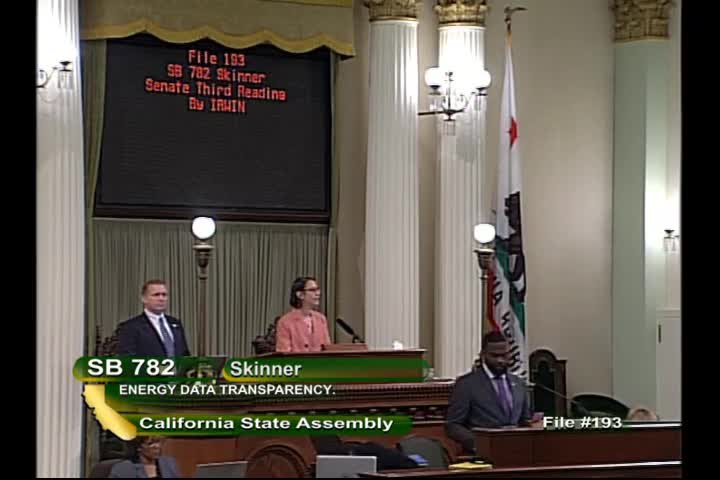 2MIN
Assembly Floor
 1H
Assembly Standing Committee on Appropriations
 46SEC
Senate Floor
 48MIN
Senate Standing Committee on Appropriations
 1MIN
Senate Standing Committee on Appropriations
 7MIN
Senate Standing Committee on Education
Bill Author


